AB 260: Foster care: parenting youth.
- Session Year: 2015-2016
- House: Assembly
- Latest Version Date: 2015-10-06
Existing law establishes the jurisdiction of the juvenile court, which may adjudge a child to be a dependent of the court under certain circumstances, including when the child has been left without any provision for support or when a parent or guardian fails to provide the child with adequate food, clothing, shelter, or medical treatment. Existing law provides that the Legislature declares that a child whose parent has been adjudged a dependent child of the court shall not be considered at risk of abuse or neglect solely because of the age, dependent status, or foster care status of the parent.
This bill would additionally declare that a child whose parent has been adjudged a dependent child of the court shall not be considered at risk of abuse or neglect solely on the basis of information concerning the parents placement history, past behaviors, health or mental health diagnoses occurring prior to the pregnancy, except as specified.
Existing law provides that reunification services need not be provided to the family of a dependent child under certain circumstances.
This bill would enact certain exceptions to that provision that would apply in the case of a child for whom one or both minor parents have been adjudged to be dependent children of the juvenile court, thereby providing the family access to reunification services. The bill would also require, in those cases, a party seeking an involuntary foster care placement of, or termination of parental rights over, a child born to a parent or parents who were minors at the time of the childs birth to demonstrate to the court that reasonable efforts were made to provide remedial services designed to prevent the removal of the child from the minor parent or parents, that these efforts have proved unsuccessful, and that those efforts utilize the available resources of the child and his or her minor parent or parents extended family, social services agencies, caregivers, and other available service providers. By imposing a higher level of service on county employees, the bill would impose a state-mandated local program.
Existing law requires the clerk of the superior court to open a separate court file for nonminor dependents under the dependency, delinquency, or transition jurisdiction of the court and limits access to those files.
This bill would require the clerk of the superior court to maintain court files and records concerning a minor dependent parent or a nonminor dependent parent separate from court files and records concerning his or her child, as specified. The bill would authorize dependency court records concerning a minor dependent parent or a nonminor dependent parent to be disclosed to the county and the court in the childs dependency proceedings, but would require information from the records to only be admitted as evidence in the childs dependency proceedings pursuant to a certain court order. The bill would authorize any party to the childs dependency proceedings to request the admittance of the records concerning a minor dependent parent or a nonminor dependent parent as evidence at any stage of the childs dependency proceedings.
Existing law declares the intent of the Legislature to maintain the continuity of the family unit and to support and preserve families headed by minor dependent parents and nonminor dependent parents. Existing law requires foster care placements for minor parents and their children to demonstrate a willingness and ability to provide support and assistance to minor parents and their children.
This bill would additionally require those foster care placements to support the preservation of the family unit and to refer a minor dependent parent or nonminor dependent parent to preventive services to address any concerns regarding the safety, health, or well-being of the child, and to help prevent, whenever possible, the filing of a petition to declare the child a dependent of the juvenile court.
The California Constitution requires the state to reimburse local agencies and school districts for certain costs mandated by the state. Statutory provisions establish procedures for making that reimbursement.
This bill would provide that, if the Commission on State Mandates determines that the bill contains costs mandated by the state, reimbursement for those costs shall be made pursuant to these statutory provisions.
Existing law establishes the jurisdiction of the juvenile court, which may adjudge a child to be a dependent of the court under certain circumstances, including when the child has been left without any provision for support or when a parent or guardian fails to provide the child with adequate food, clothing, shelter, or medical treatment. Existing law provides that the Legislature declares that a child whose parent has been adjudged a dependent child of the court shall not be considered at risk of abuse or neglect solely because of the age, dependent status, or foster care status of the parent.
This bill would additionally declare that a child whose parent has been adjudged a dependent child of the court shall not be considered at risk of abuse or neglect solely on the basis of information concerning the parents placement history, past behaviors, health or mental health diagnoses occurring prior to the pregnancy, except as specified.
Existing law provides that reunification services need not be provided to the family of a dependent child under certain circumstances.
This bill would enact certain exceptions to that provision that would apply in the case of a child for whom one or both minor parents have been adjudged to be dependent children of the juvenile court. court, thereby providing the family access to reunification services. The bill would also require, in those cases, a party seeking an involuntary foster care placement of, or termination of parental rights over, a child born to a parent or parents who were minors at the time of the childs birth to demonstrate to the court that reasonable efforts were made to provide remedial services designed to prevent the removal of the child from the minor parent or parents, that these efforts have proved unsuccessful, and that those efforts utilize the available resources of the child and his or her minor parent or parents extended family, social services agencies, caregivers, and other available service providers. By imposing a higher level of service on county employees, the bill would impose a state-mandated local program.
Existing law requires the clerk of the superior court to open a separate court file for nonminor dependents under the dependency, delinquency, or transition jurisdiction of the court and limits access to those files.
This bill would require the clerk of the superior court to maintain court files and records concerning a minor dependent parent or a nonminor dependent parent separate from court files and records concerning his or her child, as specified. The bill would authorize dependency court records concerning a minor dependent parent or a nonminor dependent parent to be disclosed to the county and the court in the childs dependency proceedings, but would require information from the records to only be admitted as evidence in the childs dependency proceedings pursuant to a certain court order. The bill would authorize any party to the childs dependency proceedings to request the admittance of the records concerning a minor dependent parent or a nonminor dependent parent as evidence at any stage of the childs dependency proceedings.
Existing law declares the intent of the Legislature to maintain the continuity of the family unit and to support and preserve families headed by minor dependent parents and nonminor dependent parents. Existing law requires foster care placements for minor parents and their children to demonstrate a willingness and ability to provide support and assistance to minor parents and their children.
This bill would additionally require those foster care placements to support the preservation of the family unit and provide refer a minor dependent parent or nonminor dependent parent to preventive services to address any concerns regarding the safety, health, or well-being of the child, and to help prevent, whenever possible, the filing of a petition to declare the child a dependent of the juvenile court.
The California Constitution requires the state to reimburse local agencies and school districts for certain costs mandated by the state. Statutory provisions establish procedures for making that reimbursement.
This bill would provide that, if the Commission on State Mandates determines that the bill contains costs mandated by the state, reimbursement for those costs shall be made pursuant to these statutory provisions.
Existing law establishes the jurisdiction of the juvenile court, which may adjudge a child to be a dependent of the court under certain circumstances, including when the child has been left without any provision for support or when a parent or guardian fails to provide the child with adequate food, clothing, shelter, or medical treatment. Existing law provides that the Legislature declares that a child whose parent has been adjudged a dependent child of the court shall not be considered at risk of abuse or neglect solely because of the age, dependent status, or foster care status of the parent.
This bill would additionally declare that a child whose parent has been adjudged a dependent child of the court shall not be considered at risk of abuse or neglect solely on the basis of information concerning the parents placement history, past behaviors, health or mental health diagnoses occurring prior to the pregnancy, except as specified.
Existing law provides that reunification services need not be provided to the family of a dependant dependent child under certain circumstances.
This bill would enact certain exceptions to that provision that would apply in the case of a child for whom one or both minor parents have been adjudged to be dependent children of the juvenile court. The bill would also require, in those cases, a party seeking an involuntary foster care placement of, or termination of parental rights over, a child born to a parent or parents who were minors at the time of the childs birth to demonstrate to the court that reasonable efforts were made to provide remedial services designed to prevent the removal of the child from the minor parent or parents, that these efforts have proved unsuccessful, and that those efforts utilize the available resources of the child and his or her minor parent or parents extended family, social services agencies, caregivers, and other available service providers. By imposing a higher level of service on county employees, the bill would impose a state-mandated local program.
Existing law requires the clerk of the superior court to open a separate court file for nonminor dependents under the dependency, delinquency, or transition jurisdiction of the court and limits access to those files.
This bill would require the clerk of the superior court to maintain court files and records concerning a minor dependent parent or a nonminor dependent parent separate from court files and records concerning his or her child, as specified. The bill would authorize dependency court records concerning a minor dependent parent or a nonminor dependent parent to be disclosed to the county and the court in the childs dependency proceedings, but would prohibit those require information from the records from being to only be admitted as evidence in the childs dependency proceedings, except proceedings pursuant to a certain court order.
Existing law declares the intent of the Legislature to maintain the continuity of the family unit and to support and preserve families headed by minor dependent parents and nonminor dependent parents. Existing law requires foster care placements for minor parents and their children to demonstrate a willingness and ability to provide support and assistance to minor parents and their children.
This bill would additionally require those foster care placements to support the preservation of the family unit and provide preventive services to address any concerns regarding the safety, health, or well-being of the child, and to prevent, whenever possible, the filing of a petition to declare the child a dependent of the juvenile court.
The California Constitution requires the state to reimburse local agencies and school districts for certain costs mandated by the state. Statutory provisions establish procedures for making that reimbursement.
This bill would provide that, if the Commission on State Mandates determines that the bill contains costs mandated by the state, reimbursement for those costs shall be made pursuant to these statutory provisions.
Existing law establishes the jurisdiction of the juvenile court, which may adjudge a child to be a dependent of the court under certain circumstances, including when the child has been left without any provision for support or when a parent or guardian fails to provide the child with adequate food, clothing, shelter, or medical treatment. Existing law provides that the Legislature declares that a child whose parent has been adjudged a dependent child of the court shall not be considered at risk of abuse or neglect solely because of the age, dependent status, or foster care status of the parent.
This bill would additionally declare that a child whose parent has been adjudged a dependent child of the court shall not be considered at risk of abuse or neglect solely on the basis of information concerning the parents placement history, past behaviors, health or mental health diagnoses occurring prior to the pregnancy, or any other circumstances, occurring prior to the birth of the child except as specified.
Existing law provides that reunification services need not be provided to the family of a dependant child under certain circumstances.
This bill would enact certain exceptions to that provision that would apply in the case of a child for whom one or both minor parents have been adjudged to be dependent children of the juvenile court. The bill would also require, in those cases, a party seeking an involuntary foster care placement of, or termination of parental rights over, a child born to a parent or parents who were minors at the time of the childs birth to demonstrate to the court that reasonable efforts were made to provide remedial services designed to prevent the removal of the child from the minor parent or parents, that these efforts have proved unsuccessful, and that those efforts utilize the available resources of the child and his or her minor parent or parents extended family, social services agencies, caregivers, and other available service providers. By imposing a higher level of service on county employees, the bill would impose a state-mandated local program.
Existing law requires the clerk of the superior court to open a separate court file for nonminor dependents under the dependency, delinquency, or transition jurisdiction of the court and limits access to those files.
This bill would require the clerk of the superior court to maintain court files and records concerning a minor dependent parent or a nonminor dependent parent separate from court files and records concerning his or her child, as specified. The bill would prohibit authorize dependency court records concerning a minor dependent parent or a nonminor dependent parent from being to be disclosed to counsel the county in the childs dependency proceedings or proceedings, but would prohibit those records from being admitted as evidence in the childs dependency procedings proceedings, except pursuant to a certain court order.
Existing law declares the intent of the Legislature to maintain the continuity of the family unit and to support and preserve families headed by minor dependant dependent parents and nonminor dependent parents. Existing law requires foster care placements for minor parents and their children to demonstrate a willingness and ability to provide support and assistance to minor parents and their children.
This bill would additionally require those foster care placements to support the preservation of the family unit and provide preventive services to address any concerns regarding the safety, health, or well-being of the child, and to prevent, whenever possible, the filing of a petition to declare the child a dependent of the juvenile court.
The California Constitution requires the state to reimburse local agencies and school districts for certain costs mandated by the state. Statutory provisions establish procedures for making that reimbursement.
This bill would provide that, if the Commission on State Mandates determines that the bill contains costs mandated by the state, reimbursement for those costs shall be made pursuant to these statutory provisions.
Existing law establishes the jurisdiction of the juvenile court, which may adjudge a child to be a dependent of the court under certain circumstances, including when the child has been left without any provision for support or when a parent or guardian fails to provide the child with adequate food, clothing, shelter, or medical treatment. Existing law provides that the Legislature declares that a child whose parent has been adjudged a dependent child of the court shall not be considered at risk of abuse or neglect solely because of the age, dependent status, or foster care status of the parent.
This bill would additionally declare that a child whose parent has been adjudged a dependent child of the court shall not be considered at risk of abuse or neglect solely on the basis of information concerning the parents placement history, behaviors, health or mental health diagnoses, or any other circumstances, occurring prior to the birth of the child.
Existing law requires the clerk of the superior court to open a separate court file for nonminor dependents under the dependency, delinquency, or transition jurisdiction of the court and limits access to those files.
This bill would require the clerk of the superior court to maintain court files and records concerning a minor dependent parent or a nonminor dependent parent separate from court files and records concerning his or her child, as specified. The bill would prohibit dependency court records concerning a minor dependent parent or a nonminor dependent parent from being disclosed to counsel in the childs dependency proceedings or admitted as evidence in the childs dependency procedings, except pursuant to a certain court order.
Existing law declares the intent of the Legislature to maintain the continuity of the family unit and to support and preserve families headed by minor dependant parents and nonminor dependent parents. Existing law requires foster care placements for minor parents and their children to demonstrate a willingness and ability to provide support and assistance to minor parents and their children.
This bill would additionally require those foster care placements to support the preservation of the family unit and provide preventive services to address any concerns regarding the safety, health, or well-being of the child, and to prevent, whenever possible, the filing of a petition to declare the child a dependent of the juvenile court.
(a)The Legislature declares that a child of a minor parent or nonminor dependent parent shall not be considered to be at risk of abuse or neglect solely on the basis of information concerning the parents or parents placement history, past behaviors, or health or mental health diagnoses occurring prior to the pregnancy, although that information may be taken into account when considering whether other factors exist that place the child at risk of abuse or neglect.
(b)In the case of a child for whom one or both minor parents have been adjudged to be dependent children of the juvenile court pursuant to Section 300, all of the following shall apply:
(1)Paragraphs (10) and (11) of subdivision (b) of Section 361.5 shall not apply, unless one or more of the circumstances described in paragraphs (1) to (9), inclusive, and paragraphs (12) to (16), inclusive, of subdivision (b) of Section 361.5 apply.
(2)A party seeking an involuntary foster care placement of, or termination of parental rights over, a child born to a parent or parents who were minors at the time of the childs birth shall demonstrate to the court that reasonable efforts were made to provide remedial services designed to prevent the removal of the child from the minor parent or parents, and that these efforts have proved unsuccessful.
(3)The efforts made pursuant to paragraph (2) shall utilize the available resources of the child and his or her minor parents or parents extended family, social services agencies, caregivers, and other available service providers.
(c)For purposes of this section, child and minor parent shall have the same definitions as set forth in Section 16002.5.
SEC. 2.Section 825.5 is added to the Welfare and Institutions Code, to read:825.5.(a)The clerk of the superior court shall maintain court files and records concerning a minor dependent parent or a nonminor dependent parent of a child who is the subject of a dependency petition separate from court files and records concerning the child.
(b)(1)Dependency court records concerning a minor dependent parent or a nonminor dependent parent may be disclosed to the county and the court in the childs dependency proceedings; however, information from the records shall only be admitted as evidence in the childs dependency proceedings pursuant to a court order finding that the information is materially relevant to the case, subject to the provisions of subdivision (a) of Section 361.8.
(2)Any party to the childs dependency proceedings may request the admittance of the records described in paragraph (1) as evidence at any stage of the childs dependency proceedings.
SEC. 3.Section 16002.5 of the Welfare and Institutions Code is amended to read:16002.5.It is the intent of the Legislature to maintain the continuity of the family unit and to support and preserve families headed by minor parents and nonminor dependent parents who are themselves under the jurisdiction of the juvenile court by ensuring that minor parents and nonminor dependent parents and their children are placed together in as family-like a setting as possible, unless it has been determined that placement together poses a risk to the child. It is also the intent of the Legislature to ensure that complete and accurate data on parenting minor and nonminor dependents is collected, and that the State Department of Social Services shall ensure that the following information is publicly available on a quarterly basis by county about parenting minor and nonminor dependents: total number of parenting minor and nonminor dependents in each county, their age, their ethnic group, their placement type, their time in care, the number of children they have, and whether their children are court dependents.
(a)To the greatest extent possible, minor parents and nonminor dependent parents and their children shall be provided with access to existing services for which they may be eligible, that are specifically targeted at supporting, maintaining, and developing both the parent-child bond and the dependent parents ability to provide a permanent and safe home for the child. Examples of these services may include, but are not limited to, child care, parenting classes, child development classes, and frequent visitation.
(b)Child welfare agencies may provide minor parents and nonminor dependent parents with access to social workers or resource specialists who have received training on the needs of teenage parents and available resources, including, but not limited to, maternal and child health programs, child care, and child development classes. Child welfare agencies are encouraged to update the case plans for pregnant and parenting dependents within 60 calendar days of the date the agency is informed of a pregnancy. When updating the case plan, child welfare agencies may hold a specialized conference to assist pregnant or parenting foster youth and nonminor dependents with planning for healthy parenting and identifying appropriate resources and services, and to inform the case plan. The specialized conference shall include the pregnant or parenting minor or nonminor dependent, family members, and other supportive adults, and the specially trained social worker or resource specialist. The specialized conference may include other individuals, including, but not limited to, a public health nurse, a community health worker, or other personnel with a comprehensive knowledge of available maternal and child resources, including public benefit programs. Participation in the specialized conference shall be voluntary on the part of the foster youth or nonminor dependent and assistance in identifying and accessing resources shall not be dependent on participation in the conference.
(c)The minor parents and nonminor dependent parents shall be given the ability to attend school, complete homework, and participate in age and developmentally appropriate activities unrelated to and separate from parenting.
(d)Child welfare agencies, local educational agencies, and child care resource and referral agencies may make reasonable and coordinated efforts to ensure that minor parents and nonminor dependent parents who have not completed high school have access to school programs that provide onsite or coordinated child care.
(e)Foster care placements for minor parents and nonminor dependent parents and their children shall demonstrate a willingness and ability to provide support and assistance to minor parents and nonminor dependent parents and their children, shall support the preservation of the family unit, and shall refer a minor parent or nonminor dependent parent to preventive services to address any concerns regarding the safety, health, or well-being of the child, and to help prevent, whenever possible, the filing of a petition to declare the child a dependent of the juvenile court pursuant to Section 300.
(f)Contact between the child, the custodial parent, and the noncustodial parent shall be facilitated if that contact is found to be in the best interest of the child.
(g)For the purpose of this section, child refers to the child born to the minor parent.
(h)For the purpose of this section, minor parent refers to a dependent child who is also a parent.
(i)For the purpose of this section, nonminor dependent parent refers to a nonminor dependent, as described in subdivision (v) of Section 11400, who also is a parent.
SEC. 4.If the Commission on State Mandates determines that this act contains costs mandated by the state, reimbursement to local agencies and school districts for those costs shall be made pursuant to Part 7 (commencing with Section 17500) of Division 4 of Title 2 of the Government Code.
Any child who comes within any of the following descriptions is within the jurisdiction of the juvenile court which may adjudge that person to be a dependent child of the court:
(a)The child has suffered, or there is a substantial risk that the child will suffer, serious physical harm inflicted nonaccidentally upon the child by the childs parent or guardian. For the purposes of this subdivision, a court may find there is a substantial risk of serious future injury based on the manner in which a less serious injury was inflicted, a history of repeated inflictions of injuries on the child or the childs siblings, or a combination of these and other actions by the parent or guardian which indicate the child is at risk of serious physical harm. For purposes of this subdivision, serious physical harm does not include reasonable and age-appropriate spanking to the buttocks where there is no evidence of serious physical injury.
(b) (1) The child has suffered, or there is a substantial risk that the child will suffer, serious physical harm or illness, as a result of the failure or inability of his or her parent or guardian to adequately supervise or protect the child, or the willful or negligent failure of the childs parent or guardian to adequately supervise or protect the child from the conduct of the custodian with whom the child has been left, or by the willful or negligent failure of the parent or guardian to provide the child with adequate food, clothing, shelter, or medical treatment, or by the inability of the parent or guardian to provide regular care for the child due to the parents or guardians mental illness, developmental disability, or substance abuse. No child shall be found to be a person described by this subdivision solely due to the lack of an emergency shelter for the family. Whenever it is alleged that a child comes within the jurisdiction of the court on the basis of the parents or guardians willful failure to provide adequate medical treatment or specific decision to provide spiritual treatment through prayer, the court shall give deference to the parents or guardians medical treatment, nontreatment, or spiritual treatment through prayer alone in accordance with the tenets and practices of a recognized church or religious denomination, by an accredited practitioner thereof, and shall not assume jurisdiction unless necessary to protect the child from suffering serious physical harm or illness. In making its determination, the court shall consider (1) the nature of the treatment proposed by the parent or guardian, (2) the risks to the child posed by the course of treatment or nontreatment proposed by the parent or guardian, (3) the risk, if any, of the course of treatment being proposed by the petitioning agency, and (4) the likely success of the courses of treatment or nontreatment proposed by the parent or guardian and agency. The child shall continue to be a dependent child pursuant to this subdivision only so long as is necessary to protect the child from risk of suffering serious physical harm or illness.
(2)The Legislature finds and declares that a child who is sexually trafficked, as described in Section 236.1 of the Penal Code, or who receives food or shelter in exchange for, or who is paid to perform, sexual acts described in Section 236.1 or 11165.1 of the Penal Code, and whose parent or guardian failed to, or was unable to, protect the child, is within the description of this subdivision, and that this finding is declaratory of existing law. These children shall be known as commercially sexually exploited children.
(c)The child is suffering serious emotional damage, or is at substantial risk of suffering serious emotional damage, evidenced by severe anxiety, depression, withdrawal, or untoward aggressive behavior toward self or others, as a result of the conduct of the parent or guardian or who has no parent or guardian capable of providing appropriate care. No child shall be found to be a person described by this subdivision if the willful failure of the parent or guardian to provide adequate mental health treatment is based on a sincerely held religious belief and if a less intrusive judicial intervention is available.
(d)The child has been sexually abused, or there is a substantial risk that the child will be sexually abused, as defined in Section 11165.1 of the Penal Code, by his or her parent or guardian or a member of his or her household, or the parent or guardian has failed to adequately protect the child from sexual abuse when the parent or guardian knew or reasonably should have known that the child was in danger of sexual abuse.
(e)The child is under the age of five years and has suffered severe physical abuse by a parent, or by any person known by the parent, if the parent knew or reasonably should have known that the person was physically abusing the child. For the purposes of this subdivision, severe physical abuse means any of the following: any single act of abuse which causes physical trauma of sufficient severity that, if left untreated, would cause permanent physical disfigurement, permanent physical disability, or death; any single act of sexual abuse which causes significant bleeding, deep bruising, or significant external or internal swelling; or more than one act of physical abuse, each of which causes bleeding, deep bruising, significant external or internal swelling, bone fracture, or unconsciousness; or the willful, prolonged failure to provide adequate food. A child may not be removed from the physical custody of his or her parent or guardian on the basis of a finding of severe physical abuse unless the social worker has made an allegation of severe physical abuse pursuant to Section 332.
(f)The childs parent or guardian caused the death of another child through abuse or neglect.
(g)The child has been left without any provision for support; physical custody of the child has been voluntarily surrendered pursuant to Section 1255.7 of the Health and Safety Code and the child has not been reclaimed within the 14-day period specified in subdivision (e) of that section; the childs parent has been incarcerated or institutionalized and cannot arrange for the care of the child; or a relative or other adult custodian with whom the child resides or has been left is unwilling or unable to provide care or support for the child, the whereabouts of the parent are unknown, and reasonable efforts to locate the parent have been unsuccessful.
(h)The child has been freed for adoption by one or both parents for 12 months by either relinquishment or termination of parental rights or an adoption petition has not been granted.
(i)The child has been subjected to an act or acts of cruelty by the parent or guardian or a member of his or her household, or the parent or guardian has failed to adequately protect the child from an act or acts of cruelty when the parent or guardian knew or reasonably should have known that the child was in danger of being subjected to an act or acts of cruelty.
(j)The childs sibling has been abused or neglected, as defined in subdivision (a), (b), (d), (e), or (i), and there is a substantial risk that the child will be abused or neglected, as defined in those subdivisions. The court shall consider the circumstances surrounding the abuse or neglect of the sibling, the age and gender of each child, the nature of the abuse or neglect of the sibling, the mental condition of the parent or guardian, and any other factors the court considers probative in determining whether there is a substantial risk to the child.
It is the intent of the Legislature that nothing in this section disrupt the family unnecessarily or intrude inappropriately into family life, prohibit the use of reasonable methods of parental discipline, or prescribe a particular method of parenting. Further, nothing in this section is intended to limit the offering of voluntary services to those families in need of assistance but who do not come within the descriptions of this section. To the extent that savings accrue to the state from child welfare services funding obtained as a result of the enactment of the act that enacted this section, those savings shall be used to promote services which support family maintenance and family reunification plans, such as client transportation, out-of-home respite care, parenting training, and the provision of temporary or emergency in-home caretakers and persons teaching and demonstrating homemaking skills. The Legislature further declares that a physical disability, such as blindness or deafness, is no bar to the raising of happy and well-adjusted children and that a courts determination pursuant to this section shall center upon whether a parents disability prevents him or her from exercising care and control.
As used in this section, guardian means the legal guardian of the child.
SEC. 2.SECTION 1.Section 361.8 is added to the Welfare and Institutions Code, to read:361.8.(a)The Legislature declares that a child for whom one or both parents have been adjudged to be dependent children of the juvenile court pursuant to Section 300 shall not be considered to be at risk of abuse or neglect solely because of the age, dependent status, or foster care status of the parents. The Legislature further declares that the a child of a minor parent or nonminor dependent parent shall not be considered to be at risk of abuse or neglect solely on the basis of information concerning the parents or parents placement history, past behaviors, or health or mental health diagnoses occurring prior to the pregnancy, although that information may be taken into account when considering whether other factors exist that place the child at risk of abuse or neglect.
(b)In the case of a child for whom one or both minor parents have been adjudged to be dependent children of the juvenile court pursuant to Section 300, all of the following shall apply:
(1)Paragraphs (10) and (11) of subdivision (b) of Section 361.5 shall not apply, unless one or more of the circumstances described in paragraphs (1) to (9), inclusive, and paragraphs (12) to (16), inclusive, of subdivision (b) of Section 361.5 apply.
(2)A party seeking an involuntary foster care placement of, or termination of parental rights over, a child born to a parent or parents who were minors at the time of the childs birth shall demonstrate to the court that reasonable efforts were made to provide remedial services designed to prevent the removal of the child from the minor parent or parents, and that these efforts have proved unsuccessful.
(3)The efforts made pursuant to paragraph (2) shall utilize the available resources of the child and his or her minor parents or parents extended family, social services agencies, caregivers, and other available service providers.
(c)For purposes of this section, child and minor parent shall have the same definitions as set forth in Section 16002.5.
SEC. 3.SEC. 2.Section 825.5 is added to the Welfare and Institutions Code, to read:825.5.(a)The clerk of the superior court shall maintain court files and records concerning a minor dependent parent or a nonminor dependent parent of a child who is the subject of a dependency petition separate from court files and records concerning the child. Dependency
(b)(1)Dependency court records concerning a minor dependent parent or a nonminor dependent parent may be disclosed to the county and the court in the childs dependency proceedings; however, information from the records shall only be admitted as evidence in the childs dependency proceedings pursuant to a court order finding that the information is materially relevant to the case, subject to the provisions of subdivision (a) of Section 361.8.
(2)Any party to the childs dependency proceedings may request the admittance of the records described in paragraph (1) as evidence at any stage of the childs dependency proceedings.
SEC. 4.SEC. 3.Section 16002.5 of the Welfare and Institutions Code is amended to read:16002.5.It is the intent of the Legislature to maintain the continuity of the family unit and to support and preserve families headed by minor parents and nonminor dependent parents who are themselves under the jurisdiction of the juvenile court by ensuring that minor parents and nonminor dependent parents and their children are placed together in as family-like a setting as possible, unless it has been determined that placement together poses a risk to the child. It is also the intent of the Legislature to ensure that complete and accurate data on parenting minor and nonminor dependents is collected, and that the State Department of Social Services shall ensure that the following information is publicly available on a quarterly basis by county about parenting minor and nonminor dependents: total number of parenting minor and nonminor dependents in each county, their age, their ethnic group, their placement type, their time in care, the number of children they have, and whether their children are court dependents.
(a)To the greatest extent possible, minor parents and nonminor dependent parents and their children shall be provided with access to existing services for which they may be eligible, that are specifically targeted at supporting, maintaining, and developing both the parent-child bond and the dependent parents ability to provide a permanent and safe home for the child. Examples of these services may include, but are not limited to, child care, parenting classes, child development classes, and frequent visitation.
(b)Child welfare agencies may provide minor parents and nonminor dependent parents with access to social workers or resource specialists who have received training on the needs of teenage parents and available resources, including, but not limited to, maternal and child health programs, child care, and child development classes. Child welfare agencies are encouraged to update the case plans for pregnant and parenting dependents within 60 calendar days of the date the agency is informed of a pregnancy. When updating the case plan, child welfare agencies may hold a specialized conference to assist pregnant or parenting foster youth and nonminor dependents with planning for healthy parenting and identifying appropriate resources and services, and to inform the case plan. The specialized conference shall include the pregnant or parenting minor or nonminor dependent, family members, and other supportive adults, and the specially trained social worker or resource specialist. The specialized conference may include other individuals, including, but not limited to, a public health nurse, a community health worker, or other personnel with a comprehensive knowledge of available maternal and child resources, including public benefit programs. Participation in the specialized conference shall be voluntary on the part of the foster youth or nonminor dependent and assistance in identifying and accessing resources shall not be dependent on participation in the conference.
(c)The minor parents and nonminor dependent parents shall be given the ability to attend school, complete homework, and participate in age and developmentally appropriate activities unrelated to and separate from parenting.
(d)Child welfare agencies, local educational agencies, and child care resource and referral agencies may make reasonable and coordinated efforts to ensure that minor parents and nonminor dependent parents who have not completed high school have access to school programs that provide onsite or coordinated child care.
(e)Foster care placements for minor parents and nonminor dependent parents and their children shall demonstrate a willingness and ability to provide support and assistance to minor parents and nonminor dependent parents and their children, shall support the preservation of the family unit, and shall provide refer a minor parent or nonminor dependent parent to preventive services to address any concerns regarding the safety, health, or well-being of the child, and to help prevent, whenever possible, the filing of a petition to declare the child a dependent of the juvenile court pursuant to Section 300.
(f)Contact between the child, the custodial parent, and the noncustodial parent shall be facilitated if that contact is found to be in the best interest of the child.
(g)For the purpose of this section, child refers to the child born to the minor parent.
(h)For the purpose of this section, minor parent refers to a dependent child who is also a parent.
(i)For the purpose of this section, nonminor dependent parent refers to a nonminor dependent, as described in subdivision (v) of Section 11400, who also is a parent.
SEC. 5.SEC. 4.If the Commission on State Mandates determines that this act contains costs mandated by the state, reimbursement to local agencies and school districts for those costs shall be made pursuant to Part 7 (commencing with Section 17500) of Division 4 of Title 2 of the Government Code.
Any child who comes within any of the following descriptions is within the jurisdiction of the juvenile court which may adjudge that person to be a dependent child of the court:
(a)The child has suffered, or there is a substantial risk that the child will suffer, serious physical harm inflicted nonaccidentally upon the child by the childs parent or guardian. For the purposes of this subdivision, a court may find there is a substantial risk of serious future injury based on the manner in which a less serious injury was inflicted, a history of repeated inflictions of injuries on the child or the childs siblings, or a combination of these and other actions by the parent or guardian which indicate the child is at risk of serious physical harm. For purposes of this subdivision, serious physical harm does not include reasonable and age-appropriate spanking to the buttocks where there is no evidence of serious physical injury.
(b) (1) The child has suffered, or there is a substantial risk that the child will suffer, serious physical harm or illness, as a result of the failure or inability of his or her parent or guardian to adequately supervise or protect the child, or the willful or negligent failure of the childs parent or guardian to adequately supervise or protect the child from the conduct of the custodian with whom the child has been left, or by the willful or negligent failure of the parent or guardian to provide the child with adequate food, clothing, shelter, or medical treatment, or by the inability of the parent or guardian to provide regular care for the child due to the parents or guardians mental illness, developmental disability, or substance abuse. No child shall be found to be a person described by this subdivision solely due to the lack of an emergency shelter for the family. Whenever it is alleged that a child comes within the jurisdiction of the court on the basis of the parents or guardians willful failure to provide adequate medical treatment or specific decision to provide spiritual treatment through prayer, the court shall give deference to the parents or guardians medical treatment, nontreatment, or spiritual treatment through prayer alone in accordance with the tenets and practices of a recognized church or religious denomination, by an accredited practitioner thereof, and shall not assume jurisdiction unless necessary to protect the child from suffering serious physical harm or illness. In making its determination, the court shall consider (1) the nature of the treatment proposed by the parent or guardian, (2) the risks to the child posed by the course of treatment or nontreatment proposed by the parent or guardian, (3) the risk, if any, of the course of treatment being proposed by the petitioning agency, and (4) the likely success of the courses of treatment or nontreatment proposed by the parent or guardian and agency. The child shall continue to be a dependent child pursuant to this subdivision only so long as is necessary to protect the child from risk of suffering serious physical harm or illness.
(2)The Legislature finds and declares that a child who is sexually trafficked, as described in Section 236.1 of the Penal Code, or who receives food or shelter in exchange for, or who is paid to perform, sexual acts described in Section 236.1 or 11165.1 of the Penal Code, and whose parent or guardian failed to, or was unable to, protect the child, is within the description of this subdivision, and that this finding is declaratory of existing law. These children shall be known as commercially sexually exploited children.
(c)The child is suffering serious emotional damage, or is at substantial risk of suffering serious emotional damage, evidenced by severe anxiety, depression, withdrawal, or untoward aggressive behavior toward self or others, as a result of the conduct of the parent or guardian or who has no parent or guardian capable of providing appropriate care. No child shall be found to be a person described by this subdivision if the willful failure of the parent or guardian to provide adequate mental health treatment is based on a sincerely held religious belief and if a less intrusive judicial intervention is available.
(d)The child has been sexually abused, or there is a substantial risk that the child will be sexually abused, as defined in Section 11165.1 of the Penal Code, by his or her parent or guardian or a member of his or her household, or the parent or guardian has failed to adequately protect the child from sexual abuse when the parent or guardian knew or reasonably should have known that the child was in danger of sexual abuse.
(e)The child is under the age of five years and has suffered severe physical abuse by a parent, or by any person known by the parent, if the parent knew or reasonably should have known that the person was physically abusing the child. For the purposes of this subdivision, severe physical abuse means any of the following: any single act of abuse which causes physical trauma of sufficient severity that, if left untreated, would cause permanent physical disfigurement, permanent physical disability, or death; any single act of sexual abuse which causes significant bleeding, deep bruising, or significant external or internal swelling; or more than one act of physical abuse, each of which causes bleeding, deep bruising, significant external or internal swelling, bone fracture, or unconsciousness; or the willful, prolonged failure to provide adequate food. A child may not be removed from the physical custody of his or her parent or guardian on the basis of a finding of severe physical abuse unless the social worker has made an allegation of severe physical abuse pursuant to Section 332.
(f)The childs parent or guardian caused the death of another child through abuse or neglect.
(g)The child has been left without any provision for support; physical custody of the child has been voluntarily surrendered pursuant to Section 1255.7 of the Health and Safety Code and the child has not been reclaimed within the 14-day period specified in subdivision (e) of that section; the childs parent has been incarcerated or institutionalized and cannot arrange for the care of the child; or a relative or other adult custodian with whom the child resides or has been left is unwilling or unable to provide care or support for the child, the whereabouts of the parent are unknown, and reasonable efforts to locate the parent have been unsuccessful.
(h)The child has been freed for adoption by one or both parents for 12 months by either relinquishment or termination of parental rights or an adoption petition has not been granted.
(i)The child has been subjected to an act or acts of cruelty by the parent or guardian or a member of his or her household, or the parent or guardian has failed to adequately protect the child from an act or acts of cruelty when the parent or guardian knew or reasonably should have known that the child was in danger of being subjected to an act or acts of cruelty.
(j)The childs sibling has been abused or neglected, as defined in subdivision (a), (b), (d), (e), or (i), and there is a substantial risk that the child will be abused or neglected, as defined in those subdivisions. The court shall consider the circumstances surrounding the abuse or neglect of the sibling, the age and gender of each child, the nature of the abuse or neglect of the sibling, the mental condition of the parent or guardian, and any other factors the court considers probative in determining whether there is a substantial risk to the child.
It is the intent of the Legislature that nothing in this section disrupt the family unnecessarily or intrude inappropriately into family life, prohibit the use of reasonable methods of parental discipline, or prescribe a particular method of parenting. Further, nothing in this section is intended to limit the offering of voluntary services to those families in need of assistance but who do not come within the descriptions of this section. To the extent that savings accrue to the state from child welfare services funding obtained as a result of the enactment of the act that enacted this section, those savings shall be used to promote services which support family maintenance and family reunification plans, such as client transportation, out-of-home respite care, parenting training, and the provision of temporary or emergency in-home caretakers and persons teaching and demonstrating homemaking skills. The Legislature further declares that a physical disability, such as blindness or deafness, is no bar to the raising of happy and well-adjusted children and that a courts determination pursuant to this section shall center upon whether a parents disability prevents him or her from exercising care and control.
As used in this section, guardian means the legal guardian of the child.
SEC. 2.Section 361.8 is added to the Welfare and Institutions Code, to read:361.8.(a)The Legislature declares that a child for whom one or both parents have been adjudged to be dependent children of the juvenile court pursuant to Section 300 shall not be considered to be at risk of abuse or neglect solely because of the age, dependant dependent status, or foster care status of the parents. The Legislature further declares that the child shall not be considered to be at risk of abuse or neglect solely on the basis of information concerning the parents or parents placement history, past behaviors, or health or mental health diagnoses occurring prior to the pregnancy, although that information may be taken into account when considering whether other factors exist that place the child at risk of abuse or neglect.
(b)In the case of a child for whom one or both minor parents have been adjudged to be dependent children of the juvenile court pursuant to Section 300, all of the following shall apply:
(1)Paragraphs (10) and (11) of subdivision (b) of Section 361.5 shall not apply, unless one or more of the circumstances described in paragraphs (1) to (9), inclusive, and paragraphs (12) to (16), inclusive, of subdivision (b) of Section 361.5 apply.
(2)A party seeking an involuntary foster care placement of, or termination of parental rights over, a child born to a parent or parents who were minors at the time of the childs birth shall demonstrate to the court that reasonable efforts were made to provide remedial services designed to prevent the removal of the child from the minor parent or parents, and that these efforts have proved unsuccessful.
(3)The efforts made pursuant to paragraph (2) shall utilize the available resources of the child and his or her minor parents or parents extended family, social services agencies, caregivers, and other available service providers.
(c)For purposes of this section, child and minor parent shall have the same definitions as in Section 16002.5.
SEC. 3.Section 825.5 is added to the Welfare and Institutions Code, to read:825.5.The clerk of the superior court shall maintain court files and records concerning a minor dependent parent or a nonminor dependent parent of a child who is the subject of a dependency petition separate from court files and records concerning the child. Dependency court records concerning a minor dependent parent or a nonminor dependent parent may be disclosed to the county and the court in the childs dependency proceedings; however, the records shall not be admitted as evidence in the childs dependency proceedings, except pursuant to a court order made in the course of the childs proceedings that the files and records contain information that information from the records shall only be admitted as evidence in the childs dependency proceedings pursuant to a court order finding that the information is materially relevant to the case, subject to the provisions of subdivision (a) of Section 361.8.
SEC. 4.Section 16002.5 of the Welfare and Institutions Code is amended to read:16002.5.It is the intent of the Legislature to maintain the continuity of the family unit and to support and preserve families headed by minor parents and nonminor dependent parents who are themselves under the jurisdiction of the juvenile court by ensuring that minor parents and nonminor dependent parents and their children are placed together in as family-like a setting as possible, unless it has been determined that placement together poses a risk to the child. It is also the intent of the Legislature to ensure that complete and accurate data on parenting minor and nonminor dependents is collected, and that the State Department of Social Services shall ensure that the following information is publicly available on a quarterly basis by county about parenting minor and nonminor dependents: total number of parenting minor and nonminor dependents in each county, their age, their ethnic group, their placement type, their time in care, the number of children they have, and whether their children are court dependents.
(a)To the greatest extent possible, minor parents and nonminor dependent parents and their children shall be provided with access to existing services for which they may be eligible, that are specifically targeted at supporting, maintaining, and developing both the parent-child bond and the dependent parents ability to provide a permanent and safe home for the child. Examples of these services may include, but are not limited to, child care, parenting classes, child development classes, and frequent visitation.
(b)Child welfare agencies may provide minor parents and nonminor dependent parents with access to social workers or resource specialists who have received training on the needs of teenage parents and available resources, including, but not limited to, maternal and child health programs, child care, and child development classes. Child welfare agencies are encouraged to update the case plans for pregnant and parenting dependents within 60 calendar days of the date the agency is informed of a pregnancy. When updating the case plan, child welfare agencies may hold a specialized conference to assist pregnant or parenting foster youth and nonminor dependents with planning for healthy parenting and identifying appropriate resources and services, and to inform the case plan. The specialized conference shall include the pregnant or parenting minor or nonminor dependent, family members, and other supportive adults, and the specially trained social worker or resource specialist. The specialized conference may include other individuals, including, but not limited to, a public health nurse, a community health worker, or other personnel with a comprehensive knowledge of available maternal and child resources, including public benefit programs. Participation in the specialized conference shall be voluntary on the part of the foster youth or nonminor dependent and assistance in identifying and accessing resources shall not be dependent on participation in the conference.
(c)The minor parents and nonminor dependent parents shall be given the ability to attend school, complete homework, and participate in age and developmentally appropriate activities unrelated to and separate from parenting.
(d)Child welfare agencies, local educational agencies, and child care resource and referral agencies may make reasonable and coordinated efforts to ensure that minor parents and nonminor dependent parents who have not completed high school have access to school programs that provide onsite or coordinated child care.
(e)Foster care placements for minor parents and nonminor dependent parents and their children shall demonstrate a willingness and ability to provide support and assistance to minor parents and nonminor dependent parents and their children, shall support the preservation of the family unit, and shall provide preventive services to address any concerns regarding the safety, health, or well-being of the child, and to prevent, whenever possible, the filing of a petition to declare the child a dependent of the juvenile court pursuant to Section 300.
(f)Contact between the child, the custodial parent, and the noncustodial parent shall be facilitated if that contact is found to be in the best interest of the child.
(g)For the purpose of this section, child refers to the child born to the minor parent.
(h)For the purpose of this section, minor parent refers to a dependent child who is also a parent.
(i)For the purpose of this section, nonminor dependent parent refers to a nonminor dependent, as described in subdivision (v) of Section 11400, who also is a parent.
SEC. 5.If the Commission on State Mandates determines that this act contains costs mandated by the state, reimbursement to local agencies and school districts for those costs shall be made pursuant to Part 7 (commencing with Section 17500) of Division 4 of Title 2 of the Government Code.
Any child who comes within any of the following descriptions is within the jurisdiction of the juvenile court which may adjudge that person to be a dependent child of the court:
(a)The child has suffered, or there is a substantial risk that the child will suffer, serious physical harm inflicted nonaccidentally upon the child by the childs parent or guardian. For the purposes of this subdivision, a court may find there is a substantial risk of serious future injury based on the manner in which a less serious injury was inflicted, a history of repeated inflictions of injuries on the child or the childs siblings, or a combination of these and other actions by the parent or guardian which indicate the child is at risk of serious physical harm. For purposes of this subdivision, serious physical harm does not include reasonable and age-appropriate spanking to the buttocks where there is no evidence of serious physical injury.
(b) (1) The child has suffered, or there is a substantial risk that the child will suffer, serious physical harm or illness, as a result of the failure or inability of his or her parent or guardian to adequately supervise or protect the child, or the willful or negligent failure of the childs parent or guardian to adequately supervise or protect the child from the conduct of the custodian with whom the child has been left, or by the willful or negligent failure of the parent or guardian to provide the child with adequate food, clothing, shelter, or medical treatment, or by the inability of the parent or guardian to provide regular care for the child due to the parents or guardians mental illness, developmental disability, or substance abuse. No child shall be found to be a person described by this subdivision solely due to the lack of an emergency shelter for the family. Whenever it is alleged that a child comes within the jurisdiction of the court on the basis of the parents or guardians willful failure to provide adequate medical treatment or specific decision to provide spiritual treatment through prayer, the court shall give deference to the parents or guardians medical treatment, nontreatment, or spiritual treatment through prayer alone in accordance with the tenets and practices of a recognized church or religious denomination, by an accredited practitioner thereof, and shall not assume jurisdiction unless necessary to protect the child from suffering serious physical harm or illness. In making its determination, the court shall consider (1) the nature of the treatment proposed by the parent or guardian, (2) the risks to the child posed by the course of treatment or nontreatment proposed by the parent or guardian, (3) the risk, if any, of the course of treatment being proposed by the petitioning agency, and (4) the likely success of the courses of treatment or nontreatment proposed by the parent or guardian and agency. The child shall continue to be a dependent child pursuant to this subdivision only so long as is necessary to protect the child from risk of suffering serious physical harm or illness.
(2)The Legislature finds and declares that a child who is sexually trafficked, as described in Section 236.1 of the Penal Code, or who receives food or shelter in exchange for, or who is paid to perform, sexual acts described in Section 236.1 or 11165.1 of the Penal Code, and whose parent or guardian failed to, or was unable to, protect the child, is within the description of this subdivision, and that this finding is declaratory of existing law. These children shall be known as commercially sexually exploited children.
(c)The child is suffering serious emotional damage, or is at substantial risk of suffering serious emotional damage, evidenced by severe anxiety, depression, withdrawal, or untoward aggressive behavior toward self or others, as a result of the conduct of the parent or guardian or who has no parent or guardian capable of providing appropriate care. No child shall be found to be a person described by this subdivision if the willful failure of the parent or guardian to provide adequate mental health treatment is based on a sincerely held religious belief and if a less intrusive judicial intervention is available.
(d)The child has been sexually abused, or there is a substantial risk that the child will be sexually abused, as defined in Section 11165.1 of the Penal Code, by his or her parent or guardian or a member of his or her household, or the parent or guardian has failed to adequately protect the child from sexual abuse when the parent or guardian knew or reasonably should have known that the child was in danger of sexual abuse.
(e)The child is under the age of five years and has suffered severe physical abuse by a parent, or by any person known by the parent, if the parent knew or reasonably should have known that the person was physically abusing the child. For the purposes of this subdivision, severe physical abuse means any of the following: any single act of abuse which causes physical trauma of sufficient severity that, if left untreated, would cause permanent physical disfigurement, permanent physical disability, or death; any single act of sexual abuse which causes significant bleeding, deep bruising, or significant external or internal swelling; or more than one act of physical abuse, each of which causes bleeding, deep bruising, significant external or internal swelling, bone fracture, or unconsciousness; or the willful, prolonged failure to provide adequate food. A child may not be removed from the physical custody of his or her parent or guardian on the basis of a finding of severe physical abuse unless the social worker has made an allegation of severe physical abuse pursuant to Section 332.
(f)The childs parent or guardian caused the death of another child through abuse or neglect.
(g)The child has been left without any provision for support; physical custody of the child has been voluntarily surrendered pursuant to Section 1255.7 of the Health and Safety Code and the child has not been reclaimed within the 14-day period specified in subdivision (e) of that section; the childs parent has been incarcerated or institutionalized and cannot arrange for the care of the child; or a relative or other adult custodian with whom the child resides or has been left is unwilling or unable to provide care or support for the child, the whereabouts of the parent are unknown, and reasonable efforts to locate the parent have been unsuccessful.
(h)The child has been freed for adoption by one or both parents for 12 months by either relinquishment or termination of parental rights or an adoption petition has not been granted.
(i)The child has been subjected to an act or acts of cruelty by the parent or guardian or a member of his or her household, or the parent or guardian has failed to adequately protect the child from an act or acts of cruelty when the parent or guardian knew or reasonably should have known that the child was in danger of being subjected to an act or acts of cruelty.
(j)The childs sibling has been abused or neglected, as defined in subdivision (a), (b), (d), (e), or (i), and there is a substantial risk that the child will be abused or neglected, as defined in those subdivisions. The court shall consider the circumstances surrounding the abuse or neglect of the sibling, the age and gender of each child, the nature of the abuse or neglect of the sibling, the mental condition of the parent or guardian, and any other factors the court considers probative in determining whether there is a substantial risk to the child.
It is the intent of the Legislature that nothing in this section disrupt the family unnecessarily or intrude inappropriately into family life, prohibit the use of reasonable methods of parental discipline, or prescribe a particular method of parenting. Further, nothing in this section is intended to limit the offering of voluntary services to those families in need of assistance but who do not come within the descriptions of this section. To the extent that savings accrue to the state from child welfare services funding obtained as a result of the enactment of the act that enacted this section, those savings shall be used to promote services which support family maintenance and family reunification plans, such as client transportation, out-of-home respite care, parenting training, and the provision of temporary or emergency in-home caretakers and persons teaching and demonstrating homemaking skills. The Legislature further declares that a physical disability, such as blindness or deafness, is no bar to the raising of happy and well-adjusted children and that a courts determination pursuant to this section shall center upon whether a parents disability prevents him or her from exercising care and control. The Legislature further declares that a child whose parent has been adjudged a dependent child of the court pursuant to this section shall not be considered to be at risk of abuse or neglect solely because of the age, dependent status, or foster care status of the parent, or solely on the basis of information concerning the parents placement history, behaviors, health or mental health diagnoses, or any other circumstances, occurring prior to the birth of the child.
As used in this section, guardian means the legal guardian of the child.
SEC. 2.Section 361.8 is added to the Welfare and Institutions Code, to read:361.8.(a)The Legislature declares that a child for whom one or both parents have been adjudged to be dependent children of the juvenile court pursuant to Section 300 shall not be considered to be at risk of abuse or neglect solely because of the age, dependant status, or foster care status of the parents. The Legislature further declares that the child shall not be considered to be at risk of abuse or neglect solely on the basis of information concerning the parents or parents placement history, past behaviors, or health or mental health diagnoses occurring prior to the pregnancy, although that information may be taken into account when considering whether other factors exist that place the child at risk of abuse or neglect.
(b)In the case of a child for whom one or both minor parents have been adjudged to be dependent children of the juvenile court pursuant to Section 300, all of the following shall apply:
(1)Paragraphs (10) and (11) of subdivision (b) of Section 361.5 shall not apply, unless one or more of the circumstances described in paragraphs (1) to (9), inclusive, and paragraphs (12) to (16), inclusive, of subdivision (b) of Section 361.5 apply.
(2)A party seeking an involuntary foster care placement of, or termination of parental rights over, a child born to a parent or parents who were minors at the time of the childs birth shall demonstrate to the court that reasonable efforts were made to provide remedial services designed to prevent the removal of the child from the minor parent or parents, and that these efforts have proved unsuccessful.
(3)The efforts made pursuant to paragraph (2) shall utilize the available resources of the child and his or her minor parents or parents extended family, social services agencies, caregivers, and other available service providers.
(c)For purposes of this section, child and minor parent shall have the same definitions as in Section 16002.5.
SEC. 2.SEC. 3.Section 825.5 is added to the Welfare and Institutions Code, to read:825.5.The clerk of the superior court shall maintain court files and records concerning a minor dependent parent or a nonminor dependent parent of a child who is the subject of a dependency petition separate from court files and records concerning the child. Dependency court records concerning a minor dependent parent or a nonminor dependent parent shall not may be disclosed to counsel the county in the childs dependency proceedings or proceedings; however, the records shall not be admitted as evidence in the childs dependency procedings proceedings, except pursuant to a court order issued in response to a petition filed under subparagraph (P) of paragraph (1) of subdivision (a) of Section 827. made in the course of the childs proceedings that the files and records contain information that is materially relevant to the case, subject to the provisions of subdivision (a) of Section 361.8.
SEC. 3.SEC. 4.Section 16002.5 of the Welfare and Institutions Code is amended to read:16002.5.It is the intent of the Legislature to maintain the continuity of the family unit and to support and preserve families headed by minor parents and nonminor dependent parents who are themselves under the jurisdiction of the juvenile court by ensuring that minor parents and nonminor dependent parents and their children are placed together in as family-like a setting as possible, unless it has been determined that placement together poses a risk to the child. It is also the intent of the Legislature to ensure that complete and accurate data on parenting minor and nonminor dependents is collected, and that the State Department of Social Services shall ensure that the following information is publicly available on a quarterly basis by county about parenting minor and nonminor dependents: total number of parenting minor and nonminor dependents in each county, their age, their ethnic group, their placement type, their time in care, the number of children they have, and whether their children are court dependents.
(a)To the greatest extent possible, minor parents and nonminor dependent parents and their children shall be provided with access to existing services for which they may be eligible, that are specifically targeted at supporting, maintaining, and developing both the parent-child bond and the dependent parents ability to provide a permanent and safe home for the child. Examples of these services may include, but are not limited to, child care, parenting classes, child development classes, and frequent visitation.
(b)Child welfare agencies may provide minor parents and nonminor dependent parents with access to social workers or resource specialists who have received training on the needs of teenage parents and available resources, including, but not limited to, maternal and child health programs, child care, and child development classes. Child welfare agencies are encouraged to update the case plans for pregnant and parenting dependents within 60 calendar days of the date the agency is informed of a pregnancy. When updating the case plan, child welfare agencies may hold a specialized conference to assist pregnant or parenting foster youth and nonminor dependents with planning for healthy parenting and identifying appropriate resources and services, and to inform the case plan. The specialized conference shall include the pregnant or parenting minor or nonminor dependent, family members, and other supportive adults, and the specially trained social worker or resource specialist. The specialized conference may include other individuals, including, but not limited to, a public health nurse, a community health worker, or other personnel with a comprehensive knowledge of available maternal and child resources, including public benefit programs. Participation in the specialized conference shall be voluntary on the part of the foster youth or nonminor dependent and assistance in identifying and accessing resources shall not be dependent on participation in the conference.
(c)The minor parents and nonminor dependent parents shall be given the ability to attend school, complete homework, and participate in age and developmentally appropriate activities unrelated to and separate from parenting.
(d)Child welfare agencies, local educational agencies, and child care resource and referral agencies may make reasonable and coordinated efforts to ensure that minor parents and nonminor dependent parents who have not completed high school have access to school programs that provide onsite or coordinated child care.
(e)Foster care placements for minor parents and nonminor dependent parents and their children shall demonstrate a willingness and ability to provide support and assistance to minor parents and nonminor dependent parents and their children, shall support the preservation of the family unit, and shall provide preventive services to address any concerns regarding the safety, health, or well-being of the child, and to prevent, whenever possible, the filing of a petition to declare the child a dependent of the juvenile court pursuant to Section 300.
(f)Contact between the child, the custodial parent, and the noncustodial parent shall be facilitated if that contact is found to be in the best interest of the child.
(g)For the purpose of this section, child refers to the child born to the minor parent.
(h)For the purpose of this section, minor parent refers to a dependent child who is also a parent.
(i)For the purpose of this section, nonminor dependent parent refers to a nonminor dependent, as described in subdivision (v) of Section 11400, who also is a parent.
SEC. 5.If the Commission on State Mandates determines that this act contains costs mandated by the state, reimbursement to local agencies and school districts for those costs shall be made pursuant to Part 7 (commencing with Section 17500) of Division 4 of Title 2 of the Government Code.
Any child who comes within any of the following descriptions is within the jurisdiction of the juvenile court which may adjudge that person to be a dependent child of the court:
(a)The child has suffered, or there is a substantial risk that the child will suffer, serious physical harm inflicted nonaccidentally upon the child by the childs parent or guardian. For the purposes of this subdivision, a court may find there is a substantial risk of serious future injury based on the manner in which a less serious injury was inflicted, a history of repeated inflictions of injuries on the child or the childs siblings, or a combination of these and other actions by the parent or guardian which indicate the child is at risk of serious physical harm. For purposes of this subdivision, serious physical harm does not include reasonable and age-appropriate spanking to the buttocks where there is no evidence of serious physical injury.
(b) (1) The child has suffered, or there is a substantial risk that the child will suffer, serious physical harm or illness, as a result of the failure or inability of his or her parent or guardian to adequately supervise or protect the child, or the willful or negligent failure of the childs parent or guardian to adequately supervise or protect the child from the conduct of the custodian with whom the child has been left, or by the willful or negligent failure of the parent or guardian to provide the child with adequate food, clothing, shelter, or medical treatment, or by the inability of the parent or guardian to provide regular care for the child due to the parents or guardians mental illness, developmental disability, or substance abuse. No child shall be found to be a person described by this subdivision solely due to the lack of an emergency shelter for the family. Whenever it is alleged that a child comes within the jurisdiction of the court on the basis of the parents or guardians willful failure to provide adequate medical treatment or specific decision to provide spiritual treatment through prayer, the court shall give deference to the parents or guardians medical treatment, nontreatment, or spiritual treatment through prayer alone in accordance with the tenets and practices of a recognized church or religious denomination, by an accredited practitioner thereof, and shall not assume jurisdiction unless necessary to protect the child from suffering serious physical harm or illness. In making its determination, the court shall consider (1) the nature of the treatment proposed by the parent or guardian, (2) the risks to the child posed by the course of treatment or nontreatment proposed by the parent or guardian, (3) the risk, if any, of the course of treatment being proposed by the petitioning agency, and (4) the likely success of the courses of treatment or nontreatment proposed by the parent or guardian and agency. The child shall continue to be a dependent child pursuant to this subdivision only so long as is necessary to protect the child from risk of suffering serious physical harm or illness.
(2)The Legislature finds and declares that a child who is sexually trafficked, as described in Section 236.1 of the Penal Code, or who receives food or shelter in exchange for, or who is paid to perform, sexual acts described in Section 236.1 or 11165.1 of the Penal Code, and whose parent or guardian failed to, or was unable to, protect the child, is within the description of this subdivision, and that this finding is declaratory of existing law. These children shall be known as commercially sexually exploited children.
(c)The child is suffering serious emotional damage, or is at substantial risk of suffering serious emotional damage, evidenced by severe anxiety, depression, withdrawal, or untoward aggressive behavior toward self or others, as a result of the conduct of the parent or guardian or who has no parent or guardian capable of providing appropriate care. No child shall be found to be a person described by this subdivision if the willful failure of the parent or guardian to provide adequate mental health treatment is based on a sincerely held religious belief and if a less intrusive judicial intervention is available.
(d)The child has been sexually abused, or there is a substantial risk that the child will be sexually abused, as defined in Section 11165.1 of the Penal Code, by his or her parent or guardian or a member of his or her household, or the parent or guardian has failed to adequately protect the child from sexual abuse when the parent or guardian knew or reasonably should have known that the child was in danger of sexual abuse.
(e)The child is under the age of five years and has suffered severe physical abuse by a parent, or by any person known by the parent, if the parent knew or reasonably should have known that the person was physically abusing the child. For the purposes of this subdivision, severe physical abuse means any of the following: any single act of abuse which causes physical trauma of sufficient severity that, if left untreated, would cause permanent physical disfigurement, permanent physical disability, or death; any single act of sexual abuse which causes significant bleeding, deep bruising, or significant external or internal swelling; or more than one act of physical abuse, each of which causes bleeding, deep bruising, significant external or internal swelling, bone fracture, or unconsciousness; or the willful, prolonged failure to provide adequate food. A child may not be removed from the physical custody of his or her parent or guardian on the basis of a finding of severe physical abuse unless the social worker has made an allegation of severe physical abuse pursuant to Section 332.
(f)The childs parent or guardian caused the death of another child through abuse or neglect.
(g)The child has been left without any provision for support; physical custody of the child has been voluntarily surrendered pursuant to Section 1255.7 of the Health and Safety Code and the child has not been reclaimed within the 14-day period specified in subdivision (e) of that section; the childs parent has been incarcerated or institutionalized and cannot arrange for the care of the child; or a relative or other adult custodian with whom the child resides or has been left is unwilling or unable to provide care or support for the child, the whereabouts of the parent are unknown, and reasonable efforts to locate the parent have been unsuccessful.
(h)The child has been freed for adoption by one or both parents for 12 months by either relinquishment or termination of parental rights or an adoption petition has not been granted.
(i)The child has been subjected to an act or acts of cruelty by the parent or guardian or a member of his or her household, or the parent or guardian has failed to adequately protect the child from an act or acts of cruelty when the parent or guardian knew or reasonably should have known that the child was in danger of being subjected to an act or acts of cruelty.
(j)The childs sibling has been abused or neglected, as defined in subdivision (a), (b), (d), (e), or (i), and there is a substantial risk that the child will be abused or neglected, as defined in those subdivisions. The court shall consider the circumstances surrounding the abuse or neglect of the sibling, the age and gender of each child, the nature of the abuse or neglect of the sibling, the mental condition of the parent or guardian, and any other factors the court considers probative in determining whether there is a substantial risk to the child.
It is the intent of the Legislature that nothing in this section disrupt the family unnecessarily or intrude inappropriately into family life, prohibit the use of reasonable methods of parental discipline, or prescribe a particular method of parenting. Further, nothing in this section is intended to limit the offering of voluntary services to those families in need of assistance but who do not come within the descriptions of this section. To the extent that savings accrue to the state from child welfare services funding obtained as a result of the enactment of the act that enacted this section, those savings shall be used to promote services which support family maintenance and family reunification plans, such as client transportation, out-of-home respite care, parenting training, and the provision of temporary or emergency in-home caretakers and persons teaching and demonstrating homemaking skills. The Legislature further declares that a physical disability, such as blindness or deafness, is no bar to the raising of happy and well-adjusted children and that a courts determination pursuant to this section shall center upon whether a parents disability prevents him or her from exercising care and control. The Legislature further declares that a child whose parent has been adjudged a dependent child of the court pursuant to this section shall not be considered to be at risk of abuse or neglect solely because of the age, dependent status, or foster care status of the parent. parent, or solely on the basis of information concerning the parents placement history, behaviors, health or mental health diagnoses, or any other circumstances, occurring prior to the birth of the child.
As used in this section, guardian means the legal guardian of the child.
SEC. 2.Section 825.5 is added to the Welfare and Institutions Code, to read:825.5.The clerk of the superior court shall maintain court files and records concerning a minor dependent parent or a nonminor dependent parent of a child who is the subject of a dependency petition separate from court files and records concerning the child. Dependency court records concerning a minor dependent parent or a nonminor dependent parent shall not be disclosed to counsel in the childs dependency proceedings or admitted as evidence in the childs dependency procedings except pursuant to a court order issued in response to a petition filed under subparagraph (P) of paragraph (1) of subdivision (a) of Section 827.
SEC. 3.Section 16002.5 of the Welfare and Institutions Code is amended to read:16002.5.It is the intent of the Legislature to maintain the continuity of the family unit and to support and preserve families headed by minor parents and nonminor dependent parents who are themselves under the jurisdiction of the juvenile court by ensuring that minor parents and nonminor dependent parents and their children are placed together in as family-like a setting as possible, unless it has been determined that placement together poses a risk to the child. It is also the intent of the Legislature to ensure that complete and accurate data on parenting minor and nonminor dependents is collected, and that the State Department of Social Services shall ensure that the following information is publicly available on a quarterly basis by county about parenting minor and nonminor dependents: total number of parenting minor and nonminor dependents in each county, their age, their ethnic group, their placement type, their time in care, the number of children they have, and whether their children are court dependents.
(a)To the greatest extent possible, minor parents and nonminor dependent parents and their children shall be provided with access to existing services for which they may be eligible, that are specifically targeted at supporting, maintaining, and developing both the parent-child bond and the dependent parents ability to provide a permanent and safe home for the child. Examples of these services may include, but are not limited to, child care, parenting classes, child development classes, and frequent visitation.
(b)Child welfare agencies may provide minor parents and nonminor dependent parents with access to social workers or resource specialists who have received training on the needs of teenage parents and available resources, including, but not limited to, maternal and child health programs, child care, and child development classes. Child welfare agencies are encouraged to update the case plans for pregnant and parenting dependents within 60 calendar days of the date the agency is informed of a pregnancy. When updating the case plan, child welfare agencies may hold a specialized conference to assist pregnant or parenting foster youth and nonminor dependents with planning for healthy parenting and identifying appropriate resources and services, and to inform the case plan. The specialized conference shall include the pregnant or parenting minor or nonminor dependent, family members, and other supportive adults, and the specially trained social worker or resource specialist. The specialized conference may include other individuals, including, but not limited to, a public health nurse, a community health worker, or other personnel with a comprehensive knowledge of available maternal and child resources, including public benefit programs. Participation in the specialized conference shall be voluntary on the part of the foster youth or nonminor dependent and assistance in identifying and accessing resources shall not be dependent on participation in the conference.
(c)The minor parents and nonminor dependent parents shall be given the ability to attend school, complete homework, and participate in age and developmentally appropriate activities unrelated to and separate from parenting.
(d)Child welfare agencies, local educational agencies, and child care resource and referral agencies may make reasonable and coordinated efforts to ensure that minor parents and nonminor dependent parents who have not completed high school have access to school programs that provide onsite or coordinated child care.
(e)Foster care placements for minor parents and nonminor dependent parents and their children shall demonstrate a willingness and ability to provide support and assistance to minor parents and nonminor dependent parents and their children. children, shall support the preservation of the family unit, and shall provide preventive services to address any concerns regarding the safety, health, or well-being of the child, and to prevent, whenever possible, the filing of a petition to declare the child a dependent of the juvenile court pursuant to Section 300.
(f)Contact between the child, the custodial parent, and the noncustodial parent shall be facilitated if that contact is found to be in the best interest of the child.
(g)For the purpose of this section, child refers to the child born to the minor parent.
(h)For the purpose of this section, minor parent refers to a dependent child who is also a parent.
(i)For the purpose of this section, nonminor dependent parent refers to a nonminor dependent, as described in subdivision (v) of Section 11400 11400, who also is a parent.
|
Date
|
Status
|
|---|---|
| Jun 23, 2015 | From committee: Do pass and re-refer to Com. on JUD. (Ayes 5. Noes 0.) (June 23). Re-referred to Com. on JUD. |
| Oct 6, 2015 | Chaptered by Secretary of State - Chapter 511, Statutes of 2015. |
| Oct 6, 2015 | Approved by the Governor. |
| Sep 18, 2015 | Enrolled and presented to the Governor at 4 p.m. |
| Sep 10, 2015 | Senate amendments concurred in. To Engrossing and Enrolling. (Ayes 79. Noes 0.). |
| Sep 10, 2015 | Senate amendments concurred in. To Engrossing and Enrolling. (Ayes 79. Noes 0. Page 3075.). |
| Sep 10, 2015 | Senate amendments concurred in. To Engrossing and Enrolling. |
| Sep 9, 2015 | Read third time. Passed. Ordered to the Assembly. (Ayes 40. Noes 0. Page 2612.). |
| Sep 9, 2015 | Read third time. Passed. Ordered to the Assembly. |
| Sep 9, 2015 | In Assembly. Concurrence in Senate amendments pending. |
| Aug 31, 2015 | Read second time. Ordered to third reading. |
| Aug 27, 2015 | From committee: Do pass. (Ayes 7. Noes 0.) (August 27). |
| Aug 17, 2015 | In committee: Referred to APPR. suspense file. |
| Aug 17, 2015 | From committee chair, with author's amendments: Amend, and re-refer to committee. Read second time, amended, and re-referred to Com. on APPR. |
| Jul 6, 2015 | Read second time and amended. Re-referred to Com. on APPR. |
| Jul 2, 2015 | From committee: Amend, and do pass as amended and re-refer to Com. on APPR. with recommendation: To Consent Calendar. (Ayes 7. Noes 0.) (June 30). |
| Feb 9, 2015 | Read first time. To print. |
| Jun 11, 2015 | Referred to Coms. on HUMAN S. and JUD. |
| Jun 2, 2015 | Read third time. Passed. Ordered to the Senate. (Ayes 78. Noes 0. Page 1768.) |
| Jun 2, 2015 | Read third time. Passed. Ordered to the Senate. |
| Jun 2, 2015 | In Senate. Read first time. To Com. on RLS. for assignment. |
| May 28, 2015 | Read second time. Ordered to third reading. |
| May 28, 2015 | From committee: Do pass. (Ayes 17. Noes 0.) (May 28). |
| May 6, 2015 | In committee: Set, first hearing. Referred to APPR. suspense file. |
| Apr 21, 2015 | From committee: Do pass and re-refer to Com. on APPR. (Ayes 10. Noes 0.) (April 21). Re-referred to Com. on APPR. |
| Apr 15, 2015 | From committee: Do pass and re-refer to Com. on JUD. (Ayes 5. Noes 0.) (April 14). Re-referred to Com. on JUD. |
| Apr 8, 2015 | Re-referred to Com. on HUM. S. |
| Apr 7, 2015 | From committee chair, with author's amendments: Amend, and re-refer to Com. on HUM. S. Read second time and amended. |
| Mar 24, 2015 | In committee: Set, first hearing. Hearing canceled at the request of author. |
| Feb 17, 2015 | Referred to Coms. on HUM. S. and JUD. |
| Feb 10, 2015 | From printer. May be heard in committee March 12. |
|
Date
|
Description
|
Location
|
Votes
|
|
|---|---|---|---|---|
| Sep 10, 2015 | AB 260 LOPEZ Concurrence in Senate Amendments | Assembly Floor |
Passed |
|
| Sep 9, 2015 | Assembly 3rd Reading AB260 Lopez By Mitchell | Senate Floor |
Passed |
|
| Aug 27, 2015 | Do pass | Senate Standing Committee on Appropriations |
Passed |
|
| Aug 17, 2015 | Placed on suspense file | Senate Standing Committee on Appropriations |
Passed |
|
| Jun 30, 2015 | Do pass as amended, but first amend, and re-refer to the Committee on [Appropriations] with the recommendation: To Consent Calendar | Senate Standing Committee on Judiciary |
Passed |
|
| Jun 23, 2015 | Do pass, but first be re-referred to the Committee on [Judiciary] | Senate Standing Committee on Human Services |
Passed |
|
| Jun 2, 2015 | AB 260 LOPEZ Assembly Third Reading | Assembly Floor |
Passed |
|
| May 28, 2015 | Do pass. | Assembly Standing Committee on Appropriations |
Passed |
|
| Apr 21, 2015 | Do pass and be re-referred to the Committee on [Appropriations] | Assembly Standing Committee on Judiciary |
Passed |
|
| Apr 14, 2015 | Do pass and be re-referred to the Committee on [Judiciary] | Assembly Standing Committee on Human Services |
Passed |
This list shows positions taken on this bill by organizations on the date displayed, which is linked to the original source.
Positions by individuals are not included.
|
Organization
|
Position
|
Date
|
|---|---|---|
| Alliance for Children's Rights | ** Support | Sep 9, 2015 |
| American Civil Liberties Union of California | ** Support | Sep 9, 2015 |
| California Alliance Of Child And Family Services | ** Support | Sep 9, 2015 |
| California Council Of Community Mental Health Agencies | ** Support | Sep 9, 2015 |
| California Welfare Directors Association | * Indeterminate | Apr 14, 2015 |
| California Youth Connection | ** Support | Sep 9, 2015 |
| Children Now | ** Support | Sep 9, 2015 |
| Children'S Law Center Of California | * Indeterminate | Apr 14, 2015 |
| Disability Rights California | ** Support | Sep 9, 2015 |
| Family Law Section | ** Support | Apr 14, 2015 |
| Family Law Section of the State Bar | ** Support | Apr 21, 2015 |
| Hillsides | ** Support | Apr 14, 2015 |
| Independent Living Program | * Indeterminate | Apr 14, 2015 |
| Mental Health America of California | ** Support | Sep 9, 2015 |
| Nami California | ** Support | Sep 9, 2015 |
| National Center for Youth Law | ** Support | Apr 14, 2015 |
| San Fernando Valley LGBT | * Indeterminate | Apr 14, 2015 |
AB 260
Page 3
CONCURRENCE IN SENATE AMENDMENTS
AB 260
(Lopez)
As Amended August 17, 2015
Majority vote
ASSEMBLY: |
78-0 |
(June 2, 2015) |
SENATE: |
40-0 |
(September 9, 2015) |
Original Committee Reference: HUM. S.
SUMMARY: Provides support and protections for parenting minor and nonminor dependents. Specifically, this bill:
Declares legislative intent that a child of a minor parent or nonminor dependent parent shall not be considered at risk of abuse or neglect solely based on information regarding the parent's or parents' placement history, past behaviors, or health or mental health diagnoses prior to the pregnancy. Allows such information to be taken into account when considering whether other factors exist that place the child at risk of abuse or neglect.
Requires all of the following to apply for a child with one or more minor dependent parents, as specified:
Nullifies the stipulation that reunification services need not be provided in instances where there has been a termination of reunification services for, or permanent severance of, parental rights over any siblings or half siblings, as specified, unless other specified circumstances removing the necessity for reunification services also exist; and
Requires a party seeking foster care placement of, or termination of parental rights over, a child with one or both parents who were minors when the child was born to demonstrate that reasonable efforts using available resources, as specified, were made to provide services aimed at preventing the removal of the child and that these efforts were unsuccessful.
Requires the clerk of the superior court to maintain court files and records regarding a dependent parent of a child who is the subject of a dependency petition separately from the files and records regarding that child.
Allows a dependent parent's dependency court records to be disclosed to the county in the child’s dependency proceedings, but disallows these records from being admitted as evidence unless required by a court order stating that these files and records contain information materially relevant to the case, as specified. Further, permits any party to the child’s dependency proceedings to request the admittance of such records at any stage of the proceedings.
Requires foster care placements for minor parents and nonminor dependent parents and their children to support the preservation of the family unit and to refer a minor parent or nonminor dependent parent to services, as specified, to prevent, whenever possible, the filing of a petition to declare the child a dependent of the juvenile court.
The Senate amendments:
Remove from legislative intent language that the child of a dependent parent shall not be considered at risk of abuse or neglect solely because of the age, dependent status, or foster care status of the parents.
Permit any party to the dependency proceedings of a child of minor parents or nonminor dependent parents to request the admittance of a dependent parent’s dependency court records as evidence at any stage during the proceedings.
Remove the requirement that foster care placements for minor parents and nonminor dependent parents provide preventive services, as specified, and instead require foster care placements to refer a minor parent or nonminor dependent parent to such services.
FISCAL EFFECT:
According to the Senate Appropriations Committee, this bill may result in the following costs:
Potential increase in child welfare services costs (General Fund), including but not limited to the provision of reunification services, to specified cases. While the number of potentially applicable cases is unknown at this time, for every 10 cases that would have otherwise been denied reunification services, annual costs would be about $100,000. (Proposition 30 exempts the State from mandate reimbursement for realigned programs, however, legislation that has an overall effect of increasing the costs already borne by a local agency for realigned programs including child welfare services, apply to local agencies only to the extent that the State provides annual funding for the cost increase.)
Unknown, potential future cost savings (Local/General Fund) in averted or reduced time spent in a dependency placement to the extent youth remain or are reunified with their parents sooner than otherwise would occur under existing law.
Minor ongoing administrative costs (General Fund) to maintain court files and records of dependent parents and their children separately.
COMMENTS:
Reunification services: The court may order reunification services for parents who have had a child removed when it is determined that reunification with the family would ultimately benefit the child. These services can encompass a range of supports, including parenting classes, substance abuse treatment, family therapy, home visiting, among others, aimed at responding to the needs of the child and the parents. Depending on the child's age, reunification services can be offered for between six months (for children under the age of three) and 12 months (for children ages three and older). Extensions for certain circumstances may be granted if there is a substantial probability that the child will be returned to the physical custody of his or her parents. If the court finds that any one of a number of situations exists – such as evidence of a parent’s history of abuse or neglect resulting in having a child removed from his or her custody – reunification services need not be provided. A parent's past history of terminated reunification services, or permanent severance of parental rights, for a sibling or half-sibling of a child currently removed from his or her physical custody could also constitute a reason for not providing reunification services.
Pregnant and parenting foster youth: As of January 1, 2015, there were 62,898 children and youth in foster care in California. Little information exists on the number of pregnant and parenting youth in the foster system (although this will change as of Federal Fiscal Year 2016, when the federal Preventing Sex Trafficking and Strengthening Families Act (H.R. 4980) will require states to track data on pregnant and parenting foster youth).
While comprehensive data on the size of the state's population of pregnant and parenting foster youth is currently lacking, evidence of higher pregnancy and parenting rates for foster youth exists. For example, recent research connecting Child Protective Services (CPS) data with birth records in California was able to link approximately 1.5 million California birth records (from 2000 to 2010) to 1 million CPS records. Using this linked data, researchers found that, of girls in foster care at the age of 17, more than one-quarter of them had given birth at least once during their teens. Of girls in foster care who had given birth at least once before the age of 18, over one-third had more than one birth in their teens. These findings were corroborated by a much smaller, more in-depth study that interviewed over 700 17-year-old foster youth and former foster youth in California. This study found that just over one-fourth of respondents had ever been pregnant; 30% of those who had been pregnant had been pregnant more than one time.
Need for this bill: According to the author, "It is vital that we initiate a culture shift around the way we think about parenting foster youth. Instead of making it more difficult for these youth or overlooking their unique needs as parents living within the dependency system, we should be supporting them in their goals to create a healthy family in the same way we support their goals for higher education, career/professional, or any other permanency outcomes our system seeks to achieve for them. By working to break the cycle of foster care, we can ensure our foster youth can succeed while also preserving the lives of children in their family unit rather than settling for additional, unnecessary entrances into the system for those children."
Analysis Prepared by: Daphne Hunt / HUM. S. / (916) 319-2089 FN: 0001945
AB 260
Page 7
|
Office of Senate Floor Analyses (916) 651-1520 Fax: (916) 327-4478 |
THIRD READING
Bill No: AB 260
Amended: 8/17/15 in Senate
SENATE HUMAN SERVICES COMMITTEE: 5-0, 6/23/15
AYES: McGuire, Berryhill, Hancock, Liu, Nguyen
SENATE JUDICIARY COMMITTEE: 7-0, 6/30/15
AYES: Jackson, Moorlach, Anderson, Hertzberg, Leno, Monning, Wieckowski
SENATE APPROPRIATIONS COMMITTEE: 7-0, 8/27/15
ASSEMBLY FLOOR: 78-0, 6/2/15 - See last page for vote
SUBJECT: Foster care: parenting youth
DIGEST: This bill establishes a declaration of the legislature that a child shall not be considered to be at risk of abuse or neglect solely on the basis of information concerning the parent’s or parents’ placement history, past behaviors, or health or mental health diagnoses occurring prior to the pregnancy, as specified, and prohibits that history from being used in deciding a child’s placement, unless the court deems it materially relevant.
Existing Law:
Provides that a child shall be within the jurisdiction of the juvenile court when the child has suffered, or is of substantial risk of suffering, serious physical harm or illness, as specified. (WIC 300 (b))
Provides that, at the initial petition hearing, the court shall make a determination based upon the social worker’s report or other evidence, as to whether reasonable efforts were made to prevent the removal of the child and whether there are available services that would prevent the need for further detention.
Declares legislative intent that a child whose parent has been adjudged a dependent child of the court pursuant to this section shall not be considered to be at risk of abuse or neglect solely because of the age, dependent status, or foster care status of the parent. (WIC 300)
Establishes legislative intent to support the preservation of families headed by minor parents and nonminor dependent parents and provides that foster care placements for minor parents and nonminor dependent parents and their children shall demonstrate a willingness and ability to provide support and assistance to the minor parents and nonminor dependent parents and their children. (WIC 16002.5)
Provides that, in all cases in which a minor is adjudged a dependent child of the court as specified, the court may limit parental control over an adjudged dependent child and requires the court to clearly and specifically set forth those limitations. Provides that such limitations may not exceed those necessary to protect the child. Additionally provides that a child shall not be taken from the physical custody of the parent or guardian unless the court finds clear and convincing evidence of a substantial danger to the child, and there are no reasonable means to protect the child. (WIC 361)
Except as specified, requires the juvenile court to order the county to provide child welfare family reunification services to the minor and the minor’s parents or guardians, and permits the court to order the parent or guardian to participate in counseling or other treatment services. (WIC 361.5)
Provides that family reunification services are not required to be provided if the court makes, upon clear and convincing evidence, one of 16 specified findings, including:
That the court-ordered termination of reunification services for any siblings or half siblings who had been removed because the parent or guardian failed to reunify and that parent or guardian has not subsequently made a reasonable effort to treat the problems that led to removal of the sibling or half sibling. (WIC 361.5 (b) (10))
That parental rights of a parent over any sibling or half sibling had been permanently severed and that parent has not subsequently made a reasonable effort to treat the problems that led to removal of the sibling or half sibling. (WIC 361.5 (b) (11))
This bill:
Establishes a declaration of the legislature that a child shall not be considered at risk of abuse or neglect solely on the basis of a parent’s placement history, past behaviors, or health or mental health diagnoses occurring prior to the pregnancy. Provides that such information may be taken into account when other factors exist that place the child at risk of abuse or neglect.
Provides that the findings by which a court may decline to order family reunification services to a minor dependent parent shall not include WIC 361.5 (b) (10) and (11), described above, unless one or more of the other 14 findings also apply.
Requires a party seeking foster care placement of or termination of parental rights over a child whose parent was a minor when the child was born, to demonstrate that reasonable efforts, using specified available resources, were made to provide remedial services designed to prevent the removal of the child and that these efforts were unsuccessful.
Requires the clerk of the superior court to maintain court files and records concerning a dependent parent of a child who is the subject of a dependency petition separately from the files and records regarding that child.
Permits a dependent parent’s dependency court records to be disclosed to the county in the child’s dependency proceedings, but disallows these records from being admitted as evidence unless required by a court order stating that these files and records contain information materially relevant to the case, as specified.
Requires foster care placements for minor parents and nonminor dependent parents and their children to support the preservation of the family unit and provide services, as specified, to prevent, whenever possible, the filing of a petition to declare the child a dependent of the juvenile court.
Background
According to the author, "it is vital that we initiate a culture shift around the way we think about parenting foster youth. Instead of making it more difficult for these youth or overlooking their unique needs as parents living within the dependency system, we should be supporting them in their goals to create a healthy family in the same way we support their goals for higher education, career/professional, or any other permanency outcomes our system seeks to achieve for them. By working to break the cycle of foster care, we can ensure our foster youth can succeed while also preserving the lives of children in their family unit rather than settling for additional, unnecessary entrances into the system for those children."
California Child Welfare System: The California Department of Social Services (CDSS) oversees a 58 county-administered Child Welfare Services (CWS) system which responded to nearly 500,000 allegations reports of abuse, neglect or exploitation in 2014, resulting in nearly 80,000 substantiations and 31,600 entries into foster care. Overall, as of January 2015, there were nearly 63,000 children in foster care placement, with nearly one in three residing in Los Angeles County.
It is currently unknown how many current and former foster youth are pregnant or parenting. When youth transition out of care, counties report specified exit outcomes data to CDSS, including the number of youth who are custodial parents. This data does not include the number of youth who may not have custody of their children. However, a recent research performed by the University of Southern California, in collaboration with the California Child Welfare Indicators Project at the University of California at Berkeley and CDSS linked state child welfare services data with birth records. The research found that:
Although only about 4 percent of teens in foster care give birth in any given year, more than 25 percent of girls who were in foster care at age 17 had given birth at least once before age 20.
Among girls in foster care who first gave birth before age 18, more than one in three had a second teen birth.
By age 5, children born to teen mothers who were victims of maltreatment were abused and neglected at twice the rate of other children.
Juvenile Dependency Process: The juvenile dependency process is designed to provide maximum safety and protection for children who currently are, or are at risk of being physically, sexually, or emotionally abused, being neglected, or being exploited, while at the same time maintaining a focus on the preservation of the family. (WIC 300.2)
The court has broad authority to direct orders to the parent, parents, or guardian of a minor who is subject to a dependency proceeding as the court deems necessary and proper for the best interests of the minor. These orders may concern the care, supervision, custody, conduct, maintenance, and support of the minor, including education and medical treatment.”
Existing law permits a social worker to take a minor into “temporary custody” if it is suspected that a child is being, or is at risk of being abused or neglected. In such cases the abuse has not yet been validated, the child has not yet been adjudged to be a dependent of the court, and parental rights have not been formally limited. The authority for the juvenile dependency system to limit parental authority over children is subject to a series of rigorous and lengthy hearings and extensive court oversight designed to ensure that parental rights are only limited to the extent necessary to protect the child. In addition, the court may order a child to be a dependent of the court but order the county welfare department to supervise while the child remains at home. (WIC 300 et seq.)
Under current law, there is no prohibition against submitting as evidence, information contained in a parent’s own dependency case file, including information about the parent which may have occurred prior to pregnancy and birth of the child.
Family Reunification and Maintenance Services: At the initial detention hearing and at subsequent hearings, the court is required to consider whether reasonable efforts have been made to prevent or eliminate the need for removal of the child. Except in specified circumstances, whenever a child is removed from a parent’s or guardian’s custody, the juvenile court is required to order the social worker to provide child welfare family reunification or family maintenance services. (WIC 361.5, 11254 and 16507)) These encompass a broad range of services, varying widely between counties, including case management, parenting classes, counseling, mental health and substance abuse treatment, transportation, home visiting and in-home caretaking, emergency shelter care, and others. (WIC 16500 et seq.) These services are time limited and may be terminated or extended if the court makes specified findings.
This bill intends to build upon efforts to prevent or eliminate the need for removal of the child by declaring legislative intent that information regarding the past behaviors of a minor parent or a nonminor dependent parent not be used as the sole basis for removing a child, or as the sole basis for terminating reunification services. Additionally, this bill requires the court to more carefully consider whether reasonable efforts were made to provide remedial services to parents who were dependents of the state at the time of the child’s birth, prior to foster care placement of the child or termination of the parental rights of the dependent or formerly dependent parent.
FISCAL EFFECT: Appropriation: No Fiscal Com.: Yes Local: Yes
According to Senate Appropriations Committee, this bill would incur the following costs:
Potential increase in child welfare services costs (General Fund), including but not limited to the provision of reunification services, to specified cases. While the number of potentially applicable cases is unknown at this time, for every 10 cases that would have otherwise been denied reunification services, annual costs would be about $100,000.
Unknown, potential future cost savings (Local/General Fund*) in averted or reduced time spent in a dependency placement to the extent youth remain or are reunified with their parents sooner than otherwise would occur under existing law.
Minor ongoing administrative costs (General Fund) to maintain court files and records of dependent parents and their children separately.
Exempts the State from mandate reimbursement for realigned programs, however, legislation that has an overall effect of increasing the costs already borne by a local agency for realigned programs including child welfare services, apply to local agencies only to the extent that the State provides annual funding for the cost increase.
California Youth Connection (source)
AFSCME
Alliance for Children’s Rights
American Civil Liberties Union of California
California Alliance of Child and Family Services
California Council of Community Mental Health Agencies
Children Now
Disability Rights California
Family Law Section of the State Bar of California
Mental Health America of California
NAMI California
OPPOSITION: (Verified 08/28/2015)
None received
ASSEMBLY FLOOR: 78-0, 6/2/15
AYES: Achadjian, Alejo, Travis Allen, Baker, Bigelow, Bloom, Bonilla, Bonta, Brough, Brown, Burke, Calderon, Campos, Chang, Chau, Chiu, Chu, Cooley, Cooper, Dababneh, Dahle, Daly, Dodd, Eggman, Frazier, Beth Gaines, Gallagher, Cristina Garcia, Eduardo Garcia, Gatto, Gipson, Gomez, Gonzalez, Gordon, Gray, Grove, Hadley, Harper, Roger Hernández, Holden, Irwin, Jones, Jones-Sawyer, Kim, Lackey, Levine, Linder, Lopez, Low, Maienschein, Mathis, McCarty, Medina, Melendez, Mullin, Nazarian, Obernolte, O'Donnell, Olsen, Patterson, Perea, Quirk, Rendon, Ridley-Thomas, Rodriguez, Salas, Santiago, Steinorth, Mark Stone, Thurmond, Ting, Wagner, Waldron, Weber, Wilk, Williams, Wood, Atkins
NO VOTE RECORDED: Chávez, Mayes
Prepared by: Sara Rogers / HUMAN S. / (916) 651-1524
8/30/15 19:06:49
**** END ****
AB 260 (Lopez) Page 4 of 4
SENATE COMMITTEE ON APPROPRIATIONS
Senator Ricardo Lara, Chair
2015 - 2016 Regular Session
AB 260 (Lopez) - Foster care: parenting youth
|
|
Version: August 17, 2015 |
Policy Vote: HUMAN S. 5 - 0, JUD. 7 - 0 |
Urgency: No |
Mandate: Yes |
Hearing Date: August 17, 2015 |
Consultant: Jolie Onodera |
This bill meets the criteria for referral to the Suspense File.
Bill Summary:
AB 260 would provide the following supports to parenting foster youth:
Provide that a party seeking involuntary foster care placement of, or termination of parental rights over, a child with one or both parents who were minors when the child was born to demonstrate that reasonable efforts using available resources, as specified, were made to provide services aimed at preventing the removal of the child and that these efforts were unsuccessful.
Require reunification services to be ordered for a child with one or more dependent parents in instances where there has been a termination of reunification services for, or permanent severance of, parental rights over, any siblings or half siblings, unless other specified circumstances removing the necessity for reunification services also exist.
Require the court clerk to maintain the court files and records of a minor or nonminor dependent parent separately from the files and records of his or her child who is the subject of a dependency petition.
Fiscal Impact:
Child welfare services: Potential increase in child welfare services costs (General Fund*), including but not limited to the provision of reunification services, to specified cases. While the number of potentially applicable cases is unknown at this time, for every 10 cases that would have otherwise been denied reunification services, annual costs would be about $100,000.
Dependency caseload impact: Unknown, potential future cost savings (Local/General Fund*) in averted or reduced time spent in a dependency placement to the extent youth remain or are reunified with their parents sooner than otherwise would occur under existing law.
Court workload: Minor ongoing administrative costs (General Fund) to maintain court files and records of dependent parents and their children separately.
Proposition 30*: Exempts the State from mandate reimbursement for realigned programs, however, legislation that has an overall effect of increasing the costs already borne by a local agency for realigned programs including child welfare services, apply to local agencies only to the extent that the State provides annual funding for the cost increase.
Background:
The significant challenges faced by parenting foster youth face have been described, as follows:
Parenting foster youth fall into the double cross-hairs of foster care and teen parenthood. Educationally, they fall far behind their peers, with a rate of high school graduation 13 percent lower than non-parenting foster youth and 25 percent lower than their non-foster youth peers. As young, often single parents, two out of three will live at, or below the poverty line in adulthood. Most troubling, children of parenting foster youth are a full five times more likely to be maltreated and placed into foster care themselves. (Moving Parenting Foster Youth Out of the Shadows, March 13, 2013, Amy Lemley, The John Burton Foundation.)
This bill seeks to address some of the particular barriers facing parenting foster youth whose children are placed, or are at risk of being placed, in foster care, and seeks to connect these parenting youth with available services so that they may safely retain custody of their children.
Proposed Law:
This bill declares that a child of a minor parent or nonminor dependent parent is not considered at risk of abuse or neglect based solely on information regarding the parent’s placement history, past behaviors, or health or mental health diagnoses prior to the pregnancy, although such information may be taken into account when considering whether other factors exist that place the child at risk of abuse or neglect. Additionally, this bill:
Requires that the court clerk maintain the court files and records of a dependent parent separately from the files and records of his or her child who is the subject of a dependency petition.
Allows a dependent parent’s dependency court records to be disclosed to the county in his or her child’s dependency proceedings, but prevents those records from being admitted as evidence in the child's dependency proceeding except by court order stating that those files and records contain information materially relevant to the case, as specified.
Requires that foster care placements for dependent parents and their children support the preservation of the family unit and refer a dependent parent to services, as specified, to help prevent, whenever possible, the filing of a petition to declare a child a dependent of the juvenile court.
For a child with one or more dependent parents, would enact exceptions to the provision that reunification services need not be ordered in instances where there has been a termination of reunification services for, or permanent severance of, parental rights over, any siblings or half siblings unless other specified circumstances removing the necessity for reunification services also exist.
Requires a party seeking foster care placement of, or termination of parental rights over, a child with one or both parents who were minors when the child was born to demonstrate that reasonable efforts using available resources, as specified, were made to provide services aimed at preventing the removal of the child and that these efforts were unsuccessful.
Related Legislation:
SB 68 (Liu) 2015 requires the court in making its determination whether to return a child, who was removed from his or her parent’s custody, back to the physical custody of his or her parents, to take into account the particular barriers to a minor parent or nonminor dependent parent. This bill also authorizes the court to continue a case for an additional six months for the provision of additional reunification services for a minor parent or nonminor dependent parent who is making significant and consistent progress in establishing a safe home for the child’s return. This bill is pending on the Assembly Floor.
Staff Comments:
By increasing the circumstances in which reunification and other services must be provided by county welfare agencies, this bill could require a subvention of funds from the state as provided under Proposition 30 (2012).
This bill would remove the discretion of the court to not order reunification services in specified situations if the parent was a minor at the time when the facts that gave rise to the condition for the court to deny reunification services occurred , unless other specified circumstances removing the necessity for reunification services also exist. This bill also requires a local agency seeking foster care placement of, or termination of parental rights over, a child with one or both parents who were minors when the child was born to demonstrate that reasonable efforts using available resources, as specified, were made to provide services aimed at preventing the removal of the child and that these efforts were unsuccessful.
It is unknown how many cases would be impacted under the provisions of this bill. While the exact number of parenting foster youth that have children in the dependency system is estimated to be less than 100, it is unknown how many of these cases would be eligible for services under the provisions of this measure. For every 10 cases that otherwise would have been denied reunification services due to the specified conditions in this bill, increased services costs for 12 months would cost approximately $100,000. To the extent the actual number of impacted cases is greater or less, costs would be impacted accordingly.
Prior to Fiscal Year (FY) 2011-12, the state and counties contributed to the non-federal share of various social service programs. AB 118 (Committee on Budget) Chapter 40/2011 and ABX1 16 Chapter 13/2011 realigned state funding to the counties through the 2011 Local Revenue Fund (LRF) for various programs, including foster care and child welfare services. As a result, beginning in FY 2011–12 and for each fiscal year thereafter, non-federal funding and expenditures for these activities including child foster care and child welfare services are funded through the LRF.
Proposition 30, passed by the voters in November 2012, among other provisions, eliminated any potential mandate funding liability for any new program or higher level of service provided by counties related to realigned programs. Although the provisions of this bill are a mandate on local agencies, any increased costs would not be subject to reimbursement by the state. Rather, Proposition 30 specifies that for legislation enacted after September 30, 2012, that has an overall effect of increasing the costs already borne by a local agency for realigned programs, which would include child welfare services and foster care, the provisions shall apply to local agencies only to the extent that the state provides annual funding for the cost increase.
To the extent the provisions of this bill result in additional cases of successful reunification and/or prevention of removal of a child from his or her dependent parent, significant future cost savings could be realized to the extent youth have reduced lengths of stay in the dependency system.
-- END --
AB 260 (Lopez)
Page 9 of 9
Senator Hannah-Beth Jackson, Chair
2015-2016 Regular Session
AB 260 (Lopez)
Version: April 7, 2015
Hearing Date: June 30, 2015
Fiscal: Yes
Urgency: No
NR
SUBJECT
Foster care: parenting youth
DESCRIPTION
This bill would provide that a child whose parent has been adjudged a dependent of the court shall not be considered at risk of abuse or neglect solely on the basis of information concerning the parent’s placement history, past behaviors, health or mental health diagnoses occurring prior to the pregnancy, except as specified. This bill would create certain exceptions to the existing requirement that the court order reunification services in cases where a parent of a child in a dependency proceeding has been adjudged a dependent.
This bill would also require that prior to a foster care placement of, or termination of parental rights over, a child born to a parent who was a minor or a nonminor dependent at the time of the child’s birth, that reasonable efforts were made to provide remedial services designed to prevent the removal of the child from the parent, as specified.
This
bill would require that court files and records concerning a
dependent parent be kept separate from court files and records
concerning his or her child, as specified. This bill would authorize
the records concerning a dependent parent to be disclosed to the
county in the child’s
dependency
proceedings, but
would prohibit those records from being
admitted as evidence in the child’s dependency
proceedings, except pursuant
to court order.
(This analysis reflects author’s amendments to be offered in Committee.)
BACKGROUND
The United States has one of the highest teen pregnancy rates in the industrialized world, although this rate has been declining since 1990, when it peaked at 12 percent of adolescent girls. Teenage girls in the dependency system are twice as likely to become pregnant before turning 19 than teenage girls who are not in foster care. The Guttmacher Institute argues that the circumstances that led these girls to be placed in foster care in the first place, along with the experience of being in foster care, seem to make them particularly vulnerable. (Boonstra, Heather D., Teen Pregnancy Among Young Women In Foster Care: A Primer, Spring 2011, Volume 14, Number 2.0, Guttmacher Policy Review.) Regarding the challenges that parenting foster youth face, the John Burton foundation recently noted:
Parenting foster youth fall into the double cross-hairs of foster care and teen parenthood. Educationally, they fall far behind their peers, with a rate of high school graduation 13 percent lower than non-parenting foster youth and 25 percent lower than their non-foster youth peers. As young, often single parents, two out of three will live at, or below the poverty line in adulthood. Most troubling, children of parenting foster youth are a full five times more likely to be maltreated and placed into foster care themselves. (Lemley, Amy; Moving Parenting Foster Youth Out of the Shadows, March 13, 2013, The John Burton Foundation.)
AB 12 (Beall and Bass, Chapter 559, Statutes of 2010), the California Fostering Connections to Success Act (Act), authorized the juvenile courts to exercise jurisdiction over and extend foster benefits to nonminor dependents between the ages of 18 to 21 if they meet specified criteria. Thus, eligible nonminor foster youth are now able to continue receiving support from the dependency system as they transition into adulthood. However, as California has expanded foster care to serve older youth, concerns related to reproductive health have become even more urgent. A 2009 Time article described why concerns are rising:
A study at the University of Chicago found that nearly half of girls who had spent time in the foster-care system had been pregnant at least once by the time they were 19 years old. Even more troubling, unplanned pregnancy had already become a pattern for many of the young women — close to one-quarter had experienced multiple pregnancies in their teens. …
The stats shouldn’t come as a surprise to anyone who knows the risk factors for teen pregnancy. A report released the week of July 20 by the National Campaign to Prevent Teen and Unplanned Pregnancy found that almost half of the 500,000 or so kids in foster care had sex for the first time before age 16, compared with 30 percent of their peers not in foster care. They're also more likely to have experienced forced sex and less likely to use contraception.
Perhaps the most important asset teenagers need to avoid early parenthood is a strong relationship with parents or other adults in their lives. But these are precisely the kinds of bonds that many foster teens lack. “You’re so busy being transferred from home to home,” says Alixes Rosado, who has been in foster care in Connecticut since he was 6 years old. “You don’t have a lot of stable connections.” The 20-year-old estimates that he has worked with a different social worker every year for the past 10. (Amy Sullivan, Teen Pregnancy: An Epidemic in Foster Care, July 22, 2009, Time <http://www.time.com/time/nation/article/ 0,8599,1911854,00.html>.)
The child welfare system seeks to ensure the safety and protection of these youths, and where possible, preserve and strengthen families through visitation and family reunification. Over the years, the Legislature has enacted a number of laws which require the court to take into consideration specific circumstances that present a barrier to family reunification when trying to create a permanency plan for a child. AB 2070 (Bass, Ch. 482, Stats. 2008) required courts to assess, among other factors, the particular barriers to accessing court-mandated services for institutionalized and incarcerated parents. Similarly, SB 977 (Liu, Ch. 219, Stats. 2014) required the court to consider whether a child can be returned to the custody of his or her parent in a certified substance abuse treatment facility.
Recognizing the challenges that parenting foster youths face, this bill seeks to connect these youths with available services so that they may safely retain custody of their children. This bill was heard in the Senate Human Services Committee on June 23, 2015, where the author agreed to amendments to ensure that the provisions of the bill apply to minor parenting dependents and nonminor parenting dependents alike. This analysis reflects those amendments.
CHANGES TO EXISTING LAW
Existing law allows a juvenile court to adjudicate a child a dependent of the court as the result of abuse or neglect, as specified. (Welf. & Inst. Code Sec. 300.)
Existing law limits access to juvenile case files to specified individuals and officials, including the child’s parent or guardian, attorneys for the parties, court and state personnel, law enforcement, child protective services, and school district officials, and prohibits any party authorized to inspect a juvenile court case file from disseminating the file or its contents unless otherwise permitted. (Welf. & Inst. Code Sec. 827(a).)
This bill would require that the court clerk maintain the court files and records of a dependent parent separately from the files and records of his or her child who is the subject of a dependency petition.
This bill would allow a dependent parent’s dependency court records to be disclosed to the county in his or her child’s dependency proceedings, but prevents those records from being admitted as evidence in the child's dependency proceeding except by court order stating that those files and records contain information materially relevant to the case, as specified.
Existing law requires the court to make a determination as to whether reasonable efforts were made to prevent or eliminate the need for removal of a minor from his or her home. (Welf. & Inst. Code Sec. 361(d).)
Existing law provides that unless certain exceptions apply, the primary objective of the juvenile dependency system is reunification of the minor with his or her family, and the court must order the social worker to provide services to reunify children legally removed from a parent. (Fam. Code Sec. 7950, Welf. & Inst. Code Secs. 202, 300.2, 361.5.)
Existing law does not require the court to order reunification services in 16 situations, as specified, including:
the whereabouts of the parent are unknown;
the parent is suffering from a mental disability, as specified;
the child or sibling of the child has previously entered the dependency system due to physical or sexual abuse, returned to the parent, and is being removed from the home again because of physical or sexual abuse;
the parent caused the death of another child;
the child or sibling of the child has entered the dependency system as a result of severe sexual or physical abuse inflicted by the parent, as specified; and
that the child was conceived by means of sexual intercourse with a child under the age of 14 years. (Welf. & Inst. Code Sec. 361.5 (b).)
This bill would require that foster care placements for dependent parents and their children support the preservation of the family unit and provide services, as specified, to prevent, whenever possible, the filing of a petition to declare a child a dependent of the juvenile court.
This bill, for a child with one or more dependent parents, would enact exceptions to the provision that reunification services need not be ordered instances where there has been a termination of reunification services for, or permanent severance of, parental rights over, any siblings or half siblings, as specified, unless other specified circumstances removing the necessity for reunification services also exist.
This bill would require a party seeking foster care placement of, or termination of parental rights over, a child with one or both parents who were minors when the child was born to demonstrate that reasonable efforts using available resources, as specified, were made to provide services aimed at preventing the removal of the child and that these efforts were unsuccessful.
Existing law declares that a child whose parent has been adjudged a dependent child of the court shall not be considered to be at risk of abuse or neglect solely because of the age, dependent status, or foster care status of the parent.
This bill would further declare that the child of a foster child is not considered at risk of abuse or neglect based solely on information regarding the parent’s placement history, past behaviors, or health or mental health diagnoses prior to the pregnancy, although such information may be taken into account when considering whether other factors exist that place the child at risk of abuse or neglect.
COMMENT
Stated need for the bill
According to the author:
It is vital that we initiate a culture shift around the way we think about parenting foster youth. Instead of making it more difficult for these youth or overlooking their unique needs as parents living within the dependency system, we should be supporting them in their goals to create a healthy family in the same way we support their goals for higher education, career/professional, or any other permanency outcomes our system seeks to achieve for them. By working to break the cycle of foster care, we can ensure our foster youth can succeed while also preserving the lives of children in their family unit rather than settling for additional, unnecessary entrances into the system for those children.
Support for parenting foster youth
Research shows that parenting foster youth are at a disproportionately high risk of having their children placed in foster care, thereby creating what the author refers to as a “cycle of foster care.” This bill would establish a variety of different mechanisms to better ensure preservation of the family and offer support to parenting foster youths.
Limits use of a parenting youth’s record
This bill would require that the court maintain the files of a parenting youth separate from the files of a child for whom a dependency petition has been filed, and would generally prevent those files from being admitted as evidence in the child’s dependency proceeding. A dependent’s files may contain years of very private information about the youth’s health, mental health, and education. Research shows that adolescence is a period of poor control over behavior and emotions, and teenagers, whether in foster care or not, are likely to exhibit high levels of emotional arousal and reactionary decision-making. (Tucker, Gargi, Decision-Making is Still a Work in Progress for Teenagers, March 2013, Brain Connection.) Therefore, while a dependent youth’s record may not be relevant to his or her ability to parent, the information in a file could be very damaging to a youth seeking to retain custody of his or her child.
Thus, this bill would help ensure that outdated and largely irrelevant information is not used to remove a child from the custody of a parenting youth. In support the Alliance for Children’s Rights writes, “The youth we work with are determined to provide a better childhood for their children than they experienced and are often receptive to intervention they may have previously rejected. [This bill] recognizes this moment of opportunity and will prevent certain information about prior incidents and resolved past behaviors from being used inappropriately to detain a parenting foster youth’s child.”
Provides parenting youth a “fresh start” with regard to subsequent children
Under existing law there are 16 circumstances that the Legislature has deemed so egregious that the court need not order reunification services. (See Welf. & Inst. Code Sec. 361.5(b).) These exceptions to reunification demonstrate how the dependency system’s primary goals of ensuring the safety of children and preservation of family are balanced. Thus, when a child has been severely physically or sexually abused by a parent, the court need not offer reunification services. Another situation where reunification services might not be ordered is where a child has entered the dependency system due to physical or sexual abuse (caused by the parent or another person because of the parent’s negligence), and was returned home after the provision of reunification services, only to be abused again. Additionally, a parent whose whereabouts are unknown or who is suffering from a mental disability that leaves him or her incapable of caring for a child may not have reunification services ordered by the court. Courts are also not required to order reunification services when a parent has failed to reunite with a sibling of a child, or has had his or her parental rights over a sibling terminated.
Minor parents, in particular, may have a difficult time protecting children from abusive family members because they may be victims of similar abuse. The fact that a minor parent has failed to reunify with her child should arguably not be a barrier to reunification services she might otherwise have access to for subsequent children later on in life. Accordingly, with regard to parenting dependent youths, this bill would create an exception to the above rule for parenting youths who failed to reunify, or had their parental rights terminated, over a sibling of the child currently before the dependency court. Accordingly, for these youths, the court would be required to order reunification services.
Staff notes that the above exception would not apply for a parent whose rights had been terminated, or who failed to reunify with a sibling, if combined with any of the other 14 reasons for which courts need not order reunification services. Thus, a parenting youth who failed to regain custody of a child because of extreme physical abuse, sexual abuse, or causing the death of a child, among other egregious circumstances, would not be entitled to the protections of this bill.
Requires that reasonable efforts be made to keep a child with a parenting youth
This bill would additionally require that before a foster care placement or termination of parental rights for a child who has a dependent parent, reasonable efforts must be made to keep the child with his or her parents. Reasonable efforts would include using available resources of the child and his or her parents’ family, social services agencies, caregivers, and other available service providers. Combined with the other protections of this bill, this provision should arguably allow more parenting youth to receive supportive services, which will help them retain custody of their children.
Clarifying amendments
This bill would provide that court records concerning a dependent parent may be disclosed to the county in a child’s dependency proceeding, but shall not be admitted as evidence in the child’s dependency proceeding, except pursuant to a court order stating that the records contain information that is materially relevant to the case. While the aim of this provision, to ensure that prior, irrelevant actions of a parenting youth are not the basis for removing a child from the custody of that youth, represents good public policy, as drafted, the provision presents issues with regard to evidence that the court may consider. It is incongruous to allow evidence, in the form of a social worker’s report, into evidence, while also prohibiting the primary source from being entered into evidence. The court, which often relies on reports submitted by a county social worker, should not be prevented from reviewing the documents that the social worker consulted in creating that report.
The following amendment would instead prohibit a court from relying solely on information in a parenting youth’s court file or record in determining whether to remove a child from that youth’s custody, and would ensure that in most cases, only the county and the court see a parenting youth’s record. This will arguably ensure that the court will look to the current situation of the youth and his or her ability to parent a child, rather than past, and largely irrelevant behavior of that youth. Additionally, it will properly ensure that the court, and not the social worker, is the final judge of what information from a youth’s case file is relevant to the dependency petition.
Suggested amendment:
Section 825.5. is amended to read: The clerk of the superior court shall maintain court files and records concerning a minor dependent parent or a nonminor dependent parent of a child who is the subject of a dependency petition separate from court files and records concerning the child. Dependency court records concerning a minor dependent parent or a nonminor dependent parent may be disclosed to the county and the court in the child’s dependency proceedings; however, information from the records shall only be admitted as evidence in the child’s dependency proceedings pursuant to a court order finding that the information is materially relevant to the case, subject to the provisions of subdivision (a) of Section 361.8.
Support: Alliance for Children’s Rights; American Civil Liberties Union of California
American Federation of State, County and Municipal Employees (AFSCME), AFL-CIO; Disability Rights California; Executive Committee of the Family Law Section of the State Bar
Opposition: None Known
HISTORY
Source: California Youth Connection
Related Pending Legislation: SB 68 (Liu, 2015) would require the court in making its determination whether to return a child, who was removed from his or her parent’s custody, back to the physical custody of his or her parents, to take into account the particular barriers to a minor parent and would authorize the court to continue the case for an additional six months for the provision of additional reunification services if the minor parent is making significant and consistent progress toward establishing a safe home for the child. This bill is currently in the Assembly Judiciary Committee.
Prior Legislation:
SB 528 (Yee, Chapter 338, Statutes of 2013) among other provisions, authorized social workers to provide foster youth with access to age-appropriate, medically accurate information about sexual development, reproductive health, and prevention of unplanned pregnancies and sexually transmitted diseases, and added minor and nonminor dependent parents to the list of families prioritized for subsidized state and federal child development services.
SB 500 (Kuehl, Chapter 630, Statutes of 2005) created an option for teen foster parents to live with their children in foster homes.
SB 1178 (Kuehl, Chapter 841, Statutes of 2004) the Teen Parents in Foster Care Act, expressed the Legislature's intent to preserve and strengthen family relationships between minor dependent parents and their dependent children and required the foster care system to treat these families as a unit rather than as individuals.
Prior Vote:
Senate Human Services Committee (Ayes 5, Noes 0)
Assembly Floor (Ayes 78, Noes 0)
Assembly Appropriations Committee (Ayes 17, Noes 0)
Assembly Judiciary Committee (Ayes 10, Noes 0)
Assembly Human Services Committee (Ayes 5, Noes 0)
**************
AB 260 (Lopez) Page 6 of 6
SENATE COMMITTEE ON HUMAN SERVICES
Senator McGuire, Chair
2015 - 2016 Regular
Bill No: AB 260
Author: |
Lopez |
||
Version: |
April 7, 2015 |
Hearing Date: |
June 23, 2015 |
Urgency: |
No |
Fiscal: |
Yes |
Consultant: |
Sara Rogers |
||
Subject: Foster care: parenting youth
SUMMARY
This bill establishes a declaration of the legislature that a child shall not be considered to be at risk of abuse or neglect solely on the basis of information concerning the parent’s or parents’ placement history, past behaviors, or health or mental health diagnoses occurring prior to the pregnancy, as specified, and prohibits that history from being used in deciding a child’s placement, unless the court deems it materially relevant.
ABSTRACT
Existing law:
Provides that a child shall be within the jurisdiction of the juvenile court when the child has suffered, or is of substantial risk of suffering, serious physical harm or illness as a result of the following: (WIC 300 (b))
A failure or inability of the parent or guardian to adequately supervise or protect the minor;
A failure or inability of the parent or guardian to adequately supervise or protect the minor from the conduct of a custodian with whom the child has been left;
A willful or negligent failure of the parent or guardian to provide the minor with adequate food, clothing, shelter, or medical treatment;
The inability of the parent or guardian to provide regular care for the minor due to the paren’ts or guardian’s mental illness, developmental disability or substance abuse.
Provides that, at the initial petition hearing, the court shall make a determination based upon the social worker’s report or other evidence, as to whether reasonable efforts were made to prevent the removal of the child and whether there are available services that would prevent the need for further detention.
Declares legislative intent that a child whose parent has been adjudged a dependent child of the court pursuant to this section shall not be considered to be at risk of abuse or neglect solely because of the age, dependent status, or foster care status of the parent. (WIC 300)
Establishes legislative intent to support the preservation of families headed by minor parents and nonminor dependent parents and provides that foster care placements for minor parents and nonminor dependent parents and their children shall demonstrate a willingness and ability to provide support and assistance to the minor parents and nonminor dependent parents and their children. (WIC 16002.5)
Provides that, in all cases in which a minor is adjudged a dependent child of the court as specified, the court may limit parental control over an adjudged dependent child and requires the court to clearly and specifically set forth those limitations. Provides that such limitations may not exceed those necessary to protect the child. Additionally provides that a child shall not be taken from the physical custody of the parent or guardian unless the court finds clear and convincing evidence of a substantial danger to the child, and there are no reasonable means to protect the child. (WIC 361)
Except as specified, requires the juvenile court to order the county to provide child welfare family reunification services to the minor and the minor’s parents or guardians, and permits the court to order the parent or guardian to participate in counseling or other treatment services. (WIC 361.5)
Provides that family reunification services are not required to be provided if the court makes, upon clear and convincing evidence, one of 16 specified findings, including:
That the court-ordered termination of reunification services for any siblings or half siblings who had been removed because the parent or guardian failed to reunify and that parent or guardian has not subsequently made a reasonable effort to treat the problems that led to removal of the sibling or half sibling. (WIC 361.5 (b) (10))
That parental rights of a parent over any sibling or half sibling had been permanently severed and that parent has not subsequently made a reasonable effort to treat the problems that led to removal of the sibling or half sibling. (WIC 361.5 (b) (11))
This bill:
Establishes a declaration of the legislature that a child shall not be considered to be at risk of abuse or neglect solely on the basis of a parent’s placement history, past behaviors, or health or mental health diagnoses occurring prior to the pregnancy. Provides that such information may be taken into account when considering whether other factors exist that place the child at risk of abuse or neglect.
Provides that the findings by which a court may decline to order family reunification services to a minor parent shall not include WIC 361.5 (b) (10) and (11), described above, unless one or more of the other 14 findings also apply.
Requires a party seeking foster care placement of or termination of parental rights over, a child, whose parent was a minor when the child was born, to demonstrate that reasonable efforts, using specified available resources, were made to provide remedial services designed to prevent the removal of the child and that these efforts were unsuccessful.
Requires the clerk of the superior court to maintain court files and records concerning a dependent parent of a child who is the subject of a dependency petition separately from the files and records regarding that child.
Permits a dependent parent’s dependency court records to be disclosed to the county in the child’s dependency proceedings, but disallows these records from being admitted as evidence unless required by a court order stating that these files and records contain information materially relevant to the case, as specified.
Requires foster care placements for minor parents and nonminor dependent parents and their children to support the preservation of the family unit and provide services, as specified, to prevent, whenever possible, the filing of a petition to declare the child a dependent of the juvenile court.
FISCAL IMPACT
According to an Assembly Appropriations Committee analysis, there are potentially significant costs in excess of $150,000 to the courts for increased administrative workload and additional hearings.
BACKGROUND AND DISCUSSION
Purpose of the bill:
According to the author, "It is vital that we initiate a culture shift around the way we think about parenting foster youth. Instead of making it more difficult for these youth or overlooking their unique needs as parents living within the dependency system, we should be supporting them in their goals to create a healthy family in the same way we support their goals for higher education, career/professional, or any other permanency outcomes our system seeks to achieve for them. By working to break the cycle of foster care, we can ensure our foster youth can succeed while also preserving the lives of children in their family unit rather than settling for additional, unnecessary entrances into the system for those children."
California Child Welfare System
The California Department of Social Services (CDSS) oversees a 58 county-administered Child Welfare Services (CWS) system which responded to nearly 500,000 allegations reports of abuse, neglect or exploitation in 2014, resulting in nearly 80,000 substantiations and 31,600 entries into foster care. Overall, as of January 2015, there were nearly 63,000 children in foster care placement, with nearly one in three residing in Los Angeles County.
It is currently unknown how many current and former foster youth are pregnant or parenting. When youth transition out of care, counties report specified exit outcomes data to CDSS, including the number of youth who are custodial parents. This data does not include the number of youth who may not have custody of their children. However, a recent research performed by the University of Southern California, in collaboration with the California Child Welfare Indicators Project at the University of California at Berkeley and CDSS linked state child welfare services data with birth records. The research found that:
Although only about 4 percent of teens in foster care give birth in any given year, more than 25 percent of girls who were in foster care at age 17 had given birth at least once before age 20.
Among girls in foster care who first gave birth before age 18, more than one in three had a second teen birth.
By age 5, children born to teen mothers who were victims of maltreatment were abused and neglected at twice the rate of other children.1
Juvenile Dependency Process
The juvenile dependency process is designed to provide maximum safety and protection for children who currently are, or are at risk of being physically, sexually, or emotionally abused, being neglected, or being exploited, while at the same time maintaining a focus on the preservation of the family. (WIC 300.2)
The court has broad authority to direct orders to the parent, parents, or guardian of a minor who is subject to a dependency proceeding as the court deems necessary and proper for the best interests of the minor. These orders may concern the care, supervision, custody, conduct, maintenance, and support of the minor, including education and medical treatment.”
Existing law permits a social worker to take a minor into “temporary custody” if it is suspected that a child is being, or is at risk of being abused or neglected. In such cases the abuse has not yet been validated, the child has not yet been adjudged to be a dependent of the court, and parental rights have not been formally limited. The authority for the juvenile dependency system to limit parental authority over children is subject to a series of rigorous and lengthy hearings and extensive court oversight designed to ensure that parental rights are only limited to the extent necessary to protect the child. In addition, the court may order a child to be a dependent of the court but order the county welfare department to supervise while the child remains at home. (WIC 300 et seq.)
Under current law, there is no prohibition against submitting as evidence, information contained in a parent’s own dependency case file, including information about the parent which may have occurred prior to pregnancy and birth of the child.
Family Reunification and Maintenance Services
At the initial detention hearing and at subsequent hearings, the court is required to consider whether reasonable efforts have been made to prevent or eliminate the need for removal of the child. Except in specified circumstances, whenever a child is removed from a parent’s or guardian’s custody, the juvenile court is required to order the social worker to provide child welfare family reunification or family maintenance services. (WIC 361.5, 11254 and 16507)) These encompass a broad range of services, varying widely between counties, including case management, parenting classes, counseling, mental health and substance abuse treatment, transportation, home visiting and in-home caretaking, emergency shelter care, and others. (WIC 16500 et seq.) These services are time limited and may be terminated or extended if the court makes specified findings.
Related legislation:
SB 528 (Yee, Chapter 338, Statutes of 2013) authorized child welfare agencies to provide dependent parents with access to social workers and resource specialists, encouraged these agencies to update case plans within 60 days of learning of a pregnancy, authorized agencies to hold a specialized conference to assist the pregnant/parenting minor or nonminor dependent, required access to education be given to nonminor dependent parents, authorized reasonable efforts be made to allow access to school programs that provide child care for minor parents and nonminor dependent parents, required that foster care placements for nonminor dependent parents and their children be willing and able to provide support to those parents and their children, and declared the intent of the Legislature to ensure that data on parenting minor and nonminor dependents is collected.
SB 500 (Kuehl, Chapter 630, Statutes of 2005) created an option for teen foster parents to live with their children in foster homes.
SB 1178 (Kuehl, Chapter 841, Statutes of 2004) expressed the intent of the Legislature to preserve and strengthen family relationships between minor dependent parents and their dependent children and required the foster care system to treat these families as a unit rather than as individuals.
COMMENTS
Existing law and case law provide that courts may consider past events when determining whether a child is in present need of the juvenile court’s protection. This bill would prohibit the determination that a child is at risk of abuse or neglect, solely based on the parent’s placement history in the child welfare system, including past behaviors and mental health diagnosis.
Recent hearings of the Senate Human Services committee regarding overuse of psychotropic medication included widespread testimony that dependent children are often mistakenly diagnosed with mental illness, over-prescribed dangerous psychotropic medications that worsen symptoms, and that the child’s trauma associated with his or her involvement in the child welfare system may instigate or worsen a child’s symptoms of mental illness. Further, the hearing highlighted concerns that the child welfare system frequently misresponds to developmentally-appropriate behaviors or responses to trauma given the challenging circumstances of the child. In such circumstances, using potentially outdated or incorrect information related to a parent’s involvement in the child welfare system as the sole basis for determining whether to deny a parent from receiving family reunification service may create unnecessary barriers to the maintenance or reunification efforts.
Additionally, this bill permits the dependent or formerly dependent parent’s placement history to be disclosed to the county in a child’s dependency proceedings and permits this information to be a consideration in making its determination. However, it prohibits the information from being admitted as evidence in the child’s dependency proceedings unless ordered by the court. Given that the evidence considered by the court includes a report from a child’s social worker, it is unclear if the entire social worker’s report would be rendered inadmissible without a further court order if it included information related to the parent’s dependency proceedings. Staff recommends the author consider this issue further in the Senate Judiciary Committee, should the bill pass to this committee.
Additionally, staff recommends the following technical amendments:
Page 7, Lines 19-38 amend as follows:
(b)
In the case of a child for whom one or both minor
parents have been adjudged to be dependent children of the juvenile
court pursuant to Section 300, all of the following shall apply:
(1) Paragraphs (10) and (11) of subdivision (b) of Section 361.5 shall not apply, unless one or more of the circumstances described in paragraphs (1) to (9), inclusive, and paragraphs (12) to (16), inclusive, of subdivision (b) of Section 361.5 apply.
(2)
A party seeking an
involuntary foster care placement of, or termination of parental
rights over, a child born to a parent or parents who were minors or
nonminor dependents
at the time of
the child’s birth shall demonstrate to the court that reasonable
efforts were made provide remedial services designed to prevent the
removal of the child from the minor
parent or parents, and that these efforts have proved unsuccessful.
(3)
The efforts made
pursuant to paragraph (2) shall utilize the available resources of
the child and his or her minor
parent’s
or parents’ extended family, social services agencies, caregivers,
and other available service providers.
(c) For
purposes of this section, “child” and
“minor parent”,
“minor
parent” and “nonminor dependent parent”
shall have the same definitions as in Section 16002.5.
PRIOR VOTES
Assembly Floor: |
78 - 0 |
Assembly Appropriations Committee: |
17 - 0 |
Assembly Human Services Committee: |
5 - 0 |
POSITIONS
Support:
California Alliance of Child and Family Services
Children Now
Oppose:
None received.
-- END --
1 California’s Most Vulnerable Parents: When Maltreated Children Have Children. November 2013. http://www.chhs.ca.gov/CWCDOC/7California's%20Most%20Vulnerable_Parents_Full_Report_11-11-13.pdf
AB 260
Page 3
ASSEMBLY THIRD READING
AB 260
(Lopez)
As Amended April 7, 2015
Majority vote
Committee |
Votes |
Ayes |
Noes |
Human Services |
5-0 |
Chu, Calderon, Lopez, Mark Stone, Thurmond |
|
Judiciary |
10-0 |
Mark Stone, Wagner, Alejo, Chau, Chiu, Gallagher, Cristina Garcia, Holden, Maienschein, O'Donnell |
|
Appropriations |
17-0 |
Gomez, Bigelow, Bonta, Calderon, Chang, Daly, Eggman, Gallagher, Eduardo Garcia, Gordon, Holden, Jones, Quirk, Rendon, Wagner, Weber, Wood |
|
SUMMARY:
Provides support and protections for parenting foster youth. Specifically, this bill:
Provides the legislative declaration that a child who has one or both parents adjudged a dependent of the court, as specified, shall not be considered at risk of abuse or neglect solely based on the parent's or parents' age, dependent status, or foster care status, or solely based on information regarding the parent’s or parents' placement history, past behaviors, or health or mental health diagnoses prior to the pregnancy. Allows such information to be taken into account when considering whether other factors exist that place the child at risk of abuse or neglect.
Requires all of the following to apply for a child with one or more minor dependent parents, as specified:
Nullifies the stipulation that reunification services need not be provided in instances where there has been a termination of reunification services for, or permanent severance of, parental rights over any siblings or half siblings, as specified, unless other specified circumstances removing the necessity for reunification services also exist; and
Requires a party seeking foster care placement of, or termination of parental rights over, a child with one or both parents who were minors when the child was born to demonstrate that reasonable efforts using available resources, as specified, were made to provide services aimed at preventing the removal of the child and that these efforts were unsuccessful.
Requires the clerk of the superior court to maintain court files and records regarding a dependent parent of a child who is the subject of a dependency petition separately from the files and records regarding that child.
Allows a dependent parent's dependency court records to be disclosed to the county in the child's dependency proceedings, but disallows these records from being admitted as evidence unless required by a court order stating that these files and records contain information materially relevant to the case, as specified.
Requires foster care placements for minor parents and nonminor dependent parents and their children to support the preservation of the family unit and provide services, as specified, to prevent, whenever possible, the filing of a petition to declare the child a dependent of the juvenile court.
FISCAL EFFECT:
According to the Assembly Appropriations Committee, this bill will result in unknown, but potentially significant costs in excess of $150,000 to the courts for increased administrative workload and additional hearings. For example, if 10% of female foster youth likely to have children are impacted by this bill, the estimated cost to conduct court hearings would be $210,000 (350 cases multiplied by approximately $600/hour (estimated court hearing cost) multiplied by one hour). Attorney fees and administrative costs for records management would be additional.
COMMENTS:
Reunification services: The court may order reunification services for parents who have had a child removed when it is determined that reunification with the family would ultimately benefit the child. These services can encompass a range of supports, including parenting classes, substance abuse treatment, family therapy, home visiting, among others, aimed at responding to the needs of the child and the parents. Depending on the child's age, reunification services can be offered for between six months (for children under the age of three) and 12 months (for children ages three and older). Extensions for certain circumstances may be granted if there is a substantial probability that the child will be returned to the physical custody of his or her parents. If the court finds that any one of a number of situations exists – such as evidence of a parent's history of abuse or neglect resulting in having a child removed from his or her custody – reunification services need not be provided. A parent's past history of terminated reunification services, or permanent severance of parental rights, for a sibling or half-sibling of a child currently removed from his or her physical custody could also constitute a reason for not providing reunification services.
Pregnant and parenting foster youth: As of January 1, 2015, there were 62,898 children and youth in foster care in California. Little information exists on the number of pregnant and parenting youth in the foster system (although this will change as of Federal Fiscal Year 2016, when the federal Preventing Sex Trafficking and Strengthening Families Act (H.R. 4980) will require states to track data on pregnant and parenting foster youth).
While comprehensive data on the size of the state’s population of pregnant and parenting foster youth is currently lacking, evidence of higher pregnancy and parenting rates for foster youth exists. For example, recent research connecting Child Protective Services (CPS) data with birth records in California was able to link approximately 1.5 million California birth records (from 2000 to 2010) to 1 million CPS records. Using this linked data, researchers found that, of girls in foster care at the age of 17, more than one-quarter of them had given birth at least once during their teens. Of girls in foster care who had given birth at least once before the age of 18, over one-third had more than one birth in their teens. These findings were corroborated by a much smaller, more in-depth study that interviewed over 700 17-year-old foster youth and former foster youth in California. This study found that just over one-fourth of respondents had ever been pregnant; 30% of those who had been pregnant had been pregnant more than one time.
Need for this bill: Parenting can present any young person with a number of significant challenges. Those challenges are often greater for pregnant and parenting foster youth. According to the author, "It is vital that we initiate a culture shift around the way we think about parenting foster youth. Instead of making it more difficult for these youth or overlooking their unique needs as parents living within the dependency system, we should be supporting them in their goals to create a healthy family in the same way we support their goals for higher education, career/professional, or any other permanency outcomes our system seeks to achieve for them. By working to break the cycle of foster care, we can ensure our foster youth can succeed while also preserving the lives of children in their family unit rather than settling for additional, unnecessary entrances into the system for those children."
This bill will help support pregnant and parenting foster youth to preserve their families by discouraging the inappropriate use of outdated and/or irrelevant information as a means for removing a child from the care of a parenting foster youth. Moreover, this bill recognizes the fact that a parenting foster youth may have more than one child and removes barriers to reunification services for these youth that can exist for parents who have histories of interaction with the child welfare system related to siblings or half siblings of their child. Instead of preventing a parenting foster youth from accessing services to help them maintain their family, the goal of this bill is to ensure that these youth have exactly those services and supports that will help them, and their child(ren), remain an intact family unit. Additionally, this bill requires foster placements for parenting youth to be supportive of family maintenance for those youth and their child(ren).
Analysis Prepared by: Daphne Hunt / HUM. S. / (916) 319-2089 FN: 0000591
AB 260
Page 2
Date of Hearing: May 6, 2015
ASSEMBLY COMMITTEE ON APPROPRIATIONS
Jimmy Gomez, Chair
AB 260
(Lopez) – As Amended April 7, 2015
Policy Committee: |
Human Services |
Vote: |
5 - 0 |
|
Judiciary |
|
10 - 0 |
|
|
|
|
Urgency: No State Mandated Local Program: Yes Reimbursable: Yes
SUMMARY:
This bill provides supports and protections for parenting foster youth. Specifically, this bill:
Requires that the court clerk maintain the court files and records of a dependent parent (whether minor or nonminor) separately from the files and records of his or her child who is the subject of a dependency petition.
Allows a dependent parent’s dependency court records to be disclosed to the county in his or her child’s dependency proceedings, but prevents those records from being admitted as evidence in the child's dependency proceeding except by court order stating that those files and records contain information materially relevant to the case, as specified.
For a child with one or more minor dependent parents:
Nullifies the provision that reunification services need not be provided in instances where there has been a termination of reunification services for, or permanent severance of, parental rights over any siblings or half siblings, unless other specified circumstances removing the necessity for reunification services also exist.
Requires a party seeking foster care placement of, or termination of parental rights over, a child with one or both parents who were minors when the child was born, to demonstrate that reasonable efforts using available resources were made to provide services to prevent the removal of the child and that these efforts were unsuccessful.
Requires that foster care placements for minor and nonminor dependent parents and their children support the preservation of the family unit and provide services to prevent, when possible, the filing of a petition to declare the child a dependent of the juvenile court.
FISCAL EFFECT:
Unknown, but potentially significant costs in excess of $150,000 to the courts for increased administrative workload and additional hearings. For example, if ten percent of female foster youth likely to have children are impacted by this bill, the estimated cost to conduct court hearings would be $210,000 (350 cases x ~$600/hour (estimated court hearing cost) x 1 hour). Attorney fees and administrative costs for records management would be additional.
COMMENTS:
Purpose. This bill seeks to help support foster youth who become parents while in the foster care system, and their children, and stop what the author sees as the "cycle of foster care." The author states, "It is vital that we initiate a culture shift around the way we think about parenting foster youth. Instead of making it more difficult for these youth, or overlooking their unique needs as parents living within the dependency system, we should be supporting them in their goals to create a healthy family in the same way we support their goals for higher education, career/professional, or any other permanency outcomes our system seeks to achieve for them. By working to break the cycle of foster care, we can ensure our foster youth can succeed while also preserving the lives of children in their family unit rather than settling for additional, unnecessary entrances into the system for those children."
Background. Recent data indicates there are approximately 63,000 children and youth in foster care in California. Approximately half are over the age of ten, and half of those are female. Although, there are no comprehensive data on the number of pregnant and parenting foster youth, there is evidence of higher pregnancy and parenting rates for foster youth. Researchers connecting Child Protective Services data with birth records in California found that, of girls in foster care at the age of 17, more than one-quarter had given birth at least once during their teens. Of girls in foster care who had given birth at least once before the age of 18, over one-third had more than one birth in their teens.
Prior Legislation:
SB 500 (Kuehl), Chap. 630, Statutes of 2005, created an option for teen foster parents to live with their children in foster homes.
SB 1178 (Kuehl), Chap. 841, Statutes of 2004, the Teen Parents in Foster Care Act, expressed the Legislature's intent to preserve and strengthen family relationships between minor dependent parents and their dependent children, and required the foster care system to treat these families as a unit rather than as individuals.
Analysis Prepared by: Jennifer Swenson / APPR. / (916) 319-2081
AB 260
Page 5
Date of Hearing: April 21, 2015
ASSEMBLY COMMITTEE ON JUDICIARY
Mark Stone, Chair
AB 260
(Lopez) – As Amended April 7, 2015
SUBJECT: Foster care: parenting youth
KEY ISSUE: SHOULD THE LAW BE REFINED TO BETTER support and ADDRESS THE UNIQUE NEEDS OF PARENTING FOSTER YOUTH and their children?
SYNOPSIS
The goal of this legislation, sponsored by California Youth Connection, is to help support foster youth who become parents and their children, and stop what the author sees as the "cycle of foster care." Of particular relevance for this Committee, this bill directs the court to keep the child's files separate from his or her dependent parent's files, and allows the parent's files to be admitted as evidence in the child's dependency case only if the court determines that they are materially relevant to the child's case. This should help prevent the misuse of the parent's otherwise confidential and potentially irrelevant and damaging foster care case file from being used in the child's case, while still ensuring that courts and social workers have information necessary to protect the child. This bill passed out of the Assembly Human Services Committee last week on a vote of 5-0. This bill is supported by, among others, the Alliance for Children's Rights, the American Civil Liberties Union, Disability Rights California, and the Family Law Section of the State Bar. There is no known opposition.
SUMMARY: Provides support and protections for parenting foster youth. Specifically, this bill:
Declares that the child of a foster child is not considered at risk of abuse or neglect based solely on information regarding the parent’s placement history, past behaviors, or health or mental health diagnoses prior to the pregnancy, although such information may be taken into account when considering whether other factors exist that place the child at risk of abuse or neglect.
Requires that the court clerk maintain the court files and records of a dependent parent (whether minor or nonminor) separately from the files and records of his or her child who is the subject of a dependency petition.
Allows a dependent parent’s dependency court records to be disclosed to the county in his or her child’s dependency proceedings, but prevents those records from being admitted as evidence in the child's dependency proceeding except by court order stating that those files and records contain information materially relevant to the case, as specified.
For a child with one or more minor dependent parents:
Nullifies the provision that reunification services need not be provided in instances where there has been a termination of reunification services for, or permanent severance of, parental rights over any siblings or half siblings, as specified, unless other specified circumstances removing the necessity for reunification services also exist; and
Requires a party seeking foster care placement of, or termination of parental rights over, a child with one or both parents who were minors when the child was born to demonstrate that reasonable efforts using available resources, as specified, were made to provide services aimed at preventing the removal of the child and that these efforts were unsuccessful. Requires those efforts to use the available resources of the child and his or her minor parent's or parents' extended family, social services agencies, caregivers, and other available service providers.
Requires that foster care placements for minor and nonminor dependent parents and their children support the preservation of the family unit and provide services, as specified, to prevent, whenever possible, the filing of a petition to declare the child a dependent of the juvenile court.
EXISTING LAW:
Allows a juvenile court to adjudicate a child a dependent of the court as the result of abuse or neglect, as specified. (Welfare & Institutions Code Section 300. Unless stated otherwise, all further statutory references are to that code.)
Declares legislative intent that a child shall not be considered to be at risk of abuse or neglect solely because of the age, dependent status, or foster care status of his or her parent. (Id.)
Limits access to juvenile case files, as defined, to specified individuals and officials, including the child's parent or guardian, attorneys for the parties, court and state personnel, including law enforcement and child protective services, and school district officials. Prohibits any party authorized to inspect a juvenile court case file from disseminating the file or its contents unless otherwise permitted. (Section 827(a).)
Declares legislative intent to maintain the continuity of the family unit and to support and preserve families headed by minor parents and nonminor dependent parents who are themselves under the jurisdiction of the juvenile court by ensuring that minor parents and nonminor dependent parents and their children are placed together in as family-like a setting as possible, unless it has been determined that placement together poses a risk to the child. (Section 16002.5.)
Requires that foster care placements for minor parents and nonminor dependent parents and their children shall demonstrate a willingness and ability to provide support and assistance to minor parents and nonminor dependent parents and their children. (Id.)
States the intent of the Legislature to preserve and strengthen a child’s family ties whenever possible and to reunify a foster youth with his or her biological family whenever possible, or to provide a permanent placement alternative, such as adoption or guardianship. (Section 16000.)
Requires the court to make a determination as to whether reasonable efforts were made to prevent or eliminate the need for removal of a minor from his or her home, as specified. (Section 361.)
Establishes circumstances under which family reunification services should be ordered to be provided for families and stipulates instances when, upon the court finding clear and convincing evidence, reunification services need not be supplied to a parent or guardian, as specified. (Section 361.5(b).)
FISCAL EFFECT: As currently in print this bill is keyed fiscal.
COMMENTS: The goal of this legislation is to help support foster youth, who become parents while in the foster care system, and their children, and stop what the author sees as the "cycle of foster care." Of particular relevance for this Committee, this bill directs the court to keep the child's files separate from his or her dependent parent's files, and allows the parent's files to be admitted as evidence in the child's dependency case only if the court determines that they are materially relevant to the child's case. This balances the interest of all parties, and should help prevent the misuse of the parent's otherwise confidential and potentially irrelevant and damaging foster care case file from being used in the child's case when that information is not directly relevant to the child's case. It will, however, allow use of the parent's information when relevant to protect the child.
States the author:
It is vital that we initiate a culture shift around the way we think about parenting foster youth. Instead of making it more difficult for these youth or overlooking their unique needs as parents living within the dependency system, we should be supporting them in their goals to create a healthy family in the same way we support their goals for higher education, career/professional, or any other permanency outcomes our system seeks to achieve for them. By working to break the cycle of foster care, we can ensure our foster youth can succeed while also preserving the lives of children in their family unit rather than settling for additional, unnecessary entrances into the system for those children.
Sponsor California Youth Connection adds:
While the prospect of growing up in foster care can be challenging, raising a child without adequate support from the system meant to serve them can be even more daunting for a parenting youth. It is vital that we eliminate the flaws in how these stigmatized parents are treated by finally aligning practice with the policy of encouraging youth's success and ultimately keeping families together.
Pregnant and Parenting Foster Youth – Data and Difficulties. Currently, there are no comprehensive data on the size of the state’s population of pregnant and parenting foster youth, but evidence of higher pregnancy and parenting rates for foster youth exists. Researchers connecting Child Protective Services data with birth records in California found that, of girls in foster care at the age of 17, more than one-quarter had given birth at least once during their teens. Of girls in foster care who had given birth at least once before the age of 18, over one-third had more than one birth in their teens. (Emily Putnam-Hornstein et al., California's Most Vulnerable Parents: When Maltreated Children Have Children (Conrad N. Hilton Foundation Nov. 2013).) These findings were corroborated by a much smaller, more in-depth study that interviewed over 700 17-year-old foster youth and former foster youth in California and found that just over one-fourth of respondents had ever been pregnant; 30% of whom had been pregnant more than once. (Mark Courtney et al., Findings from California Youth Transitions to Adulthood Study (Chapin Hall at the University of Chicago 2014).)
While parenting can present any young parent with significant challenges, those challenges are far greater for foster youth:
Parenting youths in foster care are among the most vulnerable respondents in neglect and abuse proceedings. Not only are they in foster care, but also, as parents and expectant parents, they are subject to a heightened level of scrutiny by virtue of living in a highly structured environment staffed with mandated reporters.
Our youth-in-care clients almost always face allegations by foster parents or staff members in congregate care settings, such as mother-child placements or maternity residences. Some common allegations against young mothers in foster care are being missing from care—or “awoling”— either with or without the subject child and either prior to or during pregnancy; missing curfew either with or without the subject child and either prior to or during pregnancy; taking the child to homes or locations not cleared and approved by the agency; failing to follow directives or suggestions on the care of the subject child from an agency staff member or a foster parent; failing to attend school, a General Educational Development program, or job training; behaving in a difficult-to-control manner in a congregate care facility or a foster home; and not complying with recommended therapeutic treatment or medication management or both for a mental health diagnosis such as bipolar disorder, attention deficit hyperactivity disorder, oppositional defiant disorder, or posttraumatic stress disorder.
(Rebecca Horwitz, Protection v. Presentment, When Youth in Foster Care Become Respondents in Child Welfare Proceedings, 45 Clearinghouse Review: Journal of Poverty Law and Policy Numbers 9-10, 421, 426 (Jan.-Feb. 2012) (footnotes omitted).)
This Bill Seeks to Address Those Difficulties and Better Support Parenting Foster Youth. This bill seeks to help support pregnant and parenting foster youth preserve their families in several ways. First, it limits the inappropriate use of outdated or irrelevant information as a means for removing a child from the care of a parenting foster youth by (1) requiring the court clerk to maintain the court files and records of the dependent parent separately from the files and records of his or her child who is the subject of a dependency petition; and (2) allowing a dependent parent’s court records to be disclosed to the county in his or her child’s dependency proceedings, but preventing those records from being admitted as evidence in the child's dependency proceeding, except by court order stating that those files and records contain information materially relevant to the case. The parent's dependency files may contain years of very private information about the parent's health, mental health, education and welfare, perhaps going all the way back to infancy. Given the nature of what is in a typical dependency case file, this information could potentially be very damaging to the parent's quest to retain custody of his or her child. However, much if not all of this information could be completely irrelevant to the foster youth's present-day ability to safely care for his or her child. The Alliance for Children's Rights explains the need for this provision to parenting foster youth:
The youth we work with are determined to provide a better childhood for their children then they experienced, and are often receptive to intervention they may have previously rejected. AB 260 recognizes this moment of opportunity, and will prevent certain information about prior incidents and resolved past behaviors from being used inappropriately to detain a parenting foster youth's child.
Additionally, this bill recognizes the fact that a parenting foster youth may have more than one child and removes barriers to reunification services for these youth that can exist for parents who have histories of interaction with the child welfare system related to siblings or half siblings of their child. Instead of preventing a parenting foster youth from accessing services to help them maintain their family, the goal of this bill is to assure that these youth have access to those services and supports that will help them, and their children, remain an intact family unit, while still helping ensure that the child is safe. This bill seeks to encourage more reunification efforts for parenting foster youth by eliminating the provision that reunification services need not be provided where there has been a termination of reunification services or a severance of parental rights over any siblings or half sibling, at least with respect to minor dependent parents, since this helpful provision only applies to minor parents.
Finally, this bill strengthens requirements for foster placements for parenting youth to be supportive of family maintenance for those youth and their children by requiring that before either a foster care placement or termination of parental rights for a child who has one or both minor parents in the foster care system reasonable efforts must be made to keep the child with his or her parents. These efforts include using the available resources of the child and his or her minor parent's or parents' extended family, social services agencies, caregivers, and other available service providers. This should help allow more youth to receive supportive services and, hopefully, safely retain or regain custody of their children, although this helpful provision only applies to minor dependent parents.
Prior Legislation: SB 500 (Kuehl), Chap. 630, Stats. 2005, created an option for teen foster parents to live with their children in foster homes.
SB 1178 (Kuehl), Chap. 841, Stats. 2004, the Teen Parents in Foster Care Act, expressed the Legislature's intent to preserve and strengthen family relationships between minor dependent parents and their dependent children and required the foster care system to treat these families as a unit rather than as individuals.
REGISTERED SUPPORT / OPPOSITION:
Support
California Youth Connection (sponsor)
Alliance for Children's Rights
American Civil Liberties Union of California
American Federation of State, County and Municipal Employees (AFSCME), AFL-CIO
Disability Rights California
Family Law Section of the State Bar
Opposition
None on file
Analysis Prepared by: Leora Gershenzon / JUD. / (916) 319-2334
AB 260
Page 5
Date of Hearing: April 14, 2015
ASSEMBLY COMMITTEE ON HUMAN SERVICES
Kansen Chu, Chair
AB 260
(Lopez) – As Amended April 7, 2015
SUBJECT:
Foster care: parenting youth
SUMMARY:
Provides supports and protections for parenting foster youth.
Specifically, this bill:
Provides the legislative declaration that a child who has one or both parents adjudged a dependent of the court, as specified, shall not be considered at risk of abuse or neglect solely based on the parent’s or parents’ age, dependent status, or foster care status, or solely based on information regarding the parent’s or parents’ placement history, past behaviors, or health or mental health diagnoses prior to the pregnancy. Allows such information to be taken into account when considering whether other factors exist that place the child at risk of abuse or neglect.
Requires all of the following to apply for a child with one or more minor dependent parents, as specified:
Nullifies the stipulation that reunification services need not be provided in instances where there has been a termination of reunification services for, or permanent severance of, parental rights over any siblings or half siblings, as specified, unless other specified circumstances removing the necessity for reunification services also exist; and
Requires a party seeking foster care placement of, or termination of parental rights over, a child with one or both parents who were minors when the child was born to demonstrate that reasonable efforts using available resources, as specified, were made to provide services aimed at preventing the removal of the child and that these efforts were unsuccessful.
Requires the clerk of the superior court to maintain court files and records regarding a dependent parent of a child who is the subject of a dependency petition separately from the files and records regarding that child.
Allows a dependent parent’s dependency court records to be disclosed to the county in the child’s dependency proceedings, but disallows these records from being admitted as evidence unless required by a court order stating that these files and records contain information materially relevant to the case, as specified.
Requires foster care placements for minor parents and nonminor dependent parents and their children to support the preservation of the family unit and provide services, as specified, to prevent, whenever possible, the filing of a petition to declare the child a dependent of the juvenile court.
EXISTING LAW:
Establishes a state and local system of child welfare services, including foster care, for children who have been adjudged by the court to be at risk or have been abused or neglected, as specified. (WIC 202)
Allows a juvenile court to adjudge a child a ward or a dependent of the court for specified reasons, including but not limited to if the child has been left without any provision for support, as specified. (WIC 300)
Declares legislative intent that a child shall not be considered to be at risk of abuse or neglect solely because of the age, dependent status, or foster care status of his or her parent. (WIC 300)
States that the purpose of foster care law is to provide maximum safety and protection for children who are currently being physically, sexually, or emotionally abused, neglected, or exploited, and to ensure the safety, protection, and physical and emotional well-being of children who are at risk of harm. (WIC 300.2)
Requires a social worker, within 30 days of taking a child into temporary custody or whenever appropriate, to identify and locate all adults who are related to the child by blood, adoption, or affinity within the fifth degree of kinship and provide information for the purpose of informing them of their right to participate in the care and placement of the child, as specified. (WIC 309(e))
States the intent of the Legislature to preserve and strengthen a child’s family ties whenever possible and to reunify a foster youth with his or her biological family whenever possible, or to provide a permanent placement alternative, such as adoption or guardianship. (WIC 16000)
Requires the court to make a determination as to whether reasonable efforts were made to prevent or eliminate the need for removal of a minor from his or her home, as specified. (WIC 361)
Establishes circumstances under which family reunification services should be ordered to be provided for families and stipulates instances when, upon the court finding clear and convincing evidence, reunification services need not be supplied to a parent or guardian, as specified. (WIC 361.5 (b))
FISCAL EFFECT:
Unknown
COMMENTS:
Child Welfare Services: The purpose of California's Child Welfare Services (CWS) system is to protect children from abuse and neglect and provide for their health and safety. When children are identified as being at risk of abuse, neglect or abandonment, county juvenile courts hold legal jurisdiction and children are served by the CWS system through the appointment of a social worker. Through this system, there are multiple opportunities for the custody of the child, or his or her placement outside of the home, to be evaluated, reviewed and determined by the judicial system, in consultation with the child's social worker, to help provide the best possible services to the child. The CWS system seeks to help children who have been removed from their homes reunify with their parents or guardians, whenever appropriate, or unite them with other individuals they consider to be family.
Reunification services: The court may order reunification services for parents who have had a child removed when it is determined that reunification with the family would ultimately benefit the child. These services can encompass a range of supports, including parenting classes, substance abuse treatment, family therapy, home visiting, among others, aimed at responding to the needs of the child and the parents. Depending on the child’s age, reunification services can be offered for between 6 months (for children under the age of 3) and 12 months (for children ages 3 and older). Extensions for certain circumstances may be granted if there is a substantial probability that the child will be returned to the physical custody of his or her parents. If the court finds that any one of a number of situations exists – such as evidence of a parent’s history of abuse or neglect resulting in having a child removed from his or her custody – reunification services need not be provided. A parent’s past history of terminated reunification services, or permanent severance of parental rights, for a sibling or half-sibling of a child currently removed from his or her physical custody could also constitute a reason for not providing reunification services.
Pregnant and parenting foster youth: As of January 1, 2015, there were 62,898 children and youth in foster care in California. Little information exists on the number of pregnant and parenting youth in the foster system (although this will change as of Federal Fiscal Year 2016, when the federal Preventing Sex Trafficking and Strengthening Families Act [HR 4980] will require states to track data on pregnant and parenting foster youth).
While comprehensive data on the size of the state’s population of pregnant and parenting foster youth is currently lacking, evidence of higher pregnancy and parenting rates for foster youth exists. For example, recent research connecting Child Protective Services (CPS) data with birth records in California was able to link approximately 1.5 million California birth records (from 2000 to 2010) to 1 million CPS records. Using this linked data, researchers found that, of girls in foster care at the age of 17, more than one-quarter of them had given birth at least once during their teens. Of girls in foster care who had given birth at least once before the age of 18, over one-third had more than one birth in their teens. These findings were corroborated by a much smaller, more in-depth study that interviewed over 700 17-year-old foster youth and former foster youth in California. This study found that just over one-fourth of respondents had ever been pregnant; 30% of whom had been pregnant more than one time.
Need for this bill: Parenting can present any young parent with a number of significant challenges. Those challenges are often greater for pregnant and parenting foster youth. A 2012 article in a publication of the Sargent Shriver National Center on Poverty Law stated that:
“Parenting youths in foster care are among the most vulnerable respondents in neglect and abuse proceedings. Not only are they in foster care, but also, as parents and expectant parents, they are subject to a heightened level of scrutiny by virtue of living in a highly structured environment staffed with mandated reporters. Our youth-in-care clients almost always face allegations by foster parents or staff members in congregate care settings, such as mother-child placements or maternity residences. Some common allegations against young mothers in foster care are being missing from care—or “awoling”— either with or without the subject child and either prior to or during pregnancy; missing curfew either with or without the subject child and either prior to or during pregnancy; taking the child to homes or locations not cleared and approved by the agency; failing to follow directives or suggestions on the care of the subject child from an agency staff member or a foster parent; failing to attend school, a General Educational Development program, or job training; behaving in a difficult-to-control manner in a congregate care facility or a foster home; and not complying with recommended therapeutic treatment or medication management or both for a mental health diagnosis such as bipolar disorder, attention deficit hyperactivity disorder, oppositional defiant disorder, or posttraumatic stress disorder.”
According to the author, "It is vital that we initiate a culture shift around the way we think about parenting foster youth. Instead of making it more difficult for these youth or overlooking their unique needs as parents living within the dependency system, we should be supporting them in their goals to create a healthy family in the same way we support their goals for higher education, career/professional, or any other permanency outcomes our system seeks to achieve for them. By working to break the cycle of foster care, we can ensure our foster youth can succeed while also preserving the lives of children in their family unit rather than settling for additional, unnecessary entrances into the system for those children."
This bill will help support pregnant and parenting foster youth to preserve their families by discouraging the inappropriate use of outdated and/or irrelevant information as a means for removing a child from the care of a parenting foster youth. Moreover, this bill recognizes the fact that a parenting foster youth may have more than one child and removes barriers to reunification services for these youth that can exist for parents who have histories of interaction with the child welfare system related to siblings or half siblings of their child. Instead of preventing a parenting foster youth from accessing services to help them maintain their family, the goal of this bill is to assure that these youth have exactly those services and supports that will help them, and their child(ren), remain an intact family unit. Additionally, this bill requires foster placements for parenting youth to be supportive of family maintenance for those youth and their child(ren).
DOUBLE REFERRAL. This bill has been double-referred. Should this bill pass out of this committee, it will be referred to the Assembly Committee on Judiciary.
REGISTERED SUPPORT / OPPOSITION:
Support
Alliance for Children's Rights
American Civil Liberties Union of California (ACLU)
American Federation of State, County and Municipal Employees (AFSCME), AFL-CIO
California Alliance of Child and Family Services
Disability Rights California
Family Law Section (FLEXCOM)
Hillsides
John Burton Foundation
National Center for Youth Law
Opposition
None on file.
Analysis Prepared by:
Daphne Hunt /HUM. S./(916) 319-2089
Discussed in Hearing
 54SEC
Assembly Floor
 2MIN
Senate Floor
 31SEC
Senate Standing Committee on Appropriations
 54SEC
Assembly Floor
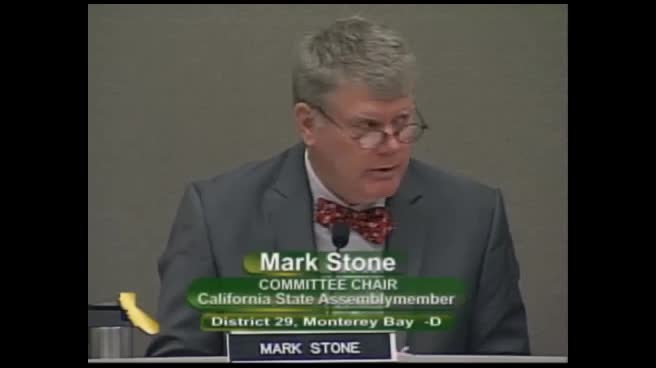 8MIN
Assembly Standing Committee on Judiciary
 10MIN
Assembly Standing Committee on Human Services
Bill Author

Bill Co-Author(s):
