AB 2611: The California Public Records Act: visual or audio recording of peace officer’s death: conditional exemption from disclosure.
- Session Year: 2015-2016
- House: Assembly
- Latest Version Date: 2016-06-22
Existing law, the
(1)The California Public Records Act, Act requires a public agency, defined as any state and or local agencies agency, to make their its public records available for public inspection, inspection or to provide copies of its public records upon payment of specified fees, unless an exemption from disclosure applies. The act declares that access to information concerning the conduct of the peoples business is a fundamental and necessary right of every person in this state. Existing law also requires every public agency to comply with the California Public Records Act and with any subsequent statutory enactment amending the act, or enacting or amending any successor act.
Existing law
Among other exemptions, the act exempts from disclosure any investigatory or security file compiled by any other records of complaints to, or investigations conducted by, any state or local police agency, or any investigatory or security files compiled by any other state or local agency for correctional, law enforcement, or licensing purposes. agency.
Existing law requires state and local law enforcement agencies to disclose the names and addresses of persons involved in complaints or investigations and various other information related to an incident to a victim or any person who suffers bodily injury or property damage or loss as the result of specified incidents or crimes unless the disclosure would endanger the safety of a witness or other person involved in the investigation.
This bill would specify that the disclosure exception applies to disclosures about a victim.
The
This bill would exempt from disclosure any audio or video would prohibit a public agency from disclosing a visual or audio recording depicting of the death of a peace officer killed in the line of duty, unless the disclosure is authorized to be released by the peace officers immediate family, and specified visual or audio recordings that depict death or serious bodily injury in such a morbid and sensational manner that the content is highly offensive to a reasonable person and any public interest or law enforcement purpose for disclosure is clearly outweighed by the public interest in nondisclosure, except as specified. The bill would also define terms for these purposes. in which case, the bill would require the public agency to disclose the visual or audio recording.
Existing constitutional provisions require that a statute that limits the right of access to the meetings of public bodies or the writings of public officials and agencies be adopted with findings demonstrating the interest protected by the limitation and the need for protecting that interest.
This bill would make legislative findings to that effect.
The California Constitution requires local agencies, for the purpose of ensuring public access to the meetings of public bodies and the writings of public officials and agencies, to comply with a statutory enactment that amends or enacts laws relating to public records or open meetings and contains findings demonstrating that the enactment furthers the constitutional requirements relating to this purpose.
This bill would make legislative findings to that effect.
The bill would also make other technical, nonsubstantive changes.
(2)Existing constitutional provisions require that a statute that limits the right of access to the meetings of public bodies or the writings of public officials and agencies be adopted with findings demonstrating the interest protected by the limitation and the need for protecting that interest.
This bill would make legislative findings to that effect.
(3)The California Constitution requires local agencies, for the purpose of ensuring public access to the meetings of public bodies and the writings of public officials and agencies, to comply with a statutory enactment that amends or enacts laws relating to public records or open meetings and contains findings demonstrating that the enactment furthers the constitutional requirements relating to this purpose.
This bill would make legislative findings to that effect.
The
(4)The California Constitution requires the state to reimburse local agencies and school districts for certain costs mandated by the state. Statutory provisions establish procedures for making that reimbursement.
This bill would provide that no reimbursement is required by this act for a specified reason.
Existing law, the California Public Records Act, requires state and local agencies to make their records available for public inspection, unless an exemption from disclosure applies. The act declares that access to information concerning the conduct of the peoples business is a fundamental and necessary right of every person in this state. Existing law also requires every public agency to comply with the California Public Records Act and with any subsequent statutory enactment amending the act, or enacting or amending any successor act.
Existing law exempts from disclosure any investigatory or security file compiled by any other state or local police agency, or any investigatory or security files compiled by any other state or local agency for correctional, law enforcement, or licensing purposes.
This bill would expand that exemption to include any investigatory or security audio or video recording.
Existing law requires state and local law enforcement agencies to disclose the names and addresses of persons involved in complaints or investigations and various other information related to an incident to a victim or any person who suffers bodily injury or property damage or loss as the result of specified incidents or crimes unless the disclosure would endanger the safety of a witness or other person involved in the investigation.
This bill would expand this exception to include disclosures that would endanger the privacy of those persons, and would specify that the disclosure exception applies to disclosures about a victim.
Existing law requires state and local law enforcement agencies to make public specific specified information relating to individuals arrested by the agency for the commission of a crime and the circumstances surrounding all complaints or requests for assistance, among other things, except to the extent that disclosure of a particular item of information would endanger the safety of a person involved in the investigation.
This bill would further expand that exception to include a disclosure that would endanger the privacy of a person involved in the investigation.
The bill would exempt from disclosure any audio or video recording depicting the death or serious bodily injury of a peace officer. officer killed in the line of duty, unless authorized to be released by the officers immediate family, and specified visual or audio recordings that depict death or serious bodily injury in such a morbid and sensational manner that the content is highly offensive to a reasonable person and any public interest or law enforcement purpose for disclosure is clearly outweighed by the public interest in nondisclosure, except as specified. The bill would also define terms for these purposes.
Existing constitutional provisions require that a statute that limits the right of access to the meetings of public bodies or the writings of public officials and agencies be adopted with findings demonstrating the interest protected by the limitation and the need for protecting that interest.
This bill would make legislative findings to that effect.
The California Constitution requires local agencies, for the purpose of ensuring public access to the meetings of public bodies and the writings of public officials and agencies, to comply with a statutory enactment that amends or enacts laws relating to public records or open meetings and contains findings demonstrating that the enactment furthers the constitutional requirements relating to this purpose.
This bill would make legislative findings to that effect.
The bill would also make other technical, nonsubstantive changes.
The California Constitution requires the state to reimburse local agencies and school districts for certain costs mandated by the state. Statutory provisions establish procedures for making that reimbursement.
This bill would provide that no reimbursement is required by this act for a specified reason.
Existing law, the California Public Records Act, requires state and local agencies to make their records available for public inspection, unless an exemption from disclosure applies. The act declares that access to information concerning the conduct of the peoples business is a fundamental and necessary right of every person in this state. Existing law also requires every public agency to comply with the California Public Records Act and with any subsequent statutory enactment amending the act, or enacting or amending any successor act.
Existing law exempts from disclosure any investigatory or security file compiled by any other state or local police agency, or any investigatory or security files compiled by any other state or local agency for correctional, law enforcement, or licensing purposes.
This bill would expand that exemption to include any investigatory or security audio or video recording.
Existing law requires state and local law enforcement agencies to disclose the names and addresses of persons involved in complaints or investigations and various other information related to an incident to a victim or any person who suffers bodily injury or property damage or loss as the result of specified incidents or crimes unless the disclosure would endanger the safety of a witness or other person involved in the investigation.
This bill would expand this exception to include disclosures that would endanger the privacy of those persons, and would specify that the disclosure exception applies to disclosures about a victim.
Existing law requires state and local law enforcement agencies to make public specific specified information relating to individuals arrested by the agency for the commission of a crime and the circumstances surrounding all complaints or requests for assistance, among other things, except to the extent that disclosure of a particular item of information would endanger the safety of a person involved in the investigation.
This bill would further expand that exception to include a disclosure that would endanger the privacy of a person involved in the investigation.
The bill would exempt from disclosure any audio or video recording depicting the death or serious bodily injury of a peace officer.
Existing constitutional provisions require that a statute that limits the right of access to the meetings of public bodies or the writings of public officials and agencies be adopted with findings demonstrating the interest protected by the limitation and the need for protecting that interest.
This bill would make legislative findings to that effect.
The California Constitution requires local agencies, for the purpose of ensuring public access to the meetings of public bodies and the writings of public officials and agencies, to comply with a statutory enactment that amends or enacts laws relating to public records or open meetings and contains findings demonstrating that the enactment furthers the constitutional requirements relating to this purpose.
This bill would make legislative findings to that effect.
The bill would also make other technical, nonsubstantive changes.
The California Constitution requires the state to reimburse local agencies and school districts for certain costs mandated by the state. Statutory provisions establish procedures for making that reimbursement.
This bill would provide that no reimbursement is required by this act for a specified reason.
Except as provided in Sections 6254.7 and 6254.13, this chapter does not require the disclosure of any of the following records:
(a)Preliminary drafts, notes, or interagency or intra-agency memoranda that are not retained by the public agency in the ordinary course of business, if the public interest in withholding those records clearly outweighs the public interest in disclosure.
(b)Records pertaining to pending litigation to which the public agency is a party, or to claims made pursuant to Division 3.6 (commencing with Section 810), until the pending litigation or claim has been finally adjudicated or otherwise settled.
(c)Personnel, medical, or similar files, the disclosure of which would constitute an unwarranted invasion of personal privacy.
(d)Records contained in or related to any of the following:
(1)Applications filed with any state agency responsible for the regulation or supervision of the issuance of securities or of financial institutions, including, but not limited to, banks, savings and loan associations, industrial loan companies, credit unions, and insurance companies.
(2)Examination, operating, or condition reports prepared by, on behalf of, or for the use of, any state agency referred to in paragraph (1).
(3)Preliminary drafts, notes, or interagency or intra-agency communications prepared by, on behalf of, or for the use of, any state agency referred to in paragraph (1).
(4)Information received in confidence by any state agency referred to in paragraph (1).
(e)Geological and geophysical data, plant production data, and similar information relating to utility systems development, or market or crop reports, that are obtained in confidence from any person.
(f)(1)Records of complaints to, or investigations conducted by, or records of intelligence information or security procedures of, the office of the Attorney General and the Department of Justice, the Office of Emergency Services and any state or local police agency, or any investigatory or security files compiled by any other state or local police agency, or any investigatory or security files compiled by any other state or local agency for correctional, law enforcement, or licensing purposes. However, this subdivision does not require the disclosure of that portion of those investigative files that reflect the analysis or conclusions of the investigating officer.
(2)Notwithstanding paragraph (1), state and local law enforcement agencies shall disclose following:
(A)The names and addresses of persons involved in, or witnesses other than confidential informants to, the incident, the description of any property involved, the date, time, and location of the incident, all diagrams, statements of the parties involved in the incident, the statements of all witnesses, other than confidential informants, to the victims of an incident, or an authorized representative thereof, an insurance carrier against which a claim has been or might be made, and any person suffering bodily injury or property damage or loss, as the result of the incident caused by arson, burglary, fire, explosion, larceny, robbery, carjacking, vandalism, vehicle theft, or a crime as defined by subdivision (b) of Section 13951, unless the disclosure would endanger the safety of a witness, a victim, or any other person involved in the investigation, or unless disclosure would endanger the successful completion of the investigation or a related investigation.
(B)Except to the extent that disclosure of a particular item of information would endanger the safety of a person involved in an investigation or would endanger the successful completion of the investigation or a related investigation:
(i)The full name and occupation of every individual arrested by the agency, the individuals physical description including date of birth, color of eyes and hair, sex, height and weight, the time and date of arrest, the time and date of booking, the location of the arrest, the factual circumstances surrounding the arrest, the amount of bail set, the time and manner of release or the location where the individual is currently being held, and all charges the individual is being held upon, including any outstanding warrants from other jurisdictions and parole or probation holds.
(ii)Subject to the restrictions imposed by Section 841.5 of the Penal Code, the time, substance, and location of all complaints or requests for assistance received by the agency and the time and nature of the response thereto, including, to the extent the information regarding crimes alleged or committed or any other incident investigated is recorded, the time, date, and location of occurrence, the time and date of the report, the name and age of the victim, the factual circumstances surrounding the crime or incident, and a general description of any injuries, property, or weapons involved. The name of a victim of any crime defined by Section 220, 236.1, 261, 261.5, 262, 264, 264.1, 265, 266, 266a, 266b, 266c, 266e, 266f, 266j, 267, 269, 273a, 273d, 273.5, 285, 286, 288, 288a, 288.2, 288.3, 288.4, 288.5, 288.7, 289, 422.6, 422.7, 422.75, 646.9, or 647.6 of the Penal Code may be withheld at the victims request, or at the request of the victims parent or guardian if the victim is a minor. When a person is the victim of more than one crime, information disclosing that the person is a victim of a crime defined in any of the sections of the Penal Code set forth in this subdivision may be deleted at the request of the victim, or the victims parent or guardian if the victim is a minor, in making the report of the crime, or of any crime or incident accompanying the crime, available to the public in compliance with the requirements of this clause.
(iii)Subject to the restrictions of Section 841.5 of the Penal Code and this subdivision, the current address of every individual arrested by the agency and the current address of the victim of a crime, if the requester declares under penalty of perjury that the request is made for a scholarly, journalistic, political, or governmental purpose, or that the request is made for investigation purposes by a licensed private investigator as described in Chapter 11.3 (commencing with Section 7512) of Division 3 of the Business and Professions Code. However, the address of the victim of any crime defined by Section 220, 236.1, 261, 261.5, 262, 264, 264.1, 265, 266, 266a, 266b, 266c, 266e, 266f, 266j, 267, 269, 273a, 273d, 273.5, 285, 286, 288, 288a, 288.2, 288.3, 288.4, 288.5, 288.7, 289, 422.6, 422.7, 422.75, 646.9, or 647.6 of the Penal Code shall remain confidential. Address information obtained pursuant to this paragraph shall not be used directly or indirectly, or furnished to another, to sell a product or service to any individual or group of individuals, and the requester shall execute a declaration to that effect under penalty of perjury. This clause shall not be construed to prohibit or limit a scholarly, journalistic, political, or government use of address information obtained pursuant to this clause.
(3)Any visual or audio recording of another that depicts death or serious bodily injury in such a morbid and sensational manner that the content is highly offensive to a reasonable person and any public interest or law enforcement purpose for disclosure is clearly outweighed by the public interest in nondisclosure.
(4)Any visual or audio recording of the death of a peace officer being killed in the line of duty, unless authorized to be released by the officers immediate family.
(5)Notwithstanding any other provision of this subdivision, the state and local law enforcement agency shall disclose a copy of a visual or audio recording if the portion of the recording that meets the criteria of paragraph (3) or (4) can be redacted from the recording.
(6)For purposes of this subdivision, the following definitions shall apply:
(A)Records include, but are not limited to, a visual recording and a customer list provided to a state or local police agency by an alarm or security company at the request of the agency.
(B)Visual or audio recording means any photography, film, videotape, audio recording, or other visual or audio reproduction.
(g)Test questions, scoring keys, and other examination data used to administer a licensing examination, examination for employment, or academic examination, except as provided for in Chapter 3 (commencing with Section 99150) of Part 65 of Division 14 of Title 3 of the Education Code.
(h)The contents of real estate appraisals or engineering or feasibility estimates and evaluations made for or by the state or local agency relative to the acquisition of property, or to prospective public supply and construction contracts, until all of the property has been acquired or all of the contract agreement obtained. However, the law of eminent domain shall not be affected by this provision.
(i)Information required from any taxpayer in connection with the collection of local taxes that is received in confidence and the disclosure of the information to other persons would result in unfair competitive disadvantage to the person supplying the information.
(j)Library circulation records kept for the purpose of identifying the borrower of items available in libraries, and library and museum materials made or acquired and presented solely for reference or exhibition purposes. The exemption in this subdivision shall not apply to records of fines imposed on the borrowers.
(k)Records, the disclosure of which is exempted or prohibited pursuant to federal or state law, including, but not limited to, provisions of the Evidence Code relating to privilege.
(l)Correspondence of and to the Governor or employees of the Governors office or in the custody of or maintained by the Governors Legal Affairs Secretary. However, public records shall not be transferred to the custody of the Governors Legal Affairs Secretary to evade the disclosure provisions of this chapter.
(m)In the custody of or maintained by the Legislative Counsel, except those records in the public database maintained by the Legislative Counsel that are described in Section 10248.
(n)Statements of personal worth or personal financial data required by a licensing agency and filed by an applicant with the licensing agency to establish his or her personal qualification for the license, certificate, or permit applied for.
(o)Financial data contained in applications for financing under Division 27 (commencing with Section 44500) of the Health and Safety Code, if an authorized officer of the California Pollution Control Financing Authority determines that disclosure of the financial data would be competitively injurious to the applicant and the data is required in order to obtain guarantees from the United States Small Business Administration. The California Pollution Control Financing Authority shall adopt rules for review of individual requests for confidentiality under this section and for making available to the public those portions of an application that are subject to disclosure under this chapter.
(p)Records of state agencies related to activities governed by Chapter 10.3 (commencing with Section 3512), Chapter 10.5 (commencing with Section 3525), and Chapter 12 (commencing with Section 3560) of Division 4, that reveal a state agencys deliberative processes, impressions, evaluations, opinions, recommendations, meeting minutes, research, work products, theories, or strategy, or that provide instruction, advice, or training to employees who do not have full collective bargaining and representation rights under these chapters. This subdivision shall not be construed to limit the disclosure duties of a state agency with respect to any other records relating to the activities governed by the employee relations acts referred to in this subdivision.
(q)(1)Records of state agencies related to activities governed by Article 2.6 (commencing with Section 14081), Article 2.8 (commencing with Section 14087.5), and Article 2.91 (commencing with Section 14089) of Chapter 7 of Part 3 of Division 9 of the Welfare and Institutions Code, that reveal the special negotiators deliberative processes, discussions, communications, or any other portion of the negotiations with providers of health care services, impressions, opinions, recommendations, meeting minutes, research, work product, theories, or strategy, or that provide instruction, advice, or training to employees.
(2)Except for the portion of a contract containing the rates of payment, contracts for inpatient services entered into pursuant to these articles, on or after April 1, 1984, shall be open to inspection one year after they are fully executed. If a contract for inpatient services that is entered into prior to April 1, 1984, is amended on or after April 1, 1984, the amendment, except for any portion containing the rates of payment, shall be open to inspection one year after it is fully executed. If the California Medical Assistance Commission enters into contracts with health care providers for other than inpatient hospital services, those contracts shall be open to inspection one year after they are fully executed.
(3)Three years after a contract or amendment is open to inspection under this subdivision, the portion of the contract or amendment containing the rates of payment shall be open to inspection.
(4)Notwithstanding any other law, the entire contract or amendment shall be open to inspection by the Joint Legislative Audit Committee and the Legislative Analysts Office. The committee and that office shall maintain the confidentiality of the contracts and amendments until the time a contract or amendment is fully open to inspection by the public.
(r)Records of Native American graves, cemeteries, and sacred places and records of Native American places, features, and objects described in Sections 5097.9 and 5097.993 of the Public Resources Code maintained by, or in the possession of, the Native American Heritage Commission, another state agency, or a local agency.
(s)A final accreditation report of the Joint Commission on Accreditation of Hospitals that has been transmitted to the State Department of Health Care Services pursuant to subdivision (b) of Section 1282 of the Health and Safety Code.
(t)Records of a local hospital district, formed pursuant to Division 23 (commencing with Section 32000) of the Health and Safety Code, or the records of a municipal hospital, formed pursuant to Article 7 (commencing with Section 37600) or Article 8 (commencing with Section 37650) of Chapter 5 of Part 2 of Division 3 of Title 4 of this code, that relate to any contract with an insurer or nonprofit hospital service plan for inpatient or outpatient services for alternative rates pursuant to Section 10133 of the Insurance Code. However, the record shall be open to inspection within one year after the contract is fully executed.
(u)(1)Information contained in applications for licenses to carry firearms issued pursuant to Section 26150, 26155, 26170, or 26215 of the Penal Code by the sheriff of a county or the chief or other head of a municipal police department that indicates when or where the applicant is vulnerable to attack or that concerns the applicants medical or psychological history or that of members of his or her family.
(2)The home address and telephone number of prosecutors, public defenders, peace officers, judges, court commissioners, and magistrates that are set forth in applications for licenses to carry firearms issued pursuant to Section 26150, 26155, 26170, or 26215 of the Penal Code by the sheriff of a county or the chief or other head of a municipal police department.
(3)The home address and telephone number of prosecutors, public defenders, peace officers, judges, court commissioners, and magistrates that are set forth in licenses to carry firearms issued pursuant to Section 26150, 26155, 26170, or 26215 of the Penal Code by the sheriff of a county or the chief or other head of a municipal police department.
(v)(1)Records of the Managed Risk Medical Insurance Board and the State Department of Health Care Services related to activities governed by Part 6.6 (commencing with Section 12739.5), or Part 6.7 (commencing with Section 12739.70) of Division 2 of the Insurance Code, or Chapter 2 (commencing with Section 15810) or Chapter 4 (commencing with Section 15870) of Part 3.3 of Division 9 of the Welfare and Institutions Code, and that reveal any of the following:
(A)The deliberative processes, discussions, communications, or any other portion of the negotiations with entities contracting or seeking to contract with the board or the department, entities with which the board or the department is considering a contract, or entities with which the board or department is considering or enters into any other arrangement under which the board or the department provides, receives, or arranges services or reimbursement.
(B)The impressions, opinions, recommendations, meeting minutes, research, work product, theories, or strategy of the board or its staff or the department or its staff, or records that provide instructions, advice, or training to their employees.
(2)(A)Except for the portion of a contract that contains the rates of payment, contracts entered into pursuant to Part 6.6 (commencing with Section 12739.5), or Part 6.7 (commencing with Section 12739.70) of Division 2 of the Insurance Code, or Chapter 2 (commencing with Section 15810) or Chapter 4 (commencing with Section 15870) of Part 3.3 of Division 9 of the Welfare and Institutions Code, on or after July 1, 1991, shall be open to inspection one year after their effective dates.
(B)If a contract that is entered into prior to July 1, 1991, is amended on or after July 1, 1991, the amendment, except for any portion containing the rates of payment, shall be open to inspection one year after the effective date of the amendment.
(3)Three years after a contract or amendment is open to inspection pursuant to this subdivision, the portion of the contract or amendment containing the rates of payment shall be open to inspection.
(4)Notwithstanding any other law, the entire contract or amendments to a contract shall be open to inspection by the Joint Legislative Audit Committee. The committee shall maintain the confidentiality of the contracts and amendments thereto, until the contracts or amendments to the contracts are open to inspection pursuant to paragraph (3).
(w)(1)Records of the Managed Risk Medical Insurance Board related to activities governed by Chapter 8 (commencing with Section 10700) of Part 2 of Division 2 of the Insurance Code, and that reveal the deliberative processes, discussions, communications, or any other portion of the negotiations with health plans, or the impressions, opinions, recommendations, meeting minutes, research, work product, theories, or strategy of the board or its staff, or records that provide instructions, advice, or training to employees.
(2)Except for the portion of a contract that contains the rates of payment, contracts for health coverage entered into pursuant to Chapter 8 (commencing with Section 10700) of Part 2 of Division 2 of the Insurance Code, on or after January 1, 1993, shall be open to inspection one year after they have been fully executed.
(3)Notwithstanding any other law, the entire contract or amendments to a contract shall be open to inspection by the Joint Legislative Audit Committee. The committee shall maintain the confidentiality of the contracts and amendments thereto, until the contracts or amendments to the contracts are open to inspection pursuant to paragraph (2).
(x)Financial data contained in applications for registration, or registration renewal, as a service contractor filed with the Director of Consumer Affairs pursuant to Chapter 20 (commencing with Section 9800) of Division 3 of the Business and Professions Code, for the purpose of establishing the service contractors net worth, or financial data regarding the funded accounts held in escrow for service contracts held in force in this state by a service contractor.
(y)(1)Records of the Managed Risk Medical Insurance Board and the State Department of Health Care Services related to activities governed by Part 6.2 (commencing with Section 12693) of Division 2 of the Insurance Code or Sections 14005.26 and 14005.27 of, or Chapter 3 (commencing with Section 15850) of Part 3.3 of Division 9 of, the Welfare and Institutions Code, if the records reveal any of the following:
(A)The deliberative processes, discussions, communications, or any other portion of the negotiations with entities contracting or seeking to contract with the board or the department, entities with which the board or department is considering a contract, or entities with which the board or department is considering or enters into any other arrangement under which the board or department provides, receives, or arranges services or reimbursement.
(B)The impressions, opinions, recommendations, meeting minutes, research, work product, theories, or strategy of the board or its staff, or the department or its staff, or records that provide instructions, advice, or training to employees.
(2)(A)Except for the portion of a contract that contains the rates of payment, contracts entered into pursuant to Part 6.2 (commencing with Section 12693) of Division 2 of the Insurance Code, on or after January 1, 1998, or Sections 14005.26 and 14005.27 of, or Chapter 3 (commencing with Section 15850) of Part 3.3 of Division 9 of, the Welfare and Institutions Code shall be open to inspection one year after their effective dates.
(B)If a contract entered into pursuant to Part 6.2 (commencing with Section 12693) of Division 2 of the Insurance Code or Sections 14005.26 and 14005.27 of, or Chapter 3 (commencing with Section 15850) of Part 3.3 of Division 9 of, the Welfare and Institutions Code, is amended, the amendment shall be open to inspection one year after the effective date of the amendment.
(3)Three years after a contract or amendment is open to inspection pursuant to this subdivision, the portion of the contract or amendment containing the rates of payment shall be open to inspection.
(4)Notwithstanding any other law, the entire contract or amendments to a contract shall be open to inspection by the Joint Legislative Audit Committee. The committee shall maintain the confidentiality of the contracts and amendments thereto until the contract or amendments to a contract are open to inspection pursuant to paragraph (2) or (3).
(5)The exemption from disclosure provided pursuant to this subdivision for the contracts, deliberative processes, discussions, communications, negotiations, impressions, opinions, recommendations, meeting minutes, research, work product, theories, or strategy of the board or its staff, or the department or its staff, shall also apply to the contracts, deliberative processes, discussions, communications, negotiations, impressions, opinions, recommendations, meeting minutes, research, work product, theories, or strategy of applicants pursuant to Chapter 3 (commencing with Section 15850) of Part 3.3 of Division 9 of the Welfare and Institutions Code.
(z)Records obtained pursuant to paragraph (2) of subdivision (f) of Section 2891.1 of the Public Utilities Code.
(aa)A document prepared by or for a state or local agency that assesses its vulnerability to terrorist attack or other criminal acts intended to disrupt the public agencys operations and that is for distribution or consideration in a closed session.
(ab)Critical infrastructure information, as defined in Section 131(3) of Title 6 of the United States Code, that is voluntarily submitted to the Office of Emergency Services for use by that office, including the identity of the person who or entity that voluntarily submitted the information. As used in this subdivision, voluntarily submitted means submitted in the absence of the office exercising any legal authority to compel access to or submission of critical infrastructure information. This subdivision shall not affect the status of information in the possession of any other state or local governmental agency.
(ac)All information provided to the Secretary of State by a person for the purpose of registration in the Advance Health Care Directive Registry, except that those records shall be released at the request of a health care provider, a public guardian, or the registrants legal representative.
(ad)The following records of the State Compensation Insurance Fund:
(1)Records related to claims pursuant to Chapter 1 (commencing with Section 3200) of Division 4 of the Labor Code, to the extent that confidential medical information or other individually identifiable information would be disclosed.
(2)Records related to the discussions, communications, or any other portion of the negotiations with entities contracting or seeking to contract with the fund, and any related deliberations.
(3)Records related to the impressions, opinions, recommendations, meeting minutes of meetings or sessions that are lawfully closed to the public, research, work product, theories, or strategy of the fund or its staff, on the development of rates, contracting strategy, underwriting, or competitive strategy pursuant to the powers granted to the fund in Chapter 4 (commencing with Section 11770) of Part 3 of Division 2 of the Insurance Code.
(4)Records obtained to provide workers compensation insurance under Chapter 4 (commencing with Section 11770) of Part 3 of Division 2 of the Insurance Code, including, but not limited to, any medical claims information, policyholder information provided that nothing in this paragraph shall be interpreted to prevent an insurance agent or broker from obtaining proprietary information or other information authorized by law to be obtained by the agent or broker, and information on rates, pricing, and claims handling received from brokers.
(5)(A)Records that are trade secrets pursuant to Section 6276.44, or Article 11 (commencing with Section 1060) of Chapter 4 of Division 8 of the Evidence Code, including without limitation, instructions, advice, or training provided by the State Compensation Insurance Fund to its board members, officers, and employees regarding the funds special investigation unit, internal audit unit, and informational security, marketing, rating, pricing, underwriting, claims handling, audits, and collections.
(B)Notwithstanding subparagraph (A), the portions of records containing trade secrets shall be available for review by the Joint Legislative Audit Committee, the Bureau of State Audits, Division of Workers Compensation, and the Department of Insurance to ensure compliance with applicable law.
(6)(A)Internal audits containing proprietary information and the following records that are related to an internal audit:
(i)Personal papers and correspondence of any person providing assistance to the fund when that person has requested in writing that his or her papers and correspondence be kept private and confidential. Those papers and correspondence shall become public records if the written request is withdrawn, or upon order of the fund.
(ii)Papers, correspondence, memoranda, or any substantive information pertaining to any audit not completed or an internal audit that contains proprietary information.
(B)Notwithstanding subparagraph (A), the portions of records containing proprietary information, or any information specified in subparagraph (A) shall be available for review by the Joint Legislative Audit Committee, the Bureau of State Audits, Division of Workers Compensation, and the Department of Insurance to ensure compliance with applicable law.
(7)(A)Except as provided in subparagraph (C), contracts entered into pursuant to Chapter 4 (commencing with Section 11770) of Part 3 of Division 2 of the Insurance Code shall be open to inspection one year after the contract has been fully executed.
(B)If a contract entered into pursuant to Chapter 4 (commencing with Section 11770) of Part 3 of Division 2 of the Insurance Code is amended, the amendment shall be open to inspection one year after the amendment has been fully executed.
(C)Three years after a contract or amendment is open to inspection pursuant to this subdivision, the portion of the contract or amendment containing the rates of payment shall be open to inspection.
(D)Notwithstanding any other law, the entire contract or amendments to a contract shall be open to inspection by the Joint Legislative Audit Committee. The committee shall maintain the confidentiality of the contracts and amendments thereto until the contract or amendments to a contract are open to inspection pursuant to this paragraph.
(E)This paragraph is not intended to apply to documents related to contracts with public entities that are not otherwise expressly confidential as to that public entity.
(F)For purposes of this paragraph, fully executed means the point in time when all of the necessary parties to the contract have signed the contract.
This section does not prevent any agency from opening its records concerning the administration of the agency to public inspection, unless disclosure is otherwise prohibited by law.
This section does not prevent any health facility from disclosing to a certified bargaining agent relevant financing information pursuant to Section 8 of the National Labor Relations Act (29 U.S.C. Sec. 158).
SECTION 1.Section 6254.36 is added to the Government Code, to read:6254.36.A public agency shall not disclose a visual or audio recording of the death of a peace officer killed in the line of duty, unless the disclosure is authorized by the peace officers immediate family. If a peace officers immediate family authorizes the disclosure of a visual or audio recording of the death of the peace officer killed in the line of duty, the public agency shall disclose the visual or audio recording.
SEC. 2.The Legislature finds and declares that Section 1 of this act, which amends Section 6254 of adds Section 6254.36 to the Government Code, imposes a limitation on the publics right of access to the meetings of public bodies or the writings of public officials and agencies within the meaning of Section 3 of Article I of the California Constitution. Pursuant to that constitutional provision, the Legislature makes the following findings to demonstrate the interest protected by this limitation and the need for protecting that interest:
In order to ensure the privacy of victims, witnesses, and other persons involved in law enforcement complaints and investigations, related audio or video recordings should not be disclosed. Furthermore, to protect the public from graphic sounds and images that may be contained in an audio or video recording depicting the death or serious bodily injury of a peace officer, such a recording should not be disclosed, thus it is necessary that this act take effect.
Prohibiting the disclosure of a visual or audio recording of the death of a peace officer killed in the line of duty, without the consent of the peace officers immediate family, ensures the privacy of persons who serve in law enforcement and their immediate families, protects those families from additional emotional trauma from public displays of those images, and further protects the public from the graphic sounds and morbid images that would be contained in a visual or audio recording of the death of a peace officer in the line of duty. By providing for a limited, conditional disclosure of these recordings, when other public records relating to the death may be available for public inspection, this act properly balances the publics right to access public records with proper privacy interests.
SEC. 3.The Legislature finds and declares that Section 1 of this act, which amends Section 6254 of adds Section 6254.36 to the Government Code, furthers, within the meaning of paragraph (7) of subdivision (b) of Section 3 of Article I of the California Constitution, the purposes of that constitutional section as it relates to the right of public access to the meetings of local public bodies or the writings of local public officials and local agencies. Pursuant to paragraph (7) of subdivision (b) of Section 3 of Article I of the California Constitution, the Legislature makes the following findings:
Because the California Public Records Act balances access to information with the legitimate need of law enforcement to maintain confidential investigatory or security files, the act furthers the purpose of Section 3 of Article I of the California Constitution.
This act ensures that a local government peace officer is protected from public disclosure of a visual or audio recording of his or her death in the line of duty without authorization by the local peace officers immediate family. Moreover, the limited, conditional disclosure of local agency public records properly balances the right of privacy of a local government peace officer and his or her immediate family with the ability of the public to access other information regarding the local peace officers death, and therefore furthers the purposes of paragraph (7) of subdivision (b) of Section 3 of Article I of the California Constitution.
SEC. 4.No reimbursement is required by this act pursuant to Section 6 of Article XIIIB of the California Constitution because the only costs that may be incurred by a local agency or school district under this act would result from a legislative mandate that is within the scope of paragraph (7) of subdivision (b) of Section 3 of Article I of the California Constitution.
Except as provided in Sections 6254.7 and 6254.13, this chapter does not require the disclosure of any of the following records:
(a)Preliminary drafts, notes, or interagency or intra-agency memoranda that are not retained by the public agency in the ordinary course of business, if the public interest in withholding those records clearly outweighs the public interest in disclosure.
(b)Records pertaining to pending litigation to which the public agency is a party, or to claims made pursuant to Division 3.6 (commencing with Section 810), until the pending litigation or claim has been finally adjudicated or otherwise settled.
(c)Personnel, medical, or similar files, the disclosure of which would constitute an unwarranted invasion of personal privacy.
(d)Records contained in or related to any of the following:
(1)Applications filed with any state agency responsible for the regulation or supervision of the issuance of securities or of financial institutions, including, but not limited to, banks, savings and loan associations, industrial loan companies, credit unions, and insurance companies.
(2)Examination, operating, or condition reports prepared by, on behalf of, or for the use of, any state agency referred to in paragraph (1).
(3)Preliminary drafts, notes, or interagency or intra-agency communications prepared by, on behalf of, or for the use of, any state agency referred to in paragraph (1).
(4)Information received in confidence by any state agency referred to in paragraph (1).
(e)Geological and geophysical data, plant production data, and similar information relating to utility systems development, or market or crop reports, that are obtained in confidence from any person.
(f)(1)Records of complaints to, or investigations conducted by, or records of intelligence information or security procedures of, the office of the Attorney General and the Department of Justice, the Office of Emergency Services and any state or local police agency, or any investigatory or security files, including audio or video recordings, files compiled by any other state or local police agency, or any investigatory or security files compiled by any other state or local agency for correctional, law enforcement, or licensing purposes. However, this subdivision does not require the disclosure of that portion of those investigative files that reflect the analysis or conclusions of the investigating officer.
However,
(2)Notwithstanding paragraph (1), state and local law enforcement agencies shall disclose the following:
(A)The names and addresses of persons involved in, or witnesses other than confidential informants to, the incident, the description of any property involved, the date, time, and location of the incident, all diagrams, statements of the parties involved in the incident, the statements of all witnesses, other than confidential informants, to the victims of an incident, or an authorized representative thereof, an insurance carrier against which a claim has been or might be made, and any person suffering bodily injury or property damage or loss, as the result of the incident caused by arson, burglary, fire, explosion, larceny, robbery, carjacking, vandalism, vehicle theft, or a crime as defined by subdivision (b) of Section 13951, unless the disclosure would endanger the safety or privacy of a witness, a victim, or any other person involved in the investigation, or unless disclosure would endanger the successful completion of the investigation or a related investigation.
However, this subdivision does not require the disclosure of that portion of those investigative files that reflects the analysis or conclusions of the investigating officer.
Customer lists provided to a state or local police agency by an alarm or security company at the request of the agency shall be construed to be records subject to this subdivision.
Notwithstanding any other provision of this subdivision, state and local law enforcement agencies shall make public the following information, except
(B)Except to the extent that disclosure of a particular item of information would endanger the safety or privacy of a person involved in an investigation or would endanger the successful completion of the investigation or a related investigation:
(1)
(i)The full name and occupation of every individual arrested by the agency, the individuals physical description including date of birth, color of eyes and hair, sex, height and weight, the time and date of arrest, the time and date of booking, the location of the arrest, the factual circumstances surrounding the arrest, the amount of bail set, the time and manner of release or the location where the individual is currently being held, and all charges the individual is being held upon, including any outstanding warrants from other jurisdictions and parole or probation holds.
(2)
(ii)Subject to the restrictions imposed by Section 841.5 of the Penal Code, the time, substance, and location of all complaints or requests for assistance received by the agency and the time and nature of the response thereto, including, to the extent the information regarding crimes alleged or committed or any other incident investigated is recorded, the time, date, and location of occurrence, the time and date of the report, the name and age of the victim, the factual circumstances surrounding the crime or incident, and a general description of any injuries, property, or weapons involved. The name of a victim of any crime defined by Section 220, 236.1, 261, 261.5, 262, 264, 264.1, 265, 266, 266a, 266b, 266c, 266e, 266f, 266j, 267, 269, 273a, 273d, 273.5, 285, 286, 288, 288a, 288.2, 288.3, 288.4, 288.5, 288.7, 289, 422.6, 422.7, 422.75, 646.9, or 647.6 of the Penal Code may be withheld at the victims request, or at the request of the victims parent or guardian if the victim is a minor. When a person is the victim of more than one crime, information disclosing that the person is a victim of a crime defined in any of the sections of the Penal Code set forth in this subdivision may be deleted at the request of the victim, or the victims parent or guardian if the victim is a minor, in making the report of the crime, or of any crime or incident accompanying the crime, available to the public in compliance with the requirements of this paragraph. clause.
(3)
(iii)Subject to the restrictions of Section 841.5 of the Penal Code and this subdivision, the current address of every individual arrested by the agency and the current address of the victim of a crime, if the requester declares under penalty of perjury that the request is made for a scholarly, journalistic, political, or governmental purpose, or that the request is made for investigation purposes by a licensed private investigator as described in Chapter 11.3 (commencing with Section 7512) of Division 3 of the Business and Professions Code. However, the address of the victim of any crime defined by Section 220, 236.1, 261, 261.5, 262, 264, 264.1, 265, 266, 266a, 266b, 266c, 266e, 266f, 266j, 267, 269, 273a, 273d, 273.5, 285, 286, 288, 288a, 288.2, 288.3, 288.4, 288.5, 288.7, 289, 422.6, 422.7, 422.75, 646.9, or 647.6 of the Penal Code shall remain confidential. Address information obtained pursuant to this paragraph shall not be used directly or indirectly, or furnished to another, to sell a product or service to any individual or group of individuals, and the requester shall execute a declaration to that effect under penalty of perjury. This paragraph clause shall not be construed to prohibit or limit a scholarly, journalistic, political, or government use of address information obtained pursuant to this paragraph. clause.
(3)Any visual or audio recording of another that depicts death or serious bodily injury in such a morbid and sensational manner that the content is highly offensive to a reasonable person and any public interest or law enforcement purpose for disclosure is clearly outweighed by the public interest in nondisclosure.
(4)Any visual or audio recording of the death of a peace officer being killed in the line of duty, unless authorized to be released by the officers immediate family.
(5)Notwithstanding any other provision of this subdivision, the state and local law enforcement agency shall disclose a copy of a visual or audio recording if the portion of the recording that meets the criteria of paragraph (3) or (4) can be redacted from the recording.
(6)For purposes of this subdivision, the following definitions shall apply:
(A)Records include, but are not limited to, a visual recording and a customer list provided to a state or local police agency by an alarm or security company at the request of the agency.
(B)Visual or audio recording means any photography, film, videotape, audio recording, or other visual or audio reproduction.
(g)Test questions, scoring keys, and other examination data used to administer a licensing examination, examination for employment, or academic examination, except as provided for in Chapter 3 (commencing with Section 99150) of Part 65 of Division 14 of Title 3 of the Education Code.
(h)The contents of real estate appraisals or engineering or feasibility estimates and evaluations made for or by the state or local agency relative to the acquisition of property, or to prospective public supply and construction contracts, until all of the property has been acquired or all of the contract agreement obtained. However, the law of eminent domain shall not be affected by this provision.
(i)Information required from any taxpayer in connection with the collection of local taxes that is received in confidence and the disclosure of the information to other persons would result in unfair competitive disadvantage to the person supplying the information.
(j)Library circulation records kept for the purpose of identifying the borrower of items available in libraries, and library and museum materials made or acquired and presented solely for reference or exhibition purposes. The exemption in this subdivision shall not apply to records of fines imposed on the borrowers.
(k)Records, the disclosure of which is exempted or prohibited pursuant to federal or state law, including, but not limited to, provisions of the Evidence Code relating to privilege.
(l)Correspondence of and to the Governor or employees of the Governors office or in the custody of or maintained by the Governors Legal Affairs Secretary. However, public records shall not be transferred to the custody of the Governors Legal Affairs Secretary to evade the disclosure provisions of this chapter.
(m)In the custody of or maintained by the Legislative Counsel, except those records in the public database maintained by the Legislative Counsel that are described in Section 10248.
(n)Statements of personal worth or personal financial data required by a licensing agency and filed by an applicant with the licensing agency to establish his or her personal qualification for the license, certificate, or permit applied for.
(o)Financial data contained in applications for financing under Division 27 (commencing with Section 44500) of the Health and Safety Code, if an authorized officer of the California Pollution Control Financing Authority determines that disclosure of the financial data would be competitively injurious to the applicant and the data is required in order to obtain guarantees from the United States Small Business Administration. The California Pollution Control Financing Authority shall adopt rules for review of individual requests for confidentiality under this section and for making available to the public those portions of an application that are subject to disclosure under this chapter.
(p)Records of state agencies related to activities governed by Chapter 10.3 (commencing with Section 3512), Chapter 10.5 (commencing with Section 3525), and Chapter 12 (commencing with Section 3560) of Division 4, that reveal a state agencys deliberative processes, impressions, evaluations, opinions, recommendations, meeting minutes, research, work products, theories, or strategy, or that provide instruction, advice, or training to employees who do not have full collective bargaining and representation rights under these chapters. This subdivision shall not be construed to limit the disclosure duties of a state agency with respect to any other records relating to the activities governed by the employee relations acts referred to in this subdivision.
(q)(1)Records of state agencies related to activities governed by Article 2.6 (commencing with Section 14081), Article 2.8 (commencing with Section 14087.5), and Article 2.91 (commencing with Section 14089) of Chapter 7 of Part 3 of Division 9 of the Welfare and Institutions Code, that reveal the special negotiators deliberative processes, discussions, communications, or any other portion of the negotiations with providers of health care services, impressions, opinions, recommendations, meeting minutes, research, work product, theories, or strategy, or that provide instruction, advice, or training to employees.
(2)Except for the portion of a contract containing the rates of payment, contracts for inpatient services entered into pursuant to these articles, on or after April 1, 1984, shall be open to inspection one year after they are fully executed. If a contract for inpatient services that is entered into prior to April 1, 1984, is amended on or after April 1, 1984, the amendment, except for any portion containing the rates of payment, shall be open to inspection one year after it is fully executed. If the California Medical Assistance Commission enters into contracts with health care providers for other than inpatient hospital services, those contracts shall be open to inspection one year after they are fully executed.
(3)Three years after a contract or amendment is open to inspection under this subdivision, the portion of the contract or amendment containing the rates of payment shall be open to inspection.
(4)Notwithstanding any other law, the entire contract or amendment shall be open to inspection by the Joint Legislative Audit Committee and the Legislative Analysts Office. The committee and that office shall maintain the confidentiality of the contracts and amendments until the time a contract or amendment is fully open to inspection by the public.
(r)Records of Native American graves, cemeteries, and sacred places and records of Native American places, features, and objects described in Sections 5097.9 and 5097.993 of the Public Resources Code maintained by, or in the possession of, the Native American Heritage Commission, another state agency, or a local agency.
(s)A final accreditation report of the Joint Commission on Accreditation of Hospitals that has been transmitted to the State Department of Health Care Services pursuant to subdivision (b) of Section 1282 of the Health and Safety Code.
(t)Records of a local hospital district, formed pursuant to Division 23 (commencing with Section 32000) of the Health and Safety Code, or the records of a municipal hospital, formed pursuant to Article 7 (commencing with Section 37600) or Article 8 (commencing with Section 37650) of Chapter 5 of Part 2 of Division 3 of Title 4 of this code, that relate to any contract with an insurer or nonprofit hospital service plan for inpatient or outpatient services for alternative rates pursuant to Section 10133 of the Insurance Code. However, the record shall be open to inspection within one year after the contract is fully executed.
(u)(1)Information contained in applications for licenses to carry firearms issued pursuant to Section 26150, 26155, 26170, or 26215 of the Penal Code by the sheriff of a county or the chief or other head of a municipal police department that indicates when or where the applicant is vulnerable to attack or that concerns the applicants medical or psychological history or that of members of his or her family.
(2)The home address and telephone number of prosecutors, public defenders, peace officers, judges, court commissioners, and magistrates that are set forth in applications for licenses to carry firearms issued pursuant to Section 26150, 26155, 26170, or 26215 of the Penal Code by the sheriff of a county or the chief or other head of a municipal police department.
(3)The home address and telephone number of prosecutors, public defenders, peace officers, judges, court commissioners, and magistrates that are set forth in licenses to carry firearms issued pursuant to Section 26150, 26155, 26170, or 26215 of the Penal Code by the sheriff of a county or the chief or other head of a municipal police department.
(v)(1)Records of the Managed Risk Medical Insurance Board and the State Department of Health Care Services related to activities governed by Part 6.6 (commencing with Section 12739.5), or Part 6.7 (commencing with Section 12739.70) of Division 2 of the Insurance Code, or Chapter 2 (commencing with Section 15810) or Chapter 4 (commencing with Section 15870) of Part 3.3 of Division 9 of the Welfare and Institutions Code, and that reveal any of the following:
(A)The deliberative processes, discussions, communications, or any other portion of the negotiations with entities contracting or seeking to contract with the board or the department, entities with which the board or the department is considering a contract, or entities with which the board or department is considering or enters into any other arrangement under which the board or the department provides, receives, or arranges services or reimbursement.
(B)The impressions, opinions, recommendations, meeting minutes, research, work product, theories, or strategy of the board or its staff or the department or its staff, or records that provide instructions, advice, or training to their employees.
(2)(A)Except for the portion of a contract that contains the rates of payment, contracts entered into pursuant to Part 6.6 (commencing with Section 12739.5), or Part 6.7 (commencing with Section 12739.70) of Division 2 of the Insurance Code, or Chapter 2 (commencing with Section 15810) or Chapter 4 (commencing with Section 15870) of Part 3.3 of Division 9 of the Welfare and Institutions Code, on or after July 1, 1991, shall be open to inspection one year after their effective dates.
(B)If a contract that is entered into prior to July 1, 1991, is amended on or after July 1, 1991, the amendment, except for any portion containing the rates of payment, shall be open to inspection one year after the effective date of the amendment.
(3)Three years after a contract or amendment is open to inspection pursuant to this subdivision, the portion of the contract or amendment containing the rates of payment shall be open to inspection.
(4)Notwithstanding any other law, the entire contract or amendments to a contract shall be open to inspection by the Joint Legislative Audit Committee. The committee shall maintain the confidentiality of the contracts and amendments thereto, until the contracts or amendments to the contracts are open to inspection pursuant to paragraph (3).
(w)(1)Records of the Managed Risk Medical Insurance Board related to activities governed by Chapter 8 (commencing with Section 10700) of Part 2 of Division 2 of the Insurance Code, and that reveal the deliberative processes, discussions, communications, or any other portion of the negotiations with health plans, or the impressions, opinions, recommendations, meeting minutes, research, work product, theories, or strategy of the board or its staff, or records that provide instructions, advice, or training to employees.
(2)Except for the portion of a contract that contains the rates of payment, contracts for health coverage entered into pursuant to Chapter 8 (commencing with Section 10700) of Part 2 of Division 2 of the Insurance Code, on or after January 1, 1993, shall be open to inspection one year after they have been fully executed.
(3)Notwithstanding any other law, the entire contract or amendments to a contract shall be open to inspection by the Joint Legislative Audit Committee. The committee shall maintain the confidentiality of the contracts and amendments thereto, until the contracts or amendments to the contracts are open to inspection pursuant to paragraph (2).
(x)Financial data contained in applications for registration, or registration renewal, as a service contractor filed with the Director of Consumer Affairs pursuant to Chapter 20 (commencing with Section 9800) of Division 3 of the Business and Professions Code, for the purpose of establishing the service contractors net worth, or financial data regarding the funded accounts held in escrow for service contracts held in force in this state by a service contractor.
(y)(1)Records of the Managed Risk Medical Insurance Board and the State Department of Health Care Services related to activities governed by Part 6.2 (commencing with Section 12693) of Division 2 of the Insurance Code or Sections 14005.26 and 14005.27 of, or Chapter 3 (commencing with Section 15850) of Part 3.3 of Division 9 of, the Welfare and Institutions Code, if the records reveal any of the following:
(A)The deliberative processes, discussions, communications, or any other portion of the negotiations with entities contracting or seeking to contract with the board or the department, entities with which the board or department is considering a contract, or entities with which the board or department is considering or enters into any other arrangement under which the board or department provides, receives, or arranges services or reimbursement.
(B)The impressions, opinions, recommendations, meeting minutes, research, work product, theories, or strategy of the board or its staff, or the department or its staff, or records that provide instructions, advice, or training to employees.
(2)(A)Except for the portion of a contract that contains the rates of payment, contracts entered into pursuant to Part 6.2 (commencing with Section 12693) of Division 2 of the Insurance Code, on or after January 1, 1998, or Sections 14005.26 and 14005.27 of, or Chapter 3 (commencing with Section 15850) of Part 3.3 of Division 9 of, the Welfare and Institutions Code shall be open to inspection one year after their effective dates.
(B)If a contract entered into pursuant to Part 6.2 (commencing with Section 12693) of Division 2 of the Insurance Code or Sections 14005.26 and 14005.27 of, or Chapter 3 (commencing with Section 15850) of Part 3.3 of Division 9 of, the Welfare and Institutions Code, is amended, the amendment shall be open to inspection one year after the effective date of the amendment.
(3)Three years after a contract or amendment is open to inspection pursuant to this subdivision, the portion of the contract or amendment containing the rates of payment shall be open to inspection.
(4)Notwithstanding any other law, the entire contract or amendments to a contract shall be open to inspection by the Joint Legislative Audit Committee. The committee shall maintain the confidentiality of the contracts and amendments thereto until the contract or amendments to a contract are open to inspection pursuant to paragraph (2) or (3).
(5)The exemption from disclosure provided pursuant to this subdivision for the contracts, deliberative processes, discussions, communications, negotiations, impressions, opinions, recommendations, meeting minutes, research, work product, theories, or strategy of the board or its staff, or the department or its staff, shall also apply to the contracts, deliberative processes, discussions, communications, negotiations, impressions, opinions, recommendations, meeting minutes, research, work product, theories, or strategy of applicants pursuant to Chapter 3 (commencing with Section 15850) of Part 3.3 of Division 9 of the Welfare and Institutions Code.
(z)Records obtained pursuant to paragraph (2) of subdivision (f) of Section 2891.1 of the Public Utilities Code.
(aa)A document prepared by or for a state or local agency that assesses its vulnerability to terrorist attack or other criminal acts intended to disrupt the public agencys operations and that is for distribution or consideration in a closed session.
(ab)Critical infrastructure information, as defined in Section 131(3) of Title 6 of the United States Code, that is voluntarily submitted to the Office of Emergency Services for use by that office, including the identity of the person who or entity that voluntarily submitted the information. As used in this subdivision, voluntarily submitted means submitted in the absence of the office exercising any legal authority to compel access to or submission of critical infrastructure information. This subdivision shall not affect the status of information in the possession of any other state or local governmental agency.
(ac)All information provided to the Secretary of State by a person for the purpose of registration in the Advance Health Care Directive Registry, except that those records shall be released at the request of a health care provider, a public guardian, or the registrants legal representative.
(ad)The following records of the State Compensation Insurance Fund:
(1)Records related to claims pursuant to Chapter 1 (commencing with Section 3200) of Division 4 of the Labor Code, to the extent that confidential medical information or other individually identifiable information would be disclosed.
(2)Records related to the discussions, communications, or any other portion of the negotiations with entities contracting or seeking to contract with the fund, and any related deliberations.
(3)Records related to the impressions, opinions, recommendations, meeting minutes of meetings or sessions that are lawfully closed to the public, research, work product, theories, or strategy of the fund or its staff, on the development of rates, contracting strategy, underwriting, or competitive strategy pursuant to the powers granted to the fund in Chapter 4 (commencing with Section 11770) of Part 3 of Division 2 of the Insurance Code.
(4)Records obtained to provide workers compensation insurance under Chapter 4 (commencing with Section 11770) of Part 3 of Division 2 of the Insurance Code, including, but not limited to, any medical claims information, policyholder information provided that nothing in this paragraph shall be interpreted to prevent an insurance agent or broker from obtaining proprietary information or other information authorized by law to be obtained by the agent or broker, and information on rates, pricing, and claims handling received from brokers.
(5)(A)Records that are trade secrets pursuant to Section 6276.44, or Article 11 (commencing with Section 1060) of Chapter 4 of Division 8 of the Evidence Code, including without limitation, instructions, advice, or training provided by the State Compensation Insurance Fund to its board members, officers, and employees regarding the funds special investigation unit, internal audit unit, and informational security, marketing, rating, pricing, underwriting, claims handling, audits, and collections.
(B)Notwithstanding subparagraph (A), the portions of records containing trade secrets shall be available for review by the Joint Legislative Audit Committee, the Bureau of State Audits, Division of Workers Compensation, and the Department of Insurance to ensure compliance with applicable law.
(6)(A)Internal audits containing proprietary information and the following records that are related to an internal audit:
(i)Personal papers and correspondence of any person providing assistance to the fund when that person has requested in writing that his or her papers and correspondence be kept private and confidential. Those papers and correspondence shall become public records if the written request is withdrawn, or upon order of the fund.
(ii)Papers, correspondence, memoranda, or any substantive information pertaining to any audit not completed or an internal audit that contains proprietary information.
(B)Notwithstanding subparagraph (A), the portions of records containing proprietary information, or any information specified in subparagraph (A) shall be available for review by the Joint Legislative Audit Committee, the Bureau of State Audits, Division of Workers Compensation, and the Department of Insurance to ensure compliance with applicable law.
(7)(A)Except as provided in subparagraph (C), contracts entered into pursuant to Chapter 4 (commencing with Section 11770) of Part 3 of Division 2 of the Insurance Code shall be open to inspection one year after the contract has been fully executed.
(B)If a contract entered into pursuant to Chapter 4 (commencing with Section 11770) of Part 3 of Division 2 of the Insurance Code is amended, the amendment shall be open to inspection one year after the amendment has been fully executed.
(C)Three years after a contract or amendment is open to inspection pursuant to this subdivision, the portion of the contract or amendment containing the rates of payment shall be open to inspection.
(D)Notwithstanding any other law, the entire contract or amendments to a contract shall be open to inspection by the Joint Legislative Audit Committee. The committee shall maintain the confidentiality of the contracts and amendments thereto until the contract or amendments to a contract are open to inspection pursuant to this paragraph.
(E)This paragraph is not intended to apply to documents related to contracts with public entities that are not otherwise expressly confidential as to that public entity.
(F)For purposes of this paragraph, fully executed means the point in time when all of the necessary parties to the contract have signed the contract.
This section does not prevent any agency from opening its records concerning the administration of the agency to public inspection, unless disclosure is otherwise prohibited by law.
This section does not prevent any health facility from disclosing to a certified bargaining agent relevant financing information pursuant to Section 8 of the National Labor Relations Act (29 U.S.C. Sec. 158).
(ae)Any audio or video recording that depicts the death or serious bodily injury of a peace officer.
SEC. 2.The Legislature finds and declares that Section 1 of this act, which amends Section 6254 of the Government Code, imposes a limitation on the publics right of access to the meetings of public bodies or the writings of public officials and agencies within the meaning of Section 3 of Article I of the California Constitution. Pursuant to that constitutional provision, the Legislature makes the following findings to demonstrate the interest protected by this limitation and the need for protecting that interest:
In order to ensure the privacy of victims, witnesses, and other persons involved in law enforcement complaints and investigations, related audio or video recordings should not be disclosed. Furthermore, to protect the public from graphic sounds and images that may be contained in an audio or video recording depicting the death or serious bodily injury of a peace officer, such a recording should not be disclosed, thus it is necessary that this act take effect.
SEC. 3.The Legislature finds and declares that Section 1 of this act, which amends Section 6254 of the Government Code, furthers, within the meaning of paragraph (7) of subdivision (b) of Section 3 of Article I of the California Constitution, the purposes of that constitutional section as it relates to the right of public access to the meetings of local public bodies or the writings of local public officials and local agencies. Pursuant to paragraph (7) of subdivision (b) of Section 3 of Article I of the California Constitution, the Legislature makes the following findings:
Because the California Public Records Act balances access to information with the legitimate need of law enforcement to maintain confidential investigatory or security files, the act furthers the purpose of Section 3 of Article I of the California Constitution.
SEC. 4.No reimbursement is required by this act pursuant to Section 6 of Article XIIIB of the California Constitution because the only costs that may be incurred by a local agency or school district under this act would result from a legislative mandate that is within the scope of paragraph (7) of subdivision (b) of Section 3 of Article I of the California Constitution.
Except as provided in Sections 6254.7 and 6254.13, this chapter does not require the disclosure of any of the following records:
(a)Preliminary drafts, notes, or interagency or intra-agency memoranda that are not retained by the public agency in the ordinary course of business, if the public interest in withholding those records clearly outweighs the public interest in disclosure.
(b)Records pertaining to pending litigation to which the public agency is a party, or to claims made pursuant to Division 3.6 (commencing with Section 810), until the pending litigation or claim has been finally adjudicated or otherwise settled.
(c)Personnel, medical, or similar files, the disclosure of which would constitute an unwarranted invasion of personal privacy.
(d)Records contained in or related to any of the following:
(1)Applications filed with any state agency responsible for the regulation or supervision of the issuance of securities or of financial institutions, including, but not limited to, banks, savings and loan associations, industrial loan companies, credit unions, and insurance companies.
(2)Examination, operating, or condition reports prepared by, on behalf of, or for the use of, any state agency referred to in paragraph (1).
(3)Preliminary drafts, notes, or interagency or intra-agency communications prepared by, on behalf of, or for the use of, any state agency referred to in paragraph (1).
(4)Information received in confidence by any state agency referred to in paragraph (1).
(e)Geological and geophysical data, plant production data, and similar information relating to utility systems development, or market or crop reports, that are obtained in confidence from any person.
(f)Records of complaints to, or investigations conducted by, or records of intelligence information or security procedures of, the office of the Attorney General and the Department of Justice, the Office of Emergency Services and any state or local police agency, or any investigatory or security files files, including audio or video recordings, compiled by any other state or local police agency, or any investigatory or security files compiled by any other state or local agency for correctional, law enforcement, or licensing purposes. However,
However, state and local law enforcement agencies shall disclose the names and addresses of persons involved in, or witnesses other than confidential informants to, the incident, the description of any property involved, the date, time, and location of the incident, all diagrams, statements of the parties involved in the incident, the statements of all witnesses, other than confidential informants, to the victims of an incident, or an authorized representative thereof, an insurance carrier against which a claim has been or might be made, and any person suffering bodily injury or property damage or loss, as the result of the incident caused by arson, burglary, fire, explosion, larceny, robbery, carjacking, vandalism, vehicle theft, or a crime as defined by subdivision (b) of Section 13951, unless the disclosure would endanger the safety of a witness or or privacy of a witness, a victim, or any other person involved in the investigation, or unless disclosure would endanger the successful completion of the investigation or a related investigation. However,
However, this division subdivision does not require the disclosure of that portion of those investigative files that reflects the analysis or conclusions of the investigating officer.
Customer lists provided to a state or local police agency by an alarm or security company at the request of the agency shall be construed to be records subject to this subdivision.
Notwithstanding any other provision of this subdivision, state and local law enforcement agencies shall make public the following information, except to the extent that disclosure of a particular item of information would endanger the safety or privacy of a person involved in an investigation or would endanger the successful completion of the investigation or a related investigation:
(1)The full name and occupation of every individual arrested by the agency, the individuals physical description including date of birth, color of eyes and hair, sex, height and weight, the time and date of arrest, the time and date of booking, the location of the arrest, the factual circumstances surrounding the arrest, the amount of bail set, the time and manner of release or the location where the individual is currently being held, and all charges the individual is being held upon, including any outstanding warrants from other jurisdictions and parole or probation holds.
(2)Subject to the restrictions imposed by Section 841.5 of the Penal Code, the time, substance, and location of all complaints or requests for assistance received by the agency and the time and nature of the response thereto, including, to the extent the information regarding crimes alleged or committed or any other incident investigated is recorded, the time, date, and location of occurrence, the time and date of the report, the name and age of the victim, the factual circumstances surrounding the crime or incident, and a general description of any injuries, property, or weapons involved. The name of a victim of any crime defined by Section 220, 236.1, 261, 261.5, 262, 264, 264.1, 265, 266, 266a, 266b, 266c, 266e, 266f, 266j, 267, 269, 273a, 273d, 273.5, 285, 286, 288, 288a, 288.2, 288.3 (as added by Chapter 337 of the Statutes of 2006), 288.3 (as added by Section 6 of Proposition 83 of the November 7, 2006, statewide general election), 288.3, 288.4, 288.5, 288.7, 289, 422.6, 422.7, 422.75, 646.9, or 647.6 of the Penal Code may be withheld at the victims request, or at the request of the victims parent or guardian if the victim is a minor. When a person is the victim of more than one crime, information disclosing that the person is a victim of a crime defined in any of the sections of the Penal Code set forth in this subdivision may be deleted at the request of the victim, or the victims parent or guardian if the victim is a minor, in making the report of the crime, or of any crime or incident accompanying the crime, available to the public in compliance with the requirements of this paragraph.
(3)Subject to the restrictions of Section 841.5 of the Penal Code and this subdivision, the current address of every individual arrested by the agency and the current address of the victim of a crime, if the requester declares under penalty of perjury that the request is made for a scholarly, journalistic, political, or governmental purpose, or that the request is made for investigation purposes by a licensed private investigator as described in Chapter 11.3 (commencing with Section 7512) of Division 3 of the Business and Professions Code. However, the address of the victim of any crime defined by Section 220, 236.1, 261, 261.5, 262, 264, 264.1, 265, 266, 266a, 266b, 266c, 266e, 266f, 266j, 267, 269, 273a, 273d, 273.5, 285, 286, 288, 288a, 288.2, 288.3 (as added by Chapter 337 of the Statutes of 2006), 288.3 (as added by Section 6 of Proposition 83 of the November 7, 2006, statewide general election), 288.3, 288.4, 288.5, 288.7, 289, 422.6, 422.7, 422.75, 646.9, or 647.6 of the Penal Code shall remain confidential. Address information obtained pursuant to this paragraph shall not be used directly or indirectly, or furnished to another, to sell a product or service to any individual or group of individuals, and the requester shall execute a declaration to that effect under penalty of perjury. This paragraph shall not be construed to prohibit or limit a scholarly, journalistic, political, or government use of address information obtained pursuant to this paragraph.
(g)Test questions, scoring keys, and other examination data used to administer a licensing examination, examination for employment, or academic examination, except as provided for in Chapter 3 (commencing with Section 99150) of Part 65 of Division 14 of Title 3 of the Education Code.
(h)The contents of real estate appraisals or engineering or feasibility estimates and evaluations made for or by the state or local agency relative to the acquisition of property, or to prospective public supply and construction contracts, until all of the property has been acquired or all of the contract agreement obtained. However, the law of eminent domain shall not be affected by this provision.
(i)Information required from any taxpayer in connection with the collection of local taxes that is received in confidence and the disclosure of the information to other persons would result in unfair competitive disadvantage to the person supplying the information.
(j)Library circulation records kept for the purpose of identifying the borrower of items available in libraries, and library and museum materials made or acquired and presented solely for reference or exhibition purposes. The exemption in this subdivision shall not apply to records of fines imposed on the borrowers.
(k)Records, the disclosure of which is exempted or prohibited pursuant to federal or state law, including, but not limited to, provisions of the Evidence Code relating to privilege.
(l)Correspondence of and to the Governor or employees of the Governors office or in the custody of or maintained by the Governors Legal Affairs Secretary. However, public records shall not be transferred to the custody of the Governors Legal Affairs Secretary to evade the disclosure provisions of this chapter.
(m)In the custody of or maintained by the Legislative Counsel, except those records in the public database maintained by the Legislative Counsel that are described in Section 10248.
(n)Statements of personal worth or personal financial data required by a licensing agency and filed by an applicant with the licensing agency to establish his or her personal qualification for the license, certificate, or permit applied for.
(o)Financial data contained in applications for financing under Division 27 (commencing with Section 44500) of the Health and Safety Code, if an authorized officer of the California Pollution Control Financing Authority determines that disclosure of the financial data would be competitively injurious to the applicant and the data is required in order to obtain guarantees from the United States Small Business Administration. The California Pollution Control Financing Authority shall adopt rules for review of individual requests for confidentiality under this section and for making available to the public those portions of an application that are subject to disclosure under this chapter.
(p)Records of state agencies related to activities governed by Chapter 10.3 (commencing with Section 3512), Chapter 10.5 (commencing with Section 3525), and Chapter 12 (commencing with Section 3560) of Division 4, that reveal a state agencys deliberative processes, impressions, evaluations, opinions, recommendations, meeting minutes, research, work products, theories, or strategy, or that provide instruction, advice, or training to employees who do not have full collective bargaining and representation rights under these chapters. This subdivision shall not be construed to limit the disclosure duties of a state agency with respect to any other records relating to the activities governed by the employee relations acts referred to in this subdivision.
(q)(1)Records of state agencies related to activities governed by Article 2.6 (commencing with Section 14081), Article 2.8 (commencing with Section 14087.5), and Article 2.91 (commencing with Section 14089) of Chapter 7 of Part 3 of Division 9 of the Welfare and Institutions Code, that reveal the special negotiators deliberative processes, discussions, communications, or any other portion of the negotiations with providers of health care services, impressions, opinions, recommendations, meeting minutes, research, work product, theories, or strategy, or that provide instruction, advice, or training to employees.
(2)Except for the portion of a contract containing the rates of payment, contracts for inpatient services entered into pursuant to these articles, on or after April 1, 1984, shall be open to inspection one year after they are fully executed. If a contract for inpatient services that is entered into prior to April 1, 1984, is amended on or after April 1, 1984, the amendment, except for any portion containing the rates of payment, shall be open to inspection one year after it is fully executed. If the California Medical Assistance Commission enters into contracts with health care providers for other than inpatient hospital services, those contracts shall be open to inspection one year after they are fully executed.
(3)Three years after a contract or amendment is open to inspection under this subdivision, the portion of the contract or amendment containing the rates of payment shall be open to inspection.
(4)Notwithstanding any other law, the entire contract or amendment shall be open to inspection by the Joint Legislative Audit Committee and the Legislative Analysts Office. The committee and that office shall maintain the confidentiality of the contracts and amendments until the time a contract or amendment is fully open to inspection by the public.
(r)Records of Native American graves, cemeteries, and sacred places and records of Native American places, features, and objects described in Sections 5097.9 and 5097.993 of the Public Resources Code maintained by, or in the possession of, the Native American Heritage Commission, another state agency, or a local agency.
(s)A final accreditation report of the Joint Commission on Accreditation of Hospitals that has been transmitted to the State Department of Health Care Services pursuant to subdivision (b) of Section 1282 of the Health and Safety Code.
(t)Records of a local hospital district, formed pursuant to Division 23 (commencing with Section 32000) of the Health and Safety Code, or the records of a municipal hospital, formed pursuant to Article 7 (commencing with Section 37600) or Article 8 (commencing with Section 37650) of Chapter 5 of Part 2 of Division 3 of Title 4 of this code, that relate to any contract with an insurer or nonprofit hospital service plan for inpatient or outpatient services for alternative rates pursuant to Section 10133 of the Insurance Code. However, the record shall be open to inspection within one year after the contract is fully executed.
(u)(1)Information contained in applications for licenses to carry firearms issued pursuant to Section 26150, 26155, 26170, or 26215 of the Penal Code by the sheriff of a county or the chief or other head of a municipal police department that indicates when or where the applicant is vulnerable to attack or that concerns the applicants medical or psychological history or that of members of his or her family.
(2)The home address and telephone number of prosecutors, public defenders, peace officers, judges, court commissioners, and magistrates that are set forth in applications for licenses to carry firearms issued pursuant to Section 26150, 26155, 26170, or 26215 of the Penal Code by the sheriff of a county or the chief or other head of a municipal police department.
(3)The home address and telephone number of prosecutors, public defenders, peace officers, judges, court commissioners, and magistrates that are set forth in licenses to carry firearms issued pursuant to Section 26150, 26155, 26170, or 26215 of the Penal Code by the sheriff of a county or the chief or other head of a municipal police department.
(v)(1)Records of the Managed Risk Medical Insurance Board and the State Department of Health Care Services related to activities governed by Part 6.3 (commencing with Section 12695), Part 6.5 (commencing with Section 12700), Part 6.6 (commencing with Section 12739.5), or Part 6.7 (commencing with Section 12739.70) of Division 2 of the Insurance Code, or Chapter 2 (commencing with Section 15810) or Chapter 4 (commencing with Section 15870) of Part 3.3 of Division 9 of the Welfare and Institutions Code, and that reveal any of the following:
(A)The deliberative processes, discussions, communications, or any other portion of the negotiations with entities contracting or seeking to contract with the board or the department, entities with which the board or the department is considering a contract, or entities with which the board or department is considering or enters into any other arrangement under which the board or the department provides, receives, or arranges services or reimbursement.
(B)The impressions, opinions, recommendations, meeting minutes, research, work product, theories, or strategy of the board or its staff or the department or its staff, or records that provide instructions, advice, or training to their employees.
(2)(A)Except for the portion of a contract that contains the rates of payment, contracts entered into pursuant to Part 6.3 (commencing with Section 12695), Part 6.5 (commencing with Section 12700), Part 6.6 (commencing with Section 12739.5), or Part 6.7 (commencing with Section 12739.70) of Division 2 of the Insurance Code, or Chapter 2 (commencing with Section 15810) or Chapter 4 (commencing with Section 15870) of Part 3.3 of Division 9 of the Welfare and Institutions Code, on or after July 1, 1991, shall be open to inspection one year after their effective dates.
(B)If a contract that is entered into prior to July 1, 1991, is amended on or after July 1, 1991, the amendment, except for any portion containing the rates of payment, shall be open to inspection one year after the effective date of the amendment.
(3)Three years after a contract or amendment is open to inspection pursuant to this subdivision, the portion of the contract or amendment containing the rates of payment shall be open to inspection.
(4)Notwithstanding any other law, the entire contract or amendments to a contract shall be open to inspection by the Joint Legislative Audit Committee. The committee shall maintain the confidentiality of the contracts and amendments thereto, until the contracts or amendments to the contracts are open to inspection pursuant to paragraph (3).
(w)(1)Records of the Managed Risk Medical Insurance Board related to activities governed by Chapter 8 (commencing with Section 10700) of Part 2 of Division 2 of the Insurance Code, and that reveal the deliberative processes, discussions, communications, or any other portion of the negotiations with health plans, or the impressions, opinions, recommendations, meeting minutes, research, work product, theories, or strategy of the board or its staff, or records that provide instructions, advice, or training to employees.
(2)Except for the portion of a contract that contains the rates of payment, contracts for health coverage entered into pursuant to Chapter 8 (commencing with Section 10700) of Part 2 of Division 2 of the Insurance Code, on or after January 1, 1993, shall be open to inspection one year after they have been fully executed.
(3)Notwithstanding any other law, the entire contract or amendments to a contract shall be open to inspection by the Joint Legislative Audit Committee. The committee shall maintain the confidentiality of the contracts and amendments thereto, until the contracts or amendments to the contracts are open to inspection pursuant to paragraph (2).
(x)Financial data contained in applications for registration, or registration renewal, as a service contractor filed with the Director of Consumer Affairs pursuant to Chapter 20 (commencing with Section 9800) of Division 3 of the Business and Professions Code, for the purpose of establishing the service contractors net worth, or financial data regarding the funded accounts held in escrow for service contracts held in force in this state by a service contractor.
(y)(1)Records of the Managed Risk Medical Insurance Board and the State Department of Health Care Services related to activities governed by Part 6.2 (commencing with Section 12693) or Part 6.4 (commencing with Section 12699.50) of Division 2 of the Insurance Code or Sections 14005.26 and 14005.27 of, or Chapter 3 (commencing with Section 15850) of Part 3.3 of Division 9 of, the Welfare and Institutions Code, if the records reveal any of the following:
(A)The deliberative processes, discussions, communications, or any other portion of the negotiations with entities contracting or seeking to contract with the board or the department, entities with which the board or department is considering a contract, or entities with which the board or department is considering or enters into any other arrangement under which the board or department provides, receives, or arranges services or reimbursement.
(B)The impressions, opinions, recommendations, meeting minutes, research, work product, theories, or strategy of the board or its staff, or the department or its staff, or records that provide instructions, advice, or training to employees.
(2)(A)Except for the portion of a contract that contains the rates of payment, contracts entered into pursuant to Part 6.2 (commencing with Section 12693) or Part 6.4 (commencing with Section 12699.50) of Division 2 of the Insurance Code, on or after January 1, 1998, or Sections 14005.26 and 14005.27 of, or Chapter 3 (commencing with Section 15850) of Part 3.3 of Division 9 of, the Welfare and Institutions Code shall be open to inspection one year after their effective dates.
(B)If a contract entered into pursuant to Part 6.2 (commencing with Section 12693) or Part 6.4 (commencing with Section 12699.50) of Division 2 of the Insurance Code or Sections 14005.26 and 14005.27 of, or Chapter 3 (commencing with Section 15850) of Part 3.3 of Division 9 of, the Welfare and Institutions Code, is amended, the amendment shall be open to inspection one year after the effective date of the amendment.
(3)Three years after a contract or amendment is open to inspection pursuant to this subdivision, the portion of the contract or amendment containing the rates of payment shall be open to inspection.
(4)Notwithstanding any other law, the entire contract or amendments to a contract shall be open to inspection by the Joint Legislative Audit Committee. The committee shall maintain the confidentiality of the contracts and amendments thereto until the contract or amendments to a contract are open to inspection pursuant to paragraph (2) or (3).
(5)The exemption from disclosure provided pursuant to this subdivision for the contracts, deliberative processes, discussions, communications, negotiations, impressions, opinions, recommendations, meeting minutes, research, work product, theories, or strategy of the board or its staff, or the department or its staff, shall also apply to the contracts, deliberative processes, discussions, communications, negotiations, impressions, opinions, recommendations, meeting minutes, research, work product, theories, or strategy of applicants pursuant to Part 6.4 (commencing with Section 12699.50) of Division 2 of the Insurance Code or Chapter 3 (commencing with Section 15850) of Part 3.3 of Division 9 of the Welfare and Institutions Code.
(z)Records obtained pursuant to paragraph (2) of subdivision (f) of Section 2891.1 of the Public Utilities Code.
(aa)A document prepared by or for a state or local agency that assesses its vulnerability to terrorist attack or other criminal acts intended to disrupt the public agencys operations and that is for distribution or consideration in a closed session.
(ab)Critical infrastructure information, as defined in Section 131(3) of Title 6 of the United States Code, that is voluntarily submitted to the Office of Emergency Services for use by that office, including the identity of the person who or entity that voluntarily submitted the information. As used in this subdivision, voluntarily submitted means submitted in the absence of the office exercising any legal authority to compel access to or submission of critical infrastructure information. This subdivision shall not affect the status of information in the possession of any other state or local governmental agency.
(ac)All information provided to the Secretary of State by a person for the purpose of registration in the Advance Health Care Directive Registry, except that those records shall be released at the request of a health care provider, a public guardian, or the registrants legal representative.
(ad)The following records of the State Compensation Insurance Fund:
(1)Records related to claims pursuant to Chapter 1 (commencing with Section 3200) of Division 4 of the Labor Code, to the extent that confidential medical information or other individually identifiable information would be disclosed.
(2)Records related to the discussions, communications, or any other portion of the negotiations with entities contracting or seeking to contract with the fund, and any related deliberations.
(3)Records related to the impressions, opinions, recommendations, meeting minutes of meetings or sessions that are lawfully closed to the public, research, work product, theories, or strategy of the fund or its staff, on the development of rates, contracting strategy, underwriting, or competitive strategy pursuant to the powers granted to the fund in Chapter 4 (commencing with Section 11770) of Part 3 of Division 2 of the Insurance Code.
(4)Records obtained to provide workers compensation insurance under Chapter 4 (commencing with Section 11770) of Part 3 of Division 2 of the Insurance Code, including, but not limited to, any medical claims information, policyholder information provided that nothing in this paragraph shall be interpreted to prevent an insurance agent or broker from obtaining proprietary information or other information authorized by law to be obtained by the agent or broker, and information on rates, pricing, and claims handling received from brokers.
(5)(A)Records that are trade secrets pursuant to Section 6276.44, or Article 11 (commencing with Section 1060) of Chapter 4 of Division 8 of the Evidence Code, including without limitation, instructions, advice, or training provided by the State Compensation Insurance Fund to its board members, officers, and employees regarding the funds special investigation unit, internal audit unit, and informational security, marketing, rating, pricing, underwriting, claims handling, audits, and collections.
(B)Notwithstanding subparagraph (A), the portions of records containing trade secrets shall be available for review by the Joint Legislative Audit Committee, the Bureau of State Audits, Division of Workers Compensation, and the Department of Insurance to ensure compliance with applicable law.
(6)(A)Internal audits containing proprietary information and the following records that are related to an internal audit:
(i)Personal papers and correspondence of any person providing assistance to the fund when that person has requested in writing that his or her papers and correspondence be kept private and confidential. Those papers and correspondence shall become public records if the written request is withdrawn, or upon order of the fund.
(ii)Papers, correspondence, memoranda, or any substantive information pertaining to any audit not completed or an internal audit that contains proprietary information.
(B)Notwithstanding subparagraph (A), the portions of records containing proprietary information, or any information specified in subparagraph (A) shall be available for review by the Joint Legislative Audit Committee, the Bureau of State Audits, Division of Workers Compensation, and the Department of Insurance to ensure compliance with applicable law.
(7)(A)Except as provided in subparagraph (C), contracts entered into pursuant to Chapter 4 (commencing with Section 11770) of Part 3 of Division 2 of the Insurance Code shall be open to inspection one year after the contract has been fully executed.
(B)If a contract entered into pursuant to Chapter 4 (commencing with Section 11770) of Part 3 of Division 2 of the Insurance Code is amended, the amendment shall be open to inspection one year after the amendment has been fully executed.
(C)Three years after a contract or amendment is open to inspection pursuant to this subdivision, the portion of the contract or amendment containing the rates of payment shall be open to inspection.
(D)Notwithstanding any other law, the entire contract or amendments to a contract shall be open to inspection by the Joint Legislative Audit Committee. The committee shall maintain the confidentiality of the contracts and amendments thereto until the contract or amendments to a contract are open to inspection pursuant to this paragraph.
(E)This paragraph is not intended to apply to documents related to contracts with public entities that are not otherwise expressly confidential as to that public entity.
(F)For purposes of this paragraph, fully executed means the point in time when all of the necessary parties to the contract have signed the contract.
This section does not prevent any agency from opening its records concerning the administration of the agency to public inspection, unless disclosure is otherwise prohibited by law.
This section does not prevent any health facility from disclosing to a certified bargaining agent relevant financing information pursuant to Section 8 of the National Labor Relations Act (29 U.S.C. Sec. 158).
(ae)Any audio or video recording that depicts the death or serious bodily injury of a peace officer.
SEC. 2.The Legislature finds and declares that Section 1 of this act, which amends Section 6254 of the Government Code, imposes a limitation on the publics right of access to the meetings of public bodies or the writings of public officials and agencies within the meaning of Section 3 of Article I of the California Constitution. Pursuant to that constitutional provision, the Legislature makes the following findings to demonstrate the interest protected by this limitation and the need for protecting that interest:
In order to ensure the privacy of victims, witnesses, and other persons involved in law enforcement complaints and investigations, related audio or video recordings should not be disclosed. Furthermore, to protect the public from graphic sounds and images that may be contained in an audio or video recording depicting the death or serious bodily injury of a peace officer, such a recording should not be disclosed, thus it is necessary that this act take effect.
SEC. 3.The Legislature finds and declares that Section 1 of this act, which amends Section 6254 of the Government Code, furthers, within the meaning of paragraph (7) of subdivision (b) of Section 3 of Article I of the California Constitution, the purposes of that constitutional section as it relates to the right of public access to the meetings of local public bodies or the writings of local public officials and local agencies. Pursuant to paragraph (7) of subdivision (b) of Section 3 of Article I of the California Constitution, the Legislature makes the following findings:
Because the California Public Records Act balances access to information with the legitimate need of law enforcement to maintain confidential investigatory or security files, the act furthers the purpose of Section 3 of Article I of the California Constitution.
SEC. 4.No reimbursement is required by this act pursuant to Section 6 of Article XIII B of the California Constitution because the only costs that may be incurred by a local agency or school district under this act would result from a legislative mandate that is within the scope of paragraph (7) of subdivision (b) of Section 3 of Article I of the California Constitution.
|
Date
|
Status
|
|---|---|
| May 23, 2016 | Read third time. Passed. Ordered to the Senate. (Ayes 76. Noes 0. Page 4904.) |
| Aug 23, 2016 | In committee: Set, first hearing. Hearing canceled at the request of author. |
| Aug 18, 2016 | Re-referred to Com. on JUD. pursuant to Assembly Rule 77.2. |
| Aug 16, 2016 | In Assembly. Concurrence in Senate amendments pending. May be considered on or after August 18 pursuant to Assembly Rule 77. |
| Aug 15, 2016 | Read third time. Passed. Ordered to the Assembly. (Ayes 23. Noes 6.). |
| Aug 15, 2016 | Read third time. Passed. Ordered to the Assembly. (Ayes 23. Noes 6. Page 4964.). |
| Aug 15, 2016 | Read third time. Passed. Ordered to the Assembly. |
| Aug 2, 2016 | Read second time. Ordered to third reading. |
| Aug 1, 2016 | From committee: Be placed on second reading file pursuant to Senate Rule 28.8. |
| Jun 29, 2016 | From committee: Do pass and re-refer to Com. on APPR. (Ayes 6. Noes 1.) (June 28). Re-referred to Com. on APPR. |
| Jun 22, 2016 | From committee: Do pass and re-refer to Com. on PUB. S. (Ayes 6. Noes 1.) (June 21). Re-referred to Com. on PUB. S. |
| Jun 22, 2016 | From committee chair, with author's amendments: Amend, and re-refer to committee. Read second time, amended, and re-referred to Com. on PUB. S. |
| Jun 13, 2016 | In committee: Set, first hearing. Hearing canceled at the request of author. |
| Jun 2, 2016 | Referred to Coms. on JUD. and PUB. S. |
| May 23, 2016 | Read third time. Passed. Ordered to the Senate. (Ayes 76. Noes 0.) |
| Feb 19, 2016 | Introduced. To print. |
| May 23, 2016 | Read third time. Passed. Ordered to the Senate. |
| May 23, 2016 | In Senate. Read first time. To Com. on RLS. for assignment. |
| May 19, 2016 | Ordered to third reading. |
| May 19, 2016 | From Consent Calendar. |
| May 12, 2016 | Read second time. Ordered to Consent Calendar. |
| May 11, 2016 | From committee: Do pass. To Consent Calendar. (Ayes 20. Noes 0.) (May 11). |
| Apr 20, 2016 | From committee: Do pass and re-refer to Com. on APPR. (Ayes 9. Noes 0.) (April 19). Re-referred to Com. on APPR. |
| Apr 18, 2016 | Re-referred to Com. on P. & C.P. |
| Apr 14, 2016 | Read second time and amended. |
| Apr 13, 2016 | From committee: Amend, and do pass as amended and re-refer to Com. on P. & C.P. (Ayes 10. Noes 0.) (April 12). |
| Mar 17, 2016 | Referred to Coms. on JUD. and P. & C.P. |
| Feb 22, 2016 | Read first time. |
| Feb 21, 2016 | From printer. May be heard in committee March 22. |
|
Date
|
Description
|
Location
|
Votes
|
|
|---|---|---|---|---|
| Aug 15, 2016 | Assembly 3rd Reading AB2611 Low By Galgiani | Senate Floor |
Passed |
|
| Jun 28, 2016 | Do pass, but first be re-referred to the Committee on [Appropriations] | Senate Standing Committee on Public Safety |
Passed |
|
| Jun 21, 2016 | Do pass, but first be re-referred to the Committee on [Public Safety] | Senate Standing Committee on Judiciary |
Passed |
|
| May 23, 2016 | AB 2611 LOW Assembly Third Reading | Assembly Floor |
Passed |
|
| May 11, 2016 | Do pass. To Consent Calendar. | Assembly Standing Committee on Appropriations |
Passed |
|
| Apr 19, 2016 | Do pass and be re-referred to the Committee on [Appropriations] | Assembly Standing Committee on Privacy and Consumer Protection |
Passed |
|
| Apr 12, 2016 | Do pass as amended and be re-referred to the Committee on [Privacy and Consumer Protection] | Assembly Standing Committee on Judiciary |
Passed |
This list shows positions taken on this bill by organizations on the date displayed, which is linked to the original source.
Positions by individuals are not included.
|
Organization
|
Position
|
Date
|
|---|---|---|
| Aaron Read and Associates | * Support | Jun 28, 2016 |
| American Civil Liberties Union of California | ** Against | Aug 15, 2016 |
| Association of Deputy District Attorneys | ** Support | Aug 15, 2016 |
| Association of Los Angeles Deputy Sheriffs | ** Support | Aug 15, 2016 |
| Association Of Orange County Deputy Sheriffs | ** Support | Aug 15, 2016 |
| BORAC | * Support | Jun 28, 2016 |
| California Association Of Highway Patrolmen | * Support | Jun 28, 2016 |
| California Newspaper Publishers Association | ** Against | Aug 15, 2016 |
| California Peace Officers Association | ** Support | Aug 15, 2016 |
| California Statewide Law Enforcement Association | ** Support | Aug 15, 2016 |
| Electronic Frontier Foundation | ** Against | Aug 15, 2016 |
| Fraternal Order of Police | ** Support | Aug 15, 2016 |
| Legal Services for Prisoners with Children | ** Against | Aug 15, 2016 |
| Long Beach Police Officers Association | ** Support | Aug 15, 2016 |
| Los Angeles County Professional Peace Officers Association | ** Support | Aug 15, 2016 |
| Los Angeles Police Protective League | ** Support | Aug 15, 2016 |
| Peace Officers Research Association Of California | ** Support | Aug 15, 2016 |
| Riverside Sheriffs' Association | ** Support | Aug 15, 2016 |
| Sacramento County Deputy Sheriffs' Association | ** Support | Aug 15, 2016 |
Date of Hearing: August 23, 2016
ASSEMBLY COMMITTEE ON JUDICIARY
Mark Stone, Chair
ABPCA Bill Id:AB 2611
Author:(Low) – As Amended Ver: June 22, 2016
FOR CONCURRENCE
SUBJECT: THE CALIFORNIA PUBLIC RECORDS ACT: EXEMPTIONS
KEY ISSUE: Should the California public records act be amended to prohibit DISCLOSURE of an entire category of public records – ANY audio or video recording depicting the death of a peace officer – unless disclosure is authorized by the peace officer's immediate family?
SYNOPSIS
As originally heard by this Committee, this bill would have clarified that an audio or video recording compiled by a law enforcement agency is a “public record” for purposes of the California Public Records Act (CPRA). More important, it would have exempted from mandatory disclosure under the CPRA any visual or audio recording that depicted either of the following: (1) the death or serious bodily injury of any person in a morbid, sensational, or highly offensive manner, such that the public interest in disclosure is clearly outweighed by the public interest in nondisclosure; or (2) the death of a peace officer killed in the line of duty, unless disclosure is authorized by the officer’s immediate family. The prior version of the bill modified an existing provision of the CPRA that imposes conditions on the disclosure of investigatory records held by law enforcement agencies, and like other exemptions in that provision, it only provided that an agency was not "required" to disclose such a recording; but, like other exemptions, it would not have prevented an agency from voluntarily disclosing the public record if it thought that the interest in disclosure outweighed the interest in nondisclosure.
As amended in the Senate and presently before this Committee, however, the bill scraps that approach and adds a new section to the CPRA creating a blanket restriction on the disclosure of a video or audio recording that depicts the death of a peace officer in the line of duty, unless the peace officer's family consents to disclosure. The bill would no longer exempt any morbid, sensational, or highly offensive depiction of a person who is not a peace officer. In addition, the bill no longer permits disclosure of those parts of the recording that do not depict the death of the officer. Finally, and perhaps most significantly, by adding a new section to the CPRA this bill creates an absolute prohibition on the disclosure of those recordings, absent family consent. The prior version of the bill, because it amended an existing list of exemptions, gave the agency the discretion to disclose the recording. That is, the CPRA exemption statute states that an agency is not "required" to disclose exempted records; however, an agency may voluntarily disclose such records so long as disclosure is not expressly prohibited. This bill would remove agency discretion when it comes to recordings depicting the death of an officer. It would also remove the agency’s discretion to withhold the recording if the family authorizes disclosure thereby giving private parties, rather than public agencies, the responsibility for making decisions whether to release records held by the agencies, something which is unprecedented in the CPRA. As required by the California constitution, this bill sets forth legislative findings that demonstrate the need for restricting access to public records. However, as noted below, the rationale set forth is not entirely consistent with the substantive provision of the bill. The bill is supported by several state and regional law enforcement groups and opposed by newspaper publishers and the ACLU.
SUMMARY:
- Prohibits a public agency from disclosing a visual or audio recording of the death of a police officer killed in the line of duty, unless the disclosure is authorized by the peace officer's immediate family. Specifies that if the immediate family does authorize disclosure, then the public agency shall disclose the recording.
- Makes legislative findings, as required by the California Constitution, to demonstrate the public interest in imposing a limit on the public's right to access public records.
EXISTING LAW:
- Provides, under the California Public Records Act (CPRA), that all public agency records are open to public inspection upon request, unless the records are otherwise exempt from public disclosure. (Government Code Section 6250 et seq. All further statutory references are to this code, unless otherwise indicated.)
- Requires any agency to open its records concerning the administration of the agency to public inspection, unless disclosure is otherwise prohibited by law. (Section 6253 (b).)
- Exempts from disclosure in response to a CPRA request the records of complaints to, or investigations conducted by, or records of intelligence information or security procedures of, the office of the Attorney General and the Department of Justice, the Office of Emergency Services and any state or local police agency. (Section 6254 (f).)
- Exempts from public disclosure in response to a CPRA request other records that are not specifically exempt when “the facts of the particular case the public interest served by not disclosing the record clearly outweighs the public interest served by disclosure of the record.” (Section 6255 (a).)
- Defines a “public record” to mean “any writing containing information relating to the conduct of the public’s business prepared, owned, used, or retained by any state or local agency regardless of physical form or characteristics.” (Section 6252 (e).)
FISCAL EFFECT: As currently in print this bill is keyed fiscal.
COMMENTS: As a general rule, California law does not grant a person a right of privacy in the images or media portrayals of the person's deceased family members: “It is well settled that the right of privacy is purely a personal one; it cannot be asserted by anyone other than the person whose privacy has been invaded, that is, plaintiff must plead and prove that his privacy has been invaded. [Citations omitted.] Further, the right does not survive but dies with the person.” [Hendrickson v. California Newspapers, Inc. (1975) 48 Cal.App.3d 59, 62, (affirming the dismissal of an action for invasion of privacy brought by deceased's surviving family members against a newspaper that published an obituary revealing deceased's prior criminal conviction).] Notwithstanding this general rule, a 2010 California appellate court case, Catsouras v. Department of California Highway Patrol (2010) 181 Cal.App.4th 856, suggests that family members of a decedent may have a common law invasion of privacy action based upon the public release of death images of a loved one. (Id at p. 864.) In Catsouras, an 18-year old woman was tragically killed and nearly decapitated in an automobile accident. As if her family had not suffered enough from her death, they were tortured by viewing horrifying images of her maimed body on the Internet after they were transmitted by two California Highway Patrol Officers to friends and family, who in turn posted them on the Internet, where they went viral. The appellate court found that the family had claims for invasion of privacy, intentional infliction of emotional distress, and negligence against the officers, finding “there is no indication that any issue of public interest . . . was involved” and that the public dissemination of the photograph was a case of “pure morbidity and sensationalism without legitimate public interest or law enforcement purpose.” (Id., at p. 874.)
The Catsouras decision may lend some support to that provision in the prior version of the bill that allowed an agency to withhold particularly morbid and sensational images, if it were to such an extent that public interest in disclosure would be clearly outweighed by the public interest in nondisclosure. However, the Catsouras case does not support a blanket restriction on the disclosure of any depiction of the death of a peace officer, regardless of the context, the nature of the killing, or the strength of the competing public interest in disclosure. Moreover, in Catsouras, the images were not released by a law enforcement agency pursuant to a public records request; rather, the images were apparently negligently transmitted to the friends and family of peace officers and subsequently posted (and repeatedly re-posted) on the Internet. This bill seems both under-inclusive and over-inclusive: it only applies to the death of a peace officer (even though family members of public servants may be equally offended by images depicting the death of a loved one); it applies to the depiction of any death of a police officer, whether or not the depiction is particularly morbid, sensational, or offensive; and finally, by referring to “a visual or audio recording,” it applies to the entirety of a recording that shows the death of a peace officer, not just the portion of the recording which depicts the death of a peace officer. As the ACLU notes in its letter of opposition, it is not clear why the family of peace officers alone could claim a right to prohibit disclosure if the bill is premised on the notion that a grieving family's pain and suffering should not be subject to images depicting the death of a loved one. A family's grief is not any more or less compelling because of the decedent's occupation.
The prior version of bill, like existing law, would not "require" a law enforcement agency to withhold an image of the killing of a peace officer in the line of duty. The CPRA contains an array of both highly specific and fairly general exemptions. Except where the CPRA expressly declares that certain information in a public record is "confidential" or expressly prohibits disclosure, however, the general exemptions listed in the CPRA are not construed as necessarily prohibiting the disclosure of exempted records. Rather, the exemption statute states that an agency is not "required" to disclose exempted records; however, an agency may voluntarily disclose such records so long as disclosure is not expressly prohibited. A policy favoring some degree of discretion is also seen in a provision of the CPRA that exempts otherwise public records from disclosure when due to the facts of the particular case "the public interest served by not disclosing the record clearly outweighs the public interest served by disclosure of the record.” (Section 6255 (a).) Because public records may sometimes disclose information about private individuals to the public, the public interest in maintaining some protection for personal privacy is one of the competing interests that may justify withholding public records from disclosure. Where, for example, the harm caused by an invasion of privacy "clearly outweighs" any public interest in disclosure, then it would be appropriate for the agency to withhold the private information. Indeed, while the primary goal of CPRA is to ensure the public's right to access to information about the conduct of the people's business, the CPRA expressly states that the legislature is "mindful of the right of individuals to privacy," and some CPRA provisions expressly protect sensitive personal information (e.g. medical or financial information) from disclosure, even if the information is contained in a public record. (See e.g. Government Code Sections 6250 and 6254 (c).)
Still, there can be no question that the CPRA tips the scales heavily in favor of disclosure, as is clearly illustrated by the requirement in Section 6255 that the public interest in nondisclosure must "clearly outweigh" the public interest in disclosure before a public record may be withheld. Thus, under existing law, an agency could not withhold a recording depicting the death of an officer merely because the agency believed that the interest in protecting the privacy of the family was greater than the public interest in disclosure; rather, the interest in nondisclosure would need to "clearly" outweigh the interest in disclosure. Would, for example, a depiction of the killing of an officer be so inflammatory, or so hurtful to the officer's surviving family members, that the interest in nondisclosure "clearly" outweighed any public interest in this otherwise disclosable public record? This bill, however, would render such a balancing test unnecessary, for it would simply declare that any depiction of a peace officer's death in the line of duty is never disclosable unless the officer's immediate family consents to disclosure. Apparently, the only consideration under this bill concerns the wishes of the family. Not only does the agency have no discretion to disclose the image without the family's consent; the bill expressly states that if the family does consent, then the agency "shall" disclose the image. The Committee is not aware of any other provision in the CPRA in which the wishes of immediate family members can act as an absolutely bar on the disclosure of a public record or, conversely, as an absolute mandate that a public record be disclosed, notwithstanding the agency's assessment of the competing public interests in disclosure or nondisclosure.
Current bill has no provision for releasing parts of the recording. As originally heard by this Committee, this bill would have required disclosure of the visual or audio recording if the depictions of the killing could be redacted from the recording. This bill, however, contains no such express exemption. Rather, if the recording depicts the death of a peace officer in the line of duty, then presumably the entire recording cannot be disclosed unless the immediate family authorizes disclosure.
Which member of the immediate family must consent to disclosure? As noted, the bill prohibits an agency from disclosing a recording "unless the disclosure is authorized by the peace officer's immediate family." Would all members of the peace officer's immediate family (father, mother, sibling, son, daughter, or spouse) need to consent? For example if the spouse consented to disclosure of the recording, but the children, parents, and siblings objected, would this be sufficient for the agency to disclose the recording? Moreover, these unanswered questions potentially raise the specter that an agency could be exposed to civil liability for its decision to release (or not release) a recording in the case of conflicting wishes of immediate family members.
Legislative findings are not consistent with substantive provision of the bill as well as the policy of the CPRA. Because public policy in California so strongly favors disclosure of public records, the California Constitution requires that any legislation that imposes a limitation on access to public records must include legislative findings "to demonstrate the interest protected by this limitation and the need for protecting that interest." [Article I, Section 3 (b)(2).] The bill finds that its limitation on access to public records "ensures the privacy" of law enforcement personnel and protects their families from "additional emotional trauma," and that it would protect the public from "graphic sounds and morbid images" that would be contained in any recording depicting the killing of an officer. However, this statement is not quite accurate, as the bill no longer requires that images be especially "graphic" or "morbid." More problematic, however, is the finding that by "providing for a limited, conditional disclosure of these recordings, when other public records relating to the death may be available for public inspection, this act property balances the public's right to access public records with proper privacy interests." Even if this bill does in fact strike that proper balance, this statement is not an accurate description of the substantive part of the bill. First, the prohibition is "limited" and "conditional" only to the extent that the immediate family consents to disclosure; otherwise, the bill creates an absolute prohibition on disclosure. Second, the findings suggest that the limitation only applies "when other public records relating to the death may be available for public inspection." There is, in fact, no language in the bill suggesting that the prohibition only applies "when other public records relating to the death may be available for public inspection."
ARGUMENTS IN SUPPORT: PORAC, the sponsor, writes the following in support of the bill:
A peace officer receiving serious injuries or giving the ultimate sacrifice for the citizens of this state deserves to have any related video protected by the act. The surviving families of these officers should not have to worry that the video depicting that loved one’s death will be open to the public to be viewed over and over again.
The Fraternal Order of Police also writes as follows:
Peace officers take a sworn oath to defend and protect the citizens they serve, all while facing extraordinary risks of danger daily. Oftentimes we forget that those individuals that become peace officers are still public employees who are protected under the California Public Records Act, which ensures that certain information is not public information. We are pleased that AB 2611 allows for the audio and video recording involving the death of a public safety officer to be kept confidential. We commend the author for protecting fellow law enforcement officers and families of fallen officers.
ARGUMENTS IN OPPOSITION: Writing in opposition, the ACLU observes the following:
With respect to audio or visual recordings that depict the death of a peace officer, we appreciate that these may be sensitive materials that family members may prefer not to be released. But we see no justification for being more protective of peace officer deaths than those of any other public official, or of the general public. Indeed, there are good reasons for being more open about the activities of peace officers because they are public officials who must be subject to greater scrutiny by virtue of the enormous power entrusted to them, including the possibility that an officer’s death may occur in the context of alleged misconduct, or as the victim of a crime.
The California Newspaper Publishers Association observes that the exemption for recordings of peace officer deaths is likely unnecessary and the bill as a whole is overbroad:
The public interest balancing test found in Government Code Section 6255 already allows agencies and courts to balance the public’s right to access these recordings when specific circumstances warrant and on a case-by-case basis against the public interest in protecting the privacy interests of the officer or his or her family, which in most cases would likely favor non-disclosure.
AB 2611 would swallow up the exception to the rule allowing disclosure of valuable information about those who are arrested and would upend 40 years of careful, balanced policy development by the Legislature, the courts and all of the stakeholders in this critical, technical area of the law.
Pending and Recent Related Legislation: AB 1246 (Quirk) prohibits, in response to a CPRA request, the disclosure of a recording made by a body worn camera, except to the person whose image is recorded by the body worn camera. This bill died without a hearing in the Assembly Public Safety Committee.
AB 1520 (Stone) amends a provision of the CPRA that exempts from disclosure certain personal information about customers of local utility agencies to specify that this exemption only applies to the personal information residential utility customers, and by implication not to commercial, industrial, or public agency customers.
AB 2498 (Bonta) would exempt from disclosure under the CPRA the name, home address, and images of a victim of human trafficking, and of the victim's immediate family, as specified. As amended in this Committee specifies that the exemption would not apply to any family members who were perpetrators of human trafficking.
AB 2843 (Chau) would extend an existing provision of the CPRA that exempts from disclosure the home addresses and home phone numbers of state employees and employees of a school district or county office of education to include the employees personal cell phone number and personal email address.
AB 2853 (Gatto) authorizes a public agency to post public records on its Internet website and to direct a person requesting such a record to that website. However, if the person making the request lacks the ability to access or reproduce records on the website, the agency must provide copies of any record for an appropriate fee.
REGISTERED SUPPORT / OPPOSITION:
Support
Peace Officers Research Association of California
Association of Orange County Deputy Sheriffs
Association of Deputy District Attorneys
Association of Los Angeles Deputy Sheriffs
California Peace Officers Association
California Statewide Law Enforcement Association
Fraternal Order of Police
Long Beach Police Officers Association
Los Angeles County Deputy Probation Officers Union, AFSCME, Local 685
Los Angeles County Professional Peace Officers Association
Los Angeles Police Protective League
Riverside Sheriffs’ Association
Sacramento County Deputy Sheriffs Association
Opposition
American Civil Liberties Union of California
California Newspaper Publishers Association
Analysis Prepared by: Alison Merrilees and Thomas Clark / JUD. / (916) 319-2334
CONCURRENCE IN SENATE AMENDMENTS
CSA1 Bill Id:AB 2611
Author:(Low)
As Amended Ver:June 22, 2016
Majority vote
ASSEMBLY: | 76-0 | (May 23, 2016) | SENATE: | 23-6 | (August 15, 2016) |
Original Committee Reference: JUD.
SUMMARY: Exempts from disclosure, in response to a California Public Records Act (PRA) request, audio and video recordings that show a peace officer being killed in the line of duty, except with permission of the officer's surviving family, when those recordings are within law enforcement investigative files.
The Senate amendments:
- Delete provisions that exempted from mandated disclosure in response to a PRA request those audio or video recordings that depict death or serious bodily injury in a morbid, sensational, and offensive manner.
- Delete the clarification that an audio or video recording compiled by the office of the Attorney General and the Department of Justice, the Office of Emergency Services and any state or local police agency for correctional, law enforcement, or licensing purposes is a "record" for purposes of the PRA.
- Delete the provisions that required the agency to disclose a copy of a visual or audio recording if the portion of the recording that depicted the objectionable content could be redacted from the recording.
- Delete the following definitions:
- "Record" includes, but is not limited to, a visual and audio recording and a customer list provided to a state or local police agency by an alarm or security company at the request of the agency.
- "Visual or audio recording" means any photograph, film, videotape, audio recording, or other visual or audio reproduction.
FISCAL EFFECT: According to the Senate Appropriations Committee, pursuant to Senate Rule 28.8, negligible state costs.
COMMENTS: Existing law recognizes the privacy interests that weigh against public disclosure of sensitive information, including photos of gruesome injuries and dead bodies. California law generally provides that surviving family members have no right of privacy in the context of written media discussing, or pictorial media portraying, the life of a decedent. "It is well settled that the right of privacy is purely a personal one; it cannot be asserted by anyone other than the person whose privacy has been invaded, that is, plaintiff must plead and prove that his privacy has been invaded. [Citations.] Further, the right does not survive but dies with the person." (Hendrickson v. California Newspapers, Inc. (1975) 48 Cal.App.3d 59, 62, 121 Cal. Rptr. 429 [affirming the dismissal of an action for invasion of privacy brought by deceased's surviving family members against a newspaper that published an obituary revealing deceased's prior criminal conviction].)
However, a 2010 California appellate court case, Catsouras v. Department of California Highway Patrol (2010) 181 Cal.App.4th 856, 863-864, illustrates that family members of a decedent have a common law privacy right of action based upon the public release of death images of a loved one. (Id at p. 864.) In Catsouras, the first California appellate court case to determine a surviving family's privacy interests in the gruesome photos of a loved one's dead body, an 18-year old woman was tragically killed and nearly decapitated in an automobile accident. As if her family had not suffered enough from her death, they were tortured by viewing horrifying images of her maimed body on the Internet after they were transmitted by two California Highway Patrol Officers to friends and family, who posted them on the Internet, where they went viral. The appellate court found that the family had claims for invasion of privacy, intentional infliction of emotional distress, and negligence against the officers, finding "there is no indication that any issue of public interest...was involved" and that the public dissemination of the photograph was a case of "pure morbidity and sensationalism without legitimate public interest or law enforcement purpose." (Id., at p. 874.)
Likewise, federal courts have recognized the privacy interests of family members when gruesome or morbid photographs appear in government records. The federal Freedom of Information Act (FOIA), on which the PRA is modeled, specifically requires a federal agency to consider the privacy interests in determining whether to grant a request for public records. "To the extent required to prevent a clearly unwarranted invasion of personal privacy, an agency may delete identifying details when it makes available or publishes an opinion, statement of policy, interpretation, staff manual, instruction, or copies of records." (5 United States Code Section 552.) In Nat'l Archives & Records Admin. v. Favish (2004) 541 U.S. 157, the United States (U.S.) Supreme Court recognized that a decedent's surviving family members have a right to personal privacy in their close relative's death-scene images and that FOIA requires an agency to consider the family's right to when deciding whether to release such images.
According to one commentator, National Archives gives "the green light to judges across the country to recognize family members' privacy rights over the images of their dead loved ones beyond the narrow confines of [Freedom of Information Act] access disputes." (Calvert, The Privacy of Death: An Emergent Jurisprudence and Legal Rebuke to Media Exploitation and a Voyeuristic Culture (2006) 26 Loy. L.A. Ent. L.Rev. 133, 136.) Courts are therefore likely to rely on the reasoning in National Archives when deciding whether the interests of family members should be considered in government decisions whether to release similar records to the public.
Changes in the Senate. As originally passed by the Assembly, this bill applied to all gruesome and morbid recordings, as well as video recordings that depict the death of a police officer killed in the line of duty. Also, the bill authorized, but did not require, a law enforcement agency to withhold a gruesome or morbid recording from the public in response to a PRA request.
Existing law already allows agencies to withhold gruesome or offensive records. In addition to express exemptions for specific types of non-public information, the PRA also exempts otherwise public records from disclosure when "the facts of the particular case the public interest served by not disclosing the record clearly outweighs the public interest served by disclosure of the record." (Government Code Section 6255(a).) Given the reality that public records, by their nature, are likely to disclose information about private individuals to the public, the interests of privacy are always an issue when addressing the competing interests of disclosure and non-disclosure. Although the scale is not evenly balanced between those interests and is weighted heavily on the side of disclosure, courts uphold agency decisions to deny PRA requests when the privacy interests are significant.
Given that the U.S. Supreme Court has given "the green light to judges across the country to recognize family members' privacy rights over the images of their dead loved ones" in not just disputes about the release of public records, but civil actions as well, and the observation in Catsouras that there is no public interest in the disclosure of an image of "pure morbidity and sensationalism without legitimate public interest or law enforcement purpose," it is highly likely that a court faced with the question of whether such images be released in response to a PRA request would find that "the facts of the particular case the public interest served by not disclosing the record clearly outweighs the public interest served by disclosure of the record" and deny such a request pursuant to Government Code Section 6255(a). Therefore, in considering the privacy interests of the officer’s family, an agency could withhold a video depicting the death of a peace officer from disclosure to the public in response to a PRA unless there were an even stronger public interest in disclosure of the record. This seems an appropriate balancing test. As currently drafted, this bill would preclude the agency from balancing these interests. It would prohibit the agency from disclosing the record, even if the public interest in disclosure was compelling, unless the deceased officer’s immediate family consented to the disclosure.
Analysis Prepared by: Alison Merrilees / JUD. / (916) 319-2334 FN: 0004228
Office of Senate Floor Analyses (916) 651-1520 Fax: (916) 327-4478 | AB |
THIRD READING
Bill No: AB 2611
:
SENATE JUDICIARY COMMITTEE: 6-1, 6/21/16
AYES: Jackson, Anderson, Hertzberg, Leno, Monning, Wieckowski
NOES: Moorlach
SENATE PUBLIC SAFETY COMMITTEE: 6-1, 6/28/16
AYES: Hancock, Anderson, Glazer, Liu, Monning, Stone
NOES: Leno
SENATE APPROPRIATIONS COMMITTEE: Senate Rule 28.8
ASSEMBLY FLOOR: 76-0, 5/23/16 - See last page for vote
DIGEST: This bill prohibits a public agency from disclosing a visual or audio recording of the death of a peace officer killed in the line of duty, unless the disclosure is authorized by the peace officer’s immediate family, in which case, this bill requires the public agency to disclose the visual or audio recording.
Existing law:
- Declares, pursuant to the California Constitution, the people’s right to transparency in government. (“The people have the right of access to information concerning the conduct of the people’s business, and therefore, the meetings of public bodies and the writings of public officials and agencies shall be open to public scrutiny....”) (Cal. Const., art. I, Sec. 3.)
- Governs, pursuant to the California Public Records Act (CPRA), the public disclosure of information collected and maintained by public agencies. (Gov. Code Sec. 6250 et seq.) Generally, all public records are accessible to the public upon request, unless the record requested is exempt from public disclosure. (Gov. Code Sec. 6253.) There are 30 general categories of documents or information that are exempt from disclosure, essentially due to the character of the information, and unless it is shown that the public’s interest in disclosure outweighs the public’s interest in non-disclosure of the information, the exempt information may be withheld by the public agency with custody of the information. (Gov. Code Sec. 6254 et seq.)
- Requires that any reasonably segregable portion of a record shall be available for inspection by any person requesting the record after deletion of the proportions that are exempted by law. (Gov. Code Sec. 6253(a).)
- Allows, for records not subject to an exemption, the withholding of records if the agency demonstrates that on the facts of the particular case the public interest served by not disclosing the record clearly outweighs the public interest served by disclosure of the record. (Gov. Code Sec. 6255.)
- Defines “public record” as any writing containing information relating to the conduct of the public’s business prepared, owned, used, or retained by any state or local agency regardless of physical form or characteristics. (Gov. Code Sec. 6252(e).)
- Defines “writing” to include any handwriting, typewriting, printing, photography, transmitting by electronic mail or facsimile, and every other means of recording upon any tangible thing any form of communication or other representation, regardless of the manner in which the record has been stored. (Gov. Code Sec. 6252(g).)
This bill:
- Prohibits a public agency from disclosing a visual or audio recording of the death of a peace officer killed in the line of duty, unless the disclosure is authorized by the peace officer’s immediate family. If a peace officer’s immediate family authorizes the disclosure of a visual or audio recording of the death of the peace officer killed in the line of duty, the public agency is required to disclose the visual or audio recording.
- Makes the following legislative finding and declaration to demonstrate the interest protected by this limitation and the need for protecting that interest: “Prohibiting the disclosure of a visual or audio recording of the death of a peace officer killed in the line of duty , without the consent of the peace officer’s immediate family, ensures the privacy of persons who serve in law enforcement and their immediate families, protects those families from additional emotional trauma from public displays of those images, and further protects the public from the graphic sounds and morbid images that would be contained in a visual or audio recording of the death of a peace officer in the line of duty. By providing for a limited, conditional disclosure of these recordings, when other public records relating to the death may be available for public inspection, this act properly balances the public’s right to access public records with proper privacy interests.”
Background
The CPRA governs the disclosure of information collected and maintained by public agencies. Generally, all public records are accessible to the public upon request, unless the record requested is exempt from disclosure. (Gov. Code Sec. 6254 et seq.) There are 30 general categories of documents or information that are exempt from disclosure, essentially due to the character of the information, and unless it is shown that the public’s interest in disclosure outweighs the public’s interest in non-disclosure of the information, the exempt information may be withheld by the public agency with custody of the information.
On August 9, 2014, Michael Brown was shot by Officer Darren Wilson in Ferguson, Missouri, during the course of an arrest for an alleged robbery. While Wilson was not indicted for his actions, the incident demonstrated the tremendous difficulties in determining crucial facts related to use of force by police against members of the public.
In the wake of Ferguson and other incidences involving allegations of police misconduct, communities across the country are outfitting police forces with body cameras. In fact, body cameras have emerged as a rare point of agreement between reform advocates and law enforcement officials. Many officers report that the equipment changes citizen behavior and helps deescalate confrontations between civilians and police. They also claim that body cameras improve evidence collection, and help them more accurately recollect events and fill out reports. (Wing, Study Shows Less Violence, Fewer Complaints When Cops Wear Body Cameras (2015) Huffington Post <http://www.huffingtonpost.com/entry/police-body-camera-study_us_ 561d2ea1e4 b028dd7ea53a56 [as of June 7, 2016].)
That being said, body cameras also pose a substantial threat to privacy. With an activated camera constantly documenting everything a police officer sees and does, sensitive content, such as the interior of private residences, interviews with victims, and discussions with confidential informants, may be recorded and potentially preserved for public inspection. Thus, in order for body cameras to both increase police accountability and protect privacy rights, the Legislature must balance what footage should be available for public review versus the footage that should be kept confidential.
This bill prohibits a public agency from disclosing a visual or audio recording of the death of a peace officer killed in the line of duty, unless the disclosure is authorized by the peace officer’s immediate family.
FISCAL EFFECT: Appropriation: Fiscal Com.: Local:
Association of Deputy District Attorneys
Association of Los Angeles Deputy Sheriffs
Association of Orange County Deputy Sheriffs
California Peace Officers Association
California Statewide Law Enforcement Association
Fraternal Order of Police
Long Beach Police Officers Association
Los Angeles County Deputy Probation Officers Union, AFSCME, Local 685
Los Angeles County Professional Peace Officers Association
Los Angeles Police Protective League
Peace Officers Research Association of California
Riverside Sheriffs’ Association
Sacramento County Deputy Sheriffs Association
American Civil Liberties Union of California
California Newspaper Publishers Association
Electronic Frontier Foundation
Legal Services for Prisoners with Children
ARGUMENTS IN SUPPORT: The Peace Officers Research Association of California writes in support:
[T]he CPRA does not address the issue of the release of any video depicting the great bodily injury or death of a peace officer while acting in the line of duty. A peace officer receiving serious injuring or giving the ultimate sacrifice for the citizens of this state deserves to have any related video protected by the Act. The surviving families of these officers should not have to worry that the video depicting their loved one’s death will be open to the public to be viewed over and over again.
ARGUMENTS IN OPPOSITION: The American Civil Liberties Union of California writes in opposition:
With respect to audio or visual recordings that depict the death of a peace officer, we appreciate that these may be sensitive materials that family members may prefer not to be released. But we see no justification for being more protective of peace officer deaths than those of any other public official, or of the general public. Indeed, there are good reasons for being more open about the activities of peace officers because they are public officials who must be subject to greater scrutiny by virtue of the enormous power entrusted to them, including the possibility that an officer’s death may occur in the context of alleged misconduct, or as the victim of a crime.
Further, the Electronic Frontier Foundation writes, “a recording of a violent confrontation between police officers and members of the public might be highly newsworthy and critical to an informed public understanding of the event, even though the recording contains images of an officer’s death[.] … For example, if a traffic stop tragically ends with an officer gruesomely slaying a civilian and accidentally slaying another officer, then the CPRA should allow prompt public access to any squad car and body camera recordings of the episode. CPRA should not allow a veto over disclosure by the decedent’s family[.]”
ASSEMBLY FLOOR: 76-0, 5/23/16
AYES: Achadjian, Alejo, Travis Allen, Atkins, Baker, Bigelow, Bloom, Bonilla, Bonta, Brough, Brown, Burke, Calderon, Campos, Chang, Chau, Chávez, Chiu, Chu, Cooley, Cooper, Dababneh, Dahle, Daly, Dodd, Frazier, Beth Gaines, Gallagher, Cristina Garcia, Eduardo Garcia, Gatto, Gipson, Gomez, Gonzalez, Gordon, Gray, Grove, Hadley, Harper, Roger Hernández, Holden, Irwin, Jones, Kim, Lackey, Levine, Linder, Lopez, Low, Maienschein, Mathis, Mayes, McCarty, Medina, Melendez, Mullin, Nazarian, Obernolte, O'Donnell, Olsen, Quirk, Ridley-Thomas, Rodriguez, Salas, Santiago, Steinorth, Mark Stone, Thurmond, Ting, Wagner, Waldron, Weber, Wilk, Williams, Wood, Rendon
NO VOTE RECORDED: Arambula, Eggman, Jones-Sawyer, Patterson
Prepared by: Nichole Rapier / JUD. / (916) 651-4113
8/3/16 19:11:01
**** END ****
SENATE COMMITTEE ON PUBLIC SAFETY
Senator Loni Hancock, Chair
2015 - 2016 Regular
Bill No: AB 2611 Hearing Date: June 28, 2016
Author: | Low | ||
Version: | June 22, 2016 | ||
Urgency: | No | Fiscal: | Yes |
Consultant: | JRD | ||
Subject: The California Public Records Act: Visual or Audio Recording of Peace Officer’s Death: Conditional Exemption from Disclosure
HISTORY
Source: Peace Officers Research Association of California
Prior Legislation: None known
Support: Fraternal Order of Police; Association of District Attorneys; Association for Los Angeles Deputy Sheriffs; Association of Orange County Deputy Sheriffs; Long Beach Police Officers Association; Los Angeles Police Protective League; the Los Angeles County Deputy Probation Officers Union, AFSCME, Local 685; the Riverside Sheriffs’ Association; Sacramento County Deputy Sheriffs’ Association; California Statewide Law Enforcement Association
Opposition: American Civil Liberties Union of California; California Newspaper Publishers Association; Electronic Frontier Foundation; Legal Services for Prisoners with Children
Assembly Floor Vote: 76 - 0
PURPOSE
The purpose of this bill is to exempt from disclosure under the California Public Records Act any audio or video recording depicting the death of a peace officer killed in the line of duty, unless authorized to be released by the officer’s immediate family, as specified.
Existing law, the California Constitution, declares the people’s right to transparency in government. (“The people have the right of access to information concerning the conduct of the people’s business, and therefore, the meetings of public bodies and the writings of public officials and agencies shall be open to public scrutiny....”) (Cal. Const., art. I, Sec. 3.)
Under existing law the California Public Records Act generally provides that access to information concerning the conduct of the people’s business is a fundamental and necessary right of every person in this state. (Government Code § 6250 et. seq.)
Existing law provides that public records are open to inspection at all times during the office hours of the state or local agency and every person has a right to inspect any public record, except as provided. Any reasonably segregable portion of a record shall be available for inspection by any person requesting the record after deletion of the portions that are exempted by law. (Government Code § 6253)
Under existing law there are 30 general categories of documents or information that are exempt from disclosure, essentially due to the character of the information, and unless it is shown that the public’s interest in disclosure outweighs the public’s interest in non-disclosure of the information, the exempt information may be withheld by the public agency with custody of the information. (Government Code § 6254 et seq.)
Under existing law California Public Records Act does not require disclosure of investigations conducted by the office of the Attorney General and the Department of Justice, the Office of Emergency Services and any state or local police agency, or any investigatory or security files compiled by any other state or local police agency, or any investigatory or security files compiled by any other state or local agency for correctional, law enforcement, or licensing purposes. (Government Code § 6254(f).)
Existing law requires that any reasonably segregable portion of a record shall be available for inspection by any person requesting the record after deletion of the proportions that are exempted by law. (Government Code § 6253(a).)
Existing law, for records not subject to an exemption, may be withheld if the agency demonstrates that on the facts of the particular case the public interest served by not disclosing the record clearly outweighs the public interest served by disclosure of the record. (Government Code § 6255.)
Existing law defines “public record” as any writing containing information relating to the conduct of the public’s business prepared, owned, used, or retained by any state or local agency regardless of physical form or characteristics. (Government Code § 6252(e).)
Existing law defines “writing” to include any handwriting, typewriting, printing, photography, transmitting by electronic mail or facsimile, and every other means of recording upon any tangible thing any form of communication or other representation, regardless of the manner in which the record has been stored. (Government Code § 6252(g).)
This bill prohibits a public agency from disclosing a visual or audio recording of the death of a peace officer killed in the line of duty, unless the disclosure is authorized by the peace officer’s immediate family. If a peace officer’s immediate family authorizes the disclosure of a visual or audio recording of the death of the peace officer killed in the line of duty, the public agency is required to disclose the visual or audio recording.
This bill makes the following legislative finding and declaration to demonstrate the interest protected by this limitation and the need for protecting that interest: “Prohibiting the disclosure of a visual or audio recording of the death of a peace officer killed in the line of duty , without the consent of the peace officer’s immediate family, ensures the privacy of persons who serve in law enforcement and their immediate families, protects those families from additional emotional trauma from public displays of those images, and further protects the public from the graphic sounds and morbid images that would be contained in a visual or audio recording of the death of a peace officer in the line of duty. By providing for a limited, conditional disclosure of these recordings, when other public records relating to the death may be available for public inspection, this act properly balances the public’s right to access public records with proper privacy interests.”
RECEIVERSHIP/OVERCROWDING CRISIS AGGRAVATION
For the past several years this Committee has scrutinized legislation referred to its jurisdiction for any potential impact on prison overcrowding. Mindful of the United States Supreme Court ruling and federal court orders relating to the state’s ability to provide a constitutional level of health care to its inmate population and the related issue of prison overcrowding, this Committee has applied its “ROCA” policy as a content-neutral, provisional measure necessary to ensure that the Legislature does not erode progress in reducing prison overcrowding.
On February 10, 2014, the federal court ordered California to reduce its in-state adult institution population to 137.5% of design capacity by February 28, 2016, as follows:
- 143% of design bed capacity by June 30, 2014;
- 141.5% of design bed capacity by February 28, 2015; and,
- 137.5% of design bed capacity by February 28, 2016.
In December of 2015 the administration reported that as “of December 9, 2015, 112,510 inmates were housed in the State’s 34 adult institutions, which amounts to 136.0% of design bed capacity, and 5,264 inmates were housed in out-of-state facilities. The current population is 1,212 inmates below the final court-ordered population benchmark of 137.5% of design bed capacity, and has been under that benchmark since February 2015.” (Defendants’ December 2015 Status Report in Response to February 10, 2014 Order, 2:90-cv-00520 KJM DAD PC, 3-Judge Court, Coleman v. Brown, Plata v. Brown (fn. omitted).) One year ago, 115,826 inmates were housed in the State’s 34 adult institutions, which amounted to 140.0% of design bed capacity, and 8,864 inmates were housed in out-of-state facilities. (Defendants’ December 2014 Status Report in Response to February 10, 2014 Order, 2:90-cv-00520 KJM DAD PC, 3-Judge Court, Coleman v. Brown, Plata v. Brown (fn. omitted).)
While significant gains have been made in reducing the prison population, the state must stabilize these advances and demonstrate to the federal court that California has in place the “durable solution” to prison overcrowding “consistently demanded” by the court. (Opinion Re: Order Granting in Part and Denying in Part Defendants’ Request For Extension of December 31, 2013 Deadline, NO. 2:90-cv-0520 LKK DAD (PC), 3-Judge Court, Coleman v. Brown, Plata v. Brown (2-10-14). The Committee’s consideration of bills that may impact the prison population therefore will be informed by the following questions:
- Whether a proposal erodes a measure which has contributed to reducing the prison population;
- Whether a proposal addresses a major area of public safety or criminal activity for which there is no other reasonable, appropriate remedy;
- Whether a proposal addresses a crime which is directly dangerous to the physical safety of others for which there is no other reasonably appropriate sanction;
- Whether a proposal corrects a constitutional problem or legislative drafting error; and
- Whether a proposal proposes penalties which are proportionate, and cannot be achieved through any other reasonably appropriate remedy.
COMMENTS
1. Need for This Legislation
According to the author:
[T]he CPRA does not address the issue of the release of any video that depicts the death of a peace officer while acting in the line of duty. A peace officer giving the ultimate sacrifice for the citizens of this state deserves to have any related video protected by the Act. The surviving families of these officers should not have to worry that the video depicting their loved one’s death will be open to the public to be viewed over and over again.
2. Effect of This Legislation
The California Public Records Act (CPRA) provides that public records are open to inspection at all times during the office hours of a state or local agency, and that every person has a right to inspect any public record, unless otherwise exempted from disclosure. Existing law further provides, that in the event that a record contains non-disclosable information, “any reasonably segregable portion of the record shall be available” to the requestor. (Gov. Code Sec. 6253.)
Notably, records of complaints and investigations conducted by the police, or any investigatory or security files compiled by the police are exempted from disclosure under the CPRA. (Gov. Code Sec. 6254(f).) With regard to records that are not covered by an exemption, police agencies may withhold any record if “on the facts of the particular case the public interest served by not disclosing the record clearly outweighs the public interest served by the disclosure of the record.” (Gov. Code Sec. 6255.)
This bill would prohibit the disclosure of “any visual or audio recording of the death of a peace officer being killed in the line of duty, unless authorized to be released by the officer’s immediate family.” Thus, under this bill, a video of an officer who died in the line of duty would be automatically exempted from the CPRA, but a similar video depicting the death of a civilian could only be withheld from the public if it was so highly offensive to a reasonable person that any public interest or law enforcement purpose for its disclosure is outweighed by the public interest in nondisclosure. The opposition explains the use of the balancing test:
The public interest balancing test found in Government Code Section 6255 currently allows agencies and courts to balance the public’s right to access these recordings when specific circumstances warrant and on a case-by-case basis against the public interest in protecting the privacy interests of the officer or his or her family, which in most cases would likely favor non-disclosure.
We believe agencies are best suited to weigh these competing interests based on the information before them and balance the interests when making a decision in response to a CPRA request.
The opposition, additionally, states:
Eliminating the discretion of the agency to determine whether or not to disclose a recording and placing that decision-making authority in the hands of a grieving family who may not be able to identify a public interest in disclosure let alone balance that interest against their own desire to prevent the public from viewing or hearing the recording would be a dangerous and unprecedented change in the law.
Members may wish to consider what deficiencies, if any, there are in the existing law that necessitate the need for an exception for videos of the death of a peace officer.
SHOULD PEACE OFFICERS AND THEIR FAMILIES BE ENTITLED TO GREATER PRIVACY PROTECTIONS THAN THE GENERAL PUBLIC?
3. Argument in Support
According to the Fraternal Order of Police:
Peace officers take a sworn oath to defend and protect the citizens they serve, all while facing extraordinary risks of danger daily. Oftentimes we forget that those individuals that become peace officers are still public employees who are protected under the California Public Records Act, which ensures that certain information is not public information. We are pleased that AB 2611 allows for the audio and video recording involving the death of a public safety officer to be kept confidential. We commend the author for protecting fellow law enforcement officers and families of fallen officers.
4. Argument in Opposition
According to the American Civil Liberties Union of California:
With respect to audio or visual recordings that depict the death of a peace officer, we appreciate that these may be sensitive materials that family members may prefer not to be released. But we see no justification for being more protective of peace officer deaths than those of any other public official, or of the general public. Indeed, there are good reasons for being more open about the activities of peace officers because they are public officials who must be subject to greater scrutiny by virtue of the enormous power entrusted to them, including the possibility that an officer’s death may occur in the context of alleged misconduct, or as the victim of a crime.
-- END –
Senator Hannah-Beth Jackson, Chair
2015-2016 Regular Session
Bill No: AB 2611 (Author:Low)
Version: April 14, 2016
Hearing Date: June 21, 2016
Fiscal: Yes
Urgency: No
Consultant: NR
SUBJECT
The California Public Records Act: exemptions
DESCRIPTION
The bill would exempt from disclosure under the California Public Records Act any audio or video recording depicting the death of a peace officer killed in the line of duty, unless authorized to be released by the officer’s immediate family.
This bill would also exempt from disclosure any visual or audio recordings that depict death or serious bodily injury in such a morbid and sensational manner that the content is highly offensive to a reasonable person and any public interest or law enforcement purpose for disclosure is clearly outweighed by the public interest in nondisclosure, except as specified.
BACKGROUND
The California Public Records Act (CPRA) governs the disclosure of information collected and maintained by public agencies. Generally, all public records are accessible to the public upon request, unless the record requested is exempt from disclosure. (Gov. Code Sec. 6254 et seq.) There are 30 general categories of documents or information that are exempt from disclosure, essentially due to the character of the information, and unless it is shown that the public’s interest in disclosure outweighs the public’s interest in non-disclosure of the information, the exempt information may be withheld by the public agency with custody of the information.
On August 9, 2014, Michael Brown was shot by Officer Darren Wilson in Ferguson, Missouri during the course of an arrest for an alleged robbery. While Wilson was not indicted for his actions, the incident demonstrated the tremendous difficulties in determining crucial facts related to use of force by police against members of the public.
In the wake of Ferguson and other incidences involving allegations of police misconduct, communities across the country are outfitting police forces with body cameras. In fact, body cameras have emerged as a rare point of agreement between reform advocates and law enforcement officials. Many officers report that the equipment changes citizen behavior and helps deescalate confrontations between civilians and police. They also claim that body cameras improve evidence collection, and help them more accurately recollect events and fill out reports. (Wing, Study Shows Less Violence, Fewer Complaints When Cops Wear Body Cameras (2015) Huffington Post <http://www.huffingtonpost.com/entry/police-body-camera-study_us_ 561d2ea1e4 b028dd7ea53a56> [as of June 7, 2016].)
That being said, body cameras also pose a substantial threat to privacy. With an activated camera constantly documenting everything a police officer sees and does, sensitive content, such as the interior of private residences, interviews with victims, and discussions with confidential informants, may be recorded and potentially preserved for public inspection. Thus, in order for body cameras to both increase police accountability and protect privacy rights, the Legislature must balance what footage should be available for public review versus the footage that should be kept confidential.
This bill, which has been double referred to the Senate Committee on Public Safety, would exempt from disclosure any non-redactable portion of an audio or visual recording depicting the death of a peace officer killed in the line of duty, and visual or audio recordings that depict death or serious bodily injury of any person in such a morbid and sensational manner that the content is highly offensive to a reasonable person and any public interest purpose for disclosure is clearly outweighed by the public interest in nondisclosure.
CHANGES TO EXISTING LAW
Existing law, the California Constitution, declares the people’s right to transparency in government. (“The people have the right of access to information concerning the conduct of the people’s business, and therefore, the meetings of public bodies and the writings of public officials and agencies shall be open to public scrutiny....”) (Cal. Const., art. I, Sec. 3.)
Existing law, the California Public Records Act (CPRA), governs the public disclosure of information collected and maintained by public agencies. (Gov. Code Sec. 6250 et seq.) Generally, all public records are accessible to the public upon request, unless the record requested is exempt from public disclosure. (Gov. Code Sec. 6253.) There are 30 general categories of documents or information that are exempt from disclosure, essentially due to the character of the information, and unless it is shown that the public’s interest in disclosure outweighs the public’s interest in non-disclosure of the information, the exempt information may be withheld by the public agency with custody of the information. (Gov. Code Sec. 6254 et seq.)
Existing law requires that any reasonably segregable portion of a record shall be available for inspection by any person requesting the record after deletion of the proportions that are exempted by law. (Gov. Code Sec. 6253(a).)
Existing law, for records not subject to an exemption, may be withheld if the agency demonstrates that on the facts of the particular case the public interest served by not disclosing the record clearly outweighs the public interest served by disclosure of the record. (Gov. Code Sec. 6255.)
Existing law defines “public record” as any writing containing information relating to the conduct of the public’s business prepared, owned, used, or retained by any state or local agency regardless of physical form or characteristics. (Gov. Code Sec. 6252(e).)
Existing law defines “writing” to include any handwriting, typewriting, printing, photography, transmitting by electronic mail or facsimile, and every other means of recording upon any tangible thing any form of communication or other representation, regardless of the manner in which the record has been stored. (Gov. Code Sec. 6252(g).)
This bill would clarify that an audio or video recording compiled by the office of the Attorney General and the Department of Justice, the Office of Emergency Services and any state or local police agency for correctional, law enforcement, or licensing purposes is a “record” for purposes of the California Public Records Act (CPRA).
This bill would exempt the following law enforcement records from disclosure to the public in response to a CPRA request:
- any visual or audio recording of another that depicts death or serious bodily injury in such a morbid and sensational manner that the content is highly offensive to a reasonable person and there is no legitimate public interest or law enforcement purpose for disclosure; and
- any visual or audio recording of the death of a peace officer being killed in the line of duty, unless authorized to be released by the officer’s immediate family.
This bill would require the agency to disclose a copy of a visual or audio recording if the exemptible portions of the recording (noted in the bullets immediately above), can be redacted from the recording.
This bill would define “record” to include a visual and audio recording and a customer list provided to a state or local police agency by an alarm or security company at the request of the agency.
This bill would define “visual or audio recording” to mean any photograph, film, videotape, audio recording, or other visual or audio reproduction.
COMMENT
- Stated need for the bill
According to the author:
With the fast-pace and constant emergence of technologies like body worn cameras, in-car cameras and closed-circuit television (CCTV), witness and victim privacy issues have become a top priority. . . .[The CPRA] does not reflect new technologies, such as body worn cameras or in-car videos as it relates to the release of information. Furthermore, the CPRA does not address the issue of the release of any video depicting the great bodily injury or death of a peace officer while acting in the line of duty. A peace officer receiving serious injuries or giving the ultimate sacrifice for the citizens of this state deserves to have any related video protected by the Act. The surviving families of these officers should not have to worry that the video depicting their loved one’s death will be open to the public to be viewed over and over again.
- Transparency versus privacy
Across the country, the past few years have marked a sharp decrease in the public’s trust of the police. In an effort to restore this trust, many communities and departments have employed officer-worn body cameras so that the public may have a realistic account of police work. Yet, despite this climate, under the CPRA the police maintain largely unfettered discretion to withhold records that are relevant to the public interest. Most recordings will arguably fall under the investigatory exemption, and records that do not fall within an exemption can be withheld under a “catchall” provision which requires only a balancing test (see Comment 3 below). This bill, while requiring the disclosure of recordings that are protected by the investigatory exemption, undercuts transparency by also requiring the redaction of visual and audio elements that could be highly relevant to the public interest.
In addition, this bill fails to address the fact that the balancing test under existing law is only required when an agency is justifying the withholding of a public record. Law enforcement is not required to engage in a similar analysis prior to disclosure of information that may be in violation of an individual’s privacy rights. Arguably, disclosure that serves no legitimate public interest at the expense of privacy could also undermine public trust in law enforcement. Thus, as a matter of public policy the Legislature may wish to consider whether a balancing test should also be required prior to the disclosure of content that may infringe on an individual’s right to privacy.
- Bill affects records that fall under the investigatory exemption
The California Public Records Act (CPRA) provides that public records are open to inspection at all times during the office hours of a state or local agency, and that every person has a right to inspect any public record, unless otherwise exempted from disclosure. Existing law further provides, that in the event that a record contains non-disclosable information, “any reasonably segregable portion of the record shall be available” to the requestor. (Gov. Code Sec. 6253.)
Notably, records of complaints and investigations conducted by the police, or any investigatory or security files compiled by the police are exempted from disclosure under the CPRA. (Gov. Code Sec. 6254(f).) With regard to records that are not covered by an exemption, police agencies may withhold any record if “on the facts of the particular case the public interest served by not disclosing the record clearly outweighs the public interest served by the disclosure of the record.” (Gov. Code Sec. 6255.) Furthermore, while public records laws may have been passed to promote good governance and public accountability, the CPRA does not “allow limitations on access to a public record based upon the purpose for which the record is being requested, if the record is otherwise subject to disclosure.” (Gov. Code Sec. 6257.5.) Thus, public records may be used for any purpose, including for commercial purposes, and custodians of public records are advised to not inquire into the motives behind the request.
This bill would require the disclosure of certain audio or visual records that a law enforcement agency would otherwise be able to withhold under the investigatory exemption.
- Offers more privacy protection to images of police officers than to images of civilians without adequate justification
This bill would prohibit the disclosure of “any visual or audio recording of the death of a peace officer being killed in the line of duty, unless authorized to be released by the officer’s immediate family.” For civilians, this bill would instead employ a balancing test to determine whether or not the record should be kept confidential. Specifically, the bill would provide for the non-disclosure of “any visual or audio recording of another that depicts death or serious bodily injury in such a morbid and sensational manner that the content is highly offensive to a reasonable person and any public interest or law enforcement purpose for disclosure is clearly outweighed by the public interest in nondisclosure.”
Thus, this bill arguably rests on two flawed premises: (1) that police officers and their families are entitled to greater privacy protections than the general public; and (2) that any public interest in the circumstances surrounding any officer’s death is automatically outweighed by privacy interests. These premises, as a practical matter, could easily lead to an illogical application of the law which would not serve to promote transparency or accountability in government. For example, under this bill, a video of an officer who died in the line of duty would be automatically exempted from the CPRA, but a similar video depicting the police shooting of a civilian would maintain confidentiality only if a series of burdens were met, including a finding that the video was so highly offensive to a reasonable person that any public interest or law enforcement purpose for its disclosure is outweighed by the public interest in nondisclosure. Staff additionally notes that by including “law enforcement purpose for disclosure” in the balancing test, this bill expressly contradicts the CPRA.
- Reasonable expectation of privacy should be protected
Although a Fourth Amendment search and seizure analysis regarding police camera footage is not required by this bill, that framework is helpful in determining when police audio or visual recordings may impermissibly intrude on a person’s reasonable expectation of privacy, which is greatest in the home. On a daily basis, police interact with individuals whose identities are sensitive, such as confidential informants and witnesses, and with people at very low or vulnerable points in their lives, including individuals being arrested and victims giving emotional or graphic statements. Public disclosure of many of these interactions could violate a person’s privacy without serving any legitimate public interest. If constantly recording, body camera footage may also compromise the privacy of the officers wearing a camera.
Thus, depending on the circumstances, police camera footage may be intrusive for both police officers and members of the public. However, such devices have been shown to reduce violence, improve evidence gathering, and increase police legitimacy. The use of cameras ensures that both the police and the public they interact with are “on their best behavior.” Ultimately, the goal of equipping police officers with body cameras is to provide a record of police conduct, which should improve public trust in the police. That being said, failing to protect the privacy of individuals may have the unintended consequence of chilling the public’s willingness to engage with the police investigations, and thus limit the agency’s ability to adequately serve the community.
Existing law, recognizing the need for a balance between transparency and privacy, requires that even when a record contains information or material that is non-disclosable, “any reasonably segregable portion of a record shall be made available.” For records which fall within the investigatory privilege, this bill would similarly provide that if the killing death or serious bodily injury (see 2(a) above) can be redacted from the recording, the agency must disclose the record. Yet, as a matter of public policy, the inquiry should be framed as one of competing interests, and whether (or how) both interests can be achieved. As noted above, if the death or serious bodily injury of a person exposes police misconduct, the public interest in transparency would not be served by keeping that record confidential. Yet, to disclose a video of a routine welfare check on an individual in his or her home, would violate that person’s reasonable expectation of privacy.
Staff further notes that for the purpose of audio and visual records, the terms “segregable” and “redact” are vague terms. For example, in a situation where a witness’s expectation of privacy is violated, it is not clear whether an entire witness interview would be deleted from the video, or his face merely blurred. The following amendment would require that the releasing agency take into account the privacy interests of individuals and police officers alike, and require the agency, to the extent practical, to anonymize, rather than redact, content before making audio or visual records available to the public.
Support: Peace Officers Research Association of California; Association of Orange County Deputy Sheriffs; Association of Deputy District Attorneys; Association of Los Angeles Deputy Sheriffs; California Peace Officers Association; California Statewide Law Enforcement Association; Fraternal Order of Police; Long Beach Police Officers Association; Los Angeles County Deputy Probation Officers Union, AFSCME, Local 685; Los Angeles County Professional Peace Officers Association; Los Angeles Police Protective League; Riverside Sheriffs’ Association; Sacramento County Deputy Sheriffs Association
Opposition: American Civil Liberties Union of California; California Newspaper Publishers Association
HISTORY
Source: Author
Related Pending Legislation:
AB 2843 (Chau) would extend an existing provision of the CPRA that exempts from disclosure the home addresses and home phone numbers of state employees and employees of a school district or county office of education to include the employees personal cell phone number and personal email address.
AB 2853 (Gatto) would authorize a public agency to post public records on its Internet Web site and to direct a person requesting such a record to that Web site, as specified.
Prior Legislation: None Known.
Prior Vote:
Assembly Floor (Ayes 76, Noes 0)
Assembly Appropriations Committee (Ayes 20, Noes 0)
Assembly Privacy and Consumer Protection Committee (Ayes 9, Noes 0)
Assembly Judiciary Committee (Ayes 10, Noes 0)
**************
ASSEMBLY THIRD READING
ATR Bill Id:AB 2611
Author:(Low)
As Amended Ver:April 14, 2016
Majority vote
Committee | Votes | Ayes | Noes |
Judiciary | 10-0 | Mark Stone, Wagner, Alejo, Chau, Chiu, Gallagher, Cristina Garcia, Holden, Maienschein, Ting | |
Privacy | 9-0 | Chau, Wilk, Calderon, Chang, Cooper, Dababneh, Gatto, Gordon, Low | |
Appropriations | 20-0 | Gonzalez, Bigelow, Bloom, Bonilla, Bonta, Calderon, Chang, McCarty, Eggman, Gallagher, Eduardo Garcia, Chau, Holden, Jones, Obernolte, Quirk, Santiago, Wagner, Weber, Wood |
|
SUMMARY: Exempts from disclosure, in response to a California Public Records Act (PRA) request, audio and video recordings that depict death or serious bodily injury in a morbid, sensational, and offensive manner, or that show a peace officer being killed in the line of duty when those recordings are within law enforcement investigative files. Specifically, this bill:
- Clarifies that an audio or video recording compiled by the office of the Attorney General and the Department of Justice, the Office of Emergency Services and any state or local police agency for correctional, law enforcement, or licensing purposes is a "record" for purposes of the PRA.
- Exempts the following law enforcement records from disclosure to the public in response to a PRA request:
- Any visual or audio recording of another that depicts death or serious bodily injury in such a morbid and sensational manner that the content is highly offensive to a reasonable person and there is no legitimate public interest or law enforcement purpose for disclosure.
- Any visual or audio recording of the death of a peace officer being killed in the line of duty, unless authorized to be released by the officer's immediate family.
- Provides that notwithstanding any other provision of the bill, the agency shall disclose a copy of a visual or audio recording if the portion of the recording that meets the criteria of 2)a) or 2)b), above, can be redacted from the recording.
- Defines the following terms:
- "Record" includes, but is not limited to, a visual and audio recording and a customer list provided to a state or local police agency by an alarm or security company at the request of the agency.
- "Visual or audio recording" means any photograph, film, videotape, audio recording, or other visual or audio reproduction.
FISCAL EFFECT: According to the Assembly Appropriations Committee, any costs to the state and local agencies would be minor and absorbable.
COMMENTS: Existing law recognizes the privacy interests that weigh against public disclosure of sensitive information, including photos of gruesome injuries and dead bodies. California law generally provides that surviving family members have no right of privacy in the context of written media discussing, or pictorial media portraying, the life of a decedent. "It is well settled that the right of privacy is purely a personal one; it cannot be asserted by anyone other than the person whose privacy has been invaded, that is, plaintiff must plead and prove that his privacy has been invaded. [Citations.] Further, the right does not survive but dies with the person." (Hendrickson v. California Newspapers, Inc. (1975) 48 Cal.App.3d 59, 62, 121 Cal. Rptr. 429 [affirming the dismissal of an action for invasion of privacy brought by deceased's surviving family members against a newspaper that published an obituary revealing deceased's prior criminal conviction].)
However, a 2010 California appellate court case, Catsouras v. Department of California Highway Patrol (2010) 181 Cal.App.4th 856, 863-864, illustrates that family members of a decedent have a common law privacy right of action based upon the public release of death images of a loved one. (Id at p. 864.) In Catsouras, the first California appellate court case to determine a surviving family's privacy interests in the gruesome photos of a loved one's dead body, an 18-year old woman was tragically killed and nearly decapitated in an automobile accident. As if her family had not suffered enough from her death, they were tortured by viewing horrifying images of her maimed body on the Internet after they were transmitted by two California Highway Patrol Officers to friends and family, who posted them on the Internet, where they went viral. The appellate court found that the family had claims for invasion of privacy, intentional infliction of emotional distress, and negligence against the officers, finding "there is no indication that any issue of public interest...was involved" and that the public dissemination of the photograph was a case of "pure morbidity and sensationalism without legitimate public interest or law enforcement purpose." (Id., at p. 874.)
Likewise, federal courts have recognized the privacy interests of family members when gruesome or morbid photographs appear in government records. The federal Freedom of Information Act (FOIA), on which the PRA is modeled, specifically requires a federal agency to consider the privacy interests in determining whether to grant a request for public records. "To the extent required to prevent a clearly unwarranted invasion of personal privacy, an agency may delete identifying details when it makes available or publishes an opinion, statement of policy, interpretation, staff manual, instruction, or copies of records." (5 United States Code Section 552.) In Nat'l Archives & Records Admin. v. Favish (2004) 541 U.S. 157, the United States (U.S.) Supreme Court recognized that a decedent's surviving family members have a right to personal privacy in their close relative's death-scene images and that FOIA requires an agency to consider the family's right to when deciding whether to release such images.
According to one commentator, National Archives gives "the green light to judges across the country to recognize family members' privacy rights over the images of their dead loved ones beyond the narrow confines of [Freedom of Information Act] access disputes." (Calvert, The Privacy of Death: An Emergent Jurisprudence and Legal Rebuke to Media Exploitation and a Voyeuristic Culture (2006) 26 Loy. L.A. Ent. L.Rev. 133, 136.) Courts are therefore likely to rely on the reasoning in National Archives when deciding whether the interests of family members should be considered in government decisions whether to release similar records to the public.
Gruesome and morbid images would likely be withheld, even under current law, from public disclosure in response to a PRA request. In addition to express exemptions for private information, the PRA, exempts otherwise public records from disclosure when "the facts of the particular case the public interest served by not disclosing the record clearly outweighs the public interest served by disclosure of the record." Given the reality that public records, by their nature, are likely to disclose information about private individuals to the public, the interests of privacy are always an issue when addressing the competing interests of disclosure and non-disclosure. Although the scale is not evenly balanced between those interests and is weighted heavily on the side of disclosure, courts uphold agency decisions to deny PRA requests when the privacy interests are significant.
Given the fact that, as explained above, the U.S. Supreme Court holding in National Archives has given "the green light to judges across the country to recognize family members' privacy rights over the images of their dead loved ones" in not just disputes about the release of public records, but civil actions as well, and the observation in Catsouras that there is no public interest in the disclosure of an image of "pure morbidity and sensationalism without legitimate public interest or law enforcement purpose," it is highly likely that a court faced with the question of whether such images be released in response to a PRA request would find that "the facts of the particular case the public interest served by not disclosing the record clearly outweighs the public interest served by disclosure of the record" and deny such a request pursuant to Government Code Section 6255 (a). This bill – by specifically exempting from disclosure, in response to a PRA request, audio and video recordings that depict death or serious bodily injury in a morbid, sensational, and offensive manner, or that show a peace officer being killed in the line of duty when those recordings are within law enforcement investigative files – basically codifies the likely outcome of a government agency weighing the competing interests and denying the request.
Analysis Prepared by: Alison Merrilees / JUD. / (916) 319-2334 FN: 0003018
Date of Hearing: May 11, 2016
ASSEMBLY COMMITTEE ON APPROPRIATIONS
Lorena Gonzalez, Chair
ABPCA Bill Id:AB 2611
Author:(Low) – As Amended Ver:April 14, 2016
Policy Committee: | Judiciary | Vote: | 10 - 0 |
Privacy and Consumer Protection | 9 - 0 |
Urgency: No State Mandated Local Program: Yes Reimbursable: No
SUMMARY:
This bill exempts the following law enforcement records from disclosure to the public in response to a California Public Records Act (CPRA) request:
- Any visual or audio recording of another that depicts death or serious bodily injury in such a morbid and sensational manner that the content is highly offensive to a reasonable person, and any public interest or law enforcement purpose for disclosure is clearly outweighed by the public interest in nondisclosure.
- Any visual or audio recording of the death of a peace officer being killed in the line of duty, unless authorized to be released by the officer's immediate family.
- Notwithstanding the above, the state and local law enforcement agency shall disclose a copy of a visual or audio recording if the portion of the recording meeting the above criteria can be redacted.
FISCAL EFFECT:
Any costs to the state and local agencies would be minor and absorbable.
COMMENTS:
Purpose. This bill, sponsored by the Police Officers Research Association of California (PORAC), is intended to better protect victim and peace officer privacy by generally exempting from public disclosure any visual and audio records of death or serious bodily injury that are "highly offensive" or that show the death of a peace officer being killed in the line of duty. According to the author, "With the fast-pace and constant emergence of technologies like body worn cameras, in-car cameras and closed-circuit television (CCTV), witness and victim privacy issues have become a top priority."
Analysis Prepared by: Chuck Nicol / APPR. / (916) 319-2081
Date of Hearing: April 19, 2016
ASSEMBLY COMMITTEE ON PRIVACY AND CONSUMER PROTECTION
Ed Chau, Chair
ABPCA Bill Id:AB 2611 (
Author:Low) – As Amended Ver:April 14, 2016
SUBJECT: The California Public Records Act: exemptions
SUMMARY: Exempts from public disclosure those visual and audio records of law enforcement that depict death or serious bodily injury in a highly offensive manner or show the death of a peace officer being killed in the line of duty. Specifically, this bill:
- Exempts the following law enforcement records from disclosure to the public in response to a California Public Records Act (CPRA) request in the following circumstances:
- Any visual or audio recording of another that depicts death or serious bodily injury in such a morbid and sensational manner that the content is highly offensive to a reasonable person, and any public interest or law enforcement purpose for disclosure is clearly outweighed by the public interest in nondisclosure;
- Any visual or audio recording of the death of a peace officer being killed in the line of duty, unless authorized to be released by the officer's immediate family; and
- Notwithstanding any other provision of this subdivision, the state and local law enforcement agency shall disclose a copy of a visual or audio recording if the portion of the recording that meets the criteria above can be redacted from the recording.
- Clarifies that state and local law enforcement agencies shall disclose names and addresses of persons involved in or witnesses to an incident as well as certain statements to the victims of an incident, authorized representatives, certain insurance carriers, and any person harmed as the result of the incident, unless the disclosure would endanger the safety of a victim.
- Defines the term "records" to include a visual recording and a customer list provided to a state or local police agency by an alarm or security company at the request of the agency.
- Defines the term "visual or audio recording" means any photography, film, videotape, audio recording, or other visual or audio reproduction.
- Makes findings and declarations that in order to ensure the privacy of victims, witnesses, and other persons involved in law enforcement complaints and investigations, related audio or video recordings should not be disclosed and that to protect the public from graphic sounds and images that may be contained in an audio or video recording depicting the death or serious bodily injury of a peace officer, such a recording should not be disclosed.
- Makes findings and declarations that the bill furthers the right of public access to the meetings of local public bodies or the writings of local public officials and local agencies.
- Declares that no reimbursement is required pursuant to the California Constitution because the only costs that may be incurred by a local agency or school district would result from a legislative mandate that is within the scope of the CPRA and the Ralph M. Brown Act.
- Makes various other technical and nonsubstantial corrections to statute.
EXISTING LAW:
- Generally requires, pursuant to the CPRA, that public agencies disclose a government record to the public upon request, unless there is a specific reason to withhold it or if a public agency can establish that the public interest in nondisclosure clearly outweighs the public interest in disclosure. (Government Code (GC) Section 6250, et seq.)
- Requires any agency to open its records concerning the administration of the agency to public inspection, unless disclosure is otherwise prohibited by law. (GC 6253 (b))
- Exempts from disclosure any investigatory or security file compiled by any other state or local police agency, or any investigatory or security files compiled by any other state or local agency for correctional, law enforcement, or licensing purposes. (GC 6254(f))
- Requires state and local law enforcement agencies to disclose the names and addresses of persons involved in complaints or investigations and various other information related to an incident to a victim or any person who suffers bodily injury or property damage or loss as the result of specified incidents or crimes unless the disclosure would endanger the safety of a witness or other person involved in the investigation. (GC 6254(f))
- Existing law requires state and local law enforcement agencies to make public specific specified information relating to individuals arrested by the agency for the commission of a crime and the circumstances surrounding all complaints or requests for assistance, among other things, except to the extent that disclosure of a particular item of information would endanger the safety of a person involved in the investigation. (GC 6254(f))
- Exempts from public disclosure in response to a CPRA request other records that are not specifically exempt when “the facts of the particular case the public interest served by not disclosing the record clearly outweighs the public interest served by disclosure of the record.” (GC 6255 (a))
- Defines a “public record” to mean “any writing containing information relating to the conduct of the public’s business prepared, owned, used, or retained by any state or local agency regardless of physical form or characteristics.” (GC 6252(e))
- Provides, pursuant to the Public Safety Officers Procedural Bill of Rights Act, a variety of employment rights and remedies for all public safety officers within California. (GC 3300, et seq.)
FISCAL EFFECT: Unknown
COMMENTS:
- Purpose of this bill. This bill is intended to better protect victim and peace officer privacy by generally exempting from public disclosure any visual and audio records of death or serious bodily injury that are "highly offensive" or that show the death of a peace officer being killed in the line of duty, with certain exceptions. This bill is sponsored by the Police Officers Research Association of California (PORAC).
- Author's statement. According to the author, "With the fast-pace and constant emergence of technologies like body worn cameras, in-car cameras and closed-circuit television (CCTV), witness and victim privacy issues have become a top priority. Oftentimes, victims of sexual crimes or domestic violence are recorded during their initial contact with law enforcement. Not only does the CPRA lack the privacy protections for a victim as a witness, the Act does not reflect new technologies, such as body worn cameras or in-car videos as it relates to the release of information. Furthermore, the CPRA does not address the issue of the release of any video depicting the great bodily injury or death of a peace officer while acting in the line of duty. A peace officer receiving serious injuries or giving the ultimate sacrifice for the citizens of this state deserves to have any related video protected by the Act. The surviving families of these officers should not have to worry that the video depicting their loved one’s death will be open to the public to be viewed over and over again."
- The use of body-worn cameras in law enforcement. A body-worn camera is a small video camera – typically attached to an officer's clothing, helmet or sunglasses – that can capture, from an officer's point of view, video and audio recordings of activities, including traffic stops, arrests, searches, interrogations, and critical incidents such as officer-involved shootings.
According to a November 2014, report by the U.S. Department of Justice's Office of Community Oriented Policing Services and the Police Executive Research Forum (PERF), a broad survey of police departments that had deployed body-worn cameras has many benefits: "body-worn cameras are useful for documenting evidence; officer training; preventing and resolving complaints brought by members of the public; and strengthening police transparency, performance and accountability...body-worn cameras [also] help police departments ensure events are also captured from an officer's perspective." However, the report also notes that "[t]he use of body-worn cameras also raises important questions about privacy and trust." - The CPRA. As noted above, the video and audio data produced by peace officers with body-worn cameras is considered a public record under the CPRA, and is therefore subject to disclosure to the public unless otherwise exempt.
The CPRA requires public agencies to generally respond to a records request within 10 days, and make eligible public records promptly available to a requester who pays the direct costs of duplication. In order to withhold a record, a public agency must demonstrate that a record is exempt under express provisions of the CPRA, or else must show that "on the facts of the particular case the public interest served by not disclosing the record clearly outweighs the public interest served by disclosure of the record." Whenever a state or local agency discloses a public record that would otherwise be exempt, that disclosure constitutes a waiver of the exemption.
The CPRA provides a detailed list of information and documents that are exempt from disclosure, including: personnel files and records of complaints or investigatory or security files complied by state or local law enforcement agencies, although specified written information must be provided regarding the individuals involved in those incidents or investigations. - Arguments in support. According to the California Peace Officers' Association, "It is CPOA's strong belief that the [CPRA] must better define what, if any, video obtained from body worn camera are subject to disclosure. There are an abundance of privacy issues that would dictate the importance of the control and 'non-release' of such video. Some examples are: sexual assault investigations, cases involving minors, cases involving trauma, domestic violence, child abuse, medical or mental health calls, or even simple calls form service that may divulge…other private or confidential matters. None of these examples and many more should not be considered available to the public under the [CPRA]."
- Related legislation. AB 1940 (Cooper) requires law enforcement agencies deploying body-worn cameras to develop a usage policy, allows peace officers to review their own records before making a report, and exempts from disclosure those records depicting the use of force resulting in serious injury or death, as specified. This bill is pending in the Assembly Public Safety Committee.
AB 2533 (Santiago) would require that a public safety officer be given a minimum of three business days' notice before any audio or video data of the officer that was recorded by the officer may be publicly released by the department or other public agency on the Internet. AB 2533 is currently pending in the Assembly Privacy and Consumer Protection Committee.
AB 1957 (Quirk) would require a law enforcement agency to confidentially review body worn camera from serious use of force incidents and require a judicial determination to set the terms of any public release of such footage, while generally requiring the disclosure of footage 60 days after the commencement of a misconduct investigation and restricting the public disclosure of footage depicting domestic violence victims, minors, or witness statements. AB 1957 is currently pending in the Assembly Judiciary Committee.
- Previous legislation. AB 66 (Weber) would have imposed specified requirements on a law enforcement agency that requires its officers to use body worn cameras, including a requirement that the policies and procedures being posted online, that peace officers be banned from making personal copies of video footage, that officers be allowed to review their own footage before making an initial statement and report, and exempt footage depicting sexual or domestic violence victims from public disclosure. AB 66 was held in the Assembly Appropriations Committee.
AB 69 (Rodriguez), Chapter 461, Statutes of 2015, requires law enforcement agencies to consider specified best practices when establishing policies and procedures for downloading and storing data from body-worn cameras.
AB 1246 (Quirk) would have prohibited the disclosure of a recording made by a body-worn camera, except to the person whose image is recorded by the body worn camera. AB 1246 died in Assembly Public Safety Committee.
SB 175 (Huff) would have required each department or agency that employs peace officers and that elects to require those peace officers to wear body-worn cameras to develop a policy relating to the use of body-worn cameras. SB 175 is currently on the inactive file on the Assembly Floor.
SB 195 (Anderson) would have stated the intent of the Legislature to enact legislation that protects the privacy of individuals recorded by body-worn cameras utilized by law enforcement officers and the privacy of the officers wearing these cameras. SB 195 died in the Senate Rules Committee.
- Double-referral. This bill was double-referred to the Assembly Judiciary Committee where it was heard on April 12, 2016, and passed 10-0.
REGISTERED SUPPORT / OPPOSITION:
Support
Peace Officers Research Association of California (PORAC) (sponsor)
Association of Orange County Deputy Sheriffs
California Peace Officers’ Association
California Statewide Law Enforcement Association
Fraternal Order of Police (FOP)
Long Beach Police Officers Association
Sacramento County Deputy Sheriffs’ Association
Opposition
None on file.
Analysis Prepared by: Hank Dempsey / P. & C.P. / (916) 319-2200
Date of Hearing: April 12, 2016
ASSEMBLY COMMITTEE ON JUDICIARY
Mark Stone, Chair
ABPCA Bill Id:AB 2611
Author:(Low) – As Introduced Ver:February 19, 2016
As Proposed to be Amended
SUBJECT: THE CALIFORNIA PUBLIC RECORDS ACT: EXEMPTIONS
KEY ISSUE: Should the California public records act be amended to specifically exempt from disclosure to the public, in response to a request, audio and video recordings that depict death or serious bodily injury in a morbid, sensational, and offensive manner, or that show a peace officer being killed in the line of duty when those recordings are within law enforcement investigative files?
SYNOPSIS
As proposed to be amended, this bill does two main things: (1) It clarifies that an audio or video recording compiled by a state or local law enforcement agency is a “record” for purposes of the California Public Records Act (PRA); and (2) exempts two types of law enforcement records from disclosure to the public in response to a PRA request: a) any visual or audio recording of another that depicts death or serious bodily injury in such a morbid and sensational manner that the content is highly offensive to a reasonable person and there is no legitimate public interest or law enforcement purpose for disclosure; and b) any visual or audio recording of the death of a peace officer being killed in the line of duty, unless authorized to be released by the officer’s immediate family. California law generally provides that surviving family members have no right of privacy in the context of written media discussing, or pictorial media portraying, the life of a decedent. However, recent federal and state case law establishes that – perhaps because of the ability of the Internet to publically disseminate photographs, audio recordings and video recordings in an unprecedented speed and degree – surviving family members do have a legally protected interest in keeping those images from being disclosed, especially when the images are particularly graphic, gruesome, or upsetting. For example, a 2010 California appellate court case, Catsouras v. Department of California Highway Patrol (2010) 181 Cal.App.4th 856, 863-864, illustrates that family members of a decedent have a common law privacy right of action based upon the public release of death images of a loved one. Likewise, in Nat'l Archives & Records Admin. v. Favish (2004) 541 U.S. 157, the U.S. Supreme Court recognized that a decedent’s surviving family members have a right to personal privacy in their close relative's death-scene images and that the Freedom of Information Act requires an agency to consider the family’s rights when deciding whether to release such images. California's Public Records Act (PRA), unlike the federal Freedom of Information Act on which it is modeled, does not include one specific exemption for private materials. Instead, it includes many express exemptions from records that are private. The PRA also exempts otherwise public records from disclosure when “the facts of the particular case the public interest served by not disclosing the record clearly outweighs the public interest served by disclosure of the record.” (Government Code Section 6255 (a).) This bill – by specifically exempting from disclosure, in response to a PRA request, audio and video recordings that depict death or serious bodily injury in a morbid, sensational, and offensive manner, or that show a peace officer being killed in the line of duty when those recordings are within law enforcement investigative files – basically codifies the likely outcome of a government agency weighing the competing interests and denying the request. This bill has also been referred to the Privacy and Consumer Protection Committee and is scheduled to be heard in that Committee if it is approved by this Committee. It is sponsored by PORAC, supported by a number of law enforcement groups, and opposed by the ACLU of California and the Newspaper Publishers Association.
SUMMARY: Exempts from disclosure, in response to a PRA request, audio and video recordings that depict death or serious bodily injury in a morbid, sensational, and offensive manner, or that show a peace officer being killed in the line of duty when those recordings are within law enforcement investigative files. Specifically, as proposed to be amended this bill:
- Clarifies that an audio or video recording compiled by the office of the Attorney General and the Department of Justice, the Office of Emergency Services and any state or local police agency for correctional, law enforcement, or licensing purposes is a “record” for purposes of the California Public Records Act (PRA).
- Exempts the following law enforcement records from disclosure to the public in response to a PRA request:
- Any visual or audio recording of another that depicts death or serious bodily injury in such a morbid and sensational manner that the content is highly offensive to a reasonable person and there is no legitimate public interest or law enforcement purpose for disclosure.
- Any visual or audio recording of the death of a peace officer being killed in the line of duty, unless authorized to be released by the officer’s immediate family.
- Provides that notwithstanding any other provision of the bill, the agency shall disclose a copy of a visual or audio recording if the portion of the recording that meets the criteria of 2 a) or b), above, can be redacted from the recording.
- Defines the following terms:
- “Record” includes, but is not limited to, a visual and audio recording and a customer list provided to a state or local police agency by an alarm or security company at the request of the agency.
- “Visual or audio recording” means any photograph, film, videotape, audio recording, or other visual or audio reproduction.
EXISTING LAW:
- Provides, under the Public Records Act (PRA), that all public agency records are open to public inspection upon request, unless the records are otherwise exempt from public disclosure. (Government Code Section 6250 et seq. All further statutory references are to this code, unless otherwise indicated.)
- Requires any agency to open its records concerning the administration of the agency to public inspection, unless disclosure is otherwise prohibited by law. (Section 6253 (b).)
- Exempts from disclosure in response to a PRA request the records of complaints to, or investigations conducted by, or records of intelligence information or security procedures of, the office of the Attorney General and the Department of Justice, the Office of Emergency Services and any state or local police agency. (Section 6254 (f).)
- Exempts from public disclosure in response to a PRA request other records that are not specifically exempt when “the facts of the particular case the public interest served by not disclosing the record clearly outweighs the public interest served by disclosure of the record.” (Section 6255 (a).)
- Defines a “public record” to mean “any writing containing information relating to the conduct of the public’s business prepared, owned, used, or retained by any state or local agency regardless of physical form or characteristics.” (Section 6252(e).)
FISCAL EFFECT: As currently in print this bill is keyed fiscal.
COMMENTS: Existing law recognizes the privacy interests that weigh against public disclosure of sensitive information, including photos of gruesome injuries and dead bodies. California law generally provides that surviving family members have no right of privacy in the context of written media discussing, or pictorial media portraying, the life of a decedent. “It is well settled that the right of privacy is purely a personal one; it cannot be asserted by anyone other than the person whose privacy has been invaded, that is, plaintiff must plead and prove that his privacy has been invaded. [Citations.] Further, the right does not survive but dies with the person.” (Hendrickson v. California Newspapers, Inc. (1975) 48 Cal.App.3d 59, 62, 121 Cal. Rptr. 429 [affirming the dismissal of an action for invasion of privacy brought by deceased's surviving family members against a newspaper that published an obituary revealing deceased's prior criminal conviction].)
However, a 2010 California appellate court case, Catsouras v. Department of California Highway Patrol (2010) 181 Cal.App.4th 856, 863-864, illustrates that family members of a decedent have a common law privacy right of action based upon the public release of death images of a loved one. (Id at p. 864.) In Catsouras, the first California appellate court case to determine a surviving family’s privacy interests in the gruesome photos of a loved one’s dead body, an 18-year old woman was tragically killed and nearly decapitated in an automobile accident. As if her family had not suffered enough from her death, they were tortured by viewing horrifying images of her maimed body on the Internet after they were transmitted by two California Highway Patrol Officers to friends and family, who posted them on the Internet, where they went viral. The appellate court found that the family had claims for invasion of privacy, intentional infliction of emotional distress, and negligence against the officers, finding “there is no indication that any issue of public interest . . . was involved” and that the public dissemination of the photograph was a case of “pure morbidity and sensationalism without legitimate public interest or law enforcement purpose.” (Id., at p. 874.)
Likewise, federal courts have recognized the privacy interests of family members when gruesome or morbid photographs appear in government records. The federal Freedom of Information Act (FOIA), on which the California Public Records Act (PRA) is modeled, specifically requires a federal agency to consider the privacy interests in determining whether to grant a request for public records. “To the extent required to prevent a clearly unwarranted invasion of personal privacy, an agency may delete identifying details when it makes available or publishes an opinion, statement of policy, interpretation, staff manual, instruction, or copies of records.” (5 USC § 552.) In Nat'l Archives & Records Admin. v. Favish (2004) 541 U.S. 157, the U.S. Supreme Court recognized that a decedent’s surviving family members have a right to personal privacy in their close relative's death-scene images and that FOIA requires an agency to consider the family’s right to when deciding whether to release such images. (Id., at p. 170.) In that case, the Court upheld the decision by the National Archives to deny the request for death scene photographs of former White House Counsel Vince Foster. (Ibid.)
Our holding is consistent with the unanimous view of the Courts of Appeals and other lower courts that have addressed the question. See, e.g., New York Times Co. v. National Aeronautics and Space Admin. [citation omitted] (sustaining a privacy claim under the narrower Exemption 6 with respect to an audiotape of the Space Shuttle Challenger astronauts' last words, because "[e]xposure to the voice of a beloved family member immediately prior to that family member's death . . . would cause the Challenger families pain" and inflict "a disruption [to] their peace of mind every time a portion of the tape is played within the hearing") . . . Katz v. National Archives and Records Admin. [citation omitted] (exempting from FOIA disclosure autopsy X-rays and photographs of President Kennedy on the ground that their release would cause "additional anguish" to the surviving family); Lesar v. United States Dep't of Justice [citation omitted] (recognizing, with respect to the assassination of Dr. Martin Luther King, Jr., his survivors' privacy interests in avoiding "annoyance or harassment"). Neither the deceased's former status as a public official, nor the fact that other pictures had been made public, detracts from the weighty privacy interests involved. (Id., at pp. 170-171.)
According to one commentator, National Archives gives “the green light to judges across the country to recognize family members' privacy rights over the images of their dead loved ones beyond the narrow confines of [Freedom of Information Act] access disputes.” (Calvert, The Privacy of Death: An Emergent Jurisprudence and Legal Rebuke to Media Exploitation and a Voyeuristic Culture (2006) 26 Loy. L.A. Ent. L.Rev. 133, 136.) Courts are therefore likely to rely on the reasoning in National Archives when deciding whether the interests of family members should be considered in government decisions whether to release similar records to the public.
Gruesome and morbid images would likely be withheld, even under current law, from public disclosure in response to a PRA request. California's Public Records Act (PRA), unlike the FOIA on which it is modeled, does not include one specific exemption for private materials. Instead, it includes many express exemptions from records that are private (i.e. voter registration information (Section 6254.4)) and exempts from disclosure “[r]ecords, the disclosure of which is exempted or prohibited pursuant to federal or state law,” such as attorney-client communications (Section 6254 (k)). One express exemption in the PRA is for “[r]ecords of complaints to, or investigations conducted by, or records of intelligence information or security procedures of, the office of the Attorney General and the Department of Justice, the Office of Emergency Services and any state or local police agency.” (Section 6254 (f).) Because Section 6252(e) of the PRA defines a “public record” to mean “any writing containing information relating to the conduct of the public’s business prepared, owned, used, or retained by any state or local agency regardless of physical form or characteristics,” audio and video recordings are naturally included. Nevertheless, the author feels that it is important to clarify existing law, in light of new technology:
With the fast-pace and constant emergence of technologies like body worn cameras, in-car cameras and closed-circuit television (CCTV), witness and victim privacy issues have become a top priority. . . .[The CPRA] does not reflect new technologies, such as body worn cameras or in-car videos as it relates to the release of information. Furthermore, the CPRA does not address the issue of the release of any video depicting the great bodily injury or death of a peace officer while acting in the line of duty. A peace officer receiving serious injuries or giving the ultimate sacrifice for the citizens of this state deserves to have any related video protected by the Act. The surviving families of these officers should not have to worry that the video depicting their loved one’s death will be open to the public to be viewed over and over again.
In addition to express exemptions for private information, the PRA also exempts otherwise public records from disclosure when “the facts of the particular case the public interest served by not disclosing the record clearly outweighs the public interest served by disclosure of the record.” (Section 6255 (a).) Given the reality that public records, by their nature, are likely to disclose information about private individuals to the public, the interests of privacy are always an issue when addressing the competing interests of disclosure and non-disclosure. Although the scale is not evenly balanced between those interests and is weighted heavily on the side of disclosure, courts uphold agency decisions to deny PRA requests when the privacy interests are significant.
Given the fact that, as explained above, the U.S. Supreme Court holding in National Archives has given “the green light to judges across the country to recognize family members' privacy rights over the images of their dead loved ones” in not just disputes about the release of public records, but civil actions as well, and the observation in Catsouras that there is no public interest in the disclosure of an image of “pure morbidity and sensationalism without legitimate public interest or law enforcement purpose,” it is highly likely that a court faced with the question of whether such images be released in response to a PRA request would find that “the facts of the particular case the public interest served by not disclosing the record clearly outweighs the public interest served by disclosure of the record” and deny such a request pursuant to Section 6255 (a). This bill – by specifically exempting from disclosure, in response to a PRA request, audio and video recordings that depict death or serious bodily injury in a morbid, sensational, and offensive manner, or that show a peace officer being killed in the line of duty when those recordings are within law enforcement investigative files – basically codifies the likely outcome of a government agency weighing the competing interests and denying the request.
ARGUMENTS IN SUPPORT: PORAC, the sponsor, writes the following in support of the bill:
A peace officer receiving serious injuries or giving the ultimate sacrifice for the citizens of this state deserves to have any related video protected by the act. The surviving families of these officers should not have to worry that the video depicting that loved one’s death will be open to the public to be viewed over and over again.
The Fraternal Order of Police also writes as follows:
Peace officers take a sworn oath to defend and protect the citizens they serve, all while facing extraordinary risks of danger daily. Oftentimes we forget that those individuals that become peace officers are still public employees who are protected under the California Public Records Act, which ensures that certain information is not public information. We are pleased that AB 2611 allows for the audio and video recording involving the death of a public safety officer to be kept confidential. We commend the author for protecting fellow law enforcement officers and families of fallen officers.
ARGUMENTS IN OPPOSITION: Writing in opposition, the ACLU observes the following:
With respect to audio or visual recordings that depict the death of a peace officer, we appreciate that these may be sensitive materials that family members may prefer not to be released. But we see no justification for being more protective of peace officer deaths than those of any other public official, or of the general public. Indeed, there are good reasons for being more open about the activities of peace officers because they are public officials who must be subject to greater scrutiny by virtue of the enormous power entrusted to them, including the possibility that an officer’s death may occur in the context of alleged misconduct, or as the victim of a crime.
The California Newspaper Publishers Association observes that the exemption for recordings of peace officer deaths is likely unnecessary and the bill as a whole is overbroad:
The public interest balancing test found in Government Code Section 6255 already allows agencies and courts to balance the public’s right to access these recordings when specific circumstances warrant and on a case-by-case basis against the public interest in protecting the privacy interests of the officer or his or her family, which in most cases would likely favor non-disclosure.
AB 2611 would swallow up the exception to the rule allowing disclosure of valuable information about those who are arrested and would upend 40 years of careful, balanced policy development by the Legislature, the courts and all of the stakeholders in this critical, technical area of the law.
Pending and Recent Related Legislation: AB 1246 (Quirk) prohibits, in response to a CPRA request, the disclosure of a recording made by a body worn camera, except to the person whose image is recorded by the body worn camera. This bill died without a hearing in the Assembly Public Safety Committee.
AB 1520 (Stone) amends a provision of the CPRA that exempts from disclosure certain personal information about customers of local utility agencies to specify that this exemption only applies to the personal information residential utility customers, and by implication not to commercial, industrial, or public agency customers. This is a two-year bill awaiting hearing in the Senate Judiciary Committee.
AB 2498 (Bonta) would exempt from disclosure under the CPRA the name, home address, and images of a victim of human trafficking, and of the victim's immediate family, as specified. As amended in this Committee specifies that the exemption would not apply to any family members who were perpetrators of human trafficking. Passed out of this Committee on April 5, 2016, on a 10-0 vote and was sent to the Assembly Committee on Privacy and Consumer Protection.
AB 2843 (Chau) would extend an existing provision of the CPRA that exempts from disclosure the home addresses and home phone numbers of state employees and employees of a school district or county office of education to include the employees personal cell phone number and personal email address. AB 2843 will be heard by this Committee today.
AB 2853 (Gatto) authorizes a public agency to post public records on its Internet website and to direct a person requesting such a record to that website. However, if the person making the request lacks the ability to access or reproduce records on the website, the agency must provide copies of any record for an appropriate fee. AB 2853 will be heard by this Committee today.
REGISTERED SUPPORT / OPPOSITION:
Support
Peace Officers Research Association of California
Association of Orange County Deputy Sheriffs
Association of Deputy District Attorneys
Association of Los Angeles Deputy Sheriffs
California Peace Officers Association
California Statewide Law Enforcement Association
Fraternal Order of Police
Long Beach Police Officers Association
Los Angeles County Deputy Probation Officers Union, AFSCME, Local 685
Los Angeles County Professional Peace Officers Association
Los Angeles Police Protective League
Riverside Sheriffs’ Association
Sacramento County Deputy Sheriffs association
Opposition
American Civil Liberties Union of California
California Newspaper Publishers Association
Analysis Prepared by: Alison Merrilees and Thomas Clark / JUD. / (916) 319-2334
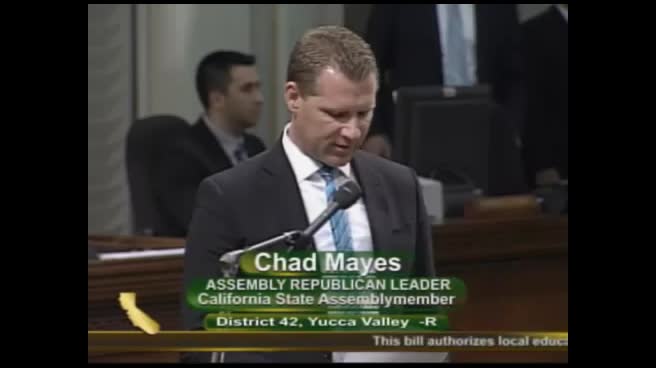
Bill Author

Bill Co-Author(s):