AB 2680: Parent, guardian, pupil, and family engagement support and services: plans.
- Session Year: 2015-2016
- House: Assembly
- Latest Version Date: 2016-04-13
Existing law states various legislative findings and declarations, including that it is essential to our democratic form of government that parents and guardians of schoolage children attending public schools and other citizens participate in improving public education institutions, that specifically involving parents and guardians of pupils in the education process is fundamental to a healthy system of public education, and that family and school collaborative efforts are most effective when they involve parents and guardians in a variety of roles at all grade levels, from preschool through high school.
This bill would, subject to one-time funding being provided for purposes of this act in the annual Budget Act, require local educational agencies, including county offices of education, charter schools, alternative education programs and schools, and state special schools, and state subsidized preschools and child development programs, that elect to participate in family, parent, guardian, and pupil engagement support and services to develop, implement, and, once adopted, post to its Internet Web site, a plan that addresses at least one specified parent, guardian, pupil, and family engagement element relating to active and meaningful participation and training. strategic plan, as provided. If a local educational agency accepts funds appropriated in the annual Budget Act for purposes of those provisions, as a condition of receiving those funds, the school district, county office of education, or charter school would be required to develop and post to its Internet Web site an additional plan that aligns to the school districts or county office of educations local control and accountability plan or specified elements of the charter schools petition that delineates how funds apportioned for purposes of this section, if they are apportioned, would be spent, as specified. If funds are appropriated in the annual Budget Act for these purposes, the bill would authorize a local educational agency to request funding from the Superintendent of Public Instruction and would require the local educational agency to expend those funds between the 201617 fiscal year and the 201819 fiscal year, inclusive, and would require the funds to be intended to supplement, not supplant, funds used by the local educational agency for parent, guardian, pupil, and family engagement. engagement and that the funds be allocated on the basis of an equal amount per average daily attendance among participating local educational agencies. The bill would provide that the funds, if appropriated, would be applied toward the minimum funding requirements for school districts and community college districts imposed by Section 8 of Article XVI of the California Constitution.
Existing law states various legislative findings and declarations, including that it is essential to our democratic form of government that parents and guardians of schoolage children attending public schools and other citizens participate in improving public education institutions, that specifically involving parents and guardians of pupils in the education process is fundamental to a healthy system of public education, and that family and school collaborative efforts are most effective when they involve parents and guardians in a variety of roles at all grade levels, from preschool through high school.
This bill would, subject to one-time funding being provided for purposes of this act in the annual Budget Act, require local educational agencies, including county offices of education, charter schools, alternative education programs and schools, state special schools, and state subsidized preschools and child development programs, that elect to participate in family, parent, guardian, and pupil engagement support and services to develop develop, implement, and, once adopted, post to its Internet Web site, a plan that addresses at least one specified parent, guardian, pupil, and family engagement elements element relating to active and meaningful participation and training. If a local educational agency accepts funds appropriated in the annual Budget Act for purposes of those provisions, as a condition of receiving those funds, the school district, county office of education, or charter school would be required to develop and post to its Internet Web site an additional plan that aligns to the school districts or county office of educations local control and accountability plan or specified elements of the charter schools petition that delineates how funds apportioned for purposes of this section, if they are apportioned, would be spent, as specified. If funds are appropriated in the annual Budget Act for these purposes, the bill would authorize the school district, county office of education, or charter school a local educational agency to request funding from the Superintendent of Public Instruction and would require the local educational agency to expend those funds in between the 201617 fiscal year to and the 201819 fiscal year, inclusive, and would require the funds to be intended to supplement, not supplant, funds used by the school district, county office of education, or charter school local educational agency for parent, guardian, pupil, and family engagement. The bill would provide that the funds, if appropriated, would be applied toward the minimum funding requirements for school districts and community college districts imposed by Section 8 of Article XVI of the California Constitution.
Existing law states various legislative findings and declarations, including that it is essential to our democratic form of government that parents and guardians of schoolage children attending public schools and other citizens participate in improving public education institutions, that specifically involving parents and guardians of pupils in the education process is fundamental to a healthy system of public education, and that family and school collaborative efforts are most effective when they involve parents and guardians in a variety of roles at all grade levels, from preschool through high school.
This bill would, subject to funding being provided for purposes of this act in the annual Budget Act, require local educational agencies, including county offices of education, charter schools, alternative education programs and schools, state special schools, and state subsidized preschools and child development programs, that elect to participate in family, parent, and pupil engagement support and services to develop a plan that addresses at least one specified parent, pupil, and family engagement elements relating to active and meaningful participation and training. If a local educational agency accepts funds appropriated in the annual Budget Act for purposes of those provisions, as a condition of receiving those funds, the school district, county office of education, or charter school would be required to develop an additional plan that aligns to the school districts or county office of educations local control and accountability plan or specified elements of the charter schools petition that delineates how funds apportioned for purposes of this section, if they are apportioned, would be spent, as specified. If funds are appropriated in the annual Budget Act for these purposes, the bill would authorize the school district, county office of education, or charter school to expend those funds in the 201617 fiscal year to the 201819 fiscal year, inclusive, and would require the funds to be intended to supplement, not supplant, funds used by the school district, county office of education, or charter school for parent, pupil, and family engagement. The bill would provide that the funds, if appropriated, would be applied toward the minimum funding requirements for school districts and community college districts imposed by Section 8 of Article XVI of the California Constitution.
(a)(1)Subject to one-time funding being provided for these purposes in the annual Budget Act, local educational agencies, including county offices of education, charter schools, alternative education programs and schools, and state special schools, and state subsidized preschools and child development programs, that elect to participate in family, parent, guardian, and pupil engagement support and services funded pursuant to this section shall develop and implement a strategic plan that addresses at least one of both of the following:
(A)Active and meaningful participation and training of parents, guardians, pupils, and families of children served by the local educational agency in the development and updating of local control and accountability plans required pursuant to Article 4.5 (commencing with Section 52060) of Chapter 6.1.
(B)Active and meaningful participation and training at the schoolsite or program site and school district or county office of education level that empowers parents, guardians, pupils, and families of children served by the local educational agency to become active leaders through diverse channels for participation, including, but not limited to, schoolsite committees and councils; school district or county office of education committees and councils; English learner advisory committees; parent, guardian, teacher, or pupil associations; and other advisory bodies that involve parents, guardians, pupils, or families.
(C)Programs and activities that promote parent and family engagement of children served by the local educational agency in school, support parents and guardians as their childrens first teachers, develop parent and guardian leaders, and encourage parents and guardians to advocate for a complete education that includes a full curriculum to close the access, achievement, and opportunities gaps.
(D)For county offices of education only, active and meaningful participation, as described in subparagraphs (A) to (C), inclusive, and activities for purposes of serving parents, guardians, and families in state subsidized infant and toddler programs, early childhood education programs, state and local preschools, and child care and development programs serving children from birth to five years of age, inclusive, and active and meaningful outreach to parents, guardians, and families who may benefit from countywide training and support services offered by the county office of education.
(A)Active and meaningful participation and training of parents, guardians, pupils, and families of children served by local educational agencies in the development and updating of local control and accountability plans required pursuant to Article 4.5 (commencing with Section 52060) of Chapter 6.1, involvement at the schoolsite, school district, or county office of education level that empowers parents and guardians to become active leaders on local advisory bodies, and empowerment and support to advocate for a complete education that includes a full curriculum and other services to close the access, achievement, and opportunity gaps. The plan may include activities to help teachers and other school personnel improve teacher-parent or guardian and school-parent or guardian communication and create a welcoming environment for parent and guardian participation.
(B)Strategies, programs, and activities that promote parents, guardians, and families to directly engage with their child or children to promote pupil success academically, socially, and emotionally, including, but not limited to, how to become your childs first teacher, shared reading, developing a strong teacher-parent or guardian partnership, how to discuss and support your childs activities, studies, and homework, and how to effectively navigate and understand the public school system.
(2)Once the plan is adopted, a local educational agency shall post its plan on its Internet Web site.
(b)(1)If a local educational agency accepts funds appropriated in the annual Budget Act for purposes of this section, as a condition of receiving those funds, a school district, county office of education, or charter school shall do all of the following:
(A)Develop a plan that aligns to the local control and accountability plans required pursuant to Article 4.5 (commencing with Section 52060) of Chapter 6.1 or the requirements of clause (ii) of subparagraph (A) of paragraph (5) of subdivision (b) of Sections 47605 and 47605.6 and all applicable deadlines that delineates how funds apportioned for purposes of this section, if they are apportioned, shall be spent.
(B)The plan shall be developed using research-based family engagement practices and standards.
(C)The plan shall include outreach in multiple languages if 15 percent or more of the pupils enrolled in a public school that provides instruction in kindergarten or any of grades 1 to 12, inclusive, speak a single primary language other than English, as determined pursuant to Section 48985. The plan shall also include outreach to parents, guardians, and families that are underrepresented in the school, school district, or county office of education, and outreach strategies that are diverse and innovative.
(D)The plan shall also include the estimated target for the number of parents, guardians, pupils, and families who will receive training and support services.
(E)The plan shall be explained in a public meeting of the governing board of the school district, county board of education, or governing body of the charter school before its adoption in a subsequent public meeting.
(2)Once the plan is adopted, a local educational agency shall post its plan on its Internet Web site.
(c)Local educational agencies may use the funding received pursuant to this section to support the development and implementation of the plan pursuant to subdivision (a), including, but not limited to, either of the following ways:
(1)Active and meaningful strategies related to the use of computing devices and the Internet as a tool for accessing information, training, and support relevant to the proposed engagement plan.
(2)Active and meaningful participation and training for teachers, classified employees, governing board members, and administrators to develop a deeper understanding regarding effective parent, guardian, and family engagement in order to work effectively with parents, guardians, pupils, and families as partners.
(d)If funds are appropriated for purposes of this section in the annual Budget Act, a local educational agency may request funding from the Superintendent on or before June 1, 2017, and shall expend those funds between the 201617 fiscal year and the 201819 fiscal year, inclusive. The funds shall be intended to supplement, not supplant, funds used by the local educational agency for parent, guardian, pupil, and family engagement. engagement and shall be allocated on the basis of an equal amount per average daily attendance among participating local educational agencies.
(e)For purposes of making the computations required by Section 8 of Article XVI of the California Constitution, if funds are appropriated in the annual Budget Act for purposes of this section, the funds shall be deemed to be General Fund revenues appropriated for school districts, as defined in subdivision (c) of Section 41202, for the fiscal year in which they are appropriated, and included within the total allocations to school districts and community college districts from General Fund proceeds of taxes appropriated pursuant to Article XIIIB, as defined in subdivision (e) of Section 41202, for the fiscal year in which they are appropriated.
(a)(1)Subject to one-time funding being provided for these purposes in the annual Budget Act, local educational agencies, including county offices of education, charter schools, alternative education programs and schools, state special schools, and state subsidized preschools and child development programs, that elect to participate in family, parent, guardian, and pupil engagement support and services funded pursuant to this section shall develop and implement a plan that addresses at least one of the following:
(1)
(A)Active and meaningful participation and training of parents, guardians, pupils, and families of children from birth to 18 years of age, inclusive, served by the local educational agency in the development and updating of local control and accountability plans required pursuant to Article 4.5 (commencing with Section 52060) of Chapter 6.1.
(2)
(B)Active and meaningful participation and training at the schoolsite or program site and school district or county office of education level that empowers parents, guardians, pupils, and families of children from birth to 18 years of age, inclusive, served by the local educational agency to become active leaders through diverse channels for participation, including, but not limited to, schoolsite committees and councils; school district or county office of education committees and councils; English learner advisory committees; parent, guardian, teacher, or pupil associations; and other advisory bodies that involve parents, guardians, pupils, or families.
(3)
(C)Programs and activities that promote parent and family engagement of children from birth to 18 years of age, inclusive, served by the local educational agency in schools, school, support parents and guardians as their childrens first teacher, teachers, develop parent and guardian leaders, and encourage parents and guardians to advocate for a complete education that includes a full curriculum to close the access, achievement, and opportunities gaps.
(4)
(D)For county offices of education only, active and meaningful participation participation, as described in subparagraphs (A) to (C), inclusive, and activities for purposes of serving parents parents, guardians, and families in state subsidized infant and toddler programs, early childhood education programs, state and local preschools, and child care and development programs serving children from birth to five years of age, inclusive, and active and meaningful participation and activities for parents and families who do not have children enrolled in a program but outreach to parents, guardians, and families who may benefit from countywide training and support services offered by the county office of education.
(2)Once the plan is adopted, a local educational agency shall post its plan on its Internet Web site.
(b)(1)If a local educational agency accepts funds appropriated in the annual Budget Act for purposes of this section, as a condition of receiving those funds, a school district, county office of education, or charter school shall do all of the following:
(1)
(A)Develop a plan that aligns to the local control and accountability plans required pursuant to Article 4.5 (commencing with Section 52060) of Chapter 6.1 or the requirements of clause (ii) of subparagraph (A) of paragraph (5) of subdivision (b) of Sections 47605 and 47605.6 and all applicable deadlines that delineates how funds apportioned for purposes of this section, if they are apportioned, shall be spent.
(2)
(B)The plan shall be developed using research-based family engagement practices and standards, including, but not limited to, the National Standards for Family-School Partnerships. standards.
(3)
(C)The plan shall include outreach in multiple languages, languages if 15 percent or more of the pupils enrolled in a public school that provides instruction in kindergarten or any of grades 1 to 12, inclusive, speak a single primary language other than English, as determined pursuant to Section 48985. The plan shall also include outreach to parents parents, guardians, and families that are underrepresented in the school, school district, or county office of education, and outreach strategies that are diverse and innovative.
(4)
(D)The plan shall also include the estimated target for the number of parents, guardians, pupils, and families who will receive training and support services.
(5)
(E)The plan shall be explained in a public meeting of the governing board of the school district, county board of education, or governing body of the charter school before its adoption in a subsequent public meeting.
(2)Once the plan is adopted, a local educational agency shall post its plan on its Internet Web site.
(c)Local educational agencies may use the funding received pursuant to this section to support the development and implementation of the plan pursuant to subdivision (a), including, but not limited to, either of the following ways:
(1)Active and meaningful strategies related to the use of computing devices and the Internet as a tool for accessing information, training, and support relevant to the proposed engagement plan.
(2)Active and meaningful participation and training for teachers, classified employees, governing board members, and administrators to develop a deeper understanding regarding effective parent, guardian, and family engagement in order to work effectively with parents, guardians, pupils, and families as partners.
(c)
(d)If funds are appropriated for purposes of this section in the annual Budget Act, a school district, county office of education, or charter school may local educational agency may request funding from the Superintendent on or before June 1, 2017, and shall expend those funds in between the 201617 fiscal year to and the 201819 fiscal year, inclusive. The funds shall be intended to supplement, not supplant, funds used by the school district, county office of education, or charter school local educational agency for parent, guardian, pupil, and family engagement.
(d)
(e)For purposes of making the computations required by Section 8 of Article XVI of the California Constitution, if funds are appropriated in the annual Budget Act for purposes of this section, the funds shall be deemed to be General Fund revenues appropriated for school districts, as defined in subdivision (c) of Section 41202, for the fiscal year in which they are appropriated, and included within the total allocations to school districts and community college districts from General Fund proceeds of taxes appropriated pursuant to Article XIIIB, as defined in subdivision (e) of Section 41202, for the fiscal year in which they are appropriated.
(a)Subject to funding being provided for these purposes in the annual Budget Act, local educational agencies, including county offices of education, charter schools, alternative education programs and schools, state special schools, and state subsidized preschools and child development programs, that elect to participate in family, parent, and pupil engagement support and services funded pursuant to this section shall develop a plan that addresses at least one of the following:
(1)Active and meaningful participation and training of parents, pupils, and families of children from birth to 18 years of age, inclusive, in the development and updating of local control and accountability plans required pursuant to Article 4.5 (commencing with Section 52060) of Chapter 6.1.
(2)Active and meaningful participation and training at the schoolsite or program site and school district or county office of education level that empowers parents, pupils, and families of children from birth to 18 years of age, inclusive, to become active leaders through diverse channels for participation, including, but not limited to, schoolsite committees and councils; school district or county office of education committees and councils; English learner advisory committees; parent, teacher, or pupil associations; and other advisory bodies that involve parents, pupils, or families.
(3)Programs and activities that promote parent and family engagement of children from birth to 18 years of age, inclusive, in schools, support parents as their childrens first teacher, develop parent leaders, encourage parents to advocate for a complete education that includes a full curriculum to close the access, achievement, and opportunities gaps.
(4)For county offices of education only, active and meaningful participation and activities for purposes of serving parents and families in state subsidized infant and toddler programs, early childhood education programs, state and local preschools, and child care and development programs serving children from birth to five years of age, inclusive, and active and meaningful participation and activities for parents and families who do not have children enrolled in a program but who may benefit from countywide training and support services offered by the county office of education.
(b)If a local educational agency accepts funds appropriated in the annual Budget Act for purposes of this section, as a condition of receiving those funds, a school district, county office of education, or charter school shall do all of the following:
(1)Develop a plan that aligns to the local control and accountability plans required pursuant to Article 4.5 (commencing with Section 52060) of Chapter 6.1 or the requirements of clause (ii) of subparagraph (A) of paragraph (5) of subdivision (b) of Sections 47605 and 47605.6 and all applicable deadlines that delineates how funds apportioned for purposes of this section, if they are apportioned, shall be spent.
(2)The plan shall be developed using research-based family engagement practices and standards, including, but not limited to, the National Standards for Family-School Partnerships.
(3)The plan shall include outreach in multiple languages, outreach to parents and families that are underrepresented in the school, school district, or county office of education, and outreach strategies that are diverse and innovative.
(4)The plan shall also include the number of parents, pupils, and families who will receive training and support services.
(5)The plan shall be explained in a public meeting of the governing board of the school district, county board of education, or governing body of the charter school before its adoption in a subsequent public meeting.
(c)If funds are appropriated for purposes of this section in the annual Budget Act, a school district, county office of education, or charter school may expend those funds in the 201617 fiscal year to the 201819 fiscal year, inclusive. The funds shall be intended to supplement, not supplant, funds used by the school district, county office of education, or charter school for parent, pupil, and family engagement.
(d)For purposes of making the computations required by Section 8 of Article XVI of the California Constitution, if funds are appropriated in the annual Budget Act for purposes of this section, the funds shall be deemed to be General Fund revenues appropriated for school districts, as defined in subdivision (c) of Section 41202, for the fiscal year in which they are appropriated, and included within the total allocations to school districts and community college districts from General Fund proceeds of taxes appropriated pursuant to Article XIII B, as defined in subdivision (e) of Section 41202, for the fiscal year in which they are appropriated.
|
Date
|
Status
|
|---|---|
| Feb 19, 2016 | Introduced. To print. |
| Feb 21, 2016 | From printer. May be heard in committee March 22. |
| Feb 22, 2016 | Read first time. |
| Mar 10, 2016 | Referred to Com. on ED. |
| Mar 30, 2016 | From committee chair, with author's amendments: Amend, and re-refer to Com. on ED. Read second time and amended. |
| Mar 31, 2016 | Re-referred to Com. on ED. |
| Apr 12, 2016 | From committee: Amend, and do pass as amended and re-refer to Com. on APPR. (Ayes 7. Noes 0.) (April 6). |
| Apr 13, 2016 | Read second time and amended. |
| Apr 14, 2016 | Re-referred to Com. on APPR. |
| Apr 27, 2016 | In committee: Set, first hearing. Referred to APPR. suspense file. |
| May 27, 2016 | In committee: Held under submission. |
|
Date
|
Description
|
Location
|
Votes
|
|
|---|---|---|---|---|
| Apr 6, 2016 | Do pass as amended and be re-referred to the Committee on [Appropriations] | Assembly Standing Committee on Education |
Passed |
This list shows positions taken on this bill by organizations on the date displayed, which is linked to the original source.
Positions by individuals are not included.
|
Organization
|
Position
|
Date
|
|---|---|---|
| Advancement Project | * Support | Apr 6, 2016 |
| California Association For Bilingual Education | * Support | Apr 6, 2016 |
| California Environmental Technology Education Network | * Support | Apr 6, 2016 |
| California State PTA | * Support | Apr 6, 2016 |
| Families In Schools | ** Support | Apr 6, 2016 |
| Orange County PTA | * Support | Apr 6, 2016 |
| Page M | ** Support | Apr 6, 2016 |
| Public Advocates | * Support | Apr 6, 2016 |
| Sacramento City Unified School District | * Support | Apr 6, 2016 |
| San Francisco PTA | * Support | Apr 6, 2016 |
| Southern Los Angeles County PTA | * Support | Apr 6, 2016 |
Date of Hearing: April 27, 2016
ASSEMBLY COMMITTEE ON APPROPRIATIONS
Lorena Gonzalez, Chair
ABPCA Bill Id:AB 2680
Author:(Bonilla) – As Amended Ver:April 13, 2016
Policy Committee: | Education | Vote: | 7 - 0 |
|
| ||
|
|
Urgency: No State Mandated Local Program: No Reimbursable: No
SUMMARY:
This bill requires local education agencies (LEAs) to develop and implement a strategic plan to address parent engagement, subject to one-time funding being provided in the budget act. Specifically, this bill:
- Authorizes LEAs that elect to participate in family engagement support and services to develop and implement a strategic plan that addresses the following:
- Active and meaningful participation and training of parents, guardians, pupils, and families of children served by LEAs in the development and updating of local control and accountability plans (LCAPs). Requires the plan to include estimated target of number of parents to be trained.
- Involvement at the schoolsite, school district, or county office of education (COE) level that empowers parents and guardians to become active leaders on local advisory bodies.
- Empowerment and support to advocate for a complete education that includes a full curriculum and other services to close the access, achievement, and opportunity gaps.
- Strategies, programs, and activities that promote parents, guardians, and families to directly engage with their child, as specified.
- Specifies the plan may include activities to help teachers and other school personnel improve teacher-parent or guardian and school-parent or guardian communication and create a welcoming environment for parent and guardian participation.
- Requires the plan to align with the LEAs LCAP and delineate how funds are spent.
- Requires the plan to be developed using research-based family engagement practices and standards.
- Requires the plan to include outreach in multiple languages if 15% or more pupils enrolled speak a single primary language other than English. Also requires outreach to parents, guardians, and families that are underrepresented in the school, school district, or county office of education, and outreach strategies that are diverse and innovative.
- Require the local governing board to explain the plan at a public meeting before adoption. Once the plan is adopted, requires the LEA to post the plan online.
- Authorizes, subject to funding in the budget act, a LEA to request funding from the Superintendent of Public Instruction (SPI) on or before June 1, 2017, and authorizes expenditure of funds for the 2016-17 fiscal year through the 2018-19 fiscal year. Specifies these funds cannot supplant existing funds and are to be allocated on the basis of average daily attendance (ADA).
FISCAL EFFECT:
- One-time Proposition 98/GF cost pressure, in the millions of dollars, to provide funding for parent engagement plans. According to the author, the intent is to provide LEAs $15 per pupil to implement the strategic plans. There are over 6.2 million students in California. This would create a cost pressure of $93.5 million.
- One-time costs to the California Department of Education (CDE) of approximately $32,000 GF to update existing parent and family engagement guidance documents as well as online resources. Ongoing costs of approximately $72,000 GF to administer grant funding.
COMMENTS:
- Purpose. Parent engagement programs and strategies in school districts provide great benefit to students including improved school readiness, higher grades and test scores, and healthier behavior. Parent engagement also provides an increased likelihood of graduating from high school and attending college. According to the author, parent engagement programs and strategies are a cost-effective way to increase student achievement.
- Comments. In recognition of the positive effects of parent engagement, state and federal law require parental involvement activities at both the LEA and schoolsite level. Federal law requires Title I districts to do at least one of the following:
- Support schools in training school staff regarding parent engagement strategies;
- Support programs that reach families at home, in the community and at school;
- Disseminate information on best practices focused on engagement, especially for increasing engagement of economically disadvantaged families;
- Provide subgrants to schools to collaborate with community-based organizations or businesses that have a track record of improving family engagement; or
- Engage in any other activities that the district believes are appropriate in increasing engagement.
The Local Control Funding Formula (LCFF) of 2013 was enacted to provide a more equitable distribution of education dollars—especially among districts with populations of low income pupils, English learners, and pupils in foster care—and to provide more local discretion over the use of those dollars. Accountability for the use of those dollars is achieved though the requirement to adopt and annually revise LCAPs. State law requires parent participation, through formal parent councils and other avenues, in the development and annual revision of LCAPs.
The state is working to streamline reporting and compliance efforts required of LEAs. This includes possible proposals to modify the LCAP in order that it may be utilized as both the LCAP and the federally required Local Educational Agency Plan (LEAP). Currently, LEAs are working through both conceptual and practical challenges involved with the development and implementation of these different plans. The committee should consider whether adding an additional separate plan for parent engagement is necessary, or whether the efforts in this bill could be incorporated into existing compliance documents.
Analysis Prepared by: Misty Feusahrens / APPR. / (916) 319-2081
Date of Hearing: April 6, 2016
ASSEMBLY COMMITTEE ON EDUCATION
Patrick O'Donnell, Chair
ABPCA Bill Id:AB 2680 (
Author:Bonilla) – As Amended Ver:March 30, 2016
SUBJECT: Parent, guardian, pupil, and family engagement support and services: plans
SUMMARY: Requires local education agencies (LEAs) to plan and implement parent training programs, as specified, subject to one-time funding being provided in the Budget Act. Specifically, this bill:
- Requires, subject to one-time funding being provided for these purposes in the annual Budget Act , LEAs, including county offices of education (COEs), charter schools, alternative education programs and schools, state special schools, and state subsidized preschools and child development programs, that elect to participate in family, parent, guardian, and pupil engagement support and services to development and implement a plan that addresses at least one of the following:
- Active and meaningful participation and training of parents, guardians, pupils, and families of children serve by the LEA in the development and updating of local control and accountability plans (LCAPs);
- Active and meaningful participation and training at the schoolsite or program site and school district or county office of education level that empowers parents, guardians, pupils, and families of children served by the LEA to become active leaders through diverse channels for participation, including, but not limited to, schoolsite committees and councils; school district or COE committees and councils; English learner advisory committees, parent, guardian, teacher, or pupil associations; and other advisory bodies that involve parents, guardians, pupils, or families
- Programs and activities that promote parent, guardian, and family engagement of children served by the LEA in schools, support parents and guardians as their children's' first teacher, develop parent leaders, encourage parents and guardians to advocate for a complete education that includes a full curriculum to close the access, achievement and opportunities gaps; or
- For COEs only, active and meaningful participation and activities for purposes of serving parents and families in state subsidized infant and toddler programs, early childhood education programs, state and local preschools, and child care and development programs serving children from birth to five years of age, inclusive, and active and meaningful outreach to parents, guardians, and families who may benefit from countywide training and support services offered by the COE.
- Requires an LEA that accepts funds for these purposes to develop a plan that aligns to its LCAP and that delineates how the funds will be spent.
- Requires the plan to be developed using research-based family engagement practices and standards.
- Requires the plan to include outreach in multiple languages if 15% or more of the pupils enrolled in a public school speak a single primary language other than English, and to include diverse and innovative outreach to parents, guardians and families that are underrepresented in the school, school district, or COE.
- Requires the plan to include the estimated target number of parents, pupils, and families who will receive training and support services.
- Requires the plan to be explained in a public meeting of the governing board of the school district or COE or the governing body of the charter school before its adoption in a subsequent public meeting.
- Authorizes LEA to use funds appropriated for these purposes for:
- Active and meaningful strategies related to the use of computing devices and the Internet as a tool for accessing information, training, and support relevant to the proposed parent engagement plan; and
- Active and meaningful participation and training for teachers, classified employees, school board members and administrators to develop a deeper understanding regarding effective parent and family engagement in order to work effectively with parents, students and families as partners.
- Requires LEAs that elect to receive funding for these purposes to notify the Superintendent of Public Instruction (SPI) no later than June 1, 2017 of their intent to participate.
- Requires participating LEAs to expend the funds between the 2016-17 and 2018-19 fiscal years, inclusive.
- Provides that the funds are intended to supplement and not supplant funds used by the LEA for parent, pupil, and family engagement.
- Requires adopted plans to be posted on the LEA's website.
- Provides that the funds appropriated for these purposes shall be counted towards Proposition 98.
EXISTING LAW:
- Requires school districts and COEs to adopt and annually update LCAPs.
- Requires school districts and COEs to establish a parent advisory committee to provide advice regarding the development of the LCAP.
- Requires, as part of the LCAP development process, school districts and COEs to establish an English learner parent advisory committee if the enrollment of the school district or COE includes at least 15 percent English learners and the school district or COE enrolls at least 50 pupils who are English learners.
- Requires LCAPs to address eight state priorities, including parental involvement, including efforts the school district makes to seek parent input in making decisions for the school district and each individual schoolsite, and including how the school district will promote parental participation in programs for unduplicated pupils and individuals with exceptional needs.
- Requires LEAs that receive federal Title I dollars to implement programs, activities, and procedures for the involvement of parents. LEAs must reserve at least 1% for parent engagement programs, and at least 90% of that money must go directly to schools.
FISCAL EFFECT: Unknown
COMMENTS: Parent involvement has been shown to be positively correlated with student academic achievement. A synthesis of research by the Southwest Educational Development Laboratory ("A New Wave of Evidence," 2002) found that, regardless of family background or income, students with involved parents are more likely to:
- Earn higher grades and test scores and enroll in higher-level programs;
- Be promoted, pass their classes, and earn credits;
- Attend school regularly;
- Have better social skills, show improved behavior, and adapt well to school; and
- Graduate and go on to postsecondary education.
In recognition of this, state and federal law require specified parental involvement activities at both the LEA and schoolsite level. State law requires parent participation, through formal parent councils and other avenues, in the development and annual revision of LCAPs. Federal law required specified parent involvement activities as a condition of receiving Title I funds. Federal law requires Title I districts to do at least one of the following:
- Support schools in training school staff regarding parent engagement strategies;
- Support programs that reach families at home, in the community and at school;
- Disseminate information on best practices focused on engagement, especially for increasing engagement of economically disadvantaged families;
- Subgrant to schools to collaborate with community-based organizations or businesses that have a track record of improving family engagement; or
- Engage in any other activities that the district believes are appropriate in increasing engagement.
The activities required by this bill are consistent with existing state and federal requirements regarding parental involvement. The purpose of the bill is to provide additional funding in support of those activities.
Parental involvement and parental involvement programs. Parent involvement incorporates a wide range of activities, from reading to their children and making sure they do their homework to serving on schoolsite or district councils. The question is what types of parent involvement are most strongly associated with increased student achievement. Research suggests that parental involvement directly with their children produces larger academic gains than parental involvement in school or district functions.[1] Information provided by the author's office cites a report that concludes that schools would have to spend $1,000 more per student to reap the same gains in achievement than an involved parent brings. In that study, the authors measured how frequently parents do the following:
- Discuss activities or events of particular interest to the child;
- Discuss things the child studies in class;
- Discuss selecting courses or programs at school;
- Attend a school meeting; and
- Volunteer at the child's school.
The finding of a $1,000-value benefit is associated with the first three "dinnertime parental effort measures," and is the difference between parents who report sometimes having such discussions and parents who report never having them.[2] It is not associated with school-based activities.
With respect to parent involvement programs, research suggests that the most effective programs (in terms of increasing student achievement) are those that emphasize parental actions such as shared reading, teacher-parent partnership, checking homework, and teacher-parent communication.[3]
This bill requires parental involvement plans to focus on parent involvement in the LCAP planning process and on developing parent leaders and advocates. While these may be desirable objectives, they have not been shown by research to be the most effective means by which to improve student achievement. Accordingly, staff recommends that the bill be amended to include a focus on parent involvement activities that are more strongly associated with increased student achievement and to eliminate duplicative provisions. Specifically, staff recommends that the sections of the bill described in 1) a. through 1) d. of the summary on page one of this analysis be struck and replaced with the following:
"Active and meaningful participation and training of parents, guardians, pupils and families of children served by local educational agencies in the development and updating of local control and accountability plans required pursuant to Article 4.5 (commencing with Section 52060) of Chapter 6.1, involvement at the school site, school district or county office of education level that empowers parents to become active leaders on local advisory bodies, empowerment and support to advocate for a complete education that includes a full curriculum and other services to close the access, achievement and opportunity gaps. The plan may include activities to help teachers and other school staff improve teacher-parent and school-parent communication and create a welcoming environment for parent participation.
The plan shall also address strategies, programs and activities that promote parents, guardians and families to directly engage with their child or children to promote student success academically, socially and emotionally. Strategies, programs and activities including but not limited to how to become your child’s first teacher, shared reading, developing a strong teacher- parent partnership, how to discuss and support your child’s activities, studies and homework, how to effectively navigate and understand the public school system."
In addition, staff recommends the following amendments:
- Clarify the allocation of funds by providing they be distributed on the basis of an equal amount per average daily attendance among participating LEAs.
- Remove "state subsidized preschools and child development programs" from the definition of LEA (this ensures the funds will go only to school-based programs, including school-based preschool and child development programs)
REGISTERED SUPPORT / OPPOSITION:
Support
Advancement Project
California State PTA
Families in Schools
Public Advocates
Numerous individuals
Opposition
None received
Analysis Prepared by: Rick Pratt / ED. / (916) 319-2087
William H. Jeynes, "Parental Involvement and Student Achievement: A Meta-Analysis." Harvard Family Research Project, December 2005. ↑
Andrew J. Houtenville and Karen Smith Conway, "Parental Effort, School Resources, and Student Achievement." The Journal of Human Resources, Volume XLIII, No. 2, 2008. ↑
William H. Jeynes, "A Meta-Analysis of the Efficacy of Different Types of Parental Involvement Programs for Urban Students." Harvard Family Research Project, February 2013> ↑
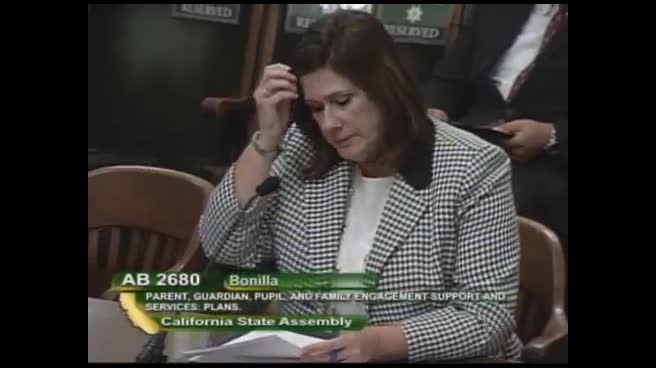
Bill Author

Bill Co-Author(s):