AB 2687: Vehicles: passenger for hire: driving under the influence.
- Session Year: 2015-2016
- House: Assembly
- Latest Version Date: 2016-09-28
Existing law makes it unlawful for a person who is under the influence of any alcoholic beverage or drug to drive a vehicle. Existing law makes it unlawful for a person who has 0.04 percent or more, by weight, of alcohol in his or her blood to drive a commercial motor vehicle, as defined. Existing law also makes it unlawful for a person who has 0.04 percent or more, by weight, of alcohol in his or her blood to drive a commercial motor vehicle and concurrently do any act forbidden by law or neglect any duty imposed by law that proximately causes bodily injury to another person other than the driver.
This bill would make it unlawful, commencing July 1, 2018, for a person who has 0.04 percent or more, by weight, of alcohol in his or her blood to drive a motor vehicle when a passenger for hire, as defined, is a passenger in the vehicle at the time of the offense. The bill would also make it unlawful, commencing July 1, 2018, for a person who has 0.04 percent or more, by weight, of alcohol in his or her blood to drive a motor vehicle, as specified, and concurrently do any act or neglect any duty that proximately causes bodily injury to another person other than the driver. Because this bill would expand the application of a crime to more people, it would impose a state-mandated local program.
The California Constitution requires the state to reimburse local agencies and school districts for certain costs mandated by the state. Statutory provisions establish procedures for making that reimbursement.
This bill would provide that no reimbursement is required by this act for a specified reason.
Existing law makes it unlawful for a person who is under the influence of any alcoholic beverage or drug to drive a vehicle. Existing law makes it unlawful for a person who has 0.04 percent or more, by weight, of alcohol in his or her blood to drive a commercial motor vehicle, as defined. Existing law also makes it unlawful for a person who has 0.04 percent or more, by weight, of alcohol in his or her blood to drive a commercial motor vehicle and concurrently do any act forbidden by law or neglect any duty imposed by law that proximately causes bodily injury to another person other than the driver.
This bill would make it unlawful unlawful, commencing July 1, 2018, for a person who has 0.04 percent or more, by weight, of alcohol in his or her blood to drive a motor vehicle when a passenger for hire, as defined, is a passenger in the vehicle at the time of the offense. The bill would also make it unlawful unlawful, commencing July 1, 2018, for a person who has 0.04 percent or more, by weight, of alcohol in his or her blood to drive a motor vehicle, as specified, and concurrently do any act or neglect any duty that proximately causes bodily injury to another person other than the driver. Because this bill would expand the application of a crime to more people, it would impose a state-mandated local program.
The California Constitution requires the state to reimburse local agencies and school districts for certain costs mandated by the state. Statutory provisions establish procedures for making that reimbursement.
This bill would provide that no reimbursement is required by this act for a specified reason.
Existing law makes it unlawful for a person who is under the influence of any alcoholic beverage or drug to drive a vehicle. Existing law makes it unlawful for a person who has 0.04 percent or more, by weight, of alcohol in his or her blood to drive a commercial motor vehicle, as defined. Existing law also makes it unlawful for a person who has 0.05 0.04 percent or more, by weight, of alcohol in his or her blood to drive a commercial motor vehicle and concurrently do any act forbidden by law or neglect any duty imposed by law that proximately causes bodily injury to another person other than the driver.
This bill would make it unlawful for a person who has 0.04 percent or more, by weight, of alcohol in his or her blood to drive a motor vehicle when a passenger for hire, as defined, is a passenger in the vehicle at the time of the offense. The bill would also make it unlawful for a person who has 0.04 percent or more, by weight, of alcohol in his or her blood to drive a motor vehicle, as specified, and concurrently do any act or neglect any duty that proximately causes bodily injury to another person other than the driver. The bill would require the court to impose an additional and consecutive term of 60 days in county jail, as specified, when a person is convicted of having 0.04 percent or more of alcohol in his or her blood and driving a motor vehicle with a passenger for hire. Because this bill would create a new crime, it would impose a state-mandated local program. Because this bill would expand the application of a crime to more people, it would impose a state-mandated local program.
The California Constitution requires the state to reimburse local agencies and school districts for certain costs mandated by the state. Statutory provisions establish procedures for making that reimbursement.
This bill would provide that no reimbursement is required by this act for a specified reason.
Existing law makes it unlawful for a person who is under the influence of any alcoholic beverage or drug to drive a vehicle. Existing law makes it unlawful for a person who has 0.04 percent or more, by weight, of alcohol in his or her blood to drive a commercial motor vehicle, as defined. Existing law also makes it unlawful for a person who has 0.05 percent or more, by weight, of alcohol in his or her blood to drive a commercial motor vehicle and concurrently do any act forbidden by law or neglect any duty imposed by law that proximately causes bodily injury to another person other than the driver.
This bill would make it unlawful for a person who has 0.04 percent or more, by weight, of alcohol in his or her blood to drive a motor vehicle when a passenger for hire, as defined, is a passenger in the vehicle at the time of the offense. The bill would also make it unlawful for a person who has 0.04 percent or more, by weight, of alcohol in his or her blood to drive a motor vehicle, as specified, and concurrently do any act or neglect any duty that proximately causes bodily injury to another person other than the driver. The bill would require the court to impose an additional and consecutive term of 60 days in county jail, as specified, when a person is convicted of having 0.04 percent or more of alcohol in his or her blood and driving a motor vehicle with a passenger for hire. Because this bill would create a new crime, it would impose a state-mandated local program.
The California Constitution requires the state to reimburse local agencies and school districts for certain costs mandated by the state. Statutory provisions establish procedures for making that reimbursement.
This bill would provide that no reimbursement is required by this act for a specified reason.
(a)It is unlawful for a person who is under the influence of any alcoholic beverage to drive a vehicle.
(b)It is unlawful for a person who has 0.08 percent or more, by weight, of alcohol in his or her blood to drive a vehicle.
For purposes of this article and Section 34501.16, percent, by weight, of alcohol in a persons blood is based upon grams of alcohol per 100 milliliters of blood or grams of alcohol per 210 liters of breath.
In any prosecution under this subdivision, it is a rebuttable presumption that the person had 0.08 percent or more, by weight, of alcohol in his or her blood at the time of driving the vehicle if the person had 0.08 percent or more, by weight, of alcohol in his or her blood at the time of the performance of a chemical test within three hours after the driving.
(c)It is unlawful for a person who is addicted to the use of any drug to drive a vehicle. This subdivision shall not apply to a person who is participating in a narcotic treatment program approved pursuant to Article 3 (commencing with Section 11875) of Chapter 1 of Part 3 of Division 10.5 of the Health and Safety Code.
(d)It is unlawful for a person who has 0.04 percent or more, by weight, of alcohol in his or her blood to drive a commercial motor vehicle, as defined in Section 15210. In a prosecution under this subdivision, it is a rebuttable presumption that the person had 0.04 percent or more, by weight, of alcohol in his or her blood at the time of driving the vehicle if the person had 0.04 percent or more, by weight, of alcohol in his or her blood at the time of the performance of a chemical test within three hours after the driving.
(e)Commencing July 1, 2018, it shall be unlawful for a person who has 0.04 percent or more, by weight, of alcohol in his or her blood to drive a motor vehicle when a passenger for hire is a passenger in the vehicle at the time of the offense. For purposes of this subdivision, passenger for hire means a passenger for whom consideration is contributed or expected as a condition of carriage in the vehicle, whether directly or indirectly flowing to the owner, operator, agent, or any other person having an interest in the vehicle. In a prosecution under this subdivision, it is a rebuttable presumption that the person had 0.04 percent or more, by weight, of alcohol in his or her blood at the time of driving the vehicle if the person had 0.04 percent or more, by weight, of alcohol in his or her blood at the time of the performance of a chemical test within three hours after the driving.
(f)It is unlawful for a person who is under the influence of any drug to drive a vehicle.
(g)It is unlawful for a person who is under the combined influence of any alcoholic beverage and drug to drive a vehicle.
SEC. 2.Section 23153 of the Vehicle Code is amended to read:23153.(a)It is unlawful for a person, while under the influence of any alcoholic beverage, to drive a vehicle and concurrently do any act forbidden by law, or neglect any duty imposed by law in driving the vehicle, which act or neglect proximately causes bodily injury to any person other than the driver.
(b)It is unlawful for a person, while having 0.08 percent or more, by weight, of alcohol in his or her blood to drive a vehicle and concurrently do any act forbidden by law, or neglect any duty imposed by law in driving the vehicle, which act or neglect proximately causes bodily injury to any person other than the driver.
In any prosecution under this subdivision, it is a rebuttable presumption that the person had 0.08 percent or more, by weight, of alcohol in his or her blood at the time of driving the vehicle if the person had 0.08 percent or more, by weight, of alcohol in his or her blood at the time of the performance of a chemical test within three hours after driving.
(c)In proving the person neglected any duty imposed by law in driving the vehicle, it is not necessary to prove that any specific section of this code was violated.
(d)It is unlawful for a person, while having 0.04 percent or more, by weight, of alcohol in his or her blood to drive a commercial motor vehicle, as defined in Section 15210 and concurrently to do any act forbidden by law or neglect any duty imposed by law in driving the vehicle, which act or neglect proximately causes bodily injury to any person other than the driver. In a prosecution under this subdivision, it is a rebuttable presumption that the person had 0.04 percent or more, by weight, of alcohol in his or her blood at the time of driving the vehicle if the person had 0.04 percent or more, by weight, of alcohol in his or her blood at the time of performance of a chemical test within three hours after driving.
(e)Commencing July 1, 2018, it shall be unlawful for a person, while having 0.04 percent or more, by weight, of alcohol in his or her blood to drive a motor vehicle when a passenger for hire is a passenger in the vehicle at the time of the offense, and concurrently to do any act forbidden by law or neglect any duty imposed by law in driving the vehicle, which act or neglect proximately causes bodily injury to any person other than the driver. For purposes of this subdivision, passenger for hire means a passenger for whom consideration is contributed or expected as a condition of carriage in the vehicle, whether directly or indirectly flowing to the owner, operator, agent, or any other person having an interest in the vehicle. In a prosecution under this subdivision, it is a rebuttable presumption that the person had 0.04 percent or more, by weight, of alcohol in his or her blood at the time of driving the vehicle if the person had 0.04 percent or more, by weight, of alcohol in his or her blood at the time of performance of a chemical test within three hours after driving.
(f)It is unlawful for a person, while under the influence of any drug, to drive a vehicle and concurrently do any act forbidden by law, or neglect any duty imposed by law in driving the vehicle, which act or neglect proximately causes bodily injury to any person other than the driver.
(g)It is unlawful for a person, while under the combined influence of any alcoholic beverage and drug, to drive a vehicle and concurrently do any act forbidden by law, or neglect any duty imposed by law in driving the vehicle, which act or neglect proximately causes bodily injury to any person other than the driver.
SEC. 3.No reimbursement is required by this act pursuant to Section 6 of Article XIIIB of the California Constitution because the only costs that may be incurred by a local agency or school district will be incurred because this act creates a new crime or infraction, eliminates a crime or infraction, or changes the penalty for a crime or infraction, within the meaning of Section 17556 of the Government Code, or changes the definition of a crime within the meaning of Section 6 of Article XIIIB of the California Constitution.
(a)It is unlawful for a person who is under the influence of any alcoholic beverage to drive a vehicle.
(b)It is unlawful for a person who has 0.08 percent or more, by weight, of alcohol in his or her blood to drive a vehicle.
For purposes of this article and Section 34501.16, percent, by weight, of alcohol in a persons blood is based upon grams of alcohol per 100 milliliters of blood or grams of alcohol per 210 liters of breath.
In any prosecution under this subdivision, it is a rebuttable presumption that the person had 0.08 percent or more, by weight, of alcohol in his or her blood at the time of driving the vehicle if the person had 0.08 percent or more, by weight, of alcohol in his or her blood at the time of the performance of a chemical test within three hours after the driving.
(c)It is unlawful for a person who is addicted to the use of any drug to drive a vehicle. This subdivision shall not apply to a person who is participating in a narcotic treatment program approved pursuant to Article 3 (commencing with Section 11875) of Chapter 1 of Part 3 of Division 10.5 of the Health and Safety Code.
(d)(1)It is unlawful for a person who has 0.04 percent or more, by weight, of alcohol in his or her blood to drive a commercial motor vehicle, as defined in Section 15210, or to drive a motor vehicle when a passenger for hire is a passenger in the vehicle at the time of the offense. A passenger for hire means a passenger for whom consideration is contributed or expected as a condition of carriage in the vehicle, whether directly or indirectly flowing to the owner, operator, agent, or any other person having an interest in the vehicle. Section 15210. In a prosecution under this subdivision, it is a rebuttable presumption that the person had 0.04 percent or more, by weight, of alcohol in his or her blood at the time of driving the vehicle if the person had 0.04 percent or more, by weight, of alcohol in his or her blood at the time of the performance of a chemical test within three hours after the driving.
(2)In any prosecution under this subdivision, it is a rebuttable presumption that the person had 0.04 percent or more, by weight, of alcohol in his or her blood at the time of driving the vehicle if the person had 0.04 percent or more, by weight, of alcohol in his or her blood at the time of the performance of a chemical test within three hours after the driving.
(e)Commencing July 1, 2018, it shall be unlawful for a person who has 0.04 percent or more, by weight, of alcohol in his or her blood to drive a motor vehicle when a passenger for hire is a passenger in the vehicle at the time of the offense. For purposes of this subdivision, passenger for hire means a passenger for whom consideration is contributed or expected as a condition of carriage in the vehicle, whether directly or indirectly flowing to the owner, operator, agent, or any other person having an interest in the vehicle. In a prosecution under this subdivision, it is a rebuttable presumption that the person had 0.04 percent or more, by weight, of alcohol in his or her blood at the time of driving the vehicle if the person had 0.04 percent or more, by weight, of alcohol in his or her blood at the time of the performance of a chemical test within three hours after the driving.
(e)
(f)It is unlawful for a person who is under the influence of any drug to drive a vehicle.
(f)
(g)It is unlawful for a person who is under the combined influence of any alcoholic beverage and drug to drive a vehicle.
SEC. 2.Section 23153 of the Vehicle Code is amended to read:23153.(a)It is unlawful for a person, while under the influence of any alcoholic beverage, to drive a vehicle and concurrently do any act forbidden by law, or neglect any duty imposed by law in driving the vehicle, which act or neglect proximately causes bodily injury to any person other than the driver.
(b)It is unlawful for a person, while having 0.08 percent or more, by weight, of alcohol in his or her blood to drive a vehicle and concurrently do any act forbidden by law, or neglect any duty imposed by law in driving the vehicle, which act or neglect proximately causes bodily injury to any person other than the driver.
In any prosecution under this subdivision, it is a rebuttable presumption that the person had 0.08 percent or more, by weight, of alcohol in his or her blood at the time of driving the vehicle if the person had 0.08 percent or more, by weight, of alcohol in his or her blood at the time of the performance of a chemical test within three hours after driving.
(c)In proving the person neglected any duty imposed by law in driving the vehicle, it is not necessary to prove that any specific section of this code was violated.
(d)(1)It is unlawful for a person, while having 0.04 percent or more, by weight, of alcohol in his or her blood to drive a commercial motor vehicle, as defined in Section 15210, or to drive a motor vehicle when a passenger for hire is a passenger in the vehicle at the time of the offense, Section 15210 and concurrently to do any act forbidden by law or neglect any duty imposed by law in driving the vehicle, which act or neglect proximately causes bodily injury to any person other than the driver. A passenger for hire means a passenger for whom consideration is contributed or expected as a condition of carriage in the vehicle, whether directly or indirectly flowing to the owner, operator, agent, or any other person having an interest in the vehicle. In a prosecution under this subdivision, it is a rebuttable presumption that the person had 0.04 percent or more, by weight, of alcohol in his or her blood at the time of driving the vehicle if the person had 0.04 percent or more, by weight, of alcohol in his or her blood at the time of performance of a chemical test within three hours after driving.
(2)In any prosecution under this subdivision, it is a rebuttable presumption that the person had 0.04 percent or more, by weight, of alcohol in his or her blood at the time of driving the vehicle if the person had 0.04 percent or more, by weight, of alcohol in his or her blood at the time of performance of a chemical test within three hours after driving.
(e)Commencing July 1, 2018, it shall be unlawful for a person, while having 0.04 percent or more, by weight, of alcohol in his or her blood to drive a motor vehicle when a passenger for hire is a passenger in the vehicle at the time of the offense, and concurrently to do any act forbidden by law or neglect any duty imposed by law in driving the vehicle, which act or neglect proximately causes bodily injury to any person other than the driver. For purposes of this subdivision, passenger for hire means a passenger for whom consideration is contributed or expected as a condition of carriage in the vehicle, whether directly or indirectly flowing to the owner, operator, agent, or any other person having an interest in the vehicle. In a prosecution under this subdivision, it is a rebuttable presumption that the person had 0.04 percent or more, by weight, of alcohol in his or her blood at the time of driving the vehicle if the person had 0.04 percent or more, by weight, of alcohol in his or her blood at the time of performance of a chemical test within three hours after driving.
(e)
(f)It is unlawful for a person, while under the influence of any drug, to drive a vehicle and concurrently do any act forbidden by law, or neglect any duty imposed by law in driving the vehicle, which act or neglect proximately causes bodily injury to any person other than the driver.
(f)
(g)It is unlawful for a person, while under the combined influence of any alcoholic beverage and drug, to drive a vehicle and concurrently do any act forbidden by law, or neglect any duty imposed by law in driving the vehicle, which act or neglect proximately causes bodily injury to any person other than the driver.
SEC. 3.No reimbursement is required by this act pursuant to Section 6 of Article XIIIB of the California Constitution because the only costs that may be incurred by a local agency or school district will be incurred because this act creates a new crime or infraction, eliminates a crime or infraction, or changes the penalty for a crime or infraction, within the meaning of Section 17556 of the Government Code, or changes the definition of a crime within the meaning of Section 6 of Article XIIIB of the California Constitution.
(a)It is unlawful for a person who is under the influence of any alcoholic beverage to drive a vehicle.
(b)It is unlawful for a person who has 0.08 percent or more, by weight, of alcohol in his or her blood to drive a vehicle.
For purposes of this article and Section 34501.16, percent, by weight, of alcohol in a persons blood is based upon grams of alcohol per 100 milliliters of blood or grams of alcohol per 210 liters of breath.
In any prosecution under this subdivision, it is a rebuttable presumption that the person had 0.08 percent or more, by weight, of alcohol in his or her blood at the time of driving the vehicle if the person had 0.08 percent or more, by weight, of alcohol in his or her blood at the time of the performance of a chemical test within three hours after the driving.
(c)It is unlawful for a person who is addicted to the use of any drug to drive a vehicle. This subdivision shall not apply to a person who is participating in a narcotic treatment program approved pursuant to Article 3 (commencing with Section 11875) of Chapter 1 of Part 3 of Division 10.5 of the Health and Safety Code.
(d)(1)It is unlawful for a person who has 0.04 percent or more, by weight, of alcohol in his or her blood to drive a commercial motor vehicle, as defined in Section 15210, or to drive a motor vehicle when a passenger for hire is a passenger in the vehicle at the time of the offense. A passenger for hire means a passenger for whom consideration is contributed or expected as a condition of carriage in the vehicle, whether directly or indirectly flowing to the owner, operator, agent, or any other person having an interest in the vehicle.
(2)In any prosecution under this subdivision, it is a rebuttable presumption that the person had 0.04 percent or more, by weight, of alcohol in his or her blood at the time of driving the vehicle if the person had 0.04 percent or more, by weight, of alcohol in his or her blood at the time of the performance of a chemical test within three hours after the driving.
(e)It is unlawful for a person who is under the influence of any drug to drive a vehicle.
(f)It is unlawful for a person who is under the combined influence of any alcoholic beverage and drug to drive a vehicle.
SEC. 2.Section 23153 of the Vehicle Code is amended to read:23153.(a)It is unlawful for a person, while under the influence of any alcoholic beverage beverage, to drive a vehicle and concurrently do any act forbidden by law, or neglect any duty imposed by law in driving the vehicle, which act or neglect proximately causes bodily injury to any person other than the driver.
(b)It is unlawful for a person, while having 0.08 percent or more, by weight, of alcohol in his or her blood to drive a vehicle and concurrently do any act forbidden by law, or neglect any duty imposed by law in driving the vehicle, which act or neglect proximately causes bodily injury to any person other than the driver.
In any prosecution under this subdivision, it is a rebuttable presumption that the person had 0.08 percent or more, by weight, of alcohol in his or her blood at the time of driving the vehicle if the person had 0.08 percent or more, by weight, of alcohol in his or her blood at the time of the performance of a chemical test within three hours after driving.
(c)In proving the person neglected any duty imposed by law in driving the vehicle, it is not necessary to prove that any specific section of this code was violated.
(d)(1)It is unlawful for a person, while having 0.04 percent or more, by weight, of alcohol in his or her blood to drive a commercial motor vehicle, as defined in Section 15210, or to drive a motor vehicle when a passenger for hire is a passenger in the vehicle at the time of the offense, and concurrently to do any act forbidden by law or neglect any duty imposed by law in driving the vehicle, which act or neglect proximately causes bodily injury to any person other than the driver. A passenger for hire means a passenger for whom consideration is contributed or expected as a condition of carriage in the vehicle, whether directly or indirectly flowing to the owner, operator, agent, or any other person having an interest in the vehicle.
(2)In any prosecution under this subdivision, it is a rebuttable presumption that the person had 0.04 percent or more, by weight, of alcohol in his or her blood at the time of driving the vehicle if the person had 0.04 percent or more, by weight, of alcohol in his or her blood at the time of performance of a chemical test within three hours after driving.
(e)It is unlawful for a person, while under the influence of any drug, to drive a vehicle and concurrently do any act forbidden by law, or neglect any duty imposed by law in driving the vehicle, which act or neglect proximately causes bodily injury to any person other than the driver.
(f)It is unlawful for a person, while under the combined influence of any alcoholic beverage and drug, to drive a vehicle and concurrently do any act forbidden by law, or neglect any duty imposed by law in driving the vehicle, which act or neglect proximately causes bodily injury to any person other than the driver.
(g)This section shall become operative on January 1, 2014.
SEC. 3.Section 23572 of the Vehicle Code is amended to read:23572.(a)If any person is convicted of a violation of Section 23152 and a minor under 14 years of age was a passenger in the vehicle at the time of the offense, the court shall impose the following penalties in addition to any other penalty prescribed:
(1)If the person is convicted of a violation of Section 23152 punishable under Section 23536, the punishment shall be enhanced by an imprisonment of 48 continuous hours in the county jail, whether or not probation is granted, no part of which shall be stayed.
(2)If a person is convicted of a violation of Section 23152 punishable under Section 23540, the punishment shall be enhanced by an imprisonment of 10 days in the county jail, whether or not probation is granted, no part of which may be stayed.
(3)If a person is convicted of a violation of Section 23152 punishable under Section 23546, the punishment shall be enhanced by an imprisonment of 30 days in the county jail, whether or not probation is granted, no part of which may be stayed.
(4)If a person is convicted of a violation of Section 23152 which is punished as a misdemeanor under Section 23550, the punishment shall be enhanced by an imprisonment of 90 days in the county jail, whether or not probation is granted, no part of which may be stayed.
(b)The driving of a vehicle in which a minor under 14 years of age was a passenger shall be pled and proven.
(c)No punishment enhancement shall be imposed pursuant to this section if the person is also convicted of a violation of Section 273a of the Penal Code arising out of the same facts and incident.
(d)If any person is convicted of a violation of Section 23152 or 23153, and a passenger for hire was a passenger in the vehicle at the time of the offense, the court shall impose an additional and consecutive term of 60 days in the county jail, whether or not probation is granted, and no part of that term shall be stayed. A passenger for hire means a passenger for whom consideration is contributed or expected as a condition of carriage in the vehicle, whether directly or indirectly flowing to the owner, operator, agent, or any other person having an interest in the vehicle.
SEC. 4.SEC. 3.No reimbursement is required by this act pursuant to Section 6 of Article XIIIB of the California Constitution because the only costs that may be incurred by a local agency or school district will be incurred because this act creates a new crime or infraction, eliminates a crime or infraction, or changes the penalty for a crime or infraction, within the meaning of Section 17556 of the Government Code, or changes the definition of a crime within the meaning of Section 6 of Article XIIIB of the California Constitution.
(a)It is unlawful for a person who is under the influence of any alcoholic beverage to drive a vehicle.
(b)It is unlawful for a person who has 0.08 percent or more, by weight, of alcohol in his or her blood to drive a vehicle.
For purposes of this article and Section 34501.16, percent, by weight, of alcohol in a persons blood is based upon grams of alcohol per 100 milliliters of blood or grams of alcohol per 210 liters of breath.
In any prosecution under this subdivision, it is a rebuttable presumption that the person had 0.08 percent or more, by weight, of alcohol in his or her blood at the time of driving the vehicle if the person had 0.08 percent or more, by weight, of alcohol in his or her blood at the time of the performance of a chemical test within three hours after the driving.
(c)It is unlawful for a person who is addicted to the use of any drug to drive a vehicle. This subdivision shall not apply to a person who is participating in a narcotic treatment program approved pursuant to Article 3 (commencing with Section 11875) of Chapter 1 of Part 3 of Division 10.5 of the Health and Safety Code.
(d)(1)It is unlawful for a person who has 0.04 percent or more, by weight, of alcohol in his or her blood to drive a commercial motor vehicle, as defined in Section 15210. 15210, or to drive a motor vehicle when a passenger for hire is a passenger in the vehicle at the time of the offense. A passenger for hire means a passenger for whom consideration is contributed or expected as a condition of carriage in the vehicle, whether directly or indirectly flowing to the owner, operator, agent, or any other person having an interest in the vehicle.
(2)In any prosecution under this subdivision, it is a rebuttable presumption that the person had 0.04 percent or more, by weight, of alcohol in his or her blood at the time of driving the vehicle if the person had 0.04 percent or more, by weight, of alcohol in his or her blood at the time of the performance of a chemical test within three hours after the driving.
(e)It is unlawful for a person who is under the influence of any drug to drive a vehicle.
(f)It is unlawful for a person who is under the combined influence of any alcoholic beverage and drug to drive a vehicle.
(g)This section shall become operative on January 1, 2014.
SEC. 2.Section 23153 of the Vehicle Code is amended to read:23153.(a)It is unlawful for a person, while under the influence of any alcoholic beverage to drive a vehicle and concurrently do any act forbidden by law, or neglect any duty imposed by law in driving the vehicle, which act or neglect proximately causes bodily injury to any person other than the driver.
(b)It is unlawful for a person, while having 0.08 percent or more, by weight, of alcohol in his or her blood to drive a vehicle and concurrently do any act forbidden by law, or neglect any duty imposed by law in driving the vehicle, which act or neglect proximately causes bodily injury to any person other than the driver.
In any prosecution under this subdivision, it is a rebuttable presumption that the person had 0.08 percent or more, by weight, of alcohol in his or her blood at the time of driving the vehicle if the person had 0.08 percent or more, by weight, of alcohol in his or her blood at the time of the performance of a chemical test within three hours after driving.
(c)In proving the person neglected any duty imposed by law in driving the vehicle, it is not necessary to prove that any specific section of this code was violated.
(d)(1)It is unlawful for a person, while having 0.04 percent or more, by weight, of alcohol in his or her blood to drive a commercial motor vehicle, as defined in Section 15210, or to drive a motor vehicle when a passenger for hire is a passenger in the vehicle at the time of the offense, and concurrently to do any act forbidden by law or neglect any duty imposed by law in driving the vehicle, which act or neglect proximately causes bodily injury to any person other than the driver. A passenger for hire means a passenger for whom consideration is contributed or expected as a condition of carriage in the vehicle, whether directly or indirectly flowing to the owner, operator, agent, or any other person having an interest in the vehicle.
(2)In any prosecution under this subdivision, it is a rebuttable presumption that the person had 0.04 percent or more, by weight, of alcohol in his or her blood at the time of driving the vehicle if the person had 0.04 percent or more, by weight, of alcohol in his or her blood at the time of performance of a chemical test within three hours after driving.
(e)It is unlawful for a person, while under the influence of any drug, to drive a vehicle and concurrently do any act forbidden by law, or neglect any duty imposed by law in driving the vehicle, which act or neglect proximately causes bodily injury to any person other than the driver.
(f)It is unlawful for a person, while under the combined influence of any alcoholic beverage and drug, to drive a vehicle and concurrently do any act forbidden by law, or neglect any duty imposed by law in driving the vehicle, which act or neglect proximately causes bodily injury to any person other than the driver.
(g)This section shall become operative on January 1, 2014.
SEC. 3.Section 23572 of the Vehicle Code is amended to read:23572.(a)If any person is convicted of a violation of Section 23152 and a minor under 14 years of age was a passenger in the vehicle at the time of the offense, the court shall impose the following penalties in addition to any other penalty prescribed:
(1)If the person is convicted of a violation of Section 23152 punishable under Section 23536, the punishment shall be enhanced by an imprisonment of 48 continuous hours in the county jail, whether or not probation is granted, no part of which shall be stayed.
(2)If a person is convicted of a violation of Section 23152 punishable under Section 23540, the punishment shall be enhanced by an imprisonment of 10 days in the county jail, whether or not probation is granted, no part of which may be stayed.
(3)If a person is convicted of a violation of Section 23152 punishable under Section 23546, the punishment shall be enhanced by an imprisonment of 30 days in the county jail, whether or not probation is granted, no part of which may be stayed.
(4)If a person is convicted of a violation of Section 23152 which is punished as a misdemeanor under Section 23550, the punishment shall be enhanced by an imprisonment of 90 days in the county jail, whether or not probation is granted, no part of which may be stayed.
(b)The driving of a vehicle in which a minor under 14 years of age was a passenger shall be pled and proven.
(c)No punishment enhancement shall be imposed pursuant to this section if the person is also convicted of a violation of Section 273a of the Penal Code arising out of the same facts and incident.
(d)If any person is convicted of a violation of Section 23152 or 23153, and a passenger for hire was a passenger in the vehicle at the time of the offense, the court shall impose an additional and consecutive term of 60 days in the county jail, whether or not probation is granted, and no part of that term shall be stayed. A passenger for hire means a passenger for whom consideration is contributed or expected as a condition of carriage in the vehicle, whether directly or indirectly flowing to the owner, operator, agent, or any other person having an interest in the vehicle.
SEC. 4.No reimbursement is required by this act pursuant to Section 6 of Article XIIIB of the California Constitution because the only costs that may be incurred by a local agency or school district will be incurred because this act creates a new crime or infraction, eliminates a crime or infraction, or changes the penalty for a crime or infraction, within the meaning of Section 17556 of the Government Code, or changes the definition of a crime within the meaning of Section 6 of Article XIIIB of the California Constitution.
|
Date
|
Status
|
|---|---|
| Jun 1, 2016 | Read third time. Passed. Ordered to the Senate. (Ayes 79. Noes 0. Page 5117.) |
| Aug 25, 2016 | Enrolled and presented to the Governor at 5 p.m. |
| Aug 19, 2016 | In Assembly. Ordered to Engrossing and Enrolling. |
| Aug 18, 2016 | Read third time. Passed. Ordered to the Assembly. (Ayes 38. Noes 0.). |
| Aug 18, 2016 | Read third time. Passed. Ordered to the Assembly. (Ayes 38. Noes 0. Page 5114.). |
| Aug 18, 2016 | Read third time. Passed. Ordered to the Assembly. |
| Aug 15, 2016 | Read second time. Ordered to third reading. |
| Aug 11, 2016 | From committee: Do pass. (Ayes 7. Noes 0.) (August 11). |
| Aug 1, 2016 | In committee: Referred to APPR. suspense file. |
| Jun 29, 2016 | From committee: Do pass and re-refer to Com. on APPR. (Ayes 7. Noes 0.) (June 28). Re-referred to Com. on APPR. |
| Jun 9, 2016 | Referred to Com. on PUB. S. |
| Jun 2, 2016 | In Senate. Read first time. To Com. on RLS. for assignment. |
| Jun 1, 2016 | Read third time. Passed. Ordered to the Senate. (Ayes 79. Noes 0.) |
| Feb 19, 2016 | Introduced. To print. |
| Jun 1, 2016 | Read third time. Passed. Ordered to the Senate. |
| May 31, 2016 | Read second time. Ordered to third reading. |
| May 27, 2016 | Read second time and amended. Ordered returned to second reading. |
| May 27, 2016 | From committee: Amend, and do pass as amended. (Ayes 20. Noes 0.) (May 27). |
| May 18, 2016 | In committee: Set, first hearing. Referred to APPR. suspense file. |
| Apr 26, 2016 | Re-referred to Com. on APPR. |
| Apr 25, 2016 | Read second time and amended. |
| Apr 21, 2016 | From committee: Amend, and do pass as amended and re-refer to Com. on APPR. (Ayes 7. Noes 0.) (April 19). |
| Mar 10, 2016 | Referred to Com. on PUB. S. |
| Feb 22, 2016 | Read first time. |
| Feb 21, 2016 | From printer. May be heard in committee March 22. |
|
Date
|
Description
|
Location
|
Votes
|
|
|---|---|---|---|---|
| Aug 18, 2016 | Assembly 3rd Reading AB2687 Achadjian By Monning | Senate Floor |
Passed |
|
| Aug 11, 2016 | Do pass | Senate Standing Committee on Appropriations |
Passed |
|
| Aug 1, 2016 | Placed on suspense file | Senate Standing Committee on Appropriations |
Passed |
|
| Jun 28, 2016 | Do pass, but first be re-referred to the Committee on [Appropriations] | Senate Standing Committee on Public Safety |
Passed |
|
| Jun 1, 2016 | AB 2687 ACHADJIAN Assembly Third Reading | Assembly Floor |
Passed |
|
| May 27, 2016 | Do pass as amended. | Assembly Standing Committee on Appropriations |
Passed |
|
| Apr 19, 2016 | Do pass as amended and be re-referred to the Committee on [Appropriations] | Assembly Standing Committee on Public Safety |
Passed |
This list shows positions taken on this bill by organizations on the date displayed, which is linked to the original source.
Positions by individuals are not included.
|
Organization
|
Position
|
Date
|
|---|---|---|
| Alcohol Justice | ** Support | Aug 18, 2016 |
| California Alcohol Policy Alliance | ** Support | Aug 18, 2016 |
| California Attorneys For Criminal Justice | ** Against | Aug 18, 2016 |
| California Council on Alcohol Problems | ** Support | Aug 18, 2016 |
| California District Attorneys Association | ** Support | Aug 18, 2016 |
| California Public Defenders Association | ** Against | Aug 18, 2016 |
| California State Sheriffs' Association | ** Support | Jun 1, 2016 |
| Legal Services for Prisoners with Children | ** Against | Aug 18, 2016 |
| Los Angeles County / District Attorney'S Office | * Support | Jun 28, 2016 |
| Los Angeles Drug and Alcohol Policy Alliance | * Support | Jun 28, 2016 |
| Peace Officers Research Association Of California | ** Support | Aug 18, 2016 |
| PUB. S. | ** Against | Jun 1, 2016 |
Office of Senate Floor Analyses (916) 651-1520 Fax: (916) 327-4478 | AB |
THIRD READING
Bill No: AB 2687
:
SENATE PUBLIC SAFETY COMMITTEE: 7-0, 6/28/16
AYES: Hancock, Anderson, Glazer, Leno, Liu, Monning, Stone
SENATE APPROPRIATIONS COMMITTEE: 7-0, 8/11/16
AYES: Lara, Bates, Beall, Hill, McGuire, Mendoza, Nielsen
ASSEMBLY FLOOR: 79-0, 6/1/16 - See last page for vote
SOURCE: California District Attorneys Association
DIGEST: This bill makes it unlawful for a person driving a motor vehicle with a blood alcohol level of 0.04% or more when a passenger for hire is in his or her vehicle.
Existing law:
- Provides it is unlawful for any person who is under the influence of any alcoholic beverage or drug, or under the combined influence of any alcoholic beverage and drug, to drive a vehicle. (Vehicle Code § 23152(a).)
- Provides that it is unlawful for any person, while having 0.08 percent or more, by weight, of alcohol in his or her blood to drive a vehicle. (Vehicle Code § 23152(b).)
- Provides that it is a rebuttable presumption that the person had 0.08 percent or more, by weight, of alcohol in his or her blood at the time of driving the vehicle if the person had 0.08 percent or more, by weight, of alcohol in his or her blood at the time of the performance of a chemical test within three hours after the driving. (Vehicle Code § 23152 (b).)
- Provides that t is unlawful for a person who is addicted to the use of any drug to drive a vehicle. (Vehicle Code § 23152 (c).)
- Provides that it is unlawful for a person who has 0.04 percent or more, by weight, of alcohol in his or her blood to drive a commercial motor vehicle, as defined in Section 15210. (Vehicle Code § 23152 (d).)
- Provides it is a rebuttable presumption that the person had 0.04 percent or more, by weight, of alcohol in his or her blood at the time of driving the vehicle if the person had 0.04 percent or more, by weight, of alcohol in his or her blood at the time of the performance of a chemical test within three hours after the driving. (Vehicle Code, § 23152 (d).)
- Provides that it is unlawful for a person who is under the influence of any drug to drive a vehicle. (Vehicle Code, § 23152 (e).)
- Provides that it is unlawful for a person who is under the combined influence of any alcoholic beverage and drug to drive a vehicle. (Vehicle Code, § 23152 (f).)
- Defines "commercial motor vehicle" as “any vehicle or combination of vehicles that requires a class A or class B license, or a class C license with an endorsement issued for the following vehicles: a) A double trailer; (Vehicle Code, § 15278 (a)(1).)
- Provides that a passenger transportation vehicle, which includes, but is not limited to, a bus, farm labor vehicle, or general public paratransit vehicle when designed, used, or maintained to carry more than 10 persons including the driver; (Vehicle Code, § 15278 (a)(2).)
- Defines “charter party carriers of passengers” as "every person engaged in the transportation of person by motor vehicle for compensation, as specified, over any public highway in the state." (Public Utilities Code § 5360.)
This bill:
- Makes it unlawful for a person who has 0.04% or more, by weight, of alcohol in his or her blood to drive a motor vehicle when a passenger for hire is a passenger in the vehicle at the time of the offense.
- Makes it unlawful have a 0.04% or more, by weight of alcohol in his or her blood and cause an injury to a passenger when driving a motor vehicle when a passenger for hire is a passenger in the vehicle at the time of the offense.
- Defines “passenger for hire” as a passenger for whom consideration is contributed or expected as a condition of carriage in the vehicle.
- Has a delayed implementation date of January 1, 2018.
Background
Under current law individuals driving “commercial vehicles” are prohibited from driving such a vehicle with .04 or more Blood Alcohol Content (BAC), at the time of driving. Generally, individuals are prohibited from driving if they have .08 or more BAC. Taxi drivers and drivers for ride sharing services (Uber, Lyft) are governed by the .08 limit. That limit applies whether or not there are passengers in their vehicles.
Under current law commercial vehicles include a vehicle that can carry more than 10 people. This includes bus drivers and individuals driving larger shuttles. One of the reasons the law imposes lower alcohol limits for drivers of commercial vehicles is that commercial vehicles are much larger vehicles with a greater potential to cause injury and death in the event of a collision.
Commercial vehicles do include passenger transportation vehicle when designed, used, or maintained to carry more than 10 persons including the driver. (Vehicle Code, § 15278, subd. (a)(2). Such vehicles includes shuttles and larger vans used in manners that would be consistent with the definition in this bill of “passenger for hire.”
A lower limit for drivers of commercial vehicles is also consistent with the increased regulations that are placed on commercial drivers generally. Taxi drivers and drivers for hire, such as Uber, are providing a commercial service to the public. The government applies different legal standards and regulatory frameworks to commercial service providers of all varieties. Such regulations are in place to ensure public trust and provide consumer protections. Is a lower BAC limit for drivers of passengers for hire consistent with those regulatory goals?
FISCAL EFFECT: Appropriation: Fiscal Com.: Local:
According to the Senate Appropriations Committee Analysis:
- State prisons: Potentially significant increase in state costs (General Fund) for new commitments to state prison to the extent the more stringent blood alcohol content (BAC) level results in additional felony convictions to state prison. The CDCR indicates over 1,700 commitments in 2015 under the applicable DUI offenses. The number of additional commitments resulting from the bill cannot be known with certainty. For every one percent increase in annual commitments, costs are estimated at $500,000 (General Fund) assuming the contract bed rate of $29,000 per year.
- County jails: Potentially significant increase in local costs (Local Funds) for additional misdemeanor convictions that result in a greater number of sentences to county jail. The DMV data indicates nearly 118,000 convictions in 2015 for the DUI offenses applicable to this measure. Even a one percent increase in convictions would result in a significant impact to local jails.
- DMV: Minor one-time costs of less than $50,000 (Special Fund*) for programming changes necessitated by the bill.
- CHP: Minor costs to train officers on the new standard, and no anticipated additional costs for equipment.
*Motor Vehicle Account
California District Attorneys Association (source)
Alcohol Justice
California Alcohol Policy Alliance
California Council on Alcohol Problems
California Sheriffs’ Association
Peace Officers Research Association of California
OPPOSITION: (Verified 8/12/16)
California Attorneys for Criminal Justice
California Public Defenders Association
Legal Services for Prisoners with Children
ARGUMENTS IN SUPPORT: The sponsor of this bill, the California District Attorneys Association notes:
Currently, Vehicle Code section 223152(d) places the legal blood alcohol limit at 0.04% for commercial motor vehicle drivers. Neither taxis, nor private vehicles engaged in the commercial transport of passengers, are considered commercial vehicles, and operators are not required to have a commercial driver’s license. Thus despite engaging in the business of transporting passengers, these drivers are not held to any higher standard or behavior.
These quasi-commercial drivers present an increased risk to public safety when driving under the influence of alcohol or drugs while carrying passengers for hire. Were they to be involved in a traffic collision, it is likely that their passengers would suffer injury in addition to any injuries inflicted upon pedestrians or occupants of other involved vehicles. This behavior also violates their passengers’ trust that they will be able to get their passengers safely from point A to point B, despite the frequency with which we encourage the use of these alternatives to drinking and driving.
ARGUMENTS IN OPPOSITION: The California Public Defenders Association opposes this bill stating:
V.C. 23152 prohibits driving under the influence or driving with a blood alcohol level of .08% or higher. A few years ago, a new subdivision was added to also make it a violation of the DUI statute, and punishable to the same extent, to drive a commercial vehicle with a blood alcohol level of .04, even though the driving ability of most individuals is not impaired at .04 BA. The justification was that commercial vehicles are very large, or carry hazardous materials, or involve the transportation of numerous passengers such as school busses, or public or commercial busses, and therefore the hazard to the public is multiplied to the extent that greater margin for safety should be employed to make it even less likely that drivers of such vehicles MIGHT be impaired. The same standard applies to VC 23153, drunk driving with injury in a commercial vehicle.
This bill would expand this subdivision to include not only commercial drivers, but anyone who carries passengers for hire, such as taxi drivers, or Uber or Lyft drivers, even though the hazard to the public is the same as for any other passenger vehicle. Therefore, the original rationale for lower BA threshold of this subdivision is not justified.
Moreover, the definition of “passenger for hire” is very loose and vague; namely that it is “a passenger for whom consideration is contributed or expected as a condition of carriage in the vehicle, whether directly or indirectly…” As phrased this could include a carpool, or friends that go “barhopping” and buy the food or drinks for the driver of the vehicle, or even a woman a date who expects “consideration” for driving the other person during the date.
ASSEMBLY FLOOR: 79-0, 6/1/16
AYES: Achadjian, Alejo, Travis Allen, Arambula, Atkins, Baker, Bigelow, Bloom, Bonilla, Bonta, Brough, Brown, Burke, Calderon, Campos, Chang, Chau, Chávez, Chiu, Chu, Cooley, Cooper, Dababneh, Dahle, Daly, Dodd, Eggman, Frazier, Beth Gaines, Gallagher, Cristina Garcia, Eduardo Garcia, Gatto, Gipson, Gonzalez, Gordon, Gray, Grove, Hadley, Harper, Roger Hernández, Holden, Irwin, Jones, Jones-Sawyer, Kim, Lackey, Levine, Linder, Lopez, Low, Maienschein, Mathis, Mayes, McCarty, Medina, Melendez, Mullin, Nazarian, Obernolte, O'Donnell, Olsen, Patterson, Quirk, Ridley-Thomas, Rodriguez, Salas, Santiago, Steinorth, Mark Stone, Thurmond, Ting, Wagner, Waldron, Weber, Wilk, Williams, Wood, Rendon
NO VOTE RECORDED: Gomez
8/15/16 19:39:55
**** END ****
SENATE COMMITTEE ON APPROPRIATIONS
Senator Ricardo Lara, Chair
2015 - 2016 Regular Session
AB 2687 (Achadjian) - Vehicles: passenger for hire: driving under the influence
Version: May 27, 2016 | Policy Vote: PUB. S. 7 - 0 |
Urgency: No | Mandate: Yes |
Hearing Date: August 1, 2016 | Consultant: Jolie Onodera |
This bill meets the criteria for referral to the Suspense File.
Bill Summary:
AB 2687 would make it unlawful, commencing July 1, 2018, for a person to drive a motor vehicle with a blood alcohol level of 0.04 percent or more when a passenger for hire, as defined, is in his or her vehicle.
Fiscal Impact:
- State prisons: Potentially significant increase in state costs (General Fund) for new commitments to state prison to the extent the more stringent blood alcohol content (BAC) level results in additional felony convictions to state prison. The CDCR indicates over 1,700 commitments in 2015 under the applicable DUI offenses. The number of additional commitments resulting from the bill cannot be known with certainty. For every one percent increase in annual commitments, costs are estimated at $500,000 (General Fund) assuming the contract bed rate of $29,000 per year.
- County jails: Potentially significant increase in local costs (Local Funds) for additional misdemeanor convictions that result in a greater number of sentences to county jail. The DMV data indicates nearly 118,000 convictions in 2015 for the DUI offenses applicable to this measure. Even a one percent increase in convictions would result in a significant impact to local jails.
- DMV: Minor one-time costs of less than $50,000 (Special Fund*) for programming changes necessitated by the bill.
- CHP: Minor costs to train officers on the new standard, and no anticipated additional costs for equipment.
*Motor Vehicle Account
Background:
Existing law provides that it is unlawful for any person while having 0.08 percent or more, by weight, of alcohol in his or her blood, to drive a vehicle. (Vehicle Code (VC) § 23152(b).)
Existing law additionally provides that it is unlawful for a person who has 0.04 percent or more, by weight, of alcohol in his or her blood to drive a commercial motor vehicle, as defined. (VC § 25152 (d).) Under existing law, a “commercial motor vehicle” is defined as “any vehicle or combination of vehicles that requires a Class A or Class B license, or a Class C license with an endorsement issued for the following vehicles:
- A double trailer.
- A passenger transportation vehicle, which includes, but is not limited to, a bus, farm labor vehicle, or general public paratransit vehicle when designed, used, or maintained to carry more than 10 persons including the driver.
- A schoolbus.
- A tank vehicle.
- A vehicle carrying hazardous materials, as specified. (VC § 15278.)
This bill seeks to hold drivers for ride sharing services (Uber, Lyft) and taxi drivers that are currently governed by the 0.08 percent BAC limit, to the stricter 0.04 percent BAC limit currently imposed on drivers of commercial vehicles.
Proposed Law:
This bill would make it unlawful for a person who has 0.04 percent or more, by weight, of alcohol in his or her blood to drive a motor vehicle when a passenger for hire is a passenger in the vehicle at the time of the offense. This bill:
- Makes it unlawful for a person, while having a 0.04 percent or more, by weight, of alcohol in his or her blood to drive a motor vehicle when a passenger for hire is a passenger in the vehicle at the time of the offense, and concurrently to do any act forbidden by law or neglect any duty imposed by law in driving the vehicle, which act or neglect proximately causes bodily injury to any person other than the driver.
- Defines “passenger for hire” as a passenger for whom consideration is contributed or expected as a condition of carriage in the vehicle, whether directly or indirectly flowing to the owner, operator, agent, or any other person having an interest in the vehicle.
- Provides in a prosecution under the provisions of this bill, it is a rebuttable presumption that the person had 0.04 percent or more, by weight, of alcohol in his or her blood at the time of driving the vehicle if the person had 0.04 percent or more, by weight, of alcohol in his or her blood at the time of performance of a chemical test within three hours after driving.
- Commences implementation of the bill’s provisions on July 1, 2018.
Related Legislation:
None known.
Staff Comments:
By revising the BAC limit from 0.08 percent to 0.04 percent for drivers with a “passenger for hire” in their vehicles, this bill could result in a greater number of individuals potentially violating the driving under the influence (DUI) statutes, resulting in an increase in arrests and convictions for DUI offenses.
To the extent lowering the BAC level at which driving is considered lawful, this bill could lead to additional arrests and subsequent convictions for DUI offenses, and could result in additional costs for state and local incarceration of an unknown, but potentially significant amount.
The DMV has indicated any costs for programming are estimated to be minor and absorbable within existing resources given the 18-month delay prior to implementation on July 1, 2018, of the revised BAC standard for specified drivers.
-- END --
SENATE COMMITTEE ON PUBLIC SAFETY
Senator Loni Hancock, Chair
2015 - 2016 Regular
Bill No: AB 2687 Hearing Date: June 28, 2016
Author: | Achadjian | ||
Version: | May 27, 2016 | ||
Urgency: | No | Fiscal: | Yes |
Consultant: | MK | ||
Subject: Vehicles: Passenger for Hire: Driving Under the Influence
HISTORY
Source: California District Attorneys Association
Prior Legislation: None
Support: Alcohol Justice; California Alcohol Policy Alliance; California Council on Alcohol Problems; California Sheriffs’ Association; Peace Officers Research Association of California
Opposition: California Attorneys for Criminal Justice; California Public Defenders Association; Legal Services for Prisoners with Children
Assembly Floor Vote: 79 - 0
PURPOSE
The purpose of this bill is to make it unlawful for a person driving a motor vehicle with a blood alcohol level of 0.04% or more when a passenger for hire is in his or her vehicle.
Existing law provides it is unlawful for any person who is under the influence of any alcoholic beverage or drug, or under the combined influence of any alcoholic beverage and drug, to drive a vehicle. (Vehicle Code § 23152(a).)
Existing law provides that it is unlawful for any person, while having 0.08 percent or more, by weight, of alcohol in his or her blood to drive a vehicle. (Vehicle Code § 23152(b).)
Existing law provides that it is a rebuttable presumption that the person had 0.08 percent or more, by weight, of alcohol in his or her blood at the time of driving the vehicle if the person had 0.08 percent or more, by weight, of alcohol in his or her blood at the time of the performance of a chemical test within three hours after the driving. (Vehicle Code § 23152 (b).)
Existing law provides that t is unlawful for a person who is addicted to the use of any drug to drive a vehicle. (Vehicle Code § 23152 (c).)
Existing law provides that it is unlawful for a person who has 0.04 percent or more, by weight, of alcohol in his or her blood to drive a commercial motor vehicle, as defined in Section 15210. (Vehicle Code § 23152 (d).)
Existing law, it is a rebuttable presumption that the person had 0.04 percent or more, by weight, of alcohol in his or her blood at the time of driving the vehicle if the person had 0.04 percent or more, by weight, of alcohol in his or her blood at the time of the performance of a chemical test within three hours after the driving. (Vehicle Code, § 23152 (d).)
Existing law provides that it is unlawful for a person who is under the influence of any drug to drive a vehicle. (Vehicle Code, § 23152 (e).)
Existing law provides that it is unlawful for a person who is under the combined influence of any alcoholic beverage and drug to drive a vehicle. (Vehicle Code, § 23152 (f).)
Existing law defines "commercial motor vehicle" as “any vehicle or combination of vehicles that requires a class A or class B license, or a class C license with an endorsement issued for the following vehicles: a) A double trailer; (Vehicle Code, § 15278 (a)(1).)
Existing law provides that a passenger transportation vehicle, which includes, but is not limited to, a bus, farm labor vehicle, or general public paratransit vehicle when designed, used, or maintained to carry more than 10 persons including the driver; (Vehicle Code, § 15278 (a)(2).)
Existing law defines “charter party carriers of passengers” as "every person engaged in the transportation of person by motor vehicle for compensation, as specified, over any public highway in the state." (Public Utilities Code § 5360.)
This bill would make it unlawful for a person who has 0.04% or more, by weight, of alcohol in his or her blood to drive a motor vehicle when a passenger for hire is a passenger in the vehicle at the time of the offense.
This bill would make it unlawful have a 0.04% or more, by weight of alcohol in his or her blood and o cause an injury to a passenger when driving a motor vehicle when a passenger for hire is a passenger in the vehicle at the time of the offense.
This bill defines “passenger for hire” as a passenger for whom consideration is contributed or expected as a condition of carriage in the vehicle.
This bill has a delayed implementation date of January 1, 2018.
RECEIVERSHIP/OVERCROWDING CRISIS AGGRAVATION
For the past several years this Committee has scrutinized legislation referred to its jurisdiction for any potential impact on prison overcrowding. Mindful of the United States Supreme Court ruling and federal court orders relating to the state’s ability to provide a constitutional level of health care to its inmate population and the related issue of prison overcrowding, this Committee has applied its “ROCA” policy as a content-neutral, provisional measure necessary to ensure that the Legislature does not erode progress in reducing prison overcrowding.
On February 10, 2014, the federal court ordered California to reduce its in-state adult institution population to 137.5% of design capacity by February 28, 2016, as follows:
- 143% of design bed capacity by June 30, 2014;
- 141.5% of design bed capacity by February 28, 2015; and,
- 137.5% of design bed capacity by February 28, 2016.
In December of 2015 the administration reported that as “of December 9, 2015, 112,510 inmates were housed in the State’s 34 adult institutions, which amounts to 136.0% of design bed capacity, and 5,264 inmates were housed in out-of-state facilities. The current population is 1,212 inmates below the final court-ordered population benchmark of 137.5% of design bed capacity, and has been under that benchmark since February 2015.” (Defendants’ December 2015 Status Report in Response to February 10, 2014 Order, 2:90-cv-00520 KJM DAD PC, 3-Judge Court, Coleman v. Brown, Plata v. Brown (fn. omitted).) One year ago, 115,826 inmates were housed in the State’s 34 adult institutions, which amounted to 140.0% of design bed capacity, and 8,864 inmates were housed in out-of-state facilities. (Defendants’ December 2014 Status Report in Response to February 10, 2014 Order, 2:90-cv-00520 KJM DAD PC, 3-Judge Court, Coleman v. Brown, Plata v. Brown (fn. omitted).)
While significant gains have been made in reducing the prison population, the state must stabilize these advances and demonstrate to the federal court that California has in place the “durable solution” to prison overcrowding “consistently demanded” by the court. (Opinion Re: Order Granting in Part and Denying in Part Defendants’ Request For Extension of December 31, 2013 Deadline, NO. 2:90-cv-0520 LKK DAD (PC), 3-Judge Court, Coleman v. Brown, Plata v. Brown (2-10-14). The Committee’s consideration of bills that may impact the prison population therefore will be informed by the following questions:
- Whether a proposal erodes a measure which has contributed to reducing the prison population;
- Whether a proposal addresses a major area of public safety or criminal activity for which there is no other reasonable, appropriate remedy;
- Whether a proposal addresses a crime which is directly dangerous to the physical safety of others for which there is no other reasonably appropriate sanction;
- Whether a proposal corrects a constitutional problem or legislative drafting error; and
- Whether a proposal proposes penalties which are proportionate, and cannot be achieved through any other reasonably appropriate remedy.
COMMENTS
1. Need for This Bill
According to the author:
This bill seeks to conform current laws governing commercial drivers with the laws governing passenger for hire vehicles. Current law states that the driver of a passenger for hire vehicle may legally have a BAC of .08 or less whereas a commercial driver must have a BAC of less than .04. AB 2687 would ensure that the drivers of passenger for hire vehicles are held to the strictest standard.
2. Types of Licenses
DMV issues three classes of licenses: A, B, and C. An individual needs a specific class of license in order to legally drive certain vehicles, or tow trailers of a certain weight. Class A licenses allow an individual to drive the largest and heaviest vehicle/trailers. A noncommercial class C license is the standard license that most people have.
Commercial Class A license allows a person to drive any legal combination of vehicles and any vehicles covered under Classes B and C. A Commercial Class A License allows individual to drive 18 wheel tractor trailers.
Commercial Class B license allows a person to drive a single vehicle with gross vehicle weight rating of more than 26,000 lbs., a three axle vehicle weighing over 6,000 lbs, a bus with endorsement, and any vehicle covered under Class C.
Commercial Class C License: Allows a person to drive a vehicle carrying hazardous material which require placards.
Basic Class C License allows a person to drive a 2 axle vehicle with a gross vehicle weight rating of 26,000 lbs. or less, a 3 axle vehicle weighing 6,000lbs. or less, a housecar less than 40 feet, a single vehicle with a gross vehicle weight rating of 10,000 lbs. or less.
3. Commercial Vehicles
Current law defines "commercial motor vehicle" as “any vehicle or combination of vehicles that requires a class A or class B license, or a class C license with an endorsement issued for the following vehicles:
- A passenger transportation vehicle, which includes, but is not limited to, a bus, farm labor vehicle, or general public paratransit vehicle when designed, used, or maintained to carry more than 10 persons including the driver; (Vehicle Code, § 15278 (a)(2).)
- A double trailer; (Vehicle Code, § 15278(a)(1).)
- A school bus; (Vehicle Code, § 15278(a)(3).)
- A tank vehicle; or (Vehicle Code, § 15278(a)(4).)
- A vehicle carrying hazardous materials, as defined, that is required to display placards pursuant to Section 27903, unless the driver is exempt from the endorsement requirement as specified.
4. DUI Standards for Commercial Vehicles v. Taxis or Ride Sharing Vehicles
Under current law individuals driving “commercial vehicles” are prohibited from driving such a vehicle with .04 or more Blood Alcohol Content (BAC), at the time of driving. Generally, individuals are prohibited from driving if they have .08 or more BAC. Taxi drivers and drivers for ride sharing services (Uber, Lyft) are governed by the .08 limit. That limit applies whether or not there are passengers in their vehicles.
Under current law commercial vehicles include a vehicle that can carry more than 10 people. This includes bus drivers and individuals driving larger shuttles. One of the reasons the law imposes lower alcohol limits for drivers of commercial vehicles is that commercial vehicles are much larger vehicles with a greater potential to cause injury and death in the event of a collision.
Commercial vehicles do include passenger transportation vehicle when designed, used, or maintained to carry more than 10 persons including the driver. (Vehicle Code, § 15278, subd. (a)(2). Such vehicles includes shuttles and larger vans used in manners that would be consistent with the definition in this bill of “passenger for hire.”
A lower limit for drivers of commercial vehicles is also consistent with the increased regulations that are placed on commercial drivers generally. Taxi drivers and drivers for hire, such as Uber, are providing a commercial service to the public. The government applies different legal standards and regulatory frameworks to commercial service providers of all varieties. Such regulations are in place to ensure public trust and provide consumer protections. Is a lower BAC limit for drivers of passengers for hire consistent with those regulatory goals?
5. Support
The sponsor of this bill, the California District Attorneys Association notes:
Currently, Vehicle Code section 223152(d) places the legal blood alcohol limit at 0.04% for commercial motor vehicle drivers. Neither taxis, nor private vehicles engaged in the commercial transport of passengers, are considered commercial vehicles, and operators are not required to have a commercial driver’s license. Thus despite engaging in the business of transporting passengers, these drivers are not held to any higher standard or behavior.
These quasi-commercial drivers present an increased risk to public safety when driving under the influence of alcohol or drugs while carrying passengers for hire. Were they to be involved in a traffic collision, it is likely that their passengers would suffer injury in addition to any injuries inflicted upon pedestrians or occupants of other involved vehicles. This behavior also violates their passengers’ trust that they will be able to get their passengers safely from point A to point B, despite the frequency with which we encourage the use of these alternatives to drinking and driving.
6. Opposition
The California Public Defenders Association opposes this bill stating:
V.C. 23152 prohibits driving under the influence or driving with a blood alcohol level of .08% or higher. A few years ago, a new subdivision was added to also make it a violation of the DUI statute, and punishable to the same extent, to drive a commercial vehicle with a blood alcohol level of .04, even though the driving ability of most individuals is not impaired at .04 BA. The justification was that commercial vehicles are very large, or carry hazardous materials, or involve the transportation of numerous passengers such as school busses, or public or commercial busses, and therefore the hazard to the public is multiplied to the extent that greater margin for safety should be employed to make it even less likely that drivers of such vehicles MIGHT be impaired. The same standard applies to VC 23153, drunk driving with injury in a commercial vehicle.
This bill would expand this subdivision to include not only commercial drivers, but anyone who carries passengers for hire, such as taxi drivers, or Uber or Lyft drivers, even though the hazard to the public is the same as for any other passenger vehicle. Therefore, the original rationale for lower BA threshold of this subdivision is not justified.
Moreover, the definition of “passenger for hire” is very loose and vague; namely that it is “a passenger for whom consideration is contributed or expected as a condition of carriage in the vehicle, whether directly or indirectly…” As phrased this could include a carpool, or friends that go “barhopping” and buy the food or drinks for the driver of the vehicle, or even a woman a date who expects “consideration” for driving the other person during the date.
--END--
ASSEMBLY THIRD READING
ATR Bill Id:AB 2687
Author:()
As Amended Ver:May 27, 2016
Majority vote
Committee | Votes | Ayes | Noes |
Public Safety | 7-0 | Jones-Sawyer, Melendez, Lackey, Lopez, Low, Quirk, Santiago | |
Appropriations | 20-0 | Gonzalez, Bigelow, Bloom, Bonilla, Bonta, Calderon, Chang, Daly, Eggman, Gallagher, Eduardo Garcia, Roger Hernández, Holden, Jones, Obernolte, Quirk, Santiago, Wagner, Weber, Wood |
|
SUMMARY:
Conforms prohibitions and punishments for drivers that have passengers for hire when they commit specified offenses related to Driving Under the Influence (DUI) consistent with commercial driver DUI standards, effective July 1, 2018. Specifically, this bill:
- Makes it unlawful for a person who has 0.04% or more, by weight, of alcohol in his or her blood to drive a motor vehicle when a passenger for hire is a passenger in the vehicle at the time of the offense, effective July 1, 2018.
- Specifies that it is unlawful for a person who has 0.04% or more, by weight, of alcohol in his or her blood to drive a motor vehicle, as specified, and concurrently do any act or neglect any duty that proximately causes bodily injury to another person other than the driver, effective July 1, 2018.
- Defines "passenger for hire" as "a passenger for whom consideration is contributed or expected as a condition of carriage in the vehicle, whether directly or indirectly flowing to the owner, operator, agent, or any other person having an interest in the vehicle."
EXISTING LAW:
- It is unlawful for a person who is under the influence of any alcoholic beverage to drive a vehicle.
- It is unlawful for a person who has 0.08% or more, by weight, of alcohol in his or her blood to drive a vehicle.
- In any prosecution under this subdivision, it is a rebuttable presumption that the person had 0.08% or more, by weight, of alcohol in his or her blood at the time of driving the vehicle if the person had 0.08% or more, by weight, of alcohol in his or her blood at the time of the performance of a chemical test within three hours after the driving.
- It is unlawful for a person who is addicted to the use of any drug to drive a vehicle.
- It is unlawful for a person who has 0.04% or more, by weight, of alcohol in his or her blood to drive a commercial motor vehicle, as defined in Section 15210.
- In any prosecution under this subdivision, it is a rebuttable presumption that the person had 0.04% or more, by weight, of alcohol in his or her blood at the time of driving the vehicle if the person had 0.04% or more, by weight, of alcohol in his or her blood at the time of the performance of a chemical test within three hours after the driving.
- It is unlawful for a person who is under the influence of any drug to drive a vehicle.
- It is unlawful for a person who is under the combined influence of any alcoholic beverage and drug to drive a vehicle.
- If any person is convicted of a violation of Vehicle Code Section 23152, and a minor under 14 years of age was a passenger in the vehicle at the time of the offense, the court shall impose the following penalties in addition to any other penalty prescribed:
- If the person is convicted of a violation of Section 23152 punishable under Section 23536, the punishment shall be enhanced by an imprisonment of 48 continuous hours in the county jail, whether or not probation is granted, no part of which shall be stayed;
- If a person is convicted of a violation of Section 23152 punishable under Section 23540, the punishment shall be enhanced by an imprisonment of 10 days in the county jail, whether or not probation is granted, no part of which may be stayed.
- If a person is convicted of a violation of Section 23152 punishable under Section 23546, the punishment shall be enhanced by an imprisonment of 30 days in the county jail, whether or not probation is granted, no part of which may be stayed.
- If a person is convicted of a violation of Section 23152 which is punished as a misdemeanor under Section 23550, the punishment shall be enhanced by an imprisonment of 90 days in the county jail, whether or not probation is granted, no part of which may be stayed.
- Defines "commercial motor vehicle" as any vehicle or combination of vehicles that requires a class A or class B license, or a class C license with an endorsement issued for the following vehicles:
- A double trailer;
- A passenger transportation vehicle, which includes, but is not limited to, a bus, farm labor vehicle, or general public paratransit vehicle when designed, used, or maintained to carry more than 10 persons including the driver;
- A schoolbus.
- A tank vehicle; and
- A vehicle carrying hazardous materials, as defined, that is required to display placards pursuant to Section 27903, unless the driver is exempt from the endorsement requirement as specified.
- Defines "charter party carriers of passengers" as "every person engaged in the transportation of person by motor vehicle for compensation, as specified, over any public highway in the state."
FISCAL EFFECT:
According to the Assembly Appropriations Committee, unknown nonreimbursable costs to cities and counties for enforcement and possible incarceration, offset to some extent by fine revenues.
COMMENTS:
According to the author, "When the San Luis Obispo County District Attorney's office was prosecuting a case involving two passenger for hire drivers, they found that the Blood Alcohol Content (BAC) level for passenger for hire vehicles was inconsistent with other commercial vehicles. Existing law states that the BAC level for commercial vehicles, which includes public transportation such as buses, is .04 while current law for drivers of passenger for hire vehicles is .08. This legislation would hold the drivers of passenger for hire vehicles to the strictest standard and ensure passenger and pedestrian safety."
Analysis Prepared by: David Billingsley / PUB. S. / (916) 319-3744 FN: 0003171
Date of Hearing: May 18, 2016
ASSEMBLY COMMITTEE ON APPROPRIATIONS
Lorena Gonzalez, Chair
ABPCA Bill Id:AB 2687
Author:(Achadjian) – As Amended Ver:April 25, 2016
Policy Committee: | Public Safety | Vote: | 7 - 0 |
Urgency: No State Mandated Local Program: Yes Reimbursable: No
SUMMARY:
This bill conforms prohibitions and punishments for drivers that have passengers for hire when they commit specified offenses related to Driving Under the Influence (DUI) to ensure consistent treatment with commercial drivers. Specifically, this bill:
- Makes it unlawful for a person who has 0.04% or more, by weight, of alcohol in his or her blood to drive a motor vehicle when a passenger for hire is a passenger in the vehicle at the time of the offense.
- Specifies that it is unlawful for a person who has 0.04% or more, by weight, of alcohol in his or her blood to drive a motor vehicle, as specified, and concurrently do any act or neglect any duty that proximately causes bodily injury to another person other than the driver.
- Defines “passenger for hire” as “a passenger for whom consideration is contributed or expected as a condition of carriage in the vehicle, whether directly or indirectly flowing to the owner, operator, agent, or any other person having an interest in the vehicle.”
FISCAL EFFECT:
Cost to the DMV will exceed $1 million (MVA) for programming the additional byte.
Unknown nonreimbursable costs to cities and counties for enforcement and possible incarceration, offset to some extent by fine revenues.
COMMENTS:
- Background. Under current law individuals driving “commercial vehicles” are prohibited from driving such a vehicle with .04 or more Blood Alcohol Content (BAC), at the time of driving. Generally, individuals are prohibited from driving if they have .08 or more BAC. Taxi drivers and drivers for ride sharing services (Uber, Lyft) are governed by the .08 limit. That limit applies whether or not there are passengers in their vehicles.
Under current law commercial vehicles include a vehicle that can carry more than 10 people. This encompasses bus drivers and individuals driving larger shuttles. One of the reasons the law imposes lower alcohol limits for drivers of commercial vehicles is that commercial vehicles are much larger vehicles with a greater potential to cause injury and death in the event of a collision. That particular concern is not present with taxi drivers and ride sharing drivers, who are operating standard size vehicles.
- Purpose. According to the author, "When the San Luis Obispo County District Attorney’s office was prosecuting a case involving two passenger for hire drivers, they found that the Blood Alcohol Content (BAC) level for passenger for hire vehicles was inconsistent with other commercial vehicles.”
AB 2687 holds the drivers of passenger for hire vehicles to the strictest standard and ensures passenger and pedestrian safety. Commercial vehicles include passenger transportation vehicles when designed, used, or maintained to carry more than 10 persons, including the driver. Such vehicles encompass shuttles and larger vans used in manners that would be consistent with the definition in this bill of “passenger for hire.” A lower limit for drivers of commercial vehicles is also consistent with the increased regulations that are placed on commercial drivers generally.
- Support/Opposition. The California District Attorneys Association supports holding drivers for hire to a higher standard. In opposition, the California Public Defenders Association states, “There are already available ways to prohibit the evil contemplated by this bill, and all this bill does is make it easier to convict the unimpaired.”
Analysis Prepared by: Pedro Reyes / APPR. / (916) 319-2081
Date of Hearing:
Counsel: David Billingsley
ASSEMBLY COMMITTEE ON PUBLIC SAFETY
Reginald Byron Jones-Sawyer, Sr., Chair
ABPCA Bill Id:AB 2687
Author:(Achadjian) – As Introduced Ver:February 19, 2016
As Proposed to be Amended in Committee
SUMMARY:
Conforms prohibitions and punishments for drivers that have passengers for hire when they commit specified offenses related to Driving Under the Influence (DUI) to ensure consistent treatment with commercial drivers. Specifically, this bill:
- Makes it unlawful for a person who has 0.04 percent or more, by weight, of alcohol in his or her blood to drive a motor vehicle when a passenger for hire, is a passenger in the vehicle at the time of the offense.
- Specifies that it is unlawful for a person who has 0.04 percent or more, by weight, of alcohol in his or her blood to drive a motor vehicle, as specified, and concurrently do any act or neglect any duty that proximately causes bodily injury to another person other than the driver.
- Defines “passenger for hire” as “a passenger for whom consideration is contributed or expected as a condition of carriage in the vehicle, whether directly or indirectly flowing to the owner, operator, agent, or any other person having an interest in the vehicle.”
EXISTING LAW:
- It is unlawful for a person who is under the influence of any alcoholic beverage to drive a vehicle. (Veh. Code, § 23152, subd. (a).)
- It is unlawful for a person who has 0.08 percent or more, by weight, of alcohol in his or her blood to drive a vehicle. (Veh. Code, § 23152, subd. (b).)
- In any prosecution under this subdivision, it is a rebuttable presumption that the person had 0.08 percent or more, by weight, of alcohol in his or her blood at the time of driving the vehicle if the person had 0.08 percent or more, by weight, of alcohol in his or her blood at the time of the performance of a chemical test within three hours after the driving. (Veh. Code, § 23152, subd. (b).)
- It is unlawful for a person who is addicted to the use of any drug to drive a vehicle. (Veh. Code, § 23152, subd. (c).)
- It is unlawful for a person who has 0.04 percent or more, by weight, of alcohol in his or her blood to drive a commercial motor vehicle, as defined in Section 15210. (Veh. Code, § 23152, subd. (d).)
- In any prosecution under this subdivision, it is a rebuttable presumption that the person had 0.04 percent or more, by weight, of alcohol in his or her blood at the time of driving the vehicle if the person had 0.04 percent or more, by weight, of alcohol in his or her blood at the time of the performance of a chemical test within three hours after the driving. (Veh. Code, § 23152, subd. (d).)
- It is unlawful for a person who is under the influence of any drug to drive a vehicle. (Veh. Code, § 23152, subd. (e).)
- It is unlawful for a person who is under the combined influence of any alcoholic beverage and drug to drive a vehicle. (Veh. Code, § 23152, subd. (f).)
- If any person is convicted of a violation of Vehicle Code Section 23152, and a minor under 14 years of age was a passenger in the vehicle at the time of the offense, the court shall impose the following penalties in addition to any other penalty prescribed:
- If the person is convicted of a violation of Section 23152 punishable under Section 23536, the punishment shall be enhanced by an imprisonment of 48 continuous hours in the county jail, whether or not probation is granted, no part of which shall be stayed. (Veh. Code, § 23572, subd. (a)(1).);
- If a person is convicted of a violation of Section 23152 punishable under Section 23540, the punishment shall be enhanced by an imprisonment of 10 days in the county jail, whether or not probation is granted, no part of which may be stayed. (Veh. Code, § 23572, subd. (a)(2).)
- If a person is convicted of a violation of Section 23152 punishable under Section 23546, the punishment shall be enhanced by an imprisonment of 30 days in the county jail, whether or not probation is granted, no part of which may be stayed. (Veh. Code, § 23572, subd. (a)(3).)
- If a person is convicted of a violation of Section 23152 which is punished as a misdemeanor under Section 23550, the punishment shall be enhanced by an imprisonment of 90 days in the county jail, whether or not probation is granted, no part of which may be stayed. (Veh. Code, § 23572, subd. (a)(4).)
- If the person is convicted of a violation of Section 23152 punishable under Section 23536, the punishment shall be enhanced by an imprisonment of 48 continuous hours in the county jail, whether or not probation is granted, no part of which shall be stayed. (Veh. Code, § 23572, subd. (a)(1).);
- Defines "commercial motor vehicle" as “any vehicle or combination of vehicles that requires a class A or class B license, or a class C license with an endorsement issued for the following vehicles:
- A double trailer; (Veh. Code, § 15278, subd. (a)(1).)
- A passenger transportation vehicle, which includes, but is not limited to, a bus, farm labor vehicle, or general public paratransit vehicle when designed, used, or maintained to carry more than 10 persons including the driver; (Veh. Code, § 15278, subd. (a)(2).)
- A schoolbus. (Veh. Code, § 15278, subd. (a)(3).)
- A tank vehicle; and (Veh. Code, § 15278, subd. (a)(4).)
- A vehicle carrying hazardous materials, as defined, that is required to display placards pursuant to Section 27903, unless the driver is exempt from the endorsement requirement as specified.
- A double trailer; (Veh. Code, § 15278, subd. (a)(1).)
- Defines “charter party carriers of passengers” as "every person engaged in the transportation of person by motor vehicle for compensation, as specified, over any public highway in the state." (Pub. Utilities Code, § 5360.)
FISCAL EFFECT:
Unknown
COMMENTS:
- Author's Statement: According to the author, "When the San Luis Obispo County District Attorney’s office was prosecuting a case involving two passenger for hire drivers, they found that the Blood Alcohol Content (BAC) level for passenger for hire vehicles was inconsistent with other commercial vehicles. Existing law states that the BAC level for commercial vehicles, which includes public transportation such as buses, is .04 while current law for drivers of passenger for hire vehicles is .08. This legislation would hold the drivers of passenger for hire vehicles to the strictest standard and ensure passenger and pedestrian safety.”
- DMV License Classes:
DMV issues three classes of licenses: A, B, and C. An individual needs a specific class of license in order to legally drive certain vehicles, or tow trailers of a certain weight. Class A licenses allow an individual to drive the largest and heaviest vehicle/trailers. A non-commercial class C license is the standard license that most people have.
Commercial Class A license allows a person to drive any legal combination of vehicles and any vehicles covered under Classes B and C. A Commercial Class A License allows individual to drive 18 wheel tractor trailers.
Commercial Class B license allows a person to drive a single vehicle with gross vehicle weight rating of more than 26,000 lbs., a three axle vehicle weighing over 6,000 lbs, a bus with endorsement, and any vehicle covered under Class C.
Commercial Class C License: Allows a person to drive a vehicle carrying hazardous material which require placards.
Basic Class C License allows a person to drive a 2 axle vehicle with a gross vehicle weight rating of 26,000 lbs. or less, a 3 axle vehicle weighing 6,000lbs. or less, a housecar less than 40 feet, a single vehicle with a gross vehicle weight rating of 10,000 lbs. or less. - Commercial Vehicles:
Current law defines "commercial motor vehicle" as “any vehicle or combination of vehicles that requires a class A or class B license, or a class C license with an endorsement issued for the following vehicles:- A passenger transportation vehicle, which includes, but is not limited to, a bus, farm labor vehicle, or general public paratransit vehicle when designed, used, or maintained to carry more than 10 persons including the driver; (Veh. Code, § 15278, subd. (a)(2).)
- A double trailer; (Veh. Code, § 15278, subd. (a)(1).)
- A schoolbus; (Veh. Code, § 15278, subd. (a)(3).)
- A tank vehicle; or (Veh. Code, § 15278, subd. (a)(4).)
- A vehicle carrying hazardous materials, as defined, that is required to display placards pursuant to Section 27903, unless the driver is exempt from the endorsement requirement as specified.
- A passenger transportation vehicle, which includes, but is not limited to, a bus, farm labor vehicle, or general public paratransit vehicle when designed, used, or maintained to carry more than 10 persons including the driver; (Veh. Code, § 15278, subd. (a)(2).)
- Under Current Law, Taxi Drivers and Ride Sharing Drivers Have Different Alcohol Standards than a Drivers of Commercial Vehicles: Under current law individuals driving “commercial vehicles” are prohibited from driving such a vehicle with .04 or more Blood Alcohol Content (BAC), at the time of driving. Generally, individuals are prohibited from driving if they have .08 or more BAC. Taxi drivers and drivers for ride sharing services (Uber, Lyft) are governed by the .08 limit. That limit applies whether or not there are passengers in their vehicles.
Under current law commercial vehicles include a vehicle that can carry more than 10 people. This encompasses bus drivers and individuals driving larger shuttles. One of the reasons the law imposes lower alcohol limits for drivers of commercial vehicles is that commercial vehicles are much larger vehicles with a greater potential to cause injury and death in the event of a collision. That particular concern is not present with taxi drivers and ride sharing drivers, who are operating standard size vehicles.
However, commercial vehicles do include passenger transportation vehicle when designed, used, or maintained to carry more than 10 persons including the driver. (Veh. Code, § 15278, subd. (a)(2). Such vehicles encompasses shuttles and larger vans used in manners that would be consistent with the definition in this bill of “passenger for hire.” A lower limit for driver’s of commercial vehicles is also consistent with the increased regulations that are placed on commercial driver’s generally.
Taxi drivers and drivers for hire, such as Uber, are providing a commercial service to the public. The government applies different legal standards and regulatory frameworks to commercial service providers of all varieties. Such regulations are in place to ensure public trust and provide consumer protections. A lower limit for drivers of passengers for hire is consistent with those regulatory goals. - Proposed Amendments: The amendments proposed to be taken in Committee delete language requiring the court to impose an additional and consecutive term of 60 days in county jail, when a person is convicted of having 0.04 percent or more of alcohol in his or her blood and driving a motor vehicle with a passenger for hire.
- Argument in Support: According to The California District Attorneys Association, “Currently, Vehicle Code section 23152(d) places the legal blood alcohol limit at 0.04 percent for commercial motor vehicle drivers. Neither taxis, nor private vehicles engaged in the commercial transport of passengers, are considered commercial vehicles, and operators are not required to have a commercial driver’s license. Thus, despite engaging in the business of transporting passengers, these drivers are not held to any higher standard of behavior.
“These quasi-commercial drivers present an increased risk to public safety when driving under the influence of alcohol or drugs while carrying passengers for hire. Were they to be involved in a traffic collision, it is likely that their passengers would suffer injury in addition to any injuries inflicted upon pedestrians or occupants of other involved vehicles. This behavior also violates their passengers’ trust that they will be able to get their passengers safely from point A to point B, despite the frequency with which we encourage the use of these alternatives to drinking and driving.”
- Argument in Opposition: According to The California Public Defenders Association, “This bill would expand this subdivision to include not only commercial drivers, but any one who carries passengers for hire, such as taxi drivers, or Uber or Lyft drivers, even though the hazard to the public is the same as for any other passenger vehicle. Therefore, the original rationale for the lower BA threshold of this subdivision is not justified.
“Moreover, the definition of ‘passenger for hire’ is very loose and vague; namely, that it is ‘a passenger for whom consideration is contributed or expected as a condition of carriage in the vehicle, whether directly or indirectly….’ As phrased this could include a carpool, or friends that go ‘barhopping’ and buy the food or drinks for the driver of the vehicle, or even a woman on a date who expects ‘consideration’ for driving the other person during the date.
“If the driver is actually impaired (s)he can be convicted of 23152(a); but if (s)he isn’t impaired, all this bill does is make it easier to convict unimpaired drivers, even when they pose no hazard, but just happen to have a .04 BA.
“If the driver causes an accident and possibly injures someone (s)he can be convicted of reckless driving or vehicular manslaughter, and causing the accident can itself be considered evidence of impairment for DUI purposes.
“There are already available ways to prohibit the evil contemplated by this bill, and all this bill does is make it easier to convict the unimpaired.” - Prior Legislation:
- SB 871 (Burton), Chapter 298, Statutes of 2001, permits any person who suffers injury that is proximately caused by the driver of a commercial motor vehicle to recover treble damages from the driver’s employer where it is shown that the driver of a commercial motor vehicle was under the influence of alcohol or a controlled substance at the time that the injury was caused and that the driver’s employer willfully failed, as defined, at the time of the injury to comply with specified federal law requirements.
- SB 871 (Burton), Chapter 298, Statutes of 2001, permits any person who suffers injury that is proximately caused by the driver of a commercial motor vehicle to recover treble damages from the driver’s employer where it is shown that the driver of a commercial motor vehicle was under the influence of alcohol or a controlled substance at the time that the injury was caused and that the driver’s employer willfully failed, as defined, at the time of the injury to comply with specified federal law requirements.
REGISTERED SUPPORT / OPPOSITION:
Support
California District Attorneys Association (Sponsor)
California Council on Alcohol Problems.
California State Sheriffs’ Association
Peace Officers Research Association of California
Opposition
California Attorneys for Criminal Justice
California Public Defenders Association
Legal Services for Prisoners with Children
Analysis Prepared by:
David Billingsley / PUB. S. / (916) 319-3744
Discussed in Hearing
 1MIN
Senate Floor
 3MIN
Senate Standing Committee on Public Safety
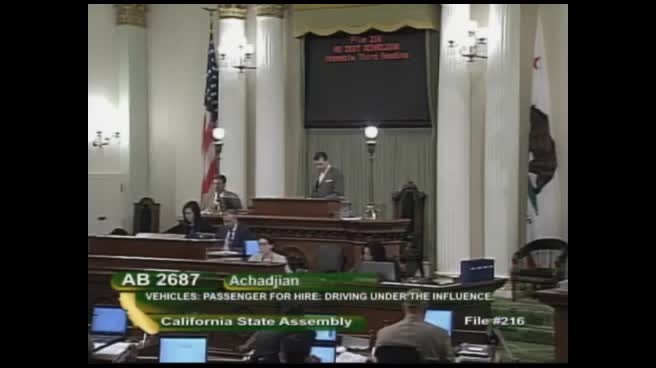 1MIN
Assembly Floor


Bill Co-Author(s):