AB 2697: Redevelopment dissolution: successor agencies: disposal of assets and properties.
- Session Year: 2015-2016
- House: Assembly
- Latest Version Date: 2016-04-14
Existing law dissolved redevelopment agencies and community development agencies as of February 1, 2012, and provides for the designation of successor agencies to wind down the affairs of the dissolved redevelopment agencies and to, among other things, dispose of all assets and properties of the former redevelopment agency in an expeditious manner aimed at maximizing value.
This bill would require a successor agency, prior to the disposal of land of the former redevelopment agency, to send a written offer to sell for the purposes of developing low- and moderate-income housing to any local public entity within whose jurisdiction the land is located, as specified. The bill would additionally require the sale of land of the former redevelopment agency to be subject to certain requirements relating to affordable housing. By imposing new duties on local officials, this bill would impose a state-mandated local program.
The California Constitution requires the state to reimburse local agencies and school districts for certain costs mandated by the state. Statutory provisions establish procedures for making that reimbursement.
This bill would provide that, if the Commission on State Mandates determines that the bill contains costs mandated by the state, reimbursement for those costs shall be made pursuant to these statutory provisions.
The oversight board shall direct the successor agency to do all of the following:
(a)(1)(A)Dispose of all assets and properties of the former redevelopment agency; provided, however, that the oversight board may instead direct the successor agency to transfer ownership of those assets that were constructed and used for a governmental purpose, such as roads, school buildings, parks, police and fire stations, libraries, parking facilities and lots dedicated solely to public parking, and local agency administrative buildings, to the appropriate public jurisdiction pursuant to any existing agreements relating to the construction or use of such an asset. Any compensation to be provided to the successor agency for the transfer of the asset shall be governed by the agreements relating to the construction or use of that asset. Except as provided in subparagraph (B), disposal shall be done expeditiously and in a manner aimed at maximizing value. Asset disposition may be accomplished by a distribution of income to taxing entities proportionate to their property tax share from one or more properties that may be transferred to a public or private agency for management pursuant to the direction of the oversight board.
(B)(i)Prior to the disposal of land of the former redevelopment agency, the successor agency shall send a written offer to sell for the purpose of developing low- and moderate-income housing to any local public entity, as defined in Section 50079, within whose jurisdiction the land is located. Housing sponsors, as defined by Section 50074, shall be sent, upon written request, a written offer to sell land for the purpose of developing low- and moderate-income housing. All notices shall be sent by first-class mail and shall include the location and a description of the property. With respect to any offer to purchase pursuant to this subparagraph, priority shall be given to development of the land to provide housing affordable for lower income households.
(ii)The sale of any land of the former redevelopment agency shall be subject to Sections 54222.5, 54226, 54227, and 54233 of the Government Code.
(2)Parking facilities and lots dedicated solely to public parking do not include properties that generate revenues in excess of reasonable maintenance costs of the properties.
(b)Cease performance in connection with and terminate all existing agreements that do not qualify as enforceable obligations.
(c)Transfer housing assets pursuant to Section 34176.
(d)Terminate any agreement, between the dissolved redevelopment agency and any public entity located in the same county, obligating the redevelopment agency to provide funding for any debt service obligations of the public entity or for the construction, or operation of facilities owned or operated by such public entity, in any instance where the oversight board has found that early termination would be in the best interests of the taxing entities.
(e)Determine whether any contracts, agreements, or other arrangements between the dissolved redevelopment agency and any private parties should be terminated or renegotiated to reduce liabilities and increase net revenues to the taxing entities, and present proposed termination or amendment agreements to the oversight board for its approval. The board may approve any amendments to or early termination of those agreements if it finds that amendments or early termination would be in the best interests of the taxing entities.
(f)All actions taken pursuant to subdivisions (a) and (c) shall be approved by resolution of the oversight board at a public meeting after at least 10 days notice to the public of the specific proposed actions. The actions shall be subject to review by the department pursuant to Section 34179 except that the department may extend its review period by up to 60 days. If the department does not object to an action subject to this section, and if no action challenging an action is commenced within 60 days of the approval of the action by the oversight board, the action of the oversight board shall be considered final and can be relied upon as conclusive by any person. If an action is brought to challenge an action involving title to or an interest in real property, a notice of pendency of action shall be recorded by the claimant as provided in Title 4.5 (commencing with Section 405) of Part 2 of the Code of Civil Procedure within a 60-day period.
SEC. 2.If the Commission on State Mandates determines that this act contains costs mandated by the state, reimbursement to local agencies and school districts for those costs shall be made pursuant to Part 7 (commencing with Section 17500) of Division 4 of Title 2 of the Government Code.
The oversight board shall direct the successor agency to do all of the following:
(a)(1)(A)Dispose of all assets and properties of the former redevelopment agency; provided, however, that the oversight board may instead direct the successor agency to transfer ownership of those assets that were constructed and used for a governmental purpose, such as roads, school buildings, parks, police and fire stations, libraries, parking facilities and lots dedicated solely to public parking, and local agency administrative buildings, to the appropriate public jurisdiction pursuant to any existing agreements relating to the construction or use of such an asset. Any compensation to be provided to the successor agency for the transfer of the asset shall be governed by the agreements relating to the construction or use of that asset. Disposal Except as provided in subparagraph (B), disposal shall be done expeditiously and in a manner aimed at maximizing value. Asset disposition may be accomplished by a distribution of income to taxing entities proportionate to their property tax share from one or more properties that may be transferred to a public or private agency for management pursuant to the direction of the oversight board.
(B)(i)Prior to the disposal of land of the former redevelopment agency, the successor agency shall send a written offer to sell for the purpose of developing low- and moderate-income housing to any local public entity, as defined in Section 50079, within whose jurisdiction the land is located. Housing sponsors, as defined by Section 50074, shall be sent, upon written request, a written offer to sell land for the purpose of developing low- and moderate-income housing. All notices shall be sent by first-class mail and shall include the location and a description of the property. With respect to any offer to purchase pursuant to this subparagraph, priority shall be given to development of the land to provide housing affordable for lower income households.
(ii)The sale of any land of the former redevelopment agency shall be subject to Sections 54222.5, 54227, and 54233 of the Government Code.
(2)Parking facilities and lots dedicated solely to public parking do not include properties that generate revenues in excess of reasonable maintenance costs of the properties.
(b)Cease performance in connection with and terminate all existing agreements that do not qualify as enforceable obligations.
(c)Transfer housing assets pursuant to Section 34176.
(d)Terminate any agreement, between the dissolved redevelopment agency and any public entity located in the same county, obligating the redevelopment agency to provide funding for any debt service obligations of the public entity or for the construction, or operation of facilities owned or operated by such public entity, in any instance where the oversight board has found that early termination would be in the best interests of the taxing entities.
(e)Determine whether any contracts, agreements, or other arrangements between the dissolved redevelopment agency and any private parties should be terminated or renegotiated to reduce liabilities and increase net revenues to the taxing entities, and present proposed termination or amendment agreements to the oversight board for its approval. The board may approve any amendments to or early termination of those agreements if it finds that amendments or early termination would be in the best interests of the taxing entities.
(f)All actions taken pursuant to subdivisions (a) and (c) shall be approved by resolution of the oversight board at a public meeting after at least 10 days notice to the public of the specific proposed actions. The actions shall be subject to review by the department pursuant to Section 34179 except that the department may extend its review period by up to 60 days. If the department does not object to an action subject to this section, and if no action challenging an action is commenced within 60 days of the approval of the action by the oversight board, the action of the oversight board shall be considered final and can be relied upon as conclusive by any person. If an action is brought to challenge an action involving title to or an interest in real property, a notice of pendency of action shall be recorded by the claimant as provided in Title 4.5 (commencing with Section 405) of Part 2 of the Code of Civil Procedure within a 60-day period.
SEC. 2.If the Commission on State Mandates determines that this act contains costs mandated by the state, reimbursement to local agencies and school districts for those costs shall be made pursuant to Part 7 (commencing with Section 17500) of Division 4 of Title 2 of the Government Code.
|
Date
|
Status
|
|---|---|
| Feb 19, 2016 | Introduced. To print. |
| Feb 21, 2016 | From printer. May be heard in committee March 22. |
| Feb 22, 2016 | Read first time. |
| Mar 10, 2016 | Referred to Coms. on H. & C.D. and L. GOV. |
| Apr 7, 2016 | (pending re-refer to Com. on L. GOV.) |
| Apr 7, 2016 | Assembly Rule 56 suspended. |
| Apr 7, 2016 | Assembly Rule 56 suspended. (Page 4218.) |
| Apr 13, 2016 | From committee: Do pass and re-refer to Com. on L. GOV. (Ayes 6. Noes 1.) (April 13). Re-referred to Com. on L. GOV. |
| Apr 14, 2016 | From committee chair, with author's amendments: Amend, and re-refer to Com. on L. GOV. Read second time and amended. |
| Apr 18, 2016 | Re-referred to Com. on L. GOV. |
| Apr 21, 2016 | From committee: Do pass and re-refer to Com. on APPR. (Ayes 6. Noes 3.) (April 20). Re-referred to Com. on APPR. |
| May 11, 2016 | In committee: Set, first hearing. Referred to APPR. suspense file. |
| May 27, 2016 | In committee: Held under submission. |
|
Date
|
Description
|
Location
|
Votes
|
|
|---|---|---|---|---|
| Apr 20, 2016 | Do pass and be re-referred to the Committee on [Appropriations] | Assembly Standing Committee on Local Government |
Passed |
|
| Apr 13, 2016 | Do pass and be re-referred to the Committee on [Local Government] | Assembly Standing Committee on Housing and Community Development |
Passed |
This list shows positions taken on this bill by organizations on the date displayed, which is linked to the original source.
Positions by individuals are not included.
|
Organization
|
Position
|
Date
|
|---|---|---|
| California Bowmen Hunters and State Archery Association | * Support | Jun 26, 2018 |
| California Chapter Wild Sheep Foundation | * Support | Jun 26, 2018 |
| California Deer Association | * Support | Jun 26, 2018 |
| California Houndsmen For Conservation | * Support | Jun 26, 2018 |
| California Housing Consortium | ** Support | Apr 20, 2016 |
| California Waterfowl Association | * Support | Jun 26, 2018 |
| Cities of Palmdale, San Carlos, and Torrance | ** Against | Apr 20, 2016 |
| City of Lakeport | ** Against | Apr 13, 2016 |
| Gaines and Associates | * Support | Jun 26, 2018 |
| Grassland Water District | * Support | Jun 26, 2018 |
| League Of California Cities | ** Against | Apr 20, 2016 |
| Nature Conservancy | * Support | Jun 26, 2018 |
| Non-Profit Housing Association | ** Support | Apr 20, 2016 |
| Non-Profit Housing Association of Northern California | * Support | Apr 20, 2016 |
| Northern California Water Association | * Support | Jun 26, 2018 |
| Pheasants Forever Quail Forever | * Support | Jun 26, 2018 |
| Torrance, City Of | ** Against | Apr 13, 2016 |
Date of Hearing: May 11, 2016
ASSEMBLY COMMITTEE ON APPROPRIATIONS
Lorena Gonzalez, Chair
ABPCA Bill Id:AB 2697
Author:(Bonilla) – As Amended Ver:April 14, 2016
Policy Committee: | Housing and Community Development | Vote: | 6 - 1 |
Local Government | 6 - 3 |
Urgency: No State Mandated Local Program: Yes Reimbursable: Yes
SUMMARY: This bill requires successor agencies to create a first right of refusal process for the disposal of land for the purpose of developing low- and moderate- income housing. Specifically, this bill:
- Requires the successor agency to a former redevelopment agency to send to any "local public entity," within whose jurisdictions the land is located, a written offer to sell land belonging to the former redevelopment agency for the purpose of developing the land into low- and moderate-income housing.
- Requires the successor agency to send "housing sponsors," upon written request, a written offer to sell land for the purpose of developing low- and moderate-income housing.
- Requires priority to be given to offers to purchase the land by entities that agree to development affordable housing for lower-income households.
- Requires preference to be given to an entity that proposes to make at least 25% of the units affordable, by sale or rent, to lower-income households and that agrees to record an affordability covenant restricting the property for a period of at least 55 years.
- Provides that if the successor agency receives more than one offer for the land that priority be given to the entity that proposes the greatest number of units at the highest level of affordability.
- Provides that if land is not sold to an entity that agrees to include affordable housing on site but is sold for a residential use that includes at least 10 units, then at least 15% of the units must be provided at an affordable housing cost to low-income households. Rental units must remain affordable and occupied by eligible households for 55 years. Ownership units must be subject to an equity sharing agreement. These requirements must be recorded against the property and are enforceable by the local government or eligible residents.
FISCAL EFFECT:
- Significant cost pressure to increase funding for Successor Agencies for increased workload associated with sending the written offers to sell and evaluating offers pertaining to affordability requirements. Successor Agency budgets are capped at $250,000 annually and are paid for by other taxing entities, including schools.
- Unknown, but potentially reimbursable local mandate costs to the extent cities and counties would need to rezone land or perform other duties regarding the deviations from approved Property Management Plans this bill may cause.
- Unknown forgone property tax revenue as a result of rezoning land approved for commercial use in an agency's Property Management Plan to residential land for affordable housing. The State General Fund would cover the school share.
COMMENTS:
- Purpose. Affordable housing developers are at a special disadvantage because they cannot compete with market developers when it comes to buying land. Land is one of the most costly parts of a project, especially in California. This bill will allow affordable housing developers to have first right of refusal to purchase any properties currently in possession of redevelopment successor agencies. This small step will give these developers a leg up in the process to locate and acquire properties on which to build affordable housing."
This would require successor agencies to adhere to some provisions of the State Surplus Land Act, including offering affordable housing developers the right of first refusal and if the land is purchased for market rate residential development, require 15% of the units to be low income.
- Background. Local agencies are required to inventory the land they own every year. If land is no longer needed, a local agency must follow certain procedures prior to disposal of this "surplus" land. The intent behind the disposal procedures is to promote the use of surplus land towards affordable housing, parks and recreation purposes, open-space purposes, and transit-oriented development. The disposal procedures provide a Right of First Refusal to entities agreeing to use the land for, amongst other things, affordable housing.
As part of the dissolution of redevelopment, successor agencies were created to dispose of the redevelopment agencies assets and wind down their affairs. The activities of successor agencies are overseen by oversight boards made up of representatives of the local taxing entities and others. Part of the function of the successor agencies is to transfer the housing assets of a former redevelopment agency to the housing successor which was either the local housing authority or the city or county in which the redevelopment agency was located. Housing assets transferred to the housing successor entity were to be used for affordable housing activities, while disallowed assets would go to the successor agency for disposal or retention pursuant to an approved property management plan.
- Interaction with Property Management Plans. This bill would require a successor agency to notify a local agency, including a housing authority, and housing developers that they are selling property previously owned by the redevelopment agency. The sale of the properties would be subject to the same process as state surplus property. This bill requires successor agencies to offer all available parcels to affordable housing interests. It is unclear what would be required of local agencies if this is in conflict with the approved use under an approved Property Management Plan.
- Arguments in Support. Supporters argue that this bill will allow successor agencies to utilize their remaining property as was intended and help to develop a significant amount of affordable homes.
- Arguments in Opposition. Opponents argue that “imposing new procedural and substantive requirements for the disposition of former RDA properties at this time would no doubt complicate and delay the wind down process. Additionally, it would work to the disadvantage of the local taxing entities which have an interest in obtaining maximum value for the properties to be sold and or get the benefit of increased valuations from the properties that are to be used for economic development.”
Analysis Prepared by: Jennifer Swenson / APPR. / (916) 319-2081
Date of Hearing: April 20, 2016
ASSEMBLY COMMITTEE ON LOCAL GOVERNMENT
Susan Talamantes Eggman, Chair
ABPCA Bill Id:AB 2697 (
Author:Bonilla) – As Amended Ver:April 14, 2016
SUBJECT: Redevelopment dissolution: successor agencies: disposal of assets and properties.
SUMMARY: Requires successor agencies to create a first right of refusal process for the disposal of land for the purpose of developing low- and moderate- income housing. Specifically, this bill:
- Requires the successor agency to a former redevelopment agency to send to any "local public entity," within whose jurisdictions the land is located, a written offer to sell land belonging to the former redevelopment agency for the purpose of developing the land into low- and moderate-income housing.
- Requires the successor agency to send "housing sponsors," upon written request, a written offer to sell land for the purpose of developing low- and moderate-income housing.
- Requires all notices to be sent by first class mail and to include the location and description of the property.
- Requires priority to be given to offers to purchase the land by entities that agree to development affordable housing for lower-income households.
- Requires preference to be given to an entity that proposes to make at least 25% of the units affordable, by sale or rent, to lower-income households and that agrees to record an affordability covenant restricting the property for a period of at least 55 years.
- Provides that if the successor agency receives more than one offer for the land that priority be given to the entity that proposes the greatest number of units at the highest level of affordability.
- Provides that if land is not sold to an entity that agrees to include affordable housing on site but is sold for a residential use that includes at least 10 units, then at least 15% of the units must be provided at an affordable housing cost to low-income households. Rental units must remain affordable and occupied by eligible households for 55 years. Ownership units must be subject to an equity sharing agreement. These requirements must be recorded against the property and are enforceable by the local government or eligible residents.
- Defines a "local public entity" to mean any county, city, city and county, Indian reservation or rancheria, redevelopment agency, housing authority, state agency, public district or other political subdivision of the state that is authorized to engage in or assist in the development or operation of housing for persons or families of low or moderate income.
- Defines "housing sponsor" to mean an individual, joint venture, partnership, limited partnership, trust, corporation, limited equity housing cooperative, cooperative, local public entity, duly constituted governing body of an Indian reservation or rancheria, or other legal entity, certified by the agency, pursuant to rules and regulations of the agency as qualified to either own, construct, acquire or rehabilitate a housing development, whether for profit, nonprofit, or organized for limited profit, and subject to the regulatory powers of the agency, pursuant to rules and regulations of the agency and other terms and conditions set forth in this division.
- Clarifies that a successor agency is not required to sell a property at less than fair market rate to a developer who agrees to include units affordable to lower-income households.
- Provides that reimbursement to local agencies shall be made, if the Commission on State Mandates determines that this act contains costs mandated by the state.
EXISTING LAW:
- Requires an oversight board to direct the successor agency to a redevelopment agency to dispose of all assets and properties of the former redevelopment agency expeditiously and in a manner that maximizes value.
- Defines "local agency" for purposes of the surplus land disposal procedures as every city, whether organized under general law or by charter, county, city and county, and district, including school districts of any kind or class, empowered to acquire and hold real property.
- Defines "housing sponsor" to mean an individual, joint venture, partnership, limited partnership, trust, corporation, limited equity housing cooperative, cooperative, local public entity, duly constituted governing body of an Indian reservation or rancheria, or other legal entity, certified by the agency pursuant to rules and regulations of the agency as qualified to either own, construct, acquire or rehabilitate a housing development, whether for profit, nonprofit, or organized for limited profit, and subject to the regulatory powers of the agency pursuant to rules and regulations of the agency and other terms and conditions set forth in this division.
- Defines “surplus land” as land owned by any local agency that is determined to be no longer necessary for the agency’s use, except property being held by the agency for the purpose of exchange or property meeting other exemptions.
- Requires that a local agency must provide a written offer to sell or lease surplus land for the purpose of developing low- or moderate-income housing to "housing sponsors" upon written request, as well as any local public entity within the jurisdiction where the surplus land is located.
- Provides that a local agency wishing to dispose of surplus land must also provide a written offer to additional entities, depending on the type of proposed usage, for park and recreational purposes, school facilities construction or use by a school district for open-space purposes, enterprise purposes, and infill opportunity zones or transit village plans.
- Provides that, if a notified entity desires to purchase or lease the surplus land, it must notify the local agency of its intent within 60 days after receipt of the agency's intent to sell or lease the land.
- Provides that, if a local agency receives notice from an entity provided with a written offer desiring to purchase or lease the land, the local agency and the entity must enter into good faith negotiations. If the price or terms cannot be agreed upon after a period of not less than 60 days, the land may be disposed of without further regard to the disposal procedures.
- Provides that any public agency selling surplus land to a notified entity for park or recreation purposes, for open-space purposes, for school purposes, or for low- and moderate- income housing purposes, may provide for a payment period of up to 20 years in any contract of sale or sale by trust deed.
- Provides that nothing in the disposal procedure limits the power of any local agency to sell or lease surplus land at fair market value or at less than fair market value, and nothing shall be interpreted to empower any local agency to sell or lease surplus land at less than fair market value.
- Provides that, with respect to any offer to purchase or lease from a notified entity for the purpose of low- or moderate-income housing development, priority shall be given to development of the land for affordable housing for lower income, elderly, or disabled persons or households, and other lower-income households.
- Specifies that, in the event that a local agency receives multiple offers for the purchase or lease of surplus land from more than one of the notified entities, the local agency shall give first priority to the entity that agrees to use the site for housing for persons and families of low- or moderate-income, except that first priority shall be given to an entity that agrees to use the site for park or recreational purposes, if the land being offered is already being used and will continue to be used for park or recreational purposes, or if the land is designated for park and recreational use in the local general plan and will be developed for that purpose.
FISCAL EFFECT: This bill is keyed fiscal.
COMMENTS:
- Bill Summary. This bill requires successor agencies to create a first right of refusal process for the disposal of land for the purpose of developing low- and moderate- income housing.
This bill is an author-sponsored measure.
- Author’s Statement. According to the author, “California has a lack of housing which has spurred increased housing prices across the state. A key issue with supply is lack of easily identifiable and affordable sites on which to build new structures. Although local governments are obligated to identify housing sites in their housing elements on which residential housing can be constructed, these identified sites often are insufficient – some do not shift as anticipated from prior uses to residential uses, their cost is prohibitive, or they are dually zoned to accommodate commercial and residential use, with the commercial use winning out. Housing developers also have a hard time identifying sites on which to build. Affordable housing developers are at a special disadvantage because they cannot compete with market developers when it comes to buying land. Land is one of the most costly parts of a project, especially in California.
“AB 2697 will allow affordable housing developers to have first right of refusal to purchase any properties currently in possession of redevelopment successor agencies. This small step will give these developers a leg up in the process to locate and acquire properties on which to build affordable housing.
“With the current dissolution of redevelopment agencies and the requirement for successor agencies to liquidate their assets, we have a good opportunity to shift those properties towards the development of affordable housing. There is no current requirement that successor agencies give first right of refusal to affordable housing developers when liquidating agency assets.”
- Background. Local agencies are required to inventory the land they own every year. If land is no longer needed, a local agency must follow certain procedures prior to disposal of this "surplus" land. The intent behind the disposal procedures is to promote the use of surplus land towards affordable housing, parks and recreation purposes, open-space purposes, and transit-oriented development. The disposal procedures provide a Right of First Refusal to entities agreeing to use the land for, amongst other things, affordable housing.
Prior to disposing of surplus land, local agencies must make a written offer to sell or lease surplus land for the purpose of developing low- or moderate-income housing to "housing sponsors" upon written request, as well as any local public entity within the jurisdiction where the surplus land is located. A local agency wishing to dispose of surplus land must also provide a written offer to additional entities, depending on the type of proposed development, for park and recreational purposes, school facilities construction or use by a school district for open space purposes, enterprise purposes, and infill opportunity zones, or transit village plans.
If one of these entities is interested in buying or leasing the land, it must notify the local agency within 60 days of receipt of the offer. If a notified entity is interested, but cannot agree with the agency upon the price or terms, the local agency must enter into good faith negotiations with the entity for at least 60 days. If 60 days have passed without an agreement, then the local agency may sell or lease the land without further regard to the Right of First Refusal requirements under the disposal procedures.
If the land is going to be used for residential development and a local agency receives multiple offers from notified entities, the local agency is required to give first priority to the entity that agrees to use the site for affordable housing for low- or moderate-income individuals and families. In the event that a local agency enters into a contract to sell or lease the land to a notified entity for park or recreation purposes, open-space purposes, school purposes, or for low- and moderate-income housing purposes, that contract may provide for a payment period of up to 20 years. While nothing in the disposal procedure limits the power of a local agency to sell or lease surplus land at fair market value or at less than fair market value, it also provides that nothing in the procedure shall be interpreted to empower any local agency to sell or lease surplus land at less than fair market value.
AB 2135 (Ting), Chapter 677, Statutes of 2014, amended the procedure for the disposal of surplus land by local agencies and expanded the provisions relating to the prioritization of affordable housing development if the surplus land would be used for residential development.
- Policy Considerations. The Committee may wish to consider the following:
- Land Appropriate for Residential. The Committee may wish to consider whether all properties are suitable for residential development. What if the local agency does not have the land zoned appropriately for residential use?
- Cross Reference to “Local Public Entity”. The cross reference the bill includes to the definition of “local public entity” is as follows:
“Local public entity” means any county, city, city and county, Indian reservation or Rancheria, redevelopment agency, housing authority, state agency, public district or other political subdivision of the state…
However, the definition in the surplus lands statute (used in AB 2135 (Ting)) defines "local agency" for purposes of the surplus land disposal procedures as every city, whether organized under general law or by charter, county, city and county, and district, including school districts of any kind or class, empowered to acquire and hold real property.
- Arguments in Support. Supporters argue that this bill will allow successor agencies to utilize their remaining property as was intended and help to develop a significant amount of affordable homes.
- Arguments in Opposition. Opponents argue that “imposing new procedural and substantive requirements for the disposition of former RDA properties at this time would no doubt complicate and delay the wind down process. Additionally, it would work to the disadvantage of the local taxing entities which have an interest in obtaining maximum value for the properties to be sold and or get the benefit of increased valuations from the properties that are to be used for economic development.”
- Double-Referral. This bill was heard by the Housing and Community Development Committee on April 13, 2016, where it passed with a 6-1 vote.
REGISTERED SUPPORT / OPPOSITION:
Support
California Housing Consortium
Non-Profit Housing Association
Opposition
Cities of Palmdale, San Carlos, and Torrance
League of California Cities
Analysis Prepared by: Debbie Michel / L. GOV. / (916) 319-3958
Date of Hearing: April 13, 2016
ASSEMBLY COMMITTEE ON HOUSING AND COMMUNITY DEVELOPMENT
David Chiu, Chair
ABPCA Bill Id:AB 2697 (
Author:Bonilla) – As Introduced Ver:February 19, 2016
SUBJECT: Redevelopment dissolution: successor agencies: disposal of assets and properties
SUMMARY: Requires a successor agency when disposing of land that was previously owned by a redevelopment agency to offer and prioritize sale to entities that agree to construct housing affordable to low- and moderate-income households. Specifically, this bill:
- Requires the successor agency to a former redevelopment agency to send to any "local public entity," within whose jurisdictions the land is located, a written offer to sell land belonging to the former redevelopment agency for the purpose of developing the land into low -and moderate-income housing.
- Requires the successor agency to send "housing sponsors," upon written request, a written offer to sell land for the purpose of developing low and moderate-income housing.
- Requires all notices to be sent by first class mail and to include the location and description of the property.
- Requires priority to be given to offers to purchase the land by entities that agree to development affordable housing for lower income households.
- Requires preference will be given to an entity that proposes to make at least 25% of the units affordable, by sale or rent, to lower income households and that agrees to record an affordability covenant restricting the property for a period of at least 55 years.
- Provides that if the successor agency receives more than one offer for the land that priority be given to the entity that proposes the greatest number of units at the highest level of affordability.
- Provides that if land is not sold to an entity that agrees to include affordable housing on site but is sold for a residential use that includes at least 10 units than at least 15% of the units must be provided at an affordable housing cost to low income households. Rental units must remain affordable and occupied by eligible households for 55 years. Ownership units must be subject to an equity sharing agreement. These requirements must be recorded against the property and are enforceable by the local government or eligible residents.
- Defines a "local public entity" to mean any county, city, city and county, Indian reservation or rancheria, redevelopment agency, housing authority, state agency, public district or other political subdivision of the state that is authorized to engage in or assist in the development or operation of housing for persons or families of low or moderate income.
- Defines "housing sponsor" to mean an individual, joint venture, partnership, limited partnership, trust, corporation, limited equity housing cooperative, cooperative, local public entity, duly constituted governing body of an Indian reservation or rancheria, or other legal entity, certified by the agency pursuant to rules and regulations of the agency as qualified to either own, construct, acquire or rehabilitate a housing development, whether for profit, nonprofit, or organized for limited profit, and subject to the regulatory powers of the agency pursuant to rules and regulations of the agency and other terms and conditions set forth in this division.
EXISTING LAW:
- Requires an oversight board to direct the successor agency to a redevelopment agency to dispose of all assets and properties of the former redevelopment agency expeditiously and in a manner that maximizes value.
- Defines "local agency" for purposes of the surplus land disposal procedures as every city, whether organized under general law or by charter, county, city and county, and district, including school districts of any kind or class, empowered to acquire and hold real property.
- Defines "housing sponsor" to mean an individual, joint venture, partnership, limited partnership, trust, corporation, limited equity housing cooperative, cooperative, local public entity, duly constituted governing body of an Indian reservation or rancheria, or other legal entity, certified by the agency pursuant to rules and regulations of the agency as qualified to either own, construct, acquire or rehabilitate a housing development, whether for profit, nonprofit, or organized for limited profit, and subject to the regulatory powers of the agency pursuant to rules and regulations of the agency and other terms and conditions set forth in this division. (Health and Safety Code Section 50074)
- Defines “surplus land” as land owned by any local agency that is determined to be no longer necessary for the agency’s use, except property being held by the agency for the purpose of exchange or property meeting other exemptions.
- Requires that a local agency must provide a written offer to sell or lease surplus land for the purpose of developing low- or moderate-income housing to "housing sponsors" upon written request, as well as any local public entity within the jurisdiction where the surplus land is located.
- Provides that a local agency wishing to dispose of surplus land must also provide a written offer to additional entities, depending on the type of proposed usage, for park and recreational purposes, school facilities construction or use by a school district for open space purposes, enterprise purposes, and infill opportunity zones or transit village plans.
- Provides that, if a notified entity desires to purchase or lease the surplus land, it must notify the local agency of its intent within 60 days after receipt of the agency's intent to sell or lease the land.
- Provides that, if a local agency receives notice from an entity provided with a written offer desiring to purchase or lease the land, the local agency and the entity must enter into good faith negotiations. If the price or terms cannot be agreed upon after a period of not less than 60 days, the land may be disposed of without further regard to the disposal procedures.
- Provides that any public agency selling surplus land to a notified entity for park or recreation purposes, for open-space purposes, for school purposes, or for low- and moderate- income housing purposes may provide for a payment period of up to 20 years in any contract of sale or sale by trust deed.
- Provides that nothing in the disposal procedure limits the power of any local agency to sell or lease surplus land at fair market value or at less than fair market value, and nothing shall be interpreted to empower any local agency to sell or lease surplus land at less than fair market value.
- Provides that, with respect to any offer to purchase or lease from a notified entity for the purpose of low- or moderate-income housing development, priority shall be given to development of the land for affordable housing for lower income, elderly, or disabled persons or households, and other lower-income households.
- Specifies that, in the event that a local agency receives multiple offers for the purchase or lease of surplus land from more than one of the notified entities, the local agency shall give first priority to the entity that agrees to use the site for housing for persons and families of low- or moderate-income, except that first priority shall be given to an entity that agrees to use the site for park or recreational purposes if the land being offered is already being used and will continue to be used for park or recreational purposes, or if the land is designated for park and recreational use in the local general plan and will be developed for that purpose.
FISCAL EFFECT: Unknown.
COMMENTS:
In 2011, facing a severe budget shortfall, the Governor proposed eliminating RDAs in order to deliver more property taxes to other local agencies. Statewide, redevelopment redirected 12% of property taxes away from schools and other local taxing entities and into community development and affordable housing. Ultimately, the Legislature approved and the Governor signed two measures, ABX1 26 (Blumenfield), Chapter 5 and ABX1 27 (Blumenfield), Chapter 6 that together dissolved RDAs as they existed at the time and created a voluntary redevelopment program on a smaller scale. In response the California Redevelopment Association (CRA) and the League of California Cities, along with other parties, filed suit challenging the two measures. The Supreme Court denied the petition for peremptory writ of mandate with respect to ABX1 26. However, the Court did grant CRA's petition with respect to ABX1 27. As a result, all RDAs were required to dissolve as of February 1, 2012
As part of the dissolution of redevelopment, successor agencies were created to dispose of the redevelopment agencies assets and wind down their affairs. The activities of successor agencies are overseen by oversight boards made up of representatives of the local taxing entities and others. Part of the function of the successor agencies is to transfer the housing assets of a former redevelopment agency to the housing successor which was either the local housing authority or the city or county in which the redevelopment agency was located. Housing assets transferred to the housing successor entity were to be used for affordable housing activities, while disallowed assets would go to the successor agency for disposal or retention pursuant to an approved property management plan.
Successor agencies were also directed to dispose of non-housing assets and properties of the former redevelopment agency. Successor agencies are authorized to either, transfer property to the city for governmental use at no cost to the city, sell the property on the open market, with the proceeds distributed among the affected taxing entities, use the property to fulfill an enforceable obligation of the former redevelopment agency, or a city can purchase a property for future development, with the city negotiating the purchase price with the affected taxing entities.
The successor agency is directed to dispose of all assets expeditiously and at maximum value.
This bill would require a successor agency to notify a local agency, including a housing authority, and housing developers that they are selling property previously owned by the redevelopment agency. The sale of the properties would be subject to the same process as state surplus property. Priority would be given to a developer that proposes to make at least 25% of the units in a rental or for-sale development affordable to lower income households and agrees to restrict the units to affordable levels for 55 years. If a successor agency receives more than one offer for the property, priority would be given to the development that proposes the most affordable units at the most affordable level. If a property is not sold to a buyer who agrees to include affordable units but is sold for residential use with at least 10 units on the site, then 15% of the units must be provided at an affordable cost to low income households.
As part of the dissolution process, successor agencies were required to provide DOF Long Range Property Management Plans (LRPMPs) that detail the properties owned by former redevelopment agencies and the plans for disposal of those properties. Almost all of the over 380 former redevelopment agencies have approved LRPMPs which are published on DOF's website. LRPMPs are hundreds of page long so it is difficult to determine how many properties are going to be sold on the open market and to which this bill would apply.
Successor agencies are required to dispose of former redevelopment agency properties expeditiously and to maximize the amount for the property. This bill does not specify that a successor agency can sell a property at market rate if it is sold to a developer including affordable units. The committee may wish to clarify this by cross referencing the code section in the state surplus land statute that states that the intent is not to limit a local government's power to sell or lease surplus land at fair market value.
Purpose of this bill: According to the author, "California has a lack of housing which has spurred increased housing prices across the state. A key issue with supply is lack of easily identifiable and affordable sites on which to build new structures. Although local governments are obligated to identify housing sites in their housing elements on which residential housing can be constructed, these identified sites often are inadequate- they do not shift from prior uses to residential uses, their cost is prohibitive, or they are dually zoned to accommodate commercial and residential use, with the commercial use winning out. Housing developers also have a hard time identifying sites on which to build. Affordable housing developers are at a special disadvantage because they cannot compete with market developers when it comes to buying land. Land is one of the most costly parts of a project, especially in California. AB 2697 will allow affordable housing developers to have first right of refusal to purchase any properties currently in possession of redevelopment successor agencies. This small step will give these developers a leg up in the process to locate and acquire properties on which to build affordable housing."
Arguments in support: According to supporters, rents in the state have skyrocketed while at the same time, state and federal investment in affordable home production dropped sixty-six percent. The housing crisis is affecting Californians at nearly every income level. Prior to 2012, redevelopment agencies were required to set aside 20% of the tax increment collected in a project is to fund, creation, preservation, or rehabilitation of affordable housing. AB 2867 would require successor agencies to adhere to some provisions of the State Surplus Land Act including offering affordable housing developers the right of first refusal and if the land is purchased for market rate residential development, require 15% of the units to be low income.
Arguments in opposition: The League of California Cities is opposed to this bill because it is coming late in the dissolution process. "Imposing new procedural and substantive requirements for the dissolution of former RDA properties at this time would no doubt complicate and delay the wind down process. Additionally, it would work to the disadvantage of the local taxing entities which have an interest in obtaining maximum value for the properties to be sold and or get the benefit of increasing valuations from properties that are to be used for economic development."
Committee amendment:
To make clear that a successor agency is not required to sell a property at less than fair market rate to a developer that agrees to include units affordable to lower income households, the committee may wish to consider the following amendment:
(ii) The sale of any land of the former redevelopment agency shall be subject to Sections 54222.5, 54227, 54226, and 54233 of the Government Code.
Double referred: If AB 2697 passes this committee, the bill will be referred to the Committee on Local Government
REGISTERED SUPPORT / OPPOSITION:
Support
California Housing Consortium
Opposition
City of Lakeport
City of Torrance
League of California Cities
Analysis Prepared by: Lisa Engel / H. & C.D. / (961) 319-2085, Lisa Engel / H. & C.D. / (916) 319-2085
Discussed in Hearing
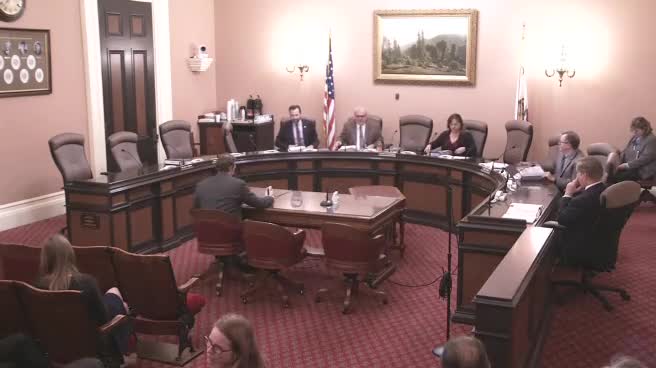 8MIN
Senate Standing Committee on Natural Resources and Water
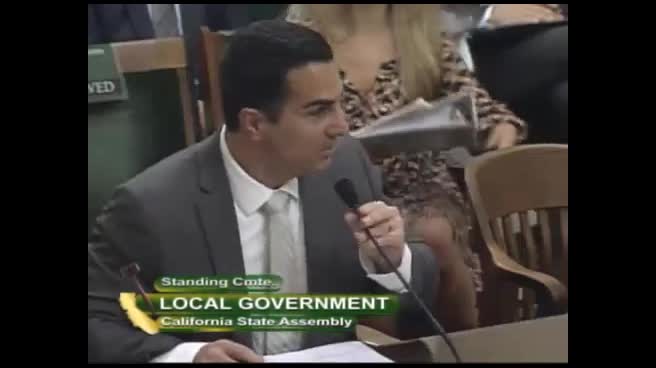 3MIN
Assembly Standing Committee on Local Government
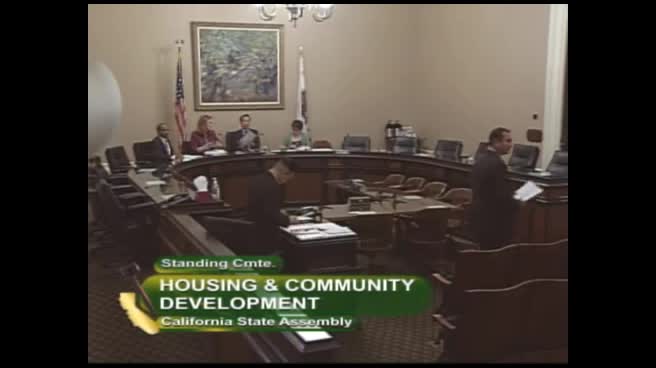 15MIN
Assembly Standing Committee on Housing and Community Development
Bill Author

Bill Co-Author(s):