AB 2813: Juvenile offenders: dual-status minors.
- Session Year: 2015-2016
- House: Assembly
- Latest Version Date: 2016-09-26
Existing law requires a probation officer, upon delivery of a minor who has been taken into temporary custody, to immediately investigate the circumstances of the minor and the facts surrounding the minor being taken into custody and to immediately release the minor to the custody of his or her parent, legal guardian, or responsible relative unless evidence before the court demonstrates that continuance in the home is contrary to the childs welfare, and one or more specified circumstances is present, including, among others, that the minor is destitute.
This bill would delete several of those specified circumstances. The bill would also prohibit the probation officer, when deciding whether to detain a minor who is currently a dependent of the juvenile court or the subject of a petition to declare him or her a dependent of the juvenile court and who has been removed from the custody of his or her parent or guardian by the juvenile court, from considering specified information, including, among others, the minors status as a dependent of the juvenile court or as the subject of a petition to declare him or her a dependent of the juvenile court. The bill would require a probation officer to immediately release that minor to the custody of the child welfare services department or his or her current foster parent or other caregiver, except as specified. By increasing the duties imposed on local child welfare services departments, this bill would create a state-mandated local program.
The California Constitution requires the state to reimburse local agencies and school districts for certain costs mandated by the state. Statutory provisions establish procedures for making that reimbursement.
This bill would provide that no reimbursement is required by this act for a specified reason.
Existing law requires a probation officer, upon delivery of a minor who has been taken into temporary custody, to immediately investigate the circumstances of the minor and the facts surrounding the minor being taken into custody and to immediately release the minor to the custody of his or her parent, legal guardian, or responsible relative unless evidence before the court demonstrates that continuance in the home is contrary to the childs welfare, and one or more specified circumstances is present, including, among others, that the minor is destitute.
This bill would delete several of those specified circumstances. The bill would also prohibit the probation officer, when deciding whether to detain a minor who is currently a dependent of the juvenile court or the subject of a petition to declare him or her a dependent of the juvenile court and who has been removed from the custody of his or her parent or guardian by the juvenile court, from considering specified information, including, among others, the minors status as a dependent of the juvenile court. court or as the subject of a petition to declare him or her a dependent of the juvenile court. The bill would require a probation officer, to immediately release that minor to the custody of the child welfare services department or his or her current foster parent or other caregiver, except as specified. By increasing the duties on local child welfare services departments, this bill would impose a state-mandated local program.
The California Constitution requires the state to reimburse local agencies and school districts for certain costs mandated by the state. Statutory provisions establish procedures for making that reimbursement.
This bill would provide that no reimbursement is required by this act for a specified reason.
Existing law requires a probation officer, upon delivery of a minor who has been taken into temporary custody, to immediately investigate the circumstances of the minor and the facts surrounding the minor being taken into custody and to immediately release the minor to the custody of his or her parent, legal guardian, or responsible relative unless evidence before the court demonstrates that continuance in the home is contrary to the childs welfare, as specified. welfare, and one or more specified circumstances is present, including, among others, that the minor is destitute.
This bill would require a probation officer, upon delivery of a minor who has been taken into temporary custody and who is a dependent of the juvenile court, or who appears to come within the description of a dependent of the court, to immediately release the minor to the custody of the child welfare services department or his or her current foster parent or other caregiver, except as specified. delete several of those specified circumstances. The bill would also prohibit the probation officer, when deciding whether to detain a minor who is the subject of a petition to declare him or her a dependent of the court, juvenile court and who has been removed from the custody of his or her parent or guardian by the juvenile court, from considering specified information, including, among others, the minors status as a dependent of the juvenile court. The bill would require a probation officer, to immediately release that minor to the custody of the child welfare services department or his or her current foster parent or other caregiver, except as specified. By increasing the duties on local child welfare services departments, this bill would impose a state-mandated local program.
The California Constitution requires the state to reimburse local agencies and school districts for certain costs mandated by the state. Statutory provisions establish procedures for making that reimbursement.
This bill would provide that no reimbursement is required by this act for a specified reason.
Existing law requires a probation officer, upon delivery of a minor who has been taken into temporary custody, to immediately investigate the circumstances of the minor and the facts surrounding the minor being taken into custody and to immediately release the minor to the custody of his or her parent, legal guardian, or responsible relative unless evidence before the court demonstrates that continuance in the home is contrary to the childs welfare, as specified.
This bill would require a probation officer, upon delivery of a minor who has been taken into temporary custody and who is a dependent of the juvenile court, or who appears to come within the description of a dependent of the court, to immediately release the minor to the custody of the child welfare services department or his or her current foster parent or other caregiver, except as specified. The bill would also prohibit the probation officer, when deciding whether to detain a minor who is a dependent of the court, from considering specified information, including, among others, the minors status as a dependent of the juvenile court. By increasing the duties on local child welfare services departments, this bill would impose a state-mandated local program.
The California Constitution requires the state to reimburse local agencies and school districts for certain costs mandated by the state. Statutory provisions establish procedures for making that reimbursement.
This bill would provide that no reimbursement is required by this act for a specified reason.
(a)(1)Upon delivery to the probation officer of a minor who has been taken into temporary custody under the provisions of this article, the probation officer shall immediately investigate the circumstances of the minor and the facts surrounding his or her being taken into custody and shall immediately release the minor to the custody of his or her parent, legal guardian, or responsible relative unless it can be demonstrated upon the evidence before the court that continuance in the home is contrary to the minors welfare and one or more of the following conditions exist:
(A)Continued detention of the minor is a matter of immediate and urgent necessity for the protection of the minor or reasonable necessity for the protection of the person or property of another.
(B)The minor is likely to flee the jurisdiction of the court.
(C)The minor has violated an order of the juvenile court.
(2)The probation officers decision to detain a minor who is currently a dependent of the juvenile court pursuant to Section 300 or the subject of a petition to declare him or her a dependent of the juvenile court pursuant to Section 300 and who has been removed from the custody of his or her parent or guardian by the juvenile court shall not be based on any of the following:
(A)The minors status as a dependent of the juvenile court or as the subject of a petition to declare him or her a dependent of the juvenile court.
(B)A determination that continuance in the minors current placement is contrary to the minors welfare.
(C)The child welfare services departments inability to provide a placement for the minor.
(3)The probation officer shall immediately release a minor described in paragraph (2) to the custody of the child welfare services department or his or her current foster parent or other caregiver unless the probation officer determines that one or more of the conditions in paragraph (1) exist.
(4)This section does not limit a probation officers authority to refer a minor to child welfare services.
(b)If the probation officer has reason to believe that the minor is at risk of entering foster care placement as defined in paragraphs (1) and (2) of subdivision (d) of Section 727.4, the probation officer shall, as part of the investigation undertaken pursuant to subdivision (a), make reasonable efforts, as described in paragraph (5) of subdivision (d) of Section 727.4, to prevent or eliminate the need for removal of the minor from his or her home.
(c)In any case in which there is reasonable cause for believing that a minor who is under the care of a physician or surgeon or a hospital, clinic, or other medical facility and cannot be immediately moved is a person described in subdivision (d) of Section 300, the minor shall be deemed to have been taken into temporary custody and delivered to the probation officer for the purposes of this chapter while he or she is at the office of the physician or surgeon or that medical facility.
(d)(1)It is the intent of the Legislature that this subdivision shall comply with paragraph (29) of subsection (a) of Section 671 of Title 42 of the United States Code as added by the Fostering Connections to Success and Increasing Adoptions Act of 2008 (Public Law 110-351). It is further the intent of the Legislature that the identification and notification of relatives shall be made as early as possible after the removal of a youth who is at risk of entering foster care placement.
(2)If the minor is detained and the probation officer has reason to believe that the minor is at risk of entering foster care placement, as defined in paragraphs (1) and (2) of subdivision (d) of Section 727.4, then the probation officer shall conduct, within 30 days, an investigation in order to identify and locate all grandparents, adult siblings, and other relatives of the child, as defined in paragraph (2) of subdivision (f) of Section 319, including any other adult relatives suggested by the parents. The probation officer shall provide to all adult relatives who are located, except when that relatives history of family or domestic violence makes notification inappropriate, within 30 days of the date on which the child is detained, written notification and shall also, whenever appropriate, provide oral notification, in person or by telephone, of all the following information:
(A)The child has been removed from the custody of his or her parent or parents, or his or her guardians.
(B)An explanation of the various options to participate in the care and placement of the child and support for the childs family, including any options that may be lost by failing to respond. The notice shall provide information about providing care for the child, how to become a foster family home or approved relative or nonrelative extended family member as defined in Section 362.7, and additional services and support that are available in out-of-home placements. The notice shall also include information regarding the Kin-GAP Program (Article 4.5 (commencing with Section 11360) of Chapter 2 of Part 3 of Division 9), the CalWORKs program for approved relative caregivers (Chapter 2 (commencing with Section 11200) of Part 3 of Division 9), adoption and adoption assistance (Chapter 2.1 (commencing with Section 16115) of Part 4 of Division 9), as well as other options for contact with the child, including, but not limited to, visitation. When oral notification is provided, the probation officer is not required to provide detailed information about the various options to help with the care and placement of the child.
(3)The probation officer shall use due diligence in investigating the names and locations of the relatives pursuant to paragraph (2), including, but not limited to, asking the child in an age-appropriate manner about relatives important to the child, consistent with the childs best interest, and obtaining information regarding the location of the childs adult relatives.
(4)To the extent allowed by federal law as a condition of receiving funding under Title IV-E of the federal Social Security Act (42 U.S.C. Sec. 670 et seq.), if the probation officer did not conduct the identification and notification of relatives, as required in paragraph (2), but the court orders foster care placement, the probation officer shall conduct the investigation to find and notify relatives within 30 days of the placement order. Nothing in this section shall be construed to delay foster care placement for an individual child.
SEC. 2.To the extent that this act has an overall effect of increasing the costs already borne by a local agency for programs or levels of service mandated by the 2011 Realignment Legislation within the meaning of Section 36 of Article XIII of the California Constitution, it shall apply to local agencies only to the extent that the state provides annual funding for the cost increase. Any new program or higher level of service provided by a local agency pursuant to this act above the level for which funding has been provided shall not require a subvention of funds by the state nor otherwise be subject to Section 6 of Article XIII B of the California Constitution.
(a)(1)Upon delivery to the probation officer of a minor who has been taken into temporary custody under the provisions of this article, the probation officer shall immediately investigate the circumstances of the minor and the facts surrounding his or her being taken into custody and shall immediately release the minor to the custody of his or her parent, legal guardian, or responsible relative unless it can be demonstrated upon the evidence before the court that continuance in the home is contrary to the minors welfare and one or more of the following conditions exist:
(A)Continued detention of the minor is a matter of immediate and urgent necessity for the protection of the minor or reasonable necessity for the protection of the person or property of another.
(B)The minor is likely to flee the jurisdiction of the court.
(C)The minor has violated an order of the juvenile court.
(2)The probation officers decision to detain a minor who is currently a dependent of the juvenile court pursuant to Section 300 or the subject of a petition to declare him or her a dependent of the juvenile court pursuant to Section 300 and who has been removed from the custody of his or her parent or guardian by the juvenile court shall not be based on any of the following:
(A)The minors status as a dependent of the juvenile court. court or as the subject of a petition to declare him or her a dependent of the juvenile court.
(B)A determination that continuance in the minors current placement is contrary to the minors welfare.
(C)The child welfare services departments inability to provide a placement for the minor.
(3)The probation officer shall immediately release a minor described in paragraph (2) to the custody of the child welfare services department or his or her current foster parent or other caregiver unless the probation officer determines that one or more of the conditions in paragraph (1) exist.
(4)This section does not limit a probation officers authority to refer a minor to child welfare services.
(b)If the probation officer has reason to believe that the minor is at risk of entering foster care placement as defined in paragraphs (1) and (2) of subdivision (d) of Section 727.4, the probation officer shall, as part of the investigation undertaken pursuant to subdivision (a), make reasonable efforts, as described in paragraph (5) of subdivision (d) of Section 727.4, to prevent or eliminate the need for removal of the minor from his or her home.
(c)In any case in which there is reasonable cause for believing that a minor who is under the care of a physician or surgeon or a hospital, clinic, or other medical facility and cannot be immediately moved is a person described in subdivision (d) of Section 300, the minor shall be deemed to have been taken into temporary custody and delivered to the probation officer for the purposes of this chapter while he or she is at the office of the physician or surgeon or that medical facility.
(d)(1)It is the intent of the Legislature that this subdivision shall comply with paragraph (29) of subsection (a) of Section 671 of Title 42 of the United States Code as added by the Fostering Connections to Success and Increasing Adoptions Act of 2008 (Public Law 110-351). It is further the intent of the Legislature that the identification and notification of relatives shall be made as early as possible after the removal of a youth who is at risk of entering foster care placement.
(2)If the minor is detained and the probation officer has reason to believe that the minor is at risk of entering foster care placement, as defined in paragraphs (1) and (2) of subdivision (d) of Section 727.4, then the probation officer shall conduct, within 30 days, an investigation in order to identify and locate all grandparents, adult siblings, and other relatives of the child, as defined in paragraph (2) of subdivision (f) of Section 319, including any other adult relatives suggested by the parents. The probation officer shall provide to all adult relatives who are located, except when that relatives history of family or domestic violence makes notification inappropriate, within 30 days of the date on which the child is detained, written notification and shall also, whenever appropriate, provide oral notification, in person or by telephone, of all the following information:
(A)The child has been removed from the custody of his or her parent or parents, or his or her guardians.
(B)An explanation of the various options to participate in the care and placement of the child and support for the childs family, including any options that may be lost by failing to respond. The notice shall provide information about providing care for the child, how to become a foster family home or approved relative or nonrelative extended family member as defined in Section 362.7, and additional services and support that are available in out-of-home placements. The notice shall also include information regarding the Kin-GAP Program (Article 4.5 (commencing with Section 11360) of Chapter 2 of Part 3 of Division 9), the CalWORKs program for approved relative caregivers (Chapter 2 (commencing with Section 11200) of Part 3 of Division 9), adoption and adoption assistance (Chapter 2.1 (commencing with Section 16115) of Part 4 of Division 9), as well as other options for contact with the child, including, but not limited to, visitation. When oral notification is provided, the probation officer is not required to provide detailed information about the various options to help with the care and placement of the child.
(3)The probation officer shall use due diligence in investigating the names and locations of the relatives pursuant to paragraph (2), including, but not limited to, asking the child in an age-appropriate manner about relatives important to the child, consistent with the childs best interest, and obtaining information regarding the location of the childs adult relatives.
(4)To the extent allowed by federal law as a condition of receiving funding under Title IV-E of the federal Social Security Act (42 U.S.C. Sec. 670 et seq.), if the probation officer did not conduct the identification and notification of relatives, as required in paragraph (2), but the court orders foster care placement, the probation officer shall conduct the investigation to find and notify relatives within 30 days of the placement order. Nothing in this section shall be construed to delay foster care placement for an individual child.
SEC. 2.To the extent that this act has an overall effect of increasing the costs already borne by a local agency for programs or levels of service mandated by the 2011 Realignment Legislation within the meaning of Section 36 of Article XIII of the California Constitution, it shall apply to local agencies only to the extent that the state provides annual funding for the cost increase. Any new program or higher level of service provided by a local agency pursuant to this act above the level for which funding has been provided shall not require a subvention of funds by the state nor otherwise be subject to Section 6 of Article XIII B of the California Constitution.
(a)(1)Upon delivery to the probation officer of a minor who has been taken into temporary custody under the provisions of this article, the probation officer shall immediately investigate the circumstances of the minor and the facts surrounding his or her being taken into custody and shall immediately release the minor to the custody of his or her parent, legal guardian, or responsible relative unless it can be demonstrated upon the evidence before the court that continuance in the home is contrary to the minors welfare and one or more of the following conditions exist:
(A)The minor is in need of proper and effective parental care or control and has no parent, legal guardian, or responsible relative; or has no parent, legal guardian, or responsible relative willing to exercise or capable of exercising that care or control; or has no parent, legal guardian, or responsible relative actually exercising that care or control.
(B)The minor is destitute or is not provided with the necessities of life or is not provided with a home or suitable place of abode.
(C)The minor is provided with a home which is an unfit place for him or her by reason of neglect, cruelty, depravity or physical abuse by either of his or her parents, or by his or her legal guardian or other person in whose custody or care he or she is entrusted.
(D)
(A)Continued detention of the minor is a matter of immediate and urgent necessity for the protection of the minor or reasonable necessity for the protection of the person or property of another.
(E)
(B)The minor is likely to flee the jurisdiction of the court.
(F)
(C)The minor has violated an order of the juvenile court.
(G)The minor is physically dangerous to the public because of a mental or physical deficiency, disorder or abnormality.
(2)The probation officers decision to detain a minor who is a dependent of the subject of a petition to declare him or her a dependent of the juvenile court pursuant to Section 300 and who has been removed from the custody of his or her parent or guardian by the juvenile court shall not be based on any of the following:
(A)The minors status as a dependent of the juvenile court.
(B)A determination that continuance in the minors current placement is contrary to the minors welfare.
(C)The child welfare services departments inability to provide a placement. placement for the minor.
(3)Notwithstanding paragraph (1), upon delivery to a probation officer of a minor who is a dependent of the juvenile court pursuant to Section 300, or who appears to come within the description of Section 300, and who has been taken into temporary custody under the provisions of this article, the
(3)The probation officer shall immediately release the a minor described in paragraph (2) to the custody of the child welfare services department or his or her current foster parent or other caregiver unless it can be demonstrated upon the evidence before the court that continued detention is a matter of immediate necessity for the protection of the person of another. the probation officer determines that one or more of the conditions in paragraph (1) exist.
(4)This section does not limit a probation officers authority to refer a minor to child welfare services.
(b)If the probation officer has reason to believe that the minor is at risk of entering foster care placement as defined in paragraphs (1) and (2) of subdivision (d) of Section 727.4, the probation officer shall, as part of the investigation undertaken pursuant to subdivision (a), make reasonable efforts, as described in paragraph (5) of subdivision (d) of Section 727.4, to prevent or eliminate the need for removal of the minor from his or her home.
(c)In any case in which there is reasonable cause for believing that a minor who is under the care of a physician or surgeon or a hospital, clinic, or other medical facility and cannot be immediately moved is a person described in subdivision (d) of Section 300, the minor shall be deemed to have been taken into temporary custody and delivered to the probation officer for the purposes of this chapter while he or she is at the office of the physician or surgeon or that medical facility.
(d)(1)It is the intent of the Legislature that this subdivision shall comply with paragraph (29) of subsection (a) of Section 671 of Title 42 of the United States Code as added by the Fostering Connections to Success and Increasing Adoptions Act of 2008 (Public Law 110-351). It is further the intent of the Legislature that the identification and notification of relatives shall be made as early as possible after the removal of a youth who is at risk of entering foster care placement.
(2)If the minor is detained and the probation officer has reason to believe that the minor is at risk of entering foster care placement, as defined in paragraphs (1) and (2) of subdivision (d) of Section 727.4, then the probation officer shall conduct, within 30 days, an investigation in order to identify and locate all grandparents, adult siblings, and other relatives of the child, as defined in paragraph (2) of subdivision (f) of Section 319, including any other adult relatives suggested by the parents. The probation officer shall provide to all adult relatives who are located, except when that relatives history of family or domestic violence makes notification inappropriate, within 30 days of the date on which the child is detained, written notification and shall also, whenever appropriate, provide oral notification, in person or by telephone, of all the following information:
(A)The child has been removed from the custody of his or her parent or parents, or his or her guardians.
(B)An explanation of the various options to participate in the care and placement of the child and support for the childs family, including any options that may be lost by failing to respond. The notice shall provide information about providing care for the child, how to become a foster family home or approved relative or nonrelative extended family member as defined in Section 362.7, and additional services and support that are available in out-of-home placements. The notice shall also include information regarding the Kin-GAP Program (Article 4.5 (commencing with Section 11360) of Chapter 2 of Part 3 of Division 9), the CalWORKs program for approved relative caregivers (Chapter 2 (commencing with Section 11200) of Part 3 of Division 9), adoption and adoption assistance (Chapter 2.1 (commencing with Section 16115) of Part 4 of Division 9), as well as other options for contact with the child, including, but not limited to, visitation. When oral notification is provided, the probation officer is not required to provide detailed information about the various options to help with the care and placement of the child.
(3)The probation officer shall use due diligence in investigating the names and locations of the relatives pursuant to paragraph (2), including, but not limited to, asking the child in an age-appropriate manner about relatives important to the child, consistent with the childs best interest, and obtaining information regarding the location of the childs adult relatives.
(4)To the extent allowed by federal law as a condition of receiving funding under Title IV-E of the federal Social Security Act (42 U.S.C. Sec. 670 et seq.), if the probation officer did not conduct the identification and notification of relatives, as required in paragraph (2), but the court orders foster care placement, the probation officer shall conduct the investigation to find and notify relatives within 30 days of the placement order. Nothing in this section shall be construed to delay foster care placement for an individual child.
SEC. 2.To the extent that this act has an overall effect of increasing the costs already borne by a local agency for programs or levels of service mandated by the 2011 Realignment Legislation within the meaning of Section 36 of Article XIII of the California Constitution, it shall apply to local agencies only to the extent that the state provides annual funding for the cost increase. Any new program or higher level of service provided by a local agency pursuant to this act above the level for which funding has been provided shall not require a subvention of funds by the state nor otherwise be subject to Section 6 of Article XIII B of the California Constitution.
(a)(1)Upon delivery to the probation officer of a minor who has been taken into temporary custody under the provisions of this article, the probation officer shall immediately investigate the circumstances of the minor and the facts surrounding his or her being taken into custody and shall immediately release the minor to the custody of his or her parent, legal guardian, or responsible relative unless it can be demonstrated upon the evidence before the court that continuance in the home is contrary to the minors welfare and one or more of the following conditions exist:
(1)
(A)The minor is in need of proper and effective parental care or control and has no parent, legal guardian, or responsible relative; or has no parent, legal guardian, or responsible relative willing to exercise or capable of exercising that care or control; or has no parent, legal guardian, or responsible relative actually exercising that care or control.
(2)
(B)The minor is destitute or is not provided with the necessities of life or is not provided with a home or suitable place of abode.
(3)
(C)The minor is provided with a home which is an unfit place for him or her by reason of neglect, cruelty, depravity or physical abuse by either of his or her parents, or by his or her legal guardian or other person in whose custody or care he or she is entrusted.
(4)
(D)Continued detention of the minor is a matter of immediate and urgent necessity for the protection of the minor or reasonable necessity for the protection of the person or property of another.
(5)
(E)The minor is likely to flee the jurisdiction of the court.
(6)
(F)The minor has violated an order of the juvenile court.
(7)
(G)The minor is physically dangerous to the public because of a mental or physical deficiency, disorder or abnormality.
(2)The probation officers decision to detain a minor who is a dependent of the juvenile court pursuant to Section 300 shall not be based on any of the following:
(A)The minors status as a dependent of the juvenile court.
(B)A determination that continuance in the minors current placement is contrary to the minors welfare.
(C)The child welfare services departments inability to provide a placement.
(3)Notwithstanding paragraph (1), upon delivery to a probation officer of a minor who is a dependent of the juvenile court pursuant to Section 300, or who appears to come within the description of Section 300, and who has been taken into temporary custody under the provisions of this article, the probation officer shall immediately release the minor to the custody of the child welfare services department or his or her current foster parent or other caregiver unless it can be demonstrated upon the evidence before the court that continued detention is a matter of immediate necessity for the protection of the person of another.
(b)If the probation officer has reason to believe that the minor is at risk of entering foster care placement as defined in paragraphs (1) and (2) of subdivision (d) of Section 727.4, then the probation officer shall, as part of the investigation undertaken pursuant to subdivision (a), make reasonable efforts, as described in paragraph (5) of subdivision (d) of Section 727.4, to prevent or eliminate the need for removal of the minor from his or her home.
(c)In any case in which there is reasonable cause for believing that a minor who is under the care of a physician or surgeon or a hospital, clinic, or other medical facility and cannot be immediately moved is a person described in subdivision (d) of Section 300, the minor shall be deemed to have been taken into temporary custody and delivered to the probation officer for the purposes of this chapter while he or she is at the office of the physician or surgeon or that medical facility.
(d)(1)It is the intent of the Legislature that this subdivision shall comply with paragraph (29) of subsection (a) of Section 671 of Title 42 of the United States Code as added by the Fostering Connections to Success and Increasing Adoptions Act of 2008 (Public Law 110-351). It is further the intent of the Legislature that the identification and notification of relatives shall be made as early as possible after the removal of a youth who is at risk of entering foster care placement.
(2)If the minor is detained and the probation officer has reason to believe that the minor is at risk of entering foster care placement, as defined in paragraphs (1) and (2) of subdivision (d) of Section 727.4, then the probation officer shall conduct, within 30 days, an investigation in order to identify and locate all grandparents, adult siblings, and other relatives of the child, as defined in paragraph (2) of subdivision (f) of Section 319, including any other adult relatives suggested by the parents. The probation officer shall provide to all adult relatives who are located, except when that relatives history of family or domestic violence makes notification inappropriate, within 30 days of the date on which the child is detained, written notification and shall also, whenever appropriate, provide oral notification, in person or by telephone, of all the following information:
(A)The child has been removed from the custody of his or her parent or parents, or his or her guardians.
(B)An explanation of the various options to participate in the care and placement of the child and support for the childs family, including any options that may be lost by failing to respond. The notice shall provide information about providing care for the child, how to become a foster family home or approved relative or nonrelative extended family member as defined in Section 362.7, and additional services and support that are available in out-of-home placements. The notice shall also include information regarding the Kin-GAP Program (Article 4.5 (commencing with Section 11360) of Chapter 2 of Part 3 of Division 9), the CalWORKs program for approved relative caregivers (Chapter 2 (commencing with Section 11200) of Part 3 of Division 9), adoption and adoption assistance (Chapter 2.1 (commencing with Section 16115) of Part 4 of Division 9), as well as other options for contact with the child, including, but not limited to, visitation. When oral notification is provided, the probation officer is not required to provide detailed information about the various options to help with the care and placement of the child.
(3)The probation officer shall use due diligence in investigating the names and locations of the relatives pursuant to paragraph (2), including, but not limited to, asking the child in an age-appropriate manner about relatives important to the child, consistent with the childs best interest, and obtaining information regarding the location of the childs adult relatives.
(4)To the extent allowed by federal law as a condition of receiving funding under Title IV-E of the federal Social Security Act (42 U.S.C. Sec. 670 et seq.), if the probation officer did not conduct the identification and notification of relatives, as required in paragraph (2), but the court orders foster care placement, the probation officer shall conduct the investigation to find and notify relatives within 30 days of the placement order. Nothing in this section shall be construed to delay foster care placement for an individual child.
SEC. 2.To the extent that this act has an overall effect of increasing the costs already borne by a local agency for programs or levels of service mandated by the 2011 Realignment Legislation within the meaning of Section 36 of Article XIII of the California Constitution, it shall apply to local agencies only to the extent that the state provides annual funding for the cost increase. Any new program or higher level of service provided by a local agency pursuant to this act above the level for which funding has been provided shall not require a subvention of funds by the state nor otherwise be subject to Section 6 of Article XIII B of the California Constitution.
|
Date
|
Status
|
|---|---|
| May 19, 2016 | Referred to Com. on PUB. S. |
| Sep 2, 2016 | Enrolled and presented to the Governor at 12 p.m. |
| Aug 24, 2016 | Senate amendments concurred in. To Engrossing and Enrolling. (Ayes 79. Noes 0. Page 6200.). |
| Aug 24, 2016 | Senate amendments concurred in. To Engrossing and Enrolling. |
| Aug 19, 2016 | In Assembly. Concurrence in Senate amendments pending. May be considered on or after August 21 pursuant to Assembly Rule 77. |
| Aug 18, 2016 | Read third time. Passed. Ordered to the Assembly. (Ayes 35. Noes 0.). |
| Aug 18, 2016 | Read third time. Passed. Ordered to the Assembly. (Ayes 35. Noes 0. Page 5130.). |
| Aug 18, 2016 | Read third time. Passed. Ordered to the Assembly. |
| Aug 16, 2016 | Read third time. Passed. Ordered to the Assembly. |
| Jun 28, 2016 | Read second time. Ordered to third reading. |
| Jun 27, 2016 | From committee: Be placed on second reading file pursuant to Senate Rule 28.8. |
| Jun 14, 2016 | From committee: Do pass and re-refer to Com. on APPR. (Ayes 7. Noes 0.) (June 14). Re-referred to Com. on APPR. |
| Jun 1, 2016 | From committee chair, with author's amendments: Amend, and re-refer to committee. Read second time, amended, and re-referred to Com. on PUB. S. |
| Feb 19, 2016 | Introduced. To print. |
| May 12, 2016 | Read third time. Passed. Ordered to the Senate. (Ayes 77. Noes 0.) |
| May 12, 2016 | Read third time. Passed. Ordered to the Senate. (Ayes 77. Noes 0. Page 4776.) |
| May 12, 2016 | Read third time. Passed. Ordered to the Senate. |
| May 12, 2016 | In Senate. Read first time. To Com. on RLS. for assignment. |
| May 5, 2016 | Read second time. Ordered to third reading. |
| May 4, 2016 | From committee: Do pass. (Ayes 20. Noes 0.) (May 4). |
| Apr 13, 2016 | From committee: Do pass and re-refer to Com. on APPR. (Ayes 6. Noes 1.) (April 12). Re-referred to Com. on APPR. |
| Apr 6, 2016 | Re-referred to Com. on HUM. S. |
| Apr 5, 2016 | From committee chair, with author's amendments: Amend, and re-refer to Com. on HUM. S. Read second time and amended. |
| Mar 14, 2016 | Referred to Com. on HUM. S. |
| Feb 22, 2016 | Read first time. |
| Feb 21, 2016 | From printer. May be heard in committee March 22. |
|
Date
|
Description
|
Location
|
Votes
|
|
|---|---|---|---|---|
| Aug 24, 2016 | AB 2813 BLOOM Concurrence in Senate Amendments | Assembly Floor |
Passed |
|
| Aug 18, 2016 | Assembly 3rd Reading AB2813 Bloom By Hancock | Senate Floor |
Passed |
|
| Jun 14, 2016 | Do pass, but first be re-referred to the Committee on [Appropriations] | Senate Standing Committee on Public Safety |
Passed |
|
| May 12, 2016 | AB 2813 BLOOM Assembly Third Reading | Assembly Floor |
Passed |
|
| May 4, 2016 | Do pass. | Assembly Standing Committee on Appropriations |
Passed |
|
| Apr 12, 2016 | Do pass and be re-referred to the Committee on [Appropriations] | Assembly Standing Committee on Human Services |
Passed |
This list shows positions taken on this bill by organizations on the date displayed, which is linked to the original source.
Positions by individuals are not included.
|
Organization
|
Position
|
Date
|
|---|---|---|
| AdvoKids | ** Support | Aug 18, 2016 |
| Alameda County Office Of Education | ** Support | Aug 18, 2016 |
| ASPIRANET | ** Support | Aug 18, 2016 |
| California Alliance for Youth and Community Justice | ** Support | Aug 18, 2016 |
| California Catholic Conference | ** Support | Aug 18, 2016 |
| California Coalition For Youth | ** Support | Aug 18, 2016 |
| CCY | * Support | Jun 14, 2016 |
| Children Now | ** Support | Aug 18, 2016 |
| Children'S Defense Fund | ** Support | Aug 18, 2016 |
| Commonweal The Juvenile Justice Program | ** Support | Aug 18, 2016 |
| Dependency Legal Group | * Support | Apr 12, 2016 |
| Ella Baker Center For Human Rights | ** Support | Aug 18, 2016 |
| National Association Of Social Workers, California Chapter | ** Support | Aug 18, 2016 |
| National Center for Youth Law | ** Support | Aug 18, 2016 |
| Prison Law Office | ** Support | Aug 18, 2016 |
| Public Counsel | ** Support | Aug 18, 2016 |
| Public Counsel's Children's Rights Project | ** Support | Apr 12, 2016 |
| Sphere Net | * Support | Jun 14, 2016 |
| W. Haywood Burns Institute | ** Support | Aug 18, 2016 |
| Youth Law Center | ** Support | Aug 18, 2016 |
| Youth Law Center in San Francisco | * Support | Apr 12, 2016 |
CONCURRENCE IN SENATE AMENDMENTS
CSA1 Bill Id:AB 2813
Author:(Bloom)
As Amended Ver:June 1, 2016
Majority vote
ASSEMBLY: | 77-0 | (May 12, 2016) | SENATE: | 35-0 | (August 18, 2016) |
Original Committee Reference: HUM. S.
SUMMARY: Removes certain circumstances under which a probation officer may detain a minor who has been taken into temporary custody, as specified, and narrows the circumstances under which a probation officer may decide to detain a youth who is currently a dependent of the juvenile court, or the subject of a petition to declare him or her a dependent of the juvenile court. Further, requires that a probation officer immediately release a minor who is a dependent of the juvenile court, or is the subject of a petition to declare him of her a dependent of the juvenile court, to the custody of the child welfare system or his or her current foster parent or other caregiver, unless continued detention is a matter of immediate necessity, as specified.
The Senate amendments, clarify that prohibitions related to a probation officer's decision to detain a minor also apply to a minor who is currently a dependent of the court, as specified, and that a probation officer's decision to detain a minor also may not be based on a minor's status as the subject of a petition to declare him or her a dependent of the juvenile court.
EXISTING LAW:
- Requires county child welfare departments and county probation departments to jointly develop a written protocol regarding minors who appear to come within both dependency jurisdiction, pursuant to Welfare and Institutions Code Section (WIC) 300 et seq., and delinquency jurisdiction, pursuant to WIC 600 et seq. (WIC 241.1)
- Requires that, if a child is both a dependent and a delinquent, the probation department and child welfare services department must initially determine which status will best serve the interests of the child and the protection of society. Requires that the recommendations of both departments be presented to the juvenile court, which determines which status is appropriate for the child. A child may not be designated simultaneously both a dependent child and a ward of the court, unless certain exceptions are met, as specified. (WIC 241.1.)
- Provides that a juvenile court has jurisdiction over a child as a dependent child when that child is subject to abuse or neglect. (WIC 300)
- Provides that a juvenile court has jurisdiction over a child when that child has committed acts that trigger delinquency jurisdiction rendering the child a ward of the court. (WIC 601 and 602)
- Requires a probation officer to investigate the circumstances of a minor in temporary custody and to immediately release the minor to the parent, legal guardian or responsible relative unless it is demonstrated to the court that continuance in the home is contrary to the minor's welfare based on a finding of specified circumstances making the home unfit or unsafe for the minor. (WIC 628)
- Allows a probation officer to detain a minor if certain conditions are met, as specified. (WIC 628)
FISCAL EFFECT: According to the Senate Appropriations Committee, this bill was placed on the second reading file pursuant to Senate Rule 28.8.
COMMENTS:
Dual-status youth: It has been acknowledged that youth involved in the juvenile justice system and the child welfare system face greater challenges and adversity as they move into adulthood. They often face challenges that youth involved in only one of the systems or youth involved in neither of the systems face, and their outcomes are often poorer and require greater supports and services to address their needs, reduce recidivism and foster rehabilitation. The State of California has passed legislation and authorized various pilot projects in an attempt to address the needs of these youth, but a comprehensive statewide approach to meet those needs and help youth successfully transition to adulthood does not yet exist.
Counties are enabled to adopt dual status protocols in order to allow for better oversight and provision of services to youth who are involved in both the child welfare and juvenile justice systems. Dual status for children who are both wards of the court and dependent children allow for better oversight and coordination between the child welfare services and probation systems. Counties that elect to participate in this voluntary program are tasked with creating a dual status protocol to permit a youth who meets specified criteria to be designated as both a dependent child and a ward of the court simultaneously.
However, according to the Judicial Council Web site, only 18 of California's 58 counties have elected to develop these protocols. Still, the counties that have elected to participate include Los Angeles, San Diego, Santa Clara, Riverside, and San Bernardino Counties; as such, many youth involved with both the dependency and delinquency systems in California today live in dual-status jurisdictions.
Need for this bill: According to the author, "Foster youth do not have the same statutory protection that other children in our state have and are often needlessly arrested and detained in juvenile halls. Children who enter the juvenile justice system, even briefly, are more likely to engage in deviant behavior and more likely to get arrested as adults. Therefore, it is imperative that foster youth not be unfairly detained. Existing law requires minors to be released to their parent or guardian unless they are a public safety risk or flight risk and requires that a court's decision to detain a minor not be based on their status as a foster youth; however that same statutory protection does not exist for the probation officer's decision to detain a foster youth. This bill will extend that statutory provision to probation officers and will require that a probation officer's decision to detain a foster youth not be based on their status as a dependent of the court."
Supporters of the bill assert that this previous legislation, AB 388 (Chesbro), Chapter 760, Statutes of 2014, addressed the over-detention of foster youth at the detention hearing stage by requiring that the court's decision to detain not be based on a youth's status as a dependent, the bill did not apply to a probation officer's initial decision to detain prior to the court hearing. This bill, according to those who support it, will harmonize the criteria for detention probation with those used by the court at the detention hearing, ensuring that no foster youth is held in a juvenile hall simply because they are a foster youth. Detention can negatively impact a young person's mental and physical well-being, their education, and their employment opportunities. Time spent in detention can increase a youth's likelihood to recidivate and spend time in detention as an adult.
Analysis Prepared by: Kelsy Castillo / HUM. S. / (916) 319-2089 FN: 0003901
Office of Senate Floor Analyses (916) 651-1520 Fax: (916) 327-4478 | AB |
THIRD READING
Bill No: AB 2813
:
SENATE PUBLIC SAFETY COMMITTEE: 7-0, 6/14/16
AYES: Hancock, Anderson, Glazer, Leno, Liu, Monning, Stone
SENATE APPROPRIATIONS COMMITTEE: Senate Rule 28.8
ASSEMBLY FLOOR: 77-0, 5/12/16 - See last page for vote
DIGEST: This bill revises the conditions relevant to continuing the detention of a minor who has been taken into custody, as specified.
ANALYSIS: Existing law requires probation to immediately release a minor who has been taken into temporary custody to the custody of his or her parent, legal guardian, or responsible relative unless it can be demonstrated upon the evidence before the court that continuance in the home is contrary to the minor’s welfare and one or more of the following conditions exist:
- The minor is in need of proper and effective parental care or control and has no parent, legal guardian, or responsible relative; or has no parent, legal guardian, or responsible relative willing to exercise or capable of exercising that care or control; or has no parent, legal guardian, or responsible relative actually exercising that care or control.
- The minor is destitute or is not provided with the necessities of life or is not provided with a home or suitable place of abode.
- The minor is provided with a home which is an unfit place for him or her by reason of neglect, cruelty, depravity or physical abuse by either of his or her parents, or by his or her legal guardian or other person in whose custody or care he or she is entrusted.
- Continued detention of the minor is a matter of immediate and urgent necessity for the protection of the minor or reasonable necessity for the protection of the person or property of another.
- The minor is likely to flee the jurisdiction of the court.
- The minor has violated an order of the juvenile court.
- The minor is physically dangerous to the public because of a mental or physical deficiency, disorder or abnormality. (Welfare and Institutions Code § 628.)
This bill:
- Deletes conditions (1) through (3) above.
- Provides that a “probation officer’s decision to detain a minor who is currently a dependent of the juvenile court pursuant to Section 300 or the subject of a petition to declare him or her a dependent of the juvenile court pursuant to Section 300 and who has been removed from the custody of his or her parent or guardian by the juvenile court shall not be based on any of the following:
- The minor’s status as a dependent of the juvenile court or as the subject of a petition to declare him or her a dependent of the juvenile court.
- A determination that continuance in the minor’s current placement is contrary to the minor’s welfare.
- The child welfare services department’s inability to provide a placement for the minor.”
- Requires the probation officer to immediately release a minor who is a dependent ward of the court, or subject to a dependency petition to the custody of the child welfare services department or his or her current foster parent or other caregiver unless the probation officer determines that one or more of the conditions described above (4-7) exist.
- Provides that this bill does not limit a probation officer’s authority to refer a minor to child welfare services.
Background
Previous legislation, AB 388 (Chesbro, Chapter 760, Statutes of 2014), addressed the detention of foster youth at the detention hearing stage and required that the court’s decision to detain not be based on a youth’s status as a dependent. The bill did not apply to a probation officer’s initial decision to detain prior to the court hearing. This bill is intended to harmonize the criteria for detention probation with those used by the court at the detention hearing, ensuring that no foster youth is held in a juvenile hall because they are a foster youth.
As explained above, this bill 1) deletes considerations in current law relating to whether the minor needs parental control, is destitute, or lives in an unfit place, as specified; 2) provides that the decision to retain custody over a dependent minor may not be based on that status, a determination that the minor’s current placement is contrary to their welfare, or the inability of child welfare services to provide a placement for the minor, as specified; 3) requires probation to immediately release a dependent child to child welfare services or their foster parent or caregiver unless certain conditions relating to safety, risk of flight or violation of a court order are present, as specified; and 4) provides that these provisions do not limit the authority of probation to refer a minor to child welfare services, as specified.
FISCAL EFFECT: Appropriation: Fiscal Com.: Local:
Youth Law Center (source)
Advokids
Alameda County Office of Education
Aspiranet
California Alliance for Youth and Community Justice
California Catholic Conference
California Coalition for Youth
Children Now
Children’s Defense Fund
Commonweal The Juvenile Justice Program
Ella Baker Center for Human Rights
John Burton Foundation
Lawyers’ Committee for Civil Rights of the San Francisco Bay Area
National Association of Social Workers, California Chapter
National Center for Youth Law
Prison Law Office
Public Counsel
W. Haywood Burns Institute
OPPOSITION: (Verified 6/27/16)
None received
ASSEMBLY FLOOR: 77-0, 5/12/16
AYES: Achadjian, Alejo, Travis Allen, Arambula, Atkins, Baker, Bigelow, Bloom, Bonilla, Bonta, Brough, Brown, Calderon, Campos, Chang, Chau, Chávez, Chiu, Chu, Cooley, Cooper, Dababneh, Dahle, Daly, Dodd, Eggman, Frazier, Beth Gaines, Gallagher, Cristina Garcia, Eduardo Garcia, Gatto, Gipson, Gomez, Gonzalez, Gordon, Gray, Grove, Hadley, Roger Hernández, Holden, Irwin, Jones, Kim, Lackey, Levine, Linder, Lopez, Low, Maienschein, Mathis, Mayes, McCarty, Medina, Melendez, Mullin, Nazarian, Obernolte, O'Donnell, Olsen, Patterson, Quirk, Ridley-Thomas, Rodriguez, Salas, Santiago, Steinorth, Mark Stone, Thurmond, Ting, Wagner, Waldron, Weber, Wilk, Williams, Wood, Rendon
NO VOTE RECORDED: Burke, Harper, Jones-Sawyer
6/29/16 15:46:05
**** END ****
SENATE COMMITTEE ON PUBLIC SAFETY
Senator Loni Hancock, Chair
2015 - 2016 Regular
Bill No: AB 2813 Hearing Date: June 14, 2016
Author: | Bloom | ||
Version: | June 1, 2016 | ||
Urgency: | No | Fiscal: | Yes |
Consultant: | AA | ||
Subject: Juvenile Offenders: Dual-Status Minors
HISTORY
Source: Youth Law Center
Prior Legislation: AB 388 (Chesbro), Chapter 760, Statutes of 2014
Support: Aspiranet; Advokids; Alameda County Office of Education; California Alliance for Youth and Community Justice; California Catholic Conference; California Coalition for Youth; Children Now; Commonweal The Juvenile Justice Program; Ella Baker Center for Human Rights; John Burton Foundation; Lawyers’ Committee for Civil Rights of the San Francisco Bay Area; National Association of Social Workers, California Chapter; National Center for Youth Law; Prison Law Office; Public Counsel; W. Haywood Burns Institute
Opposition: None Known
Assembly Floor Vote: 77 - 0
PURPOSE
The purpose of this bill is to revise the conditions relevant to continuing the detention of a minor who has been taken into custody, by 1) deleting considerations relating to whether the minor needs parental control, is destitute, or lives in an unfit place, as specified; 2) providing that the decision to retain custody over a dependent minor may not be based on that status, a determination that the minor’s current placement is contrary to their welfare, or the inability of child welfare services to provide a placement for the minor, as specified; 3) require probation to immediately release a dependent child to child welfare services or their foster parent or caregiver unless certain conditions relating to safety, risk of flight or violation of a court order are present, as specified; and 4) provide that these provisions do not limit the authority of probation to refer a minor to child welfare services, as specified.
Current law requires probation to immediately release a minor who has been taken into temporary custody to the custody of his or her parent, legal guardian, or responsible relative unless it can be demonstrated upon the evidence before the court that continuance in the home is contrary to the minor’s welfare and one or more of the following conditions exist:
- The minor is in need of proper and effective parental care or control and has no parent, legal guardian, or responsible relative; or has no parent, legal guardian, or responsible relative willing to exercise or capable of exercising that care or control; or has no parent, legal guardian, or responsible relative actually exercising that care or control.
- The minor is destitute or is not provided with the necessities of life or is not provided with a home or suitable place of abode.
- The minor is provided with a home which is an unfit place for him or her by reason of neglect, cruelty, depravity or physical abuse by either of his or her parents, or by his or her legal guardian or other person in whose custody or care he or she is entrusted.
- Continued detention of the minor is a matter of immediate and urgent necessity for the protection of the minor or reasonable necessity for the protection of the person or property of another.
- The minor is likely to flee the jurisdiction of the court.
- The minor has violated an order of the juvenile court.
- The minor is physically dangerous to the public because of a mental or physical deficiency, disorder or abnormality. (Welfare and Institutions Code (WIC) § 628.)
This bill would delete conditions (1) through (3) above.
This bill additionally would provide that a “probation officer’s decision to detain a minor who is currently a dependent of the juvenile court pursuant to Section 300 or the subject of a petition to declare him or her a dependent of the juvenile court pursuant to Section 300 and who has been removed from the custody of his or her parent or guardian by the juvenile court shall not be based on any of the following:
(A) The minor’s status as a dependent of the juvenile court or as the subject of a petition to declare him or her a dependent of the juvenile court.
(B) A determination that continuance in the minor’s current placement is contrary to the minor’s welfare.
(C) The child welfare services department’s inability to provide a placement for the minor.”
This bill would require the probation officer to immediately release a minor who is a dependent ward of the court, or subject to a dependency petition to the custody of the child welfare services department or his or her current foster parent or other caregiver unless the probation officer determines that one or more of the conditions described above (4-7) exist.
This bill would provide that this section does not limit a probation officer’s authority to refer a minor to child welfare services.
RECEIVERSHIP/OVERCROWDING CRISIS AGGRAVATION
For the past several years this Committee has scrutinized legislation referred to its jurisdiction for any potential impact on prison overcrowding. Mindful of the United States Supreme Court ruling and federal court orders relating to the state’s ability to provide a constitutional level of health care to its inmate population and the related issue of prison overcrowding, this Committee has applied its “ROCA” policy as a content-neutral, provisional measure necessary to ensure that the Legislature does not erode progress in reducing prison overcrowding.
On February 10, 2014, the federal court ordered California to reduce its in-state adult institution population to 137.5% of design capacity by February 28, 2016, as follows:
- 143% of design bed capacity by June 30, 2014;
- 141.5% of design bed capacity by February 28, 2015; and,
- 137.5% of design bed capacity by February 28, 2016.
In December of 2015 the administration reported that as “of December 9, 2015, 112,510 inmates were housed in the State’s 34 adult institutions, which amounts to 136.0% of design bed capacity, and 5,264 inmates were housed in out-of-state facilities. The current population is 1,212 inmates below the final court-ordered population benchmark of 137.5% of design bed capacity, and has been under that benchmark since February 2015.” (Defendants’ December 2015 Status Report in Response to February 10, 2014 Order, 2:90-cv-00520 KJM DAD PC, 3-Judge Court, Coleman v. Brown, Plata v. Brown (fn. omitted).) One year ago, 115,826 inmates were housed in the State’s 34 adult institutions, which amounted to 140.0% of design bed capacity, and 8,864 inmates were housed in out-of-state facilities. (Defendants’ December 2014 Status Report in Response to February 10, 2014 Order, 2:90-cv-00520 KJM DAD PC, 3-Judge Court, Coleman v. Brown, Plata v. Brown (fn. omitted).)
While significant gains have been made in reducing the prison population, the state must stabilize these advances and demonstrate to the federal court that California has in place the “durable solution” to prison overcrowding “consistently demanded” by the court. (Opinion Re: Order Granting in Part and Denying in Part Defendants’ Request For Extension of December 31, 2013 Deadline, NO. 2:90-cv-0520 LKK DAD (PC), 3-Judge Court, Coleman v. Brown, Plata v. Brown (2-10-14). The Committee’s consideration of bills that may impact the prison population therefore will be informed by the following questions:
- Whether a proposal erodes a measure which has contributed to reducing the prison population;
- Whether a proposal addresses a major area of public safety or criminal activity for which there is no other reasonable, appropriate remedy;
- Whether a proposal addresses a crime which is directly dangerous to the physical safety of others for which there is no other reasonably appropriate sanction;
- Whether a proposal corrects a constitutional problem or legislative drafting error; and
- Whether a proposal proposes penalties which are proportionate, and cannot be achieved through any other reasonably appropriate remedy.
COMMENTS
- Stated Need for This Bill
The author states:
The problem this bill seeks to address is the unnecessary and unfair over-detention of foster youth in juvenile halls. Some group homes and residential facilities respond to minor misconduct by calling law enforcement and these minors can then be arrested, detained and have delinquency petitions filed against them. Under existing law, minors are granted certain protections from detention, and probation officers and courts are required to release them to their parents unless they are a danger to themselves or others; foster youth do not have the same protection in statute. In 2014, the legislature passed a bill (AB 388) to address the over-detention of foster youth. That bill made a variety of changes to existing law, one of which was requiring that courts not use a minor’s status as a foster youth as a reason to detain them. This was an important and helpful step, but what was left unaddressed was the probation department’s decision to detain a foster youth, which not only results in the initial detention of youth, but also influences the court’s decision to detain a youth.
This bill will address the unnecessary detention of foster youth by addressing a probation officer’s initial decision to detain a minor. The bill will require:
- Probation departments to take immediate steps to notify child welfare services or foster parents when a minor is in custody and where they are being held
- Probation officers to release the minor to the custody of child welfare services or his or her current foster parents or other caregiver unless it can be demonstrated that continued detention of the minor is a matter of immediate necessity for the protection of the person or another.
The probation officer’s decision to detain the minor may not be based on their status as a dependent of the court.
- This Bill; Background
Supporters of this bill submit that previous legislation, AB 388 (Chesbro) (2014), addressed the over-detention of foster youth at the detention hearing stage by requiring that the court’s decision to detain not be based on a youth’s status as a dependent. The bill did not apply to a probation officer’s initial decision to detain prior to the court hearing. This bill, according to those who support the bill, will harmonize the criteria for detention probation with those used by the court at the detention hearing, ensuring that no foster youth is held in a juvenile hall because they are a foster youth. Detention can negatively impact a young person’s mental and physical well-being, their education, and their employment opportunities. Time spent in detention can increase a youth’s likelihood to recidivate and spend time in detention as an adult.
As explained in the Assembly Human Services Committee’s analysis of this bill, the purpose of California's Child Welfare Services (CWS) system is to provide for the protection and the health and safety of children. Within this purpose, the desired outcome is to reunite children with their biological parents, when appropriate, to help preserve and strengthen families. If reunification with the biological family is not appropriate, children are placed in the best environment possible, whether that is with a relative, through adoption, or with a guardian, such as a nonrelated extended family member, as specified. In the case of children who are at risk of abuse, neglect or abandonment, county juvenile courts hold legal jurisdiction and children are served by the CWS system through the appointment of a social worker. Through this system, there are multiple stages where the custody of the child or his or her placement are evaluated, reviewed and determined by the judicial system, in consultation with the child's social worker to help provide the best possible services to the child.
At the time a child is identified as needing child welfare services and is in the temporary custody of a social worker, the social worker is required to identify whether there is a relative or guardian to whom a child may be released, unless the social worker believes that the child would be at risk of abuse, neglect or abandonment if placed with that relative or guardian. State law also lays out the conditions under which a court may deem a child a dependent or ward of the court, including when the parent has been incarcerated or institutionalized and is unable to arrange for care for the child, such as placement with a known relative or nonrelative extended family member. If the child is deemed a dependent or ward of the court, the court may maintain the child in his or her home, remove the child from the home but with the goal of reunifying the child with his or her family, or identify another form of permanent placement. Unless the child is unable to be placed with the parent, the court is required to give preference to a relative of the child in order to preserve the child's association with his or her family. Associated with the placement, the assigned social worker shall develop a case plan for the child, which outlines the placement for the child, sets forth services necessary for the child, and outlines the provision of reunification services, if necessary and appropriate.
Dual-status youth – those youth involved in the juvenile justice system and the child welfare system – are recognized as facing greater challenges and adversity as they move into adulthood. They often face challenges that youth involved in only one of the systems or youth involved in neither of the systems face, and their outcomes are often poorer and require greater supports and services to address their needs, reduce recidivism and foster rehabilitation. Legislation and authorized various pilot projects have been enacted to address the needs of these youth, but a comprehensive statewide approach to meet those needs and help youth successfully transition to adulthood does not yet exist.
Counties can adopt dual status protocols in order to allow for better oversight and provision of services to youth who are involved in both the child welfare and juvenile justice systems. Dual status for children who are both wards of the court and dependent children allow for better oversight and coordination between the child welfare services and probation systems. Counties that elect to participate in this voluntary program are tasked with creating a dual status protocols to permit a youth who meets specified criteria to be designated as both a dependent child and a ward of the court simultaneously.
According to the Judicial Council website, 18 of California’s 58 counties have elected to develop these protocols. Counties that have elected to participate include: Los Angeles, San Diego, Santa Clara, Riverside, and San Bernardino Counties; with these large counties involved, most youth involved with both the dependency and delinquency systems in California today live in dual-status jurisdictions.
-- END –
ASSEMBLY THIRD READING
ATR Bill Id:
Author:(Bloom)
As Amended Ver:April 5, 2016
Majority vote
Committee | Votes | Ayes | Noes |
Human Services | 6-1 | Bonilla, Calderon, Lopez, Maienschein, Mark Stone, Thurmond | Grove |
Appropriations | 20-0 | Gonzalez, Bigelow, Bloom, Bonilla, Bonta, Calderon, Chang, Daly, Eggman, Gallagher, Eduardo Garcia, McCarty, Holden, Jones, Obernolte, Quirk, Santiago, Wagner, Weber, Wood |
SUMMARY: Narrows the circumstances under which a probation officer may decide to detain a youth who is the subject of a petition to declare him or her a dependent of the juvenile court. Specifically, this bill:
- Removes the following circumstances as conditions under which a probation officer may detain a minor who has been taken into temporary custody:
- The minor is in need of proper and effective parental care or control, as specified;
- The minor is destitute or is not provided with the necessities of life or is not provided with a home or suitable place of abode; and
- The minor is provided with a home which is an unfit place for him or her, as specified.
- The minor is physically dangerous to the public because of a mental or physical deficiency, disorder, or abnormality.
- Prohibits a probation officer's decision to detain a minor who is the subject of a petition to declare him or her a dependent of the court, as specified, from being based on any of the following:
- The minor's status as a dependent of the juvenile court;
- A determination that continuance in the minor's current placement is contrary to the minor's welfare; or
- The child welfare services department's inability to provide a placement for the minor.
- Requires that a probation officer immediately release a minor who is the subject of a petition to declare him or her a dependent of the juvenile court to the custody of the child welfare system or his or her current foster parent, unless it is demonstrated that continued detention is a matter of immediate necessity for the protection of the person or another, as specified.
- Affirms a probation officer's authority to refer a minor to child welfare services.
EXISTING LAW:
- Requires county child welfare departments and county probation departments to jointly develop a written protocol regarding minors who appear to come within both dependency jurisdiction, pursuant to Welfare and Institutions Code (WIC) Section 300 et seq., and delinquency jurisdiction, pursuant to WIC Section 600 et seq. (WIC Section 241.1)
- Requires that, if a child is both a dependent and a delinquent, the probation department and child welfare services department must initially determine which status will best serve the interests of the child and the protection of society. Requires that the recommendations of both departments be presented to the juvenile court, which determines which status is appropriate for the child. A child may not be designated simultaneously both a dependent child and a ward of the court, unless certain exceptions are met, as specified. (WIC Section 241.1.)
- Provides that a juvenile court has jurisdiction over a child as a dependent child when that child is subject to abuse or neglect. (WIC Section 300)
- Provides that a juvenile court has jurisdiction over a child when that child has committed acts that trigger delinquency jurisdiction rendering the child a ward of the court. (WIC Sections 601 and 602)
- Requires a probation officer to investigate the circumstances of a minor in temporary custody and to immediately release the minor to the parent, legal guardian or responsible relative unless it is demonstrated to the court that continuance in the home is contrary to the minor's welfare based on a finding of specified circumstances making the home unfit or unsafe for the minor. (WIC Section 628)
- Allows a probation officer to detain a minor if certain conditions are met, as specified. (WIC Section 628)
FISCAL EFFECT: According to the Assembly Appropriations Committee this bill will have a negligible state fiscal impact.
COMMENTS:
Dual-status youth: It has been acknowledged that youth involved in the juvenile justice system and the child welfare system face greater challenges and adversity as they move into adulthood. They often face challenges that youth involved in only one of the systems or youth involved in neither of the systems face, and their outcomes are often poorer and require greater supports and services to address their needs, reduce recidivism and foster rehabilitation. The State of California has passed legislation and authorized various pilot projects in an attempt to address the needs of these youth, but a comprehensive statewide approach to meet those needs and help youth successfully transition to adulthood does not yet exist.
Counties are enabled to adopt dual status protocols in order to allow for better oversight and provision of services to youth who are involved in both the child welfare and juvenile justice systems. Dual status for children who are both wards of the court and dependent children allow for better oversight and coordination between the child welfare services and probation systems. Counties that elect to participate in this voluntary program are tasked with creating a dual status protocol to permit a youth who meets specified criteria to be designated as both a dependent child and a ward of the court simultaneously.
However, according to the Judicial Council Web site, only 18 of California's 58 counties have elected to develop these protocols. Still, the counties that have elected to participate include: Los Angeles, San Diego, Santa Clara, Riverside, and San Bernardino Counties, so that most youth involved with both the dependency and delinquency systems in California today live in dual-status jurisdictions.
Need for this bill: According to the author, "Foster youth do not have the same statutory protection that other children in our state have and are often needlessly arrested and detained in juvenile halls. Children who enter the juvenile justice system, even briefly, are more likely to engage in deviant behavior and more likely to get arrested as adults. Therefore, it is imperative that foster youth not be unfairly detained. Existing law requires minors to be released to their parent or guardian unless they are a public safety risk or flight risk and requires that a court's decision to detain a minor not be based on their status as a foster youth; however that same statutory protection does not exist for the probation officer's decision to detain a foster youth. This bill will extend that statutory provision to probation officers and will require that a probation officer’s decision to detain a foster youth not be based on their status as a dependent of the court."
Supporters of the bill assert that this previous legislation, AB 388 (Chesbro), Chapter 760, Statutes of 2014, addressed the over-detention of foster youth at the detention hearing stage by requiring that the court's decision to detain not be based on a youth’s status as a dependent, the bill did not apply to a probation officer's initial decision to detain prior to the court hearing. This bill, according to those who support the bill, will harmonize the criteria for detention probation with those used by the court at the detention hearing, ensuring that no foster youth is held in a juvenile hall because they are a foster youth. Detention can negatively impact a young person's mental and physical well-being, their education, and their employment opportunities. Time spent in detention can increase a youth’s likelihood to recidivate and spend time in detention as an adult.
There is no opposition on file.
Analysis Prepared by: Kelsy Castillo / HUM. S. / (916) 319-2089 FN: 0002874
Date of Hearing: May 4, 2016
ASSEMBLY COMMITTEE ON APPROPRIATIONS
Lorena Gonzalez, Chair
ABPCA Bill Id:AB 2813
Author:(Bloom) – As Amended Ver:April 5, 2016
Policy Committee: | Human Services | Vote: | 6 - 1 |
|
| ||
|
|
Urgency: No State Mandated Local Program: Yes Reimbursable: No
SUMMARY: This bill prohibits a probation officer from considering a minor’s status as a foster youth or current availability of a placement when making the decision whether or not to detain. This bill also requires a probation officer to immediately release a minor to the custody of the child welfare services department, a caregiver, or a foster parent, unless it can be demonstrated that the minor’s detention is necessary.
FISCAL EFFECT:
Negligible state fiscal impact.
COMMENTS:
- Purpose. According to the author, “Foster youth do not have the same statutory protection that other children in our state have and are often needlessly arrested and detained in juvenile halls. Children who enter the juvenile justice system, even briefly, are more likely to engage in deviant behavior and more likely to get arrested as adults. Therefore, it is imperative that foster youth not be unfairly detained. Existing law requires minors to be released to their parent or guardian unless they are a public safety risk or flight risk and requires that a court’s decision to detain a minor not be based on their status as a foster youth; however that same statutory protection does not exist for the probation officer’s decision to detain a foster youth. This bill will extend that statutory provision to probation officers and will require that a probation officer’s decision to detain a foster youth not be based on their status as a dependent of the court.”
- Background. Current law authorizes counties to adopt dual-status protocols in order to allow for better oversight and provision of services to youth who are involved in both the child welfare and juvenile justice systems. Counties that elect to participate in this voluntary program are tasked with creating a dual status protocol to permit a youth who meets specified criteria to be designated as both a dependent child and a ward of the court simultaneously.
According to Judicial Council, only 18 of California’s 58 counties have elected to develop these protocols, but these include the largest counties, Los Angeles, San Diego, Santa Clara, Riverside, and San Bernardino, so most youth involved with both the dependency and delinquency systems in California today live in dual-status jurisdictions.
AB 388 (Chesbro), Chapter 760, Statutes of 2014, addressed the over-detention of foster youth at the detention hearing stage by requiring that the court’s decision to detain not be based on a youth’s status as a dependent, the bill did not apply to a probation officer’s initial decision to detain prior to the court hearing. This bill is intended to harmonize the criteria for detention probation with those used by the court at the detention hearing. It is widely agreed that detention can negatively impact a young person’s mental and physical well-being, education, and employment opportunities. Time spent in detention can increase a youth’s likelihood to recidivate and spend time in detention as an adult.
- Current Legislation. AB 1911(Eggman), 2016, requires the development and implementation of standardized definitions and defined goals for dual status youth. This bill is before this Committee today.
- Prior Legislation. AB 388 (Chesbro), Chapter 760, Statutes of 2014, specified that a dependent ward of the juvenile court is not necessarily subject to detention or other sanctions because of their status as a dependent of the court.
Analysis Prepared by: Jennifer Swenson / APPR. / (916) 319-2081
Date of Hearing: April 12, 2016
ASSEMBLY COMMITTEE ON HUMAN SERVICES
Susan Bonilla, Chair
ABPCA Bill Id:AB 2813 (
Author:Bloom) – As Amended Ver:April 5, 2016
SUBJECT: Juvenile offenders: dual-status minors.
SUMMARY: Narrows the circumstances under which a probation officer may decide to detain a youth who is the subject of a petition to declare him or her a dependent of the juvenile court. Specifically, this bill:
- Removes the following circumstances as conditions under which a probation officer may detain a minor who has been taken into temporary custody:
- The minor is in need of proper and effective parental care or control, as specified;
- The minor is destitute or is not provided with the necessities of life or is not provided with a home or suitable place of abode; and
- The minor is provided with a home which is an unfit place for him or her, as specified.
- The minor is physically dangerous to the public because of a mental or physical deficiency, disorder, or abnormality.
- Prohibits a probation officer’s decision to detain a minor who is the subject of a petition to declare him or her a dependent of the court, as specified, from being based on any of the following:
- The minor’s status as a dependent of the juvenile court;
- A determination that continuance in the minor’s current placement is contrary to the minor’s welfare; or
- The child welfare services department’s inability to provide a placement for the minor.
- Requires that a probation officer immediately release a minor who is the subject of a petition to declare him or her a dependent of the juvenile court to the custody of the child welfare system or his or her current foster parent, unless it is demonstrated that continued detention is a matter of immediate necessity for the protection of the person or another, as specified.
- Affirms a probation officer’s authority to refer a minor to child welfare services.
EXISTING LAW:
- Requires county child welfare departments and county probation departments to jointly develop a written protocol regarding minors who appear to come within both dependency jurisdiction, pursuant to WIC 300 et seq., and delinquency jurisdiction, pursuant to WIC 600 et seq. (WIC 241.1)
- Requires that, if a child is both a dependent and a delinquent, the probation department and child welfare services department must initially determine which status will best serve the interests of the child and the protection of society. Requires that the recommendations of both departments be presented to the juvenile court, which determines which status is appropriate for the child. A child may not be designated simultaneously both a dependent child and a ward of the court, unless certain exceptions are met, as specified. (WIC 241.1.)
- Provides that a juvenile court has jurisdiction over a child as a dependent child when that child is subject to abuse or neglect. (WIC 300)
- Provides that a juvenile court has jurisdiction over a child when that child has committed acts that trigger delinquency jurisdiction rendering the child a ward of the court. (WIC 601 and 602)
- Requires a probation officer to investigate the circumstances of a minor in temporary custody and to immediately release the minor to the parent, legal guardian or responsible relative unless it is demonstrated to the court that continuance in the home is contrary to the minor’s welfare based on a finding of specified circumstances making the home unfit or unsafe for the minor. (WIC 628)
- Allows a probation officer to detain a minor if certain conditions are met, as specified. (WIC 628)
FISCAL EFFECT: Unknown.
COMMENTS:
Child Welfare Services: The purpose of California's Child Welfare Services (CWS) system is to provide for the protection and the health and safety of children. Within this purpose, the desired outcome is to reunite children with their biological parents, when appropriate, to help preserve and strengthen families. However, if reunification with the biological family is not appropriate, children are placed in the best environment possible, whether that is with a relative, through adoption, or with a guardian, such as a nonrelated extended family member, as specified. In the case of children who are at risk of abuse, neglect or abandonment, county juvenile courts hold legal jurisdiction and children are served by the CWS system through the appointment of a social worker. Through this system, there are multiple stages where the custody of the child or his or her placement are evaluated, reviewed and determined by the judicial system, in consultation with the child's social worker to help provide the best possible services to the child.
At the time a child is identified as needing child welfare services and is in the temporary custody of a social worker, the social worker is required to identify whether there is a relative or guardian to whom a child may be released, unless the social worker believes that the child would be at risk of abuse, neglect or abandonment if placed with that relative or guardian. State law also lays out the conditions under which a court may deem a child a dependent or ward of the court, including when the parent has been incarcerated or institutionalized and is unable to arrange for care for the child, such as placement with a known relative or nonrelative extended family member. If the child is deemed a dependent or ward of the court, the court may maintain the child in his or her home, remove the child from the home but with the goal of reunifying the child with his or her family, or identify another form of permanent placement. Unless the child is unable to be placed with the parent, the court is required to give preference to a relative of the child in order to preserve the child's association with his or her family. Associated with the placement, the assigned social worker shall develop a case plan for the child, which outlines the placement for the child, sets forth services necessary for the child, and outlines the provision of reunification services, if necessary and appropriate.
Dual-status youth: It has been acknowledged that youth involved in the juvenile justice system and the child welfare system face greater challenges and adversity as they move into adulthood. They often face challenges that youth involved in only one of the systems or youth involved in neither of the systems face, and their outcomes are often poorer and require greater supports and services to address their needs, reduce recidivism and foster rehabilitation. The State of California has passed legislation and authorized various pilot projects in an attempt to address the needs of these youth, but a comprehensive statewide approach to meet those needs and help youth successfully transition to adulthood does not yet exist.
Counties are enabled to adopt dual status protocols in order to allow for better oversight and provision of services to youth who are involved in both the child welfare and juvenile justice systems. Dual status for children who are both wards of the court and dependent children allow for better oversight and coordination between the child welfare services and probation systems. Counties that elect to participate in this voluntary program are tasked with creating a dual status protocol to permit a youth who meets specified criteria to be designated as both a dependent child and a ward of the court simultaneously.
However, according to the Judicial Council website, only 18 of California’s 58 counties have elected to develop these protocols. Still, the counties that have elected to participate include: Los Angeles, San Diego, Santa Clara, Riverside, and San Bernardino Counties, so that most youth involved with both the dependency and delinquency systems in California today live in dual-status jurisdictions.
Need for this bill: According to the author, “Foster youth do not have the same statutory protection that other children in our state have and are often needlessly arrested and detained in juvenile halls. Children who enter the juvenile justice system, even briefly, are more likely to engage in deviant behavior and more likely to get arrested as adults. Therefore, it is imperative that foster youth not be unfairly detained. Existing law requires minors to be released to their parent or guardian unless they are a public safety risk or flight risk and requires that a court’s decision to detain a minor not be based on their status as a foster youth; however that same statutory protection does not exist for the probation officer’s decision to detain a foster youth. This bill will extend that statutory provision to probation officers and will require that a probation officer’s decision to detain a foster youth not be based on their status as a dependent of the court.”
Supporters of the bill assert that this previous legislation, AB 388 (Chesbro), Chapter 760, Statutes of 2014, addressed the over-detention of foster youth at the detention hearing stage by requiring that the court’s decision to detain not be based on a youth’s status as a dependent, the bill did not apply to a probation officer’s initial decision to detain prior to the court hearing. This bill, according to those who support the bill, will harmonize the criteria for detention probation with those used by the court at the detention hearing, ensuring that no foster youth is held in a juvenile hall because they are a foster youth. Detention can negatively impact a young person’s mental and physical well-being, their education, and their employment opportunities. Time spent in detention can increase a youth’s likelihood to recidivate and spend time in detention as an adult.
PRIOR LEGISLATION:
AB 1911(Eggman), 2016, requires the development and implementation of standardized definitions and defined goals for dual status youth. This bill will be heard in the Assembly Human Services Committee on April 12th.
AB 388 (Chesbro), Chapter 760, Statutes of 2014, specified that a dependent ward of the juvenile court is not necessarily subject to detention or other sanctions because of their status as a dependent of the court.
REGISTERED SUPPORT / OPPOSITION:
Support
Advokids
Alameda County Office of Education (ACOE)
California Alliance for Youth and Community Justice
California Catholic Conference
Children Now
National Association of Social Workers, CA Chapter (NASW-CA)
National Center for Youth Law (NCYL)
Public Counsel’s Children’s Rights Project
W. Haywood Burns Institute (BI)
Youth Law Center – sponsor
Opposition
None on file.
Analysis Prepared by: Kelsy Castillo / HUM. S. / (916) 319-2089
Discussed in Hearing
 1MIN
Assembly Floor
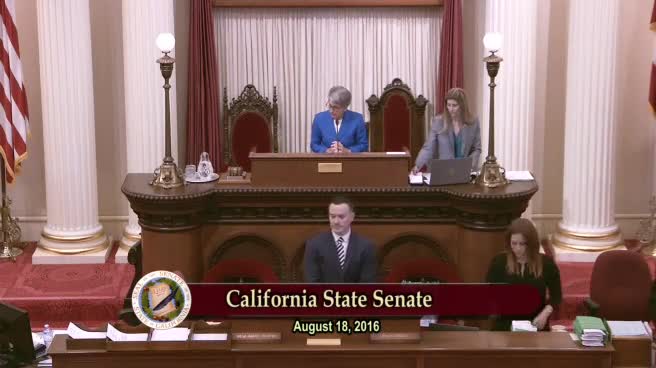 3MIN
Senate Floor
 2MIN
Senate Standing Committee on Public Safety
 1MIN
Assembly Floor
 4MIN
Assembly Standing Committee on Appropriations
 7MIN
Assembly Standing Committee on Human Services
Bill Author

Bill Co-Author(s):