AB 2815: Pupil attendance: supervisors of attendance.
- Session Year: 2015-2016
- House: Assembly
- Latest Version Date: 2016-09-29
Existing law requires the board of education of any school district and of any county to appoint a supervisor of attendance and any assistant supervisors of attendance as may be necessary to supervise the attendance of pupils in the district or county, and requires the board to prescribe the duties of the supervisor of attendance and assistant supervisors of attendance in accordance with specified provisions. Existing law authorizes a school district, with the approval of the county board of education, to contract with the county superintendent of schools for the supervision of attendance of pupils in the school district.
This bill would delete the requirement that a county board of education approve a contract between a school district and the county superintendent of schools for the supervision of attendance of pupils in the school district. The bill would express the Legislatures intent that a supervisor of attendance perform specified functions, and would authorize the supervisor of attendance to provide support services and interventions, as provided. The bill would also make nonsubstantive changes.
Existing law requires the board of education of any school district and of any county to appoint a supervisor of attendance and any assistant supervisors of attendance as may be necessary to supervise the attendance of pupils in the district or county, and requires the board to prescribe the duties of the supervisor of attendance and assistant supervisors of attendance in accordance with specified provisions.
This bill would express the Legislatures intent that a supervisor of attendance perform specified functions, and would authorize the supervisor of attendance to provide support services and interventions, as provided.
Existing law establishes an alternative certification program to address the shortage of qualified teachers in specified subject matters, of teachers who work with limited-English-proficient pupils, of minority teachers, and of special education teachers. Existing law requires alternative certification programs to address geographic and subject matter shortage areas and be targeted toward people with work experience and others who already have a bachelors degree in the field in which they plan to teach.
This bill would additionally require alternative certification programs to address the shortage area of special education.
(a) The governing board of each school district and each county superintendent of schools shall appoint a supervisor of attendance and any assistant supervisors of attendance as may be necessary to supervise the attendance of pupils in the school district or county. The governing board of the school district or county superintendent of schools shall prescribe the duties of the supervisor of attendance and assistant supervisors of attendance to include, among other duties that may be required, those specific duties related to compulsory full-time education, truancy, work permits, compulsory continuation education, and opportunity schools, classes, and programs, now required of the attendance supervisors by this chapter and Article 4 (commencing with Section 48450) of Chapter 3 and Article 2 (commencing with Section 48640) of Chapter 4 of this part.
(b)It is the intent of the Legislature that in performing his or her duties, the supervisor of attendance promotes a culture of attendance and establishes a system to accurately track pupil attendance in order to achieve all of the following:
(1)Raise the awareness of school personnel, parents, guardians, caregivers, community partners, and local businesses of the effects of chronic absenteeism and truancy and other challenges associated with poor attendance.
(2)Identify and respond to grade level or pupil subgroup patterns of chronic absenteeism or truancy.
(3)Identify and address factors contributing to chronic absenteeism and habitual truancy, including suspension and expulsion.
(4)Ensure that pupils with attendance problems are identified as early as possible to provide applicable support services and interventions.
(5)Evaluate the effectiveness of strategies implemented to reduce chronic absenteeism rates and truancy rates.
(c)The supervisor of attendance may provide support services and interventions, which may include, but are not limited to, any or all of the following:
(1)A conference between school personnel, the pupils parent or guardian, and the pupil.
(2)Promoting cocurricular and extracurricular activities that increase pupil connectedness to school, such as tutoring, mentoring, the arts, service learning, or athletics.
(3)Recognizing pupils who achieve excellent attendance or demonstrate significant improvement in attendance.
(4)Referral to a school nurse, school counselor, school psychologist, school social worker, and other pupil support personnel for case management and counseling.
(5)Collaboration with child welfare services, law enforcement, courts, public health care agencies, or government agencies, or medical, mental health, and oral health care providers to receive necessary services.
(6)Collaborating with school study teams, guidance teams, school attendance review teams, or other intervention-related teams to assess the attendance or behavior problem in partnership with the pupil and his or her parents, guardians, or caregivers.
(7)In schools with significantly higher rates of chronic absenteeism, identify barriers to attendance that may require schoolwide strategies rather than case management.
(8)Referral for a comprehensive psychosocial or psychoeducational assessment, including for purposes of creating an individualized education program for an individual with exceptional needs, as that term is defined in Section 56026, or plan adopted for a qualified handicapped person, as that term is defined in regulations promulgated by the United States Department of Education pursuant to Section 504 of the federal Rehabilitation Act of 1973 (29 U.S.C. Sec. 794).
(9)Referral to a school attendance review board established by the county or by a school district pursuant to Section 48321 or to the probation department pursuant to Section 48263.
(10)Referral to a truancy mediation program operated by the countys district attorney or probation officer pursuant to Section 48260.6.
SEC. 2.Section 48242 of the Education Code is amended to read:48242.The governing board of a school district may appoint a school district supervisor of attendance to act under the direction of the county supervisor of attendance.
SEC. 3.Section 48244 of the Education Code is amended to read:48244.A school district may contract with the county superintendent of schools for the supervision of attendance of pupils in the school district. The county superintendent of schools shall transfer from the funds of the school district to the county school service fund an amount equal to the actual cost of providing for the supervision of attendance.
(a) The governing board of each school district and each county superintendent of schools shall appoint a supervisor of attendance and any assistant supervisors of attendance as may be necessary to supervise the attendance of pupils in the school district or county. The governing board of the school district or county superintendent of schools shall prescribe the duties of the supervisor of attendance and assistant supervisors of attendance to include, among other duties that may be required, those specific duties related to compulsory full-time education, truancy, work permits, compulsory continuation education, and opportunity schools, classes, and programs, now required of the attendance supervisors by this chapter and Article 4 (commencing with Section 48450) of Chapter 3 and Article 2 (commencing with Section 48630) 48640) of Chapter 4 of this part.
(b)It is the intent of the Legislature that in performing his or her duties, the supervisor of attendance shall promote promotes a culture of attendance and establish establishes a system to accurately track pupil attendance in order to achieve all of the following:
(1)Raise the awareness of school personnel, parents, guardians, caregivers, community partners, and local businesses of the effects of chronic absenteeism and truancy and other challenges associated with poor attendance.
(2)Identify and respond to grade level or pupil subgroup patterns of chronic absenteeism or truancy.
(3)Identify and address factors contributing to chronic absenteeism and habitual truancy, including suspension and expulsion.
(4)Ensure that pupils with attendance problems are identified as early as possible to provide applicable support services and interventions.
(5)Evaluate the effectiveness of strategies implemented to reduce chronic absenteeism rates and truancy rates.
(c)The supervisor of attendance may provide support services and interventions, which may include, but are not limited to, any or all of the following:
(1)A conference between school personnel, the pupils parent or guardian, and the pupil.
(2)Promoting cocurricular and extracurricular activities that increase pupil connectedness to school, such as tutoring, mentoring, the arts, service learning, or athletics.
(3)Recognizing pupils who achieve excellent attendance or demonstrate significant improvement in attendance.
(4)Referral to a school nurse, school counselor, school psychologist, school social worker, and other pupil support personnel for case management and counseling.
(5)Collaboration with child welfare services, law enforcement, courts, public health care agencies, or government agencies, or medical, mental health, and oral health care providers to receive necessary services.
(6)Collaborating with school study teams, guidance teams, school attendance review teams, or other intervention-related teams to assess the attendance or behavior problem in partnership with the pupil and his or her parents, guardians, or caregivers.
(7)In schools with significantly higher rates of chronic absenteeism, identify barriers to attendance that may require schoolwide strategies rather than case management.
(8)Referral for a comprehensive psychosocial or psychoeducational assessment, including for purposes of creating an individualized education program for an individual with exceptional needs, as that term is defined in Section 56026, or plan adopted for a qualified handicapped person, as that term is defined in regulations promulgated by the United States Department of Education pursuant to Section 504 of the federal Rehabilitation Act of 1973 (29 U.S.C. Sec. 794).
(9)Referral to a school attendance review board established by the county or by a school district pursuant to Section 48321 or to the probation department pursuant to Section 48263.
(10)Referral to a truancy mediation program operated by the countys district attorney or probation officer pursuant to Section 48260.6.
SEC. 2.Section 48242 of the Education Code is amended to read:48242.The governing board of a school district may appoint a school district supervisor of attendance to act under the direction of the county supervisor of attendance.
SEC. 3.Section 48244 of the Education Code is amended to read:48244.A school district may contract with the county superintendent of schools for the supervision of attendance of pupils in the school district. The county superintendent of schools shall transfer from the funds of the school district to the county school service fund an amount equal to the actual cost of providing for the supervision of attendance.
(a) The governing board of any each school district and of any county office of education each county superintendent of schools shall appoint a supervisor of attendance and any assistant supervisors of attendance as may be necessary to supervise the attendance of pupils in the school district or county. The governing board of the school district or of the county office of education county superintendent of schools shall prescribe the duties of the supervisor of attendance and assistant supervisors of attendance to include, among other duties that may be required, those specific duties related to compulsory full-time education, truancy, work permits, compulsory continuation education, and opportunity schools, classes, and programs, now required of the attendance supervisors by this chapter and Article 4 (commencing with Section 48450) of Chapter 3 and Article 2 (commencing with Section 48630) of Chapter 4 of this part.
(b)It is the intent of the Legislature that in performing his or her duties, the supervisor of attendance shall promote a culture of attendance and establish a system to accurately track pupil attendance in order to achieve all of the following:
(1)Raise the awareness of school personnel, parents, guardians, caregivers, community partners, and local businesses of the effects of chronic absence absenteeism and truancy and other challenges associated with poor attendance.
(2)Identify and respond to grade level or pupil subgroup patterns of chronic absenteeism or truancy.
(3)Identify and address factors contributing to chronic absenteeism and habitual truancy, including suspension and expulsion.
(4)Ensure that pupils with attendance problems are identified as early as possible to provide applicable support services and interventions.
(5)Evaluate the effectiveness of strategies implemented to reduce chronic absenteeism rates and truancy rates.
(c)The supervisor of attendance may provide support services and interventions, which may include, but are not limited to, any or all of the following:
(1)A conference between school personnel, the pupils parent or guardian, and the pupil.
(2)Promoting cocurricular and extracurricular activities that increase pupil connectedness to school, such as tutoring, mentoring, the arts, service learning, or athletics.
(3)Recognizing pupils who achieve excellent attendance or demonstrate significant improvement in attendance.
(4)Referral to a school nurse, school counselor, school psychologist, school social worker, and other pupil support personnel for case management and counseling.
(5)Collaboration with child welfare services, law enforcement, courts, public health care agencies, or government agencies, or medical, mental health, and oral health care providers to receive necessary services.
(6)Collaborating with school study teams, guidance teams, school attendance review teams, or other intervention-related teams to assess the attendance or behavior problem in partnership with the pupil and his or her parents, guardians, or caregivers.
(7)In schools with significantly higher rates of chronic absenteeism, identify barriers to attendance that may require schoolwide strategies rather than case management.
(8)Referral for a comprehensive psychosocial or psychoeducational assessment, including for purposes of creating an individualized education program for an individual with exceptional needs needs, as that term is defined in Section 56026, or plan adopted for a qualified handicapped person person, as that term is defined in regulations promulgated by the United States Department of Education pursuant to Section 504 of the federal Rehabilitation Act of 1973 (29 U.S.C. Sec. 794).
(9)Referral to a school attendance review board established by the county or by a school district pursuant to Section 48321 or to the probation department pursuant to Section 48263.
(10)Referral to a truancy mediation program operated by the countys district attorney or probation officer pursuant to Section 48260.6.
SEC. 2.Section 48242 of the Education Code is amended to read:48242.The board of school trustees of any district of a county governing board of a school district may appoint a school district supervisor of attendance to act under the direction of the county supervisor of attendance.
SEC. 3.Section 48244 of the Education Code is amended to read:48244.A school district may, with the approval of the county board of education, may contract with the county superintendent of schools for the supervision of attendance of pupils in the school district. The county superintendent of schools shall transfer from the funds of the school district to the county school service fund an amount equal to the actual cost of providing for the supervision of attendance.
(a) The governing board of education of any school district and of any county office of education shall appoint a supervisor of attendance and such any assistant supervisors of attendance as may be necessary to supervise the attendance of pupils in the school district or county. The governing board of the school district or of the county office of education shall prescribe the duties of the supervisor of attendance and assistant supervisors of attendance, not inconsistent with law, attendance to include, among other duties that may be required by the board, required, those specific duties related to compulsory full-time education, truancy, work permits, compulsory continuation education, and opportunity schools, classes, and programs, now required of such the attendance supervisors by this chapter and Article 4 (commencing with Section 48450) of Chapter 3 and Article 2 (commencing with Section 48630) of Chapter 4 of this part.
(b)It is the intent of the Legislature that in performing his or her duties, the supervisor of attendance shall promote a culture of attendance and establish a system to accurately track pupil attendance in order to achieve all of the following:
(1)Raise the awareness of school personnel, parents, guardians, caregivers, community partners, and local businesses of the effects of chronic absence and truancy and other challenges associated with poor attendance.
(2)Identify and respond to grade level or pupil subgroup patterns of chronic absenteeism or truancy.
(3)Identify and address factors contributing to chronic absenteeism and habitual truancy, including suspension and expulsion.
(4)Ensure that pupils with attendance problems are identified as early as possible to provide applicable support services and interventions.
(5)Evaluate the effectiveness of strategies implemented to reduce chronic absenteeism rates and truancy rates.
(c)The supervisor of attendance may provide support services and interventions, which may include, but are not limited to, any or all of the following:
(1)A conference between school personnel, the pupils parent or guardian, and the pupil.
(2)Promoting cocurricular and extracurricular activities that increase pupil connectedness to school, such as tutoring, mentoring, the arts, service learning, or athletics.
(3)Recognizing pupils who achieve excellent attendance or demonstrate significant improvement in attendance.
(4)Referral to a school nurse, school counselor, school psychologist, school social worker, and other pupil support personnel for case management and counseling.
(5)Collaboration with child welfare services, law enforcement, courts, public health care agencies, or government agencies, or medical, mental health, and oral health care providers to receive necessary services.
(6)Collaborating with school study teams, guidance teams, school attendance review teams, or other intervention-related teams to assess the attendance or behavior problem in partnership with the pupil and his or her parents, guardians, or caregivers.
(7)In schools with significantly higher rates of chronic absenteeism, identify barriers to attendance that may require schoolwide strategies rather than case management.
(8)Referral for a comprehensive psychosocial or psychoeducational assessment, including for purposes of creating an individualized education program for an individual with exceptional needs as that term is defined in Section 56026, or plan adopted for a qualified handicapped person as that term is defined in regulations promulgated by the United States Department of Education pursuant to Section 504 of the federal Rehabilitation Act of 1973 (29 U.S.C. Sec. 794).
(9)Referral to a school attendance review board established by the county or by a school district pursuant to Section 48321 or to the probation department pursuant to Section 48263.
(10)Referral to a truancy mediation program operated by the countys district attorney or probation officer pursuant to Section 48260.6.
SECTION 1.Section 44382 of the Education Code is amended to read:44382.Alternative certification programs shall address geographic, subject matter, and special education shortage areas, and shall be targeted toward people with work experience and others who already have a bachelors degree in the field in which they plan to teach.
Alternative certification programs shall address geographic and geographic, subject matter matter, and special education shortage areas, and shall be targeted toward people with work experience and others who already have a bachelors degree in the field in which they plan to teach.
|
Date
|
Status
|
|---|---|
| May 23, 2016 | Read third time. Passed. Ordered to the Senate. (Ayes 74. Noes 1.) |
| Aug 29, 2016 | Enrolled and presented to the Governor at 4 p.m. |
| Aug 22, 2016 | Senate amendments concurred in. To Engrossing and Enrolling. (Ayes 74. Noes 2. Page 6038.). |
| Aug 22, 2016 | Senate amendments concurred in. To Engrossing and Enrolling. |
| Aug 16, 2016 | In Assembly. Concurrence in Senate amendments pending. May be considered on or after August 18 pursuant to Assembly Rule 77. |
| Aug 15, 2016 | Read third time. Passed. Ordered to the Assembly. (Ayes 38. Noes 0.). |
| Aug 15, 2016 | Read third time. Passed. Ordered to the Assembly. (Ayes 38. Noes 0. Page 4960.). |
| Aug 15, 2016 | Read third time. Passed. Ordered to the Assembly. |
| Aug 2, 2016 | Read second time. Ordered to third reading. |
| Aug 1, 2016 | Withdrawn from committee. |
| Aug 1, 2016 | Ordered to second reading. |
| Aug 1, 2016 | From committee chair, with author's amendments: Amend, and re-refer to committee. Read second time, amended, and re-referred to Com. on APPR. |
| Jun 15, 2016 | From committee: Do pass and re-refer to Com. on APPR. (Ayes 9. Noes 0.) (June 15). Re-referred to Com. on APPR. |
| Jun 9, 2016 | Referred to Coms. on ED. and APPR. |
| Feb 19, 2016 | Introduced. To print. |
| May 23, 2016 | Read third time. Passed. Ordered to the Senate. (Ayes 74. Noes 1. Page 4893.) |
| May 23, 2016 | Read third time. Passed. Ordered to the Senate. |
| May 23, 2016 | In Senate. Read first time. To Com. on RLS. for assignment. |
| May 19, 2016 | Read third time and amended. Ordered to third reading. (Page 4853.) |
| May 19, 2016 | Read third time and amended. Ordered to third reading. |
| May 9, 2016 | Read second time. Ordered to third reading. |
| May 5, 2016 | From committee: Do pass. (Ayes 7. Noes 0.) (May 4). |
| Apr 6, 2016 | Re-referred to Com. on ED. |
| Apr 5, 2016 | From committee chair, with author's amendments: Amend, and re-refer to Com. on ED. Read second time and amended. |
| Mar 14, 2016 | Referred to Com. on ED. |
| Feb 22, 2016 | Read first time. |
| Feb 21, 2016 | From printer. May be heard in committee March 22. |
|
Date
|
Description
|
Location
|
Votes
|
|
|---|---|---|---|---|
| Aug 22, 2016 | AB 2815 O'DONNELL Concurrence in Senate Amendments | Assembly Floor |
Passed |
|
| Aug 15, 2016 | Assembly 3rd Reading AB2815 O'Donnell By Hancock | Senate Floor |
Passed |
|
| Jun 15, 2016 | Do pass, but first be re-referred to the Committee on [Appropriations] | Senate Standing Committee on Education |
Passed |
|
| May 23, 2016 | AB 2815 O'DONNELL Assembly Third Reading | Assembly Floor |
Passed |
|
| May 4, 2016 | Do pass. | Assembly Standing Committee on Education |
Passed |
This list shows positions taken on this bill by organizations on the date displayed, which is linked to the original source.
Positions by individuals are not included.
|
Organization
|
Position
|
Date
|
|---|---|---|
| Association Of California School Administrators | ** Support | Aug 15, 2016 |
| Attorney General | ** Support | Aug 15, 2016 |
| California Association Of School Counselors | * Support | Jun 15, 2016 |
| Children Now | ** Support | Aug 15, 2016 |
| Superintendent of Public Instruction Tom Torlakson | ** Support | May 19, 2016 |
| u None received. | ** Against | Jun 15, 2016 |
CONCURRENCE IN SENATE AMENDMENTS
CSA1 Bill Id:AB 2815
Author:(O'Donnell)
As Amended Ver:August 1, 2016
Majority vote
ASSEMBLY: | 74-1 | (May 23, 2016) | SENATE: | 38-0 | (August 15, 2016) |
Original Committee Reference: ED.
SUMMARY: Authorizes a supervisor of attendance to provide specified support services and take specified interventions. Specifically, this bill:
- Expresses the intent of the Legislature that in performing his or her duties, a supervisor of attendance promotes a culture of attendance and establishes a system to accurately track pupil attendance in order to raise awareness of chronic absenteeism, identify and address factors contributing to chronic absenteeism and habitual truancy, and ensure that pupils with attendance problems are identified as early as possible in order to provide support services and interventions.
- Authorizes a supervisor of attendance to provide support services and interventions, including, but not limited to, any or all of the following:
- Hold a conference between school personnel, the pupil's parent or guardian, and the pupil.
- Promote cocurricular and extracurricular activities that increase pupil connectedness to school, such as tutoring, mentoring, the arts, service learning, or athletics.
- Recognize pupils who achieve excellent attendance or demonstrate significant improvement in attendance.
- Refer a pupil to a school nurse, school counselor, school psychologist, school social worker, and other pupil support personnel for case management and counseling.
- Collaborate with child welfare services, law enforcement, courts, public health care agencies, or government agencies, or medical, mental health, and oral health care providers to receive necessary services.
- Collaborate with school study teams, guidance teams, school attendance review teams, or other intervention-related teams to assess the attendance or behavior problem in partnership with the pupil and his or her parents, guardians, or caregivers.
- Identify barriers to attendance that may require schoolwide strategies rather than case management in schools with significantly higher rates of chronic absenteeism.
- Refer a pupil for a comprehensive psychosocial or psychoeducational assessment, including for purposes of creating an individualized education program for an individual with exceptional needs, or plan adopted for a qualified handicapped person as that term is defined in regulations promulgated by the United States Department of Education pursuant to federal Rehabilitation Act of 1973 Section 504 (29 United States Code Section 794).
- Refer a pupil to a school attendance review board (SARB) established by the county or by a school district or to the probation department.
- Refer a pupil to a truancy mediation program operated by the county's district attorney or probation officer.
- Clarifies that county means a county superintendent of schools.
- Replaces a reference to "board of school trustees of any district of a county" with the "governing board of a school district."
- Strikes the reference to "receiving the approval of the county board of education" in the authorization of a school district to contract with the county superintendent of schools for the supervision of the attendance of pupils in the school district.
- Makes minor, technical changes.
The Senate amendments correct a code section citation and strike, in the intent section of the bill, the requirement that the supervisor of attendance promote a culture of attendance and establish a system to accurately track pupil attendance.
FISCAL EFFECT: None. This bill is keyed non-fiscal by the Legislative Counsel.
COMMENTS: Truancy. California's compulsory education law requires all students between the ages of six and 18 to attend school full-time and their parents and legal guardians to be responsible for ensuring that children attend school. A student who is absent from school without a valid excuse, is tardy for more than 30 minutes, or any combination thereof, on three days in a school year is considered a truant. Parents or legal guardians are notified when their children has been classified as a truant and are reminded of their obligation to compel the attendance of pupils at school. Upon a pupil's third truancy (five absences and/or tardiness for more than 30 minutes) in a school year and following a district's conscientious effort to hold a conference with the parent or legal guardian of the pupil and the pupil, a pupil is classified as a habitual truant and may be referred to a SARB or to the local probation officer. Upon a fourth truancy, students and/or their parents or legal guardians may be fined. In 2014-15, the California Department of Education (CDE) reported a truancy rate of 31.43%, with 2 million students out of a total enrollment of 6.2 million considered truants.
Students who are chronically absent in lower grades are much less likely to be proficient readers and have higher levels of suspensions. According to the CDE, chronic absence in the sixth grade is the most predictive indicator that a student will not graduate from high school.
In 2013, the Attorney General's (AG's) office released a report titled "In School and On Track" on truancy of elementary school kids. Calling it a crisis, the AG argues that truancy at the elementary level has negative impacts on the students, who are more likely to drop out of high school; on public safety, when students become more likely to become involved with gangs, substance abuse, and incarceration; on school districts, who lose attendance dollars; and on the economy, due to lost economic productivity and revenues.
This bill expresses the intent of the Legislature for attendance supervisors, in addition to establishing a system to accurately track pupil attendance, to promote a culture of attendance in order to raise the awareness of the effects of chronic absenteeism and truancy and to identify and address factors contributing to truancy and absenteeism.
According to the author, the purpose of this bill is to update the education code on the duties of attendance supervisors, which were established in 1976. Each district or county superintendent of schools is required to appoint an attendance supervisor and assistant attendance supervisors as necessary. Historically, attendance supervisors have had an enforcement role. Over the last several years, legislative and school-based policies have shifted from tough disciplinary approaches to strategies that focus on how to support students in order to compel students to attend school and keep students at school. Attendance supervisors play an important role in coordinating and implementing these strategies, including those authorized by this bill, such as making referrals to school- and community-based services such as counseling, special education services, SARBs, and social welfare, health, mental health, and oral health services provided by local governmental agencies. The strategies also include positive strategies, such as recognizing students who have excellent attendance records or students who significantly improve their attendance.
The strategies proposed by this bill were developed by the state SARB, established to encourage the cooperation, coordination and development of strategies to support county SARBs in carrying out their responsibilities to establish district SARBs. District and county SARBs, comprised of representatives from schools, local services agencies, and local law enforcement agencies, meet with referred pupils and their parents/legal guardians to assess their personal and family situations that may cause pupils to be tardy or absent from school on a regular basis and identify community/public resources that may help pupils improve their attendance in school, or refer pupils to law enforcement agencies, if necessary.
Superintendent Tom Torlakson, writing in support of the bill, states, "While current law does recognize the importance of attendance supervisors, it does not include a focus on preventing truancy by improving school climate and analyzing chronic absence data to provide early identification of high-risk students for early intervention and access to appropriate school and community services. Attendance supervisors are key personnel in our efforts to reduce truancy and chronic absenteeism, and establishing alternatives to out-of-school suspensions."
Analysis Prepared by: Sophia Kwong Kim / ED. / (916) 319-2087 FN: 0003722
Office of Senate Floor Analyses (916) 651-1520 Fax: (916) 327-4478 | AB |
THIRD READING
Bill No: AB 2815
:
SENATE EDUCATION COMMITTEE: 9-0, 6/15/16
AYES: Liu, Block, Hancock, Huff, Leyva, Mendoza, Monning, Pan, Vidak
ASSEMBLY FLOOR: 74-1, 5/23/16 - See last page for vote
DIGEST: This bill adds legislative intent language specifying that a supervisor of attendance shall promote a culture of attendance and establish a system to accurately track pupil attendance in order to, among other things, raise awareness of chronic absenteeism and identify and address factors contributing to chronic absenteeism and habitual truancy.
Existing law:
- Requires the governing board of a school district and county to appoint a supervisor of attendance and such supervisors of attendance as necessary to supervise the attendance of students in the district or county. Requires that the duties of the supervisor be prescribed to include, among other duties, those specific duties related to compulsory full-time education, truancy, work permits, compulsory continuation education, and opportunity schools, classes, and programs. (Education Code § 48240)
- Provides that any pupil subject to compulsory full-time education or to compulsory continuation education who is absent from school without a valid excuse on any day or is tardy for more than 30 minutes, or any combination thereof, for three days in a school year shall be classified as “truant.”
- Provides that a valid excuse may include other reasons that are within the discretion of school administrators and based on the facts of the pupil’s circumstances. (Education Code § 48260)
- Establishes the Safe Neighborhoods and Schools Act which was approved by voters as Proposition 47 in November 2014 and makes significant changes to the state’s criminal justice system. It reduces the penalties for certain non-violent, non-serious drug and property crimes, and requires that the resulting state savings be spent on 1) mental health and substance use services; 2) truancy and dropout prevention; and 3) victim services.
- Requires that 25 percent of the Safe Neighborhoods School Fund be allocated to the California Department of Education (CDE) to administer a grant program to reduce truancy, high school dropout, and student victimization rates.
This bill:
- Expresses the intent of the Legislature that in performing his or her duties, a supervisor of attendance shall promote a culture of attendance and establish a system to accurately track pupil attendance in order to achieve all of the following:
- Raise the awareness of the effects of chronic absenteeism and truancy and other challenges associated with poor attendance, as specified.
- Identify and respond to grade level or pupil subgroup patterns of chronic absenteeism or truancy.
- Identify and address factors contributing to chronic absenteeism and habitual truancy, including suspension and expulsion.
- Ensure that pupils with attendance problems are identified as early as possible in order to provide applicable support services and interventions.
- Evaluate the effectiveness of strategies implemented to reduce chronic absenteeism rates and truancy rates.
- Authorizes a supervisor of attendance to provide support services and interventions, which may include, but not limited to, any or all of the following:
- A conference between school personnel, the pupil's parent or guardian, and the pupil.
- Promoting cocurricular and extracurricular activities that increase pupil connectedness to school, such as tutoring, mentoring, the arts, service learning, or athletics.
- Recognizing pupils who achieve excellent attendance or demonstrate significant improvement in attendance.
- Referral a pupil to a school nurse, school counselor, school psychologist, school social worker, and other pupil support personnel for case management and counseling.
- Collaboration with child welfare services, law enforcement, courts, public health care agencies, or government agencies, or medical, mental health, and oral health care providers to receive necessary services.
- Collaborating with school study teams, guidance teams, school attendance review teams, or other intervention-related teams to assess the attendance or behavior problem in partnership with the pupil and his or her parents, guardians, or caregivers.
- Identify barriers to attendance that may require schoolwide strategies rather than case management in schools with significantly higher rates of chronic absenteeism.
- Referral for a comprehensive psychosocial or psychoeducational assessment, including for purposes of creating an individualized education program for an individual with exceptional needs, or plan adopted for a qualified handicapped person as that term is defined in regulations promulgated by the United States Department of Education pursuant to federal Rehabilitation Act of 1973 Section 504. (29, United States Code § 794)
- Referral a pupil to a school attendance review board (SARB) established by the county or by a school district or to the probation department.
- Referral a pupil to a truancy mediation program operated by the county's district attorney or probation officer.
- Clarifies that county means a county superintendent of schools.
- Replaces a reference to "board of school trustees of any district of a county" with the "governing board of a school district."
Comments
Need for the bill. According to the author’s office, the purpose of this bill is to update the duties of attendance supervisors which were established in 1976. “Over the last several years, much attention has been placed on pupil attendance; specifically, how to reduce truancy and chronic absenteeism, and establishing alternatives to out-of-school suspensions. The attendance supervisors play an important role in reducing truancy, including using attendance data to provide early identification of high-risk students for early intervention and facilitating access to appropriate school and community services. It is time to update the role and duties of attendance supervisors as facilitators of pupil attendance rather than simply enforcement officials.“
School attendance review board. According to information provided by the author, the strategies proposed by this bill were developed by the state SARB, established to encourage the cooperation, coordination and development of strategies to support county SARBs in carrying out their responsibilities to establish district SARBs. District and county SARBs, comprised of representatives from schools, local services agencies, and local law enforcement agencies, meet with referred pupils and their parents/legal guardians to assess their personal and family situations that may cause pupils to be tardy or absent from school on a regular basis and identify community/public resources that may help pupils improve their attendance in school, or refer pupils to law enforcement agencies, if necessary.
Truancy in schools. California's compulsory education law requires all students between the ages of six and 18 to attend school full-time and their parents and legal guardians to be responsible for ensuring that children attend school. A student who is absent from school without a valid excuse for more than 30 minutes on three days in a school year is considered a truant. Parents or legal guardians are notified when their children have been classified as a truant and are reminded of their obligation to compel the attendance of pupils at school. Upon a pupil's third truancy in a school year and following a district's conscientious effort to hold a conference with the parent or legal guardian of the pupil and the pupil, a pupil is classified as a habitual truant and may be referred to a SARB or to the local probation officer. Upon a fourth truancy, students and/or their parents or legal guardians may be fined. In 2012-13, the CDE reported a truancy rate of 29.28%, with 1.9 million students out of a total enrollment of 6.2 million considered truants.
According to the CDE, students who are chronically absent in lower grades are much less likely to be proficient readers and have higher levels of suspensions. Chronic absence in the sixth grade is the most predictive indicator that a student will not graduate from high school.
Attorney General’s office report. In 2013, the Attorney General's (AG's) office released a report titled "In School and On Track" on truancy of elementary school kids. Calling it a crisis, the AG argues that truancy at the elementary level has negative impacts on the students, who are more likely to drop out of high school; on public safety, when students become more likely to become involved with gangs, substance abuse, and incarceration; on school districts, who lose attendance dollars; and on the economy, due to lost economic productivity and revenues.
FISCAL EFFECT: Appropriation: Fiscal Com.: Local:
Attorney General
Superintendent of Public Instruction
Association of California School Administrators
California Association of Supervisors of Child Welfare and Attendance
Children Now
None received
ASSEMBLY FLOOR: 74-1, 5/23/16
AYES: Achadjian, Alejo, Atkins, Baker, Bigelow, Bloom, Bonilla, Bonta, Brough, Brown, Burke, Calderon, Campos, Chang, Chau, Chávez, Chiu, Chu, Cooley, Cooper, Dababneh, Daly, Dodd, Frazier, Beth Gaines, Gallagher, Cristina Garcia, Eduardo Garcia, Gatto, Gipson, Gomez, Gonzalez, Gordon, Gray, Grove, Hadley, Roger Hernández, Holden, Irwin, Jones, Jones-Sawyer, Kim, Lackey, Levine, Linder, Lopez, Low, Maienschein, Mathis, Mayes, McCarty, Medina, Melendez, Mullin, Nazarian, Obernolte, O'Donnell, Olsen, Quirk, Ridley-Thomas, Rodriguez, Salas, Santiago, Steinorth, Mark Stone, Thurmond, Ting, Wagner, Waldron, Weber, Wilk, Williams, Wood, Rendon
NOES: Travis Allen
NO VOTE RECORDED: Arambula, Dahle, Eggman, Harper, Patterson
8/3/16 18:31:59
**** END ****
SENATE COMMITTEE ON EDUCATION
Senator Carol Liu, Chair
2015 - 2016 Regular
Bill No: AB 2815
Author: | |||
Version: | May 19, 2016 Hearing Date: June 15, 2016 | ||
Urgency: | No | Fiscal: | No |
Consultant: | Lenin DelCastillo | ||
Subject: Pupil attendance: supervisors of attendance
NOTE: This bill has been referred to the Committees on Education and Appropriations. A “do pass” motion should include referral to the Committee on Appropriations.
SUMMARY
This bill adds legislative intent language specifying that a supervisor of attendance shall promote a culture of attendance and establish a system to accurately track pupil attendance in order to, among other things, raise awareness of chronic absenteeism and identify and address factors contributing to chronic absenteeism and habitual truancy.
BACKGROUND
Existing law:
- Requires the governing board of a school district and county to appoint a supervisor of attendance and such supervisors of attendance as necessary to supervise the attendance of students in the district or county. Requires that the duties of the supervisor be prescribed to include, among other duties, those specific duties related to compulsory full-time education, truancy, work permits, compulsory continuation education, and opportunity schools, classes, and programs. (Education Code § 48240)
- Provides that any pupil subject to compulsory full-time education or to compulsory continuation education who is absent from school without a valid excuse on any day or is tardy for more than 30 minutes, or any combination thereof, for three days in a school year shall be classified as “truant.”
- Provides that a valid excuse may include other reasons that are within the discretion of school administrators and based on the facts of the pupil’s circumstances. (Education Code § 48260)
- Establishes the Safe Neighborhoods and Schools Act which was approved by voters as Proposition 47 in November 2014 and makes significant changes to the state’s criminal justice system. It reduces the penalties for certain non-violent, non-serious drug and property crimes, and requires that the resulting state savings be spent on 1) mental health and substance use services; 2) truancy and dropout prevention; and 3) victim services.
- Requires that 25 percent of the Safe Neighborhoods School Fund be allocated to the California Department of Education (CDE) to administer a grant program to reduce truancy, high school dropout, and student victimization rates.
ANALYSIS
This bill:
- Expresses the intent of the Legislature that in performing his or her duties, a supervisor of attendance shall promote a culture of attendance and establish a system to accurately track pupil attendance in order to achieve all of the following:
- Raise the awareness of the effects of chronic absenteeism and truancy and other challenges associated with poor attendance, as specified.
- Identify and respond to grade level or pupil subgroup patterns of chronic absenteeism or truancy.
- Identify and address factors contributing to chronic absenteeism and habitual truancy, including suspension and expulsion.
- Ensure that pupils with attendance problems are identified as early as possible in order to provide applicable support services and interventions.
- Evaluate the effectiveness of strategies implemented to reduce chronic absenteeism rates and truancy rates.
- Authorizes a supervisor of attendance to provide support services and interventions, which may include, but not limited to, any or all of the following:
- A conference between school personnel, the pupil's parent or guardian, and the pupil.
- Promoting cocurricular and extracurricular activities that increase pupil connectedness to school, such as tutoring, mentoring, the arts, service learning, or athletics.
- Recognizing pupils who achieve excellent attendance or demonstrate significant improvement in attendance.
- Referral a pupil to a school nurse, school counselor, school psychologist, school social worker, and other pupil support personnel for case management and counseling.
- Collaboration with child welfare services, law enforcement, courts, public health care agencies, or government agencies, or medical, mental health, and oral health care providers to receive necessary services.
- Collaborating with school study teams, guidance teams, school attendance review teams, or other intervention-related teams to assess the attendance or behavior problem in partnership with the pupil and his or her parents, guardians, or caregivers.
- Identify barriers to attendance that may require schoolwide strategies rather than case management in schools with significantly higher rates of chronic absenteeism.
- Referral for a comprehensive psychosocial or psychoeducational assessment, including for purposes of creating an individualized education program for an individual with exceptional needs, or plan adopted for a qualified handicapped person as that term is defined in regulations promulgated by the United States Department of Education pursuant to federal Rehabilitation Act of 1973 Section 504. (29, United States Code § 794)
- Referral a pupil to a school attendance review board (SARB) established by the county or by a school district or to the probation department.
- Referral a pupil to a truancy mediation program operated by the county's district attorney or probation officer.
- Clarifies that county means a county superintendent of schools.
- Replaces a reference to "board of school trustees of any district of a county" with the "governing board of a school district."
STAFF COMMENTS
- Need for the bill. According to the author’s office, the purpose of this bill is to update the duties of attendance supervisors which were established in 1976. “Over the last several years, much attention has been placed on pupil attendance; specifically, how to reduce truancy and chronic absenteeism, and establishing alternatives to out-of-school suspensions. The attendance supervisors play an important role in reducing truancy, including using attendance data to provide early identification of high-risk students for early intervention and facilitating access to appropriate school and community services. It is time to update the role and duties of attendance supervisors as facilitators of pupil attendance rather than simply enforcement officials.“
- School attendance review board (SARB). According to information provided by the author, the strategies proposed by this bill were developed by the state SARB, established to encourage the cooperation, coordination and development of strategies to support county SARBs in carrying out their responsibilities to establish district SARBs. District and county SARBs, comprised of representatives from schools, local services agencies, and local law enforcement agencies, meet with referred pupils and their parents/legal guardians to assess their personal and family situations that may cause pupils to be tardy or absent from school on a regular basis and identify community/public resources that may help pupils improve their attendance in school, or refer pupils to law enforcement agencies, if necessary.
- Truancy in schools. California's compulsory education law requires all students between the ages of six and 18 to attend school full-time and their parents and legal guardians to be responsible for ensuring that children attend school. A student who is absent from school without a valid excuse for more than 30 minutes on three days in a school year is considered a truant. Parents or legal guardians are notified when their children have been classified as a truant and are reminded of their obligation to compel the attendance of pupils at school. Upon a pupil's third truancy in a school year and following a district's conscientious effort to hold a conference with the parent or legal guardian of the pupil and the pupil, a pupil is classified as a habitual truant and may be referred to a school attendance review board (SARB) or to the local probation officer. Upon a fourth truancy, students and/or their parents or legal guardians may be fined. In 2012-13, the California Department of Education (CDE) reported a truancy rate of 29.28%, with 1.9 million students out of a total enrollment of 6.2 million considered truants.
According to the California Department of Education, students who are chronically absent in lower grades are much less likely to be proficient readers and have higher levels of suspensions. Chronic absence in the sixth grade is the most predictive indicator that a student will not graduate from high school.
- Attorney General’s office report. In 2013, the Attorney General's (AG's) office released a report titled "In School and On Track" on truancy of elementary school kids. Calling it a crisis, the AG argues that truancy at the elementary level has negative impacts on the students, who are more likely to drop out of high school; on public safety, when students become more likely to become involved with gangs, substance abuse, and incarceration; on school districts, who lose attendance dollars; and on the economy, due to lost economic productivity and revenues.
- Related legislation. AB 1014 (Thurmond, 2015). This bill establishes the Our Children's Success – The Early Intervention Attendance Pilot Grant Program for the purpose of helping public schools resolve attendance problems of pupils in kindergarten or grades 1 to 3.This bill is on the inactive file on the Senate Floor.
SUPPORT
Association of California School Administrators
Attorney General
California Association of Supervisors of Child Welfare and Attendance
Children Now
Superintendent of Public Instruction
OPPOSITION
None received.
-- END --
ASSEMBLY THIRD READING
ATR Bill Id:AB 2815
Author:(O'Donnell)
As Amended Ver:May 19, 2016
Majority vote
Committee | Votes | Ayes | Noes |
Education | 7-0 | O'Donnell, Olsen, Kim, McCarty, Santiago, Thurmond, Weber |
SUMMARY: Authorizes a supervisor of attendance to provide specified support services and take specified interventions. Specifically, this bill:
- Expresses the intent of the Legislature that in performing his or her duties, a supervisor of attendance shall promote a culture of attendance and establish a system to accurately track pupil attendance in order to raise awareness of chronic absenteeism, identify and address factors contributing to chronic absenteeism and habitual truancy, and ensure that pupils with attendance problems are identified as early as possible in order to provide support services and interventions.
- Authorizes a supervisor of attendance to provide support services and interventions, including, but not limited to, any or all of the following:
- Hold a conference between school personnel, the pupil's parent or guardian, and the pupil.
- Promote cocurricular and extracurricular activities that increase pupil connectedness to school, such as tutoring, mentoring, the arts, service learning, or athletics.
- Recognize pupils who achieve excellent attendance or demonstrate significant improvement in attendance.
- Refer a pupil to a school nurse, school counselor, school psychologist, school social worker, and other pupil support personnel for case management and counseling.
- Collaborate with child welfare services, law enforcement, courts, public health care agencies, or government agencies, or medical, mental health, and oral health care providers to receive necessary services.
- Collaborate with school study teams, guidance teams, school attendance review teams, or other intervention-related teams to assess the attendance or behavior problem in partnership with the pupil and his or her parents, guardians, or caregivers.
- Identify barriers to attendance that may require schoolwide strategies rather than case management in schools with significantly higher rates of chronic absenteeism.
- Refer a pupil for a comprehensive psychosocial or psychoeducational assessment, including for purposes of creating an individualized education program for an individual with exceptional needs, or plan adopted for a qualified handicapped person as that term is defined in regulations promulgated by the United States Department of Education pursuant to federal Rehabilitation Act of 1973 Section 504 (29 United States Code (U.S.C.) Section 794).
- Refer a pupil to a school attendance review board (SARB) established by the county or by a school district or to the probation department.
- Refer a pupil to a truancy mediation program operated by the county's district attorney or probation officer.
- Clarifies that county means a county superintendent of schools.
- Replaces a reference to "board of school trustees of any district of a county" with the "governing board of a school district."
- Strikes the reference to "receiving the approval of the county board of education" in the authorization of a school district to contract with the county superintendent of schools for the supervision of the attendance of pupils in the school district.
- Makes minor, technical changes.
FISCAL EFFECT: None. This bill is keyed non-fiscal by the Legislative Counsel.
COMMENTS: Truancy. California's compulsory education law requires all students between the ages of six and 18 to attend school full-time and their parents and legal guardians to be responsible for ensuring that children attend school. A student who is absent from school without a valid excuse, is tardy for more than 30 minutes, or any combination thereof, on three days in a school year is considered a truant. Parents or legal guardians are notified when their children has been classified as a truant and are reminded of their obligation to compel the attendance of pupils at school. Upon a pupil's third truancy (five absences and/or tardiness for more than 30 minutes) in a school year and following a district's conscientious effort to hold a conference with the parent or legal guardian of the pupil and the pupil, a pupil is classified as a habitual truant and may be referred to a SARB or to the local probation officer. Upon a fourth truancy, students and/or their parents or legal guardians may be fined. In 2014-15, the California Department of Education (CDE) reported a truancy rate of 31.43%, with 2 million students out of a total enrollment of 6.2 million considered truants.
Students who are chronically absent in lower grades are much less likely to be proficient readers and have higher levels of suspensions. According to the CDE, chronic absence in the sixth grade is the most predictive indicator that a student will not graduate from high school.
In 2013, the Attorney General's (AG's) office released a report titled "In School and On Track" on truancy of elementary school kids. Calling it a crisis, the AG argues that truancy at the elementary level has negative impacts on the students, who are more likely to drop out of high school; on public safety, when students become more likely to become involved with gangs, substance abuse, and incarceration; on school districts, who lose attendance dollars; and on the economy, due to lost economic productivity and revenues.
This bill expresses the intent of the Legislature for attendance supervisors, in addition to establishing a system to accurately track pupil attendance, to promote a culture of attendance in order to raise the awareness of the effects of chronic absenteeism and truancy and to identify and address factors contributing to truancy and absenteeism.
According to the author, the purpose of this bill is to update the education code on the duties of attendance supervisors, which were established in 1976. Each district or county superintendent of schools is required to appoint an attendance supervisor and assistant attendance supervisors as necessary. Historically, attendance supervisors have had an enforcement role. Over the last several years, legislative and school-based policies have shifted from tough disciplinary approaches to strategies that focus on how to support students in order to compel students to attend school and keep students at school. Attendance supervisors play an important role in coordinating and implementing these strategies, including those authorized by this bill, such as making referrals to school- and community-based services such as counseling, special education services, SARBs, and social welfare, health, mental health, and oral health services provided by local governmental agencies. The strategies also include positive strategies, such as recognizing students who have excellent attendance records or students who significantly improve their attendance.
The strategies proposed by this bill were developed by the state SARB, established to encourage the cooperation, coordination and development of strategies to support county SARBs in carrying out their responsibilities to establish district SARBs. District and county SARBs, comprised of representatives from schools, local services agencies, and local law enforcement agencies, meet with referred pupils and their parents/legal guardians to assess their personal and family situations that may cause pupils to be tardy or absent from school on a regular basis and identify community/public resources that may help pupils improve their attendance in school, or refer pupils to law enforcement agencies, if necessary.
Superintendent Tom Torlakson, writing in support of the bill, states, "While current law does recognize the importance of attendance supervisors, it does not include a focus on preventing truancy by improving school climate and analyzing chronic absence data to provide early identification of high-risk students for early intervention and access to appropriate school and community services. Attendance supervisors are key personnel in our efforts to reduce truancy and chronic absenteeism, and establishing alternatives to out-of-school suspensions."
Analysis Prepared by: Sophia Kwong Kim / ED. / (916) 319-2087 FN: 0002998
ASSEMBLY THIRD READING
ATR Bill Id:AB 2815
Author:(O'Donnell)
As Amended Ver:April 5, 2016
Majority vote
Committee | Votes | Ayes | Noes |
Education | 7-0 | O'Donnell, Olsen, Kim, McCarty, Santiago, Thurmond, Weber |
SUMMARY: Authorizes a supervisor of attendance to provide specified support services and take specified interventions. Specifically, this bill:
- Expresses the intent of the Legislature that in performing his or her duties, a supervisor of attendance shall promote a culture of attendance and establish a system to accurately track pupil attendance in order to raise awareness of chronic absenteeism, identify and address factors contributing to chronic absenteeism and habitual truancy, and ensure that pupils with attendance problems are identified as early as possible in order to provide support services and interventions.
- Authorizes a supervisor of attendance to provide support services and interventions, including, but not limited to, any or all of the following:
- Hold a conference between school personnel, the pupil's parent or guardian, and the pupil.
- Promote cocurricular and extracurricular activities that increase pupil connectedness to school, such as tutoring, mentoring, the arts, service learning, or athletics.
- Recognize pupils who achieve excellent attendance or demonstrate significant improvement in attendance.
- Refer a pupil to a school nurse, school counselor, school psychologist, school social worker, and other pupil support personnel for case management and counseling.
- Collaborate with child welfare services, law enforcement, courts, public health care agencies, or government agencies, or medical, mental health, and oral health care providers to receive necessary services.
- Collaborate with school study teams, guidance teams, school attendance review teams, or other intervention-related teams to assess the attendance or behavior problem in partnership with the pupil and his or her parents, guardians, or caregivers.
- Identify barriers to attendance that may require schoolwide strategies rather than case management in schools with significantly higher rates of chronic absenteeism.
- Refer a pupil for a comprehensive psychosocial or psychoeducational assessment, including for purposes of creating an individualized education program for an individual with exceptional needs, or plan adopted for a qualified handicapped person as that term is defined in regulations promulgated by the United States Department of Education pursuant to federal Rehabilitation Act of 1973 Section 504 (29 U.S.C. Sec. 794).
- Refer a pupil to a school attendance review board (SARB) established by the county or by a school district or to the probation department.
- Refer a pupil to a truancy mediation program operated by the county's district attorney or probation officer.
FISCAL EFFECT: None. This bill is keyed non-fiscal by the Legislative Counsel.
COMMENTS: Truancy. California's compulsory education law requires all students between the ages of six and 18 to attend school full-time and their parents and legal guardians to be responsible for ensuring that children attend school. A student who is absent from school without a valid excuse, is tardy for more than 30 minutes, or any combination thereof, on three days in a school year is considered a truant. Parents or legal guardians are notified when their children has been classified as a truant and are reminded of their obligation to compel the attendance of pupils at school. Upon a pupil's third truancy (five absences and/or tardiness for more than 30 minutes) in a school year and following a district's conscientious effort to hold a conference with the parent or legal guardian of the pupil and the pupil, a pupil is classified as a habitual truant and may be referred to a SARB or to the local probation officer. Upon a fourth truancy, students and/or their parents or legal guardians may be fined. In 2014-15, the California Department of Education (CDE) reported a truancy rate of 31.43%, with two million students out of a total enrollment of 6.2 million considered truants.
Students who are chronically absent in lower grades are much less likely to be proficient readers and have higher levels of suspensions. According to the CDE, chronic absence in the sixth grade is the most predictive indicator that a student will not graduate from high school.
In 2013, the Attorney General's (AG's) office released a report titled "In School and On Track" on truancy of elementary school kids. Calling it a crisis, the AG argues that truancy at the elementary level has negative impacts on the students, who are more likely to drop out of high school; on public safety, when students become more likely to become involved with gangs, substance abuse, and incarceration; on school districts, who lose attendance dollars; and on the economy, due to lost economic productivity and revenues.
This bill expresses the intent of the Legislature for attendance supervisors, in addition to establishing a system to accurately track pupil attendance, to promote a culture of attendance in order to raise the awareness of the effects of chronic absenteeism and truancy and to identify and address factors contributing to truancy and absenteeism.
According to the author, the purpose of this bill is to update the education code on the duties of attendance supervisors, which were established in 1976. Each district or county office of education is required to appoint an attendance supervisor and assistant attendance supervisors as necessary. Historically, attendance supervisors have had an enforcement role. Over the last several years, legislative and school-based policies have shifted from tough disciplinary approaches to strategies that focus on how to support students in order to compel students to attend school and keep students at school. Attendance supervisors play an important role in coordinating and implementing these strategies, including those authorized by this bill, such as making referrals to school- and community-based services such as counseling, special education services, SARBs, and social welfare, health, mental health, and oral health services provided by local governmental agencies. The strategies also include positive strategies, such as recognizing students who have excellent attendance records or students who significantly improve their attendance.
The strategies proposed by this bill were developed by the state SARB, established to encourage the cooperation, coordination and development of strategies to support county SARBs in carrying out their responsibilities to establish district SARBs. District and county SARBs, comprised of representatives from schools, local services agencies, and local law enforcement agencies, meet with referred pupils and their parents/legal guardians to assess their personal and family situations that may cause pupils to be tardy or absent from school on a regular basis and identify community/public resources that may help pupils improve their attendance in school, or refer pupils to law enforcement agencies, if necessary.
Superintendent Tom Torlakson, writing in support of the bill, states, "While current law does recognize the importance of attendance supervisors, it does not include a focus on preventing truancy by improving school climate and analyzing chronic absence data to provide early identification of high-risk students for early intervention and access to appropriate school and community services. Attendance supervisors are key personnel in our efforts to reduce truancy and chronic absenteeism, and establishing alternatives to out-of-school suspensions."
Analysis Prepared by: Sophia Kwong / ED. / (916) 319-2087 FN: 0002918
Date of Hearing: May 4, 2016
ASSEMBLY COMMITTEE ON EDUCATION
Patrick O'Donnell, Chair
ABPCA Bill Id:AB 2815 (
Author:O'Donnell) – As Amended Ver:April 5, 2016
SUBJECT: Pupil attendance: supervisors of attendance
SUMMARY: Authorizes a supervisor of attendance to provide specified support services and take specified interventions. Specifically, this bill:
- Expresses the intent of the Legislature that in performing his or her duties, a supervisor of attendance shall promote a culture of attendance and establish a system to accurately track pupil attendance in order to raise awareness of chronic absenteeism, identify and address factors contributing to chronic absenteeism and habitual truancy, and ensure that pupils with attendance problems are identified as early as possible in order to provide support services and interventions.
- Authorizes a supervisor of attendance to provide support services and interventions, including, but not limited to, any or all of the following:
- Hold a conference between school personnel, the pupil’s parent or guardian, and the pupil.
- Promote cocurricular and extracurricular activities that increase pupil connectedness to school, such as tutoring, mentoring, the arts, service learning, or athletics.
- Recognize pupils who achieve excellent attendance or demonstrate significant improvement in attendance.
- Refer a pupil to a school nurse, school counselor, school psychologist, school social worker, and other pupil support personnel for case management and counseling.
- Collaborate with child welfare services, law enforcement, courts, public health care agencies, or government agencies, or medical, mental health, and oral health care providers to receive necessary services.
- Collaborate with school study teams, guidance teams, school attendance review teams, or other intervention-related teams to assess the attendance or behavior problem in partnership with the pupil and his or her parents, guardians, or caregivers.
- Identify barriers to attendance that may require schoolwide strategies rather than case management in schools with significantly higher rates of chronic absenteeism.
- Refer a pupil for a comprehensive psychosocial or psychoeducational assessment, including for purposes of creating an individualized education program for an individual with exceptional needs, or plan adopted for a qualified handicapped person as that term is defined in regulations promulgated by the United States Department of Education pursuant to Section 504 of the federal Rehabilitation Act of 1973 (29 U.S.C. Sec. 794).
- Refer a pupil to a school attendance review board (SARB) established by the county or by a school district or to the probation department.
- Refer a pupil to a truancy mediation program operated by the county’s district attorney or probation officer.
EXISTING LAW:
- Requires the governing board of a school district and any county office of education (COE) to appoint a supervisor of attendance and assistant supervisors of attendance as may be necessary to supervise the attendance of pupils in the school district or county. Requires the governing board to prescribe the duties of the supervisor or assistant supervisor to include, among other duties that may be required by the governing board, those specific duties related to compulsory full-time education, truancy, work permits, compulsory continuation education, and opportunity schools, classes, and programs, now required of attendance supervisors. (Education Code (EC) Section 48240)
- Requires that each person between the ages of 6 and 18 years, not otherwise exempted, be subject to compulsory full-time education and attend the public full-time day school or continuation school or classes in which their parent or guardian resides, and that each parent, guardian or other person having control or charge of the pupil ensure that pupil's enrollment and attendance. (EC Section 48200)
- Defines a "truant" as any pupil subject to compulsory full-time education or to compulsory continuation education who is absent from school without a valid excuse three full days in one school year or tardy or absent for more than any 30-minute period during the schoolday without a valid excuse on three occasions in one school year, or any combination thereof. (EC Section 48260)
- Requires a school district, upon a pupil's initial classification as a truant, to notify the pupil's parent or guardian and provide them with specified information. (EC Section 48260.5)
- Defines a "habitual truant" as any pupil who has been reported as a truant three or more times per school year, where an appropriate district officer or employee had made a conscientious effort to hold at least one conference with a parent and the pupil, after the filing of either a truancy report to the attendance supervisor or district superintendent. Specifies that a habitual truant may be referred to a school attendance review board (SARB) or a truancy mediation program. (EC Section 48262)
- Defines a "chronic truant" as any pupil subject to compulsory full-time education or to compulsory continuation education who is absent from school without a valid excuse for 10 percent or more of the schooldays in one school year, from the date of enrollment to the current date. (EC Section 48263.6)
- Authorizes a SARB to be established at the local and county level to provide intensive guidance and coordinated community services to meet the needs of pupils with school attendance or school behavior problems. (EC Section 48320)
FISCAL EFFECT: None. This bill is keyed non-fiscal by the Legislative Counsel.
COMMENTS: Truancy. California's compulsory education law requires all students between the ages of six and 18 to attend school full-time and their parents and legal guardians to be responsible for ensuring that children attend school. A student who is absent from school without a valid excuse, is tardy for more than 30 minutes, or any combination thereof, on three days in a school year is considered a truant. Parents or legal guardians are notified when their children has been classified as a truant and are reminded of their obligation to compel the attendance of pupils at school. Upon a pupil's third truancy (five absences and/or tardiness for more than 30 minutes) in a school year and following a district's conscientious effort to hold a conference with the parent or legal guardian of the pupil and the pupil, a pupil is classified as a habitual truant and may be referred to a SARB or to the local probation officer. Upon a fourth truancy, students and/or their parents or legal guardians may be fined. In 2014-15, the California Department of Education (CDE) reported a truancy rate of 31.43%, with two million students out of a total enrollment of 6.2 million considered truants.
Students who are chronically absent in lower grades are much less likely to be proficient readers and have higher levels of suspensions. According to the CDE, chronic absence in the sixth grade is the most predictive indicator that a student will not graduate from high school.
In 2013, the Attorney General's (AG's) office released a report titled "In School and On Track" on truancy of elementary school kids. Calling it a crisis, the AG argues that truancy at the elementary level has negative impacts on the students, who are more likely to drop out of high school; on public safety, when students become more likely to become involved with gangs, substance abuse, and incarceration; on school districts, who lose attendance dollars; and on the economy, due to lost economic productivity and revenues.
This bill expresses the intent of the Legislature for attendance supervisors, in addition to establishing a system to accurately track pupil attendance, to promote a culture of attendance in order to raise the awareness of the effects of chronic absenteeism and truancy and to identify and address factors contributing to truancy and absenteeism.
According to the author, the purpose of this bill is to update the education code on the duties of attendance supervisors, which were established in 1976. Each district or COE is required to appoint an attendance supervisor and assistant attendance supervisors as necessary. Historically, attendance supervisors have had an enforcement role. Over the last several years, legislative and school-based policies have shifted from tough disciplinary approaches to strategies that focus on how to support students in order to compel students to attend school and keep students at school. Attendance supervisors play an important role in coordinating and implementing these strategies, including those authorized by this bill, such as making referrals to school- and community-based services such as counseling, special education services, SARBs, and social welfare, health, mental health, and oral health services provided by local governmental agencies. The strategies also include positive strategies, such as recognizing students who have excellent attendance records or students who significantly improve their attendance.
The strategies proposed by this bill were developed by the state SARB, established to encourage the cooperation, coordination and development of strategies to support county SARBs in carrying out their responsibilities to establish district SARBs. Existing law requires county SARBs and authorizes local SARBs to include, but need not be limited to, specified members from school, local law enforcement, and community and county service agencies. SARBs meet with referred pupils and their parents/legal guardians to assess their personal and family situations that may cause pupils to be tardy or absent from school on a regular basis and identify community/public resources that may help pupils improve their attendance in school, or refer pupils to law enforcement agencies, if necessary.
Superintendent TomTorlakson, writing in support of the bill, states, "While current law does recognize the importance of attendance supervisors, it does not include a focus on preventing truancy by improving school climate and analyzing chronic absence data to provide early identification of high-risk students for early intervention and access to appropriate school and community services. Attendance supervisors are key personnel in our efforts to reduce truancy and chronic absenteeism, and establishing alternatives to out-of-school suspensions."
REGISTERED SUPPORT / OPPOSITION:
Support
Association of California School Administrators
Children Now
Superintendent of Public Instruction Tom Torlakson
Opposition
None on file
Analysis Prepared by: Sophia Kwong Kim / ED. / (916) 319-2087

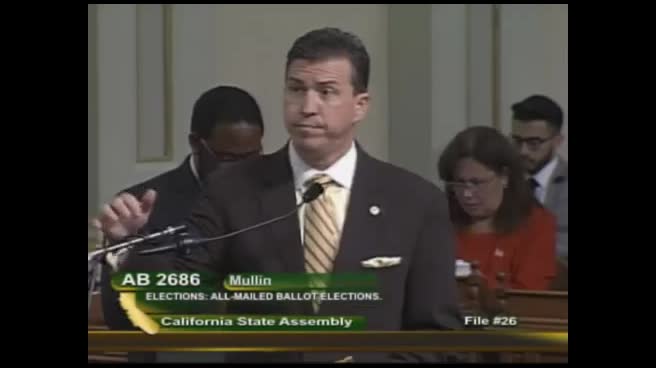
Bill Author

Bill Co-Author(s):