AB 2820: Crimes: price gouging: states of emergency.
- Session Year: 2015-2016
- House: Assembly
- Latest Version Date: 2016-09-26
Under existing law, upon the proclamation of a state of emergency resulting from an earthquake, flood, fire, riot, storm, or natural or manmade disaster declared by the President of the United States or the Governor, or upon the declaration of a local emergency resulting from an earthquake, flood, fire, riot, storm, or natural or manmade disaster by the executive officer of any county, city, or city and county, and for a period of 30 days following that declaration, it is a misdemeanor with specified penalties for a person, contractor, business, or other entity to sell or offer to sell certain goods and services for a price that exceeds by 10% the price charged by that person immediately prior to the proclamation of emergency, except as specified.
This bill would revise the definitions of a state of emergency and a local emergency to mean a natural or manmade emergency resulting from an earthquake, flood, fire, riot, storm, drought, plant or animal infestation or disease, or other natural or manmade disaster for which a state of emergency has been declared by the President of the United States or the Governor of California or for which a local emergency has been declared by an official, board, or other governing body vested with authority to make such a declaration in any city, county, or city and county in California, respectively. The bill would include towing services in the provisions described above. The bill would also specify that housing means any rental housing with an initial lease term of no longer than one year for purposes of these provisions. The bill would make other clarifying and conforming changes, including, among others, a specification that these provisions apply to both a state of emergency and a local emergency, and would make certain additional findings by the Legislature. By expanding the scope of an existing crime, this bill would create a state-mandated local program.
The California Constitution requires the state to reimburse local agencies and school districts for certain costs mandated by the state. Statutory provisions establish procedures for making that reimbursement.
This bill would provide that no reimbursement is required by this act for a specified reason.
Under existing law, upon the proclamation of a state of emergency resulting from an earthquake, flood, fire, riot, storm, or natural or manmade disaster declared by the President of the United States or the Governor, or upon the declaration of a local emergency resulting from an earthquake, flood, fire, riot, storm, or natural or manmade disaster by the executive officer of any county, city, or city and county, and for a period of 30 days following that declaration, it is a misdemeanor with specified penalties for a person, contractor, business, or other entity to sell or offer to sell certain goods and services for a price that exceeds by 10% the price charged by that person immediately prior to the proclamation of emergency, except as specified.
This bill would revise the definitions of a state of emergency and a local emergency to mean a natural or manmade disaster or emergency caused by conditions such as, but not limited to, air pollution, emergency resulting from an earthquake, fire, flood, fire, riot, storm, epidemic, riot, drought, sudden and severe energy shortage, or plant or animal infestation or disease, or other natural or manmade disaster for which a state of emergency has been declared by the President of the United States or the Governor of California or for which a local emergency has been declared by an official, board, or other governing body vested with authority to make such a declaration in any city, county, or city and county in California, respectively. The bill would include the transportation of persons and towing services in the provisions described above. The bill would also specify that housing means any rental housing with an initial lease term of no longer than one year for purposes of these provisions. The bill would make other clarifying and conforming changes changes, including, among others, a specification that these provisions apply to both a state of emergency and a local emergency, and would make certain additional findings by the Legislature. By expanding the scope of an existing crime, this bill would create a state-mandated local program.
The California Constitution requires the state to reimburse local agencies and school districts for certain costs mandated by the state. Statutory provisions establish procedures for making that reimbursement.
This bill would provide that no reimbursement is required by this act for a specified reason.
Under existing law, upon the proclamation of a state of emergency resulting from an earthquake, flood, fire, riot, storm, or natural or manmade disaster declared by the President of the United States or the Governor, or upon the declaration of a local emergency resulting from an earthquake, flood, fire, riot, storm, or natural or manmade disaster by the executive officer of any county, city, or city and county, and for a period of 30 days following that declaration, it is a misdemeanor with specified penalties for a person, contractor, business, or other entity to sell or offer to sell certain goods and services for a price that exceeds by 10% the price charged by that person immediately prior to the proclamation of emergency, except as specified.
This bill would revise the definitions of a state of emergency and a local emergency to mean a natural or manmade disaster or emergency caused by conditions such as, but not limited to, air pollution, earthquake, fire, flood, storm, epidemic, riot, drought, sudden and severe energy shortage, or plant or animal infestation or disease, for which a state of emergency has been declared by the President of the United States or the Governor of California or for which a local emergency has been declared by an official, board, or other governing body vested with authority to make such a declaration in any city, county, or city and county in California, respectively. The bill would include the transportation of persons and towing services in the provisions described above. The bill would also specify that housing means any rental housing with an initial lease term of no longer than one year for purposes of these provisions. The bill would make other clarifying and conforming changes and make certain additional findings by the Legislature. By expanding the scope of an existing crime, this bill would create a state-mandated local program.
The California Constitution requires the state to reimburse local agencies and school districts for certain costs mandated by the state. Statutory provisions establish procedures for making that reimbursement.
This bill would provide that no reimbursement is required by this act for a specified reason.
Under existing law, upon the proclamation of a state of emergency resulting from an earthquake, flood, fire, riot, storm, or natural or manmade disaster declared by the President of the United States or the Governor, or upon the declaration of a local emergency resulting from an earthquake, flood, fire, riot, storm, or natural or manmade disaster by the executive officer of any county, city, or city and county, and for a period of 30 days following that declaration, it is a misdemeanor with specified penalties for a person, contractor, business, or other entity to sell or offer to sell certain goods and services for a price that exceeds by 10% the price charged by that person immediately prior to the proclamation of emergency, except as specified.
This bill would revise the definitions of a state of emergency and a local emergency to mean a natural or manmade disaster or emergency caused by conditions such as, but not limited to, air pollution, earthquake, fire, flood, storm, epidemic, riot, drought, sudden and severe energy shortage, plant or animal infestation or disease, for which a state of emergency has been declared by the President of the United States or the Governor of California or for which a local emergency has been declared by an official, board, or governing body vested with authority to make such a declaration in any city, county, or city and county in California, respectively. The bill would include the transportation of persons and towing services in the provisions described above. The bill would also specify that housing means any rental housing with an initial lease term of no longer than one year for purposes of these provisions. The bill would make other clarifying and conforming changes and make certain additional findings by the Legislature. By expanding the scope of an existing crime, this bill would create a state-mandated local program.
The California Constitution requires the state to reimburse local agencies and school districts for certain costs mandated by the state. Statutory provisions establish procedures for making that reimbursement.
This bill would provide that no reimbursement is required by this act for a specified reason.
Existing law establishes the requirements for a continuance to be granted in a criminal case, including a showing of good cause. Existing law defines good cause for this purpose as including, but not being limited to, cases involving specified crimes, including murder and hate crimes, and where the prosecuting attorney assigned to the case has another trial, preliminary hearing, or motion to suppress in progress in that court or another court.
This bill would include among the crimes eligible to determine good cause, crimes against elders and dependent adults, as specified. The bill would also make technical, nonsubstantive changes to these provisions.
(a)The Legislature hereby finds that during a state of emergency or local emergency, including, but not limited to, an earthquake, flood, fire, riot, storm, drought, plant or animal infestation or disease, or other natural or manmade disaster, some merchants have taken unfair advantage of consumers by greatly increasing prices for essential consumer goods and services. While the pricing of consumer goods and services is generally best left to the marketplace under ordinary conditions, when a declared state of emergency or local emergency results in abnormal disruptions of the market, the public interest requires that excessive and unjustified increases in the prices of essential consumer goods and services be prohibited. It is the intent of the Legislature in enacting this act to protect citizens from excessive and unjustified increases in the prices charged during or shortly after a declared state of emergency or local emergency for goods and services that are vital and necessary for the health, safety, and welfare of consumers. Further, it is the intent of the Legislature that this section be liberally construed so that its beneficial purposes may be served.
(b)Upon the proclamation of a state of emergency declared by the President of the United States or the Governor, or upon the declaration of a local emergency by an official, board, or other governing body vested with authority to make such a declaration in any county, city, or city and county, and for a period of 30 days following that proclamation or declaration, it is unlawful for a person, contractor, business, or other entity to sell or offer to sell any consumer food items or goods, goods or services used for emergency cleanup, emergency supplies, medical supplies, home heating oil, building materials, housing, transportation, freight, and storage services, or gasoline or other motor fuels for a price of more than 10 percent above the price charged by that person for those goods or services immediately prior to the proclamation or declaration of emergency. However, a greater price increase is not unlawful if that person can prove that the increase in price was directly attributable to additional costs imposed on it by the supplier of the goods, or directly attributable to additional costs for labor or materials used to provide the services, provided that in those situations where the increase in price is attributable to additional costs imposed by the sellers supplier or additional costs of providing the good or service during the state of emergency or local emergency, the price represents no more than 10 percent above the total of the cost to the seller plus the markup customarily applied by the seller for that good or service in the usual course of business immediately prior to the onset of the state of emergency or local emergency.
(c)Upon the proclamation of a state of emergency declared by the President of the United States or the Governor, or upon the declaration of a local emergency by an official, board, or other governing body vested with authority to make such a declaration in any county, city, or city and county, and for a period of 180 days following that proclamation or declaration, it is unlawful for a contractor to sell or offer to sell any repair or reconstruction services or any services used in emergency cleanup for a price of more than 10 percent above the price charged by that person for those services immediately prior to the proclamation or declaration of emergency. However, a greater price increase is not unlawful if that person can prove that the increase in price was directly attributable to additional costs imposed on it by the supplier of the goods, or directly attributable to additional costs for labor or materials used to provide the services, provided that in those situations where the increase in price is attributable to the additional costs imposed by the contractors supplier or additional costs of providing the service during the state of emergency or local emergency, the price represents no more than 10 percent above the total of the cost to the contractor plus the markup customarily applied by the contractor for that good or service in the usual course of business immediately prior to the onset of the state of emergency or local emergency.
(d)Upon the proclamation of a state of emergency declared by the President of the United States or the Governor, or upon the declaration of a local emergency by an official, board, or other governing body vested with authority to make such a declaration in any county, city, or city and county, and for a period of 30 days following that proclamation or declaration, it is unlawful for an owner or operator of a hotel or motel to increase the hotel or motels regular rates, as advertised immediately prior to the proclamation or declaration of emergency, by more than 10 percent. However, a greater price increase is not unlawful if the owner or operator can prove that the increase in price is directly attributable to additional costs imposed on it for goods or labor used in its business, to seasonal adjustments in rates that are regularly scheduled, or to previously contracted rates.
(e)The provisions of this section may be extended for additional 30-day periods, as needed, by a local legislative body, local official, the Governor, or the California Legislature, if deemed necessary to protect the lives, property, or welfare of the citizens.
(f)A violation of this section is a misdemeanor punishable by imprisonment in a county jail for a period not exceeding one year, or by a fine of not more than ten thousand dollars ($10,000), or by both that fine and imprisonment.
(g)A violation of this section shall constitute an unlawful business practice and an act of unfair competition within the meaning of Section 17200 of the Business and Professions Code. The remedies and penalties provided by this section are cumulative to each other, the remedies under Section 17200 of the Business and Professions Code, and the remedies or penalties available under all other laws of this state.
(h)For the purposes of this section, the following terms have the following meanings:
(1)State of emergency means a natural or manmade emergency resulting from an earthquake, flood, fire, riot, storm, drought, plant or animal infestation or disease, or other natural or manmade disaster for which a state of emergency has been declared by the President of the United States or the Governor of California.
(2)Local emergency means a natural or manmade emergency resulting from an earthquake, flood, fire, riot, storm, drought, plant or animal infestation or disease, or other natural or manmade disaster for which a local emergency has been declared by an official, board, or other governing body vested with authority to make such a declaration in any county, city, or city and county in California.
(3)Consumer food item means any article that is used or intended for use for food, drink, confection, or condiment by a person or animal.
(4)Repair or reconstruction services means services performed by any person who is required to be licensed under the Contractors State License Law (Chapter 9 (commencing with Section 7000) of Division 3 of the Business and Professions Code), for repairs to residential or commercial property of any type that is damaged as a result of a disaster.
(5)Emergency supplies includes, but is not limited to, water, flashlights, radios, batteries, candles, blankets, soaps, diapers, temporary shelters, tape, toiletries, plywood, nails, and hammers.
(6)Medical supplies includes, but is not limited to, prescription and nonprescription medications, bandages, gauze, isopropyl alcohol, and antibacterial products.
(7)Building materials means lumber, construction tools, windows, and anything else used in the building or rebuilding of property.
(8)Gasoline means any fuel used to power any motor vehicle or power tool.
(9)Transportation, freight, and storage services means any service that is performed by any company that contracts to move, store, or transport personal or business property or that rents equipment for those purposes, including towing services.
(10)Housing means any rental housing with an initial lease term of no longer than one year.
(11)Goods has the same meaning as defined in subdivision (c) of Section 1689.5 of the Civil Code.
(i)Nothing in this section shall preempt any local ordinance prohibiting the same or similar conduct or imposing a more severe penalty for the same conduct prohibited by this section.
(j)A business offering an item for sale at a reduced price immediately prior to the proclamation or declaration of the emergency may use the price at which it usually sells the item to calculate the price pursuant to subdivision (b) or (c).
SEC. 2.No reimbursement is required by this act pursuant to Section 6 of Article XIIIB of the California Constitution because the only costs that may be incurred by a local agency or school district will be incurred because this act creates a new crime or infraction, eliminates a crime or infraction, or changes the penalty for a crime or infraction, within the meaning of Section 17556 of the Government Code, or changes the definition of a crime within the meaning of Section 6 of Article XIIIB of the California Constitution.
(a)The Legislature hereby finds that during emergencies and major disasters, a state of emergency or local emergency, including, but not limited to, air pollution, earthquakes, fires, floods, civil disturbances, storms, and other natural and manmade disasters, an earthquake, flood, fire, riot, storm, drought, plant or animal infestation or disease, or other natural or manmade disaster, some merchants have taken unfair advantage of consumers by greatly increasing prices for essential consumer goods and services. While the pricing of consumer goods and services is generally best left to the marketplace under ordinary conditions, when a declared state of emergency or local emergency results in abnormal disruptions of the market, the public interest requires that excessive and unjustified increases in the prices of essential consumer goods and services be prohibited. It is the intent of the Legislature in enacting this act to protect citizens from excessive and unjustified increases in the prices charged during or shortly after a declared state of emergency or local emergency for goods and services that are vital and necessary for the health, safety, and welfare of consumers. Further, it is the intent of the Legislature that this section be liberally construed so that its beneficial purposes may be served.
(b)Upon the proclamation of a state of emergency declared by the President of the United States or the Governor, or upon the declaration of a local emergency by an official, board, or other governing body vested with authority to make such a declaration in any county, city, or city and county, and for a period of 30 days following that proclamation or declaration, it is unlawful for a person, contractor, business, or other entity to sell or offer to sell any consumer food items or goods, goods or services used for emergency cleanup, emergency supplies, medical supplies, home heating oil, building materials, housing, transportation, freight, and storage services, or gasoline or other motor fuels for a price of more than 10 percent above the price charged by that person for those goods or services immediately prior to the proclamation or declaration of emergency. However, a greater price increase is not unlawful if that person can prove that the increase in price was directly attributable to additional costs imposed on it by the supplier of the goods, or directly attributable to additional costs for labor or materials used to provide the services, provided that in those situations where the increase in price is attributable to additional costs imposed by the sellers supplier or additional costs of providing the good or service during the state of emergency or local emergency, the price represents no more than 10 percent above the total of the cost to the seller plus the markup customarily applied by the seller for that good or service in the usual course of business immediately prior to the onset of the state of emergency or local emergency.
(c)Upon the proclamation of a state of emergency declared by the President of the United States or the Governor, or upon the declaration of a local emergency by an official, board, or other governing body vested with authority to make such a declaration in any county, city, or city and county, and for a period of 180 days following that proclamation or declaration, it is unlawful for a contractor to sell or offer to sell any repair or reconstruction services or any services used in emergency cleanup for a price of more than 10 percent above the price charged by that person for those services immediately prior to the proclamation or declaration of emergency. However, a greater price increase is not unlawful if that person can prove that the increase in price was directly attributable to additional costs imposed on it by the supplier of the goods, or directly attributable to additional costs for labor or materials used to provide the services, provided that in those situations where the increase in price is attributable to the additional costs imposed by the contractors supplier or additional costs of providing the service during the state of emergency or local emergency, the price represents no more than 10 percent above the total of the cost to the contractor plus the markup customarily applied by the contractor for that good or service in the usual course of business immediately prior to the onset of the state of emergency or local emergency.
(d)Upon the proclamation of a state of emergency declared by the President of the United States or the Governor, or upon the declaration of a local emergency by an official, board, or other governing body vested with authority to make such a declaration in any county, city, or city and county, and for a period of 30 days following that proclamation or declaration, it is unlawful for an owner or operator of a hotel or motel to increase the hotel or motels regular rates, as advertised immediately prior to the proclamation or declaration of emergency, by more than 10 percent. However, a greater price increase is not unlawful if the owner or operator can prove that the increase in price is directly attributable to additional costs imposed on it for goods or labor used in its business, to seasonal adjustments in rates that are regularly scheduled, or to previously contracted rates.
(e)The provisions of this section may be extended for additional 30-day periods, as needed, by a local legislative body, local official, the Governor, or the California Legislature, if deemed necessary to protect the lives, property, or welfare of the citizens.
(f)A violation of this section is a misdemeanor punishable by imprisonment in a county jail for a period not exceeding one year, or by a fine of not more than ten thousand dollars ($10,000), or by both that fine and imprisonment.
(g)A violation of this section shall constitute an unlawful business practice and an act of unfair competition within the meaning of Section 17200 of the Business and Professions Code. The remedies and penalties provided by this section are cumulative to each other, the remedies under Section 17200 of the Business and Professions Code, and the remedies or penalties available under all other laws of this state.
(h)For the purposes of this section, the following terms have the following meanings:
(1)State of emergency means a natural or manmade disaster or emergency caused by conditions such as, but not limited to, air pollution, emergency resulting from an earthquake, fire, flood, fire, riot, storm, epidemic, riot, drought, sudden and severe energy shortage, or plant or animal infestation or disease disease, or other natural or manmade disaster for which a state of emergency has been declared by the President of the United States or the Governor of California.
(2)Local emergency means a natural or manmade disaster or emergency caused by conditions such as, but not limited to, air pollution, emergency resulting from an earthquake, fire, flood, fire, riot, storm, epidemic, riot, drought, sudden and severe energy shortage, or plant or animal infestation or disease disease, or other natural or manmade disaster for which a local emergency has been declared by an official, board, or other governing body vested with authority to make such a declaration in any county, city, or city and county in California.
(3)Consumer food item means any article that is used or intended for use for food, drink, confection, or condiment by a person or animal.
(4)Repair or reconstruction services means services performed by any person who is required to be licensed under the Contractors State License Law (Chapter 9 (commencing with Section 7000) of Division 3 of the Business and Professions Code), for repairs to residential or commercial property of any type that is damaged as a result of a disaster.
(5)Emergency supplies includes, but is not limited to, water, flashlights, radios, batteries, candles, blankets, soaps, diapers, temporary shelters, tape, toiletries, plywood, nails, and hammers.
(6)Medical supplies includes, but is not limited to, prescription and nonprescription medications, bandages, gauze, isopropyl alcohol, and antibacterial products.
(7)Building materials means lumber, construction tools, windows, and anything else used in the building or rebuilding of property.
(8)Gasoline means any fuel used to power any motor vehicle or power tool.
(9)Transportation, freight, and storage services means any service that is performed by any company that contracts to move, store, or transport personal or business property or that rents equipment for those purposes, including towing services, or any service that provides transportation to persons. services.
(10)Housing means any rental housing with an initial lease term of no longer than one year.
(11)Goods has the same meaning as defined in subdivision (c) of Section 1689.5 of the Civil Code.
(i)Nothing in this section shall preempt any local ordinance prohibiting the same or similar conduct or imposing a more severe penalty for the same conduct prohibited by this section.
(j)A business offering an item for sale at a reduced price immediately prior to the proclamation or declaration of the emergency may use the price at which it usually sells the item to calculate the price pursuant to subdivision (b) or (c).
SEC. 2.No reimbursement is required by this act pursuant to Section 6 of Article XIIIB of the California Constitution because the only costs that may be incurred by a local agency or school district will be incurred because this act creates a new crime or infraction, eliminates a crime or infraction, or changes the penalty for a crime or infraction, within the meaning of Section 17556 of the Government Code, or changes the definition of a crime within the meaning of Section 6 of Article XIIIB of the California Constitution.
(a)The Legislature hereby finds that during emergencies and major disasters, including, but not limited to, air pollution, earthquakes, fires, floods, civil disturbances, storms, and other natural and manmade disasters, some merchants have taken unfair advantage of consumers by greatly increasing prices for essential consumer goods and services. While the pricing of consumer goods and services is generally best left to the marketplace under ordinary conditions, when a declared state of emergency results in abnormal disruptions of the market, the public interest requires that excessive and unjustified increases in the prices of essential consumer goods and services be prohibited. It is the intent of the Legislature in enacting this act to protect citizens from excessive and unjustified increases in the prices charged during or shortly after a declared state of emergency for goods and services that are vital and necessary for the health, safety, and welfare of consumers. Further Further, it is the intent of the Legislature that this section be liberally construed so that its beneficial purposes may be served.
(b)Upon the proclamation of a state of emergency declared by the President of the United States or the Governor, or upon the declaration of a local emergency by an official, board, or other governing body vested with authority to make such a declaration in any county, city, or city and county, and for a period of 30 days following that declaration, it is unlawful for a person, contractor, business, or other entity to sell or offer to sell any consumer food items or goods, goods or services used for emergency cleanup, emergency supplies, medical supplies, home heating oil, building materials, housing, transportation, freight, and storage services, or gasoline or other motor fuels for a price of more than 10 percent above the price charged by that person for those goods or services immediately prior to the proclamation of emergency. However, a greater price increase is not unlawful if that person can prove that the increase in price was directly attributable to additional costs imposed on it by the supplier of the goods, or directly attributable to additional costs for labor or materials used to provide the services, provided that in those situations where the increase in price is attributable to additional costs imposed by the sellers supplier or additional costs of providing the good or service during the state of emergency, the price represents no more than 10 percent above the total of the cost to the seller plus the markup customarily applied by the seller for that good or service in the usual course of business immediately prior to the onset of the state of emergency.
(c)Upon the proclamation of a state of emergency declared by the President of the United States or the Governor, or upon the declaration of a local emergency by an official, board, or other governing body vested with authority to make such a declaration in any county, city, or city and county, and for a period of 180 days following that declaration, it is unlawful for a contractor to sell or offer to sell any repair or reconstruction services or any services used in emergency cleanup for a price of more than 10 percent above the price charged by that person for those services immediately prior to the proclamation of emergency. However, a greater price increase is not unlawful if that person can prove that the increase in price was directly attributable to additional costs imposed on it by the supplier of the goods, or directly attributable to additional costs for labor or materials used to provide the services, provided that in those situations where the increase in price is attributable to the additional costs imposed by the contractors supplier or additional costs of providing the service during the state of emergency, the price represents no more than 10 percent above the total of the cost to the contractor plus the markup customarily applied by the contractor for that good or service in the usual course of business immediately prior to the onset of the state of emergency.
(d)Upon the proclamation of a state of emergency declared by the President of the United States or the Governor, or upon the declaration of a local emergency by an official, board, or other governing body vested with authority to make such a declaration in any county, city, or city and county, and for a period of 30 days following that proclamation or declaration, it is unlawful for an owner or operator of a hotel or motel to increase the hotel or motels regular rates, as advertised immediately prior to the proclamation or declaration of emergency, by more than 10 percent. However, a greater price increase is not unlawful if the owner or operator can prove that the increase in price is directly attributable to additional costs imposed on it for goods or labor used in its business, to seasonal adjustments in rates that are regularly scheduled, or to previously contracted rates.
(e)The provisions of this section may be extended for additional 30-day periods, as needed, by a local legislative body, local official, the Governor, or the California Legislature, if deemed necessary to protect the lives, property, or welfare of the citizens.
(f)A violation of this section is a misdemeanor punishable by imprisonment in a county jail for a period not exceeding one year, or by a fine of not more than ten thousand dollars ($10,000), or by both that fine and imprisonment.
(g)A violation of this section shall constitute an unlawful business practice and an act of unfair competition within the meaning of Section 17200 of the Business and Professions Code. The remedies and penalties provided by this section are cumulative to each other, the remedies under Section 17200 of the Business and Professions Code, and the remedies or penalties available under all other laws of this state.
(h)For the purposes of this section, the following terms have the following meanings:
(1)State of emergency means a natural or manmade disaster or emergency caused by conditions such as, but not limited to, air pollution, earthquake, fire, flood, storm, epidemic, riot, drought, sudden and severe energy shortage, or plant or animal infestation or disease for which a state of emergency has been declared by the President of the United States or the Governor of California.
(2)Local emergency means a natural or manmade disaster or emergency caused by conditions such as, but not limited to, air pollution, earthquake, fire, flood, storm, epidemic, riot, drought, sudden and severe energy shortage, or plant or animal infestation or disease for which a local emergency has been declared by an official, board, or other governing body vested with authority to make such a declaration in any county, city, or city and county in California.
(3)Consumer food item means any article that is used or intended for use for food, drink, confection, or condiment by a person or animal.
(4)Repair or reconstruction services means services performed by any person who is required to be licensed under the Contractors State License Law (Chapter 9 (commencing with Section 7000) of Division 3 of the Business and Professions Code), for repairs to residential or commercial property of any type that is damaged as a result of a disaster.
(5)Emergency supplies includes, but is not limited to, water, flashlights, radios, batteries, candles, blankets, soaps, diapers, temporary shelters, tape, toiletries, plywood, nails, and hammers.
(6)Medical supplies includes, but is not limited to, prescription and nonprescription medications, bandages, gauze, isopropyl alcohol, and antibacterial products.
(7)Building materials means lumber, construction tools, windows, and anything else used in the building or rebuilding of property.
(8)Gasoline means any fuel used to power any motor vehicle or power tool.
(9)Transportation, freight, and storage services means any service that is performed by any company that contracts to move, store, or transport personal or business property or that rents equipment for those purposes, including towing services, or any service that provides transportation to persons.
(10)Housing means any rental housing with an initial lease term of no longer than one year.
(11)Goods has the same meaning as defined in subdivision (c) of Section 1689.5 of the Civil Code.
(i)Nothing in this section shall preempt any local ordinance prohibiting the same or similar conduct or imposing a more severe penalty for the same conduct prohibited by this section.
(j)A business offering an item for sale at a reduced price immediately prior to the proclamation of the emergency may use the price at which it usually sells the item to calculate the price pursuant to subdivision (b) or (c).
SEC. 2.No reimbursement is required by this act pursuant to Section 6 of Article XIIIB of the California Constitution because the only costs that may be incurred by a local agency or school district will be incurred because this act creates a new crime or infraction, eliminates a crime or infraction, or changes the penalty for a crime or infraction, within the meaning of Section 17556 of the Government Code, or changes the definition of a crime within the meaning of Section 6 of Article XIIIB of the California Constitution.
(a)The Legislature hereby finds that during emergencies and major disasters, including, but not limited to, air pollution, earthquakes, fires, floods, or civil disturbances, storms, and other natural and manmade disasters, some merchants have taken unfair advantage of consumers by greatly increasing prices for essential consumer goods and services. While the pricing of consumer goods and services is generally best left to the marketplace under ordinary conditions, when a declared state of emergency results in abnormal disruptions of the market, the public interest requires that excessive and unjustified increases in the prices of essential consumer goods and services be prohibited. It is the intent of the Legislature in enacting this act to protect citizens from excessive and unjustified increases in the prices charged during or shortly after a declared state of emergency for goods and services that are vital and necessary for the health, safety, and welfare of consumers. Further it is the intent of the Legislature that this section be liberally construed so that its beneficial purposes may be served.
(b)Upon the proclamation of a state of emergency resulting from an earthquake, flood, fire, riot, storm, or natural or manmade disaster declared by the President of the United States or the Governor, or upon the declaration of a local emergency resulting from an earthquake, flood, fire, riot, storm, or natural or manmade disaster by the executive officer of by an official, board, or other governing body vested with authority to make such a declaration in any county, city, or city and county, and for a period of 30 days following that declaration, it is unlawful for a person, contractor, business, or other entity to sell or offer to sell any consumer food items or goods, goods or services used for emergency cleanup, emergency supplies, medical supplies, home heating oil, building materials, housing, transportation, freight, and storage services, or gasoline or other motor fuels for a price of more than 10 percent above the price charged by that person for those goods or services immediately prior to the proclamation of emergency. However, a greater price increase is not unlawful if that person can prove that the increase in price was directly attributable to additional costs imposed on it by the supplier of the goods, or directly attributable to additional costs for labor or materials used to provide the services, provided that in those situations where the increase in price is attributable to additional costs imposed by the sellers supplier or additional costs of providing the good or service during the state of emergency, the price represents no more than 10 percent above the total of the cost to the seller plus the markup customarily applied by the seller for that good or service in the usual course of business immediately prior to the onset of the state of emergency.
(c)Upon the proclamation of a state of emergency resulting from an earthquake, flood, fire, riot, or storm declared by the President of the United States or the Governor, or upon the declaration of a local emergency resulting from an earthquake, flood, fire, riot, or storm by the executive officer of by an official, board, or other governing body vested with authority to make such a declaration in any county, city, or city and county, and for a period of 180 days following that declaration, it is unlawful for a contractor to sell or offer to sell any repair or reconstruction services or any services used in emergency cleanup for a price of more than 10 percent above the price charged by that person for those services immediately prior to the proclamation of emergency. However, a greater price increase is not unlawful if that person can prove that the increase in price was directly attributable to additional costs imposed on it by the supplier of the goods, or directly attributable to additional costs for labor or materials used to provide the services, provided that in those situations where the increase in price is attributable to the additional costs imposed by the contractors supplier or additional costs of providing the service during the state of emergency, the price represents no more than 10 percent above the total of the cost to the contractor plus the markup customarily applied by the contractor for that good or service in the usual course of business immediately prior to the onset of the state of emergency.
(d)Upon the proclamation of a state of emergency resulting from an earthquake, flood, fire, riot, storm, or other natural disaster declared by the President of the United States or the Governor, or upon the declaration of a local emergency resulting from an earthquake, flood, fire, riot, storm, or other natural disaster by the executive officer of by an official, board, or other governing body vested with authority to make such a declaration in any county, city, or city and county, and for a period of 30 days following that proclamation or declaration, it is unlawful for an owner or operator of a hotel or motel to increase the hotel or motels regular rates, as advertised immediately prior to the proclamation or declaration of emergency, by more than 10 percent. However, a greater price increase is not unlawful if the owner or operator can prove that the increase in price is directly attributable to additional costs imposed on it for goods or labor used in its business, to seasonal adjustments in rates that are regularly scheduled, or to previously contracted rates.
(e)The provisions of this section may be extended for additional 30-day periods periods, as needed, by a local legislative body body, local official, the Governor, or the California Legislature, if deemed necessary to protect the lives, property, or welfare of the citizens.
(f)A violation of this section is a misdemeanor punishable by imprisonment in a county jail for a period not exceeding one year, or by a fine of not more than ten thousand dollars ($10,000), or by both that fine and imprisonment.
(g)A violation of this section shall constitute an unlawful business practice and an act of unfair competition within the meaning of Section 17200 of the Business and Professions Code. The remedies and penalties provided by this section are cumulative to each other, the remedies under Section 17200 of the Business and Professions Code, and the remedies or penalties available under all other laws of this state.
(h)For the purposes of this section, the following terms have the following meanings:
(1)State of emergency means a natural or manmade disaster or emergency resulting from an earthquake, flood, fire, riot, or storm caused by conditions such as, but not limited to, air pollution, earthquake, fire, flood, storm, epidemic, riot, drought, sudden and severe energy shortage, plant or animal infestation or disease for which a state of emergency has been declared by the President of the United States or the Governor of California.
(2)Local emergency means a natural or manmade disaster or emergency resulting from an earthquake, flood, fire, riot, or storm caused by conditions such as, but not limited to, air pollution, earthquake, fire, flood, storm, epidemic, riot, drought, sudden and severe energy shortage, plant or animal infestation or disease for which a local emergency has been declared by the executive officer or governing body of any city or county an official, board, or other governing body vested with authority to make such a declaration in any county, city, or city and county in California.
(3)Consumer food item means any article that is used or intended for use for food, drink, confection, or condiment by a person or animal.
(4)Repair or reconstruction services means services performed by any person who is required to be licensed under the Contractors State License Law (Chapter 9 (commencing with Section 7000) of Division 3 of the Business and Professions Code), for repairs to residential or commercial property of any type that is damaged as a result of a disaster.
(5)Emergency supplies includes, but is not limited to, water, flashlights, radios, batteries, candles, blankets, soaps, diapers, temporary shelters, tape, toiletries, plywood, nails, and hammers.
(6)Medical supplies includes, but is not limited to, prescription and nonprescription medications, bandages, gauze, isopropyl alcohol, and antibacterial products.
(7)Building materials means lumber, construction tools, windows, and anything else used in the building or rebuilding of property.
(8)Gasoline means any fuel used to power any motor vehicle or power tool.
(9)Transportation, freight, and storage services means any service that is performed by any company that contracts to move, store, or transport personal or business property or that rents equipment for those purposes purposes, including towing services, or any service that provides transportation to persons.
(10)Housing means any rental housing leased on a month-to-month term with an initial lease term of no longer than one year.
(11)Goods has the same meaning as defined in subdivision (c) of Section 1689.5 of the Civil Code.
(i)Nothing in this section shall preempt any local ordinance prohibiting the same or similar conduct or imposing a more severe penalty for the same conduct prohibited by this section.
(j)A business offering an item for sale at a reduced price immediately prior to the proclamation of the emergency may use the price at which it usually sells the item to calculate the price pursuant to subdivision (b) or (c).
SEC. 2.No reimbursement is required by this act pursuant to Section 6 of Article XIIIB of the California Constitution because the only costs that may be incurred by a local agency or school district will be incurred because this act creates a new crime or infraction, eliminates a crime or infraction, or changes the penalty for a crime or infraction, within the meaning of Section 17556 of the Government Code, or changes the definition of a crime within the meaning of Section 6 of Article XIIIB of the California Constitution.
SECTION 1.Section 1050 of the Penal Code is amended to read:1050.(a)The welfare of the people of the State of California requires that all proceedings in criminal cases shall be set for trial and heard and determined at the earliest possible time. To this end, the Legislature finds that the criminal courts are becoming increasingly congested, resulting in adverse consequences to the welfare of the people and the defendant. Excessive continuances contribute substantially to this congestion and cause substantial hardship to victims and other witnesses. Continuances also lead to longer periods of presentence confinement for those defendants in custody and the concomitant overcrowding and increased expenses of local jails. It is therefore recognized that the people, the defendant, and the victims and other witnesses have the right to an expeditious disposition, and to that end it shall be the duty of all courts and judicial officers and of all counsel, both for the prosecution and the defense, to expedite these proceedings to the greatest degree that is consistent with the ends of justice. In accordance with this policy, criminal cases shall be given precedence over, and set for trial and heard without regard to the pendency of, civil matters or proceedings. In further accordance with this policy, death penalty cases in which both the prosecution and the defense have informed the court that they are prepared to proceed to trial shall be given precedence over, and set for trial and heard without regard to the pendency of, other criminal cases and civil matters or proceedings, unless the court finds in the interest of justice that it is not appropriate.
(b)To continue a hearing in a criminal proceeding, including the trial, (1) a written notice shall be filed and served on all parties to the proceeding at least two court days before the hearing sought to be continued, together with affidavits or declarations detailing specific facts showing that a continuance is necessary and (2) within two court days of learning that he or she has a conflict in the scheduling of a court hearing, including a trial, an attorney shall notify the calendar clerk of each court involved, in writing, indicating which hearing was set first. A party shall not be deemed to have been served within the meaning of this section until that party actually has received a copy of the documents to be served, unless the party, after receiving actual notice of the request for continuance, waives the right to have the documents served in a timely manner. Regardless of the proponent of the motion, the prosecuting attorney shall notify the peoples witnesses and the defense attorney shall notify the defenses witnesses of the notice of motion, the date of the hearing, and the witnesses right to be heard by the court.
(c)Notwithstanding subdivision (b), a party may make a motion for a continuance without complying with the requirements of that subdivision. However, unless the moving party shows good cause for the failure to comply with those requirements, the court may impose sanctions as provided in Section 1050.5.
(d)When a party makes a motion for a continuance without complying with the requirements of subdivision (b), the court shall hold a hearing on whether there is good cause for the failure to comply with those requirements. At the conclusion of the hearing, the court shall make a finding whether good cause has been shown and, if it finds that there is good cause, shall state on the record the facts proved that justify its finding. A statement of the finding and a statement of facts proved shall be entered in the minutes. If the moving party is unable to show good cause for the failure to give notice, the motion for continuance shall not be granted.
(e)Continuances shall be granted only upon a showing of good cause. Neither the convenience of the parties nor a stipulation of the parties is, in and of itself, good cause.
(f)At the conclusion of the motion for continuance, the court shall make a finding whether good cause has been shown and, if it finds that there is good cause, shall state on the record the facts proved that justify its finding. A statement of facts proved shall be entered in the minutes.
(g)(1)When deciding whether or not good cause for a continuance has been shown, the court shall consider the general convenience and prior commitments of all witnesses, including peace officers. Both the general convenience and prior commitments of each witness also shall be considered in selecting a continuance date if the motion is granted. The facts as to inconvenience or prior commitments may be offered by the witness or by a party to the case.
(2)For purposes of this section, good cause includes, but is not limited to, cases that meet both of the following criteria:
(A)The case involves one or more of the following:
(i)Murder, as defined in subdivision (a) of Section 187.
(ii)Allegations of stalking, as defined in Section 646.9.
(iii)Violation of one or more of the sections specified in subdivision (a) of Section 11165.1 or Section 11165.6.
(iv)Domestic violence, as defined in Section 13700.
(v)A case being handled in the California Career Criminal Prosecution Program pursuant to Sections 999b to 999h, inclusive.
(vi)A hate crime, as defined in Title 11.6 (commencing with Section 422.6) of Part 1.
(vii)A crime against an elder or dependent adult as specified in Section 368.
(B)The prosecuting attorney assigned to the case has another trial, preliminary hearing, or motion to suppress in progress in that court or another court.
A continuance under this paragraph shall be limited to a maximum of 10 additional court days.
(3)Only one continuance per case may be granted to the people under this subdivision for cases involving stalking, hate crimes, or cases handled under the California Career Criminal Prosecution Program. A continuance granted to the people in a case involving stalking or handled under the California Career Criminal Prosecution Program shall be for the shortest time possible, not to exceed 10 court days.
(h)Upon a showing that the attorney of record at the time of the defendants first appearance in the superior court on an indictment or information is a Member of the Legislature of this state and that the Legislature is in session or that a legislative interim committee of which the attorney is a duly appointed member is meeting or is to meet within the next seven days, the defendant shall be entitled to a reasonable continuance not to exceed 30 days.
(i)A continuance shall be granted only for that period of time shown to be necessary by the evidence considered at the hearing on the motion. Whenever a continuance is granted, the court shall state on the record the facts proved that justify the length of the continuance, and those facts shall be entered in the minutes.
(j)Whenever it appears that a court may be required, because of the condition of its calendar, to dismiss an action pursuant to Section 1382, the court must immediately notify the Chair of the Judicial Council.
(k)This section does not apply when the preliminary examination is set on a date less than 10 court days from the date of the defendants arraignment on the complaint, and the prosecution or the defendant moves to continue the preliminary examination to a date not more than 10 court days from the date of the defendants arraignment on the complaint.
(l)This section is directory only and does not mandate dismissal of an action by its terms.
(a)The welfare of the people of the State of California requires that all proceedings in criminal cases shall be set for trial and heard and determined at the earliest possible time. To this end, the Legislature finds that the criminal courts are becoming increasingly congested with congested, resulting in adverse consequences to the welfare of the people and the defendant. Excessive continuances contribute substantially to this congestion and cause substantial hardship to victims and other witnesses. Continuances also lead to longer periods of presentence confinement for those defendants in custody and the concomitant overcrowding and increased expenses of local jails. It is therefore recognized that the people, the defendant, and the victims and other witnesses have the right to an expeditious disposition, and to that end it shall be the duty of all courts and judicial officers and of all counsel, both for the prosecution and the defense, to expedite these proceedings to the greatest degree that is consistent with the ends of justice. In accordance with this policy, criminal cases shall be given precedence over, and set for trial and heard without regard to the pendency of, any civil matters or proceedings. In further accordance with this policy, death penalty cases in which both the prosecution and the defense have informed the court that they are prepared to proceed to trial shall be given precedence over, and set for trial and heard without regard to the pendency of, other criminal cases and any civil matters or proceedings, unless the court finds in the interest of justice that it is not appropriate.
(b)To continue any a hearing in a criminal proceeding, including the trial, (1) a written notice shall be filed and served on all parties to the proceeding at least two court days before the hearing sought to be continued, together with affidavits or declarations detailing specific facts showing that a continuance is necessary and (2) within two court days of learning that he or she has a conflict in the scheduling of any a court hearing, including a trial, an attorney shall notify the calendar clerk of each court involved, in writing, indicating which hearing was set first. A party shall not be deemed to have been served within the meaning of this section until that party actually has received a copy of the documents to be served, unless the party, after receiving actual notice of the request for continuance, waives the right to have the documents served in a timely manner. Regardless of the proponent of the motion, the prosecuting attorney shall notify the peoples witnesses and the defense attorney shall notify the defenses witnesses of the notice of motion, the date of the hearing, and the witnesses right to be heard by the court.
(c)Notwithstanding subdivision (b), a party may make a motion for a continuance without complying with the requirements of that subdivision. However, unless the moving party shows good cause for the failure to comply with those requirements, the court may impose sanctions as provided in Section 1050.5.
(d)When a party makes a motion for a continuance without complying with the requirements of subdivision (b), the court shall hold a hearing on whether there is good cause for the failure to comply with those requirements. At the conclusion of the hearing, the court shall make a finding whether good cause has been shown and, if it finds that there is good cause, shall state on the record the facts proved that justify its finding. A statement of the finding and a statement of facts proved shall be entered in the minutes. If the moving party is unable to show good cause for the failure to give notice, the motion for continuance shall not be granted.
(e)Continuances shall be granted only upon a showing of good cause. Neither the convenience of the parties nor a stipulation of the parties is is, in and of itself itself, good cause.
(f)At the conclusion of the motion for continuance, the court shall make a finding whether good cause has been shown and, if it finds that there is good cause, shall state on the record the facts proved that justify its finding. A statement of facts proved shall be entered in the minutes.
(g)(1)When deciding whether or not good cause for a continuance has been shown, the court shall consider the general convenience and prior commitments of all witnesses, including peace officers. Both the general convenience and prior commitments of each witness also shall be considered in selecting a continuance date if the motion is granted. The facts as to inconvenience or prior commitments may be offered by the witness or by a party to the case.
(2)For purposes of this section, good cause includes, but is not limited to, those cases involving murder, as defined in subdivision (a) of Section 187, allegations that stalking, as defined in Section 646.9, a violation of one or more of the sections specified in subdivision (a) of Section 11165.1 or Section 11165.6, or domestic violence as defined in Section 13700, or a case being handled in the Career Criminal Prosecution Program pursuant to Sections 999b through 999h, or a hate crime, as defined in Title 11.6 (commencing with Section 422.6) of Part 1, has occurred and the cases that meet both of the following criteria:
(A)The case involves one or more of the following:
(i)Murder, as defined in subdivision (a) of Section 187.
(ii)Allegations of stalking, as defined in Section 646.9.
(iii)Violation of one or more of the sections specified in subdivision (a) of Section 11165.1 or Section 11165.6.
(iv)Domestic violence, as defined in Section 13700.
(v)A case being handled in the California Career Criminal Prosecution Program pursuant to Sections 999b to 999h, inclusive.
(vi)A hate crime, as defined in Title 11.6 (commencing with Section 422.6) of Part 1.
(vii)A crime against an elder or dependent adult as specified in Section 368.
(B)The prosecuting attorney assigned to the case has another trial, preliminary hearing, or motion to suppress in progress in that court or another court. A
A continuance under this paragraph shall be limited to a maximum of 10 additional court days.
(3)Only one continuance per case may be granted to the people under this subdivision for cases involving stalking, hate crimes, or cases handled under the California Career Criminal Prosecution Program. Any A continuance granted to the people in a case involving stalking or handled under the California Career Criminal Prosecution Program shall be for the shortest time possible, not to exceed 10 court days.
(h)Upon a showing that the attorney of record at the time of the defendants first appearance in the superior court on an indictment or information is a Member of the Legislature of this state and that the Legislature is in session or that a legislative interim committee of which the attorney is a duly appointed member is meeting or is to meet within the next seven days, the defendant shall be entitled to a reasonable continuance not to exceed 30 days.
(i)A continuance shall be granted only for that period of time shown to be necessary by the evidence considered at the hearing on the motion. Whenever any a continuance is granted, the court shall state on the record the facts proved that justify the length of the continuance, and those facts shall be entered in the minutes.
(j)Whenever it shall appear appears that any a court may be required, because of the condition of its calendar, to dismiss an action pursuant to Section 1382, the court must immediately notify the Chair of the Judicial Council.
(k)This section shall does not apply when the preliminary examination is set on a date less than 10 court days from the date of the defendants arraignment on the complaint, and the prosecution or the defendant moves to continue the preliminary examination to a date not more than 10 court days from the date of the defendants arraignment on the complaint.
(l)This section is directory only and does not mandate dismissal of an action by its terms.
|
Date
|
Status
|
|---|---|
| Jun 14, 2016 | From committee: Do pass and re-refer to Com. on APPR. (Ayes 6. Noes 0.) (June 14). Re-referred to Com. on APPR. |
| Sep 7, 2016 | Enrolled and presented to the Governor at 3 p.m. |
| Aug 29, 2016 | Senate amendments concurred in. To Engrossing and Enrolling. (Ayes 67. Noes 11. Page 6347.). |
| Aug 29, 2016 | Senate amendments concurred in. To Engrossing and Enrolling. |
| Aug 24, 2016 | In Assembly. Concurrence in Senate amendments pending. May be considered on or after August 26 pursuant to Assembly Rule 77. |
| Aug 23, 2016 | Read third time. Passed. Ordered to the Assembly. (Ayes 31. Noes 0. Page 5286.). |
| Aug 23, 2016 | Read third time. Passed. Ordered to the Assembly. |
| Aug 22, 2016 | Read second time. Ordered to third reading. |
| Aug 19, 2016 | Read third time and amended. Ordered to second reading. |
| Aug 2, 2016 | Read second time. Ordered to third reading. |
| Aug 1, 2016 | Read third time and amended. Ordered to second reading. |
| Jun 28, 2016 | Read second time. Ordered to third reading. |
| Jun 27, 2016 | From committee: Be placed on second reading file pursuant to Senate Rule 28.8. |
| Feb 19, 2016 | Introduced. To print. |
| May 19, 2016 | Referred to Com. on PUB. S. |
| May 9, 2016 | Read third time. Passed. Ordered to the Senate. (Ayes 68. Noes 10. Page 4724.) |
| May 9, 2016 | Read third time. Passed. Ordered to the Senate. |
| May 9, 2016 | In Senate. Read first time. To Com. on RLS. for assignment. |
| May 5, 2016 | Read second time. Ordered to third reading. |
| May 4, 2016 | From committee: Do pass. (Ayes 19. Noes 1.) (May 4). |
| Apr 20, 2016 | From committee: Do pass and re-refer to Com. on APPR. (Ayes 7. Noes 0.) (April 19). Re-referred to Com. on APPR. |
| Mar 16, 2016 | Re-referred to Com. on PUB. S. |
| Mar 15, 2016 | From committee chair, with author's amendments: Amend, and re-refer to Com. on PUB. S. Read second time and amended. |
| Mar 14, 2016 | Referred to Com. on PUB. S. |
| Feb 22, 2016 | Read first time. |
| Feb 21, 2016 | From printer. May be heard in committee March 22. |
|
Date
|
Description
|
Location
|
Votes
|
|
|---|---|---|---|---|
| Aug 29, 2016 | AB 2820 CHIU Concurrence in Senate Amendments | Assembly Floor |
Passed |
|
| Aug 23, 2016 | Assembly 3rd Reading AB2820 Chiu By Pavley | Senate Floor |
Passed |
|
| Jun 14, 2016 | Do pass, but first be re-referred to the Committee on [Appropriations] | Senate Standing Committee on Public Safety |
Passed |
|
| May 9, 2016 | AB 2820 CHIU Assembly Third Reading | Assembly Floor |
Passed |
|
| May 4, 2016 | Do pass. | Assembly Standing Committee on Appropriations |
Passed |
|
| Apr 19, 2016 | Do pass and be re-referred to the Committee on [Appropriations] | Assembly Standing Committee on Public Safety |
Passed |
This list shows positions taken on this bill by organizations on the date displayed, which is linked to the original source.
Positions by individuals are not included.
|
Organization
|
Position
|
Date
|
|---|---|---|
| California Public Defenders Association | ** Against | Aug 23, 2016 |
| Consumer Attorneys Of California | ** Support | Aug 23, 2016 |
| Office of Attorney General Kamala D. Harris | ** Support | Aug 23, 2016 |
CONCURRENCE IN SENATE AMENDMENTS
CSA1 Bill Id:AB 2820
Author:(Chiu)
As Amended Ver:August 19, 2016
Majority vote
ASSEMBLY: | 68-10 | (May 9, 2016) | SENATE: | 31-0 | (August 23, 2016) |
Original Committee Reference: PUB. S.
SUMMARY: Revises the definition of state of emergency and local emergency for purposes of criminal price gouging. Specifies that criminal price gouging includes rental of any housing with an initial lease of up to one year for purposes of criminal price gouging; includes towing services in the criminal price gouging during a declared emergency.
The Senate amendments:
- Remove the service of transportation of persons from the crime of price gouging during a declared emergency.
- Revise the definitions of a state of emergency and a local emergency to mean a natural or manmade emergency resulting from an earthquake, flood, fire, riot, storm, drought, plant or animal infestation or disease, or other natural or manmade disaster for which a state of emergency has been declared by the President of the United States or the Governor of California or for which a local emergency has been declared by an official, board, or other governing body vested with authority to make such a declaration in any city, county, or city and county in California, respectively.
- Make conforming changes.
- Make technical and non-substantive changes.
EXISTING LAW:
- Provides that upon the declaration of a state of emergency resulting from an earthquake, flood, fire, riot, storm, or natural or manmade disaster declared by the President of the United States or the Governor, or upon the declaration of a local emergency resulting from an earthquake, flood, fire, riot, storm, or natural or manmade disaster by the executive officer of any county, city, or city and county, and for a period of 30 days following that declaration, it is unlawful for a person, contractor, business, or other entity to sell or offer to sell any consumer food items or goods, goods or services used for emergency cleanup, emergency supplies, medical supplies, home heating oil, building materials, housing, transportation, freight, and storage services, or gasoline or other motor fuels for a price of more than 10% above the price charged by that person for those goods or services immediately prior to the proclamation of emergency.
- States that upon the declaration of a state of emergency resulting from an earthquake, flood, fire, riot, or storm declared by the President of the United States or the Governor, or upon the declaration of a local emergency resulting from an earthquake, flood, fire, riot, or storm by the executive officer of any county, city, or city and county, and for a period of 180 days following that declaration, it is unlawful for a contractor to sell or offer to sell any repair or reconstruction services or any services used in emergency cleanup for a price of more than 10% above the price charged by that person for those services immediately prior to the proclamation of emergency.
- Specifies that upon the proclamation of a state of emergency resulting from an earthquake, flood, fire, riot, storm, or other natural disaster declared by the President of the United States or the Governor, or upon the declaration of a local emergency resulting from an earthquake, flood, fire, riot, storm, or other natural disaster by the executive officer of any county, city, or city and county, and for a period of 30 days following that proclamation or declaration, it is unlawful for an owner or operator of a hotel or motel to increase the hotel or motel's regular rates, as advertised immediately prior to the proclamation or declaration of emergency, by more than 10%.
- Specifies that, a greater price increase for the goods and services, mentioned above, is not unlawful if that person can prove that the increase in price was directly attributable to additional costs imposed by specified circumstances.
- Provides that time frame prohibiting specified price increases may be extended for additional 30-day periods by a local legislative body or the California Legislature, if deemed necessary to protect the lives, property, or welfare of the citizens.
- States that the conduct described above is a misdemeanor punishable by imprisonment in a county jail for a period not exceeding one year, or by a fine of not more than $10,000, or by both that fine and imprisonment.
- Specifies that the conduct described above shall constitute an unlawful business practice and an act of unfair competition.
- Defines "State of emergency" as "a natural or manmade disaster or emergency resulting from an earthquake, flood, fire, riot, or storm for which a state of emergency has been declared by the President of the United States or the Governor of California."
- Defines "Local emergency" as "a natural or manmade disaster or emergency resulting from an earthquake, flood, fire, riot, or storm for which a local emergency has been declared by the executive officer or governing body of any city or county in California."
- Defines "Housing" as "any rental housing leased on a month-to-month term" for purposes of criminal price gouging.
- States that except as specified, in all leases of lands from week to week, month to month, or other period less than a month, the landlord may, upon giving notice in writing to the tenant, in the appropriate manner, change the terms of the lease to take effect, as to tenancies for less than one month, upon the expiration of a period at least as long as the term of the hiring itself, and, as to tenancies from month to month, to take effect at the expiration of not less than 30 days, but if that change takes effect within a rental term, the rent accruing from the first day of the term to the date of that change shall be computed at the rental rate obtained immediately prior to that change.
- Specifies that the notice, when served upon the tenant, shall in and of itself operate and be effectual to create and establish, as a part of the lease, the terms, rents, and conditions specified in the notice, if the tenant shall continue to hold the premises after the notice takes effect.
- States that all leases of a residential dwelling, or of any interest therein, from week to week, month to month, or other period less than a month, the landlord may increase the rent provided in the lease or rental agreement, upon giving written notice to the tenant, as follows, by either of the following procedures:
- By delivering a copy to the tenant personally; or
- By serving a copy by mail under the procedures as specified.
- States that for an increase in rent greater than 10%, the minimum notice period required pursuant to that paragraph shall be increased by an additional 30 days, but does not apply to an increase in rent caused by a change in a tenant's income or family composition as determined by a recertification required by statute or regulation.
AS PASSED BY THE ASSEMBLY, this bill:
- Revised the definition of a state of emergency to mean a natural or manmade disaster or emergency caused by conditions such as, but not limited to, air pollution, earthquake, fire, flood, storm, epidemic, riot, drought, sudden and severe energy shortage, plant or animal infestation or disease, for which a state of emergency has been declared by the President of the United States or the Governor of California.
- Revised the definition of a local emergency to mean a natural or manmade disaster or emergency caused by conditions such as, but not limited to, air pollution, earthquake, fire, flood, storm, epidemic, riot, drought, sudden and severe energy shortage, plant or animal infestation or disease, for which a local emergency has been declared by an official, board, or governing body vested with authority to make such a declaration in any city, county, or city and county in California.
- Applied the definitions above, throughout the criminal price gouging statute.
- Included the transportation of persons and towing services in the crime of price gouging during a declared emergency.
- Specified that criminal price gouging during a declared emergency includes any rental housing with an initial lease term of up to one year.
FISCAL EFFECT: According to the Senate Appropriations Committee, pursuant to Senate Rule 28.8, negligible state costs.
COMMENTS: According to the author, "Following the devastating Aliso Canyon gas leak, unscrupulous individuals took advantage of a tragic loophole in current law and raised the prices of housing and services. AB 2820 updates current law to ensure that whether the disaster prompting the declaration of a state of emergency is natural or manmade, familiar or totally unprecedented, consumers across the state will be protected from excessive price increases. Disaster victims should not be victimized twice."
Analysis Prepared by: David Billingsley / PUB. S. / (916) 319-3744 FN: 0004810
Office of Senate Floor Analyses (916) 651-1520 Fax: (916) 327-4478 | AB 2820 |
THIRD READING
Bill No: AB 2820
Amended: 8/19/16 in Senate
SENATE PUBLIC SAFETY COMMITTEE: 6-0, 6/14/16
AYES: Hancock, Anderson, Glazer, Leno, Liu, Monning
NO VOTE RECORDED: Stone
SENATE APPROPRIATIONS COMMITTEE: Senate Rule 28.8
ASSEMBLY FLOOR: 68-10, 5/9/16 - See last page for vote
SUBJECT: Crimes: price gouging: states of emergency
DIGEST: This bill revises the definition of state of emergency and local emergency for purposes of criminal price gouging, specifying that criminal price gouging during a declared emergency includes the rental of any housing with an initial lease of up to one year and also the transportation of persons and towing services.
Senate Floor Amendments of 8/19/16 (1) specify further which events will constitute an emergency or major disaster; (2) remove “air pollution” and “sudden and severe energy shortages” from the type of disasters in which this bill applies; (3) and clarify that this bill can apply in local emergencies.
Senate Floor Amendments of 8/1/16 (1) add Assembly Member Wilk as a principal coauthor; and (2) add technical, non-substantive amendments.
Existing law:
- Finds that during emergencies and major disasters, including, but not limited to, earthquakes, fires, floods, or civil disturbances, some merchants have taken unfair advantage of consumers by greatly increasing prices for essential consumer goods and services. (Penal Code § 396, subd. (a).)
- States that it is the intent of the Legislature to protect citizens from excessive and unjustified increases in the prices charged during or shortly after a declared state of emergency for goods and services that are vital and necessary for the health, safety, and welfare of consumers. (Penal Code § 396, subd. (a).)
- Provides that upon the declaration of a state of emergency resulting from an earthquake, flood, fire, riot, storm, or natural or manmade disaster declared by the President of the United States or the Governor, or upon the declaration of a local emergency resulting from an earthquake, flood, fire, riot, storm, or natural or manmade disaster by the executive officer of any county, city, or city and county, and for a period of 30 days following that declaration, it is unlawful for a person, contractor, business, or other entity to sell or offer to sell any consumer food items or goods, goods or services used for emergency cleanup, emergency supplies, medical supplies, home heating oil, building materials, housing, transportation, freight, and storage services, or gasoline or other motor fuels for a price of more than 10 percent above the price charged by that person for those goods or services immediately prior to the proclamation of emergency. (Penal Code § 396, subd. (b).)
- States that upon the declaration of a state of emergency resulting from an earthquake, flood, fire, riot, or storm declared by the President of the United States or the Governor, or upon the declaration of a local emergency resulting from an earthquake, flood, fire, riot, or storm by the executive officer of any county, city, or city and county, and for a period of 180 days following that declaration, it is unlawful for a contractor to sell or offer to sell any repair or reconstruction services or any services used in emergency cleanup for a price of more than 10 percent above the price charged by that person for those services immediately prior to the proclamation of emergency. (Penal Code § 396, subd. (c).)
- Specifies that upon the proclamation of a state of emergency resulting from an earthquake, flood, fire, riot, storm, or other natural disaster declared by the President of the United States or the Governor, or upon the declaration of a local emergency resulting from an earthquake, flood, fire, riot, storm, or other natural disaster by the executive officer of any county, city, or city and county, and for a period of 30 days following that proclamation or declaration, it is unlawful for an owner or operator of a hotel or motel to increase the hotel or motel's regular rates, as advertised immediately prior to the proclamation or declaration of emergency, by more than 10 percent. (Penal Code § 396, subd. (d).)
- Specifies that a greater price increase for the goods and services, mentioned above, is not unlawful if that person can prove that the increase in price was directly attributable to additional costs imposed by specified circumstances. (Penal Code § 396, subd. (a)-(c).)
- Provides that time frame prohibiting specified price increases may be extended for additional 30-day periods by a local legislative body or the California Legislature, if deemed necessary to protect the lives, property, or welfare of the citizens. (Penal Code § 396, subd. (e).)
- States that the conduct described above is a misdemeanor punishable by imprisonment in a county jail for a period not exceeding one year, or by a fine of not more than ten thousand dollars ($10,000), or by both that fine and imprisonment. (Penal Code § 396 subd. (f).)
- Specifies that the conduct described above shall constitute an unlawful business practice and an act of unfair competition. (Penal Code § 396 subd. (g).)
- Defines "state of emergency" as “a natural or manmade disaster or emergency resulting from an earthquake, flood, fire, riot, or storm for which a state of emergency has been declared by the President of the United States or the Governor of California.” (Penal Code § 396, subd. (g)(1).)
- Defines "local emergency" as “a natural or manmade disaster or emergency resulting from an earthquake, flood, fire, riot, or storm for which a local emergency has been declared by the executive officer or governing body of any city or county in California.” (Penal Code § 396, subd. (g)(2).)
- Defines "housing" as "any rental housing leased on a month-to-month term" for purposes of criminal price gouging. (Penal Code § 396, subd. (g)(2).)
- States that except as specified, in all leases of lands from week to week, month to month, or other period less than a month, the landlord may, upon giving notice in writing to the tenant, in the appropriate manner, change the terms of the lease to take effect, as to tenancies for less than one month, upon the expiration of a period at least as long as the term of the hiring itself, and, as to tenancies from month to month, to take effect at the expiration of not less than 30 days, but if that change takes effect within a rental term, the rent accruing from the first day of the term to the date of that change shall be computed at the rental rate obtained immediately prior to that change. (Civil Code § 827, subd. (a).)
- Specifies that the notice, when served upon the tenant, shall in and of itself operate and be effectual to create and establish, as a part of the lease, the terms, rents, and conditions specified in the notice, if the tenant shall continue to hold the premises after the notice takes effect.
- States that all leases of a residential dwelling, or of any interest therein, from week to week, month to month, or other period less than a month, the landlord may increase the rent provided in the lease or rental agreement, upon giving written notice to the tenant, as follows, by either of the following procedures:
- By delivering a copy to the tenant personally; or (Civil Code § 827, subd. (b)(1)(A).)
- By serving a copy by mail under the procedures as specified. (Civil Code § 827, subd. (b)(1)(B).)
- States that for an increase in rent greater than 10%, the minimum notice period required pursuant to that paragraph shall be increased by an additional 30 days, but does not apply to an increase in rent caused by a change in a tenant's income or family composition as determined by a recertification required by statute or regulation. (Civil Code § 827, subd. (b)(3).)
This bill:
- Revises the definition of a “state of emergency” to mean a natural or manmade disaster or emergency caused by conditions such as, but not limited to, air pollution, earthquake, fire, flood, storm, epidemic, riot, drought, sudden and severe energy shortage, plant or animal infestation or disease, for which a state of emergency has been declared by the President of the United States or the Governor of California.
- Revises the definition a “local emergency” to mean a natural or manmade disaster or emergency caused by conditions such as, but not limited to, air pollution, earthquake, fire, flood, storm, epidemic, riot, drought, sudden and severe energy shortage, plant or animal infestation or disease, for which a local emergency has been declared by an official, board, or governing body vested with authority to make such a declaration in any city, county, or city and county in California.
- Applies the definitions above, throughout the criminal price gouging statute and also includes the transportation of persons and towing services in the crime of price gouging during a declared emergency. Additionally, this bill specifies that criminal price gouging during a declared emergency includes any rental housing with an initial lease term of up to one year.
Background
Aliso Canyon Disaster
In October of 2015, a large leak was discovered at the Aliso Canyon natural gas storage facility. The methane leak forced more than 4,600 households into temporary housing and took 112 days to plug. [http://thinkprogress.org/climate/ 2016/02/12/3749190/aliso-canyon-methane-leak-stopped/] The Los Angeles Board of Supervisors declared a state of emergency in December of 2015. Governor Brown declared a state of emergency in January of 2016.
A news story by KPCC in January of 2016 discussed the extent to which rental prices increased after the leak was discovered. KPCC quoted, Allen Brodetsky, president of Boutique Realty in Tarzana, who stated “Where rental prices would normally go between $3,000 and $4,000, now landlords are asking six, seven, eight, nine thousand dollars— double, triple the rent of what it should be.” [http://www.scpr.org/news/2016/01/07/56700/fears-of-price-gouging-as-porter-ranch-families-lo/] Brodetsky also said that “The rental market around Porter Ranch has gotten so hot, that some home sellers, including a neighbor of his, have taken their houses off the market and turn them into short-term rentals.” [ibid.]
To the extent that the rent increases described above were for month-to-month leases and the leases were entered into after the declaration of a state of emergency, the conduct would be prohibited under the current price gouging law. However, there was concern that existing law was not providing sufficient protection to individuals and families displaced by the Aliso Canyon disaster when landlords were demanding a year lease in conjunction with the high monthly rental prices. Current law does not cover rental contracts entered during a declared emergency if the rental contracts were for any period longer than month to month. This bill expands the scope of the leases that would be covered under criminal price gouging to include leases with an initial term of up to one year.
FISCAL EFFECT: Appropriation: No Fiscal Com.: Yes Local: Yes
Office of Attorney General Kamala D. Harris
Consumer Attorneys of California
OPPOSITION: (Verified 8/19/16)
California Public Defenders Association
ASSEMBLY FLOOR: 68-10, 5/9/16
AYES: Achadjian, Alejo, Arambula, Atkins, Baker, Bigelow, Bloom, Bonilla, Bonta, Brough, Brown, Burke, Calderon, Campos, Chang, Chau, Chiu, Chu, Cooley, Cooper, Dababneh, Dahle, Daly, Dodd, Eggman, Frazier, Gallagher, Cristina Garcia, Gipson, Gomez, Gonzalez, Gordon, Gray, Grove, Roger Hernández, Holden, Irwin, Jones-Sawyer, Kim, Lackey, Levine, Linder, Lopez, Low, Maienschein, Mathis, McCarty, Medina, Melendez, Mullin, Nazarian, O'Donnell, Olsen, Patterson, Quirk, Ridley-Thomas, Rodriguez, Salas, Santiago, Steinorth, Mark Stone, Thurmond, Ting, Weber, Wilk, Williams, Wood, Rendon
NOES: Travis Allen, Chávez, Gatto, Hadley, Harper, Jones, Mayes, Obernolte, Wagner, Waldron
NO VOTE RECORDED: Beth Gaines, Eduardo Garcia
8/22/16 22:43:26
**** END ****
Office of Senate Floor Analyses (916) 651-1520 Fax: (916) 327-4478 | AB |
THIRD READING
Bill No: AB 2820
:
SENATE PUBLIC SAFETY COMMITTEE: 6-0, 6/14/16
AYES: Hancock, Anderson, Glazer, Leno, Liu, Monning
NO VOTE RECORDED: Stone
SENATE APPROPRIATIONS COMMITTEE: Senate Rule 28.8
ASSEMBLY FLOOR: 68-10, 5/9/16 - See last page for vote
DIGEST: This bill revises the definition of state of emergency and local emergency for purposes of criminal price gouging, specifying that criminal price gouging during a declared emergency includes the rental of any housing with an initial lease of up to one year and also the transportation of persons and towing services.
Senate Floor Amendments of 8/1/16 (1) add Assembly Member Wilk as a principal coauthor; and (2) add technical, non-substantive amendments.
Existing law:
- Finds that during emergencies and major disasters, including, but not limited to, earthquakes, fires, floods, or civil disturbances, some merchants have taken unfair advantage of consumers by greatly increasing prices for essential consumer goods and services. (Penal Code § 396, subd. (a).)
- States that it is the intent of the Legislature to protect citizens from excessive and unjustified increases in the prices charged during or shortly after a declared state of emergency for goods and services that are vital and necessary for the health, safety, and welfare of consumers. (Penal Code § 396, subd. (a).)
- Provides that upon the declaration of a state of emergency resulting from an earthquake, flood, fire, riot, storm, or natural or manmade disaster declared by the President of the United States or the Governor, or upon the declaration of a local emergency resulting from an earthquake, flood, fire, riot, storm, or natural or manmade disaster by the executive officer of any county, city, or city and county, and for a period of 30 days following that declaration, it is unlawful for a person, contractor, business, or other entity to sell or offer to sell any consumer food items or goods, goods or services used for emergency cleanup, emergency supplies, medical supplies, home heating oil, building materials, housing, transportation, freight, and storage services, or gasoline or other motor fuels for a price of more than 10 percent above the price charged by that person for those goods or services immediately prior to the proclamation of emergency. (Penal Code § 396, subd. (b).)
- States that upon the declaration of a state of emergency resulting from an earthquake, flood, fire, riot, or storm declared by the President of the United States or the Governor, or upon the declaration of a local emergency resulting from an earthquake, flood, fire, riot, or storm by the executive officer of any county, city, or city and county, and for a period of 180 days following that declaration, it is unlawful for a contractor to sell or offer to sell any repair or reconstruction services or any services used in emergency cleanup for a price of more than 10 percent above the price charged by that person for those services immediately prior to the proclamation of emergency. (Penal Code § 396, subd. (c).)
- Specifies that upon the proclamation of a state of emergency resulting from an earthquake, flood, fire, riot, storm, or other natural disaster declared by the President of the United States or the Governor, or upon the declaration of a local emergency resulting from an earthquake, flood, fire, riot, storm, or other natural disaster by the executive officer of any county, city, or city and county, and for a period of 30 days following that proclamation or declaration, it is unlawful for an owner or operator of a hotel or motel to increase the hotel or motel's regular rates, as advertised immediately prior to the proclamation or declaration of emergency, by more than 10 percent. (Penal Code § 396, subd. (d).)
- Specifies that a greater price increase for the goods and services, mentioned above, is not unlawful if that person can prove that the increase in price was directly attributable to additional costs imposed by specified circumstances. (Penal Code § 396, subd. (a)-(c).)
- Provides that time frame prohibiting specified price increases may be extended for additional 30-day periods by a local legislative body or the California Legislature, if deemed necessary to protect the lives, property, or welfare of the citizens. (Penal Code § 396, subd. (e).)
- States that the conduct described above is a misdemeanor punishable by imprisonment in a county jail for a period not exceeding one year, or by a fine of not more than ten thousand dollars ($10,000), or by both that fine and imprisonment. (Penal Code § 396 subd. (f).)
- Specifies that the conduct described above shall constitute an unlawful business practice and an act of unfair competition. (Penal Code § 396 subd. (g).)
- Defines ”state of emergency” as “a natural or manmade disaster or emergency resulting from an earthquake, flood, fire, riot, or storm for which a state of emergency has been declared by the President of the United States or the Governor of California.” (Penal Code § 396, subd. (g)(1).)
- Defines “local emergency” as “a natural or manmade disaster or emergency resulting from an earthquake, flood, fire, riot, or storm for which a local emergency has been declared by the executive officer or governing body of any city or county in California.” (Penal Code § 396, subd. (g)(2).)
- Defines “housing” as “any rental housing leased on a month-to-month term” for purposes of criminal price gouging. (Penal Code § 396, subd. (g)(2).)
- States that except as specified, in all leases of lands from week to week, month to month, or other period less than a month, the landlord may, upon giving notice in writing to the tenant, in the appropriate manner, change the terms of the lease to take effect, as to tenancies for less than one month, upon the expiration of a period at least as long as the term of the hiring itself, and, as to tenancies from month to month, to take effect at the expiration of not less than 30 days, but if that change takes effect within a rental term, the rent accruing from the first day of the term to the date of that change shall be computed at the rental rate obtained immediately prior to that change. (Civil Code § 827, subd. (a).)
- Specifies that the notice, when served upon the tenant, shall in and of itself operate and be effectual to create and establish, as a part of the lease, the terms, rents, and conditions specified in the notice, if the tenant shall continue to hold the premises after the notice takes effect.
- States that all leases of a residential dwelling, or of any interest therein, from week to week, month to month, or other period less than a month, the landlord may increase the rent provided in the lease or rental agreement, upon giving written notice to the tenant, as follows, by either of the following procedures:
- By delivering a copy to the tenant personally; or (Civil Code § 827, subd. (b)(1)(A).)
- By serving a copy by mail under the procedures as specified. (Civil Code § 827, subd. (b)(1)(B).)
- States that for an increase in rent greater than 10%, the minimum notice period required pursuant to that paragraph shall be increased by an additional 30 days, but does not apply to an increase in rent caused by a change in a tenant's income or family composition as determined by a recertification required by statute or regulation. (Civil Code § 827, subd. (b)(3).)
This bill:
- Revises the definition of a “state of emergency” to mean a natural or manmade disaster or emergency caused by conditions such as, but not limited to, air pollution, earthquake, fire, flood, storm, epidemic, riot, drought, sudden and severe energy shortage, plant or animal infestation or disease, for which a state of emergency has been declared by the President of the United States or the Governor of California.
- Revises the definition of a “local emergency” to mean a natural or manmade disaster or emergency caused by conditions such as, but not limited to, air pollution, earthquake, fire, flood, storm, epidemic, riot, drought, sudden and severe energy shortage, plant or animal infestation or disease, for which a local emergency has been declared by an official, board, or governing body vested with authority to make such a declaration in any city, county, or city and county in California.
- Applies the definitions above, throughout the criminal price gouging statute and also includes the transportation of persons and towing services in the crime of price gouging during a declared emergency. Additionally, this bill specifies that criminal price gouging during a declared emergency includes any rental housing with an initial lease term of up to one year.
FISCAL EFFECT: Appropriation: Fiscal Com.: Local:
Office of Attorney General Kamala D. Harris
Consumer Attorneys of California
California Public Defenders Association
ASSEMBLY FLOOR: 68-10, 5/9/16
AYES: Achadjian, Alejo, Arambula, Atkins, Baker, Bigelow, Bloom, Bonilla, Bonta, Brough, Brown, Burke, Calderon, Campos, Chang, Chau, Chiu, Chu, Cooley, Cooper, Dababneh, Dahle, Daly, Dodd, Eggman, Frazier, Gallagher, Cristina Garcia, Gipson, Gomez, Gonzalez, Gordon, Gray, Grove, Roger Hernández, Holden, Irwin, Jones-Sawyer, Kim, Lackey, Levine, Linder, Lopez, Low, Maienschein, Mathis, McCarty, Medina, Melendez, Mullin, Nazarian, O'Donnell, Olsen, Patterson, Quirk, Ridley-Thomas, Rodriguez, Salas, Santiago, Steinorth, Mark Stone, Thurmond, Ting, Weber, Wilk, Williams, Wood, Rendon
NOES: Travis Allen, Chávez, Gatto, Hadley, Harper, Jones, Mayes, Obernolte, Wagner, Waldron
NO VOTE RECORDED: Beth Gaines, Eduardo Garcia
8/3/16 19:11:05
**** END ****
Office of Senate Floor Analyses (916) 651-1520 Fax: (916) 327-4478 | AB |
THIRD READING
Bill No: AB 2820
:
SENATE PUBLIC SAFETY COMMITTEE: 6-0, 6/14/16
AYES: Hancock, Anderson, Glazer, Leno, Liu, Monning
NO VOTE RECORDED: Stone
SENATE APPROPRIATIONS COMMITTEE: Senate Rule 28.8
ASSEMBLY FLOOR: 68-10, 5/9/16 - See last page for vote
DIGEST: This bill revises the definition of state of emergency and local emergency for purposes of criminal price gouging, specifying that criminal price gouging during a declared emergency includes the rental of any housing with an initial lease of up to one year and also the transportation of persons and towing services.
Existing law:
- Finds that during emergencies and major disasters, including, but not limited to, earthquakes, fires, floods, or civil disturbances, some merchants have taken unfair advantage of consumers by greatly increasing prices for essential consumer goods and services. (Penal Code § 396, subd. (a).)
- States that it is the intent of the Legislature to protect citizens from excessive and unjustified increases in the prices charged during or shortly after a declared state of emergency for goods and services that are vital and necessary for the health, safety, and welfare of consumers. (Penal Code § 396, subd. (a).)
- Provides that upon the declaration of a state of emergency resulting from an earthquake, flood, fire, riot, storm, or natural or manmade disaster declared by the President of the United States or the Governor, or upon the declaration of a local emergency resulting from an earthquake, flood, fire, riot, storm, or natural or manmade disaster by the executive officer of any county, city, or city and county, and for a period of 30 days following that declaration, it is unlawful for a person, contractor, business, or other entity to sell or offer to sell any consumer food items or goods, goods or services used for emergency cleanup, emergency supplies, medical supplies, home heating oil, building materials, housing, transportation, freight, and storage services, or gasoline or other motor fuels for a price of more than 10 percent above the price charged by that person for those goods or services immediately prior to the proclamation of emergency. (Penal Code § 396, subd. (b).)
- States that upon the declaration of a state of emergency resulting from an earthquake, flood, fire, riot, or storm declared by the President of the United States or the Governor, or upon the declaration of a local emergency resulting from an earthquake, flood, fire, riot, or storm by the executive officer of any county, city, or city and county, and for a period of 180 days following that declaration, it is unlawful for a contractor to sell or offer to sell any repair or reconstruction services or any services used in emergency cleanup for a price of more than 10 percent above the price charged by that person for those services immediately prior to the proclamation of emergency. (Penal Code § 396, subd. (c).)
- Specifies that upon the proclamation of a state of emergency resulting from an earthquake, flood, fire, riot, storm, or other natural disaster declared by the President of the United States or the Governor, or upon the declaration of a local emergency resulting from an earthquake, flood, fire, riot, storm, or other natural disaster by the executive officer of any county, city, or city and county, and for a period of 30 days following that proclamation or declaration, it is unlawful for an owner or operator of a hotel or motel to increase the hotel or motel's regular rates, as advertised immediately prior to the proclamation or declaration of emergency, by more than 10 percent. (Penal Code § 396, subd. (d).)
- Specifies that a greater price increase for the goods and services, mentioned above, is not unlawful if that person can prove that the increase in price was directly attributable to additional costs imposed by specified circumstances. (Penal Code § 396, subd. (a)-(c).)
- Provides that time frame prohibiting specified price increases may be extended for additional 30-day periods by a local legislative body or the California Legislature, if deemed necessary to protect the lives, property, or welfare of the citizens. (Penal Code § 396, subd. (e).)
- States that the conduct described above is a misdemeanor punishable by imprisonment in a county jail for a period not exceeding one year, or by a fine of not more than $10,000, or by both that fine and imprisonment. (Penal Code § 396 subd. (f).)
- Specifies that the conduct described above shall constitute an unlawful business practice and an act of unfair competition. (Penal Code § 396 subd. (g).)
- Defines “state of emergency” as “a natural or manmade disaster or emergency resulting from an earthquake, flood, fire, riot, or storm for which a state of emergency has been declared by the President of the United States or the Governor of California.” (Penal Code § 396, subd. (g)(1).)
- Defines “Local emergency” as “a natural or manmade disaster or emergency resulting from an earthquake, flood, fire, riot, or storm for which a local emergency has been declared by the executive officer or governing body of any city or county in California.” (Penal Code § 396, subd. (g)(2).)
- Defines “housing” as “any rental housing leased on a month-to-month term” for purposes of criminal price gouging. (Penal Code § 396, subd. (g)(2).)
- States that except as specified, in all leases of lands from week to week, month to month, or other period less than a month, the landlord may, upon giving notice in writing to the tenant, in the appropriate manner, change the terms of the lease to take effect, as to tenancies for less than one month, upon the expiration of a period at least as long as the term of the hiring itself, and, as to tenancies from month to month, to take effect at the expiration of not less than 30 days, but if that change takes effect within a rental term, the rent accruing from the first day of the term to the date of that change shall be computed at the rental rate obtained immediately prior to that change. (Civil Code § 827, subd. (a).)
- Specifies that the notice, when served upon the tenant, shall in and of itself operate and be effectual to create and establish, as a part of the lease, the terms, rents, and conditions specified in the notice, if the tenant shall continue to hold the premises after the notice takes effect.
- States that all leases of a residential dwelling, or of any interest therein, from week to week, month to month, or other period less than a month, the landlord may increase the rent provided in the lease or rental agreement, upon giving written notice to the tenant, as follows, by either of the following procedures:
- By delivering a copy to the tenant personally; or (Civil Code § 827, subd. (b)(1)(A).)
- By serving a copy by mail under the procedures as specified. (Civil Code § 827, subd. (b)(1)(B).)
- States that for an increase in rent greater than 10%, the minimum notice period required pursuant to that paragraph shall be increased by an additional 30 days, but does not apply to an increase in rent caused by a change in a tenant's income or family composition as determined by a recertification required by statute or regulation. (Civil Code § 827, subd. (b)(3).)
This bill:
1) Revises the definition of a “state of emergency” to mean a natural or manmade disaster or emergency caused by conditions such as, but not limited to, air pollution, earthquake, fire, flood, storm, epidemic, riot, drought, sudden and severe energy shortage, plant or animal infestation or disease, for which a state of emergency has been declared by the President of the United States or the Governor of California.
2) Revises the definition a “local emergency” to mean a natural or manmade disaster or emergency caused by conditions such as, but not limited to, air pollution, earthquake, fire, flood, storm, epidemic, riot, drought, sudden and severe energy shortage, plant or animal infestation or disease, for which a local emergency has been declared by an official, board, or governing body vested with authority to make such a declaration in any city, county, or city and county in California.
3) Applies the definitions above, throughout the criminal price gouging statute.
4) Includes the transportation of persons and towing services in the crime of price gouging during a declared emergency.
5) Specifies that criminal price gouging during a declared emergency includes any rental housing with an initial lease term of up to one year.
Background
Aliso Canyon Disaster
In October of 2015, a large leak was discovered at the Aliso Canyon natural gas storage facility. The methane leak forced more than 4,600 households into temporary housing and took 112 days to plug. [http://thinkprogress.org/climate/ 2016/02/12/3749190/aliso-canyon-methane-leak-stopped/] The Los Angeles Board of Supervisors declared a state of emergency in December of 2015. Governor Brown declared a state of emergency in January of 2016.
A news story by KPCC in January of 2016 discussed the extent to which rental prices increased after the leak was discovered. KPCC quoted, Allen Brodetsky, president of Boutique Realty in Tarzana, who stated “Where rental prices would normally go between $3,000 and $4,000, now landlords are asking six, seven, eight, nine thousand dollars— double, triple the rent of what it should be.” [http://www.scpr.org/news/2016/01/07/56700/fears-of-price-gouging-as-porter-ranch-families-lo/] Brodetsky also said that “The rental market around Porter Ranch has gotten so hot, that some home sellers, including a neighbor of his, have taken their houses off the market and turn them into short-term rentals.” [ibid]
To the extent that the rent increases described above were for month-to-month leases and the leases were entered into after the declaration of a state of emergency, the conduct would be prohibited under the current price gouging law. However, there was concern that existing law was not providing sufficient protection to individuals and families displaced by the Aliso Canyon disaster when landlords were demanding a year lease in conjunction with the high monthly rental prices. Current law does not cover rental contracts entered during a declared emergency if the rental contracts were for any period longer than month to month. This bill expands the scope of the leases that would be covered under criminal price gouging to include leases with an initial term of up to one year.
What This Bill Does
This bill clarifies the definition of State of Emergency and Local Emergency. This bill applies the definitions consistently within the existing statute prohibiting price gouging during a declared emergency. The existing statute prohibits raising prices above a specified amount, for a variety of goods and services, once an emergency has been declared. The existing statute has different definitions of what constitutes a triggering emergency depending on the type of goods or services being sold. For example, the prohibition against increasing hotel or motel prices more than 10% does not apply if the emergency is a result of a manmade disaster. In contrast, the prohibition on price increases for goods such as food, medical supplies, housing, or gasoline includes both natural and manmade disasters. This bill provides a consistent definition of emergency throughout the statute, including both natural and manmade disasters.
FISCAL EFFECT: Appropriation: Fiscal Com.: Local:
Office of Attorney General Kamala D. Harris
Consumer Attorneys of California
OPPOSITION: (Verified 6/27/16)
California Public Defenders Association
ASSEMBLY FLOOR: 68-10, 5/9/16
AYES: Achadjian, Alejo, Arambula, Atkins, Baker, Bigelow, Bloom, Bonilla, Bonta, Brough, Brown, Burke, Calderon, Campos, Chang, Chau, Chiu, Chu, Cooley, Cooper, Dababneh, Dahle, Daly, Dodd, Eggman, Frazier, Gallagher, Cristina Garcia, Gipson, Gomez, Gonzalez, Gordon, Gray, Grove, Roger Hernández, Holden, Irwin, Jones-Sawyer, Kim, Lackey, Levine, Linder, Lopez, Low, Maienschein, Mathis, McCarty, Medina, Melendez, Mullin, Nazarian, O'Donnell, Olsen, Patterson, Quirk, Ridley-Thomas, Rodriguez, Salas, Santiago, Steinorth, Mark Stone, Thurmond, Ting, Weber, Wilk, Williams, Wood, Rendon
NOES: Travis Allen, Chávez, Gatto, Hadley, Harper, Jones, Mayes, Obernolte, Wagner, Waldron
NO VOTE RECORDED: Beth Gaines, Eduardo Garcia
Prepared by: Molly Lao / PUB. S. /
6/29/16 15:50:32
SENATE COMMITTEE ON PUBLIC SAFETY
Senator Loni Hancock, Chair
2015 - 2016 Regular
Bill No: AB 2820 Hearing Date: June 14, 2016
Author: | Chiu | ||
Version: | March 15, 2016 | ||
Urgency: | No | Fiscal: | Yes |
Consultant: | ML | ||
Subject: Crimes: Price Gouging: States of Emergency
HISTORY
Source: Author
Prior Legislation: ABX1 57 (Archie-Hudson) – Ch. 51, Stats. 1994
SB 1363 (Ducheny) – Ch. 492, Stats. 2004
AB 457 (Núñez) –2006, died in Senate
Support: Consumer Attorneys of California; Office of Attorney General Kamala D. Harris
Opposition: California Public Defenders Association
Assembly Floor Vote: 68 - 10
PURPOSE
The purpose of this bill is to revise the definition of state of emergency and local emergency for purposes of criminal price gouging, specifying that criminal price gouging during a declared emergency includes the rental of any housing with an initial lease of up to one year and also the transportation of persons and towing services.
Existing law finds that during emergencies and major disasters, including, but not limited to, earthquakes, fires, floods, or civil disturbances, some merchants have taken unfair advantage of consumers by greatly increasing prices for essential consumer goods and services. (Penal Code § 396, subd. (a).)
Existing law states that it is the intent of the Legislature in to protect citizens from excessive and unjustified increases in the prices charged during or shortly after a declared state of emergency for goods and services that are vital and necessary for the health, safety, and welfare of consumers. (Penal Code § 396, subd. (a).)
Existing law provides that upon the declaration of a state of emergency resulting from an earthquake, flood, fire, riot, storm, or natural or manmade disaster declared by the President of the United States or the Governor, or upon the declaration of a local emergency resulting from an earthquake, flood, fire, riot, storm, or natural or manmade disaster by the executive officer of any county, city, or city and county, and for a period of 30 days following that declaration, it is unlawful for a person, contractor, business, or other entity to sell or offer to sell any consumer food items or goods, goods or services used for emergency cleanup, emergency supplies, medical supplies, home heating oil, building materials, housing, transportation, freight, and storage services, or gasoline or other motor fuels for a price of more than 10 percent above the price charged by that person for those goods or services immediately prior to the proclamation of emergency. (Penal Code § 396, subd. (b).)
Existing law states that upon the declaration of a state of emergency resulting from an earthquake, flood, fire, riot, or storm declared by the President of the United States or the Governor, or upon the declaration of a local emergency resulting from an earthquake, flood, fire, riot, or storm by the executive officer of any county, city, or city and county, and for a period of 180 days following that declaration, it is unlawful for a contractor to sell or offer to sell any repair or reconstruction services or any services used in emergency cleanup for a price of more than 10 percent above the price charged by that person for those services immediately prior to the proclamation of emergency. (Penal Code § 396, subd. (c).)
Existing law specifies that upon the proclamation of a state of emergency resulting from an earthquake, flood, fire, riot, storm, or other natural disaster declared by the President of the United States or the Governor, or upon the declaration of a local emergency resulting from an earthquake, flood, fire, riot, storm, or other natural disaster by the executive officer of any county, city, or city and county, and for a period of 30 days following that proclamation or declaration, it is unlawful for an owner or operator of a hotel or motel to increase the hotel or motel's regular rates, as advertised immediately prior to the proclamation or declaration of emergency, by more than 10 percent. (Penal Code § 396, subd. (d).)
Existing law specifies that, a greater price increase for the goods and services, mentioned above, is not unlawful if that person can prove that the increase in price was directly attributable to additional costs imposed by specified circumstances. (Penal Code § 396, subd. (a)-(c).)
Existing law provides that time frame prohibiting specified price increases may be extended for additional 30-day periods by a local legislative body or the California Legislature, if deemed necessary to protect the lives, property, or welfare of the citizens. (Penal Code § 396, subd. (e).)
Existing law states that the conduct described above is a misdemeanor punishable by imprisonment in a county jail for a period not exceeding one year, or by a fine of not more than ten thousand dollars ($10,000), or by both that fine and imprisonment. (Penal Code § 396 subd. (f).)
Existing law specifies that the conduct described above shall constitute an unlawful business practice and an act of unfair competition. (Penal Code § 396 subd. (g).)
Existing law defines "state of emergency" as “a natural or manmade disaster or emergency resulting from an earthquake, flood, fire, riot, or storm for which a state of emergency has been declared by the President of the United States or the Governor of California.” (Penal Code § 396, subd. (g)(1).)
Existing law defines "Local emergency" as “a natural or manmade disaster or emergency resulting from an earthquake, flood, fire, riot, or storm for which a local emergency has been declared by the executive officer or governing body of any city or county in California.” (Penal Code § 396, subd. (g)(2).)
Existing law defines "housing" as “any rental housing leased on a month-to-month term” for purposes of criminal price gouging. (Penal Code § 396, subd. (g)(2).)
Existing law states that except as specified, in all leases of lands from week to week, month to month, or other period less than a month, the landlord may, upon giving notice in writing to the tenant, in the appropriate manner, change the terms of the lease to take effect, as to tenancies for less than one month, upon the expiration of a period at least as long as the term of the hiring itself, and, as to tenancies from month to month, to take effect at the expiration of not less than 30 days, but if that change takes effect within a rental term, the rent accruing from the first day of the term to the date of that change shall be computed at the rental rate obtained immediately prior to that change. (Civil Code § 827, subd. (a).)
Existing law specifies that the notice, when served upon the tenant, shall in and of itself operate and be effectual to create and establish, as a part of the lease, the terms, rents, and conditions specified in the notice, if the tenant shall continue to hold the premises after the notice takes effect.
Existing law states that all leases of a residential dwelling, or of any interest therein, from week to week, month to month, or other period less than a month, the landlord may increase the rent provided in the lease or rental agreement, upon giving written notice to the tenant, as follows, by either of the following procedures:
- By delivering a copy to the tenant personally; or (Civil Code § 827, subd. (b)(1)(A).)
- By serving a copy by mail under the procedures as specified. (Civil Code § 827, subd. (b)(1)(B).)
Existing law states that for an increase in rent greater than 10%, the minimum notice period required pursuant to that paragraph shall be increased by an additional 30 days, but does not apply to an increase in rent caused by a change in a tenant's income or family composition as determined by a recertification required by statute or regulation. (Civil Code § 827, subd. (b)(3).)
This bill revises the definition of a state of emergency to mean a natural or manmade disaster or emergency caused by conditions such as, but not limited to, air pollution, earthquake, fire, flood, storm, epidemic, riot, drought, sudden and severe energy shortage, plant or animal infestation or disease, for which a state of emergency has been declared by the President of the United States or the Governor of California.
This bill revises the definition a local emergency to mean a natural or manmade disaster or emergency caused by conditions such as, but not limited to, air pollution, earthquake, fire, flood, storm, epidemic, riot, drought, sudden and severe energy shortage, plant or animal infestation or disease, for which a local emergency has been declared by an official, board, or governing body vested with authority to make such a declaration in any city, county, or city and county in California.
This bill applies the definitions above, throughout the criminal price gouging statute.
This bill includes the transportation of persons and towing services in the crime of price gouging during a declared emergency.
This bill specifies that criminal price gouging during a declared emergency includes any rental housing with an initial lease term of up to one year.
RECEIVERSHIP/OVERCROWDING CRISIS AGGRAVATION
For the past several years this Committee has scrutinized legislation referred to its jurisdiction for any potential impact on prison overcrowding. Mindful of the United States Supreme Court ruling and federal court orders relating to the state’s ability to provide a constitutional level of health care to its inmate population and the related issue of prison overcrowding, this Committee has applied its “ROCA” policy as a content-neutral, provisional measure necessary to ensure that the Legislature does not erode progress in reducing prison overcrowding.
On February 10, 2014, the federal court ordered California to reduce its in-state adult institution population to 137.5% of design capacity by February 28, 2016, as follows:
- 143% of design bed capacity by June 30, 2014;
- 141.5% of design bed capacity by February 28, 2015; and,
- 137.5% of design bed capacity by February 28, 2016.
In December of 2015 the administration reported that as “of December 9, 2015, 112,510 inmates were housed in the State’s 34 adult institutions, which amounts to 136.0% of design bed capacity, and 5,264 inmates were housed in out-of-state facilities. The current population is 1,212 inmates below the final court-ordered population benchmark of 137.5% of design bed capacity, and has been under that benchmark since February 2015.” (Defendants’ December 2015 Status Report in Response to February 10, 2014 Order, 2:90-cv-00520 KJM DAD PC, 3-Judge Court, Coleman v. Brown, Plata v. Brown (fn. omitted).) One year ago, 115,826 inmates were housed in the State’s 34 adult institutions, which amounted to 140.0% of design bed capacity, and 8,864 inmates were housed in out-of-state facilities. (Defendants’ December 2014 Status Report in Response to February 10, 2014 Order, 2:90-cv-00520 KJM DAD PC, 3-Judge Court, Coleman v. Brown, Plata v. Brown (fn. omitted).)
While significant gains have been made in reducing the prison population, the state must stabilize these advances and demonstrate to the federal court that California has in place the “durable solution” to prison overcrowding “consistently demanded” by the court. (Opinion Re: Order Granting in Part and Denying in Part Defendants’ Request For Extension of December 31, 2013 Deadline, NO. 2:90-cv-0520 LKK DAD (PC), 3-Judge Court, Coleman v. Brown, Plata v. Brown (2-10-14). The Committee’s consideration of bills that may impact the prison population therefore will be informed by the following questions:
- Whether a proposal erodes a measure which has contributed to reducing the prison population;
- Whether a proposal addresses a major area of public safety or criminal activity for which there is no other reasonable, appropriate remedy;
- Whether a proposal addresses a crime which is directly dangerous to the physical safety of others for which there is no other reasonably appropriate sanction;
- Whether a proposal corrects a constitutional problem or legislative drafting error; and
- Whether a proposal proposes penalties which are proportionate, and cannot be achieved through any other reasonably appropriate remedy.
COMMENTS
1. Stated Need for This Bill
The author states:
Following the devastating Aliso Canyon gas leak, unscrupulous individuals took advantage of a loophole in current law and raised the prices of short-term rentals. Current law protects those with month-to-month leases, but does not apply if the initial lease is longer than 30 days. It also does not apply to hotel and motel operators if the disaster is man-made rather than natural, leaving families vulnerable to exploitation. Current law also does not explicitly apply to towing service or personal transport providers.
AB 2820 refines short-term housing as any housing with a lease term of no longer than one year. It also prohibits towing and transportation service providers from raising rates more than 10 percent when a state of emergency is declared. Since current law has been limited and inconsistent depending on the type of disaster, AB 2820 also ensures that whether the disaster prompting the declaration of a state of emergency is natural or manmade, familiar or unprecedented, consumers across the state will be protected from excessive price increases. Disaster victims should not be victimized twice.
2. What This Bill Would Do
This bill clarifies the definition of State of Emergency and Local Emergency. This bill applies the definitions consistently within the existing statute prohibiting price gouging during a declared emergency. The existing statute prohibits raising prices above a specified amount, for a variety of goods and services, once an emergency has been declared. The existing statute has different definitions of what constitutes a triggering emergency depending on the type of goods or services being sold. For example, the prohibition against increasing hotel or motel prices more than 10% does not apply if the emergency is a result of a manmade disaster. In contrast, the prohibition on price increases for goods such as food, medical supplies, housing, or gasoline includes both natural and manmade disasters. This bill provides a consistent definition of emergency throughout the statute, including both natural and manmade disasters.
3. Background – Aliso Canyon Disaster
In October of 2015, a large leak was discovered at the Aliso Canyon natural gas storage facility. The methane leak forced more than 4,600 households into temporary housing and took 112 days to plug.[1] The Los Angeles Board of Supervisors declared a state of emergency in December of 2015. Governor Brown declared a state of emergency in January of 2016.
A news story by KPCC in January of 2016 discussed the extent to which rental prices increased after the leak was discovered. KPCC quoted, Allen Brodetsky, president of Boutique Realty in Tarzana, who stated “Where rental prices would normally go between $3,000 and $4,000, now landlords are asking six, seven, eight, nine thousand dollars— double, triple the rent of what it should be.”[2] Brodetsky also said that “The rental market around Porter Ranch has gotten so hot, that some home sellers, including a neighbor of his, have taken their houses off the market and turn them into short-term rentals.”[3]
To the extent that the rent increases described above were for month-to-month leases and the leases were entered into after the declaration of a state of emergency, the conduct would be prohibited under the current price gouging law. However, there was concern that existing law was not providing sufficient protection to individuals and families displaced by the Aliso Canyon disaster when landlords were demanding a year lease in conjunction with the high monthly rental prices. Current law does not cover rental contracts entered during a declared emergency if the rental contracts were for any period longer than month to month. This bill expands the scope of the leases that would be covered under criminal price gouging to include leases with an initial term of up to one year.
4. Argument in Support
According to the Consumer Attorneys of California:
AB 2820 will prevent prices for short-term housing units and towing services from being raised more than 10% without justification when a state of emergency has been declared. AB 2820 further provides that all consumer price gouging protections in current law apply during a state of emergency whether the disaster was natural or manmade.
The need for this bill is highlighted by the aftermath of the Aliso Canyon gas leak. Following the devastating leak, unscrupulous individuals took advantage of a traffic loophole in current law and raised the prices of short-term rentals. Landlords in nearby Woodland Hills and Northridge jacked up rents after the gas leak was discovered. Rental prices in the area were typically between $3,000 and $4,000 per month, during the gas leak, landlords were commonly asking for $6000 to $9000 per month – double or triple the amount of normal rents. Current law protects those with month-to-month leases, but does not apply if the initial lease is longer than 30 days. It also does not apply to hotel and motel operators if the disaster is man-made rather than natural, leaving families vulnerable to exploitation.
During some disasters residents have had no choice but to abandon their vehicles as they fled to safety. Towing companies have taken advantage of the crisis by charging exorbitant rates. AB 2820 will specifically prohibit towing service providers from raising rates more than 10% when a state of emergency is declared.
-- END –
ASSEMBLY THIRD READING
ATR Bill Id:AB 2820
Author:(Chiu)
As Amended Ver:March 15, 2016
Majority vote
Committee | Votes | Ayes | Noes |
Public Safety | 7-0 | Jones-Sawyer, Melendez, Lackey, Lopez, Low, Quirk, Santiago | |
Appropriations | 19-1 | Gonzalez, Bigelow, Bloom, Bonilla, Bonta, Calderon, Chang, Daly, Eggman, Gallagher, Eduardo Garcia, McCarty, Holden, Jones, Quirk, Santiago, Wagner, Weber, Wood | Obernolte |
SUMMARY:
Revises the definition of state of emergency and local emergency for purposes of criminal price gouging. Specifies that criminal price gouging includes rental of any housing with an initial lease of up to one year for purposes of criminal price gouging. Includes the transportation of persons and towing services in the criminal price gouging during a declared emergency. Specifically, this bill:
- Revises the definition of a state of emergency to mean a natural or manmade disaster or emergency caused by conditions such as, but not limited to, air pollution, earthquake, fire, flood, storm, epidemic, riot, drought, sudden and severe energy shortage, plant or animal infestation or disease, for which a state of emergency has been declared by the President of the United States or the Governor of California.
- Revises the definition of a local emergency to mean a natural or manmade disaster or emergency caused by conditions such as, but not limited to, air pollution, earthquake, fire, flood, storm, epidemic, riot, drought, sudden and severe energy shortage, plant or animal infestation or disease, for which a local emergency has been declared by an official, board, or governing body vested with authority to make such a declaration in any city, county, or city and county in California.
- Applies the definitions above, throughout the criminal price gouging statute.
- Includes the transportation of persons and towing services in the crime of price gouging during a declared emergency.
- Specifies that criminal price gouging during a declared emergency includes any rental housing with an initial lease term of up to one year.
EXISTING LAW:
- Provides that upon the declaration of a state of emergency resulting from an earthquake, flood, fire, riot, storm, or natural or manmade disaster declared by the President of the United States or the Governor, or upon the declaration of a local emergency resulting from an earthquake, flood, fire, riot, storm, or natural or manmade disaster by the executive officer of any county, city, or city and county, and for a period of 30 days following that declaration, it is unlawful for a person, contractor, business, or other entity to sell or offer to sell any consumer food items or goods, goods or services used for emergency cleanup, emergency supplies, medical supplies, home heating oil, building materials, housing, transportation, freight, and storage services, or gasoline or other motor fuels for a price of more than 10% above the price charged by that person for those goods or services immediately prior to the proclamation of emergency.
- States that upon the declaration of a state of emergency resulting from an earthquake, flood, fire, riot, or storm declared by the President of the United States or the Governor, or upon the declaration of a local emergency resulting from an earthquake, flood, fire, riot, or storm by the executive officer of any county, city, or city and county, and for a period of 180 days following that declaration, it is unlawful for a contractor to sell or offer to sell any repair or reconstruction services or any services used in emergency cleanup for a price of more than 10% above the price charged by that person for those services immediately prior to the proclamation of emergency.
- Specifies that upon the proclamation of a state of emergency resulting from an earthquake, flood, fire, riot, storm, or other natural disaster declared by the President of the United States or the Governor, or upon the declaration of a local emergency resulting from an earthquake, flood, fire, riot, storm, or other natural disaster by the executive officer of any county, city, or city and county, and for a period of 30 days following that proclamation or declaration, it is unlawful for an owner or operator of a hotel or motel to increase the hotel or motel's regular rates, as advertised immediately prior to the proclamation or declaration of emergency, by more than 10%.
- Specifies that, a greater price increase for the goods and services, mentioned above, is not unlawful if that person can prove that the increase in price was directly attributable to additional costs imposed by specified circumstances.
- Provides that time frame prohibiting specified price increases may be extended for additional 30-day periods by a local legislative body or the California Legislature, if deemed necessary to protect the lives, property, or welfare of the citizens.
- States that the conduct described above is a misdemeanor punishable by imprisonment in a county jail for a period not exceeding one year, or by a fine of not more than $10,000, or by both that fine and imprisonment.
- Specifies that the conduct described above shall constitute an unlawful business practice and an act of unfair competition.
- Defines "State of emergency" as "a natural or manmade disaster or emergency resulting from an earthquake, flood, fire, riot, or storm for which a state of emergency has been declared by the President of the United States or the Governor of California."
- Defines "Local emergency" as "a natural or manmade disaster or emergency resulting from an earthquake, flood, fire, riot, or storm for which a local emergency has been declared by the executive officer or governing body of any city or county in California."
- Defines "Housing" as "any rental housing leased on a month-to-month term" for purposes of criminal price gouging.
- States that except as specified, in all leases of lands from week to week, month to month, or other period less than a month, the landlord may, upon giving notice in writing to the tenant, in the appropriate manner, change the terms of the lease to take effect, as to tenancies for less than one month, upon the expiration of a period at least as long as the term of the hiring itself, and, as to tenancies from month to month, to take effect at the expiration of not less than 30 days, but if that change takes effect within a rental term, the rent accruing from the first day of the term to the date of that change shall be computed at the rental rate obtained immediately prior to that change.
- Specifies that the notice, when served upon the tenant, shall in and of itself operate and be effectual to create and establish, as a part of the lease, the terms, rents, and conditions specified in the notice, if the tenant shall continue to hold the premises after the notice takes effect.
- States that all leases of a residential dwelling, or of any interest therein, from week to week, month to month, or other period less than a month, the landlord may increase the rent provided in the lease or rental agreement, upon giving written notice to the tenant, as follows, by either of the following procedures:
- By delivering a copy to the tenant personally; or
- By serving a copy by mail under the procedures as specified.
- States that for an increase in rent greater than 10%, the minimum notice period required pursuant to that paragraph shall be increased by an additional 30 days, but does not apply to an increase in rent caused by a change in a tenant's income or family composition as determined by a recertification required by statute or regulation.
FISCAL EFFECT:
According to the Assembly Appropriations Committee, as violation of the above is a misdemeanor, minor nonreimbursable costs for incarceration, offset to a degree by fine revenue.
COMMENTS:
According to the author, "Following the devastating Aliso Canyon gas leak, unscrupulous individuals took advantage of a tragic loophole in current law and raised the prices of housing and services. AB 2820 updates current law to ensure that whether the disaster prompting the declaration of a state of emergency is natural or manmade, familiar or totally unprecedented, consumers across the state will be protected from excessive price increases. Disaster victims should not be victimized twice."
Analysis Prepared by: David Billingsley/ PUB. S. / (916) 319-3744 FN: 0002886
Date of Hearing: May 4, 2016
ASSEMBLY COMMITTEE ON APPROPRIATIONS
Lorena Gonzalez, Chair
ABPCA Bill Id:AB 2820
Author:(Chiu) – As Amended Ver:March 15, 2016
Policy Committee: | Public Safety | Vote: | 7 - 0 |
|
|
Urgency: No State Mandated Local Program: Yes Reimbursable: No
SUMMARY:
This bill revises the definition of state of emergency and local emergency for purposes of criminal price gouging to include various other natural and manmade disasters. It specifies that criminal price gouging includes rental of any housing with an initial lease of up to one year for purposes of criminal price gouging. And it includes the transportation of persons and towing services in the criminal price gouging during a declared emergency.
FISCAL EFFECT:
As violation of the above is a misdemeanor, minor nonreimbursable costs for incarceration, offset to a degree by fine revenue.
COMMENTS:
- Background. Current law provides that upon the declaration of a local emergency resulting from an earthquake, flood, fire, riot, storm, or natural or manmade disaster by the executive officer of any county, city, or city and county, and for a period of 30 days following that declaration, it is unlawful for a person, or entity to sell or offer to sell any consumer food items or goods, goods or services used for emergency cleanup, emergency supplies, medical supplies, home heating oil, building materials, housing (month to month), transportation, freight, and storage services, or gasoline or other motor fuels for a price of more than 10 percent above the price charged by that person for those goods or services immediately prior to the proclamation of emergency. However, the increase in price may be allowable if the providers can demonstrate their cost was also increased as result of the circumstances.
Violation of current law is a misdemeanor and is punishable by up to one year in county jail and/or a fine of up to $10,000.
- Purpose. According to the author, "Following the devastating Aliso Canyon gas leak, unscrupulous individuals took advantage of a tragic loophole in current law and raised the prices of housing and services. AB 2820 updates current law to ensure that whether the disaster prompting the declaration of a state of emergency is natural or manmade, familiar or totally unprecedented, consumers across the state will be protected from excessive price increases. Disaster victims should not be victimized twice.”
The existing statute has different definitions of what constitutes a triggering emergency depending on the type of goods or services being sold. For example, the prohibition against increasing hotel or motel prices more than 10% does not apply if the emergency is a result of a manmade disaster. In contrast, the prohibition on price increases for goods such as food, medical supplies, housing, or gasoline includes both natural and manmade disasters. This bill provides a consistent definition of emergency throughout the statute, including both natural and manmade disasters. AB 2820 bill applies the definitions consistently within the existing statute prohibiting price gouging during a declared emergency.
- Support. According to The Consumer Attorneys of California, “The need for this bill is highlighted by the aftermath of the Aliso Canyon gas leak. Following the devastating leak, unscrupulous individuals took advantage of a traffic loophole in current law and raised the prices of short-term rentals. Current law protects those with month-to-month leases, but does not apply if the initial lease is longer than 30 days. It also does not apply to hotel and motel operators if the disaster is man-made rather than natural, leaving families vulnerable to exploitation.
Analysis Prepared by: Pedro Reyes / APPR. / (916) 319-2081
Date of Hearing: April 19, 2016
Counsel: David Billingsley
ASSEMBLY COMMITTEE ON PUBLIC SAFETY
Reginald Byron Jones-Sawyer, Sr., Chair
ABPCA Bill Id:AB 2820
Author:(Chiu) – As Amended Ver:March 15, 2016
SUMMARY:
Revises the definition of state of emergency and local emergency for purposes of criminal price gouging. Specifies that criminal price gouging includes rental of any housing with an initial lease of up to one year for purposes of criminal price gouging. Includes the transportation of persons and towing services in the criminal price gouging during a declared emergency. Specifically, this bill:
- Revises the definition of a state of emergency to mean a natural or manmade disaster or emergency caused by conditions such as, but not limited to, air pollution, earthquake, fire, flood, storm, epidemic, riot, drought, sudden and severe energy shortage, plant or animal infestation or disease, for which a state of emergency has been declared by the President of the United States or the Governor of California.
- Revises the definition a local emergency to mean a natural or manmade disaster or emergency caused by conditions such as, but not limited to, air pollution, earthquake, fire, flood, storm, epidemic, riot, drought, sudden and severe energy shortage, plant or animal infestation or disease, for which a local emergency has been declared by an official, board, or governing body vested with authority to make such a declaration in any city, county, or city and county in California.
- Applies the definitions above, throughout the criminal price gouging statute.
- Includes the transportation of persons and towing services in the crime of price gouging during a declared emergency.
- Specifies that criminal price gouging during a declared emergency includes any rental housing with an initial lease term of up to one year.
EXISTING LAW:
- Finds that during emergencies and major disasters, including, but not limited to, earthquakes, fires, floods, or civil disturbances, some merchants have taken unfair advantage of consumers by greatly increasing prices for essential consumer goods and services. (Pen. Code, § 396, subd. (a).)
- States that it is the intent of the Legislature in to protect citizens from excessive and unjustified increases in the prices charged during or shortly after a declared state of emergency for goods and services that are vital and necessary for the health, safety, and welfare of consumers. (Pen. Code, § 396, subd. (a).)
- Provides that upon the declaration of a state of emergency resulting from an earthquake, flood, fire, riot, storm, or natural or manmade disaster declared by the President of the United States or the Governor, or upon the declaration of a local emergency resulting from an earthquake, flood, fire, riot, storm, or natural or manmade disaster by the executive officer of any county, city, or city and county, and for a period of 30 days following that declaration, it is unlawful for a person, contractor, business, or other entity to sell or offer to sell any consumer food items or goods, goods or services used for emergency cleanup, emergency supplies, medical supplies, home heating oil, building materials, housing, transportation, freight, and storage services, or gasoline or other motor fuels for a price of more than 10 percent above the price charged by that person for those goods or services immediately prior to the proclamation of emergency. (Pen. Code, § 396, subd. (b).)
- States that upon the declaration of a state of emergency resulting from an earthquake, flood, fire, riot, or storm declared by the President of the United States or the Governor, or upon the declaration of a local emergency resulting from an earthquake, flood, fire, riot, or storm by the executive officer of any county, city, or city and county, and for a period of 180 days following that declaration, it is unlawful for a contractor to sell or offer to sell any repair or reconstruction services or any services used in emergency cleanup for a price of more than 10 percent above the price charged by that person for those services immediately prior to the proclamation of emergency. (Pen. Code, § 396, subd. (c).)
- Specifies that upon the proclamation of a state of emergency resulting from an earthquake, flood, fire, riot, storm, or other natural disaster declared by the President of the United States or the Governor, or upon the declaration of a local emergency resulting from an earthquake, flood, fire, riot, storm, or other natural disaster by the executive officer of any county, city, or city and county, and for a period of 30 days following that proclamation or declaration, it is unlawful for an owner or operator of a hotel or motel to increase the hotel or motel's regular rates, as advertised immediately prior to the proclamation or declaration of emergency, by more than 10 percent. (Pen. Code, § 396, subd. (d).)
- Specifies that, a greater price increase for the goods and services, mentioned above, is not unlawful if that person can prove that the increase in price was directly attributable to additional costs imposed by specified circumstances. (Pen. Code, § 396, subd. (a)-(c).)
- Provides that time frame prohibiting specified price increases may be extended for additional 30-day periods by a local legislative body or the California Legislature, if deemed necessary to protect the lives, property, or welfare of the citizens. (Pen. Code, § 396, subd. (e).)
- States that the conduct described above is a misdemeanor punishable by imprisonment in a county jail for a period not exceeding one year, or by a fine of not more than ten thousand dollars ($10,000), or by both that fine and imprisonment. (Pen. Code, § 396 subd. (f).)
- Specifies that the conduct described above shall constitute an unlawful business practice and an act of unfair competition. (Pen. Code, § 396 subd. (g).)
- Defines "State of emergency" as “a natural or manmade disaster or emergency resulting from an earthquake, flood, fire, riot, or storm for which a state of emergency has been declared by the President of the United States or the Governor of California.” (Pen. Code, § 396, subd. (g)(1).)
- Defines "Local emergency" as “a natural or manmade disaster or emergency resulting from an earthquake, flood, fire, riot, or storm for which a local emergency has been declared by the executive officer or governing body of any city or county in California.” (Pen. Code, § 396, subd. (g)(2).)
- Defines "Housing" as “any rental housing leased on a month-to-month term” for purposes of criminal price gouging. (Pen. Code, § 396, subd. (g)(2).)
- States that except as specified, in all leases of lands from week to week, month to month, or other period less than a month, the landlord may, upon giving notice in writing to the tenant, in the appropriate manner, change the terms of the lease to take effect, as to tenancies for less than one month, upon the expiration of a period at least as long as the term of the hiring itself, and, as to tenancies from month to month, to take effect at the expiration of not less than 30 days, but if that change takes effect within a rental term, the rent accruing from the first day of the term to the date of that change shall be computed at the rental rate obtained immediately prior to that change. (Civil Code, § 827, subd. (a).)
- Specifies that the notice, when served upon the tenant, shall in and of itself operate and be effectual to create and establish, as a part of the lease, the terms, rents, and conditions specified in the notice, if the tenant shall continue to hold the premises after the notice takes effect.
- States that all leases of a residential dwelling, or of any interest therein, from week to week, month to month, or other period less than a month, the landlord may increase the rent provided in the lease or rental agreement, upon giving written notice to the tenant, as follows, by either of the following procedures:
- By delivering a copy to the tenant personally; or (Civil Code, § 827, subd. (b)(1)(A).)
- By serving a copy by mail under the procedures as specified. (Civil Code, § 827, subd. (b)(1)(B).)
- By delivering a copy to the tenant personally; or (Civil Code, § 827, subd. (b)(1)(A).)
- States that for an increase in rent greater than 10%, the minimum notice period required pursuant to that paragraph shall be increased by an additional 30 days, but does not apply to an increase in rent caused by a change in a tenant's income or family composition as determined by a recertification required by statute or regulation. (Civil Code, § 827, subd. (b)(3).)
FISCAL EFFECT:
Unknown
COMMENTS:
- Author's Statement: According to the author, "Following the devastating Aliso Canyon gas leak, unscrupulous individuals took advantage of a tragic loophole in current law and raised the prices of housing and services. AB 2820 updates current law to ensure that whether the disaster prompting the declaration of a state of emergency is natural or manmade, familiar or totally unprecedented, consumers across the state will be protected from excessive price increases. Disaster victims should not be victimized twice.”
- Aliso Canyon Disaster: In October of 2015, a large leak was discovered at the Aliso Canyon natural gas storage facility. The methane leak forced more than 4,600 households into temporary housing and took 112 days to plug. Los Angeles Board of Supervisors declared a state of emergency in December, 2015. Governor Brown declared a state of emergency in January of 2016.
A news story by KPCC in January, 2016, discussed the extent to which rental prices increased after the leak was discovered.
KPCC quoted, Allen Brodetsky, president of Boutique Realty in Tarzana, who stated “Where rental prices would normally go between $3,000 and $4,000, now landlords are asking six, seven, eight, nine thousand dollars— double, triple the rent of what it should be.” (http://www.scpr.org/news/2016/01/07/56700/fears-of-price-gouging-as-porter-ranch-families-lo/)
Brodetsky also said that “The rental market around Porter Ranch has gotten so hot, that some homesellers, including a neighbor of his, have taken their houses off the market and turn them into short-term rentals.” (http://www.scpr.org/news/2016/01/07/56700/fears-of-price-gouging-as-porter-ranch-families-lo/)
To the extent that the rent increases described above, were for month to month leases and the leases were entered into after the declaration of a state of emergency, the conduct would be prohibited under the current price gouging law.
However, there was concern that existing law was not providing sufficient protection to individuals and families displaced by the Aliso Canyon disaster when landlords were demanding a year lease in conjunction with the high monthly rental prices. Current law does not cover rental contracts entered during a declared emergency, if the rental contracts were for any period longer than month to month. This bill expands the scope of the leases that would be covered under criminal price gouging to include leases with an initial term of up to one year. - Revised Definition of State of Emergency and Local Emergency: This bill clarifies the definition of State of Emergency and Local Emergency. This bill applies the definitions consistently within the existing statute prohibiting price gouging during a declared emergency. The existing statute prohibits raising prices above a specified amount, for a variety of goods and services, once an emergency has been declared. The existing statute has different definitions of what constitutes a triggering emergency depending on the type of goods or services being sold. For example, the prohibition against increasing hotel or motel prices more than 10% does not apply if the emergency is a result of a manmade disaster. In contrast, the prohibition on price increases for goods such as food, medical supplies, housing, or gasoline includes both natural and manmade disasters. This bill provides a consistent definition of emergency throughout the statute, including both natural and manmade disasters.
- Argument in Support: According to The Consumer Attorneys of California, “AB 2820 will prevent prices for short-term housing units and towing services from being raised more than 10% without justification when a state of emergency has been declared. AB 2820 further provides that all consumer price gouging protections in current law apply during a state of emergency whether the disaster was natural or manmade.
“The need for this bill is highlighted by the aftermath of the Aliso Canyon gas leak. Following the devastating leak, unscrupulous individuals took advantage of a traffic loophole in current law and raised the prices of short-term rentals. Landlords in nearby Woodland Hills and Northridge jacked up rents after the gas leak was discovered. Rental prices in the area were typically between $3,000 and $4,000 per month, during the gas leak, landlords were commonly asking for $6000 to $9000 per month – double or triple the amount of normal rents. Current law protects those with month-to-month leases, but does not apply if the initial lease is longer than 30 days. It also does not apply to hotel and motel operators if the disaster is man-made rather than natural, leaving families vulnerable to exploitation.
“During some disasters residents have had no choice but to abandon their vehicles as they fled to safety. Towing companies have taken advantage of the crisis by charging exorbitant rates. AB 2820 will specifically prohibit towing service providers from raising rates more than 10% when a state of emergency is declared.” - Prior Legislation:
- AB 457 (Nunez), Legislative Session of 2005-2006, would have authorized the Governor to proclaim an abnormal market disruption, as defined. AB 457 died in the Senate.
- SB 1363 (Ducheny), Chapter 492, Statutes of 2004, prohibits the owner or operator of a hotel or motel from increasing its regular advertised rates by more than 10% for 30 days following a proclamation or declaration of emergency, except as specified.
- AB 457 (Nunez), Legislative Session of 2005-2006, would have authorized the Governor to proclaim an abnormal market disruption, as defined. AB 457 died in the Senate.
REGISTERED SUPPORT / OPPOSITION:
Support
Consumer Attorneys of California
Opposition
None
Analysis Prepared by:
David Billingsley / PUB. S. / (916) 319-3744
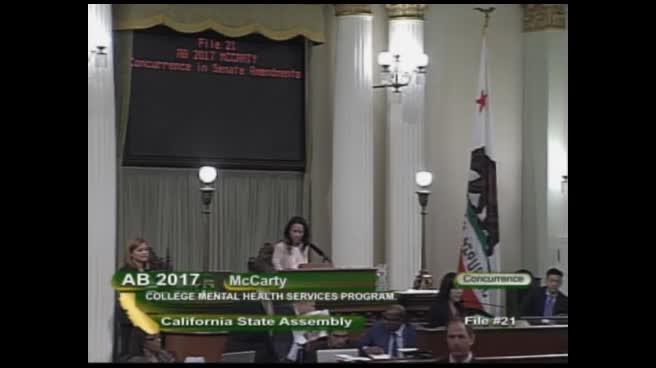
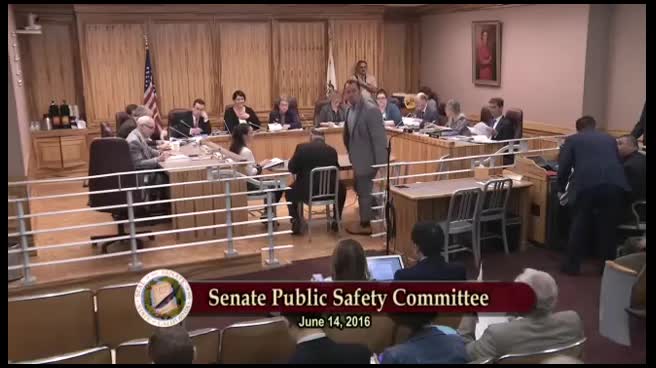
Bill Author

Bill Co-Author(s):
