AB 2855: Charitable solicitations: financial disclosures.
- Session Year: 2015-2016
- House: Assembly
- Latest Version Date: 2016-04-07
Existing law requires a solicitor or seller, prior to any solicitation or sales solicitation for charitable purposes, to provide the prospective donor or purchaser with certain disclosures, including, among others, the name and address of the combined campaign, each organization or fund on behalf of which money collected will be utilized, and the percentage of the total gift or purchase price that may be deducted as a charitable contribution under both federal and state law. Under existing law, a violation of certain advertising restrictions, including charitable solicitation requirements, is a crime.
This bill would require an Internet Web site produced by, or on behalf of, a charity Clarity, as specified, to contain an Internet Web page that includes a disclosure of the charitys administrative overhead expenses and a copy of the charitys most recent Internal Revenue Service Form 990 filing and would further require each Internet Web page on the Internet Web site to contain a direct link to that financial disclosures Internet Web page, as specified. The bill would also require a document produced by, or on behalf of, a charity for solicitation for charitable purposes to include a disclosure statement indicating the percentage of the charitys funding spent on those administrative overhead expenses, as specified. a prominent link to the Attorney Generals Internet Web site which contains information about consumer rights and protections and charity research resources. The bill would also require any solicitation document produced by a charity to also include the address for the Attorney Generals Internet Web site. As a violation of these requirements would be a crime, this bill would impose a state-mandated local program.
This bill would authorize the Attorney General to enforce these requirements by directing the Franchise Tax Board to suspend or revoke a violating charitys tax-exempt status, by suspending or revoking the registration of a violating charity, or by taking any other enforcement action pursuant to the Attorney Generals existing powers and duties, as specified.
The bill would, by July 1, 2017, require the Attorney General to develop and publish specified information regarding consumer rights and charities on the Attorney Generals Internet Web site.
The California Constitution requires the state to reimburse local agencies and school districts for certain costs mandated by the state. Statutory provisions establish procedures for making that reimbursement.
This bill would provide that no reimbursement is required by this act for a specified reason.
Existing law requires certain disclosures to be made a solicitor or seller, prior to any solicitation or sales solicitation for charitable purposes. purposes, to provide the prospective donor or purchaser with certain disclosures, including, among others, the name and address of the combined campaign, each organization or fund on behalf of which money collected will be utilized, and the percentage of the total gift or purchase price that may be deducted as a charitable contribution under both federal and state law. Under existing law, a violation of certain advertising restrictions, including charitable solicitation requirements, is a crime.
This bill would make a nonsubstantive change to this provision. require an Internet Web site produced by, or on behalf of, a charity to contain an Internet Web page that includes a disclosure of the charitys administrative overhead expenses and a copy of the charitys most recent Internal Revenue Service Form 990 filing and would further require each Internet Web page on the Internet Web site to contain a direct link to that financial disclosures Internet Web page, as specified. The bill would also require a document produced by, or on behalf of, a charity for solicitation for charitable purposes to include a disclosure statement indicating the percentage of the charitys funding spent on those administrative overhead expenses, as specified. As a violation of these requirements would be a crime, this bill would impose a state-mandated local program.
This bill would authorize the Attorney General to enforce these requirements by directing the Franchise Tax Board to suspend or revoke a violating charitys tax-exempt status, by suspending or revoking the registration of a violating charity, or by taking any other enforcement action pursuant to the Attorney Generals existing powers and duties, as specified.
The California Constitution requires the state to reimburse local agencies and school districts for certain costs mandated by the state. Statutory provisions establish procedures for making that reimbursement.
This bill would provide that no reimbursement is required by this act for a specified reason.
Existing law requires certain disclosures to be made prior to any solicitation or sales solicitation for charitable purposes.
This bill would make a nonsubstantive change to this provision.
(a)An Internet Web site produced by, or on behalf of, a charity that operates or engages in the solicitation for charitable purposes of funds or other property in this state shall include a prominent link on the home page of the Internet Web site that immediately directs all consumers to the Attorney Generals Internet Web site, which contains information about consumer rights and protections and charity research resources.
(b)A document produced by, or on behalf of, a charity for the solicitation for charitable purposes of funds or other property in this state shall include the Internet Web site address of the Attorney Generals Internet Web site, which contains information about consumer rights and protections and charity research resources.
(c)No later than July 1, 2017, the Attorney General shall develop and publish on the Attorney Generals Internet Web site, which contains information about charities, informational materials containing consumer rights and protections and charity research resources to allow donors to become informed about a charity before making a decision to give.
SECTION 1.Section 17510.86 is added to the Business and Professions Code, to read:17510.86.(a)An Internet Web site produced by, or on behalf of, a charity that operates, or engages in the solicitation for charitable purposes of funds or other property, in this state shall comply with both of the following:
(1)The Internet Web site shall contain a financial disclosures Internet Web page, which shall include both of the following:
(A)A disclosure of the sum total of the salaries, other compensation, and employee benefits of the charitys executive director and board of directors and all of the charitys other administrative overhead expenses, as reported on the charitys most recent Internal Revenue Service Form 990 filing. The disclosure shall be set forth in at least 14-point, bold, sans serif type font and shall be clear and conspicuous, as defined in Section 17601.
(B)A complete copy of the charitys most recent Internal Revenue Service Form 990 filing.
(2)Each Internet Web page on the Internet Web site shall include a direct link to the financial disclosures Internet Web page required pursuant to paragraph (1). The direct link shall contain the phrase Click here to read a full disclosure of the finances, including the salaries and expenses, of this organization, shall be placed in the top right corner of each Internet Web page in at least 14-point, bold, sans serif type font, and shall be clear and conspicuous, as defined in Section 17601.
(b)(1)A document produced by, or on behalf of, a charity for the solicitation for charitable purposes of funds or other property in this state shall include a disclosure statement indicating the percentage of the charitys funding that is spent on the sum total of the salaries, other compensation, and employee benefits of the charitys executive director and board of directors and all of the charitys other administrative overhead expenses, as reported on the charitys most recent Internal Revenue Service Form 990 filing.
(2)The disclosure statement shall be printed on the first page of the document in at least 14-point, bold, sans serif type font and shall be clear and conspicuous, as defined in Section 17601.
(c)The Attorney General may enforce this section by taking any of the following actions against a charity that provides false information or otherwise violates this section:
(1)Directing the Franchise Tax Board to suspend or revoke the charitys exemption from the taxes imposed by the Corporation Tax Law (Part 11 (commencing with Section 23001) of Division 2 of the Revenue and Taxation Code). The suspension or revocation shall become effective immediately upon receipt by the Franchise Tax Board, and the Franchise Tax Board shall reinstate the exemption only upon subsequent notification by the Attorney General that the charity is in compliance with this section.
(2)Refusing to register, or revoking or suspending the registration of, a charity pursuant to the Supervision of Trustees and Fundraisers for Charitable Purposes Act (Article 7 (commencing with Section 12580) of Chapter 6 of Part 2 of Division 3 of Title 2 of the Government Code).
(3)Taking any other enforcement action pursuant to the Attorney Generals existing powers and duties.
SEC. 2.No reimbursement is required by this act pursuant to Section 6 of Article XIIIB of the California Constitution because the only costs that may be incurred by a local agency or school district will be incurred because this act creates a new crime or infraction, eliminates a crime or infraction, or changes the penalty for a crime or infraction, within the meaning of Section 17556 of the Government Code, or changes the definition of a crime within the meaning of Section 6 of Article XIIIB of the California Constitution.
(a)An Internet Web site produced by, or on behalf of, a charity that operates, or engages in the solicitation for charitable purposes of funds or other property, in this state shall comply with both of the following:
(1)The Internet Web site shall contain a financial disclosures Internet Web page, which shall include both of the following:
(A)A disclosure of the sum total of the salaries, other compensation, and employee benefits of the charitys executive director and board of directors and all of the charitys other administrative overhead expenses, as reported on the charitys most recent Internal Revenue Service Form 990 filing. The disclosure shall be set forth in at least 14-point, bold, sans serif type font and shall be clear and conspicuous, as defined in Section 17601.
(B)A complete copy of the charitys most recent Internal Revenue Service Form 990 filing.
(2)Each Internet Web page on the Internet Web site shall include a direct link to the financial disclosures Internet Web page required pursuant to paragraph (1). The direct link shall contain the phrase Click here to read a full disclosure of the finances, including the salaries and expenses, of this organization, shall be placed in the top right corner of each Internet Web page in at least 14-point, bold, sans serif type font, and shall be clear and conspicuous, as defined in Section 17601.
(b)(1)A document produced by, or on behalf of, a charity for the solicitation for charitable purposes of funds or other property in this state shall include a disclosure statement indicating the percentage of the charitys funding that is spent on the sum total of the salaries, other compensation, and employee benefits of the charitys executive director and board of directors and all of the charitys other administrative overhead expenses, as reported on the charitys most recent Internal Revenue Service Form 990 filing.
(2)The disclosure statement shall be printed on the first page of the document in at least 14-point, bold, sans serif type font and shall be clear and conspicuous, as defined in Section 17601.
(c)The Attorney General may enforce this section by taking any of the following actions against a charity that provides false information or otherwise violates this section:
(1)Directing the Franchise Tax Board to suspend or revoke the charitys exemption from the taxes imposed by the Corporation Tax Law (Part 11 (commencing with Section 23001) of Division 2 of the Revenue and Taxation Code). The suspension or revocation shall become effective immediately upon receipt by the Franchise Tax Board, and the Franchise Tax Board shall reinstate the exemption only upon subsequent notification by the Attorney General that the charity is in compliance with this section.
(2)Refusing to register, or revoking or suspending the registration of, a charity pursuant to the Supervision of Trustees and Fundraisers for Charitable Purposes Act (Article 7 (commencing with Section 12580) of Chapter 6 of Part 2 of Division 3 of Title 2 of the Government Code).
(3)Taking any other enforcement action pursuant to the Attorney Generals existing powers and duties.
SEC. 2.No reimbursement is required by this act pursuant to Section 6 of Article XIIIB of the California Constitution because the only costs that may be incurred by a local agency or school district will be incurred because this act creates a new crime or infraction, eliminates a crime or infraction, or changes the penalty for a crime or infraction, within the meaning of Section 17556 of the Government Code, or changes the definition of a crime within the meaning of Section 6 of Article XIIIB of the California Constitution.
SECTION 1.Section 17510.3 of the Business and Professions Code is amended to read:17510.3.(a)Prior to any solicitation or sales solicitation for charitable purposes, the solicitor or seller shall exhibit to the prospective donor or purchaser a card entitled Solicitation or Sale for Charitable Purposes Card. The card shall be signed and dated under penalty of perjury by an individual who is a principal, staff member, or officer of the soliciting organization. The card shall give the name and address of the soliciting organization or the person who signed the card and the name and business address of the paid individual who is doing the actual soliciting.
In lieu of exhibiting a card, the solicitor or seller may distribute during the course of the solicitation any printed material, such as a solicitation brochure, provided the material complies with the standards set forth below, and provided that the solicitor or seller informs the prospective donor or purchaser that the information as required below is contained in the printed material.
Information on the card or printed material shall be presented in at least 10-point type and shall include the following:
(1)The name and address of the combined campaign, each organization, or fund on behalf of which all or any part of the money collected will be utilized for charitable purposes.
(2)If there is no organization or fund, the manner in which the money collected will be utilized for charitable purposes.
(3)The non-tax-exempt status of the organization or fund, if the organization or fund for which the money or funds are being solicited does not have a charitable tax exemption under both federal and state law.
(4)The percentage of the total gift or purchase price which may be deducted as a charitable contribution under both federal and state law. If no portion is so deductible the card shall state that This contribution is not tax deductible.
(5)If the organization making the solicitation represents any nongovernmental organization by any name which includes, but is not limited to, the term officer, peace officer, police, law enforcement, reserve officer, deputy, California Highway Patrol, Highway Patrol, deputy sheriff, firefighter, or fire marshall, which would reasonably be understood to imply that the organization is composed of law enforcement or firefighting personnel, the solicitor shall give the total number of members in the organization and the number of members working or living within the county where the solicitation is being made, and if the solicitation is for advertising, the statewide circulation of the publication in which the solicited ad will appear.
(6)If the organization making the solicitation represents any nongovernmental organization by any name which includes, but is not limited to, the term veteran or veterans, which would reasonably be understood to imply that the organization is composed of veterans, the solicitor shall give the total number of members in the organization and the number of members working or living within the county where the solicitation is being made. This paragraph does not apply to federally chartered or state incorporated veterans organizations with 200 or more dues paying members or to a thrift store operated or controlled by a federally chartered or state incorporated veterans organization. This paragraph does not apply to any state incorporated community-based organization that provides direct services to veterans and their families and qualifies as a tax-exempt organization under Section 501(c)(3) or 501(c)(19) of the Internal Revenue Code and Section 23701d of the Revenue and Taxation Code.
(b)Knowing and willful noncompliance by any individual volunteer who receives no compensation of any type from or in connection with a solicitation by any charitable organization shall subject the solicitor or seller to the penalties of the law.
(c)When the solicitation is not a sales solicitation, any individual volunteer who receives no compensation of any type from, or in connection with, a solicitation by any charitable organization may comply with the disclosure provisions by providing the name and address of the charitable organization on behalf of which all or any part of the money collected will be utilized for charitable purposes, by stating the charitable purposes for which the solicitation is made, and by stating to the person solicited that information about revenues and expenses of the organization, including its administration and fundraising costs, may be obtained by contacting the organizations office at the address disclosed. The organization shall provide this information to the person solicited within seven days after receipt of the request.
(d)A volunteer who receives no compensation of any type from, or in connection with, a solicitation or sales solicitation by a charitable organization that has qualified for a tax exemption under Section 501(c)(3) of the Internal Revenue Code, and who is 18 years of age or younger, is not required to make any disclosures pursuant to this section.
(e)If any provision of this section or the application thereof to any person or circumstances is held invalid, that invalidity shall not affect other provisions or applications of this section that can be given effect without the invalid provision or application, and to this end the provisions of this section are severable.
(a)Prior to any solicitation or sales solicitation for charitable purposes, the solicitor or seller shall exhibit to the prospective donor or purchaser a card entitled Solicitation or Sale for Charitable Purposes Card. The card shall be signed and dated under penalty of perjury by an individual who is a principal, staff member, or officer of the soliciting organization. The card shall give the name and address of the soliciting organization or the person who signed the card and the name and business address of the paid individual who is doing the actual soliciting.
In lieu of exhibiting a card, the solicitor or seller may distribute during the course of the solicitation any printed material, such as a solicitation brochure, provided the material complies with the standards set forth below, and provided that the solicitor or seller informs the prospective donor or purchaser that the information as required below is contained in the printed material.
Information on the card or printed material shall be presented in at least 10-point type and shall include the following:
(1)The name and address of the combined campaign, each organization, or fund on behalf of which all or any part of the money collected will be utilized for charitable purposes.
(2)If there is no organization or fund, the manner in which the money collected will be utilized for charitable purposes.
(3)The non-tax-exempt status of the organization or fund, if the organization or fund for which the money or funds are being solicited does not have a charitable tax exemption under both federal and state law.
(4)The percentage of the total gift or purchase price which may be deducted as a charitable contribution under both federal and state law. If no portion is so deductible the card shall state that This contribution is not tax deductible.
(5)If the organization making the solicitation represents any nongovernmental organization by any name which includes, but is not limited to, the term officer, peace officer, police, law enforcement, reserve officer, deputy, California Highway Patrol, Highway Patrol, deputy sheriff, firefighter, or fire marshall, which would reasonably be understood to imply that the organization is composed of law enforcement or firefighting personnel, the solicitor shall give the total number of members in the organization and the number of members working or living within the county where the solicitation is being made, and if the solicitation is for advertising, the statewide circulation of the publication in which the solicited ad will appear.
(6)If the organization making the solicitation represents any nongovernmental organization by any name which includes, but is not limited to, the term veteran or veterans, which would reasonably be understood to imply that the organization is composed of veterans, the solicitor shall give the total number of members in the organization and the number of members working or living within the county where the solicitation is being made. This paragraph does not apply to federally chartered or state incorporated veterans organizations with 200 or more dues paying members or to a thrift store operated or controlled by a federally chartered or state incorporated veterans organization. This paragraph does not apply to any state incorporated community-based organization that provides direct services to veterans and their families and qualifies as a tax-exempt organization under Section 501(c)(3) or 501(c)(19) of the Internal Revenue Code and Section 23701d of the Revenue and Taxation Code.
(b)Knowing and willful noncompliance by any individual volunteer who receives no compensation of any type from or in connection with a solicitation by any charitable organization shall subject the solicitor or seller to the penalties of the law.
(c)When the solicitation is not a sales solicitation, any individual volunteer who receives no compensation of any type from, or in connection with, a solicitation by any charitable organization may comply with the disclosure provisions by providing the name and address of the charitable organization on behalf of which all or any part of the money collected will be utilized for charitable purposes, by stating the charitable purposes for which the solicitation is made, and by stating to the person solicited that information about revenues and expenses of the organization, including its administration and fundraising costs, may be obtained by contacting the organizations office at the address disclosed. The organization shall provide this information to the person solicited within seven days after receipt of the request.
(d)A volunteer who receives no compensation of any type from, or in connection with, a solicitation or sales solicitation by a charitable organization which that has qualified for a tax exemption under Section 501(c)(3) of the Internal Revenue Code of 1954, Code, and who is 18 years of age or younger, is not required to make any disclosures pursuant to this section.
(e)If any provision of this section or the application thereof to any person or circumstances is held invalid, that invalidity shall not affect other provisions or applications of this section which that can be given effect without the invalid provision or application, and to this end the provisions of this section are severable.
|
Date
|
Status
|
|---|---|
| Feb 19, 2016 | Introduced. To print. |
| Feb 21, 2016 | From printer. May be heard in committee March 22. |
| Feb 22, 2016 | Read first time. |
| Mar 17, 2016 | From committee chair, with author's amendments: Amend, and re-refer to Com. on P. & C.P. Read second time and amended. |
| Mar 17, 2016 | Referred to Coms. on P. & C.P. and REV. & TAX. |
| Mar 28, 2016 | Re-referred to Com. on P. & C.P. |
| Apr 7, 2016 | From committee chair, with author's amendments: Amend, and re-refer to Com. on P. & C.P. Read second time and amended. |
| Apr 11, 2016 | Re-referred to Com. on P. & C.P. |
| Apr 13, 2016 | In committee: Set, first hearing. Failed passage. |
| Apr 19, 2016 | In committee: Reconsideration granted by unanimous consent. |
| Apr 20, 2016 | From committee: Do pass and re-refer to Com. on APPR. (Ayes 6. Noes 2.) (April 19). Re-referred to Com. on APPR. |
| May 11, 2016 | In committee: Set, first hearing. Referred to APPR. suspense file. |
| May 27, 2016 | In committee: Held under submission. |
|
Date
|
Description
|
Location
|
Votes
|
|
|---|---|---|---|---|
| Apr 19, 2016 | Do pass and be re-referred to the Committee on [Appropriations] | Assembly Standing Committee on Privacy and Consumer Protection |
Passed |
|
| Apr 12, 2016 | Do pass and be re-referred to the Committee on [Appropriations] | Assembly Standing Committee on Privacy and Consumer Protection |
Failed |
This list shows positions taken on this bill by organizations on the date displayed, which is linked to the original source.
Positions by individuals are not included.
|
Organization
|
Position
|
Date
|
|---|---|---|
| California Taxpayers Association | * Support | Jun 27, 2018 |
| Californian Business Property | * Support | Jun 27, 2018 |
Date of Hearing: May 11, 2016
ASSEMBLY COMMITTEE ON APPROPRIATIONS
Lorena Gonzalez, Chair
ABPCA Bill Id:AB 2855
Author:(Frazier) – As Amended Ver:April 7, 2016
Policy Committee: | Privacy and Consumer Protection | Vote: | 6 - 2 |
|
|
Urgency: No State Mandated Local Program: Yes Reimbursable: No
SUMMAR
This bill:
- Requires a charity’s website home page to include a prominent link directing consumers to the Attorney General’s (AG’s) website for information about consumer rights and protections and charity research resources, and requires a charity's written solicitation materials to include this AG website address.
- Requires the AG, no later than July 1, 2017, to develop and publish on its website, information about consumer rights and protections and charity research resources that will better prepare potential donors to research a charity before making a decision to donate.
FISCAL EFFECT:
One-time costs could exceed $150,000 for the AG to develop and adopt regulations to implement the bill's requirements. This would require one attorney position and support staff. There could be additional costs following adoption to modify the AG's website and respond to compliance-related inquiries from charities. Enforcement costs would likely be absorbable. The AG's Charitable Trust Unit currently has seven investigative auditor positions.
Given the depth and breadth of opposition to this bill, and the history of litigation regarding nonprofits and compelled speech, it is reasonable to assume that the state could incur significant legal costs if this bill was enacted.
COMMENTS:
- Purpose. This bill is intended to give consumers more information about how to research a charity before making a gift by requiring charities to provide a link in their solicitation materials to the AG’s website containing information about charitable giving, and by requiring the AG to publish educational materials specifically about consumer rights and protections and charity research resources. The author cites recent examples of improprieties by several charities—the Cancer Fund of America, Cancer Support Services, Children's Cancer Fund of American, The Breast Cancer Society, the Kids Wish Network, and Wounded Warrior Project.
- Current Oversight and Regulation of Charities. Most charities in California must file annual financial reports with the AG’s Registry of Charitable Trusts. Registered charities are required to file a copy of their tax Form 990 on an annual basis with the Registry, as well as with the Internal Revenue Service (IRS). Through a partnership with the IRS, GuideStar (www.guidestar.org) publishes the electronically-filed Form 990s submitted to the IRS. The Registry is accessible through a Registry Search tool on the AG’s existing webpage for charities: www.oag.ca.gov/charities. The Registry Search tool allows a charity’s public filings to be viewed and downloaded from the Registry database.
The AG is responsible for regulating charities and the professional fundraisers who solicit on their behalf. The attorneys and auditors of the AG’s Charitable Trusts Section investigate and bring legal actions against charities and fundraising professionals that misuse charitable assets or engage in fraudulent fundraising practices. Charities that violate California’s laws are subject to suspension, revocation and civil fines.
- Opposition. The California Association of Nonprofits (CalNonprofits) states in opposition to this bill that, “AB 2855 (Frazier)…would require every charity seeking funds to support their work to include on their web sites and any document a charity produces, which includes fundraising language, to include a link to the Attorney General’s web site. While the web site disclosure requirement in subsection (a) is burdensome, expensive, duplicative, confusing and likely both unconstitutional and unenforceable, the 'any document' requirement in subsection (b) is all those things on steroids.” A similar letter of opposition was signed by almost 500 nonprofits.
- Comment. The requirement to include the AG's website address on every written solicitation document seems unduly onerous, particularly for a charity that would be providing a link to the same information on its homepage. In addition, the July 1, 2017, mandate on the AG may not provide sufficient time to complete the regulatory process.
- Prior Legislation. AB 2118 (Butler), Chapter 544, Statutes of 2012, in part required household goods carriers to add links to their websites directing consumers to the Public Utilities Commission’s website containing consumer education information for customers of moving companies.
Analysis Prepared by: Chuck Nicol / APPR. / (916) 319-2081
Date of Hearing: April 19, 2016
ASSEMBLY COMMITTEE ON PRIVACY AND CONSUMER PROTECTION
Ed Chau, Chair
ABPCA Bill Id:AB 2855 (
Author:Frazier) – As Amended Ver:April 7, 2016
SUBJECT: Charitable solicitations: financial disclosures
SUMMARY: Requires a charity’s website and marketing materials to include a prominent link to the Attorney General’s (AG) website for charitable solicitations, and requires the Attorney General to publish consumer education information online about charities. Specifically, this bill:
- Requires a charity’s website home page to include a prominent link that directs consumers to the AG’s website containing information about consumer rights and protections and charity research resources.
- Requires a charity’s materials used for charitable solicitations to include the AG’s website address for information about consumer rights and protections, and charity research resources.
- Requires, no later than July 1, 2017, the AG to develop and publish on the AG’s website, information about consumer rights and protections and charity research resources that will better prepare potential donors to research a charity before making a decision to give.
EXISTING LAW:
- Generally provides the AG with supervisory and enforcement powers over charitable corporations, trustees, commercial fundraisers, fundraising counsel and commercial co-venturers who solicit or hold property for charitable purposes through the Supervision of Trustees and Fundraisers for Charitable Purposes Act (Act) (Government Code Section (GC) 12580 et seq.)
- Requires charities to register and file annual financial reports with the AG, with certain exceptions, such as schools, hospitals, and churches. (GC 12585 et seq.)
- Requires a person working for a charity to provide a prospective donor with a card or other printed materials that list, among other things, the name and address of the charity or the fundraiser, the organization’s tax or non-tax exempt status, and the percentage of the gift or purchase that may be deducted on the donor’s tax return. No disclosure is required if the person is a volunteer who is 18 or younger and the organization is a 501(c)(3) nonprofit. (Business and Professions Code (BPC) Section 17510.3)
- Requires a charity to maintain financial records using generally accepted accounting principles as defined by the American Institute of Certified Public Accountants, the Governmental Accounting Standards Board, or the Financial Accounting Standards Board. (BPC 17510.5)
- Prohibits an individual, corporation, or other entity that solicits funds for a charity from retaining more than 50 percent of the net proceeds collected as a fee for fundraising services. (BPC 17510.87)
- Requires any charity that collects more than 50% of its annual income and takes in more than one million ($1,000,000) in charitable contributions from California donors in California in a calendar year, and that spent more than 25% of its annual income on “nonprogram activities” (i.e., salaries, fundraising, travel expenses, and overhead associated with managing and administering the charity), to submit a report to the AG detailing its nonprogram activity expenses as well as the salaries of the five highest compensated employees; and requires the AG to make these reports available to the public. (BPC 17510.9)
- Requires the AG to publish an annual report on charities registered with the AG. (BPC 17510.95)
- Establishes civil penalty of up to $1,000 for a first violation of the Act, a fine of up to $2,500 for subsequent violations, and a civil penalty of up to $10,000 for a violation of the Act with intent to deceive or defraud any charity or individual, and authorizes the AG to suspend the registration of a charity that violates the Act. (GC 12591.1 et seq.)
FISCAL EFFECT: Unknown
COMMENTS:
- Purpose of this bill. This bill is intended to give consumers more information about how to research a charity before making a gift by requiring charities to provide a link in their solicitation materials to the AG’s website containing information about charitable giving, and by requiring the AG to publish educational materials specifically about consumer rights and protections and charity research resources. This measure is author-sponsored.
- Author’s statement. According to the author's office, “In recent years, there has been a focus on calling for greater transparency of the financial activity of charities that solicit donations from individuals seeking to contribute to a good cause. The Federal Trade Commission recently charged the Cancer Fund of America, Cancer Support Services, Children’s Cancer Fund of America and The Breast Cancer Society of operating sham charities than bilked $187 million from consumers. According to the FTC’s press release on the matter, individuals donating to their causes were told they 'would help cancer patients, including children and women suffering from breast cancer, but the overwhelming majority of donations benefitted only the perpetrators, their families and friends, and fundraisers.' The executive leadership [of these organizations] 'used the organizations for lucrative employment for family members and friends, and spent consumer donations on cars, trips, luxury cruises, college tuition, gym memberships, jet ski outings, sporting event and concert tickets, and dating site memberships.' The FTC further noted that the charities 'hired professional fundraisers who often received 85% or more of every donation.' ”
- Exposing questionable activities of charities. According to the author, many charities have been criticized in media reports for making questionable financial decisions with the money donated to them to fulfill their stated missions. CNN called The Kids Wish Network “the worst charity in America” because it raised “millions of dollars in donations in the name of dying children and their families” while spending “less than 3 cents on the dollar helping kids.” According to the CNN report, the charity directed $110 million in donations to its corporate sponsors and an additional $4.8 million to the charity’s founder and his consulting firm. (“Above the law: America’s worst charities,” CNN, June 13, 2013)
The Wounded Warrior Project has also garnered attention from the media for spending only 60% of its funding on veterans while other veteran charities such as the Disabled American Veterans Charitable Service Trust and the Fisher House spend 96% and 91% fulfilling their mission to serve veterans. According to a CBS report, Wounded Warrior Project spent $26 million on conferences and meetings, which was “about the same amount the group spends on combat stress recovery -- its top program.” (“Wounded Warrior Project accused of wasting donation money,” CBS, January 26, 2016)
- Charities currently submit annual public financial reports to the AG. Most charities in California must file annual financial reports with the Attorney General’s Registry of Charitable Trusts (Registry). These reports must be filed by all public benefit corporations and charitable trusts, unless they are exempted by statute. Currently, only hospitals, schools, and churches are exempt from the annual filing requirements. In addition, all charitable trustees and fundraising professionals are required to register and file annual financial disclosure reports with the Registry.
Registered charities are required to file a copy of their tax Form 990 on an annual basis with the Registry, as well as with the Internal Revenue Service (IRS). Through a partnership with the IRS, GuideStar (www.guidestar.org) publishes the electronically-filed Form 990s submitted to the IRS.
The Registry is accessible through a Registry Search tool on the AG’s existing webpage for charities: www.oag.ca.gov/charities. The Registry Search tool allows a charity’s public filings to be viewed and downloaded from the Registry database. These public filings include a copy of the annual IRS return (Forms 990, 990-PF, and 990-EZ) filed with the Registry, as well as registration forms and documents that organizations are required to file with the AG. In addition, the Registry maintains a current index of all registered California charities.
- The AG investigates and prosecutes bad actor charities and fundraisers. The AG is responsible for regulating charities and the professional fundraisers who solicit on their behalf. The attorneys and auditors of the AG’s Charitable Trusts Section investigate and bring legal actions against charities and fundraising professionals that misuse charitable assets or engage in fraudulent fundraising practices. Charities that violate California’s laws are subject to suspension, revocation and civil fines.
- Prior legislation applied a similar requirement on moving companies. In 2012, the Legislature passed and the Governor signed AB 2118 (Butler), Chapter 544, Statutes of 2012, which required household goods carriers to add links to their websites that direct consumers to the Public Utilities Commission’s website containing consumer education information for customers of moving companies.
Similarly, the author contends that it makes good sense to help consumers ensure that their dollars would be well spent by assisting them in researching charities, whether they are using those dollars to buy consumer products and services or make a charitable gift. - Recent amendments revise and recast the bill. This bill was amended on April 7, 2016, to delete the existing provisions of the bill and insert the current language.
This bill would now require charities to provide a link on their website to the AG’s webpage with consumer resources for charitable giving. The bill would not require a charity to create a website, but if the charity has an existing website, then the website must contain a link on the homepage to the AG’s website.
In addition, the bill requires charities to include the AG’s website address in documents the charity uses to solicit donations. For example, if the charity mails a solicitation letter or hands out a brochure to prospective donors, then the letter or brochure would need to contain a link to the AG’s website where a consumer can find out more information about charities. Materials that do not contain an overt solicitation would not need to include the link.
Lastly, the bill requires the AG to develop and post on its website educational materials for consumers, so that they can learn about how to research charities to help determine whether they should make a donation.
While the prior version of the bill had more prescriptive provisions than the current version, a coalition of nonprofit organizations remain opposed to the bill, contending that these requirements are a significant burden and would create problems for most charities.
- Arguments in opposition. The California Association of Nonprofits (CalNonprofits) states in opposition to this bill that, “AB 2855 (Frazier)…would require every charity seeking funds to support their work to include on their web sites and any document a charity produces which includes fundraising language to include a link to the Attorney General’s web site. While the web site disclosure requirement in subsection (a) is burdensome, expensive, duplicative, confusing and likely both unconstitutional and unenforceable, the 'any document' requirement in subsection (b) is all those things on steroids.”
CalNonprofits further states that, “Burdening nonprofits in and beyond California with required speech on 'any document' which seeks donor support to simply advertise what the public can easily find is unnecessarily punitive without serving any compelling public interest. Imagine all the 'documents' that non-profit organizations create to solicit funds to support their mission-based work: signs on coin collection jars, private letters to individual donors, billboards and other large-scale outdoor advertisements, flyers posted in laundromats, neighborhood association newsletters, to name just a few. And AB 2855’s provisions would apply to any charity – regardless of where they are based – that solicits donations from Californians. So, every inbound piece of mail from any charity in the world would have to include this unnecessary disclosure. The additional cost of including this provision on 'any document' would be extraordinary.”
The California Association of Private School Organizations states in opposition that this bill “will have little, if any, impact upon unscrupulous operators while burdening legitimate charities with a set of draconian requirements that invite the perception of impropriety. We say this because most sham operations rely upon direct mail and telemarketers, rather than websites, and those that utilize websites will simply cease doing so if AB 2855 should become law. While the bad actors can simply side-step AB 2855’s provisions and continue to prosper, legitimate charities such as the 1,450 nonprofit, K-12 private schools served by our member organizations will remain beholden to its onerous requirements.”
- Reconsideration vote. This bill failed passage in this committee on April 12, 2016, but was granted reconsideration.
- Prior legislation. AB 556 (Irwin), Chapter 299, Statutes of 2015, expanded the definition of a "commercial fundraiser for charitable purposes" in order to strengthen the AG;s ability to enforce disclosure requirements for charity fundraisers, and establishes a ten-year statute of limitations for enforcement actions against charity fundraisers, consultants and other third parties who engage in fraud or prohibited conduct.
AB 2327 (Feuer), Chapter 483, Statutes of 2012, enhanced the penalties applicable to a violation of the Act and gave the AG authority to suspend the registration of a charitable organization that violates the Act.
SB 2015 (Sher), Chapter 475, Statutes of 2000, amended the UETA to grant the AG additional enforcement tools and resources, including: ability to assess late fees, authority to suspend or revoke registrations, the ability to impose criminal penalties for violations of the Act, and the appropriation of all fines, penalties, attorney’s fees and costs to the AG for the administration and enforcement of that Act.
SB 1262 (Sher), Chapter 919, Statutes of 2004, imposed audit requirements on charities that receive or accrue a gross revenue of $500,000 dollars or more, require specific disclosures during a solicitation or fundraising campaign, and require specific provisions in written contracts between fundraisers and the charitable organization.
Support
None on file.
Opposition
Actors and Others for Animals
AgLantis
Alameda Homeless Network/Midway Shelter
Alliance for Nonprofit Excellence
Alliance of Arizona Nonprofits
American Sports Institute
Angels Nest TLP
Arkansas Nonprofit Alliance
Arts for LA
Arts for Oakland Kids
Aspire Creative Arts Program
Autism Advocates in Action Support Group
Axis Advocacy
Balboa Park Cultural Partnership
Berkeley Organizing Congregations for Action
Berkeley Student Cooperative
Black Arts Los Angeles, Inc.
California Aquatic Therapy & Wellness Center, Inc. DBA Pools of Hope
California Arts Advocates
California Association of Nonprofits (CalNonprofits)
California Association of Private School Organizations
California Budget & Policy Center
California Hepatitis C Task Force, Inc.
California Partnership to End Domestic Violence
California Professional Firefighters
California ReLeaf
California State Alliance of YMCAs
California Symphony
Care of the Soul Foundation, Inc.
Catholic Big Brothers Big Sisters, Inc.
Center for Human Services
Center for Nonprofit Advancement
Center for Non-Profits
Center for Sierra Nevada Conservation
Center for Volunteer & Nonprofit Leadership
CFIDS & Fibromyalgia Self-Help Program
Chamberlain’s Children Center
Chimineas Ranch Foundation
Chinese Performing Arts of America
Citadel Ministries, Inc.
City Garage Theatre
Coastal Kids Home Care
Colorado Nonprofit Association
Community Action Agency of Butte County
Community Counts Inc.
Community Housing Partnership
ConnectHealthcare
Connecticut Connuity Nonprofit Alliance, Inc.
Contra Costa Youth Council
Cope Family Center
Del Norte Child Care Council
Del Norte Senior Center, Inc.
Delaware Alliance for Nonprofit Advancement – DANA
Descanso Gardens Guild, Inc.
EarthShare California
Faith in Action: Interfaith Volunteer Caregivers of Solano County
Fallbrook Citizens’ Crime Prevention Committee
Fighting Back Partnership
Folsom’s Hope
Forefront
Foundation for Successful Solutions
Foundation for Sustainable Development
Four Paws To Freedom
Fresno Food Commons
Glenwood Dads Club
Global Citizen Year
GSA Network
Hawaii Alliance of Nonprofit Organizations
Health Connected
Healthy Adventures Foundation
Hope for Santa Maria
Hopkins Bank and Orchestra Boosters
Humboldt Skatepark Collective
Icthus International
Idaho Nonprofit Center
Infectious Disease Association of California
Inland Temporary Homes
Institute for Wildlife Studies
Kennedy King Memorial Scholarship Fund
Kentucky Nonprofit Network
KidWorks Community Development
LA Harbor International Film Festival
Lake County Theatre Company
LA’s BEST After School Enrichment Program
Latino Educational Fund
Legal Aid Association of California
Library & Literacy Foundation for San Joaquin
Life Charities, Inc. DBA Rescue Task Force
Lions Sight & Hearing Foundation of Southern CA
Lodi Community Art Center
Long Term Care Ombudsman Services of San Luis Obispo County
Louisiana Association of Nonprofit Organizations
Lummis Day Community Foundation
Maine Association of Nonprofits
Maryland Nonprofits
Marin Villages
Mateel Community Center
McKinleyville Community Collaborative
Meals on Wheels Santa Maria Valley
Michigan Nonprofit Association
Minnesota Council of Nonprofits
Mission Peak Wind Symphony
Mississippi Center for Nonprofits
Montana Nonprofit Association
Mount Diablo Interpretive Association
Mountain Ranch Youth Alliance
Mountain Valley Elder Care
Museum of Teaching and Learning
Music in the Vineyards Inc.
Napa Valley Community Housing
National Council of Nonprofits
Neuropathy Action Foundation
New Advances for People with Disabilities
New Door Ventures
New Hampshire Center for Nonprofits
New Morning Youth & Family Services
New York Council of Nonprofits
Nipomo Area Recreation Association
Nonprofit Association of the Midlands, Omaha NE
Nonprofit Finance Fund
North Carolina Center for Nonprofits
North Dakota Association of Nonprofit Organizations
North Peninsula Food Pantry & Dining Center of Daly City
O’Hanlon Center for the Arts
Oklahoma Center for Nonprofits
Operation SafeHouse
Orchard Valley Fine Arts Foundation, Inc.
Our Healing Hearts
Pacifica’s Environmental Family
Pasadena YouthBuild
PDAP of Ventura County, Inc.
Peninsula Family Service
Pennsylvania Association of Nonprofit Organizations
People Acting in Community Together
Philharmonic Society of Orange County
Pittsburg Community Theatre
Point Arena Lighthouse
Presidio Graduate School
Program for Torture Victims
Progressive Employment Concepts, Inc.
Project High Hopes
Providers’ Council Massachusetts
Rebuilding Together Silicon Valley
Recovery Café San Jose
Redbud Audubon
Redwood Bluegrass Associates
Redwood Cove Community Center, Inc.
Redwood Parks Association
Riverside Museum Associates
Rock School Scholarship Fund
Role Players Ensemble
Rona Barrett Foundation
Sacramento Area Bicycle Advocates
Sacramento International Gay & Lesbian Film Festival
San Diego Hua Xia Chinese School
San Diego Youth Symphony and Conservatory
San Francisco SAFE, Inc.
San Francisco SPCA
Sanchez Art Center
Santa Clara City Library Foundation & Friends
Save Mount Diablo
School of Unity and Liberation
SCRAP
Serving People in Need (dba SPIN)
SF-Marin Food Bank
Sickle Cell Disease Foundation of CA
Slavic Chorale
Solano Symphony Orchestra
Sons of Charity Inc.
SoundVision Productions
South Carolina Association of Nonprofit Organizations
Southeast Symphony Association, Inc.
Southern California Center for Nonprofit Management
Special Kids Foundation, Inc.
Spirit Awakening Foundation
Spirit House Center for Attitudinal Healing
St. John Boys Home, Inc.
Sunny Hills Services
Susan G. Komen Orange County
Sustainable Agriculture Education (SAGE)
Symphony of the Redwoods
Teacher Resource Center of the North Bay
Tenderloin Neighborhood Development Corporation (TNDC)
The Arc and United Cerebral Palsy California Collaboration
The Bolsa Chica Land Trust
The Center for Healthy Generations
The Down Syndrome Connection of the Bay Area
The Eel River Multigenerational Center
The Foraker Group – Alaska’s State Nonprofit Association
The Humane Society of the United States
The Network of Care
The Nonprofit Association of Oregon
The OMI Cultural Participation Project
The Place Within Counseling Folsom
The River Otter Ecology Project
The Soldiers Project
The Taylor Family Foundation
Theatre Bay Area
Transition House
Traverso Santana Design
Tri-City Hospital Foundation
Trips for Kids
Triumphant Life
Tustin Preservation Conservancy
United Way of Kern County
United Ways of California
Utah Nonprofits Association
Washington Nonprofits
Villa Esperanza Services
Volunteer Council of the East Bay (VCEB)
We Are the Next
West Oakland Environmental Indicators Project
West Virginia Nonprofit Association
Women’s Economic Ventures
World of Children Wyoming Nonprofit Network
Youth 2 Leaders Education Foundation
Analysis Prepared by: Jennie Bretschneider / P. & C.P. / (916) 319-2200
Date of Hearing: April 12, 2016
ASSEMBLY COMMITTEE ON PRIVACY AND CONSUMER PROTECTION
Ed Chau, Chair
ABPCA Bill Id:AB 2855 (
Author:Frazier) – As Amended Ver:April 7, 2016
SUBJECT: Charitable solicitations: financial disclosures
SUMMARY: Requires a charity’s website and marketing materials to include a prominent link to the Attorney General’s (AG) website for charitable solicitations, and requires the Attorney General to publish consumer education information online about charities. Specifically, this bill:
- Requires a charity’s website home page to include a prominent link that directs consumers to the AG’s website containing information about consumer rights and protections and charity research resources.
- Requires a charity’s materials used for charitable solicitations to include the AG’s website address for information about consumer rights and protections, and charity research resources.
- Requires, no later than July 1, 2017, the AG to develop and publish on the AG’s website, information about consumer rights and protections and charity research resources that will better prepare potential donors to research a charity before making a decision to give.
EXISTING LAW:
- Generally provides the AG with supervisory and enforcement powers over charitable corporations, trustees, commercial fundraisers, fundraising counsel and commercial co-venturers who solicit or hold property for charitable purposes through the Supervision of Trustees and Fundraisers for Charitable Purposes Act (Act) (Government Code Section (GC) 12580 et seq.)
- Requires charities to register and file annual financial reports with the AG, with certain exceptions, such as schools, hospitals, and churches. (GC 12585 et seq.)
- Requires a person working for a charity to provide a prospective donor with a card or other printed materials that list, among other things, the name and address of the charity or the fundraiser, the organization’s tax or non-tax exempt status, and the percentage of the gift or purchase that may be deducted on the donor’s tax return. No disclosure is required if the person is a volunteer who is 18 or younger and the organization is a 501(c)(3) nonprofit. (Business and Professions Code (BPC) Section 17510.3)
- Requires a charity to maintain financial records using generally accepted accounting principles as defined by the American Institute of Certified Public Accountants, the Governmental Accounting Standards Board, or the Financial Accounting Standards Board. (BPC 17510.5)
- Prohibits an individual, corporation, or other entity that solicits funds for a charity from retaining more than 50 percent of the net proceeds collected as a fee for fundraising services. (BPC 17510.87)
- Requires any charity that collects more than 50% of its annual income and takes in more than one million ($1,000,000) in charitable contributions from California donors in California in a calendar year, and that spent more than 25% of its annual income on “nonprogram activities” (i.e., salaries, fundraising, travel expenses, and overhead associated with managing and administering the charity), to submit a report to the AG detailing its nonprogram activity expenses as well as the salaries of the five highest compensated employees; and requires the AG to make these reports available to the public. (BPC 17510.9)
- Requires the AG to publish an annual report on charities registered with the AG. (BPC 17510.95)
- Establishes civil penalty of up to $1,000 for a first violation of the Act, a fine of up to $2,500 for subsequent violations, and a civil penalty of up to $10,000 for a violation of the Act with intent to deceive or defraud any charity or individual, and authorizes the AG to suspend the registration of a charity that violates the Act. (GC 12591.1 et seq.)
FISCAL EFFECT: Unknown
COMMENTS:
- Purpose of this bill. This bill is intended to give consumers more information about how to research a charity before making a gift by requiring charities to provide a link in their solicitation materials to the AG’s website containing information about charitable giving, and by requiring the AG to publish educational materials specifically about consumer rights and protections and charity research resources. This measure is author-sponsored.
- Author’s statement. According to the author's office, “In recent years, there has been a focus on calling for greater transparency of the financial activity of charities that solicit donations from individuals seeking to contribute to a good cause. The Federal Trade Commission recently charged the Cancer Fund of America, Cancer Support Services, Children’s Cancer Fund of America and The Breast Cancer Society of operating sham charities than bilked $187 million from consumers. According to the FTC’s press release on the matter, individuals donating to their causes were told they 'would help cancer patients, including children and women suffering from breast cancer, but the overwhelming majority of donations benefitted only the perpetrators, their families and friends, and fundraisers.' The executive leadership [of these organizations] 'used the organizations for lucrative employment for family members and friends, and spent consumer donations on cars, trips, luxury cruises, college tuition, gym memberships, jet ski outings, sporting event and concert tickets, and dating site memberships.' The FTC further noted that the charities 'hired professional fundraisers who often received 85% or more of every donation.' ”
- Exposing questionable activities of charities. According to the author, many charities have been criticized in media reports for making questionable financial decisions with the money donated to them to fulfill their stated missions. CNN called The Kids Wish Network “the worst charity in America” because it raised “millions of dollars in donations in the name of dying children and their families” while spending “less than 3 cents on the dollar helping kids.” According to the CNN report, the charity directed $110 million in donations to its corporate sponsors and an additional $4.8 million to the charity’s founder and his consulting firm. (“Above the law: America’s worst charities,” CNN, June 13, 2013)
The Wounded Warrior Project has also garnered attention from the media for spending only 60% of its funding on veterans while other veteran charities such as the Disabled American Veterans Charitable Service Trust and the Fisher House spend 96% and 91% fulfilling their mission to serve veterans. According to a CBS report, Wounded Warrior Project spent $26 million on conferences and meetings, which was “about the same amount the group spends on combat stress recovery -- its top program.” (“Wounded Warrior Project accused of wasting donation money,” CBS, January 26, 2016)
- Charities currently submit annual public financial reports to the AG. Most charities in California must file annual financial reports with the Attorney General’s Registry of Charitable Trusts (Registry). These reports must be filed by all public benefit corporations and charitable trusts, unless they are exempted by statute. Currently, only hospitals, schools, and churches are exempt from the annual filing requirements. In addition, all charitable trustees and fundraising professionals are required to register and file annual financial disclosure reports with the Registry.
Registered charities are required to file a copy of their tax Form 990 on an annual basis with the Registry, as well as with the Internal Revenue Service (IRS). Through a partnership with the IRS, GuideStar (www.guidestar.org) publishes the electronically-filed Form 990s submitted to the IRS.
The Registry is accessible through a Registry Search tool on the AG’s existing webpage for charities: www.oag.ca.gov/charities. The Registry Search tool allows a charity’s public filings to be viewed and downloaded from the Registry database. These public filings include a copy of the annual IRS return (Forms 990, 990-PF, and 990-EZ) filed with the Registry, as well as registration forms and documents that organizations are required to file with the AG. In addition, the Registry maintains a current index of all registered California charities.
- The AG investigates and prosecutes bad actor charities and fundraisers. The AG is responsible for regulating charities and the professional fundraisers who solicit on their behalf. The attorneys and auditors of the AG’s Charitable Trusts Section investigate and bring legal actions against charities and fundraising professionals that misuse charitable assets or engage in fraudulent fundraising practices. Charities that violate California’s laws are subject to suspension, revocation and civil fines.
- Prior legislation applied a similar requirement on moving companies. In 2012, the Legislature passed and the Governor signed AB 2118 (Butler), Chapter 544, Statutes of 2012, which required household goods carriers to add links to their websites that direct consumers to the Public Utilities Commission’s website containing consumer education information for customers of moving companies.
Similarly, the author contends that it makes good sense to help consumers ensure that their dollars would be well spent by assisting them in researching charities, whether they are using those dollars to buy consumer products and services or make a charitable gift. - Recent amendments revise and recast the bill. This bill was amended on April 7, 2016, to delete the existing provisions of the bill and insert the current language.
This bill would now require charities to provide a link on their website to the AG’s webpage with consumer resources for charitable giving. The bill would not require a charity to create a website, but if the charity has an existing website, then the website must contain a link on the homepage to the AG’s website.
In addition, the bill requires charities to include the AG’s website address in documents the charity uses to solicit donations. For example, if the charity mails a solicitation letter or hands out a brochure to prospective donors, then the letter or brochure would need to contain a link to the AG’s website where a consumer can find out more information about charities. Materials that do not contain an overt solicitation would not need to include the link.
Lastly, the bill requires the AG to develop and post on its website educational materials for consumers, so that they can learn about how to research charities to help determine whether they should make a donation.
While the prior version of the bill had more prescriptive provisions than the current version, a coalition of nonprofit organizations remain opposed to the bill, contending that these requirements are a significant burden and would create problems for most charities.
- Arguments in opposition. The California Association of Nonprofits (CalNonprofits) states in opposition to this bill that, “AB 2855 (Frazier)…would require every charity seeking funds to support their work to include on their web sites and any document a charity produces which includes fundraising language to include a link to the Attorney General’s web site. While the web site disclosure requirement in subsection (a) is burdensome, expensive, duplicative, confusing and likely both unconstitutional and unenforceable, the 'any document' requirement in subsection (b) is all those things on steroids.”
CalNonprofits further states that, “Burdening nonprofits in and beyond California with required speech on 'any document' which seeks donor support to simply advertise what the public can easily find is unnecessarily punitive without serving any compelling public interest. Imagine all the 'documents' that non-profit organizations create to solicit funds to support their mission-based work: signs on coin collection jars, private letters to individual donors, billboards and other large-scale outdoor advertisements, flyers posted in laundromats, neighborhood association newsletters, to name just a few. And AB 2855’s provisions would apply to any charity – regardless of where they are based – that solicits donations from Californians. So, every inbound piece of mail from any charity in the world would have to include this unnecessary disclosure. The additional cost of including this provision on 'any document' would be extraordinary.”
The California Association of Private School Organizations states in opposition that this bill “will have little, if any, impact upon unscrupulous operators while burdening legitimate charities with a set of draconian requirements that invite the perception of impropriety. We say this because most sham operations rely upon direct mail and telemarketers, rather than websites, and those that utilize websites will simply cease doing so if AB 2855 should become law. While the bad actors can simply side-step AB 2855’s provisions and continue to prosper, legitimate charities such as the 1,450 nonprofit, K-12 private schools served by our member organizations will remain beholden to its onerous requirements.”
- Prior legislation. AB 556 (Irwin), Chapter 299, Statutes of 2015, expanded the definition of a "commercial fundraiser for charitable purposes" in order to strengthen the AG;s ability to enforce disclosure requirements for charity fundraisers, and establishes a ten-year statute of limitations for enforcement actions against charity fundraisers, consultants and other third parties who engage in fraud or prohibited conduct.
AB 2327 (Feuer), Chapter 483, Statutes of 2012, enhanced the penalties applicable to a violation of the Act and gave the AG authority to suspend the registration of a charitable organization that violates the Act.
SB 2015 (Sher), Chapter 475, Statutes of 2000, amended the UETA to grant the AG additional enforcement tools and resources, including: ability to assess late fees, authority to suspend or revoke registrations, the ability to impose criminal penalties for violations of the Act, and the appropriation of all fines, penalties, attorney’s fees and costs to the AG for the administration and enforcement of that Act.
SB 1262 (Sher), Chapter 919, Statutes of 2004, imposed audit requirements on charities that receive or accrue a gross revenue of $500,000 dollars or more, require specific disclosures during a solicitation or fundraising campaign, and require specific provisions in written contracts between fundraisers and the charitable organization.
- Double-referral. This bill was double-referred to the Assembly Revenue and Taxation Committee, where it will be heard if passed by this Committee.
Support
None on file.
Opposition
California Arts Advocates
California Association of Nonprofits (CalNonprofits)
California Association of Private School Organizations
Save Mount Diablo
Analysis Prepared by: Jennie Bretschneider / P. & C.P. / (916) 319-2200
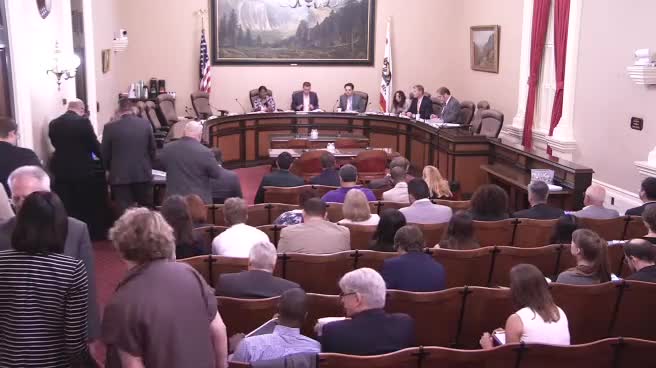
Discussed in Hearing
 3MIN
Senate Standing Committee on Governance and Finance
Bill Author
Bill Co-Author(s):