AB 2859: Professions and vocations: retired category: licenses.
- Session Year: 2015-2016
- House: Assembly
- Latest Version Date: 2016-09-22
Existing law provides for numerous boards, bureaus, commissions, or programs within the Department of Consumer Affairs that administer the licensing and regulation of various businesses and professions. Existing law authorizes any of the boards, bureaus, commissions, or programs within the department, except as specified, to establish by regulation a system for an inactive category of license for persons who are not actively engaged in the practice of their profession or vocation. Under existing law, the holder of an inactive license is prohibited from engaging in any activity for which a license is required. Existing law defines board for these purposes to include, unless expressly provided otherwise, a bureau, commission, committee, department, division, examining committee, program, and agency.
This bill would additionally authorize any of the boards within the department to establish by regulation a system for a retired category of license for persons who are not actively engaged in the practice of their profession or vocation. The bill would require that regulation to include specified provisions, including that a retired license be issued to a person with either an active license or an inactive license that was not placed on inactive status for disciplinary reasons. The bill also would prohibit the holder of a retired license from engaging in any activity for which a license is required, unless the board, by regulation, specifies the criteria for a retired licensee to practice his or her profession. The bill would authorize a board upon its own determination, and would require a board upon receipt of a complaint from any person, to investigate the actions of any licensee, including, among others, a person with a license that is retired or inactive. The bill would not apply to a board that has other statutory authority to establish a retired license.
Existing law provides for numerous boards, bureaus, commissions, or programs within the Department of Consumer Affairs that administer the licensing and regulation of various businesses and professions. Existing law authorizes any of the boards, bureaus, commissions, or programs within the department, except as specified, to establish by regulation a system for an inactive category of license for persons who are not actively engaged in the practice of their profession or vocation. Under existing law, the holder of an inactive license is prohibited from engaging in any activity for which a license is required. Existing law defines board for these purposes to include, unless expressly provided otherwise, a bureau, commission, committee, department, division, examining committee, program, and agency.
This bill would additionally authorize any of the boards within the department to establish by regulation a system for a retired category of license for persons who are not actively engaged in the practice of their profession or vocation. The bill would require that regulation to include specified provisions, including that a retired license be issued to a person with either an active license or an inactive license that was not placed on inactive status for disciplinary reasons. The bill also would prohibit the holder of a retired license from engaging in any activity for which a license is required, unless regulation specifies the criteria for a retired licensee to practice his or her profession. The bill would authorize a board upon its own determination, and would require a board upon receipt of a complaint from any person, to investigate the actions of any licensee, including, among others, a person with a license that is retired or inactive. The bill would not apply to a board that has other statutory authority to establish a retired license.
Existing law provides for numerous boards, bureaus, commissions, or programs within the Department of Consumer Affairs that administer the licensing and regulation of various businesses and professions. Existing law authorizes any of the boards, bureaus, commissions, or programs within the department, except as specified, to establish by regulation a system for an inactive category of license for persons who are not actively engaged in the practice of their profession or vocation. Under existing law, the holder of an inactive license is prohibited from engaging in any activity for which a license is required. Existing law defines board for these purposes to include, unless expressly provided otherwise, a bureau, commission, committee, department, division, examining committee, program, and agency.
This bill would additionally authorize any of the boards, bureaus, commissions, or programs boards within the department to establish by regulation a system for a retired category of license for persons who are not actively engaged in the practice of their profession or vocation, and vocation. The bill would require that regulation to include specified provisions, including that a retired license be issued to a person with either an active license or an inactive license that was not placed on inactive status for disciplinary reasons. The bill also would prohibit the holder of a retired license from engaging in any activity for which a license is required, unless regulation specifies the criteria for a retired licensee to practice his or her profession. The bill would authorize a board upon its own determination, and would require a board upon receipt of a complaint from any person, to investigate the actions of any licensee, including, among others, a person with a license that is retired or inactive. The bill would not apply to a board that has other statutory authority to establish a retired license.
Existing law provides for numerous boards, bureaus, commissions, or programs within the Department of Consumer Affairs that administer the licensing and regulation of various businesses and professions. Existing law authorizes any of the boards, bureaus, commissions, or programs within the department, except as specified, to establish by regulation a system for an inactive category of license for persons who are not actively engaged in the practice of their profession or vocation. Under existing law, the holder of an inactive license is prohibited from engaging in any activity for which a license is required. Existing law defines board for these purposes to include, unless expressly provided otherwise, a bureau, commission, committee, department, division, examining committee, program, and agency.
This bill would additionally authorize any of the boards, bureaus, commissions, or programs within the department to establish by regulation a system for a retired category of license for persons who are not actively engaged in the practice of their profession or vocation, and would prohibit the holder of a retired license from engaging in any activity for which a license is required, unless regulation specifies the criteria for a retired licensee to practice his or her profession. The bill would authorize a board upon its own determination, and would require a board upon receipt of a complaint from any person, to investigate the actions of any licensee, including, among others, a person with a license that is retired or inactive.
(a)Any of the boards within the department may establish, by regulation, a system for a retired category of licensure for persons who are not actively engaged in the practice of their profession or vocation.
(b)The regulation shall contain the following:
(1)A retired license shall be issued to a person with either an active license or an inactive license that was not placed on inactive status for disciplinary reasons.
(2)The holder of a retired license issued pursuant to this section shall not engage in any activity for which a license is required, unless the board, by regulation, specifies the criteria for a retired licensee to practice his or her profession or vocation.
(3)The holder of a retired license shall not be required to renew that license.
(4)The board shall establish an appropriate application fee for a retired license to cover the reasonable regulatory cost of issuing a retired license.
(5)In order for the holder of a retired license issued pursuant to this section to restore his or her license to an active status, the holder of that license shall meet all the following:
(A)Pay a fee established by statute or regulation.
(B)Certify, in a manner satisfactory to the board, that he or she has not committed an act or crime constituting grounds for denial of licensure.
(C)Comply with the fingerprint submission requirements established by regulation.
(D)If the board requires completion of continuing education for renewal of an active license, complete continuing education equivalent to that required for renewal of an active license, unless a different requirement is specified by the board.
(E)Complete any other requirements as specified by the board by regulation.
(c)A board may upon its own determination, and shall upon receipt of a complaint from any person, investigate the actions of any licensee, including a person with a license that either restricts or prohibits the practice of that person in his or her profession or vocation, including, but not limited to, a license that is retired, inactive, canceled, revoked, or suspended.
(d)Subdivisions (a) and (b) shall not apply to a board that has other statutory authority to establish a retired license.
(a)Any of the boards within the department may establish, by regulation, a system for a retired category of licensure for persons who are not actively engaged in the practice of their profession or vocation.
(b)The regulation shall contain the following:
(1)A retired license shall be issued to a person with either an active license or an inactive license that was not placed on inactive status for disciplinary reasons.
(2)The holder of a retired license issued pursuant to this section shall not engage in any activity for which a license is required, unless the board, by regulation, specifies the criteria for a retired licensee to practice his or her profession or vocation.
(3)The holder of a retired license shall not be required to renew that license.
(4)The board shall establish an appropriate application fee for a retired license to cover the reasonable regulatory cost of issuing a retired license.
(4)
(5)In order for the holder of a retired license issued pursuant to this section to restore his or her license to an active status, the holder of that license shall meet all the following:
(A)Pay a fee established by statute or regulation.
(B)Certify, in a manner satisfactory to the board, that he or she has not committed an act or crime constituting grounds for denial of licensure.
(C)Comply with the fingerprint submission requirements established by regulation.
(D)If the board requires completion of continuing education for renewal of an active license, complete continuing education equivalent to that required for renewal of an active license, unless a different requirement is specified by the board.
(E)Complete any other requirements as specified by the board by regulation.
(c)A board may upon its own determination, and shall upon receipt of a complaint from any person, investigate the actions of any licensee, including a person with a license that either restricts or prohibits the practice of that person in his or her profession or vocation, including, but not limited to, a license that is retired, inactive, canceled, revoked, or suspended.
(d)Subdivisions (a) and (b) shall not apply to a board that has other statutory authority to establish a retired license.
(a)Any of the boards, bureaus, commissions, or programs boards within the department may establish, by regulation, a system for a retired category of licensure for persons who are not actively engaged in the practice of their profession or vocation.
(b)The regulation shall contain the following:
(1)A retired license shall be issued to a person with either an active license or an inactive license that was not placed on inactive status for disciplinary reasons.
(1)
(2)The holder of a retired license issued pursuant to this section shall not engage in any activity for which a license is required, unless the board, by regulation, specifies the criteria for a retired licensee to practice his or her profession or vocation.
(2)
(3)The holder of a retired license shall not be required to renew that license.
(3)
(4)In order for the holder of a retired license issued pursuant to this section to restore his or her license to an active status, the holder of that license shall meet all the following:
(A)Pay a fee established by statute or regulation.
(B)Certify, in a manner satisfactory to the board, that he or she has not committed an act or crime constituting grounds for denial of licensure.
(C)Comply with the fingerprint submission requirements established by regulation.
(D)If the board requires completion of continuing education for renewal of an active license, complete continuing education equivalent to that required for renewal of an active license, unless a different requirement is specified by the board.
(E)Complete any other requirements as specified by the board by regulation.
(c)A board may upon its own determination, and shall upon receipt of a complaint from any person, investigate the actions of any licensee, including a person with a license that either restricts or prohibits the practice of that person in his or her profession or vocation, including, but not limited to, a license that is retired, inactive, canceled, revoked, or suspended.
(d)Subdivisions (a) and (b) shall not apply to a board that has other statutory authority to establish a retired license.
(a)Any of the boards, bureaus, commissions, or programs within the department may establish, by regulation, a system for a retired category of licensure for persons who are not actively engaged in the practice of their profession or vocation.
(b)The regulation shall contain the following:
(1)The holder of a retired license issued pursuant to this section shall not engage in any activity for which a license is required, unless the board, by regulation, specifies the criteria for a retired licensee to practice his or her profession or vocation.
(2)The holder of a retired license shall not be required to renew that license.
(3)In order for the holder of a retired license issued pursuant to this section to restore his or her license to an active status, the holder of that license shall meet all the following:
(A)Pay a fee established by statute or regulation.
(B)Certify, in a manner satisfactory to the board, that he or she has not committed an act or crime constituting grounds for denial of licensure.
(C)Comply with the fingerprint submission requirements established by regulation.
(D)If the board requires completion of continuing education for renewal of an active license, complete continuing education equivalent to that required for renewal of an active license, unless a different requirement is specified by the board.
(E)Complete any other requirements as specified by the board by regulation.
(c)A board may upon its own determination, and shall upon receipt of a complaint from any person, investigate the actions of any licensee, including a person with a license that either restricts or prohibits the practice of that person in his or her profession or vocation, including, but not limited to, a license that is retired, inactive, canceled, revoked, or suspended.
|
Date
|
Status
|
|---|---|
| Jun 15, 2016 | Read second time and amended. Re-referred to Com. on APPR. |
| Sep 7, 2016 | Enrolled and presented to the Governor at 3 p.m. |
| Aug 29, 2016 | Senate amendments concurred in. To Engrossing and Enrolling. (Ayes 79. Noes 0. Page 6393.). |
| Aug 29, 2016 | Senate amendments concurred in. To Engrossing and Enrolling. |
| Aug 24, 2016 | In Assembly. Concurrence in Senate amendments pending. May be considered on or after August 26 pursuant to Assembly Rule 77. |
| Aug 23, 2016 | Read third time. Passed. Ordered to the Assembly. (Ayes 39. Noes 0. Page 5301.). |
| Aug 23, 2016 | Read third time. Passed. Ordered to the Assembly. |
| Aug 15, 2016 | Ordered to third reading. |
| Aug 15, 2016 | From Consent Calendar. |
| Aug 11, 2016 | Ordered to special consent calendar. |
| Aug 3, 2016 | Read second time and amended. Ordered to third reading. |
| Aug 2, 2016 | From committee: Amend, and do pass as amended. (Ayes 7. Noes 0.) (August 1). |
| Feb 19, 2016 | Introduced. To print. |
| Jun 14, 2016 | From committee: Amend, and do pass as amended and re-refer to Com. on APPR. with recommendation: To Consent Calendar. (Ayes 9. Noes 0.) (June 13). |
| May 12, 2016 | Referred to Com. on B., P. & E.D. |
| May 5, 2016 | Read third time. Passed. Ordered to the Senate. (Ayes 79. Noes 0. Page 4688.) |
| May 5, 2016 | Read third time. Passed. Ordered to the Senate. |
| May 5, 2016 | In Senate. Read first time. To Com. on RLS. for assignment. |
| Apr 28, 2016 | Read second time. Ordered to Consent Calendar. |
| Apr 27, 2016 | From committee: Do pass. To Consent Calendar. (Ayes 19. Noes 0.) (April 27). |
| Apr 12, 2016 | From committee: Do pass and re-refer to Com. on APPR. with recommendation: To Consent Calendar. (Ayes 16. Noes 0.) (April 12). Re-referred to Com. on APPR. |
| Mar 14, 2016 | Referred to Com. on B. & P. |
| Feb 22, 2016 | Read first time. |
| Feb 21, 2016 | From printer. May be heard in committee March 22. |
|
Date
|
Description
|
Location
|
Votes
|
|
|---|---|---|---|---|
| Aug 29, 2016 | AB 2859 LOW Concurrence in Senate Amendments | Assembly Floor |
Passed |
|
| Aug 23, 2016 | Assembly 3rd Reading AB2859 Low By Hill | Senate Floor |
Passed |
|
| Aug 1, 2016 | Do pass as amended | Senate Standing Committee on Appropriations |
Passed |
|
| Jun 13, 2016 | Do pass as amended, but first amend, and re-refer to the Committee on [Appropriations] with the recommendation: To Consent Calendar | Senate Standing Committee on Business, Professions and Economic Development |
Passed |
|
| May 5, 2016 | AB 2859 LOW Consent Calendar Second Day Regular Session | Assembly Floor |
Passed |
|
| Apr 27, 2016 | Do pass. To Consent Calendar. | Assembly Standing Committee on Appropriations |
Passed |
|
| Apr 12, 2016 | Do pass and be re-referred to the Committee on [Appropriations] with recommendation: To Consent Calendar | Assembly Standing Committee on Business and Professions |
Passed |
This list shows positions taken on this bill by organizations on the date displayed, which is linked to the original source.
Positions by individuals are not included.
|
Organization
|
Position
|
Date
|
|---|---|---|
| AIDS HealthCare Foundation | * Support | Jun 25, 2018 |
| California Board of Accountancy | ** Support | Aug 23, 2016 |
| California Pharmacists Association | * Support | Jun 25, 2018 |
| Contractors State License Board | ** Support | Aug 23, 2016 |
| Gatekeeper Innovation | * Support | Jun 25, 2018 |
CONCURRENCE IN SENATE AMENDMENTS
CSA1 Bill Id:AB 2859
Author:(Low)
As Amended Ver:August 3, 2016
Majority vote
ASSEMBLY: | 79-0 | (May 5, 2016) | SENATE: | 39-0 | (August 23, 2016) |
Original Committee Reference: B. & P.
SUMMARY: Authorizes any of the boards, within the Department of Consumer Affairs (DCA) to establish, by regulation, a system for a retired category of licensure for persons not actively engaged in the practice of their profession, as specified.
The Senate amendments specify that a retired license can only be issued to an individual with an active or inactive license that was not placed on inactive status for disciplinary reasons, authorize boards to establish an appropriate fee for a retired license, specify that boards with existing authority to establish a retried license are not subject to specified provisions, and make other minor and technical clarifying changes.
FISCAL EFFECT: According to the Senate Appropriations Committee, there are 25 boards, bureaus, and other licensing entities within the Department of Consumer Affairs that currently do not have a retired license category. For any of those entities that chose to create a retired license category, the following costs are likely to occur:
- Minor one-time costs to adopt regulations establishing a retired license category (various special funds).
- One-time costs between $15,000 and $75,000 to make changes to the licensing system to accommodate a new retired license category (various special funds). The potential cost to update information technology systems used to process license applications and renewals will depend both on the size of the board's license population and whether or not the board is using the BreEze licensing system or an internal licensing system.
- Minor revenue losses due to individuals with active licenses shifting to a retired license (various special funds). Currently, there are indications that individual licensees who are effectively retired continue to renew their active license because shifting to an inactive license or allowing their active license to lapse implies that the licensee may have been subject to some kind of disciplinary action. Therefore, there are likely to be licensees who give up their active license (which requires a biennial renewal with a fee) and apply for a retired license (which is likely to be accompanied by a one-time fee). There are 15 boards within the Department of Consumer Affairs that currently have a retired license category. The ratio of retired licensees to active licensees for those boards is small (typically less than 1%). Therefore it is likely that the number of licensees who would give up an active license for a retired license would be fairly small as would be any resulting revenue loss. There would also be some revenue loss from individuals giving up an inactive license (who are not inactive due to disciplinary action) in exchange for a retired license.
To the extent that licensees shift to a retired license that does not require renewal and are not engaged in the practice of their profession, the impacted board is likely to see a commensurate reduction in licensing and enforcement activity.
COMMENTS:
Purpose. This bill authorizes any of the boards under the DCA to establish, through regulations, a system to allow for a retired license category for those licensees who no longer wish to practice their profession or vocation but who do not want their license to become "inactive". This bill is sponsored by the author. According to the author, "[this bill] allows any of the boards, bureaus, commissions, or programs within the [DCA] to establish a system for a retired category of licensure for those not actively in [the] practice of their profession.
An occupational license can be sent to 'inactive' for various reasons, including violations and non-renewal. The same is done for those individuals who decided to retire - a troublesome label, as an 'inactive' status holds negative connotations and does not appropriately illustrate the decades of service from the license holder. To that end, this bill acts as a practical means to bring uniformity to licensing at the DCA."
Background. Existing law permits the boards under the DCA to adopt regulations to establish a system for issuing inactive licenses. The law requires that those regulations cover fees, renewal, restoration to active status, and practice restrictions.
There are two differences to the laws permitting regulations for inactive licenses for non-healing arts boards and healing arts boards: 1) non-healing arts boards are permitted to reduce the fees for renewal and change the continuing education requirements, while the healing arts boards are not; and, 2) the restoration fee is waived for a physician and surgeon that certifies he or she is restoring the inactive license to an active license solely for volunteer purposes.
Retired Licenses. According to the author, some licensees disfavor an "inactive" license designation and would prefer a retired license designation. Because existing law only provides for a system of inactive licenses, many boards have sought legislation specific to their licensees that would permit them to also create a retired license category. Prior bills have included conditions for volunteering, enforcement of retired licenses, and fees.
Thirteen other healing arts and non-healing arts boards have the authority to issue retired licensees, including:
1) Board of Accountancy
2) Architects Board
3) Board of Barbering and Cosmetology
4) Board of Behavioral Sciences
5) Dental Board
6) Dental Hygiene Committee of California
7) Landscape Architects Technical Committee
8) Medical Board
9) Board of Pharmacy
10) Board of Podiatric Medicine
11) Professional Fiduciaries Bureau
12) Board for Professional Engineers, Land Surveyors, and Geologists
13) Respiratory Care Board
This bill will provide the remaining boards with the authority to establish a system of retired licenses if they desire to. This bill does not require boards to offer a retired license.
BreEZe. The "BreEZe Project" was designed to provide the DCA boards with a new enterprise-wide enforcement and licensing system. The updated BreEZe system was engineered to replace outdated legacy systems and multiple "work around" systems with an integrated solution based on updated technology. BreEZe enables consumers to verify a professional license and file a consumer complaint. Licensees and applicants can submit license applications, renew a license and change their address among other services. The initial BreEZe project was to be implemented in three separate phases. Release one was launched in October of 2013, and included 10 boards. Release two was launched in January of 2016 and included eight boards. The remaining boards will be in a final release in which the vendor and the release date have not been identified. Consumers can verify licensure status through the BreEZe system.
A substantially similar version of this bill was introduced in 2015. AB 750 (Low) of 2015, passed the Assembly Committee on Business and Professions (14 Ayes – 0 Noes) on April 14, 2015, but was subsequently held in the Assembly Committee on Appropriations. The Appropriations Committee analysis noted potential delays and costs associated with the Release two of the BreEZe project. That analysis noted "[o]ne-time major state costs, likely in the millions of dollars, resulting from contract delays for Release two boards and bureaus if this bill is implemented prior to January 1, 2017. At this stage of the implementation, DCA would likely have to renegotiate the vendor contract and likely trigger a Special Project Report resulting in project delays. Currently, project delay costs are $1.25 million per month for the vendor contract and an additional $500,000 per month in additional state costs associated with the project."
It is unknown if similar costs or the issues cited prior to the implementation of Release two will impact any boards' ability to offer a retired license status. This bill does not require a board to establish a retired license, but simply authorizes a board to establish, through regulation, a process to offer a retired status license.
Analysis Prepared by: Elissa Silva / B. & P. / (916) 319-3301 FN: 0003868
Office of Senate Floor Analyses (916) 651-1520 Fax: (916) 327-4478 | AB |
THIRD READING
Bill No: AB 2859
: 8/3/16
SENATE BUS., PROF. & ECON. DEV. COMMITTEE: 9-0, 6/13/16
AYES: Hill, Bates, Block, Gaines, Galgiani, Hernandez, Jackson, Mendoza, Wieckowski
SENATE APPROPRIATIONS COMMITTEE: 7-0, 8/1/16
AYES: Lara, Bates, Beall, Hill, McGuire, Mendoza, Nielsen
ASSEMBLY FLOOR: 79-0, 5/5/16 (Consent) - See last page for vote
DIGEST: This bill authorizes any board within the Department of Consumer Affairs (DCA) to establish, by regulation, a system for a retired license for an individual not actively engaged in the practice of his or her profession or vocation.
Existing law:
- Establishes the DCA, which is comprised of 40 regulatory entities (25 boards, nine bureaus, three committees, two programs, and one commission) that license and regulate various professions. (Business and Professions Code (BPC) Sections 100, 101)
- Authorizes boards within the DCA to develop regulations to establish an inactive license category for persons who are not actively engaged in the practice of their profession or vocation. (BPC §§ 462, 701)
- Establishes a retired license for the following professions: physician and surgeon (BPC § 2439); midwifery (BPC § 2518); occupational therapist, occupational therapy assistant (BPC § 2570.17); physical therapy (BPC § 2648.7); optometrists (BPC § 3151); physician assistant (BPC § 3251.3); respiratory therapist (BPC § 3775.3); pharmacist (BPC § 4200.5); marriage and family therapist (BPC § 4984.41); licensed educational psychologist (BPC § 4989.45); licensed professional clinical counselor (BPC § 4999.113); licensed clinical social worker (BPC § 4997.1); accountant (BPC § 5070.1); architect (BPC § 5600.4); fiduciary (BPC § 6542); professional engineer (BPC § 6762.5); and geologist, geophysicist (BPC § 7851).
- Establishes that “board,” as used in any provision of the BPC, refers to the board in which the administration of the provision is vested, and unless otherwise expressly provided, shall include “bureau,” “commission,” “committee,” “department,” “division,” “examining committee,” “program,” and “agency.” (BPC § 22)
This bill:
- Authorizes any DCA board to promulgate regulations to establish a retired license category for persons who are not actively engaged in the practice of their profession or vocation.
- Requires the regulations to contain the following:
- A retired license shall be issued to a person with either an active license or an inactive license that was not placed on inactive status for disciplinary reasons.
- The holder of a retired license shall not engage in any activity for which a license is required, unless the board, by regulation, specifies the criteria for a retired licensee to practice his or her profession or vocation.
- The holder of a retired license shall not be required to renew that license.
- A board shall establish an appropriate application fee for a retired license to cover the reasonable regulatory cost of issuing a retired license.
- In order for the holder of a retired license to restore his or her license to an active status, the holder of that license shall meet all the following:
- Pay a fee established by statute or regulation.
- Certify, in a manner satisfactory to the board, that he or she has not committed an act or crime constituting grounds for denial of licensure.
- Comply with the fingerprint submission requirements established by regulation.
- If the board requires completion of continuing education for renewal of an active license, complete continuing education equivalent to that required for renewal of an active license, unless a different requirement is specified by the board.
- Complete any other requirements as specified by the board by regulation.
- Authorizes a board to investigate the actions of any licensee, including a person with a license that either restricts or prohibits the practice of that person in his or her profession or vocation, including, but not limited to, a license that is retired, inactive, canceled, revoked, or suspended.
- Exempts boards with other statutory authority to establish a retired license from specified provisions of this bill.
Background
Current law authorizes all boards to establish an “inactive” license, which allows an individual to hold a license but not practice in their profession. An inactive license may be reactivated under terms specified by the issuing board.
An occupational license can be sent to inactive status for various reasons, including disciplinary. For those individuals who have a clean license at retirement and want to cease renewal because they no longer practice, “inactive” status may have a stigma. The following boards have statutory authorization to establish a retired license:
- Board of Accountancy
- Architects Board
- Board of Behavioral Sciences
- Medical Board of California
- Board of Pharmacy
- Professional Fiduciaries Bureau
- Board for Professional Engineers, Land Surveyors, and Geologists
- Respiratory Care Board
- Occupational Therapy Board
- Physical Therapy Board
- Board of Optometry
- Physician Assistant Board
This bill allows the remaining boards to do this as well, as long as their regulations require a licensee to pay a fee, certify that he or she has not committed an act or crime constituting grounds for denial of licensure, comply with the fingerprint submission requirements established by regulation, complete continuing education and any other requirements specified by the board, as necessary.
FISCAL EFFECT: Appropriation: Fiscal Com.: Local:
According to the Senate Appropriations Committee analysis dated August 1, 2016, there are 25 boards, bureaus, and other licensing entities within the DCA that currently do not have a retired license category. For any of those entities that chose to create a retired license category, the following costs are likely to occur:
- Minor one-time costs to adopt regulations establishing a retired license category (various special funds).
- One-time costs between $15,000 and $75,000 to make changes to the licensing system to accommodate a new retired license category (various special funds). The potential cost to update information technology systems used to process license applications and renewals will depend both on the size of the board’s license population and whether or not the board is using the BreEze licensing system or an internal licensing system.
- Minor revenue losses due to individuals with active licenses shifting to a retired license (various special funds). Currently, there are indications that individual licensees who are effectively retired continue to renew their active license because shifting to an inactive license or allowing their active license to lapse implies that the licensee may have been subject to some kind of disciplinary action. Therefore, there are likely to be licensees who give up their active license (which requires a biennial renewal with a fee) and apply for a retired license (which is likely to be accompanied by a one-time fee). There are 15 boards within the DCA that currently have a retired license category. The ratio of retired licensees to active licensees for those boards is small (typically less than 1%). Therefore it is likely that the number of licensees who would give up an active license for a retired license would be fairly small as would be any resulting revenue loss. There would also be some revenue loss from individuals giving up an inactive license (who are not inactive due to disciplinary action) in exchange for a retired license.
To the extent that licensees shift to a retired license that does not require renewal and are not engaged in the practice of their profession, the impacted board is likely to see a commensurate reduction in licensing and enforcement activity.
California Board of Accountancy
Contractors State License Board
None received
ARGUMENTS IN SUPPORT: The Contractors State License Board (CSLB) writes, “CSLB licenses approximately 285,000 licensed contractors. While CSLB does currently have an inactive license option, CSLB believes creating a retired license category would be of interest to its licensees.”
ASSEMBLY FLOOR: 79-0, 5/5/16
AYES: Achadjian, Alejo, Travis Allen, Arambula, Atkins, Baker, Bigelow, Bloom, Bonilla, Bonta, Brough, Brown, Burke, Calderon, Campos, Chang, Chau, Chávez, Chiu, Chu, Cooley, Cooper, Dababneh, Dahle, Daly, Dodd, Eggman, Frazier, Gallagher, Cristina Garcia, Eduardo Garcia, Gatto, Gipson, Gomez, Gonzalez, Gordon, Gray, Grove, Hadley, Harper, Roger Hernández, Holden, Irwin, Jones, Jones-Sawyer, Kim, Lackey, Levine, Linder, Lopez, Low, Maienschein, Mathis, Mayes, McCarty, Medina, Melendez, Mullin, Nazarian, Obernolte, O'Donnell, Olsen, Patterson, Quirk, Ridley-Thomas, Rodriguez, Salas, Santiago, Steinorth, Mark Stone, Thurmond, Ting, Wagner, Waldron, Weber, Wilk, Williams, Wood, Rendon
NO VOTE RECORDED: Beth Gaines
8/15/16 10:12:32
**** END ****
SENATE COMMITTEE ON APPROPRIATIONS
Senator Ricardo Lara, Chair
2015 - 2016 Regular Session
AB 2859 (Low) - Professions and vocations: retired category: licenses
Version: June 15, 2016 | Policy Vote: B., P. & E.D. 9 - 0 |
Urgency: No | Mandate: No |
Hearing Date: August 1, 2016 | Consultant: Brendan McCarthy |
This bill does not meet the criteria for referral to the Suspense File.
Bill Summary:
AB 2859 would authorize any board, bureau, or other licensing entity within the Department of Consumer Affairs to establish a retired license category.
Fiscal Impact:
There are 25 boards, bureaus, and other licensing entities within the Department of Consumer Affairs that currently do not have a retired license category. For any of those entities that chose to create a retired license category, the following costs are likely to occur:
- Minor one-time costs to adopt regulations establishing a retired license category (various special funds).
- One-time costs between $15,000 and $75,000 to make changes to the licensing system to accommodate a new retired license category (various special funds). The potential cost to update information technology systems used to process license applications and renewals will depend both on the size of the board’s license population and whether or not the board is using the BreEze licensing system or an internal licensing system.
- Minor revenue losses due to individuals with active licenses shifting to a retired license (various special funds). Currently, there are indications that individual licensees who are effectively retired continue to renew their active license because shifting to an inactive license or allowing their active license to lapse implies that the licensee may have been subject to some kind of disciplinary action. Therefore, there are likely to be licensees who give up their active license (which requires a biennial renewal with a fee) and apply for a retired license (which is likely to be accompanied by a one-time fee). There are 15 boards within the Department of Consumer Affairs that currently have a retired license category. The ratio of retired licensees to active licensees for those boards is small (typically less than 1%). Therefore it is likely that the number of licensees who would give up an active license for a retired license would be fairly small as would be any resulting revenue loss. There would also be some revenue loss from individuals giving up an inactive license (who are not inactive due to disciplinary action) in exchange for a retired license.
To the extent that licensees shift to a retired license that does not require renewal and are not engaged in the practice of their profession, the impacted board is likely to see a commensurate reduction in licensing and enforcement activity.
Background:
Under current law, 40 boards, bureaus, committees, and other entities within the Department of Consumer Affairs license and regulate various professions and vocations. Currently, 15 of those entities are authorized in law to establish a retired license category. If an entity does not have a retired license category, licensees who are no longer practicing their profession can maintain an active license, shift to an inactive license, or allow their active license to lapse.
Proposed Law:
AB 2859 would authorize any board, bureau, or other licensing entity within the Department of Consumer Affairs to establish a retired license category.
Specific provisions of the bill would:
- Authorize any of the boards within the Department of Consumer Affairs to establish, by regulation, a retired license category for individuals who are not actively engaged in their profession or vocation. (Under current law, the term “board” refers to several types of licensing entities within the Department.);
- Place requirements on the issuance of a retired license and the requirements for the restoration of an active license by a retired license holder;
- Authorize a board on its own determination, or require the board upon a complaint, to investigate the actions of a licensee, including a retired licensee;
- Specify that the bill’s provisions do not apply to a board that has other statutory authority to establish a retired license.
Related Legislation:
SB 1194 (Hill) would authorize the Board of Psychology to establish a retired license. That bill is pending in the Assembly.
Recommended Amendments:
Staff recommends the bill be clarified to explicitly authorize any board implementing a retired license category to impose a fee for the issuance of that license.
-- END --
SENATE COMMITTEE ON
BUSINESS, PROFESSIONS AND ECONOMIC DEVELOPMENT
Senator Jerry Hill, Chair
2015 - 2016 Regular
Bill No: Hearing Date: June 13, 2016
Author: | |||
Version: | February 19, 2016 | ||
Urgency: | No | Fiscal: | Yes |
Consultant: | Sarah Huchel | ||
Subject:
SUMMARY:
Authorizes any board within the Department of Consumer Affairs (DCA) to
establish, by regulation, a system for a retired license for an individual not actively engaged in the practice of his or her profession or vocation.
Existing law:
- Establishes the DCA, which is comprised of 40 regulatory entities (25 boards, nine bureaus, three committees, two programs, and one commission) that license and regulate various professions. (Business and Professions Code (BPC) Sections 100, 101)
- Authorizes boards within the DCA to develop regulations to establish an inactive license category for persons who are not actively engaged in the practice of their profession or vocation. (BPC §§ 462, 701)
- Establishes a retired license for the following professions: physician and surgeon (BPC § 2439); midwifery (BPC § 2518); occupational therapist, occupational therapy assistant (BPC § 2570.17); physical therapy (BPC § 2648.7); optometrists (BPC § 3151); physician assistant (BPC § 3251.3); respiratory therapist (BPC § 3775.3); pharmacist (BPC § 4200.5); marriage and family therapist (BPC § 4984.41); licensed educational psychologist (BPC § 4989.45); licensed professional clinical counselor (BPC § 4999.113); licensed clinical social worker (BPC § 4997.1); accountant (BPC § 5070.1); architect (BPC § 5600.4); fiduciary (BPC § 6542); professional engineer (BPC § 6762.5); and geologist, geophysicist (BPC § 7851).
- Establishes that “board,” as used in any provision of the BPC, refers to the board in which the administration of the provision is vested, and unless otherwise expressly provided, shall include “bureau,” “commission,” “committee,” “department,” “division,” “examining committee,” “program,” and “agency.” (BPC § 22)
This bill:
- Authorizes any DCA boards, bureaus, commissions, or programs to promulgate regulations to establish a retired license category for persons who are not actively engaged in the practice of their profession or vocation.
- Requires the regulations to contain the following:
- The holder of a retired license shall not engage in any activity for which a license is required, unless the board, by regulation, specifies the criteria for a retired licensee to practice his or her profession or vocation.
- The holder of a retired license shall not be required to renew that license.
- In order for the holder of a retired license to restore his or her license to an active status, the holder of that license shall meet all the following:
- Pay a fee established by statute or regulation.
- Certify, in a manner satisfactory to the board, that he or she has not committed an act or crime constituting grounds for denial of licensure.
- Comply with the fingerprint submission requirements established by regulation.
- If the board requires completion of continuing education for renewal of an active license, complete continuing education equivalent to that required for renewal of an active license, unless a different requirement is specified by the board.
- Complete any other requirements as specified by the board by regulation.
- Authorizes a board to investigate the actions of any licensee, including a person with a license that either restricts or prohibits the practice of that person in his or her profession or vocation, including, but not limited to, a license that is retired, inactive, canceled, revoked, or suspended.
FISCAL EFFECT:
This bill is keyed “fiscal” by Legislative Counsel. According to the Assembly Committee on Appropriations analysis dated April 27, 2016, this bill will result in minor and absorbable costs to the DCA to update regulations, add license status designations, and update applications as well as minor and absorbable costs to DCA for one-time workload increases associated with IT/BreEZe modifications.
COMMENTS:
- Purpose. The Author is the Sponsor of this bill. According to the Author’s office, “Some licensees disfavor the inactive license designation and would prefer a retired license designation." Some DCA boards have current statutory authority to issue a retired license, and this bill would enable the remainder to do so.
- Background. Current law authorizes all boards to establish an “inactive” license, which allows an individual to hold a license but not practice in their profession. An inactive license may be reactivated under terms specified by the issuing board.
An occupational license can be sent to inactive status for various reasons, including disciplinary. For those individuals who have a clean license at retirement and want to cease renewal because they no longer practice, “inactive” status may have a stigma. The following boards have statutory authorization to establish a retired license:
- Board of Accountancy
- Architects Board
- Board of Behavioral Sciences
- Medical Board of California
- Board of Pharmacy
- Professional Fiduciaries Bureau
- Board for Professional Engineers, Land Surveyors, and Geologists
- Respiratory Care Board
- Occupational Therapy Board
- Physical Therapy Board
- Board of Optometry
- Physician Assistant Board
This bill would allow the remaining boards to do this as well, as long as their regulations require a licensee to pay a fee, certify that he or she has not committed an act or crime constituting grounds for denial of licensure, comply with the fingerprint submission requirements established by regulation, complete continuing education and any other requirements specified by the board, as necessary.
- Related Legislation. SB 1194 (Hill) of 2016 authorizes the Board of Psychology to issue a retired license. (Status: This bill is currently pending in the Assembly Committee on Business and Professions.)
- Prior Legislation. AB 750 (Low) of 2015 would have allowed all DCA boards to issue a retired license. (Status: AB 750 was held in the Assembly Committee on Appropriations.)
AB 1253 (Steinorth, Chapter 125, Statutes of 2015) established educational and training requirements for an optometrist seeking a license with retired volunteer service designation (volunteer license) who has not held an active license in more than three years.
AB 2024 (Bonilla, Chapter 336, Statutes of 2014) authorized the Professional Fiduciaries Bureau to establish, by regulation, a system for a retired category of licensure.
AB 404 (Eggman, Chapter 339, Statutes of 2013) clarified who qualifies for a retired license by specifying that a license must be either active or inactive, and reduces the timeline to restore a retired license from retired to active status from five to three years.
SB 1215 (Emmerson, Chapter 359, Statutes of 2012) established a retired license status and a retired license with a volunteer service designation for optometrists.
AB 431 (Ma, Chapter 395, Statutes of 2011) authorized the California Board of Accountancy to establish, by regulation, a system for a retired category of licensure.
SB 2191 (Emmerson, Chapter 548, Statutes of 2010) authorized the Board of Behavioral Sciences to issue a retired license as a marriage and family therapist, educational psychologist, clinical social worker or professional clinical counselor to an applicant who holds a current license or a license eligible for renewal, and established a $40 fee for a retired license.
- Recommended Amendments. This bill uses the terms “boards, bureaus, commissions, or programs,” in one section of the bill, and then the term “board” throughout. For consistency, “board” suffices for all.
- On page 2, line 3, delete “, bureaus, commissions, or programs”
Although this bill seeks to separate the possible stigma of a license placed on inactive status for disciplinary reasons from those who go inactive due to retirement, there is nothing in the bill that would prevent an individual whose license is on inactive status due to disciplinary reasons to transfer it into a retirement status. The Author may wish to consider the following amendment:
- On page 2, between lines 7 and 8, insert:
“(1) A retired license shall be issued to a person with either an active license or an inactive license that was not placed on inactive status for disciplinary reasons.”
This bill establishes a baseline for retired license regulations that do not comport with several boards’ existing regulations on this topic. To ensure that this bill only affects boards prospectively, the following amendment is recommended:
- On page 3, line 4, insert:
“(d) Subsections (a) and (b) shall not apply to boards with statutory authority to establish a retired license as of January 2, 2017.”
- Arguments in Support. The Contractors State License Board (CSLB) writes, “CSLB licenses approximately 285,000 licensed contractors. While CSLB does currently have an inactive license option, CSLB believes creating a retired license category would be of interest to its licensees.”
California Board of Accountancy (CBA) writes, “The CBA presently has regulations that allow for a licensee to obtain a retired status license. When comparing the CBA’s provisions to that which is being proposed in AB 2859, the CBA has additional requirements including:
- Submission of a $75 application fee.
- Submission of a renewal application every two years (no fee) to ensure current contact information.
- Licensee must have had a certified public accountant license for a minimum of 20 years, of which a minimum of five are with the CBA.
“AB 2859 and the CBA provisions for a retired status license are similar in that those in a retired status are not allowed to practice their profession.
“The CBA respectfully requests that the … language be amended to exclude entities within DCA that have their own laws regarding retired license status. For these reasons, the CBA has taken a support if amended position on AB 2859.”
SUPPORT AND OPPOSITION:
Support:
California Board of Accountancy
Contractors State License Board
Opposition:
None on file as of June 7, 2016.
-- END --
Date of Hearing: April 27, 2016
ASSEMBLY COMMITTEE ON APPROPRIATIONS
Lorena Gonzalez, Chair
ABPCA Bill Id:AB 2859
Author:(Low) – As Introduced Ver:February 19, 2016
Policy Committee: | Business and Professions | Vote: | 16 - 0 |
|
|
Urgency: No State Mandated Local Program: No Reimbursable: No
SUMMARY:
This bill authorizes any of the boards, bureaus, commissions, or programs (boards) within the Department of Consumer Affairs (DCA) to establish, by regulation, a system for a retired category of licensure for persons who are not actively engaged in the practice of their profession or vocation.
FISCAL EFFECT:
- Minor and absorbable costs to the Department of Consumer Affairs (DCA) to update regulations, add license status designations, and update applications.
- Minor and absorbable costs to DCA for one-time workload increases associated with IT/BreEZe modifications.
COMMENTS:
- Purpose. According to the author, "An occupational license can be sent to ‘inactive’ for various reasons, including violations and non-renewal. The same is done for those individuals who decided to retire - a troublesome label, as an ‘inactive’ status holds negative connotations and does not appropriately illustrate the decades of service from the license holder. Some licensees disfavor the inactive license designation and would prefer a retired license designation." Because existing law only provides for a system of inactive licenses, many boards have sought legislation that would permit them to also create a retired license category. By allowing any of the boards, bureaus, commissions, or programs within DCA to establish a system for a retired category of licensure, this bill seeks to provide uniformity to licensing designation at the DCA.
- Background. Existing law permits the boards under the DCA to adopt regulations for issuing inactive licenses. The law requires that the regulations cover fees, renewal, restoration to active status, and practice restrictions. In addition, there are 13 boards with the authority to issue retired licenses. This bill would provide the remaining boards with the authority to establish a system for retired category of licensure.
- BreEZe. In 2009, DCA proposed the BreEZe information technology system and the California Department of Technology (CalTech) approved the proposal. BreEZe was envisioned to replace DCA’s out of date Legacy technology system and would provide needed applicant tracking of licensing, renewal, enforcement monitoring and cashiering support for 37 of the 40 boards, bureaus, committees and one commission housed within DCA. The project began in 2011, and BreEZe was launched for ten of the regulatory entities (Release 1) in 2013. Release 2 of BreEZe was launched for eight additional entities on January 19, 2016. At this time there are no formal plans to expand BreEZe to the 19 boards in Release 3. Instead, DCA intends to conduct a cost-benefit analysis for Release 3 boards after Release 2 is completed this year.
DCA indicates there is a maintenance backlog of almost 600 items for boards in Release 1 and no current timeline for completion of these system fixes. Maintenance demands are expected to double following Release 2.
DCA further indicates that the poor adaptability of BreEZe to respond to new system demands has resulted in the implementation delay of 11 new substantive policy changes passed by the Legislature as far back as 2013. These changes have not been incorporated into the current BreEZe system and are currently awaiting workarounds or new builds into the system. Some of this new legislation involves boards in Release 1 which have been waiting for Release 2 to go live before changes can be made to the system to address new requirements.
- Prior Legislation.
- AB 750 (Low, 2015) was substantially similar to this bill. It was held on this Committee's Suspense file.
- AB 1253 (Steinorth) Chapter, 125, Statutes of 2015, established educational and training requirements for an optometrist seeking a license with retired volunteer service designation (volunteer license) who has not held an active license in more than three years.
- AB 2024 (Bonilla), Chapter 336, Statutes of 2014, authorized the Professional Fiduciaries Bureau to establish, by regulation, a system for a retired category of licensure.
- AB 404 (Eggman), Chapter 339, Statutes of 2013, clarified who qualifies for a retired license by specifying that a license must be either active or inactive, and reduces the timeline to restore a retired license from retired to active status from five to three years.
- SB 1215 (Emmerson), Chapter 359, Statutes of 2012, established a retired license status and a retired license with a volunteer service designation for optometrists.
- AB 431 (Ma), Chapter 395, Statutes of 2011, authorized the California Board of Accountancy to establish, by regulation, a system for a retired category of licensure.
- SB 2191 (Emmerson), Chapter 548, Statutes of 2010, authorized the Board of Behavioral Sciences to issue a retired license as a marriage and family therapist, educational psychologist, clinical social worker or professional clinical counselor to an applicant who holds a current license or a license eligible for renewal, and established a $40 fee for a retired license.
Analysis Prepared by: Jennifer Swenson / APPR. / (916) 319-2081
Date of Hearing: April 12, 2016
ASSEMBLY COMMITTEE ON BUSINESS AND PROFESSIONS
Rudy Salas, Chair
ABPCA Bill Id:AB 2859
Author:(Low) – As Introduced Ver:February 19, 2016
SUBJECT: Professions and vocations: retired category: licenses.
SUMMARY: Authorizes any of the boards, bureaus, commissions, or programs (boards) within the Department of Consumer Affairs (DCA) to establish, by regulation, a system for a retired category of licensure for persons not actively engaged in the practice of their profession.
EXISTING LAW:
- Authorizes any of the boards within the DCA to establish by regulation a system for an inactive category of licensure for persons who are not actively engaged in the practice of their profession or vocation. (BPC Sections 462(a), 700-704)
- Requires a board’s regulations to prohibit the holder of an inactive license from engaging in any activity for which a license is required. (BPC Sections 462(b)(1), 702)
- Requires a board’s regulations to require an inactive license to be renewed during the same time period in which an active license is renewed. (BPC Sections 462(b)(2), 703)
- Requires a non-healing arts board’s regulations to apply the renewal fee for an inactive license to be the same as an active license, unless the board specifies a lower inactive license renewal fee. (BPC Section 462(b)(3))
- Requires a healing arts board’s regulations to charge a renewal fee for both and active and inactive license. (BPC Section 703)
- Requires a non-healing arts board’s regulations to allow the holder of an inactive license to restore the license to an active status by: (BPC Section 462(4))
- Paying a renewal fee; and
- Completing continuing education equivalent to that required for renewal of an active license, if required for renewal of an active license, unless the board specifies a different requirement.
- Requires a healing arts board’s regulations to allow the holder of an inactive license to restore the license to an active status by: (BPC Section 704)
- Paying the renewal fee, unless the licensee is a physician and surgeon who certifies to the Medical Board of California that license restoration is for the sole purpose of providing specified volunteer services; and
- Completing continuing education equivalent to that required for renewal of an active license, if required for renewal of an active license.
THIS BILL:
- Authorizes any of the boards within the DCA to establish, by regulation, a system for a retired category of licensure for persons who are not actively engaged in the practice of their profession or vocation.
- Requires the regulation to contain the following:
- The holder of a retired license may not engage in any activity for which a license is required, unless the board, by regulation specifies the criteria for a retired licensee to practice his or her profession or vocation;
- The holder of a retired license may not be required to renew a retired license; and,
- In order for the holder of a retired license to restore his or her retired license to an active status, the license holder must meet all of the following:
- Pay a fee established by statute or regulation;
- Certify, in a manner satisfactory to the board, the he or she has not committed any act or crime constituting grounds for denial of licensure;
- Comply with the fingerprint submission requirements established by regulation;
- If the board requires completion of continuing education for renewal of an active license, complete continuing education equivalent to that required by renewal if an active license, unless a different requirement is specified by the board; and,
- Complete any other requirements as specified by the board by regulation.
- Pay a fee established by statute or regulation;
- The holder of a retired license may not engage in any activity for which a license is required, unless the board, by regulation specifies the criteria for a retired licensee to practice his or her profession or vocation;
- Authorizes a board, upon its own determination, and upon receipt of a complaint from any person with a license that either restricts or prohibits the practice of that person in his or her profession or vocation, including, but not limited to a license that is retired, inactive, canceled, revoked, or suspended.
FISCAL EFFECT: Unknown. This bill is keyed non-fiscal by the Legislative Counsel.
COMMENTS:
Purpose. This bill authorizes any of the boards under the DCA to establish, through regulations, a system to allow for a retired license category for those licensees who no longer wish to practice their profession or vocation but who do not want their license to become "inactive". This bill is sponsored by the author. According to the author, "[this bill] allows any of the boards, bureaus, commissions, or programs within the [DCA] to establish a system for a retired category of licensure for those not actively in [the] practice of their profession.
An occupational license can be sent to ‘inactive’ for various reasons, including violations and non-renewal. The same is done for those individuals who decided to retire - a troublesome label, as an ‘inactive’ status holds negative connotations and does not appropriately illustrate the decades of service from the license holder. To that end, this bill acts as a practical means to bring uniformity to licensing at the DCA."
Background. Existing law permits the boards under the DCA to adopt regulations to establish a system for issuing inactive licenses. The law requires that those regulations cover fees, renewal, restoration to active status, and practice restrictions.
There are two differences to the laws permitting regulations for inactive licenses for non-healing arts boards and healing arts boards: 1) non-healing arts boards are permitted to reduce the fees for renewal and change the continuing education requirements, while the healing arts boards are not; and, 2) the restoration fee is waived for a physician and surgeon that certifies he or she is restoring the inactive license to an active license solely for volunteer purposes.
Retired Licenses. According to the author, some licensees disfavor an "inactive" license designation and would prefer a retired license designation. Because existing law only provides for a system of inactive licenses, many boards have sought legislation specific to their licensees that would permit them to also create a retired license category. Prior bills have included conditions for volunteering, enforcement of retired licenses, and fees.
Thirteen other healing arts and non-healing arts boards have the authority to issue retired licensees, including:
1) Board of Accountancy
2) Architects Board
3) Board of Barbering and Cosmetology
4) Board of Behavioral Sciences
5) Dental Board
6) Dental Hygiene Committee of California
7) Landscape Architects Technical Committee
8) Medical Board
9) Board of Pharmacy
10) Board of Podiatric Medicine
11) Professional Fiduciaries Bureau
12) Board for Professional Engineers, Land Surveyors, and Geologists
13) Respiratory Care Board
This bill will provide the remaining boards with the authority to establish a system of retired licenses if they desire to. This bill does not require boards to offer a retired license.
BreEZe. The "BreEZe Project" was designed to provide the DCA boards with a new enterprise-wide enforcement and licensing system. The updated BreEZe system was engineered to replace outdated legacy systems and multiple “work around” systems with an integrated solution based on updated technology. BreEZe enables consumers to verify a professional license and file a consumer complaint. Licensees and applicants can submit license applications, renew a license and change their address among other services. The initial BreEZe project was to be implemented in three separate phases. Release one was launched in October of 2013, and included 10 boards. Release two was launched in January of 2016 and included 8 boards. The remaining boards will be in a final release in which the vendor and the release date have not been identified. Consumers can verify licensure status through the BreEZe system.
A substantially similar version of this bill was introduced in 2015. AB 750 (Low), of 2015, passed the Assembly Committee on Business and Professions (14-0) on April 14, 2015, but was subsequently held in the Assembly Committee on Appropriations. The Appropriations Committee analysis noted potential delays and costs associated with the Release two of the BreEZe project. That analysis noted "[o]ne-time major state costs, likely in the millions of dollars, resulting from contract delays for Release 2 boards and bureaus if this bill is implemented prior to January 1, 2017. At this stage of the implementation, DCA would likely have to renegotiate the vendor contract and likely trigger a Special Project Report resulting in project delays. Currently, project delay costs are $1.25 million per month for the vendor contract and an additional $500,000 per month in additional state costs associated with the project."
It is unknown if similar costs or the issues cited prior to the implementation of Release two will impact any boards' ability to offer a retired license status. This bill does not require a board to establish a retired license, but simply authorizes a board to establish, through regulation, a process to offer a retired status license.
Prior Related Legislation. AB 750 (Low), of 2015, would have authorized any of the boards, within the DCA to establish, by regulation, a system for a retired category of licensure. Note: This bill was held in the Assembly Committee on Appropriations.
AB 1253 (Steinorth) Chapter, 125, Statutes of 2015, established educational and training requirements for an optometrist seeking a license with retired volunteer service designation (volunteer license) who has not held an active license in more than three years.
AB 2024 (Bonilla), Chapter 336, Statutes of 2014, authorized the Professional Fiduciaries Bureau to establish, by regulation, a system for a retired category of licensure.
AB 404 (Eggman), Chapter 339, Statutes of 2013, clarified who qualifies for a retired license by specifying that a license must be either active or inactive, and reduces the timeline to restore a retired license from retired to active status from five to three years.
SB 1215 (Emmerson), Chapter 359, Statutes of 2012, established a retired license status and a retired license with a volunteer service designation for optometrists.
AB 431 (Ma), Chapter 395, Statutes of 2011, authorized the California Board of Accountancy to establish, by regulation, a system for a retired category of licensure.
SB 2191 (Emmerson), Chapter 548, Statutes of 2010, authorized the Board of Behavioral Sciences to issue a retired license as a marriage and family therapist, educational psychologist, clinical social worker or professional clinical counselor to an applicant who holds a current license or a license eligible for renewal, and establishes a $40 fee for a retired license.
REGISTERED SUPPORT:
California Association of Psychiatric Technicians
Contractors State License Board
REGISTERED OPPOSITION:
None of file.
Analysis Prepared by: Elissa Silva / B. & P. / (916) 319-3301
Discussed in Hearing
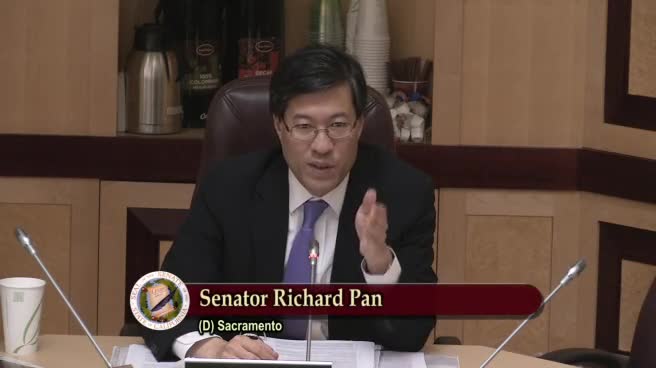 4MIN
Senate Standing Committee on Business, Professions and Economic Development
 1MIN
Assembly Floor
 1MIN
Senate Floor
 2MIN
Senate Standing Committee on Appropriations
Bill Author

Bill Co-Author(s):