AB 299: Public health: drownings.
- Session Year: 2015-2016
- House: Assembly
- Latest Version Date: 2015-04-23
Existing law establishes the State Department of Public Health in state government. Existing law vests within the department certain duties and powers to protect and preserve the public health. Existing law provides for the regulation of recreational water use, as specified, including, but not limited to, swimming pools and wave pools.
This bill would require the State Department of Public Health to create, by regulation, a submersion incident report form for the reporting of all statewide drownings or nonfatal drownings, as specified. The bill would require the form to be used and completed by every local law enforcement entity, fire department, and any other first responder, as defined, within 72 hours for every drowning or nonfatal drowning for which the entity, department, or first responder provides services or investigates and for which a person is treated or hospitalized for respiratory distress. The bill would require the form to be submitted to the department and each local county health department. The bill would require local county health departments to send aggregated data quarterly to the department. The bill would require the department and those entities each local county health department to compile specified data from those forms and to post that data annually on their Internet Web sites.
By imposing additional duties on local entities, this bill would impose a state-mandated local program.
The California Constitution requires the state to reimburse local agencies and school districts for certain costs mandated by the state. Statutory provisions establish procedures for making that reimbursement.
This bill would provide that, if the Commission on State Mandates determines that the bill contains costs mandated by the state, reimbursement for those costs shall be made pursuant to these statutory provisions.
Existing law establishes the State Department of Public Health in state government. Existing law vests within the department certain duties and powers to protect and preserve the public health. Existing law provides for the regulation of recreational water use, as specified, including, but not limited to, swimming pools and wave pools.
This bill would require the State Department of Public Health to create, by regulation, a submersion incident report form for the reporting of all statewide drownings or near nonfatal drownings, as specified. The bill would require the form to be used and completed by every local law enforcement entity, fire department, and any other first responder, as defined, for every drowning or near nonfatal drowning for which the entity, department, or first responder provides services or investigates and for which a person is treated or hospitalized for respiratory distress. The bill would require the form to be submitted to the department, and as specified. department and each local county health department. The bill would require the department and those entities to compile specified data from those forms and to post that data annually on their Internet Web sites.
By imposing additional duties on local entities, this bill would impose a state-mandated local program.
The California Constitution requires the state to reimburse local agencies and school districts for certain costs mandated by the state. Statutory provisions establish procedures for making that reimbursement.
This bill would provide that, if the Commission on State Mandates determines that the bill contains costs mandated by the state, reimbursement for those costs shall be made pursuant to these statutory provisions.
Existing law establishes the State Department of Public Health in state government. Existing law vests within the department certain duties and powers to protect and preserve the public health. Existing law provides for the regulation of recreational water use, as specified, including, but not limited to, swimming pools and wave pools.
This bill would require the State Department of Public Health to create, by regulation, a submersion incident report form for the reporting of all statewide drownings or near drownings, as specified. The bill would require the form to be used and completed by every local law enforcement entity, fire department, and any other first responder, as defined, for every drowning or near drowning for which the entity, department, or first responder provides services or investigates. The bill would require the form to be submitted to the department, and as specified.
By imposing additional duties on local entities, this bill would impose a state-mandated local program.
The California Constitution requires the state to reimburse local agencies and school districts for certain costs mandated by the state. Statutory provisions establish procedures for making that reimbursement.
This bill would provide that, if the Commission on State Mandates determines that the bill contains costs mandated by the state, reimbursement for those costs shall be made pursuant to these statutory provisions.
This act shall be known and may be cited as the Brandon Patrick Water Safety Act.
SEC. 2.Article 7 (commencing with Section 116090.5) is added to Chapter 5 of Part 10 of Division 104 of the Health and Safety Code, to read:7.Drownings116090.5.(a)The department shall, by regulation, create a submersion incident report form for the reporting of all statewide drownings or nonfatal drownings for use as required pursuant to this section. The form shall, at a minimum, include all of the following:
(1)The title, Submersion Incident Report Form.
(2)A box to be filled in entitled, Basic Incident Information to include the date of incident, time of incident, address of incident, and type of dwelling. For the type of dwelling, the form shall include an additional question as to whether the dwelling was a house, apartment, or other____ (specify).
(3)A box to be filled in entitled, Victim Information to include the age and gender of the victim, the victims race or ethnicity, where the victim was last seen, the estimated length of time submersed, the type of clothing worn by the victim, whether a flotation device was worn by the victim, and the circumstances that led to the drowning or nonfatal drowning. For those circumstances, the form shall include an additional question as to whether drugs, alcohol, trauma, a preexisting condition, or other____ (specify) led to, or were involved in, the drowning or nonfatal drowning.
(4)A box to be filled in entitled, Water Source Information to include a description of the site of incident, water clarity, water depth, water type, whether there were toys or objects in the water, and, if applicable, whether the pool or spa was built before 1998. For the water type, the form shall include an additional question as to whether the water type was a pool, spa, lake, river, pond, bathtub, ocean, or other____ (specify).
(5)A box to be filled in entitled, Adult Supervision to include a description of who the supervisor was at the time of, or prior to, the incident, and whether a child protective services referral was made. For purposes of this paragraph, the form shall also include the following:
(A)An additional question as to whether the supervisor at the time of incidence was the victims mother, father, babysitter, relative, or other ____ (specify).
(B)With regard to whether a child protective services referral has been made, a Yes or No to be printed, for the person filling out the form to circle.
(C)The question, Was submersion witnessed?
(D)The question, Was there a trained lifeguard on duty?
(6)A box to be filled in entitled, Barrier Information to include whether water barriers, other barriers, or an alarm were present or activated and information on how the water was accessed by the victim. For purposes of this paragraph, the form shall also include the following:
(A)The question, Was there a working barrier?
(B)The question, Was there a secondary barrier in working order around the water (or pool)?
(C)The question, Were there other barriers?
(7)A box to be filled in entitled, Classes/Emergency Preparation to include whether rescue equipment was near the water, whether cardiopulmonary resuscitation was performed and, if so, by whom, whether the victim ever took swim classes, and whether the victim was dead on the scene. For purposes of this paragraph, the form shall also include the following:
(A)The question, Who pulled the victim out of the water?
(B)The question, Was CPR performed?
(C)The question, If CPR was performed, was the person CPR trained?
(D)The question, If CPR was performed, what type of CPR was performed? Chest compression only, rescue breathing only, or both?
(b)(1)The form created pursuant to subdivision (a) shall be used and completed by every local law enforcement entity, fire department, and any other the first responder at the scene, within 72 hours, for every person who is treated or hospitalized for respiratory distress from submersion or immersion in liquid for which the entity, department, or first responder provides services or investigates. After completion, the form shall be submitted to the department and to the local county health department. Local county health departments shall send aggregated data quarterly to the department. This form is not required for persons rescued and released who do not have signs or symptoms of respiratory distress.
(2)Based upon the forms received pursuant to paragraph (1), the department and each local county health department shall compile and distribute statistical information on those drownings and nonfatal drownings by posting that information on their Internet Web sites on an annual basis by February 1 of each year.
(c)The department shall make the form available on its Internet Web site in a manner that allows every city, county, and city and county to download the form and use it as their official form for purposes of subdivision (b).
(d)Notwithstanding subdivision (c), every city, county, and city and county may also affix its official logo to the form and its official contact information, including, but not limited to, telephone number, facsimile number, or electronic mail address.
(e)For purposes of this section, the following terms shall have the following meanings:
(1)Department means the State Department of Public Health.
(2)Drowning means the process of experiencing respiratory impairment from submersion or immersion in liquid.
(3)First responder includes, but is not limited to, any entity that arranges for, or provides, emergency medical services within its boundaries, including lifeguards. means an authorized registered nurse or mobile intensive care nurse, emergency medical technician-I, emergency medical technician-II, emergency medical technician-paramedic, lifeguard, firefighter, or peace officer, as defined or described by Section 1797.56, 1797.80, 1797.82, 1797.84, 1797.182, or 1797.183, respectively, or a physician and surgeon who provides prehospital emergency medical care or rescue services as an official member of a designated prehospital system.
(4)Nonfatal drowning means survival after drowning.
SEC. 3.If the Commission on State Mandates determines that this act contains costs mandated by the state, reimbursement to local agencies and school districts for those costs shall be made pursuant to Part 7 (commencing with Section 17500) of Division 4 of Title 2 of the Government Code.
This act shall be known and may be cited as the Brandon Patrick Water Safety Act.
SECTION 1.SEC. 2.Article 7 (commencing with Section 116090.5) is added to Chapter 5 of Part 10 of Division 104 of the Health and Safety Code, to read:7.Drownings116090.5.(a)The department shall, by regulation, create a submersion incident report form for the reporting of all statewide drownings or near nonfatal drownings for use as required pursuant to this section. The form shall, at a minimum, include all of the following:
(1)The title, Submersion Incident Report Form.
(2)A box to be filled in entitled, Basic Incident Information to include the date of incident, time of incident, address of incident, and type of dwelling. For the type of dwelling, the form shall include an additional question as to whether the dwelling was a house, apartment, or other____ (specify).
(3)A box to be filled in entitled, Victim Information to include the age and gender of the victim, the victims race or ethnicity, where the victim was last seen, the estimated length of time submersed, the type of clothing worn by the victim, and whether alcohol or drug use was involved. whether a flotation device was worn by the victim, and the circumstances that led to the drowning or nonfatal drowning. For those circumstances, the form shall include an additional question as to whether drugs, alcohol, trauma, a preexisting condition, or other____ (specify) led to, or were involved in, the drowning or nonfatal drowning.
(4)A box to be filled in entitled, Water Source Information to include a description of the site of incident, water clarity, water depth, water type, whether there were toys or objects in the water, and, if applicable, whether the pool or spa was built before 1998. For the water type, the form shall include an additional question as to whether the water type was a pool, spa, lake, river, pond, bathtub, ocean, or other____ (specify).
(5)A box to be filled in entitled, Adult Supervision to include a description of who the supervisor was at the time of, or prior to, the incident, and whether a child protective services referral was made. For purposes of this paragraph, the form shall also include the following:
(A)An additional question as to whether the supervisor at the time of incidence was the victims mother, father, babysitter, relative, or other ____ (specify).
(B)With regard to whether a child protective services referral has been made, a Yes or No to be printed, for the person filling out the form to circle.
(C)The question, Was submersion witnessed?
(D)The question, Was there a trained lifeguard on duty?
(6)A box to be filled in entitled, Barrier Information to include whether water barriers, other barriers, or an alarm were present or activated and information on how the water was accessed by the victim. For purposes of this paragraph, the form shall also include the following:
(A)The question, Was there a working barrier?
(B)The question, Was there a secondary barrier in working order around the water (or pool)?
(C)The question, Were there other barriers?
(7)A box to be filled in entitled, Classes/Emergency Preparation to include whether rescue equipment was near the water, whether cardiopulmonary resuscitation was performed and, if so, by whom, whether the victim ever took swim classes, and whether the victim was dead on the scene. For purposes of this paragraph, the form shall also include the following:
(A)The question, Who pulled the victim out of the water?
(B)The question, Was CPR performed?
(C)The question, If CPR was performed, was the person CPR trained?
(D)The question, If CPR was performed, what type of CPR was performed? Chest compression only, rescue breathing only, or both?
(b)(1)The form created pursuant to subdivision (a) shall be used and completed by every local law enforcement entity, fire department, and any other first responder at the scene for every drowning or near drowning person who is treated or hospitalized for respiratory distress from submersion or immersion in liquid for which the entity, department, or first responder provides services or investigates. After completion, the form shall be submitted to the department and to any other entity within the city, county, or city and county that requires the collection of drowning information or near drowning information. the local county health department. This form is not required for persons rescued and released who do not have signs or symptoms of respiratory distress.
(2)Based upon the forms received pursuant to paragraph (1), the department and each local county health department shall compile and distribute statistical information on those drownings and nonfatal drownings by posting that information on their Internet Web sites on an annual basis by February 1 of each year.
(c)The department shall make the form available on its Internet Web site in a manner that allows every city, county, and city and county to download the form and use it as their official form for purposes of subdivision (b).
(d)Notwithstanding subdivision (c), every city, county, and city and county may also affix its official logo to the form and its official contact information, including, but not limited to, phone telephone number, facsimile number, or electronic mail address.
(e)For purposes of this section, the following definitions terms shall have the following meanings:
(1)Department means the State Department of Public Health.
(2)Drowning means the process of experiencing respiratory impairment from submersion or immersion in liquid.
(2)
(3)First responder includes, but is not limited to, any entity that arranges for, or provides, emergency medical services within its boundaries, including paramedic services lifeguards.
(4)Nonfatal drowning means survival after drowning.
SEC. 2.SEC. 3.If the Commission on State Mandates determines that this act contains costs mandated by the state, reimbursement to local agencies and school districts for those costs shall be made pursuant to Part 7 (commencing with Section 17500) of Division 4 of Title 2 of the Government Code.
(a)The department shall, by regulation, create a submersion incident report form for the reporting of all statewide drownings or near drownings for use as required pursuant to this section. The form shall, at a minimum, include all of the following:
(1)The title, Submersion Incident Report Form.
(2)A box to be filled in entitled, Basic Incident Information to include the date of incident, time of incident, address of incident, and type of dwelling.
(3)A box to be filled in entitled, Victim Information to include the age and gender of the victim, the victims race or ethnicity, where the victim was last seen, the estimated length of time submersed, the type of clothing worn by the victim, and whether alcohol or drug use was involved.
(4)A box to be filled in entitled, Water Source Information to include a description of the site of incident, water clarity, water depth, water type, whether there were toys or objects in the water, and, if applicable, whether the pool or spa was built before 1998.
(5)A box to be filled in entitled, Adult Supervision to include a description of who the supervisor was at the time of, or prior to, the incident, and whether a child protective services referral was made.
(6)A box to be filled in entitled, Barrier Information to include whether water barriers, other barriers, or an alarm were present or activated and information on how the water was accessed by the victim.
(7)A box to be filled in entitled, Classes/Emergency Preparation to include whether rescue equipment was near the water, whether cardiopulmonary resuscitation was performed and, if so, by whom, whether the victim ever took swim classes, and whether the victim was dead on the scene.
(b)The form created pursuant to subdivision (a) shall be used and completed by every local law enforcement entity, fire department, and any other first responder for every drowning or near drowning for which the entity, department, or first responder provides services or investigates. After completion, the form shall be submitted to the department and to any other entity within the city, county, or city and county that requires the collection of drowning information or near drowning information.
(c)The department shall make the form available on its Internet Web site in a manner that allows every city, county, and city and county to download the form and use it as their official form for purposes of subdivision (b).
(d)Notwithstanding subdivision (c), every city, county, and city and county may also affix its official logo to the form and its official contact information, including, but not limited to, phone number, facscimile number, or electronic mail address.
(e)For purposes of this section, the following definitions shall have the following meanings:
(1)Department means the State Department of Public Health.
(2)First responder includes, but is not limited to, any entity that arranges for, or provides, emergency medical services within its boundaries, including paramedic services.
SEC. 2.If the Commission on State Mandates determines that this act contains costs mandated by the state, reimbursement to local agencies and school districts for those costs shall be made pursuant to Part 7 (commencing with Section 17500) of Division 4 of Title 2 of the Government Code.
|
Date
|
Status
|
|---|---|
| Feb 12, 2015 | Read first time. To print. |
| Feb 13, 2015 | From printer. May be heard in committee March 15. |
| Feb 23, 2015 | Referred to Com. on HEALTH. |
| Apr 13, 2015 | From committee chair, with author's amendments: Amend, and re-refer to Com. on HEALTH. Read second time and amended. |
| Apr 14, 2015 | Re-referred to Com. on HEALTH. |
| Apr 22, 2015 | From committee: Amend, and do pass as amended and re-refer to Com. on APPR. (Ayes 19. Noes 0.) (April 21). |
| Apr 23, 2015 | Read second time and amended. |
| Apr 27, 2015 | Re-referred to Com. on APPR. |
| May 6, 2015 | In committee: Set, first hearing. Referred to APPR. suspense file. |
| May 28, 2015 | In committee: Held under submission. |
| Jan 31, 2016 | Died pursuant to Article IV, Sec. 10(c) of the Constitution. |
| Feb 1, 2016 | From committee: Filed with the Chief Clerk pursuant to Joint Rule 56. |
|
Date
|
Description
|
Location
|
Votes
|
|
|---|---|---|---|---|
| Apr 21, 2015 | Do pass as amended and be re-referred to the Committee on [Appropriations] | Assembly Standing Committee on Health |
Passed |
This list shows positions taken on this bill by organizations on the date displayed, which is linked to the original source.
Positions by individuals are not included.
|
Organization
|
Position
|
Date
|
|---|---|---|
| American College of Emergency Physicians | * Support | Apr 21, 2015 |
| California Attractions And Parks Association | * Against | Apr 21, 2015 |
| California Coalition for Children's Safety and Health | ** Support | Apr 21, 2015 |
| California Collaboration For Youth | ** Support | Apr 21, 2015 |
| California Travel Association | * Against | Apr 21, 2015 |
| Health Officers Association Of California | ** Support | Apr 21, 2015 |
| Lifeguards Without Borders | ** Support | Apr 21, 2015 |
| McCue and Koepke | * Support | Apr 21, 2015 |
| Rialto Fire Department | * Support | Apr 21, 2015 |
| Safe Kids California | ** Support | Apr 21, 2015 |
| Safe Kids San Diego | ** Support | Apr 21, 2015 |
| Starfish Aquatics Institute | ** Support | Apr 21, 2015 |
| Stew Leonard III Water Safety Foundation | ** Support | Apr 21, 2015 |
AB 299
Page 2
Date of Hearing: May 6, 2015
ASSEMBLY COMMITTEE ON APPROPRIATIONS
Jimmy Gomez, Chair
AB 299
(Brown) – As Amended April 23, 2015
Policy Committee: |
Health |
Vote: |
19 - 0 |
|
|
|
|
|
|
|
|
Urgency: No State Mandated Local Program: Yes Reimbursable: Yes
SUMMARY:
This bill requires the California Department of Public Health (CDPH) to develop a submersion incident form for nonfatal and fatal drowning events, and specifies data elements to be collected.
It also requires first responders to complete the form for every incident and submit the form to local health departments, who in turn must submit data to CDPH, and requires local and state health departments to compile and distribute statistical information on their website annually.
FISCAL EFFECT:
Potential one-time GF costs to CDPH for program development and to build a data collection system. There are numerous ways to construct such a system, but as the data collection is an ongoing requirement, a web-based system that allows local public health departments to upload data in a standard format would likely be an efficient solution. Depending on the design, this could cost in excess of $150,000 GF. Alternatively, CDPH could rely on manual form submittal and aggregation, but this would have higher ongoing costs and would not be cost-efficient.
Minor ongoing GF costs to CDPH to compile, analyze and post information, and to maintain the database.
There is a potential for state-reimbursable mandated costs for local health departments, but the total number of reports is likely to be small and dispersed among counties, so the likelihood of mandate claims is almost negligible. Staff estimates estimated around 1,300 reports per year statewide with full compliance, with total costs in the thousands of dollars.
Local public and private first responders will incur minor additional costs for data collection, but these costs are not reimbursable.
COMMENTS:
Purpose. According to the author, this bill seeks to gather uniform data on drowning and nonfatal-drowning events that would be submitted to the county and state for the use of drowning prevention education programs. While the death certificate filled out when a drowning results in a fatality provides some data on these events, no such data is gathered for near-drowning events. It is at the discretion of local municipalities to create a drowning report form and gather data, and most do not gather such data. The information gathered may vary from county to county and among those that do gather this data, however, the type of information gathered is inconsistent. The author asserts that this data is necessary for policymakers to craft tailored programs to prevent the unnecessary loss of life. Drowning is the number one cause of death for toddlers.
Staff Comments. While it is clear data is useful for understanding why and how often near-drowning incidents occur, the value of this magnitude of data collection is unclear. Whenever data is collected, there is a cost added to the activity. It may be the case, but it is unclear that the benefit outweighs the overall cost of this data collection. Staff notes the following issues for consideration:
To what end? Data is best collected when it is actionable and can inform practice. Will the data be used for targeted interventions in all the places it is collected? Local priorities may differ. Unless data collection informs local practice, the necessity of collecting local data in all jurisdictions is questionable.
Geography. Does all the data need to be collected over the entire state, or could collection in a smaller geography provide valuable information that could inform practice statewide? The circumstances surrounding near-drownings in pools, for example, may not vary significantly from one location to another. The CDC indicates, for example, lack of supervision, lack of barriers, failure to wear life jackets, and alcohol use are known risk factors. Mandating the range of data collection in this bill statewide is only necessary if data in one locale differ substantially from data in another locale. This may indeed be the case, but should be justified.
Frequency. In general, the periodicity with which data is reported should be as infrequent as possible to minimize workload. Some surveys are done on a biennial basis, for example, and provide a useful snapshot without the ongoing burden of data collection. Is there a clear necessity to collect data on an ongoing basis, and aggregate and report on a quarterly basis?
Singling out one type of injury. There does not appear to be precedent for this type of data collection by first responders for public health purposes. Is near-drowning the only condition for which data collection is imperative? Does similar logic apply to falls, gun injuries, or severe burns, for example?
Analysis Prepared by: Lisa Murawski / APPR. / (916) 319-2081
AB 299
Page 5
Date of Hearing: April 21, 2015
ASSEMBLY COMMITTEE ON HEALTH
Bonta, Chair
AB 299
(Brown) – As Amended April 13, 2015
SUBJECT: Public health: drownings.
SUMMARY: Requires the Department of Public Health (DPH) to develop a submersion incident form to collect standardized information regarding drowning or nonfatal-drowning events, as specified. Requires local law enforcement entities, fire departments, or first responders to complete the form for every drowning or nonfatal-drowning incident and submit the form to DPH. Specifically, this bill:
Requires DPH to develop, by regulation, a submersion incident form to be used for local entities to report drowning and nonfatal drowning incidents including, at least, the following categories entitled:
"Basic Incident Information," including date, time, address, and type of dwelling, as specified;
"Victim Information," including age, gender, race or ethnicity, where the victim was last seen, the estimated length of time submerse, the type of clothing worn by the victim, whether a flotation device was worn by the victim, and a question about additional circumstances such as drugs, alcohol, trauma, or preexisting conditions that led to or were involved in the incident;
"Water Source Information," including a description of the site, water clarity, water depth, water type, as specified, whether there were toys or objects in the water, and, if applicable, whether the pool or spa was built before 1998;
"Adult Supervision," including a description of who the supervisor was at the time of the incident, their relationship to the victim, whether a child protective services referral was made and by whom, whether the submersion was witnessed, and whether there was a trained lifeguard on duty;
"Barrier Information," describing the presence of water or other barriers, or alarms, and additional questions about these barriers; and,
"Classes / Emergency Preparation," including whether rescue equipment was near the water, whether cardiopulmonary resuscitation (CPR) was performed, and by whom, whether the victim ever took swim classes, whether the victim was dead on the scene, and additional questions pertaining to the training of the person giving CPR, and type of CPR used.
Requires the form developed in 1) above to be completed by every local law enforcement entity, fire department, or other first responder at the scene for each person who is treated or hospitalized for respiratory distress from submersion or immersion in liquid that the entity, department, or first responder provides services or investigates.
Requires the completed form in 1) above to be submitted to DPH.
Specifies that the form in 1) above is not required for persons rescued and released who do not have signs or symptoms of respiratory distress.
Requires DPH and each local county health department to compile and distribute statistical information on drowning and nonfatal drowning incidents annually and post the reports on their Website by February 1 of each year.
Requires the form to be made available by DPH on its internet Website; requires each city, county, or city and county to use the form as their official form. Permits local jurisdictions to affix their own seal and contact information to the form.
Defines, for the purposes of this bill, drowning, nonfatal drowning, and first responder.
EXISTING LAW:
Authorizes the DPH to establish public swimming pool regulations, in order to meet current health and safety practices, standards and operational requirements.
Under the Harbor and Navigation Code, requires the Division of Boating and Waterways to collect data from accidents that occur in boats. Requires the operator of every recreational vessel to file a written report whenever a boating accident occurs which results in death, disappearance, injury that requires medical attention beyond first aid, total property damage in excess of $500, or complete loss of a vessel.
FISCAL
EFFECT: This bill has not been analyzed by a fiscal committee.
COMMENTS:
PURPOSE OF THIS BILL. According to the author, this bill seeks to gather uniform data on drowning and nonfatal-drowning events that would be submitted to the county and state for the use of drowning prevention education programs. While the death certificate filled out when a drowning results in a fatality provides some data on these events, no such data is gathered for near-drowning events. It is at the discretion of local municipalities to create a drowning report form and gather data, and most do not gather such data. The information gathered may vary from county to county and among those, the type of information gathered is inconsistent. The author asserts that this data is necessary for policymakers to craft tailored programs to prevent the unnecessary loss of life.
BACKGROUND. According to DPH, drowning takes the lives of more California toddlers than any other kind of accident. Children one to four years old are at greatest risk. Most of these drowning events take place at the homes of parents, relatives, or neighbors. Children who manage to survive a “near drowning” (also described as a nonfatal drowning) often suffer permanent brain damage from lack of oxygen. According to the Department of Developmental Services, victims of near drowning accidents often experience disabilities for the remainder of their lives. These include central nervous system damage contributing to varying levels of brain damage, resulting in loss of memory, seizures, learning disabilities, paralysis, and sometimes coma. The surviving victims may also experience a lifetime of multiple medical problems including respiratory, cardiovascular, and neuromuscular disorders.
CURRENT DATA COLLECTION. DPH states that it currently collects a limited amount of information on drowning and near drowning incidents through its standard vital statistics surveillance efforts using death, hospital, and emergency department administrative records. The vital statistics and medical records data on drowning incidents are available from DPH in several ways. The Safe and Active Communities Branch maintains the EpiCenter – California Injury Data Online – as a user-friendly 24/7 query system that allows users to get basic drowning and near drowning data and create custom tables on the related demographics (e.g. county, age, gender, race/ethnicity). It can be accessed online at http://epicenter.cdph.ca.gov. The Office of Vital Records also provides access to the death data and the Office of Statewide Health Planning and Development maintains the hospital and Emergency Department discharge data.
DPH states that it does not collect data from first responders for any type of injury. First responder data are collected through the local Emergency Medical Services agencies and reported to state (i.e., California Emergency Medical Services Agency) and national sources.
Submersion Incident Report Form Project. According to information provided by the author, Riverside and San Bernardino Counties have implemented successful drowning data collection programs that were used as the model for this bill. Riverside County Injury Prevention Services identified the need for more extensive and meaningful data to better understand how and why drowning tragedies occur. In 2004, with First 5 funding, the Submersion Incident Report Form (SIRF) was developed in coordination with the SafeKids, Inland Empire organization, Riverside Public Health Agency, and the Drowning Prevention Network.
The SIRF Project is a data collection project that utilizes first response agencies (law enforcement, fire departments, paramedics, emergency medical technicians) to report key information from all fatal and non-fatal drowning incidents that occur in Riverside County. Data are collected on adult and child victims. San Bernardino County started using SIRF in 2007. However, the use of the SIRF in San Bernardino and Riverside Counties is not mandatory and many drowning and nonfatal drownings go unreported. The program consists of pre-hospital first responders filling out the form and submitting it to local county health departments. San Bernardino County Health Department is starting to transition to collecting data. Inland Empire Safe Kids currently collects the data. The data are then reviewed by the local drowning prevention coalition and then a plan is developed to focus their efforts on areas that have special events especially with limited budgets.
The program allows them to track and notice changes in drowning incidents and take the necessary steps to reduce drowning events. For example, if they notice a spike in drownings at a lake, they will either sponsor a billboard or host a “Water Safety Day” to raise awareness in the area. With the drowning prevention awareness day, they’d look for deficiencies that need to be addressed: swim lessons; CPR; education; etc. Being able to decrease drownings also saves the local and state governments significant amounts of funds by not having to treat drowning and non-fatal drowning victims. The federal Centers for Disease Control and Prevention reported in 2000 the annual cost spent on non-fatal drownings in the U.S. is $87 billion.
SUPPORT. The Rialto Fire Department, sponsor of this bill, points out that current data collection on drowning incidents has no uniformity, if collected at all. Because of this, valuable data are lost that could help reduce preventable deaths. The Health Officers Association of California states that drownings and near-drownings are a serious public health incident that local health officers are working to combat every day. A statewide report on drowning and near-drowning events would afford ample opportunities for health officers, among other public health leaders, to thoroughly review the circumstances surrounding drowning-related deaths and injuries to effectively intervene and reduce the occurrence of these tragic incidents.
PREVIOUS LEGISLATION. AB 3305 (Setencich), Chapter 925, Statutes of 1996, enacts the Swimming Pool Safety Act to require sellers of single-family homes to disclose, effective July 1, 1997, whether a swimming pool or spa has a specified fence, cover, or other safety feature and requires that swimming pools constructed after January 1, 1998 must have specified safety features.
POLICY COMMENTS.
Time vs benefit. While the data collected would certainly be valuable to future drowning-prevention efforts, the time required to accurately fill out this form might put undue burden on first responders. How will the entity bill or receive reimbursement for the time spent filling out the form?
Is this overprescriptive? It is valuable to have clear legislative intent when directing a state agency to promulgate a new regulation, but this bill may be overprescriptive in the specificity of the language. Why have DPH promulgate regulations if the exact language to be used on the form is already specified?
SUGGESTED AMENDMENTS.
Duplication of efforts. As drafted, this bill requires first responders to submit completed forms to both local health departments and DPH. This bill also requires both local health departments and DPH to perform statistical analysis of incidents annually. The author may wish to consider whether this is unnecessary duplication of efforts.
Time frame for reporting. This bill does not specify a time frame in which first responder entities must submit the forms to DPH, although it does require analysis of the data annually. The author should amend this bill to clarify the timeframe required for first responder entities to submit completed forms.
Definition of first responder. First responder is used and defined in other parts of the Health and Safety Code. For consistency, the author should amend this bill to use a previously established definition of first responder instead of creating a new one.
REGISTERED SUPPORT / OPPOSITION:
Support
Rialto Fire Department (sponsor)
American College of Emergency
Physicians, California Chapter
California Coalition for
Children's Safety and Health
California Collaboration for
Youth
Health Officers Association of California
Lifeguards
Without Borders
Safe Kids California
Safe Kids San
Diego
Starfish Aquatics Institute
Stew Leonard III Water
Safety Foundation
Opposition
None on file.
Analysis Prepared by: Dharia McGrew/HEALTH/(916) 319-2097
Discussed in Hearing
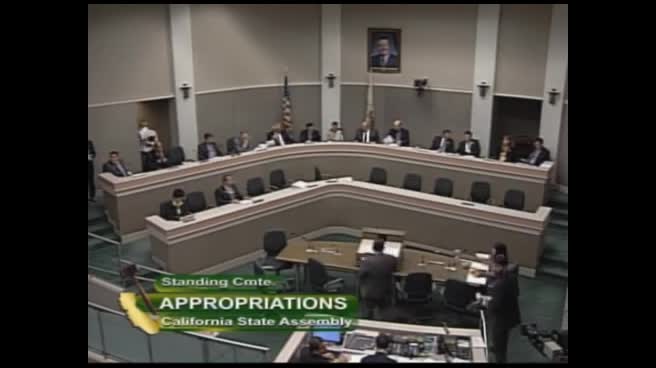 2MIN
Assembly Standing Committee on Appropriations
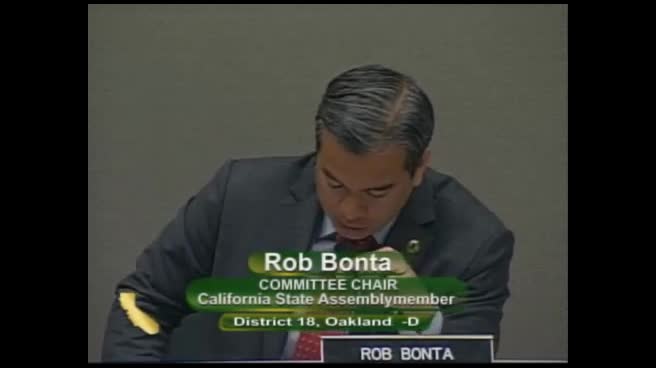 15MIN
Assembly Standing Committee on Health
Bill Author

Bill Co-Author(s):