AB 313: Enhanced infrastructure financing districts.
- Session Year: 2015-2016
- House: Assembly
- Latest Version Date: 2015-09-22
Existing law authorizes the legislative body of a city or a county, defined to include a city and county, to establish an enhanced infrastructure financing district to finance public capital facilities or other specified projects of communitywide significance, including, but not limited to, the acquisition, construction, or rehabilitation of housing for persons of low and moderate income for rent or purchase. Existing law requires proceedings for the establishment of a district to be instituted by the adoption of a resolution of intention to establish the proposed district, and imposes specified duties on the legislative body with respect to the preparation, proposal, and adoption of an infrastructure financing plan after that resolution of intent is adopted.
Existing law also requires the legislative body to establish a public financing authority, defined as the governing board of the enhanced infrastructure financing district, prior to the adoption of a resolution to form an enhanced infrastructure district and adopt an infrastructure financing plan.
This bill would require, after the adoption of a resolution of intention to establish the proposed district, the legislative body to send a copy of the resolution to the public financing authority. This bill would revise the duties of the public financing authority after the resolution of intention to establish the proposed district has been adopted, so that the public financing authority, instead of the legislative body, will perform the specified duties related to the preparation, proposal, and adoption of the infrastructure financing plan and the adoption of the formation of the district. The bill would also require the legislative body to establish the public financing authority at the same time that it adopts a resolution of intention.
This bill would provide that if a resolution is adopted to abandon proceedings to adopt the infrastructure financing plan, then the public financing authority ceases to exist and the legislative body is prohibited from enacting a resolution of intent to establish a district that includes the same geographic area within one year of the date of the resolution abandoning the proceedings.
This bill would authorize the enhanced infrastructure financing district to finance the acquisition, construction, or rehabilitation of housing for persons of very low income for rent or purchase, as provided.
Existing law authorizes an enhanced infrastructure financing district to utilize any powers under the Polanco Redevelopment Act, which authorizes a redevelopment agency to take action to remedy or remove a release of hazardous substances on, under, or from property, subject to specified conditions. Existing law also authorizes a local agency to take any action similar to that authorized under the Polanco Redevelopment Act.
This bill would instead authorize an enhanced infrastructure financing district to utilize any powers under either law.
Existing law requires the infrastructure financing plan to provide for specific actions if any dwelling units are proposed to be removed or destroyed in the course of private development or public works construction within the area of the district, including, but not limited to, causing or requiring the construction or rehabilitation, for rent or sale to persons or families of low or moderate income, of an equal number of replacement dwelling units at affordable housing cost within the territory of the district and providing relocation assistance to persons displaced by any public or private development occurring within the territory of the district.
This bill would revise and recast those provisions, and would require the infrastructure financing plan to contain those provisions if any dwelling units are proposed to be removed or destroyed either in the course of public works construction or private development within the area of the district subject to a written agreement with the district or financed in whole or in part by the district.
Article XIIIB of the California Constitution (Article XIIIB) prohibits the annual appropriations subject to limitation of a local government, defined to include a special district, from exceeding its annual appropriations limit, but allows for that appropriations limit to be established or changed by the electors of that entity in conformity with existing constitutional and statutory laws. Article XIIIB defines appropriations subject to limitation as any authorization to expend during a fiscal year the proceeds of taxes levied by or for that entity. Existing law allows the public financing authority to submit a proposition to establish or change the appropriations limit of an enhanced infrastructure financing district to the qualified electors of a proposed or established district, which is effective if approved by the qualified electors.
Existing law also authorizes an enhanced infrastructure financing district to fund infrastructure projects through tax increment financing, pursuant to the infrastructure financing plan and the agreement of affected taxing entities. Existing law defines affected taxing entity as any governmental taxing agency which levied or had levied on its behalf a property tax on all or a portion of the property located in the proposed district in the fiscal year prior to the designation of the district, but not including any county office of education, school district, or community college district.
This bill would repeal those provisions allowing the public financing authority to submit a proposition to establish or change the appropriations limit of the district, and instead provide that the allocation and payment to an enhanced infrastructure district of tax increment for the purpose of paying specified amounts incurred by the district is not the receipt by a district of proceeds of taxes levied by or on behalf of the district within the meaning or for the purposes of Article XIIIB, and is not the receipt of proceeds of taxes by, or an appropriation subject to limitation of, any other public body within the meaning or for purposes of Article XIIIB.
This bill would also expand the definition of affected taxing entity to include a special district, as defined, if the special district is providing any portion of the funding included in the infrastructure financing plan.
This bill would incorporate additional changes in Sections 53398.52, 53398.62, and 53398.69 of the Government Code proposed by SB 63 that would become operative only if SB 63 and this bill are both chaptered and become effective on or before January 1, 2016, and this bill is chaptered last.
Existing law authorizes the legislative body of a city or a county, defined to include a city and county, to establish an enhanced infrastructure financing district to finance public capital facilities or other specified projects of communitywide significance, including, but not limited to, the acquisition, construction, or rehabilitation of housing for persons of low and moderate income for rent or purchase. Existing law requires proceedings for the establishment of a district to be instituted by the adoption of a resolution of intention to establish the proposed district, and imposes specified duties on the legislative body with respect to the preparation, proposal, and adoption of an infrastructure financing plan after that resolution of intent is adopted.
Existing law also requires the legislative body to establish a public financing authority, defined as the governing board of the enhanced infrastructure financing authority, prior to the adoption of a resolution to form an enhanced infrastructure district and infrastructure financing plan.
This bill would require, after the adoption of a resolution of intention to establish the proposed district, the legislative body to send a copy of the resolution to the public financing authority. This bill would revise the duties of the public financing authority after the resolution of intention to establish the proposed district has been adopted, so that the public financing authority, instead of the legislative body, will perform the specified duties related to the preparation, proposal, and adoption of the infrastructure financing plan and the adoption of the formation of the district. The bill would also require the legislative body to establish the public financing authority at the same time that it adopts a resolution of intention.
This bill would provide that if a resolution is adopted to abandon proceedings to adopt the infrastructure financing plan, then the public financing authority ceases to exist and the legislative body is prohibited from enacting a resolution of intent to establish a district that includes the same geographic area within one year of the date of the resolution abandoning the proceedings.
This bill would authorize the enhanced infrastructure financing district to finance the acquisition, construction, or rehabilitation of housing for persons of very low income for rent or purchase, as provided.
Existing law authorizes an enhanced infrastructure financing district to utilize any powers under the Polanco Redevelopment Act, which authorizes a redevelopment agency to take action to remedy or remove a release of hazardous substances on, under, or from property, subject to specified conditions. Existing law also authorizes a local agency to take any action similar to that authorized under the Polanco Redevelopment Act.
This bill would instead authorize an enhanced infrastructure financing district to utilize any powers under either law.
Existing law requires the infrastructure financing plan to provided for specific actions if any dwelling units are proposed to be removed or destroyed in the course of private development or public works construction within the area of the district, including, but not limited to, causing or requiring the construction or rehabilitation, for rent or sale to persons or families of low or moderate income, of an equal number of replacement dwelling units at affordable housing cost within the territory of the district and providing relocation assistance to persons displaced by any public or private development occurring within the territory of the district.
This bill would revise and recast those provisions, and would require the infrastructure financing plan to contain those provisions if any dwelling units are proposed to be removed or destroyed either in the course of private development that is financed by the district or by public works construction resulting from the infrastructure financing plan. public works construction or private development within the area of the district subject to a written agreement with the district or financed in whole or in part by the district.
Article XIIIB of the California Constitution (Article XIIIB) prohibits the annual appropriations subject to limitation of a local government, defined to include a special district, from exceeding its annual appropriations limit, but allows for that appropriations limit to be established or changed by the electors of that entity in conformity with existing constitutional and statutory laws. Article XIIIB defines appropriations subject to limitation as any authorization to expend during a fiscal year the proceeds of taxes levied by or for that entity. Existing law allows the public financing authority to submit a proposition to establish or change the appropriations limit of an enhanced infrastructure financing district to the qualified electors of a proposed or established district, which is effective if approved by the qualified electors.
Existing law also authorizes an enhanced infrastructure financing district to fund infrastructure projects through tax increment financing, pursuant to the infrastructure financing plan and the agreement of affected taxing entities. Existing law defines affected taxing entity as any governmental taxing agency which levied or had levied on its behalf a property tax on all or a portion of the property located in the proposed district in the fiscal year prior to the designation of the district, but not including any county office of education, school district, or community college district.
This bill would repeal those provisions allowing the public financing authority to submit a proposition to establish or change the appropriations limit of the district, and instead provide that the allocation and payment to an enhanced infrastructure district of tax increment for the purpose of paying specified amounts incurred by the district is not the receipt by a district of proceeds of taxes levied by or on behalf of the district within the meaning or for the purposes of Article XIIIB, and is not the receipt of proceeds of taxes by, or an appropriation subject to limitation of, any other public body within the meaning or for purposes of Article XIIIB.
This bill would also expand the definition of affected taxing entity to include a special district, as defined, if the special district is providing any portion of the funding included in the infrastructure financing plan.
This bill would incorporate additional changes in Sections 53398.52, 53398.62, and 53398.69 of the Government Code proposed by SB 63 that would become operative only if SB 63 and this bill are both chaptered and become effective on or before January 1, 2016, and this bill is chaptered last.
Existing law authorizes the legislative body of a city or a county, defined to include a city and county, to establish an enhanced infrastructure financing district to finance public capital facilities or other specified projects of communitywide significance, including, but not limited to, the acquisition, construction, or rehabilitation of housing for persons of low and moderate income for rent or purchase. Existing law requires proceedings for the establishment of a district to be instituted by the adoption of a resolution of intention to establish the proposed district, and imposes specified duties on the legislative body with respect to the preparation, proposal, and adoption of an infrastructure financing plan after that resolution of intent is adopted.
Existing law also requires the legislative body to establish a public financing authority, defined as the governing board of the enhanced infrastructure financing authority, prior to the adoption of a resolution to form an enhanced infrastructure district and infrastructure financing plan.
This bill would require, after the adoption of a resolution of intention to establish the proposed district, the legislative body to send a copy of the resolution to the public financing authority. This bill would revise the duties of the public financing authority after the resolution of intention to establish the proposed district has been adopted, so that the public financing authority, instead of the legislative body, will perform the specified duties related to the preparation, proposal, and adoption of the infrastructure financing plan and the adoption of the formation of the district. The bill would also require the legislative body to establish the public financing authority at the same time that it adopts a resolution of intention.
This bill would provide that if a resolution is adopted to abandon proceedings to adopt the infrastructure financing plan, then the public financing authority ceases to exist and the legislative body is prohibited from enacting a resolution of intent to establish a district that includes the same geographic area within one year of the date of the resolution abandoning the proceedings.
This bill would authorize the enhanced infrastructure financing district to finance the acquisition, construction, or rehabilitation of housing for persons of very low income for rent or purchase, as provided.
Existing law authorizes an enhanced infrastructure financing district to utilize any powers under the Polanco Redevelopment Act, which authorizes a redevelopment agency to take action to remedy or remove a release of hazardous substances on, under, or from property, subject to specified conditions. Existing law also authorizes a local agency to take any action similar to that authorized under the Polanco Redevelopment Act.
This bill would instead authorize an enhanced infrastructure financing district to utilize any powers under either law.
Existing law requires the infrastructure financing plan to provided for specific actions if any dwelling units are proposed to be removed or destroyed in the course of private development or public works construction within the area of the district, including, but not limited to, causing or requiring the construction or rehabilitation, for rent or sale to persons or families of low or moderate income, of an equal number of replacement dwelling units at affordable housing cost within the territory of the district and providing relocation assistance to persons displaced by any public or private development occurring within the territory of the district.
This bill would revise and recast those provisions, and would require the infrastructure financing plan to contain those provisions if any dwelling units are proposed to be removed or destroyed either in the course of private development that is financed by the district or by public works construction resulting from the infrastructure financing plan.
Article XIIIB of the California Constitution (Article XIII B) prohibits the annual appropriations subject to limitation of a local government, defined to include a special district, from exceeding its annual appropriations limit, but allows for that appropriations limit to be established or changed by the electors of that entity in conformity with existing constitutional and statutory laws. Article XIII B defines appropriations subject to limitation as any authorization to expend during a fiscal year the proceeds of taxes levied by or for that entity. Existing law allows the public financing authority to submit a proposition to establish or change the appropriations limit of an enhanced infrastructure financing district to the qualified electors of a proposed or established district, which is effective if approved by the qualified electors.
Existing law also authorizes an enhanced infrastructure financing district to fund infrastructure projects through tax increment financing, pursuant to the infrastructure financing plan and the agreement of affected taxing entities, as defined. entities. Existing law defines affected taxing entity as any governmental taxing agency which levied or had levied on its behalf a property tax on all or a portion of the property located in the proposed district in the fiscal year prior to the designation of the district, but not including any county office of education, school district, or community college district.
This bill would repeal those provisions allowing the public financing authority to submit a proposition to establish or change the appropriations limit of the district, and instead provide that the allocation and payment to an enhanced infrastructure district of tax increment for the purpose of paying specified amounts incurred by the district is not the receipt by a district of proceeds of taxes levied by or on behalf of the district within the meaning or for the purposes of Article XIII B, and is not the receipt of proceeds of taxes by, or an appropriation subject to limitation of, any other public body within the meaning or for purposes of Article XIII B.
This bill would also expand the definition of affected taxing entity to include a special district, as defined, if the special district is providing any portion of the funding included in the infrastructure financing plan.
Existing law authorizes the legislative body of a city or a county, defined to include a city and county, to establish an enhanced infrastructure financing district to finance public capital facilities or other specified projects of communitywide significance, including, but not limited to, the acquisition, construction, or rehabilitation of housing for persons of low and moderate income for rent or purchase. Existing law requires proceedings for the establishment of a district to be instituted by the adoption of a resolution of intention to establish the proposed district, and imposes specified duties on the legislative body with respect to the preparation, proposal, and adoption of an infrastructure financing plan after that resolution of intent is adopted.
Existing law also requires the legislative body to establish a public financing authority, defined as the governing board of the enhanced infrastructure financing authority, prior to the adoption of a resolution to form an enhanced infrastructure district and infrastructure financing plan.
This bill would require, after the adoption of a resolution of intention to establish the proposed district, the legislative body to send a copy of the resolution to the public financing authority. This bill would revise the duties of the public financing authority after the resolution of intention to establish the proposed district has been adopted, so that the public financing authority, instead of the legislative body, will perform the specified duties related to the preparation, proposal, and adoption of the infrastructure financing plan and the adoption of the formation of the district.
This bill would provide that if a resolution is adopted to abandon proceedings to adopt the infrastructure financing plan, then the public financing authority ceases to exist and the legislative body is prohibited from enacting a resolution of intent to establish a district that includes the same geographic area within one year of the date of the resolution abandoning the proceedings.
This bill would authorize the enhanced infrastructure financing district to finance the acquisition, construction, or rehabilitation of housing for persons of very low income for rent or purchase, as provided.
Existing law authorizes an enhanced infrastructure financing district to utilize any powers under the Polanco Redevelopment Act, which authorizes a redevelopment agency to take action to remedy or remove a release of hazardous substances on, under, or from property, subject to specified conditions. Existing law also authorizes a local agency to take any action similar to that authorized under the Polanco Redevelopment Act.
This bill would instead authorize an enhanced infrastructure financing district to utilize any powers under either law.
Existing law requires the infrastructure financing plan to provided for specific actions if any dwelling units are proposed to be removed or destroyed in the course of private development or public works construction within the area of the district, including, but not limited to, causing or requiring the construction or rehabilitation, for rent or sale to persons or families of low or moderate income, of an equal number of replacement dwelling units at affordable housing cost within the territory of the district and providing relocation assistance to persons displaced by any public or private development occurring within the territory of the district.
This bill would revise and recast those provisions, and would require the infrastructure financing plan to contain those provisions if any dwelling units are proposed to be removed or destroyed either in the course of private development that is financed by the district or by public works construction resulting from the infrastructure financing plan.
Article XIIIB of the California Constitution (Article XIII B) prohibits the annual appropriations subject to limitation of a local government, defined to include a special district, from exceeding its annual appropriations limit, but allows for that appropriations limit to be established or changed by the electors of that entity in conformity with existing constitutional and statutory laws. Article XIII B defines appropriations subject to limitation as any authorization to expend during a fiscal year the proceeds of taxes levied by or for that entity. Existing law allows the public financing authority to submit a proposition to establish or change the appropriations limit of an enhanced infrastructure financing district to the qualified electors of a proposed or established district, which is effective if approved by the qualified electors.
Existing law also authorizes an enhanced infrastructure financing district to fund infrastructure projects through tax increment financing, pursuant to the infrastructure financing plan and the agreement of affected taxing entities, as defined.
This bill would repeal those provisions allowing the public financing authority to submit a proposition to establish or change the appropriations limit of the district, and instead provide that the allocation and payment to an enhanced infrastructure district of tax increment for the purpose of paying specified amounts incurred by the district is not the receipt by a district of proceeds of taxes levied by or on behalf of the district within the meaning or for the purposes of Article XIII B, and is not the receipt of proceeds of taxes by, or an appropriation subject to limitation of, any other public body within the meaning or for purposes of Article XIII B.
Unless the context otherwise requires, the definitions contained in this article shall govern the construction of this chapter.
(a)Affected taxing entity means any governmental taxing agency which levied or had levied on its behalf a property tax on all or a portion of the property located in the proposed district in the fiscal year prior to the designation of the district, but not including any county office of education, school district, or community college district. An affected taxing entity may include a special district if the special district is providing any portion of the funding included in the infrastructure financing plan adopted pursuant to Section 53398.63. For the purposes of this section, special district means an agency of the state formed for the performance of governmental or proprietary functions within limited geographic boundaries, and shall not include a school district or community college district.
(b)County means a county or a city and county.
(c)Debt means any binding obligation to repay a sum of money, including obligations in the form of bonds, certificates of participation, long-term leases, loans from government agencies, or loans from banks, other financial institutions, private businesses, or individuals.
(d)Designated official means the city or county engineer or other appropriate official designated pursuant to Section 53398.62.
(e)(1)District means an enhanced infrastructure financing district.
(2)An enhanced infrastructure financing district is a district within the meaning of Section 1 of Article XIIIA of the California Constitution.
(f)Enhanced infrastructure financing district means a legally constituted governmental entity separate and distinct from the city or county that established it pursuant to this chapter for the sole purpose of financing public facilities or other projects as authorized by this chapter. An enhanced infrastructure financing district shall be a local agency for purposes of Chapter 9 (commencing with Section 54950).
(g)Landowner or owner of land means any person shown as the owner of land on the last equalized assessment roll or otherwise known to be the owner of the land by the legislative body. The legislative body has no obligation to obtain other information as to the ownership of land, and its determination of ownership shall be final and conclusive for the purposes of this chapter. A public agency is not a landowner or owner of land for purposes of this chapter, unless the public agency owns all of the land to be included within the proposed district.
(h)Legislative body means the city council or board of supervisors.
(i)Public financing authority means the governing board of the district established pursuant to this chapter.
SEC. 2.Section 53398.51.1 of the Government Code is amended to read:53398.51.1.(a)The public financing authority shall have a membership consisting of one of the following, as appropriate:
(1)If a district has only one participating affected taxing entity, the public financing authoritys membership shall consist of three members of the legislative body of the participating entity, and two members of the public chosen by the legislative body. The appointment of the public members shall be subject to the provisions of Section 54974.
(2)If a district has two or more participating affected taxing entities, the public financing authoritys membership shall consist of a majority of members from the legislative bodies of the participating entities, and a minimum of two members of the public chosen by the legislative bodies of the participating entities. The appointment of the public members shall be subject to the provisions of Section 54974.
(b)The legislative body shall ensure the public financing authority is established at the same time that it adopts a resolution of intention pursuant to Section 53398.59.
(c) Members of the public financing authority established pursuant to this chapter shall not receive compensation but may receive reimbursement for actual and necessary expenses incurred in the performance of official duties pursuant to Article 2.3 (commencing with Section 53232) of Chapter 2.
(d) Members of the public financing authority are subject to Article 2.4 (commencing with Section 53234) of Chapter 2.
(e) The public financing authority created pursuant to this chapter shall be a local public agency subject to the Ralph M. Brown Act (Chapter 9 (commencing with Section 54950)), the California Public Records Act (Chapter 3.5 (commencing with Section 6250) of Division 7 of Title 1), and the Political Reform Act of 1974 (Title 9 (commencing with Section 81000)).
SEC. 3.Section 53398.52 of the Government Code is amended to read:53398.52.(a)(1)A district may finance any of the following:
(A)The purchase, construction, expansion, improvement, seismic retrofit, or rehabilitation of any real or other tangible property with an estimated useful life of 15 years or longer that satisfies the requirements of subdivision (b).
(B)The planning and design work that is directly related to the purchase, construction, expansion, or rehabilitation of property.
(C)The costs described in Sections 53398.56 and 53398.57.
(2)The facilities need not be physically located within the boundaries of the district. However, any facilities financed outside of a district must have a tangible connection to the work of the district, as detailed in the infrastructure financing plan adopted pursuant to Section 53398.69.
(3)A district may not finance routine maintenance, repair work, or the costs of an ongoing operation or providing services of any kind.
(b)The district shall finance only public capital facilities or other specified projects of communitywide significance that provide significant benefits to the district or the surrounding community, including, but not limited to, all of the following:
(1)Highways, interchanges, ramps and bridges, arterial streets, parking facilities, and transit facilities.
(2)Sewage treatment and water reclamation plants and interceptor pipes.
(3)Facilities for the collection and treatment of water for urban uses.
(4)Flood control levees and dams, retention basins, and drainage channels.
(5)Child care facilities.
(6)Libraries.
(7)Parks, recreational facilities, and open space.
(8)Facilities for the transfer and disposal of solid waste, including transfer stations and vehicles.
(9)Brownfield restoration and other environmental mitigation.
(10)The development of projects on a former military base, provided that the projects are consistent with the military base authority reuse plan and are approved by the military base reuse authority, if applicable.
(11)The repayment of the transfer of funds to a military base reuse authority pursuant to Section 67851 that occurred on or after the creation of the district.
(12)The acquisition, construction, or rehabilitation of housing for persons of very low, low, and moderate income, as defined in Sections 50105 and 50093 of the Health and Safety Code, for rent or purchase.
(13)Acquisition, construction, or repair of industrial structures for private use.
(14)Transit priority projects, as defined in Section 21155 of the Public Resources Code, that are located within a transit priority project area. For purposes of this paragraph, a transit priority project area may include a military base reuse plan that meets the definition of a transit priority project area and it may include a contaminated site within a transit priority project area.
(15)Projects that implement a sustainable communities strategy, when the State Air Resources Board, pursuant to Chapter 2.5 (commencing with Section 65080) of Division 2 of Title 7, has accepted a metropolitan planning organizations determination that the sustainable communities strategy or the alternative planning strategy would, if implemented, achieve the greenhouse gas emission reduction targets.
(c)The district shall require, by recorded covenants or restrictions, that housing units built pursuant to this section shall remain available at affordable housing costs to, and occupied by, persons and families of very low, low, or moderate-income households for the longest feasible time, but for not less than 55 years for rental units and 45 years for owner-occupied units.
(d)The district may finance mixed-income housing developments, but may finance only those units in such a development that are restricted to occupancy by persons of very low, low, or moderate incomes as defined in Sections 50105 and 50093 of the Health and Safety Code, and those onsite facilities for child care, after-school care, and social services that are integrally linked to the tenants of the restricted units.
(e)A district may utilize any powers under either the Polanco Redevelopment Act (Article 12.5 (commencing with Section 33459) of Chapter 4 of Part 1 of Division 24 of the Health and Safety Code) or Chapter 6.10 (commencing with Section 25403) of Division 20 of the Health and Safety Code, and finance any action necessary to implement that act.
SEC. 3.5.Section 53398.52 of the Government Code is amended to read:53398.52.(a)(1)A district may finance any of the following:
(A)The purchase, construction, expansion, improvement, seismic retrofit, or rehabilitation of any real or other tangible property with an estimated useful life of 15 years or longer that satisfies the requirements of subdivision (b).
(B)The planning and design work that is directly related to the purchase, construction, expansion, or rehabilitation of property.
(C)The costs described in Sections 53398.56 and 53398.57.
(2)The facilities are not required to be physically located within the boundaries of the district. However, any facilities financed outside of a district shall have a tangible connection to the work of the district, as detailed in the infrastructure financing plan adopted pursuant to Section 53398.69.
(3)A district shall not finance routine maintenance, repair work, or the costs of an ongoing operation or providing services of any kind.
(b)The district shall finance only public capital facilities or other specified projects of communitywide significance that provide significant benefits to the district or the surrounding community, including, but not limited to, all of the following:
(1)Highways, interchanges, ramps and bridges, arterial streets, parking facilities, and transit facilities.
(2)Sewage treatment and water reclamation plants and interceptor pipes.
(3)Facilities for the collection and treatment of water for urban uses.
(4)Flood control levees and dams, retention basins, and drainage channels.
(5)Child care facilities.
(6)Libraries.
(7)Parks, recreational facilities, and open space.
(8)Facilities for the transfer and disposal of solid waste, including transfer stations and vehicles.
(9)Brownfield restoration and other environmental mitigation.
(10)The development of projects on a former military base, provided that the projects are consistent with the military base authority reuse plan and are approved by the military base reuse authority, if applicable.
(11)The repayment of the transfer of funds to a military base reuse authority pursuant to Section 67851 that occurred on or after the creation of the district.
(12)The acquisition, construction, or rehabilitation of housing for persons of very low, low, and moderate income, as defined in Sections 50105 and 50093 of the Health and Safety Code, for rent or purchase.
(13)Acquisition, construction, or repair of industrial structures for private use.
(14)Transit priority projects, as defined in Section 21155 of the Public Resources Code, that are located within a transit priority project area. For purposes of this paragraph, a transit priority project area may include a military base reuse plan that meets the definition of a transit priority project area and it may include a contaminated site within a transit priority project area.
(15)Projects that implement a sustainable communities strategy, when the State Air Resources Board, pursuant to Chapter 2.5 (commencing with Section 65080) of Division 1 of Title 7, has accepted a metropolitan planning organizations determination that the sustainable communities strategy or the alternative planning strategy would, if implemented, achieve the greenhouse gas emission reduction targets.
(16)Port or harbor infrastructure, as defined by Section 1698 of the Harbors and Navigation Code.
(c)The district shall require, by recorded covenants or restrictions, that housing units built pursuant to this section shall remain available at affordable housing costs to, and occupied by, persons and families of very low, low, or moderate-income households for the longest feasible time, but for not less than 55 years for rental units and 45 years for owner-occupied units.
(d)The district may finance mixed-income housing developments, but may finance only those units in such a development that are restricted to occupancy by persons of very low, low, or moderate incomes as defined in Sections 50105 and 50093 of the Health and Safety Code, and those onsite facilities for child care, after-school care, and social services that are integrally linked to the tenants of the restricted units.
(e)A district may utilize any powers under either the Polanco Redevelopment Act (Article 12.5 (commencing with Section 33459) of Chapter 4 of Part 1 of Division 24 of the Health and Safety Code) or Chapter 6.1 (commencing with Section 25403) of Division 20 of the Health and Safety Code, and finance any action necessary to implement that act.
SEC. 4.Section 53398.56 of the Government Code is amended to read:53398.56.It is the intent of the Legislature that the creation of the districts should not ordinarily lead to the removal of existing dwelling units. If, however, any dwelling units are proposed to be removed or destroyed in the course of public works construction within the area of the district or private development within the area of the district that is subject to a written agreement with the district or that is financed in whole or in part by the district then the infrastructure financing plan adopted pursuant to Section 53398.69 shall contain provisions to do all of the following:
(a)If the dwelling units to be removed or destroyed are or were inhabited by persons or families of very low, low, or moderate income, as defined in Sections 50105 and 50093 of the Health and Safety Code, at any time within five years prior to establishment of the district, cause or require the construction or rehabilitation of an equal number of replacement dwelling units, within one-half mile of the location of the units to be removed or destroyed, that have an equal or greater number of bedrooms as those removed or destroyed units, within two years of the removal or destruction of the dwelling units. The replacement dwelling units shall be available for rent or sale to persons or families of very low, low, or moderate income, at affordable rent, as defined in Section 50053 of the Health and Safety Code, or at affordable housing cost, as defined in Section 50052.5 of the Health and Safety Code, to persons in the same or a lower income category (extremely low, very low, low, or moderate), as the persons displaced from, or who last occupied, the removed or destroyed dwelling units.
(b)If the dwelling units to be removed or destroyed were not inhabited by persons of low or moderate income within the period of time specified in subdivision (a), cause or require the construction or rehabilitation within one-half mile of the location of the units to be removed or destroyed of at least one unit but not less than 25 percent of the total dwelling units removed or destroyed, within two years of the removal or destruction of the dwelling units. The units constructed or rehabilitated pursuant to this subdivision shall be of equivalent size and type to the units to be removed or destroyed. An equal percentage of the replacement dwelling units constructed or rehabilitated pursuant to this subdivision shall be available for rent or sale at affordable rent, as defined in Section 50053 of the Health and Safety Code, or affordable housing cost, as defined in Section 50052.5 of the Health and Safety Code, to extremely low and very low income persons or families, as defined in Sections 50106 and 50105 of the Health and Safety Code.
(c)Comply with all relocation assistance requirements of Chapter 16 (commencing with Section 7260) of Division 7 of Title 1, for persons displaced from dwelling units by any public works construction within the area of the district or private development within the area of the district that is subject to a written agreement with the district or that is financed in whole or in part by the district as a result of the infrastructure financing plan adopted pursuant to Section 53398.69. The displacement of any persons from a dwelling unit as a result of the plan shall be deemed to be the result of public action.
(d)Ensure that removal or destruction of any dwelling units occupied by persons or families of low or moderate income not take place unless and until there has been full compliance with the relocation assistance requirements of this section, Section 53398.63, and Chapter 16 (commencing with Section 7260) of Division 7 of Title 1.
(e)(1)The district shall require, by recorded covenants or restrictions, that all dwelling units constructed or rehabilitated pursuant to this section shall remain available at affordable rent or housing cost to, and occupied by, persons and families of the same income categories as required by subdivision (a) or (b), as applicable, for the longest feasible time, but for not less than 55 years for rental units and 45 years for owner-occupied units.
(2)The district may permit sales of owner-occupied units prior to the expiration of the 45-year period for a price in excess of that otherwise permitted under this subdivision pursuant to an adopted program which protects the districts investment of moneys in the unit or units, including, but not limited to, an equity sharing program, not in conflict with another public funding source or law, which establishes a schedule of equity sharing that permits retention by the seller of a portion of those excess proceeds based on the length of occupancy. For purposes of this paragraph, the terms of the equity sharing program shall be consistent with the provisions of paragraph (2) of subdivision (c) of Section 65915, provided, however, that the program shall require any amounts recaptured by the district to be used within five years for any of the affordable housing purposes described in Section 34176.1 of the Health and Safety Code.
SEC. 5.Section 53398.57 of the Government Code is amended to read:53398.57.Any action or proceeding to attack, review, set aside, void, or annul the creation of a district, adoption of an infrastructure financing plan, including a division of taxes thereunder, or an election pursuant to this chapter shall be commenced within 30 days after the enactment of the resolution creating the district pursuant to Section 53398.69. Consistent with the time limitations of this section, such an action or proceeding with respect to a division of taxes under this chapter may be brought pursuant to Chapter 9 (commencing with Section 860) of Title 10 of Part 2 of the Code of Civil Procedure.
SEC. 6.Section 53398.62 of the Government Code is amended to read:53398.62.After adopting the resolution pursuant to Section 53398.59, the legislative body shall send a copy of the resolution to the public financing authority. The public financing authority shall designate and direct the city or county engineer or other appropriate official to prepare an infrastructure financing plan pursuant to Section 53398.63.
SEC. 6.5.Section 53398.62 of the Government Code is amended to read:53398.62.(a)Except as provided in subdivision (b), after adopting the resolution pursuant to Section 53398.59, the legislative body shall send a copy of the resolution to the public financing authority. The public financing authority shall designate and direct the city or county engineer or other appropriate official to prepare an infrastructure financing plan pursuant to Section 53398.63.
(b)In the case of a district proposed for port or harbor infrastructure, the legislative body shall designate and direct the harbor agency, except as provided in Section 1719 of the Harbors and Navigation Code, to prepare an infrastructure financing plan pursuant to Section 53398.63.
SEC. 7.Section 53398.63 of the Government Code is amended to read:53398.63.After receipt of a copy of the resolution of intention to establish a district, the official designated pursuant to Section 53395.62 shall prepare a proposed infrastructure financing plan. The infrastructure financing plan shall be consistent with the general plan of the city or county within which the district is located and shall include all of the following:
(a)A map and legal description of the proposed district, which may include all or a portion of the district designated by the legislative body in its resolution of intention.
(b)A description of the public facilities and other forms of development or financial assistance that is proposed in the area of the district, including those to be provided by the private sector, those to be provided by governmental entities without assistance under this chapter, those public improvements and facilities to be financed with assistance from the proposed district, and those to be provided jointly. The description shall include the proposed location, timing, and costs of the development and financial assistance.
(c)If funding from affected taxing entities is incorporated into the financing plan, a finding that the development and financial assistance are of communitywide significance and provide significant benefits to an area larger than the area of the district.
(d)A financing section, which shall contain all of the following information:
(1)A specification of the maximum portion of the incremental tax revenue of the city or county and of each affected taxing entity proposed to be committed to the district for each year during which the district will receive incremental tax revenue. The portion need not be the same for all affected taxing entities. The portion may change over time.
(2)A projection of the amount of tax revenues expected to be received by the district in each year during which the district will receive tax revenues, including an estimate of the amount of tax revenues attributable to each affected taxing entity for each year.
(3)A plan for financing the public facilities to be assisted by the district, including a detailed description of any intention to incur debt.
(4)A limit on the total number of dollars of taxes that may be allocated to the district pursuant to the plan.
(5)A date on which the district will cease to exist, by which time all tax allocation to the district will end. The date shall not be more than 45 years from the date on which the issuance of bonds is approved pursuant to subdivision (a) of Section 53398.81, or the issuance of a loan is approved by the governing board of a local agency pursuant to Section 53398.87.
(6)An analysis of the costs to the city or county of providing facilities and services to the area of the district while the area is being developed and after the area is developed. The plan shall also include an analysis of the tax, fee, charge, and other revenues expected to be received by the city or county as a result of expected development in the area of the district.
(7)An analysis of the projected fiscal impact of the district and the associated development upon each affected taxing entity.
(8)A plan for financing any potential costs that may be incurred by reimbursing a developer of a project that is both located entirely within the boundaries of that district and qualifies for the Transit Priority Project Program, pursuant to Section 65470, including any permit and affordable housing expenses related to the project.
(e)If any dwelling units within the territory of the district are proposed to be removed or destroyed in the course of public works construction within the area of the district or private development within the area of the district that is subject to a written agreement with the district or that is financed in whole or in part by the district, a plan providing for replacement of those units and relocation of those persons or families consistent with the requirements of Section 53398.56.
(f)The goals the district proposes to achieve for each project financed pursuant to Section 53398.52.
SEC. 8.Section 53398.64 of the Government Code is amended to read:53398.64.The infrastructure financing plan shall be sent to each owner of land within the proposed district and to each affected taxing entity together with any report required by the California Environmental Quality Act (Division 13 (commencing with Section 21000) of the Public Resources Code) that pertains to the proposed public facilities or the proposed development project for which the public facilities are needed, and shall be made available for public inspection. The report shall also be sent to the public financing authority, the planning commission, and the legislative body.
SEC. 9.Section 53398.66 of the Government Code is amended to read:53398.66.The public financing authority shall conduct a public hearing prior to adopting the proposed infrastructure financing plan. The public hearing shall be called no sooner than 60 days after the plan has been sent to each affected taxing entity. In addition to the notice given to landowners and affected taxing entities pursuant to Sections 53398.60 and 53398.61, notice of the public hearing shall be given by publication not less than once a week for four successive weeks in a newspaper of general circulation published in the city or county in which the proposed district is located. The notice shall state that the district will be used to finance public facilities or development, briefly describe the public facilities or development, briefly describe the proposed financial arrangements, including the proposed commitment of incremental tax revenue, describe the boundaries of the proposed district and state the day, hour, and place when and where any persons having any objections to the proposed infrastructure financing plan, or the regularity of any of the prior proceedings, may appear before the public financing authority and object to the adoption of the proposed plan by the public financing authority.
SEC. 10.Section 53398.67 of the Government Code is amended to read:53398.67.At the hour set in the required notices, the public financing authority shall proceed to hear and pass upon all written and oral objections. The hearing may be continued from time to time. The public financing authority shall consider the recommendations, if any, of affected taxing entities, and all evidence and testimony for and against the adoption of the plan. The public financing authority may modify the plan by eliminating or reducing the size and cost of proposed facilities or development, by reducing the amount of proposed debt, or by reducing the portion, amount, or duration of incremental tax revenues to be committed to the district.
SEC. 11.Section 53398.68 of the Government Code is amended to read:53398.68.(a)The public financing authority shall not enact a resolution proposing formation of a district and providing for the division of taxes of any affected taxing entity pursuant to Article 3 (commencing with Section 53398.75) unless a resolution approving the plan has been adopted by the governing body of each affected taxing entity which is proposed to be subject to division of taxes pursuant to Article 3 (commencing with Section 53398.75) and has been filed with the legislative body at or prior to the time of the hearing.
(b)Nothing in this section shall be construed to prevent the public financing authority from amending its infrastructure financing plan and adopting a resolution proposing formation of the enhanced infrastructure financing district without allocation of the tax revenues of any affected taxing entity that has not approved the infrastructure financing plan by resolution of the governing body of the affected taxing entity.
SEC. 12.Section 53398.69 of the Government Code is amended to read:53398.69.(a)At the conclusion of the hearing, the public financing authority may adopt a resolution proposing adoption of the infrastructure financing plan, as modified, and formation of the enhanced infrastructure financing district in a manner consistent with Section 53398.68, or it may adopt a resolution abandoning the proceedings. If the proceedings are abandoned, then the public financing authority shall cease to exist by operation of this section with no further action required of the legislative body and the legislative body may not enact a resolution of intention to establish a district that includes the same geographic area within one year of the date of the resolution abandoning the proceedings.
(b)The infrastructure financing plan shall take effect upon the adoption of the resolution. The infrastructure financing plan shall specify if the district shall be funded solely through the districts share of tax increment, governmental or private loans, grants, bonds, assessments, fees, or some combination thereof. However, the public financing authority may not issue bonds or levy assessments or fees that may be included in the infrastructure financing plan prior to one or more of the following:
(1)An affirmative vote, pursuant to subdivision (a) of Section 53398.81, to issue bonds to finance the infrastructure financing plan.
(2)Compliance with the procedures required in subdivision (f) of Section 53398.75, to levy assessments or fees to finance the infrastructure financing plan.
(c)In addition the district may expend up to 10 percent of any accrued tax increment in the first two years of the effective date of the enhanced infrastructure financing district on planning and dissemination of information to the residents within the districts boundaries about the infrastructure financing plan and planned activities to be funded by the district.
SEC. 12.5.Section 53398.69 of the Government Code is amended to read:53398.69.(a)At the conclusion of the hearing, the public financing authority may adopt a resolution proposing adoption of the infrastructure financing plan, as modified, and formation of the enhanced infrastructure financing district in a manner consistent with Section 53398.68, or it may adopt a resolution abandoning the proceedings. If the proceedings are abandoned, then the public financing authority shall cease to exist by operation of this section with no further action required of the legislative body and the legislative body may not enact a resolution of intention to establish a district that includes the same geographic area within one year of the date of the resolution abandoning the proceedings.
(b)The infrastructure financing plan shall take effect upon the adoption of the resolution. The infrastructure financing plan shall specify if the district shall be funded solely through the districts share of tax increment, governmental or private loans, grants, bonds, assessments, fees, or some combination thereof. However, the public financing authority shall not issue bonds or levy assessments or fees that may be included in the infrastructure financing plan before one or more of the following:
(1)An affirmative vote, pursuant to subdivision (a) of Section 53398.81 and, if applicable, subdivision (c) of Section 53398.80.5, to issue bonds to finance the infrastructure financing plan.
(2)Compliance with the procedures required in subdivision (f) of Section 53398.75, to levy assessments or fees to finance the infrastructure financing plan.
(c)In addition, the district may expend up to 10 percent of any accrued tax increment in the first two years of the effective date of the enhanced infrastructure financing district on planning and dissemination of information to the residents within the districts boundaries about the infrastructure financing plan and planned activities to be funded by the district.
SEC. 13.Section 53398.74 of the Government Code is repealed.SEC. 14.Section 53398.74 is added to the Government Code, to read:53398.74.This section implements and fulfills the intent of this chapter and of Article XIIIB of the California Constitution. The allocation and payment to a district of the portion of taxes specified in Section 53398.75 for the purpose of paying principal of, or interest on, loans, advances, or indebtedness incurred by the district pursuant to this chapter, shall not be deemed the receipt by a district of proceeds of taxes levied by or on behalf of the district within the meaning or for the purposes of Article XIIIB of the California Constitution, nor shall that portion of taxes be deemed receipt of proceeds of taxes by, or an appropriation subject to limitation of, any other public body within the meaning or for purposes of Article XIIIB of the California Constitution or any statutory provision enacted in implementation of Article XIIIB of the California Constitution.
SEC. 15.Section 53398.75 of the Government Code is amended to read:53398.75.(a)Any infrastructure financing plan may contain a provision that taxes, if any, levied upon taxable property in the area included within the enhanced infrastructure financing district each year by or for the benefit of the State of California, or any affected taxing entity after the effective date of the ordinance adopted pursuant to Section 53398.69 to create the district, shall be divided as follows:
(1)That portion of the taxes that would be produced by the rate upon which the tax is levied each year by or for each of the affected taxing entities upon the total sum of the assessed value of the taxable property in the district as shown upon the assessment roll used in connection with the taxation of the property by the affected taxing entity, last equalized prior to the effective date of the ordinance adopted pursuant to Section 53398.69 to create the district, shall be allocated to, and when collected shall be paid to, the respective affected taxing entities as taxes by or for the affected taxing entities on all other property are paid.
(2)That portion of the levied taxes each year specified in the adopted infrastructure financing plan for the city or county and each affected taxing entity that has agreed to participate pursuant to Section 53398.68 in excess of the amount specified in paragraph (1) shall be allocated to, and when collected shall be paid into a special fund of, the district for all lawful purposes of the district. Unless and until the total assessed valuation of the taxable property in a district exceeds the total assessed value of the taxable property in the district as shown by the last equalized assessment roll referred to in paragraph (1), all of the taxes levied and collected upon the taxable property in the district shall be paid to the respective affected taxing entities. When the district ceases to exist pursuant to the adopted infrastructure financing plan, all moneys thereafter received from taxes upon the taxable property in the district shall be paid to the respective affected taxing entities as taxes on all other property are paid.
(b)Notwithstanding subdivision (a), where any district boundaries overlap with the boundaries of any former redevelopment project area, any debt or obligation of a district shall be subordinate to any and all enforceable obligations of the former redevelopment agency, as approved by the Oversight Board and the Department of Finance. For the purposes of this chapter, the division of taxes allocated to the district pursuant to subdivision (a) of this section or of subdivision (b) of Section 53396 shall not include any taxes required to be deposited by the county auditor-controller into the Redevelopment Property Tax Trust Fund created pursuant to subdivision (b) of Section 34170.5 of the Health and Safety Code.
(c)The legislative body of the city or county forming the district may choose to dedicate any portion of its net available revenue to the district through the financing plan described in Section 53398.63.
(d)For the purposes of this section, net available revenue means periodic distributions to the city or county from the Redevelopment Property Tax Trust Fund, created pursuant to Section 34170.5 of the Health and Safety Code, that are available to the city or county after all preexisting legal commitments and statutory obligations funded from that revenue are made pursuant to Part 1.85 (commencing with Section 34170) of Division 24 of the Health and Safety Code. Net available revenue shall not include any funds deposited by the county auditor-controller into the Redevelopment Property Tax Trust Fund or funds remaining in the Redevelopment Property Tax Trust Fund prior to distribution. Net available revenues shall not include any moneys payable to a school district that maintains kindergarten and grades 1 to 12, inclusive, community college districts, county office of education, or to the Educational Revenue Augmentation Fund, pursuant to paragraph (4) of subdivision (a) of Section 34183 of the Health and Safety Code.
(e)(1)That portion of any ad valorem property tax revenue annually allocated to a city or county pursuant to Section 97.70 of the Revenue and Taxation Code that is specified in the adopted infrastructure financing plan for the city or county that has agreed to participate pursuant to Section 53398.68, and that corresponds to the increase in the assessed valuation of taxable property shall be allocated to, and, when collected, shall be apportioned to, a special fund of the district for all lawful purposes of the district.
(2)When the district ceases to exist pursuant to the adopted infrastructure financing plan, the revenues described in this subdivision shall be allocated to, and, when collected, shall be apportioned to, the respective city or county.
(f)This section shall not be construed to prevent a district from utilizing revenues from any of the following sources to support its activities provided that the applicable voter approval has been obtained, and the infrastructure financing plan has been approved pursuant to Section 53398.69:
(1)The Improvement Act of 1911 (Division 7 (commencing with Section 5000) of the Streets and Highways Code).
(2)The Municipal Improvement Act of 1913 (Division 12 (commencing with Section 10000) of the Streets and Highways Code).
(3)The Improvement Bond Act of 1915 (Division 10 (commencing with Section 8500) of the Streets and Highways Code).
(4)The Landscaping and Lighting Act of 1972 (Part 2 (commencing with Section 22500) of Division 15 of the Streets and Highways Code).
(5)The Vehicle Parking District Law of 1943 (Part 1 (commencing with Section 31500) of Division 18 of the Streets and Highways Code).
(6)The Parking District Law of 1951 (Part 4 (commencing with Section 35100) of Division 18 of the Streets and Highways Code).
(7)The Park and Playground Act of 1909 (Chapter 7 (commencing with Section 38000) of Part 2 of Division 3 of Title 4 of this code).
(8)The Mello-Roos Community Facilities Act of 1982 (Chapter 2.5 (commencing with Section 53311) of Part 1 of Division 2 of this title).
(9)The Benefit Assessment Act of 1982 (Chapter 6.4 (commencing with Section 54703) of Part 1 of Division 2 of this title).
(10)The so-called facilities benefit assessment levied by the charter city of San Diego or any substantially similar assessment levied for the same purpose by any other charter city pursuant to any ordinance or charter provision.
SEC. 16.(a)Section 3.5 of this bill incorporates amendments to Section 53398.52 of the Government Code proposed by both this bill and Senate Bill 63. It shall only become operative if (1) both bills are enacted and become effective on or before January 1, 2016, (2) each bill amends Section 53398.52 of the Government Code, and (3) this bill is enacted after Senate Bill 63, in which case Section 3 of this bill shall not become operative.
(b)Section 6.5 of this bill incorporates amendments to Section 53398.62 of the Government Code proposed by both this bill and Senate Bill 63. It shall only become operative if (1) both bills are enacted and become effective on or before January 1, 2016, (2) each bill amends Section 53398.62 of the Government Code, and (3) this bill is enacted after Senate Bill 63, in which case Section 6 of this bill shall not become operative.
(c)Section 12.5 of this bill incorporates amendments to Section 53398.69 of the Government Code proposed by both this bill and Senate Bill 63. It shall only become operative if (1) both bills are enacted and become effective on or before January 1, 2016, (2) each bill amends Section 53398.69 of the Government Code, and (3) this bill is enacted after Senate Bill 63, in which case Section 12 of this bill shall not become operative.
Unless the context otherwise requires, the definitions contained in this article shall govern the construction of this chapter.
(a)Affected taxing entity means any governmental taxing agency which levied or had levied on its behalf a property tax on all or a portion of the property located in the proposed district in the fiscal year prior to the designation of the district, but not including any county office of education, school district, or community college district. An affected taxing entity may include a special district if the special district is providing any portion of the funding included in the infrastructure financing plan adopted pursuant to Section 53398.63. For the purposes of this section, special district means an agency of the state formed for the performance of governmental or proprietary functions within limited geographic boundaries, and shall not include a school district or community college district.
(b)County means a county or a city and county.
(c)Debt means any binding obligation to repay a sum of money, including obligations in the form of bonds, certificates of participation, long-term leases, loans from government agencies, or loans from banks, other financial institutions, private businesses, or individuals.
(d)Designated official means the city or county engineer or other appropriate official designated pursuant to Section 53398.62.
(e)(1)District means an enhanced infrastructure financing district.
(2)An enhanced infrastructure financing district is a district within the meaning of Section 1 of Article XIIIA of the California Constitution.
(f)Enhanced infrastructure financing district means a legally constituted governmental entity separate and distinct from the city or county that established it pursuant to this chapter for the sole purpose of financing public facilities or other projects as authorized by this chapter. An enhanced infrastructure financing district shall be a local agency for purposes of Chapter 9 (commencing with Section 54950).
(g)Landowner or owner of land means any person shown as the owner of land on the last equalized assessment roll or otherwise known to be the owner of the land by the legislative body. The legislative body has no obligation to obtain other information as to the ownership of land, and its determination of ownership shall be final and conclusive for the purposes of this chapter. A public agency is not a landowner or owner of land for purposes of this chapter, unless the public agency owns all of the land to be included within the proposed district.
(h)Legislative body means the city council or board of supervisors.
(i)Public financing authority means the governing board of the district established pursuant to this chapter.
SEC. 2.Section 53398.51.1 of the Government Code is amended to read:53398.51.1.(a)The public financing authority shall have a membership consisting of one of the following, as appropriate:
(1)If a district has only one participating affected taxing entity, the public financing authoritys membership shall consist of three members of the legislative body of the participating entity, and two members of the public chosen by the legislative body. The appointment of the public members shall be subject to the provisions of Section 54974.
(2)If a district has two or more participating affected taxing entities, the public financing authoritys membership shall consist of a majority of members from the legislative bodies of the participating entities, and a minimum of two members of the public chosen by the legislative bodies of the participating entities. The appointment of the public members shall be subject to the provisions of Section 54974.
(b)The legislative body shall ensure the public financing authority is established at the same time that it adopts a resolution of intention pursuant to Section 53398.59.
(c) Members of the public financing authority established pursuant to this chapter shall not receive compensation but may receive reimbursement for actual and necessary expenses incurred in the performance of official duties pursuant to Article 2.3 (commencing with Section 53232) of Chapter 2.
(d) Members of the public financing authority are subject to Article 2.4 (commencing with Section 53234) of Chapter 2.
(e) The public financing authority created pursuant to this chapter shall be a local public agency subject to the Ralph M. Brown Act (Chapter 9 (commencing with Section 54950)), the California Public Records Act (Chapter 3.5 (commencing with Section 6250) of Division 7 of Title 1), and the Political Reform Act of 1974 (Title 9 (commencing with Section 81000)).
SEC. 3.Section 53398.52 of the Government Code is amended to read:53398.52.(a)(1)A district may finance any of the following:
(A)The purchase, construction, expansion, improvement, seismic retrofit, or rehabilitation of any real or other tangible property with an estimated useful life of 15 years or longer that satisfies the requirements of subdivision (b).
(B)The planning and design work that is directly related to the purchase, construction, expansion, or rehabilitation of property.
(C)The costs described in Sections 53398.56 and 53398.57.
(2)The facilities need not be physically located within the boundaries of the district. However, any facilities financed outside of a district must have a tangible connection to the work of the district, as detailed in the infrastructure financing plan adopted pursuant to Section 53398.69.
(3)A district may not finance routine maintenance, repair work, or the costs of an ongoing operation or providing services of any kind.
(b)The district shall finance only public capital facilities or other specified projects of communitywide significance that provide significant benefits to the district or the surrounding community, including, but not limited to, all of the following:
(1)Highways, interchanges, ramps and bridges, arterial streets, parking facilities, and transit facilities.
(2)Sewage treatment and water reclamation plants and interceptor pipes.
(3)Facilities for the collection and treatment of water for urban uses.
(4)Flood control levees and dams, retention basins, and drainage channels.
(5)Child care facilities.
(6)Libraries.
(7)Parks, recreational facilities, and open space.
(8)Facilities for the transfer and disposal of solid waste, including transfer stations and vehicles.
(9)Brownfield restoration and other environmental mitigation.
(10)The development of projects on a former military base, provided that the projects are consistent with the military base authority reuse plan and are approved by the military base reuse authority, if applicable.
(11)The repayment of the transfer of funds to a military base reuse authority pursuant to Section 67851 that occurred on or after the creation of the district.
(12)The acquisition, construction, or rehabilitation of housing for persons of very low, low, and moderate income, as defined in Sections 50105 and 50093 of the Health and Safety Code, for rent or purchase.
(13)Acquisition, construction, or repair of industrial structures for private use.
(14)Transit priority projects, as defined in Section 21155 of the Public Resources Code, that are located within a transit priority project area. For purposes of this paragraph, a transit priority project area may include a military base reuse plan that meets the definition of a transit priority project area and it may include a contaminated site within a transit priority project area.
(15)Projects that implement a sustainable communities strategy, when the State Air Resources Board, pursuant to Chapter 2.5 (commencing with Section 65080) of Division 2 of Title 7, has accepted a metropolitan planning organizations determination that the sustainable communities strategy or the alternative planning strategy would, if implemented, achieve the greenhouse gas emission reduction targets.
(c)The district shall require, by recorded covenants or restrictions, that housing units built pursuant to this section shall remain available at affordable housing costs to, and occupied by, persons and families of very low, low, or moderate-income households for the longest feasible time, but for not less than 55 years for rental units and 45 years for owner-occupied units.
(d)The district may finance mixed-income housing developments, but may finance only those units in such a development that are restricted to occupancy by persons of very low, low, or moderate incomes as defined in Sections 50105 and 50093 of the Health and Safety Code, and those onsite facilities for child care, after-school care, and social services that are integrally linked to the tenants of the restricted units.
(e)A district may utilize any powers under either the Polanco Redevelopment Act (Article 12.5 (commencing with Section 33459) of Chapter 4 of Part 1 of Division 24 of the Health and Safety Code) or Chapter 6.10 (commencing with Section 25403) of Division 20 of the Health and Safety Code, and finance any action necessary to implement that act.
SEC. 3.5.Section 53398.52 of the Government Code is amended to read:53398.52.(a)(1)A district may finance any of the following:
(A)The purchase, construction, expansion, improvement, seismic retrofit, or rehabilitation of any real or other tangible property with an estimated useful life of 15 years or longer that satisfies the requirements of subdivision (b).
(B)The planning and design work that is directly related to the purchase, construction, expansion, or rehabilitation of property.
(C)The costs described in Sections 53398.56 and 53398.57.
(2)The facilities need are not required to be physically located within the boundaries of the district. However, any facilities financed outside of a district must shall have a tangible connection to the work of the district, as detailed in the infrastructure financing plan adopted pursuant to Section 53398.69.
(3)A district may shall not finance routine maintenance, repair work, or the costs of an ongoing operation or providing services of any kind.
(b)The district shall finance only public capital facilities or other specified projects of communitywide significance that provide significant benefits to the district or the surrounding community, including, but not limited to, all of the following:
(1)Highways, interchanges, ramps and bridges, arterial streets, parking facilities, and transit facilities.
(2)Sewage treatment and water reclamation plants and interceptor pipes.
(3)Facilities for the collection and treatment of water for urban uses.
(4)Flood control levees and dams, retention basins, and drainage channels.
(5)Child care facilities.
(6)Libraries.
(7)Parks, recreational facilities, and open space.
(8)Facilities for the transfer and disposal of solid waste, including transfer stations and vehicles.
(9)Brownfield restoration and other environmental mitigation.
(10)The development of projects on a former military base, provided that the projects are consistent with the military base authority reuse plan and are approved by the military base reuse authority, if applicable.
(11)The repayment of the transfer of funds to a military base reuse authority pursuant to Section 67851 that occurred on or after the creation of the district.
(12)The acquisition, construction, or rehabilitation of housing for persons of low very low, low, and moderate income, as defined in Section Sections 50105 and 50093 of the Health and Safety Code, for rent or purchase.
(13)Acquisition, construction, or repair of industrial structures for private use.
(14)Transit priority projects, as defined in Section 21155 of the Public Resources Code, that are located within a transit priority project area. For purposes of this paragraph, a transit priority project area may include a military base reuse plan that meets the definition of a transit priority project area and it may include a contaminated site within a transit priority project area.
(15)Projects that implement a sustainable communities strategy, when the State Air Resources Board, pursuant to Chapter 2.5 (commencing with Section 65080) of Division 2 1 of Title 7, has accepted a metropolitan planning organizations determination that the sustainable communities strategy or the alternative planning strategy would, if implemented, achieve the greenhouse gas emission reduction targets.
(16)Port or harbor infrastructure, as defined by Section 1698 of the Harbors and Navigation Code.
(c)The district shall require, by recorded covenants or restrictions, that housing units built pursuant to this section shall remain available at affordable housing costs to, and occupied by, persons and families of low- very low, low, or moderate-income households for the longest feasible time, but for not less than 55 years for rental units and 45 years for owner-occupied units.
(d)The district may finance mixed-income housing developments, but may finance only those units in such a development that are restricted to occupancy by persons of low very low, low, or moderate incomes as defined in Section Sections 50105 and 50093 of the Health and Safety Code, and those onsite facilities for child care, after-school care, and social services that are integrally linked to the tenants of the restricted units.
(e)A district may utilize any powers under either the Polanco Redevelopment Act (Article 12.5 (commencing with Section 33459) of Chapter 4 of Part 1 of Division 24 of the Health and Safety Code), Code) or Chapter 6.1 (commencing with Section 25403) of Division 20 of the Health and Safety Code, and finance any action necessary to implement that act.
SEC. 4.Section 53398.56 of the Government Code is amended to read:53398.56.It is the intent of the Legislature that the creation of the districts should not ordinarily lead to the removal of existing dwelling units. If, however, any dwelling units are proposed to be removed or destroyed in the course of private development that is financed by the district or public works construction as a result of public works construction within the area of the district or private development within the area of the district that is subject to a written agreement with the district or that is financed in whole or in part by the district then the infrastructure financing plan adopted pursuant to Section 53398.69, then that infrastructure financing plan 53398.69 shall contain provisions to do all of the following:
(a)If the dwelling units to be removed or destroyed are or were inhabited by persons or families of very low, low, or moderate income, as defined in Sections 50105 and 50093 of the Health and Safety Code, at any time within five years prior to establishment of the district, cause or require the construction or rehabilitation of an equal number of replacement dwelling units, within one-half mile of the location of the units to be removed or destroyed, that have an equal or greater number of bedrooms as those removed or destroyed units, within two years of the removal or destruction of the dwelling units. The replacement dwelling units shall be available for rent or sale to persons or families of very low, low, or moderate income, at affordable rent, as defined in Section 50053 of the Health and Safety Code, or at affordable housing cost, as defined in Section 50052.5 of the Health and Safety Code, to persons in the same or a lower income category (extremely low, very low, low, or moderate), as the persons displaced from, or who last occupied, the removed or destroyed dwelling units.
(b)If the dwelling units to be removed or destroyed were not inhabited by persons of low or moderate income within the period of time specified in subdivision (a), cause or require the construction or rehabilitation within one-half mile of the location of the units to be removed or destroyed of at least one unit but not less than 25 percent of the total dwelling units removed or destroyed, within two years of the removal or destruction of the dwelling units. The units constructed or rehabilitated pursuant to this subdivision shall be of equivalent size and type to the units to be removed or destroyed. An equal percentage of the replacement dwelling units constructed or rehabilitated pursuant to this subdivision shall be available for rent or sale at affordable rent, as defined in Section 50053 of the Health and Safety Code, or affordable housing cost, as defined in Section 50052.5 of the Health and Safety Code, to extremely low and very low income persons or families, as defined in Sections 50106 and 50105 of the Health and Safety Code.
(c)Comply with all relocation assistance requirements of Chapter 16 (commencing with Section 7260) of Division 7 of Title 1, for persons displaced from dwelling units by any public or private action occurring public works construction within the area of the district or private development within the area of the district that is subject to a written agreement with the district or that is financed in whole or in part by the district as a result of the infrastructure financing plan adopted pursuant to Section 53398.69. The displacement of any persons from a dwelling unit as a result of the plan shall be deemed to be the result of public action.
(d)Ensure that removal or destruction of any dwelling units occupied by persons or families of low or moderate income not take place unless and until there has been full compliance with the relocation assistance requirements of this section, Section 53398.63, and Chapter 16 (commencing with Section 7260) of Division 7 of Title 1.
(e)(1)The district shall require, by recorded covenants or restrictions, that all dwelling units constructed or rehabilitated pursuant to this section shall remain available at affordable rent or housing cost to, and occupied by, persons and families of the same income categories as required by subdivision (a) or (b), as applicable, for the longest feasible time, but for not less than 55 years for rental units and 45 years for owner-occupied units.
(2)The district may permit sales of owner-occupied units prior to the expiration of the 45-year period for a price in excess of that otherwise permitted under this subdivision pursuant to an adopted program which protects the districts investment of moneys in the unit or units, including, but not limited to, an equity sharing program, not in conflict with another public funding source or law, which establishes a schedule of equity sharing that permits retention by the seller of a portion of those excess proceeds based on the length of occupancy. For purposes of this paragraph, the terms of the equity sharing program shall be consistent with the provisions of paragraph (2) of subdivision (c) of Section 65915, provided, however, that the program shall require any amounts recaptured by the district to be used within five years for any of the affordable housing purposes described in Section 34176.1 of the Health and Safety Code.
SEC. 5.Section 53398.57 of the Government Code is amended to read:53398.57.Any action or proceeding to attack, review, set aside, void, or annul the creation of a district, adoption of an infrastructure financing plan, including a division of taxes thereunder, or an election pursuant to this chapter shall be commenced within 30 days after the enactment of the resolution creating the district pursuant to Section 53398.69. Consistent with the time limitations of this section, such an action or proceeding with respect to a division of taxes under this chapter may be brought pursuant to Chapter 9 (commencing with Section 860) of Title 10 of Part 2 of the Code of Civil Procedure.
SEC. 6.Section 53398.62 of the Government Code is amended to read:53398.62.After adopting the resolution pursuant to Section 53398.59, the legislative body shall send a copy of the resolution to the public financing authority. The public financing authority shall designate and direct the city or county engineer or other appropriate official to prepare an infrastructure financing plan pursuant to Section 53398.63.
SEC. 6.5.Section 53398.62 of the Government Code is amended to read:53398.62.After (a)Except as provided in subdivision (b), after adopting the resolution pursuant to Section 53398.59, the legislative body shall send a copy of the resolution to the public financing authority. The public financing authority shall designate and direct the city or county engineer or other appropriate official to prepare an infrastructure financing plan pursuant to Section 53398.63.
(b)In the case of a district proposed for port or harbor infrastructure, the legislative body shall designate and direct the harbor agency, except as provided in Section 1719 of the Harbors and Navigation Code, to prepare an infrastructure financing plan pursuant to Section 53398.63.
SEC. 7.Section 53398.63 of the Government Code is amended to read:53398.63.After receipt of a copy of the resolution of intention to establish a district, the official designated pursuant to Section 53395.62 shall prepare a proposed infrastructure financing plan. The infrastructure financing plan shall be consistent with the general plan of the city or county within which the district is located and shall include all of the following:
(a)A map and legal description of the proposed district, which may include all or a portion of the district designated by the legislative body in its resolution of intention.
(b)A description of the public facilities and other forms of development or financial assistance that is proposed in the area of the district, including those to be provided by the private sector, those to be provided by governmental entities without assistance under this chapter, those public improvements and facilities to be financed with assistance from the proposed district, and those to be provided jointly. The description shall include the proposed location, timing, and costs of the development and financial assistance.
(c)If funding from affected taxing entities is incorporated into the financing plan, a finding that the development and financial assistance are of communitywide significance and provide significant benefits to an area larger than the area of the district.
(d)A financing section, which shall contain all of the following information:
(1)A specification of the maximum portion of the incremental tax revenue of the city or county and of each affected taxing entity proposed to be committed to the district for each year during which the district will receive incremental tax revenue. The portion need not be the same for all affected taxing entities. The portion may change over time.
(2)A projection of the amount of tax revenues expected to be received by the district in each year during which the district will receive tax revenues, including an estimate of the amount of tax revenues attributable to each affected taxing entity for each year.
(3)A plan for financing the public facilities to be assisted by the district, including a detailed description of any intention to incur debt.
(4)A limit on the total number of dollars of taxes that may be allocated to the district pursuant to the plan.
(5)A date on which the district will cease to exist, by which time all tax allocation to the district will end. The date shall not be more than 45 years from the date on which the issuance of bonds is approved pursuant to subdivision (a) of Section 53398.81, or the issuance of a loan is approved by the governing board of a local agency pursuant to Section 53398.87.
(6)An analysis of the costs to the city or county of providing facilities and services to the area of the district while the area is being developed and after the area is developed. The plan shall also include an analysis of the tax, fee, charge, and other revenues expected to be received by the city or county as a result of expected development in the area of the district.
(7)An analysis of the projected fiscal impact of the district and the associated development upon each affected taxing entity.
(8)A plan for financing any potential costs that may be incurred by reimbursing a developer of a project that is both located entirely within the boundaries of that district and qualifies for the Transit Priority Project Program, pursuant to Section 65470, including any permit and affordable housing expenses related to the project.
(e)If any dwelling units within the territory of the district are proposed to be removed or destroyed in the course of private development or public works construction within the territory of the district, public works construction within the area of the district or private development within the area of the district that is subject to a written agreement with the district or that is financed in whole or in part by the district, a plan providing for replacement of those units and relocation of those persons or families consistent with the requirements of Section 53398.56.
(f)The goals the district proposes to achieve for each project financed pursuant to Section 53398.52.
SEC. 8.Section 53398.64 of the Government Code is amended to read:53398.64.The infrastructure financing plan shall be sent to each owner of land within the proposed district and to each affected taxing entity together with any report required by the California Environmental Quality Act (Division 13 (commencing with Section 21000) of the Public Resources Code) that pertains to the proposed public facilities or the proposed development project for which the public facilities are needed, and shall be made available for public inspection. The report shall also be sent to the public financing authority, the planning commission, and the legislative body.
SEC. 9.Section 53398.66 of the Government Code is amended to read:53398.66.The public financing authority shall conduct a public hearing prior to adopting the proposed infrastructure financing plan. The public hearing shall be called no sooner than 60 days after the plan has been sent to each affected taxing entity. In addition to the notice given to landowners and affected taxing entities pursuant to Sections 53398.60 and 53398.61, notice of the public hearing shall be given by publication not less than once a week for four successive weeks in a newspaper of general circulation published in the city or county in which the proposed district is located. The notice shall state that the district will be used to finance public facilities or development, briefly describe the public facilities or development, briefly describe the proposed financial arrangements, including the proposed commitment of incremental tax revenue, describe the boundaries of the proposed district and state the day, hour, and place when and where any persons having any objections to the proposed infrastructure financing plan, or the regularity of any of the prior proceedings, may appear before the public financing authority and object to the adoption of the proposed plan by the public financing authority.
SEC. 10.Section 53398.67 of the Government Code is amended to read:53398.67.At the hour set in the required notices, the public financing authority shall proceed to hear and pass upon all written and oral objections. The hearing may be continued from time to time. The public financing authority shall consider the recommendations, if any, of affected taxing entities, and all evidence and testimony for and against the adoption of the plan. The public financing authority may modify the plan by eliminating or reducing the size and cost of proposed facilities or development, by reducing the amount of proposed debt, or by reducing the portion, amount, or duration of incremental tax revenues to be committed to the district.
SEC. 11.Section 53398.68 of the Government Code is amended to read:53398.68.(a)The public financing authority shall not enact a resolution proposing formation of a district and providing for the division of taxes of any affected taxing entity pursuant to Article 3 (commencing with Section 53398.75) unless a resolution approving the plan has been adopted by the governing body of each affected taxing entity which is proposed to be subject to division of taxes pursuant to Article 3 (commencing with Section 53398.75) and has been filed with the legislative body at or prior to the time of the hearing.
(b)Nothing in this section shall be construed to prevent the public financing authority from amending its infrastructure financing plan and adopting a resolution proposing formation of the enhanced infrastructure financing district without allocation of the tax revenues of any affected taxing entity that has not approved the infrastructure financing plan by resolution of the governing body of the affected taxing entity.
SEC. 12.Section 53398.69 of the Government Code is amended to read:53398.69.(a)At the conclusion of the hearing, the public financing authority may adopt a resolution proposing adoption of the infrastructure financing plan, as modified, and formation of the enhanced infrastructure financing district in a manner consistent with Section 53398.68, or it may adopt a resolution abandoning the proceedings. If the proceedings are abandoned, then the public financing authority shall cease to exist by operation of this section with no further action required of the legislative body and the legislative body may not enact a resolution of intention to establish a district that includes the same geographic area within one year of the date of the resolution abandoning the proceedings.
(b)The infrastructure financing plan shall take effect upon the adoption of the resolution. The infrastructure financing plan shall specify if the district shall be funded solely through the districts share of tax increment, governmental or private loans, grants, bonds, assessments, fees, or some combination thereof. However, the public financing authority may not issue bonds or levy assessments or fees that may be included in the infrastructure financing plan prior to one or more of the following:
(1)An affirmative vote, pursuant to subdivision (a) of Section 53398.81, to issue bonds to finance the infrastructure financing plan.
(2)Compliance with the procedures required in subdivision (f) of Section 53398.75, to levy assessments or fees to finance the infrastructure financing plan.
(c)In addition the district may expend up to 10 percent of any accrued tax increment in the first two years of the effective date of the enhanced infrastructure financing district on planning and dissemination of information to the residents within the districts boundaries about the infrastructure financing plan and planned activities to be funded by the district.
SEC. 12.5.Section 53398.69 of the Government Code is amended to read:53398.69.(a)At the conclusion of the hearing, the legislative body public financing authority may adopt a resolution proposing adoption of the infrastructure financing plan, as modified, and formation of the enhanced infrastructure financing district in a manner consistent with Section 53398.68, or it may abandon the proceedings. adopt a resolution abandoning the proceedings. If the proceedings are abandoned, then the public financing authority shall cease to exist by operation of this section with no further action required of the legislative body and the legislative body may not enact a resolution of intention to establish a district that includes the same geographic area within one year of the date of the resolution abandoning the proceedings.
(b)The infrastructure financing plan and the formation of the enhanced infrastructure financing district shall take effect upon the legislative bodys adoption of the resolution. The infrastructure financing plan shall specify if the district shall be funded solely through the districts share of tax increment, governmental or private loans, grants, bonds, assessments, fees, or some combination thereof. However, the public financing authority may shall not issue bonds or levy assessments or fees that may be included in the infrastructure financing plan prior to before one or more of the following:
(1)An affirmative vote, pursuant to subdivision (a) of Section 53398.81, 53398.81 and, if applicable, subdivision (c) of Section 53398.80.5, to issue bonds to finance the infrastructure financing plan.
(2)Without compliance Compliance with the procedures required in subdivision (f) of Section 53398.75, to levy assessments or fees to finance the infrastructure financing plan.
(c)In addition addition, the district may expend up to 10 percent of any accrued tax increment in the first two years of the effective date of the enhanced infrastructure financing district on planning and dissemination of information to the residents within the districts boundaries about the infrastructure financing plan and planned activities to be funded by the district.
SEC. 13.Section 53398.74 of the Government Code is repealed.SEC. 14.Section 53398.74 is added to the Government Code, to read:53398.74.This section implements and fulfills the intent of this chapter and of Article XIIIB of the California Constitution. The allocation and payment to a district of the portion of taxes specified in Section 53398.75 for the purpose of paying principal of, or interest on, loans, advances, or indebtedness incurred by the district pursuant to this chapter, shall not be deemed the receipt by a district of proceeds of taxes levied by or on behalf of the district within the meaning or for the purposes of Article XIIIB of the California Constitution, nor shall that portion of taxes be deemed receipt of proceeds of taxes by, or an appropriation subject to limitation of, any other public body within the meaning or for purposes of Article XIIIB of the California Constitution or any statutory provision enacted in implementation of Article XIIIB of the California Constitution.
SEC. 15.Section 53398.75 of the Government Code is amended to read:53398.75.(a)Any infrastructure financing plan may contain a provision that taxes, if any, levied upon taxable property in the area included within the enhanced infrastructure financing district each year by or for the benefit of the State of California, or any affected taxing entity after the effective date of the ordinance adopted pursuant to Section 53398.69 to create the district, shall be divided as follows:
(1)That portion of the taxes that would be produced by the rate upon which the tax is levied each year by or for each of the affected taxing entities upon the total sum of the assessed value of the taxable property in the district as shown upon the assessment roll used in connection with the taxation of the property by the affected taxing entity, last equalized prior to the effective date of the ordinance adopted pursuant to Section 53398.69 to create the district, shall be allocated to, and when collected shall be paid to, the respective affected taxing entities as taxes by or for the affected taxing entities on all other property are paid.
(2)That portion of the levied taxes each year specified in the adopted infrastructure financing plan for the city or county and each affected taxing entity that has agreed to participate pursuant to Section 53398.68 in excess of the amount specified in paragraph (1) of subdivision (a) shall be allocated to, and when collected shall be paid into a special fund of, the district for all lawful purposes of the district. Unless and until the total assessed valuation of the taxable property in a district exceeds the total assessed value of the taxable property in the district as shown by the last equalized assessment roll referred to in paragraph (1) of subdivision (a), (1), all of the taxes levied and collected upon the taxable property in the district shall be paid to the respective affected taxing entities. When the district ceases to exist pursuant to the adopted infrastructure financing plan, all moneys thereafter received from taxes upon the taxable property in the district shall be paid to the respective affected taxing entities as taxes on all other property are paid.
(b)Notwithstanding subdivision (a), where any district boundaries overlap with the boundaries of any former redevelopment project area, any debt or obligation of a district shall be subordinate to any and all enforceable obligations of the former redevelopment agency, as approved by the Oversight Board and the Department of Finance. For the purposes of this chapter, the division of taxes allocated to the district pursuant to subdivision (a) of this section or of subdivision (b) of Section 53396 shall not include any taxes required to be deposited by the county auditor-controller into the Redevelopment Property Tax Trust Fund created pursuant to subdivision (b) of Section 34170.5 of the Health and Safety Code.
(c)The legislative body of the city or county forming the district may choose to dedicate any portion of its net available revenue to the district through the financing plan described in Section 53398.63.
(d)For the purposes of this section, net available revenue means periodic distributions to the city or county from the Redevelopment Property Tax Trust Fund, created pursuant to Section 34170.5 of the Health and Safety Code, that are available to the city or county after all preexisting legal commitments and statutory obligations funded from that revenue are made pursuant to Part 1.85 (commencing with Section 34170) of Division 24 of the Health and Safety Code. Net available revenue shall not include any funds deposited by the county auditor-controller into the Redevelopment Property Tax Trust Fund or funds remaining in the Redevelopment Property Tax Trust Fund prior to distribution. Net available revenues shall not include any moneys payable to a school district that maintains kindergarten and grades 1 to 12, inclusive, community college districts, county office of education, or to the Educational Revenue Augmentation Fund, pursuant to paragraph (4) of subdivision (a) of Section 34183 of the Health and Safety Code.
(e)(1)That portion of any ad valorem property tax revenue annually allocated to a city or county pursuant to Section 97.70 of the Revenue and Taxation Code that is specified in the adopted infrastructure financing plan for the city or county that has agreed to participate pursuant to Section 53398.68, and that corresponds to the increase in the assessed valuation of taxable property shall be allocated to, and, when collected, shall be apportioned to, a special fund of the district for all lawful purposes of the district.
(2)When the district ceases to exist pursuant to the adopted infrastructure financing plan, the revenues described in this subdivision shall be allocated to, and, when collected, shall be apportioned to, the respective city or county.
(f)This section shall not be construed to prevent a district from utilizing revenues from any of the following sources to support its activities provided that the applicable voter approval has been obtained, and the infrastructure financing plan has been approved pursuant to Section 53398.69:
(1)The Improvement Act of 1911 (Division 7 (commencing with Section 5000) of the Streets and Highways Code).
(2)The Municipal Improvement Act of 1913 (Division 12 (commencing with Section 10000) of the Streets and Highways Code).
(3)The Improvement Bond Act of 1915 (Division 10 (commencing with Section 8500) of the Streets and Highways Code).
(4)The Landscaping and Lighting Act of 1972 (Part 2 (commencing with Section 22500) of Division 15 of the Streets and Highways Code).
(5)The Vehicle Parking District Law of 1943 (Part 1 (commencing with Section 31500) of Division 18 of the Streets and Highways Code).
(6)The Parking District Law of 1951 (Part 4 (commencing with Section 35100) of Division 18 of the Streets and Highways Code).
(7)The Park and Playground Act of 1909 (Chapter 7 (commencing with Section 38000) of Part 2 of Division 3 of Title 4 of this code).
(8)The Mello-Roos Community Facilities Act of 1982 (Chapter 2.5 (commencing with Section 53311) of Part 1 of Division 2 of this title).
(9)The Benefit Assessment Act of 1982 (Chapter 6.4 (commencing with Section 54703) of Part 1 of Division 2 of this title).
(10)The so-called facilities benefit assessment levied by the charter city of San Diego or any substantially similar assessment levied for the same purpose by any other charter city pursuant to any ordinance or charter provision.
SEC. 16.(a)Section 3.5 of this bill incorporates amendments to Section 53398.52 of the Government Code proposed by both this bill and Senate Bill 63. It shall only become operative if (1) both bills are enacted and become effective on or before January 1, 2016, (2) each bill amends Section 53398.52 of the Government Code, and (3) this bill is enacted after Senate Bill 63, in which case Section 3 of this bill shall not become operative.
(b)Section 6.5 of this bill incorporates amendments to Section 53398.62 of the Government Code proposed by both this bill and Senate Bill 63. It shall only become operative if (1) both bills are enacted and become effective on or before January 1, 2016, (2) each bill amends Section 53398.62 of the Government Code, and (3) this bill is enacted after Senate Bill 63, in which case Section 6 of this bill shall not become operative.
(c)Section 12.5 of this bill incorporates amendments to Section 53398.69 of the Government Code proposed by both this bill and Senate Bill 63. It shall only become operative if (1) both bills are enacted and become effective on or before January 1, 2016, (2) each bill amends Section 53398.69 of the Government Code, and (3) this bill is enacted after Senate Bill 63, in which case Section 12 of this bill shall not become operative.
Unless the context otherwise requires, the definitions contained in this article shall govern the construction of this chapter.
(a)Affected taxing entity means any governmental taxing agency which levied or had levied on its behalf a property tax on all or a portion of the property located in the proposed district in the fiscal year prior to the designation of the district, but not including any county office of education, school district, or community college district. An affected taxing entity may include a special district if the special district is providing any portion of the funding included in the infrastructure financing plan adopted pursuant to Section 53398.63. For the purposes of this section, special district means an agency of the state formed for the performance of governmental or proprietary functions within limited geographic boundaries, and shall not include a school district or community college district.
(b)County means a county or a city and county.
(c)Debt means any binding obligation to repay a sum of money, including obligations in the form of bonds, certificates of participation, long-term leases, loans from government agencies, or loans from banks, other financial institutions, private businesses, or individuals.
(d)Designated official means the city or county engineer or other appropriate official designated pursuant to Section 53398.62.
(e)(1)District means an enhanced infrastructure financing district.
(2)An enhanced infrastructure financing district is a district within the meaning of Section 1 of Article XIII A of the California Constitution.
(f)Enhanced infrastructure financing district means a legally constituted governmental entity separate and distinct from the city or county that established it pursuant to this chapter for the sole purpose of financing public facilities or other projects as authorized by this chapter. An enhanced infrastructure financing district shall be a local agency for purposes of Chapter 9 (commencing with Section 54950).
(g)Landowner or owner of land means any person shown as the owner of land on the last equalized assessment roll or otherwise known to be the owner of the land by the legislative body. The legislative body has no obligation to obtain other information as to the ownership of land, and its determination of ownership shall be final and conclusive for the purposes of this chapter. A public agency is not a landowner or owner of land for purposes of this chapter, unless the public agency owns all of the land to be included within the proposed district.
(h)Legislative body means the city council or board of supervisors.
(i)Public financing authority means the governing board of the district established pursuant to this chapter.
SEC. 2.Section 53398.51.1 of the Government Code is amended to read:53398.51.1.(a)The public financing authority shall have a membership consisting of one of the following, as appropriate:
(1)If a district has only one participating affected taxing entity, the public financing authoritys membership shall consist of three members of the legislative body of the participating entity, and two members of the public chosen by the legislative body. The appointment of the public members shall be subject to the provisions of Section 54974.
(2)If a district has two or more participating affected taxing entities, the public financing authoritys membership shall consist of a majority of members from the legislative bodies of the participating entities, and a minimum of two members of the public chosen by the legislative bodies of the participating entities. The appointment of the public members shall be subject to the provisions of Section 54974.
(b)The legislative body shall ensure the public financing authority is established prior to adopting at the same time that it adopts a resolution of intention pursuant to Section 53398.69 to adopt an infrastructure financing plan and to form a district. 53398.59.
(c) Members of the public financing authority established pursuant to this chapter shall not receive compensation but may receive reimbursement for actual and necessary expenses incurred in the performance of official duties pursuant to Article 2.3 (commencing with Section 53232) of Chapter 2.
(d) Members of the public financing authority are subject to Article 2.4 (commencing with Section 53234) of Chapter 2.
(e) The public financing authority created pursuant to this chapter shall be a local public agency subject to the Ralph M. Brown Act (Chapter 9 (commencing with Section 54950)), the California Public Records Act (Chapter 3.5 (commencing with Section 6250) of Division 7 of Title 1), and the Political Reform Act of 1974 (Title 9 (commencing with Section 81000)).
SECTION 1.SEC. 3.Section 53398.52 of the Government Code is amended to read:53398.52.(a)(1)A district may finance any of the following:
(A)The purchase, construction, expansion, improvement, seismic retrofit, or rehabilitation of any real or other tangible property with an estimated useful life of 15 years or longer that satisfies the requirements of subdivision (b).
(B)The planning and design work that is directly related to the purchase, construction, expansion, or rehabilitation of property.
(C)The costs described in Sections 53398.56 and 53398.57.
(2)The facilities need not be physically located within the boundaries of the district. However, any facilities financed outside of a district must have a tangible connection to the work of the district, as detailed in the infrastructure financing plan adopted pursuant to Section 53398.69.
(3)A district may not finance routine maintenance, repair work, or the costs of an ongoing operation or providing services of any kind.
(b)The district shall finance only public capital facilities or other specified projects of communitywide significance that provide significant benefits to the district or the surrounding community, including, but not limited to, all of the following:
(1)Highways, interchanges, ramps and bridges, arterial streets, parking facilities, and transit facilities.
(2)Sewage treatment and water reclamation plants and interceptor pipes.
(3)Facilities for the collection and treatment of water for urban uses.
(4)Flood control levees and dams, retention basins, and drainage channels.
(5)Child care facilities.
(6)Libraries.
(7)Parks, recreational facilities, and open space.
(8)Facilities for the transfer and disposal of solid waste, including transfer stations and vehicles.
(9)Brownfield restoration and other environmental mitigation.
(10)The development of projects on a former military base, provided that the projects are consistent with the military base authority reuse plan and are approved by the military base reuse authority, if applicable.
(11)The repayment of the transfer of funds to a military base reuse authority pursuant to Section 67851 that occurred on or after the creation of the district.
(12)The acquisition, construction, or rehabilitation of housing for persons of very low, low, and moderate income, as defined in Sections 50105 and 50093 of the Health and Safety Code, for rent or purchase.
(13)Acquisition, construction, or repair of industrial structures for private use.
(14)Transit priority projects, as defined in Section 21155 of the Public Resources Code, that are located within a transit priority project area. For purposes of this paragraph, a transit priority project area may include a military base reuse plan that meets the definition of a transit priority project area and it may include a contaminated site within a transit priority project area.
(15)Projects that implement a sustainable communities strategy, when the State Air Resources Board, pursuant to Chapter 2.5 (commencing with Section 65080) of Division 2 of Title 7, has accepted a metropolitan planning organizations determination that the sustainable communities strategy or the alternative planning strategy would, if implemented, achieve the greenhouse gas emission reduction targets.
(c)The district shall require, by recorded covenants or restrictions, that housing units built pursuant to this section shall remain available at affordable housing costs to, and occupied by, persons and families of very low, low, or moderate-income households for the longest feasible time, but for not less than 55 years for rental units and 45 years for owner-occupied units.
(d)The district may finance mixed-income housing developments, but may finance only those units in such a development that are restricted to occupancy by persons of very low, low, or moderate incomes as defined in Sections 50105 and 50093 of the Health and Safety Code, and those onsite facilities for child care, after-school care, and social services that are integrally linked to the tenants of the restricted units.
(e)A district may utilize any powers under either the Polanco Redevelopment Act (Article 12.5 (commencing with Section 33459) of Chapter 4 of Part 1 of Division 24 of the Health and Safety Code) or Chapter 6.10 (commencing with Section 25403) of Division 20 of the Health and Safety Code, and finance any action necessary to implement that act.
SEC. 2.SEC. 4.Section 53398.56 of the Government Code is amended to read:53398.56.It is the intent of the Legislature that the creation of the districts should not ordinarily lead to the removal of existing dwelling units. If, however, any dwelling units are proposed to be removed or destroyed in the course of private development that is financed by the district or public works construction as a result of the infrastructure financing plan adopted pursuant to Section 53398.69, then that infrastructure financing plan shall contain provisions to do all of the following:
(a)If the dwelling units to be removed or destroyed are or were inhabited by persons or families of very low, low, or moderate income, as defined in Sections 50105 and 50093 of the Health and Safety Code, at any time within five years prior to establishment of the district, cause or require the construction or rehabilitation of an equal number of replacement dwelling units, within one-half mile of the location of the units to be removed or destroyed, that have an equal or greater number of bedrooms as those removed or destroyed units, within two years of the removal or destruction of the dwelling units. The replacement dwelling units shall be available for rent or sale to persons or families of very low, low, or moderate income, at affordable rent, as defined in Section 50053 of the Health and Safety Code, or at affordable housing cost, as defined in Section 50052.5 of the Health and Safety Code, to persons in the same or a lower income category (extremely low, very low, low, or moderate), as the persons displaced from, or who last occupied, the removed or destroyed dwelling units.
(b)If the dwelling units to be removed or destroyed were not inhabited by persons of low or moderate income within the period of time specified in subdivision (a), cause or require the construction or rehabilitation within one-half mile of the location of the units to be removed or destroyed of at least one unit but not less than 25 percent of the total dwelling units removed or destroyed, within two years of the removal or destruction of the dwelling units. The units constructed or rehabilitated pursuant to this subdivision shall be of equivalent size and type to the units to be removed or destroyed. An equal percentage of the replacement dwelling units constructed or rehabilitated pursuant to this subdivision shall be available for rent or sale at affordable rent, as defined in Section 50053 of the Health and Safety Code, or affordable housing cost, as defined in Section 50052.5 of the Health and Safety Code, to extremely low and very low income persons or families, as defined in Sections 50106 and 50105 of the Health and Safety Code.
(c)Comply with all relocation assistance requirements of Chapter 16 (commencing with Section 7260) of Division 7 of Title 1, for persons displaced from dwelling units by any public or private action occurring as a result of the infrastructure financing plan adopted pursuant to Section 53398.69. The displacement of any persons from a dwelling unit as a result of the plan shall be deemed to be the result of public action.
(d)Ensure that removal or destruction of any dwelling units occupied by persons or families of low or moderate income not take place unless and until there has been full compliance with the relocation assistance requirements of this section, Section 53398.63, and Chapter 16 (commencing with Section 7260) of Division 7 of Title 1.
(e)(1)The district shall require, by recorded covenants or restrictions, that all dwelling units constructed or rehabilitated pursuant to this section shall remain available at affordable rent or housing cost to, and occupied by, persons and families of the same income categories as required by subdivision (a) or (b), as applicable, for the longest feasible time, but for not less than 55 years for rental units and 45 years for owner-occupied units.
(2)The district may permit sales of owner-occupied units prior to the expiration of the 45-year period for a price in excess of that otherwise permitted under this subdivision pursuant to an adopted program which protects the districts investment of moneys in the unit or units, including, but not limited to, an equity sharing program, not in conflict with another public funding source or law, which establishes a schedule of equity sharing that permits retention by the seller of a portion of those excess proceeds based on the length of occupancy. For purposes of this paragraph, the terms of the equity sharing program shall be consistent with the provisions of paragraph (2) of subdivision (c) of Section 65915, provided, however, that the program shall require any amounts recaptured by the district to be used within five years for any of the affordable housing purposes described in Section 34176.1 of the Health and Safety Code.
SEC. 3.SEC. 5.Section 53398.57 of the Government Code is amended to read:53398.57.Any action or proceeding to attack, review, set aside, void, or annul the creation of a district, adoption of an infrastructure financing plan, including a division of taxes thereunder, or an election pursuant to this chapter shall be commenced within 30 days after the enactment of the resolution creating the district pursuant to Section 53398.69. Consistent with the time limitations of this section, such an action or proceeding with respect to a division of taxes under this chapter may be brought pursuant to Chapter 9 (commencing with Section 860) of Title 10 of Part 2 of the Code of Civil Procedure.
SEC. 4.SEC. 6.Section 53398.62 of the Government Code is amended to read:53398.62.After adopting the resolution pursuant to Section 53398.59, the legislative body shall send a copy of the resolution to the public financing authority. The public financing authority shall designate and direct the city or county engineer or other appropriate official to prepare an infrastructure financing plan pursuant to Section 53398.63.
SEC. 5.SEC. 7.Section 53398.63 of the Government Code is amended to read:53398.63.After receipt of a copy of the resolution of intention to establish a district, the official designated pursuant to Section 53395.62 shall prepare a proposed infrastructure financing plan. The infrastructure financing plan shall be consistent with the general plan of the city or county within which the district is located and shall include all of the following:
(a)A map and legal description of the proposed district, which may include all or a portion of the district designated by the legislative body in its resolution of intention.
(b)A description of the public facilities and other forms of development or financial assistance that is proposed in the area of the district, including those to be provided by the private sector, those to be provided by governmental entities without assistance under this chapter, those public improvements and facilities to be financed with assistance from the proposed district, and those to be provided jointly. The description shall include the proposed location, timing, and costs of the development and financial assistance.
(c)If funding from affected taxing entities is incorporated into the financing plan, a finding that the development and financial assistance are of communitywide significance and provide significant benefits to an area larger than the area of the district.
(d)A financing section, which shall contain all of the following information:
(1)A specification of the maximum portion of the incremental tax revenue of the city or county and of each affected taxing entity proposed to be committed to the district for each year during which the district will receive incremental tax revenue. The portion need not be the same for all affected taxing entities. The portion may change over time.
(2)A projection of the amount of tax revenues expected to be received by the district in each year during which the district will receive tax revenues, including an estimate of the amount of tax revenues attributable to each affected taxing entity for each year.
(3)A plan for financing the public facilities to be assisted by the district, including a detailed description of any intention to incur debt.
(4)A limit on the total number of dollars of taxes that may be allocated to the district pursuant to the plan.
(5)A date on which the district will cease to exist, by which time all tax allocation to the district will end. The date shall not be more than 45 years from the date on which the issuance of bonds is approved pursuant to subdivision (a) of Section 53398.81, or the issuance of a loan is approved by the governing board of a local agency pursuant to Section 53398.87.
(6)An analysis of the costs to the city or county of providing facilities and services to the area of the district while the area is being developed and after the area is developed. The plan shall also include an analysis of the tax, fee, charge, and other revenues expected to be received by the city or county as a result of expected development in the area of the district.
(7)An analysis of the projected fiscal impact of the district and the associated development upon each affected taxing entity.
(8)A plan for financing any potential costs that may be incurred by reimbursing a developer of a project that is both located entirely within the boundaries of that district and qualifies for the Transit Priority Project Program, pursuant to Section 65470, including any permit and affordable housing expenses related to the project.
(e)If any dwelling units within the territory of the district are proposed to be removed or destroyed in the course of private development or public works construction within the territory of the district, a plan providing for replacement of those units and relocation of those persons or families consistent with the requirements of Section 53398.56.
(f)The goals the district proposes to achieve for each project financed pursuant to Section 53398.52.
SEC. 8.Section 53398.64 of the Government Code is amended to read:53398.64.The infrastructure financing plan shall be sent to each owner of land within the proposed district and to each affected taxing entity together with any report required by the California Environmental Quality Act (Division 13 (commencing with Section 21000) of the Public Resources Code) that pertains to the proposed public facilities or the proposed development project for which the public facilities are needed, and shall be made available for public inspection. The report shall also be sent to the public financing authority, the planning commission commission, and the legislative body.
SEC. 6.SEC. 9.Section 53398.66 of the Government Code is amended to read:53398.66.The public financing authority shall conduct a public hearing prior to adopting the proposed infrastructure financing plan. The public hearing shall be called no sooner than 60 days after the plan has been sent to each affected taxing entity. In addition to the notice given to landowners and affected taxing entities pursuant to Sections 53398.60 and 53398.61, notice of the public hearing shall be given by publication not less than once a week for four successive weeks in a newspaper of general circulation published in the city or county in which the proposed district is located. The notice shall state that the district will be used to finance public facilities or development, briefly describe the public facilities or development, briefly describe the proposed financial arrangements, including the proposed commitment of incremental tax revenue, describe the boundaries of the proposed district and state the day, hour, and place when and where any persons having any objections to the proposed infrastructure financing plan, or the regularity of any of the prior proceedings, may appear before the public financing authority and object to the adoption of the proposed plan by the public financing authority.
SEC. 7.SEC. 10.Section 53398.67 of the Government Code is amended to read:53398.67.At the hour set in the required notices, the public financing authority shall proceed to hear and pass upon all written and oral objections. The hearing may be continued from time to time. The public financing authority shall consider the recommendations, if any, of affected taxing entities, and all evidence and testimony for and against the adoption of the plan. The public financing authority may modify the plan by eliminating or reducing the size and cost of proposed facilities or development, by reducing the amount of proposed debt, or by reducing the portion, amount, or duration of incremental tax revenues to be committed to the district.
SEC. 8.SEC. 11.Section 53398.68 of the Government Code is amended to read:53398.68.(a)The public financing authority shall not enact a resolution proposing formation of a district and providing for the division of taxes of any affected taxing entity pursuant to Article 3 (commencing with Section 53398.75) unless a resolution approving the plan has been adopted by the governing body of each affected taxing entity which is proposed to be subject to division of taxes pursuant to Article 3 (commencing with Section 53398.75) and has been filed with the legislative body at or prior to the time of the hearing.
(b)Nothing in this section shall be construed to prevent the public financing authority from amending its infrastructure financing plan and adopting a resolution proposing formation of the enhanced infrastructure financing district without allocation of the tax revenues of any affected taxing entity that has not approved the infrastructure financing plan by resolution of the governing body of the affected taxing entity.
SEC. 9.SEC. 12.Section 53398.69 of the Government Code is amended to read:53398.69.(a)At the conclusion of the hearing, the public financing authority may adopt a resolution proposing adoption of the infrastructure financing plan, as modified, and formation of the enhanced infrastructure financing district in a manner consistent with Section 53398.68, or it may adopt a resolution abandoning the proceedings. If the proceedings are abandoned, then the public financing authority shall cease to exist by operation of this section with no further action required of the legislative body and the legislative body may not enact a resolution of intention to establish a district that includes the same geographic area within one year of the date of the resolution abandoning the proceedings.
(b)The infrastructure financing plan shall take effect upon the adoption of the resolution. The infrastructure financing plan shall specify if the district shall be funded solely through the districts share of tax increment, governmental or private loans, grants, bonds, assessments, fees, or some combination thereof. However, the public financing authority may not issue bonds or levy assessments or fees that may be included in the infrastructure financing plan prior to one or more of the following:
(1)An affirmative vote, pursuant to subdivision (a) of Section 53398.81, to issue bonds to finance the infrastructure financing plan.
(2)Compliance with the procedures required in subdivision (f) of Section 53398.75, to levy assessments or fees to finance the infrastructure financing plan.
(c)In addition the district may expend up to 10 percent of any accrued tax increment in the first two years of the effective date of the enhanced infrastructure financing district on planning and dissemination of information to the residents within the districts boundaries about the infrastructure financing plan and planned activities to be funded by the district.
SEC. 10.SEC. 13.Section 53398.74 of the Government Code is repealed.SEC. 11.SEC. 14.Section 53398.74 is added to the Government Code, to read:53398.74.This section implements and fulfills the intent of this chapter and of Article XIII B of the California Constitution. The allocation and payment to a district of the portion of taxes specified in Section 53398.75 for the purpose of paying principal of, or interest on, loans, advances, or indebtedness incurred by the district pursuant to this chapter, shall not be deemed the receipt by a district of proceeds of taxes levied by or on behalf of the district within the meaning or for the purposes of Article XIII B of the California Constitution, nor shall that portion of taxes be deemed receipt of proceeds of taxes by, or an appropriation subject to limitation of, any other public body within the meaning or for purposes of Article XIII B of the California Constitution or any statutory provision enacted in implementation of Article XIII B of the California Constitution.
SEC. 12.SEC. 15.Section 53398.75 of the Government Code is amended to read:53398.75.(a)Any infrastructure financing plan may contain a provision that taxes, if any, levied upon taxable property in the area included within the enhanced infrastructure financing district each year by or for the benefit of the State of California, or any affected taxing entity after the effective date of the ordinance adopted pursuant to Section 53398.69 to create the district, shall be divided as follows:
(1)That portion of the taxes that would be produced by the rate upon which the tax is levied each year by or for each of the affected taxing entities upon the total sum of the assessed value of the taxable property in the district as shown upon the assessment roll used in connection with the taxation of the property by the affected taxing entity, last equalized prior to the effective date of the ordinance adopted pursuant to Section 53398.69 to create the district, shall be allocated to, and when collected shall be paid to, the respective affected taxing entities as taxes by or for the affected taxing entities on all other property are paid.
(2)That portion of the levied taxes each year specified in the adopted infrastructure financing plan for the city or county and each affected taxing entity that has agreed to participate pursuant to Section 53398.68 in excess of the amount specified in paragraph (1) of subdivision (a) shall be allocated to, and when collected shall be paid into a special fund of, the district for all lawful purposes of the district. Unless and until the total assessed valuation of the taxable property in a district exceeds the total assessed value of the taxable property in the district as shown by the last equalized assessment roll referred to in paragraph (1) of subdivision (a), all of the taxes levied and collected upon the taxable property in the district shall be paid to the respective affected taxing entities. When the district ceases to exist pursuant to the adopted infrastructure financing plan, all moneys thereafter received from taxes upon the taxable property in the district shall be paid to the respective affected taxing entities as taxes on all other property are paid.
(b)Notwithstanding subdivision (a), where any district boundaries overlap with the boundaries of any former redevelopment project area, any debt or obligation of a district shall be subordinate to any and all enforceable obligations of the former redevelopment agency, as approved by the Oversight Board and the Department of Finance. For the purposes of this chapter, the division of taxes allocated to the district pursuant to subdivision (a) of this section or of subdivision (b) of Section 53396 shall not include any taxes required to be deposited by the county auditor-controller into the Redevelopment Property Tax Trust Fund created pursuant to subdivision (b) of Section 34170.5 of the Health and Safety Code.
(c)The legislative body of the city or county forming the district may choose to dedicate any portion of its net available revenue to the district through the financing plan described in Section 53398.63.
(d)For the purposes of this section, net available revenue means periodic distributions to the city or county from the Redevelopment Property Tax Trust Fund, created pursuant to Section 34170.5 of the Health and Safety Code, that are available to the city or county after all preexisting legal commitments and statutory obligations funded from that revenue are made pursuant to Part 1.85 (commencing with Section 34170) of Division 24 of the Health and Safety Code. Net available revenue shall not include any funds deposited by the county auditor-controller into the Redevelopment Property Tax Trust Fund or funds remaining in the Redevelopment Property Tax Trust Fund prior to distribution. Net available revenues shall not include any moneys payable to a school district that maintains kindergarten and grades 1 to 12, inclusive, community college districts, county office of education, or to the Educational Revenue Augmentation Fund, pursuant to paragraph (4) of subdivision (a) of Section 34183 of the Health and Safety Code.
(e)(1)That portion of any ad valorem property tax revenue annually allocated to a city or county pursuant to Section 97.70 of the Revenue and Taxation Code that is specified in the adopted infrastructure financing plan for the city or county that has agreed to participate pursuant to Section 53398.68, and that corresponds to the increase in the assessed valuation of taxable property shall be allocated to, and and, when collected collected, shall be apportioned to to, a special fund of the district for all lawful purposes of the district.
(2)When the district ceases to exist pursuant to the adopted infrastructure financing plan, the revenues described in this subdivision shall be allocated to, and and, when collected, shall be apportioned to to, the respective city or county.
(f)This section shall not be construed to prevent a district from utilizing revenues from any of the following sources to support its activities provided that the applicable voter approval has been obtained, and the infrastructure financing plan has been approved pursuant to Section 53398.69:
(1)The Improvement Act of 1911 (Division 7 (commencing with Section 5000) of the Streets and Highways Code).
(2)The Municipal Improvement Act of 1913 (Division 12 (commencing with Section 10000) of the Streets and Highways Code).
(3)The Improvement Bond Act of 1915 (Division 10 (commencing with Section 8500) of the Streets and Highways Code).
(4)The Landscaping and Lighting Act of 1972 (Part 2 (commencing with Section 22500) of Division 15 of the Streets and Highways Code).
(5)The Vehicle Parking District Law of 1943 (Part 1 (commencing with Section 31500) of Division 18 of the Streets and Highways Code).
(6)The Parking District Law of 1951 (Part 4 (commencing with Section 35100) of Division 18 of the Streets and Highways Code).
(7)The Park and Playground Act of 1909 (Chapter 7 (commencing with Section 38000) of Part 2 of Division 3 of Title 4 of this code).
(8)The Mello-Roos Community Facilities Act of 1982 (Chapter 2.5 (commencing with Section 53311) of Part 1 of Division 2 of this title).
(9)The Benefit Assessment Act of 1982 (Chapter 6.4 (commencing with Section 54703) of Part 1 of Division 2 of this title).
(10)The so-called facilities benefit assessment levied by the charter city of San Diego or any substantially similar assessment levied for the same purpose by any other charter city pursuant to any ordinance or charter provision.
(a)(1)A district may finance any of the following:
(A)The purchase, construction, expansion, improvement, seismic retrofit, or rehabilitation of any real or other tangible property with an estimated useful life of 15 years or longer that satisfies the requirements of subdivision (b).
(B)The planning and design work that is directly related to the purchase, construction, expansion, or rehabilitation of property.
(C)The costs described in Sections 53398.56 and 53398.57.
(2)The facilities need not be physically located within the boundaries of the district. However, any facilities financed outside of a district must have a tangible connection to the work of the district, as detailed in the infrastructure financing plan adopted pursuant to Section 53398.69.
(3)A district may not finance routine maintenance, repair work, or the costs of an ongoing operation or providing services of any kind.
(b)The district shall finance only public capital facilities or other specified projects of communitywide significance that provide significant benefits to the district or the surrounding community, including, but not limited to, all of the following:
(1)Highways, interchanges, ramps and bridges, arterial streets, parking facilities, and transit facilities.
(2)Sewage treatment and water reclamation plants and interceptor pipes.
(3)Facilities for the collection and treatment of water for urban uses.
(4)Flood control levees and dams, retention basins, and drainage channels.
(5)Child care facilities.
(6)Libraries.
(7)Parks, recreational facilities, and open space.
(8)Facilities for the transfer and disposal of solid waste, including transfer stations and vehicles.
(9)Brownfield restoration and other environmental mitigation.
(10)The development of projects on a former military base, provided that the projects are consistent with the military base authority reuse plan and are approved by the military base reuse authority, if applicable.
(11)The repayment of the transfer of funds to a military base reuse authority pursuant to Section 67851 that occurred on or after the creation of the district.
(12)The acquisition, construction, or rehabilitation of housing for persons of low very low, low, and moderate income, as defined in Section Sections 50105 and 50093 of the Health and Safety Code, for rent or purchase.
(13)Acquisition, construction, or repair of industrial structures for private use.
(14)Transit priority projects, as defined in Section 21155 of the Public Resources Code, that are located within a transit priority project area. For purposes of this paragraph, a transit priority project area may include a military base reuse plan that meets the definition of a transit priority project area and it may include a contaminated site within a transit priority project area.
(15)Projects that implement a sustainable communities strategy, when the State Air Resources Board, pursuant to Chapter 2.5 (commencing with Section 65080) of Division 2 of Title 7, has accepted a metropolitan planning organizations determination that the sustainable communities strategy or the alternative planning strategy would, if implemented, achieve the greenhouse gas emission reduction targets.
(c)The district shall require, by recorded covenants or restrictions, that housing units built pursuant to this section shall remain available at affordable housing costs to, and occupied by, persons and families of low- very low, low, or moderate-income households for the longest feasible time, but for not less than 55 years for rental units and 45 years for owner-occupied units.
(d)The district may finance mixed-income housing developments, but may finance only those units in such a development that are restricted to occupancy by persons of low very low, low, or moderate incomes as defined in Section Sections 50105 and 50093 of the Health and Safety Code, and those onsite facilities for child care, after-school care, and social services that are integrally linked to the tenants of the restricted units.
(e)A district may utilize any powers under either the Polanco Redevelopment Act (Article 12.5 (commencing with Section 33459) of Chapter 4 of Part 1 of Division 24 of the Health and Safety Code) or Chapter 6.10 (commencing with Section 25403) of Division 20 of the Health and Safety Code, and finance any action necessary to implement that act.
SEC. 2.Section 53398.56 of the Government Code is amended to read:53398.56.It is the intent of the Legislature that the creation of the districts should not ordinarily lead to the removal of existing dwelling units. If, however, any dwelling units are proposed to be removed or destroyed in the course of private development that is financed by the district or public works construction within the area of the district, as a result of the infrastructure financing plan adopted pursuant to Section 53398.69, then that infrastructure financing plan shall contain provisions to do all of the following:
(a)Within two years of the removal or destruction, cause or require the construction or rehabilitation, for rent or sale to persons or families of low or moderate income, of an equal number of replacement dwelling units at affordable housing cost, as defined in Section 50052.5 of the Health and Safety Code, within the territory of the district if the dwelling units removed were inhabited by persons or families of low or moderate income, as defined in Section 50093 of the Health and Safety Code.
(b)Within two years of the removal or destruction, cause or require the construction or rehabilitation, for rent or sale to persons of low or moderate income, a number of dwelling units that is at least one unit but not less than 25 percent of the total dwelling units removed at affordable housing cost, as defined in Section 50052.5 of the Health and Safety Code, within the territory of the district if the dwelling units removed or destroyed were not inhabited by persons of low or moderate income, as defined in Section 50093 of the Health and Safety Code.
(c)Provide relocation assistance and make all the payments required by Chapter 16 (commencing with Section 7260) of Division 7 of Title 1, to persons displaced by any public or private development occurring within the territory of the district. This displacement shall be deemed to be the result of public action.
(d)Ensure that removal or destruction of any dwelling units occupied by persons or families of low or moderate income not take place unless and until there are suitable housing units, at comparable cost to the units from which the persons or families were displaced, available and ready for occupancy by the residents of the units at the time of their displacement. The housing units shall be suitable to the needs of these displaced persons or families, and shall be decent, safe, sanitary, and otherwise standard dwellings.
(a)If the dwelling units to be removed or destroyed are or were inhabited by persons or families of very low, low, or moderate income, as defined in Sections 50105 and 50093 of the Health and Safety Code, at any time within five years prior to establishment of the district, cause or require the construction or rehabilitation of an equal number of replacement dwelling units, within one-half mile of the location of the units to be removed or destroyed, that have an equal or greater number of bedrooms as those removed or destroyed units, within two years of the removal or destruction of the dwelling units. The replacement dwelling units shall be available for rent or sale to persons or families of very low, low, or moderate income, at affordable rent, as defined in Section 50053 of the Health and Safety Code, or at affordable housing cost, as defined in Section 50052.5 of the Health and Safety Code, to persons in the same or a lower income category (extremely low, very low, low, or moderate), as the persons displaced from, or who last occupied, the removed or destroyed dwelling units.
(b)If the dwelling units to be removed or destroyed were not inhabited by persons of low or moderate income within the period of time specified in subdivision (a), cause or require the construction or rehabilitation within one-half mile of the location of the units to be removed or destroyed of at least one unit but not less than 25 percent of the total dwelling units removed or destroyed, within two years of the removal or destruction of the dwelling units. The units constructed or rehabilitated pursuant to this subdivision shall be of equivalent size and type to the units to be removed or destroyed. An equal percentage of the replacement dwelling units constructed or rehabilitated pursuant to this subdivision shall be available for rent or sale at affordable rent, as defined in Section 50053 of the Health and Safety Code, or affordable housing cost, as defined in Section 50052.5 of the Health and Safety Code, to extremely low and very low income persons or families, as defined in Sections 50106 and 50105 of the Health and Safety Code.
(c)Comply with all relocation assistance requirements of Chapter 16 (commencing with Section 7260) of Division 7 of Title 1, for persons displaced from dwelling units by any public or private action occurring as a result of the infrastructure financing plan adopted pursuant to Section 53398.69. The displacement of any persons from a dwelling unit as a result of the plan shall be deemed to be the result of public action.
(d)Ensure that removal or destruction of any dwelling units occupied by persons or families of low or moderate income not take place unless and until there has been full compliance with the relocation assistance requirements of this section, Section 53398.63, and Chapter 16 (commencing with Section 7260) of Division 7 of Title 1.
(e)(1)The district shall require, by recorded covenants or restrictions, that housing all dwelling units built constructed or rehabilitated pursuant to this section shall remain available at affordable rent or housing costs cost to, and occupied by, persons and families of low- or moderate-income households the same income categories as required by subdivision (a) or (b), as applicable, for the longest feasible time, but for not less than 55 years for rental units and 45 years for owner-occupied units.
(2)In lieu of a 45-year covenant or restriction, the district may subject owner-occupied units to an equity sharing agreement described in paragraph (2) of subdivision (c) of Section 65915.
(2)The district may permit sales of owner-occupied units prior to the expiration of the 45-year period for a price in excess of that otherwise permitted under this subdivision pursuant to an adopted program which protects the districts investment of moneys in the unit or units, including, but not limited to, an equity sharing program, not in conflict with another public funding source or law, which establishes a schedule of equity sharing that permits retention by the seller of a portion of those excess proceeds based on the length of occupancy. For purposes of this paragraph, the terms of the equity sharing program shall be consistent with the provisions of paragraph (2) of subdivision (c) of Section 65915, provided, however, that the program shall require any amounts recaptured by the district to be used within five years for any of the affordable housing purposes described in Section 34176.1 of the Health and Safety Code.
SEC. 3.Section 53398.57 of the Government Code is amended to read:53398.57.Any action or proceeding to attack, review, set aside, void, or annul the creation of a district, adoption of an infrastructure financing plan, including a division of taxes thereunder, or an election pursuant to this chapter shall be commenced within 30 days after the enactment of the resolution creating the district pursuant to Section 53398.69. Consistent with the time limitations of this section, such an action or proceeding with respect to a division of taxes under this chapter may be brought pursuant to Chapter 9 (commencing with Section 860) of Title 10 of Part 2 of the Code of Civil Procedure, except that Section 869 of the Code of Civil Procedure shall not apply. Procedure.
SEC. 4.Section 53398.62 of the Government Code is amended to read:53398.62.After adopting the resolution pursuant to Section 53398.59, the legislative body shall send a copy of the resolution to the public financing authority. The public financing authority shall designate and direct the city or county engineer or other appropriate official to prepare an infrastructure plan pursuant to Section 53398.63.
SEC. 5.Section 53398.63 of the Government Code is amended to read:53398.63.After receipt of a copy of the resolution of intention to establish a district, the official designated pursuant to Section 53395.62 shall prepare a proposed infrastructure financing plan. The infrastructure financing plan shall be consistent with the general plan of the city or county within which the district is located and shall include all of the following:
(a)A map and legal description of the proposed district, which may include all or a portion of the district designated by the legislative body in its resolution of intention.
(b)A description of the public facilities and other forms of development or financial assistance that is proposed in the area of the district, including those to be provided by the private sector, those to be provided by governmental entities without assistance under this chapter, those public improvements and facilities to be financed with assistance from the proposed district, and those to be provided jointly. The description shall include the proposed location, timing, and costs of the development and financial assistance.
(c)If funding from affected taxing entities is incorporated into the financing plan, a finding that the development and financial assistance are of communitywide significance and provide significant benefits to an area larger than the area of the district.
(d)A financing section, which shall contain all of the following information:
(1)A specification of the maximum portion of the incremental tax revenue of the city or county and of each affected taxing entity proposed to be committed to the district for each year during which the district will receive incremental tax revenue. The portion need not be the same for all affected taxing entities. The portion may change over time.
(2)A projection of the amount of tax revenues expected to be received by the district in each year during which the district will receive tax revenues, including an estimate of the amount of tax revenues attributable to each affected taxing entity for each year.
(3)A plan for financing the public facilities to be assisted by the district, including a detailed description of any intention to incur debt.
(4)A limit on the total number of dollars of taxes that may be allocated to the district pursuant to the plan.
(5)A date on which the district will cease to exist, by which time all tax allocation to the district will end. The date shall not be more than 45 years from the date on which the issuance of bonds is approved pursuant to subdivision (a) of Section 53398.81, or the issuance of a loan is approved by the governing board of a local agency pursuant to Section 53398.87.
(6)An analysis of the costs to the city or county of providing facilities and services to the area of the district while the area is being developed and after the area is developed. The plan shall also include an analysis of the tax, fee, charge, and other revenues expected to be received by the city or county as a result of expected development in the area of the district.
(7)An analysis of the projected fiscal impact of the district and the associated development upon each affected taxing entity.
(8)A plan for financing any potential costs that may be incurred by reimbursing a developer of a project that is both located entirely within the boundaries of that district and qualifies for the Transit Priority Project Program, pursuant to Section 65470, including any permit and affordable housing expenses related to the project.
(e)If any dwelling units occupied by persons or families within the territory of the district are proposed to be removed or destroyed in the course of private development or public works construction within the area territory of the district, a plan providing for replacement of those units and relocation of those persons or families consistent with the requirements of Section 53398.56.
(f)The goals the district proposes to achieve for each project financed pursuant to Section 53398.52.
SEC. 6.Section 53398.66 of the Government Code is amended to read:53398.66.The legislative body public financing authority shall conduct a public hearing prior to adopting the proposed infrastructure financing plan. The public hearing shall be called no sooner than 60 days after the plan has been sent to each affected taxing entity. In addition to the notice given to landowners and affected taxing entities pursuant to Sections 53398.60 and 53398.61, notice of the public hearing shall be given by publication not less than once a week for four successive weeks in a newspaper of general circulation published in the city or county in which the proposed district is located. The notice shall state that the district will be used to finance public facilities or development, briefly describe the public facilities or development, briefly describe the proposed financial arrangements, including the proposed commitment of incremental tax revenue, describe the boundaries of the proposed district and state the day, hour, and place when and where any persons having any objections to the proposed infrastructure financing plan, or the regularity of any of the prior proceedings, may appear before the legislative body public financing authority and object to the adoption of the proposed plan by the legislative body public financing authority.
SEC. 7.Section 53398.67 of the Government Code is amended to read:53398.67.At the hour set in the required notices, the legislative body public financing authority shall proceed to hear and pass upon all written and oral objections. The hearing may be continued from time to time. The legislative body public financing authority shall consider the recommendations, if any, of affected taxing entities, and all evidence and testimony for and against the adoption of the plan. The legislative body public financing authority may modify the plan by eliminating or reducing the size and cost of proposed facilities or development, by reducing the amount of proposed debt, or by reducing the portion, amount, or duration of incremental tax revenues to be committed to the district.
SEC. 8.Section 53398.68 of the Government Code is amended to read:53398.68.(a)The legislative body public financing authority shall not enact a resolution proposing formation of a district and providing for the division of taxes of any affected taxing entity pursuant to Article 3 (commencing with Section 53398.75) unless a resolution approving the plan has been adopted by the governing body of each affected taxing entity which is proposed to be subject to division of taxes pursuant to Article 3 (commencing with Section 53398.75) and has been filed with the legislative body at or prior to the time of the hearing.
(b)Nothing in this section shall be construed to prevent the legislative body public financing authority from amending its infrastructure financing plan and adopting a resolution proposing formation of the enhanced infrastructure financing district without allocation of the tax revenues of any affected taxing entity that has not approved the infrastructure financing plan by resolution of the governing body of the affected taxing entity.
SEC. 9.Section 53398.69 of the Government Code is amended to read:53398.69.(a)At the conclusion of the hearing, the legislative body public financing authority may adopt a resolution proposing adoption of the infrastructure financing plan, as modified, and formation of the enhanced infrastructure financing district in a manner consistent with Section 53398.68, or it may abandon adopt a resolution abandoning the proceedings. If the proceedings are abandoned, then the public financing authority shall cease to exist by operation of this section with no further action required of the legislative body and the legislative body may not enact a resolution of intention to establish a district that includes the same geographic area within one year of the date of the resolution abandoning the proceedings.
(b)The infrastructure financing plan and the formation of the enhanced infrastructure financing district shall take effect upon the legislative bodys adoption of the resolution. The infrastructure financing plan shall specify if the district shall be funded solely through the districts share of tax increment, governmental or private loans, grants, bonds, assessments, fees, or some combination thereof. However, the public financing authority may not issue bonds or levy assessments or fees that may be included in the infrastructure financing plan prior to one or more of the following:
(1)An affirmative vote, pursuant to subdivision (a) of Section 53398.81, to issue bonds to finance the infrastructure financing plan.
(2)Without compliance Compliance with the procedures required in subdivision (f) of Section 53398.75, to levy assessments or fees to finance the infrastructure financing plan.
(c)In addition the district may expend up to 10 percent of any accrued tax increment in the first two years of the effective date of the enhanced infrastructure financing district on planning and dissemination of information to the residents within the districts boundaries about the infrastructure financing plan and planned activities to be funded by the district.
SEC. 10.Section 53398.74 of the Government Code is repealed.53398.74.The public financing authority may submit a proposition to establish or change the appropriations limit, as defined by subdivision (h) of Section 8 of Article XIII B of the California Constitution, of a district to the qualified electors of a proposed or established district. The proposition establishing or changing the appropriations limit shall become effective if approved by the qualified electors voting on the proposition and shall be adjusted for changes in the cost of living and changes in populations, as defined by subdivisions (b) and (c) of Section 7901, except that the change in population may be estimated by the legislative body in the absence of an estimate by the Department of Finance, and in accordance with Section 1 of Article XIII B of the California Constitution. For purposes of adjusting for changes in population, the population of the district shall be deemed to be at least one person during each calendar year. Any election held pursuant to this section may be combined with any election held pursuant to Section 53398.80 in any convenient manner.
SEC. 11.Section 53398.74 is added to the Government Code, to read:53398.74.This section implements and fulfills the intent of this chapter and of Article XIII B of the California Constitution. The allocation and payment to a district of the portion of taxes specified in Section 53398.75 for the purpose of paying principal of, or interest on, loans, advances, or indebtedness incurred by the district pursuant to this chapter, shall not be deemed the receipt by a district of proceeds of taxes levied by or on behalf of the district within the meaning or for the purposes of Article XIII B of the California Constitution, nor shall that portion of taxes be deemed receipt of proceeds of taxes by, or an appropriation subject to limitation of, any other public body within the meaning or for purposes of Article XIII B of the California Constitution or any statutory provision enacted in implementation of Article XIII B of the California Constitution.
SEC. 12.Section 53398.75 of the Government Code is amended to read:53398.75.(a)Any infrastructure financing plan may contain a provision that taxes, if any, levied upon taxable property in the area included within the enhanced infrastructure financing district each year by or for the benefit of the State of California, or any affected taxing entity after the effective date of the ordinance adopted pursuant to Section 53398.69 to create the district, shall be divided as follows:
(1)That portion of the taxes that would be produced by the rate upon which the tax is levied each year by or for each of the affected taxing entities upon the total sum of the assessed value of the taxable property in the district as shown upon the assessment roll used in connection with the taxation of the property by the affected taxing entity, last equalized prior to the effective date of the ordinance adopted pursuant to Section 53398.69 to create the district, shall be allocated to, and when collected shall be paid to, the respective affected taxing entities as taxes by or for the affected taxing entities on all other property are paid.
(2)That portion of the levied taxes each year specified in the adopted infrastructure financing plan for the city or county and each affected taxing entity that has agreed to participate pursuant to Section 53398.68 in excess of the amount specified in paragraph (1) of subdivision (a) shall be allocated to, and when collected shall be paid into a special fund of, the district for all lawful purposes of the district. Unless and until the total assessed valuation of the taxable property in a district exceeds the total assessed value of the taxable property in the district as shown by the last equalized assessment roll referred to in paragraph (1) of subdivision (a), all of the taxes levied and collected upon the taxable property in the district shall be paid to the respective affected taxing entities. When the district ceases to exist pursuant to the adopted infrastructure financing plan, all moneys thereafter received from taxes upon the taxable property in the district shall be paid to the respective affected taxing entities as taxes on all other property are paid.
(b)Notwithstanding subdivision (a), where any district boundaries overlap with the boundaries of any former redevelopment project area, any debt or obligation of a district shall be subordinate to any and all enforceable obligations of the former redevelopment agency, as approved by the Oversight Board and the Department of Finance. For the purposes of this chapter, the division of taxes allocated to the district pursuant to subdivision (a) of this section or of subdivision (b) of Section 53396 shall not include any taxes required to be deposited by the county auditor-controller into the Redevelopment Property Tax Trust Fund created pursuant to subdivision (b) of Section 34170.5 of the Health and Safety Code.
(c)The legislative body of the city or county forming the district may choose to dedicate any portion of its net available revenue to the district through the financing plan described in Section 53398.63.
(d)For the purposes of this section, net available revenue means periodic distributions to the city or county from the Redevelopment Property Tax Trust Fund, created pursuant to Section 34170.5 of the Health and Safety Code, that are available to the city or county after all preexisting legal commitments and statutory obligations funded from that revenue are made pursuant to Part 1.85 (commencing with Section 34170) of Division 24 of the Health and Safety Code. Net available revenue shall not include any funds deposited by the county auditor-controller into the Redevelopment Property Tax Trust Fund or funds remaining in the Redevelopment Property Tax Trust Fund prior to distribution. Net available revenues shall not include any moneys payable to a school district that maintains kindergarten and grades 1 to 12, inclusive, community college districts, county office of education, or to the Educational Revenue Augmentation Fund, pursuant to paragraph (4) of subdivision (a) of Section 34183 of the Health and Safety Code.
(e)(1)That portion of any ad valorem property tax revenue annually allocated to a city or county pursuant to Section 97.70 of the Revenue and Taxation Code that is specified in the adopted infrastructure financing plan for the city or county that has agreed to participate pursuant to Section 53398.68, and that corresponds to the increase in the assessed valuation of taxable property shall be allocated to, and when collected shall be apportioned to a special fund of the district for all lawful purposes of the district.
(2)When the district ceases to exist pursuant to the adopted infrastructure financing plan, the revenues described in this subdivision shall be allocated to, and when collected, shall be apportioned to the respective city or county.
(f)This section shall not be construed to prevent a district from utilizing revenues from any of the following sources to support its activities provided that the applicable voter approval has been obtained, and the infrastructure financing plan has been approved pursuant to Section 53398.69:
(1)The Improvement Act of 1911 (Division 7 (commencing with Section 5000) of the Streets and Highways Code).
(2)The Municipal Improvement Act of 1913 (Division 12 (commencing with Section 10000) of the Streets and Highways Code).
(3)The Improvement Bond Act of 1915 (Division 10 (commencing with Section 8500) of the Streets and Highways Code).
(4)The Landscaping and Lighting Act of 1972 (Part 2 (commencing with Section 22500) of Division 15 of the Streets and Highways Code).
(5)The Vehicle Parking District Law of 1943 (Part 1 (commencing with Section 31500) of Division 18 of the Streets and Highways Code).
(6)The Parking District Law of 1951 (Part 4 (commencing with Section 35100) of Division 18 of the Streets and Highways Code).
(7)The Park and Playground Act of 1909 (Chapter 7 (commencing with Section 38000) of Part 2 of Division 3 of Title 4 of this code).
(8)The Mello-Roos Community Facilities Act of 1982 (Chapter 2.5 (commencing with Section 53311) of Part 1 of Division 2 of this title).
(9)The Benefit Assessment Act of 1982 (Chapter 6.4 (commencing with Section 54703) of Part 1 of Division 2 of this title).
(10)The so-called facilities benefit assessment levied by the charter city of San Diego or any substantially similar assessment levied for the same purpose by any other charter city pursuant to any ordinance or charter provision.
|
Date
|
Status
|
|---|---|
| Aug 17, 2015 | From Consent Calendar. |
| Sep 22, 2015 | Chaptered by Secretary of State - Chapter 320, Statutes of 2015. |
| Sep 22, 2015 | Approved by the Governor. |
| Sep 14, 2015 | Enrolled and presented to the Governor at 4 p.m. |
| Sep 1, 2015 | Senate amendments concurred in. To Engrossing and Enrolling. (Ayes 80. Noes 0.). |
| Sep 1, 2015 | Senate amendments concurred in. To Engrossing and Enrolling. (Ayes 80. Noes 0. Page 2732.). |
| Sep 1, 2015 | Assembly Rule 77 suspended. (Page 2729.) |
| Sep 1, 2015 | Assembly Rule 77 suspended. |
| Aug 31, 2015 | Read third time. Passed. Ordered to the Assembly. (Ayes 40. Noes 0. Page 2305.). |
| Aug 31, 2015 | Read third time. Passed. Ordered to the Assembly. |
| Aug 31, 2015 | In Assembly. Concurrence in Senate amendments pending. May be considered on or after September 2 pursuant to Assembly Rule 77. |
| Aug 26, 2015 | Read second time. Ordered to third reading. |
| Aug 25, 2015 | Read third time and amended. Ordered to second reading. |
| Aug 17, 2015 | Ordered to third reading. |
| Feb 12, 2015 | Read first time. To print. |
| Jul 16, 2015 | Read second time. Ordered to Consent Calendar. |
| Jul 15, 2015 | From committee: Do pass. To Consent Calendar. (Ayes 11. Noes 0.) (July 14). |
| Jul 8, 2015 | From committee: Do pass and re-refer to Com. on T. & H. with recommendation: To Consent Calendar. (Ayes 7. Noes 0.) (July 8). Re-referred to Com. on T. & H. |
| Jun 30, 2015 | From committee chair, with author's amendments: Amend, and re-refer to committee. Read second time, amended, and re-referred to Com. on GOV. & F. |
| May 28, 2015 | Referred to Coms. on GOV. & F. and T. & H. |
| May 14, 2015 | Read third time. Passed. Ordered to the Senate. (Ayes 78. Noes 0. Page 1453.) |
| May 14, 2015 | Read third time. Passed. Ordered to the Senate. |
| May 14, 2015 | In Senate. Read first time. To Com. on RLS. for assignment. |
| May 11, 2015 | Read second time. Ordered to Consent Calendar. |
| May 7, 2015 | From committee: Do pass. To Consent Calendar. (Ayes 9. Noes 0.) (May 6). |
| Feb 23, 2015 | Referred to Com. on L. GOV. |
| Feb 13, 2015 | From printer. May be heard in committee March 15. |
|
Date
|
Description
|
Location
|
Votes
|
|
|---|---|---|---|---|
| Sep 1, 2015 | AB 313 ATKINS Concurrence in Senate Amendments | Assembly Floor |
Passed |
|
| Aug 31, 2015 | Assembly 3rd Reading AB313 Atkins By Beall | Senate Floor |
Passed |
|
| Jul 14, 2015 | Do pass and be ordered to the Consent Calendar | Senate Standing Committee on Transportation and Housing |
Passed |
|
| Jul 8, 2015 | Do pass, but first be re-referred to the Committee on [Transportation and Housing] with the recommendation: To Consent Calendar | Senate Standing Committee on Governance and Finance |
Passed |
|
| May 14, 2015 | AB 313 ATKINS Consent Calendar Second Day Regular Session | Assembly Floor |
Passed |
|
| May 6, 2015 | Do pass. To Consent Calendar. | Assembly Standing Committee on Local Government |
Passed |
This list shows positions taken on this bill by organizations on the date displayed, which is linked to the original source.
Positions by individuals are not included.
|
Organization
|
Position
|
Date
|
|---|---|---|
| California Association For Local Economic Development | ** Support | Aug 31, 2015 |
| California Economic Summit | ** Support | Aug 31, 2015 |
| California Equity Leaders Network | ** Support | Aug 31, 2015 |
| California Forward Action Fund | ** Support | Aug 31, 2015 |
| California Rural Legal Assistance Foundation, Inc. | ** Support | Aug 31, 2015 |
| Housing California | ** Support | Aug 31, 2015 |
| League Of California Cities | ** Support | Aug 31, 2015 |
| Los Angeles County Business Federation | ** Support | Aug 31, 2015 |
| San Diego Housing Federation | ** Support | Aug 31, 2015 |
| Western Center On Law And Poverty Inc. | ** Support | Aug 31, 2015 |
AB 313
Page 3
CONCURRENCE IN SENATE AMENDMENTS
AB 313
(Atkins)
As Amended August 25, 2015
Majority vote
ASSEMBLY: |
78-0 |
(May 14, 2015) |
SENATE: |
40-0 |
(August 31, 2015) |
Original Committee Reference: L. GOV.
SUMMARY: Clarifies procedures for replacing dwelling units that are removed or destroyed within an Enhanced Infrastructure Financing District (EIFD) and makes other technical changes to EIFD law.
The Senate amendments:
Clarify that an "affected taxing entity" may include a special district if the special district is providing any portion of the funding included in the infrastructure financing plan, and define, for purposes of the bill, the term "special district" to mean an agency of the state formed for the performance of governmental or proprietary functions within limited geographic boundaries, and shall not include a school district or community college district.
Clarify that the legislative body shall ensure that the public financing authority is established at the same time that it adopts a resolution of intention, as specified.
Clarify that if dwelling units are proposed to be removed or destroyed in the course of public works construction within the area of the EIFD or private development within the area of the EIFD that is subject to a written agreement with the EIFD or that is financed in whole or in part of the EIFD, then the infrastructure financing plan shall contain specified provisions pursuant to the bill's provisions.
Contain chaptering out amendments to resolve conflicts with SB 63 (Hall) of the current legislative session.
Make other minor, technical corrections.
FISCAL EFFECT: None
COMMENTS:
Bill Summary. This bill adds provisions to EIFD law to clarify the procedures for replacing dwelling units that are removed or destroyed within an EIFD, and makes a number of other technical and clarifying changes to update EIFD law.
This bill is author-sponsored.
Background on EIFDs. SB 628 (Beall), Chapter, 785, Statutes of 2014, allowed a city or county to create an EIFD, in order to finance specified facilities and infrastructure projects, using tax increment. SB 628 expanded, as compared to existing IFD law, the public capital facilities or other projects of communitywide significance that could be financed by an EIFD, to include brownfield restoration and other environmental mitigation, the development of projects on a former military base, transit priority projects, and projects that implement a sustainable communities strategy, among other infrastructure projects. Once formed, the governing board of the EIFD (referred to as the public financing authority), would be subject to provisions of the Ralph M. Brown Act, the California Public Records Act, the Political Reform Act of 1974, and the members of the public financing authority would be subject to ethics training.
In order to create the EIFD, pursuant to SB 628, the legislative body of the city or county must adopt a resolution of intention to establish the proposed district, and mail a copy of that resolution to each owner of land within the EIFD, and fix a time and a place for a public hearing on the proposal. After adopting the resolution of intention to establish the EIFD, the city or county engineer or other appropriate official must develop an infrastructure financing plan to describe the public facilities, funding, an analysis of costs of the facilities, and the goals the EIFD hopes to achieve, among other requirements. A designated official is required to consult with each affected taxing entity, and any affected taxing entity may suggest revisions to the infrastructure financing plan.
SB 628 required that this infrastructure financing plan be sent to each owner of land and to each affected taxing entity in the boundaries of the proposed EIFD. The legislative body is required to conduct a public hearing prior to adopting the proposed infrastructure financing plan, after giving notice of the hearing. SB 628 prohibited the legislative body from enacting a resolution proposing the formation of the EIFD and providing for the division of taxes of any affected taxing entity unless a resolution approving the plan has been adopted by the governing body of each affected taxing entity which is proposed to be subject to division of taxes.
SB 628 allowed for the formation of the EIFD upon the legislative body's adoption of the resolution, at which point the infrastructure financing plan would take effect. If the EIFD wishes to incur bonded indebtedness, the bill specifies that a 55% vote of the voters in the EIFD is necessary, and prescribes the contents of the resolution that must be adopted by the public financing authority once voters approve the bond debt. An EIFD must contract for an independent financial and performance audit every two years after the issuance of debt, and must be provided to the Controller, the Department of Finance (DOF), and to the Joint Legislative Budget Committee. SB 628 provided that an EIFD will cease to exist not more than 45 years from the date on which the issuance of bonds is approved, or the issuance of a loan is approved by the governing board of a local agency.
The provisions of SB 628 prohibited a city or county that created a redevelopment agency (RDA) from initiating the creation of an EIFD or participating in the governance or financing of an EIFD, until each of the following has occurred: a) The successor agency for the former RDA created by the city or county has received a finding of completion; b) The city or county certifies to DOF and to the public financing authority that no former RDA assets that are the subject of litigation involving the state, where the city or county, the successor agency, or the designated local authority are a named plaintiff, have been or will be used to benefit any efforts of an EIFD, unless the litigation and all possible appeals have been resolved in a court of law. The city or county shall provide this certification to DOF within 10 days of its legislative body's action to participate in an EIFD, as specified, or of its legislative body's action to form an EIFD;
c) The office of the Controller has completed its review of RDA asset transfers pursuant to existing law; and, d) The successor agency and the entity that created the former RDA have complied with all of the office of the Controller's findings and orders stemming from the reviews, as specified in 3) above.
Author's Statement. According to the author, "Existing law, created by SB 628 (Beall), Chapter 785, Statutes of 2014, allows local agencies to create enhanced infrastructure financing districts (EIFDs) to fund specified infrastructure projects and facilities. SB 628, among other things: a) Created a "public financing authority" to govern the EIFD; b) Specified that housing paid for by the EIFD must be for low and moderate income housing; and, c) Required that housing that is replacing units torn down during the course of work done by an EIFD must be done within two years after demolition and if none of the units removed were for affordable housing then replacement work must increase the number of replacement units with at least 25% affordable.
"However, after further review of the language, it was found that some clarification of the provisions related to replacement housing and a few other related issues were necessary. Also, ensuring that the EIFD public financing authority has its own separate legal standing and spending capacity requires more clarity as well.
"AB 313 provides the clarity needed in both of these issue areas and ensures that when this tool is used by local governments, the implementation requirements are clear. Moreover, AB 313 will ensure that any residents that are displaced by work done in an EIFD will receive adequate support and that any units lost will be replaced by those of a similar type of units and available to residents of the same income levels as before."
Arguments in Support. Supporters argue that this bill will ensure that, should any housing be affected by the activities of an EIFD, relocation and replacement housing obligations would apply to protect lower-income households from displacement.
Arguments in Opposition. None on file.
Analysis Prepared by: Debbie Michel / L. GOV. / (916) 319-3958 FN: 0001585
AB 313
Page 6
|
Office of Senate Floor Analyses (916) 651-1520 Fax: (916) 327-4478 |
THIRD READING
Bill No: AB 313
Amended: 8/25/15 in Senate
SENATE GOVERNANCE & FIN. COMMITTEE: 7-0, 7/8/15
AYES: Hertzberg, Nguyen, Beall, Hernandez, Lara, Moorlach, Pavley
SENATE TRANS. & HOUSING COMMITTEE: 11-0, 7/14/15
AYES: Beall, Cannella, Allen, Bates, Gaines, Galgiani, Leyva, McGuire, Mendoza, Roth, Wieckowski
ASSEMBLY FLOOR: 78-0, 5/14/15 (Consent) - See last page for vote
SUBJECT: Enhanced infrastructure financing districts
DIGEST: This bill makes several changes to the statutes governing enhanced infrastructure financing districts (EIFDs).
Senate Floor Amendments of 8/25/15 clarify the conditions under which an EIFD must comply with statutory requirements related to replacing dwelling units that are removed or destroyed within the EIFD’s area and make technical changes to avoid potential “chaptering-out” conflicts with SB 63 (Hall, 2015).
Existing law:
Allows cities and counties to create infrastructure financing districts (IFDs) and issue bonds to pay for community scale public works: highways, transit, water systems, sewer projects, flood control, child care facilities, libraries, parks, and solid waste facilities. (SB 308, Seymour, Chapter 1575, Statutes of 1990).
Allows IFDs to repay bonds by diverting property tax increment revenues, which are revenues generated from increases in property values within the IFD above property values in the base-year when the IFD was formed. However, IFDs can’t divert property tax increment revenues from schools.
Allows local officials to create EIFDs, which augment the tax increment financing powers available to local government under the IFD statutes (SB 628, Beall, Chapter 785, Statutes of 2014). City or county officials can create an EIFD, which is governed by a public finance authority, to finance public capital facilities or other specified projects of communitywide significance that provide significant benefits to the district or the surrounding community.
Requires that if dwelling units are to be destroyed by private development or public works construction within an EIFD, the district’s adopted infrastructure financing plan must contain specified requirements for the replacement of the dwelling units.
Requires that a plan must provide for relocation assistance, and specified payments required by state law, to persons displaced by public or private development within the EIFD.
Requires that an EIFD’s replacement affordable housing units must remain available as affordable units for specified minimum time periods.
Specifies the process by which a city or county must begin the process of forming an EIFD.
Requires that a public financing authority’s membership must be comprised of a specified combination of public members and members from the legislative body of a participating affected taxing entity or entities.
Allows an EIFD to use the Polanco Redevelopment Act’s (AB 3193, Polanco, Chapter 1113, Statutes of 1990) powers to abate toxic hazards and obtain immunity from liability.
Specifies how a public financing authority can submit to voters a proposition to establish or change an EIFD’s appropriations limit.
Specifies the manner in which a party may bring an action to determine the validity of the division of taxes under the EIFD statutes.
This bill:
Modifies several provisions of existing EIFD law that require an infrastructure financing plans to address specified policies relating to affordable housing. Specifically, this bill:
Requires the infrastructure financing plan to contain specified requirements for the replacement of all dwelling units to be removed or destroyed that are or were inhabited by persons or families of very low-, low-, or moderate-income, as defined, at any time within five years prior to establishment of the EIFD. Also imposes requirements for the replacement of at least 25% of dwelling units to be removed or destroyed that were not inhabited by persons or families of very low-, low-, or moderate-income, as defined, at any time within five years prior to establishment of the EIFD.
Requires that a plan must fully comply with all requirements of specified statutes relating to relocation assistance for persons displaced from dwelling units by any public or private action occurring as the result of the plan.
Requires that a plan must both:
Contain provisions relating to the manner in which an EIFD must require that all dwelling units constructed or rehabilitated must remain available at affordable rent or housing cost to, and occupied by, households in specified income categories for the longest feasible time, but for not less than 55 years for rental units and 45 years for owner-occupied units.
Allow an EIFD to permit sales of owner-occupied units prior to the expiration of the 45-year period for a price in excess of that otherwise permitted pursuant to an adopted program which protects the EIFD's investment of moneys in the unit or units, including an equity sharing program, not in conflict with another public funding source or law, which establishes a schedule of equity sharing that permits retention by the seller of a portion of those excess proceeds based on the length of occupancy.
Applies the EIFD statutes’ replacement housing requirements to any dwelling units that are proposed to be removed or destroyed in the course of public works construction within the EIFD’s area or private development within the EIFD’s area that is subject to a written agreement with the EIFD or that is financed in whole or in part by the EIFD.
Requires that a city or county must establish a public financing authority at the same time that it adopts a resolution of intention to form an EIFD and amends state law to clarify that the public financing authority, and not the city council or board of supervisors that created it, is responsible for performing specified actions as part of the EIFD formation process, including:
Designating and directing an official to prepare an infrastructure financing plan.
Conducting a publicly-noticed hearing on a proposed infrastructure financing plan.
Adopting an infrastructure financing plan and forming an EIFD.
Clarifies that a special district, as defined, can be considered an affected taxing entity if it is providing any portion of the funding included in an EIFD’s adopted infrastructure financing plan.
Clarifies, in several sections of EIFD law, that statutory provisions relating to housing for low- or moderate-income households also apply to very-low income households, as defined.
Clarifies that an EIFD can use powers granted by a specified statute that allows local governments to remedy or remove releases of hazardous substances using tools that are substantially the same as those available under the Polanco Act.
Replaces an existing statute governing an EIFD’s appropriations limit with language declaring that specified property tax increment revenues allocated to an EIFD must not be deemed “proceeds of taxes” and are not subject to the appropriations limits in Article XIII B of the California Constitution.
Repeals language that exempted a validation action relating to the division of taxes under EIFD statutes from being subject to a specified statute in the Code of Civil Procedure.
Makes additional clarifying and conforming changes to the statutes governing EIFDs.
Background
Last year, the Legislature enacted SB 628 (Beall) to allow local officials to create EIFDs, which augment the tax increment financing powers available to local government under the IFD statutes. City or county officials can create an EIFD, which is governed by a public finance authority, to finance public capital facilities or other specified projects of communitywide significance that provide significant benefits to the district or the surrounding community.
Local officials and other stakeholders have identified changes and clarifications to the statutes enacted by SB 628 that will help local governments implement the EIFD law’s provisions. Specifically, as local officials begin to implement last year’s EIFD law, they are seeking some clarification of provisions related to replacement housing, the public financing authority’s separate legal standing, and a few other related issues. The changes that AB 313 makes to the state laws governing EIFDs will ensure that any residents that are displaced by work done in an EIFD will receive adequate support and that any units lost will be replaced by those of a similar type of units and available to residents of the same income levels as before. AB 313 also clarifies the process for forming an EIFD through an independent financing authority that is legally separate from the city or county. Overall, this bill’s provisions will help to facilitate the use of EIFD financing in communities throughout California.
FISCAL EFFECT: Appropriation: No Fiscal Com.: No Local: No
California Association for Local Economic Development
California
Economic Summit
California Equity Leaders Network
California
Forward Action Fund
California Rural Legal Assistance
Foundation
Housing California
League of California
Cities
Los Angeles County Business Federation
San Diego
Housing Federation
Western Center on Law and Poverty
OPPOSITION: (Verified 8/26/15)
None received
ASSEMBLY FLOOR: 78-0, 5/14/15
AYES: Achadjian, Alejo, Travis Allen, Baker, Bigelow, Bloom, Bonilla, Bonta, Brough, Brown, Burke, Calderon, Campos, Chang, Chau, Chávez, Chiu, Chu, Cooley, Cooper, Dababneh, Dahle, Daly, Dodd, Eggman, Frazier, Beth Gaines, Gallagher, Cristina Garcia, Eduardo Garcia, Gatto, Gipson, Gomez, Gonzalez, Gordon, Gray, Grove, Hadley, Harper, Roger Hernández, Holden, Irwin, Jones, Jones-Sawyer, Kim, Lackey, Levine, Lopez, Low, Maienschein, Mathis, Mayes, McCarty, Melendez, Mullin, Nazarian, Obernolte, O'Donnell, Olsen, Patterson, Perea, Quirk, Rendon, Ridley-Thomas, Rodriguez, Salas, Santiago, Steinorth, Mark Stone, Thurmond, Ting, Wagner, Waldron, Weber, Wilk, Williams, Wood, Atkins
NO VOTE RECORDED: Linder, Medina
Prepared by: Brian Weinberger / GOV. & F. / (916) 651-4119
8/26/15 12:21:26
**** END ****
AB 313
Page 6
|
Office of Senate Floor Analyses (916) 651-1520 Fax: (916) 327-4478 |
THIRD READING
Bill No: AB 313
Amended: 6/30/15 in Senate
SENATE GOVERNANCE & FIN. COMMITTEE: 7-0, 7/08/15
AYES: Hertzberg, Nguyen, Beall, Hernandez, Lara, Moorlach, Pavley
SENATE TRANS. & HOUSING COMMITTEE: 11-0, 7/14/15
AYES: Beall, Cannella, Allen, Bates, Gaines, Galgiani, Leyva, McGuire, Mendoza, Roth, Wieckowski
ASSEMBLY FLOOR: 78-0, 5/14/15 (Consent) - See last page for vote
SUBJECT: Enhanced infrastructure financing districts
DIGEST: This bill makes several changes to the statutes governing enhanced infrastructure financing districts.
Existing law:
Allows cities and counties to create infrastructure financing districts (IFDs) and issue bonds to pay for community scale public works: highways, transit, water systems, sewer projects, flood control, child care facilities, libraries, parks, and solid waste facilities. (SB 308, Seymour, Chapter 1575, Statutes of 1990).
Allows IFDs to repay bonds by diverting property tax increment revenues, which are revenues generated from increases in property values within the IFD above property values in the base-year when the IFD was formed. However, IFDs can’t divert property tax increment revenues from schools.
Allows local officials to create Enhanced Infrastructure Financing Districts (EIFDs), which augment the tax increment financing powers available to local government under the IFD statutes (SB 628, Beall, Chapter 785, Statutes of 2014). City or county officials can create an EIFD, which is governed by a public finance authority, to finance public capital facilities or other specified projects of communitywide significance that provide significant benefits to the district or the surrounding community.
Requires that if dwelling units are to be destroyed by private development or public works construction within an EIFD, the district’s adopted infrastructure financing plan must contain specified requirements for the replacement of the dwelling units.
Requires that a plan must provide for relocation assistance, and specified payments required by state law, to persons displaced by public or private development within the EIFD.
Requires that an EIFD’s replacement affordable housing units must remain available as affordable units for specified minimum time periods.
Specifies the process by which a city or county must begin the process of forming an EIFD.
Requires that a public financing authority’s membership must be comprised of a specified combination of public members and members from the legislative body of a participating affected taxing entity or entities.
Allows an EIFD to use the Polanco Redevelopment Act’s (AB 3193, Polanco, Chapter 1113, Statutes of 1990) powers to abate toxic hazards and obtain immunity from liability.
Specifies how a public financing authority can submit to voters a proposition to establish or change an EIFD’s appropriations limit.
Specifies the manner in which a party may bring an action to determine the validity of the division of taxes under the EIFD statutes.
This bill:
Modifies several provisions of existing EIFD law that require an infrastructure financing plans to address specified policies relating to affordable housing. Specifically, this bill:
Requires the infrastructure financing plan to contain specified requirements for the replacement of all dwelling units to be removed or destroyed that are or were inhabited by persons or families of very low-, low-, or moderate-income, as defined, at any time within five years prior to establishment of the EIFD. Also imposes requirements for the replacement of at least 25% of dwelling units to be removed or destroyed that were not inhabited by persons or families of very low-, low-, or moderate-income, as defined, at any time within five years prior to establishment of the EIFD.
Requires that a plan must fully comply with all requirements of specified statutes relating to relocation assistance for persons displaced from dwelling units by any public or private action occurring as the result of the plan.
Requires that a plan must both:
Contain provisions relating to the manner in which an EIFD must require that all dwelling units constructed or rehabilitated must remain available at affordable rent or housing cost to, and occupied by, households in specified income categories for the longest feasible time, but for not less than 55 years for rental units and 45 years for owner-occupied units.
Allow an EIFD to permit sales of owner-occupied units prior to the expiration of the 45-year period for a price in excess of that otherwise permitted pursuant to an adopted program which protects the EIFD's investment of moneys in the unit or units, including an equity sharing program, not in conflict with another public funding source or law, which establishes a schedule of equity sharing that permits retention by the seller of a portion of those excess proceeds based on the length of occupancy.
Requires that a city or county must establish a public financing authority at the same time that it adopts a resolution of intention to form an EIFD and amends state law to clarify that the public financing authority, and not the city council or board of supervisors that created it, is responsible for performing specified actions as part of the EIFD formation process, including:
Designating and directing an official to prepare an infrastructure financing plan.
Conducting a publicly-noticed hearing on a proposed infrastructure financing plan.
Adopting an infrastructure financing plan and forming an EIFD.
Clarifies that a special district, as defined, can be considered an affected taxing entity if it is providing any portion of the funding included in an EIFD’s adopted infrastructure financing plan.
Clarifies, in several sections of EIFD law, that statutory provisions relating to housing for low- or moderate-income households also apply to very-low income households, as defined.
Clarifies that an EIFD can use powers granted by a specified statute that allows local governments to remedy or remove releases of hazardous substances using tools that are substantially the same as those available under the Polanco Act.
Replaces an existing statute governing an EIFD’s appropriations limit with language declaring that specified property tax increment revenues allocated to an EIFD must not be deemed “proceeds of taxes” and are not subject to the appropriations limits in Article XIII B of the California Constitution.
Repeals language that exempted a validation action relating to the division of taxes under EIFD statutes from being subject to a specified statute in the Code of Civil Procedure.
Makes additional clarifying and conforming changes to the statutes governing EIFDs.
Background
Last year, the Legislature enacted SB 628 (Beall) to allow local officials to create EIFDs, which augment the tax increment financing powers available to local government under the IFD statutes. City or county officials can create an EIFD, which is governed by a public finance authority, to finance public capital facilities or other specified projects of communitywide significance that provide significant benefits to the district or the surrounding community.
Local officials and other stakeholders have identified changes and clarifications to the statutes enacted by SB 628 that will help local governments implement the EIFD law’s provisions. Specifically, as local officials begin to implement last year’s EIFD law, they are seeking some clarification of provisions related to replacement housing, the public financing authority’s separate legal standing, and a few other related issues. The changes that AB 313 makes to the state laws governing EIFDs will ensure that any residents that are displaced by work done in an EIFD will receive adequate support and that any units lost will be replaced by those of a similar type of units and available to residents of the same income levels as before. AB 313 also clarifies the process for forming an EIFD through an independent financing authority that is legally separate from the city or county. Overall, the bill’s provisions will help to facilitate the use of EIFD financing in communities throughout California.
FISCAL EFFECT: Appropriation: No Fiscal Com.: No Local: No
California Association for Local Economic Development
California Economic Summit
California Equity Leaders Network
California Forward Action Fund
California Rural Legal Assistance Foundation
Housing California
League of California Cities
San Diego Housing Federation
Western Center on Law and Poverty
OPPOSITION: (Verified 7/29/15)
None received
ASSEMBLY FLOOR: 78-0, 5/14/15
AYES: Achadjian, Alejo, Travis Allen, Baker, Bigelow, Bloom, Bonilla, Bonta, Brough, Brown, Burke, Calderon, Campos, Chang, Chau, Chávez, Chiu, Chu, Cooley, Cooper, Dababneh, Dahle, Daly, Dodd, Eggman, Frazier, Beth Gaines, Gallagher, Cristina Garcia, Eduardo Garcia, Gatto, Gipson, Gomez, Gonzalez, Gordon, Gray, Grove, Hadley, Harper, Roger Hernández, Holden, Irwin, Jones, Jones-Sawyer, Kim, Lackey, Levine, Lopez, Low, Maienschein, Mathis, Mayes, McCarty, Melendez, Mullin, Nazarian, Obernolte, O'Donnell, Olsen, Patterson, Perea, Quirk, Rendon, Ridley-Thomas, Rodriguez, Salas, Santiago, Steinorth, Mark Stone, Thurmond, Ting, Wagner, Waldron, Weber, Wilk, Williams, Wood, Atkins
NO VOTE RECORDED: Linder, Medina
Prepared by: Brian Weinberger / GOV. & F. / (916) 651-4119
8/18/15 10:11:10
**** END ****
AB 313
Page 6
|
Office of Senate Floor Analyses (916) 651-1520 Fax: (916) 327-4478 |
CONSENT
Bill No: AB 313
Amended: 6/30/15 in Senate
SENATE GOVERNANCE & FIN. COMMITTEE: 7-0, 7/8/15
AYES: Hertzberg, Nguyen, Beall, Hernandez, Lara, Moorlach, Pavley
SENATE TRANS. & HOUSING COMMITTEE: 11-0, 7/14/15
AYES: Beall, Cannella, Allen, Bates, Gaines, Galgiani, Leyva, McGuire, Mendoza, Roth, Wieckowski
ASSEMBLY FLOOR: 78-0, 5/14/15 (Consent) - See last page for vote
SUBJECT: Enhanced infrastructure financing districts
DIGEST: This bill makes several changes to the statutes governing enhanced infrastructure financing districts.
Existing law:
Allows cities and counties to create infrastructure financing districts (IFDs) and issue bonds to pay for community scale public works: highways, transit, water systems, sewer projects, flood control, child care facilities, libraries, parks, and solid waste facilities. (SB 308, Seymour, Chapter 1575, Statutes of 1990).
Allows IFDs to repay bonds by diverting property tax increment revenues, which are revenues generated from increases in property values within the IFD above property values in the base-year when the IFD was formed. However, IFDs can’t divert property tax increment revenues from schools.
Allows local officials to create Enhanced Infrastructure Financing Districts (EIFDs), which augment the tax increment financing powers available to local government under the IFD statutes (SB 628, Beall, Chapter 785, Statutes of 2014). City or county officials can create an EIFD, which is governed by a public finance authority, to finance public capital facilities or other specified projects of communitywide significance that provide significant benefits to the district or the surrounding community.
Requires that if dwelling units are to be destroyed by private development or public works construction within an EIFD, the district’s adopted infrastructure financing plan must contain specified requirements for the replacement of the dwelling units.
Requires that a plan must provide for relocation assistance, and specified payments required by state law, to persons displaced by public or private development within the EIFD.
Requires that an EIFD’s replacement affordable housing units must remain available as affordable units for specified minimum time periods.
Specifies the process by which a city or county must begin the process of forming an EIFD.
Requires that a public financing authority’s membership must be comprised of a specified combination of public members and members from the legislative body of a participating affected taxing entity or entities.
Allows an EIFD to use the Polanco Redevelopment Act’s (AB 3193, Polanco, Chapter 1113, Statutes of 1990) powers to abate toxic hazards and obtain immunity from liability.
Specifies how a public financing authority can submit to voters a proposition to establish or change an EIFD’s appropriations limit.
Specifies the manner in which a party may bring an action to determine the validity of the division of taxes under the EIFD statutes.
This bill:
Modifies several provisions of existing EIFD law that require an infrastructure financing plans to address specified policies relating to affordable housing. Specifically, this bill:
Requires the infrastructure financing plan to contain specified requirements for the replacement of all dwelling units to be removed or destroyed that are or were inhabited by persons or families of very low-, low-, or moderate-income, as defined, at any time within five years prior to establishment of the EIFD. Also imposes requirements for the replacement of at least 25% of dwelling units to be removed or destroyed that were not inhabited by persons or families of very low-, low-, or moderate-income, as defined, at any time within five years prior to establishment of the EIFD.
Requires that a plan must fully comply with all requirements of specified statutes relating to relocation assistance for persons displaced from dwelling units by any public or private action occurring as the result of the plan.
Requires that a plan must both:
Contain provisions relating to the manner in which an EIFD must require that all dwelling units constructed or rehabilitated must remain available at affordable rent or housing cost to, and occupied by, households in specified income categories for the longest feasible time, but for not less than 55 years for rental units and 45 years for owner-occupied units.
Allow an EIFD to permit sales of owner-occupied units prior to the expiration of the 45-year period for a price in excess of that otherwise permitted pursuant to an adopted program which protects the EIFD's investment of moneys in the unit or units, including an equity sharing program, not in conflict with another public funding source or law, which establishes a schedule of equity sharing that permits retention by the seller of a portion of those excess proceeds based on the length of occupancy.
Requires that a city or county must establish a public financing authority at the same time that it adopts a resolution of intention to form an EIFD and amends state law to clarify that the public financing authority, and not the city council or board of supervisors that created it, is responsible for performing specified actions as part of the EIFD formation process, including:
Designating and directing an official to prepare an infrastructure financing plan.
Conducting a publicly-noticed hearing on a proposed infrastructure financing plan.
Adopting an infrastructure financing plan and forming an EIFD.
Clarifies that a special district, as defined, can be considered an affected taxing entity if it is providing any portion of the funding included in an EIFD’s adopted infrastructure financing plan.
Clarifies, in several sections of EIFD law, that statutory provisions relating to housing for low- or moderate-income households also apply to very-low income households, as defined.
Clarifies that an EIFD can use powers granted by a specified statute that allows local governments to remedy or remove releases of hazardous substances using tools that are substantially the same as those available under the Polanco Act.
Replaces an existing statute governing an EIFD’s appropriations limit with language declaring that specified property tax increment revenues allocated to an EIFD must not be deemed “proceeds of taxes” and are not subject to the appropriations limits in Article XIII B of the California Constitution.
Repeals language that exempted a validation action relating to the division of taxes under EIFD statutes from being subject to a specified statute in the Code of Civil Procedure.
Makes additional clarifying and conforming changes to the statutes governing EIFDs.
Background
Last year, the Legislature enacted SB 628 (Beall) to allow local officials to create EIFDs, which augment the tax increment financing powers available to local government under the IFD statutes. City or county officials can create an EIFD, which is governed by a public finance authority, to finance public capital facilities or other specified projects of communitywide significance that provide significant benefits to the district or the surrounding community.
Local officials and other stakeholders have identified changes and clarifications to the statutes enacted by SB 628 that will help local governments implement the EIFD law’s provisions. Specifically, as local officials begin to implement last year’s EIFD law, they are seeking some clarification of provisions related to replacement housing, the public financing authority’s separate legal standing, and a few other related issues. The changes that AB 313 makes to the state laws governing EIFDs will ensure that any residents that are displaced by work done in an EIFD will receive adequate support and that any units lost will be replaced by those of a similar type of units and available to residents of the same income levels as before. AB 313 also clarifies the process for forming an EIFD through an independent financing authority that is legally separate from the city or county. Overall, the bill’s provisions will help to facilitate the use of EIFD financing in communities throughout California.
FISCAL EFFECT: Appropriation: No Fiscal Com.: No Local: No
California Association for Local Economic Development
California Economic Summit
California Equity Leaders Network
California Forward Action Fund
California Rural Legal Assistance Foundation
Housing California
League of California Cities
San Diego Housing Federation
Western Center on Law and Poverty
OPPOSITION: (Verified 7/29/15)
ASSEMBLY FLOOR: 78-0, 5/14/15
AYES: Achadjian, Alejo, Travis Allen, Baker, Bigelow, Bloom, Bonilla, Bonta, Brough, Brown, Burke, Calderon, Campos, Chang, Chau, Chávez, Chiu, Chu, Cooley, Cooper, Dababneh, Dahle, Daly, Dodd, Eggman, Frazier, Beth Gaines, Gallagher, Cristina Garcia, Eduardo Garcia, Gatto, Gipson, Gomez, Gonzalez, Gordon, Gray, Grove, Hadley, Harper, Roger Hernández, Holden, Irwin, Jones, Jones-Sawyer, Kim, Lackey, Levine, Lopez, Low, Maienschein, Mathis, Mayes, McCarty, Melendez, Mullin, Nazarian, Obernolte, O'Donnell, Olsen, Patterson, Perea, Quirk, Rendon, Ridley-Thomas, Rodriguez, Salas, Santiago, Steinorth, Mark Stone, Thurmond, Ting, Wagner, Waldron, Weber, Wilk, Williams, Wood, Atkins
NO VOTE RECORDED: Linder, Medina
Prepared by: Brian Weinberger / GOV. & F. / (916) 651-4119
8/13/15 13:38:47
AB 313 (Atkins) Page 8 of 8
SENATE COMMITTEE ON TRANSPORTATION AND HOUSING
Senator Jim Beall, Chair
2015 - 2016 Regular
Bill No: AB 313 Hearing Date: 7/14/2015
Author: |
Atkins |
||
Version: |
6/30/2015 |
||
Urgency: |
No |
Fiscal: |
No |
Consultant: |
Alison Dinmore |
||
SUBJECT: Enhanced infrastructure financing districts
DIGEST: This bill clarifies procedures for replacing dwelling units that are removed or destroyed within an Enhanced Infrastructure Financing District (EIFD) and makes other technical changes to EIFD law.
ANALYSIS:
Existing law:
Allows cities or county officials to create EIFDs, which are governed by a public finance authority, to finance public capital facilities or other specified projects of community-wide significance that provide significant benefits to the district or the surrounding community.
Specifies the requirements of the EIFD authority membership and requires an EIFD authority to be formed prior to adopting a infrastructure financing plan.
Specifies the components of an infrastructure financing plan and the public hearing process for adopting the plan. Existing law also permits an infrastructure financing plan to contain a provision requiring that property tax increment revenues from specified taxes levied by the city or county that formed the EIFD, and any other affected taxing entity that has agreed to participate, must be divided in a specified manner and allocated to an EIFD.
Permits the EIFD authority to initiate proceedings to issue bonds by adopting a resolution stating its intent to issue the bonds. Bonds may be issued only if 55% of the voters who reside within the district vote in favor of issuing the bonds.
Specifies that an EIFD may finance: the purchase, construction, expansion, improvement, seismic retrofit, or rehabilitation of any real or tangible property with an estimated useful life of 15 years or longer; planning and design work; and the costs associated with the replacement of existing dwelling units for persons of low- and moderate-income, as well as relocation assistance for persons displaced by development of dwelling units in the district.
Specifies that the EIFD shall finance only public capital facilities or other specified projects of community-wide significance that provide significant benefits to the district or the surrounding community, including but not limited to: highways, interchanges, ramps and bridges, and transit facilities; sewage treatment and water reclamation plans; flood control levees and dams; child-care facilities; libraries; parks; brownfield restoration and other environmental mitigation; and projects that implement a sustainable communities strategy.
Authorizes the EIFD to finance mixed-income housing developments, but may finance only those units that are restricted to occupancy by persons of low or moderate incomes and those onsite facilities for child care, after-school care, and social services that are integrally linked to the tenants of the restricted units.
States the intent of the legislature to be that the creation of EIFDs should not lead to the removal of existing units, but that if units are proposed to be removed or destroyed in the course of development or public works construction in the EIFD, the infrastructure financing plan shall contain the following provisions:
Within two years of the removal or destruction, cause or require the construction or rehabilitation, for rent or sale to persons or families of low or moderate income, of an equal number of replacement dwelling units at affordable-housing costs within the territory of the EIFD if the dwelling units removed were inhabited by persons of low or moderate income.
Within two years of the removal or destruction, cause or require the construction or rehabilitation, for rent or sale to persons of low or moderate income, a number of dwelling units that is at least one unit but not less than 25% of the total dwelling units removed at affordable-housing costs within the EIFD, if the dwelling units removed or destroyed were not inhabited by persons of low or moderate income.
Provide relocation assistance and make payments to persons displaced by any public or private development occurring within the territory of the EIFD. This displacement shall be deemed to be the result of public action.
Ensure that removal or destruction of any dwelling unit occupied by persons or families of low or moderate income not take place unless and until there are suitable housing units at comparable costs to the units from which the persons or families were displaced, available and ready for occupancy by the residents of the units at the time of their displacement.
Requires the EIFD, by recorded covenants or restrictions, to require housing units built pursuant to this section to remain at affordable-housing costs to, and occupied by, persons and families of low- or moderate-income households for the longest feasible time, but not less than 55 years for rental units and 45 for owner-occupied units.
This bill:
Makes changes to EIFD law relating to the removal of existing dwelling units, and requires the infrastructure financing plan to contain provisions to do all of the following:
If dwelling units to be removed or destroyed are or were inhabited by persons of very low, low, or moderate income at any time within five years prior to the establishment of the EIFD, the infrastructure financing plan shall require the construction or rehabilitation of an equal number of replacement dwelling units, within one-half mile of the location of the units to be removed or destroyed, that have an equal or greater number of bedrooms as those removed or destroyed units, within two years of the removal or destruction of the dwelling units. The replacement units shall be available for rent or sale to persons or families of very low, low, or moderate income at affordable rent, or at affordable-housing costs to persons in the same or a lower income category as the persons displaced from, or who last occupied, the removed or destroyed dwelling units.
If the dwelling units to be removed or destroyed were not inhabited by persons of low or moderate income at any time within five years prior to the establishment of the EIFD, the infrastructure financing plan shall require the construction or rehabilitation, within one-half mile of the location of the units to be removed or destroyed, of at least one unit but not less than 25% of the total dwelling units removed or destroyed within two years of the removal or destruction of the dwelling units. The units constructed or rehabilitated shall be of equivalent size and type to the units to be removed or destroyed. An equal percentage of the replacement dwelling units constructed or rehabilitated shall be available for rent or sale at affordable rent to extremely low- and very low-income persons or families.
Comply with all relocation assistance requirements for persons displaced from dwelling units by any public or private action occurring as a result of the infrastructure financing plan. The displacement of any persons from a dwelling unit as a result of the plan shall be deemed to be the result of public action.
Ensure that removal or destruction of any dwelling units occupied by persons or families of low or moderate income not take place unless and until there has been full compliance with the relocation assistance requirements.
The EIFD shall require, by recorded covenants or restrictions, all dwelling units constructed or rehabilitated to remain available at affordable rent or housing costs to, and occupied by, persons and families of applicable income categories, for the longest feasible time, but not less than 55 years for rental units, and 45 years for owner-occupied units.
The EIFD may permit sales of owner-occupied units prior to the expiration of the 45-year period for a price in excess of that otherwise permitted pursuant to an adopted program, which protects the EIFDs investment of money in the unit or units, including, but not limited to, an equity-sharing program, not in conflict with another public financing source or law, which establishes a schedule of equity sharing that permits retention by the seller of a portion of those excess proceeds based on the length of occupancy.
Specifies that after adopting a resolution establishing an EIFD, the legislative body shall send a copy of the resolution to the public financing authority. The public financing authority shall designate and direct the city or county engineer or other appropriate official to prepare an infrastructure plan.
Specifies that at the end of a public hearing reviewing the infrastructure plan, the public authority may adopt a resolution proposing adoption of the infrastructure financing plan, as modified, and the formation of the EIFD, or it may adopt a resolution abandoning the proceedings. If the proceedings are abandoned, the public financing authority shall cease to exist operation, with no further action required of the legislative body. The legislative body may not enact a resolution of intention to establish a district that includes the same geographic area within one year of the date of the resolution abandoning the proceedings.
Repeals a section in EIFD law that allows the public financing authority to submit a proposition to establish or change the appropriations limit of an EIFD, and adds a new section that specifies that the allocation and payment to an EIFD of the portion of taxes, as specified, for the purpose of paying principal of, or interest on, loans, advances, or indebtedness incurred by the EIFD pursuant to EIFD law, shall not be deemed the receipt by an EIFD of proceeds of taxes levied by or on behalf of the EIFD within the meaning of the purposes of Article XIII B of the California Constitution, nor shall that portion of taxes be deemed receipts of proceeds of taxes by, or an appropriation subject to limitation of, any other public body within the meaning or for purposes of Article XIII B of the California Constitution or any statutory provision enacted in implementation of Article XIII B of the California Constitution.
Clarifies that “affected taxing entity” may include a special district if the special district is providing any portion of the funding included in the infrastructure financing plan. “Special district” means an agency of the state formed for the performance of governmental or proprietary functions within limited geographic boundaries, and shall not include a school district or community college district.
Clarifies, in several sections of EIFD law, that provisions relating to persons of low- or moderate-income households also apply to very-low-income households.
Clarifies in several sections of EIFD law that it is the public financing authority, instead of the legislative body, that must take specified actions to ensure that a public financing authority is separate and apart from the legislative body that created the EIFD.
Makes other technical and conforming changes.
COMMENTS:
Purpose of the bill. According to the author, SB 628 (Beall, Chapter 785, Statutes of 2014) required some clarification to the provisions related to housing and a few other related issues. This bill provides the clarity needed relating to replacement housing, provides that the EIFD is a separate legal structure, and ensures that when local governments utilize EIFDs, the administrative and implementation requirements are clear. Moreover, this bill will ensure that any residents that are displaced by work done in an EIFD will receive adequate support and that any units lost will be replaced by a similar type of unit and available to residents of the same income levels. This bill will also allow special districts to be considered affected taxing entities and participate in the EIFD process if they contribute other financial resources towards a project, if they do not have the ability to contribute property.
Background on EIFDs. SB 628 allowed a city or county to create an EIFD to finance specified facilities and infrastructure projects using tax increment. SB 628 expanded upon existing infrastructure financing district (IFD) law and the types of public capital facilities or other projects of communitywide significance that could be financed by an EIFD. This expansion includes: brownfield restoration and other environmental mitigation; the development of projects on a former military base; transit priority projects; and projects that implement a sustainable communities strategy, among other infrastructure projects.
SB 628 sets forth the procedures for the creation of an EIFD through a city or county resolution and procedures and process for public participation in the creation of the infrastructure financing plan. If the EIFD seeks to incur bond indebtedness, SB 628 specifies that 55% approval of the voters in the EIFD is required and sets forth the procedures for conducting the election.
Housing Provisions. SB 628 allows EIFDs to finance housing for low- and moderate-income households and requires EIFDs to replace low- and moderate-income housing that is removed or destroyed. This bill clarifies that if any units proposed to be removed or destroyed in the course of development in the EIFD, the infrastructure financing plan must contain provisions to assist low-income families to relocate and ensure that no destruction or removal shall occur until there is a plan in place to provide replacement housing and relocation of displaced families.
More specifically, if the removed units are inhabited by very low-, low-, or moderate-income persons, an equal number of replacement units and equal number of bedrooms must be constructed or rehabilitated within one-half mile of the units that were destroyed or removed, and must occur within two years. If the units were not inhabited by low- or moderate-income persons, at least one unit but not less than 25% of the total units removed must be constructed or rehabilitated within one-half mile of the location of the units that were destroyed or removed and must occur within two years. The units constructed must be of an equivalent size and type as those destroyed and an equal percentage of replacement units must be available for rent or sale at affordable rent to extremely low- and very low-income persons. Additionally, all units constructed or rehabilitated must remain affordable for the longest time feasible, but not less than 55 years for rental units and 45 years for owner-occupied units. This bill further clarifies that these provisions apply to very low-, low-, and moderate-income families. These clarifications ensure that no persons or families are displaced or unable to find housing as a result of the destruction or removal of a dwelling unit in an EIFD. Those that lose their housing will be assured replacement housing for up to two years and will receive support in the moving process.
4) Double-referred. This bill was heard by the Governance and Finance Committee on July 8, 2015 and approved 7-0.
Assembly Votes:
Floor: 78-0
LGov: 9-0
Related Legislation:
AB 2 (Alejo, 2015) — allows local governments to form Community Revitalization and Investment Authorities to administer economic development and affordable housing programs. This bill is also being heard today by this committee.
SB 628 (Beall, Chapter 785, Statutes of 2014) — allows local agencies to create EIFDs to fund specified infrastructure projects and facilities.
FISCAL EFFECT: Appropriation: No Fiscal Com.: No Local: No
POSITIONS: (Communicated to the committee before noon on Wednesday,
July 8, 2015.)
SUPPORT:
California Association for Local Economic Development
California Equity Leaders Network
California Forward Action Fund
California Rural Legal Assistance Foundation
Housing California
League of California Cities
Western Center on Law and Poverty
OPPOSITION:
None received -- END --
AB 313 (Atkins) 6/30/15 Page 4 of 4
SENATE COMMITTEE ON GOVERNANCE AND FINANCE
Senator Robert M.Hertzberg, Chair
2015 - 2016 Regular
Bill No: |
AB 313 |
Hearing Date: |
7/8/15 |
Author: |
Atkins |
Tax Levy: |
No |
Version: |
6/30/15 |
Fiscal: |
No |
Consultant: |
Weinberger |
||
ENHANCED INFRASTRUCTURE FINANCING DISTRICTS
Makes several changes to the statutes governing enhanced infrastructure financing districts.
Background
Cities and counties can create infrastructure financing districts (IFDs) and issue bonds to pay for community scale public works: highways, transit, water systems, sewer projects, flood control, child care facilities, libraries, parks, and solid waste facilities. To repay the bonds, IFDs can divert property tax increment revenues, which are revenues generated from increases in property values within the IFD above property values in the base-year when the IFD was formed. However, IFDs can’t divert property tax increment revenues from schools (SB 308, Seymour, 1990).
Until 2011, the Community Redevelopment Law allowed local officials to set up redevelopment agencies (RDAs), prepare and adopt redevelopment plans, and use property tax increment revenues to finance redevelopment activities. After state law dissolved RDAs in 2011, local officials sought other ways to use tax increment financing to raise the capital they need to invest in public works projects. Last year, the Legislature enacted SB 628 (Beall, 2014) to allow local officials to create Enhanced Infrastructure Financing Districts (EIFDs), which augment the tax increment financing powers available to local government under the IFD statutes. City or county officials can create an EIFD, which is governed by a public finance authority, to finance public capital facilities or other specified projects of communitywide significance that provide significant benefits to the district or the surrounding community.
Local officials and other stakeholders have identified changes and clarifications to the statutes enacted by SB 628 that will help local governments implement the EIFD law’s provisions.
Proposed Law
Assembly Bill 313 makes numerous changes to EIFD laws relating to replacement housing requirements, public financing authorities, very low income housing, hazardous substance release cleanup, appropriations limits, and validation proceedings.
Replacement housing. Assembly Bill 313 modifies several provisions of existing EIFD law that require an infrastructure financing plans to address specified policies relating to affordable housing:
Existing EIFD law requires that if dwelling units are to be destroyed by private development or public works construction within an EIFD, the district’s adopted infrastructure financing plan must contain specified requirements for the replacement of the dwelling units. Assembly Bill 313 requires the plan to contain specified requirements for the replacement of all dwelling units to be removed or destroyed that are or were inhabited by persons or families of very low-, low-, or moderate-income, as defined, at any time within five years prior to establishment of the EIFD. The bill also imposes requirements for the replacement of at least 25% of dwelling units to be removed or destroyed that were not inhabited by persons or families of very low-, low-, or moderate-income, as defined, at any time within five years prior to establishment of the EIFD.
Existing EIFD law requires that a plan must provide for relocation assistance, and specified payments required by state law, to persons displaced by public or private development within the EIFD. Assembly Bill 313 requires that a plan must fully comply with all requirements of specified statutes relating to relocation assistance for persons displaced from dwelling units by any public or private action occurring as the result of the plan.
Existing EIFD law requires that replacement affordable housing units must remain available as affordable units for specified minimum time periods. Assembly Bill 313 requires that a plan must both:
Contain provisions relating to the manner in which an EIFD must require that all dwelling units constructed or rehabilitated must remain available at affordable rent or housing cost to, and occupied by, households in specified income categories for the longest feasible time, but for not less than 55 years for rental units and 45 years for owner-occupied units.
Allow an EIFD to permit sales of owner-occupied units prior to the expiration of the 45-year period for a price in excess of that otherwise permitted pursuant to an adopted program which protects the EIFD's investment of moneys in the unit or units, including an equity sharing program, not in conflict with another public funding source or law, which establishes a schedule of equity sharing that permits retention by the seller of a portion of those excess proceeds based on the length of occupancy.
Public financing authority’s role in EIFD formation. Current law requires a city or county to begin the process of forming an EIFD by adopting a resolution of intention to establish an EIFD. The resolution must state a time and place for a hearing on the proposal, the proposed district’s boundaries, the types of facilities and development to be financed, the need for the district, the goals the district proposes to achieve, and that incremental property tax revenues may be used to finance the EIFD’s activities. After adopting the resolution of intention, the city or county must provide public notice, as specified, and direct an official to prepare an infrastructure financing plan. Before adopting an infrastructure financing plan and forming an EIFD, a city council or board of supervisors must establish a public financing authority with a specified membership comprising both public members and members from the legislative body of a participating taxing entity or entities.
Assembly Bill 313 requires that a city or county must establish a public financing authority at the same time that it adopts a resolution of intention to form an EIFD. Assembly Bill 313 amends state law to clarify that the public financing authority, and not the city council or board of supervisors that created it, is responsible for performing specified actions as part of the EIFD formation process, including:
Designating and directing an official to prepare an infrastructure financing plan.
Conducting a publicly-noticed hearing on a proposed infrastructure financing plan.
Adopting an infrastructure financing plan and forming an EIFD.
Assembly Bill 313 specifies the manner in which a public financing authority may abandon EIFD formation proceedings and requires, if the proceedings are abandoned, that:
The public financing authority must cease to exist with no further action required of the legislative body.
The legislative body may not enact a resolution of intention to establish an EIFD that includes the same geographic area within one year of the date of the resolution abandoning the proceedings.
Public financing authority membership. Current law requires that a public financing authority’s membership must be comprised of a specified combination of public members and members from the legislative body of a participating affected taxing entity or entities. Assembly Bill 313 clarifies that a special district can be considered an affected taxing entity if it is providing any portion of the funding included in an EIFD’s adopted infrastructure financing plan. Assembly Bill 313 defines “special district” as an agency of the state formed for the performance of governmental and proprietary functions within limited geographic boundaries, excluding a school district or community college district.
Very low income housing. Assembly Bill 313 clarifies, in several sections of EIFD law, that statutory provisions relating to housing for low- or moderate-income households also apply to very-low income households, as defined.
Hazardous substance release cleanup. As part of the Community Redevelopment Law, the Polanco Redevelopment Act allowed redevelopment officials and property owners to clean up contaminated properties – sometimes called “brownfields” – within redevelopment project areas and to receive limited immunity from future liability (AB 3193, Polanco, 1990). Because redevelopment agencies’ dissolution in 2011 deprived local government officials of the Polanco Act’s powers to abate toxic hazards and obtain immunity from liability, the Legislature enacted a separate statute to allow local governments to remedy or remove releases of hazardous substances using tools that are substantially the same as those available under the Polanco Act (AB 440, Gatto, 2013). Existing EIFD law allows an EIFD to use the Polanco Act’s powers. Assembly Bill 313 clarifies that an EIFD may use either the powers specified in the Polanco Act or the powers enacted by the 2013 Gatto bill.
Appropriations limit. Article XIIIB of the California Constitution establishes and defines annual appropriation limits on each local government based on an annual appropriation for the prior fiscal year and requires adjustments for changes in the cost of living, changes in population, and other specified factors. Current EIFD law specifies how a public financing authority can submit to voters a proposition to establish or change an EIFD’s appropriations limit. Assembly Bill 313 repeals this statute and replaces it with language declaring that specified property tax increment revenues allocated to an EIFD must not be deemed “proceeds of taxes” and are not subject to the appropriations limits in Article XIII B of the California Constitution.
Validation proceedings. Current law specifies the manner in which a party may bring an action to determine the validity of the division of taxes under the EIFD statutes. Assembly Bill 313 repeals language that exempted such an action from being subject to a specified statute in the Code of Civil Procedure.
Assembly Bill 313 makes additional clarifying and conforming changes to the statutes governing EIFDs.
State Revenue Impact
No estimate.
Comments
1. Purpose of the bill. As local officials begin to implement last year’s EIFD law, they are seeking some clarification of provisions related to replacement housing, the public financing authority’s separate legal standing, and a few other related issues. The changes that AB 313 makes to the state laws governing EIFDs will ensure that any residents that are displaced by work done in an EIFD will receive adequate support and that any units lost will be replaced by those of a similar type of units and available to residents of the same income levels as before. AB 313 also clarifies the process for forming an EIFD through an independent financing authority that is legally separate from the city or county. Overall, the bill’s provisions will help to facilitate the use of EIFD financing in communities throughout California.
2. Double-referred. The Senate Rules Committee has ordered a double-referral of AB 313 -- first to the Senate Governance & Finance Committee, which has jurisdiction over bills relating to local governments’ tax increment financing powers, and then to the Senate Transportation & Housing Committee, which has jurisdiction over bills relating to housing policy.
Assembly Actions
Assembly Local Government Committee: 9-0
Assembly Floor: 78-0
Support and Opposition
(7/2/15)
Support: California Association for Local Economic Development; California Economic Summit; California Equity Leaders Network; California Forward Action Fund; California Rural Legal Assistance Foundation; Housing California; League of California Cities; San Diego Housing Federation; Western Center on Law and Poverty.
Opposition: Unknown.
-- END --
AB 313
Page 7
Date of Hearing: May 6, 2015
ASSEMBLY COMMITTEE ON LOCAL GOVERNMENT
Brian Maienschein, Chair
AB 313
(Atkins) – As Introduced February 12, 2015
SUBJECT: Enhanced infrastructure financing districts.
SUMMARY: Clarifies procedures for replacing dwelling units that are removed or destroyed within an Enhanced Infrastructure Financing District (EIFD) and makes other technical changes to EIFD law. Specifically, this bill:
Clarifies, in several sections of EIFD law, that provisions relating to persons of low- or moderate-income households also apply to very-low income, as defined.
Makes changes to EIFD law relating to the removal of existing dwelling units, and requires the infrastructure financing plan to contain provisions to do all of the following:
If the dwelling units to be removed or destroyed are or were inhabited by persons or families of very low-, low-, or moderate-income, as defined, at any time within five years prior to establishment of the EIFD, cause or require the construction or rehabilitation of an equal number of replacement dwelling units, within one-half mile of the location of the units to be removed or destroyed, that have an equal or greater number of bedrooms as those removed or destroyed units, within two years of the removal or destruction of the dwelling units. Requires the replacement dwelling units to be available for rent or sale to persons or families of very low-, low-, or moderate-income at affordable rent, as defined, or at affordable housing cost, as defined, to persons in the same or a lower-income category (extremely low-, very low-, low or moderate) as the persons displaced from, or who last occupied, the removed or destroyed dwelling units;
If the dwelling units to be removed or destroyed were not inhabited by persons of low- or moderate-income within the period of time specified in a), above, cause or require the construction or rehabilitation within one-half mile of the location of the units to be removed or destroyed of at least one unit but not less than 25% of the total dwelling units removed or destroyed, within two years of the removal or destruction of the dwelling units. Requires the units constructed or rehabilitated to be equivalent in size and type to the units to be removed or destroyed. An equal percentage of the replacement dwelling units constructed or rehabilitated shall be available for rent or sale at affordable rent, as defined, or affordable housing cost, as defined, to extremely low- and very low-income persons or families, as defined;
Comply with all relocation assistance requirements, for persons displaced from dwelling units by any public or private action occurring as a result of the infrastructure financing plan, and specifies that the displacement of any persons from a dwelling unit as a result of the plan shall be deemed to be the result of public action;
Ensure that removal or destruction of any dwelling units occupied by persons or families of low- or moderate-income not take place unless and until there has been full compliance with the relocation assistance requirements, as specified;
The EIFD shall require, by recorded covenants or restrictions, that all dwelling units constructed or rehabilitated shall remain available at affordable rent or housing cost to, and occupied by, persons and families of the same income categories as required by a) and b), above, as applicable, for the longest feasible time, but for not less than 55 years for rental units and 45 years for owner-occupied units; and,
The EIFD may permit sales of owner-occupied units prior to the expiration of the 45-year period for a price in excess of that otherwise permitted pursuant to an adopted program which protects the EIFD's investment of moneys in the unit or units, including, but not limited to, an equity sharing program, not in conflict with another public funding source or law, which establishes a schedule of equity sharing that permits retention by the seller of a portion of those excess proceeds based on the length of occupancy. Specifies the terms of the equity sharing program, as specified.
Clarifies, in several sections of EIFD law, that it is the public financing authority, instead of the legislative body, that must take specified actions, in order to ensure that a public financing authority is separate and apart from the legislative body that created the EIFD.
Specifies that the public financing authority may adopt a resolution abandoning the proceedings relating to the adoption of the infrastructure financing plan, and if the proceedings are abandoned, then the public financing authority shall cease to exist with no further action required of the legislative body. States that the legislative body may not enact a resolution of intention to establish an EIFD that includes the same geographic area within one year of the date of the resolution abandoning the proceedings.
Repeals a section in EIFD law that allows the public financing authority to submit a proposition to establish or change the appropriations limit of an EIFD, and adds a new section that specifies that the allocation and payment to an EIFD of the portion of taxes, as specified, for the purpose of paying principal of, or interest on, loans, advances, or indebtedness incurred by the EIFD pursuant to EIFD law, shall not be deemed the receipt by an EIFD of proceeds of taxes levied by or on behalf of the EIFD within the meaning of the purposes of Article XIII B of the California Constitution, nor shall that portion of taxes be deemed receipts of proceeds of taxes by, or an appropriation subject to limitation of, any other public body within the meaning or for purposes of Article XIII B of the California Constitution or any statutory provision enacted in implementation of Article XIII B of the California Constitution.
Makes other technical and conforming changes.
EXISTING LAW:
Allows an EIFD to finance only public capital facilities or other specified projects of communitywide significance that provide significant benefits to the EIFD or the surrounding community, including, but not limited to, all of the following:
Highways, interchanges, ramps and bridges, arterial streets, parking facilities, and transit facilities;
Sewage treatment and water reclamation plants and interceptor pipes;
Facilities for the collection and treatment of water for urban uses;
Flood control levees and dams, retention basins, and drainage channels;
Child care facilities;
Libraries;
Parks, recreation facilities, and open space;
Facilities for the transfer and disposal of solid waste, including transfer stations and vehicles;
Brownfield restoration and other environmental mitigation;
The development of projects on a former military base, provided that the projects are consistent with the military base authority reuse plan and are approved by the military base reuse authority, if applicable;
The repayment of the transfer of funds to a military base reuse authority, pursuant to existing law that occurred on or after the creation of the EIFD;
The acquisition, construction, or repair of industrial structures for private use;
The acquisition, construction, or rehabilitation of housing for persons of low- and moderate-income, as defined, for rent or purchase;
Transit priority projects, as defined in existing law, that are located with a transit priority project area. For purposes of this bill, a transit priority project area may include a military base reuse plan that meets the definition of transit priority project area and it may include a contaminated site within a transit priority project area; and,
Projects that implement a sustainable communities strategy, when the State Air Resources Board has accepted a metropolitan planning organization's determination that the sustainable communities strategy or the alternative planning strategy would, if implemented, achieve the greenhouse gas emission reduction targets.
Specifies the requirements of the public financing authority membership.
Provides that the EIFD shall require, by recorded covenants or restrictions, that housing units built shall remain available at affordable housing costs to, and occupied by, persons and families of low- or moderate-income households for the longest feasible time, but not for less than 55 years for rental units and 45 years for owner-occupied units.
Allows the EIFD to finance mixed-income housing development, but may finance only those units in such a development that are restricted to occupancy by persons of low- or moderate- incomes, as specified, and those on-site facilities for child care, after-school care, and social services that are integrally linked to the tenants of the restricted units.
States the intent of the Legislature that the creation of EIFDs should not ordinarily lead to the removal of existing dwelling units. Provides, if, however, any dwelling units are proposed to be removed or destroyed in the course of private development or public works construction within the area of the EIFD, the adopted infrastructure financing plan shall contain provision to do all of the following:
Within two years of the removal or destruction, cause or require the construction or rehabilitation, for rent or sale to persons or families of low- or moderate-income, of an equal number of replacement dwelling units at affordable housing costs, as defined, within the territory of the EIFD if the dwelling units removed were inhabited by persons or families of lower- or moderate-income, as defined;
Within two years of the removal or destruction, cause or require the construction or rehabilitation, for rent or sale to persons of low- or moderate-income, a number of dwelling units that is at least one unit but not less than 25% of the total dwelling units removed at affordable housing cost, as defined, within the territory of the EIFD if the dwelling units removed or destroyed were not inhabited by persons of low- or moderate- income, as defined;
Provide relocation assistance and make all the payments to persons displaced by any public or private development occurring within the territory of the EIFD. This displacement shall be deemed to be the result of public action;
Ensure that removal or destruction of any dwelling units occupied by persons or families of low- or moderate-income not take place unless and until there are suitable housing units, at comparable cost to the units from which the persons or families were displaced, available and ready for occupancy by the residents of the units at the time of their displacement. The housing units shall be suitable to the needs of these displaced persons or families, and shall be decent, safe, sanitary, and otherwise standard dwellings; and,
The EIFD shall require, by recorded covenants or restrictions, that housing units built, pursuant to the bill's provisions, shall remain at affordable housing costs to, and occupied by, persons and families of low- or moderate-income households for the longest feasible time, but for not less than 55 years for rental units and 45 years for owner-occupied units. In lieu of a 45-year covenant or restriction, the EIFD may subject owner-occupied units to an equity sharing agreement, as specified.
Requires the legislative body to conduct a public hearing prior to adopting the proposed infrastructure financing plan, as specified.
Requires the public financing authority to submit the proposal to issue the bonds to the voters, who reside within the EIFD, as specified, and provides for procedures for the election. Allows bonds to be issued if 55% of the voters voting on the proposition vote in favor of issuing the bonds.
Requires the public financing authority to proceed with the issuance of bonds, if the voters approve the issuance of bonds, as specified.
FISCAL EFFECT: None
COMMENTS:
Bill Summary. This bill adds provisions to EIFD law to clarify the procedures for replacing dwelling units that are removed or destroyed within an EIFD, and makes a number of other technical and clarifying changes to update EIFD law.
This bill is author-sponsored.
Background on EIFDs. SB 628 (Beall), Chapter, 785, Statutes of 2014, allowed a city or county to create an EIFD, in order to finance specified facilities and infrastructure projects, using tax increment. SB 628 expanded, as compared to existing IFD law, the public capital facilities or other projects of communitywide significance that could be financed by an EIFD, to include brownfield restoration and other environmental mitigation, the development of projects on a former military base, transit priority projects, and projects that implement a sustainable communities strategy, among other infrastructure projects. Once formed, the governing board of the EIFD (referred to as the public financing authority), would be subject to provisions of the Ralph M. Brown Act, the California Public Records Act, the Political Reform Act of 1974, and the members of the public financing authority would be subject to ethics training.
In order to create the EIFD, pursuant to SB 628, the legislative body of the city or county must adopt a resolution of intention to establish the proposed district, and mail a copy of that resolution to each owner of land within the EIFD, and fix a time and a place for a public hearing on the proposal. After adopting the resolution of intention to establish the EIFD, the city or county engineer or other appropriate official must develop an infrastructure financing plan to describe the public facilities, funding, an analysis of costs of the facilities, and the goals the EIFD hopes to achieve, among other requirements. A designated official is required to consult with each affected taxing entity, and any affected taxing entity may suggest revisions to the infrastructure financing plan.
SB 628 required that this infrastructure financing plan be sent to
each owner of land and to each affected taxing entity in the
boundaries of the proposed EIFD. The legislative body is required to
conduct a public hearing prior to adopting the proposed
infrastructure financing plan, after giving notice of the hearing.
SB 628 prohibited the legislative body from enacting a resolution
proposing the formation of the EIFD and providing for the division of
taxes of any affected taxing entity unless a resolution approving the
plan has been adopted by the governing body of each affected taxing
entity which is proposed to be subject to division
of taxes.
SB 628 allowed for the formation of the EIFD upon the legislative body's adoption of the resolution, at which point the infrastructure financing plan would take effect. If the EIFD wishes to incur bonded indebtedness, the bill specifies that a 55% vote of the voters in the EIFD is necessary, and prescribes the contents of the resolution that must be adopted by the public financing authority once voters approve the bond debt. An EIFD must contract for an independent financial and performance audit every two years after the issuance of debt, and must be provided to the Controller, the Department of Finance (DOF), and to the Joint Legislative Budget Committee. SB 628 provided that an EIFD will cease to exist not more than 45 years from the date on which the issuance of bonds is approved, or the issuance of a loan is approved by the governing board of a local agency.
The provisions of SB 628 prohibited a city or county that created an
RDA from initiating the creation of an EIFD or participating in the
governance or financing of an EIFD, until each of the following has
occurred: a) The successor agency for the former RDA created by the
city or county has received a finding of completion; b) The city or
county certifies to DOF and to the public financing authority that no
former RDA assets that are the subject of litigation involving the
state, where the city or county, the successor agency, or the
designated local authority are a named plaintiff, have been or will
be used to benefit any efforts of an EIFD, unless the litigation and
all possible appeals have been resolved in a court of law. The city
or county shall provide this certification to DOF within 10 days of
its legislative body's action to participate in an EIFD, as
specified, or of its legislative body's action to form an EIFD;
c)
The office of the Controller has completed its review of RDA asset
transfers pursuant to existing law; and, d) The successor agency and
the entity that created the former RDA have complied with all of the
office of the Controller's findings and orders stemming from the
reviews, as specified in 3) above.
Author's Statement. According to the author, "Existing law, created by SB 628 (Beall), Chapter 785, Statutes of 2014, allows local agencies to create enhanced infrastructure financing districts (EIFDs) to fund specified infrastructure projects and facilities. SB 628, among other things: (1) Created a "public financing authority" to govern the EIFD; (2) Specified that housing paid for by the EIFD must be for low and moderate income housing; and, (3) Required that housing that is replacing units torn down during the course of work done by an EIFD must be done within two years after demolition and if none of the units removed were for affordable housing then replacement work must increase the number of replacement units with at least 25% affordable.
"However, after further review of the language, it was found that some clarification of the provisions related to replacement housing and a few other related issues were necessary. Also, ensuring that the EIFD public financing authority has its own separate legal standing and spending capacity requires more clarity as well.
"AB 313 provides the clarity needed in both of these issue areas
and ensures that when this tool is used by local governments, the
implementation requirements are clear. Moreover,
AB 313 will
ensure that any residents that are displaced by work done in an EIFD
will receive adequate support and that any units lost will be
replaced by those of a similar type of units and available to
residents of the same income levels as before."
Prior Legislation. There have been numerous measures in the past few years to remove barriers and expand infrastructure financing district law, including the following bills:
SB 33 (Wolk, 2013) would have expanded local officials’ authority to create IFDs. The bill was amended into a different unrelated subject matter.
AB 229 (J. Pérez), Chapter 774, Statutes of 2014, created infrastructure and revitalization financing districts (IRFDs) modeled after infrastructure financing districts in existing law, authorized a military base reuse authority to form a district, and allowed these districts to finance a broader range of projects and facilities to clean-up and develop former military bases.
AB 243 (Dickinson, 2013) would have created infrastructure and revitalization financing districts, (IRFDs) (modeled after infrastructure financing districts in existing law), broadened the range of projects and facilities they can finance, lowered the voter approval threshold necessary to form an IRFD and issue bonds to 55%, and extended the life of districts to 40 years. The bill was held at the Senate Desk.
AB 471 (Atkins), Chapter 1, Statutes of 2014, repealed the prohibition against forming an IFD within a former redevelopment area.
SB 628 (Beall), Chapter 785, Statutes of 2014, allowed local agencies to create enhanced infrastructure financing districts (EIFDs) to fund specified infrastructure projects and facilities.
Arguments in Support. Supporters argue that this bill will ensure that, should any housing be affected by the activities of an EIFD, relocation and replacement housing obligations would apply to protect lower-income households from displacement.
Arguments in Opposition. None on file.
REGISTERED SUPPORT / OPPOSITION:
Support
California Rural Legal Assistance Foundation
League of California Cities
Western Center on Law and Poverty
Opposition
None on file
Analysis Prepared by: Debbie Michel / L. GOV. / (916) 319-3958
Discussed in Hearing
View Older Hearings
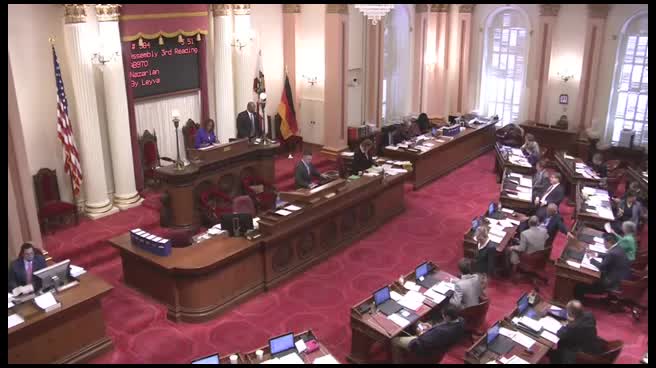
Bill Author

Bill Co-Author(s):