AB 332: Long-term care insurance.
- Session Year: 2015-2016
- House: Assembly
- Latest Version Date: 2015-09-08
Existing law provides for the regulation of long-term care insurance by the Insurance Commissioner and prescribes various requirements and conditions governing the delivery of individual or group long-term care insurance in the state. Existing law establishes the California Partnership for Long-Term Care Program to link private long-term care insurance and health care service plan contracts that cover long-term care with the In-Home Supportive Services program and Medi-Cal and to provide Medi-Cal benefits to certain individuals who have income and resources above the eligibility levels for receipt of medical assistance, but who have purchased certified private long-term care insurance policies.
This bill would establish the Long Term Care Insurance Task Force in the Department of Insurance, chaired by the Insurance Commissioner or his or her designee, and composed of specified stakeholders and representatives of government agencies to examine the components necessary to design and implement a statewide long-term care insurance program, as specified. The bill would require the task force to recommend options for establishing this program and to comment on their respective degrees of feasibility in a report submitted to the commissioner, the Governor, and the Legislature by July 1, 2017. The bill would require the department to produce, no later than July 1, 2018, an actuarial report of those recommendations, to be shared with and approved by the task force. If approved, the bill would require the report to be submitted to the Legislature, as specified.
Existing law provides for the regulation of long-term care insurance by the Insurance Commissioner and prescribes various requirements and conditions governing the delivery of individual or group long-term care insurance in the state. Existing law establishes the California Partnership for Long-Term Care Program to link private long-term care insurance and health care service plan contracts that cover long-term care with the In-Home Supportive Services program and Medi-Cal and to provide Medi-Cal benefits to certain individuals who have income and resources above the eligibility levels for receipt of medical assistance, but who have purchased certified private long-term care insurance policies.
This bill would establish the Long Term Care Insurance Task Force in the Department of Insurance, chaired by the Insurance Commissioner or his or her designee, and composed of specified stakeholders and representatives of government agencies to examine the components necessary to design and implement a statewide long-term care insurance program, as specified. The bill would require the task force to recommend options for establishing this program and to comment on their respective degrees of feasibility in a report submitted to the commissioner, the Governor, and the Legislature by January July 1, 2017.
Existing law provides for the regulation of long-term care insurance by the Insurance Commissioner and prescribes various requirements and conditions governing the delivery of individual or group long-term care insurance in the state. Existing law establishes the California Partnership for Long-Term Care Program to link private long-term care insurance and health care service plan contracts that cover long-term care with the In-Home Supportive Services program and Medi-Cal and to provide Medi-Cal benefits to certain individuals who have income and resources above the eligibility levels for receipt of medical assistance, but who have purchased certified private long-term care insurance policies.
This bill would require the Insurance Commissioner to convene a task force establish the Long Term Care Insurance Task Force in the Department of Insurance, chaired by the Commissioner or his or her designee, and composed of specified stakeholders and representatives of government agencies to examine the components necessary to design and implement a statewide long-term care insurance program, as specified. The bill would require the task force to recommend options for establishing this program and to comment on their respective degrees of feasibility in a report submitted to the commissioner, the Governor, and the Legislature by January 1, 2017.
Existing law provides for the regulation of long-term care insurance by the Insurance Commissioner and prescribes various requirements and conditions governing the delivery of individual or group long-term care insurance in the state. Existing law establishes the California Partnership for Long-Term Care Program to link private long-term care insurance and health care service plan contracts that cover long-term care with the In-Home Supportive Services program and Medi-Cal and to provide Medi-Cal benefits to certain individuals who have income and resources above the eligibility levels for receipt of medical assistance, but who have purchased certified private long-term care insurance policies.
This bill would require the Insurance Commissioner to convene a task force composed of specified stakeholders and representatives of government agencies to examine the components necessary to design a statewide long-term care insurance program, as specified. The bill would require the task force to recommend options for establishing this program and to comment on their respective degrees of feasibility in a report submitted to the commissioner, the Governor, and the Legislature by January 1, 2017.
The Legislature hereby finds and declares all of the following:
(a)Recent public opinion research indicates that Californians, regardless of political party or income level, are worried about the costs of growing older. Two-thirds of respondents in the research said that they are apprehensive about being able to afford long-term care. Sixty-three percent of respondents worry as much about paying for long-term care as they do for their future health care.
(b)A majority of respondents could not afford more than three months of nursing home care at an average cost of six thousand dollars ($6,000) per month in California. About four in 10 respondents could not afford a single month of care at that rate. Among Latino voters, 88 percent said they do not have long-term care insurance or are not sure whether they are covered for supportive services like in-home care. Concerns about paying for long-term care cut across all income levels and all partisan affiliations.
(c)It is the intent of the Legislature to enact legislation establishing a task force to explore the feasibility of developing and implementing a culturally competent statewide insurance program for long-term care services and supports.
SEC. 2.Section 10234.75 is added to the Insurance Code, to read:10234.75.(a)The Long Term Care Insurance Task Force (the task force) is hereby created in the Department of Insurance. Under the leadership of the commissioner, the task force shall examine the components necessary to design and implement a statewide long-term care insurance program.
(b)The task force shall consist of the following nine voting members:
(1)The commissioner, or his or her designee, who shall serve as the chair of the task force.
(2)The Director of Health Care Services, or his or her designee.
(3)The Director of the Department of Aging, or his or her designee.
(4)Four persons appointed by the Governor, as follows:
(A)A certified actuary with expertise in long-term care insurance.
(B)A nongovernment health policy expert.
(C)A representative of a long-term care provider association.
(D)A representative of a senior or consumer organization.
(5)One person, appointed by the Speaker of the Assembly, from an employee representative organization that represents long-term care workers.
(6)One person, appointed by the Senate Committee on Rules, from the long-term care insurance industry.
(c)A task force member shall not receive a per diem or other similar compensation for serving as a member of the task force.
(d)The Bagley-Keene Open Meeting Act (Article 9 (commencing with Section 11120) of Chapter 1 of Part 1 of Division 3 of Title 2 of the Government Code) applies to meetings of the task force.
(e)The task force shall do all of the following:
(1)Explore how a statewide long-term care insurance program could be designed and implemented to expand the options for people who are interested in insuring themselves against the risk of costs associated with functional or cognitive disability, and require long-term care, services, and supports.
(2)Explore options for the design of the program, including eligibility, enrollment, benefits, financing, administration, and interaction with the Medi-Cal program and other publicly funded resources. In exploring these options, the task force shall consider all of the following:
(A)Whether and how a long-term care insurance program could be included as a benefit in the state disability insurance program structure, possibly through a nominal increase in the payroll tax, and whether the program could be structured in the same manner as Paid Family Leave benefits.
(B)Allowing for enrollment in the program of working adults who would make voluntary premium contributions either directly or through payroll deductions through their employer.
(C)To the extent feasible, requiring a mandatory enrollment with a voluntary opt-out option.
(D)Giving working adults the opportunity to plan for future long-term care needs by providing a basic insurance benefit to those who meet work requirements and have developed functional or equivalent cognitive limitations.
(E)Helping individuals with functional or cognitive limitations remain in their communities by purchasing nonmedical services and supports such as home health care and adult day care.
(F)Helping offset the costs incurred by adults with chronic and disabling conditions. The program need not be designed to cover the entire cost associated with an individuals long-term care needs.
(3)Evaluate how benefits under the program would be coordinated with existing private health care coverage benefits.
(4)Evaluate the demands on the long-term care workforce as the need for long-term care in California grows, and how the long-term care workforce can be prepared to meet those demands.
(5)Consider the establishment of a joint public and private system to make long-term care accessible to as many individuals within California as possible.
(6)Make recommendations related to key regulatory provisions necessary for the public to access existing long-term care insurance programs and participate in future long-term care insurance programs, whether those programs are recommended by the task force or otherwise.
(f)The department shall operate within its existing budgetary resources for purposes of implementing this section. Any governmental agency that participates in the task force shall operate within its existing budgetary resources for purposes of that participation.
(g)The task force shall recommend options for establishing a statewide long-term care insurance program and comment on the respective degrees of feasibility of those options in a report submitted to the commissioner, the Governor, and the Legislature on or before July 1, 2017. The report submitted to the Legislature shall be submitted in accordance with Section 9795 of the Government Code.
(h)To ensure an adequate benefit within a solvent program, the department shall, no later than July 1, 2018, produce an actuarial report of the recommendations made by the task force pursuant to subdivision (g). The report shall be shared with and approved by the members of the task force. If approved the report shall be submitted to the Legislature in accordance with Section 9795 of the Government Code.
(i)The commissioner may seek private funds for purposes of implementing this section.
(j)This section shall remain in effect only until January 1, 2019, and as of that date is repealed, unless a later enacted statute, that is enacted before January 1, 2019, deletes or extends that date.
The Legislature hereby finds and declares all of the following:
(a)Recent public opinion research indicates that Californians, regardless of political party or income level, are worried about the costs of growing older. Two-thirds of respondents in the research said that they are apprehensive about being able to afford long-term care. Sixty-three percent of respondents worry as much about paying for long-term care as they do for their future health care.
(b)A majority of respondents could not afford more than three months of nursing home care at an average cost of six thousand dollars ($6,000) per month in California. About four in 10 respondents could not afford a single month of care at that rate. Among Latino voters, 88 percent said they do not have long-term care insurance or are not sure whether they are covered for supportive services like in-home care. Concerns about paying for long-term care cut across all income levels and all partisan affiliations.
(c)It is the intent of the Legislature to enact legislation establishing a task force to explore the feasibility of developing and implementing a culturally competent statewide insurance program for long-term care services and supports.
SEC. 2.Section 10234.75 is added to the Insurance Code, to read:10234.75.(a)The Long Term Care Insurance Task Force (the task force) is hereby created in the Department of Insurance. Under the leadership of the commissioner, the task force shall examine the components necessary to design and implement a statewide long-term care insurance program.
(b)The task force shall consist of the following nine voting members:
(1)The commissioner, or his or her designee, who shall serve as the chair of the task force.
(2)The Director of Health Care Services, or his or her designee.
(3)The Director of the Department of Aging, or his or her designee.
(4)Four persons appointed by the Governor, as follows:
(A)A certified actuary with expertise in long-term care insurance.
(B)A nongovernment health policy expert.
(C)A representative of a long-term care provider association.
(D)A representative of a senior or consumer organization.
(5)One person, appointed by the Speaker of the Assembly, from an employee representative organization that represents long-term care workers.
(6)One person, appointed by the Senate Committee on Rules, from the long-term care insurance industry.
(c)A task force member shall not receive a per diem or other similar compensation for serving as a member of the task force.
(d)The Bagley-Keene Open Meeting Act (Article 9 (commencing with Section 11120) of Chapter 1 of Part 1 of Division 3 of Title 2 of the Government Code) applies to meetings of the task force.
(e)The task force shall do all of the following:
(1)Explore how a statewide long-term care insurance program could be designed and implemented to expand the options for people who are interested in insuring themselves against the risk of costs associated with functional or cognitive disability, and require long-term care, services, and supports.
(2)Explore options for the design of the program, including eligibility, enrollment, benefits, financing, administration, and interaction with the Medi-Cal program and other publicly funded resources. In exploring these options, the task force shall consider all of the following:
(A)Whether and how a long-term care insurance program could be included as a benefit in the state disability insurance program structure, possibly through a nominal increase in the payroll tax, and whether the program could be structured in the same manner as Paid Family Leave benefits.
(B)Allowing for enrollment in the program of working adults who would make voluntary premium contributions either directly or through payroll deductions through their employer.
(C)To the extent feasible, requiring a mandatory enrollment with a voluntary opt-out option.
(D)Giving working adults the opportunity to plan for future long-term care needs by providing a basic insurance benefit to those who meet work requirements and have developed functional or equivalent cognitive limitations.
(E)Helping individuals with functional or cognitive limitations remain in their communities by purchasing nonmedical services and supports such as home health care and adult day care.
(F)Helping offset the costs incurred by adults with chronic and disabling conditions. The program need not be designed to cover the entire cost associated with an individuals long-term care needs.
(3)Evaluate how benefits under the program would be coordinated with existing private health care coverage benefits.
(4)Take into account the premiums necessary to provide an adequate benefit within a solvent program.
(5)
(4)Evaluate the demands on the long-term care workforce as the need for long-term care in California grows, and how the long-term care workforce can be prepared to meet those demands.
(6)
(5)Consider the establishment of a joint public and private system to make long-term care accessible to as many individuals within California as possible.
(7)
(6)Make recommendations related to key regulatory provisions necessary for the public to access existing long-term care insurance programs and participate in future long-term care insurance programs, whether those programs are recommended by the task force or otherwise.
(f)The department shall operate within its existing budgetary resources for purposes of implementing this section. Any governmental agency that participates in the task force shall operate within its existing budgetary resources for purposes of that participation.
(g)The task force shall recommend options for establishing a statewide long-term care insurance program and comment on the respective degrees of feasibility of those options in a report submitted to the commissioner, the Governor, and the Legislature on or before July 1, 2017. The report submitted to the Legislature shall be submitted in accordance with Section 9795 of the Government Code.
(h)To ensure an adequate benefit within a solvent program, the department shall, no later than July 1, 2018, produce an actuarial report of the recommendations made by the task force pursuant to subdivision (g). The report shall be shared with and approved by the members of the task force. If approved the report shall be submitted to the Legislature in accordance with Section 9795 of the Government Code.
(h)
(i)The commissioner may seek private funds for purposes of implementing this section.
(i)
(j)This section shall remain in effect only until January 1, 2019, and as of that date is repealed, unless a later enacted statute, that is enacted before January 1, 2019, deletes or extends that date.
The Legislature hereby finds and declares all of the following:
(a)Recent public opinion research indicates that Californians, regardless of political party or income level, are worried about the costs of growing older. Two-thirds of respondents in the research said that they are apprehensive about being able to afford long-term care. Sixty-three percent of respondents worry as much about paying for long-term care as they do for their future health care.
(b)A majority of respondents could not afford more than three months of nursing home care at an average cost of six thousand dollars ($6,000) per month in California. About 4 four in 10 respondents could not afford a single month of care at that rate. Among Latino voters, 88 percent said they do not have long-term care insurance or are not sure whether they are covered for supportive services like in-home care. Concerns about paying for long-term care cut across all income levels and all partisan affiliations.
(c)It is the intent of the Legislature to enact legislation establishing a task force to explore the feasibility of developing and implementing a culturally competent statewide insurance program for long-term care services and supports.
SEC. 2.Section 10234.75 is added to the Insurance Code, to read:10234.75.(a)The Long Term Care Insurance Task Force (the task force) is hereby created in the Department of Insurance. Under the leadership of the Commissioner, commissioner, the task force shall examine the components necessary to design and implement a statewide long-term care insurance program.
(b)The task force shall consist of the following nine voting members:
(1)The Commissioner, commissioner, or his or her designee, who shall serve as the chair of the task force.
(2)The Director of Health Care Services, or his or her designee.
(3)The Director of the Department of Aging, or his or her designee.
(4)Four persons appointed by the Governor, as follows:
(A)A certified actuary with expertise in long-term care insurance.
(B)A nongovernment health policy expert.
(C)A representative of a long-term care provider association.
(D)A representative of a senior or consumer organization.
(5)One person, appointed by the Speaker of the Assembly, from an employee representative organization that represents long-term care workers.
(6)One person, appointed by the President pro Tempore of the Senate, Senate Committee on Rules, from the long-term care insurance industry.
(c)A task force member shall not receive a per diem or other similar compensation for serving as a member of the task force.
(d)The Bagley-Keene Open Meeting Act (Article 9 (commencing with Section 11120) of Chapter 1 of Part 1 of Division 3 of Title 2 of the Government Code) applies to meetings of the task force.
(e)The task force shall do all of the following:
(1)Explore how a statewide long-term care insurance program could be designed and implemented to expand the options for people who are interested in insuring themselves against the risk of costs associated with functional or cognitive disability, and require long-term care, services, and supports.
(2)Explore options for the design of the program, including eligibility, enrollment, benefits, financing, administration, and interaction with the Medi-Cal program and other publicly funded resources. In exploring these options, the task force shall consider all of the following:
(A)Whether and how a long-term care insurance program could be included as a benefit in the state disability insurance program structure, possibly through a nominal increase in the payroll tax, and whether the program could be structured in the same manner as Paid Family Leave benefits.
(B)Allowing for enrollment in the program of working adults who would make voluntary premium contributions either directly or through payroll deductions through their employer.
(C)To the extent feasible, requiring a mandatory enrollment with a voluntary opt-out option.
(D)Giving working adults the opportunity to plan for future long-term care needs by providing a basic insurance benefit to those who meet work requirements and have developed functional or equivalent cognitive limitations.
(E)Helping individuals with functional or cognitive limitations remain in their communities by purchasing nonmedical services and supports such as home health care and adult day care.
(F)Helping offset the costs incurred by adults with chronic and disabling conditions. The program need not be designed to cover the entire cost associated with an individuals long-term care needs.
(3)Evaluate how benefits under the program would be coordinated with existing private health care coverage benefits.
(4)Take into account the premiums necessary to provide an adequate benefit within a solvent program.
(5)Evaluate the demands on the long-term care workforce as the need for long-term care in California grows, and how the long-term care workforce can be prepared to meet those demands.
(6)Consider the establishment of a joint public and private system to make long-term care accessible to as many individuals within California as possible.
(7)Make recommendations related to key regulatory provisions necessary for the public to access existing long-term care insurance programs and participate in future long-term care insurance programs, whether those programs are recommended by the task force or otherwise.
(f)The department shall operate within its existing budgetary resources for purposes of implementing this section. Any governmental agency that participates in the task force shall operate within its existing budgetary resources for purposes of that participation.
(g)The task force shall recommend options for establishing a statewide long-term care insurance program and comment on the respective degrees of feasibility of those options in a report submitted to the commissioner, the Governor, and the Legislature on or before January July 1, 2017. The report submitted to the Legislature shall be submitted in accordance with Section 9795 of the Government Code.
(h)The commissioner may seek private funds for purposes of implementing this section.
(i)This section shall remain in effect only until January 1, 2019, and as of that date is repealed, unless a later enacted statute, that is enacted before January 1, 2019, deletes or extends that date.
The Legislature hereby finds and declares all of the following:
(a)Recent public opinion research indicates that Californians, regardless of political party or income level, are worried about the costs of growing older. Two-thirds of respondents in the research said that they are apprehensive about being able to afford long-term care. Sixty-three percent of respondents worry as much about paying for long-term care as they do for their future health care.
(b)A majority of respondents could not afford more than three months of nursing home care at an average cost of six thousand dollars ($6,000) per month in California. About 4 in 10 respondents could not afford a single month of care at that rate. Among Latino voters, 88 percent said they do not have long-term care insurance or are not sure whether they are covered for supportive services like in-home care. Concerns about paying for long-term care cut across all income levels and all partisan affiliations.
(c)It is the intent of the Legislature to enact legislation establishing a task force to explore the feasibility of developing and implementing a culturally competent statewide insurance program for long-term care services and supports.
SEC. 2.Section 10234.75 is added to the Insurance Code, to read:10234.75.(a)The commissioner shall convene a task force to examine the components necessary to design a statewide long-term care insurance program. The task force shall do all of the following: Long Term Care Insurance Task Force (the task force) is hereby created in the Department of Insurance. Under the leadership of the Commissioner, the task force shall examine the components necessary to design and implement a statewide long-term care insurance program.
(b)The task force shall consist of the following nine voting members:
(1)The Commissioner, or his or her designee, who shall serve as the chair of the task force.
(2)The Director of Health Care Services, or his or her designee.
(3)The Director of the Department of Aging, or his or her designee.
(4)Four persons appointed by the Governor, as follows:
(A)A certified actuary with expertise in long-term care insurance.
(B)A nongovernment health policy expert.
(C)A representative of a long-term care provider association.
(D)A representative of a senior or consumer organization.
(5)One person, appointed by the Speaker of the Assembly, from an employee representative organization that represents long-term care workers.
(6)One person, appointed by the President pro Tempore of the Senate, from the long-term care insurance industry.
(c)A task force member shall not receive a per diem or other similar compensation for serving as a member of the task force.
(d)The Bagley-Keene Open Meeting Act (Article 9 (commencing with Section 11120) of Chapter 1 of Part 1 of Division 3 of Title 2 of the Government Code) applies to meetings of the task force.
(e)The task force shall do all of the following:
(1)Explore how a statewide long-term care insurance program could be designed and implemented to expand the options for people who are interested in insuring themselves against the risk of costs associated with functional or cognitive disability, and require long-term care, services, and supports.
(2)Explore options for the design of the program, including eligibility, enrollment, benefits, financing, administration, and interaction with the Medi-Cal program and other publicly funded resources. In exploring these options, the task force shall consider all of the following:
(A)Whether and how a long-term care insurance program could be included as a benefit in the state disability insurance program structure, possibly through a nominal increase in the payroll tax, and whether the program could be structured in the same manner as Paid Family Leave benefits.
(B)Allowing for enrollment in the program of working adults who would make voluntary premium contributions either directly or through payroll deductions through their employer.
(C)To the extent feasible, requiring a mandatory enrollment with a voluntary opt-out option.
(D)Giving working adults the opportunity to plan for future long-term care needs by providing a basic insurance benefit to those who meet work requirements and have developed functional or equivalent cognitive limitations.
(E)Helping individuals with functional or cognitive limitations remain in their communities by purchasing nonmedical services and supports such as home health care and adult day care.
(F)Helping offset the costs incurred by adults with chronic and disabling conditions. The program need not be designed to cover the entire cost associated with an individuals long-term care needs.
(3)Evaluate how benefits under the program would be coordinated with existing private health care coverage benefits.
(4)Take into account the premiums necessary to provide an adequate benefit within a solvent program.
(5)Evaluate the demands on the long-term care workforce as the need for long-term care in California grows, and how the long-term care workforce can be prepared to meet those demands.
(6)Consider the establishment of a joint public and private system to make long-term care accessible to as many individuals within California as possible.
(7)Make recommendations related to key regulatory provisions necessary for the public to access existing long-term care insurance programs and participate in future long-term care insurance programs, whether those programs are recommended by the task force or otherwise.
(b)The task force shall be composed of key senior health policy and long-term care insurance stakeholders, at least one representative from the State Department of Health Care Services, at least one representative from the Employment Development Department, and at least one representative from a labor union representing long-term care workers. The task force may include representatives from other relevant federal, state, and local government agencies.
(c)
(f)The department shall operate within its existing budgetary resources for purposes of implementing this section. Any governmental agency that participates in the task force shall operate within its existing budgetary resources for purposes of that participation.
(d)
(g)The task force shall recommend options for establishing a statewide long-term care insurance program and comment on the respective degrees of feasibility of those options in a report submitted to the commissioner, the Governor, and the Legislature on or before January 1, 2017. The report submitted to the Legislature shall be submitted in accordance with Section 9795 of the Government Code.
(e)
(h)The commissioner may seek private funds for purposes of implementing this section.
(f)
(i)This section shall remain in effect only until January 1, 2019, and as of that date is repealed, unless a later enacted statute, that is enacted before January 1, 2019, deletes or extends that date.
The Legislature hereby finds and declares all of the following:
(a)Recent public opinion research indicates that Californians, regardless of political party or income level, are worried about the costs of growing older. Two-thirds of respondents in the research said that they are apprehensive about being able to afford long-term care. Sixty-three percent of respondents worry as much about paying for long-term care as they do for their future health care.
(b)A majority of respondents could not afford more than three months of nursing home care at an average cost of six thousand dollars ($6,000) per month in California. About 4 in 10 respondents could not afford a single month of care at that rate. Among Latino voters, 88 percent said they do not have long-term care insurance or are not sure whether they are covered for supportive services like in-home care. Concerns about paying for long-term care cut across all income levels and all partisan affiliations.
(c)It is the intent of the Legislature to enact legislation establishing a task force to explore the feasibility of developing and implementing a culturally competent statewide insurance program for long-term care services and supports.
SEC. 2.Section 10234.75 is added to the Insurance Code, to read:10234.75.(a)The commissioner shall convene a task force to examine the components necessary to design a statewide long-term care insurance program. The task force shall do all of the following:
(1)Explore how a statewide long-term care insurance program could be designed and implemented to expand the options for people who become functionally or cognitively disabled are interested in insuring themselves against the risk of costs associated with functional or cognitive disability, and require long-term care services care, services, and supports.
(2)Explore options for the design of the program, including eligibility, enrollment, benefits, financing, administration, and interaction with the Medi-Cal program and other publicly funded resources. In exploring these options, the task force shall consider all of the following:
(A)Whether and how a long-term care insurance program could be included as a benefit in the state disability insurance program structure, possibly through a nominal increase in the payroll tax, and whether the program could be structured in the same manner as Paid Family Leave benefits.
(B)Allowing for enrollment in the program of working adults who would make voluntary premium contributions either directly or through payroll deductions through their employer.
(C)To the extent feasible, requiring a mandatory enrollment with a voluntary opt-out option.
(D)Giving working adults the opportunity to plan for future long-term care needs by providing a basic insurance benefit to those who meet work requirements and have developed functional or equivalent cognitive limitations.
(E)Helping individuals with functional or cognitive limitations remain in their communities by purchasing nonmedical services and supports such as home health care and adult day care.
(F)Helping offset the costs incurred by adults with chronic and disabling conditions. The program need not be designed to cover the entire costs cost associated with an individuals long-term care needs.
(3)Evaluate how benefits under the program would be coordinated with existing private health care coverage benefits.
(4)Take into account the premiums necessary to provide an adequate benefit within a solvent program.
(5)Evaluate the demands on the long-term care workforce as the need for long-term care in California grows, and how the long-term care workforce can be prepared to meet those demands.
(b)The task force shall be composed of key senior health policy and long-term care insurance stakeholders, at least one representative from the State Department of Health Care Services, at least one representative from the Employment Development Department, and at least one representative from a labor union representing long-term care workers. The task force may include representatives from other relevant federal, state, and local government agencies.
(c)The department shall operate within its existing budgetary resources for purposes of implementing this section. Any governmental agency that participates in the task force shall operate within its existing budgetary resources for purposes of that participation.
(d)The task force shall recommend options for establishing a statewide long-term care insurance program and comment on the respective degrees of flexibility feasibility of those options in a report submitted to the commissioner, the Governor, and the Legislature on or before January 1, 2017. The report submitted to the Legislature shall be submitted in accordance with Section 9795 of the Government Code.
(e)The commissioner may seek private funds for purposes of implementing this section.
(f)This section shall remain in effect only until January 1, 2019, and as of that date is repealed, unless a later enacted statute, that is enacted before January 1, 2019, deletes or extends that date.
The Legislature hereby finds and declares all of the following:
(a)Recent public opinion research indicates that Californians, regardless of political party or income level, are worried about the costs of growing older. Two-thirds of respondents in the research said that they are apprehensive about being able to afford long-term care. Sixty-three percent of respondents worry as much about paying for long-term care as they do for their future health care.
(b)A majority of respondents could not afford more than three months of nursing home care at an average cost of six thousand dollars ($6,000) per month in California. About 4 in 10 respondents could not afford a single month of care at that rate. Among Latino voters, 88 percent said they do not have long-term care insurance or are not sure whether they are covered for supportive services like in-home care. Concerns about paying for long-term care cut across all income levels and all partisan affiliations.
(c)It is the intent of the Legislature to enact legislation establishing a task force to explore the feasibility of developing a statewide insurance program for long-term care services and supports.
SEC. 2.Section 10234.75 is added to the Insurance Code, to read:10234.75.(a)The commissioner shall convene a task force to examine the components necessary to design a statewide long-term care insurance program. The task force shall do all of the following:
(1)Explore how a statewide long-term care insurance program could be designed to expand the options for people who become functionally or cognitively disabled and require long-term care services and supports.
(2)Explore options for the design of the program, including eligibility, enrollment, benefits, financing, administration, and interaction with the Medi-Cal program and other publicly funded resources. In exploring these options, the task force shall consider all of the following:
(A)Whether and how a long-term care insurance program could be included as a benefit in the state disability insurance program structure, possibly through a nominal increase in the payroll tax, and whether the program could be structured in the same manner as Paid Family Leave benefits.
(B)Allowing for enrollment in the program of working adults who would make voluntary premium contributions either directly or through payroll deductions through their employer.
(C)To the extent feasible, requiring a mandatory enrollment with a voluntary opt-out option.
(D)Giving working adults the opportunity to plan for future long-term care needs by providing a basic insurance benefit to those who meet work requirements and have developed functional or equivalent cognitive limitations.
(E)Helping individuals with functional or cognitive limitations remain in their communities by purchasing nonmedical services and supports such as home health care and adult day care.
(F)Helping offset the costs incurred by adults with chronic and disabling conditions. The program need not be designed to cover the entire costs associated with an individuals long-term care needs.
(3)Evaluate how benefits under the program would be coordinated with existing private health care coverage benefits.
(4)Take into account the premiums necessary to provide an adequate benefit within a solvent program.
(5)Evaluate the demands on the long-term care workforce as the need for long-term care in California grows, and how the long-term care workforce can be prepared to meet those demands.
(b)The task force shall be composed of key senior health policy and long-term care insurance stakeholders, at least one representative from the State Department of Health Care Services, at least one representative from the Employment Development Department, and at least one representative from a labor union representing long-term care workers. The task force may include representatives from other relevant federal, state, and local government agencies.
(c)The department shall operate within its existing budgetary resources for purposes of implementing this section. Any governmental agency that participates in the task force shall operate within its existing budgetary resources for purposes of that participation.
(d)The task force shall recommend options for establishing a statewide long-term care insurance program and comment on the respective degrees of flexibility of those options in a report submitted to the commissioner, the Governor, and the Legislature on or before January 1, 2017. The report submitted to the Legislature shall be submitted in accordance with Section 9795 of the Government Code.
(e)The commissioner may seek private funds for purposes of implementing this section.
(f)This section shall remain in effect only until January 1, 2019, and as of that date is repealed, unless a later enacted statute, that is enacted before January 1, 2019, deletes or extends that date.
|
Date
|
Status
|
|---|---|
| Jun 15, 2015 | From committee chair, with author's amendments: Amend, and re-refer to committee. Read second time, amended, and re-referred to Com. on INS. |
| Jan 15, 2016 | Consideration of Governor's veto stricken from file. |
| Oct 11, 2015 | Vetoed by Governor. |
| Sep 16, 2015 | Enrolled and presented to the Governor at 4 p.m. |
| Sep 3, 2015 | Senate amendments concurred in. To Engrossing and Enrolling. (Ayes 60. Noes 18.). |
| Sep 3, 2015 | Senate amendments concurred in. To Engrossing and Enrolling. (Ayes 60. Noes 18. Page 2838.). |
| Sep 1, 2015 | Read third time. Passed. Ordered to the Assembly. (Ayes 26. Noes 12. Page 2334.). |
| Sep 1, 2015 | Read third time. Passed. Ordered to the Assembly. |
| Sep 1, 2015 | In Assembly. Concurrence in Senate amendments pending. May be considered on or after September 3 pursuant to Assembly Rule 77. |
| Aug 25, 2015 | Read second time. Ordered to third reading. |
| Aug 24, 2015 | Read third time and amended. Ordered to second reading. |
| Jul 7, 2015 | Read second time and amended. Ordered to third reading. |
| Jul 6, 2015 | From committee: Amend, and do pass as amended. (Ayes 5. Noes 0.) (July 6). |
| Jun 24, 2015 | From committee: Do pass and re-refer to Com. on APPR. (Ayes 6. Noes 1.) (June 24). Re-referred to Com. on APPR. |
| Feb 13, 2015 | Read first time. To print. |
| May 28, 2015 | Referred to Com. on INS. |
| May 11, 2015 | Read third time. Passed. Ordered to the Senate. (Ayes 59. Noes 16. Page 1384.) |
| May 11, 2015 | Read third time. Passed. Ordered to the Senate. |
| May 11, 2015 | In Senate. Read first time. To Com. on RLS. for assignment. |
| May 7, 2015 | Read second time. Ordered to third reading. |
| May 6, 2015 | From committee: Do pass. (Ayes 12. Noes 5.) (May 6). |
| Apr 28, 2015 | Re-referred to Com. on APPR. |
| Apr 27, 2015 | Read second time and amended. |
| Apr 23, 2015 | From committee: Amend, and do pass as amended and re-refer to Com. on APPR. (Ayes 7. Noes 0.) (April 21). |
| Apr 9, 2015 | From committee: Do pass and re-refer to Com. on AGING & L.T.C. (Ayes 9. Noes 4.) (April 8). Re-referred to Com. on AGING & L.T.C. |
| Feb 23, 2015 | Referred to Coms. on INS. and AGING & L.T.C. |
| Feb 17, 2015 | From printer. May be heard in committee March 19. |
|
Date
|
Description
|
Location
|
Votes
|
|
|---|---|---|---|---|
| Sep 3, 2015 | AB 332 CALDERON Concurrence in Senate Amendments | Assembly Floor |
Passed |
|
| Sep 1, 2015 | Assembly 3rd Reading AB332 Calderon By Liu | Senate Floor |
Passed |
|
| Jul 6, 2015 | Do pass as amended | Senate Standing Committee on Appropriations |
Passed |
|
| Jun 24, 2015 | Do pass, but first be re-referred to the Committee on [Appropriations] | Senate Standing Committee on Insurance |
Passed |
|
| May 11, 2015 | AB 332 CALDERON Assembly Third Reading | Assembly Floor |
Passed |
|
| May 6, 2015 | Do pass. | Assembly Standing Committee on Appropriations |
Passed |
|
| Apr 21, 2015 | Do pass as amended and be re-referred to the Committee on [Appropriations] | Assembly Standing Committee on Aging and Long-Term Care |
Passed |
|
| Apr 8, 2015 | Do pass and be re-referred to the Committee on [Aging and Long-Term Care] | Assembly Standing Committee on Insurance |
Passed |
This list shows positions taken on this bill by organizations on the date displayed, which is linked to the original source.
Positions by individuals are not included.
|
Organization
|
Position
|
Date
|
|---|---|---|
| AFSCME Local 3930 | ** Support | Sep 1, 2015 |
| Association Of California Life & Health Insurance Companies | * Indeterminate | Apr 8, 2015 |
| California Association of Public Authorities | ** Support | Sep 1, 2015 |
| California Commission on Aging | ** Support | Sep 1, 2015 |
| California Health Advocates | ** Support | Sep 1, 2015 |
| California State Council of State Service Employees | * Support | Jul 6, 2015 |
| California State Retirees | ** Support | Sep 1, 2015 |
| Congress of California Seniors | ** Support | Sep 1, 2015 |
| Department of Insurance | * Against Unless Amend | Jul 6, 2015 |
| LeadingAge California | ** Support | Sep 1, 2015 |
| Marin County Board of Supervisors | ** Support | Sep 1, 2015 |
| Older Women's League | ** Support | Sep 1, 2015 |
| Organization Of Smud Employees | ** Support | Sep 1, 2015 |
| San Bernardino Public Employees Association | ** Support | Sep 1, 2015 |
| San Luis Obispo County Employees Association | ** Support | Sep 1, 2015 |
| United Domestic Workers of America-UDW | ** Support | Sep 1, 2015 |
| United Long-Term Care Workers | ** Support | Sep 1, 2015 |
| United Long-Term Healthcare Workers | ** Support | Apr 8, 2015 |
GOVERNOR'S VETO
AB 332
(Calderon)
As Enrolled September 8, 2015
2/3 vote
ASSEMBLY: |
59-16 |
(May 11, 2015) |
SENATE: |
26-12 |
(September 1, 2015) |
ASSEMBLY: |
60-18 |
(September 3, 2015) |
|
|
|
Original Committee Reference: INS.
SUMMARY: Establishes a task force to design a statewide, public long-term care insurance program.
The Senate amendments:
Specify the membership of the task force as follows:
Insurance Commissioner (Chair).
Director of the Department of Health Care Services.
Director of the Department of Aging.
Certified actuary appointed by the Governor.
Non-government health policy expert appointed by the Governor.
Representative of a long-term care provider association appointed by the Governor.
Representative of a senior or consumer organizations appointed by the Governor.
Representative of a long-term care employee organization appointed by the Speaker of the Assembly.
Representative of the long-term care insurance industry appointed by the Senate Rules Committee.
Require the task force to consider establishing a joint public/private long-term care insurance system.
Require the task force to suggest regulatory changes to increase access to long-term care insurance and long-term care programs.
Extend the deadline for the task force to complete its report from January 1, 2017, to July 1, 2017.
Requires the Department of Insurance to produce an actuarial review of the task force recommendations.
EXISTING LAW: Provides for the regulation of long-term care (LTC) insurance by the commissioner and prescribes various requirements and conditions governing the delivery of individual or group long-term care insurance in the state.
COMMENTS:
Purpose of this bill. According to the author, Californian's have two options for the elderly to receive the care and personal assistance they need to remain in their home. The first is for a person to qualify for Medi-Cal. By qualifying for Medi-Cal, seniors and persons with disabilities may qualify for many programs administered by the state such as In-Home Supportive Services. The second option is for a person to earn and/or save enough disposable income to hire a private home care aide or pay for residential care. Recent public opinion research shows over 60% of working adults fear they will not be able to afford LTC and health care costs during their golden years. The majority of participants indicated they could not afford more than three months of care at a nursing facility with an average cost of $6,000 per month, while 40% of participants indicated they could not afford a single month of care in a nursing home. Among the Latino population, 88% of participants do not have LTC insurance and are unaware if they qualify for public benefits. A long-term care insurance task force would be the first step towards building a robust long-term care system in California.
Long-Term Care. LTC services provide individuals who, because of illness or disability, are generally unable to perform activities of daily living, such as bathing, dressing, toileting, and getting around the house, or suffer from cognitive impairments. LTC services are provided in a variety of settings, such as nursing homes, assisted living facilities, and private residences. Only about 20% of the elderly who need LTC services live in an institutional setting. The roughly 80% living in the community primarily live in private homes, but a small number live in residential communities catering to the needs of elderly people. For those living at home, most receive assistance from unpaid family members and friends (referred to as informal care) while some pay for assistance (referred to as formal care) from home health aides. Elderly people with severe functional and cognitive limitations who require around-the clock assistance often live in institutional settings. According to data from the Medicare Current Beneficiary Survey, the elderly nursing home population has declined over the past 10 years as more elderly people are living in residential care facilities, community-based housing with supportive services, and in their homes.
Retirement Readiness. It is well accepted that the average American worker has inadequate retirement savings. A worker is considered to be at risk for serious economic hardship in old age if his or her retirement income falls under 200% of the poverty threshold for individuals. A study of retirement readiness published in 2011 by the UC Berkeley Center for Labor Research and Education found that 47% of Californians are projected to have retirement incomes below 300% of the poverty level ($34,470 in 2013). Individuals who have not been able to save enough to provide adequate retirement income are unlikely to be able to support the added cost of LTC insurance premiums either before or, especially, during retirement. Individuals with low retirement incomes who need LTC services are most likely going spend down their assets and rely on Medi-Cal to pay for those services.
How is LTC Paid For? More than half of LTC services are provided as informal care. The Congressional Budget Office estimates that the value of informal care provided in 2011 was approximately $234 billion. Of the $192 billion spent on formal LTC services in 2011 roughly two-thirds is paid by Medicare and Medicaid (with the remainder paid out-of-pocket by consumers or by private insurance). Medi-Cal (sometimes with a little Medicare added in) is the de facto LTC insurance policy for those who aren't wealthy enough to afford LTC insurance premiums or to pay LTC costs out-of-pocket. Creating a public LTC insurance product as envisioned by this bill would be protective of the state General Fund (which pays for 50% of Medi-Cal costs for most recipients) to the extent that consumers elect to buy the insurance. However, given that a reasonably affordable LTC policy will cover only a part of the LTC expenses for most people, it is likely that a great many of those who buy the policy will spend down their assets and become Medi-Cal eligible at some point. For most Californians, buying an LTC insurance policy shifts the financial burden for the LTC services away from the General Fund and onto the individual.
Problems in the LTC Market. The long-term care insurance marketplace is problematic for both insurers and consumers. In the past five years, 10 of the top 20 LTC insurers have stopped selling new LTC policies. Insurers have struggled with setting premiums adequate to cover their costs in the absence of sufficient claims data. LTC insurance is a relatively new product that requires years of paying premiums before claims are made. Only in recent years have the insurers begun to receive claims for many of the policies sold early on, and those claims have been much higher than the insurers anticipated. In addition to misjudging the cost of claims, insurers have struggled with anticipating policy lapse rates, LTC inflation, and life span increases. All of those factors, and others, have led to LTC insurance being much more expensive than previously expected. The early mistakes in pricing LTC policies has led to rounds of major premium increases which adds marketing challenges to a product that is already, according to insurance agents, difficult to sell. CalPERS is a recent example of an LTC insurer that underestimated the cost of insuring LTC. It has pushed through multiple premium increases (30% in 2003, 43.8% in 2007, and 85% in 2015) in an attempt to set premiums in line with its costs. While premium increases of this size are difficult to absorb for those who are still working, it can be impossible for retirees on a fixed income to absorb the higher premiums.
Genworth is the largest issuer of private LTC insurance and it has suffered massive financial losses on the product in the past year. It has added nearly $1 billion to the loss reserves for its LTC policies and has had its bonds reduced to junk status by multiple rating agencies. These losses are occurring despite Genworth having significantly increased the premiums charged for its existing policies. Losses in LTC insurance previously caused both MetLife and Prudential to exit the market.
CLASS. The federal Patient Protection and Affordable Care Act established the Community Living Assistance Services and Supports program (CLASS). The CLASS program was intended to be a national, voluntary insurance program designed to provide assistance to qualified individuals to obtain help with many basic daily living activities. On October 14, 2011, the federal Department of Health and Human Services announced that the CLASS Act was not financially viable. The CLASS Act was subsequently repealed.
This bill would establish a nine-member task force to explore the design and implementation of a statewide long-term care insurance program.
Since the federal government and a number of private organizations have undertaken essentially the same task, I don't think that this bill is necessary. Moreover, I'm hesitant to start down a path that may lead to a large and potentially costly new mandate.
Analysis Prepared by: Paul Riches / INS. / (916) 319-2086 FN: 0002515
AB 332
Page 3
CONCURRENCE IN SENATE AMENDMENTS
AB 332
(Calderon)
As Amended August 24, 2015
Majority vote
ASSEMBLY: |
59-16 |
(May 11, 2015) |
SENATE: |
26-12 |
(September 1, 2015) |
Original Committee Reference: INS.
SUMMARY: Establishes a task force to design a statewide, public long-term care insurance program.
The Senate amendments:
Specify the membership of the task force as follows:
Insurance Commissioner (Chair).
Director of the Department of Health Care Services.
Director of the Department of Aging.
Certified actuary appointed by the Governor.
Non-government health policy expert appointed by the Governor.
Representative of a long-term care provider association appointed by the Governor.
Representative of a senior or consumer organizations appointed by the Governor.
Representative of a long-term care employee organization appointed by the Speaker of the Assembly.
Representative of the long-term care insurance industry appointed by the Senate Rules Committee.
Require the task force to consider establishing a joint public/private long-term care insurance system.
Require the task force to suggest regulatory changes to increase access to long-term care insurance and long-term care programs.
Extend the deadline for the task force to complete its report from January 1, 2017, to July 1, 2017.
Requires the Department of Insurance to produce an actuarial review of the task force recommendations.
EXISTING LAW: Provides for the regulation of long-term care (LTC) insurance by the commissioner and prescribes various requirements and conditions governing the delivery of individual or group long-term care insurance in the state.
COMMENTS:
Purpose of this Bill. According to the author, Californian's have two options for the elderly to receive the care and personal assistance they need to remain in their home. The first is for a person to qualify for Medi-Cal. By qualifying for Medi-Cal, seniors and persons with disabilities may qualify for many programs administered by the state such as In-Home Supportive Services. The second option is for a person to earn and/or save enough disposable income to hire a private home care aide or pay for residential care. Recent public opinion research shows over 60% of working adults fear they will not be able to afford LTC and health care costs during their golden years. The majority of participants indicated they could not afford more than three months of care at a nursing facility with an average cost of $6,000 per month, while 40% of participants indicated they could not afford a single month of care in a nursing home. Among the Latino population, 88% of participants do not have LTC insurance and are unaware if they qualify for public benefits. A long-term care insurance task force would be the first step towards building a robust long-term care system in California.
Long Term Care. LTC services provide individuals who, because of illness or disability, are generally unable to perform activities of daily living, such as bathing, dressing, toileting, and getting around the house, or suffer from cognitive impairments. LTC services are provided in a variety of settings, such as nursing homes, assisted living facilities, and private residences. Only about 20% of the elderly who need LTC services live in an institutional setting. The roughly 80% living in the community primarily live in private homes, but a small number live in residential communities catering to the needs of elderly people. For those living at home, most receive assistance from unpaid family members and friends (referred to as informal care) while some pay for assistance (referred to as formal care) from home health aides. Elderly people with severe functional and cognitive limitations who require around-the clock assistance often live in institutional settings. According to data from the Medicare Current Beneficiary Survey, the elderly nursing home population has declined over the past 10 years as more elderly people are living in residential care facilities, community-based housing with supportive services, and in their homes.
Retirement Readiness. It is well accepted that the average American worker has inadequate retirement savings. A worker is considered to be at risk for serious economic hardship in old age if his or her retirement income falls under 200% of the poverty threshold for individuals. A study of retirement readiness published in 2011 by the University of California Berkeley Center for Labor Research and Education found that 47% of Californians are projected to have retirement incomes below 300% of the poverty level ($34,470 in 2013). Individuals who have not been able to save enough to provide adequate retirement income are unlikely to be able to support the added cost of LTC insurance premiums either before or, especially, during retirement. Individuals with low retirement incomes who need LTC services are most likely going spend down their assets and rely on Medi-Cal to pay for those services.
How is LTC Paid For? More than half of LTC services are provided as informal care. The Congressional Budget Office estimates that the value of informal care provided in 2011 was approximately $234 billion. Of the $192 billion spent on formal LTC services in 2011 roughly two-thirds is paid by Medicare and Medicaid (with the remainder paid out-of-pocket by consumers or by private insurance). Medi-Cal (sometimes with a little Medicare added in) is the de facto LTC insurance policy for those who aren't wealthy enough to afford LTC insurance premiums or to pay LTC costs out-of-pocket. Creating a public LTC insurance product as envisioned by this bill would be protective of the state General Fund (which pays for 50% of Medi-Cal costs for most recipients) to the extent that consumers elect to buy the insurance. However, given that a reasonably affordable LTC policy will cover only a part of the LTC expenses for most people, it is likely that a great many of those who buy the policy will spend down their assets and become Medi-Cal eligible at some point. For most Californians, buying an LTC insurance policy shifts the financial burden for the LTC services away from the General Fund and onto the individual.
Problems in the LTC Market. The long-term care insurance marketplace is problematic for both insurers and consumers. In the past five years, 10 of the top 20 LTC insurers have stopped selling new LTC policies. Insurers have struggled with setting premiums adequate to cover their costs in the absence of sufficient claims data. LTC insurance is a relatively new product that requires years of paying premiums before claims are made. Only in recent years have the insurers begun to receive claims for many of the policies sold early on, and those claims have been much higher than the insurers anticipated. In addition to misjudging the cost of claims, insurers have struggled with anticipating policy lapse rates, LTC inflation, and life span increases. All of those factors, and others, have led to LTC insurance being much more expensive than previously expected. The early mistakes in pricing LTC policies has led to rounds of major premium increases which adds marketing challenges to a product that is already, according to insurance agents, difficult to sell. The California Public Employees Retirement System is a recent example of an LTC insurer that underestimated the cost of insuring LTC. It has pushed through multiple premium increases (30% in 2003, 43.8% in 2007, and 85% in 2015) in an attempt to set premiums in line with its costs. While premium increases of this size are difficult to absorb for those who are still working, it can be impossible for retirees on a fixed income to absorb the higher premiums.
Genworth is the largest issuer of private LTC insurance and it has suffered massive financial losses on the product in the past year. It has added nearly $1 billion to the loss reserves for its LTC policies and has had its bonds reduced to junk status by multiple rating agencies. These losses are occurring despite Genworth having significantly increased the premiums charged for its existing policies. Losses in LTC insurance previously caused both MetLife and Prudential to exit the market.
CLASS. The federal Patient Protection and Affordable Care Act established the Community Living Assistance Services and Supports program (CLASS). The CLASS program was intended to be a national, voluntary insurance program designed to provide assistance to qualified individuals to obtain help with many basic daily living activities. On October 14, 2011, the federal Department of Health and Human Services announced that the CLASS Act was not financially viable. The CLASS Act was subsequently repealed.
Analysis Prepared by: Paul Riches / INS. / (916) 319-2086 FN: 00019240001924
AB 332
Page 5
|
Office of Senate Floor Analyses (916) 651-1520 Fax: (916) 327-4478 |
THIRD READING
Bill No: AB 332
Amended: 8/24/15 in Senate
SENATE INSURANCE COMMITTEE: 6-1, 6/24/15
AYES: Roth, Glazer, Hernandez, Liu, Mitchell, Wieckowski
NOES: Berryhill
NO VOTE RECORDED: Gaines, Hall
SENATE APPROPRIATIONS COMMITTEE: 5-0, 7/6/15
AYES: Lara, Beall, Hill, Leyva, Mendoza
NO VOTE RECORDED: Bates, Nielsen
ASSEMBLY FLOOR: 59-16, 5/11/15 - See last page for vote
SUBJECT: Long-term care insurance
SOURCE: California State Council of the Service Employees International Union and United Long-Term Care Workers
DIGEST: This bill creates a task force within the California Department of Insurance (CDI) to study the components necessary to design a statewide long-term care insurance program and submit a report with its recommendations to the Insurance Commissioner (IC), the Governor, and the Legislature by July 1, 2017.
Senate Floor Amendments of 8/24/15 eliminated the requirement that the task force consider the premium necessary to provide an adequate benefit within a solvent program and added the requirement that CDI produce an actuarial analysis of the task force recommendations by July 1, 2018, which, if approved by the task force, would be submitted to the Legislature. The amendments were taken at the suggestion of the CDI in response to recent opposition by the Department of Finance (DOF). The amendments lower the estimated costs from one-time costs of $115,000 per year for two years to one-time costs of $70,000 per year for two years.
Existing law:
Provides for the regulation of long-term care insurance by the IC and prescribes various requirements and conditions governing the delivery of individual or group long-term care insurance in the state.
Establishes the California Partnership for Long-Term Care Program within the Department of Health Care Services (DHCS) to link private long-term care insurance and health care service plan contracts that cover long-term care with the In-Home Supportive Services program and Medi-Cal and to provide Medi-Cal benefits to certain individuals who have income and resources above the eligibility levels for receipt of medical assistance, but who have purchased certified private long-term care insurance policies.
This bill:
Creates a task force within the CDI to be led by the IC for the purpose of examining the components necessary to design and implement a statewide long-term care insurance program.
Provides that the task force has nine voting members, including the IC, Director of the DHCS; Director of the Department of Aging; four appointed by the Governor including a certified actuary, a non-government health policy expert, a representative of a long-term care provider association, and a representative of a senior or consumer organization; one appointed by the Speaker of the Assembly from an employee representative organization; and one appointed by the Senate Committee on Rules from the long-term care insurance industry.
Prohibits task force members from receiving per diem or similar compensation for serving on the task force.
Makes findings and declarations related to the public perception of the anticipated need for long-term care services and challenges in financing those services.
Requires the task force to consider specified factors.
Requires CDI and any participating state agency to operate within its existing budgetary resources for purposes of implementing this section.
Requires the task force to recommend options regarding the program, comment on the program flexibility, and make recommendations on key regulatory provisions regarding existing insurance programs in a report submitted to the IC, Governor, and Legislature on or before July 1, 2017.
Requires CDI to produce an actuarial report by July 1, 2018, that analyzes the task force recommendations to be submitted to the Legislature if approved by the task force.
Permits the IC to seek private funds for purposes of implementing this section.
Sunsets on January 1, 2019.
Background
Long-term care support and services are the nonmedical services needed by a person unable to take care of him or herself. The services are expensive and may be covered by long-term care insurance (LTCI). But LTCI is looking less viable as a financing means for middle and lower-income people. Individuals who have not been able to save enough to provide adequate retirement income are unlikely to be able to support the added cost of LTCI premiums.
In January of this year, the Senate Select Committee on Aging and Long Term Care released a report finding that California has fragmented system of providing long-term care. The report notes that the number of individuals age 65 and older in California is projected to increase almost 100 percent in the next 20 years. Despite the burgeoning need for long-term care services, only a small portion of that population have purchased, or can afford, LTCI policies.
This bill creates a task force within CDI to consider the feasibility and components of building a statewide long-term care insurance program. While the framework of the proposal is posed as a public program, it is also designed to explore the potential for private solutions, as well as consider potential reforms to existing regulations that may increase availability of fully private options. Participants have been chosen to reflect critical issue areas: the IC and insurance industry to address LTCI standards and the potential for public/private partnerships; the directors of DHCS and Department of Aging to consider the potential interaction with existing public programs; caregiver representatives to provide input relative to the availability of affordable services; and others.
SB 1438 (Alquist, 2012) proposed a similar task force, but was held in the Senate Appropriations Committee.
FISCAL EFFECT: Appropriation: No Fiscal Com.: Yes Local: No
According to the Senate Appropriations Committee, this bill involves one-time costs of $70,000 per year for two years to provide staff support to the task force and perform the required analysis (Insurance Fund).
California State Council of the Service Employees International Union (co-source)
United Long-Term Care Workers (co-source)
California Association of Public Authorities
California Commission on Aging
California Health Advocates
California State Retirees
Congress of California Seniors
LeadingAge California
Marin County Board of Supervisors
Older Women’s League
Organization of SMUD Employees
San Bernardino Public Employees Association
San Luis Obispo County Employees Association
United Domestic Workers of America-UDW/AFSCME Local 3930
Department of Finance (Verified 8/26/15)
ARGUMENTS IN SUPPORT: According to the author, there are two options for the elderly to receive the care and personal assistance they need to remain in their home. To qualify for the first option, a person must meet the federal income requirements, proving they earn wages 100 percent below poverty level to qualify for Medi-Cal or Medicaid and, in turn, qualify for many programs administered by the state such as In-Home Supportive Services (IHSS). Otherwise, a person must earn or save enough disposable income to hire a private home care aide – at times paying an average of $30 per hour. Without alternatives, the aging middle class must decide whether to spend down their assets in order to qualify for safety net services or exhaust personal assets.
California Health Advocates (CHA) states that neither privately purchased insurance nor the state’s Medi-Cal program can solve the financing dilemma for this kind of care alone. Commercial insurance is medically underwritten, expensive, subject to huge premium increases, and discriminates in pricing against women, while Medi-Cal is faced with growing numbers of people who are or will become poor. Neither of these constitutes a way for the majority of people to plan and pay for long term care. CHA supports this bill because it would create a forum to explore the potential for groundbreaking, fiscally sound options that combine and integrate multiple payments sources to finance long term care.
ARGUMENTS IN OPPOSITION: DOF notes that the IC already has the authority to establish a task force and is concerned that implementing the bill may divert resources away from mission-critical CDI programs.
ASSEMBLY FLOOR: 59-16, 5/11/15
AYES: Achadjian, Alejo, Bloom, Bonilla, Bonta, Brown, Burke, Calderon, Campos, Chau, Chiu, Chu, Cooley, Cooper, Dababneh, Daly, Dodd, Eggman, Frazier, Cristina Garcia, Eduardo Garcia, Gatto, Gipson, Gomez, Gonzalez, Gordon, Gray, Hadley, Roger Hernández, Holden, Irwin, Jones-Sawyer, Lackey, Levine, Linder, Lopez, Low, Maienschein, Mathis, McCarty, Medina, Mullin, Nazarian, O'Donnell, Perea, Quirk, Rendon, Ridley-Thomas, Rodriguez, Salas, Santiago, Steinorth, Mark Stone, Thurmond, Ting, Weber, Wilk, Williams, Wood
NOES: Travis Allen, Baker, Bigelow, Brough, Chávez, Dahle, Beth Gaines, Grove, Harper, Jones, Kim, Mayes, Melendez, Obernolte, Wagner, Waldron
NO VOTE RECORDED: Chang, Gallagher, Olsen, Patterson, Atkins
Prepared by: Hugh Slayden / INS. / (916) 651-4110
8/26/15 17:01:50
**** END ****
AB 332
Page 5
|
Office of Senate Floor Analyses (916) 651-1520 Fax: (916) 327-4478 |
THIRD READING
Bill No: AB 332
Amended: 7/7/15 in Senate
SENATE INSURANCE COMMITTEE: 6-1, 6/24/15
AYES: Roth, Glazer, Hernandez, Liu, Mitchell, Wieckowski
NOES: Berryhill
NO VOTE RECORDED: Gaines, Hall
SENATE APPROPRIATIONS COMMITTEE: 5-0, 7/6/15
AYES: Lara, Beall, Hill, Leyva, Mendoza
NO VOTE RECORDED: Bates, Nielsen
ASSEMBLY FLOOR: 59-16, 5/11/15 - See last page for vote
SUBJECT: Long-term care insurance
SOURCE: California State Council of the Service Employees International Union and United Long-Term Care Workers
DIGEST: This bill creates a task force within the California Department of Insurance (CDI) to study the components necessary to design a statewide long-term care insurance program and submit a report with its recommendations to the Insurance Commissioner (IC), the Governor, and the Legislature by July 1, 2017.
Provides for the regulation of long-term care insurance by the IC and prescribes various requirements and conditions governing the delivery of individual or group long-term care insurance in the state.
Establishes the California Partnership for Long-Term Care Program within the Department of Health Care Services (DHCS) to link private long-term care insurance and health care service plan contracts that cover long-term care with the In-Home Supportive Services program and Medi-Cal and to provide Medi-Cal benefits to certain individuals who have income and resources above the eligibility levels for receipt of medical assistance, but who have purchased certified private long-term care insurance policies.
This bill:
Creates a task force within the CDI to be led by the IC for the purpose of examining the components necessary to design and implement a statewide long-term care insurance program.
Provides that the task force has nine members, including the IC, Director of the Department of Health Care Services (DHCS); Director of the Department of Aging; four appointed by the Governor including a certified actuary, a non-government health policy expert, a representative of a long-term care provider association, and a representative of a senior or consumer organization; one appointed by the Speaker of the Assembly from an employee representative organization; and one appointed by the Senate Committee on Rules from the long-term care insurance industry.
Prohibits task force members from receiving per diem or similar compensation for serving on the task force.
Makes findings and declarations related to the public perception of the anticipated need for long-term care services and challenges in financing those services.
Requires the task force to consider specified factors when making a recommendation.
Requires CDI and any participating state agency to operate within its existing budgetary resources for purposes of implementing this section.
Requires the task force to recommend options regarding the program, comment on the program flexibility, and make recommendations on key regulatory provisions regarding existing insurance programs in a report submitted to the IC, Governor, and Legislature on or before July 1, 2017.
Permits the IC to seek private funds for purposes of implementing this section.
Sunsets on January 1, 2019.
Background
Long-term care support and services are the nonmedical services needed by a person unable to take care of him or herself. The services are expensive and may be covered by long-term care insurance (LTCI). But LTCI is looking less viable as a financing means for middle and lower-income people. Individuals who have not been able to save enough to provide adequate retirement income are unlikely to be able to support the added cost of LTCI premiums.
In January of this year, the Senate Select Committee on Aging and Long Term Care released a report finding that California has fragmented system of providing long-term care. The report notes that the number of individuals age 65 and older in California is projected to increase almost 100 percent in the next 20 years. Despite the burgeoning need for long-term care services for both the elderly and dependent adults and children, only a small portion of that population have purchased, or can afford, LTCI policies.
This bill creates a task force within CDI to consider the feasibility and components of building a statewide long-term care insurance program. While the framework of the proposal is posed as a public program, it is also designed to explore the potential for private solutions, as well as consider potential reforms to existing regulations that may increase availability of fully private options. Participants have been chosen to reflect critical issue areas: the IC and insurance industry to address LTCI standards and the potential for public/private partnerships; the directors of DHCS and Department of Aging to consider the potential interaction with existing public programs; caregiver representatives to provide input relative to the availability of affordable services; and others.
SB 1438 (Alquist, 2012) proposed a similar task force, but was held in the Senate Appropriations Committee. AB 332 takes a broader approach by inviting greater private sector participation.
FISCAL EFFECT: Appropriation: No Fiscal Com.: Yes Local: No
According to the Senate Appropriations Committee, this bill involves one-time costs of $115,000 per year for two years to provide staff support to the task force (Insurance Fund).
California State Council of the Service Employees International Union (co-source)
United Long-Term Care Workers (co-source)
California Association of Public Authorities
California Commission on Aging
California Health Advocates
California State Retirees
Congress of California Seniors
LeadingAge California
Marin County Board of Supervisors
Older Women’s League
Organization of SMUD Employees
San Bernardino Public Employees Association
San Luis Obispo County Employees Association
United Domestic Workers of America-UDW/AFSCME Local 3930
None received
ARGUMENTS IN SUPPORT: According to the author, California does not have an option for middle class seniors and persons with disabilities to obtain affordable long-term care. Currently, there are two options for the elderly to receive the care and personal assistance they need to remain in their home. To qualify for the first option, a person must meet the federal income requirements, proving they earn wages 100 percent below poverty level to qualify for Medi-Cal or Medicaid and, in turn, qualify for many programs administered by the state such as In-Home Supportive Services (IHSS). Otherwise, a person must earn or save enough disposable income to hire a private home care aide – at times paying an average of $30 per hour. Without alternatives, the aging middle class must decide whether to spend down their assets in order to qualify for safety net services or exhaust personal assets.
California Health Advocates (CHA) states that neither privately purchased insurance nor the state’s Medi-Cal program can solve the financing dilemma for this kind of care alone. Commercial insurance is medically underwritten, expensive, subject to huge premium increases, and discriminates in pricing against women, while Medi-Cal is faced with growing numbers of people who are or will become poor. Neither of these constitutes a way for the majority of people to plan and pay for long term care. CHA supports this bill because it would create a forum to explore the potential for groundbreaking, fiscally sound options that combine and integrate multiple payments sources to finance long term care.
ASSEMBLY FLOOR: 59-16, 5/11/15
AYES: Achadjian, Alejo, Bloom, Bonilla, Bonta, Brown, Burke, Calderon, Campos, Chau, Chiu, Chu, Cooley, Cooper, Dababneh, Daly, Dodd, Eggman, Frazier, Cristina Garcia, Eduardo Garcia, Gatto, Gipson, Gomez, Gonzalez, Gordon, Gray, Hadley, Roger Hernández, Holden, Irwin, Jones-Sawyer, Lackey, Levine, Linder, Lopez, Low, Maienschein, Mathis, McCarty, Medina, Mullin, Nazarian, O'Donnell, Perea, Quirk, Rendon, Ridley-Thomas, Rodriguez, Salas, Santiago, Steinorth, Mark Stone, Thurmond, Ting, Weber, Wilk, Williams, Wood
NOES: Travis Allen, Baker, Bigelow, Brough, Chávez, Dahle, Beth Gaines, Grove, Harper, Jones, Kim, Mayes, Melendez, Obernolte, Wagner, Waldron
NO VOTE RECORDED: Chang, Gallagher, Olsen, Patterson, Atkins
Prepared by: Hugh Slayden / INS. / (916) 651-4110
7/9/15 9:05:04
**** END ****
AB 332 (Calderon) Page 2 of 2
SENATE COMMITTEE ON APPROPRIATIONS
Senator Ricardo Lara, Chair
2015 - 2016 Regular Session
AB 332 (Calderon) - Long-term care insurance
|
|
Version: June 15, 2015 |
Policy Vote: INS. 6 - 1 |
Urgency: No |
Mandate: No |
Hearing Date: July 6, 2015 |
Consultant: Brendan McCarthy |
This bill does not meet the criteria for referral to the Suspense File.
Bill Summary:
AB 332 would create a task force within the Department of Insurance to examine issues relating to long-term care insurance.
Fiscal Impact:
One-time costs of $115,000 per year for two years to provide staff support to the task force (Insurance Fund). The bill prohibits the payment of per diems or other compensation for participation by task force members.
Background:
Long-term care supports and services are nonmedical services that are needed when an individual is not capable of performing the normal activities of daily living. Long-term term care services can be provided in an individual’s home or can be provided in a facility, such as a skilled nursing facility. Long-term care insurance is available in the state, but a relatively small portion of the population has such coverage. In recent years, due to increasing claims and declining participation by consumers, the premium costs for long-term care insurance have increased, further reducing participation.
For individuals who do not have long-term care insurance, when such care is needed they must either spend their own money for such services or (if they meet income and asset requirements) apply for public coverage through the Medi-Cal program. It is common for individuals who need long-term care services to “spend down” their savings and income on needed long-term care services until they qualify for Medi-Cal.
Proposed Law:
AB 332 would create a task force within the Department of Insurance to examine issues relating to long-term care insurance. The bill would specify the membership of the task force, including state agency directors, gubernatorial appointments, and appointments by the Speaker of the Assembly and the President pro Tempore of the Senate. The bill would specify the issues to be addressed by the task force and require the task force to report to the Governor and the Legislature by January 1, 2017.
Related Legislation:
SB 1438 (Alquist, 2012) was similar to this bill. That bill was held on this committee’s Suspense File.
Staff Comments:
The bill requires the Department of Insurance and other state departments to implement the bill within existing budgetary resources. While this requirement would likely prevent the Department of Insurance from requesting additional funding through the annual budget act, the Department will still incur costs to provide staff support to the task force. Precluding additional funding will likely result in other mandated activities being delayed by the Department.
The bill requires the task force to report to the Governor and the Legislature by January 1, 2017. Given the time it will take to appoint the members of the task force and the time necessary to adequately consider the policy issues required in the bill, a deadline of January 1, 2017 is probably not feasible.
Recommended Amendments:
Staff recommends the bill be amended to delay the deadline for providing the report until July 1, 2017. Staff also recommends a technical amendment to require appointment of one of the task force members to be made by the Senate Rules Committee rather than the President pro Tempore, per Senate policy.
-- END --
AB 332 (Calderon) Page 6 of 6
SENATE COMMITTEE ON INSURANCE
Senator Richard Roth, Chair
2015 - 2016 Regular
Bill No: AB 332 Hearing Date: June 24, 2015
Author: |
Calderon |
||
Version: |
June 15, 2015 Amended |
||
Urgency: |
No |
Fiscal: |
Yes |
Consultant: |
Hugh Slayden |
||
Subject: Long-term care insurance.
SUMMARY
Would create a task force within the California Department of Insurance (CDI) to study the components necessary to design a statewide long-term care insurance program and submit a report to the Insurance Commissioner (IC), the Governor, and the Legislature by July 1, 2017.
DIGEST
Existing law
Provides for the regulation of long-term care insurance by the IC and prescribes various requirements and conditions governing the delivery of individual or group long-term care insurance in the state.
Establishes the California Partnership for Long-Term Care Program within the Department of Health Care Services (DHCS) to link private long-term care insurance and health care service plan contracts that cover long-term care with the In-Home Supportive Services program and Medi-Cal and to provide Medi-Cal benefits to certain individuals who have income and resources above the eligibility levels for receipt of medical assistance, but who have purchased certified private long-term care insurance policies.
This bill
Creates a task force within the California Department of Insurance (CDI) to be led by the Insurance Commissioner (IC) for the purpose of examining the components necessary to design and implement a statewide long-term care insurance program.
Provides that the task force has nine members, including the IC, Director of the Department of Health Care Services; Director of the Department of Aging; four appointed by the Governor including a certified actuary, a non-government health policy expert, a representative of a long-term care provider association, and a representative of a senior or consumer organization; one appointed by the Speaker of the Assembly from an employee representative organization; and one appointed by the President pro Tempore of the Senate from the long-term care insurance industry.
Prohibits task force members from receiving per diem or similar compensation for serving on the task force.
Subjects the task force to the Bagley-Keene Open Meeting Act.
Makes findings and declarations related to the public perception of the anticipated need for long-term care services and challenges in financing those services.
Requires the task force to consider specified factors when making a recommendation.
Requires CDI and any participating state agency to operate within its existing budgetary resources for purposes of implementing this section.
Requires the task force to recommend options regarding the program, comment on the program flexibility, and make recommendations on key regulatory provisions regarding existing insurance programs in a report submitted to the IC, Governor, and Legislature on or before January 1, 2017.
Permits the IC to seek private funds for purposes of implementing this section.
Sunsets on January 1, 2019.
COMMENTS
Purpose of the bill According to the author, California does not have an option for middle class seniors and persons with disabilities to obtain affordable long-term care. Currently, there are two options for the elderly to receive the care and personal assistance they need to remain in their home. First, a person must meet the federal income requirements, proving they earn wages 100% below poverty level to qualify for Medi-Cal and/or Medicaid. By qualifying for Medi-Cal, seniors and persons with disabilities may qualify for many programs administered by the state such as In-Home Supportive Services (IHSS).
Secondly, the author points out that a person must earn and/or save enough disposable income to hire a private home care aide – at times paying an average of $30 per hour, to receive long-term care services. Without an alternative(s) to obtain long-term care, the aging middle class must decide whether to spend down their assets in order to qualify for Medi-Cal and safety net services or to exhaust their personal assets paying for private care services.
The author further notes that California’s senior population, aged 60 or older, is projected to grow to 12 million residents by 2030. Recent public opinion research shows over 60 percent of working adults fear they will not be able to afford long-term care and health care costs during their golden years. The majority of participants indicated they could not afford more than 3 months of care at a nursing facility with an average cost of $6,000 per month, while 40 percent of participants indicated they could not afford a single month of care in a nursing home. Among the Latino population, 88 percent of participants do not have long-term care insurance and are unaware if they qualify for public benefits. A long-term care insurance task force would be the first step towards building a robust long-term care system in California.
Background Long-term care support and services are the nonmedical services required when a person is unable to take care of themselves. The services are covered by long-term care insurance (LTCI).
But LTCI has had a volatile history due, in major part, to the challenges of designing and pricing products that accurately anticipate potential losses decades into the future. As a means of financing long-term care services, LTCI is looking less and less viable, particularly for middle and lower-income people. Individuals who have not been able to save enough to provide adequate retirement income are unlikely to be able to support the added cost of LTCI premiums either before or, especially, during retirement.
In January of this year, the Senate Select Committee on Aging and Long Term Care (“Senate Select Committee”) chaired by Senator Liu released a report, A Shattered System: Reforming Long-Term Care in California that discusses California’s fragmented system of providing long-term care and makes several recommendations related to the organization and improvement of existing programs. AB 332 is only one bill of a package of over 30 proposals implementing the report’s recommendations.
According to the Senate Select Committee report, in California, the number of individuals age 65 and older is projected to increase almost 100% in the next 20 years. The burgeoning need for long-term care services for both the elderly and dependent adults and children remains a pressing public policy concern. Demographic trends starkly demonstrate the need for access to services, but only a small portion of the population purchase LTCI policies.
These challenges are no surprise to LTCI carriers; every year fewer carriers are actively issuing new policies. Some insurers are exploring options to traditional LTCI that may make coverage more affordable. Some life and disability insurers offer alternative products that provide cash benefits while the insured suffers from a qualifying disability. At least one LTCI carrier has publicly expressed interest in developing a public-private partnership that would coordinate an affordable private policy that offers coverage for the first years of need with a public program that provides long-term support once the private benefits are exhausted.
California has a similar program through the California Partnership for Long-Term Care (“Partnership”) in DHCS. These policies coordinate LTCI benefits with Medi-Cal eligibility by offering "lifetime asset protection" meaning that for every dollar the policy pays in benefits the insured has one less dollar to “spend down” to qualify for Medi-Cal. These companies have agreed to offer policies that meet stringent requirements set by the Partnership. But better benefits means higher costs. The Partnership program is not viewed as solution to finance services for middle class consumers who cannot afford the underlying policy. Reflecting trends in LTCI generally, there are fewer insurers participating and sales have dropped significantly over the last several years.
Recent Collaborative Efforts. The federal Patient Protection and Affordable Care Act established the Community Living Assistance Services and Supports program (CLASS). The CLASS program was intended to be a national, voluntary insurance program designed to cover long-term care services and support. However, the federal government determined that the national program established under the CLASS Act would not be viable. Without a federal solution, the states will have to address this pressing need.
Along with the efforts by the Senate Select Committee, several formal and informal working-groups have developed recently to address the issue of financing long-term care services and grown increasingly active.
Last fall, an informal group that included representatives from the LTCI industry, DHCS, consumer advocates legislative staff, and others met several times to discuss LTCI reform proposals, including those related to the standards applicable Partnership policies.
Last April, the Assembly Committee on Aging and Long-term Care, the Senate Select Committee, and the Senate Human Services Committee held a joint hearing to examine long-term care financing options. (Both the Assembly and Senate Insurance Committees participated by contributing background material related to LTCI.)
LeadingAge, a nonprofit organization representing not-for-profit organizations that provide aging services, has been holding stakeholder meetings that have included consumer groups, legislative staff, industry and public representative, nonprofit service providers, and others, in order to develop state and federal proposals.
A consistent theme running through all of these discussions has been focused on the middle class. When LTCI was underpriced, LTCI appeared to be a viable option. Since rates have increased to more realistic levels, it has become increasingly clear that it will likely be beyond the reach of many in the middle class, even those who will not qualify for Medi-Cal/Medicaid.
Recognizing the challenges of expanding existing entitlement programs, discussions have explored ways for people with low- to middle-incomes to take advantage of existing resources (without spending themselves to poverty-level), provide necessary, but affordable benefits (particularly in-home care), and encourage lower-cost options to traditional LTCI. At this time, however, these discussions lack a forum where proposals may be vetted by all necessary stakeholders and prepared as a proposal to the Legislature.
Long-term Care Task Force. This bill would create a task force within CDI to consider the feasibility and components of a statewide long-term care insurance program. The membership includes stakeholders from state government, the insurance industry, caregivers, and others.
The author pursues a statewide program funded by participant contributions and related proposals as vehicles to address the long-term care financing options for the middle-class. While the framework of the proposal is posed as a public program in addition to or similar to State Disability Insurance, it is also intended to maximize the potential for private solutions, as well as consider potential reforms to existing regulations that may increase availability of fully private options. For that reason, the participants have been chosen to reflect critical issue areas: the IC and insurance industry to address LTCI standards and the potential for public/private proposals; the directors of DHCS and Department of Aging to consider the potential interaction with existing public programs; caregiver representatives to provide input relative to the availability of affordable services; an actuary to offer considerations as to feasibility; and others.
Support
California Health Advocates (CHA) states that neither privately purchased insurance nor the state’s Medi-Cal program can solve the financing dilemma for this kind of care alone. Commercial insurance is medically underwritten, expensive, subject to huge premium increases, and discriminates in pricing against women, while Medi-Cal is faced with growing numbers of people who are or will become poor. Neither of these constitutes a way for the majority of people to plan and pay for long term care. CHA supports this bill because it would create a forum to explore the potential for a groundbreaking, fiscally sound options that combine and integrate multiple payments sources to finance long term care.
LeadingAge California believes that AB 332 will provide a platform for expanding long-term care insurance options in California, which is an essential part of the solution to solving long-term care financing.
Opposition
None received
Prior and Related Legislation
SB 1438 (Alquist, 2012), proposed a task force similar to that proposed by AB 332. Held in the Senate Appropriations Committee.
AB 999 (Yamada), Chapter 627, Statutes of 2012, revised LTCI oversight to enhance consumer information and revise rate calculation requirements.
AB 1553 (Yamada, 2014) would have prohibited the use of gender as a factor to determine the premium for LTC insurance. Held in the Assembly Insurance Committee.
POSITIONS
Support
California State Council of the Service Employees International Union (Co-sponsor)
United Long-Term Care Workers (Co-sponsor)
California Commission on Aging
California Health Advocates
California State Retirees
LeadingAge California
Marin County Board of Supervisors
Older Women’s League (OWL)
Organization of SMUD Employees
San Bernardino Public Employees Association
San Luis Obispo County Employees Association
United Domestic Workers of America-UDW/AFSCME Local 3930
Oppose
None received
-- END --
AB 332
Page 4
ASSEMBLY THIRD READING
AB 332
(Calderon)
As Amended April 27, 2015
Majority vote
Committee |
Votes |
Ayes |
Noes |
Insurance |
9-4 |
Daly, Calderon, Cooley, Cooper, Dababneh, Frazier, Gatto, Gonzalez, Rodriguez |
Beth Gaines, Travis Allen, Grove, Mayes |
Aging |
7-0 |
Brown, Hadley, Gipson, Gray, Levine, Lopez, Mathis |
|
Appropriations |
12-5 |
Gomez, Bloom, Bonta, Calderon, Daly, Eggman, Eduardo Garcia, Holden, Quirk, Rendon, Weber, Wood |
Bigelow, Chang, Gallagher, Jones, Wagner |
SUMMARY: Establishes a task force to design a statewide, public long-term care insurance program. Specifically, this bill:
Requires the Insurance Commissioner (commissioner) to appoint a task force to design a statewide long-term care (LTC) insurance program.
Requires the task force to explore the following aspects of the program:
Program design options for eligibility, enrollment, benefits, financing, administration and interaction with Medi-Cal and other public programs.
The feasibility of including a LTC benefit in the State Disability Insurance program (SDI).
Payroll deductions for premiums.
Mandatory enrollment options.
Coordination of benefits with other private insurance.
Impact on the LTC workforce.
Requires the commissioner to appoint senior health policy and LTC insurance stakeholders to the task force including one representative of a labor union representing LTC workers, the Department of Health Care Services, and the Employment Development Department.
Requires the Department of Insurance and other participating governmental agencies to fund the task force with existing resources.
Requires the task force to issue its report on or before January 1, 2017.
Permits the commissioner to seek private funds to pay for the task force.
Makes numerous findings and declarations regarding LTC costs.
EXISTING LAW:
Provides for the regulation of LTC insurance by the commissioner and prescribes various requirements and conditions governing the delivery of individual or group long-term care insurance in the state.
Establishes the California Partnership for Long-Term Care Program to link private long-term care insurance and health care service plan contracts that cover long-term care with the In-Home Supportive Services program and Medi-Cal and to provide Medi-Cal benefits to certain individuals who have income and resources above the eligibility levels for receipt of medical assistance, but who have purchased certified private long-term care insurance policies and subsequently exhausted the benefits of these private policies.
FISCAL EFFECT: According to the Assembly Appropriations Committee, estimated one-time costs for staff support for the task force of $115,000 a year for two years from the Insurance Fund.
COMMENTS:
Purpose of the Bill. According to the author, Californian's have two options for the elderly to receive the care and personal assistance they need to remain in their home. The first is for a person to qualify for Medi-Cal. By qualifying for Medi-Cal, seniors and persons with disabilities may qualify for many programs administered by the state such as In-Home Supportive Services. The second option is for a person to earn and/or save enough disposable income to hire a private home care aide or pay for residential care. Recent public opinion research shows over 60% of working adults fear they will not be able to afford long-term care and health care costs during their golden years. The majority of participants indicated they could not afford more than 3 months of care at a nursing facility with an average cost of $6,000 per month, while 40% of participants indicated they could not afford a single month of care in a nursing home. Among the Latino population, 88% of participants do not have long-term care insurance and are unaware if they qualify for public benefits. A long-term care insurance task force would be the first step towards building a robust long-term care system in California.
Long Term Care. LTC services provide individuals who, because of illness or disability, are generally unable to perform activities of daily living, such as bathing, dressing, toileting, and getting around the house, or suffer from cognitive impairments. LTC services are provided in a variety of settings, such as nursing homes, assisted living facilities, and private residences. Only about 20% of the elderly who need LTC services live in an institutional setting. The roughly 80% living in the community primarily live in private homes, but a small number live in residential communities catering to the needs of elderly people. For those living at home, most receive assistance from unpaid family members and friends (referred to as informal care) while some pay for assistance (referred to as formal care) from home health aides. Elderly people with severe functional and cognitive limitations who require around-the clock assistance often live in institutional settings. According to data from the Medicare Current Beneficiary Survey, the elderly nursing home population has declined over the past 10 years as more elderly people are living in residential care facilities, community-based housing with supportive services, and in their homes.
Retirement Readiness. It is well accepted that the average American worker has inadequate retirement savings. A worker is considered to be at risk for serious economic hardship in old age if his or her retirement income falls under 200% of the poverty threshold for individuals. A study of retirement readiness published in 2011 by the University of California, Berkeley Center for Labor Research and Education found that 47% of Californians are projected to have retirement incomes below 300% of the poverty level ($34,470 in 2013). Individuals who have not been able to save enough to provide adequate retirement income are unlikely to be able to support the added cost of LTC insurance premiums either before or, especially, during retirement. Individuals with low retirement incomes who need LTC services are most likely going spend down their assets and rely on Medi-Cal to pay for those services.
How is LTC Paid For? More than half of LTC services are provided as informal care. The Congressional Budget Office estimates that the value of informal care provided in 2011 was approximately $234 billion. Of the $192 billion spent on formal LTC services in 2011 roughly two-thirds is paid by Medicare and Medicaid (with the remainder paid out-of-pocket by consumers or by private insurance). Medi-Cal (sometimes with a little Medicare added in) is the de facto LTC insurance policy for those who aren't wealthy enough to afford LTC insurance premiums or to pay LTC costs out-of-pocket. Creating a public LTC insurance product as envisioned by the bill would be protective of the state General Fund (which pays for 50% of Medi-Cal costs for most recipients) to the extent that consumers elect to buy the insurance. However, given that a reasonably affordable LTC policy will cover only a part of the LTC expenses for most people, it is likely that a great many of those who buy the policy will spend down their assets and become Medi-Cal eligible at some point. For most Californians, buying an LTC insurance policy shifts the financial burden for the LTC services away from the General Fund and onto the individual.
Problems in the LTC Market. The long-term care insurance marketplace is problematic for both insurers and consumers. In the past five years, 10 of the top 20 LTC insurers have stopped selling new LTC policies. Insurers have struggled with setting premiums adequate to cover their costs in the absence of sufficient claims data. LTC insurance is a relatively new product that requires years of paying premiums before claims are made. Only in recent years have the insurers begun to receive claims for many of the policies sold early on, and those claims have been much higher than the insurers anticipated. In addition to misjudging the cost of claims, insurers have struggled with anticipating policy lapse rates, LTC inflation, and life span increases. All of those factors, and others, have led to LTC insurance being much more expensive than previously expected. The early mistakes in pricing LTC policies has led to rounds of major premium increases which adds marketing challenges to a product that is already, according to insurance agents, difficult to sell. CalPERS is a recent example of an LTC insurer that underestimated the cost of insuring LTC. It has pushed through multiple premium increases (30% in 2003, 43.8% in 2007, and 85% in 2015) in an attempt to set premiums in line with its costs. While premium increases of this size are difficult to absorb for those who are still working, it can be impossible for retirees on a fixed income to absorb the higher premiums.
Genworth is the largest issuer of private LTC insurance and it has suffered massive financial losses on the product in the past year. It has added nearly $1 billion to the loss reserves for its LTC policies and has had its bonds reduced to junk status by multiple rating agencies. These losses are occurring despite Genworth having significantly increased the premiums charged for its existing policies. Losses in LTC insurance previously caused both MetLife and Prudential to exit the market.
Previous Legislation. A very similar bill was introduced in 2002 (SB 1438 (Alquist)) and was held on the Senate Appropriations Committee suspense file.
CLASS Act. The federal Patient Protection and Affordable Care Act (also known as Obamacare) established the Community Living Assistance Services and Supports program (CLASS). The CLASS program was intended to be a national, voluntary insurance program designed to provide assistance to qualified individuals to obtain help with many basic daily living activities. On October 14, 2011, the federal Department of Health and Human Services announced that the CLASS Act was not financially viable. The CLASS Act was subsequently repealed.
Analysis Prepared by: Paul Riches / INS. / (916) 319-2086 FN: 0000338
AB 332
Page 1
Date of Hearing: May 6, 2015
ASSEMBLY COMMITTEE ON APPROPRIATIONS
Jimmy Gomez, Chair
AB 332
(Calderon) – As Amended April 27, 2015
Policy Committee: |
Insurance |
Vote: |
9 - 4 |
|
Aging and Long Term Care |
|
7 - 0 |
|
|
|
|
Urgency: No State Mandated Local Program: No Reimbursable: No
SUMMARY:
This bill requires the Insurance Commissioner to appoint a task force to design a statewide long-term care (LTC) insurance program.
FISCAL EFFECT:
One-time costs for staff support for the task force of $115,000 a year for two years (Insurance Fund).
COMMENTS:
Purpose. According to the author, a long-term care insurance task force would be the first step towards building a robust long-term care system in California.
Long Term Care. LTC services provide individuals who, because of illness or disability, are generally unable to perform activities of daily living, such as bathing, dressing, toileting, and getting around the house, or suffer from cognitive impairments. LTC services are provided in a variety of settings, such as nursing homes, assisted living facilities, and private residences. Only about 20 percent of the elderly who need LTC services live in an institutional setting.
It is well-accepted that the average American worker has inadequate retirement savings. Many people who require LTC services quickly spend down their assets and become Medi-Cal eligible. Medi-Cal is the primary payer of LTC services, both institutional and community-based. Informal caregiving is also widespread. The LTC insurance market has struggled to remain viable, and most insurers have adjusted assumptions dramatically in recent years, raising premiums significantly to better align revenues with expected claims.
Analysis Prepared by: Lisa Murawski / APPR. / (916) 319-2081
AB 332
Page 4
Date of Hearing: April 8, 2015
ASSEMBLY COMMITTEE ON INSURANCE
Tom Daly, Chair
AB 332
(Calderon) – As Introduced February 13, 2015
SUBJECT: Long-term Care Insurance Task Force
SUMMARY: Establishes a task force to design a statewide, public long-term care insurance program. Specifically, this bill:
Requires the Insurance Commissioner (commissioner) to appoint a task force to design a statewide long-term care (LTC) insurance program.
Requires the task force to explore the following aspects of the program:
Program design options for eligibility, enrollment, benefits, financing, administration and interaction with Medi-Cal and other public programs.
The feasibility of including a LTC benefit in the State Disability Insurance program (SDI).
Payroll deductions for premiums.
Mandatory enrollment options.
Coordination of benefits with other private insurance.
Impact on the LTC workforce.
Requires the commissioner to appoint senior health policy and LTC insurance stakeholders to the task force including one representative of a labor union representing LTC workers, the Department of Health Care Services, and the Employment Development Department.
Requires the Department of Insurance and other participating governmental agencies to fund the task force with existing resources.
Requires the task force to issue its report on or before January 1, 2017.
Permits the commissioner to seek private funds to pay for the task force.
Makes numerous findings and declarations regarding LTC costs.
EXISTING LAW:
Provides for the regulation of LTC insurance by the commissioner and prescribes various requirements and conditions governing the delivery of individual or group long-term care insurance in the state.
Establishes the California Partnership for Long-Term Care Program to link private long-term care insurance and health care service plan contracts that cover long-term care with the In-Home Supportive Services program and Medi-Cal and to provide Medi-Cal benefits to certain individuals who have income and resources above the eligibility levels for receipt of medical assistance, but who have purchased certified private long-term care insurance policies and subsequently exhausted the benefits of these private policies.
FISCAL EFFECT: Undetermined
COMMENTS:
Purpose of the Bill. According to the author, Californian's have two options for the elderly to receive the care and personal assistance they need to remain in their home. The first is for a person to qualify for Medi-Cal. By qualifying for Medi-Cal, seniors and persons with disabilities may qualify for many programs administered by the state such as In-Home Supportive Services. The second option is for a person to earn and/or save enough disposable income to hire a private home care aide or pay for residential care. Recent public opinion research shows over 60 percent of working adults fear they will not be able to afford long-term care and health care costs during their golden years. The majority of participants indicated they could not afford more than 3 months of care at a nursing facility with an average cost of $6,000 per month, while 40 percent of participants indicated they could not afford a single month of care in a nursing home. Among the Latino population, 88 percent of participants do not have long-term care insurance and are unaware if they qualify for public benefits. A long-term care insurance task force would be the first step towards building a robust long-term care system in California.
Long Term Care. LTC services provide individuals who, because of illness or disability, are generally unable to perform activities of daily living, such as bathing, dressing, toileting, and getting around the house, or suffer from cognitive impairments. LTC services are provided in a variety of settings, such as nursing homes, assisted living facilities, and private residences. Only about 20 percent of the elderly who need LTC services live in an institutional setting. The roughly 80 percent living in the community primarily live in private homes, but a small number live in residential communities catering to the needs of elderly people. For those living at home, most receive assistance from unpaid family members and friends (referred to as informal care) while some pay for assistance (referred to as formal care) from home health aides. Elderly people with severe functional and cognitive limitations who require around-the clock assistance often live in institutional settings. According to data from the Medicare Current Beneficiary Survey, the elderly nursing home population has declined over the past 10 years as more elderly people are living in residential care facilities, community-based housing with supportive services, and in their homes.
Retirement Readiness. It is well accepted that the average American worker has inadequate retirement savings. A worker is considered to be at risk for serious economic hardship in old age if his or her retirement income falls under 200% of the poverty threshold for individuals. A study of retirement readiness published in 2011 by the UC Berkeley Center for Labor Research and Education found that 47% of Californians are projected to have retirement incomes below 300% of the poverty level ($34,470 in 2013). Individuals who have not been able to save enough to provide adequate retirement income are unlikely to be able to support the added cost of LTC insurance premiums either before or, especially, during retirement. Individuals with low retirement incomes who need LTC services are most likely going spend down their assets and rely on Medi-Cal to pay for those services.
How is LTC Paid For? More than half of LTC services are provided as informal care. The Congressional Budget Office estimates that the value of informal care provided in 2011 was approximately $234 billion. Of the $192 billion spent on formal LTC services in 2011 roughly two-thirds is paid by Medicare and Medicaid (with the remainder paid out-of-pocket by consumers or by private insurance). Medi-Cal (sometimes with a little Medicare added in) is the de facto LTC insurance policy for those who aren't wealthy enough to afford LTC insurance premiums or to pay LTC costs out-of-pocket. Creating a public LTC insurance product as envisioned by the bill would be protective of the state General Fund (which pays for 50% of Medi-Cal costs for most recipients) to the extent that consumers elect to buy the insurance. However, given that a reasonably affordable LTC policy will cover only a part of the LTC expenses for most people, it is likely that a great many of those who buy the policy will spend down their assets and become Medi-Cal eligible at some point. For most Californians, buying an LTC insurance policy shifts the financial burden for the LTC services away from the General Fund and onto the individual.
Problems in the LTC Market. The long-term care insurance marketplace is problematic for both insurers and consumers. In the past five years 10 of the top 20 LTC insurers have stopped selling new LTC policies. Insurers have struggled with setting premiums adequate to cover their costs in the absence of sufficient claims data. LTC insurance is a relatively new product that requires years of paying premiums before claims are made. Only in recent years have the insurers begun to receive claims for many of the policies sold early on, and those claims have been much higher than the insurers anticipated. In addition to misjudging the cost of claims, insurers have struggled with anticipating policy lapse rates, LTC inflation, and life span increases. All of those factors, and others, have led to LTC insurance being much more expensive than previously expected. The early mistakes in pricing LTC policies has led to rounds of major premium increases which adds marketing challenges to a product that is already, according to insurance agents, difficult to sell. CalPERS is a recent example of an LTC insurer that underestimated the cost of insuring LTC. It has pushed through multiple premium increases (30% in 2003, 43.8% in 2007, and 85% in 2015) in an attempt to set premiums in line with its costs. While premium increases of this size are difficult to absorb for those who are still working, it can be impossible for retirees on a fixed income to absorb the higher premiums.
Genworth is the largest issuer of private LTC insurance and it has suffered massive financial losses on the product in the past year. It has added nearly $1 billion to the loss reserves for its LTC policies and has had its bonds reduced to junk status by multiple rating agencies. These losses are occurring despite Genworth having significantly increased the premiums charged for its existing policies. Losses in LTC insurance previously caused both MetLife and Prudential to exit the market.
Previous Legislation. A very similar bill was introduced in 2002 (SB 1438 by Senator Alquist) and was held on the Senate Appropriations Committee suspense file.
CLASS Act. The federal Patient Protection and Affordable Care Act (also known as Obamacare) established the Community Living Assistance Services and Supports program (CLASS). The CLASS program was intended to be a national, voluntary insurance program designed to provide assistance to qualified individuals to obtain help with many basic daily living activities. On October 14, 2011, the federal Department of Health and Human Services announced that the CLASS Act was not financially viable. The CLASS Act was subsequently repealed.
REGISTERED SUPPORT / OPPOSITION:
Support
California State Council of the Service Employees International (co-sponsor)
United Long-Term Healthcare Workers (co-sponsor)
Congress of California Seniors (CCS)
United Domestic Workers of America
Opposition
None received
Analysis Prepared by: Paul Riches / INS. / (916) 319-2086
Discussed in Hearing
 58SEC
Assembly Floor
 3MIN
Senate Floor
 4MIN
Senate Standing Committee on Appropriations
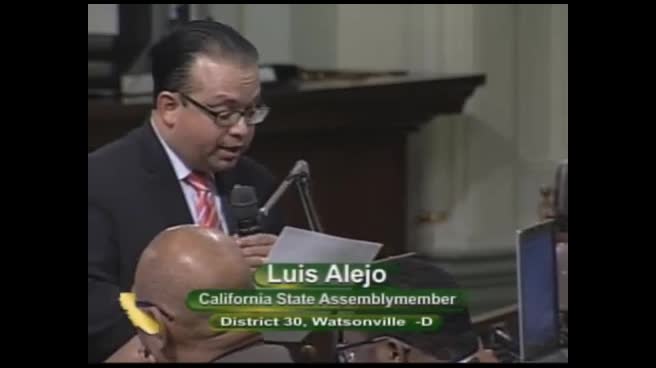 3MIN
Assembly Floor
 2MIN
Assembly Standing Committee on Appropriations
 15MIN
Assembly Standing Committee on Insurance
Bill Author