AB 392: San Diego River Conservancy.
- Session Year: 2015-2016
- House: Assembly
- Latest Version Date: 2015-10-08
The San Diego River Conservancy Act establishes the San Diego River Conservancy in the Natural Resources Agency, and prescribes the territory, membership, and functions and duties of the conservancy with regard to, among other things, the acquisition, protection, and management of public lands within the San Diego River area, as defined. Existing law provides that the act will remain in effect until January 1, 2020.
This bill would delete the January 1, 2020, repeal date, thereby extending the operation of the act indefinitely. The bill would require the conservancy, on or before January 1, 2017, and on or before January 1 of every odd-numbered year thereafter, to prepare and submit to the Governor and the Legislature a report containing specified information regarding projects funded or undertaken by the conservancy and progress made in the 2 years prior to the date of the report, and recommendations regarding legislative action that may be needed to provide funding or other resources to enable the conservancy to more effectively and efficiently carry out its mission, goals, and objectives.
The San Diego River Conservancy Act establishes the San Diego River Conservancy in the Natural Resources Agency, and prescribes the territory, membership, and functions and duties of the conservancy with regard to, among other things, the acquisition, protection, and management of public lands within the San Diego River area, as defined. Existing law provides that the act will remain in effect until January 1, 2020.
This bill would delete the January 1, 2020, repeal date, thereby extending the operation of the act indefinitely.
(a)On or before January 1, 2017, and on or before January 1 of every odd-numbered year thereafter, the conservancy shall prepare and submit to the Governor and the Legislature a report that includes all of the following:
(1)A description of, and the amount of money expended for, every project funded or undertaken by the conservancy, directly or by an entity under the direction of the conservancy, during the two years prior to the date of the report.
(2)A description of the progress made in accomplishing the purposes of this division during the two years prior to the date of the report.
(3)Recommendations regarding legislative action that may be needed to provide funding or other resources to enable the conservancy to more effectively and efficiently carry out its mission, goals, and objectives.
(b)The report shall be submitted to the Legislature in the manner provided in Section 9795 of the Government Code.
SEC. 2.Section 32661 of the Public Resources Code is repealed.(a)On or before January 1, 2017, and on or before January 1 of every odd-numbered year thereafter, the conservancy shall prepare and submit to the Governor and the Legislature a report that includes all of the following:
(1)A description of, and the amount of money expended for, every project funded or undertaken by the conservancy, directly or by an entity under the direction of the conservancy, during the two years prior to the date of the report.
(2)A description of the progress made in accomplishing the purposes of this division during the two years prior to the date of the report.
(3)Recommendations regarding legislative action that may be needed to provide funding or other resources to enable the conservancy to more effectively and efficiently carry out its mission, goals, and objectives.
(b)The report shall be submitted to the Legislature in the manner provided in Section 9795 of the Government Code.
SECTION 1.SEC. 2.Section 32661 of the Public Resources Code is repealed.This division shall remain in effect only until January 1, 2020, and as of that date is repealed, unless a later enacted statute, that is enacted before January 1, 2020, deletes or extends that date.
|
Date
|
Status
|
|---|---|
| Jun 1, 2015 | Read third time. Passed. Ordered to the Senate. (Ayes 79. Noes 0. Page 1708.) |
| Oct 8, 2015 | Chaptered by Secretary of State - Chapter 622, Statutes of 2015. |
| Oct 8, 2015 | Approved by the Governor. |
| Sep 10, 2015 | Enrolled and presented to the Governor at 4 p.m. |
| Sep 1, 2015 | Read third time. Passed. Ordered to the Assembly. (Ayes 39. Noes 0. Page 2345.). |
| Sep 1, 2015 | Read third time. Passed. Ordered to the Assembly. |
| Sep 1, 2015 | In Assembly. Ordered to Engrossing and Enrolling. |
| Aug 31, 2015 | Read second time. Ordered to third reading. |
| Aug 27, 2015 | From committee: Do pass. (Ayes 7. Noes 0.) (August 27). |
| Jul 6, 2015 | In committee: Referred to APPR. suspense file. |
| Jun 24, 2015 | From committee: Do pass and re-refer to Com. on APPR. (Ayes 9. Noes 0.) (June 23). Re-referred to Com. on APPR. |
| Jun 11, 2015 | Referred to Com. on N.R. & W. |
| Feb 18, 2015 | Read first time. To print. |
| Jun 1, 2015 | Read third time. Passed. Ordered to the Senate. |
| Jun 1, 2015 | In Senate. Read first time. To Com. on RLS. for assignment. |
| May 28, 2015 | Read second time. Ordered to third reading. |
| May 28, 2015 | From committee: Do pass. (Ayes 17. Noes 0.) (May 28). |
| May 13, 2015 | In committee: Set, first hearing. Referred to APPR. suspense file. |
| May 6, 2015 | Re-referred to Com. on APPR. |
| May 5, 2015 | Read second time and amended. |
| May 4, 2015 | From committee: Amend, and do pass as amended and re-refer to Com. on APPR. (Ayes 9. Noes 0.) (April 27). |
| Apr 6, 2015 | In committee: Set, first hearing. Hearing canceled at the request of author. |
| Mar 5, 2015 | Referred to Com. on NAT. RES. |
| Feb 19, 2015 | From printer. May be heard in committee March 21. |
|
Date
|
Description
|
Location
|
Votes
|
|
|---|---|---|---|---|
| Sep 1, 2015 | Assembly 3rd Reading AB392 Atkins By Hueso | Senate Floor |
Passed |
|
| Aug 27, 2015 | Do pass | Senate Standing Committee on Appropriations |
Passed |
|
| Jul 6, 2015 | Placed on suspense file | Senate Standing Committee on Appropriations |
Passed |
|
| Jun 23, 2015 | Do pass, but first be re-referred to the Committee on [Appropriations] | Senate Standing Committee on Natural Resources and Water |
Passed |
|
| Jun 1, 2015 | AB 392 ATKINS Assembly Third Reading | Assembly Floor |
Passed |
|
| May 28, 2015 | Do pass. | Assembly Standing Committee on Appropriations |
Passed |
|
| Apr 27, 2015 | Do pass as amended and be re-referred to the Committee on [Appropriations] | Assembly Standing Committee on Natural Resources |
Passed |
This list shows positions taken on this bill by organizations on the date displayed, which is linked to the original source.
Positions by individuals are not included.
|
Organization
|
Position
|
Date
|
|---|---|---|
| Caltrop | * Support | Jun 23, 2015 |
| CalTrout | * Support | Apr 27, 2015 |
| City of Audubon | * Support | Jun 23, 2015 |
| City Of San Diego | ** Support | Sep 1, 2015 |
| Lakeside's River Park Conservancy | ** Support | Sep 1, 2015 |
| Mayor Kevin Faulconer and City of San Diego | * Support | Jun 23, 2015 |
| San Diego Canyonlands | ** Support | Apr 27, 2015 |
| San Diego County Board of Supervisors | ** Support | Sep 1, 2015 |
| San Diego History Center | ** Support | Sep 1, 2015 |
| San Diego River Conservancy | * Support | Jun 23, 2015 |
| San Diego River Park Foundation | ** Support | Apr 27, 2015 |
| Sierra Club California | ** Support | Sep 1, 2015 |
| The Nature Conservancy | * Support | Apr 27, 2015 |
| Urban Corp of San Diego County | * Support | Jun 23, 2015 |
AB 392
Page 4
|
Office of Senate Floor Analyses (916) 651-1520 Fax: (916) 327-4478 |
THIRD READING
Bill No: AB 392
Amended: 5/5/15 in Assembly
SENATE NATURAL RES. & WATER COMMITTEE: 9-0, 6/23/15
AYES: Pavley, Stone, Allen, Hertzberg, Hueso, Jackson, Monning, Vidak, Wolk
SENATE APPROPRIATIONS COMMITTEE: 7-0, 8/27/15
AYES: Lara, Bates, Beall, Hill, Leyva, Mendoza, Nielsen
ASSEMBLY FLOOR: 79-0, 6/1/15 - See last page for vote
SUBJECT: San Diego River Conservancy
DIGEST: This bill eliminates the statutory sunset date of the San Diego River Conservancy and imposes biannual reporting requirements that describe all expenditures, all projects, a progress report, and any recommendations that the conservancy has to improve the statutes under which it operates.
Existing law:
Establishes the San Diego River Conservancy (SDRC) since 2002 in the Natural Resources Agency (NRA), and the SDRC is authorized to acquire and accept donations of land or interests in land that are located within one-half mile of the San Diego River and its tributaries, historic flumes, and otherwise within the San Diego River watershed.
Prohibits the SDRC from levying taxes, regulating land use, and exercising the power of eminent domain.
Specifies the SDRC's governing board of eleven members includes the Secretary of Resources, the Director of Finance, the Director of Parks and Recreation, the Mayor of San Diego, a San Diego City Council member, a San Diego County Supervisor, and five public members. Of the five public members, three are appointed by the Governor; the Senate Rules Committee, and the Assembly Speaker appoint one each.
Sunsets the SDRC on January 1, 2020.
This bill eliminates the sunset date and creates biannual reporting requirements that describe all expenditures, all projects, a progress report, and any recommendations that the SDRC has to improve the statutes under which it operates.
Comments
According to the author, the San Diego River is an important historic, archaeological and cultural area within California. Making the SDRC permanent will assist with long-term planning and development as well as make more practical the conservancy’s expenditure of $17 million in Prop 1 water bond funds that will take up to 10 years.
The SDRC watershed spans 440 square miles, includes six major reservoirs, four cities, a large area of unincorporated county lands, Cleveland National Forest, and Native American reservations, with 700,000 people living within its area of influence and an additional two million people in adjacent communities. The River is 52 miles from its headwaters near Julian to the Pacific Ocean at Ocean Beach. Its rich cultural and historic connections began with the Kumeyaay who settled in the area more than 11,000 years ago and extends through Spanish, Mexican, and early Californian settlements. In its 12-year history, SDRC has overseen over 100 acres of restoration along the river, the construction and renovation of approximately 15 miles of a public trail along the River that is well used by people of all ages, and the acquisition of over 200 acres of land. Currently, the mission of the SDRC will be advanced by building, with partners, a San Diego River Park and hiking trail stretching from the headwaters in Julian to the Pacific Ocean.
According to the author, even though the SDRC does not sunset until 2020, the SDRC has shown progress toward achieving its mission and has worked well with local organizations and other state agencies. SDRC has a history of clean audits and continues to assist the Resources Agency and the State Coastal Conservancy in expending funds from Propositions 13, 40, and 84. SDRC has yet to receive its own appropriation of conservation bond funds, although, as noted, it was allocated $17 million from Prop 1. The Proposition 1 funds are meant for multibenefit water quality, water supply, and watershed protection and restoration projects. Another sunset review of SDRC could allow the Legislature to scrutinize the spending of these funds, but the reporting requirements now in the bill will also give the Legislature the opportunity and the information to do that. Only three other conservancies have similar reporting requirements—State Coastal Conservancy, Santa Monica Mountains Conservancy, and Sierra Nevada Conservancy.
FISCAL EFFECT: Appropriation: No Fiscal Com.: Yes Local: No
According to the Senate Appropriations Committee, annual costs of at least $350,000 beginning in 2020 from the Environmental License Plate Fund (special) for SDRC administrative costs.
City of San Diego
Lakeside’s River Park Conservancy
San Diego County Board of Supervisors
San Diego History Center
Sierra Club California
OPPOSITION: (Verified 8/28/15)
None received
AYES: Achadjian, Alejo, Travis Allen, Baker, Bigelow, Bloom, Bonilla, Bonta, Brough, Brown, Burke, Calderon, Campos, Chang, Chau, Chávez, Chiu, Chu, Cooley, Cooper, Dababneh, Dahle, Daly, Dodd, Eggman, Frazier, Beth Gaines, Gallagher, Cristina Garcia, Eduardo Garcia, Gatto, Gipson, Gomez, Gonzalez, Gordon, Gray, Grove, Hadley, Harper, Roger Hernández, Holden, Irwin, Jones, Jones-Sawyer, Kim, Lackey, Levine, Linder, Low, Maienschein, Mathis, Mayes, McCarty, Medina, Melendez, Mullin, Nazarian, Obernolte, O'Donnell, Olsen, Patterson, Perea, Quirk, Rendon, Ridley-Thomas, Rodriguez, Salas, Santiago, Steinorth, Mark Stone, Thurmond, Ting, Wagner, Waldron, Weber, Wilk, Williams, Wood, Atkins
NO VOTE RECORDED: Lopez
Prepared by: William Craven / N.R. & W. / (916) 651-4116
8/30/15 19:42:08
**** END ****
AB 392 (Atkins) Page 2 of 2
SENATE COMMITTEE ON APPROPRIATIONS
Senator Ricardo Lara, Chair
2015 - 2016 Regular Session
AB 392 (Atkins) - San Diego River Conservancy.
|
|
Version: May 5, 2015 |
Policy Vote: N.R. & W. 9 - 0 |
Urgency: No |
Mandate: No |
Hearing Date: July 6, 2015 |
Consultant: Marie Liu |
This bill meets the criteria for referral to the Suspense File.
Bill Summary:
AB 392 would remove the sunset date on the San Diego River Conservancy (SDRC) and would require it report to the Legislature biennially on its activities.
Fiscal Impact:
Annual costs of at least $350,000 beginning in 2020 from the Environmental License Plate Fund (special) for SDRC administrative costs.
Background:
The San Diego River Conservancy was statutorily created within the Natural Resources Agency in 2002. It is authorized to acquire and accept donations of land or interests in land that are located within one-half mile of the San Diego River and its tributaries, historic flumes, and otherwise within the San Diego River watershed. The SDRC is governed by an 11 member board consisting of the secretary of the Resources Agency, the director of the Department of Finance, the director of the Department of Parks and Recreation, the mayor of San Diego, a San Diego city council member, a San Diego County Supervisor, and five public members.
The SDRC sunsets on January 1, 2020.
Proposition 1, which was approved by the voters in November 2014, authorized $17 million to the SDRC for projects that have multiple benefits for water quality, water supply, and water protection and restoration of watersheds.
Proposed Law:
This bill would eliminate the sunset on the SDRC and would require the SDRC to report to the Legislature in odd-numbered years beginning in 2017 on the following:
A description of every project funded or undertaken by the conservancy in the previous two years;
A description of the progress made in accomplishing the SDRC’s goals during the previous two years; and
Recommendations for legislative action that might be needed to enable the SDRC to more effectively and efficiently carry out its mission, goals, and objectives.
Staff Comments:
The SDRC has annual operating costs of approximately $350,000. These costs are currently being paid for by the Environmental License Plate Fund, which has a structural deficiency, though the SDRC can receive funding from other special funds or the General Fund. By eliminating the sunset date of the SDRC, this bill will extend the SDRC’s operating costs beyond 2020.
Staff notes that the annual cost of $350,000 is for the base administration of the SRDC. To administer the $17 million made available by Proposition 1, the SDRC will incur additional administrative costs, which will be covered by bond monies. According to the author, expending Proposition 1 monies will take up to 10 years.
-- END --
AB 392 (Atkins) Page 2 of 2
SENATE COMMITTEE ON NATURAL RESOURCES AND WATER
Senator Fran Pavley, Chair
2015 - 2016 Regular
Bill No: AB 392 Hearing Date: June 23, 2015
Author: |
Atkins |
|
|
Version: |
May 5, 2015 Amended |
||
Urgency: |
No |
Fiscal: |
Yes |
Consultant: |
William Craven |
||
Subject: San Diego River Conservancy.
BACKGROUND AND EXISTING LAW
Established the San Diego River Conservancy (SDRC) in 2002 in the Natural Resources Agency (NRA) which is authorized to acquire and accept donations of land or interests in land that are located within one-half mile of the San Diego River and its tributaries, historic flumes, and otherwise within the San Diego River Watershed.
Prohibits the SDRC from levying taxes, regulating land use, and exercising the power of eminent domain.
Specifies the SDRC's governing board of eleven members including the Secretary of Resources, the Director of Finance, the Director of Parks and Recreation, the Mayor of San Diego, a San Diego City Council member, a San Diego County Supervisor, and five public members. Of the five public members, three are appointed by the Governor, the Senate Rules Committee, and the Assembly Speaker appoint one each.
Sunsets the SDRC on January 1, 2020.
PROPOSED LAW
This bill eliminates the sunset date and creates biannual reporting requirements that describe all expenditures, all projects, a progress report, and any recommendations that the conservancy has to improve the statutes under which it operates.
ARGUMENTS IN SUPPORT
According to the author, the San Diego River is an important historic, archaeological and cultural area within California. Making the SDRC permanent will assist with long-term planning and development as well as make more practical the conservancy’s expenditure of $17 million in Prop 1 water bond funds that will take up to 10 years.
The SDRC watershed spans 440 square miles, includes 6 major reservoirs, 4 cities, a large area of unincorporated county lands, Cleveland National Forest, and Native American reservations, with 700,000 people living within its area of influence and an additional 2 million people in adjacent communities. The river is 52 miles from its headwaters near Julian to the Pacific Ocean at Ocean Beach. Its rich cultural and historic connections began with the Kumeyaay who settled in the area more than 11,000 years ago and extends through Spanish, Mexican, and early Californian settlements. In its 12-year history, SDRC has overseen over 100 acres of restoration along the river, the construction and renovation of approximately 15 miles of a public trail along the river that is well used by people of all ages, and the acquisition of over 200 acres of land. Currently, the mission of the SDRC will be advanced by building, with partners, a San Diego River Park and hiking trail stretching from the headwaters in Julian to the Pacific Ocean.
According to the author, even though the SDRC does not sunset until 2020, the SDRC has shown progress toward achieving its mission and has worked well with local organizations and other state agencies. SDRC has a history of clean audits and continues to assist the Resources Agency and the State Coastal Conservancy in expending funds from Propositions 13, 40, and 84. SDRC has yet to receive its own appropriation of conservation bond funds, although, as noted, it was allocated $17 million from Prop 1. The Proposition 1 funds are meant for multibenefit water quality, water supply, and watershed protection and restoration projects. Another sunset review of SDRC could allow the Legislature to scrutinize the spending of these funds, but the reporting requirements now in the bill will also give the Legislature the opportunity and the information to do that. Only three other conservancies have similar reporting requirements—State Coastal Conservancy, Santa Monica Mountains Conservancy, and Sierra Nevada Conservancy.
ARGUMENTS IN OPPOSITION
None received.
SUPPORT
Sierra Club of California
San Diego County Board of Supervisors
OPPOSITION
None Received
-- END --
AB 392
Page 2
ASSEMBLY THIRD READING
AB 392
(Atkins)
As Amended May 5, 2015
Majority vote
Committee |
Votes |
Ayes |
Noes |
Natural Resources |
9-0 |
Williams, Dahle, Cristina Garcia, Hadley, Harper, McCarty, Rendon, Mark Stone, Wood |
|
Appropriations |
17-0 |
Gomez, Bigelow, Bonta, Calderon, Chang, Daly, Eggman, Gallagher, Eduardo Garcia, Gordon, Holden, Jones, Quirk, Rendon, Wagner, Weber, Wood |
|
SUMMARY: Eliminates the 2020 sunset date for the San Diego River Conservancy (Conservancy) and requires the Conservancy to submit a report to the Governor and Legislature on January 1, 2017, and every two years thereafter. The report must include:
A description of every project funded or undertaken by the Conservancy, as specified, during the two years prior to the report.
A progress report on the Conservancy's accomplishments toward fulfilling its mission during the two years prior to the report.
Recommended legislative action necessary to provide funding or other resources to enable the Conservancy to more effectively and efficiently carry out its mission, goals, and objectives.
FISCAL EFFECT: According to the Assembly Appropriations Committee:
Increased annual administrative state costs of between $350,000 per year (Environmental License Plate Fund or other special fund) beginning in Fiscal Year 2020-21.
Minor, likely absorbable, costs for the biennial reports.
COMMENTS:
Purpose of the bill. The mission of the Conservancy will be partly accomplished by building, with partners, a San Diego River Park and hiking trail stretching from the headwaters in Julian to the Pacific Ocean. The San Diego River is an important historic, archaeological and cultural area within California. Making the Conservancy permanent will assist with long-term planning and development.
Conservancy. The Conservancy watershed spans 440 square miles, includes 6 major reservoirs, four cities, a large area of unincorporated county lands, Cleveland National Forest, and Native American reservations, with 700,000 people living within its area of influence and an additional 2 million people in adjacent communities. The river is 52 miles from its headwaters near Julian to the Pacific Ocean at Ocean Beach. Its rich cultural and historic connections began with the Kumeyaay who settled in the area more than 11,000 years ago and extends through Spanish, Mexican, and early Californian settlements. In its 12-year history, the Conservancy has overseen over 100 acres of restoration along the river, the construction and renovation of approximately 15 miles of a public trail along the river that is well used by people of all ages, and the acquisition of over 200 acres of land.
Analysis Prepared by: Michael Jarred / NAT. RES. / (916) 319-2092 FN: 0000701
AB 392
Page 2
Date of Hearing: May 13, 2015
ASSEMBLY COMMITTEE ON APPROPRIATIONS
Jimmy Gomez, Chair
AB 392
(Atkins) – As Amended May 5, 2015
Policy Committee: |
Natural Resources |
Vote: |
9 - 0 |
|
|
|
|
|
|
|
|
Urgency: No State Mandated Local Program: No Reimbursable: No
SUMMARY:
This bill eliminates the 2020 sunset date for the San Diego River Conservancy (Conservancy) and requires the Conservancy to submit a report to the Governor and Legislature on January 1, 2017, and every two years thereafter. The report must include:
A description of every project funded or undertaken by the Conservancy, as specified, during the two years prior to the report.
A progress report on the Conservancy's accomplishments toward fulfilling its mission during the two years prior to the report.
Recommended legislative action necessary to provide funding or other resources to enable the Conservancy to more effectively and efficiently carry out its mission, goals, and objectives.
FISCAL EFFECT:
Increased annual administrative state costs of between $350,000 per year (Environmental License Plate Fund or other special fund) beginning in FY 2020-21.
Minor, likely absorbable, costs for the biennial reports.
COMMENTS:
Purpose. According to the author, the mission of the Conservancy will be partly accomplished by building, with partners, a San Diego River Park and hiking trail stretching from the headwaters in Julian to the Pacific Ocean. The San Diego River is an important historic, archaeological and cultural area within California. Making the Conservancy permanent will assist with long-term planning and development.
Background. The San Diego River watershed spans 440 square miles, includes 6 major reservoirs, 4 cities, a large area of unincorporated county lands, Cleveland National Forest, and Native American reservations. Seven hundred thousand people live within the Conservancy's area of influence and an additional 2 million people live in adjacent communities.
The river is 52 miles from its headwaters near Julian to the Pacific Ocean at Ocean Beach. The Conservancy has overseen over 100 acres of restoration along the river, the construction and renovation of approximately 15 miles of a public trail, and the acquisition of over 200 acres of land.
State Conservancies. There are currently 10 state conservancies located within the Natural Resources Agency: a) Sierra Nevada Conservancy; b) California Tahoe Conservancy; c) State Coastal Conservancy; d) San Joaquin River Conservancy; e) Sacramento-San Joaquin Delta Conservancy; f) Coachella Mountains Conservancy; g) San Gabriel and Lower Los Angeles Rivers Conservancy; h) Santa Monica Mountains Conservancy; i) Baldwin Hills Conservancy; and j) San Diego River Conservancy.
Analysis Prepared by: Jennifer Galehouse / APPR. / (916) 319-2081
AB 392
Page 2
Date of Hearing: April 27, 2015
ASSEMBLY COMMITTEE ON NATURAL RESOURCES
Das Williams, Chair
AB 392
(Atkins) – As Introduced February 18, 2015
SUBJECT: San Diego River Conservancy
SUMMARY: Eliminates the 2020 sunset date for the San Diego River Conservancy (SDRC).
EXISTING LAW:
Established the SDRC in 2002 in the Natural Resources Agency (NRA) and authorizes the SDRC to acquire and accept donations of land or interests in land that are located within one-half mile of the San Diego River and its tributaries, historic flumes, and otherwise within the San Diego River Watershed.
Prohibits the SDRC from levying taxes, regulating land use, and exercising the power of eminent domain.
Specifies the SDRC's governing board of eleven members including the Secretary of Resources, the Director of Finance, the Director of Parks and Recreation, the mayor of San Diego, a San Diego City Council member, a San Diego County Supervisor, and five public members. Of the five public members, three are appointed by the Governor, the Senate Rules Committee, and the Assembly Speaker appoint one each.
Sunsets the SDRC on January 1, 2020.
FISCAL EFFECT: Unknown
COMMENTS:
Purpose of the bill. The mission of the SDRC will be partly accomplished by building, with partners, a San Diego River Park and hiking trail stretching from the headwaters in Julian to the Pacific Ocean. The San Diego River is an important historic, archaeological and cultural area within California. Making the SDRC permanent will assist with long-term planning and development.
Conservancy. The SDRC watershed spans 440 square miles, includes 6 major reservoirs, 4 cities, a large area of unincorporated county lands, Cleveland National Forest, and Native American reservations, with 700,000 people living within its area of influence and an additional 2 million people in adjacent communities. The river is 52 miles from its headwaters near Julian to the Pacific Ocean at Ocean Beach. Its rich cultural and historic connections began with the Kumeyaay who settled in the area more than 11,000 years ago and extends through Spanish, Mexican, and early Californian settlements. In its 12-year history, SDRC has overseen over 100 acres of restoration along the river, the construction and renovation of approximately 15 miles of a public trail along the river that is well used by people of all ages, and the acquisition of over 200 acres of land.
Is sunset elimination appropriate at this time? The SDRC does not sunset until 2020; therefore, SDRC will continue for several years even with its current sunset. The SDRC has shown progress toward achieving its mission and has worked well with local organizations and other state agencies. SDRC has a history of clean audits and continues to assist the NRA and the State Coastal Conservancy in expending funds from Propositions 13, 40, and 84. SDRC has yet to receive its own appropriation of conservation bond funds. The Water Quality, Supply, and Infrastructure Improvement Fund of 2014 (Proposition 1) allocated $17 million for SDRC. The Proposition 1 funds are meant for multibenefit water quality, water supply, and watershed protection and restoration projects. Another sunset review of SDRC could allow the Legislature to scrutinize the spending of these funds, but the reporting requirement in the suggested amendments will also give the Legislature the opportunity and the information to do that.
Oversight. NRA is responsible for overseeing all land conservation activities and spending in the state. Yet the NRA has not taken an active role in evaluating conservancies or providing them with guidance or best practices. In addition, only three of ten conservancies (State Coastal Conservancy, Santa Monica Mountains Conservancy, and Sierra Nevada Conservancy) submit reports to the Legislature.
Suggested amendments. The author and committee may wish to consider amendments to add a biennial reporting requirement starting in 2017 and to add appropriate co-authors.
Prior Legislation.
SB 419 (Kehoe), Chapter 646, Statutes 2007, revised the description of the San Diego river area to include its tributaries and historic flumes, and included the protection of historic and cultural resources in the Conservancy’s responsibilities. The Board was expanded from 9 to 11 members by adding the California Director of Parks and Recreation and one member of the San Diego County Board of Supervisors.
SB 1428 (Kehoe),
Chapter 406, Statues of 2008, extended the sunset date to January 1,
2020.
REGISTERED SUPPORT / OPPOSITION:
Support
City of San Diego
San Diego Canyonlands
San Diego River Park Foundation
Sierra Club California
Opposition
None on file
Analysis Prepared by: Michael Jarred / NAT. RES. / (916) 319-2092
Discussed in Hearing
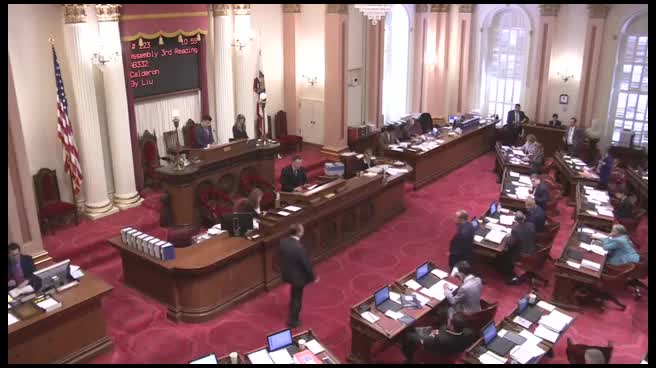 2MIN
Senate Floor
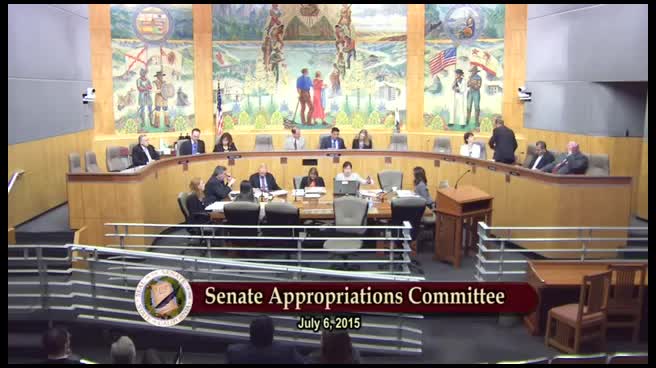 19SEC
Senate Standing Committee on Appropriations
 5MIN
Senate Standing Committee on Natural Resources and Water
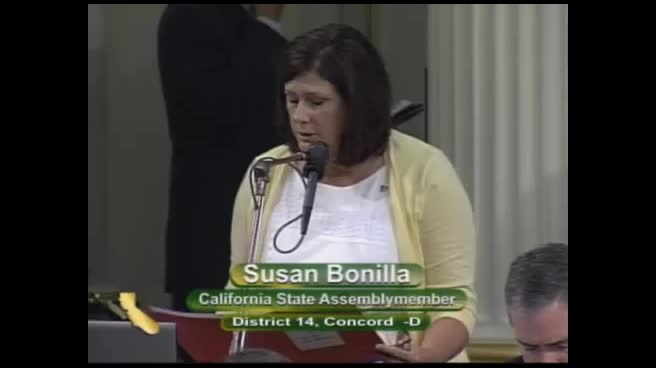 3MIN
Assembly Floor
 3MIN
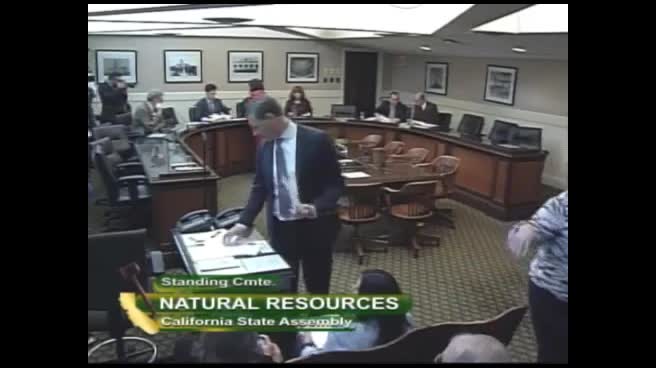
Assembly Standing Committee on Natural Resources
Bill Author

Bill Co-Author(s):
