AB 404: Community colleges: accreditation.
- Session Year: 2015-2016
- House: Assembly
- Latest Version Date: 2015-10-08
(1)Existing law establishes the California Community Colleges, under the administration of the Board of Governors of the California Community Colleges, as one of the segments of public postsecondary education in this state. Existing law imposes numerous duties on the board of governors with respect to these administrative responsibilities, including a requirement to review the accreditation status of community colleges in certain circumstances.
This bill would add to the duties of the board of governors by requiring it to conduct a survey of the community colleges, including consultation with representatives of both faculty and classified personnel, to develop a report to be transmitted to the United States Department of Education and the National Advisory Committee on Institutional Quality and Integrity that reflects a systemwide evaluation of the regional accrediting agency based on the criteria used to determine an accreditors status.
(2)Existing law requires the accrediting agency for the community colleges to report to the appropriate policy and budget subcommittees of the Legislature upon the issuance of a decision that affects the accreditation status of a community college and, on a biannual basis, to report any accreditation policy changes that affect the accreditation process or status for a community college.
This bill would require the regional accrediting agency for the community colleges to report to the board of governors as soon as practicable after the National Advisory Committee on Institutional Quality and Integrity has notified the regional accrediting agency of the date by which the agencys application for continued recognition is due.
(1)Existing law establishes the California Community Colleges, under the administration of the Board of Governors of the California Community Colleges, as one of the segments of public postsecondary education in this state. Existing law imposes numerous duties on the board of governors with respect to these administrative responsibilities, including a requirement to review the accreditation status of community colleges in certain circumstances.
This bill would add to the duties of the board of governors by requiring it to conduct a survey of the community colleges, including consultation with representatives of both faculty and classified personnel, to develop a report to be transmitted to the United States Department of Education and the National Advisory Committee on Institutional Quality and Integrity that reflects a systemwide evaluation of the regional accrediting agency based on the criteria used to determine an accreditors status.
(2)Existing law requires the accrediting agency for the community colleges to report to the appropriate policy and budget subcommittees of the Legislature upon the issuance of a decision that affects the accreditation status of a community college and, on a biannual basis, to report any accreditation policy changes that affect the accreditation process or status for a community college.
This bill would additionally require the regional accrediting agency for the community colleges to report to the board of governors as soon as practicable after the National Advisory Committee on Institutional Quality and Integrity has notified the regional accrediting agency of the date by which their the agencys application for continued recognition is due.
(1)Existing law establishes the California Community Colleges, under the administration of the Board of Governors of the California Community Colleges, as one of the segments of public postsecondary education in this state. Existing law imposes numerous duties on the board of governors with respect to these administrative responsibilities, including a requirement to review the accreditation status of community colleges in certain circumstances.
This bill would add to the duties of the board of governors by requiring it to conduct a survey of the community colleges, including consultation with representatives of both faculty and classified personnel, to develop a report to be transmitted to the United States Department of Education and the National Advisory Committee on Institutional Quality and Integrity that reflects a systemwide evaluation of the accrediting agency based on the criteria used to determine an accreditors status.
(2)Existing law requires the accrediting agency for the community colleges to report to the appropriate policy and budget subcommittees of the Legislature upon the issuance of a decision that affects the accreditation status of a community college and, on a biannual basis, to report any accreditation policy changes that affect the accreditation process or status for a community college.
This bill would additionally require the accrediting agency for the community colleges to report to the board of governors as soon as practicable after the National Advisory Committee on Institutional Quality and Integrity has notified the accrediting agency of the date by which their application for continued recognition is due.
(a)The Board of Governors of the California Community Colleges shall provide leadership and direction in the continuing development of the California Community Colleges as an integral and effective element in the structure of public higher education in the state. The work of the board of governors shall at all times be directed to maintaining and continuing, to the maximum degree permissible, local authority and control in the administration of the California Community Colleges.
(b)Subject to, and in furtherance of, subdivision (a), and in consultation with community college districts and other interested parties as specified in subdivision (e), the board of governors shall provide general supervision over community college districts, and shall, in furtherance of those purposes, perform the following functions:
(1)Establish minimum standards as required by law, including, but not limited to, the following:
(A)Minimum standards to govern student academic standards relating to graduation requirements and probation, dismissal, and readmission policies.
(B)Minimum standards for the employment of academic and administrative staff in community colleges.
(C)Minimum standards for the formation of community colleges and districts.
(D)Minimum standards for credit and noncredit classes.
(E)Minimum standards governing procedures established by governing boards of community college districts to ensure faculty, staff, and students the right to participate effectively in district and college governance, and the opportunity to express their opinions at the campus level and to ensure that these opinions are given every reasonable consideration, and the right of academic senates to assume primary responsibility for making recommendations in the areas of curriculum and academic standards.
(2)Evaluate and issue annual reports on the fiscal and educational effectiveness of community college districts according to outcome measures cooperatively developed with those districts, and provide assistance when districts encounter severe management difficulties.
(3)Conduct necessary systemwide research on community colleges, and provide appropriate information services, including, but not limited to, definitions for the purpose of uniform reporting, collection, compilation, and analysis of data for effective planning and coordination, and dissemination of information.
(4)(A)Provide representation, advocacy, and accountability for the California Community Colleges before state and national legislative and executive agencies.
(B)In order to wholly engage in the recognition review process of an accrediting agency pursuant to subdivision (c) of Section 72208, conduct a survey of the community colleges, including consultation with representatives of both faculty and classified personnel, to develop a report to be transmitted to the United States Department of Education and the National Advisory Committee on Institutional Quality and Integrity that reflects a systemwide evaluation of the regional accrediting agency based on the criteria used to determine an accreditors status.
(5)Administer state support programs, both operational and capital outlay, and those federally supported programs for which the board of governors has responsibility pursuant to state or federal law. In so doing, the board of governors shall do the following:
(A)(i)Annually prepare and adopt a proposed budget for the California Community Colleges. The proposed budget shall, at a minimum, identify the total revenue needs for serving educational needs within the mission, the amount to be expended for the state general apportionment, the amounts requested for various categorical programs established by law, the amounts requested for new programs and budget improvements, and the amount requested for systemwide administration.
(ii)The proposed budget for the California Community Colleges shall be submitted to the Department of Finance in accordance with established timelines for development of the annual Budget Bill.
(B)To the extent authorized by law, establish the method for determining and allocating the state general apportionment.
(C)Establish space and utilization standards for facility planning in order to determine eligibility for state funds for construction purposes.
(6)(A)Establish minimum conditions entitling districts to receive state aid for support of community colleges. In so doing, the board of governors shall establish and carry out a periodic review of each community college district to determine whether it has met the minimum conditions prescribed by the board of governors.
(B)In determining whether a community college district satisfies the minimum conditions established pursuant to this section, the board of governors shall review the regional accreditation status of the community colleges within that district.
(7)Coordinate and encourage interdistrict, regional, and statewide development of community college programs, facilities, and services.
(8)Facilitate articulation with other segments of higher education with secondary education.
(9)Review and approve comprehensive plans for each community college district. The plans shall be submitted to the board of governors by the governing board of each community college district.
(10)Review and approve all educational programs offered by community college districts and all courses that are not offered as part of an educational program approved by the board of governors.
(11)Exercise general supervision over the formation of new community college districts and the reorganization of existing community college districts, including the approval or disapproval of plans therefor.
(12)Notwithstanding any other provision of law, be solely responsible for establishing, maintaining, revising, and updating, as necessary, the uniform budgeting and accounting structures and procedures for the California Community Colleges.
(13)Establish policies regarding interdistrict attendance of students.
(14)Advise and assist governing boards of community college districts on the implementation and interpretation of state and federal laws affecting community colleges.
(15)Contract for the procurement of goods and services, as necessary.
(16)Carry out other functions as expressly provided by law.
(c)Subject to, and in furtherance of, subdivision (a), the board of governors shall have full authority to adopt rules and regulations necessary and proper to execute the functions specified in this section as well as other functions that the board of governors is expressly authorized by statute to regulate.
(d)Wherever in this section or any other statute a power is vested in the board of governors, the board of governors, by a majority vote, may adopt a rule delegating that power to the chancellor, or any officer, employee, or committee of the California Community Colleges, or community college district, as the board of governors may designate. However, the board of governors shall not delegate any power that is expressly made nondelegable by statute. Any rule delegating power shall prescribe the limits of delegation.
(e)In performing the functions specified in this section, the board of governors shall establish and carry out a process for consultation with institutional representatives of community college districts so as to ensure their participation in the development and review of policy proposals. The consultation process shall also afford community college organizations, as well as interested individuals and parties, an opportunity to review and comment on proposed policy before it is adopted by the board of governors.
SEC. 2.Section 72208 of the Education Code is amended to read:72208.(a)The regional accrediting agency for the community colleges shall report to the appropriate policy and budget subcommittees of the Legislature upon the issuance of a decision that affects the accreditation status of a community college and, on a biannual basis, report any accreditation policy changes that affect the accreditation process or status for a community college.
(b)The Office of the Chancellor of the California Community Colleges shall ensure that the appropriate policy and budget subcommittees of the Legislature are provided the information required to be reported pursuant to subdivision (a).
(c)The regional accrediting agency shall report to the board of governors as soon as practicable after the National Advisory Committee on Institutional Quality and Integrity has notified the regional accrediting agency of the date by which the agencys application for continued recognition is due.
(a)The Board of Governors of the California Community Colleges shall provide leadership and direction in the continuing development of the California Community Colleges as an integral and effective element in the structure of public higher education in the state. The work of the board of governors shall at all times be directed to maintaining and continuing, to the maximum degree permissible, local authority and control in the administration of the California Community Colleges.
(b)Subject to, and in furtherance of, subdivision (a), and in consultation with community college districts and other interested parties as specified in subdivision (e), the board of governors shall provide general supervision over community college districts, and shall, in furtherance of those purposes, perform the following functions:
(1)Establish minimum standards as required by law, including, but not limited to, the following:
(A)Minimum standards to govern student academic standards relating to graduation requirements and probation, dismissal, and readmission policies.
(B)Minimum standards for the employment of academic and administrative staff in community colleges.
(C)Minimum standards for the formation of community colleges and districts.
(D)Minimum standards for credit and noncredit classes.
(E)Minimum standards governing procedures established by governing boards of community college districts to ensure faculty, staff, and students the right to participate effectively in district and college governance, and the opportunity to express their opinions at the campus level and to ensure that these opinions are given every reasonable consideration, and the right of academic senates to assume primary responsibility for making recommendations in the areas of curriculum and academic standards.
(2)Evaluate and issue annual reports on the fiscal and educational effectiveness of community college districts according to outcome measures cooperatively developed with those districts, and provide assistance when districts encounter severe management difficulties.
(3)Conduct necessary systemwide research on community colleges, and provide appropriate information services, including, but not limited to, definitions for the purpose of uniform reporting, collection, compilation, and analysis of data for effective planning and coordination, and dissemination of information.
(4)(A)Provide representation, advocacy, and accountability for the California Community Colleges before state and national legislative and executive agencies.
(B)In order to wholly engage in the recognition review process of an accrediting agency pursuant to subdivision (c) of Section 72208, conduct a survey of the community colleges, including consultation with representatives of both faculty and classified personnel, to develop a report to be transmitted to the United States Department of Education and the National Advisory Committee on Institutional Quality and Integrity that reflects a systemwide evaluation of the regional accrediting agency based on the criteria used to determine an accreditors status.
(5)Administer state support programs, both operational and capital outlay, and those federally supported programs for which the board of governors has responsibility pursuant to state or federal law. In so doing, the board of governors shall do the following:
(A)(i)Annually prepare and adopt a proposed budget for the California Community Colleges. The proposed budget shall, at a minimum, identify the total revenue needs for serving educational needs within the mission, the amount to be expended for the state general apportionment, the amounts requested for various categorical programs established by law, the amounts requested for new programs and budget improvements, and the amount requested for systemwide administration.
(ii)The proposed budget for the California Community Colleges shall be submitted to the Department of Finance in accordance with established timelines for development of the annual Budget Bill.
(B)To the extent authorized by law, establish the method for determining and allocating the state general apportionment.
(C)Establish space and utilization standards for facility planning in order to determine eligibility for state funds for construction purposes.
(6)(A)Establish minimum conditions entitling districts to receive state aid for support of community colleges. In so doing, the board of governors shall establish and carry out a periodic review of each community college district to determine whether it has met the minimum conditions prescribed by the board of governors.
(B)In determining whether a community college district satisfies the minimum conditions established pursuant to this section, the board of governors shall review the regional accreditation status of the community colleges within that district.
(7)Coordinate and encourage interdistrict, regional, and statewide development of community college programs, facilities, and services.
(8)Facilitate articulation with other segments of higher education with secondary education.
(9)Review and approve comprehensive plans for each community college district. The plans shall be submitted to the board of governors by the governing board of each community college district.
(10)Review and approve all educational programs offered by community college districts and all courses that are not offered as part of an educational program approved by the board of governors.
(11)Exercise general supervision over the formation of new community college districts and the reorganization of existing community college districts, including the approval or disapproval of plans therefor.
(12)Notwithstanding any other provision of law, be solely responsible for establishing, maintaining, revising, and updating, as necessary, the uniform budgeting and accounting structures and procedures for the California Community Colleges.
(13)Establish policies regarding interdistrict attendance of students.
(14)Advise and assist governing boards of community college districts on the implementation and interpretation of state and federal laws affecting community colleges.
(15)Contract for the procurement of goods and services, as necessary.
(16)Carry out other functions as expressly provided by law.
(c)Subject to, and in furtherance of, subdivision (a), the board of governors shall have full authority to adopt rules and regulations necessary and proper to execute the functions specified in this section as well as other functions that the board of governors is expressly authorized by statute to regulate.
(d)Wherever in this section or any other statute a power is vested in the board of governors, the board of governors, by a majority vote, may adopt a rule delegating that power to the chancellor, or any officer, employee, or committee of the California Community Colleges, or community college district, as the board of governors may designate. However, the board of governors shall not delegate any power that is expressly made nondelegable by statute. Any rule delegating authority power shall prescribe the limits of delegation.
(e)In performing the functions specified in this section, the board of governors shall establish and carry out a process for consultation with institutional representatives of community college districts so as to ensure their participation in the development and review of policy proposals. The consultation process shall also afford community college organizations, as well as interested individuals and parties, an opportunity to review and comment on proposed policy before it is adopted by the board of governors.
SEC. 2.Section 72208 of the Education Code is amended to read:72208.(a)The regional accrediting agency for the community colleges shall report to the appropriate policy and budget subcommittees of the Legislature upon the issuance of a decision that affects the accreditation status of a community college and, on a biannual basis, report any accreditation policy changes that affect the accreditation process or status for a community college.
(b)The Office of the Chancellor of the California Community Colleges shall ensure that the appropriate policy and budget subcommittees of the Legislature are provided the information required to be reported pursuant to subdivision (a).
(c)The regional accrediting agency shall report to the board of governors as soon as practicable after the National Advisory Committee on Institutional Quality and Integrity has notified the regional accrediting agency of the date by which the agencys application for continued recognition is due.
(a)The Board of Governors of the California Community Colleges shall provide leadership and direction in the continuing development of the California Community Colleges as an integral and effective element in the structure of public higher education in the state. The work of the board of governors shall at all times be directed to maintaining and continuing, to the maximum degree permissible, local authority and control in the administration of the California Community Colleges.
(b)Subject to, and in furtherance of, subdivision (a), and in consultation with community college districts and other interested parties as specified in subdivision (e), the board of governors shall provide general supervision over community college districts, and shall, in furtherance of those purposes, perform the following functions:
(1)Establish minimum standards as required by law, including, but not limited to, the following:
(A)Minimum standards to govern student academic standards relating to graduation requirements and probation, dismissal, and readmission policies.
(B)Minimum standards for the employment of academic and administrative staff in community colleges.
(C)Minimum standards for the formation of community colleges and districts.
(D)Minimum standards for credit and noncredit classes.
(E)Minimum standards governing procedures established by governing boards of community college districts to ensure faculty, staff, and students the right to participate effectively in district and college governance, and the opportunity to express their opinions at the campus level and to ensure that these opinions are given every reasonable consideration, and the right of academic senates to assume primary responsibility for making recommendations in the areas of curriculum and academic standards.
(2)Evaluate and issue annual reports on the fiscal and educational effectiveness of community college districts according to outcome measures cooperatively developed with those districts, and provide assistance when districts encounter severe management difficulties.
(3)Conduct necessary systemwide research on community colleges colleges, and provide appropriate information services, including, but not limited to, definitions for the purpose of uniform reporting, collection, compilation, and analysis of data for effective planning and coordination, and dissemination of information.
(4)(A)Provide representation, advocacy, and accountability for the California Community Colleges before state and national legislative and executive agencies.
(B)In order to wholly engage in the recognition review process of an accrediting agency pursuant to subdivision (c) of Section 72208, to conduct a survey of the community colleges, including consultation with representatives of both faculty and classified personnel, to develop a report to be transmitted to the United States Department of Education and the National Advisory Committee on Institutional Quality and Integrity that reflects a systemwide evaluation of the regional accrediting agency based on the criteria used to determine an accreditors status.
(5)Administer state support programs, both operational and capital outlay, and those federally supported programs for which the board of governors has responsibility pursuant to state or federal law. In so doing, the board of governors shall do the following:
(A)(i)Annually prepare and adopt a proposed budget for the California Community Colleges. The proposed budget shall, at a minimum, identify the total revenue needs for serving educational needs within the mission, the amount to be expended for the state general apportionment, the amounts requested for various categorical programs established by law, the amounts requested for new programs and budget improvements, and the amount requested for systemwide administration.
(ii)The proposed budget for the California Community Colleges shall be submitted to the Department of Finance in accordance with established timelines for development of the annual Budget Bill.
(B)To the extent authorized by law, establish the method for determining and allocating the state general apportionment.
(C)Establish space and utilization standards for facility planning in order to determine eligibility for state funds for construction purposes.
(6)(A)Establish minimum conditions entitling districts to receive state aid for support of community colleges. In so doing, the board of governors shall establish and carry out a periodic review of each community college district to determine whether it has met the minimum conditions prescribed by the board of governors.
(B)In determining whether a community college district satisfies the minimum conditions established pursuant to this section, the board of governors shall review the regional accreditation status of the community colleges within that district.
(7)Coordinate and encourage interdistrict, regional, and statewide development of community college programs, facilities, and services.
(8)Facilitate articulation with other segments of higher education with secondary education.
(9)Review and approve comprehensive plans for each community college district. The plans shall be submitted to the board of governors by the governing board of each community college district.
(10)Review and approve all educational programs offered by community college districts, districts and all courses that are not offered as part of an educational program approved by the board of governors.
(11)Exercise general supervision over the formation of new community college districts and the reorganization of existing community college districts, including the approval or disapproval of plans therefor.
(12)Notwithstanding any other provision of law, be solely responsible for establishing, maintaining, revising, and updating, as necessary, the uniform budgeting and accounting structures and procedures for the California Community Colleges.
(13)Establish policies regarding interdistrict attendance of students.
(14)Advise and assist governing boards of community college districts on the implementation and interpretation of state and federal laws affecting community colleges.
(15)Contract for the procurement of goods and services, as necessary.
(16)Carry out other functions as expressly provided by law.
(c)Subject to, and in furtherance of, subdivision (a), the board of governors shall have full authority to adopt rules and regulations necessary and proper to execute the functions specified in this section as well as other functions that the board of governors is expressly authorized by statute to regulate.
(d)Wherever in this section or any other statute a power is vested in the board of governors, the board of governors, by a majority vote, may adopt a rule delegating that power to the chancellor, or any officer, employee, or committee of the California Community Colleges, or community college district, as the board of governors may designate. However, the board of governors shall not delegate any power that is expressly made nondelegable by statute. Any rule delegating authority shall prescribe the limits of delegation.
(e)In performing the functions specified in this section, the board of governors shall establish and carry out a process for consultation with institutional representatives of community college districts so as to ensure their participation in the development and review of policy proposals. The consultation process shall also afford community college organizations, as well as interested individuals and parties, an opportunity to review and comment on proposed policy before it is adopted by the board of governors.
SEC. 2.Section 72208 of the Education Code is amended to read:72208.(a)The regional accrediting agency for the community colleges shall report to the appropriate policy and budget subcommittees of the Legislature upon the issuance of a decision that affects the accreditation status of a community college and, on a biannual basis, report any accreditation policy changes that affect the accreditation process or status for a community college.
(b)The Office of the Chancellor of the California Community Colleges shall ensure that the appropriate policy and budget subcommittees of the Legislature are provided the information required to be reported pursuant to subdivision (a).
(c)The regional accrediting agency shall report to the board of governors as soon as practicable after the National Advisory Committee on Institutional Quality and Integrity has notified the regional accrediting agency of the date by which their the agencys application for continued recognition is due.
(a)The Board of Governors of the California Community Colleges shall provide leadership and direction in the continuing development of the California Community Colleges as an integral and effective element in the structure of public higher education in the state. The work of the board of governors shall at all times be directed to maintaining and continuing, to the maximum degree permissible, local authority and control in the administration of the California Community Colleges.
(b)Subject to, and in furtherance of, subdivision (a), and in consultation with community college districts and other interested parties as specified in subdivision (e), the board of governors shall provide general supervision over community college districts, and shall, in furtherance of those purposes, perform the following functions:
(1)Establish minimum standards as required by law, including, but not limited to, the following:
(A)Minimum standards to govern student academic standards relating to graduation requirements and probation, dismissal, and readmission policies.
(B)Minimum standards for the employment of academic and administrative staff in community colleges.
(C)Minimum standards for the formation of community colleges and districts.
(D)Minimum standards for credit and noncredit classes.
(E)Minimum standards governing procedures established by governing boards of community college districts to ensure faculty, staff, and students the right to participate effectively in district and college governance, and the opportunity to express their opinions at the campus level and to ensure that these opinions are given every reasonable consideration, and the right of academic senates to assume primary responsibility for making recommendations in the areas of curriculum and academic standards.
(2)Evaluate and issue annual reports on the fiscal and educational effectiveness of community college districts according to outcome measures cooperatively developed with those districts, and provide assistance when districts encounter severe management difficulties.
(3)Conduct necessary systemwide research on community colleges and provide appropriate information services, including, but not limited to, definitions for the purpose of uniform reporting, collection, compilation, and analysis of data for effective planning and coordination, and dissemination of information.
(4)(A)Provide representation, advocacy, and accountability for the California Community Colleges before state and national legislative and executive agencies.
(B)In order to wholly engage in the recognition review process of an accrediting agency pursuant to subdivision (c) of Section 72208, to conduct a survey of the community colleges, including consultation with representatives of both faculty and classified personnel, to develop a report to be transmitted to the United States Department of Education and the National Advisory Committee on Institutional Quality and Integrity that reflects a systemwide evaluation of the accrediting agency based on the criteria used to determine an accreditors status.
(5)Administer state support programs, both operational and capital outlay, and those federally supported programs for which the board of governors has responsibility pursuant to state or federal law. In so doing, the board of governors shall do the following:
(A)(i)Annually prepare and adopt a proposed budget for the California Community Colleges. The proposed budget shall, at a minimum, identify the total revenue needs for serving educational needs within the mission, the amount to be expended for the state general apportionment, the amounts requested for various categorical programs established by law, the amounts requested for new programs and budget improvements, and the amount requested for systemwide administration.
(ii)The proposed budget for the California Community Colleges shall be submitted to the Department of Finance in accordance with established timelines for development of the annual Budget Bill.
(B)To the extent authorized by law, establish the method for determining and allocating the state general apportionment.
(C)Establish space and utilization standards for facility planning in order to determine eligibility for state funds for construction purposes.
(6)(A)Establish minimum conditions entitling districts to receive state aid for support of community colleges. In so doing, the board of governors shall establish and carry out a periodic review of each community college district to determine whether it has met the minimum conditions prescribed by the board of governors.
(B)In determining whether a community college district satisfies the minimum conditions established pursuant to this section, the board of governors shall review the accreditation status of the community colleges within that district.
(7)Coordinate and encourage interdistrict, regional, and statewide development of community college programs, facilities, and services.
(8)Facilitate articulation with other segments of higher education with secondary education.
(9)Review and approve comprehensive plans for each community college district. The plans shall be submitted to the board of governors by the governing board of each community college district.
(10)Review and approve all educational programs offered by community college districts, and all courses that are not offered as part of an educational program approved by the board of governors.
(11)Exercise general supervision over the formation of new community college districts and the reorganization of existing community college districts, including the approval or disapproval of plans therefor.
(12)Notwithstanding any other provision of law, be solely responsible for establishing, maintaining, revising, and updating, as necessary, the uniform budgeting and accounting structures and procedures for the California Community Colleges.
(13)Establish policies regarding interdistrict attendance of students.
(14)Advise and assist governing boards of community college districts on the implementation and interpretation of state and federal laws affecting community colleges.
(15)Contract for the procurement of goods and services, as necessary.
(16)Carry out other functions as expressly provided by law.
(c)Subject to, and in furtherance of, subdivision (a), the board of governors shall have full authority to adopt rules and regulations necessary and proper to execute the functions specified in this section as well as other functions that the board of governors is expressly authorized by statute to regulate.
(d)Wherever in this section or any other statute a power is vested in the board of governors, the board of governors, by a majority vote, may adopt a rule delegating that power to the chancellor, or any officer, employee, or committee of the California Community Colleges, or community college district, as the board of governors may designate. However, the board of governors shall not delegate any power that is expressly made nondelegable by statute. Any rule delegating authority shall prescribe the limits of delegation.
(e)In performing the functions specified in this section, the board of governors shall establish and carry out a process for consultation with institutional representatives of community college districts so as to ensure their participation in the development and review of policy proposals. The consultation process shall also afford community college organizations, as well as interested individuals and parties, an opportunity to review and comment on proposed policy before it is adopted by the board of governors.
SEC. 2.Section 72208 of the Education Code is amended to read:72208.(a)The accrediting agency for the community colleges shall report to the appropriate policy and budget subcommittees of the Legislature upon the issuance of a decision that affects the accreditation status of a community college and, on a biannual basis, report any accreditation policy changes that affect the accreditation process or status for a community college.
(b)The Office of the Chancellor of the California Community Colleges shall ensure that the appropriate policy and budget subcommittees of the Legislature are provided the information required to be reported pursuant to subdivision (a).
(c)The accrediting agency shall report to the board of governors as soon as practicable after the National Advisory Committee on Institutional Quality and Integrity has notified the accrediting agency of the date by which their application for continued recognition is due.
|
Date
|
Status
|
|---|---|
| Jun 10, 2015 | From committee chair, with author's amendments: Amend, and re-refer to committee. Read second time, amended, and re-referred to Com. on ED. |
| Oct 8, 2015 | Chaptered by Secretary of State - Chapter 623, Statutes of 2015. |
| Oct 8, 2015 | Approved by the Governor. |
| Sep 16, 2015 | Enrolled and presented to the Governor at 4 p.m. |
| Sep 4, 2015 | Senate amendments concurred in. To Engrossing and Enrolling. (Ayes 79. Noes 0.). |
| Sep 4, 2015 | Senate amendments concurred in. To Engrossing and Enrolling. (Ayes 79. Noes 0. Page 2909.). |
| Sep 4, 2015 | Senate amendments concurred in. To Engrossing and Enrolling. |
| Sep 2, 2015 | Read third time. Passed. Ordered to the Assembly. (Ayes 40. Noes 0. Page 2397.). |
| Sep 2, 2015 | Read third time. Passed. Ordered to the Assembly. |
| Sep 2, 2015 | In Assembly. Concurrence in Senate amendments pending. May be considered on or after September 4 pursuant to Assembly Rule 77. |
| Aug 31, 2015 | Read second time. Ordered to third reading. |
| Aug 27, 2015 | From committee: Do pass. (Ayes 7. Noes 0.) (August 27). |
| Jul 13, 2015 | In committee: Referred to suspense file. |
| Jul 1, 2015 | From committee: Do pass and re-refer to Com. on APPR. (Ayes 7. Noes 0.) (July 1). Re-referred to Com. on APPR. |
| Feb 19, 2015 | Read first time. To print. |
| May 28, 2015 | Referred to Com. on ED. |
| May 14, 2015 | Read third time. Passed. Ordered to the Senate. (Ayes 78. Noes 0. Page 1428.) |
| May 14, 2015 | Read third time. Passed. Ordered to the Senate. |
| May 14, 2015 | In Senate. Read first time. To Com. on RLS. for assignment. |
| May 7, 2015 | Ordered to third reading. |
| May 7, 2015 | From Consent Calendar. |
| Apr 30, 2015 | Read second time. Ordered to Consent Calendar. |
| Apr 29, 2015 | From committee: Do pass. To Consent Calendar. (Ayes 17. Noes 0.) (April 29). |
| Apr 14, 2015 | Re-referred to Com. on APPR. |
| Apr 13, 2015 | Read second time and amended. |
| Apr 9, 2015 | From committee: Amend, and do pass as amended and re-refer to Com. on APPR. (Ayes 12. Noes 0.) (April 7). |
| Mar 2, 2015 | Referred to Com. on HIGHER ED. |
| Feb 20, 2015 | From printer. May be heard in committee March 22. |
|
Date
|
Description
|
Location
|
Votes
|
|
|---|---|---|---|---|
| Sep 4, 2015 | AB 404 CHIU Concurrence in Senate Amendments | Assembly Floor |
Passed |
|
| Sep 2, 2015 | Assembly 3rd Reading AB404 Chiu By Leno | Senate Floor |
Passed |
|
| Aug 27, 2015 | Do pass | Senate Standing Committee on Appropriations |
Passed |
|
| Jul 13, 2015 | Placed on suspense file | Senate Standing Committee on Appropriations |
Passed |
|
| Jul 1, 2015 | Do pass, but first be re-referred to the Committee on [Appropriations] | Senate Standing Committee on Education |
Passed |
|
| May 14, 2015 | AB 404 CHIU Assembly Third Reading | Assembly Floor |
Passed |
|
| Apr 29, 2015 | Do pass. To Consent Calendar. | Assembly Standing Committee on Appropriations |
Passed |
|
| Apr 7, 2015 | Do pass as amended and be re-referred to the Committee on [Appropriations] | Assembly Standing Committee on Higher Education |
Passed |
This list shows positions taken on this bill by organizations on the date displayed, which is linked to the original source.
Positions by individuals are not included.
|
Organization
|
Position
|
Date
|
|---|---|---|
| American Federation of Teachers, Local 2121 | ** Support | Sep 2, 2015 |
| California Community College Independents | ** Support | Sep 2, 2015 |
| California Federation Of Teachers | ** Support | Sep 2, 2015 |
| California School Employees Association California Teachers Association | ** Support | Sep 2, 2015 |
| California Teachers Association | * Support | Jul 1, 2015 |
| Faculty Association Of California Community Colleges | ** Support | Sep 2, 2015 |
| San Francisco Community College Federation of Teachers | ** Support | Sep 2, 2015 |
| u None received. | ** Against | Jul 1, 2015 |
AB 404
Page 2
CONCURRENCE IN SENATE AMENDMENTS
AB 404
(Chiu)
As Amended June 10, 2015
Majority vote
ASSEMBLY: |
78-0 |
(May 14, 2015) |
SENATE: |
40-0 |
(September 2, 2015) |
Original Committee Reference: HIGHER ED.
SUMMARY: Requires the regional accrediting agency for the California Community Colleges (CCC) to report to the CCC Board of Governors (BOG) as soon as practicable after the National Advisory Committee on Institutional Quality and Integrity (NICIQI) has notified the agency of the date by which their application for continued recognition is due; and, requires the CCC BOG to conduct a survey of the CCC, including faculty and classified personnel, to develop a report to be transmitted to the United States Department of Education (USDE) and NICIQI that reflects a systemwide evaluation of the agency based on criteria used to determine an accreditor's status.
The Senate amendments add coauthors and make non-substantive changes.
EXISTING LAW:
Establishes the BOG to provide general supervision over the CCC and requires the BOG to prescribe minimum standards for CCC formation and operation (Education Code (EDC) Section 66700);
Requires the BOG to develop minimum standards governing academic standards, employment policies and shared governance; evaluate CCC fiscal and educational effectiveness and provide assistance when districts encounter management difficulties; administer state funding and establish minimum conditions entitling CCC districts to receive state funds; requires the CCC BOG, in determining if a CCC district satisfies the minimum conditions for receipt of apportionment funding, to review the accreditation status of the CCCs within that district review and approve educational programs (EDC Section 70901);
Requires the accrediting agency for CCCs to report to the appropriate policy and budget subcommittees of the Legislature upon the issuance of a decision that affects the accreditation status of a community college and, on a biannual basis, any accreditation policy changes that affect the accreditation process or status for a CCC; and, requires the CCC Chancellor's Office to ensure that the appropriate policy and budget subcommittees are provided the aforementioned required information (EDC Section 72208);
BOG regulations (5 California Code of Regulations Section 51016) require CCCs to be accredited by the Accrediting Commission for Community and Junior Colleges (ACCJC). However, BOG recently approved regulatory changes that would continue the requirement for accrediting, but remove the explicit requirement of accreditation by the ACCJC.
FISCAL EFFECT: According to the Senate Appropriations Committee, the California Community Colleges Chancellor's Office indicates that this bill would require 0.5 position and $55,000 General Fund.
COMMENTS: Background. Accreditation is a voluntary, non-governmental peer review process used to determine academic quality. Accrediting agencies are private organizations that establish operating standards for educational or professional institutions and programs, determine the extent to which the standards are met, and publicly announce their findings. Under federal law, the USDE establishes the general standards for accreditation agencies and is required to publish a list of recognized accrediting agencies that are deemed reliable authorities on the quality of education provided by their accredited institutions. Institutional accreditation is a requirement for participation in federal financial aid programs. Under federal regulations, accrediting agencies are required to meet general outlined standards, but specific processes and quality standards are left to each accrediting agency to determine.
USDE relies on NACIQI, an 18-member committee appointed equally by the United States Secretary of Education, United States House of Representatives, and the United States Senate, to review accrediting agencies and advise the Secretary on whether an accrediting agency is a reliable authority regarding the quality of the education provided by the institutions it accredits. NACIQI is charged with determining whether an accrediting agency complies with various criteria for recognition, which include, among other requirements: appropriate accreditation standards; fair and consistent application of accreditation standards; proper monitoring and reevaluation of accredited institutions; and, immediate enforcement to ensure compliance with standards. During the initial application or continued recognition review process, USDE staff publishes a notice in the Federal Register, inviting the public to comment on the agency's compliance with the criteria for recognition and establishing a deadline for receipt of public comment. Public comments are reviewed by NICIQI and USDE staff prior to the USDE decision regarding initial or continued recognition of the accrediting agency. USDE determines the recognition period, up to five years.
Purpose of this bill. According to the author, "there has been a historical lack of accountability for an accrediting agency overseeing the CCCs. This deficiency is due to fear of retribution, scarce local resources, and the absence of a pathway for CCC and other local stakeholders to provide meaningful feedback during an accrediting agency's performance review process for continued accreditation recognition." The author notes that in past NACIQI reviews of ACCJC, there has not been a strong voice for the CCC system as a whole; further, the CCC system does not currently have a method for soliciting feedback from colleges, faculty, and other stakeholders. The author believes that increasing participation in the review process will increase accrediting agency accountability.
Analysis Prepared by: Laura Metune / HIGHER ED. / (916) 319-3960 FN: 0001843
AB 404
Page 5
|
Office of Senate Floor Analyses (916) 651-1520 Fax: (916) 327-4478 |
THIRD READING
Bill No: AB 404
Amended: 6/10/15 in Senate
SENATE EDUCATION COMMITTEE: 7-0, 7/1/15
AYES: Liu, Runner, Leyva, Mendoza, Monning, Pan, Vidak
NO VOTE RECORDED: Block, Hancock
SENATE APPROPRIATIONS COMMITTEE: 7-0, 8/27/15
AYES: Lara, Bates, Beall, Hill, Leyva, Mendoza, Nielsen
ASSEMBLY FLOOR: 78-0, 5/14/15 - See last page for vote
SUBJECT: Community colleges: accreditation
DIGEST: This bill requires the regional accrediting agency for the California Community Colleges (CCC) to report to the CCC Board of Governors (BOG) the date by which the agency’s application for continued recognition is due and requires the CCC BOG to conduct a survey of community colleges, as specified, to develop a report, transmitted to specified entities, that reflects a systemwide evaluation of the regional accrediting agency.
ANALYSIS: Existing law confers upon the CCC BOG the ability to prescribe minimum standards for the formation and operation of community colleges and exercise general supervision over the community colleges. (Education Code § 66700 and § 70901)
As such, regulations (Title 5 California Code of Regulations § 51016) have been adopted to require each community college within a district to be an accredited institution – with the Accrediting Commission for Community and Junior Colleges (ACCJC) determining accreditation.
This bill:
Requires the regional accrediting agency for the community colleges to report, as specified, to the CCC BOG the date by which the agency’s application for continued recognition is due.
Requires the CCC BOG to conduct a survey of community colleges including faculty and classified personnel to develop a report that reflects a systemwide evaluation of the regional accrediting agency based on the criteria use to determine an accreditor’s status.
Specifies that the report shall be transmitted to the United States Department of Education (USDE) and the National Advisory Committee on Institutional Quality and Integrity (NACIQI).
Comments
Need for the bill? According to the author, existing law provides no mechanism for a CCC system-wide performance review of the CCC’s regional accrediting body and providing the overseeing federal entities with such a review increases accountability of the accrediting agency and improves participation by CCC faculty and personnel in the process. This bill seeks to provide a method for collecting stakeholder feedback during an accrediting agency’s performance review.
Accreditation, how it works. Accreditation is a voluntary, non-governmental peer review process used to determine academic quality. Accrediting agencies are private organizations that establish operating standards for educational or professional institutions and programs, determine the extent to which the standards are met, and publicly announce their findings.
Under federal law, the USDE establishes the general standards for accreditation agencies and is required to publish a list of recognized accrediting agencies that are deemed reliable authorities on the quality of education provided by their accredited institutions. There are three basic types of accreditation:
Regional accreditation. There are six USDE-recognized regional accrediting agencies. Each regional accreditor encompasses public, the vast majority of non-profit private (independent), and some for-profit postsecondary educational institutions in the region it serves. California's regional accrediting agency is separated into two commissions: the ACCJC and the Senior College and University Commission.
National accreditation. National accreditation is not based on geography, but more focused to evaluate specific types of schools and programs. National accreditation is designed to allow nontraditional colleges (trade schools, religious schools, certain online schools) to be compared against similarly designed institutions. Different standards and categories are measured, depending on the type of institution.
Specialized/programmatic accreditation. Offered by accrediting agencies that represent specific fields of study, these agencies do not accredit entire colleges but instead accredit the programs within colleges that prepare students for the specific field or industry. In most cases, specialized accreditation alone does not enable participation in state and federal financial aid programs.
Accreditation of California community colleges. After an initial accreditation, colleges must have their accreditation reaffirmed every six years. This process includes a self-study, a site visit by a team of peers, a recommendation by the visiting team and an action by the ACCJC. In addition to these core components, colleges must submit a midterm report every three years and annual progress reports. The college/district may also have to submit follow-up reports and host visits as required by the ACCJC. There are three levels of sanction prior to termination of accreditation: Warning, Probation, and Show Cause. Follow up reports and accreditation visits are required to retain full accreditation.
Many California community colleges have faced various levels of accreditation sanctions. Most recently, the sanctions imposed on City College of San Francisco have drawn attention to ACCJC and its accreditation process. The heightened attention lead to an audit by the California State Auditor, who on June 26, 2014, issued a report on California Community Colleges Accreditation. This audit report provided both a review of the ACCJC and the accreditation process in general, as well as a more in-depth examination of recent events related to City College of San Francisco. The report raised some concerns of the ACCJC and the accreditation process and made a series of recommendations to address the identified concerns. After the release of the State Auditor’s report, the Chancellor’s Office reconvened its Accreditation Task Force consisting of community college stakeholders. The Accreditation Task Force is charged with providing input through a report to the Chancellor’s Office regarding the accreditation process, including addressing the State Auditor’s recommendations. The Accreditation Task Force held its final meeting at the end of May and is expected to release the final report at the end of August. Arguably, the information gathered by the provisions in this bill may compliment the work of the Accreditation Task Force.
National Advisory Committee on Institutional Quality and Integrity. NACIQI advises the USDE on matters related to postsecondary accreditation and the eligibility and certification process for higher education institutions to participate in Federal student aid programs. Its primary function is to provide recommendations to the U.S. Secretary of Education concerning whether accrediting entities’ standards are sufficiently rigorous and effective in their application to ensure the entity is a reliable authority regarding the quality of the education provided by the institutions or programs it accredits. To meet that standard, accrediting entities must demonstrate compliance with all the criteria for recognition. Once a recommendation is made, this process allows for public comment. This bill seeks to provide CCC faculty and personnel a method for providing feedback and remain anonymous during the accrediting agencies performance review.
Related/Prior Legislation
AB 1385 (Ting, 2015) requires notification to the CCC BOG before an accrediting agency increases membership fees, special assessments, or other payments charged to a community college. AB 1385 is pending in the Senate Education Committee.
AB 1397 (Ting, 2015) requires the accrediting agency for the CCC to meet specified operational standards. AB 1397 is pending in the Senate Education Committee.
SB 1068 (Beall, 2014) would have required the CCC BOG, by January 1, 2016, to report on the feasibility of creating an independent accrediting agency to accredit the CCC and other two-year private postsecondary educational institutions, and to make recommendations relative to CCC accreditation. SB 1068 was held on the Senate Appropriations Committee suspense file.
FISCAL EFFECT: Appropriation: No Fiscal Com.: Yes Local: No
According the Senate Appropriations Committee:
CCC Chancellor’s Office indicates that this bill requires 0.5 position and $55,000 General Fund.
American Federation of Teachers, Local 2121
California Community College Independents
California Federation of Teachers
California School Employees Association
California Teachers Association
Faculty Association of California Community Colleges
San Francisco Community College Federation of Teachers
OPPOSITION: (Verified 8/27/15)
None received
ASSEMBLY FLOOR: 78-0, 5/14/15
AYES: Achadjian, Alejo, Travis Allen, Baker, Bigelow, Bloom, Bonilla, Bonta, Brough, Brown, Burke, Calderon, Campos, Chang, Chau, Chávez, Chiu, Chu, Cooley, Cooper, Dababneh, Dahle, Daly, Dodd, Eggman, Frazier, Beth Gaines, Gallagher, Cristina Garcia, Eduardo Garcia, Gatto, Gomez, Gonzalez, Gordon, Gray, Grove, Hadley, Harper, Holden, Irwin, Jones, Jones-Sawyer, Kim, Lackey, Levine, Linder, Lopez, Low, Maienschein, Mathis, Mayes, McCarty, Medina, Melendez, Mullin, Nazarian, Obernolte, O'Donnell, Olsen, Patterson, Perea, Quirk, Rendon, Ridley-Thomas, Rodriguez, Salas, Santiago, Steinorth, Mark Stone, Thurmond, Ting, Wagner, Waldron, Weber, Wilk, Williams, Wood, Atkins
NO VOTE RECORDED: Gipson, Roger Hernández
Prepared by: Olgalilia Ramirez / ED. / (916) 651-4105
8/30/15 19:42:09
**** END ****
AB 404 (Chiu) Page 2 of 2
SENATE COMMITTEE ON APPROPRIATIONS
Senator Ricardo Lara, Chair
2015 - 2016 Regular Session
AB 404 (Chiu) - Community colleges: accreditation.
|
|
Version: June 10, 2015 |
Policy Vote: ED. 7 - 0 |
Urgency: No |
Mandate: No |
Hearing Date: July 13, 2015 |
Consultant: Jillian Kissee |
This bill meets the criteria for referral to the Suspense File.
Bill Summary:
This bill requires the California Community Colleges (CCC) Board of Governors (Board) to conduct a survey of community colleges, as specified, and to develop a report to be transmitted to specified entities, that reflects a system-wide evaluation of the regional accrediting agency.
Fiscal Impact:
The California Community Colleges Chancellor’s Office indicates that this bill would require 0.5 position and $55,000 General Fund.
Background:
State regulations require each community college within a district to be an accredited institution – with the Accrediting Commission for Community and Junior Colleges (ACCJC) determining accreditation. (Title 5 California Code of Regulations (CCR) § 51016)
Accreditation is a voluntary, non-governmental peer review process used to determine academic quality. Accrediting agencies are private organizations that establish operating standards for educational or professional institutions and programs, determine the extent to which the standards are met, and publicly announce their findings.
Under federal law, the United States Department of Education (USDE) establishes the general standards for accreditation agencies and is required to publish a list of recognized accrediting agencies that are deemed reliable authorities on the quality of education provided by their accredited institutions.
After an initial accreditation, colleges must have their accreditation reaffirmed every six years. In addition, colleges must submit a midterm report every three years and annual progress reports. The college or district may also have to submit follow-up reports and host visits as required by the accrediting agency. Follow-up reports and accreditation visits are required to retain full accreditation. There are three levels of sanctions prior to termination of accreditation: Warning, Probation, and Show Cause.
Most recently the sanctions imposed on City College of San Francisco have drawn attention to ACCJC and its accreditation process which led to an audit conducted by the California State Auditor. The audit raised some concerns about the ACCJC and the accreditation process and made a series of recommendations to address the identified concerns.
The
National Advisory Committee on Institutional Quality and Integrity
(NACIQI) advises the USDE on matters related to postsecondary
accreditation and the eligibility and certification process for
higher education institutions to participate in federal student aid
programs. The primary function of the NACIQI is to provide
recommendations to the U.S. Secretary of Education concerning whether
accrediting entities’ standards are sufficiently rigorous and
effective in their application to ensure the entity is a reliable
authority regarding the quality of the education provided by the
institutions or programs it accredits.
According to the author, current law provides no mechanism for a CCC system-wide performance review of the CCC’s regional accrediting body and providing the overseeing federal entities with such a review increases accountability of the accrediting agency and improves participation by CCC faculty and personnel in the process.
Proposed Law:
This bill requires the Board to conduct a survey of the community colleges, including consultation with representatives of both faculty and classified personnel, and to develop a report to be transmitted to the USDE and the NACIQI that reflects a system-wide evaluation of the regional accrediting agency based on the criteria used to determine an accreditor’s status.
This bill also requires the regional accrediting agency to report to the Board after the NACIQI has notified the regional accrediting agency of the date by which the agency’s application for continued recognition is due.
Related Legislation:
AB 1385 (Ting, 2015) requires notification to the Board before an accrediting agency increases membership fees, special assessments, or other payments charged to a community college. AB 1385 is pending in the Senate Education Committee.
AB 1397 (Ting, 2015) requires the accrediting agency to meet specified operational standards. AB 1397 is pending in Senate Education Committee.
Staff Comments:
The California Community Colleges Chancellor’s Office indicates that this bill would require 0.5 position and $55,000 General Fund. Workload would include survey development and implementation; gathering and analyzing data; and completing the report.
-- END --
AB 404 (Chiu) Page 4 of 4
SENATE COMMITTEE ON EDUCATION
Senator Carol Liu, Chair
2015 - 2016 Regular
Bill No: AB 404
Author: |
Chiu |
||
Version: |
June 10, 2015 Hearing Date: July 1, 2015 |
||
Urgency: |
No |
Fiscal: |
Yes |
Consultant: |
Olgalilia Ramirez |
||
Subject: Community colleges: accreditation
SUMMARY
This bill requires the regional accrediting agency for the California Community Colleges (CCC) to report to the CCC Board of Governors (BOG) the date by which the agency’s application for continued recognition is due and requires the CCC BOG to conduct a survey of community colleges, as specified, to develop a report, transmitted to specified entities, that reflects a systemwide evaluation of the regional accrediting agency.
BACKGROUND
Existing law confers upon the CCC BOG the ability to prescribe minimum standards for the formation and operation of community colleges and exercise general supervision over the community colleges. (Education Code § 66700 and § 70901)
As such, regulations (Title 5 California Code of Regulations (CCR) § 51016) have been adopted to require each community college within a district to be an accredited institution – with the Accrediting Commission for Community and Junior Colleges (ACCJC) determining accreditation.
ANALYSIS
This bill:
Requires the regional accrediting agency for the community colleges to report, as specified, to the CCC BOG the date by which the agency’s application for continued recognition is due.
Requires the CCC BOG to conduct a survey of community colleges including faculty and classified personnel to develop a report that reflects a systemwide evaluation of the regional accrediting agency based on the criteria use to determine an accreditor’s status.
Specifies that the report shall be transmitted to the United States Department of Education (USDE) and the National Advisory Committee on Institutional Quality and Integrity (NACIQI).
STAFF
COMMENTS
Need for the bill. According to the author, current law provides no mechanism for a CCC system-wide performance review of the CCC’s regional accrediting body and providing the overseeing federal entities with such a review increases accountability of the accrediting agency and improves participation by CCC faculty and personnel in the process. This bill seeks to provide a method for collecting stakeholder feedback during an accrediting agency’s performance review.
Accreditation, how it works. Accreditation is a voluntary, non-governmental peer review process used to determine academic quality. Accrediting agencies are private organizations that establish operating standards for educational or professional institutions and programs, determine the extent to which the standards are met, and publicly announce their findings.
Under federal law, the United States Department of Education (USDE) establishes the general standards for accreditation agencies and is required to publish a list of recognized accrediting agencies that are deemed reliable authorities on the quality of education provided by their accredited institutions. There are three basic types of accreditation:
Regional Accreditation. There are six USDE-recognized regional accrediting agencies. Each regional accreditor encompasses public, the vast majority of non-profit private (independent), and some for-profit postsecondary educational institutions in the region it serves. California's regional accrediting agency is separated into two commissions: the Accrediting Commission for Community and Junior Colleges (ACCJC) and the Senior College and University Commission (WASC-Sr.).
National Accreditation. National accreditation is not based on geography, but more focused to evaluate specific types of schools and programs. National accreditation is designed to allow nontraditional colleges (trade schools, religious schools, certain online schools) to be compared against similarly designed institutions. Different standards and categories are measured, depending on the type of institution.
Specialized/Programmatic Accreditation. Offered by accrediting agencies that represent specific fields of study, these agencies do not accredit entire colleges but instead accredit the programs within colleges that prepare students for the specific field or industry. In most cases, specialized accreditation alone does not enable participation in state and federal financial aid programs.
Accreditation of California community colleges. After an initial accreditation, colleges must have their accreditation reaffirmed every six years. This process includes a self-study, a site visit by a team of peers, a recommendation by the visiting team and an action by the Accrediting Commission for Community and Junior Colleges (ACCJC). In addition to these core components, colleges must submit a midterm report every three years and annual progress reports. The college/district may also have to submit follow-up reports and host visits as required by the Commission. There are three levels of sanction prior to termination of accreditation: Warning, Probation, and Show Cause. Follow up reports and accreditation visits are required to retain full accreditation.
Many California community colleges have faced various levels of accreditation sanctions. Most recently the sanctions imposed on City College of San Francisco have drawn attention to ACCJC and its accreditation process. The heightened attention lead to an audit by the California State Auditor, who on June 26, 2014, issued a report on California Community Colleges Accreditation. This audit report provided both a review of the ACCJC and the accreditation process in general, as well as a more in-depth examination of recent events related to City College of San Francisco. The report raised some concerns of the ACCJC and the accreditation process and made a series of recommendations to address the identified concerns. After the release of the State Auditor’s report, the Chancellor’s Office reconvened its Accreditation Task Force consisting of community college stakeholders. The Accreditation Task Force is charged with providing input through a report to the Chancellor’s Office regarding the accreditation process, including addressing the State Auditor’s recommendations. The Accreditation Task Force held its final meeting at the end of May and is in the process of finalizing and submitting its final report later this year.
This bill collects and processes information that may compliment the work of the Accreditation Task Force.
National Advisory Committee on Institutional Quality and Integrity (NACIQI). NACIQI advises the United State Department of Education on matters related to postsecondary accreditation and the eligibility and certification process for higher education institutions to participate in Federal student aid programs. Its primary function is to provide recommendations to the U.S. Secretary of Education concerning whether accrediting entities’ standards are sufficiently rigorous and effective in their application to ensure the entity is a reliable authority regarding the quality of the education provided by the institutions or programs it accredits. To meet that standard, accrediting entities must demonstrate compliance with all the criteria for recognition. Once a recommendation is made, this process allows for public comment. This bill seeks to provide California Community College (CCC) faculty and personnel a method for providing feedback and remain anonymous during the accrediting agencies performance review.
Related and prior legislation.
AB 1385 (Ting, 2015) requires notification to the California Community College (CCC) Board of Governors (BOG) before an accrediting agency increases membership fees, special assessments, or other payments charged to a community college. AB 1385 is pending in this Committee.
AB 1397 (Ting, 2015) requires the accrediting agency for the CCC to meet specified operational standards. AB 1397 is pending in this Committee.
SB 1068 ( Beall, 2014) would have required the BOG CCC, by January 1, 2016, to report on the feasibility of creating an independent accrediting agency to accredit the California Community Colleges (CCC) and other 2-year private postsecondary educational institutions, and to make recommendations relative to CCC accreditation. SB 1068 was held on the Senate Appropriations suspense file.
SUPPORT
American Federation of Teachers, Local 2121
California Community College Independents
California Federation of Teachers
California School Employees Association
California Teachers Association
Faculty Association of California Community Colleges
OPPOSITION
None received.
-- END --
AB 404
Page 2
ASSEMBLY THIRD READING
AB 404
(Chiu)
As Amended April 13, 2015
Majority vote
Committee |
Votes |
Ayes |
Noes |
Higher Education |
12-0 |
Medina, Baker, Bloom, Harper, Irwin, Jones-Sawyer, Levine, Linder, Low, Santiago, Weber, Williams |
|
Appropriations |
17-0 |
Gomez, Bigelow, Bloom, Bonta, Calderon, Chang, Daly, Eggman, Gallagher, Eduardo Garcia, Holden, Jones, Quirk, Rendon, Wagner, Weber, Wood |
|
SUMMARY: Requires the regional accrediting agency for the California Community Colleges (CCC) to report to the CCC Board of Governors (BOG) as soon as practicable after the National Advisory Committee on Institutional Quality and Integrity (NICIQI) has notified the agency of the date by which their application for continued recognition is due; and, requires the CCC BOG to conduct a survey of the CCC, including faculty and classified personnel, to develop a report to be transmitted to the United States Department of Education (USDE) and NICIQI that reflects a systemwide evaluation of the agency based on criteria used to determine an accreditor's status.
EXISTING LAW:
Establishes the BOG to provide general supervision over the CCC and requires the BOG to prescribe minimum standards for CCC formation and operation (Education Code (EDC) Section 66700);
Requires the BOG to develop minimum standards governing academic standards, employment policies and shared governance; evaluate CCC fiscal and educational effectiveness and provide assistance when districts encounter management difficulties; administer state funding and establish minimum conditions entitling CCC districts to receive state funds; requires the CCC BOG, in determining if a CCC district satisfies the minimum conditions for receipt of apportionment funding, to review the accreditation status of the CCCs within that district review and approve educational programs (EDC Section 70901);
Requires the accrediting agency for CCCs to report to the appropriate policy and budget subcommittees of the Legislature upon the issuance of a decision that affects the accreditation status of a community college and, on a biannual basis, any accreditation policy changes that affect the accreditation process or status for a CCC; and, requires the CCC Chancellor's Office to ensure that the appropriate policy and budget subcommittees are provided the aforementioned required information (EDC Section 72208);
BOG regulations (5 California Code of Regulations Section 51016) require CCCs to be accredited by the Accrediting Commission for Community and Junior Colleges (ACCJC). However, BOG recently approved regulatory changes that would continue the requirement for accrediting, but remove the explicit requirement of accreditation by the ACCJC.
FISCAL EFFECT: According to the Assembly Appropriations Committee, minor one-time General Fund cost (around $50,000) for the Chancellor's Office of the CCC to develop and conduct the survey, summarize the survey data, and prepare the required report.
COMMENTS: Background. Accreditation is a voluntary, non-governmental peer review process used to determine academic quality. Accrediting agencies are private organizations that establish operating standards for educational or professional institutions and programs, determine the extent to which the standards are met, and publicly announce their findings. Under federal law, the USDE establishes the general standards for accreditation agencies and is required to publish a list of recognized accrediting agencies that are deemed reliable authorities on the quality of education provided by their accredited institutions. Institutional accreditation is a requirement for participation in federal financial aid programs. Under federal regulations, accrediting agencies are required to meet general outlined standards, but specific processes and quality standards are left to each accrediting agency to determine.
USDE relies on NACIQI, an 18-member committee appointed equally by the United States Secretary of Education, United States House of Representatives, and the United States Senate, to review accrediting agencies and advise the Secretary on whether an accrediting agency is a reliable authority regarding the quality of the education provided by the institutions it accredits. NACIQI is charged with determining whether an accrediting agency complies with various criteria for recognition, which include, among other requirements: appropriate accreditation standards; fair and consistent application of accreditation standards; proper monitoring and reevaluation of accredited institutions; and, immediate enforcement to ensure compliance with standards. During the initial application or continued recognition review process, USDE staff publishes a notice in the Federal Register, inviting the public to comment on the agency's compliance with the criteria for recognition and establishing a deadline for receipt of public comment. Public comments are reviewed by NICIQI and USDE staff prior to the USDE decision regarding initial or continued recognition of the accrediting agency. USDE determines the recognition period, up to five years.
Purpose of this bill. According to the author, "there has been a historical lack of accountability for an accrediting agency overseeing the CCCs. This deficiency is due to fear of retribution, scarce local resources, and the absence of a pathway for CCC and other local stakeholders to provide meaningful feedback during an accrediting agency's performance review process for continued accreditation recognition." The author notes that in past NACIQI reviews of ACCJC, there has not been a strong voice for the CCC system as a whole; further, the CCC system does not currently have a method for soliciting feedback from colleges, faculty, and other stakeholders. The author believes that increasing participation in the review process will increase accrediting agency accountability.
Analysis Prepared by: Laura Metune / HIGHER ED. / (916) 319-3960 FN: 0000320
AB 404
Page 2
Date of Hearing: April 29, 2015
ASSEMBLY COMMITTEE ON APPROPRIATIONS
Jimmy Gomez, Chair
AB 404
(Chiu) – As Amended April 13, 2015
Policy Committee: |
Higher Education |
Vote: |
12 - 0 |
|
|
|
|
|
|
|
|
Urgency: No State Mandated Local Program: No Reimbursable: No
SUMMARY:
This bill:
Requires the regional accrediting agency for the California Community Colleges (CCC) to report to the CCC Board of Governors (BOG) after the National Advisory Committee on Institutional Quality and Integrity (NICIQI) has notified the agency of the date by which the its application for continued recognition is due.
Requires the CCC BOG to conduct a survey of the CCC, including faculty and classified personnel, to develop a report—reflecting a systemwide evaluation of the accrediting agency based on criteria used to determine an accreditor's status—to be transmitted to the United States Department of Education (USDE) and NICIQI.
FISCAL EFFECT:
Minor one-time General Fund cost (around $50,000) for the Chancellor's Office of the CCC to develop and conduct the survey, summarize the survey data, and prepare the required report.
COMMENTS:
Purpose. According to the author, "there has been a historical lack of accountability for an accrediting agency overseeing the CCCs. This deficiency is due to fear of retribution, scarce local resources, and the absence of a pathway for CCC and other local stakeholders to provide meaningful feedback during an accrediting agency's performance review process for continued accreditation recognition." The author notes that in past NACIQI reviews of CCC's accrediting agency, there has not been a strong voice for the CCC system as a whole; further, the CCC system does not currently have a method for soliciting feedback from colleges, faculty, and other stakeholders. The author believes that increasing participation in the accrediting agency review process will increase accrediting agency's accountability.
Background. Accreditation is a voluntary, non-governmental peer review process used to determine academic quality. Accrediting agencies are private organizations that establish operating standards for educational or professional institutions and programs, determine the extent to which the standards are met, and publicly announce their findings. Under federal law, the USDE establishes the general standards for accreditation agencies and is required to publish a list of recognized accrediting agencies that are deemed reliable authorities on the quality of education provided by their accredited institutions. Institutional accreditation is a requirement for participation in federal financial aid programs. Under federal regulations, accrediting agencies are required to meet general outlined standards, but specific processes and quality standards are left to each accrediting agency to determine.
USDE relies on NACIQI, an 18-member committee appointed equally by the Secretary of Education, House of Representatives, and the Senate, to review accrediting agencies and advise the Secretary on whether an accrediting agency is a reliable authority regarding the quality of the education provided by the institutions it accredits.
There are six USDE-recognized regional accrediting agencies. Each regional accreditor encompasses public, the vast majority of non-profit private (independent), and some for-profit postsecondary educational institutions in the region it serves. California's regional accrediting agency is separated into two commissions; The Accrediting Commission for Community and Junior Colleges (ACCJC) is the regional accrediting agency for community colleges in the western region (California, Hawaii, and U.S. territories).
Between 2003 and 2008, ACCJC had placed 37% of CCCs on "sanction" (at risk of losing accreditation). A study of other regional accreditors showed that during this same time, the percentage of community colleges being sanctioned ranged from 0 to 6%. The large number of penalties for community colleges under ACCJCs jurisdiction led community college leaders, faculty, and staff to, through the CCC Chancellor's Office (CCCCO) Consultation Council, review and make recommendations regarding ACCJC's actions.
In June of 2014, the BSA released an audit of ACCJC's application of the accreditation process. The audit was conducted at the request of the Joint Legislative Audit Committee (JLAC) following concerns among several legislators over the ACCJC decision to terminate accreditation for City College of San Francisco (CCSF). The BSA audit includes a series of recommendations to improve CCC accreditation; among the recommendations supported by CCCCO, BSA recommended the CCCCO facilitate improved communication between CCCs and ACCJC. BSA also recommended allowing CCCs flexibility to choose an accrediting agency; the CCCCO responded that this recommendation should not be pursued as it could lead to reduced transparency, reduced employee mobility within CCCs, and added challenges in overseeing colleges effectively. The CCC BOG took action to remove ACCJC from the regulatory requirement for CCC accreditation, but will still require a single accreditor for all colleges.
Related Legislation. AB 1397 (Ting), pending in Assembly Higher Education, requires the accrediting agency for CCC to provide an opportunity for public comment prior to taking action related to the accreditation status of a community college.
Analysis Prepared by: Chuck Nicol / APPR. / (916) 319-2081
AB 404
Page 4
Date of Hearing: April 7, 2015
ASSEMBLY COMMITTEE ON HIGHER EDUCATION
Jose Medina, Chair
AB 404
(Chiu) – As Introduced February 19, 2015
SUBJECT: Community colleges: accreditation
SUMMARY: Requires the accrediting agency for the California Community Colleges (CCC) to report to the CCC Board of Governors (BOG) as soon as practicable after the National Advisory Committee on Institutional Quality and Integrity (NICIQI) has notified the agency of the date by which their application for continued recognition is due; and, requires the CCC BOG to conduct a survey of the CCC, including faculty and classified personnel, to develop a report to be transmitted to the United States Department of Education (USDE) and NICIQI that reflects a systemwide evaluation of the agency based on criteria used to determine an accreditor's status.
EXISTING LAW:
Establishes the BOG to provide general supervision over the CCC and requires the BOG to prescribe minimum standards for CCC formation and operation (Education Code Section 66700);
Requires the BOG to develop minimum standards governing academic standards, employment policies and shared governance; evaluate CCC fiscal and educational effectiveness and provide assistance when districts encounter management difficulties; administer state funding and establish minimum conditions entitling CCC districts to receive state funds; requires the CCC BOG, in determining if a CCC district satisfies the minimum conditions for receipt of apportionment funding, to review the accreditation status of the CCCs within that district review and approve educational programs (EDC Section 70901);
Requires the accrediting agency for CCCs to report to the appropriate policy and budget subcommittees of the Legislature upon the issuance of a decision that affects the accreditation status of a community college and, on a biannual basis, any accreditation policy changes that affect the accreditation process or status for a CCC; and, requires the CCC Chancellor's Office to ensure that the appropriate policy and budget subcommittees are provided the aforementioned required information (EDC Sections 72208);
BOG regulations (5 CCR Section 51016) require CCCs to be accredited by the Accrediting Commission for Community and Junior Colleges (ACCJC). However, BOG recently approved regulatory changes that would continue the requirement for accrediting, but remove the explicit requirement of accreditation by the ACCJC.
FISCAL EFFECT: Unknown.
COMMENTS: Background on Accreditation. Accreditation is a voluntary, non-governmental peer review process used to determine academic quality. Accrediting agencies are private organizations that establish operating standards for educational or professional institutions and programs, determine the extent to which the standards are met, and publicly announce their findings. Under federal law, the USDE establishes the general standards for accreditation agencies and is required to publish a list of recognized accrediting agencies that are deemed reliable authorities on the quality of education provided by their accredited institutions. Institutional accreditation is a requirement for participation in federal financial aid programs. Under federal regulations, accrediting agencies are required to meet general outlined standards, but specific processes and quality standards are left to each accrediting agency to determine.
Role of NACIQI. USDE relies on NACIQI, an 18-member committee appointed equally by the Secretary of Education, House of Representatives, and the Senate, to review accrediting agencies and advise the Secretary on whether an accrediting agency is a reliable authority regarding the quality of the education provided by the institutions it accredits. NACIQI is charged with determining whether an accrediting agency complies with various criteria for recognition, which include, among other requirements: appropriate accreditation standards; fair and consistent application of accreditation standards; proper monitoring and reevaluation of accredited institutions; and, immediate enforcement to ensure compliance with standards.
Role of public comment. During the initial application or continued recognition review process, USDE staff publishes a notice in the Federal Register, inviting the public to comment on the agency's compliance with the criteria for recognition and establishing a deadline for receipt of public comment. Public comments are reviewed by NICIQI and USDE staff prior to the USDE decision regarding initial or continued recognition of the accrediting agency. USDE determines the recognition period, up to five years.
CCC accrediting agency. There are six USDE-recognized regional accrediting agencies. Each regional accreditor encompasses public, the vast majority of non-profit private (independent), and some for-profit postsecondary educational institutions in the region it serves. California's regional accrediting agency is separated into two commissions; ACCJC is the regional accrediting agency for community colleges in the western region (California, Hawaii, and U.S. territories). ACCJC membership consists of the institutions ACCJC has accredited in California, Hawaii and numerous Pacific island nations and territories; the 19 ACCJC commissioners are elected by a vote of the presidents of the member-colleges and serve up to two three-year terms. ACCJC bylaws govern, among other areas, commission meetings, responsibilities of commissioners, and the appeal process for institutions appealing a denial or termination of accreditation. ACCJC bylaws may be amended by a majority vote of the Commissioners. Under ACCJC bylaws, the president, appointed by the Commissioners, is responsible for general supervision, direction, and control of ACCJC operations.
ACCJC controversy. Between 2003 and 2008, ACCJC had placed 37% of CCCs on "sanction" (at risk of losing accreditation). A study of other regional accreditors showed that during this same time, the percentage of community colleges being sanctioned ranged from 0 to 6%. The large number of penalties for community colleges under ACCJCs jurisdiction led community college leaders, faculty, and staff to, through the CCC Chancellor's Office (CCCCO) Consultation Council, review and make recommendations regarding ACCJC's actions. Under the leadership of then-Chancellor Jack Scott, the group made a series of recommendations largely designed to focus ACCJC on institutional improvement rather than compliance. In a written response to Chancellor Scott's recommendations, ACCJC defended current standards and practices and made suggestions of how the CCCCO could assist colleges in meeting ACCJC's requirements.
Bureau of State Audits (BSA) review of ACCJC. In June of 2014, the BSA released an audit of ACCJC's application of the accreditation process. The audit was conducted at the request of the Joint Legislative Audit Committee (JLAC) following concerns among several legislators over the ACCJC decision to terminate accreditation for City College of San Francisco (CCSF). The BSA audit includes a series of recommendations to improve CCC accreditation; among the recommendations supported by CCCCO, BSA recommended the CCCCO facilitate improved communication between CCCs and ACCJC. BSA also recommended allowing CCCs flexibility to choose an accrediting agency; the CCCCO responded that this recommendation should not be pursued as it could lead to reduced transparency, reduced employee mobility within CCCs, and added challenges in overseeing colleges effectively.
Purpose of this bill. According to the author, "there has been a historical lack of accountability for an accrediting agency overseeing the CCCs. This deficiency is due to fear of retribution, scarce local resources, and the absence of a pathway for CCC and other local stakeholders to provide meaningful feedback during an accrediting agency's performance review process for continued accreditation recognition." The author notes that in past NACIQI reviews of ACCJC, there has not been a strong voice for the CCC system as a whole; further, the CCC system does not currently have a method for soliciting feedback from colleges, faculty, and other stakeholders. The author believes that increasing participation in the accrediting agency review process will increase accrediting agency accountability.
Regional and national accreditation. In response to the BSA audit recommendation regarding allowing CCCs to choose an accrediting agency, the CCC BOG took action to remove ACCJC from the regulatory requirement for CCC accreditation. The change initially proposed to authorize the Chancellor to approve only a regional accrediting agency recognized by USDE. However, the regulation approved by the BOG did not include the requirement for a regional accrediting agency. The CCCCO argued that the term "regional" had no meaning because accrediting agencies are nationally recognized by USDE and can either be national or regional. However, as noted by NACIQI, because regional commissions have accredited under one tent, research universities, state colleges, liberal arts institutions, community colleges, and special purpose institutions. This system keeps these very different institutions accountable to a single set of standards within each region, promoting mobility for transfer students, and students seeking a higher degree, as well as reasonable consistency for the various degree levels.
Further, the universities that primarily receive CCC transfer students have largely established a standard of requiring regional accreditation for transfer credits. For example, according to the California State University (CSU) website, generally college level credits earned from an institution of higher education accredited by a regional accrediting agency are accepted for transfer to campuses. CSU specifies that "campuses may enter into course-to-course or program-to-program articulation agreements with other CSU campuses and any or all of the California community colleges, and other regionally accredited institutions." According to the University of Southern California website, coursework completed at, or degrees from, U.S. institutions accredited by the six regional accrediting agencies are generally accepted for transfer.
Moving forward, the author may wish to consider clarifying that the accrediting agency of community colleges, with which the CCC, the CCCCO, and the campus community must engage, review, and provide feedback regarding, must be a regional accrediting agency.
Related legislation.
AB 1385 (Ting) is pending in the Assembly Higher Education Committee. This bill would require notification to the CCC BOG before an accrediting agency increases membership fees, special assessments, or other payments charged to a community college.
AB 1397 (Ting) is pending in the Assembly Higher Education Committee. This bill would require the accrediting agency for CCC to provide an opportunity for public comment prior to taking action related to the accreditation status of a community college.
Prior legislation.
AB 1942 (Bonta), Chapter 382, Statutes of 2014, required the CCC BOG, in determining if a CCC district satisfies the minimum conditions for receipt of apportionment funding, to review the accreditation status of the CCCs within that district; required the accrediting agency for CCCs to report to the appropriate policy and budget subcommittees of the Legislature upon the issuance of a decision that affects the accreditation status of a CCC and, on a biannual basis, any accreditation policy changes that affect the accreditation process or status for a CCC; and, required the CCCCO to ensure that the appropriate policy and budget subcommittees are provided the aforementioned required information.
AB 2247 (Williams), Chapter 388, Statutes of 2014, required all campuses serving California students of public and private postsecondary educational institutions that receive state or federal financial aid funding to post institutional accreditation documents on the institution's website.
SB 1068 (Beall) of 2014, which was held in the Senate Appropriations Committee, would have required CCC BOG, by January 1, 2016, to report on the feasibility of creating an independent accrediting agency to accredit the CCCs and other 2-year private postsecondary educational institutions, and to make recommendations relative to CCC accreditation.
REGISTERED SUPPORT / OPPOSITION:
Support
California Federation of Teachers
Faculty Association of California Community Colleges
Opposition
None on File
Analysis Prepared by: Laura Metune / HIGHER ED. / (916) 319-3960
Discussed in Hearing
 43SEC
Assembly Floor
 3MIN
Senate Floor
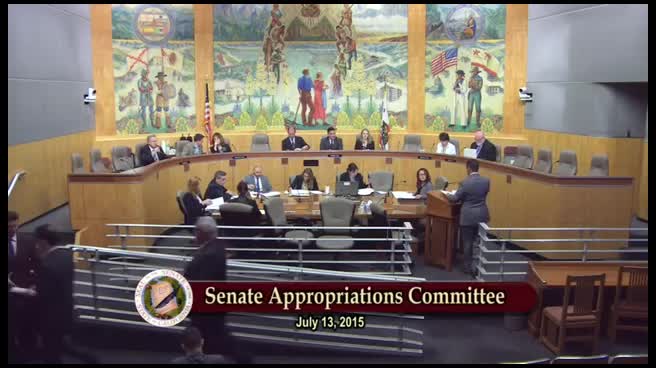 1MIN
Senate Standing Committee on Appropriations
 10MIN
Senate Standing Committee on Education
 1MIN
Assembly Floor
 7MIN
Assembly Standing Committee on Higher Education
 19MIN
Assembly Standing Committee on Utilities and Commerce
Bill Author


