AB 434: Drinking water: point-of-entry and point-of-use treatment.
- Session Year: 2015-2016
- House: Assembly
- Latest Version Date: 2015-10-09
Existing law, the California Safe Drinking Water Act, imposes on the State Water Resources Control Board various responsibilities and duties relating to providing a dependable, safe supply of drinking water. The act prohibits the state board from issuing a permit to a public water system or amending a valid existing permit to allow the use of point-of-use treatment unless the state board determines that there is no community opposition to the installation of the treatment device.
This bill would require the state board to adopt regulations, similar to those previously authorized for adoption by the State Department of Public Health, governing the use of point-of-entry and point-of-use treatment by a public water system in lieu of centralized treatment where it can be demonstrated that centralized treatment is not immediately economically feasible, with specified limitations. The bill would also require the state board to adopt emergency regulations governing the permitted use of point-of-use and point-of-entry treatment by public water systems in lieu of centralized treatment, as specified, and would require that these emergency regulations remain in effect until the earlier of January 1, 2018, or the effective date of the required nonemergency regulations. This bill would also prohibit the use of point-of-entry treatment absent a state board determination of no community opposition.
This bill would declare that it is to take effect immediately as an urgency statute.
Existing law, the California Safe Drinking Water Act, imposes on the State Water Resources Control Board various responsibilities and duties relating to providing a dependable, safe supply of drinking water. The act prohibits the state board from issuing a permit to a public water system or amending a valid existing permit to allow the use of point-of-use treatment unless the state board determines that there is no community opposition to the installation of the treatment device.
This bill would require the state board to adopt regulations, similar to those previously authorized for adoption by the State Department of Public Health, governing the use of point-of-entry and point-of-use treatment by a public water system in lieu of centralized treatment where it can be demonstrated that centralized treatment is not immediately economically feasible, with specified limitations. The bill would exempt the regulations from the Administrative Procedure Act and would require that the regulations and any amendments to the regulations remain in effect until revised by the state board. also require the state board to adopt emergency regulations governing the permitted use of point-of-use and point-of-entry treatment by public water systems in lieu of centralized treatment, as specified, and would require that these emergency regulations remain in effect until the earlier of January 1, 2018, or the effective date of the required nonemergency regulations. This bill would also prohibit the use of point-of-entry treatment absent a state board determination of no community opposition.
This bill would declare that it is to take effect immediately as an urgency statute.
Existing law, the California Safe Drinking Water Act, imposes on the State Water Resources Control Board various responsibilities and duties relating to providing a dependable, safe supply of drinking water. The act prohibits the state board from issuing a permit to a public water system or amending a valid existing permit to allow the use of point-of-use treatment unless the state board determines that there is no community opposition to the installation of the treatment device. The act also limits the issuance of this permit to no more than 3 years or until funding for centralized treatment is available, whichever occurs first.
This bill would require the state board to adopt regulations, similar to those previously authorized for adoption by the State Department of Public Health, governing the use of point-of-entry and point-of-use treatment by a public water system in lieu of centralized treatment where it can be demonstrated that centralized treatment is not immediately economically feasible, with specified limitations. The bill would exempt the regulations from the Administrative Procedure Act and would require that the regulations and any amendments to the regulations remain in effect until revised by the state board. This bill would also prohibit the use of point-of-entry treatment absent the a state board determination of no community opposition, and would delete the limitation on the duration of these permits. opposition.
This bill would declare that it is to take effect immediately as an urgency statute.
Existing law, the California Safe Drinking Water Act, imposes on the State Water Resources Control Board various responsibilities and duties relating to providing a dependable, safe supply of drinking water. The act prohibits the state board from issuing a permit to a public water system or amending a valid existing permit to allow the use of point-of-use treatment unless the state board determines that there is no community opposition to the installation of the treatment device. The act also limits the issuance of this permit to no more than 3 years or until funding for centralized treatment is available, whichever occurs first.
This bill would require the state board to adopt regulations regulations, similar to those previously authorized for adoption by the State Department of Public Health, governing the use of point-of-entry and point-of-use treatment by a public water systems system in lieu of centralized treatment where it can be demonstrated that centralized treatment is not immediately economically feasible, with specified limitations. The bill would exempt the regulations from the Administrative Procedure Act and would require that the regulations and any amendments to the regulations remain in effect until revised by the state board. This bill would also prohibit the use of point-of-entry treatment absent the state board determination of no community opposition, and would delete the limitation on the duration of these permits.
This bill would declare that it is to take effect immediately as an urgency statute.
Existing law, the California Safe Drinking Water Act, imposes on the State Water Resources Control Board various responsibilities and duties, which were previously imposed on the State Department of Public Health, duties relating to providing a dependable, safe supply of drinking water. Existing law required the department to adopt regulations to implement the California Safe Drinking Water Act, and to enforce provisions of the federal Safe Drinking Water Act, including requirements governing the use of point-of-entry and point-of-use treatment in lieu of centralized treatment where it can be demonstrated that centralized treatment is not immediately economically feasible. Existing law required the department to adopt emergency regulations governing the permitted use of point-of-entry and point-of-use treatment by public water systems in lieu of centralized treatment. Those emergency regulations became inoperative on January 1, 2014.
This bill would specifically make the emergency regulations adopted by the department before January 1, 2014, operative and would require that the emergency regulations remain in effect until repealed or amended by require the State Water Resources Control Board. state board to adopt regulations governing the use of point-of-entry and point-of-use treatment by public water systems in lieu of centralized treatment where it can be demonstrated that centralized treatment is not immediately economically feasible, with specified limitations. The bill would authorize the State Water Resources Control Board to award a grant for point-of-entry and point-of-use treatment, in lieu of centralized treatment, by a public water system that meets certain requirements. exempt the regulations from the Administrative Procedure Act and would require that the regulations and any amendments to the regulations remain in effect until revised by the state board.
This bill would declare that it is to take effect immediately as an urgency statute.
Existing law, the California Safe Drinking Water Act, imposes on the State Water Resources Control Board various responsibilities and duties, which were previously imposed on the State Department of Public Health, relating to providing a dependable, safe supply of drinking water. Existing law required the department to adopt regulations to implement the California Safe Drinking Water Act, and to enforce provisions of the federal Safe Drinking Water Act, including requirements governing the use of point-of-entry and point-of-use treatment in lieu of centralized treatment where it can be demonstrated that centralized treatment is not immediately economically feasible. Existing law required the department to adopt emergency regulations governing the permitted use of point-of-entry and point-of-use treatment by public water systems in lieu of centralized treatment. Those emergency regulations became inoperative on January 1, 2014.
This bill would specifically make the emergency regulations adopted by the department before January 1, 2014, operative and would require that the emergency regulations remain in effect until repealed or amended by the State Water Resources Control Board. The bill would authorize the State Water Resources Control Board to award a grant for point-of-entry and point-of-use treatment, in lieu of centralized treatment, by a public water system that meets certain requirements.
This bill would declare that it is to take effect immediately as an urgency statute.
(a)The State Water Resources Control Board shall adopt regulations governing the use of point-of-entry and point-of-use treatment by public water systems in lieu of centralized treatment where it can be demonstrated that centralized treatment is not immediately economically feasible, limited to the following:
(1)Water systems with less than 200 service connections.
(2)Usage not prohibited by the federal Safe Drinking Water Act and its implementing regulations and guidance.
(3)Water systems that have submitted applications for funding to correct the violations for which the point-of-entry and point-of-use treatment is provided.
(b)The State Water Resources Control Board shall adopt emergency regulations governing the permitted use of point-of-entry and point-of-use treatment by public water systems in lieu of centralized treatment.
(1)The emergency regulations shall comply with Section 116552, and shall comply with all of the requirements set forth in subdivision (a) applicable to nonemergency regulations, but shall not be subject to the rulemaking provisions of the Administrative Procedure Act (Chapter 3.5 (commencing with Section 11340) of Part 1 of Division 3 of Title 2 of the Government Code). The emergency regulations shall take effect when filed with the Secretary of State, and shall be published in the California Code of Regulations.
(2)The emergency regulations adopted pursuant to this subdivision shall remain in effect until the earlier of January 1, 2018, or the effective date of regulations adopted pursuant to subdivision (a).
SEC. 2.Section 116552 of the Health and Safety Code is amended to read:116552.The State Water Resources Control Board shall not issue a permit to a public water system or amend a valid existing permit to allow the use of point-of-use or point-of-entry treatment unless the State Water Resources Control Board determines, after conducting a public hearing in the community served by the public water system, that there is no substantial community opposition to the installation of the treatment devices. The issuance of a permit pursuant to this section shall be limited to not more than three years or until funding for centralized treatment is available, whichever occurs first.
SEC. 3.This act is an urgency statute necessary for the immediate preservation of the public peace, health, or safety within the meaning of Article IV of the Constitution and shall go into immediate effect. The facts constituting the necessity are:
In order to ensure the quality of drinking water relating to point-of-entry and point-of-use treatment, at the earliest possible time, it is necessary that this act take effect immediately.
(a)The State Water Resources Control Board shall adopt regulations governing the use of point-of-entry and point-of-use treatment by public water systems in lieu of centralized treatment where it can be demonstrated that centralized treatment is not immediately economically feasible, limited to the following:
(1)Water systems with less than 200 service connections.
(2)Usage not prohibited by the federal Safe Drinking Water Act and its implementing regulations and guidance.
(3)Water systems that have submitted applications for funding to correct the violation for which the point-of-entry and point-of-use treatment is provided.
(b)(1)The regulations described in subdivision (a) shall comply with Section 116552 and shall not be subject to the rulemaking provisions of the Administrative Procedure Act (Chapter 3.5 (commencing with Section 11340) of Part 1 of Division 3 of Title 2 of the Government Code). The regulations shall take effect when filed with the Secretary of State, and shall be published in the California Code of Regulations.
(2)Any regulations or amendments to those regulations adopted pursuant to this section shall remain in effect until revised by the State Water Resources Control Board.
SECTION 1.Section 116380 of the Health and Safety Code is amended to read:116380.(a)In addition to the requirements set forth in Section 116375, the regulations adopted by the department pursuant to Section 116375 shall include requirements The State Water Resources Control Board shall adopt regulations governing the use of point-of-entry and point-of-use treatment by public water systems in lieu of centralized treatment where it can be demonstrated that centralized treatment is not immediately economically feasible, limited to the following:
(1)Water systems with less than 200 service connections.
(2)Usage allowed under not prohibited by the federal Safe Drinking Water Act and its implementing regulations and guidance.
(3)Water systems that have submitted preapplications with the State Department of Public Health applications for funding to correct the violations for which the point-of-entry and point-of-use treatment is provided.
(b)The department State Water Resources Control Board shall adopt emergency regulations governing the permitted use of point-of-entry and point-of-use treatment by public water systems in lieu of centralized treatment.
(1)The emergency regulations shall comply with Section 116552, and shall comply with all of the requirements set forth in subdivision (a) applicable to nonemergency regulations, but shall not be subject to the rulemaking provisions of the Administrative Procedure Act (Chapter 3.5 (commencing with Section 11340) of Part 1 of Division 3 of Title 2 of the Government Code). The emergency regulations shall take effect when filed with the Secretary of State, and shall be published in the California Code of Regulations.
(2)The emergency regulations adopted pursuant to this subdivision shall remain in effect until the earlier of January 1, 2014, 2018, or the effective date of regulations adopted pursuant to subdivision (a).
SEC. 2.Section 116552 of the Health and Safety Code is amended to read:116552.The State Water Resources Control Board shall not issue a permit to a public water system or amend a valid existing permit to allow the use of point-of-use or point-of-entry treatment unless the State Water Resources Control Board determines, after conducting a public hearing in the community served by the public water system, that there is no substantial community opposition to the installation of the treatment devices. The issuance of a permit pursuant to this section shall be limited to not more than three years or until funding for centralized treatment is available, whichever occurs first.
SEC. 3.This act is an urgency statute necessary for the immediate preservation of the public peace, health, or safety within the meaning of Article IV of the Constitution and shall go into immediate effect. The facts constituting the necessity are:
In order to ensure the quality of drinking water relating to point-of-entry and point-of-use treatment, at the earliest possible time, it is necessary that this act take effect immediately.
(a)The State Water Resources Control Board shall adopt regulations governing the use of point-of-entry and point-of-use treatment by public water systems in lieu of centralized treatment where it can be demonstrated that centralized treatment is not immediately economically feasible, limited to the following:
(1)Water systems with less than 200 service connections.
(2)Usage not prohibited by the federal Safe Drinking Water Act and its implementing regulations and guidance.
(3)Water systems that have submitted applications for funding to correct the violation for which the point-of-entry and point-of-use treatment is provided.
(b)(1)The regulations described in subdivision (a) shall comply with Section 116552 and shall not be subject to the rulemaking provisions of the Administrative Procedure Act (Chapter 3.5 (commencing with Section 11340) of Part 1 of Division 3 of Title 2 of the Government Code). The regulations shall take effect when filed with the Secretary of State, and shall be published in the California Code of Regulations.
(2)Any regulations or amendments to those regulations adopted pursuant to this section shall remain in effect until revised by the State Water Resources Control Board.
SEC. 2.Section 116552 of the Health and Safety Code is amended to read:116552.The State Water Resources Control Board shall not issue a permit to a public water system or amend a valid existing permit to allow the use of point-of-use or point-of-entry treatment unless the State Water Resources Control Board determines, after conducting a public hearing in the community served by the public water system, that there is no substantial community opposition to the installation of the treatment devices.
SEC. 2.Section 116552 of the Health and Safety Code is amended to read:116552.The department State Water Resources Control Board shall not issue a permit to a public water system or amend a valid existing permit to allow the use of point-of-use or point-of-entry treatment unless the department State Water Resources Control Board determines, after conducting a public hearing in the community served by the public water system, that there is no substantial community opposition to the installation of point-of-use the treatment devices. The issuance of a permit pursuant to this section shall be limited to not more than three years or until funding for centralized treatment is available, whichever occurs first.
SEC. 3.This act is an urgency statute necessary for the immediate preservation of the public peace, health, or safety within the meaning of Article IV of the Constitution and shall go into immediate effect. The facts constituting the necessity are:
In order to ensure the quality of drinking water relating to point-of-entry and point-of-use treatment, at the earliest possible time, it is necessary that this act take effect immediately.
(a)The State Water Resources Control Board shall adopt regulations governing the use of point-of-entry and point-of-use treatment by public water systems in lieu of centralized treatment where it can be demonstrated that centralized treatment is not immediately economically feasible, limited to the following:
(1)Water systems with less than 200 service connections.
(2)Usage not prohibited by the federal Safe Drinking Water Act and its implementing regulations and guidance.
(3)Water systems that have submitted preapplications with the State Department of Public Health for funding to correct the violations for which the point-of-entry and point-of-use treatment is provided.
(b)(1)The regulations described in subdivision (a) shall comply with Section 116552 and shall not be subject to the rulemaking provisions of the Administrative Procedure Act (Chapter 3.5 (commencing with Section 11340) of Part 1 of Division 3 of Title 2 of the Government Code). The regulations shall take effect when filed with the Secretary of State, and shall be published in the California Code of Regulations.
(2)Any regulations or amendments to those regulations adopted pursuant to this section shall remain in effect until revised by the State Water Resources Control Board.
SEC. 2.Section 116552 of the Health and Safety Code is amended to read:116552.The department State Water Resources Control Board shall not issue a permit to a public water system or amend a valid existing permit to allow the use of point-of-use or point-of-entry treatment unless the department State Water Resources Control Board determines, after conducting a public hearing in the community served by the public water system, that there is no substantial community opposition to the installation of point-of-use the treatment devices. The issuance of a permit pursuant to this section shall be limited to not more than three years or until funding for centralized treatment is available, whichever occurs first.
SEC. 2.SEC. 3.This act is an urgency statute necessary for the immediate preservation of the public peace, health, or safety within the meaning of Article IV of the Constitution and shall go into immediate effect. The facts constituting the necessity are:
In order to ensure the quality of drinking water relating to point-of-entry and point-of-use treatment, at the earliest possible time, it is necessary that this act take effect immediately.
(a)In addition to the requirements set forth in Section 116375, the regulations adopted by the department pursuant to Section 116375 shall include requirements The State Water Resources Control Board shall adopt regulations governing the use of point-of-entry and point-of-use treatment by public water systems in lieu of centralized treatment where it can be demonstrated that centralized treatment is not immediately economically feasible, limited to the following:
(1)Water systems with less than 200 service connections.
(2)Usage allowed under not prohibited by the federal Safe Drinking Water Act and its implementing regulations and guidance.
(3)Water systems that have submitted preapplications with the State Department of Public Health for funding to correct the violations for which the point-of-entry and point-of-use treatment is provided.(b)The department shall adopt emergency regulations governing the permitted use of point-of-entry and point-of-use treatment by public water systems in lieu of centralized treatment.
(1)
(b)(1)The emergency regulations described in subdivision (a) shall comply with Section 116552, 116552 and shall comply with all of the requirements set forth in subdivision (a) applicable to nonemergency regulations, but shall not be subject to the rulemaking provisions of the Administrative Procedure Act (Chapter 3.5 (commencing with Section 11340) of Part 1 of Division 3 of Title 2 of the Government Code). The emergency regulations shall take effect when filed with the Secretary of State, and shall be published in the California Code of Regulations.
(2)Notwithstanding Section 11346.1 of the Government Code, the emergency regulations adopted pursuant to this subdivision by the State Department of Public Health that became inoperative on January 1, 2014, shall become operative on the same date as the act which added this paragraph and shall remain in effect until repealed or amended by the State Water Resources Control Board.
(2)Any regulations or amendments to those regulations adopted pursuant to this section shall remain in effect until revised by the State Water Resources Control Board.
SEC. 2.Section 116761.25 is added to the Health and Safety Code, to read:116761.25.(a)The State Water Resources Control Board may award a grant for point-of-entry and point-of-use treatment, in lieu of centralized treatment, by a public water system meeting the requirements of subdivision (b) of Section 116380 and regulations adopted pursuant to that subdivision, for the full cost of the project, if that system serves a severely disadvantaged community, as defined in Section 13476 of the Water Code.
(b)The grant shall specify that equipment purchased under the grant with remaining useful life after completion of the project shall be provided for use in other projects meeting the requirements of subdivision (b) of Section 116380 and regulations adopted pursuant to that subdivision, and equipment purchased under the grant with no useful life after completion of the project shall be disposed of in accordance with state and federal requirements, as determined by the State Water Resources Control Board.
SEC. 3.SEC. 2.This act is an urgency statute necessary for the immediate preservation of the public peace, health, or safety within the meaning of Article IV of the Constitution and shall go into immediate effect. The facts constituting the necessity are:
In order to ensure the quality of drinking water relating to point-of-entry and point-of-use treatment, at the earliest possible time, it is necessary that this act take effect immediately.
(a)In addition to the requirements set forth in Section 116375, the regulations adopted by the department pursuant to Section 116375 shall include requirements governing the use of point-of-entry and point-of-use treatment by public water systems in lieu of centralized treatment where it can be demonstrated that centralized treatment is not immediately economically feasible, limited to the following:
(1)Water systems with less than 200 service connections.
(2)Usage allowed under the federal Safe Drinking Water Act and its implementing regulations and guidance.
(3)Water systems that have submitted preapplications with the State Department of Public Health for funding to correct the violations for which the point-of-entry and point-of-use treatment is provided.
(b)The department shall adopt emergency regulations governing the permitted use of point-of-entry and point-of-use treatment by public water systems in lieu of centralized treatment.
(1)The emergency regulations shall comply with Section 116552, and shall comply with all of the requirements set forth in subdivision (a) applicable to nonemergency regulations, but shall not be subject to the rulemaking provisions of the Administrative Procedure Act (Chapter 3.5 (commencing with Section 11340) of Part 1 of Division 3 of Title 2 of the Government Code). The emergency regulations shall take effect when filed with the Secretary of State, and shall be published in the California Code of Regulations.
(2)The emergency regulations adopted pursuant to this subdivision shall remain in effect until the earlier of January 1, 2014, or the effective date of regulations adopted pursuant to subdivision (a).
(2)Notwithstanding Section 11346.1 of the Government Code, the emergency regulations adopted pursuant to this subdivision by the State Department of Public Health that became inoperative on January 1, 2014, shall become operative on the same date as the act which added this paragraph and shall remain in effect until repealed or amended by the State Water Resources Control Board.
SEC. 2.Section 116761.25 is added to the Health and Safety Code, to read:116761.25.(a)The State Water Resources Control Board may award a grant for point-of-entry and point-of-use treatment, in lieu of centralized treatment, by a public water system meeting the requirements of subdivision (b) of Section 116380 and regulations adopted pursuant to that subdivision, for the full cost of the project, if that system serves a severely disadvantaged community, as defined in Section 13476 of the Water Code.
(b)The grant shall specify that equipment purchased under the grant with remaining useful life after completion of the project shall be provided for use in other projects meeting the requirements of subdivision (b) of Section 116380 and regulations adopted pursuant to that subdivision, and equipment purchased under the grant with no useful life after completion of the project shall be disposed of in accordance with state and federal requirements, as determined by the State Water Resources Control Board.
SEC. 3.This act is an urgency statute necessary for the immediate preservation of the public peace, health, or safety within the meaning of Article IV of the Constitution and shall go into immediate effect. The facts constituting the necessity are:
In order to ensure the quality of drinking water relating to point-of-entry and point-of-use treatment, at the earliest possible time, it is necessary that this act take effect immediately.
|
Date
|
Status
|
|---|---|
| Jun 24, 2015 | From committee: Amend, and do pass as amended and re-refer to Com. on APPR. (Ayes 7. Noes 0.) (June 17). |
| Oct 9, 2015 | Chaptered by Secretary of State - Chapter 663, Statutes of 2015. |
| Oct 9, 2015 | Approved by the Governor. |
| Sep 10, 2015 | Enrolled and presented to the Governor at 4 p.m. |
| Sep 1, 2015 | Senate amendments concurred in. To Engrossing and Enrolling. (Ayes 80. Noes 0.). |
| Sep 1, 2015 | Senate amendments concurred in. To Engrossing and Enrolling. (Ayes 80. Noes 0. Page 2735.). |
| Sep 1, 2015 | Assembly Rule 77 suspended. (Page 2729.) |
| Sep 1, 2015 | Assembly Rule 77 suspended. |
| Aug 31, 2015 | Read third time. Urgency clause adopted. Passed. Ordered to the Assembly. (Ayes 40. Noes 0. Page 2294.). |
| Aug 31, 2015 | Read third time. Urgency clause adopted. Passed. Ordered to the Assembly. |
| Aug 31, 2015 | In Assembly. Concurrence in Senate amendments pending. May be considered on or after September 2 pursuant to Assembly Rule 77. |
| Aug 18, 2015 | Read second time and amended. Ordered to third reading. |
| Aug 17, 2015 | From committee: Be placed on second reading file pursuant to Senate Rule 28.8 and be amended. |
| Jul 9, 2015 | In committee: Hearing postponed by committee. |
| Jun 25, 2015 | Read second time and amended. Re-referred to Com. on APPR. |
| Feb 19, 2015 | Read first time. To print. |
| May 14, 2015 | Referred to Com. on E.Q. |
| Apr 30, 2015 | Read third time. Urgency clause adopted. Passed. Ordered to the Senate. (Ayes 77. Noes 0. Page 1223.). |
| Apr 30, 2015 | Read third time. Urgency clause adopted. Passed. Ordered to the Senate. |
| Apr 30, 2015 | In Senate. Read first time. To Com. on RLS. for assignment. |
| Apr 23, 2015 | Read second time. Ordered to Consent Calendar. |
| Apr 22, 2015 | From committee: Do pass. To Consent Calendar. (Ayes 17. Noes 0.) (April 22). |
| Apr 15, 2015 | From committee: Do pass and re-refer to Com. on APPR. with recommendation: To Consent Calendar. (Ayes 7. Noes 0.) (April 14). Re-referred to Com. on APPR. |
| Apr 7, 2015 | Re-referred to Com. on E.S. & T.M. |
| Apr 6, 2015 | From committee chair, with author's amendments: Amend, and re-refer to Com. on E.S. & T.M. Read second time and amended. |
| Mar 23, 2015 | Re-referred to Com. on E.S. & T.M. |
| Mar 19, 2015 | From committee chair, with author's amendments: Amend, and re-refer to Com. on E.S. & T.M. Read second time and amended. |
| Mar 2, 2015 | Referred to Com. on E.S. & T.M. |
| Feb 20, 2015 | From printer. May be heard in committee March 22. |
|
Date
|
Description
|
Location
|
Votes
|
|
|---|---|---|---|---|
| Sep 1, 2015 | AB 434 GARCIA, E. Concurrence in Senate Amendments | Assembly Floor |
Passed |
|
| Aug 31, 2015 | Assembly 3rd Reading AB434 Eduardo Garcia By Hueso Urgency Clause | Senate Floor |
Passed |
|
| Jun 17, 2015 | Do pass as amended, but first amend, and re-refer to the Committee on [Appropriations] | Senate Standing Committee on Environmental Quality |
Passed |
|
| Apr 30, 2015 | AB 434 GARCIA, E. Consent Calendar Second Day Regular Session | Assembly Floor |
Passed |
|
| Apr 22, 2015 | Do pass. To Consent Calendar. | Assembly Standing Committee on Appropriations |
Passed |
|
| Apr 14, 2015 | Do pass and be re-referred to the Committee on [Appropriations] with recommendation: To Consent Calendar | Assembly Standing Committee on Environmental Safety and Toxic Materials |
Passed |
This list shows positions taken on this bill by organizations on the date displayed, which is linked to the original source.
Positions by individuals are not included.
|
Organization
|
Position
|
Date
|
|---|---|---|
| Coachella Valley Regional Water Management Group | ** Support | Jun 17, 2015 |
| Coachella Valley Water District | ** Support | Jun 17, 2015 |
| Comite Civico Del Valle | * Support | Jun 17, 2015 |
| Comitxe9 Civico Del Valle | ** Support | Jun 17, 2015 |
| Pacific Water Quality Association, Inc. | * Support | Jun 17, 2015 |
| Pionetics Corporation | ** Support | Aug 31, 2015 |
| Pueblo Unido Community Development Corporation - sponsor | ** Support | Jun 17, 2015 |
| Pueblo Unido, Community Development Corporation | ** Support | Aug 31, 2015 |
| u Association of California Water Agencies | ** Support | Aug 31, 2015 |
| Water Quality Association | * Support | Jun 17, 2015 |
AB 434
Page 2
CONCURRENCE IN SENATE AMENDMENTS
AB 434
(Eduardo Garcia)
As Amended August 18, 2015
2/3 vote. Urgency
ASSEMBLY: |
77-0 |
(April 30, 2015) |
SENATE: |
40-0 |
(August 31, 2015) |
Original Committee Reference: E.S. & T.M.
SUMMARY: Repeals the sunset date on emergency regulations governing the permitted use of point-of-entry (POE) and point-of-use (POU) treatment by public water systems (PWS) in lieu of centralized treatment. Specifically, this bill:
Makes the emergency regulations adopted by the California Department of Public Health (CDPH) before January 1, 2014 operative, and requires that they remain in effect until repealed or amended by the State Water Resources Control Board (Water Board).
Deletes references to regulations as "emergency" that would be obsolete if aforementioned policy change is enacted.
Establishes this as an urgency act based on the necessity to provide quality drinking water as soon as possible.
The Senate amendments:
Restore current law requiring a PWS to apply for funding to correct the violations for which the POE and POU treatment is provided as a condition of using a POE or POU treatment device.
Make technical amendments to delete obsolete references to CDPH and replaces with references to the Water Board.
EXISTING LAW:
Requires CDPH to adopt emergency regulations for permitting the use of POE and POU water treatment in lieu of centralized treatment for PWS that that have less than 200 service connections; for which usage is allowed under the federal Safe Drinking Water Act (SDWA); and that have pre-applied for funding to correct the maximum contaminant level (MCL) violations for which POE and POU treatment is provided. (Health and Safety Code (H&S) Section 116380)
Prohibits CDPH from issuing a permit to a PWS or amending a valid existing permit to allow the use of POU treatment unless CDPH determines, after conducting a public hearing in the community served by the PWS, that there is no substantial community opposition to the installation of POU treatment devices. (H&S Section 116552)
Vests the Water Board with all of the authority, duties, powers, purposes, functions, responsibilities, and jurisdiction of the State Department of Public Health and its predecessor to enforce the SDWA. (H&S Section 116271)
FISCAL EFFECT: According to the Senate Appropriations Committee, pursuant to Senate Rule 28.8, negligible state costs.
COMMENTS:
Need for this bill: According to the author, "AB 434 authorizes the State Water Resources Control Board (SWRCB) to adopt regulations governing point-of-use (POU) and point-of-entry (POE) filtration treatment by public water systems in lieu of centralized treatment where it can be demonstrated that centralized treatment is not immediately economically feasible. The regulations will apply to water systems with 200 connections or less.
"This bill attempts to remediate the issue of arsenic contamination in drinking water… Many of the families most impacted by arsenic contamination in their drinking water are predominantly farmworkers that live in the unincorporated part of the east Coachella Valley that is vastly dedicated to agriculture. In 1992, the Farm Labor Housing Protection Act enabled farm owners to house up to 12 farmworkers without many local permits or licenses. Consequently, this allowed for the establishment of many small mobilehome parks throughout the eastern Coachella Valley, an area that lacks access to centralized infrastructure, such as water and sewer. Because of this, when arsenic was identified as an issue, point-of-use systems were identified as a solution to help people access clean water immediately, despite a lack of infrastructure."
What's the difference: POU vs. POE vs. Centralized treatments: POU treatment is a treatment device applied to a single tap for the purpose of reducing contaminants in drinking water at that tap. When used, a PWS is required to install a POU device that will treat only the water intended for direct consumption, typically installed at a single tap such as the kitchen sink. Faucets without POU devices can be used for cleaning or washing but cannot be used to provide drinking and cooking water.
POE treatment is applied to the drinking water entering a house or building for the purpose of reducing contaminants in the drinking water distributed throughout the house or building.
Centralized treatment treats all of the water produced by the PWS.
Safe Drinking Water Program Transfer: With the transition of the SDWP from CDPH on July 1, 2014, the Water Board now has the primary enforcement authority to enforce federal and state safe drinking water acts, and is responsible for the regulatory oversight of about 8,000 PWS throughout the state.
Therefore, as of July 1, 2014, all SDWP regulations and administrative actions were vested with the Water Board, and are fully effective and enforceable unless and until readopted, amended, or repealed by the Water Board.
This bill provides appropriate technical code cleanup to clarify the Water Board's statutory authority to adopt or revise regulations governing POE and POU treatment devices.
Analysis Prepared by: Paige Brokaw / E.S. & T.M. / (916) 319-3965 FN: 0001446
AB 434
Page 6
|
Office of Senate Floor Analyses (916) 651-1520 Fax: (916) 327-4478 |
THIRD READING
Bill No: AB 434
Amended: 8/18/15 in Senate
SENATE ENVIRONMENTAL QUALITY COMMITTEE: 7-0, 6/17/15
AYES: Wieckowski, Gaines, Bates, Hill, Jackson, Leno, Pavley
SENATE APPROPRIATIONS COMMITTEE: Senate Rule 28.8
ASSEMBLY FLOOR: 77-0, 4/30/15 (Consent) - See last page for vote
SUBJECT: Drinking water: point-of-entry and point-of-use treatment
SOURCE: Pueblo Unido, Community Development Corporation
DIGEST: This bill requires the State Water Resources Control Board (SWRCB) to adopt regulations, similar to those previously authorized for adoption by the State Department of Public Health, governing the use of point-of-entry and point-of-use treatment by a public water system in lieu of centralized treatment where it can be demonstrated that centralized treatment is not immediately economically feasible, with specified limitations.
Existing law:
Requires, under the federal Safe Drinking Water Act (SDWA), the federal Environmental Protection Agency (US EPA) to set standards for drinking water quality and oversee the states, localities, and water suppliers who implement those standards. California has authority over drinking water, delegated by US EPA.
Establishes the Drinking Water Program within SWRCB (formerly within the Department of Public Health) to regulate public drinking water systems.
Authorizes point-of-use (POU) and point-of-entry (POE) devices for water treatment to meet drinking water standards as specified by state and federal law.
Requires regulations adopted under the SDWA to include requirements governing the POU and POE treatment by public water systems in lieu of centralized treatment where it can be demonstrated that centralized treatment is not immediately economically feasible and is limited to: a) less than 200 service connections, b) use allowed under the SDWA’s implementing regulations, c) water systems that have submitted pre-applications with the Drinking Water Program for funding to correct the violations for which the POU/POE treatment is provided, and d) use is limited to three years or until centralized treatment is achieved, whichever comes first.
This bill:
Requires the SWRCB to adopt regulations, similar to those previously authorized for adoption by the State Department of Public Health (DPH), governing the use of POE and POU treatment by a public water system in lieu of centralized treatment where it can be demonstrated that centralized treatment is not immediately economically feasible, with specified limitations.
Requires the SWRCB to adopt emergency regulations governing the permitted use of POU and POE treatment by public water systems in lieu of centralized treatment, as specified, and requires that these emergency regulations remain in effect until the earlier of January 1, 2018, or the effective date of the required nonemergency regulations.
Prohibits the use of POE treatment absent a SWRCB determination of no community opposition.
Declares that it is to take effect immediately as an urgency statute.
Background
Drinking water contamination in California. According to DPH, 98% of the population of California served by community water systems receives drinking water that meets all primary drinking water standards. However, for the nearly one million Californians without clean water, contaminants such as nitrates, hexavalent chromium and arsenic threaten public drinking water safety. The most impacted populations are located in disadvantaged communities and are served by small water systems that have difficulty finding the sufficient resources for maintenance and operation or to undertake repairs and upgrades. The DPH currently utilizes funds from the Safe Drinking Water State Revolving Fund and Propositions 50 and 84 bond funds to assist in drinking water system upgrades. While these funds have provided and continue to provide significant assistance in the improvement of water systems, there is a greater need than funding available. The US EPA, as well as the DPH, is working to explore how to reach critical drinking water standards while also acknowledging the need for affordability of conveyance, especially in these small communities.
In acknowledgement of the strain that small water systems face when trying to upgrade systems to meet necessary water quality improvements, AB 2515 (V. M. Perez, Chapter 601, Statutes of 2010), was enacted as a stop gap to provide a temporary measure while a permanent, safer and more effective centralized treatment could be devised for these small disadvantaged communities.
POU/POE treatment. A POU treatment device is any unit installed on a single water faucet or bubbler that changes the water quality. A POE treatment device is any unit installed that changes the water quality of all potable water entering a building. POE and POU treatment devices such as carbon filters are sometimes installed to enhance the aesthetic quality (taste and odor) of potable water supplied by a local water system. In other cases, POE and POU treatment devices are installed to meet drinking water standards in place of centralized treatment.
Limitations of POU/POE treatment. While POU/POE treatment has advanced in recent years it cannot provide equivalent treatment to centralized treatment.
Multiple contaminants. POU/POE treatment technologies can provide sufficient treatment for one specific contaminant. However, they are not designed to treat the complex myriad contaminants that may be in drinking water. So while it may address the primary contaminant of concern, other contaminants may not be sufficiently removed. Additionally, contaminants in water affect the water quality individually and cumulatively. POU/POE treatment systems are not designed to address the cumulative impacts to water quality.
Adjustment for quality. Water quality levels are not static. Centralized treatment systems are regularly monitored and the treatment is adjusted as changes in the water quality and levels of the range of contaminants change. POU/POE treatment systems cannot be adjusted as the water quality changes, so their efficacy may vary.
POU does not treat all water. Because POU treatment systems attach to the faucet, their treatment is limited to water that comes through that faucet. Showers, washing machines and other faucets, such as those in bathrooms, will not be treated. POU treatment devices are not appropriate in households where the treated contaminant presents health risks when inhaled, such as volatile organic compounds or hexavalent chromium that may be released into the air and inhaled, especially in warm water like a shower because in those households only the drinking water would be treated. With many contaminants that could pose an additional risk, especially in homes with children, these systems are meant as a very temporary stopgap measure until centralized water treatment can be provided.
Lack of accountability and monitoring. Centralized treatment facilities are regularly inspected and monitored to ensure sufficient maintenance by either DPH or the county environmental health jurisdictions. There is no built in inspection, monitoring or maintenance when water systems use POU/POE treatment. Ensuring proper working order to POU/POE devices is crucial. If filters are not changed when needed, some systems can build up contaminants in the system and release them into the water in high concentrations.
Two classes of drinking water quality. Improving California’s drinking water quality is crucially important. As solutions for meeting drinking water standards to protect public health are contemplated, it is important to ensure that solutions that compromise standards are not used.
Expanded or long-term use of POU/POE treatment devices essentially creates two classes for drinking water in California -- those that get centralized treatment that is monitored and accountable for meeting drinking water standards and those that get a lower standard of quality and accountability.
Safe Drinking Water Program transfer. On July 1, 2014, the Safe Drinking Water Program was transferred from the DPH to the SWRCB. The SWRCB now has the primary enforcement authority to enforce federal and state safe drinking water acts, and is responsible for the regulatory oversight of about 8,000 PWS throughout the state.
Upon the transfer, all regulations and administrative actions were vested with the SWRCB and are fully effective and enforceable unless and until readopted, amended, or repealed by the SWRCB.
According to the SWRCB, the Board is in the process of reviewing the POU/POE regulations.
The authority granted by this bill allows the SWRCB to do it more quickly by re-granting emergency regulation authority.
FISCAL EFFECT: Appropriation: No Fiscal Com.: Yes Local: No
Pueblo Unido, Community Development Corporation (source)
Association of California Water Agencies
Pionetics Corporation
OPPOSITION: (Verified 8/18/15)
None received
ASSEMBLY FLOOR: 77-0, 4/30/15
AYES: Achadjian, Alejo, Travis Allen, Baker, Bigelow, Bloom, Bonilla, Bonta, Brough, Brown, Burke, Calderon, Chang, Chau, Chiu, Chu, Cooley, Cooper, Dababneh, Dahle, Daly, Dodd, Eggman, Frazier, Beth Gaines, Gallagher, Cristina Garcia, Eduardo Garcia, Gatto, Gipson, Gonzalez, Gordon, Gray, Grove, Hadley, Harper, Roger Hernández, Holden, Irwin, Jones, Jones-Sawyer, Kim, Lackey, Levine, Linder, Lopez, Low, Maienschein, Mathis, Mayes, McCarty, Medina, Melendez, Mullin, Nazarian, Obernolte, O'Donnell, Olsen, Patterson, Perea, Quirk, Rendon, Ridley-Thomas, Rodriguez, Salas, Santiago, Steinorth, Mark Stone, Thurmond, Ting, Wagner, Waldron, Weber, Wilk, Williams, Wood, Atkins
NO VOTE RECORDED: Campos, Chávez, Gomez
Prepared by: Rachel Machi Wagoner / E.Q. / (916) 651-4108
8/19/15 20:55:43
**** END ****
AB 434 (Eduardo Garcia) Page 5 of 5
SENATE COMMITTEE ON ENVIRONMENTAL QUALITY
Senator Wieckowski, Chair
2015 - 2016 Regular
Bill No: AB 434
Author: |
Eduardo Garcia |
||
Version: |
4/6/2015 |
Hearing Date: |
6/17/2015 |
Urgency: |
Yes |
Fiscal: |
Yes |
Consultant: |
Rachel Machi Wagoner |
||
SUBJECT: Drinking water: point-of-entry and point-of-use treatment.
ANALYSIS:
Existing law:
Under the federal Safe Drinking Water Act (SDWA), requires the federal Environmental Protection Agency (US EPA) to set standards for drinking water quality and oversee the states, localities, and water suppliers who implement those standards. California has authority over drinking water, delegated by US EPA.
Establishes the Drinking Water Program within the State Water Resources Control Board (SWRCB) (formerly within the Department of Public Health) to regulate public drinking water systems.
Authorizes point-of-use (POU) and point-of-entry (POE) devices for water treatment to meet drinking water standards as specified by state and federal law.
Requires regulations adopted under the SDWA to include requirements governing the POU and POE treatment by public water systems in lieu of centralized treatment where it can be demonstrated that centralized treatment is not immediately economically feasible and is limited to: a) less than 200 service connections, b) use allowed under the SDWA’s implementing regulations, c) water systems that have submitted pre-applications with the Drinking Water Program for funding to correct the violations for which the POU/POE treatment is provided, and d) use is limited to 3 years or until centralized treatment is achieved, whichever comes first.
This bill:
Repeals the sunset date on emergency regulations governing the permitted use of point-of-entry (POE) and point-of-use (POU) treatment by public water systems (PWS) in lieu of centralized treatment. Specifically:
Deletes the requirement that a PWS pre-apply for funding to correct the violations for which the POE and POU treatment is provided as a condition of using a POE or POU treatment device.
Makes the emergency regulations adopted by the Department of Public Health (DPH) before January 1, 2014, operative, and requires that they remain in effect until repealed or amended by the State Water Resources Control Board (SWRCB).
Strikes the requirement that a POE or POU permit be limited to not more than three years or until funding for centralized treatment is available.
Deletes references to regulations as "emergency" that would be obsolete if aforementioned policy changes are enacted.
Establishes this as an urgency act based on the necessity to provide quality drinking water as soon as possible. Exempts the regulations from the Administrative Procedures Act.
Background
Drinking Water Contamination in California. According to DPH, 98% of the population of California served by community water systems receives drinking water that meets all primary drinking water standards. However, for the nearly one million Californians without clean water, contaminants such as nitrates, hexavalent chromium and arsenic threaten public drinking water safety. The most impacted populations are located in disadvantaged communities and are served by small water systems that have difficulty finding the sufficient resources for maintenance and operation or to undertake repairs and upgrades. DPH currently utilizes funds from the Safe Drinking Water State Revolving Fund and Propositions 50 and 84 bond funds to assist in drinking water system upgrades. While these funds have provided and continue to provide significant assistance in the improvement of water systems, there is a greater need than funding available. US EPA as well as DPH are working to explore how to reach critical drinking water standards while also acknowledging the need for affordability of conveyance, especially in these small communities.
In acknowledgement of the strain that small water systems face when trying to upgrade systems to meet necessary water quality improvements, AB 2515 (V. M. Perez, Chapter 601, Statutes of 2010), was enacted as a stop gap to provide a temporary measure while a permanent, safer and more effective centralized treatment could be devised for these small disadvantaged communities.
Point-of-Use/ Point-of-Entry Treatment. A POU treatment device is any unit installed on a single water faucet or bubbler that changes the water quality. A POE treatment device is any unit installed that changes the water quality of all potable water entering a building. POE and POU treatment devices such as carbon filters are sometimes installed to enhance the aesthetic quality (taste and odor) of potable water supplied by a local water system. In other cases, POE and POU treatment devices are installed to meet drinking water standards in place of centralized treatment.
Limitations of POU/POE Treatment. While POU/POE treatment has advanced in recent years it cannot provide equivalent treatment to centralized treatment.
Multiple Contaminants. POU/POE treatment technologies can provide sufficient treatment for one specific contaminant. However, they are not designed to treat the complex myriad contaminants that may be in drinking water. So while it may address the primary contaminant of concern, other contaminants may not be sufficiently removed. Additionally, contaminants in water affect the water quality individually and cumulatively. POU/POE treatment systems are not designed to address the cumulative impacts to water quality.
Adjustment for Quality. Water quality levels are not static. Centralized treatment systems are regularly monitored and the treatment is adjusted as changes in the water quality and levels of the range of contaminants change. POU/POE treatment systems cannot be adjusted as the water quality changes, so their efficacy may vary.
POU Does Not Treat All Water. Because POU treatment systems attach to the faucet, their treatment is limited to water that comes through that faucet. Showers, washing machines and other faucets, such as those in bathrooms, will not be treated. POU treatment devices are not appropriate in households where the treated contaminant presents health risks when inhaled, such as volatile organic compounds (VOCs) or hexavalent chromium, that may be released into the air and inhaled, especially in warm water like a shower because in those households only the drinking water would be treated. With many contaminants that could pose an additional risk, especially in homes with children, these systems are meant as a very temporary stopgap measure until centralized water treatment can be provided.
Lack of Accountability and Monitoring. Centralized treatment facilities are regularly inspected and monitored to ensure sufficient maintenance by either DPH or the county environmental health jurisdictions. There is no built in inspection, monitoring or maintenance when water systems use POU/POE treatment. Ensuring proper working order to POU/POE devices is crucial. If filters are not changed when needed, some systems can build up contaminants in the system and release them into the water in high concentrations.
Who is expected to make sure that the systems are always working properly? Is it practical to expect that water systems will regularly monitor and repair each of the POU/POE devices?
Two Classes of Drinking Water Quality. Improving California’s drinking water quality is crucially important. As solutions for meeting drinking water standards to protect public health are contemplated, it is important to ensure that solutions that compromise standards are not used.
Expanded or long-term use of POU/POE treatment devices essentially creates two classes for drinking water in California -- those that get centralized treatment that is monitored and accountable for meeting drinking water standards and those that get a lower standard of quality and accountability.
Safe Drinking Water Program Transfer. On July 1, 2014, the Safe Drinking Water Program was transferred from DPH to SWRCB. SWRCB now has the primary enforcement authority to enforce federal and state safe drinking water acts, and is responsible for the regulatory oversight of about 8,000 PWS throughout the state.
Upon the transfer, all regulations and administrative actions were vested with SWRCB and are fully effective and enforceable unless and until readopted, amended, or repealed by the SWRCB.
According to SWRCB, the board is in the process of reviewing the POU/POE regulations.
The authority granted by this bill would allow SWRCB to do it more quickly by re-granting emergency regulation authority.
Comments
Purpose of Bill. According to the author, “this bill attempts to remediate the issue of arsenic contamination in drinking water. In the Coachella Valley, arsenic is a naturally occurring element found in many drinking water wells at levels ranging from 12 to 91 parts per billion (ppb). US EPA established a level of 10 ppb as the Maximum Contaminant Level for arsenic. It has been proven that consuming unsafe levels of arsenic increases the probability of cancer, skin problems, and circulatory system issues.”
The author states that “in 1992, the Farm Labor Housing Protection Act enabled farm owners to house up to 12 farmworkers without many local permits or licenses. Consequently, this allowed for the establishment of many small mobilehome parks throughout the eastern Coachella Valley, an area that lacks access to centralized infrastructure, such as water and sewer. Because of this, when arsenic was identified as an issue, point-of-use systems were identified as a solution to help people access clean water immediately, despite a lack of infrastructure.”
The author states that “this bill authorizes the State Water Resources Control Board (SWRCB) to adopt regulations governing point-of-use (POU) and point-of-entry (POE) filtration treatment by public water systems, in lieu of centralized treatment, where it can be demonstrated that centralized treatment is not immediately economically feasible. The regulations will apply to water systems with 200 connections or less.”
Amendments. The existing POU/POE authority limits the use of this technology for three years or until centralized treatment is installed, whichever is earlier. This limitation was added acknowledging that this technology provides a temporary, however imperfect solution for water treatment. AB 434 removes the 3-year limit. Without this limit, there is no requirement that the water system find a permanent centralized treatment solution. An amendment is needed to restore the 3-year limit on using POU/POE technology.
SOURCE:
Pueblo Unido, Community Development Corporation
SUPPORT:
Association of California Water Agencies
Pionetics Corporation
OPPOSITION:
None received
-- END --
AB 434
Page 2
Date of Hearing: April 22, 2015
ASSEMBLY COMMITTEE ON APPROPRIATIONS
Jimmy Gomez, Chair
AB 434
(Eduardo Garcia) – As Amended April 6, 2015
Policy Committee: |
Environmental Safety and Toxic Materials |
Vote: |
7 - 0 |
|
|
|
|
|
|
|
|
Urgency: Yes State Mandated Local Program: No Reimbursable:
SUMMARY:
This bill repeals the sunset date on emergency regulations governing the permitted use of point-of-entry (POE) and point-of-use (POU) treatment by public water systems (PWS) in lieu of centralized treatment. Specifically, this bill:
Deletes the requirement that a PWS pre-apply for funding to correct the violations for which the POE and POU treatment is provided as a condition of using a POE or POU treatment device.
Makes the emergency regulations adopted by the Department of Public Health (DPH) before January 1, 2014, operative, and requires that they remain in effect until repealed or amended by the State Water Resources Control Board (SWRCB).
Strikes the requirement that a POE or POU permit be limited to not more than three years or until funding for centralized treatment is available.
Deletes references to regulations as "emergency" that would be obsolete if aforementioned policy changes are enacted.
Establishes this as an urgency act based on the necessity to provide quality drinking water as soon as possible. Exempts the regulations from the Administrative Procedures Act.
FISCAL EFFECT:
Potential minor costs savings for SWRCB to adopt regulations without following the APA.
COMMENTS:
Purpose. According to the author, this bill attempts to remediate the issue of arsenic contamination in drinking water. In the Coachella Valley, arsenic is a naturally occurring element found in many drinking water wells at levels ranging from 12 to 91 parts per billion (ppb). The Environmental Protection Agency established a level of 10 ppb as the Maximum Contaminant Level for arsenic. It has been proven that consuming unsafe levels of arsenic increases the probability of cancer, skin problems, and circulatory system issues.
In 1992, the Farm Labor Housing Protection Act enabled farm owners to house up to 12 farmworkers without many local permits or licenses. Consequently, this allowed for the establishment of many small mobilehome parks throughout the eastern Coachella Valley, an area that lacks access to centralized infrastructure, such as water and sewer. Because of this, when arsenic was identified as an issue, point-of-use systems were identified as a solution to help people access clean water immediately, despite a lack of infrastructure.
This bill authorizes the State Water Resources Control Board (SWRCB) to adopt regulations governing point-of-use (POU) and point-of-entry (POE) filtration treatment by public water systems, in lieu of centralized treatment, where it can be demonstrated that centralized treatment is not immediately economically feasible. The regulations will apply to water systems with 200 connections or less.
Background. POU treatment is a treatment device applied to a single tap for the purpose of reducing contaminants in drinking water at that tap. When used, a PWS is required to install a POU device that will treat only the water intended for direct consumption, typically installed at a single tap such as the kitchen sink. Faucets without POU devices can be used for cleaning or washing, but cannot be used to provide drinking and cooking water.
POE treatment is applied to the drinking water entering a house or building for the purpose of reducing contaminants in the drinking water distributed throughout the house or building. Centralized treatment treats all of the water produced by the PWS.
Safe Drinking Water Program Transfer. On July 1, 2014, the Safe Drinking Water Program (SDWP) was transferred from DPH to SWRCB. SWRCB now has the primary enforcement authority to enforce federal and state safe drinking water acts, and is responsible for the regulatory oversight of about 8,000 PWS throughout the state.
Upon the transfer, all SDWP regulations and administrative actions were vested with SWRCB and are fully effective and enforceable unless and until readopted, amended, or repealed by the Water Board.
Analysis Prepared by: Jennifer Galehouse / APPR. / (916) 319-2081
AB 434
Page 4
Date of Hearing: April 14, 2015
ASSEMBLY COMMITTEE ON ENVIRONMENTAL SAFETY AND TOXIC MATERIALS
Luis Alejo, Chair
AB 434
(Eduardo Garcia) – As Amended April 6, 2015
SUBJECT: Drinking water: point-of-entry and point-of-use treatment
SUMMARY: Repeals the sunset date on emergency regulations governing the permitted use of point-of-entry (POE) and point-of-use (POU) treatment by public water systems (PWS) in lieu of centralized treatment. Specifically, this bill:
Deletes the requirement that a PWS pre-apply for funding to correct the violations for which the POE and POU treatment is provided as a condition of using a POE or POU treatment device.
Makes the emergency regulations adopted by the California Department of Public Health (CDPH) before January 1, 2014 operative, and requires that they remain in effect until repealed or amended by the State Water Resources Control Board (Water Board).
Strikes the requirement that a POE or POU permit be limited to not more than three years or until funding for centralized treatment is available.
Deletes references to regulations as "emergency" that would be obsolete if aforementioned policy changes are enacted.
Establishes this as an urgency act based on the necessity to provide quality drinking water as soon as possible.
EXISTING LAW:
Establishes the California Safe Drinking Water Act (SDWA). (Health & Safety Code (H&S) § 116270, et seq.)
Establishes the Safe Drinking Water State Revolving Fund to provide financial assistance for community water systems to achieve compliance with the SWDA. (H&S §116760.30)
Requires CDPH to adopt emergency regulations for permitting the use of POE and POU water treatment in lieu of centralized treatment for PWS that that have less than 200 service connections; for which usage is allowed under the federal SDWA; and that have pre-applied for funding to correct the maximum contaminant level (MCL) violations for which POE and POU treatment is provided. (H&S § 116380)
Prohibits CDPH from issuing a permit to a PWS or amending a valid existing permit to allow the use of POU treatment unless CDPH determines, after conducting a public hearing in the community served by the PWS, that there is no substantial community opposition to the installation of POU treatment devices. (H&S § 116552)
Vests the Water Board with all of the authority, duties, powers, purposes, functions, responsibilities, and jurisdiction of the State Department of Public Health and its predecessor to enforce the SDWA. (H&S § 116271)
FISCAL EFFECT: Unknown.
COMMENTS:
Need for the bill: According to the author, "AB 434 authorizes the State Water Resources Control Board (SWRCB) to adopt regulations governing point-of-use (POU) and point-of-entry (POE) filtration treatment by public water systems in lieu of centralized treatment where it can be demonstrated that centralized treatment is not immediately economically feasible. The regulations will apply to water systems with 200 connections or less.
"This bill attempts to remediate the issue of arsenic contamination in drinking water. In the Coachella Valley, arsenic is a naturally occurring element found in many drinking water wells at levels ranging from 12 to 91 parts per billion (ppb). The Environmental Protection Agency established a level of 10 ppb as the Maximum Contaminant Level for arsenic. It has been proven that consuming unsafe levels of arsenic increases the probability of cancer, skin problems, and circulatory system issues.
"Many of the families most impacted by arsenic contamination in their drinking water are predominantly farmworkers that live in the unincorporated part of the east Coachella Valley that is vastly dedicated to agriculture. In 1992, the Farm Labor Housing Protection Act enabled farm owners to house up to 12 farmworkers without many local permits or licenses. Consequently, this allowed for the establishment of many small mobilehome parks throughout the eastern Coachella Valley, an area that lacks access to centralized infrastructure, such as water and sewer. Because of this, when arsenic was identified as an issue, point-of-use systems were identified as a solution to help people access clean water immediately, despite a lack of infrastructure."
What's the difference: POU vs. POE vs. Centralized treatments: POU treatment is a treatment device applied to a single tap for the purpose of reducing contaminants in drinking water at that tap. When used, a PWS is required to install a POU device that will treat only the water intended for direct consumption, typically installed at a single tap such as the kitchen sink. Faucets without POU devices can be used for cleaning or washing but cannot be used to provide drinking and cooking water.
POE treatment is applied to the drinking water entering a house or building for the purpose of reducing contaminants in the drinking water distributed throughout the house or building.
Centralized treatment treats all of the water produced by the PWS.
Funding availability for POE/POU treatment: The Safe Drinking Water State Revolving Fund (DWSRF) is a self-perpetuating financial assistance program administered by the Water Board. The purpose of the DWSRF is to provide financial assistance for the planning/design and construction of drinking water infrastructure projects that are needed to achieve or maintain compliance with federal and state drinking water statutes and regulations.
POE and POU treatment devices are eligible for DWSRF funding. The Water Board has previously funded seven POE/POU projects, and one is still in progress. Those eight projects were funded by DWSRF and Prop 84 funds.
According to Pueblo Unido, the non-profit responsible for the installation of point-of-use systems in the Coachella Valley, there are currently five mobile home parks (home to approximately 300 residents) which have been identified as immediately needing water treatment systems.
Pueblo Unido is currently using reverse osmosis POU technology in the eastern Coachella Valley, which costs around $300 per device, to treat arsenic contamination. These POU units have two filters, a membrane, and a sediment filter, which cost $85, and $25, respectively. So, using the mobile home parks in Coachella Valley as an example, the average annual project costs for a community to install POU treatment devices would be around $123,500.
The United States Environmental Protection Agency (US EPA) has estimated that California will need more than $40 billion dollars in drinking water infrastructure improvements over the next 20 years. Consistent with that, according to Pueblo Unido, due to the changing hydrology and geology of the Coachella Valley aquifer, it is anticipated that the number of residents grappling with arsenic contamination is ever-growing. POE and POU treatment devices are recognized as affordable, low-cost interim treatment options for communities with contaminated drinking water until more comprehensive drinking water infrastructure can be financed and constructed.
Safe Drinking Water Program Transfer: With the transition of the SDWP from CDPH on July 1, 2014, the Water Board now has the primary enforcement authority to enforce federal and state safe drinking water acts, and is responsible for the regulatory oversight of about 8,000 PWS throughout the state.
Therefore, as of July 1, 2014, all SDWP regulations and administrative actions were vested with the Water Board, and are fully effective and enforceable unless and until readopted, amended, or repealed by the Water Board.
AB 434 provides appropriate technical code cleanup to clarify the Water Board's statutory authority to adopt or revise regulations governing POE and POU treatment devices.
Background on the law: The water quality challenges facing small PWS were a major focus of the 1996 Amendments to the federal SDWA. One way Congress sought to help systems meet these challenges was by explicitly allowing systems to install POU and POE treatment devices to achieve compliance with some of the MCLs established in the National Primary Drinking Water Regulations (Section 1412(b)(4)(E)(ii) of SDWA).
At the state level, AB 1540 (Statutes of 2009, Chapter 298) allowed POU devices for water treatment to meet drinking water standards to conform the state SDWA with the federal SDWA.
California law, before 2009, did not allow the use of these devices. By allowing POE and POU treatment for water treatment to meet drinking water standards, California ensured continued compliance with federal law, and authorized these affordable water treatment systems for communities until they can finance larger water quality infrastructure projects.
REGISTERED SUPPORT / OPPOSITION:
Support
Pueblo Unido Community Development Corporation – sponsor
Coachella Valley Regional Water Management Group
Coachella Valley Water District
Comité Civico Del Valle
Pacific Water Quality Association
Pionetics Corporation
Water Quality Association
Opposition
None on file
Analysis Prepared by: Paige Brokaw / E.S. & T.M. / (916) 319-3965
Discussed in Hearing
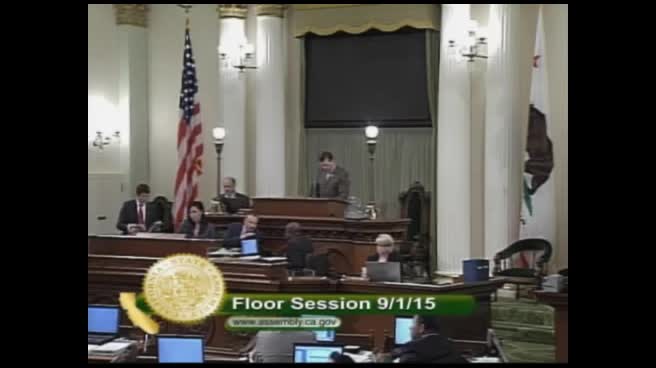 49SEC
Assembly Floor
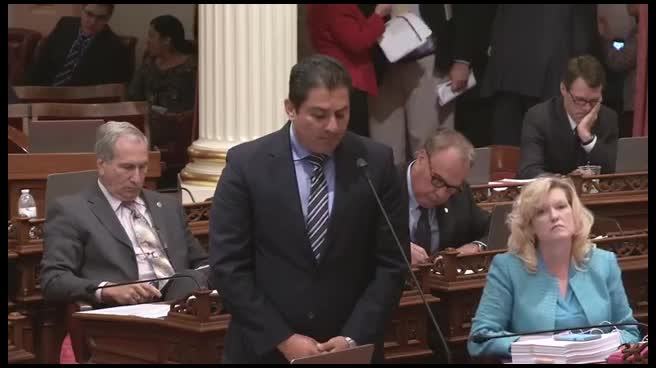 3MIN
Senate Floor
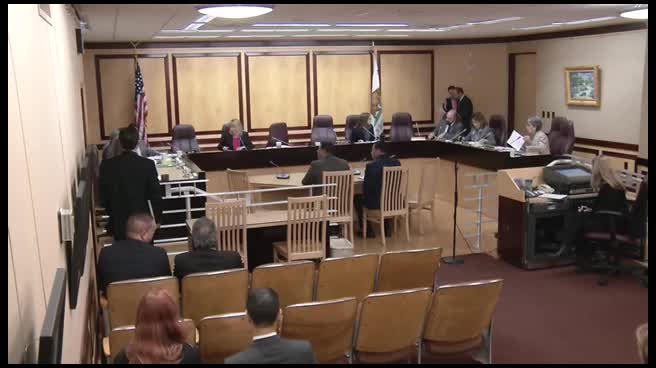 12MIN
Senate Standing Committee on Environmental Quality
Bill Author

Bill Co-Author(s):