AB 453: Extraction of groundwater: Semitropic Water Storage District.
- Session Year: 2015-2016
- House: Assembly
- Latest Version Date: 2016-09-22
The California Water Storage District Law authorizes the formation of water storage districts, as prescribed, with specified powers. Existing law, the Sustainable Groundwater Management Act, requires all groundwater basins designated as high- or medium-priority basins by the Department of Water Resources that are designated as basins subject to critical conditions of overdraft to be managed under a groundwater sustainability plan or coordinated groundwater sustainability plans by January 31, 2020, and requires all other groundwater basins designated as high- or medium-priority basins to be managed under a groundwater sustainability plan or coordinated groundwater sustainability plans by January 31, 2022, except as specified.
This bill would authorize the Semitropic Water Storage District to collect groundwater extraction information and to require the reporting of groundwater information, as specified. This bill would authorize the district to impose fees on the extraction of groundwater from the basin, as prescribed.
This bill would make legislative findings and declarations as to the necessity of a special statute for the Semitropic Water Storage District.
This bill would declare that it is to take effect immediately as an urgency statute.
The California Water Storage District Law authorizes the formation of water storage districts, as prescribed, with specified powers. Existing law, the Sustainable Groundwater Management Act, requires all groundwater basins designated as high- or medium-priority basins by the Department of Water Resources that are designated as basins subject to critical conditions of overdraft to be managed under a groundwater sustainability plan or coordinated groundwater sustainability plans by January 31, 2020, and requires all other groundwater basins designated as high- or medium-priority basins to be managed under a groundwater sustainability plan or coordinated groundwater sustainability plans by January 31, 2022, except as specified. The act authorizes a groundwater sustainability agency to require registration of a groundwater extraction facility and, through a groundwater sustainability plan, require that the use of every groundwater extraction facility be measured by a water-measuring device. The act authorizes a local agency to impose certain fees for the purposes of groundwater management planning until a groundwater sustainability plan is adopted as long as a groundwater management plan adopted before January 1, 2015, is in effect for the basin.
This bill would authorize the Semitropic Water Storage District, in accordance with certain procedures in the act, to impose fees and District to collect groundwater extraction information. information and to require the reporting of groundwater information, as specified. This bill would authorize the district to impose fees on the extraction of groundwater from the basin to fund the costs of groundwater management and to require reporting of groundwater extractions. This bill would authorize the district to exercise these powers and authorities until a groundwater sustainability plan has been adopted for the area encompassing the district. basin, as prescribed.
This bill would make legislative findings and declarations as to the necessity of a special statute for the Semitropic Water Storage District.
This bill would declare that it is to take effect immediately as an urgency statute.
The California Water Storage District Law authorizes the formation of water storage districts, as prescribed, with specified powers. Existing law, the Sustainable Groundwater Management Act, requires all groundwater basins designated as high- or medium-priority basins by the Department of Water Resources that are designated as basins subject to critical conditions of overdraft to be managed under a groundwater sustainability plan or coordinated groundwater sustainability plans by January 31, 2020, and requires all other groundwater basins designated as high- or medium-priority basins to be managed under a groundwater sustainability plan or coordinated groundwater sustainability plans by January 31, 2022, except as specified. The act authorizes a groundwater sustainability agency to require registration of a groundwater extraction facility and, through a groundwater sustainability plan, require that the use of every groundwater extraction facility be measured by a water-measuring device. The act authorizes a local agency to impose certain fees for the purposes of groundwater management planning until a groundwater sustainability plan is adopted as long as a groundwater management plan adopted before January 1, 2015, is in effect for the basin.
This bill would authorize the Semitropic Water Storage District, in accordance with certain procedures in the act, to impose fees and collect groundwater extraction information. This bill would authorize the district to impose fees on the extraction of groundwater from the basin to fund the costs of groundwater management and to require reporting of groundwater extractions. This bill would authorize the district to exercise these powers and authorities until a groundwater sustainability plan has been adopted for the area encompassing the district.
This bill would make legislative findings and declarations as to the necessity of a special statute for the Semitropic Water Storage District.
This bill would declare that it is to take effect immediately as an urgency statute.
Existing law, the Sustainable Groundwater Management Act, requires all groundwater basins designated as high- or medium-priority basins by the Department of Water Resources that are designated as basins subject to critical conditions of overdraft to be managed under a groundwater sustainability plan or coordinated groundwater sustainability plans by January 31, 2020, and requires all other groundwater basins designated as high- or medium-priority basins to be managed under a groundwater sustainability plan or coordinated groundwater sustainability plans by January 31, 2022, except as specified.
Existing law requires a groundwater management plan to contain specified components and sets certain requirements on a local agency seeking state funds administered by the department for groundwater projects or groundwater quality projects. Existing law authorizes, until a groundwater sustainability plan is adopted, a local agency to impose fees for the purposes of groundwater management as long as a groundwater management plan adopted before January 1, 2015, is in effect for the basin.
This bill would authorize, until a groundwater sustainability plan is adopted, a local agency that has adopted a groundwater management plan to impose fees on the extraction of groundwater from the basin to fund costs of groundwater management and to collect groundwater extraction information, as long as a groundwater management plan adopted before January 1, 2015, is in effect. This bill would require a local agency to specify in an ordinance or resolution imposing a fee on the extraction of groundwater from the basin that the fee does not apply to any period after adoption of a groundwater sustainability plan.
Existing law, the Sustainable Groundwater Management Act, requires all groundwater basins designated as high- or medium-priority basins by the Department of Water Resources that are designated as basins subject to critical conditions of overdraft to be managed under a groundwater sustainability plan or coordinated groundwater sustainability plans by January 31, 2020, and requires all other groundwater basins designated as high- or medium-priority basins to be managed under a groundwater sustainability plan or coordinated groundwater sustainability plans by January 31, 2022, except as specified.
Existing law establishes the Water Rights Fund, which consists of various fees and penalties. The moneys in the Water Rights Fund are available, upon appropriation by the Legislature, for the administration of the State Water Resources Control Boards water rights program.
This bill would provide that moneys in the Water Rights Fund from fees imposed to recover costs incurred in administering the Sustainable Groundwater Management Act are available for expenditure for the purpose of the Sustainable Groundwater Management Act and certain groundwater reporting requirements. This bill would provide that if the expenditures for the purpose of the act and the groundwater reporting requirements exceed the moneys available from those fees imposed to recover costs incurred in administering the act, that other moneys in the fund can be expended for these purposes if the fund will be replenished, as prescribed.
Existing law requires a groundwater management plan to contain specified components and sets certain requirements on a local agency seeking state funds administered by the department for groundwater projects or groundwater quality projects. Existing law authorizes, until a groundwater sustainability plan is adopted, a local agency to impose fees for the purposes of groundwater management as long as a groundwater management plan adopted before January 1, 2015, is in effect for the basin.
This bill would authorize, until a groundwater sustainability plan is adopted, a local agency that has adopted a groundwater management plan to impose fees on the extraction of groundwater from the basin to fund costs of groundwater management and to collect groundwater extraction information, as long as a groundwater management plan adopted before January 1, 2015, is in effect. This bill would require a local agency to specify in an ordinance or resolution imposing a fee on the extraction of groundwater from the basin that the fee does not apply to any period after adoption of a groundwater sustainability plan.
(1)Existing law, the Sustainable Groundwater Management Act, requires all groundwater basins designated as high- or medium-priority basins by the Department of Water Resources that are designated as basins subject to critical conditions of overdraft to be managed under a groundwater sustainability plan or coordinated groundwater sustainability plans by January 31, 2020, and requires all other groundwater basins designated as high- or medium-priority basins to be managed under a groundwater sustainability plan or coordinated groundwater sustainability plans by January 31, 2022, except as specified. Existing law, with certain exceptions, prohibits a local agency from adopting a new groundwater management plan and requires an existing groundwater management plan to remain in effect until a groundwater sustainability plan is adopted.
This bill would authorize, until a groundwater sustainability plan is adopted, a local agency to amend an existing groundwater management plan in furtherance of, and consistent with, the groundwater management plans objectives.
(2)Existing law authorizes, until a groundwater sustainability plan is adopted, a local agency to impose fees for the purposes of groundwater management as long as a groundwater management plan adopted before January 1, 2015, is in effect for the basin.
This bill would instead authorize a local agency to impose fees and collect groundwater extraction information for developing and adopting a revised groundwater management plan as long as a groundwater management plan adopted before January 1, 2015, is in effect. This bill would require an ordinance or resolution imposing these fees to specify that authority to collect the fee terminates upon adoption of a groundwater sustainability plan.
(3)
Existing law establishes the Water Rights Fund, which consists of various fees and penalties. The moneys in the Water Rights Fund are available, upon appropriation by the Legislature, for the administration of the State Water Resources Control Boards water rights program.
This bill would provide that moneys in the Water Rights Fund from fees imposed to recover costs incurred in administering the Sustainable Groundwater Management Act are available for expenditure for the purpose of the Sustainable Groundwater Management Act and certain groundwater reporting requirements. This bill would provide that if the expenditures for the purpose of the act and the groundwater reporting requirements exceed the moneys available from those fees imposed to recover costs incurred in administering the act, that other moneys in the fund can be expended for these purposes if the fund will be replenished, as prescribed.
(1)Existing law, the Sustainable Groundwater Management Act, requires all groundwater basins designated as high- or medium-priority basins by the Department of Water Resources that are designated as basins subject to critical conditions of overdraft to be managed under a groundwater sustainability plan or coordinated groundwater sustainability plans by January 31, 2020, and requires all other groundwater basins designated as high- or medium-priority basins to be managed under a groundwater sustainability plan or coordinated groundwater sustainability plans by January 31, 2022, except as specified. Existing law, with certain exceptions, prohibits a local agency from adopting a new groundwater management plan and requires an existing groundwater management plan to remain in effect until a groundwater sustainability plan is adopted.
This bill would authorize, until a groundwater sustainability plan is adopted, a local agency to amend an existing groundwater management plan in furtherance of, and consistent with, the groundwater management plans objectives.
(2)Existing law authorizes, until a groundwater sustainability plan is adopted, a local agency to impose fees for the purposes of groundwater management as long as a groundwater management plan adopted before January 1, 2015, is in effect for the basin.
This bill would instead authorize a local agency to impose fees and collect groundwater extraction information for developing and adopting a revised groundwater management plan as long as a groundwater management plan adopted before January 1, 2015, is in effect. This bill would require an ordinance or resolution imposing these fees to specify that authority to collect the fee terminates upon adoption of a groundwater sustainability plan.
(3)Existing law establishes the Water Rights Fund, which consists of various fees and penalties. The moneys in the Water Rights Fund are available, upon appropriation by the Legislature, for the administration of the State Water Resources Control Boards water rights program.
This bill would prohibit the board from using water rights fee moneys in the Water Rights Fund for enforcement of the Sustainable Groundwater Management Act and certain groundwater reporting requirements. provide that moneys in the Water Rights Fund from fees imposed to recover costs incurred in administering the Sustainable Groundwater Management Act are available for expenditure for the purpose of the Sustainable Groundwater Management Act and certain groundwater reporting requirements. This bill would provide that if the expenditures for the purpose of the act and the groundwater reporting requirements exceed the moneys available from those fees imposed to recover costs incurred in administering the act, that other moneys in the fund can be expended for these purposes if the fund will be replenished, as prescribed.
Existing
(1)Existing law, the Sustainable Groundwater Management Act, requires all groundwater basins designated as high- or medium-priority basins by the Department of Water Resources that are designated as basins subject to critical conditions of overdraft to be managed under a groundwater sustainability plan or coordinated groundwater sustainability plans by January 31, 2020, and requires all other groundwater basins designated as high- or medium-priority basins to be managed under a groundwater sustainability plan or coordinated groundwater sustainability plans by January 31, 2022, except as specified. Existing law, with certain exceptions, prohibits a local agency from adopting a new groundwater management plan and requires an existing groundwater management plan to remain in effect until a groundwater sustainability plan is adopted.
This bill would authorize, until a groundwater sustainability plan is adopted, a local agency to amend an existing groundwater management plan in furtherance of, and consistent with, the groundwater management plans objectives.
(2)Existing law authorizes, until a groundwater sustainability plan is adopted, a local agency to impose fees for the purposes of groundwater management as long as a groundwater management plan adopted before January 1, 2015, is in effect for the basin.
This bill would instead authorize a local agency to impose fees and collect groundwater extraction information for developing and adopting a revised groundwater management plan.
(3)Existing law establishes the Water Rights Fund, which consists of various fees and penalties. The moneys in the Water Rights Fund are available, upon appropriation by the Legislature, for the administration of the State Water Resources Control Boards water rights program.
This bill would prohibit the board from using water rights fee moneys in the Water Rights Fund for enforcement of the Sustainable Groundwater Management Act and certain groundwater reporting requirements.
Existing law, the Sustainable Groundwater Management Act, requires all groundwater basins designated as high- or medium-priority basins by the Department of Water Resources that are designated as basins subject to critical conditions of overdraft to be managed under a groundwater sustainability plan or coordinated groundwater sustainability plans by January 31, 2020, and requires all other groundwater basins designated as high- or medium-priority basins to be managed under a groundwater sustainability plan or coordinated groundwater sustainability plans by January 31, 2022, except as specified. Existing law, with certain exceptions, prohibits a local agency from adopting a new groundwater management plan and requires an existing groundwater management plan to remain in effect until a groundwater sustainability plan is adopted.
This bill would authorize, until a groundwater sustainability plan is adopted, a local agency to amend an existing groundwater management plan in furtherance of, and consistent with, the groundwater management plans objectives.
Unless the context otherwise requires, the following definitions govern the construction of this chapter:
(a)Basin means the Kern County Groundwater Basin, as defined in Bulletin 118.
(b)District means the Semitropic Water Storage District and its improvement districts.
(c)Groundwater extraction facility has the same meaning as defined in Section 10721.
(d)Management area means the portion of the basin within the boundaries of the district where the district has jurisdiction to implement specific management practices.
(e)Project means the Tulare Lake Storage and Floodwater Protection Project as described in the concept paper received by the California Water Commission on March 31, 2016, and any other groundwater storage or recharge project authorized by the district and for which the district completes environmental review on or before January 1, 2020.
44202.This chapter applies only to the district.
44204.(a)The district may collect groundwater extraction information and require the reporting of groundwater information within the management area and, in furtherance of that goal, may do the following:
(1)Require registration of groundwater extraction facilities within the management area.
(2)Require that the use of every groundwater extraction facility within the management area be measured by a water-measuring device satisfactory to the district.
(3)Require that all costs associated with the purchase and installation of the water-measuring device pursuant to paragraph (2) be borne by the owner or operator of each groundwater extraction facility. Water-measuring devices shall be installed by the district or, at the districts option, by the owner or operator of the groundwater extraction facility. Water-measuring devices shall be calibrated on a reasonable schedule as may be determined by the district.
(4)Require that the owner or operator of a groundwater extraction facility within the management area file an annual statement with the district setting forth the total extraction in acre-feet of groundwater from the facility during the previous year.
(b)In addition to the measurement of groundwater extractions pursuant to subdivision (a), the district may use any other reasonable method to determine groundwater extraction.
(c)The district may exempt from this section a person who, for domestic purposes, extracts two acre-feet or less of groundwater per year.
44206.(a)In addition to levying assessments or fixing tolls and charges pursuant to Part 9 (commencing with Section 46000) and in lieu of imposing assessments in whole or in part, the district may impose fees on the extraction of groundwater from the basin to fund the costs of the following:
(1)Design, administration, operation, and maintenance of a project, including a prudent reserve.
(2)Acquisition of lands or other properties, facilities, and services to implement a project.
(3)Other costs directly related to design, implementation, maintenance, and operation of a project.
(b)(1)If the owner or operator of a groundwater extraction facility fails to timely comply with the requirements for reporting groundwater extractions pursuant to Section 44204, the district may make a determination of the quantity of groundwater extracted following an investigation. The determined amount shall not exceed the maximum production capacity of the groundwater extraction facility. The district shall mail notice to the owner or operator of the districts determination of the quantity of groundwater extracted.
(2)The groundwater charges based on the determination pursuant to paragraph (1), together with any interest and penalties, shall be payable immediately unless, within 20 days after the districts mailing of notice to the owner or operator of the districts determination, the owner or operator files with the district a written protest setting forth the grounds for protesting the amount of groundwater extraction or groundwater charges, interest, or penalties.
(3)If a protest is filed pursuant to paragraph (2), the district shall hold a hearing to determine the total amount of groundwater extracted and the groundwater charges, interest, and penalties. Notice of the hearing shall be mailed to each protestant at least 20 days before the date fixed for the hearing.
(c)Fees imposed pursuant to this section shall be adopted in accordance with subdivisions (a) and (b) of Section 6 of Article XIII D of the California Constitution.
(d)Fees imposed pursuant to this section may include fixed fees and fees charged on a volumetric basis, including, but not limited to, fees that increase based on the quantity of groundwater produced annually, the year in which the production of groundwater commenced from a groundwater extraction facility, and impacts to the basin.
(e)Fees imposed pursuant to this chapter shall be collected in the same manner as otherwise provided in Article 4 (commencing with Section 47180) of Chapter 7 of Part 9.
44208.(a)This chapter shall not be construed as state approval, authorization, or funding of a project, including, but not limited to, funding available pursuant to the Water Quality, Supply, and Infrastructure Improvement Act of 2014.
(b)A project shall comply with all applicable state laws, including, but not limited to, Division 13 (commencing with Section 21000) of the Public Resources Code, Division 2 (commencing with Section 1000), and Part 2.74 (commencing with Section 10720) of Division 6.
SEC. 2.The Legislature finds and declares that a special law is necessary and that a general law cannot be made applicable within the meaning of Section 16 of Article IV of the California Constitution because of the unique circumstances of the Semitropic Water Storage District.
SEC. 3.This act is an urgency statute necessary for the immediate preservation of the public peace, health, or safety within the meaning of Article IV of the Constitution and shall go into immediate effect. The facts constituting the necessity are:
In order for the Semitropic Water Storage District to pursue early implementation of storage and groundwater projects that are needed in order to help recover the Kern County Groundwater Basin, which is listed by the Department of Water Resources as a critically overdrafted basin, it is necessary that this act take effect immediately.
Unless the context otherwise requires, the following definitions govern the construction of this chapter:
(a)Basin has the same meaning as defined in Section 10721. means the Kern County Groundwater Basin, as defined in Bulletin 118.
(b)District means the Semitropic Water Storage District and its improvement districts.
(c)Groundwater extraction facility has the same meaning as defined in Section 10721.
(d)Management area means the portion of the basin within the boundaries of the district where the district has jurisdiction to implement specific management practices.
(e)Project means the Tulare Lake Storage and Floodwater Protection Project as described in the concept paper received by the California Water Commission on March 31, 2016, and any other groundwater storage or recharge project authorized by the district and for which the district completes environmental review on or before January 1, 2020.
44202.The provisions of this chapter apply This chapter applies only to the district. The district may exercise the powers and authorities granted by this chapter until a groundwater sustainability plan has been adopted pursuant to Part 2.74 (commencing with Section 10720) of Division 6 for the area encompassing the district.
44204.(a)In addition to levying assessments or fixing tolls and charges pursuant to Part 9 (commencing with Section 46000) and in lieu of calling assessments in whole or in part, the district may do the following:
(1)Impose fees in accordance with the procedures provided in Chapter 8 (commencing with Section 10730) of Part 2.74 of Division 6.
(2)Collect groundwater extraction information, as provided in Sections 10725.6 and 10725.8, as long as the district has adopted a groundwater management plan pursuant to Part 2.75 (commencing with Section 10750) before January 1, 2015, and that plan is in effect.
(b)A fee imposed pursuant to this section does not apply after the adoption of a groundwater sustainability plan for the area encompassing the district.
44206.(a)The district shall have the following powers and authorities:
(1)To impose fees on the extraction of groundwater from the basin to fund the costs of groundwater management, including, but not limited to, the costs of the following:
(A)Administration, operation, and maintenance, including a prudent reserve.
(B)Acquisition of lands or other properties, facilities, and services.
(C)Supply, production, treatment, or distribution of water.
(2)To require the reporting of groundwater extractions as follows:
(A)The district may require every groundwater extraction facility within the service area of the district to be measured by a water-measuring device satisfactory to the district.
(B)All costs associated with the purchase and installation of the water-measuring device shall be borne by the owner or operator of each groundwater extraction facility. The water measuring devices shall be installed by the district or, at the districts option, by the owner or operator of the groundwater extraction facility. Water-measuring devices shall be calibrated on a reasonable schedule as may be determined by the district.
(C)The district may require that the owner or operator of a groundwater extraction facility within the district file an annual statement with the district setting forth the total extraction in acre-feet of groundwater from the facility during the previous water year.
(D)In addition to the measurement of groundwater extractions pursuant to subparagraph (A), the district may use any other reasonable method to determine groundwater extraction.
(E)If the owner or operator of a groundwater extraction facility fails to timely comply with the requirements for reporting groundwater extractions pursuant to this paragraph, the district board may, following an investigation, make a determination of the quantity of groundwater extracted and the amount shall not exceed the maximum production capacity of the groundwater extraction facility. The determination of the district board shall be conclusive on the owner or operator of the groundwater extraction facility. The groundwater charges based on this determination, together with any interest and penalties, shall be payable immediately unless within 20 days after the districts mailing of notice to the owner or operator of the districts determination, the owner or operator files with the district a written protest setting forth the ground for protesting the amount of groundwater extraction or the groundwater charges, interest, and penalties. If a protest is filed pursuant to this subparagraph, the district board shall hold a hearing to determine the total amount of groundwater extracted and the groundwater charges, interest, and penalties. Notice of the hearing shall be mailed to each protestant at least 20 days before the date fixed for the hearing.
(b)(1)Fees imposed pursuant to this section shall be adopted in accordance with subdivisions (a) and (b) of Section 6 of Article XIII D of the California Constitution.
(2)Fees imposed pursuant to this section may include fixed fees and fees charged on a volumetric basis, including, but not limited to, fees that increase based on the quantity of groundwater produced annually, the year in which the production of groundwater commenced from a groundwater extraction facility, and impacts to the basin.
(3)Fees imposed pursuant to this chapter shall be collected in the same manner as otherwise provided in Article 4 (commencing with Section 47180) of Chapter 7 of Part 9.
44204.(a)The district may collect groundwater extraction information and require the reporting of groundwater information within the management area and, in furtherance of that goal, may do the following:
(1)Require registration of groundwater extraction facilities within the management area.
(2)Require that the use of every groundwater extraction facility within the management area be measured by a water-measuring device satisfactory to the district.
(3)Require that all costs associated with the purchase and installation of the water-measuring device pursuant to paragraph (2) be borne by the owner or operator of each groundwater extraction facility. Water-measuring devices shall be installed by the district or, at the districts option, by the owner or operator of the groundwater extraction facility. Water-measuring devices shall be calibrated on a reasonable schedule as may be determined by the district.
(4)Require that the owner or operator of a groundwater extraction facility within the management area file an annual statement with the district setting forth the total extraction in acre-feet of groundwater from the facility during the previous year.
(b)In addition to the measurement of groundwater extractions pursuant to subdivision (a), the district may use any other reasonable method to determine groundwater extraction.
(c)The district may exempt from this section a person who, for domestic purposes, extracts two acre-feet or less of groundwater per year.
44206.(a)In addition to levying assessments or fixing tolls and charges pursuant to Part 9 (commencing with Section 46000) and in lieu of imposing assessments in whole or in part, the district may impose fees on the extraction of groundwater from the basin to fund the costs of the following:
(1)Design, administration, operation, and maintenance of a project, including a prudent reserve.
(2)Acquisition of lands or other properties, facilities, and services to implement a project.
(3)Other costs directly related to design, implementation, maintenance, and operation of a project.
(b)(1)If the owner or operator of a groundwater extraction facility fails to timely comply with the requirements for reporting groundwater extractions pursuant to Section 44204, the district may make a determination of the quantity of groundwater extracted following an investigation. The determined amount shall not exceed the maximum production capacity of the groundwater extraction facility. The district shall mail notice to the owner or operator of the districts determination of the quantity of groundwater extracted.
(2)The groundwater charges based on the determination pursuant to paragraph (1), together with any interest and penalties, shall be payable immediately unless, within 20 days after the districts mailing of notice to the owner or operator of the districts determination, the owner or operator files with the district a written protest setting forth the grounds for protesting the amount of groundwater extraction or groundwater charges, interest, or penalties.
(3)If a protest is filed pursuant to paragraph (2), the district shall hold a hearing to determine the total amount of groundwater extracted and the groundwater charges, interest, and penalties. Notice of the hearing shall be mailed to each protestant at least 20 days before the date fixed for the hearing.
(c)Fees imposed pursuant to this section shall be adopted in accordance with subdivisions (a) and (b) of Section 6 of Article XIII D of the California Constitution.
(d)Fees imposed pursuant to this section may include fixed fees and fees charged on a volumetric basis, including, but not limited to, fees that increase based on the quantity of groundwater produced annually, the year in which the production of groundwater commenced from a groundwater extraction facility, and impacts to the basin.
(e)Fees imposed pursuant to this chapter shall be collected in the same manner as otherwise provided in Article 4 (commencing with Section 47180) of Chapter 7 of Part 9.
44208.(a)This chapter shall not be construed as state approval, authorization, or funding of a project, including, but not limited to, funding available pursuant to the Water Quality, Supply, and Infrastructure Improvement Act of 2014.
(b)A project shall comply with all applicable state laws, including, but not limited to, Division 13 (commencing with Section 21000) of the Public Resources Code, Division 2 (commencing with Section 1000), and Part 2.74 (commencing with Section 10720) of Division 6.
SEC. 2.The Legislature finds and declares that a special law is necessary and that a general law cannot be made applicable within the meaning of Section 16 of Article IV of the California Constitution because of the unique circumstances of the Semitropic Water Storage District.
SEC. 3.This act is an urgency statute necessary for the immediate preservation of the public peace, health, or safety within the meaning of Article IV of the Constitution and shall go into immediate effect. The facts constituting the necessity are:
In order for the Semitropic Water Storage District to timely implement actions to recover a groundwater basin subject to critical overdraft, pursue early implementation of storage and groundwater projects that are needed in order to help recover the Kern County Groundwater Basin, which is listed by the Department of Water Resources as a critically overdrafted basin, it is necessary that this act take effect immediately.
Unless the context otherwise requires, the following definitions govern the construction of this chapter:
(a)Basin has the same meaning as defined in Section 10721.
(b)District means the Semitropic Water Storage District and its improvement districts.
(c)Groundwater extraction facility has the same meaning as defined in Section 10721.
44202.The provisions of this chapter apply only to the district. The district may exercise the powers and authorities granted by this chapter until a groundwater sustainability plan has been adopted pursuant to Part 2.74 (commencing with Section 10720) of Division 6 for the area encompassing the district.
44204.(a)In addition to levying assessments or fixing tolls and charges pursuant to Part 9 (commencing with Section 46000) and in lieu of calling assessments in whole or in part, the district may do the following:
(1)Impose fees in accordance with the procedures provided in Chapter 8 (commencing with Section 10730) of Part 2.74 of Division 6.
(2)Collect groundwater extraction information, as provided in Sections 10725.6 and 10725.8, as long as the district has adopted a groundwater management plan pursuant to Part 2.75 (commencing with Section 10750) before January 1, 2015, and that plan is in effect.
(b)A fee imposed pursuant to this section does not apply after the adoption of a groundwater sustainability plan for the area encompassing the district.
44206.(a)The district shall have the following powers and authorities:
(1)To impose fees on the extraction of groundwater from the basin to fund the costs of groundwater management, including, but not limited to, the costs of the following:
(A)Administration, operation, and maintenance, including a prudent reserve.
(B)Acquisition of lands or other properties, facilities, and services.
(C)Supply, production, treatment, or distribution of water.
(2)To require the reporting of groundwater extractions as follows:
(A)The district may require every groundwater extraction facility within the service area of the district to be measured by a water-measuring device satisfactory to the district.
(B)All costs associated with the purchase and installation of the water-measuring device shall be borne by the owner or operator of each groundwater extraction facility. The water measuring devices shall be installed by the district or, at the districts option, by the owner or operator of the groundwater extraction facility. Water-measuring devices shall be calibrated on a reasonable schedule as may be determined by the district.
(C)The district may require that the owner or operator of a groundwater extraction facility within the district file an annual statement with the district setting forth the total extraction in acre-feet of groundwater from the facility during the previous water year.
(D)In addition to the measurement of groundwater extractions pursuant to subparagraph (A), the district may use any other reasonable method to determine groundwater extraction.
(E)If the owner or operator of a groundwater extraction facility fails to timely comply with the requirements for reporting groundwater extractions pursuant to this paragraph, the district board may, following an investigation, make a determination of the quantity of groundwater extracted and the amount shall not exceed the maximum production capacity of the groundwater extraction facility. The determination of the district board shall be conclusive on the owner or operator of the groundwater extraction facility. The groundwater charges based on this determination, together with any interest and penalties, shall be payable immediately unless within 20 days after the districts mailing of notice to the owner or operator of the districts determination, the owner or operator files with the district a written protest setting forth the ground for protesting the amount of groundwater extraction or the groundwater charges, interest, and penalties. If a protest is filed pursuant to this subparagraph, the district board shall hold a hearing to determine the total amount of groundwater extracted and the groundwater charges, interest, and penalties. Notice of the hearing shall be mailed to each protestant at least 20 days before the date fixed for the hearing.
(b)(1)Fees imposed pursuant to this section shall be adopted in accordance with subdivisions (a) and (b) of Section 6 of Article XIII D of the California Constitution.
(2)Fees imposed pursuant to this section may include fixed fees and fees charged on a volumetric basis, including, but not limited to, fees that increase based on the quantity of groundwater produced annually, the year in which the production of groundwater commenced from a groundwater extraction facility, and impacts to the basin.
(3)Fees imposed pursuant to this chapter shall be collected in the same manner as otherwise provided in Article 4 (commencing with Section 47180) of Chapter 7 of Part 9.
SEC. 2.The Legislature finds and declares that a special law is necessary and that a general law cannot be made applicable within the meaning of Section 16 of Article IV of the California Constitution because of the unique circumstances of the Semitropic Water Storage District.
SEC. 3.This act is an urgency statute necessary for the immediate preservation of the public peace, health, or safety within the meaning of Article IV of the Constitution and shall go into immediate effect. The facts constituting the necessity are:
In order for the Semitropic Water Storage District to timely implement actions to recover a groundwater basin subject to critical overdraft, it is necessary that this act take effect immediately.
SECTION 1.Section 10730.2 of the Water Code is amended to read:10730.2.(a)A groundwater sustainability agency that adopts a groundwater sustainability plan pursuant to this part may impose fees on the extraction of groundwater from the basin to fund costs of groundwater management, including, but not limited to, the costs of the following:
(1)Administration, operation, and maintenance, including a prudent reserve.
(2)Acquisition of lands or other property, facilities, and services.
(3)Supply, production, treatment, or distribution of water.
(4)Other activities necessary or convenient to implement the plan.
(b) Until a groundwater sustainability plan is adopted pursuant to this part, a local agency that has adopted a groundwater management plan pursuant to Part 2.75 (commencing with Section 10750) may impose fees pursuant to subdivision (a) in accordance with the procedures provided in this chapter, and may collect groundwater extraction information, as provided in Sections 10725.6 and 10725.8, as long as a groundwater management plan adopted before January 1, 2015, is in effect. A local agency shall specify in an ordinance or resolution imposing a fee pursuant to this subdivision that the fee does not apply to any period after adoption of a groundwater sustainability plan.
(c)Fees imposed pursuant to this section shall be adopted in accordance with subdivisions (a) and (b) of Section 6 of Article XIII D of the California Constitution.
(d)Fees imposed pursuant to this section may include fixed fees and fees charged on a volumetric basis, including, but not limited to, fees that increase based on the quantity of groundwater produced annually, the year in which the production of groundwater commenced from a groundwater extraction facility, and impacts to the basin.
(e)The power granted by this section is in addition to any powers a groundwater sustainability agency has under any other law.
(a)A groundwater sustainability agency that adopts a groundwater sustainability plan pursuant to this part may impose fees on the extraction of groundwater from the basin to fund costs of groundwater management, including, but not limited to, the costs of the following:
(1)Administration, operation, and maintenance, including a prudent reserve.
(2)Acquisition of lands or other property, facilities, and services.
(3)Supply, production, treatment, or distribution of water.
(4)Other activities necessary or convenient to implement the plan.
(b) Until a groundwater sustainability plan is adopted pursuant to this part, a local agency that has adopted a groundwater management plan pursuant to Part 2.75 (commencing with Section 10750) may impose fees pursuant to subdivision (a) in accordance with the procedures provided in this section for the purposes of Part 2.75 (commencing with Section 10750) chapter, and may collect groundwater extraction information, as provided in Sections 10725.6 and 10725.8, as long as a groundwater management plan adopted before January 1, 2015, is in effect for the basin. effect. A local agency shall specify in an ordinance or resolution imposing a fee pursuant to this subdivision that the fee does not apply to any period after adoption of a groundwater sustainability plan.
(c)Fees imposed pursuant to this section shall be adopted in accordance with subdivisions (a) and (b) of Section 6 of Article XIII D of the California Constitution.
(d)Fees imposed pursuant to this section may include fixed fees and fees charged on a volumetric basis, including, but not limited to, fees that increase based on the quantity of groundwater produced annually, the year in which the production of groundwater commenced from a groundwater extraction facility, and impacts to the basin.
(e)The power granted by this section is in addition to any powers a groundwater sustainability agency has under any other law.
SECTION 1.Section 1552 of the Water Code is amended to read:1552.(a)Except as provided in subdivision (e) of Section 1058.5, moneys in the Water Rights Fund are available for expenditure, upon appropriation by the Legislature, for the following purposes:
(1)For expenditure by the State Board of Equalization in the administration of this chapter and the Fee Collection Procedures Law (Part 30 (commencing with Section 55001) of Division 2 of the Revenue and Taxation Code) in connection with any fee or expense subject to this chapter.
(2)For the payment of refunds, pursuant to Part 30 (commencing with Section 55001) of Division 2 of the Revenue and Taxation Code, of fees or expenses collected pursuant to this chapter.
(3)For expenditure by the board for the purposes of carrying out this division, Division 1 (commencing with Section 100), Part 2 (commencing with Section 10500) and Chapter 11 (commencing with Section 10735) of Part 2.74 of Division 6, and Article 7 (commencing with Section 13550) of Chapter 7 of Division 7.
(4)For expenditures by the board for the purposes of carrying out Sections 13160 and 13160.1 in connection with activities involving hydroelectric power projects subject to licensing by the Federal Energy Regulatory Commission.
(5)For expenditures by the board for the purposes of carrying out Sections 13140 and 13170 in connection with plans and policies that address the diversion or use of water.
(b)(1)Fees imposed pursuant to Section 1529.5 are available for expenditure pursuant to Part 5.2 (commencing with Section 5200) or Chapter 11 (commencing with Section 10735) of Part 2.74 of Division 6.
(2)Fees collected pursuant to this chapter, other than fees imposed pursuant to Section 1529.5, are available for expenditure pursuant to Part 5.2 (commencing with Section 5200) or Chapter 11 (commencing with Section 10735) of Part 2.74 of Division 6 only if the expenditures exceed the amounts collected from fees imposed pursuant to Section 1529.5 and the Water Rights Fund will be replenished for expenditures pursuant to this paragraph through fees imposed pursuant to Section 1529.5 or a source other than the fees collected pursuant to this chapter.
(a)Except as provided in subdivision (e) of Section 1058.5, moneys in the Water Rights Fund are available for expenditure, upon appropriation by the Legislature, for the following purposes:
(1)For expenditure by the State Board of Equalization in the administration of this chapter and the Fee Collection Procedures Law (Part 30 (commencing with Section 55001) of Division 2 of the Revenue and Taxation Code) in connection with any fee or expense subject to this chapter.
(2)For the payment of refunds, pursuant to Part 30 (commencing with Section 55001) of Division 2 of the Revenue and Taxation Code, of fees or expenses collected pursuant to this chapter.
(3)For expenditure by the board for the purposes of carrying out this division, Division 1 (commencing with Section 100), Part 2 (commencing with Section 10500) and Chapter 11 (commencing with Section 10735) of Part 2.74 of Division 6, and Article 7 (commencing with Section 13550) of Chapter 7 of Division 7.
(4)For expenditures by the board for the purposes of carrying out Sections 13160 and 13160.1 in connection with activities involving hydroelectric power projects subject to licensing by the Federal Energy Regulatory Commission.
(5)For expenditures by the board for the purposes of carrying out Sections 13140 and 13170 in connection with plans and policies that address the diversion or use of water.
(b)(1)Fees imposed pursuant to Section 1529.5 are available for expenditure pursuant to Part 5.2 (commencing with Section 5200) or Chapter 11 (commencing with Section 10735) of Part 2.74 of Division 6.
(2)Fees collected pursuant to this chapter, other than fees imposed pursuant to Section 1529.5, are available for expenditure pursuant to Part 5.2 (commencing with Section 5200) or Chapter 11 (commencing with Section 10735) of Part 2.74 of Division 6 only if the expenditures exceed the amounts collected from fees imposed pursuant to Section 1529.5 and the Water Rights Fund will be replenished for expenditures pursuant to this paragraph through fees imposed pursuant to Section 1529.5 or a source other than the fees collected pursuant to this chapter.
SEC. 2.Section 10730.2 of the Water Code is amended to read:10730.2.(a)A groundwater sustainability agency that adopts a groundwater sustainability plan pursuant to this part may impose fees on the extraction of groundwater from the basin to fund costs of groundwater management, including, but not limited to, the costs of the following:
(1)Administration, operation, and maintenance, including a prudent reserve.
(2)Acquisition of lands or other property, facilities, and services.
(3)Supply, production, treatment, or distribution of water.
(4)Other activities necessary or convenient to implement the plan.
(b) Until a groundwater sustainability plan is adopted pursuant to this part, a local agency may impose fees in accordance with the procedures provided in this chapter, and collect groundwater extraction information as provided in Sections 10725.6 and 10725.8, for the purposes of developing and adopting a revised groundwater management plan pursuant to Part 2.75 (commencing with Section 10750) as long as a groundwater management plan adopted before January 1, 2015, is in effect. An ordinance or resolution imposing a fee pursuant to this subdivision shall specify that authority to collect the fee terminates upon adoption of a groundwater sustainability plan.
(c)Fees imposed pursuant to this section shall be adopted in accordance with subdivisions (a) and (b) of Section 6 of Article XIIID of the California Constitution.
(d)Fees imposed pursuant to this section may include fixed fees and fees charged on a volumetric basis, including, but not limited to, fees that increase based on the quantity of groundwater produced annually, the year in which the production of groundwater commenced from a groundwater extraction facility, and impacts to the basin.
(e)The power granted by this section is in addition to any powers a groundwater sustainability agency has under any other law.
SEC. 3.Section 10750.1 of the Water Code is amended to read:10750.1.(a)Beginning January 1, 2015, a new plan shall not be adopted, except as provided in subdivision (b). A plan adopted before January 1, 2015, shall remain in effect until a groundwater sustainability plan is adopted pursuant to Part 2.74 (commencing with Section 10720), and may be amended in furtherance of, and consistent with, plan objectives until a groundwater sustainability plan is adopted.
(b)This section does not apply to a low- or very low priority basin as categorized for the purposes of Part 2.74 (commencing with Section 10720).
(c)This section does not apply to a plan submitted as an alternative pursuant to Section 10733.6, unless the department has not determined that the alternative satisfies the objectives of Part 2.74 (commencing with Section 10720) on or before January 31, 2020, or the department later determines that the plan does not satisfy the objectives of that part.
(a)The money in the Water Rights Fund is available for expenditure, upon appropriation by the Legislature, for the following purposes:
(1)For expenditure by the State Board of Equalization in the administration of this chapter and the Fee Collection Procedures Law (Part 30 (commencing with Section 55001) of Division 2 of the Revenue and Taxation Code) in connection with any fee or expense subject to this chapter.
(2)For the payment of refunds, pursuant to Part 30 (commencing with Section 55001) of Division 2 of the Revenue and Taxation Code, of fees or expenses collected pursuant to this chapter.
(3)For expenditure by the board for the purposes of carrying out this division, Division 1 (commencing with Section 100), Part 2 (commencing with Section 10500) and Chapter 11 (commencing with Section 10735) of Part 2.74 of Division 6, and Article 7 (commencing with Section 13550) of Chapter 7 of Division 7.
(4)For expenditures by the board for the purposes of carrying out Sections 13160 and 13160.1 in connection with activities involving hydroelectric power projects subject to licensing by the Federal Energy Regulatory Commission.
(5)For expenditures by the board for the purposes of carrying out Sections 13140 and 13170 in connection with plans and policies that address the diversion or use of water.
(b)Water rights fee moneys in the Water Rights Fund shall not be available for expenditure by the board for the purposes of Part 5.2 (commencing with Section 5200) and Chapter 11 (commencing with Section 10735) of Part 2.74 of Division 6.
SEC. 2.Section 10730.2 of the Water Code is amended to read:10730.2.(a)A groundwater sustainability agency that adopts a groundwater sustainability plan pursuant to this part may impose fees on the extraction of groundwater from the basin to fund costs of groundwater management, including, but not limited to, the costs of the following:
(1)Administration, operation, and maintenance, including a prudent reserve.
(2)Acquisition of lands or other property, facilities, and services.
(3)Supply, production, treatment, or distribution of water.
(4)Other activities necessary or convenient to implement the plan.
(b)Subject to Section 10750.1, a local agency may impose fees in accordance with the procedures provided in this chapter and collect groundwater extraction information as provided by Sections 10725.6 and 10725.8 for the purposes of developing and adopting a revised groundwater management plan pursuant to Part 2.75 (commencing with Section 10750).
(c)Fees imposed pursuant to this section shall be adopted in accordance with subdivisions (a) and (b) of Section 6 of Article XIIID of the California Constitution.
(d)Fees imposed pursuant to this section may include fixed fees and fees charged on a volumetric basis, including, but not limited to, fees that increase based on the quantity of groundwater produced annually, the year in which the production of groundwater commenced from a groundwater extraction facility, and impacts to the basin.
(e)The power granted by this section is in addition to any powers a groundwater sustainability agency has under any other law.
SECTION 1.Section 1552 of the Water Code is amended to read:1552.(a)Except as provided in subdivision (e) of Section 1058.5, moneys in the Water Rights Fund are available for expenditure, upon appropriation by the Legislature, for the following purposes:
(a)
(1)For expenditure by the State Board of Equalization in the administration of this chapter and the Fee Collection Procedures Law (Part 30 (commencing with Section 55001) of Division 2 of the Revenue and Taxation Code) in connection with any fee or expense subject to this chapter.
(b)
(2)For the payment of refunds, pursuant to Part 30 (commencing with Section 55001) of Division 2 of the Revenue and Taxation Code, of fees or expenses collected pursuant to this chapter.
(c)
(3)For expenditure by the board for the purposes of carrying out this division, Division 1 (commencing with Section 100), Part 2 (commencing with Section 10500) and Chapter 11 (commencing with Section 10735) of Part 2.74 of Division 6, and Article 7 (commencing with Section 13550) of Chapter 7 of Division 7.
(d)
(4)For expenditures by the board for the purposes of carrying out Sections 13160 and 13160.1 in connection with activities involving hydroelectric power projects subject to licensing by the Federal Energy Regulatory Commission.
(e)
(5)For expenditures by the board for the purposes of carrying out Sections 13140 and 13170 in connection with plans and policies that address the diversion or use of water.
(b)(1)Fees imposed pursuant to Section 1529.5 are available for expenditure pursuant to Part 5.2 (commencing with Section 5200) or Chapter 11 (commencing with Section 10735) of Part 2.74 of Division 6.
(2)Fees collected pursuant to this chapter, other than fees imposed pursuant to Section 1529.5, are available for expenditure pursuant to Part 5.2 (commencing with Section 5200) or Chapter 11 (commencing with Section 10735) of Part 2.74 of Division 6 only if the expenditures exceed the amounts collected from fees imposed pursuant to Section 1529.5 and the Water Rights Fund will be replenished for expenditures pursuant to this paragraph through fees imposed pursuant to Section 1529.5 or a source other than the fees collected pursuant to this chapter.
SEC. 2.Section 10730.2 of the Water Code is amended to read:10730.2.(a)A groundwater sustainability agency that adopts a groundwater sustainability plan pursuant to this part may impose fees on the extraction of groundwater from the basin to fund costs of groundwater management, including, but not limited to, the costs of the following:
(1)Administration, operation, and maintenance, including a prudent reserve.
(2)Acquisition of lands or other property, facilities, and services.
(3)Supply, production, treatment, or distribution of water.
(4)Other activities necessary or convenient to implement the plan.
(b) Until a groundwater sustainability plan is adopted pursuant to this part, a local agency may impose fees in accordance with the procedures provided in this section chapter, and collect groundwater extraction information as provided in Sections 10725.6 and 10725.8, for the purposes of developing and adopting a revised groundwater management plan pursuant to Part 2.75 (commencing with Section 10750) as long as a groundwater management plan adopted before January 1, 2015, is in effect for the basin. effect. An ordinance or resolution imposing a fee pursuant to this subdivision shall specify that authority to collect the fee terminates upon adoption of a groundwater sustainability plan.
(c)Fees imposed pursuant to this section shall be adopted in accordance with subdivisions (a) and (b) of Section 6 of Article XIIID of the California Constitution.
(d)Fees imposed pursuant to this section may include fixed fees and fees charged on a volumetric basis, including, but not limited to, fees that increase based on the quantity of groundwater produced annually, the year in which the production of groundwater commenced from a groundwater extraction facility, and impacts to the basin.
(e)The power granted by this section is in addition to any powers a groundwater sustainability agency has under any other law.
SEC. 3.Section 10750.1 of the Water Code is amended to read:10750.1.(a)Beginning January 1, 2015, a new plan shall not be adopted, except as provided in subdivision (b). A plan adopted before January 1, 2015, shall remain in effect until a groundwater sustainability plan is adopted pursuant to Part 2.74 (commencing with Section 10720), and may be amended in furtherance of, and consistent with, plan objectives until a groundwater sustainability plan is adopted.
(b)This section does not apply to a low- or very low priority basin as categorized for the purposes of Part 2.74 (commencing with Section 10720).
(c)This section does not apply to a plan submitted as an alternative pursuant to Section 10733.6, unless the department has not determined that the alternative does not satisfy satisfies the objectives of Part 2.74 (commencing with Section 10720) on or before January 31, 2020, or the department later determines that the plan does not satisfy the objectives of that part.
(a)The money in the Water Rights Fund is available for expenditure, upon appropriation by the Legislature, for the following purposes:
(a)
(1)For expenditure by the State Board of Equalization in the administration of this chapter and the Fee Collection Procedures Law (Part 30 (commencing with Section 55001) of Division 2 of the Revenue and Taxation Code) in connection with any fee or expense subject to this chapter.
(b)
(2)For the payment of refunds, pursuant to Part 30 (commencing with Section 55001) of Division 2 of the Revenue and Taxation Code, of fees or expenses collected pursuant to this chapter.
(c)
(3)For expenditure by the board for the purposes of carrying out this division, Division 1 (commencing with Section 100), Part 2 (commencing with Section 10500) and Chapter 11 (commencing with Section 10735) of Part 2.74 of Division 6, and Article 7 (commencing with Section 13550) of Chapter 7 of Division 7.
(d)
(4)For expenditures by the board for the purposes of carrying out Sections 13160 and 13160.1 in connection with activities involving hydroelectric power projects subject to licensing by the Federal Energy Regulatory Commission.
(e)
(5)For expenditures by the board for the purposes of carrying out Sections 13140 and 13170 in connection with plans and policies that address the diversion or use of water.
(b)Water rights fee moneys in the Water Rights Fund shall not be available for expenditure by the board for the purposes of Part 5.2 (commencing with Section 5200) and Chapter 11 (commencing with Section 10735) of Part 2.74 of Division 6.
SEC. 2.Section 10730.2 of the Water Code is amended to read:10730.2.(a)A groundwater sustainability agency that adopts a groundwater sustainability plan pursuant to this part may impose fees on the extraction of groundwater from the basin to fund costs of groundwater management, including, but not limited to, the costs of the following:
(1)Administration, operation, and maintenance, including a prudent reserve.
(2)Acquisition of lands or other property, facilities, and services.
(3)Supply, production, treatment, or distribution of water.
(4)Other activities necessary or convenient to implement the plan.
(b)Until a groundwater sustainability plan is adopted pursuant to this part, Subject to Section 10750.1, a local agency may impose fees in accordance with the procedures provided in this section chapter and collect groundwater extraction information as provided by Sections 10725.6 and 10725.8 for the purposes of developing and adopting a revised groundwater management plan pursuant to Part 2.75 (commencing with Section 10750) as long as a groundwater management plan adopted before January 1, 2015, is in effect for the basin. 10750).
(c)Fees imposed pursuant to this section shall be adopted in accordance with subdivisions (a) and (b) of Section 6 of Article XIIID of the California Constitution.
(d)Fees imposed pursuant to this section may include fixed fees and fees charged on a volumetric basis, including, but not limited to, fees that increase based on the quantity of groundwater produced annually, the year in which the production of groundwater commenced from a groundwater extraction facility, and impacts to the basin.
(e)The power granted by this section is in addition to any powers a groundwater sustainability agency has under any other law.
SECTION 1.SEC. 3.Section 10750.1 of the Water Code is amended to read:10750.1.(a)Beginning January 1, 2015, a new plan shall not be adopted and an existing plan shall not be renewed pursuant to this part, adopted, except as provided in subdivision (b). A plan adopted before January 1, 2015, shall remain in effect until a groundwater sustainability plan is adopted pursuant to Part 2.74 (commencing with Section 10720), and may be amended in furtherance of, and consistent with, plan objectives until a groundwater sustainability plan is adopted.
(b)This section does not apply to a low- or very low priority basin as categorized for the purposes of Part 2.74 (commencing with Section 10720).
(c)This section does not apply to a plan submitted as an alternative pursuant to Section 10733.6, unless the department has not determined that the alternative satisfies determined that the alternative does not satisfy the objectives of Part 2.74 (commencing with Section 10720) on or before January 31, 2020, or the department later determines that the plan does not satisfy the objectives of that part.
(a)Beginning January 1, 2015, a new plan shall not be adopted and an existing plan shall not be renewed pursuant to this part, except as provided in subdivision (b). A plan adopted before January 1, 2015, shall remain in effect until a groundwater sustainability plan is adopted pursuant to Part 2.74 (commencing with Section 10720). 10720), and may be amended in furtherance of, and consistent with, plan objectives until a groundwater sustainability plan is adopted.
(b)This section does not apply to a low- or very low priority basin as categorized for the purposes of Part 2.74 (commencing with Section 10720).
(c)This section does not apply to a plan submitted as an alternative pursuant to Section 10733.6, unless the department has not determined that the alternative satisfies the objectives of Part 2.74 (commencing with Section 10720) on or before January 31, 2020, or the department later determines that the plan does not satisfy the objectives of that part.
|
Date
|
Status
|
|---|---|
| Aug 16, 2016 | From committee: Return to Senate floor for consideration. (Ayes 8. Noes 0.) (August 16). |
| Sep 8, 2015 | Read second time. Ordered to third reading. |
| Mar 28, 2016 | From committee chair, with author's amendments: Amend, and re-refer to Com. on RLS. Read second time and amended. |
| Mar 28, 2016 | From committee chair, with author's amendments: Amend, and re-refer to committee. Read second time, amended, and re-referred to Com. on RLS. |
| Apr 4, 2016 | Re-referred to Com. on N.R. & W. |
| Jun 14, 2016 | From committee: Do pass. (Ayes 7. Noes 1.) (June 14). |
| Jun 15, 2016 | Read second time. Ordered to third reading. |
| Aug 8, 2016 | Read third time and amended. Ordered to second reading. |
| Aug 9, 2016 | Read second time. Ordered to third reading. |
| Aug 11, 2016 | From committee: Be re-referred to Com. on N.R. & W. pursuant to Senate Rule 29.10(b). (Ayes 5. Noes 0.) Re-referred to Com. on N.R. & W. |
| Aug 11, 2016 | Re-referred to Com. on N.R. & W. pursuant to Senate Rule 29.10(b). |
| Aug 11, 2016 | Re-referred to Com. on RLS. pursuant to Senate Rule 29.10(b). |
| Sep 8, 2015 | Re-referred to Com. on RLS. |
| Aug 18, 2016 | Read third time. Urgency clause adopted. Passed. Ordered to the Assembly. |
| Aug 18, 2016 | Read third time. Urgency clause adopted. Passed. Ordered to the Assembly. (Ayes 35. Noes 2. Page 5124.). |
| Aug 18, 2016 | Read third time. Urgency clause adopted. Passed. Ordered to the Assembly. (Ayes 35. Noes 2.). |
| Aug 19, 2016 | In Assembly. Concurrence in Senate amendments pending. May be considered on or after August 21 pursuant to Assembly Rule 77. |
| Aug 22, 2016 | Re-referred to Com. on W., P., & W. pursuant to Assembly Rule 77.2. |
| Aug 24, 2016 | Joint Rule 62(a), file notice suspended. |
| Aug 24, 2016 | Joint Rule 62(a), file notice suspended. (Page 6225.) |
| Aug 25, 2016 | From committee: That the Senate amendments be concurred in. (Ayes 12. Noes 0.) (August 25). |
| Aug 30, 2016 | Urgency clause adopted. Senate amendments concurred in. To Engrossing and Enrolling. |
| Aug 30, 2016 | Urgency clause adopted. Senate amendments concurred in. To Engrossing and Enrolling. (Ayes 75. Noes 5. Page 6426.). |
| Sep 8, 2016 | Enrolled and presented to the Governor at 4 p.m. |
| Jul 14, 2015 | In committee: Set, second hearing. Held in committee. |
| Feb 24, 2015 | From printer. May be heard in committee March 26. |
| Mar 5, 2015 | Referred to Com. on W., P., & W. |
| Apr 14, 2015 | From committee: Do pass. (Ayes 14. Noes 0.) (April 14). |
| Apr 15, 2015 | Read second time. Ordered to third reading. |
| Apr 16, 2015 | In Senate. Read first time. To Com. on RLS. for assignment. |
| Apr 16, 2015 | Read third time. Passed. Ordered to the Senate. |
| Apr 16, 2015 | Read third time. Passed. Ordered to the Senate. (Ayes 78. Noes 1. Page 976.) |
| May 7, 2015 | Referred to Com. on N.R. & W. |
| Jun 11, 2015 | From committee chair, with author's amendments: Amend, and re-refer to committee. Read second time, amended, and re-referred to Com. on N.R. & W. |
| Jun 23, 2015 | In committee: Set, first hearing. Hearing canceled at the request of author. |
| Jul 6, 2015 | From committee chair, with author's amendments: Amend, and re-refer to committee. Read second time, amended, and re-referred to Com. on N.R. & W. |
| Feb 23, 2015 | Read first time. To print. |
| Jul 14, 2015 | Reconsideration of favorable vote granted. |
| Jul 15, 2015 | From committee: Amend, and do pass as amended and re-refer to Com. on APPR. (Ayes 9. Noes 0.) (July 14). |
| Jul 16, 2015 | Read second time and amended. Re-referred to Com. on APPR. |
| Aug 17, 2015 | From committee: Be placed on second reading file pursuant to Senate Rule 28.8. |
| Aug 18, 2015 | Read second time. Ordered to third reading. |
| Aug 20, 2015 | Ordered to inactive file at the request of Senator Berryhill. |
| Aug 31, 2015 | From inactive file. |
| Aug 31, 2015 | Ordered to second reading. |
| Sep 1, 2015 | Read second time. Ordered to third reading. |
| Sep 4, 2015 | Read third time and amended. Ordered to second reading. |
|
Date
|
Description
|
Location
|
Votes
|
|
|---|---|---|---|---|
| Aug 30, 2016 | AB 453 SALAS Concurrence - Urgency Added | Assembly Floor |
Passed |
|
| Aug 25, 2016 | With recommendation: That Senate amendments be concurred in. | Assembly Standing Committee on Water, Parks, and Wildlife |
Passed |
|
| Aug 18, 2016 | Assembly 3rd Reading AB453 Salas By Vidak Urgency Clause | Senate Floor |
Passed |
|
| Aug 16, 2016 | That the measure be returned to Senate Floor for consideration. Ordered to third reading. | Senate Standing Committee on Natural Resources and Water |
Passed |
|
| Jun 14, 2016 | Do pass | Senate Standing Committee on Natural Resources and Water |
Passed |
|
| Jul 14, 2015 | Do pass as amended, but first amend, and re-refer to the Committee on [Appropriations] | Senate Standing Committee on Natural Resources and Water |
Passed |
|
| Jul 14, 2015 | [07-14-2015] set for [Second] hearing: Held in Committee. Reconsideration of favorable vote granted | Senate Standing Committee on Natural Resources and Water |
Passed |
|
| Jul 14, 2015 | Do pass, but first be re-referred to the Committee on [Appropriations] | Senate Standing Committee on Natural Resources and Water |
Passed |
|
| Apr 16, 2015 | AB 453 BIGELOW Assembly Third Reading | Assembly Floor |
Passed |
|
| Apr 14, 2015 | Do pass. | Assembly Standing Committee on Water, Parks, and Wildlife |
Passed |
This list shows positions taken on this bill by organizations on the date displayed, which is linked to the original source.
Positions by individuals are not included.
|
Organization
|
Position
|
Date
|
|---|---|---|
| African American Farmers of California | ** Support | Aug 18, 2016 |
| ASSEMBLY FLOOR: 78-1, 4 | ** Against | Aug 18, 2016 |
| Association Of California Water Agencies | ** Support | Aug 18, 2016 |
| California Agricultural Aircraft Association | ** Support | Aug 18, 2016 |
| California Association Of Nurseries And Garden Centers | ** Support | Aug 18, 2016 |
| California Citrus Mutual | ** Support | Aug 18, 2016 |
| California Cotton Ginners Association | ** Support | Aug 18, 2016 |
| California Cotton Growers Association | ** Support | Aug 18, 2016 |
| California Fresh Fruit Association | ** Support | Aug 18, 2016 |
| California Grain & Feed Association | * Support | Apr 14, 2015 |
| California Latino Water Coalition | ** Support | Aug 18, 2016 |
| California Rice Commission | ** Support | Aug 18, 2016 |
| California Tomato Growers Association | ** Support | Aug 18, 2016 |
| Center For Biological Diversity, Inc. | ** Against | Aug 18, 2016 |
| Clean Water Action | ** Against | Aug 18, 2016 |
| Community Water Center | ** Against | Aug 18, 2016 |
| Friends of the River | * Against | Apr 14, 2015 |
| Kern County Water Agency | * Support | Jul 14, 2015 |
| Kings River Conservation District | * Support | Jul 14, 2015 |
| Kings River Water Association | ** Support | Aug 18, 2016 |
| Kings River Water Conservation District | ** Support | Aug 18, 2016 |
| Leadership Counsel for Justice and Accountably | ** Against | Aug 18, 2016 |
| National Hmong American Farmers | ** Support | Aug 18, 2016 |
| Natural Resources Defense Council | ** Against | Aug 18, 2016 |
| Newhall County Water District | ** Support | Aug 18, 2016 |
| Nisei Farmers League | ** Support | Aug 18, 2016 |
| NO VOTE RECORDED: Quirk | ** Against | Aug 18, 2016 |
| NOES: Mark Stone | ** Against | Aug 18, 2016 |
| RCRC | * Support | Jul 14, 2015 |
| Regional Water Authority | ** Support | Aug 18, 2016 |
| Rural County Representatives of California | ** Support | Aug 18, 2016 |
| Sacramento Groundwater Authority | * Support | Jul 14, 2015 |
| Semitropic Water Storage District | ** Support | Aug 30, 2016 |
| Sierra Club California | ** Against | Aug 18, 2016 |
| The Nature Conservancy | ** Against | Aug 18, 2016 |
| Valley Ag Water Coalition | ** Support | Aug 18, 2016 |
| Western Agricultural Processors Association | ** Support | Aug 18, 2016 |
CONCURRENCE IN SENATE AMENDMENTS
CSA2 Bill Id:AB 453
Author:(Salas)
As Amended Ver:August 8, 2016
2/3 vote. Urgency
ASSEMBLY: | 78-1 | (April 16, 2015) | SENATE: | 35-2 | (August 18, 2016) |
COMMITTEE VOTE: | 12-0 | (August 25, 2016) | RECOMMENDATION: | concur |
(W., P., & W.)
Original Committee Reference: W., P., & W.
SUMMARY: This bill would authorize the Semitropic Water Storage District (District) to impose fees on groundwater extraction, and require the reporting of groundwater extraction with the ability to verify the reported information to fund the cost of groundwater management projects which have completed environmental review before January 1, 2020. Specifically, this bill:
- Grants the District the following powers and authorities:
- To impose fees on the extraction of groundwater from the basin to fund the costs of the Tulare Lake Storage and Floodwater Protection Project and any other groundwater storage or recharge project for which the District completes an environmental review before January 1, 2020.
- To require the reporting of groundwater extractions via meters, the cost of which would be borne by the owner of the well.
- To determine the quantity of groundwater extracted and impose charges on that quantity of water, should the owner or operator of a groundwater extraction facility fail to timely comply.
- Requires fees adopted to be in accordance with the provisions of Proposition 218 of 1996, and permits fixed fees and fees charged on a volumetric basis.
- Requires a project to comply with the California Environmental Quality Act (CEQA), water rights, the Sustainable Groundwater Management Act (SGMA), and all applicable laws.
- Is an urgency statute necessary for the District to pursue early implementation of storage and groundwater projects that are needed in order to help recover the Kern County Groundwater Basin.
EXISTING LAW:
- Authorizes the creation of water storage districts (WSDs) to operate facilities for storage and distribution of water. As part of this operation, the WSDs have the power to set tolls and charges for the use of water, issue bonds, buy and sell property, acquire property it deems necessary by condemnation, sue or be sued, and contract.
- SGMA requires, in high- and medium-priority groundwater basins, groundwater sustainability agencies (GSAs) to form by July 1, 2017, and develop and implement groundwater sustainability plans (GSPs). Among other things, GSAs implementing such plans may:
- Impose fees on the extraction of groundwater from the basin to fund the costs of groundwater management.
- Require the reporting of groundwater extractions via meters, the cost of which would be borne by the owner of the well.
- Determine the quantity of groundwater extracted and impose charges on that quantity of water, should the owner or operator of a groundwater extraction facility fail to timely comply with the requirements of the plan.
FISCAL EFFECT: This bill is keyed non-fiscal by the Legislative Counsel.
COMMENTS: The original version of this bill addressed whether a local agency could amend its existing non-SGMA compliant groundwater management plan prior to developing a GSP that is SGMA compliant.
According to the author the groundwater basin that the District relies on is subject to critical overdraft; one of 21 basins with such a designation by the DWR. These basins must adopt a GSP by 2020. Funding early actions ahead of 2020 will allow the District to implement projects and programs that will help achieve local sustainability goals. However, under existing law, the District lacks the authority to implement the provisions outlined in SGMA. Therefore, absent the Legislature granting authority, a water storage district cannot fund projects and programs directly related to groundwater replenishment until their basin is covered within the boundaries of a GSA.
The District is one of eight water storage districts in California and is the largest in Kern County. The District began operation in the early 1990's and is one of the largest groundwater banks in operation with an approved storage capacity of at least 1.65 million acre feet. The District delivers water to nearly 300 customers for the irrigation of approximately 140,000 acres for agricultural uses. The District also supplies energy to a variety of users and provides groundwater banking and storage services.
The District is in the northern part of Kern County and overlies a portion of the Kern County Subbasin. The subbasin comprises 1,950,000 acres in the south end of the San Joaquin Valley. The DWR has designated it as a high-priority basin and it is one of 21 basins designated as being in critical overdraft.
According to the concept paper received by the California Water Commission on March 31, 2016, the Tulare Lake Storage and Floodwater Protection Project will create additional surface storage as well as expand groundwater conjunctive use capacity and has an estimated cost of $500 million dollars. The Project is expected to, among other things, provide improved local water supply reliability, operational flexibility to meet Delta ecosystem needs, regional flood protection benefits, wildlife habitat and recreation opportunities, and water quality improvements.
A GSA could have similar authority as this bill gives to the District. There is no GSA that has filed notice to cover the entire area within the boundaries of the District. However, as of August 3, 2016, the West Kern Water District has filed notice with the Department of Water Resources to be a GSA for a portion of the basin within the District.
While there are alternatives to achieve the authority this bill gives to the District the bill will provide for a more direct and immediate path to achieving that authority.
Analysis Prepared by: Ryan Ojakian / W., P., & W. / (916) 319-2096 FN: 0004927
Date of Hearing: April 14, 2015
ASSEMBLY COMMITTEE ON WATER, PARKS, AND WILDLIFE
Marc Levine, Chair
ABPCA Bill Id:AB 453 (
Author:Salas) – As Amended Ver:August 8, 2016
SUBJECT: Extraction of groundwater: Semitropic Water Storage District
SUMMARY: This bill would authorize the Semitropic Water Storage District (District) to impose fees on groundwater extraction, and require the reporting of groundwater extraction with the ability to verify the reported information to fund the cost of groundwater management projects which have completed environmental review before January 1, 2020. Specifically, this bill:
- Grants the District the following powers and authorities:
- To impose fees on the extraction of groundwater from the basin to fund the costs of the Tulare Lake Storage and Floodwater Protection Project and any other groundwater storage or recharge project for which the District completes an environmental review before January 1, 2020.
- To require the reporting of groundwater extractions via meters, the cost of which would be borne by the owner of the well.
- To determine the quantity of groundwater extracted and impose charges on that quantity of water, should the owner or operator of a groundwater extraction facility fail to timely comply.
- Requires fees adopted to be in accordance with the provisions of Proposition 218 of 1996, and permits fixed fees and fees charged on a volumetric basis.
- Requires a project to comply with the California Environmental Quality Act (CEQA), water rights, the Sustainable Groundwater Management Act (SGMA), and all applicable laws.
- Is an urgency statute necessary for the District to pursue early implementation of storage and groundwater projects that are needed in order to help recover the Kern County Groundwater Basin.
EXISTING LAW:
- Authorizes the creation of water storage districts (WSDs) to operate facilities for storage and distribution of water. As part of this operation, the WSDs have the power to set tolls and charges for the use of water, issue bonds, buy and sell property, acquire property it deems necessary by condemnation, sue or be sued, and contract.
- SGMA requires, in high- and medium-priority groundwater basins, groundwater sustainability agencies (GSAs) to form by July 1, 2017, and develop and implement groundwater sustainability plans (GSPs). Among other things, GSAs implementing such plans may:
- Impose fees on the extraction of groundwater from the basin to fund the costs of groundwater management.
- Require the reporting of groundwater extractions via meters, the cost of which would be borne by the owner of the well.
- Determine the quantity of groundwater extracted and impose charges on that quantity of water, should the owner or operator of a groundwater extraction facility fail to timely comply with the requirements of the plan.
FISCAL EFFECT: This bill has been designated non-fiscal.
COMMENTS: This bill authorizes the District to impose fees on groundwater extraction to fund the cost of groundwater management projects.
The original version of this bill addressed whether a local agency could amend its existing non-SGMA compliant groundwater management plan prior to developing a GSP that is SGMA compliant.
- Author’s Statement: The groundwater basin that the District relies on is subject to critical overdraft; one of 21 basins with such a designation by the DWR. These basins must adopt a GSP by 2020. Funding early actions ahead of 2020 will allow the District to implement projects and programs that will help achieve local sustainability goals. However, under existing law, the District lacks the authority to implement the provisions outlined in SGMA. Therefore, absent the Legislature granting authority, a water storage district cannot fund projects and programs directly related to groundwater replenishment until their basin is covered within the boundaries of a GSA.
- Background: The District is one of eight water storage districts in California and is the largest in Kern County. The District began operation in the early 1990’s and is one of the largest groundwater banks in operation with an approved storage capacity of at least 1.65 million acre feet. The District delivers water to nearly 300 customers for the irrigation of approximately 140,000 acres for agricultural uses. The District also supplies energy to a variety of users and provides groundwater banking and storage services.
The District is in the northern part of Kern County and overlies a portion of the Kern County Subbasin. The subbasin comprises 1,950,000 acres in the south end of the San Joaquin Valley. The DWR has designated it as a high-priority basin and it is one of 21 basins designated as being in critical overdraft.
According to the concept paper received by the California Water Commission on March 31, 2016, the Tulare Lake Storage and Floodwater Protection Project will create additional surface storage as well as expand groundwater conjunctive use capacity and has an estimated cost of $500 million dollars. The Project is expected to, among other things, provide improved local water supply reliability, operational flexibility to meet Delta ecosystem needs, regional flood protection benefits, wildlife habitat and recreation opportunities, and water quality improvements.
- Fee Authority: A GSA could have similar authority as this bill gives to the District. There is no GSA that has filed notice to cover the entire area within the boundaries of the District. However, as of August 3, 2016, the West Kern Water District has filed notice with the Department of Water Resources to be a GSA for a portion of the basin within the District.
While there are alternatives to achieve the authority this bill gives to the District the bill will provide for a more direct and immediate path to achieving that authority.
- Prior and Related Legislation:
- SB 1168 (Pavley), Chapter 346, Statutes of 2014, enacted SGMA.
- AB 1738 (Dickinson), Chapter 347, Statutes of 2014, enacted SGMA.
- SB 37 (Vidak), would establish Kings River East Groundwater Sustainability Agency. Passed out of the Assembly on August 23, 2016.
- SB 564 (Cannella), would establish the North Fork Kings Groundwater Sustainability Agency. Currently on Assembly 3rd reading.
- Supporting Arguments: The District seeks additions to WSD law in order for the District to commence interim collection of groundwater charges contemplated by SGMA, pending adoption of a GSP.
REGISTERED SUPPORT / OPPOSITION:
Support
Semitropic Water Storage District
Opposition
None on file.
Analysis Prepared by: Ryan Ojakian / W., P., & W. / (916) 319-2096
CONCURRENCE IN SENATE AMENDMENTS
CSA1 Bill Id:AB 453
Author:(Salas)
As Amended Ver:August 8, 2016
2/3 vote. Urgency
ASSEMBLY: |
| (April 16, 2015) | SENATE: | 35-2 | (August 18, 2016) |
(vote not relevant)
Original Committee Reference: W., P., & W.
SUMMARY: Authorizes the Semitropic Water Storage District (District) to impose fees on groundwater extraction, and require the reporting of groundwater extraction with the ability to verify the reported information to fund the cost of groundwater management projects which have completed environmental review before January 1, 2020. Specifically, this bill:
- Grants the District the following powers and authorities:
- Impose fees on the extraction of groundwater from the basin to fund the costs of the Tulare Lake Storage and Floodwater Protection Project and any other groundwater storage or recharge project for which the District completes an environmental review before January 1, 2020.
- Require the reporting of groundwater extractions via meters, the cost of which would be borne by the owner of the well.
- Determine the quantity of groundwater extracted and impose charges on that quantity of water, should the owner or operator of a groundwater extraction facility fail to timely comply with the requirements of the plan.
- Requires fees adopted to be in accordance with provisions of Proposition 218 of 1996 and permit fixed fees and fees charged on a volumetric basis.
- Require a project to comply with the California Environmental Quality Act (CEQA), water rights, the Sustainable Groundwater Management Act (SGMA), and all applicable laws.
- Is an urgency statute necessary for the District to pursue early implementation of storage and groundwater projects that are needed in order to help recover the Kern County Groundwater Basin.
The Senate amendments delete the Assembly version of this bill, which was related to amending existing groundwater management plans, and instead inserts language granting the District specific powers and authorities to apply groundwater extraction monitoring and fees to fund specified projects.
EXISTING LAW:
- Authorizes the creation of water storage districts (WSDs) to operate facilities for storage and distribution of water. As part of this operation, the WSDs have the power to set tolls and charges for the use of water, issue bonds, buy and sell property, acquire property it deems necessary by condemnation, sue or be sued, and contract.
- SGMA requires, in high- and medium-priority groundwater basins, groundwater sustainability agencies (GSAs) to form by July 1, 2017, and develop and implement groundwater sustainability plans (GSP). Among other things, GSAs implementing such plans may:
- Impose fees on the extraction of groundwater from the basin to fund the costs of groundwater management.
- Require the reporting of groundwater extractions via meters, the cost of which would be borne by the owner of the well.
- Determine the quantity of groundwater extracted and impose charges on that quantity of water, should the owner or operator of a groundwater extraction facility fail to timely comply with the requirements of the plan.
FISCAL EFFECT: This bill is keyed non-fiscal by the Legislative Counsel.
COMMENTS:
The original version of this bill addressed whether a local agency could amend its existing non-SGMA compliant groundwater management plan prior to developing a GSP that is SGMA compliant.
According to the author the groundwater basin that the District relies on is subject to critical overdraft; one of 21 basins with such a designation by the DWR. These basins must adopt a GSP by 2020. Funding early actions ahead of 2020 will allow the District to implement projects and programs that will help achieve local sustainability goals. However, under existing law, the District lacks the authority to implement the provisions outlined in SGMA. Therefore, absent the Legislature granting authority, a water storage district cannot fund projects and programs directly related to groundwater replenishment until their basin is covered within the boundaries of a GSA.
The District is one of eight water storage districts in California and is the largest in Kern County. The District began operation in the early 1990's and is one of the largest groundwater banks in operation with an approved storage capacity of at least 1.65 million acre feet. The District delivers water to nearly 300 customers for the irrigation of approximately 140,000 acres for agricultural uses. The District also supplies energy to a variety of users and provides groundwater banking and storage services.
The District is in the northern part of Kern County and overlies a portion of the Kern County Subbasin. The subbasin comprises 1,950,000 acres in the south end of the San Joaquin Valley. The DWR has designated it as a high-priority basin and is one of 21 basins designated as being in critical overdraft.
According to the concept paper received by the California Water Commission of March 31, 2016, the Tulare Lake Storage and Floodwater Protection Project will create additional surface storage as well as expand groundwater conjunctive use capacity and has an estimated cost of $500 million dollars. The Project is expected to, among other things, provide improved local water supply reliability, operational flexibility to meet Delta ecosystem needs, regional flood protection benefits, wildlife habitat and recreation opportunities, and water quality improvements.
A GSA would have similar authority as this bill gives to the District. There is no GSA that has filed notice to cover the entire area within the boundaries of the District, however as of August 3, 2016, the West Kern Water District has filed notice with the Department of Water Resources to be a GSA for a portion of the basin within the District.
While there are alternatives to achieve the authority this bill gives to the District this bill will provide for a more direct and immediate path to achieving that authority.
Analysis Prepared by: Ryan Ojakian / W., P., & W. / (916) 319-2096 FN: 0004740
Office of Senate Floor Analyses (916) 651-1520 Fax: (916) 327-4478 | AB |
THIRD READING
Bill No: AB 453
:
PRIOR VOTES NOT RELEVANT
SENATE NATURAL RES. & WATER COMMITTEE: 7-1, 6/14/16
AYES: Pavley, Allen, Hertzberg, Hueso, Monning, Vidak, Wolk
NOES: Stone
NO VOTE RECORDED: Jackson
SENATE NATURAL RES. & WATER COMMITTEE: 8-0, 8/16/16 (pursuant to Senate Rule 29.10)
AYES: Pavley, Stone, Allen, Hueso, Jackson, Monning, Vidak, Wolk
NOES:
NO VOTE RECORDED: Hertzberg
SOURCE: Semitropic Water Storage District
DIGEST: This bill rants the Semitropic Water Storage District (WSD) additional powers and authorities to impose fees and fund projects to help manage groundwater until such time as there is an adopted groundwater sustainability plan.
Senate Floor Amendments of 8/8/16 remove all references to the Sustainable Groundwater Management Act (SGMA). It now provides these new powers and authorities to Semitropic WSD outside of SGMA.
Existing law:
- Authorizes the creation of WSDs to operate facilities for storage and distribution of water. As part of this operation, the WSDs have the power to set tolls and charges for the use of water, issue bonds, buy and sell property, acquire property it deems necessary by condemnation; sue or be sued; and contract.
- Requires, in high- and medium-priority groundwater basins, groundwater sustainability agencies (GSAs) to develop and implement groundwater sustainability plans. Among other things, GSAs implementing such plans may:
- Impose fees on the extraction of groundwater from the basin to fund the costs of groundwater management.
- Require the reporting of groundwater extractions via meters, the cost of which would be borne by the owner of the well.
- Determine the quantity of groundwater extracted and impose charges on that quantity of water, should the owner or operator of a groundwater extraction facility fail to timely comply with the requirements the district established under this measure.
This bill:
- Grants the Semitropic WSD the following additional powers and authorities to:
- Impose fees on the extraction of groundwater from the basin to fund the costs of groundwater management.
- Require the reporting of groundwater extractions via meters, the cost of which would be borne by the owner of the well.
- Determine the quantity of groundwater extracted and impose charges on that quantity of water, should the owner or operator of a groundwater extraction facility fail to timely comply with the requirements the district established under this bill.
- Authorizes fees imposed pursuant to this bill to include fixed fees and fees charged on a volumetric basis, including fees that increase based on the quantity of groundwater produced annually, the year in which the production of groundwater commenced from a groundwater extraction facility, and impacts to the basin.
- Applies only to Semitropic WSD.
- Includes a provision declaring that a special law is needed because of the unique circumstances of the Semitropic WSD.
- Is an urgency statute, the urgency being: “In order for the Semitropic Water Storage District to pursue early implementation of storage and groundwater projects that are needed in order to help recover the Kern County Groundwater Basin, which is listed by the Department of Water Resources as a critically overdrafted basin, it is necessary that this act take effect immediately.”
Comments
Kern County Subbasin. Semitropic WSD is in the northern part Kern County and overlies a portion of the Kern County Subbasin. The subbasin comprises 1,950,000 acres in the south end of the San Joaquin Valley. DWR has designated it as a high-priority basin and is one of 21 basins designated as being in critical overdraft.
Kern County GSAs. As of 6/2/16, no one has filed notice with DWR to be the GSA for the portion of the basin within Semitropic WSD’s service area.
FISCAL EFFECT: Appropriation: Fiscal Com.: Local:
Semitropic Water Storage District (source)
Valley Ag Water Coalition
OPPOSITION: (Verified 8/16/16)
None received
ARGUMENTS IN SUPPORT: According to the author, “The groundwater basin that the Semitropic WSD relies on is subject to critical overdraft; one of 21 basins with such a designation by the Department of Water Resources (DWR). These basins must adopt a groundwater sustainability plan by 2020. Funding early actions ahead of 2020 will allow the District to implement projects and programs that will help achieve local sustainability goals. However, under existing law, the District lacks the authority to implement the provisions outlined in the Sustainably Groundwater Management Act (SGMA). Therefore, absent the Legislature granting authority, a water storage district cannot fund projects and programs directly related to groundwater replenishment until their basin is covered within the boundaries of a groundwater sustainability agency.”
8/16/16 17:38:42
**** END ****
SENATE COMMITTEE ON NATURAL RESOURCES AND WATER
Senator Fran Pavley, Chair
2015 - 2016 Regular
Bill No: AB 453 Hearing Date: August 16, 2016
Author: | |||
Version: |
| ||
Urgency: | Fiscal: | ||
Consultant: | |||
Subject: Extraction of groundwater: Semitropic Water Storage District
BACKGROUND AND EXISTING LAW
- Semitropic Water Storage District (WSD) is one of eight water storage districts in California. The district delivers water to nearly 300 customers for the irrigation of approximately 140,000 acres in Kern County for agricultural uses. Semitropic WSD also supplies energy to a variety of users and provides groundwater banking and storage services.
The California Storage District Act authorizes WSDs to operate facilities for storage and distribution of water. As part of this operation, the WSDs have the power to set tolls and charges for the use of water, issue bonds, buy and sell property, acquire property it deems necessary by condemnation; sue or be sued; and contract.
PROPOSED LAW
- This bill would grant the Semitropic Water Storage District the following additional powers and authorities:
- Impose fees on the extraction of groundwater from the basin to fund the costs of groundwater management.
- Require the reporting of groundwater extractions via meters, the cost of which would be borne by the owner of the well.
- Determine the quantity of groundwater extracted and impose charges on that quantity of water, should the owner or operator of a groundwater extraction facility fail to timely comply with the requirements the district established under this measure.
- Fees imposed pursuant to this bill could include fixed fees and fees charged on a volumetric basis, including fees that increase based on the quantity of groundwater produced annually, the year in which the production of groundwater commenced from a groundwater extraction facility, and impacts to the basin.
- The provisions of this bill would apply only to Semitropic WSD.
- The bill includes a provision declaring that a special law is needed because of the unique circumstances of the Semitropic Water Storage District.
- The bill is an urgency statute, the urgency being:
In order for the Semitropic Water Storage District to pursue early implementation of storage and groundwater projects that are needed in order to help recover the Kern County Groundwater Basin, which is listed by the Department of Water Resources as a critically overdrafted basin, it is necessary that this act take effect immediately.
ARGUMENTS IN SUPPORT
According to the author, “The groundwater basin that the Semitropic WSD relies on is subject to critical overdraft; one of 21 basins with such a designation by the Department of Water Resources (DWR). These basins must adopt a groundwater sustainability plan by 2020. Funding early actions ahead of 2020 will allow the District to implement projects and programs that will help achieve local sustainability goals. However, under existing law, the District lacks the authority to implement the provisions outlined in the Sustainably Groundwater Management Act (SGMA). Therefore, absent the Legislature granting authority, a water storage district cannot fund projects and programs directly related to groundwater replenishment until their basin is covered within the boundaries of a groundwater sustainability agency.”
ARGUMENTS IN OPPOSITION: None Received
COMMENTS
Senate Floor Amendments. The Senate Floor amendments rewrote this bill to remove all references to the Sustainable Groundwater Management Act. As the bill is now written, it now provides these new powers and authorities to Semitropic WSD outside of SGMA.
Kern County Subbasin. Semitropic WSD is in the northern part Kern County and overlies a portion of the Kern County Subbasin. The subbasin comprises 1,950,000 acres in the south end of the San Joaquin Valley. DWR has designated it as a high-priority basin and is one of 21 basins designated as being in critical overdraft.
Kern County GSAs. As of 6/2/16, no one has filed notice with DWR to be the GSA for the portion of the basin within Semitropic WSD’s service area.
SUPPORT
Semitropic Water Storage District (Sponsor)
Valley Ag Water Coalition
OPPOSITION: None Received
-- END --
Office of Senate Floor Analyses (916) 651-1520 Fax: (916) 327-4478 | AB |
THIRD READING
Bill No: AB 453
:
SENATE NATURAL RES. & WATER COMMITTEE: 7-1, 6/14/16
AYES: Pavley, Allen, Hertzberg, Hueso, Monning, Vidak, Wolk
NOES: Stone
NO VOTE RECORDED: Jackson
ASSEMBLY FLOOR: Not relevant
SOURCE: Semitropic Water Storage District
DIGEST: This bill grants the Semitropic Water Storage District additional powers and authorities to impose fees and fund projects to help manage groundwater until such time as there is an adopted groundwater sustainability plan.
Existing law:
- Authorizes the creation of water storage districts (WSDs) to operate facilities for storage and distribution of water. As part of this operation, the WSDs have the power to set tolls and charges for the use of water, issue bonds, buy and sell property, acquire property it deems necessary by condemnation; sue or be sued; and contract.
- Requires, in high- and medium-priority groundwater basins, groundwater sustainability agencies (GSAs) to develop and implement groundwater sustainability plans. Among other things, GSAs implementing such plans may:
- Impose fees on the extraction of groundwater from the basin to fund the costs of groundwater management.
- Require the reporting of groundwater extractions via meters, the cost of which would be borne by the owner of the well.
- Determine the quantity of groundwater extracted and impose charges on that quantity of water, should the owner or operator of a groundwater extraction facility fail to timely comply with the requirements of the plan.
This bill:
- Grant the Semitropic WSD the following additional powers and authorities:
- Impose fees on the extraction of groundwater from the basin to fund the costs of groundwater management.
- Require the reporting of groundwater extractions via meters, the cost of which would be borne by the owner of the well.
- Determine the quantity of groundwater extracted and impose charges on that quantity of water, should the owner or operator of a groundwater extraction facility fail to timely comply with the requirements the district established under this bill.
- Authorizes fees imposed pursuant to this bill to include fixed fees and fees charged on a volumetric basis, including fees that increase based on the quantity of groundwater produced annually, the year in which the production of groundwater commenced from a groundwater extraction facility, and impacts to the basin.
- Applies only to Semitropic WSD.
- Sunsets the additional powers and authorities granted by this bill to Semitropic WSD upon adoption of a groundwater sustainability plan for the area encompassing the district.
- Includes a provision declaring that a special law is because of the unique circumstances of the Semitropic WSD.
- Declares bill is an urgency statute, the urgency being:
In order for the Semitropic Water Storage District to timely implement actions to recover a groundwater basin subject to critical overdraft, it is necessary that this act take effect immediately.
Comments
Semitropic WSD is one of eight WSDs in California. The district delivers water to nearly 300 customers for the irrigation of approximately 140,000 acres in Kern County for agricultural uses. Semitropic WSD also supplies energy to a variety of users and provides groundwater banking and storage services.
Kern County Subbasin. Semitropic WSD is in the northern part Kern County and overlies a portion of the Kern County Subbasin. The subbasin comprises 1,950,000 acres in the south end of the San Joaquin Valley. The Department of Water Resources (DWR) has designated it as a high-priority basin and is one of 21 basins designated as being in critical overdraft.
Kern County GSAs. As of June 2, 2016, no one has filed notice with DWR to be the GSA for the portion of the basin within Semitropic WSD’s service area.
FISCAL EFFECT: Appropriation: Fiscal Com.: Local:
Semitropic Water Storage District (source)
Valley Ag Water Coalition
OPPOSITION: (Verified 6/14/16)
None received
ARGUMENTS IN SUPPORT: According to the author, “The groundwater basin that the Semitropic WSD relies on is subject to critical overdraft; one of 21 basins with such a designation by the Department of Water Resources (DWR). These basins must adopt a groundwater sustainability plan by 2020. Funding early actions ahead of 2020 will allow the District to implement projects and programs that will help achieve local sustainability goals. However, under existing law, the District lacks the authority to implement the provisions outlined in SGMA [Sustainable Groundwater Management Act]. Therefore, absent the Legislature granting authority, a water storage district cannot fund projects and programs directly related to groundwater replenishment until their basin is covered within the boundaries of a groundwater sustainability agency.”
6/15/16 17:24:36
**** END ****
SENATE COMMITTEE ON NATURAL RESOURCES AND WATER
Senator Fran Pavley, Chair
2015 - 2016 Regular
Bill No: AB Hearing Date: June 14, 2016
Author: | Salas | ||
Version: | March 28, 2016 | ||
Urgency: | Yes | Fiscal: | No |
Consultant: | Dennis O'Connor | ||
Subject: Extraction of groundwater: Semitropic Water Storage District
BACKGROUND AND EXISTING LAW
- Semitropic Water Storage District (WSD) is one of eight water storage districts in California. The district delivers water to nearly 300 customers for the irrigation of approximately 140,000 acres in Kern County for agricultural uses. Semitropic WSD also supplies energy to a variety of users and provides groundwater banking and storage services.
The California Storage District Act authorizes WSDs to operate facilities for storage and distribution of water. As part of this operation, the WSDs have the power to set tolls and charges for the use of water, issue bonds, buy and sell property, acquire property it deems necessary by condemnation; sue or be sued; and contract.
- The Sustainable Groundwater Management Act (SGMA) requires, in high- and medium-priority groundwater basins, groundwater sustainability agencies (GSAs) to develop and implement groundwater sustainability plans. Among other things, GSAs implementing such plans may:
- Impose fees on the extraction of groundwater from the basin to fund the costs of groundwater management.
- Require the reporting of groundwater extractions via meters, the cost of which would be borne by the owner of the well.
- Determine the quantity of groundwater extracted and impose charges on that quantity of water, should the owner or operator of a groundwater extraction facility fail to timely comply with the requirements the district established under this measure.
PROPOSED LAW
- This bill would grant the Semitropic Water Storage District the following additional powers and authorities:
- Impose fees on the extraction of groundwater from the basin to fund the costs of groundwater management.
- Require the reporting of groundwater extractions via meters, the cost of which would be borne by the owner of the well.
- Determine the quantity of groundwater extracted and impose charges on that quantity of water, should the owner or operator of a groundwater extraction facility fail to timely comply with the requirements the district established under this measure.
- Fees imposed pursuant to this bill could include fixed fees and fees charged on a volumetric basis, including fees that increase based on the quantity of groundwater produced annually, the year in which the production of groundwater commenced from a groundwater extraction facility, and impacts to the basin.
- The provisions of this bill would apply only to Semitropic WSD.
- Semitropic WSD could exercise the powers and authorities granted by this bill only until a groundwater sustainability plan has been adopted for the area encompassing the district.
- The bill includes a provision declaring that a special law is because of the unique circumstances of the Semitropic Water Storage District.
- The bill is an urgency statute, the urgency being:
In order for the Semitropic Water Storage District to timely implement actions to recover a groundwater basin subject to critical overdraft, it is necessary that this act take effect immediately.
ARGUMENTS IN SUPPORT
According to the author, “The groundwater basin that the Semitropic WSD relies on is subject to critical overdraft; one of 21 basins with such a designation by the Department of Water Resources (DWR). These basins must adopt a groundwater sustainability plan by 2020. Funding early actions ahead of 2020 will allow the District to implement projects and programs that will help achieve local sustainability goals. However, under existing law, the District lacks the authority to implement the provisions outlined in SGMA. Therefore, absent the Legislature granting authority, a water storage district cannot fund projects and programs directly related to groundwater replenishment until their basin is covered within the boundaries of a groundwater sustainability agency.”
ARGUMENTS IN OPPOSITION: None Received
COMMENTS
Kern County Subbasin. Semitropic WSD is in the northern part Kern County and overlies a portion of the Kern County Subbasin. The subbasin comprises 1,950,000 acres in the south end of the San Joaquin Valley. DWR has designated it as a high-priority basin and is one of 21 basins designated as being in critical overdraft.
Kern County GSAs. As of 6/2/16, no one has filed notice with DWR to be the GSA for the portion of the basin within Semitropic WSD’s service area.
SUGGESTED AMENDMENTS: None
SUPPORT
Semitropic Water Storage District (Sponsor)
Valley Ag Water Coalition
OPPOSITION: None Received
-- END --
AB 453
Page 4
|
Office of Senate Floor Analyses (916) 651-1520 Fax: (916) 327-4478 |
THIRD READING
Bill No: AB 453
Amended: 7/16/15 in Senate
SENATE NATURAL RES. & WATER COMMITTEE: 9-0, 7/14/15
AYES: Pavley, Stone, Allen, Hertzberg, Hueso, Jackson, Monning, Vidak, Wolk
SENATE APPROPRIATIONS COMMITTEE: Senate Rule 28.8
ASSEMBLY FLOOR: 78-1, 4/16/15 - See last page for vote
SUBJECT: Groundwater management
SOURCE: Valley Ag Water Coalition
DIGEST: This bill authorizes the State Water Resources Control Board to use Water Right Fund monies derived from non-groundwater enforcement related activities to be expended for groundwater enforcement activities only if the groundwater related funds are depleted and the funds are replenished by groundwater enforcement related fees or other non-Water Rights Fund sources.
Existing law:
Requires the following to be deposited in the Water Rights Fund:
Annual fees, such as those collected from holders of permits or licenses to appropriate water.
Fees for service, such as for the application, registration, petition, etc. of various water rights related activities by the State Water Resources Control Board (State Board).
Penalties, such as those assessed for violations of cease and desist orders, violations of terms of water rights, unauthorized diversion or use, or willful misstatements of diversion and use.
Fees collected to cover the costs of State Board intervention under the Sustainable Groundwater Management Act (SGMA). Such fees may include:
Fees for participation as a petitioner or party to an adjudicative proceeding.
Fees for the filing of reports in probationary basins and basins without a groundwater sustainably agency.
Authorizes monies deposited in the Water Rights Fund, to be used, upon appropriation, for the following:
Expenditure by the State Board of Equalization to administer the collection of annual fees from water rights holders.
Payment of refunds of fees.
Expenditure by the State Board, including for the following:
Administering water rights.
Appropriation of water by the Department of Water Resources.
Activities associated with developing and enforcing recycled water regulations.
Activities associated with establishing water quality control plans in connection with plans and policies that address the diversion or use of water.
Intervention by the State Board under the SGMA.
This bill:
Restricts the use of fees collected and deposited in the Water Rights Fund derived from the State Board’s intervention under the SGMA to funding just those costs.
Allows the use of non-SGMA monies in the Water Rights Fund to fund intervention by the State Board under the SGMA only if the SGMA derived fees are depleted and those monies are replenished by SGMA fees or other non-Water Rights Fund sources.
Comments
Opposition may no longer be relevant. Opponents all raised concerns with language that is no longer in the bill. It is not clear if those registered as “oppose” are still in opposition or simply haven’t sent in a letter removing their opposition.
FISCAL EFFECT: Appropriation: No Fiscal Com.: Yes Local: No
Valley Ag Water Coalition (source)
African American Farmers of California
Association of California Water Agencies
California Agricultural Aircraft Association
California Association of Nurseries and Garden Centers
California Citrus Mutual
California Cotton Ginners Association
California Cotton Growers Association
California Fresh Fruit Association
California Latino Water Coalition
California Rice Commission
California Tomato Growers Association
Kings River Water Association
Kings River Water Conservation District
National Hmong American Farmers
Newhall County Water District
Nisei Farmers League
Regional Water Authority
Rural County Representatives of California
Semitropic Water Storage District
Western Agricultural Processors Association
OPPOSITION: (Verified 8/19/15)
Center for Biological Diversity
Clean Water Action
Community Water Center
Leadership Counsel for Justice and Accountably
Natural Resources Defense Council
Sierra Club California
The Nature Conservancy
AYES: Achadjian, Alejo, Travis Allen, Baker, Bigelow, Bloom, Bonilla, Bonta, Brough, Brown, Burke, Calderon, Campos, Chang, Chau, Chávez, Chiu, Chu, Cooley, Cooper, Dababneh, Dahle, Daly, Dodd, Eggman, Frazier, Beth Gaines, Gallagher, Cristina Garcia, Eduardo Garcia, Gatto, Gipson, Gomez, Gonzalez, Gordon, Gray, Grove, Hadley, Harper, Roger Hernández, Holden, Irwin, Jones, Jones-Sawyer, Kim, Lackey, Levine, Linder, Lopez, Low, Maienschein, Mathis, Mayes, McCarty, Medina, Melendez, Mullin, Nazarian, Obernolte, O'Donnell, Olsen, Patterson, Perea, Rendon, Ridley-Thomas, Rodriguez, Salas, Santiago, Steinorth, Thurmond, Ting, Wagner, Waldron, Weber, Wilk, Williams, Wood, Atkins
NOES: Mark Stone
NO VOTE RECORDED: Quirk
Prepared by: Dennis O'Connor / N.R. & W. / (916) 651-4116
8/19/15 20:55:44
**** END ****
AB 453 (Bigelow) Page 6 of 6
SENATE COMMITTEE ON NATURAL RESOURCES AND WATER
Senator Fran Pavley, Chair
2015 - 2016 Regular
Bill No: AB 453 Hearing Date: July 14, 2015
Author: |
Bigelow |
|
|
Version: |
July 6, 2015 Amended |
||
Urgency: |
No |
Fiscal: |
Yes |
Consultant: |
Dennis O'Connor |
||
Subject: Groundwater management.
BACKGROUND AND EXISTING LAW
Existing law requires the Department of Water Resources (DWR) to evaluate groundwater basins and designate them as high-, medium-, low-, or very low-priority, based on various factors, such as the level of dependence upon the basin by municipal and agricultural users;
Existing law provides for the development of groundwater management plans, also known as AB 3030 plans. As of January 1, 2015, no new AB 3030 plans may be developed nor may existing plans be amended. AB 3030 plans adopted before January 1, 2015 will remain in effect until a groundwater sustainably plan is adopted under the Sustainable Groundwater Management Act (SGMA).
There are two exemptions from the ban on adopting new or renewing existing AB 3030 plans.
AB 3030 plans can still be adopted or revised in low-or very low-priority basins (but not for high- or medium-priority basins.)
AB 3030 plans submitted as an alternative to a groundwater sustainability plan can be adopted or revised unless:
DWR has not, by January 1 2020, determined that the plan meets SGMA requirements, or
DWR later determines that the plan does not meet the requirements of SGMA.
Under SGMA, a groundwater sustainability agency that adopts a groundwater sustainability plan may impose fees on the extraction of groundwater from the basin to fund costs of groundwater management, including the costs of the following:
Administration, operation, and maintenance, including a prudent reserve.
Acquisition of lands or other property, facilities, and services.
Supply, production, treatment, or distribution of water.
Other activities necessary or convenient to implement the plan.
Until a groundwater sustainability plan is adopted, a local agency may impose such fees for an AB 3030 plan provided the AB 3030 plan was adopted before January 1, 2015 is still in effect for the basin.
Under existing law the following are deposited in the Water Rights Fund:
Annual fees, such as those collected from holders of permits or licenses to appropriate water.
Fees for service, such as for the application, registration, petition, etc. of various water rights related activities by the State Water Resources Control Board.
Penalties, such as those assessed for violations of cease and desist orders, violations of terms of water rights, unauthorized diversion or use, or willful misstatements of diversion and use.
Fees collected to cover the costs of State Board intervention under the Sustainable Groundwater Management Act (SGMA). Such fees may include:
Fees for participation as a petitioner or party to an adjudicative proceeding.
Fees for the filing of reports in probationary basins and basins without a groundwater sustainably agency.
These funds, upon appropriation, may be used for the following:
Expenditure by the State Board of Equalization to administer the collection of annual fees from water rights holders.
Payment of refunds of fees.
Expenditure by the State Board, including for the following
Administering water rights.
Appropriation of water by DWR.
Activities associated with developing and enforcing recycled water regulations.
Activities associated with establishing water quality control plans in connection with plans and policies that address the diversion or use of water.
Intervention by the State Board under the Sustainable Groundwater Management Act
PROPOSED LAW
This bill would:
Restrict the use of fees collected and deposited in the Water Rights Fund to cover the costs of the State Board’s intervention under SGMA to funding just those costs.
Allow the use of non-SGMA monies in the Water Rights Fund to fund intervention by the State Board under the SGMA only if those monies are replenished by SGMA fees.
Allow existing AB 3030 plans to be renewed and amended for high and medium priority basins, in furtherance of, and consistent with, the AB 3030 plan objectives until a groundwater sustainability plan is adopted.
Allow a local agency, in addition to imposing fees, to require registration of wells and collect groundwater extraction information for the purpose of developing and adopting a revised an AB 3030 plan.
ARGUMENTS IN SUPPORT
According to the Author, “AB 453 clarifies and harmonizes certain provisions of SGMA to ensure that an AB 3030 plan can be amended to utilize new SGMA financing authority as well as have access to the tools required precedent to the ability to exercise such financial authority. Since an AB 3030 plan may serve as an alternative to a GSP, subject to approval by the Department of Water Resources, it is both necessary and desirable that local agencies have clear authorization to amend existing AB 3030 plans. Further, given the period of time that it will take to develop and adopt a GSP (between five and seven years, depending on the groundwater basin, it makes sense to provide local agencies that currently rely on an AB 3030 plan for groundwater management to improve on those plans and to begin the process of recovering groundwater basin levels as soon as possible.”
ARGUMENTS IN OPPOSITION
A coalition of environmental groups assert, “AB 453 allows current groundwater management plans to be amended until such time as a groundwater sustainability plan is adopted. This is in direct conflict with the legislation adopted just a few months ago and seems unproductive and unnecessary, given the timeline in which SGMA plans must be completed.”
COMMENTS
What Are AB 3030 Plans? In 1992, the legislature enacted AB 3030 (Costa, Stat. 1992, Ch. 947). That bill authorized, but did not require, any local agency that is not part of an adjudicated basin and that provides water service to develop a groundwater management plan. The bill provided that a local agency may develop an AB 3030 plan after it has noticed its intent to develop a plan, held hearings on adopting the plan, and then adopt the plan. AB 3030 plans must include a wide variety of components including regulation of groundwater levels, mitigation of water quality degradation, review of land use plans, monitoring programs, and facilitation of conjunctive use projects. Agencies that met the requirements of AB 3030 were granted the authorities of water replenishment districts, which included the ability to fix and assess fees to fund its groundwater management activities. (It appears that no agency has ever exercised the authority to assess fees granted by this last provision).
In response to growing questions about the efficacy of AB 3030, 1997, the legislature enacted SB 1245 (Costa, Stat. 1997, Ch. 548). That bill required the Department of Water Resources (DWR) to prepare a report on the status of groundwater management plans throughout the state. DWR produced the report in 1999.
Among the findings of DWRs “Groundwater Management in California” report were:
149 agencies had an AB 3030 plan.
Not all agencies that have adopted an AB 3030 groundwater management plan have adopted rules and regulations as required by AB 3030.
Not all agencies that have adopted an AB 3030 groundwater management plan have implemented programs as defined in the Water Code.
The report also made a number of recommendations. These include:
Require local agencies to submit groundwater management plans to DWR
Develop a map that shows agency boundaries in each basin and whether that agency has adopted a groundwater management plan.
Consider incentives to encourage more agencies to engage actively in groundwater management.
Many of those recommendations and more were addressed in SB 1938 (Machado, Stat. 2002, Ch. 603). SB 1938 amended AB 3030 to:
Require that groundwater plans adopted in compliance with SB 1938’s provisions were to be submitted to DWR.
Require local agencies prepare a map that details the area of the groundwater basin and the area of the local agency, as well as the boundaries of other local agencies that overlie the basin.
Require the groundwater management plan to includes basin management objectives for the basin.
Include much more detail in the plan regarding the condition of the basin and the plans to improve or otherwise manage the basin.
Require local agencies to comply with the provisions of SB 1938, in order to receive state funding
Plans that met the requirements of SB 1938 were still AB 3030 plans, but were also known as being 1938 compliant.
In 2012, DWR and the Association of California Water Agencies (ACWA) jointly conducted a survey of groundwater management agencies. Among the findings were:
There were about 118 groundwater plans in all.
82 of the plans were enacted after SB 1938.
32 of the plans were actually SB 1938 compliant (39 percent of the post 1938 plans, or 27 percent of all AB 3030 plans).
The findings of that survey were part of the reason ACWA engaged in the development of SGMA.
Start Afresh. When SGMA was drafted, the authors deliberately prohibited revising or amending existing AB 3030 plans in high- and medium-priority basins. The reasoning was that instead of spending time updating or revising AB 3030 plans, people should be putting all their attention and effort into developing and implementing new groundwater sustainability plans that meet SGMA’s considerably higher standards.
This bill would allow local agencies to not only continue amending AB 3030 plans, but to also require well registration and water extraction data in support of developing and adopting a revised AB 3030 plan. Such amendments to AB 3030 plans might be in anticipation of having the AB 3030 plans ultimately submitted to DWR as an alternative to a groundwater sustainability plan. Given how few existing AB 3030 plans even meet the basic AB 1938 standards, keeping SGMA as is thereby forcing agencies to start anew might be sensible. (See suggested amendment).
Water Rights Fund. As noted in the background (above) a number of different fees and penalties are deposited in the Water Rights Fund. However, in order to ensure that the fees collected bare a reasonable relation to the cost of providing that service, the State Board accounts for fee revenues by source. The restrictions on use of SGMA related fees to SGMA related activities is consistent with current practice.
Related Bills. A number of bills were introduced this year to address one or more aspects of groundwater management in general and SGMA in particular. Bills still under active consideration this year are:
AB 617 (Perea) Makes numerous changes throughout SGMA: Some changes are minor and technical; others are substantive policy changes, such as eliminating the requirement that a groundwater sustainability agency submit its groundwater sustainability plan to DWR as a condition of a groundwater sustainability agency becoming authorized exercise its powers to implement SGMA.
AB 939 (Salas) Makes minor technical changes regarding making data in support of a proposed available to the public and regarding reprioritization of groundwater basins under SGMA.
AB 1242 (Gray) Requires the State Water Resources Control Board, when setting flow requirements for a Water Quality Control Plan (WQCP), to take into consideration any applicable groundwater sustainability plans if a groundwater basin could be affected and to identify projects for fish recovery that may be undertaken in lieu of instream flows.
AB 1390 (Alejo) Streamlines legal processes used to assign water rights in a groundwater basin.
SB 13 (Pavley) Makes numerous non-substantive technical changes to SGMA.
SB 226 (Pavley) Streamlines legal processes used to assign water rights in a groundwater basin.
SUGGESTED AMENDMENT
On page 5, delete lines 20 through 40. Delete page 6.
SUPPORT
Valley Ag Water Coalition (Sponsor)
African American Farmers of California
Association of California Water Agencies
California Agricultural Aircraft Association
California Association of Nurseries and Garden Centers
California Citrus Mutual
California Cotton Ginners Association
California Cotton Growers Association
California Fresh Fruit Association
California Latino Water Coalition
California Rice Commission
California Tomato Growers Association
Kings River Water Association
Kings River Water Conservation District
National Hmong American Farmers
Newhall County Water District
Nisei Farmers League
Regional Water Authority
Rural County Representatives of California
Semitropic Water Storage District
Western Agricultural Processors Association
OPPOSITION
Center for Biological Diversity
Clean Water Action
Community Water Center
Leadership Counsel for Justice and Accountably
Natural Resources Defense Council
Sierra Club California
The Nature Conservancy
-- END --
AB 453 (Bigelow) Page 6 of 6
SENATE COMMITTEE ON NATURAL RESOURCES AND WATER
Senator Fran Pavley, Chair
2015 - 2016 Regular
Bill No: AB 453 Hearing Date: June 23, 2015
Author: |
Bigelow |
|
|
Version: |
June 11, 2015 Introduced |
||
Urgency: |
No |
Fiscal: |
Yes |
Consultant: |
Dennis O'Connor |
||
Subject: Groundwater management.
BACKGROUND AND EXISTING LAW
Existing law requires the Department of Water Resources (DWR) to evaluate groundwater basins and designate them as high-, medium-, low-, or very low-priority, based on various factors, such as the level of dependence upon the basin by municipal and agricultural users;
Existing law provides for the development of groundwater management plans, also known as AB 3030 plans. As of January 1, 2015, no new AB 3030 plans may be developed nor may existing plans be amended. AB 3030 plans adopted before January 1, 2015 will remain in effect until a groundwater sustainably plan is adopted under the Sustainable Groundwater Management Act (SGMA).
There are two exemptions from the ban on adopting new or renewing existing AB 3030 plans.
AB 3030 plans can still be adopted or revised in low-or very low-priority basins (but not for high- or medium-priority basins.)
AB 3030 plans submitted as an alternative to a groundwater sustainability plan can be adopted or revised unless:
DWR has not, by January 1 2020, determined that the plan meets SGMA requirements, or
DWR later determines that the plan does not meet the requirements of SGMA.
Under SGMA, a groundwater sustainability agency that adopts a groundwater sustainability plan may impose fees on the extraction of groundwater from the basin to fund costs of groundwater management, including the costs of the following:
Administration, operation, and maintenance, including a prudent reserve.
Acquisition of lands or other property, facilities, and services.
Supply, production, treatment, or distribution of water.
Other activities necessary or convenient to implement the plan.
Until a groundwater sustainability plan is adopted, a local agency may impose such fees for an AB 3030 plan provided the AB 3030 plan was adopted before January 1, 2015 is still in effect for the basin.
Under existing law the following are deposited in the Water Rights Fund:
Annual fees, such as those collected from holders of permits or licenses to appropriate water.
Fees for service, such as for the application, registration, petition, etc. of various water rights related activities by the State Water Resources Control Board.
Penalties, such as those assessed for violations of cease and desist orders, violations of terms of water rights, unauthorized diversion or use, or willful misstatements of diversion and use.
Fees collected to cover the costs of State Board intervention under the Sustainable Groundwater Management Act (SGMA). Such fees may include:
Fees for participation as a petitioner or party to an adjudicative proceeding.
Fees for the filing of reports in probationary basins and basins without a groundwater sustainably agency.
These funds, upon appropriation, may be used for the following:
Expenditure by the State Board of Equalization to administer the collection of annual fees from water rights holders.
Payment of refunds of fees.
Expenditure by the State Board, including for the following
Administering water rights.
Appropriation of water by DWR.
Activities associated with developing and enforcing recycled water regulations.
Activities associated with establishing water quality control plans in connection with plans and policies that address the diversion or use of water.
Intervention by the State Board under the Sustainable Groundwater Management Act
PROPOSED LAW
This bill would:
Allow existing AB 3030 plans to be renewed and amended for high and medium priority basins, until a groundwater sustainability plan is adopted.
Change one of the prohibitions on adopting or revising AB 3030 plans that are submitted as an alternative to a groundwater sustainability plan:
From: If DWR has not, by January 1, 2020, determined that the plan meets SGMA requirement;
To: If DWR has, by January 1, 2020, determined that the plan does not meet SGMA requirements.
Allow a local agency, in addition to imposing fees, to require registration of wells and collect groundwater extraction information for the purpose of revising an AB 3030 plan.
Prohibit the use of Water Rights Fund monies to fund intervention by the State Board under the Sustainable Groundwater Management Act.
ARGUMENTS IN SUPPORT
According to the Author, “AB 453 clarifies and harmonizes certain provisions of SGMA to ensure that an AB 3030 plan can be amended to utilize new SGMA financing authority as well as have access to the tools required precedent to the ability to exercise such financial authority. Since an AB 3030 plan may serve as an alternative to a GSP, subject to approval by the Department of Water Resources, it is both necessary and desirable that local agencies have clear authorization to amend existing AB 3030 plans. Further, given the period of time that it will take to develop and adopt a GSP (between five and seven years, depending on the groundwater basin, it makes sense to provide local agencies that currently rely on an AB 3030 plan for groundwater management to improve on those plans and to begin the process of recovering groundwater basin levels as soon as possible.”
ARGUMENTS IN OPPOSITION
A coalition of environmental groups assert, “AB 453 allows current groundwater management plans to be amended until such time as a groundwater sustainability plan is adopted. This is in direct conflict with the legislation adopted just a few months ago and seems unproductive and unnecessary, given the timeline in which SGMA plans must be completed.”
COMMENTS
What Are AB 3030 Plans? In 1992, the legislature enacted AB 3030 (Costa, Stat. 1992, Ch. 947). That bill authorized, but did not require, any local agency that is not part of an adjudicated basin and that provides water service to develop a groundwater management plan. The bill provided that a local agency may develop an AB 3030 plan after it has noticed its intent to develop a plan, held hearings on adopting the plan, and then adopt the plan. AB 3030 plans must include a wide variety of components including regulation of groundwater levels, mitigation of water quality degradation, review of land use plans, monitoring programs, and facilitation of conjunctive use projects. Agencies that met the requirements of AB 3030 were granted the authorities of water replenishment districts, which included the ability to fix and assess fees to fund its groundwater management activities. (It appears that no agency has ever exercised the authority to assess fees granted by this last provision).
In response to growing questions about the efficacy of AB 3030, 1997, the legislature enacted SB 1245 (Costa, Stat. 1997, Ch. 548). That bill required the Department of Water Resources (DWR) to prepare a report on the status of groundwater management plans throughout the state. DWR produced the report in 1999.
Among the findings of DWRs “Groundwater Management in California” report were:
149 agencies had an AB 3030 plan.
Not all agencies that have adopted an AB 3030 groundwater management plan have adopted rules and regulations as required by AB 3030.
Not all agencies that have adopted an AB 3030 groundwater management plan have implemented programs as defined in the Water Code.
The report also made a number of recommendations. These include:
Require local agencies to submit groundwater management plans to DWR
Develop a map that shows agency boundaries in each basin and whether that agency has adopted a groundwater management plan.
Consider incentives to encourage more agencies to engage actively in groundwater management.
Many of those recommendations and more were addressed in SB 1938 (Machado, Stat. 2002, Ch. 603). SB 1938 amended AB 3030 to:
Require that groundwater plans adopted in compliance with SB 1938’s provisions were to be submitted to DWR.
Require local agencies prepare a map that details the area of the groundwater basin and the area of the local agency, as well as the boundaries of other local agencies that overlie the basin.
Require the groundwater management plan to includes basin management objectives for the basin.
Include much more detail in the plan regarding the condition of the basin and the plans to improve or otherwise manage the basin.
Require local agencies to comply with the provisions of SB 1938, in order to receive state funding
Plans that met the requirements of SB 1938 were still AB 3030 plans, but were also known as being 1938 compliant.
In 2012, DWR and the Association of California Water Agencies (ACWA) jointly conducted a survey of groundwater management agencies. Among the findings were:
There were about 118 groundwater plans in all.
82 of the plans were enacted after SB 1938.
32 of the plans were actually SB 1938 compliant (39 percent of the post 1938 plans, or 27 percent of all AB 3030 plans).
The findings of that survey were part of the reason ACWA engaged in the development of SGMA.
Changes the Default Assumptions. Currently, alternative plans submitted to DWR are presumed not to satisfy the requirement for such plans unless, before January 31, 2020 DWR finds that it does meet the requirements. This bill would switch the default so that alternative plans submitted to DWR are presumed to meet the requirements for such plans unless, before January 31, 2020 DWR finds that it does not meet the requirements. Given that less than half of the post SB 1938 plans were truly SB 1938 compliant, it may not be prudent to presume that most agencies submitting alternative plans will actually have complaint alternative plans. (See suggested amendment).
Jumping The Gun? Currently, once a local agency becomes the groundwater sustainability agency, SGMA grants it the powers and authorities necessary to develop and implement a groundwater sustainability plan. This bill proposes to give agencies with an AB 3030 plan the powers and authorities of a groundwater sustainability agency to impose fees, to require registration of wells and collect groundwater extraction information for the purpose of revising an AB 3030 plan. These powers would be available whether or not the agency ultimately becomes a groundwater sustainability agency.
To avoid conflicts between a current AB 3030 agency and a future groundwater sustainability agency regarding fee structure and requirements for well registration and pumping data, it seem reasonable to require to hold off on granting new groundwater management powers until the ultimate governance structure is established. (See suggested amendment).
Related Bills. A number of bills were introduced this year to address one or more aspects of groundwater management in general and SGMA in particular. Bills still under active consideration this year are:
AB 617 (Perea) Makes numerous changes throughout SGMA: Some changes are minor and technical; others are substantive policy changes, such as eliminating the requirement that a groundwater sustainability agency submit its groundwater sustainability plan to DWR as a condition of a groundwater sustainability agency becoming authorized exercise its powers to implement SGMA.
AB 938 (Salas) Makes a minor technical change regarding reprioritization of groundwater basins under SGMA.
AB 939 (Salas) Makes a minor technical change regarding making data in support of a proposed available to the public.
AB 1242 (Gray) Requires the State Water Resources Control Board, when setting flow requirements for a Water Quality Control Plan (WQCP), to take into consideration any applicable groundwater sustainability plans if a groundwater basin could be affected and to identify projects for fish recovery that may be undertaken in lieu of instream flows.
AB 1390 (Alejo) Streamlines legal processes used to assign water rights in a groundwater basin.
SB 13 (Pavley) Makes numerous non-substantive technical changes to SGMA.
SB 226 (Pavley) Streamlines legal processes used to assign water rights in a groundwater basin.
SUGGESTED AMENDMENT
On page 3, delete lines 16 through 39. Delete page 4.
SUPPORT
Valley Ag Water Coalition (Sponsor)
African American Farmers of California
Association of California Water Agencies
California Agricultural Aircraft Association
California Association of Nurseries and Garden Centers
California Citrus Mutual
California Cotton Ginners Association
California Cotton Growers Association
California Fresh Fruit Association
California Latino Water Coalition
California Rice Commission
California Tomato Growers Association
National Hmong American Farmers
Nisei Farmers League
Regional Water Authority
Rural County Representatives of California
Western Agricultural Processors Association
OPPOSITION
Center for Biological Diversity
Clean Water Action
Community Water Center
Leadership Counsel for Justice and Accountably
Natural Resources Defense Council
Sierra Club California
The Nature Conservancy
-- END --
AB 453
Page 2
ASSEMBLY THIRD READING
AB 453
(Bigelow)
As Introduced February 23, 2015
Majority vote
Committee |
Votes |
Ayes |
Noes |
Water |
14-0 |
Levine, Bigelow, Dahle, Dodd, Beth Gaines, Cristina Garcia, Gomez, Gray, Harper, Lopez, Medina, Rendon, Ridley-Thomas, Williams |
|
SUMMARY: Allows an existing groundwater management plan to be amended until a Groundwater Sustainability Plan (GSP) is adopted under the Sustainable Groundwater Management Act (SGMA).
EXISTING LAW:
Requires the Department of Water Resources (DWR) to evaluate groundwater basins and designate them as high, medium, low or very low, according to various factors including, but not limited to, level of dependence upon the basin by municipal and agricultural users;
Requires that local agencies in high- and medium-priority groundwater basins subject to SGMA form one or more local Groundwater Sustainability Agencies (GSAs) by June 30, 2017, in order to develop and implement GSPs to sustainably manage the groundwater basin or subbasin, as defined.
Requires that GSAs in basins with chronic overdraft develop and adopt GSPs for their groundwater basin or subbasin by January 31, 2020.
Requires that GSAs in all other high- and medium-priority groundwater basins subject to SGMA develop and adopt GSPs by January 31, 2022.
Allows a local agency to submit to DWR, by January 1, 2017, a groundwater management plan (GMP) developed before SGMA took effect on January 1, 2015, so that DWR can determine whether that existing GMP meets SGMA objectives and is therefore functionally equivalent to a SGMA GSP. If so, the local agency is not required to adopt a new SGMA GSP.
After January 1, 2015, prohibits a local agency in a high- or medium-priority basin subject to SGMA from adopting a new groundwater plan pursuant to any other groundwater planning statute except SGMA or amending an existing non-SGMA GMP.
FISCAL EFFECT: None. This bill is keyed non-fiscal by the Legislative Counsel.
COMMENTS: This bill allows local agencies to amend existing GMPs sometimes referred to as "AB 3030 plans" or "SB 1938 plans." Currently, SGMA and its related statutes expressly prohibit a local agency from amending its current GMP if it is subject to SGMA. Instead, the local agency can submit a pre-existing GMP to DWR by January 1, 2017, for a determination as to whether it is functionally equivalent to SGMA's objectives. Otherwise, it must formulate a SGMA GSP that meets sustainability goals. There is nothing in SGMA that precludes a local agency from relying upon or incorporating information from its current GMP in the new GSP.
The author and supporters state this bill is necessary in order to provide locals with groundwater basin management flexibility in order to deal with current challenges, such as drought, in the interim before they adopt a SGMA GSP. Other supporters state that local agencies should be able to impose fees on groundwater extraction and exercise other SGMA provisions ahead of either developing a GSP or presenting the GMP to DWR as an alternative to a GSP.
Opponents state that this bill will cause delays to, and compete for resources from, the implementation of SGMA. Opponents state that this bill is in direct conflict with the legislation adopted just a few months ago and seems unproductive and unnecessary given the timeline in which SGMA must be completed. Opponents state that effective groundwater management is sorely needed in California and this can best be done through the SGMA process.
As stated in the Assembly Water, Parks, and Wildlife (AWPW) Committee analysis, there are pros and cons to allowing a current non-SGMA plan to be amended. Allowing amendment could provide flexibility during the interim period while the GSP is under development or it could dilute local agency efforts and divert them from the GSP preparation. The author was encouraged during the AWPW Committee hearing, on a moving-forward basis, to work with stakeholders to develop provisions clarifying how amendment of existing plans will support GSP development and not undermine it.
This is one of 14 bills in the current legislative session proposing changes to SGMA and its related statutes. The other bills are: AB 452 (Bigelow), prohibiting the State Water Board from using Water Rights Fund monies for SGMA enforcement, except funds collected from SGMA enforcement; AB 454 (Bigelow) adding one year to the deadline to form a GSA or adopt a GSP; AB 455 (Bigelow) requiring the Judicial Council to come up with a 270-day process for completing all California Environmental Quality Act (CEQA) legal challenges to SGMA projects; AB 617 (Perea) adding mutual water companies to GSAs; AB 938 (Salas) making minor technical changes to SGMA; AB 939 (Salas) changing the time period for providing technical data upon which a fee is based from 10 days to 20 days before the meeting to adopt the fee; AB 1242 (Gray) prohibiting the State Water Board from setting in-stream flows standards unless the Board mitigates for the potential local response of increased groundwater use; AB 1243 (Gray) rebating 50% of all SGMA enforcement penalties back to local governments and water districts for groundwater recharge projects; AB 1390 (Alejo) creating a streamlined process for groundwater adjudications and exempting them from SGMA, except minimal reporting requirements; AB 1531 (Environmental Safety and Toxic Materials Committee) making minor technical changes to SGMA; SB 13 (Pavley) making noncontroversial technical cleanup changes to SGMA; SB 226 (Pavley) adding a streamlined groundwater adjudication section to SGMA; and SB 487 (Nielsen) exempting SGMA projects from CEQA.
Analysis Prepared by: Tina Cannon Leahy / W., P., & W. / (916) 319-2096 FN: 0000155
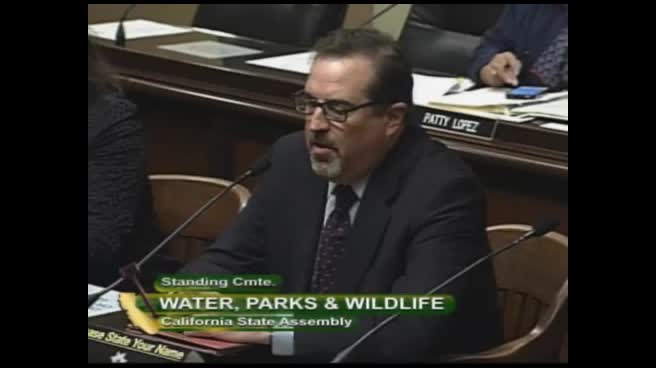


Bill Co-Author(s):