AB 459: Insurance: insurable interest: declaratory relief.
- Session Year: 2015-2016
- House: Assembly
- Latest Version Date: 2016-08-02
Existing law provides that an insurable interest, with reference to life and disability insurance, is an interest based upon a reasonable expectation of pecuniary advantage through the continued life, health, or bodily safety of another person and consequent loss by reason of that persons death or disability or a substantial interest engendered by love and affection in the case of individuals closely related by blood or law. An individual has an unlimited insurable interest in his or her own life, health, and bodily safety and may lawfully take out a policy of insurance on his or her own life, health, or bodily safety and have the policy made payable to whomsoever he or she pleases, regardless of whether the beneficiary designated has an insurable interest.
Existing law, effective January 1, 2010, provides that any device, scheme, or artifice designed to give the appearance of an insurable interest when there is no insurable interest, violates the insurable interest laws.
This bill would authorize an owner of record of a life insurance policy, who believes in good faith that the insurer may challenge the policy for lack of an insurable interest, to bring an action, on or before January 1, 2017, 2018, for declaratory relief seeking a court order declaring the policy to have a valid insurable interest. The bill would limit the applicability of these provisions to policies issued for delivery in California prior to January 1, 2010, that have a death benefit equal to or greater than $1,000,000, and when the owner of record was the owner of record on the effective date of these provisions. The bill would also prohibit an owner of record or the insurer from commencing an action against the named insured or a relative of the insured of the policy seeking damages or any other remedy if a court enters a judgment in an action brought pursuant to these provisions declaring a life insurance policy invalid void on the basis that the policy was issued to a person who lacked an insurable interest. These provisions would remain in effect only until January 1, 2017, 2018, and would then be repealed.
Existing law provides that an insurable interest, with reference to life and disability insurance, is an interest based upon a reasonable expectation of pecuniary advantage through the continued life, health, or bodily safety of another person and consequent loss by reason of that persons death or disability or a substantial interest engendered by love and affection in the case of individuals closely related by blood or law. An individual has an unlimited insurable interest in his or her own life, health, and bodily safety and may lawfully take out a policy of insurance on his or her own life, health, or bodily safety and have the policy made payable to whomsoever he or she pleases, regardless of whether the beneficiary designated has an insurable interest.
Existing law, effective January 1, 2010, provides that any device, scheme, or artifice designed to give the appearance of an insurable interest when there is no insurable interest, violates the insurable interest laws.
This bill would authorize an owner of record of a life insurance policy, who believes in good faith that the insurer may challenge the policy for lack of an insurable interest, to bring an action action, on or before January 1, 2017, for declaratory relief seeking a court order declaring the policy to have a valid insurable interest. The bill would limit the applicability of these provisions to policies issued for delivery in California prior to January 1, 2010, that have a death benefit equal to or greater than $1,000,000, and when the owner of record was the owner of record on the effective date of these provisions. The bill would also prohibit an owner of record from commencing an action against the named insured of the policy seeking damages or any other remedy if a court enters a judgment in an action brought pursuant to these provisions declaring a life insurance policy invalid on the basis that the policy was issued to a person who lacked an insurable interest. These provisions would remain in effect only until January 1, 2017, and would then be repealed.
Existing law provides that an insurable interest, with reference to life and disability insurance, is an interest based upon a reasonable expectation of pecuniary advantage through the continued life, health, or bodily safety of another person and consequent loss by reason of that persons death or disability or a substantial interest engendered by love and affection in the case of individuals closely related by blood or law. An individual has an unlimited insurable interest in his or her own life, health, and bodily safety and may lawfully take out a policy of insurance on his or her own life, health, or bodily safety and have the policy made payable to whomsoever he or she pleases, regardless of whether the beneficiary designated has an insurable interest.
This bill would authorize an owner of record of a life insurance policy, who believes in good faith that the insurer may challenge the policy for lack of insurable interest, to bring an action for declaratory relief seeking a court order declaring the policy to have a valid insurable interest. The bill would limit the applicability of these provisions to policies issued for delivery in California prior to January 1, 2010, that have a death benefit equal to or greater than $1,000,000, and when the owner of record was the owner of record on the effective date of these provisions. These provisions would remain in effect only until January 1, 2017, and would then be repealed.
(a)On or before January 1, 2017, 2018, the owner of record of a life insurance policy, who believes in good faith that the insurer may challenge the policy for lack of insurable interest, may bring an action for declaratory relief seeking a court order declaring the policy to have a valid insurable interest.
(b)The right of the owner of record of a life insurance policy to bring an action for declaratory relief under this section applies only to policies issued for delivery in California prior to January 1, 2010, and that have a death benefit equal to or greater than one million dollars ($1,000,000). Only the owner of record of a life insurance policy on the effective date of this section may bring a declaratory judgment action under this section.
(c)Nothing in this section shall be construed as limiting an insurers existing right to seek declaratory or other relief regarding the validity of a life insurance policy.
(d)If a court enters a judgment in an action brought pursuant to this section that declares a life insurance policy invalid void on the basis that the policy was issued to a person who lacked an insurable interest, the owner of record or the insurer shall not commence any action against the named insured or a relative of the insured of that life insurance policy seeking damages or any other remedy resulting from the invalidity of the policy. policy being declared void.
(e)For purposes of this section, a policy is issued for delivery in the state of residence of the policys owner of record on the date of issue.
(f)For purposes of this section, owner of record means the owner of a life insurance policy as recorded on the books and records of the insurer that issued or assumed the policy.
(g)This section shall remain in effect only until January 1, 2017, 2018, and as of that date is repealed.
(a)The On or before January 1, 2017, the owner of record of a life insurance policy, who believes in good faith that the insurer may challenge the policy for lack of insurable interest, may bring an action for declaratory relief seeking a court order declaring the policy to have a valid insurable interest.
(b)The right of the owner of record of a life insurance policy to bring an action for declaratory relief under this section applies only to policies issued for delivery in California prior to January 1, 2010, and that have a death benefit equal to or greater than one million dollars ($1,000,000). Only the owner of record of a life insurance policy on the effective date of this section may bring a declaratory judgment action under this section.
(c)Nothing in this section shall be construed as limiting an insurers existing right to seek declaratory or other relief regarding the validity of a life insurance policy.
(d)If a court enters a judgment in an action brought pursuant to this section that declares a life insurance policy invalid on the basis that the policy was issued to a person who lacked an insurable interest, the owner of record shall not commence any action against the named insured of that life insurance policy seeking damages or any other remedy resulting from the invalidity of the policy.
(d)
(e)For purposes of this section, a policy is issued for delivery in the state of residence of the policys owner of record on the date of issue.
(e)
(f)For purposes of this section, owner of record means the owner of a life insurance policy as recorded on the books and records of the insurer that issued or assumed the policy.
(f)
(g)This section shall remain in effect only until January 1, 2017, and as of that date is repealed, unless a later enacted statute, that is enacted before January 1, 2017, deletes or extends that date. repealed.
(a)The owner of record of a life insurance policy, who believes in good faith that the insurer may challenge the policy for lack of insurable interest, may bring an action for declaratory relief seeking a court order declaring the policy to have a valid insurable interest.
(b)The right of the owner of record of a life insurance policy to bring an action for declaratory relief under this section applies only to policies issued for delivery in California prior to January 1, 2010, and that have a death benefit equal to or greater than one million dollars ($1,000,000). Only the owner of record of a life insurance policy on the effective date of this section may bring a declaratory judgment action under this section.
(c)Nothing in this section shall be construed as limiting an insurers existing right to seek declaratory or other relief regarding the validity of a life insurance policy.
(d)For purposes of this section, a policy is issued for delivery in the state of residence of the policys owner of record on the date of issue.
(e)For purposes of this section, owner of record means the owner of a life insurance policy as recorded on the books and records of the insurer that issued or assumed the policy.
(f)This section shall remain in effect only until January 1, 2017, and as of that date is repealed, unless a later enacted statute, that is enacted before January 1, 2017, deletes or extends that date.
|
Date
|
Status
|
|---|---|
| Apr 27, 2015 | Read third time. Passed. Ordered to the Senate. (Ayes 79. Noes 0. Page 1141.) |
| Aug 4, 2016 | Ordered to inactive file at the request of Senator Jackson. |
| Aug 2, 2016 | Read second time and amended. Ordered to third reading. |
| Aug 1, 2016 | From committee: Amend, and do pass as amended. (Ayes 7. Noes 0.) (June 28). |
| Jul 14, 2015 | In committee: Set, second hearing. Hearing canceled at the request of author. |
| Jul 6, 2015 | From committee chair, with author's amendments: Amend, and re-refer to committee. Read second time, amended, and re-referred to Com. on JUD. |
| Jun 15, 2015 | In committee: Set, first hearing. Hearing canceled at the request of author. |
| Jun 11, 2015 | From committee: Do pass and re-refer to Com. on JUD. with recommendation: To Consent Calendar. (Ayes 9. Noes 0.) (June 10). Re-referred to Com. on JUD. |
| May 7, 2015 | Referred to Coms. on INS. and JUD. |
| Feb 23, 2015 | Read first time. To print. |
| Apr 27, 2015 | Read third time. Passed. Ordered to the Senate. |
| Apr 27, 2015 | In Senate. Read first time. To Com. on RLS. for assignment. |
| Apr 22, 2015 | Read second time. Ordered to third reading. |
| Apr 21, 2015 | From committee: Do pass. (Ayes 10. Noes 0.) (April 21). |
| Apr 9, 2015 | From committee: Do pass and re-refer to Com. on JUD. with recommendation: To Consent Calendar. (Ayes 12. Noes 0.) (April 8). Re-referred to Com. on JUD. |
| Mar 5, 2015 | Referred to Coms. on INS. and JUD. |
| Feb 24, 2015 | From printer. May be heard in committee March 26. |
|
Date
|
Description
|
Location
|
Votes
|
|
|---|---|---|---|---|
| Jun 28, 2016 | Do pass as amended | Senate Standing Committee on Judiciary |
Passed |
|
| Jun 10, 2015 | Do pass, but first be re-referred to the Committee on [Judiciary] with the recommendation: To Consent Calendar | Senate Standing Committee on Insurance |
Passed |
|
| Apr 27, 2015 | AB 459 DALY Assembly Third Reading | Assembly Floor |
Passed |
|
| Apr 21, 2015 | Do pass. | Assembly Standing Committee on Judiciary |
Passed |
|
| Apr 8, 2015 | Do pass and be re-referred to the Committee on [Judiciary] with recommendation: To Consent Calendar | Assembly Standing Committee on Insurance |
Passed |
This list shows positions taken on this bill by organizations on the date displayed, which is linked to the original source.
Positions by individuals are not included.
|
Organization
|
Position
|
Date
|
|---|---|---|
| Association Of California Life & Health Insurance Companies | * Support | Jun 28, 2016 |
| Fortress Investment Group | * Support | Jun 28, 2016 |
| Institutional Longevity Markets Association | ** Support | Jun 10, 2015 |
| Orrick, Herrington & Sutcliffe | * Support | Jun 10, 2015 |
Office of Senate Floor Analyses (916) 651-1520 Fax: (916) 327-4478 | AB |
THIRD READING
Bill No: AB 459
: 8/2/16
SENATE INSURANCE COMMITTEE: 9-0, 6/10/15
AYES: Roth, Gaines, Berryhill, Glazer, Hall, Hernandez, Liu, Mitchell, Wieckowski
SENATE JUDICIARY COMMITTEE: 7-0, 6/28/16
AYES: Jackson, Moorlach, Anderson, Hertzberg, Leno, Monning, Wieckowski
ASSEMBLY FLOOR: 79-0, 4/27/15 - See last page for vote
SOURCE: Institutional Longevity Markets Association
DIGEST: This bill authorizes an owner of record of a life insurance policy issued for delivery in California prior to January 1, 2010, and having a death benefit equal to or greater than $1,000,000, who believes that the insurer may challenge the policy for lack of an insurable interest, to bring an action for declaratory relief no later than January 1, 2018, seeking a court order declaring the policy to have a valid insurable interest.
Existing law:
- Provides that every person has an unlimited insurable interest in his or her own life, health, and bodily safety, and may take out a policy of insurance and have the policy payable to whomsoever he or she pleases, regardless of whether the beneficiary designated has an insurance interest.
- Provides that if the insured has no insurable interest, the contract is void.
- Provides that an insurable interest exists when based upon a reasonable expectation of pecuniary advantage through the continued life, health or bodily safety or another, or when engendered by a substantial interest engendered by love and affection in the case of individuals closely related by blood or law.
- Provides that an interest in the life or health of a person insured must exist when the insurance takes effect, but need not exist thereafter or when the loss occurs.
- Provides that, beginning January 1, 2010, any device, scheme or artifice designed to give the appearance of an insurable interest where there is no legitimate insurable interest violates insurable interest laws.
- Allows an insurer to rely upon all statements, declarations or representations made by an applicant for insurance relative to the insurable interest, and shall incur no legal liability by virtue of any untrue statements, declarations or representations so relied upon in good faith.
- Provides that an individual life insurance policy is incontestable, except for non-payment of premiums, after it has been in force, during the lifetime of the insured, for a period of not more than two years after its date of issue.
- Specifies that trusts and special purpose entities that are used to apply for and initiate the issuance of policies of insurance for investors have no insurable interest unless the designated beneficiary of the policy has an otherwise valid insurable interest in the life of the insured.
- Regulates generally, effective January 1, 2010, life settlements, and defines “life settlement contract” as a written agreement solicited, negotiated, or entered into in this state between a provider and an owner, establishing the terms under which compensation or anything of value will be paid, which compensation or thing of value is less than the expected death benefit of the insurance policy or certificate, in return for the owner’s assignment, transfer, sale, devise, or bequest of the death benefit or any portion of an insurance policy or certificate of insurance for compensation, provided, however, that the minimum value for a life settlement contract shall be greater than a cash surrender value or accelerated death benefit available at the time of an application for a life settlement contract.
- Defines entering into stranger originated life insurance (STOLI) as a fraudulent life settlement act.
This bill:
- Authorizes an owner of record of a life insurance policy who believes in good faith that the insurer may challenge the policy for lack of an insurable interest, to bring an action for declaratory relief seeking a court order declaring the policy to have a valid insurable interest.
- Limits the right to bring an action only to life insurance policies issued for delivery in California prior to January 1, 2010 that have a death benefit equal to or greater than $1,000,000.
- Provides that if a court declares a policy invalid as a result of a lack of insurable interest, the owner of record of the policy or the insurer shall not commence any action against the named insured seeking damages or any other remedy.
- Repeals the authority granted by this bill on January 1, 2018.
Background
An individual has an unlimited insurable interest in his or her own life. Individuals related by blood or marriage can also have an insurable interest. An employer can have an insurable interest in the life of its directors, officers or other key personnel, with the consent of the employee. An insurable interest must exist at the time the policy becomes effective, but does not have to exist at the time the loss occurs. An individual can always take out insurance on his or her self, and then transfer the policy to someone else. The question comes down to the intent at the time the policy is purchased.
California statute provides that a life insurance policy is incontestable after it has been in force for two years except for non-payment of premiums, or unless an imposter was used to obtain the policy or there was no insurable interest at the time of inception of the policy. Generally the insurance company has those two years to identify any undisclosed or misrepresented facts that rise to the level of material misrepresentation, allowing it to rescind the policy. If the fraud was material and intentional—for example if there was no insurable interest at the time the policy was taken out—the insurer may attempt to contest the policy beyond the two year period.
A life settlement is a complex financial transaction in which an owner of a life insurance policy sells the policy to a third party for more than the cash surrender value offered by the life insurance company. The purchaser becomes the new beneficiary of the policy at maturation (death of the insured) and is responsible for all subsequent premium payments. In order to purchase a life insurance policy from an insurer, the purchaser must have an “insurable interest” in the life of the person insured. The life insurance industry has claimed that the buying and selling of life insurance policies in a secondary market (life settlements) distorts the purpose of life insurance by breaking the “insurable interest” link between an insurer, policyholder and beneficiary.
The U.S. Supreme Court established in 1911 in Grigsby v. Russell that a life insurance policy is the property of the policyholder and is fully transferable. This opinion placed the ownership rights in a life insurance policy on the same legal footing as more traditional investment property such as stocks and bonds. Notwithstanding the court’s ruling, the market for life settlements did not gain much traction, or institutional investors, until the 1980s.
During the 1980s, the so-called viatical settlement market developed in response to the AIDS crisis. These transactions involved the sale of life insurance policies by persons with a catastrophic or life threatening illness or condition (diagnosed as having a life expectancy of 24 months or less) for an amount less than the death benefit, but more than the cash surrender value, in order to raise funds to pay for end-of-life care. As a result of abuses, legislation was enacted in 1990 to regulate viatical settlements. The viatical market largely evaporated after medical advances dramatically altered the life expectancy of an AIDS diagnosis, leaving viatical settlement purchasers unable to collect on their investment within the anticipated timeframe, and on the hook to continue making premium payments or forfeit all money invested to that date.
Life settlements—or the sale of policies by those not facing a terminal illness--were not regulated in California until legislation was enacted in 2009 (SB 98, Calderon, Chapter 343, Statutes of 2009). In the 2000’s, the market for life settlements had taken off, and capital from hedge funds, investment banks and pension funds in search of higher returns began flowing into the life settlement market. The need for enough policies to satisfy investors led to widespread solicitation of seniors to take out life insurance for the sole purpose of selling it into the secondary market. The life insurance industry objected to many life settlement transactions at the time, particularly those transactions referred to as STOLI, because they claim they violated the requirement for an insurable interest. Many policies issued prior to enactment of SB 98 have been the subject of litigation by insurers who characterize them as STOLI and have denied benefits when the named insured dies, claiming they were void at issuance because of the lack of an insurable interest by the purchaser.
The market for life settlements largely collapsed during the Great Recession, and is slowly rebounding governed by the new statutory requirements. Investors, however, have continued to pay the premium on many policies purchased at the market’s height. They have sponsored AB 459 in an attempt to ensure that they will be able to collect on those policies, or stop paying premiums for life insurance policies that are found by the court to be invalid. Notably, the approximately 15,000 policies sold as life settlements in 2007, if they have not already been challenged by the insurer or owner of record or matured due to the death of the insured, will be up for death benefit payout review by the investors in two years (typically, these policies are reviewed at the 10-year mark). This bill potentially allows the investors, who purchased those life settlements and have been paying the insurance premiums for almost a decade, to reevaluate whether they should continue to pay premiums if the policy has not matured within the expected timeframe. If the life insurance policy survives an insurable interest challenge, the investors would have faith that they would eventually get the face value death benefit from the life insurance company, and hopefully make a profit on the investment.
FISCAL EFFECT: Appropriation: Fiscal Com.: Local:
Institutional Longevity Markets Association (source)
Fortress Investment Group
None received
ARGUMENTS IN SUPPORT: According to the Institutional Life Markets Association, AB 459 will provide much needed certainty to the $30 billion secondary life insurance market. It represents a reasonable and workable compromise that gives investors a legal procedure to immediately determine the validity of a policy prior to its maturation while also preserving the rights of insurers to assert available legal challenges to the policy. Without this legal procedure, investors are frequently left in an untenable situation of paying premiums on a policy for many years only to have the insurer challenge the policy’s validity when a claim for benefits is ultimately made (and seek to keep the premiums).
ASSEMBLY FLOOR: 79-0, 4/27/15
AYES: Achadjian, Alejo, Travis Allen, Baker, Bigelow, Bloom, Bonilla, Bonta, Brough, Brown, Burke, Calderon, Chang, Chau, Chávez, Chiu, Chu, Cooley, Cooper, Dababneh, Dahle, Daly, Dodd, Eggman, Frazier, Beth Gaines, Gallagher, Cristina Garcia, Eduardo Garcia, Gatto, Gipson, Gomez, Gonzalez, Gordon, Gray, Grove, Hadley, Harper, Roger Hernández, Holden, Irwin, Jones, Jones-Sawyer, Kim, Lackey, Levine, Linder, Lopez, Low, Maienschein, Mathis, Mayes, McCarty, Medina, Melendez, Mullin, Nazarian, Obernolte, O'Donnell, Olsen, Patterson, Perea, Quirk, Rendon, Ridley-Thomas, Rodriguez, Salas, Santiago, Steinorth, Mark Stone, Thurmond, Ting, Wagner, Waldron, Weber, Wilk, Williams, Wood, Atkins
NO VOTE RECORDED: Campos
8/3/16 19:17:51
**** END ****
Senator Hannah-Beth Jackson, Chair
2015-2016 Regular Session
Bill No: AB 459 (Author:Daly)
Version: July 6, 2015
Hearing Date: June 28, 2016
Fiscal: No
Urgency: No
Consultant: TMW/me
SUBJECT
Insurance: insurable interest: declaratory relief
DESCRIPTION
This bill, until January 1, 2017, would authorize the owner of record, who believes in good faith that a life insurer may challenge for lack of insurable interest a life insurance policy issued for delivery in California prior to January 1, 2010, with a death benefit equal to or greater than $1 million, to bring an action for declaratory relief seeking a court order declaring the policy to have a valid insurable interest.
BACKGROUND
When an individual needs medical care and other provisions, he or she may sell his or her life insurance policy at a discount to a purchaser who will pay more than the cash surrender value than the insurer would pay to the individual. The purchaser, expecting the individual to die within a short period of time after the transfer of the insurance policy to the purchaser, would then collect the life insurance policy payment when the individual passed away. This arrangement is known as a “viatical settlement.” The viatical settlement industry began in the 1980s in response to the AIDS crisis, and by the mid-1990s, the industry had expanded to include other terminal illnesses with at least 60 companies in the viatical settlement business. (See S. L. Martin, Betting on the Lives of Strangers: Life Settlements, STOLI, & Securitization (Fall, 2010) 13 U. Pa. J. Bus. L. 173, 185-86.) State statutes were enacted to regulate the impact of the viatical settlement practice on insureds and insurers.
As the life-expectancy of AIDS patients began to increase with advances in treatments, the investor demand for life insurance policies insuring the terminally ill exceeded the supply of individuals wishing to sell their life insurance policies. To meet this lucrative demand, life insurance agents and life settlement brokers changed the name of the practice from “viatical settlements” to “life settlements” and undertook on a massive scale to persuade senior citizens to purchase life insurance policies in high-value amounts “not for the purpose of protecting his or her family, but for a current financial benefit.” (S.L. Martin, Betting on the Lives of Strangers: Life Settlements, STOLI, & Securitization (Fall, 2010) 13 U. Pa. J. Bus. L. 173, supra at 187.) With these life settlements, any elderly life insurance policy owner could sell his or her life insurance policy to a third-party stranger for quick cash in exchange for naming the stranger as the beneficiary, and the stranger, having paid an amount of money less than the amount of the death benefit, makes a larger return on that investment when the life insurance policy is paid out upon the death of the elder.
The life settlement practice poses risks and rewards for insurers, insureds, and investors. “Some industry commentators have raised objections, accusing Wall Street of perpetrating schemes that amount to impermissible gambling on the lives, and deaths, of others. In response, Wall Street financiers have insisted that they are committed to complying with state insurable interest statutes and that their efforts at building a secondary market for life insurance policies is expanding consumer options and eliminating the long-standing monopsony of the insurance companies.” (R. Bloink, Catalysts for Clarification: Modern Twists on the Insurable Interest Requirement for Life Insurance (Fall 2010) 17 Conn. Ins. L.J. 55.)
In 2001, a significant number of life settlement providers started purchasing policies for their investment portfolios using institutional capital. The arrival of well-funded corporate entities transformed the settlement concept into a wealth management tool, and began driving a rapid market expansion until the Great Recession, which began in December of 2007.
California had relatively few statutes regulating the life settlement industry until 2009, when SB 98 (Calderon, Chapter 343, Statutes of 2009) established a comprehensive regulatory system governing life settlement transactions entered into on or after July 1, 2010, including provisions to make illegal the practice of stranger originated life insurance (STOLI) and established new measures to aid in detecting and preventing STOLI transactions. Consequently, insurers and policy beneficiaries (life settlement investors) are filing civil actions to determine whether an insurer is required to pay out on the insurance contract upon the death of the insured or whether the insurance contract may be deemed void on the basis of a lack of an insurable interest.
Although an insurer or investor may file a declaratory relief action in court when the insurance payout is due, this bill seeks to establish the ability for an investor to file for declaratory relief, before the insurer is required to perform its contractual duties under the life insurance policy, in order to confirm whether the insurer will pay out on the policy when it becomes due upon the death of the insured.
CHANGES TO EXISTING LAW
Existing law provides that an interest in the life or health of a person insured must exist when the insurance takes effect, but need not exist thereafter or when the loss occurs. (Ins. Code Sec. 286.)
Existing law provides that if the insured has no insurable interest, the contract is void. (Ins. Code Sec. 280.)
Existing law provides that an insurance interest, with reference to life and disability insurance, is an interest based upon a reasonable expectation of pecuniary advantage through the continued life, health, or bodily safety of another person and consequent loss by reason of that person’s death or disability or a substantial interest engendered by love and affection in the case of individuals closely related by blood or law. (Ins. Code Sec. 10110.1(a).)
Existing law provides that every person has an unlimited insurable interest in his or her own life, health, and bodily safety, and may take out a policy of insurance and have the policy payable to whomsoever he or she pleases, regardless of whether the beneficiary designated has an insurable interest. (Ins. Code Sec. 10110.1(b).)
Existing law states that trusts and special purpose entities, other than charitable organizations, as specified, that are used to apply for and initiate the issuance of policies of insurance for investors, where one or more beneficiaries of those trusts or special purpose entities do not have an insurable interest in the life of the insured, violated the insurable interest laws and the prohibition against wagering on life. (Ins. Code Sec. 10110.1(d), (h).)
Existing law provides that any device, scheme or artifice designed to give the appearance of an insurance interest where there is no legitimate insurance interest violates insurable interest laws. (Ins. Code Sec. 10110.1(e).)
Existing law requires an insurable interest to exist at the time the contract of life or disability insurance becomes effective, but that interest need not exist at the time the loss occurs. (Ins. Code Sec. 10110.1(f).)
Existing law makes void any contract of life or disability insurance procured or caused to be procured upon another individual unless the person applying for the insurance has an insurable interest in the individual insured at the time of the application. (Ins. Code Sec. 10110.1(g).)
Existing law entitles an insurer to rely upon all statements, declarations or representations made by an applicant for insurance relative to the insurable interest that the applicant has in the insured, and provides that no insurer incurs legal liability except as set forth in the policy, by virtue of any untrue statements, declarations, or representations so relied upon in good faith. (Ins. Code Sec. 10110.2.)
Existing law requires an individual life insurance policy delivered or issued for delivery in California on or after December 31, 1973, to contain a provision that the policy is incontestable after it has been in force, during the lifetime of the insured, for a period of not more than two years after its date of issue, except for nonpayment of premiums and except for any of the supplemental benefits, as specified. (Ins. Code Sec. 10113.5.)
Existing law provides that any person interested under a written instrument, excluding a will or a trust, or under a contract, or who desires a declaration of his or her rights or duties with respect to another, may, in cases of actual controversy relating to the legal rights and duties of the respective parties, bring an original action or cross-complaint in the superior court for a declaration of his or her rights and duties in the premises, including a determination of any question of construction or validity arising under the instrument or contract. (Code Civ. Proc. Sec. 1060.) The person may ask for a declaration of rights or duties, either alone or with other relief, and the court may make a binding declaration of these rights or duties, whether or not further relief is or could be claimed at the time. (Id.) The court’s declaration may be either affirmative or negative in form and effect, and the declaration shall have the force of a final judgment. (Id.) The declaration may be had before there has been any breach of the obligation in respect to which said declaration is sought. (Id.)
This bill, on or before January 1, 2017, would authorize the owner of record of a life insurance policy, who believes in good faith that the insurer may challenge the policy for lack of insurable interest, to bring an action for declaratory relief seeking a court order declaring the policy to have a valid insurable interest.
This bill would provide that the right of the owner of record of a life insurance policy to bring an action for declaratory relief applies only to policies issued for delivery in California prior to January 1, 2010, and that have a death benefit equal to or greater than $1,000,000, and only the owner of record of a life insurance policy on the effective date of this bill could bring a declaratory judgment action.
This bill would not limit an insurer’s existing right to seek declaratory or other relief regarding the validity of a life insurance policy.
This bill, if a court enters a judgment in an action brought pursuant to this bill that declares a life insurance policy invalid on the basis that the policy was issued to a person who lacked an insurance interest, would prohibit the owner of record from commencing any action against the named insured of that life insurance policy seeking damages or any other remedy from the invalidity of the policy.
This bill would clarify that a policy is issued for delivery in the state of residence of the policy’s owner of record on the date of issue.
This bill would define “owner of record” to mean the owner of a life insurance policy as recorded on the books and records of the insurer that issued or assumed the policy.
This bill would sunset on January 1, 2017, and as of that date would be repealed.
COMMENT
1. Stated need for the bill
The author writes:
The legislation addresses an issue that has arisen in the $30 billion secondary market for life insurance. The primary players in this market are institutional investors which have acquired large portfolios containing hundreds of life insurance policies as part of an asset diversification strategy for their clients (life insurance policy returns are uncorrelated to the performance of the broader economy).
Many of the large portfolios acquired by investors contain policies that were issued during a period when the secondary life insurance market was largely unregulated and there were some instances in which policies were procured by insureds who misrepresented their net worth and income in the applications for life insurance or who took out their policies solely to sell them to an investor in the secondary market, a practice sometimes referred to as “stranger originated life insurance” (STOLI). The California Legislature began prohibiting these practices by legislation enacted in 2010 (SB 98—Calderon).
Some life insurers have aggressively challenged the validity of investor-owned policies—but they typically do not bring such actions until after a claim is made, even if they obtain evidence years earlier that raises doubts about the policy’s validity. Unlike with most challenges to a life insurance policy, which must be made within two years of the policy’s issuance, challenges based on lack of insurable interest have been held not to be subject to the two-year incontestability clause required to be included in California individual life insurance contracts. Cal. Ins. Code [Sec.] 10113.5 (requiring individual life insurance policies to contain two-year limit on contestability); see Hartford Life & Annuity Ins. Co. v. Doris Barnes Family 2008 Irrevocable Trust, No. CV 10-7560 PSG DTBX, 2011 WL 759554, at *3 (C.D. Cal. Feb. 22, 2011) (“Nevertheless, an incontestability clause does not preclude a challenge to a life insurance policy ‘on the ground that it is void ab initio for lack of insurable interest.’”); Paul Revere Life Ins. Co. v. Fima, 105 F.3d 490, 492 (9th Cir. 1997). As a result, insurers can seek to rescind a policy for lack of insurable interest at any time, and frequently choose to wait until a claim is made.
AB 459 removes the preliminary evidentiary hurdle of establishing a “probable future controversy” to bring a declaratory relief action by allowing owners of policies worth more than $1 million to seek a declaratory judgment on enforceability without having to go through the costly process of demonstrating an imminent controversy or anticipatory breach.
2. Justiciability of life insurance policies
Existing law provides that a life or disability insurance policy may not be contested after it has been in force, during the lifetime of the insured, for a period of not more than two years after its date of issue, except for nonpayment of premiums. (Ins. Code Sec. 10113.5.) As a matter of public policy, California gives effect to incontestability clauses in order to prevent lawsuits to rescind insurance policies based upon claims of fraud or misrepresentation in the procurement of the policy. (Mutual Life Ins. Co. of New York v. Markowitz (1940) 78 F.2d 396, 398.) Case law interprets the public policy reasoning behind incontestability clauses as “the intent of the parties is to fix a limited time within which the insurer must discover and assert any grounds it might have to justify a rescission of the contract.” (New York Life Ins. Co. v. Hollender (1951) 38 Cal.2d 73, 237.)
However, California law provides that a policy that is void ab initio (invalid from the outset) may be contested at any time, even after the incontestability period has expired. (Crump v. Northwestern Nat’l Life Ins. Co. (1965) 236 Cal.App.2d 149.) An insurance policy is void ab initio where the insured lacks an insurable interest. (Ins. Code Sec. 280.) Thus, where, an incontestability clause is in effect, an insurance policy may be challenged only on the ground that it is void ab initio for lack of an insurable interest. (Paul Revere Life Ins. Co. v. Fima (1997) U.S. App. LEXIS 6299.)
Existing law provides declaratory relief in cases of actual controversy relating to the legal rights and duties of the respective parties, which authorizes the court to declare the parties’ rights and duties, including a determination of any question of construction or validity arising under the contract. (Code Civ. Proc. Sec. 1060.) The author argues that insurers are bringing actions to make life insurance policies void, typically filed after the death benefit is claimed, at which time an actual controversy exists because the policy has matured. However, the author, citing Mammoth Lakes Land Acquisition, LLC v. Town of Mammoth Lakes (2010) 191 Cal.App.4th 435, 463, purports that a policyholder cannot bring an action for anticipatory breach of their insurance contract absent a clear, positive unequivocal refusal to perform by the insurer. Further, the author, citing County of San Diego v. State (2008) 164 Cal.App.4th 580, argues that case law provides that for a probable future controversy to constitute an actual controversy, the probable future controversy must be ripe (when the controversy has reached, but not passed, the point that the facts have sufficiently congealed to permit an intelligent and useful decision to be made). Notably, both of these cases applied to insurance policies issued prior to 2010, which coincides with the limitation in this bill that only policies issued prior to January 1, 2010 would be actionable. The author argues this limitation period is appropriate because it coincides with the enactment of SB 98 (Calderon, Chapter 343, Statutes of 2009), which prohibited the practice of an insured misrepresenting his or her net worth and income in the applications for life insurance or an insured taking out an insurance policy solely to sell the policy to an investor, otherwise known as “stranger originated life insurance” (STOLI). The author’s mention of SB 98 presumes that bill negatively affected life settlement investors and their ability to confirm whether an insurer would pay out on the policy or raise an insurable interest challenge. However, while SB 98 affected the STOLI market, it did not change the existing law requiring that there be an insurable interest at the time the life insurance policy is issued. (Ins. Code Sec. 280.) Accordingly, any insurable interest challenge an insurer was making before the enactment of SB 98 would be the same argument the insurer is making on policies issued after the enactment of SB 98. As such, SB 98 did not limit the investor’s ability to file any actions related to the policy.
3. Acceleration of life insurance policy payout determination
In order for a claim to be ripe, and, therefore, reviewable by a court, there must exist a case in controversy. This bill would authorize the owner of record of a life insurance policy to file a declaratory relief action against an insurer seeking a court order to declare the life insurance policy to have a valid insurable interest. In this way, this bill seeks to authorize the owner of record to sue for declaratory relief in advance of the insurance policy maturing, which would otherwise be the time the case in controversy becomes ripe. In effect, this bill would accelerate the case in controversy for the policy owner to determine whether the insurer will pay the insurance policy payment due upon maturity or whether the insurer will attempt to avoid paying out on the policy by claiming that the policy is not supported by an insurable interest, which would make the contract void.
According to the author:
Some insurers also have taken the position that policy owners cannot seek a judicial declaration that a policy is valid until a claim has been made and rejected by the insurer. This leaves investors in the untenable situation of paying premiums on a policy for many years only to have the policy’s validity challenged when a claim for benefits is ultimately made. This has become particularly problematic as insurers increasingly seek to retain the full amount of premium collected (often hundreds of thousands of dollars) while also denying benefits under the policy.
Policyholders thus face the prospect of paying premiums for years only to learn upon maturity that the insurer intended to dispute the policy’s enforceability all along. Savvy insurers can easily avoid an express statement of intent, while the standards for declaratory relief are vague and subject to dispute. Moreover, whether a probable, imminent, and/or ripe controversy exists is a fact-intensive question that must be answered on a case-by-case basis.
- Existing declaratory relief action available for policy owners
In support of this bill, the author argues that “[i]nsurers have regularly taken the position in litigation and in private negotiations that policy owners do not have a right to seek a declaratory judgment until a claim has been made and denied. See, e.g., Wilmington Sav. Fund Soc’y, FSB v. PHL Variable Ins. Co., 2014 WL 1389974, at *8 (D. Del. Apr. 9, 2014). This has the effect of driving up litigation costs and forces policy owners to continue paying premiums without any assurance that a claim on that policy will be paid. As a result, policy owners who wish to ensure that any individual policy they are paying premiums on will be honored face significant cost and litigation on the threshold issue of whether they can seek declaratory relief, before the underlying substantive issue of the policy’s validity is even reached.”
However, regardless of whether an insurer believes that policy owners do not have a right to seek a declaratory judgment unless a claim has been made and denied, the cases provided by the author demonstrate that policy owners currently have the ability to bring declaratory actions, and in some cases, prevail over the insurer’s claims. Although the author provided seven different cases in support of this bill, only two of them are relevant to California law since state laws vary as to whether they prohibit or allow insurable interest claims after two years of the effective date of the policy when it otherwise becomes statutorily uncontestable by the insurer. California law allows an insurer after the date upon which the policy is otherwise uncontestable to seek to have an insurance policy declared void ab initio (from the start) on the basis that the policy lacked an insurable interest.
In the author’s first California example, Wilmington Savings et al. v. PHL Variable Insurance Company, et al., U.S. Dist. Ct., Central Dist. of Cal., Case No. 2:12-cv-04926-SVW-AJWx, the plaintiffs, life insurance trusts that were the record owners of life insurance policies with a total face amount of $466.9 million, filed a first amended complaint for 11 claims for relief, including declaratory judgment that there was no basis for rescission or voiding of the policies by the insurer, that the insurer was barred from rescinding or voiding the policies, or, in the alternative, that if the insurer was successful in rescinding or voiding the policies, the insurer must return all premiums paid for any voided or rescinded policy, plus interest. Only the First Amended Complaint was provided to the Committee, so it is unknown whether the record owners were successful with their claims.
In the author’s second California example, Mosler, et al. v. Phoenix Life Insurance Co., et al. (2012) 2012 U.S. Dist. LEXIS 188567, the plaintiffs, record owner investors of two life insurance policies totaling a face value of $11 million, filed a complaint against the defendant insurer for rescission, declaratory relief, negligence, and unjust enrichment. The plaintiffs’ claim for declaratory relief failed because they had not identified any underlying cause of action for the relief requested. The plaintiffs claimed that the insurer refused to execute a form or otherwise provide confirmation of coverage or the validity of the insurance policies, which the court determined was not a valid basis for rescinding the policies or declaring the policies void. The court noted that the insurer was not contractually obligated to confirm whether it would pay the death benefit at the time the policies matured (when the insureds passed away), which had not yet occurred. In its discussion, the court noted the insurer had not “stated it will not honor the policies, nor has it sought rescission. Rather, the insureds appear to have simply lived longer than PEMGroup, and by extension, the Receiver [plaintiffs], would have liked. Obviously, the longer the Receiver is required to make payments to maintain the Policies, the less profitable the investment becomes with respect to the total payout. But equity does not support placing one who has fraudulently procured a policy in a better position than an honest insured by permitting that party to declare a rescission at their option when an insured fails to die in a timely and profitable manner. Absent identification of a contrary rule in California, or any authority supporting the availability of a suit for rescission on these facts, the Receiver has not shown it is entitled to rescind the Policies. . . .” (Id. at pp. 24-25; emphasis in original.)
Notably, this bill appears to attempt to avoid having to provide an evidentiary basis on which to seek declaratory relief (i.e., that the insurer stated it would not pay out on the policy, or that the insured’s misrepresentations created an uninsurable interest) other than proving the owner of record’s “good faith belief that the insurer will challenge the policy for lack of insurable interest.” Yet, the policy owner will still have to prove that it is bringing the action in good faith and provide evidence sufficient to prove why the policy owner believes the insurer may challenge the policy for lack of insurable interest. Arguably, the policy owner may be required to provide the same factual basis for the declaratory relief provided under this bill as it would under existing law.
- Investors’ increasing desire to have insurance policies validated or declared void is at odds with public policy to protect insureds, especially elders
The current increased desire for record owner investors to prospectively determine the likelihood for policy payout can be traced to the last life settlement boom. According to a 2009 Forbes article describing the pros and cons of entering into a life settlement agreement, “[d]espite the risks, an estimated 15,000 policyholders, with death benefits worth $15 billion, completed life settlements in 2007. That’s up fourfold in four years. Behind the rush is a marketing hustle and Wall Street’s hunger for a new asset it can securitize and sell to investors. Filling some of the vacuum left by the collapse of the mortgage security business, bankers are hoping to assemble pools of life settlement contracts and carve them into investment
shares. . . . Insurers count on the fact that a large number of policy buyers either cash in their policies or let them lapse. Having investors in the mix ruins the actuarial assumptions. Investors in life settlements are typically seeking 14 [percent] to 20 [percent] annual returns. To help earn them[,] investors have traditionally followed the ghoulish practice of cherry-picking sellers with short life expectancies. A few decades ago, in what was then called the viatical settlement industry, that meant looking for patients with [AIDS] and other terminal conditions. These days investors are making life settlement offers to sellers whom they expect to live another 10 to 15 years. (W. P. Barrett, Life Settlement Roulette (Oct. 5, 2009) Forbes <http://www.forbes.com/forbes/2009/1005/investing-insurance-benefit-life-settlement-roulette.html> [as of June 14, 2015].)
Notably, the 15,000 policies sold as life settlements in 2007, if they have not already been challenged by the insurer or owner of record or matured due to the death of the insured, will be up for death benefit payout review by the investors in two years (typically, these policies are reviewed at the 10-year mark). This bill potentially allows the investors, who purchased those life settlements and have been paying the insurance premiums for almost a decade, to reevaluate whether they should continue to pay premiums if the policy has not matured within the expected timeframe. If the life insurance policy survives an insurable interest challenge, the investors would have faith that they would eventually get the face value death benefit from the life insurance company, and hopefully make a profit on their initial investment (the payment to the insured to purchase the policy). If the insured has outlived the actuarial projection of the date of death of the insured, the investors would be able to receive their investment or policy premium back on an accelerated basis if the policy is declared void, and either recover the premium payments back from the insurer on the principles of equity, or recover the purchase money or the face value of the policy from the elder, who sold them the now “bogus” life insurance policy. Although this bill would only authorize the investors to bring an action for declaratory relief on policies with a death benefit of $1 million or more, from the investors’ view, this is of course another advantage to dealing only with wealthy people. However, if the insured sold the policy to pay for medical care or other needs, the insured may be in a considerably different financial position than when he or she executed the life settlement agreement and have little money immediately available to pay off the investors. Additionally, the insured is subject to damages payable to the insurer when the insurance policy is held void ab initio. (Hartford Life & Annuity Ins. Co. v. Doris Barnes Family 2008 Irrevocable Trust, et al., 2011 U.S. Dist. LEXIS 25238.)
This bill seeks to advance the judicial review of the policy before it matures, which may have the unintended consequence of creating additional civil actions against the insured if either the insurer or the policy owner is successful in declaring the policy void ab initio. Accordingly, this bill was recently amended to prohibit the owner of record of the policy from filing an action against the insured to recover premiums lost due to the voided policy.
However, this bill should also prohibit the insurer from filing an action against the insured to recover any premiums the insurer was ordered to return to the owner of record or any other damages claimed by the insurer due to the voided policy. This bill should also be amended to clarify that the policy may be found void, not invalid. (See Ins. Code Sec. 280.)
Suggested amendments:
- On page 2, in line 19, strike and replace “invalid” with “void”
- On page 2, in line 21, after “record” insert “or insurer”
- On page 2, in line 22, after “insured” insert “or the original owner”
- Burden on courts
This bill, for a one-year period, would authorize policy owners to file declaratory relief actions on policies issued before January 1, 2010. This bill would sunset after the one year period. Given the current budgetary and staffing constraints of California’s civil courts, providing the opportunity to seek a determination on the insurable interest of thousands of outstanding policies issued prior to January 1, 2010, may create an additional, overwhelming burden on the courts. In order to clarify the legislative intent of this bill to require these declaratory relief actions to be filed within the limited time-frame of one year, the bill was amended last year to clarify that the owner of record must file the declaratory relief action before January 1, 2017. This bill was originally set to be heard in the Senate Committee on Judiciary in 2015. However, the bill was pulled at the request of the author. This bill should be amended to reflect the one year delay in hearing the bill.
Suggested amendments:
- On page 2, in line 3, strike and replace “2017” with “2018”
- On page 3, in line 12, strike and replace “2017” with “2018”
Support: Fortress Investment Group; Institutional Longevity Markets Association
Opposition: None Known
HISTORY
Related Pending Legislation: None Known
Prior Legislation:
AB 546 (Stone, Chapter 14, Statutes of 2013), as introduced, would have made technical, non-substantive revisions to life insurance insurable interest provisions. AB 546 was subsequently amended to instead authorize the Santa Cruz Board of Supervisors to consolidate the duties of the offices of the Auditor-Controller and Treasurer-Tax Collector.
SB 98 (Calderon, Chapter 343, Statutes of 2009) See Background.
SB 1543 (Machado, 2008) was substantially similar to SB 98 but was vetoed by Governor Schwarzenegger because the provisions of the bill were amended into it very late in the legislative session and he believed some of the provisions were still subject to worthwhile debate and may have “unfairly excluded some companies from participating in the legitimate life settlement market.”
Prior Vote:
Senate Insurance Committee (Ayes 9, Noes 0)
Assembly Floor (Ayes 79, Noes 0)
Assembly Judiciary Committee (Ayes 10, Noes 0)
Assembly Insurance Committee (Ayes 12, Noes 0)
**************
AB 459 (Daly)
Page 12 of 12
Senator Hannah-Beth Jackson, Chair
2015-2016 Regular Session
AB 459 (Daly)
Version: July 6, 2015
Hearing Date: July 14, 2015
Fiscal: No
Urgency: No
TMW
SUBJECT
Insurance: insurable interest: declaratory relief
DESCRIPTION
This bill, until January 1, 2017, would authorize the owner of record, who believes in good faith that a life insurer may challenge for lack of insurable interest a life insurance policy issued for delivery in California prior to January 1, 2010, with a death benefit equal to or greater than $1 million, to bring an action for declaratory relief seeking a court order declaring the policy to have a valid insurable interest.
BACKGROUND
When an individual needs medical care and other provisions, he or she may sell his or her life insurance policy at a discount to a purchaser who will pay more than the cash surrender value than the insurer would pay to the individual. The purchaser, expecting the individual to die within a short period of time after the transfer of the insurance policy to the purchaser, would then collect the life insurance policy payment when the individual passed away. This arrangement is known as a “viatical settlement.” The viatical settlement industry began in the 1980s in response to the AIDS crisis, and by the mid-1990s, the industry had expanded to include other terminal illnesses with at least 60 companies in the viatical settlement business. (See S. L. Martin, Betting on the Lives of Strangers: Life Settlements, STOLI, & Securitization (Fall, 2010) 13 U. Pa. J. Bus. L. 173, 185-86.) State statutes were enacted to regulate the impact of the viatical settlement practice on insureds and insurers.
As the life-expectancy of AIDS patients began to increase with advances in treatments, the investor demand for life insurance policies insuring the terminally ill exceeded the supply of individuals wishing to sell their life insurance policies. To meet this lucrative demand, life insurance agents and life settlement brokers changed the name of the practice from “viatical settlements” to “life settlements” and undertook on a massive scale to persuade senior citizens to purchase life insurance policies in high-value amounts “not for the purpose of protecting his or her family, but for a current financial benefit.” (S.L. Martin, Betting on the Lives of Strangers: Life Settlements, STOLI, & Securitization (Fall, 2010) 13 U. Pa. J. Bus. L. 173, supra at 187.) With these life settlements, any elderly life insurance policy owner could sell his or her life insurance policy to a third-party stranger for quick cash in exchange for naming the stranger as the beneficiary, and the stranger, having paid an amount of money less than the amount of the death benefit, makes a larger return on that investment when the life insurance policy is paid out upon the death of the elder.
The life settlement practice poses risks and rewards for insurers, insureds, and investors. “Some industry commentators have raised objections, accusing Wall Street of perpetrating schemes that amount to impermissible gambling on the lives, and deaths, of others. In response, Wall Street financiers have insisted that they are committed to complying with state insurable interest statutes and that their efforts at building a secondary market for life insurance policies is expanding consumer options and eliminating the long-standing monopsony of the insurance companies.” (R. Bloink, Catalysts for Clarification: Modern Twists on the Insurable Interest Requirement for Life Insurance (Fall 2010) 17 Conn. Ins. L.J. 55.)
In 2001, a significant number of life settlement providers started purchasing policies for their investment portfolios using institutional capital. The arrival of well-funded corporate entities transformed the settlement concept into a wealth management tool, and began driving a rapid market expansion until the Great Recession, which began in December of 2007.
California had relatively few statutes regulating the life settlement industry until 2009, when SB 98 (Calderon, Chapter 343, Statutes of 2009) established a comprehensive regulatory system governing life settlement transactions entered into on or after July 1, 2010, including provisions to make illegal the practice of stranger originated life insurance (STOLI) and established new measures to aid in detecting and preventing STOLI transactions. Consequently, insurers and policy beneficiaries (life settlement investors) are filing civil actions to determine whether an insurer is required to pay out on the insurance contract upon the death of the insured or whether the insurance contract may be deemed void on the basis of a lack of an insurable interest.
Although an insurer or investor may file a declaratory relief action in court when the insurance payout is due, this bill seeks to establish the ability for an investor to file for declaratory relief, before the insurer is required to perform its contractual duties under the life insurance policy, in order to confirm whether the insurer will pay out on the policy when it becomes due upon the death of the insured.
CHANGES TO EXISTING LAW
Existing law provides that an interest in the life or health of a person insured must exist when the insurance takes effect, but need not exist thereafter or when the loss occurs. (Ins. Code Sec. 286.)
Existing law provides that if the insured has no insurable interest, the contract is void. (Ins. Code Sec. 280.)
Existing law provides that an insurance interest, with reference to life and disability insurance, is an interest based upon a reasonable expectation of pecuniary advantage through the continued life, health, or bodily safety of another person and consequent loss by reason of that person’s death or disability or a substantial interest engendered by love and affection in the case of individuals closely related by blood or law. (Ins. Code Sec. 10110.1(a).)
Existing law provides that every person has an unlimited insurable interest in his or her own life, health, and bodily safety, and may take out a policy of insurance and have the policy payable to whomsoever he or she pleases, regardless of whether the beneficiary designated has an insurable interest. (Ins. Code Sec. 10110.1(b).)
Existing law states that trusts and special purpose entities, other than charitable organizations, as specified, that are used to apply for and initiate the issuance of policies of insurance for investors, where one or more beneficiaries of those trusts or special purpose entities do not have an insurable interest in the life of the insured, violated the insurable interest laws and the prohibition against wagering on life. (Ins. Code Sec. 10110.1(d), (h).)
Existing law provides that any device, scheme or artifice designed to give the appearance of an insurance interest where there is no legitimate insurance interest violates insurable interest laws. (Ins. Code Sec. 10110.1(e).)
Existing law requires an insurable interest to exist at the time the contract of life or disability insurance becomes effective, but that interest need not exist at the time the loss occurs. (Ins. Code Sec. 10110.1(f).)
Existing law makes void any contract of life or disability insurance procured or caused to be procured upon another individual unless the person applying for the insurance has an insurable interest in the individual insured at the time of the application. (Ins. Code Sec. 10110.1(g).)
Existing law entitles an insurer to rely upon all statements, declarations or representations made by an applicant for insurance relative to the insurable interest that the applicant has in the insured, and provides that no insurer incurs legal liability except as set forth in the policy, by virtue of any untrue statements, declarations or representations so relied upon in good faith. (Ins. Code Sec. 10110.2.)
Existing law requires an individual life insurance policy delivered or issued for delivery in California on or after December 31, 1973, to contain a provision that the policy is incontestable after it has been in force, during the lifetime of the insured, for a period of not more than two years after its date of issue, except for nonpayment of premiums and except for any of the supplemental benefits, as specified. (Ins. Code Sec. 10113.5.)
Existing law provides that any person interested under a written instrument, excluding a will or a trust, or under a contract, or who desires a declaration of his or her rights or duties with respect to another, may, in cases of actual controversy relating to the legal rights and duties of the respective parties, bring an original action or cross-complaint in the superior court for a declaration of his or her rights and duties in the premises, including a determination of any question of construction or validity arising under the instrument or contract. (Code Civ. Proc. Sec. 1060.) The person may ask for a declaration of rights or duties, either alone or with other relief, and the court may make a binding declaration of these rights or duties, whether or not further relief is or could be claimed at the time. (Id.) The court’s declaration may be either affirmative or negative in form and effect, and the declaration shall have the force of a final judgment. (Id.) The declaration may be had before there has been any breach of the obligation in respect to which said declaration is sought. (Id.)
This bill, on or before January 1, 2017, would authorize the owner of record of a life insurance policy, who believes in good faith that the insurer may challenge the policy for lack of insurable interest, to bring an action for declaratory relief seeking a court order declaring the policy to have a valid insurable interest.
This bill would provide that the right of the owner of record of a life insurance policy to bring an action for declaratory relief applies only to policies issued for delivery in California prior to January 1, 2010, and that have a death benefit equal to or greater than $1,000,000, and only the owner of record of a life insurance policy on the effective date of this bill could bring a declaratory judgment action.
This bill would not limit an insurer’s existing right to seek declaratory or other relief regarding the validity of a life insurance policy.
This bill, if a court enters a judgment in an action brought pursuant to this bill that declares a life insurance policy invalid on the basis that the policy was issued to a person who lacked an insurance interest, would prohibit the owner of record from commencing any action against the named insured of that life insurance policy seeking damages or any other remedy from the invalidity of the policy.
This bill would clarify that a policy is issued for delivery in the state of residence of the policy’s owner of record on the date of issue.
This bill would define “owner of record” to mean the owner of a life insurance policy as recorded on the books and records of the insurer that issued or assumed the policy.
This bill would sunset on January 1, 2017, and as of that date would be repealed.
COMMENT
1. Stated need for the bill
The author writes:
The legislation addresses an issue that has arisen in the $30 billion secondary market for life insurance. The primary players in this market are institutional investors which have acquired large portfolios containing hundreds of life insurance policies as part of an asset diversification strategy for their clients (life insurance policy returns are uncorrelated to the performance of the broader economy).
Many of the large portfolios acquired by investors contain policies that were issued during a period when the secondary life insurance market was largely unregulated and there were some instances in which policies were procured by insureds who misrepresented their net worth and income in the applications for life insurance or who took out their policies solely to sell them to an investor in the secondary market, a practice sometimes referred to as “stranger originated life insurance” (STOLI). The California Legislature began prohibiting these practices by legislation enacted in 2010 (SB 98—Calderon).
Some life insurers have aggressively challenged the validity of investor-owned policies—but they typically do not bring such actions until after a claim is made, even if they obtain evidence years earlier that raises doubts about the policy’s validity. Unlike with most challenges to a life insurance policy, which must be made within two years of the policy’s issuance, challenges based on lack of insurable interest have been held not to be subject to the two-year incontestability clause required to be included in California individual life insurance contracts. Cal. Ins. Code [Sec.] 10113.5 (requiring individual life insurance policies to contain two-year limit on contestability); see Hartford Life & Annuity Ins. Co. v. Doris Barnes Family 2008 Irrevocable Trust, No. CV 10-7560 PSG DTBX, 2011 WL 759554, at *3 (C.D. Cal. Feb. 22, 2011) (“Nevertheless, an incontestability clause does not preclude a challenge to a life insurance policy ‘on the ground that it is void ab initio for lack of insurable interest.’”); Paul Revere Life Ins. Co. v. Fima, 105 F.3d 490, 492 (9th Cir. 1997). As a result, insurers can seek to rescind a policy for lack of insurable interest at any time, and frequently choose to wait until a claim is made.
AB 459 removes the preliminary evidentiary hurdle of establishing a “probable future controversy” to bring a declaratory relief action by allowing owners of policies worth more than $1 million to seek a declaratory judgment on enforceability without having to go through the costly process of demonstrating an imminent controversy or anticipatory breach.
2. Justiciability of life insurance policies
Existing law provides that a life or disability insurance policy may not be contested after it has been in force, during the lifetime of the insured, for a period of not more than two years after its date of issue, except for nonpayment of premiums. (Ins. Code Sec. 10113.5.) As a matter of public policy, California gives effect to incontestability clauses in order to prevent lawsuits to rescind insurance policies based upon claims of fraud or misrepresentation in the procurement of the policy. (Mutual Life Ins. Co. of New York v. Markowitz (1940) 78 F.2d 396, 398.) Case law interprets the public policy reasoning behind incontestability clauses as “the intent of the parties is to fix a limited time within which the insurer must discover and assert any grounds it might have to justify a rescission of the contract.” (New York Life Ins. Co. v. Hollender (1951) 38 Cal.2d 73, 237.)
However, California law provides that a policy that is void ab initio (invalid from the outset) may be contested at any time, even after the incontestability period has expired. (Crump v. Northwestern Nat’l Life Ins. Co. (1965) 236 Cal.App.2d 149.) An insurance policy is void ab initio where the insured lacks an insurable interest. (Ins. Code Sec. 280.) Thus, where, an incontestability clause is in effect, an insurance policy may be challenged only on the ground that it is void ab initio for lack of an insurable interest. (Paul Revere Life Ins. Co. v. Fima (1997) U.S. App. LEXIS 6299.)
Existing law provides declaratory relief in cases of actual controversy relating to the legal rights and duties of the respective parties, which authorizes the court to declare the parties’ rights and duties, including a determination of any question of construction or validity arising under the contract. (Code Civ. Proc. Sec. 1060.) The author argues that insurers are bringing actions to make life insurance policies void, typically filed after the death benefit is claimed, at which time an actual controversy exists because the policy as matured. However, the author, citing Mammoth Lakes Land Acquisition, LLC v. Town of Mammoth Lakes (2010) 191 Cal.App.4th 435, 463, purports that a policyholder cannot bring an action for anticipatory breach of their insurance contract absent a clear, positive unequivocal refusal to perform by the insurer. Further, the author, citing County of San Diego v. State (2008) 164 Cal.App.4th 580, argues that case law provides that for a probable future controversy to constitute an actual controversy, the probable future controversy must be ripe (when the controversy has reached, but not passed, the point that the facts have sufficiently congealed to permit an intelligent and useful decision to be made). Notably, both of these cases applied to insurance policies issued prior to 2010, which coincides with the limitation in this bill that only policies issued prior to January 1, 2010 would be actionable. The author argues this limitation period is appropriate because it coincides with the enactment of SB 98 (Calderon, Chapter 343, Statutes of 2009), which prohibited the practice of an insured misrepresenting his or her net worth and income in the applications for life insurance or an insured taking out an insurance policy solely to sell the policy to an investor, otherwise known as “stranger originated life insurance” (STOLI). The author’s mention of SB 98 presumes that bill negatively affected life settlement investors and their ability to confirm whether an insurer would pay out on the policy or raise an insurable interest challenge. However, while SB 98 affected the STOLI market, it did not change the existing law requiring that there be an insurable interest at the time the life insurance policy is issued. (Ins. Code Sec. 280.) Accordingly, any insurable interest challenge an insurer was making before the enactment of SB 98 would be the same argument the insurer is making on policies issued after the enactment of SB 98. As such, SB 98 did not limit the investor’s ability to file any actions related to the policy.
3. Acceleration of life insurance policy payout determination
In order for a claim to be ripe, and, therefore, reviewable by a court, there must exist a case in controversy. This bill would authorize the owner of record of a life insurance policy to file a declaratory relief action against an insurer seeking a court order to declare the life insurance policy to have a valid insurable interest. In this way, this bill seeks to authorize the owner of record to sue for declaratory relief in advance of the insurance policy maturing, which would otherwise be the time the case in controversy becomes ripe. In effect, this bill would accelerate the case in controversy for the policy owner to determine whether the insurer will pay the insurance policy payment due upon maturity or whether the insurer will attempt to avoid paying out on the policy by claiming that the policy is not supported by an insurable interest, which would make the contract void.
According to the author:
Some insurers also have taken the position that policy owners cannot seek a judicial declaration that a policy is valid until a claim has been made and rejected by the insurer. This leaves investors in the untenable situation of paying premiums on a policy for many years only to have the policy’s validity challenged when a claim for benefits is ultimately made. This has become particularly problematic as insurers increasingly seek to retain the full amount of premium collected (often hundreds of thousands of dollars) while also denying benefits under the policy.
Policyholders thus face the prospect of paying premiums for years only to learn upon maturity that the insurer intended to dispute the policy’s enforceability all along. Savvy insurers can easily avoid an express statement of intent, while the standards for declaratory relief are vague and subject to dispute. Moreover, whether a probable, imminent, and/or ripe controversy exists is a fact-intensive question that must be answered on a case-by-case basis.
Existing declaratory relief action available for policy owners
In support of this bill, the author argues that “[i]nsurers have regularly taken the position in litigation and in private negotiations that policy owners do not have a right to seek a declaratory judgment until a claim has been made and denied. See, e.g., Wilmington Sav. Fund Soc’y, FSB v. PHL Variable Ins. Co., 2014 WL 1389974, at *8 (D. Del. Apr. 9, 2014). This has the effect of driving up litigation costs and forces policy owners to continue paying premiums without any assurance that a claim on that policy will be paid. As a result, policy owners who wish to ensure that any individual policy they are paying premiums on will be honored face significant cost and litigation on the threshold issue of whether they can seek declaratory relief, before the underlying substantive issue of the policy’s validity is even reached.”
However, regardless of whether an insurer believes that policy owners do not have a right to seek a declaratory judgment unless a claim has been made and denied, the cases provided by the author demonstrate that policy owners currently have the ability to bring declaratory actions, and in some cases, prevail over the insurer’s claims. Although the author provided seven different cases in support of this bill, only two of them are relevant to California law since state laws vary as to whether they prohibit or allow insurable interest claims after two years of the effective date of the policy when it otherwise becomes statutorily uncontestable by the insurer. California law allows an insurer after the date upon which the policy is otherwise uncontestable to seek to have an insurance policy declared void ab initio (from the start) on the basis that the policy lacked an insurable interest.
In the author’s first California example, Wilmington Savings et al. v. PHL Variable Insurance Company, et al., U.S. Dist. Ct., Central Dist. of Cal., Case No. 2:12-cv-04926-SVW-AJWx, the plaintiffs, life insurance trusts that were the record owners of life insurance policies with a total face amount of $466.9 million, filed a first amended complaint for 11 claims for relief, including declaratory judgment that there was no basis for rescission or voiding of the policies by the insurer, that the insurer was barred from rescinding or voiding the policies, or, in the alternative, that if the insurer was successful in rescinding or voiding the policies, the insurer must return all premiums paid for any voided or rescinded policy, plus interest. Only the First Amended Complaint was provided to the Committee, so it is unknown whether the record owners were successful with their claims.
In the author’s second California example, Mosler, et al. v. Phoenix Life Insurance Co., et al. (2012) 2012 U.S. Dist. LEXIS 188567, the plaintiffs, record owner investors of two life insurance policies totaling a face value of $11 million, filed a complaint against the defendant insurer for rescission, declaratory relief, negligence, and unjust enrichment. The plaintiffs’ claim for declaratory relief failed because they had not identified any underlying cause of action for the relief requested. The plaintiffs claimed that the insurer refused to execute a form or otherwise provide confirmation of coverage or the validity of the insurance policies, which the court determined was not a valid basis for rescinding the policies or declaring the policies void. The court noted that the insurer was not contractually obligated to confirm whether it would pay the death benefit at the time the policies matured (when the insureds passed away), which had not yet occurred. In its discussion, the court noted the insurer had not “stated it will not honor the policies, nor has it sought rescission. Rather, the insureds appear to have simply lived longer than PEMGroup, and by extension, the Receiver [plaintiffs], would have liked. Obviously, the longer the Receiver is required to make payments to maintain the Policies, the less profitable the investment becomes with respect to the total payout. But equity does not support placing one who has fraudulently procured a policy in a better position than an honest insured by permitting that party to declare a rescission at their option when an insured fails to die in a timely and profitable manner. Absent identification of a contrary rule in California, or any authority supporting the availability of a suit for rescission on these facts, the Receiver has not shown it is entitled to rescind the Policies. . . .” (Id. at pp. 24-25; emphasis in original.)
Notably, this bill appears to attempt to avoid having to provide an evidentiary basis on which to seek declaratory relief (i.e., that the insurer stated it would not pay out on the policy, or that the insured’s misrepresentations created an uninsurable interest) other than proving the owner of record’s “good faith belief that the insurer will challenge the policy for lack of insurable interest.” Yet, the policy owner will still have to prove that it is bringing the action in good faith and provide evidence sufficient to prove why the policy owner believes the insurer may challenge the policy for lack of insurable interest. Arguably, the policy owner may be required to provide the same factual basis for the declaratory relief provided under this bill as it would under existing law.
Investors’ increasing desire to have insurance policies validated or declared void is at odds with public policy to protect insureds, especially elders
The current increased desire for record owner investors to prospectively determine the likelihood for policy payout can be traced to the last life settlement boom. According to a 2009 Forbes article describing the pros and cons of entering into a life settlement agreement, “[d]espite the risks, an estimated 15,000 policyholders, with death benefits worth $15 billion, completed life settlements in 2007. That’s up fourfold in four years. Behind the rush is a marketing hustle and Wall Street’s hunger for a new asset it can securitize and sell to investors. Filling some of the vacuum left by the collapse of the mortgage security business, bankers are hoping to assemble pools of life settlement contracts and carve them into investment
shares. . . . Insurers count on the fact that a large number of policy buyers either cash in their policies or let them lapse. Having investors in the mix ruins the actuarial assumptions. Investors in life settlements are typically seeking 14 [percent] to 20 [percent] annual returns. To help earn them[,] investors have traditionally followed the ghoulish practice of cherry-picking sellers with short life expectancies. A few decades ago, in what was then called the viatical settlement industry, that meant looking for patients with [AIDS] and other terminal conditions. These days investors are making life settlement offers to sellers whom they expect to live another 10 to 15 years. (W. P. Barrett, Life Settlement Roulette (Oct. 5, 2009) Forbes <http://www.forbes.com/forbes/2009/1005/investing-insurance-benefit-life-settlement-roulette.html> [as of June 14, 2015].)
Notably, the 15,000 policies sold as life settlements in 2007, if they have not already been challenged by the insurer or owner of record or matured due to the death of the insured, will be up for death benefit payout review by the investors in two years (typically, these policies are reviewed at the 10-year mark). This bill potentially allows the investors, who purchased those life settlements and have been paying the insurance premiums for almost a decade, to reevaluate whether they should continue to pay premiums if the policy has not matured within the expected timeframe. If the life insurance policy survives an insurable interest challenge, the investors would have faith that they would eventually get the face value death benefit from the life insurance company, and hopefully make a profit on their initial investment (the payment to the insured to purchase the policy). If the insured has outlived the actuarial projection of the date of death of the insured, the investors would be able to receive their investment or policy premium back on an accelerated basis if the policy is declared void, and either recover the premium payments back from the insurer on the principles of equity, or recover the purchase money or the face value of the policy from the elder, who sold them the now “bogus” life insurance policy. Although this bill would only authorize the investors to bring an action for declaratory relief on policies with a death benefit of $1 million or more, from the investors’ view, this is of course another advantage to dealing only with wealthy people. However, if the insured sold the policy to pay for medical care or other needs, the insured may be in a considerably different financial position than when he or she executed the life settlement agreement and have little money immediately available to pay off the investors. Additionally, the insured is subject to damages payable to the insurer when the insurance policy is held void ab initio. (Hartford Life & Annuity Ins. Co. v. Doris Barnes Family 2008 Irrevocable Trust, et al., 2011 U.S. Dist. LEXIS 25238.)
This bill seeks to advance the judicial review of the policy before it matures, which may have the unintended consequence of creating additional civil actions against the insured if either the insurer or the policy owner is successful in declaring the policy void ab initio. Accordingly, this bill was recently amended to prohibit the owner of record of the policy from filing an action against the insured to recover premiums lost due to the voided policy.
However, this bill should also prohibit the insurer from filing an action against the insured to recover any premiums the insurer was ordered to return to the owner of record or any other damages claimed by the insurer due to the voided policy. This bill should also be amended to clarify that the policy may be found void, not invalid. (See Ins. Code Sec. 280.)
Suggested amendments:
On page 2, in line 19, strike and replace “invalid” with “void”
On page 2, in line 21, after “record” insert “or insurer”
On page 2, in line 22, after “insured” insert “or the original owner”
Burden on courts
This bill, from January 1, 2016 to January 1, 2017, would authorize policy owners to file declaratory relief actions on policies issued before January 1, 2010. This bill would sunset on January 1, 2017, but provide that the sunset could be extended by subsequent legislation. Given the current budgetary and staffing constraints of California’s civil courts, providing the opportunity to seek a determination on the insurable interest of thousands of outstanding policies issued prior to January 1, 2010, may create an additional, overwhelming burden on the courts. In order to clarify the legislative intent of this bill to require these declaratory relief actions to be filed within the limited time-frame of one year, the bill was recently amended to clarify that the owner of record must file the declaratory relief action before January 1, 2017.
Support: None Known
Opposition: None Known
HISTORY
Source: Fortress Investment Group; Institutional Longevity Markets Association
Related Pending Legislation: SB 60 (Knight, 2014) would make technical revisions to the allowable insurable interest provisions. SB 60 has not been referred out of the Senate Rules Committee.
Prior Legislation:
AB 546 (Stone, Chapter 14, Statutes of 2013), as introduced, would have made technical, non-substantive revisions to life insurance insurable interest provisions. AB 546 was subsequently amended to instead authorize the Santa Cruz Board of Supervisors to consolidate the duties of the offices of the Auditor-Controller and Treasurer-Tax Collector.
SB 98 (Calderon, Chapter 343, Statutes of 2009) See Background.
SB 1543 (Machado, 2008) was substantially similar to SB 98 but was vetoed by Governor Schwarzenegger because the provisions of the bill were amended into it very late in the legislative session and he believed some of the provisions were still subject to worthwhile debate and may have “unfairly excluded some companies from participating in the legitimate life settlement market.”
Prior Vote:
Senate Insurance Committee (Ayes 9, Noes 0)
Assembly Floor (Ayes 79, Noes 0)
Assembly Judiciary Committee (Ayes 10, Noes 0)
Assembly Insurance Committee (Ayes 12, Noes 0)
**************
AB 459 (Daly) Page 4 of 4
SENATE COMMITTEE ON INSURANCE
Senator Richard Roth, Chair
2015 - 2016 Regular
Bill No: AB 459 Hearing Date: June 10, 2015
Author: |
Daly |
||
Version: |
February 23, 2015 Introduced |
||
Urgency: |
No |
Fiscal: |
No |
Consultant: |
Erin Ryan |
||
Subject: Insurance: insurable interest: declaratory relief.
SUMMARY
Authorizes an owner of record of a life insurance policy issued for delivery in California prior to January 1, 2010 and having a death benefit equal to or greater than one million dollars ($1,000,000), who believes that the insurer may challenge the policy for lack of an insurable interest, to bring an action for declaratory relief no later than January 1, 2017 seeking a court order declaring the policy to have a valid insurable interest.
DIGEST
Existing law
Provides that an interest in the life or health of a person insured must exist when the insurance takes effect, but need not exist thereafter or when the loss occurs. (IC §286)
Provides that if the insured has no insurable interest, the contract is void.
Provides that every person has an unlimited insurable interest in his or her own life, health, and bodily safety, and may take out a policy of insurance and have the policy payable to whomsoever he or she pleases, regardless of whether the beneficiary designated has an insurance interest. (IC §10110.1)
Provides that an insurable interest exists when based upon a reasonable expectation of pecuniary advantage through the continued life, health or bodily safety or another, or when engendered by a substantial interest engendered by love and affection in the case of individuals closely related by blood or law.
Provides that any device, scheme or artifice designed to give the appearance of an insurance interest where there is no legitimate insurance interest violates insurable interest laws.
Provides that an insurer is entitled to rely upon all statements, declarations or representations made by an applicant for insurance relative to the insurable interest, and shall incur no legal liability by virtue of any untrue statements, declarations or representations so relied upon in good faith.
Provides that an individual life insurance policy is incontestable, except for non-payment of premiums, after it has been in force, during the lifetime of the insured, for a period of not more than two years after its date of issue.
Specifies that trusts and special purpose entities that are used to apply for and initiate the issuance of policies of insurance for investors have no insurable interest unless the designated beneficiary of the policy has an otherwise valid insurable interest in the life of the insured.
This bill
Authorizes an owner of record of a life insurance policy who believes that the insurer may challenge the policy for lack of an insurable interest, to bring an action for declaratory relief seeking a court order declaring the policy to have a valid insurable interest.
Limits the right to bring an action only to life insurance policies issued for delivery in California prior to January 1, 2010, and having a death benefit equal to or greater than one million dollars ($1,000,000).
Repeals the authority granted by this bill on January 1, 2017.
COMMENTS
Purpose of the bill To resolve potential litigation regarding life insurance policies issued before California expressly prohibited “stranger originated life insurance” (STOLI).
Background An individual has an unlimited insurable interest in his or her own life. Individuals related by blood or marriage can also have an insurable interest. An employer can have an insurable interest in the life of its directors, officers or other key personnel, with the consent of the employee. As defined in the California Insurance Code, “an individual has an unlimited insurable interest in his or her own life, health and bodily safety and may lawfully take out a policy of insurance on his or her own life, health, or bodily safety and have the policy made payable to whomsoever he or she pleases, regardless of whether the beneficiary designated has an insurable interest.” An insurable interest must exist at the time the policy becomes effective, but does not have to exist at the time the loss occurs. An individual can always take out insurance on his or her self, and then transfer the policy to someone else. The question comes down to the intent at the time the policy is purchased.
By statute, a life insurance policy is incontestable after it has been in force for two years except for non-payment of premiums, unless an imposter was used to obtain the policy. The insurance company has those two years to identify any undisclosed or misrepresented facts that rise to the level of material misrepresentation, allowing it to rescind the policy. If the fraud was material and intentional—for example if there was no insurable interest at the time the policy was taken out—the insurer may attempt to contest the policy beyond the two year period.
A life settlement is a complex financial transaction in which an owner of a life insurance policy sells the policy to a third party for more than the cash surrender value offered by the life insurance company. The purchaser becomes the new beneficiary of the policy at maturation (death of the insured) and is responsible for all subsequent premium payments. In order to purchase a life insurance policy, the purchaser must have an “insurable interest” in the life of the person insured. The life insurance industry has claimed that the buying and selling of life insurance policies in a secondary market distorts the purpose of life insurance by breaking the “insurable interest” link between an insurer, policyholder and beneficiary.
The US Supreme Court established in 1911 in Grigsby v. Russell that a life insurance policy is the property of the policyholder and is fully transferable. This opinion placed the ownership rights in a life insurance policy on the same legal footing as more traditional investment property such as stocks and bonds. Notwithstanding the court’s ruling, the market for life settlements did not gain much traction, or institutional investors, until the 1980s.
During the 1980s, the so-called viatical settlement market developed in response to the AIDS crisis. These transactions involved the sale of life insurance policies by persons with a catastrophic or life threatening illness or condition (diagnosed as having a life expectancy of 24 months or less) for an amount less than the death benefit, but more than the cash surrender value, in order to raise funds to pay for end-of-life care. As a result of abuses, legislation was enacted in 1990 to regulate viatical settlements. The viatical market largely evaporated after medical advances dramatically altered the life expectancy of an AIDS diagnosis.
Life settlements—or the sale of policies by those not facing a terminal illness--were not regulated in California until legislation was enacted in 2009 (SB 98 Calderon, Chapter 343 Statutes of 2009). In the 2000’s, the market for life settlements had taken off, and capital from hedge funds, investment banks and pension funds in search of higher returns began flowing into the life settlement market. The need for enough policies to satisfy investors led to widespread solicitation of seniors to take out life insurance for the sole purpose of selling it. The life insurance industry objected to many life settlement transactions at the time, particularly those transactions referred to as STOLI because they claim they violated the requirement for an insurable interest. Many policies issued prior to enactment of SB 98 have been the subject of litigation by insurers who characterize them as STOLI and have denied benefits when the named insured dies, claiming they were void at issuance because of the lack of an insurable interest by the purchaser.
The market for life settlements largely collapsed during the Great Recession, and is slowly rebounding governed by the new statutory requirements. Investors, however, have continued to pay the premium on many policies purchased at the market’s height. They have sponsored AB 459 in an attempt to ensure that they will be able to collect on those policies, or stop paying premiums for life insurance policies that are found by the court to be invalid.
Support The Institutional Longevity Markets Association supports AB 459 because it will provide much needed certainty to the $30 billion secondary life insurance market. It represents a reasonable and workable compromise that gives investors a legal procedure to immediately determine the validity of a policy prior to its maturation while also preserving the rights of insurers to assert available legal challenges to the policy. Without this legal procedure, investors are frequently left in an untenable position of paying premiums on a policy for many years only to have an insurer challenge the policy’s validity when a claim for benefits is ultimately made.
Opposition None received.
Prior and Related Legislation SB 98 (Calderon, Chapter 343, Statutes of 2009) established regulations for the life settlements market and expressly prohibited STOLI transactions.
POSITIONS
Support
Institutional Longevity Markets Association (sponsor)
Oppose
None received
-- END --
AB 459
Page 2
ASSEMBLY THIRD READING
AB 459
(Daly)
As Introduced February 23, 2015
Majority vote
Committee |
Votes |
Ayes |
Noes |
Insurance |
12-0 |
Daly, Beth Gaines, Travis Allen, Calderon, Cooley, Cooper, Frazier, Gatto, Gonzalez, Grove, Mayes, Rodriguez |
|
Judiciary |
10-0 |
Mark Stone, Wagner, Alejo, Chau, Chiu, Gallagher, Cristina Garcia, Holden, Maienschein, O'Donnell |
|
SUMMARY: Provides for a process to resolve disputes regarding the validity of life insurance policies issued before January 1, 2010. Specifically, this bill:
Permits the owner of a life insurance policy to ask a court to declare that the life insurance policy has a valid insurable interest if the policy:
Was purchased before January 1, 2010.
Has a death benefit of more than $1 million.
Repeals the provisions of the bill on January 1, 2017.
EXISTING LAW:
Provides that every person has an insurable interest in their own life.
Provides that a person has an insurable interest in the life of another if that person:
Has a reasonable expectation of pecuniary advantage through the continued life of the insured;
Is dependent on the insured for education or support; or,
Is related to another person by blood or law.
Permits the owner of a life insurance policy to designate any person as the beneficiary of the policy.
Provides that trusts and special purpose entities seeking to purchase life insurance policies for investors have no insurable interest unless the designated beneficiary of the policy has an otherwise valid insurable interest in the life of the insured.
FISCAL EFFECT: Unknown. This bill is keyed non-fiscal by the Legislative Counsel.
COMMENTS:
Purpose. According to the author, this bill helps to resolve potential litigation regarding life insurance policies issued before California law was changed to prohibit "stranger originated life insurance" (STOLI). An individual has the legal right (under both state and federal law) to sell his or her life insurance policy to a third party. These transactions allow consumers to access the cash value of their life insurance policies to meet unforeseen financial needs. When the policy is sold the third party becomes the beneficiary of the policy and is responsible for paying the premium. Typically, the third parties consist of financial firms which specialize in "life settlements" and commonly bundle up a number of policies to be sold as a group to institutional investors. For a number of years, firms solicited individuals (and in some cases provided them with the money) to buy life insurance policies that were then sold back to these firms. These arrangements were characterized as STOLI by the insurance industry and California enacted legislation in 2010 to restrict the purchase of life insurance policies in some of these circumstances.
Many policies issued prior to the 2010 legislation have been the subject of litigation by insurers who characterize them as STOLI and have denied claims. Insurers have denied claims by asserting that the policy was "void at issuance" because of the absence of an "insurable interest" by the purchaser. In some of these cases, judges have upheld the denial of the claim by the insurer and allowed the insurer to keep the premiums paid on the policy despite the policy being determined to be "void at issuance." Owners of these policies object strenuously to allowing insurers to retain the premium paid on these policies if the policies were never valid. This bill provides policy owners with the right to go to court now instead of allowing insurers to collect years of premiums before contesting the validity of the policy.
Insurable Interest. There is a long-standing principle in insurance law that anyone buying a life insurance policy must have a legitimate interest in the life of the insured. To allow people without a legitimate interest in the life of the insured would permit wagering on the lives of others and is against public policy and standards of decency. California law has a very expansive definition of insurable interest and regulates the life settlement industry to protect consumers from potential abuses when buying and selling life insurance policies.
Analysis Prepared by: Paul Riches / INS. / (916) 319-2086 FN: 0000188
AB 459
Page 7
Date of Hearing: April 21, 2015
ASSEMBLY COMMITTEE ON JUDICIARY
Mark Stone, Chair
AB 459
(Daly) – As Introduced February 23, 2015
SUBJECT: INSURABLE INTEREST: DECLARATORY RELIEF
KEY ISSUE: SHOULD OWNERS OF CERTAIN LIFE INSURANCE POLICIES BE ALLOWED TO BRING AN ACTION SEEKING A COURT ORDER DECLARING THAT THE LIFE INSURANCE POLICY HAS A VALID INSURABLE INTEREST?
SYNOPSIS
This bill seeks to provide an avenue of redress for third-party insurance policy holders who purchased life insurance policies as investments prior to 2010. This bill allows these policyholders to seek declaratory relief from a court to determine if the policy they own has a valid insurable interest, prior to the time of filing a claim for payment of the death benefit of the policy. The selling of life insurance policies by the owner of the policy as a way to raise immediate funds became very popular in the late 1980s when the AIDS epidemic was sweeping through the country, and patients needed a means to finance expensive medical treatments. Terminally ill patients sold their life insurance policies to viatical firms in order to finance expensive medical treatments. Viatical firms would pay the policy owner more than the cash surrender value of the policy, but less than the policy’s death benefit, generating a profit for the purchasing viatical firm. Thus began the secondary market for life insurance policies, which consisted of life settlement firms who used these policies as investment tools for clients. The industry grew and its growth caused insurance companies to lose profit because policies that were expected to lapse after a certain period of time were now being purchased by third-party investors who would maintain the policies through maturity. This affected the calculations of premiums and altered the life insurance market. There were also unsavory practices that began to emerge in the life settlement industry involving fraudulent policies and senior citizens.
Legislation was passed in 2009 (SB 98, Calderon, Chap. 343) which severely limited the life settlement insurance market as it related to the purchase of and investment in third-party life insurance policies. That bill created regulations for the life settlement industry that provided consumer protections that were so extensive that the business of selling third-party life insurance policies in California has basically ceased to exist. Some of the regulations that were instituted by the new regulations included the requirement of medical examinations prior to policy issuance, criminal charges for those engaged in bad practices, and the type of financing that would be allowed to purchase such policies. Since then, insurance companies have begun to challenge the validity of such policies on the basis that they lack an insurable interest and are therefore “void at issuance,” denying the claim for death benefits. The problem is that with many of these policies, the insurance companies collect years of premiums, before these policies mature and it is only at the point of maturity, after years of payments, that claims are actually denied. There have been allegations from life settlement companies that many times the insurance companies have knowledge that the policies have no insurable interest, but they continue to collect the premiums, increase their coffers, and shore up their corporate financial statements based on the monies collected in premiums, only to deny the claims when there is the attempt to collect the death benefits. In most cases when the policy is found to be invalid and the death benefit is denied, the insurance company is obligated to return the premiums. However, in a few recent cases in Florida, the court has held that insurance companies have the right to deny the claim for lack of an insurable interest, and are not obligated to return to the policyholder the premiums that have been paid on the policy. The life settlement industry has come to the Legislature with this bill, seeking an avenue to assist with the challenges that the industry is facing regarding these third-party owned insurance policies and the subsequent denial of claims. This bill allows third-party insurance policyholders, with policies in excess of $1,000,000 and purchased prior to 2010, to seek declaratory relief from a court to determine if the policy they own has a valid insurable interest. There is no reported opposition to this bill.
SUMMARY: Allows an owner of a life insurance policy to seek declaratory relief regarding the validity of an insurable interest. Specifically, this bill:
Authorizes a third-party owner of a life insurance policy, who has a good faith belief that the insurer may challenge the policy for lack of an insurable interest, to bring an action seeking declaratory relief of the validity of an insurable interest in the policy, prior to the date of maturation of the policy.
Limits the ability to seek declaratory relief to validate a third-party insurance policy to those policies issued for delivery in California prior to January 1, 2010 that:
Have a death benefit equal to or greater than $1,000,000, and;
Have an owner of record that is the same owner of record when this bill’s provisions become effective.
Requires its provisions to remain in effect only until January 1, 2017, unless a later statute deletes or extends these provisions.
EXISTING LAW:
Provides that any person interested under a written instrument, or under a contract, who desires a declaration of his or her rights or duties with respect to another, may bring an original action for declaration of his or her rights or duties, including a determination of any question of construction or validity arising under the instrument or contract. (Code of Civil Procedure Section 1060.)
Provides that the court may refuse to grant an action seeking declaratory relief in any case where its declaration or determination is not necessary or proper at the time under all of the circumstances. (Code of Civil Procedure Section 1061.)
Provides that a person has an insurable interest in his or her own life. (Insurance Code Section 10110(a). Unless stated otherwise, all further statutory references are to that code.)
Provides that a person has an insurable interest in the life of another if that person:
Has a reasonable expectation of pecuniary advantage through the continued life of the insured; (Section 10110.1(a))
Is dependent on the insured for education or support; or (Section 10110(b))
Is related to another person by blood or law. (Section 10110.1(a).)
Permits the owner of a life insurance policy to designate any person as a beneficiary of the policy. (Section 10110.1(b).)
Provides that trusts and special purpose entities seeking to purchase life insurance policies for investors have no insurable interest unless the designated beneficiary of the policy has an otherwise valid insurable interest in the life of the insured. (Section 10110.1(d).)
Provides that any device, scheme, or artifice designed to give the appearance of an insurable interest where there is no legitimate insurable interest violates the insurable interest laws. (Section 10110.1(e).)
Provides that an insurable interest is required to exist at the time the policy become effective, but need not exist at the time the loss occurs. (Section 10110.1(f).)
FISCAL EFFECT: As currently in print this bill is keyed non-fiscal.
COMMENTS: The life settlement industry has changed and many of the investments that once drove this industry have now become the industry’s greatest liabilities. This bill seeks to provide an avenue for investors in the industry to determine the validity of third-party life insurance policies prior to the loss of significant premium payments.
Background. When a person owns an insurance policy, he or she has the right to sell that policy to a third-party. According to an article written by stock analysis Defina Dunmore entitled, Our Take on the Secondary Market for Life Insurance, the selling of life insurance policies by the owner of the policy became very popular in the late 1980s when the AIDS epidemic was sweeping through the country, and patients needed a means to finance expensive medical treatments. Terminally ill patients sold their life insurance policies to viatical firms in order to finance expensive medical treatments. Viatical firms would pay the policy owner more than the cash surrender value of the policy, but less than the policy’s death benefit, generating a profit for the purchasing viatical firm. As a result of the profits that these types of transactions generated, the viatical market “morphed” into the life settlement market in the late 1990s when AIDS/HIV patients began to live longer. Life settlement companies began to target policyholders with impaired health, who were 70 years or older who owned no-lapse life insurance policies with face values of $250,000 or higher. (Morningstar, Defina Dunmore, Our Take on the Secondary Market for Life Insurance, June 2006.)
Evolution of the Secondary Insurance Market. The life settlement market continued to grow, and institutional investors began to acquire large portfolios consisting of hundreds of life insurance policies as part of an asset diversification strategy for their investor clients. As the life settlement market grew, insurance companies became concerned because a portion of the calculations used for insurance policy premiums is based on the assumption that a certain number of polices will lapse, rather than be retained until the death of the insured. When life settlement companies buy policies that would have otherwise lapsed, and continue to pay the premiums on those policies, insurance companies are obligated to retain reserves in order to pay out more death benefits on those policies than they had anticipated when they originally calculated their premium costs. This unanticipated factor not only caused insurance companies to lose money, but the insurance company could not raise rates on guaranteed premiums in order to make up the losses. Like most businesses, insurance companies do not like to lose money so they began to challenge the validity of policies sold to third-parties more frequently.
The life settlement industry then began to face challenges, which affected their returns to investors. Insurance companies, who had been collecting premiums on third-party policies for years, began to deny payments on the death benefits of these policies alleging that many of the policies were “void at issuance” because they were not based on an insurable interest at the time of purchase. This challenge can be difficult to refute because by the time the policy is challenged which is at the time a claim is submitted, the person whose life was insured by the policy, is by definition deceased. Unless the third-party policy holder had performed due diligence at the time of purchase to determine whether the policy was valid, the insurance company challenge is a valid one. In these instances, which were becoming more frequent, life settlement companies began to lose profits from denied claims. The life settlement industry also began to suffer from fraudulent practices, such as firms that solicited individuals to buy insurance policies on their lives in exchange for small monetary compensation, and then the firms would sell those policies to investors. In some instances, the firms provided money to the purchaser to actually buy the policy that the firm would then buy from the insured. These policies became referred to as “stranger owned life insurance” policies (STOLI). In 2010 these types of policies were almost eliminated in California by SB 98 (Calderon), Chap. 343, which made these types of policies, which generally involved the life of a senior citizen being insured, and an unrelated stranger being the policy’s beneficiary, were against public policy. The result is that there are no new policies of this type being issued, but there are still a large number of third-party owned insurance policies, which were legally purchased prior to 2010 and are now owned by a large number of investors. A few recent court rulings in the state of Florida, have allowed the insurance companies to deny the validity of third-party owned insurance policies on the basis of a lack of insurable interest, and retain the premiums that were paid on the denied policies. (See, e.g., Pruco Life Ins. Comp. v. US Bank (S.D. Florida), Aug. 20, 2013; Pruco Life Ins. Comp. v. Brasner (S.D. Florida), January 9, 2012; and Principle Life Ins. Co. v. Lawrence Rucker 2007 Ins. Trust, 774 F.Supp.2d 674 (2011).)
These court cases have changed the customary practice of reimbursing premiums to the policy holder, if the policy is found invalid and has caused great concerns for life settlement companies.
This bill, does not seek to change those cases, but instead seeks to provide an avenue of redress for the holders of these third-party owned insurance policies. This bill allows the owners of third-party life insurance policies, with a death benefit over $1,000,000 and purchased prior to 2010, to have a court determine if the policy has a valid insurable interest. By seeking declaratory relief, an owner can have a determination of validity made in advance, and not have to wait until the maturation date of the policy in order find out if the policy is valid. Thus, if the policy is determined invalid, the owner can cease making payments on the policy, and stop throwing good money after bad.
In support of the bill, the author writes:
Some insurers also have taken the position that policy owners cannot seek a judicial declaration that a policy is valid until a claim has been made and rejected by the insurer. This leaves investors in the untenable situation of paying premiums on a policy for many years only to have the policy’s validity challenged when a claim for benefits is ultimately made. This has become particularly problematic as insurers increasingly seek to retain the full amount of premium collected (often hundreds of thousands of dollars) while also denying benefits under the policy.
Policyholders thus face the prospect of paying premiums for years only to learn upon maturity that the insurer intended to dispute the policy’s enforceability all along…. Insurers have regularly taken the position in litigation and in private negotiations that policy owners do not have a right to seek a declaratory judgment until a claim has been made and denied…. This has the effect of driving up litigation costs and forces policy owners to continue paying premiums without any assurance that a claim on that policy will be paid. As a result, policy owners who wish to ensure that any individual policy they are paying premiums on will be honored face significant cost and litigation on the threshold issue of whether they can seek declaratory relief, before the underlying substantive issue of the policy’s validity is even reached.
AB 459 removes the preliminary evidentiary hurdle of establishing a “probable future controversy” by allowing owners of policies worth more than $1,000,000 to seek a declaratory judgment on enforceability without having to go through the costly process of demonstrating an imminent controversy or anticipatory breach.
Retroactive Application of the STOLI Law. Insurance companies have challenged the validity of third-party insurance policies, not solely on the basis of a lack of an insurable interest but also on the basis that the policies are invalid based on SB 98, (Calderon, Chap. 343). In a case in California’s 4th Appellate District, The Lincoln Life and Annuity Company of New York v. Jonathan S. Berck (2011) 2011 Cal. LEXIS 8741, the court determined that that legislation governing STOLI type insurance policies was not retroactive to insurance policies issued prior to 2010, because there was no clear evidence that the Legislature meant for the statute to be applied retroactively to insurance transactions. This bill only applies to insurance policies that were issued prior to 2010, and the issue regarding their validity of the policies has been affirmed by the court of appeals, so the opportunity to seek declaratory relief that this bill provides is appropriate for these types of policies.
Insurable Interest Defined. Currently law defines an insurable interest, as it pertains to life insurance, as an interest based upon a reasonable expectation of pecuniary advantage through the continued life, health, or bodily safety of another person and consequent loss by reason of that person’s death or disability or a substantial interest engendered by love and affection in the case of individuals closely related by blood or law. This bill allows owners of certain third-party life insurance policies to have a court determine whether their particular insurance policy has a valid insurable interest.
In order to determine whether an insurable interest existed when the policy became effective, the person whose life the policy insures must have had a specific type of relationship with the person who purchased the policy, before the policy was sold to a third-party. Due to the nature of life insurance policies, they become effective when issued but there can be years between the effective date and the maturation date. Allowing third-party policy holders to seek a determination of validity in advance allows the insured person the opportunity to provide information to prove an insurable interest. If the policy holder has to wait until the death of the insured to ascertain the validity of the policy, the opportunity to gather facts and information from the main witness, namely the insured person, will be gone.
Declaratory Relief. California law provides that any person interested under a written instrument, or under a contract, who desires a declaration of his or her rights or duties with respect to another, may bring an original action for declaration of his or her rights or duties, including a determination of any question of construction or validity arising under the instrument or contract. Declaratory relief is well founded in California case law. The California Supreme Court affirmed in Meyer v. Sprint Spectrum L.P. (2009) 45 Cal. 4th 634, 648, “declaratory relief is designed in large part as a practical means of resolving controversies, so parties can conform their conduct to the law and prevent future litigation.”
Is Declaratory Relief an Appropriate Remedy? Declaratory relief is granted in cases where one or more parties need the court to make a determination of the rights of a party, the duty owed by a party, or the duty owed from one party to another party as a result of the terms of a written instrument, or contract. In Meyer v. Sprint Spectrum L.P. (Id. supra at 648), the court ruled that in order to obtain declaratory relief, it is not necessary that a breach of the contract has occurred, only that an actual controversy exists. Here there is definitely an actual controversy because the parties have an agreement which one party wishes to enforce, while the other party seeks to void based upon the fact that the agreement was “void at issuance” because an insurable interest did not exist when the policy became effective. This bill would allow the third-party policy holder to seek a declaration from a court of law, stating either the insurance policy is in fact valid and therefore obligates the insurance company to pay according to the terms of policy, or there was no insurable interest at the time the policy was issued and thus the insurance company is not obligated to pay at the time of death. Being able to have this declaration made before the maturation date, will allow a third-party policy holder to cease premium payments on an invalid policy. Depending on the duration of the policy and the amount of premiums paid, the third-party policy holder should be entitled to a refund of all premiums paid prior to the court’s determination. This bill allows for third-party policy holder to have an early determination of the validity of the policy and avoid future litigation over the validity of the policy, when death benefits exceed $1,000,000.
The Court’s Discretion to Grant Declaratory Relief. Code of Civil Procedure Section 1060 allows a party to seek declaratory relief to have the court determine the duties or rights of a party to a contract. Section 1061 of the same code, provides that a court may refuse to grant declaratory relief in any case where its declaration or determination is not necessary or proper at the time under all circumstances (CCP Section 1061). The court always retains the discretion to refuse to grant declaratory relief in cases where it determines it is not necessary. This bill is very specific in that it requires that the party seeking declaratory relief have a good faith belief that the insurer may challenge the insurance policy for lack of an insurable interest. By requiring that a good faith belief exists before seeking declaratory relief, the bill provides an avenue for redress in cases where the court is more likely to find that such declaratory relief is merited.
REGISTERED SUPPORT / OPPOSITION:
Support
Institutional Longevity Markets Association (sponsor)
Opposition
None on file
Analysis Prepared by: Khadijah Hargett / JUD. / (916) 319-2334
AB 459
Page 2
Date of Hearing: April 8, 2015
ASSEMBLY COMMITTEE ON INSURANCE
Tom Daly, Chair
AB 459
(Daly) – As Introduced February 23, 2015
SUBJECT: Insurance: insurable interest
SUMMARY: Provides for a process to resolve disputes regarding the validity of life insurance policies issued before January 1, 2010. Specifically, this bill:
Permits the owner of a life insurance policy to ask a court to declare that the life insurance policy has a valid insurable interest if the policy:
Was purchased before January 1, 2010.
Has a death benefit of more than $1,000,000.
Repeals the provisions of the bill on January 1, 2017.
EXISTING LAW:
Provides that every person has an insurable interest in their own life.
Provides that a person has an insurable interest in the life of another if that person:
Has a reasonable expectation of pecuniary advantage through the continued life of the insured;
Is dependent on the insured for education or support; or,
Is related to another person by blood or law.
Permits the owner of a life insurance policy to designate any person as the beneficiary of the policy.
Provides that trusts and special purpose entities seeking to purchase life insurance policies for investors have no insurable interest unless the designated beneficiary of the policy has an otherwise valid insurable interest in the life of the insured.
FISCAL EFFECT: Undetermined
COMMENTS:
Purpose. According to the author, this bill helps to resolve potential litigation regarding life insurance policies issued before California law was changed to prohibit "stranger originated life insurance" (STOLI). An individual has the legal right (under both state and federal law) to sell his or her life insurance policy to a third party. These transactions allow consumers to access the cash value of their life insurance policies to meet unforeseen financial needs. When the policy is sold the third party becomes the beneficiary of the policy and is responsible for paying the premium. Typically, the third parties consist of financial firms which specialize in "life settlements" and commonly bundle up a number of policies to be sold as a group to institutional investors. For a number of years, firms solicited individuals (and in some cases provided them with the money) to buy life insurance policies that were then sold back to these firms. These arrangements were characterized as STOLI by the insurance industry and California enacted legislation in 2010 to restrict the purchase of life insurance policies in some of these circumstances.
Many policies issued prior to the 2010 legislation have been the subject of litigation by insurers who characterize them as STOLI and have denied claims. Insurers have denied claims by asserting that the policy was "void at issuance" because of the absence of an "insurable interest" by the purchaser. In some of these cases, judges have upheld the denial of the claim by the insurer and allowed the insurer to keep the premiums paid on the policy despite the policy being determined to be "void at issuance." Owners of these policies object strenuously to allowing insurers to retain the premium paid on these policies if the policies were never valid. This bill provides policy owners with the right to go to court now instead of allowing insurers to collect years of premiums before contesting the validity of the policy.
Insurable Interest. There is a long-standing principle in insurance law that anyone buying a life insurance policy must have a legitimate interest in the life of the insured. To allow people without a legitimate interest in the life of the insured would permit wagering on the lives of others and is against public policy and standards of decency. California law has a very expansive definition of insurable interest and regulates the life settlement industry to protect consumers from potential abuses when buying and selling life insurance policies.
REGISTERED SUPPORT / OPPOSITION:
Support
Institutional Longevity Markets Association (sponsor)
Opposition
None received
Analysis Prepared by: Paul Riches / INS. / (916) 319-2086
Discussed in Hearing
 8MIN
Senate Standing Committee on Judiciary
 1MIN
Senate Standing Committee on Insurance
 1MIN
Assembly Floor
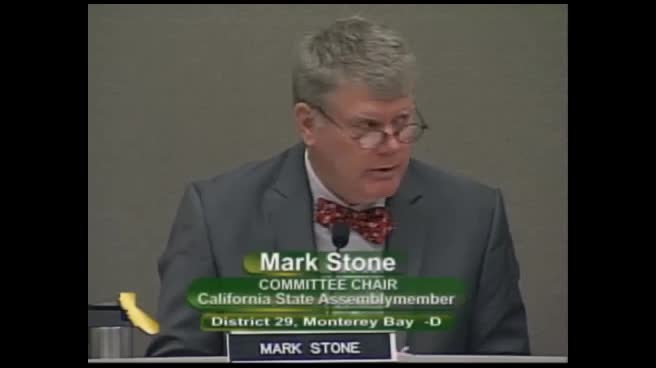 3MIN
Assembly Standing Committee on Judiciary
Bill Author

Bill Co-Author(s):