AB 464: Transactions and use taxes: maximum combined rate.
- Session Year: 2015-2016
- House: Assembly
- Latest Version Date: 2015-07-21
Existing law authorizes cities and counties, and, if specifically authorized, other local governmental entities, subject to certain limitations and approval requirements, to levy a transactions and use tax for general purposes, in accordance with the procedures and requirements set forth in the Transactions and Use Tax Law, including a requirement that the combined rate of all taxes imposed in accordance with that law in the county not exceed 2%.
This bill would increase that maximum combined rate to 3%.
Existing law authorizes cities and counties, and, if specifically authorized, other local governmental entities, subject to certain limitations and approval requirements, to levy a transactions and use tax for general purposes, in accordance with the procedures and requirements set forth in the Transactions and Use Tax Law, including a requirement that the combined rate of all taxes imposed in accordance with that law in the county not exceed 2%.
This bill would increase that maximum combined rate to 3%.
Existing law authorizes cities and counties, and, if specifically authorized, other local governmental entities, subject to certain limitations and approval requirements, to levy a transactions and use tax for general purposes, in accordance with the procedures and requirements set forth in the Transactions and Use Tax Law, including a requirement that the combined rate of all taxes imposed in accordance with that law in the county not exceed 2%.
This bill would increase that maximum combined rate to 3%.
Existing law authorizes cities and counties, subject to certain limitations and approval requirements, to levy a transactions and use tax for general purposes, in accordance with the procedures and requirements set forth in the Transactions and Use Tax Law, including a requirement that the combined rate of all taxes imposed in accordance with that law in the county not exceed 2%.
This bill would increase that maximum combined rate to 3%.
(a)The combined rate of all taxes imposed in accordance with this part in any county shall not exceed 2 percent. A tax shall not be considered to be in accordance with this part if, upon its adoption, the combined rate in the county will exceed 2 percent.
(b)This section applies only to taxes and rates authorized to be imposed in accordance with this part in any county before January 1, 2016. On and after January 1, 2016, the combined rate in the county shall not exceed the combined rate established in Section 7251.5.
SEC. 2.Section 7251.5 is added to the Revenue and Taxation Code, to read:7251.5.On and after January 1, 2016, the combined rate of all taxes imposed in accordance with this part in any county shall not exceed 3 percent. A tax shall not be considered to be in accordance with this part if, upon its adoption, the combined rate in the county will exceed 3 percent.
(a)The combined rate of all taxes imposed in accordance with this part in any county shall not exceed 3 2 percent. A tax shall not be considered to be in accordance with this part if, upon its adoption, the combined rate in the county will exceed 3 2 percent.
(b)This section applies only to taxes and rates authorized to be imposed in accordance with this part in any county before January 1, 2016. On and after January 1, 2016, the combined rate in the county shall not exceed the combined rate established in Section 7251.5.
SEC. 2.Section 7251.5 is added to the Revenue and Taxation Code, to read:7251.5.On and after January 1, 2016, the combined rate of all taxes imposed in accordance with this part in any county shall not exceed 3 percent. A tax shall not be considered to be in accordance with this part if, upon its adoption, the combined rate in the county will exceed 3 percent.
The combined rate of all taxes imposed in accordance with this part in any county shall not exceed 2 3 percent. A tax shall not be considered to be in accordance with this part if, upon its adoption, the combined rate in the county will exceed 3 percent.
The combined rate of all taxes imposed in accordance with this part in any county may shall not exceed 2 percent. No A tax shall not be considered to be in accordance with this part if, upon its adoption, the combined rate in the county will exceed 2 3 percent.
|
Date
|
Status
|
|---|---|
| May 28, 2015 | Referred to Com. on GOV. & F. |
| Jan 15, 2016 | Consideration of Governor's veto stricken from file. |
| Aug 17, 2015 | Vetoed by Governor. |
| Aug 17, 2015 | Consideration of Governor's veto pending. |
| Aug 3, 2015 | Enrolled and presented to the Governor at 3 p.m. |
| Jul 16, 2015 | Senate amendments concurred in. To Engrossing and Enrolling. (Ayes 46. Noes 32. Page 2413.). |
| Jul 16, 2015 | Senate amendments concurred in. To Engrossing and Enrolling. |
| Jul 13, 2015 | Read third time. Passed. Ordered to the Assembly. (Ayes 22. Noes 15. Page 1902.). |
| Jul 13, 2015 | Read third time. Passed. Ordered to the Assembly. |
| Jul 13, 2015 | In Assembly. Concurrence in Senate amendments pending. May be considered on or after July 15 pursuant to Assembly Rule 77. |
| Jun 17, 2015 | Read second time and amended. Ordered to third reading. |
| Jun 16, 2015 | From committee: Amend, and do pass as amended. (Ayes 4. Noes 2.) (June 10). |
| Feb 23, 2015 | Read first time. To print. |
| May 14, 2015 | Read third time. Passed. Ordered to the Senate. (Ayes 45. Noes 31. Page 1430.) |
| May 14, 2015 | Read third time. Passed. Ordered to the Senate. |
| May 14, 2015 | In Senate. Read first time. To Com. on RLS. for assignment. |
| May 4, 2015 | Read second time. Ordered to third reading. |
| Apr 30, 2015 | From committee: Do pass. (Ayes 5. Noes 3.) (April 29). |
| Apr 14, 2015 | From committee: Do pass and re-refer to Com. on L. GOV. (Ayes 5. Noes 3.) (April 13). Re-referred to Com. on L. GOV. |
| Apr 7, 2015 | Re-referred to Com. on REV. & TAX. |
| Apr 6, 2015 | From committee chair, with author's amendments: Amend, and re-refer to Com. on REV. & TAX. Read second time and amended. |
| Mar 5, 2015 | Referred to Com. on REV. & TAX. |
| Feb 24, 2015 | From printer. May be heard in committee March 26. |
|
Date
|
Description
|
Location
|
Votes
|
|
|---|---|---|---|---|
| Jul 16, 2015 | AB 464 MULLIN Concurrence in Senate Amendments | Assembly Floor |
Passed |
|
| Jul 13, 2015 | Assembly 3rd Reading AB464 Mullin By Hill | Senate Floor |
Passed |
|
| Jun 10, 2015 | Do pass as amended | Senate Standing Committee on Governance and Finance |
Passed |
|
| May 14, 2015 | AB 464 MULLIN Assembly Third Reading | Assembly Floor |
Passed |
|
| Apr 29, 2015 | Do pass. | Assembly Standing Committee on Local Government |
Passed |
|
| Apr 13, 2015 | Do pass and be re-referred to the Committee on [Local Government] | Assembly Standing Committee on Revenue and Taxation |
Passed |
This list shows positions taken on this bill by organizations on the date displayed, which is linked to the original source.
Positions by individuals are not included.
|
Organization
|
Position
|
Date
|
|---|---|---|
| Air Logistics Corporation | ** Against | Jul 13, 2015 |
| Alameda County Transportation Commission | ** Support | Jul 13, 2015 |
| Alliance of Contra Costa Taxpayers | ** Against | Jul 13, 2015 |
| American Federation of State, County, and Municipal Employees | ** Support | Jul 13, 2015 |
| California Alliance for Jobs | ** Support | May 14, 2015 |
| California Manufacturers And Technology Association | ** Against | Jul 13, 2015 |
| California State Association Of Counties | ** Support | Jul 13, 2015 |
| California State Council Of Laborers | ** Support | Jul 13, 2015 |
| California Tank Lines, Inc. | ** Against | Jul 13, 2015 |
| California Tax Reform Association | ** Support | Jul 13, 2015 |
| California Taxpayers' Association | ** Against | Jul 13, 2015 |
| California Transit Association | ** Support | Jul 13, 2015 |
| Chemical Transfer Co. | ** Against | Jul 13, 2015 |
| City | ** Support | Jul 13, 2015 |
| County Association of Governments of San Mateo County | ** Support | Jul 13, 2015 |
| Howard Jarvis Taxpayers Association | * Against | Jun 10, 2015 |
| Kern County Taxpayers Association | ** Against | Jul 13, 2015 |
| Marin County Board of Supervisors | ** Support | Jul 13, 2015 |
| Marin Transportation Authority | * Support | Jun 10, 2015 |
| Metropolitan Transportation Commission | ** Support | Jul 13, 2015 |
| Monterey County Farm Bureau | ** Against | Jul 13, 2015 |
| Muniservices, LLC | ** Support | Jul 13, 2015 |
| Napa County Transportation And Planning Agency/Napa Valley Transportation Authority | * Support | Jun 10, 2015 |
| National Federation Of Independent Business | ** Against | Jul 13, 2015 |
| Orange County Business Council | ** Against | Jul 13, 2015 |
| Orange County Taxpayers Association | ** Against | Jul 13, 2015 |
| San Diego Tax Fighters | ** Against | Jul 13, 2015 |
| San Mateo County Transportation Authority | ** Support | Jul 13, 2015 |
| San Mateo County Transportation Authority [SPONSOR] | ** Support | May 14, 2015 |
| Santa Clara Valley Transportation Authority | ** Support | Jul 13, 2015 |
| Self Help Counties Coalition | ** Support | Jul 13, 2015 |
| Solano County Taxpayers Association | ** Against | Jul 13, 2015 |
| Superior Tank Wash Inc. | ** Against | Jul 13, 2015 |
| Transportation Authority Of Marin | ** Support | Jul 13, 2015 |
| West Coast Leasing, LLC | ** Against | Jul 13, 2015 |
| West Coast Lumber & Building Material Association | ** Against | Jul 13, 2015 |
GOVERNOR'S VETO
AB 464
(Mullin and Gordon)
As Enrolled July 21, 2015
2/3 vote
ASSEMBLY: |
45-31 |
(May 14, 2015) |
SENATE: |
22-15 |
(July 13, 2015) |
ASSEMBLY: |
46-32 |
(July 16, 2015) |
|
|
|
Original Committee Reference: REV. & TAX.
SUMMARY: Increases the maximum combined rate of all transactions and use taxes (district taxes) that may be levied by authorized entities within a county from 2% to 3%.
The Senate amendments clarify that the increased 3% cap on the combined rate of all district taxes imposed in a county will apply to taxes and rates authorized to be imposed in the county on or after January 1, 2016. The combined rate of district taxes in a county authorized to be imposed before January 1, 2016, will remain at 2%.
EXISTING LAW:
Authorizes cities and counties, under the Bradley-Burns Uniform Local Sales and Use Tax (SUT) Law, to impose local SUT. (Revenue and Taxation Code (R&TC) commencing with Section 7200.)
Provides counties and cities, under the Transactions and Use Tax (TUT) Law and the Additional Local Taxes Law, with the authority to impose district taxes under specified conditions. (R&TC Sections 7251 and 7280.)
Provides that counties and cities may impose a district tax for general purposes and special purposes at a rate of 0.125%, or multiple thereof, if the ordinance imposing the tax is approved by the required percentage of voters in the city or county. (R&TC Section 7285.)
Provides that the combined rate of all district taxes imposed in accordance with the TUT Law in any county may not exceed 2%. (R&TC Section 7251.)
Exempts from the 2% cap the Counties of Alameda, Contra Costa, and Los Angeles, as specified.
Allows a county to establish a transportation authority to impose district taxes under the Public Utilities Code (PUC) and authorizes a county board of supervisors to designate a transportation-planning agency to impose a district tax. Requires that district taxes imposed under the PUC conform to the administrative provisions contained in the TUT Law.
Requires cities and counties to contract with the State Board of Equalization (BOE) to perform all functions in the administration and operations of the ordinances imposing the Bradley-Burns local taxes and district taxes.
AS PASSED BY THE ASSEMBLY, this bill increased the maximum combined rate of all transactions and use taxes (district taxes) that may be levied by authorized entities within a county from 2% to 3%.
FISCAL EFFECT: None
COMMENTS:
Author's statement. The author has provided the following statement in support of this bill:
Current law allows cities and counties to impose transaction and use taxes, also known as district taxes, at a rate of up to 2% of total sales. This cap is quickly reached when both cities and counties impose their own district taxes. It is particularly problematic for counties because if one city within a county has reached the cap, then the county is precluded from raising additional district taxes. Similarly, cities that have already reached the cap are constrained when seeking additional funding for programs and services over and above the cap.
The 2% cap was implemented more than a decade ago, in 2003. Since then several bills have gone through the Legislature to create individual exceptions to the cap. Most of these bills were eventually signed into law, begging the policy question: If raising the cap is good for individual jurisdictions, then should we consider simply lifting it statewide? AB 464 does exactly this, and as a result it would not only make the policy statewide, but it would reduce the amount of piecemeal one-off bills going through the Legislature on the subject, savings state resources.
Throughout California, districts are reaching the current cap, and funding for services, including transportation, education and public safety, is declining. This bill gives local jurisdictions the freedom to seek voter approval for district tax increases by raising the cap from 2% to 3%. If the proposed tax goes for a specific purpose, it would require a two-thirds majority vote of the people living within the jurisdiction before going into effect. In other instances, when a jurisdiction proposes a general purpose tax, a majority vote would be required. AB 464 grants local governing bodies, and the people living within them, the much needed flexibility to raise additional funds for important programs and services.
Background. The TUT Law authorizes the adoption of local add-on rates to the combined state and local sales tax rate. Under existing law, cities and counties may impose a TUT (a district tax) for general or special purposes, subject to voter approval, provided that the combined countywide rate of tax does not exceed 2% (with the exception of the Counties of Alameda, Contra Costa, and Los Angeles). These taxes may be imposed either directly by the city or county, or through a special purpose entity established by the city or county. Counties may also create a transportation authority to impose district taxes under the PUC or designate a transportation planning agency to impose a district tax, subject to the applicable voter approval requirements. District taxes imposed under the PUC must conform to the administrative provisions contained in the TUT Law, including the requirement to contract with the BOE to perform all functions related to the administration and operation of the ordinance.
A district tax is imposed on the sale or the storage, use, or other consumption of tangible personal property in the jurisdiction that adopted the tax. Generally, a district tax is imposed at a rate of 0.125%, or 0.125% increments, up to the 2% limit. Some cities and counties have more than one district tax, while others have none. Currently, the district tax rates vary from 0.10% to 1%. The current combined state, local, and district rates range from 7.50% to 9.5% (with the exception of Cities of Albany, Hayward, San Leandro, and Union City in Alameda County; and the Cities of La Miranda, Pico Riviera, and South Gate in Los Angeles County). According to the BOE's analysis of this bill, as of April 1, 2015, 202 local jurisdictions, including cities, counties, and special purpose entities, impose a district tax for general or specific purposes. Of the 202 jurisdictions, 48 are county-imposed taxes and 154 are city-imposed taxes. Of the 48 county-imposed taxes, 44 are imposed for special purposes. Of the 154 city-imposed taxes, 124 are general purpose taxes and 30 are special purpose taxes.
Existing 2% combined countywide cap. In 1987, the Legislature imposed a maximum combined rate of 1% on all district taxes within any county. That rate was incrementally increased ‑ first to 1.5% in 1990 and then to 2% in 2003.
The Legislature has previously granted exemptions to the 2% statutory cap for transactions and use taxes to support countywide transportation programs. For example, in 2008, the Legislature authorized the Los Angeles County Metropolitan Transportation Authority to impose a TUT not subject to the 2% cap. (AB 23 (Feuer), Chapter 302, Statutes of 2008.) In 2011, a one-time exemption from the 2% TUT combined rate cap was allowed for Alameda County. (AB 1086 (Wieckowski), Chapter 327, Statutes of 2011.) Subsequently, in 2012, the Legislature extended the authority for Alameda County to impose a TUT, the rate of which – in combination with all other district taxes in the county – would exceed the 2% statutory cap. The Legislature also allowed Contra Costa County to adopt an ordinance imposing a TUT in the same manner as Alameda County (AB 210 (Wieckowski), Chapter 194, Statutes of 2013). Additionally, in 2014, the Legislature authorized the City of El Cerrito to adopt an ordinance proposing the imposition of a TUT that exceeds the 2% statutory limitation.
At the present time, the Counties of Alameda, Contra Costa, Los Angeles, and San Mateo have reached the 2% limit. The Counties of Marin, San Diego, and Sonoma are near the 2% limit.
Increasing the 2% Cap. In recent years, more and more cities and counties seek individual legislation to increase the current statutory 2% cap. This bill is intended to uniformly increase the combined statutory cap for all counties to 3%, instead of addressing the financial difficulties experienced by various cities and counties on a case-by-case basis.
Local governments often find it difficult to make up for decreases in state revenues with increases in local revenues because counties have limited authority to raise revenues and local special taxes require a two-thirds vote of the electorate. Furthermore, the interaction between city-imposed and county-imposed TUTs may cause some counties to "run out of room" under the 2% maximum combined rate of tax. When a city or district imposes a TUT, that tax rate counts toward the county's cap, which means that the county is restricted in its ability to raise revenues on a countywide basis. Since levying a tax on a countywide basis is the only way for the county to support its operations and fund services, including transportation, an imposition of a new, or extension of an existing, tax by a city or a district within the county will directly impact the county's ability to raise revenues. This bill may help counties that either have already reached, or are close to reaching, the 2% maximum combined rate limit to levy or extend a TUT.
Furthermore, cities and districts may also be constrained in their ability to impose a new or increase an existing TUT in the counties that have reached the 2% limit. As such, this bill would provide more flexibility for cities and other authorized agencies as well and would also drastically reduce the number of bills seeking to lift the cap on behalf of individual counties or cities.
No change in voting requirements. While this bill increases the countywide 2% cap, it does not change any of the voting requirements applicable to the passage of local taxes, including a TUT.
This bill would raise, on a blanket basis, the limit on local transactions and use tax for all counties and cities from two percent to three percent.
Although I have approved raising the limit for individual counties, I am reluctant to approve this measure in view of all the taxes being discussed and proposed for the 2016 ballot.
Analysis Prepared by: Oksana Jaffe / REV. & TAX. / (916) 319-2098 FN: 0001405
AB 464
Page 4
CONCURRENCE IN SENATE AMENDMENTS
AB 464
(Mullin and Gordon)
As Amended June 17, 2015
Majority vote
ASSEMBLY: |
45-31 |
(May 14, 2015) |
SENATE: |
22-15 |
(July 13, 2015) |
Original Committee Reference: REV. & TAX.
SUMMARY: Increases the maximum combined rate of all transactions and use taxes (district taxes) that may be levied by authorized entities within a county from 2% to 3%.
The Senate amendments clarify that the increased 3% cap on the combined rate of all district taxes imposed in a county will apply to taxes and rates authorized to be imposed in the county on or after January 1, 2016. The combined rate of district taxes in a county authorized to be imposed before January 1, 2016, will remain at 2%.
EXISTING LAW:
Authorizes cities and counties, under the Bradley-Burns Uniform Local Sales and Use Tax (SUT) Law, to impose local SUT. [Revenue and Taxation Code (R&TC) commencing with Section 7200.]
Provides counties and cities, under the Transactions and Use Tax (TUT) Law and the Additional Local Taxes Law, with the authority to impose district taxes under specified conditions. (R&TC Sections 7251 and 7280.)
Provides that counties and cities may impose a district tax for general purposes and special purposes at a rate of 0.125%, or multiple thereof, if the ordinance imposing the tax is approved by the required percentage of voters in the city or county. (R&TC Section 7285.)
Provides that the combined rate of all district taxes imposed in accordance with the TUT law in any county may not exceed 2%. (R&TC Section 7251.)
Exempts from the 2% cap the Counties of Alameda, Contra Costa, and Los Angeles, as specified.
Allows a county to establish a transportation authority to impose district taxes under the Public Utilities Code (PUC) and authorizes a county board of supervisors to designate a transportation-planning agency to impose a district tax. Requires that district taxes imposed under the PUC conform to the administrative provisions contained in the TUT Law.
Requires cities and counties to contract with the State Board of Equalization (BOE) to perform all functions in the administration and operations of the ordinances imposing the Bradley-Burns local taxes and district taxes.
AS PASSED BY THE ASSEMBLY, this bill increased the maximum combined rate of all transactions and use taxes (district taxes) that may be levied by authorized entities within a county from 2% to 3%.
FISCAL EFFECT: None
COMMENTS:
Author's statement. The author has provided the following statement in support of this bill:
"Current law allows cities and counties to impose transaction and use taxes, also known as district taxes, at a rate of up to 2% of total sales. This cap is quickly reached when both cities and counties impose their own district taxes. It is particularly problematic for counties because if one city within a county has reached the cap, then the county is precluded from raising additional district taxes. Similarly, cities that have already reached the cap are constrained when seeking additional funding for programs and services over and above the cap.
"The 2% cap was implemented more than a decade ago, in 2003. Since then several bills have gone through the Legislature to create individual exceptions to the cap. Most of these bills were eventually signed into law, begging the policy question: If raising the cap is good for individual jurisdictions, then should we consider simply lifting it statewide? AB 464 does exactly this, and as a result it would not only make the policy statewide, but it would reduce the amount of piecemeal one-off bills going through the Legislature on the subject, savings state resources.
"Throughout California, districts are reaching the current cap, and funding for services, including transportation, education and public safety, is declining. This bill gives local jurisdictions the freedom to seek voter approval for district tax increases by raising the cap from 2% to 3%. If the proposed tax goes for a specific purpose, it would require a two-thirds majority vote of the people living within the jurisdiction before going into effect. In other instances, when a jurisdiction proposes a general purpose tax, a majority vote would be required. AB 464 grants local governing bodies, and the people living within them, the much needed flexibility to raise additional funds for important programs and services."
Background. The TUT law authorizes the adoption of local add-on rates to the combined state and local sales tax rate. Under existing law, cities and counties may impose a TUT (a district tax) for general or special purposes, subject to voter approval, provided that the combined countywide rate of tax does not exceed 2% (with the exception of the Counties of Alameda, Contra Costa, and Los Angeles). These taxes may be imposed either directly by the city or county, or through a special purpose entity established by the city or county. Counties may also create a transportation authority to impose district taxes under the PUC or designate a transportation planning agency to impose a district tax, subject to the applicable voter approval requirements. District taxes imposed under the PUC must conform to the administrative provisions contained in the TUT Law, including the requirement to contract with the BOE to perform all functions related to the administration and operation of the ordinance.
A district tax is imposed on the sale or the storage, use, or other consumption of tangible personal property in the jurisdiction that adopted the tax. Generally, a district tax is imposed at a rate of 0.125%, or 0.125% increments, up to the 2% limit. Some cities and counties have more than one district tax, while others have none. Currently, the district tax rates vary from 0.10% to 1%. The current combined state, local, and district rates range from 7.50% to 9.5% (with the exception of Cities of Albany, Hayward, San Leandro, and Union City in Alameda County; and the Cities of La Miranda, Pico Riviera, and South Gate in Los Angeles County). According to the BOE's analysis of this bill, as of April 1, 2015, 202 local jurisdictions, including cities, counties, and special purpose entities, impose a district tax for general or specific purposes. Of the 202 jurisdictions, 48 are county-imposed taxes and 154 are city-imposed taxes. Of the 48 county-imposed taxes, 44 are imposed for special purposes. Of the 154 city-imposed taxes, 124 are general purpose taxes and 30 are special purpose taxes.
Existing 2% combined countywide cap. In 1987, the Legislature imposed a maximum combined rate of 1% on all district taxes within any county. That rate was incrementally increased ‑ first to 1.5% in 1990 and then to 2% in 2003.
The Legislature has previously granted exemptions to the 2% statutory cap for transactions and use taxes to support countywide transportation programs. For example, in 2008, the Legislature authorized the Los Angeles County Metropolitan Transportation Authority to impose a TUT not subject to the 2% cap. (AB 23 (Feuer), Chapter 302, Statutes of 2008.) In 2011, a one-time exemption from the 2% TUT combined rate cap was allowed for Alameda County. (AB 1086 (Wieckowski), Chapter 327, Statutes of 2011.) Subsequently, in 2012, the Legislature extended the authority for Alameda County to impose a TUT, the rate of which – in combination with all other district taxes in the county – would exceed the 2% statutory cap. The Legislature also allowed Contra Costa County to adopt an ordinance imposing a TUT in the same manner as Alameda County (AB 210 (Wieckowski), Chapter 194, Statutes of 2013). Additionally, in 2014, the Legislature authorized the City of El Cerrito to adopt an ordinance proposing the imposition of a TUT that exceeds the 2% statutory limitation.
At the present time, the Counties of Alameda, Contra Costa, Los Angeles, and San Mateo have reached the 2% limit. The Counties of Marin, San Diego, and Sonoma are near the 2% limit.
Increasing the 2% Cap. In recent years, more and more cities and counties seek individual legislation to increase the current statutory 2% cap. This bill is intended to uniformly increase the combined statutory cap for all counties to 3%, instead of addressing the financial difficulties experienced by various cities and counties on a case-by-case basis.
Local governments often find it difficult to make up for decreases in state revenues with increases in local revenues because counties have limited authority to raise revenues and local special taxes require a two-thirds vote of the electorate. Furthermore, the interaction between city-imposed and county-imposed TUTs may cause some counties to "run out of room" under the 2% maximum combined rate of tax. When a city or district imposes a TUT, that tax rate counts toward the county's cap, which means that the county is restricted in its ability to raise revenues on a countywide basis. Since levying a tax on a countywide basis is the only way for the county to support its operations and fund services, including transportation, an imposition of a new, or extension of an existing, tax by a city or a district within the county will directly impact the county's ability to raise revenues. This bill may help counties that either have already reached, or are close to reaching, the 2% maximum combined rate limit to levy or extend a TUT.
Furthermore, cities and districts may also be constrained in their ability to impose a new or increase an existing TUT in the counties that have reached the 2% limit. As such, this bill would provide more flexibility for cities and other authorized agencies as well and would also drastically reduce the number of bills seeking to lift the cap on behalf of individual counties or cities.
No change in voting requirements. While this bill increases the countywide 2% cap, it does not change any of the voting requirements applicable to the passage of local taxes, including a TUT.
Analysis Prepared by: Oksana Jaffe / REV. & TAX. / (916) 319-2098 FN: 0001043
AB 464
Page 5
|
Office of Senate Floor Analyses (916) 651-1520 Fax: (916) 327-4478 |
THIRD READING
Bill No: AB 464
Author: Mullin (D) and Gordon (D), et al.
Amended: 6/17/15 in Senate
SENATE GOVERNANCE & FIN. COMMITTEE: 4-2, 6/10/15
AYES: Hertzberg, Beall, Hernandez, Pavley
NOES: Nguyen, Moorlach
NO VOTE RECORDED: Lara
ASSEMBLY FLOOR: 45-31, 5/14/15 - See last page for vote
SUBJECT: Transactions and use taxes: maximum combined rate
DIGEST: This bill increases the countywide transactions and use tax combined cap from 2% to 3%.
Existing law:
Authorizes cities and counties to impose local transactions and use taxes.
Provides that the maximum combined rate of all transactions and use taxes that may be levied by authorized entities within a county is 2%
Provides that counties and cities may impose a transactions and use tax for general purposes and special purposes at a rate of 0.125%, or multiple thereof, if the ordinance imposing the tax is approved by the required percentage of voters in the city or county.
Exempts from the 2% cap the counties of Alameda, Contra Costa, and Los Angeles.
This bill:
Increases the maximum combined rate of all transactions and use taxes (district taxes) that may be levied by authorized entities within a county from 2% to 3%.
Becomes effective January 1, 2016.
Applies the new 3% cap to the exemptions in the counties of Alameda, Contra Costa, and Los Angeles.
Background
Prior to 2003, cities lacked the ability to place transactions and use taxes before their voters without first obtaining approval by the Legislature to bring an ordinance before the city council, and, if approved at the council level, to the voters. This was remedied by SB 566 (Scott, Chapter 709, Statutes of 2003), which allowed cities and counties to impose additional sales and use taxes, called transactions and use taxes up to a uniform 2% cap for both cities and counties, in response to at least five bills a year seeking to impose the tax. The cap set an upper limit on the local rate, as California’s sales and use tax rate is very high.
In rare cases, the Legislature allows local agencies to exceed the 2% cap. The Legislature has previously granted exemptions to the 2% statutory cap for transactions and use taxes to support countywide transportation programs for Los Angeles, Alameda, and Contra Costa counties. AB 1086 (Wieckowski, Chapter 327, Statutes of 2011) allowed a one-time exemption for Alameda County from the 2% transactions and use tax combined rate cap. AB 210 (Wieckowski, Chapter 194, Statutes of 2013) extended the authority for Alameda County to adopt an ordinance imposing a transactions and use tax from January 1, 2014, to December 31, 2020, and allowed Contra Costa County to adopt an ordinance imposing a transactions and use tax in the same manner as Alameda County. Additionally, AB 1324 (Skinner, Chapter 795, Statutes of 2014) allowed the City of El Cerrito to adopt an ordinance to impose a transactions and use tax not to exceed 0.5% for general purposes that would, in combination with other taxes, exceed the statutory limit of 2%.
In 2003, SB 314 (Murray, Chapter 785) enacted provisions that authorized the Los Angeles County Metropolitan Transportation Authority (MTA) to impose a 0.5% transaction and use tax, not subject to the 2% cap for no more than six and one-half years, for specific transportation projects and programs. The MTA’s authority to put a tax measure on the ballot was never used. AB 2321 (Feuer, Chapter 302, Statutes of 2008) modified those provisions to allow MTA to impose a transactions and use tax for 30 years. SB 767 (De León, 2015), pending in the Senate Floor, and AB 338 (Hernández, 2015), pending in the Senate Transportation and Housing Committee, both authorize MTA to impose an additional countywide 0.5% transactions and use tax.
At the present time, the Counties of Alameda, Contra Costa, Los Angeles, and San Mateo have reached the 2% limit. The Counties of Marin, San Diego, and Sonoma Counties are near the 2% limit and the Cities of Albany, Hayward, San Leandro, Union City, La Miranda, Pico Riviera, and South Gate are above the 2% limit.
FISCAL EFFECT: Appropriation: No Fiscal Com.: No Local: No
Alameda County Transportation Commission
American Federation of State, County, and Municipal Employees
California State Association of Counties
California State Council of Laborers
California Tax Reform Association
California Transit Association
City/County Association of Governments of San Mateo County
Marin County Board of Supervisors
Metropolitan Transportation Commission
MuniServices
San Mateo County Transportation Authority
Santa Clara Valley Transportation Authority
Self Help Counties Coalition
Service Employees International Union
Transportation Authority of Marin
OPPOSITION: (Verified 6/17/15)
Air Logistics Corporation
Alliance of Contra Costa Taxpayers
California Manufacturers and Technology Association
California Tank Lines, Inc.
California Taxpayers Association
Chemical Transfer Co.
Family Business Association
Kern County Taxpayers Association
Monterey County Farm Bureau
National Federation of Independent Business
Orange County Business Council
Orange County Taxpayers Association
San Diego Tax Fighters
Solano County Taxpayers Association
Superior Tank Wash Inc.
West Coast Leasing, LLC
West Coast Lumber & Building Material Association
ARGUMENTS IN SUPPORT: The proponents of this bill state that in many communities “throughout the state, local agencies are considering options for financing improvements in infrastructure, parks, public safety, and other local programs.” However, many agencies “are precluded from considering the option of an additional transactions and use tax due to the 2 percent cap on the combined rate.” The proponents note that the Legislature previously has considered “a number of measures that offered limited exceptions to the two-percent cap in certain California communities” and argue that perhaps “it is the appropriate time to consider a broad increase in the transactions and use tax cap.” The proponents also assert that “the existing two-percent cap on local sales tax severely limits local government's ability” to fund new and existing transportation and other vital local services since “many jurisdictions are already at or are near that threshold.” Increasing the cap from 2% to 3% “would provide local governments throughout the state with more flexibility to use sales tax measures as a strategy to support a growing scope of local needs.” Finally, the proponents note that this bill “gives local jurisdictions the freedom to seek voter approval for a local tax increase with local accountability.”
ARGUMENTS IN OPPOSITION: The opponents state that “California already has the highest sales and use tax rate in the country, with a combined minimum state and local sales tax rate of 7.5 percent.” Moreover, “local governments may impose additional transactions (sales) and use taxes, known as district taxes, generally capped at 2%.” The opponents argue that this bill increases the cost of conducting business in California, impose a regressive tax on disadvantaged communities.
ASSEMBLY FLOOR: 45-31, 5/14/15
AYES: Bloom, Bonilla, Bonta, Brown, Burke, Calderon, Campos, Chau, Chiu, Chu, Cooley, Cooper, Dodd, Eggman, Frazier, Cristina Garcia, Eduardo Garcia, Gipson, Gomez, Gonzalez, Gordon, Gray, Roger Hernández, Holden, Jones-Sawyer, Levine, Lopez, Low, McCarty, Medina, Mullin, Nazarian, O'Donnell, Quirk, Rendon, Ridley-Thomas, Rodriguez, Santiago, Mark Stone, Thurmond, Ting, Weber, Williams, Wood, Atkins
NOES: Achadjian, Travis Allen, Baker, Bigelow, Brough, Chang, Chávez, Dahle, Beth Gaines, Gallagher, Gatto, Grove, Hadley, Harper, Irwin, Jones, Kim, Lackey, Linder, Maienschein, Mathis, Mayes, Melendez, Obernolte, Olsen, Patterson, Salas, Steinorth, Wagner, Waldron, Wilk
NO VOTE RECORDED: Alejo, Dababneh, Daly, Perea
Prepared by: Myriam Bouaziz / GOV. & F. / (916) 651-4119
6/17/15 10:52:06
**** END ****
AB 464 (Mullin) 4/6/15 Page 4 of 4
SENATE COMMITTEE ON GOVERNANCE AND FINANCE
Senator Robert M. Hertzberg, Chair
2015 - 2016 Regular
Bill No: |
AB 464 |
Hearing Date: |
6/10/15 |
Author: |
Mullin |
Tax Levy: |
No |
Version: |
4/6/15 |
Fiscal: |
No |
Consultant: |
Bouaziz |
||
TRANSACTIONS AND USE TAXES:MAXIMUM COMBINED RATE
Increases the countywide transactions and use tax combined cap from 2% to 3%.
Background and Existing Law
The state sales and use tax rate is 7.50% as detailed below and is generally imposed on all tangible personal property unless specifically exempt.
Rate |
Jurisdiction |
Purpose/Authority |
|
3.9375% |
State (General Fund) |
State general purposes |
|
1.0625% |
|
Realignment of local public safety services |
|
0.25% |
State (Fiscal Recovery Fund) |
Repayment of the Economic Recovery Bonds |
|
0.25% |
State (Education Protection Account) |
Schools and community college funding |
|
0.50% |
State (Local Revenue Fund) |
Local governments to fund health and welfare programs |
|
0.50% |
State (Local Public Safety Fund) |
Local governments to fund public safety services |
|
1.00% |
Local (City/County)
0.75% City and County |
City and county general operations. Dedicated to county transportation purposes |
|
7.50% |
Total Statewide Rate |
|
Transactions & Use Tax
Prior to 2003, cities lacked the ability to place transactions and use taxes before their voters without first obtaining approval by the Legislature to bring an ordinance before the city council, and, if approved at the council level, to the voters. This was remedied by SB 566 (Scott, 2003), which allowed cities and counties to impose additional sales and use taxes, called transactions and use taxes (TUT) up to a uniform 2% cap for both cities and counties, in response to at least five bills a year seeking to impose the tax. The cap set an upper limit on the local rate, as California’s sales and use tax rate is very high. The tax must be imposed in increments of 0.125%.
In rare cases, the Legislature allows local agencies to exceed the 2% cap. The Legislature has previously granted exemptions to the 2% statutory cap for transactions and use taxes to support countywide transportation programs for Los Angeles, Alameda, and Contra Costa counties. AB 1086 (Wieckowski, 2011), allowed a one-time exemption for Alameda County from the 2% transactions and use tax combined rate cap. AB 210 (Wieckowski, 2013), extended the authority for Alameda County to adopt an ordinance imposing a transactions and use tax from January 1, 2014, to December 31, 2020, and allowed Contra Costa County to adopt an ordinance imposing a transactions and use tax in the same manner as Alameda County. Additionally, AB 1324 (Skinner, 2014), allowed the City of El Cerrito to adopt an ordinance to impose a transactions and use tax not to exceed 0.5% for general purposes that would, in combination with other taxes, exceed the statutory limit of 2%.
In 2003, SB 314 (Murray) enacted provisions that authorized the Los Angeles County Metropolitan Transportation Authority (MTA) to impose a 0.5% transaction and use tax, not subject to the 2% cap for no more than six and one-half years, for specific transportation projects and programs. The authority to put a tax measure on the ballot was never used. AB 2321 (Feuer, 2008), modified those provisions to allow MTA to impose a transactions and use tax for 30 years. SB 767 (De León), pending in the Senate Floor, and AB 338 (Hernández), pending in the Senate Transportation and Housing Committee, would both authorize MTA to impose an additional countywide 0.5% transactions and use tax.
At the present time, the Counties of Alameda, Contra Costa, Los Angeles, and San Mateo have reached the 2% limit. The counties of Marin, San Diego, and Sonoma Counties are near the 2% limit and the cities of Albany, Hayward, San Leandro, Union City, La Miranda, Pico Riviera, and South Gate are above the 2% limit.
AB 464 seeks to increase the current 2% cap to 3%.
Proposed Law
Senate Bill 464 increases the maximum combined rate of all transactions and use taxes (district taxes) that may be levied by authorized entities within a county from 2% to 3%.
State Revenue Impact
None.
Comments
1. Purpose of the bill. According to the author, “Current law allows cities and counties to impose transaction and use taxes, also known as district taxes, at a rate of up to two percent of total sales. This cap is quickly reached when both cities and counties impose their own district taxes. This is particularly problematic for counties because if one city within a county has reached the cap, then the county is precluded from raising additional district taxes. Similarly, cities that have already reached the cap are constrained when seeking additional funding for programs and services over and above the cap.
The two percent cap was implemented more than a decade ago, in 2003. Since then, several bills have gone through the Legislature to create individual exceptions to the cap. Most of these bills were eventually signed into law, begging the policy question: If raising the cap is good for individual jurisdictions, then should we consider simply lifting it statewide? AB 464 does exactly this, and as a result it would not only apply the policy statewide, but it would also reduce the number of piecemeal one-off bills going through the Legislature, saving state resources.
Throughout California, districts are reaching the current cap, while funding for important services, like transit and public safety, is in decline. This bill gives local jurisdictions the freedom to seek voter approval for district tax increases by raising the cap from two to three percent of total sales. If the proposed tax increase goes for a specific purpose, it would trigger a two-thirds majority vote of the people living within the jurisdiction before taking effect. AB 464 grants local governing bodies, and the people living within them, the much needed flexibility to raise additional funds for important programs and services.”
2. How high is too high? Currently, California has the highest state sales tax rate in the United States at 7.5 percent, combined with the 2% cap; the rate in many parts of the state is 9.5%. There are also 7 cities with a combined rate of 10%. Furthermore, AB 464’s language raises the cap to 3%, but does not apply to the current exceptions to the 2% cap, so several cities in California could have combined sales and use tax rate of 11%. According to the California Budget & Policy Center 2015 Issue Brief, Who Pays Taxes in California?, low-income families spend nearly all of their incomes on basic necessities, including many goods that are subject to sales tax. In contrast, higher-income families tend to save a portion of their incomes or spend more of their incomes on services, which are not subject to the sales tax. Thus, for California’s poorest families, a higher tax means less money to spend on daily necessities. The Committee may wish to consider lowering the cap, applying a sunset, or ensuring past exceptions to the cap are subject to the new 3% cap.
3. Above the cap. In recent years, more and more cities and counties seek individual legislation to increase the current statutory 2% cap. This bill is intended to uniformly increase the combined statutory cap for all counties to 3%, instead of addressing the financial difficulties experienced by various cities and counties on a case-by-case basis.
Local governments often find it difficult to make up for decreases in state revenues with increases in local revenues because counties have limited authority to raise revenues, and local special taxes require a two-thirds vote of the electorate. Furthermore, the interaction between city-imposed and county-imposed TUTs may cause some counties to "run out of room" under the 2% maximum combined rate of tax. When a city or district imposes a TUT, that tax rate counts toward the county's cap, which means that the county is restricted in its ability to raise revenues on a countywide basis. Since levying a tax on a countywide basis is the only way for the county to support its operations and fund services, including transportation, an imposition of a new, or the extension of an existing, tax by a city or a district within the county will directly impact the county's ability to raise revenues. This bill may help counties that either have already reached, or are close to reaching, the 2% maximum combined rate limit to levy or extend a TUT.
Furthermore, cities and districts may also be constrained in their ability to impose a new or increase an existing TUT in the counties that have reached the 2% limit. As such, this bill would provide more flexibility for cities and other authorized agencies as well and would also drastically reduce the number of bills seeking to lift the cap on behalf of individual counties or cities.
4. No change in voting requirements. While this bill increases the countywide 2% cap, it does not change any of the voting requirements applicable to the passage of local taxes, including a TUT.
Assembly Actions
Assembly Revenue and Taxation 5-3
Assembly Local Government 5-3
Assembly Floor 45-31
Support and Opposition
(6/4/15)
Support: Alameda County Transportation Commission; American Federation of State, County, and Municipal Employees (AFSCME); California State Association of Counties; California State Council of Laborers; California Tax Reform Association; California Transit Association; City/County Association of Governments of San Mateo County; Marin County Board of Supervisors; Metropolitan Transportation Commission; San Mateo County Transportation Authority; Santa Clara Valley Transportation Authority; Self Help Counties Coalition; Service Employees International Union (SEIU); Transportation Authority of Marin.
Opposition: Air Logistics Corporation; Alliance of Contra Costa Taxpayers; California Manufacturers and Technology Association; California Tank Lines, Inc.; Chemical Transfer Co.; California Taxpayers Association; Family Business Association; Kern County Taxpayers Association; Monterey County Farm Bureau; National Federation of Independent Business; Orange County Business Council; Orange County Taxpayers Association; San Diego Tax Fighters; Solano County Taxpayers Association; Superior Tank Wash Inc.; West Coast Leasing, LLC; West Coast Lumber & Building Material Association
-- END --
AB 464
Page 3
ASSEMBLY THIRD READING
AB 464
(Mullin and Gordon)
As Amended April 6, 2015
Majority vote
Committee |
Votes |
Ayes |
Noes |
Revenue & Taxation |
5-3 |
Ting, Gipson, Roger Hernández, Mullin, Quirk |
Brough, Patterson, Wagner |
Local Government |
5-3 |
Gonzalez, Chiu, Cooley, Gordon, Holden |
Maienschein, Linder, Waldron |
SUMMARY: Increases the maximum combined rate of all transactions and use taxes (district taxes) that may be levied by authorized entities within a county from 2% to 3%.
EXISTING LAW:
Authorizes cities and counties, under the Bradley-Burns Uniform Local Sales and Use Tax (SUT) Law, to impose local SUT.
Provides counties and cities, under the Transactions and Use Tax (TUT) Law and the Additional Local Taxes Law, with the authority to impose district taxes under specified conditions.
Provides that counties and cities may impose a district tax for general purposes and special purposes at a rate of 0.125%, or multiple thereof, if the ordinance imposing the tax is approved by the required percentage of voters in the city or county.
Provides that the combined rate of all district taxes imposed in accordance with the TUT law in any county may not exceed 2%.
Exempts from the 2% cap the Counties of Alameda, Contra Costa, and Los Angeles, as specified.
Allows a county to establish a transportation authority to impose district taxes under the Public Utilities Code (PUC) and authorizes a county board of supervisors to designate a transportation-planning agency to impose a district tax. Requires that district taxes imposed under the PUC conform to the administrative provisions contained in the TUT Law.
Requires cities and counties to contract with the State Board of Equalization (BOE) to perform all functions in the administration and operations of the ordinances imposing the Bradley-Burns local taxes and district taxes.
FISCAL EFFECT: None
COMMENTS:
Author's statement. The author has provided the following statement in support of this bill:
"Current law allows cities and counties to impose transaction and use taxes, also known as district taxes, at a rate of up to two percent of total sales. This cap is quickly reached when both cities and counties impose their own district taxes. It is particularly problematic for counties because if one city within a county has reached the cap, then the county is precluded from raising additional district taxes. Similarly, cities that have already reached the cap are constrained when seeking additional funding for programs and services over and above the cap.
"The two percent cap was implemented more than a decade ago, in 2003. Since then several bills have gone through the Legislature to create individual exceptions to the cap. Most of these bills were eventually signed into law, begging the policy question: If raising the cap is good for individual jurisdictions, then should we consider simply lifting it statewide? AB 464 does exactly this, and as a result it would not only make the policy statewide, but it would reduce the amount of piecemeal one-off bills going through the Legislature on the subject, savings state resources.
"Throughout California, districts are reaching the current cap, and funding for services, including transportation, education and public safety, is declining. This bill gives local jurisdictions the freedom to seek voter approval for district tax increases by raising the cap from two to three percent. If the proposed tax goes for a specific purpose, it would require a two-thirds majority vote of the people living within the jurisdiction before going into effect. In other instances, when a jurisdiction proposes a general purpose tax, a majority vote would be required. AB 464 grants local governing bodies, and the people living within them, the much needed flexibility to raise additional funds for important programs and services."
Background. The TUT law authorizes the adoption of local add-on rates to the combined state and local sales tax rate. Under existing law, cities and counties may impose a TUT (a district tax) for general or special purposes, subject to voter approval, provided that the combined countywide rate of tax does not exceed 2% (with the exception of the Counties of Alameda, Contra Costa, and Los Angeles). These taxes may be imposed either directly by the city or county, or through a special purpose entity established by the city or county. Counties may also create a transportation authority to impose district taxes under the PUC or designate a transportation planning agency to impose a district tax, subject to the applicable voter approval requirements. District taxes imposed under the PUC must conform to the administrative provisions contained in the TUT Law, including the requirement to contract with the BOE to perform all functions related to the administration and operation of the ordinance.
A district tax is imposed on the sale or the storage, use, or other consumption of tangible personal property in the jurisdiction that adopted the tax. Generally, a district tax is imposed at a rate of 0.125%, or 0.125% increments, up to the 2% limit. Some cities and counties have more than one district tax, while others have none. Currently, the district tax rates vary from 0.10% to 1%. The current combined state, local, and district rates range from 7.50% to 9.5% (with the exception of Cities of Albany, Hayward, San Leandro, and Union City in Alameda County; and the Cities of La Miranda, Pico Riviera, and South Gate in Los Angeles County). According to the BOE's analysis of this bill, as of April 1, 2015, 202 local jurisdictions, including cities, counties, and special purpose entities, impose a district tax for general or specific purposes. Of the 202 jurisdictions, 48 are county-imposed taxes and 154 are city-imposed taxes. Of the 48 county-imposed taxes, 44 are imposed for special purposes. Of the 154 city-imposed taxes, 124 are general purpose taxes and 30 are special purpose taxes.
Existing 2% combined countywide cap. In 1987, the Legislature imposed a maximum combined rate of 1% on all district taxes within any county. That rate was incrementally increased – first to 1.5% in 1990 and then to 2% in 2003. At the present time, the Counties of Alameda, Contra Costa, Los Angeles, and San Mateo have reached the 2% limit. The Counties of Marin, San Diego, and Sonoma are near the 2% limit.
Increasing the 2% Cap. In recent years, more and more cities and counties seek individual legislation to increase the current statutory 2% cap. This bill is intended to uniformly increase the combined statutory cap for all counties to 3%, instead of addressing the financial difficulties experienced by various cities and counties on a case-by-case basis.
Local governments often find it difficult to make up for decreases in state revenues with increases in local revenues because counties have limited authority to raise revenues and local special taxes require a two-thirds vote of the electorate. Furthermore, the interaction between city-imposed and county-imposed TUTs may cause some counties to "run out of room" under the 2% maximum combined rate of tax. When a city or district imposes a TUT, that tax rate counts toward the county's cap, which means that the county is restricted in its ability to raise revenues on a countywide basis. Since levying a tax on a countywide basis is the only way for the county to support its operations and fund services, including transportation, an imposition of a new, or extension of an existing, tax by a city or a district within the county will directly impact the county's ability to raise revenues. This bill may help counties that either have already reached, or are close to reaching, the 2% maximum combined rate limit to levy or extend a TUT.
Furthermore, cities and districts may also be constrained in their ability to impose a new or increase an existing TUT in the counties that have reached the 2% limit. As such, this bill would provide more flexibility for cities and other authorized agencies as well and would also drastically reduce the number of bills seeking to lift the cap on behalf of individual counties or cities.
No change in voting requirements. While this bill increases the countywide 2% cap, it does not change any of the voting requirements applicable to the passage of local taxes, including a TUT.
Analysis Prepared by: Oksana Jaffe / REV. & TAX. / (916) 319-2098 FN: 0000288
AB 464
Page 4
Date of Hearing: April 29, 2015
ASSEMBLY COMMITTEE ON LOCAL GOVERNMENT
Brian Maienschein, Chair
AB 464
(Mullin and Gordon) – As Amended April 6, 2015
SUBJECT: Transactions and use taxes: maximum combined rate.
SUMMARY:
Increases the countywide transactions and use tax combined rate cap
from 2%
to 3%, statewide.
FISCAL EFFECT: None
COMMENTS:
Bill Summary. This bill increases the countywide transactions and use tax combined cap from 2% to 3%. Instead of addressing the needs of each county and city on an individual basis as the Legislature has done in the past, this bill will uniformly increase the statutory cap for all counties and provide more flexibility to local governments to raise revenue. This bill does not impact voter thresholds for specific or general purpose transactions and use taxes in existing law, and voters still have the final say in approving or voting down a local transactions and use tax measure.
This bill is sponsored by the San Mateo County Transportation Authority.
Author's Statement. According to the author, "Current law allows cities and counties to impose transaction and use taxes, also known as district taxes, at a rate of up to two percent of total sales. This cap is quickly reached when both cities and counties impose their own district taxes. It is particularly problematic for counties because if one city within a county has reached the cap, then the county is precluded from raising additional district taxes. Similarly, cities that have already reached the cap are constrained when seeking additional funding for programs and services over and above the cap.
"The two percent cap was implemented more than a decade ago, in 2003. Since then, several bills have gone through the Legislature to create individual exceptions to the cap. Most of these bills were eventually signed into law, begging the policy question: If raising the cap is good for individual jurisdictions, then should we consider simply lifting it statewide? This bill does exactly this, and as a result it would not only make the policy statewide, but it would reduce the amount of piecemeal one-off bills going through the Legislature on the subject, saving state resources.
"Throughout California, districts are reaching the current cap,
and funding for services, including transportation, education and
public safety, is declining. This bill gives local jurisdictions the
freedom to seek voter approval for district tax increases by raising
the cap from two to three percent. This bill grants local governing
bodies, and the people living within them, the much needed
flexibility to raise additional funds for important programs and
services."
Transactions and Use Taxes. Existing law authorizes cities and counties to impose transactions and use taxes in 0.125% increments in addition to the state’s 7.5% sales tax provided that the combined rate in the county does not exceed 2%. Transactions and use taxes are taxes imposed on the total retail price of any tangible personal property and the use or storage of such property when sales tax is not paid. These types of taxes may be levied as general taxes (majority-vote required), which are unrestricted, or special taxes (two-thirds vote required), which are restricted for a specified use. The Transactions and Use Tax law authorizes the adoption of local add-on rates to the combined state and local sales tax rate. The law has been amended multiple times to authorize specific cities, counties, special districts and county transportation authorities to impose a transactions and use tax, if voters approve the tax.
Prior to 2003, cities lacked the ability to place transactions and use taxes before their voters without first obtaining approval by the Legislature to bring an ordinance before the city council, and, if approved at the council level, to the voters. This was remedied by SB 566 (Scott), Chapter 709, Statutes of 2003. SB 566 also contained provisions to increase a county's transactions and use tax cap because of the possibility that certain counties were going to run out of room under their caps, if cities within those counties approved transactions and use taxes.
Because of the interaction between city-imposed and county-imposed transactions and use taxes, the concern that counties will run into the 2% cap still applies today. Currently, the Counties of Alameda, Contra Costa, Los Angeles, and San Mateo have reached the 2% limit, and the Counties of Marin, San Diego, and Sonoma are near the 2% limit.
According to the Board of Equalization, as of April 1, 2015, there are 202 local jurisdictions (city, county, and special purpose entity) imposing a transactions and use tax for general or specific purposes. Of the 202 jurisdictions, 48 are county-imposed taxes and 154 are city-imposed taxes. Of the 48 county-imposed taxes, 44 are imposed for special purposes. Of the 154 city-imposed taxes, 124 are general purpose taxes and 30 are special purpose taxes.
Exemptions to the 2% Cap. The Legislature has previously granted exemptions to the
2% statutory cap for transactions and use taxes to support countywide transportation programs for Los Angeles, Alameda, and Contra Costa counties.
AB 1086 (Wieckowski), Chapter 327, Statutes of 2011, allowed a one-time exemption for Alameda County from the 2% transactions and use tax combined rate cap. AB 210 (Wieckowski), Chapter 194, Statutes of 2013, extended the authority for Alameda County to adopt an ordinance imposing a transactions and use tax from January 1, 2014, to December 31, 2020, and allowed Contra Costa County to adopt an ordinance imposing a transactions and use tax in the same manner as Alameda County.
SB 314 (Murray), Chapter 785, Statutes of 2003, originally enacted provisions that authorized the Los Angeles County Metropolitan Transportation Authority (MTA) to impose a 0.5% transactions and use tax, not subject to the 2% cap for no more than six and one-half years, for specific transportation projects and programs. The authority to put a tax measure on the ballot was never used. AB 2321 (Feuer), Chapter 302, Statutes of 2008, modified those provisions to allow MTA to impose a transactions and use tax for 30 years. SB 767 (De León), pending in the Senate Appropriations Committee, and AB 338 (Hernández), pending in the Transportation Committee, would both authorize MTA to impose an additional countywide 0.5% transactions and use tax.
Additionally, AB 1324 (Skinner), Chapter 795, Statutes of 2014,
allowed the City of
El Cerrito to adopt an ordinance to impose
a transactions and use tax not to exceed 0.5%
for general
purposes that would, in combination with other taxes, exceed the
statutory limit of 2%.
Arguments in Support. Supporters argue that this bill will eliminate the piecemeal approach to exceeding the 2% cap and will provide local agencies with another funding option so they can provide high quality public services to their residents.
Arguments in Opposition. Opposition argues that this bill increases the cost of doing business and imposes a regressive tax on disadvantaged communities.
Double-Referral. This bill was heard in the Revenue and Taxation Committee on April 13, 2015, and passed with a 5-3 vote.
REGISTERED SUPPORT / OPPOSITION:
Support
San Mateo County Transportation Authority [SPONSOR]
Alameda County Transportation Commission
American Federation of State, County, and Municipal Employees
California State Association of Counties
California State Council of Laborers
California Tax Reform Association
California Transit Association
Metropolitan Transportation Commission
Santa Clara Valley Transportation Authority
Self Help Counties Coalition
Service Employees International Union
Opposition
Air Logistics Corporation
California Manufacturers and Technology Association
California Tank Lines, Inc.
California Taxpayers Association
Family Business Association
Kern County Taxpayers Association
National Federation of Independent Business
Orange County Business Council
Orange County Taxpayers Association
Superior Tank Wash Inc.
West Coast Leasing, LLC
West Coast Lumber & Building Material Association
Analysis Prepared by: Misa Lennox / L. GOV. / (916) 319-3958
AB 464
Page 5
Date of Hearing: April 13, 2015
ASSEMBLY COMMITTEE ON REVENUE AND TAXATION
Philip Ting, Chair
AB 464
(Mullin) – As Amended April 6, 2015
Majority vote. Nonfiscal.
SUBJECT: Transactions and use taxes: maximum combined rate
SUMMARY: Increases the maximum combined rate of all transactions and use taxes (district taxes) that may be levied by authorized entities within a county from 2% to 3%.
EXISTING LAW:
Authorizes cities and counties, under the Bradley-Burns Uniform Local Sales and Use Tax (SUT) Law, to impose local SUT. [Revenue & Taxation Code (R&TC), commencing with Section 7200.]
Provides counties and cities, under the Transactions and Use Tax (TUT) Law and the Additional Local Taxes Law, with the authority to impose district taxes under specified conditions. (R&TC Section 7251 and 7280.)
Provides that counties and cities may impose a district tax for general purposes and special purposes at a rate of 0.125%, or multiple thereof, if the ordinance imposing the tax is approved by the required percentage of voters in the city or county. (R&TC Section 7285.)
Provides that the combined rate of all district taxes imposed in accordance with the TUT law in any county may not exceed 2%. (R&TC Section 7251.)
Exempts from the 2% cap the counties of Alameda, Contra Costa, and Los Angeles, as specified.
Allows a county to establish a transportation authority to impose district taxes under the Public Utilities Code (PUC) and authorizes a county board of supervisors to designate a transportation-planning agency to impose a district tax. Requires that district taxes imposed under the PUC conform to the administrative provisions contained in the TUT Law.
Requires cities and counties to contract with the State Board of Equalization (BOE) to perform all functions in the administration and operations of the ordinances imposing the Bradley-Burns local taxes and district taxes.
FISCAL EFFECT: No impact on General Fund revenues.
COMMENTS:
Author's statement. The author has provided the following statement in support of this bill:
"Current law allows cities and counties to impose transaction and use taxes, also known as district taxes, at a rate of up to two percent of total sales. This cap is quickly reached when both cities and counties impose their own district taxes. It is particularly problematic for counties because if one city within a county has reached the cap, then the county is precluded from raising additional district taxes. Similarly, cities that have already reached the cap are constrained when seeking additional funding for programs and services over and above the cap.
"The two percent cap was implemented more than a decade ago, in 2003. Since then several bills have gone through the Legislature to create individual exceptions to the cap. Most of these bills were eventually signed into law, begging the policy question: If raising the cap is good for individual jurisdictions, then should we consider simply lifting it statewide? AB 464 does exactly this, and as a result it would not only make the policy statewide, but it would reduce the amount of piecemeal one-off bills going through the Legislature on the subject, savings state resources.
"Throughout California, districts are reaching the current cap, and funding for services, including transportation, education and public safety, is declining. This bill gives local jurisdictions the freedom to seek voter approval for district tax increases by raising the cap from two to three percent. If the proposed tax goes for a specific purpose, it would require a two-thirds majority vote of the people living within the jurisdiction before going into effect. In other instances, when a jurisdiction proposes a general purpose tax, a majority vote would be required. AB 464 grants local governing bodies, and the people living within them, the much needed flexibility to raise additional funds for important programs and services."Arguments in support. The proponents of this bill state that in many communities "throughout the state, local agencies are considering options for financing improvements in infrastructure, parks, public safety, and other local programs." However, many agencies "are precluded from considering the option of an additional transactions and use tax due to the 2 percent cap on the combined rate." The proponents note that the Legislature previously has considered "a number of measures that offered limited exceptions to the two-percent cap in certain California communities" and argue that perhaps "it is the appropriate time to consider a broad increase in the transactions and use tax cap." The proponents also assert that "the existing two-percent cap on local sales tax severely limits local government's ability" to fund new and existing transportation and other vital local services since "many jurisdictions are already at or are near that threshold." Increasing the cap from 2% to 3% "would provide local governments throughout the state with more flexibility to use sales tax measures as a strategy to support a growing scope of local needs." Finally, the proponents note that this bill "gives local jurisdictions the freedom to seek voter approval for a local tax increase with local accountability."
Arguments in opposition. The opponents state that "California already has the highest sales and use tax rate in the country, with a combined minimum state and local sales tax rate of 7.5 percent." Moreover, "local governments may impose additional transactions (sales) and use taxes, known as district taxes, generally capped at 2%." The opponents argue that this bill would increase the cost of conducting business in California, impose a regressive tax on disadvantaged communities, and raise the sales tax rate to 11% in some areas.
Background. The TUT law authorizes the adoption of local add-on rates to the combined state and local sales tax rate. Under existing law, cities and counties may impose a TUT (a district tax) for general or special purposes, subject to voter approval, provided that the combined countywide rate of tax does not exceed 2% (with the exception of the Counties of Alameda, Contra Costa, and Los Angeles). These taxes may be imposed either directly by the city or county, or through a special purpose entity established by the city or county. Counties may also create a transportation authority to impose district taxes under the PUC or designate a transportation planning agency to impose a district tax, subject to the applicable voter approval requirements. District taxes imposed under the PUC must conform to the administrative provisions contained in the TUT Law, including the requirement to contract with the BOE to perform all functions related to the administration and operation of the ordinance.
A district tax is imposed on the sale or the storage, use, or other consumption of tangible personal property in the jurisdiction that adopted the tax. Generally, a district tax is imposed at a rate of 0.125%, or 0.125% increments, up to the 2% limit. Some cities and counties have more than one district tax, while others have none. Currently, the district tax rates vary from 0.10% to 1%. The current combined state, local, and district rates range from 7.50% to 9.5% (with the exception of Cities of Albany, Hayward, San Leandro, and Union City in Alameda County; and the Cities of La Miranda, Pico Riviera, and South Gate in Los Angeles County). According to the BOE's analysis of this bill, as of April 1, 2015, 202 local jurisdictions, including cities, counties, and special purpose entities, impose a district tax for general or specific purposes. Of the 202 jurisdictions, 48 are county-imposed taxes and 154 are city-imposed taxes. Of the 48 county-imposed taxes, 44 are imposed for special purposes. Of the 154 city-imposed taxes, 124 are general purpose taxes and 30 are special purpose taxes.
Existing 2% combined countywide cap. In 1987, the Legislature imposed a maximum combined rate of 1% on all district taxes within any county. That rate was incrementally increased - first to 1.5% in 1990 and then to 2% in 2003.
The Legislature has previously granted exemptions to the 2% statutory
cap for transactions and use taxes to support countywide
transportation programs. For example, in 2008, the Legislature
authorized the Los Angeles County Metropolitan Transportation
Authority to impose a TUT not subject to the 2% cap. (Chapter 302,
Stats. 2008.) In 2011, a one-time exemption from the 2% TUT combined
rate cap was allowed for Alameda County. (Chapter 327, Stats. 2011.)
Subsequently, in 2012, the Legislature extended the authority for
Alameda County to impose a TUT, the rate of which - in combination
with all other district taxes in the county - would exceed the 2%
statutory cap. The Legislature also allowed Contra Costa County to
adopt an ordinance imposing a TUT in the same manner as Alameda
County (Chapter 194, Stat. 2013). Additionally, in 2014, the
Legislature authorized the City of El Cerrito to adopt an ordinance
proposing the imposition of a TUT that exceeds the 2% statutory
limitation.
At the present time, the Counties of Alameda, Contra Costa, Los Angeles, and San Mateo have reached the 2% limit. The counties of Marin, San Diego, and Sonoma Counties are near the 2% limit.
Increasing the 2% Cap. In recent years, more and more cities and counties seek individual legislation to increase the current statutory 2% cap. This bill is intended to uniformly increase the combined statutory cap for all counties to 3%, instead of addressing the financial difficulties experienced by various cities and counties on a case-by-case basis.
Local governments often find it difficult to make up for decreases in state revenues with increases in local revenues because counties have limited authority to raise revenues and local special taxes require a two-thirds vote of the electorate. Furthermore, the interaction between city-imposed and county-imposed TUTs may cause some counties to "run out of room" under the 2% maximum combined rate of tax. When a city or district imposes a TUT, that tax rate counts toward the county's cap, which means that the county is restricted in its ability to raise revenues on a countywide basis. Since levying a tax on a countywide basis is the only way for the county to support its operations and fund services, including transportation, an imposition of a new, or extension of an existing, tax by a city or a district within the county will directly impact the county's ability to raise revenues. This bill may help counties that either have already reached, or are close to reaching, the 2% maximum combined rate limit to levy or extend a TUT.
Furthermore, cities and districts may also be constrained in their
ability to impose a new or increase an existing TUT in the counties
that have reached the 2% limit. As such, this bill would provide more
flexibility for cities and other authorized agencies as well and
would also drastically reduce the number of bills seeking to lift the
cap on behalf of individual counties or cities.
No change in voting requirements. While this bill increases the countywide 2% cap, it does not change any of the voting requirements applicable to the passage of local taxes, including a TUT.
Exporting the burdens of the tax. A TUT imposed in a county will be partially borne by residents of other jurisdictions. The argument for exporting taxes to nonresidents, however, is justified if nonresidents derive public-service benefits from a locality where the services are financed by local resident taxpayers. For example, tourism is an attractive tax exporting opportunity, where tourists in fact will bear the burden of the taxes imposed on sales of tangible personal property in the area. Perhaps residents of certain counties will be more amenable to levying a new, or increasing an existing, TUT knowing that the burden of that tax will be partially borne by non-residents.
BOE administrative costs. Cities and counties are required to contract with BOE to administer district taxes. As noted by the BOE staff in its analysis, this bill does not increase BOE's administrative costs. However, to the extent that more local tax measures are approved by local voters within a city or county, the BOE will need additional resources to administer new taxes.
REGISTERED SUPPORT / OPPOSITION:
Support
American Federation of State, County and Municipal Employees (AFSME), AFL-CIO
California Alliance for Jobs
California State Association of Counties
California State Council of Laborers
California Tax Reform Association
California Transit Association
Metropolitan Transportation Commission
San Mateo County Transportation Authority
Santa Clara Valley Transportation Authority
Self-Help Counties Coalition
Opposition
California Manufacturers & Technology Association
California Taxpayers Association
Analysis Prepared by: Oksana Jaffe / REV. & TAX. / (916) 319-2098
Discussed in Hearing
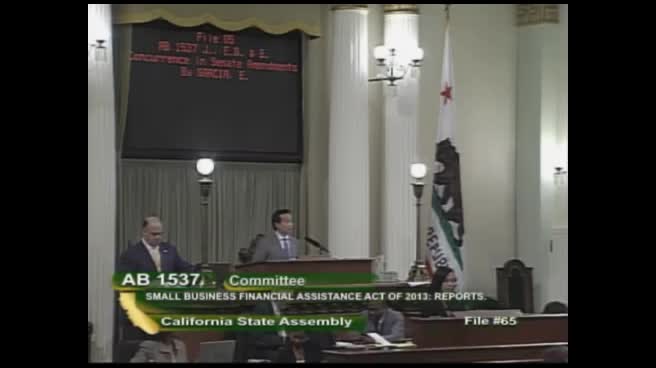 47SEC
Assembly Floor
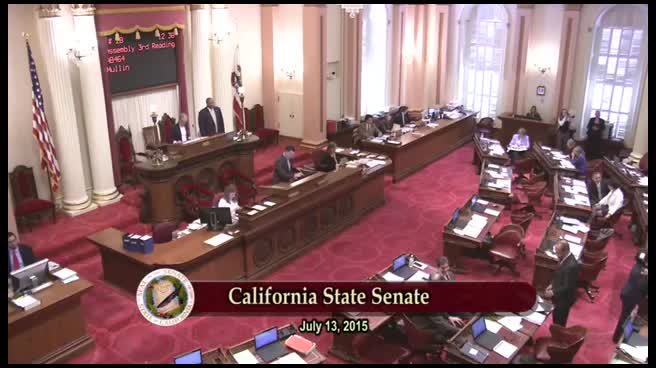 3MIN
Senate Floor
 5MIN
Senate Standing Committee on Governance and Finance
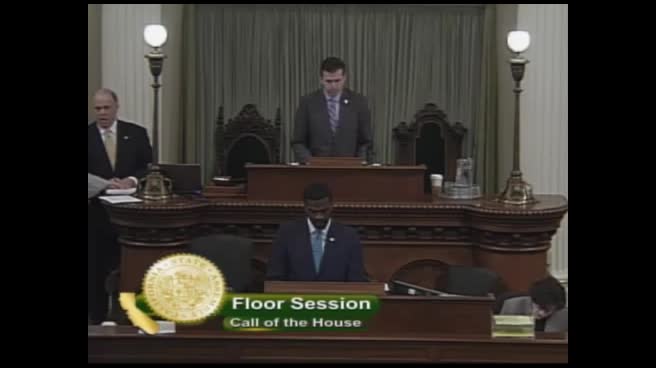 1MIN