AB 509: California Private Postsecondary Education Act of 2009: exemptions.
- Session Year: 2015-2016
- House: Assembly
- Latest Version Date: 2015-10-07
Existing law, the California Private Postsecondary Education Act of 2009, provides, among other things, for student protections and regulatory oversight of private postsecondary institutions in the state. The act is enforced by the Bureau for Private Postsecondary Education within the Department of Consumer Affairs. The act exempts an institution from its provisions, if any of a list of specific criteria are met.
This bill would exempt from the provisions of the act a bona fide organization, association, or council that offers preapprenticeship training programs on behalf of one or more labor-management apprenticeship programs that are approved by the Division of Apprenticeship Standards if the organization, association, or council satisfies specified requirements.
Existing law, the California Private Postsecondary Education Act of 2009, provides, among other things, for student protections and regulatory oversight of private postsecondary institutions in the state. The act is enforced by the Bureau for Private Postsecondary Education within the Department of Consumer Affairs. The act exempts an institution from its provisions, if any of a list of specific criteria are met.
This bill would exempt from the provisions of the act a bona fide organization, association, or council that offers preapprenticeship training programs on behalf of one or more apprenticeship programs that are approved by the Division of Apprenticeship Standards if the organization, association, or council satisfies specified requirements.
Existing law, the California Private Postsecondary Education Act of 2009, provides, among other things, for student protections and regulatory oversight of private postsecondary institutions in the state. The act is enforced by the Bureau for Private Postsecondary Education within the Department of Consumer Affairs. The act requires the bureau to establish, by regulation, a process pursuant to which an institution that is exempt from the act may request and obtain from the bureau verification that the institution is exempt. The act exempts an institution from its provisions, if any of a list of specific criteria are met.
This bill would make nonsubstantive changes to the provision requiring the bureau to establish that verification process exempt from the provisions of the act a bona fide organization, association, or council that offers preapprenticeship training programs on behalf of one or more apprenticeship programs that are approved by the Division of Apprenticeship Standards.
Existing law, the California Private Postsecondary Education Act of 2009, provides, among other things, for student protections and regulatory oversight of private postsecondary institutions in the state. The act is enforced by the Bureau for Private Postsecondary Education within the Department of Consumer Affairs. The act requires the bureau to establish, by regulation, a process pursuant to which an institution that is exempt from the act may request and obtain from the bureau verification that the institution is exempt.
This bill would make nonsubstantive changes to the provision requiring the bureau to establish that verification process.
Except as provided in Section 94874.2, the following are exempt from this chapter:
(a)An institution that offers solely avocational or recreational educational programs.
(b)(1)An institution offering educational programs sponsored by a bona fide trade, business, professional, or fraternal organization, solely for that organizations membership.
(2)(A)Except as provided in subparagraph (B), a bona fide organization, association, or council that offers preapprenticeship training programs, on behalf of one or more Division of Apprenticeship Standards-approved labor-management apprenticeship programs that satisfies one of the following conditions:
(i)It is not on the Eligible Training Provider List established and maintained by the California Workforce Investment Board but has met the requirements for placement on the list.
(ii)It is on the Eligible Training Provider List established and maintained by the California Workforce Investment Board and meets the requirements for continued listing.
(B)If an organization, association, or council has been removed from the Eligible Training Provider List established and maintained by the California Workforce Investment Board for failure to meet performance standards, it is not exempt until it meets all applicable performance standards.
(c)A postsecondary educational institution established, operated, and governed by the federal government or by this state or its political subdivisions.
(d)An institution offering either of the following:
(1)Test preparation for examinations required for admission to a postsecondary educational institution.
(2)Continuing education or license examination preparation, if the institution or the program is approved, certified, or sponsored by any of the following:
(A)A government agency, other than the bureau, that licenses persons in a particular profession, occupation, trade, or career field.
(B)A state-recognized professional licensing body, such as the State Bar of California, that licenses persons in a particular profession, occupation, trade, or career field.
(C)A bona fide trade, business, or professional organization.
(e)(1)An institution owned, controlled, and operated and maintained by a religious organization lawfully operating as a nonprofit religious corporation pursuant to Part 4 (commencing with Section 9110) of Division 2 of Title 1 of the Corporations Code, that meets all of the following requirements:
(A)The instruction is limited to the principles of that religious organization, or to courses offered pursuant to Section 2789 of Business and Professions Code.
(B)The diploma or degree is limited to evidence of completion of that education.
(2)An institution operating under this subdivision shall offer degrees and diplomas only in the beliefs and practices of the church, religious denomination, or religious organization.
(3)An institution operating under this subdivision shall not award degrees in any area of physical science.
(4)Any degree or diploma granted under this subdivision shall contain on its face, in the written description of the title of the degree being conferred, a reference to the theological or religious aspect of the degrees subject area.
(5)A degree awarded under this subdivision shall reflect the nature of the degree title, such as associate of religious studies, bachelor of religious studies, master of divinity, or doctor of divinity.
(f)An institution that does not award degrees and that solely provides educational programs for total charges of two thousand five hundred dollars ($2,500) or less when no part of the total charges is paid from state or federal student financial aid programs. The bureau may adjust this cost threshold based upon the California Consumer Price Index and post notification of the adjusted cost threshold on its Internet Web site, as the bureau determines, through the promulgation of regulations, that the adjustment is consistent with the intent of this chapter.
(g)A law school that is accredited by the Council of the Section of Legal Education and Admissions to the Bar of the American Bar Association or a law school or law study program that is subject to the approval, regulation, and oversight of the Committee of Bar Examiners, pursuant to Sections 6046.7 and 6060.7 of the Business and Professions Code.
(h)A nonprofit public benefit corporation that satisfies all of the following criteria:
(1)Is qualified under Section 501(c)(3) of the United States Internal Revenue Code.
(2)Is organized specifically to provide workforce development or rehabilitation services.
(3)Is accredited by an accrediting organization for workforce development or rehabilitation services recognized by the Department of Rehabilitation.
(i)An institution that is accredited by the Accrediting Commission for Senior Colleges and Universities, Western Association of Schools and Colleges, or the Accrediting Commission for Community and Junior Colleges, Western Association of Schools and Colleges.
(j)An institution that satisfies all of the following criteria:
(1)The institution has been accredited, for at least 10 years, by an accrediting agency that is recognized by the United States Department of Education.
(2)The institution has operated continuously in this state for at least 25 years.
(3)During its existence, the institution has not filed for bankruptcy protection pursuant to Title 11 of the United States Code.
(4)The institutions cohort default rate on guaranteed student loans does not exceed 10 percent for the most recent three years, as published by the United States Department of Education.
(5)The institution maintains a composite score of 1.5 or greater on its equity, primary reserve, and net income ratios, as provided under Section 668.172 of Title 34 of the Code of Federal Regulations.
(6)The institution provides a pro rata refund of unearned institutional charges to students who complete 75 percent or less of the period of attendance.
(7)The institution provides to all students the right to cancel the enrollment agreement and obtain a refund of charges paid through attendance at the second class session, or the 14th day after enrollment, whichever is later.
(8)The institution submits to the bureau copies of its most recent IRS Form 990, the institutions Integrated Postsecondary Education Data System Report of the United States Department of Education, and its accumulated default rate.
(9)The institution is incorporated and lawfully operates as a nonprofit public benefit corporation pursuant to Part 2 (commencing with Section 5110) of Division 2 of Title 1 of the Corporations Code and is not managed or administered by an entity for profit.
(k)Flight instruction providers or programs that provide flight instruction pursuant to Federal Aviation Administration regulations and meet both of the following criteria:
(1)The flight instruction provider or program does not require students to enter into written or oral contracts of indebtedness.
(2)The flight instruction provider or program does not require or accept prepayment of instruction-related costs in excess of two thousand five hundred dollars ($2,500).
Except as provided in Section 94874.2, the following are exempt from this chapter:
(a)An institution that offers solely avocational or recreational educational programs.
(b)(1)An institution offering educational programs sponsored by a bona fide trade, business, professional, or fraternal organization, solely for that organizations membership.
(2)A (A)Except as provided in subparagraph (B), a bona fide organization, association, or council that offers preapprenticeship training programs, on behalf of one or more Division of Apprenticeship Standards-approved apprenticeship programs. programs that satisfies one of the following conditions:
(i)It is not on the Eligible Training Provider List established and maintained by the California Workforce Investment Board but has met the requirements for placement on the list.
(ii)It is on the Eligible Training Provider List established and maintained by the California Workforce Investment Board and meets the requirements for continued listing.
(B)If an organization, association, or council has been removed from the Eligible Training Provider List established and maintained by the California Workforce Investment Board for failure to meet performance standards, it is not exempt until it meets all applicable performance standards.
(c)A postsecondary educational institution established, operated, and governed by the federal government or by this state or its political subdivisions.
(d)An institution offering either of the following:
(1)Test preparation for examinations required for admission to a postsecondary educational institution.
(2)Continuing education or license examination preparation, if the institution or the program is approved, certified, or sponsored by any of the following:
(A)A government agency, other than the bureau, that licenses persons in a particular profession, occupation, trade, or career field.
(B)A state-recognized professional licensing body, such as the State Bar of California, that licenses persons in a particular profession, occupation, trade, or career field.
(C)A bona fide trade, business, or professional organization.
(e)(1)An institution owned, controlled, and operated and maintained by a religious organization lawfully operating as a nonprofit religious corporation pursuant to Part 4 (commencing with Section 9110) of Division 2 of Title 1 of the Corporations Code, that meets all of the following requirements:
(A)The instruction is limited to the principles of that religious organization, or to courses offered pursuant to Section 2789 of Business and Professions Code.
(B)The diploma or degree is limited to evidence of completion of that education.
(2)An institution operating under this subdivision shall offer degrees and diplomas only in the beliefs and practices of the church, religious denomination, or religious organization.
(3)An institution operating under this subdivision shall not award degrees in any area of physical science.
(4)Any degree or diploma granted under this subdivision shall contain on its face, in the written description of the title of the degree being conferred, a reference to the theological or religious aspect of the degrees subject area.
(5)A degree awarded under this subdivision shall reflect the nature of the degree title, such as associate of religious studies, bachelor of religious studies, master of divinity, or doctor of divinity.
(f)An institution that does not award degrees and that solely provides educational programs for total charges of two thousand five hundred dollars ($2,500) or less when no part of the total charges is paid from state or federal student financial aid programs. The bureau may adjust this cost threshold based upon the California Consumer Price Index and post notification of the adjusted cost threshold on its Internet Web site, as the bureau determines, through the promulgation of regulations, that the adjustment is consistent with the intent of this chapter.
(g)A law school that is accredited by the Council of the Section of Legal Education and Admissions to the Bar of the American Bar Association or a law school or law study program that is subject to the approval, regulation, and oversight of the Committee of Bar Examiners, pursuant to Sections 6046.7 and 6060.7 of the Business and Professions Code.
(h)A nonprofit public benefit corporation that satisfies all of the following criteria:
(1)Is qualified under Section 501(c)(3) of the United States Internal Revenue Code.
(2)Is organized specifically to provide workforce development or rehabilitation services.
(3)Is accredited by an accrediting organization for workforce development or rehabilitation services recognized by the Department of Rehabilitation.
(i)An institution that is accredited by the Accrediting Commission for Senior Colleges and Universities, Western Association of Schools and Colleges, or the Accrediting Commission for Community and Junior Colleges, Western Association of Schools and Colleges.
(j)An institution that satisfies all of the following criteria:
(1)The institution has been accredited, for at least 10 years, by an accrediting agency that is recognized by the United States Department of Education.
(2)The institution has operated continuously in this state for at least 25 years.
(3)During its existence, the institution has not filed for bankruptcy protection pursuant to Title 11 of the United States Code.
(4)The institutions cohort default rate on guaranteed student loans does not exceed 10 percent for the most recent three years, as published by the United States Department of Education.
(5)The institution maintains a composite score of 1.5 or greater on its equity, primary reserve, and net income ratios, as provided under Section 668.172 of Title 34 of the Code of Federal Regulations.
(6)The institution provides a pro rata refund of unearned institutional charges to students who complete 75 percent or less of the period of attendance.
(7)The institution provides to all students the right to cancel the enrollment agreement and obtain a refund of charges paid through attendance at the second class session, or the 14th day after enrollment, whichever is later.
(8)The institution submits to the bureau copies of its most recent IRS Form 990, the institutions Integrated Postsecondary Education Data System Report of the United States Department of Education, and its accumulated default rate.
(9)The institution is incorporated and lawfully operates as a nonprofit public benefit corporation pursuant to Part 2 (commencing with Section 5110) of Division 2 of Title 1 of the Corporations Code and is not managed or administered by an entity for profit.
(k)Flight instruction providers or programs that provide flight instruction pursuant to Federal Aviation Administration regulations and meet both of the following criteria:
(1)The flight instruction provider or program does not require students to enter into written or oral contracts of indebtedness.
(2)The flight instruction provider or program does not require or accept prepayment of instruction-related costs in excess of two thousand five hundred dollars ($2,500).
Except as provided in Section 94874.2, the following are exempt from this chapter:
(a)An institution that offers solely avocational or recreational educational programs.
(b)(1)An institution offering educational programs sponsored by a bona fide trade, business, professional, or fraternal organization, solely for that organizations membership.
(2)A bona fide organization, association, or council that offers preapprenticeship training programs, on behalf of one or more Division of Apprenticeship Standards-approved apprenticeship programs.
(c)A postsecondary educational institution established, operated, and governed by the federal government or by this state or its political subdivisions.
(d)An institution offering either of the following:
(1)Test preparation for examinations required for admission to a postsecondary educational institution.
(2)Continuing education or license examination preparation, if the institution or the program is approved, certified, or sponsored by any of the following:
(A)A government agency, other than the bureau, that licenses persons in a particular profession, occupation, trade, or career field.
(B)A state-recognized professional licensing body, such as the State Bar of California, that licenses persons in a particular profession, occupation, trade, or career field.
(C)A bona fide trade, business, or professional organization.
(e)(1)An institution owned, controlled, and operated and maintained by a religious organization lawfully operating as a nonprofit religious corporation pursuant to Part 4 (commencing with Section 9110) of Division 2 of Title 1 of the Corporations Code, that meets all of the following requirements:
(A)The instruction is limited to the principles of that religious organization, or to courses offered pursuant to Section 2789 of Business and Professions Code.
(B)The diploma or degree is limited to evidence of completion of that education.
(2)An institution operating under this subdivision shall offer degrees and diplomas only in the beliefs and practices of the church, religious denomination, or religious organization.
(3)An institution operating under this subdivision shall not award degrees in any area of physical science.
(4)Any degree or diploma granted under this subdivision shall contain on its face, in the written description of the title of the degree being conferred, a reference to the theological or religious aspect of the degrees subject area.
(5)A degree awarded under this subdivision shall reflect the nature of the degree title, such as associate of religious studies, bachelor of religious studies, master of divinity, or doctor of divinity.
(f)An institution that does not award degrees and that solely provides educational programs for total charges of two thousand five hundred dollars ($2,500) or less when no part of the total charges is paid from state or federal student financial aid programs. The bureau may adjust this cost threshold based upon the California Consumer Price Index and post notification of the adjusted cost threshold on its Internet Web site, as the bureau determines, through the promulgation of regulations, that the adjustment is consistent with the intent of this chapter.
(g)A law school that is accredited by the Council of the Section of Legal Education and Admissions to the Bar of the American Bar Association or a law school or law study program that is subject to the approval, regulation, and oversight of the Committee of Bar Examiners, pursuant to Sections 6046.7 and 6060.7 of the Business and Professions Code.
(h)A nonprofit public benefit corporation that satisfies all of the following criteria:
(1)Is qualified under Section 501(c)(3) of the United States Internal Revenue Code.
(2)Is organized specifically to provide workforce development or rehabilitation services.
(3)Is accredited by an accrediting organization for workforce development or rehabilitation services recognized by the Department of Rehabilitation.
(i)An institution that is accredited by the Accrediting Commission for Senior Colleges and Universities, Western Association of Schools and Colleges, or the Accrediting Commission for Community and Junior Colleges, Western Association of Schools and Colleges.
(j)An institution that satisfies all of the following criteria:
(1)The institution has been accredited, for at least 10 years, by an accrediting agency that is recognized by the United States Department of Education.
(2)The institution has operated continuously in this state for at least 25 years.
(3)During its existence, the institution has not filed for bankruptcy protection pursuant to Title 11 of the United States Code.
(4)The institutions cohort default rate on guaranteed student loans does not exceed 10 percent for the most recent three years, as published by the United States Department of Education.
(5)The institution maintains a composite score of 1.5 or greater on its equity, primary reserve, and net income ratios, as provided under Section 668.172 of Title 34 of the Code of Federal Regulations.
(6)The institution provides a pro rata refund of unearned institutional charges to students who complete 75 percent or less of the period of attendance.
(7)The institution provides to all students the right to cancel the enrollment agreement and obtain a refund of charges paid through attendance at the second class session, or the 14th day after enrollment, whichever is later.
(8)The institution submits to the bureau copies of its most recent IRS Form 990, the institutions Integrated Postsecondary Education Data System Report of the United States Department of Education, and its accumulated default rate.
(9)The institution is incorporated and lawfully operates as a nonprofit public benefit corporation pursuant to Part 2 (commencing with Section 5110) of Division 2 of Title 1 of the Corporations Code and is not managed or administered by an entity for profit.
(k)Flight instruction providers or programs that provide flight instruction pursuant to Federal Aviation Administration regulations and meet both of the following criteria:
(1)The flight instruction provider or program does not require students to enter into written or oral contracts of indebtedness.
(2)The flight instruction provider or program does not require or accept prepayment of instruction-related costs in excess of two thousand five hundred dollars ($2,500).
SECTION 1.Section 94874.7 of the Education Code is amended to read:94874.7.The bureau shall establish, by regulation, a process pursuant to which an institution that is exempt from this chapter may request and obtain from the bureau verification that the institution is exempt. The bureau shall establish a reasonable fee to reimburse the bureaus costs associated with the implementation of this section.
The bureau shall establish, by regulation, a process pursuant to which an institution that is exempt from this chapter may request, request and obtain, obtain from the bureau verification that the institution is exempt. The bureau shall establish a reasonable fee to reimburse the bureaus costs associated with the implementation of this section.
|
Date
|
Status
|
|---|---|
| Jun 23, 2015 | From committee chair, with author's amendments: Amend, and re-refer to committee. Read second time, amended, and re-referred to Com. on ED. |
| Oct 7, 2015 | Chaptered by Secretary of State - Chapter 558, Statutes of 2015. |
| Oct 7, 2015 | Approved by the Governor. |
| Sep 14, 2015 | Enrolled and presented to the Governor at 4 p.m. |
| Sep 2, 2015 | Senate amendments concurred in. To Engrossing and Enrolling. (Ayes 53. Noes 25.). |
| Sep 2, 2015 | Senate amendments concurred in. To Engrossing and Enrolling. (Ayes 53. Noes 25. Page 2770.). |
| Aug 31, 2015 | Read third time. Passed. Ordered to the Assembly. (Ayes 27. Noes 13. Page 2292.). |
| Aug 31, 2015 | Read third time. Passed. Ordered to the Assembly. |
| Aug 31, 2015 | In Assembly. Concurrence in Senate amendments pending. May be considered on or after September 2 pursuant to Assembly Rule 77. |
| Aug 18, 2015 | Read second time. Ordered to third reading. |
| Aug 17, 2015 | From committee: Be placed on second reading file pursuant to Senate Rule 28.8. |
| Jul 13, 2015 | From committee: Do pass and re-refer to Com. on APPR. (Ayes 4. Noes 1.) (July 13). Re-referred to Com. on APPR. |
| Jul 1, 2015 | In committee: Hearing postponed by committee. |
| Jun 29, 2015 | Re-referred to Com. on L. & I.R. |
| Jun 24, 2015 | Withdrawn from committee. |
| Jun 24, 2015 | Re-referred to Com. on RLS. |
| Feb 23, 2015 | Read first time. To print. |
| Jun 22, 2015 | From committee: Do pass and re-refer to Com. on ED. (Ayes 8. Noes 0.) (June 22). Re-referred to Com. on ED. |
| May 28, 2015 | Referred to Coms. on B., P. & E.D. and ED. |
| May 14, 2015 | Read third time. Passed. Ordered to the Senate. (Ayes 78. Noes 0. Page 1447.) |
| May 14, 2015 | Read third time. Passed. Ordered to the Senate. |
| May 14, 2015 | In Senate. Read first time. To Com. on RLS. for assignment. |
| May 7, 2015 | Read second time. Ordered to Consent Calendar. |
| May 6, 2015 | From committee: Do pass. To Consent Calendar. (Ayes 17. Noes 0.) (May 6). |
| Apr 27, 2015 | Re-referred to Com. on APPR. |
| Apr 23, 2015 | Read second time and amended. |
| Apr 22, 2015 | From committee: Amend, and do pass as amended and re-refer to Com. on APPR. (Ayes 13. Noes 0.) (April 21). |
| Apr 6, 2015 | Re-referred to Com. on HIGHER ED. |
| Mar 26, 2015 | Referred to Com. on HIGHER ED. |
| Mar 26, 2015 | From committee chair, with author's amendments: Amend, and re-refer to Com. on HIGHER ED. Read second time and amended. |
| Feb 24, 2015 | From printer. May be heard in committee March 26. |
|
Date
|
Description
|
Location
|
Votes
|
|
|---|---|---|---|---|
| Sep 2, 2015 | AB 509 PEREA Concurrence in Senate Amendments | Assembly Floor |
Passed |
|
| Aug 31, 2015 | Assembly 3rd Reading AB509 Perea By Mendoza | Senate Floor |
Passed |
|
| Jul 13, 2015 | Do pass, but first be re-referred to the Committee on [Appropriations] | Senate Standing Committee on Labor and Industrial Relations |
Passed |
|
| Jun 22, 2015 | Do pass, but first be re-referred to the Committee on [Education] | Senate Standing Committee on Business, Professions and Economic Development |
Passed |
|
| May 14, 2015 | AB 509 PEREA Consent Calendar Second Day Regular Session | Assembly Floor |
Passed |
|
| May 6, 2015 | Do pass. To Consent Calendar. | Assembly Standing Committee on Appropriations |
Passed |
|
| Apr 21, 2015 | Do pass as amended and be re-referred to the Committee on [Appropriations] | Assembly Standing Committee on Higher Education |
Passed |
This list shows positions taken on this bill by organizations on the date displayed, which is linked to the original source.
Positions by individuals are not included.
|
Organization
|
Position
|
Date
|
|---|---|---|
| Air Conditioning Trade Association | ** Against | Aug 31, 2015 |
| American Fire Sprinkler Association | ** Against | Aug 31, 2015 |
| Associated Builders and Contractors -San Diego Chapter | ** Against | Aug 31, 2015 |
| Associated Builders And Contractors Of California | ** Against | Aug 31, 2015 |
| California Workforce Association | ** Support | Aug 31, 2015 |
| Plumbing-Heating-Cooling Contractors Association of California | ** Against | Aug 31, 2015 |
| State Building and Construction Trades Council, AFL-CIO | ** Support | Aug 31, 2015 |
| Western Electrical Contractors Association | ** Against | Aug 31, 2015 |
| Workforce Investment Board | * Support | Jun 22, 2015 |
AB 509
Page 2
CONCURRENCE IN SENATE AMENDMENTS
AB 509
(Perea)
As Amended June 23, 2015
Majority vote
ASSEMBLY: |
78-0 |
(May 14, 2015) |
SENATE: |
27-13 |
(August 31, 2015) |
Original Committee Reference: HIGHER ED.
SUMMARY: Exempts from the California Private Postsecondary Education Act (Act) and related oversight by the Bureau of Private Postsecondary Education (Bureau) a bona fide organization, association, or council that offers preapprenticeship training programs, on behalf of one or more Division of Apprenticeship Standards (DAS)-approved labor-management apprenticeship programs, provided that the entity meets the requirements for the Eligible Training Provider List (ETPL) and has not been removed from the ETPL for failure to meet performance standards.
The Senate amendments require the organization to be a "labor-management" apprenticeship program in order to claim an exemption from the Act pursuant to this bill.
EXISTING LAW: Under the Act, establishes the Bureau within the Department of Consumer Affairs and provides for Bureau oversight and regulation of California private postsecondary institutions. The Act also provides for a variety of exemptions from oversight by the Bureau for specific types of institutions, largely those where oversight is already provided by other entities. Among the exemptions are institutions offering educational programs sponsored by a bona fide trade, business, professional, or fraternal organization, solely for that organization’s membership. (Education Code Section 94800 et seq.)
FISCAL EFFECT: According to the Senate Appropriations Committee, pursuant to Senate Rule 28.8, negligible state costs.
COMMENTS: Background. Under the federal Workforce Investment Act (WIA) states are required to establish a list of providers eligible to receive WIA funds for training services provided to WIA clients. In California, this statewide directory is known as the ETPL. The California Workforce Investment Board (CWIB) is responsible for implementing policy and procedures regarding WIA and governing the operation of the ETPL.
Among other program quality and performance based provisions, CWIB requires private postsecondary educational providers to have an Approval to Operate from the Bureau prior to being listed on the ETPL. Alternatively, an institution that is exempt from Bureau oversight may provide verification that the provider is exempt from the Act.
Currently, construction trades unions that are registered with the Joint Apprenticeship and Training Committee of the State of California, Department of Industrial Relations, Division of Apprenticeship Standards for purposes of their apprentice training, are exempt from the Bureau for purposes of apprenticeship programs (see Existing Law).
According to the author, the Fresno Regional Workforce Investment Board's multi-craft pre-apprentice training is being conducted by the Fresno/ Madera/ Tulare/ Kings Building Trades Council, a consortium of the building trades unions across the area. The consortia is not approved by the Division of Apprenticeship Standards for purposes of the pre-apprentice program and, because they are providing pre-apprenticeship programs to students beyond their own membership, they do not fall under existing exemptions provided in the Act. Therefore, are required to obtain Bureau approval prior to being placed on the ETPL.
Purpose of this bill. The author argues that building trades council organizations are not private postsecondary educational institutions and should not be subject to the provisions of the Act or the oversight of the Bureau. This bill would provide an exemption from the Act, and the related oversight and consumer protection provided by the Bureau, for a bona fide organization, association, or council that offers preapprenticehsip training programs, on behalf of one or more DAS-approved apprenticeship programs. Thereby allowing these institutions to be placed on the ETPL, and receive WIA funds, without having to obtain approval from the Bureau.
Labor-management apprenticeship programs. Apprenticeship programs operate under apprenticeship training standards in accordance with State and Federal laws. The Labor Code Section 3075(a) establishes who may sponsor an apprenticeship program, including a joint apprenticeship committee, a unilateral management or labor apprenticeship committee, or an individual employer. In those crafts in which management and labor organizations exist, each selects an equal number of members to serve on the joint apprenticeship committee which determines the standards for training and supervises the training of apprentices. This bill was amended in the Senate to specify that only "labor-management" DAS-approved apprenticeship programs may claim an exemption from the Act.
Analysis Prepared by: Laura Metune / HIGHER ED. / (916) 319-3960 FN: 0001341
AB 509
Page 5
|
Office of Senate Floor Analyses (916) 651-1520 Fax: (916) 327-4478 |
THIRD READING
Bill No: AB 509
Amended: 6/23/15 in Senate
SENATE BUS, PROF. & ECON. DEV. COMMITTEE: 8-0, 6/22/15
AYES: Hill, Berryhill, Block, Galgiani, Hernandez, Jackson, Mendoza, Wieckowski
NO VOTE RECORDED: Bates
SENATE LABOR & IND. REL. COMMITTEE: 4-1, 7/13/15
AYES: Mendoza, Jackson, Leno, Mitchell
NOES: Stone
SENATE APPROPRIATIONS COMMITTEE: Senate Rule 28.8
ASSEMBLY FLOOR: 78-0, 5/14/15 (Consent) - See last page for vote
SUBJECT: California Private Postsecondary Education Act of 2009: exemptions
SOURCE: California Workforce Association
DIGEST: This bill creates an exemption from the California Private Postsecondary Education Act (Act) for preapprenticeship programs offered by a bona fide organization, association or council that offers preapprenticeship training programs on behalf of one or more labor-management apprenticeship programs approved by the Division of Apprenticeship Standards, if certain conditions are met.
Existing law:
Establishes the California Private Postsecondary Education Act (Act) of 2009 until January 1, 2015, and requires the Bureau of Private Postsecondary Education (Bureau) within the Department of Consumer Affairs to, among other things, to review, investigate and approve private postsecondary institutions, programs and courses of instruction pursuant to the Act and authorizes the Bureau to take formal actions against an institution/school to ensure compliance with the Act and even seek closure of an institution/school if determined necessary. The Act also provides for specified disclosures and enrollment agreements for students, requirements for cancellations, withdrawals and refunds, and that the Bureau shall administer the Student Tuition Recovery Fund to provide refunds to students affected by the possible closure of an institution/school. (Education Code (EC) § 94800 et seq.)
Exempts an institution offering educational programs sponsored by a bona fide trade, business, professional, or fraternal organization, solely for that organization's membership from Bureau oversight. (EC § 94874 (b))
This bill:
Creates an exemption from the Act for preapprenticeship programs offered by a bona fide organization, association or council that offers preapprenticeship training programs on behalf of one or more labor-management apprenticeship programs approved by the Division of Apprenticeship Standards, if the following conditions are met:
It is not on the Eligible Training Provider List (ETPL) established and maintained by the California Workforce Investment Board (CWIB) but has met the requirements for placement on the list.
It is on the ETPL established and maintained by the CWIB and meets the requirements for continued listing.
Provides that if an organization, association, or council has been removed from the ETPL for failure to meet performance standards, it is not exempt until it meets all applicable performance standards.
Background
The Bureau has oversight of all the non-exempt, private postsecondary institutions located in California. AB 48 (Portantino, Chapter 310, Statutes of 2009) contained numerous exemptions to state-level oversight, the most notable of which is an exemption from BPPE authority and regulation under the Act granted to for-profit and nonprofit regionally accredited institutions. Currently, construction trades unions that are registered with the Joint Apprenticeship and Training Committee of the State of California, Department of Industrial Relations, Division of Apprenticeship Standards for purposes of their apprentice training, are exempt from the Bureau for purposes of apprenticeship programs.
The federal Workforce Innovation and Opportunity Act (WIOA), formerly known as the federal Workforce Investment Act (WIA) of 1998, provides for workforce investment activities, including activities in which states may participate and also contains various programs for job and employment investment, including work incentive programs, as specified. Following passage of the federal WIA in 1998, the state established the California Workforce Investment Board (CWIB) and charged the board with the responsibility of developing a unified, strategic planning process to coordinate various education, training, and employment programs into an integrated workforce development system that supports economic development. Local chief elected officials in a local workforce development area were required to form, pursuant to specified guidelines, a Local Workforce Investment Board (Local WIB) to plan and oversee the workforce investment system at the local level. Under WIA, funds were distributed to the states based on formulas that consider unemployment rates and other economic and demographic factors.
California’s ETPL was established in compliance with WIA for the purpose of providing customer-focused employment training for adults and dislocated workers. Training providers who are eligible to receive Individual Training Accounts (ITAs) through WIA Title I-B funds are listed on the ETPL. EDD is responsible for accepting information on training providers from local boards, compiling a single statewide list of eligible training providers and disseminating the statewide ETPL to local boards for distribution to their One-Stop Career Centers. Programs are required to be periodically determined as eligible to continue on the ETPL. This determination is to be made within 18 to 24 months of their initial listing and annually thereafter.
The author and sponsor are concerned that WIA funds cannot be used to operate certain pre-apprenticeship programs because these programs are not on the ETPL required by WIA and are not able to prove eligibility because of the exemption for apprenticeship programs in the Private Postsecondary Education Act. This bill seeks to create an avenue for these programs to be eligible for WIA funding and that by exempting a bona fide organization, association, or council that offers pre-apprenticeship training programs on behalf of one or more labor-management apprenticeship programs approved by the Division of Apprenticeship Standards WIBs can utilize WIA funding for pre-apprenticeship programs which the Author states are “vital to maintaining a healthy workforce in California.”
FISCAL EFFECT: Appropriation: No Fiscal Com.: Yes Local: No
California Workforce Association (source)
Building and Construction Trades of Fresno, Madera, Kings and Tulare Counties
Building and Construction Trades of Stanislaus, Merced, Tuolumne and Mariposa Counties
OPPOSITION: (Verified 8/18/15)
Air Conditioning Trade Association
American Fire Sprinkler Association
Associated Builders and Contractors of California
Associated Builders and Contractors –San Diego Chapter
Plumbing-Heating-Cooling Contractors Association of California
Western Electrical Contractors Association
ARGUMENTS IN SUPPORT: Supporters state that this bill will create parity between pre-apprenticeship and apprenticeship programs offered by the same institutions, as apprenticeship programs are already exempt from the Act. Supporters also state that pre-apprenticeships programs are vital to maintaining a healthy workforce in California, prepare students for entrance into sate approved apprenticeship programs and that exempting them from the Act will ensure California continues to have a skilled labor workforce.
ARGUMENTS IN OPPOSITION: Opponents are concerned with the inclusion of the term “labor-management” in the bill and the result of a very strict limit with the inclusion of that term for who is exempt from the Act. Opponents state that all other types of programs will have to undergo a more lengthy process to receive approval and that fully qualified and Division of Apprenticeship Standard approved unilateral programs will be given a higher barrier to overcome than the exact same program that happens to be a “labor-management” program.
ASSEMBLY FLOOR: 78-0, 5/14/15
AYES: Achadjian, Alejo, Travis Allen, Baker, Bigelow, Bloom, Bonilla, Bonta, Brough, Brown, Burke, Calderon, Campos, Chang, Chau, Chávez, Chiu, Chu, Cooley, Cooper, Dababneh, Dahle, Daly, Dodd, Eggman, Frazier, Beth Gaines, Gallagher, Cristina Garcia, Eduardo Garcia, Gatto, Gipson, Gomez, Gonzalez, Gordon, Gray, Grove, Hadley, Harper, Roger Hernández, Holden, Irwin, Jones, Jones-Sawyer, Kim, Lackey, Levine, Lopez, Low, Maienschein, Mathis, Mayes, McCarty, Melendez, Mullin, Nazarian, Obernolte, O'Donnell, Olsen, Patterson, Perea, Quirk, Rendon, Ridley-Thomas, Rodriguez, Salas, Santiago, Steinorth, Mark Stone, Thurmond, Ting, Wagner, Waldron, Weber, Wilk, Williams, Wood, Atkins
NO VOTE RECORDED: Linder, Medina
Prepared by: Sarah Mason / B., P. & E.D. / (916) 651-4104
8/20/15 14:12:23
**** END ****
AB 509 (Perea) Page 6 of 6
SENATE COMMITTEE ON LABOR AND INDUSTRIAL RELATIONS
Senator Tony Mendoza, Chair
2015 - 2016 Regular
Bill No: AB 509 Hearing Date: July 13, 2015
Author: |
Perea |
||
Version: |
June 23, 2015 |
||
Urgency: |
No |
Fiscal: |
Yes |
Consultant: |
Alma Perez-Schwab |
||
Subject: California Private Postsecondary Education Act of 2009: exemptions.
KEY ISSUES
Should the Legislature exempt pre-apprenticeship programs offered on behalf of one or more Division of Apprenticeship Standards approved labor-management apprenticeship program from oversight by the Bureau of Private Postsecondary Education if they meet specified criteria?
Should Local Workforce Investment Boards be able to place these pre-apprenticeship programs on the Eligible Training Provider List - thereby allowing the use of federal workforce investment funds to pay for these training programs and help meet their minimum training requirements?
ANALYSIS
Existing law establishes the CA Private Postsecondary Education Act (Act) of 2009, and requires the Bureau of Private Postsecondary Education (Bureau) within the Department of Consumer Affairs to, among other things, review, investigate and approve private postsecondary institutions, programs and courses of instruction and authorizes the Bureau to take formal actions against an institution/school to ensure compliance with the Act and even seek closure of an institution/school if determined necessary. (Education Code §94800 et seq.)
Existing law exempts the following, among others, from oversight by the Bureau:
An institution offering educational programs sponsored by a bona fide trade, business, professional, or fraternal organization, solely for that organization's membership.
A postsecondary educational institution established, operated, and governed by the federal government or by this state or its political subdivisions.
An institution offering either test preparation for examinations required for admission to a postsecondary educational institution or continuing education or license exam preparation, as specified.
An institution that does not award degrees and that solely provides educational programs for total charges of two thousand five hundred dollars ($2,500) or less when no part of the total charges is paid from state or federal student financial aid programs.
Existing law establishes the California Workforce Investment Board (CWIB) and charges the board with the responsibility of developing a unified, strategic planning process to coordinate various education, training, and employment programs into an integrated workforce development system that supports economic development. Existing law requires local chief elected officials in a local workforce development area to form, pursuant to specified guidelines, a Local Workforce Investment Board (Local WIB) to plan and oversee the workforce investment system at the local level. (Unemployment Insurance §1400 et al)
Existing law requires the CWIB, with input from Local WIBs and other stakeholders, to establish initial and subsequent eligibility criteria for the Eligible Training Provider List (ETPL) that effectively directs training resources into programs leading to employment in high-demand, high-priority, and occupations that provide economic security, particularly those facing a shortage of skilled workers. The subsequent eligibility criteria is required to use performance and outcome measures to determine whether a provider is qualified to remain on the list.
This Bill would additionally exempt from the California Private Postsecondary Education Act, preapprenticeship programs offered by a bona fide organization, association or council that offers programs on behalf of one or more Division of Apprenticeship Standards approved labor-management apprenticeship programs, if certain conditions are met.
Specifically, this bill:
Exempts from oversight by the Bureau of Private Postsecondary Education labor-management preapprenticeship programs that satisfy one of the following conditions:
It is not on the Eligible Training Provider List (ETPL) established and maintained by the California Workforce Investment Board (CWIB) but has met the requirements for placement on the list.
It is on the ETPL established and maintained by the CWIB and meets the requirements for continued listing.
Provides that if an organization, association, or council has been removed from the ETPL for failure to meet performance standards, it is not exempt under these provisions until it meets all applicable performance standards.
COMMENTS
1. The federal Workforce Innovation and Opportunity Act (WIOA):
The federal WIOA, passed by a wide bipartisan majority and signed into law by President Barack Obama on July 22, 2014, provides for workforce investment activities, including activities in which states may participate and also contains various programs for job and employment investment, including work incentive programs, as specified. WIOA supersedes the Workforce Investment Act of 1998 and aims to modernize our workforce development system bringing together and enhancing several key employment, education, and training programs. WIOA also seeks to make the workforce system more comprehensive in its approach to service delivery and more responsive to the demands of our economy.
WIOA authorizes job training programs that include classroom training, customized training, and on-the-job training. Training funds are often distributed through vouchers to job seekers to enroll in eligible training programs. Local Workforce Investment Boards determine which training programs are eligible to receive the vouchers. Existing law requires that at least 25% of federal WIA funds provided to Local WIBs be spent on workforce training programs. This percentage increases to 30% beginning in 2016.
Under federal law, workforce investment funds are distributed to the states based on formulas that consider unemployment rates and other economic and demographic factors. California and its 49 Local WIBs receive WIA formula funding from the U.S. Department of Labor – 85 percent going to the Local WIBs, with the remainder allocated for state discretionary purposes. California receives between $350-400 million in federal WIA dollars annually.
2. Background on the Eligible Training Provider List (ETPL):
California’s Eligible Training Provider List (ETPL) was established in compliance with the Workforce Investment Act of 1998 for the purpose providing customer-focused employment training for adults and dislocated workers. The qualified training providers on the ETPL offer a wide range of educational programs, including classroom, correspondence, Internet, broadcast, and apprenticeship programs. Training providers who are eligible to receive Individual Training Accounts (ITAs) through WIA Title I-B funds are listed on the ETPL.
The Employment Development Department (EDD) is responsible for accepting information on training providers from Local WIBs, compiling a single statewide list of eligible training providers and disseminating the statewide ETPL to local boards for distribution and use. Programs are required to be periodically determined as eligible to continue on the ETPL. This determination is to be made within 18 to 24 months of their initial listing and annually thereafter. Under existing law, at a minimum, initial and subsequent eligibility criteria for placement on the ETPL shall consider the following:
The relevance of the training program to the workforce needs of the state.
Needs to plug skills gasps and skills shortages at the state, local and regional levels.
The likelihood that the training program will lead to job placement in a job providing economic security or job placement in an entry-level job that has a well-articulated career pathway or career ladder to a job providing economic security.
The need for basic skills and bridge training programs that provides access to occupational skills training for individuals with barriers to employment and those who would otherwise be unable to enter occupational skills training.
To the extent feasible, utilize criteria that measure training and education provider performance, including, but not limited to, the following:
Measures of skills or competency attainment and program completion.
Measures of employment placement and retention.
Measures for continued training or education.
For those that have entered the labor market, measures of income.
The Local WIBs are responsible for reviewing and verifying applications submitted by training providers, determining if the applicant meets the State’s criteria for initial eligibility and forwarding the information to EDD for training providers and programs that meet the criteria. The EDD also has the authority to remove training providers for nonperformance.
3. Background on the CA Private Postsecondary Education Act and Bureau for Private Postsecondary Education:
After numerous legislative attempts to remedy the laws and structure governing regulation of private postsecondary institutions in California, AB 48 (Portantino, Chapter 310, Statutes of 2009), established the Act and created the Bureau for the purpose of regulating private postsecondary educational institutions that provide educational services in California. The Act requires all unaccredited colleges in California to be approved by the Bureau, sets timelines for accreditation, and requires all nationally accredited colleges to comply with numerous student protections. It is important to note that not all private institutions are covered by the Act; full and partial exemptions are provided for low-cost programs, recreational schools, schools accredited by regional accrediting agencies, among others.
The Bureau is required to actively investigate and combat unlicensed activity and conduct outreach and education activities for private postsecondary educational institutions and students within the state. The Act establishes processes for penalties for non-compliance, providing the Bureau authority to perform site visits and investigations, order fines and student tuition refunds, and ultimately suspend or revoke an institution's approval to operate.
Exemptions: Currently, construction trades unions that are registered with the Joint Apprenticeship and Training Committee of the Department of Industrial Relations, Division of Apprenticeship Standards for purposes of their apprentice training, are exempt from the Bureau for purposes of apprenticeship programs.
4. Apprenticeship Programs and the Division of Apprenticeship Standards:
According to the Division of Apprenticeship Standards (DAS), apprenticeship is a system of learning while earning, and "learning by doing" which combines training on the job with related and supplemental instruction at school. Each program operates under apprenticeship training standards in accordance with State and Federal laws. In those crafts in which management and labor organizations exist, each selects an equal number of members to serve on the joint apprenticeship committee which determines the standards for training and supervises the training of apprentices. DAS approves and administers apprenticeship law and enforces standards for wages, hours, working conditions and the specific skills required for state certification as a journeyperson in an apprenticeable occupation.
Pre-apprenticeship services and programs are designed to prepare individuals to enter and succeed in registered apprenticeship programs. These programs have a documented partnership with at least one registered apprenticeship program sponsor and together, they expand the participant's career pathway opportunities with industry-based training coupled with classroom instruction.
5. Need for this bill?
In the Employment Training Provider List - Policy and Procedures Directive from April 2014, the Employment Development Department states that private postsecondary education providers must receive approval to operate from the Bureau of Private Postsecondary Education (BPPE) prior to being listed on the ETPL. This approval ensures that the provider satisfies the BPPE statutes and enables the provider to enroll WIA eligible students.
As noted above, the Division of Apprenticeship Standards (DAS) has statutory authority over the approval and administration of apprenticeship programs; however, statute doesn’t include any reference to pre-apprenticeship programs. According to the author, DAS’s legal counsel has opined that they can’t regulate pre-apprenticeship programs because statute does not give them authority to do so. Additionally, an institution offering educational programs sponsored by a bona fide trade organization solely for that organization’s membership is exempt from oversight by the Bureau of Private Postsecondary Education; this includes apprenticeship programs that are registered with DAS for purposes of apprentice training.
According to the author, who represents the Fresno Regional WIB which has multi-craft pre-apprentice training being conducted by the Fresno Madera Tulare Kings Building Trades Council, this oversight in law has created a situation where apprenticeship programs can be registered with DAS (essentially receiving pre-approval under the BPPE) and then added to the ETPL, but pre-apprenticeship programs they work with cannot because DAS doesn’t have regulatory authority over them. This bill would exempt a bona fide organization, association, or council that offers pre-apprenticeship training programs, on behalf of one or more DAS approved labor managed apprenticeship from the CA Private Postsecondary Education Act. This would allow these institutions to be placed on the ETPL, and receive WIA funds, without having to obtain approval from the Bureau of Private Postsecondary Education. This will ensure that programs offering pre-apprenticeships in conjunction with their apprenticeship programs are both exempt from BPPE oversight and added to the ETPL.
Furthermore, by authorizing these pre-apprenticeship training programs to be listed on the ETPL, it allows Local WIBs to use federal WIA formula funds to pay for pre-apprenticeship training in compliance with SB 734 (2012) which imposes a minimum 25% training expenditure requirement on Local WIBs carrying out WIA funded programs.
6. Double Referral:
This bill was previously heard and passed by the Senate Business, Professions and Economic Development Committee.
7. Proponent Arguments:
According to the author, the WIA funds cannot be used to conduct pre-apprenticeship programs because they are not on the ETPL. However, the pre-apprenticeship programs are unable to prove eligibility under the BPPE because legal counsel at DAS has opined that pre-apprentice programs are not under their jurisdiction. This leaves pre-apprentice training in “limbo.” The author argues that without an avenue for labor managed pre-apprentice training to be eligible for WIA funding, the programs go largely unfunded and Local WIB’s cannot use funding for these programs to meet their 25% training expenditure requirement.
The California Workforce Association is sponsoring the measure and states that it will create parity between pre-apprenticeship and apprenticeship programs offered by the same institutions, as apprenticeship programs are already exempt from the BPPE process. The CWA asserts that this bill will simply extend the exception to pre-apprenticeship programs operated in conjunction with high-quality apprenticeship programs, ensuring efficiency and continuity in institutions’ pre-apprenticeship and apprenticeship offerings.
Additionally, proponents state that pre-apprenticeship programs are vital to maintaining a healthy workforce in California since they prepare students for entrance into sate approved apprenticeship programs. California currently has over 500 state approved apprenticeship programs, the vast majority being in the building and construction trades, and they argue that joint labor-management programs make up 90% of these. Proponents contend that these programs must already meet stringent oversight requirements under the auspices of the Division of Apprenticeship Standards, and exempting them from the Private Postsecondary Education Act will help ensure California continues to have a skilled labor workforce.
8. Opponent Arguments:
The Associated Builders and Contractors of California are opposed unless amended and argue that the bill strictly limits who is provided an exemption from the CPPEA. The Labor Code §3075(a) establishes who may sponsor an apprenticeship program, including a joint apprenticeship committee, a unilateral management or labor apprenticeship committee, or an individual employer. According to ABC, they had no issue with the bill before the recent amendments which added the restrictive term “labor-management” to the language; they would remove opposition if the author would replace the term or remove the words entirely. ABC argues that without amendments, this bill means that fully qualified and DAS approved unilateral programs will be given a higher barrier to overcome than the exact same program that happens to be a “labor-management” program.
Opponents also argue that since a pre-apprenticeship program can partner with more than one DAS approved apprenticeship program, this bill seems to be designed to keep these pre-apprenticeship programs from partnering with all state-approved apprenticeship sponsors. They believe this discriminates against otherwise qualified apprenticeship sponsors (and pre-apprenticeship programs that would collaborate with them) and are seeking amendments.
SUPPORT
California Workforce Association (Sponsor)
Fresno, Madera, Kings & Tulare Building & Construction Trades Council, AFl-CIO
Stanislaus, Merced, Tuolumne and Mariposa Counties Building and Construction Trades Council
State Building and Construction Trades Council, AFL-CIO
OPPOSITION
Air Conditioning Trade Association
American Fire Sprinkler Association
Associated Builders and Contractors of California
Associated Builders and Contractors –San Diego Chapter
Plumbing-Heating-Cooling Contractors Association of California
Western Electrical Contractors Association
-- END –
AB 509 (Perea) Page 8 of 8
SENATE COMMITTEE ON
BUSINESS, PROFESSIONS AND ECONOMIC DEVELOPMENT
Senator Jerry Hill, Chair
2015 - 2016 Regular
Bill No: AB 509 Hearing Date: June 22, 2015
Author: |
Perea |
||
Version: |
April 23, 2015 |
||
Urgency: |
No |
Fiscal: |
Yes |
Consultant: |
Sarah Mason |
||
Subject: California Private Postsecondary Education Act of 2009: exemptions.
SUMMARY:
Creates an exemption from the California Private Postsecondary Education Act for preapprenticeship programs offered by a bona fide organization, association or council that offers preapprenticeship training programs on behalf of one or more apprenticeship programs approved by the Division of Apprenticeship Standards, if certain conditions are met.
Existing law:
Establishes the California Private Postsecondary Education Act (Act) of 2009 until January 1, 2015, and requires the Bureau of Private Postsecondary Education (Bureau) within the Department of Consumer Affairs to, among other things, to review, investigate and approve private postsecondary institutions, programs and courses of instruction pursuant to the Act and authorizes the Bureau to take formal actions against an institution/school to ensure compliance with the Act and even seek closure of an institution/school if determined necessary. The Act also provides for specified disclosures and enrollment agreements for students, requirements for cancellations, withdrawals and refunds, and that the Bureau shall administer the Student Tuition Recovery Fund to provide refunds to students affected by the possible closure of an institution/school. (Education Code (EC) § 94800 et seq.)
Exempts the following from oversight by the Bureau:
An institution that offers solely avocational or recreational educational programs.
An institution offering educational programs sponsored by a bona fide trade, business, professional, or fraternal organization, solely for that organization's membership.
A postsecondary educational institution established, operated, and governed by the federal government or by this state or its political subdivisions.
An institution offering either test preparation for examinations required for admission to a postsecondary educational institution or continuing education or license examination preparation, if the institution or the program is approved, certified, or sponsored by a government agency, other than the Bureau, that licenses persons in a particular profession, occupation, trade, or career field, a state-recognized professional licensing body, such as the State Bar of California, that licenses persons in a particular profession, occupation, trade, or career field or a bona fide trade, business, or professional organization
An institution owned, controlled, and operated and maintained by a religious organization lawfully operating as a nonprofit religious corporation whose instruction is limited to the principles of that religious organization and the diploma or degree granted is limited to evidence of completion of that education. The institution is only eligible to offer degrees and diplomas in the beliefs and practices of the church, religious denomination, or religious organization and shall not award degrees in any area of physical science. Any degree or diploma granted by an institution owned, controlled, and operated and maintained by a religious organization lawfully operating as a nonprofit religious corporation shall contain on its face, in the written description of the title of the degree being conferred, a reference to the theological or religious aspect of the degree's subject area. The degree must reflect the nature of the degree title, such as "associate of religious studies," "bachelor of religious studies," "master of divinity," or "doctor of divinity."
An institution that does not award degrees and that solely provides educational programs for total charges of two thousand five hundred dollars ($2,500) or less when no part of the total charges is paid from state or federal student financial aid programs.
A law school that is accredited by the Council of the Section of Legal Education and Admissions to the Bar of the American Bar Association or a law school or law study program that is subject to the approval, regulation, and oversight of the Committee of Bar Examiners.
A nonprofit public benefit corporation that is qualified under Section 501(c)(3) of the United States Internal Revenue Code, is organized specifically to provide workforce development or rehabilitation services and is accredited by an accrediting organization for workforce development or rehabilitation services recognized by the Department of Rehabilitation.
An institution that is accredited by the Accrediting Commission for Senior Colleges (ACSC) and Universities, Western Association of Schools and Colleges (WASC), or the Accrediting Commission for Community and Junior Colleges (ACCJC).
An institution that has been accredited, for at least 10 years, by an accrediting agency that is: recognized by the United States Department of Education (USDE); has operated continuously in this state for at least 25 years and has not filed for bankruptcy protection pursuant to Title 11 of the United States Code during its existence; has a cohort default rate on guaranteed student loans does not exceed 10 percent for the most recent three years, as published by the DOE; maintains a composite score of 1.5 or greater on its equity, primary reserve, and net income ratios, as provided under Section 668.172 of Title 34 of the Code of Federal Regulations; provides a pro rata refund of unearned institutional charges to students who complete 75 percent or less of the period of attendance; provides to all students the right to cancel the enrollment agreement and obtain a refund of charges paid through attendance at the second class session, or the 14th day after enrollment, whichever is later; submits to the Bureau copies of its most recent IRS Form 990, the institution's Integrated Postsecondary Education Data System Report of the USDE, and its accumulated default rate; and is incorporated and lawfully operates as a nonprofit public benefit corporation and is not managed or administered by an entity for profit.
Flight instruction providers or programs that provide flight instruction pursuant to Federal Aviation Administration (FAA) regulations and do not require students to enter into written or oral contracts of indebtedness and do not require or accept prepayment of instruction-related costs in excess of $2,500.
An institution that is accredited by a regional accrediting agency, recognized by DOE, other than WASC, so long as the institution complies with requirements related to student tuition recovery. (EC § 94874)
This
bill:
Creates an exemption from the California Private Postsecondary Education Act for preapprenticeship programs offered by a bona fide organization, association or council that offers preapprenticeship training programs on behalf of one or more apprenticeship programs approved by the Division of Apprenticeship Standards, if the following conditions are met:
It is not on the Eligible Training Provider List (ETPL) established and maintained by the California Workforce Investment Board (CWIB) but has met the requirements for placement on the list.
It is on the ETPL established and maintained by the CWIB and meets the requirements for continued listing.
Provides that if an organization, association, or council has been removed from the ETPL for failure to meet performance standards, it is not exempt until it meets all applicable performance standards.
FISCAL EFFECT:
This bill is keyed “fiscal” by Legislative Counsel. According to the Assembly Committee on Appropriations analysis dated May 6, 2015, any costs to the Bureau will be minor and absorbable.
COMMENTS:
Purpose. The California Workforce Association is the Sponsor of this bill. According to the Author, who represents the Fresno Regional Workforce Investment Board which has multi-craft pre-apprentice training being conducted by the Fresno Madera Tulare Kings Building Trades Council (FMTK BTC), Workforce Investment Act (WIA) Funds cannot be used to operate the pre-apprenticeship programs because these programs are not on the ETPL required by WIA. According to the Author, these pre-apprenticeship programs are unable to prove eligibility based on the exemption for apprenticeship programs in the Private Postsecondary Education Act because under Section 94892 of the BPPE Act of 2009 because legal counsel at the Department of Industrial Relations, Division of Apprenticeship Standards opined that pre-apprentice programs are not under their jurisdiction. According to the Author, this situation leaves the pre-apprenticeship training programs in limbo.
The Author believes that without an avenue for these programs to be eligible for WIA funding, the programs go largely unfunded and local WIBs are unable to use funding for these programs to meet their minimum 25 percent training expenditure requirement (current law requires local WIBs to expend a minimum of 25 percent of funds on training, which increases to 30 percent on July 1, 2016.) The Author states that by creating an exemption for a bona fide organization, association, or council that offers pre-apprenticeship training programs on behalf of one or more apprenticeship programs that are approved by the Division of Apprenticeship Standards from the Private Postsecondary Education Act of 2009 as this bill does, WIBs can utilize WIA funding for pre-apprenticeship programs.
The Author states that “pre-apprenticeship programs are vital to maintaining a healthy workforce in California. Pre-apprenticeship programs prepare students for entrance into state approved apprenticeship programs. In fact, California currently has over 500 state approved apprenticeship programs in many fields. The vast majority of apprentices are enrolled in the Building and Construction Trades apprenticeship programs. Joint-Labor management programs make up 90% of the approved programs. Labor-management programs invest over $100 million annually on training the next generation of skilled workers to meet California’s infrastructure demands, and the use of apprentices is required on public works projects.”
According to the Author, exempting pre-apprenticeship programs from the Act as this bill does will ensure California continues to have a skilled labor workforce.
Background.
The California Private Postsecondary Education Act and Bureau for Private Postsecondary Education. After numerous legislative attempts to remedy the laws and structure governing regulation of private postsecondary institutions in California, AB 48 (Portantino, Chapter 310, Statutes of 2009), established the Act and created the Bureau within the Department of Consumer Affairs for the purpose of regulating private postsecondary educational institutions that provide educational services in California. The Act made many substantive changes that both created a new, solid foundation for oversight and responded to the major problems with the Former Act. The Act requires all unaccredited colleges in California to be approved by the Bureau, sets timelines by which unaccredited schools offering degrees shall become accredited, and requires all nationally accredited colleges to comply with numerous student protections. It is important to note that not all private institutions are covered by the provisions of the Act; full and partial exemptions are provided for low-cost programs, recreational schools, schools accredited by regional accrediting agencies, among other types of institutions. The Act establishes prohibitions on false advertising and inappropriate recruiting and requires disclosure of critical information to students such as program outlines, graduation and job placement rates, and license examination information, and ensures colleges justify those figures. The Act also guarantees students can complete their educational objectives if their institution closes its doors while providing BPPE with enforcement powers necessary to protect consumers. The Act directs BPPE to:
Create a structure that provides an appropriate level of oversight, including approval of private postsecondary educational institutions and programs;
Establish minimum operating standards for California private postsecondary educational institutions to ensure quality education for students;
Provide students a meaningful opportunity to have their complaints resolved;
Ensure that private postsecondary educational institutions offer accurate information to prospective students on school and student performance, thereby promoting competition between institutions that rewards educational quality and employment success; and,
Ensure that all stakeholders have a voice and are heard in the operations and rulemaking process of BPPE.
The Bureau is required to actively investigate and combat unlicensed activity, administer the STRF, and conduct outreach and education activities for private postsecondary educational institutions and students within the state. The Act establishes processes for penalties for non-compliance, providing the Bureau authority to perform site visits and investigations, order fines and student tuition refunds, and ultimately suspend or revoke an institution's approval to operate.
Exemptions. The Bureau has oversight of all the non-exempt, private postsecondary institutions located in California. AB 48 contained numerous exemptions to state-level oversight, the most notable of which is an exemption from BPPE authority and regulation under the Act granted to for-profit and nonprofit regionally accredited institutions. Currently, construction trades unions that are registered with the Joint Apprenticeship and Training Committee of the State of California, Department of Industrial Relations, Division of Apprenticeship Standards for purposes of their apprentice training, are exempt from the Bureau for purposes of apprenticeship programs.
Workforce Innovation and Opportunity Act (WIOA). The federal Workforce Innovation and Opportunity Act (WIOA), formerly known as the federal Workforce Investment Act (WIA) of 1998, provides for workforce investment activities, including activities in which states may participate and also contains various programs for job and employment investment, including work incentive programs, as specified. WIOA was signed into law in 2014 and generally takes effect July of this year. WIOA supersedes WIA and also authorizes the Job Corps, YouthBuild, Indian and Native Americans, and Migrant Seasonal Farmworker programs, in addition to the core programs. The new federal WIOA aims to modernize our workforce development system bringing together and enhancing several key employment, education, and training programs. WIOA also seeks to make the workforce system more comprehensive in its approach to service delivery and more responsive to the demands of our economy.
Following passage of the federal WIA in 1998, the state established the California Workforce Investment Board (CWIB) and charged the board with the responsibility of developing a unified, strategic planning process to coordinate various education, training, and employment programs into an integrated workforce development system that supports economic development. Local chief elected officials in a local workforce development area were required to form, pursuant to specified guidelines, a Local Workforce Investment Board (Local WIB) to plan and oversee the workforce investment system at the local level. Under WIA, funds were distributed to the states based on formulas that consider unemployment rates and other economic and demographic factors. WIA required that 85 percent of federal funds go to the Local WIBs, with the remainder allocated for state discretionary purposes. Local WIBs created one or more One-Stop Centers in the local workforce area, which provide access to career information, counseling, funding for education, training and supportive services. Job training programs include classroom training, customized training, and on-the-job training (also known as incumbent worker training). Training funds are often distributed through vouchers to job seekers to enroll in eligible training programs. Local WIBs determine which training programs are eligible to receive the vouchers.
California’s ETPL was established in compliance with WIA for the purpose of providing customer-focused employment training for adults and dislocated workers. Training providers who are eligible to receive Individual Training Accounts (ITAs) through WIA Title I-B funds are listed on the ETPL. EDD is responsible for accepting information on training providers from local boards, compiling a single statewide list of eligible training providers and disseminating the statewide ETPL to local boards for distribution to their One-Stop Career Centers. Programs are required to be periodically determined as eligible to continue on the ETPL. This determination is to be made within 18 to 24 months of their initial listing and annually thereafter.
EDD's policy and procedure document on the ETPL provides additional background and sets out requirements for approval that includes, among other things, the following:
In order to be listed on the ETPL, training providers must submit an application to the local board in any Local Workforce Investment Area in which the training provider desires to offer programs and services.
It is important to note that initial eligibility is determined based on criteria that relates to a provider/program’s approval authority and/or authorization to operate. Performance is not considered in making initial eligibility determinations. Providers are encouraged to submit information on performance outcomes to facilitate customer choice but this is not a requirement and the information provided cannot be used to determine their initial eligibility for listing.
Local boards are responsible for reviewing and verifying applications submitted by training providers, determining if the applicant meets the State’s criteria for initial eligibility and forwarding the information to EDD for those training providers and programs that meet the criteria.
EDD will accept applications for the ETPL from local boards on any working day of the year. Approved applications will appear on the list within 30 days of their submission by the local board to the State. The local boards are responsible for submitting changes to EDD for programs or training providers already listed on the statewide ETPL to ensure that the information remains current.
Related Legislation This Year. SB 410 (Beall) changes the definition of graduates for purposes of reporting student information as required under the Act. (Status: The bill is currently pending in the Assembly Committee on Higher Education.)
Prior Related Legislation. SB 1247 (Lieu, Chapter 840, Statutes of 2014) extended the operation of the Bureau until January 1, 2017; and, among other changes, clarified the conditions upon which a flight school could be exempt from the Act.
SB 71 (Committee on Budget and Fiscal Review, Chapter 28, Statutes of 2013) enacted various budget-related items, including a provision allowing exempt institutions to voluntarily seek operating approval from the Bureau. The bill provided a temporary delay in those institutions reporting certain information on the Student Performance Fact Sheet.
SB 619 (Fuller, Chapter 309, Statutes of 2011) exempted flight instructors and flight schools that do not require students to enter into contracts of indebtedness and do not require prepayment of fees in excess of $2,500 from regulation by the Act and BPPE.
Arguments in Support. The California Workforce Association (CWA) believes that this bill will create parity between pre-apprenticeship and apprenticeship programs offered by the same institutions, as apprenticeship programs are already exempt from the BPPE process. The CWA asserts that this bill will simply extend the exception to pre-apprenticeship programs operated in conjunction with high-quality apprenticeship programs, ensuring efficiency and continuity in institutions’ pre-apprenticeship and apprenticeship offerings.
Also writing in support of the bill, the State Building and Construction Trades Council of California and Building and Construction Trade Councils of Stanislaus, Merced, Tuolumne & Mariposa Counties, and of Fresno, Madera, Kings & Tulare Counties state that pre-apprenticeships programs are vital to maintaining a healthy workforce in California, prepare students for entrance into sate approved apprenticeship programs and that exempting them from the Act will ensure California continues to have a skilled labor workforce.
Staff Comments. This bill creates the first exemptions to the Act since 2011 when flight schools subject to FAA approval that do not require students to enter into contracts of indebtedness and do not require prepayment of fees in excess of $2,500 were explicitly granted an exemption from the Bureau’s oversight authority. The issue of appropriateness of exemptions within the Act has been discussed since the Act was established in 2009 and subsequently as a piece of multiple policy discussions surrounding the Bureau’s operations, legislative proposals to explore further exemptions, in a 2013 Legislative Analyst Office (LAO) report to the Legislature and most recently as part of the comprehensive Sunset Review process undertaken by Legislative Committees with jurisdiction for the Bureau and Act. The Bureau is again subject to Sunset Review beginning in the fall of this year, culminating with legislation in 2016 that will very likely again explore in depth the exemptions outlined in the Act, the necessity to continue to provide for certain exemptions and whether additional exemptions from Bureau oversight are necessary, such as those proposed in this bill.
NOTE:
Double-referral to Senate Committee on Education, second.
SUPPORT AND OPPOSITION:
Support:
California Workforce Association (Sponsor)
Building and Construction Trades of Fresno, Madera, Kings and Tulare Counties
Building and Construction Trades of Stanislaus, Merced, Tuolumne and Mariposa
Counties
Opposition:
None on file as of June 16, 2015.
-- END --
AB 509
Page 2
Date of Hearing: May 6, 2015
ASSEMBLY COMMITTEE ON APPROPRIATIONS
Jimmy Gomez, Chair
AB 509
(Perea) – As Amended April 23, 2015
Policy Committee: |
Higher Education |
Vote: |
13 - 0 |
|
|
|
|
|
|
|
|
Urgency: No State Mandated Local Program: No Reimbursable: No
SUMMARY:
This bill, exempts from regulation under the Private Postsecondary Education Act, an entity offering preapprenticeship training programs that are either:
On the California Workforce Investment Board's (WIB's) Eligible Trainer Provider List (ETPL) and meet requirements for continued listing; or
Not on the ETPL but has met the requirements for placement on the list.
The bill also stipulates that any entity removed from the ETPL for failure to meet performance standards is not exempt from the Act until it meets the standards.
FISCAL EFFECT:
Any costs to the Bureau for Private Postsecondary Education (BPPE) will be minor and absorbable.
COMMENTS:
Background. The Act provides a variant of specific exemptions from oversight by the BPPE, including for educational programs sponsored by a bona fide trade, business, professional, or fraternal organization, solely for that organization’s membership. Construction trades unions registered with the Joint Apprenticeship and Training Committee of the state Department of Industrial Relations, Division of Apprenticeship Standards (DAS), for purposes of their apprentice training, are exempt from the Bureau for purposes of these apprenticeship programs.
Under the federal Workforce Investment Act (WIA), states are required to establish a list of providers eligible to receive WIA funds for training services provided to WIA clients. In California, this statewide directory is known as the Eligible Training Provider List (ETPL), which is under the auspices of the state's WIB.
Among other program quality and performance based provisions, WIB requires private postsecondary educational providers to have an Approval to Operate from the Bureau prior to being listed on the ETPL. Alternatively, an institution that is exempt from Bureau oversight, such as the DAS-approved apprenticeship programs, may provide verification that the provider is exempt from the Act.
Purpose. According to the author, the Fresno Regional Workforce Investment Board’s multi-craft preapprentice training is a consortium of the regional building trades unions. The consortia is not approved by the DAS for purposes of the preapprentice program and, because they are providing preapprenticeship programs to students beyond their own membership, they do not fall under existing exemptions provided in the Act, and are thus required to obtain Bureau approval prior to being placed on the ETPL. The author argues that building trades council organizations are not private postsecondary educational institutions and should not be subject to the provisions of the Act or oversight by the Bureau.
This bill, as recently amended, require such preapprenticeship training programs, in order to obtain and maintain exemption from the Ac, to qualify for initial and continued placement on the ETPL.
Analysis Prepared by: Chuck Nicol / APPR. / (916) 319-2081
AB 509
Page 3
Date of Hearing: April 21, 2015
ASSEMBLY COMMITTEE ON HIGHER EDUCATION
Jose Medina, Chair
AB 509
(Perea) – As Amended March 26, 2015
SUBJECT: California Private Postsecondary Education Act of 2009: exemptions
SUMMARY: Exempts from the Private Postsecondary Education Act (Act) and related oversight by the Bureau of Private Postsecondary Education (Bureau) a bona fide organization, association, or council that offers preapprenticeship training programs, on behalf of one or more Division of Apprenticeship Standards (DAS)-approved apprenticeship programs.
EXISTING LAW: Under the Act, establishes the Bureau within the Department of Consumer Affairs and provides for Bureau oversight and regulation of California private postsecondary institutions. The Act also provides for a variety of exemptions from oversight by the Bureau for specific types of institutions, largely those where oversight is already provided by other entities. Among the exemptions are institutions offering educational programs sponsored by a bona fide trade, business, professional, or fraternal organization, solely for that organization’s membership. (Education Code Section 94800 et seq.)
FISCAL EFFECT: Unknown
COMMENTS: Background. Under the federal Workforce Investment Act (WIA) states are required to establish a list of providers eligible to receive WIA funds for training services provided to WIA clients. In California, this statewide directory is known as the Eligible Training Provider List (ETPL). The California Workforce Investment Board (CWIB) is responsible for implementing policy and procedures regarding WIA and governing the operation of the ETPL.
Among other program quality and performance based provisions, CWIB requires private postsecondary educational providers to have an Approval to Operate from the Bureau prior to being listed on the ETPL. Alternatively, an institution that is exempt from Bureau oversight may provide verification that the provider is exempt from the Act.
Currently, construction trades unions that are registered with the Joint Apprenticeship and Training Committee of the State of California, Department of Industrial Relations, Division of Apprenticeship Standards for purposes of their apprentice training, are exempt from the Bureau for purposes of apprenticeship programs (see Existing Law).
According to the author, the Fresno Regional Workforce Investment Board’s multi-craft pre-apprentice training is being conducted by the Fresno/ Madera/ Tulare/ Kings Building Trades Council, a consortium of the building trades unions across the area. The consortia is not approved by the Division of Apprenticeship Standards for purposes of the pre-apprentice program and, because they are providing pre-apprenticeship programs to students beyond their own membership, they do not fall under existing exemptions provided in the Act. Therefore, are required to obtain Bureau approval prior to being placed on the ETPL.
Purpose of this bill. The author argues that building trades council organizations are not private postsecondary educational institutions and should not be subject to the provisions of the Act or the oversight of the Bureau. This bill would provide an exemption from the Act, and the related oversight and consumer protection provided by the Bureau, for a bona fide organization, association, or council that offers preapprenticehsip training programs, on behalf of one or more Division of Apprenticeship Standards-approved apprenticeship programs. Thereby allowing these institutions to be placed on the ETPL, and receive WIA funds, without having to obtain approval from the Bureau.
Committee consideration. As previously noted, this bill is intended to ensure trade organizations approved by DAS for apprenticeship programs can be placed on the ETPL for purposes of offering pre-apprenticeship programs without having to obtain Bureau approval. The majority of exemptions provided in the Act are based on (1) appropriate oversight being provided by another entity, or (2) a minimal financial risk to public funds or to the students. DAS approves and provides oversight of apprenticeship programs, but not of pre-apprenticeship programs. Meaning that, as currently drafted, there is no clear oversight required in this bill for pre-apprenticeship programs; these programs receive potentially significant public funding through WIA. The author has stated that the intent of this bill is to provide a pathway for these institutions to be placed on the ETPL. Placement on the ETPL requires institutions to meet initial and ongoing program quality and student protection measures.
Proposed amendment. The Committee and author may wish to add a requirement, as drafted below, that in order to obtain and maintain exemption from the Act, these institutions must qualify for initial and continued placement on the ETPL. An institution that is removed from the ETPL would be required to obtain Bureau approval in order to continue offering pre-apprenticeship programs.
94874. Except as provided in Section 94874.2, the following are exempt from this chapter:
(b) (2) A bona fide organization, association, or council that offers preapprenticeship training programs, on behalf of one or more Division of Apprenticeship Standards-approved apprenticeship programs, that meets all of the following requirements:
(i) An organization, association, or council that is either:
(A) Not currently on the Eligible Training Provider List that has met the requirements for initial placement on the Eligible Training Provider List; or,
(B) Currently on the Eligible Training Provider List that has met the requirements for continued placement on the Eligible Training Provider List.
(ii) The organization, association, or council has not been removed from the Eligible Training Provide List for failure to meet performance standards. An organization, association or council that at any time is removed from the Eligible Training Provider List for failure to meet performance standards may not claim exemption from this chapter until such performance standards are met.
REGISTERED SUPPORT / OPPOSITION:
Support
California Workforce Association (Sponsor)
Building and Construction Trades of Fresno, Madera, Kings and Tulare Counties
Building and Construction Trades of Stanislaus, Merced, Tuolumne and Mariposa Counties
Opposition
None on File
Analysis Prepared by: Laura Metune / HIGHER ED. / (916) 319-3960
Discussed in Hearing
 1MIN
Assembly Floor
 3MIN
Senate Floor
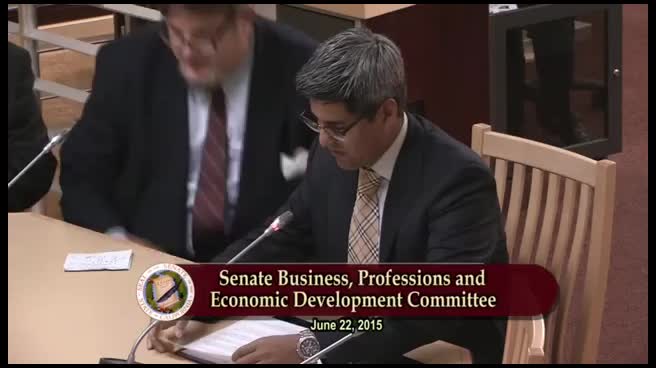 9MIN
Senate Standing Committee on Business, Professions and Economic Development
Bill Author

Bill Co-Author(s):