AB 516: Vehicles: temporary license plates.
- Session Year: 2015-2016
- House: Assembly
- Latest Version Date: 2016-07-25
Existing law requires the Department of Motor Vehicles (DMV), upon registering a vehicle, to issue to the owner 2 license plates, as specified. Existing law also requires vehicle dealers and lessor-retailers to attach a numbered report-of-sale form issued by the DMV to a vehicle at the time of sale, and to submit to the DMV an application for registration of the vehicle, and the applicable fees, within a specified period after the date of sale. Existing law authorizes a dealer, as specified, to assess a specified document processing charge on the purchaser or lessee of a vehicle for the preparation and processing of documents, disclosures, and titling, registration, and information security obligations imposed by state and federal law. Existing law generally makes a violation of the Vehicle Code an infraction, but makes counterfeiting a license plate a felony.
Existing law requires the driver of a motor vehicle to present evidence of registration of a vehicle under the drivers immediate control upon demand by a peace officer. Existing law prohibits displaying or presenting to a peace officer specified indicia of vehicle registration that are not issued for that vehicle. Existing law authorizes the DMV to assess administrative fees on a processing agency for providing notices of delinquent parking violations or toll evasion violations to the offenders in connection with the collection of penalties for those violations, and authorizes the use of those administrative fees to support those collection procedures. Existing law requires license plates to be securely fastened to the vehicle for which they were issued for the period of validity of the license plates, and authorizes the use of a special permit in lieu of license plates for that purpose.
This bill would require the DMV to develop an operational system, no later than January 1, 2019, that allows a dealer or lessor-retailer to electronically report the sale of a vehicle and provide a temporary license plate, as specified. The bill would, commencing January 1, 2018, authorize the DMV to assess specified administrative fees on parking and toll evasion processing agencies to support the administration of this system. The bill would also, commencing January 1, 2019, increase the document processing charge, as specified, that a dealer may impose on the purchaser or lessee of a vehicle and would authorize the imposition of a specified electronic filing charge for reporting vehicle sales and producing temporary license plates. The bill would authorize the DMV to establish contracts with qualified industry partners to provide these vehicle sale reporting and temporary license plate services.
The bill would, commencing January 1, 2019, prohibit a person from displaying on a vehicle or presenting to a peace officer a temporary license plate that was not issued for that vehicle, as specified, and would make counterfeiting a temporary license plate a felony. The bill would, commencing January 1, 2019, require temporary license plates to be securely fastened to the vehicle for which they are issued, as specified, and would require a person upon receipt of permanent license plates to replace and destroy the temporary license plates. The bill would make additional conforming changes. By creating new crimes and expanding the scope of existing crimes, the bill would impose a state-mandated local program.
The California Constitution requires the state to reimburse local agencies and school districts for certain costs mandated by the state. Statutory provisions establish procedures for making that reimbursement.
This bill would provide that no reimbursement is required by this act for a specified reason.
Existing law requires the Department of Motor Vehicles (DMV), upon registering a vehicle, to issue to the owner 2 license plates, as specified. Existing law also requires vehicle dealers and lessor-retailers to attach a numbered report-of-sale form issued by the DMV to a vehicle at the time of sale, and to submit to the DMV an application for registration of the vehicle, and the applicable fees, within a specified period after the date of sale. Existing law authorizes a dealer, as specified, to assess a specified document processing charge on the purchaser or lessee of a vehicle for the preparation and processing of documents, disclosures, and titling, registration, and information security obligations imposed by state and federal law. Existing law generally makes a violation of the Vehicle Code an infraction, but makes counterfeiting a license plate a felony.
Existing law requires the driver of a motor vehicle to present evidence of registration of a vehicle under the drivers immediate control upon demand by a peace officer. Existing law prohibits displaying or presenting to a peace officer specified indicia of vehicle registration that are not issued for that vehicle. Existing law authorizes the DMV to assess administrative fees on a processing agency for providing notices of delinquent parking violations or toll evasion violations to the offenders in connection with the collection of penalties for those violations, and authorizes the use of those administrative fees to support those collection procedures. Existing law requires license plates to be securely fastened to the vehicle for which they were issued for the period of validity of the license plates, and authorizes the use of a special permit in lieu of license plates for that purpose.
This bill would require the DMV to develop an operational system, no later than January 1, 2018, 2019, that allows a dealer or lessor-retailer to electronically report the sale of a vehicle and provide a temporary license plate, as specified. The bill would, commencing January 1, 2017, 2018, authorize the department DMV to assess specified administrative fees on parking and toll evasion processing agencies to support the administration of this system. The bill would also, commencing January 1, 2018, 2019, increase the document processing charge, as specified, that a dealer may impose on the purchaser or lessee of a vehicle, vehicle and would authorize the imposition of a specified electronic filing charge for reporting vehicle sales and producing temporary license plates. The bill would authorize the DMV to establish contracts with qualified industry partners to provide these vehicle sale reporting and temporary license plate services.
The bill would, commencing January 1, 2018, 2019, prohibit a person from displaying on a vehicle or presenting to a peace officer, officer a temporary license plate that was not issued for that vehicle, as specified. The bill would, commencing January 1, 2018, specified, and would make counterfeiting a temporary license plate a felony. The bill would, commencing January 1, 2018, 2019, require temporary license plates to be securely fastened to the vehicle for which they are issued, as specified, and would require a person upon receipt of permanent license plates to replace and destroy the temporary license plates. The bill would make additional conforming changes. By creating new crimes and expanding the scope of existing crimes, the bill would impose a state-mandated local program.
The California Constitution requires the state to reimburse local agencies and school districts for certain costs mandated by the state. Statutory provisions establish procedures for making that reimbursement.
This bill would provide that no reimbursement is required by this act for a specified reason.
Existing law requires the Department of Motor Vehicles (DMV), upon registering a vehicle, to issue to the owner 2 license plates, as specified. Existing law also requires vehicle dealers and lessor-retailers to attach a numbered report-of-sale form issued by the DMV to a vehicle at the time of sale, and to submit to the DMV an application for registration of the vehicle, and the applicable fees, within a specified period after the date of sale. Existing law authorizes a dealer, as specified, to assess a specified document processing charge on the purchaser or lessee of a vehicle for the preparation and processing of documents, disclosures, and titling, registration, and information security obligations imposed by state and federal law. Existing law generally makes a violation of the Vehicle Code an infraction, but makes counterfeiting a license plate a felony.
Existing law requires the driver of a motor vehicle to present evidence of registration of a vehicle under the drivers immediate control upon demand by a peace officer. Existing law prohibits displaying or presenting to a peace officer specified indicia of vehicle registration that are not issued for that vehicle. Existing law authorizes the DMV to assess administrative fees on a processing agency for providing notices of delinquent parking violations or toll evasion violations to the offenders in connection with the collection of penalties for those violations, and authorizes the use of those administrative fees to support those collection procedures. Existing law requires license plates to be securely fastened to the vehicle for which they were issued for the period of validity of the license plates, and authorizes the use of a special permit in lieu of license plates for that purpose.
This bill would require the DMV to develop an operational system, no later than January 1, 2018, that allows a dealer or lessor-retailer to electronically report the sale of a vehicle and provide a temporary license plate plate, as specified. The bill would, commencing January 1, 2017, authorize the department to assess specified administrative fees on processing agencies to support the administration of this system. The bill would also, commencing January 1, 2018, increase the document processing charge, as specified, that a dealer may impose on the purchaser or lessee of a vehicle vehicle, and would authorize the imposition of a specified electronic filing charge for reporting vehicle sales and producing temporary license plates. The bill would authorize the DMV to establish contracts with qualified industry partners to provide these vehicle sale reporting and temporary license plate services.
The bill would, commencing January 1, 2018, prohibit a person from displaying on a vehicle or presenting to a peace officer, a temporary license plate that was not issued for that vehicle, as specified. The bill would, commencing January 1, 2018, make counterfeiting a temporary license plate a felony. The bill would, commencing January 1, 2018, require temporary license plates to be securely fastened to the vehicle for which they are issued, as specified, and would require a person upon receipt of permanent license plates to replace and destroy the temporary license plates. The bill would make additional conforming changes. By creating new crimes and expanding the scope of existing crimes, this the bill would impose a state-mandated local program.
The California Constitution requires the state to reimburse local agencies and school districts for certain costs mandated by the state. Statutory provisions establish procedures for making that reimbursement.
This bill would provide that no reimbursement is required by this act for a specified reason.
Existing law requires the Department of Motor Vehicles (DMV), upon registering a vehicle, to issue to the owner 2 license plates, as specified. Existing law also requires vehicle dealers and lessor-retailers to attach a numbered report-of-sale form issued by the DMV to a vehicle at the time of sale, and to submit to the DMV an application for registration of the vehicle, and the applicable fees, within a specified period after the date of sale. Existing law authorizes a dealer, as specified, to assess a specified document processing charge on the purchaser or lessee of a vehicle for the preparation and processing of documents, disclosures, and titling, registration, and information security obligations imposed by state and federal law. Existing law generally makes a violation of the Vehicle Code an infraction, but makes counterfeiting a license plate a felony.
Existing law requires the driver of a motor vehicle to present evidence of registration of a vehicle under the drivers immediate control upon demand by a peace officer. Existing law prohibits displaying or presenting to a peace officer specified indicia of vehicle registration that are not issued for that vehicle. Existing law authorizes the DMV to assess administrative fees on a processing agency for providing notices of delinquent parking violations or toll evasion violations to the offenders in connection with the collection of penalties for those violations, and authorizes the use of those administrative fees to support those collection procedures. Existing law requires license plates to be securely fastened to the vehicle for which they were issued for the period of validity of the license plates, and authorizes the use of a special permit in lieu of license plates for that purpose.
This bill would require the DMV to develop an operational system, no later than January 1, 2018, that allows a dealer or lessor-retailer to electronically report the sale of a vehicle and provide a temporary license plate as specified. The bill would, commencing January 1, 2017, authorize the department to assess specified administrative fees on processing agencies to support the administration of this system. The bill would also, commencing January 1, 2018, increase the document processing charge, as specified, that a dealer may impose on the purchaser or lessee of a vehicle.
The bill would, commencing January 1, 2018, prohibit a person from displaying on a vehicle or presenting to a peace officer, a temporary license plate that was not issued for that vehicle, as specified. The bill would, commencing January 1, 2018, make counterfeiting a temporary license plate a felony. The bill would, commencing January 1, 2018, require temporary license plates to be securely fastened to the vehicle for which they are issued, as specified, and would require a person upon receipt of permanent license plates to replace and destroy the temporary license plates. The bill would make additional conforming changes. By creating new crimes and expanding the scope of existing crimes, this bill would impose a state-mandated local program.
The California Constitution requires the state to reimburse local agencies and school districts for certain costs mandated by the state. Statutory provisions establish procedures for making that reimbursement.
This bill would provide that no reimbursement is required by this act for a specified reason.
Existing law requires the Department of Motor Vehicles (DMV), upon registering a vehicle, to issue to the owner 2 license plates, as specified. Existing law also requires vehicle dealers and lessor-retailers to attach a numbered report-of-sale forms form issued by the DMV to a vehicle at the time of sale, and to submit to the DMV an application for registration of the vehicle, and the applicable fees, within a specified period after the date of sale. Existing law generally makes a violation of the Vehicle Code an infraction, but makes counterfeiting a license plate a felony.
This bill would require the DMV to develop a temporary license plate system to enable the DMV, vehicle dealers that are private industry partners, and first-line service providers, as defined, to provide temporary license plates, and would require the system to begin operation on January 1, 2017. The bill would require, commencing January 1, 2017, a motor vehicle dealer that is a private-industry partner to affix a temporary license plate, at the time of sale, to a vehicle sold without a permanent license plate. The bill would authorize the operation of a vehicle that has been issued temporary license plates for 90 days after the sale of the vehicle or until the owner receives the permanent license plates, and would direct the owner to destroy the temporary license plates upon the receipt of the permanent license plates, as specified. A violation of these provisions would be a crime. The bill would also make counterfeiting a temporary license plate a felony. By creating new crimes and expanding the scope of an existing crime, this bill would impose a state-mandated local program.
Existing law authorizes a vehicle dealer to charge the purchaser of a vehicle a document processing charge for the preparation and processing of documents, disclosures, and titling, registration, and information security obligations. Under existing law, if a dealer has a contractual agreement with the DMV to be a private industry partner, the document processing charge may not exceed $80. Existing law also authorizes the dealer to impose an electronic filing charge that does not exceed the amount the dealer is charged by a first-line service provider for processing license plates, as specified.
This bill would increase to $95 the document processing charge that may be imposed on a vehicle purchaser by a private industry partner. The bill would also require the first-line service provider to impose a $2 transaction fee for processing temporary license plates, and would expand the electronic filing charge to include that amount.
Existing law requires the driver of a motor vehicle to present evidence of registration of a vehicle under the drivers immediate control upon demand by a peace officer. Existing law prohibits displaying or presenting to a peace officer specified indicia of vehicle registration that are not issued for that vehicle. Existing law authorizes the DMV to assess administrative fees on a processing agency for providing notices of delinquent parking violations or toll evasion violations to the offenders in connection with the collection of penalties for those violations, and authorizes the use of those administrative fees to support those collection procedures. Existing law requires license plates to be securely fastened to the vehicle for which they were issued for the period of validity of the license plates, and authorizes the use of a special permit in lieu of license plates for that purpose.
This bill would require the DMV to develop an operational system, no later than January 1, 2018, that allows a dealer or lessor-retailer to electronically report the sale of a vehicle and provide a temporary license plate as specified. The bill would, commencing January 1, 2017, authorize the department to assess specified administrative fees on processing agencies to support the administration of this system.
The bill would, commencing January 1, 2018, prohibit a person from displaying on a vehicle or presenting to a peace officer, a temporary license plate that was not issued for that vehicle, as specified. The bill would, commencing January 1, 2018, make counterfeiting a temporary license plate a felony. The bill would, commencing January 1, 2018, require temporary license plates to be securely fastened to the vehicle for which they are issued, as specified, and would require a person upon receipt of permanent license plates to replace and destroy the temporary license plates. The bill would make additional conforming changes.
The California Constitution requires the state to reimburse local agencies and school districts for certain costs mandated by the state. Statutory provisions establish procedures for making that reimbursement.
This bill would provide that no reimbursement is required by this act for a specified reason.
Existing law requires the Department of Motor Vehicles (DMV), upon registering a vehicle, to issue to the owner 2 license plates, as specified. Existing law also requires vehicle dealers and lessor-retailers to attach numbered report-of-sale forms issued by the DMV to a vehicle at the time of sale, and to submit to the DMV an application for registration of the vehicle, and the applicable fees, within a specified period after the date of sale. A violation of the Vehicle Code is a crime. Existing law generally makes a violation of the Vehicle Code an infraction, but makes counterfeiting a license plate a felony.
This bill would require the DMV to develop a temporary license plate system to enable the DMV, vehicle dealers and lessor-retailers that are private industry partners, and first-line service providers, as defined, to provide temporary license plates, and would require the system to begin operation on or before January 1, 2017. The bill would also require, commencing January 1, 2017, a motor vehicle dealer or lessorretailer that is a private-industry partner to affix a temporary license plate, at the time of sale, to a vehicle sold without a permanent license plate. Because a violation of this provision would be a crime, The bill would authorize the operation of a vehicle that has been issued temporary license plates for 90 days after the sale of the vehicle or until the owner receives the permanent license plates, and would direct the owner to destroy the temporary license plates upon the receipt of the permanent license plates, as specified. A violation of these provisions would be a crime. The bill would also make counterfeiting a temporary license plate a felony. By creating new crimes and expanding the scope of an existing crime, this bill would impose a state-mandated local program.
Existing law authorizes a vehicle dealer to charge the purchaser of a vehicle a document processing charge for the preparation and processing of documents, disclosures, and titling, registration, and information security obligations. Under existing law, if a dealer has a contractual agreement with the DMV to be a private industry partner, the document processing charge may not exceed $80. Existing law also authorizes the dealer to impose an electronic filing charge that does not exceed the amount the dealer is charged by a first-line service provider for processing license plates, as specified.
This bill would increase to $95 the document processing charge that may be imposed on a vehicle purchaser by a private industry partner. The bill would also require the first-line service provider to impose a $2 transaction fee for processing temporary license plates, and would expand the electronic filing charge to include that amount.
The California Constitution requires the state to reimburse local agencies and school districts for certain costs mandated by the state. Statutory provisions establish procedures for making that reimbursement.
This bill would provide that no reimbursement is required by this act for a specified reason.
Existing law requires the Department of Motor Vehicles (DMV), upon registering a vehicle, to issue to the owner 2 license plates, as specified. Existing law also requires vehicle dealers and lessor-retailers to attach numbered report-of-sale forms issued by the DMV to a vehicle at the time of sale, and to submit to the DMV an application for registration of the vehicle, and the applicable fees, within a specified period after the date of sale. A violation of the Vehicle Code is a crime.
This bill would require the DMV to develop a temporary license plate system to enable vehicle dealers and lessor-retailers to provide temporary license plates, and would require the system to begin operation on or before January 1, 2017. The bill would also require, commencing January 1, 2017, a motor vehicle dealer or lessorretailer to affix a temporary license plate, at the time of sale, to a vehicle sold without a permanent license plate. Because a violation of this provision would be a crime, this bill would impose a state-mandated local program.
The California Constitution requires the state to reimburse local agencies and school districts for certain costs mandated by the state. Statutory provisions establish procedures for making that reimbursement.
This bill would provide that no reimbursement is required by this act for a specified reason.
(a)In order to continue improving the quality of products and services it provides to its customers, the department, in conformance with Article 4 (commencing with Section 19130) of Chapter 5 of Part 2 of Division 5 of Title 2 of the Government Code, may establish contracts for electronic programs that allow qualified private industry partners to join the department in providing services that include processing and payment programs for vehicle registration and titling transactions, and services related to reporting vehicle sales and producing temporary license plates pursuant to Sections 4456 and 4456.2.
(b)(1)The department may enter into contractual agreements with qualified private industry partners. There are the following three types of private industry partnerships authorized under this section:
(A)First-line business partner is an industry partner that receives data directly from the department and uses it to complete registration and titling activities for that partners own business purposes.
(B)First-line service provider is an industry partner that receives information from the department and then transmits it to another authorized industry partner.
(C)Second-line business partner is a partner that receives information from a first-line service provider.
(2)The private industry partner contractual agreements shall include the following minimum requirements:
(A)Filing of an application and payment of an application fee, as established by the department.
(B)Submission of information, including, but not limited to, fingerprints and personal history statements, focusing on and concerning the applicants character, honesty, integrity, and reputation as the department may consider necessary.
(C)Posting a bond in an amount consistent with Section 1815.
(3)The department shall, through regulations, establish any additional requirements for the purpose of safeguarding privacy and protecting the information authorized for release under this section.
(c)The director may establish, through the adoption of regulations, the maximum amount that a qualified private industry partner may charge its customers in providing the services authorized under subdivision (a).
(d)The department shall charge a three-dollar ($3) transaction fee for the information and services provided under subdivision (a). The private industry partner may pass the transaction fee to the customer, but the total charge to a customer may not exceed the amount established by the director under subdivision (c).
(e)All fees collected by the department pursuant to subdivision (d) shall be deposited in the Motor Vehicle Account. On January 1 of each year, the department shall adjust the fee in accordance with the California Consumer Price Index. The amount of the fee shall be rounded to the nearest whole dollar, with amounts equal to, or greater than, fifty cents ($0.50) rounded to the next highest whole dollar.
(f)The department shall adopt regulations and procedures that ensure adequate oversight and monitoring of qualified private industry partners to protect vehicle owners from the improper use of vehicle records. These regulations and procedures shall include provisions for qualified private industry partners to periodically submit records to the department, and the department shall review those records as necessary. The regulations shall also include provisions for the dedication of department resources to program monitoring and oversight; the protection of confidential records in the departments files and databases; and the duration and nature of the contracts with qualified private industry partners.
(g)The department shall, annually, by October 1, provide a report to the Legislature that shall include all of the following information gathered during the fiscal year immediately preceding the report date:
(1)Listing of all qualified private industry partners, including names and business addresses.
(2)Volume of transactions, by type, completed by business partners.
(3)Total amount of funds, by transaction type, collected by business partners.
(4)Total amount of funds received by the department.
(5)Description of any fraudulent activities identified by the department.
(6)Evaluation of the benefits of the program.
(7)Recommendations for any administrative or statutory changes that may be needed to improve the program.
(h)Nothing in this section impairs or limits the authority provided in Section 4610 or Section 12155 of the Insurance Code.
SEC. 2.Section 4456 of the Vehicle Code is amended to read:4456.(a)When selling a vehicle, dealers and lessor-retailers shall use numbered report-of-sale forms issued by the department. The forms shall be used in accordance with the following terms and conditions:
(1)The dealer or lessor-retailer shall attach for display a copy of the report of sale on the vehicle before the vehicle is delivered to the purchaser.
(2)The dealer or lessor-retailer shall submit to the department an application accompanied by all fees and penalties due for registration or transfer of registration of the vehicle within 30 days from the date of sale, as provided in subdivision (c) of Section 9553, if the vehicle is a used vehicle, and 20 days if the vehicle is a new vehicle. Penalties due for noncompliance with this paragraph shall be paid by the dealer or lessor-retailer. The dealer or lessor-retailer shall not charge the purchaser for the penalties.
(3)As part of an application to transfer registration of a used vehicle, the dealer or lessor-retailer shall include all of the following information on the certificate of title, application for a duplicate certificate of title, or form prescribed by the department:
(A)Date of sale and report-of-sale number.
(B)Purchasers name and address.
(C)Dealers name, address, number, and signature or signature of authorized agent.
(D)Salesperson number.
(4)If the department returns an application and the application was first received by the department within 30 days of the date of sale of the vehicle if the vehicle is a used vehicle, and 20 days if the vehicle is a new vehicle, the dealer or lessor-retailer shall submit a corrected application to the department within 50 days from the date of sale of the vehicle if the vehicle is a used vehicle, and 40 days if the vehicle is a new vehicle, or within 30 days from the date that the application is first returned by the department if the vehicle is a used vehicle, and 20 days if the vehicle is a new vehicle, whichever is later.
(5)If the department returns an application and the application was first received by the department more than 30 days from the date of sale of the vehicle if the vehicle is a used vehicle, and 20 days if the vehicle is a new vehicle, the dealer or lessor-retailer shall submit a corrected application to the department within 50 days from the date of sale of the vehicle if the vehicle is a used vehicle, and 40 days if the vehicle is a new vehicle.
(6)An application first received by the department more than 50 days from the date of sale of the vehicle if the vehicle is a used vehicle, and 40 days if the vehicle is a new vehicle, is subject to the penalties specified in subdivisions (a) and (b) of Section 4456.1.
(7)The dealer or lessor-retailer shall report the sale pursuant to Section 5901.
(b)(1)A transfer that takes place through a dealer conducting a wholesale vehicle auction shall be reported to the department by that dealer on a single form approved by the department. The completed form shall contain, at a minimum, all of the following information:
(A)The name and address of the seller.
(B)The sellers dealer number, if applicable.
(C)The date of delivery to the dealer conducting the auction.
(D)The actual mileage of the vehicle as indicated by the vehicles odometer at the time of delivery to the dealer conducting the auction.
(E)The name, address, and occupational license number of the dealer conducting the auction.
(F)The name, address, and occupational license number of the buyer.
(G)The signature of the dealer conducting the auction.
(2)Submission of the completed form specified in paragraph (1) to the department shall fully satisfy the requirements of subdivision (a) and subdivision (a) of Section 5901 with respect to the dealer selling at auction and the dealer conducting the auction.
(3)The single form required by this subdivision does not relieve a dealer of any obligation or responsibility that is required by any other law.
(c)A vehicle displaying a copy of the report of sale may be operated without license plates or registration card until either of the following, whichever occurs first:
(1)The license plates and registration card are received by the purchaser.
(2)A 90-day period, commencing with the date of sale of the vehicle, has expired.
(d)This section shall become operative on July 1, 2012.
(e)This section shall remain in effect only until January 1, 2019, and as of that date is repealed, unless a later enacted statute, that is enacted before January 1, 2019, deletes or extends that date.
SEC. 3.Section 4456 is added to the Vehicle Code, to read:4456.(a)When selling a vehicle, dealers and lessor-retailers shall report the sale using the reporting system described in Section 4456.2. After providing information to the reporting system, the dealer or lessor-retailer shall do all of the following:
(1)The dealer or lessor-retailer shall attach for display a copy of the report-of-sale form provided by the reporting system on the vehicle before the vehicle is delivered to the purchaser.
(2)The dealer or lessor-retailer shall submit to the department an application accompanied by all fees and penalties due for registration or transfer of registration of the vehicle within 30 days from the date of sale, as provided in subdivision (c) of Section 9553, if the vehicle is a used vehicle, and within 20 days if the vehicle is a new vehicle. Penalties due for noncompliance with this paragraph shall be paid by the dealer or lessor-retailer. The dealer or lessor-retailer shall not charge the purchaser for the penalties.
(3)As part of an application to transfer registration of a used vehicle, the dealer or lessor-retailer shall include all of the following information on the certificate of title, application for a duplicate certificate of title, or form prescribed by the department:
(A)Date of sale and report-of-sale number.
(B)Purchasers name and address.
(C)Dealers name, address, number, and signature, or signature of authorized agent.
(D)Salesperson number.
(4)If the department returns an application and the application was first received by the department within 30 days of the date of sale of the vehicle if the vehicle is a used vehicle, and within 20 days if the vehicle is a new vehicle, the dealer or lessor-retailer shall submit a corrected application to the department within 50 days from the date of sale of the vehicle if the vehicle is a used vehicle, and within 40 days if the vehicle is a new vehicle, or within 30 days from the date that the application was first returned by the department if the vehicle is a used vehicle, and within 20 days if the vehicle is a new vehicle, whichever is later.
(5)If the department returns an application and the application was first received by the department more than 30 days from the date of sale of the vehicle if the vehicle is a used vehicle, and more than 20 days if the vehicle is a new vehicle, the dealer or lessor-retailer shall submit a corrected application to the department within 50 days from the date of sale of the vehicle if the vehicle is a used vehicle, and within 40 days if the vehicle is a new vehicle.
(6)An application first received by the department more than 50 days from the date of sale of the vehicle if the vehicle is a used vehicle, and more than 40 days if the vehicle is a new vehicle, is subject to the penalties specified in subdivisions (a) and (b) of Section 4456.1.
(7)The dealer or lessor-retailer shall report the sale pursuant to Section 5901.
(8)If the vehicle does not display license plates previously issued by the department, the dealer or lessor-retailer shall attach the temporary license plates issued by the reporting system.
(b)(1)A transfer that takes place through a dealer conducting a wholesale vehicle auction shall be reported to the department electronically in a manner approved by the department. The report shall contain, at a minimum, all of the following information:
(A)The name and address of the seller.
(B)The sellers dealer number, if applicable.
(C)The date of delivery to the dealer conducting the auction.
(D)The actual mileage of the vehicle as indicated by the vehicles odometer at the time of delivery to the dealer conducting the auction.
(E)The name, address, and occupational license number of the dealer conducting the auction.
(F)The name, address, and occupational license number of the buyer.
(G)The signature of the dealer conducting the auction.
(2)Submission of the electronic report specified in paragraph (1) to the department shall fully satisfy the requirements of subdivision (a) and subdivision (a) of Section 5901 with respect to the dealer selling at auction and the dealer conducting the auction.
(3)The electronic report required by this subdivision does not relieve a dealer of any obligation or responsibility that is required by any other law.
(c)A vehicle displaying a report-of-sale form or temporary license plate issued pursuant to paragraph (8) of subdivision (a) may be operated without license plates until either of the following, whichever occurs first:
(1)The license plates and registration card are received by the purchaser.
(2)A 90-day period, commencing with the date of sale of the vehicle, has expired.
(d)Notwithstanding subdivision (c), a vehicle may continue to display a report-of-sale form or temporary license plates after 90 days if the owner provides proof that he or she has submitted an application to the department pursuant to Section 4457 and it has been no more than 14 days since the permanent license plates were issued to the owner. A violation of this paragraph is a correctable offense pursuant to Section 40303.5.
(e)This section shall become operative January 1, 2019.
SEC. 4.Section 4456.2 is added to the Vehicle Code, to read:4456.2.(a)The department shall develop a system for dealers and lessor-retailers to electronically report the sale of a vehicle before the vehicle is delivered to the purchaser. At minimum, the system shall conform to the following conditions:
(1)The system shall provide a licensed dealer with the forms for use as prescribed in subdivision (a) of Section 4456.
(2)For a vehicle that does not already display license plates, the system shall also produce a temporary license plate to be used and displayed in lieu of license plates, pursuant to subdivision (c) of Section 4456. The temporary license plate shall display the report-of-sale number, expiration date, and any other information deemed necessary by the department.
(3)The dealer reporting system shall assign each transaction a unique report-of-sale number that will be displayed on the report-of-sale forms and any temporary license plate.
(4)The system shall record the vehicle identification number, vehicle year, model and make, name of dealer or lessor-retailer, purchaser name and address, and any other information deemed necessary by the department.
(b)The department shall develop standards for temporary license plates produced pursuant to this section. The standards shall specify content, format, and physical attributes that are cost effective and reasonably necessary to create appropriately durable and legible temporary license plates, including the type and quality of paper, ink, and printer required to create the temporary license plates.
(c)Access to the dealer reporting system shall be restricted to authorized users of the departments vehicle registration and occupational licensing databases.
(d)The department shall make the dealer reporting system operational for use no later than January 1, 2019.
SEC. 5.Section 4456.5 of the Vehicle Code is amended to read:4456.5.(a)A dealer may charge the purchaser or lessee of a vehicle the following charges:
(1)A document processing charge for the preparation and processing of documents, disclosures, and titling, registration, and information security obligations imposed by state and federal law. The dealer document processing charge shall not be represented as a governmental fee.
(A)If a dealer has a contractual agreement with the department to be a private industry partner pursuant to Section 1685, the document processing charge shall not exceed eighty dollars ($80).
(B)If a dealer does not have a contractual agreement with the department to be a private industry partner pursuant to Section 1685, the document processing charge shall not exceed sixty-five dollars ($65).
(2)An electronic filing charge, not to exceed the actual amount the dealer is charged by a first-line service provider for providing license plate processing, postage, and the fees and services authorized pursuant to subdivisions (a) and (d) of Section 1685. The electronic filing charge shall not be used to pay for additional fees, goods, or services not directly related to the electronic registration of a motor vehicle, including, but not limited to, the receipt by the dealer of free or discounted goods, services, or financial incentives. The director may establish, through the adoption of regulations, the maximum amount that a first-line service provider may charge a dealer. The electronic filing charge shall not be represented as a governmental fee.
(b)As used in this section, the term first-line service provider shall have the same meaning as defined in subdivision (b) of Section 1685.
(c)This section does not prohibit a first-line service provider from entering into contracts with dealers for products and services unrelated to electronic vehicle registration services.
(d)This section shall remain in effect only until January 1, 2019, and as of that date is repealed, unless a later enacted statute, that is enacted before January 1, 2019, deletes or extends that date.
SEC. 6.Section 4456.5 is added to the Vehicle Code, to read:4456.5.(a)A dealer may charge the purchaser or lessee of a vehicle the following charges:
(1)A document processing charge for the preparation and processing of documents, disclosures, and titling, registration, and information security obligations imposed by state and federal law. The dealer document processing charge shall not be represented as a governmental fee.
(A)If a dealer has a contractual agreement with the department to be a private industry partner pursuant to Section 1685, the document processing charge shall not exceed eighty-five dollars ($85).
(B)If a dealer does not have a contractual agreement with the department to be a private industry partner pursuant to Section 1685, the document processing charge shall not exceed seventy dollars ($70).
(2)An electronic filing charge, not to exceed the actual amount the dealer is charged by a first-line service provider for providing license plate processing, postage, and the fees and services authorized pursuant to subdivisions (a) and (d) of Section 1685, including services related to reporting vehicle sales and producing temporary license plates pursuant to Sections 4456 and 4456.2. The electronic filing charge shall not be used to pay for additional fees, goods, or services not directly related to the electronic registration of a motor vehicle, including, but not limited to, the receipt by the dealer of free or discounted goods, services, or financial incentives. The director may establish, through the adoption of regulations, the maximum amount that a first-line service provider may charge a dealer. The electronic filing charge shall not be represented as a governmental fee.
(b)As used in this section, the term first-line service provider shall have the same meaning as defined in subdivision (b) of Section 1685.
(c)This section does not prohibit a first-line service provider from entering into contracts with dealers for products and services unrelated to electronic vehicle registration services.
(d)This section shall become operative on January 1, 2019.
SEC. 7.Section 4462 of the Vehicle Code is amended to read:4462.(a)The driver of a motor vehicle shall present the registration or identification card or other evidence of registration of any or all vehicles under his or her immediate control for examination upon demand of any peace officer.
(b)A person shall not display upon a vehicle, nor present to any peace officer, any registration card, identification card, temporary receipt, license plate, device issued pursuant to Section 4853, or permit not issued for that vehicle or not otherwise lawfully used thereon under this code.
(c)This section shall remain in effect only until January 1, 2019, and as of that date is repealed, unless a later enacted statute, that is enacted before January 1, 2019, deletes or extends that date.
SEC. 8.Section 4462 is added to the Vehicle Code, to read:4462.(a)The driver of a motor vehicle shall present the registration or identification card or other evidence of registration of any or all vehicles under his or her immediate control for examination upon demand of any peace officer.
(b)A person shall not display upon a vehicle, nor present to any peace officer, any registration card, identification card, temporary receipt, license plate, temporary license plate, device issued pursuant to Section 4853, or permit not issued for that vehicle or not otherwise lawfully used thereon under this code.
(c)This section shall become operative January 1, 2019.
SEC. 9.Section 4463 of the Vehicle Code is amended to read:4463.(a)A person who, with intent to prejudice, damage, or defraud, commits any of the following acts is guilty of a felony and upon conviction thereof shall be punished by imprisonment pursuant to subdivision (h) of Section 1170 of the Penal Code for 16 months, or two or three years, or by imprisonment in a county jail for not more than one year:
(1)Alters, forges, counterfeits, or falsifies a certificate of ownership, registration card, certificate, license, license plate, device issued pursuant to Section 4853, special plate, or permit provided for by this code or a comparable certificate of ownership, registration card, certificate, license, license plate, device comparable to that issued pursuant to Section 4853, special plate, or permit provided for by a foreign jurisdiction, or alters, forges, counterfeits, or falsifies the document, device, or plate with intent to represent it as issued by the department, or alters, forges, counterfeits, or falsifies with fraudulent intent an endorsement of transfer on a certificate of ownership or other document evidencing ownership, or with fraudulent intent displays or causes or permits to be displayed or have in his or her possession a blank, incomplete, canceled, suspended, revoked, altered, forged, counterfeit, or false certificate of ownership, registration card, certificate, license, license plate, device issued pursuant to Section 4853, special plate, or permit.
(2)Utters, publishes, passes, or attempts to pass, as true and genuine, a false, altered, forged, or counterfeited matter listed in paragraph (1) knowing it to be false, altered, forged, or counterfeited.
(b)A person who, with intent to prejudice, damage, or defraud, commits any of the following acts is guilty of a misdemeanor, and upon conviction thereof shall be punished by imprisonment in a county jail for six months, a fine of not less than five hundred dollars ($500) and not more than one thousand dollars ($1,000), or both that fine and imprisonment, which penalty shall not be suspended:
(1)Forges, counterfeits, or falsifies a disabled person placard or a comparable placard relating to parking privileges for disabled persons provided for by a foreign jurisdiction, or forges, counterfeits, or falsifies a disabled person placard with intent to represent it as issued by the department.
(2)Passes, or attempts to pass, as true and genuine, a false, forged, or counterfeit disabled person placard knowing it to be false, forged, or counterfeited.
(3)Acquires, possesses, sells, or offers for sale a genuine or counterfeit disabled person placard.
(c)A person who, with fraudulent intent, displays or causes or permits to be displayed a forged, counterfeit, or false disabled person placard, is subject to the issuance of a notice of parking violation imposing a civil penalty of not less than two hundred fifty dollars ($250) and not more than one thousand dollars ($1,000), for which enforcement shall be governed by the procedures set forth in Article 3 (commencing with Section 40200) of Chapter 1 of Division 17 or is guilty of a misdemeanor punishable by imprisonment in a county jail for six months, a fine of not less than two hundred fifty dollars ($250) and not more than one thousand dollars ($1,000), or both that fine and imprisonment, which penalty shall not be suspended.
(d)For purposes of subdivision (b) or (c), disabled person placard means a placard issued pursuant to Section 22511.55 or 22511.59.
(e)A person who, with intent to prejudice, damage, or defraud, commits any of the following acts is guilty of an infraction, and upon conviction thereof shall be punished by a fine of not less than one hundred dollars ($100) and not more than two hundred fifty dollars ($250) for a first offense, not less than two hundred fifty dollars ($250) and not more than five hundred dollars ($500) for a second offense, and not less than five hundred dollars ($500) and not more than one thousand dollars ($1,000) for a third or subsequent offense, which penalty shall not be suspended:
(1)Forges, counterfeits, or falsifies a Clean Air Sticker or a comparable clean air sticker relating to high-occupancy vehicle lane privileges provided for by a foreign jurisdiction, or forges, counterfeits, or falsifies a Clean Air Sticker with intent to represent it as issued by the department.
(2)Passes, or attempts to pass, as true and genuine, a false, forged, or counterfeit Clean Air Sticker knowing it to be false, forged, or counterfeited.
(3)Acquires, possesses, sells, or offers for sale a counterfeit Clean Air Sticker.
(4)Acquires, possesses, sells, or offers for sale a genuine Clean Air Sticker separate from the vehicle for which the department issued that sticker.
(f)As used in this section, Clean Air Sticker means a label or decal issued pursuant to Sections 5205.5 and 21655.9.
(g)This section shall remain in effect only until January 1, 2019, and as of that date is repealed, unless a later enacted statute, that is enacted before January 1, 2019, deletes or extends that date.
SEC. 10.Section 4463 is added to the Vehicle Code, to read:4463.(a)A person who, with intent to prejudice, damage, or defraud, commits any of the following acts is guilty of a felony and upon conviction thereof shall be punished by imprisonment pursuant to subdivision (h) of Section 1170 of the Penal Code for 16 months, or two or three years, or by imprisonment in a county jail for not more than one year:
(1)Alters, forges, counterfeits, or falsifies a certificate of ownership, registration card, certificate, license, license plate, temporary license plate, device issued pursuant to Section 4853, special plate, or permit provided for by this code or a comparable certificate of ownership, registration card, certificate, license, license plate, temporary license plate, device comparable to that issued pursuant to Section 4853, special plate, or permit provided for by a foreign jurisdiction, or alters, forges, counterfeits, or falsifies the document, device, or plate with intent to represent it as issued by the department, or alters, forges, counterfeits, or falsifies with fraudulent intent an endorsement of transfer on a certificate of ownership or other document evidencing ownership, or with fraudulent intent displays or causes or permits to be displayed or have in his or her possession a blank, incomplete, canceled, suspended, revoked, altered, forged, counterfeit, or false certificate of ownership, registration card, certificate, license, license plate, temporary license plate, device issued pursuant to Section 4853, special plate, or permit.
(2)Utters, publishes, passes, or attempts to pass, as true and genuine, a false, altered, forged, or counterfeited matter listed in paragraph (1) knowing it to be false, altered, forged, or counterfeited.
(b)A person who, with intent to prejudice, damage, or defraud, commits any of the following acts is guilty of a misdemeanor, and upon conviction thereof shall be punished by imprisonment in a county jail for six months, a fine of not less than five hundred dollars ($500) and not more than one thousand dollars ($1,000), or both that fine and imprisonment, which penalty shall not be suspended:
(1)Forges, counterfeits, or falsifies a disabled person placard or a comparable placard relating to parking privileges for disabled persons provided for by a foreign jurisdiction, or forges, counterfeits, or falsifies a disabled person placard with intent to represent it as issued by the department.
(2)Passes, or attempts to pass, as true and genuine, a false, forged, or counterfeit disabled person placard knowing it to be false, forged, or counterfeited.
(3)Acquires, possesses, sells, or offers for sale a genuine or counterfeit disabled person placard.
(c)A person who, with fraudulent intent, displays or causes or permits to be displayed a forged, counterfeit, or false disabled person placard, is subject to the issuance of a notice of parking violation imposing a civil penalty of not less than two hundred fifty dollars ($250) and not more than one thousand dollars ($1,000), for which enforcement shall be governed by the procedures set forth in Article 3 (commencing with Section 40200) of Chapter 1 of Division 17, or is guilty of a misdemeanor punishable by imprisonment in a county jail for six months, a fine of not less than two hundred fifty dollars ($250) and not more than one thousand dollars ($1,000), or both that fine and imprisonment, which penalty shall not be suspended.
(d)For purposes of subdivision (b) or (c), disabled person placard means a placard issued pursuant to Section 22511.55 or 22511.59.
(e)A person who, with intent to prejudice, damage, or defraud, commits any of the following acts is guilty of an infraction, and upon conviction thereof shall be punished by a fine of not less than one hundred dollars ($100) and not more than two hundred fifty dollars ($250) for a first offense, not less than two hundred fifty dollars ($250) and not more than five hundred dollars ($500) for a second offense, and not less than five hundred dollars ($500) and not more than one thousand dollars ($1,000) for a third or subsequent offense, which penalty shall not be suspended:
(1)Forges, counterfeits, or falsifies a Clean Air Sticker or a comparable clean air sticker relating to high-occupancy vehicle lane privileges provided for by a foreign jurisdiction, or forges, counterfeits, or falsifies a Clean Air Sticker with intent to represent it as issued by the department.
(2)Passes, or attempts to pass, as true and genuine, a false, forged, or counterfeit Clean Air Sticker knowing it to be false, forged, or counterfeited.
(3)Acquires, possesses, sells, or offers for sale a counterfeit Clean Air Sticker.
(4)Acquires, possesses, sells, or offers for sale a genuine Clean Air Sticker separate from the vehicle for which the department issued that sticker.
(f)As used in this section, Clean Air Sticker means a label or decal issued pursuant to Sections 5205.5 and 21655.9.
(g)This section shall become operative January 1, 2019.
SEC. 11.Section 4763 of the Vehicle Code is amended to read:4763.(a)The department shall assess a fee for the recording of the notice of delinquent parking violation, which is given to the department by a processing agency pursuant to Section 40220, in an amount, as determined by the department, that is sufficient to provide a total amount equal to its actual costs of administering Sections 4760, 4761, 4762, 4764, and 4765.
(b)This section shall remain in effect only until January 1, 2018, and as of that date is repealed, unless a later enacted statute, that is enacted before January 1, 2018, deletes or extends that date.
SEC. 12.Section 4763 is added to the Vehicle Code, to read:4763.(a)The department shall assess a fee for the recording of the notice of delinquent parking violation, which is given to the department by a processing agency pursuant to Section 40220, in an amount, as determined by the department, that is sufficient to provide a total amount equal to its actual costs of administering Sections 4760, 4761, 4762, 4764, and 4765, and administering the system described in Section 4456.2.
(b)This section shall become operative January 1, 2018.
SEC. 13.Section 4773 of the Vehicle Code is amended to read:4773.(a)The department shall assess a fee for the recording of the notice of delinquent toll evasion violation, which is given to the department by a processing agency pursuant to Section 40267, in an amount, as determined by the department, that is sufficient to provide a total amount equal to at least its actual costs of administering Sections 4770, 4771, 4774, and 4775.
(b)This section shall remain in effect only until January 1, 2018, and as of that date is repealed, unless a later enacted statute, that is enacted before January 1, 2018, deletes or extends that date.
SEC. 14.Section 4773 is added to the Vehicle Code, to read:4773.(a)The department shall assess a fee for the recording of the notice of delinquent toll evasion violation, which is given to the department by a processing agency pursuant to Section 40267, in an amount, as determined by the department, that is sufficient to provide a total amount equal to at least its actual costs of administering Sections 4770, 4771, 4774, and 4775, and administering the system described in Section 4456.2.
(b)This section shall become operative January 1, 2018.
SEC. 15.Section 5201 of the Vehicle Code is amended to read:5201.(a)License plates shall at all times be securely fastened to the vehicle for which they are issued so as to prevent the plates from swinging, shall be mounted in a position so as to be clearly visible, and so that the characters are upright and display from left to right, and shall be maintained in a condition so as to be clearly legible. The rear license plate shall be mounted not less than 12 inches nor more than 60 inches from the ground, and the front license plate shall be mounted not more than 60 inches from the ground, except as follows:
(1)The rear license plate on a tow truck or repossessors tow vehicle may be mounted on the left-hand side of the mast assembly at the rear of the cab of the vehicle, not less than 12 inches nor more than 90 inches from the ground.
(2)The rear license plate on a tank vehicle hauling hazardous waste, as defined in Section 25117 of the Health and Safety Code, or asphalt material may be mounted not less than 12 inches nor more than 90 inches from the ground.
(3)The rear license plate on a truck tractor may be mounted at the rear of the cab of the vehicle, but not less than 12 inches nor more than 90 inches from the ground.
(4)The rear license plate of a vehicle designed by the manufacturer for the collection and transportation of garbage, rubbish, or refuse that is used regularly for the collection and transportation of that material by a person or governmental entity employed to collect, transport, and dispose of garbage, rubbish, or refuse may be mounted not less than 12 inches nor more than 90 inches from the ground.
(5)The rear license plate on a two-axle livestock trailer may be mounted 12 inches or more, but not more than 90 inches, from the ground.
(6)(A)The rear license plate on a dump bed motortruck equipped with a trailing, load bearing swing axle shall be mounted more than 12 inches, but not more than 107 inches, from the ground.
(B)As used in this section, a trailing, load bearing swing axle is an axle which can be moved from a raised position to a position behind the vehicle that allows for the transfer of a portion of the weight of the vehicle and load to the trailing axle.
(b)A covering shall not be used on license plates except as follows:
(1)The installation of a cover over a lawfully parked vehicle to protect it from the weather and the elements does not constitute a violation of this subdivision. A peace officer or other regularly salaried employee of a public agency designated to enforce laws, including local ordinances, relating to the parking of vehicles may temporarily remove so much of the cover as is necessary to inspect any license plate, tab, or indicia of registration on a vehicle.
(2)The installation of a license plate security cover is not a violation of this subdivision if the device does not obstruct or impair the recognition of the license plate information, including, but not limited to, the issuing state, license plate number, and registration tabs, and the cover is limited to the area directly over the top of the registration tabs. No portion of a license plate security cover shall rest over the license plate number.
(c)A casing, shield, frame, border, product, or other device that obstructs or impairs the reading or recognition of a license plate by an electronic device operated by state or local law enforcement, an electronic device operated in connection with a toll road, high-occupancy toll lane, toll bridge, or other toll facility, or a remote emission sensing device, as specified in Sections 44081 and 44081.6 of the Health and Safety Code, shall not be installed on, or affixed to, a vehicle.
(d)(1)It is the intent of the Legislature that an accommodation be made to persons with disabilities and to those persons who regularly transport persons with disabilities, to allow the removal and relocation of wheelchair lifts and wheelchair carriers without the necessity of removing and reattaching the vehicles rear license plate. Therefore, it is not a violation of this section if the reading or recognition of a rear license plate is obstructed or impaired by a wheelchair lift or wheelchair carrier and all of the following requirements are met:
(A)The owner of the vehicle has been issued a special identification license plate pursuant to Section 5007, or the person using the wheelchair that is carried on the vehicle has been issued a distinguishing placard under Section 22511.55.
(B)(i)The operator of the vehicle displays a decal, designed and issued by the department, that contains the license plate number assigned to the vehicle transporting the wheelchair.
(ii)The decal is displayed on the rear window of the vehicle, in a location determined by the department, in consultation with the Department of the California Highway Patrol, so as to be clearly visible to law enforcement.
(2)Notwithstanding any other law, if a decal is displayed pursuant to this subdivision, the requirements of this code that require the illumination of the license plate and the license plate number do not apply.
(3)The department shall adopt regulations governing the procedures for accepting and approving applications for decals, and issuing decals, authorized by this subdivision.
(4)This subdivision does not apply to a front license plate.
(e)This section shall remain in effect only until January 1, 2019, and as of that date is repealed, unless a later enacted statute, that is enacted before January 1, 2019, deletes or extends that date.
SEC. 16.Section 5201 is added to the Vehicle Code, to read:5201.(a)License plates, including temporary license plates, shall at all times be securely fastened to the vehicle for which they are issued so as to prevent the plates from swinging, shall be mounted in a position so as to be clearly visible, and so that the characters are upright and display from left to right, and shall be maintained in a condition so as to be clearly legible. The rear license plate shall be mounted not less than 12 inches nor more than 60 inches from the ground, and the front license plate shall be mounted not more than 60 inches from the ground, except as follows:
(1)The rear license plate on a tow truck or repossessors tow vehicle may be mounted on the left-hand side of the mast assembly at the rear of the cab of the vehicle, not less than 12 inches nor more than 90 inches from the ground.
(2)The rear license plate on a tank vehicle hauling hazardous waste, as defined in Section 25117 of the Health and Safety Code, or asphalt material may be mounted not less than 12 inches nor more than 90 inches from the ground.
(3)The rear license plate on a truck tractor may be mounted at the rear of the cab of the vehicle, but not less than 12 inches nor more than 90 inches from the ground.
(4)The rear license plate of a vehicle designed by the manufacturer for the collection and transportation of garbage, rubbish, or refuse that is used regularly for the collection and transportation of that material by a person or governmental entity employed to collect, transport, and dispose of garbage, rubbish, or refuse may be mounted not less than 12 inches nor more than 90 inches from the ground.
(5)The rear license plate on a two-axle livestock trailer may be mounted 12 inches or more, but not more than 90 inches, from the ground.
(6)(A)The rear license plate on a dump bed motortruck equipped with a trailing, load bearing swing axle shall be mounted more than 12 inches, but not more than 107 inches, from the ground.
(B)As used in this section, a trailing, load bearing swing axle is an axle which can be moved from a raised position to a position behind the vehicle that allows for the transfer of a portion of the weight of the vehicle and load to the trailing axle.
(b)Temporary license plates shall be replaced with permanent license plates upon receipt of the permanent license plates, and the temporary license plates shall be destroyed at that time.
(c)A covering shall not be used on license plates except as follows:
(1)The installation of a cover over a lawfully parked vehicle to protect it from the weather and the elements does not constitute a violation of this subdivision. A peace officer or other regularly salaried employee of a public agency designated to enforce laws, including local ordinances, relating to the parking of vehicles may temporarily remove so much of the cover as is necessary to inspect any license plate, tab, or indicia of registration on a vehicle.
(2)The installation of a license plate security cover is not a violation of this subdivision if the device does not obstruct or impair the recognition of the license plate information, including, but not limited to, the issuing state, license plate number, and registration tabs, and the cover is limited to the area directly over the top of the registration tabs. No portion of a license plate security cover shall rest over the license plate number.
(d)A casing, shield, frame, border, product, or other device that obstructs or impairs the reading or recognition of a license plate by an electronic device operated by state or local law enforcement, an electronic device operated in connection with a toll road, high-occupancy toll lane, toll bridge, or other toll facility, or a remote emission sensing device, as specified in Sections 44081 and 44081.6 of the Health and Safety Code, shall not be installed on, or affixed to, a vehicle.
(e)(1)It is the intent of the Legislature that an accommodation be made to persons with disabilities and to those persons who regularly transport persons with disabilities, to allow the removal and relocation of wheelchair lifts and wheelchair carriers without the necessity of removing and reattaching the vehicles rear license plate. Therefore, it is not a violation of this section if the reading or recognition of a rear license plate is obstructed or impaired by a wheelchair lift or wheelchair carrier and all of the following requirements are met:
(A)The owner of the vehicle has been issued a special identification license plate pursuant to Section 5007, or the person using the wheelchair that is carried on the vehicle has been issued a distinguishing placard under Section 22511.55.
(B)(i)The operator of the vehicle displays a decal, designed and issued by the department, that contains the license plate number assigned to the vehicle transporting the wheelchair.
(ii)The decal is displayed on the rear window of the vehicle, in a location determined by the department, in consultation with the Department of the California Highway Patrol, so as to be clearly visible to law enforcement.
(2)Notwithstanding any other law, if a decal is displayed pursuant to this subdivision, the requirements of this code that require the illumination of the license plate and the license plate number do not apply.
(3)The department shall adopt regulations governing the procedures for accepting and approving applications for decals, and issuing decals, authorized by this subdivision.
(4)This subdivision does not apply to a front license plate.
(f)This section shall become operative January 1, 2019.
SEC. 17.Section 5202 of the Vehicle Code is amended to read:5202.(a)A license plate issued by this state or any other jurisdiction within or without the United States shall be attached upon receipt and remain attached during the period of its validity to the vehicle for which it is issued while being operated within this state or during the time the vehicle is being held for sale in this state, or until the time that a vehicle with special or identification plates is no longer entitled to those plates; and a person shall not operate, and an owner shall not knowingly permit to be operated, upon any highway, a vehicle unless the license plate is so attached. A special permit issued in lieu of plates shall be attached and displayed on the vehicle for which the permit was issued during the period of the permits validity.
(b)This section shall remain in effect only until January 1, 2019, and as of that date is repealed, unless a later enacted statute, that is enacted before January 1, 2019, deletes or extends that date.
SEC. 18.Section 5202 is added to the Vehicle Code, to read:5202.(a)A license plate issued by this state or any other jurisdiction within or without the United States shall be attached upon receipt and remain attached during the period of its validity to the vehicle for which it is issued while being operated within this state or during the time the vehicle is being held for sale in this state, or until the time that a vehicle with special or identification plates is no longer entitled to those plates; and a person shall not operate, and an owner shall not knowingly permit to be operated, upon any highway, a vehicle unless the license plate is so attached. A special permit or temporary license plate issued in lieu of permanent license plates shall be attached and displayed on the vehicle for which the permit or temporary license plate was issued until the temporary license plate or the special permit expires, or the permanent license plates are received, whichever occurs first.
(b)This section shall become operative January 1, 2019.
SEC. 19.Section 5901 of the Vehicle Code is amended to read:5901.(a)Every dealer or lessor-retailer, upon transferring by sale, lease, or otherwise any vehicle, whether new or used, of a type subject to registration under this code, shall, not later than the end of the fifth calendar day thereafter not counting the day of sale, give written notice of the transfer to the department at its headquarters upon an appropriate form provided by it.
(b)Except as otherwise provided in this subdivision or in subdivision (c), the dealer or lessor-retailer shall enter on the form and pursuant to Section 32705(a) of Title 49 of the United States Code, on the ownership certificate, the actual mileage of the vehicle as indicated by the vehicles odometer at the time of the transfer. However, if the vehicle dealer or lessor-retailer has knowledge that the mileage displayed on the odometer is incorrect, the licensee shall indicate on the form on which the mileage is entered that the mileage registered by the odometer is incorrect. A vehicle dealer or lessor-retailer need not give the notice when selling or transferring a new unregistered vehicle to a dealer or lessor-retailer.
(c)When the dealer or lessor-retailer is not in possession of the vehicle that is sold or transferred, the person in physical possession of the vehicle shall give the information required by subdivision (b).
(d)A sale is deemed completed and consummated when the purchaser of the vehicle has paid the purchase price, or, in lieu thereof, has signed a purchase contract or security agreement, and has taken physical possession or delivery of the vehicle.
(e)This section shall remain in effect only until January 1, 2019, and as of that date is repealed, unless a later enacted statute, that is enacted before January 1, 2019, deletes or extends that date.
SEC. 20.Section 5901 is added to the Vehicle Code, to read:5901.(a)Every dealer or lessor-retailer, upon transferring by sale, lease, or otherwise any vehicle, whether new or used, of a type subject to registration under this code, shall, not later than the end of the fifth calendar day thereafter not counting the day of sale, give notice of the transfer to the department electronically in a manner approved by the department.
(b)Except as otherwise provided in this subdivision or in subdivision (c), the dealer or lessor-retailer shall enter on the form and pursuant to Section 32705(a) of Title 49 of the United States Code, on the ownership certificate, the actual mileage of the vehicle as indicated by the vehicles odometer at the time of the transfer. However, if the vehicle dealer or lessor-retailer has knowledge that the mileage displayed on the odometer is incorrect, the licensee shall indicate on the form on which the mileage is entered that the mileage registered by the odometer is incorrect. A vehicle dealer or lessor-retailer need not give the notice when selling or transferring a new unregistered vehicle to a dealer or lessor-retailer.
(c)When the dealer or lessor-retailer is not in possession of the vehicle that is sold or transferred, the person in physical possession of the vehicle shall give the information required by subdivision (b).
(d)A sale is deemed completed and consummated when the purchaser of the vehicle has paid the purchase price, or, in lieu thereof, has signed a purchase contract or security agreement, and has taken physical possession or delivery of the vehicle.
(e)This section shall become operative January 1, 2019.
SEC. 21.Section 6100 of the Vehicle Code is amended to read:6100.(a)A dealer who conducts a wholesale motor vehicle auction and who uses the form prescribed in subdivision (b) of Section 4456 shall include the phrase SOLD THROUGH [name of dealer conducting the auction] and the date of the auction on the certificate of title of every vehicle sold, in a manner prescribed by the department.
(b)This section shall remain in effect only until January 1, 2019, and as of that date is repealed, unless a later enacted statute, that is enacted before January 1, 2019, deletes or extends that date.
SEC. 22.Section 6100 is added to the Vehicle Code, to read:6100.(a)A dealer who conducts a wholesale motor vehicle auction and reports the sale of the vehicle in the manner prescribed in subdivision (b) of Section 4456 shall include the phrase SOLD THROUGH [name of dealer conducting the auction] and the date of the auction on the certificate of title of every vehicle sold, in a manner prescribed by the department.
(b)This section shall become operative January 1, 2019.
SEC. 23.Section 11714 of the Vehicle Code is amended to read:11714.(a)The department, upon granting a license, shall issue to the applicant a license containing the applicants name and address and the general distinguishing number assigned to the applicant.
(b)A dealer shall not sell any vehicle at retail at a location that is not posted pursuant to Section 11709.
(c)A dealer who is authorized by the department to sell motor vehicles only at wholesale shall not sell any vehicle at retail and shall report every sale to the department on the wholesale report of sale form prescribed by the department.
(d)When the department has issued a license pursuant to subdivision (a), the licensee may apply for and the department shall issue special plates which shall have displayed thereon the general distinguishing number assigned to the applicant. Each plate so issued shall also contain a number or symbol identifying the plate from every other plate bearing a like general distinguishing number.
(e)The department shall also furnish books and forms as it may determine necessary. Those books and forms are and shall remain the property of the department and may be taken up at any time for inspection.
(f)This section shall remain in effect only until January 1, 2019, and as of that date is repealed, unless a later enacted statute, that is enacted before January 1, 2019, deletes or extends that date.
SEC. 24.Section 11714 is added to the Vehicle Code, to read:11714.(a)The department, upon granting a license, shall issue to the applicant a license containing the applicants name and address and the general distinguishing number assigned to the applicant.
(b)A dealer shall not sell any vehicle at retail at a location that is not posted pursuant to Section 11709.
(c)A dealer who is authorized by the department to sell motor vehicles only at wholesale shall not sell any vehicle at retail and shall report every sale to the department as prescribed in subdivision (b) of Section 4456.
(d)When the department has issued a license pursuant to subdivision (a), the licensee may apply for and the department shall issue special plates which shall have displayed thereon the general distinguishing number assigned to the applicant. Each plate so issued shall also contain a number or symbol identifying the plate from every other plate bearing a like general distinguishing number.
(e)The department shall also furnish books and forms as it may determine necessary. Those books and forms are and shall remain the property of the department and may be taken up at any time for inspection.
(f)This section shall become operative January 1, 2019.
SEC. 25.Section 38080 of the Vehicle Code is amended to read:38080.(a)The department may authorize, under Section 4456, dealers licensed under Article 1 (commencing with Section 11700) of Chapter 4 of Division 5 to use numbered copies of the report-of-sale form and corresponding temporary identification devices upon off-highway motor vehicles subject to identification that they sell.
(b)Off-highway motor vehicles subject to identification that are purchased from dealers not required to be licensed under Article 1 (commencing with Section 11700) of Chapter 4 of Division 5, or that are specially constructed by the owner or owners, may be operated off-highway, as provided by this division, without an identification plate or device or identification certificate, provided a receipt or other suitable device issued by the department is displayed upon the vehicle evidencing an application has been made and appropriate fees paid pursuant to this division, until the identification plate or device and identification certificate are received from the department.
(c)This section shall remain in effect only until January 1, 2019, and as of that date is repealed, unless a later enacted statute, that is enacted before January 1, 2019, deletes or extends that date.
SEC. 26.Section 38080 is added to the Vehicle Code, to read:38080.(a)The department may authorize, under Section 4456, dealers licensed under Article 1 (commencing with Section 11700) of Chapter 4 of Division 5 to use the process described in Section 4456 and corresponding temporary identification devices upon off-highway motor vehicles subject to identification that they sell.
(b)Off-highway motor vehicles subject to identification that are purchased from dealers not required to be licensed under Article 1 (commencing with Section 11700) of Chapter 4 of Division 5, or that are specially constructed by the owner or owners, may be operated off-highway, as provided by this division, without an identification plate or device or identification certificate, provided a receipt or other suitable device issued by the department is displayed upon the vehicle evidencing an application has been made and appropriate fees paid pursuant to this division, until the identification plate or device and identification certificate are received from the department.
(c)This section shall become operative January 1, 2019.
SEC. 27.No reimbursement is required by this act pursuant to Section 6 of Article XIIIB of the California Constitution because the only costs that may be incurred by a local agency or school district will be incurred because this act creates a new crime or infraction, eliminates a crime or infraction, or changes the penalty for a crime or infraction, within the meaning of Section 17556 of the Government Code, or changes the definition of a crime within the meaning of Section 6 of Article XIIIB of the California Constitution.
(a)In order to continue improving the quality of products and services it provides to its customers, the department, in conformance with Article 4 (commencing with Section 19130) of Chapter 5 of Part 2 of Division 5 of Title 2 of the Government Code, may establish contracts for electronic programs that allow qualified private industry partners to join the department in providing services that include processing and payment programs for vehicle registration and titling transactions, and services related to reporting vehicle sales and producing temporary license plates pursuant to Sections 4456 and 4456.2.
(b)(1)The department may enter into contractual agreements with qualified private industry partners. There are the following three types of private industry partnerships authorized under this section:
(A)First-line business partner is an industry partner that receives data directly from the department and uses it to complete registration and titling activities for that partners own business purposes.
(B)First-line service provider is an industry partner that receives information from the department and then transmits it to another authorized industry partner.
(C)Second-line business partner is a partner that receives information from a first-line service provider.
(2)The private industry partner contractual agreements shall include the following minimum requirements:
(A)Filing of an application and payment of an application fee, as established by the department.
(B)Submission of information, including, but not limited to, fingerprints and personal history statements, focusing on and concerning the applicants character, honesty, integrity, and reputation as the department may consider necessary.
(C)Posting a bond in an amount consistent with Section 1815.
(3)The department shall, through regulations, establish any additional requirements for the purpose of safeguarding privacy and protecting the information authorized for release under this section.
(c)The director may establish, through the adoption of regulations, the maximum amount that a qualified private industry partner may charge its customers in providing the services authorized under subdivision (a).
(d)The department shall charge a three-dollar ($3) transaction fee for the information and services provided under subdivision (a). The private industry partner may pass the transaction fee to the customer, but the total charge to a customer may not exceed the amount established by the director under subdivision (c).
(e)All fees collected by the department pursuant to subdivision (d) shall be deposited in the Motor Vehicle Account. On January 1 of each year, the department shall adjust the fee in accordance with the California Consumer Price Index. The amount of the fee shall be rounded to the nearest whole dollar, with amounts equal to, or greater than, fifty cents ($0.50) rounded to the next highest whole dollar.
(f)The department shall adopt regulations and procedures that ensure adequate oversight and monitoring of qualified private industry partners to protect vehicle owners from the improper use of vehicle records. These regulations and procedures shall include provisions for qualified private industry partners to periodically submit records to the department, and the department shall review those records as necessary. The regulations shall also include provisions for the dedication of department resources to program monitoring and oversight; the protection of confidential records in the departments files and databases; and the duration and nature of the contracts with qualified private industry partners.
(g)The department shall, annually, by October 1, provide a report to the Legislature that shall include all of the following information gathered during the fiscal year immediately preceding the report date:
(1)Listing of all qualified private industry partners, including names and business addresses.
(2)Volume of transactions, by type, completed by business partners.
(3)Total amount of funds, by transaction type, collected by business partners.
(4)Total amount of funds received by the department.
(5)Description of any fraudulent activities identified by the department.
(6)Evaluation of the benefits of the program.
(7)Recommendations for any administrative or statutory changes that may be needed to improve the program.
(h)Nothing in this section impairs or limits the authority provided in Section 4610 or Section 12155 of the Insurance Code.
SEC. 2.Section 4456 of the Vehicle Code is amended to read:4456.(a)When selling a vehicle, dealers and lessor-retailers shall use numbered report-of-sale forms issued by the department. The forms shall be used in accordance with the following terms and conditions:
(1)The dealer or lessor-retailer shall attach for display a copy of the report of sale on the vehicle before the vehicle is delivered to the purchaser.
(2)The dealer or lessor-retailer shall submit to the department an application accompanied by all fees and penalties due for registration or transfer of registration of the vehicle within 30 days from the date of sale, as provided in subdivision (c) of Section 9553, if the vehicle is a used vehicle, and 20 days if the vehicle is a new vehicle. Penalties due for noncompliance with this paragraph shall be paid by the dealer or lessor-retailer. The dealer or lessor-retailer shall not charge the purchaser for the penalties.
(3)As part of an application to transfer registration of a used vehicle, the dealer or lessor-retailer shall include all of the following information on the certificate of title, application for a duplicate certificate of title, or form prescribed by the department:
(A)Date of sale and report-of-sale number.
(B)Purchasers name and address.
(C)Dealers name, address, number, and signature or signature of authorized agent.
(D)Salesperson number.
(4)If the department returns an application and the application was first received by the department within 30 days of the date of sale of the vehicle if the vehicle is a used vehicle, and 20 days if the vehicle is a new vehicle, the dealer or lessor-retailer shall submit a corrected application to the department within 50 days from the date of sale of the vehicle if the vehicle is a used vehicle, and 40 days if the vehicle is a new vehicle, or within 30 days from the date that the application is first returned by the department if the vehicle is a used vehicle, and 20 days if the vehicle is a new vehicle, whichever is later.
(5)If the department returns an application and the application was first received by the department more than 30 days from the date of sale of the vehicle if the vehicle is a used vehicle, and 20 days if the vehicle is a new vehicle, the dealer or lessor-retailer shall submit a corrected application to the department within 50 days from the date of sale of the vehicle if the vehicle is a used vehicle, and 40 days if the vehicle is a new vehicle.
(6)An application first received by the department more than 50 days from the date of sale of the vehicle if the vehicle is a used vehicle, and 40 days if the vehicle is a new vehicle, is subject to the penalties specified in subdivisions (a) and (b) of Section 4456.1.
(7)The dealer or lessor-retailer shall report the sale pursuant to Section 5901.
(b)(1)A transfer that takes place through a dealer conducting a wholesale vehicle auction shall be reported to the department by that dealer on a single form approved by the department. The completed form shall contain, at a minimum, all of the following information:
(A)The name and address of the seller.
(B)The sellers dealer number, if applicable.
(C)The date of delivery to the dealer conducting the auction.
(D)The actual mileage of the vehicle as indicated by the vehicles odometer at the time of delivery to the dealer conducting the auction.
(E)The name, address, and occupational license number of the dealer conducting the auction.
(F)The name, address, and occupational license number of the buyer.
(G)The signature of the dealer conducting the auction.
(2)Submission of the completed form specified in paragraph (1) to the department shall fully satisfy the requirements of subdivision (a) and subdivision (a) of Section 5901 with respect to the dealer selling at auction and the dealer conducting the auction.
(3)The single form required by this subdivision does not relieve a dealer of any obligation or responsibility that is required by any other law.
(c)A vehicle displaying a copy of the report of sale may be operated without license plates or registration card until either of the following, whichever occurs first:
(1)The license plates and registration card are received by the purchaser.
(2)A 90-day period, commencing with the date of sale of the vehicle, has expired.
(d)This section shall become operative on July 1, 2012.
(e)This section shall remain in effect only until January 1, 2018, 2019, and as of that date is repealed, unless a later enacted statute, that is enacted before January 1, 2018, 2019, deletes or extends that date.
SEC. 3.Section 4456 is added to the Vehicle Code, to read:4456.(a)When selling a vehicle, dealers and lessor-retailers shall report the sale using the reporting system described in Section 4456.2. After providing information to the reporting system, the dealer or lessor-retailer shall do all of the following:
(1)The dealer or lessor-retailer shall attach for display a copy of the report-of-sale form provided by the reporting system on the vehicle before the vehicle is delivered to the purchaser.
(2)The dealer or lessor-retailer shall submit to the department an application accompanied by all fees and penalties due for registration or transfer of registration of the vehicle within 30 days from the date of sale, as provided in subdivision (c) of Section 9553, if the vehicle is a used vehicle, and within 20 days if the vehicle is a new vehicle. Penalties due for noncompliance with this paragraph shall be paid by the dealer or lessor-retailer. The dealer or lessor-retailer shall not charge the purchaser for the penalties.
(3)As part of an application to transfer registration of a used vehicle, the dealer or lessor-retailer shall include all of the following information on the certificate of title, application for a duplicate certificate of title, or form prescribed by the department:
(A)Date of sale and report-of-sale number.
(B)Purchasers name and address.
(C)Dealers name, address, number, and signature, or signature of authorized agent.
(D)Salesperson number.
(4)If the department returns an application and the application was first received by the department within 30 days of the date of sale of the vehicle if the vehicle is a used vehicle, and within 20 days if the vehicle is a new vehicle, the dealer or lessor-retailer shall submit a corrected application to the department within 50 days from the date of sale of the vehicle if the vehicle is a used vehicle, and within 40 days if the vehicle is a new vehicle, or within 30 days from the date that the application was first returned by the department if the vehicle is a used vehicle, and within 20 days if the vehicle is a new vehicle, whichever is later.
(5)If the department returns an application and the application was first received by the department more than 30 days from the date of sale of the vehicle if the vehicle is a used vehicle, and more than 20 days if the vehicle is a new vehicle, the dealer or lessor-retailer shall submit a corrected application to the department within 50 days from the date of sale of the vehicle if the vehicle is a used vehicle, and within 40 days if the vehicle is a new vehicle.
(6)An application first received by the department more than 50 days from the date of sale of the vehicle if the vehicle is a used vehicle, and more than 40 days if the vehicle is a new vehicle, is subject to the penalties specified in subdivisions (a) and (b) of Section 4456.1.
(7)The dealer or lessor-retailer shall report the sale pursuant to Section 5901.
(8)If the vehicle does not display license plates previously issued by the department, the dealer or lessor-retailer shall attach the temporary license plates issued by the reporting system.
(b)(1)A transfer that takes place through a dealer conducting a wholesale vehicle auction shall be reported to the department electronically in a manner approved by the department. The report shall contain, at a minimum, all of the following information:
(A)The name and address of the seller.
(B)The sellers dealer number, if applicable.
(C)The date of delivery to the dealer conducting the auction.
(D)The actual mileage of the vehicle as indicated by the vehicles odometer at the time of delivery to the dealer conducting the auction.
(E)The name, address, and occupational license number of the dealer conducting the auction.
(F)The name, address, and occupational license number of the buyer.
(G)The signature of the dealer conducting the auction.
(2)Submission of the electronic report specified in paragraph (1) to the department shall fully satisfy the requirements of subdivision (a) and subdivision (a) of Section 5901 with respect to the dealer selling at auction and the dealer conducting the auction.
(3)The electronic report required by this subdivision does not relieve a dealer of any obligation or responsibility that is required by any other law.
(c)A vehicle displaying a report-of-sale form or temporary license plate issued pursuant to paragraph (8) of subdivision (a) may be operated without license plates until either of the following, whichever occurs first:
(1)The license plates and registration card are received by the purchaser.
(2)A 90-day period, commencing with the date of sale of the vehicle, has expired.
(d)Notwithstanding subdivision (c), a vehicle may continue to display a report-of-sale form or temporary license plates after 90 days if the owner has not yet received the permanent license plates and provides proof that he or she has submitted an application to the department pursuant to Section 4457. 4457 and it has been no more than 14 days since the permanent license plates were issued to the owner. A violation of this paragraph is a correctable offense pursuant to Section 40303.5.
(e)This section shall become operative January 1, 2018. 2019.
SEC. 4.Section 4456.2 is added to the Vehicle Code, to read:4456.2.(a)The department shall develop a system for dealers and lessor-retailers to electronically report the sale of a vehicle before the vehicle is delivered to the purchaser. At minimum, the system shall conform to the following conditions:
(1)The system shall provide a licensed dealer with the forms for use as prescribed in subdivision (a) of Section 4456.
(2)For a vehicle that does not already display license plates, the system shall also produce a temporary license plate to be used and displayed in lieu of license plates, pursuant to subdivision (c) of Section 4456. The temporary license plate shall display the report-of-sale number, expiration date, and any other information deemed necessary by the department.
(3)The dealer reporting system shall assign each transaction a unique report-of-sale number that will be displayed on the report-of-sale forms and any temporary license plate.
(4)The system shall record the vehicle identification number, vehicle year, model, model and make, name of dealer or lessor-retailer, purchaser name and address, and any other information deemed necessary by the department.
(b)The department shall develop standards for temporary license plates produced pursuant to this section. The standards shall specify content, format, and physical attributes that are cost effective and reasonably necessary to create appropriately durable and legible temporary license plates, including the type and quality of paper, ink, and printer required to create the temporary license plates.
(b)
(c)Access to the dealer reporting system shall be restricted to authorized users of the departments vehicle registration and occupational licensing databases.
(c)
(d)The department shall make the dealer reporting system operational for use no later than January 1, 2018. 2019.
SEC. 5.Section 4456.5 of the Vehicle Code is amended to read:4456.5.(a)A dealer may charge the purchaser or lessee of a vehicle the following charges:
(1)A document processing charge for the preparation and processing of documents, disclosures, and titling, registration, and information security obligations imposed by state and federal law. The dealer document processing charge shall not be represented as a governmental fee.
(A)If a dealer has a contractual agreement with the department to be a private industry partner pursuant to Section 1685, the document processing charge shall not exceed eighty dollars ($80).
(B)If a dealer does not have a contractual agreement with the department to be a private industry partner pursuant to Section 1685, the document processing charge shall not exceed sixty-five dollars ($65).
(2)An electronic filing charge, not to exceed the actual amount the dealer is charged by a first-line service provider for providing license plate processing, postage, and the fees and services authorized pursuant to subdivisions (a) and (d) of Section 1685. The director may establish, through the adoption of regulations, the maximum amount that a first-line service provider may charge a dealer. The electronic filing charge shall not be represented as a governmental fee.
(b)As used in this section, the term first-line service provider shall have the same meaning as defined in subdivision (b) of Section 1685.
(c)This section shall remain in effect only until January 1, 2018, and as of that date is repealed, unless a later enacted statute, that is enacted before January 1, 2018, deletes or extends that date.
SEC. 6.Section 4456.5 is added to the Vehicle Code, to read:4456.5.(a)A dealer may charge the purchaser or lessee of a vehicle the following charges:
(1)A document processing charge for the preparation and processing of documents, disclosures, and titling, registration, and information security obligations imposed by state and federal law. The dealer document processing charge shall not be represented as a governmental fee.
(A)If a dealer has a contractual agreement with the department to be a private industry partner pursuant to Section 1685, the document processing charge shall not exceed ninety dollars ($90).
(B)If a dealer does not have a contractual agreement with the department to be a private industry partner pursuant to Section 1685, the document processing charge shall not exceed seventy-five dollars ($75).
(2)An electronic filing charge, not to exceed the actual amount the dealer is charged by a first-line service provider for providing license plate processing, postage, and the fees and services authorized pursuant to subdivisions (a) and (d) of Section 1685, including services related to reporting vehicle sales and producing temporary license plates pursuant to Sections 4456 and 4456.2. The director may establish, through the adoption of regulations, the maximum amount that a first-line service provider may charge a dealer. The electronic filing charge shall not be represented as a governmental fee.
(b)As used in this section, the term first-line service provider shall have the same meaning as defined in subdivision (b) of Section 1685.
(c)This section shall become operative on January 1, 2018.
SEC. 5.Section 4456.5 of the Vehicle Code is amended to read:4456.5.(a)A dealer may charge the purchaser or lessee of a vehicle the following charges:
(1)A document processing charge for the preparation and processing of documents, disclosures, and titling, registration, and information security obligations imposed by state and federal law. The dealer document processing charge shall not be represented as a governmental fee.
(A)If a dealer has a contractual agreement with the department to be a private industry partner pursuant to Section 1685, the document processing charge shall not exceed eighty dollars ($80).
(B)If a dealer does not have a contractual agreement with the department to be a private industry partner pursuant to Section 1685, the document processing charge shall not exceed sixty-five dollars ($65).
(2)An electronic filing charge, not to exceed the actual amount the dealer is charged by a first-line service provider for providing license plate processing, postage, and the fees and services authorized pursuant to subdivisions (a) and (d) of Section 1685. The electronic filing charge shall not be used to pay for additional fees, goods, or services not directly related to the electronic registration of a motor vehicle, including, but not limited to, the receipt by the dealer of free or discounted goods, services, or financial incentives. The director may establish, through the adoption of regulations, the maximum amount that a first-line service provider may charge a dealer. The electronic filing charge shall not be represented as a governmental fee.
(b)As used in this section, the term first-line service provider shall have the same meaning as defined in subdivision (b) of Section 1685.
(c)This section does not prohibit a first-line service provider from entering into contracts with dealers for products and services unrelated to electronic vehicle registration services.
(d)This section shall remain in effect only until January 1, 2019, and as of that date is repealed, unless a later enacted statute, that is enacted before January 1, 2019, deletes or extends that date.
SEC. 6.Section 4456.5 is added to the Vehicle Code, to read:4456.5.(a)A dealer may charge the purchaser or lessee of a vehicle the following charges:
(1)A document processing charge for the preparation and processing of documents, disclosures, and titling, registration, and information security obligations imposed by state and federal law. The dealer document processing charge shall not be represented as a governmental fee.
(A)If a dealer has a contractual agreement with the department to be a private industry partner pursuant to Section 1685, the document processing charge shall not exceed eighty-five dollars ($85).
(B)If a dealer does not have a contractual agreement with the department to be a private industry partner pursuant to Section 1685, the document processing charge shall not exceed seventy dollars ($70).
(2)An electronic filing charge, not to exceed the actual amount the dealer is charged by a first-line service provider for providing license plate processing, postage, and the fees and services authorized pursuant to subdivisions (a) and (d) of Section 1685, including services related to reporting vehicle sales and producing temporary license plates pursuant to Sections 4456 and 4456.2. The electronic filing charge shall not be used to pay for additional fees, goods, or services not directly related to the electronic registration of a motor vehicle, including, but not limited to, the receipt by the dealer of free or discounted goods, services, or financial incentives. The director may establish, through the adoption of regulations, the maximum amount that a first-line service provider may charge a dealer. The electronic filing charge shall not be represented as a governmental fee.
(b)As used in this section, the term first-line service provider shall have the same meaning as defined in subdivision (b) of Section 1685.
(c)This section does not prohibit a first-line service provider from entering into contracts with dealers for products and services unrelated to electronic vehicle registration services.
(d)This section shall become operative on January 1, 2019.
SEC. 7.Section 4462 of the Vehicle Code is amended to read:4462.(a)The driver of a motor vehicle shall present the registration or identification card or other evidence of registration of any or all vehicles under his or her immediate control for examination upon demand of any peace officer.
(b)A person shall not display upon a vehicle, nor present to any peace officer, any registration card, identification card, temporary receipt, license plate, device issued pursuant to Section 4853, or permit not issued for that vehicle or not otherwise lawfully used thereon under this code.
(c)This section shall remain in effect only until January 1, 2018, 2019, and as of that date is repealed, unless a later enacted statute, that is enacted before January 1, 2018, 2019, deletes or extends that date.
SEC. 8.Section 4462 is added to the Vehicle Code, to read:4462.(a)The driver of a motor vehicle shall present the registration or identification card or other evidence of registration of any or all vehicles under his or her immediate control for examination upon demand of any peace officer.
(b)A person shall not display upon a vehicle, nor present to any peace officer, any registration card, identification card, temporary receipt, license plate, temporary license plate, device issued pursuant to Section 4853, or permit not issued for that vehicle or not otherwise lawfully used thereon under this code.
(c)This section shall become operative January 1, 2018. 2019.
SEC. 9.Section 4463 of the Vehicle Code is amended to read:4463.(a)A person who, with intent to prejudice, damage, or defraud, commits any of the following acts is guilty of a felony and upon conviction thereof shall be punished by imprisonment pursuant to subdivision (h) of Section 1170 of the Penal Code for 16 months, or two or three years, or by imprisonment in a county jail for not more than one year:
(1)Alters, forges, counterfeits, or falsifies a certificate of ownership, registration card, certificate, license, license plate, device issued pursuant to Section 4853, special plate, or permit provided for by this code or a comparable certificate of ownership, registration card, certificate, license, license plate, device comparable to that issued pursuant to Section 4853, special plate, or permit provided for by a foreign jurisdiction, or alters, forges, counterfeits, or falsifies the document, device, or plate with intent to represent it as issued by the department, or alters, forges, counterfeits, or falsifies with fraudulent intent an endorsement of transfer on a certificate of ownership or other document evidencing ownership, or with fraudulent intent displays or causes or permits to be displayed or have in his or her possession a blank, incomplete, canceled, suspended, revoked, altered, forged, counterfeit, or false certificate of ownership, registration card, certificate, license, license plate, device issued pursuant to Section 4853, special plate, or permit.
(2)Utters, publishes, passes, or attempts to pass, as true and genuine, a false, altered, forged, or counterfeited matter listed in paragraph (1) knowing it to be false, altered, forged, or counterfeited.
(b)A person who, with intent to prejudice, damage, or defraud, commits any of the following acts is guilty of a misdemeanor, and upon conviction thereof shall be punished by imprisonment in a county jail for six months, a fine of not less than five hundred dollars ($500) and not more than one thousand dollars ($1,000), or both that fine and imprisonment, which penalty shall not be suspended:
(1)Forges, counterfeits, or falsifies a disabled person placard or a comparable placard relating to parking privileges for disabled persons provided for by a foreign jurisdiction, or forges, counterfeits, or falsifies a disabled person placard with intent to represent it as issued by the department.
(2)Passes, or attempts to pass, as true and genuine, a false, forged, or counterfeit disabled person placard knowing it to be false, forged, or counterfeited.
(3)Acquires, possesses, sells, or offers for sale a genuine or counterfeit disabled person placard.
(c)A person who, with fraudulent intent, displays or causes or permits to be displayed a forged, counterfeit, or false disabled person placard, is subject to the issuance of a notice of parking violation imposing a civil penalty of not less than two hundred fifty dollars ($250) and not more than one thousand dollars ($1,000), for which enforcement shall be governed by the procedures set forth in Article 3 (commencing with Section 40200) of Chapter 1 of Division 17 or is guilty of a misdemeanor punishable by imprisonment in a county jail for six months, a fine of not less than two hundred fifty dollars ($250) and not more than one thousand dollars ($1,000), or both that fine and imprisonment, which penalty shall not be suspended.
(d)For purposes of subdivision (b) or (c), disabled person placard means a placard issued pursuant to Section 22511.55 or 22511.59.
(e)A person who, with intent to prejudice, damage, or defraud, commits any of the following acts is guilty of an infraction, and upon conviction thereof shall be punished by a fine of not less than one hundred dollars ($100) and not more than two hundred fifty dollars ($250) for a first offense, not less than two hundred fifty dollars ($250) and not more than five hundred dollars ($500) for a second offense, and not less than five hundred dollars ($500) and not more than one thousand dollars ($1,000) for a third or subsequent offense, which penalty shall not be suspended:
(1)Forges, counterfeits, or falsifies a Clean Air Sticker or a comparable clean air sticker relating to high-occupancy vehicle lane privileges provided for by a foreign jurisdiction, or forges, counterfeits, or falsifies a Clean Air Sticker with intent to represent it as issued by the department.
(2)Passes, or attempts to pass, as true and genuine, a false, forged, or counterfeit Clean Air Sticker knowing it to be false, forged, or counterfeited.
(3)Acquires, possesses, sells, or offers for sale a counterfeit Clean Air Sticker.
(4)Acquires, possesses, sells, or offers for sale a genuine Clean Air Sticker separate from the vehicle for which the department issued that sticker.
(f)As used in this section, Clean Air Sticker means a label or decal issued pursuant to Sections 5205.5 and 21655.9.
(g)This section shall remain in effect only until January 1, 2018, 2019, and as of that date is repealed, unless a later enacted statute, that is enacted before January 1, 2018, 2019, deletes or extends that date.
SEC. 10.Section 4463 is added to the Vehicle Code, to read:4463.(a)A person who, with intent to prejudice, damage, or defraud, commits any of the following acts is guilty of a felony and upon conviction thereof shall be punished by imprisonment pursuant to subdivision (h) of Section 1170 of the Penal Code for 16 months, or two or three years, or by imprisonment in a county jail for not more than one year:
(1)Alters, forges, counterfeits, or falsifies a certificate of ownership, registration card, certificate, license, license plate, temporary license plate, device issued pursuant to Section 4853, special plate, or permit provided for by this code or a comparable certificate of ownership, registration card, certificate, license, license plate, temporary license plate, device comparable to that issued pursuant to Section 4853, special plate, or permit provided for by a foreign jurisdiction, or alters, forges, counterfeits, or falsifies the document, device, or plate with intent to represent it as issued by the department, or alters, forges, counterfeits, or falsifies with fraudulent intent an endorsement of transfer on a certificate of ownership or other document evidencing ownership, or with fraudulent intent displays or causes or permits to be displayed or have in his or her possession a blank, incomplete, canceled, suspended, revoked, altered, forged, counterfeit, or false certificate of ownership, registration card, certificate, license, license plate, temporary license plate, device issued pursuant to Section 4853, special plate, or permit.
(2)Utters, publishes, passes, or attempts to pass, as true and genuine, a false, altered, forged, or counterfeited matter listed in paragraph (1) knowing it to be false, altered, forged, or counterfeited.
(b)A person who, with intent to prejudice, damage, or defraud, commits any of the following acts is guilty of a misdemeanor, and upon conviction thereof shall be punished by imprisonment in a county jail for six months, a fine of not less than five hundred dollars ($500) and not more than one thousand dollars ($1,000), or both that fine and imprisonment, which penalty shall not be suspended:
(1)Forges, counterfeits, or falsifies a disabled person placard or a comparable placard relating to parking privileges for disabled persons provided for by a foreign jurisdiction, or forges, counterfeits, or falsifies a disabled person placard with intent to represent it as issued by the department.
(2)Passes, or attempts to pass, as true and genuine, a false, forged, or counterfeit disabled person placard knowing it to be false, forged, or counterfeited.
(3)Acquires, possesses, sells, or offers for sale a genuine or counterfeit disabled person placard.
(c)A person who, with fraudulent intent, displays or causes or permits to be displayed a forged, counterfeit, or false disabled person placard, is subject to the issuance of a notice of parking violation imposing a civil penalty of not less than two hundred fifty dollars ($250) and not more than one thousand dollars ($1,000), for which enforcement shall be governed by the procedures set forth in Article 3 (commencing with Section 40200) of Chapter 1 of Division 17, or is guilty of a misdemeanor punishable by imprisonment in a county jail for six months, a fine of not less than two hundred fifty dollars ($250) and not more than one thousand dollars ($1,000), or both that fine and imprisonment, which penalty shall not be suspended.
(d)For purposes of subdivision (b) or (c), disabled person placard means a placard issued pursuant to Section 22511.55 or 22511.59.
(e)A person who, with intent to prejudice, damage, or defraud, commits any of the following acts is guilty of an infraction, and upon conviction thereof shall be punished by a fine of not less than one hundred dollars ($100) and not more than two hundred fifty dollars ($250) for a first offense, not less than two hundred fifty dollars ($250) and not more than five hundred dollars ($500) for a second offense, and not less than five hundred dollars ($500) and not more than one thousand dollars ($1,000) for a third or subsequent offense, which penalty shall not be suspended:
(1)Forges, counterfeits, or falsifies a Clean Air Sticker or a comparable clean air sticker relating to high-occupancy vehicle lane privileges provided for by a foreign jurisdiction, or forges, counterfeits, or falsifies a Clean Air Sticker with intent to represent it as issued by the department.
(2)Passes, or attempts to pass, as true and genuine, a false, forged, or counterfeit Clean Air Sticker knowing it to be false, forged, or counterfeited.
(3)Acquires, possesses, sells, or offers for sale a counterfeit Clean Air Sticker.
(4)Acquires, possesses, sells, or offers for sale a genuine Clean Air Sticker separate from the vehicle for which the department issued that sticker.
(f)As used in this section, Clean Air Sticker means a label or decal issued pursuant to Sections 5205.5 and 21655.9.
(g)This section shall become operative January 1, 2018. 2019.
SEC. 11.Section 4763 of the Vehicle Code is amended to read:4763.(a)The department shall assess a fee for the recording of the notice of delinquent parking violation, which is given to the department by a processing agency pursuant to Section 40220, in an amount, as determined by the department, that is sufficient to provide a total amount equal to its actual costs of administering Sections 4760, 4761, 4762, 4764, and 4765.
(b)This section shall remain in effect only until January 1, 2017, 2018, and as of that date is repealed, unless a later enacted statute, that is enacted before January 1, 2017, 2018, deletes or extends that date.
SEC. 12.Section 4763 is added to the Vehicle Code, to read:4763.(a)The department shall assess a fee for the recording of the notice of delinquent parking violation, which is given to the department by a processing agency pursuant to Section 40220, in an amount, as determined by the department, that is sufficient to provide a total amount equal to its actual costs of administering Sections 4760, 4761, 4762, 4764, and 4765, and administering the system described in Section 4456.2.
(b)This section shall become operative January 1, 2017. 2018.
SEC. 13.Section 4773 of the Vehicle Code is amended to read:4773.(a)The department shall assess a fee for the recording of the notice of delinquent toll evasion violation, which is given to the department by a processing agency pursuant to Section 40267, in an amount, as determined by the department, that is sufficient to provide a total amount equal to at least its actual costs of administering Sections 4770, 4771, 4774, and 4775.
(b)This section shall remain in effect only until January 1, 2017, 2018, and as of that date is repealed, unless a later enacted statute, that is enacted before January 1, 2017, 2018, deletes or extends that date.
SEC. 14.Section 4773 is added to the Vehicle Code, to read:4773.(a)The department shall assess a fee for the recording of the notice of delinquent toll evasion violation, which is given to the department by a processing agency pursuant to Section 40267, in an amount, as determined by the department, that is sufficient to provide a total amount equal to at least its actual costs of administering Sections 4770, 4771, 4774, and 4775, and administering the system described in Section 4456.2.
(b)This section shall become operative January 1, 2017. 2018.
SEC. 15.Section 5201 of the Vehicle Code is amended to read:5201.(a)License plates shall at all times be securely fastened to the vehicle for which they are issued so as to prevent the plates from swinging, shall be mounted in a position so as to be clearly visible, and so that the characters are upright and display from left to right, and shall be maintained in a condition so as to be clearly legible. The rear license plate shall be mounted not less than 12 inches nor more than 60 inches from the ground, and the front license plate shall be mounted not more than 60 inches from the ground, except as follows:
(1)The rear license plate on a tow truck or repossessors tow vehicle may be mounted on the left-hand side of the mast assembly at the rear of the cab of the vehicle, not less than 12 inches nor more than 90 inches from the ground.
(2)The rear license plate on a tank vehicle hauling hazardous waste, as defined in Section 25117 of the Health and Safety Code, or asphalt material may be mounted not less than 12 inches nor more than 90 inches from the ground.
(3)The rear license plate on a truck tractor may be mounted at the rear of the cab of the vehicle, but not less than 12 inches nor more than 90 inches from the ground.
(4)The rear license plate of a vehicle designed by the manufacturer for the collection and transportation of garbage, rubbish, or refuse that is used regularly for the collection and transportation of that material by a person or governmental entity employed to collect, transport, and dispose of garbage, rubbish, or refuse may be mounted not less than 12 inches nor more than 90 inches from the ground.
(5)The rear license plate on a two-axle livestock trailer may be mounted 12 inches or more, but not more than 90 inches, from the ground.
(6)(A)The rear license plate on a dump bed motortruck equipped with a trailing, load bearing swing axle shall be mounted more than 12 inches, but not more than 107 inches, from the ground.
(B)As used in this section, a trailing, load bearing swing axle is an axle which can be moved from a raised position to a position behind the vehicle that allows for the transfer of a portion of the weight of the vehicle and load to the trailing axle.
(b)A covering shall not be used on license plates except as follows:
(1)The installation of a cover over a lawfully parked vehicle to protect it from the weather and the elements does not constitute a violation of this subdivision. A peace officer or other regularly salaried employee of a public agency designated to enforce laws, including local ordinances, relating to the parking of vehicles may temporarily remove so much of the cover as is necessary to inspect any license plate, tab, or indicia of registration on a vehicle.
(2)The installation of a license plate security cover is not a violation of this subdivision if the device does not obstruct or impair the recognition of the license plate information, including, but not limited to, the issuing state, license plate number, and registration tabs, and the cover is limited to the area directly over the top of the registration tabs. No portion of a license plate security cover shall rest over the license plate number.
(c)A casing, shield, frame, border, product, or other device that obstructs or impairs the reading or recognition of a license plate by an electronic device operated by state or local law enforcement, an electronic device operated in connection with a toll road, high-occupancy toll lane, toll bridge, or other toll facility, or a remote emission sensing device, as specified in Sections 44081 and 44081.6 of the Health and Safety Code, shall not be installed on, or affixed to, a vehicle.
(d)(1)It is the intent of the Legislature that an accommodation be made to persons with disabilities and to those persons who regularly transport persons with disabilities, to allow the removal and relocation of wheelchair lifts and wheelchair carriers without the necessity of removing and reattaching the vehicles rear license plate. Therefore, it is not a violation of this section if the reading or recognition of a rear license plate is obstructed or impaired by a wheelchair lift or wheelchair carrier and all of the following requirements are met:
(A)The owner of the vehicle has been issued a special identification license plate pursuant to Section 5007, or the person using the wheelchair that is carried on the vehicle has been issued a distinguishing placard under Section 22511.55.
(B)(i)The operator of the vehicle displays a decal, designed and issued by the department, that contains the license plate number assigned to the vehicle transporting the wheelchair.
(ii)The decal is displayed on the rear window of the vehicle, in a location determined by the department, in consultation with the Department of the California Highway Patrol, so as to be clearly visible to law enforcement.
(2)Notwithstanding any other law, if a decal is displayed pursuant to this subdivision, the requirements of this code that require the illumination of the license plate and the license plate number do not apply.
(3)The department shall adopt regulations governing the procedures for accepting and approving applications for decals, and issuing decals, authorized by this subdivision.
(4)This subdivision does not apply to a front license plate.
(e)This section shall remain in effect only until January 1, 2018, 2019, and as of that date is repealed, unless a later enacted statute, that is enacted before January 1, 2018, 2019, deletes or extends that date.
SEC. 16.Section 5201 is added to the Vehicle Code, to read:5201.(a)License plates, including temporary license plates, shall at all times be securely fastened to the vehicle for which they are issued so as to prevent the plates from swinging, shall be mounted in a position so as to be clearly visible, and so that the characters are upright and display from left to right, and shall be maintained in a condition so as to be clearly legible. The rear license plate shall be mounted not less than 12 inches nor more than 60 inches from the ground, and the front license plate shall be mounted not more than 60 inches from the ground, except as follows:
(1)The rear license plate on a tow truck or repossessors tow vehicle may be mounted on the left-hand side of the mast assembly at the rear of the cab of the vehicle, not less than 12 inches nor more than 90 inches from the ground.
(2)The rear license plate on a tank vehicle hauling hazardous waste, as defined in Section 25117 of the Health and Safety Code, or asphalt material may be mounted not less than 12 inches nor more than 90 inches from the ground.
(3)The rear license plate on a truck tractor may be mounted at the rear of the cab of the vehicle, but not less than 12 inches nor more than 90 inches from the ground.
(4)The rear license plate of a vehicle designed by the manufacturer for the collection and transportation of garbage, rubbish, or refuse that is used regularly for the collection and transportation of that material by a person or governmental entity employed to collect, transport, and dispose of garbage, rubbish, or refuse may be mounted not less than 12 inches nor more than 90 inches from the ground.
(5)The rear license plate on a two-axle livestock trailer may be mounted 12 inches or more, but not more than 90 inches, from the ground.
(6)(A)The rear license plate on a dump bed motortruck equipped with a trailing, load bearing swing axle shall be mounted more than 12 inches, but not more than 107 inches, from the ground.
(B)As used in this section, a trailing, load bearing swing axle is an axle which can be moved from a raised position to a position behind the vehicle that allows for the transfer of a portion of the weight of the vehicle and load to the trailing axle.
(b)Temporary license plates shall be replaced with permanent license plates upon receipt of the permanent license plates, and the temporary license plates shall be destroyed at that time.
(c)A covering shall not be used on license plates except as follows:
(1)The installation of a cover over a lawfully parked vehicle to protect it from the weather and the elements does not constitute a violation of this subdivision. A peace officer or other regularly salaried employee of a public agency designated to enforce laws, including local ordinances, relating to the parking of vehicles may temporarily remove so much of the cover as is necessary to inspect any license plate, tab, or indicia of registration on a vehicle.
(2)The installation of a license plate security cover is not a violation of this subdivision if the device does not obstruct or impair the recognition of the license plate information, including, but not limited to, the issuing state, license plate number, and registration tabs, and the cover is limited to the area directly over the top of the registration tabs. No portion of a license plate security cover shall rest over the license plate number.
(d)A casing, shield, frame, border, product, or other device that obstructs or impairs the reading or recognition of a license plate by an electronic device operated by state or local law enforcement, an electronic device operated in connection with a toll road, high-occupancy toll lane, toll bridge, or other toll facility, or a remote emission sensing device, as specified in Sections 44081 and 44081.6 of the Health and Safety Code, shall not be installed on, or affixed to, a vehicle.
(e)(1)It is the intent of the Legislature that an accommodation be made to persons with disabilities and to those persons who regularly transport persons with disabilities, to allow the removal and relocation of wheelchair lifts and wheelchair carriers without the necessity of removing and reattaching the vehicles rear license plate. Therefore, it is not a violation of this section if the reading or recognition of a rear license plate is obstructed or impaired by a wheelchair lift or wheelchair carrier and all of the following requirements are met:
(A)The owner of the vehicle has been issued a special identification license plate pursuant to Section 5007, or the person using the wheelchair that is carried on the vehicle has been issued a distinguishing placard under Section 22511.55.
(B)(i)The operator of the vehicle displays a decal, designed and issued by the department, that contains the license plate number assigned to the vehicle transporting the wheelchair.
(ii)The decal is displayed on the rear window of the vehicle, in a location determined by the department, in consultation with the Department of the California Highway Patrol, so as to be clearly visible to law enforcement.
(2)Notwithstanding any other law, if a decal is displayed pursuant to this subdivision, the requirements of this code that require the illumination of the license plate and the license plate number do not apply.
(3)The department shall adopt regulations governing the procedures for accepting and approving applications for decals, and issuing decals, authorized by this subdivision.
(4)This subdivision does not apply to a front license plate.
(f)This section shall become operative January 1, 2018. 2019.
SEC. 17.Section 5202 of the Vehicle Code is amended to read:5202.(a)A license plate issued by this state or any other jurisdiction within or without the United States shall be attached upon receipt and remain attached during the period of its validity to the vehicle for which it is issued while being operated within this state or during the time the vehicle is being held for sale in this state, or until the time that a vehicle with special or identification plates is no longer entitled to those plates; and a person shall not operate, and an owner shall not knowingly permit to be operated, upon any highway, a vehicle unless the license plate is so attached. A special permit issued in lieu of plates shall be attached and displayed on the vehicle for which the permit was issued during the period of the permits validity.
(b)This section shall remain in effect only until January 1, 2018, 2019, and as of that date is repealed, unless a later enacted statute, that is enacted before January 1, 2018, 2019, deletes or extends that date.
SEC. 18.Section 5202 is added to the Vehicle Code, to read:5202.(a)A license plate issued by this state or any other jurisdiction within or without the United States shall be attached upon receipt and remain attached during the period of its validity to the vehicle for which it is issued while being operated within this state or during the time the vehicle is being held for sale in this state, or until the time that a vehicle with special or identification plates is no longer entitled to those plates; and a person shall not operate, and an owner shall not knowingly permit to be operated, upon any highway, a vehicle unless the license plate is so attached. A special permit or temporary license plate issued in lieu of permanent license plates shall be attached and displayed on the vehicle for which the permit or temporary license plate was issued until the temporary license plate or the special permit expires, or the permanent license plates are received, whichever occurs first.
(b)This section shall become operative January 1, 2018. 2019.
SEC. 19.Section 5901 of the Vehicle Code is amended to read:5901.(a)Every dealer or lessor-retailer, upon transferring by sale, lease, or otherwise any vehicle, whether new or used, of a type subject to registration under this code, shall, not later than the end of the fifth calendar day thereafter not counting the day of sale, give written notice of the transfer to the department at its headquarters upon an appropriate form provided by it.
(b)Except as otherwise provided in this subdivision or in subdivision (c), the dealer or lessor-retailer shall enter on the form and pursuant to Section 32705(a) of Title 49 of the United States Code, on the ownership certificate, the actual mileage of the vehicle as indicated by the vehicles odometer at the time of the transfer. However, if the vehicle dealer or lessor-retailer has knowledge that the mileage displayed on the odometer is incorrect, the licensee shall indicate on the form on which the mileage is entered that the mileage registered by the odometer is incorrect. A vehicle dealer or lessor-retailer need not give the notice when selling or transferring a new unregistered vehicle to a dealer or lessor-retailer.
(c)When the dealer or lessor-retailer is not in possession of the vehicle that is sold or transferred, the person in physical possession of the vehicle shall give the information required by subdivision (b).
(d)A sale is deemed completed and consummated when the purchaser of the vehicle has paid the purchase price, or, in lieu thereof, has signed a purchase contract or security agreement, and has taken physical possession or delivery of the vehicle.
(e)This section shall remain in effect only until January 1, 2018, 2019, and as of that date is repealed, unless a later enacted statute, that is enacted before January 1, 2018, 2019, deletes or extends that date.
SEC. 20.Section 5901 is added to the Vehicle Code, to read:5901.(a)Every dealer or lessor-retailer, upon transferring by sale, lease, or otherwise any vehicle, whether new or used, of a type subject to registration under this code, shall, not later than the end of the fifth calendar day thereafter not counting the day of sale, give notice of the transfer to the department electronically in a manner approved by the department.
(b)Except as otherwise provided in this subdivision or in subdivision (c), the dealer or lessor-retailer shall enter on the form and pursuant to Section 32705(a) of Title 49 of the United States Code, on the ownership certificate, the actual mileage of the vehicle as indicated by the vehicles odometer at the time of the transfer. However, if the vehicle dealer or lessor-retailer has knowledge that the mileage displayed on the odometer is incorrect, the licensee shall indicate on the form on which the mileage is entered that the mileage registered by the odometer is incorrect. A vehicle dealer or lessor-retailer need not give the notice when selling or transferring a new unregistered vehicle to a dealer or lessor-retailer.
(c)When the dealer or lessor-retailer is not in possession of the vehicle that is sold or transferred, the person in physical possession of the vehicle shall give the information required by subdivision (b).
(d)A sale is deemed completed and consummated when the purchaser of the vehicle has paid the purchase price, or, in lieu thereof, has signed a purchase contract or security agreement, and has taken physical possession or delivery of the vehicle.
(e)This section shall become operative January 1, 2018. 2019.
SEC. 21.Section 6100 of the Vehicle Code is amended to read:6100.(a)A dealer who conducts a wholesale motor vehicle auction and who uses the form prescribed in subdivision (b) of Section 4456 shall include the phrase SOLD THROUGH [name of dealer conducting the auction] and the date of the auction on the certificate of title of every vehicle sold, in a manner prescribed by the department.
(b)This section shall remain in effect only until January 1, 2018, 2019, and as of that date is repealed, unless a later enacted statute, that is enacted before January 1, 2018, 2019, deletes or extends that date.
SEC. 22.Section 6100 is added to the Vehicle Code, to read:6100.(a)A dealer who conducts a wholesale motor vehicle auction and reports the sale of the vehicle in the manner prescribed in subdivision (b) of Section 4456 shall include the phrase SOLD THROUGH [name of dealer conducting the auction] and the date of the auction on the certificate of title of every vehicle sold, in a manner prescribed by the department.
(b)This section shall become operative January 1, 2018. 2019.
SEC. 23.Section 11714 of the Vehicle Code is amended to read:11714.(a)The department, upon granting a license, shall issue to the applicant a license containing the applicants name and address and the general distinguishing number assigned to the applicant.
(b)A dealer shall not sell any vehicle at retail at a location that is not posted pursuant to Section 11709.
(c)A dealer who is authorized by the department to sell motor vehicles only at wholesale shall not sell any vehicle at retail and shall report every sale to the department on the wholesale report of sale form prescribed by the department.
(d)When the department has issued a license pursuant to subdivision (a), the licensee may apply for and the department shall issue special plates which shall have displayed thereon the general distinguishing number assigned to the applicant. Each plate so issued shall also contain a number or symbol identifying the plate from every other plate bearing a like general distinguishing number.
(e)The department shall also furnish books and forms as it may determine necessary. Those books and forms are and shall remain the property of the department and may be taken up at any time for inspection.
(f)This section shall remain in effect only until January 1, 2018, 2019, and as of that date is repealed, unless a later enacted statute, that is enacted before January 1, 2018, 2019, deletes or extends that date.
SEC. 24.Section 11714 is added to the Vehicle Code, to read:11714.(a)The department, upon granting a license, shall issue to the applicant a license containing the applicants name and address and the general distinguishing number assigned to the applicant.
(b)A dealer shall not sell any vehicle at retail at a location that is not posted pursuant to Section 11709.
(c)A dealer who is authorized by the department to sell motor vehicles only at wholesale shall not sell any vehicle at retail and shall report every sale to the department as prescribed in subdivision (b) of Section 4456.
(d)When the department has issued a license pursuant to subdivision (a), the licensee may apply for and the department shall issue special plates which shall have displayed thereon the general distinguishing number assigned to the applicant. Each plate so issued shall also contain a number or symbol identifying the plate from every other plate bearing a like general distinguishing number.
(e)The department shall also furnish books and forms as it may determine necessary. Those books and forms are and shall remain the property of the department and may be taken up at any time for inspection.
(f)This section shall become operative January 1, 2018. 2019.
SEC. 25.Section 38080 of the Vehicle Code is amended to read:38080.(a)The department may authorize, under Section 4456, dealers licensed under Article 1 (commencing with Section 11700) of Chapter 4 of Division 5 to use numbered copies of the report-of-sale form and corresponding temporary identification devices upon off-highway motor vehicles subject to identification that they sell.
(b)Off-highway motor vehicles subject to identification that are purchased from dealers not required to be licensed under Article 1 (commencing with Section 11700) of Chapter 4 of Division 5, or that are specially constructed by the owner or owners, may be operated off-highway, as provided by this division, without an identification plate or device or identification certificate, provided a receipt or other suitable device issued by the department is displayed upon the vehicle evidencing an application has been made and appropriate fees paid pursuant to this division, until the identification plate or device and identification certificate are received from the department.
(c)This section shall remain in effect only until January 1, 2018, 2019, and as of that date is repealed, unless a later enacted statute, that is enacted before January 1, 2018, 2019, deletes or extends that date.
SEC. 26.Section 38080 is added to the Vehicle Code, to read:38080.(a)The department may authorize, under Section 4456, dealers licensed under Article 1 (commencing with Section 11700) of Chapter 4 of Division 5 to use the process described in Section 4456 and corresponding temporary identification devices upon off-highway motor vehicles subject to identification that they sell.
(b)Off-highway motor vehicles subject to identification that are purchased from dealers not required to be licensed under Article 1 (commencing with Section 11700) of Chapter 4 of Division 5, or that are specially constructed by the owner or owners, may be operated off-highway, as provided by this division, without an identification plate or device or identification certificate, provided a receipt or other suitable device issued by the department is displayed upon the vehicle evidencing an application has been made and appropriate fees paid pursuant to this division, until the identification plate or device and identification certificate are received from the department.
(c)This section shall become operative January 1, 2018. 2019.
SEC. 27.No reimbursement is required by this act pursuant to Section 6 of Article XIIIB of the California Constitution because the only costs that may be incurred by a local agency or school district will be incurred because this act creates a new crime or infraction, eliminates a crime or infraction, or changes the penalty for a crime or infraction, within the meaning of Section 17556 of the Government Code, or changes the definition of a crime within the meaning of Section 6 of Article XIIIB of the California Constitution.
(a)In order to continue improving the quality of products and services it provides to its customers, the department, in conformance with Article 4 (commencing with Section 19130) of Chapter 5 of Part 2 of Division 5 of Title 2 of the Government Code, may establish contracts for electronic programs that allow qualified private industry partners to join the department in providing services that include processing and payment programs for vehicle registration and titling transactions transactions, and services related to reporting vehicle sales and producing temporary license plates pursuant to Sections 4456 and 4456.2.
(b)(1)The department may enter into contractual agreements with qualified private industry partners. There are the following three types of private industry partnerships authorized under this section:
(A)First-line business partner is an industry partner that receives data directly from the department and uses it to complete registration and titling activities for that partners own business purposes.
(B)First-line service provider is an industry partner that receives information from the department and then transmits it to another authorized industry partner.
(C)Second-line business partner is a partner that receives information from a first-line service provider.
(2)The private industry partner contractual agreements shall include the following minimum requirements:
(A)Filing of an application and payment of an application fee, as established by the department.
(B)Submission of information, including, but not limited to, fingerprints and personal history statements, focusing on and concerning the applicants character, honesty, integrity, and reputation as the department may consider necessary.
(C)Posting a bond in an amount consistent with Section 1815.
(3)The department shall, through regulations, establish any additional requirements for the purpose of safeguarding privacy and protecting the information authorized for release under this section.
(c)The director may establish, through the adoption of regulations, the maximum amount that a qualified private industry partner may charge its customers in providing the services authorized under subdivision (a).
(d)The department shall charge a three-dollar ($3) transaction fee for the information and services provided under subdivision (a). The private industry partner may pass the transaction fee to the customer, but the total charge to a customer may not exceed the amount established by the director under subdivision (c).
(e)All fees collected by the department pursuant to subdivision (d) shall be deposited in the Motor Vehicle Account. On January 1 of each year, the department shall adjust the fee in accordance with the California Consumer Price Index. The amount of the fee shall be rounded to the nearest whole dollar, with amounts equal to, or greater than, fifty cents ($0.50) rounded to the next highest whole dollar.
(f)The department shall adopt regulations and procedures that ensure adequate oversight and monitoring of qualified private industry partners to protect vehicle owners from the improper use of vehicle records. These regulations and procedures shall include provisions for qualified private industry partners to periodically submit records to the department, and the department shall review those records as necessary. The regulations shall also include provisions for the dedication of department resources to program monitoring and oversight; the protection of confidential records in the departments files and databases; and the duration and nature of the contracts with qualified private industry partners.
(g)The department shall, annually, by October 1, provide a report to the Legislature that shall include all of the following information gathered during the fiscal year immediately preceding the report date:
(1)Listing of all qualified private industry partners, including names and business addresses.
(2)Volume of transactions, by type, completed by business partners.
(3)Total amount of funds, by transaction type, collected by business partners.
(4)Total amount of funds received by the department.
(5)Description of any fraudulent activities identified by the department.
(6)Evaluation of the benefits of the program.
(7)Recommendations for any administrative or statutory changes that may be needed to improve the program.
(h)Nothing in this section impairs or limits the authority provided in Section 4610 or Section 12155 of the Insurance Code.
SECTION 1.SEC. 2.Section 4456 of the Vehicle Code is amended to read:4456.(a)When selling a vehicle, dealers and lessor-retailers shall use numbered report-of-sale forms issued by the department. The forms shall be used in accordance with the following terms and conditions:
(1)The dealer or lessor-retailer shall attach for display a copy of the report of sale on the vehicle before the vehicle is delivered to the purchaser.
(2)The dealer or lessor-retailer shall submit to the department an application accompanied by all fees and penalties due for registration or transfer of registration of the vehicle within 30 days from the date of sale, as provided in subdivision (c) of Section 9553, if the vehicle is a used vehicle, and 20 days if the vehicle is a new vehicle. Penalties due for noncompliance with this paragraph shall be paid by the dealer or lessor-retailer. The dealer or lessor-retailer shall not charge the purchaser for the penalties.
(3)As part of an application to transfer registration of a used vehicle, the dealer or lessor-retailer shall include all of the following information on the certificate of title, application for a duplicate certificate of title, or form prescribed by the department:
(A)Date of sale and report-of-sale number.
(B)Purchasers name and address.
(C)Dealers name, address, number, and signature or signature of authorized agent.
(D)Salesperson number.
(4)If the department returns an application and the application was first received by the department within 30 days of the date of sale of the vehicle if the vehicle is a used vehicle, and 20 days if the vehicle is a new vehicle, the dealer or lessor-retailer shall submit a corrected application to the department within 50 days from the date of sale of the vehicle if the vehicle is a used vehicle, and 40 days if the vehicle is a new vehicle, or within 30 days from the date that the application is first returned by the department if the vehicle is a used vehicle, and 20 days if the vehicle is a new vehicle, whichever is later.
(5)If the department returns an application and the application was first received by the department more than 30 days from the date of sale of the vehicle if the vehicle is a used vehicle, and 20 days if the vehicle is a new vehicle, the dealer or lessor-retailer shall submit a corrected application to the department within 50 days from the date of sale of the vehicle if the vehicle is a used vehicle, and 40 days if the vehicle is a new vehicle.
(6)An application first received by the department more than 50 days from the date of sale of the vehicle if the vehicle is a used vehicle, and 40 days if the vehicle is a new vehicle, is subject to the penalties specified in subdivisions (a) and (b) of Section 4456.1.
(7)The dealer or lessor-retailer shall report the sale pursuant to Section 5901.
(b)(1)A transfer that takes place through a dealer conducting a wholesale vehicle auction shall be reported to the department by that dealer on a single form approved by the department. The completed form shall contain, at a minimum, all of the following information:
(A)The name and address of the seller.
(B)The sellers dealer number, if applicable.
(C)The date of delivery to the dealer conducting the auction.
(D)The actual mileage of the vehicle as indicated by the vehicles odometer at the time of delivery to the dealer conducting the auction.
(E)The name, address, and occupational license number of the dealer conducting the auction.
(F)The name, address, and occupational license number of the buyer.
(G)The signature of the dealer conducting the auction.
(2)Submission of the completed form specified in paragraph (1) to the department shall fully satisfy the requirements of subdivision (a) and subdivision (a) of Section 5901 with respect to the dealer selling at auction and the dealer conducting the auction.
(3)The single form required by this subdivision does not relieve a dealer of any obligation or responsibility that is required by any other law.
(c)A vehicle displaying a copy of the report of sale may be operated without license plates or registration card until either of the following, whichever occurs first:
(1)The license plates and registration card are received by the purchaser.
(2)A 90-day period, commencing with the date of sale of the vehicle, has expired.
(d)This section shall become operative on July 1, 2012.
(e)This section shall remain in effect only until January 1, 2018, and as of that date is repealed, unless a later enacted statute, that is enacted before January 1, 2018, deletes or extends that date.
SEC. 2.SEC. 3.Section 4456 is added to the Vehicle Code, to read:4456.(a)When selling a vehicle, dealers and lessor-retailers shall report the sale using the reporting system described in Section 4456.2. After providing information to the reporting system, the dealer or lessor-retailer shall do all of the following:
(1)The dealer or lessor-retailer shall attach for display a copy of the report-of-sale form provided by the reporting system on the vehicle before the vehicle is delivered to the purchaser.
(2)The dealer or lessor-retailer shall submit to the department an application accompanied by all fees and penalties due for registration or transfer of registration of the vehicle within 30 days from the date of sale, as provided in subdivision (c) of Section 9553, if the vehicle is a used vehicle, and within 20 days if the vehicle is a new vehicle. Penalties due for noncompliance with this paragraph shall be paid by the dealer or lessor-retailer. The dealer or lessor-retailer shall not charge the purchaser for the penalties.
(3)As part of an application to transfer registration of a used vehicle, the dealer or lessor-retailer shall include all of the following information on the certificate of title, application for a duplicate certificate of title, or form prescribed by the department:
(A)Date of sale and report-of-sale number.
(B)Purchasers name and address.
(C)Dealers name, address, number, and signature, or signature of authorized agent.
(D)Salesperson number.
(4)If the department returns an application and the application was first received by the department within 30 days of the date of sale of the vehicle if the vehicle is a used vehicle, and within 20 days if the vehicle is a new vehicle, the dealer or lessor-retailer shall submit a corrected application to the department within 50 days from the date of sale of the vehicle if the vehicle is a used vehicle, and within 40 days if the vehicle is a new vehicle, or within 30 days from the date that the application was first returned by the department if the vehicle is a used vehicle, and within 20 days if the vehicle is a new vehicle, whichever is later.
(5)If the department returns an application and the application was first received by the department more than 30 days from the date of sale of the vehicle if the vehicle is a used vehicle, and more than 20 days if the vehicle is a new vehicle, the dealer or lessor-retailer shall submit a corrected application to the department within 50 days from the date of sale of the vehicle if the vehicle is a used vehicle, and within 40 days if the vehicle is a new vehicle.
(6)An application first received by the department more than 50 days from the date of sale of the vehicle if the vehicle is a used vehicle, and more than 40 days if the vehicle is a new vehicle, is subject to the penalties specified in subdivisions (a) and (b) of Section 4456.1.
(7)The dealer or lessor-retailer shall report the sale pursuant to Section 5901.
(8)If the vehicle does not display license plates previously issued by the department, the dealer or lessor-retailer shall attach the temporary license plates issued by the reporting system.
(b)(1)A transfer that takes place through a dealer conducting a wholesale vehicle auction shall be reported to the department electronically in a manner approved by the department. The report shall contain, at a minimum, all of the following information:
(A)The name and address of the seller.
(B)The sellers dealer number, if applicable.
(C)The date of delivery to the dealer conducting the auction.
(D)The actual mileage of the vehicle as indicated by the vehicles odometer at the time of delivery to the dealer conducting the auction.
(E)The name, address, and occupational license number of the dealer conducting the auction.
(F)The name, address, and occupational license number of the buyer.
(G)The signature of the dealer conducting the auction.
(2)Submission of the electronic report specified in paragraph (1) to the department shall fully satisfy the requirements of subdivision (a) and subdivision (a) of Section 5901 with respect to the dealer selling at auction and the dealer conducting the auction.
(3)The electronic report required by this subdivision does not relieve a dealer of any obligation or responsibility that is required by any other law.
(c)A vehicle displaying a report-of-sale form or temporary license plate issued pursuant to paragraph (8) of subdivision (a) may be operated without license plates until either of the following, whichever occurs first:
(1)The license plates and registration card are received by the purchaser.
(2)A 90-day period, commencing with the date of sale of the vehicle, has expired.
(d)Notwithstanding subdivision (c), a vehicle may continue to display a report-of-sale form or temporary license plates after 90 days if the owner has not yet received the permanent license plates and provides proof that he or she has submitted an application to the department pursuant to Section 4457.
(d)
(e)This section shall become operative January 1, 2018.
SEC. 3.SEC. 4.Section 4456.2 is added to the Vehicle Code, to read:4456.2.(a)The department shall develop a system for dealers and lessor-retailers to electronically report the sale of a vehicle before the vehicle is delivered to the purchaser. At minimum, the system shall conform with to the following conditions:
(1)The system shall provide a licensed dealer with the forms for use as prescribed in subdivision (a) of Section 4456.
(2)For a vehicle that does not already display license plates, the system shall also produce a temporary license plate to be used and displayed in lieu of license plates, pursuant to subdivision (c) of Section 4456. The temporary license plate shall display the report-of-sale number, expiration date, and any other information deemed necessary by the department.
(3)The dealer reporting system shall assign each transaction a unique report-of-sale number that will be displayed on the report-of-sale forms and any temporary license plate.
(4)The system shall record the vehicle identification number, vehicle year, model, and make, name of dealer or lessor-retailer, purchaser name, name and address, and any other information deemed necessary by the department.
(b)Access to the dealer reporting system shall be restricted to authorized users of the departments vehicle registration and occupational licensing databases.
(c)The department shall make the dealer reporting system operational for use no later than January 1, 2018.
SEC. 4.SEC. 5.Section 4456.5 of the Vehicle Code is amended to read:4456.5.(a)A dealer may charge the purchaser or lessee of a vehicle the following charges:
(1)A document processing charge for the preparation and processing of documents, disclosures, and titling, registration, and information security obligations imposed by state and federal law. The dealer document processing charge shall not be represented as a governmental fee.
(A)If a dealer has a contractual agreement with the department to be a private industry partner pursuant to Section 1685, the document processing charge shall not exceed eighty dollars ($80).
(B)If a dealer does not have a contractual agreement with the department to be a private industry partner pursuant to Section 1685, the document processing charge shall not exceed sixty-five dollars ($65).
(2)An electronic filing charge, not to exceed the actual amount the dealer is charged by a first-line service provider for providing license plate processing, postage, and the fees and services authorized pursuant to subdivisions (a) and (d) of Section 1685. The director may establish, through the adoption of regulations, the maximum amount that a first-line service provider may charge a dealer. The electronic filing charge shall not be represented as a governmental fee.
(b)As used in this section, the term first-line service provider shall have the same meaning as defined in subdivision (b) of Section 1685.
(c)This section shall remain in effect only until January 1, 2018, and as of that date is repealed, unless a later enacted statute, that is enacted before January 1, 2018, deletes or extends that date.
SEC. 5.SEC. 6.Section 4456.5 is added to the Vehicle Code, to read:4456.5.(a)A dealer may charge the purchaser or lessee of a vehicle the following charges:
(1)A document processing charge for the preparation and processing of documents, disclosures, and titling, registration, and information security obligations imposed by state and federal law. The dealer document processing charge shall not be represented as a governmental fee.
(A)If a dealer has a contractual agreement with the department to be a private industry partner pursuant to Section 1685, the document processing charge shall not exceed ninety dollars ($90).
(B)If a dealer does not have a contractual agreement with the department to be a private industry partner pursuant to Section 1685, the document processing charge shall not exceed seventy-five dollars ($75).
(2)An electronic filing charge, not to exceed the actual amount the dealer is charged by a first-line service provider for providing license plate processing, postage, and the fees and services authorized pursuant to subdivisions (a) and (d) of Section 1685 1685, including services related to reporting vehicle sales and producing temporary license plates pursuant to Sections 4456 and 4456.2. The director may establish, through the adoption of regulations, the maximum amount that a first-line service provider may charge a dealer. The electronic filing charge shall not be represented as a governmental fee.
(b)As used in this section, the term first-line service provider shall have the same meaning as defined in subdivision (b) of Section 1685.
(c)This section shall become operative on January 1, 2018.
SEC. 6.SEC. 7.Section 4462 of the Vehicle Code is amended to read:4462.(a)The driver of a motor vehicle shall present the registration or identification card or other evidence of registration of any or all vehicles under his or her immediate control for examination upon demand of any peace officer.
(b)A person shall not display upon a vehicle, nor present to any peace officer, any registration card, identification card, temporary receipt, license plate, device issued pursuant to Section 4853, or permit not issued for that vehicle or not otherwise lawfully used thereon under this code.
(c)This section shall remain in effect only until January 1, 2018, and as of that date is repealed, unless a later enacted statute, that is enacted before January 1, 2018, deletes or extends that date.
SEC. 7.SEC. 8.Section 4462 is added to the Vehicle Code, to read:4462.(a)The driver of a motor vehicle shall present the registration or identification card or other evidence of registration of any or all vehicles under his or her immediate control for examination upon demand of any peace officer.
(b)A person shall not display upon a vehicle, nor present to any peace officer, any registration card, identification card, temporary receipt, license plate, temporary license plate, device issued pursuant to Section 4853, or permit not issued for that vehicle or not otherwise lawfully used thereon under this code.
(c)This section shall become operative January 1, 2018.
SEC. 8.SEC. 9.Section 4463 of the Vehicle Code is amended to read:4463.(a)A person who, with intent to prejudice, damage, or defraud, commits any of the following acts is guilty of a felony and upon conviction thereof shall be punished by imprisonment pursuant to subdivision (h) of Section 1170 of the Penal Code for 16 months, or two or three years, or by imprisonment in a county jail for not more than one year:
(1)Alters, forges, counterfeits, or falsifies a certificate of ownership, registration card, certificate, license, license plate, device issued pursuant to Section 4853, special plate, or permit provided for by this code or a comparable certificate of ownership, registration card, certificate, license, license plate, device comparable to that issued pursuant to Section 4853, special plate, or permit provided for by a foreign jurisdiction, or alters, forges, counterfeits, or falsifies the document, device, or plate with intent to represent it as issued by the department, or alters, forges, counterfeits, or falsifies with fraudulent intent an endorsement of transfer on a certificate of ownership or other document evidencing ownership, or with fraudulent intent displays or causes or permits to be displayed or have in his or her possession a blank, incomplete, canceled, suspended, revoked, altered, forged, counterfeit, or false certificate of ownership, registration card, certificate, license, license plate, device issued pursuant to Section 4853, special plate, or permit.
(2)Utters, publishes, passes, or attempts to pass, as true and genuine, a false, altered, forged, or counterfeited matter listed in paragraph (1) knowing it to be false, altered, forged, or counterfeited.
(b)A person who, with intent to prejudice, damage, or defraud, commits any of the following acts is guilty of a misdemeanor, and upon conviction thereof shall be punished by imprisonment in a county jail for six months, a fine of not less than five hundred dollars ($500) and not more than one thousand dollars ($1,000), or both that fine and imprisonment, which penalty shall not be suspended:
(1)Forges, counterfeits, or falsifies a disabled person placard or a comparable placard relating to parking privileges for disabled persons provided for by a foreign jurisdiction, or forges, counterfeits, or falsifies a disabled person placard with intent to represent it as issued by the department.
(2)Passes, or attempts to pass, as true and genuine, a false, forged, or counterfeit disabled person placard knowing it to be false, forged, or counterfeited.
(3)Acquires, possesses, sells, or offers for sale a genuine or counterfeit disabled person placard.
(c)A person who, with fraudulent intent, displays or causes or permits to be displayed a forged, counterfeit, or false disabled person placard, is subject to the issuance of a notice of parking violation imposing a civil penalty of not less than two hundred fifty dollars ($250) and not more than one thousand dollars ($1,000), for which enforcement shall be governed by the procedures set forth in Article 3 (commencing with Section 40200) of Chapter 1 of Division 17 or is guilty of a misdemeanor punishable by imprisonment in a county jail for six months, a fine of not less than two hundred fifty dollars ($250) and not more than one thousand dollars ($1,000), or both that fine and imprisonment, which penalty shall not be suspended.
(d)For purposes of subdivision (b) or (c), disabled person placard means a placard issued pursuant to Section 22511.55 or 22511.59.
(e)A person who, with intent to prejudice, damage, or defraud, commits any of the following acts is guilty of an infraction, and upon conviction thereof shall be punished by a fine of not less than one hundred dollars ($100) and not more than two hundred fifty dollars ($250) for a first offense, not less than two hundred fifty dollars ($250) and not more than five hundred dollars ($500) for a second offense, and not less than five hundred dollars ($500) and not more than one thousand dollars ($1,000) for a third or subsequent offense, which penalty shall not be suspended:
(1)Forges, counterfeits, or falsifies a Clean Air Sticker or a comparable clean air sticker relating to high-occupancy vehicle lane privileges provided for by a foreign jurisdiction, or forges, counterfeits, or falsifies a Clean Air Sticker with intent to represent it as issued by the department.
(2)Passes, or attempts to pass, as true and genuine, a false, forged, or counterfeit Clean Air Sticker knowing it to be false, forged, or counterfeited.
(3)Acquires, possesses, sells, or offers for sale a counterfeit Clean Air Sticker.
(4)Acquires, possesses, sells, or offers for sale a genuine Clean Air Sticker separate from the vehicle for which the department issued that sticker.
(f)As used in this section, Clean Air Sticker means a label or decal issued pursuant to Sections 5205.5 and 21655.9.
(g)This section shall remain in effect only until January 1, 2018, and as of that date is repealed, unless a later enacted statute, that is enacted before January 1, 2018, deletes or extends that date.
SEC. 9.SEC. 10.Section 4463 is added to the Vehicle Code, to read:4463.(a)A person who, with intent to prejudice, damage, or defraud, commits any of the following acts is guilty of a felony and upon conviction thereof shall be punished by imprisonment pursuant to subdivision (h) of Section 1170 of the Penal Code for 16 months, or two or three years, or by imprisonment in a county jail for not more than one year:
(1)Alters, forges, counterfeits, or falsifies a certificate of ownership, registration card, certificate, license, license plate, temporary license plate, device issued pursuant to Section 4853, special plate, or permit provided for by this code or a comparable certificate of ownership, registration card, certificate, license, license plate, temporary license plate, device comparable to that issued pursuant to Section 4853, special plate, or permit provided for by a foreign jurisdiction, or alters, forges, counterfeits, or falsifies the document, device, or plate with intent to represent it as issued by the department, or alters, forges, counterfeits, or falsifies with fraudulent intent an endorsement of transfer on a certificate of ownership or other document evidencing ownership, or with fraudulent intent displays or causes or permits to be displayed or have in his or her possession a blank, incomplete, canceled, suspended, revoked, altered, forged, counterfeit, or false certificate of ownership, registration card, certificate, license, license plate, temporary license plate, device issued pursuant to Section 4853, special plate, or permit.
(2)Utters, publishes, passes, or attempts to pass, as true and genuine, a false, altered, forged, or counterfeited matter listed in paragraph (1) knowing it to be false, altered, forged, or counterfeited.
(b)A person who, with intent to prejudice, damage, or defraud, commits any of the following acts is guilty of a misdemeanor, and upon conviction thereof shall be punished by imprisonment in a county jail for six months, a fine of not less than five hundred dollars ($500) and not more than one thousand dollars ($1,000), or both that fine and imprisonment, which penalty shall not be suspended:
(1)Forges, counterfeits, or falsifies a disabled person placard or a comparable placard relating to parking privileges for disabled persons provided for by a foreign jurisdiction, or forges, counterfeits, or falsifies a disabled person placard with intent to represent it as issued by the department.
(2)Passes, or attempts to pass, as true and genuine, a false, forged, or counterfeit disabled person placard knowing it to be false, forged, or counterfeited.
(3)Acquires, possesses, sells, or offers for sale a genuine or counterfeit disabled person placard.
(c)A person who, with fraudulent intent, displays or causes or permits to be displayed a forged, counterfeit, or false disabled person placard, is subject to the issuance of a notice of parking violation imposing a civil penalty of not less than two hundred fifty dollars ($250) and not more than one thousand dollars ($1,000), for which enforcement shall be governed by the procedures set forth in Article 3 (commencing with Section 40200) of Chapter 1 of Division 17, or is guilty of a misdemeanor punishable by imprisonment in a county jail for six months, a fine of not less than two hundred fifty dollars ($250) and not more than one thousand dollars ($1,000), or both that fine and imprisonment, which penalty shall not be suspended.
(d)For purposes of subdivision (b) or (c), disabled person placard means a placard issued pursuant to Section 22511.55 or 22511.59.
(e)A person who, with intent to prejudice, damage, or defraud, commits any of the following acts is guilty of an infraction, and upon conviction thereof shall be punished by a fine of not less than one hundred dollars ($100) and not more than two hundred fifty dollars ($250) for a first offense, not less than two hundred fifty dollars ($250) and not more than five hundred dollars ($500) for a second offense, and not less than five hundred dollars ($500) and not more than one thousand dollars ($1,000) for a third or subsequent offense, which penalty shall not be suspended:
(1)Forges, counterfeits, or falsifies a Clean Air Sticker or a comparable clean air sticker relating to high-occupancy vehicle lane privileges provided for by a foreign jurisdiction, or forges, counterfeits, or falsifies a Clean Air Sticker with intent to represent it as issued by the department.
(2)Passes, or attempts to pass, as true and genuine, a false, forged, or counterfeit Clean Air Sticker knowing it to be false, forged, or counterfeited.
(3)Acquires, possesses, sells, or offers for sale a counterfeit Clean Air Sticker.
(4)Acquires, possesses, sells, or offers for sale a genuine Clean Air Sticker separate from the vehicle for which the department issued that sticker.
(f)As used in this section, Clean Air Sticker means a label or decal issued pursuant to Sections 5205.5 and 21655.9.
(g)This section shall become operative January 1, 2018.
SEC. 10.SEC. 11.Section 4763 of the Vehicle Code is amended to read:4763.(a)The department shall assess a fee for the recording of the notice of delinquent parking violation, which is given to the department by a processing agency pursuant to Section 40220, in an amount, as determined by the department, that is sufficient to provide a total amount equal to its actual costs of administering Sections 4760, 4761, 4762, 4764, and 4765.
(b)This section shall remain in effect only until January 1, 2017, and as of that date is repealed, unless a later enacted statute, that is enacted before January 1, 2017, deletes or extends that date.
SEC. 11.SEC. 12.Section 4763 is added to the Vehicle Code, to read:4763.(a)The department shall assess a fee for the recording of the notice of delinquent parking violation, which is given to the department by a processing agency pursuant to Section 40220, in an amount, as determined by the department, that is sufficient to provide a total amount equal to its actual costs of administering Sections 4760, 4761, 4762, 4764, and 4765, and administering the system described in Section 4456.2.
(b)This section shall become operative January 1, 2017.
SEC. 12.SEC. 13.Section 4773 of the Vehicle Code is amended to read:4773.(a)The department shall assess a fee for the recording of the notice of delinquent toll evasion violation, which is given to the department by a processing agency pursuant to Section 40267, in an amount, as determined by the department, that is sufficient to provide a total amount equal to at least its actual costs of administering Sections 4770, 4771, 4774, and 4775.
(b)This section shall remain in effect only until January 1, 2017, and as of that date is repealed, unless a later enacted statute, that is enacted before January 1, 2017, deletes or extends that date.
SEC. 13.SEC. 14.Section 4773 is added to the Vehicle Code, to read:4773.(a)The department shall assess a fee for the recording of the notice of delinquent toll evasion violation, which is given to the department by a processing agency pursuant to Section 40267, in an amount, as determined by the department, that is sufficient to provide a total amount equal to at least its actual costs of administering Sections 4770, 4771, 4774, and 4775, and administering the system described in Section 4456.2.
(b)This section shall become operative January 1, 2017.
SEC. 14.SEC. 15.Section 5201 of the Vehicle Code is amended to read:5201.(a)License plates shall at all times be securely fastened to the vehicle for which they are issued so as to prevent the plates from swinging, shall be mounted in a position so as to be clearly visible, and so that the characters are upright and display from left to right, and shall be maintained in a condition so as to be clearly legible. The rear license plate shall be mounted not less than 12 inches nor more than 60 inches from the ground, and the front license plate shall be mounted not more than 60 inches from the ground, except as follows:
(1)The rear license plate on a tow truck or repossessors tow vehicle may be mounted on the left-hand side of the mast assembly at the rear of the cab of the vehicle, not less than 12 inches nor more than 90 inches from the ground.
(2)The rear license plate on a tank vehicle hauling hazardous waste, as defined in Section 25117 of the Health and Safety Code, or asphalt material may be mounted not less than 12 inches nor more than 90 inches from the ground.
(3)The rear license plate on a truck tractor may be mounted at the rear of the cab of the vehicle, but not less than 12 inches nor more than 90 inches from the ground.
(4)The rear license plate of a vehicle designed by the manufacturer for the collection and transportation of garbage, rubbish, or refuse that is used regularly for the collection and transportation of that material by a person or governmental entity employed to collect, transport, and dispose of garbage, rubbish, or refuse may be mounted not less than 12 inches nor more than 90 inches from the ground.
(5)The rear license plate on a two-axle livestock trailer may be mounted 12 inches or more, but not more than 90 inches, from the ground.
(6)(A)The rear license plate on a dump bed motortruck equipped with a trailing, load bearing swing axle shall be mounted more than 12 inches, but not more than 107 inches, from the ground.
(B)As used in this section, a trailing, load bearing swing axle is an axle which can be moved from a raised position to a position behind the vehicle that allows for the transfer of a portion of the weight of the vehicle and load to the trailing axle.
(b)A covering shall not be used on license plates except as follows:
(1)The installation of a cover over a lawfully parked vehicle to protect it from the weather and the elements does not constitute a violation of this subdivision. A peace officer or other regularly salaried employee of a public agency designated to enforce laws, including local ordinances, relating to the parking of vehicles may temporarily remove so much of the cover as is necessary to inspect any license plate, tab, or indicia of registration on a vehicle.
(2)The installation of a license plate security cover is not a violation of this subdivision if the device does not obstruct or impair the recognition of the license plate information, including, but not limited to, the issuing state, license plate number, and registration tabs, and the cover is limited to the area directly over the top of the registration tabs. No portion of a license plate security cover shall rest over the license plate number.
(c)A casing, shield, frame, border, product, or other device that obstructs or impairs the reading or recognition of a license plate by an electronic device operated by state or local law enforcement, an electronic device operated in connection with a toll road, high-occupancy toll lane, toll bridge, or other toll facility, or a remote emission sensing device, as specified in Sections 44081 and 44081.6 of the Health and Safety Code, shall not be installed on, or affixed to, a vehicle.
(d)(1)It is the intent of the Legislature that an accommodation be made to persons with disabilities and to those persons who regularly transport persons with disabilities, to allow the removal and relocation of wheelchair lifts and wheelchair carriers without the necessity of removing and reattaching the vehicles rear license plate. Therefore, it is not a violation of this section if the reading or recognition of a rear license plate is obstructed or impaired by a wheelchair lift or wheelchair carrier and all of the following requirements are met:
(A)The owner of the vehicle has been issued a special identification license plate pursuant to Section 5007, or the person using the wheelchair that is carried on the vehicle has been issued a distinguishing placard under Section 22511.55.
(B)(i)The operator of the vehicle displays a decal, designed and issued by the department, that contains the license plate number assigned to the vehicle transporting the wheelchair.
(ii)The decal is displayed on the rear window of the vehicle, in a location determined by the department, in consultation with the Department of the California Highway Patrol, so as to be clearly visible to law enforcement.
(2)Notwithstanding any other law, if a decal is displayed pursuant to this subdivision, the requirements of this code that require the illumination of the license plate and the license plate number do not apply.
(3)The department shall adopt regulations governing the procedures for accepting and approving applications for decals, and issuing decals, authorized by this subdivision.
(4)This subdivision does not apply to a front license plate.
(e)This section shall remain in effect only until January 1, 2018, and as of that date is repealed, unless a later enacted statute, that is enacted before January 1, 2018, deletes or extends that date.
SEC. 15.SEC. 16.Section 5201 is added to the Vehicle Code, to read:5201.(a)License plates, including temporary license plates, shall at all times be securely fastened to the vehicle for which they are issued so as to prevent the plates from swinging, shall be mounted in a position so as to be clearly visible, and so that the characters are upright and display from left to right, and shall be maintained in a condition so as to be clearly legible. The rear license plate shall be mounted not less than 12 inches nor more than 60 inches from the ground, and the front license plate shall be mounted not more than 60 inches from the ground, except as follows:
(1)The rear license plate on a tow truck or repossessors tow vehicle may be mounted on the left-hand side of the mast assembly at the rear of the cab of the vehicle, not less than 12 inches nor more than 90 inches from the ground.
(2)The rear license plate on a tank vehicle hauling hazardous waste, as defined in Section 25117 of the Health and Safety Code, or asphalt material may be mounted not less than 12 inches nor more than 90 inches from the ground.
(3)The rear license plate on a truck tractor may be mounted at the rear of the cab of the vehicle, but not less than 12 inches nor more than 90 inches from the ground.
(4)The rear license plate of a vehicle designed by the manufacturer for the collection and transportation of garbage, rubbish, or refuse that is used regularly for the collection and transportation of that material by a person or governmental entity employed to collect, transport, and dispose of garbage, rubbish, or refuse may be mounted not less than 12 inches nor more than 90 inches from the ground.
(5)The rear license plate on a two-axle livestock trailer may be mounted 12 inches or more, but not more than 90 inches, from the ground.
(6)(A)The rear license plate on a dump bed motortruck equipped with a trailing, load bearing swing axle shall be mounted more than 12 inches, but not more than 107 inches, from the ground.
(B)As used in this section, a trailing, load bearing swing axle is an axle which can be moved from a raised position to a position behind the vehicle that allows for the transfer of a portion of the weight of the vehicle and load to the trailing axle.
(b)Temporary license plates shall be replaced with permanent license plates upon receipt of the permanent license plates, and the temporary license plates shall be destroyed at that time.
(c)A covering shall not be used on license plates except as follows:
(1)The installation of a cover over a lawfully parked vehicle to protect it from the weather and the elements does not constitute a violation of this subdivision. A peace officer or other regularly salaried employee of a public agency designated to enforce laws, including local ordinances, relating to the parking of vehicles may temporarily remove so much of the cover as is necessary to inspect any license plate, tab, or indicia of registration on a vehicle.
(2)The installation of a license plate security cover is not a violation of this subdivision if the device does not obstruct or impair the recognition of the license plate information, including, but not limited to, the issuing state, license plate number, and registration tabs, and the cover is limited to the area directly over the top of the registration tabs. No portion of a license plate security cover shall rest over the license plate number.
(d)A casing, shield, frame, border, product, or other device that obstructs or impairs the reading or recognition of a license plate by an electronic device operated by state or local law enforcement, an electronic device operated in connection with a toll road, high-occupancy toll lane, toll bridge, or other toll facility, or a remote emission sensing device, as specified in Sections 44081 and 44081.6 of the Health and Safety Code, shall not be installed on, or affixed to, a vehicle.
(e)(1)It is the intent of the Legislature that an accommodation be made to persons with disabilities and to those persons who regularly transport persons with disabilities, to allow the removal and relocation of wheelchair lifts and wheelchair carriers without the necessity of removing and reattaching the vehicles rear license plate. Therefore, it is not a violation of this section if the reading or recognition of a rear license plate is obstructed or impaired by a wheelchair lift or wheelchair carrier and all of the following requirements are met:
(A)The owner of the vehicle has been issued a special identification license plate pursuant to Section 5007, or the person using the wheelchair that is carried on the vehicle has been issued a distinguishing placard under Section 22511.55.
(B)(i)The operator of the vehicle displays a decal, designed and issued by the department, that contains the license plate number assigned to the vehicle transporting the wheelchair.
(ii)The decal is displayed on the rear window of the vehicle, in a location determined by the department, in consultation with the Department of the California Highway Patrol, so as to be clearly visible to law enforcement.
(2)Notwithstanding any other law, if a decal is displayed pursuant to this subdivision, the requirements of this code that require the illumination of the license plate and the license plate number do not apply.
(3)The department shall adopt regulations governing the procedures for accepting and approving applications for decals, and issuing decals, authorized by this subdivision.
(4)This subdivision does not apply to a front license plate.
(f)This section shall become operative January 1, 2018.
SEC. 16.SEC. 17.Section 5202 of the Vehicle Code is amended to read:5202.(a)A license plate issued by this state or any other jurisdiction within or without the United States shall be attached upon receipt and remain attached during the period of its validity to the vehicle for which it is issued while being operated within this state or during the time the vehicle is being held for sale in this state, or until the time that a vehicle with special or identification plates is no longer entitled to those plates; and a person shall not operate, and an owner shall not knowingly permit to be operated, upon any highway, a vehicle unless the license plate is so attached. A special permit issued in lieu of plates shall be attached and displayed on the vehicle for which the permit was issued during the period of the permits validity.
(b)This section shall remain in effect only until January 1, 2018, and as of that date is repealed, unless a later enacted statute, that is enacted before January 1, 2018, deletes or extends that date.
SEC. 17.SEC. 18.Section 5202 is added to the Vehicle Code, to read:5202.(a)A license plate issued by this state or any other jurisdiction within or without the United States shall be attached upon receipt and remain attached during the period of its validity to the vehicle for which it is issued while being operated within this state or during the time the vehicle is being held for sale in this state, or until the time that a vehicle with special or identification plates is no longer entitled to those plates; and a person shall not operate, and an owner shall not knowingly permit to be operated, upon any highway, a vehicle unless the license plate is so attached. A special permit or temporary license plate issued in lieu of permanent license plates shall be attached and displayed on the vehicle for which the permit or temporary license plate was issued until the temporary license plate or the special permit expires, or the permanent license plates are received, whichever occurs first.
(b)This section shall become operative January 1, 2018.
SEC. 18.SEC. 19.Section 5901 of the Vehicle Code is amended to read:5901.(a)Every dealer or lessor-retailer, upon transferring by sale, lease, or otherwise any vehicle, whether new or used, of a type subject to registration under this code, shall, not later than the end of the fifth calendar day thereafter not counting the day of sale, give written notice of the transfer to the department at its headquarters upon an appropriate form provided by it.
(b)Except as otherwise provided in this subdivision or in subdivision (c), the dealer or lessor-retailer shall enter on the form and pursuant to Section 32705(a) of Title 49 of the United States Code, on the ownership certificate, the actual mileage of the vehicle as indicated by the vehicles odometer at the time of the transfer. However, if the vehicle dealer or lessor-retailer has knowledge that the mileage displayed on the odometer is incorrect, the licensee shall indicate on the form on which the mileage is entered that the mileage registered by the odometer is incorrect. A vehicle dealer or lessor-retailer need not give the notice when selling or transferring a new unregistered vehicle to a dealer or lessor-retailer.
(c)When the dealer or lessor-retailer is not in possession of the vehicle that is sold or transferred, the person in physical possession of the vehicle shall give the information required by subdivision (b).
(d)A sale is deemed completed and consummated when the purchaser of the vehicle has paid the purchase price, or, in lieu thereof, has signed a purchase contract or security agreement, and has taken physical possession or delivery of the vehicle.
(e)This section shall remain in effect only until January 1, 2018, and as of that date is repealed, unless a later enacted statute, that is enacted before January 1, 2018, deletes or extends that date.
SEC. 19.SEC. 20.Section 5901 is added to the Vehicle Code, to read:5901.(a)Every dealer or lessor-retailer, upon transferring by sale, lease, or otherwise any vehicle, whether new or used, of a type subject to registration under this code, shall, not later than the end of the fifth calendar day thereafter not counting the day of sale, give notice of the transfer to the department electronically in a manner approved by the department.
(b)Except as otherwise provided in this subdivision or in subdivision (c), the dealer or lessor-retailer shall enter on the form and pursuant to Section 32705(a) of Title 49 of the United States Code, on the ownership certificate, the actual mileage of the vehicle as indicated by the vehicles odometer at the time of the transfer. However, if the vehicle dealer or lessor-retailer has knowledge that the mileage displayed on the odometer is incorrect, the licensee shall indicate on the form on which the mileage is entered that the mileage registered by the odometer is incorrect. A vehicle dealer or lessor-retailer need not give the notice when selling or transferring a new unregistered vehicle to a dealer or lessor-retailer.
(c)When the dealer or lessor-retailer is not in possession of the vehicle that is sold or transferred, the person in physical possession of the vehicle shall give the information required by subdivision (b).
(d)A sale is deemed completed and consummated when the purchaser of the vehicle has paid the purchase price, or, in lieu thereof, has signed a purchase contract or security agreement, and has taken physical possession or delivery of the vehicle.
(e)This section shall become operative January 1, 2018.
SEC. 20.SEC. 21.Section 6100 of the Vehicle Code is amended to read:6100.(a)A dealer who conducts a wholesale motor vehicle auction and who uses the form prescribed in subdivision (b) of Section 4456 shall include the phrase SOLD THROUGH [name of dealer conducting the auction] and the date of the auction on the certificate of title of every vehicle sold, in a manner prescribed by the department.
(b)This section shall remain in effect only until January 1, 2018, and as of that date is repealed, unless a later enacted statute, that is enacted before January 1, 2018, deletes or extends that date.
SEC. 21.SEC. 22.Section 6100 is added to the Vehicle Code, to read:6100.(a)A dealer who conducts a wholesale motor vehicle auction and reports the sale of the vehicle in the manner prescribed in subdivision (b) of Section 4456 shall include the phrase SOLD THROUGH [name of dealer conducting the auction] and the date of the auction on the certificate of title of every vehicle sold, in a manner prescribed by the department.
(b)This section shall become operative January 1, 2018.
SEC. 22.SEC. 23.Section 11714 of the Vehicle Code is amended to read:11714.(a)The department, upon granting a license, shall issue to the applicant a license containing the applicants name and address and the general distinguishing number assigned to the applicant.
(b)A dealer shall not sell any vehicle at retail at a location that is not posted pursuant to Section 11709.
(c)A dealer who is authorized by the department to sell motor vehicles only at wholesale shall not sell any vehicle at retail and shall report every sale to the department on the wholesale report of sale form prescribed by the department.
(d)When the department has issued a license pursuant to subdivision (a), the licensee may apply for and the department shall issue special plates which shall have displayed thereon the general distinguishing number assigned to the applicant. Each plate so issued shall also contain a number or symbol identifying the plate from every other plate bearing a like general distinguishing number.
(e)The department shall also furnish books and forms as it may determine necessary. Those books and forms are and shall remain the property of the department and may be taken up at any time for inspection.
(f)This section shall remain in effect only until January 1, 2018, and as of that date is repealed, unless a later enacted statute, that is enacted before January 1, 2018, deletes or extends that date.
SEC. 23.SEC. 24.Section 11714 is added to the Vehicle Code, to read:11714.(a)The department, upon granting a license, shall issue to the applicant a license containing the applicants name and address and the general distinguishing number assigned to the applicant.
(b)A dealer shall not sell any vehicle at retail at a location that is not posted pursuant to Section 11709.
(c)A dealer who is authorized by the department to sell motor vehicles only at wholesale shall not sell any vehicle at retail and shall report every sale to the department as prescribed in subdivision (b) of Section 4456.
(d)When the department has issued a license pursuant to subdivision (a), the licensee may apply for and the department shall issue special plates which shall have displayed thereon the general distinguishing number assigned to the applicant. Each plate so issued shall also contain a number or symbol identifying the plate from every other plate bearing a like general distinguishing number.
(e)The department shall also furnish books and forms as it may determine necessary. Those books and forms are and shall remain the property of the department and may be taken up at any time for inspection.
(f)This section shall become operative January 1, 2018.
SEC. 24.SEC. 25.Section 38080 of the Vehicle Code is amended to read:38080.(a)The department may authorize, under Section 4456, dealers licensed under Article 1 (commencing with Section 11700) of Chapter 4 of Division 5 to use numbered copies of the report-of-sale form and corresponding temporary identification devices upon off-highway motor vehicles subject to identification that they sell.
(b)Off-highway motor vehicles subject to identification that are purchased from dealers not required to be licensed under Article 1 (commencing with Section 11700) of Chapter 4 of Division 5, or that are specially constructed by the owner or owners, may be operated off-highway, as provided by this division, without an identification plate or device or identification certificate, provided a receipt or other suitable device issued by the department is displayed upon the vehicle evidencing an application has been made and appropriate fees paid pursuant to this division, until the identification plate or device and identification certificate are received from the department.
(c)This section shall remain in effect only until January 1, 2018, and as of that date is repealed, unless a later enacted statute, that is enacted before January 1, 2018, deletes or extends that date.
SEC. 25.SEC. 26.Section 38080 is added to the Vehicle Code, to read:38080.(a)The department may authorize, under Section 4456, dealers licensed under Article 1 (commencing with Section 11700) of Chapter 4 of Division 5 to use the process described in Section 4456 and corresponding temporary identification devices upon off-highway motor vehicles subject to identification that they sell.
(b)Off-highway motor vehicles subject to identification that are purchased from dealers not required to be licensed under Article 1 (commencing with Section 11700) of Chapter 4 of Division 5, or that are specially constructed by the owner or owners, may be operated off-highway, as provided by this division, without an identification plate or device or identification certificate, provided a receipt or other suitable device issued by the department is displayed upon the vehicle evidencing an application has been made and appropriate fees paid pursuant to this division, until the identification plate or device and identification certificate are received from the department.
(c)This section shall become operative January 1, 2018.
SEC. 26.SEC. 27.No reimbursement is required by this act pursuant to Section 6 of Article XIIIB of the California Constitution because the only costs that may be incurred by a local agency or school district will be incurred because this act creates a new crime or infraction, eliminates a crime or infraction, or changes the penalty for a crime or infraction, within the meaning of Section 17556 of the Government Code, or changes the definition of a crime within the meaning of Section 6 of Article XIIIB of the California Constitution.
(a)When selling a vehicle, dealers and lessor-retailers shall use numbered report-of-sale forms issued by the department. The forms shall be used in accordance with the following terms and conditions:
(1)The dealer or lessor-retailer shall attach for display a copy of the report of sale on the vehicle before the vehicle is delivered to the purchaser.
(2)The dealer or lessor-retailer shall submit to the department an application accompanied by all fees and penalties due for registration or transfer of registration of the vehicle within 30 days from the date of sale, as provided in subdivision (c) of Section 9553, if the vehicle is a used vehicle, and 20 days if the vehicle is a new vehicle. Penalties due for noncompliance with this paragraph shall be paid by the dealer or lessor-retailer. The dealer or lessor-retailer shall not charge the purchaser for the penalties.
(3)As part of an application to transfer registration of a used vehicle, the dealer or lessor-retailer shall include all of the following information on the certificate of title, application for a duplicate certificate of title, or form prescribed by the department:
(A)Date of sale and report of sale report-of-sale number.
(B)Purchasers name and address.
(C)Dealers name, address, number, and signature or signature of authorized agent.
(D)Salesperson number.
(4)If the department returns an application and the application was first received by the department within 30 days of the date of sale of the vehicle if the vehicle is a used vehicle, and 20 days if the vehicle is a new vehicle, the dealer or lessor-retailer shall submit a corrected application to the department within 50 days from the date of sale of the vehicle if the vehicle is a used vehicle, and 40 days if the vehicle is a new vehicle, or within 30 days from the date that the application is first returned by the department if the vehicle is a used vehicle, and 20 days if the vehicle is a new vehicle, whichever is later.
(5)If the department returns an application and the application was first received by the department more than 30 days from the date of sale of the vehicle if the vehicle is a used vehicle, and 20 days if the vehicle is a new vehicle, the dealer or lessor-retailer shall submit a corrected application to the department within 50 days from the date of sale of the vehicle if the vehicle is a used vehicle, and 40 days if the vehicle is a new vehicle.
(6)An application first received by the department more than 50 days from the date of sale of the vehicle if the vehicle is a used vehicle, and 40 days if the vehicle is a new vehicle, is subject to the penalties specified in subdivisions (a) and (b) of Section 4456.1.
(7)The dealer or lessor-retailer shall report the sale pursuant to Section 5901.
(b)(1)A transfer that takes place through a dealer conducting a wholesale vehicle auction shall be reported to the department by that dealer on a single form approved by the department. The completed form shall contain, at a minimum, all of the following information:
(A)The name and address of the seller.
(B)The sellers dealer number, if applicable.
(C)The date of delivery to the dealer conducting the auction.
(D)The actual mileage of the vehicle as indicated by the vehicles odometer at the time of delivery to the dealer conducting the auction.
(E)The name, address, and occupational license number of the dealer conducting the auction.
(F)The name, address, and occupational license number of the buyer.
(G)The signature of the dealer conducting the auction.
(2)Submission of the completed form specified in paragraph (1) to the department shall fully satisfy the requirements of subdivision (a) and subdivision (a) of Section 5901 with respect to the dealer selling at auction and the dealer conducting the auction.
(3)The single form required by this subdivision does not relieve a dealer of any obligation or responsibility that is required by any other law.
(c)A vehicle displaying a copy of the report of sale may be operated without license plates or registration card until either of the following, whichever occurs first:
(1)The license plates and registration card are received by the purchaser.
(2)A 90-day period, commencing with the date of sale of the vehicle, has expired.
(d)This section shall become operative on July 1, 2012.
(e)This section shall remain in effect only until January 1, 2018, and as of that date is repealed, unless a later enacted statute, that is enacted before January 1, 2018, deletes or extends that date.
SEC. 2.Section 4456 is added to the Vehicle Code, to read:4456.(a)When selling a vehicle, dealers and lessor-retailers shall report the sale using the reporting system described in Section 4456.2. After providing information to the reporting system, the dealer or lessor-retailer shall do all of the following:
(1)The dealer or lessor-retailer shall attach for display a copy of the report-of-sale form provided by the reporting system on the vehicle before the vehicle is delivered to the purchaser.
(2)The dealer or lessor-retailer shall submit to the department an application accompanied by all fees and penalties due for registration or transfer of registration of the vehicle within 30 days from the date of sale, as provided in subdivision (c) of Section 9553, if the vehicle is a used vehicle, and within 20 days if the vehicle is a new vehicle. Penalties due for noncompliance with this paragraph shall be paid by the dealer or lessor-retailer. The dealer or lessor-retailer shall not charge the purchaser for the penalties.
(3)As part of an application to transfer registration of a used vehicle, the dealer or lessor-retailer shall include all of the following information on the certificate of title, application for a duplicate certificate of title, or form prescribed by the department:
(A)Date of sale and report-of-sale number.
(B)Purchasers name and address.
(C)Dealers name, address, number, and signature, or signature of authorized agent.
(D)Salesperson number.
(4)If the department returns an application and the application was first received by the department within 30 days of the date of sale of the vehicle if the vehicle is a used vehicle, and within 20 days if the vehicle is a new vehicle, the dealer or lessor-retailer shall submit a corrected application to the department within 50 days from the date of sale of the vehicle if the vehicle is a used vehicle, and within 40 days if the vehicle is a new vehicle, or within 30 days from the date that the application was first returned by the department if the vehicle is a used vehicle, and within 20 days if the vehicle is a new vehicle, whichever is later.
(5)If the department returns an application and the application was first received by the department more than 30 days from the date of sale of the vehicle if the vehicle is a used vehicle, and more than 20 days if the vehicle is a new vehicle, the dealer or lessor-retailer shall submit a corrected application to the department within 50 days from the date of sale of the vehicle if the vehicle is a used vehicle, and within 40 days if the vehicle is a new vehicle.
(6)An application first received by the department more than 50 days from the date of sale of the vehicle if the vehicle is a used vehicle, and more than 40 days if the vehicle is a new vehicle, is subject to the penalties specified in subdivisions (a) and (b) of Section 4456.1.
(7)The dealer or lessor-retailer shall report the sale pursuant to Section 5901.
(8)If the vehicle does not display license plates previously issued by the department, the dealer or lessor-retailer shall attach the temporary license plates issued by the reporting system.
(b)(1)A transfer that takes place through a dealer conducting a wholesale vehicle auction shall be reported to the department electronically in a manner approved by the department. The report shall contain, at a minimum, all of the following information:
(A)The name and address of the seller.
(B)The sellers dealer number, if applicable.
(C)The date of delivery to the dealer conducting the auction.
(D)The actual mileage of the vehicle as indicated by the vehicles odometer at the time of delivery to the dealer conducting the auction.
(E)The name, address, and occupational license number of the dealer conducting the auction.
(F)The name, address, and occupational license number of the buyer.
(G)The signature of the dealer conducting the auction.
(2)Submission of the electronic report specified in paragraph (1) to the department shall fully satisfy the requirements of subdivision (a) and subdivision (a) of Section 5901 with respect to the dealer selling at auction and the dealer conducting the auction.
(3)The electronic report required by this subdivision does not relieve a dealer of any obligation or responsibility that is required by any other law.
(c)A vehicle displaying a report-of-sale form or temporary license plate issued pursuant to paragraph (8) of subdivision (a) may be operated without license plates until either of the following, whichever occurs first:
(1)The license plates and registration card are received by the purchaser.
(2)A 90-day period, commencing with the date of sale of the vehicle, has expired.
(d)This section shall become operative January 1, 2018.
SEC. 3.Section 4456.2 is added to the Vehicle Code, to read:4456.2.(a)The department shall develop a system for dealers and lessor-retailers to electronically report the sale of a vehicle before the vehicle is delivered to the purchaser. At minimum, the system shall conform with the following conditions:
(1)The system shall provide a licensed dealer with the forms for use as prescribed in subdivision (a) of Section 4456.
(2)For a vehicle that does not already display license plates, the system shall also produce a temporary license plate to be used and displayed in lieu of license plates, pursuant to subdivision (c) of Section 4456. The temporary license plate shall display the report-of-sale number, expiration date, and any other information deemed necessary by the department.
(3)The dealer reporting system shall assign each transaction a unique report-of-sale number that will be displayed on the report-of-sale forms and any temporary license plate.
(4)The system shall record the vehicle identification number, vehicle year, model, and make, name of dealer or lessor-retailer, purchaser name, and any other information deemed necessary by the department.
(b)Access to the dealer reporting system shall be restricted to authorized users of the departments vehicle registration and occupational licensing databases.
(c)The department shall make the dealer reporting system operational for use no later than January 1, 2018.
SEC. 4.Section 4456.5 of the Vehicle Code is amended to read:4456.5.(a)A dealer may charge the purchaser or lessee of a vehicle the following charges:
(1)A document processing charge for the preparation and processing of documents, disclosures, and titling, registration, and information security obligations imposed by state and federal law. The dealer document processing charge shall not be represented as a governmental fee.
(A)If a dealer has a contractual agreement with the department to be a private industry partner pursuant to Section 1685, the document processing charge shall not exceed eighty dollars ($80).
(B)If a dealer does not have a contractual agreement with the department to be a private industry partner pursuant to Section 1685, the document processing charge shall not exceed sixty-five dollars ($65).
(2)An electronic filing charge, not to exceed the actual amount the dealer is charged by a first-line service provider for providing license plate processing, postage, and the fees and services authorized pursuant to subdivisions (a) and (d) of Section 1685. The director may establish, through the adoption of regulations, the maximum amount that a first-line service provider may charge a dealer. The electronic filing charge shall not be represented as a governmental fee.
(b)As used in this section, the term first-line service provider shall have the same meaning as defined in subdivision (b) of Section 1685.
(c)This section shall become operative on July 1, 2012.
(c)This section shall remain in effect only until January 1, 2018, and as of that date is repealed, unless a later enacted statute, that is enacted before January 1, 2018, deletes or extends that date.
SEC. 5.Section 4456.5 is added to the Vehicle Code, to read:4456.5.(a)A dealer may charge the purchaser or lessee of a vehicle the following charges:
(1)A document processing charge for the preparation and processing of documents, disclosures, and titling, registration, and information security obligations imposed by state and federal law. The dealer document processing charge shall not be represented as a governmental fee.
(A)If a dealer has a contractual agreement with the department to be a private industry partner pursuant to Section 1685, the document processing charge shall not exceed ninety dollars ($90).
(B)If a dealer does not have a contractual agreement with the department to be a private industry partner pursuant to Section 1685, the document processing charge shall not exceed seventy-five dollars ($75).
(2)An electronic filing charge, not to exceed the actual amount the dealer is charged by a first-line service provider for providing license plate processing, postage, and the fees and services authorized pursuant to subdivisions (a) and (d) of Section 1685. The director may establish, through the adoption of regulations, the maximum amount that a first-line service provider may charge a dealer. The electronic filing charge shall not be represented as a governmental fee.
(b)As used in this section, the term first-line service provider shall have the same meaning as defined in subdivision (b) of Section 1685.
(c)This section shall become operative on January 1, 2018.
SEC. 4.SEC. 6.Section 4462 of the Vehicle Code is amended to read:4462.(a)The driver of a motor vehicle shall present the registration or identification card or other evidence of registration of any or all vehicles under his or her immediate control for examination upon demand of any peace officer.
(b)A person shall not display upon a vehicle, nor present to any peace officer, any registration card, identification card, temporary receipt, license plate, device issued pursuant to Section 4853, or permit not issued for that vehicle or not otherwise lawfully used thereon under this code.
(c)This section shall remain in effect only until January 1, 2018, and as of that date is repealed, unless a later enacted statute, that is enacted before January 1, 2018, deletes or extends that date.
SEC. 5.SEC. 7.Section 4462 is added to the Vehicle Code, to read:4462.(a)The driver of a motor vehicle shall present the registration or identification card or other evidence of registration of any or all vehicles under his or her immediate control for examination upon demand of any peace officer.
(b)A person shall not display upon a vehicle, nor present to any peace officer, any registration card, identification card, temporary receipt, license plate, temporary license plate, device issued pursuant to Section 4853, or permit not issued for that vehicle or not otherwise lawfully used thereon under this code.
(c)This section shall become operative January 1, 2018.
SEC. 6.SEC. 8.Section 4463 of the Vehicle Code is amended to read:4463.(a)A person who, with intent to prejudice, damage, or defraud, commits any of the following acts is guilty of a felony and upon conviction thereof shall be punished by imprisonment pursuant to subdivision (h) of Section 1170 of the Penal Code for 16 months months, or two or three years, or by imprisonment in a county jail for not more than one year:
(1)Alters, forges, counterfeits, or falsifies a certificate of ownership, registration card, certificate, license, license plate, device issued pursuant to Section 4853, special plate, or permit provided for by this code or a comparable certificate of ownership, registration card, certificate, license, license plate, device comparable to that issued pursuant to Section 4853, special plate, or permit provided for by a foreign jurisdiction, or alters, forges, counterfeits, or falsifies the document, device, or plate with intent to represent it as issued by the department, or alters, forges, counterfeits, or falsifies with fraudulent intent an endorsement of transfer on a certificate of ownership or other document evidencing ownership, or with fraudulent intent displays or causes or permits to be displayed or have in his or her possession a blank, incomplete, canceled, suspended, revoked, altered, forged, counterfeit, or false certificate of ownership, registration card, certificate, license, license plate, device issued pursuant to Section 4853, special plate, or permit.
(2)Utters, publishes, passes, or attempts to pass, as true and genuine, a false, altered, forged, or counterfeited matter listed in paragraph (1) knowing it to be false, altered, forged, or counterfeited.
(b)A person who, with intent to prejudice, damage, or defraud, commits any of the following acts is guilty of a misdemeanor, and upon conviction thereof shall be punished by imprisonment in a county jail for six months, a fine of not less than five hundred dollars ($500) and not more than one thousand dollars ($1,000), or both that fine and imprisonment, which penalty shall not be suspended:
(1)Forges, counterfeits, or falsifies a disabled person placard or a comparable placard relating to parking privileges for disabled persons provided for by a foreign jurisdiction, or forges, counterfeits, or falsifies a disabled person placard with intent to represent it as issued by the department.
(2)Passes, or attempts to pass, as true and genuine, a false, forged, or counterfeit disabled person placard knowing it to be false, forged, or counterfeited.
(3)Acquires, possesses, sells, or offers for sale a genuine or counterfeit disabled person placard.
(c)A person who, with fraudulent intent, displays or causes or permits to be displayed a forged, counterfeit, or false disabled person placard, is subject to the issuance of a notice of parking violation imposing a civil penalty of not less than two hundred fifty dollars ($250) and not more than one thousand dollars ($1,000), for which enforcement shall be governed by the procedures set forth in Article 3 (commencing with Section 40200) of Chapter 1 of Division 17 or is guilty of a misdemeanor punishable by imprisonment in a county jail for six months, a fine of not less than two hundred fifty dollars ($250) and not more than one thousand dollars ($1,000), or both that fine and imprisonment, which penalty shall not be suspended.
(d)For purposes of subdivision (b) or (c), disabled person placard means a placard issued pursuant to Section 22511.55 or 22511.59.
(e)A person who, with intent to prejudice, damage, or defraud, commits any of the following acts is guilty of an infraction, and upon conviction thereof shall be punished by a fine of not less than one hundred dollars ($100) and not more than two hundred fifty dollars ($250) for a first offense, not less than two hundred fifty dollars ($250) and not more than five hundred dollars ($500) for a second offense, and not less than five hundred dollars ($500) and not more than one thousand dollars ($1,000) for a third or subsequent offense, which penalty shall not be suspended:
(1)Forges, counterfeits, or falsifies a Clean Air Sticker or a comparable clean air sticker relating to high occupancy high-occupancy vehicle lane privileges provided for by a foreign jurisdiction, or forges, counterfeits, or falsifies a Clean Air Sticker with intent to represent it as issued by the department.
(2)Passes, or attempts to pass, as true and genuine, a false, forged, or counterfeit Clean Air Sticker knowing it to be false, forged, or counterfeited.
(3)Acquires, possesses, sells, or offers for sale a counterfeit Clean Air Sticker.
(4)Acquires, possesses, sells, or offers for sale a genuine Clean Air Sticker separate from the vehicle for which the department issued that sticker.
(f)As used in this section, Clean Air Sticker means a label or decal issued pursuant to Sections 5205.5 and 21655.9.
(g)This section shall remain in effect only until January 1, 2018, and as of that date is repealed, unless a later enacted statute, that is enacted before January 1, 2018, deletes or extends that date.
SEC. 7.SEC. 9.Section 4463 is added to the Vehicle Code, to read:4463.(a)A person who, with intent to prejudice, damage, or defraud, commits any of the following acts is guilty of a felony and upon conviction thereof shall be punished by imprisonment pursuant to subdivision (h) of Section 1170 of the Penal Code for 16 months months, or two or three years, or by imprisonment in a county jail for not more than one year:
(1)Alters, forges, counterfeits, or falsifies a certificate of ownership, registration card, certificate, license, license plate, temporary license plate, device issued pursuant to Section 4853, special plate, or permit provided for by this code or a comparable certificate of ownership, registration card, certificate, license, license plate, temporary license plate, device comparable to that issued pursuant to Section 4853, special plate, or permit provided for by a foreign jurisdiction, or alters, forges, counterfeits, or falsifies the document, device, or plate with intent to represent it as issued by the department, or alters, forges, counterfeits, or falsifies with fraudulent intent an endorsement of transfer on a certificate of ownership or other document evidencing ownership, or with fraudulent intent displays or causes or permits to be displayed or have in his or her possession a blank, incomplete, canceled, suspended, revoked, altered, forged, counterfeit, or false certificate of ownership, registration card, certificate, license, license plate, temporary license plate, device issued pursuant to Section 4853, special plate, or permit.
(2)Utters, publishes, passes, or attempts to pass, as true and genuine, a false, altered, forged, or counterfeited matter listed in paragraph (1) knowing it to be false, altered, forged, or counterfeited.
(b)A person who, with intent to prejudice, damage, or defraud, commits any of the following acts is guilty of a misdemeanor, and upon conviction thereof shall be punished by imprisonment in a county jail for six months, a fine of not less than five hundred dollars ($500) and not more than one thousand dollars ($1,000), or both that fine and imprisonment, which penalty shall not be suspended:
(1)Forges, counterfeits, or falsifies a disabled person placard or a comparable placard relating to parking privileges for disabled persons provided for by a foreign jurisdiction, or forges, counterfeits, or falsifies a disabled person placard with intent to represent it as issued by the department.
(2)Passes, or attempts to pass, as true and genuine, a false, forged, or counterfeit disabled person placard knowing it to be false, forged, or counterfeited.
(3)Acquires, possesses, sells, or offers for sale a genuine or counterfeit disabled person placard.
(c)A person who, with fraudulent intent, displays or causes or permits to be displayed a forged, counterfeit, or false disabled person placard, is subject to the issuance of a notice of parking violation imposing a civil penalty of not less than two hundred fifty dollars ($250) and not more than one thousand dollars ($1,000), for which enforcement shall be governed by the procedures set forth in Article 3 (commencing with Section 40200) of Chapter 1 of Division 17, or is guilty of a misdemeanor punishable by imprisonment in a county jail for six months, a fine of not less than two hundred fifty dollars ($250) and not more than one thousand dollars ($1,000), or both that fine and imprisonment, which penalty shall not be suspended.
(d)For purposes of subdivision (b) or (c), disabled person placard means a placard issued pursuant to Section 22511.55 or 22511.59.
(e)A person who, with intent to prejudice, damage, or defraud, commits any of the following acts is guilty of an infraction, and upon conviction thereof shall be punished by a fine of not less than one hundred dollars ($100) and not more than two hundred fifty dollars ($250) for a first offense, not less than two hundred fifty dollars ($250) and not more than five hundred dollars ($500) for a second offense, and not less than five hundred dollars ($500) and not more than one thousand dollars ($1,000) for a third or subsequent offense, which penalty shall not be suspended:
(1)Forges, counterfeits, or falsifies a Clean Air Sticker or a comparable clean air sticker relating to high-occupancy vehicle lane privileges provided for by a foreign jurisdiction, or forges, counterfeits, or falsifies a Clean Air Sticker with intent to represent it as issued by the department.
(2)Passes, or attempts to pass, as true and genuine, a false, forged, or counterfeit Clean Air Sticker knowing it to be false, forged, or counterfeited.
(3)Acquires, possesses, sells, or offers for sale a counterfeit Clean Air Sticker.
(4)Acquires, possesses, sells, or offers for sale a genuine Clean Air Sticker separate from the vehicle for which the department issued that sticker.
(f)As used in this section, Clean Air Sticker means a label or decal issued pursuant to Sections 5205.5 and 21655.9.
(g)This section shall become operative January 1, 2018.
SEC. 8.SEC. 10.Section 4763 of the Vehicle Code is amended to read:4763.(a)The department shall assess a fee for the recording of the notice of delinquent parking violation, which is given to the department by a processing agency pursuant to Section 40220, in an amount, as determined by the department, that is sufficient to provide a total amount equal to its actual costs of administering Sections 4760, 4761, 4762, 4764, and 4765.
(b)This section shall remain in effect only until January 1, 2017, and as of that date is repealed, unless a later enacted statute, that is enacted before January 1, 2017, deletes or extends that date.
SEC. 9.SEC. 11.Section 4763 is added to the Vehicle Code, to read:4763.(a)The department shall assess a fee for the recording of the notice of delinquent parking violation, which is given to the department by a processing agency pursuant to Section 40220, in an amount, as determined by the department, that is sufficient to provide a total amount equal to its actual costs of administering Sections 4760, 4761, 4762, 4764, and 4765, and administering the system described in Section 4456.2.
(b)This section shall become operative January 1, 2017.
SEC. 10.SEC. 12.Section 4773 of the Vehicle Code is amended to read:4773.(a)The department shall assess a fee for the recording of the notice of delinquent toll evasion violation, which is given to the department by a processing agency pursuant to Section 40267, in an amount, as determined by the department, that is sufficient to provide a total amount equal to at least its actual costs of administering Sections 4770, 4771, 4774, and 4775.
(b)This section shall remain in effect only until January 1, 2017, and as of that date is repealed, unless a later enacted statute, that is enacted before January 1, 2017, deletes or extends that date.
SEC. 11.SEC. 13.Section 4773 is added to the Vehicle Code, to read:4773.(a)The department shall assess a fee for the recording of the notice of delinquent toll evasion violation, which is given to the department by a processing agency pursuant to Section 40267, in an amount, as determined by the department, that is sufficient to provide a total amount equal to at least its actual costs of administering Sections 4770, 4771, 4774, and 4775, and administering the system described in Section 4456.2.
(b)This section shall become operative January 1, 2017.
SEC. 12.SEC. 14.Section 5201 of the Vehicle Code is amended to read:5201.(a)License plates shall at all times be securely fastened to the vehicle for which they are issued so as to prevent the plates from swinging, shall be mounted in a position so as to be clearly visible, and so that the characters are upright and display from left to right, and shall be maintained in a condition so as to be clearly legible. The rear license plate shall be mounted not less than 12 inches nor more than 60 inches from the ground, and the front license plate shall be mounted not more than 60 inches from the ground, except as follows:
(1)The rear license plate on a tow truck or repossessors tow vehicle may be mounted on the left-hand side of the mast assembly at the rear of the cab of the vehicle, not less than 12 inches nor more than 90 inches from the ground.
(2)The rear license plate on a tank vehicle hauling hazardous waste, as defined in Section 25117 of the Health and Safety Code, or asphalt material may be mounted not less than 12 inches nor more than 90 inches from the ground.
(3)The rear license plate on a truck tractor may be mounted at the rear of the cab of the vehicle, but not less than 12 inches nor more than 90 inches from the ground.
(4)The rear license plate of a vehicle designed by the manufacturer for the collection and transportation of garbage, rubbish, or refuse that is used regularly for the collection and transportation of that material by a person or governmental entity employed to collect, transport, and dispose of garbage, rubbish, or refuse may be mounted not less than 12 inches nor more than 90 inches from the ground.
(5)The rear license plate on a two-axle livestock trailer may be mounted 12 inches or more, but not more than 90 inches, from the ground.
(6)(A)The rear license plate on a dump bed motortruck equipped with a trailing, load bearing swing axle shall be mounted more than 12 inches, but not more than 107 inches, from the ground.
(B)As used in this section, a trailing, load bearing swing axle is an axle which can be moved from a raised position to a position behind the vehicle that allows for the transfer of a portion of the weight of the vehicle and load to the trailing axle.
(b)A covering shall not be used on license plates except as follows:
(1)The installation of a cover over a lawfully parked vehicle to protect it from the weather and the elements does not constitute a violation of this subdivision. A peace officer or other regularly salaried employee of a public agency designated to enforce laws, including local ordinances, relating to the parking of vehicles may temporarily remove so much of the cover as is necessary to inspect any license plate, tab, or indicia of registration on a vehicle.
(2)The installation of a license plate security cover is not a violation of this subdivision if the device does not obstruct or impair the recognition of the license plate information, including, but not limited to, the issuing state, license plate number, and registration tabs, and the cover is limited to the area directly over the top of the registration tabs. No portion of a license plate security cover shall rest over the license plate number.
(c)A casing, shield, frame, border, product, or other device that obstructs or impairs the reading or recognition of a license plate by an electronic device operated by state or local law enforcement, an electronic device operated in connection with a toll road, high-occupancy toll lane, toll bridge, or other toll facility, or a remote emission sensing device, as specified in Sections 44081 and 44081.6 of the Health and Safety Code, shall not be installed on, or affixed to, a vehicle.
(d)(1)It is the intent of the Legislature that an accommodation be made to persons with disabilities and to those persons who regularly transport persons with disabilities, to allow the removal and relocation of wheelchair lifts and wheelchair carriers without the necessity of removing and reattaching the vehicles rear license plate. Therefore, it is not a violation of this section if the reading or recognition of a rear license plate is obstructed or impaired by a wheelchair lift or wheelchair carrier and all of the following requirements are met:
(A)The owner of the vehicle has been issued a special identification license plate pursuant to Section 5007, or the person using the wheelchair that is carried on the vehicle has been issued a distinguishing placard under Section 22511.55.
(B)(i)The operator of the vehicle displays a decal, designed and issued by the department, that contains the license plate number assigned to the vehicle transporting the wheelchair.
(ii)The decal is displayed on the rear window of the vehicle, in a location determined by the department, in consultation with the Department of the California Highway Patrol, so as to be clearly visible to law enforcement.
(2)Notwithstanding any other law, if a decal is displayed pursuant to this subdivision, the requirements of this code that require the illumination of the license plate and the license plate number do not apply.
(3)The department shall adopt regulations governing the procedures for accepting and approving applications for decals, and issuing decals, authorized by this subdivision.
(4)This subdivision does not apply to a front license plate.
(e)This section shall remain in effect only until January 1, 2018, and as of that date is repealed, unless a later enacted statute, that is enacted before January 1, 2018, deletes or extends that date.
SEC. 13.SEC. 15.Section 5201 is added to the Vehicle Code, to read:5201.(a)License plates, including temporary license plates, shall at all times be securely fastened to the vehicle for which they are issued so as to prevent the plates from swinging, shall be mounted in a position so as to be clearly visible, and so that the characters are upright and display from left to right, and shall be maintained in a condition so as to be clearly legible. The rear license plate shall be mounted not less than 12 inches nor more than 60 inches from the ground, and the front license plate shall be mounted not more than 60 inches from the ground, except as follows:
(1)The rear license plate on a tow truck or repossessors tow vehicle may be mounted on the left-hand side of the mast assembly at the rear of the cab of the vehicle, not less than 12 inches nor more than 90 inches from the ground.
(2)The rear license plate on a tank vehicle hauling hazardous waste, as defined in Section 25117 of the Health and Safety Code, or asphalt material may be mounted not less than 12 inches nor more than 90 inches from the ground.
(3)The rear license plate on a truck tractor may be mounted at the rear of the cab of the vehicle, but not less than 12 inches nor more than 90 inches from the ground.
(4)The rear license plate of a vehicle designed by the manufacturer for the collection and transportation of garbage, rubbish, or refuse that is used regularly for the collection and transportation of that material by a person or governmental entity employed to collect, transport, and dispose of garbage, rubbish, or refuse may be mounted not less than 12 inches nor more than 90 inches from the ground.
(5)The rear license plate on a two-axle livestock trailer may be mounted 12 inches or more, but not more than 90 inches, from the ground.
(6)(A)The rear license plate on a dump bed motortruck equipped with a trailing, load bearing swing axle shall be mounted more than 12 inches, but not more than 107 inches, from the ground.
(B)As used in this section, a trailing, load bearing swing axle is an axle which can be moved from a raised position to a position behind the vehicle that allows for the transfer of a portion of the weight of the vehicle and load to the trailing axle.
(b)Temporary license plates shall be replaced with permanent license plates upon receipt of the permanent license plates, and the temporary license plates shall be destroyed at that time.
(c)A covering shall not be used on license plates except as follows:
(1)The installation of a cover over a lawfully parked vehicle to protect it from the weather and the elements does not constitute a violation of this subdivision. A peace officer or other regularly salaried employee of a public agency designated to enforce laws, including local ordinances, relating to the parking of vehicles may temporarily remove so much of the cover as is necessary to inspect any license plate, tab, or indicia of registration on a vehicle.
(2)The installation of a license plate security cover is not a violation of this subdivision if the device does not obstruct or impair the recognition of the license plate information, including, but not limited to, the issuing state, license plate number, and registration tabs, and the cover is limited to the area directly over the top of the registration tabs. No portion of a license plate security cover shall rest over the license plate number.
(d)A casing, shield, frame, border, product, or other device that obstructs or impairs the reading or recognition of a license plate by an electronic device operated by state or local law enforcement, an electronic device operated in connection with a toll road, high-occupancy toll lane, toll bridge, or other toll facility, or a remote emission sensing device, as specified in Sections 44081 and 44081.6 of the Health and Safety Code, shall not be installed on, or affixed to, a vehicle.
(e)(1)It is the intent of the Legislature that an accommodation be made to persons with disabilities and to those persons who regularly transport persons with disabilities, to allow the removal and relocation of wheelchair lifts and wheelchair carriers without the necessity of removing and reattaching the vehicles rear license plate. Therefore, it is not a violation of this section if the reading or recognition of a rear license plate is obstructed or impaired by a wheelchair lift or wheelchair carrier and all of the following requirements are met:
(A)The owner of the vehicle has been issued a special identification license plate pursuant to Section 5007, or the person using the wheelchair that is carried on the vehicle has been issued a distinguishing placard under Section 22511.55.
(B)(i)The operator of the vehicle displays a decal, designed and issued by the department, that contains the license plate number assigned to the vehicle transporting the wheelchair.
(ii)The decal is displayed on the rear window of the vehicle, in a location determined by the department, in consultation with the Department of the California Highway Patrol, so as to be clearly visible to law enforcement.
(2)Notwithstanding any other law, if a decal is displayed pursuant to this subdivision, the requirements of this code that require the illumination of the license plate and the license plate number do not apply.
(3)The department shall adopt regulations governing the procedures for accepting and approving applications for decals, and issuing decals, authorized by this subdivision.
(4)This subdivision does not apply to a front license plate.
(f)This section shall become operative January 1, 2018.
SEC. 14.SEC. 16.Section 5202 of the Vehicle Code is amended to read:5202.(a)A license plate issued by this state or any other jurisdiction within or without the United States shall be attached upon receipt and remain attached during the period of its validity to the vehicle for which it is issued while being operated within this state or during the time the vehicle is being held for sale in this state, or until the time that a vehicle with special or identification plates is no longer entitled to those plates; and a person shall not operate, and an owner shall not knowingly permit to be operated, upon any highway, a vehicle unless the license plate is so attached. A special permit issued in lieu of plates shall be attached and displayed on the vehicle for which the permit was issued during the period of the permits validity.. validity.
(b)This section shall remain in effect only until January 1, 2018, and as of that date is repealed, unless a later enacted statute, that is enacted before January 1, 2018, deletes or extends that date.
SEC. 15.SEC. 17.Section 5202 is added to the Vehicle Code, to read:5202.(a)A license plate issued by this state or any other jurisdiction within or without the United States shall be attached upon receipt and remain attached during the period of its validity to the vehicle for which it is issued while being operated within this state or during the time the vehicle is being held for sale in this state, or until the time that a vehicle with special or identification plates is no longer entitled to those plates; and a person shall not operate, and an owner shall not knowingly permit to be operated, upon any highway, a vehicle unless the license plate is so attached. A special permit or temporary license plate issued in lieu of permanent license plates shall be attached and displayed on the vehicle for which the permit or temporary license plate was issued until the temporary license plate or the special permit expires, or the permanent license plates are received, whichever occurs first.
(b)This section shall become operative January 1, 2018.
SEC. 16.SEC. 18.Section 5901 of the Vehicle Code is amended to read:5901.(a)Every dealer or lessor-retailer, upon transferring by sale, lease, or otherwise any vehicle, whether new or used, of a type subject to registration under this code, shall, not later than the end of the fifth calendar day thereafter not counting the day of sale, give written notice of the transfer to the department at its headquarters upon an appropriate form provided by it.
(b)Except as otherwise provided in this subdivision or in subdivision (c), the dealer or lessor-retailer shall enter on the form and pursuant to Section 32705(a) of Title 49 of the United States Code, on the ownership certificate, the actual mileage of the vehicle as indicated by the vehicles odometer at the time of the transfer. However, if the vehicle dealer or lessor-retailer has knowledge that the mileage displayed on the odometer is incorrect, the licensee shall indicate on the form on which the mileage is entered that the mileage registered by the odometer is incorrect. A vehicle dealer or lessor-retailer need not give the notice when selling or transferring a new unregistered vehicle to a dealer or lessor-retailer.
(c)When the dealer or lessor-retailer is not in possession of the vehicle that is sold or transferred, the person in physical possession of the vehicle shall give the information required by subdivision (b).
(d)A sale is deemed completed and consummated when the purchaser of the vehicle has paid the purchase price, or, in lieu thereof, has signed a purchase contract or security agreement, and has taken physical possession or delivery of the vehicle.
(e)This section shall remain in effect only until January 1, 2018, and as of that date is repealed, unless a later enacted statute, that is enacted before January 1, 2018, deletes or extends that date.
SEC. 17.SEC. 19.Section 5901 is added to the Vehicle Code, to read:5901.(a)Every dealer or lessor-retailer, upon transferring by sale, lease, or otherwise any vehicle, whether new or used, of a type subject to registration under this code, shall, not later than the end of the fifth calendar day thereafter not counting the day of sale, give notice of the transfer to the department electronically in a manner approved by the department.
(b)Except as otherwise provided in this subdivision or in subdivision (c), the dealer or lessor-retailer shall enter on the form and pursuant to Section 32705(a) of Title 49 of the United States Code, on the ownership certificate, the actual mileage of the vehicle as indicated by the vehicles odometer at the time of the transfer. However, if the vehicle dealer or lessor-retailer has knowledge that the mileage displayed on the odometer is incorrect, the licensee shall indicate on the form on which the mileage is entered that the mileage registered by the odometer is incorrect. A vehicle dealer or lessor-retailer need not give the notice when selling or transferring a new unregistered vehicle to a dealer or lessor-retailer.
(c)When the dealer or lessor-retailer is not in possession of the vehicle that is sold or transferred, the person in physical possession of the vehicle shall give the information required by subdivision (b).
(d)A sale is deemed completed and consummated when the purchaser of the vehicle has paid the purchase price, or, in lieu thereof, has signed a purchase contract or security agreement, and has taken physical possession or delivery of the vehicle.
(e)This section shall become operative January 1, 2018.
SEC. 18.SEC. 20.Section 6100 of the Vehicle Code is amended to read:6100.(a)A dealer who conducts a wholesale motor vehicle auction and who uses the form prescribed in subdivision (b) of Section 4456 shall include the phrase SOLD THROUGH [name of dealer conducting the auction] and the date of the auction on the certificate of title of every vehicle sold, in a manner prescribed by the department.
(b)This section shall remain in effect only until January 1, 2018, and as of that date is repealed, unless a later enacted statute, that is enacted before January 1, 2018, deletes or extends that date.
SEC. 19.SEC. 21.Section 6100 is added to the Vehicle Code, to read:6100.(a)A dealer who conducts a wholesale motor vehicle auction and reports the sale of the vehicle in the manner prescribed in subdivision (b) of Section 4456 shall include the phrase SOLD THROUGH [name of dealer conducting the auction] and the date of the auction on the certificate of title of every vehicle sold, in a manner prescribed by the department.
(b)This section shall become operative January 1, 2018.
SEC. 20.SEC. 22.Section 11714 of the Vehicle Code is amended to read:11714.(a)The department, upon granting a license, shall issue to the applicant a license containing the applicants name and address and the general distinguishing number assigned to the applicant.
(b)A dealer shall not sell any vehicle at retail at a location that is not posted pursuant to Section 11709.
(c)A dealer who is authorized by the department to sell motor vehicles only at wholesale shall not sell any vehicle at retail and shall report every sale to the department on the wholesale report of sale form prescribed by the department.
(d)When the department has issued a license pursuant to subdivision (a), the licensee may apply for and the department shall issue special plates which shall have displayed thereon the general distinguishing number assigned to the applicant. Each plate so issued shall also contain a number or symbol identifying the plate from every other plate bearing a like general distinguishing number.
(e)The department shall also furnish books and forms as it may determine necessary. Those books and forms are and shall remain the property of the department and may be taken up at any time for inspection.
(f)This section shall remain in effect only until January 1, 2018, and as of that date is repealed, unless a later enacted statute, that is enacted before January 1, 2018, deletes or extends that date.
SEC. 21.SEC. 23.Section 11714 is added to the Vehicle Code, to read:11714.(a)The department, upon granting a license, shall issue to the applicant a license containing the applicants name and address and the general distinguishing number assigned to the applicant.
(b)A dealer shall not sell any vehicle at retail at a location that is not posted pursuant to Section 11709.
(c)A dealer who is authorized by the department to sell motor vehicles only at wholesale shall not sell any vehicle at retail and shall report every sale to the department as prescribed in subdivision (b) of Section 4456.
(d)When the department has issued a license pursuant to subdivision (a), the licensee may apply for and the department shall issue special plates which shall have displayed thereon the general distinguishing number assigned to the applicant. Each plate so issued shall also contain a number or symbol identifying the plate from every other plate bearing a like general distinguishing number.
(e)The department shall also furnish books and forms as it may determine necessary. Those books and forms are and shall remain the property of the department and may be taken up at any time for inspection.
(f)This section shall become operative January 1, 2018.
SEC. 22.SEC. 24.Section 38080 of the Vehicle Code is amended to read:38080.(a)The department may authorize, under Section 4456, dealers licensed under Article 1 (commencing with Section 11700) of Chapter 4 of Division 5 to use numbered copies of the report-of-sale form and corresponding temporary identification devices upon off-highway motor vehicles subject to identification that they sell.
(b)Off-highway motor vehicles subject to identification that are purchased from dealers not required to be licensed under Article 1 (commencing with Section 11700) of Chapter 4 of Division 5, or that are specially constructed by the owner or owners, may be operated off-highway, as provided by this division, without an identification plate or device or identification certificate, provided a receipt or other suitable device issued by the department is displayed upon the vehicle evidencing an application has been made and appropriate fees paid pursuant to this division, until the identification plate or device and identification certificate are received from the department.
(c)This section shall remain in effect only until January 1, 2018, and as of that date is repealed, unless a later enacted statute, that is enacted before January 1, 2018, deletes or extends that date.
SEC. 23.SEC. 25.Section 38080 is added to the Vehicle Code, to read:38080.(a)The department may authorize, under Section 4456, dealers licensed under Article 1 (commencing with Section 11700) of Chapter 4 of Division 5 to use the process described in Section 4456 and corresponding temporary identification devices upon off-highway motor vehicles subject to identification that they sell.
(b)Off-highway motor vehicles subject to identification that are purchased from dealers not required to be licensed under Article 1 (commencing with Section 11700) of Chapter 4 of Division 5, or that are specially constructed by the owner or owners, may be operated off-highway, as provided by this division, without an identification plate or device or identification certificate, provided a receipt or other suitable device issued by the department is displayed upon the vehicle evidencing an application has been made and appropriate fees paid pursuant to this division, until the identification plate or device and identification certificate are received from the department.
(c)This section shall become operative January 1, 2018.
SEC. 24.SEC. 26.No reimbursement is required by this act pursuant to Section 6 of Article XIIIB of the California Constitution because the only costs that may be incurred by a local agency or school district will be incurred because this act creates a new crime or infraction, eliminates a crime or infraction, or changes the penalty for a crime or infraction, within the meaning of Section 17556 of the Government Code, or changes the definition of a crime within the meaning of Section 6 of Article XIIIB of the California Constitution.
(a)When selling a vehicle, dealers and lessor-retailers shall use numbered report-of-sale forms issued by the department. The forms shall be used in accordance with the following terms and conditions:
(1)The dealer or lessor-retailer shall attach for display a copy of the report of sale on the vehicle before the vehicle is delivered to the purchaser.
(2)The dealer or lessor-retailer shall submit to the department an application accompanied by all fees and penalties due for registration or transfer of registration of the vehicle within 30 days from the date of sale, as provided in subdivision (c) of Section 9553, if the vehicle is a used vehicle, and 20 days if the vehicle is a new vehicle. Penalties due for noncompliance with this paragraph shall be paid by the dealer or lessor-retailer. The dealer or lessor-retailer shall not charge the purchaser for the penalties.
(3)As part of an application to transfer registration of a used vehicle, the dealer or lessor-retailer shall include all of the following information on the certificate of title, application for a duplicate certificate of title, or form prescribed by the department:
(A)Date of sale and report of sale number.
(B)Purchasers name and address.
(C)Dealers name, address, number, and signature or signature of authorized agent.
(D)Salesperson number.
(4)If the department returns an application and the application was first received by the department within 30 days of the date of sale of the vehicle if the vehicle is a used vehicle, and 20 days if the vehicle is a new vehicle, the dealer or lessor-retailer shall submit a corrected application to the department within 50 days from the date of sale of the vehicle if the vehicle is a used vehicle, and 40 days if the vehicle is a new vehicle, or within 30 days from the date that the application is first returned by the department if the vehicle is a used vehicle, and 20 days if the vehicle is a new vehicle, whichever is later.
(5)If the department returns an application and the application was first received by the department more than 30 days from the date of sale of the vehicle if the vehicle is a used vehicle, and 20 days if the vehicle is a new vehicle, the dealer or lessor-retailer shall submit a corrected application to the department within 50 days from the date of sale of the vehicle if the vehicle is a used vehicle, and 40 days if the vehicle is a new vehicle.
(6)An application first received by the department more than 50 days from the date of sale of the vehicle if the vehicle is a used vehicle, and 40 days if the vehicle is a new vehicle, is subject to the penalties specified in subdivisions (a) and (b) of Section 4456.1.
(7)The dealer or lessor-retailer shall report the sale pursuant to Section 5901.
(b)(1)A transfer that takes place through a dealer conducting a wholesale vehicle auction shall be reported to the department by that dealer on a single form approved by the department. The completed form shall contain, at a minimum, all of the following information:
(A)The name and address of the seller.
(B)The sellers dealer number, if applicable.
(C)The date of delivery to the dealer conducting the auction.
(D)The actual mileage of the vehicle as indicated by the vehicles odometer at the time of delivery to the dealer conducting the auction.
(E)The name, address, and occupational license number of the dealer conducting the auction.
(F)The name, address, and occupational license number of the buyer.
(G)The signature of the dealer conducting the auction.
(2)Submission of the completed form specified in paragraph (1) to the department shall fully satisfy the requirements of subdivision (a) and subdivision (a) of Section 5901 with respect to the dealer selling at auction and the dealer conducting the auction.
(3)The single form required by this subdivision does not relieve a dealer of any obligation or responsibility that is required by any other provision of law.
(c)A vehicle displaying a copy of the report of sale may be operated without license plates or registration card until either of the following, whichever occurs first:
(1)The license plates and registration card are received by the purchaser.
(2)A 90-day period, commencing with the date of sale of the vehicle, has expired.
(d)This section shall become operative on July 1, 2012.
(e)This section shall remain in effect only until January 1, 2018, and as of that date is repealed, unless a later enacted statute, that is enacted before January 1, 2018, deletes or extends that date.
SEC. 2.Section 4456 is added to the Vehicle Code, to read:4456.(a)When selling a vehicle, dealers and lessor-retailers shall report the sale using the reporting system described in Section 4456.2. After providing information to the reporting system, the dealer or lessor-retailer shall do all of the following:
(1)The dealer or lessor-retailer shall attach for display a copy of the report-of-sale form provided by the reporting system on the vehicle before the vehicle is delivered to the purchaser.
(2)The dealer or lessor-retailer shall submit to the department an application accompanied by all fees and penalties due for registration or transfer of registration of the vehicle within 30 days from the date of sale, as provided in subdivision (c) of Section 9553, if the vehicle is a used vehicle, and within 20 days if the vehicle is a new vehicle. Penalties due for noncompliance with this paragraph shall be paid by the dealer or lessor-retailer. The dealer or lessor-retailer shall not charge the purchaser for the penalties.
(3)As part of an application to transfer registration of a used vehicle, the dealer or lessor-retailer shall include all of the following information on the certificate of title, application for a duplicate certificate of title, or form prescribed by the department:
(A)Date of sale and report-of-sale number.
(B)Purchasers name and address.
(C)Dealers name, address, number, and signature, or signature of authorized agent.
(D)Salesperson number.
(4)If the department returns an application and the application was first received by the department within 30 days of the date of sale of the vehicle if the vehicle is a used vehicle, and within 20 days if the vehicle is a new vehicle, the dealer or lessor-retailer shall submit a corrected application to the department within 50 days from the date of sale of the vehicle if the vehicle is a used vehicle, and within 40 days if the vehicle is a new vehicle, or within 30 days from the date that the application was first returned by the department if the vehicle is a used vehicle, and within 20 days if the vehicle is a new vehicle, whichever is later.
(5)If the department returns an application and the application was first received by the department more than 30 days from the date of sale of the vehicle if the vehicle is a used vehicle, and more than 20 days if the vehicle is a new vehicle, the dealer or lessor-retailer shall submit a corrected application to the department within 50 days from the date of sale of the vehicle if the vehicle is a used vehicle, and within 40 days if the vehicle is a new vehicle.
(6)An application first received by the department more than 50 days from the date of sale of the vehicle if the vehicle is a used vehicle, and more than 40 days if the vehicle is a new vehicle, is subject to the penalties specified in subdivisions (a) and (b) of Section 4456.1.
(7)The dealer or lessor-retailer shall report the sale pursuant to Section 5901.
(8)If the vehicle does not display license plates previously issued by the department, the dealer or lessor-retailer shall attach the temporary license plates issued by the reporting system.
(b)(1) A transfer that takes place through a dealer conducting a wholesale vehicle auction shall be reported to the department electronically in a manner approved by the department. The report shall contain, at a minimum, all of the following information:
(A)The name and address of the seller.
(B)The sellers dealer number, if applicable.
(C)The date of delivery to the dealer conducting the auction.
(D)The actual mileage of the vehicle as indicated by the vehicles odometer at the time of delivery to the dealer conducting the auction.
(E)The name, address, and occupational license number of the dealer conducting the auction.
(F)The name, address, and occupational license number of the buyer.
(G)The signature of the dealer conducting the auction.
(2)Submission of the electronic report specified in paragraph (1) to the department shall fully satisfy the requirements of subdivision (a) and subdivision (a) of Section 5901 with respect to the dealer selling at auction and the dealer conducting the auction.
(3)The electronic report required by this subdivision does not relieve a dealer of any obligation or responsibility that is required by any other law.
(c)A vehicle displaying a report-of-sale form or temporary license plate issued pursuant to paragraph (8) of subdivision (a) may be operated without license plates until either of the following, whichever occurs first:
(1)The license plates and registration card are received by the purchaser.
(2)A 90-day period, commencing with the date of sale of the vehicle, has expired.
(d)This section shall become operative January 1, 2018.
SEC. 3.Section 4456.2 is added to the Vehicle Code, to read:4456.2.(a)The department shall develop a system for dealers and lessor-retailers to electronically report the sale of a vehicle before the vehicle is delivered to the purchaser. At minimum, the system shall conform with the following conditions:
(1)The system shall provide a licensed dealer with the forms for use as prescribed in subdivision (a) of Section 4456.
(2)For a vehicle that does not already display license plates, the system shall also produce a temporary license plate to be used and displayed in lieu of license plates, pursuant to subdivision (c) of Section 4456. The temporary license plate shall display the report-of-sale number, expiration date, and any other information deemed necessary by the department.
(3)The dealer reporting system shall assign each transaction a unique report-of-sale number that will be displayed on the report-of-sale forms and any temporary license plate.
(4)The system shall record the vehicle identification number, vehicle year, model, and make, name of dealer or lessor-retailer, purchaser name, and any other information deemed necessary by the department.
(b)Access to the dealer reporting system shall be restricted to authorized users of the departments vehicle registration and occupational licensing databases.
(c)The department shall make the dealer reporting system operational for use no later than January 1, 2018.
SEC. 4.Section 4462 of the Vehicle Code is amended to read:4462.(a)The driver of a motor vehicle shall present the registration or identification card or other evidence of registration of any or all vehicles under his or her immediate control for examination upon demand of any peace officer.
(b)No A person shall not display upon a vehicle, nor present to any peace officer, any registration card, identification card, temporary receipt, license plate, device issued pursuant to Section 4853, or permit not issued for that vehicle or not otherwise lawfully used thereon under this code.
(c)This section shall become operative on January 1, 2001.
(c)This section shall remain in effect only until January 1, 2018, and as of that date is repealed, unless a later enacted statute, that is enacted before January 1, 2018, deletes or extends that date.
SEC. 5.Section 4462 is added to the Vehicle Code, to read:4462.(a)The driver of a motor vehicle shall present the registration or identification card or other evidence of registration of any or all vehicles under his or her immediate control for examination upon demand of any peace officer.
(b)A person shall not display upon a vehicle, nor present to any peace officer, any registration card, identification card, temporary receipt, license plate, temporary license plate, device issued pursuant to Section 4853, or permit not issued for that vehicle or not otherwise lawfully used thereon under this code.
(c)This section shall become operative January 1, 2018.
SEC. 6.Section 4463 of the Vehicle Code is amended to read:4463.(a)A person who, with intent to prejudice, damage, or defraud, commits any of the following acts is guilty of a felony and upon conviction thereof shall be punished by imprisonment pursuant to subdivision (h) of Section 1170 of the Penal Code for 16 months or two or three years, or by imprisonment in a county jail for not more than one year:
(1)Alters, forges, counterfeits, or falsifies a certificate of ownership, registration card, certificate, license, license plate, device issued pursuant to Section 4853, special plate, or permit provided for by this code or a comparable certificate of ownership, registration card, certificate, license, license plate, device comparable to that issued pursuant to Section 4853, special plate, or permit provided for by a foreign jurisdiction, or alters, forges, counterfeits, or falsifies the document, device, or plate with intent to represent it as issued by the department, or alters, forges, counterfeits, or falsifies with fraudulent intent an endorsement of transfer on a certificate of ownership or other document evidencing ownership, or with fraudulent intent displays or causes or permits to be displayed or have in his or her possession a blank, incomplete, canceled, suspended, revoked, altered, forged, counterfeit, or false certificate of ownership, registration card, certificate, license, license plate, device issued pursuant to Section 4853, special plate, or permit.
(2)Utters, publishes, passes, or attempts to pass, as true and genuine, a false, altered, forged, or counterfeited matter listed in paragraph (1) knowing it to be false, altered, forged, or counterfeited.
(b)A person who, with intent to prejudice, damage, or defraud, commits any of the following acts is guilty of a misdemeanor, and upon conviction thereof shall be punished by imprisonment in a county jail for six months, a fine of not less than five hundred dollars ($500) and not more than one thousand dollars ($1,000), or both that fine and imprisonment, which penalty shall not be suspended:
(1)Forges, counterfeits, or falsifies a disabled person placard or a comparable placard relating to parking privileges for disabled persons provided for by a foreign jurisdiction, or forges, counterfeits, or falsifies a disabled person placard with intent to represent it as issued by the department.
(2)Passes, or attempts to pass, as true and genuine, a false, forged, or counterfeit disabled person placard knowing it to be false, forged, or counterfeited.
(3)Acquires, possesses, sells, or offers for sale a genuine or counterfeit disabled person placard.
(c)A person who, with fraudulent intent, displays or causes or permits to be displayed a forged, counterfeit, or false disabled person placard, is subject to the issuance of a notice of parking violation imposing a civil penalty of not less than two hundred fifty dollars ($250) and not more than one thousand dollars ($1,000), for which enforcement shall be governed by the procedures set forth in Article 3 (commencing with Section 40200) of Chapter 1 of Division 17 or is guilty of a misdemeanor punishable by imprisonment in a county jail for six months, a fine of not less than two hundred fifty dollars ($250) and not more than one thousand dollars ($1,000), or both that fine and imprisonment, which penalty shall not be suspended.
(d)For purposes of subdivision (b) or (c), disabled person placard means a placard issued pursuant to Section 22511.55 or 22511.59.
(e)A person who, with intent to prejudice, damage, or defraud, commits any of the following acts is guilty of an infraction, and upon conviction thereof shall be punished by a fine of not less than one hundred dollars ($100) and not more than two hundred fifty dollars ($250) for a first offense, not less than two hundred fifty dollars ($250) and not more than five hundred dollars ($500) for a second offense, and not less than five hundred dollars ($500) and not more than one thousand dollars ($1,000) for a third or subsequent offense, which penalty shall not be suspended:
(1)Forges, counterfeits, or falsifies a Clean Air Sticker or a comparable clean air sticker relating to high occupancy vehicle lane privileges provided for by a foreign jurisdiction, or forges, counterfeits, or falsifies a Clean Air Sticker with intent to represent it as issued by the department.
(2)Passes, or attempts to pass, as true and genuine, a false, forged, or counterfeit Clean Air Sticker knowing it to be false, forged, or counterfeited.
(3)Acquires, possesses, sells, or offers for sale a counterfeit Clean Air Sticker.
(4)Acquires, possesses, sells, or offers for sale a genuine Clean Air Sticker separate from the vehicle for which the department issued that sticker.
(f)As used in this section, Clean Air Sticker means a label or decal issued pursuant to Sections 5205.5 and 21655.9.
(g)This section shall remain in effect only until January 1, 2018, and as of that date is repealed, unless a later enacted statute, that is enacted before January 1, 2018, deletes or extends that date.
SEC. 7.Section 4463 is added to the Vehicle Code, to read:4463.(a)A person who, with intent to prejudice, damage, or defraud, commits any of the following acts is guilty of a felony and upon conviction thereof shall be punished by imprisonment pursuant to subdivision (h) of Section 1170 of the Penal Code for 16 months or two or three years, or by imprisonment in a county jail for not more than one year:
(1)Alters, forges, counterfeits, or falsifies a certificate of ownership, registration card, certificate, license, license plate, temporary license plate, device issued pursuant to Section 4853, special plate, or permit provided for by this code or a comparable certificate of ownership, registration card, certificate, license, license plate, temporary license plate, device comparable to that issued pursuant to Section 4853, special plate, or permit provided for by a foreign jurisdiction, or alters, forges, counterfeits, or falsifies the document, device, or plate with intent to represent it as issued by the department, or alters, forges, counterfeits, or falsifies with fraudulent intent an endorsement of transfer on a certificate of ownership or other document evidencing ownership, or with fraudulent intent displays or causes or permits to be displayed or have in his or her possession a blank, incomplete, canceled, suspended, revoked, altered, forged, counterfeit, or false certificate of ownership, registration card, certificate, license, license plate, temporary license plate, device issued pursuant to Section 4853, special plate, or permit.
(2)Utters, publishes, passes, or attempts to pass, as true and genuine, a false, altered, forged, or counterfeited matter listed in paragraph (1) knowing it to be false, altered, forged, or counterfeited.
(b)A person who, with intent to prejudice, damage, or defraud, commits any of the following acts is guilty of a misdemeanor, and upon conviction thereof shall be punished by imprisonment in a county jail for six months, a fine of not less than five hundred dollars ($500) and not more than one thousand dollars ($1,000), or both that fine and imprisonment, which penalty shall not be suspended:
(1)Forges, counterfeits, or falsifies a disabled person placard or a comparable placard relating to parking privileges for disabled persons provided for by a foreign jurisdiction, or forges, counterfeits, or falsifies a disabled person placard with intent to represent it as issued by the department.
(2)Passes, or attempts to pass, as true and genuine, a false, forged, or counterfeit disabled person placard knowing it to be false, forged, or counterfeited.
(3)Acquires, possesses, sells, or offers for sale a genuine or counterfeit disabled person placard.
(c)A person who, with fraudulent intent, displays or causes or permits to be displayed a forged, counterfeit, or false disabled person placard, is subject to the issuance of a notice of parking violation imposing a civil penalty of not less than two hundred fifty dollars ($250) and not more than one thousand dollars ($1,000), for which enforcement shall be governed by the procedures set forth in Article 3 (commencing with Section 40200) of Chapter 1 of Division 17, or is guilty of a misdemeanor punishable by imprisonment in a county jail for six months, a fine of not less than two hundred fifty dollars ($250) and not more than one thousand dollars ($1,000), or both that fine and imprisonment, which penalty shall not be suspended.
(d)For purposes of subdivision (b) or (c), disabled person placard means a placard issued pursuant to Section 22511.55 or 22511.59.
(e)A person who, with intent to prejudice, damage, or defraud, commits any of the following acts is guilty of an infraction, and upon conviction thereof shall be punished by a fine of not less than one hundred dollars ($100) and not more than two hundred fifty dollars ($250) for a first offense, not less than two hundred fifty dollars ($250) and not more than five hundred dollars ($500) for a second offense, and not less than five hundred dollars ($500) and not more than one thousand dollars ($1,000) for a third or subsequent offense, which penalty shall not be suspended:
(1)Forges, counterfeits, or falsifies a Clean Air Sticker or a comparable clean air sticker relating to high-occupancy vehicle lane privileges provided for by a foreign jurisdiction, or forges, counterfeits, or falsifies a Clean Air Sticker with intent to represent it as issued by the department.
(2)Passes, or attempts to pass, as true and genuine, a false, forged, or counterfeit Clean Air Sticker knowing it to be false, forged, or counterfeited.
(3)Acquires, possesses, sells, or offers for sale a counterfeit Clean Air Sticker.
(4)Acquires, possesses, sells, or offers for sale a genuine Clean Air Sticker separate from the vehicle for which the department issued that sticker.
(f)As used in this section, Clean Air Sticker means a label or decal issued pursuant to Sections 5205.5 and 21655.9.
(g)This section shall become operative January 1, 2018.
SEC. 8.Section 4763 of the Vehicle Code is amended to read:4763.(a)The department shall assess a fee for the recording of the notice of delinquent parking violation, which is given to the department by a processing agency pursuant to Section 40220, in an amount, as determined by the department, that is sufficient to provide a total amount equal to its actual costs of administering Sections 4760, 4761, 4762, 4764, and 4765.
(b)This section shall remain in effect only until January 1, 2017, and as of that date is repealed, unless a later enacted statute, that is enacted before January 1, 2017, deletes or extends that date.
SEC. 9.Section 4763 is added to the Vehicle Code, to read:4763.(a)The department shall assess a fee for the recording of the notice of delinquent parking violation, which is given to the department by a processing agency pursuant to Section 40220, in an amount, as determined by the department, that is sufficient to provide a total amount equal to its actual costs of administering Sections 4760, 4761, 4762, 4764, and 4765, and administering the system described in Section 4456.2.
(b)This section shall become operative January 1, 2017.
SEC. 10.Section 4773 of the Vehicle Code is amended to read:4773.(a)The department shall assess a fee for the recording of the notice of delinquent toll evasion violation, which is given to the department by a processing agency pursuant to Section 40267, in an amount, as determined by the department, that is sufficient to provide a total amount equal to at least its actual costs of administering Sections 4770, 4771, 4774, and 4775.
(b)This section shall remain in effect only until January 1, 2017, and as of that date is repealed, unless a later enacted statute, that is enacted before January 1, 2017, deletes or extends that date.
SEC. 11.Section 4773 is added to the Vehicle Code, to read:4773.(a)The department shall assess a fee for the recording of the notice of delinquent toll evasion violation, which is given to the department by a processing agency pursuant to Section 40267, in an amount, as determined by the department, that is sufficient to provide a total amount equal to at least its actual costs of administering Sections 4770, 4771, 4774, and 4775, and administering the system described in Section 4456.2.
(b)This section shall become operative January 1, 2017.
SEC. 12.Section 5201 of the Vehicle Code is amended to read:5201.(a)License plates shall at all times be securely fastened to the vehicle for which they are issued so as to prevent the plates from swinging, shall be mounted in a position so as to be clearly visible, and so that the characters are upright and display from left to right, and shall be maintained in a condition so as to be clearly legible. The rear license plate shall be mounted not less than 12 inches nor more than 60 inches from the ground, and the front license plate shall be mounted not more than 60 inches from the ground, except as follows:
(1)The rear license plate on a tow truck or repossessors tow vehicle may be mounted on the left-hand side of the mast assembly at the rear of the cab of the vehicle, not less than 12 inches nor more than 90 inches from the ground.
(2)The rear license plate on a tank vehicle hauling hazardous waste, as defined in Section 25117 of the Health and Safety Code, or asphalt material may be mounted not less than 12 inches nor more than 90 inches from the ground.
(3)The rear license plate on a truck tractor may be mounted at the rear of the cab of the vehicle, but not less than 12 inches nor more than 90 inches from the ground.
(4)The rear license plate of a vehicle designed by the manufacturer for the collection and transportation of garbage, rubbish, or refuse that is used regularly for the collection and transportation of that material by a person or governmental entity employed to collect, transport, and dispose of garbage, rubbish, or refuse may be mounted not less than 12 inches nor more than 90 inches from the ground.
(5)The rear license plate on a two-axle livestock trailer may be mounted 12 inches or more, but not more than 90 inches, from the ground.
(6)(A)The rear license plate on a dump bed motortruck equipped with a trailing, load bearing swing axle shall be mounted more than 12 inches, but not more than 107 inches, from the ground.
(B)As used in this section, a trailing, load bearing swing axle is an axle which can be moved from a raised position to a position behind the vehicle that allows for the transfer of a portion of the weight of the vehicle and load to the trailing axle.
(b)A covering shall not be used on license plates except as follows:
(1)The installation of a cover over a lawfully parked vehicle to protect it from the weather and the elements does not constitute a violation of this subdivision. A peace officer or other regularly salaried employee of a public agency designated to enforce laws, including local ordinances, relating to the parking of vehicles may temporarily remove so much of the cover as is necessary to inspect any license plate, tab, or indicia of registration on a vehicle.
(2)The installation of a license plate security cover is not a violation of this subdivision if the device does not obstruct or impair the recognition of the license plate information, including, but not limited to, the issuing state, license plate number, and registration tabs, and the cover is limited to the area directly over the top of the registration tabs. No portion of a license plate security cover shall rest over the license plate number.
(c)A casing, shield, frame, border, product, or other device that obstructs or impairs the reading or recognition of a license plate by an electronic device operated by state or local law enforcement, an electronic device operated in connection with a toll road, high-occupancy toll lane, toll bridge, or other toll facility, or a remote emission sensing device, as specified in Sections 44081 and 44081.6 of the Health and Safety Code, shall not be installed on, or affixed to, a vehicle.
(d)(1)It is the intent of the Legislature that an accommodation be made to persons with disabilities and to those persons who regularly transport persons with disabilities, to allow the removal and relocation of wheelchair lifts and wheelchair carriers without the necessity of removing and reattaching the vehicles rear license plate. Therefore, it is not a violation of this section if the reading or recognition of a rear license plate is obstructed or impaired by a wheelchair lift or wheelchair carrier and all of the following requirements are met:
(A)The owner of the vehicle has been issued a special identification license plate pursuant to Section 5007, or the person using the wheelchair that is carried on the vehicle has been issued a distinguishing placard under Section 22511.55.
(B)(i)The operator of the vehicle displays a decal, designed and issued by the department, that contains the license plate number assigned to the vehicle transporting the wheelchair.
(ii)The decal is displayed on the rear window of the vehicle, in a location determined by the department, in consultation with the Department of the California Highway Patrol, so as to be clearly visible to law enforcement.
(2)Notwithstanding any other law, if a decal is displayed pursuant to this subdivision, the requirements of this code that require the illumination of the license plate and the license plate number do not apply.
(3)The department shall adopt regulations governing the procedures for accepting and approving applications for decals, and issuing decals, authorized by this subdivision.
(4)This subdivision does not apply to a front license plate.
(e)This section shall remain in effect only until January 1, 2018, and as of that date is repealed, unless a later enacted statute, that is enacted before January 1, 2018, deletes or extends that date.
SEC. 13.Section 5201 is added to the Vehicle Code, to read:5201.(a)License plates, including temporary license plates, shall at all times be securely fastened to the vehicle for which they are issued so as to prevent the plates from swinging, shall be mounted in a position so as to be clearly visible, and so that the characters are upright and display from left to right, and shall be maintained in a condition so as to be clearly legible. The rear license plate shall be mounted not less than 12 inches nor more than 60 inches from the ground, and the front license plate shall be mounted not more than 60 inches from the ground, except as follows:
(1)The rear license plate on a tow truck or repossessors tow vehicle may be mounted on the left-hand side of the mast assembly at the rear of the cab of the vehicle, not less than 12 inches nor more than 90 inches from the ground.
(2)The rear license plate on a tank vehicle hauling hazardous waste, as defined in Section 25117 of the Health and Safety Code, or asphalt material may be mounted not less than 12 inches nor more than 90 inches from the ground.
(3)The rear license plate on a truck tractor may be mounted at the rear of the cab of the vehicle, but not less than 12 inches nor more than 90 inches from the ground.
(4)The rear license plate of a vehicle designed by the manufacturer for the collection and transportation of garbage, rubbish, or refuse that is used regularly for the collection and transportation of that material by a person or governmental entity employed to collect, transport, and dispose of garbage, rubbish, or refuse may be mounted not less than 12 inches nor more than 90 inches from the ground.
(5)The rear license plate on a two-axle livestock trailer may be mounted 12 inches or more, but not more than 90 inches, from the ground.
(6)(A)The rear license plate on a dump bed motortruck equipped with a trailing, load bearing swing axle shall be mounted more than 12 inches, but not more than 107 inches, from the ground.
(B)As used in this section, a trailing, load bearing swing axle is an axle which can be moved from a raised position to a position behind the vehicle that allows for the transfer of a portion of the weight of the vehicle and load to the trailing axle.
(b)Temporary license plates shall be replaced with permanent license plates upon receipt of the permanent license plates, and the temporary license plates shall be destroyed at that time.
(c)A covering shall not be used on license plates except as follows:
(1)The installation of a cover over a lawfully parked vehicle to protect it from the weather and the elements does not constitute a violation of this subdivision. A peace officer or other regularly salaried employee of a public agency designated to enforce laws, including local ordinances, relating to the parking of vehicles may temporarily remove so much of the cover as is necessary to inspect any license plate, tab, or indicia of registration on a vehicle.
(2)The installation of a license plate security cover is not a violation of this subdivision if the device does not obstruct or impair the recognition of the license plate information, including, but not limited to, the issuing state, license plate number, and registration tabs, and the cover is limited to the area directly over the top of the registration tabs. No portion of a license plate security cover shall rest over the license plate number.
(d)A casing, shield, frame, border, product, or other device that obstructs or impairs the reading or recognition of a license plate by an electronic device operated by state or local law enforcement, an electronic device operated in connection with a toll road, high-occupancy toll lane, toll bridge, or other toll facility, or a remote emission sensing device, as specified in Sections 44081 and 44081.6 of the Health and Safety Code, shall not be installed on, or affixed to, a vehicle.
(e)(1)It is the intent of the Legislature that an accommodation be made to persons with disabilities and to those persons who regularly transport persons with disabilities, to allow the removal and relocation of wheelchair lifts and wheelchair carriers without the necessity of removing and reattaching the vehicles rear license plate. Therefore, it is not a violation of this section if the reading or recognition of a rear license plate is obstructed or impaired by a wheelchair lift or wheelchair carrier and all of the following requirements are met:
(A)The owner of the vehicle has been issued a special identification license plate pursuant to Section 5007, or the person using the wheelchair that is carried on the vehicle has been issued a distinguishing placard under Section 22511.55.
(B)(i)The operator of the vehicle displays a decal, designed and issued by the department, that contains the license plate number assigned to the vehicle transporting the wheelchair.
(ii)The decal is displayed on the rear window of the vehicle, in a location determined by the department, in consultation with the Department of the California Highway Patrol, so as to be clearly visible to law enforcement.
(2)Notwithstanding any other law, if a decal is displayed pursuant to this subdivision, the requirements of this code that require the illumination of the license plate and the license plate number do not apply.
(3)The department shall adopt regulations governing the procedures for accepting and approving applications for decals, and issuing decals, authorized by this subdivision.
(4)This subdivision does not apply to a front license plate.
(f)This section shall become operative January 1, 2018.
SEC. 14.Section 5202 of the Vehicle Code is amended to read:5202.(a)A license plate issued by this state or any other jurisdiction within or without the United States shall be attached upon receipt and remain attached during the period of its validity to the vehicle for which it is issued while being operated within this state or during the time the vehicle is being held for sale in this state, or until the time that a vehicle with special or identification plates is no longer entitled to those plates; and a person shall not operate, and an owner shall not knowingly permit to be operated, upon any highway, a vehicle unless the license plate is so attached. A special permit issued in lieu of plates shall be attached and displayed on the vehicle for which the permit was issued during the period of the permits validity..
(b)This section shall become operative on July 1, 2012.
(b)This section shall remain in effect only until January 1, 2018, and as of that date is repealed, unless a later enacted statute, that is enacted before January 1, 2018, deletes or extends that date.
SEC. 15.Section 5202 is added to the Vehicle Code, to read:5202.(a)A license plate issued by this state or any other jurisdiction within or without the United States shall be attached upon receipt and remain attached during the period of its validity to the vehicle for which it is issued while being operated within this state or during the time the vehicle is being held for sale in this state, or until the time that a vehicle with special or identification plates is no longer entitled to those plates; and a person shall not operate, and an owner shall not knowingly permit to be operated, upon any highway, a vehicle unless the license plate is so attached. A special permit or temporary license plate issued in lieu of permanent license plates shall be attached and displayed on the vehicle for which the permit or temporary license plate was issued until the temporary license plate or the special permit expires, or the permanent license plates are received, whichever occurs first.
(b)This section shall become operative January 1, 2018.
SEC. 16.Section 5901 of the Vehicle Code is amended to read:5901.(a)Every dealer or lessor-retailer, upon transferring by sale, lease, or otherwise any vehicle, whether new or used, of a type subject to registration under this code, shall, not later than the end of the fifth calendar day thereafter not counting the day of sale, give written notice of the transfer to the department at its headquarters upon an appropriate form provided by it.
(b)Except as otherwise provided in this subdivision or in subdivision (c), the dealer or lessor-retailer shall enter on the form and pursuant to Section 32705(a) of Title 49 of the United States Code, on the ownership certificate, the actual mileage of the vehicle as indicated by the vehicles odometer at the time of the transfer. However, if the vehicle dealer or lessor-retailer has knowledge that the mileage displayed on the odometer is incorrect, the licensee shall indicate on the form on which the mileage is entered that the mileage registered by the odometer is incorrect. A vehicle dealer or lessor-retailer need not give the notice when selling or transferring a new unregistered vehicle to a dealer or lessor-retailer.
(c)When the dealer or lessor-retailer is not in possession of the vehicle that is sold or transferred, the person in physical possession of the vehicle shall give the information required by subdivision (b).
(d)A sale is deemed completed and consummated when the purchaser of the vehicle has paid the purchase price, or, in lieu thereof, has signed a purchase contract or security agreement, and has taken physical possession or delivery of the vehicle.
(e)This section shall remain in effect only until January 1, 2018, and as of that date is repealed, unless a later enacted statute, that is enacted before January 1, 2018, deletes or extends that date.
SEC. 17.Section 5901 is added to the Vehicle Code, to read:5901.(a)Every dealer or lessor-retailer, upon transferring by sale, lease, or otherwise any vehicle, whether new or used, of a type subject to registration under this code, shall, not later than the end of the fifth calendar day thereafter not counting the day of sale, give notice of the transfer to the department electronically in a manner approved by the department.
(b)Except as otherwise provided in this subdivision or in subdivision (c), the dealer or lessor-retailer shall enter on the form and pursuant to Section 32705(a) of Title 49 of the United States Code, on the ownership certificate, the actual mileage of the vehicle as indicated by the vehicles odometer at the time of the transfer. However, if the vehicle dealer or lessor-retailer has knowledge that the mileage displayed on the odometer is incorrect, the licensee shall indicate on the form on which the mileage is entered that the mileage registered by the odometer is incorrect. A vehicle dealer or lessor-retailer need not give the notice when selling or transferring a new unregistered vehicle to a dealer or lessor-retailer.
(c)When the dealer or lessor-retailer is not in possession of the vehicle that is sold or transferred, the person in physical possession of the vehicle shall give the information required by subdivision (b).
(d)A sale is deemed completed and consummated when the purchaser of the vehicle has paid the purchase price, or, in lieu thereof, has signed a purchase contract or security agreement, and has taken physical possession or delivery of the vehicle.
(e)This section shall become operative January 1, 2018.
SEC. 18.Section 6100 of the Vehicle Code is amended to read:6100.(a)A dealer who conducts a wholesale motor vehicle auction and who uses the form prescribed in subdivision (b) of Section 4456 shall include the phrase SOLD THROUGH [name of dealer conducting the auction] and the date of the auction on the certificate of title of every vehicle sold, in a manner prescribed by the department.
(b)This section shall remain in effect only until January 1, 2018, and as of that date is repealed, unless a later enacted statute, that is enacted before January 1, 2018, deletes or extends that date.
SEC. 19.Section 6100 is added to the Vehicle Code, to read:6100.(a)A dealer who conducts a wholesale motor vehicle auction and reports the sale of the vehicle in the manner prescribed in subdivision (b) of Section 4456 shall include the phrase SOLD THROUGH [name of dealer conducting the auction] and the date of the auction on the certificate of title of every vehicle sold, in a manner prescribed by the department.
(b)This section shall become operative January 1, 2018.
SEC. 20.Section 11714 of the Vehicle Code is amended to read:11714.(a)The department, upon granting a license, shall issue to the applicant a license containing the applicants name and address and the general distinguishing number assigned to the applicant.
(b)A dealer shall not sell any vehicle at retail at a location that is not posted pursuant to Section 11709.
(c)A dealer who is authorized by the department to sell motor vehicles only at wholesale shall not sell any vehicle at retail and shall report every sale to the department on the wholesale report of sale form prescribed by the department..
(d)When the department has issued a license pursuant to subdivision (a), the licensee may apply for and the department shall issue special plates which shall have displayed thereon the general distinguishing number assigned to the applicant. Each plate so issued shall also contain a number or symbol identifying the plate from every other plate bearing a like general distinguishing number.
(e)The department shall also furnish books and forms as it may determine necessary. Such Those books and forms are and shall remain the property of the department and may be taken up at any time for inspection.
(f)This section shall remain in effect only until January 1, 2018, and as of that date is repealed, unless a later enacted statute, that is enacted before January 1, 2018, deletes or extends that date.
SEC. 21.Section 11714 is added to the Vehicle Code, to read:11714.(a)The department, upon granting a license, shall issue to the applicant a license containing the applicants name and address and the general distinguishing number assigned to the applicant.
(b)A dealer shall not sell any vehicle at retail at a location that is not posted pursuant to Section 11709.
(c)A dealer who is authorized by the department to sell motor vehicles only at wholesale shall not sell any vehicle at retail and shall report every sale to the department as prescribed in subdivision (b) of Section 4456.
(d)When the department has issued a license pursuant to subdivision (a), the licensee may apply for and the department shall issue special plates which shall have displayed thereon the general distinguishing number assigned to the applicant. Each plate so issued shall also contain a number or symbol identifying the plate from every other plate bearing a like general distinguishing number.
(e)The department shall also furnish books and forms as it may determine necessary. Those books and forms are and shall remain the property of the department and may be taken up at any time for inspection.
(f)This section shall become operative January 1, 2018.
SEC. 22.Section 38080 of the Vehicle Code is amended to read:38080.(a)The department may authorize, under Section 4456, dealers licensed under Article 1 (commencing with Section 11700) of Chapter 4 of Division 5 to use numbered copies of the report-of-sale form and corresponding temporary identification devices upon off-highway motor vehicles subject to identification that they sell.
(b)Off-highway motor vehicles subject to identification that are purchased from dealers not required to be licensed under Article 1 (commencing with Section 11700) of Chapter 4 of Division 5, or that are specially constructed by the owner or owners, may be operated off-highway, as provided by this division, without an identification plate or device or identification certificate, provided a receipt or other suitable device issued by the department is displayed upon the vehicle evidencing an application has been made and appropriate fees paid pursuant to this division, until the identification plate or device and identification certificate are received from the department.
(c)This section shall remain in effect only until January 1, 2018, and as of that date is repealed, unless a later enacted statute, that is enacted before January 1, 2018, deletes or extends that date.
SEC. 23.Section 38080 is added to the Vehicle Code, to read:38080.(a)The department may authorize, under Section 4456, dealers licensed under Article 1 (commencing with Section 11700) of Chapter 4 of Division 5 to use the process described in Section 4456 and corresponding temporary identification devices upon off-highway motor vehicles subject to identification that they sell.
(b)Off-highway motor vehicles subject to identification that are purchased from dealers not required to be licensed under Article 1 (commencing with Section 11700) of Chapter 4 of Division 5, or that are specially constructed by the owner or owners, may be operated off-highway, as provided by this division, without an identification plate or device or identification certificate, provided a receipt or other suitable device issued by the department is displayed upon the vehicle evidencing an application has been made and appropriate fees paid pursuant to this division, until the identification plate or device and identification certificate are received from the department.
(c)This section shall become operative January 1, 2018.
SEC. 24.No reimbursement is required by this act pursuant to Section 6 of Article XIIIB of the California Constitution because the only costs that may be incurred by a local agency or school district will be incurred because this act creates a new crime or infraction, eliminates a crime or infraction, or changes the penalty for a crime or infraction, within the meaning of Section 17556 of the Government Code, or changes the definition of a crime within the meaning of Section 6 of Article XIIIB of the California Constitution.
SECTION 1.Section 1685 of the Vehicle Code is amended to read:1685.(a)In order to continue improving the quality of products and services it provides to its customers, the department, in conformance with Article 4 (commencing with Section 19130) of Chapter 5 of Part 2 of Division 5 of Title 2 of the Government Code, may establish contracts for electronic programs that allow qualified private industry partners to join the department in providing services that include processing and payment programs for vehicle registration and titling transactions.
(b)(1)The department may enter into contractual agreements with qualified private industry partners. There are the following three types of private industry partnerships authorized under this section:
(A)First-line business partner is an industry partner that receives data directly from the department and uses it to complete registration and titling activities for that partners own business purposes.
(B)First-line service provider is an industry partner that receives information from the department and then transmits it to another authorized industry partner.
(C)Second-line business partner is a partner that receives information from a first-line service provider.
(2)The private industry partner contractual agreements shall include the following minimum requirements:
(A)Filing of an application and payment of an application fee, as established by the department.
(B)Submission of information, including, but not limited to, fingerprints and personal history statements, focusing on and concerning the applicants character, honesty, integrity, and reputation as the department may consider necessary.
(C)Posting a bond in an amount consistent with Section 1815.
(3)The department shall, through regulations, establish any additional requirements for the purpose of safeguarding privacy and protecting the information authorized for release under this section.
(c)The director may establish, through the adoption of regulations, the maximum amount that a qualified private industry partner may charge its customers in providing the services authorized under subdivision (a).
(d)(1)The department shall charge a three-dollar ($3) transaction fee for the information and services provided under subdivision (a). The private industry partner may pass the transaction fee to the customer, but the total charge to a customer may not exceed the amount established by the director under subdivision (c).
(2)Commencing on January 1, 2017, the first-line service provider shall charge a two-dollar ($2) transaction fee for temporary license plates processed pursuant to subdivision (a) of Section 1686. The private industry partner may pass the transaction fee to the customer.
(e)All fees collected by the department pursuant to subdivision (d) shall be deposited in the Motor Vehicle Account. On January 1 of each year, the department shall adjust the fee in accordance with the California Consumer Price Index. The amount of the fee shall be rounded to the nearest whole dollar, with amounts equal to, or greater than, fifty cents ($0.50) rounded to the next highest whole dollar.
(f)The department shall adopt regulations and procedures that ensure adequate oversight and monitoring of qualified private industry partners to protect vehicle owners from the improper use of vehicle records. These regulations and procedures shall include provisions for qualified private industry partners to periodically submit records to the department, and the department shall review those records as necessary. The regulations shall also include provisions for the dedication of department resources to program monitoring and oversight; the protection of confidential records in the departments files and databases; and the duration and nature of the contracts with qualified private industry partners.
(g)The department shall, annually, by October 1, provide a report to the Legislature that shall include all of the following information gathered during the fiscal year immediately preceding the report date:
(1)Listing of all qualified private industry partners, including names and business addresses.
(2)Volume of transactions, by type, completed by business partners.
(3)Total amount of funds, by transaction type, collected by business partners.
(4)Total amount of funds received by the department.
(5)Description of any fraudulent activities identified by the department.
(6)Evaluation of the benefits of the program.
(7)Recommendations for any administrative or statutory changes that may be needed to improve the program.
(h)Nothing in this section impairs or limits the authority provided in Section 4610 or Section 12155 of the Insurance Code.
SEC. 2.Section 1686 is added to the Vehicle Code, to read:1686.(a)The department shall develop, or contract with a private industry partner for the development of, a temporary license plate system that shall begin operating on January 1, 2017. The system shall enable the department, vehicle dealers that are private industry partners under Section 1685, and first-line service providers to provide temporary license plates at the time of sale of a vehicle. The system shall provide electronic access to information identifying the vehicle and its owner only to those entities authorized to access the states vehicle registration system.
(b)For purposes of this section, first-line service provider has the same meaning as defined in Section 1685.
SEC. 3.Section 4456 of the Vehicle Code is amended to read:4456.(a)When selling a vehicle, dealers and lessor-retailers shall use numbered report-of-sale forms issued by the department. The forms shall be used in accordance with the following terms and conditions:
(1)The dealer or lessor-retailer shall attach for display a copy of the report of sale on the vehicle before the vehicle is delivered to the purchaser.
(2)The dealer or lessor-retailer shall submit to the department an application accompanied by all fees and penalties due for registration or transfer of registration of the vehicle within 30 days from the date of sale, as provided in subdivision (c) of Section 9553, if the vehicle is a used vehicle, and 20 days if the vehicle is a new vehicle. Penalties due for noncompliance with this paragraph shall be paid by the dealer or lessor-retailer. The dealer or lessor-retailer shall not charge the purchaser for the penalties.
(3)As part of an application to transfer registration of a used vehicle, the dealer or lessor-retailer shall include all of the following information on the certificate of title, application for a duplicate certificate of title, or form prescribed by the department:
(A)Date of sale and report of sale number.
(B)Purchasers name and address.
(C)Dealers name, address, number, and signature or signature of authorized agent.
(D)Salesperson number.
(4)If the department returns an application and the application was first received by the department within 30 days of the date of sale of the vehicle if the vehicle is a used vehicle, and 20 days if the vehicle is a new vehicle, the dealer or lessor-retailer shall submit a corrected application to the department within 50 days from the date of sale of the vehicle if the vehicle is a used vehicle, and 40 days if the vehicle is a new vehicle, or within 30 days from the date that the application is first returned by the department if the vehicle is a used vehicle, and 20 days if the vehicle is a new vehicle, whichever is later.
(5)If the department returns an application and the application was first received by the department more than 30 days from the date of sale of the vehicle if the vehicle is a used vehicle, and 20 days if the vehicle is a new vehicle, the dealer or lessor-retailer shall submit a corrected application to the department within 50 days from the date of sale of the vehicle if the vehicle is a used vehicle, and 40 days if the vehicle is a new vehicle.
(6)An application first received by the department more than 50 days from the date of sale of the vehicle if the vehicle is a used vehicle, and 40 days if the vehicle is a new vehicle, is subject to the penalties specified in subdivisions (a) and (b) of Section 4456.1.
(7)The dealer or lessor-retailer shall report the sale pursuant to Section 5901.
(b)(1)A transfer that takes place through a dealer conducting a wholesale vehicle auction shall be reported to the department by that dealer on a single form approved by the department. The completed form shall contain, at a minimum, all of the following information:
(A)The name and address of the seller.
(B)The sellers dealer number, if applicable.
(C)The date of delivery to the dealer conducting the auction.
(D)The actual mileage of the vehicle as indicated by the vehicles odometer at the time of delivery to the dealer conducting the auction.
(E)The name, address, and occupational license number of the dealer conducting the auction.
(F)The name, address, and occupational license number of the buyer.
(G)The signature of the dealer conducting the auction.
(2)Submission of the completed form specified in paragraph (1) to the department shall fully satisfy the requirements of subdivision (a) and subdivision (a) of Section 5901 with respect to the dealer selling at auction and the dealer conducting the auction.
(3)The single form required by this subdivision does not relieve a dealer of any obligation or responsibility that is required by any other law.
(c)If temporary license plates have been issued for a vehicle, the vehicle may be operated until either of the following events, whichever occurs first:
(1)The permanent license plates and registration card are received by the purchaser.
(2)A 90-day period, commencing with the date of sale of the vehicle, has expired.
(d)If temporary license plates have not been issued for a vehicle, the vehicle displaying a copy of the report of sale may be operated without license plates or registration card until either of the following events, whichever occurs first:
(1)The license plates and registration card are received by the purchaser.
(2)A 90-day period, commencing with the date of sale of the vehicle, has expired.
SEC. 4.Section 4456.5 of the Vehicle Code is amended to read:4456.5.(a)A dealer may charge the purchaser or lessee of a vehicle the following charges:
(1)A document processing charge for the preparation and processing of documents, disclosures, and titling, registration, and information security obligations imposed by state and federal law. The dealer document processing charge shall not be represented as a governmental fee.
(A)If a dealer has a contractual agreement with the department to be a private industry partner pursuant to Section 1685, the document processing charge shall not exceed eighty dollars ($80).
(B)If a dealer does not have a contractual agreement with the department to be a private industry partner pursuant to Section 1685, the document processing charge shall not exceed sixty-five dollars ($65).
(2)An electronic filing charge, not to exceed the actual amount the dealer is charged by a first-line service provider for providing license plate processing, postage, and the fees and services authorized pursuant to subdivisions (a) and (d) of Section 1685. The director may establish, through the adoption of regulations, the maximum amount that a first-line service provider may charge a dealer. The electronic filing charge shall not be represented as a governmental fee.
(b)As used in this section, the term first-line service provider shall have the same meaning as defined in subdivision (b) of Section 1685.
(c)This section shall remain in effect only until January 1, 2017, and as of that date is repealed, unless a later enacted statute, that is enacted before January 1, 2017, deletes or extends that date.
SEC. 5.Section 4456.5 is added to the Vehicle Code, to read:4456.5.(a)A dealer may charge the purchaser or lessee of a vehicle the following charges:
(1)A document processing charge for the preparation and processing of documents, disclosures, and titling, registration, and information security obligations imposed by state and federal law. The dealer document processing charge shall not be represented as a governmental fee.
(A)If a dealer has a contractual agreement with the department to be a private industry partner pursuant to Section 1685, the document processing charge shall not exceed ninety-five dollars ($95).
(B)If a dealer does not have a contractual agreement with the department to be a private industry partner pursuant to Section 1685, the document processing charge shall not exceed sixty-five dollars ($65).
(2)(A)An electronic filing charge, not to exceed the actual amount the dealer is charged by a first-line service provider for both of the following:
(i)Permanent license plate processing, postage, and the fees and services authorized pursuant to subdivisions (a) and (d) of Section 1685.
(ii)Temporary license plate processing authorized pursuant to Section 1686.
(B)The director may establish, through the adoption of regulations, the maximum amount that a first-line service provider may charge a dealer. The electronic filing charge shall not be represented as a governmental fee.
(b)As used in this section, first-line service provider has the same meaning as defined in Section 1685.
(c)This section shall become operative January 1, 2017.
SEC. 6.Section 4456.6 is added to the Vehicle Code, to read:4456.6.(a)A motor vehicle dealer that is a private industry partner pursuant to Section 1685 shall, at the time of sale, affix a temporary license plate to a vehicle sold without a permanent license plate.
(b)This section shall become operative on January 1, 2017.
SEC. 7.Section 4463 of the Vehicle Code is amended to read:4463.(a)A person who, with intent to prejudice, damage, or defraud, commits any of the following acts is guilty of a felony and upon conviction thereof shall be punished by imprisonment pursuant to subdivision (h) of Section 1170 of the Penal Code for 16 months or two or three years, or by imprisonment in a county jail for not more than one year:
(1)(A)Alters, forges, counterfeits, or falsifies a certificate of ownership, registration card, certificate, license, license plate, device issued pursuant to Section 4853, special plate, or permit provided for by this code or a comparable certificate of ownership, registration card, certificate, license, license plate, device comparable to that issued pursuant to Section 4853, special plate, or permit provided for by a foreign jurisdiction, or alters, forges, counterfeits, or falsifies the document, device, or plate with intent to represent it as issued by the department, or alters, forges, counterfeits, or falsifies with fraudulent intent an endorsement of transfer on a certificate of ownership or other document evidencing ownership, or with fraudulent intent displays or causes or permits to be displayed or have in his or her possession a blank, incomplete, canceled, suspended, revoked, altered, forged, counterfeit, or false certificate of ownership, registration card, certificate, license, license plate, device issued pursuant to Section 4853, special plate, or permit.
(B)For purposes of this paragraph, license plate includes both temporary and permanent license plates.
(2)Utters, publishes, passes, or attempts to pass, as true and genuine, a false, altered, forged, or counterfeited matter listed in paragraph (1) knowing it to be false, altered, forged, or counterfeited.
(b)A person who, with intent to prejudice, damage, or defraud, commits any of the following acts is guilty of a misdemeanor, and upon conviction thereof shall be punished by imprisonment in a county jail for six months, a fine of not less than five hundred dollars ($500) and not more than one thousand dollars ($1,000), or both that fine and imprisonment, which penalty shall not be suspended:
(1)Forges, counterfeits, or falsifies a disabled person placard or a comparable placard relating to parking privileges for disabled persons provided for by a foreign jurisdiction, or forges, counterfeits, or falsifies a disabled person placard with intent to represent it as issued by the department.
(2)Passes, or attempts to pass, as true and genuine, a false, forged, or counterfeit disabled person placard knowing it to be false, forged, or counterfeited.
(3)Acquires, possesses, sells, or offers for sale a genuine or counterfeit disabled person placard.
(c)A person who, with fraudulent intent, displays or causes or permits to be displayed a forged, counterfeit, or false disabled person placard, is subject to the issuance of a notice of parking violation imposing a civil penalty of not less than two hundred fifty dollars ($250) and not more than one thousand dollars ($1,000), for which enforcement shall be governed by the procedures set forth in Article 3 (commencing with Section 40200) of Chapter 1 of Division 17 or is guilty of a misdemeanor punishable by imprisonment in a county jail for six months, a fine of not less than two hundred fifty dollars ($250) and not more than one thousand dollars ($1,000), or both that fine and imprisonment, which penalty shall not be suspended.
(d)For purposes of subdivision (b) or (c), disabled person placard means a placard issued pursuant to Section 22511.55 or 22511.59.
(e)A person who, with intent to prejudice, damage, or defraud, commits any of the following acts is guilty of an infraction, and upon conviction thereof shall be punished by a fine of not less than one hundred dollars ($100) and not more than two hundred fifty dollars ($250) for a first offense, not less than two hundred fifty dollars ($250) and not more than five hundred dollars ($500) for a second offense, and not less than five hundred dollars ($500) and not more than one thousand dollars ($1,000) for a third or subsequent offense, which penalty shall not be suspended:
(1)Forges, counterfeits, or falsifies a Clean Air Sticker or a comparable clean air sticker relating to high occupancy vehicle lane privileges provided for by a foreign jurisdiction, or forges, counterfeits, or falsifies a Clean Air Sticker with intent to represent it as issued by the department.
(2)Passes, or attempts to pass, as true and genuine, a false, forged, or counterfeit Clean Air Sticker knowing it to be false, forged, or counterfeited.
(3)Acquires, possesses, sells, or offers for sale a counterfeit Clean Air Sticker.
(4)Acquires, possesses, sells, or offers for sale a genuine Clean Air Sticker separate from the vehicle for which the department issued that sticker.
(f)As used in this section, Clean Air Sticker means a label or decal issued pursuant to Sections 5205.5 and 21655.9.
SEC. 8.Section 5200 of the Vehicle Code is amended to read:5200.(a)When two license plates are issued by the department for use upon a vehicle, they shall be attached to the vehicle for which they were issued, one in the front and the other in the rear.
(b)When only one license plate is issued for use upon a vehicle, it shall be attached to the rear thereof, unless the license plate is issued for use upon a truck tractor, in which case the license plate shall be displayed in accordance with Section 4850.5.
(c)For purposes of this section, license plate includes both temporary and permanent license plates.
SEC. 9.Section 5202.5 is added to the Vehicle Code, to read:5202.5.Upon receipt of permanent license plates, the owner of a vehicle shall replace any temporary license plates with the permanent license plates and shall destroy the temporary license plates in accordance with instructions issued by the department.
SEC. 10.No reimbursement is required by this act pursuant to Section 6 of Article XIIIB of the California Constitution because the only costs that may be incurred by a local agency or school district will be incurred because this act creates a new crime or infraction, eliminates a crime or infraction, or changes the penalty for a crime or infraction, within the meaning of Section 17556 of the Government Code, or changes the definition of a crime within the meaning of Section 6 of Article XIIIB of the California Constitution.
(a)In order to continue improving the quality of products and services it provides to its customers, the department, in conformance with Article 4 (commencing with Section 19130) of Chapter 5 of Part 2 of Division 5 of Title 2 of the Government Code, may establish contracts for electronic programs that allow qualified private industry partners to join the department in providing services that include processing and payment programs for vehicle registration and titling transactions.
(b)(1)The department may enter into contractual agreements with qualified private industry partners. There are the following three types of private industry partnerships authorized under this section:
(A)First-line business partner is an industry partner that receives data directly from the department and uses it to complete registration and titling activities for that partners own business purposes.
(B)First-line service provider is an industry partner that receives information from the department and then transmits it to another authorized industry partner.
(C)Second-line business partner is a partner that receives information from a first-line service provider.
(2)The private industry partner contractual agreements shall include the following minimum requirements:
(A)Filing of an application and payment of an application fee, as established by the department.
(B)Submission of information, including, but not limited to, fingerprints and personal history statements, focusing on and concerning the applicants character, honesty, integrity, and reputation as the department may consider necessary.
(C)Posting a bond in an amount consistent with Section 1815.
(3)The department shall, through regulations, establish any additional requirements for the purpose of safeguarding privacy and protecting the information authorized for release under this section.
(c)The director may establish, through the adoption of regulations, the maximum amount that a qualified private industry partner may charge its customers in providing the services authorized under subdivision (a).
(d)(1)The department shall charge a three-dollar ($3) transaction fee for the information and services provided under subdivision (a). The private industry partner may pass the transaction fee to the customer, but the total charge to a customer may not exceed the amount established by the director under subdivision (c).
(2)Commencing on January 1, 2017, the first-line service provider shall charge a two-dollar ($2) transaction fee for temporary license plates processed pursuant to subdivision (a) of Section 1686. The private industry partner may pass the transaction fee to the customer.
(e)All fees collected by the department pursuant to subdivision (d) shall be deposited in the Motor Vehicle Account. On January 1 of each year, the department shall adjust the fee in accordance with the California Consumer Price Index. The amount of the fee shall be rounded to the nearest whole dollar, with amounts equal to, or greater than, fifty cents ($0.50) rounded to the next highest whole dollar.
(f)The department shall adopt regulations and procedures that ensure adequate oversight and monitoring of qualified private industry partners to protect vehicle owners from the improper use of vehicle records. These regulations and procedures shall include provisions for qualified private industry partners to periodically submit records to the department, and the department shall review those records as necessary. The regulations shall also include provisions for the dedication of department resources to program monitoring and oversight; the protection of confidential records in the departments files and databases; and the duration and nature of the contracts with qualified private industry partners.
(g)The department shall, annually, by October 1, provide a report to the Legislature that shall include all of the following information gathered during the fiscal year immediately preceding the report date:
(1)Listing of all qualified private industry partners, including names and business addresses.
(2)Volume of transactions, by type, completed by business partners.
(3)Total amount of funds, by transaction type, collected by business partners.
(4)Total amount of funds received by the department.
(5)Description of any fraudulent activities identified by the department.
(6)Evaluation of the benefits of the program.
(7)Recommendations for any administrative or statutory changes that may be needed to improve the program.
(h)Nothing in this section impairs or limits the authority provided in Section 4610 or Section 12155 of the Insurance Code.
SECTION 1.SEC. 2.Section 1686 is added to the Vehicle Code, to read:1686.(a)The department shall develop, or contract with a private industry partner for the development of, a temporary license plate system that shall begin operating on or before January 1, 2017. The system shall enable the department, vehicle dealers, and lessor-retailers dealers that are private industry partners under Section 1685, and first-line service providers to provide temporary license plates at the time of sale of a vehicle. The system shall provide real-time electronic access to information identifying the vehicle and its owner only to those entities authorized to access the states vehicle registration system.
(b)For purposes of this section, first-line service provider has the same meaning as defined in Section 1685.
SEC. 3.Section 4456 of the Vehicle Code is amended to read:4456.(a)When selling a vehicle, dealers and lessor-retailers shall use numbered report-of-sale forms issued by the department. The forms shall be used in accordance with the following terms and conditions:
(1)The dealer or lessor-retailer shall attach for display a copy of the report of sale on the vehicle before the vehicle is delivered to the purchaser.
(2)The dealer or lessor-retailer shall submit to the department an application accompanied by all fees and penalties due for registration or transfer of registration of the vehicle within 30 days from the date of sale, as provided in subdivision (c) of Section 9553, if the vehicle is a used vehicle, and 20 days if the vehicle is a new vehicle. Penalties due for noncompliance with this paragraph shall be paid by the dealer or lessor-retailer. The dealer or lessor-retailer shall not charge the purchaser for the penalties.
(3)As part of an application to transfer registration of a used vehicle, the dealer or lessor-retailer shall include all of the following information on the certificate of title, application for a duplicate certificate of title, or form prescribed by the department:
(A)Date of sale and report of sale number.
(B)Purchasers name and address.
(C)Dealers name, address, number, and signature or signature of authorized agent.
(D)Salesperson number.
(4)If the department returns an application and the application was first received by the department within 30 days of the date of sale of the vehicle if the vehicle is a used vehicle, and 20 days if the vehicle is a new vehicle, the dealer or lessor-retailer shall submit a corrected application to the department within 50 days from the date of sale of the vehicle if the vehicle is a used vehicle, and 40 days if the vehicle is a new vehicle, or within 30 days from the date that the application is first returned by the department if the vehicle is a used vehicle, and 20 days if the vehicle is a new vehicle, whichever is later.
(5)If the department returns an application and the application was first received by the department more than 30 days from the date of sale of the vehicle if the vehicle is a used vehicle, and 20 days if the vehicle is a new vehicle, the dealer or lessor-retailer shall submit a corrected application to the department within 50 days from the date of sale of the vehicle if the vehicle is a used vehicle, and 40 days if the vehicle is a new vehicle.
(6)An application first received by the department more than 50 days from the date of sale of the vehicle if the vehicle is a used vehicle, and 40 days if the vehicle is a new vehicle, is subject to the penalties specified in subdivisions (a) and (b) of Section 4456.1.
(7)The dealer or lessor-retailer shall report the sale pursuant to Section 5901.
(b)(1)A transfer that takes place through a dealer conducting a wholesale vehicle auction shall be reported to the department by that dealer on a single form approved by the department. The completed form shall contain, at a minimum, all of the following information:
(A)The name and address of the seller.
(B)The sellers dealer number, if applicable.
(C)The date of delivery to the dealer conducting the auction.
(D)The actual mileage of the vehicle as indicated by the vehicles odometer at the time of delivery to the dealer conducting the auction.
(E)The name, address, and occupational license number of the dealer conducting the auction.
(F)The name, address, and occupational license number of the buyer.
(G)The signature of the dealer conducting the auction.
(2)Submission of the completed form specified in paragraph (1) to the department shall fully satisfy the requirements of subdivision (a) and subdivision (a) of Section 5901 with respect to the dealer selling at auction and the dealer conducting the auction.
(3)The single form required by this subdivision does not relieve a dealer of any obligation or responsibility that is required by any other provision of law.
(c)If temporary license plates have been issued for a vehicle, the vehicle may be operated until either of the following events, whichever occurs first:
(1)The permanent license plates and registration card are received by the purchaser.
(2)A 90-day period, commencing with the date of sale of the vehicle, has expired.
(c)A
(d)If temporary license plates have not been issued for a vehicle, the vehicle displaying a copy of the report of sale may be operated without license plates or registration card until either of the following events, whichever occurs first:
(1)The license plates and registration card are received by the purchaser.
(2)A 90-day period, commencing with the date of sale of the vehicle, has expired.
(d)This section shall become operative on July 1, 2012.
SEC. 4.Section 4456.5 of the Vehicle Code is amended to read:4456.5.(a)A dealer may charge the purchaser or lessee of a vehicle the following charges:
(1)A document processing charge for the preparation and processing of documents, disclosures, and titling, registration, and information security obligations imposed by state and federal law. The dealer document processing charge shall not be represented as a governmental fee.
(A)If a dealer has a contractual agreement with the department to be a private industry partner pursuant to Section 1685, the document processing charge shall not exceed eighty dollars ($80).
(B)If a dealer does not have a contractual agreement with the department to be a private industry partner pursuant to Section 1685, the document processing charge shall not exceed sixty-five dollars ($65).
(2)An electronic filing charge, not to exceed the actual amount the dealer is charged by a first-line service provider for providing license plate processing, postage, and the fees and services authorized pursuant to subdivisions (a) and (d) of Section 1685. The director may establish, through the adoption of regulations, the maximum amount that a first-line service provider may charge a dealer. The electronic filing charge shall not be represented as a governmental fee.
(b)As used in this section, the term first-line service provider shall have the same meaning as defined in subdivision (b) of Section 1685.
(c)This section shall become operative on July 1, 2012.
(c)This section shall remain in effect only until January 1, 2017, and as of that date is repealed, unless a later enacted statute, that is enacted before January 1, 2017, deletes or extends that date.
SEC. 5.Section 4456.5 is added to the Vehicle Code, to read:4456.5.(a)A dealer may charge the purchaser or lessee of a vehicle the following charges:
(1)A document processing charge for the preparation and processing of documents, disclosures, and titling, registration, and information security obligations imposed by state and federal law. The dealer document processing charge shall not be represented as a governmental fee.
(A)If a dealer has a contractual agreement with the department to be a private industry partner pursuant to Section 1685, the document processing charge shall not exceed ninety-five dollars ($95).
(B)If a dealer does not have a contractual agreement with the department to be a private industry partner pursuant to Section 1685, the document processing charge shall not exceed sixty-five dollars ($65).
(2)(A)An electronic filing charge, not to exceed the actual amount the dealer is charged by a first-line service provider for both of the following:
(i)Permanent license plate processing, postage, and the fees and services authorized pursuant to subdivisions (a) and (d) of Section 1685.
(ii)Temporary license plate processing authorized pursuant to Section 1686.
(B)The director may establish, through the adoption of regulations, the maximum amount that a first-line service provider may charge a dealer. The electronic filing charge shall not be represented as a governmental fee.
(b)As used in this section, first-line service provider has the same meaning as defined in Section 1685.
(c)This section shall become operative January 1, 2017.
SEC. 2.SEC. 6.Section 4456.6 is added to the Vehicle Code, to read:4456.6.(a)A motor vehicle dealer or lessor-retailer that is a private industry partner pursuant to Section 1685 shall, at the time of sale, affix a temporary license plate to a vehicle sold without a permanent license plate.
(b)This section shall become operative on January 1, 2017.
SEC. 7.Section 4463 of the Vehicle Code is amended to read:4463.(a)A person who, with intent to prejudice, damage, or defraud, commits any of the following acts is guilty of a felony and upon conviction thereof shall be punished by imprisonment pursuant to subdivision (h) of Section 1170 of the Penal Code for 16 months or two or three years, or by imprisonment in a county jail for not more than one year:
(1)(A)Alters, forges, counterfeits, or falsifies a certificate of ownership, registration card, certificate, license, license plate, device issued pursuant to Section 4853, special plate, or permit provided for by this code or a comparable certificate of ownership, registration card, certificate, license, license plate, device comparable to that issued pursuant to Section 4853, special plate, or permit provided for by a foreign jurisdiction, or alters, forges, counterfeits, or falsifies the document, device, or plate with intent to represent it as issued by the department, or alters, forges, counterfeits, or falsifies with fraudulent intent an endorsement of transfer on a certificate of ownership or other document evidencing ownership, or with fraudulent intent displays or causes or permits to be displayed or have in his or her possession a blank, incomplete, canceled, suspended, revoked, altered, forged, counterfeit, or false certificate of ownership, registration card, certificate, license, license plate, device issued pursuant to Section 4853, special plate, or permit.
(B)For purposes of this paragraph, license plate includes both temporary and permanent license plates.
(2)Utters, publishes, passes, or attempts to pass, as true and genuine, a false, altered, forged, or counterfeited matter listed in paragraph (1) knowing it to be false, altered, forged, or counterfeited.
(b)A person who, with intent to prejudice, damage, or defraud, commits any of the following acts is guilty of a misdemeanor, and upon conviction thereof shall be punished by imprisonment in a county jail for six months, a fine of not less than five hundred dollars ($500) and not more than one thousand dollars ($1,000), or both that fine and imprisonment, which penalty shall not be suspended:
(1)Forges, counterfeits, or falsifies a disabled person placard or a comparable placard relating to parking privileges for disabled persons provided for by a foreign jurisdiction, or forges, counterfeits, or falsifies a disabled person placard with intent to represent it as issued by the department.
(2)Passes, or attempts to pass, as true and genuine, a false, forged, or counterfeit disabled person placard knowing it to be false, forged, or counterfeited.
(3)Acquires, possesses, sells, or offers for sale a genuine or counterfeit disabled person placard.
(c)A person who, with fraudulent intent, displays or causes or permits to be displayed a forged, counterfeit, or false disabled person placard, is subject to the issuance of a notice of parking violation imposing a civil penalty of not less than two hundred fifty dollars ($250) and not more than one thousand dollars ($1,000), for which enforcement shall be governed by the procedures set forth in Article 3 (commencing with Section 40200) of Chapter 1 of Division 17 or is guilty of a misdemeanor punishable by imprisonment in a county jail for six months, a fine of not less than two hundred fifty dollars ($250) and not more than one thousand dollars ($1,000), or both that fine and imprisonment, which penalty shall not be suspended.
(d)For purposes of subdivision (b) or (c), disabled person placard means a placard issued pursuant to Section 22511.55 or 22511.59.
(e)A person who, with intent to prejudice, damage, or defraud, commits any of the following acts is guilty of an infraction, and upon conviction thereof shall be punished by a fine of not less than one hundred dollars ($100) and not more than two hundred fifty dollars ($250) for a first offense, not less than two hundred fifty dollars ($250) and not more than five hundred dollars ($500) for a second offense, and not less than five hundred dollars ($500) and not more than one thousand dollars ($1,000) for a third or subsequent offense, which penalty shall not be suspended:
(1)Forges, counterfeits, or falsifies a Clean Air Sticker or a comparable clean air sticker relating to high occupancy vehicle lane privileges provided for by a foreign jurisdiction, or forges, counterfeits, or falsifies a Clean Air Sticker with intent to represent it as issued by the department.
(2)Passes, or attempts to pass, as true and genuine, a false, forged, or counterfeit Clean Air Sticker knowing it to be false, forged, or counterfeited.
(3)Acquires, possesses, sells, or offers for sale a counterfeit Clean Air Sticker.
(4)Acquires, possesses, sells, or offers for sale a genuine Clean Air Sticker separate from the vehicle for which the department issued that sticker.
(f)As used in this section, Clean Air Sticker means a label or decal issued pursuant to Sections 5205.5 and 21655.9.
SEC. 8.Section 5200 of the Vehicle Code is amended to read:5200.(a)When two license plates are issued by the department for use upon a vehicle, they shall be attached to the vehicle for which they were issued, one in the front and the other in the rear.
(b)When only one license plate is issued for use upon a vehicle, it shall be attached to the rear thereof, unless the license plate is issued for use upon a truck tractor, in which case the license plate shall be displayed in accordance with Section 4850.5.
(c)For purposes of this section, license plate includes both temporary and permanent license plates.
SEC. 9.Section 5202.5 is added to the Vehicle Code, to read:5202.5.Upon receipt of permanent license plates, the owner of a vehicle shall replace any temporary license plates with the permanent license plates and shall destroy the temporary license plates in accordance with instructions issued by the department.
SEC. 3.SEC. 10.No reimbursement is required by this act pursuant to Section 6 of Article XIIIB of the California Constitution because the only costs that may be incurred by a local agency or school district will be incurred because this act creates a new crime or infraction, eliminates a crime or infraction, or changes the penalty for a crime or infraction, within the meaning of Section 17556 of the Government Code, or changes the definition of a crime within the meaning of Section 6 of Article XIIIB of the California Constitution.
The department shall develop, or contract with a private industry partner for the development of, a temporary license plate system that shall begin operating on or before January 1, 2017. The system shall enable the department, vehicle dealers, and lessor-retailers to provide temporary license plates at the time of sale of a vehicle. The system shall provide real-time electronic access to information identifying the vehicle and its owner only to those entities authorized to access the states vehicle registration system.
SEC. 2.Section 4456.6 is added to the Vehicle Code, to read:4456.6.(a)A motor vehicle dealer or lessor-retailer shall, at the time of sale, affix a temporary license plate to a vehicle sold without a permanent license plate.
(b)This section shall become operative on January 1, 2017.
SEC. 3.No reimbursement is required by this act pursuant to Section 6 of Article XIIIB of the California Constitution because the only costs that may be incurred by a local agency or school district will be incurred because this act creates a new crime or infraction, eliminates a crime or infraction, or changes the penalty for a crime or infraction, within the meaning of Section 17556 of the Government Code, or changes the definition of a crime within the meaning of Section 6 of Article XIIIB of the California Constitution.
|
Date
|
Status
|
|---|---|
| Jun 30, 2016 | Assembly Rule 77 suspended. (Ayes 49. Noes 25. Page 5595.) |
| Aug 31, 2015 | Read second time. Ordered to third reading. |
| Sep 10, 2015 | Ordered to inactive file at the request of Senator Hill. |
| Feb 8, 2016 | From inactive file. |
| Feb 8, 2016 | Ordered to second reading. |
| Feb 10, 2016 | Read second time. Ordered to third reading. |
| Jun 23, 2016 | Read third time and amended. Ordered to second reading. |
| Jun 27, 2016 | Read second time. Ordered to third reading. |
| Jun 30, 2016 | Assembly Rule 63 suspended. |
| Jun 30, 2016 | Assembly Rule 63 suspended. (Ayes 49. Noes 25. Page 5595.) |
| Jun 30, 2016 | Assembly Rule 63 suspended. (Ayes 49. Noes 25.) |
| Jun 30, 2016 | Assembly Rule 77 suspended. |
| Aug 27, 2015 | From committee: Do pass. (Ayes 6. Noes 1.) (August 27). |
| Jun 30, 2016 | In Assembly. Concurrence in Senate amendments pending. May be considered on or after July 29 pursuant to Assembly Rule 77. |
| Jun 30, 2016 | In Assembly. Concurrence in Senate amendments pending. May be considered on or after July 30 pursuant to Assembly Rule 77. |
| Jun 30, 2016 | Read third time. Passed. Ordered to the Assembly. |
| Jun 30, 2016 | Read third time. Passed. Ordered to the Assembly. (Ayes 30. Noes 6. Page 4637.). |
| Jun 30, 2016 | Senate amendments concurred in. To Engrossing and Enrolling. |
| Jun 30, 2016 | Senate amendments concurred in. To Engrossing and Enrolling. (Ayes 73. Noes 0. Page 5597.). |
| Jun 30, 2016 | Senate amendments concurred in. To Engrossing and Enrolling. (Ayes 73. Noes 0.). |
| Jul 20, 2016 | Enrolled and presented to the Governor at 4:30 p.m. |
| Jul 25, 2016 | Approved by the Governor. |
| Jul 25, 2016 | Chaptered by Secretary of State - Chapter 90, Statutes of 2016. |
| Jun 2, 2015 | Read second time. Ordered to third reading. |
| Feb 24, 2015 | From printer. May be heard in committee March 26. |
| Mar 5, 2015 | Referred to Com. on TRANS. |
| Apr 20, 2015 | From committee chair, with author's amendments: Amend, and re-refer to Com. on TRANS. Read second time and amended. |
| Apr 21, 2015 | Re-referred to Com. on TRANS. |
| Apr 28, 2015 | From committee: Do pass and re-refer to Com. on APPR. (Ayes 16. Noes 0.) (April 27). Re-referred to Com. on APPR. |
| May 13, 2015 | In committee: Hearing postponed by committee. |
| May 20, 2015 | In committee: Set, first hearing. Referred to suspense file. |
| May 20, 2015 | In committee: Set, first hearing. Referred to APPR. suspense file. |
| May 28, 2015 | From committee: Amend, and do pass as amended. (Ayes 12. Noes 0.) (May 28). |
| Jun 1, 2015 | Read second time and amended. Ordered returned to second reading. |
| Feb 23, 2015 | Read first time. To print. |
| Jun 4, 2015 | In Senate. Read first time. To Com. on RLS. for assignment. |
| Jun 4, 2015 | Read third time. Passed. Ordered to the Senate. |
| Jun 4, 2015 | Read third time. Passed. Ordered to the Senate. (Ayes 74. Noes 1. Page 1924.) |
| Jun 18, 2015 | Referred to Coms. on T. & H. and PUB. S. |
| Jun 30, 2015 | From committee chair, with author's amendments: Amend, and re-refer to committee. Read second time, amended, and re-referred to Com. on T. & H. |
| Jul 8, 2015 | From committee: Do pass and re-refer to Com. on PUB. S. (Ayes 10. Noes 0.) (July 7). Re-referred to Com. on PUB. S. |
| Jul 15, 2015 | From committee: Amend, and do pass as amended and re-refer to Com. on APPR. (Ayes 5. Noes 2.) (July 14). |
| Jul 16, 2015 | Read second time and amended. Re-referred to Com. on APPR. |
| Aug 17, 2015 | In committee: Hearing postponed by committee. |
| Aug 24, 2015 | In committee: Referred to APPR. suspense file. |
|
Date
|
Description
|
Location
|
Votes
|
|
|---|---|---|---|---|
| Jun 30, 2016 | AB 516 MULLIN Concurrence in Senate Amendments | Assembly Floor |
Passed |
|
| Jun 30, 2016 | Assembly 3rd Reading AB516 Mullin By Hill | Senate Floor |
Passed |
|
| Aug 27, 2015 | Do pass | Senate Standing Committee on Appropriations |
Passed |
|
| Aug 24, 2015 | Placed on suspense file | Senate Standing Committee on Appropriations |
Passed |
|
| Jul 14, 2015 | Do pass as amended, but first amend, and re-refer to the Committee on [Appropriations] | Senate Standing Committee on Public Safety |
Passed |
|
| Jul 7, 2015 | Do pass, but first be re-referred to the Committee on [Public Safety] | Senate Standing Committee on Transportation and Housing |
Passed |
|
| Jun 4, 2015 | AB 516 MULLIN Assembly Third Reading | Assembly Floor |
Passed |
|
| May 28, 2015 | Do pass as amended. | Assembly Standing Committee on Appropriations |
Passed |
|
| Apr 27, 2015 | Do pass and be re-referred to the Committee on [Appropriations] | Assembly Standing Committee on Transportation |
Passed |
This list shows positions taken on this bill by organizations on the date displayed, which is linked to the original source.
Positions by individuals are not included.
|
Organization
|
Position
|
Date
|
|---|---|---|
| Alameda County Transportation Commission | ** Support | Apr 27, 2015 |
| Almeda County Transportation Commission | * Indeterminate | Jul 7, 2015 |
| California Association Of Highway Patrolmen | ** Support | Jun 30, 2016 |
| California Lien Agents Association | ** Support | Jun 30, 2016 |
| California New Car Dealers Association | * Indeterminate | Jul 7, 2015 |
| California Police Chiefs Association | ** Support | Jul 7, 2015 |
| California Rural Legal Assistance Foundation, Inc. | ** Against | Jun 30, 2016 |
| California State Lodge, Fraternal Order of Police | ** Support | Jun 30, 2016 |
| California State Sheriffs' Association | ** Support | Jun 30, 2016 |
| Californians United for a Responsible Budget | ** Against | Jun 30, 2016 |
| Car Dealers Saving Lives | ** Against | Jun 30, 2016 |
| City | ** Support | Jun 30, 2016 |
| Consumer Action | ** Against | Jun 30, 2016 |
| Consumer Federation Of California | ** Against | Jun 30, 2016 |
| County Association of Governments of San Mateo County | ** Support | Jun 30, 2016 |
| Golden Gate Bridge Highway and Transportation District | ** Support | Jun 30, 2016 |
| Kemnitzer, Barron & Krieg, LLP | ** Against | Jun 30, 2016 |
| Long Beach Police Officers Association | ** Support | Jun 30, 2016 |
| Los Angeles County Professional Peace Officers Association | ** Support | Jun 30, 2016 |
| Los Angeles County Sheriff'S Department | ** Support | Jun 30, 2016 |
| Metropolitan Transportation Commission | ** Support | Jun 30, 2016 |
| Metropolitan Transportation Commission and the Bay Area Toll Authority | * Indeterminate | Jul 7, 2015 |
| Sacramento County Deputy Sheriffs' Association | ** Support | Jun 30, 2016 |
| San Diego Association Of Governments | ** Support | Jun 30, 2016 |
| San Francisco County Transportation Authority | ** Support | Jun 30, 2016 |
| San Francisco Taxi Drivers | * Indeterminate | Jul 7, 2015 |
| San Francisco Taxi Workers Alliance | * Indeterminate | Jul 7, 2015 |
| San Francisco Taxicab Driver | * Indeterminate | Jul 7, 2015 |
| San Mateo County District, Caltran. | * Indeterminate | Jul 7, 2015 |
| San Mateo County Transit District | * Support | Apr 27, 2015 |
| San Mateo County Transportation Authority | * Indeterminate | Jul 7, 2015 |
| Santa Clara Valley Transportation Authority | ** Support | Jun 30, 2016 |
| Solano Transportation Authority | ** Support | Jun 30, 2016 |
| Transportation Authority Moran | * Indeterminate | Jul 7, 2015 |
| Transportation Authority Of Marin | ** Support | Jun 30, 2016 |
| Transportation Corridor Agencies | ** Support | Jun 30, 2016 |
(Without Reference to File)
CONCURRENCE IN SENATE AMENDMENTS
CSA1 Bill Id:AB 516
Author:(Mullin)
As Amended Ver:June 23, 2016
Majority vote
ASSEMBLY: | 74-1 | (June 4, 2015) | SENATE: | 30-6 | (June 30, 2016) |
Original Committee Reference: TRANS.
SUMMARY: Requires the Department of Motor Vehicles (DMV) to develop and implement an electronic vehicle report of sale system and permits vehicles sold or leased without a permanent license plate to be affixed with a temporary license plate (TLP).
The Senate amendments:
- Increase the document preparation fee a motor vehicle dealer may charge a customer by $5, as specified.
- Allow a vehicle to continue to operate with a report-of-sale form or TLP after 90 days if the owner has not received permanent license plates and can provide sufficient proof that they have submitted the appropriate documentation to DMV, as specified.
- Clarify the existing electronic filing charge is not to exceed the cost associated with administering the report of sale system and producing TLP's, as specified.
- Require DMV to develop standards for TLPs, as specified.
- Delay the bill's implementation date until January 1, 2019.
AS PASSED BY THE ASSEMBLY, this bill:
- Required a dealer or lessor to use the electronic report of sale system and attach a TLP on a vehicle sold or leased that does not display license plates, as specified.
- Permitted a vehicle to operate with TLPs or a report of sale form until either:
- The permanent license plates and registration card are received by the vehicle owner; or,
- Ninety days have lapsed from the vehicle's selling date.
- Required DMV to develop a system for dealers and lessor-retailers to electronically report the sale of a vehicle, as specified.
- Provided that the electronic report of sale system will produce TLP's for vehicle's sold or leased that do not display license plates and specifies the TLP will display a report of sale number, expiration date, and any other information as determined by DMV.
- Required a dealer to assign each transaction with a unique report of sale number that will be used on all report of sale forms and TLP for a vehicle.
- Required the electronic report of sale system to record the vehicle identification number, the vehicle year, model, and make, the dealer or lessor-retailer purchaser name, and any other information as determined by DMV.
- Required the electronic report of sale system to be developed and made available to dealers by no later than January 1, 2018.
- Specified that it is a felony for a person to alter, forge, counterfeit, or falsify a TLP.
- Authorized DMV to charge an administrative fee to applicable public agencies for processing delinquent parking violations and toll evasion violations to cover the cost of administering the electronic report of sale system.
- Required TLPs to be affixed to the vehicle and requires the owner to remove TLPs upon receipt of permanent plates.
- Made additional technical and conforming changes in order to implement and enforce DMV's electronic report of sale system.
FISCAL EFFECT: According to the Senate Appropriations Committee:
- One-time DMV costs of approximately $2.4 million in 2016-17 to develop and implement an automated vehicle report-of-sale (ROS) process, and ongoing costs of approximately $700,000 annually thereafter, offset by administrative savings of $920,000 annually, beginning January 1, 2018. As a result, DMV would have net costs of $260,000 in 2017-18, and net savings of $220,000 annually thereafter. (Motor Vehicle Account)
- Unknown fee revenue gains to DMV beginning January 1, 2017, related to the authorization to adjust the fees for recording notices of parking and toll evasion violations. DMV expects to adjust the fees in an amount sufficient to offset costs to develop the ROS system. (Motor Vehicle Account)
- Unknown, potentially significant local toll revenue gains related to reduced toll evasion as a result of the requirement for dealers to affix a TLP at the time of a vehicle transaction. (local funds)
COMMENTS: At the time of retail sale, the vehicle dealer is responsible for applying to DMV for the registration of a new vehicle and the transfer of registration for a used vehicle. Before the dealer can deliver the vehicle to the buyer, the dealer must affix to the vehicle's windshield a DMV-created report-of-sale notice showing that the vehicle is in the process of being registered. The dealer then has 20 days for a new vehicle or 30 days for a used vehicle to deliver to DMV the application and fees necessary to register the vehicle in the buyer's name.
Prior to 2001, once DMV received and processed the application, DMV issued and mailed to the new owner two license plates, a vehicle registration card, and the appropriate registration stickers for the vehicle's rear license plate. The two license plates must remain affixed to a vehicle, but the vehicle was allowed to be operated for 180 days after purchase while displaying a report-of-sale notice rather than license plates with registration stickers.
In 2001, under SB 46 (Polanco), Chapter 127, DMV established the electronic vehicle registration (EVR) program where motor vehicle dealers may enter into contracts to act as DMV business partners for vehicle registration and titling purposes. A business partner either directly, or through a service provider, communicates electronically with DMV to register a vehicle it has sold and then mails license plates, registration cards, and registration stickers to the buyer. Up until 2011, DMV estimated that less than half of new car dealers participated in the voluntary EVR program.
AB 1215 (Blumenfield), Chapter 329, Statutes of 2011, implemented significant changes to the vehicle registration process including, requiring new car dealers to participate in the EVR program, reducing the period a vehicle may operate a vehicle with a report-of-sale notice to 90 days, and requiring license plates to be attached upon receipt by the vehicle owner. The successful implementation of AB 1215 has resulted in industry stakeholders indicating that vehicle owners are now receiving permanent license plates between 14 days to 30 days on average. Furthermore, in those instances where vehicle registration delays have occurred, industry stakeholders indicate the delays typically relate to titling/financing issues rather than dealer errors.
This bill directs DMV to develop an electronic vehicle report of sale system that will allow dealers to electronically transmit vehicle report of sale information and also issue TLPs as a means to ensure purchased or leased vehicles are identifiable to law enforcement and toll operators during the period between the point of sale and when permanent license plates are received by the purchaser. Specifically, this bill requires DMV to develop an electronic report of sale system, requires dealers to attach TLPs on a purchased vehicle at the point-of-sale, and requires a vehicle owner to remove TLPs and affix permanent license plates on their vehicle upon receipt.
Analysis Prepared by: Justin Behrens / TRANS. / (916) 319-2093 FN: 0003544
Office of Senate Floor Analyses (916) 651-1520 Fax: (916) 327-4478 | AB |
THIRD READING
Bill No: AB 516
: 6/23/16
SENATE TRANS. & HOUSING COMMITTEE: 10-0, 7/7/15
AYES: Beall, Cannella, Allen, Bates, Galgiani, Leyva, McGuire, Mendoza, Roth, Wieckowski
NO VOTE RECORDED: Gaines
SENATE PUBLIC SAFETY COMMITTEE: 5-2, 7/14/15
AYES: Hancock, Glazer, Leno, Liu, Monning
NOES: Anderson, Stone
SENATE APPROPRIATIONS COMMITTEE: 6-1, 8/27/15
AYES: Lara, Bates, Beall, Hill, Leyva, Mendoza
NOES: Nielsen
ASSEMBLY FLOOR: 74-1, 6/4/15 - See last page for vote
SOURCE: California Association of Highway Patrolmen
DIGEST: This bill requires the Department of Motor Vehicles (DMV) to create a process to issue temporary license plates (TLPs) by January 1, 2019, and requires dealers to attach TLPs to all unplated vehicles when they are sold beginning January 1, 2019.
Senate Floor Amendments of 6/23/16 (1) delay the implementation by one year, to January 1, 2019, and reduce the increase in the document process fee to $5; and (2) also establish a 14-day grace period for installing the permanent license plate after they are issued to the owner.
Existing law:
- Requires dealers, when selling a vehicle, to use the report of sale (ROS) forms issued by the DMV, to give written notice of the sale to the DMV not later than the fifth calendar day after the sale, and to display a copy of the ROS on the vehicle.
- Permits vehicles displaying a copy of the ROS to be operated until the license plates are received by the purchaser or for 90 days, whichever occurs first. The penalty for failing to display the plate is a fix-it ticket.
- Authorizes dealers to charge document preparation fees of $80 for new cars and $65 for used cars.
- Makes the altering, forging, etc., of various DMV documents a jail wobbler.
This bill:
- Requires the DMV, by January 1, 2019, to develop a system for electronically reporting vehicle sales before the vehicle is delivered to the purchaser and for issuing TLPs.
- Requires dealers, by January 1, 2019, to affix the TLP to the automobile at the time of sale.
- Establishes a 14-day grace period for installing the permanent license plate after they are issued to the owner.
- Requires the DMV to recover the cost of developing the TLP system by increasing existing fees for the recording of notices of delinquent parking violations and delinquent toll evasions beginning January 1, 2018.
- Authorizes dealers, beginning January 1, 2019, to raise their document processing fees by $5, from $80 to $85 for new cars and from $65 to $70 for used cars.
- Makes the altering, forging, etcetera of a TLP a jail wobbler.
Comments
- Purpose. The author is concerned that current law allows thousands of vehicles to drive on our roads with no license plate, creating a public safety hazard and reducing toll revenue by $15 million per year as a result of vehicles without plates using toll roads and bridges without payment.
Electronic toll payment collection systems rely upon a photo of the vehicle’s license plate for enforcement. Without a plate, vehicles are able to use toll lanes and toll bridges without much fear of getting caught. Because cars are often sold without plates, and it is legal to operate without plates for 90 days, transportation agencies are concerned about revenue losses. The Metropolitan Transportation Commission estimates that it loses $9 million annually in unpaid tolls, with statewide losses of $15 million.
Other supporters emphasize that having licenses on all vehicles will improve public safety, allowing law enforcement to more quickly and safely identify vehicles. They note that 35 states have TLP programs.
- Winners and losers. The major beneficiaries of this bill are tolling agencies, which will recoup tens of millions of dollars in lost revenue. The major losers are the toll evaders, who will now have to pay like everyone else. But this bill also creates costs for all car buyers, who will pay an additional $5 to cover the costs incurred by car dealers to implement the TLP system. If the goal is to stop cheating on toll roads and toll bridges, an alternative, simpler, more quickly implemented solution would be to increase patrols of these facilities.
- Electronic reporting of sales. The provision in this bill requiring the development of an electronic ROS process by January 1, 2019, was suggested by the DMV. The ROS process would also result in the creation of a TLP, adding efficiencies for vehicle dealers, other retailers, and the DMV by eliminating the existing paper process. Given the state’s uneven record with technology procurement, the progress of this project will need to be followed closely.
- Opposition. Opponents oppose the increase in dealer fees. Also, while this bill contains safeguards to ensure that car purchasers aren’t cited if they don’t display their permanent plates within 90 days because they haven’t received them, opponents are concerned that those safeguards are inadequate.
FISCAL EFFECT: Appropriation: Fiscal Com.: Local:
According to the Senate Appropriations Committee:
- One-time DMV costs of approximately $2.4 million in 2016-17 to develop and implement an automated vehicle ROS process, and ongoing costs of approximately $700,000 annually thereafter, offset by administrative savings of $920,000 annually, beginning January 1, 2018. As a result, DMV would have net costs of $260,000 in 2017-18, and net savings of $220,000 annually thereafter. (Motor Vehicle Account)
- Unknown fee revenue gains to DMV beginning January 1, 2017, related to the authorization to adjust the fees for recording notices of parking and toll evasion violations. DMV expects to adjust the fees in an amount sufficient to offset costs to develop the ROS system. (Motor Vehicle Account)
- Unknown, potentially significant local toll revenue gains related to reduced toll evasion as a result of the requirement for dealers to affix a TLP at the time of a vehicle transaction. (local funds)
California Association of Highway Patrolmen (source)
California Lien Agents Association
California Police Chiefs Association, Inc.
California State Lodge, Fraternal Order of Police
California State Sheriffs’ Association
City/County Association of Governments of San Mateo County
Golden Gate Bridge Highway and Transportation District
Long Beach Police Officers Association
Los Angeles County Professional Peace Officers Association
Los Angeles County Sheriff’s Department
Metropolitan Transportation Commission
Sacramento County Deputy Sheriffs’ Association
San Diego Association of Governments
San Francisco County Transportation Authority
Santa Clara Valley Transportation Authority
Solano Transportation Authority
Transportation Authority of Marin
Transportation Corridor Agencies
OPPOSITION: (Verified 6/27/16)
California Rural Legal Assistance Foundation
Californians United for a Responsible Budget
Car Dealers Saving Lives
Consumer Action
Consumer Federation of California
Consumers for Auto Reliability and Safety
Kemnitzer, Barron & Krieg, LLP
Lawyers’ Committee for Civil Rights of the San Francisco Bay Area
AYES: Achadjian, Alejo, Baker, Bigelow, Bloom, Bonilla, Bonta, Brown, Burke, Calderon, Campos, Chang, Chau, Chávez, Chiu, Chu, Cooley, Cooper, Dababneh, Daly, Dodd, Eggman, Frazier, Beth Gaines, Gallagher, Cristina Garcia, Eduardo Garcia, Gatto, Gipson, Gomez, Gonzalez, Gordon, Gray, Grove, Hadley, Roger Hernández, Holden, Irwin, Jones-Sawyer, Kim, Lackey, Linder, Lopez, Low, Maienschein, Mathis, Mayes, McCarty, Medina, Melendez, Mullin, Nazarian, Obernolte, O'Donnell, Olsen, Patterson, Perea, Quirk, Rendon, Ridley-Thomas, Rodriguez, Salas, Santiago, Steinorth, Mark Stone, Thurmond, Ting, Wagner, Waldron, Weber, Wilk, Williams, Wood, Atkins
NOES: Levine
NO VOTE RECORDED: Travis Allen, Brough, Dahle, Harper, Jones
6/29/16 15:45:44
**** END ****
Office of Senate Floor Analyses (916) 651-1520 Fax: (916) 327-4478 | AB 516 |
THIRD READING
Bill No: AB 516
Amended: 7/16/15 in Senate
SENATE TRANS. & HOUSING COMMITTEE: 10-0, 7/7/15
AYES: Beall, Cannella, Allen, Bates, Galgiani, Leyva, McGuire, Mendoza, Roth, Wieckowski
NO VOTE RECORDED: Gaines
SENATE PUBLIC SAFETY COMMITTEE: 5-2, 7/14/15
AYES: Hancock, Glazer, Leno, Liu, Monning
NOES: Anderson, Stone
SENATE APPROPRIATIONS COMMITTEE: 6-1, 8/27/15
AYES: Lara, Bates, Beall, Hill, Leyva, Mendoza
NOES: Nielsen
ASSEMBLY FLOOR: 74-1, 6/4/15 - See last page for vote
SUBJECT: Vehicles: temporary license plates
SOURCE: California Association of Highway Patrolmen
DIGEST: This bill requires the Department of Motor Vehicles (DMV) to create a process to issue temporary license plates (TLPs) by January 1, 2018, and requires dealers to attach TLPs to all unplated vehicles when they are sold beginning January 1, 2018.
Existing law:
- Requires dealers, when selling a vehicle, to use the report-of-sale (ROS) forms issued by the DMV, to give written notice of the sale to the DMV not later than the fifth calendar day after the sale, and to display a copy of the ROS on the vehicle.
- Permits vehicles displaying a copy of the ROS to be operated until the license plates are received by the purchaser or for 90 days, whichever occurs first. The penalty for failing to display the plate is a fix-it ticket.
- Authorizes dealers to charge document preparation fees of $80 for new cars and $65 for used cars.
- Makes the altering, forging, etcetera of various DMV documents a jail wobbler.
This bill:
- Requires the DMV, by January 1, 2018, to develop a system for electronically reporting vehicle sales before the vehicle is delivered to the purchaser and for issuing TLPs.
- Requires dealers, by January 1, 2018, to affix the TLP to the automobile at the time of sale.
- Requires the DMV to recover the cost of developing the TLP system by increasing existing fees for the recording of notices of delinquent parking violations and delinquent toll evasions beginning January 1, 2017.
- Authorizes dealers, beginning January 1, 2018, to raise their document processing fees by $10, from $80 to $90 for new cars and from $65 to $75 for used cars.
- Makes the altering, forging, etcetera of a TLP a jail wobbler.
Comments
Purpose. The author is concerned that existing law allows thousands of vehicles to drive on our roads with no license plate, creating a public safety hazard and reducing toll revenue by $15 million per year as a result of vehicles without plates using toll roads and bridges without payment.
Electronic toll payment collection systems rely upon a photo of the vehicle’s license plate for enforcement. Without a plate, vehicles are able to use toll lanes and toll bridges without much fear of getting caught. Because cars are often sold without plates, and it is legal to operate without plates for 90 days, transportation agencies are concerned about revenue losses. The Metropolitan Transportation Commission estimates that it loses $9 million annually in unpaid tolls, with statewide losses of $15 million.
Other supporters emphasize that having licenses on all vehicles will improve public safety, allowing law enforcement to more quickly and safely identify vehicles. They note that 35 states have TLP programs.
Winners and losers. The major beneficiaries of this bill are tolling agencies, which will recoup tens of millions of dollars in lost revenue. The major losers are the toll evaders, who will now have to pay like everyone else. But this bill also creates costs for all car buyers, who will pay an additional $10 to cover the costs incurred by car dealers to implement the TLP system. If the goal is to stop cheating on toll roads and toll bridges, an alternative, simpler, more quickly implemented solution would be to increase patrols of these facilities.
Electronic reporting of sales. The provision in this bill requiring the development of an electronic ROS process by January 1, 2018, was suggested by the DMV. The ROS process would also result in the creation of a TLP, adding efficiencies for vehicle dealers, other retailers, and the DMV by eliminating the existing paper process. Given the state’s uneven record with technology procurement, the progress of this project will need to be followed closely.
Opposition. Opponents oppose the increase in dealer fees. Also, while this bill contains safeguards to ensure that car purchasers aren’t cited if they don’t display their permanent plates within 90 days because they haven’t received them, opponents are concerned that those safeguards are inadequate.
FISCAL EFFECT: Appropriation: No Fiscal Com.: Yes Local: Yes
According to the Senate Appropriations Committee:
- One-time DMV costs of approximately $2.4 million in 2016-17 to develop and implement an automated vehicle ROS process, and ongoing costs of approximately $700,000 annually thereafter, offset by administrative savings of $920,000 annually, beginning January 1, 2018. As a result, DMV would have net costs of $260,000 in 2017-18, and net savings of $220,000 annually thereafter. (Motor Vehicle Account)
- Unknown fee revenue gains to DMV beginning January 1, 2017, related to the authorization to adjust the fees for recording notices of parking and toll evasion violations. DMV expects to adjust the fees in an amount sufficient to offset costs to develop the ROS system. (Motor Vehicle Account)
- Unknown, potentially significant local toll revenue gains related to reduced toll evasion as a result of the requirement for dealers to affix a TLP at the time of a vehicle transaction. (local funds)
California Association of Highway Patrolmen (source)
California Lien Agents Association
California Police Chief Association, Inc.
California State Lodge, Fraternal Order of Police
California State Sheriffs’ Association
City/County Association of Governments of San Mateo County
Golden Gate Bridge Highway and Transportation District
Long Beach Police Officers Association
Los Angeles County Professional Peace Officers Association
Los Angeles County Sheriff’s Department
Metropolitan Transportation Commission
Sacramento County Deputy Sheriffs’ Association
San Diego Association of Governments
San Francisco County Transportation Authority
Santa Clara Valley Transportation Authority
Solano Transportation Authority
Transportation Authority of Marin
Transportation Corridor Agencies
OPPOSITION: (Verified 2/24/16)
California Rural Legal Assistance Foundation
Californians United for a Responsible Budget
Car Dealers Saving Lives
Consumer Action
Consumer Federation of California
Consumers for Auto Reliability and Safety
Kemnitzer, Barron & Krieg, LLP
Lawyers’ Committee for Civil Rights of the San Francisco Bay Area
AYES: Achadjian, Alejo, Baker, Bigelow, Bloom, Bonilla, Bonta, Brown, Burke, Calderon, Campos, Chang, Chau, Chávez, Chiu, Chu, Cooley, Cooper, Dababneh, Daly, Dodd, Eggman, Frazier, Beth Gaines, Gallagher, Cristina Garcia, Eduardo Garcia, Gatto, Gipson, Gomez, Gonzalez, Gordon, Gray, Grove, Hadley, Roger Hernández, Holden, Irwin, Jones-Sawyer, Kim, Lackey, Linder, Lopez, Low, Maienschein, Mathis, Mayes, McCarty, Medina, Melendez, Mullin, Nazarian, Obernolte, O'Donnell, Olsen, Patterson, Perea, Quirk, Rendon, Ridley-Thomas, Rodriguez, Salas, Santiago, Steinorth, Mark Stone, Thurmond, Ting, Wagner, Waldron, Weber, Wilk, Williams, Wood, Atkins
NOES: Levine
NO VOTE RECORDED: Travis Allen, Brough, Dahle, Harper, Jones
Prepared by: Randy Chinn / T. & H. / (916) 651-4121
2/24/16 13:56:10
**** END ****
Office of Senate Floor Analyses (916) 651-1520 Fax: (916) 327-4478 | AB |
THIRD READING
Bill No: AB 516
:
SENATE TRANS. & HOUSING COMMITTEE: 10-0, 7/7/15
AYES: Beall, Cannella, Allen, Bates, Galgiani, Leyva, McGuire, Mendoza, Roth, Wieckowski
NO VOTE RECORDED: Gaines
SENATE PUBLIC SAFETY COMMITTEE: 5-2, 7/14/15
AYES: Hancock, Glazer, Leno, Liu, Monning
NOES: Anderson, Stone
SENATE APPROPRIATIONS COMMITTEE: 6-1, 8/27/15
AYES: Lara, Bates, Beall, Hill, Leyva, Mendoza
NOES: Nielsen
ASSEMBLY FLOOR: 74-1, 6/4/15 - See last page for vote
SOURCE: California Association of Highway Patrolmen
DIGEST: This bill requires the Department of Motor Vehicles (DMV) to create a process to issue temporary license plates (TLPs) by January 1, 2018, and requires dealers to attach TLPs to all unplated vehicles when they are sold beginning January 1, 2018.
Existing law:
- Requires dealers, when selling a vehicle, to use the report-of-sale (ROS) forms issued by the DMV, to give written notice of the sale to the DMV not later than the fifth calendar day after the sale, and to display a copy of the ROS on the vehicle.
- Permits vehicles displaying a copy of the ROS to be operated until the license plates are received by the purchaser or for 90 days, whichever occurs first. The penalty for failing to display the plate is a fix-it ticket.
- Authorizes dealers to charge document preparation fees of $80 for new cars and $65 for used cars.
- Makes the altering, forging, etcetera of various DMV documents a jail wobbler.
This bill:
- Requires the DMV, by January 1, 2018, to develop a system for electronically reporting vehicle sales before the vehicle is delivered to the purchaser and for issuing TLPs.
- Requires dealers, by January 1, 2018, to affix the TLP to the automobile at the time of sale.
- Requires the DMV to recover the cost of developing the TLP system by increasing existing fees for the recording of notices of delinquent parking violations and delinquent toll evasions beginning January 1, 2017.
- Authorizes dealers, beginning January 1, 2018, to raise their document processing fees by $10, from $80 to $90 for new cars and from $65 to $75 for used cars.
- Makes the altering, forging, etcetera of a TLP a jail wobbler.
Comments
Purpose. The author is concerned that existing law allows thousands of vehicles to drive on our roads with no license plate, creating a public safety hazard and reducing toll revenue by $15 million per year as a result of vehicles without plates using toll roads and bridges without payment.
Electronic toll payment collection systems rely upon a photo of the vehicle’s license plate for enforcement. Without a plate, vehicles are able to use toll lanes and toll bridges without much fear of getting caught. Because cars are often sold without plates, and it is legal to operate without plates for 90 days, transportation agencies are concerned about revenue losses. The Metropolitan Transportation Commission estimates that it loses $9 million annually in unpaid tolls, with statewide losses of $15 million.
Other supporters emphasize that having licenses on all vehicles will improve public safety, allowing law enforcement to more quickly and safely identify vehicles. They note that 35 states have TLP programs.
Winners and losers. The major beneficiaries of this bill are tolling agencies, which will recoup tens of millions of dollars in lost revenue. The major losers are the toll evaders, who will now have to pay like everyone else. But this bill also creates costs for all car buyers, who will pay an additional $10 to cover the costs incurred by car dealers to implement the TLP system. If the goal is to stop cheating on toll roads and toll bridges, an alternative, simpler, more quickly implemented solution would be to increase patrols of these facilities.
Electronic reporting of sales. The provision in this bill requiring the development of an electronic ROS process by January 1, 2018, was suggested by the DMV. The ROS process would also result in the creation of a TLP, adding efficiencies for vehicle dealers, other retailers, and the DMV by eliminating the existing paper process. Given the state’s uneven record with technology procurement, the progress of this project will need to be followed closely.
Opposition. Opponents oppose the increase in dealer fees. Also, while this bill contains safeguards to ensure that car purchasers aren’t cited if they don’t display their permanent plates within 90 days because they haven’t received them, opponents are concerned that those safeguards are inadequate.
FISCAL EFFECT: Appropriation: Fiscal Com.: Local:
According to the Senate Appropriations Committee:
- One-time DMV costs of approximately $2.4 million in 2016-17 to develop and implement an automated vehicle ROS process, and ongoing costs of approximately $700,000 annually thereafter, offset by administrative savings of $920,000 annually, beginning January 1, 2018. As a result, DMV would have net costs of $260,000 in 2017-18, and net savings of $220,000 annually thereafter. (Motor Vehicle Account)
- Unknown fee revenue gains to DMV beginning January 1, 2017, related to the authorization to adjust the fees for recording notices of parking and toll evasion violations. DMV expects to adjust the fees in an amount sufficient to offset costs to develop the ROS system. (Motor Vehicle Account)
- Unknown, potentially significant local toll revenue gains related to reduced toll evasion as a result of the requirement for dealers to affix a TLP at the time of a vehicle transaction. (local funds)
California Association of Highway Patrolmen (source)
California Lien Agents Association
California Police Chief Association, Inc.
California State Lodge, Fraternal Order of Police
California State Sheriffs’ Association
City/County Association of Governments of San Mateo County
Golden Gate Bridge Highway and Transportation District
Long Beach Police Officers Association
Los Angeles County Professional Peace Officers Association
Los Angeles County Sheriff’s Department
Metropolitan Transportation Commission
Sacramento County Deputy Sheriffs’ Association
San Diego Association of Governments
San Francisco County Transportation Authority
Santa Clara Valley Transportation Authority
Solano Transportation Authority
Transportation Authority of Marin
Transportation Corridor Agencies
OPPOSITION: (Verified 2/11/16)
California Rural Legal Assistance Foundation
Car Dealers Saving Lives
Consumer Action
Consumer Federation of California
Consumers for Auto Reliability and Safety
Kemnitzer, Barron & Krieg, LLP
Lawyers’ Committee for Civil Rights of the San Francisco Bay Area
AYES: Achadjian, Alejo, Baker, Bigelow, Bloom, Bonilla, Bonta, Brown, Burke, Calderon, Campos, Chang, Chau, Chávez, Chiu, Chu, Cooley, Cooper, Dababneh, Daly, Dodd, Eggman, Frazier, Beth Gaines, Gallagher, Cristina Garcia, Eduardo Garcia, Gatto, Gipson, Gomez, Gonzalez, Gordon, Gray, Grove, Hadley, Roger Hernández, Holden, Irwin, Jones-Sawyer, Kim, Lackey, Linder, Lopez, Low, Maienschein, Mathis, Mayes, McCarty, Medina, Melendez, Mullin, Nazarian, Obernolte, O'Donnell, Olsen, Patterson, Perea, Quirk, Rendon, Ridley-Thomas, Rodriguez, Salas, Santiago, Steinorth, Mark Stone, Thurmond, Ting, Wagner, Waldron, Weber, Wilk, Williams, Wood, Atkins
NOES: Levine
NO VOTE RECORDED: Travis Allen, Brough, Dahle, Harper, Jones
2/11/16 10:43:02
**** END ****
AB 516
Page 5
|
Office of Senate Floor Analyses (916) 651-1520 Fax: (916) 327-4478 |
THIRD READING
Bill No: AB 516
Amended: 7/16/15 in Senate
SENATE TRANS. & HOUSING COMMITTEE: 10-0, 7/7/15
AYES: Beall, Cannella, Allen, Bates, Galgiani, Leyva, McGuire, Mendoza, Roth, Wieckowski
NO VOTE RECORDED: Gaines
SENATE PUBLIC SAFETY COMMITTEE: 5-2, 7/14/15
AYES: Hancock, Glazer, Leno, Liu, Monning
NOES: Anderson, Stone
SENATE APPROPRIATIONS COMMITTEE: 6-1, 8/27/15
AYES: Lara, Bates, Beall, Hill, Leyva, Mendoza
NOES: Nielsen
ASSEMBLY FLOOR: 74-1, 6/4/15 - See last page for vote
SUBJECT: Vehicles: temporary license plates
SOURCE: California Association of Highway Patrolmen
DIGEST: This bill requires the Department of Motor Vehicles (DMV) to create a process to issue temporary license plates (TLPs) by January 1, 2018, and requires dealers to attach TLPs to all unplated vehicles when they are sold beginning January 1, 2018.
Existing law:
Requires dealers, when selling a vehicle, to use the report-of-sale (ROS) forms issued by the DMV, to give written notice of the sale to the DMV not later than the fifth calendar day after the sale, and to display a copy of the ROS on the vehicle.
Permits vehicles displaying a copy of the ROS to be operated until the license plates are received by the purchaser or for 90 days, whichever occurs first. The penalty for failing to display the plate is a fix-it ticket.
Authorizes dealers to charge document preparation fees of $80 for new cars and $65 for used cars.
Makes the altering, forging, etcetera of various DMV documents a jail wobbler.
This bill:
Requires the DMV, by January 1, 2018, to develop a system for electronically reporting vehicle sales before the vehicle is delivered to the purchaser and for issuing TLPs.
Requires dealers, by January 1, 2018, to affix the TLP to the automobile at the time of sale.
Requires the DMV to recover the cost of developing the TLP system by increasing existing fees for the recording of notices of delinquent parking violations and delinquent toll evasions beginning January 1, 2017.
Authorizes dealers, beginning January 1, 2018, to raise their document processing fees by $10, from $80 to $90 for new cars and from $65 to $75 for used cars.
Makes the altering, forging, etcetera of a TLP a jail wobbler.
Comments
Purpose. The author is concerned that existing law allows thousands of vehicles to drive on our roads with no license plate, creating a public safety hazard and reducing toll revenue by $15 million per year as a result of vehicles without plates using toll roads and bridges without payment.
Electronic toll payment collection systems rely upon a photo of the vehicle’s license plate for enforcement. Without a plate, vehicles are able to use toll lanes and toll bridges without much fear of getting caught. Because cars are often sold without plates, and it is legal to operate without plates for 90 days, transportation agencies are concerned about revenue losses. The Metropolitan Transportation Commission estimates that it loses $9 million annually in unpaid tolls, with statewide losses of $15 million.
Other supporters emphasize that having licenses on all vehicles will improve public safety, allowing law enforcement to more quickly and safely identify vehicles. They note that 35 states have TLP programs.
Winners and losers. The major beneficiaries of this bill are tolling agencies, which will recoup tens of millions of dollars in lost revenue. The major losers are the toll evaders, who will now have to pay like everyone else. But this bill also creates costs for all car buyers, who will pay an additional $10 to cover the costs incurred by car dealers to implement the TLP system. If the goal is to stop cheating on toll roads and toll bridges, an alternative, simpler, more quickly implemented solution would be to increase patrols of these facilities.
Electronic reporting of sales. The provision in this bill requiring the development of an electronic ROS process by January 1, 2018, was suggested by the DMV. The ROS process would also result in the creation of a TLP, adding efficiencies for vehicle dealers, other retailers, and the DMV by eliminating the existing paper process. Given the state’s uneven record with technology procurement, the progress of this project will need to be followed closely.
Opposition. Opponents oppose the increase in dealer fees. Also, while this bill contains safeguards to ensure that car purchasers aren’t cited if they don’t display their permanent plates within 90 days because they haven’t received them, opponents are concerned that those safeguards are inadequate.
FISCAL EFFECT: Appropriation: No Fiscal Com.: Yes Local: Yes
According to the Senate Appropriations Committee:
One-time DMV costs of approximately $2.4 million in 2016-17 to develop and implement an automated vehicle ROS process, and ongoing costs of approximately $700,000 annually thereafter, offset by administrative savings of $920,000 annually, beginning January 1, 2018. As a result, DMV would have net costs of $260,000 in 2017-18, and net savings of $220,000 annually thereafter. (Motor Vehicle Account)
Unknown fee revenue gains to DMV beginning January 1, 2017, related to the authorization to adjust the fees for recording notices of parking and toll evasion violations. DMV expects to adjust the fees in an amount sufficient to offset costs to develop the ROS system. (Motor Vehicle Account)
Unknown, potentially significant local toll revenue gains related to reduced toll evasion as a result of the requirement for dealers to affix a TLP at the time of a vehicle transaction. (local funds)
California Association of Highway Patrolmen (source)
California Lien Agents Association
California Police Chief Association, Inc.
California State Lodge, Fraternal Order of Police
California State Sheriffs’ Association
City/County Association of Governments of San Mateo County
Golden Gate Bridge Highway and Transportation District
Long Beach Police Officers Association
Los Angeles County Professional Peace Officers Association
Los Angeles County Sheriff’s Department
Metropolitan Transportation Commission
Sacramento County Deputy Sheriffs’ Association
San Diego Association of Governments
San Francisco County Transportation Authority
Santa Clara Valley Transportation Authority
Solano Transportation Authority
Transportation Authority of Marin
Transportation Corridor Agencies
California Rural Legal Assistance Foundation
Car Dealers Saving Lives
Consumer Federation of California
Consumers for Auto Reliability and Safety
Kemnitzer, Barron & Krieg, LLP
Lawyers’ Committee for Civil Rights of the San Francisco Bay Area
AYES: Achadjian, Alejo, Baker, Bigelow, Bloom, Bonilla, Bonta, Brown, Burke, Calderon, Campos, Chang, Chau, Chávez, Chiu, Chu, Cooley, Cooper, Dababneh, Daly, Dodd, Eggman, Frazier, Beth Gaines, Gallagher, Cristina Garcia, Eduardo Garcia, Gatto, Gipson, Gomez, Gonzalez, Gordon, Gray, Grove, Hadley, Roger Hernández, Holden, Irwin, Jones-Sawyer, Kim, Lackey, Linder, Lopez, Low, Maienschein, Mathis, Mayes, McCarty, Medina, Melendez, Mullin, Nazarian, Obernolte, O'Donnell, Olsen, Patterson, Perea, Quirk, Rendon, Ridley-Thomas, Rodriguez, Salas, Santiago, Steinorth, Mark Stone, Thurmond, Ting, Wagner, Waldron, Weber, Wilk, Williams, Wood, Atkins
NOES: Levine
NO VOTE RECORDED: Travis Allen, Brough, Dahle, Harper, Jones
Prepared by: Randy Chinn / T. & H. / (916) 651-4121
9/9/15 10:35:02
**** END ****
AB 516
Page 5
|
Office of Senate Floor Analyses (916) 651-1520 Fax: (916) 327-4478 |
THIRD READING
Bill No: AB 516
Amended: 7/16/15 in Senate
SENATE TRANS. & HOUSING COMMITTEE: 10-0, 7/7/15
AYES: Beall, Cannella, Allen, Bates, Galgiani, Leyva, McGuire, Mendoza, Roth, Wieckowski
NO VOTE RECORDED: Gaines
SENATE PUBLIC SAFETY COMMITTEE: 5-2, 7/14/15
AYES: Hancock, Glazer, Leno, Liu, Monning
NOES: Anderson, Stone
SENATE APPROPRIATIONS COMMITTEE: 6-1, 8/27/15
AYES: Lara, Bates, Beall, Hill, Leyva, Mendoza
NOES: Nielsen
ASSEMBLY FLOOR: 74-1, 6/4/15 - See last page for vote
SUBJECT: Vehicles: temporary license plates
SOURCE: California Association of Highway Patrolmen
DIGEST: This bill requires the Department of Motor Vehicles (DMV) to create a process to issue temporary license plates (TLPs) by January 1, 2018, and requires dealers to attach TLPs to all unplated vehicles when they are sold beginning January 1, 2018.
Existing law:
Requires dealers, when selling a vehicle, to use the report-of-sale (ROS) forms issued by the DMV, to give written notice of the sale to the DMV not later than the fifth calendar day after the sale, and to display a copy of the ROS on the vehicle.
Permits vehicles displaying a copy of the ROS to be operated until the license plates are received by the purchaser or for 90 days, whichever occurs first. The penalty for failing to display the plate is a fix-it ticket.
Authorizes dealers to charge document preparation fees of $80 for new cars and $65 for used cars.
Makes the altering, forging, etcetera of various DMV documents a jail wobbler.
This bill:
Requires the DMV, by January 1, 2018, to develop a system for electronically reporting vehicle sales before the vehicle is delivered to the purchaser and for issuing TLPs.
Requires dealers, by January 1, 2018, to affix the TLP to the automobile at the time of sale.
Requires the DMV to recover the cost of developing the TLP system by increasing existing fees for the recording of notices of delinquent parking violations and delinquent toll evasions beginning January 1, 2017.
Authorizes dealers, beginning January 1, 2018, to raise their document processing fees by $10, from $80 to $90 for new cars and from $65 to $75 for used cars.
Makes the altering, forging, etcetera of a TLP a jail wobbler.
Comments
Purpose. The author is concerned that existing law allows thousands of vehicles to drive on our roads with no license plate, creating a public safety hazard and reducing toll revenue by $15 million per year as a result of vehicles without plates using toll roads and bridges without payment.
Electronic toll payment collection systems rely upon a photo of the vehicle’s license plate for enforcement. Without a plate, vehicles are able to use toll lanes and toll bridges without much fear of getting caught. Because cars are often sold without plates, and it is legal to operate without plates for 90 days, transportation agencies are concerned about revenue losses. The Metropolitan Transportation Commission estimates that it loses $9 million annually in unpaid tolls, with statewide losses of $15 million.
Other supporters emphasize that having licenses on all vehicles will improve public safety, allowing law enforcement to more quickly and safely identify vehicles. They note that 35 states have TLP programs.
Winners and losers. The major beneficiaries of this bill are tolling agencies, which will recoup tens of millions of dollars in lost revenue. The major losers are the toll evaders, who will now have to pay like everyone else. But this bill also creates costs for all car buyers, who will pay an additional $10 to cover the costs incurred by car dealers to implement the TLP system. If the goal is to stop cheating on toll roads and toll bridges, an alternative, simpler, more quickly implemented solution would be to increase patrols of these facilities.
Electronic reporting of sales. The provision in this bill requiring the development of an electronic ROS process by January 1, 2018, was suggested by the DMV. The ROS process would also result in the creation of a TLP, adding efficiencies for vehicle dealers, other retailers, and the DMV by eliminating the existing paper process. Given the state’s uneven record with technology procurement, the progress of this project will need to be followed closely.
Opposition. Opponents oppose the increase in dealer fees. Also, while this bill contains safeguards to ensure that car purchasers aren’t cited if they don’t display their permanent plates within 90 days because they haven’t received them, opponents are concerned that those safeguards are inadequate.
FISCAL EFFECT: Appropriation: No Fiscal Com.: Yes Local: Yes
According to the Senate Appropriations Committee:
One-time DMV costs of approximately $2.4 million in 2016-17 to develop and implement an automated vehicle ROS process, and ongoing costs of approximately $700,000 annually thereafter, offset by administrative savings of $920,000 annually, beginning January 1, 2018. As a result, DMV would have net costs of $260,000 in 2017-18, and net savings of $220,000 annually thereafter. (Motor Vehicle Account)
Unknown fee revenue gains to DMV beginning January 1, 2017, related to the authorization to adjust the fees for recording notices of parking and toll evasion violations. DMV expects to adjust the fees in an amount sufficient to offset costs to develop the ROS system. (Motor Vehicle Account)
Unknown, potentially significant local toll revenue gains related to reduced toll evasion as a result of the requirement for dealers to affix a TLP at the time of a vehicle transaction. (local funds)
California Association of Highway Patrolmen (source)
California Lien Agents Association
California Police Chief Association, Inc.
California State Lodge, Fraternal Order of Police
California State Sheriffs’ Association
City/County Association of Governments of San Mateo County
Golden Gate Bridge Highway and Transportation District
Long Beach Police Officers Association
Los Angeles County Professional Peace Officers Association
Los Angeles County Sheriff’s Department
Metropolitan Transportation Commission
Sacramento County Deputy Sheriffs’ Association
San Diego Association of Governments
San Francisco County Transportation Authority
Santa Clara Valley Transportation Authority
Solano Transportation Authority
Transportation Authority of Marin
Transportation Corridor Agencies
California Rural Legal Assistance Foundation
Car Dealers Saving Lives
Consumer Action
Consumer Federation of California
Consumers for Auto Reliability and Safety
Kemnitzer, Barron & Krieg, LLP
Lawyers’ Committee for Civil Rights of the San Francisco Bay Area
AYES: Achadjian, Alejo, Baker, Bigelow, Bloom, Bonilla, Bonta, Brown, Burke, Calderon, Campos, Chang, Chau, Chávez, Chiu, Chu, Cooley, Cooper, Dababneh, Daly, Dodd, Eggman, Frazier, Beth Gaines, Gallagher, Cristina Garcia, Eduardo Garcia, Gatto, Gipson, Gomez, Gonzalez, Gordon, Gray, Grove, Hadley, Roger Hernández, Holden, Irwin, Jones-Sawyer, Kim, Lackey, Linder, Lopez, Low, Maienschein, Mathis, Mayes, McCarty, Medina, Melendez, Mullin, Nazarian, Obernolte, O'Donnell, Olsen, Patterson, Perea, Quirk, Rendon, Ridley-Thomas, Rodriguez, Salas, Santiago, Steinorth, Mark Stone, Thurmond, Ting, Wagner, Waldron, Weber, Wilk, Williams, Wood, Atkins
NOES: Levine
NO VOTE RECORDED: Travis Allen, Brough, Dahle, Harper, Jones
Prepared by: Randy Chinn / T. & H. / (916) 651-4121
9/9/15 13:22:36
**** END ****
AB 516
Page 5
|
Office of Senate Floor Analyses (916) 651-1520 Fax: (916) 327-4478 |
THIRD READING
Bill No: AB 516
Amended: 7/16/15 in Senate
SENATE TRANS. & HOUSING COMMITTEE: 10-0, 7/7/15
AYES: Beall, Cannella, Allen, Bates, Galgiani, Leyva, McGuire, Mendoza, Roth, Wieckowski
NO VOTE RECORDED: Gaines
SENATE PUBLIC SAFETY COMMITTEE: 5-2, 7/14/15
AYES: Hancock, Glazer, Leno, Liu, Monning
NOES: Anderson, Stone
SENATE APPROPRIATIONS COMMITTEE: 6-1, 8/27/15
AYES: Lara, Bates, Beall, Hill, Leyva, Mendoza
NOES: Nielsen
ASSEMBLY FLOOR: 74-1, 6/4/15 - See last page for vote
SUBJECT: Vehicles: temporary license plates
SOURCE: California Association of Highway Patrolmen
DIGEST: This bill requires the Department of Motor Vehicles (DMV) to create a process to issue temporary license plates (TLPs) by January 1, 2018, and requires dealers to attach TLPs to all unplated vehicles when they are sold beginning January 1, 2018.
Existing law:
Requires dealers, when selling a vehicle, to use the report-of-sale (ROS) forms issued by the DMV, to give written notice of the sale to the DMV not later than the fifth calendar day after the sale, and to display a copy of the ROS on the vehicle.
Permits vehicles displaying a copy of the ROS to be operated until the license plates are received by the purchaser or for 90 days, whichever occurs first. The penalty for failing to display the plate is a fix-it ticket.
Authorizes dealers to charge document preparation fees of $80 for new cars and $65 for used cars.
Makes the altering, forging, etcetera of various DMV documents a jail wobbler.
This bill:
Requires the DMV, by January 1, 2018, to develop a system for electronically reporting vehicle sales before the vehicle is delivered to the purchaser and for issuing TLPs.
Requires dealers, by January 1, 2018, to affix the TLP to the automobile at the time of sale.
Requires the DMV to recover the cost of developing the TLP system by increasing existing fees for the recording of notices of delinquent parking violations and delinquent toll evasions beginning January 1, 2017.
Authorizes dealers, beginning January 1, 2018, to raise their document processing fees by $10, from $80 to $90 for new cars and from $65 to $75 for used cars.
Makes the altering, forging, etcetera of a TLP a jail wobbler.
Comments
Purpose. The author is concerned that existing law allows thousands of vehicles to drive on our roads with no license plate, creating a public safety hazard and reducing toll revenue by $15 million per year as a result of vehicles without plates using toll roads and bridges without payment.
Electronic toll payment collection systems rely upon a photo of the vehicle’s license plate for enforcement. Without a plate, vehicles are able to use toll lanes and toll bridges without much fear of getting caught. Because cars are often sold without plates, and it is legal to operate without plates for 90 days, transportation agencies are concerned about revenue losses. The Metropolitan Transportation Commission estimates that it loses $9 million annually in unpaid tolls, with statewide losses of $15 million.
Other supporters emphasize that having licenses on all vehicles will improve public safety, allowing law enforcement to more quickly and safely identify vehicles. They note that 35 states have TLP programs.
Winners and losers. The major beneficiaries of this bill are tolling agencies, which will recoup tens of millions of dollars in lost revenue. The major losers are the toll evaders, who will now have to pay like everyone else. But this bill also creates costs for all car buyers, who will pay an additional $10 to cover the costs incurred by car dealers to implement the TLP system. If the goal is to stop cheating on toll roads and toll bridges, an alternative, simpler, more quickly implemented solution would be to increase patrols of these facilities.
Electronic reporting of sales. The provision in this bill requiring the development of an electronic ROS process by January 1, 2018, was suggested by the DMV. The ROS process would also result in the creation of a TLP, adding efficiencies for vehicle dealers, other retailers, and the DMV by eliminating the existing paper process. Given the state’s uneven record with technology procurement, the progress of this project will need to be followed closely.
Opposition. Opponents oppose the increase in dealer fees. Also, while this bill contains safeguards to ensure that car purchasers aren’t cited if they don’t display their permanent plates within 90 days because they haven’t received them, opponents are concerned that those safeguards are inadequate.
FISCAL EFFECT: Appropriation: No Fiscal Com.: Yes Local: Yes
According to the Senate Appropriations Committee:
One-time DMV costs of approximately $2.4 million in 2016-17 to develop and implement an automated vehicle ROS process, and ongoing costs of approximately $700,000 annually thereafter, offset by administrative savings of $920,000 annually, beginning January 1, 2018. As a result, DMV would have net costs of $260,000 in 2017-18, and net savings of $220,000 annually thereafter. (Motor Vehicle Account)
Unknown fee revenue gains to DMV beginning January 1, 2017, related to the authorization to adjust the fees for recording notices of parking and toll evasion violations. DMV expects to adjust the fees in an amount sufficient to offset costs to develop the ROS system. (Motor Vehicle Account)
Unknown, potentially significant local toll revenue gains related to reduced toll evasion as a result of the requirement for dealers to affix a TLP at the time of a vehicle transaction. (local funds)
California Association of Highway Patrolmen (source)
California Lien Agents Association
California Police Chief Association, Inc.
California State Lodge, Fraternal Order of Police
California State Sheriffs’ Association
City/County Association of Governments of San Mateo County
Golden Gate Bridge Highway and Transportation District
Long Beach Police Officers Association
Los Angeles County Professional Peace Officers Association
Los Angeles County Sheriff’s Department
Metropolitan Transportation Commission
Sacramento County Deputy Sheriffs’ Association
San Diego Association of Governments
San Francisco County Transportation Authority
Santa Clara Valley Transportation Authority
Solano Transportation Authority
Transportation Authority of Marin
Transportation Corridor Agencies
OPPOSITION: (Verified 8/28/15)
California Rural Legal Assistance Foundation
Car Dealers Saving Lives
Consumers for Auto Reliability and Safety
Kemnitzer, Barron & Krieg, LLP
Lawyers’ Committee for Civil Rights of the San Francisco Bay Area
AYES: Achadjian, Alejo, Baker, Bigelow, Bloom, Bonilla, Bonta, Brown, Burke, Calderon, Campos, Chang, Chau, Chávez, Chiu, Chu, Cooley, Cooper, Dababneh, Daly, Dodd, Eggman, Frazier, Beth Gaines, Gallagher, Cristina Garcia, Eduardo Garcia, Gatto, Gipson, Gomez, Gonzalez, Gordon, Gray, Grove, Hadley, Roger Hernández, Holden, Irwin, Jones-Sawyer, Kim, Lackey, Linder, Lopez, Low, Maienschein, Mathis, Mayes, McCarty, Medina, Melendez, Mullin, Nazarian, Obernolte, O'Donnell, Olsen, Patterson, Perea, Quirk, Rendon, Ridley-Thomas, Rodriguez, Salas, Santiago, Steinorth, Mark Stone, Thurmond, Ting, Wagner, Waldron, Weber, Wilk, Williams, Wood, Atkins
NOES: Levine
NO VOTE RECORDED: Travis Allen, Brough, Dahle, Harper, Jones
Prepared by: Randy Chinn / T. & H. / (916) 651-4121
8/30/15 19:42:13
**** END ****
AB 516 (Mullin) Page 3 of 3
SENATE COMMITTEE ON APPROPRIATIONS
Senator Ricardo Lara, Chair
2015 - 2016 Regular Session
AB 516 (Mullin) - Vehicles: temporary license plates
|
|
Version: July 16, 2015 |
Policy Vote: T. & H. 10 - 0, PUB. S. 5 - 2 |
Urgency: No |
Mandate: Yes |
Hearing Date: August 24, 2015 |
Consultant: Mark McKenzie |
This bill meets the criteria for referral to the Suspense File.
Bill Summary:
AB 516 would require the Department of Motor Vehicles (DMV) to develop a system for vehicle dealers to report vehicle sales electronically by January 1, 2018, and require the system to produce a temporary license plate (TLP) that must be affixed to the vehicle prior to delivery to the purchaser or lessee. The bill would authorize DMV to adjust the fees for recording a notice of delinquent parking and toll evasion violations as of January 1, 2017 to cover costs to administer the system. The bill would also authorize dealers to increase existing document processing charges by $10 on each vehicle transaction.
Fiscal Impact:
One-time DMV costs of approximately $2.4 million in 2016-17 to develop and implement an automated vehicle report-of-sale (ROS) process, and ongoing costs of approximately $700,000 annually thereafter, offset by administrative savings of $920,000 annually, beginning January 1, 2018. As a result, DMV would have net costs of $260,000 in 2017-18, and net savings of $220,000 annually thereafter. (Motor Vehicle Account)
Unknown fee revenue gains to DMV beginning January 1, 2017 related to the authorization to adjust the fees for recording notices of parking and toll evasion violations. DMV expects to adjust the fees in an amount sufficient to offset costs to develop the ROS system. (Motor Vehicle Account)
Unknown, potentially significant local toll revenue gains related to reduced toll evasion as a result of the requirement for dealers to affix a TLP at the time of a vehicle transaction. (local funds)
Background:
Existing law requires vehicle dealers and lessor-retailers to use numbered ROS forms issued by DMV when selling a vehicle, to give written notice of the sale to DMV not later than the fifth calendar day after the sale, and to display a copy of the report of sale on the vehicle. Existing law authorizes the operation of a vehicle without license plates or a registration card if the vehicle is displaying a copy of the ROS for 90 days following a purchase or until the license plates are received by the purchaser, whichever occurs first. The penalty for failure to display a license plate is a fix-it ticket.
Existing law authorizes vehicle dealers to charge a document processing charge on the purchase or lease of a vehicle for the preparation and processing of documents, disclosures, and titling, registration, and information security obligations imposed by state and federal law. If a dealer has a contractual agreement with DMV to be a private industry partner, the document processing charge cannot exceed $80, otherwise the charge is a maximum of $65.
Existing law makes the altering, forging, counterfeiting, or falsification of a certificate of ownership, registration card, or license plate (among other documents) a “jail wobbler,” punishable by imprisonment for 16 months, or two or three years, or by imprisonment in a county jail for not more than one year.
Proposed Law:
AB 516 would require DMV to develop a system for vehicle dealers to report vehicle sales electronically by January 1, 2018. Specifically, this bill would:
Authorize DMV to contract with private industry partners for services related to reporting vehicle sales and producing TLPs.
Require DMV to develop and implement an electronic ROS system by January 1, 2018 that conforms to specified conditions, including a requirement that the system produce a TLP to be used and displayed in lieu of license plates, for vehicles that do not already display plates.
Require the TLP to display a unique ROS number and an expiration date.
Require dealers to report vehicle sales using the electronic ROS system, effective January 1, 2018, and then affix a TLP issued by the system, if the vehicle does not display license plates previously issued by DMV.
Require the TLP to be displayed until the permanent plates are received by the purchaser, or 90 days have passed since the vehicle sale, whichever is sooner, and requires TLPs to be replaced by the permanent plates and subsequently destroyed.
Authorize the display of a TLP for longer than 90 days if the owner has not received permanent plates and submits proof that an application was submitted to DMV.
Authorize DMV to adjust the fee assessed for the recording of a notice of delinquent parking or toll evasion violations, beginning January 1, 2017, to provide for its costs of administering the ROS system.
Authorize vehicle dealers to increase the document processing charge by $10, beginning January 1, 2018, to a maximum of $90 for new vehicle purchases and to $75 for used vehicle purchases.
Authorize a specified electronic filing charge that dealers charge a purchaser or lessee to include the actual amount a dealer is charged by a first line provider for providing services related to reporting vehicle sales and producing TLPs.
Make the altering, forging, counterfeiting, or falsification of a TLP a “jail wobbler.”
Related Legislation:
AB 2197 (Mullin), which was held on the Assembly Appropriations Committee Suspense File last year, would have required vehicles sold or leased without a permanent license plate to be affixed with a TLP.
Staff Comments:
This bill is intended to address problems associated with toll evasion by vehicles that do not have license plates. The bill also increases efficiencies by requiring all dealer vehicle sales to be performed through an electronic ROS process, rather than recording vehicle sales through paper forms.
DMV indicates that costs to develop the electronic ROS system would be about $2.4 million in 2016-17, with ongoing administrative costs of approximately $700,000 annually thereafter. The department would increase the administrative service fees charged to parking authorities and toll operators for the collection of unpaid fines through DMV in order to recover costs associated with developing and implementing the electronic ROS and TLP system. Managing transactions electronically would eliminate current DMV costs for printing, shipping and handling, and manual keying of record of sale forms, resulting in annual ongoing savings of $920,000 upon full implementation.
Recommended Amendments:
Staff notes that both this bill and AB 605 (Gatto) amend Vehicle Code § 4456.5. Both bills will require amendments to avoid chaptering conflicts.
-- END --
AB 516 (Mullin ) Page 4 of 4
SENATE COMMITTEE ON PUBLIC SAFETY
Senator Loni Hancock, Chair
2015 - 2016 Regular
Bill No: AB 516 Hearing Date: July 14, 2015
Author: |
Mullin |
||
Version: |
June 30, 2015 |
||
Urgency: |
No |
Fiscal: |
Yes |
Consultant: |
MK |
||
Subject: Vehicles: Temporary License Plates
HISTORY
Source: Metropolitan Transportation Commission
Prior Legislation: AB 2197 (Mullin) 2014 held in Assembly Appropriations
Support: California New Car Dealers Association; The Metropolitan Transportation Commission; Santa Clara Valley Transportation Authority; Transportation Corridor Agencies
Opposition: California Rural Legal Assistance Foundation (unless amended); Car Dealers Saving Lives; Consumers for Auto Reliability and Safety (unless amended); Lawyers’ Committee for Civil Rights of the San Francisco Bay Area (unless amended)
Assembly Floor Vote: 74 - 1
PURPOSE
The purpose of this bill is to: 1) require the Department of Motor Vehicles (DMV) to create a process to issue temporary license plates (TLPs) by January 1, 2018; 2) require dealers to attach TLPs to all unplated vehicles when they are sold beginning January 1, 2018; and 3) makes the forging, altering etcetera of a temporary license plate a jail wobbler.
Existing law requires car dealers, when selling a vehicle, to use the report-of-sale forms issued by the DMV, to give written notice of the sale to the DMV not later than the fifth calendar day after the sale, and to display a copy of the report of sale on the vehicle. (Vehicle Code § 4456)
This bill sunsets the above provision on January 1, 2018 and creates a new electronic report system that the DMV and car dealers shall use beginning on January 1, 2018.
This bill requires that DMV create a system to issue temporary license plates for cars sold that do not already have a license plate.
Existing law permits vehicles displaying a copy of the report-of-sale to be operated until the license plates are received by the purchaser or for 90 days, whichever occurs first. The penalty for failing to display the plate is a fix-it ticket. (Vehicle Code § 4456)
This bill provides that a vehicle displaying a report-of-sale form or temporary license plate may be operated without license plates until the license plates and registration card are received by the purchaser or a 90 day period commencing with the date of the sale of the vehicle has expired.
Existing law authorizes dealers to charge document preparation fees of $80 for new cars and $65 for used cars. (Vehicle Code § 4456.5)
This bill increases those fees to $90 and $75 beginning on January 1, 2018.
Existing law makes the altering, forging etcetera of various DMV documents a jail wobbler. (Vehicle Code § 4463)
This bill would make the altering, forging etcetera of a temporary license plate a jail wobbler.
RECEIVERSHIP/OVERCROWDING CRISIS AGGRAVATION
For the past eight years, this Committee has scrutinized legislation referred to its jurisdiction for any potential impact on prison overcrowding. Mindful of the United States Supreme Court ruling and federal court orders relating to the state’s ability to provide a constitutional level of health care to its inmate population and the related issue of prison overcrowding, this Committee has applied its “ROCA” policy as a content-neutral, provisional measure necessary to ensure that the Legislature does not erode progress in reducing prison overcrowding.
On February 10, 2014, the federal court ordered California to reduce its in-state adult institution population to 137.5% of design capacity by February 28, 2016, as follows:
143% of design bed capacity by June 30, 2014;
141.5% of design bed capacity by February 28, 2015; and,
137.5% of design bed capacity by February 28, 2016.
In February of this year the administration reported that as “of February 11, 2015, 112,993 inmates were housed in the State’s 34 adult institutions, which amounts to 136.6% of design bed capacity, and 8,828 inmates were housed in out-of-state facilities. This current population is now below the court-ordered reduction to 137.5% of design bed capacity.”( Defendants’ February 2015 Status Report In Response To February 10, 2014 Order, 2:90-cv-00520 KJM DAD PC, 3-Judge Court, Coleman v. Brown, Plata v. Brown (fn. omitted).
While significant gains have been made in reducing the prison population, the state now must stabilize these advances and demonstrate to the federal court that California has in place the “durable solution” to prison overcrowding “consistently demanded” by the court. (Opinion Re: Order Granting in Part and Denying in Part Defendants’ Request For Extension of December 31, 2013 Deadline, NO. 2:90-cv-0520 LKK DAD (PC), 3-Judge Court, Coleman v. Brown, Plata v. Brown (2-10-14). The Committee’s consideration of bills that may impact the prison population therefore will be informed by the following questions:
Whether a proposal erodes a measure which has contributed to reducing the prison population;
Whether a proposal addresses a major area of public safety or criminal activity for which there is no other reasonable, appropriate remedy;
Whether a proposal addresses a crime which is directly dangerous to the physical safety of others for which there is no other reasonably appropriate sanction;
Whether a proposal corrects a constitutional problem or legislative drafting error; and
Whether a proposal proposes penalties which are proportionate, and cannot be achieved through any other reasonably appropriate remedy.
COMMENTS
Need for The Bill
According to the author:
Under current law cars are allowed to drive without permanent plates for up to 90 days, but in practice, many people drive without plates for even longer. Because of the state’s system of simply requiring a folded up copy of the report-of-sale in the inside windshield prior to permanent plates being installed, it’s impossible for law enforcement to know whether the 90-day period has lapsed. The result is that thousands of vehicles drive on our highways and local streets every day with no license plate, creating a public safety hazard and reducing toll revenue by $15 million per year as a result of vehicles without plates using toll roads and bridges without payment.
AB 516 is not breaking new ground at the national level, it’s finally bringing California into the mainstream. Specifically,
35 states have some form of unique temporary tag system, requiring the display of a visible, unique ID number with expiration date.
Of the 14 that do not (other than California):
10 assign the license plate to the vehicle’s owner, rather than vehicle, enabling immediate placement of plate on a newly purchased car.
4 require the vehicle to be permanently registered within 45 days or less.
AB 516(Mullin) proposes a point-of-sale, self-financing, temporary tag system similar to that in operation in 13 states and the District of Columbia.
Vehicles without plates are harder to locate when involved in a crime, whether a hit-and-run accident or a more serious crime. This is why last year’s bill, AB 2197, was supported by the three major local law enforcement associations.
According to the U.S. Justice Department, 50 percent of Amber Alerts in 2011 were solved as a result of a member of the public or law enforcement recognizing a vehicle. Their best practices call for including plate number in Amber Alert notices.
The California Transportation Infrastructure Priorities report recommends Caltrans embrace pricing and express lanes to better manage congestion and operations of the state highway system while generating new revenue (Recommendation 10.3, page 12).
This new direction depends on automated license plate readers for enforcement. It only works if all drivers play by the same rules and have license plates installed on their vehicles.
2. Temporary Plates
In general this bill requires the Department of Motor Vehicles (DMV) to create a process to issue temporary license plates (TLPs) by January 1, 2018, and requires dealers to attach TLPs to all unplated vehicles when they are sold beginning January 1, 2018.
The author is concerned that current law allows thousands of vehicles to drive on our roads with no license plate, creating a public safety hazard and reducing toll revenue by $15 million per year as a result of vehicles without plates using toll roads and bridges without payment.
Electronic toll payment collection systems rely upon a photo of the vehicle’s license plate for enforcement. Without a plate, vehicles are able to use toll lanes and toll bridges without much fear of getting caught. Because cars are often sold without plates, and it is legal to operate without plates for 90 days, transportation agencies are concerned about revenue losses. The Metropolitan Transportation Commission estimates that it loses $9 million annually in unpaid tolls, with statewide losses of $15 million.
This bill was heard in, and passed 10-0, Assembly Transportation Committee on July 7 where the issues related to the creation of these new temporary license plates by DMV were discussed.
3. Wobbler for Altering, Forging Etcetera a Temporary License Plate
Existing law makes it a jail wobbler to alter, forge, counterfeit, or falsify a certificate of ownership, registration card, certificate, license, license plate, special plate or permit by a foreign jurisdiction or to alter, forge, counterfeit or falsify the document, device or plate with the intent to represent it as issued by DMV or to alter, forge, counterfeit or falsify with fraudulent intent and endorsement of transfer on a certificate of ownership or other document evidencing ownership, or with fraudulent intent display or cause to be displayed or have in his or her possession a blank, incomplete, canceled, suspended, revoked altered, forged, counterfeit, or false certificate of ownership, registration card, certificate, license, license plate special plate or permit.
This bill would also make doing any of the following to the temporary license plates created under this bill a jail wobbler. Is this the appropriate penalty? The concern appears to be that a person will alter the date on a temporary license plate in order to be able to continue using it beyond 90 days. Is the altering, forging, counterfeiting or falsifying of a temporary license plate the same as altering, forging, counterfeiting or falsifying other DMV documents and thus should have the same penalty or is it somehow distinguishable?
4. Cannot Use the Temporary Plates Beyond 90 days
The author and supporters are concerned with people who keep temporary or dealer plates on their cars even after they get their license plates in order to evade tolls. The thought is that with these new temporary plates it will be easier to determine when the 90 days has run and thus ticket a person who has not installed their license plates.
The opposition believes that people who have not received their plates through no fault of their own should not be subject to a penalty. The author intends to amend the bill in Committee to clarify that a person will not be held responsible if they notify DMV that they did not receive their license plates before the expiration of the 90 days.
-- END –
AB 516 (Mullin) Page 4 of 4
SENATE COMMITTEE ON TRANSPORTATION AND HOUSING
Senator Jim Beall, Chair
2015 - 2016 Regular
Bill No: AB 516 Hearing Date: 7/7/2015
Author: |
Mullin |
||
Version: |
6/30/2015 |
||
Urgency: |
No |
Fiscal: |
Yes |
Consultant: |
Randy Chinn |
||
SUBJECT: Vehicles: temporary license plates
DIGEST: This bill requires the Department of Motor Vehicles (DMV) to create a process to issue temporary license plates (TLPs) by January 1, 2018, and requires dealers to attach TLPs to all unplated vehicles when they are sold beginning January 1, 2018.
ANALYSIS:
Existing law:
Requires dealers, when selling a vehicle, to use the report-of-sale forms issued by the DMV, to give written notice of the sale to the DMV not later than the fifth calendar day after the sale, and to display a copy of the report of sale on the vehicle.
Permits vehicles displaying a copy of the report-of-sale to be operated until the license plates are received by the purchaser or for 90 days, whichever occurs first. The penalty for failing to display the plate is a fix-it ticket.
Authorizes dealers to charge document preparation fees of $80 for new cars and $65 for used cars.
This bill:
Requires the DMV, by January 1, 2018, to develop a system for electronically reporting vehicle sales before the vehicle is delivered to the purchaser and for issuing TLPs.
Requires dealers, by January 1, 2018, to affix the TLP to the automobile at the time of sale.
Requires the DMV to recover the cost of developing the TLP system by increasing existing fees for the recording of notices of delinquent parking violations and delinquent toll evasions beginning January 1, 2017.
Authorizes dealers, beginning January 1, 2018, to raise their document processing fees by $10, from $80 to $90 for new cars and from $65 to $75 for used cars.
COMMENTS:
Purpose. The author is concerned that current law allows thousands of vehicles to drive on our roads with no license plate, creating a public safety hazard and reducing toll revenue by $15 million per year as a result of vehicles without plates using toll roads and bridges without payment.
Electronic toll payment collection systems rely upon a photo of the vehicle’s license plate for enforcement. Without a plate, vehicles are able to use toll lanes and toll bridges without much fear of getting caught. Because cars are often sold without plates, and it is legal to operate without plates for 90 days, transportation agencies are concerned about revenue losses. The Metropolitan Transportation Commission estimates that it loses $9 million annually in unpaid tolls, with statewide losses of $15 million.
Other supporters emphasize that having licenses on all vehicles will improve public safety, allowing law enforcement to more quickly and safely identify vehicles. They note that 35 states have temporary license plate programs.
Winners and losers. The major beneficiaries of this bill are tolling agencies, which will recoup tens of millions of dollars in lost revenue. The major losers are the toll evaders, who will now have to pay like everyone else. But this bill also creates costs for all car buyers, who will pay an additional $10 to cover the costs incurred by car dealers to implement the TLP system. If the goal is to stop cheating on toll roads and toll bridges, an alternative, simpler, more quickly implemented solution would be to increase patrols of these facilities. The California Highway Patrol could be contracted to enforce the laws, perhaps with an increased penalty for non-compliance, without increasing costs to anyone except the law breakers.
Electronic reporting of sales. The provision in the bill requiring the development of an electronic reporting of sales (ROS) process by January 1, 2018, was suggested by the DMV. The ROS process would also result in the creation of a TLP, adding efficiencies for vehicle dealers, other retailers, and the DMV by eliminating the existing paper process. Given the state’s uneven record with technology procurement, the progress of this project will need to be followed closely.
Opposition. Opponents are concerned that the bill unfairly penalizes consumers by making it illegal for them to drive their cars without permanent plates after 90 days, even if the failure to receive those plates was not the consumers’ fault. Current law already makes it illegal to operate a vehicle for more than 90 days without a permanent plate. But the TLP required by this bill will likely have an expiration date, making it easier to enforce the 90-day limit. Therefore, this bill increases the likelihood that a driver could be pulled over and cited for a failure to have permanent plates. It seems reasonable to allow for an exemption to the 90-day limit in cases where the driver has not received permanent plates through no fault of her own.
Double referred. This bill is also referred to the Senate Public Safety Committee.
Related Legislation:
AB 2197 (Mullin, 2014) — similar to this bill, established a TLP program. This bill was held in the Assembly Appropriations Committee.
Assembly Votes:
Floor: 74-1
Appr: 12-0
Trans: 16-0
FISCAL EFFECT: Appropriation: No Fiscal Com.: Yes Local: Yes
POSITIONS: (Communicated to the committee before noon on Wednesday,
July 1, 2015.)
SUPPORT:
California Association of Highway Patrolmen
California Lien Agents Association
California Police Chiefs Association
California State Sheriff’s Association
City/County Association of Governments of San Mateo County
Golden Gate Bridge Highway and Transportation District
Metropolitan Transportation Commission
San Diego Association of Governments
San Francisco County Transportation Authority
Santa Clara Valley Transportation Authority
Solano Transportation Authority
Transportation Authority of Marin
OPPOSITION:
California Rural Legal Assistance Foundation
Consumers for Auto Reliability and Safety
Kemnitzer, Barron & Krieg, LLP
Lawyers Committee for Civil Rights of the San Francisco Bay Area
-- END --
AB 516
Page 3
ASSEMBLY THIRD READING
AB 516
(Mullin)
As Amended June 1, 2015
Majority vote
Committee |
Votes |
Ayes |
Noes |
Transportation |
16-0 |
Frazier, Achadjian, Baker, Bloom, Chu, Daly, Dodd, Eduardo Garcia, Gomez, Kim, Linder, Medina, Melendez, Nazarian, O'Donnell, Santiago |
|
Appropriations |
12-0 |
Gomez, Bonta, Calderon, Daly, Eggman, Eduardo Garcia, Gordon, Holden, Quirk, Rendon, Weber, Wood |
|
SUMMARY: Requires the Department of Motor Vehicles (DMV) to develop and implement an electronic vehicle report of sale system and permits vehicles sold or leased without a permanent license plate to be affixed with a temporary license plate (TLP). Specifically, this bill:
Requires a dealer or lessor to use the electronic report of sale system and attach a TLP on a vehicle sold or leased that does not display license plates, as specified.
Permits a vehicle to operate with TLPs or a report of sale form until either:
The permanent license plates and registration card are received by the vehicle owner; or,
Ninety days have lapsed from the vehicle's selling date.
Requires DMV to develop a system for dealers and lessor-retailers to electronically report the sale of a vehicle, as specified.
Provides that the electronic report of sale system will produce TLP's for vehicle's sold or leased that do not display license plates and specifies the TLP will display a report of sale number, expiration date, and any other information as determined by DMV.
Requires a dealer to assign each transaction with a unique report of sale number that will be used on all report of sale forms and TLP for a vehicle.
Requires the electronic report of sale system to record the vehicle identification number, the vehicle year, model, and make, the dealer or lessor-retailer purchaser name, and any other information as determined by DMV.
Requires the electronic report of sale system to be developed and made available to dealers by no later than January 1, 2018.
Specifies that it is a felony for a person to alter, forge, counterfeit, or falsify a TLP.
Authorizes DMV to charge an administrative fee to applicable public agencies for processing delinquent parking violations and toll evasion violations to cover the cost of administering the electronic report of sale system.
Requires TLPs to be affixed to the vehicle and requires the owner to remove TLPs upon receipt of permanent plates.
Makes additional technical and conforming changes in order to implement and enforce DMV's electronic report of sale system.
FISCAL EFFECT: According to the Assembly Appropriations Committee, DMV estimates costs of $2.4 million in 2016-17 to design, develop, and build the Report of Sale/Temporary License Plate system, offset by temporarily increasing the administrative service fee paid by toll and parking authorities to DMV to assist in the collection of unpaid fines.
Ongoing costs associated with maintenance of the ROS/TLP system are estimated at $940,000, offset by savings related to the elimination of 2.5 positions associated with keying data from ROS forms, and additional savings realized from the elimination of forms printing, shipping, and handling costs.
COMMENTS: At the time of retail sale, the vehicle dealer is responsible for applying to DMV for the registration of a new vehicle and the transfer of registration for a used vehicle. Before the dealer can deliver the vehicle to the buyer, the dealer must affix to the vehicle’s windshield a DMV-created report-of-sale notice showing that the vehicle is in the process of being registered. The dealer then has 20 days for a new vehicle or 30 days for a used vehicle to deliver to DMV the application and fees necessary to register the vehicle in the buyer’s name.
Prior to 2001, once DMV received and processed the application, DMV issued and mailed to the new owner two license plates, a vehicle registration card, and the appropriate registration stickers for the vehicle’s rear license plate. The two license plates must remain affixed to a vehicle, but the vehicle was allowed to be operated for 180 days after purchase while displaying a report-of-sale notice rather than license plates with registration stickers.
In 2001, under SB 46 (Polanco), Chapter 127, DMV established the electronic vehicle registration (EVR) program where motor vehicle dealers may enter into contracts to act as DMV business partners for vehicle registration and titling purposes. A business partner either directly, or through a service provider, communicates electronically with DMV to register a vehicle it has sold and then mails license plates, registration cards, and registration stickers to the buyer. Up until 2011, DMV estimated that less than half of new car dealers participated in the voluntary EVR program.
AB 1215 (Blumenfield), Chapter 329, Statutes of 2011, implemented significant changes to the vehicle registration process including, requiring new car dealers to participate in the EVR program, reducing the period a vehicle may operate a vehicle with a report-of-sale notice to 90 days, and requiring license plates to be attached upon receipt by the vehicle owner. The successful implementation of AB 1215 has resulted in industry stakeholders indicating that vehicle owners are now receiving permanent license plates between 14 to 30 days on average. Furthermore, in those instances where vehicle registration delays have occurred, industry stakeholders indicate the delays typically relate to titling/financing issues rather than dealer errors.
This bill directs DMV to develop an electronic vehicle report of sale system that will allow dealers to electronically transmit vehicle report of sale information and also issue TLPs as a means to ensure purchased or leased vehicles are identifiable to law enforcement and toll operators during the period between the point of sale and when permanent license plates are received by the purchaser. Specifically, this bill requires DMV to develop an electronic report of sale system, requires dealers to attach TLPs on a purchased vehicle at the point-of-sale, and requires a vehicle owner to remove TLPs and affix permanent license plates on their vehicle upon receipt.
Please see the policy committee analysis for a full discussion of this bill.
Analysis Prepared by: Manny Leon / TRANS. / (916) 319-2093 FN: 0000771
AB 516
Page 3
Date of Hearing: May 20, 2015
ASSEMBLY COMMITTEE ON APPROPRIATIONS
Jimmy Gomez, Chair
AB 516
(Mullin) – As Amended April 20, 2015
Policy Committee: |
Transportation |
Vote: |
16 - 0 |
|
|
|
|
|
|
|
|
Urgency: No State Mandated Local Program: Yes Reimbursable: No
SUMMARY:
Requires vehicles sold or leased without a permanent license plate to be affixed with a temporary license plate (TLP). Specifically, this bill:
Requires the DMV, by January 1, 2017, to develop or contract with a private industry partner to develop a TLP system to be used by the DMV, dealers, and first-line service providers, as of that date, to issue TLP's at the time a vehicle is sold.
Permits a vehicle to operate with TLPs until either (a) the permanent license plates and registration card are received by the vehicle owner, or, (b) 90 days have lapsed from the vehicle's selling date, whichever occurs first.
Authorizes a first-line service provider to charge a two dollar ($2) transaction fee to cover the cost of processing TLPs for a vehicle, and authorizes a dealer to charge the TLP transaction fee to a customer or lessee of the vehicle.
Increases the document processing charge a dealer under the Business Automation Program (BPA) may charge a customer from $80 to $95.
Requires BPA motor vehicle dealers to affix, at the time of sale, a TLP to a motor vehicle sold without a permanent license plate.
Extends the existing felony penalty—punishable by up to 16 months, two years, or three years in state prison or up to one year in county jail—for counterfeit or forgery of licenses, to include such actions with regard to TLPs,
Requires TLPs to be affixed to the front and rear of the vehicle and requires the owner to remove TLPs upon receipt of permanent plates.
FISCAL EFFECT:
The DMV estimates first-year costs of $1.75 million and ongoing costs of $309,000. The department indicates this is related to design and development to create the TLP process, modification of the vehicle registration database, programming the identification and authentication process, and creating an interface between the database and the department. There will also be staff time associated with developing and coordinating programming requests, developing business rules, developing privacy threshold and impact assessments, and updating memos, manuals, brochures, and other related departmental publications referencing vehicle registration information. Ongoing costs are associated with maintenance of the TLP database, data center costs, and staff time.
It should be noted that these cost are several times higher than the department's cost estimate for a similar bill last year (about $300,000), which assumed a first-line business partner would develop the system under contract to DMV.
COMMENTS:
Background. At the time of retail sale, the vehicle dealer is responsible for applying to DMV for the registration of a new vehicle and the transfer of registration for a used vehicle. SB 46 (Polanco)/Chapter 127, Statutes of 2001, established the electronic vehicle registration (EVR) program, whereby motor vehicle dealers may enter into contracts to act as DMV business partners for vehicle registration and titling purposes. A business partner dealer communicates electronically with DMV, either directly or through a "first-line service provider", to register a vehicle it has sold and then mails license plates, registration cards, and registration stickers to the buyer.
AB 1215 (Blumenfield), Chapter 329, Statutes of 2011, implemented significant changes to the vehicle registration process including, requiring new car dealers to participate in the EVR program, reducing the period a vehicle may operate a vehicle with a report-of-sale notice to 90 days, and requiring license plates to be attached upon receipt by the vehicle owner. The implementation of AB 1215 has resulted in industry stakeholders indicating that vehicle owners are now receiving permanent license plates between 14 to 30 days on average.
Purpose. This bill proposes to develop a statewide TLP system to ensure purchased vehicles are identifiable to law enforcement and toll operators during the period between the point of sale and when permanent license plates are received by the purchaser. Proponents argue that a TLP system will assist law enforcement and also help toll agencies mitigate deliberate toll evaders. For example, in fiscal year 2013-14, the Bay Area Toll Authority generated approximately $690 million in toll revenues however experienced a $7 million loss in revenue tied to vehicles with no license plate. The author asserts that this legislation will "improve public safety by enabling law enforcement to identify vehicles involved in traffic violations, hit-and-run accidents, and other criminal activity.
In support, the California New Car Dealers Association, which was
opposed to last year's version of this bill (see below), believes
that the $2 increase provided in the document processing charge is
sufficient to compensate dealers for the added burden on dealers to
comply with the TLP requirements.
Opposition. Consumers for Auto Reliability and Safety (CARS) argues the bill will penalize buyers who, through no fault of their own, do not receive their permanent license within 90 days, which CARS asserts still happens due to dealers going out of business or dealer or DMV errors. CARS also objects to the increased processing charge
Prior Legislation. AB 2197 (Mullin) of 2014, which was similar to this bill, was held on this committee's Suspense file.
Analysis Prepared by: Chuck Nicol / APPR. / (916) 319-2081
AB 516
Page 4
Date of Hearing: April 27, 2015
ASSEMBLY COMMITTEE ON TRANSPORTATION
Jim Frazier, Chair
AB 516
(Mullin) – As Amended April 20, 2015
SUBJECT: Vehicles: temporary license plates
SUMMARY: Requires vehicles sold or leased without a permanent license plate to be affixed with a temporary license plate (TLP). Specifically, this bill:
Authorizes a first-line service provider to charge a two dollar ($2) transaction fee to cover the cost of processing TLPs for a vehicle. Specifies that a dealer is provided the option of passing the transaction fee onto the customer.
Requires by January 1, 2017, the Department of Motor Vehicles (DMV) to develop or contract with a private industry partner to develop a TLP system that is to be used by DMV, dealers, and first-line service providers to issue TLP's at the time a vehicle is sold. Requires the TLP system to begin operation on January 1, 2017.
Permits a vehicle to operate with TLPs until either:
The permanent license plates and registration card are received by the vehicle owner; or,
90 days have lapsed from the vehicle's selling date.
Specifies that if TLPs are not issued for a vehicle, the existing report-of-sale requirements are to remain in effect.
Increases the document processing charge a dealer under the Business Automation Program (BPA) may charge a customer from $80 to $95.
Authorizes a dealer to charge the TLP transaction fee to a customer or lessee of the vehicle.
Requires BPA motor vehicle dealers to affix, at the time of sale, a TLP to a motor vehicle sold without a permanent license plate.
Specifies that it is a felony for a person to alter, forge, counterfeit, or falsify a TLP.
Requires TLPs to be affixed to the front and rear of the vehicle and requires the owner to remove TLPs upon receipt of permanent plates.
EXISTING LAW:
Establishes BPA and authorizes DMV to enter into contractual agreements with private industry partners, if certain criteria are met, to provide specific services that include processing vehicle registration and titling transactions.
Authorizes a motor vehicle dealer to charge a purchaser or lessee of a motor vehicle a document processing charge, as specified.
States any person who alters, forges, counterfeits, or falsifies a certificate of ownership, registration card, license, or license plate is guilty of a felony, as specified.
Allows a vehicle displaying a copy of the report of sale to be operated without license plates or a registration card until either the license plates and registration card are received by the purchaser or the expiration of a 90-day period beginning with the date of sale of the vehicle, whichever occurs first.
Requires a dealer or lessor-retailer to submit to DMV an application and relevant fees for registration or transfer of registration of a vehicle within 30 days for a used vehicle or 20 days for a new vehicle.
Provides a dealer or lessor-retailer a specified response time if DMV returns a registration application, contingent on the type of vehicle.
Requires a new motor vehicle dealer to participate in DMV's electronic vehicle registration program (EVR).
Requires license plates to be attached upon receipt by a vehicle owner.
FISCAL EFFECT: Unknown
COMMENTS: At the time of retail sale, the vehicle dealer is responsible for applying to DMV for the registration of a new vehicle and the transfer of registration for a used vehicle. Before the dealer can deliver the vehicle to the buyer, the dealer must affix to the vehicle’s windshield a DMV-created report-of-sale notice showing that the vehicle is in the process of being registered. The dealer then has 20 days for a new vehicle or 30 days for a used vehicle to deliver to DMV the application and fees necessary to register the vehicle in the buyer’s name.
Prior to 2001, once DMV received and processed the application, DMV issued and mailed to the new owner two license plates, a vehicle registration card, and the appropriate registration stickers for the vehicle’s rear license plate. The two license plates must remain affixed to a vehicle, but the vehicle was allowed to be operated for 180 days after purchase while displaying a report-of-sale notice rather than license plates with registration stickers.
In 2001, under SB 46 (Polanco), Chapter 127, DMV established the EVR program where motor vehicle dealers may enter into contracts to act as DMV business partners for vehicle registration and titling purposes. A business partner either directly, or through a service provider, communicates electronically with DMV to register a vehicle it has sold and then mails license plates, registration cards, and registration stickers to the buyer. Up until 2011, DMV estimated that less than half of new car dealers participated in the voluntary EVR program.
AB 1215 (Blumenfield), Chapter 329, Statutes of 2011, implemented significant changes to the vehicle registration process including, requiring new car dealers to participate in the EVR program, reducing the period a vehicle may operate a vehicle with a report-of-sale notice to 90 days, and requiring license plates to be attached upon receipt by the vehicle owner. The successful implementation of AB 1215 has resulted in industry stakeholders indicating that vehicle owners are now receiving permanent license plates between 14 to 30 days on average. Furthermore, in those instances where vehicle registration delays have occurred, industry stakeholders indicate the delays typically relate to titling/financing issues rather than dealer errors.
AB 516 proposes to develop a statewide TLP system to ensure purchased vehicles are identifiable to law enforcement and toll operators during the period between the point of sale and when permanent license plates are received by the purchaser. Specifically, AB 516 requires either DMV or a first-line service provider develop a TLP system, requires dealers to affix TLPs on a vehicle at the point-of-sale, and requires a vehicle owner to remove TLPs and affix permanent license plates on their vehicle upon receipt. AB 516 also proposes to increase the document preparation fees a BPA dealer may charge a purchaser by $15 to a total of $95 and also establishes a $2 TLP transaction fee to also be passed onto the purchaser.
Overall, proponents argue that a TLP system will assist law enforcement and also help toll agencies mitigate deliberate toll evaders. For example, in fiscal year 2013-14, the Bay Area Toll Authority generated approximately $690 million in toll revenues however experienced a $7 million loss in revenue tied to vehicles with no license plate. The author asserts that this legislation will "improve public safety by enabling law enforcement to identify vehicles involved in traffic violations, hit-and-run accidents, and other criminal activity. AB 516 requires new and used auto dealers to install temp tags at the point of sale so vehicles are identifiable to law enforcement and toll operators from the point they purchase the vehicle and leave the lot."
Committee concerns: While the bill's overall intent to develop and implement a TLP system is promising, the TLP system as proposed in this bill leaves several technical implementation issues unresolved relative to how the TLP system will be linked to other relevant systems and instances of fraud.
In regards to the TLP system, it remains unclear how the TLP system, the DMV vehicle registration database, and law enforcement's California Law Enforcement Telecommunications System (CLETS) will all communicate in real time. In states such as Florida, Wisconsin, and South Carolina, the DMV in each respective state administers the issuance of TLPs and permanent license plates under one system. AB 516 authorizes DMV or a first-line service provider to develop a TLP system, however does not speak to how the system will be operated and managed if developed by an entity other than DMV.
Regarding fraud, states such as Colorado, Pennsylvania, and Florida have all reported incidents of TLP fraud. In Florida, for example, TLPs with unregistered identification numbers have been affixed to vehicles that then use Florida's toll roads. When these vehicles come up as "no reads," the toll authorities send pictures of the vehicle and fraudulent TLP to state patrol in attempt to capture these vehicles through law enforcement. While this method may be effective in regions where pro-active enforcement is utilized on the toll roads, it is unclear how other regions will mitigate the use of fraudulent TLPs by deliberate toll evaders.
Previous legislation: AB 2197 (Mullin) of 2014, similar to this bill, would have required vehicles sold or leased without a permanent license plate to be affix1ed with a TLP. AB 2197 was held in the Assembly Appropriations Committee on the suspense file.
REGISTERED SUPPORT / OPPOSITION:
Support
Alameda County Transportation Commission
California Lien Agents Association
California New Car Dealers Association
California State Sheriffs' Association
Car Dealers Saving Lives
Golden Gate Bridge Highway and Transportation District
Metropolitan Transportation Commission
San Francisco County Transportation Authority
Opposition
None on file
Analysis Prepared by: Manny Leon / TRANS. / (916) 319-2093
Discussed in Hearing
 11MIN
Assembly Floor
 3MIN
Senate Floor
 4MIN
Senate Standing Committee on Appropriations
 10MIN
Senate Standing Committee on Transportation and Housing
 2MIN
Assembly Floor
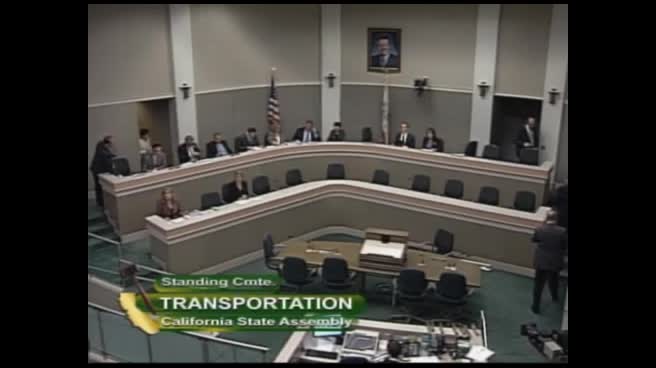 13MIN
Assembly Standing Committee on Transportation
Bill Author


