AB 539: Search warrants.
- Session Year: 2015-2016
- House: Assembly
- Latest Version Date: 2015-07-16
Existing law provides that a search warrant may only be issued upon probable cause, supported by affidavit, naming or describing the person to be searched or searched for, and particularly describing the property, thing, or things and the place to be searched. Existing law also states the grounds upon which a search warrant may be issued, including, among other grounds, when a sample of the blood of a person constitutes evidence that tends to show a violation of specified laws prohibiting driving a vehicle while under the influence of alcohol or drugs, the person from whom the sample is being sought has refused an officers request to submit to, or has failed to complete, a blood test, as specified, and the sample will be drawn from the person in a reasonable, medically approved manner.
Existing law prohibits a person from operating a vessel or manipulating water skis, an aquaplane, or similar device while under the influence of drugs or alcohol or when the person is addicted to drugs, as specified. Existing law defines a vessel for purposes of these provisions to include a watercraft or other artificial contrivance used or capable of being used as a means of transportation on water, except as specified.
This bill would authorize the issuance of a search warrant on the grounds that (1) a sample of the blood of a person constitutes evidence that tends to show a violation of specified laws prohibiting, among other crimes, the operation of a vessel, or manipulating water skis, an aquaplane, or a similar device, while under the influence of alcohol or drugs, (2) the person from whom the sample is being sought has refused an officers request to submit to, or has failed to complete, a blood test, as specified, and (3) the sample will be drawn from the person in a reasonable, medically approved manner.
This bill would incorporate changes to Section 1524 of the Penal Code proposed by both this bill and AB 1104, which would become operative only if both bills are enacted and become effective on or before January 1, 2016, and this bill is chaptered last.
Existing law provides that a search warrant may only be issued upon probable cause, supported by affidavit, naming or describing the person to be searched or searched for, and particularly describing the property, thing, or things and the place to be searched. Existing law also states the grounds upon which a search warrant may be issued, including, among other grounds, when a sample of the blood of a person constitutes evidence that tends to show a violation of specified laws prohibiting driving a vehicle while under the influence of alcohol or drugs, the person from whom the sample is being sought has refused an officers request to submit to, or has failed to complete, a blood test, as specified, and the sample will be drawn from the person in a reasonable, medically approved manner.
Existing law prohibits a person from operating a vessel or manipulating water skis, an aquaplane, or similar device while under the influence of drugs or alcohol or when the person is addicted to drugs, as specified. Existing law defines a vessel for purposes of these provisions to include a watercraft or other artificial contrivance used or capable of being used as a means of transportation on water, except as specified.
This bill would authorize the issuance of a search warrant on the grounds that (1) a sample of the blood of a person constitutes evidence that tends to show a violation of specified laws prohibiting, among other crimes, the operation of a vessel, or manipulating water skis, an aquaplane, or a similar device, while under the influence of alcohol or drugs, (2) the person from whom the sample is being sought has refused an officers request to submit to, or has failed to complete, a blood test, as specified, and (3) the sample will be drawn from the person in a reasonable, medically approved manner.
(a)A search warrant may be issued upon any of the following grounds:
(1)When the property was stolen or embezzled.
(2)When the property or things were used as the means of committing a felony.
(3)When the property or things are in the possession of any person with the intent to use them as a means of committing a public offense, or in the possession of another to whom he or she may have delivered them for the purpose of concealing them or preventing them from being discovered.
(4)When the property or things to be seized consist of any item or constitute any evidence that tends to show a felony has been committed, or tends to show that a particular person has committed a felony.
(5)When the property or things to be seized consist of evidence that tends to show that sexual exploitation of a child, in violation of Section 311.3, or possession of matter depicting sexual conduct of a person under 18 years of age, in violation of Section 311.11, has occurred or is occurring.
(6)When there is a warrant to arrest a person.
(7)When a provider of electronic communication service or remote computing service has records or evidence, as specified in Section 1524.3, showing that property was stolen or embezzled constituting a misdemeanor, or that property or things are in the possession of any person with the intent to use them as a means of committing a misdemeanor public offense, or in the possession of another to whom he or she may have delivered them for the purpose of concealing them or preventing their discovery.
(8)When the property or things to be seized include an item or any evidence that tends to show a violation of Section 3700.5 of the Labor Code, or tends to show that a particular person has violated Section 3700.5 of the Labor Code.
(9)When the property or things to be seized include a firearm or any other deadly weapon at the scene of, or at the premises occupied or under the control of the person arrested in connection with, a domestic violence incident involving a threat to human life or a physical assault as provided in Section 18250. This section does not affect warrantless seizures otherwise authorized by Section 18250.
(10)When the property or things to be seized include a firearm or any other deadly weapon that is owned by, or in the possession of, or in the custody or control of, a person described in subdivision (a) of Section 8102 of the Welfare and Institutions Code.
(11)When the property or things to be seized include a firearm that is owned by, or in the possession of, or in the custody or control of, a person who is subject to the prohibitions regarding firearms pursuant to Section 6389 of the Family Code, if a prohibited firearm is possessed, owned, in the custody of, or controlled by a person against whom a protective order has been issued pursuant to Section 6218 of the Family Code, the person has been lawfully served with that order, and the person has failed to relinquish the firearm as required by law.
(12)When the information to be received from the use of a tracking device constitutes evidence that tends to show that either a felony, a misdemeanor violation of the Fish and Game Code, or a misdemeanor violation of the Public Resources Code has been committed or is being committed, tends to show that a particular person has committed a felony, a misdemeanor violation of the Fish and Game Code, or a misdemeanor violation of the Public Resources Code, or is committing a felony, a misdemeanor violation of the Fish and Game Code, or a misdemeanor violation of the Public Resources Code, or will assist in locating an individual who has committed or is committing a felony, a misdemeanor violation of the Fish and Game Code, or a misdemeanor violation of the Public Resources Code. A tracking device search warrant issued pursuant to this paragraph shall be executed in a manner meeting the requirements specified in subdivision (b) of Section 1534.
(13)When a sample of the blood of a person constitutes evidence that tends to show a violation of Section 23140, 23152, or 23153 of the Vehicle Code and the person from whom the sample is being sought has refused an officers request to submit to, or has failed to complete, a blood test as required by Section 23612 of the Vehicle Code, and the sample will be drawn from the person in a reasonable, medically approved manner. This paragraph is not intended to abrogate a courts mandate to determine the propriety of the issuance of a search warrant on a case-by-case basis.
(14)Beginning January 1, 2016, the property or things to be seized are firearms or ammunition or both that are owned by, in the possession of, or in the custody or control of a person who is the subject of a gun violence restraining order that has been issued pursuant to Division 3.2 (commencing with Section 18100) of Title 2 of Part 6, if a prohibited firearm or ammunition or both is possessed, owned, in the custody of, or controlled by a person against whom a gun violence restraining order has been issued, the person has been lawfully served with that order, and the person has failed to relinquish the firearm as required by law.
(15)(A)When all of the following apply:
(i)A sample of the blood of a person constitutes evidence that tends to show a violation of subdivision (b), (c), (d), (e), or (f) of Section 655 of the Harbors and Navigation Code.
(ii)The person from whom the sample is being sought has refused an officers request to submit to, or has failed to complete, a blood test as required by Section 655.1 of the Harbors and Navigation Code.
(iii)The sample will be drawn from the person in a reasonable, medically approved manner.
(B)This paragraph is not intended to abrogate a courts mandate to determine the propriety of the issuance of a search warrant on a case-by-case basis.
(b)The property, things, person, or persons described in subdivision (a) may be taken on the warrant from any place, or from any person in whose possession the property or things may be.
(c)Notwithstanding subdivision (a) or (b), no search warrant shall issue for any documentary evidence in the possession or under the control of any person who is a lawyer as defined in Section 950 of the Evidence Code, a physician as defined in Section 990 of the Evidence Code, a psychotherapist as defined in Section 1010 of the Evidence Code, or a member of the clergy as defined in Section 1030 of the Evidence Code, and who is not reasonably suspected of engaging or having engaged in criminal activity related to the documentary evidence for which a warrant is requested unless the following procedure has been complied with:
(1)At the time of the issuance of the warrant, the court shall appoint a special master in accordance with subdivision (d) to accompany the person who will serve the warrant. Upon service of the warrant, the special master shall inform the party served of the specific items being sought and that the party shall have the opportunity to provide the items requested. If the party, in the judgment of the special master, fails to provide the items requested, the special master shall conduct a search for the items in the areas indicated in the search warrant.
(2)(A)If the party who has been served states that an item or items should not be disclosed, they shall be sealed by the special master and taken to court for a hearing.
(B)At the hearing, the party searched shall be entitled to raise any issues that may be raised pursuant to Section 1538.5 as well as a claim that the item or items are privileged, as provided by law. The hearing shall be held in the superior court. The court shall provide sufficient time for the parties to obtain counsel and make any motions or present any evidence. The hearing shall be held within three days of the service of the warrant unless the court makes a finding that the expedited hearing is impracticable. In that case the matter shall be heard at the earliest possible time.
(C)If an item or items are taken to court for a hearing, any limitations of time prescribed in Chapter 2 (commencing with Section 799) of Title 3 of Part 2 shall be tolled from the time of the seizure until the final conclusion of the hearing, including any associated writ or appellate proceedings.
(3)The warrant shall, whenever practicable, be served during normal business hours. In addition, the warrant shall be served upon a party who appears to have possession or control of the items sought. If, after reasonable efforts, the party serving the warrant is unable to locate the person, the special master shall seal and return to the court, for determination by the court, any item that appears to be privileged as provided by law.
(d)(1)As used in this section, a special master is an attorney who is a member in good standing of the California State Bar and who has been selected from a list of qualified attorneys that is maintained by the State Bar particularly for the purposes of conducting the searches described in this section. These attorneys shall serve without compensation. A special master shall be considered a public employee, and the governmental entity that caused the search warrant to be issued shall be considered the employer of the special master and the applicable public entity, for purposes of Division 3.6 (commencing with Section 810) of Title 1 of the Government Code, relating to claims and actions against public entities and public employees. In selecting the special master, the court shall make every reasonable effort to ensure that the person selected has no relationship with any of the parties involved in the pending matter. Any information obtained by the special master shall be confidential and may not be divulged except in direct response to inquiry by the court.
(2)In any case in which the magistrate determines that, after reasonable efforts have been made to obtain a special master, a special master is not available and would not be available within a reasonable period of time, the magistrate may direct the party seeking the order to conduct the search in the manner described in this section in lieu of the special master.
(e)Any search conducted pursuant to this section by a special master may be conducted in a manner that permits the party serving the warrant or his or her designee to accompany the special master as he or she conducts his or her search. However, that party or his or her designee may not participate in the search nor shall he or she examine any of the items being searched by the special master except upon agreement of the party upon whom the warrant has been served.
(f)As used in this section, documentary evidence includes, but is not limited to, writings, documents, blueprints, drawings, photographs, computer printouts, microfilms, X-rays, files, diagrams, ledgers, books, tapes, audio and video recordings, films, and papers of any type or description.
(g)No warrant shall issue for any item or items described in Section 1070 of the Evidence Code.
(h)Notwithstanding any other law, no claim of attorney work product as described in Chapter 4 (commencing with Section 2018.010) of Title 4 of Part 4 of the Code of Civil Procedure shall be sustained where there is probable cause to believe that the lawyer is engaging or has engaged in criminal activity related to the documentary evidence for which a warrant is requested unless it is established at the hearing with respect to the documentary evidence seized under the warrant that the services of the lawyer were not sought or obtained to enable or aid anyone to commit or plan to commit a crime or a fraud.
(i)Nothing in this section is intended to limit an attorneys ability to request an in camera hearing pursuant to the holding of the Supreme Court of California in People v. Superior Court (Laff) (2001) 25 Cal.4th 703.
(j)In addition to any other circumstance permitting a magistrate to issue a warrant for a person or property in another county, when the property or things to be seized consist of any item or constitute any evidence that tends to show a violation of Section 530.5, the magistrate may issue a warrant to search a person or property located in another county if the person whose identifying information was taken or used resides in the same county as the issuing court.
(k)This section shall not be construed to create a cause of action against any foreign or California corporation, its officers, employees, agents, or other specified persons for providing location information.
SEC. 1.5.Section 1524 of the Penal Code is amended to read:1524.(a)A search warrant may be issued upon any of the following grounds:
(1)When the property was stolen or embezzled.
(2)When the property or things were used as the means of committing a felony.
(3)When the property or things are in the possession of any person with the intent to use them as a means of committing a public offense, or in the possession of another to whom he or she may have delivered them for the purpose of concealing them or preventing them from being discovered.
(4)When the property or things to be seized consist of an item or constitute evidence that tends to show a felony has been committed, or tends to show that a particular person has committed a felony.
(5)When the property or things to be seized consist of evidence that tends to show that sexual exploitation of a child, in violation of Section 311.3, or possession of matter depicting sexual conduct of a person under 18 years of age, in violation of Section 311.11, has occurred or is occurring.
(6)When there is a warrant to arrest a person.
(7)When a provider of electronic communication service or remote computing service has records or evidence, as specified in Section 1524.3, showing that property was stolen or embezzled constituting a misdemeanor, or that property or things are in the possession of any person with the intent to use them as a means of committing a misdemeanor public offense, or in the possession of another to whom he or she may have delivered them for the purpose of concealing them or preventing their discovery.
(8)When the property or things to be seized include an item or evidence that tends to show a violation of Section 3700.5 of the Labor Code, or tends to show that a particular person has violated Section 3700.5 of the Labor Code.
(9)When the property or things to be seized include a firearm or other deadly weapon at the scene of, or at the premises occupied or under the control of the person arrested in connection with, a domestic violence incident involving a threat to human life or a physical assault as provided in Section 18250. This section does not affect warrantless seizures otherwise authorized by Section 18250.
(10)When the property or things to be seized include a firearm or other deadly weapon that is owned by, or in the possession of, or in the custody or control of, a person described in subdivision (a) of Section 8102 of the Welfare and Institutions Code.
(11)When the property or things to be seized include a firearm that is owned by, or in the possession of, or in the custody or control of, a person who is subject to the prohibitions regarding firearms pursuant to Section 6389 of the Family Code, if a prohibited firearm is possessed, owned, in the custody of, or controlled by a person against whom a protective order has been issued pursuant to Section 6218 of the Family Code, the person has been lawfully served with that order, and the person has failed to relinquish the firearm as required by law.
(12)When the information to be received from the use of a tracking device constitutes evidence that tends to show that either a felony, a misdemeanor violation of the Fish and Game Code, or a misdemeanor violation of the Public Resources Code has been committed or is being committed, tends to show that a particular person has committed a felony, a misdemeanor violation of the Fish and Game Code, or a misdemeanor violation of the Public Resources Code, or is committing a felony, a misdemeanor violation of the Fish and Game Code, or a misdemeanor violation of the Public Resources Code, or will assist in locating an individual who has committed or is committing a felony, a misdemeanor violation of the Fish and Game Code, or a misdemeanor violation of the Public Resources Code. A tracking device search warrant issued pursuant to this paragraph shall be executed in a manner meeting the requirements specified in subdivision (b) of Section 1534.
(13)When a sample of the blood of a person constitutes evidence that tends to show a violation of Section 23140, 23152, or 23153 of the Vehicle Code and the person from whom the sample is being sought has refused an officers request to submit to, or has failed to complete, a blood test as required by Section 23612 of the Vehicle Code, and the sample will be drawn from the person in a reasonable, medically approved manner. This paragraph is not intended to abrogate a courts mandate to determine the propriety of the issuance of a search warrant on a case-by-case basis.
(14)Beginning January 1, 2016, the property or things to be seized are firearms or ammunition or both that are owned by, in the possession of, or in the custody or control of a person who is the subject of a gun violence restraining order that has been issued pursuant to Division 3.2 (commencing with Section 18100) of Title 2 of Part 6, if a prohibited firearm or ammunition or both is possessed, owned, in the custody of, or controlled by a person against whom a gun violence restraining order has been issued, the person has been lawfully served with that order, and the person has failed to relinquish the firearm as required by law.
(15)When the property or things to be seized are controlled substances or a device, contrivance, instrument, or paraphernalia used for unlawfully using or administering a controlled substance pursuant to the authority described in Section 11472 of the Health and Safety Code.
(16)(A)When all of the following apply:
(i)A sample of the blood of a person constitutes evidence that tends to show a violation of subdivision (b), (c), (d), (e), or (f) of Section 655 of the Harbors and Navigation Code.
(ii)The person from whom the sample is being sought has refused an officers request to submit to, or has failed to complete, a blood test as required by Section 655.1 of the Harbors and Navigation Code.
(iii)The sample will be drawn from the person in a reasonable, medically approved manner.
(B)This paragraph is not intended to abrogate a courts mandate to determine the propriety of the issuance of a search warrant on a case-by-case basis.
(b)The property, things, person, or persons described in subdivision (a) may be taken on the warrant from any place, or from any person in whose possession the property or things may be.
(c)Notwithstanding subdivision (a) or (b), no search warrant shall issue for any documentary evidence in the possession or under the control of any person who is a lawyer as defined in Section 950 of the Evidence Code, a physician as defined in Section 990 of the Evidence Code, a psychotherapist as defined in Section 1010 of the Evidence Code, or a member of the clergy as defined in Section 1030 of the Evidence Code, and who is not reasonably suspected of engaging or having engaged in criminal activity related to the documentary evidence for which a warrant is requested unless the following procedure has been complied with:
(1)At the time of the issuance of the warrant, the court shall appoint a special master in accordance with subdivision (d) to accompany the person who will serve the warrant. Upon service of the warrant, the special master shall inform the party served of the specific items being sought and that the party shall have the opportunity to provide the items requested. If the party, in the judgment of the special master, fails to provide the items requested, the special master shall conduct a search for the items in the areas indicated in the search warrant.
(2)(A)If the party who has been served states that an item or items should not be disclosed, they shall be sealed by the special master and taken to court for a hearing.
(B)At the hearing, the party searched shall be entitled to raise any issues that may be raised pursuant to Section 1538.5 as well as a claim that the item or items are privileged, as provided by law. The hearing shall be held in the superior court. The court shall provide sufficient time for the parties to obtain counsel and make motions or present evidence. The hearing shall be held within three days of the service of the warrant unless the court makes a finding that the expedited hearing is impracticable. In that case, the matter shall be heard at the earliest possible time.
(C)If an item or items are taken to court for a hearing, any limitations of time prescribed in Chapter 2 (commencing with Section 799) of Title 3 of Part 2 shall be tolled from the time of the seizure until the final conclusion of the hearing, including any associated writ or appellate proceedings.
(3)The warrant shall, whenever practicable, be served during normal business hours. In addition, the warrant shall be served upon a party who appears to have possession or control of the items sought. If, after reasonable efforts, the party serving the warrant is unable to locate the person, the special master shall seal and return to the court, for determination by the court, any item that appears to be privileged as provided by law.
(d)(1)As used in this section, a special master is an attorney who is a member in good standing of the California State Bar and who has been selected from a list of qualified attorneys that is maintained by the State Bar particularly for the purposes of conducting the searches described in this section. These attorneys shall serve without compensation. A special master shall be considered a public employee, and the governmental entity that caused the search warrant to be issued shall be considered the employer of the special master and the applicable public entity, for purposes of Division 3.6 (commencing with Section 810) of Title 1 of the Government Code, relating to claims and actions against public entities and public employees. In selecting the special master, the court shall make every reasonable effort to ensure that the person selected has no relationship with any of the parties involved in the pending matter. Information obtained by the special master shall be confidential and may not be divulged except in direct response to inquiry by the court.
(2)In any case in which the magistrate determines that, after reasonable efforts have been made to obtain a special master, a special master is not available and would not be available within a reasonable period of time, the magistrate may direct the party seeking the order to conduct the search in the manner described in this section in lieu of the special master.
(e)Any search conducted pursuant to this section by a special master may be conducted in a manner that permits the party serving the warrant or his or her designee to accompany the special master as he or she conducts his or her search. However, that party or his or her designee may not participate in the search nor shall he or she examine any of the items being searched by the special master except upon agreement of the party upon whom the warrant has been served.
(f)As used in this section, documentary evidence includes, but is not limited to, writings, documents, blueprints, drawings, photographs, computer printouts, microfilms, X-rays, files, diagrams, ledgers, books, tapes, audio and video recordings, films, and papers of any type or description.
(g)No warrant shall issue for any item or items described in Section 1070 of the Evidence Code.
(h)Notwithstanding any other law, no claim of attorney work product as described in Chapter 4 (commencing with Section 2018.010) of Title 4 of Part 4 of the Code of Civil Procedure shall be sustained where there is probable cause to believe that the lawyer is engaging or has engaged in criminal activity related to the documentary evidence for which a warrant is requested unless it is established at the hearing with respect to the documentary evidence seized under the warrant that the services of the lawyer were not sought or obtained to enable or aid anyone to commit or plan to commit a crime or a fraud.
(i)Nothing in this section is intended to limit an attorneys ability to request an in-camera hearing pursuant to the holding of the Supreme Court of California in People v. Superior Court (Laff) (2001) 25 Cal.4th 703.
(j)In addition to any other circumstance permitting a magistrate to issue a warrant for a person or property in another county, when the property or things to be seized consist of any item or constitute evidence that tends to show a violation of Section 530.5, the magistrate may issue a warrant to search a person or property located in another county if the person whose identifying information was taken or used resides in the same county as the issuing court.
(k)This section shall not be construed to create a cause of action against any foreign or California corporation, its officers, employees, agents, or other specified persons for providing location information.
SEC. 2.Section 1.5 of this bill incorporates amendments to Section 1524 of the Penal Code proposed by both this bill and Assembly Bill 1104. It shall only become operative if (1) both bills are enacted and become effective on or before January 1, 2016, (2) each bill amends Section 1524 of the Penal Code, and (3) this bill is enacted after Assembly Bill 1104, in which case Section 1 of this bill shall not become operative.
(a)A search warrant may be issued upon any of the following grounds:
(1)When the property was stolen or embezzled.
(2)When the property or things were used as the means of committing a felony.
(3)When the property or things are in the possession of any person with the intent to use them as a means of committing a public offense, or in the possession of another to whom he or she may have delivered them for the purpose of concealing them or preventing them from being discovered.
(4)When the property or things to be seized consist of any item or constitute any evidence that tends to show a felony has been committed, or tends to show that a particular person has committed a felony.
(5)When the property or things to be seized consist of evidence that tends to show that sexual exploitation of a child, in violation of Section 311.3, or possession of matter depicting sexual conduct of a person under 18 years of age, in violation of Section 311.11, has occurred or is occurring.
(6)When there is a warrant to arrest a person.
(7)When a provider of electronic communication service or remote computing service has records or evidence, as specified in Section 1524.3, showing that property was stolen or embezzled constituting a misdemeanor, or that property or things are in the possession of any person with the intent to use them as a means of committing a misdemeanor public offense, or in the possession of another to whom he or she may have delivered them for the purpose of concealing them or preventing their discovery.
(8)When the property or things to be seized include an item or any evidence that tends to show a violation of Section 3700.5 of the Labor Code, or tends to show that a particular person has violated Section 3700.5 of the Labor Code.
(9)When the property or things to be seized include a firearm or any other deadly weapon at the scene of, or at the premises occupied or under the control of the person arrested in connection with, a domestic violence incident involving a threat to human life or a physical assault as provided in Section 18250. This section does not affect warrantless seizures otherwise authorized by Section 18250.
(10)When the property or things to be seized include a firearm or any other deadly weapon that is owned by, or in the possession of, or in the custody or control of, a person described in subdivision (a) of Section 8102 of the Welfare and Institutions Code.
(11)When the property or things to be seized include a firearm that is owned by, or in the possession of, or in the custody or control of, a person who is subject to the prohibitions regarding firearms pursuant to Section 6389 of the Family Code, if a prohibited firearm is possessed, owned, in the custody of, or controlled by a person against whom a protective order has been issued pursuant to Section 6218 of the Family Code, the person has been lawfully served with that order, and the person has failed to relinquish the firearm as required by law.
(12)When the information to be received from the use of a tracking device constitutes evidence that tends to show that either a felony, a misdemeanor violation of the Fish and Game Code, or a misdemeanor violation of the Public Resources Code has been committed or is being committed, tends to show that a particular person has committed a felony, a misdemeanor violation of the Fish and Game Code, or a misdemeanor violation of the Public Resources Code, or is committing a felony, a misdemeanor violation of the Fish and Game Code, or a misdemeanor violation of the Public Resources Code, or will assist in locating an individual who has committed or is committing a felony, a misdemeanor violation of the Fish and Game Code, or a misdemeanor violation of the Public Resources Code. A tracking device search warrant issued pursuant to this paragraph shall be executed in a manner meeting the requirements specified in subdivision (b) of Section 1534.
(13)When a sample of the blood of a person constitutes evidence that tends to show a violation of Section 23140, 23152, or 23153 of the Vehicle Code and the person from whom the sample is being sought has refused an officers request to submit to, or has failed to complete, a blood test as required by Section 23612 of the Vehicle Code, and the sample will be drawn from the person in a reasonable, medically approved manner. This paragraph is not intended to abrogate a courts mandate to determine the propriety of the issuance of a search warrant on a case-by-case basis.
(14)Beginning January 1, 2016, the property or things to be seized are firearms or ammunition or both that are owned by, in the possession of, or in the custody or control of a person who is the subject of a gun violence restraining order that has been issued pursuant to Division 3.2 (commencing with Section 18100) of Title 2 of Part 6, if a prohibited firearm or ammunition or both is possessed, owned, in the custody of, or controlled by a person against whom a gun violence restraining order has been issued, the person has been lawfully served with that order, and the person has failed to relinquish the firearm as required by law.
(15)(A)When all of the following apply:
(i)A sample of the blood of a person constitutes evidence that tends to show a violation of subdivision (b), (c), (d), (e), or (f) of Section 655 of the Harbors and Navigation Code.
(ii)The person from whom the sample is being sought has refused an officers request to submit to, or has failed to complete, a blood test as required by Section 655.1 of the Harbors and Navigation Code.
(iii)The sample will be drawn from the person in a reasonable, medically approved manner.
(B)This paragraph is not intended to abrogate a courts mandate to determine the propriety of the issuance of a search warrant on a case-by-case basis.
(b)The property, things, person, or persons described in subdivision (a) may be taken on the warrant from any place, or from any person in whose possession the property or things may be.
(c)Notwithstanding subdivision (a) or (b), no search warrant shall issue for any documentary evidence in the possession or under the control of any person who is a lawyer as defined in Section 950 of the Evidence Code, a physician as defined in Section 990 of the Evidence Code, a psychotherapist as defined in Section 1010 of the Evidence Code, or a member of the clergy as defined in Section 1030 of the Evidence Code, and who is not reasonably suspected of engaging or having engaged in criminal activity related to the documentary evidence for which a warrant is requested unless the following procedure has been complied with:
(1)At the time of the issuance of the warrant, the court shall appoint a special master in accordance with subdivision (d) to accompany the person who will serve the warrant. Upon service of the warrant, the special master shall inform the party served of the specific items being sought and that the party shall have the opportunity to provide the items requested. If the party, in the judgment of the special master, fails to provide the items requested, the special master shall conduct a search for the items in the areas indicated in the search warrant.
(2)(A)If the party who has been served states that an item or items should not be disclosed, they shall be sealed by the special master and taken to court for a hearing.
(B)At the hearing, the party searched shall be entitled to raise any issues that may be raised pursuant to Section 1538.5 as well as a claim that the item or items are privileged, as provided by law. The hearing shall be held in the superior court. The court shall provide sufficient time for the parties to obtain counsel and make any motions or present any evidence. The hearing shall be held within three days of the service of the warrant unless the court makes a finding that the expedited hearing is impracticable. In that case the matter shall be heard at the earliest possible time.
(C)If an item or items are taken to court for a hearing, any limitations of time prescribed in Chapter 2 (commencing with Section 799) of Title 3 of Part 2 shall be tolled from the time of the seizure until the final conclusion of the hearing, including any associated writ or appellate proceedings.
(3)The warrant shall, whenever practicable, be served during normal business hours. In addition, the warrant shall be served upon a party who appears to have possession or control of the items sought. If, after reasonable efforts, the party serving the warrant is unable to locate the person, the special master shall seal and return to the court, for determination by the court, any item that appears to be privileged as provided by law.
(d)(1)As used in this section, a special master is an attorney who is a member in good standing of the California State Bar and who has been selected from a list of qualified attorneys that is maintained by the State Bar particularly for the purposes of conducting the searches described in this section. These attorneys shall serve without compensation. A special master shall be considered a public employee, and the governmental entity that caused the search warrant to be issued shall be considered the employer of the special master and the applicable public entity, for purposes of Division 3.6 (commencing with Section 810) of Title 1 of the Government Code, relating to claims and actions against public entities and public employees. In selecting the special master, the court shall make every reasonable effort to ensure that the person selected has no relationship with any of the parties involved in the pending matter. Any information obtained by the special master shall be confidential and may not be divulged except in direct response to inquiry by the court.
(2)In any case in which the magistrate determines that, after reasonable efforts have been made to obtain a special master, a special master is not available and would not be available within a reasonable period of time, the magistrate may direct the party seeking the order to conduct the search in the manner described in this section in lieu of the special master.
(e)Any search conducted pursuant to this section by a special master may be conducted in a manner that permits the party serving the warrant or his or her designee to accompany the special master as he or she conducts his or her search. However, that party or his or her designee may not participate in the search nor shall he or she examine any of the items being searched by the special master except upon agreement of the party upon whom the warrant has been served.
(f)As used in this section, documentary evidence includes, but is not limited to, writings, documents, blueprints, drawings, photographs, computer printouts, microfilms, X-rays, files, diagrams, ledgers, books, tapes, audio and video recordings, films, and papers of any type or description.
(g)No warrant shall issue for any item or items described in Section 1070 of the Evidence Code.
(h)Notwithstanding any other law, no claim of attorney work product as described in Chapter 4 (commencing with Section 2018.010) of Title 4 of Part 4 of the Code of Civil Procedure shall be sustained where there is probable cause to believe that the lawyer is engaging or has engaged in criminal activity related to the documentary evidence for which a warrant is requested unless it is established at the hearing with respect to the documentary evidence seized under the warrant that the services of the lawyer were not sought or obtained to enable or aid anyone to commit or plan to commit a crime or a fraud.
(i)Nothing in this section is intended to limit an attorneys ability to request an in camera hearing pursuant to the holding of the Supreme Court of California in People v. Superior Court (Laff) (2001) 25 Cal.4th 703.
(j)In addition to any other circumstance permitting a magistrate to issue a warrant for a person or property in another county, when the property or things to be seized consist of any item or constitute any evidence that tends to show a violation of Section 530.5, the magistrate may issue a warrant to search a person or property located in another county if the person whose identifying information was taken or used resides in the same county as the issuing court.
(k)This section shall not be construed to create a cause of action against any foreign or California corporation, its officers, employees, agents, or other specified persons for providing location information.
SEC. 1.5.Section 1524 of the Penal Code is amended to read:1524.(a)A search warrant may be issued upon any of the following grounds:
(1)When the property was stolen or embezzled.
(2)When the property or things were used as the means of committing a felony.
(3)When the property or things are in the possession of any person with the intent to use them as a means of committing a public offense, or in the possession of another to whom he or she may have delivered them for the purpose of concealing them or preventing them from being discovered.
(4)When the property or things to be seized consist of any an item or constitute any evidence that tends to show a felony has been committed, or tends to show that a particular person has committed a felony.
(5)When the property or things to be seized consist of evidence that tends to show that sexual exploitation of a child, in violation of Section 311.3, or possession of matter depicting sexual conduct of a person under 18 years of age, in violation of Section 311.11, has occurred or is occurring.
(6)When there is a warrant to arrest a person.
(7)When a provider of electronic communication service or remote computing service has records or evidence, as specified in Section 1524.3, showing that property was stolen or embezzled constituting a misdemeanor, or that property or things are in the possession of any person with the intent to use them as a means of committing a misdemeanor public offense, or in the possession of another to whom he or she may have delivered them for the purpose of concealing them or preventing their discovery.
(8)When the property or things to be seized include an item or any evidence that tends to show a violation of Section 3700.5 of the Labor Code, or tends to show that a particular person has violated Section 3700.5 of the Labor Code.
(9)When the property or things to be seized include a firearm or any other deadly weapon at the scene of, or at the premises occupied or under the control of the person arrested in connection with, a domestic violence incident involving a threat to human life or a physical assault as provided in Section 18250. This section does not affect warrantless seizures otherwise authorized by Section 18250.
(10)When the property or things to be seized include a firearm or any other deadly weapon that is owned by, or in the possession of, or in the custody or control of, a person described in subdivision (a) of Section 8102 of the Welfare and Institutions Code.
(11)When the property or things to be seized include a firearm that is owned by, or in the possession of, or in the custody or control of, a person who is subject to the prohibitions regarding firearms pursuant to Section 6389 of the Family Code, if a prohibited firearm is possessed, owned, in the custody of, or controlled by a person against whom a protective order has been issued pursuant to Section 6218 of the Family Code, the person has been lawfully served with that order, and the person has failed to relinquish the firearm as required by law.
(12)When the information to be received from the use of a tracking device constitutes evidence that tends to show that either a felony, a misdemeanor violation of the Fish and Game Code, or a misdemeanor violation of the Public Resources Code has been committed or is being committed, tends to show that a particular person has committed a felony, a misdemeanor violation of the Fish and Game Code, or a misdemeanor violation of the Public Resources Code, or is committing a felony, a misdemeanor violation of the Fish and Game Code, or a misdemeanor violation of the Public Resources Code, or will assist in locating an individual who has committed or is committing a felony, a misdemeanor violation of the Fish and Game Code, or a misdemeanor violation of the Public Resources Code. A tracking device search warrant issued pursuant to this paragraph shall be executed in a manner meeting the requirements specified in subdivision (b) of Section 1534.
(13)When a sample of the blood of a person constitutes evidence that tends to show a violation of Section 23140, 23152, or 23153 of the Vehicle Code and the person from whom the sample is being sought has refused an officers request to submit to, or has failed to complete, a blood test as required by Section 23612 of the Vehicle Code, and the sample will be drawn from the person in a reasonable, medically approved manner. This paragraph is not intended to abrogate a courts mandate to determine the propriety of the issuance of a search warrant on a case-by-case basis.
(14)Beginning January 1, 2016, the property or things to be seized are firearms or ammunition or both that are owned by, in the possession of, or in the custody or control of a person who is the subject of a gun violence restraining order that has been issued pursuant to Division 3.2 (commencing with Section 18100) of Title 2 of Part 6, if a prohibited firearm or ammunition or both is possessed, owned, in the custody of, or controlled by a person against whom a gun violence restraining order has been issued, the person has been lawfully served with that order, and the person has failed to relinquish the firearm as required by law.
(15)When the property or things to be seized are controlled substances or a device, contrivance, instrument, or paraphanelia used for unlawfully using or administering a controlled substance pursuant to the authority described in Section 11472 of the Health and Safety Code.
(16)(A)When all of the following apply:
(i)A sample of the blood of a person constitutes evidence that tends to show a violation of subdivision (b), (c), (d), (e), or (f) of Section 655 of the Harbors and Navigation Code.
(ii)The person from whom the sample is being sought has refused an officers request to submit to, or has failed to complete, a blood test as required by Section 655.1 of the Harbors and Navigation Code.
(iii)The sample will be drawn from the person in a reasonable, medically approved manner.
(B)This paragraph is not intended to abrogate a courts mandate to determine the propriety of the issuance of a search warrant on a case-by-case basis.
(b)The property, things, person, or persons described in subdivision (a) may be taken on the warrant from any place, or from any person in whose possession the property or things may be.
(c)Notwithstanding subdivision (a) or (b), no search warrant shall issue for any documentary evidence in the possession or under the control of any person who is a lawyer as defined in Section 950 of the Evidence Code, a physician as defined in Section 990 of the Evidence Code, a psychotherapist as defined in Section 1010 of the Evidence Code, or a member of the clergy as defined in Section 1030 of the Evidence Code, and who is not reasonably suspected of engaging or having engaged in criminal activity related to the documentary evidence for which a warrant is requested unless the following procedure has been complied with:
(1)At the time of the issuance of the warrant, the court shall appoint a special master in accordance with subdivision (d) to accompany the person who will serve the warrant. Upon service of the warrant, the special master shall inform the party served of the specific items being sought and that the party shall have the opportunity to provide the items requested. If the party, in the judgment of the special master, fails to provide the items requested, the special master shall conduct a search for the items in the areas indicated in the search warrant.
(2)(A)If the party who has been served states that an item or items should not be disclosed, they shall be sealed by the special master and taken to court for a hearing.
(B)At the hearing, the party searched shall be entitled to raise any issues that may be raised pursuant to Section 1538.5 as well as a claim that the item or items are privileged, as provided by law. The hearing shall be held in the superior court. The court shall provide sufficient time for the parties to obtain counsel and make any motions or present any evidence. The hearing shall be held within three days of the service of the warrant unless the court makes a finding that the expedited hearing is impracticable. In that case case, the matter shall be heard at the earliest possible time.
(C)If an item or items are taken to court for a hearing, any limitations of time prescribed in Chapter 2 (commencing with Section 799) of Title 3 of Part 2 shall be tolled from the time of the seizure until the final conclusion of the hearing, including any associated writ or appellate proceedings.
(3)The warrant shall, whenever practicable, be served during normal business hours. In addition, the warrant shall be served upon a party who appears to have possession or control of the items sought. If, after reasonable efforts, the party serving the warrant is unable to locate the person, the special master shall seal and return to the court, for determination by the court, any item that appears to be privileged as provided by law.
(d)(1)As used in this section, a special master is an attorney who is a member in good standing of the California State Bar and who has been selected from a list of qualified attorneys that is maintained by the State Bar particularly for the purposes of conducting the searches described in this section. These attorneys shall serve without compensation. A special master shall be considered a public employee, and the governmental entity that caused the search warrant to be issued shall be considered the employer of the special master and the applicable public entity, for purposes of Division 3.6 (commencing with Section 810) of Title 1 of the Government Code, relating to claims and actions against public entities and public employees. In selecting the special master, the court shall make every reasonable effort to ensure that the person selected has no relationship with any of the parties involved in the pending matter. Any information Information obtained by the special master shall be confidential and may not be divulged except in direct response to inquiry by the court.
(2)In any case in which the magistrate determines that, after reasonable efforts have been made to obtain a special master, a special master is not available and would not be available within a reasonable period of time, the magistrate may direct the party seeking the order to conduct the search in the manner described in this section in lieu of the special master.
(e)Any search conducted pursuant to this section by a special master may be conducted in a manner that permits the party serving the warrant or his or her designee to accompany the special master as he or she conducts his or her search. However, that party or his or her designee may not participate in the search nor shall he or she examine any of the items being searched by the special master except upon agreement of the party upon whom the warrant has been served.
(f)As used in this section, documentary evidence includes, but is not limited to, writings, documents, blueprints, drawings, photographs, computer printouts, microfilms, X-rays, files, diagrams, ledgers, books, tapes, audio and video recordings, films, and papers of any type or description.
(g)No warrant shall issue for any item or items described in Section 1070 of the Evidence Code.
(h)Notwithstanding any other law, no claim of attorney work product as described in Chapter 4 (commencing with Section 2018.010) of Title 4 of Part 4 of the Code of Civil Procedure shall be sustained where there is probable cause to believe that the lawyer is engaging or has engaged in criminal activity related to the documentary evidence for which a warrant is requested unless it is established at the hearing with respect to the documentary evidence seized under the warrant that the services of the lawyer were not sought or obtained to enable or aid anyone to commit or plan to commit a crime or a fraud.
(i)Nothing in this section is intended to limit an attorneys ability to request an in camera in-camera hearing pursuant to the holding of the Supreme Court of California in People v. Superior Court (Laff) (2001) 25 Cal.4th 703.
(j)In addition to any other circumstance permitting a magistrate to issue a warrant for a person or property in another county, when the property or things to be seized consist of any item or constitute any evidence that tends to show a violation of Section 530.5, the magistrate may issue a warrant to search a person or property located in another county if the person whose identifying information was taken or used resides in the same county as the issuing court.
(k)This section shall not be construed to create a cause of action against any foreign or California corporation, its officers, employees, agents, or other specified persons for providing location information.
SEC. 2.Section 1.5 of this bill incorporates amendments to Section 1524 of the Penal Code proposed by both this bill and Assembly Bill 1104. It shall only become operative if (1) both bills are enacted and become effective on or before January 1, 2016, (2) each bill amends Section 1524 of the Penal Code, and (3) this bill is enacted after Assembly Bill 1104, in which case Section 1 of this bill shall not become operative.
(a)A search warrant may be issued upon any of the following grounds:
(1)When the property was stolen or embezzled.
(2)When the property or things were used as the means of committing a felony.
(3)When the property or things are in the possession of any person with the intent to use them as a means of committing a public offense, or in the possession of another to whom he or she may have delivered them for the purpose of concealing them or preventing them from being discovered.
(4)When the property or things to be seized consist of any item or constitute any evidence that tends to show a felony has been committed, or tends to show that a particular person has committed a felony.
(5)When the property or things to be seized consist of evidence that tends to show that sexual exploitation of a child, in violation of Section 311.3, or possession of matter depicting sexual conduct of a person under 18 years of age, in violation of Section 311.11, has occurred or is occurring.
(6)When there is a warrant to arrest a person.
(7)When a provider of electronic communication service or remote computing service has records or evidence, as specified in Section 1524.3, showing that property was stolen or embezzled constituting a misdemeanor, or that property or things are in the possession of any person with the intent to use them as a means of committing a misdemeanor public offense, or in the possession of another to whom he or she may have delivered them for the purpose of concealing them or preventing their discovery.
(8)When the property or things to be seized include an item or any evidence that tends to show a violation of Section 3700.5 of the Labor Code, or tends to show that a particular person has violated Section 3700.5 of the Labor Code.
(9)When the property or things to be seized include a firearm or any other deadly weapon at the scene of, or at the premises occupied or under the control of the person arrested in connection with, a domestic violence incident involving a threat to human life or a physical assault as provided in Section 18250. This section does not affect warrantless seizures otherwise authorized by Section 18250.
(10)When the property or things to be seized include a firearm or any other deadly weapon that is owned by, or in the possession of, or in the custody or control of, a person described in subdivision (a) of Section 8102 of the Welfare and Institutions Code.
(11)When the property or things to be seized include a firearm that is owned by, or in the possession of, or in the custody or control of, a person who is subject to the prohibitions regarding firearms pursuant to Section 6389 of the Family Code, if a prohibited firearm is possessed, owned, in the custody of, or controlled by a person against whom a protective order has been issued pursuant to Section 6218 of the Family Code, the person has been lawfully served with that order, and the person has failed to relinquish the firearm as required by law.
(12)When the information to be received from the use of a tracking device constitutes evidence that tends to show that either a felony, a misdemeanor violation of the Fish and Game Code, or a misdemeanor violation of the Public Resources Code has been committed or is being committed, tends to show that a particular person has committed a felony, a misdemeanor violation of the Fish and Game Code, or a misdemeanor violation of the Public Resources Code, or is committing a felony, a misdemeanor violation of the Fish and Game Code, or a misdemeanor violation of the Public Resources Code, or will assist in locating an individual who has committed or is committing a felony, a misdemeanor violation of the Fish and Game Code, or a misdemeanor violation of the Public Resources Code. A tracking device search warrant issued pursuant to this paragraph shall be executed in a manner meeting the requirements specified in subdivision (b) of Section 1534.
(13)When a sample of the blood of a person constitutes evidence that tends to show a violation of Section 23140, 23152, or 23153 of the Vehicle Code and the person from whom the sample is being sought has refused an officers request to submit to, or has failed to complete, a blood test as required by Section 23612 of the Vehicle Code, and the sample will be drawn from the person in a reasonable, medically approved manner. This paragraph is not intended to abrogate a courts mandate to determine the propriety of the issuance of a search warrant on a case-by-case basis.
(14)Beginning January 1, 2016, the property or things to be seized are firearms or ammunition or both that are owned by, in the possession of, or in the custody or control of a person who is the subject of a gun violence restraining order that has been issued pursuant to Division 3.2 (commencing with Section 18100) of Title 2 of Part 6, if a prohibited firearm or ammunition or both is possessed, owned, in the custody of, or controlled by a person against whom a gun violence restraining order has been issued, the person has been lawfully served with that order, and the person has failed to relinquish the firearm as required by law.
(15)(A)When all of the following apply:
(i) A sample of the blood of a person constitutes evidence that tends to show a violation of subdivision (b), (c), (d), (e), or (f) of Section 655 of the Harbors and Navigation Code.
(ii) The person from whom the sample is being sought has refused an officers request to submit to, or has failed to complete, a blood test as required by Section 655.1 of the Harbors and Navigation Code.
(iii) The sample will be drawn from the person in a reasonable, medically approved manner.
(B)This paragraph is not intended to abrogate a courts mandate to determine the propriety of the issuance of a search warrant on a case-by-case basis.
(b)The property, things, person, or persons described in subdivision (a) may be taken on the warrant from any place, or from any person in whose possession the property or things may be.
(c)Notwithstanding subdivision (a) or (b), no search warrant shall issue for any documentary evidence in the possession or under the control of any person who is a lawyer as defined in Section 950 of the Evidence Code, a physician as defined in Section 990 of the Evidence Code, a psychotherapist as defined in Section 1010 of the Evidence Code, or a member of the clergy as defined in Section 1030 of the Evidence Code, and who is not reasonably suspected of engaging or having engaged in criminal activity related to the documentary evidence for which a warrant is requested unless the following procedure has been complied with:
(1)At the time of the issuance of the warrant, the court shall appoint a special master in accordance with subdivision (d) to accompany the person who will serve the warrant. Upon service of the warrant, the special master shall inform the party served of the specific items being sought and that the party shall have the opportunity to provide the items requested. If the party, in the judgment of the special master, fails to provide the items requested, the special master shall conduct a search for the items in the areas indicated in the search warrant.
(2)(A)If the party who has been served states that an item or items should not be disclosed, they shall be sealed by the special master and taken to court for a hearing.
(B)At the hearing, the party searched shall be entitled to raise any issues that may be raised pursuant to Section 1538.5 as well as a claim that the item or items are privileged, as provided by law. The hearing shall be held in the superior court. The court shall provide sufficient time for the parties to obtain counsel and make any motions or present any evidence. The hearing shall be held within three days of the service of the warrant unless the court makes a finding that the expedited hearing is impracticable. In that case the matter shall be heard at the earliest possible time.
(C)If an item or items are taken to court for a hearing, any limitations of time prescribed in Chapter 2 (commencing with Section 799) of Title 3 of Part 2 shall be tolled from the time of the seizure until the final conclusion of the hearing, including any associated writ or appellate proceedings.
(3)The warrant shall, whenever practicable, be served during normal business hours. In addition, the warrant shall be served upon a party who appears to have possession or control of the items sought. If, after reasonable efforts, the party serving the warrant is unable to locate the person, the special master shall seal and return to the court, for determination by the court, any item that appears to be privileged as provided by law.
(d)(1)As used in this section, a special master is an attorney who is a member in good standing of the California State Bar and who has been selected from a list of qualified attorneys that is maintained by the State Bar particularly for the purposes of conducting the searches described in this section. These attorneys shall serve without compensation. A special master shall be considered a public employee, and the governmental entity that caused the search warrant to be issued shall be considered the employer of the special master and the applicable public entity, for purposes of Division 3.6 (commencing with Section 810) of Title 1 of the Government Code, relating to claims and actions against public entities and public employees. In selecting the special master, the court shall make every reasonable effort to ensure that the person selected has no relationship with any of the parties involved in the pending matter. Any information obtained by the special master shall be confidential and may not be divulged except in direct response to inquiry by the court.
(2)In any case in which the magistrate determines that, after reasonable efforts have been made to obtain a special master, a special master is not available and would not be available within a reasonable period of time, the magistrate may direct the party seeking the order to conduct the search in the manner described in this section in lieu of the special master.
(e)Any search conducted pursuant to this section by a special master may be conducted in a manner that permits the party serving the warrant or his or her designee to accompany the special master as he or she conducts his or her search. However, that party or his or her designee may not participate in the search nor shall he or she examine any of the items being searched by the special master except upon agreement of the party upon whom the warrant has been served.
(f)As used in this section, documentary evidence includes, but is not limited to, writings, documents, blueprints, drawings, photographs, computer printouts, microfilms, X-rays, files, diagrams, ledgers, books, tapes, audio and video recordings, films, and papers of any type or description.
(g)No warrant shall issue for any item or items described in Section 1070 of the Evidence Code.
(h)Notwithstanding any other law, no claim of attorney work product as described in Chapter 4 (commencing with Section 2018.010) of Title 4 of Part 4 of the Code of Civil Procedure shall be sustained where there is probable cause to believe that the lawyer is engaging or has engaged in criminal activity related to the documentary evidence for which a warrant is requested unless it is established at the hearing with respect to the documentary evidence seized under the warrant that the services of the lawyer were not sought or obtained to enable or aid anyone to commit or plan to commit a crime or a fraud.
(i)Nothing in this section is intended to limit an attorneys ability to request an in camera hearing pursuant to the holding of the Supreme Court of California in People v. Superior Court (Laff) (2001) 25 Cal.4th 703.
(j)In addition to any other circumstance permitting a magistrate to issue a warrant for a person or property in another county, when the property or things to be seized consist of any item or constitute any evidence that tends to show a violation of Section 530.5, the magistrate may issue a warrant to search a person or property located in another county if the person whose identifying information was taken or used resides in the same county as the issuing court.
(k)This section shall not be construed to create a cause of action against any foreign or California corporation, its officers, employees, agents, or other specified persons for providing location information.
|
Date
|
Status
|
|---|---|
| Jun 17, 2015 | Ordered to special consent calendar. |
| Jul 16, 2015 | Chaptered by Secretary of State - Chapter 118, Statutes of 2015. |
| Jul 16, 2015 | Approved by the Governor. |
| Jul 9, 2015 | Enrolled and presented to the Governor at 2 p.m. |
| Jun 29, 2015 | Senate amendments concurred in. To Engrossing and Enrolling. (Ayes 76. Noes 0. Page 2170.). |
| Jun 29, 2015 | Senate amendments concurred in. To Engrossing and Enrolling. |
| Jun 25, 2015 | Read third time. Passed. Ordered to the Assembly. (Ayes 38. Noes 0. Page 1615.). |
| Jun 25, 2015 | Read third time. Passed. Ordered to the Assembly. |
| Jun 25, 2015 | In Assembly. Concurrence in Senate amendments pending. May be considered on or after June 27 pursuant to Assembly Rule 77. |
| Jun 24, 2015 | Read second time. Ordered to third reading. |
| Jun 23, 2015 | Read third time and amended. Ordered to second reading. |
| Jun 18, 2015 | Ordered to third reading. |
| Feb 23, 2015 | Read first time. To print. |
| Jun 10, 2015 | Read second time. Ordered to third reading. |
| Jun 9, 2015 | From committee: Do pass. (Ayes 7. Noes 0.) (June 9). |
| May 7, 2015 | Referred to Com. on PUB. S. |
| Apr 16, 2015 | Read third time. Passed. Ordered to the Senate. (Ayes 79. Noes 0. Page 968.) |
| Apr 16, 2015 | Read third time. Passed. Ordered to the Senate. |
| Apr 16, 2015 | In Senate. Read first time. To Com. on RLS. for assignment. |
| Apr 9, 2015 | Read second time. Ordered to third reading. |
| Apr 8, 2015 | From committee: Do pass. (Ayes 7. Noes 0.) (April 7). |
| Mar 5, 2015 | Referred to Com. on PUB. S. |
| Feb 24, 2015 | From printer. May be heard in committee March 26. |
|
Date
|
Description
|
Location
|
Votes
|
|
|---|---|---|---|---|
| Jun 29, 2015 | AB 539 LEVINE Concurrence in Senate Amendments | Assembly Floor |
Passed |
|
| Jun 25, 2015 | Assembly 3rd Reading AB539 Levine By Monning | Senate Floor |
Passed |
|
| Jun 9, 2015 | Do pass | Senate Standing Committee on Public Safety |
Passed |
|
| Apr 16, 2015 | AB 539 LEVINE Assembly Third Reading | Assembly Floor |
Passed |
|
| Apr 7, 2015 | Do pass. | Assembly Standing Committee on Public Safety |
Passed |
This list shows positions taken on this bill by organizations on the date displayed, which is linked to the original source.
Positions by individuals are not included.
|
Organization
|
Position
|
Date
|
|---|---|---|
| California Association Of Harbor Masters And Port Captains | ** Support | Jun 25, 2015 |
| California District Attorneys Association | ** Support | Jun 25, 2015 |
| California Police Chiefs Association | ** Support | Jun 25, 2015 |
| California State Lodge, Fraternal Order of Police | ** Support | Jun 25, 2015 |
| California State Sheriffs' Association | ** Support | Jun 25, 2015 |
| California Yacht Brokers Association | ** Support | Jun 25, 2015 |
| Crime Victims Action Alliance | * Indeterminate | Jun 9, 2015 |
| Judicial Council of California | ** Support | Jun 25, 2015 |
| Long Beach Police Officers Association | ** Support | Jun 25, 2015 |
| Los Angeles County Professional Peace Officers Association | ** Support | Jun 25, 2015 |
| Marina Recreation Association | ** Support | Jun 25, 2015 |
| National Marine Manufacturers Association | ** Support | Jun 25, 2015 |
| Peace Officers Research Association Of California | ** Support | Jun 25, 2015 |
| PUB. S. | ** Against | Apr 7, 2015 |
| Recreational Boaters Of California | ** Support | Jun 25, 2015 |
| Sacramento County Deputy Sheriffs' Association | ** Support | Jun 25, 2015 |
| Taxpayers for Improved Public Safety | * Against | Apr 7, 2015 |
| Taxpayers for Improving Public Safety | ** Against | Jun 25, 2015 |
| Worldwide Boaters Safety Group | ** Support | Jun 25, 2015 |
AB 539
Page 3
CONCURRENCE IN SENATE AMENDMENTS
AB 539
(Levine)
As Amended June 23, 2015
Majority vote
ASSEMBLY: |
79-0 |
(April 16, 2015) |
SENATE: |
38-0 |
(June 25, 2015) |
Original Committee Reference: PUB. S.
SUMMARY: Authorizes the issuance of a search warrant to compel a blood draw from a person suspected of operating a boat while under the influence of alcohol or drugs.
The Senate amendments double join this bill with AB 1104 (Rodriguez) of the current legislative session, to avoid chaptering out issues.
EXISTING LAW:
Provides that the right of the people to be secure in their persons, houses, papers, and effects, against unreasonable searches and seizures, shall not be violated, and no warrants shall issue, but upon probable cause, supported by oath or affirmation, and particularly describing the place to be searched and the persons or things to be seized.
Defines a "search warrant" as a written order in the name of the people, signed by a magistrate and directed to a peace officer, commanding him or her to search for a person or persons, a thing or things, or personal property, and in the case of a thing or things or personal property, bring the same before the magistrate.
States that a search warrant may be issued upon any of the following grounds:
When the property was stolen or embezzled.
When the property or things were used as the means of committing a felony.
When the property or things are in the possession of any person with the intent to use them as a means of committing a public offense, or in the possession of another to whom he or she may have delivered them for the purpose of concealing them or preventing them from being discovered.
When the property or things to be seized consist of any item or constitute any evidence that tends to show a felony has been committed, or tends to show that a particular person has committed a felony.
When the property or things to be seized consist of evidence that tends to show that sexual exploitation of a child, or possession of matter depicting sexual conduct of a person under the age of 18 years, has occurred or is occurring.
When there is a warrant to arrest a person.
When a provider of electronic communication service or remote computing service has records or evidence, showing that property was stolen or embezzled constituting a misdemeanor, or that property or things are in the possession of any person with the intent to use them as a means of committing a misdemeanor public offense, or in the possession of another to whom he or she may have delivered them for the purpose of concealing them or preventing their discovery.
When a provider of electronic communication service or remote computing service has records or evidence showing that property was stolen or embezzled constituting a misdemeanor, or that property or things are in the possession of any person with the intent to use them as a means of committing a misdemeanor public offense, or in the possession of another to whom he or she may have delivered them for the purpose of concealing them or preventing their discovery.
When the property or things to be seized include an item or any evidence that tends to show a violation of the Labor Code, as specified.
When the property or things to be seized include a firearm or any other deadly weapon at the scene of, or at the premises occupied or under the control of the person arrested in connection with, a domestic violence incident involving a threat to human life or a physical assault.
When the property or things to be seized include a firearm or any other deadly weapon that is owned by, or in the possession of, or in the custody or control of, a person described in Welfare and Institutions Code Section 8102(a).
When the property or things to be seized include a firearm that is owned by, or in the possession of, or in the custody or control of, a person who is subject to the prohibitions regarding firearms under specified provisions of the Family Code.
When the information to be received from the use of a tracking device constitutes evidence that tends to show that either a felony or a misdemeanor violation of the Fish and Game Code, or a misdemeanor violation of the Public Resources Code.
When a sample of the blood of a person constitutes evidence that tends to show a violation of misdemeanor driving under the influence and the person from whom the sample is being sought has refused an officer's request to submit to, or has failed to complete, a blood test.
When the property or things to be seized are firearms or ammunition or both that are owned by, in the possession of, or in the custody or control of a person who is the subject of a gun violence re straining order. This final provision does not go into effect until January 1, 2016.
Provides that a search warrant cannot be issued but upon probable cause, supported by affidavit, naming or describing the person to be searched or searched for, and particularly describing the property, thing, or things and the place to be searched.
Requires a magistrate to issue a search warrant if he or she is satisfied of the existence of the grounds of the application or that there is probable cause to believe their existence.
Prohibits a person from operating a vessel or manipulate water skis, an aquaplane, or a similar device while under the influence of an alcoholic beverage, any drug, or the combined influence of an alcoholic beverage and any drug.
Prohibits a person from operating any recreational vessel or manipulating any water skis, aquaplane, or similar device if the person has an alcohol concentration of 0.08% or more in his or her blood.
Prohibits a person from operating any vessel other than a recreational vessel if the person has an alcohol concentration of 0.04% or more in his or her blood.
Authorizes a peace officer who arrests a person for boating under the influence to ask that person to submit to chemical testing of his or her blood, breath, or urine for the purpose of determining the drug or alcohol content of the blood.
AS PASSED BY THE ASSEMBLY, this bill:
Permitted the issuance of a search warrant when all of the following apply:
A blood sample constitutes evidence that tends to show a violation of specified sections of the Harbors and Navigation Code relating to the operation of a marine vessel while under the influence of drugs or alcohol;
The person from whom the sample is being sought has refused an officer's request to submit to, or has failed to complete, a blood test; and,
The sample will be drawn from the person in a reasonable, medically approved manner.
Stated that these provisions are not intended to abrogate the court's duty to determine the propriety of issuing a search warrant on a case-by-case basis.
FISCAL EFFECT: Unknown. This bill is keyed non-fiscal by the Legislative Counsel.
COMMENTS: According to the author, "AB 539 reasonably brings boating laws in line with DUI laws, and provides law enforcement with the proper tools to investigate and prosecute those boating under the influence."
Analysis Prepared by: Sandy Uribe / PUB. S. / (916) 319-3744 FN: 0001080
AB 539
Page 4
|
Office of Senate Floor Analyses (916) 651-1520 Fax: (916) 327-4478 |
THIRD READING
Bill No: AB 539
Amended: 6/23/15 in Senate
SENATE PUBLIC SAFETY COMMITTEE: 7-0, 6/9/15
AYES: Hancock, Anderson, Glazer, Leno, Liu, Monning, Stone
ASSEMBLY FLOOR: 79-0, 4/16/15 - See last page for vote
SOURCE: California State Sheriffs’ Association
DIGEST: This bill authorizes the issuance of a search warrant to compel a blood draw from a person suspected of operating a boat while under the influence of alcohol or drugs.
Senate Floor
Amendments of 6/23/15 are double-jointing amendments to prevent
chaptering problems between this bill and AB 1104 (Rodriguez).
Existing law:
Provides that “the right of the people to be secure in their persons, houses, papers, and effects, against unreasonable searches and seizures, shall not be violated, and no warrants shall issue, but upon probable cause, supported by Oath or affirmation, and particularly describing the place to be searched and the persons or things to be seized.” (4th Amendment of the U.S. Constitution.)
Provides that “the right of the people to be secure in their persons, houses, papers and effects against unreasonable seizures and searches may not be violated; and a warrant may not be issued except on probable cause, supported by oath or affirmation, particularly describing the place to be searched and the persons and things to be seized.” (Article I, Section 13 of the California Constitution.)
Provides that a search warrant may be issued upon specified grounds including when a sample of blood would show evidence of a DUI. (Penal Code § 1524(a).)
Prohibits a person from operating a vessel or manipulate water skis, an aquaplane, or a similar device while under the influence of an alcoholic beverage, any drug, or the combined influence of an alcoholic beverage and any drug. (Harbors & Navigations Code, § 655(b).)
Prohibits a person from operating any recreational vessel or manipulating any water skis, aquaplane, or similar device if the person has an alcohol concentration of 0.08 percent or more in his or her blood. (Harbors & Navigations Code, § 655 (c).)
Prohibits a person from operating any vessel other than a recreational vessel if the person has an alcohol concentration of 0.04 percent or more in his or her blood. (Harbors & Navigations Code, § 655(d).)
Permits that a peace officer who arrests a person for boating under the influence to ask that person to submit to chemical testing of his or her blood, breath, or urine for the purpose of determining the drug or alcohol content of the blood. (Harbors & Navigations Code, § 655.1.)
Provides “that in drunk-driving investigations, the natural dissipation of alcohol in the bloodstream does not constitute an exigency in every case sufficient to justify conducting a blood test without a warrant. ... In those drunk-driving investigations where police officers can reasonably obtain a warrant before a blood sample can be drawn without significantly undermining the efficacy of the search, the Fourth Amendment mandates that they do so.” (Missouri v. McNeely (2013) 133 S. Ct. 1552)
This bill:
Permits the issuance of a search warrant when all of the following apply:
A blood sample constitutes evidence that tends to show a violation of specified sections of the Harbors and Navigation Code relating to the operation of a marine vessel while under the influence of drugs or alcohol;
The person from whom the sample is being sought has refused an officer's request to submit to, or has failed to complete, a blood test; and,
The sample will be drawn from the person in a reasonable, medically approved manner.
States that these provisions are not intended to abrogate the court's duty to determine the propriety of issuing a search warrant on a case-by-case basis.
Contains double-jointing amendments to prevent chaptering problems between this bill and AB 1104 (Rodriguez).
Background
On April 17, 3013 the U.S. Supreme Court released its decision on Missouri v. McNeely holding that “in drunk-driving investigations, the natural dissipation of alcohol in the bloodstream does not constitute an exigency in every case sufficient to justify conducting a blood test without a warrant.” (Missouri v McNeely (2013) 133 S. Ct. 1552) At that time California law only allowed a warrant to obtain evidence of a felony, which causes a problem since most DUI convictions are misdemeanors. In order to address the situation that may have hindered the prosecution of DUIs, SB 717 (DeSaulnier), Chapter 317, Statutes 2013, was an urgency provision, that allowed a warrant to issue for a blood draw in a DUI when the person refuses to consent to the blood draw and when no exigent circumstance exists. This bill would also allow a warrant for a person suspected of DUI while boating when the person refused to submit to an officer’s request to submit to a blood test and the sample will be drawn in a reasonable medically approved manner.
FISCAL EFFECT: Appropriation: No Fiscal Com.: No Local: No
California State Sheriffs’ Association (source)
California Association of Harbor Masters and Port Captains
California District Attorneys Association
California State Lodge, Fraternal Order of Police
California Police Chiefs Association
California Yacht Brokers Association
Judicial Council of California
Long Beach Police Officers Association
Los Angeles County Professional Peace Officers Association
Marina Recreation Association
National Marine Manufacturers Association
Peace Officers Research Association of California
Recreational Boaters of California
Sacramento County Deputy Sheriffs’ Association
Worldwide Boaters Safety Group
OPPOSITION: (Verified 6/23/15)
Taxpayers for Improving Public Safety
ASSEMBLY FLOOR: 79-0, 4/16/15
AYES: Achadjian, Alejo, Travis Allen, Baker, Bigelow, Bloom, Bonilla, Bonta, Brough, Brown, Burke, Calderon, Campos, Chang, Chau, Chávez, Chiu, Chu, Cooley, Cooper, Dababneh, Dahle, Daly, Dodd, Eggman, Frazier, Beth Gaines, Gallagher, Cristina Garcia, Eduardo Garcia, Gatto, Gipson, Gomez, Gonzalez, Gordon, Gray, Grove, Hadley, Harper, Roger Hernández, Holden, Irwin, Jones, Jones-Sawyer, Kim, Lackey, Levine, Linder, Lopez, Low, Maienschein, Mathis, Mayes, McCarty, Medina, Melendez, Mullin, Nazarian, Obernolte, O'Donnell, Olsen, Patterson, Perea, Rendon, Ridley-Thomas, Rodriguez, Salas, Santiago, Steinorth, Mark Stone, Thurmond, Ting, Wagner, Waldron, Weber, Wilk, Williams, Wood, Atkins
NO VOTE RECORDED: Quirk
Prepared by: Mary Kennedy / PUB. S. /
6/25/15 8:57:23
**** END ****
AB 539
Page 4
|
Office of Senate Floor Analyses (916) 651-1520 Fax: (916) 327-4478 |
THIRD READING
Bill No: AB 539
Introduced: 2/23/15
SENATE PUBLIC SAFETY COMMITTEE: 7-0, 6/9/15
AYES: Hancock, Anderson, Glazer, Leno, Liu, Monning, Stone
ASSEMBLY FLOOR: 79-0, 4/16/15 - See last page for vote
SOURCE: California State Sheriffs’ Association
DIGEST: This bill authorizes the issuance of a search warrant to compel a blood draw from a person suspected of operating a boat while under the influence of alcohol or drugs.
Existing law:
Provides that “the right of the people to be secure in their persons, houses, papers, and effects, against unreasonable searches and seizures, shall not be violated, and no warrants shall issue, but upon probable cause, supported by Oath or affirmation, and particularly describing the place to be searched and the persons or things to be seized.” (4th Amendment of the U.S. Constitution.)
Provides that “the right of the people to be secure in their persons, houses, papers and effects against unreasonable seizures and searches may not be violated; and a warrant may not be issued except on probable cause, supported by oath or affirmation, particularly describing the place to be searched and the persons and things to be seized.” (Article I, Section 13 of the California Constitution.)
Provides that a search warrant may be issued upon specified grounds including when a sample of blood would show evidence of a DUI. (Penal Code § 1524(a).)
Prohibits a person from operating a vessel or manipulate water skis, an aquaplane, or a similar device while under the influence of an alcoholic beverage, any drug, or the combined influence of an alcoholic beverage and any drug. (Harbors & Navigations Code, § 655(b).)
Prohibits a person from operating any recreational vessel or manipulating any water skis, aquaplane, or similar device if the person has an alcohol concentration of 0.08 percent or more in his or her blood. (Harbors & Navigations Code, § 655 (c).)
Prohibits a person from operating any vessel other than a recreational vessel if the person has an alcohol concentration of 0.04 percent or more in his or her blood. (Harbors & Navigations Code, § 655(d).)
Permits that a peace officer who arrests a person for boating under the influence to ask that person to submit to chemical testing of his or her blood, breath, or urine for the purpose of determining the drug or alcohol content of the blood. (Harbors & Navigations Code, § 655.1.)
Provides “that in drunk-driving investigations, the natural dissipation of alcohol in the bloodstream does not constitute an exigency in every case sufficient to justify conducting a blood test without a warrant. ... In those drunk-driving investigations where police officers can reasonably obtain a warrant before a blood sample can be drawn without significantly undermining the efficacy of the search, the Fourth Amendment mandates that they do so.” (Missouri v. McNeely (2013) 133 S. Ct. 1552)
This bill:
Permits the issuance of a search warrant when all of the following apply:
A blood sample constitutes evidence that tends to show a violation of specified sections of the Harbors and Navigation Code relating to the operation of a marine vessel while under the influence of drugs or alcohol;
The person from whom the sample is being sought has refused an officer's request to submit to, or has failed to complete, a blood test; and,
The sample will be drawn from the person in a reasonable, medically approved manner.
States that these provisions are not intended to abrogate the court's duty to determine the propriety of issuing a search warrant on a case-by-case basis.
Background
On April 17, 3013 the U.S. Supreme Court released its decision on Missouri v. McNeely holding that “in drunk-driving investigations, the natural dissipation of alcohol in the bloodstream does not constitute an exigency in every case sufficient to justify conducting a blood test without a warrant.” (Missouri v McNeely (2013) 133 S. Ct. 1552) At that time California law only allowed a warrant to obtain evidence of a felony, which causes a problem since most DUI convictions are misdemeanors. In order to address the situation that may have hindered the prosecution of DUIs, SB 717 (DeSaulnier), Chapter 317, Statutes 2013, was an urgency provision, that allowed a warrant to issue for a blood draw in a DUI when the person refuses to consent to the blood draw and when no exigent circumstance exists. This bill also allows a warrant for a person suspected of DUI while boating when the person refused to submit to an officer’s request to submit to a blood test and the sample will be drawn in a reasonable medically approved manner.
FISCAL EFFECT: Appropriation: No Fiscal Com.: No Local: No
California State Sheriffs’ Association (source)
California Association of Harbor Masters and Port Captains
California District Attorneys Association
California State Lodge, Fraternal Order of Police
California Police Chiefs Association
California Yacht Brokers Association
Judicial Council of California
Long Beach Police Officers Association
Los Angeles County Professional Peace Officers Association
Marina Recreation Association
National Marine Manufacturers Association
Peace Officers Research Association of California
Recreational Boaters of California
Sacramento County Deputy Sheriffs’ Association
Worldwide Boaters Safety Group
OPPOSITION: (Verified 6/10/15)
Taxpayers for Improving Public Safety
ASSEMBLY FLOOR: 79-0, 4/16/15
AYES: Achadjian, Alejo, Travis Allen, Baker, Bigelow, Bloom, Bonilla, Bonta, Brough, Brown, Burke, Calderon, Campos, Chang, Chau, Chávez, Chiu, Chu, Cooley, Cooper, Dababneh, Dahle, Daly, Dodd, Eggman, Frazier, Beth Gaines, Gallagher, Cristina Garcia, Eduardo Garcia, Gatto, Gipson, Gomez, Gonzalez, Gordon, Gray, Grove, Hadley, Harper, Roger Hernández, Holden, Irwin, Jones, Jones-Sawyer, Kim, Lackey, Levine, Linder, Lopez, Low, Maienschein, Mathis, Mayes, McCarty, Medina, Melendez, Mullin, Nazarian, Obernolte, O'Donnell, Olsen, Patterson, Perea, Rendon, Ridley-Thomas, Rodriguez, Salas, Santiago, Steinorth, Mark Stone, Thurmond, Ting, Wagner, Waldron, Weber, Wilk, Williams, Wood, Atkins
NO VOTE RECORDED: Quirk
Prepared by: Mary Kennedy / PUB. S. /
6/10/15 13:38:00
**** END ****
AB 539 (Levine ) Page 5 of 5
SENATE COMMITTEE ON PUBLIC SAFETY
Senator Loni Hancock, Chair
2015 - 2016 Regular
Bill No: AB 539 Hearing Date: June 9, 2015
Author: |
Levine |
||
Version: |
February 23, 2015 |
||
Urgency: |
No |
Fiscal: |
No |
Consultant: |
MK |
||
Subject: Search Warrants
HISTORY
Source: California State Sheriffs’ Association
Prior Legislation: SB 717 (DeSaulnier) Ch. 317, Stats. 2013
Support: California Association of Harbor Masters and Port Captains; California District Attorneys Association; California Police Chiefs Association; California Yacht Brokers Association; Judicial Council of California; Marina Recreation Association; National Marine Manufacturers Association; Peace Officers Research Association of California; Recreational Boaters of California; Sacramento County Deputy Sheriffs’ Association; Worldwide Boaters Safety Group
Opposition: Taxpayers for Improving Public Safety
Assembly Floor Vote: 79 - 0
PURPOSE
The purpose of this bill is to authorize the issuance of a search warrant to compel a blood draw from a person suspected of operating a boat while under the influence of alcohol or drugs.
The US Constitution provides that “the right of the people to be secure in their persons, houses, papers, and effects, against unreasonable searches and seizures, shall not be violated, and no warrants shall issue, but upon probable cause, supported by Oath or affirmation, and particularly describing the place to be searched and the persons or things to be seized.” (4th Amendment of the U.S. Constitution.)
The California Constitution provides that “the right of the people to be secure in their persons, houses, papers and effects against unreasonable seizures and searches may not be violated; and a warrant may not be issued except on probable cause, supported by oath or affirmation, particularly describing the place to be searched and the persons and things to be seized.” (Article I, Section 13 of the California Constitution.)
Existing law provides that a search warrant may be issued upon any of the following grounds:
When the property was stolen or embezzled;
When the property or things were used as the means of committing a felony;
When the property or things are in the possession of any person with the intent to use them as a means of committing a public offense, or in the possession of another to whom he or she may have delivered them for the purpose of concealing them or preventing them from being discovered;
When the property or things to be seized consist of any item or constitute any evidence that tends to show a felony has been committed, or tends to show that a particular person has committed a felony;
When the property or things to be seized consist of evidence that tends to show that sexual exploitation of a child, or possession of matter depicting sexual conduct of a person under the age of 18 years, has occurred or is occurring;
When there is a warrant to arrest a person;
When a provider of electronic communication service or remote computing service
has records or evidence, showing that property was stolen or embezzled constituting a misdemeanor, or that property or things are in the possession of any person with the intent to use them as a means of committing a misdemeanor public offense, or in the possession of another to whom he or she may have delivered them for the purpose of concealing them or preventing their discovery;
When the property to be seized includes evidence of a violation of specified Labor Code sections;
When the property to be seized includes a firearm or deadly weapon or any other
deadly weapon at the scene of a domestic violence offense;
When the property to be seized includes a firearm or deadly weapon owned by a person apprehended because of his or her mental condition;
When the property to be seized is a firearm in possession of a person prohibited under the family code;
When the information to be received from the use of a tracking device under shows a specified violation of the Fish and Game Code or Public Resources Code;
When a sample of blood would show evidence of a DUI; or,
Starting January 1, 2016, when the property to be seized is a firearm owned by a person subject to a gun violence restraining order. (Penal Code § 1524(a).)
Existing law defines a “search warrant” as an order in writing in the name of the People, signed by a magistrate, directed to a peace officer, commanding him or her to search for a person or persons, a thing or things, or personal property, and in the case of a thing or things or personal property, bring the same before the magistrate. (Penal Code § 1523.)
Existing law prohibits a person from operating a vessel or manipulate water skis, an aquaplane, or a similar device while under the influence of an alcoholic beverage, any drug, or the combined influence of an alcoholic beverage and any drug. (Harbors & Navigations Code, § 655(b).)
Existing law prohibits a person from operating any recreational vessel or manipulating any water skis, aquaplane, or similar device if the person has an alcohol concentration of 0.08 percent or more in his or her blood. (Harbors & Navigations Code, § 655 (c).)
Existing law prohibits a person from operating any vessel other than a recreational vessel if the person has an alcohol concentration of 0.04 percent or more in his or her blood. (Harbors & Navigations Code, § 655(d).)
Existing law permits a peace officer who arrests a person for boating under the influence to ask that person to submit to chemical testing of his or her blood, breath, or urine for the purpose of determining the drug or alcohol content of the blood. (Harbors & Navigations Code, § 655.1.)
Existing case law provides “that in drunk-driving investigations, the natural dissipation of alcohol in the bloodstream does not constitute an exigency in every case sufficient to justify conducting a blood test without a warrant. ... In those drunk-driving investigations where police officers can reasonably obtain a warrant before a blood sample can be drawn without significantly undermining the efficacy of the search, the Fourth Amendment mandates that they do so.” (Missouri v. McNeely (2013) 133 S. Ct. 1552)
This bill permits the issuance of a search warrant when all of the following apply:
A blood sample constitutes evidence that tends to show a violation of specified sections of the Harbors and Navigation Code relating to the operation of a marine vessel while under the influence of drugs or alcohol;
The person from whom the sample is being sought has refused an officer's request to submit to, or has failed to complete, a blood test; and,
The sample will be drawn from the person in a reasonable, medically approved manner.
This bill states that these provisions are not intended to abrogate the court's duty to determine the propriety of issuing a search warrant on a case-by-case basis.
RECEIVERSHIP/OVERCROWDING CRISIS AGGRAVATION
For the past eight years, this Committee has scrutinized legislation referred to its jurisdiction for any potential impact on prison overcrowding. Mindful of the United States Supreme Court ruling and federal court orders relating to the state’s ability to provide a constitutional level of health care to its inmate population and the related issue of prison overcrowding, this Committee has applied its “ROCA” policy as a content-neutral, provisional measure necessary to ensure that the Legislature does not erode progress in reducing prison overcrowding.
On February 10, 2014, the federal court ordered California to reduce its in-state adult institution population to 137.5% of design capacity by February 28, 2016, as follows:
143% of design bed capacity by June 30, 2014;
141.5% of design bed capacity by February 28, 2015; and,
137.5% of design bed capacity by February 28, 2016.
In February of this year the administration reported that as “of February 11, 2015, 112,993 inmates were housed in the State’s 34 adult institutions, which amounts to 136.6% of design bed capacity, and 8,828 inmates were housed in out-of-state facilities. This current population is now below the court-ordered reduction to 137.5% of design bed capacity.”( Defendants’ February 2015 Status Report In Response To February 10, 2014 Order, 2:90-cv-00520 KJM DAD PC, 3-Judge Court, Coleman v. Brown, Plata v. Brown (fn. omitted).
While significant gains have been made in reducing the prison population, the state now must stabilize these advances and demonstrate to the federal court that California has in place the “durable solution” to prison overcrowding “consistently demanded” by the court. (Opinion Re: Order Granting in Part and Denying in Part Defendants’ Request For Extension of December 31, 2013 Deadline, NO. 2:90-cv-0520 LKK DAD (PC), 3-Judge Court, Coleman v. Brown, Plata v. Brown (2-10-14). The Committee’s consideration of bills that may impact the prison population therefore will be informed by the following questions:
Whether a proposal erodes a measure which has contributed to reducing the prison population;
Whether a proposal addresses a major area of public safety or criminal activity for which there is no other reasonable, appropriate remedy;
Whether a proposal addresses a crime which is directly dangerous to the physical safety of others for which there is no other reasonably appropriate sanction;
Whether a proposal corrects a constitutional problem or legislative drafting error; and
Whether a proposal proposes penalties which are proportionate, and cannot be achieved through any other reasonably appropriate remedy.
COMMENTS
1. Need for This Bill
According to the author:
Existing law fails to grant the statutory authority to law enforcement to seek and obtain a search warrant when a person suspected of operating a marine vessel under the influence of drugs and/or alcohol refuses to submit to, or fails to complete, a blood test.
Unfortunately, boating under the influence is a serious public safety problem. Intoxicated boaters have caused devastating accidents.
Studies indicate alcohol use is the leading known contributing factor in fatal boating accidents. According to a report by the California State Parks Division of Boating and Waterways, from 2009-2013, 32% of all boating related fatalities in the state involved alcohol.
AB 539 helps improve boating safety by allowing law enforcement to obtain a search warrant to test the blood of a person suspected of operating a marine vessel while under the influence of drugs and/or alcohol.
2. Warrant for Misdemeanor DUI While Boating
On April 17, 3013 the U.S. Supreme Court released its decision on Missouri v. McNeely holding that “in drunk-driving investigations, the natural dissipation of alcohol in the bloodstream does not constitute an exigency in every case sufficient to justify conducting a blood test without a warrant.” (Missouri v McNeely (2013) 133 S. Ct. 1552) At that time California law only allowed a warrant to obtain evidence of a felony, which causes a problem since most DUI convictions are misdemeanors. In order to address the situation that may have hindered the prosecution of DUIs, SB 717 (DeSaulnier), Chapter 317, Statutes 2013, was an urgency provision, that allowed a warrant to issue for a blood draw in a DUI when the person refuses to consent to the blood draw and when no exigent circumstance exists. This bill would also allow a warrant for a person suspected of DUI while boating when the person refused to submit to an officer’s request to submit to a blood test and the sample will be drawn in a reasonable medically approved manner.
--END --
AB 539
Page 3
ASSEMBLY THIRD READING
AB 539
(Levine)
As Introduced February 23, 2015
Majority vote
Committee |
Votes |
Ayes |
Noes |
Public Safety |
7-0 |
Quirk, Melendez, Gonzalez, Jones-Sawyer, Lackey, Low, Santiago |
|
SUMMARY:
Authorizes the issuance of a search warrant to compel a blood draw from a person suspected of operating a boat while under the influence of alcohol or drugs. Specifically, this bill:
Permits the issuance of a search warrant when all of the following apply:
A blood sample constitutes evidence that tends to show a violation of specified sections of the Harbors and Navigation Code relating to the operation of a marine vessel while under the influence of drugs or alcohol;
The person from whom the sample is being sought has refused an officer's request to submit to, or has failed to complete, a blood test; and,
The sample will be drawn from the person in a reasonable, medically approved manner.
States that these provisions are not intended to abrogate the court's duty to determine the propriety of issuing a search warrant on a case-by-case basis.
EXISTING LAW:
Provides that the right of the people to be secure in their persons, houses, papers, and effects, against unreasonable searches and seizures, shall not be violated, and no warrants shall issue, but upon probable cause, supported by oath or affirmation, and particularly describing the place to be searched and the persons or things to be seized.
Defines a "search warrant" as a written order in the name of the people, signed by a magistrate and directed to a peace officer, commanding him or her to search for a person or persons, a thing or things, or personal property, and in the case of a thing or things or personal property, bring the same before the magistrate.
States that a search warrant may be issued upon any of the following grounds:
When the property was stolen or embezzled.
When the property or things were used as the means of committing a felony.
When the property or things are in the possession of any person with the intent to use them as a means of committing a public offense, or in the possession of another to whom he or she may have delivered them for the purpose of concealing them or preventing them from being discovered.
When the property or things to be seized consist of any item or constitute any evidence that tends to show a felony has been committed, or tends to show that a particular person has committed a felony.
When the property or things to be seized consist of evidence that tends to show that sexual exploitation of a child, or possession of matter depicting sexual conduct of a person under the age of 18 years, has occurred or is occurring.
When there is a warrant to arrest a person.
When a provider of electronic communication service or remote computing service has records or evidence, showing that property was stolen or embezzled constituting a misdemeanor, or that property or things are in the possession of any person with the intent to use them as a means of committing a misdemeanor public offense, or in the possession of another to whom he or she may have delivered them for the purpose of concealing them or preventing their discovery.
When a provider of electronic communication service or remote computing service has records or evidence showing that property was stolen or embezzled constituting a misdemeanor, or that property or things are in the possession of any person with the intent to use them as a means of committing a misdemeanor public offense, or in the possession of another to whom he or she may have delivered them for the purpose of concealing them or preventing their discovery.
When the property or things to be seized include an item or any evidence that tends to show a violation of the Labor Code, as specified.
When the property or things to be seized include a firearm or any other deadly weapon at the scene of, or at the premises occupied or under the control of the person arrested in connection with, a domestic violence incident involving a threat to human life or a physical assault.
When the property or things to be seized include a firearm or any other deadly weapon that is owned by, or in the possession of, or in the custody or control of, a person described in Welfare and Institutions Code Section 8102 subdivision (a).
When the property or things to be seized include a firearm that is owned by, or in the possession of, or in the custody or control of, a person who is subject to the prohibitions regarding firearms under specified provisions of the Family Code.
When the information to be received from the use of a tracking device constitutes evidence that tends to show that either a felony or a misdemeanor violation of the Fish and Game Code, or a misdemeanor violation of the Public Resources Code.
When a sample of the blood of a person constitutes evidence that tends to show a violation of misdemeanor driving under the influence and the person from whom the sample is being sought has refused an officer's request to submit to, or has failed to complete, a blood test.
When the property or things to be seized are firearms or ammunition or both that are owned by, in the possession of, or in the custody or control of a person who is the subject of a gun violence re straining order. This final provision does not go into effect until January 1, 2016.
Provides that a search warrant cannot be issued but upon probable cause, supported by affidavit, naming or describing the person to be searched or searched for, and particularly describing the property, thing, or things and the place to be searched.
Requires a magistrate to issue a search warrant if he or she is satisfied of the existence of the grounds of the application or that there is probable cause to believe their existence.
Prohibits a person from operating a vessel or manipulating water skis, an aquaplane, or a similar device while under the influence of an alcoholic beverage, any drug, or the combined influence of an alcoholic beverage and any drug.
Prohibits a person from operating any recreational vessel or manipulating any water skis, aquaplane, or similar device if the person has an alcohol concentration of 0.08% or more in his or her blood.
Prohibits a person from operating any vessel other than a recreational vessel if the person has an alcohol concentration of 0.04% or more in his or her blood.
Authorizes a peace officer who arrests a person for boating under the influence to ask that person to submit to chemical testing of his or her blood, breath, or urine for the purpose of determining the drug or alcohol content of the blood.
FISCAL EFFECT:
Unknown. This bill is keyed non-fiscal by the Legislative Counsel.
COMMENTS:
According to the author, "AB 539 reasonably brings boating laws in line with DUI laws, and provides law enforcement with the proper tools to investigate and prosecute those boating under the influence."
Analysis Prepared by: Sandy Uribe / PUB. S. / (916) 319-3744 FN: 0000095
AB 539
Page 6
Date of Hearing: April 7, 2015
Counsel: Sandra Uribe
ASSEMBLY COMMITTEE ON PUBLIC SAFETY
Bill Quirk, Chair
AB 539
(Levine) – As Introduced February 23, 2015
SUMMARY:
Authorizes the issuance of a search warrant to compel a blood draw
from a person suspected of operating a boat while under the influence
of alcohol or drugs. Specifically, this bill:
Permits the issuance of a search warrant when all of the following apply:
A blood sample constitutes evidence that tends to show a violation of specified sections of the Harbors and Navigation Code relating to the operation of a marine vessel while under the influence of drugs or alcohol;
The person from whom the sample is being sought has refused an officer's request to submit to, or has failed to complete, a blood test; and,
The sample will be drawn from the person in a reasonable, medically approved manner.
States that these provisions are not intended to abrogate the court's duty to determine the propriety of issuing a search warrant on a case-by-case basis.
EXISTING LAW:
Provides that the right of the people to be secure in their persons, houses, papers, and effects, against unreasonable searches and seizures, shall not be violated, and no warrants shall issue, but upon probable cause, supported by oath or affirmation, and particularly describing the place to be searched and the persons or things to be seized. (U.S. Const., 4th Amend.; Cal. Const., art. I, § 13.)
Defines a "search warrant" as a written order in the name of the people, signed by a magistrate and directed to a peace officer, commanding him or her to search for a person or persons, a thing or things, or personal property, and in the case of a thing or things or personal property, bring the same before the magistrate. (Pen. Code, § 1523.)
States that a search warrant may be issued upon any of the following grounds:
When the property was stolen or embezzled.
When the property or things were used as the means of committing a felony.
When the property or things are in the possession of any person with the intent to use them as a means of committing a public offense, or in the possession of another to whom he or she may have delivered them for the purpose of concealing them or preventing them from being discovered.
When the property or things to be seized consist of any item or constitute any evidence that tends to show a felony has been committed, or tends to show that a particular person has committed a felony.
When the property or things to be seized consist of evidence that tends to show that sexual exploitation of a child, or possession of matter depicting sexual conduct of a person under the age of 18 years, has occurred or is occurring.
When there is a warrant to arrest a person.
When a provider of electronic communication service or remote computing service has records or evidence, showing that property was stolen or embezzled constituting a misdemeanor, or that property or things are in the possession of any person with the intent to use them as a means of committing a misdemeanor public offense, or in the possession of another to whom he or she may have delivered them for the purpose of concealing them or preventing their discovery.
When a provider of electronic communication service or remote computing service has records or evidence showing that property was stolen or embezzled constituting a misdemeanor, or that property or things are in the possession of any person with the intent to use them as a means of committing a misdemeanor public offense, or in the possession of another to whom he or she may have delivered them for the purpose of concealing them or preventing their discovery.
When the property or things to be seized include an item or any evidence that tends to show a violation of the Labor Code, as specified.
When the property or things to be seized include a firearm or any other deadly weapon at the scene of, or at the premises occupied or under the control of the person arrested in connection with, a domestic violence incident involving a threat to human life or a physical assault.
When the property or things to be seized include a firearm or any other deadly weapon that is owned by, or in the possession of, or in the custody or control of, a person described in subdivision (a) of Section 8102 of the Welfare and Institutions Code.
When the property or things to be seized include a firearm that is owned by, or in the possession of, or in the custody or control of, a person who is subject to the prohibitions regarding firearms under specified provisions of the Family Code.
When the information to be received from the use of a tracking device constitutes evidence that tends to show that either a felony or a misdemeanor violation of the Fish and Game Code, or a misdemeanor violation of the Public Resources Code.
When a sample of the blood of a person constitutes evidence that tends to show a violation of misdemeanor driving under the influence and the person from whom the sample is being sought has refused an officer's request to submit to, or has failed to complete, a blood test.
When the property or things to be seized are firearms or ammunition or both that are owned by, in the possession of, or in the custody or control of a person who is the subject of a gun violence re straining order. This final provision does not go into effect until January 1, 2016. (Pen. Code, § 1524, subd. (a).)
Provides that a search warrant cannot be issued but upon probable cause, supported by affidavit, naming or describing the person to be searched or searched for, and particularly describing the property, thing, or things and the place to be searched. (Pen. Code, § 1525.)
Requires a magistrate to issue a search warrant if he or she is satisfied of the existence of the grounds of the application or that there is probable cause to believe their existence. (Pen. Code, § 1528, subd. (a).)
Prohibits a person from operating a vessel or manipulate water skis, an aquaplane, or a similar device while under the influence of an alcoholic beverage, any drug, or the combined influence of an alcoholic beverage and any drug. (Harb. & Nav. Code, § 655, subd. (b).)
Prohibits a person from operating any recreational vessel or manipulating any water skis, aquaplane, or similar device if the person has an alcohol concentration of 0.08 percent or more in his or her blood. (Harb. & Nav. Code, § 655, subd. (c).)
Prohibits a person from operating any vessel other than a recreational vessel if the person has an alcohol concentration of 0.04 percent or more in his or her blood. (Harb. & Nav. Code, § 655, subd. (d).)
Authorizes a peace officer who arrests a person for boating under the influence to ask that person to submit to chemical testing of his or her blood, breath, or urine for the purpose of determining the drug or alcohol content of the blood. (Harb. & Nav. Code, § 655.1.)
FISCAL EFFECT:
Unknown
COMMENTS:
Author's Statement: According to the author, "AB 539 reasonably brings boating laws in line with DUI laws, and provides law enforcement with the proper tools to investigate and prosecute those boating under the influence."
Missouri v. McNeely: In Missouri v. McNeely (2013) 133 S.Ct. 1552, the United States Supreme Court held that the natural dissipation of alcohol in the bloodstream does not constitute an exigency in every drunk-driving investigation sufficient to justify conducting a blood test without a warrant. Rather, the court directed that the matter be determined on a case-by-case assessment of the totality of the circumstances, in which the dissipation element is a factor in evaluating whether an exigency exists. "In those drunk-driving investigations where police officers can reasonably obtain a warrant before a blood sample can be drawn without significantly undermining the efficacy of the search, the Fourth Amendment mandates that they do so." (Id. at p. 1561.)
Before the McNeely decision, the California Supreme Court had applied older U.S. Supreme Court precedent, Schmerber v. California (1966) 384 U.S. 757, and held that the evanescent nature of blood alcohol created exigent circumstances and sufficient rationale for permitting warrantless chemical testing following a DUI arrest. (See People v. Superior Court (Hawkins) (1972) 6 Cal.3d 757, 761.)
When Missouri v. McNeely was decided, there was nothing in the statute listing the types of evidence that may be obtained by means of a search warrant that would authorize a warrant for a DUI blood draw unless the crime under investigation was a felony. The Legislature subsequently amended the statute pertaining to grounds for the issuance of a search warrant to allow law enforcement to obtain one on this basis. (Pen. Code, § 1524, subd. (a)(13).)
However, the amendment to the statute did not cover misdemeanor offenses involving boating under the influence. This bill seeks to include those offenses as grounds for issuing a search warrant.
Boating Accident Statistics: According to a 2013 report by the California State Parks Division of Boating and Waterways, between 2009 and 2013 32% of all boating fatalities in the state involved alcohol. (See 2013 California Recreational Boating Accident Statistics, p. 17, http://dbw.ca.gov/Reports/BSRs/2013/2013_AccidentStats_CA_05_08_2014.pdf .)
Argument in Support: The California State Sheriffs' Association, the sponsor of this bill, states, " In 2013, the United States Supreme Court (Missouri v. McNeely (2013) 569 U.S. ___ [133 S.Ct.1552]) ruled that the dissipation of alcohol in a person's bloodstream does not constitute an exigency in every case sufficient to justify conducting a blood test without a warrant to determine whether a person was driving an automobile while under the influence. This ruling effectively requires law enforcement to obtain a search warrant when it needs to conduct a forced blood draw on a person who refuses to submit to, or fails to complete, a chemical test. The ruling recognized that exigent circumstances can arise, and in such a case, a warrantless blood draw can be justified. However, absent an exigency, a search warrant is required to compel a blood draw.
"Under existing California law, the authority to issue search warrants is generally limited to cases involving felonies. In 2013, in response to the Supreme Court’s decision in McNeely, the Legislature approved and the Governor signed SB 717 (DeSaulnier, Chapter 317, Statutes of 2013). This measure permitted, but did not require, law enforcement to seek and obtain a search warrant when a sample of the blood of a person constitutes evidence that tends to show a violation of driving a motor vehicle while under the influence of drugs and/or alcohol and the person from whom the sample is being sought has refused an officer's request to submit to, or has failed to complete, a blood test.
"While SB 717 addressed the issue identified in McNeely for cases involving driving under the influence, statutes governing the operation of a marine vessel while under the influence were not similarly amended. As such, there is no specific statutory authority that allows law enforcement to comply with the U.S. Supreme Court’s holding in McNeely when it comes to the need to compel a blood draw in a boating under the influence case. AB 539 provides this limited authority to obtain a search warrant in compliance with all existing state and federal requirements when the alleged offense is the misdemeanor of boating under the influence. Being able to accurately and legally determine a person's intoxication level will allow for appropriate enforcement of California's boating laws while protecting the public's use and enjoyment of the state’s navigable waters."
Argument in Opposition: According to the Taxpayers for Improving Public Safety, "The proposed amendment creates an unprecedented presumption of guilt, or at least probable cause, based upon speculative circumstantial evidence. Although there is an absolute need to prevent the operation of any vehicle under the influence, the most important purpose of the law is to protect the innocent from unnecessary searches. Each time the goal post is moved removing the protection from unreasonable search and seizure, the slippery slope gets shorter as we near the bottom of the slope gets shorter as we near the bottom of the slope and accept the premise that the 'ends justify the means,' the death knell of democracy."
Related Legislation:
AB 39 (Medina), would revise the procedure by which a magistrate may issue a search warrant by use of a telephone and facsimile transmission, electronic mail, or computer server. AB 39 is pending referral in the Senate Rules Committee.
AB 1104 (Rodriguez), would authorize the issuance of a search warrant on the grounds that the property or thing to be seized consist of an item or constitute evidence that tends to show a violation of any of the crimes that were previously felonies but reduced to misdemeanors under Proposition 47. AB 1104 is pending hearing in this committee.
AB 1365 (Lackey), would provide for oral fluids testing for purposes of determining if a driver is driving under the influence. AB 1365 is pending hearing in this committee.
Prior Legislation:
AB 1014 (Skinner), Chapter 872, Statutes of 2014, provided, in pertinent part, that a search warrant may be issued when the property or things to be seized are firearms or ammunition that are in the custody or control of, or is owned or possessed by, a person who is the subject of a gun violence restraining order.
SB 717 (DeSaulnier), Chapter 317, Statutes of 2013, authorized the issuance of a search warrant to allow a blood draw to be taken from a person in a reasonable, medically approved manner as evidence that the person has violated specified provisions relating to driving under the influence, and the person has refused a peace officer's request to submit to, or failed to complete a blood test.
REGISTERED SUPPORT / OPPOSITION:
Support
California State Sheriffs' Association
(Sponsor)
California Association of Harbor Masters and Port
Captains
California District Attorneys Association
California
Yacht Brokers Association
Marina Recreation Association
Peace
Officers Research Association of California
Worldwide Boaters
Safety Group
Opposition
Taxpayers for Improving Public Safety
Analysis Prepared by:
Sandy Uribe / PUB. S. / (916) 319-3744
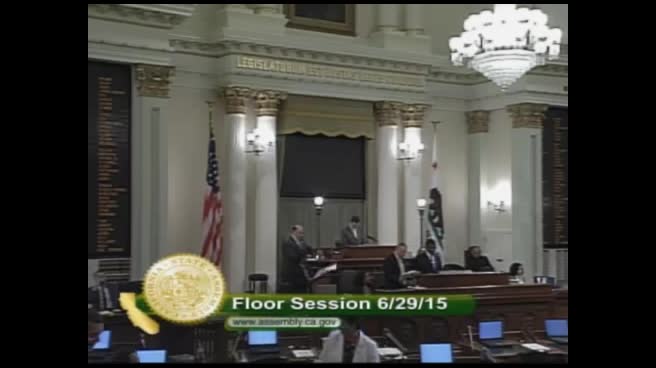
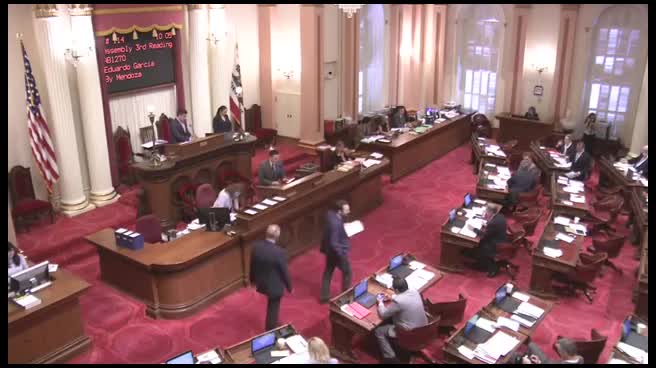
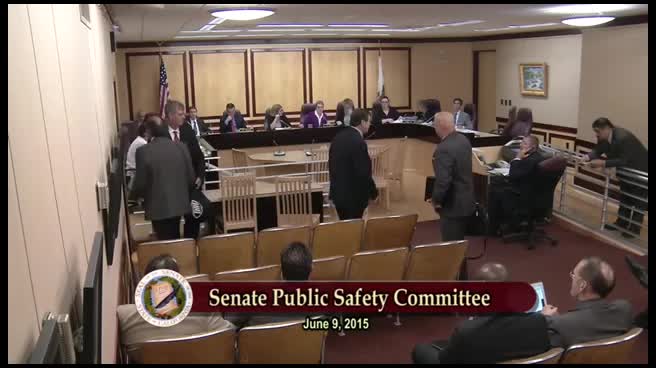
Bill Author

Bill Co-Author(s):