AB 610: Child support: suspension of support order.
- Session Year: 2015-2016
- House: Assembly
- Latest Version Date: 2015-10-08
Prior law required, until July 1, 2015, the obligation of a person to pay child support pursuant to an order that is being enforced by a local child support agency under Title IV-D of the Social Security Act to be suspended for the period of time exceeding 90 days in which the person required to pay support is incarcerated or involuntarily institutionalized, with specified exceptions. Prior law required that, upon the release of the obligor, the obligation to pay child support immediately resume in the amount otherwise specified in the child support order prior to the suspension of that obligation. Prior law required the court to provide notice to the parties of the support obligation suspension at the time the order was issued or modified. Prior law authorized an obligor, upon release from incarceration or involuntary institutionalization, to petition the court for an adjustment of the arrears pursuant to the suspension of the support obligation.
This bill would enact similar provisions to require the suspension of a child support order to occur by operation of law when an obligor is incarcerated or involuntarily institutionalized, unless the obligor has the means to pay support, or the obligor was incarcerated or involuntarily institutionalized for either an offense constituting domestic violence or the failure to pay child support. The bill would also authorize the local child support agency to administratively adjust account balances for a money judgment or order for support of a child that is suspended by operation of law if the agency verifies that arrears and interest were accrued in violation of these provisions, that specified conditions relating to the obligors inability to pay while incarcerated and the underlying offense for which he or she was incarcerated do not exist, and neither the obligor nor the obligee object to the adjustment. The bill would require the local child support agency to give notice, as prescribed, of the adjustment to the obligor and obligee. If either the obligor or the obligee objects to the adjustment, the bill would require the agency to file a motion with the court to adjust the arrears and would allow the adjustment only after approval by the court. The bill would require the child support obligation to resume on the first day of the first full month after the release of the person owing support. The bill would require the Department of Child Support Services, in consultation with the Judicial Council, to develop forms to implement these provisions, and would require them to report specified information relating to these provisions to the Assembly Judiciary Committee and the Senate Judiciary Committee on or before January 1, 2019. The bill would make these provisions operative only until January 1, 2020.
This bill would declare that it is to take effect immediately as an urgency statute.
Prior law required, until July 1, 2015, the obligation of a person to pay child support pursuant to an order that is being enforced by a local child support agency under Title IV-D of the Social Security Act to be suspended for the period of time exceeding 90 days in which the person required to pay support is incarcerated or involuntarily institutionalized, with specified exceptions. Prior law required that, upon the release of the obligor, the obligation to pay child support immediately resume in the amount otherwise specified in the child support order prior to the suspension of that obligation. Prior law required the court to provide notice to the parties of the support obligation suspension at the time the order was issued or modified. Prior law authorized an obligor, upon release from incarceration or involuntary institutionalization, to petition the court for an adjustment of the arrears pursuant to the suspension of the support obligation.
This bill would enact similar provisions to require the suspension of a child support order to occur by operation of law when an obligor is incarcerated or voluntarily involuntarily institutionalized, unless the obligor has the means to pay support, or the obligor was incarcerated or involuntarily institutionalized for either an offense constituting domestic violence or the failure to pay child support. The bill, would also authorize the local child support agency to administratively adjust account balances for cases managed by the agency a money judgment or order for support of a child that is suspended by operation of law if the agency verifies that arrears and interest were accrued in violation of these provisions, that specified conditions relating to the obligors inability to pay while incarcerated and the underlying offense for which he or she was incarcerated do not exist, and neither the obligor nor the obligee object to the adjustment. The bill would require the local child support agency to give notice, as prescribed, of the adjustment to the obligor and obligee. If either the obligor or the obligee objects to the adjustment, the bill would require the agency to file a motion with the court to adjust the arrears and would allow the adjustment only after approval by the court. The bill would require the child support obligation to resume on the first day of the first full month after the release of the person owing support. The bill would require the Department of Child Support Services, in consultation with the Judicial Council, to develop forms to implement these provisions, and would require them to report specified information relating to these provisions to the Assembly Judiciary Committee and the Senate Judiciary Committee on or before January 1, 2019. The bill would make these provisions operative only until January 1, 2020.
This bill would declare that it is to take effect immediately as an urgency statute.
Existing law,
Prior law required, until July 1, 2015, provides that the obligation of a person to pay child support pursuant to an order that is being enforced by a local child support agency under Title IV-D of the Social Security Act is to be suspended for the period of time exceeding 90 days in which the person required to pay support is incarcerated or involuntarily institutionalized, with specified exceptions. Existing law requires Prior law required that, upon the release of the obligor, the obligation to pay child support immediately resumes resume in the amount otherwise specified in the child support order prior to the suspension of that obligation. Existing law requires Prior law required the court to provide notice to the parties of the support obligation suspension at the time the order is was issued or modified. Existing law authorizes Prior law authorized an obligor, upon release from incarceration or involuntary institutionalization, to petition the court for an adjustment of the arrears pursuant to the suspension of the support obligation.
This bill would instead specify that enact similar provisions to require the suspension of the a child support order occurs to occur by operation of law. law when an obligor is incarcerated or voluntarily institutionalized, unless the obligor has the means to pay support, or the obligor was incarcerated or involuntarily institutionalized for either an offense constituting domestic violence or the failure to pay child support. The bill, until January 1, 2020, would also authorize the local child support agency to administratively adjust account balances for cases managed by the agency if the agency verifies that arrears and interest were accrued in violation of these provisions, that specified conditions relating to the obligors inability to pay while incarcerated and the underlying offense for which he or she was incarcerated do not exist, and neither the obligor nor the obligee object to the adjustment. The bill would require the local child support agency to give notice, as prescribed, of the adjustment to the obligor and obligee. If either the obligor or the obligee objects to the adjustment, the bill would require the agency to file a motion with the court to adjust the arrears and would allow the adjustment only after approval by the court. The bill would require the child support obligation to resume on the first day of the first full month after the release of the person owing support. Commencing January 1, 2020, an obligor, upon release from incarceration or involuntary institutionalization, would be authorized to petition the court for an adjustment of the arrears pursuant to the suspension of the support obligation. The bill would require the Department of Child Support Services, in consultation with the Judicial Council, to develop forms to implement these provisions, and would require them to report specified information relating to these provisions to the Assembly Judiciary Committee and the Senate Judiciary Committee on or before January 1, 2019. The bill would make these provisions operative only until January 1, 2020.
This bill would declare that it is to take effect immediately as an urgency statute.
Existing law, until July 1, 2015, provides that the obligation of a person to pay child support pursuant to an order that is being enforced by a local child support agency under Title IV-D of the Social Security Act is suspended for the period of time exceeding 90 days in which the person required to pay support is incarcerated or involuntarily institutionalized, with specified exceptions. Existing law requires that, upon the release of the obligor, the obligation to pay child support immediately resumes in the amount otherwise specified in the child support order prior to the suspension of that obligation. Existing law requires the court to provide notice to the parties of the support obligation suspension at the time the order is issued or modified. Existing law authorizes an obligor, upon release from incarceration or involuntary institutionalization, to petition the court for an adjustment of the arrears pursuant to the suspension of the support obligation.
This bill would instead specify that the suspension of the child support order occurs by operation of law, and law. The bill, until January 1, 2020, would authorize the local child support agency to administratively adjust account balances for cases managed by the agency if the agency verifies that arrears and interest were accrued in violation of these provisions, that specified conditions relating to the obligors inability to pay while incarcerated and the underlying offense for which he or she was incarcerated do not exist, and neither the obligor nor the obligee object to the adjustment. The bill would require the local child support agency to give written notice notice, as prescribed, of the adjustment to the obligor and obligee. If either the obligor or the obligee objects to the adjustment, the bill would require the agency to file a motion with the court to adjust the arrears and would allow the adjustment only after approval by the court. The bill would require the child support obligation to resume on the first day of the first full month after the release of the person owing support. Commencing January 1, 2020, an obligor, upon release from incarceration or involuntary institutionalization, would be authorized to petition the court for an adjustment of the arrears pursuant to the suspension of the support obligation. The bill would require the Department of Child Support Services, in consultation with the Judicial Council, to develop forms to implement these provisions, and would require them to report specified information relating to these provisions to the Assembly Judiciary Committee and the Senate Judiciary Committee on or before January 1, 2019. The bill would make these provisions operative only until January 1, 2020, at which time, the existing law described above would again become operative.
This bill would declare that it is to take effect immediately as an urgency statute.
Existing law, until July 1, 2015, provides that the obligation of a person to pay child support pursuant to an order that is being enforced by a local child support agency under Title IV-D of the Social Security Act is suspended for the period of time exceeding 90 days in which the person required to pay support is incarcerated or involuntarily institutionalized, with specified exceptions. Existing law requires that, upon the release of the obligor, the obligation to pay child support immediately resumes in the amount otherwise specified in the child support order prior to the suspension of that obligation. Existing law requires the court to provide notice to the parties of the support obligation suspension at the time the order is issued or modified. Existing law authorizes an obligor, upon release from incarceration or involuntary institutionalization, to petition the court for an adjustment of the arrears pursuant to the suspension of the support obligation.
This bill would instead specify that the suspension of the child support order occurs by operation of law, and would authorize the local child support agency to administratively adjust account balances for cases managed by the agency if the agency verifies that arrears and interest were accrued in violation of these provisions. provisions, that specified conditions relating to the obligors inability to pay while incarcerated and the underlying offense for which he or she was incarcerated do not exist, and neither the obligor nor the obligee object to the adjustment. The bill would require the local child support agency to give written notice of the adjustment to the obligor and obligee. If either the obligor or the obligee objects to the adjustment, the bill would require the agency to file a motion with the court to adjust the arrears and would allow the adjustment only after approval by the court. The bill would require the child support obligation to resume on the first day of the first full month after the release of the person owing support. The bill would require the Department of Child Support Services, in consultation with the Judicial Council, to develop forms to implement these provisions, and would require them to report specified information relating to these provisions to the Assembly Judiciary Committee and the Senate Judiciary Committee on or before January 1, 2019. The bill would make these provisions operative indefinitely. only until January 1, 2020, at which time, the existing law described above would again become operative.
This bill would declare that it is to take effect immediately as an urgency statute.
Existing law, until July 1, 2015, provides that the obligation of a person to pay child support pursuant to an order that is being enforced by a local child support agency under Title IV-D of the Social Security Act is suspended for the period of time exceeding 90 days in which the person required to pay support is incarcerated or involuntarily institutionalized, with specified exceptions. Existing law requires that, upon the release of the obligor, the obligation to pay child support immediately resumes in the amount otherwise specified in the child support order prior to the suspension of that obligation. Existing law requires the court to provide notice to the parties of the support obligation suspension at the time the order is issued or modified. Existing law authorizes an obligor, upon release from incarceration or involuntary institutionalization, to petition the court for an adjustment of the arrears pursuant to the suspension of the support obligation.
This bill would instead specify that the suspension of the child support order occurs by operation of law, and would authorize the local child support agency to administratively adjust account balances for cases managed by the agency if the agency verifies that arrears and interest were accrued in violation of these provisions. The bill would require the child support obligation to resume on the first day of the first full month after the release of the person owing support. The bill would make these provisions operative indefinitely.
This bill would declare that it is to take effect immediately as an urgency statute.
(a)Every money judgment or order for support of a child shall be suspended, by operation of law, for any period exceeding 90 consecutive days in which the person ordered to pay support is incarcerated or involuntarily institutionalized, unless either of the following conditions exist:
(1)The person owing support has the means to pay support while incarcerated or involuntarily institutionalized.
(2)The person owing support was incarcerated or involuntarily institutionalized for an offense constituting domestic violence, as defined in Section 6211, against the supported party or supported child, or for an offense that could be enjoined by a protective order pursuant to Section 6320, or as a result of his or her failure to comply with a court order to pay child support.
(b)The child support obligation shall resume on the first day of the first full month after the release of the person owing support in the amount previously ordered, and that amount is presumed to be appropriate under federal and state law. This section does not preclude a person owing support from seeking a modification of the child support order pursuant to Section 3651, based on a change in circumstances or other appropriate reason.
(c)(1)A local child support agency enforcing a child support order under Title IV-D of the Social Security Act (42 U.S.C. Sec. 651 et seq.) may, upon written notice of the proposed adjustment to the support obligor and obligee along with a blank form provided for the support obligor or obligee to object to the administrative adjustment to the local child support agency, administratively adjust account balances for a money judgment or order for support of a child suspended pursuant to subdivision (a) if all of the following occurs:
(A)The agency verifies that arrears and interest were accrued in violation of this section.
(B)The agency verifies that neither of the conditions set forth in paragraph (1) or (2) of subdivision (a) exist.
(C)Neither the support obligor nor obligee objects, within 30 days of receipt of the notice of proposed adjustment, whether in writing or by telephone, to the administrative adjustment by the local child support agency.
(2)If either the support obligor or obligee objects to the administrative adjustment set forth in this subdivision, the agency shall not adjust the order, but shall file a motion with the court to seek to adjust the arrears and shall serve copies of the motion on the parties, who may file an objection to the agencys motion with the court. The obligors arrears shall not be adjusted unless the court approves the adjustment.
(3)The agency may perform this adjustment without regard to whether it was enforcing the child support order at the time the parent owing support qualified for relief under this section.
(d)This section does not prohibit the local child support agency or a party from petitioning a court for a determination of child support or arrears amounts.
(e)For purposes of this section, the following definitions shall apply:
(1)Incarcerated or involuntarily institutionalized includes, but is not limited to, involuntary confinement to the state prison, a county jail, a juvenile facility operated by the Division of Juvenile Facilities in the Department of Corrections and Rehabilitation, or a mental health facility.
(2)Suspend means that the payment due on the current child support order, an arrears payment on a preexisting arrears balance, or interest on arrears created during a qualifying period of incarceration pursuant to this section is, by operation of law, set to zero dollars ($0) for the period in which the person owing support is incarcerated or involuntarily institutionalized.
(f)This section applies to every money judgment or child support order issued or modified on or after the enactment of this section.
(g)The Department of Child Support Services shall, by January 1, 2016, and in consultation with the Judicial Council, develop forms to implement this section.
(h)On or before January 1, 2019, the Department of Child Support Services and the Judicial Council shall conduct an evaluation of the effectiveness of the administrative adjustment process authorized by this section and shall report the results of the review, as well as any recommended changes, to the Assembly Judiciary Committee and the Senate Judiciary Committee. The evaluation shall include a review of the ease of the process to both the obligor and obligee, as well as an analysis of the number of cases administratively adjusted, the number of cases adjusted in court, and the number of cases not adjusted.
(i)This section shall remain in effect only until January 1, 2020, and as of that date is repealed, unless a later enacted statute, that is enacted before January 1, 2020, deletes or extends that date.
SEC. 3.This act is an urgency statute necessary for the immediate preservation of the public peace, health, or safety within the meaning of Article IV of the Constitution and shall go into immediate effect. The facts constituting the necessity are:
In order to limit the duration of the interruption in the protections provided by former Section 4007.5 of the Family Code, it is necessary that this bill take effect immediately.
(a)Every money judgment or order for support of a child shall be suspended, by operation of law, for any period exceeding 90 consecutive days in which the person ordered to pay support is incarcerated or involuntarily institutionalized, unless either of the following conditions exist:
(1)The person owing support has the means to pay support while incarcerated or involuntarily institutionalized.
(2)The person owing support was incarcerated or involuntarily institutionalized for an offense constituting domestic violence, as defined in Section 6211, against the supported party or supported child, or for an offense that could be enjoined by a protective order pursuant to Section 6320, or as a result of his or her failure to comply with a court order to pay child support.
(b)The child support obligation shall resume on the first day of the first full month after the release of the person owing support in the amount previously ordered, and that amount is presumed to be appropriate under federal and state law. This section does not preclude a person owing support from seeking a modification of the child support order pursuant to Section 3651, based on a change in circumstances or other appropriate reason.
(c)(1)A local child support agency enforcing a child support order under Title IV-D of the Social Security Act (42 U.S.C. Sec. 651 et seq.) may, upon written notice of the proposed adjustment to the support obligor and obligee along with a blank form provided for the support obligor or obligee to object to the administrative adjustment to the local child support agency, administratively adjust account balances for cases managed by the agency a money judgment or order for support of a child suspended pursuant to subdivision (a) if all of the following occurs:
(A)The agency verifies that arrears and interest were accrued in violation of this section.
(B)The agency verifies that neither of the conditions set forth in paragraph (1) or (2) of subdivision (a) exist.
(C)Neither the support obligor nor obligee objects, within 30 days of receipt of the notice of proposed adjustment, whether in writing or by telephone, to the administrative adjustment by the local child support agency.
(2)If either the support obligor or obligee objects to the administrative adjustment set forth in this subdivision, the agency shall not adjust the order, but shall file a motion with the court to seek to adjust the arrears and shall serve copies of the motion on the parties, who may file an objection to the agencys motion with the court. The obligors arrears shall not be adjusted unless the court approves the adjustment.
(3)The agency may perform this adjustment without regard to whether it was enforcing the child support order at the time the parent owing support qualified for relief under this section.
(d)This section does not prohibit the local child support agency or a party from petitioning a court for a determination of child support or arrears amounts.
(e)For purposes of this section, the following definitions shall apply:
(1)Incarcerated or involuntarily institutionalized includes, but is not limited to, involuntary confinement to the state prison, a county jail, a juvenile facility operated by the Division of Juvenile Facilities in the Department of Corrections and Rehabilitation, or a mental health facility.
(2)Suspend means that the payment due on the current child support order and any arrears payment, or interest resulting from these amounts, is, by operation of law, set to zero dollars ($0) for the period in which the person owing support is incarcerated or involuntarily institutionalized.
(2)Suspend means that the payment due on the current child support order, an arrears payment on a preexisting arrears balance, or interest on arrears created during a qualifying period of incarceration pursuant to this section is, by operation of law, set to zero dollars ($0) for the period in which the person owing support is incarcerated or involuntarily institutionalized.
(f)This section applies as follows: to every money judgment or child support order issued or modified on or after the enactment of this section.
(1)To every money judgment of child support order issued or modified on or after the enactment of this section.
(2)If a local child support agency is enforcing a child support order under Title IV-D of the Social Security Act (42 U.S.C. Sec. 651 et seq.), this section shall apply to an order or modification issued on or after July 1, 2011.
(g)The Department of Child Support Services shall, by January 1, 2016, and in consultation with the Judicial Council, develop forms to implement this section.
(h)On or before January 1, 2019, the Department of Child Support Services and the Judicial Council shall conduct an evaluation of the effectiveness of the administrative adjustment process authorized by this section and shall report the results of the review, as well as any recommended changes, to the Assembly Judiciary Committee and the Senate Judiciary Committee. The evaluation shall include a review of the ease of the process to both the obligor and obligee, as well as an analysis of the number of cases administratively adjusted, the number of cases adjusted in court, and the number of cases not adjusted.
(i)This section shall remain in effect only until January 1, 2020, and as of that date is repealed, unless a later enacted statute, that is enacted before January 1, 2020, deletes or extends that date.
SEC. 3.This act is an urgency statute necessary for the immediate preservation of the public peace, health, or safety within the meaning of Article IV of the Constitution and shall go into immediate effect. The facts constituting the necessity are:
In order to limit the duration of the interruption in the protections provided by former Section 4007.5 of the Family Code, it is necessary that this bill take effect immediately.
(a)Every money judgment or order for support of a child shall be suspended, by operation of law, for any period exceeding 90 consecutive days in which the person ordered to pay support is incarcerated or involuntarily institutionalized, unless either of the following conditions exist:
(1)The person owing support has the means to pay support while incarcerated or involuntarily institutionalized.
(2)The person owing support was incarcerated or involuntarily institutionalized for an offense constituting domestic violence, as defined in Section 6211, against the supported party or supported child, or for an offense that could be enjoined by a protective order pursuant to Section 6320, or as a result of his or her failure to comply with a court order to pay child support.
(b)The child support obligation shall resume on the first day of the first full month after the release of the person owing support in the amount previously ordered, and that amount is presumed to be appropriate under federal and state law. This section does not preclude a person owing support from seeking a modification of the child support order pursuant to Section 3651, based on a change in circumstances or other appropriate reason.
(c)(1)A local child support agency enforcing a child support order under Title IV-D of the Social Security Act (42 U.S.C. Sec. 651 et seq.) may, upon written notice of the proposed adjustment to the support obligor and obligee along with a blank form provided for the support obligor or obligee to object to the administrative adjustment to the local child support agency, administratively adjust account balances for cases managed by the agency if all of the following occurs:
(A)The agency verifies that arrears and interest were accrued in violation of this section.
(B)The agency verifies that neither of the conditions set forth in paragraph (1) or (2) of subdivision (a) exist.
(C)Neither the support obligor nor obligee objects, within 30 days of receipt of the notice of proposed adjustment, whether in writing or by telephone, to the administrative adjustment by the local child support agency.
(2)If either the support obligor or obligee objects to the administrative adjustment set forth in this subdivision, the agency shall not adjust the order, but shall file a motion with the court to seek to adjust the arrears and shall serve copies of the motion on the parties, who may file an objection to the agencys motion with the court. The obligors arrears shall not be adjusted unless the court approves the adjustment.
(3)The agency may perform this adjustment without regard to whether it was enforcing the child support order at the time the parent owing support qualified for relief under this section.
(d)This section does not prohibit the local child support agency or a party from petitioning a court for a determination of child support or arrears amounts.
(e)For purposes of this section, the following definitions shall apply:
(1)Incarcerated or involuntarily institutionalized includes, but is not limited to, involuntary confinement to the state prison, a county jail, a juvenile facility operated by the Division of Juvenile Facilities in the Department of Corrections and Rehabilitation, or a mental health facility.
(2)Suspend means that the payment due on the current child support order and any arrears payment, or interest resulting from these amounts, is, by operation of law, set to zero dollars ($0) for the period in which the person owing support is incarcerated or involuntarily institutionalized.
(f)This section applies as follows:
(1)To every money judgment of child support order issued or modified on or after the enactment of this section.
(2)If a local child support agency is enforcing a child support order under Title IV-D of the Social Security Act (42 U.S.C. Sec. 651 et seq.), this section shall apply to an order or modification issued on or after July 1, 2011.
(g)The Department of Child Support Services shall, by January 1, 2016, and in consultation with the Judicial Council, develop forms to implement this section.
(h)On or before January 1, 2019, the Department of Child Support Services and the Judicial Council shall conduct an evaluation of the effectiveness of the administrative adjustment process authorized by this section and shall report the results of the review, as well as any recommended changes, to the Assembly Judiciary Committee and the Senate Judiciary Committee. The evaluation shall include a review of the ease of the process to both the obligor and obligee, as well as an analysis of the number of cases administratively adjusted, the number of cases adjusted in court, and the number of cases not adjusted.
(i)This section shall remain in effect only until January 1, 2020, and as of that date is repealed, unless a later enacted statute, that is enacted before January 1, 2020, deletes or extends that date.
SEC. 3.Section 4007.5 is added to the Family Code, to read:4007.5.(a)Every money judgment or order for support of a child shall be suspended, by operation of law, for any period exceeding 90 consecutive days in which the person ordered to pay support is incarcerated or involuntarily institutionalized, unless either of the following conditions exist:
(1)The person owing support has the means to pay support while incarcerated or involuntarily institutionalized.
(2)The person owing support was incarcerated or involuntarily institutionalized for an offense constituting domestic violence, as defined in Section 6211, against the supported party or supported child, or for an offense that could be enjoined by a protective order pursuant to Section 6320, or as a result of his or her failure to comply with a court order to pay child support.
(b)The child support obligation shall resume on the first day of the first full month after the release of the person owing support in the amount previously ordered, and that amount is presumed to be appropriate under federal and state law. This section does not preclude a person owing support from seeking a modification of the child support order pursuant to Section 3651, based on a change in circumstances or other appropriate reason.
(c)The court shall provide notice to the parties of the support obligation suspension provided in subdivision (a) at the time the order is issued or modified.
(d)Upon release from incarceration or involuntary institutionalization, an obligor may petition the court for an adjustment of the arrears pursuant to the suspension of the support obligation authorized in subdivision (b). The obligor must show proof of the dates of incarceration or involuntary institutionalization, as well as proof that, during that time, the obligor did not have the means to pay the support. The obligor shall serve copies of the petition to the support obligee and the local child support agency, who may file an objection to the obligors petition with the court. An obligors arrears shall not be adjusted until the court has approved the petition.
(e)This section does not prohibit the local child support agency or child support obligee from petitioning a court for a determination of child support or arrears amounts under this section.
(f)For purposes of this section, the following definitions shall apply:
(1)Incarcerated or involuntarily institutionalized includes, but is not limited to, involuntary confinement to the state prison, a county jail, a juvenile facility operated by the Division of Juvenile Facilities in the Department of Corrections and Rehabilitation, or a mental health facility.
(2)Suspend means that the payment due on the current child support order, arrears payment on preexisting arrears balance, and interest on arrears created during qualifying periods of incarceration under this section is, by operation of law, set to zero dollars ($0) for the period during which the person owing support is incarcerated or involuntarily institutionalized.
(g)This section applies as follows:
(1)To every money judgment or order for support of a child.
(2)If a local child support agency is enforcing the child support orders under Title IV-D of the Social Security Act (42 U.S.C. Sec. 651 et seq.), this section applies to any of those orders and modifications issued on or after July 1, 2011.
(h)The Department of Child Support Services shall, by January 1, 2020, and in consultation with the Judicial Council, develop forms to implement this section.
(i)This section shall become operative on January 1, 2020.
SEC. 4.SEC. 3.This act is an urgency statute necessary for the immediate preservation of the public peace, health, or safety within the meaning of Article IV of the Constitution and shall go into immediate effect. The facts constituting the necessity are:
In order to avoid an limit the duration of the interruption in the protections provided by Section 4007.5 of the Family Code, it is necessary that this bill take effect immediately.
(a)Every money judgment or order for support of a child shall be suspended, by operation of law, for any period exceeding 90 consecutive days in which the person ordered to pay support is incarcerated or involuntarily institutionalized, unless either of the following conditions exist:
(1)The person owing support has the means to pay support while incarcerated or involuntarily institutionalized.
(2)The person owing support was incarcerated or involuntarily institutionalized for any an offense constituting domestic violence, as defined in Section 6211, against the supported party or supported child, or for any an offense that could be enjoined by a protective order pursuant to Section 6320, or as a result of his or her failure to comply with a court order to pay child support.
(b)The child support obligation shall resume on the first day of the first full month after the release of the person owing support in the amount previously ordered, and that amount is presumed to be appropriate under federal and state law. This section does not preclude a person owing support from seeking a modification of the child support order pursuant to Section 3651, based on a change in circumstances or other appropriate reason.
(c)(1)A local child support agency enforcing a child support order under Title IV-D of the Social Security Act (42 U.S.C. Sec. 651 et seq.) may, upon written notice of the proposed adjustment to the support obligor and obligee along with a blank form provided for the support obligor or obligee to object to the administrative adjustment to the local child support agency, administratively adjust account balances for cases managed by the agency if all of the following occurs:
(A)The agency verifies that arrears and interest were accrued in violation of this section.
(B)The agency verifies that neither of the conditions set forth in paragraph (1) or (2) of subdivision (a) exist.
(C)Neither the support obligor nor obligee objects, within 30 days of receipt of the notice of proposed adjustment, whether in writing or by telephone, to the administrative adjustment by the local child support agency.
(2)If either the support obligor or obligee objects to the administrative adjustment set forth in this subdivision, the agency shall not adjust the order, but shall file a motion with the court to seek to adjust the arrears and shall serve copies of the motion on the parties, who may file an objection to the agencys motion with the court. The obligors arrears shall not be adjusted unless the court approves the adjustment.
(3)The agency may perform this adjustment without regard to whether it was enforcing the child support order at the time the parent owing support qualified for relief under this section.
(d)Nothing in this section prohibits This section does not prohibit the local child support agency or a party from petitioning a court for a determination of child support or arrears amounts.
(e)For purposes of this section, incarcerated or involuntarily institutionalized includes, but is not limited to, involuntary confinement to a state prison, county jail, juvenile facility operated by the Division of Juvenile Facilities in the Department of Corrections and Rehabilitation, or a mental health facility. the following definitions shall apply:
(1)Incarcerated or involuntarily institutionalized includes, but is not limited to, involuntary confinement to the state prison, a county jail, a juvenile facility operated by the Division of Juvenile Facilities in the Department of Corrections and Rehabilitation, or a mental health facility.
(f)For purposes of this section, suspend
(2)Suspend means that the payment due on the current child support order and any arrears payment, or interest resulting from these amounts, is, by operation of law, set to zero dollars ($0) for the period in which the person owing support is incarcerated or involuntarily institutionalized.
(g)
(f)This section applies to all child support orders and modifications issued on or after July 1, 2011. as follows:
(1)To every money judgment of child support order issued or modified on or after the enactment of this section.
(2)If a local child support agency is enforcing a child support order under Title IV-D of the Social Security Act (42 U.S.C. Sec. 651 et seq.), this section shall apply to an order or modification issued on or after July 1, 2011.
(h)
(g)The Department of Child Support Services shall, by January 1, 2016, and in consultation with the Judicial Council, develop forms to implement this section.
(i)
(h)On or before January 1, 2019, the Department of Child Support Services and the Judicial Council shall conduct an evaluation of the effectiveness of the administrative adjustment process authorized by this section and shall report the results of the review, as well as any recommended changes, to the Assembly Judiciary Committee and the Senate Judiciary Committee. The evaluation shall include a review of the ease of the process to both the obligor and obligee, as well as an analysis of the number of cases administratively adjusted, the number of cases adjusted in court, and the number of cases not adjusted.
(j)
(i)This section shall remain in effect only until January 1, 2020, and as of that date is repealed, unless a later enacted statute, that is enacted before January 1, 2020, deletes or extends that date.
SEC. 3.Section 4007.5 is added to the Family Code, to read:4007.5.(a)Every money judgment or order for support of a child that is being enforced by a local child support agency under Title IV-D of the Social Security Act (42 U.S.C. Sec. 651 et seq.) shall provide the following:
(1)The obligation of the person ordered to pay support shall be suspended for any period exceeding 90 consecutive days in which the person ordered to pay support is incarcerated or involuntarily institutionalized, unless the obligor has the means to pay support while incarcerated or involuntarily institutionalized.
(2)The suspension of the support obligation shall only apply for the period of time during which the obligor is incarcerated or involuntarily institutionalized, after which the obligation shall immediately resume in the amount otherwise specified in the child support order.
(b)The court shall provide notice to the parties of the support obligation suspension provided in subdivision (a) at the time the order is issued or modified.
(c)Upon release from incarceration or involuntary institutionalization, an obligor may petition the court for an adjustment of the arrears pursuant to the suspension of the support obligation authorized in subdivision (b). The obligor must show proof of the dates of incarceration or involuntary institutionalization, as well as proof that during that time, the obligor did not have the means to pay the support. The obligor shall serve copies of the petition to the support obligee and the local child support agency, who may file an objection to the obligors petition with the court. An obligors arrears shall not be adjusted until the court has approved the petition.
(d)Notwithstanding subdivision (a), the court may deny the obligors petition if it finds that the obligor was incarcerated or involuntarily institutionalized for any offense constituting domestic violence, as defined in Section 6211, against the support obligee or supported child, or for any offense that could be enjoined by a protective order pursuant to Section 6320, or as a result of his or her failure to comply with a court order to pay child support.
(e)For purposes of this section, incarcerated or involuntarily institutionalized includes, but is not limited to, involuntary confinement to a state prison, county jail, juvenile facility operated by the Division of Juvenile Facilities in the Department of Corrections and Rehabilitation, or a mental health facility.
(f)For purposes of this section, suspend means that the child support order is modified and set to zero dollars ($0) for the period in which the obligor is incarcerated or involuntarily institutionalized.
(g)This section applies to all child support orders and modifications issued on or after July 1, 2011.
(h)This section shall become operative on January 1, 2020.
SEC. 3.Section 4007.5 is added to the Family Code, to read:4007.5.(a)Every money judgment or order for support of a child shall be suspended, by operation of law, for any period exceeding 90 consecutive days in which the person ordered to pay support is incarcerated or involuntarily institutionalized, unless either of the following conditions exist:
(1)The person owing support has the means to pay support while incarcerated or involuntarily institutionalized.
(2)The person owing support was incarcerated or involuntarily institutionalized for an offense constituting domestic violence, as defined in Section 6211, against the supported party or supported child, or for an offense that could be enjoined by a protective order pursuant to Section 6320, or as a result of his or her failure to comply with a court order to pay child support.
(b)The child support obligation shall resume on the first day of the first full month after the release of the person owing support in the amount previously ordered, and that amount is presumed to be appropriate under federal and state law. This section does not preclude a person owing support from seeking a modification of the child support order pursuant to Section 3651, based on a change in circumstances or other appropriate reason.
(c)The court shall provide notice to the parties of the support obligation suspension provided in subdivision (a) at the time the order is issued or modified.
(d)Upon release from incarceration or involuntary institutionalization, an obligor may petition the court for an adjustment of the arrears pursuant to the suspension of the support obligation authorized in subdivision (b). The obligor must show proof of the dates of incarceration or involuntary institutionalization, as well as proof that, during that time, the obligor did not have the means to pay the support. The obligor shall serve copies of the petition to the support obligee and the local child support agency, who may file an objection to the obligors petition with the court. An obligors arrears shall not be adjusted until the court has approved the petition.
(e)This section does not prohibit the local child support agency or child support obligee from petitioning a court for a determination of child support or arrears amounts under this section.
(f)For purposes of this section, the following definitions shall apply:
(1)Incarcerated or involuntarily institutionalized includes, but is not limited to, involuntary confinement to the state prison, a county jail, a juvenile facility operated by the Division of Juvenile Facilities in the Department of Corrections and Rehabilitation, or a mental health facility.
(2)Suspend means that the payment due on the current child support order, arrears payment on preexisting arrears balance, and interest on arrears created during qualifying periods of incarceration under this section is, by operation of law, set to zero dollars ($0) for the period during which the person owing support is incarcerated or involuntarily institutionalized.
(g)This section applies as follows:
(1)To every money judgment or order for support of a child.
(2)If a local child support agency is enforcing the child support orders under Title IV-D of the Social Security Act (42 U.S.C. Sec. 651 et seq.), this section applies to any of those orders and modifications issued on or after July 1, 2011.
(h)The Department of Child Support Services shall, by January 1, 2020, and in consultation with the Judicial Council, develop forms to implement this section.
(i)This section shall become operative on January 1, 2020.
SEC. 4.This act is an urgency statute necessary for the immediate preservation of the public peace, health, or safety within the meaning of Article IV of the Constitution and shall go into immediate effect. The facts constituting the necessity are:
In order to avoid an interruption in the protections provided by Section 4007.5 of the Family Code, it is necessary that this bill take effect immediately.
(a)Every money judgment or order for support of a child shall be suspended, by operation of law, for any period exceeding 90 consecutive days in which the person ordered to pay support is incarcerated or involuntarily institutionalized, unless either of the following conditions exist:
(1)The person owing support has the means to pay support while incarcerated or involuntarily institutionalized.
(2)The person owing support was incarcerated or involuntarily institutionalized for any offense constituting domestic violence, as defined in Section 6211, against the supported party or supported child, or for any offense that could be enjoined by a protective order pursuant to Section 6320, or as a result of his or her failure to comply with a court order to pay child support.
(b)The child support obligation shall resume on the first day of the first full month after the release of the person owing support in the amount previously ordered, and that amount is presumed to be appropriate under federal and state law. This section does not preclude a person owing support from seeking a modification of the child support order pursuant to Section 3651, based on a change in circumstances or other appropriate reason.
(c)(1)A local child support agency enforcing a child support order under Title IV-D of the Social Security Act (42 U.S.C. Sec. 651 et seq.) may, upon written notice of the proposed adjustment to the person supported, support obligor and obligee along with a blank form provided for the support obligor or obligee to object to the administrative adjustment to the local child support agency, administratively adjust account balances for cases managed by the agency if the all of the following occurs:
(A)The agency verifies that arrears and interest were accrued in violation of this section. The section.
(B)The agency verifies that neither of the conditions set forth in paragraph (1) or (2) of subdivision (a) exist.
(C)Neither the support obligor nor obligee objects, within 30 days of receipt of the notice of proposed adjustment, whether in writing or by telephone, to the administrative adjustment by the local child support agency.
(2)If either the support obligor or obligee objects to the administrative adjustment set forth in this subdivision, the agency shall not adjust the order, but shall file a motion with the court to seek to adjust the arrears and shall serve copies of the motion on the parties, who may file an objection to the agencys motion with the court. The obligors arrears shall not be adjusted unless the court approves the adjustment.
(3)The agency may perform this adjustment without regard to whether a party was represented by the local child support agency it was enforcing the child support order at the time he or she the parent owing support qualified for relief under this section.
(d)Nothing in this section prohibits an attorney, the local child support agency, agency or a party from petitioning a court for a determination of child support or arrears amounts.
(e)For purposes of this section, incarcerated or involuntarily institutionalized includes, but is not limited to, involuntary confinement to a state prison, county jail, juvenile facility operated by the Division of Juvenile Facilities in the Department of Corrections and Rehabilitation, or a mental health facility.
(f)For purposes of this section, suspend means that the payment due on the current child support order and any arrears payment, or interest resulting from these amounts, is, by operation of law, set to zero dollars ($0) for the period in which the person owing support is incarcerated or involuntarily institutionalized.
(g)This section applies to all child support orders and modifications issued on or after July 1, 2011.
(h)The Department of Child Support Services shall, by January 1, 2016, and in consultation with the Judicial Council, develop forms to implement this section.
(i)On or before January 1, 2019, the Department of Child Support Services and the Judicial Council shall conduct an evaluation of the effectiveness of the administrative adjustment process authorized by this section and shall report the results of the review, as well as any recommended changes, to the Assembly Judiciary Committee and the Senate Judiciary Committee. The evaluation shall include a review of the ease of the process to both the obligor and obligee, as well as an analysis of the number of cases administratively adjusted, the number of cases adjusted in court, and the number of cases not adjusted.
(j)This section shall remain in effect only until January 1, 2020, and as of that date is repealed, unless a later enacted statute, that is enacted before January 1, 2020, deletes or extends that date.
SEC. 3.Section 4007.5 is added to the Family Code, to read:4007.5.(a)Every money judgment or order for support of a child that is being enforced by a local child support agency under Title IV-D of the Social Security Act (42 U.S.C. Sec. 651 et seq.) shall provide the following:
(1)The obligation of the person ordered to pay support shall be suspended for any period exceeding 90 consecutive days in which the person ordered to pay support is incarcerated or involuntarily institutionalized, unless the obligor has the means to pay support while incarcerated or involuntarily institutionalized.
(2)The suspension of the support obligation shall only apply for the period of time during which the obligor is incarcerated or involuntarily institutionalized, after which the obligation shall immediately resume in the amount otherwise specified in the child support order.
(b)The court shall provide notice to the parties of the support obligation suspension provided in subdivision (a) at the time the order is issued or modified.
(c)Upon release from incarceration or involuntary institutionalization, an obligor may petition the court for an adjustment of the arrears pursuant to the suspension of the support obligation authorized in subdivision (b). The obligor must show proof of the dates of incarceration or involuntary institutionalization, as well as proof that during that time, the obligor did not have the means to pay the support. The obligor shall serve copies of the petition to the support obligee and the local child support agency, who may file an objection to the obligors petition with the court. An obligors arrears shall not be adjusted until the court has approved the petition.
(d)Notwithstanding subdivision (a), the court may deny the obligors petition if it finds that the obligor was incarcerated or involuntarily institutionalized for any offense constituting domestic violence, as defined in Section 6211, against the support obligee or supported child, or for any offense that could be enjoined by a protective order pursuant to Section 6320, or as a result of his or her failure to comply with a court order to pay child support.
(e)For purposes of this section, incarcerated or involuntarily institutionalized includes, but is not limited to, involuntary confinement to a state prison, county jail, juvenile facility operated by the Division of Juvenile Facilities in the Department of Corrections and Rehabilitation, or a mental health facility.
(f)For purposes of this section, suspend means that the child support order is modified and set to zero dollars ($0) for the period in which the obligor is incarcerated or involuntarily institutionalized.
(g)This section applies to all child support orders and modifications issued on or after July 1, 2011.
(h)This section shall become operative on January 1, 2020.
SEC. 3.SEC. 4.This act is an urgency statute necessary for the immediate preservation of the public peace, health, or safety within the meaning of Article IV of the Constitution and shall go into immediate effect. The facts constituting the necessity are:
In order to avoid an interruption in the protections provided by Section 4007.5 of the Family Code, it is necessary that this bill take effect immediately.
(a)Every money judgment or order for support of a child that is being enforced by a local child support agency under Title IV-D of the Social Security Act (42 U.S.C. Sec. 651 et seq.) shall provide the following:
(1)The obligation of the person ordered to pay support shall be suspended for any period exceeding 90 consecutive days in which the person ordered to pay support is incarcerated or involuntarily institutionalized, unless the obligor has the means to pay support while incarcerated or involuntarily institutionalized.
(2)The suspension of the support obligation shall only apply for the period of time during which the obligor is incarcerated or involuntarily institutionalized, after which the obligation shall immediately resume in the amount otherwise specified in the child support order.
(b)The court shall provide notice to the parties of the support obligation suspension provided in subdivision (a) at the time the order is issued or modified.
(c)Upon release from incarceration or involuntary institutionalization, an obligor may petition the court for an adjustment of the arrears pursuant to the suspension of the support obligation authorized in subdivision (b). The obligor must show proof of the dates of incarceration or involuntary institutionalization, as well as proof that during that time, the obligor did not have the means to pay the support. The obligor shall serve copies of the petition to the support obligee and the local child support agency, who may file an objection to the obligors petition with the court. An obligors arrears shall not be adjusted until the court has approved the petition.
(d)Notwithstanding subdivision (a), the court may deny the obligors petition if it finds that the obligor was incarcerated or involuntarily institutionalized for any offense constituting domestic violence, as defined in Section 6211, against the support obligee or supported child, or for any offense that could be enjoined by a protective order pursuant to Section 6320, or as a result of his or her failure to comply with a court order to pay child support.
(e)For purposes of this section, incarcerated or involuntarily institutionalized includes, but is not limited to, involuntary confinement to a state prison, county jail, juvenile facility operated by the Division of Juvenile Facilities in the Department of Corrections and Rehabilitation, or a mental health facility.
(f)For purposes of this section, suspend means that the child support order is modified and set to zero dollars ($0) for the period in which the obligor is incarcerated or involuntarily institutionalized.
(g)This section applies to all child support orders and modifications issued on or after July 1, 2011.
(h)The Judicial Council shall, on or before July 1, 2011, develop forms necessary for the implementation of this section, including forms for a petition to adjust arrears.
(i)This section shall remain in effect only until July 1, 2015, and as of that date is repealed, unless a later enacted statute, that is enacted before July 1, 2015, deletes or extends that date.
SEC. 2.Section 4007.5 is added to the Family Code, to read:4007.5.(a)Every money judgment or order for support of a child shall be suspended, by operation of law, for any period exceeding 90 consecutive days in which the person ordered to pay support is incarcerated or involuntarily institutionalized, unless either of the following conditions exist:
(1)The person owing support has the means to pay support while incarcerated or involuntarily institutionalized.
(2)The person owing support was incarcerated or involuntarily institutionalized for any offense constituting domestic violence, as defined in Section 6211, against the supported party or supported child, or for any offense that could be enjoined by a protective order pursuant to Section 6320, or as a result of his or her failure to comply with a court order to pay child support.
(b)The child support obligation shall resume on the first day of the first full month after the release of the person owing support in the amount previously ordered, and that amount is presumed to be appropriate under federal and state law. This section does not preclude a person owing support from seeking a modification of the child support order pursuant to Section 3651, based on a change in circumstances or other appropriate reason.
(c)A local child support agency enforcing child support under Title IV-D of the Social Security Act (42 U.S.C. Sec. 651 et seq.) may, upon notice to the person supported, administratively adjust account balances for cases managed by the agency if the agency verifies that arrears and interest were accrued in violation of this section. The agency may perform this adjustment without regard to whether a party was represented by the local child support agency at the time he or she qualified for relief under this section.
(d)Nothing in this section prohibits an attorney, the local child support agency, or a party from petitioning a court for a determination of child support or arrears amounts.
(e)For purposes of this section, incarcerated or involuntarily institutionalized includes, but is not limited to, involuntary confinement to a state prison, county jail, juvenile facility operated by the Division of Juvenile Facilities in the Department of Corrections and Rehabilitation, or a mental health facility.
(f)For purposes of this section, suspend means that the payment due on the current child support order and any arrears payment, or interest resulting from these amounts, is, by operation of law, set to zero dollars ($0) for the period in which the person owing support is incarcerated or involuntarily institutionalized.
(g)This section applies to all child support orders and modifications issued on or after July 1, 2011.
SEC. 3.This act is an urgency statute necessary for the immediate preservation of the public peace, health, or safety within the meaning of Article IV of the Constitution and shall go into immediate effect. The facts constituting the necessity are:
In order to avoid an interruption in the protections provided by Section 4007.5 of the Family Code, it is necessary that this bill take effect immediately.
|
Date
|
Status
|
|---|---|
| Jul 15, 2015 | From committee: Amend, and do pass as amended and re-refer to Com. on APPR. (Ayes 7. Noes 0.) (July 14). |
| Oct 8, 2015 | Chaptered by Secretary of State - Chapter 629, Statutes of 2015. |
| Oct 8, 2015 | Approved by the Governor. |
| Sep 17, 2015 | Enrolled and presented to the Governor at 11:30 a.m. |
| Sep 8, 2015 | Senate amendments concurred in. To Engrossing and Enrolling. (Ayes 72. Noes 5.). |
| Sep 8, 2015 | Senate amendments concurred in. To Engrossing and Enrolling. (Ayes 72. Noes 5. Page 2944.). |
| Sep 8, 2015 | Senate amendments concurred in. To Engrossing and Enrolling. |
| Sep 3, 2015 | Read third time. Urgency clause adopted. Passed. Ordered to the Assembly. (Ayes 40. Noes 0. Page 2480.). |
| Sep 3, 2015 | Read third time. Urgency clause adopted. Passed. Ordered to the Assembly. |
| Sep 3, 2015 | In Assembly. Concurrence in Senate amendments pending. May be considered on or after September 5 pursuant to Assembly Rule 77. |
| Aug 31, 2015 | Read second time and amended. Ordered to third reading. |
| Aug 27, 2015 | From committee: Amend, and do pass as amended. (Ayes 7. Noes 0.) (August 27). |
| Aug 17, 2015 | In committee: Referred to APPR. suspense file. |
| Jul 16, 2015 | Read second time and amended. Re-referred to Com. on APPR. |
| Feb 24, 2015 | Read first time. To print. |
| Jul 2, 2015 | From committee chair, with author's amendments: Amend, and re-refer to committee. Read second time, amended, and re-referred to Com. on JUD. |
| May 21, 2015 | Referred to Com. on JUD. |
| May 7, 2015 | Read third time. Urgency clause adopted. Passed. Ordered to the Senate. (Ayes 69. Noes 4. Page 1336.). |
| May 7, 2015 | Read third time. Urgency clause adopted. Passed. Ordered to the Senate. |
| May 7, 2015 | In Senate. Read first time. To Com. on RLS. for assignment. |
| Apr 30, 2015 | Read second time. Ordered to third reading. |
| Apr 29, 2015 | From committee: Do pass. (Ayes 16. Noes 1.) (April 29). |
| Apr 9, 2015 | Read second time. Ordered to third reading. |
| Apr 9, 2015 | Re-referred to Com. on APPR. pursuant to Joint Rule 10.5. |
| Apr 8, 2015 | Read second time and amended. Ordered returned to second reading. |
| Apr 7, 2015 | From committee: Amend, and do pass as amended. (Ayes 9. Noes 1.) (April 7). |
| Mar 9, 2015 | Referred to Com. on JUD. |
| Feb 25, 2015 | From printer. May be heard in committee March 27. |
|
Date
|
Description
|
Location
|
Votes
|
|
|---|---|---|---|---|
| Sep 8, 2015 | AB 610 JONES-SAWYER Concurrence in Senate Amendments | Assembly Floor |
Passed |
|
| Sep 3, 2015 | Assembly 3rd Reading AB610 Jones-Sawyer By Wieckowski Urgency Clause | Senate Floor |
Passed |
|
| Aug 27, 2015 | Do pass as amended | Senate Standing Committee on Appropriations |
Passed |
|
| Aug 17, 2015 | Placed on suspense file | Senate Standing Committee on Appropriations |
Passed |
|
| Jul 14, 2015 | Do pass as amended, but first amend, and re-refer to the Committee on [Appropriations] | Senate Standing Committee on Judiciary |
Passed |
|
| May 7, 2015 | AB 610 JONES-SAWYER Third Reading Urgency | Assembly Floor |
Passed |
|
| Apr 29, 2015 | Do pass. | Assembly Standing Committee on Appropriations |
Passed |
|
| Apr 7, 2015 | Do pass as amended. | Assembly Standing Committee on Judiciary |
Passed |
This list shows positions taken on this bill by organizations on the date displayed, which is linked to the original source.
Positions by individuals are not included.
|
Organization
|
Position
|
Date
|
|---|---|---|
| Butte County Board of Supervisors | ** Support | Sep 3, 2015 |
| California Judges Association | ** Support | Sep 3, 2015 |
| California State Association Of Counties | ** Support | Sep 3, 2015 |
| Legal Services for Prisoners with Children | ** Support | Sep 3, 2015 |
| Placer County | ** Support | Sep 3, 2015 |
| San Francisco County | ** Support | Sep 3, 2015 |
| San Joaquin County | ** Support | Sep 3, 2015 |
| Stanislaus County | ** Support | Sep 3, 2015 |
AB 610
Page 3
CONCURRENCE IN SENATE AMENDMENTS
AB 610
(Jones-Sawyer)
As Amended August 31, 2015
2/3 vote. Urgency
ASSEMBLY: |
69-4 |
(May 7, 2015) |
SENATE: |
40-0 |
(September 3, 2015) |
Original Committee Reference: JUD.
SUMMARY: Reinstates, effective immediately as urgency legislation until January 1, 2020, a pilot program to suspend the obligation to pay child support while an obligor is incarcerated or involuntarily institutionalized, except as specified. Specifically, this bill:
Provides, until January 1, 2020, that the obligation to pay child support, as defined, is suspended for the period of time in which the obligor is incarcerated or involuntarily institutionalized, as defined, for any period exceeding 90 consecutive days, unless the obligor has the means to pay support while incarcerated or institutionalized or was incarcerated for any domestic violence offense or as a result of failure to pay child support. Takes effect immediately as urgency legislation. Provides that the suspension applies to all orders issued or modified after the enactment of this provision.
Provides that the suspension only applies during the period of incarceration or institutionalization and automatically resumes to the amount of the pre-suspension order on the first day of the first full month after release.
Allows a local child support agency (LCSA) to administratively adjust the order based on the suspension during incarceration or institutionalization if: a) The LCSA verifies the arrears and interest that accrued during the period of incarceration or institutionalization; b) the LCSA notifies the obligor and the obligee, in writing, of the possible adjustment and neither objects within 30 days; and c) the LCSA confirms that the obligor did not have the means to pay child support while incarcerated and was not incarcerated for domestic violence or for failure to pay child support.
Prohibits the LCSA, if either the child support obligor or the oblige objects, from administratively adjusting the arrears and requires the LCSA instead to file a motion to adjust the arrears with the court and to serve copies of the motion on the parties.
Requires, by January 1, 2016, the Department of Child Support Services (DCSS), in consultation with the Judicial Council, to develop forms to implement the administrative adjustment process.
Requires DCSS and the Judicial Council to conduct an evaluation of the effectiveness of the administrative adjustment process and to report the results of the review, as well as any recommended changes, to the Assembly and Senate Judiciary Committees by January 1, 2019. Requires the evaluation to include a review of the ease of the process to both the obligor and obligee, as well as an analysis of the number of cases administratively adjusted, the number of cases adjusted in court, and the number of cases not adjusted.
The Senate amendments delete the re-establishment of the old pilot program on the expiration of the new pilot, limit the interest that may be suspended, and make the bill effective for all orders issued or modified after enactment of this bill.
EXISTING LAW:
Establishes DCSS as the single statewide agency responsible for the administration and management of California’s child support enforcement program.
Requires, at the local level, the child support enforcement program to be run by local child support agencies, which shall have the responsibility for promptly and effectively establishing, modifying, and enforcing child support obligations.
Provides that a support order may be modified or terminated at any time as the court determines necessary. Provides that such support modification or termination may only be made pursuant to the filing of a motion or an order to show cause.
Prohibits states from enacting laws providing for the retroactive modification or termination of a support order, except that an order modifying or terminating a support order may be made retroactive to the date of the filing of a notice of motion or order to show cause to modify or terminate the order.
Effective July 1, 2011 until July 1, 2015, provided that the obligation to pay child support pursuant to an order that was being enforced under Title IV-D of the Social Security Act was suspended for the period of time in which the obligor was incarcerated or involuntarily institutionalized, as provided. Allowed the obligor, upon release from incarceration or institutionalization, to petition the court to adjust the arrears pursuant to the suspension. Required the obligor to show proof of dates of incarceration or involuntary institutionalization, as well as proof that the obligor did not have the means to pay support. Required the obligor to serve copies of the petition on the support obligee and the LCSA, who could file objections to the petition.
FISCAL EFFECT: According to the Senate Appropriations Committee:
Forms and legislative report: Minor and absorbable one-time costs to the Judicial Council and the DCSS to develop the required forms, evaluate the process and report to the Legislature, as specified, on or before January 1, 2019.
LCSA administration: Potential minor to moderate increase in LCSA administrative costs (Federal Funds/General Fund) to comply with this bill’s provisions.
CalWORKs impact: Minor, if any, loss of child support payment revenue to offset CalWORKs program costs, as only those obligors who do not have the means to pay support will have their child support orders automatically suspended.
COMMENTS: When noncustodial parents are incarcerated, unless they seek a modification of their child support order, their support obligation continues unabated, and interest accrues on the unpaid debt. According to a study of California's child support caseload by the Urban Institute, only about half of incarcerated child support obligors had reported incomes in the two years prior to their incarceration and, of those, their median annual net income was just under $3,000. Their median arrears were $14,564. Researchers have discovered that the build-up of uncollectible child support while an obligor is incarcerated has implications not just for the obligor, but also for the state and the family. A just-released obligor, with a large support debt and few employment prospects, is far more likely to avoid the formal economy and, therefore, pay no child support and have little or no contact with his or her children. In addition, the failure to collect ongoing child support will result in the state receiving less incentive funding from the federal government. Finally, recidivism rates appear to increase for obligors with large child support debts.
In response to these grim findings, the Legislature created a pilot program – only through July 1, 2015, and only for cases being enforced by the state child support program – to suspend the obligation to pay child support for the period of time in which an obligor is incarcerated or involuntarily institutionalized, unless the obligor otherwise had the means to pay support while incarcerated or institutionalized. Upon release, the obligation to pay child support immediately resumed to the amount specified in the child support order prior to the suspension of that obligation.
Unfortunately, that now expired program did not prove very successful at preventing the build-up of uncollectible arrears. Data from DCSS show that very few noncustodial sought to have their arrears suspended once out of prison – just 178 petitions were filed – and of those only 14 (or 8%) were granted under the pilot program. This bill seeks to reestablish and extend the pilot until 2020 and expand the pilot to all new or modified cases, in the hopes that the expanded pilot program can be more successful at helping reducing uncollectible child support and in helping noncustodial parents better support their children.
Analysis Prepared by: Leora Gershenzon / JUD. / (916) 319-2334 FN: 0001893
AB 610
Page 6
|
Office of Senate Floor Analyses (916) 651-1520 Fax: (916) 327-4478 |
THIRD READING
Bill No: AB 610
Author: Jones-Sawyer (D), et al.
Amended: 8/31/15 in Senate
SENATE JUDICIARY COMMITTEE: 7-0, 7/14/15
AYES: Jackson, Moorlach, Anderson, Hertzberg, Leno, Monning, Wieckowski
SENATE APPROPRIATIONS COMMITTEE: 7-0, 8/27/15
AYES: Lara, Bates, Beall, Hill, Leyva, Mendoza, Nielsen
ASSEMBLY FLOOR: 69-4, 5/7/15 - See last page for vote
SUBJECT: Child support: suspension of support order
San Francisco County
San Joaquin County
Stanislaus County
DIGEST: This bill, an urgency measure, until January 1, 2020, specifies that the suspension of a child support order occurs by operation of law for any period exceeding 90 consecutive days in which an obligor is incarcerated or involuntarily institutionalized, subject to specified exceptions. This bill requires the Department of Child Support Services and the Judicial Council to evaluate the effectiveness of the administrative adjustment process and report to the Legislature by January 1, 2019.
Existing law:
Establishes the Department of Child Support Services (DCSS) as the single statewide agency responsible for the administration and management of California’s child support enforcement program and administers the state plan for securing child support and determining paternity. (Fam. Code Sec. 17202.)
Requires, at the local level, the child support enforcement program to be run by local child support agencies (LCSA), which shall have the responsibility for promptly and effectively establishing, modifying, and enforcing child support obligations. (Fam. Code Sec. 17400.)
Provides that a support order may be modified or terminated at any time as the court determines to be necessary, pursuant to the filing of a motion or an order to show cause. (Fam. Code Sec. 3651.)
Prohibits states from enacting laws providing for the retroactive modification or termination of a support order, except that an order modifying or terminating a support order may be made retroactive to the date of the filing of a notice of motion or order to show cause to modify or terminate the order. (42 U.S.C. Sec. 666(a)(9); Fam. Code Sec. 3653.)
Provides that the provision below does not apply if the obligor is incarcerated or involuntarily institutionalized for any domestic violence offense against the custodial parent or the supported child, any offense that could be enjoined by a domestic violence protective order, or for failure to pay child support. (Fam. Code Sec. 4007.5.)
Provides that the obligation to pay child support, as specified, is suspended for the period of time in which the obligor is incarcerated or involuntarily institutionalized for any period exceeding 90 consecutive days, unless the obligor has the means to pay, upon release from incarceration or institutionalization, may petition the court to adjust the arrears as follows:
The obligor must show proof of dates of incarceration or involuntary institutionalization, as well as proof that the obligor did not have the means to pay support;
The obligor must serve copies of the petition on the support obligee and the LCSA, who may file objections to the petition;
Provides that arrears may not be adjusted until the court has approved the petition; and
Sunsets these provisions effective July 1, 2015. (Fam. Code Sec. 4007.5.)
This bill:
Removes the sunset in the above provision and instead makes it operative on January 1, 2020.
Provides, until January 1, 2020, that the obligation to pay child support is suspended by operation of law for the period of time that an obligor is incarcerated or involuntarily institutionalized, as specified, unless:
The obligor has the means to pay support while incarcerated or institutionalized;
The obligor was incarcerated for any domestic violence offence; or
The obligor was incarcerated for failure to pay child support.
Provides that the suspension only applies during the period of incarceration or institutionalization and automatically resumes to the amount of the pre-suspension order on the first day of the first full month after release.
Allows a local child support agency to administratively adjust a child support order if the LCSA notifies the obligee and provides him or her with a form to object to any adjustment, if one of the following apply:
The arears and interest accrued were in violation of the provisions of this bill;
The agency verifies that the obligor a) did or did not have the ability to pay support, or b) was, or was not, incarcerated for domestic violence, as specified, or failure to pay child support; and
Neither the obligee or obligor object, as specified.
Provides that if either party objects to an adjustment of child support arears by the LCSA, the LCSA must instead file a motion to adjust arears with the court and serve copies of the motion on the parties.
Requires DCSS in consultation with Judicial Council, to develop forms to implement the administrative adjustment process.
Requires DCSS and the Judicial Council to conduct an evaluation of the effectiveness of the administrative adjustment process, as specified, and report the results and any recommended changes to the Assembly Judiciary Committee and the Senate Judiciary Committee.
Background
Prior law required, until July 1, 2015, that the obligation to pay child support pursuant to an order being enforced by a LCSA was to be suspended for the period of time exceeding 90 consecutive days in which an obligor is incarcerated or involuntarily institutionalized, unless the obligor has the means to pay, the obligor was incarcerated for an offense constituting domestic violence, or the obligor was incarcerated for failure to pay child support. Prior law provided that upon release from incarceration or involuntary institutionalization, an obligor could petition the court for an adjustment of the arrears pursuant to the suspension of the support obligation authorized, subject to proof of the dates of incarceration or involuntary institutionalization, as well as proof that during that time, the obligor did not have the means to pay the support. An obligor’s arrears were not to be adjusted until the court approved the petition.
This bill seeks to provide for the suspension of child support by operation of law during a period of incarceration or involuntary institutionalization, and authorizes an LCSA to administratively adjust the order, as specified. This bill also expands the population of applicable obligors beyond those individuals whose support orders are being enforced by LSCAs to all child support obligors.
FISCAL EFFECT: Appropriation: No Fiscal Com.: Yes Local: No
According to the Senate Appropriations Committee:
Forms and legislative report: Minor and absorbable one-time costs to the Judicial Council and the DCSS to develop the required forms, evaluate the process and report to the Legislature, as specified, on or before January 1, 2019.
LCSA administration: Potential minor to moderate increase in LCSA administrative costs (Federal Funds/General Fund) to comply with this bill’s provisions.
CalWORKs impact: Minor, if any, loss of child support payment revenue to offset CalWORKs program costs, as only those obligors who do not have the means to pay support will have their child support orders automatically suspended.
Placer County (co-source)
San Francisco County (co-source)
San Joaquin County (co-source)
Stanislaus County (co-source)
Butte County Board of Supervisors
California Judges Association
California State Association of Counties
Legal Services for Prisoners with Children
OPPOSITION: (Verified 8/28/15)
Department of Finance
ARGUMENTS IN SUPPORT: The author writes:
When noncustodial parents are incarcerated, unless they seek a modification of their child support order, their support obligation continues unabated, and interest accrues on the unpaid debt. According to a study of California’s child support caseload by the Urban Institute, only about half of incarcerated child support obligors had reported incomes in the two years prior to their incarceration. Of those, their median annual net income was just under $3,000, and their median arrears were $14,564. Researchers have discovered that the build-up of uncollectible child support while an obligor is incarcerated has implications not just for the obligor, but also for the state and the family. A just-released obligor, with a large support debt and few employment prospects, is far more likely to avoid the formal economy and, therefore, pay no child support and have little or no contact with his or her children. In addition, the failure to collect ongoing child support will result in the state receiving less incentive funding from the federal government. Finally, recidivism rates appear to increase for obligors with large child support debts.
In an effort to address these negative impacts, the Legislature approved SB 1355 (Wright), Ch. 495, Stats. 2010, which sunsets on July 1, 2015. Assembly Bill 610 will extend this law as well as correct ineffective interpretation and implementation of the bill by the Department of Child Support Services.
ARGUMENTS IN OPPOSITION: The Department of Finance writes:
This bill is unnecessary, as DCSS is already taking administrative steps to proactively address the accrual of unpaid child support for incarcerated obligors. The Department is currently working closely with the Judicial Council to develop standard language for all child support orders that will specify an order is automatically adjusted should the obligor be incarcerated or involuntarily institutionalized. Additionally, local child support agencies already possess the authority to seek modification of existing child support orders due to incarceration, and current federal and state law allow for adjustment of arrears under certain circumstances.
ASSEMBLY FLOOR: 69-4, 5/7/15
AYES: Achadjian, Alejo, Baker, Bigelow, Bloom, Bonilla, Bonta, Brown, Burke, Calderon, Chang, Chau, Chiu, Chu, Cooley, Cooper, Dababneh, Dahle, Daly, Dodd, Eggman, Frazier, Beth Gaines, Cristina Garcia, Eduardo Garcia, Gatto, Gipson, Gomez, Gordon, Gray, Grove, Hadley, Harper, Holden, Irwin, Jones, Jones-Sawyer, Kim, Lackey, Levine, Lopez, Low, Maienschein, Mathis, Mayes, McCarty, Medina, Mullin, Nazarian, Obernolte, O'Donnell, Olsen, Patterson, Perea, Quirk, Rendon, Ridley-Thomas, Rodriguez, Salas, Santiago, Mark Stone, Thurmond, Ting, Wagner, Waldron, Weber, Wilk, Wood, Atkins
NOES: Travis Allen, Brough, Gallagher, Gonzalez
NO VOTE RECORDED: Campos, Chávez, Roger Hernández, Linder, Melendez, Steinorth, Williams
Prepared by: Nichole Rapier / JUD. / (916) 651-4113
8/31/15 11:43:39
**** END ****
AB 610 (Jones-Sawyer) Page 2 of 2
SENATE COMMITTEE ON APPROPRIATIONS
Senator Ricardo Lara, Chair
2015 - 2016 Regular Session
AB 610 (Jones-Sawyer) - Child support: suspension of support order
|
|
Version: July 16, 2015 |
Policy Vote: JUD. 7 - 0 |
Urgency: Yes |
Mandate: No |
Hearing Date: August 27, 2015 |
Consultant: Jolie Onodera |
*********** ANALYSIS ADDENDUM – SUSPENSE FILE ***********
The following information is revised to reflect amendments
adopted by the committee on August 27, 2015
Bill Summary:
AB 610, an urgency measure, would until January 1, 2020, specify that the suspension of a child support order occurs by operation of law for any period exceeding 90 consecutive days in which an obligor is incarcerated or involuntarily institutionalized, subject to specified exceptions. This bill would require the Department of Child Support Services (DCSS) and the Judicial Council to evaluate the effectiveness of the administrative adjustment process and report to the Legislature by January 1, 2019.
Fiscal Impact:
Forms and legislative report: Minor and absorbable one-time costs to the Judicial Council and the DCSS to develop the required forms, evaluate the process and report to the Legislature, as specified, on or before January 1, 2019.
LCSA administration: Potential minor to moderate increase in local child support agency (LCSA) administrative costs (Federal Funds/General Fund) to comply with the bill’s provisions.
CalWORKs impact: Minor, if any, loss of child support payment revenue to offset CalWORKs program costs, as only those obligors who do not have the means to pay support will have their child support orders automatically suspended.
Author Amendments:
Clarify that the local child support agency (LCSA) may adjust orders specifically for those cases in which suspension is required by operation of law.
Clarify that only the payments towards interest on any arrears balance that existed prior to incarceration is suspended and that interest on said arrears balance will continue to accrue as required by law.
Delete the provision specifying that to the extent the LCSA is enforcing a child support order under federal law, as specified, the bill’s provisions apply to an order of modification issued on or after July 1, 2011.
Make other technical changes.
-- END --
AB 610 (Jones-Sawyer) Page 4 of 4
SENATE COMMITTEE ON APPROPRIATIONS
Senator Ricardo Lara, Chair
2015 - 2016 Regular Session
AB 610 (Jones-Sawyer) - Child support: suspension of support order
|
|
Version: July 16, 2015 |
Policy Vote: JUD. 7 - 0 |
Urgency: Yes |
Mandate: No |
Hearing Date: August 17, 2015 |
Consultant: Jolie Onodera |
This bill meets the criteria for referral to the Suspense File.
Bill Summary:
AB 610, an urgency measure, would until January 1, 2020, specify that the suspension of a child support order occurs by operation of law for any period exceeding 90 consecutive days in which an obligor is incarcerated or involuntarily institutionalized, subject to specified exceptions. This bill would require the Department of Child Support Services (DCSS) and the Judicial Council to evaluate the effectiveness of the administrative adjustment process and report to the Legislature by January 1, 2019.
Fiscal Impact:
Retroactive modification provisions: The DCSS has indicated the provisions of this measure could potentially be in violation of federal law with regard to the prohibition on retroactive modification of child support orders, as specified. According to the DCSS, violations of federal law could potentially put federal child support funding of $680 million at risk.
Forms and legislative report: Minor and absorbable one-time costs to the Judicial Council and the DCSS to develop the required forms, evaluate the process and report to the Legislature, as specified, on or before January 1, 2019.
LCSA administration: Potential minor to moderate increase in local child support agency (LCSA) administrative costs (Federal Funds/General Fund) to comply with the bill’s provisions.
CalWORKs impact: Minor, if any, loss of child support payment revenue to offset CalWORKs program costs, as only those obligors who do not have the means to pay support will have their child support orders automatically suspended.
Background:
Prior law required, until July 1, 2015, that the obligation to pay child support pursuant to an order being enforced by a LCSA was to be suspended for the period of time exceeding 90 consecutive days in which an obligor is incarcerated or involuntarily institutionalized, unless the obligor has the means to pay, the obligor was incarcerated for an offense constituting domestic violence, or the obligor was incarcerated for failure to pay child support. Prior law provided that upon release from incarceration or involuntary institutionalization, an obligor could petition the court for an adjustment of the arrears pursuant to the suspension of the support obligation authorized, subject to proof of the dates of incarceration or involuntary institutionalization, as well as proof that during that time, the obligor did not have the means to pay the support. An obligor’s arrears were not to be adjusted until the court approved the petition.
This bill seeks to provide for the suspension of child support by operation of law during a period of incarceration or involuntary institutionalization, and authorizes an LCSA to administratively adjust the order, as specified. This bill would also expand the population of applicable obligors beyond those individuals whose support orders are being enforced by LSCAs to all child support obligors.
Proposed Law:
This bill would provide, until January 1, 2020, that the obligation to pay child support is suspended by operation of law for any period exceeding 90 consecutive days that an obligor is incarcerated or involuntarily institutionalized, as specified, unless the obligor meets any of the following criteria:
Has the means to pay support while incarcerated or institutionalized.
Incarcerated for any domestic violence offence.
Incarcerated for failure to pay child support.
This bill would provide that the suspension only applies during the period of incarceration or institutionalization and automatically resumes to the amount of the pre-suspension order on the first day of the first full month after release. Additionally, this bill:
Allows a LCSA to administratively adjust a child support order upon written notification of the obligee and obligor and provision to him or her of a form to object to any adjustment, if all of the following occurs:
The arrears and interest were accrued in violation of the provisions of this bill.
The agency verifies that the obligor 1) did, or did not have the ability to pay support, or 2) was, or was not incarcerated for domestic violence, as specified, or failure to pay child support.
Neither the obligee or obligor object, as specified.
Provides that if either party objects to an adjustment of child support arrears by the LCSA, the LCSA must instead file a motion to adjust arrears with the court and serve copies of the motion on the parties.
Defines “suspend” to mean that the payment due on the current child support order and any arrears payment, or interest resulting from these amounts, is, by operation of law, set to zero dollars for the period in which the person owing support is incarcerated or involuntarily institutionalized.
Provides that if a local child support agency is enforcing a child support order, as specified, the provisions of the bill apply to an order or modification issued on or after July 1, 2011.
Requires DCSS, by January 1, 2016, in consultation with Judicial Council, to develop forms to implement the administrative adjustment process.
Requires DCSS and the Judicial Council to conduct an evaluation of the effectiveness of the administrative adjustment process, as specified, and report the results and any recommended changes to the Assembly Judiciary Committee and the Senate Judiciary Committee by January 1, 2019.
Sunsets the bill’s provisions on January 1, 2020.
Prior Legislation:
SB 1355 (Wright) Chapter 495/2010 created a pilot program to suspend child support payments when an obligor is incarcerated, as specified. This pilot program expired on July 1, 2015.
Staff Comments:
By authorizing LCSAs to administratively adjust child support orders pursuant to specified standards and procedures, this bill could result in additional workload for LCSAs. The magnitude of workload to provide written notification of proposed adjustments to child support obligors/obligees is dependent on the volume of cases statewide requesting retroactive adjustments, which at this time is unknown. Any increase in administration costs of the child support program would be funded from federal funds (66 percent) and state General Fund (34 percent). Child support administration expenditures are comprised of local staff salaries, local staff benefits, and operating expenses and equipment.
The DCSS has indicated that the provisions of this bill could potentially be in violation of federal law. Pursuant to 42 USC § 666(a)(9), also known as the “Bradley Amendment,” the retroactive modification of child support orders is prohibited, with the exception of pending modifications, but only from the date that notice has been given to the obligee or obligor.
This bill provides that if a local child support agency is enforcing a child support order, as specified, the provisions of the bill apply to an order or modification issued on or after July 1, 2011. The prior provisions of Family Code § 4007.5 have expired, and any modifications to orders prior to the enactment date of this measure could potentially be found to be in violation of federal law.
Additionally, state law (Code of Civil Procedure §§ 685.010, 685.030, 695.211) mandates that interest be charged on all money judgments at the legal rate, as specified, with no exceptions that apply to incarcerated debtors. Therefore, suspension of interest on arrears balances should only be applied to those amounts accrued during the period of incarceration. As a result, broad application to interest being accrued on any arrears balance existing prior to the date of incarceration is also potentially a violation of state and federal law.
To the extent the issues identified above can be addressed, staff notes the overall intent of this measure appears consistent with the provisions of a federal notice of proposed rulemaking by the Centers for Medicare and Medicaid Services (CMS) and the Children and Families Administration (November 17, 2014), which stated:
“Also, we propose to add a new paragraph (b)(2) that would allow the child support agency to elect in its State plan the option to initiate the review of a child support order and seek to adjust the order, if appropriate, after being notified that a noncustodial parent will be incarcerated for more than 90 days. This review would not need a specific request, provided both parents had received notice. In electing this State plan option, the State may also need to consider whether further changes to State laws are required to implement this procedure. In most States, incarcerated parents must take affirmative steps to have their orders modified. We have found that very few incarcerated parents petition for a modification, even though their order could be suspended during incarceration. As a result, by the time that noncustodial parents are released from prisons, their child support arrearages have grown to very high levels, and may help drive the noncustodial parents into the underground economy to avoid paying support and may create an additional barrier to parent-child contact.”
Under existing law, as a condition of receiving CalWORKs benefits, the custodial party automatically assigns all rights to child support to the county up to the amount of aid paid. When a child support payment is collected, the party receiving support receives the first $50 of the child support payment (called the disregard) and the county retains what is remaining to repay the cost of the CalWORKs benefit. This includes all current and past-due support and continues as long as a family is receiving aid. Because this bill will automatically suspend child support orders only for persons who do not have the ability to pay support while incarcerated or institutionalized, it is estimated that the impact to the level of child support payment revenue offsetting CalWORKs program costs will be minor, if any, as it is anticipated that the cases that do have their child support orders automatically suspended would likely not have the ability to pay and would have otherwise been accruing arrearage balances and interest.
Recommended Amendments:
To clarify that the LCSA may adjust orders specifically for those cases in which suspension is required by operation of law, staff recommends the following amendment:
On page 3, line 29, after the word “for” insert:
a money judgment or order for support of a child suspended pursuant to subdivision (a)
To clarify that only the payments towards interest on any arrears balance that existed prior to incarceration is suspended and that interest on said arrears balance will continue to accrue as required by law, staff recommends the following amendment:
On page 4, in line 29, delete lines 21-25, and insert:
(2) “Suspend” means that the payment due on the current child support order, any arrears payment on preexisting arrears balance, and interest on any arrears created during qualifying periods of incarceration under this section, is, by operation of law, set to zero dollars ($0) for the period in which the person owing support is incarcerated or involuntarily institutionalized.
To ensure orders are modified prospectively, staff recommends the following amendments:
On page 4, in line 26, delete “as follows:”
On page 4, in line 27, delete “(1) To” and insert “to”
On page 4, delete lines 29-32.
-- END --
AB 610 (Jones-Sawyer)
Page 8 of 8
Senator Hannah-Beth Jackson, Chair
2015-2016 Regular Session
AB 610 (Jones-Sawyer)
Version: July 2, 2015
Hearing Date: July 14, 2015
Fiscal: Yes
Urgency: Yes
NR
SUBJECT
Child support: suspension of support order
DESCRIPTION
This bill until January 1, 2020, would specify that the suspension of a child support order occurs by operation of law when an obligor is incarcerated or involuntarily institutionalized, unless the obligor was incarcerated for domestic violence or failure to pay child support or has the ability to pay. This bill would also authorize, after notice to the obligee and obligor, the local child support agency to administratively adjust account balances for cases managed by the agency, if neither the obligor nor the obligee object to the adjustment. If either the obligor or the obligee objects to the adjustment, the bill would require the agency to file a motion with the court to adjust the arrears. This bill would require the child support obligation to resume after the release of the obligor.
This
bill would also require the Department of Child Support Services, in
consultation with the Judicial Council, to develop forms to implement
these provisions, and would require them to report specified
information relating to these provisions to the Assembly Judiciary
Committee and the Senate Judiciary Committee on or before January 1,
2019.
This bill would take effect immediately as an urgency statute.
BACKGROUND
As of June 30, 2008, 2.3 million prisoners were held in federal and state prisons, or local county jails. Approximately fifty-two percent of state inmates and sixty-three percent of federal inmates reported having an estimated combined 1.7 million children of minor age. Between 1991 and 1997, the number of incarcerated parents in state and federal prisons increased by seventy-nine percent.
For incarcerated parents who are subject to a child support order, arrears and interest will accrue during their period of incarceration unless the parent petitions the court for a modification of the support order. However, this is not often a realistic alternative for incarcerated parents who are unlikely to know about the modification process. Lack of resources at the local level has also compounded this problem, as local child support agencies do not have the means to implement outreach programs to parents incarcerated within their jurisdiction. In the meantime, the arrears balance for the state’s incarcerated parents continues to grow, but will remain largely uncollectible. This has implications not only for the state’s federal child support performance measures, which affects the incentives funding received from the federal government, but also for the rates of recidivism for obligors.
In order to address these issues, the Legislature approved SB 1355 (Wright, Chapter 495, Statutes of 2010), which created a pilot program to suspend the obligation to pay child support, for certain obligors who are involuntarily institutionalized or incarcerated, unless the obligor otherwise has the means to pay support. Upon release, that bill required that the obligation to pay child support immediately resume to the amount specified in the child support order prior to the suspension. SB 1355, which has only had limited success because very few obligors have succeeded in having their obligations suspended while incarcerated, will sunset in July of this year. This bill, seeking to better effectuate and evaluate the goals of SB 1355, would, expand the provisions of SB 1355 to extend to all obligors by operation of law, allow a local child support agency to administratively adjust arrears, and would require the Judicial Council and the Department of Child Support Services to evaluate the program before it sunsets in 2020.
CHANGES TO EXISTING LAW
Existing law establishes the Department of Child Support Services (DCSS) as the single statewide agency responsible for the administration and management of California’s child support enforcement program and administers the state plan for securing child support and determining paternity. (Fam. Code Sec. 17202.)
Existing law requires, at the local level, the child support enforcement program to be run by local child support agencies (LCSA), which shall have the responsibility for promptly and effectively establishing, modifying, and enforcing child support obligations. (Fam. Code Sec. 17400.)
Existing law provides that a support order may be modified or terminated at any time as the court determines to be necessary, pursuant to the filing of a motion or an order to show cause. (Fam. Code Sec. 3651.)
Existing federal law prohibits states from enacting laws providing for the retroactive modification or termination of a support order, except that an order modifying or terminating a support order may be made retroactive to the date of the filing of a notice of motion or order to show cause to modify or terminate the order. (42 U.S.C. Sec. 666(a)(9); Fam. Code Sec. 3653.)
Existing law provides that the provision below does not apply if the obligor is incarcerated or involuntarily institutionalized for any domestic violence offense against the custodial parent or the supported child, any offense that could be enjoined by a domestic violence protective order, or for failure to pay child support. (Fam. Code Sec. 4007.5.)
Existing law provides that the obligation to pay child support, as specified, is suspended for the period of time in which the obligor is incarcerated or involuntarily institutionalized for any period exceeding 90 consecutive days, unless the obligor has the means to pay, upon release from incarceration or institutionalization, may petition the court to adjust the arrears as follows:
the obligor must show proof of dates of incarceration or involuntary institutionalization, as well as proof that the obligor did not have the means to pay support;
the obligor must serve copies of the petition on the support obligee and the LCSA, who may file objections to the petition;
provides that arrears may not be adjusted until the court has approved the petition; and
sunsets these provisions effective July 1, 2015. (Fam. Code Sec. 4007.5.)
This bill would remove the sunset in the above provision and instead make it operative on January 1, 2020.
This bill would provide, until January 1, 2020, that the obligation to pay child support is suspended by operation of law for the period of time that an obligor is incarcerated or involuntarily institutionalized, as specified, unless:
the obligor has the means to pay support while incarcerated or institutionalized;
the obligor was incarcerated for any domestic violence offence; or
the obligor was incarcerated for failure to pay child support.
This bill would provide that the suspension only applies during the period of incarceration or institutionalization and automatically resumes to the amount of the pre-suspension order on the first day of the first full month after release.
This bill would allow a local child support agency to administratively adjust a child support order if the LCSA notifies the obligee and provides him or her with a form to object to any adjustment, if one of the following apply:
the arears and interest accrued were in violation of the provisions of this bill;
the agency verifies that the obligor 1) did or did not have the ability to pay support, or 2) was, or was not, incarcerated for domestic violence, as specified, or failure to pay child support; and
neither the obligee or obligor object, as specified.
This bill would provide that if either party objects to an adjustment of child support arears by the LCSA, the LCSA must instead file a motion to adjust arears with the court and serve copies of the motion on the parties.
This bill would require DCSS in consultation with Judicial Council, to develop forms to implement the administrative adjustment process.
This bill would require DCSS and the Judicial Council to conduct an evaluation of the effectiveness of the administrative adjustment process, as specified, and report the results and any recommended changes to the Assembly Judiciary Committee and the Senate Judiciary Committee.
COMMENT
Stated need for the bill
According to the author:
When noncustodial parents are
incarcerated, unless they seek a modification of their child support
order, their support obligation continues unabated, and interest
accrues on the unpaid debt. According to a study of California’s
child support caseload by the Urban Institute, only about half of
incarcerated child support obligors had reported incomes in the two
years prior to their incarceration. Of those, their median annual net
income was just under $3,000, and their median arrears were $14,564.
Researchers have discovered that the build-up of uncollectible child
support while an obligor is incarcerated has implications not just
for the obligor, but also for the state and the family. A
just-released obligor, with a large support debt and few employment
prospects, is far more likely to avoid the formal economy and,
therefore, pay no child support and have little or no contact with
his or her children. In addition, the failure to collect ongoing
child support will result in the state receiving less incentive
funding from the federal government. Finally, recidivism rates appear
to increase for obligors with large child support debts.
In an effort to address these negative impacts, the Legislature approved SB 1355 (Wright), Ch. 495, Stats. 2010, which sunsets on July 1, 2015. Assembly Bill 610 will extend this law as well as correct ineffective interpretation and implementation of the bill by the Department of Child Support Services.
Policy arguments for an automatic suspension of obligation
In 1999, Governor Gray Davis signed legislation creating the Department of Child Support Services (DCSS) and enacting massive reforms of the state’s child support system. (AB 196 (Kuehl, Chapter 478, Statutes of 1999); SB 542 (Burton, Chapter 542, Statutes of 1999).) As part of the reforms, DCSS was mandated to analyze the current amount of child support arrears statewide and determine the amount that is realistically collectible. DCSS contracted with the Urban Institute to conduct this study, which published its findings and recommendations on how to improve collectibility of arrears in 2003. (The Urban Institute, Examining Child Support Arrears in California: The Collectibility Study, March 2003.)
One of the study’s recommendations was to suspend child support orders by operation of law while noncustodial parents are incarcerated if they have no income or assets. The study found that, although very few debtors were in state prison at any point in time, their child support situations were dismal on average. The median amount of child support orders for incarcerated debtors was $291 per month, which was only slightly lower than the median amount among all debtors. However, the reported income and assets for incarcerated debtors was substantially lower than other debtors. According to the study, approximately half of incarcerated debtors had reported incomes in the two years prior to incarceration and their median annual net income was just under $3,000. The median arrears amount was $14,564. The large amount of arrears, combined with an inability to pay, can make it more difficult for individuals to make the successful transition from prison back into the community, thus increasing the likelihood of recidivism.
3. Limited success of SB 1355
When SB 1355 (Wright, Chapter 495, Statutes of 2010) was before the Legislature, this Committee considered whether the automatic suspension of support while the obligor was incarcerated would affect the ability of a custodial parent to receive notice that an obligor had been incarcerated. This Committee’s analysis noted that “in cases where payments are being made directly to a custodial parent, there does not appear to be any process in place by which the custodial parent would be notified of the incarceration or subsequent suspension of obligation. Potentially a custodial parent would stop receiving payments with no prior knowledge of the automatic suspension and no way to object to the suspension.” Accordingly, the bill was amended to limit the pilot project of SB 1355 to obligors who owed payments or arrears to the state, thereby ensuring that DCSS or the local child support agency would be notified in order for the support amount to be modified. However, since the enactment of that pilot, only 187 petitions have been filed to adjust child support payments and/or arrears. Of those 187 petitions, only a fraction have been granted. Thus, it is arguably difficult to measure the success of SB 1355, and whether the policy goals of that bill are being met. This urgency measure would therefore, in response to the sunset of SB 1355 this month, extend and modify its provisions to better achieve the policy goals of that legislation.
Expanding program to all obligors and allowing an administrative adjustment
This bill would apply to all obligors, instead of only obligors whose support order is being enforced by the local child support agency, and suspend the order for support “by operation of law” for any period exceeding 90 consecutive days in which the obligor is incarcerated or involuntarily institutionalized. This bill would also give the local child support agency the ability to administratively adjust account balances, either to reflect an appropriate suspension of an obligation or to reverse an inappropriate suspension if the obligor had the ability to pay, for a case managed by the agency. For cases not managed by the agency when the obligor was incarcerated, this bill would allow the agency, once it began managing the child support case, to make this administrative adjustment.
These changes will ensure that obligors do not need to file an action in court prior to having arrears adjusted, and will allow the local child support agency, in addition to the court, to increase or decrease support amounts in the event that the amount of support payments are inappropriate because of the obligor’s ability to pay. In practice, this will also address the “notice” concern, mentioned above, by ensuring that when a custodial parent who is not receiving support from an obligor seeks the aid of the local child support agency to collect, she will be able to learn whether the obligor is incarcerated or not. If the custodial parent has knowledge that the obligor, despite being incarcerated, has the means to pay support, the local child support agency may administratively adjust the support obligation, after notice to the parties, thereby requiring the obligor to pay. In support, the California Judges Association writes, “AB 610 will clarify that the temporary suspension of child support occurs by operation of law for incarcerated obligors. This will relieve the burden on incarcerated obligors who often do not know that their support obligations continue while they are incarcerated unless they take affirmative steps to suspend them, and will likely reduce courtroom and administrative time processing those actions.”
Requiring report by Judicial Council and Department of Child Support Services
This bill would require that the Department of Child Support Services and the Judicial Council conduct an evaluation and report on the effectiveness of the administrative adjustment process, to both the obligor and obligee, as well as an analysis of the number of cases adjusted administratively, by the court, or not adjusted. This report is due to the Senate and Assembly Judiciary Committees one year before the provisions of this bill, if enacted, are set to expire. This provision arguably will ensure that the Legislature has adequate information with which to determine whether the policy goals of this legislation are being met, and potentially extend the provisions of the bill beyond 2020.
4. Sunset dates
This bill would remain in effect until January 1, 2020, unless a statute enacted before that date deletes or extends that sunset. This bill would also provide that, beginning January 1, 2020, the provisions of the current version of Family Code Section 4007.5, enacted by SB 1355 and set to sunset this year (see Background), would be enacted.
This bill, brought largely in response to the lack of documented success of SB 1355, arguably should not, without further review and action by the Legislature, remove the sunset in SB 1355. The following amendment would instead ensure that the provisions of this bill truly replace those of the pilot project it seeks to improve, and if the Legislature chooses not to extend or remove the sunset on this bill, the provisions of SB 1355 and AB 610 will both be repealed.
Author’s amendment:
Strike Section 3
Support: Butte County Board of Supervisors; California Judges Association; California State Association of Counties; Legal Services for Prisoners with Children; one individual
Opposition: None Known
HISTORY
Source: Placer County; San Francisco County; San Joaquin County; Stanislaus County
Related Pending Legislation: None Known
Prior Legislation:
SB 1355 (Wright, Chapter 495, Statutes of 2010), created a pilot program to suspend child support when an obligor is incarcerated, which expires on July 1, 2015.
AB 862 (Bass, 2005), would have required that information and other materials regarding child support modification be distributed to any parent with minor children, while the parent is in the custody of California Department of Corrections and Rehabilitation. This bill was vetoed.
AB 2245 (Wright, 2002), would have, among other things, required that a child support order be suspended, including any arrearage, interest, or penalty that may accrue, if the support obligor is or was incarcerated in a penal institution for more than 29 consecutive days, and is without the resources to pay child support. That bill failed passage in this Committee.
Prior Vote:
Assembly Floor (Ayes 69, Noes 4)
Assembly Appropriations Committee (Ayes 16, Noes 1)
Assembly Judiciary Committee (Ayes 9, Noes 1)
**************
AB 610
Page 3
ASSEMBLY THIRD READING
AB 610
(Jones-Sawyer)
As Amended April 8, 2015
2/3 vote. Urgency
Committee |
Votes |
Ayes |
Noes |
Judiciary |
9-1 |
Mark Stone, Wagner, Alejo, Chau, Chiu, Cristina Garcia, Holden, Maienschein, O'Donnell |
Gallagher |
Appropriations |
16-1 |
Gomez, Bigelow, Bloom, Bonta, Calderon, Chang, Daly, Eggman, Eduardo Garcia, Holden, Jones, Quirk, Rendon, Wagner, Weber, Wood |
Gallagher |
SUMMARY: Continues, effective immediately as urgency legislation, a pilot program to suspend the obligation to pay child support while an obligor is incarcerated or involuntarily institutionalized, except as specified. Specifically, this bill:
Provides, until January 1, 2020, that the obligation to pay child support is suspended for the period of time in which the obligor is incarcerated or involuntarily institutionalized, as defined, for any period exceeding 90 consecutive days, unless the obligor has the means to pay support while incarcerated or institutionalized or was incarcerated for any domestic violence offense or as a result of failure to pay child support. Takes effect immediately as urgency legislation.
Provides that the suspension only applies during the period of incarceration or institutionalization and automatically resumes to the amount of the pre-suspension order on the first day of the first full month after release.
Allows a local child support agency (LCSA) to administratively adjust the order based on the suspension during incarceration or institutionalization if: a) The LCSA verifies the arrears and interest that accrued during the period of incarceration or institutionalization; b) the LCSA notifies the obligor and the obligee, in writing, of the possible adjustment and neither objects within 30 days; and c) the LCSA confirms that the obligor did not have the means to pay child support while incarcerated and was not incarcerated for domestic violence or for failure to pay child support.
Prohibits the LCSA, if either the child support obligor or the oblige objects, from administratively adjusting the arrears and requires the LCSA instead to file a motion to adjust the arrears with the court and to serve copies of the motion on the parties.
Requires, by January 1, 2016, the Department of Child Support Services (DCSS), in consultation with the Judicial Council, to develop forms to implement the administrative adjustment process.
Requires DCSS and the Judicial Council to conduct an evaluation of the effectiveness of the administrative adjustment process and to report the results of the review, as well as any recommended changes, to the Assembly and Senate Judiciary Committees by January 1, 2019. Requires the evaluation to include a review of the ease of the process to both the obligor and obligee, as well as an analysis of the number of cases administratively adjusted, the number of cases adjusted in court, and the number of cases not adjusted.
Re-establishes, effective January 1, 2020, the original pilot project that provides that the obligation to pay child support pursuant to an order that is being enforced under Title IV-D of the Social Security Act is suspended for the period of time in which the obligor is incarcerated or involuntarily institutionalized for any period exceeding 90 consecutive days, unless the obligor has the means to pay support while incarcerated or institutionalized.
EXISTING LAW:
Establishes DCSS as the single statewide agency responsible for the administration and management of California’s child support enforcement program.
Requires, at the local level, the child support enforcement program to be run by local child support agencies, which shall have the responsibility for promptly and effectively establishing, modifying, and enforcing child support obligations.
Provides that a support order may be modified or terminated at any time as the court determines necessary. Provides that such support modification or termination may only be made pursuant to the filing of a motion or an order to show cause.
Prohibits states from enacting laws providing for the retroactive modification or termination of a support order, except that an order modifying or terminating a support order may be made retroactive to the date of the filing of a notice of motion or order to show cause to modify or terminate the order.
Effective July 1, 2011, provides that the obligation to pay child support pursuant to an order that is being enforced under Title IV-D of the Social Security Act is suspended for the period of time in which the obligor is incarcerated or involuntarily institutionalized for any period exceeding 90 consecutive days, unless the obligor has the means to pay support while incarcerated or institutionalized. Allows the obligor, upon release from incarceration or institutionalization, to petition the court to adjust the arrears pursuant to the suspension. Requires the obligor to show proof of dates of incarceration or involuntary institutionalization, as well as proof that the obligor did not have the means to pay support. Requires the obligor to serve copies of the petition on the support obligee and the LCSA, who may file objections to the petition. Provides that arrears may not be adjusted until the court has approved the petition. Sunsets these provisions effective July 1, 2015.
Provides that, notwithstanding 5), the court may continue the support obligation if the obligor is incarcerated or involuntarily institutionalized for any domestic violence offense against the custodial parent or the supported child, any offense that could be enjoined by a domestic violence protective order, or for failure to pay child support.
FISCAL EFFECT: According to the Assembly Appropriations Committee:
One-time minor costs of approximately $100,000 to accommodate changes to the Child Support Enforcement (CSE) System. It is anticipated that this one-time cost is absorbable within existing resources.
One-time minor and absorbable costs to DCSS to develop new forms and prepare the evaluation report.
On-going minor and absorbable costs to the DCSS for increased administrative workload to send notifications, file motions, and serve copies.
No significant costs to the courts. This bill allows an administrative modification of support awards which potentially reduces the workload on courts. Costs to create/modify forms are minor and absorbable.
The suspension of the child support orders for those who are incarcerated is not expected to result in increased revenues and collections; although it may limit the accumulation of child support arrears. The estimated impact on child support arrears will likely have a negligible impact on federal performance incentives earned.
COMMENTS: When noncustodial parents are incarcerated, unless they seek a modification of their child support order, their support obligation continues unabated, and interest accrues on the unpaid debt. According to a study of California’s child support caseload by the Urban Institute, only about half of incarcerated child support obligors had reported incomes in the two years prior to their incarceration and, of those, their median annual net income was just under $3,000. Their median arrears were $14,564. Researchers have discovered that the build-up of uncollectible child support while an obligor is incarcerated has implications not just for the obligor, but also for the state and the family. A just-released obligor, with a large support debt and few employment prospects, is far more likely to avoid the formal economy and, therefore, pay no child support and have little or no contact with his or her children. In addition, the failure to collect ongoing child support will result in the state receiving less incentive funding from the federal government. Finally, recidivism rates appear to increase for obligors with large child support debts.
In response to these grim findings, the Legislature created a pilot program – only through July 1, 2015, and only for cases being enforced by the state child support program - to suspend the obligation to pay child support for the period of time in which an obligor is incarcerated or involuntarily institutionalized, unless the obligor otherwise has the means to pay support while incarcerated or institutionalized. Upon release, the obligation to pay child support immediately resumes to the amount specified in the child support order prior to the suspension of that obligation.
Unfortunately, that program has not proved very successful at preventing the build-up of uncollectible arrears. Data from DCSS show that very few noncustodial sought to have their arrears suspended once out of prison – just 178 petitions were filed – and of those only 14 (or 8%) were granted under the pilot program. That program is scheduled to sunset on July 1st of this year. This bill seeks to extent and expand that pilot in the hopes that the expanded pilot program can be more successful at helping reducing uncollectible child support and in helping noncustodial parents better support their children.
Analysis Prepared by: Leora Gershenzon / JUD. / (916) 319-2334 FN: 0000218
AB 610
Page 3
Date of Hearing: April 29, 2015
ASSEMBLY COMMITTEE ON APPROPRIATIONS
Jimmy Gomez, Chair
AB 610
(Jones-Sawyer) – As Amended April 8, 2015
Policy Committee: |
Judiciary |
Vote: |
9 - 1 |
|
|
|
|
|
|
|
|
Urgency: Yes State Mandated Local Program: No Reimbursable: No
SUMMARY:
This urgency bill would extend the sunset date from July 1, 2015, to January 1, 2020, of the pilot program to suspend the obligation of a noncustodial parent, in the state child support system, to pay child support, while that parent is incarcerated or involuntarily institutionalized, unless that parent otherwise has the means to pay support.
In addition, the bill would expand the pilot to include all child support cases and would permit the local child support agency to administratively adjust the arrears, provided no party objects. The bill would also require an evaluation of the program be performed, with a report to the legislature.
FISCAL EFFECT:
One-time minor costs of approximately $100,000 to accommodate changes to the Child Support Enforcement (CSE) System. It is anticipated that this one-time cost is absorbable within existing resources.
One-time minor and absorbable costs to Department of Child Support Services (DCSS) to develop new forms and prepare the evaluation report.
On-going minor and absorbable costs to the (DCSS) for increased administrative workload to send notifications, file motions, and serve copies.
No significant costs to the courts. This bill allows an administrative modification of support awards which potentially reduces the workload on courts. Costs to create/modify forms are minor and absorbable.
The suspension of the child support orders for those who are incarcerated is not expected to result in increased revenues and collections; although it may limit the accumulation of child support arrears. The estimated impact on child support arrears will likely have a negligible impact on federal performance incentives earned.
COMMENTS:
Purpose. The existing pilot program has not proved very successful at preventing the build-up of uncollectible arrears. Data from DCSS show that very few noncustodial parents sought to have their arrears suspended once out of prison – just 178 petitions were filed – and of those only 14 (or 8 percent) were granted under the pilot program. That program is scheduled to sunset on July 1st of this year. This bill seeks to extend and expand that pilot to apply to all cases, not just cases within the state child support program, and creates a process that allows local child support agencies to administratively adjust any arrears in the hopes that the expanded pilot program can be more successful at helping reducing uncollectible child support and in helping noncustodial parents better support their children.
Background. When noncustodial parents are incarcerated, unless they seek a modification of their child support order, their support obligation continues unabated, and interest accrues on the unpaid debt. According to a study of California’s child support caseload by the Urban Institute, only about half of incarcerated child support obligors had reported incomes in the two years prior to their incarceration and, of those, their median annual net income was just under $3,000. Their median arrears were $14,564. Researchers have discovered that the build-up of uncollectible child support while an obligor is incarcerated has implications not just for the obligor, but also for the state and the family. A just-released obligor, with a large support debt and few employment prospects, is far more likely to avoid the formal economy and, therefore, pay no child support and have little or no contact with his or her children. In addition, the failure to collect ongoing child support will result in the state receiving less incentive funding from the federal government. Finally, recidivism rates appear to increase for obligors with large child support debts.
Federal Incentive Funding. CDSS earns federal incentive funding based on California’s relative performance regarding child support collections as compared to other states and territories. To the extent that suspending child support orders encourages incarcerated noncustodial parents to resume paying child support upon their release, it could result in an increase in the amount of child support that is successfully collected.
Furthermore, the accumulation of past due child support, along with the reduction in current support payments reduces the state’s performance on federal child support measures This bill, by suspending child support orders and reducing the amount of past due child support, could increase California's performance thereby increasing the amount of federal incentive funding for DCSS. However, based on the pilot program, the estimated impact on federal performance incentives is negligible.
Prior Legislation.
SB 1355 (Wright), Chap. 495, Stats. 2010, created a pilot program to suspend child support when an obligor is incarcerated, which expires on July 1, 2015.
AB 862 (Bass), 2005, would have required that information and other materials regarding child support modification be distributed to any parent with minor children, while the parent is in the custody of CDCR. This bill was vetoed.
AB 2245 (Wright), 2002, would have, among other things, required that a child support order be suspended, including any arrearage, interest, or penalty that may accrue, if the support obligor is or was incarcerated in a penal institution for more than 29 consecutive days, and is without the resources to pay child support. That bill failed passage in the Assembly Judiciary Committee.
Analysis Prepared by: Jennifer Swenson / APPR. / (916) 319-2081
AB 610
Page 9
Date of Hearing: April 7, 2015
ASSEMBLY COMMITTEE ON JUDICIARY
Mark Stone, Chair
AB 610
(Jones-Sawyer) – As Introduced February 24, 2015
As Proposed to be Amended
SUBJECT: Child Support: Suspension of Order
KEY ISSUE: IN ORDER TO PREVENT THE BUILD-UP OF UNCOLLECTIBLE ARREARS, PREVENT RECIDIVISM, INCREASE FEDERAL INCENTIVE PAYMENTS TO THE STATE, AND, MOST IMPORTANTLY, HELP ENSURE THAT CHILDREN RECEIVE TIMELY CHILD SUPPORT, SHOULD THE PILOT PROGRAM TO AUTOMATICALLY SUSPEND A CHILD SUPPORT OBLIGATION WHEN THE OBLIGOR IS INCARCERATED OR INVOLUNTARILY INSTITUTIONALIZED BE CONTINUED?
SYNOPSIS
When noncustodial parents are incarcerated, unless they seek a modification of their child support order, their support obligation continues unabated, and interest accrues on the unpaid debt. According to a study of California’s child support caseload by the Urban Institute, only about half of incarcerated child support obligors had reported incomes in the two years prior to their incarceration. Of those, their median annual net income was just under $3,000, and their median arrears were $14,564. Researchers have discovered that the build-up of uncollectible child support while an obligor is incarcerated has implications not just for the obligor, but also for the state and the family. A just-released obligor, with a large support debt and few employment prospects, is far more likely to avoid the formal economy and, therefore, pay no child support and have little or no contact with his or her children. In addition, the failure to collect ongoing child support will result in the state receiving less incentive funding from the federal government. Finally, recidivism rates appear to increase for obligors with large child support debts.
In an effort to address these negative impacts, the Legislature approved SB 1355 (Wright), Chap. 495, Stats. 2010, which created a pilot program to suspend the obligation to pay child support, for child support obligors in the state child support program, for the period of time in which the obligor is incarcerated or involuntarily institutionalized, unless the obligor otherwise has the means to pay support. Upon release, the obligation to pay child support immediately resumes to the amount specified in the child support order prior to the suspension of that obligation. That program, which is scheduled to sunset on July 1, 2015, has had limited success, with very few child support obligors seeking to have their arrears suspended in court and even fewer actually succeeded in having their arrears suspended.
This urgency legislation would extend the pilot until January 1, 2020 and expand it to include all child support cases, not just those in the state child support program. In addition, the expanded pilot would permit the local child support agency to administratively adjust the arrears, provided no party objects. The bill would also require that an evaluation of the program be performed, with a report to the Legislature. The California Judges Association supports this bill, and there is no reported opposition.
SUMMARY: Continues, effective immediately as urgency legislation, a pilot program to suspend the obligation to pay child support while an obligor is incarcerated or involuntarily institutionalized, except as specified. Specifically, this bill:
Provides, until January 1, 2020, that the obligation to pay child support is suspended for the period of time in which the obligor is incarcerated or involuntarily institutionalized, as defined, for any period exceeding 90 consecutive days, unless the obligor has the means to pay support while incarcerated or institutionalized or was incarcerated for any domestic violence offense or as a result of failure to pay child support. Takes effect immediately as urgency legislation.
Provides that the suspension only applies during the period of incarceration or institutionalization and automatically resumes to the amount of the pre-suspension order on the first day of the first full month after release.
Allows a local child support agency (LCSA) to administratively adjust the order based on the suspension during incarceration or institutionalization if: (a) The LCSA verifies the arrears and interest that accrued during the period of incarceration or institutionalization; (b) the LCSA notifies the obligor and the obligee, in writing, of the possible adjustment and neither objects within 30 days; and (c) the LCSA confirms that the obligor did not have the means to pay child support while incarcerated and was not incarcerated for domestic violence or for failure to pay child support.
Prohibits the LCSA, if either the child support obligor or the oblige objects, from administratively adjusting the arrears and requires the LCSA instead to file a motion to adjust the arrears with the court and to serve copies of the motion on the parties.
Requires, by January 1, 2016, the Department of Child Support Services (DCSS), in consultation with the Judicial Council, to develop forms to implement the administrative adjustment process.
Requires DCSS and the Judicial Council to conduct an evaluation of the effectiveness of the administrative adjustment process and to report the results of the review, as well as any recommended changes, to the Assembly and Senate Judiciary Committees by January 1, 2019. Requires the evaluation to include a review of the ease of the process to both the obligor and obligee, as well as an analysis of the number of cases administratively adjusted, the number of cases adjusted in court, and the number of cases not adjusted.
Re-establishes, effective January 1, 2020, the original pilot project that provides that the obligation to pay child support pursuant to an order that is being enforced under Title IV-D of the Social Security Act is suspended for the period of time in which the obligor is incarcerated or involuntarily institutionalized for any period exceeding 90 consecutive days, unless the obligor has the means to pay support while incarcerated or institutionalized.
EXISTING LAW:
Establishes DCSS as the single statewide agency responsible for the administration and management of California’s child support enforcement program. (Family Code Section 17202. Unless stated otherwise, all further statutory references are to that code.)
Requires, at the local level, the child support enforcement program to be run by local child support agencies, which shall have the responsibility for promptly and effectively establishing, modifying, and enforcing child support obligations. (Section 17400.)
Provides that a support order may be modified or terminated at any time as the court determines necessary. Provides that such support modification or termination may only be made pursuant to the filing of a motion or an order to show cause. (Section 3651.)
Prohibits states from enacting laws providing for the retroactive modification or termination of a support order, except that an order modifying or terminating a support order may be made retroactive to the date of the filing of a notice of motion or order to show cause to modify or terminate the order. (42 U.S.C. Section 666(a)(9); Section 3653.)
Effective July 1, 2011, provides that the obligation to pay child support pursuant to an order that is being enforced under Title IV-D of the Social Security Act is suspended for the period of time in which the obligor is incarcerated or involuntarily institutionalized for any period exceeding 90 consecutive days, unless the obligor has the means to pay support while incarcerated or institutionalized. Allows the obligor, upon release from incarceration or institutionalization, to petition the court to adjust the arrears pursuant to the suspension. Requires the obligor to show proof of dates of incarceration or involuntary institutionalization, as well as proof that the obligor did not have the means to pay support. Requires the obligor to serve copies of the petition on the support obligee and the LCSA, who may file objections to the petition. Provides that arrears may not be adjusted until the court has approved the petition. Sunsets these provisions effective July 1, 2015. (Section 4007.5.)
Provides that, notwithstanding #5, the court may continue the support obligation if the obligor is incarcerated or involuntarily institutionalized for any domestic violence offense against the custodial parent or the supported child, any offense that could be enjoined by a domestic violence protective order, or for failure to pay child support. (Section 4007.5.)
FISCAL EFFECT: As currently in print this bill is keyed non-fiscal.
COMMENTS: When noncustodial parents are incarcerated, unless they seek a modification of their child support order, their support obligation continues unabated, and interest accrues on the unpaid debt. According to a study of California’s child support caseload by the Urban Institute, only about half of incarcerated child support obligors had reported incomes in the two years prior to their incarceration and, of those, their median annual net income was just under $3,000. Their median arrears were $14,564. Researchers have discovered that the build-up of uncollectible child support while an obligor is incarcerated has implications not just for the obligor, but also for the state and the family. A just-released obligor, with a large support debt and few employment prospects, is far more likely to avoid the formal economy and, therefore, pay no child support and have little or no contact with his or her children. In addition, the failure to collect ongoing child support will result in the state receiving less incentive funding from the federal government. Finally, recidivism rates appear to increase for obligors with large child support debts.
In response to these grim findings, the Legislature created a pilot program – only through July 1, 2015 and only for cases being enforced by the state child support program - to suspend the obligation to pay child support for the period of time in which an obligor is incarcerated or involuntarily institutionalized, unless the obligor otherwise has the means to pay support while incarcerated or institutionalized. (SB 1355 (Wright), Chap. 495, Stats. 2010.) Upon release, the obligation to pay child support immediately resumes to the amount specified in the child support order prior to the suspension of that obligation.
Unfortunately, that program has not proved very successful at preventing the build-up of uncollectible arrears. Data from DCSS show that very few noncustodial sought to have their arrears suspended once out of prison – just 178 petitions were filed – and of those only 14 (or 8 percent) were granted under the pilot program. That program is scheduled to sunset on July 1st of this year. This bill seeks to extent and expand that pilot in the hopes that the expanded pilot program can be more successful at helping reducing uncollectible child support and in helping noncustodial parents better support their children.
In support of the bill, the author writes:
If [the pilot program] is allowed to sunset, incarcerated Obligors will have no ability to obtain the protections that they are legally entitled to under this provision (burdensome as they are), federal prohibitions against retroactive adjustments of arrears will again control for the state of California, and the amount of California’s arrears accumulation due to incarcerated Obligors will continue to grow, and accumulate 10% interest.
The law was well intentioned but largely ineffectual which resulted in the main purpose of the statute (administrative authority to adjust arrears) unavailable to LCSA’s. Problems with the current law included:
A large portion of those who qualify for this relief are not aware of it, nor how to avail themselves of it.
An inability to track and measure results effectively and accurately.
A lack of consistent and uniform outreach to incarcerated obligors to inform them of their rights under this section.
A requirement that those seeking relief under this section obtain a court hearing (which is confusing, challenging, time-consuming, and for some in this classification, frightening)
Inconsistent application among LCSA’s and courts.
The intent of the new law, if operating as intended is multi-faceted. When offenders are sentenced, almost invariably they have no income while incarcerated. This is a legal justification for modifying an order, but offenders are usually unaware of this, and it is a difficult and lengthy process to obtain a court date. While incarcerated, Obligors accrue child support arrears due to an inability to pay. Many studies indicate that not only is it highly likely that this population had an initial child support order that was set too high (for various reasons), but a large portion of these accrued arrears will likely never be paid back, while having additional adverse side-affects for the Obligors, affecting employability, licenses, passports, bank accounts, and liens, among other enforcement consequences.
Research Demonstrates Various Benefits From Not Accruing Child Support Debt During Periods of Incarceration: In 1999, Governor Gray Davis signed legislation creating DCSS and enacting massive reforms of the state’s child support system. (AB 196 (Kuehl), Chap. 478, Stats. 1999; SB 542 (Burton), Chap. 542, Stats. 1999.) As part of the reforms, DCSS was mandated to analyze the current amount of child support arrears statewide and determine the amount that is realistically collectible.
The study found that, although very few obligors were in state prison at any point in time, their child support situations were, on average, dismal. The median amount of child support orders for incarcerated obligors was $291 per month, which was only slightly lower than the median amount among all obligors. However, the reported income and assets for incarcerated obligors was substantially lower than other obligors. According to the study, only about half of incarcerated child support obligors had reported incomes in the two years prior to their incarceration and, of those, their median annual net income was just under $3,000. Their median arrears were $14,564. As a result, the study recommended suspending child support orders by operation of law while noncustodial parents are incarcerated if they have no income or assets. (Elaine Sorensen, Examining Child Support Arrears in California: The Collectibility Study, Urban Institute (March 2003).)
Studies in other states show similar arrears accumulation for incarcerated obligors. (See Pamela Caudill Ovwigho, Correne Saunders, and Catherine E. Born, The Intersection of Incarceration & Child Support: A Snapshot of Maryland’s Caseload, Family Welfare Research and Training Group, University of Maryland, School of Social Work (July 2005).)
Research strongly suggests that the build-up of uncollectible debt has implications not just for the obligor, but also for the state and the family:
The [obligor] who will face, upon release, a significant debt that could contribute to the challenges ex-offenders face related to their re-entry into society and discourage the [obligor]’s participation in the formal economy.
The custodial parent, who not only does not receive the amount due to him or her for support of a child as delineated in an order while the [obligor] is incarcerated, but may also not receive payments subsequent to release if large arrears discourage the [obligor]’s participation in the formal economy.
The child support enforcement system, whose ability to collect current support, reduce current arrears, and prevent the accumulation of additional debt may be compromised. The correctional system, which has an interest in eliminating barriers to ex-offenders’ successful re-entry into society, thereby minimizing recidivism.
(Jennifer L. Noyes, Review of Child Support Policies for Incarcerated Payers, Institute for Research on Poverty, University of Wisconsin–Madison (Dec. 2006).)
In particular, these formerly incarcerated obligors with large uncollectible child support debt can cause harm to their families both financially and emotionally:
Most people agree that parents should support their children to the best of their ability. However, children receive the most benefit from reliable long-term support from their parents, even if those payments are modest. The key to regular child support payments is steady employment. The reality is that most parents coming home from prison have trouble supporting themselves, let alone their children. Those who cannot maintain steady employment and keep up with their child support obligations fall deeply into debt, and their children lose out. . . .
When researchers from the Urban Institute asked recently released men what kept them from returning to prison, the largest percentage singled out support from their families and seeing their children as the most important factors: ties with family and children mattered even more than housing or employment. Strong family relationships are positively correlated with maintaining employment, staying away from drugs, and rebuilding a social network after incarceration—practices that also make society safer and save taxpayers money. Yet, when parents walk away from jobs, they often pull away from their children. Parents who see no end in sight to their child support debts are less likely to remain in low-wage jobs, to comply with child support obligations in the future, or to reunite with their children and reintegrate into society.
(Kristen D. Levingston and Vicki Turetsky, Debtor’s Prison – Prisoners’ Accumulation of Debt as a Barrier to Reentry, 41 Clearinghouse Review (July-Aug. 2007) (footnotes omitted).)
Moreover, the accumulation of uncollectible debt, along with the reduction in current support payments will reduce the state’s performance on federal child support measures. This, in turn, directly reduces the incentive funding California receives from the federal government for its child support program.
Other State Strategies: States have tried a variety of strategies to deal with the problem of child support debt accumulation for incarceration obligors. Some rely on their automated system to determine when an obligor is incarcerated and have that trigger a request for modification of the order. Unfortunately, California’s automated system does not interface with the database maintained by the California Department of Corrections and Rehabilitation (CDCR). Thus, there is no way for DCSS to immediately know when an obligor has been incarcerated for more than 90 days for the purposes of suspending or modifying the support obligations. Furthermore, DCSS has no way of knowing when the obligor has been released so that the support obligation can be reinstated. To do this, DCSS would need more sophisticated and comprehensive interlinked databases. But, even this type of system would have limitations because it would not necessarily contain information on obligors who are incarcerated in different states.
In others states, child support staff work directly in the prisons to obtain and process modification requests. In California, some local child support agencies work in a number of facilities to help process modification requests, but this strategy, which requires sufficient staff, is not done in many of the jails and prisons in the state, and, most importantly, does not easily allow the support order to go back to its original amount when the obligor is released, since DCSS and the local agencies have no way of knowing when the obligor is released. Thus, even if there were sufficient child support staff to be in every jail and prison in the state and to seek modifications in all appropriate cases, the child owed support would not benefit from having the order return to the pre-incarceration amount once the obligor is released.
North Carolina has an order suspension process that is very similar to California's current pilot, whereby child support does not accrue during any period of time the obligor is incarcerated and has no other resources with which to pay the support. (N.C. Gen. Stat. Section 50-13.10(d)(4).)
Limited Data Makes Clear That California Pilot Project Failed to Help Most Incarcerated Noncustodial Parents: The original pilot project did not require an evaluation and none was performed. However, DCSS did provide the Committee with some limited data on the effectiveness of the project. According to DCSS, in the first three years of the pilot (through early 2014) only 178 petitions were filed by noncustodial parents to suspend their arrears. Of those petitions, only 14 – or 8 percent – were granted under the pilot program, while 11 petitions were granted for other reasons. Sixty-one petitions – or 35 percent – were denied based on the pilot project, another 15 were denied without prejudice, 45 were dropped, and 21 resulted in stipulations between the parties. While this data may not be complete or fully accurate, it is hard to believe that in the three-year period in question only 14 noncustodial parents were able to met the criteria to have their child support arrears suspended based on incarceration. It is obvious that the pilot project did not work as anticipated and did not help the vast majority of recently released noncustodial parents avoid uncollectable child support arrears.
Bill Proposes Significant Changes from the Existing Pilot to Make the Program More Effective: This new proposed pilot program makes a number of changes from the existing pilot to, hopefully, make it more effective. First, the new pilot would apply to all cases, not just cases within the state child support program. This should open up the suspension program to many more noncustodial parents.
Second, this bill creates an administrative adjustment process that allows local child support agencies to administratively adjust any arrears that accrued while the order was suspended by operation of law. This significantly reduces the burden on the noncustodial parent who now has to, under the existing pilot program, know about the program, file the petition with the court, serve the petition, go into court and seek the adjustment, which by itself may have resulted in the low number of petitions filed under the existing pilot program. However, to ensure that the order is only adjusted appropriately, this bill only allows the local child support agency to administratively adjust the arrears if the local agency: (1) verifies the arrears and interest that accrued during the period of incarceration or institutionalization; (2) notifies the obligor and the obligee, in writing, of the possible adjustment and neither objects within 30 days; and (3) confirms that the obligor did not have the means to pay child support while incarcerated and was not incarcerated for domestic violence or for failure to pay child support.
Even then, if either the child support obligor or the oblige objects, the local agency cannot adjust the arrears and must instead file a motion to adjust the arrears with the court and serve copies of the motion on the parties. This ensures that the court is making the decision about the arrears adjustment when there is any issue or concern. In order to ensure that the process works smoothly, the bill requires DCSS, in consultation with the Judicial Council, to develop forms to implement the administrative adjustment process.
These changes should make the program more effective in helping reduce uncollectible arrears, increasing federal incentive payments and helping formerly incarcerated noncustodial parents better support their children.
Like the Existing Pilot, this Bill Continues to Help Protect Custodial Parents and Children in Several Key Ways: First, under the terms of the bill, the support obligation only suspends during the periods the obligor is incarcerated or involuntarily institutionalized for more than 90 days and then the order automatically goes back to the pre-suspension amount one month after the obligor is released. Second, the order will never suspend if the obligor has the means to pay support, even while in prison.
Finally, the bill, like the original pilot, prevents reduction of arrears if the obligor was incarcerated or involuntarily institutionalized for any domestic violence offense against the custodial parent or the support child, any offense that could be enjoined by a domestic violence protective order, or for failure to pay child support. This should allow the court to ensure that the obligor is not in any way advantaged by directly harming the custodial parent or the child.
In Order to Ensure that the Bill Benefits Families, This Bill Rightly Proposes to Pilot the New Expansion, With a Required Evaluation and a Sunset of the New Expansion Four Years Later: As discussed above, research strongly supports the proposal that the accumulation of child support arrears while a support obligor is in prison with no means to pay the support harms not only the obligor, but also the state child support system and its federal funding, the prison system with increased recidivism rates, and, most importantly, the family owed support. However, it is acknowledged that more research in this area is necessary to fully quantify these harms and ensure that the bill’s proposed suspension will work to reduce them. Thus, this bill rightly proposes, while extending the program to all cases and testing an administrative adjustment of arrears, to sunset the expansion at the end of 2019. At that point, the program would revert to the current, less than effective program, but would still allow some relief for those noncustodial parents with cases in the state child support program who are sufficiently able and motivated to go to court themselves.
In addition, this bill requires DCSS and the Judicial Council to conduct an evaluation of the effectiveness of the expanded pilot program, including its expansion to all cases and the administrative adjustment process, and to report the results of the review, as well as any recommended changes, to the Assembly and Senate Judiciary Committees by January 1, 2019. The evaluation must include a review of the ease of the process to both the obligor and obligee, as well as an analysis of the number of cases administratively adjusted, the number of cases adjusted in court, and the number of cases not adjusted. This information should help better inform the Legislature on how the program is working and if any part of it needs to be changed, which, in turn, should lead to a more successful statewide child support program. The report is due a year before the expanded pilot is set to expire, which will give the Legislature sufficient time to fully evaluate the pilot.
ARGUMENTS IN SUPPORT: The California Judges Association writes: "AB 610 will clarify that the temporary suspension of child support occurs by operation of law for incarcerated obligors. This will relieve the burden on incarcerated obligors who often do not know that their support obligations continue while they are incarcerated unless they take affirmative steps to suspend them, and will likely reduce courtroom and administrative time processing those actions."
Prior Legislation: SB 1355 (Wright), Chap. 495, Stats. 2010, created a pilot program to suspend child support when an obligor is incarcerated, which expires on July 1, 2015.
AB 862 (Bass), 2005, would have required that information and other materials regarding child support modification be distributed to any parent with minor children, while the parent is in the custody of CDCR. This bill was vetoed.
AB 2245 (Wright), 2002, would have, among other things, required that a child support order be suspended, including any arrearage, interest, or penalty that may accrue, if the support obligor is or was incarcerated in a penal institution for more than 29 consecutive days, and is without the resources to pay child support. That bill failed passage in this Committee.
REGISTERED SUPPORT / OPPOSITION:
Support
None on file
Opposition
None on file
Analysis Prepared by: Leora Gershenzon / JUD. / (916) 319-2334
Discussed in Hearing
 1MIN
Assembly Floor
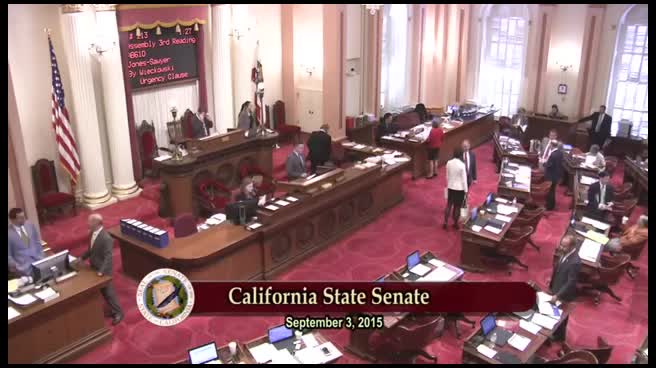 4MIN
Senate Floor
 1MIN
Senate Standing Committee on Appropriations
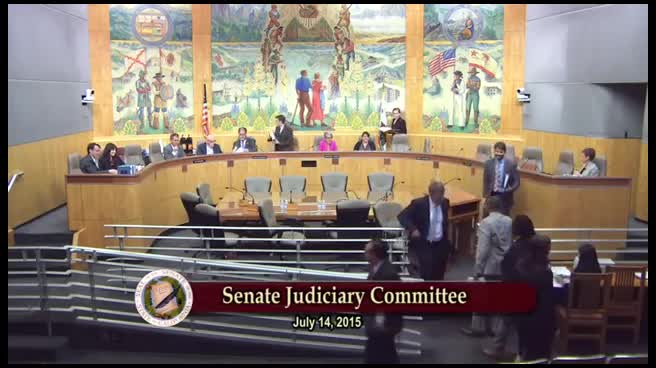 8MIN
Senate Standing Committee on Judiciary
 3MIN
Assembly Floor
 2MIN
Assembly Standing Committee on Appropriations
Bill Author