AB 637: Physician Orders for Life Sustaining Treatment forms.
- Session Year: 2015-2016
- House: Assembly
- Latest Version Date: 2015-08-17
Existing law defines a request regarding resuscitative measures to mean a written document, signed by an individual, as specified, and the physician, that directs a health care provider regarding resuscitative measures, and includes a Physician Orders for Life Sustaining Treatment form (POLST form). Existing law requires a physician to treat a patient in accordance with the POLST form and specifies the criteria for creation of a POLST form, including that the form be completed by a health care provider based on patient preferences and medical indications, and signed by a physician and the patient or his or her legally recognized health care decisionmaker.
This bill would authorize the signature of a nurse practitioner or a physician assistant acting under the supervision of the physician and within the scope of practice authorized by law to create a valid POLST form.
(a)As used in this part:
(1)Request regarding resuscitative measures means a written document, signed by (A) an individual with capacity, or a legally recognized health care decisionmaker, and (B) the individuals physician, that directs a health care provider regarding resuscitative measures. A request regarding resuscitative measures is not an advance health care directive.
(2)Request regarding resuscitative measures includes one, or both of, the following:
(A)A prehospital do not resuscitate form as developed by the Emergency Medical Services Authority or other substantially similar form.
(B)A Physician Orders for Life Sustaining Treatment form, as approved by the Emergency Medical Services Authority.
(3)Physician Orders for Life Sustaining Treatment form means a request regarding resuscitative measures that directs a health care provider regarding resuscitative and life-sustaining measures.
(b)A legally recognized health care decisionmaker may execute the Physician Orders for Life Sustaining Treatment form only if the individual lacks capacity, or the individual has designated that the decisionmakers authority is effective pursuant to Section 4682.
(c)The Physician Orders for Life Sustaining Treatment form and medical intervention and procedures offered by the form shall be explained by a health care provider, as defined in Section 4621. The form shall be completed by a health care provider based on patient preferences and medical indications, and signed by a physician, or a nurse practitioner or a physician assistant acting under the supervision of the physician and within the scope of practice authorized by law, and the patient or his or her legally recognized health care decisionmaker. The health care provider, during the process of completing the Physician Orders for Life Sustaining Treatment form, should inform the patient about the difference between an advance health care directive and the Physician Orders for Life Sustaining Treatment form.
(d)An individual having capacity may revoke a Physician Orders for Life Sustaining Treatment form at any time and in any manner that communicates an intent to revoke, consistent with Section 4695.
(e)A request regarding resuscitative measures may also be evidenced by a medallion engraved with the words do not resuscitate or the letters DNR, a patient identification number, and a 24-hour toll-free telephone number, issued by a person pursuant to an agreement with the Emergency Medical Services Authority.
|
Date
|
Status
|
|---|---|
| May 7, 2015 | Referred to Com. on HEALTH. |
| Aug 17, 2015 | Chaptered by Secretary of State - Chapter 217, Statutes of 2015. |
| Aug 17, 2015 | Approved by the Governor. |
| Aug 3, 2015 | Enrolled and presented to the Governor at 3 p.m. |
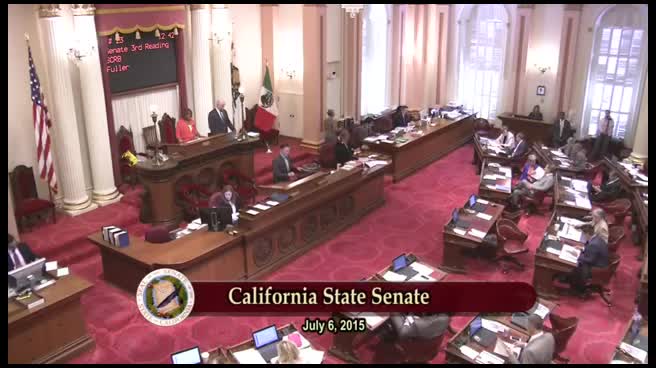
| Jul 6, 2015 | Read third time. Passed. Ordered to the Assembly. (Ayes 37. Noes 2. Page 1784.). |
| Jul 6, 2015 | Read third time. Passed. Ordered to the Assembly. |
| Jul 6, 2015 | In Assembly. Ordered to Engrossing and Enrolling. |
| Jun 15, 2015 | Read second time. Ordered to third reading. |
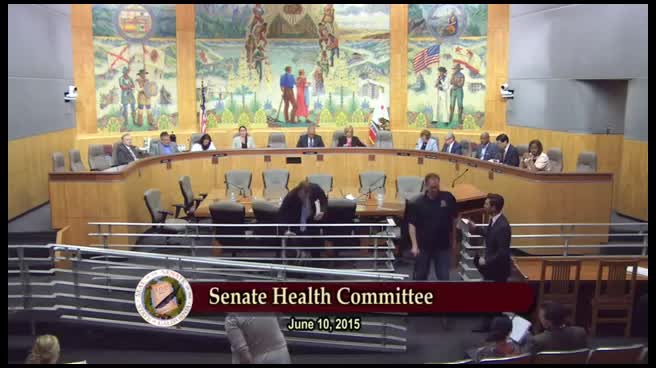
| Jun 11, 2015 | From committee: Do pass. (Ayes 8. Noes 0.) (June 10). |
| Feb 24, 2015 | Read first time. To print. |
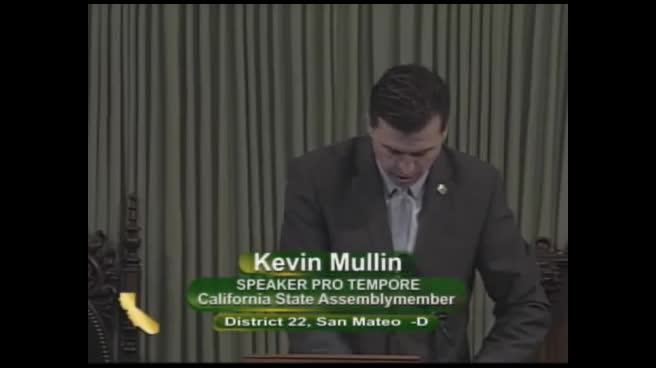
| Apr 16, 2015 | Read third time. Passed. Ordered to the Senate. (Ayes 75. Noes 0. Page 968.) |
| Apr 16, 2015 | Read third time. Passed. Ordered to the Senate. |
| Apr 16, 2015 | In Senate. Read first time. To Com. on RLS. for assignment. |
| Apr 8, 2015 | Read second time. Ordered to third reading. |
| Apr 7, 2015 | From committee: Do pass. (Ayes 10. Noes 0.) (April 7). |
| Mar 9, 2015 | Referred to Com. on JUD. |
| Feb 25, 2015 | From printer. May be heard in committee March 27. |
|
Date
|
Description
|
Location
|
Votes
|
|
|---|---|---|---|---|
| Jul 6, 2015 | Assembly 3rd Reading AB637 Campos By Monning | Senate Floor |
Passed |
|
| Jun 10, 2015 | Do pass | Senate Standing Committee on Health |
Passed |
|
| Apr 16, 2015 | AB 637 CAMPOS Assembly Third Reading | Assembly Floor |
Passed |
|
| Apr 7, 2015 | Do pass. | Assembly Standing Committee on Judiciary |
Passed |
This list shows positions taken on this bill by organizations on the date displayed, which is linked to the original source.
Positions by individuals are not included.
|
Organization
|
Position
|
Date
|
|---|---|---|
| AARP | ** Support | Jul 6, 2015 |
| Association Of Northern California Oncologists | ** Support | Jul 6, 2015 |
| Blue Shield Of California | ** Support | Jul 6, 2015 |
| California Assisted Living Association | ** Support | Jul 6, 2015 |
| California Association For Health Services At Home | ** Support | Jul 6, 2015 |
| California Association for Nurse Practitioners | ** Support | Jul 6, 2015 |
| California Chapter of the American College of Emergency Physicians | ** Support | Jul 6, 2015 |
| California Long-Term Ombudsman Association | ** Support | Apr 16, 2015 |
| California Medical Association, Inc. | ** Support | Jul 6, 2015 |
| California Right to Life Committee, Inc. | ** Against | Jul 6, 2015 |
| Coalition for Compassionate Care of California | ** Support | Jul 6, 2015 |
| Contra Costa County Advisory Council on Aging | ** Support | Jul 6, 2015 |
| Contra Costa County Board of Supervisors | ** Support | Jul 6, 2015 |
| LeadingAge California | ** Support | Jul 6, 2015 |
| Medical Board of California | ** Support | Jul 6, 2015 |
| Physician Assistant Board | ** Support | Jul 6, 2015 |
AB 637
Page 6
|
Office of Senate Floor Analyses (916) 651-1520 Fax: (916) 327-4478 |
THIRD READING
Bill No: AB 637
Introduced: 2/24/15
SENATE HEALTH COMMITTEE: 8-0, 6/10/15
AYES: Hernandez, Nguyen, Hall, Mitchell, Monning, Pan, Roth, Wolk
NO VOTE RECORDED: Nielsen
ASSEMBLY FLOOR: 75-0, 4/16/15 - See last page for vote
SUBJECT: Physician Orders for Life Sustaining Treatment forms
SOURCE: California Medical Association
Coalition for Compassionate Care of California
DIGEST: This bill allows a nurse practitioner or a physician assistant acting under the supervision of a physician to sign a completed Physician Orders for Life Sustaining Treatment form.
Existing law:
Establishes the Physicians Orders for Life Sustaining Treatment (POLST) form and medical intervention and procedures, and requires that POLST be explained by a health care provider, defined as an individual licensed, certified, or otherwise authorized or permitted by the law of this state to provide health care in the ordinary course of business or practice of a profession.
Requires the form to be completed by a health care provider based on patient preferences and medical indications, and signed by a physician and the patient or his or her legally recognized health care decision maker. Requires the health care provider, during the process of completing form, to inform the patient about the difference between an advance health care directive and the POLST form.
This bill adds a nurse practitioner (NP), or a physician assistant (PA) acting under the supervision of the physician and within the scope of practice authorized by law, to the POLST law to sign a completed POLST form.
Comments
Author’s statement. According to the author, POLST is viewed by health care professionals as useful, helpful, reliable and most importantly, very effective at ensuring preferences for end-of-life care are honored. Physicians recognize and appreciate the value of the multiple member health care team and support efforts to increase productivity while ensuring quality of care. NPs and PAs are currently having conversations with patients about their end-of-life care options and preferences, and in some instances are able to sign off on other immediately actionable documents under supervision, such as drug orders and medical certificates. By allowing NPs and PAs under physician supervision to sign POLST forms, this bill will improve end-of-life care by increasing the availability of actionable medical orders for medically indicated care consistent with patient preferences.
What is POLST? POLST includes a clinical process designed to facilitate communication between health care professionals and patients with serious illness or frailty (or their authorized surrogate) where the health care professional would not be surprised if the patient died within the next year. The process encourages shared, informed medical decision-making leading to a set of portable medical orders that respects the patient’s goals for care in regard to the use of cardiopulmonary resuscitation and other medical interventions, is applicable across health care settings, and can be reviewed and revised as needed. The POLST form is a highly visible, portable medical form that transfers from one setting to another with the patient. It functions as a Do Not Resuscitate order and provides treatment direction for multiple situations. The POLST form itself is outcome neutral, meaning treatment options range from full treatment to comfort care only.
POLST and advance directive. POLST is neither an advance directive nor a replacement for an advance directive. Both documents are helpful for communicating patient wishes when appropriately used. An advance directive is a form in which an individual appoints a person or persons to make health care decisions for the individual if and when the individual loses capacity to make health care decisions (health care power of attorney) and/or provides guidance or instructions for making health care decisions (living will). An advance directive is from the patient, not a medical order. POLST consists of a set of medical orders that applies to a limited population of patients and addresses a limited number of critical medical decisions. POLST is a complement to advance directives in that it serves as a translation tool and a continuity of care assurance.
POLST in California. According to information presented at a December 3, 2014, briefing on POLST in California, based on an evaluation by UCLA, POLST is widely used in California but there are challenges with completing the form and making sure it travels with the patient. Additional problems include incomplete or inaccurate information and for emergency medical responders the documents are not always available.
NPs and PAs. A PA may perform those medical services as set forth in regulations when the services are rendered under the supervision of a licensed physician and surgeon. A PA may only provide those medical services which he or she is competent to perform and which are consistent with his or her education, training, and experience, and which are delegated in writing by a supervising physician who is responsible for the patients cared for by that PA. According to the California Association of Nurse Practitioners, NPs are advanced practice registered nurses who are licensed by the Board of Registered Nursing and have pursued higher education, either a master’s or doctoral degree, and certification as a NP. NPs provide care in a variety of settings, including hospitals, community clinics, and private practice settings under physician supervision.
Related Legislation
SB 19 (Wolk) establishes a POLST Registry operated by the California Health and Human Services Agency (CHHS) for the purpose of collecting a POLST form received from a physician, or his or her designee, and disseminating the information in the form to persons authorized by CHHS. SB 19 is pending in the Assembly.
SB 128 (Wolk) permits a qualified adult with capacity to make medical decisions, who has been diagnosed with a terminal disease to receive a prescription for an aid in dying drug if certain conditions are met, such as two oral requests, a minimum of 15 days apart and a signed written request witnessed by two individuals is provided to his or her attending physician, the attending physician refers the patient to an independent, consulting physician to confirm diagnosis and capacity of the patient to make medical decisions, and the attending physician refers the patient for a mental health specialist assessment if there are indications of a mental disorder. SB 128 is set for hearing in the Assembly Health Committee on June 23, 2015.
SB
323 (Hernandez) authorizes a NP who holds a national certification to
practice without physician supervision in specified settings. SB 323
is set for hearing in the Assembly Business and Professions Committee
on June 30, 2015.
Prior Legislation
SB 1357 (Wolk, 2014) would have established a POLST registry at CHHS and is substantially similar to SB 19. The bill was held on the Senate Appropriations Committee suspense file.
AB 3000 (Wolk, Chapter 266, Statutes of 2008) created POLST in California, which is a standardized form to reflect a broader vision of resuscitative or life sustaining requests and to encourage the use of POLST orders to better handle resuscitative or life sustaining treatment consistent with a patient’s wishes.
FISCAL EFFECT: Appropriation: No Fiscal Com.: No Local: No
California Medical Association (co-source)
Coalition for Compassionate Care of California (co-source)
AARP
Association of Northern California Oncologists
Blue Shield of California
California Assisted Living Association
California Association for Health Services at Home
California Association for Nurse Practitioners
California Chapter of the American College of Emergency Physicians
California Long-Term Care Ombudsman Association
Contra Costa County Advisory Council on Aging
Contra Costa County Board of Supervisors
LeadingAge California
Medical Board of California
Medical Oncology Association of Southern California, Inc.
Physician Assistant Board
OPPOSITION: (Verified 6/15/15)
California Right to Life Committee, Inc.
ARGUMENTS IN SUPPORT: The California Medical Association, this bill’s co-sponsor, writes that a POLST becomes actionable when signed by a physician and the patient. NPs and PAs are having conversations with patients about their end-of-life care options and preferences and, in some instances, are able to sign off on other immediately actionable documents under supervision, such as drug orders, and medical certificates. The Coalition for Compassionate Care of California, the other co-sponsor of this bill, writes that the two signature requirement can create a roadblock to timely completion, particularly in rural areas and skilled nursing facilities where timely access to a physician can be difficult to obtain. The situation can create an unnecessarily stressful delay. NPs and PAs receive advanced training that enables them to talk with patients about the medical treatment choices in POLST and they are often able to spend more one-on-one time with patients than physicians. Sixteen states, including Oregon, already allow NPs and PAs to sign POLST forms, and no problems have occurred. The California Chapter of the American College of Emergency Physicians writes that end-of-life decisions a patient sets out in their POLST are often put into practice in the emergency department, and unfortunately, many patients arrive with an invalid POLST not signed by a physician. Allowing a NP or, PA under physician supervision, to sign and validate a POLST form will increase the number of valid POLST forms that emergency physicians can act on, and ensure patient’s end-of-life wishes are honored. AARP writes POLST is an effective but underutilized advance-care planning tool and utilization may be improved by authorizing other health care team members such as NPs and PAs who are already discussing health care decisions with patients and/or their decision makers regarding the levels of medical intervention identified on the POLST form.
ARGUMENTS IN OPPOSITION: The California Right to Life Committee, Inc. writes that this bill raises the status of NPs and PAs to a level of medical competence that is not warranted by their level of education and knowledge of illness or treatments.
ASSEMBLY FLOOR: 75-0, 4/16/15
AYES: Achadjian, Alejo, Travis Allen, Baker, Bigelow, Bloom, Bonilla, Bonta, Brough, Brown, Burke, Calderon, Campos, Chang, Chau, Chávez, Chiu, Chu, Cooley, Cooper, Dababneh, Dahle, Daly, Frazier, Beth Gaines, Gallagher, Cristina Garcia, Eduardo Garcia, Gatto, Gomez, Gonzalez, Gordon, Gray, Grove, Hadley, Roger Hernández, Holden, Irwin, Jones, Jones-Sawyer, Kim, Lackey, Levine, Linder, Lopez, Low, Maienschein, Mathis, Mayes, McCarty, Medina, Melendez, Mullin, Nazarian, Obernolte, O'Donnell, Olsen, Patterson, Perea, Rendon, Ridley-Thomas, Rodriguez, Salas, Santiago, Steinorth, Mark Stone, Thurmond, Ting, Wagner, Waldron, Weber, Wilk, Williams, Wood, Atkins
NO VOTE RECORDED: Dodd, Eggman, Gipson, Harper, Quirk
Prepared by: Teri Boughton / HEALTH /
6/16/15 13:51:05
**** END ****
AB 637 (Campos) Page 4 of 4
SENATE COMMITTEE ON HEALTH
Senator Ed Hernandez, O.D., Chair
BILL NO: AB 637
AUTHOR: |
Campos |
||
VERSION: |
February 24, 2015 |
||
HEARING DATE: |
June 10, 2015 |
|
|
CONSULTANT: |
Teri Boughton |
||
SUBJECT: Physician Orders for Life Sustaining Treatment forms.
SUMMARY:
Allows a nurse practitioner or a physician assistant acting under the supervision of a physician to sign a completed Physician Orders for Life Sustaining Treatment form.
Existing law:
Establishes the Physicians Orders for Life Sustaining Treatment (POLST) form and medical intervention and procedures, and requires that POLST be explained by a health care provider, defined as an individual licensed, certified, or otherwise authorized or permitted by the law of this state to provide health care in the ordinary course of business or practice of a profession.
Requires the form to be completed by a health care provider based on patient preferences and medical indications, and signed by a physician and the patient or his or her legally recognized health care decision maker. Requires the health care provider, during the process of completing form, to inform the patient about the difference between an advance health care directive and the POLST form.
This bill:
Adds a nurse practitioner (NP) or a physician assistant (PA) acting under the supervision of the physician and within the scope of practice authorized by law to sign a completed POLST form.
FISCAL EFFECT:
This bill is keyed non-fiscal.
PRIOR VOTES:
Assembly Floor: |
75 - 0 |
Assembly Judiciary Committee: |
10 - 0 |
COMMENTS:
Author’s statement. According to the author, POLST is viewed by health care professionals as useful, helpful, reliable and most importantly, very effective at ensuring preferences for end-of-life care are honored. Physicians recognize and appreciate the value of the multiple member health care team and support efforts to increase productivity while ensuring quality of care. NPs and PAs are currently having conversations with patients about their end-of-life care options and preferences, and in some instances are able to sign off on other immediately actionable documents under supervision, such as drug orders and medical certificates. By allowing NPs and PAs under physician supervision to sign POLST forms, this bill will improve end-of-life care by increasing the availability of actionable medical orders for medically indicated care consistent with patient preferences.
What is POLST? According to the POLST Legislative Guide, approved February 28, 2014 by the National POLST Paradigm Task Force, the POLST paradigm is a clinical process designed to facilitate communication between health care professionals and patients with serious illness or frailty (or their authorized surrogate) where the health care professional would not be surprised if the patient died within the next year. The process encourages shared, informed medical decision-making leading to a set of portable medical orders that respects the patient’s goals for care in regard to the use of cardiopulmonary resuscitation and other medical interventions, is applicable across health care settings, and can be reviewed and revised as needed. The POLST paradigm promotes the use of a highly visible, portable medical form that transfers from one setting to another with the patient. It functions as a Do Not Resuscitate order and provides treatment direction for multiple situations. The POLST form itself is outcome neutral, meaning treatment options range from full treatment to comfort care only. As of December 2013, the POLST Paradigm Task Force had endorsed the POLST programs of 16 states, and another 12 states were developing POLST implementation plans. The 16 endorsed states are: California, Colorado, Georgia, Hawaii, Idaho, Louisiana, Montana, New York, North Carolina, Oregon, Pennsylvania, Tennessee, Utah, Washington, West Virginia, and Wisconsin (Wisconsin has been endorsed only regionally).
POLST is neither an advance directive nor a replacement for advance directives. However, both documents are helpful for communicating patient wishes when appropriately used. An advance directive is a form in which an individual appoints a person or persons to make health care decisions for the individual if and when the individual loses capacity to make health care decisions (health care power of attorney) and/or provides guidance or instructions for making health care decisions (living will). An advance directive is from the patient, not a medical order. POLST consists of a set of medical orders that applies to a limited population of patients and addresses a limited number of critical medical decisions. POLST is a complement to advance directives in that it serves as a translation tool and a continuity of care assurance.
POLST in California. As published in an August 10, 2012, article in the Journal of General Internal Medicine, Implementation of Physician Orders for Life Sustaining Treatment in Nursing Homes in California: Evaluation of a Novel Statewide Dissemination Mechanism, 546 California nursing homes were surveyed and in 82 percent of responding nursing homes, staff received POLST education and 59 percent reported having a formal policy on POLST. Two-thirds had admitted a resident with a POLST and 15 percent of newly admitted residents over the past month had a POLST. Few nursing homes reported difficulty following POLST orders, but 38 percent noted difficulty involving physicians in POLST completion. A 2013 article in the Journal of American Geriatrics Society, Implementing Physician Orders for Life-Sustaining Treatment in California Hospitals: Factors Associated with Adoption, indicates of 349 hospitals surveyed, 81.9 percent responded. Sixty-five percent of hospitals had a policy on POLST, 87 percent had available POLST forms, 84 percent had educated staff, and 94 percent reported handling POLST properly in the emergency department on admission. Although POLST is widely used in California, a significant minority of hospitals remain unprepared three years after implementation. According to information presented at a December 3, 2014, briefing on POLST in California, based on an evaluation by UCLA, POLST is widely used in California but there are challenges with completing the form and making sure it travels with the patient. Additional problems include incomplete or inaccurate information and for emergency medical responders the documents are not always available.
NPs and PAs. A PA may perform those medical services as set forth in regulations when the services are rendered under the supervision of a licensed physician and surgeon. A PA may only provide those medical services which he or she is competent to perform and which are consistent with his or her education, training, and experience, and which are delegated in writing by a supervising physician who is responsible for the patients cared for by that PA. According to the California Association of Nurse Practitioners, NPs are advanced practice registered nurses who are licensed by the Board of Registered Nursing and have pursued higher education, either a master’s or doctoral degree, and certification as a NP. NPs provide care in a variety of settings, including hospitals, community clinics, and private practice settings under physician supervision.
Related legislation. SB 19 (Wolk), would establish a POLST Registry operated by the California Health and Human Services Agency (CHHS) for the purpose of collecting a POLST form received from a physician, or his or her designee, and disseminating the information in the form to persons authorized by CHHS. SB 19 (Wolk) is pending in the Assembly.
SB 128 (Wolk and Monning), would permit a qualified adult with capacity to make medical decisions, who has been diagnosed with a terminal disease to receive a prescription for an aid in dying drug if certain conditions are met, such as two oral requests, a minimum of 15 days apart and a signed written request witnessed by two individuals is provided to his or her attending physician, the attending physician refers the patient to an independent, consulting physician to confirm diagnosis and capacity of the patient to make medical decisions, and the attending physician refers the patient for a mental health specialist assessment if there are indications of a mental disorder. SB 128 is pending in the Assembly.
SB
323 (Hernandez) would authorize a NP who holds a national
certification to practice without physician supervision in specified
settings. SB 323 is
pending in the Assembly Business and Professions Committee.
Prior legislation. SB 1357 (Wolk, 2014), would have established a POLST registry at CHHS and is substantially similar to SB 19. The bill was held on the Senate Appropriations suspense file.
AB 3000 (Wolk, Chapter 266, Statutes of 2008), created POLST in California, which is a standardized form to reflect a broader vision of resuscitative or life sustaining requests and to encourage the use of POLST orders to better handle resuscitative or life sustaining treatment consistent with a patient’s wishes.
Support. The California Medical Association writes that a POLST becomes actionable when signed by a physician and the patient. NPs and PAs are having conversations with patients about their end-of-life care options and preferences and, in some instances, are able to sign off on other immediately actionable documents under supervision, such as drug orders, and medical certificates. The Coalition for Compassionate Care of California writes that the two signature requirement can create a roadblock to timely completion, particularly in rural areas and skilled nursing facilities where timely access to a physician can be difficult to obtain. The situation can create an unnecessarily stressful delay. NPs and PAs receive advanced training that enables them to talk with patients about the medical treatment choices in POLST and they are often able to spend more one-on-one time with patients than physicians. Sixteen states, including Oregon, already allow NPs and PAs to sign POLST forms, and no problems have occurred. The California Chapter of the American College of Emergency Physicians writes that end-of-life decisions a patient sets out in their POLST are often put into practice in the emergency department, and unfortunately, many patients arrive with an invalid POLST not signed by a physician. Allowing a NP or PA, under physician supervision, to sign and validate a POLST form will increase the number of valid POLST forms that emergency physicians can act on, and ensure patient’s end-of-life wishes are honored. AARP writes POLST is an effective but underutilized advance-care planning tool and utilization may be improved by authorizing other health care team members such as NPs and PAs who are already discussing health care decisions with patients and/or their decision makers regarding the levels of medical intervention identified on the POLST form.
Opposition. The California Right to Life Committee, Inc. writes that this bill raises the status of nurse practitioners and nursing assistants to a level of medical competences that is not warranted by their level of education and knowledge of illness or treatments.
SUPPORT AND OPPOSITION:
Support: California Medical Association (co-sponsor)
Coalition for Compassionate Care of California (co-sponsor)
AARP
Association of Northern California Oncologists
Blue Shield of California
California Assisted Living Association
California Association for Health Services at Home
California Association for Nurse Practitioners
California Chapter of the American College of Emergency Physicians
California Long-Term Care Ombudsman Association
Contra Costa County Advisory Council on Aging
Contra Costa County Board of Supervisors
LeadingAge California
Medical Board of California
Medical Oncology Association of Southern California, Inc.
Physician Assistant Board
Oppose: California Right to Life Committee, Inc.
-- END --
AB 637
Page 5
Date of Hearing: April 7, 2015
ASSEMBLY COMMITTEE ON JUDICIARY
Mark Stone, Chair
AB 637
(Campos) – As Introduced February 24, 2015
SUBJECT: Physician Orders for Life Sustaining Treatment forms
KEY ISSUE: SHOULD A NURSE PRACTIONER or PHYSICIAN’S ASSISTANT who is acting under the supervision of a physician and within his or her scope of practice BE AUTHORIZED to sign A PHYSICIAN ORDER FOR LIFE SUSTAINING TREATMENT FORM that also must be signed by either the patient, or the patient’s legally recognized health care decisionmaker, and which gives a health care provider information regarding the patient’s preferences for use of resuscitative and life-sustaining measures?
SYNOPSIS
This modest bill seeks to allow either a nurse practitioner or physician’s assistant acting under the supervision of a physician and within his or her scope of practice to sign a Physician Order for Life Sustaining Treatment (POLST) form. The POLST program has shown itself to be helpful in instructing health care providers about which resuscitative means, if any, a patient would like to be used in a health care emergency. These standardized orders are designed to assist individuals in fragile or frail health, or those diagnosed with a terminal illness, in communicating their preferences for the type of care they wish to receive at the end of their lives. Unlike broad advanced health care directives, which often are not readily available to health care personnel, these model forms allow for specific instructions for what, if any, resuscitative means are to be employed. In support of the bill, the California Medical Association and other supporters point out that allowing Nurse Practitioners and Physician Assistants to sign POLST forms will make the forms more accessible and available. Meanwhile, the California Right to Life Committee argues that this bill replaces physicians with health care providers who have a lower level of medical training, makes those new health care providers into end of life care decision makers, and devalues the lives of elderly and vulnerable citizens.
SUMMARY: Expands the ability to sign a Physician Order for Life Sustaining Treatment Form to Nurse Practitioners and Physician Assistants. Specifically, this bill:
Authorizes a nurse practitioner or a physician assistant to sign a POLST form, completed by a health care provider based on patient preferences and medical indications, with either the patient, or the patient’s legally recognized health care decisionmaker under specified circumstances.
Requires that the nurse practitioner or physician assistant who signs such a form to be acting under the supervision of the physician and within the scope of practice authorized by law.
EXISTING LAW:
Provides that an advanced health care directive is either a document containing (1) individual health care instruction or (2) a power of attorney for health care. Existing law further establishes a process and form for an individual to give instructions about health care decision making and designating an agent to make decisions on his or her behalf. (Probate Code Sec. 4670 et seq. All references are to the Probate Code, unless otherwise indicated.)
Requires a request regarding resuscitative orders to be a pre-hospital “Do Not Resuscitate” form, as specified, or an Emergency Medical Services Authority (EMSA) approved POLST form. (Section 4780.)
Establishes the POLST form and requires the form to be completed by a health care provider based on patient preferences and medical indications, and signed by a physician and the patient or his or her legally recognized health care decision-maker. (Section 4780.)
Requires the health care provider, during the process of completing the form, to inform the patient about the difference between an advance health care directive and the POLST form. (Section 4870 et seq.)
Protects a health care provider from liability regarding a resuscitative measures if the health care provider (1) believes in good faith that his or her action is consistent with the applicable law, and (2) has no knowledge that the action or decision would be inconsistent with a health care decision that the individual would have made on his or her own behalf under like circumstances. (Section 4782.)
FISCAL EFFECT: As currently in print this bill is keyed non-fiscal.
COMMENTS: The POLST Paradigm is a clinical process designed to facilitate communication between health care professionals and patients (or their authorized surrogates in cases where the patients themselves do not have the capacity to make health care decisions) who are very ill or very frail. The process encourages patients and their families to participate in planned, shared, and informed medical decision-making that respects the patients’ goals for care in regard to the use of cardiopulmonary resuscitation and other medical interventions. The POLST paradigm promotes the use of a highly visible, portable medical form, known as a POLST form, which transfers from one setting to another with the patient. It functions as a Do Not Resuscitate order and provides treatment direction for multiple health situations. The form itself is outcome neutral. Its options range from full treatment to comfort care only.
The POLST form is neither an advance directive, nor a replacement for advance directives. However, like an advance directive, the POLST form is helpful for communicating patient wishes to health care providers. While an advance directive is a form in which an individual appoints a person or persons to make health care decisions for the individual if and when the individual loses capacity to make health care decisions (health care power of attorney) and/or provides guidance or instructions for making health care decisions (living will), the POLST consists of a set of medical orders that applies to a limited population of patients and addresses a limited number of critical medical decisions. The POLST form is a complement to advance directives in that it serves as a translation tool for continuity of care.
As of January 1, 2014, 24 states offered POLST programs. In the majority of those states (14 of 24), RNs and PAs were allowed to sign a POLST form. California is one of only nine states that allow only physicians to sign POLST forms. (New Jersey allows a physician or “Advanced Practice Nurse” to sign the form. (2H-134(b)(3).)
POLST Implementation in California. As published in an August 10, 2012 article in the Journal of General Internal Medicine, Implementation of Physician Orders for Life Sustaining Treatment in Nursing Homes in California: Evaluation of a Novel Statewide Dissemination Mechanism, 82 percent of the 546 California nursing homes responding to a statewide survey of nursing homes reported that their staff received POLST education. Fifty-nine percent of responding nursing homes reported having a formal policy on POLST. Two-thirds had admitted a resident with a POLST and 15 percent of newly admitted residents over the past month had a POLST. Few nursing homes reported difficulty following POLST orders, but 38 percent noted difficulty involving physicians in POLST completion.
A 2013 article in the Journal of American Geriatrics Society, Implementing Physician Orders for Life-Sustaining Treatment in California Hospitals: Factors Associated with Adoption, indicates that 65 percent of hospitals which responded to a survey had a policy on POLST. Eighty-seven percent of the hospitals made POLST forms available, 84 percent had educated staff, and 94 percent reported handling POLST properly in the emergency department upon admission of patients. Although the POLST form is widely used in California, a significant number of hospitals remain unprepared three years after implementation.
Among consumers, a 2010 survey commissioned by the California Healthcare Foundation regarding POLST use in California nursing homes found overall satisfaction with the forms among residents. The survey also revealed that more than one third of nursing homes reported difficulty in obtaining physician participation in POLST completion and having physicians sign the POLST. (Wenger et al.: POLST Dissemination in California Nursing Homes, J Gen Intern Med 28(1): 51–7; http://www.polst.org/wp-content/uploads/2013/01/wenger_JGIM.pdf )
ARGUMENTS IN SUPPORT: In support of the bill, the California Medical Association writes that the POLST improves communication between patients and health care providers:
POLST also helps patients talk with their healthcare team and loved ones about their choices. In this way, POLST can help reduce patient and family suffering by making sure that patient wishes are known and honored. While patients discuss POLST with other members of the healthcare team, NPs and PAs, in addition to their physician, currently the POLST does not become actionable until signed by both the patient or their health care decision maker and their physician. Therefore, to help increase POLST utilization and availability, this bill allows NPs and PAs under a physician’s supervision to also sign POLST forms.
In support of the bill, the author writes,
The POLST is viewed by health care professionals as useful, helpful, reliable and most importantly, very effective at ensuring preferences for end-of-life care are honored. Physicians recognize and appreciate the value of the multiple member health care team and support efforts to increase productivity while ensuring quality of care. NPs and PAs are currently having conversations with patients about their end-of-life care options and preferences, and in some instances are able to sign off on other immediately actionable documents under supervision, such as drug orders and medical certificates. By allowing NPs and PAs under physician supervision to sign POLST forms, this bill will improve end-of-life care by increasing the availability of actionable medical orders for medically indicated care consistent with patient preferences.
ARGUMENTS IN OPPOSITION: The California Right to Life Committee criticizes the bill for “not only replac[ing] the physician with a lower level of medically trained health care decision maker but even further remov[ing] the patient himself from the decision making process by assigning the title of “legally recognized health care decision maker” to nurse practitioners and nursing assistants who will determine when or if this person’s life is no longer to be considered worthy of restorative health care treatment.” However, the California Association of Nurse Practitioners points out that “Nurse practitioners (NPs) are advanced practice registered nurses who are licensed by the Board of Registered Nursing and have pursued higher education, either a master’s or doctoral degree, and a certification as a NP.” Other supporters, such as the AARP, point out that “health team members such as NPs and PAs . . . are already discussing health care decisions with patients and/or their decision makers regarding the levels of medical intervention identified on the POLST form. The Right to Life Committee mistakenly assumes that the bill assigns the title of “legally recognized health care decision maker” to nurse practitioners and nursing assistants. In fact, the decision maker is always the patient himself or herself, except when the patient lacks capacity, in which case the “legally recognized health care decisionmaker” is empowered to make decisions on behalf of the patient. A legally recognized health care decisionmaker is only allowed to execute the Physician Orders for Life Sustaining Treatment form if and when the patient lacks capacity, or the individual has designated that the decisionmaker’s authority is effective pursuant to Section 4682. (Section 4680(b).) Finally, the California Right to Life Committee is mistaken in its conclusion that it is “nurse practitioners and nursing assistants who will determine when or if this person’s life is no longer to be considered worthy of restorative health care treatment” because physicians do not currently make such decisions for patients and the bill does not propose that RNs and PAs make those decisions in the future. End of life treatment decisions are only made by the patient or, if the patient lacks capacity, a “legally recognized health care decisionmaker,” who is likely to be the patient’s family member or loved one.
Prior Related Legislation: AB 2452 (Pan, 2014) would have required the Secretary of State (SOS) to establish an electronic process for submittal and retrieval of advance health care directives (AHCDs). Died in the Senate Judiciary Committee.
SB 1357 (Wolk, 2014) would have required the California Health and Human Services Agency, on or before January 1, 2016, to establish and operate a statewide registry system, to be known as the California POLST Registry, for the purpose of collecting POLST forms received from health care providers, who would be required to submit the forms to the registry unless a patient or his or her health care decisionmaker chooses not to participate. Died in Senate Appropriations Committee.
AB 300 (Wolk, Chapter 266, Statutes of 2008) created POLST in California, which is a standardized form to reflect a broader vision of resuscitative or life sustaining requests and to encourage the use of POLST orders to better handle resuscitative or life sustaining treatment consistent with a patient’s wishes.
AB 1676 (Richman, Chapter 434, Statutes of 2005) created the Advance Directives and Terminal Illness Decisions Program, which required the development of information about end of life care, advance health care directives, and registration of the advance health care directives at the Advance Health Care Directive Registry.
AB 2442 (Canciamilla, Chapter 882, Statutes of 2004) required the Secretary of State to receive and release a person’s advance health care directive and transmit the information to the Advance Health Care Directive Registry of another jurisdiction upon request.
AB 891 (Alquist, Chapter 658, Statutes of 2000) established the Health Care Decisions Law which also governs advance health care directives.
SB 1857 (Watson, Chapter 1280, Statutes of 1994) required the Secretary of State to establish a central registry for power of attorney for health care or a Natural Death Act declaration. This legislation was repealed and replaced by the Health Care Decisions Law.
REGISTERED SUPPORT / OPPOSITION:
Support
California Medical Association (sponsor)
AARP
American College of Emergency Physicians, California Chapter
Blue Shield of California
California Assisted Living Association
California Association for Health Services at Home
California Association of Nurse Practitioners
California Long-Term Ombudsman Association
LeadingAge California
Several individuals
Opposition
California Right to Life Committee
Analysis Prepared by: Alison Merrilees / JUD. / (916) 319-2334
AB 637
Page 2
ASSEMBLY THIRD READING
AB 637
(Campos)
As Introduced February 24, 2015
Majority vote
Committee |
Votes |
Ayes |
Noes |
Judiciary |
10-0 |
Mark Stone, Wagner, Alejo, Chau, Chiu, Gallagher, Cristina Garcia, Holden, Maienschein, O'Donnell |
|
SUMMARY: Expands the ability to sign a Physician Order for Life Sustaining Treatment (POLST) form to nurse practitioners (NP) and physician assistants (PA). Specifically, this bill:
Authorizes a NP or a PA to sign a POLST form, completed by a health care provider based on patient preferences and medical indications, with either the patient, or the patient’s legally recognized health care decision maker under specified circumstances.
Requires that the NP or PA who signs such a form to be acting under the supervision of the physician and within the scope of practice authorized by law.
EXISTING LAW:
Provides that an advanced health care directive is either a document containing a) individual health care instruction or b) a power of attorney for health care. Further establishes a process and form for an individual to give instructions about health care decision making and designating an agent to make decisions on his or her behalf.
Requires a request regarding resuscitative orders to be a pre-hospital "Do Not Resuscitate" form, as specified, or an Emergency Medical Services Authority (EMSA) approved POLST form.
Establishes the POLST form and requires the form to be completed by a health care provider based on patient preferences and medical indications, and signed by a physician and the patient or his or her legally recognized health care decision maker.
Requires the health care provider, during the process of completing the form, to inform the patient about the difference between an advance health care directive and the POLST form.
Protects a health care provider from liability regarding a resuscitative measures if the health care provider a) believes in good faith that his or her action is consistent with the applicable law, and b) has no knowledge that the action or decision would be inconsistent with a health care decision that the individual would have made on his or her own behalf under like circumstances.
FISCAL EFFECT: None
COMMENTS: The POLST Paradigm is a clinical process designed to facilitate communication between health care professionals and patients (or their authorized surrogates in cases where the patients themselves do not have the capacity to make health care decisions) who are very ill or very frail. The process encourages patients and their families to participate in planned, shared, and informed medical decision-making that respects the patients’ goals for care in regard to the use of cardiopulmonary resuscitation and other medical interventions. The POLST paradigm promotes the use of a highly visible, portable medical form, known as a POLST form, which transfers from one setting to another with the patient. It functions as a Do Not Resuscitate order and provides treatment direction for multiple health situations. The form itself is outcome neutral. Its options range from full treatment to comfort care only.
As of January 1, 2014, 24 states offered POLST programs. In the majority of those states (14 of 24), RNs and PAs were allowed to sign a POLST form. California is one of only nine states that allow only physicians to sign POLST forms. (New Jersey allows a physician or "Advanced Practice Nurse" to sign the form. (2H-134(b)(3).)
In a statewide survey of California nursing homes, 59% of responding nursing homes reported having a formal policy on POLST. Two-thirds had admitted a resident with a POLST and 15% of newly admitted residents over the past month had a POLST. Few nursing homes reported difficulty following POLST orders, but 38% noted difficulty involving physicians in POLST completion.
In support of the bill, the California Medical Association writes that the POLST improves communication between patients and health care providers:
POLST also helps patients talk with their healthcare team and loved ones about their choices. In this way, POLST can help reduce patient and family suffering by making sure that patient wishes are known and honored. While patients discuss POLST with other members of the healthcare team, NPs and PAs, in addition to their physician, currently the POLST does not become actionable until signed by both the patient or their health care decision maker and their physician. Therefore, to help increase POLST utilization and availability, this bill allows NPs and PAs under a physician’s supervision to also sign POLST forms.
The California Right to Life Committee criticizes the bill for "not only replac[ing] the physician with a lower level of medically trained health care decision maker but even further remov[ing] the patient himself from the decision making process by assigning the title of "legally recognized health care decision maker” to nurse practitioners and nursing assistants who will determine when or if this person’s life is no longer to be considered worthy of restorative health care treatment."
Analysis Prepared by: Alison Merrilees / JUD. / (916) 319-2334 FN: 0000116
Discussed in Hearing
 3MIN
Senate Floor
 7MIN
Senate Standing Committee on Health
 14SEC
Assembly Floor
 1MIN
Assembly Floor
Bill Author

Bill Co-Author(s):