AB 643: Emergency services: Silver Alerts.
- Session Year: 2015-2016
- House: Assembly
- Latest Version Date: 2015-09-28
Existing law authorizes a law enforcement agency to request the Department of the California Highway Patrol to activate a Silver Alert, as defined, if the agency receives a report of a missing person who is 65 years of age or older, developmentally disabled, or cognitively impaired, and certain conditions are met, including that all local resources have been utilized and the disappearance is unexplained or suspicious. Upon concurrence by the Department of the California Highway Patrol that the precedent conditions have been met, existing law requires the patrol to issue the alert, which may take the form of a be-on-the-lookout alert, an Emergency Digital Information Service message, or an electronic flyer, within a specified geographical area.
This bill would authorize the Silver Alert to be made by changeable message sign if a law enforcement agency determines that a vehicle may be involved in the missing person incident and specific vehicle identification data is available for public dissemination.
Existing law authorizes a law enforcement agency to request the also Department of the California Highway Patrol to activate a Silver Alert, as defined, if the agency receives a report of a missing person who is 65 years of age or older, developmentally disabled, or cognitively impaired, and certain conditions are met, including that all local resources have been utilized and the disappearance is unexplained or suspicious. Upon concurrence by the Department of the California Highway Patrol that the precedent conditions have been met, existing law requires the patrol to issue the alert, which may take the form of a be-on-the-lookout alert, an Emergency Digital Information Service message, or an electronic flyer, within a specified geographical area.
This bill would authorize the Silver Alert to be made by changeable message sign if a law enforcement agency determines that a vehicle may be involved in the missing person incident and specific vehicle identification data is available for public dissemination.
Existing law authorizes a law enforcement agency to request the also California Highway Patrol to activate a Silver Alert, as defined, if the agency receives a report of a missing person who is 65 years of age or older, developmentally disabled, or cognitively impaired, and certain conditions are met, including that all local resources have been utilized and the disappearance is unexplained or suspicious. Upon concurrence by the Department of the California Highway Patrol that the precedent conditions have been met, existing law requires the patrol to issue the alert, which may take the form of a be-on-the-lookout alert, an Emergency Digital Information Service message, or an electronic flyer, within a specified geographical area.
This bill would authorize the Silver Alert to be made by changeable message sign.
(a)For purposes of this section, Silver Alert means a notification system, activated pursuant to subdivision (b), designed to issue and coordinate alerts with respect to a person who is 65 years of age or older, developmentally disabled, or cognitively impaired, and who is reported missing.
(b)(1)If a person is reported missing to a law enforcement agency and that agency determines that the requirements of subdivision (c) are met, the agency may request the Department of the California Highway Patrol to activate a Silver Alert. If the Department of the California Highway Patrol concurs that the requirements of subdivision (c) are met, it shall activate a Silver Alert within the geographical area requested by the investigating law enforcement agency.
(2)Radio, television, and cable and satellite systems are encouraged to, but not required to, cooperate with disseminating the information contained in a Silver Alert.
(3)Upon activation of a Silver Alert, the Department of the California Highway Patrol shall assist the investigating law enforcement agency by issuing a be-on-the-lookout alert, an Emergency Digital Information Service message, an electronic flyer, or a changeable message sign in compliance with paragraph (4).
(4)Upon activation of a Silver Alert, the Department of the California Highway Patrol may use a changeable message sign if both of the following conditions are met:
(A)A law enforcement agency determines that a vehicle may be involved in the missing person incident.
(B)Specific vehicle identification is available for public dissemination.
(c)A law enforcement agency may request a Silver Alert be activated if that agency determines that all of the following conditions are met in regard to the investigation of the missing person:
(1)The missing person is 65 years of age or older, developmentally disabled, or cognitively impaired.
(2)The investigating law enforcement agency has utilized all available local resources.
(3)The law enforcement agency determines that the person has gone missing under unexplained or suspicious circumstances.
(4)The law enforcement agency believes that the person is in danger because of age, health, mental or physical disability, or environment or weather conditions, that the person is in the company of a potentially dangerous person, or that there are other factors indicating that the person may be in peril.
(5)There is information available that, if disseminated to the public, could assist in the safe recovery of the missing person.
(d)For purposes of this section, the following definitions have the following meanings:
(1)Developmentally disabled means affected by a developmental disability, as defined in subdivision (a) of Section 4512 of the Welfare and Institutions Code.
(2)Cognitively impaired means affected by a cognitive impairment, as defined in Section 14522.4 of the Welfare and Institutions Code.
(a)For purposes of this section, Silver Alert means a notification system, activated pursuant to subdivision (b), designed to issue and coordinate alerts with respect to a person who is 65 years of age or older, developmentally disabled, or cognitively impaired, and who is reported missing.
(b)(1)If a person is reported missing to a law enforcement agency and that agency determines that the requirements of subdivision (c) are met, the agency may request the Department of the California Highway Patrol to activate a Silver Alert. If the Department of the California Highway Patrol concurs that the requirements of subdivision (c) are met, it shall activate a Silver Alert within the geographical area requested by the investigating law enforcement agency.
(2)Radio, television, and cable and satellite systems are encouraged to, but not required to, cooperate with disseminating the information contained in a Silver Alert.
(3)Upon activation of a Silver Alert, the Department of the California Highway Patrol shall assist the investigating law enforcement agency by issuing a be-on-the-lookout alert, an Emergency Digital Information Service message, a changeable message sign, or an electronic flyer, or a changeable message sign in compliance with paragraph (4).
(4)Upon activation of a Silver Alert, the Department of the California Highway Patrol may use a changeable message sign if both of the following conditions are met:
(A)A law enforcement agency determines that a vehicle may be involved in the missing person incident.
(B)Specific vehicle identification is available for public dissemination.
(c)A law enforcement agency may request a Silver Alert be activated if that agency determines that all of the following conditions are met in regard to the investigation of the missing person:
(1)The missing person is 65 years of age or older, developmentally disabled, or cognitively impaired.
(2)The investigating law enforcement agency has utilized all available local resources.
(3)The law enforcement agency determines that the person has gone missing under unexplained or suspicious circumstances.
(4)The law enforcement agency believes that the person is in danger because of age, health, mental or physical disability, or environment or weather conditions, that the person is in the company of a potentially dangerous person, or that there are other factors indicating that the person may be in peril.
(5)There is information available that, if disseminated to the public, could assist in the safe recovery of the missing person.
(d)For purposes of this section, the following definitions have the following meanings:
(1)Developmentally disabled means affected by a developmental disability, as defined in subdivision (a) of Section 4512 of the Welfare and Institutions Code.
(2)Cognitively impaired means affected by a cognitive impairment, as defined in Section 14522.4 of the Welfare and Institutions Code.
(a)For purposes of this section, Silver Alert means a notification system, activated pursuant to subdivision (b), designed to issue and coordinate alerts with respect to a person who is 65 years of age or older, developmentally disabled, or cognitively impaired, and who is reported missing.
(b)(1)If a person is reported missing to a law enforcement agency and that agency determines that the requirements of subdivision (c) are met, the agency may request the Department of the California Highway Patrol to activate a Silver Alert. If the Department of the California Highway Patrol concurs that the requirements of subdivision (c) are met, it shall activate a Silver Alert within the geographical area requested by the investigating law enforcement agency.
(2)Radio, television, and cable and satellite systems are encouraged to, but not required to, cooperate with disseminating the information contained in a Silver Alert.
(3)Upon activation of a Silver Alert, the Department of the California Highway Patrol shall assist the investigating law enforcement agency by issuing a be-on-the-lookout alert, an Emergency Digital Information Service message, a changeable message sign, or an electronic flyer.
(c)A law enforcement agency may request a Silver Alert be activated if that agency determines that all of the following conditions are met in regard to the investigation of the missing person:
(1)The missing person is 65 years of age or older, developmentally disabled, or cognitively impaired.
(2)The investigating law enforcement agency has utilized all available local resources.
(3)The law enforcement agency determines that the person has gone missing under unexplained or suspicious circumstances.
(4)The law enforcement agency believes that the person is in danger because of age, health, mental or physical disability, or environment or weather conditions, that the person is in the company of a potentially dangerous person, or that there are other factors indicating that the person may be in peril.
(5)There is information available that, if disseminated to the public, could assist in the safe recovery of the missing person.
(d)For purposes of this section, the following definitions have the following meanings:
(1)Developmentally disabled means affected by a developmental disability, as defined in subdivision (a) of Section 4512 of the Welfare and Institutions Code.
(2)Cognitively impaired means affected by a cognitive impairment, as defined in Section 14522.4 of the Welfare and Institutions Code.
|
Date
|
Status
|
|---|---|
| May 28, 2015 | Referred to Com. on T. & H. |
| Sep 28, 2015 | Chaptered by Secretary of State - Chapter 332, Statutes of 2015. |
| Sep 28, 2015 | Approved by the Governor. |
| Sep 9, 2015 | Enrolled and presented to the Governor at 4 p.m. |
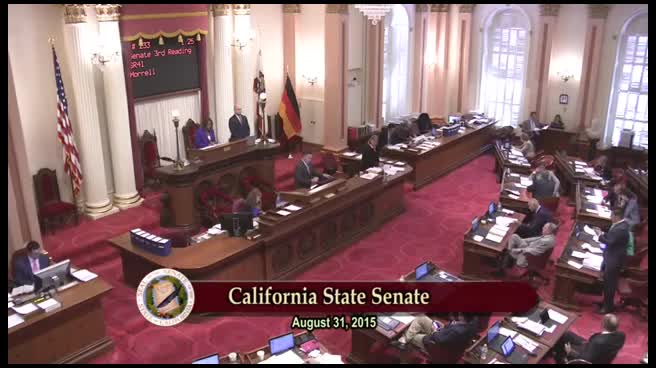
| Aug 31, 2015 | Read third time. Passed. Ordered to the Assembly. (Ayes 39. Noes 0. Page 2277.). |
| Aug 31, 2015 | Read third time. Passed. Ordered to the Assembly. |
| Aug 31, 2015 | In Assembly. Ordered to Engrossing and Enrolling. |
| Jul 7, 2015 | Read second time. Ordered to third reading. |
| Jul 6, 2015 | From committee: Be placed on second reading file pursuant to Senate Rule 28.8. |
| Jun 24, 2015 | From committee: Do pass and re-refer to Com. on APPR. (Ayes 11. Noes 0.) (June 23). Re-referred to Com. on APPR. |
| Jun 8, 2015 | In committee: Hearing postponed by committee. |
| Feb 24, 2015 | Read first time. To print. |
| May 18, 2015 | Read third time. Passed. Ordered to the Senate. (Ayes 76. Noes 0. Page 1479.) |
| May 18, 2015 | In Senate. Read first time. To Com. on RLS. for assignment. |
| May 7, 2015 | Read second time. Ordered to third reading. |
| May 6, 2015 | From committee: Do pass. (Ayes 17. Noes 0.) (May 6). |
| Apr 22, 2015 | From committee: Do pass and re-refer to Com. on APPR. (Ayes 7. Noes 0.) (April 21). Re-referred to Com. on APPR. |
| Apr 9, 2015 | Re-referred to Com. on AGING & L.T.C. |
| Apr 8, 2015 | Read second time and amended. |
| Apr 7, 2015 | From committee: Amend, and do pass as amended and re-refer to Com. on AGING & L.T.C. (Ayes 15. Noes 0.) (April 6). |
| Mar 9, 2015 | Referred to Coms. on TRANS. and AGING & L.T.C. |
| Feb 25, 2015 | From printer. May be heard in committee March 27. |
|
Date
|
Description
|
Location
|
Votes
|
|
|---|---|---|---|---|
| Aug 31, 2015 | Assembly 3rd Reading AB643 Nazarian By Beall | Senate Floor |
Passed |
|
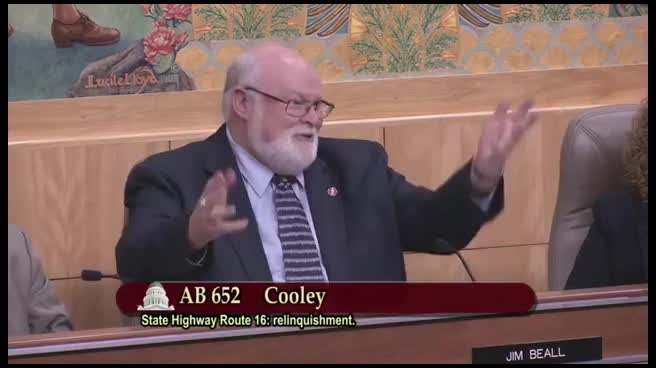
| Jun 23, 2015 | Do pass, but first be re-referred to the Committee on [Appropriations] | Senate Standing Committee on Transportation and Housing |
Passed |
|
| May 18, 2015 | AB 643 NAZARIAN Assembly Third Reading | Assembly Floor |
Passed |
|
| May 6, 2015 | Do pass. | Assembly Standing Committee on Appropriations |
Passed |
|
| Apr 21, 2015 | Do pass and be re-referred to the Committee on [Appropriations] | Assembly Standing Committee on Aging and Long-Term Care |
Passed |
|
| Apr 6, 2015 | Do pass as amended and be re-referred to the Committee on [Aging and Long-Term Care] | Assembly Standing Committee on Transportation |
Passed |
This list shows positions taken on this bill by organizations on the date displayed, which is linked to the original source.
Positions by individuals are not included.
|
Organization
|
Position
|
Date
|
|---|---|---|
| Alzheimer's Association | ** Support | Aug 31, 2015 |
| American Silver Alert Coalition | ** Support | Aug 31, 2015 |
| Association Of Regional Center Agencies | ** Support | Aug 31, 2015 |
| Association of Regional Central Agencies | * Support | Apr 6, 2015 |
| California Assisted Living Association | ** Support | Aug 31, 2015 |
| California College And University Police Chiefs Association | ** Support | Aug 31, 2015 |
| California Police Chiefs Association | ** Support | Aug 31, 2015 |
| California Senior Legislature | ** Support | Aug 31, 2015 |
| California Senior Legislature - Sponsor | ** Support | May 6, 2015 |
| Center for Autism & Related Disorders | ** Support | May 6, 2015 |
| Congress of California Seniors | ** Support | Aug 31, 2015 |
| County of Marin | ** Support | Aug 31, 2015 |
| County Of San Diego | ** Support | Aug 31, 2015 |
| North Los Angeles County Regional Center | ** Support | Aug 31, 2015 |
| State Council on Developmental Disabilities | ** Support | Aug 31, 2015 |
| The Arc and United Cerebral Palsy California Collaboration | ** Support | Aug 31, 2015 |
| The Help Group | ** Support | Aug 31, 2015 |
AB 643
Page 6
|
Office of Senate Floor Analyses (916) 651-1520 Fax: (916) 327-4478 |
THIRD READING
Bill No: AB 643
Amended: 4/8/15 in Assembly
SENATE TRANS. & HOUSING COMMITTEE: 11-0, 6/23/15
AYES: Beall, Cannella, Allen, Bates, Gaines, Galgiani, Leyva, McGuire, Mendoza, Roth, Wieckowski
SENATE APPROPRIATIONS COMMITTEE: Senate Rule 28.8
ASSEMBLY FLOOR: 76-0, 5/18/15 - See last page for vote
SUBJECT: Emergency services: Silver Alerts
DIGEST: This bill allows the California Highway Patrol (CHP), upon activation of a Silver Alert, to communicate the Alert on highway changeable message signs under certain conditions.
Existing law:
Authorizes use of the Emergency Alert System (EAS), a national public warning system that requires broadcasters, cable television systems, wireless cable systems, satellite digital audio radio service providers, and direct broadcast satellite providers, for “AMBER Alerts,” a program designed to aid in the recovery of an abducted child or an individual with a proven mental or physical disability when all of the following conditions have been met:
A law-enforcement agency determines that the victim is in imminent danger of serious bodily injury or death; and
There is information available that, if disseminated to the general public, could assist in the safe recovery of the victim.
Requires the CHP, in consultation with others, to develop policies and procedures to instruct agencies how to carry out an AMBER Alert.
Authorizes use of the EAS for “Blue Alerts,” a quick-response system designed to issue and coordinate alerts when a law enforcement officer has been killed or is seriously injured and when all the following conditions have been met:
The suspect has fled the scene and poses an imminent threat to public safety;
A detailed description of the suspect’s vehicle or license plate is available for broadcasting; and
There is information available that, if disseminated to the general public, could help avert further harm or accelerate apprehension of the suspect.
Establishes a “Silver Alert” notification system, designed to issue and coordinate alerts if a person that is age 65 years or older, developmentally disabled, or cognitively impaired is missing and if the following conditions have been met:
A law-enforcement agency has used all available local resources to locate the missing person;
The missing person is believed to be in danger because of, for example, health or weather conditions; and
It has been determined that the public dissemination of information may lead to a safe recovery of the missing person.
Directs CHP, upon activation of a Silver Alert, to issue a be-on-the-lookout alert, an Emergency Digital Information Service message, or an electronic flyer. As opposed to AMBER and Blue alerts, existing law does not authorize use of the EAS or changeable message signs for Silver Alerts.
This bill allows CHP, upon activation of a Silver Alert, to communicate the Alert on highway changeable message signs if the following conditions are met:
A law-enforcement agency determines that a vehicle may be involved in the missing person incident; and
Specific vehicle identification is available for public dissemination.
Comments
Purpose. The author has introduced this bill to improve the effectiveness of the Silver Alert program. He notes that Californians drive over 300 billion miles annually and, consequently, have frequent exposure to changeable message signs, primarily along the state’s freeway corridors. In authorizing the use of these changeable message signs to disseminate information regarding Silver Alerts, the author hopes this exposure will lead to the safe return of missing persons.
EAS background. The nation’s first AMBER Alert was established in 1996, and named after nine-year-old Amber Hagerman, who was kidnapped while riding her bicycle and brutally murdered in Arlington, Texas. The alert system was intended to help inform local residents to search for a child who was abducted nearby. AMBER is an acronym for America’s Missing: Broadcast Emergency Response.
The alerts were initially issued over broadcasting channels designed to alert residents of dangerous weather events, but since then they have grown to include highway billboard signs, text messages, and other notification methods. Although the federal government does not have direct control over the system, several federal agencies have urged states to implement it. The U.S. Department of Justice created an AMBER Alert page, and issued guidance to states to establish criteria before issuing an alert, including that the victim be at risk of serious bodily injury or death, that a sufficient description to be informative is included, and that law enforcement must confirm there was an abduction, among others.
California began the AMBER Alert as a regional program in 1999 and in 2002 the Legislature passed AB 415 (Runner, Chapter 517), establishing it statewide. As of February 2014, there have been 219 activations in California, 255 recovered victims and 131 suspects arrested. The CHP is responsible for statewide coordination of the AMBER Alert system.
In 2010, SB 839 (Runner, Chapter 311) expanded the alert system to include “Blue Alerts” which allow the CHP to initiate a quick response to coordinate alerts following an attack on a law-enforcement officer if the officer was killed, suffered serious bodily injury, or was assaulted with a deadly weapon, and the suspect remains at large.
Finally, in 2012 the Legislature established the Silver Alert program through SB 1047 (Alquist, Chapter 651) to coordinate communication after the unexplained or suspicious disappearance of an elderly person. The system is intended to provide immediate attention to the public about the missing person, including photographs, descriptions, and information about the last time and location they were seen. The Legislature has since expanded the program to include any developmentally disabled or cognitively impaired individual that otherwise meets the requirements, regardless of the person’s age.
Distracted-driving concerns. A variety of constituencies have conducted distracted-driving studies focused on a number of potential distractions. There are studies that use data to prove illuminated billboards do not lead to negative outcomes, and other studies that refute these conclusions. Nearly all studies admit that, in most instances, it is very difficult to identify one single factor that led to an adverse incident such as an automobile accident. Research tends to show that accidents arise from an accumulation of factors, including distractions in the vehicle and outside, weather conditions, and even distracting thoughts within the driver’s mind.
It is clear, however, that billboards by their very nature capture a driver’s attention. Advertising is intended to communicate a message to the recipient, which requires some attention. One recent study of driver behavior conducted by the Accident Research Center at Monash University concluded that “the presence of billboards changed drivers’ pattern of visual attention, increased the amount of time needed for drivers to respond to road signs, and increased the number of errors in the driving task.” Other studies using naturalistic driving data have found that, of all the various distractions contributing to poor driving outcomes, visual distraction is the primary concern in driver distraction.
This bill proposes that the state use its digital billboards to advertise to the public an alert. While illuminated billboards may not by themselves lead to adverse safety impacts, it is clear that they contribute to the multiple distractions drivers navigate each day. Adding distractions, especially ones that are particularly effective at drawing one’s attention, can only increase the risk of negative outcomes. The question is not whether these alerts on the state’s changeable message signs cause accidents and other negative consequences, but how many distractions are enough to create an environment potentially too risky and dangerous for people traveling from one place to another.
Diluting the message? In 2014 the Legislature passed AB 47 (Gatto), which proposed to create a “Yellow Alert” system for hit-and-run accidents. Though AB 47 passed with bipartisan support, it was vetoed by the Governor. In his veto message, Governor Brown noted that since the Legislature had just added a new class of individuals to the existing alert system with SB 1127 (Torres, Chapter 440, Statutes of 2014), adding yet another category (hit-and-run suspects) could overload the alert system, thereby diluting its effectiveness. Further, in a letter opposing AB 8 (Gatto), a bill identical to AB 47, CHP raises this concern again this year.
FISCAL EFFECT: Appropriation: No Fiscal Com.: Yes Local: No
Alzheimer’s Association
American Silver Alert Coalition
Association of Regional Center Agencies
California Assisted Living Association
California College and University Police Chiefs Association
California Police Chiefs Association
California Senior Legislature
Center for Autism and Related Disorders
Congress of California Seniors
County of Marin
County of San Diego
North Los Angeles County Regional Center
State Council on Developmental Disabilities
The Arc and United Cerebral Palsy California Collaboration
The Help Group
None received
ASSEMBLY FLOOR: 76-0, 5/18/15
AYES: Achadjian, Alejo, Travis Allen, Baker, Bigelow, Bloom, Bonilla, Bonta, Brough, Brown, Burke, Calderon, Campos, Chang, Chau, Chávez, Chiu, Chu, Cooley, Cooper, Dababneh, Dahle, Daly, Dodd, Eggman, Frazier, Beth Gaines, Gallagher, Cristina Garcia, Eduardo Garcia, Gatto, Gipson, Gomez, Gonzalez, Gordon, Gray, Grove, Hadley, Harper, Roger Hernández, Holden, Irwin, Jones, Jones-Sawyer, Lackey, Levine, Linder, Lopez, Low, Maienschein, McCarty, Medina, Mullin, Nazarian, Obernolte, O'Donnell, Olsen, Patterson, Perea, Quirk, Rendon, Ridley-Thomas, Rodriguez, Salas, Santiago, Steinorth, Mark Stone, Thurmond, Ting, Wagner, Waldron, Weber, Wilk, Williams, Wood, Atkins
NO VOTE RECORDED: Kim, Mathis, Mayes, Melendez
Prepared by: Eric Thronson / T. & H. / (916) 651-4121
7/8/15 15:52:22
**** END ****
AB 643 (Nazarian) Page 6 of 6
SENATE COMMITTEE ON TRANSPORTATION AND HOUSING
Senator Jim Beall, Chair
2015 - 2016 Regular
Bill No: AB 643 Hearing Date: 6/23/2015
Author: |
Nazarian |
||
Version: |
4/8/2015 |
||
Urgency: |
No |
Fiscal: |
Yes |
Consultant: |
Eric Thronson |
||
SUBJECT: Emergency services: Silver Alerts
DIGEST: This bill allows the California Highway Patrol (CHP), upon activation of a Silver Alert, to communicate the Alert on highway changeable message signs under certain conditions.
ANALYSIS:
Existing law:
Authorizes use of the Emergency Alert System (EAS), a national public warning system that requires broadcasters, cable television systems, wireless cable systems, satellite digital audio radio service providers, and direct broadcast satellite providers, for “AMBER Alerts,” a program designed to aid in the recovery of an abducted child or an individual with a proven mental or physical disability when all of the following conditions have been met:
A law enforcement agency determines that the victim is in imminent danger of serious bodily injury or death; and
There is information available that, if disseminated to the general public, could assist in the safe recovery of the victim.
Requires the CHP, in consultation with others, to develop policies and procedures to instruct agencies how to carry out an AMBER Alert.
Authorizes use of the EAS for “Blue Alerts,” a quick-response system designed to issue and coordinate alerts when a law enforcement officer has been killed or is seriously injured and when all the following conditions have been met:
The suspect has fled the scene and poses an imminent threat to public safety;
A detailed description of the suspect’s vehicle or license plate is available for broadcasting; and
There is information available that, if disseminated to the general public, could help avert further harm or accelerate apprehension of the suspect.
Establishes a “Silver Alert” notification system, designed to issue and coordinate alerts if a person that is age 65 years or older, developmentally disabled, or cognitively impaired is missing and if the following conditions have been met:
A law enforcement agency has used all available local resources to locate the missing person;
The missing person is believed to be in danger because of, for example, health or weather conditions; and
It has been determined that the public dissemination of information may lead to a safe recovery of the missing person.
Directs CHP, upon activation of a Silver Alert, to issue a be-on-the-lookout alert, an Emergency Digital Information Service message, or an electronic flyer. As opposed to AMBER and Blue alerts, existing law does not authorize use of the EAS or changeable message signs for Silver Alerts.
This bill:
Allows CHP, upon activation of a Silver Alert, to communicate the Alert on highway changeable message signs if the following conditions are met:
A law enforcement agency determines that a vehicle may be involved in the missing person incident; and
Specific vehicle identification is available for public dissemination.
COMMENTS:
Purpose. The author has introduced this measure to improve the effectiveness of the Silver Alert program. He notes that Californians drive over 300 billion miles annually and, consequently, have frequent exposure to changeable message signs, primarily along the state’s freeway corridors. In authorizing the use of these changeable message signs to disseminate information regarding Silver Alerts, the author hopes this exposure will lead to the safe return of missing persons.
Emergency alert system background. The nation’s first AMBER Alert was established in 1996, and named after 9-year-old Amber Hagerman, who was kidnapped while riding her bicycle and brutally murdered in Arlington, Texas. The alert system was intended to help inform local residents to search for a child who was abducted nearby. AMBER is an acronym for America’s Missing: Broadcast Emergency Response.
The alerts were initially issued over broadcasting channels designed to alert residents of dangerous weather events, but since then they have grown to include highway billboard signs, text messages, and other notification methods. Although the federal government does not have direct control over the system, several federal agencies have urged states to implement it. The U.S. Department of Justice created an AMBER Alert page, and issued guidance to states to establish criteria before issuing an alert, including that the victim be at risk of serious bodily injury or death, a sufficient description to be informative is included, and that law enforcement must confirm there was an abduction, among others.
California began the AMBER Alert as a regional program in 1999 and in 2002 the Legislature passed AB 415 (Runner, Chapter 517), establishing it statewide. As of February 2014, there have been 219 activations in California, 255 recovered victims and 131 suspects arrested. The CHP is responsible for statewide coordination of the AMBER Alert system.
In 2010, SB 839 (Runner, Chapter 311) expanded the alert system to include “Blue Alerts” which allow the CHP to initiate a quick response to coordinate alerts following an attack on a law enforcement officer if the officer was killed, suffered serious bodily injury, or was assaulted with a deadly weapon, and the suspect remains at large.
Finally, in 2012 the Legislature established the Silver Alert program through SB 1047 (Alquist, Chapter 651) to coordinate communication after the unexplained or suspicious disappearance of an elderly person. The system is intended to provide immediate attention to the public about the missing person, including photographs, descriptions and information about the last time and location they were seen. The Legislature has since expanded the program to include any developmentally disabled or cognitively impaired individual that otherwise meets the requirements, regardless of the person’s age.
Distracted driving concerns. A variety of constituencies have conducted distracted driving studies focused on a number of potential distractions. There are studies that use data to prove illuminated billboards do not lead to negative outcomes, and other studies that refute these conclusions. Nearly all studies admit that, in most instances, it is very difficult to identify one single factor that led to an adverse incident such as an automobile accident. Research tends to show that accidents arise from an accumulation of factors, including distractions in the vehicle and outside, weather conditions, and even distracting thoughts within the driver’s mind.
It is clear, however, that billboards by their very nature capture a driver’s attention. Advertising is intended to communicate a message to the recipient, which requires some attention. One recent study of driver behavior conducted by the Accident Research Center at Monash University concluded that, “the presence of billboards changed drivers’ pattern of visual attention, increased the amount of time needed for drivers to respond to road signs, and increased the number of errors in the driving task.” Other studies using naturalistic driving data have found that, of all the various distractions contributing to poor driving outcomes, visual distraction is the primary concern in driver distraction.
This bill proposes that the state use its digital billboards to advertise to the public an alert. While illuminated billboards may not by themselves lead to adverse safety impacts, it is clear that they contribute to the multiple distractions drivers navigate each day. Adding distractions, especially ones that are particularly effective at drawing one’s attention, can only increase the risk of negative outcomes. The question is not whether these alerts on the state’s changeable message signs cause accidents and other negative consequences, but how many distractions are enough to create an environment potentially too risky and dangerous for people traveling from one place to another.
Diluting the message? In 2014 the Legislature passed AB 47 (Gatto), which proposed to create a “Yellow Alert” system for hit-and-run accidents. Though AB 47 passed with bipartisan support, it was vetoed by the Governor. In his veto message, Governor Brown noted that since the Legislature had just added a new class of individuals to the existing alert system with SB 1127 (Torres, Chapter 440, Statutes of 2014), adding yet another category (hit-and-run suspects) could overload the alert system, thereby diluting its effectiveness. Further, in a letter opposing AB 8 (Gatto), a bill identical to AB 47 of 2014, CHP raises this concern again this year. The committee should consider carefully the warning CHP is giving about desensitizing the public to the important alerts on the state’s changeable message signs by overloading the alert system. As the CHP points out, the success of AMBER Alerts is partially a result of their scarcity. By adding another type of alert to the changeable message signs, is the Legislature reducing the effectiveness of existing alerts?
Related Legislation:
AB 8 (Gatto) — authorizes CHP to assist other law enforcement agencies in investigating certain hit-and-run incidents by issuing a “Yellow Alert” via a local digital sign. This bill is also being heard in this committee today.
AB 400 (Alejo) — authorizes the use of changeable message signs for voter registration and Election Day reminders. This bill is also being heard in this committee today.
AB 47 (Gatto, Statutes of 2014) — was identical to this session’s AB 8, and was vetoed by Governor Brown. The Governor pointed out in his veto message that expansion of the system should be tested before other categories of individuals are added.
SB 1127 (Torres, Chapter 440, Statutes of 2014) — included a missing person who is developmentally disabled or cognitively impaired among persons who may be the subject of a Silver Alert.
SB 1047 (Alquist, Chapter 651, Statutes of 2012) — established California’s Silver Alert System.
SB 839 (Runner, Chapter 311, Statutes of 2010) — established California’s Blue Alert System.
Assembly Votes:
Floor: 76-0
Appr: 17-0
Aging<C: 7-0
Trans: 15-0
FISCAL EFFECT: Appropriation: No Fiscal Com.: Yes Local: No
POSITIONS: (Communicated to the committee before noon on Wednesday,
June 17, 2015.)
SUPPORT:
Alzheimer’s Association
American Silver Alert Coalition
Association of Regional Center Agencies
California Assisted Living Association
California College and University Police Chiefs Association
California Police Chiefs Association
California Senior Legislature
Center for Autism and Related Disorders
Congress of California Seniors
County of Marin
County of San Diego
North Los Angeles County Regional Center
State Council on Developmental Disabilities
The Arc and United Cerebral Palsy California Collaboration
The Help Group
OPPOSITION:
None received
-- END --
AB 643
Page 2
ASSEMBLY THIRD READING
AB 643
(Nazarian)
As Amended April 8, 2015
Majority vote
Committee |
Votes |
Ayes |
Noes |
Transportation |
15-0 |
Frazier, Achadjian, Baker, Bloom, Campos, Chu, Daly, Dodd, Eduardo Garcia, Kim, Linder, Medina, Melendez, Nazarian, O'Donnell |
|
Aging |
7-0 |
Brown, Hadley, Gipson, Gray, Levine, Lopez, Mathis |
|
Appropriations |
17-0 |
Gomez, Bigelow, Bloom, Bonta, Calderon, Chang, Daly, Eggman, Gallagher, Eduardo Garcia, Holden, Jones, Quirk, Rendon, Wagner, Weber, Wood |
|
SUMMARY: Authorizes the use of changeable message signs to disseminate information regarding a Silver Alert if law enforcement determines that a vehicle may be involved in the incident and if specific vehicle information is available.
EXISTING LAW:
Establishes a Silver Alert notification system, designed to issue and coordinate alerts if a person that is age 65 years or older, developmentally disabled, or cognitively impaired is missing and if the following conditions have been met:
A law enforcement agency has used all available local resources to locate the missing person;
The missing person is believed to be in danger because of, for example, health or weather conditions; and
It has been determined that the public dissemination of information may lead to a safe recovery of the missing person.
Directs California Highway Patrol (CHP), upon activation of a Silver Alert, to issue a be-on-the-lookout alert, an Emergency Digital Information Service message, or and electronic flyer.
FISCAL EFFECT: According to the Assembly Appropriations Committee, "Any additional costs to the CHP will be minor and absorbable."
COMMENTS: AB 415 (Runner), Chapter 517, Statutes of 2002, created California's Amber Alert program and authorized law enforcement agencies to use the national Emergency Alert System (EAS) to disseminate relevant child abduction information.
Following on the success of the Amber Alert program, the Blue Alert and the Silver Alert programs were developed. The Blue Alert program, established by SB 839 (Runner), Chapter 311, Statutes of 2010, also uses the EAS to provide for public notification when a law enforcement officer has been attacked. The Silver Alert program, originally established by SB 1047 (Alquist), Chapter 651, Statutes of 2012, provides for public notification when a person who is age 65 years or older, developmentally disabled, or cognitively impaired is missing.
The Silver Alert program differs notably from the Amber Alert and Blue Alert programs. In the event a Silver Alert is issued, the CHP may use any of the following resources:
Be-On-The-Lookout (BOLO): These announcements are broadcast by CHP communication centers to CHP personnel located in the affected areas. BOLOs contain suspect, victim, and vehicle information, if available.
Emergency Digital Information Service: This service provides local, state, and federal law enforcement agencies with a direct computer link to media outlets and other law enforcement agencies.
APBnet: This is an image-based system operated a by non-profit organization and links state, county, and local law enforcement. The system captures and immediately distributes color photographs and images to law enforcement agencies, the media, and other organizations.
Existing law does not authorize use of the EAS or changeable message signs for Silver Alerts.
California has 790 changeable message signs on state highways that are governed by both federal and California regulations. These regulations generally limit the use of changeable message signs to traffic operations, regulatory, warning and guidance information. Additionally, the signs are used for Amber Alerts and Blue Alerts.
The author has introduced this measure to improve the effectiveness of the Silver Alert program. He notes that Californians drive over 300 billion miles annually and, consequently, have frequent exposure to changeable message signs, primarily along the state's freeway corridors. In authorizing the use of these changeable message signs to disseminate information regarding Silver Alerts, the author hopes this exposure will lead to the safe return of missing persons.
Please see the policy committee analysis for full discussion of this bill.
Analysis Prepared by: Janet Dawson / TRANS. / (916) 319-2093 FN: 0000297
AB 643
Page 4
Date of Hearing: April 6, 2015
ASSEMBLY COMMITTEE ON TRANSPORTATION
Jim Frazier, Chair
AB 643 (
Nazarian) – As Amended April 8, 2015
SUBJECT: Emergency services: Silver Alerts.
SUMMARY: Authorizes the use of changeable messages signs to disseminate information regarding a Silver Alert if law enforcement determines that a vehicle may be involved in the incident and if specific vehicle information is available.
EXISTING LAW:
At the federal level, establishes the Emergency Alert System (EAS), a national public warning system that requires broadcasters, cable television systems, wireless cable systems, satellite digital audio radio service providers, and direct broadcast satellite providers to provide the communications capability to the President to address the American public during a national emergency. State and local authorities may also use the system to deliver important emergency information.
Authorizes use of the EAS for "Amber Alerts," a program designed to aid in the recovery of an abducted child or an individual with a proven mental or physical disability when all of the following conditions have been met:
A law enforcement agency determines that the victim is in imminent danger of serious bodily injury or death; and
There is information available that, if disseminated to the general public, could assist in the safe recovery of the victim.
Requires the California Highway Patrol (CHP), in consultation with others, to develop policies and procedures to instruct agencies how to carry out an Amber Alert.
Authorizes use of the EAS for "Blue Alerts," a quick response system designed to issue and coordinate alerts when a law enforcement officer has been killed or is seriously injured and when all the following conditions have been met:
The suspect has fled the scene and poses an imminent threat to public safety;
A detailed description of the suspect's vehicle or license plate is available for broadcasting; and
There is information available that, if disseminated to the general public, could help avert further harm or accelerate apprehension of the suspect.
Establishes a Silver Alert notification system, designed to issue and coordinate alerts if a person that is age 65 years or older, developmentally disabled, or cognitively impaired is missing and if the following conditions have been met:
A law enforcement agency has used all available local resources to locate the missing person;
The missing person is believed to be in danger because of, for example, health or weather conditions; and
It has been determined that the public dissemination of information may lead to a safe recovery of the missing person.
Directs CHP, upon activation of a Silver Alert, to issue a be-on-the-lookout alert, an Emergency Digital Information Service message, or and electronic flyer.
FISCAL EFFECT: Unknown
COMMENTS: AB 415 (Runner), Chapter 517, Statutes of 2002, created California's Amber Alert program and authorized law enforcement agencies to use the national EAS to disseminate relevant child abduction information.
Following on the success of the Amber Alert program, the Blue Alert and the Silver Alert programs were developed. The Blue Alert program, established by SB 839 (Runner), Chapter 311, Statutes of 2010, also uses the EAS to provide for public notification when a law enforcement officer has been attacked. The Silver Alert program, originally established by SB 1047 (Alquist), Chapter 651, Statutes of 2012, provides for public notification when a person who is age 65 years or older, developmentally disabled, or cognitively impaired is missing.
The Silver Alert program differs notably from the Amber Alert and Blue Alert programs. In the event a Silver Alert is issued, the CHP may use any of the following resources:
Be-On-The-Lookout (BOLO): These announcements are broadcast by CHP communication centers to CHP personnel located in the affected areas. BOLOs contain suspect, victim, and vehicle information, if available.
Emergency Digital Information Service: This service provides local, state, and federal law enforcement agencies with a direct computer link to media outlets and other law enforcement agencies.
APBnet: This is an image-based system operated a by non-profit organization and links state, county, and local law enforcement. The system captures and immediately distributes color photographs and images to law enforcement agencies, the media, and other organizations.
Existing law does not authorize use of the EAS or changeable message signs for Silver Alerts.
California has 790 changeable message signs on state highways that are governed by both federal and California regulations. These regulations generally limit the use of changeable message signs to traffic operations, regulatory, warning and guidance information. Additionally, the signs are used for Amber Alerts and Blue Alerts.
The author has introduced this measure to improve the effectiveness of the Silver Alert program. He notes that Californians drive over 300 billion miles annually and, consequently, have frequent exposure to changeable message signs, primarily along the state's freeway corridors. In authorizing the use of these changeable message signs to disseminate information regarding Silver Alerts, the author hopes this exposure will lead to the safe return of missing persons.
Double referral:
This bill will be referred to the Assembly Aging and Long Term
Care Committee should it pass out of this committee.
Related legislation: AB 8 (Gato) authorizes CHP to assist other law enforcement agencies in investigating certain hit-and-run incidents by issuing a "Yellow Alert" via a local digital sign. AB 8 passed out of Assembly Transportation unanimously and was referred to the Assembly Public Safety Committee.
AB 400 (Alejo) authorizes the use of changeable message signs for voter registration and Election Day reminders. The bill passed out of the Assembly Transportation Committee 13-2 and is currently in the Assembly Appropriations Committee.
Previous legislation: AB 47 (Gatto) of 2014 was identical to this session's AB 8. It was vetoed by Governor Brown on the grounds that similar legislation adding developmentally disabled persons to the alert system had just been signed. The Governor pointed out in his veto message that expansion of the system should be tested before other categories of individuals are added.
SB 1127 (Torres) Chapter 440, Statutes of 2014, included a missing person who is developmentally disabled or cognitively impaired among persons who may be the subject of a "Silver Alert."
SB 1047 (Alquist), Chapter 651, Statutes of 2012, created the "Silver Alert" notification system designed to issue and coordinate alerts to inform the public when a person who is age 65 years or older is missing.
SB 839 (Runner) Chapter 311, Statutes of 2010, created the "Blue Alert" notification system to notify the public when a law enforcement office has been attacked.
AB 415 (Runner) Chapter 517, Statutes of 2002, established "Amber Alert" system which authorized law enforcement agencies to use the emergency alert system to assist recovery efforts in child abduction cases.
REGISTERED SUPPORT / OPPOSITION:
Support
California Senior Legislature (Sponsor)
Association of Regional Center Agencies
California Assisted Living Association
California College and University Police Chiefs
California Long-Term Care Ombudsman Association
Center for Autism & Related Disorders
Opposition
None on file
Analysis Prepared by: Janet Dawson / TRANS. / (916) 319-2093
AB 643
Page 2
Date of Hearing: May 6, 2015
ASSEMBLY COMMITTEE ON APPROPRIATIONS
Jimmy Gomez, Chair
AB 643
(Nazarian) – As Amended April 8, 2015
Policy Committee: |
Transportation |
Vote: |
15 - 0 |
|
Aging and Long Term Care |
|
7 - 0 |
|
|
|
|
Urgency: No State Mandated Local Program: No Reimbursable: No
SUMMARY:
This bill authorizes the CHP to activate messages on changeable message signs when a law enforcement agency determines that a Silver Alert subject may be in a vehicle, and specific information about that vehicle is available for public dissemination.
FISCAL EFFECT:
Any additional costs to the CHP will be minor and absorbable.
COMMENTS:
Background. The Emergency Alert System (EAS) is a national public warning system that requires broadcasters, cable television systems, wireless cable systems, satellite digital audio radio service providers, and direct broadcast satellite providers to provide the communications capability to the President to address the American public during a national emergency. State and local authorities may also use the system to deliver important emergency information.
AB 415 (Runner)/Chapter 517, Statutes of 2002, created California's Amber Alert program and authorized law enforcement agencies to use the national EAS to disseminate relevant child abduction information. SB 839 (Runner)/Chapter 311, Statutes of 2010, established the Blue Alert program, which also uses the EAS to provide for public notification when a law enforcement officer has been attacked. The Silver Alert program, originally established by SB 1047 (Alquist)/Chapter 651, Statutes of 2012, provides for public notification when a person who is age 65 years or older, developmentally disabled, or cognitively impaired is missing.
California has 790 changeable message signs on state highways that are governed by both federal and California regulations. These regulations generally limit the use of changeable message signs to traffic operations, regulatory, warning and guidance information. Additionally, use of the signs is authorized in statute for Amber Alerts and Blue Alerts, but not for Silver Alerts.
Purpose. This bill authorizes use of changeable message signs for Silver Alerts. According to the author, use of these signs, "…will reach millions of motorists and will ensure that California is taking all possible measures in aiding with the safe return of a missing person.”
Related Legislation. AB 8 (Gatto), pending in this committee, authorizes CHP to assist other law enforcement agencies in investigating certain hit-and-run incidents by issuing a "Yellow Alert" via a local digital sign.
AB 400 (Alejo), pending in the Senate, authorizes the use of changeable message signs for voter registration and Election Day reminders.
Analysis Prepared by: Chuck Nicol / APPR. / (916) 319-2081
AB 643
Page 4
Date of Hearing: April 6, 2015
ASSEMBLY COMMITTEE ON TRANSPORTATION
Jim Frazier, Chair
AB 643
(Nazarian) – As Introduced February 24, 2015
SUBJECT: Emergency services: Silver Alerts
SUMMARY: Authorizes the use of changeable messages signs to disseminate information regarding a Silver Alert.
EXISTING LAW:
At the federal level, establishes the Emergency Alert System (EAS), a national public warning system that requires broadcasters, cable television systems, wireless cable systems, satellite digital audio radio service providers, and direct broadcast satellite providers to provide the communications capability to the President to address the American public during a national emergency. State and local authorities may also use the system to deliver important emergency information.
Authorizes use of the EAS for "Amber Alerts," a program designed to aid in the recovery of an abducted child or an individual with a proven mental or physical disability when all of the following conditions have been met:
A law enforcement agency determines that the victim is in imminent danger of serious bodily injury or death; and
There is information available that, if disseminated to the general public, could assist in the safe recovery of the victim.
Requires the California Highway Patrol (CHP), in consultation with others, to develop policies and procedures to instruct agencies how to carry out an Amber Alert.
Authorizes use of the EAS for "Blue Alerts," a quick response system designed to issue and coordinate alerts when a law enforcement officer has been killed or is seriously injured and when all the following conditions have been met:
The suspect has fled the scene and poses an imminent threat to public safety;
A detailed description of the suspect's vehicle or license plate is available for broadcasting; and
There is information available that, if disseminated to the general public, could help avert further harm or accelerate apprehension of the suspect.
Establishes a Silver Alert notification system, designed to issue and coordinate alerts if a person that is age 65 years or older, developmentally disabled, or cognitively impaired is missing and if the following conditions have been met:
A law enforcement agency has used all available local resources to locate the missing person;
The missing person is believed to be in danger because of, for example, health or weather conditions; and
It has been determined that the public dissemination of information may lead to a safe recovery of the missing person.
Directs CHP, upon activation of a Silver Alert, to issue a be-on-the-lookout alert, an Emergency Digital Information Service message, or and electronic flyer.
FISCAL EFFECT: Unknown
COMMENTS: AB 415 (Runner), Chapter 517, Statutes of 2002, created California's Amber Alert program and authorized law enforcement agencies to use the national EAS to disseminate relevant child abduction information.
Following on the success of the Amber Alert program, the Blue Alert and the Silver Alert programs were developed. The Blue Alert program, established by SB 839 (Runner), Chapter 311, Statutes of 2010, also uses the EAS to provide for public notification when a law enforcement officer has been attacked. The Silver Alert program, originally established by SB 1047 (Alquist), Chapter 651, Statutes of 2012, provides for public notification when a person who is age 65 years or older, developmentally disabled, or cognitively impaired is missing.
The Silver Alert program differs notably from the Amber Alert and Blue Alert programs. In the event a Silver Alert is issued, the CHP may use any of the following resources:
Be-On-The-Lookout (BOLO): These announcements are broadcast by CHP communication centers to CHP personnel located in the affected areas. BOLOs contain suspect, victim, and vehicle information, if available.
Emergency Digital Information Service: This service provides local, state, and federal law enforcement agencies with a direct computer link to media outlets and other law enforcement agencies.
APBnet: This is an image-based system operated a by non-profit organization and links state, county, and local law enforcement. The system captures and immediately distributes color photographs and images to law enforcement agencies, the media, and other organizations.
Existing law does not authorize use of the EAS or changeable message signs for Silver Alerts.
California has 790 changeable message signs on state highways that are governed by both federal and California regulations. These regulations generally limit the use of changeable message signs to traffic operations, regulatory, warning and guidance information. Additionally, the signs are used for Amber Alerts and Blue Alerts.
The author has introduced this measure to improve the effectiveness of the Silver Alert program. He notes that Californians drive over 300 billion miles annually and, consequently, have frequent exposure to changeable message signs, primarily along the state's freeway corridors. In authorizing the use of these changeable message signs to disseminate information regarding Silver Alerts, the author hopes this exposure will lead to the safe return of missing persons.
Committee concerns and suggested amendment: In each of the two years since the Silver Alert was created, there were over 150 alert activations and about 10 recoveries because of the alert. While the author's intent to use changeable message signs to improve recovery of missing and vulnerable persons is laudable, use of changeable message signs for all Silver Alerts could lessen the effectiveness of the changeable message signs and reduce the safety benefits the signs otherwise provide.
The committee suggests that the bill be amended, consistent with requirements in the Blue Alert program, to allow the use of changeable message signs for Silver Alerts only when the law enforcement agency determines that a vehicle may be involved in the missing person incident and specific vehicle identification data is available for public dissemination.
Double referral:
This bill will be referred to the Assembly Aging and Long Term
Care Committee should it pass out of this committee.
Related legislation: AB 8 (Gato) authorizes CHP to assist other law enforcement agencies in investigating certain hit-and-run incidents by issuing a "Yellow Alert" via a local digital sign. AB 8 passed out of Assembly Transportation unanimously and was referred to the Assembly Public Safety Committee.
AB 400 (Alejo) authorizes the use of changeable message signs for voter registration and Election Day reminders. The bill passed out of the Assembly Transportation Committee 13-2 and is currently in the Assembly Appropriations Committee.
Previous legislation: AB 47 (Gatto) of 2014 was identical to this session's AB 8. It was vetoed by Governor Brown on the grounds that similar legislation adding developmentally disabled persons to the alert system had just been signed. The Governor pointed out in his veto message that expansion of the system should be tested before other categories of individuals are added.
SB 1127 (Torres) Chapter 440, Statutes of 2014, included a missing person who is developmentally disabled or cognitively impaired among persons who may be the subject of a "Silver Alert."
SB 1047 (Alquist), Chapter 651, Statutes of 2012, created the "Silver Alert" notification system designed to issue and coordinate alerts to inform the public when a person who is age 65 years or older is missing.
SB 839 (Runner) Chapter 311, Statutes of 2010, created the "Blue Alert" notification system to notify the public when a law enforcement office has been attacked.
AB 415 (Runner) Chapter 517, Statutes of 2002, established "Amber Alert" system which authorized law enforcement agencies to use the emergency alert system to assist recovery efforts in child abduction cases.
REGISTERED SUPPORT / OPPOSITION:
Support
California Senior Legislature (Sponsor)
Association of Regional Center Agencies
California Assisted Living Association
California College and University Police Chiefs
California Long-Term Care Ombudsman Association
Center for Autism & Related Disorders
Opposition
None on file
Analysis Prepared by: Janet Dawson / TRANS. / (916) 319-2093
Discussed in Hearing
 3MIN
Senate Floor
 6MIN
Senate Standing Committee on Transportation and Housing
 1MIN
Assembly Floor
 59SEC
Assembly Standing Committee on Appropriations
 17MIN
Assembly Standing Committee on Transportation
Bill Author

Bill Co-Author(s):