AB 747: Planning and land use: Sacramento-San Joaquin Valley.
- Session Year: 2015-2016
- House: Assembly
- Latest Version Date: 2015-08-10
Existing law prohibits a city or county within the Sacramento-San Joaquin Valley from approving a discretionary permit or other discretionary entitlement, or a ministerial permit that would result in the construction of a new residence, for a project that is located within a flood hazard zone, unless the city or county finds, based on substantial evidence in the record, that certain criteria are met.
This bill would prohibit a city or county within the Sacramento-San Joaquin Valley from approving a discretionary permit or entitlement that would result in the construction of a new building or construction that would result in an increase in allowed occupancy for an existing building for a project that is located within a flood hazard zone, unless the city or county finds that the construction meets the criteria referenced above.
This bill would make legislative findings and declarations as to the necessity of a special statute for the Sacramento-San Joaquin Valley.
Existing law prohibits a city or county within the Sacramento-San Joaquin Valley from approving a discretionary permit or other discretionary entitlement, or a ministerial permit that would result in the construction of a new residence, for a project that is located within a flood hazard zone, unless the city or county finds, based on substantial evidence in the record, that certain criteria are met.
This bill would prohibit a city or county within the Sacramento-San Joaquin Valley from approving a discretionary permit or entitlement that would result in the construction of a new building or construction that would result in an increase in allowed occupancy for an existing building for a project that is located within a flood hazard zone unless the city or county finds that the construction meets the criteria referenced above.
This bill would make legislative findings and declarations as to the necessity of a special statute for the Sacramento-San Joaquin Valley.
(a)Notwithstanding any other law, after the amendments required by Sections 65302.9 and 65860.1 have become effective, each city and county within the Sacramento-San Joaquin Valley shall not approve a discretionary permit or other discretionary entitlement that would result in the construction of a new building or construction that would result in an increase in allowed occupancy for an existing building, or a ministerial permit that would result in the construction of a new residence, for a project that is located within a flood hazard zone unless the city or county finds, based on substantial evidence in the record, one of the following:
(1)The facilities of the State Plan of Flood Control or other flood management facilities protect the project to the urban level of flood protection in urban and urbanizing areas or the national Federal Emergency Management Agency standard of flood protection in nonurbanized areas.
(2)The city or county has imposed conditions on the permit or discretionary entitlement that will protect the project to the urban level of flood protection in urban and urbanizing areas or the national Federal Emergency Management Agency standard of flood protection in nonurbanized areas.
(3)The local flood management agency has made adequate progress on the construction of a flood protection system which will result in flood protection equal to or greater than the urban level of flood protection in urban or urbanizing areas or the national Federal Emergency Management Agency standard of flood protection in nonurbanized areas for property located within a flood hazard zone, intended to be protected by the system. For urban and urbanizing areas protected by project levees, the urban level of flood protection shall be achieved by 2025.
(4)The property in an undetermined risk area has met the urban level of flood protection based on substantial evidence in the record.
(b)The effective date of amendments referred to in this section shall be the date upon which the statutes of limitation specified in subdivision (c) of Section 65009 have run or, if the amendments and any associated environmental documents are challenged in court, the validity of the amendments and any associated environmental documents has been upheld in a final decision.
(c)This section does not change or diminish existing requirements of local flood plain management laws, ordinances, resolutions, or regulations necessary to local agency participation in the national flood insurance program.
SEC. 2.The Legislature finds and declares that a special law is necessary and that a general law cannot be made applicable within the meaning of Section 16 of Article IV of the California Constitution because of the unique land use planning considerations relative to flood hazard zones in the Sacramento-San Joaquin Valley.
(a)Notwithstanding any other law, after the amendments required by Sections 65302.9 and 65860.1 have become effective, each city and county within the Sacramento-San Joaquin Valley shall not approve a discretionary permit or other discretionary entitlement, or a ministerial permit entitlement that would result in the construction of a new residence, building or construction that would result in an increase in allowed occupancy for an existing building, or a ministerial permit that would result in the construction of a new residence, for a project that is located within a flood hazard zone unless the city or county finds, based on substantial evidence in the record, one of the following:
(1)The facilities of the State Plan of Flood Control or other flood management facilities protect the project to the urban level of flood protection in urban and urbanizing areas or the national Federal Emergency Management Agency standard of flood protection in nonurbanized areas.
(2)The city or county has imposed conditions on the permit or discretionary entitlement that will protect the project to the urban level of flood protection in urban and urbanizing areas or the national Federal Emergency Management Agency standard of flood protection in nonurbanized areas.
(3)The local flood management agency has made adequate progress on the construction of a flood protection system which will result in flood protection equal to or greater than the urban level of flood protection in urban or urbanizing areas or the national Federal Emergency Management Agency standard of flood protection in nonurbanized areas for property located within a flood hazard zone, intended to be protected by the system. For urban and urbanizing areas protected by project levees, the urban level of flood protection shall be achieved by 2025.
(4)The property in an undetermined risk area has met the urban level of flood protection based on substantial evidence in the record.
(b)The effective date of amendments referred to in this section shall be the date upon which the statutes of limitation specified in subdivision (c) of Section 65009 have run or, if the amendments and any associated environmental documents are challenged in court, the validity of the amendments and any associated environmental documents has been upheld in a final decision.
(c)This section does not change or diminish existing requirements of local flood plain management laws, ordinances, resolutions, or regulations necessary to local agency participation in the national flood insurance program.
SEC. 2.The Legislature finds and declares that a special law is necessary and that a general law cannot be made applicable within the meaning of Section 16 of Article IV of the California Constitution because of the unique land use planning considerations relative to flood hazard zones in the Sacramento-San Joaquin Valley.
|
Date
|
Status
|
|---|---|
| Jun 3, 2015 | In committee: Set, first hearing. Hearing canceled at the request of author. |
| Aug 10, 2015 | Chaptered by Secretary of State - Chapter 152, Statutes of 2015. |
| Aug 10, 2015 | Approved by the Governor. |
| Aug 3, 2015 | Enrolled and presented to the Governor at 3 p.m. |
| Jul 16, 2015 | Read third time. Passed. Ordered to the Assembly. (Ayes 38. Noes 0. Page 1986.). |
| Jul 16, 2015 | Read third time. Passed. Ordered to the Assembly. |
| Jul 16, 2015 | In Assembly. Ordered to Engrossing and Enrolling. |
| Jul 9, 2015 | Read second time. Ordered to Consent Calendar. |
| Jul 8, 2015 | From committee: Do pass. To Consent Calendar. (Ayes 7. Noes 0.) (July 8). |
| Jun 24, 2015 | From committee: Do pass and re-refer to Com. on GOV. & F. with recommendation: To Consent Calendar. (Ayes 9. Noes 0.) (June 23). Re-referred to Com. on GOV. & F. |
| Feb 25, 2015 | Read first time. To print. |
| May 14, 2015 | Referred to Coms. on N.R. & W. and GOV. & F. |
| Apr 30, 2015 | Read third time. Passed. Ordered to the Senate. (Ayes 78. Noes 0. Page 1216.) |
| Apr 30, 2015 | Read third time. Passed. Ordered to the Senate. |
| Apr 30, 2015 | In Senate. Read first time. To Com. on RLS. for assignment. |
| Apr 20, 2015 | Read second time. Ordered to third reading. |
| Apr 16, 2015 | From committee: Do pass. (Ayes 9. Noes 0.) (April 15). |
| Mar 12, 2015 | Referred to Com. on L. GOV. |
| Feb 26, 2015 | From printer. May be heard in committee March 28. |
|
Date
|
Description
|
Location
|
Votes
|
|
|---|---|---|---|---|
| Jul 16, 2015 | Consent Calendar 2nd AB747 Eggman | Senate Floor |
Passed |
|
| Jul 8, 2015 | Do pass and be ordered to the Consent Calendar | Senate Standing Committee on Governance and Finance |
Passed |
|
| Jun 23, 2015 | Do pass, but first be re-referred to the Committee on [Governance and Finance] with the recommendation: To Consent Calendar | Senate Standing Committee on Natural Resources and Water |
Passed |
|
| Apr 30, 2015 | AB 747 EGGMAN Assembly Third Reading | Assembly Floor |
Passed |
|
| Apr 15, 2015 | Do pass. | Assembly Standing Committee on Local Government |
Passed |
This list shows positions taken on this bill by organizations on the date displayed, which is linked to the original source.
Positions by individuals are not included.
|
Organization
|
Position
|
Date
|
|---|---|---|
| California State Association Of Counties | ** Support | Apr 30, 2015 |
| City of Stockton [CO-SPONSOR] | ** Support | Apr 30, 2015 |
| County of San Joaquin [CO-SPONSOR] | ** Support | Apr 30, 2015 |
| Stockton, City Of | * Support | Apr 15, 2015 |
AB 747
Page 3
|
Office of Senate Floor Analyses (916) 651-1520 Fax: (916) 327-4478 |
CONSENT
Bill No: AB 747
Introduced: 2/25/15
SENATE NATURAL RES. & WATER COMMITTEE: 9-0, 6/23/15
AYES: Pavley, Stone, Allen, Hertzberg, Hueso, Jackson, Monning, Vidak, Wolk
SENATE GOVERNANCE & FIN. COMMITTEE: 7-0, 7/8/15
AYES: Hertzberg, Nguyen, Beall, Hernandez, Lara, Moorlach, Pavley
ASSEMBLY FLOOR: 78-0, 4/30/15 - See last page for vote
SUBJECT: Planning and land use: Sacramento-San Joaquin Valley
DIGEST: This bill allows a city or county within the Sacramento-San Joaquin Valley to approve discretionary permits or other discretionary entitlements for projects located within a flood hazard zone except those that would result in either the construction of a new building or construction that would result in an increase in allowed occupancy for an existing building.
ANALYSIS: Existing law prohibits a city or county within the Sacramento-San Joaquin Valley from approving “a discretionary permit or other discretionary entitlement, or a ministerial permit that would result in the construction of a new residence, for a project that is located within a flood hazard zone unless the city or county finds, based on substantial evidence in the record” that certain criteria are met.
This bill limits the prohibition on approving a discretionary permit or other discretionary entitlement to those permits or entitlements that “would result in the construction of a new building or construction that would result in an increase in allowed occupancy for an existing building.”
Background
Resolves a Long-Standing Dispute. This bill amends a section of the Government Code that has been the subject of conflicting interpretations for years. Some suggested the section as written would prohibit approving any discretionary permit within a flood hazard zone. This would include things like permits to add a drive-thru at a fast food restaurant or the construction of cell phone towers. In their view, the section as drafted had a typo, a “missing comma”.
Others contended that there was no missing comma, and the section clearly stated what the author intended. The amendment to the Government Code section appears to resolve the different interpretations.
FISCAL EFFECT: Appropriation: No Fiscal Com.: No Local: No
California State Association of Counties
City of Stockton
County of San Joaquin
ASSEMBLY FLOOR: 78-0, 4/30/15
AYES: Achadjian, Alejo, Travis Allen, Baker, Bigelow, Bloom, Bonilla, Bonta, Brough, Brown, Burke, Calderon, Chang, Chau, Chiu, Chu, Cooley, Cooper, Dababneh, Dahle, Daly, Dodd, Eggman, Frazier, Beth Gaines, Gallagher, Cristina Garcia, Eduardo Garcia, Gatto, Gipson, Gomez, Gonzalez, Gordon, Gray, Grove, Hadley, Harper, Roger Hernández, Holden, Irwin, Jones, Jones-Sawyer, Kim, Lackey, Levine, Linder, Lopez, Low, Maienschein, Mathis, Mayes, McCarty, Medina, Melendez, Mullin, Nazarian, Obernolte, O'Donnell, Olsen, Patterson, Perea, Quirk, Rendon, Ridley-Thomas, Rodriguez, Salas, Santiago, Steinorth, Mark Stone, Thurmond, Ting, Wagner, Waldron, Weber, Wilk, Williams, Wood, Atkins
NO VOTE RECORDED: Campos, Chávez
Prepared by: Dennis O'Connor / N.R. & W. / (916) 651-4116
7/10/15 14:47:35
**** END ****
AB 747 (Eggman) 2/25/15 Page 3 of 3
SENATE COMMITTEE ON GOVERNANCE AND FINANCE
Senator Robert M. Hertzberg, Chair
2015 - 2016 Regular
Bill No: |
AB 747 |
Hearing Date: |
7/8/15 |
Author: |
Eggman |
Tax Levy: |
No |
Version: |
2/25/15 |
Fiscal: |
No |
Consultant: |
Favorini-Csorba |
||
PLANNING AND LAND USE: SACRAMENTO-SAN JOAQUIN VALLEY
Prohibits a city or county in the Sacramento-San Joaquin Valley from approving a discretionary permit that would result in certain types of construction without making findings related to flood protection.
Background and Existing Law
The Planning and Zoning Law requires every county and city to adopt a general plan that sets out planned uses for all of the area covered by the plan. Cities’ and counties’ major land use decisions—including development permitting—must be consistent with their general plans. In this way, the general plan is a blueprint for future development.
In 2007, the Governor signed a package of five bills designed to increase protection from damaging flood waters. Those bills included requirements for local governments in the Sacramento-San Joaquin Valley to improve local land use and other planning decisions by strengthening the link between land use and flood management. One bill in the package, SB 5 (Machado, 2007), required the Department of Water Resources and the Central Valley Flood Protection Board to prepare and adopt a Central Valley Flood Protection Plan by 2012, and established certain flood protection requirements for certain local land-use decisions consistent with the Central Valley Protection Plan.
Under SB 5, each city and county within the Sacramento-San Joaquin Valley was required to amend its general plan within two years of the Central Valley Flood Protection Board's adopting the Flood Plan. A city or county within the Sacramento-San Joaquin Valley must amend its zoning ordinance to make it consistent with its general plan within 36 months of the Board's adopting the Flood Plan. Subsequent legislation required the general plan to include identification of flood hazard zones and areas of undetermined flood risk.
Once a city or county completes the update to its general plan and amendment to the zoning ordinance, the law states that a city or county “within the Sacramento-San Joaquin Valley shall not approve a discretionary permit or other discretionary entitlement, or a ministerial permit that would result in the construction of a new residence, for a project that is located within a flood hazard zone” unless the city or county findings that the project has the required level of flood protection for its location. There is some disagreement over the correct interpretation of this provision. The Department of Water Resources considers this legislation to prohibit any discretionary permit, while others argue that it only applies to permits for new residences.
Some local government officials want to clarify what permits can be issued without making findings regarding flood protection.
Proposed Law
Assembly Bill 747 requires a city or county to make the specified flood protection findings before approving “a discretionary permit, or other discretionary entitlement to those permits, or entitlements that would result in the construction of a new building, or construction that would result in an increase in allowed occupancy for an existing building,” as well as for ministerial permits that would result in the construction of a new residence.
State Revenue Impact
No estimate.
Comments
1. Purpose of the bill. AB 747 resolves a long-running disagreement over the interpretation of what projects may be permitted without the city or county making findings about the level of flood protection. These findings can be costly to make and may not always be possible without costly investments in flood protection infrastructure. As a result, the lack of clarity in the current law has prevented some local governments from permitting structures, such as cell phone towers, that neither increase flood risk nor put additional lives in danger. AB 747 provides certainty to those governments by clarifying that the findings are only required for discretionary permits or entitlements that result in construction of a new building or a new residence, or construction that would allow an increase in occupancy at an existing building. This requirement preserves SB 5’s goal of reducing flood risk by promoting prudent land use permitting, while also allowing necessary structures to be constructed without the expense of making flood protection findings.
2. Related legislation. AB 2108 (Eggman, 2014) would have made a number of changes to the statutes relating to flood management in the Sacramento-San Joaquin Valley, including a prohibition on discretionary permits that allow a 50% increase in allowed occupancy without the required flood findings, as well as other broader changes. AB 2108 was never heard by a policy committee in the Senate.
AB 125 (Eggman, 2014) was significantly amended in the Senate on August 22, 2014, to include language that is substantially similar to AB 747. Amendments to AB 125 on August 30, 2014, added in a new section relating to the Department of Water Resources and the Urban Flood Risk Reduction Program. That bill passed the Senate, but died on the Assembly Unfinished Business File.
3. Incoming! The Senate Natural Resources and Water Committee approved AB 747 by a vote of 9-0 on June 23, 2015.
4. Special legislation. The California Constitution prohibits special legislation when a general law can apply (Article IV, §16). AB 747 contains findings and declarations explaining the need for legislation that applies only to the Sacramento-San Joaquin Valley.
Assembly Actions
Assembly Local Government Committee: 9-0
Assembly Floor: 78-0
Support and Opposition
(7/2/15)
Support: County of San Joaquin; City of Stockton; California State Association of Counties.
Opposition: Unknown.
-- END --
AB 747 (Eggman) Page 3 of 3
SENATE COMMITTEE ON NATURAL RESOURCES AND WATER
Senator Fran Pavley, Chair
2015 - 2016 Regular
Bill No: AB 747 Hearing Date: June 9, 2015
Author: |
Eggman |
|
|
Version: |
February 25, 2015 Introduced |
||
Urgency: |
No |
Fiscal: |
No |
Consultant: |
Dennis O'Connor |
||
Subject: Planning and land use: Sacramento-San Joaquin Valley.
BACKGROUND AND EXISTING LAW
In 2007, the Governor signed a package of five bills designed to increase protection from damaging flood waters. Included in those bills, were a number of requirements for local governments in the Sacramento-San Joaquin Valley to improve local land use and other planning decisions by strengthening the link between land use and flood management.
Included in the package of bills was SB 5 (Machado, Chapter 364, Statutes of 2007) that requires cities and counties to amend their general plans to incorporate data from the Central Valley Flood Protection Board Flood Plan and then to update their zoning ordinances to be consistent with the revised general plan. Additionally, the law requires that once the general plan and zoning ordinances have been updated, the local government is prohibited, starting in 2016, from allowing development on property within a flood hazard zone unless the property is determined to have 200-year flood protection.
That law also prohibits a city or county “within the Sacramento-San Joaquin Valley shall not approve a discretionary permit or other discretionary entitlement, or a ministerial permit that would result in the construction of a new residence, for a project that is located within a flood hazard zone unless the city or county finds, based on substantial evidence in the record” that certain criteria are met.
PROPOSED LAW
This bill would limit the prohibition on approving a discretionary permit or other discretionary entitlement to those permits or entitlements that “would result in the construction of a new building or construction that would result in an increase in allowed occupancy for an existing building.”
ARGUMENTS IN SUPPORT
According to the author, "In 2007, the Governor signed a package of five bills intended to increase protection from damaging flood waters. Included in those bills, were a number of requirements for local governments in the Sacramento-San Joaquin Valley to improve local land use and other planning decisions by strengthening the link between land use and flood management.
"Included in the package of bills was SB 5 (Machado), Chapter 364, Statutes of 2007, that requires cities and counties to amend their general plans to incorporate data from the Central Valley Flood Protection Board Flood Plan and then to update their zoning ordinances to be consistent with the revised general plan. Additionally, the law requires that once the general plan and zoning ordinances have been updated, the local government is prohibited, starting in 2016, from allowing development on property within a flood hazard zone unless the property is determined to have 200-year flood protection. The law also captures permits for construction and remodel that does not result in an increase in allowed occupancy, which may include the construction of cell towers, the reconstruction of structurally unsound buildings/rooms, and other permit-required work. AB 747 revises flood hazard planning and development requirements for communities in the Sacramento-San Joaquin Valley to allow cities and communities within the area to issue permits for construction that does not result in an increase in allowable occupancy.
ARGUMENTS IN OPPOSITION
None received.
COMMENTS
Resolves A Long-Standing Dispute. This bill amends a section of the government code that has for years been the subject of conflicting interpretations. Some suggested the section as written would prohibit approving any discretionary permit within a flood hazard zone. This would include things like permits to add a drive-thru at a fast food restaurant or the construction of cell phone towers. In their view, the section as drafted had a typo, a “missing comma”.
Others contended that there was no missing comma, and the section clearly stated what the author intended. The amendment to the government code section appears to resolve the different interpretations.
Prior Legislation.
AB 2108 (Eggman) of 2014 would have made a number of changes to the statutes relating to flood management in the Sacramento-San Joaquin Valley, including a somewhat different approach to the issue that this bill is addressing, and included other broader changes. AB 2108 was never heard by a policy committee in the Senate.
AB 125 (Eggman) of 2014 was substantially amended in the Senate on August 22, 2014, to include language that is substantially similar to AB 747. Amendments to AB 125 on August 30, 2014, added in a new section relating to the Department of Water Resources and the Urban Flood Risk Reduction Program. That bill passed the Senate, but died on the Assembly Unfinished Business File.
Double-Referral. The Rules Committee referred this bill to both the Committee on Natural Resources and Water and to the Committee on Governance and Finance. Therefore, if this bill passes this committee, it will be referred to the Committee on Governance and Finance, which will consider the issues within their jurisdiction
SUGGESTED AMENDMENTS: None
SUPPORT
City of Stockton (co-sponsor)
San Joaquin County Board of Supervisors (co-sponsor)
City of Sacramento
OPPOSITION
None Received
-- END --
AB 747
Page 3
ASSEMBLY THIRD READING
AB 747
(Eggman)
As Introduced February 25, 2015
Majority vote
Committee |
Votes |
Ayes |
Noes |
Local Government |
9-0 |
Maienschein, Gonzalez, Alejo, Chiu, Cooley, Gordon, Holden, Linder, Waldron |
|
SUMMARY: Clarifies, for purposes of a project that is located within a flood hazard zone in the Sacramento-San Joaquin Valley, what types of permits can be issued by a city or county without that city or county making a specified finding about flood protection. Specifically, this bill:
Allows, for purposes of a project that is located within a flood hazard zone in the Sacramento-San Joaquin Valley, a city or county to issue permits for construction that will not result in an increase in allowed occupancy or result in the construction of a new building, without making specified findings about flood protection required by current law.
Finds and declares that a special law is necessary and that a general law cannot be made applicable within the meaning of Section 16 of Article IV of the California Constitution because of the unique land use planning considerations relative to flood hazard zones in the Sacramento-San Joaquin Valley.
EXISTING LAW:
Prohibits each city and county within the Sacramento-San Joaquin Valley from approving a discretionary permit or other discretionary entitlement, or a ministerial permit that would result in the construction of a new residence, for a project that is located with a flood hazard zone unless the city or county finds, based on substantial evidence in the record, one of the following:
The facilities of the State Plan of Flood Control or other flood management facilities protect the project to the urban level of flood protection in urban and urbanizing areas or the national Federal Emergency Management Agency (FEMA) standard of flood protection in nonurbanized areas;
The city or county has imposed conditions on the permit or discretionary entitlement that will protect the project to the urban level of flood protection in urban and urbanizing areas or the national FEMA standard of flood protection in nonurbanized areas;
The local flood management agency has made adequate progress on the construction of a flood protection system which will result in flood protection equal to or greater than the urban level of flood protection in urban or urbanizing areas of the national FEMA standard of flood protection in nonurbanized areas for property located within a flood hazard zone, intended to be protected by the system. For urban and urbanizing areas protected by project levees, the urban level of flood protection shall be achieved by 2025; or,
The property in an undetermined risk area has met the urban level of flood protection based on substantial evidence in the record.
FISCAL EFFECT: None
COMMENTS:
Background. The State Plan of Flood Control is a document of existing state and federal flood control works, protection systems, lands, programs, plans, conditions, modes of operations, and maintenance of the Sacramento River Flood Control Project, Sacramento River, and San Joaquin River watersheds. SB 5 (Machado), Chapter 364, Statutes of 2007, required the Department of Water Resources and the Central Valley Flood Protection Board to prepare and adopt a Central Valley Flood Protection Plan by 2012, and established certain flood protection requirements for certain local land-use decisions consistent with the Central Valley Protection Plan.
Under SB 5, each city and county within the Sacramento-San Joaquin Valley was required to amend its general plan within two years of the Central Valley Flood Protection Board's adopting the Flood Plan. A city or county within the Sacramento-San Joaquin Valley must amend its zoning ordinance to make it consistent with its general plan within 36 months of the Board's adopting the Flood Plan. Once a city or county completes the update to its general plan and amendment to the zoning ordinance, it is prohibited from entering into a development agreement for property located within a flood hazard zone, unless a city or county makes specific findings.
SB 1278 (Wolk), Chapter 553, Statutes of 2012, revised flood hazard planning and development requirements for those cities and counties located in the Sacramento-San Joaquin Valley. SB 1278 required each city and county to amend its general plan, within 24 months of July 2, 2013, with additional information about the locations of flood hazard zones, locations of undetermined risk areas, as the bill defines, and other locations, as specified. SB 1278 also required each city and county to amend zoning ordinances to be consistent with the amended general plan, no more than 12 months from the amendment of the general plan. Additionally, SB 1278 added a new exception to the existing prohibition that a legislative body of a city or county within the Sacramento-San Joaquin Valley cannot enter into a development agreement for property that is located within a flood hazard zone, unless the city or county finds, based on substantial evidence in the record, that the property in an undetermined risk area has met the urban level of flood protection based on substantial evidence in the record.
AB 1259 (Olsen), Chapter 246, Statutes of 2013, enacted conforming changes as a follow-up to SB 1278 and AB 1965 (Pan), Chapter 554, Statutes of 2012. AB 1259 added, to the section of law dealing with discretionary and ministerial permits, a provision that allows the city or county to approve a development agreement if a finding can be made, based on substantial evidence in the record, that the property in an undetermined risk area has met the urban level of flood protection.
Bill Summary. This bill allows, for purposes of a project that is located within a flood hazard zone in the Sacramento-San Joaquin Valley, a city or county to issue permits for construction that will not result in an increase in allowed occupancy or not result in the construction of a new building, without making specified findings about flood protection as required by current law.
This bill is sponsored by the County of San Joaquin and the City of Stockton.
Author's Statement. According to the author, "In 2007, the Governor signed a package
of five bills intended to increase protection from damaging flood waters. Included in those bills, were a number of requirements for local governments in the Sacramento-San Joaquin Valley to improve local land use and other planning decisions by strengthening the link between land use and flood management.
"Included in the package of bills was SB 5 (Machado), Chapter 364, Statutes of 2007, that requires cities and counties to amend their general plans to incorporate data from the Central Valley Flood Protection Board Flood Plan and then to update their zoning ordinances to be consistent with the revised general plan. Additionally, the law requires that once the general plan and zoning ordinances have been updated, the local government is prohibited, starting in 2016, from allowing development on property within a flood hazard zone unless the property is determined to have 200-year flood protection. The law also captures permits for construction and remodel that does not result in an increase in allowed occupancy, which may include the construction of cell towers, the reconstruction of structurally unsound buildings/rooms, and other permit-required work. AB 747 revises flood hazard planning and development requirements for communities in the Sacramento-San Joaquin Valley to allow cities and communities within the area to issue permits for construction that does not result in an increase in allowable occupancy."
Prior Legislation. AB 2108 (Eggman) of 2014 would have made a number of changes to the statutes relating to flood management in the Sacramento-San Joaquin Valley, including a somewhat different approach to the issue that this bill is addressing, and included other broader changes. AB 2108 was never heard by a policy committee in the Senate.
AB 125 (Eggman) of 2014 was substantially amended in the Senate on August 22, 2014, to include language that is substantially similar to AB 747. Amendments to AB 125 on August 30, 2014, added in a new section relating to the Department of Water Resources and the Urban Flood Risk Reduction Program. That bill passed the Senate, but died on the Assembly Unfinished Business File.
Arguments in Support. The County of San Joaquin argues that "Many projects typically subject to discretionary permits, such as installations of drive-through windows in fast food restaurants and the construction of cell phone towers, have no impact on flood risk. Making findings of 200-year flood protection is extremely costly and time consuming, and does nothing to enhance public safety in the case of these types of project. AB 747 corrects this by amending the trigger for requiring 200-year findings with discretionary permits to those which would result in the construction of a new building, or an increase in allowed occupancy for an existing building."
Arguments in Opposition. None on file.
Analysis Prepared by: Debbie Michel / L. GOV. / (916) 319-3958 FN: 0000161
AB 747
Page 4
Date of Hearing: April 15, 2015
ASSEMBLY COMMITTEE ON LOCAL GOVERNMENT
Brian Maienschein, Chair
AB 747
(Eggman) – As Introduced February 25, 2015
SUBJECT: Planning and land use: Sacramento-San Joaquin Valley.
SUMMARY: Clarifies, for purposes of a project that is located within a flood hazard zone in the Sacramento-San Joaquin Valley, what types of permits can be issued by a city or county without that city or county making a specified finding about flood protection. Specifically, this bill:
Allows, for purposes of a project that is located within a flood hazard zone in the Sacramento-San Joaquin Valley, a city or county to issue permits for construction that will not result in an increase in allowed occupancy or result in the construction of a new building, without making specified findings about flood protection required by current law.
Finds and declares that a special law is necessary and that a general law cannot be made applicable within the meaning of Section 16 of Article IV of the California Constitution because of the unique land use planning considerations relative to flood hazard zones in the Sacramento-San Joaquin Valley.
EXISTING LAW:
Prohibits each city and county within the Sacramento-San Joaquin Valley from approving a discretionary permit or other discretionary entitlement, or a ministerial permit that would result in the construction of a new residence, for a project that is located with a flood hazard zone unless the city or county finds, based on substantial evidence in the record, one of the following:
The facilities of the State Plan of Flood Control or other flood management facilities protect the project to the urban level of flood protection in urban and urbanizing areas or the national Federal Emergency Management Agency (FEMA) standard of flood protection in nonurbanized areas;
The city or county has imposed conditions on the permit or discretionary entitlement that will protect the project to the urban level of flood protection in urban and urbanizing areas or the national FEMA standard of flood protection in nonurbanized areas;
The local flood management agency has made adequate progress on the construction of a flood protection system which will result in flood protection equal to or greater than the urban level of flood protection in urban or urbanizing areas of the national FEMA standard of flood protection in nonubanized areas for property located within a flood hazard zone, intended to be protected by the system. For urban and urbanizing areas protected by project levees, the urban level of flood protection shall be achieved by 2025; or,
The property in an undetermined risk area has met the urban level of flood protection based on substantial evidence in the record.
FISCAL EFFECT: None
COMMENTS:
Background. The State Plan of Flood Control is a document of existing state and federal flood control works, protection systems, lands, programs, plans, conditions, modes of operations, and maintenance of the Sacramento River Flood Control Project, Sacramento River, and San Joaquin River watersheds. SB 5 (Machado), Chapter 364, Statutes of 2007, required DWR and the Central Valley Flood Protection Board to prepare and adopt a Central Valley Flood Protection Plan by 2012, and established certain flood protection requirements for certain local land-use decisions consistent with the Central Valley Protection Plan.
Under SB 5, each city and county within the Sacramento-San Joaquin Valley was required to amend its general plan within two years of the Central Valley Flood Protection Board's adopting the Flood Plan. A city or county within the Sacramento-San Joaquin Valley must amend its zoning ordinance to make it consistent with its general plan within 36 months of the Board's adopting the Flood Plan. Once a city or county completes the update to its general plan and amendment to the zoning ordinance, it is prohibited from entering into a development agreement for property located within a flood hazard zone, unless a city or county makes specific findings.
SB 1278 (Wolk),
Chapter 553, Statutes of 2012, revised flood hazard planning and
development requirements for those cities and counties located in the
Sacramento-San Joaquin Valley. SB 1278 required each city and county
to amend its general plan, within
24 months of July 2, 2013,
with additional information about the locations of flood hazard
zones, locations of undetermined risk areas, as the bill defines, and
other locations, as specified. This bill also required each city and
county to amend zoning ordinances to be consistent with the amended
general plan, no more than 12 months from the amendment
of the
general plan. Additionally, SB 1278 added a new exception to the
existing prohibition that a legislative body of a city or county
within the Sacramento-San Joaquin Valley cannot enter into a
development agreement for property that is located within a flood
hazard zone, unless the city or county finds, based on substantial
evidence in the record, that the property in an undetermined risk
area has met the urban level of flood protection based on substantial
evidence in the record.
AB 1259 (Olsen), Chapter 246, Statutes of 2013, enacted conforming changes as a follow-up to SB 1278 (Wolk), Chapter 553, Statutes of 2012, and AB 1965 (Pan), Chapter 554, Statutes of 2012. AB 1259 added, to the section of law dealing with discretionary and ministerial permits, a provision that allows the city or county to approve a development agreement if a finding can be made, based on substantial evidence in the record, that the property in an undetermined risk area has met the urban level of flood protection.
Bill Summary. This bill allows, for purposes of a project that is located within a flood hazard zone in the Sacramento-San Joaquin Valley, a city or county to issue permits for construction that will not result in an increase in allowed occupancy or not result in the construction of a new building, without making specified findings about flood protection as required by current law.
This bill is sponsored by the County of San Joaquin and the City of Stockton.
Author's Statement. According to the author, "In 2007, the Governor signed a package
of five bills intended to increase protection from damaging flood waters. Included in those bills, were a number of requirements for local governments in the Sacramento-San Joaquin Valley to improve local land use and other planning decisions by strengthening the link between land use and flood management.
"Included in the package of bills was SB 5 (Machado), Chapter 364, Statutes of 2007, that requires cities and counties to amend their general plans to incorporate data from the Central Valley Flood Protection Board Flood Plan and then to update their zoning ordinances to be consistent with the revised general plan. Additionally, the law requires that once the general plan and zoning ordinances have been updated, the local government is prohibited, starting in 2016, from allowing development on property within a flood hazard zone unless the property is determined to have 200-year flood protection. The law also captures permits for construction and remodel that does not result in an increase in allowed occupancy, which may include the construction of cell towers, the reconstruction of structurally unsound buildings/rooms, and other permit-required work. AB 747 revises flood hazard planning and development requirements for communities in the Sacramento-San Joaquin Valley to allow cities and communities within the area to issue permits for construction that does not result in an increase in allowable occupancy."
Prior Legislation. AB 2108 (Eggman) of 2014 would have made a number of changes to the statutes relating to flood management in the Sacramento-San Joaquin Valley, including a somewhat different approach to the issue that this bill is addressing, and included other broader changes. AB 2108 was never heard by a policy committee in the Senate.
AB 125 (Eggman) of 2014 was gutted and amended in the Senate on August 22, 2014, to include language that is substantially similar to AB 747. Amendments to AB 125 on August 30, 2014, added in a new section relating to the Department of Water Resources and the Urban Flood Risk Reduction Program. That bill passed the Senate, but died on the Assembly Floor due to timing.
Arguments in Support. The County of San Joaquin argues that "Many projects typically subject to discretionary permits, such as installations of drive-through windows in fast food restaurants and the construction of cell phone towers, have no impact on flood risk. Making findings of 200-year flood protection is extremely costly and time consuming, and does nothing to enhance public safety in the case of these types of project. AB 747 corrects this by amending the trigger for requiring 200-year findings with discretionary permits to those which would result in the construction of a new building, or an increase in allowed occupancy for an existing building."
Arguments in Opposition. None on file.
REGISTERED SUPPORT / OPPOSITION:
Support
County of San Joaquin [CO-SPONSOR]
City of Stockton [CO-SPONSOR]
California State Association of Counties
Opposition
None on file
Analysis Prepared by: Debbie Michel / L. GOV. / (916) 319-3958
Discussed in Hearing
View Older Hearings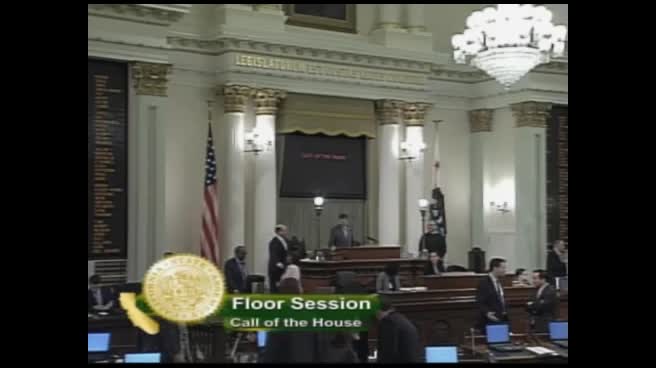
Bill Author

Bill Co-Author(s):