AB 770: Community colleges: basic skills innovation program.
- Session Year: 2015-2016
- House: Assembly
- Latest Version Date: 2015-08-18
Existing law establishes the California Community Colleges, under the administration of the Board of Governors of the California Community Colleges, as one of the segments of public postsecondary education in this state. Existing law authorizes the establishment of community college districts under the administration of community college governing boards, and authorizes these districts to provide instruction at community college campuses throughout the state.
Existing law establishes a financial and professional development grant funding program, which authorizes the governing board of a community college district to apply to the Chancellor of the California Community Colleges for, and requires the chancellor to distribute, multiyear financial and professional development grant funding to community colleges within the district. Existing law requires colleges receiving these funds to adopt or expand the use of evidence-based models of academic assessment and placement, remediation, and student support that accelerate the progress of underprepared students toward achieving postsecondary educational and career goals, as specified. Existing law requires recipient community colleges to report specified information to the chancellors office on program outcomes. Existing law requires makes the chancellors office to be responsible for administering the grant program and distributing and monitoring awards to recipient community college districts, developing application criteria, administrative guidelines, and other requirements for purposes of administering the grant program, and providing the information submitted by community college districts to the Legislative Analysts Office. Existing law requires the Legislative Analysts Office to report to the Legislature on the progress of the grant program in achieving its prescribed purpose, as specified.
This bill would require a community college district, in order to receive grant funding, to submit a plan to the Office of the Chancellor of the California Community Colleges that details the strategy of a college or colleges within the district for achieving the goals of the program. The bill would require a district to specify in the plan, at a minimum, the number of students to be served, strategies to be employed, and projected results for the plans implementation. The bill would establish also require the chancellors office to determine levels of funding to be awarded to grant recipients and would set aside $3,000,000 of the funds appropriated for the program to be used to provide technical assistance to recipients, and would authorize the chancellors office to contract with technical assistance providers to assist applicant and recipient colleges in developing and implementing these evidence-based models of academic assessment and placement, remediation, and student support, as specified.
Existing law establishes the California Community Colleges, under the administration of the Board of Governors of the California Community Colleges, as one of the segments of public postsecondary education in this state. Existing law authorizes the establishment of community college districts under the administration of community college governing boards, and authorizes these districts to provide instruction at community college campuses throughout the state.
Existing law establishes a financial and professional development grant funding program, which authorizes the governing board of a community college district to apply to the Chancellor of the California Community Colleges for, and requires the chancellor to distribute, multiyear financial and professional development grant funding to community colleges within the district. Existing law requires colleges receiving these funds to adopt or expand the use of evidence-based models of academic assessment and placement, remediation, and student support that accelerate the progress of underprepared students toward achieving postsecondary educational and career goals, as specified. Existing law requires recipient community colleges to report specified information to the chancellors office on program outcomes. Existing law requires the chancellors office to be responsible for administering the grant program and distributing and monitoring awards to recipient community college districts, developing application criteria, administrative guidelines, and other requirements for purposes of administering the grant program, and providing the information submitted by community college districts to the Legislative Analysts Office. Existing law requires the Legislative Analysts Office to report to the Legislature on the progress of the grant program in achieving its prescribed purpose, as specified.
This bill would require a community college district, in order to receive grant funding, to submit a plan to the Office of the Chancellor of the California Community Colleges that details the strategy of a college or colleges within the district for achieving the goals of the program. The bill would establish levels of funding to be awarded to grant recipients and would set aside $3,000,000 of the funds appropriated for the program to be used to provide technical assistance to recipient colleges in implementing these evidence-based models of academic assessment and placement, remediation, and student support, as specified.
This bill would establish a financial grant and professional development funding program, which would authorize the governing board of a community college district to apply to the chancellor for, and would require the chancellor to distribute, multiyear financial grants and professional development funding upon appropriation of funds for that purpose, not later than 180 days after the chancellors receipt of the appropriation, for community colleges within the district to adopt or expand the use of evidence-based models of academic assessment and placement, remediation, and student support that accelerate the progress of underprepared students toward achieving postsecondary educational and career goals.
Existing law establishes the California Community Colleges, under the administration of the Board of Governors of the California Community Colleges, as one of the segments of public postsecondary education in this state. Existing law authorizes the establishment of community college districts under the administration of community college governing boards, and authorizes these districts to provide instruction at community college campuses throughout the state.
This bill would establish a financial grant and professional development funding program, which would authorize the governing board of a community college district to apply to the chancellor for for, and would require the chancellor to distribute, multiyear financial grants and professional development funding upon appropriation of funds for that purpose, not later than 180 days after the chancellors receipt of the appropriation, for community colleges within the district to adopt or expand the use of evidence-based models of academic assessment and placement, remediation, and student support that accelerate the progress of underprepared students toward achieving postsecondary educational and career goals.
Existing law establishes the California Community Colleges, under the administration of the Board of Governors of the California Community Colleges, as one of the segments of public postsecondary education in this state. Existing law authorizes the establishment of community college districts under the administration of community college governing boards, and authorizes these districts to provide instruction at community college campuses throughout the state.
This bill would establish a financial grant and professional development funding program, which would authorize the governing board of a community college district to apply to the chancellor for funds multiyear financial grants and professional development funding upon appropriation of funds for that purpose, for purposes of community colleges within the district adopting to adopt or expanding expand the use of evidence-based models of academic assessment and placement, remediation, and student support that accelerate the progress of underprepared students toward achieving postsecondary educational and career goals.
Existing law establishes the California Community Colleges, under the administration of the Board of Governors of the California Community Colleges, as one of the segments of public postsecondary education in this state. Existing law authorizes the establishment of community college districts under the administration of community college governing boards, and authorizes these districts to provide instruction at community college campuses throughout the state.
This bill would declare the intent of the Legislature to enact legislation to provide more opportunities for campuses of the California Community Colleges to participate in basic skills innovation strategies that have demonstrated effectiveness in improving student success and in increasing the number of underprepared students who complete college-level English and mathematics courses.
This bill would establish a financial grant and professional development funding program, which would authorize the governing board of a community college district to apply to the chancellor for funds for purposes of community colleges within the district adopting or expanding the use of evidence-based models of academic assessment and placement, remediation, and student support that accelerate the progress of underprepared students toward achieving postsecondary educational and career goals.
Existing law establishes the California Community Colleges, under the administration of the Board of Governors of the California Community Colleges, as one of the segments of public postsecondary education in this state. Existing law authorizes the establishment of community college districts under the administration of community college governing boards, and authorizes these districts to provide instruction at community college campuses throughout the state.
This bill would declare the intent of the Legislature to enact legislation to provide more opportunities for campuses of the California Community Colleges to participate in basic skills innovation strategies that have demonstrated effectiveness in improving student success and in increasing the number of underprepared students who complete college-level English and mathematics courses.
In order to receive a grant pursuant to this part, a community college district shall submit a plan to the Office of the Chancellor of the California Community Colleges that details the strategy of a college or colleges within the district for achieving the goals of the grant program. A district shall specify in the plan, at a minimum, the number of students to be served, strategies to be employed, and projected results of the plans implementation.
SEC. 2.Section 88810 of the Education Code is amended to read:88810.(a)In order to receive a grant, the governing board of a community college district shall demonstrate in its application for funding, consistent with subdivision (b) of Section 88805, that the community colleges that are to participate in the grant program will redesign their curriculum, career pathways, assessment and placement procedures, or any combination thereof, to implement, or significantly expand the use or application of, two or more of the following evidence-based practices and principles:
(1)Adopting placement tests or other student assessment indicators and related policies that may include multiple measures of student performance, including grades in high school courses, especially overall grade point average, results from the common assessment system, and input from counselors.
(2)Increasing the placement of students directly in gateway English and mathematics courses that are transferable to the University of California or the California State University and career pathways, with remedial instruction integrated as appropriate for underprepared students.
(3)Aligning content in remedial courses with the students programs of academic or vocational study to target students actual needs and increase relevance. This paragraph is intended to encourage the development of remedial instruction focused on a students identified academic need informed by the students intended course of study.
(4)Contextualizing remedial instruction in foundational skills for the industry cluster, pathways, or both, in which the student seeks to advance.
(5)Providing proactive student support services that are integrated with the instruction provided.
(6)Developing two- and three-course sequences, as appropriate, for completion of a college-level English or mathematics course, or both, for underprepared students, by either utilizing technology, where appropriate, to enhance the adoption of the high impact practices specified in paragraphs (1) to (5), inclusive, or implementing other effective basic skills course strategies and practices not specified in paragraphs (1) to (5), inclusive, subject to the college providing evidence that substantiates the practice is effective.
(b)Community colleges are encouraged to collaborate with local school districts serving kindergarten and grades 1 to 12, inclusive, to better articulate English and math instruction between the high schools and the community colleges.
(c)Each participating community college shall be responsible for all of the following:
(1)Developing a plan based on two or more of the evidence-based principles and practices described in subdivision (a) that demonstrates a clear strategy for ensuring that both of the following occur within a five-year period:
(A)A progressively increasing share of the students who enroll at participating community colleges within the community college district achieve the goals listed in subdivision (b) of Section 88805.
(B)A significantly greater share of entering students who are enrolled at the community college achieve the goals listed in subdivision (b) of Section 88805 within a shorter time period than before the implementation of the plan at the community college.
(2)Ensuring that the plan developed pursuant to paragraph (1) does all the following:
(A)Describes the community colleges current practices with regard to the selected high impact practices and its readiness to implement the new interventions.
(B)Articulates targets for the share of entering students projected to be served by these interventions over the three-year implementation period.
(C)Sets goals for the share of entering students who complete a college-level English or mathematics course within three semesters or less after enrollment.
(D)Identifies key strategies and implementation benchmarks for evaluating the progress of campus efforts to implement the selected interventions.
(E)Details the number of campus faculty likely to be involved in all selected high impact interventions and the plan for addressing their professional and technical assistance needs.
(3)Ensuring that its faculty participate in professional development regarding academic programs or new curriculum developed or expanded pursuant to the plan, using grant funds to support that faculty participation.
(4)Commencing in the year that a community college receives a grant and for the following three fiscal years, annually reporting to the chancellors office on program outcomes, disaggregated by the demographic characteristics, high school grade point average, and initial placement level of its students, for purposes of measuring progress compared to the community colleges performance before its implementation of the plan. These reports should include all of the following:
(A)The total number and percentage of entering students identified as underprepared before receipt of the grant.
(B)The number and percentage of entering students served by the grant program, disaggregated by type of practice implemented.
(C)The number and percentage of entering students achieving the goals listed in subdivision (b) of Section 88805.
(D)The number of faculty involved and faculty needs regarding the adoption and operation of courses under the plan.
(E)If applicable, a narrative describing any subsequent adjustments to the design of the colleges basic skills course practices or strategies adopted pursuant to paragraph (6) of subdivision (a).
(F)A description of any additional or expanded student supports offered.
(G)A narrative describing the community colleges efforts to collaborate with local school districts serving kindergarten and grades 1 to 12, inclusive, to better articulate English and math instruction between the high schools and the community colleges.
(5)Developing the plan in consultation with campus faculty.
(d)The office of the Chancellor of the California Community Colleges shall be responsible for all of the following:
(1)Developing application criteria, administrative guidelines, and other requirements for purposes of administering the grant program. Applications that would do one or both of the following shall be given priority consideration within the application criteria:
(A)Scale up existing practices.
(B)Provide services to greater proportions of students.
(2)Determining the level of funding to be awarded to a recipient community college district based upon the scope and complexity of the work proposed in its plan submitted pursuant to Section 88807, as evidenced by the number of students to be served, strategies to be employed, and projected results of the plans implementation.
(2)
(3)Administering the grant program and distributing and monitoring awards to recipient community college districts.
(4)Consulting with internal and external stakeholders for the purpose of advising on the creation and composition of a team of technical assistance providers to assist a community college in the development and implementation of its plan pursuant to subdivision (c).
(A)Stakeholders shall include, but not be limited to, representatives from college campuses, faculty, administrators, and other experts with experience implementing evidence-based practices that accelerate students completion of basic skills courses.
(B)Technical assistance providers shall have demonstrated that they have expertise in the development, or implementation, or both, of the evidence-based practices outlined in subdivision (a).
(C)The chancellors office may contract with identified technical assistance providers to provide assistance in the development and implementation of plans by applicant and recipient community college districts.
(3)
(5)Providing the information submitted pursuant to paragraph (4) of subdivision (c) to the Legislative Analysts Office.
(e)(1)The Legislative Analysts Office shall aggregate, analyze, and report the information submitted pursuant to paragraph (3) of subdivision (d) to the Legislature on the progress of the grant program in achieving its prescribed purpose. The Legislative Analysts Office shall issue an interim report by December 1, 2019, and a final report by December 1, 2021.
(2)(A)The requirement for submitting a report imposed under this subdivision is inoperative on July 1, 2026, pursuant to Section 10231.5 of the Government Code.
(B)A report to be submitted pursuant to paragraph (1) shall be submitted in compliance with Section 9795 of the Government Code.
(f)(1)Two levels of funding shall be awarded to grant recipients as follows:
(A)A recipient college that has no evidence-based practices as specified in subdivision (a) in place, as of the date of its initial award, that plans to implement two or more evidence-based practices for the first time shall receive five hundred thousand dollars ($500,000).
(B)A recipient college that has at least one evidence-based practice as specified in subdivision (a) in place, as of the date of its initial award, that plans to scale up one or more of these evidence-based practices, or implement at least one additional evidence-based practice for the first time, or both, provided that at least two evidence-based practices shall be implemented or scaled up with these funds, shall receive seven hundred fifty thousand dollars ($750,000).
(2)Recipient colleges are strongly encouraged to implement additional evidence-based practices specified in subdivision (a).
(3)Depending on the availability of funding, a college that receives a grant may submit plans to scale up one or more of its implemented evidence-based practices to receive funds for years two or three, or both, following the implementation of the plan described in subdivision (c). Grant priority shall be given to colleges that have yet to receive funding.
(g)(1)Three million dollars ($3,000,000) of the funds appropriated pursuant to this part shall be set aside statewide for technical assistance to be provided by content experts who are selected through a proposal process, as developed by the chancellors office, that ensures the identification of appropriate experts who shall provide technical assistance to recipient colleges in the following areas:
(A)Improving student placement using multiple measures in accordance with paragraph (1) of subdivision (a).
(B)Contextualizing remedial instruction in foundational skills for the industry cluster, pathways, or both, in which the student seeks to advance.
(C)Developing and offering effective and shortened English and mathematics remedial course sequences as described in paragraph (6) of subdivision (a).
(2)Technical assistance under paragraph (1) shall help colleges achieve the following goals:
(A)Improving the accuracy of student placement.
(B)Placing as many students as appropriate directly in gateway English and mathematics courses that are transferable to the University of California or the California State University and career pathways, with remedial instruction integrated as appropriate for underprepared students.
(C)Helping students complete college-level English or mathematics within a two or three course sequence.
(D)Providing proactive student supports.
(3)Technical assistance as described in this subdivision shall be provided during the first three years that a grant recipient college implements the plan specified in subdivision (c), with emphasis placed on the first year of implementation. A recipient college or college district may use grant funds to purchase additional technical assistance, as appropriate.
In order to receive a grant pursuant to this part, a community college district shall submit a plan to the Office of the Chancellor of the California Community Colleges that details the strategy of a college or colleges within the district for achieving the goals of the grant program.
SEC. 2.Section 88810 of the Education Code is amended to read:88810.(a)In order to receive a grant, the governing board of a community college district shall demonstrate in its application for funding, consistent with subdivision (b) of Section 88805, that the community colleges that are to participate in the grant program will redesign their curriculum, career pathways, assessment and placement procedures, or any combination thereof, to implement, or significantly expand the use or application of, two or more of the following evidence-based practices and principles:
(1)Adopting placement tests or other student assessment indicators and related policies that may include multiple measures of student performance, including grades in high school courses, especially overall grade point average, results from the common assessment system, and input from counselors.
(2)Increasing the placement of students directly in gateway English and mathematics courses that are transferable to the University of California or the California State University and career pathways, with remedial instruction integrated as appropriate for underprepared students.
(3)Aligning content in remedial courses with the students programs of academic or vocational study to target students actual needs and increase relevance. This paragraph is intended to encourage the development of remedial instruction focused on a students identified academic need informed by the students intended course of study.
(4)Contextualizing remedial instruction in foundational skills for the industry cluster, pathways, or both, in which the student seeks to advance.
(5)Providing proactive student support services that are integrated with the instruction provided.
(6)Developing two- and three-course sequences, as appropriate, for completion of a college-level English or mathematics course, or both, for underprepared students, by either utilizing technology, where appropriate, to enhance the adoption of the high impact practices specified in paragraphs (1) to (5), inclusive, or implementing other effective basic skills course strategies and practices not specified in paragraphs (1) to (5), inclusive, subject to the college providing evidence that substantiates the practice is effective.
(b)Community colleges are encouraged to collaborate with local school districts serving kindergarten and grades 1 to 12, inclusive, to better articulate English and math instruction between the high schools and the community colleges.
(c)Each participating community college shall be responsible for all of the following:
(1)Developing a plan based on two or more of the evidence-based principles and practices described in subdivision (a) that demonstrates a clear strategy for ensuring that both of the following occur within a five-year period:
(A)A progressively increasing share of the students who enroll at participating community colleges within the community college district achieve the goals listed in subdivision (b) of Section 88805.
(B)A significantly greater share of entering students who are enrolled at the community college achieve the goals listed in subdivision (b) of Section 88805 within a shorter time period than before the implementation of the plan at the community college.
(2)Ensuring that the plan developed pursuant to paragraph (1) does all the following:
(A)Describes the community colleges current practices with regard to the selected high impact practices and its readiness to implement the new interventions.
(B)Articulates targets for the share of entering students projected to be served by these interventions over the three-year implementation period.
(C)Sets goals for the share of entering students who complete a college-level English or mathematics course within three semesters or less after enrollment.
(D)Identifies key strategies and implementation benchmarks for evaluating the progress of campus efforts to implement the selected interventions.
(E)Details the number of campus faculty likely to be involved in all selected high impact interventions and the plan for addressing their professional and technical assistance needs.
(3)Ensuring that its faculty participate in professional development regarding academic programs or new curriculum developed or expanded pursuant to the plan, using grant funds to support that faculty participation.
(4)Commencing in the year that a community college receives a grant and for the following three fiscal years, annually reporting to the chancellors office on program outcomes, disaggregated by the demographic characteristics, high school grade point average, and initial placement level of its students, for purposes of measuring progress compared to the community colleges performance before its implementation of the plan. These reports should include all of the following:
(A)The total number and percentage of entering students identified as underprepared before receipt of the grant.
(B)The number and percentage of entering students served by the grant program, disaggregated by type of practice implemented.
(C)The number and percentage of entering students achieving the goals listed in subdivision (b) of Section 88805.
(D)The number of faculty involved and faculty needs regarding the adoption and operation of courses under the plan.
(E)If applicable, a narrative describing any subsequent adjustments to the design of the colleges basic skills course practices or strategies adopted pursuant to paragraph (6) of subdivision (a).
(F)A description of any additional or expanded student supports offered.
(G)A narrative describing the community colleges efforts to collaborate with local school districts serving kindergarten and grades 1 to 12, inclusive, to better articulate English and math instruction between the high schools and the community colleges.
(5)These plans should be developed Developing the plan in consultation with campus faculty.
(d)The office of the Chancellor of the California Community Colleges shall be responsible for all of the following:
(1)Developing application criteria, administrative guidelines, and other requirements for purposes of administering the grant program. Applications that would do one or both of the following shall be given priority consideration within the application criteria:
(A)Scale up existing practices.
(B)Provide services to greater proportions of students.
(2)Administering the grant program and distributing and monitoring awards to recipient community college districts.
(3)Providing the information submitted pursuant to paragraph (4) of subdivision (c) to the Legislative Analysts Office.
(e)(1)The Legislative Analysts Office shall aggregate, analyze, and report the information submitted pursuant to paragraph (3) of subdivision (d) to the Legislature on the progress of the grant program in achieving its prescribed purpose. The Legislative Analysts Office shall issue an interim report by December 1, 2019, and a final report by December 1, 2021.
(2)(A)The requirement for submitting a report imposed under this subdivision is inoperative on July 1, 2026, pursuant to Section 10231.5 of the Government Code.
(B)A report to be submitted pursuant to paragraph (1) shall be submitted in compliance with Section 9795 of the Government Code.
(f)(1)Two levels of funding shall be awarded to grant recipients as follows:
(A)A recipient college that has no evidence-based practices as specified in subdivision (a) in place, as of the date of its initial award, that plans to implement two or more evidence-based practices for the first time shall receive five hundred thousand dollars ($500,000).
(B)A recipient college that has at least one evidence-based practice as specified in subdivision (a) in place, as of the date of its initial award, that plans to scale up one or more of these evidence-based practices, or implement at least one additional evidence-based practice for the first time, or both, provided that at least two evidence-based practices shall be implemented or scaled up with these funds, shall receive seven hundred fifty thousand dollars ($750,000).
(2)Recipient colleges are strongly encouraged to implement additional evidence-based practices specified in subdivision (a).
(3)Depending on the availability of funding, a college that receives a grant may submit plans to scale up one or more of its implemented evidence-based practices to receive funds for years two or three, or both, following the implementation of the plan described in subdivision (c). Grant priority shall be given to colleges that have yet to receive funding.
(g)(1)Three million dollars ($3,000,000) of the funds appropriated pursuant to this part shall be set aside statewide for technical assistance to be provided by content experts who are selected through a proposal process, as developed by the chancellors office, that ensures the identification of appropriate experts who shall provide technical assistance to recipient colleges in the following areas:
(A)Improving student placement using multiple measures in accordance with paragraph (1) of subdivision (a).
(B)Contextualizing remedial instruction in foundational skills for the industry cluster, pathways, or both, in which the student seeks to advance.
(C)Developing and offering effective and shortened English and mathematics remedial course sequences as described in paragraph (6) of subdivision (a).
(2)Technical assistance under paragraph (1) shall help colleges achieve the following goals:
(A)Improving the accuracy of student placement.
(B)Placing as many students as appropriate directly in gateway English and mathematics courses that are transferable to the University of California or the California State University and career pathways, with remedial instruction integrated as appropriate for underprepared students.
(C)Helping students complete college-level English or mathematics within a two or three course sequence.
(D)Providing proactive student supports.
(3)Technical assistance as described in this subdivision shall be provided during the first three years that a grant recipient college implements the plan specified in subdivision (c), with emphasis placed on the first year of implementation. A recipient college or college district may use grant funds to purchase additional technical assistance, as appropriate.
SECTION 1.The Legislature finds and declares all of the following:
(a)Over 70 percent of students enrolling, for the first time, in courses offered by campuses of the California Community Colleges are classified as underprepared for college-level work and in need of remediation.
(b)National research has found that, regardless of incoming preparation levels, the more semesters of remediation students are required to take, the less likely those students are to complete college-level English and mathematics courses, which are gateway courses to most postsecondary degree and credential programs, and for transfer to four-year postsecondary institutions.
(c)Research in California has demonstrated that relatively few students who enter remediation ultimately attain a postsecondary degree, credential, or transfer to a four-year institution, and that students of color are disproportionately affected.
(d)Drawing on national initiatives aimed at increasing student completion of college-level English and mathematics courses, efforts in California have demonstrated the success of innovative ways to deliver English and mathematics remediation.
(e)In those pilot efforts, students odds of completing college-level English courses more than double, and their odds of completing college-level mathematics courses are more than four times higher in comparison to students in traditional remediation. However, at most community college campuses, these new approaches are offered on a small scale and are not available to most students.
SEC. 2.Part 54 (commencing with Section 88800) is added to Division 7 of Title 3 of the Education Code, to read:54.Community Colleges Basic Skills Innovation Program1.General Provisions88800.A financial grant and professional development funding program, administered by the chancellor, is hereby established. The chancellor shall distribute multiyear financial grants and professional development funding, upon appropriation by the Legislature for this purpose, not later than 180 days after receiving the appropriation, to the governing board of a community college district that applies and satisfies the requirements of this part. Moneys allocated pursuant to this program shall be expended for community colleges within the district to adopt or expand the use of evidence-based models of academic assessment and placement, remediation, and student support that accelerate the progress of underprepared students toward achieving postsecondary educational and career goals.
88805.(a)The governing board of a community college district may apply for funds pursuant to this part for the purpose of making more effective, evidence-based practices available to significantly more underprepared students who enroll at campuses of the California Community Colleges. A community college within the district may receive funds for purposes of implementing these evidence-based practices for the first time or expanding evidence-based practices that are in effect as of the date of the districts application for funds.
(b)The evidence-based strategies implemented or expanded pursuant to subdivision (a) shall include innovative basic skills improvement strategies that have demonstrated effectiveness in accelerating the progress of underprepared students toward, and increasing the number of underprepared students who successfully achieve, one or more of the following goals:
(1)Completing a college-level English or mathematics course, or both, within a three-course sequence or less.
(2)Earning eight units applicable to a college certificate or degree.
(3)Earning a college certificate or degree approved by the California Community Colleges.
88810.(a)In order to receive a grant, the governing board of a community college district shall demonstrate in its application for funding that the community colleges that are to participate in the grant program will redesign their curriculum, career pathways, assessment and placement procedures, or any combination thereof, to implement, or expand the use or application of, one or more of the following practices and principles:
(1)Adopting placement tests and related policies that include multiple measures of student performance, including grades in high school courses, especially overall grade point average, and input from counselors.
(2)Increasing the placement of students directly in gateway English and mathematics courses and career pathways supplemented by remediation.
(3)Aligning content in remedial courses with the students programs of academic or vocational study to target students actual needs.
(4)Completing a college-level English or mathematics course, or both, within a three-course sequence or less. Students pursuing mathematics-intensive courses of study may require a longer sequence of mathematics coursework.
(5)Contextualizing remedial instruction in foundational skills for the industry cluster, pathways, or both, in which the student seeks to advance.
(6)Providing proactive student support services that are integrated with the instruction provided.
(b)Each participating community college shall be responsible for all of the following:
(1)Developing a plan based on one or more of the evidence-based principles and practices described in subdivision (a) that demonstrates a clear strategy for ensuring that all of the following occur within a five-year period:
(A)A significant share of the underprepared students who enroll at participating community colleges within the community college district achieve one or more of the three goals listed in subdivision (b) of Section 88805.
(B)Underprepared students who are enrolled at the community college achieve the goals listed in subdivision (b) of Section 88805 within a shorter time period than before the implementation of this part at the community college.
(2)Ensuring that its faculty participate in professional development regarding academic programs or new curriculum developed or expanded pursuant to this part, using grant funds to support that faculty participation.
(3)Annually reporting until 2024 to the chancellors office on program outcomes, disaggregated by demographic characteristics of its students, for purposes of measuring progress compared to the community colleges performance before its implementation of this part. These reports should include all of the following:
(A)The number and percentage of underprepared students served by the grant program.
(B)The number and percentages of these underprepared students achieving each of the three goals listed in subdivision (b) of Section 88805.
(C)The number of faculty involved and faculty needs regarding the innovation and operation of courses pursuant to this part.
(c)The chancellors office shall be responsible for all of the following:
(1)Administering the grant program, and distributing and monitoring awards to recipient community college districts.
(2)Developing application criteria, administrative guidelines, and other requirements for purposes of administering the grant program.
(3)(A)Aggregating, analyzing, and reporting the information submitted pursuant to paragraph (3) of subdivision (b) to the Legislature on the progress of the grant program in achieving its prescribed purpose. The report shall be issued every other year, commencing with the first year the Legislature appropriates funding for this purpose, until July 1, 2024. The initial report shall be due to the Legislature on or before the end of the fiscal year in which the Legislature initially appropriates the funds for this purpose. In subsequent years, the report shall be due to the Legislature on or before July 1.
(B)(i)The requirement for submitting a report imposed under this paragraph is inoperative on July 1, 2028, pursuant to Section 10231.5 of the Government Code.
(ii)A report to be submitted pursuant to this paragraph shall be submitted in compliance with Section 9795 of the Government Code.
The Legislature finds and declares all of the following:
(a)Over 70 percent of students enrolling, for the first time, in courses offered by campuses of the California Community Colleges are classified as underprepared for college-level work and in need of remediation.
(b)National research has found that, regardless of incoming preparation levels, the more semesters of remediation students are required to take, the less likely those students are to complete college-level English and mathematics courses, which are gateway courses to most postsecondary degree and credential programs, and for transfer to four-year postsecondary institutions.
(c)Research in California has demonstrated that relatively few students who enter remediation ultimately attain a postsecondary degree, credential, or transfer to a four-year institution, and that students of color are disproportionately affected.
(d)Drawing on national initiatives aimed at increasing student completion of college-level English and mathematics courses, efforts in California have demonstrated the success of innovative ways to deliver English and mathematics remediation.
(e)In those pilot efforts, students odds of completing college-level English courses more than double, and their odds of completing college-level mathematics courses are more than four times higher in comparison to students in traditional remediation. However, at most community college campuses, these new approaches are offered on a small scale and are not available to most students.
SEC. 2.Part 54 (commencing with Section 88800) is added to Division 7 of Title 3 of the Education Code, to read:54.Community Colleges Basic Skills Innovation Program1.General Provisions88800.A financial grant and professional development funding program, administered by the chancellor, is hereby established. The chancellor shall distribute multiyear financial grants and professional development funding, upon appropriation by the Legislature for this purpose, not later than 180 days after receiving the appropriation, to the governing board of a community college district that applies and satisfies the requirements of this part. Moneys allocated pursuant to this program shall be expended for community colleges within the district to adopt or expand the use of evidence-based models of academic assessment and placement, remediation, and student support that accelerate the progress of underprepared students toward achieving postsecondary educational and career goals.
88805.(a)The governing board of a community college district may apply for funds pursuant to this part for the purpose of making more effective, evidence-based practices available to significantly more underprepared students who enroll at campuses of the California Community Colleges. A community college within the district may receive funds for purposes of implementing these evidence-based practices for the first time or expanding evidence-based practices that are in effect as of the date of the districts application for funds.
(b)The evidence-based strategies implemented or expanded pursuant to subdivision (a) shall include innovative basic skills improvement strategies that have demonstrated effectiveness in accelerating the progress of underprepared students toward, and increasing the number of underprepared students who successfully achieve, one or more of the following goals:
(1)Completing a college-level English or mathematics course, or both, within a three-course sequence or less.
(2)Earning eight units applicable to a college certificate or degree.
(3)Earning a college certificate or degree approved by the California Community Colleges.
88810.(a)In order to receive a grant, the governing board of a community college district shall demonstrate in its application for funding that the community colleges that are to participate in the grant program will redesign their curriculum, career pathways, assessment and placement procedures, or any combination thereof, to implement, or expand the use or application of, one or more of the following practices and principles:
(1)Adopting placement tests and related policies that include multiple measures of student performance, including grades in high school courses, especially overall grade point average, and input from counselors.
(2)Increasing the placement of students directly in gateway English and mathematics courses and career pathways supplemented by remediation.
(3)Aligning content in remedial courses with the students programs of academic or vocational study to target students actual needs.
(4)Completing a college-level English or mathematics course, or both, within a three-course sequence or less. Students pursuing mathematics-intensive courses of study may require a longer sequence of mathematics coursework.
(5)Contextualizing remedial instruction in foundational skills for the industry cluster, pathways, or both, in which the student seeks to advance.
(6)Providing proactive student support services that are integrated with the instruction provided.
(b)Each participating community college shall be responsible for all of the following:
(1)Developing a plan based on one or more of the evidence-based principles and practices described in subdivision (a) that demonstrates a clear strategy for ensuring that all of the following occur within a five-year period:
(A)A significant share of the underprepared students who enroll at participating community colleges within the community college district achieve one or more of the three goals listed in subdivision (b) of Section 88805.
(B)Underprepared students who are enrolled at the community college achieve the goals listed in subdivision (b) of Section 88805 within a shorter time period than before the implementation of this part at the community college.
(2)Ensuring that its faculty participate in professional development regarding academic programs or new curriculum developed or expanded pursuant to this part, using grant funds to support that faculty participation.
(3)Annually reporting until 2024 to the chancellors office on program outcomes, disaggregated by demographic characteristics of its students, for purposes of measuring progress compared to the community colleges performance before its implementation of this part. These reports should include all of the following:
(A)The number and percentage of underprepared students served by the grant program.
(B)The number and percentages of these underprepared students achieving each of the three goals listed in subdivision (b) of Section 88805.
(C)The number of faculty involved and faculty needs regarding the innovation and operation of courses pursuant to this part.
(c)The chancellors office shall be responsible for all of the following:
(1)Administering the grant program, and distributing and monitoring awards to recipient community college districts.
(2)Developing application criteria, administrative guidelines, and other requirements for purposes of administering the grant program.
(3)(A)Aggregating, analyzing, and reporting annually the information submitted pursuant to paragraph (3) of subdivision (b) to the Legislature on the progress of the grant program in achieving its prescribed purpose. The report shall be issued every other year, commencing with the first year the Legislature appropriates funding for this purpose, until July 1, 2024. The initial report shall be due to the Legislature on or before the end of the fiscal year in which the Legislature initially appropriates the funds for this purpose. In subsequent years, the report shall be due to the Legislature on or before July 1.
(B)(i)The requirement for submitting a report imposed under this paragraph is inoperative on July 1, 2028, pursuant to Section 10231.5 of the Government Code.
(ii)A report to be submitted pursuant to this paragraph shall be submitted in compliance with Section 9795 of the Government Code.
The Legislature finds and declares all of the following:
(a)Over 70 percent of students enrolling, for the first time, in courses offered by campuses of the California Community Colleges are classified as underprepared for college-level work and in need of remediation.
(b)National research has found that, regardless of incoming preparation levels, the more semesters of remediation students are required to take, the less likely those students are to complete college-level English and mathematics courses, which are gateway courses to most postsecondary degree and credential programs, and for transfer to four-year postsecondary institutions.
(c)Research in California has demonstrated that relatively few students who enter remediation ultimately attain a postsecondary degree, credential, or transfer to a four-year institution, and that students of color are disproportionately affected.
(d)Drawing on national initiatives aimed at increasing student completion of college-level English and mathematics courses, efforts in California have demonstrated the success of innovative ways to deliver English and mathematics remediation.
(e)In those pilot efforts, students odds of completing college-level English courses more than double, and their odds of completing college-level mathematics courses are more than four times higher in comparison to students in traditional remediation. However, at most community college campuses, these new approaches are offered on a small scale and are not available to most students.
SEC. 2.Part 54 (commencing with Section 88800) is added to Division 7 of Title 3 of the Education Code, to read:54.Community Colleges Basic Skills Innovation Program1.General Provisions88800.A financial grant and professional development funding program, administered by the chancellor, is hereby established. The chancellor shall distribute multiyear financial grants and professional development funding, upon appropriation by the Legislature for this purpose, to the governing board of a community college district that applies and satisfies the requirements of this part. Moneys allocated pursuant to this program shall be expended for community colleges within the district to adopt or expand the use of evidence-based models of academic assessment and placement, remediation, and student support that accelerate the progress of underprepared students towards toward achieving postsecondary educational and career goals.
88805.(a)The governing board of a community college district may apply for funds pursuant to this part for the purpose of making more effective, evidence-based practices available to significantly more underprepared students who enroll at campuses of the California Community Colleges. A community college within the district may receive funds for purposes of implementing these evidence-based practices for the first time or expanding evidence-based practices that are in effect as of the date of the districts application for funds.
(b)The evidence-based strategies implemented or expanded pursuant to subdivision (a) shall include innovative basic skills improvement strategies that have demonstrated effectiveness in accelerating the progress of underprepared students toward, and increasing the number of underprepared students who successfully achieve, one or more of the following goals:
(1)Completing a college-level English or mathematics course, or both, within three semesters after initial enrollment at a participating community college. a three-course sequence or less.
(2)Earning eight units applicable to a college certificate or degree.
(3)Earning a college certificate or degree approved by the California Community Colleges.
88810.(a)In order to receive a grant, the governing board of a community college district shall demonstrate in its application for funding that the community colleges that are to participate in the grant program will redesign their curriculum, career pathways, assessment and placement procedures, or any combination thereof, to implement, or expand the use or application of, one or more of the following practices and principles:
(1)Adopting placement tests and related policies that include multiple measures of student performance, including grades in high school courses courses, especially overall grade point average, and input from counselors.
(2)Increasing the placement of students directly in gateway English and mathematics courses and career pathways supplemented by remediation.
(3)Aligning content in remedial courses with the students programs of academic or vocational study to target students actual needs.
(4)To the extent possible, ensuring that underprepared students complete college-level English or mathematics courses, or both, within a two-course sequence. Completing a college-level English or mathematics course, or both, within a three-course sequence or less. Students pursuing mathematics-intensive courses of study may require a longer sequence of mathematics coursework.
(5)Contextualizing remedial instruction in foundational skills for the industry cluster, pathways, or both, in which the student seeks to advance.
(6)Providing proactive student support services that are integrated with the instruction provided.
(b)Each participating community college shall be responsible for all of the following:
(1)Developing a plan based on one or more of the evidence-based principles and practices described in subdivision (a) that demonstrates a clear strategy for ensuring that all of the following occur within a 5-year five-year period:
(A)A significant share of the underprepared students who enroll at participating community colleges colleges within the community college district achieve one or more of the three goals listed in subdivision (b) of Section 88805.
(B)Underprepared students who are enrolled at the community college achieve the goals listed in subdivision (b) of Section 88805 within a shorter time period than before the implementation of this part at the community college.
(2)Ensuring that its faculty participate in professional development regarding academic programs or new curriculum developed or expanded pursuant to this part, using grant funds to support that faculty participation.
(3)Annually reporting to the chancellors office on program outcomes, disaggregated by demographic characteristics of its students, for purposes of measuring progress compared to the community colleges performance before its implementation of this part. These reports should include all of the following:
(A)The number and percentage of underprepared students served by the grant program.
(B)The number and percentages of these underprepared students achieving each of the three goals listed in subdivision (b) of Section 88805.
(C)The number of faculty involved and faculty needs regarding the innovation and operation of courses pursuant to this part.
(c)The chancellors office shall be responsible for all of the following:
(1)Administering the grant program, and distributing and monitoring awards to recipient community college districts.
(2)Developing application criteria, administrative guidelines, and other requirements for purposes of administering the grant program.
(3)(A)Aggregating, analyzing, and reporting annually the information submitted pursuant to paragraph (3) of subdivision (b) to the Legislature on the progress of the grant program in achieving its prescribed purpose.
(B)A report to be submitted pursuant to this paragraph shall be submitted in compliance with Section 9795 of the Government Code.
The Legislature finds and declares all of the following:
(a)Over 70 percent of students enrolling, for the first time, in courses offered by campuses of the California Community Colleges are classified as underprepared for college-level work and in need of remediation.
(b)National research has found that, regardless of incoming preparation levels, the more semesters of remediation students are required to take, the less likely those students are to complete college-level English and mathematics courses, which are gateway courses to most postsecondary degree and credential programs, and for transfer to four-year postsecondary institutions.
(c)Research in California has demonstrated that relatively few students who enter remediation ultimately attain a postsecondary degree, credential, or transfer to a four-year institution, and that students of color are disproportionately affected.
(d)Drawing on national initiatives aimed at increasing student completion of college-level English and mathematics courses, efforts in California have demonstrated the success of innovative ways to deliver English and mathematics remediation.
(e)In those pilot efforts, students odds of completing college-level English courses more than double, and their odds of completing college-level mathematics courses are more than four times higher in comparison to students in traditional remediation. However, at most community college campuses, these new approaches are offered on a small scale and are not available to most students.
SEC. 2.Part 54 (commencing with Section 88800) is added to Division 7 of Title 3 of the Education Code, to read:54.Community Colleges Basic Skills Innovation Program1.General Provisions88800.A financial grant and professional development funding program, administered by the chancellor, is hereby established. The chancellor shall distribute multiyear financial grants and professional development funding, upon appropriation by the Legislature for this purpose, to the governing board of a community college district that applies and satisfies the requirements of this part. Moneys allocated pursuant to this program shall be expended for community colleges within the district to adopt or expand the use of evidence-based models of academic assessment and placement, remediation, and student support that accelerate the progress of underprepared students towards achieving postsecondary educational and career goals.
88805.(a)The governing board of a community college district may apply for funds pursuant to this part for the purpose of making more effective, evidence-based practices available to significantly more underprepared students who enroll at campuses of the California Community Colleges. A community college within the district may receive funds for purposes of implementing these evidence-based practices for the first time or expanding evidence-based practices that are in effect as of the date of the districts application for funds.
(b)The evidence-based strategies implemented or expanded pursuant to subdivision (a) shall include innovative basic skills improvement strategies that have demonstrated effectiveness in accelerating the progress of underprepared students toward, and increasing the number of underprepared students who successfully achieve, one or more of the following goals:
(1)Completing a college-level English or mathematics course, or both, within three semesters after initial enrollment at a participating community college.
(2)Earning eight units applicable to a college certificate or degree.
(3)Earning a college certificate or degree approved by the California Community Colleges.
88810.(a)In order to receive a grant, the governing board of a community college district shall demonstrate in its application for funding that the community colleges that are to participate in the grant program will redesign their curriculum, career pathways, assessment and placement procedures, or any combination thereof, to implement, or expand the use or application of, one or more of the following practices and principles:
(1)Adopting placement tests and related policies that include multiple measures of student performance, including grades in high school courses and input from counselors.
(2)Increasing the placement of students directly in gateway English and mathematics courses and career pathways supplemented by remediation.
(3)Aligning content in remedial courses with the students programs of academic study to target students actual needs.
(4)To the extent possible, ensuring that underprepared students complete college-level English or mathematics courses, or both, within a two-course sequence. Students pursuing mathematics-intensive courses of study may require a longer sequence of mathematics coursework.
(5)Contextualizing remedial instruction in foundational skills for the industry cluster, pathways, or both, in which the student seeks to advance.
(6)Providing proactive student support services that are integrated with the instruction provided.
(b)Each participating community college shall be responsible for all of the following:
(1)Developing a plan based on one or more of the evidence-based principles and practices described in subdivision (a) that demonstrates a clear strategy for ensuring that all of the following occur within a 5-year period:
(A)A significant share of the underprepared students who enroll at participating community colleges within the community college district achieve one or more of the three goals listed in subdivision (b) of Section 88805.
(B)Underprepared students who are enrolled at the community college achieve the goals listed in subdivision (b) of Section 88805 within a shorter time period than before the implementation of this part at the community college.
(2)Ensuring that its faculty participate in professional development regarding academic programs or new curriculum developed or expanded pursuant to this part, using grant funds to support that faculty participation.
(3)Annually reporting to the chancellors office on program outcomes, disaggregated by demographic characteristics of its students, for purposes of measuring progress compared to the community colleges performance before its implementation of this part. These reports should include all of the following:
(A)The number and percentage of underprepared students served by the grant program.
(B)The number and percentages of these underprepared students achieving each of the three goals listed in subdivision (b) of Section 88805.
(C)The number of faculty involved and faculty needs regarding the innovation and operation of courses pursuant to this part.
(c)The chancellors office shall be responsible for all of the following:
(1)Administering the grant program, and distributing and monitoring awards to recipient community college districts.
(2)Developing application criteria, administrative guidelines, and other requirements for purposes of administering the grant program.
(3)(A)Aggregating, analyzing, and reporting annually the information submitted pursuant to paragraph (3) of subdivision (b) to the Legislature on the progress of the grant program in achieving its prescribed purpose.
(B)A report to be submitted pursuant to this paragraph shall be submitted in compliance with Section 9795 of the Government Code.
SEC. 2.It is the intent of the Legislature to enact legislation to provide more opportunities for campuses of the California Community Colleges to participate in basic skills innovation strategies that have demonstrated effectiveness in improving student success and increasing the number of underprepared students who complete college-level English and mathematics courses.
The Legislature finds and declares all of the following:
(a)Over 70 percent of students enrolling, for the first time, in courses offered by campuses of the California Community Colleges are classified as underprepared for college-level work and in need of remediation.
(b)National research has found that, regardless of incoming preparation levels, the more semesters of remediation students are required to take, the less likely those students are to complete college-level English and mathematics courses, which are gateway courses to most postsecondary degree and credential programs, and for transfer to four-year postsecondary institutions.
(c)Research in California has demonstrated that relatively few students who enter remediation ultimately attain a postsecondary degree, credential, or transfer to a four-year institution, and that students of color are disproportionately affected.
(d)Drawing on national initiatives aimed at increasing student completion of college-level English and mathematics courses, efforts in California have demonstrated the success of innovative ways to deliver English and mathematics remediation.
(e)In those pilot efforts, students odds of completing college-level English courses more than double, and their odds of completing college-level mathematics courses are more than four times higher in comparison to students in traditional remediation. However, at most community college campuses, these new approaches are offered on a small scale and are not available to most students.
SEC. 2.It is the intent of the Legislature to enact legislation to provide more opportunities for campuses of the California Community Colleges to participate in basic skills innovation strategies that have demonstrated effectiveness in improving student success and increasing the number of underprepared students who complete college-level English and mathematics courses.
|
Date
|
Status
|
|---|---|
| May 28, 2015 | From committee: Do pass. (Ayes 17. Noes 0.) (May 28). |
| Aug 27, 2015 | In committee: Held under submission. |
| Aug 24, 2015 | In committee: Referred to APPR. suspense file. |
| Aug 18, 2015 | Read second time and amended. Re-referred to Com. on APPR. |
| Aug 17, 2015 | From committee: Amend, and do pass as amended and re-refer to Com. on APPR. (Ayes 9. Noes 0.) (July 15). |
| Jul 1, 2015 | In committee: Set, first hearing. Hearing canceled at the request of author. |
| Jul 1, 2015 | From committee chair, with author's amendments: Amend, and re-refer to committee. Read second time, amended, and re-referred to Com. on ED. |
| Jun 11, 2015 | Referred to Com. on ED. |
| Jun 1, 2015 | Read third time. Passed. Ordered to the Senate. (Ayes 78. Noes 0. Page 1717.) |
| Jun 1, 2015 | Read third time. Passed. Ordered to the Senate. |
| Jun 1, 2015 | In Senate. Read first time. To Com. on RLS. for assignment. |
| May 28, 2015 | Read second time. Ordered to third reading. |
| Feb 25, 2015 | Read first time. To print. |
| May 6, 2015 | In committee: Set, first hearing. Referred to APPR. suspense file. |
| Apr 28, 2015 | Re-referred to Com. on APPR. |
| Apr 27, 2015 | Read second time and amended. |
| Apr 23, 2015 | From committee: Amend, and do pass as amended and re-refer to Com. on APPR. (Ayes 13. Noes 0.) (April 21). |
| Apr 7, 2015 | Re-referred to Com. on HIGHER ED. |
| Apr 6, 2015 | From committee chair, with author's amendments: Amend, and re-refer to Com. on HIGHER ED. Read second time and amended. |
| Mar 23, 2015 | Re-referred to Com. on HIGHER ED. |
| Mar 19, 2015 | Referred to Com. on HIGHER ED. |
| Mar 19, 2015 | From committee chair, with author's amendments: Amend, and re-refer to Com. on HIGHER ED. Read second time and amended. |
| Feb 26, 2015 | From printer. May be heard in committee March 28. |
|
Date
|
Description
|
Location
|
Votes
|
|
|---|---|---|---|---|
| Aug 24, 2015 | Placed on suspense file | Senate Standing Committee on Appropriations |
Passed |
|
| Jul 15, 2015 | Do pass as amended, but first amend, and re-refer to the Committee on [Appropriations] | Senate Standing Committee on Education |
Passed |
|
| Jun 1, 2015 | AB 770 IRWIN Assembly Third Reading | Assembly Floor |
Passed |
|
| May 28, 2015 | Do pass. | Assembly Standing Committee on Appropriations |
Passed |
|
| Apr 21, 2015 | Do pass as amended and be re-referred to the Committee on [Appropriations] | Assembly Standing Committee on Higher Education |
Passed |
This list shows positions taken on this bill by organizations on the date displayed, which is linked to the original source.
Positions by individuals are not included.
|
Organization
|
Position
|
Date
|
|---|---|---|
| Academic Senate for California Community Colleges | * Indeterminate | Apr 21, 2015 |
| American River College | * Support | Jul 15, 2015 |
| Asian American Advancing Justice - Los Angeles | ** Support | Jul 15, 2015 |
| Associated Students of Modesto Junior College | ** Support | Jul 15, 2015 |
| California Business Roundtable | ** Support | Apr 21, 2015 |
| California Community College Completion Corps | * Support | Jul 15, 2015 |
| California Completion Corps | * Support | Jul 15, 2015 |
| California EDGE Coalition | ** Support | Jul 15, 2015 |
| California Teachers Association | * Support | Jul 15, 2015 |
| Campaign For College Opportunity | ** Support | Jul 15, 2015 |
| City College Of San Francisco | * Support | Jul 15, 2015 |
| City Colleges San Francisco | * Indeterminate | Apr 21, 2015 |
| College Advance | ** Support | Apr 21, 2015 |
| College of the Sequoias | * Support | Jul 15, 2015 |
| Colleges of Southern California Junior Colleges | * Support | Jul 15, 2015 |
| Community College Completion Corp | * Support | Jul 15, 2015 |
| Community College League of California | * Support | Jul 15, 2015 |
| Community Colleges of California | * Support | Jul 15, 2015 |
| Complete College America | ** Support | Apr 21, 2015 |
| FACCC | * Indeterminate | Apr 21, 2015 |
| Fulfillment Fund | ** Support | Apr 21, 2015 |
| Los Angeles Area Chamber Of Commerce | ** Support | Jul 15, 2015 |
| Los Rio Community College District | ** Support | Apr 21, 2015 |
| MALDEF | * Support | Jul 15, 2015 |
| Mexican American Legal Defense and Educational Fund | * Support | Jul 15, 2015 |
| Orange County Business Council | ** Support | Apr 21, 2015 |
| Parent Institute for Quality Education | ** Support | Apr 21, 2015 |
| Product of Education | * Support | Jul 15, 2015 |
| ReadyNation California | ** Support | Jul 15, 2015 |
| Sacramento City College | * Indeterminate | Jul 15, 2015 |
| San Diego Miramar College | * Support | Jul 15, 2015 |
| Southern California College Access Network | ** Support | Apr 21, 2015 |
| Student Center for California Community Colleges | * Indeterminate | Apr 21, 2015 |
| u None received. | ** Against | Jul 15, 2015 |
| UCLA | * Support | Jul 15, 2015 |
AB 770 (Irwin) Page 2 of 2
SENATE COMMITTEE ON APPROPRIATIONS
Senator Ricardo Lara, Chair
2015 - 2016 Regular Session
AB 770 (Irwin) - Community colleges: basic skills innovation program.
|
|
Version: August 18, 2015 |
Policy Vote: ED. 9 - 0 |
Urgency: No |
Mandate: No |
Hearing Date: August 24, 2015 |
Consultant: Jillian Kissee |
This bill meets the criteria for referral to the Suspense File.
Bill Summary:
This bill expands the duties of the California Community Colleges Chancellor’s Office (CCCCO) related to implementation of the Community Colleges Basic Skills and Student Outcomes Transformation Program established in the Budget Act of 2015 trailer bill. These duties are related to determining the level of funding to be awarded to a recipient community college district and advising on the creation of a team of technical assistance providers to assist in the development of required community college plans, as specified.
Fiscal Impact:
Costs likely in the hundreds of thousands to contract out for technical assistance teams. These costs would likely be covered by the $60 million appropriation provided in the budget. This would translate to fewer grants for community colleges. (Proposition 98)
Background:
Basic skills courses provide those foundational skills in reading, writing, mathematics, and English as a Second Language, as well as learning skills and study skills, which are necessary for students to succeed in college-level work. According to a survey by the CCCCO, about 85 percent of incoming community college students arrive unprepared for college-level work in math, and about 70 percent arrive unprepared for college-level English. There has been a national movement to reform remedial education.
SB 81 (Committee on Budget and Fiscal Review, Chapter 22, Statutes of 2015) established a new program for the purpose of adopting or expanding the use of evidence-based practices for accelerating completion of basic skills courses. The Budget Act provided $60 million for the program. According to the author’s office, AB 770 builds upon the recently adopted program by providing further guidance to the CCCCO in administering the program.
To receive a grant, the governing board of a community college district must demonstrate in its application for funding, that its participating community colleges will redesign their curriculum, career pathways, assessment and placement procedures, to implement, or significantly expand the use or application of two or more of the following evidence-based practices and principles:
Adopting placement tests or other student assessment indicators and related policies, including grades in high school;
Increasing the placement of students directly in gateway English and mathematics courses that are transferable;
Aligning content in remedial courses with the student’s course of study to target students’ actual needs and increase relevance;
Contextualizing remedial instruction in foundational skills for the industry cluster of pathways in which the student seeks to advance;
Providing proactive student support services that are integrated with the instruction provided; and
Developing two- and three- course sequences, as appropriate, for completion of a college-level English or mathematics course for underprepared students by either by using technology to enhance the adoption of the practices above or other strategies so long as the college provides evidence that the practice is effective.
Each community college is required to develop a plan based on two or more of the above evidence-based practices that demonstrate a clear strategy for ensuring that within a five-year period, an increasing share of the students who enroll at participating community colleges will complete a college-level English or mathematics course within three or less courses, or earn an industry-relevant college certificate or degree within two years. The plan must include a baseline of current practices, targets for interventions, and plans for addressing related professional and technical needs.
The CCCCO is responsible for developing application criteria, administrative guidelines, distributing and monitoring awards to community college districts, and transmitting information provided by community college districts regarding the progress of the grant program so that the Legislative Analyst’s Office can aggregate, analyze, and report on the information.
Proposed Law:
This bill also adds to the duties of the CCCCO regarding implementation of this program:
Determining the level of funding to be awarded to a recipient community college district based upon the scope and complexity of the work proposed in its plan, as evidenced by the number of students to be served, strategies to be employed, and projected results of the plan’s implementation; and
Consulting with internal and external stakeholders to advise on the creation of a team of technical assistance providers to assist a community college in the development and implementation of its plan. This bill provides that the CCCCO may contract out for this activity.
-- END --
AB 770 (Irwin) Page 5 of 5
SENATE COMMITTEE ON EDUCATION
Senator Carol Liu, Chair
2015 - 2016 Regular
Bill No: AB 770
Author: |
Irwin |
||
Version: |
July 1, 2015 Hearing Date July 15, 2015 |
||
Urgency: |
No |
Fiscal: |
Yes |
Consultant: |
Kathleen Chavira |
||
Subject: Community colleges: basic skills innovation program
SUMMARY
This bill adds new requirements for receiving grant funding under the recently established Community Colleges Basic Skills and Student Outcomes Transformation Program, specifies the criteria and funding levels for distribution of the grant funds to recipient colleges, and requires that $3 million of the $60 million appropriated for the program in the 2015-16 Budget Act be set aside for statewide technical assistance, as specified.
BACKGROUND
Existing law establishes the Community Colleges Basic Skills and Student Outcomes Transformation Program for the purpose of adopting or expanding the use of evidence-based models of academic assessment and placement, remediation, and student support that accelerate the progress of underprepared students toward achieving postsecondary educational and career goals. (Education Code § 88800)
Existing law outlines the responsibilities of community college districts, the responsibilities of the Chancellor’s Office, and requires that the Legislative Analyst’s Office aggregate, analyze and report specified information to the Legislature on the progress of the grant program by December 1, 2019. (EC § 88810)
ANALYSIS
This bill:
Requires that a community college district submit a plan to the Chancellor’s Office that details the strategy of a college or colleges within the district for achieving the goals of the grant program in order to receive a grant from the Basic Skills and Student Outcomes Transformation Program.
Requires that two levels of funding be awarded to grant recipients as follows:
Requires a $500,000 award to a recipient college that has no evidence based practices in place as of the date of the initial award and that in order to receive a grant from the Basic Skills Innovation Grant Program plans to implement two or more evidence-based practices.
Requires a $750,000 award to a recipient college that has at least one evidence-based practice in place as of the date of its initial award and plans to scale up one or more practices or implement at least one additional new practice, or both, as long as at least two evidence based practices are implemented or scaled up with the funds.
Encourages recipients to implement additional evidence-based practices as specified.
Authorizes, if funding is available, a college that receives a grant to submit plans to scale up one or more of its implemented practices to receive funds for years two or three or both, but provides that grant priority is required to be given to colleges yet to receive funding.
Requires that $3 million of the funds be set aside statewide for technical assistance to be provided by content experts selected through a proposal process, developed by the Chancellor’s Office, to provide technical assistance to colleges in the following areas:
Improving student placement using multiple measures, as specified.
Contextualizing remedial instruction, as specified.
Developing and offering effective and shortened English and math remedial course sequences, as specified.
Provides that technical assistance should help achieve the following goals:
Improve the accuracy of student placement.
Place as many students as appropriate directly in gateway, University of California and California State University transferable English and math courses and career pathways, with remedial instruction integrated for underprepared students.
Help students complete college-level English or math within a two or three course sequence.
Provide proactive student support.
Provides that technical assistance be provided during the first three years and authorizes a recipient college or district to use grant funds to purchase additional technical assistance, as appropriate.
Makes other technical changes.
STAFF COMMENTS
Need for the bill. According to the author this bill would establish a more structured implementation of the Basic Skills and Student Outcome Transformation Program recently authorized in the 2015-16 Budget Act. Its provisions are an effort to ensure that this funding is well targeted and provided at a level that ensures the success of high impact practices in the delivery of remedial instruction. The bill provides guidance to the Chancellor’s Office in the administration of the program by outlining specific levels of funding, requiring submission of a plan, and setting aside $3 million for technical assistance.
Basic Skills. Basic skills courses provide those foundational skills in reading, writing, mathematics, and English as a Second Language (ESL), as well as learning skills and study skills, which are necessary for students to succeed in college-level work. According to a survey by the California Community Colleges (CCC) Chancellor’s Office, about 85 percent of incoming community college students arrive unprepared for college-level work in math, and about 70 percent arrive unprepared for college-level English.
According to the Community Colleges 2012 report on Basic Skills Accountability, student progress metrics developed by the CCC find that:
Of students who assessed at below transfer level in mathematics, the largest
proportion assessed at three levels below transfer level, and only 14 percent of this proportion succeeded in completing transfer-level mathematics.
Of students who assessed at below transfer level in English writing, the largest proportion assessed at two levels below transfer level, and about 38 percent of this proportion succeeded in completing transfer-level English.
Basic skills reform. In response to the high levels of remediation and increased interest in improving college completion rates, there has been a national movement to reform remedial education. According to Learning Works a foundation supported organization operated under the fiscal sponsorship of Foundation for California Community Colleges (FCCC), the non-profit auxiliary for the California Community Colleges, this movement has been spurred by three important trends in the national research on community colleges: 1) studies showing that huge numbers of students drop out before making meaningful progress in college, and that the more layers of remedial coursework students must take, the lower their completion of college-level English and math, 2) studies questioning the accuracy of the standardized tests that sort students into different levels of remediation, and 3) studies showing significantly better outcomes among students enrolled in accelerated models of remediation.
According to a Learning Works' 2014 brief entitled, "New Study of the California Acceleration Project: Large and Robust Gains in Student Completion of College English and Math," accelerated models of remediation are producing great increases in student completion of gatekeeper English and mathematics requirements at CCCs. The brief found that effective accelerated pathways led to completion gains among all students, regardless of their level of preparation, demographic group, or socioeconomic status. According to the 16 CCCs piloting accelerated remediation models in 2011-12 as part of the California Acceleration Project (CAP) initiative, found that by redesigning their curricula to reduce students' time in remedial courses by one or more semesters, higher completion rates among students in accelerated remediation occurred. In English, students' odds of completing a college-level course were 2.3 times greater in high-impact models of acceleration than students in traditional remediation; and, in mathematics, students' odds of completing a college-level course were 4.5 times greater than students in traditional remediation.
Community Colleges Basic Skills and Student Outcomes Transformation Program. SB 81 (Committee on Budget and Fiscal Review, Chapter 22, Statutes of 2015) established a new program for the purpose of adopting or expanding the use of evidence-based practices for accelerating completion of basic skills courses. The Budget Act provided $60 million for the program.
This bill sets aside $3 million of the $60 million for purposes of providing technical assistance and specifies the exact grant amounts to be awarded to districts. According to the author and sponsor, these provisions are motivated by a concern that the resources and expertise necessary for the success of the program do not currently exist within the Chancellor’s office. The intent of this bill is to provide guidance to the Chancellor’s Office in the administration of the program to ensure that sufficient funding is provided for campuses to successfully implement the strategies and reforms they propose and to ensure that grant recipients are provided with the technical expertise and assistance necessary to achieve the goals of the program.
However, as currently drafted the bill statutorily provides for the distribution and use of funds without any clear relationship to the scope and scale of the proposed plan. It also eliminates the discretion of the Chancellor’s Office to determine the appropriate balance of funding for grants and technical support. In order to ensure that the Chancellor’s office retains the ability and flexibility to administer the new program, but provide the support necessary for successful program implementation, staff recommends the bill be amended to delete lines 21-32 on page 6 and to delete page 7 and instead:
Staff recommends the bill be amended on Page 3 line 7 to require that the plan, at a minimum, specify the number of students served, strategies to be employed and the plan’s projected outcomes.
Staff also recommends the bill be amended to expand the responsibilities of the Office of the Chancellor in subdivision (d) to additionally:
“3) Determine the level of funding to be awarded to a recipient based upon the scope and complexity of the work proposed in the plan as evidenced by the number of students served, strategies to be employed and projected outcomes.
4) Consult with internal and external stakeholders for the purpose of advising on the creation and composition of a team of technical assistance providers to provide assistance to colleges in the development of their proposals and the implementation of their plans.
Stakeholders shall include, but not be limited to, representatives from campuses, faculty, administrators, and other experts with experience implementing evidence-based practices accelerating completion of basic skills courses.
Technical assistance providers shall have demonstrated that they have expertise in the development and/or implementation of the evidence-based practices outlined in subdivision (a).
The Chancellor’s Office may contract with the identified technical assistance providers to provide assistance in the development and implementation of plans by applicant and recipient districts.”
SUPPORT
Asian American Advancing Justice – Los Angeles
California EDGE Coalition
California Manufacturers & Technology Association
California Teachers Association
Campaign for College Opportunity
Community College League of California
Los Angeles Area Chamber of Commerce
MALDEF
ReadyNation California
OPPOSITION
None received.
-- END --
AB 770
Page 5
ASSEMBLY THIRD READING
AB 770
(Irwin)
As Amended April 27, 2015
Majority vote
Committee |
Votes |
Ayes |
Noes |
Higher Education |
13-0 |
Medina, Baker, Bloom, Chávez, Harper, Irwin, Jones-Sawyer, Levine, Linder, Low, Santiago, Weber, Williams |
|
Appropriations |
17-0 |
Gomez, Bigelow, Bonta, Calderon, Chang, Daly, Eggman, Gallagher, Eduardo Garcia, Gordon, Holden, Jones, Quirk, Rendon, Wagner, Weber, Wood |
|
SUMMARY: Authorizes the governing board of a community college district (CCD) to apply to the Chancellor of the California Community Colleges (CCC), for multiyear financial grants and professional development (PD) funding, if a CCD adopts or expands the use of evidence-based models of academic assessment and placement, remediation, and student support that accelerate the progress of underprepared students toward achieving postsecondary educational and career goals. Specifically, this bill:
Establishes legislative findings and declarations, including, but not limited to the following:
Research in California has demonstrated that relatively few students who enter remediation ultimately attain a postsecondary degree, credential, or transfer to a four-year institution, and that students of color are disproportionately affected;
Drawing on national initiatives aimed at increasing student completion of college-level English and mathematics courses, efforts in California have demonstrated the success of innovative ways to deliver English and mathematics remediation; and,
In those pilot efforts, students' odds of completing college-level English courses more than double, and their odds of completing college-level mathematics courses are more than four times higher in comparison to students in traditional remediation. However, at most community college campuses, these new approaches are offered on a small scale and are not available to most students.
Establishes a financial grant and professional development funding program, administered by the CCC Chancellor.
Requires the CCC Chancellor to distribute multiyear financial grants and PD funding, upon appropriation by the Legislature for this purpose, to the governing board of a CCD that applies and satisfies the requirements, as specified.
Specifies that monies allocated for the program shall be expended for community colleges within the district to adopt or expand the use of evidence-based models of academic assessment and placement, remediation, and student support that accelerate the progress of underprepared students toward achieving postsecondary educational and career goals.
Specifies that the governing board of a CCD may apply for funds, as specified, if it is for the purposes of making more effective, evidence-based practices available to significantly more underprepared students who enroll at CCC campuses.
Specifies that a community college within the district may receive funds for purposes of implementing these evidence-based practices for the first time or expanding evidence-based practices that are in effect as of the date of the district's application for funds.
Requires that the evidence-based strategies implemented or expanded by the governing board of a CCD, as specified, shall include innovative basic skills improvement strategies that have demonstrated effectiveness in accelerating the progress of underprepared students toward, and increasing the number of underprepared students who successfully achieve, one or more of the following goals:
Completing a college-level English or mathematics course, or both, within a three-course sequence or less;
Earning eight units applicable to a college certificate or degree; and,
Earning a college certificate or degree approved by the CCCs.
Requires, as condition of receiving a grant, that the governing board of a CCD shall demonstrate in its application for funding that the community colleges that will participate in the grant program will redesign their curriculum, career pathways, assessment and placement procedures, or any combination thereof, to implement, or expand the use or application of, one or more of the following practices and principles:
Adopting placement tests and related policies that include multiple measures of student performance, including grades in high school courses, especially overall grade point average, and input from counselors;
Increasing the placement of students directly in gateway English and mathematics courses and career pathways supplemented by remediation;
Aligning content in remedial courses with the students' programs of academic or vocational study to target students' actual needs;
Completing a college-level English or mathematics course, or both, within a three-course sequence or less; recognizing that students pursuing mathematics-intensive courses of study may require a longer sequence of mathematics coursework;
Contextualizing remedial instruction in foundational skills for the industry cluster, pathways, or both, in which the student seeks to advance; and,
Providing proactive student support services that are integrated with the instruction provided;
Specifies that each participating community college shall be responsible for all of the following:
Developing a plan based on one or more of the evidence-based principles and practices (as described in 8) a) through f) above), that demonstrates a clear strategy for ensuring that all of the following occur within a five-year period:
A significant share of the underprepared students who enroll at participating community colleges within the CCD achieve one or more of the three goals (as described in 7) a) through c)) above, and,
Underprepared students who are enrolled at the community college achieve the three goals (as described above in 7) a) through c) above) within a shorter time period than before the implementation of this measure at the community college.
Ensuring that its faculty participate in PD regarding academic programs or new curriculum developed or expanded pursuant to this measure, using grant funds to support that faculty participation; and,
Annually reporting, until 2024, to the CCC Chancellor's Office (CCCCO) on program outcomes, disaggregated by demographic characteristics of its students, for purposes of measuring progress compared to the community college's performance before its implementation of this measure. Specifying that these reports should include all of the following:
The number and percentage of underprepared students served by the grant program,
The number and percentages of these underprepared students achieving each of the three goals (as described above in 7) a) through c) above), and,
The number of faculty involved and faculty needs regarding the innovation and operation of courses pursuant to this measure.
Requires the CCCCO to be responsible for all of the following:
Administering the grant program, and distributing and monitoring awards to recipient CCDs;
Developing application criteria, administrative guidelines, and other requirements for purposes of administering the grant program; and,
Aggregating, analyzing, and reporting, every other year, commencing with the first year the Legislature appropriates funding for this purpose, until July 1, 2024, the information submitted, as specified, to the Legislature on the progress of the grant program in achieving its prescribed purpose.
EXISTING LAW establishes the Seymour-Campbell Student Success Act of 2012, which, among other things, specifies that each community college, via their student services, has the responsibility, as specified, to provide a strong foundation and support for the educational goals of their students; cites the services as the Student Success and Support Program (SSSP); requires the services to include, but are not necessarily limited to, student referral to specialized support services as needed and available, including, but not necessarily limited to, programs that teach basic skills education and English as a Second Language (ESL) and evaluation of each student's progress and referral to appropriate interventions for students who are enrolled in basic skills courses; and, requires all CCDs, with the assistance of the CCC Chancellor to establish and maintain institutional research to evaluate the effectiveness of the SSSP, specifying that the metrics used for the research shall include, but not be limited to, academic performance, such as the completion of specified unit thresholds, success in basic skills courses, grade point average, course completion outcomes, transfer readiness, and degree and certificate completion (Education Code Section 78210, et seq.).
FISCAL EFFECT: According to the Assembly Appropriations Committee:
Given that there are 72 districts and 112 colleges, a viable program would at least need to be in the low tens of millions of dollars to provide one-time grants to campuses for curriculum redesign and professional development and changing assessment and placement procedures. (General Fund (GF)-Proposition 98 (1988)).
To the extent the acceleration of remediation reduces more students' time to commence taking college-level courses, increases the likelihood of these students achieving their educational goals and in less time, the students, districts, and the state will benefit from this increased efficiency. According to information from the author's office, in 2010-11, about 350,000 CCC students took credit basic skills course. Saving all of these students one semester of basic skills remediation would be the equivalent of about $160 million in funding.
Depending on the size of the grant program, the CCCCO would need one or two positions to establish and administer the program, at an ongoing GF cost of $125,000 to $250,000.
COMMENTS: Basic skills definition. Generally, definitions for basic skills (often referred as "remedial" and/or "remediation") vary, however, for the CCC, "noncredit basic skills courses" are those courses in reading, writing, mathematics, and ESL which are designated by a CCD as noncredit courses pursuant to California Code of Regulations (CCR), Title 5, Section 55002(c). Additionally, "non-degree applicable basic skills courses" are those courses in reading, writing, mathematics, and ESL which are designated by a CCD as non-degree applicable credit courses pursuant to CCR, Title 5, Section 55002(b).
Basic skills background. In 2004, the CCCCO began a comprehensive strategic planning process with the purpose of improving student access and success; and, in January 2006, the CCC Board of Governors adopted the final draft of the plan. At that time, one of the goals of the plan was to focus on basic skills – ensuring that basic skills development became a major focus and was an adequately funded activity at the CCCs.
To ensure the former was achieved, the CCCCO, in 2006, launched the Basic Skills Initiative (BSI), which was a grant funded initiative as part of the strategic planning process. The goal of the BSI was to improve student access and success. The project addressed credit and noncredit basic skills as well as adult education and programs designed to help underprepared students.
Basic skills state statistics. According to information provided by the author's office, over 70% of first time enrolled students at the CCC are classified as underprepared for college-level course work and in need of remediation. Additionally, according to Learning Works' 2014 brief entitled, "New Study of the California Acceleration Project: Large and Robust Gains in Student Completion of College English and Math," accelerated models of remediation are producing great increases in student completion of gatekeeper English and mathematics requirements at CCCs. The brief found that effective accelerated pathways led to completion gains among all students, regardless of their level of preparation, demographic group, or socioeconomic status.
The brief contends that said findings are critical to note because remedial course sequences have been identified as a key barrier to college completion. The brief finds, "Across California, 70% to 90% of CCC students are designated underprepared for college and assigned to remedial courses in English, math, or both. According to the most recent Student Success Scorecard, just 41% of these students went on to transfer or complete a certificate or degree within six years statewide, a substantially lower completion rate than among students designated college prepared."
Need for this measure. According to the author, "Many community college students are limited to the standard remedial courses in math and English that are yielding very poor results. Allowing for more subjectivity and innovation in remedial courses would allow faculty members to contextualize the remedial learning experience to the benefit of all students, regardless of what their educational goals may be."
Analysis Prepared by: Jeanice Warden / HIGHER ED. / (916) 319-3960 FN: 0000757
AB 770
Page 2
Date of Hearing: May 6, 2015
ASSEMBLY COMMITTEE ON APPROPRIATIONS
Jimmy Gomez, Chair
AB 770
(Irwin) – As Amended April 27, 2015
Policy Committee: |
Higher Education |
Vote: |
13 - 0 |
|
|
|
|
|
|
|
|
Urgency: No State Mandated Local Program: No Reimbursable: Np
SUMMARY:
This bill establishes a California Community College (CCC) grant program to fund accelerated basis skills programs. Specifically, this bill:
Establishes the programs, to be administered by the Chancellor of the CCC, to provide multiyear grants to community college districts to adopt or expand evidence-based models of academic assessment and placement, remediation, and student support that accelerate the progress of underprepared students toward achieving postsecondary educational goals.
Requires an applicant district, in order to receive a grant, to demonstrate that its colleges will redesign their curriculum, career pathways, assessment, and placement procedures to implement or expand the use of specified practices and principles.
Requires participating districts to develop a plan to ensure that, within a five-year period, specified goals are achieved related to improved outcomes for underprepared students, faculty participation in relevant professional development, and annual reporting to the Chancellor's Office of program progress, as specified.
Requires the Chancellor's Office to analyze and report summary program information to the Legislature biannually.
FISCAL EFFECT:
Given that there are 72 districts and 112 colleges, a viable program would at least need to be in the low tens of millions of dollars to provide one-time grants to campuses for curriculum redesign and professional development and changing assessment and placement procedures. [GF-Prop 98]
To the extent the acceleration of remediation reduces more students' time to commence taking college-level courses, increases the likelihood of these students achieving their educational goals and in less time, the students, districts, and the state will benefit from this increased efficiency. According to information from the author's office, in 2010-11, about 350,000 CCC students took credit basic skills course. Saving all of these students one semester of basic skills remediation would be the equivalent of about $160 million in funding.
Depending on the size of the grant program, Chancellor's Office would need one or two positions to establish and administer the program, at an ongoing GF cost of $125,000 to $250,000.
COMMENTS:
Background. CCC basic skills (or remediation) are pre-collegiate level, non-credit courses in reading, writing, mathematics, and English as a Second Language (ESL). According to information provided by the author's office, over 70% of first-time enrolled students at the CCC are classified as underprepared for college-level course work and in need of remediation. Generally, the more semesters of remediation a student must take, the less likely that student will complete college-level English and mathematics courses.
According to Learning Works' 2014 brief entitled, "New Study of the California Acceleration Project: Large and Robust Gains in Student Completion of College English and Math," accelerated models of remediation are producing great increases in student completion of gatekeeper English and mathematics requirements at CCCs. The brief found that effective accelerated pathways led to completion gains among all students, regardless of their level of preparation, demographic group, or socioeconomic status.
Under the California Acceleration Project (CAP), 16 CCCs piloting accelerated remediation models in 2011-12 found that by redesigning their curricula to reduce students' time in remedial courses by one or more semesters, higher completion rates among students in accelerated remediation occurred. In English, students' odds of completing a college-level course were 2.3 times greater in high-impact models of acceleration than students in traditional remediation; and, in mathematics, students' odds of completing a college-level course were 4.5 times greater than students in traditional remediation.
Purpose. According to the author, "Many community college students are limited to the standard remedial courses in math and English that are yielding very poor results. Allowing for more subjectivity and innovation in remedial courses would allow faculty members to contextualize the remedial learning experience to the benefit of all students, regardless of what their educational goals may be." Given the positive results of accelerated remediation, the author wishes to greatly expand use of this model in the CCC.
Analysis Prepared by: Chuck Nicol / APPR. / (916) 319-2081
AB 770
Page 6
Date of Hearing: April 21, 2015
ASSEMBLY COMMITTEE ON HIGHER EDUCATION
Jose Medina, Chair
AB 770
(Irwin) – As Amended April 6, 2015
SUBJECT: Community colleges: basic skills innovation program
SUMMARY: Authorizes the governing board of a community college district (CCD) to apply to the Chancellor of the California Community Colleges (CCC), for multiyear financial grants and professional development (PD) funding, if a CCD adopts or expands the use of evidence-based models of academic assessment and placement, remediation, and student support that accelerate the progress of underprepared students toward achieving postsecondary educational and career goals. Specifically, this bill:
Establishes legislative findings and declarations, including, but not limited to the following:
Research in California has demonstrated that relatively few students who enter remediation ultimately attain a postsecondary degree, credential, or transfer to a four-year institution, and that students of color are disproportionately affected;
Drawing on national initiatives aimed at increasing student completion of college-level English and mathematics courses, efforts in California have demonstrated the success of innovative ways to deliver English and mathematics remediation; and,
In those pilot efforts, students’ odds of completing college-level English courses more than double, and their odds of completing college-level mathematics courses are more than four times higher in comparison to students in traditional remediation. However, at most community college campuses, these new approaches are offered on a small scale and are not available to most students.
Establishes a financial grant and professional development funding program, administered by the CCC Chancellor.
Requires the CCC Chancellor to distribute multiyear financial grants and PD funding, upon appropriation by the Legislature for this purpose, to the governing board of a CCD that applies and satisfies the requirements, as specified.
Specifies that monies allocated for the program shall be expended for community colleges within the district to adopt or expand the use of evidence-based models of academic assessment and placement, remediation, and student support that accelerate the progress of underprepared students toward achieving postsecondary educational and career goals.
Specifies that the governing board of a CCD may apply for funds, as specified, if it is for the purposes of making more effective, evidence-based practices available to significantly more underprepared students who enroll at CCC campuses.
Specifies that a community college within the district may receive funds for purposes of implementing these evidence-based practices for the first time or expanding evidence-based practices that are in effect as of the date of the district’s application for funds.
Requires that the evidence-based strategies implemented or expanded by the governing board of a CCD, as specified, shall include innovative basic skills improvement strategies that have demonstrated effectiveness in accelerating the progress of underprepared students toward, and increasing the number of underprepared students who successfully achieve, one or more of the following goals:
Completing a college-level English or mathematics course, or both, within a three-course sequence or less;
Earning eight units applicable to a college certificate or degree; and,
Earning a college certificate or degree approved by the CCCs.
Requires, as condition of receiving a grant, that the governing board of a CCD shall demonstrate in its application for funding that the community colleges that will participate in the grant program will redesign their curriculum, career pathways, assessment and placement procedures, or any combination thereof, to implement, or expand the use or application of, one or more of the following practices and principles:
Adopting placement tests and related policies that include multiple measures of student performance, including grades in high school courses, especially overall grade point average, and input from counselors;
Increasing the placement of students directly in gateway English and mathematics courses and career pathways supplemented by remediation;
Aligning content in remedial courses with the students’ programs of academic or vocational study to target students’ actual needs;
Completing a college-level English or mathematics course, or both, within a three-course sequence or less; recognizing that students pursuing mathematics-intensive courses of study may require a longer sequence of mathematics coursework;
Contextualizing remedial instruction in foundational skills for the industry cluster, pathways, or both, in which the student seeks to advance; and,
Providing proactive student support services that are integrated with the instruction provided;
Specifies that each participating community college shall be responsible for all of the following:
Developing a plan based on one or more of the evidence-based principles and practices (as described above in eight - 'a through f') that demonstrates a clear strategy for ensuring that all of the following occur within a five-year period:
A significant share of the underprepared students who enroll at participating community colleges within the CCD achieve one or more of the three goals (as described above in seven – 'a through c'), and,
Underprepared students who are enrolled at the community college achieve the three goals (as described above in seven – 'a through c') within a shorter time period than before the implementation of this measure at the community college.
Ensuring that its faculty participate in PD regarding academic programs or new curriculum developed or expanded pursuant to this measure, using grant funds to support that faculty participation; and,
Annually reporting to the CCC Chancellor's Office (CCCCO) on program outcomes, disaggregated by demographic characteristics of its students, for purposes of measuring progress compared to the community college’s performance before its implementation of this measure. Specifying that these reports should include all of the following:
The number and percentage of underprepared students served by the grant program,
The number and percentages of these underprepared students achieving each of the three goals (as described above in seven – 'a through c'), and,
The number of faculty involved and faculty needs regarding the innovation and operation of courses pursuant to this measure.
Requires the CCCCO to be responsible for all of the following:
Administering the grant program, and distributing and monitoring awards to recipient CCDs;
Developing application criteria, administrative guidelines, and other requirements for purposes of administering the grant program; and,
Aggregating, analyzing, and reporting annually the information submitted, as specified, to the Legislature on the progress of the grant program in achieving its prescribed purpose.
EXISTING LAW: establishes the Seymour-Campbell Student Success Act of 2012, which, among other things, specifies that each community college, via their student services, has the responsibility, as specified, to provide a strong foundation and support for the educational goals of their students; cites the services as the Student Success and Support Program (SSSP); requires the services to include, but are not necessarily limited to, student referral to specialized support services as needed and available, including, but not necessarily limited to, programs that teach basic skills education and English as a Second Language (ESL) and evaluation of each student's progress and referral to appropriate interventions for students who are enrolled in basic skills courses; and, requires all CCDs, with the assistance of the CCC Chancellor to establish and maintain institutional research to evaluate the effectiveness of the SSSP, specifying that the metrics used for the research shall include, but not be limited to, academic performance, such as the completion of specified unit thresholds, success in basic skills courses, grade point average, course completion outcomes, transfer readiness, and degree and certificate completion (Education Code Section 78210, et seq.).
FISCAL EFFECT: Unknown
COMMENTS: Basic skills definition. Generally, definitions for basic skills (often referred as "remedial" and/or "remediation") vary, however, for the CCC, “noncredit basic skills courses” are those courses in reading, writing, mathematics, and ESL which are designated by a CCD as noncredit courses pursuant to C. C. R., Title 5, Subdivision (c) of Section 55002. Additionally, “non-degree applicable basic skills courses” are those courses in reading, writing, mathematics, and ESL which are designated by a CCD as non-degree applicable credit courses pursuant to C. C. R., Title 5, Subdivision (b) of Section 55002.
Basic skills background. In 2004, the CCCCO began a comprehensive strategic planning process with the purpose of improving student access and success; and, in January 2006, the CCC Board of Governors adopted the final draft of the plan. At that time, one of the goals of the plan was to focus on basic skills – ensuring that basic skills development became a major focus and was an adequately funded activity at the CCCs.
To ensure the former was achieved, the CCCCO, in 2006, launched the Basic Skills Initiative (BSI), which was a grant funded initiative as part of the strategic planning process. The goal of the BSI was to improve student access and success. The project addressed credit and noncredit basic skills as well as adult education and programs designed to help underprepared students.
A two-tiered approach by BSI created an environment for great accomplishments in basic skills. One tier of this plan allocated CCCs supplemental funding to specifically address basic skills needs. This funding was guided by locally developed action plans documenting usage of the funding. The outcomes of the BSI were tracked using the Accountability Report for Community Colleges. The second tier took the shape of a PD grant which was designed to address training needs for faculty and staff in basic skills, and ESL.
The CCCCO Student Success Task Force issued a report, per legislative requirements, in 2012. This report issued several recommendations, including, but not limited to the following:
The CCC system must develop more effective models of basic skills instruction and implement them on a large scale (indicating that there are new models of basic skills instruction that have yet to be created and that to encourage innovation, the CCCs should provide incentives for developing alternative curricula and taking to scale model programs that work);
The state should develop a comprehensive strategy for addressing basic skills education in California that results in a unified system that provides all students with the access to basic skills courses in English and mathematics. Additionally, the state should develop a comparable strategy for addressing the needs of adults for courses in ESL; and,
The CCC system, with their K-12 and community-based partners, should develop a clear strategy to respond to the continuum of need in order to move students from educational basic skills to college and career readiness.
Launched in 2012, the Basic Skills Cohort Tracker gives CCC faculty online access to information about how students' progress through their basic skills sequences in English, reading, ESL, and mathematics. The Tracker was envisioned and sponsored by the CCC Success Network (3CSN) and developed through a partnership with the Research and Planning Group for the CCCs and the CCCCO. To note, through its regional networks and events 3CSN has provided trainings to faculty in how to use the tool, and through its partnership with the California Acceleration Project (CAP), 3CSN has also supported faculty to develop and pilot curricula models that improve completion rates among basic skills students.
Basic skills state statistics. According to information provided by the author's office, over 70 percent of first time enrolled students at the CCC are classified as underprepared for college-level course work and in need of remediation. Additionally, according to Learning Works' 2014 brief entitled, "New Study of the California Acceleration Project: Large and Robust Gains in Student Completion of College English and Math," accelerated models of remediation are producing great increases in student completion of gatekeeper English and mathematics requirements at CCCs. The brief found that effective accelerated pathways led to completion gains among all students, regardless of their level of preparation, demographic group, or socioeconomic status.
The brief contends that said findings are critical to note because remedial course sequences have been identified as a key barrier to college completion. The brief finds, "Across California, 70-90 percent of CCC students are designated underprepared for college and assigned to remedial courses in English, math, or both. According to the most recent Student Success Scorecard, just 41 percent of these students went on to transfer or complete a certificate or degree within six years statewide, a substantially lower completion rate than among students designated college prepared."
California Acceleration Project. The CAP is an initiative of the state-funded professional development network 3CSN. According to the brief (as referenced above), 16 CCCs piloting accelerated remediation models in 2011-12 as part of the CAP initiative, found that by redesigning their curricula to reduce students' time in remedial courses by one or more semesters, higher completion rates among students in accelerated remediation occurred. In English, students' odds of completing a college-level course were 2.3 times greater in high-impact models of acceleration than students in traditional remediation; and, in mathematics, students' odds of completing a college-level course were 4.5 times greater than students in traditional remediation.
To note, it presently unclear as to the exact number of CCCs that participate in the CAP initiative, but it appears that about half of the CCCs have at least one course (either of English, mathematics, or both), but are only accessible to few students.
Need for this measure. According to the author, "Many community college students are limited to the standard remedial courses in math and English that are yielding very poor results. Allowing for more subjectivity and innovation in remedial courses would allow faculty members to contextualize the remedial learning experience to the benefit of all students, regardless of what their educational goals may be."
Committee considerations. Presently, the measure is silent as to when the CCDs would be able to apply for the multiyear grant at the CCCCO. Committee staff recommends the following amendment: 88800. A financial grant and professional development funding program, administered by the chancellor, is hereby established. The chancellor shall distribute multiyear financial grants and professional development funding, upon appropriation by the Legislature, no later than 180 days upon receiving the appropriation for this purpose, to the governing board of a community college district that applies and satisfies the requirements of….
Additionally,
the measure requires the CCCCO to submit an annual report to the
Legislature about the program, but it is unclear as to when the
initial report should be issued; and, the required annual report is
in perpetuity. Committee staff recommends the following
amendment: 88810. (3) (A) Aggregating, analyzing, and
reporting annually the
information submitted pursuant to paragraph (3) of subdivision (b) to
the Legislature on the progress of the grant program in achieving its
prescribed purpose. The report shall be issued
every other year commencing the first year the
Legislature appropriates funding for this purpose,
until July 1, 2024. The initial report will be due to
the Legislature on or before the end of the fiscal year in which the
Legislature initially appropriated funds for this purpose. In
subsequent years, the report will be due to the Legislature on or
before July 1.
REGISTERED SUPPORT / OPPOSITION:
Support
Asian Americans Advancing Justice
California Business Roundtable
California Edge Coalition
California Manufacturers & Technology Association
Campaign for College Opportunity
College Advance
Complete College America
Fulfillment Fund
Los Angeles Area Chamber of Commerce
Los Rio Community College District
Mexican American Legal Defense and Educational Fund
Orange County Business Council
Parent Institute for Quality Education
Southern California College Access Network
2 Individuals
Opposition
None on file.
Analysis Prepared by: Jeanice Warden / HIGHER ED. / (916) 319-3960
Discussed in Hearing
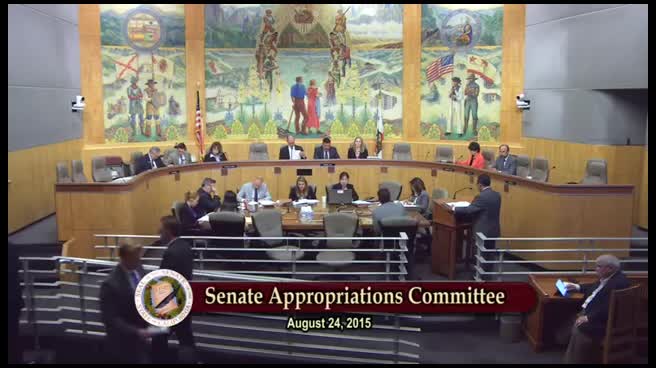 2MIN
Senate Standing Committee on Appropriations
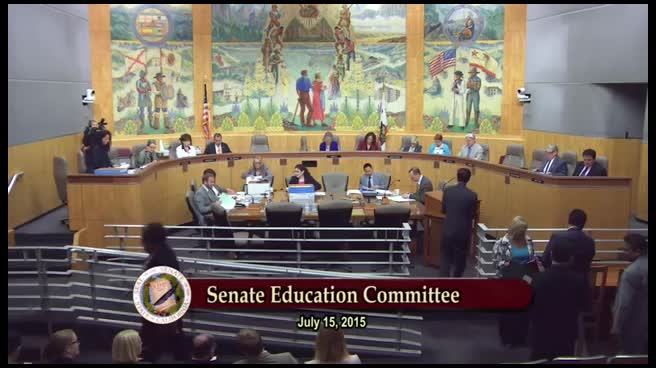 12MIN
Senate Standing Committee on Education
 2MIN
Assembly Floor
 4MIN
Assembly Standing Committee on Appropriations
 15MIN
Assembly Standing Committee on Higher Education
Bill Author

Bill Co-Author(s):