AB 793: Energy efficiency.
- Session Year: 2015-2016
- House: Assembly
- Latest Version Date: 2015-10-08
(1)Under existing law, the Public Utilities Commission has regulatory authority over public utilities, including electrical corporations and gas corporations, as defined. Existing law requires the commission to require an electrical or gas corporation to perform home weatherization services for low-income customers if the commission determines that a significant need for those services exists in the corporations service territory. For these purposes, existing law authorizes weatherization, where feasible, to include certain measures for a dwelling unit. Existing law also authorizes weatherization, for these purposes, to include other measures determined by the commission to be feasible, taking into consideration the cost-effectiveness of the measures as a whole and the policy of reducing energy-related hardships facing low-income households.
This bill would authorize weatherization, for the above-specified purposes, to include energy management technology determined by the commission to be feasible, taking into consideration the above-described factors.
(2)Existing law requires the commission, by July 1, 2010, and in consultation with the State Energy Resources Conservation and Development Commission, the Independent System Operator, and other key stakeholders, to determine the requirements for a smart grid deployment plan consistent with specified policies and federal law. Existing law requires each electrical corporation, by July 1, 2011, to develop and submit a smart grid deployment plan to the commission for approval.
This bill would require the commission to require an electrical or gas corporation to develop a program to provide incentives to a residential or small or medium business customer to acquire energy management technology for use in the customers home or place of business. The bill would require the commission to require an electrical or gas corporation to develop a plan to educate residential customers and small and medium business customers about the incentive program. The bill would require the commission to require the electrical or gas corporation to annually report to the commission on actual customer savings resulting from the incentive program.
The bill would require the commission to evaluate all electrical or gas corporation energy savings claims achieved pursuant to the incentive program described above in a manner consistent with commission-adopted evaluation protocols.
(3)Because a violation of any part of any order, decision, rule, direction, demand, or requirement of the Public Utilities Commission is a crime, this bill would impose a state-mandated local program.
The California Constitution requires the state to reimburse local agencies and school districts for certain costs mandated by the state. Statutory provisions establish procedures for making that reimbursement.
This bill would provide that no reimbursement is required by this act for a specified reason.
(1)Under existing law, the Public Utilities Commission has regulatory authority over public utilities, including electrical corporations and gas corporations, as defined. Existing law requires the commission to require an electrical or gas corporation to perform home weatherization services for low-income customers if the commission determines that a significant need for those services exists in the corporations service territory. For these purposes, existing law authorizes weatherization, where feasible, to include certain measures for a dwelling unit. Existing law also authorizes weatherization, for these purposes, to include other measures determined by the commission to be feasible, taking into consideration the cost-effectiveness of the measures as a whole and the policy of reducing energy-related hardships facing low-income households.
This bill would require weatherization, for the above-specified purposes, to include energy management technology determined by the commission to be feasible, taking into consideration the above-described factors.
(2)Existing law requires the commission, by July 1, 2010, and in consultation with the State Energy Resources Conservation and Development Commission, the Independent System Operator, and other key stakeholders, to determine the requirements for a smart grid deployment plan consistent with specified policies and federal law. Existing law requires each electrical corporation, by July 1, 2011, to develop and submit a smart grid deployment plan to the commission for approval.
This bill would require the commission to require an energy efficiency program administrator electrical or gas corporation to develop and implement a plan to educate residential and small and medium business customers to better understand and control their use of electricity or gas, as provided. The bill would require the commission to require an energy efficiency program administrator to develop an incentive a program to provide incentives to a residential or small or medium business customer who acquires to acquire energy management technology for use in the customers home or place of business. The bill would require the commission to require an electrical or gas corporation to develop a plan to educate residential customers and small and medium business customers about the incentive program. The bill would require the commission to require the energy efficiency program administrator electrical or gas corporation to annually report to the commission on actual customer savings resulting from the education plan and the incentive program.
The bill would require the commission to evaluate all energy efficiency program administrator electrical or gas corporation energy savings claims achieved pursuant to the education plan and incentive program described above in a manner consistent with commission-adopted evaluation protocols.
(3)Because a violation of any part of any order, decision, rule, direction, demand, or requirement of the Public Utilities Commission is a crime, this bill would impose a state-mandated local program.
The California Constitution requires the state to reimburse local agencies and school districts for certain costs mandated by the state. Statutory provisions establish procedures for making that reimbursement.
This bill would provide that no reimbursement is required by this act for a specified reason.
(1)Under existing law, the Public Utilities Commission has regulatory authority over public utilities, including electrical corporations and gas corporations, as defined. Existing law requires the commission to require an electrical or gas corporation to perform home weatherization services for low-income customers if the commission determines that a significant need for those services exists in the corporations service territory. For these purposes, existing law authorizes weatherization, where feasible, to include certain measures for a dwelling unit. Existing law also authorizes weatherization, for these purposes, to include other measures determined by the commission to be feasible, taking into consideration the cost-effectiveness of the measures as a whole and the policy of reducing energy-related hardships facing low-income households.
This bill would require weatherization, for the above-specified purposes, to include energy management technology, as defined, technology determined by the commission to be feasible, taking into consideration the above-described factors.
(2)Existing law requires the commission, by July 1, 2010, and in consultation with the State Energy Resources Conservation and Development Commission, the Independent System Operator, and other key stakeholders, to determine the requirements for a smart grid deployment plan consistent with specified policies and federal law. Existing law requires each electrical corporation, by July 1, 2011, to develop and submit a smart grid deployment plan to the commission for approval.
This bill would require the commission to require an energy efficiency program administrator to develop and implement a plan to educate residential and small and medium business customers to better understand and control their use of electricity or gas, as provided. The bill would require the commission to require an energy efficiency program administrator to develop an incentive program to provide incentives to a residential or small or medium business customer who acquires energy management technology for use in the customers home or place of business. The bill would require the commission to require the energy efficiency program administrator to annually report to the commission on actual customer savings resulting from the education plan and the incentive program.
The bill would require the commission to authorize an evaluate all energy efficiency program administrator to count all energy savings claims achieved pursuant to the education plan and incentive program described above toward overall energy efficiency goals or targets established by the commission. The bill would require the commission, every 3 years, to evaluate the effectiveness of the education plan and the incentive program to determine whether they should continue. in a manner consistent with commission-adopted evaluation protocols.
(3)Because a violation of any part of any order, decision, rule, direction, demand, or requirement of the Public Utilities Commission is a crime, this bill would impose a state-mandated local program.
The California Constitution requires the state to reimburse local agencies and school districts for certain costs mandated by the state. Statutory provisions establish procedures for making that reimbursement.
This bill would provide that no reimbursement is required by this act for a specified reason.
(1)Under existing law, the Public Utilities Commission has regulatory authority over public utilities, including electrical corporations and gas corporations, as defined. Existing law requires the commission to require an electrical or gas corporation to perform home weatherization services for low-income customers if the commission determines that a significant need for those services exists in the corporations service territory. For these purposes, existing law authorizes weatherization, where feasible, to include certain measures for a dwelling unit. Existing law also authorizes weatherization, for these purposes, to include other measures determined by the commission to be feasible, taking into consideration the cost-effectiveness of the measures as a whole and the policy of reducing energy-related hardships facing low-income households.
This bill would require weatherization, for the above-specified purposes, to include energy management technology, as defined, determined by the commission to be feasible, taking into consideration the above-described factors.
(2)Existing law requires the commission, by July 1, 2010, and in consultation with the State Energy Resources Conservation and Development Commission, the Independent System Operator, and other key stakeholders, to determine the requirements for a smart grid deployment plan consistent with specified policies and federal law. Existing law requires each electrical corporation, by July 1, 2011, to develop and submit a smart grid deployment plan to the commission for approval.
This bill would require the commission to require each electrical corporation an energy efficiency program administrator to develop and implement a plan to educate its residential and business customers to better understand and control their use of electricity or gas, as provided. The bill would require the commission to require each electrical corporation an energy efficiency program administrator to develop an incentive program to provide incentives to a residential or small or medium business customer who acquires energy management technology for use in the customers home or place of business. The bill would require the commission to require each electrical corporation the energy efficiency program administrator to annually report to the commission on actual customer savings resulting from the education plan and the incentive program.
The bill would require the commission to authorize an energy efficiency program administrator to count all energy savings achieved pursuant to the education plan and incentive program described above toward overall energy efficiency goals or targets established by the commission. The bill would require the commission, every 3 years, to evaluate the effectiveness of the education plan and the incentive program to determine whether they should continue.
(3)Because a violation of any part of any order, decision, rule, direction, demand, or requirement of the Public Utilities Commission is a crime, this bill would impose a state-mandated local program.
The California Constitution requires the state to reimburse local agencies and school districts for certain costs mandated by the state. Statutory provisions establish procedures for making that reimbursement.
This bill would provide that no reimbursement is required by this act for a specified reason.
(1)Under existing law, the Public Utilities Commission has regulatory authority over public utilities, including electrical corporations and gas corporations, as defined. Existing law requires the commission to require an electrical or gas corporation to perform home weatherization services for low-income customers, customers if the commission determines that a significant need for those services exists in the corporations service territory. For these purposes, existing law authorizes weatherization, where feasible, to include certain measures for a dwelling unit. Existing law also authorizes weatherization, for these purposes, to include other measures determined by the commission to be feasible, taking into consideration the cost-effectiveness of the measures as a whole and the policy of reducing energy-related hardships facing low-income households.
This bill would require weatherization, for the above-specified purposes, to include home energy management technology, as defined, determined by the commission to be feasible, taking into consideration the above-described factors.
(2)Existing law requires the commission, by July 1, 2010, and in consultation with the State Energy Resources Conservation and Development Commission, the Independent System Operator, and other key stakeholders, to determine the requirements for a smart grid deployment plan consistent with specified policies and federal law. Existing law requires each electrical corporation, by July 1, 2011, to develop and submit a smart grid deployment plan to the commission for approval.
This bill would require the commission to require each electrical corporation to develop and implement a plan to educate its residential and small business customers whose homes or places of business are equipped with an advanced meter about how they can use data from the advanced meter to better understand and control their use of electricity. The bill would require the commission to require each electrical corporation to develop a rebate an incentive program to reimburse provide incentives to a residential or small business customer, as prescribed, who purchases who acquires energy management technology for use in the customers home or place of business. The bill would require the commission to require each electrical corporation to annually report to the commission on actual customer savings resulting from the education plan and the incentive program.
(3)Because a violation of any part of any order, decision, rule, direction, demand, or requirement of the Public Utilities Commission is a crime, this bill would impose a state-mandated local program.
The California Constitution requires the state to reimburse local agencies and school districts for certain costs mandated by the state. Statutory provisions establish procedures for making that reimbursement.
This bill would provide that no reimbursement is required by this act for a specified reason.
(1)Under existing law, the Public Utilities Commission has regulatory authority over public utilities, including electrical corporations and gas corporations, as defined. Existing law requires the commission to require an electrical or gas corporation to perform home weatherization services for low-income customers, if the commission determines that a significant need for those services exists in the corporations service territory. For these purposes, existing law authorizes weatherization, where feasible, to include certain measures for a dwelling unit. Existing law also authorizes weatherization, for these purposes, to include other measures determined by the commission to be feasible, taking into consideration the cost-effectiveness of the measures as a whole and the policy of reducing energy-related hardships facing low-income households.
This bill would require weatherization, for the above-specified purposes, to include home energy management technology, as defined, determined by the commission to be feasible, taking into consideration the above-described factors.
(2)Existing law requires the commission, by July 1, 2010, and in consultation with the State Energy Resources Conservation and Development Commission, the Independent System Operator, and other key stakeholders, to determine the requirements for a smart grid deployment plan consistent with specified policies and federal law. Existing law requires each electrical corporation, by July 1, 2011, to develop and submit a smart grid deployment plan to the commission for approval.
This bill would require the commission to require each electrical corporation to develop and implement a plan to educate its residential and small business customers whose homes or places of business are equipped with an advanced meter about how they can use data from the advanced meter to better understand and control their use of electricity. The bill would require the commission to require each electrical corporation to develop a rebate program to reimburse a residential or small business customer, as prescribed, who purchases energy management technology for use in the customers home or place of business.
(3)Because a violation of any part of any order, decision, rule, direction, demand, or requirement of the Public Utilities Commission is a crime, this bill would impose a state-mandated local program.
The California Constitution requires the state to reimburse local agencies and school districts for certain costs mandated by the state. Statutory provisions establish procedures for making that reimbursement.
This bill would provide that no reimbursement is required by this act for a specified reason.
(a)The commission shall require an electrical or gas corporation to do all of the following:
(1)Develop a program no later than January 1, 2017, within the electrical or gas corporations demand-side management programs authorized by the commission, to provide incentives to a residential or small or medium business customer to acquire energy management technology for use in the customers home or place of business. The electrical or gas corporation may allow third parties or local governments to apply for incentives on behalf of customers. The electrical or gas corporation shall work with third parties, local governments, and other interested parties in developing the program. The electrical or gas corporation shall establish incentive amounts based on savings estimation and baseline policies adopted by the commission.
(2)Develop a plan by September 30, 2016, to educate residential customers and small and medium business customers about the incentive program developed pursuant to paragraph (1). The commission may require that the plan be integrated into, or coordinated with, any education campaign required by the commission.
(3)Annually report to the commission on actual customer savings resulting from the incentive program established pursuant to this section. The commission shall evaluate all electrical or gas corporation energy savings claims achieved pursuant to the incentive program in a manner consistent with commission-adopted evaluation protocols and determine if the program shall continue or be modified.
(b)For purposes of this section, energy management technology may include a product, service, or software that allows a customer to better understand and manage electricity or gas use in the customers home or place of business.
(c)Nothing in this section shall be construed to amend or limit the ability of a community choice aggregator to apply to administer an energy efficiency or conservation program or a demand-side management program as set forth in Section 381.1.
SEC. 2.Section 2790 of the Public Utilities Code is amended to read:2790.(a)The commission shall require an electrical or gas corporation to perform home weatherization services for low-income customers, as determined by the commission under Section 739, if the commission determines that a significant need for those services exists in the corporations service territory, taking into consideration both the cost-effectiveness of the services and the policy of reducing the hardships facing low-income households.
(b)(1)For purposes of this section, weatherization may include, where feasible, any of the following measures for any dwelling unit:
(A)Attic insulation.
(B)Caulking.
(C)Weatherstripping.
(D)Low flow showerhead.
(E)Waterheater blanket.
(F)Door and building envelope repairs that reduce air infiltration.
(2)The commission shall direct any electrical or gas corporation to provide as many of these measures as are feasible for each eligible low-income dwelling unit.
(c)Weatherization may also include other building conservation measures, energy management technology, energy-efficient appliances, and energy education programs determined by the commission to be feasible, taking into consideration for all measures both the cost-effectiveness of the measures as a whole and the policy of reducing energy-related hardships facing low-income households.
(d)Weatherization programs shall use the needs assessment pursuant to Section 382.1 to maximize efficiency of delivery.
(e)For purposes of this section, energy management technology may include a product, service, or software that allows a customer to better understand and manage electricity or gas use in the customers home.
SEC. 3.No reimbursement is required by this act pursuant to Section 6 of Article XIIIB of the California Constitution because the only costs that may be incurred by a local agency or school district will be incurred because this act creates a new crime or infraction, eliminates a crime or infraction, or changes the penalty for a crime or infraction, within the meaning of Section 17556 of the Government Code, or changes the definition of a crime within the meaning of Section 6 of Article XIIIB of the California Constitution.
(a)The commission shall require an electrical or gas corporation to do all of the following:
(1)Develop a program no later than January 1, 2017, within the electrical or gas corporations demand-side management programs authorized by the commission, to provide incentives to a residential or small or medium business customer to acquire energy management technology for use in the customers home or place of business. The electrical or gas corporation may allow third parties or local governments to apply for incentives on behalf of customers. The electrical or gas corporation shall work with third parties, local governments, and other interested parties in developing the program. The electrical or gas corporation shall establish incentive amounts based on savings estimation and baseline policies adopted by the commission.
(2)Develop a plan by September 30, 2016, to educate residential customers and small and medium business customers about the incentive program developed pursuant to paragraph (1). The commission may require that the plan be integrated into, or coordinated with, any education campaign required by the commission.
(3)Annually report to the commission on actual customer savings resulting from the incentive program established pursuant to this section. The commission shall evaluate all electrical or gas corporation energy savings claims achieved pursuant to the incentive program in a manner consistent with commission-adopted evaluation protocols and determine if the program shall continue or be modified.
(b)For purposes of this section, energy management technology may include a product, service, or software that allows a customer to better understand and manage electricity or gas use in the customers home or place of business.
(c)Nothing in this section shall be construed to amend or limit the ability of a community choice aggregator to apply to administer an energy efficiency or conservation program or a demand-side management program as set forth in Section 381.1.
SECTION 1.SEC. 2.Section 2790 of the Public Utilities Code is amended to read:2790.(a)The commission shall require an electrical or gas corporation to perform home weatherization services for low-income customers, as determined by the commission under Section 739, if the commission determines that a significant need for those services exists in the corporations service territory, taking into consideration both the cost-effectiveness of the services and the policy of reducing the hardships facing low-income households.
(b)(1)For purposes of this section, weatherization may include, where feasible, any of the following measures for any dwelling unit:
(A)Attic insulation.
(B)Caulking.
(C)Weatherstripping.
(D)Low flow showerhead.
(E)Waterheater blanket.
(F)Door and building envelope repairs that reduce air infiltration.
(2)The commission shall direct any electrical or gas corporation to provide as many of these measures as are feasible for each eligible low-income dwelling unit.
(c)Weatherization may also include other building conservation measures, energy management technology, energy-efficient appliances, and energy education programs determined by the commission to be feasible, taking into consideration for all measures both the cost-effectiveness of the measures as a whole and the policy of reducing energy-related hardships facing low-income households.
(d)Weatherization programs shall use the needs assessment pursuant to Section 382.1 to maximize efficiency of delivery.
(e)For purposes of this section, energy management technology may include a product, service, or software that allows a customer to better understand and manage energy electricity or gas use in the customers home.
SEC. 2.Section 8365 is added to the Public Utilities Code, to read:8365.(a)The commission shall require an electrical or gas corporation to do the following:
(1)Develop a program no later than January 1, 2017, within the electrical or gas corporations demand-side management programs authorized by the commission, to provide incentives to a residential or small or medium business customer to acquire energy management technology for use in the customers home or place of business. The electrical or gas corporation may allow third parties or local governments to apply for incentives on behalf of customers. The electrical or gas corporation shall work with third parties, local governments, and other interested parties in developing the program. The electrical or gas corporation shall establish incentive amounts based on savings estimation and baseline policies adopted by the commission.
(2)Develop a plan by September 30, 2016, to educate residential customers and small and medium business customers about the incentive program developed pursuant to paragraph (1). The commission may require that the plan be integrated into, or coordinated with, any education campaign required by the commission.
(3)Annually report to the commission on actual customer savings resulting from the incentive program established pursuant to this section. The commission shall evaluate all electrical or gas corporation energy savings claims achieved pursuant to the incentive program in a manner consistent with commission-adopted evaluation protocols and determine if the program shall continue or be modified.
(b)For purposes of this section, energy management technology may include a product, service, or software that allows a customer to better understand and manage electricity use in the customers home or place of business.
(c)Nothing in this section shall be construed to amend or limit the ability of a community choice aggregator to apply to administer an energy efficiency or conservation program or a demand-side management program as set forth in Section 381.1.
SEC. 3.No reimbursement is required by this act pursuant to Section 6 of Article XIIIB of the California Constitution because the only costs that may be incurred by a local agency or school district will be incurred because this act creates a new crime or infraction, eliminates a crime or infraction, or changes the penalty for a crime or infraction, within the meaning of Section 17556 of the Government Code, or changes the definition of a crime within the meaning of Section 6 of Article XIIIB of the California Constitution.
(a)The commission shall require an electrical or gas corporation to perform home weatherization services for low-income customers, as determined by the commission under Section 739, if the commission determines that a significant need for those services exists in the corporations service territory, taking into consideration both the cost-effectiveness of the services and the policy of reducing the hardships facing low-income households.
(b)(1)For purposes of this section, weatherization may include, where feasible, any of the following measures for any dwelling unit:
(A)Attic insulation.
(B)Caulking.
(C)Weatherstripping.
(D)Low flow showerhead.
(E)Waterheater blanket.
(F)Door and building envelope repairs that reduce air infiltration.
(2)The commission shall direct any electrical or gas corporation to provide as many of these measures as are feasible for each eligible low-income dwelling unit.
(c)Weatherization may also include other building conservation measures, energy management technology, energy-efficient appliances, and energy education programs determined by the commission to be feasible, taking into consideration for all measures both the cost-effectiveness of the measures as a whole and the policy of reducing energy-related hardships facing low-income households.
(d)Weatherization programs shall use the needs assessment pursuant to Section 382.1 to maximize efficiency of delivery.
(e)For purposes of this section, energy management technology may include a product, service, or software that allows a customer to better understand and manage energy use in the customers home.
SEC. 2.Section 8365 is added to the Public Utilities Code, to read:8365.(a)The commission shall require an energy efficiency program administrator electrical or gas corporation to do the following:
(1)Develop and implement a plan by June 30, 2016, to educate residential customers and small and medium business customers to better understand and control their use of electricity or gas. The plan shall include, where applicable, notification of the incentive program developed pursuant to paragraph (2). The plan shall identify the role of energy efficiency program administrators, demonstrate how efforts will be coordinated, demonstrate how duplicative costs and redundancies will be avoided, and consider existing educational and outreach efforts. The commission may require that the plan be integrated into any education campaign required by the commission.
(2)
(1)Develop a program no later than January 1, 2017, within the energy efficiency program administrators electrical or gas corporations demand-side management programs authorized by the commission, to provide incentives to a residential or small or medium business customer who acquires to acquire energy management technology for use in the customers home or place of business. The energy efficiency program administrator electrical or gas corporation may allow third parties or local governments to apply for incentives on behalf of customers. The energy efficiency program administrator electrical or gas corporation shall work with third parties, local governments, and other interested parties in developing the program. The energy efficiency program administrator electrical or gas corporation shall establish incentive amounts based on savings estimation and baseline policies adopted by the commission.
(2)Develop a plan by September 30, 2016, to educate residential customers and small and medium business customers about the incentive program developed pursuant to paragraph (1). The commission may require that the plan be integrated into, or coordinated with, any education campaign required by the commission.
(3)Annually report to the commission on actual customer savings resulting from the education plan and the incentive program established pursuant to this section. The commission shall evaluate all energy efficiency program administrator electrical or gas corporation energy savings claims achieved pursuant to the education plan and incentive program in a manner consistent with commission-adopted evaluation protocols. protocols and determine if the program shall continue or be modified.
(b)For purposes of this section, energy management technology may include a product, service, or software that allows a customer to better understand and manage electricity use in the customers home or place of business.
(c)Nothing in this section shall be construed to amend or limit the ability of a community choice aggregator to apply to administer an energy efficiency or conservation program or a demand-side management program as set forth in Section 381.1.
SEC. 3.No reimbursement is required by this act pursuant to Section 6 of Article XIIIB of the California Constitution because the only costs that may be incurred by a local agency or school district will be incurred because this act creates a new crime or infraction, eliminates a crime or infraction, or changes the penalty for a crime or infraction, within the meaning of Section 17556 of the Government Code, or changes the definition of a crime within the meaning of Section 6 of Article XIIIB of the California Constitution.
(a)The commission shall require an electrical or gas corporation to perform home weatherization services for low-income customers, as determined by the commission under Section 739, if the commission determines that a significant need for those services exists in the corporations service territory, taking into consideration both the cost-effectiveness of the services and the policy of reducing the hardships facing low-income households.
(b)(1)For purposes of this section, weatherization may include, where feasible, any of the following measures for any dwelling unit:
(A)Attic insulation.
(B)Caulking.
(C)Weatherstripping.
(D)Low flow showerhead.
(E)Waterheater blanket.
(F)Door and building envelope repairs that reduce air infiltration.
(2)The commission shall direct any electrical or gas corporation to provide as many of these measures as are feasible for each eligible low-income dwelling unit.
(c)Weatherization may also include other building conservation measures, energy management technology, energy-efficient appliances, and energy education programs determined by the commission to be feasible, taking into consideration for all measures both the cost-effectiveness of the measures as a whole and the policy of reducing energy-related hardships facing low-income households.
(d)Weatherization programs shall use the needs assessment pursuant to Section 382.1 to maximize efficiency of delivery.
(e)For purposes of this section, energy management technology may include a product, service, or software that allows a customer to better understand and manage energy use in the customers home.
SEC. 2.Section 8365 is added to the Public Utilities Code, to read:8365.(a)The commission shall require an energy efficiency program administrator, as part of an existing statewide education and outreach program, administrator to do the following:
(1)Develop and implement a plan by June 30, 2016, to educate residential customers and small and medium business customers to better understand and control their use of electricity or gas. The plan shall include, where applicable, notification of the incentive program developed pursuant to paragraph (2). The plan shall identify the role of energy efficiency program administrators and the statewide marketing administrator, administrators, demonstrate how efforts will be coordinated, demonstrate how duplicative costs and redundancies will be avoided, and consider existing educational and outreach efforts. The statewide marketing administrator shall be responsible for coordinating these efforts. The commission may require that the plan be integrated into any education campaign required by the commission.
(2)Develop a program no later than January 1, 2017, within the energy efficiency program administrators demand-side management programs authorized by the commission, to provide incentives to a residential or small or medium business customer who acquires energy management technology for use in the customers home or place of business. The energy efficiency program administrator shall may allow third parties or local governments to apply for incentives on behalf of customers. The energy efficiency program administrator shall work with third parties, local governments, and other interested parties in developing the program. The energy efficiency program administrator shall establish incentive amounts based on all estimated or, where available, actual energy savings and energy usage reductions from installation or implementation of energy management technologies, taking into consideration the overall reduction in normalized metered energy consumption as a measure of energy savings. savings estimation and baseline policies adopted by the commission.
(3)Annually report to the commission on actual customer savings resulting from the education plan and the incentive program established pursuant to this section. The commission shall authorize an evaluate all energy efficiency program administrator to count all energy savings claims achieved pursuant to the education plan and incentive program toward overall energy efficiency goals or targets established by the commission. Every three years, the commission shall evaluate the effectiveness of the education plan and the incentive program to determine whether they should continue. in a manner consistent with commission-adopted evaluation protocols.
(b)For purposes of this section, energy management technology may include a product, service, or software that allows a customer to better understand and manage electricity use in the customers home or place of business.
SEC. 3.No reimbursement is required by this act pursuant to Section 6 of Article XIIIB of the California Constitution because the only costs that may be incurred by a local agency or school district will be incurred because this act creates a new crime or infraction, eliminates a crime or infraction, or changes the penalty for a crime or infraction, within the meaning of Section 17556 of the Government Code, or changes the definition of a crime within the meaning of Section 6 of Article XIIIB of the California Constitution.
(a)The commission shall require an electrical or gas corporation to perform home weatherization services for low-income customers, as determined by the commission under Section 739, if the commission determines that a significant need for those services exists in the corporations service territory, taking into consideration both the cost-effectiveness of the services and the policy of reducing the hardships facing low-income households.
(b)(1)For purposes of this section, weatherization may include, where feasible, any of the following measures for any dwelling unit:
(A)Attic insulation.
(B)Caulking.
(C)Weatherstripping.
(D)Low flow showerhead.
(E)Waterheater blanket.
(F)Door and building envelope repairs that reduce air infiltration.
(2)The commission shall direct any electrical or gas corporation to provide as many of these measures as are feasible for each eligible low-income dwelling unit.
(c)Weatherization may also include other building conservation measures, energy management technology, energy-efficient appliances, and energy education programs determined by the commission to be feasible, taking into consideration for all measures both the cost-effectiveness of the measures as a whole and the policy of reducing energy-related hardships facing low-income households.
(d)Weatherization programs shall use the needs assessment pursuant to Section 382.1 to maximize efficiency of delivery.
(e)For purposes of this section, energy management technology is may include a product, service, or software, software that allows a customer to better understand and manage energy use in the customers home.
SEC. 2.Section 8365 is added to the Public Utilities Code, to read:8365.(a)The commission shall require each electrical corporation to do an energy efficiency program administrator, as part of an existing statewide education and outreach program, to do the following:
(1)Develop and implement a plan by June 30, 2016, to educate its residential customers and business customers to better understand and control their use of electricity or gas. The plan shall include, where applicable, notification of the incentive program developed pursuant to paragraph (2). The plan shall identify the role of energy efficiency program administrators and the statewide marketing administrator, demonstrate how efforts will be coordinated, demonstrate how duplicative costs and redundancies will be avoided, and consider existing educational and outreach efforts. The statewide marketing administrator shall be responsible for coordinating these efforts.
(2)Develop a program no later than June 30, 2016 January 1, 2017, within the energy efficiency program administrators demand-side management programs authorized by the commission, to provide incentives to a residential or small or medium business customer who acquires energy management technology for use in the customers home or place of business. The electrical corporation energy efficiency program administrator shall allow third parties or local governments to apply for incentives on behalf of customers. The electrical corporation energy efficiency program administrator shall work with third parties, local governments, and other interested parties in developing the program. The electrical corporation shall establish incentive amounts at a level necessary to encourage adoption of energy management technologies that allow a customer to achieve progressively higher savings. The energy efficiency program administrator shall establish incentive amounts based on all estimated or, where available, actual energy savings and energy usage reductions from installation or implementation of energy management technologies, taking into consideration the overall reduction in normalized metered energy consumption as a measure of energy savings.
(3)Annually report to the commission on actual customer savings resulting from the education plan and the incentive program established pursuant to this section. The commission shall authorize an energy efficiency program administrator to count all energy savings achieved pursuant to the education plan and incentive program toward overall energy efficiency goals or targets established by the commission. Every three years, the commission shall evaluate the effectiveness of the education plan and the incentive program to determine whether they should continue.
(b)For purposes of this section, energy management technology is may include a product, service, or software that allows a customer to better understand and manage electricity use in the customers home or place of business.
SEC. 3.No reimbursement is required by this act pursuant to Section 6 of Article XIIIB of the California Constitution because the only costs that may be incurred by a local agency or school district will be incurred because this act creates a new crime or infraction, eliminates a crime or infraction, or changes the penalty for a crime or infraction, within the meaning of Section 17556 of the Government Code, or changes the definition of a crime within the meaning of Section 6 of Article XIIIB of the California Constitution.
(a)The commission shall require an electrical or gas corporation to perform home weatherization services for low-income customers, as determined by the commission under Section 739, if the commission determines that a significant need for those services exists in the corporations service territory, taking into consideration both the cost-effectiveness of the services and the policy of reducing the hardships facing low-income households.
(b)(1)For purposes of this section, weatherization may include, where feasible, any of the following measures for any dwelling unit:
(A)Attic insulation.
(B)Caulking.
(C)Weatherstripping.
(D)Low flow showerhead.
(E)Waterheater blanket.
(F)Door and building envelope repairs that reduce air infiltration.
(2)The commission shall direct any electrical or gas corporation to provide as many of these measures as are feasible for each eligible low-income dwelling unit.
(c)Weatherization may also include other building conservation measures, home energy management technology, energy-efficient appliances, and energy education programs determined by the commission to be feasible, taking into consideration for all measures both the cost-effectiveness of the measures as a whole and the policy of reducing energy-related hardships facing low-income households.
(d)Weatherization programs shall use the needs assessment pursuant to Section 382.1 to maximize efficiency of delivery.
(e)For purposes of this section, the following terms have the following meanings:
(1)Home energy
(e)For purposes of this section, energy management technology is a product or service product, service, or software, that allows a customer to better understand and manage energy use in the customers home and may include, but is not limited to, a home energy monitor. home.
(2)Home energy monitor is a device that is able to provide household electricity consumption in real-time by connecting to an advanced meter equipped with home area network functionality.
SEC. 2.Section 8365 is added to the Public Utilities Code, to read:8365.(a)The commission shall require each electrical corporation to do the following:
(1)Develop and implement a plan by June 30, 2016, to educate its residential customers and small business customers whose homes or places of business are equipped with an advanced meter about how they can use data from the advanced meter to better understand and control their use of electricity. The plan shall include notification of the rebate incentive program developed pursuant to paragraph (2).
(2)Develop a rebate program no later than June 30, 2016, to reimburse a residential customer or small business customer who purchases energy management technology for use in the customers home or place of business. The rebate shall be an amount equal to ___ percent of the retail value of the product or service, not to exceed ___.
(2)Develop a program no later than June 30, 2016, to provide incentives to a residential or business customer who acquires energy management technology for use in the customers home or place of business. The electrical corporation shall allow third parties or local governments to apply for incentives on behalf of customers. The electrical corporation shall work with third parties, local governments, and other interested parties in developing the program. The electrical corporation shall establish incentive amounts at a level necessary to encourage adoption of energy management technologies that allow a customer to achieve progressively higher savings.
(3)Annually report to the commission on actual customer savings resulting from the education plan and the incentive program established pursuant to this section.
(b)For purposes of this section, the following terms have the following meanings:
(1)Energy
(b)For purposes of this section, energy management technology is a product or service product, service, or software that allows a customer to better understand and manage electricity use in the customers home or place of business and may include, but is not limited to, an energy monitor. business.
(2)Energy monitor is a device that is able to provide electricity consumption in real-time or near real-time by connecting to an advanced meter equipped with home area network functionality.
SEC. 3.No reimbursement is required by this act pursuant to Section 6 of Article XIIIB of the California Constitution because the only costs that may be incurred by a local agency or school district will be incurred because this act creates a new crime or infraction, eliminates a crime or infraction, or changes the penalty for a crime or infraction, within the meaning of Section 17556 of the Government Code, or changes the definition of a crime within the meaning of Section 6 of Article XIIIB of the California Constitution.
(a)The commission shall require an electrical or gas corporation to perform home weatherization services for low-income customers, as determined by the commission under Section 739, if the commission determines that a significant need for those services exists in the corporations service territory, taking into consideration both the cost-effectiveness of the services and the policy of reducing the hardships facing low-income households.
(b)(1)For purposes of this section, weatherization may include, where feasible, any of the following measures for any dwelling unit:
(A)Attic insulation.
(B)Caulking.
(C)Weatherstripping.
(D)Low flow showerhead.
(E)Waterheater blanket.
(F)Door and building envelope repairs that reduce air infiltration.
(2)The commission shall direct any electrical or gas corporation to provide as many of these measures as are feasible for each eligible low-income dwelling unit.
(c)Weatherization may also include other building conservation measures, home energy management technology, energy-efficient appliances, and energy education programs determined by the commission to be feasible, taking into consideration for all measures both the cost-effectiveness of the measures as a whole and the policy of reducing energy-related hardships facing low-income households.
(d)Weatherization programs shall use the needs assessment pursuant to Section 382.1 to maximize efficiency of delivery.
(e)For purposes of this section, the following terms have the following meanings:
(1)Home energy management technology is a product or service that allows a customer to better understand and manage energy use in the customers home and may include, but is not limited to, a home energy monitor.
(2)Home energy monitor is a device that is able to provide household electricity consumption in real-time by connecting to an advanced meter equipped with home area network functionality.
SEC. 2.Section 8365 is added to the Public Utilities Code, to read:8365.(a)The commission shall require each electrical corporation to do the following:
(1)Develop and implement a plan by June 30, 2016, to educate its residential customers and small business customers whose homes or places of business are equipped with an advanced meter about how they can use data from the advanced meter to better understand and control their use of electricity. The plan shall include notification of the rebate program developed pursuant to paragraph (2).
(2)Develop a rebate program no later than June 30, 2016, to reimburse a residential customer or small business customer who purchases energy management technology for use in the customers home or place of business. The rebate shall be an amount equal to ___ percent of the retail value of the product or service, not to exceed ___.
(b)For purposes of this section, the following terms have the following meanings:
(1)Energy management technology is a product or service that allows a customer to better understand and manage electricity use in the customers home or place of business and may include, but is not limited to, an energy monitor.
(2)Energy monitor is a device that is able to provide electricity consumption in real-time or near real-time by connecting to an advanced meter equipped with home area network functionality.
SEC. 3.No reimbursement is required by this act pursuant to Section 6 of Article XIIIB of the California Constitution because the only costs that may be incurred by a local agency or school district will be incurred because this act creates a new crime or infraction, eliminates a crime or infraction, or changes the penalty for a crime or infraction, within the meaning of Section 17556 of the Government Code, or changes the definition of a crime within the meaning of Section 6 of Article XIIIB of the California Constitution.
|
Date
|
Status
|
|---|---|
| Jul 7, 2015 | Read second time and amended. Re-referred to Com. on APPR. |
| Oct 8, 2015 | Chaptered by Secretary of State - Chapter 589, Statutes of 2015. |
| Oct 8, 2015 | Approved by the Governor. |
| Sep 16, 2015 | Enrolled and presented to the Governor at 4 p.m. |
| Sep 3, 2015 | Senate amendments concurred in. To Engrossing and Enrolling. (Ayes 79. Noes 0.). |
| Sep 3, 2015 | Senate amendments concurred in. To Engrossing and Enrolling. (Ayes 79. Noes 0. Page 2870.). |
| Sep 3, 2015 | Assembly Rule 77 suspended. (Page 2859.) |
| Sep 3, 2015 | Assembly Rule 77 suspended. |
| Sep 2, 2015 | Read third time. Passed. Ordered to the Assembly. (Ayes 38. Noes 0. Page 2408.). |
| Sep 2, 2015 | Read third time. Passed. Ordered to the Assembly. |
| Sep 2, 2015 | In Assembly. Concurrence in Senate amendments pending. May be considered on or after September 4 pursuant to Assembly Rule 77. |
| Sep 1, 2015 | Read second time. Ordered to third reading. |
| Aug 31, 2015 | Read third time and amended. Ordered to second reading. |
| Aug 18, 2015 | Read second time and amended. Ordered to third reading. |
| Aug 17, 2015 | From committee: Be placed on second reading file pursuant to Senate Rule 28.8 and be amended. |
| Feb 25, 2015 | Read first time. To print. |
| Jul 6, 2015 | From committee: Amend, and do pass as amended and re-refer to Com. on APPR. (Ayes 6. Noes 1.) (June 30). |
| Jun 15, 2015 | In committee: Hearing postponed by committee. |
| Jun 9, 2015 | From committee chair, with author's amendments: Amend, and re-refer to committee. Read second time, amended, and re-referred to Com. on E., U., & C. |
| May 21, 2015 | Referred to Com. on E., U., & C. |
| May 7, 2015 | Read third time. Passed. Ordered to the Senate. (Ayes 77. Noes 0. Page 1348.) |
| May 7, 2015 | Read third time. Passed. Ordered to the Senate. |
| May 7, 2015 | In Senate. Read first time. To Com. on RLS. for assignment. |
| Apr 30, 2015 | Read second time. Ordered to Consent Calendar. |
| Apr 29, 2015 | From committee: Do pass. To Consent Calendar. (Ayes 17. Noes 0.) (April 29). |
| Apr 20, 2015 | Re-referred to Com. on APPR. |
| Apr 16, 2015 | Read second time and amended. |
| Apr 15, 2015 | From committee: Amend, and do pass as amended and re-refer to Com. on APPR. (Ayes 14. Noes 0.) (April 13). |
| Mar 12, 2015 | Referred to Com. on U. & C. |
| Feb 26, 2015 | From printer. May be heard in committee March 28. |
|
Date
|
Description
|
Location
|
Votes
|
|
|---|---|---|---|---|
| Sep 3, 2015 | AB 793 QUIRK Concurrence in Senate Amendments | Assembly Floor |
Passed |
|
| Sep 2, 2015 | Assembly 3rd Reading AB793 Quirk By Hill | Senate Floor |
Passed |
|
| Jun 30, 2015 | Do pass as amended, but first amend, and re-refer to the Committee on [Appropriations] | Senate Standing Committee on Energy, Utilities and Communications |
Passed |
|
| May 7, 2015 | AB 793 QUIRK Consent Calendar Second Day Regular Session | Assembly Floor |
Passed |
|
| Apr 29, 2015 | Do pass. To Consent Calendar. | Assembly Standing Committee on Appropriations |
Passed |
|
| Apr 13, 2015 | Do pass as amended and be re-referred to the Committee on [Appropriations] | Assembly Standing Committee on Utilities and Commerce |
Passed |
This list shows positions taken on this bill by organizations on the date displayed, which is linked to the original source.
Positions by individuals are not included.
|
Organization
|
Position
|
Date
|
|---|---|---|
| California Energy Efficiency Industry Council | ** Support | Sep 2, 2015 |
| Center for Sustainable Energy | ** Support | Sep 2, 2015 |
| Clean Power Campaign | ** Support | Sep 2, 2015 |
| CONCERNS: | ** Support | Jun 30, 2015 |
| Energy Efficiency Industry Council | * Support | Jun 30, 2015 |
| Environmental Defense Fund | ** Support | Sep 2, 2015 |
| Marin Clean Energy | ** Support | Sep 2, 2015 |
| Mission Data | * Support | Jun 30, 2015 |
| Office of Ratepayer Advocates | ** Support | Sep 2, 2015 |
| Pacific Gas & Electric Company | * Against | Jun 30, 2015 |
| San Diego Gas and Electric | * Neutral | Jun 30, 2015 |
| Sempra Utilities | * Neutral | Jun 30, 2015 |
| Sierra Club California | ** Support | Sep 2, 2015 |
| Silicon Valley Leadership Group | ** Support | Sep 2, 2015 |
| SoCal Gas | * Neutral | Jun 30, 2015 |
| Technet | ** Support | Sep 2, 2015 |
| The Utility Reform Network | * Support | Jun 30, 2015 |
| The Utility Reform Network | * Neutral | Jun 30, 2015 |
AB 793
Page 3
CONCURRENCE IN SENATE AMENDMENTS
AB 793
(Quirk)
As Amended August 31, 2015
Majority vote
ASSEMBLY: |
77-0 |
(May 7, 2015) |
SENATE: |
38-0 |
(September 2, 2015) |
Original Committee Reference: U. & C.
SUMMARY: This bill requires electrical corporations to develop and implement educational plans and incentive programs for customers to control their electricity use and acquire energy management technology. Specifically, this bill:
Requires the California Public Utilities Commission (CPUC) to require electrical corporations to:
Develop an incentive program by June 30, 2016, for customers to acquire energy management technology for use in their homes or businesses. Incentives must be established at a level necessary to encourage adoption of technologies that allow a customer to achieve progressively higher savings.
Develop and implement a plan by June 30, 2016, to educate customers to better understand and control their electricity use and notify them of the incentive program.
Annually report on actual customer savings resulting from the education plan and incentive program.
Requires the CPUC to require electrical and gas corporations to include home energy management technology in weatherization programs for low-income customers.
Defines home energy management technology as a product, service, or software that allows a customer to better understand and manage energy use in the customer's home or place of business, as appropriate.
The Senate amendments:
Revises the definition of an energy management technology from "is" to "may include" product, service, or software that allows a customer to better understand and manage energy use in the customer’s home.
Modifies language directing the CPUC to direct investor owned utilities (IOUs) to implement a program to help customers understand how to use energy management technologies and instead direct the CPUC to direct an energy efficiency program administrator to implement this program.
Modifies the program start date from June 30, 2016, to January 1, 2017, and modifies the education program start date from June 30, 2016, to September 30, 2017.
Relocates the provisions of this bill related to the programs from Public Utilities Code Section 8365 to Public Utilities Code Section 717.
Make non-substantive editorial changes.
EXISTING LAW:
Requires electrical corporations to first meet its unmet resource needs through all available energy efficiency and demand reduction resources that are cost effective, reliable, and feasible. (Public Utilities Code Section 454.5 (b)(9)(C)
Requires the CPUC to establish energy efficiency targets for electrical and gas corporations. (Public Utilities Code Section 454.55 and 454.56)
Requires electric and gas corporations to provide weatherization assistance, and specifies that weatherization means attic insulation, caulking, weather-stripping, a low flow showerhead, water heater blanket, and door and building envelope repairs to reduce air infiltration for low-income customers. (Public Utilities Code Section 2790 (a), (b))
Specifies that weatherization may also include other building conservation measures, energy-efficient appliances, and energy education programs determined by the Commission to be feasible and considering the cost effectiveness of the measures as a whole and the policy of reducing energy-related hardships facing low-income households. (Public Utilities Code Section 2790 (c))
FISCAL EFFECT: Minor, absorbable costs for the CPUC to oversee electrical and gas corporation's energy efficiency rebates and marketing/outreach programs, and analyze and evaluate new weatherization measures.
COMMENTS:
Purpose. According to the author, this bill will help to increase the deployment of energy management technologies which will provide customers with a better understanding of their energy usage so that they may make informed decisions about how to optimize their energy consumption and reduce their energy bills.
The author states, "While millions of smart meters have been installed throughout California, the deployment and use of energy management technologies has not kept pace. This bill will incentivize the adoption of these technologies by requiring the IOUs to implement an outreach plan to educate their residential and small business customers."
Background. Electrical corporations are IOUs regulated by the CPUC. Electrical corporations are required to meet unmet resource needs by first employing all available energy efficiency and demand reduction strategies that are cost-effective, reliable and feasible. The CPUC establishes energy efficiency targets for electrical and gas corporations.
SB 17 (Padilla), Chapter 327, Statutes of 2009, established the smart grid policy of the state, and required the CPUC to determine the requirements for a smart grid deployment plan and each electrical corporation to develop and submit a smart grid deployment plan to CPUC for approval by July 1, 2011.
The term smart grid refers to a distribution system that allows for the flow of information from a customer’s meter in two directions, and modernizes the electric distribution and transmission grid. In order for a customer to take full advantage of their smart meter's capabilities, the customer must acquire energy management technologies so they may monitor their energy consumption in real time and respond to local control signals.
Weatherization. Electric and gas corporations are required to provide weatherization assistance for low-income customers. Weatherization typically means attic insulation, caulking, weather-stripping, etc. Weatherization also may include other building conservation measures, energy-efficient appliances, and energy education programs. This bill expressly includes home energy management technology as part of weatherization incentive and assistance programs.
Program administration. The CPUC supervises the administration of energy efficiency programs administered by IOUs. Recently the CPUC allowed community choice aggregators and regional energy networks to also administer these programs. As with the IOU-administered programs, the CPUC is evaluating the cost-effectiveness of administering programs through community choice aggregators and regional energy networks through ongoing evaluations.
Analysis Prepared by: Sue Kateley / U. & C. / (916) 319-2083 FN: 0002014
AB 793
Page 6
|
Office of Senate Floor Analyses (916) 651-1520 Fax: (916) 327-4478 |
THIRD READING
Bill No: AB 793
Amended: 8/31/15 in Senate
SENATE ENERGY, U. & C. COMMITTEE: 6-1, 6/30/15
AYES: Hueso, Hill, Lara, Leyva, McGuire, Pavley
NOES: Morrell
NO VOTE RECORDED: Fuller, Cannella, Hertzberg, Wolk
SENATE APPROPRIATIONS COMMITTEE: Senate Rule 28.8
ASSEMBLY FLOOR: 77-0, 5/7/15 - See last page for vote
DIGEST: This bill furthers the adoption of “energy management technology” – meaning a product, service, or software that allows a customer to better understand and manage energy use in the customer’s home or business – through mandatory education efforts, monetary awards and inclusion of such technology in home weatherization programs for low-income electric or gas utility customers.
Senate Amendments of 8/31/15 remove language from one section of the Public Utilities Code and insert the same language in another section of the Public Utilities Code. The amendments also replace one reference to “energy” use with “electricity or gas” use, which makes the bill internally consistent.
Existing law:
Requires an electrical corporation to first meet its unmet resource needs through all available energy efficiency and demand reduction resources that are cost effective, reliable, and feasible. (Public Utilities Code §454.5 (b)(9)(C))
Requires the California Public Utilities Commission (CPUC) to establish energy efficiency targets for electrical and gas corporations. (Public Utilities Code §§454.55 and 454.56)
Requires electric and gas corporations to provide weatherization assistance to low-income customers and specifies that weatherization may include attic insulation, caulking, weatherstripping, a low-flow showerhead, water heater blanket, and door and building envelope repairs to reduce air infiltration. (Public Utilities Code §2790 (a), (b))
Specifies that weatherization may also include other building conservation measures, energy-efficient appliances, and energy education programs determined by the CPUC to be feasible and considering the cost effectiveness of the measures as a whole and the policy of reducing energy-related hardships facing low-income households. (Public Utilities Code §2790 (c))
Requires the CPUC to establish policies and procedures by which any party, including, but not limited to, a local entity that establishes a community choice aggregation program, may apply to become administrators for cost-effective energy efficiency and conservation programs. (Public Utilities Code §381.1)
This bill:
Adds energy management technology (EMT) to the list of things that may also be considered as weatherization, if determined by the CPUC to be feasible.
Directs the CPUC to require an electrical or gas corporation to (a) develop a program, by January 1, 2017, to provide incentives to residential or small or medium business customers to acquire EMT for use in the customer’s home or business, and to (b) develop, by June 30, 2016, a plan to educate residential and small and medium business customers about the incentive program described above.
Specifies the CPUC may require that the education plan described in (2) be integrated into, or coordinated with, any education campaign required by the CPUC.
Requires each electrical or gas corporation to report annually to the CPUC on actual energy savings resulting from the incentive program.
Requires the CPUC to evaluate all electrical or gas corporation energy savings claims achieved pursuant to the incentive program in a manner consistent with commission-adopted evaluation protocols and determine if the program shall continue or be modified.
States that bill’s provisions do no amend or limit the ability of a community choice aggregator (CCA) to apply to administer an energy efficiency or conservation program or a demand-side management program.
Background
Energy management technology. EMT, as used in this bill, refers to a broad range of products, services, or software that allows a customer to better understand and manage energy use in their home or place of business. Based on supporting documents provided by this bill’s proponents, such technology seems to have in common the ability to allow a customer to read his or her energy usage in real time or near real time through, generally, communication with a home or business’s smart meter. Bill proponents contend that such technologies have the potential to allow customers to better understand and manage their energy usage, thereby leading to reductions in energy use. These proponents note that, to date, adoption of such technologies, especially by residential and smaller business customers, has been very limited.
The author’s office and many bill supporters blame this current low level of adoption of EMT on a lack of education and outreach. The author seeks to remedy this situation by: (1) including EMT among the measures and products that might be included in the weatherization services the CPUC requires electric and gas utilities to provide to low-income customers, and (2) requiring electrical and gas corporations to offer a rebate program, within the existing energy efficiency program, for customers who purchase EMT devices. Both the existing weatherization program and the existing energy efficiency program are described below.
Weatherization services for low-income customers. In keeping with statute, the CPUC created the Energy Savings Assistance Program by which the investor-owned utilities (IOUs) provide no-cost weatherization services to low-income households who meet the California Alternate Rates for Energy, known as CARE income guidelines. (According to the CPUC, customers are CARE-eligible if their household income falls below certain defined amounts.) Services provided include attic insulation, energy efficient refrigerators, energy efficient furnaces, weatherstripping, caulking, low-flow showerheads, waterheater blankets, and door and building envelope repairs which reduce air infiltration. Statute governing this program is worded strangely in that it lists measures and technologies that may be included, when feasible, as weatherization, and then separately lists additional measures and technologies that may also be included as weatherization, if determined by the CPUC to be feasible, taking into consideration cost-effectiveness of the measures as a whole and the policy of reducing energy-related hardships facing low-income households. This bill adds EMT to the list of measures and technologies that may also be included as weatherization, if it determined by CPUC to meet the specified standards.
Energy utility energy efficiency programs. The “loading order” guides the state’s energy policies and decisions according to the following order of priority: (1) decreasing electricity demand by increasing energy efficiency; (2) responding to energy demand by reducing energy usage during peak hours; (3) meeting new energy generation needs with renewable resources; and (4) meeting new energy generation needs with clean fossil-fueled generation. This policy has been adopted by the energy agencies – the California Energy Commission and CPUC – and its principles guide all energy programs.
Consistent with the loading order, statute requires both electric and gas IOUs to meet unmet resource needs with all available energy efficiency and demand reduction that is cost-effective, reliable and feasible. The CPUC uses these criteria to establish energy efficiency targets for the IOUs. To achieve those targets, the IOUs (and, in some cases, CCAs such as Sonoma Clean Power) administer energy efficiency programs with ratepayer funds approved by the CPUC. Currently funded at about $1 billion per year, the programs include a portfolio of financial incentives, loans, and rebates for installing energy efficient appliances, lighting, windows, HVAC systems, whole-house retrofits, and specialized programs aimed at a variety of sectors. According to existing CPUC rules, each IOU claims credit for energy savings from the energy efficiency measures resulting from its program. The CPUC evaluates the claimed energy savings and, after adjustment, authorizes financial rewards for the IOUs.
This bill requires the electrical and gas corporations to implement programs, within the existing energy efficiency programs, to provide incentives to a residential or small- or medium-sized business customer who acquires EMT for use in the customer’s home or place of business. In addition, this bill requires the electrical and gas corporations to implement a plan to educate residential and small and medium business customers about the incentive program.
Prior/Related Legislation
AB 802 (Williams, 2015) directs the CPUC to change is its calculation of savings from an energy efficiency project so as to allow IOUs to recover in rates the cost energy efficiency savings to bring an existing building up to code. The bill passed the Assembly on a vote of 74-0 and is currently awaiting consideration by the Senate Floor.
AB 1330 (Bloom, 2015) establishes an annual energy efficiency resource standard for every retail seller of electricity and every gas utility. The bill passed the Assembly on a vote of 46-29 and is currently awaiting consideration by the Senate Floor.
SB 350 (De Leon, 2015) requires the California Energy Commission to adopt and periodically update a program to achieve a doubling of the energy efficiency of buildings by January 1, 2030. The bill passed the Senate on a vote of 24-14 and is currently awaiting consideration by the Assembly Floor.
FISCAL EFFECT: Appropriation: No Fiscal Com.: Yes Local: Yes
California Energy Efficiency Industry Council
Center for Sustainable Energy
Clean Power Campaign
Environmental Defense Fund
Marin Clean Energy
Mission:data Coalition
Office of Ratepayer Advocates
Sierra Club California
Silicon Valley Leadership Group
TechNet
None received
ARGUMENTS IN SUPPORT: The author and proponents contend the education plan required by this bill, and deployment of EMT that the bill incentivizes, will arm residential and business customers with a better understanding of their energy usage. This will allow them to make informed decisions on how to optimize their energy consumption and reduce their bills. Customer will be able to monitor their electricity usage and costs in real-time or near real-time, allowing them to adjust their usage instantaneously in response to changes in prices or system reliability events. This will increase overall energy efficiency, alleviate pressure on the system’s energy grid, and help reduce Greenhouse Gas emissions by reducing the need for gas-fired “peaker” plants to meet high demand.
ASSEMBLY FLOOR: 77-0, 5/7/15
AYES: Achadjian, Alejo, Travis Allen, Baker, Bigelow, Bloom, Bonilla, Bonta, Brough, Brown, Burke, Calderon, Chang, Chau, Chávez, Chiu, Chu, Cooley, Cooper, Dababneh, Dahle, Daly, Dodd, Eggman, Frazier, Beth Gaines, Gallagher, Cristina Garcia, Eduardo Garcia, Gatto, Gipson, Gomez, Gonzalez, Gordon, Gray, Grove, Hadley, Harper, Holden, Irwin, Jones, Jones-Sawyer, Kim, Lackey, Levine, Linder, Lopez, Low, Maienschein, Mathis, Mayes, McCarty, Medina, Melendez, Mullin, Nazarian, Obernolte, O'Donnell, Olsen, Patterson, Perea, Quirk, Rendon, Ridley-Thomas, Rodriguez, Salas, Santiago, Mark Stone, Thurmond, Ting, Wagner, Waldron, Weber, Wilk, Williams, Wood, Atkins
NO VOTE RECORDED: Campos, Roger Hernández, Steinorth
Prepared by: Jay Dickenson / E., U., & C. / (916) 651-4107
9/1/15 20:29:44
**** END ****
AB 793
Page 6
|
Office of Senate Floor Analyses (916) 651-1520 Fax: (916) 327-4478 |
THIRD READING
Bill No: AB 793
Amended: 8/18/15 in Senate
SENATE ENERGY, U. & C. COMMITTEE: 6-1, 6/30/15
AYES: Hueso, Hill, Lara, Leyva, McGuire, Pavley
NOES: Morrell
NO VOTE RECORDED: Fuller, Cannella, Hertzberg, Wolk
SENATE APPROPRIATIONS COMMITTEE: Senate Rule 28.8
ASSEMBLY FLOOR: 77-0, 5/7/15 (Consent) - See last page for vote
DIGEST: This bill furthers the adoption of “energy management technology” – meaning a product, service, or software that allows a customer to better understand and manage energy use in the customer’s home or business – through mandatory education efforts, monetary awards and inclusion of such technology in home weatherization programs for low-income electric or gas utility customers.
Requires an electrical corporation to first meet its unmet resource needs through all available energy efficiency and demand reduction resources that are cost effective, reliable, and feasible. (Public Utilities Code §454.5 (b)(9)(C))
Requires the California Public Utilities Commission (CPUC) to establish energy efficiency targets for electrical and gas corporations. (Public Utilities Code §§454.55 and 454.56)
Requires electric and gas corporations to provide weatherization assistance to low-income customers and specifies that weatherization may include attic insulation, caulking, weatherstripping, a low-flow showerhead, water heater blanket, and door and building envelope repairs to reduce air infiltration. (Public Utilities Code §2790 (a), (b))
Specifies that weatherization may also include other building conservation measures, energy-efficient appliances, and energy education programs determined by the CPUC to be feasible and considering the cost effectiveness of the measures as a whole and the policy of reducing energy-related hardships facing low-income households. (Public Utilities Code §2790 (c))
Requires the CPUC to establish policies and procedures by which any party, including, but not limited to, a local entity that establishes a community choice aggregation program, may apply to become administrators for cost-effective energy efficiency and conservation programs. (Public Utilities Code Section 381.1)
This bill:
Adds energy management technology (EMT) to the list of things that may also be considered as weatherization, if determined by the CPUC to be feasible.
Directs the CPUC to require an electrical or gas corporation to (a) develop a program, by January 1, 2017, to provide incentives to residential or small or medium business customers to acquire EMT for use in the customer’s home or business, and to (b) develop, by June 30, 2016, a plan to educate residential and small and medium business customers about the incentive program described above.
Specifies the CPUC may require that the education plan described in (2) be integrated into, or coordinated with, any education campaign required by the CPUC.
Requires each electrical or gas corporation to report annually to the CPUC on actual energy savings resulting from the incentive program.
Requires the CPUC to evaluate all electrical or gas corporation energy savings claims achieved pursuant to the incentive program in a manner consistent with commission-adopted evaluation protocols and determine if the program shall continue or be modified.
States that bill’s provisions do no amend or limit the ability of a community choice aggregator (CCA) to apply to administer an energy efficiency or conservation program or a demand-side management program.
Background
Energy management technology. EMT, as used in this bill, refers to a broad range of products, services, or software that allows a customer to better understand and manage energy use in their home or place of business. Based on supporting documents provided by this bill’s proponents, such technology seems to have in common the ability to allow a customer to read his or her energy usage in real time or near real time through, generally, communication with a home or business’s smart meter. Bill proponents contend that such technologies have the potential to allow customers to better understand and manage their energy usage, thereby leading to reductions in energy use. These proponents note that, to date, adoption of such technologies, especially by residential and smaller business customers, has been very limited.
The author’s office and many bill supporters blame this current low level of adoption of EMT on a lack of education and outreach. The author seeks to remedy this situation by: (1) including EMT among the measures and products that might be included in the weatherization services the CPUC requires electric and gas utilities to provide to low-income customers, and (2) requiring electrical and gas corporations to offer a rebate program, within the existing energy efficiency program, for customers who purchase EMT devices. Both the existing weatherization program and the existing energy efficiency program are described below.
Weatherization services for low-income customers. In keeping with statute, the CPUC created the Energy Savings Assistance Program by which the investor-owned utilities (IOUs) provide no-cost weatherization services to low-income households who meet the California Alternate Rates for Energy, known as CARE income guidelines. (According to the CPUC, customers are CARE-eligible if their household income falls below certain defined amounts.) Services provided include attic insulation, energy efficient refrigerators, energy efficient furnaces, weatherstripping, caulking, low-flow showerheads, waterheater blankets, and door and building envelope repairs which reduce air infiltration. Statute governing this program is worded strangely in that it lists measures and technologies that may be included, when feasible, as weatherization, and then separately lists additional measures and technologies that may also be included as weatherization, if determined by the CPUC to be feasible, taking into consideration cost-effectiveness of the measures as a whole and the policy of reducing energy-related hardships facing low-income households. This bill adds EMT to the list of measures and technologies that may also be included as weatherization, if it determined by CPUC to meet the specified standards.
Energy utility energy efficiency programs. The “loading order” guides the state’s energy policies and decisions according to the following order of priority: (1) decreasing electricity demand by increasing energy efficiency; (2) responding to energy demand by reducing energy usage during peak hours; (3) meeting new energy generation needs with renewable resources; and (4) meeting new energy generation needs with clean fossil-fueled generation. This policy has been adopted by the energy agencies – the California Energy Commission and CPUC – and its principles guide all energy programs.
Consistent with the loading order, statute requires both electric and gas IOUs to meet unmet resource needs with all available energy efficiency and demand reduction that is cost-effective, reliable and feasible. The CPUC uses these criteria to establish energy efficiency targets for the IOUs. To achieve those targets, the IOUs (and, in some cases, CCAs such as Sonoma Clean Power) administer energy efficiency programs with ratepayer funds approved by the CPUC. Currently funded at about $1 billion per year, the programs include a portfolio of financial incentives, loans, and rebates for installing energy efficient appliances, lighting, windows, HVAC systems, whole-house retrofits, and specialized programs aimed at a variety of sectors. According to existing CPUC rules, each IOU claims credit for energy savings from the energy efficiency measures resulting from its program. The CPUC evaluates the claimed energy savings and, after adjustment, authorizes financial rewards for the IOUs.
This bill requires the electrical and gas corporations to implement programs, within the existing energy efficiency programs, to provide incentives to a residential or small- or medium-sized business customer who acquires EMT for use in the customer’s home or place of business. In addition, this bill requires the electrical and gas corporations to implement a plan to educate residential and small and medium business customers about the incentive program.
Prior/Related Legislation
AB 802 (Williams, 2015) directs the CPUC to change is its calculation of savings from an energy efficiency project so as to allow IOUs to recover in rates the cost energy efficiency savings to bring an existing building up to code. The bill passed the Assembly on a vote of 74-0 and is currently awaiting consideration by the Senate Committee on Appropriations.
AB 1330 (Bloom, 2015) establishes an annual energy efficiency resource standard for every retail seller of electricity and every gas utility. The bill passed the Assembly on a vote of 46-29 and is currently awaiting consideration by the Senate Committee on Appropriations.
SB 350 (De Leon, 2015) requires the California Energy Commission to adopt and periodically update a program to achieve a doubling of the energy efficiency of buildings by January 1, 2030. The bill passed the Senate on a vote of 24-14 and is currently awaiting consideration by the Assembly Committee on Appropriations.
FISCAL EFFECT: Appropriation: No Fiscal Com.: Yes Local: Yes
California Energy Efficiency Industry Council
Center for Sustainable Energy
Clean Power Campaign
Environmental Defense Fund
Marin Clean Energy
Mission:data Coalition
Office of Ratepayer Advocates
Sierra Club California
Silicon Valley Leadership Group
TechNet
OPPOSITION: (Verified 8/19/15)
None received
ARGUMENTS IN SUPPORT: The education plan required by this bill, and deployment of EMT that the bill incentivizes, will arm residential and business customers with a better understanding of their energy usage. This will allow them to make informed decisions on how to optimize their energy consumption and reduce their bills. Customer will be able to monitor their electricity usage and costs in real-time or near real-time, allowing them to adjust their usage instantaneously in response to changes in prices or system reliability events. This will increase overall energy efficiency, alleviate pressure on the system’s energy grid, and help reduce Greenhouse Gas emissions by reducing the need for gas-fired “peaker” plants to meet high demand.
ASSEMBLY FLOOR: 77-0, 5/7/15
AYES: Achadjian, Alejo, Travis Allen, Baker, Bigelow, Bloom, Bonilla, Bonta, Brough, Brown, Burke, Calderon, Chang, Chau, Chávez, Chiu, Chu, Cooley, Cooper, Dababneh, Dahle, Daly, Dodd, Eggman, Frazier, Beth Gaines, Gallagher, Cristina Garcia, Eduardo Garcia, Gatto, Gipson, Gomez, Gonzalez, Gordon, Gray, Grove, Hadley, Harper, Holden, Irwin, Jones, Jones-Sawyer, Kim, Lackey, Levine, Linder, Lopez, Low, Maienschein, Mathis, Mayes, McCarty, Medina, Melendez, Mullin, Nazarian, Obernolte, O'Donnell, Olsen, Patterson, Perea, Quirk, Rendon, Ridley-Thomas, Rodriguez, Salas, Santiago, Mark Stone, Thurmond, Ting, Wagner, Waldron, Weber, Wilk, Williams, Wood, Atkins
NO VOTE RECORDED: Campos, Roger Hernández, Steinorth
Prepared by: Jay Dickenson / EUC / (916) 651-4107
8/20/15 13:52:33
**** END ****
AB 793 (Quirk) Page 10 of 10
SENATE COMMITTEE ON ENERGY, UTILITIES AND COMMUNICATIONS
Senator Ben Hueso, Chair
2015 - 2016 Regular
Bill No: AB 793 Hearing Date: 6/30/2015
Author: |
Quirk |
||
Version: |
6/9/2015 As Amended |
||
Urgency: |
No |
Fiscal: |
Yes |
Consultant: |
Jay Dickenson |
||
SUBJECT: Energy efficiency
DIGEST: This bill furthers the adoption of “energy management technology” – meaning a product, service, or software that allows a customer to better understand and manage energy use in the customer’s home – through mandatory education efforts, monetary awards and inclusion of such technology in home weatherization programs for low-income electric or gas utility customers.
ANALYSIS:
Existing law:
Requires an electrical corporation to first meet its unmet resource needs through all available energy efficiency and demand reduction resources that are cost effective, reliable, and feasible. (Public Utilities Code §454.5 (b)(9)(C))
Requires the California Public Utilities Commission (CPUC) to establish energy efficiency targets for electrical and gas corporations. (Public Utilities Code §§454.55 and 454.56)
Requires electric and gas corporations to provide weatherization assistance to low-income customers and specifies that weatherization may include attic insulation, caulking, weatherstripping, a low-flow showerhead, water heater blanket, and door and building envelope repairs to reduce air infiltration. (Public Utilities Code §2790 (a), (b))
Specifies that weatherization may also include other building conservation measures, energy-efficient appliances, and energy education programs determined by the commission to be feasible and considering the cost effectiveness of the measures as a whole and the policy of reducing energy-related hardships facing low-income households. (Public Utilities Code §2790 (c))
This bill:
Adds energy management technology (EMT) to the list of things that may also be considered as weatherization, if determined by the CPUC to be feasible.
Directs the CPUC to require an energy efficiency program administrator, as part of an existing statewide education and outreach program, to (a) develop and implement, by June 30, 2016, a plan to educate residential and business customer how to better understand and control their use of electricity or gas, and (b) develop a program, by January 1, 2017, to provide incentives to residential or small or medium business customers who acquire EMT for use in the customer’s home or business.
Requires each energy efficiency program administrator to report annually to the CPUC on actual energy savings resulting from the education plan and incentive program.
Requires the CPUC to authorize an energy efficiency program administrator to count all energy savings achieved pursuant to the education plan and incentive program toward the overall energy efficiency goals established by the CPUC.
Requires the CPUC, every three years, to evaluate the education plan and incentive program and determine whether they should continue.
Background
Energy management technology. EMT, as used in this bill, refers to a broad range of products, services, or software that allows a customer to better understand and manage energy use in their home or place of business. Based on supporting documents provided by this bill’s proponents, such technology seems to have in common the ability to allow a customer to read his or her energy usage in real time or near real time through, generally, communication with a home or business’s smart meter. Bill proponents contend that such technologies have the potential to allow customers to better understand and manage their energy usage, thereby leading to reductions in energy use. These proponents note that, to date, adoption of such technologies, especially by residential and smaller business customers, has been very limited.
The author’s office and many bill supporters blame this current low level of adoption of EMT on a lack of education and outreach. The author seeks to remedy this situation by (1) including EMT among the measures and products that might be included in the weatherization services the CPUC requires electric and gas utilities to provide to low-income customers, and (2) requiring energy efficiency program administrators to implement an EMT education and outreach plan, coupled with a rebate program, within the existing energy efficiency program, for customers who purchase EMT devices. Both the existing weatherization program and the existing energy efficiency program are described below.
Weatherization services for low-income customers. In keeping with statute, the CPUC created the Energy Savings Assistance Program by which the IOUs provide no-cost weatherization services to low-income households who meet the California Alternate Rates for Energy, known as CARE1 income guidelines. Services provided include attic insulation, energy efficient refrigerators, energy efficient furnaces, weatherstripping, caulking, low-flow showerheads, waterheater blankets, and door and building envelope repairs which reduce air infiltration. Statute governing this program is worded strangely in that it lists measures and technologies that may be included, when feasible, as weatherization, and then separately lists additional measures and technologies that may also be included as weatherization, if determined by the CPUC to be feasible, taking into consideration cost-effectiveness of the measures as a whole and the policy of reducing energy-related hardships facing low-income households. This bill adds EMT to the list of measures and technologies that may also be included as weatherization, if it determined by CPUC to meet the specified standards.
Energy utility energy efficiency programs. The “loading order” guides the state’s energy policies and decisions according to the following order of priority: (1) decreasing electricity demand by increasing energy efficiency; (2) responding to energy demand by reducing energy usage during peak hours; (3) meeting new energy generation needs with renewable resources; and (4) meeting new energy generation needs with clean fossil-fueled generation. This policy has been adopted by the energy agencies – the California Energy Commission and CPUC – and its principles guide all energy programs.
Consistent with the loading order, statute requires both electric and gas investor-owned utilities (IOUs) to meet unmet resource needs with all available energy efficiency and demand reduction that is cost-effective, reliable and feasible. The CPUC uses these criteria to establish energy efficiency targets for the IOUs. To achieve those targets, the IOUs (and, in some cases, community choice aggregators (CCAs) such as Sonoma Clean Power) administer energy efficiency programs with ratepayer funds approved by the CPUC. Currently funded at about $1 billion per year, the programs include a portfolio of financial incentives, loans, and rebates for installing energy efficient appliances, lighting, windows, HVAC systems, whole-house retrofits, and specialized programs aimed at a variety of sectors. According to existing CPUC rules, each IOU claims credit for energy savings from the energy efficiency measures resulting from its program. The CPUC evaluates the claimed energy savings and, after adjustment, authorizes financial rewards for the IOUs.
This bill requires the energy efficiency program administrators – IOUs and CCAs – to implement programs, within the existing energy efficiency programs, to provide incentives to a residential or small- or medium-sized business customer who acquires EMT for use in the customer’s home or place of business. In addition, the bill requires the energy efficiency program administrators to implement a plan to educate residential and business customers to better understand and control their use of electricity or gas. The plan is to include, where applicable, notification of the incentives for EMT described above.
Size matters. As mentioned above, the bill requires energy efficiency program administrators to offer incentives for EMT and to implement a related education plan. However, the bill includes a minor discrepancy. Whereas the bill provisions relating to the EMT incentive program refer to “residential or small or medium business customers,” the provisions relating to the education plan refer to “residential customers and business customers.” The author and committee may wish to rectify this discrepancy by amending the bill to, in both instances, refer to small and medium business customers, as shown in the proposed amendments at the close of this analysis.
Bundling education. The bill directs the CPUC to require an energy efficiency program administrator to implement the education plan and the EMT incentive subprogram, both as part of an “existing statewide education and outreach program.” It is not clear to what existing education and outreach program the bill refers, though, it seems likely the author contemplates Energy Upgrade California. In any case, it seems appropriate to allow the energy efficiency program administrators to administer their outreach and education efforts to their own customers. Therefore, the author and committee may wish to amend the bill to remove language requiring the actions of energy efficiency program administrators be part of an existing statewide education and outreach program, as shown in the proposed amendments at the close of this analysis.
That said, it makes sense to consolidate energy use management outreach efforts, to the extent practicable. The CPUC, pursuant to recently enacted statute, is conducting proceedings that may result in significant changes to the rate structures to which the customers of the IOUs are subject. The CPUC indicates that it is likely to require an education and outreach program for IOU customers to communicate those changes, as well as ways for customers to adapt to them through more effective energy use management. It is reasonable to expect EMT to be integral to such an effort, at least in some instances; and certainly, EMT will be inherent to potential customer adaptation to rate structure changes. Therefore, the author and committee may wish to amend the bill to explicitly authorize the CPUC to require that the plan to educate residential and business customers to better understand and control their use of electricity and gas be integrated into any education campaign required by the CPUC rate redesign decision as reflected in R.12-06-013 or subsequent decision, as shown in the proposed amendments at the close of this analysis.
One little word. As written, the bill states that an energy efficiency program administrator “shall” allow third parties or local governments to apply for incentives on behalf of customers. Currently, the CPUC can allow or require an administrator to allow third parties or local governments to apply for incentives on behalf of customers. To maintain this authority, the author and committee may wish to amend the bill to replace the word “shall” with the word “may,” as shown in the proposed amendments at the close of this analysis.
Stick with what we’ve got. This bill prescribes methods by which the program administrator is to establish the incentive amounts for the EMT subprogram that differ considerably from established methods by which program administrators establish incentive amounts for the energy efficiency program. However, there is no obvious rationale why a novel method is needed. Therefore, the author and committee may wish to consider amending the bill to direct the energy efficiency program administrators to establish subprogram incentive amounts based on current CPUC savings estimation and savings baseline policies or upon any new policies adopted by the commission in a related, ongoing rulemaking, R.13-11-005, as shown in the proposed amendments at the close of this analysis.
Similarly, the bill requires the CPUC to authorize an energy efficiency program administrator to count all energy savings achieved pursuant to the education plan and incentive subprogram. This requirement departs from existing practice, by which energy efficiency program administrators claim energy savings from energy efficiency measures and the CPUC assesses and adjusts those claims. It is not clear why a novel approach is needed for crediting EMT savings. Therefore, the author and committee may wish to amend the bill to direct the CPUC to evaluate all energy efficiency program administrator energy efficiency claims achieved pursuant to the education plan and EMT incentive subprogram consistent with current CPUC-adopted evaluation protocols, as shown in the proposed amendments at the close of this analysis.
Consider a pilot. The EMT incentive subprogram required by this bill differs considerably from the existing energy efficiency programs offered by the IOUs and CCAs. This will be true even if the author and committee should choose to amend the bill consistent with the recommendations in this analysis. For example, the CPUC and program administrators have well established, though oftentimes contested, methods for assessing energy savings from energy efficiency incentive programs, in which, very often, the energy usage of one consumer product is compared to the energy usage of an alternative, more-efficient alternative product (washing machine “A” versus washing machine “B”) under given conditions. Measuring the energy savings of EMT is considerably different. EMT may allow for better energy usage management, which may lead to energy use savings. However, an assessment of those savings is not simply a comparison of EMT “A” to EMT “B.” The CPUC might want to exercise its existing authority, in implementing this bill, to establish an EMT incentive program pilot to allow for identification and resolution of such issues.
Prior/Related Legislation
AB 802 (Williams) directs the CPUC to change is its calculation of savings from an energy efficiency project so as to allow IOUs to recover in rates the cost energy efficiency savings to bring an existing building up to code. The bill passed the Assembly on a vote of 74-0 and is currently awaiting consideration by this committee.
AB 1330 (Bloom) establishes an annual energy efficiency resource standard for every retail seller of electricity and every gas utility. The bill passed the Assembly on a vote of 46-29 and is currently awaiting consideration by this committee.
SB 350 (De Leon) requires the California Energy Commission to adopt and periodically update a program to achieve a doubling of the energy efficiency of buildings by January 1, 2030. The bill passed the Senate on a vote of 24-14 and is scheduled to be hearing by the Assembly Committee on Utilities and Commerce on July 6.
FISCAL EFFECT: Appropriation: No Fiscal Com.: Yes Local: Yes
ASSEMBLY VOTES:
Assembly Floor (77-0)
Assembly Appropriations Committee (17-0)
Assembly Utilities and Commerce Committee (14-0)
SUPPORT:
Center for Sustainable Energy, if amended
Clean Power Campaign
Environmental Defense Fund
Marin Clean Energy
Mission:data Coalition
Office of Ratepayer Advocates
Sierra Club California
TechNet
CONCERNS:
The Utility Reform Network
OPPOSITION:
None received
ARGUMENTS IN SUPPORT: The education plan required by this bill, and deployment of EMT that the bill incentivizes, will arm residential and business customers with a better understanding of their energy usage. This will allow them to make informed decisions on how to optimize their energy consumption and reduce their bills. Customer will be able to monitor their electricity usage and costs in real-time or near real-time, allowing them to adjust their usage instantaneously in response to changes in prices or system reliability events. This will increase overall energy efficiency, alleviate pressure on the system’s energy grid, and help reduce Greenhouse Gas emissions by reducing the need for gas-fired “peaker” plants to meet high demand.
ARGUMENTS IN OPPOSITION: None received.
MOCK UP OF PROPOSED AMENDMENTS:
SECTION 1.
Section 2790 of the Public Utilities Code is amended to read:
2790
(a) The commission shall require an electrical or gas corporation to perform home weatherization services for low-income customers, as determined by the commission under Section 739, if the commission determines that a significant need for those services exists in the corporation’s service territory, taking into consideration both the cost-effectiveness of the services and the policy of reducing the hardships facing low-income households.
(b) (1) For purposes of this section, “weatherization” may include, where feasible, any of the following measures for any dwelling unit:
(A) Attic insulation.
(B) Caulking.
(C) Weatherstripping.
(D) Low flow showerhead.
(E) Waterheater blanket.
(F) Door and building envelope repairs that reduce air infiltration.
(2) The commission shall direct any electrical or gas corporation to provide as many of these measures as are feasible for each eligible low-income dwelling unit.
(c) “Weatherization” may also include other building conservation measures, energy management technology, energy-efficient appliances, and energy education programs determined by the commission to be feasible, taking into consideration for all measures both the cost-effectiveness of the measures as a whole and the policy of reducing energy-related hardships facing low-income households.
(d) Weatherization programs shall use the needs assessment pursuant to Section 382.1 to maximize efficiency of delivery.
(e) For purposes of this section, “energy management technology” may include a product, service, or software that allows a customer to better understand and manage energy use in the customer’s home.
SEC. 2.
Section 8365 is added to the Public Utilities Code, to read:
8365.
(a) The
commission shall require an energy efficiency program administrator,
as part of an existing statewide education and outreach program,
to do the following:
(1) Develop and implement a plan by June 30, 2016, to educate residential customers and small and medium business customers to better understand and control their use of electricity or gas. The plan shall include, where applicable, notification of the incentive program developed pursuant to paragraph (2). The plan shall identify the role of energy efficiency program administrators and the statewide marketing administrator, demonstrate how efforts will be coordinated, demonstrate how duplicative costs and redundancies will be avoided, and consider existing educational and outreach efforts. The statewide marketing administrator shall be responsible for coordinating these efforts. The commission may require that the plan be integrated into any education campaign required in R.12-06-013.
(2) Develop
a program no later than January 1, 2017, within the energy efficiency
program administrators demand-side management programs authorized by
the commission, to provide incentives to a residential or small or
medium business customer who acquires energy management technology
for use in the customer’s home or place of business. The energy
efficiency program administrator shall may
allow third parties or local governments to apply for incentives
on behalf of customers. The energy efficiency program administrator
shall work with third parties, local governments, and other
interested parties in developing the program. The energy efficiency
program administrator shall establish incentive amounts based on
current commission savings estimation and savings baseline
policies or any new policies adopted in rulemaking R.13-11-005. all
estimated or, where available, actual energy savings and energy usage
reductions from installation or implementation of energy management
technologies, taking into consideration the overall reduction in
normalized metered energy consumption as a measure of energy savings.
(3) Annually
report to the commission on actual customer savings resulting from
the education plan and the incentive program established pursuant to
this section. The commission shall evaluate authorize
an energy efficiency program administrator to count all
program administrator energy savings claims achieved pursuant
to the education plan and incentive program in a manner consistent
with the current commission-adopted evaluation protocols. toward
overall energy efficiency goals or targets established by the
commission. Every three years, the commission shall evaluate the
effectiveness of the education plan and the incentive program to
determine whether they should continue.
(b) For
purposes of this section, “energy management technology” may
include a product, service, or software that allows a customer to
better understand and manage electricity energy
use in the customer’s home or place of business.
SEC. 3.
No reimbursement is required by this act pursuant to Section 6 of Article XIII B of the California Constitution because the only costs that may be incurred by a local agency or school district will be incurred because this act creates a new crime or infraction, eliminates a crime or infraction, or changes the penalty for a crime or infraction, within the meaning of Section 17556 of the Government Code, or changes the definition of a crime within the meaning of Section 6 of Article XIII B of the California Constitution.
-- END --
1 According to the CPUC program web page (http://www.cpuc.ca.gov/PUC/energy/Low+Income/care.htm), customers are CARE-eligible if their household income falls below certain defined amounts. Customers may also be eligible for CARE if they are enrolled in public assistance programs such as Medicaid/Medi-Cal, Women, Infants and Children Program (WIC), Healthy Families A & B, National School Lunch’s Free Lunch Program (NSL), Food Stamps/SNAP, Low Income Home Energy Assistance Program (LIHEAP), Head Start Income Eligible (Tribal Only), Supplemental Security Income (SSI), Bureau of Indian Affairs General Assistance, and Temporary Assistance for Needy Families (TANF) or Tribal TANF.
AB 793
Page 2
Date of Hearing: April 29, 2015
ASSEMBLY COMMITTEE ON APPROPRIATIONS
Jimmy Gomez, Chair
AB 793
(Quirk) – As Amended April 16, 2015
Policy Committee: |
Utilities and Commerce |
Vote: |
14 - 0 |
|
|
|
|
|
|
|
|
Urgency: No State Mandated Local Program: Yes Reimbursable: No
SUMMARY:
This bill requires electrical corporations to develop and implement educational plans and incentive programs for customers to control their electricity use and acquire energy management technology. Specifically, this bill:
Requires the Public Utilities Commission (PUC) to require electrical corporations to:
Develop an incentive program, by June 30, 2016, for customers to acquire energy management technology for use in their homes or businesses. Incentives must be established at a level necessary to encourage adoption of technologies that allow a customer to achieve progressively higher savings.
Develop and implement a plan, by June 30, 2016, to educate customers to better understand and control their electricity use and notify them of the incentive program.
Annually report on actual customer savings resulting from the education plan and incentive program.
Requires the PUC to require electrical and gas corporations to include home energy management technology in weatherization programs for low-income customers.
Defines home energy management technology as a product, service, or software that allows a customer to better understand and manage energy use in the customer's home or place of business, as appropriate.
FISCAL EFFECT:
Minor, absorbable costs for the PUC to oversee electrical and gas corporation's energy efficiency rebate and marketing/outreach programs and analyze and evaluate new weatherization measures.
COMMENTS:
Purpose. According to the author, this bill will help to increase the deployment of energy management technologies, which will provide customers with a better understanding of their energy usage so that they may make informed decisions about how to optimize their energy consumption and reduce their energy bills.
The author states, "While millions of smart meters have been installed throughout California, the deployment and use of energy management technologies has not kept pace. This bill will incentivize the adoption of these technologies by requiring the IOUs to implement an outreach plan to educate their residential and small business customers."
Background. Electrical corporations are investor-owned utilities (IOUs) regulated by the PUC. Electrical corporations are required to meet unmet resource needs by first employing all available energy efficiency and demand reduction strategies that are cost-effective, reliable and feasible.
The PUC establishes energy efficiency targets for electrical and gas corporations.
SB 17(Padilla), Chapter 327, Statutes of 2009, established the smart grid policy of the state and required the PUC to determine the requirements for a smart grid deployment plan, and each electrical corporation to develop and submit a smart grid deployment plan to PUC for approval by July 1, 2011.
The term smart grid refers to a distribution system that allows for the flow of information from a customer’s meter in two directions and modernizes the electric distribution and transmission grid. In order for a customer to take full advantage of their smart meter's capabilities, the customer must acquire energy management technologies so they may monitor their energy consumption in real time and respond to local control signals.
Weatherization. Electric and gas corporations are required to provide weatherization assistance for low-income customers. Weatherization typically means attic insulation, caulking, weatherstriping etc. Weatherization also may include other building conservation measures, energy-efficient appliances, and energy education programs. This bill expressly includes home energy management technology as part of weatherization incentive and assistance programs.
Analysis Prepared by: Jennifer Galehouse / APPR. / (916) 319-2081
AB 793
Page 5
Date of Hearing: April 13, 2015
ASSEMBLY COMMITTEE ON UTILITIES AND COMMERCE
Anthony Rendon, Chair
AB 793
(Quirk) – As Introduced February 25, 2015
SUBJECT: Energy efficiency
SUMMARY: AB 793 would require that weatherization programs for low-income customers, administered by electrical and gas corporations, include home energy management technology and education programs on how to use advanced meters. Specifically, this bill:
Modifies the existing statutory definition of weatherization to include "home energy management technology."
Defines "home energy management technology" and "home energy monitor."
Requires the California Public Utilities Commission (CPUC) to require that electrical corporations develop and implement a plan to educate customers on how to use advanced meters to understand and control electricity use.
Specifies that rebates become available no later than June 30, 2016, and specifies that the amount of the rebate be equal to an unspecified percent of the retail value of the product or service.
EXISTING LAW:
Requires electrical corporations to first meet its unmet resource needs through all available energy efficiency and demand reduction resources that are cost effective, reliable, and feasible. (Public Utilities Code 454.5 (b)(9)(C)
Requires the PUC to establish energy efficiency targets for electrical and gas corporations. (Public Utilities Code 454.55 and 454.56)
Requires electric and gas corporations to provide weatherization assistance and specifies that weatherization means attic insulation, caulking, weatherstripping, a low flow showerhead, water heater blanket, and door and building envelope repairs to reduce air infiltration for low-income customers. (Public Utilities Code 2790 (a), (b))
Specifies that weatherization may also include other building conservation measures, energy-efficient appliances, and energy education programs determined by the commission to be feasible and considering the cost effectiveness of the measures as a whole and the policy of reducing energy-related hardships facing low-income households. (Public Utilities Code 2790 (c))
FISCAL EFFECT: Unknown.
COMMENTS:
Author's Statement. AB 793 will help to increase the deployment of energy management technologies, which will provide customers with a better understanding of their energy usage so that they may make informed decisions about how to optimize their energy consumption and reduce their energy bills.
As part of each IOUs smart grid deployment plan, the CPUC has authorized the installation of advanced metering infrastructure (AMI or smart meters) as a key component in transforming California’s distribution grid into an intelligent, integrated network enabled by modern information and control system technologies. However, in order to take full advantage of their smart meter’s capabilities, the customer must acquire energy management technologies, such as an energy monitoring device. These devices allow the customer to access their smart meter’s Home Area Network (HAN) function so that they may monitor, in near real-time, their energy consumption measured continuously by the smart meter, and in the future, receive and respond to load control signals (also referred to as demand response events).
Unfortunately, while millions of smart meters have been installed throughout California, the deployment and use of energy management technologies has not kept pace. AB 793 would incentivize the adoption of these technologies by requiring the IOUs to implement an outreach plan to educate their residential and small business customers about these technologies.
Realizing the benefits of Smart Grids. According to the CPUC's most recent annual Smart Grid report (published in January 2010),1 the primary driver of Smart Grid development continues to be providing customers with tools to better understand and manage their energy use. Customers are provided with access to their energy usage data, as well as a variety of web-based tools to understand how they can use energy more efficiently and at a lower cost. The IOUs have been pursuing both pilot activities and full deployment of HAN technologies. HAN, integrated with the smart meters, allows connected customer devices (primarily In Home Displays and thermostats) to provide information and control. Although the smart meters installed by the utilities provide HAN capabilities, the utilities are also developing support for third-party, Internet-based solutions for energy management.
In the same report, the CPUC states that "HAN customer uptake has been slow. PG&E is still in the pilot phase with its HAN offerings. San Diego Gas and Electric has deployed HAN devices (programmable communicating thermostats or PCTs) as part of its air conditioner cycling program. Southern California Edison is primarily working with third parties on Wi-Fi-connected solutions that don’t necessarily involve the use of the smart meter HAN."
CPUC decision limits use of HANs. In the recent PUC decision reauthorizing energy efficiency budgets, the PUC limited consideration of HANs and similar behavioral programs. First by not directing that the technical, economic, and market potential of behavior based programs be evaluated in the CPUC's studies to assess the market potential of energy efficiency measures. Second, by maintaining a fixed, five percent participation rate for behavior initiatives in utility 2015 energy efficiency programs.
Are HANs helpful to energy efficiency? Various studies see benefits from zero to as a high as eight percent reduction in energy consumption. Additionally, studies see benefits in reducing demand during peak demand periods. While the limited data on these devices shows varying degrees of benefits, all studies show some benefit.
Real time energy data? When it comes to making a purchase, almost nothing is more opaque than electricity and natural gas purchases from a utility. When someone purchases gasoline they see a real time measurement of how much gasoline is delivered to the vehicle and how much it costs. Same thing with bananas at the grocery store – weigh the bananas and multiply them by the cents per pound. Electric and gas customers don't get real time information. Usage and charges are delivered monthly, weeks or days after the end of the billing period. The billing information cannot provide help to customers who would like to modify their usage, if they can, to reduce their energy bill. Yet, this information is critical to knowing when usage is being charged at a higher rate under the inclining block rate structure that is used in California.
HANs provide a way for customers who are interested in knowing how much energy they have used in real time and give those customers an opportunity to slow down on their consumption, if they choose to and can.
What about non-HAN technologies? Other technologies are available or soon to be available that will deliver similar or the same information in real time without using Smart Meter data. AB 793 does not exclude consideration of those other technologies. However, the current definition in the bill could be interpreted to limit use of those other technologies.
The author may wish to consider clarifying amendments to ensure inclusion of other energy management techniques and services.
Rebates and incentives. The current version of AB 793 leaves blanks for specifying incentive levels for energy management technologies.
The author may wish to strike the section that would specify an amount for a rebate and replace it with language that will allow the CPUC to develop an appropriate incentive program.
Support and Opposition.
The Office of Ratepayer Advocates supports AB 793 if amended to require an integrated approach to promote in-home energy management solutions using the CPUC's existing statewide education and outreach program.
Suggested amendments.
Specifically, these proposed amendments are:
2790.
(c)“Weatherization”
may also include other building conservation measures, home
energy
management technology, energy-efficient
appliances, and energy education programs determined by the
commission to be feasible, taking into consideration for all measures
both the cost-effectiveness of the measures as a whole and the policy
of reducing energy-related hardships facing low-income households.
(e) For purposes of this section, the following terms have the following meanings:
(1) “Home energy Energy management
technology” is a product, or service, or software
that allows a customer to better understand and manage energy use in
the customer’s home or business. and may include,
but is not limited to, a home energy monitor.
(2) “Home energy monitor” is a device that is able
to provide household electricity consumption in real-time by
connecting to an advanced meter equipped with home area network
functionality.
SEC. 2. Section 8365 is added to the Public Utilities Code, to read:
8365. (a) The commission shall require each electrical corporation to do the following:
(1) Develop and implement a plan by June 30, 2016, to educate
its residential customers and small business
customers whose homes or places of business are equipped with
an advanced meter about how they can use data from the advanced meter
to better understand and control their use of electricity. The plan
shall include notification of the rebate incentive
program developed pursuant to paragraph (2).
(2) Develop a rebate program no later than June 30,
2016, to reimburse a residential customer or small business customer
who purchases energy management technology for use in the customer’s
home or place of business. The rebate shall be an amount equal to ___
percent of the retail value of the product or service, not to exceed
___. Develop a program no later than June 30, 2016 to
provide incentives to a residential or business customer who acquires
an energy management technology for use in the customer's home or
place of business. For energy management technology programs
administered by electrical corporations, or third-parties or local
governments under contract with electric corporations to administer
energy efficiency programs, such programs shall allow third parties
or local governments to apply for incentives on behalf of customers.
Electric corporations shall work with third parties, local
governments, and other interested parties in developing such
programs.
(3) Electric corporations shall establish incentive amounts at a level necessary to encourage adoption of energy management technologies that demonstrate the ability to achieve progressively higher savings.
(4) Electric corporations shall annually report to the commission on actual customer savings resulting from the education and incentive program established pursuant to this section.
(b) For purposes of this section, the following terms have the following meanings:
(1) “Energy management technology” is a product, or
service, or software that allows a customer to better
understand and manage electricity use in the customer’s home or
place of business. and may include,
but is not limited to, an energy monitor.
(2) “Energy monitor” is a device that is able to
provide electricity consumption in real-time or near real-time by
connecting to an advanced meter equipped with home area network
functionality.
REGISTERED SUPPORT / OPPOSITION:
Support
Environmental Defense Fund
Mission Data (if amended)
Office of Ratepayer Advocates (if amended)
Opposition
None on file
Analysis Prepared by: Sue Kateley / U. & C. / (916) 319-2083
Discussed in Hearing
 31SEC
Assembly Floor
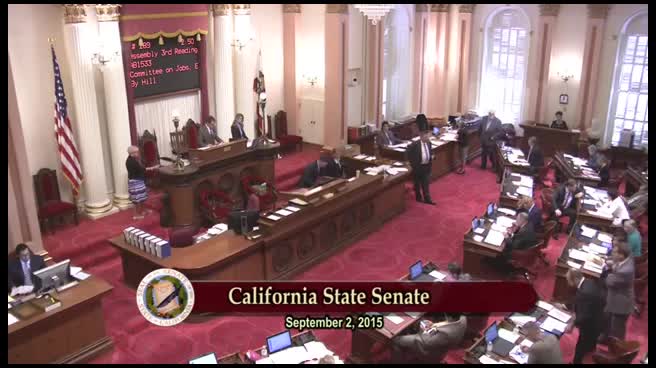 3MIN
Senate Floor
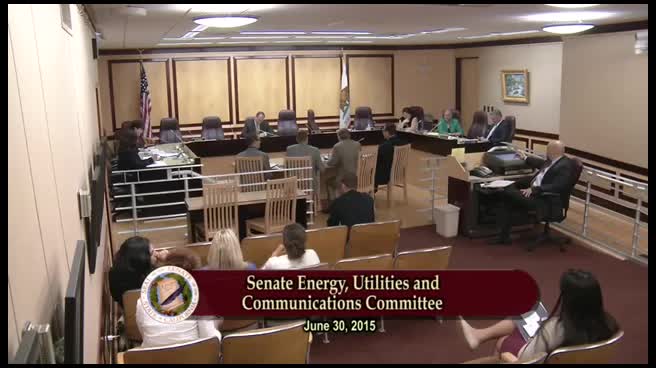 14MIN
Senate Standing Committee on Energy, Utilities and Communications
Bill Author

Bill Co-Author(s):