AB 80: Interagency Task Force on the Status of Boys and Men of Color.
- Session Year: 2015-2016
- House: Assembly
- Latest Version Date: 2015-09-09
The California Constitution prohibits a person from being deprived of life, liberty, or property without due process of law, or from being denied equal protection of the laws. The United States Constitution prohibits a state from denying to any person within its jurisdiction the equal protection of the laws. Existing law establishes various advisory boards and commissions in state government with specified duties and responsibilities.
The federal My Brothers Keeper Initiative, launched by the President of the United States in February 2014, required the establishment of the My Brothers Keeper Task Force, an interagency effort to improve the expected educational and life outcomes for and address the persistent opportunity gaps faced by boys and young men of color in the United States.
This bill would establish until January 1, 2026, the Interagency Task Force on the Status of Boys and Men of Color, a multiagency advisory body that would serve as a support mechanism for department agency and systems leaders by taking coordinated action in meeting the myriad of challenges facing boys and men of color in California, and assisting the respective departments and agencies in more successfully improving life outcomes for this population. The membership of the task force would include members of the Legislature, as well as representatives of specified agencies, departments, and private entities. The bill would set forth the initial and ongoing responsibilities of the task force, including, among others, an assessment of state program alignment with the objectives of the My Brothers Keeper program, review the action plan of a specified final report of the Assembly Select Committee on the Status of Boys and Men of Color in California, and an assessment of the development of strategies to enhance positive outcomes and eliminate or mitigate negative outcomes for boys and men of color in the state. The bill would establish the Boys and Men of Color Task Force Fund, which would be subject to appropriation by the Legislature, to carry out the bills requirements in support of the task force, upon appropriation by the Legislature. The bill would authorize the task force to accept federal funds, gifts, donations, grants, or bequests for all or any of its purposes.
The California Constitution prohibits a person from being deprived of life, liberty, or property without due process of law, or from being denied equal protection of the laws. The United States Constitution prohibits a state from denying to any person within its jurisdiction the equal protection of the laws. Existing law establishes various advisory boards and commissions in state government with specified duties and responsibilities.
The federal My Brothers Keeper Initiative, launched by the President of the United States in February 2014, required the establishment of the My Brothers Keeper Task Force, an interagency effort to improve the expected educational and life outcomes for and address the persistent opportunity gaps faced by boys and young men of color in the United States.
This bill would create establish until January 1, 2026, the Interagency Task Force on the Status of Boys and Men of Color, a multiagency advisory body that would serve as a support mechanism for department agency and systems leaders by taking coordinated action in meeting the myriad of challenges facing boys and men of color in California, and assisting the respective departments and agencies in more successfully improving life outcomes for this population. The membership of the task force would include members of the Legislature, as well as representatives of specified agencies, departments, and private entities. The bill would set forth the initial and ongoing responsibilities of the task force, including, among others, an assessment of state program alignment with the objectives of the My Brothers Keeper program and the Assembly Select Committee on the Status of Boys and Men of Color in California, and the development of strategies to enhance positive outcomes and eliminate or mitigate negative outcomes for boys and men of color in the state. This The bill would establish the Boys and Men of Color Task Force Fund, to carry out the bills requirements in support of the task force, upon appropriation by the Legislature. The bill would authorize the task force to accept federal funds, gifts, donations, grants, or bequests for all or any of its purposes.
The California Constitution prohibits a person from being deprived of life, liberty, or property without due process of law, or from being denied equal protection of the laws. The United States Constitution prohibits a state from denying to any person within its jurisdiction the equal protection of the laws. Existing law establishes various advisory boards and commissions in state government with specified duties and responsibilities.
The federal My Brothers Keeper Initiative, launched by the President in February 2014, required the establishment of the My Brothers Keeper Task Force, an interagency effort to improve the expected educational and life outcomes for and address the persistent opportunity gaps faced by boys and young men of color in the United States.
This bill would create the Interagency Task Force on the Status of Boys and Men of Color, a multiagency advisory body that would serve as a support mechanism for department agency and systems leaders by taking coordinated action in meeting the myriad of challenges facing boys and men of color in California, and assisting the respective departments and agencies in more successfully improving life outcomes for this population. The membership of the task force would include members of the Legislature, as well as representatives of specified agencies, departments, and private entities. The bill would set forth the initial and ongoing responsibilities of the task force, including, among others, an assessment of state program alignment with the objectives of the My Brothers Keeper program and the Assembly Select Committee on the Status of Boys and Men of Color in California, and the development of strategies to enhance positive outcomes and eliminate or mitigate negative outcomes for boys and men of color in the state. This bill would establish the Boys and Men of Color Task Force Fund, to carry out the bills requirements in support of the task force, upon appropriation by the Legislature. The bill would authorize the task force to accept federal funds, gifts, donations, grants, or bequests for all or any of its purposes.
This bill would declare that it is to take effect immediately as an urgency statute.
The Legislature finds and declares as follows:
(a)On February 27, 2014, the President of the United States launched the My Brothers Keeper initiative to address persistent opportunity gaps faced by boys and young men of color and to ensure that all young people can reach their full potential.
(b)The My Brothers Keeper Task Force recognizes that challenges facing boys and young men of color affect others as well and that it is important to break down barriers wherever they exist and to identify means of creating ladders of opportunity for all.
(c)The My Brothers Keeper Task Force was established to develop a coordinated federal effort to significantly improve the expected life outcomes for boys and young men of color, including Black Americans, Hispanic Americans, and Native Americans, and to improve their contributions to the nations prosperity, so that all youth have an equal opportunity at achieving the American dream.
(d)The My Brothers Keeper Task Force noted that significant diversity exists within and among boys and men of color as a segment of the population. Differences of language status, income, disability, sexual orientation, and many other factors influence the identity and experience of these young people, just as with any other population.
(e)My Brothers Keeper is focused on the following milestones: (1) getting a healthy start and entering school ready to learn; (2) reading at grade level by third grade; (3) graduating from high school ready for college and career; (4) completing postsecondary education or training; (5) successfully entering the workforce; and (6) keeping kids on track and giving them second chances.
(f)The My Brothers Keeper Task Force Report to the President (May 2014) cites numerous areas in which boys and men of color consistently experience disproportionately negative outcomes. These areas include living in poverty, living without a male parent in the household, high school dropout rates, unemployment, death by homicide, and imprisonment.
(g)The My Brothers Keeper Task Force has identified initial recommendations and areas of opportunity at each of these key milestones or focus areas. The task force has also identified several cross-cutting areas of opportunity that span all focus areas.
(h)The recommendations in the My Brothers Keeper Task Force Report to the President inform and influence California policy and Californias compliance with those recommendations makes the state more competitive for federal funding and strengthens its economic competitiveness.
(i)Our states future prosperity and health depend on all Californians having a fair chance to thrive and succeed. One of the best investments we can make is to be certain we do everything possible to help young people become healthy, productive adults. As California becomes more diverse, we must nurture and harness the talents, skills, and hopes of young people of color boys and young men in particular.
(j)The Department of Finance projects Californias population of boys and men of color will increasingly represent a growing percentage of the state's male population, reaching close to 80 percent for boys and men of color compared to 20 percent for non-Hispanic white males by 2050.
(k)The Assembly Select Committee on the Status of Boys and Men of Color in California has recognized that boys and young men of color are in jeopardy, and this poses a serious threat to Californias economic strength and competitiveness.
(l)The Assembly Select Committee on the Status of Boys and Men of Colors policy framework emphasizes the following issues: (1) health and safety; (2) education; (3) juvenile justice; (4) employment and wealth; and (5) youth development. Related issues that have been recommended for expansion of the committees work include higher education, immigration, and housing.
(m)Community and youth leaders from across the state have taken a significant interest in partnering with government and systems leaders through the Alliance for Boys and Men of Color in order to improve the health and success of our states young people of color.
SEC. 2.Chapter 3.4 (commencing with Section 8265) is added to Division 1 of Title 2 of the Government Code, to read:3.4.Interagency Task Force on the Status of Boys and Men of Color8265.(a)(1)There is in state government the Interagency Task Force on the Status of Boys and Men of Color, which shall serve as a support mechanism for department, agency, and systems leaders by taking coordinated action in meeting the myriad of challenges facing boys and men of color, and assisting the respective departments and agencies in more successfully improving life outcomes for this population.
(2)It is the intent of the Legislature that the task force include participation from a core set of department, agency, and systems leaders with discretion and responsibility for policy areas of primary importance to the fulfillment of the Final Report and Policy Platform for State Action (201218) of the Assembly Select Committee on the Status of Boys and Men in California.
(b)The task force shall be comprised of the following 20 members:
(1)One Member of the Senate, appointed by the Senate Committee on Rules, and one Member of the Assembly, appointed by the Speaker of the Assembly, as ex officio, nonvoting members, and to the extent that participation is not incompatible with their position as Members of the Legislature.
(2)The Superintendent of Public Instruction, or his or her designee.
(3)The President of the University of California, or his or her designee.
(4)The Chancellor of the California State University, or his or her designee.
(5)The Chancellor of the California Community Colleges, or his or her designee.
(6)The Secretary of California Health and Human Services, or his or her designee.
(7)The State Public Health Officer, or his or her designee.
(8)The Deputy Director of the Office of Health Equity, or his or her designee.
(9)The Secretary of Business, Consumer Services, and Housing, or his or her designee.
(10)The Secretary of Labor and Workforce Development, or his or her designee.
(11)The Director of Employment Development, or his or her designee.
(12)The Executive Director of the California Workforce Investment Board, or his or her designee.
(13)The Chair of the California Workforce Investment Board, or his or her designee.
(14)The Secretary of Transportation, or his or her designee.
(15)The Director of Finance, or his or her designee.
(16)The Attorney General, or his or her designee.
(17)The Secretary of the Department of Corrections and Rehabilitation, or his or her designee.
(18)The Chair of the Board of State and Community Corrections, or his or her designee.
(19)The Chief Justice of California, or his or her designee.
(c)The task force shall elect one of its members to serve as chair of the task force. Desirable qualifications for the position of chair shall include, but not be limited to, all of the following:
(1)He or she should possess a broad and deep understanding of the issues facing boys and men of color.
(2)He or she should be a political appointee with a senior leadership role either leading a department or agency or managing a significant and pertinent body of work.
(3)He or she should have a demonstrated strong and positive working relationship with the members of the Legislature and the Governor.
(d)All members of the task force shall hold office until the appointment of their successors.
8266.Meetings of the task force shall be subject to the Bagley-Keene Open Meetings Act (Article 9 (commencing with Section 11120) of Chapter 1 of Part 1 of Division 3).
8267.The task force shall have the powers and authority necessary to carry out the duties imposed upon it by this chapter, including, but not limited to, all of the following:
(a)To employ any administrative, technical, or other personnel necessary for the performance of its powers and duties.
(b)To hold hearings, make and sign any agreements, and to do or perform any acts that may be necessary, desirable, or proper to carry out the purposes of this chapter.
(c)To cooperate with, and secure the cooperation of, any department, division, board, bureau, commission, or other agency of the state to facilitate the task force properly to carry out its powers and duties.
(d)To appoint advisers or advisory committees from time to time when the task force determines that the experience or expertise of the advisers or advisory committees is needed for projects of the task force. Section 11009 shall apply to these advisers or advisory committees.
(e)To accept any federal funds granted, by act of Congress or by executive order, for all or any of the purposes of this chapter.
(f)To accept any gifts, donations, grants, or bequests for all or any of the purposes of this chapter.
8268.(a)Within six months after the effective date of this chapter, the task force shall complete all of the following requirements:
(1)Assess existing department and agency programs that align with the priorities outlined in the May 2014 My Brothers Keeper Task Force Report to the President. Based on this assessment, the task force shall identify state opportunities to partner and coordinate with the work of the federal My Brothers Keeper Task Force.
(2)Assess the Governors Budget to identify those areas in which the budget priorities are in alignment with the objectives of the task force.
(3)Review the action plan of the Final Report and Policy Platform for State Action (201218) of the Assembly Select Committee on the Status of Boys and Men of Color in California, and identify ambitious state goals for boys and men of color, as well as barriers to achieving desired results.
(b)Upon completion of the requirements in subdivision (a), the long-term, ongoing responsibilities of the task force shall include all of the following:
(1)Assessing state policies, regulations, and programs with respect to boys and men of color, and the development of proven and promising strategies to enhance positive outcomes and eliminate or mitigate negative outcomes.
(2)Preparing population and agency-specific data on boys and men of color in California. The task force shall aggregate the data and make it publicly available in a manner that does not reveal personally identifiable information or otherwise conflict with federal or state privacy laws.
(3)Serving as a liaison to departments and agencies by ensuring engagement and partnership with other public, nonprofit, and philanthropic entities among the various member agencies and with the task force as a whole, and recommend ways to strengthen partnerships with external leaders advancing strategies relevant to boys and men of color.
(c)The first meeting of the task force shall be convened on or before January 31, 2016. Subsequently, the task force shall convene on no less than a quarterly basis to assess progress on its ongoing responsibilities pursuant to subdivision (b), and to provide support and ensure coordination across agencies.
(d)(1)Notwithstanding Section 10231.5, the task force shall prepare and submit to the Legislature an annual report on department and agency findings pursuant to this section. The task force shall also report these findings at the Assembly Select Committee on the Status of Boys and Men of Color in Californias annual hearing on the status of advancing the committee priorities and policies.
(2)A report submitted pursuant to this subdivision shall be submitted in compliance with Section 9795.
8269.With respect to its duties under Section 8268, the task force shall be an advisory body only, and there shall be no right or obligation on the part of the state, or the parties meeting and conferring, to implement the findings of the task force without further legislation that specifically authorizes that the evaluations, determinations, and findings of the task force be implemented.
8269.5The Boys and Men of Color Task Force Fund is hereby created as a fund in the State Treasury to carry out this chapter in support of the task force, upon appropriation by the Legislature. Subject to the approval of the Department of Finance, all moneys collected or received by the task force from gifts, bequests, or donations shall be deposited in the State Treasury to the credit of the Boys and Men of Color Task Force Fund in accordance with the terms of the gift or donation from which the moneys are derived and in accordance with Sections 8647, 11005, 11005.1, and 16302 of the Government Code.
8269.7.This chapter shall remain in effect only until January 1, 2026, and as of that date is repealed.
The Legislature finds and declares as follows:
(a)On February 27, 2014, the President of the United States launched the My Brothers Keeper initiative to address persistent opportunity gaps faced by boys and young men of color and to ensure that all young people can reach their full potential.
(b)The My Brothers Keeper Task Force recognizes that challenges facing boys and young men of color affect others as well and that it is important to break down barriers wherever they exist and to identify means of creating ladders of opportunity for all.
(c)The My Brothers Keeper Task Force was established to develop a coordinated federal effort to significantly improve the expected life outcomes for boys and young men of color, including Black Americans, Hispanic Americans, and Native Americans, and to improve their contributions to the nations prosperity, so that all youth have an equal opportunity at achieving the American dream.
(d)The My Brothers Keeper Task Force noted that significant diversity exists within and among boys and men of color as a segment of the population. Differences of language status, income, disability, sexual orientation, and many other factors influence the identity and experience of these young people, just as with any other population.
(e)My Brothers Keeper is focused on the following milestones: (1) getting a healthy start and entering school ready to learn; (2) reading at grade level by third grade; (3) graduating from high school ready for college and career; (4) completing postsecondary education or training; (5) successfully entering the workforce; and (5) (6) keeping kids on track and giving them second chances.
(f)The My Brothers Keeper Task Force Report to the President (May 2014) cites numerous areas in which boys and men of color consistently experience disproportionately negative outcomes. These areas include living in poverty, living without a male parent in the household, high school dropout rates, unemployment, death by homicide, and imprisonment.
(g)The My Brothers Keeper Task Force has identified initial recommendations and areas of opportunity at each of these key milestones or focus areas. The task force has also identified several cross-cutting areas of opportunity that span all focus areas.
(h)The recommendations in the My Brothers Keeper Task Force Report to the President inform and influence California policy and Californias compliance with those recommendations makes the state more competitive for federal funding and strengthens its economic competitiveness.
(i)Our states future prosperity and health depend on all Californians having a fair chance to thrive and succeed. One of the best investments we can make is to be certain we do everything possible to help young people become healthy, productive adults. As California becomes more diverse, we must nurture and harness the talents, skills, and hopes of young people of color boys and young men in particular.
(j)The Department of Finance projects Californias population of boys and men of color will increasingly represent a growing percentage of the state's male population, reaching close to 80 percent for boys and men of color compared to 20 percent for non-Hispanic white males by 2050.
(k)The Assembly Select Committee on the Status of Boys and Men of Color in California has recognized that boys and young men of color are in jeopardy, and this poses a serious threat to Californias economic strength and competitiveness.
(l)The Assembly Select Committee on the Status of Boys and Men of Colors policy framework emphasizes the following issues: (1) health and safety; (2) education; (3) juvenile justice; (4) employment and wealth; and (5) youth development. Related issues that have been recommended for expansion of the committees work include higher education, immigration, and housing.
(m)Community and youth leaders from across the state have taken a significant interest in partnering with government and systems leaders through the Alliance for Boys and Men of Color in order to improve the health and success of our states young people of color.
SEC. 2.Chapter 3.4 (commencing with Section 8265) is added to Division 1 of Title 2 of the Government Code, to read:3.4.Interagency Task Force on the Status of Boys and Men of Color8265.(a)(1)There is in state government the Interagency Task Force on the Status of Boys and Men of Color, which shall serve as a support mechanism for department, agency, and systems leaders by taking coordinated action in meeting the myriad of challenges facing boys and men of color, and assisting the respective departments and agencies in more successfully improving life outcomes for this population.
(2)It is the intent of the Legislature that the task force include participation from a core set of department, agency, and systems leaders with discretion and responsibility for policy areas of primary importance to the fulfillment of the Final Report and Policy Platform for State Action (201218) of the Assembly Select Committee on the Status of Boys and Men in California.
(b)The task force shall be comprised of the following 20 members:
(1)One Member of the Senate, appointed by the Senate Committee on Rules, and one Member of the Assembly, appointed by the Speaker of the Assembly, as ex officio, nonvoting members, and to the extent that participation is not incompatible with their position as Members of the Legislature.
(2)The Superintendent of Public Instruction, or his or her designee.
(3)The President of the University of California, or his or her designee.
(4)The Chancellor of the California State University, or his or her designee.
(5)The Chancellor of the California Community Colleges, or his or her designee.
(6)The Secretary of California Health and Human Services, or his or her designee.
(7)The State Public Health Officer, or his or her designee.
(8)The Deputy Director of the Office of Health Equity, or his or her designee.
(9)The Secretary of Business, Consumer Services, and Housing, or his or her designee.
(10)The Secretary of Labor and Workforce Development, or his or her designee.
(11)The Director of Employment Development, or his or her designee.
(12)The Executive Director of the California Workforce Investment Board, or his or her designee.
(13)The Chair of the California Workforce Investment Board, or his or her designee.
(14)The Secretary of Transportation, or his or her designee.
(15)The Director of Finance, or his or her designee.
(16)The Attorney General, or his or her designee.
(17)The Secretary of the Department of Corrections and Rehabilitation, or his or her designee.
(18)The Chair of the Board of State and Community Corrections, or his or her designee.
(19)The Chief Justice of California, or his or her designee.
(c)The task force shall elect one of its members to serve as chair of the task force. Desirable qualifications for the position of chair shall include, but not be limited to, all of the following:
(1)He or she should possess a broad and deep understanding of the issues facing boys and men of color.
(2)He or she should be a political appointee with a senior leadership role either leading a department or agency or managing a significant and pertinent body of work.
(3)He or she should have a demonstrated strong and positive working relationship with the members of the Legislature and the Governor.
(d)All members of the task force shall hold office until the appointment of their successors.
8266.Meetings of the task force shall be subject to the Bagley-Keene Open Meetings Act (Article 9 (commencing with Section 11120) of Chapter 1 of Part 1 of Division 3).
8267.The task force shall have the powers and authority necessary to carry out the duties imposed upon it by this chapter, including, but not limited to, all of the following:
(a)To employ any administrative, technical, or other personnel necessary for the performance of its powers and duties.
(b)To hold hearings, make and sign any agreements, and to do or perform any acts that may be necessary, desirable, or proper to carry out the purposes of this chapter.
(c)To cooperate with, and secure the cooperation of, any department, division, board, bureau, commission, or other agency of the state to facilitate the task force properly to carry out its powers and duties.
(d)To appoint advisers or advisory committees from time to time when the task force determines that the experience or expertise of the advisers or advisory committees is needed for projects of the task force. Section 11009 shall apply to these advisers or advisory committees.
(e)To accept any federal funds granted, by act of Congress or by executive order, for all or any of the purposes of this chapter.
(f)To accept any gifts, donations, grants, or bequests for all or any of the purposes of this chapter.
8268.(a)Within six months after the effective date of this chapter, the task force shall complete all of the following requirements:
(1)Assess existing department and agency programs that align with the priorities outlined in the May 2014 My Brothers Keeper Task Force Report to the President. Based on this assessment, the task force shall identify state opportunities to partner and coordinate with the work of the federal My Brothers Keeper Task Force.
(2)Assess the Governors Budget to identify those areas in which the budget priorities are in alignment with the objectives of the task force.
(3)Review the action plan of the Final Report and Policy Platform for State Action (201218) of the Assembly Select Committee on the Status of Boys and Men of Color in California, and identify ambitious state goals for boys and men of color, as well as barriers to achieving desired results.
(b)Upon completion of the requirements in subdivision (a), the long-term, ongoing responsibilities of the task force shall include all of the following:
(1)Assessing state policies, regulations, and programs with respect to boys and men of color, and the development of proven and promising strategies to enhance positive outcomes and eliminate or mitigate negative outcomes.
(2)Preparing population and agency-specific data on boys and men of color in California. The task force shall aggregate the data and make it publicly available in a manner that does not reveal personally identifiable information or otherwise conflict with federal or state privacy laws.
(3)Serving as a liaison to departments and agencies by ensuring engagement and partnership with other public, nonprofit, and philanthropic entities among the various member agencies and with the task force as a whole, and recommend ways to strengthen partnerships with external leaders advancing strategies relevant to boys and men of color.
(c)The first meeting of the task force shall be convened on or before January 31, 2016. Subsequently, the task force shall convene on no less than a quarterly basis to assess progress on its ongoing responsibilities pursuant to subdivision (b), and to provide support and ensure coordination across agencies.
(d)(1)Notwithstanding Section 10231.5, the task force shall prepare and submit to the Legislature an annual report on department and agency findings pursuant to this section. The task force shall also report these findings at the Assembly Select Committee on the Status of Boys and Men of Color in Californias annual hearing on the status of advancing the committee priorities and policies.
(2)A report submitted pursuant to this subdivision shall be submitted in compliance with Section 9795.
8269.With respect to its duties under Section 8268, the task force shall be an advisory body only, and there shall be no right or obligation on the part of the state, or the parties meeting and conferring, to implement the findings of the task force without further legislation that specifically authorizes that the evaluations, determinations, and findings of the task force be implemented.
8269.5The Boys and Men of Color Task Force Fund is hereby created as a fund in the State Treasury to carry out this chapter in support of the task force, upon appropriation by the Legislature. Subject to the approval of the Department of Finance, all moneys collected or received by the task force from gifts, bequests, or donations shall be deposited in the State Treasury to the credit of the Boys and Men of Color Task Force Fund in accordance with the terms of the gift or donation from which the moneys are derived and in accordance with Sections 8647, 11005, 11005.1, and 16302 of the Government Code.
8269.7.This chapter shall remain in effect only until January 1, 2026, and as of that date is repealed.
The Legislature finds and declares as follows:
(a)On February 27, 2014, the President of the United States launched the My Brothers Keeper initiative to address persistent opportunity gaps faced by boys and young men of color and to ensure that all young people can reach their full potential.
(b)The My Brothers Keeper Task Force recognizes that challenges facing boys and young men of color affect others as well and that it is important to break down barriers wherever they exist and to identify means of creating ladders of opportunity for all.
(c)The My Brothers Keeper Task Force was established to develop a coordinated federal effort to significantly improve the expected life outcomes for boys and young men of color, including Black Americans, Hispanic Americans, and Native Americans, and to improve their contributions to the nations prosperity, so that all youth have an equal opportunity at the American dream.
(d)The My Brothers Keeper Task Force noted that significant diversity exists within and among boys and men of color as a segment of the population. Differences of language status, income, disability, sexual orientation, and many other factors influence the identity and experience of these young people, just as with any other population.
(e)My Brothers Keeper is focused on the following milestones: (1) getting a healthy start and entering school ready to learn; (2) reading at grade level by third grade; (3) graduating from high school ready for college and career; (4) successfully entering the workforce; and (5) keeping kids on track and giving them second chances.
(f)The My Brothers Keeper Task Force Report to the President (May 2014) cites numerous areas in which boys and men of color consistently experience disproportionately negative outcomes. These areas include living in poverty, living without a male parent in the household, high school dropout rates, unemployment, death by homicide, and imprisonment.
(g)The My Brothers Keeper Task Force has identified initial recommendations and areas of opportunity at each of these key milestones or focus areas. The task force has also identified several cross-cutting areas of opportunity that span all focus areas.
(h)The recommendations in the My Brothers Keeper Task Force Report to the President inform and influence California policy and Californias compliance with those recommendations makes the state more competitive for federal funding and strengthens its economic competitiveness.
(i)Our states future prosperity and health depend on all Californians having a fair chance to thrive and succeed. One of the best investments we can make is to be certain we do everything possible to help young people become healthy, productive adults. As California becomes more diverse, we must nurture and harness the talents, skills, and hopes of young people of color boys and young men in particular.
(j)The Department of Finance projects Californias population of boys and men of color will increasingly represent a growing percentage of the state's male population, reaching close to 80 percent for boys and men of color compared to 20 percent for non-Hispanic white males by 2050.
(k)The Assembly Select Committee on the Status of Boys and Men of Color in California has recognized that boys and young men of color are in jeopardy, and this poses a serious threat to Californias economic strength and competitiveness.
(l)The Assembly Select Committee on the Status of Boys and Men of Colors policy framework emphasizes the following issues: (1) health and safety; (2) education; (3) juvenile justice; (4) employment and wealth; and (5) youth development. Related issues that have been recommended for expansion of the committees work include higher education, immigration, and housing.
(m)Community and youth leaders from across the state have taken a significant interest in partnering with government and systems leaders through the Alliance for Boys and Men of Color in order to improve the health and success of our states young people of color.
SEC. 2.Chapter 3.4 (commencing with Section 8265) is added to Division 1 of Title 2 of the Government Code, to read:3.4.Interagency Task Force on the Status of Boys and Men of Color8265.(a)(1)There is in state government the Interagency Task Force on the Status of Boys and Men of Color, which shall serve as a support mechanism for department, agency, and systems leaders by taking coordinated action in meeting the myriad challenges facing boys and men of color, and assisting the respective departments and agencies in more successfully improving life outcomes for this population.
(2)It is the intent of the Legislature that the task force include participation from a core set of department, agency, and systems leaders with discretion and responsibility for policy areas of primary importance to the fulfillment of the Final Report and Policy Platform for State Action (201218) of the Assembly Select Committee on the Status of Boys and Men in California.
(b)The task force shall be comprised of the following 20 members:
(1)One Member of the Senate, appointed by the President pro Tempore of the Senate, Senate Committee on Rules, and one Member of the Assembly, appointed by the Speaker of the Assembly, as ex officio, nonvoting members, and to the extent that participation is not incompatible with their position as Members of the Legislature.
(2)The Superintendent of Public Instruction, or his or her designee.
(3)The President of the University of California, or his or her designee.
(4)The Chancellor of the California State University, or his or her designee.
(5)The Chancellor of the California Community Colleges, or his or her designee.
(6)The Secretary of California Health and Human Services, or his or her designee.
(7)The State Public Health Officer, or his or her designee.
(8)The Deputy Director of the Office of Health Equity, or his or her designee.
(9)The Secretary of Business, Consumer Services, and Housing, or his or her designee.
(10)The Secretary of Labor and Workforce Development, or his or her designee.
(11)The Director of Employment Development, or his or her designee.
(12)The Executive Director of the California Workforce Investment Board, or his or her designee.
(13)The Chair of the California Workforce Investment Board, or his or her designee.
(14)The Secretary of Transportation, or his or her designee.
(15)The Director of Finance, or his or her designee.
(16)The Attorney General, or his or her designee.
(17)The Secretary of the Department of Corrections and Rehabilitation, or his or her designee.
(18)The Chair of the Board of State and Community Corrections, or his or her designee.
(19)The Chief Justice of California, or his or her designee.
(c)The task force shall elect one of its members to serve as chair of the task force. Desirable qualifications for the position of chair shall include, but not be limited to, all of the following:
(1)He or she should possess a broad and deep understanding of the issues facing boys and men of color.
(2)He or she should be a political appointee with a senior leadership role either leading a department or agency or managing a significant and pertinent body of work.
(3)He or she should have a demonstrated strong and positive working relationship with the members of the Legislature and the Governor.
(d)All members of the task force shall hold office until the appointment of their successors.
8266.Meetings of the task force shall be subject to the Bagley-Keene Open Meetings Act (Article 9 (commencing with Section 11120) of Chapter 1 of Part 1 of Division 3).
8267.The task force shall have the powers and authority necessary to carry out the duties imposed upon it by this chapter, including, but not limited to, all of the following:
(a)To employ any administrative, technical, or other personnel necessary for the performance of its powers and duties.
(b)To hold hearings, make and sign any agreements, and to do or perform any acts that may be necessary, desirable, or proper to carry out the purposes of this chapter.
(c)To cooperate with, and secure the cooperation of, any department, division, board, bureau, commission, or other agency of the state to facilitate the task force properly to carry out its powers and duties.
(d)To appoint advisers or advisory committees from time to time when the task force determines that the experience or expertise of the advisers or advisory committees is needed for projects of the task force. Section 11009 shall apply to these advisers or advisory committees.
(e)To accept any federal funds granted, by act of Congress or by executive order, for all or any of the purposes of this chapter.
(f)To accept any gifts, donations, grants, or bequests for all or any of the purposes of this chapter.
8268.(a)Within six months after the effective date of this chapter, the task force shall complete all of the following requirements:
(1)Assess existing department and agency programs that align with the priorities outlined in the May 2014 My Brothers Keeper Task Force Report to the President. Based on this assessment, the task force shall identify state opportunities to partner and coordinate with the work of the federal My Brothers Keeper Task Force.
(2)Assess the Governors Budget to identify those areas in which the budget priorities are in alignment with the objectives of the task force.
(3)Review the action plan of the Final Report and Policy Platform for State Action (201218) of the Assembly Select Committee on the Status of Boys and Men of Color in California, and identify ambitious state goals for boys and men of color, as well as barriers to achieving desired results.
(b)Upon completion of the requirements in subdivision (a), the long-term, ongoing responsibilities of the task force shall include all of the following:
(1)Assessing state policies, regulations, and programs with respect to boys and men of color, and the development of proven and promising strategies to enhance positive outcomes and eliminate or mitigate negative outcomes.
(2)Preparing population and agency-specific data on boys and men of color in California. The task force shall aggregate the data and make it publicly available in a manner that does not reveal personally identifiable information or otherwise conflict with federal or state privacy laws.
(3)Serving as a liaison to departments and agencies by ensuring engagement and partnership with other public, nonprofit, and philanthropic entities among the various member agencies and with the task force as a whole, and recommend ways to strengthen partnerships with external leaders advancing strategies relevant to boys and men of color.
(c)The first meeting of the task force shall be convened on or before January 31, 2016. Subsequently, the task force shall convene on no less than a quarterly basis to assess progress on its ongoing responsibilities pursuant to subdivision (b), and to provide support and ensure coordination across agencies.
(d)(1)Notwithstanding Section 10231.5, the task force shall prepare and submit to the Legislature an annual report on department and agency findings pursuant to this section. The task force shall also report these findings at the Assembly Select Committee on the Status of Boys and Men of Color in Californias annual hearing on the status of advancing the committee priorities and policies.
(2)A report submitted pursuant to this subdivision shall be submitted in compliance with Section 9795.
8269.With respect to its duties under Section 8268, the task force shall be an advisory body only, and there shall be no right or obligation on the part of the state, or the parties meeting and conferring, to implement the findings of the task force without further legislation that specifically authorizes that the evaluations, determinations, and findings of the task force be implemented.
8269.5The Boys and Men of Color Task Force Fund is hereby created as a fund in the State Treasury to carry out this chapter in support of the task force, upon appropriation by the Legislature. Subject to the approval of the Department of Finance, all moneys collected or received by the task force from gifts, bequests, or donations shall be deposited in the State Treasury to the credit of the Boys and Men of Color Task Force Fund in accordance with the terms of the gift or donation from which the moneys are derived and in accordance with Sections 8647, 11005, 11005.1, and 16302 of the Government Code.
The Legislature finds and declares as follows:
(a)On February 27, 2014, the President of the United States launched the My Brothers Keeper initiative to address persistent opportunity gaps faced by boys and young men of color and to ensure that all young people can reach their full potential.
(b)The My Brothers Keeper Task Force recognizes that challenges facing boys and young men of color affect others as well and that it is important to break down barriers wherever they exist and to identify means of creating ladders of opportunity for all.
(c)The My Brothers Keeper Task Force was established to develop a coordinated federal effort to significantly improve the expected life outcomes for boys and young men of color, including Black Americans, Hispanic Americans, and Native Americans, and to improve their contributions to the nations prosperity, so that all youth have an equal opportunity at the American dream.
(d)The My Brothers Keeper Task Force noted that significant diversity exists within and among boys and men of color as a segment of the population. Differences of language status, income, disability, sexual orientation, and many other factors influence the identity and experience of these young people, just as with any other population.
(e)My Brothers Keeper is focused on the following milestones: (1) getting a healthy start and entering school ready to learn; (2) reading at grade level by third grade; (3) graduating from high school ready for college and career; (4) successfully entering the workforce; and (5) keeping kids on track and giving them second chances.
(f)The My Brothers Keeper Task Force Report to the President (May 2014) cites numerous areas in which boys and men of color consistently experience disproportionately negative outcomes. These areas include living in poverty, living without a male parent in the household, high school dropout rates, unemployment, death by homicide, and imprisonment.
(g)The My Brothers Keeper Task Force has identified initial recommendations and areas of opportunity at each of these key milestones or focus areas. The task force has also identified several cross-cutting areas of opportunity that span all focus areas.
(h)The recommendations in the My Brothers Keeper Task Force Report to the President inform and influence California policy and Californias compliance with those recommendations makes the state more competitive for federal funding and strengthens its economic competitiveness.
(i)Our states future prosperity and health depend on all Californians having a fair chance to thrive and succeed. One of the best investments we can make is to be certain we do everything possible to help young people become healthy, productive adults. As California becomes more diverse, we must nurture and harness the talents, skills, and hopes of young people of color boys and young men in particular.
(j)The Department of Finance projects Californias population of boys and men of color will increasingly represent a growing percentage of the state's male population, reaching close to 80 percent for boys and men of color compared to 20 percent for non-Hispanic white males by 2050.
(k)The Assembly Select Committee on the Status of Boys and Men of Color in California has recognized that boys and young men of color are in jeopardy, and this poses a serious threat to Californias economic strength and competitiveness.
(l)The Assembly Select Committee on the Status of Boys and Men of Colors policy framework emphasizes the following issues: (1) health and safety; (2) education; (3) juvenile justice; (4) employment and wealth; and (5) youth development. Related issues that have been recommended for expansion of the committees work include higher education, immigration, and housing.
(m)Community and youth leaders from across the state have taken a significant interest in partnering with government and systems leaders through the Alliance for Boys and Men of Color in order to improve the health and success of our states young people of color.
SEC. 2.Chapter 3.4 (commencing with Section 8265) is added to Division 1 of Title 2 of the Government Code, to read:3.4.Interagency Task Force on the Status of Boys and Men of Color8265.(a)(1)There is in state government the Interagency Task Force on the Status of Boys and Men of Color, which shall serve as a support mechanism for department, agency, and systems leaders by taking coordinated action in meeting the myriad challenges facing boys and men of color, and assisting the respective departments and agencies in more successfully improving life outcomes for this population.
(2)It is the intent of the Legislature that the task force include participation from a core set of department, agency, and systems leaders with discretion and responsibility for policy areas of primary importance to the fulfillment of the Final Report and Policy Platform for State Action (201218) of the Assembly Select Committee on the Status of Boys and Men in California.
(b)The task force shall be comprised of the following 20 members:
(1)One Member of the Senate, appointed by the President pro Tempore of the Senate, and one Member of the Assembly, appointed by the Speaker of the Assembly, as ex officio, nonvoting members, and to the extent that participation is not incompatible with their position as Members of the Legislature.
(2)The Superintendent of Public Instruction, or his or her designee.
(3)The President of the University of California, or his or her designee.
(4)The Chancellor of the California State University, or his or her designee.
(5)The Chancellor of the California Community Colleges, or his or her designee.
(6)The Secretary of California Health and Human Services, or his or her designee.
(7)The State Public Health Officer, or his or her designee.
(8)The Deputy Director of the Office of Health Equity, or his or her designee.
(9)The Secretary of Business, Consumer Services, and Housing, or his or her designee.
(10)The Secretary of Labor and Workforce Development, or his or her designee.
(11)The Director of Employment Development, or his or her designee.
(12)The Executive Director of the California Workforce Investment Board, or his or her designee.
(13)The Chair of the California Workforce Investment Board, or his or her designee.
(14)The Secretary of Transportation, or his or her designee.
(15)The Director of Finance, or his or her designee.
(16)The Attorney General, or his or her designee.
(17)The Secretary of the Department of Corrections and Rehabilitation, or his or her designee.
(18)The Chair of the Board of State and Community Corrections, or his or her designee.
(19)The Chief Justice of California, or his or her designee.
(c)The task force shall elect one of its members to serve as chair of the task force. Desirable qualifications for the position of chair shall include, but not be limited to, all of the following:
(1)He or she should possess a broad and deep understanding of the issues facing boys and men of color.
(2)He or she should be a political appointee with a senior leadership role either leading a department or agency or managing a significant and pertinent body of work.
(3)He or she should have a demonstrated strong and positive working relationship with the members of the Legislature and the Governor.
(d)All members of the task force shall hold office until the appointment of their successors.
8266.Meetings of the task force shall be subject to the Bagley-Keene Open Meetings Act (Article 9 (commencing with Section 11120) of Chapter 1 of Part 1 of Division 3).
8267.The task force shall have the powers and authority necessary to carry out the duties imposed upon it by this chapter, including, but not limited to, all of the following:
(a)To employ any administrative, technical, or other personnel necessary for the performance of its powers and duties.
(b)To hold hearings, make and sign any agreements, and to do or perform any acts that may be necessary, desirable, or proper to carry out the purposes of this chapter.
(c)To cooperate with, and secure the cooperation of, any department, division, board, bureau, commission, or other agency of the state to facilitate the task force properly to carry out its powers and duties.
(d)To appoint advisers or advisory committees from time to time when the task force determines that the experience or expertise of the advisers or advisory committees is needed for projects of the task force. Section 11009 shall apply to these advisers or advisory committees.
(e)To accept any federal funds granted, by act of Congress or by executive order, for all or any of the purposes of this chapter.
(f)To accept any gifts, donations, grants, or bequests for all or any of the purposes of this chapter.
8268.(a)Within six months after the effective date of this chapter, the task force shall complete all of the following requirements:
(1)Assess existing department and agency programs that align with the priorities outlined in the May 2014 My Brothers Keeper Task Force Report to the President. Based on this assessment, the task force shall identify state opportunities to partner and coordinate with the work of the federal My Brothers Keeper Task Force.
(2)Assess the Governors Budget to identify those areas in which the budget priorities are in alignment with the objectives of the task force.
(3)Review the action plan of the Final Report and Policy Platform for State Action (201218) of the Assembly Select Committee on the Status of Boys and Men of Color in California, and identify ambitious state goals for boys and men of color, as well as barriers to achieving desired results.
(b)Upon completion of the requirements in subdivision (a), the long-term, ongoing responsibilities of the task force shall include all of the following:
(1)Assessing state policies, regulations, and programs with respect to boys and men of color, and the development of proven and promising strategies to enhance positive outcomes and eliminate or mitigate negative outcomes.
(2)Preparing population and agency-specific data on boys and men of color in California. The task force shall aggregate the data and make it publicly available in a manner that does not reveal personally identifiable information or otherwise conflict with federal or state privacy laws.
(3)Serving as a liaison to departments and agencies by ensuring engagement and partnership with other public, nonprofit, and philanthropic entities among the various member agencies and with the task force as a whole, and recommend ways to strengthen partnerships with external leaders advancing strategies relevant to boys and men of color.
(c)The first meeting of the task force shall be convened on or before January 31, 2016. Subsequently, the task force shall convene on no less than a quarterly basis to assess progress on its ongoing responsibilities pursuant to subdivision (b), and to provide support and ensure coordination across agencies.
(d)(1)Notwithstanding Section 10231.5, the task force shall prepare and submit to the Legislature an annual report on department and agency findings pursuant to this section. The task force shall also report these findings at the Assembly Select Committee on the Status of Boys and Men of Color in Californias annual hearing on the status of advancing the committee priorities and policies.
(2)A report submitted pursuant to this subdivision shall be submitted in compliance with Section 9795.
8269.With respect to its duties under Section 8268, the task force shall be an advisory body only, and there shall be no right or obligation on the part of the state, or the parties meeting and conferring, to implement the findings of the task force without further legislation that specifically authorizes that the evaluations, determinations, and findings of the task force be implemented.
8269.5The Boys and Men of Color Task Force Fund is hereby created as a fund in the State Treasury to carry out this chapter in support of the task force, upon appropriation by the Legislature. Subject to the approval of the Department of Finance, all moneys collected or received by the task force from gifts, bequests, or donations shall be deposited in the State Treasury to the credit of the Boys and Men of Color Task Force Fund in accordance with the terms of the gift or donation from which the moneys are derived and in accordance with Sections 8647, 11005, 11005.1, and 16302 of the Government Code.
The Legislature finds and declares as follows:
(a)On February 27, 2014, the President of the United States launched the My Brothers Keeper initiative to address persistent opportunity gaps faced by boys and young men of color and to ensure that all young people can reach their full potential.
(b)The My Brothers Keeper Task Force recognizes that challenges facing boys and young men of color affect others as well and that it is important to break down barriers wherever they exist and identify means of creating ladders of opportunity for all.
(c)The My Brothers Keeper Task Force was established to develop a coordinated federal effort to significantly improve the expected life outcomes for boys and young men of color, including Black Americans, Hispanic Americans, and Native Americans, and to improve their contributions to the nations prosperity, so that all youth have an equal opportunity at the American dream.
(d)The My Brothers Keeper Task Force noted that significant diversity exists within and among boys and men of color as a segment of the population. Differences of language status, income, disability, sexual orientation, and many other factors influence the identity and experience of these young people, just as with any other population.
(e)My Brothers Keeper is focused on the following milestones: (1) getting a healthy start and entering school ready to learn; (2) reading at grade level by third grade; (3) graduating from high school ready for college and career; (4) successfully entering the workforce; and (5) keeping kids on track and giving them second chances.
(f)The My Brothers Keeper Task Force Report to the President (May 2014) cites numerous areas in which boys and men of color consistently experience disproportionately negative outcomes. These areas include living in poverty, living without a male parent in the household, high school dropout rates, unemployment, death by homicide, and imprisonment.
(g)The My Brothers Keeper Task Force has identified initial recommendations and areas of opportunity at each of these key milestones or focus areas. The task force has also identified several cross-cutting areas of opportunity that span all focus areas.
(h)The recommendations in the My Brothers Keeper Task Force Report to the President inform and influence California policy and Californias compliance with those recommendations makes the state more competitive for federal funding and strengthens its economic competitiveness.
(i)Our states future prosperity and health depend on all Californians having a fair chance to thrive and succeed. One of the best investments we can make is to be certain we do everything possible to help young people become healthy, productive adults. As California becomes more diverse, we must nurture and harness the talents, skills, and hopes of young people of color -- boys and young men in particular.
(j)The Department of Finance projects Californias population of boys and men of color will increasingly represent a growing percentage of the state's male population, reaching close to 80 percent for boys and men of color compared to 20 percent for non-Hispanic white males by 2050.
(k)The Assembly Select Committee on the Status of Boys and Men of Color in California has recognized that boys and young men of color are in jeopardy, and this poses a serious threat to Californias economic strength and competitiveness.
(l)The Assembly Select Committee on the Status of Boys and Men of Colors policy framework emphasizes the following issues: (1) health and safety; (2) education; (3) juvenile justice; (4) employment and wealth; and (5) youth development. Related issues that have been recommended for expansion of the committees work include higher education, immigration, and housing.
(m)Community and youth leaders from across the state have taken a significant interest in partnering with government and systems leaders through the Alliance for Boys and Men of Color in order to improve the health and success of our states young people of color.
SEC. 2.Chapter 3.4 (commencing with Section 8265) is added to Division 1 of Title 2 of the Government Code, to read:3.4.Interagency Task Force on the Status of Boys and Men of Color8265.(a)(1)There is in state government the Interagency Task Force on the Status of Boys and Men of Color, which shall serve as a support mechanism for department, agency, and systems leaders by taking coordinated action in meeting the myriad challenges facing boys and men of color, and assisting the respective departments and agencies in more successfully improving life outcomes for this population.
(2)It is the intent of the Legislature that the task force include participation from a core set of department, agency, and systems leaders with discretion and responsibility for policy areas of primary importance to the fulfillment of the Final Report and Policy Platform for State Action (201218) of the Assembly Select Committee on the Status of Boys and Men in California.
(b)The task force shall be comprised of the following 21 20 members:
(1)One Member of the Senate, appointed by the President pro Tempore of the Senate, and one Member of the Assembly, appointed by the Speaker of the Assembly, as ex officio, nonvoting members, and to the extent that participation is not incompatible with their position as Members of the Legislature.
(2)The Superintendent of Public Instruction, or his or her designee.
(3)The Secretary for Education, or his or her designee.
(4)
(3)The President of the University of California, or his or her designee.
(5)
(4)The Chancellor of the California State University, or his or her designee.
(6)
(5)The Chancellor of the California Community Colleges, or his or her designee.
(7)
(6)The Secretary of California Health and Human Services, or his or her designee.
(8)
(7)The State Public Health Officer, or his or her designee.
(9)
(8)The Deputy Director of the Office of Health Equity, or his or her designee.
(10)
(9)The Secretary of Business, Consumer Services, and Housing, or his or her designee.
(11)
(10)The Secretary of Labor and Workforce Development, or his or her designee.
(12)
(11)The Director of Employment Development, or his or her designee.
(13)
(12)The Executive Director of the California Workforce Investment Board, or his or her designee.
(14)
(13)The Chair of the California Workforce Investment Board, or his or her designee.
(15)
(14)The Secretary of Transportation, or his or her designee.
(16)
(15)The Director of Finance, or his or her designee.
(17)
(16)The Attorney General, or his or her designee.
(18)
(17)The Secretary of the Department of Corrections and Rehabilitation, or his or her designee.
(19)
(18)The Chair of the Board of State and Community Corrections, or his or her designee.
(20)
(19)The Chief Justice of California, or his or her designee.
(c)The task force shall elect one of its members to serve as chair of the task force. Desirable qualifications for the position of chair shall include, but not be limited to, all of the following:
(1)He or she should possess a broad and deep understanding of the issues facing boys and men of color.
(2)He or she should be a political appointee with a senior leadership role either leading a department or agency or managing a significant and pertinent body of work.
(3)He or she should have a demonstrated strong and positive working relationship with the members of the Legislature and the Governor.
(d)All members of the task force shall hold office until the appointment of their successors.
8266.Meetings of the task force shall be subject to the Bagley-Keene Open Meetings Act (Article 9 (commencing with Section 11120) of Chapter 1 of Part 1 of Division 3).
8267.The task force shall have the powers and authority necessary to carry out the duties imposed upon it by this chapter, including, but not limited to, all of the following:
(a)To employ any administrative, technical, or other personnel necessary for the performance of its powers and duties.
(b)To hold hearings, make and sign any agreements, and to do or perform any acts that may be necessary, desirable, or proper to carry out the purposes of this chapter.
(c)To cooperate with, and secure the cooperation of, any department, division, board, bureau, commission, or other agency of the state to facilitate the task force properly to carry out its powers and duties.
(d)To appoint advisers or advisory committees from time to time when the task force determines that the experience or expertise of the advisers or advisory committees is needed for projects of the task force. Section 11009 shall apply to these advisers or advisory committees.
(e)To accept any federal funds granted, by act of Congress or by executive order, for all or any of the purposes of this chapter.
(f)To accept any gifts, donations, grants, or bequests for all or any of the purposes of this chapter.
8268.(a)Within six months after the effective date of this chapter, the task force shall complete all of the following requirements:
(1)Assess existing department and agency programs that align with the priorities outlined in the May 2014 My Brothers Keeper Task Force Report to the President. Based on this assessment, the task force shall identify state opportunities to partner and coordinate with the work of the federal My Brothers Keeper Task Force.
(2)Assess the Governors Budget to identify those areas in which the budget priorities are in alignment with the objectives of the task force.
(3)Review the action plan of the Final Report and Policy Platform for State Action (201218) of the Assembly Select Committee on the Status of Boys and Men of Color in California, and identify ambitious state goals for boys and men of color, as well as barriers to achieving desired results.
(b)Upon completion of the requirements in subdivision (a), the long-term, ongoing responsibilities of the task force shall include all of the following:
(1)Assessing state policies, regulations, and programs with respect to boys and men of color, and the development of proven and promising strategies to enhance positive outcomes and eliminate or mitigate negative outcomes.
(2)Preparing population and agency-specific data on boys and men of color in California. The task force shall aggregate the data and make it publicly available in a manner that does not reveal personally identifiable information or otherwise conflict with federal or state privacy laws.
(3)Serving as a liaison to departments and agencies by ensuring engagement and partnership with other public, nonprofit, and philanthropic entities among the various member agencies and with the task force as a whole, and recommend ways to strengthen partnerships with external leaders advancing strategies relevant to boys and men of color.
(c)The first meeting of the task force shall be convened on or before January 31, 2016. Subsequently, the task force shall convene on no less than a quarterly basis to assess progress on its ongoing responsibilities pursuant to subdivision (b), and to provide support and ensure coordination across agencies.
(d)(1)Notwithstanding Section 10231.5, the task force shall prepare and submit to the Legislature an annual report on department and agency findings pursuant to this section. The task force shall also report these findings at the Assembly Select Committee on the Status of Boys and Men of Color in Californias annual hearing on the status of advancing the committee priorities and policies.
(2)A report submitted pursuant to this subdivision shall be submitted in compliance with Section 9795.
8269.With respect to its duties under Section 8268, the task force shall be an advisory body only, and there shall be no right or obligation on the part of the state, or the parties meeting and conferring, to implement the findings of the task force without further legislation that specifically authorizes that the evaluations, determinations, and findings of the task force be implemented.
8269.5The Boys and Men of Color Task Force Fund is hereby created as a fund in the State Treasury to carry out this chapter in support of the task force, upon appropriation by the Legislature. Subject to the approval of the Department of Finance, all moneys collected or received by the task force from gifts, bequests, or donations shall be deposited in the State Treasury to the credit of the Boys and Men of Color Task Force Fund in accordance with the terms of the gift or donation from which the moneys are derived and in accordance with Sections 8647, 11005, 11005.1, and 16302 of the Government Code.
SEC. 3.This act is an urgency statute necessary for the immediate preservation of the public peace, health, or safety within the meaning of Article IV of the Constitution and shall go into immediate effect. The facts constituting the necessity are:
In order to act quickly to address the challenges facing boys and young men of color by breaking down barriers wherever they exist in state agencies, and to identify means of creating ladders of opportunity for all, it is necessary for this act to take effect immediately.
The Legislature finds and declares as follows:
(a)On February 27, 2014, the President of the United States launched the My Brothers Keeper initiative to address persistent opportunity gaps faced by boys and young men of color and to ensure that all young people can reach their full potential.
(b)The My Brothers Keeper Task Force recognizes that challenges facing boys and young men of color affect others as well and that it is important to break down barriers wherever they exist and identify means of creating ladders of opportunity for all.
(c)The My Brothers Keeper Task Force was established to develop a coordinated federal effort to significantly improve the expected life outcomes for boys and young men of color, including Black Americans, Hispanic Americans, and Native Americans, and to improve their contributions to the nations prosperity, so that all youth have an equal opportunity at the American dream.
(d)The My Brothers Keeper Task Force noted that significant diversity exists within and among boys and men of color as a segment of the population. Differences of language status, income, disability, sexual orientation, and many other factors influence the identity and experience of these young people, just as with any other population.
(e)My Brothers Keeper is focused on the following milestones: (1) getting a healthy start and entering school ready to learn; (2) reading at grade level by third grade; (3) graduating from high school ready for college and career; (4) successfully entering the workforce; and (5) keeping kids on track and giving them second chances.
(f)The My Brothers Keeper Task Force Report to the President (May 2014) cites numerous areas in which boys and men of color consistently experience disproportionately negative outcomes. These areas include living in poverty, living without a male parent in the household, high school dropout rates, unemployment, death by homicide, and imprisonment.
(g)The My Brothers Keeper Task Force has identified initial recommendations and areas of opportunity at each of these key milestones or focus areas. The task force has also identified several cross-cutting areas of opportunity that span all focus areas.
(h)The recommendations in the My Brothers Keeper Task Force Report to the President inform and influence California policy and Californias compliance with those recommendations makes the state more competitive for federal funding and strengthens its economic competitiveness.
(i)Our states future prosperity and health depend on all Californians having a fair chance to thrive and succeed. One of the best investments we can make is to be certain we do everything possible to help young people become healthy, productive adults. As California becomes more diverse, we must nurture and harness the talents, skills, and hopes of young people of color -- boys and young men in particular.
(j)The Department of Finance projects Californias population of boys and men of color will increasingly represent a growing percentage of the state's male population, reaching close to 80 percent for boys and men of color compared to 20 percent for non-Hispanic white males by 2050.
(k)The Assembly Select Committee on the Status of Boys and Men of Color in California has recognized that boys and young men of color are in jeopardy, and this poses a serious threat to Californias economic strength and competitiveness.
(l)The Assembly Select Committee on the Status of Boys and Men of Colors policy framework emphasizes the following issues: (1) health and safety; (2) education; (3) juvenile justice; (4) employment and wealth; and (5) youth development. Related issues that have been recommended for expansion of the committees work include higher education, immigration, and housing.
(m)Community and youth leaders from across the state have taken a significant interest in partnering with government and systems leaders through the Alliance for Boys and Men of Color in order to improve the health and success of our states young people of color.
SEC. 2.Chapter 3.4 (commencing with Section 8265) is added to Division 1 of Title 2 of the Government Code, to read:3.4.Interagency Task Force on the Status of Boys and Men of Color8265.(a)(1)There is in state government the Interagency Task Force on the Status of Boys and Men of Color, which shall serve as a support mechanism for department, agency, and systems leaders by taking coordinated action in meeting the myriad challenges facing boys and men of color, and assisting the respective departments and agencies in more successfully improving life outcomes for this population.
(2)It is the intent of the Legislature that the task force include participation from a core set of department, agency, and systems leaders with discretion and responsibility for policy areas of primary importance to the fulfillment of the Final Report and Policy Platform for State Action (201218) of the Assembly Select Committee on the Status of Boys and Men in California.
(b)The task force shall be comprised of the following 21 members:
(1)One Member of the Senate, appointed by the President pro Tempore of the Senate, and one Member of the Assembly, appointed by the Speaker of the Assembly, to the extent that participation is not incompatible with their position as Members of the Legislature.
(2)The Superintendent of Public Instruction, or his or her designee.
(3)The Secretary for Education, or his or her designee.
(4)The President of the University of California, or his or her designee.
(5)The Chancellor of the California State University, or his or her designee.
(6)The Chancellor of the California Community Colleges, or his or her designee.
(7)The Secretary of California Health and Human Services, or his or her designee.
(8)The State Public Health Officer, or his or her designee.
(9)The Deputy Director of the Office of Health Equity, or his or her designee.
(10)The Secretary of Business, Consumer Services, and Housing, or his or her designee.
(11)The Secretary of Labor and Workforce Development, or his or her designee.
(12)The Director of Employment Development, or his or her designee.
(13)The Executive Director of the California Workforce Investment Board, or his or her designee.
(14)The Chair of the California Workforce Investment Board, or his or her designee.
(15)The Secretary of Transportation, or his or her designee.
(16)The Director of Finance, or his or her designee.
(17)The Attorney General, or his or her designee.
(18)The Secretary of the Department of Corrections and Rehabilitation, or his or her designee.
(19)The Chair of the Board of State and Community Corrections, or his or her designee.
(20)The Chief Justice of California, or his or her designee.
(c)The task force shall elect one of its members to serve as chair of the task force. Desirable qualifications for the position of chair shall include, but not be limited to, all of the following:
(1)He or she should possess a broad and deep understanding of the issues facing boys and men of color.
(2)He or she should be a political appointee with a senior leadership role either leading a department or agency or managing a significant and pertinent body of work.
(3)He or she should have a demonstrated strong and positive working relationship with the members of the Legislature and the Governor.
(d)All members of the task force shall hold office until the appointment of their successors.
8266.Meetings of the task force shall be subject to the Bagley-Keene Open Meetings Act (Article 9 (commencing with Section 11120) of Chapter 1 of Part 1 of Division 3).
8267.The task force shall have the powers and authority necessary to carry out the duties imposed upon it by this chapter, including, but not limited to, all of the following:
(a)To employ any administrative, technical, or other personnel necessary for the performance of its powers and duties.
(b)To hold hearings, make and sign any agreements, and to do or perform any acts that may be necessary, desirable, or proper to carry out the purposes of this chapter.
(c)To cooperate with, and secure the cooperation of, any department, division, board, bureau, commission, or other agency of the state to facilitate the task force properly to carry out its powers and duties.
(d)To appoint advisers or advisory committees from time to time when the task force determines that the experience or expertise of the advisers or advisory committees is needed for projects of the task force. Section 11009 shall apply to these advisers or advisory committees.
(e)To accept any federal funds granted, by act of Congress or by executive order, for all or any of the purposes of this chapter.
(f)To accept any gifts, donations, grants, or bequests for all or any of the purposes of this chapter.
8268.(a)Within six months after the effective date of this chapter, the task force shall complete all of the following requirements:
(1)Assess existing department and agency programs that align with the priorities outlined in the May 2014 My Brothers Keeper Task Force Report to the President. Based on this assessment, the task force shall identify state opportunities to partner and coordinate with the work of the federal My Brothers Keeper Task Force.
(2)Assess the Governors Budget to identify those areas in which the budget priorities are in alignment with the objectives of the task force.
(3)Review the action plan of the Final Report and Policy Platform for State Action (201218) of the Assembly Select Committee on the Status of Boys and Men of Color in California, and identify ambitious state goals for boys and men of color, as well as barriers to achieving desired results.
(b)Upon completion of the requirements in subdivision (a), the long-term, ongoing responsibilities of the task force shall include all of the following:
(1)Assessing state policies, regulations, and programs with respect to boys and men of color, and the development of proven and promising strategies to enhance positive outcomes and eliminate or mitigate negative outcomes.
(2)Preparing population and agency-specific data on boys and men of color in California. The task force shall aggregate the data and make it publicly available in a manner that does not reveal personally identifiable information or otherwise conflict with federal or state privacy laws.
(3)Serving as a liaison to departments and agencies by ensuring engagement and partnership with other public, nonprofit, and philanthropic entities among the various member agencies and with the task force as a whole, and recommend ways to strengthen partnerships with external leaders advancing strategies relevant to boys and men of color.
(c)The first meeting of the task force shall be convened on or before January 31, 2016. Subsequently, the task force shall convene on no less than a quarterly basis to assess progress on its ongoing responsibilities pursuant to subdivision (b), and to provide support and ensure coordination across agencies.
(d)(1)Notwithstanding Section 10231.5, the task force shall prepare and submit to the Legislature an annual report on department and agency findings pursuant to this section. The task force shall also report these findings at the Assembly Select Committee on the Status of Boys and Men of Color in Californias annual hearing on the status of advancing the committee priorities and policies.
(2)A report submitted pursuant to this subdivision shall be submitted in compliance with Section 9795.
8269.With respect to its duties under Section 8268, the task force shall be an advisory body only, and there shall be no right or obligation on the part of the state, or the parties meeting and conferring, to implement the findings of the task force without further legislation that specifically authorizes that the evaluations, determinations, and findings of the task force be implemented.
8269.5The Boys and Men of Color Task Force Fund is hereby created as a fund in the State Treasury to carry out this chapter in support of the task force, upon appropriation by the Legislature. Subject to the approval of the Department of Finance, all moneys collected or received by the task force from gifts, bequests, or donations shall be deposited in the State Treasury to the credit of the Boys and Men of Color Task Force Fund in accordance with the terms of the gift or donation from which the moneys are derived and in accordance with Sections 8647, 11005, 11005.1, and 16302 of the Government Code.
SEC. 3.This act is an urgency statute necessary for the immediate preservation of the public peace, health, or safety within the meaning of Article IV of the Constitution and shall go into immediate effect. The facts constituting the necessity are:
In order to act quickly to address the challenges facing boys and young men of color by breaking down barriers wherever they exist in state agencies, and to identify means of creating ladders of opportunity for all, it is necessary for this act to take effect immediately.
|
Date
|
Status
|
|---|---|
| Jul 6, 2015 | From committee chair, with author's amendments: Amend, and re-refer to committee. Read second time, amended, and re-referred to Com. on G.O. |
| Jan 15, 2016 | Consideration of Governor's veto stricken from file. |
| Oct 10, 2015 | Vetoed by Governor. |
| Sep 16, 2015 | Enrolled and presented to the Governor at 4 p.m. |
| Sep 3, 2015 | Senate amendments concurred in. To Engrossing and Enrolling. (Ayes 79. Noes 0.). |
| Sep 3, 2015 | Senate amendments concurred in. To Engrossing and Enrolling. (Ayes 79. Noes 0. Page 2859.). |
| Sep 3, 2015 | Assembly Rule 77 suspended. (Page 2859.) |
| Sep 3, 2015 | Assembly Rule 77 suspended. |
| Sep 2, 2015 | Read third time. Passed. Ordered to the Assembly. (Ayes 39. Noes 0. Page 2432.). |
| Sep 2, 2015 | Read third time. Passed. Ordered to the Assembly. |
| Sep 2, 2015 | In Assembly. Concurrence in Senate amendments pending. May be considered on or after September 4 pursuant to Assembly Rule 77. |
| Aug 31, 2015 | Read second time. Ordered to third reading. |
| Aug 27, 2015 | From committee: Do pass. (Ayes 7. Noes 0.) (August 27). |
| Aug 17, 2015 | In committee: Referred to APPR. suspense file. |
| Aug 17, 2015 | From committee chair, with author's amendments: Amend, and re-refer to committee. Read second time, amended, and re-referred to Com. on APPR. |
| Jul 14, 2015 | From committee: Do pass and re-refer to Com. on APPR. (Ayes 13. Noes 0.) (July 14). Re-referred to Com. on APPR. |
| Jan 5, 2015 | Read first time. To print. |
| Jun 18, 2015 | Referred to Com. on G.O. |
| Jun 4, 2015 | Read third time. Passed. Ordered to the Senate. (Ayes 77. Noes 0. Page 1913.) |
| Jun 4, 2015 | Read third time. Passed. Ordered to the Senate. |
| Jun 4, 2015 | In Senate. Read first time. To Com. on RLS. for assignment. |
| Jun 2, 2015 | Read third time and amended. Ordered to third reading. (Page 1776.) |
| Jun 2, 2015 | Read third time and amended. Ordered to third reading. |
| Jun 1, 2015 | Read second time. Ordered to third reading. |
| May 28, 2015 | From committee: Do pass. (Ayes 16. Noes 1.) (May 28). |
| Apr 15, 2015 | In committee: Set, first hearing. Referred to suspense file. |
| Mar 25, 2015 | From committee: Do pass and re-refer to Com. on APPR. (Ayes 8. Noes 0.) (March 25). Re-referred to Com. on APPR. |
| Mar 17, 2015 | Re-referred to Com. on A. & A.R. |
| Mar 16, 2015 | From committee chair, with author's amendments: Amend, and re-refer to Com. on A. & A.R. Read second time and amended. |
| Feb 17, 2015 | Referred to Com. on A. & A.R. |
| Jan 6, 2015 | From printer. May be heard in committee February 5. |
|
Date
|
Description
|
Location
|
Votes
|
|
|---|---|---|---|---|
| Sep 3, 2015 | AB 80 CAMPOS Concurrence in Senate Amendments | Assembly Floor |
Passed |
|
| Sep 2, 2015 | Assembly 3rd Reading AB80 Campos By Hall | Senate Floor |
Passed |
|
| Aug 27, 2015 | Do pass | Senate Standing Committee on Appropriations |
Passed |
|
| Aug 17, 2015 | Placed on suspense file | Senate Standing Committee on Appropriations |
Passed |
|
| Jul 14, 2015 | Do pass, but first be re-referred to the Committee on [Appropriations] | Senate Standing Committee on Governmental Organization |
Passed |
|
| Jun 4, 2015 | AB 80 CAMPOS Assembly Third Reading | Assembly Floor |
Passed |
|
| May 28, 2015 | Do pass. | Assembly Standing Committee on Appropriations |
Passed |
|
| Mar 25, 2015 | Do pass and be re-referred to the Committee on [Appropriations] | Assembly Standing Committee on Accountability and Administrative Review |
Passed |
This list shows positions taken on this bill by organizations on the date displayed, which is linked to the original source.
Positions by individuals are not included.
|
Organization
|
Position
|
Date
|
|---|---|---|
| Alliance for Boys and Men of Color | ** Support | Sep 2, 2015 |
| American Civil Liberties Union of California | ** Support | Sep 2, 2015 |
| American Federation Of State, County And Municipal Employees, Afl-Cio | ** Support | Sep 2, 2015 |
| ASUCD | * Indeterminate | Jul 14, 2015 |
| Attorney General Kamala D. Harris | ** Support | Sep 2, 2015 |
| California Black Health Network | ** Support | Sep 2, 2015 |
| California Black Heath Network | * Support | Mar 25, 2015 |
| California Communities United Institute | ** Support | Sep 2, 2015 |
| California Immigrant Policy Center | ** Support | Sep 2, 2015 |
| California Local Conservation Corps | * Support | Aug 17, 2015 |
| California Pan-Ethnic Health Network | ** Support | Sep 2, 2015 |
| California School Boards Association | ** Support | Sep 2, 2015 |
| California State PTA | ** Support | Sep 2, 2015 |
| California Teachers Association | ** Support | Sep 2, 2015 |
| California Workforce Association | ** Support | Sep 2, 2015 |
| Legal Services for Prisoners with Children | ** Support | Sep 2, 2015 |
| National Compadres Network | ** Support | Sep 2, 2015 |
| Policy Link | ** Support | Sep 2, 2015 |
| Reverend from San Jose | * Support | Mar 25, 2015 |
| Roots Community Health Clinic | * Support | Mar 25, 2015 |
| San Jose Evergreen Valley College District | ** Support | Sep 2, 2015 |
| The Greenlining Institute | ** Support | Sep 2, 2015 |
GOVERNOR'S VETO
AB 80
(Campos, et al.)
As Enrolled September 9, 2015
2/3 vote
ASSEMBLY: |
77-0 |
(June 4, 2015) |
SENATE: |
39-0 |
(September 2, 2015) |
ASSEMBLY: |
79-0 |
(September 3, 2015) |
|
|
|
Original Committee Reference: A. & A.R.
SUMMARY: Establishes the 20-member Interagency Task Force on the Status of Boys and Men of Color (task force) within state government.
The Senate amendments sunset the task force on January 1, 2026, and make other minor technical changes.
FISCAL EFFECT: According to the Senate Appropriations Committee:
Potentially significant state operations costs, likely in the range of $300,000 to $500,000 annually, for staff and related costs to support the task force until 2026. (General Fund)
Likely minor staff and support costs to specified state entities with designated officials or designees identified as members of the task force. (General Fund and various Special Funds)
This bill would establish the Interagency Task Force on the Status of Boys and Men of Color.
How state policy can be tailored to promote the well-being of boys and men of color is profoundly important. These issues, however, are best addressed through concrete actions, not another non-binding commission. The Legislature and the Administration are working on the critical issues raised by this bill, such as the Local Control Funding Formula, healthcare expansion and criminal justice reform. Much more can be done, and I am committed to advancing this work.
Analysis Prepared by: Cassie Royce / A. & A.R. / (916) 319-3600 FN: 0002485
AB 80
Page 1
CONCURRENCE IN SENATE AMENDMENTS
AB 80
(Campos)
As Amended August 17, 2015
Majority vote
ASSEMBLY: |
77-0 |
(June 4, 2015) |
SENATE: |
39-0 |
(September 2, 2015) |
Original Committee Reference: A. & A.R.
SUMMARY: Establishes the 20-member Interagency Task Force on the Status of Boys and Men of Color (task force) within state government.
The Senate amendments sunset the task force on January 1, 2026, and make other minor technical changes.
FISCAL EFFECT: According to the Senate Appropriations Committee:
Potentially significant state operations costs, likely in the range of $300,000 to $500,000 annually, for staff and related costs to support the task force until 2026. (General Fund)
Likely minor staff and support costs to specified state entities with designated officials or designees identified as members of the task force. (General Fund and various Special Funds)
Analysis Prepared by: Cassie Royce / A. & A.R. / (916) 319-3600 FN: 0001697
AB 80
Page 6
|
Office of Senate Floor Analyses (916) 651-1520 Fax: (916) 327-4478 |
THIRD READING
Bill No: AB 80
Author: Campos (D), Alejo
(D), Bonta (D), Jones-Sawyer (D), and
Williams (D), et al.
Amended: 8/17/15 in Senate
SENATE GOVERNMENTAL ORG. COMMITTEE: 13-0, 7/14/15
AYES: Hall, Berryhill, Block, Gaines, Galgiani, Glazer, Hernandez, Hill, Hueso, Lara, McGuire, Runner, Vidak
SENATE APPROPRIATIONS COMMITTEE: 7-0, 8/27/15
AYES: Lara, Bates, Beall, Hill, Leyva, Mendoza, Nielsen
ASSEMBLY FLOOR: 77-0, 6/4/15 - See last page for vote
SUBJECT: Interagency Task Force on the Status of Boys and Men of Color
SOURCE: Alliance for Boys and Men of Color
National Compadres Network
DIGEST: This bill establishes, until January 1, 2026, a 20-member Interagency Task Force on the Status of Boys and Men of Color (Task Force) within state government to serve as a support mechanism for department and agency leaders by taking coordinated action in meeting the myriad challenges facing boys and men of color in California, and assisting the respective departments and agencies in more successfully improving the life outcomes for this population.
ANALYSIS:
Existing law:
Establishes various advisory boards and commissions in state government with specified duties and responsibilities.
Creates within state government the Commission on the Status of Women and Girls, consisting of 17 members, including 6 Members of the Legislature, and 11 public appointees, as specified.
This
bill:
Creates the 20-member Task Force, a multiagency advisory body comprised of two ex-officio members of the Legislature (one appointed by the Senate Committee on Rules and one by the Speaker of the Assembly) and 18 other public officials, as specified. Also, specifies that meetings of the Task Force are subject to the Bagley-Keene Open Meetings Act.
Requires the Task Force to complete various activities within six months, including:
An assessment of existing department and agency programs that align with the May 2014 federal My Brother’s Keeper Task Force;
An assessment of the Governor’s Budget to identify areas in which the budget priorities are in alignment with the objectives of the Task Force; and
A review of the action plan of the Final Report and Policy Platform for State Action (2012-18) of the Assembly Select Committee on the Status of Boys and Men of Color.
Requires the Task Force to complete various longer term activities, including assessing state policies, regulations, and programs; preparing population and agency-specific data, and make it publicly available; and, serving as a liaison to departments and agencies to ensure engagement and partnerships with other public, nonprofit, and philanthropic entities.
Grants the Task Force the powers and authority to carry out the duties imposed upon it, including employing administrative, technical and other personnel, holding hearings, signing agreements, appointing advisors or advisory committees. Also, provides that the Task Force may accept federal funds, gifts, donations, grants or bequests for all or any purposes of the Task Force.
Stipulates that the Task Force must summon its first meeting by January 31, 2016, and meet quarterly thereafter. Also, requires the Task Force to annually report its findings to the Legislature and to the Assembly Select Committee on the Status of Boys and Men of Color.
Creates the Boys and Men of Color Task Force Fund in the State Treasury in support of the Task Force, upon appropriation by the Legislature.
Makes it explicit that the Task Force is an advisory body only, and that there shall be no right or obligation on the part of the state to implement the findings of the Task Force unless there is further legislation in this regard.
Makes various findings relative to My Brother’s Keeper Initiative, launched by President Obama in February 2014, and declares that as “California becomes more diverse, we must nurture and harness the talents, skills, and hopes of young people of color – boys and young men in particular.”
Contains a January 1, 2026 sunset provision.
Background
Purpose of AB 80. This bill seeks to address the racial disparities and the systematic barriers that limit the success of California's young men of color. According to the author's office, "AB 80 creates California’s first ever Interagency Task Force on the Status of Boys and Men of Color. The Task Force would be modeled after the federal task force created within the My Brother’s Keeper initiative announced by President Obama last year. The 20-member advisory body will serve as a support mechanism for state agencies to take coordinated action in meeting the challenges facing our young men of color. Most importantly, the body will be tasked with assessing policy recommendations of the Assembly Select Committee on the Status of Boys and Men of Color and identifying state policy goals for our young men of color."
The President's My Brother’s Keeper Initiative, is based on the premise that opportunity has lagged behind for boys and young men of color. It was established in February, 2014 as an interagency effort, chaired by Assistant to the President and Cabinet Secretary Broderick Johnson, to determine what public and private efforts are working and how to expand communities’ approaches to help put boys and young men of color on the path to success. The Initiative would explore how the federal government’s own policies and programs can support these efforts, and how to better involve state and local officials, the private sector, and the philanthropic community in these efforts. The author’s office states that the Task Force proposed in this bill builds on the federal initiative and will serve as a coordinated state body for action between the numerous agencies and departments that impact California's young men.
In 2012, the California State Assembly formed the Select Committee on the Status of Boys and Men of Color to respond to the needs of young men of color across the state. The Select Committee held a series of regional informational hearings throughout California, and issued its Final Report and Policy Platform for State Action (2012-2018). One of the report's many recommendations included the creation of a state coordinating body within the Governor's Office to target programs and services to at-risk individuals, particularly those who are involved in multiple systems or who are disconnected from family, public programs, and the workforce.
Prior/Related Legislation
SB 1098 (Torres, 2014) would have added the Deputy Secretary of Women Veterans Affairs in the Department of Veterans Affairs, as an ex-officio, nonvoting member of the Commission on the Status of Women and Girls. (Held in the Senate Governmental Organization Committee at author’s request)
AB 914 (Bradford, 2013) would have created the Interagency Task Force on the Status of Boys and Men of Color, a multiagency advisory body that would serve as a support mechanism for department and agency leaders by taking coordinated action in meeting the myriad challenges facing boys and men of color in California, and assisting the respective departments and agencies in more successfully improving the life outcomes for this population. (The bill was a gut-and-amend on the Senate Floor in the final days of session in 2014, and was held in the Senate Rules Committee without a hearing.)
HR 23 (Bradford, 2013) resolved that the Assembly encourage the Select Committee on the Status of Boys and Men of Color to continue to advance its legislative agenda to improve the lives of young people of color, including its work to reduce the use of policies and practices that push boys out of school and to instead promote common sense discipline that keeps pupils in school and on track. Also, further resolved that the Assembly encourage the Select Committee to support growing state and national efforts to shine a spotlight on the needs and aspirations of young men of color across the United States, including the newly formed Congressional Caucus on Black Men and Boys.
SB 301 (Alarcon, 2003) would have created a 15-member Commission on Latino/Latina Affairs to, among other things, advise the Governor, the Legislature, and state agencies, departments, and commissions on issues relating to the social and economic development, and the rights and interests of Latino/Latina communities. (Vetoed by the Governor)
FISCAL EFFECT: Appropriation: No Fiscal Com.: Yes Local: No
According to the Senate Appropriations Committee this bill will result in potentially significant state operations costs, likely in the range of $300,000 to $500,000 annually, for staff and related costs to support the Task Force until 2026. (General Fund)
Additionally, this bill will likely result in minor staff and support costs to specified state entities with designated officials or designees identified as members of the Task Force. (General Fund and various Special Funds)
SUPPORT:
(Verified 8/27/15)
Alliance for Boys and Men of Color (co-source)
National Compadres Network (co-source)
Attorney General Kamala D. Harris
American Civil Liberties Union of California
American Federation of State, County and Municipal Employees, AFL-CIO
California Black Health Network
California Communities United Institute
California
Pan-Ethnic Health Network
California Immigrant Policy Center
California School Boards Association
California State PTA
California Teachers Association
California Workforce Association
Legal Services for Prisoners with Children
Policy Link
San Jose Evergreen Valley College District
The Greenlining Institute
Numerous individuals
OPPOSITION: (Verified 8/27/15)
None received
ARGUMENTS IN SUPPORT: Proponents point out that “the challenges facing boys and young men of color affect others, and it is important to break down barriers wherever they exist and identify means of creating ladders of opportunity for all.” Proponents emphasize that “Our state’s future prosperity and health depend on all Californians having a fair chance to thrive and succeed. One of the best investments we can make is to be certain we do everything possible to help young people become healthy, productive adults. As California becomes more diverse, we must nurture and harness the talent, skills, and hopes of young people of color.”
ASSEMBLY FLOOR: 77-0, 6/4/15
AYES: Achadjian, Alejo, Travis Allen, Baker, Bigelow, Bloom, Bonilla, Bonta, Brown, Burke, Calderon, Campos, Chang, Chau, Chávez, Chiu, Chu, Cooley, Cooper, Dababneh, Daly, Dodd, Eggman, Frazier, Beth Gaines, Gallagher, Cristina Garcia, Eduardo Garcia, Gatto, Gipson, Gomez, Gonzalez, Gordon, Gray, Grove, Hadley, Roger Hernández, Holden, Irwin, Jones, Jones-Sawyer, Kim, Lackey, Levine, Linder, Lopez, Low, Maienschein, Mathis, Mayes, McCarty, Medina, Melendez, Mullin, Nazarian, Obernolte, O'Donnell, Olsen, Patterson, Perea, Quirk, Rendon, Ridley-Thomas, Rodriguez, Salas, Santiago, Steinorth, Mark Stone, Thurmond, Ting, Wagner, Waldron, Weber, Wilk, Williams, Wood, Atkins
NO VOTE RECORDED: Brough, Dahle, Harper
Prepared by: Arthur Terzakis / G.O. / (916) 651-1530
8/30/15 19:48:59
**** END ****
AB 80 (Campos) Page 3 of 3
SENATE COMMITTEE ON APPROPRIATIONS
Senator Ricardo Lara, Chair
2015 - 2016 Regular Session
AB 80 (Campos) - Interagency Task Force on the Status of Boys and Men of Color
|
|
Version: August 17, 2015 |
Policy Vote: G.O. 13 - 0 |
Urgency: No |
Mandate: No |
Hearing Date: August 17, 2015 |
Consultant: Mark McKenzie |
This bill meets the criteria for referral to the Suspense File.
Bill Summary:
AB 80 would establish a 20-member Interagency Task Force on the Status of Men and Boys of Color (BMoC Task Force) in state government to support departments and agencies in coordinating actions to improve outcomes for boys and men of color. The BMoC Task Force would sunset on January 1, 2026.
Fiscal Impact:
Potentially significant state operations costs, likely in the range of $300,000 to $500,000 annually, for staff and related costs to support the BMoC Task Force until 2026. (General Fund)
Likely minor staff and support costs to specified state entities with designated officials or designees identified as members of the BMoC Task Force. (General Fund and various Special Funds)
Background:
On February 27, 2014, President Obama established the My Brother’s Keeper Task Force to develop a coordinated federal effort to significantly improve the expected life outcomes for boys and young men of color. The President directed the task force to focus on evidence-based intervention points and issues facing these young men, with particular emphasis on access to early childhood supports, grade school literacy, pathways to college and a career (including issues arising from school disciplinary action), access to mentoring services and support networks, and interactions with the criminal justice system and violent crime. The initiative explores how the federal government’s policies and programs can support these efforts, and how to better involve state and local officials, the private sector, and the philanthropic community in these efforts.
Existing law establishes various advisory boards and commissions in state government with specified duties and responsibilities. Among these are the 17-member Commission on the Status of Women and Girls, established by Ch. 579/1977, and the 13-member Commission on Asian and Pacific Islander American Affairs, established by AB 116 (Nakano), Ch. 716/2002.
Proposed Law:
AB 80 would establish a 20-member BMoC Task Force within state government, comprised of one appointed Member of each house of the Legislature and 18 specified state government officials or their designees. This bill would also:
Require the BMoC Task Force to hold its first hearing by January 1, 2016, and to meet at least quarterly thereafter. Meetings are subject to open meeting laws.
Provide the BMoC Task Force with specified powers and duties, including the authority to employ necessary administrative, technical, or other personnel.
Require the BMoC Task Force to complete the following activities by July 1, 2016:
Assess existing state programs that align with the priorities of the 2014 My Brother’s Keeper Task Force Report to the President and identify state opportunities to partner and coordinate with that federal Task Force.
Assess the Governor’s Budget to identify areas in which budget priorities align with the objectives of the BMoC Task Force.
Review the action plan of the Final Report and Policy Platform for State Action (2012-18) of the Assembly Select Committee on the Status of Boys and Men of Color.
Specify long-term, ongoing responsibilities of the BMoC Task Force, including: assessing relevant state policies, regulations, and programs, and developing strategies to achieve desired outcomes; preparing relevant population and agency-specific data, and making it publicly available; and serving as a liaison to departments and agencies to ensure engagement and partnership with other public, nonprofit, and philanthropic entities, as specified.
Require the BMoC Task Force to prepare an annual report to the Legislature on department and agency findings related to BMoC Task Force activities.
Establish the Boys and Men of Color Task Force Fund in the State Treasury as a fund to support the task force, upon appropriation by the Legislature. Subject to approval from the Department of Finance, all moneys collected or received by the BMoC Task Force from gifts, bequests, or donations must be deposited into the new Fund in accordance with specified terms of gifts or donations.
Sunset the BMoC Task Force on January 1, 2026.
Related Legislation:
AB 914 (Bradford) was amended on the Senate Floor in the final days of the 2013-14 Session to include provisions that were nearly identical to this bill. AB 914 would also have established a 20-member BMoC Task Force, but the bill was not heard in any committee.
SB 301 (Alarcon), which was vetoed in 2003, would have established a 15-member Commission on Latino/Latina Affairs to advise the Governor and Legislature on social and economic issues and interests of that community. The veto message conveyed Governor Scwarzenegger’s belief that the establishment of a new commission for this purpose was unnecessary.
AB 116 (Nakano), Ch. 716/2002, established a 13-member Commission on Asian and Pacific Islander American Affairs to advise the Governor, Legislature, and state departments and agencies on economic and social development issues of interest to that community.
Staff Comments:
AB 80 establishes a 20-member task force and authorizes the body to employ staff necessary for the performance of its powers and duties. Staff assumes the BMoC Task Force would require at least two full-time staff, plus administrative support, to perform necessary functions and responsibilities, at an estimated annual cost of approximately $300,000, including salaries, benefits, and operating expenses and equipment. These costs could be higher to the extent the Task Force is funded more robustly, which is dependent upon the level of General Fund support and non-state donations.
For illustrative and comparative purposes, the Commission on the Status of Women and Girls, upon which some of this bill is modeled, has operated in recent years with 2.1 PY of support staff and a budget of approximately $400,000 comprised of both General Fund and private donations. The Commission was provided with a $500,000 General Fund augmentation in the 2015-16 budget year, bringing the total budget to $874,000 with a staff of 4.2 PY. Several other state commissions that examine issues related to particular populations, such as the Commission on Aging and the Commission on Disability Access, function with staffs of 3-4 PY and budget appropriations of approximately $500,000 from various state, federal, and donated funds.
Staff notes that the bill requires the BMoC Task Force to hold its inaugural meeting by January 1, 2016 and complete initial specified tasks by July 1, 2016, but the Task Force would not have funding to hire staff necessary to perform its powers and duties until at least the 2016-17 fiscal year, to the extent the Legislature appropriates funds for that purpose.
-- END --
AB 80 (Campos) Page 5 of 5
SENATE COMMITTEE ON GOVERNMENTAL ORGANIZATION
Senator Isadore Hall, III
Chair
2015 - 2016 Regular
Bill No: AB 80 Hearing Date: 7/14/2015
Author: |
Campos |
||
Version: |
7/6/2015 Amended |
||
Urgency: |
No |
Fiscal: |
Yes |
Consultant: |
Arthur Terzakis |
||
SUBJECT: Interagency Task Force on the Status of Boys and Men of Color.
DIGEST: This bill establishes a 20-member Interagency Task Force on the Status of Boys and Men of Color (Task Force) within state government to serve as a support mechanism for department and agency leaders by taking coordinated action in meeting the myriad challenges facing boys and men of color in California, and assisting the respective departments and agencies in more successfully improving the life outcomes for this population.
ANALYSIS:
Existing law:
Establishes various advisory boards and commissions in state government with specified duties and responsibilities.
Creates within state government the Commission on the Status of Women and Girls, consisting of 17 members, including 6 Members of the Legislature, and 11 public appointees, as specified.
This
bill:
Creates the 20-member Task Force, a multiagency advisory body comprised of two ex-officio members of the Legislature (one appointed by the Senate Committee on Rules and one by the Speaker of the Assembly) and 18 other public officials, as specified.
Specifies that meetings of the Task Force are subject to the Bagley-Keene Open Meetings Act.
Requires the Task Force to complete various activities within six months, including:
An assessment of existing department and agency programs that align with the May 2014 federal My Brother’s Keeper Task Force;
An assessment of the Governor’s Budget to identify areas in which the budget priorities are in alignment with the objectives of the Task Force;
A review of the action plan of the Final Report and Policy Platform for State Action (2012-18) of the Assembly Select Committee on the Status of Boys and Men of Color.
Requires the Task Force to complete various longer term activities, including assessing state policies, regulations, and programs; preparing population and agency-specific data, and make it publicly available; and, serving as a liaison to departments and agencies to ensure engagement and partnerships with other public, nonprofit, and philanthropic entities.
Grants the Task Force the powers and authority to carry out the duties imposed upon it, including employing administrative, technical and other personnel, holding hearings, signing agreements, appointing advisors or advisory committees. Also, provides that the Task Force may accept federal funds, gifts, donations, grants or bequests for all or any purposes of the Task Force.
Stipulates that the Task Force must summon its first meeting by January 31, 2016, and meet quarterly thereafter. Also, requires the Task Force to annually report its findings to the Legislature and to the Assembly Select Committee on the Status of Boys and Men of Color.
Creates the Boys and Men of Color Task Force Fund in the State Treasury in support of the Task Force, upon appropriation by the Legislature.
Makes it explicit that the Task Force is an advisory body only, and that there shall be no right or obligation on the part of the state to implement the findings of the Task Force unless there is further legislation in this regard.
Makes various findings relative to My Brother’s Keeper Initiative, launched by the President in February 2014, and declares that as California becomes more diverse, we must nurture and harness the talents, skills, and hopes of young people of color – boys and young men in particular.
Background
Purpose of AB 80. This bill seeks to address the racial disparities and the systematic barriers that limit the success of California's young men of color. According to the author's office, "AB 80 creates California’s first ever Interagency Task Force on the Status of Boys and Men of Color. The Task Force would be modeled after the federal task force created within the My Brother’s Keeper initiative announced by President Obama last year. The 20 member advisory body will serve as a support mechanism for state agencies to take coordinated action in meeting the challenges facing our young men of color. Most importantly, the body will be tasked with assessing policy recommendations of the Assembly Select Committee on the Status of Boys and Men of Color and identifying state policy goals for our young men of color."
The President's "My Brother’s Keeper" Initiative, is based on the premise that opportunity has lagged behind for boys and young men of color. It was established in February, 2014 as an interagency effort, chaired by Assistant to the President and Cabinet Secretary Broderick Johnson, to determine what public and private efforts are working and how to expand communities’ approaches to help put boys and young men of color on the path to success. The initiative would explore how the Federal Government’s own policies and programs can support these efforts, and how to better involve State and local officials, the private sector, and the philanthropic community in these efforts. The author’s office states that the task force proposed in this bill builds on the federal initiative and will serve as a coordinated state body for action between the numerous agencies and departments that impact California's young men.
In 2012, the California State Assembly formed the Select Committee on the Status of Boys and Men of Color to respond to the needs of young men of color across the state. The Select Committee held a series of regional informational hearings throughout California, and issued its Final Report and Policy Platform for State Action (2012-2018). One of the report's many recommendations included the creation of a state coordinating body within the Governor's Office to target programs and services to at-risk individuals, particularly those who are involved in multiple systems or who are disconnected from family, public programs, and the workforce.
Prior/Related Legislation
SB 1098 (Torres, 2014) would have added the Deputy Secretary of Women Veterans Affairs in the Department of Veterans Affairs, as an ex officio, nonvoting member of the Commission on the Status of Women and Girls. (Held in this Committee at author’s request)
AB 914 (Bradford, 2013) would have created the Interagency Task Force on the Status of Boys and Men of Color, a multiagency advisory body that would serve as a support mechanism for department and agency leaders by taking coordinated action in meeting the myriad challenges facing boys and men of color in California, and assisting the respective departments and agencies in more successfully improving the life outcomes for this population. (This bill was a gut-and-amend on the Senate Floor in the final days of session in 2014, and was held in the Senate Rules Committee without a hearing.)
HR 23 (Bradford, 2013) resolved that the Assembly encourage the Select Committee on the Status of Boys and Men of Color to continue to advance its legislative agenda to improve the lives of young people of color, including its work to reduce the use of policies and practices that push boys out of school and to instead promote common sense discipline that keeps pupils in school and on track. Also, further resolved that the Assembly encourage the Select Committee to support growing state and national efforts to shine a spotlight on the needs and aspirations of young men of color across the United States, including the newly formed Congressional Caucus on Black Men and Boys.
SB 301 (Alarcon, 2003) would have created a 15-member Commission on Latino/Latina Affairs to, among other things, advise the Governor, the Legislature, and state agencies, departments, and commissions on issues relating to the social and economic development, and the rights and interests of Latino/Latina communities. (Vetoed by Governor)
FISCAL EFFECT: Appropriation: No Fiscal Com.: Yes Local: No
SUPPORT:
Alliance for Boys and Men of Color (Sponsor)
National Compadres Network (Co-Sponsor)
Attorney General Kamala D. Harris
American Civil Liberties Union of California
American Federation of State, County and Municipal Employees, AFL-CIO
California Black Health Network
California Communities United Institute
California
Pan-Ethnic Health Network
California Immigrant Policy Center
California School Boards Association
California State PTA
California Teachers Association
California Workforce Association
Legal Services for Prisoners with Children
Policy Link
San Jose Evergreen Valley College District
The Greenlining Institute
Numerous individuals
OPPOSITION:
None received
ARGUMENTS IN SUPPORT: Proponents point out that “the challenges facing boys and young men of color affect others, and it is important to break down barriers wherever they exist and identify means of creating ladders of opportunity for all.” Proponents emphasize that “Our state’s future prosperity and health depend on all Californians having a fair chance to thrive and succeed. One of the best investments we can make is to be certain we do everything possible to help young people become healthy, productive adults. As California becomes more diverse, we must nurture and harness the talent, skills, and hopes of young people of color.”
AB 80
Page 2
ASSEMBLY THIRD READING
AB 80
(Campos, et al.)
As Amended June 2, 2015
Majority vote
Committee |
Votes |
Ayes |
Noes |
Accountability |
8-0 |
Salas, Lackey, Beth Gaines, Burke, Frazier, Irwin, Medina, Rodriguez |
|
Appropriations |
16-1 |
Gomez, Bigelow, Bonta, Calderon, Chang, Daly, Eggman, Eduardo Garcia, Gordon, Holden, Jones, Quirk, Rendon, Wagner, Weber, Wood |
Gallagher |
SUMMARY: Establishes the 20-member Interagency Task Force on the Status of Boys and Men of Color (task force) within state government. Specifically, this bill:
Specifies the 20-member advisory task force must be comprised of ex-officio members of the Legislature and other specified state leaders from the education, health, business, employment, housing, labor, transportation, finance, corrections, and judicial sectors.
Requires the task force to complete various short- and long-term activities, including, among other things, the following:
Evaluate existing department and agency programs to identify state opportunities to partner and coordinate with the work of the federal My Brother’s Keeper Task Force, a national interagency effort launched in February 2014 to help boys and young men of color achieve success;
Assess the Governor’s Budget to identify those areas in which the budget priorities are in alignment with the objectives of the task force;
Review the action plan of the 2012 to 2018 Final Report and Policy Platform of the Assembly Status of Boys and Men of Color in California Select Committee (Select Committee); and,
Prepare, and make publicly available, population and agency-specific data on boys and men of color in the state.
Provides the task force with specified powers and authority to carry out its duties in an advisory capacity.
Directs the task force to convene its first meeting by January 31, 2016, and to meet on a quarterly basis thereafter.
Requires the task force to annually report its findings to the Legislature and to the Select Committee.
Establishes the Boys and Men of Color Task Force Fund in the State Treasury to carry out the purposes of this bill, subject to appropriation from the Legislature, and requires all moneys collected or received by the task force from gifts, bequests or donations to be deposited in the fund, subject to approval from the Department of Finance.
Makes numerous legislative findings and declarations about the challenges facing the state's boys and young men of color; the importance of improving outcomes for these at-risk youth; and, the lack of a statewide entity to coordinate action.
FISCAL EFFECT: According to the Assembly Appropriations Committee:
Ongoing annual costs in the range of $210,000 to $250,000 (General Fund (GF)), assuming two full-time positions and one part-time office assistant position, to staff the work of the Task Force.
Ongoing annual costs for operating expenses and equipment in the range of $70,000 (GF).
Ongoing, unknown but likely minor, costs (GF) to various agencies to provide the required data to the Task Force for analysis.
Potential offsets to GF costs to the extent donations or other monies are received and deposited in the Boys and Men of Color Task Force Fund in the State Treasury and subsequently appropriated by the Legislature for support of the Task Force.
COMMENTS: According to the author, California’s male population will be nearly 80% boys and men of color by 2050 and a disproportionate number of them are Latino, African American, Native American, and Southeast Asian males who are trapped in a cycle of poverty, prison, and disadvantage. The author notes that President Barack Obama took steps to address the issues facing these youth when he announced the "My Brother’s Keeper" initiative in February 2014 and convened a task force aimed at coordinating efforts of community based organizations and government agencies to close systemic gaps and provide new opportunities for these disadvantaged youth to succeed. The author states that the task force proposed in this bill builds on the federal initiative and would serve as a coordinated state body for action between the numerous agencies and departments that impact California's young men.
The task force would be primarily charged with evaluating current state programs and improving outcomes for boys and young men of color relative to success in school, access to health care, employment and other public health, safety and criminal justice issues. This bill directs the task force to report its findings to both the Legislature and the Select Committee. It also sets up a separate fund in the State Treasury in support of the task force. The Department of Finance would be required to approve any gifts, bequests or donations collected or received by the task force for deposit into the fund. Appropriations from the fund would be subject to legislative approval.
Analysis Prepared by: Cassie Royce / A. & A.R. / (916) 319-3600 FN: 0000874
AB 80
Page 2
ASSEMBLY THIRD READING
AB 80
(Campos and Alejo)
As Amended March 16, 2015
Majority vote
Committee |
Votes |
Ayes |
Noes |
Accountability |
8-0 |
Salas, Lackey, Beth Gaines, Burke, Frazier, Irwin, Medina, Rodriguez |
|
Appropriations |
16-1 |
Gomez, Bigelow, Bonta, Calderon, Chang, Daly, Eggman, Eduardo Garcia, Gordon, Holden, Jones, Quirk, Rendon, Wagner, Weber, Wood |
Gallagher |
SUMMARY: Establishes the 20-member Interagency Task Force on the Status of Boys and Men of Color (task force) within state government. Specifically, this bill:
Specifies the 20-member advisory task force must be comprised of ex-officio members of the Legislature and other specified state leaders from the education, health, business, employment, housing, labor, transportation, finance, corrections, and judicial sectors.
Requires the task force to complete various short- and long-term activities, including, among other things, the following:
Evaluate existing department and agency programs to identify state opportunities to partner and coordinate with the work of the federal My Brother’s Keeper Task Force, a national interagency effort launched in February 2014 to help boys and young men of color achieve success;
Assess the Governor’s Budget to identify those areas in which the budget priorities are in alignment with the objectives of the task force;
Review the action plan of the 2012 to 2018 Final Report and Policy Platform of the Assembly Status of Boys and Men of Color in California Select Committee (Select Committee); and,
Prepare, and make publicly available, population and agency-specific data on boys and men of color in the state.
Provides the task force with specified powers and authority to carry out its duties in an advisory capacity.
Directs the task force to convene its first meeting by January 31, 2016, and to meet on a quarterly basis thereafter.
Requires the task force to annually report its findings to the Legislature and to the Select Committee.
Establishes the Boys and Men of Color Task Force Fund in the State Treasury to carry out the purposes of this bill, subject to appropriation from the Legislature, and requires all moneys collected or received by the task force from gifts, bequests or donations to be deposited in the fund, subject to approval from the Department of Finance.
Makes numerous legislative findings and declarations about the challenges facing the state's boys and young men of color; the importance of improving outcomes for these at-risk youth; and, the lack of a statewide entity to coordinate action.
FISCAL EFFECT: According to the Assembly Appropriations Committee:
Ongoing annual costs in the range of $210,000 to $250,000 (General Fund (GF)), assuming two full-time positions and one part-time office assistant position, to staff the work of the Task Force.
Ongoing annual costs for operating expenses and equipment in the range of $70,000 (GF).
Ongoing, unknown but likely minor, costs (GF) to various agencies to provide the required data to the Task Force for analysis.
Potential offsets to GF costs to the extent donations or other monies are received and deposited in the Boys and Men of Color Task Force Fund in the State Treasury and subsequently appropriated by the Legislature for support of the Task Force.
COMMENTS: According to the author, California’s male population will be nearly 80% boys and men of color by 2050 and a disproportionate number of them are Latino, African American, Native American, and Southeast Asian males who are trapped in a cycle of poverty, prison, and disadvantage. The author notes that President Barack Obama took steps to address the issues facing these youth when he announced the "My Brother’s Keeper" initiative in February 2014 and convened a task force aimed at coordinating efforts of community based organizations and government agencies to close systemic gaps and provide new opportunities for these disadvantaged youth to succeed. The author states that the task force proposed in this bill builds on the federal initiative and would serve as a coordinated state body for action between the numerous agencies and departments that impact California's young men.
The task force would be primarily charged with evaluating current state programs and improving outcomes for boys and young men of color relative to success in school, access to health care, employment and other public health, safety and criminal justice issues. This bill directs the task force to report its findings to both the Legislature and the Select Committee. It also sets up a separate fund in the State Treasury in support of the task force. The Department of Finance would be required to approve any gifts, bequests or donations collected or received by the task force for deposit into the fund. Appropriations from the fund would be subject to legislative approval.
Analysis Prepared by: Cassie Royce / A. & A.R. / (916) 319-3600 FN: 0000623
AB 80
Page 2
Date of Hearing: April 15, 2015
ASSEMBLY COMMITTEE ON APPROPRIATIONS
Jimmy Gomez, Chair
AB 80
(Campos) – As Amended March 16, 2015
Policy Committee: |
Accountability and Administrative Review |
Vote: |
8 - 0 |
|
|
|
|
|
|
|
|
Urgency: No State Mandated Local Program: No Reimbursable: No
SUMMARY:
This bill establishes the 20-member Interagency Task Force on the Status of Boys and Men of Color (task force) within state government. Specifically, this bill:
Requires the 20-member advisory task force be comprised of two ex-officio members of the Legislature and 18 other specified state leaders from across all sectors.
Requires the task force to complete various activities within six months, including:
Evaluate existing department and agency programs to identify state opportunities to partner and coordinate with the work of the federal My Brother’s Keeper Task Force;
Assess the Governor’s Budget to identify areas in which the budget priorities are in alignment with the objectives of the task force;
Review the action plan of the Final Report and Policy Platform for State Action (2012-18) of the Assembly Select Committee on the Status of Boys and Men of Color.
Requires the task force to complete various longer term activities, including assessing state policies, regulations, and programs; preparing, and make publicly available, population and agency-specific data; and serving as a liaison to departments and agencies to ensure engagement and enhance partnerships.
Provides the task force with powers and authority to carry out its duties, including employing administrative, technical and other personnel, holding hearings, and signing agreements.
Directs the task force to hold its first meeting by January 31, 2016, and to meet quarterly thereafter, and requires the task force to annually report its findings to the Legislature and to the Select Committee on the Status of Boys and Men of Color.
Establishes a separate fund in the State Treasury in support of the task force, and requires DOF to approve all gifts, bequests or donations collected or received by the task force for deposit into the fund. Appropriations from the fund would require Legislative approval.
FISCAL EFFECT:
Ongoing annual costs in the range of $210,000 to $250,000 (GF), assuming two full-time positions and one part-time office assistant position, to staff the work of the Task Force.
Ongoing annual costs for operating expenses and equipment in the range of $70,000 (GF).
Ongoing, unknown but likely minor, costs (GF) to various agencies to provide the required data to the Task Force for analysis.
Potential offsets to General Fund costs to the extent donations or other monies are received and deposited in the Boys and Men of color Task Force Fund in the State Treasury and subsequently appropriated by the Legislature for support of the Task Force.
COMMENTS:
Purpose. According to the author, by 2050, California's male population will be nearly 80% boys and men of color, and a disproportionate number will be trapped in a cycle of poverty, prison, and disadvantage. AB 80 seeks to address the racial disparities and the systematic barriers that limit the success of California's young men of color.
Background. In February 2014, President Obama took steps to address the issues facing these young men of color when he announced the “My Brother’s Keeper" initiative and convened a task force aimed at coordinating efforts of community based organizations and government agencies to close systemic gaps and provide new opportunities for these disadvantaged youth to succeed. The author states that the task force proposed in this bill builds on the federal initiative and would serve as a coordinated state body for action between the numerous agencies and departments that impact California's young men.
In 2012, the California State Assembly formed the Select Committee on the Status of Boys and Men of Color to respond to the needs of young men of color across the state. The Select Committee held a series of regional informational hearings throughout California, and issued its Final Report and Policy Platform for State Action (2012-2018). One of the report's many policy recommendations is the creation of a state coordinating body within the Governor's Office to target programs and services to these at-risk individuals, particularly those who are involved in multiple systems or who are disconnected from family, public programs, and the workforce.
Amendments Needed. The bill does not indicate where the Task Force will be housed and is silent on paying per diem or covering the expenses of its Task Force members. The author may wish to amend the bill to clarify these issues.
Prior Legislation. AB 914 (Bradford) of 2014, in its final version, was nearly identical to this bill. AB 914 was a gut-and-amend on the Senate Floor in the final days of session in 2014, and was held in the Senate Rules Committee without a hearing.
Analysis Prepared by: Jennifer Swenson / APPR. / (916) 319-2081
AB 80
Page 3
Date of Hearing: March 25, 2015
ASSEMBLY COMMITTEE ON ACCOUNTABILITY AND ADMINISTRATIVE REVIEW
Rudy Salas, Chair
AB 80
(Campos) – As Amended March 16, 2015
SUBJECT: Interagency Task Force on the Status of Boys and Men of Color
SUMMARY: Establishes the 20-member Interagency Task Force on the Status of Boys and Men of Color (task force) within state government. Specifically, this bill:
Specifies the 20-member advisory task force must be comprised of ex-officio members of the Legislature and other specified state leaders from the education, health, business, employment, housing, labor, transportation, finance, corrections, and judicial sectors.
Requires the task force to complete various short- and long-term activities, including, among other things, the following:
Evaluate existing department and agency programs to identify state opportunities to partner and coordinate with the work of the federal My Brother’s Keeper Task Force, a national interagency effort launched in February 2014 to help boys and young men of color achieve success;
Assess the Governor’s Budget to identify those areas in which the budget priorities are in alignment with the objectives of the task force;
Review the action plan of the 2012-2018 Final Report and Policy Platform of the Assembly Select Committee on the Status of Boys and Men of Color in California (Select Committee); and,
Prepare, and make publicly available, population and agency-specific data on boys and men of color in the state.
Provides the task force with specified powers and authority to carry out its duties in an advisory capacity.
Directs the task force to convene its first meeting by January 31, 2016, and to meet on a quarterly basis thereafter.
Requires the task force to annually report its findings to the Legislature and to the Select Committee.
Establishes the Boys and Men of Color Task Force Fund in the State Treasury to carry out the purposes of this bill, subject to appropriation from the Legislature, and requires all moneys collected or received by the task force from gifts, bequests or donations to be deposited in the fund, subject to approval from the Department of Finance.
Makes numerous legislative findings and declarations about the challenges facing the state's boys and young men of color; the importance of improving outcomes for these at-risk youth; and, the lack of a statewide entity to coordinate action.
EXISTING LAW creates the Commission on the Status of Women and Girls within state government to serve as a center of information on specified issues affecting women and girls in California.
FISCAL EFFECT: Unknown
COMMENTS: According to the author, California’s male population will be nearly 80% boys and men of color by 2050 and a disproportionate number of them are Latino, African American, Native American, and Southeast Asian males who are trapped in a cycle of poverty, prison, and disadvantage. The author notes that President Obama took steps to address the issues facing these youth when he announced the “My Brother’s Keeper" initiative in February 2014 and convened a task force aimed at coordinating efforts of community based organizations and government agencies to close systemic gaps and provide new opportunities for these disadvantaged youth to succeed. The author states that the task force proposed in this bill builds on the federal initiative and would serve as a coordinated state body for action between the numerous agencies and departments that impact California's young men.
This bill requires the task force to be comprised of a host of state leaders representing a cross-section of public sector agencies and departments. The task force would be primarily charged with evaluating current state programs and improving outcomes for boys and young men of color relative to success in school, access to health care, employment and other public health, safety and criminal justice issues. This bill directs the task force to report its findings to both the Legislature and the Select Committee.
The Select Committee, currently co-chaired by Assemblymembers Rob Bonta and Reggie Jones-Sawyer, was formed in 2012 to respond to the needs of young men of color across the state. After it held a series of regional informational hearings throughout California, the Select Committee issued its 2012-2018 Final Report and Policy Platform for State Action. One of the report's many policy recommendations is the creation of a state coordinating body within the Governor's Office to target programs and services to these at-risk individuals, particularly those who are involved in multiple systems or who are disconnected from family, public programs, and the workforce. It is unclear where the task force proposed in this bill would be housed.
This bill also sets up a separate fund in the State Treasury in support of the task force. The Department of Finance would be required to approve any gifts, bequests or donations collected or received by the task force for deposit into the fund and appropriations from the fund would be subject to legislative approval.
PRIOR LEGISLATION: AB 914 (Bradford) of 2014 was substantively identical to this bill and held in the Senate Rules Committee.
REGISTERED SUPPORT / OPPOSITION:
Support
American Federation of State, County and Municipal Employees, AFL-CIO
California Black Health Network
California Immigrant Policy Center
Legal Services for Prisoners with Children
Opposition
None on file
Analysis Prepared by: Cassie Royce / A. & A.R. / (916) 319-3600
Discussed in Hearing
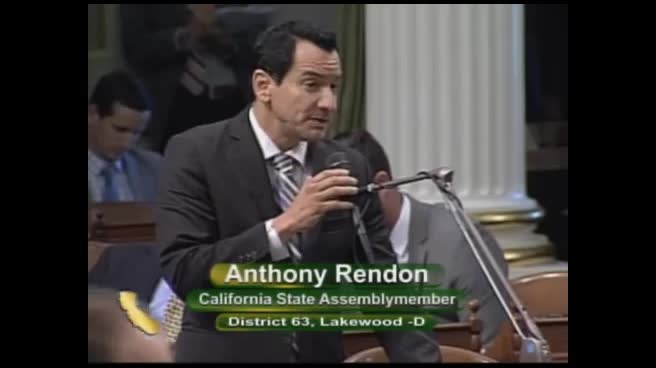 43SEC
Assembly Floor
 4MIN
Senate Floor
 49SEC
Senate Standing Committee on Appropriations
 7MIN
Senate Standing Committee on Governmental Organization
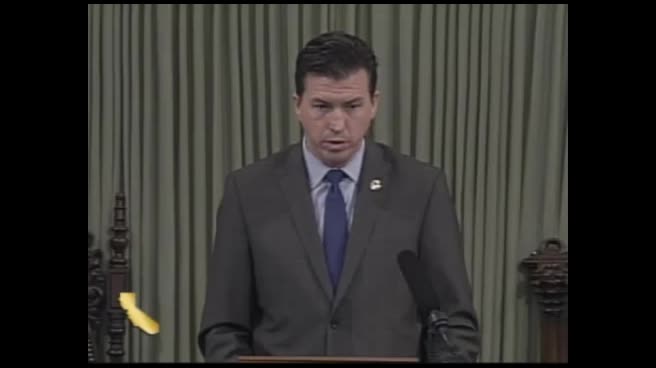 14MIN
Assembly Floor
 42SEC
Assembly Floor
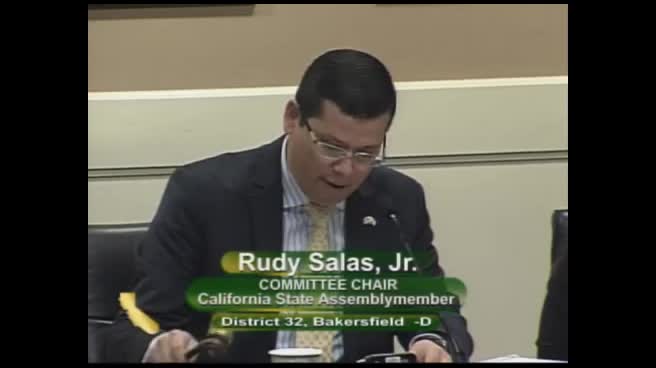 16MIN
Assembly Standing Committee on Accountability and Administrative Review




Bill Co-Author(s):
