AB 85: Open meetings.
- Session Year: 2015-2016
- House: Assembly
- Latest Version Date: 2015-09-02
The Bagley-Keene Open Meeting Act requires that all meetings of a state body, as defined, be open and public and that all persons be permitted to attend and participate in a meeting of a state body, subject to certain conditions and exceptions.
This bill would specify that the definition of state body includes an advisory board, advisory commission, advisory committee, advisory subcommittee, or similar multimember advisory body of a state body that consists of 3 or more individuals, as prescribed, except a board, commission, committee, or similar multimember body on which a member of a body serves in his or her official capacity as a representative of that state body and that is supported, in whole or in part, by funds provided by the state body, whether the multimember body is organized and operated by the state body or by a private corporation.
This bill would declare that it is to take effect immediately as an urgency statute.
The Bagley-Keene Open Meeting Act requires that all meetings of a state body, as defined, be open and public and that all persons be permitted to attend and participate in a meeting of a state body, subject to certain conditions and exceptions.
This bill would specify that the definition of state body includes an advisory board, advisory commission, advisory committee, advisory subcommittee, or similar multimember advisory body of a state body that consists of 3 or more individuals, as prescribed, except a board, commission, committee, or similar multimember body on which a member of a body serves in his or her official capacity as a representative of that state body and that is supported, in whole or in part, by funds provided by the state body, whether the multimember body is organized and operated by the state body or by a private corporation.
This bill would make legislative findings and declarations, including, but not limited to, a statement of the Legislatures intent that this bill is declaratory of existing law.
This bill would declare that it is to take effect immediately as an urgency statute.
As used in this article, state body means each of the following:
(a)Every state board, or commission, or similar multimember body of the state that is created by statute or required by law to conduct official meetings and every commission created by executive order.
(b)A board, commission, committee, or similar multimember body that exercises any authority of a state body delegated to it by that state body.
(c)An advisory board, advisory commission, advisory committee, advisory subcommittee, or similar multimember advisory body of a state body, if created by formal action of the state body or of any member of the state body, and if the advisory body so created consists of three or more persons, except as in subdivision (d).
(d)A board, commission, committee, or similar multimember body on which a member of a body that is a state body pursuant to this section serves in his or her official capacity as a representative of that state body and that is supported, in whole or in part, by funds provided by the state body, whether the multimember body is organized and operated by the state body or by a private corporation.
SEC. 2.This act is an urgency statute necessary for the immediate preservation of the public peace, health, or safety within the meaning of Article IV of the Constitution and shall go into immediate effect. The facts constituting the necessity are:
In order to avoid unnecessary litigation and ensure the peoples right to access the meetings of public bodies pursuant to Section 3 of Article 1 of the California Constitution, it is necessary that this act take effect immediately.
The Legislature finds and declares all of the following:
(a)The unpublished decision of the Third District Court of Appeals in Funeral Security Plans v. State Board of Funeral Directors (1994) 28 Cal. App.4th 1470 is an accurate reflection of legislative intent with respect to the applicability of the Bagley-Keene Open Meeting Act (Article 9 (commencing with Section 11120) of Chapter 1 of Part 1 of Division 3 of Title 2 of the Government Code) to a two-member standing advisory committee of a state body.
(b)A two-member committee of a state body, even if operating solely in an advisory capacity, already is a state body, as defined in subdivision (d) of Section 11121 of the Government Code, if a member of the state body sits on the committee and the committee receives funds from the state body.
(c)It is the intent of the Legislature that this bill is declaratory of existing law.
SEC. 2.SECTION 1.Section 11121 of the Government Code is amended to read:11121.As used in this article, state body means each of the following:
(a)Every state board, or commission, or similar multimember body of the state that is created by statute or required by law to conduct official meetings and every commission created by executive order.
(b)A board, commission, committee, or similar multimember body that exercises any authority of a state body delegated to it by that state body.
(c)An advisory board, advisory commission, advisory committee, advisory subcommittee, or similar multimember advisory body of a state body, if created by formal action of the state body or of any member of the state body, and if the advisory body so created consists of three or more persons, except as in subdivision (d).
(d)A board, commission, committee, or similar multimember body on which a member of a body that is a state body pursuant to this section serves in his or her official capacity as a representative of that state body and that is supported, in whole or in part, by funds provided by the state body, whether the multimember body is organized and operated by the state body or by a private corporation.
SEC. 3.SEC. 2.This act is an urgency statute necessary for the immediate preservation of the public peace, health, or safety within the meaning of Article IV of the Constitution and shall go into immediate effect. The facts constituting the necessity are:
In order to avoid unnecessary litigation and ensure the peoples right to access the meetings of public bodies pursuant to Section 3 of Article 1 of the California Constitution, it is necessary that this act take effect immediately immediately.
The Legislature finds and declares all of the following:
(a)The unpublished decision of the Third District Court of Appeals in Funeral Security Plans v. State Board of Funeral Directors (1994) 28 Cal. App.4th 1470 is an accurate reflection of legislative intent with respect to the applicability of the Bagley-Keene Open Meeting Act (Article 9 (commencing with Section 11120) of Chapter 1 of Part 1 of Division 3 of Title 2 of the Government Code) to a two-member standing advisory committee of a state body.
(b)A two-member committee of a state body, even if operating solely in an advisory capacity, already is a state body, as defined in subdivision (d) of Section 11121 of the Government Code, if a member of the state body sits on the committee and the committee receives funds from the state body.
(c)It is the intent of the Legislature that this bill is declaratory of existing law.
SEC. 2.Section 11121 of the Government Code is amended to read:11121.As used in this article, state body means each of the following:
(a)Every state board, or commission, or similar multimember body of the state that is created by statute or required by law to conduct official meetings and every commission created by executive order.
(b)A board, commission, committee, or similar multimember body that exercises any authority of a state body delegated to it by that state body.
(c)An advisory board, advisory commission, advisory committee, advisory subcommittee, or similar multimember advisory body of a state body, if created by formal action of the state body or of any member of the state body, and if the advisory body so created consists of three or more persons. persons, except as in subdivision (d).
(d)A board, commission, committee, or similar multimember body on which a member of a body that is a state body pursuant to this section serves in his or her official capacity as a representative of that state body and that is supported, in whole or in part, by funds provided by the state body, whether the multimember body is organized and operated by the state body or by a private corporation.
SEC. 3.This act is an urgency statute necessary for the immediate preservation of the public peace, health, or safety within the meaning of Article IV of the Constitution and shall go into immediate effect. The facts constituting the necessity are:
In order to avoid unnecessary litigation and ensure the peoples right to access the meetings of public bodies pursuant to Section 3 of Article 1 of the California Constitution, it is necessary that act take effect immediately
|
Date
|
Status
|
|---|---|
| Jun 1, 2015 | Read third time. Urgency clause adopted. Passed. Ordered to the Senate. (Ayes 80. Noes 0. Page 1698.). |
| Jan 15, 2016 | Consideration of Governor's veto stricken from file. |
| Sep 28, 2015 | Vetoed by Governor. |
| Sep 9, 2015 | Enrolled and presented to the Governor at 4 p.m. |
| Aug 31, 2015 | Read third time. Urgency clause adopted. Passed. Ordered to the Assembly. (Ayes 40. Noes 0. Page 2288.). |
| Aug 31, 2015 | Read third time. Urgency clause adopted. Passed. Ordered to the Assembly. |
| Aug 31, 2015 | In Assembly. Ordered to Engrossing and Enrolling. |
| Aug 19, 2015 | Read second time. Ordered to third reading. |
| Aug 18, 2015 | From committee: Do pass. (Ayes 7. Noes 0.) (August 17). |
| Jul 14, 2015 | From committee: Do pass and re-refer to Com. on APPR. (Ayes 13. Noes 0.) (July 14). Re-referred to Com. on APPR. |
| Jun 11, 2015 | Referred to Com. on G.O. |
| Jan 6, 2015 | Read first time. To print. |
| Jun 1, 2015 | Read third time. Urgency clause adopted. Passed. Ordered to the Senate. |
| Jun 1, 2015 | In Senate. Read first time. To Com. on RLS. for assignment. |
| May 28, 2015 | Read second time. Ordered to third reading. |
| May 28, 2015 | From committee: Do pass. (Ayes 17. Noes 0.) (May 28). |
| Apr 22, 2015 | In committee: Set, first hearing. Referred to APPR. suspense file. |
| Apr 16, 2015 | Re-referred to Com. on APPR. |
| Apr 15, 2015 | Read second time and amended. |
| Apr 14, 2015 | From committee: Amend, and do pass as amended and re-refer to Com. on APPR. (Ayes 21. Noes 0.) (April 8). |
| Jan 26, 2015 | Referred to Com. on G.O. |
| Jan 7, 2015 | From printer. May be heard in committee February 6. |
|
Date
|
Description
|
Location
|
Votes
|
|
|---|---|---|---|---|
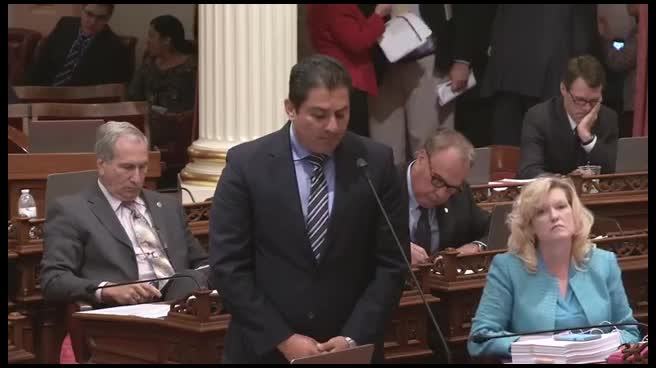
| Aug 31, 2015 | Assembly 3rd Reading AB85 Wilk By Vidak Urgency Clause | Senate Floor |
Passed |
|
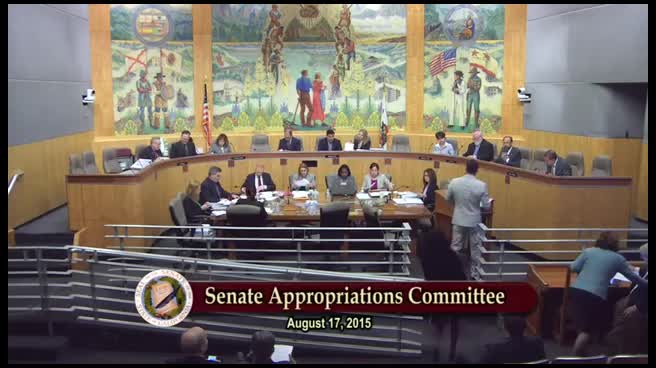
| Aug 17, 2015 | Do pass | Senate Standing Committee on Appropriations |
Passed |
|
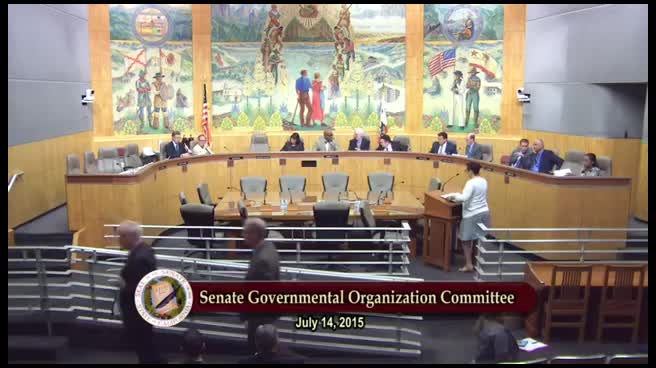
| Jul 14, 2015 | Do pass, but first be re-referred to the Committee on [Appropriations] | Senate Standing Committee on Governmental Organization |
Passed |
|
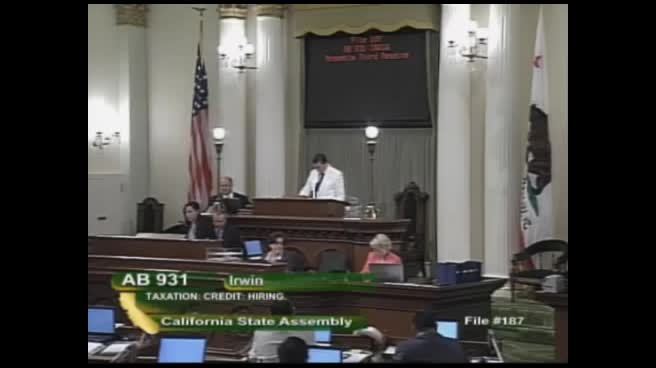
| Jun 1, 2015 | AB 85 WILK Third Reading Urgency | Assembly Floor |
Passed |
|
| May 28, 2015 | Do pass. | Assembly Standing Committee on Appropriations |
Passed |
|
| Apr 8, 2015 | Do pass as amended and be re-referred to the Committee on [Appropriations] | Assembly Standing Committee on Governmental Organization |
Passed |
This list shows positions taken on this bill by organizations on the date displayed, which is linked to the original source.
Positions by individuals are not included.
|
Organization
|
Position
|
Date
|
|---|---|---|
| Board for Professional Engineers, Land Surveyors, and Geologists | ** Against | Aug 31, 2015 |
| Board of Behavioral Sciences | ** Against | Aug 31, 2015 |
| Board of Professional Engineers, Land Surveyors, and Geologists | ** Against | Jul 14, 2015 |
| Board of Psychology | * Indeterminate | Jul 14, 2015 |
| California Acupuncture Board | ** Against | Aug 31, 2015 |
| California Association Of Licensed Investigators | ** Support | Apr 22, 2015 |
| California Board of Accountancy | ** Against | Aug 31, 2015 |
| California Board of Psychology | ** Against | Jul 14, 2015 |
| California Board of Vocational Nursing and Psychiatric Technicians | ** Against | Jul 14, 2015 |
| California State Board of Pharmacy | ** Against | Jul 14, 2015 |
| Dental Board of California | ** Against | Jul 14, 2015 |
| Dental Hygiene Committee of California | ** Against | Jul 14, 2015 |
GOVERNOR'S VETO
AB 85
(Wilk)
As Enrolled September 2, 2015
2/3 vote
Committee |
Votes |
Ayes |
Noes |
Governmental Organization |
21-0 |
Gray, Linder, Achadjian, Alejo, Bigelow, Campos, Cooley, Cooper, Daly, Cristina Garcia, Eduardo Garcia, Gipson, Roger Hernández, Jones-Sawyer, Levine, Mayes, Perea, Salas, Steinorth, Waldron, Wilk |
|
Appropriations |
17-0 |
Gomez, Bigelow, Bonta, Calderon, Chang, Daly, Eggman, Gallagher, Eduardo Garcia, Gordon, Holden, Jones, Quirk, Rendon, Wagner, Weber, Wood |
|
ASSEMBLY: |
80-0 |
(June 1, 2015) |
SENATE: |
40-0 |
(August 31, 2015) |
SUMMARY: Modifies the Bagley-Keene Open Meeting Act to require two-member advisory committees of a "state body" (as defined in the Act) to hold open, public meetings if at least one member of the advisory committee is a member of the larger state body and the advisory committee is supported, in whole or in part, by state funds. Specifically, this bill:
Clarifies that, under the Bagley-Keene Act, a two-member advisory committee of a state body is a state body if a member of that state body sits on the advisory committee and the committee receives funds from the state body.
Contains an urgency clause to take effect immediately.
EXISTING LAW:
Requires that all meetings of a state body, as defined, be open and public and that all persons be permitted to attend and participate in a meeting of a state body, subject to certain conditions and exceptions. (The Bagley-Keene Open Meeting Act, set forth in Government Code Sections 11120 to 11132)
Defines a state body, for purposes of the Bagley-Keene Open Meeting Act, to mean each of the following:
Every state board, or commission, or similar multimember body of the state that is created by statute or required by law to conduct official meetings and every commission created by executive order.
A board, commission, committee, or similar multimember body that exercises any authority of a state body delegated to it by that state body.
An advisory board, advisory commission, advisory committee, advisory subcommittee, or similar multimember advisory body of a state body, if created by formal action of the state body or of any member of the state body, and if the advisory body so created consists of three or more persons.
A board, commission, committee, or similar multimember body on which a member of a body that is a state body pursuant to this section serves in his or her official capacity as a representative of that state body and that is supported, in whole or in part, by funds provided by the state body, whether the multimember body is organized and operated by the state body or by a private corporation.
FISCAL EFFECT: According to the Senate Appropriations Committee, this bill imposes minor to moderate costs on affected state entities. Some state entities may simply decide to eliminate certain advisory bodies and specified standing committees rather than spend limited resources for compliance with open meeting requirements.
COMMENTS: The Bagley-Keene Open Meeting Act, set forth in Government Code Sections 11120 to 11132, covers all state boards and commissions and generally requires these bodies to publicly notice their meetings, prepare agendas, accept public testimony and conduct their meetings in public unless specifically authorized by the Act to meet in closed session. The Ralph M. Brown Act, set forth in Government Code Section 54950 et seq., governs meetings of legislative bodies of local agencies. In general, both Acts are virtually identical. While both Acts contain specific exceptions from the open meeting requirements where government has demonstrated a need for confidentiality, such exceptions have been narrowly construed by the courts.
When the Legislature enacted the Bagley-Keene Act, it essentially said that when a state body sits down to develop its consensus, there needs to be a seat at the table reserved for the public. By reserving this place for the public, the Legislature has provided the public with the ability to monitor and participate in the decision-making process. If the body were permitted to meet in secret, the public's role in the decision-making process would be negated. Therefore, absent a specific reason to keep the public out of the meeting, the public should be allowed to monitor and participate in the decision-making process.
Purpose of the bill: According to the author's office, the current definition of "state body" in the Bagley-Keene Act contains an ambiguity with respect to whether standing committees composed of fewer than three members need to comply with the public notice and open meeting requirements of the Act. The author's office contends this ambiguity has been interpreted by certain state agencies to allow standing committees to hold closed-door meetings so long as those committees contain fewer than three members and do not vote on action items. The author's office states that this bill is simply intended to clarify that all standing committees, including advisory committees, are subject to the transparency of open meeting regulations regardless of committee size or membership.
The author's office notes that prior to 1993, the Brown Act contained language very similar to the current language in the Bagley-Keene Act relative to standing committees. However, in the 1990s when a local government entity attempted to claim a loophole existed for two-member standing committees, the Legislature promptly removed any ambiguity on the matter from the Brown Act through enactment of SB 1140 (Calderon), Chapter 1138, Statutes of 1993. A conforming change was not made, however, to the Bagley-Keene Act, as no change was thought necessary.
The author's office believes that the ambiguity left in the Bagley-Keene Act is allowing state bodies to deliberate and direct staff behind closed doors. These state agencies are allowing standing committees to interpret the language of the Bagley-Keene Act in a manner that is contrary to the intent of the Legislature and the public.
Last year, the Governor vetoed a similar measure, AB 2058 (Wilk). In his veto message of AB 2058, the Governor wrote, "an advisory committee does not have authority to act on its own and must present any findings and recommendations to a larger body in a public setting for formal action," which he argued should be sufficient for transparency purposes.
In support: Writing in support, the California Association of Licensed Investigators states that this bill provides for enhanced transparency in the proceedings of government.
In opposition: Certain state professional boards contend this bill essentially prevents them and their various committees from asking fewer than three members to review a document, draft a letter, provide expert analysis, or work on legal language without giving public notice. Opening such advisory activities to the public could greatly increase costs for staff to attend meetings and record minutes as well as contract for public meeting space. Under current law, the advisory activities of two-member bodies are already vetted and voted upon in publically noticed meetings of the whole committee or board.
This bill expands the Bagley-Keene Open Meeting Act to include state advisory bodies, regardless of their size.
My thinking on this matter has not changed from last year when I vetoed a similar measure, AB 2058. I believe strongly in transparency and openness but the more informal deliberation of advisory bodies is best left to current law.
Analysis Prepared by: Eric Johnson / G.O. / (916) 319-2531 FN: 0002466
AB 85
Page 5
|
Office of Senate Floor Analyses (916) 651-1520 Fax: (916) 327-4478 |
THIRD READING
Bill No: AB 85
Amended: 4/15/15 in Assembly
SENATE GOVERNMENTAL ORG. COMMITTEE: 13-0, 7/14/15
AYES: Hall, Berryhill, Block, Gaines, Galgiani, Glazer, Hernandez, Hill, Hueso, Lara, McGuire, Runner, Vidak
SENATE APPROPRIATIONS COMMITTEE: 7-0, 8/17/15
AYES: Lara, Bates, Beall, Hill, Leyva, Mendoza, Nielsen
ASSEMBLY FLOOR: 80-0, 6/1/15 - See last page for vote
DIGEST: This bill modifies the Bagley-Keene Open Meeting Act to require two-member advisory committees of a “state body” (as defined in the Act) to hold open, public meetings if at least one member of the advisory committee is a member of the larger state body and the advisory committee is supported, in whole or in part, by state funds.
ANALYSIS:
Existing law:
Requires that all meetings of a state body, as defined, be open and public and that all persons be permitted to attend and participate in a meeting of a state body, subject to certain conditions and exceptions. (The Bagley-Keene Open Meeting Act, set forth in Government Code Sections 11120-11132)
Defines a state body, for purposes of the Bagley-Keene Open Meeting Act, to mean each of the following:
Every state board, or commission, or similar multimember body of the state that is created by statute or required by law to conduct official meetings and every commission created by executive order.
A board, commission, committee, or similar multimember body that exercises any authority of a state body delegated to it by that state body.
An advisory board, advisory commission, advisory committee, advisory subcommittee, or similar multimember advisory body of a state body, if created by formal action of the state body or of any member of the state body, and if the advisory body so created consists of three or more persons.
A board, commission, committee, or similar multimember body on which a member of a body that is a state body pursuant to this section serves in his or her official capacity as a representative of that state body and that is supported, in whole or in part, by funds provided by the state body, whether the multimember body is organized and operated by the state body or by a private corporation.
This bill:
Clarifies that, under the Bagley-Keene Act, a two-member advisory committee of a state body is a state body if a member of that state body sits on the advisory committee and the committee receives funds from the state body.
Contains an urgency clause to take effect immediately.
Background
The Bagley-Keene Open Meeting Act, set forth in Government Code Sections 11120-11132, covers all state boards and commissions and generally requires these bodies to publicly notice their meetings, prepare agendas, accept public testimony and conduct their meetings in public unless specifically authorized by the Act to meet in closed session. The Ralph M. Brown Act, set forth in Government Code Section 54950 et seq., governs meetings of legislative bodies of local agencies. In general, both Acts are virtually identical. While both Acts contain specific exceptions from the open meeting requirements where government has demonstrated a need for confidentiality, such exceptions have been narrowly construed by the courts.
When the Legislature enacted the Bagley-Keene Act it essentially said that when a state body sits down to develop its consensus, there needs to be a seat at the table reserved for the public. By reserving this place for the public, the Legislature has provided the public with the ability to monitor and participate in the decision-making process. If the body were permitted to meet in secret, the public’s role in the decision-making process would be negated. Therefore, absent a specific reason to keep the public out of the meeting, the public should be allowed to monitor and participate in the decision-making process.
Purpose of AB 85. According to the author’s office, the current definition of "state body" in the Bagley-Keene Act contains an ambiguity with respect to whether standing committees composed of fewer than three members need to comply with the public notice and open meeting requirements of the Act. The author’s office contends this ambiguity has been interpreted by certain state agencies to allow standing committees to hold closed-door meetings so long as those committees contain fewer than three members and do not vote on action items. The author’s office states that AB 85 is simply intended to clarify that all standing committees, including advisory committees, are subject to the transparency of open meeting regulations regardless of committee size or membership.
The author’s office notes that prior to 1993, the Brown Act contained language very similar to the current language in the Bagley-Keene Act relative to standing committees. However, in the 1990s when a local government entity attempted to claim a loophole existed for two-member standing committees, the Legislature promptly removed any ambiguity on the matter from the Brown Act through enactment of SB 1140 (Calderon, Chapter 1138, Statutes of 1993). A conforming change was not made, however, to the Bagley-Keene Act, as no change was thought necessary.
The author’s office believes that the ambiguity left in the Bagley-Keene Act is allowing state bodies to deliberate and direct staff behind closed doors. These state agencies are allowing standing committees to interpret the language of the Bagley-Keene Act in a manner that is contrary to the intent of the Legislature and the public.
Comments
Last year, the Governor vetoed a similar measure, AB 2058 (Wilk). In his veto message of AB 2058, the Governor wrote, "an advisory committee does not have authority to act on its own and must present any findings and recommendations to a larger body in a public setting for formal action," which he argued should be sufficient for transparency purposes.
FISCAL EFFECT: Appropriation: No Fiscal Com.: Yes Local: No
According to the Senate Appropriations Committee, this bill imposes minor to moderate costs on affected state entities. Some state entities may simply decide to eliminate certain advisory bodies and specified standing committees rather than spend limited resources for compliance with open meeting requirements.
SUPPORT: (Verified 8/18/15)
California Association of Licensed Investigators, Inc.
OPPOSITION: (Verified 8/18/15)
Board for Professional Engineers, Land Surveyors, and Geologists
Board of Behavioral Sciences
California Acupuncture Board
California Board of Accountancy
California Board of Psychology
California Board of Vocational Nursing and Psychiatric Technicians
California State Board of Pharmacy
Dental Board of California
Dental Hygiene Committee of California
Physician Assistant Board of the Medical Board of California
ARGUMENTS IN SUPPORT: Writing in support, the California Association of Licensed Investigators states that AB 85 provides for enhanced transparency in the proceedings of government.
ARGUMENTS IN OPPOSITION: Certain state professional boards contend this bill essentially prevents them and their various committees from asking fewer than three members to review a document, draft a letter, provide expert analysis, or work on legal language without giving public notice. Opening such advisory activities to the public could greatly increase costs for staff to attend meetings and record minutes as well as contract for public meeting space. Under current law, the advisory activities of two-member bodies are already vetted and voted upon in publically noticed meetings of the whole committee or board.
ASSEMBLY FLOOR: 80-0, 6/1/15
AYES: Achadjian, Alejo, Travis Allen, Baker, Bigelow, Bloom, Bonilla, Bonta, Brough, Brown, Burke, Calderon, Campos, Chang, Chau, Chávez, Chiu, Chu, Cooley, Cooper, Dababneh, Dahle, Daly, Dodd, Eggman, Frazier, Beth Gaines, Gallagher, Cristina Garcia, Eduardo Garcia, Gatto, Gipson, Gomez, Gonzalez, Gordon, Gray, Grove, Hadley, Harper, Roger Hernández, Holden, Irwin, Jones, Jones-Sawyer, Kim, Lackey, Levine, Linder, Lopez, Low, Maienschein, Mathis, Mayes, McCarty, Medina, Melendez, Mullin, Nazarian, Obernolte, O'Donnell, Olsen, Patterson, Perea, Quirk, Rendon, Ridley-Thomas, Rodriguez, Salas, Santiago, Steinorth, Mark Stone, Thurmond, Ting, Wagner, Waldron, Weber, Wilk, Williams, Wood, Atkins
Prepared by: Arthur Terzakis / G.O. / (916) 651-1530
8/20/15 14:32:24
**** END ****
AB 85 (Wilk) Page 3 of 3
SENATE COMMITTEE ON APPROPRIATIONS
Senator Ricardo Lara, Chair
2015 - 2016 Regular Session
AB 85 (Wilk) - Open meetings
|
|
Version: April 15, 2015 |
Policy Vote: G.O. 13 - 0 |
Urgency: Yes |
Mandate: No |
Hearing Date: August 17, 2015 |
Consultant: Mark McKenzie |
This bill does not meet the criteria for referral to the Suspense File.
Bill Summary:
AB 85, an urgency measure, would require specified state body advisory committees comprised of fewer than three members to comply with the provisions of the Bagley-Keene Open Meeting Act if at least one member of the advisory committee is also a member of the larger state body and the advisory committee is supported by the state body’s funds.
Fiscal Impact:
In general, this bill would impose minor to moderate costs on affected state entities. Some state entities may simply decide to eliminate certain advisory bodies and specified standing committees rather than spend limited resources for compliance with open meeting requirements.
The following regulatory entities within the Department of Consumer Affairs (DCA) that use advisory committees of less than three members reported costs to comply with open meeting requirements, including costs for board member and staff travel, communications, and providing public meeting space:
Board of Barbering and Cosmetology: $14,000 (Barbering and Cosmetology Contingency Fund)
Board of Optometry: $6,000 (State Optometry Fund)
Board of Chiropractic Examiners: $99,000 (State Board of Chiropractic Examiners Fund)
Acupuncture Board: $65,000 (Acupuncture Fund)
Respiratory Care Board: $70,000 (Respiratory Care Fund)
Physician Assistant Board: $14,000 (Physician Assistant Fund)
Dental Board: $27,500 (State Dentistry Fund)
Dental Hygiene Committee: $18,000 (State Dental Hygiene Fund)
Naturopathic Medicine Committee: $11,500 (Naturopathic Doctor’s Fund)
Board of Registered Nursing: $28,000 (Board of Registered Nursing Fund)
Board of Accountancy: $119,000 (Accountancy Fund)
Board of Pharmacy: $9,500 (Pharmacy Board Contingency Fund)
Board of Psychology: $31,000 (Psychology Fund)
State Athletic Commission: $125,000 (Athletic Commission Fund)
Osteopathic Medical Board: projected costs of $82,000, based on historical use of advisory bodies, if advisory bodies are formed in the future. (Osteopathic Medical Board Contingency Fund)
Background:
Existing law defines an advisory board, commission, committee, and subcommittee of a state body that is comprised of three or more persons and created by a formal action of the body as a “state body” for purposes of the Bagley-Keene Open Meeting Act. This generally requires state agencies, boards, and commissions to publicly notice meetings, prepare formal agendas, accept public testimony, and conduct meetings in public, unless specifically authorized to meet in closed session.
Existing law, the Ralph M. Brown Act, governs meetings of legislative bodies of local agencies. In general, the Brown and Bagley-Keene Acts are virtually identical. While both acts contain specific exceptions from the open meeting requirements where government has demonstrated a need for confidentiality, such exceptions have been narrowly construed by the courts.
Until 1993, both Acts contained very similar definitions for the public bodies that are subject to the open meeting requirements. However, the definition of “state body” in the Bagley-Keene Act currently exempts advisory bodies created by a formal action of the board that are comprised of fewer than three individuals from the definition of “state body” which authorizes them to meet without public notice.
Proposed Law:
AB 85 would require two-member advisory boards, commissions, committees, subcommittees, or other bodies created by formal action of a state body, to comply with the provisions of the Bagley-Keene Open Meeting Act if at least one member of the advisory committee is also a member of the larger state body and the advisory committee is supported by the body’s funds. AB 85 is an urgency measure.
Related Legislation:
AB 2058 (Wilk), which was vetoed by the Governor in 2014, specified that a standing committee of a state body, irrespective of its composition, that has a continuing subject matter jurisdiction or fixed meeting schedule is a state body for purposes of the Bagley-Keene Open Meeting Act. Governor Brown’s veto message stated the following:
Any meeting involving formal action by a state body should be open to the public. An advisory committee, however, does not have authority to act on its own and must present any findings and recommendations to a larger body in a public setting for formal action. That should be sufficient.
Staff Comments:
This bill is intended to increase transparency and public participation and oversight of state entities that form certain advisory or policy bodies of fewer than three persons that are not subject to open meeting requirements. It should be noted that these advisory bodies are generally formed to investigate specific issues and advise a full board at public meetings, but cannot independently take official actions.
The bill would impose increased duties on state entities who currently have advisory bodies consisting of fewer than three members related to compliance with the open meeting requirements of the Bagley-Keene Act, including publicly noticing all meetings, preparing formal agendas, accepting public testimony, conducting meetings in public, and recording proceedings. Costs to individual state entities are likely to be relatively minor, but cumulatively could reach the hundreds of thousands annually. It is likely that some state entities would change practices related to advisory bodies and committees, which may shift costs to state staff to conduct the advisory work of those bodies.
-- END --
AB 85 (Wilk) Page 5 of 5
SENATE COMMITTEE ON GOVERNMENTAL ORGANIZATION
Senator Isadore Hall, III
Chair
2015 - 2016 Regular
Bill No: AB 85 Hearing Date: 7/14/2015
Author: |
Wilk |
||
Version: |
4/15/2015 Amended |
||
Urgency: |
Yes |
Fiscal: |
Yes |
Consultant: |
Arthur Terzakis |
||
SUBJECT: Open meetings
DIGEST: This bill modifies the Bagley-Keene Open Meeting Act to require two-member advisory committees of a “state body” (as defined in the Act) to hold open, public meetings if at least one member of the advisory committee is a member of the larger state body and the advisory committee is supported, in whole or in part, by state funds.
ANALYSIS:
Existing law:
Requires that all meetings of a state body, as defined, be open and public and that all persons be permitted to attend and participate in a meeting of a state body, subject to certain conditions and exceptions. (The Bagley-Keene Open Meeting Act, set forth in Government Code Sections 11120-11132)
Defines a state body, for purposes of the Bagley-Keene Open Meeting Act, to mean each of the following:
Every state board, or commission, or similar multimember body of the state that is created by statute or required by law to conduct official meetings and every commission created by executive order.
A board, commission, committee, or similar multimember body that exercises any authority of a state body delegated to it by that state body.
An advisory board, advisory commission, advisory committee, advisory subcommittee, or similar multimember advisory body of a state body, if created by formal action of the state body or of any member of the state body, and if the advisory body so created consists of three or more persons.
A board, commission, committee, or similar multimember body on which a member of a body that is a state body pursuant to this section serves in his or her official capacity as a representative of that state body and that is supported, in whole or in part, by funds provided by the state body, whether the multimember body is organized and operated by the state body or by a private corporation.
This bill:
Clarifies that, under the Bagley-Keene Act, a two-member advisory committee of a state body is a state body if a member of that state body sits on the advisory committee and the committee receives funds from the state body.
Contains an urgency clause to take effect immediately.
Background
The Bagley-Keene Open Meeting Act, set forth in Government Code Sections 11120-11132, covers all state boards and commissions and generally requires these bodies to publicly notice their meetings, prepare agendas, accept public testimony and conduct their meetings in public unless specifically authorized by the Act to meet in closed session. The Ralph M. Brown Act, set forth in Government Code Section 54950 et seq., governs meetings of legislative bodies of local agencies. In general, both Acts are virtually identical. While both acts contain specific exceptions from the open meeting requirements where government has demonstrated a need for confidentiality, such exceptions have been narrowly construed by the courts.
When the Legislature enacted the Bagley-Keene Act it essentially said that when a state body sits down to develop its consensus, there needs to be a seat at the table reserved for the public. By reserving this place for the public, the Legislature has provided the public with the ability to monitor and participate in the decision-making process. If the body were permitted to meet in secret, the public’s role in the decision-making process would be negated. Therefore, absent a specific reason to keep the public out of the meeting, the public should be allowed to monitor and participate in the decision-making process.
Purpose of AB 85. According to the author’s office, the current definition of "state body" in the Bagley-Keene Act contains an ambiguity with respect to whether standing committees composed of fewer than three members need to comply with the public notice and open meeting requirements of the Act. The author’s office contends this ambiguity has been interpreted by certain state agencies to allow standing committees to hold closed-door meetings so long as those committees contain fewer than three members and do not vote on action items. The author’s office states that AB 85 is simply intended to clarify that all standing committees, including advisory committees, are subject to the transparency of open meeting regulations regardless of committee size or membership.
The author’s office notes that prior to 1993, the Brown Act contained language very similar to the current language in the Bagley-Keene Act relative to standing committees. However, in the 90’s when a local government entity attempted to claim a loophole existed for two-member standing committees, the Legislature promptly removed any ambiguity on the matter from the Brown Act through enactment of SB 1140 (Calderon, Chapter 1138, Statutes of 1993). A conforming change was not made, however, to the Bagley-Keene Act, as no change was thought necessary.
The author’s office believes that the ambiguity left in the Bagley-Keene Act is allowing state bodies to deliberate and direct staff behind closed doors. These state agencies are allowing standing committees to interpret the language of the Bagley-Keene Act in a manner that is contrary to the intent of the Legislature and the public.
Staff comments. Last year, the Governor vetoed a similar measure, AB 2058 (Wilk). In this veto message of AB 2058, the Governor wrote, "an advisory committee does not have authority to act on its own and must present any findings and recommendations to a larger body in a public setting for formal action," which he argued should be sufficient for transparency purposes.
Prior/Related Legislation
AB 2058 (Wilk, 2014) would have modified the definition of state body, under the Bagley-Keene Open Meeting Act, to exclude an advisory body with less than 3 individuals, except for certain standing committees. (Vetoed)
AB 2720 (Ting, Chapter 510, Statutes of 2014) required a state body to publicly report any action taken and the vote or abstention on that action of each member present for the action.
AB 245 (Grove, 2013) would have repealed the exemption from the Bagley-Keene Open Meeting Act enacted in 2012 for the Western Climate Initiative (WCI) and instead would have subjected the WCI and its appointees to the Bagley-Keene Open Meeting Act when performing their duties. (Held in Assembly Governmental Organization Committee)
AB 527 (Gaines, 2013) would have repealed the exemption from the Bagley-Keene Open Meeting Act enacted in 2012 for the Western Climate Initiative (WCI) and provided that a contract between the state and WCI shall be subject to audit by the State Auditor. (Vetoed)
SB 751 (Yee, Chapter 257, Statutes of 2013) required local agencies to publicly report any action taken and the vote or abstention of each member of a legislative body.
SB 103 (Liu, 2011) would have made substantive changes to provisions of the Bagley-Keene Open Meeting Act relating to teleconference meetings. (Died on Assembly Appropriations Suspense File)
SB 962 (Liu, Chapter 482, Statutes of 2010) allowed the use of videoconferencing and teleconferencing at the court’s discretion and subject to availability for prisoners to participate in court proceedings for the termination of their parental rights or the court-ordered dependency petition of their child.
SB 519 (Committee on Governmental Organization, Chapter 92, Statutes of 2007) amended the Bagley-Keene Act to authorize the calling of a special meeting to provide for an interim executive officer of a state body upon the death, incapacity, or vacancy in the office of the executive officer.
AB 277 (Mountjoy, Chapter 288, Statutes of 2005) made permanent certain provisions authorizing closed sessions for purposes of discussing security related issues pertaining to a state body.
AB 192 (Canciamilla, Chapter 243, Statutes of 2001) made various changes to the Bagley-Keene Open Meeting Act, which governs meetings held by state bodies, to make it consistent with provisions of the Ralph M. Brown Act, which governs meetings of legislative bodies of local agencies.
SB 95 (Ayala, Chapter 949, Statutes of 1997) made numerous changes to the Bagley-Keene Act by expanding the notice, disclosure and reporting requirements for open and closed meetings of state bodies.
SB 752 (Kopp, Chapter 32 of 1994), SB 1140 (Calderon, Chapter 1138 of 1993), and SB 36 (Kopp, Chapter 1137 of 1993), these bills extensively amended the Ralph M. Brown Act.
FISCAL EFFECT: Appropriation: No Fiscal Com.: Yes Local: No
SUPPORT:
California Association of Licensed Investigators, Inc.
OPPOSITION:
Board of Behavioral Sciences
Board of Professional Engineers, Land Surveyors, and Geologists
California Board of Accountancy
California Acupuncture Board
California Board of Psychology
California Board of Vocational Nursing and Psychiatric Technicians
California State Board of Pharmacy
Dental Board of California
Dental Hygiene Committee of California
Physician Assistant Board of the Medical Board of California
ARGUMENTS IN SUPPORT: Writing in support, the California Association of Licensed Investigators states that AB 85 would provide for enhanced transparency in the proceedings of government.
ARGUMENTS IN OPPOSITION: Certain state professional boards contend this bill would essentially prevent them and their various committees from asking fewer than three members to review a document, draft a letter, provide expert analysis, or work on legal language without giving public notice. Opening such advisory activities to the public could greatly increase costs for staff to attend meetings and record minutes as well as contract for public meeting space. Under current law, the advisory activities of two-member bodies are already vetted and voted upon in publically noticed meetings of the whole committee or board.
AB 85
Page 4
ASSEMBLY THIRD READING
AB 85
(Wilk)
As Amended April 15, 2015
2/3 vote Urgency
Committee |
Votes |
Ayes |
Noes |
Governmental Organization |
21-0 |
Gray, Linder, Achadjian, Alejo, Bigelow, Campos, Cooley, Cooper, Daly, Cristina Garcia, Eduardo Garcia, Gipson, Roger Hernández, Jones-Sawyer, Levine, Mayes, Perea, Salas, Steinorth, Waldron, Wilk |
|
Appropriations |
17-0 |
Gomez, Bigelow, Bonta, Calderon, Chang, Daly, Eggman, Gallagher, Eduardo Garcia, Gordon, Holden, Jones, Quirk, Rendon, Wagner, Weber, Wood |
|
SUMMARY: This urgency measure, is intended to clarify that, under the Bagley-Keene Open Meeting Act (Act), a two-member advisory committee of a state body is a "state body" if a member of that state body sits on the advisory committee and the committee receives funds from the state body. Specifically, this bill:
States that the definition of "state body" includes an advisory board, advisory commission, advisory committee, advisory subcommittee, or similar multimember advisory body of a state body that consists of three or more individuals, as described, except a board, commission, committee, or similar multimember body on which a member of a body serves in his or her official capacity as a representative of that state body and that is supported, in whole or in part, by funds provided by the state body, whether the multimember body is organized and operated by the state body or by a private corporation.
Makes legislative findings and declarations
Contains an urgency clause.
EXISTING LAW:
The Act, set forth in Government Code Sections 11120 to 11132, covers all state boards and commissions and generally requires these bodies to publicly notice their meetings, prepare agendas, accept public testimony and conduct their meetings in public unless specifically authorized by the Act to meet in closed session. The Ralph M. Brown Act (Brown Act), set forth in Government Code Section 54950 et seq., governs meetings of legislative bodies of local agencies. In general, both Acts are virtually identical. While both acts contain specific exceptions from the open meeting requirements where government has demonstrated a need for confidentiality, such exceptions have been narrowly construed by the courts.
The Act defines "state body" to mean each of the following:
Every state board, or commission, or similar multimember body of the state that is created by statute or required by law to conduct official meetings and every commission created by executive order.
A board, commission, committee, or similar multimember body that exercises any authority of a state body delegated to it by that state body.
An advisory board, advisory commission, advisory committee, advisory subcommittee, or similar multimember advisory body of a state body, if created by formal action of the state body or of any member of the state body. Advisory bodies created to consist of fewer than three individuals are not a state body, except that standing
A board, commission, committee, or similar multimember body on which a member of a body that is a state body pursuant to this section serves in his or her official capacity as a representative of that state body and that is supported, in whole or in part, by funds provided by the state body, whether the multimember body is organized and operated by the state body or by a private corporation.
FISCAL EFFECT: According to the Assembly Appropriations Committee, potentially significant General Fund costs, in excess of $750,000, to state agencies for complying with notice and open meeting requirements in instances currently not subject to those requirements.
COMMENTS:
Background: When the Legislature enacted the Bagley-Keene Act of 1967, it essentially said that when a body sits down to develop its consensus, there needs to be a seat at the table reserved for the public. In doing so, the Legislature has provided the public with the ability to monitor and be part of the decision-making process. The Act explicitly mandates open meetings for California State agencies, boards, and commissions. It facilitates transparency of government activities and protects the rights of citizens to participate in state government deliberations. Therefore, absent a specific reason to keep the public out of meetings, the public is allowed to monitor and participate in the decision-making process. Similarly, the Brown Act protects citizen's rights to open meetings at the local and county government levels.
Existing law defines an advisory board, commission, committee, and subcommittee of a state body that is comprised of three or more persons and created by a formal action of the body as a "state body" for purposes of the Act. This generally requires state agencies, boards, and commissions to publicly notice meetings, prepare formal agendas, accept public testimony, and conduct meetings in public, unless specifically authorized to meet in closed session.
Purpose of the bill: According to the author’s office, the current definition of "state body" in the Act contains an ambiguity with respect to whether a "standing committee" composed of fewer than three members needs to comply with the public notice and open meeting requirements of the Act. The author's office maintains that certain state bodies have allowed standing committees to hold closed-door meetings as long as they contain two rather than three members and do not vote to take action on items. The author’s office believes such entities are intentionally limiting membership on standing committees to no more than two members for the explicit purpose of avoiding open meeting requirements.
The author’s office states that prior to 1993, the Brown Act contained language very similar to the current language in the Act relative to standing committees. However, in the 90's when a local government entity attempted to claim a loophole existed for two-member standing committees, the Legislature promptly removed any ambiguity on the matter from the Brown Act (SB 1140 (Calderon), Chapter 1138, Statutes of 1993). A conforming change was not made, however, to the Act, as no change was thought necessary.
The author's office emphasizes that the ambiguity left in the Act is allowing state bodies to deliberate and direct staff behind closed doors. These state agencies are allowing standing committees to interpret the language of the Act in a manner that is contrary to the intent of the Legislature and the public.
The author’s office states this bill is simply intended to clarify that all standing committees, including advisory committees, are subject to the transparency of open meeting regulations regardless of committee size or membership. This bill corrects the ability of state agencies to deny the public full transparency by clarifying current statute language, rather than expanding current law.
Arguments in support: The California Association of Licensed Investigators writes that this bill would provide for enhanced transparency in the proceedings of government. This bill will help to ensure that the public is provided with the critical opportunity to become aware of proposals, and to provide meaningful comment.
Argument in opposition: California Board of Accountancy (CBA) states that this bill would prevent the CBA, and all of its various committees, from asking fewer than three members to review a document, draft a letter, provide expert analysis, or work on legal language without giving public notice. Under current law, the advisory activities of these two-member bodies are already vetted and voted upon in a publically noticed meeting of the whole committee or board. In addition, making advisory activities of two members open to the public will greatly increase costs, as a staff member would need to travel to attend the meeting for the purpose of recording minutes. Agencies would also need to contract for meeting space that would be able to accommodate the public, thus incurring further costs.
Prior legislation: AB 2058 (Wilk) of 2014. An urgency measure, would have required all standing committees of a state body, irrespective of composition, that has a continuing subject matter jurisdiction or fixed meeting schedule to comply with the provisions of the Act. (Vetoed by Governor Brown)
The Governor's veto message stated, "This bill expands the definition of a state body, under the Bagley-Keene Open Meeting Act, to standing advisory committees with one or two members.
"Any meeting involving formal action by a state body should be open to the public. An advisory committee, however, does not have authority to act on its own and must present any findings and recommendations to a larger body in a public setting for formal action. That should be sufficient."
AB 2720 (Ting), Chapter 510, Statutes of 2014. Requires a state body to publicly report any action taken at an open meeting, and the vote or abstention on that action, of each member present for the action.
SB 751 (Yee), Chapter 257, Statutes of 2013. Required local agencies to publicly report any action taken and the vote or abstention of each member of a legislative body.
SB 103 (Liu) of the 2011-12 Regular Session. Would have made substantive changes to provisions of the Act relating to teleconference meetings. (Held in the Assembly Appropriations Committee)
AB 277 (Mountjoy), Chapter 288, Statutes of 2005. Made permanent certain provisions authorizing closed sessions for purposes of discussing security related issues pertaining to a state body.
AB 192 (Canciamilla), Chapter 243, Statutes of 2001. Made various changes to the Act, which governs meetings held by state bodies, to make it consistent with provisions of the Brown Act, which governs meetings of legislative bodies of local agencies.
SB 95 (Ayala), Chapter 949, Statutes of 1997. Made numerous changes to the Act by expanding the notice, disclosure and reporting requirements for open and closed meetings of state bodies.
SB 752 (Kopp), Chapter 32, Statutes of 1994; SB 1140 (Calderon), Chapter 1138, Statutes of 1993; and SB 36 (Kopp), Chapter 1137, Statutes of 1993. These measures extensively amended the Brown Act.
Analysis Prepared by: Eric Johnson / G.O. / (916) 319-2531 FN: 0000650
AB 85
Page 2
Date of Hearing: April 22, 2015
ASSEMBLY COMMITTEE ON APPROPRIATIONS
Jimmy Gomez, Chair
AB 85
(Wilk) – As Amended April 15, 2015
Policy Committee: |
Governmental Organization |
Vote: |
21-0 |
Urgency: Yes State Mandated Local Program: No Reimbursable: No
SUMMARY:
This bill clarifies that, under the Bagley-Keene Act, a two-member advisory committee of a state body is a "state body" if a member of that state body sits on the advisory committee and the committee receives funds from the state body.
FISCAL EFFECT:
Potentially significant GF costs, in excess of $750,000, to state agencies for complying with notice and open meeting requirements in instances currently not subject to those requirements.
COMMENTS:
1) Purpose. According to the author, the current definition of "state body" in the Bagley-Keene Act contains an ambiguity with respect to whether standing committees composed of fewer than three members need to comply with the public notice and open meeting requirements of the Act. The author contends this ambiguity has been interpreted by certain state agencies to allow standing committees to hold closed-door meetings so long as those committees contain fewer than three members and do not vote on action items. AB 85 would clarify that all standing committees, including two-member advisory committees, are subject to the transparency of open meeting regulations.
2) Open Meeting Acts. The Government Code contains two parallel open meeting statutes, the Bagley-Keene Act for state government, and the Ralph M. Brown Act (the Brown Act) for local governments. The philosophy underpinning the two acts is that transparency and consensus should be favored over administrative efficiency in most cases. The acts explicitly mandate open meetings for state and local agencies, boards, and commissions, providing the public with the ability to monitor and participate in the decision-making process.
3) Legislative History and the Brown Act. Prior to 1993, the Bagley-Keene Act and the Brown Act contained very similar definitions for "state body." Following an interpretation of that definition by a particular local government to exempt two-member standing committees from the open meeting requirements of the Brown Act, the Legislature amended the definition of "state body" to clarify that advisory bodies with continuing subject matter jurisdiction or a regular meeting schedule fixed by formal action are legislative bodies (akin to state bodies).
Last year, AB 2058 (Wilk) would have aligned the definitions and requirements for open meetings among standing committees between the Bagley-Keene Act and the Brown Act as amended in 1993. AB 2058 was vetoed by the Governor, who explained "[a]n advisory committee…does not have authority to act on its own and must present any findings and recommendations to a larger body in a public setting for formal action," which he argued should be sufficient for transparency purposes.
4) Opposition. Certain state agencies, in particular certain state professional boards including the California Board of Accountancy (CBA), contend this bill would prevent them and their various committees from asking two members to review a document, draft a letter, provide expert analysis, or work on legal language without giving public notice. Opening such advisory activities to the public could greatly increase costs for staff to attend meetings and record minutes as well as contract for public meeting space. Under current law, the advisory activities of two-member bodies are reviewed and voted upon in publically-noticed meetings of the whole committee or board.
5) What is the Current Law? The legislative findings in the original version of AB 85 cited an unpublished decision of the Third District Court of Appeals as an accurate reflection of the legislative intent behind the Bagley-Keene Act. In general, unpublished court decisions may be used as persuasive precedent, but do not bind future courts, and decisions of district courts of appeals do not necessarily have statewide application. Furthermore, this bill was amended to delete those findings, further clouding the issue of legislative intent behind the Act. As a result, current law is unsettled. Should this bill fail to pass or attract another veto from the Governor, the result could be used to argue the legislature's intent is that the Bagley-Keene Act be interpreted in the opposite manner as the author proposed here.
Analysis Prepared by: Joel Tashjian / APPR. / (916) 319-2081
AB 85
Page 4
Date of Hearing: April 8, 2015
ASSEMBLY COMMITTEE ON GOVERNMENTAL ORGANIZATION
Adam Gray, Chair
AB 85
(Wilk) – As Introduced January 6, 2015
SUBJECT: Open meetings
SUMMARY: An urgency measure, is intended to clarify language within the Bagley-Keene Open Meeting Act (Act) by stating that when an advisory board, advisory commission, advisory committee, advisory subcommittee, or similar multimember advisory body is acting in an official capacity of a state body and is funded in whole or part by the state body, the entity is subject to the Act, regardless of committee size or membership. Specifically, this bill:
1) States that the definition of “state body” includes an advisory board, advisory commission, advisory committee, advisory subcommittee, or similar multimember advisory body of a state body that consists of 3 or more individuals, as described, except a board, commission, committee, or similar multimember body on which a member of a body serves in his or her official capacity as a representative of that state body and that is supported, in whole or in part, by funds provided by the state body, whether the multimember body is organized and operated by the state body or by a private corporation.
2) Makes legislative findings and declarations
3) Contains an urgency clause.
EXISTING LAW:
1) The Bagley-Keene Open Meeting Act, set forth in Government Code Sections 11120-11132, covers all state boards and commissions and generally requires these bodies to publicly notice their meetings, prepare agendas, accept public testimony and conduct their meetings in public unless specifically authorized by the Act to meet in closed session. The Ralph M. Brown Act (Brown Act), set forth in Government Code Section 54950 et seq., governs meetings of legislative bodies of local agencies. In general, both Acts are virtually identical. While both acts contain specific exceptions from the open meeting requirements where government has demonstrated a need for confidentiality, such exceptions have been narrowly construed by the courts.
2) The Act defines “state body” to mean each of the following:
(a) Every state board, or commission, or similar multimember body of the state that is created by statute or required by law to conduct official meetings and every commission created by executive order.
(b) A board, commission, committee, or similar multimember body that exercises any authority of a state body delegated to it by that state body.
(c) An advisory board, advisory commission, advisory committee,
advisory subcommittee, or similar multimember advisory body of a
state body, if created by formal action of the state body or of any
member of the state body. Advisory bodies created to consist
of fewer than three individuals are not a state body, except
that standing committees of a state
body, irrespective of their composition, which have a
continuing subject matter jurisdiction, or a meeting schedule fixed
by resolution, policies, bylaws, or formal action of a state body are
state bodies for the purposes of this
chapter.
(d) A board, commission, committee, or similar multimember body on which a member of a body that is a state body pursuant to this section serves in his or her official capacity as a representative of that state body and that is supported, in whole or in part, by funds provided by the state body, whether the multimember body is organized and operated by the state body or by a private corporation.
FISCAL EFFECT: Unknown
COMMENTS:
Background: When the Legislature enacted the Bagley-Keene Act of 1967, it essentially said that when a body sits down to develop its consensus, there needs to be a seat at the table reserved for the public. In doing so, the Legislature has provided the public with the ability to monitor and be part of the decision-making process. The Act explicitly mandates open meetings for California State agencies, boards, and commissions. It facilitates transparency of government activities and protects the rights of citizens to participate in state government deliberations. Therefore, absent a specific reason to keep the public out of meetings, the public is allowed to monitor and participate in the decision-making process. Similarly, the Ralph M. Brown Act of 1953 protects citizen's rights to open meetings at the local and county government levels.
Existing law defines an advisory board, commission, committee, and subcommittee of a state body that is comprised of three or more persons and created by a formal action of the body as a “state body” for purposes of the Act. This generally requires state agencies, boards, and commissions to publicly notice meetings, prepare formal agendas, accept public testimony, and conduct meetings in public, unless specifically authorized to meet in closed session.
Purpose of the bill: According to the author’s office, the current definition of "state body" in the Bagley-Keene Act contains an ambiguity with respect to whether a “standing committee” composed of fewer than three members needs to comply with the public notice and open meeting requirements of the Act. The author’s office maintains that certain state bodies have allowed standing committees to hold closed-door meetings as long as they contain two rather than three members and do not vote to take action on items. The author’s office believes such entities are intentionally limiting membership on standing committees to no more than two members for the explicit purpose of avoiding open meeting requirements.
The author’s office states that prior to 1993, the Brown Act contained language very similar to the current language in the Bagley-Keene Act relative to standing committees. However, in the 90’s when a local government entity attempted to claim a loophole existed for two-member standing committees, the Legislature promptly removed any ambiguity on the matter from the Brown Act (SB 1140 {Calderon}, Chapter 1138, Statutes of 1993). A conforming change was not made, however, to the Bagley-Keene Act, as no change was thought necessary.
The author’s office emphasizes that the ambiguity left in the Act is allowing state bodies to deliberate and direct staff behind closed doors. These state agencies are allowing standing committees to interpret the language of the Act in a manner that is contrary to the intent of the Legislature and the public.
The author’s office states this bill is simply intended to clarify that all standing committees, including advisory committees, are subject to the transparency of open meeting regulations regardless of committee size or membership. AB 85 corrects the ability of state agencies to deny the public full transparency by clarifying current statute language, rather than expanding current law.
Arguments in support: The California Association of Licensed Investigators (CALI) writes that the bill would provide for enhanced transparency in the proceedings of government. AB 85 will help to ensure that the public is provided with the critical opportunity to become aware of proposals, and to provide meaningful comment.
Argument in opposition: California Board of Accountancy (CBA) states that this bill would prevent the CBA, and all of its various committees, from asking fewer than three members to review a document, draft a letter, provide expert analysis, or work on legal language without giving public notice. Under current law, the advisory activities of these two-member bodies are already vetted and voted upon in a publically noticed meeting of the whole committee or board.
In addition, making advisory activities of two members open to the public will greatly increase costs, as a staff member would need to travel to attend the meeting for the purpose of recording minutes. Agencies would also need to contract for meeting space that would be able to accommodate the public, thus incurring further costs.
Prior legislation: AB 2058 (Wilk), 2013-2014 Legislative Session. An urgency measure, would have required all standing committees of a state body, irrespective of composition, that has a continuing subject matter jurisdiction or fixed meeting schedule to comply with the provisions of the Act. (Vetoed by Governor Brown)
The Governor's veto message stated, "This bill expands the definition of a state body, under the Bagley-Keene Open Meeting Act, to standing advisory committees with one or two members.
"Any meeting involving formal action by a state body should be open to the public. An advisory committee, however, does not have authority to act on its own and must present any findings and recommendations to a larger body in a public setting for formal action. That should be sufficient."
AB 2720 (Ting), Chapter 510, Statutes of 2014. Requires a state body to publicly report any action taken at an open meeting, and the vote or abstention on that action, of each member present for the action.
SB 751 (Yee), Chapter 257, Statutes of 2013. Required local agencies to publicly report any action taken and the vote or abstention of each member of a legislative body.
SB 103 (Liu), 2011-12 Session. Would have made substantive changes to provisions of the Act relating to teleconference meetings. (Died Assembly Appropriations Suspense File)
AB 277 (Mountjoy), Chapter 288, Statutes of 2005. Made permanent certain provisions authorizing closed sessions for purposes of discussing security related issues pertaining to a state body.
AB 192 (Canciamilla), Chapter 243, Statutes of 2001. Made various changes to the Act, which governs meetings held by state bodies, to make it consistent with provisions of the Brown Act, which governs meetings of legislative bodies of local agencies.
SB 95 (Ayala), Chapter 949, Statutes of 1997. Made numerous changes to the Act by expanding the notice, disclosure and reporting requirements for open and closed meetings of state bodies.
SB 752 (Kopp) Chapter 32 of 1994; SB 1140 (Calderon) Chapter 1138 of 1993; and SB 36 (Kopp) Chapter 1137 of 1993. These measures extensively amended the Brown Act.
REGISTERED SUPPORT / OPPOSITION:
Support
California Association of Licensed Investigators
Opposition
California Board of Accountancy
Analysis Prepared by: Eric Johnson / G.O. / (916) 319-2531
Discussed in Hearing
 2MIN
Senate Floor
 2MIN
Senate Standing Committee on Appropriations
 3MIN
Senate Standing Committee on Governmental Organization
 52SEC
Assembly Floor
 2MIN
Assembly Standing Committee on Appropriations
Bill Author

Bill Co-Author(s):