AB 856: Invasion of privacy.
- Session Year: 2015-2016
- House: Assembly
- Latest Version Date: 2015-10-06
Under existing law, except as specified, a person is liable for physical invasion of privacy when that person knowingly enters onto the land of another person without permission or otherwise trespasses to capture any type of visual image, sound recording, or other physical impression of a person engaging in a private, personal, or familial activity and the invasion occurs in a manner that is offensive to a reasonable person. Under existing law, a person is liable for constructive invasion of privacy for the same activity, as specified, through the use of any device, regardless of whether there is a physical trespass. Existing law subjects a person who commits physical or constructive invasion of privacy to specified damages and civil fines.
This bill would expand liability for physical invasion of privacy to additionally include a person knowingly entering into the airspace above the land of another person without permission, as provided.
Under existing law, except as specified, a person is liable for physical invasion of privacy when that person knowingly enters onto the land of another person without permission or otherwise trespasses to capture any type of visual image, sound recording, or other physical impression of a person engaging in a private, personal, or familial activity and the invasion occurs in a manner that is offensive to a reasonable person. Under existing law, a person is liable for constructive invasion of privacy for the same activity, as specified, through the use of any device, regardless of whether there is a physical trespass. Existing law subjects a person who commits physical or constructive invasion of privacy to specified damages and civil fines.
This bill would expand liability for physical invasion of privacy to additionally include a person knowingly entering into the airspace of another person without permission, as provided.
(a)A person is liable for physical invasion of privacy when the person knowingly enters onto the land or into the airspace above the land of another person without permission or otherwise commits a trespass in order to capture any type of visual image, sound recording, or other physical impression of the plaintiff engaging in a private, personal, or familial activity and the invasion occurs in a manner that is offensive to a reasonable person.
(b)A person is liable for constructive invasion of privacy when the person attempts to capture, in a manner that is offensive to a reasonable person, any type of visual image, sound recording, or other physical impression of the plaintiff engaging in a private, personal, or familial activity, through the use of any device, regardless of whether there is a physical trespass, if this image, sound recording, or other physical impression could not have been achieved without a trespass unless the device was used.
(c)An assault or false imprisonment committed with the intent to capture any type of visual image, sound recording, or other physical impression of the plaintiff is subject to subdivisions (d), (e), and (h).
(d)A person who commits any act described in subdivision (a), (b), or (c) is liable for up to three times the amount of any general and special damages that are proximately caused by the violation of this section. This person may also be liable for punitive damages, subject to proof according to Section 3294. If the plaintiff proves that the invasion of privacy was committed for a commercial purpose, the person shall also be subject to disgorgement to the plaintiff of any proceeds or other consideration obtained as a result of the violation of this section. A person who comes within the description of this subdivision is also subject to a civil fine of not less than five thousand dollars ($5,000) and not more than fifty thousand dollars ($50,000).
(e)A person who directs, solicits, actually induces, or actually causes another person, regardless of whether there is an employer-employee relationship, to violate any provision of subdivision (a), (b), or (c) is liable for any general, special, and consequential damages resulting from each said violation. In addition, the person that directs, solicits, actually induces, or actually causes another person, regardless of whether there is an employer-employee relationship, to violate this section shall be liable for punitive damages to the extent that an employer would be subject to punitive damages pursuant to subdivision (b) of Section 3294. A person who comes within the description of this subdivision is also subject to a civil fine of not less than five thousand dollars ($5,000) and not more than fifty thousand dollars ($50,000).
(f)(1)The transmission, publication, broadcast, sale, offer for sale, or other use of any visual image, sound recording, or other physical impression that was taken or captured in violation of subdivision (a), (b), or (c) shall not constitute a violation of this section unless the person, in the first transaction following the taking or capture of the visual image, sound recording, or other physical impression, publicly transmitted, published, broadcast, sold, or offered for sale the visual image, sound recording, or other physical impression with actual knowledge that it was taken or captured in violation of subdivision (a), (b), or (c), and provided compensation, consideration, or remuneration, monetary or otherwise, for the rights to the unlawfully obtained visual image, sound recording, or other physical impression.
(2)For the purposes of paragraph (1), actual knowledge means actual awareness, understanding, and recognition, obtained prior to the time at which the person purchased or acquired the visual image, sound recording, or other physical impression, that the visual image, sound recording, or other physical impression was taken or captured in violation of subdivision (a), (b), or (c). The plaintiff shall establish actual knowledge by clear and convincing evidence.
(3)Any person that publicly transmits, publishes, broadcasts, sells, or offers for sale, in any form, medium, format, or work, a visual image, sound recording, or other physical impression that was previously publicly transmitted, published, broadcast, sold, or offered for sale by another person, is exempt from liability under this section.
(4)If a persons first public transmission, publication, broadcast, or sale or offer for sale of a visual image, sound recording, or other physical impression that was taken or captured in violation of subdivision (a), (b), or (c) does not constitute a violation of this section, that persons subsequent public transmission, publication, broadcast, sale, or offer for sale, in any form, medium, format, or work, of the visual image, sound recording, or other physical impression, does not constitute a violation of this section.
(5)This section applies only to a visual image, sound recording, or other physical impression that is captured or taken in California in violation of subdivision (a), (b), or (c) after January 1, 2010, and shall not apply to any visual image, sound recording, or other physical impression taken or captured outside of California.
(6)Nothing in this subdivision shall be construed to impair or limit a special motion to strike pursuant to Section 425.16, 425.17, or 425.18 of the Code of Civil Procedure.
(7)This section shall not be construed to limit all other rights or remedies of the plaintiff in law or equity, including, but not limited to, the publication of private facts.
(g)This section shall not be construed to impair or limit any otherwise lawful activities of law enforcement personnel or employees of governmental agencies or other entities, either public or private, who, in the course and scope of their employment, and supported by an articulable suspicion, attempt to capture any type of visual image, sound recording, or other physical impression of a person during an investigation, surveillance, or monitoring of any conduct to obtain evidence of suspected illegal activity or other misconduct, the suspected violation of any administrative rule or regulation, a suspected fraudulent conduct, or any activity involving a violation of law or business practices or conduct of public officials adversely affecting the public welfare, health, or safety.
(h)In any action pursuant to this section, the court may grant equitable relief, including, but not limited to, an injunction and restraining order against further violations of subdivision (a), (b), or (c).
(i)The rights and remedies provided in this section are cumulative and in addition to any other rights and remedies provided by law.
(j)It is not a defense to a violation of this section that no image, recording, or physical impression was captured or sold.
(k)For the purposes of this section, for a commercial purpose means any act done with the expectation of a sale, financial gain, or other consideration. A visual image, sound recording, or other physical impression shall not be found to have been, or intended to have been, captured for a commercial purpose unless it is intended to be, or was in fact, sold, published, or transmitted.
(l)(1)For the purposes of this section, private, personal, and familial activity includes, but is not limited to:
(A)Intimate details of the plaintiffs personal life under circumstances in which the plaintiff has a reasonable expectation of privacy.
(B)Interaction with the plaintiffs family or significant others under circumstances in which the plaintiff has a reasonable expectation of privacy.
(C)If and only after the person has been convicted of violating Section 626.8 of the Penal Code, any activity that occurs when minors are present at any location set forth in subdivision (a) of Section 626.8 of the Penal Code.
(D)Any activity that occurs on a residential property under circumstances in which the plaintiff has a reasonable expectation of privacy.
(E)Other aspects of the plaintiffs private affairs or concerns under circumstances in which the plaintiff has a reasonable expectation of privacy.
(2)Private, personal, and familial activity does not include illegal or otherwise criminal activity as delineated in subdivision (g). However, private, personal, and familial activity shall include the activities of victims of crime in circumstances under which subdivision (a), (b), or (c) would apply.
(m)(1)A proceeding to recover the civil fines specified in subdivision (d) or (e) may be brought in any court of competent jurisdiction by a county counsel or city attorney.
(2)Fines collected pursuant to this subdivision shall be allocated, as follows:
(A)One-half shall be allocated to the prosecuting agency.
(B)One-half shall be deposited in the Arts and Entertainment Fund, which is hereby created in the State Treasury.
(3)Funds in the Arts and Entertainment Fund created pursuant to paragraph (2) may be expended by the California Arts Council, upon appropriation by the Legislature, to issue grants pursuant to the Dixon-Zenovich-Maddy California Arts Act of 1975 (Chapter 9 (commencing with Section 8750) of Division 1 of Title 2 of the Government Code).
(4)The rights and remedies provided in this subdivision are cumulative and in addition to any other rights and remedies provided by law.
(n)The provisions of this section are severable. If any provision of this section or its application is held invalid, that invalidity shall not affect other provisions or applications that can be given effect without the invalid provision or application.
(a)A person is liable for physical invasion of privacy when the defendant person knowingly enters onto the land or into the airspace above the land of another person without permission or otherwise commits a trespass in order to capture any type of visual image, sound recording, or other physical impression of the plaintiff engaging in a private, personal, or familial activity and the invasion occurs in a manner that is offensive to a reasonable person.
(b)A person is liable for constructive invasion of privacy when the defendant person attempts to capture, in a manner that is offensive to a reasonable person, any type of visual image, sound recording, or other physical impression of the plaintiff engaging in a private, personal, or familial activity, through the use of any device, regardless of whether there is a physical trespass, if this image, sound recording, or other physical impression could not have been achieved without a trespass unless the device was used.
(c)An assault or false imprisonment committed with the intent to capture any type of visual image, sound recording, or other physical impression of the plaintiff is subject to subdivisions (d), (e), and (h).
(d)A person who commits any act described in subdivision (a), (b), or (c) is liable for up to three times the amount of any general and special damages that are proximately caused by the violation of this section. This person may also be liable for punitive damages, subject to proof according to Section 3294. If the plaintiff proves that the invasion of privacy was committed for a commercial purpose, the defendant person shall also be subject to disgorgement to the plaintiff of any proceeds or other consideration obtained as a result of the violation of this section. A person who comes within the description of this subdivision is also subject to a civil fine of not less than five thousand dollars ($5,000) and not more than fifty thousand dollars ($50,000).
(e)A person who directs, solicits, actually induces, or actually causes another person, regardless of whether there is an employer-employee relationship, to violate any provision of subdivision (a), (b), or (c) is liable for any general, special, and consequential damages resulting from each said violation. In addition, the person that directs, solicits, actually induces, or actually causes another person, regardless of whether there is an employer-employee relationship, to violate this section shall be liable for punitive damages to the extent that an employer would be subject to punitive damages pursuant to subdivision (b) of Section 3294. A person who comes within the description of this subdivision is also subject to a civil fine of not less than five thousand dollars ($5,000) and not more than fifty thousand dollars ($50,000).
(f)(1)The transmission, publication, broadcast, sale, offer for sale, or other use of any visual image, sound recording, or other physical impression that was taken or captured in violation of subdivision (a), (b), or (c) shall not constitute a violation of this section unless the person, in the first transaction following the taking or capture of the visual image, sound recording, or other physical impression, publicly transmitted, published, broadcast, sold, or offered for sale the visual image, sound recording, or other physical impression with actual knowledge that it was taken or captured in violation of subdivision (a), (b), or (c), and provided compensation, consideration, or remuneration, monetary or otherwise, for the rights to the unlawfully obtained visual image, sound recording, or other physical impression.
(2)For the purposes of paragraph (1), actual knowledge means actual awareness, understanding, and recognition, obtained prior to the time at which the person purchased or acquired the visual image, sound recording, or other physical impression, that the visual image, sound recording, or other physical impression was taken or captured in violation of subdivision (a), (b), or (c). The plaintiff shall establish actual knowledge by clear and convincing evidence.
(3)Any person that publicly transmits, publishes, broadcasts, sells, or offers for sale, in any form, medium, format, or work, a visual image, sound recording, or other physical impression that was previously publicly transmitted, published, broadcast, sold, or offered for sale by another person, is exempt from liability under this section.
(4)If a persons first public transmission, publication, broadcast, or sale or offer for sale of a visual image, sound recording, or other physical impression that was taken or captured in violation of subdivision (a), (b), or (c) does not constitute a violation of this section, that persons subsequent public transmission, publication, broadcast, sale, or offer for sale, in any form, medium, format, or work, of the visual image, sound recording, or other physical impression, does not constitute a violation of this section.
(5)This section applies only to a visual image, sound recording, or other physical impression that is captured or taken in California in violation of subdivision (a), (b), or (c) after January 1, 2010, and shall not apply to any visual image, sound recording, or other physical impression taken or captured outside of California.
(6)Nothing in this subdivision shall be construed to impair or limit a special motion to strike pursuant to Section 425.16, 425.17, or 425.18 of the Code of Civil Procedure.
(7)This section shall not be construed to limit all other rights or remedies of the plaintiff in law or equity, including, but not limited to, the publication of private facts.
(g)This section shall not be construed to impair or limit any otherwise lawful activities of law enforcement personnel or employees of governmental agencies or other entities, either public or private, who, in the course and scope of their employment, and supported by an articulable suspicion, attempt to capture any type of visual image, sound recording, or other physical impression of a person during an investigation, surveillance, or monitoring of any conduct to obtain evidence of suspected illegal activity or other misconduct, the suspected violation of any administrative rule or regulation, a suspected fraudulent conduct, or any activity involving a violation of law or business practices or conduct of public officials adversely affecting the public welfare, health, or safety.
(h)In any action pursuant to this section, the court may grant equitable relief, including, but not limited to, an injunction and restraining order against further violations of subdivision (a), (b), or (c).
(i)The rights and remedies provided in this section are cumulative and in addition to any other rights and remedies provided by law.
(j)It is not a defense to a violation of this section that no image, recording, or physical impression was captured or sold.
(k)For the purposes of this section, for a commercial purpose means any act done with the expectation of a sale, financial gain, or other consideration. A visual image, sound recording, or other physical impression shall not be found to have been, or intended to have been, captured for a commercial purpose unless it is intended to be, or was in fact, sold, published, or transmitted.
(l)(1)For the purposes of this section, private, personal, and familial activity includes, but is not limited to:
(A)Intimate details of the plaintiffs personal life under circumstances in which the plaintiff has a reasonable expectation of privacy.
(B)Interaction with the plaintiffs family or significant others under circumstances in which the plaintiff has a reasonable expectation of privacy.
(C)If and only after the defendant person has been convicted of violating Section 626.8 of the Penal Code, any activity that occurs when minors are present at any location set forth in subdivision (a) of Section 626.8 of the Penal Code.
(D)Any activity that occurs on a residential property under circumstances in which the plaintiff has a reasonable expectation of privacy.
(E)Other aspects of the plaintiffs private affairs or concerns under circumstances in which the plaintiff has a reasonable expectation of privacy.
(2)Private, personal, and familial activity does not include illegal or otherwise criminal activity as delineated in subdivision (g). However, private, personal, and familial activity shall include the activities of victims of crime in circumstances under which subdivision (a), (b), or (c) would apply.
(m)(1)A proceeding to recover the civil fines specified in subdivision (d) or (e) may be brought in any court of competent jurisdiction by a county counsel or city attorney.
(2)Fines collected pursuant to this subdivision shall be allocated, as follows:
(A)One-half shall be allocated to the prosecuting agency.
(B)One-half shall be deposited in the Arts and Entertainment Fund, which is hereby created in the State Treasury.
(3)Funds in the Arts and Entertainment Fund created pursuant to paragraph (2) may be expended by the California Arts Council, upon appropriation by the Legislature, to issue grants pursuant to the Dixon-Zenovich-Maddy California Arts Act of 1975 (Chapter 9 (commencing with Section 8750) of Division 1 of Title 2 of the Government Code).
(4)The rights and remedies provided in this subdivision are cumulative and in addition to any other rights and remedies provided by law.
(n)The provisions of this section are severable. If any provision of this section or its application is held invalid, that invalidity shall not affect other provisions or applications that can be given effect without the invalid provision or application.
(a)A person is liable for physical invasion of privacy when the defendant knowingly enters onto the land or into the airspace above the land of another person without permission or otherwise committed commits a trespass in order to capture any type of visual image, sound recording, or other physical impression of the plaintiff engaging in a private, personal, or familial activity and the invasion occurs in a manner that is offensive to a reasonable person.
(b)A person is liable for constructive invasion of privacy when the defendant attempts to capture, in a manner that is offensive to a reasonable person, any type of visual image, sound recording, or other physical impression of the plaintiff engaging in a private, personal, or familial activity, through the use of any device, regardless of whether there is a physical trespass, if this image, sound recording, or other physical impression could not have been achieved without a trespass unless the device was used.
(c)An assault or false imprisonment committed with the intent to capture any type of visual image, sound recording, or other physical impression of the plaintiff is subject to subdivisions (d), (e), and (h).
(d)A person who commits any act described in subdivision (a), (b), or (c) is liable for up to three times the amount of any general and special damages that are proximately caused by the violation of this section. This person may also be liable for punitive damages, subject to proof according to Section 3294. If the plaintiff proves that the invasion of privacy was committed for a commercial purpose, the defendant shall also be subject to disgorgement to the plaintiff of any proceeds or other consideration obtained as a result of the violation of this section. A person who comes within the description of this subdivision is also subject to a civil fine of not less than five thousand dollars ($5,000) and not more than fifty thousand dollars ($50,000).
(e)A person who directs, solicits, actually induces, or actually causes another person, regardless of whether there is an employer-employee relationship, to violate any provision of subdivision (a), (b), or (c) is liable for any general, special, and consequential damages resulting from each said violation. In addition, the person that directs, solicits, actually induces, or actually causes another person, regardless of whether there is an employer-employee relationship, to violate this section shall be liable for punitive damages to the extent that an employer would be subject to punitive damages pursuant to subdivision (b) of Section 3294. A person who comes within the description of this subdivision is also subject to a civil fine of not less than five thousand dollars ($5,000) and not more than fifty thousand dollars ($50,000).
(f)(1)The transmission, publication, broadcast, sale, offer for sale, or other use of any visual image, sound recording, or other physical impression that was taken or captured in violation of subdivision (a), (b), or (c) shall not constitute a violation of this section unless the person, in the first transaction following the taking or capture of the visual image, sound recording, or other physical impression, publicly transmitted, published, broadcast, sold, or offered for sale the visual image, sound recording, or other physical impression with actual knowledge that it was taken or captured in violation of subdivision (a), (b), or (c), and provided compensation, consideration, or remuneration, monetary or otherwise, for the rights to the unlawfully obtained visual image, sound recording, or other physical impression.
(2)For the purposes of paragraph (1), actual knowledge means actual awareness, understanding, and recognition, obtained prior to the time at which the person purchased or acquired the visual image, sound recording, or other physical impression, that the visual image, sound recording, or other physical impression was taken or captured in violation of subdivision (a), (b), or (c). The plaintiff shall establish actual knowledge by clear and convincing evidence.
(3)Any person that publicly transmits, publishes, broadcasts, sells, or offers for sale, in any form, medium, format, or work, a visual image, sound recording, or other physical impression that was previously publicly transmitted, published, broadcast, sold, or offered for sale by another person, is exempt from liability under this section.
(4)If a persons first public transmission, publication, broadcast, or sale or offer for sale of a visual image, sound recording, or other physical impression that was taken or captured in violation of subdivision (a), (b), or (c) does not constitute a violation of this section, that persons subsequent public transmission, publication, broadcast, sale, or offer for sale, in any form, medium, format, or work, of the visual image, sound recording, or other physical impression, does not constitute a violation of this section.
(5)This section applies only to a visual image, sound recording, or other physical impression that is captured or taken in California in violation of subdivision (a), (b), or (c) after January 1, 2010, and shall not apply to any visual image, sound recording, or other physical impression taken or captured outside of California.
(6)Nothing in this subdivision shall be construed to impair or limit a special motion to strike pursuant to Section 425.16, 425.17, or 425.18 of the Code of Civil Procedure.
(7)This section shall not be construed to limit all other rights or remedies of the plaintiff in law or equity, including, but not limited to, the publication of private facts.
(g)This section shall not be construed to impair or limit any otherwise lawful activities of law enforcement personnel or employees of governmental agencies or other entities, either public or private private, who, in the course and scope of their employment, and supported by an articulable suspicion, attempt to capture any type of visual image, sound recording, or other physical impression of a person during an investigation, surveillance, or monitoring of any conduct to obtain evidence of suspected illegal activity or other misconduct, the suspected violation of any administrative rule or regulation, a suspected fraudulent conduct, or any activity involving a violation of law or business practices or conduct of public officials adversely affecting the public welfare, health, or safety.
(h)In any action pursuant to this section, the court may grant equitable relief, including, but not limited to, an injunction and restraining order against further violations of subdivision (a), (b), or (c).
(i)The rights and remedies provided in this section are cumulative and in addition to any other rights and remedies provided by law.
(j)It is not a defense to a violation of this section that no image, recording, or physical impression was captured or sold.
(k)For the purposes of this section, for a commercial purpose means any act done with the expectation of a sale, financial gain, or other consideration. A visual image, sound recording, or other physical impression shall not be found to have been, or intended to have been, captured for a commercial purpose unless it is intended to be, or was in fact, sold, published, or transmitted.
(l)(1)For the purposes of this section, private, personal, and familial activity includes, but is not limited to:
(A)Intimate details of the plaintiffs personal life under circumstances in which the plaintiff has a reasonable expectation of privacy.
(B)Interaction with the plaintiffs family or significant others under circumstances in which the plaintiff has a reasonable expectation of privacy.
(C)If and only after the defendant has been convicted of violating Section 626.8 of the Penal Code, any activity that occurs when minors are present at any location set forth in subdivision (a) of Section 626.8 of the Penal Code.
(D)Any activity that occurs on a residential property under circumstances in which the plaintiff has a reasonable expectation of privacy.
(E)Other aspects of the plaintiffs private affairs or concerns under circumstances in which the plaintiff has a reasonable expectation of privacy.
(2)Private, personal, and familial activity does not include illegal or otherwise criminal activity as delineated in subdivision (g). However, private, personal, and familial activity shall include the activities of victims of crime in circumstances under which subdivision (a), (b), or (c) would apply.
(m)(1)A proceeding to recover the civil fines specified in subdivision (d) or (e) may be brought in any court of competent jurisdiction by a county counsel or city attorney.
(2)Fines collected pursuant to this subdivision shall be allocated, as follows:
(A)One-half shall be allocated to the prosecuting agency.
(B)One-half shall be deposited in the Arts and Entertainment Fund, which is hereby created in the State Treasury.
(3)Funds in the Arts and Entertainment Fund created pursuant to paragraph (2) may be expended by the California Arts Council, upon appropriation by the Legislature, to issue grants pursuant to the Dixon-Zenovich-Maddy California Arts Act of 1975 (Chapter 9 (commencing with Section 8750) of Division 1 of Title 2 of the Government Code).
(4)The rights and remedies provided in this subdivision are cumulative and in addition to any other rights and remedies provided by law.
(n)The provisions of this section are severable. If any provision of this section or its application is held invalid, that invalidity shall not affect other provisions or applications that can be given effect without the invalid provision or application.
(a)A person is liable for physical invasion of privacy when the defendant knowingly enters onto the land or into the airspace of another person without permission or otherwise committed a trespass in order to capture any type of visual image, sound recording, or other physical impression of the plaintiff engaging in a private, personal, or familial activity and the invasion occurs in a manner that is offensive to a reasonable person.
(b)A person is liable for constructive invasion of privacy when the defendant attempts to capture, in a manner that is offensive to a reasonable person, any type of visual image, sound recording, or other physical impression of the plaintiff engaging in a private, personal, or familial activity, through the use of any device, regardless of whether there is a physical trespass, if this image, sound recording, or other physical impression could not have been achieved without a trespass unless the device was used.
(c)An assault or false imprisonment committed with the intent to capture any type of visual image, sound recording, or other physical impression of the plaintiff is subject to subdivisions (d), (e), and (h).
(d)A person who commits any act described in subdivision (a), (b), or (c) is liable for up to three times the amount of any general and special damages that are proximately caused by the violation of this section. This person may also be liable for punitive damages, subject to proof according to Section 3294. If the plaintiff proves that the invasion of privacy was committed for a commercial purpose, the defendant shall also be subject to disgorgement to the plaintiff of any proceeds or other consideration obtained as a result of the violation of this section. A person who comes within the description of this subdivision is also subject to a civil fine of not less than five thousand dollars ($5,000) and not more than fifty thousand dollars ($50,000).
(e)A person who directs, solicits, actually induces, or actually causes another person, regardless of whether there is an employer-employee relationship, to violate any provision of subdivision (a), (b), or (c) is liable for any general, special, and consequential damages resulting from each said violation. In addition, the person that directs, solicits, actually induces, or actually causes another person, regardless of whether there is an employer-employee relationship, to violate this section shall be liable for punitive damages to the extent that an employer would be subject to punitive damages pursuant to subdivision (b) of Section 3294. A person who comes within the description of this subdivision is also subject to a civil fine of not less than five thousand dollars ($5,000) and not more than fifty thousand dollars ($50,000).
(f)(1)The transmission, publication, broadcast, sale, offer for sale, or other use of any visual image, sound recording, or other physical impression that was taken or captured in violation of subdivision (a), (b), or (c) shall not constitute a violation of this section unless the person, in the first transaction following the taking or capture of the visual image, sound recording, or other physical impression, publicly transmitted, published, broadcast, sold, or offered for sale the visual image, sound recording, or other physical impression with actual knowledge that it was taken or captured in violation of subdivision (a), (b), or (c), and provided compensation, consideration, or remuneration, monetary or otherwise, for the rights to the unlawfully obtained visual image, sound recording, or other physical impression.
(2)For the purposes of paragraph (1), actual knowledge means actual awareness, understanding, and recognition, obtained prior to the time at which the person purchased or acquired the visual image, sound recording, or other physical impression, that the visual image, sound recording, or other physical impression was taken or captured in violation of subdivision (a), (b), or (c). The plaintiff shall establish actual knowledge by clear and convincing evidence.
(3)Any person that publicly transmits, publishes, broadcasts, sells, or offers for sale, in any form, medium, format, or work, a visual image, sound recording, or other physical impression that was previously publicly transmitted, published, broadcast, sold, or offered for sale by another person, is exempt from liability under this section.
(4)If a persons first public transmission, publication, broadcast, or sale or offer for sale of a visual image, sound recording, or other physical impression that was taken or captured in violation of subdivision (a), (b), or (c) does not constitute a violation of this section, that persons subsequent public transmission, publication, broadcast, sale, or offer for sale, in any form, medium, format, or work, of the visual image, sound recording, or other physical impression, does not constitute a violation of this section.
(5)This section applies only to a visual image, sound recording, or other physical impression that is captured or taken in California in violation of subdivision (a), (b), or (c) after January 1, 2010, and shall not apply to any visual image, sound recording, or other physical impression taken or captured outside of California.
(6)Nothing in this subdivision shall be construed to impair or limit a special motion to strike pursuant to Section 425.16, 425.17, or 425.18 of the Code of Civil Procedure.
(7)This section shall not be construed to limit all other rights or remedies of the plaintiff in law or equity, including, but not limited to, the publication of private facts.
(g)This section shall not be construed to impair or limit any otherwise lawful activities of law enforcement personnel or employees of governmental agencies or other entities, either public or private who, in the course and scope of their employment, and supported by an articulable suspicion, attempt to capture any type of visual image, sound recording, or other physical impression of a person during an investigation, surveillance, or monitoring of any conduct to obtain evidence of suspected illegal activity or other misconduct, the suspected violation of any administrative rule or regulation, a suspected fraudulent conduct, or any activity involving a violation of law or business practices or conduct of public officials adversely affecting the public welfare, health, or safety.
(h)In any action pursuant to this section, the court may grant equitable relief, including, but not limited to, an injunction and restraining order against further violations of subdivision (a), (b), or (c).
(i)The rights and remedies provided in this section are cumulative and in addition to any other rights and remedies provided by law.
(j)It is not a defense to a violation of this section that no image, recording, or physical impression was captured or sold.
(k)For the purposes of this section, for a commercial purpose means any act done with the expectation of a sale, financial gain, or other consideration. A visual image, sound recording, or other physical impression shall not be found to have been, or intended to have been, captured for a commercial purpose unless it is intended to be, or was in fact, sold, published, or transmitted.
(l)(1)For the purposes of this section, private, personal, and familial activity includes, but is not limited to:
(A)Intimate details of the plaintiffs personal life under circumstances in which the plaintiff has a reasonable expectation of privacy.
(B)Interaction with the plaintiffs family or significant others under circumstances in which the plaintiff has a reasonable expectation of privacy.
(C)If and only after the defendant has been convicted of violating Section 626.8 of the Penal Code, any activity that occurs when minors are present at any location set forth in subdivision (a) of Section 626.8 of the Penal Code.
(D)Any activity that occurs on a residential property under circumstances in which the plaintiff has a reasonable expectation of privacy.
(E)Other aspects of the plaintiffs private affairs or concerns under circumstances in which the plaintiff has a reasonable expectation of privacy.
(2)Private, personal, and familial activity does not include illegal or otherwise criminal activity as delineated in subdivision (g). However, private, personal, and familial activity shall include the activities of victims of crime in circumstances under which subdivision (a), (b), or (c) would apply.
(m)(1)A proceeding to recover the civil fines specified in subdivision (d) or (e) may be brought in any court of competent jurisdiction by a county counsel or city attorney.
(2)Fines collected pursuant to this subdivision shall be allocated, as follows:
(A)One-half shall be allocated to the prosecuting agency.
(B)One-half shall be deposited in the Arts and Entertainment Fund, which is hereby created in the State Treasury.
(3)Funds in the Arts and Entertainment Fund created pursuant to paragraph (2) may be expended by the California Arts Council, upon appropriation by the Legislature, to issue grants pursuant to the Dixon-Zenovich-Maddy California Arts Act of 1975 (Chapter 9 (commencing with Section 8750) of Division 1 of Title 2 of the Government Code).
(4)The rights and remedies provided in this subdivision are cumulative and in addition to any other rights and remedies provided by law.
(n)The provisions of this section are severable. If any provision of this section or its application is held invalid, that invalidity shall not affect other provisions or applications that can be given effect without the invalid provision or application.
|
Date
|
Status
|
|---|---|
| May 28, 2015 | Referred to Com. on JUD. |
| Oct 6, 2015 | Chaptered by Secretary of State - Chapter 521, Statutes of 2015. |
| Oct 6, 2015 | Approved by the Governor. |
| Sep 3, 2015 | Enrolled and presented to the Governor at 4 p.m. |
| Aug 27, 2015 | Senate amendments concurred in. To Engrossing and Enrolling. (Ayes 78. Noes 0.). |
| Aug 27, 2015 | Senate amendments concurred in. To Engrossing and Enrolling. (Ayes 78. Noes 0. Page 2613.). |
| Aug 25, 2015 | In Assembly. Concurrence in Senate amendments pending. May be considered on or after August 27 pursuant to Assembly Rule 77. |
| Aug 24, 2015 | Read third time. Passed. Ordered to the Assembly. (Ayes 40. Noes 0. Page 2151.). |
| Aug 24, 2015 | Read third time. Passed. Ordered to the Assembly. |
| Jul 16, 2015 | Read second time. Ordered to third reading. |
| Jul 15, 2015 | From committee: Do pass. (Ayes 7. Noes 0.) (July 14). |
| Jul 2, 2015 | From committee chair, with author's amendments: Amend, and re-refer to committee. Read second time, amended, and re-referred to Com. on JUD. |
| Feb 26, 2015 | Read first time. To print. |
| May 14, 2015 | Read third time. Passed. Ordered to the Senate. (Ayes 78. Noes 0. Page 1446.) |
| May 14, 2015 | Read third time. Passed. Ordered to the Senate. |
| May 14, 2015 | In Senate. Read first time. To Com. on RLS. for assignment. |
| May 7, 2015 | Read second time. Ordered to Consent Calendar. |
| May 6, 2015 | From committee: Do pass. To Consent Calendar. (Ayes 11. Noes 0.) (May 5). |
| Apr 13, 2015 | Re-referred to Com. on P. & C.P. |
| Apr 9, 2015 | Read second time and amended. |
| Apr 8, 2015 | From committee: Amend, and do pass as amended and re-refer to Com. on P. & C.P. with recommendation: To Consent Calendar. (Ayes 10. Noes 0.) (April 7). |
| Mar 16, 2015 | Referred to Coms. on JUD. and P. & C.P. |
| Feb 27, 2015 | From printer. May be heard in committee March 29. |
|
Date
|
Description
|
Location
|
Votes
|
|
|---|---|---|---|---|
| Aug 27, 2015 | AB 856 CALDERON Concurrence in Senate Amendments | Assembly Floor |
Passed |
|
| Aug 24, 2015 | Assembly 3rd Reading AB856 Calderon By Wieckowski | Senate Floor |
Passed |
|
| Jul 14, 2015 | Do pass | Senate Standing Committee on Judiciary |
Passed |
|
| May 14, 2015 | AB 856 CALDERON Consent Calendar Second Day | Assembly Floor |
Passed |
|
| May 5, 2015 | Do pass. To Consent Calendar. | Assembly Standing Committee on Privacy and Consumer Protection |
Passed |
|
| Apr 7, 2015 | Do pass as amended, and be re-referred to the Committee on [Privacy and Consumer Protection] with recommendation: To Consent Calendar | Assembly Standing Committee on Judiciary |
Passed |
This list shows positions taken on this bill by organizations on the date displayed, which is linked to the original source.
Positions by individuals are not included.
|
Organization
|
Position
|
Date
|
|---|---|---|
| California College And University Police Chiefs Association | ** Support | Aug 24, 2015 |
| Paparazzi Reform Initiative | ** Support | Aug 24, 2015 |
AB 856
Page 3
CONCURRENCE IN SENATE AMENDMENTS
AB 856
(Calderon)
As Amended July 2, 2015
Majority vote
ASSEMBLY: |
78-0 |
(May 14, 2015) |
SENATE: |
40-0 |
(August 24, 2015) |
Original Committee Reference: JUD.
SUMMARY: Expands the scope of the cause of action in existing law for the physical invasion of privacy. Specifically, this bill:
Provides that a person is liable for physical invasion of privacy when the defendant knowingly enters "into the airspace" above the land of another person without permission.
Requires that the entry must be made in order to capture any type of visual image, sound recording, or other physical impression of the plaintiff engaging in a private, personal, or familial activity and the invasion occurs in a manner that is offensive to a reasonable person.
The Senate amendments make a non-substantive change of the term "defendant" to the term "person" and add Senator Jackson as the principal co-author.
EXISTING LAW:
Provides that a person is generally liable for the physical invasion of the privacy of another person when he or she knowingly enters onto the land of that other person without permission in order to capture any type of visual image, sound recording, or other physical impression of a person engaging in a private, personal, or familial activity and the invasion occurs in a manner that is offensive to a reasonable person.
Provides that a person is liable for constructive invasion of the privacy of another person when he or she attempts to capture, in a manner that is offensive to a reasonable person, any type of visual image, sound recording, or other physical impression of that other person engaging in a private, personal, or familial activity, through the use of any device if the image, sound recording, or other physical impression could not have been achieved without the device, regardless of whether there is a physical trespass.
Provides that a person who commits either physical or constructive invasion of privacy is liable for up to three times the amount of any general and special damages that are proximately caused by the violation of this section.
Provides that a person who commits either physical or constructive invasion of privacy may also be liable for punitive damages, subject to proof according to Civil Code Section 3294.
Provides that if the plaintiff proves that the invasion of privacy was committed for a commercial purpose, the defendant shall also be subject to disgorgement to the plaintiff of any proceeds or other consideration obtained as a result of the violation of privacy.
Provides that a person who commits either physical or constructive invasion of privacy is also subject to a civil fine of not less than $5,000 and not more than $50,000.
Provides that a person who directs, solicits, actually induces, or actually causes another person, regardless of whether there is an employer-employee relationship, to commit either physical or constructive invasion of privacy is liable for any general, special, and consequential damages resulting from each said violation, as well as punitive damages to the extent that an employer would be subject to punitive damages pursuant to Civil Code Section 3294 (b).
Provides that a person who directs, solicits, actually induces, or actually causes another person, regardless of whether there is an employer-employee relationship, to commit either physical or constructive invasion of privacy is also subject to a civil fine of not less than $5,000 and not more than $50,000.
FISCAL EFFECT: None
COMMENTS: Property rights in California include rights to the "free or occupied space [above the property] for an indefinite distance upwards as well as downwards, subject to limitations upon the use of airspace imposed, and rights in the use of airspace granted, by law." The right to the airspace above this state is vested in the owners of the land below, but is subject to both the state doctrine of overflight and federal regulations. (Drennen v. County of Ventura (1974) 38 Cal.App.3d 84, 87, citing Public Utilities Code (PUC) Section 21402, Civil Code Section 659.) The doctrine of overflight provides that "Flight in aircraft over the land of another is lawful unless at altitudes below those prescribed by federal authority, or unless so conducted as to be imminently dangerous to persons or property lawfully on the land." (Id., citing PUC Section 21403(a).)
The zone of personally-controlled airspace above real property is lower near airports because the statutory right of flight in aircraft includes the right of aircraft to safely access the zone of approach of any public airport without restriction or hazard. (PUC Section 21403(c), Drennen v. County of Ventura, 38 Cal.App.3d at p. 87.) Federal law defines navigable airspace to include "airspace needed to insure safety in take-off and landing of aircraft." (49 United States Code 1301 (24).) The owner does not control and therefore cannot necessarily be protected from observations made from places outside that zone of airspace where the public has the right of access – either on land (i.e. from a hill overlooking the property), water (i.e. from a boat on public waters adjacent to the property) or in the air (i.e. from a helicopter or plane traveling in navigable airspace above the property), unless those observations are made under circumstances that amount to "constructive" invasion of privacy. "To prove actionable intrusion, the plaintiff must show the defendant penetrated some zone of physical or sensory privacy surrounding, or obtained unwanted access to data about, the plaintiff. The tort is proven only if the plaintiff had an objectively reasonable expectation of seclusion or solitude in the place, conversation or data source [citations omitted]." (Shulman v. Group W Productions, Inc., supra, 18 Cal.4th at pp. 231-232.)
This bill is drafted narrowly, only applying when there is an entry into the airspace over another person's land and the entry: 1) is made knowingly, 2) is made without permission, 3) is made for the specific intent of capturing a visual image, sound recording, or other physical impression of another person who is engaging in a private, personal, or familial activity, and 4) occurs in a manner that is offensive to a reasonable person. Given the narrow scope of this bill – especially the requirement that the person enter the airspace for the purpose of capturing images or recordings of another person engaged in a private, personal, or familial activity – the right of the public to document the coast and other public places will be protected, even when a photograph happens to include an image of private property, and individual or individuals, and even private activities that are visible from the air that are occasionally and inadvertently captured in such photos.
It should be stressed, as well, that simple physical entry into "the airspace above the land of another person" would not create liability under this bill. All of the other existing elements of the statute would still have to be met: the entry must be knowing and without permission; the entry must be made for the purpose of capturing an image, recording, or impression of another person who is engaging in a private, personal, or familial activity; and the entry must occur in a manner that is offensive to a reasonable person.
Analysis Prepared by: Alison Merrilees / JUD. / (916) 319-2334 FN: 0001315
AB 856
Page 7
|
Office of Senate Floor Analyses (916) 651-1520 Fax: (916) 327-4478 |
THIRD READING
Bill No: AB 856
Amended: 7/2/15 in Senate
SENATE JUDICIARY COMMITTEE: 7-0, 7/14/15
AYES: Jackson, Moorlach, Anderson, Hertzberg, Leno, Monning, Wieckowski
ASSEMBLY FLOOR: 78-0, 5/14/15 (Consent) - See last page for vote
DIGEST: This bill renders a person liable for physical invasion of privacy when that person knowingly enters upon the land of another, including by entry into the airspace above the land, without permission in order to capture any type of visual image, sound recording, or other physical impression of a person engaging in a private, personal, or familial activity and the invasion occurs in a manner that is offensive to a reasonable person.
Existing law:
Provides, in the California Constitution, that all people are by nature free and independent and have inalienable rights. Among these are enjoying and defending life and liberty, acquiring, possessing, and protecting property, and pursuing and obtaining safety, happiness, and privacy. (Cal. Const, Art. I, Sec. 1.)
Recognizes four distinct tort actions for invasion of privacy: (a) intrusion into private places, conversations or other matters; (b) public disclosure of private facts; (c) presentation of a person to the public in a false light; and (d) appropriation of image or personality. (Shulman v. Group W Productions, Inc. (1998) 18 Cal.4th 200, 214.)
Renders a person liable for “physical invasion of privacy” for knowingly entering onto the land of another person without permission or otherwise committing a trespass in order to capture any type of visual image, sound recording, or other physical impression of that person engaging in a private, personal, or familial activity and the invasion occurs in a manner that is offensive to a reasonable person. (Civ. Code Sec. 1708.8 (a).)
Renders a person liable for “constructive invasion of privacy” for attempting to capture, in a manner that is offensive to a reasonable person, any type of visual image, sound recording, or other physical impression of another person engaging in a private, personal, or familial activity, through the use of any device, regardless of whether there is a physical trespass, if this image, sound recording, or other physical impression could not have been achieved without a trespass unless the device was used. (Civ. Code Sec. 1708.8 (b).)
Defines “private, personal, and familial activity” to include:
intimate details of a person’s personal life under circumstances in which the person has a reasonable expectation of privacy;
interaction with the person’s family or significant others under circumstances in which the person has a reasonable expectation of privacy;
any activity that occurs on a residential property under circumstances in which the person has a reasonable expectation of privacy; and
other aspects of the person’s private affairs or concerns under circumstances in which the person has a reasonable expectation of privacy. (Civ. Code Sec. 1708.8 (l).)
Provides that a person who violates the invasion of privacy statute, or who directs, solicits, actually induces, or actually causes another person to violate the statute would be subject general, special, consequential, treble, and punitive damages, as well as a civil fine of not less than $5,000 and not more than $50,000. (Civ. Code Sec. 1708.8(d), (e).)
This bill:
Renders a person liable for physical invasion of privacy if, in addition to meeting other existing requirements, the person knowingly enters into the airspace above the land of another person without permission.
Makes other technical changes to existing law.
Background
The development of small unmanned aircraft systems – known variously as “unmanned aerial vehicles,” “remote piloted aircraft,” or simply “drones” – promises to transform the way Californians interact with each other and their environment. Just a few decades ago, small aircraft of this type were the exclusive domain of hobbyists. Within the last decade or so, the public has become familiar with the military’s use of unmanned aircraft to accomplish certain mission objectives. However, in December 2013 when Amazon.com, FedEx, and UPS announced their plans to integrate unmanned aircraft into their logistics and delivery services, the possibility of widespread commercial adoption of this technology became clear.
At present, the use of unmanned aerial vehicles in the skies over California is fairly restricted. Congress effectively closed the national airspace to commercial drone flights in the Federal Aviation Administration Modernization and Reform Act of 2012. That Act established a framework for safely integrating unmanned aircraft into the national airspace no later than September 30, 2015. The Act does, however, permit certain commercial unmanned aircraft operations to take place before the integration framework is implemented. Section 333 of the Act authorizes the Secretary of Transportation to establish special interim requirements for the operation of these aircraft by designated operators, provided the aircraft and their operators meet certain minimum standards and have applied for a commercial use exemption. To date, a handful of commercial operators have applied for, and received, permission to fly commercial drones, including several film production companies, construction, surveying, and inspection companies, and a number of real estate firms. The Act also sets out a separate interim operation exemption for “public unmanned aircraft,” allowing public agencies like police departments to operate drones upon application, provided the aircraft and their operators meet certain minimum standards.
Unlike commercial drone operations, flying an unmanned aircraft “strictly for hobby or recreational use” is allowed today so long as the operator pilots the craft in accordance with specific safety rules. As a result, private citizens are piloting most of the drones one sees in California today. The Modernization and Reform Act’s safety rules include a requirement to operate these recreational aircraft “in accordance with a community-based set of safety guidelines,” but the lack of more comprehensive rules establishing clear boundaries for when, where, and how these craft are to be operated has raised concerns. Indeed, a recent poll shows just how far this concern has permeated into the general public. According to Reuters, “[s]ome 73 percent of respondents to [an online poll] said they want regulations for the lightweight, remote-control planes,” and “forty-two percent went as far as to oppose private ownership of drones, suggesting they prefer restricting them to officials or experts trained in safe operation.” (Alwyn Scott, Americans OK With Police Drones - Private Ownership, Not So Much: Poll <http://news.yahoo.com/ americans-ok-police-drones-private-ownership-not-much-120553042.html [as of Jul. 2, 2015].)
Recent news articles indicate that paparazzi – photographers who follow famous people in order to take their picture and sell them to media outlets – have begun using drones as a tool to capture images and recordings in places not easily accessed by a person. (See e.g. Carter Evans, Paparazzi Now Using Drones to Hunt Down and Photograph Stars <http://www.cbsnews.com/news/paparazzi-take-to-the-skies-to-pursue-stars-with-drones/ [as of Jul. 2, 2015].) Non-celebrities across the country have also reported situations where individuals have used drones to observe them in what they thought were private or secluded settings. (See Christina Sterbenz, Should We Freak Out About Drones Looking In Our Windows? <http://www.businessinsider.com/privacy-issues-with-commercial-drones-2014-9 [as of Jul. 2, 2015].)
This bill expands existing law prohibiting the physical invasion of another’s privacy to include knowingly entering into the airspace above another’s land without permission in order to capture private images or recordings, including through the use of an unmanned aerial vehicle or drone.
Comments
The author writes:
Last session Assemblyman Chau introduced AB 2306, which expanded the definition of “constructive trespass” under the anti-paparazzi statute to include “any device” to project oneself onto the property of, or into the private conversation of, a person with a reasonable expectation of privacy (including by drone), but failed to prohibit the actual trespass onto the property when the drones come over fences and past locked gates to spy on people in their yards, or peer into their windows. AB 856 plugs this loophole in the law by clarifying that a person will be liable for physical invasion of privacy when they actually enter onto the property of another, including the airspace immediately above that property.
This extension of the paparazzi law is consistent with both existing privacy policy contained in Civil Code 1708.8, The Paparazzi Privacy Act, and property law. In US v. Causby, the United States Supreme Court was faced with the question of whether the government's use of an airport near a chicken farmer’s home, and a flight path immediately over his house, constituted a taking of his property due to disruption of his sleep and production drop-off of his chickens. In finding for the plaintiff Mr. Causby, Justice Douglas wrote, “We have said that the airspace is a public highway. Yet it is obvious that, if the landowner is to have full enjoyment of the land, he must have exclusive control of the immediate reaches of the enveloping atmosphere.” US v. Causby, 328 US 256 (1946).
Related/Prior Legislation
SB 170 (Gaines, 2015) provides that a person who knowingly and intentionally operates an unmanned aircraft on or above the grounds of a state prison or a jail is guilty of a misdemeanor, except as specified. The bill is pending in the Assembly Appropriations Committee.
SB 142 (Jackson, 2015) clarifies that the operation of an unmanned aerial vehicle less than 350 feet above the property of another, without permission or legal authority, constitutes trespass. The bill is pending on the Assembly Floor.
SB 262 (Galgiani, 2015) authorizes law enforcement agencies to use unmanned aircraft systems provided such use complies with certain conditions, including: search and seizure protections in the U.S. and California Constitutions; federal law applicable to unmanned aircraft systems; and state law applicable to law enforcement agency use of surveillance technology. The bill also requires law enforcement agencies to receive approval from their local governing body prior to using unmanned aircraft systems, and restricts the use of such systems for conducting surveillance of private property. The bill is pending in the Senate Judiciary Committee.
SB 271 (Gaines, 2015) makes it an infraction to operate an unmanned aircraft on the grounds of, or less than 350 feet above ground level within the airspace overlaying, a public school providing instruction in kindergarten or grades 1 to 12 during school hours and without permission of school officials. The bill exempts specified media and news personnel unless they receive a request from school officials to cease using an unmanned aircraft above a school, and also exempts law enforcement. The bill is pending in the Assembly Appropriations Committee.
AB 14 (Waldron, 2015) creates the Unmanned Aircraft Systems Task Force, which is required to research, develop, and formulate a comprehensive policy for unmanned aircraft systems in California. The task force is required to submit, among other things, a policy draft and suggested legislation pertaining to unmanned aircraft systems to the Legislature and the Governor on or before January 1, 2018. The bill is pending reconsideration in the Assembly Transportation Committee.
AB 56 (Quirk, 2015) prohibits law enforcement agencies from using unmanned aircraft systems, or contracting for the use of these systems, unless the law enforcement agency complies with specified requirements, including the development of a policy concerning the use of the system, and complies with certain provisions of state and federal law. The bill prohibits a law enforcement agency from using an unmanned aircraft system to surveil private property without a warrant, and would require images, footage, or data obtained through the use of such a system to be permanently destroyed within one year, except as specified. The bill is pending on the Senate Floor.
AB 1327 (Gorell, 2014) would have prohibited public agencies from using unmanned aircraft systems, or contracting for the use of these systems, with certain exceptions for law enforcement agencies acting pursuant to a warrant and in certain other cases, including when the use or operation of the unmanned aircraft system achieves the core mission of the agency and the purpose of use is unrelated to the gathering of criminal intelligence. The bill would have also required notice by public agencies intending to deploy unmanned aircraft, would have required images, footage, or data obtained through the use of such aircraft to be permanently destroyed within one year except as specified, and would have prohibited equipping unmanned aircraft with weapons. The bill was vetoed by Governor Brown.
SB 15 (Padilla, 2013) would have, among other things, required law enforcement agencies to obtain search warrants when using unmanned aircraft, and would have required that an application for the search warrant specify the intended purpose for which the unmanned aircraft would be used. The bill would have also restricted data collection by unmanned aircraft and would have prohibited equipping unmanned aircraft with weapons. The bill died in the Assembly Public Safety Committee.
AB 1524 (Waldron, 2013) would have required any entity that owns or operates an unmanned aircraft to place identifying information or digitally store identifying information on the aircraft. The bill would have exempted model aircraft, and would have made a person or entity that violates its provisions liable for a civil fine not to exceed $2,500. The bill was set for hearing in the Assembly Transportation Committee, but the hearing was cancelled at the author’s request.
FISCAL EFFECT: Appropriation: No Fiscal Com.: No Local: No
California College and University Police Chiefs Association
Paparazzi Reform Initiative
OPPOSITION: (Verified 8/10/15)
None received
ASSEMBLY FLOOR: 78-0, 5/14/15
AYES: Achadjian, Alejo, Travis Allen, Baker, Bigelow, Bloom, Bonilla, Bonta, Brough, Brown, Burke, Calderon, Campos, Chang, Chau, Chávez, Chiu, Chu, Cooley, Cooper, Dababneh, Dahle, Daly, Dodd, Eggman, Frazier, Beth Gaines, Gallagher, Cristina Garcia, Eduardo Garcia, Gatto, Gipson, Gomez, Gonzalez, Gordon, Gray, Grove, Hadley, Harper, Roger Hernández, Holden, Irwin, Jones, Jones-Sawyer, Kim, Lackey, Levine, Lopez, Low, Maienschein, Mathis, Mayes, McCarty, Melendez, Mullin, Nazarian, Obernolte, O'Donnell, Olsen, Patterson, Perea, Quirk, Rendon, Ridley-Thomas, Rodriguez, Salas, Santiago, Steinorth, Mark Stone, Thurmond, Ting, Wagner, Waldron, Weber, Wilk, Williams, Wood, Atkins
NO VOTE RECORDED: Linder, Medina
Prepared by: Tobias Halvarson / JUD. / (916) 651-4113
8/13/15 13:13:47
**** END ****
AB 856 (Calderon)
Page 9 of 9
Senator Hannah-Beth Jackson, Chair
2015-2016 Regular Session
AB 856 (Calderon)
Version: July 2, 2015
Hearing Date: July 14, 2015
Fiscal: No
Urgency: No
TH
SUBJECT
Invasion of Privacy
DESCRIPTION
Existing law renders a person liable for physical invasion of privacy when that person knowingly enters upon the land of another without permission in order to capture any type of visual image, sound recording, or other physical impression of a person engaging in a private, personal, or familial activity and the invasion occurs in a manner that is offensive to a reasonable person.
This bill would state that entry onto the land of another, for purposes of the above provision, includes knowingly entering into the airspace above the land.
BACKGROUND
The development of small unmanned aircraft systems – known variously as “unmanned aerial vehicles,” “remote piloted aircraft,” or simply “drones” – promises to transform the way Californians interact with each other and their environment. Just a few decades ago, small aircraft of this type were the exclusive domain of hobbyists. Within the last decade or so, the public has become familiar with the military’s use of unmanned aircraft to accomplish certain mission objectives. However, in December 2013 when Amazon.com, FedEx, and UPS announced their plans to integrate unmanned aircraft into their logistics and delivery services, the possibility of widespread commercial adoption of this technology became clear.
At present, the use of unmanned aerial vehicles in the skies over California is fairly restricted. Congress effectively closed the national airspace to commercial drone flights in the Federal Aviation Administration (FAA) Modernization and Reform Act of 2012.1 That Act established a framework for safely integrating unmanned aircraft into the national airspace no later than September 30, 2015. The Act does, however, permit certain commercial unmanned aircraft operations to take place before the integration framework is implemented. Section 333 of the Act authorizes the Secretary of Transportation to establish special interim requirements for the operation of these aircraft by designated operators, provided the aircraft and their operators meet certain minimum standards and have applied for a commercial use exemption. To date, a handful of commercial operators have applied for, and received, permission to fly commercial drones, including several film production companies, construction, surveying, and inspection companies, and a number of real estate firms. The Act also sets out a separate interim operation exemption for “public unmanned aircraft,” allowing public agencies like police departments to operate drones upon application, provided the aircraft and their operators meet certain minimum standards.2
Unlike commercial drone operations, flying an unmanned aircraft “strictly for hobby or recreational use” is allowed today so long as the operator pilots the craft in accordance with specific safety rules.3 As a result, private citizens are piloting most of the drones one sees in California today. The Modernization and Reform Act’s safety rules include a requirement to operate these recreational aircraft “in accordance with a community-based set of safety guidelines,” but the lack of more comprehensive rules establishing clear boundaries for when, where, and how these craft are to be operated has raised concerns. (Id.) Indeed, a recent poll shows just how far this concern has permeated into the general public. According to Reuters, “[s]ome 73 percent of respondents to [an online poll] said they want regulations for the lightweight, remote-control planes,” and “forty-two percent went as far as to oppose private ownership of drones, suggesting they prefer restricting them to officials or experts trained in safe operation.” (Alwyn Scott, Americans OK With Police Drones - Private Ownership, Not So Much: Poll <http://news.yahoo.com/americans-ok-police-drones-private-ownership-not-much-120553042.html> [as of Jul. 2, 2015].)
Recent news articles indicate that paparazzi – photographers who follow famous people in order to take their picture and sell them to media outlets – have begun using drones as a tool to capture images and recordings in places not easily accessed by a person. (See e.g. Carter Evans, Paparazzi Now Using Drones to Hunt Down and Photograph Stars <http://www.cbsnews.com/news/paparazzi-take-to-the-skies-to-pursue-stars-with-drones/> [as of Jul. 2, 2015].) Non-celebrities across the country have also reported situations where individuals have used drones to observe them in what they thought were private or secluded settings. (See Christina Sterbenz, Should We Freak Out About Drones Looking In Our Windows? <http://www.businessinsider.com/privacy-issues-with-commercial-drones-2014-9> [as of Jul. 2, 2015].)
This bill would expand existing law prohibiting the physical invasion of another’s privacy to include knowingly entering into the airspace above another’s land without permission in order to capture private images or recordings, including through the use of an unmanned aerial vehicle or drone.
CHANGES TO EXISTING LAW
Existing law, the California Constitution, provides that all people are by nature free and independent and have inalienable rights. Among these are enjoying and defending life and liberty, acquiring, possessing, and protecting property, and pursuing and obtaining safety, happiness, and privacy. (Cal. Const, art. I, Sec. 1.)
Existing case law recognizes four distinct tort actions for invasion of privacy: (a) intrusion into private places, conversations or other matters; (b) public disclosure of private facts; (c) presentation of a person to the public in a false light; and (d) appropriation of image or personality. (Shulman v. Group W Productions, Inc. (1998) 18 Cal.4th 200, 214.)
Existing law renders a person liable for “physical invasion of privacy” for knowingly entering onto the land of another person without permission or otherwise committing a trespass in order to capture any type of visual image, sound recording, or other physical impression of that person engaging in a private, personal, or familial activity and the invasion occurs in a manner that is offensive to a reasonable person. (Civ. Code Sec. 1708.8 (a).)
Existing law renders a person liable for “constructive invasion of privacy” for attempting to capture, in a manner that is offensive to a reasonable person, any type of visual image, sound recording, or other physical impression of another person engaging in a private, personal, or familial activity, through the use of any device, regardless of whether there is a physical trespass, if this image, sound recording, or other physical impression could not have been achieved without a trespass unless the device was used. (Civ. Code Sec. 1708.8 (b).)
Existing law defines “private, personal, and familial activity” to include:
intimate details of a person’s personal life under circumstances in which the person has a reasonable expectation of privacy;
interaction with the person’s family or significant others under circumstances in which the person has a reasonable expectation of privacy;
any activity that occurs on a residential property under circumstances in which the person has a reasonable expectation of privacy; and
other aspects of the person’s private affairs or concerns under circumstances in which the person has a reasonable expectation of privacy. (Civ. Code Sec. 1708.8 (l).)
Existing law provides that a person who violates the invasion of privacy statute, or who directs, solicits, actually induces, or actually causes another person to violate the statute would be subject general, special, consequential, treble, and punitive damages, as well as a civil fine of not less than $5,000 and not more than $50,000. (Civ. Code Sec. 1708.8(d), (e).)
This bill would render a person liable for physical invasion of privacy if, in addition to meeting other existing requirements, the person knowingly enters into the airspace above the land of another person without permission.
COMMENT
Stated need for the bill
The author writes:
Last session Assemblyman Chau introduced AB 2306, which expanded the definition of “constructive trespass” under the anti-paparazzi statute to include “any device” to project oneself onto the property of, or into the private conversation of, a person with a reasonable expectation of privacy (including by drone), but failed to prohibit the actual trespass onto the property when the drones come over fences and past locked gates to spy on people in their yards, or peer into their windows. AB 856 plugs this loophole in the law by clarifying that a person will be liable for physical invasion of privacy when they actually enter onto the property of another, including the airspace immediately above that property.
This extension of the paparazzi law is consistent with both existing privacy policy contained in Civil Code 1708.8, The Paparazzi Privacy Act, and property law. In US v. Causby, the United States Supreme Court was faced with the question of whether the government's use of an airport near a chicken farmer’s home, and a flight path immediately over his house, constituted a taking of his property due to disruption of his sleep and production drop-off of his chickens. In finding for the plaintiff Mr. Causby, Justice Douglas wrote, “We have said that the airspace is a public highway. Yet it is obvious that, if the landowner is to have full enjoyment of the land, he must have exclusive control of the immediate reaches of the enveloping atmosphere.” US v. Causby, 328 US 256 (1946).
Constructive vs. Physical Invasions of Privacy
The California Constitution provides that all people have inalienable rights, including the right to pursue and obtain privacy. (Cal. Const. art. I, Sec. 1.) This right has found expression in California’s invasion of privacy statute, which renders a person liable for physical or constructive invasion of privacy under specified circumstances. Existing law, Civil Code Section 1708.8(a), creates a cause of action for “physical invasion of privacy” where an individual knowingly enters the land of another person in order to invade his or her privacy by capturing a visual image, sound recording, or other physical impression of that person engaging in a personal or familial activity. Existing law also protects the right of privacy from invasive activities occurring outside one’s property through the tort of “constructive invasion of privacy.” Codified at Civil Code Section 1708.8(b), this tort renders a person liable for invasion of privacy when that person attempts to capture, in an offensive manner, any type of visual image, sound recording, or other physical impression of another person in which that person had a reasonable expectation of privacy, through the use of any device, regardless of whether there was a physical trespass, if the image or recording could not have been achieved without a trespass unless the device was used.
Together, these two torts cover the range of privacy invasions that result from capturing images, recordings, or physical impressions of individuals engaged in a private, personal, or familial activity, whether or not the tortfeasor enters the land of another commit these acts. Existing law ascribes the same penalties against a person who violates the invasion of privacy statute, regardless of whether the violation resulted from a physical invasion of privacy or a constructive invasion of privacy. In both cases, a person who violates the statute or who directs, solicits, actually induces, or actually causes another person to violate the statute is subject to general, special, consequential, treble, and punitive damages, as well as a civil fine of not less than $5,000 and not more than $50,000.
This bill would expand the conditions under which a person commits a physical invasion of privacy to include instances where the tortfeasor enters into the airspace above the land of another without permission in order to capture images, recordings, or other physical impressions of a person in violation of the statute. This expansion would include using unmanned aerial vehicles or drones above the property of another to capture this information data, which, because of their inherent maneuverability, can glide effortlessly above fences and walls meant to exclude others. While using a drone to capture images, recordings, or other physical impressions of a person in violation of the invasion of privacy statute would likely already be covered under the constructive invasion of privacy statute in many circumstances, this expansion would potentially provide victims of privacy violations with additional causes of action and additional remedies against a tortfeasor to the extent a reviewing court viewed each cause of action as a separate violation.
Right to Overlying Airspace
The existing tort of physical invasion of privacy extends to situations where one “knowingly enters onto the land of another person without permission or otherwise commit[s] a trespass” in order to undertake acts in violation of the invasion of privacy statute. (Civil Code Section 1708.8(a).) At its base, this tort contains two essential elements: (1) violation of a property right (trespass); and (2) invasion of privacy (unlawful capturing of images, recordings, or other physical impressions of a person). This bill would expand the notion of “physical invasion” to include not only entry upon the land of another, but entry into the airspace above that land.
Existing law is ambiguous regarding the rights of a landowner to restrict activity occurring above ground level. At common law, the maxim “cuius est solum, eius est usque ad coelum” (whoever owns the soil, it is theirs up to heaven) rendered all airspace above one’s land as part of their estate. With the advent of aircraft and air travel, however, the common law understanding of property rights extending to the stratosphere gave way to a belief that the public ought to be able to traverse the skies as freely as they do the seas. The case of United States v. Causby (1946) 328 U.S. 256 formalized this new, more limited understanding of aerial property rights. In that case, the U.S. Supreme Court recognized “that the airspace is a public highway,” but also held in unresolved tension that “it is obvious that if the landowner is to have full enjoyment of the land, he must have exclusive control of the immediate reaches of the enveloping atmosphere.” (Id. at 264.) The Court explained:
[t]he landowner owns at least as much of the space above the ground as he can occupy or use in connection with the land. . . . While the owner does not in any physical manner occupy that stratum of airspace or make use of it in the conventional sense, he does use it in somewhat the same sense that space left between buildings for the purpose of light and air is used. The superadjacent airspace at this low altitude is so close to the land that continuous invasions of it affect the use of the surface of the land itself. We think that the landowner, as an incident to his ownership, has a claim to it, and that invasions of it are in the same category as invasions of the surface. (Id. at 264-65.)
While recognizing the existence of these two competing interests, the Court declined to delineate the boundary between public and private airspace. (See Id. at 266 [“we need not determine at this time what those precise limits are”].) However, the Court did at least recognize on the facts particular to that case that the Causby’s property interests were encroached upon by military aircraft flying 83 feet above their land. (Id. at 258.)
This bill, while not stating as much, appears to extend the notion of trespass and physical invasion of the land itself into the air to an unspecified altitude, for the purposes of defining the tort of physical invasion of privacy. Under this bill, non-permissive entry into the airspace above the land of another, just like entry and trespass onto the land itself, would satisfy the property right violation that forms the basis of a physical invasion of privacy claim. The Paparazzi Reform Initiative (PRI), writing in support, “completely endorses and supports Assembly Bill 856 (Calderon) (“AB 856”) because definitional clarity needs to be provided to California Civil Code § 1708.8(a) (“1708.8”) to ensure that, in no uncertain terms, flying a Drone over the property of another constitutes a trespass that is capable of triggering the application of 1708.8.” While it is clear under existing law that property owners have the right to exclude drones and other flying devices from the “immediate reaches of the enveloping atmosphere” above their land (see Causby, 328 U.S. at 264), it is improbable that this right extends ad infinitum to the heavens.
Support: California College and University Police Chiefs Association; Paparazzi Reform Initiative
Opposition: None Known
HISTORY
Source: Author
Related Pending Legislation:
SB 170 (Gaines, 2015) would provide that a person who knowingly and intentionally operates an unmanned aircraft on or above the grounds of a state prison or a jail is guilty of a misdemeanor, except as specified. This bill is pending in the Assembly Privacy and Consumer Protection Committee.
SB 142 (Jackson, 2015) would clarify that the operation of an unmanned aerial vehicle less than 350 feet above the property of another, without permission or legal authority, constitutes trespass. This bill is pending in the Assembly Privacy and Consumer Protection Committee.
SB 262 (Galgiani, 2015) would authorize law enforcement agencies to use unmanned aircraft systems provided such use complies with certain conditions, including: search and seizure protections in the U.S. and California Constitutions; federal law applicable to unmanned aircraft systems; and state law applicable to law enforcement agency use of surveillance technology. This bill would also require law enforcement agencies to receive approval from their local governing body prior to using unmanned aircraft systems, and would restrict the use of such systems for conducting surveillance of private property. This bill is pending in the Senate Judiciary Committee.
SB 271 (Gaines, 2015) would make it an infraction to operate an unmanned aircraft on the grounds of, or less than 350 feet above ground level within the airspace overlaying, a public school providing instruction in kindergarten or grades 1 to 12 during school hours and without permission of school officials. This bill would exempt specified media and news personnel unless they receive a request from school officials to cease using an unmanned aircraft above a school, and would also exempt law enforcement. This bill is pending in the Assembly Privacy and Consumer Protection Committee.
AB 14 (Waldron, 2015) would create the Unmanned Aircraft Systems Task Force, which would be required to research, develop, and formulate a comprehensive policy for unmanned aircraft systems in California. The task force would be required to submit, among other things, a policy draft and suggested legislation pertaining to unmanned aircraft systems to the Legislature and the Governor on or before January 1, 2018. This bill is pending reconsideration in the Assembly Transportation Committee.
AB 56 (Quirk, 2015) would prohibit law enforcement agencies from using unmanned aircraft systems, or contracting for the use of these systems, unless the law enforcement agency complies with specified requirements, including the development of a policy concerning the use of the system, and complies with certain provisions of state and federal law. This bill would prohibit a law enforcement agency from using an unmanned aircraft system to surveil private property without a warrant, and would require images, footage, or data obtained through the use of such a system to be permanently destroyed within one year, except as specified. This bill is pending in the Senate Judiciary Committee.
Prior Legislation:
AB 1327 (Gorell, 2014) would have prohibited public agencies from using unmanned aircraft systems, or contracting for the use of these systems, with certain exceptions for law enforcement agencies acting pursuant to a warrant and in certain other cases, including when the use or operation of the unmanned aircraft system achieves the core mission of the agency and the purpose of use is unrelated to the gathering of criminal intelligence. The bill would have also required notice by public agencies intending to deploy unmanned aircraft, would have required images, footage, or data obtained through the use of such aircraft to be permanently destroyed within one year except as specified, and would have prohibited equipping unmanned aircraft with weapons. This bill was vetoed by Governor Brown.
SB 15 (Padilla, 2013) would have, among other things, required law enforcement agencies to obtain search warrants when using unmanned aircraft, and would have required that an application for the search warrant specify the intended purpose for which the unmanned aircraft would be used. The bill would have also restricted data collection by unmanned aircraft and would have prohibited equipping unmanned aircraft with weapons. This bill died in the Assembly Public Safety Committee.
AB 1524 (Waldron, 2013) would have required any entity that owns or operates an unmanned aircraft to place identifying information or digitally store identifying information on the aircraft. The bill would have exempted model aircraft, and would have made a person or entity that violates its provisions liable for a civil fine not to exceed $2,500. This bill was set for hearing in the Assembly Transportation Committee, but the hearing was cancelled at the author’s request.
Prior Vote:
Assembly Floor (Ayes 78, Noes 0)
Assembly Privacy and Consumer Protection Committee (Ayes 11, Noes 0)
Assembly Judiciary Committee (Ayes 10, Noes 0)
**************
1 H.R.658, 112th Congress (2011-2012). In general, the FAA is tasked with regulating aircraft operations conducted in the national airspace under 49 U.S.C. Sec. 40103. This authority extends to unmanned aircraft operations, which, by definition, are considered to be “aircraft.” (See 49 U.S.C. Sec. 40102(a)(6), which defines an “aircraft” as “any contrivance invented, used, or designed to navigate, or fly in, the air.”)
2 See Section 334 of the FAA Modernization and Reform Act of 2012.
3 See Section 336 of the FAA Modernization and Reform Act of 2012.
AB 856
Page 5
Date of Hearing: May 5, 2015
ASSEMBLY COMMITTEE ON PRIVACY AND CONSUMER PROTECTION
Mike Gatto, Chair
AB 856
(Calderon) – As Amended April 9, 2015
SUBJECT: Invasion of privacy
SUMMARY: Expands the scope of the cause of action in existing law for the physical invasion of privacy. Specifically, this bill:
Makes a person liable for physical invasion of privacy when the person knowingly enters “into the airspace” above the land of another person without permission.
Triggers liability if the entry into the airspace is for capturing any type of visual image, sound recording, or other physical impression of the plaintiff engaging in a private, personal, or familial activity and the invasion occurs in a manner that is offensive to a reasonable person.
EXISTING LAW:
Makes a person liable for the physical invasion of the privacy of another person when he or she knowingly enters onto the land of that other person without permission in order to capture any type of visual image, sound recording, or other physical impression of a person engaging in a private, personal, or familial activity and the invasion occurs in a manner that is offensive to a reasonable person. (Civil Code (CC) Section 1708.8(a))
Makes a person liable for constructive invasion of the privacy of another person when he or she attempts to capture, in a manner that is offensive to a reasonable person, any type of visual image, sound recording, or other physical impression of that other person engaging in a private, personal, or familial activity, through the use of any device if the image, sound recording, or other physical impression could not have been achieved without the device, regardless of whether there is a physical trespass. (CC 1708.8(b))
Establishes damages for physical or constructive invasion of privacy as up to three times the amount of any general and special damages that are proximately caused by the violation of this section. (CC 1708.8(d))
Establishes that a physical or constructive invasion of privacy is also subject to punitive damages. (CC 1708.8(d))
Establishes that if a plaintiff proves that the invasion of privacy was committed for a commercial purpose, then the defendant is also be subject to disgorgement to the plaintiff of any proceeds or other consideration obtained as a result of the violation of privacy. (CC 1708.8(d))
Establishes civil penalties for physical or constructive invasion of privacy as not less than five thousand dollars ($5,000) and not more than fifty thousand dollars ($50,000). (CC 1708.8(d))
Establishes that a person who directs, solicits, actually induces, or actually causes another person, regardless of whether there is an employer-employee relationship, to commit either physical or constructive invasion of privacy is liable for any general, special, and consequential damages resulting from each said violation, as well as punitive damages to the extent that an employer would be subject to punitive damages. (CC 1708.8(e))
Also establishes civil penalties of not less than five thousand dollars ($5,000) and not more than fifty thousand dollars ($50,000) where a person who directs, solicits, actually induces, or actually causes another person, regardless of whether there is an employer-employee relationship, to commit either physical or constructive invasion of privacy. (CC 1708.8(e))
FISCAL EFFECT: None. This bill has been keyed non-fiscal by the Legislative Counsel.
COMMENTS:
Purpose of this bill. This bill seeks to clarify current law prohibitions which are designed to curtail the sometimes aggressive conduct of the paparazzi, by making a minor change to existing law governing invasion of privacy. This bill would make entry into the “airspace” above private property the same as a “physical” invasion of privacy. This bill is author-sponsored.
Author’s statement. According to the author, “Paparazzi…have used drones for years to invade the privacy and capture images of public persons in their most private of activities. According to TMZ, a major paparazzi agency -- AKM-GSI -- has been selling drone videos of celebrity homes. Steve Ginsburg, who owns the agency, is clear - there is no law prohibiting his company from shooting aerial footage of homes ... even if the celebs are in the shot.
“Last year my Committee on Arts, Entertainment, Sports, tourism and Internet Media was part of a joint oversight hearing into the privacy implications of drones, entitled, "Drones in our Future: Opportunities and Privacy Considerations. . . Testimony at our hearing also included a discussion of needed reform to our existing Paparazzi Privacy Act from the Paparazzi Reform Initiative. They pointed to the abuses of technology by paparazzi, which have used drones for years to invade the privacy and capture images of public persons in their most private of activities. Recent news confirms their concerns; According to TMZ, a major paparazzi agency -- AKM-GSI -- has been selling drone videos of celebrity homes. Steve Ginsburg, who owns the agency, is clear - there is no law prohibiting his company from shooting aerial footage of homes ... even if the celebs are in the shot.
“Longtime Hollywood publicist Howard Bragman said of drone-armed
paparazzi, “It’s very real, it’s very frightening, and it’s
very inevitable. With small smartphone-controlled drones already
available for several hundred dollars, drones with cameras will
become commonplace in Hollywood.”
Clarifying 2014 unmanned aircraft systems (UAS) legislation. In 2014, the Legislature passed AB 2306 (Chau) to allow for an action against a person using "any device" in the attempt to capture an image. AB 2306 was an expansion from the prior statutory language which had stated, "use of a visual or auditory enhancing device…" to capture an image.
However, AB 2306 did not change the prohibition against using UAS to actually trespass in order to invade another's privacy. AB 856 clarifies this by adding the words, "including airspace" into the definition of physical invasion of privacy in order to prohibit the use of UAS to cross over fences, bypass gates and travel into private space in order to peer into windows, capture activities and otherwise spy on people.
What is a UAS? The FAA defines a UAS as an unmanned aircraft system and all of the associated support equipment, control station, data links, telemetry, and communications and navigation equipment necessary to operate the unmanned aircraft. A UAS is flown either by a pilot via a ground control system or autonomously through use of an on-board computer, communication link and any additional equipment used to operate the UAS.
FAA Regulation of UAS. Current FAA rules prohibit UAS use in FAA airspace unless, but allow commercial users to apply for an exemption from the FAA rules along with an FAA Certificate of Authorization (COA) permitting commercial uses, such as real estate marketing, wedding photography, television, film, mapping, and land surveys. Federal, state and local government agencies, law enforcement, and public colleges and universities can also receive a COA from the FAA authorizing specific uses of UAS for specific time periods.
On February 15, 2015, the FAA released proposed a new framework of regulations for the use of UAS in national airspace, i.e., above 400 feet, which would allow the routine use of certain small UAS (under 55 pounds). The proposed rules would limit flights to non-recreational, daylight, visual-line-of-sight operations. The rules also address height restrictions, operator certification, aircraft registration and marking, and operational limits. The proposed rules discuss the possibility of a more flexible regulatory framework for “micro” UAS (under 4.4 pounds). This bill deals with regulation of UAS below FAA airspace, i.e., below 400 feet.
The potential and the peril of UAS. Despite the media and public attention on the use of UAS in the context of weapons deployment and terrorism, UAS have myriad practical applications. For example, UAS can be used to survey damage, locate victims, and assess threats in natural and manmade disasters without risking the lives of rescue workers. UAS can be used in agriculture to observe and measure crops while conserving resources and avoiding the use of heavy equipment. UAS can also give the media safe, economical, and environmentally-friendly access to aerial views for news broadcasts when compared to the current use of helicopters and other manned aircraft. Some law enforcement agencies have acquired UAS for the intended use in emergency situations such as hostage-taking, school shootings, and kidnapping-related crimes.
However, the need for a comprehensive set of laws governing the use of UAS is undisputed in light of the profound effect a UAS could have on personal privacy. UAS equipped with cameras, microphones, Internet or wireless connections, and remote controls have enormous potential to invade personal space by hovering over backyards, outside the windows of homes, and above the heads of individuals standing, walking, or sitting alone or in groups in public and private spaces, to name a few examples. This bill sets standards for non-law enforcement public agency use and seeks to limit law enforcement use of UAS by requiring public notice for ongoing use over public spaces and the consent of property owners for police drone surveillance over private property.
Legislation in other states. According to the author, “legislation concerning drones has been introduced in at least 43 states, according to the NCSL, and it appears that other states have recognized both the promise and perils of drone use. Some of those states, more taken with the promise, have sought to encourage [their] development. This has generally taken the form of appropriations for research and development or in efforts to obtain one of the six FAA test sites. Others, more taken by the perils, have sought to limit the use of [drones]. For the most part, these limitations focus on law enforcement use of drones, most commonly by requiring law enforcement to obtain a warrant before using drones for law enforcement surveillance or in the course of criminal investigations. The relative paucity of legislation restricting drone use by private parties may suggest that these states believe that existing privacy laws and common law torts already provide adequate protection. It may also reflect [the] fact that, thus far, the FAA has only issued [drone] certificates to law enforcement, but has not as yet issued certificates from private commercial uses.”
Related legislation. AB 14 (Waldron) creates the Unmanned Aircraft Systems Task Force, comprised of 10 members; requires the task force to research, develop, and formulate a comprehensive state policy for UAS; and requires the task force to submit a policy draft and suggested legislation pertaining to UAS to the Governor, the Governor’s Office of Business and Economic Development, and the Legislature on an ongoing basis or before January 1, 2018. AB 14 failed passage in the Assembly Transportation Committee on a 5-9 vote.
SB 142 (Jackson) extends liability for wrongful occupation of real property and damages to a person who without permission operates a UAS below the navigable airspace overlaying the real property. SB 142 is currently pending on the Senate Floor.
SB 170 (Gaines) creates a felony crime for the use of a UAS to deliver contraband into a prison or county jail and creates a misdemeanor crime for the use of UAS over a prison or capture images of a prison. SB 170 is currently pending in the Senate Appropriations Committee.
SB 262 (Galgiani) authorizes a law
enforcement agency to use a UAS if it complies with protections
against unreasonable searches guaranteed by the U.S. Constitution and
the California Constitution, federal law applicable to the use of UAS
by a law enforcement agency, state law applicable to a law
enforcement agency’s use of surveillance technology that can be
attached to a UAS, and if the local governing board approves the use.
SB 262 is sponsored by the California Police Chief’s Association.
SB 262 passed the Senate Public Safety Committee on a 5-1 vote, and
is pending in the Senate Judiciary Committee.
Prior legislation. AB 1256 (Bloom), Chapter 852, Statutes of 2014, created a cause of action for the capture of a visual image or sound recording of another person with the use of an enhanced visual or audio device liable for "constructive" invasion of privacy, and made it illegal, and subject to civil liability, to attempt to obstruct, intimidate, or otherwise interfere with a person who is attempting to enter or exit a school, medical facility, or lodging, as defined.
AB 2306 (Chau), Chapter 858, Statutes of 2014, expanded a person’s
potential liability for constructive invasion of privacy, by removing
the limitation that the person use a visual or auditory enhancing
device, and instead made the person liable when using any device to
engage in the specified unlawful activity.
SB 606 (De Leon), Chapter 348, Statutes of 2013, increased the penalties for the intentional harassment of a child or ward of another person because of that person's employment and it specified that conduct occurring during the attempt to capture a child's image or voice may constitute harassment if specified conditions occur.
SB 15 (Padilla) of 2013 would have imposed a search warrant requirement on law enforcement agency use of a UAS in certain circumstances, would have applied existing civil and criminal law to prohibited activities with devices or instrumentalities affixed to, or contained within a UAS, and would have prohibited equipping a UAS with a weapon, and would have prohibited using a UAS to invade a person's privacy. SB 15 failed passage in the Assembly Public Safety Committee.
AB 2479 (Bass), Chapter 685, Statutes of 2010, provided that a person who commits “false imprisonment” with the intent to capture any type of visual image, sound recording, or other physical impression of a plaintiff is subject to liability under the civil invasion of privacy statute and, as such, liable for damages and remedies available pursuant to that statute. This bill also amended the Vehicle Code to create heightened penalties for persons who engaged in unlawful forms of reckless driving while attempting to capture a visual image of another person.
AB 524 (Bass), Chapter 499, Statutes of 2009, amended the "invasion of privacy" statute so that a person who sells, transmits, publishes, or broadcasts an image, recording, or physical impression of someone engaged in a personal or familial activity violates the state's "invasion of privacy" statute. Previously, the statute had only applied to the person who wrongfully obtained the image, recording, or physical impression, but not necessarily the entity that sold or published the image, recording, or impression.
Double-referral. This bill was double-referred to the Assembly Judiciary Committee, where it was heard on April 7, 2015, and passed on the consent calendar on a 10-0 vote.
REGISTERED SUPPORT / OPPOSITION:
Support
Paparazzi Reform Initiative
Opposition
None on file.
Analysis Prepared by: Jennie Bretschneider / P. & C.P. / (916) 319-2200
AB 856
Page 7
Date of Hearing: April 7, 2015
ASSEMBLY COMMITTEE ON JUDICIARY
Mark Stone, Chair
AB 856
(Calderon) – As Introduced February 26, 2015
PROPOSED CONSENT (As Proposed to be Amended)
SUBJECT: Physical Invasion of privacy
KEY ISSUE: Should an existing statute that makes a person liable for “PHYSICAL invasion of privacy” by entering onto the land of another person in order to capture any type of visual image, recording, or impression be expanded so that a person would BE liable for physical invasion of privacy BY ENTERING INTO THE AIRSPACE ABOVE THE LAND OF ANOTHER PERSON in order TO CAPTURE THOSE IMAGES, RECORDINGS, or impressions?
SYNOPSIS
This bill seeks to curtail the sometimes aggressive conduct of the paparazzi. Several similar bills have come before this Committee in recent years, most of which have tried in one way or another to draw a line between the inappropriate behavior of the most aggressive paparazzi, on the one hand, and reasonable and legitimate newsgathering efforts, on the other. This bill would make one minor change to existing law governing physical invasion of privacy. While current law makes a person liable for “physical” invasion of privacy for knowingly entering onto the land of another person without permission in order to capture any type of visual image, sound recording, or other physical impression of that other person engaging in a private, personal, or familial activity and the invasion occurs in a manner that is offensive to a reasonable person, this bill would make entry into the “airspace” above such property for the same purposes a “physical” invasion of privacy, as well. The activity which is sought to be prohibited by this bill is very similar to (and arguably already prohibited by) the current prohibition on “constructive” invasion of privacy. This modest bill is supported by the California College and University Police Chiefs Association and has no other support or opposition on file.
SUMMARY: Expands the scope of the cause of action in existing law for the physical invasion of privacy. Specifically, this bill:
Provides that a person is liable for physical invasion of privacy when the defendant knowingly enters “into the airspace” above the land of another person without permission.
Requires that the entry must be made in order to capture any type of visual image, sound recording, or other physical impression of the plaintiff engaging in a private, personal, or familial activity and the invasion occurs in a manner that is offensive to a reasonable person.
EXISTING LAW:
Provides that a person is generally liable for the physical invasion of the privacy of another person when he or she knowingly enters onto the land of that other person without permission in order to capture any type of visual image, sound recording, or other physical impression of a person engaging in a private, personal, or familial activity and the invasion occurs in a manner that is offensive to a reasonable person. (Civil Code Section 1708.8(a). All statutory references are to the Civil Code, unless otherwise indicated.)
Provides that a person is liable for constructive invasion of the privacy of another person when he or she attempts to capture, in a manner that is offensive to a reasonable person, any type of visual image, sound recording, or other physical impression of that other person engaging in a private, personal, or familial activity, through the use of any device if the image, sound recording, or other physical impression could not have been achieved without the device, regardless of whether there is a physical trespass. (Section 1708.8(b).)
Provides that a person who commits either physical or constructive invasion of privacy is liable for up to three times the amount of any general and special damages that are proximately caused by the violation of this section. (Section 1708.8(d).)
Provides that a person who commits either physical or constructive invasion of privacy may also be liable for punitive damages, subject to proof according to Section 3294. (Section 1708.8(d).)
Provides that if the plaintiff proves that the invasion of privacy was committed for a commercial purpose, the defendant shall also be subject to disgorgement to the plaintiff of any proceeds or other consideration obtained as a result of the violation of privacy. (Section 1708.8(d).)
Provides that a person who commits either physical or constructive invasion of privacy is also subject to a civil fine of not less than five thousand dollars ($5,000) and not more than fifty thousand dollars ($50,000). (Section 1708.8(d).)
Provides that a person who directs, solicits, actually induces, or actually causes another person, regardless of whether there is an employer-employee relationship, to commit either physical or constructive invasion of privacy is liable for any general, special, and consequential damages resulting from each said violation, as well as punitive damages to the extent that an employer would be subject to punitive damages pursuant to subdivision (b) of Section 3294. (Section 1708.8(e).)
Provides that a person who directs, solicits, actually induces, or actually causes another person, regardless of whether there is an employer-employee relationship, to commit either physical or constructive invasion of privacy is also subject to a civil fine of not less than five thousand dollars ($5,000) and not more than fifty thousand dollars ($50,000). (Section 1708.8(e).)
FISCAL EFFECT: As currently in print this bill is keyed non-fiscal.
COMMENTS: Judicial construction of the right to privacy in California has developed along two distinct lines: (1) a common law right, supplemented in some instances by statutes, protecting a diverse set of individual interests from interference by nongovernmental entities; and (2) a federal constitutional right, derived from various provisions of the Bill of Rights, that took distinct shape in United States Supreme Court decisions in the 1960's safeguarding the rights of individuals and private entities from government invasion. (Hill v. National Collegiate Athletic Assn. (1994) 7 Cal.4th 1, 23.)
In considering the specific question of when a person has a reasonable expectation of privacy in the airspace around his or her home, courts have consistently held that while the Fourth Amendment to the U.S. Constitution protects citizens from unreasonable searches and seizures, it does not guarantee privacy. For example, the U.S. Supreme Court in 1986 ruled that police did not violate the Fourth Amendment when they rented a private plane and viewed the defendant’s yard (where he was growing marijuana) from an altitude of 1,000 feet, despite the fact that the yard was surrounded by a 6-foot outer fence and a 10-foot inner fence. (Cal. v. Ciraolo (1986) 476 U.S. 207, 209.) The Court observed that the defendant’s expectation of privacy in his backyard was unreasonable.
That the backyard and its crop were within the “curtilage” of respondent's home did not itself bar all police observation. The mere fact that an individual has taken measures to restrict some views of his activities does not preclude an officer's observation from a public vantage point where he has a right to be and which renders the activities clearly visible. The police observations here took place within public navigable airspace, in a physically nonintrusive manner. (Id. at p. 215.)
Thus, regardless of whether the source of a person’s constitutionally protected right to privacy is in common law, the state Constitution, or the U.S. Constitution, courts tend to focus on reasonableness: whether the person who alleges a violation had an “objectively reasonable expectation of seclusion or solitude” and whether the person who committed the alleged violation was in a place he or she had a right to be and acted in a reasonable manner, considering the time, place, and manner of the alleged violation. (Shulman v. Group W Productions, Inc. (1998) 18 Cal.4th 200, 231-232.) The California Constitution creates a right of action against private, as well as government, entities. (Hill v. National Collegiate Athletic Assn., supra, 7 Cal.4th at p. 20.)
Entry “Into The Airspace” Above The Land Of Another Person. Property rights in California include rights to the “free or occupied space [above the property] for an indefinite distance upwards as well as downwards, subject to limitations upon the use of airspace imposed, and rights in the use of airspace granted, by law.” (Section 659.) The right to the airspace above this state is vested in the owners of the land below, but is subject to both the state doctrine of overflight and federal regulations. (Drennen v. County of Ventura (1974) 38 Cal.App.3d 84, 87, citing Pub. Util. Code Section 21402, Civ. Code Section 659.) The doctrine of overflight provides that “Flight in aircraft over the land of another is lawful unless at altitudes below those prescribed by federal authority, or unless so conducted as to be imminently dangerous to persons or property lawfully on the land.” (Id., citing Pub. Util. Code Section 21403(a).)
Where does the zone of personal airspace above real property end and the area of federal regulation – where “any citizen of the United States [has] a public right of freedom of transit through the navigable airspace of the United States” (49 U.S.C. 1304) – begin? Federal regulations provide for a “minimum safe altitude” which varies based on place and type of conditions. Section 119 of Part 91 of the Federal Aviation Regulations (FAR), provide that, “Except when necessary for takeoff or landing, no person may operate an aircraft below the following altitudes:”
(a) Anywhere. An altitude allowing, if a power unit fails, an emergency landing without undue hazard to persons or property on the surface.
(b) Over congested areas. Over any congested area of a city, town, or settlement, or over any open air assembly of persons, an altitude of 1,000 feet above the highest obstacle within a horizontal radius of 2,000 feet of the aircraft.
(c) Over other than congested areas. An altitude of 500 feet above the surface, except over open water or sparsely populated areas. In those cases, the aircraft may not be operated closer than 500 feet to any person, vessel, vehicle, or structure.
(d) Helicopters, powered parachutes, and weight-shift-control aircraft. If the operation is conducted without hazard to persons or property on the surface.
(1) A helicopter may be operated at less than the minimums prescribed in paragraph (b) or (c) of this section, provided each person operating the helicopter complies with any routes or altitudes specifically prescribed for helicopters by the FAA; and
(2) A powered parachute or weight-shift-control aircraft may be operated at less than the minimums prescribed in paragraph (c) of this section. [Docket No. 18334, 54 FR 34294, Aug. 18, 1989, as amended by Amdt. 91–311, 75 FR 5223, Feb. 1, 2010]
Therefore, a zone of airspace controlled by the owner of the land extends above the land to an altitude where it is governed by federal regulations, thereby protecting the privacy of the property owner from physical intrusion. The zone of personally-controlled airspace above real property is lower near airports because the statutory right of flight in aircraft includes the right of aircraft to safely access the zone of approach of any public airport without restriction or hazard. (Pub. Util. Code Section 21403(c), Drennen v. County of Ventura, 38 Cal.App.3d at p. 87.) Federal law defines navigable airspace to include “airspace needed to insure safety in take-off and landing of aircraft.” (49 U.S.C. 1301 (24).) The owner does not control and therefore cannot necessarily be protected from observations made from places outside that zone of airspace where the public has the right of access – either on land (i.e. from a hill overlooking the property), water (i.e. from a boat on public waters adjacent to the property) or in the air (i.e. from a helicopter or plane traveling in navigable airspace above the property), unless those observations are made under circumstances that amount to “constructive” invasion of privacy. “To prove actionable intrusion, the plaintiff must show the defendant penetrated some zone of physical or sensory privacy surrounding, or obtained unwanted access to data about, the plaintiff. The tort is proven only if the plaintiff had an objectively reasonable expectation of seclusion or solitude in the place, conversation or data source [citations omitted].” (Shulman v. Group W Productions, Inc., supra, 18 Cal.4th at pp. 231-232.)
According to the author, this bill seeks to curtail the sometimes aggressive conduct of the paparazzi, presumably by using mechanical or electronic devices to fly into the airspace above another person’s property (i.e. drones). Several similar bills have come before this Committee in recent years. These bills usually pit the privacy rights of celebrities against the interests of news organizations in reporting upon, and the public's interest in reading about, the goings-on of the rich, the famous, the infamous, and others who are simply more interesting than the rest of us.
As the author notes:
Last year my Committee on Arts, Entertainment, Sports, tourism and Internet Media was part of a joint oversight hearing into the privacy implications of drones, entitled, "Drones in our Future: Opportunities and Privacy Considerations. . . Testimony at our hearing also included a discussion of needed reform to our existing Paparazzi Privacy Act from the Paparazzi Reform Initiative. They pointed to the abuses of technology by paparazzi, which have used drones for years to invade the privacy and capture images of public persons in their most private of activities. Recent news confirms their concerns; According to TMZ, a major paparazzi agency -- AKM-GSI -- has been selling drone videos of celebrity homes. Steve Ginsburg, who owns the agency, is clear - there is no law prohibiting his company from shooting aerial footage of homes ... even if the celebs are in the shot.
Longtime Hollywood publicist Howard Bragman said of drone-armed paparazzi, “It’s very real, it’s very frightening, and it’s very inevitable. With small smartphone-controlled drones already available for several hundred dollars, drones with cameras will become commonplace in Hollywood.”
California’s celebrities, like all the state’s citizens, have constitutionally protected rights to property, as well as privacy. Our Constitution specifically protects our rights to acquire, possess, and protect our property and to pursue and obtain “safety, happiness, and privacy.” (Cal. Const., art. I, sec. 1.) But the rights of celebrities are certainly no greater than the rights of ordinary citizens. (And in fact, a public figure’s expectation of privacy may be far less than an ordinary person’s, depending on the extent to which the figure has “willingly entered into the public sphere” (Kapellas v. Kofman (1969) 1 Cal.3d 20, 36.).) Furthermore, the rights of celebrities to privacy should never interfere with the right of the public to enjoy the beauty and wonder of our state. In 2003, for example, world-renowned singer and actress Barbra Streisand sued Kenneth Adelman, creator of the California Coastal Records Project, a scientific photographic database documenting the California coast, for violating her privacy by taking a photograph of her seaside home and labeling it as her home. The superior court dismissed Ms. Streisand’s complaint before trial because, among other reasons, the photographs were not of a private location (in that it was visible from a public place), did not disclose private information (in that her address was available from other public sources), and the photographer’s actions were not “highly offensive to a reasonable person.” (Streisand v. Adelman (2003) Los Angeles Superior Court, SC-077257, http://www.californiacoastline.org/streisand/slapp-ruling.pdf.)
It is the Committee’s understanding and belief that this bill is not intended to interfere with the right of the public to obtain photographs of places that are of interest to the public, including but not limited to California’s coast and other public lands. The bill is drafted narrowly, only applying when there is an entry into the airspace over another person’s land and the entry is (1) made knowingly, (2) is made without permission, (3) is made for the specific intent of capturing a visual image, sound recording, or other physical impression of another person who is engaging in a private, personal, or familial activity, and (4) occurs in a manner that is offensive to a reasonable person. Given the narrow scope of the bill – especially the requirement that the person enter the airspace for the purpose of capturing images or recordings of another person engaged in a private, personal, or familial activity – the right of the public to document the coast and other public places, as was done in the Streisand case, will be protected, even when a photograph happens to include an image of private property, and individual or individuals, and even private activities that are visible from the air that are occasionally and inadvertently captured in such photos.
Recent Legislation May Have Addressed The Type Of Intrusion Which This Bill Seeks To Address. Last year’s Assembly Bill 2306 (Chau, Chap. 858, Stats. 2014) amended subdivision (b) of Section 1708.8 to provide that a “constructive” invasion of the privacy occurs when a person attempts to capture, in a manner that is offensive to a reasonable person, any type of visual image, sound recording, or other physical impression of another person engaging in a private, personal, or familial activity, through the use of any device if the image, sound recording, or other physical impression could not have been achieved without the device, regardless of whether there is a physical trespass. This Committee’s analysis of AB 2306 pointed out that “whether one uses enhanced or unusually powerful lenses to capture the image from afar, or whether one captures the image by the use of some other device, does not particularly matter. The critical requirement is that a device allowed the capturing of an image that otherwise could only have been obtained with a physical trespass.”
Arguably, the exact same activity – using a device to capture an image or recording of that other person engaging in a private, personal, or familial activity – is at issue in this bill because there is no way for a person without superhuman powers of flight (or Glenda the Good Witch’s nifty floating bubble in The Wizard of Oz) to physically invade the airspace over another person’s land without some type of flying or floating device. But to borrow from the reasoning of last year’s analysis, it does not really matter whether one captures an image by physically trespassing (i.e. by floating or flying) into the airspace above another person’s property, or by capturing the image with a mechanical or electronic remotely controlled device that flies or floats into the airspace of another person’s property under circumstances where the image otherwise could only have been obtained with a physical trespass. While the theory of liability may be different, the objectionable conduct and the result of that conduct is likely the same. In all of these cases, the reasonable expectation of privacy of that other person has been violated.
It should be stressed, as well, that simple physical entry into “the airspace above the land of another personˮ would not create liability under this bill. All of the other existing elements of the statute would still have to be met: the entry must be knowing and without permission; the entry must be made for the purpose of capturing an image, recording, or impression of another person who is engaging in a private, personal, or familial activity; and the entry must occur in a manner that is offensive to a reasonable person. (Section 1708.8(a).)
Author’s Clarifying Amendment. In order to clarify that the “airspace” at issue in this bill is the area above a person’s real property and not the person himself or herself, the author has agreed to the following clarifying amendment:
On Page 2, at line 3, after the word “airspace,” insert the following: “above the land”
Legislative Response in Other States. According to the author, “legislation concerning drones has been introduced in at least 43 states, according to the NCSL, and it appears that other states have recognized both the promise and perils of drone use. Some of those states, more taken with the promise, have sought to encourage [their] development. This has generally taken the form of appropriations for research and development or in efforts to obtain one of the six FAA test sites. Others, more taken by the perils, have sought to limit the use of [drones]. For the most part, these limitations focus on law enforcement use of drones, most commonly by requiring law enforcement to obtain a warrant before using drones for law enforcement surveillance or in the course of criminal investigations. The relative paucity of legislation restricting drone use by private parties may suggest that these states believe that existing privacy laws and common law torts already provide adequate protection. It may also reflect [the] fact that, thus far, the FAA has only issued [drone] certificates to law enforcement, but has not as yet issued certificates from private commercial uses.”
Prior Related Legislation. AB 1256 (Bloom, Chap. 852, Stats. 2014) created a cause of action for the capture of a visual image or sound recording of another person with the use of an enhanced visual or audio device liable for "constructive" invasion of privacy, and made it illegal, and subject to civil liability, to attempt to obstruct, intimidate, or otherwise interfere with a person who is attempting to enter or exit a school, medical facility, or lodging, as defined.
AB 2306 (Chau, Chap. 858, Stats. 2014) amended the Civil Code prohibition against “constructive” invasion of privacy by taking account of new technologies, including but not limited to unmanned aerial devices (or “drones”), that could permit an invasion of privacy without a physical trespass even though the device might not qualify as a “visual or auditory enhancing device,” a term that was not defined in the existing statute.
SB 606 (De Leon, Chap. 348, Stats. 2013) increased the penalties for the intentional harassment of a child or ward of another person because of that person's employment and it specified that conduct occurring during the attempt to capture a child's image or voice may constitute harassment if specified conditions occur.
SB 15 (Padilla, 2103) would have required law enforcement to obtain a warrant before using an unmanned aircraft under circumstances that would require a warrant; specifies that any person who uses a drone to capture the visual image, sound recording, or other physical impression of another person, under specified conditions, is liable for constructive invasion of privacy; and imposes other restrictions on drone use. (Failed passage in Assembly Public Safety Committee.)
AB 2479 (Bass, Chap. 685, Stats. 2010) provided that a person who commits “false imprisonment” with the intent to capture any type of visual image, sound recording, or other physical impression of a plaintiff is subject to liability under the civil invasion of privacy statute and, as such, liable for damages and remedies available pursuant to that statute. This bill also amended the Vehicle Code to create heightened penalties for persons who engaged in unlawful forms of reckless driving while attempting to capture a visual image of another person.
AB 524 (Bass, Chap. 499, Stats. 2009) amended the "invasion of privacy" statute (Civil Code Section 1708.8) so that a person who sells, transmits, publishes, or broadcasts an image, recording, or physical impression of someone engaged in a personal or familial activity violates the state's "invasion of privacy" statute. Previously, the statute had only applied to the person who wrongfully obtained the image, recording, or physical impression, but not necessarily the entity that sold or published the image, recording, or impression.
REGISTERED SUPPORT / OPPOSITION:
Support
California College and University Police Chiefs Association
Opposition
None on file
Analysis Prepared by: Alison Merrilees / JUD. / (916) 319-2334
Discussed in Hearing
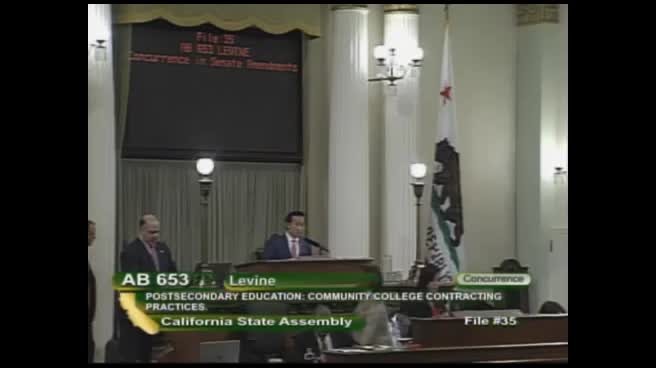 43SEC
Assembly Floor
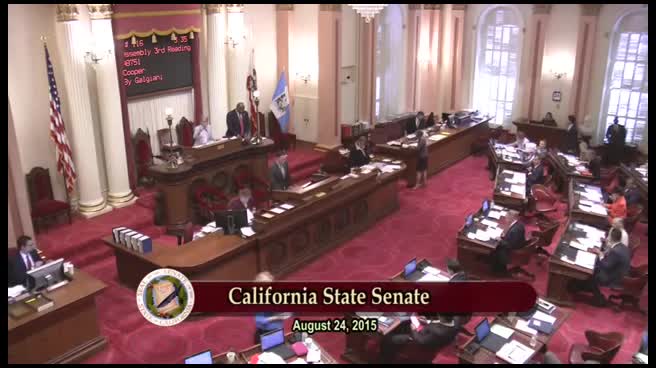 1MIN
Senate Floor
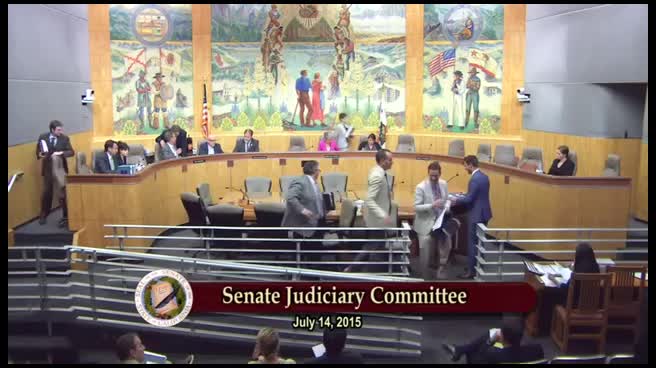 3MIN
Senate Standing Committee on Judiciary
Bill Author

Bill Co-Author(s):
