AB 884: Legislature: legislative information: public use.
- Session Year: 2015-2016
- House: Assembly
- Latest Version Date: 2016-09-22
Existing law prohibits a television signal generated by the Assembly from being used for any political or commercial purpose, including, but not limited to, any campaign for elective public office or any campaign supporting or opposing a ballot proposition submitted to the electors. Existing law provides that a person or organization who violates this prohibition is guilty of a misdemeanor.
This bill would repeal these provisions.
Existing law requires the Legislative Counsel, with the advice of the Assembly Committee on Rules and the Senate Committee on Rules, to make certain information available to the public in electronic form, including, among other things, the text of each bill introduced in each current legislative session, including each amended, enrolled, and chaptered form of each bill. Existing law provides that no actions taken pursuant to these requirements alter or relinquish any copyright or other proprietary interest or entitlement of the State of California in the information made available to the public.
This bill would place the information that the Legislative Counsel makes available to the public pursuant to these provisions within the public domain and would provide that the State of California retains no copyright or other proprietary interest in that information.
This bill would declare that it is to take effect immediately as an urgency statute.
Existing law prohibits a television signal generated by the Assembly from being used for any political or commercial purpose, including, but not limited to, any campaign for elective public office or any campaign supporting or opposing a ballot proposition submitted to the electors. Existing law provides that a person or organization who violates this prohibition is guilty of a misdemeanor.
This bill would repeal these provisions.
Existing law requires the Legislative Counsel, with the advice of the Assembly Committee on Rules and the Senate Committee on Rules, to make certain information available to the public in electronic form, including, among other things, the text of each bill introduced in each current legislative session, including each amended, enrolled, and chaptered form of each bill. Existing law provides that no actions taken pursuant to these requirements alter or relinquish any copyright or other proprietary interest or entitlement of the State of California in the information made available to the public.
This bill would repeal the prohibition against using Assembly-generated television signals for political or commercial purposes. The bill would require the Legislature to cause audiovisual recordings to be made of all open and public proceedings of each house of the Legislature and the committees thereof, as specified. The bill would require those recordings to be posted on the Internet by the Legislative Counsel within one business day after the proceeding being recorded has been recessed or adjourned for the day. The bill would require a recording posted on the Internet to be retrievable in a perceivable format for the duration of the biennial session in which the recording is made and the two biennial sessions immediately following. The bill would require the Legislative Counsel to preserve and secure these recordings in an electronic form and store them in an archive in a retrievable and perceivable format for not less than 20 years. The bill would also authorize the televised or other audiovisual recordings of the public proceedings of each house of the Legislature and the committees thereof to be used by the public without the imposition of any fee due to the State or any public agency or public corporation thereof.
The bill would recast the provisions relating to state copyright and proprietary interests in information made publicly available by the Legislative Counsel and would instead provide that the information made available to the public, as specified, is within the public domain.
This bill would specify that it is contingent upon voter approval of a specified constitutional amendment at the November 8, 2016, statewide general election.
This bill would place the information that the Legislative Counsel makes available to the public pursuant to these provisions within the public domain and would provide that the State of California retains no copyright or other proprietary interest in that information.
This bill would declare that it is to take effect immediately as an urgency statute.
Existing law prohibits a television signal generated by the Assembly from being used for any political or commercial purpose, including, but not limited to, any campaign for elective public office or any campaign supporting or opposing a ballot proposition submitted to the electors. Existing law provides that a person or organization who violates this prohibition is guilty of a misdemeanor.
Existing law requires the Legislative Counsel, with the advice of the Assembly Committee on Rules and the Senate Committee on Rules, to make certain information available to the public in electronic form, including, among other things, the text of each bill introduced in each current legislative session, including each amended, enrolled, and chaptered form of each bill. Existing law provides that no actions taken pursuant to these requirements alter or relinquish any copyright or other proprietary interest or entitlement of the State of California in the information made available to the public.
This bill would repeal the prohibition against using Assembly-generated television signals for political or commercial purposes. The bill would require the Legislature to cause audiovisual recordings to be made of all open and public proceedings of each house of the Legislature and the standing committees thereof, as specified. The bill would require those recordings to be posted on the Internet by the Legislative Counsel within one business day after the proceeding being recorded has been recessed or adjourned for the day. The bill would require a posted recording posted on the Internet to be retrievable in a perceivable format for the duration of the biennial session in which the recording is made and the biennial session two biennial sessions immediately following. The bill would require the Legislative Counsel to preserve and secure these recordings in an electronic form and store them in an archive in a retrievable and perceivable format for not less than 20 years. The bill would also authorize the televised or other audiovisual recordings of the public proceedings of each house of the Legislature and the standing committees thereof to be used for any lawful purpose and by the public without the imposition of any fee due to the State or any public agency or public corporation thereof.
The bill would recast the provisions relating to state copyright and proprietary interests in information made publicly available by the Legislative Counsel and would instead provide that the information made available to the public, as specified, is within the public domain.
This bill would specify that it is contingent upon voter approval of a specified constitutional amendment at the November 8, 2016, statewide general election.
This bill would declare that it is to take effect immediately as an urgency statute.
Existing law prohibits a television signal generated by the Assembly from being used for any political or commercial purpose, including, but not limited to, any campaign for elective public office or any campaign supporting or opposing a ballot proposition submitted to the electors. Existing law provides that a person or organization who violates this prohibition is guilty of a misdemeanor.
Existing law requires the Legislative Counsel, with the advice of the Assembly Committee on Rules and the Senate Committee on Rules, to make certain information available to the public in electronic form, including, among other things, the text of each bill introduced in each current legislative session, including each amended, enrolled, and chaptered form of each bill.
This bill would repeal the prohibition against using Assembly-generated television signals for political or commercial purposes. The bill would require the Legislature to cause audiovisual recordings to be made of all open and public proceedings of each house of the Legislature and the standing committees thereof. The bill would require those recordings to be posted on the Internet by the Legislative Counsel within one business day after the proceeding being recorded has been recessed or adjourned for the day. The bill would require a posted recording to be retrievable in a perceivable format for the duration of the biennial session in which the recording is made and the biennial session immediately following. The bill would require the Legislative Counsel to preserve and secure these recordings in an electronic form and store them in an archive for not less than 20 years. The bill would also authorize the televised or other audiovisual recordings of the public proceedings of each house of the Legislature and the standing committees thereof to be used for any lawful purpose and without the imposition of any fee due to the State or any public agency or public corporation thereof.
This bill would specify that it is contingent upon voter approval of a specified constitutional amendment at the November 8, 2016, statewide general election.
This bill would declare that it is to take effect immediately as an urgency statute.
Existing law requires the Attorney General to provide a ballot label and a ballot title for each measure to be submitted to the voters at a statewide election, and requires the Attorney General to prepare as part of the ballot title a summary of the chief purposes and points of each statewide ballot measure that does not exceed 100 words.
This bill would require the Attorney General, if he or she determines during preparation of the circulating title and summary for a statewide initiative measure that the measure would likely result in a violation of an individuals constitutional rights, to include a specified statement in the title and summary. The bill would specify that the statement does not count toward the 100-word limit and would authorize any elector to seek a writ of mandate challenging the inclusion of the statement.
(1)Existing law requires the proponents of a proposed ballot initiative or referendum to pay a fee of $200 to the Attorney General for preparation of a circulating title and summary.
This bill would increase the fee from $200 to $1,000, and would authorize the Attorney General, on an annual basis, to determine the actual costs of preparing the title and summary and increase the fee to a maximum of $5,000 to recover the full cost of preparing the title and summary.
(2)Existing
Existing law requires the Attorney General to provide a ballot label and a ballot title for each measure to be submitted to the voters at a statewide election, and requires the Attorney General to prepare as part of the ballot title a summary of the chief purposes and points of each statewide ballot measure as part of the ballot title. that does not exceed 100 words.
This bill would require the Attorney General, if he or she determines during preparation of the circulating title and summary for a statewide initiative measure that the measure would likely result in a violation of an individuals constitutional rights, to include a specified statement in the title and summary. The bill would specify that the statement does not count toward the 100-word limit and would authorize any elector to seek a writ of mandate challenging the inclusion of the statement.
(1)Under the California Public Records Act, statewide, county, city, and district initiative, referendum, and recall petitions, certain other petitions, and related memoranda are not public records and are not open to inspection, except as specified.
(1)Existing law requires the proponents of a proposed ballot initiative or referendum to pay a fee of $200 to the Attorney General for preparation of a circulating title and summary.
This bill would create an exception to that exemption for petitions for statewide initiatives that the Attorney General has determined would likely result in a violation of an individuals constitutional rights, thereby making those petitions subject to inspection by the public. By requiring local agencies to produce additional records for inspection, this bill would impose a state-mandated local program. increase the fee from $200 to $1,000, and would authorize the Attorney General, on an annual basis, to determine the actual costs of preparing the title and summary and increase the fee to a maximum of $5,000 to recover the full cost of preparing the title and summary.
(2)Existing law requires the Attorney General to provide a ballot label and a ballot title for each measure to be submitted to the voters at a statewide election, and requires the Attorney General to prepare a summary of the chief purposes and points of each statewide ballot measure as part of the ballot title. Existing law provides for the format of an initiative measure petition and requires, prior to circulation, the placement of specified information across the top of the petition of a proposed initiative measure in 12-point or larger roman boldface type.
This bill would require the Attorney General, if he or she determines during preparation of the circulating title and summary for a statewide initiative measure that the measure would likely result in a violation of an individuals constitutional rights, to include a specified statement in the title and summary. The bill would require, for those measures that the Attorney General determines would likely result in a violation of an individuals constitutional rights, specified information on the petition to be in 16-point or larger roman boldface type, and would require a statement notifying the public that the petition, including information provided by signatories to the petition, is subject to the California Public Records Act.
(3)Existing law prohibits a person from knowingly or willfully permitting the list of signatures on an initiative, referendum, or recall petition to be used for any purpose other than qualification of the initiative or referendum measure or recall question for the ballot, and provides that violation of that provision is a misdemeanor.
This bill would repeal those provisions.
The California Constitution requires local agencies, for the purpose of ensuring public access to the meetings of public bodies and the writings of public officials and agencies, to comply with a statutory enactment that amends or enacts laws relating to public records or open meetings and contains findings demonstrating that the enactment furthers the constitutional requirements relating to this purpose.
This bill would make legislative findings to that effect.
The California Constitution requires the state to reimburse local agencies and school districts for certain costs mandated by the state. Statutory provisions establish procedures for making that reimbursement.
This bill would provide that no reimbursement is required by this act for a specified reason.
(1)Under the California Public Records Act, statewide, county, city, and district initiative, referendum, and recall petitions, certain other petitions, and related memoranda are not public records and are not open to inspection, except as specified.
This bill would create an exception to that exemption for petitions for statewide initiatives that the Attorney General has determined would likely result in a violation of an individuals constitutional rights, thereby making those petitions subject to inspection by the public. By requiring local agencies to produce additional records for inspection, this bill would impose a state-mandated local program.
(2)Existing law requires the Attorney General to provide a ballot label and a ballot title for each measure to be submitted to the voters at a statewide election, and requires the Attorney General to prepare a summary of the chief purposes and points of each statewide ballot measure as part of the ballot title. Existing law provides for the format of an initiative measure petition and requires, prior to circulation, the placement of specified information across the top of the petition of a proposed initiative measure in 12-point or larger roman boldface type.
This bill would require the Attorney General, if he or she determines during preparation of the circulating title and summary for a statewide initiative measure that the measure would likely result in a violation of an individuals constitutional rights, to include a specified statement in the title and summary. The bill would require, for those measures that the Attorney General determines would likely result in a violation of an individuals constitutional rights, specified information on the petition to be in 16-point or larger roman boldface type, and would require a statement notifying the public that the petition, including information provided by signatories to the petition, is subject to the California Public Records Act.
(3)Existing law prohibits a person from knowingly or willfully permitting the list of signatures on an initiative, referendum, or recall petition to be used for any purpose other than qualification of the initiative or referendum measure or recall question for the ballot, and provides that violation of that provision is a misdemeanor.
This bill would repeal those provisions.
The California Constitution requires local agencies, for the purpose of ensuring public access to the meetings of public bodies and the writings of public officials and agencies, to comply with a statutory enactment that amends or enacts laws relating to public records or open meetings and contains findings demonstrating that the enactment furthers the constitutional requirements relating to this purpose.
This bill would make legislative findings to that effect.
The California Constitution requires the state to reimburse local agencies and school districts for certain costs mandated by the state. Statutory provisions establish procedures for making that reimbursement.
This bill would provide that no reimbursement is required by this act for a specified reason.
Existing law, the Sex Equity in Education Act, states the policy of the state that elementary and secondary school classes and courses, including nonacademic and elective classes and courses, be conducted without regard to the sex of the pupil enrolled in these classes or courses. Existing federal law, known as Title IX, prohibits a person, on the basis of sex, from being excluded from participation in, being denied the benefits of, or being subject to, discrimination under any education program or activity receiving federal financial assistance.
An article of existing law, entitled Athletes Bill of Rights, requires the State Department of Education to post on its Internet Web site, in both English and Spanish and at a reading level that may be comprehended by pupils in high school, the information set forth in the federal regulations implementing Title IX. This existing article also enumerates the rights available to a pupil relating to gender equity in athletics.
This bill would change the title of the existing article referenced above to Gender Equity in Education.
Notwithstanding subdivision (g) of Section 10248, the information that the Legislative Counsel makes available to the public pursuant to Section 10248 is within the public domain and the State of California retains no copyright or other proprietary interest in that information.
SEC. 3.This act is an urgency statute necessary for the immediate preservation of the public peace, health, or safety within the meaning of Article IV of the Constitution and shall go into immediate effect. The facts constituting the necessity are:
Because of the importance of ensuring, without unnecessary and undue delay, public access to and use of Assembly-generated television signals and legislative information that the Legislative Counsel makes available in electronic form, it is necessary that this bill take effect immediately.
(a)(1)Commencing on January 1, 2018, the Legislature shall do all of the following with respect to its open and public proceedings:
(A)Cause audiovisual recordings to be made of all floor sessions of each house of the Legislature, the committee proceedings thereof at which a vote is taken or other action is recorded, and the committee proceedings thereof held in the State Capitol Building regardless of whether a vote is taken or an action is recorded.
(B)Make reasonable efforts to cause audiovisual recordings to be made of all committee proceedings held outside of the State Capitol Building at which no vote is taken and no action is recorded.
(C)Make reasonable efforts to broadcast to the public, in real time, all proceedings of the Legislature and the committees thereof that are held in the State Capitol Building.
(2)The Legislative Counsel shall post all recordings made pursuant to subdivision (a) on the Internet within one business day after the proceeding being recording has been recessed or adjourned for the day. Recordings posted on the Internet shall be retrievable in a perceivable format for public use for the duration of both the biennial session of the Legislature in which the recording is made and the two biennial sessions immediately following.
(3)The Legislative Counsel shall preserve and secure all recordings made pursuant to subdivision (a) in an electronic form and store them in an archive in a retrievable and perceivable format for not less than 20 years. Archived recordings shall be reasonably available for use by the public.
(b)Televised or other audiovisual recordings of the public proceedings of each house of the Legislature and the standing committees thereof may be used by the public without the imposition of any fee due to the state or any public agency or public corporation thereof.
SEC. 3.Section 10248 of the Government Code is amended to read:10248.(a)The Legislative Counsel shall, with the advice of the Assembly Committee on Rules and the Senate Committee on Rules, make all of the following information available to the public in electronic form:
(1)The legislative calendar, the schedule of legislative committee hearings, a list of matters pending on the floors of both houses of the Legislature, and a list of the committees of the Legislature and their members.
(2)The text of each bill introduced in each current legislative session, including each amended, enrolled, and chaptered form of each bill.
(3)The bill history of each bill introduced and amended in each current legislative session.
(4)The bill status of each bill introduced and amended in each current legislative session.
(5)All bill analyses prepared by legislative committees in connection with each bill in each current legislative session.
(6)All audiovisual recordings of legislative proceedings that are required to be posted in accordance with paragraph (2) of subdivision (a) of Section 9026.5.
(7)All vote information concerning each bill in each current legislative session.
(8)Any veto message concerning a bill in each current legislative session.
(9)The California Codes.
(10)The California Constitution.
(11)All statutes enacted on or after January 1, 1993.
(b)The information identified in subdivision (a) shall be made available to the public by means of access by way of the largest nonproprietary, nonprofit cooperative public computer network. The information shall be made available in one or more formats and by one or more means in order to provide the greatest feasible access to the general public in this state. Any person who accesses the information may access all or any part of the information. The information may also be made available by any other means of access that would facilitate public access to the information. The information that is maintained in the legislative information system that is operated and maintained by the Legislative Counsel shall be made available in the shortest feasible time after the information is available in the information system. The information that is not maintained in the information system shall be made available in the shortest feasible time after it is available to the Legislative Counsel.
(c)Any documentation that describes the electronic digital formats of the information identified in subdivision (a) and is available to the public shall be made available by means of access by way of the computer network specified in subdivision (b).
(d) Personal information concerning a person who accesses the information may be maintained only for the purpose of providing service to the person.
(e)No fee or other charge may be imposed by the Legislative Counsel as a condition of accessing the information that is accessible by way of the computer network specified in subdivision (b).
(f)The electronic public access provided by way of the computer network specified in subdivision (b) shall be in addition to other electronic or print distribution of the information.
(g)The information made available to the public pursuant to this section is within the public domain.
SEC. 4.This act shall become operative only if Senate Constitutional Amendment No. 14 of the 201516 Regular Session is approved by the voters at the November 8, 2016, statewide general election.
SEC. 2.Section 10248.5 is added to the Government Code, to read:10248.5.Notwithstanding subdivision (g) of Section 10248, the information that the Legislative Counsel makes available to the public pursuant to Section 10248 is within the public domain and the State of California retains no copyright or other proprietary interest in that information.
SEC. 5.SEC. 3.This act is an urgency statute necessary for the immediate preservation of the public peace, health, or safety within the meaning of Article IV of the Constitution and shall go into immediate effect. The facts constituting the necessity are:
Because of the importance of ensuring public access to all legislative proceedings, it is necessary that this bill take effect immediately.
Because of the importance of ensuring, without unnecessary and undue delay, public access to and use of Assembly-generated television signals and legislative information that the Legislative Counsel makes available in electronic form, it is necessary that this bill take effect immediately.
(a)(1)Commencing on January 1 of the second calendar year after this section is operative, January 1, 2018, the Legislature shall cause audiovisual recordings to be made of all open and public proceedings of each house of the Legislature and the standing committees thereof. do all of the following with respect to its open and public proceedings:
(A)Cause audiovisual recordings to be made of all floor sessions of each house of the Legislature, the committee proceedings thereof at which a vote is taken or other action is recorded, and the committee proceedings thereof held in the State Capitol Building regardless of whether a vote is taken or an action is recorded.
(B)Make reasonable efforts to cause audiovisual recordings to be made of all committee proceedings held outside of the State Capitol Building at which no vote is taken and no action is recorded.
(C)Make reasonable efforts to broadcast to the public, in real time, all proceedings of the Legislature and the committees thereof that are held in the State Capitol Building.
(2)The Legislative Counsel shall post all recordings made pursuant to subdivision (a) on the Internet within one business day after the proceeding being recording has been recessed or adjourned for the day. Posted recordings Recordings posted on the Internet shall be retrievable in a perceivable format for public use for the duration of both the biennial session of the Legislature in which the recording is made and the biennial session two biennial sessions immediately following.
(3)The Legislative Counsel shall preserve and secure all recordings made pursuant to subdivision (a) in an electronic form and store them in an archive in a retrievable and perceivable format for not less than 20 years. Archived recordings shall be reasonably available for use by the public in the medium in which the recording was originally made. public.
(b)Televised or other audiovisual recordings of the public proceedings of each house of the Legislature and the standing committees thereof may be used for any lawful purpose and by the public without the imposition of any fee due to the state or any public agency or public corporation thereof.
SEC. 3.Section 10248 of the Government Code is amended to read:10248.(a)The Legislative Counsel shall, with the advice of the Assembly Committee on Rules and the Senate Committee on Rules, make all of the following information available to the public in electronic form:
(1)The legislative calendar, the schedule of legislative committee hearings, a list of matters pending on the floors of both houses of the Legislature, and a list of the committees of the Legislature and their members.
(2)The text of each bill introduced in each current legislative session, including each amended, enrolled, and chaptered form of each bill.
(3)The bill history of each bill introduced and amended in each current legislative session.
(4)The bill status of each bill introduced and amended in each current legislative session.
(5)All bill analyses prepared by legislative committees in connection with each bill in each current legislative session.
(6)All audiovisual recordings of legislative proceedings that have been caused to be made by the Legislature are required to be posted in accordance with paragraph (2) of subdivision (a) of Section 9026.5.
(7)All vote information concerning each bill in each current legislative session.
(8)Any veto message concerning a bill in each current legislative session.
(9)The California Codes.
(10)The California Constitution.
(11)All statutes enacted on or after January 1, 1993.
(b)The information identified in subdivision (a) shall be made available to the public by means of access by way of the largest nonproprietary, nonprofit cooperative public computer network. The information shall be made available in one or more formats and by one or more means in order to provide the greatest feasible access to the general public in this state. Any person who accesses the information may access all or any part of the information. The information may also be made available by any other means of access that would facilitate public access to the information. The information that is maintained in the legislative information system that is operated and maintained by the Legislative Counsel shall be made available in the shortest feasible time after the information is available in the information system. The information that is not maintained in the information system shall be made available in the shortest feasible time after it is available to the Legislative Counsel.
(c)Any documentation that describes the electronic digital formats of the information identified in subdivision (a) and is available to the public shall be made available by means of access by way of the computer network specified in subdivision (b).
(d) Personal information concerning a person who accesses the information may be maintained only for the purpose of providing service to the person.
(e)No fee or other charge may be imposed by the Legislative Counsel as a condition of accessing the information that is accessible by way of the computer network specified in subdivision (b).
(f)The electronic public access provided by way of the computer network specified in subdivision (b) shall be in addition to other electronic or print distribution of the information.
(g)No action taken pursuant to this section shall be deemed to alter or relinquish any copyright or other proprietary interest or entitlement of the State of California relating to any of the information made available pursuant to this section.
(g)The information made available to the public pursuant to this section is within the public domain.
SEC. 4.This act shall become operative only if Senate Constitutional Amendment No. 14 of the 201516 Regular Session is approved by the voters at the November 8, 2016, statewide general election.
SEC. 5.This act is an urgency statute necessary for the immediate preservation of the public peace, health, or safety within the meaning of Article IV of the Constitution and shall go into immediate effect. The facts constituting the necessity are:
Because of the importance of ensuring public access to all legislative proceedings, it is necessary that this bill take effect immediately.
(a)No television signal generated by the Assembly shall be used for any political or commercial purpose, including, but not limited to, any campaign for elective public office or any campaign supporting or opposing a ballot proposition submitted to the electors.
As used in this section, commercial purpose does not include either of the following:
(1)The use of any television signal generated by the Assembly by an accredited news organization or any nonprofit organization for educational or public affairs programming.
(2)As authorized by the Assembly, the transmission by a third party to paid subscribers of an unedited video feed of the television signal generated by the Assembly.
(b)Any person or organization who violates this section is guilty of a misdemeanor.
SEC. 2.Section 9026.5 is added to the Government Code, to read:9026.5.(a)(1)Commencing on January 1 of the second calendar year after this section is operative, the Legislature shall cause audiovisual recordings to be made of all open and public proceedings of each house of the Legislature and the standing committees thereof.
(2)The Legislative Counsel shall post all recordings made pursuant to subdivision (a) on the Internet within one business day after the proceeding being recording has been recessed or adjourned for the day. Posted recordings shall be retrievable in a perceivable format for public use for the duration of both the biennial session of the Legislature in which the recording is made and the biennial session immediately following.
(3)The Legislative Counsel shall preserve and secure all recordings made pursuant to subdivision (a) in an electronic form and store them in an archive for not less than 20 years. Archived recordings shall be reasonably available for use by the public in the medium in which the recording was originally made.
(b)Televised or other audiovisual recordings of the public proceedings of each house of the Legislature and the standing committees thereof may be used for any lawful purpose and without the imposition of any fee due to the state or any public agency or public corporation thereof.
SEC. 3.Section 10248 of the Government Code is amended to read:10248.(a)The Legislative Counsel shall, with the advice of the Assembly Committee on Rules and the Senate Committee on Rules, make all of the following information available to the public in electronic form:
(1)The legislative calendar, the schedule of legislative committee hearings, a list of matters pending on the floors of both houses of the Legislature, and a list of the committees of the Legislature and their members.
(2)The text of each bill introduced in each current legislative session, including each amended, enrolled, and chaptered form of each bill.
(3)The bill history of each bill introduced and amended in each current legislative session.
(4)The bill status of each bill introduced and amended in each current legislative session.
(5)All bill analyses prepared by legislative committees in connection with each bill in each current legislative session.
(6)All audiovisual recordings of legislative proceedings that have been caused to be made by the Legislature in accordance with paragraph (2) of subdivision (a) of Section 9026.5.
(6)
(7)All vote information concerning each bill in each current legislative session.
(7)
(8)Any veto message concerning a bill in each current legislative session.
(8)
(9)The California Codes.
(9)
(10)The California Constitution.
(10)
(11)All statutes enacted on or after January 1, 1993.
(b)The information identified in subdivision (a) shall be made available to the public by means of access by way of the largest nonproprietary, nonprofit cooperative public computer network. The information shall be made available in one or more formats and by one or more means in order to provide the greatest feasible access to the general public in this state. Any person who accesses the information may access all or any part of the information. The information may also be made available by any other means of access that would facilitate public access to the information. The information that is maintained in the legislative information system that is operated and maintained by the Legislative Counsel shall be made available in the shortest feasible time after the information is available in the information system. The information that is not maintained in the information system shall be made available in the shortest feasible time after it is available to the Legislative Counsel.
(c)Any documentation that describes the electronic digital formats of the information identified in subdivision (a) and is available to the public shall be made available by means of access by way of the computer network specified in subdivision (b).
(d) Personal information concerning a person who accesses the information may be maintained only for the purpose of providing service to the person.
(e)No fee or other charge may be imposed by the Legislative Counsel as a condition of accessing the information that is accessible by way of the computer network specified in subdivision (b).
(f)The electronic public access provided by way of the computer network specified in subdivision (b) shall be in addition to other electronic or print distribution of the information.
(g)No action taken pursuant to this section shall be deemed to alter or relinquish any copyright or other proprietary interest or entitlement of the State of California relating to any of the information made available pursuant to this section.
SEC. 4.This act shall become operative only if Senate Constitutional Amendment No. 14 of the 201516 Regular Session is approved by the voters at the November 8, 2016, statewide general election.
SEC. 5.This act is an urgency statute necessary for the immediate preservation of the public peace, health, or safety within the meaning of Article IV of the Constitution and shall go into immediate effect. The facts constituting the necessity are:
Because of the importance of ensuring public access to all legislative proceedings, it is necessary that this bill take effect immediately.
SECTION 1.Section 9004 of the Elections Code is amended to read:9004.(a)Upon receipt of the text of a proposed initiative measure, and after the public review period provided for in Section 9002, the Attorney General shall prepare a circulating title and summary of the chief purposes and points of the proposed measure. The circulating title and summary shall not exceed 100 words. The Attorney General shall also provide a unique numeric identifier for each proposed initiative measure. The circulating title and summary shall be prepared in the manner provided for the preparation of ballot titles and summaries in Article 5 (commencing with Section 9050), the provisions of which, in regard to the preparation, filing, and settlement of ballot titles and summaries, apply to the circulating title and summary.
(b)(1)If, during his or her preparation of the circulating title and summary for a proposed initiative measure, the Attorney General determines that the measure would likely result in a violation of an individuals constitutional rights, he or she shall include the following statement in the circulating title and summary:
The Attorney General has determined that this initiative measure, if approved by the voters, would likely result in a violation of an individuals rights under the United States Constitution or the California Constitution.
(2)If the Attorney General includes the statement described in paragraph (1) in the circulating title and summary, that statement does not count toward the 100-word limit on the length of the circulating title and summary, as provided in subdivision (a).
(3)If the Attorney General includes the statement described in paragraph (1) in the circulating title and summary, any elector may seek a writ of mandate pursuant to Section 13314 challenging the inclusion of the statement.
(c)The Attorney General shall provide a copy of the circulating title and summary and its unique numeric identifier to the proponents and to the Secretary of State within 15 days after receipt of the fiscal estimate or opinion prepared by the Department of Finance and the Legislative Analyst pursuant to Section 9005. The date the copy is delivered or mailed to the proponents is the official summary date.
(d)Upon receipt of the circulating title and summary from the Attorney General, the Secretary of State shall, within one business day, notify the proponents and county elections official of each county of the official summary date and provide a copy of the circulating title and summary to each county elections official. This notification shall also include a complete schedule showing the maximum filing deadline, and the certification deadline by the counties to the Secretary of State.
(a)Before the circulation of an initiative or referendum petition for signatures, the text of the proposed measure shall be submitted to the Attorney General with a written request that a circulating title and summary of the chief purpose and points of the proposed measure be prepared. The electors presenting the request shall be known as the proponents. The Attorney General shall preserve the written request until after the next general election.
(b)Each and every proponent of a proposed initiative measure shall, at the time of submitting the text of the proposed measure, provide both of the following:
(1)An original signed certification stating that I, (insert name), declare under penalty of perjury that I am a citizen of the United States, 18 years of age or older, and a resident of (insert county), California.
(2)Public contact information.
(c)The proponents of an initiative measure, at the time of submitting the text of the proposed measure to the Attorney General, shall pay a fee of one thousand dollars ($1,000) to the Attorney General that shall be placed in a trust fund in the office of the Treasurer.
(1)On an annual basis, the Attorney General may determine the actual costs of preparing the title and summary and increase the fee to a maximum of five thousand dollars ($5,000) to recover the full cost of preparing the title and summary.
(2)If the measure qualifies for the ballot within two years from the date the summary is furnished to the proponents, the fee described in this subdivision shall be refunded to the proponents. If the measure does not qualify within that period, the fee shall be immediately paid into the General Fund of the state.
(d)All referenda and proposed initiative measures must be submitted to the Attorney Generals Initiative Coordinator located in the Sacramento Attorney Generals Office via U.S. Postal Service, alternative mail service, or personal delivery. Only printed documents will be accepted, facsimile or e-mail delivery will not be accepted.
(e)The Attorney Generals office shall not deem a request for a circulating title and summary submitted until all of the requirements of this section are met.
SEC. 2.SECTION 1.Section 9004 of the Elections Code is amended to read:9004.(a)Upon receipt of the text of a proposed initiative measure, and after the public review period provided for in Section 9002, the Attorney General shall prepare a circulating title and summary of the chief purposes and points of the proposed measure. The circulating title and summary shall not exceed 100 words. The Attorney General shall also provide a unique numeric identifier for each proposed initiative measure. The circulating title and summary shall be prepared in the manner provided for the preparation of ballot titles and summaries in Article 5 (commencing with Section 9050), the provisions of which, in regard to the preparation, filing, and settlement of ballot titles and summaries, are applicable apply to the circulating title and summary.
(b)(1)If, during his or her preparation of the circulating title and summary for a proposed initiative measure, the Attorney General determines that the measure would likely result in a violation of an individuals constitutional rights, he or she shall include the following statement in the circulating title and summary:
The Attorney General has determined that this initiative measure, if approved by the voters, would likely result in a violation of an individuals rights under the United States Constitution or the California Constitution.
(2)If the Attorney General includes the statement described in paragraph (1) in the circulating title and summary, that statement does not count toward the 100-word limit on the length of the circulating title and summary, as provided in subdivision (a).
(3)If the Attorney General includes the statement described in paragraph (1) in the circulating title and summary, any elector may seek a writ of mandate pursuant to Section 13314 challenging the inclusion of the statement.
(c)The Attorney General shall provide a copy of the circulating title and summary and its unique numeric identifier to the proponents and to the Secretary of State within 15 days after receipt of the fiscal estimate or opinion prepared by the Department of Finance and the Legislative Analyst pursuant to Section 9005. The date the copy is delivered or mailed to the proponents is the official summary date.
(d)Upon receipt of the circulating title and summary from the Attorney General, the Secretary of State shall, within one business day, notify the proponents and county elections official of each county of the official summary date and provide a copy of the circulating title and summary to each county elections official. This notification shall also include a complete schedule showing the maximum filing deadline, and the certification deadline by the counties to the Secretary of State.
(a)Notwithstanding Sections 6252 and 6253, and except as provided by subdivision (d), statewide, county, city, and district initiative, referendum, and recall petitions, petitions circulated pursuant to Section 5091 of the Education Code, petitions for the reorganization of school districts submitted pursuant to Article 1 (commencing with Section 35700) of Chapter 4 of Part 21 of the Education Code, petitions for the reorganization of community college districts submitted pursuant to Part 46 (commencing with Section 74000) of the Education Code and all memoranda prepared by the county elections officials in the examination of the petitions indicating which registered voters have signed particular petitions shall not be deemed public records and shall not be open to inspection except by the public officer or public employees who have the duty of receiving, examining, or preserving the petitions or who are responsible for the preparation of that memoranda and, if the petition is found to be insufficient, by the proponents of the petition and the representatives of the proponents as may be designated by the proponents in writing in order to determine which signatures were disqualified and the reasons for disqualification. However, the Attorney General, the Secretary of State, the Fair Political Practices Commission, a district attorney, a school district or a community college district attorney, and a city attorney shall be permitted to examine the material upon approval of the appropriate superior court.
(b)If the proponents of a petition are permitted to examine the petition and memoranda, the examination shall commence not later than 21 days after the date of certification of insufficiency.
(c)As used in this section:
(1)Petition means any petition to which a registered voter has affixed his or her signature.
(2)Proponents of the petition means the following:
(A)For statewide initiative and referendum measures, the person or persons who submit a draft of a petition proposing the measure to the Attorney General with a request that he or she prepare a title and summary of the chief purpose and points of the proposed measure.
(B)For other initiative and referenda on measures, the person or persons who publish a notice of intention to circulate petitions, or, where publication is not required, who file petitions with the elections official.
(C)For recall measures, the person or persons defined in Section 343 of the Elections Code.
(D)For petitions circulated pursuant to Section 5091 of the Education Code, the person or persons having charge of the petition who submit the petition to the county superintendent of schools.
(E)For petitions circulated pursuant to Article 1 (commencing with Section 35700) of Chapter 4 of Part 21 of Division 3 of Title 2 of the Education Code, the person or persons designated as chief petitioners under Section 35701 of the Education Code.
(F)For petitions circulated pursuant to Part 46 (commencing with Section 74000) of Division 7 of Title 3 of the Education Code, the person or persons designated as chief petitioners under Sections 74102, 74133, and 74152 of the Education Code.
(d)This section does not apply to petitions for statewide initiative measures that the Attorney General has determined, in accordance with subdivision (b) of Section 9004 of the Elections Code, would likely result in a violation of an individuals constitutional rights.
SECTION 1.Section 9001 of the Elections Code is amended to read:9001.(a)Prior to Before the circulation of any an initiative or referendum petition for signatures, the text of the proposed measure shall be submitted to the Attorney General with a written request that a circulating title and summary of the chief purpose and points of the proposed measure be prepared. The electors presenting the request shall be known as the proponents. The Attorney General shall preserve the written request until after the next general election.
(b)Each and every proponent of any a proposed initiative measure shall, at the time of submitting the text of the proposed measure, provide both of the following:
(1)An original signed certification stating that I, (insert name), declare under penalty of perjury that I am a citizen of the United States, 18 years of age or older, and a resident of (insert county), California.
(2)Public contact information.
(c)The proponents of any an initiative measure, at the time of submitting the text of the proposed measure to the Attorney General, shall pay a fee of two hundred dollars ($200), which of one thousand dollars ($1,000) to the Attorney General that shall be placed in a trust fund in the office of the Treasurer and refunded to the proponents if the measure qualifies for the ballot within two years from the date the summary is furnished to the proponents. If Treasurer.
(1)On an annual basis, the Attorney General may determine the actual costs of preparing the title and summary and increase the fee to a maximum of five thousand dollars ($5,000) to recover the full cost of preparing the title and summary.
(2)If the measure qualifies for the ballot within two years from the date the summary is furnished to the proponents, the fee described in this subdivision shall be refunded to the proponents. If the measure does not qualify within that period, the fee shall be immediately paid into the General Fund of the state.
(d)All referenda and proposed initiative measures must be submitted to the Attorney Generals Initiative Coordinator located in the Sacramento Attorney Generals Office via U.S. Postal Service, alternative mail service, or personal delivery. Only printed documents will be accepted, facsimile or e-mail delivery will not be accepted.
(e)The Attorney Generals office shall not deem a request for a circulating title and summary submitted until all of the requirements of this section are met.
SEC. 2.Section 9004 of the Elections Code is amended to read:9004.(a)Upon receipt of the text of a proposed initiative measure, and after the public review period provided for in Section 9002, the Attorney General shall prepare a circulating title and summary of the chief purposes and points of the proposed measure. The circulating title and summary shall not exceed 100 words. The Attorney General shall also provide a unique numeric identifier for each proposed initiative measure. The circulating title and summary shall be prepared in the manner provided for the preparation of ballot titles and summaries in Article 5 (commencing with Section 9050), the provisions of which, in regard to the preparation, filing, and settlement of ballot titles and summaries, are applicable to the circulating title and summary.
(b)If, during his or her preparation of the circulating title and summary for a proposed initiative measure, the Attorney General determines that the measure would likely result in a violation of an individuals constitutional rights, he or she shall include the following statement in the circulating title and summary:
The Attorney General has determined that this initiative measure, if approved by the voters, would likely result in a violation of an individuals rights under the United States Constitution or the California Constitution.
(c)The Attorney General shall provide a copy of the circulating title and summary and its unique numeric identifier to the proponents and to the Secretary of State within 15 days after receipt of the fiscal estimate or opinion prepared by the Department of Finance and the Legislative Analyst pursuant to Section 9005. The date the copy is delivered or mailed to the proponents is the official summary date.
(d)Upon receipt of the circulating title and summary from the Attorney General, the Secretary of State shall, within one business day, notify the proponents and county elections official of each county of the official summary date and provide a copy of the circulating title and summary to each county elections official. This notification shall also include a complete schedule showing the maximum filing deadline, and the certification deadline by the counties to the Secretary of State.
SEC. 3.Section 9008.5 is added to the Elections Code, to read:9008.5.A proposed initiative measure that the Attorney General has determined, in accordance with subdivision (b) of Section 9004, would likely result in a violation of an individuals constitutional rights shall, prior to circulation, have placed across the top of the petition in 16-point or larger roman boldface type, all of the following:
(a)The Attorney Generals unique numeric identifier placed before the circulating title and summary upon each page where the circulating title and summary is to appear.
(b)The circulating title and summary prepared by the Attorney General upon each page of the petition on which signatures are to appear.
(c)The circulating title and summary prepared by the Attorney General upon each section of the petition preceding the text of the measure.
(d)The circulating title and summary prepared by the Attorney General as required by subdivision (c) shall be preceded by the following statement: Initiative measure to be submitted directly to the voters. This petition, including information provided by signatories to the petition, is subject to the California Public Records Act.
SEC. 4.Section 18650 of the Elections Code is repealed.SEC. 5.The Legislature finds and declares that Section 1 of this act, which amends Section 6253.5 of the Government Code, furthers, within the meaning of paragraph (7) of subdivision (b) of Section 3 of Article I of the California Constitution, the purposes of that constitutional section as it relates to the right of public access to the meetings of local public bodies or the writings of local public officials and local agencies. Pursuant to paragraph (7) of subdivision (b) of Section 3 of Article I of the California Constitution, the Legislature makes the following findings:
Access to information concerning proposed measures to be submitted directly to the voters related to the peoples business is a fundamental and necessary right of every person in this state, and serves to preserve the integrity of the electoral process by combating fraud and fostering government transparency and accountability.
SEC. 6.No reimbursement is required by this act pursuant to Section 6 of Article XIII B of the California Constitution because the only costs that may be incurred by a local agency or school district under this act would result from a legislative mandate that is within the scope of paragraph (7) of subdivision (b) of Section 3 of Article I of the California Constitution.
(a)Notwithstanding Sections 6252 and 6253, and except as provided by subdivision (d), statewide, county, city, and district initiative, referendum, and recall petitions, petitions circulated pursuant to Section 5091 of the Education Code, petitions for the reorganization of school districts submitted pursuant to Article 1 (commencing with Section 35700) of Chapter 4 of Part 21 of the Education Code, petitions for the reorganization of community college districts submitted pursuant to Part 46 (commencing with Section 74000) of the Education Code and all memoranda prepared by the county elections officials in the examination of the petitions indicating which registered voters have signed particular petitions shall not be deemed to be public records and shall not be open to inspection except by the public officer or public employees who have the duty of receiving, examining examining, or preserving the petitions or who are responsible for the preparation of that memoranda and, if the petition is found to be insufficient, by the proponents of the petition and the representatives of the proponents as may be designated by the proponents in writing in order to determine which signatures were disqualified and the reasons therefor. for disqualification. However, the Attorney General, the Secretary of State, the Fair Political Practices Commission, a district attorney, a school district or a community college district attorney, and a city attorney shall be permitted to examine the material upon approval of the appropriate superior court.
If
(b)If the proponents of a petition are permitted to examine the petition and memoranda, the examination shall commence not later than 21 days after the date of certification of insufficiency.
(a)
(c)As used in this section, petition shall mean section:
(1)Petition means any petition to which a registered voter has affixed his or her signature.
(b)As used in this section proponents of the petition
(2)Proponents of the petition means the following:
(1)
(A)For statewide initiative and referendum measures, the person or persons who submit a draft of a petition proposing the measure to the Attorney General with a request that he or she prepare a title and summary of the chief purpose and points of the proposed measure.
(2)
(B)For other initiative and referenda on measures, the person or persons who publish a notice of intention to circulate petitions, or, where publication is not required, who file petitions with the elections official.
(3)
(C)For recall measures, the person or persons defined in Section 343 of the Elections Code.
(4)
(D)For petitions circulated pursuant to Section 5091 of the Education Code, the person or persons having charge of the petition who submit the petition to the county superintendent of schools.
(5)
(E)For petitions circulated pursuant to Article 1 (commencing with Section 35700) of Chapter 4 of Part 21 of Division 3 of Title 2 of the Education Code, the person or persons designated as chief petitioners under Section 35701 of the Education Code.
(6)
(F)For petitions circulated pursuant to Part 46 (commencing with Section 74000) of Division 7 of Title 3 of the Education Code, the person or persons designated as chief petitioners under Sections 74102, 74133, and 74152 of the Education Code.
(d)This section does not apply to petitions for statewide initiative measures that the Attorney General has determined, in accordance with subdivision (b) of Section 9004 of the Elections Code, would likely result in a violation of an individuals constitutional rights.
SEC. 2.Section 9004 of the Elections Code is amended to read:9004.(a)Upon receipt of the text of a proposed initiative measure, and after the public review period provided for in Section 9002, the Attorney General shall prepare a circulating title and summary of the chief purposes and points of the proposed measure. The circulating title and summary shall not exceed 100 words. The Attorney General shall also provide a unique numeric identifier for each proposed initiative measure. The circulating title and summary shall be prepared in the manner provided for the preparation of ballot titles and summaries in Article 5 (commencing with Section 9050), the provisions of which, in regard to the preparation, filing, and settlement of ballot titles and summaries, are applicable to the circulating title and summary.
(b)If, during his or her preparation of the circulating title and summary for a proposed initiative measure, the Attorney General determines that the measure would likely result in a violation of an individuals constitutional rights, he or she shall include the following statement in the circulating title and summary:
(b)
The Attorney General has determined that this initiative measure, if approved by the voters, would likely result in a violation of an individuals rights under the United States Constitution or the California Constitution.
(c)The Attorney General shall provide a copy of the circulating title and summary and its unique numeric identifier to the proponents and to the Secretary of State within 15 days after receipt of the fiscal estimate or opinion prepared by the Department of Finance and the Legislative Analyst pursuant to Section 9005. The date the copy is delivered or mailed to the proponents is the official summary date.
(c)
(d)Upon receipt of the circulating title and summary from the Attorney General, the Secretary of State shall, within one business day, notify the proponents and county elections official of each county of the official summary date and provide a copy of the circulating title and summary to each county elections official. This notification shall also include a complete schedule showing the maximum filing deadline, and the certification deadline by the counties to the Secretary of State.
SEC. 3.Section 9008.5 is added to the Elections Code, to read:9008.5.A proposed initiative measure that the Attorney General has determined, in accordance with subdivision (b) of Section 9004, would likely result in a violation of an individuals constitutional rights shall, prior to circulation, have placed across the top of the petition in 16-point or larger roman boldface type, all of the following:
(a)The Attorney Generals unique numeric identifier placed before the circulating title and summary upon each page where the circulating title and summary is to appear.
(b)The circulating title and summary prepared by the Attorney General upon each page of the petition on which signatures are to appear.
(c)The circulating title and summary prepared by the Attorney General upon each section of the petition preceding the text of the measure.
(d)The circulating title and summary prepared by the Attorney General as required by subdivision (c) shall be preceded by the following statement: Initiative measure to be submitted directly to the voters. This petition, including information provided by signatories to the petition, is subject to the California Public Records Act.
SEC. 4.Section 18650 of the Elections Code is repealed.18650.No one shall knowingly or willfully permit the list of signatures on an initiative, referendum, or recall petition to be used for any purpose other than qualification of the initiative or referendum measure or recall question for the ballot, except as provided in Section 6253.5 of the Government Code. Violation of this section is a misdemeanor.
SEC. 5.The Legislature finds and declares that Section 1 of this act, which amends Section 6253.5 of the Government Code, furthers, within the meaning of paragraph (7) of subdivision (b) of Section 3 of Article I of the California Constitution, the purposes of that constitutional section as it relates to the right of public access to the meetings of local public bodies or the writings of local public officials and local agencies. Pursuant to paragraph (7) of subdivision (b) of Section 3 of Article I of the California Constitution, the Legislature makes the following findings:
Access to information concerning proposed measures to be submitted directly to the voters related to the peoples business is a fundamental and necessary right of every person in this state, and serves to preserve the integrity of the electoral process by combating fraud and fostering government transparency and accountability.
SEC. 6.No reimbursement is required by this act pursuant to Section 6 of Article XIII B of the California Constitution because the only costs that may be incurred by a local agency or school district under this act would result from a legislative mandate that is within the scope of paragraph (7) of subdivision (b) of Section 3 of Article I of the California Constitution.
SECTION 1.The heading of Article 10 (commencing with Section 270) of Chapter 2 of Part 1 of Division 1 of Title 1 of the Education Code is amended to read:10.Gender Equity in Education|
Date
|
Status
|
|---|---|
| Jun 30, 2016 | Read third time and amended. Ordered to second reading. |
| May 26, 2015 | Read third time. Passed. Ordered to the Senate. (Ayes 50. Noes 26. Page 1590.) |
| Jun 4, 2015 | Referred to Com. on E. & C.A. |
| Jul 1, 2015 | In committee: Set, first hearing. Hearing canceled at the request of author. |
| Jun 1, 2016 | From committee chair, with author's amendments: Amend, and re-refer to committee. Read second time, amended, and re-referred to Com. on E. & C.A. |
| Jun 9, 2016 | From committee chair, with author's amendments: Amend, and re-refer to committee. Read second time, amended, and re-referred to Com. on APPR. |
| Jun 9, 2016 | From committee: Do pass and re-refer to Com. on APPR. (Ayes 4. Noes 1.) (June 8). Re-referred to Com. on APPR. |
| Jun 13, 2016 | From committee: Do pass. (Ayes 4. Noes 2.) (June 13). |
| Jun 14, 2016 | Read second time. Ordered to third reading. |
| May 26, 2015 | Read third time. Passed. Ordered to the Senate. |
| Aug 1, 2016 | Read second time. Ordered to third reading. |
| Aug 25, 2016 | Read third time. Urgency clause adopted. Passed. Ordered to the Assembly. |
| Aug 25, 2016 | Read third time. Urgency clause adopted. Passed. Ordered to the Assembly. (Ayes 38. Noes 0. Page 5424.). |
| Aug 29, 2016 | In Assembly. Concurrence in Senate amendments pending. |
| Aug 30, 2016 | Urgency clause adopted. Senate amendments concurred in. To Engrossing and Enrolling. |
| Aug 30, 2016 | Urgency clause adopted. Senate amendments concurred in. To Engrossing and Enrolling. (Ayes 80. Noes 0. Page 6468.). |
| Sep 6, 2016 | Enrolled and presented to the Governor at 5:30 p.m. |
| Feb 26, 2015 | Read first time. To print. |
| May 26, 2015 | In Senate. Read first time. To Com. on RLS. for assignment. |
| May 21, 2015 | Read second time. Ordered to third reading. |
| May 20, 2015 | From committee: Do pass. (Ayes 11. Noes 4.) (May 20). |
| May 6, 2015 | Re-referred to Com. on APPR. |
| May 5, 2015 | Read second time and amended. |
| May 4, 2015 | From committee: Amend, and do pass as amended and re-refer to Com. on APPR. (Ayes 5. Noes 1.) (April 29). |
| Apr 23, 2015 | Re-referred to Com. on E. & R. |
| Apr 22, 2015 | From committee chair, with author's amendments: Amend, and re-refer to Com. on E. & R. Read second time and amended. |
| Apr 13, 2015 | From committee: Be re-referred to Com. on E. & R. Re-referred. (Ayes 11. Noes 0.) (April 13). Re-referred to Com. on E. & R. |
| Apr 9, 2015 | Re-referred to Com. on RLS. pursuant to Assembly Rule 96. |
| Apr 7, 2015 | Re-referred to Com. on A.,E.,S.,T., & I.M. |
| Apr 6, 2015 | In committee: Hearing postponed by committee. |
| Apr 6, 2015 | From committee chair, with author's amendments: Amend, and re-refer to Com. on A.,E.,S.,T., & I.M. Read second time and amended. |
| Mar 16, 2015 | Referred to Com. on A.,E.,S.,T., & I.M. |
| Feb 27, 2015 | From printer. May be heard in committee March 29. |
|
Date
|
Description
|
Location
|
Votes
|
|
|---|---|---|---|---|
| Aug 30, 2016 | AB 884 GORDON Concurrence - Urgency Added | Assembly Floor |
Passed |
|
| Aug 25, 2016 | Assembly 3rd Reading AB884 Gordon By Wolk Urgency Clause | Senate Floor |
Passed |
|
| Jun 13, 2016 | Do pass | Senate Standing Committee on Appropriations |
Passed |
|
| Jun 8, 2016 | Do pass, but first be re-referred to the Committee on [Appropriations] | Senate Standing Committee on Elections and Constitutional Amendments |
Passed |
|
| May 26, 2015 | AB 884 RENDON Assembly Third Reading | Assembly Floor |
Passed |
|
| May 20, 2015 | Do pass. | Assembly Standing Committee on Appropriations |
Passed |
|
| Apr 29, 2015 | Do pass as amended and be re-referred to the Committee on [Appropriations] | Assembly Standing Committee on Elections and Redistricting |
Passed |
|
| Apr 13, 2015 | Be re-referred to the Committee on [Elections and Redistricting] | Assembly Standing Committee on Rules |
Passed |
This list shows positions taken on this bill by organizations on the date displayed, which is linked to the original source.
Positions by individuals are not included.
|
Organization
|
Position
|
Date
|
|---|---|---|
| American Civil Liberties Union of California | ** Support | May 20, 2015 |
| American Federation Of State, County And Municipal Employees, Afl-Cio | ** Support | May 20, 2015 |
| California Business Roundtable | ** Against | Aug 25, 2016 |
| California Business Roundtable | ** Support | Aug 25, 2016 |
| California Common Cause | ** Support | Aug 25, 2016 |
| California Legislature Transparency Act | * Against | Jun 8, 2016 |
| California Newspaper Publishers Association | ** Support | Aug 25, 2016 |
| Firearms Policy Coalition | ** Support | Aug 25, 2016 |
| First Amendment Coalition | ** Against | Aug 25, 2016 |
| Former California State Legislator | * Against | Jun 8, 2016 |
| Howard Jarvis Taxpayers Association | ** Against | Aug 25, 2016 |
| League Of Women Voters Of California | * Neutral | Jun 8, 2016 |
| National Federation Of Independent Business | ** Against | Aug 25, 2016 |
CONCURRENCE IN SENATE AMENDMENTS
CSA1 Bill Id:AB 884
Author:(Gordon)
As Amended Ver:June 30, 2016
2/3 vote. Urgency
ASSEMBLY: |
| (May 26, 2015) | SENATE: | 38-0 | (August 25, 2016) |
(vote not relevant)
Original Committee Reference: E&R.
SUMMARY: Requires the title and summary of a state initiative measure to contain a specified disclaimer if the Attorney General determines that the proposed measure would likely result in a violation of an individual's constitutional rights.
The Senate amendments delete the prior version of the bill and do the following:
- Repeal the prohibition against using Assembly-generated television signals for political or commercial purposes.
- Place the information that the Legislative Counsel makes available to the public pursuant to Government Code Section 10248 within the public domain and would provide that the State of California retains no copyright or other proprietary interest in that information.
- Add an urgency clause.
EXISTING LAW:
- Prohibits, pursuant to statute, a television signal generated by the Assembly from being used for any political or commercial purpose, including, but not limited to, any campaign for elective public office or any campaign supporting or opposing a ballot proposition submitted to the electors. A person or organization who violates this prohibition is guilty of a misdemeanor.
- Requires the Legislative Counsel, with the advice of the Assembly Committee on Rules and the Senate Committee on Rules, to make certain information available to the public in electronic form, including, among other things, the text of each bill introduced in each current legislative session, including each amended, enrolled, and chaptered form of each bill. No action taken pursuant to this provision shall be deemed to alter or relinquish any copyright or other proprietary interest or entitlement of the State of California relating to any of the information made available.
FISCAL EFFECT: Unknown.
COMMENTS: According to the author, although the California Constitution currently provides that the proceedings of each house of the Legislature and the committees thereof shall be open and public, few Californians have the ability to attend legislative proceedings in person. Recognizing that most Californians are not able to participate in person, the Legislature has taken steps to provide access to proceedings by recording and broadcasting floor sessions and some committee hearings. Moreover, Legislative Counsel provides the public with electronic access to many legislative publications. This bill updates provisions of California law that currently limit the public use of legislatively-created recordings and documents.
Analysis Prepared by: Nicole Willis / RLS. / (916) 319-2800 FN: 0004992
Office of Senate Floor Analyses (916) 651-1520 Fax: (916) 327-4478 | AB |
THIRD READING
Bill No: AB 884
:
SENATE ELECTIONS & C.A. COMMITTEE: 4-1, 6/8/16
AYES: Allen, Hancock, Hertzberg, Liu
NOES: Anderson
SENATE APPROPRIATIONS COMMITTEE: 4-2, 6/13/16
AYES: Lara, Beall, Hill, McGuire
NOES: Bates, Nielsen
NO VOTE RECORDED: Mendoza
ASSEMBLY FLOOR: Not relevant
SUBJECT: information: public use
DIGEST: This bill repeals the prohibition against using Assembly-generated television signals for political or commercial purposes and requires the Legislature to cause audiovisual recordings to be made of all open and public proceedings of each house of the Legislature and the standing committees thereof.
Senate Floor Amendments of 6/30/16 delete specified provisions from the bill and relocate an existing provision to a new code section.
Existing law:
- Prohibits, pursuant to statute, a television signal generated by the Assembly from being used for any political or commercial purpose, including, but not limited to, any campaign for elective public office or any campaign supporting or opposing a ballot proposition submitted to the electors. A person or organization who violates this prohibition is guilty of a misdemeanor.
- Requires the Legislative Counsel, with the advice of the Assembly Committee on Rules and the Senate Committee on Rules, to make certain information available to the public in electronic form, including, among other things, the text of each bill introduced in each current legislative session, including each amended, enrolled, and chaptered form of each bill. No action taken pursuant to this provision shall be deemed to alter or relinquish any copyright or other proprietary interest or entitlement of the State of California relating to any of the information made available.
This bill:
- Repeals the prohibition against using Assembly-generated television signals for political or commercial purposes.
- Places the information that the Legislative Counsel makes available to the public pursuant to the above provisions within the public domain and would provide that the State of California retains no copyright or other proprietary interest in that information.
- Contains an urgency clause.
Background
Recent Litigation and Proposition 54. In Firearms Policy Coalition v. Harris (2016), the United States District Court Eastern District of California enjoined Section 9026.5 of the Government Code from enforcement citing First Amendment concerns. Section 9026.5 is the statute that contains the prohibition against using Assembly-generated television signals for political or commercial purposes which this bill repeals. The Firearms Policy Coalition case would therefore be rendered moot if this bill is enacted.
Proposition 54, the official title of which is “Legislature. Legislation and Proceedings. Initiative Constitutional Amendment and Statute.” will appear on the November 8, 2016 ballot. According to the official summary, the measure prohibits the Legislature from passing any bill unless published on the Internet for 72 hours before vote, requires the Legislature to record its proceedings and post on the Internet, and authorizes use of the recordings. In authorizing use of the recordings, Proposition 54 also repeals the portion of Section 9026.5 that contains the prohibition against using Assembly-generated television signals for political or commercial purposes.
Comments
- According to the author, although the California Constitution currently provides that the proceedings of each house of the Legislature and the committees thereof shall be open and public, few Californians have the ability to attend legislative proceedings in person. Recognizing that most Californians are not able to participate in person, the Legislature has taken steps to provide access to proceedings by recording and broadcasting floor sessions and some committee hearings. Moreover, Legislative Counsel provides the public with electronic access to many legislative publications. AB 884 updates provisions of California law that currently limit the public use of legislatively-created recordings and documents.
Related/Prior Legislation
SCA 14 (Wolk, 2016), among other things, requires the Legislature to make audiovisual recordings of the proceedings of each house of the Legislature and the standing committees thereof, if those proceedings are required to be open and public.
FISCAL EFFECT: Appropriation: Fiscal Com.: Local:
According to the Senate Appropriations Committee, the Legislature would incur one-time General Fund costs of up to $2 million to purchase audiovisual recording equipment, and about $1 million in ongoing General Fund costs related to personnel and storage of the audiovisual recordings. (Prior version of this bill.)
California Business Roundtable
California Common Cause
California Newspaper Publishers Association
Firearms Policy Coalition
OPPOSITION: (Verified 8/19/16)
First Amendment Coalition
8/19/16 11:37:14
**** END ****
Office of Senate Floor Analyses (916) 651-1520 Fax: (916) 327-4478 | AB |
THIRD READING
Bill No: AB 884
:
SENATE ELECTIONS & C.A. COMMITTEE: 4-1, 6/8/16
AYES: Allen, Hancock, Hertzberg, Liu
NOES: Anderson
SENATE APPROPRIATIONS COMMITTEE: 4-2, 6/13/16
AYES: Lara, Beall, Hill, McGuire
NOES: Bates, Nielsen
NO VOTE RECORDED: Mendoza
ASSEMBLY FLOOR: Not relevant
SUBJECT: information: public use
DIGEST: This bill repeals the prohibition against using Assembly-generated television signals for political or commercial purposes and requires the Legislature to cause audiovisual recordings to be made of all open and public proceedings of each house of the Legislature and the standing committees thereof.
Senate Floor Amendments of 6/30/16 delete specified provisions from the bill and relocate an existing provision to a new code section.
Existing law:
- Prohibits, pursuant to statute, a television signal generated by the Assembly from being used for any political or commercial purpose, including, but not limited to, any campaign for elective public office or any campaign supporting or opposing a ballot proposition submitted to the electors. A person or organization who violates this prohibition is guilty of a misdemeanor.
- Requires the Legislative Counsel, with the advice of the Assembly Committee on Rules and the Senate Committee on Rules, to make certain information available to the public in electronic form, including, among other things, the text of each bill introduced in each current legislative session, including each amended, enrolled, and chaptered form of each bill. No action taken pursuant to this provision shall be deemed to alter or relinquish any copyright or other proprietary interest or entitlement of the State of California relating to any of the information made available.
This bill:
- Repeals the prohibition against using Assembly-generated television signals for political or commercial purposes.
- Places the information that the Legislative Counsel makes available to the public pursuant to the above provisions within the public domain and would provide that the State of California retains no copyright or other proprietary interest in that information.
- Contains an urgency clause.
Background
Recent Litigation and Proposition 54. In Firearms Policy Coalition v. Harris (2016), the United States District Court Eastern District of California enjoined Section 9026.5 of the Government Code from enforcement citing First Amendment concerns. Section 9026.5 is the statute that contains the prohibition against using Assembly-generated television signals for political or commercial purposes which this bill repeals. The Firearms Policy Coalition case would therefore be rendered moot if this bill is enacted.
Proposition 54, the official title of which is “Legislature. Legislation and Proceedings. Initiative Constitutional Amendment and Statute.” will appear on the November 8, 2016 ballot. According to the official summary, the measure prohibits the Legislature from passing any bill unless published on the Internet for 72 hours before vote, requires the Legislature to record its proceedings and post on the Internet, and authorizes use of the recordings. In authorizing use of the recordings, Proposition 54 also repeals the portion of Section 9026.5 that contains the prohibition against using Assembly-generated television signals for political or commercial purposes.
Comments
- According to the author, although the California Constitution currently provides that the proceedings of each house of the Legislature and the committees thereof shall be open and public, few Californians have the ability to attend legislative proceedings in person. Recognizing that most Californians are not able to participate in person, the Legislature has taken steps to provide access to proceedings by recording and broadcasting floor sessions and some committee hearings. Moreover, Legislative Counsel provides the public with electronic access to many legislative publications. AB 884 updates provisions of California law that currently limit the public use of legislatively-created recordings and documents.
Related/Prior Legislation
SCA 14 (Wolk, 2016), among other things, requires the Legislature to make audiovisual recordings of the proceedings of each house of the Legislature and the standing committees thereof, if those proceedings are required to be open and public.
FISCAL EFFECT: Appropriation: Fiscal Com.: Local:
According to the Senate Appropriations Committee, the Legislature would incur one-time General Fund costs of up to $2 million to purchase audiovisual recording equipment, and about $1 million in ongoing General Fund costs related to personnel and storage of the audiovisual recordings. (Prior version of this bill.)
California Common Cause
California Newspaper Publishers Association
Firearms Policy Coalition
OPPOSITION: (Verified 8/16/16)
California Business Roundtable
First Amendment Coalition
8/16/16 18:15:58
**** END ****
Office of Senate Floor Analyses (916) 651-1520 Fax: (916) 327-4478 | AB |
THIRD READING
Bill No: AB 884
:
SENATE ELECTIONS & C.A. COMMITTEE: 4-1, 6/8/16
AYES: Allen, Hancock, Hertzberg, Liu
NOES: Anderson
SENATE APPROPRIATIONS COMMITTEE: 4-2, 6/13/16
AYES: Lara, Beall, Hill, McGuire
NOES: Bates, Nielsen
NO VOTE RECORDED: Mendoza
ASSEMBLY FLOOR: Not relevant
SUBJECT: information: public use
DIGEST: This bill repeals the prohibition against using Assembly-generated television signals for political or commercial purposes and requires the Legislature to cause audiovisual recordings to be made of all open and public proceedings of each house of the Legislature and the standing committees thereof.
Senate Floor Amendments of 6/30/16 delete specified provisions from the bill and relocate an existing provision to a new code section.
Existing law:
- Prohibits, pursuant to statute, a television signal generated by the Assembly from being used for any political or commercial purpose, including, but not limited to, any campaign for elective public office or any campaign supporting or opposing a ballot proposition submitted to the electors. A person or organization who violates this prohibition is guilty of a misdemeanor.
- Requires the Legislative Counsel, with the advice of the Assembly Committee on Rules and the Senate Committee on Rules, to make certain information available to the public in electronic form, including, among other things, the text of each bill introduced in each current legislative session, including each amended, enrolled, and chaptered form of each bill. No action taken pursuant to this provision shall be deemed to alter or relinquish any copyright or other proprietary interest or entitlement of the State of California relating to any of the information made available.
This bill:
- Repeals the prohibition against using Assembly-generated television signals for political or commercial purposes.
- Places the information that the Legislative Counsel makes available to the public pursuant to the above provisions within the public domain and would provide that the State of California retains no copyright or other proprietary interest in that information.
- Contains an urgency clause.
Background
Recent Litigation and Proposition 54. In Firearms Policy Coalition v. Harris (2016), the United States District Court Eastern District of California enjoined Section 9026.5 of the Government Code from enforcement citing First Amendment concerns. Section 9026.5 is the statute that contains the prohibition against using Assembly-generated television signals for political or commercial purposes which this bill repeals. The Firearms Policy Coalition case would therefore be rendered moot if this bill is enacted.
Proposition 54, the official title of which is “Legislature. Legislation and Proceedings. Initiative Constitutional Amendment and Statute.” will appear on the November 8, 2016 ballot. According to the official summary, the measure prohibits the Legislature from passing any bill unless published on the Internet for 72 hours before vote, requires the Legislature to record its proceedings and post on the Internet, and authorizes use of the recordings. In authorizing use of the recordings, Proposition 54 also repeals the portion of Section 9026.5 that contains the prohibition against using Assembly-generated television signals for political or commercial purposes.
Comments
- According to the author, although the California Constitution currently provides that the proceedings of each house of the Legislature and the committees thereof shall be open and public, few Californians have the ability to attend legislative proceedings in person. Recognizing that most Californians are not able to participate in person, the Legislature has taken steps to provide access to proceedings by recording and broadcasting floor sessions and some committee hearings. Moreover, Legislative Counsel provides the public with electronic access to many legislative publications. AB 884 updates provisions of California law that currently limit the public use of legislatively-created recordings and documents.
Related/Prior Legislation
SCA 14 (Wolk, 2016), among other things, requires the Legislature to make audiovisual recordings of the proceedings of each house of the Legislature and the standing committees thereof, if those proceedings are required to be open and public.
FISCAL EFFECT: Appropriation: Fiscal Com.: Local:
According to the Senate Appropriations Committee, the Legislature would incur one-time General Fund costs of up to $2 million to purchase audiovisual recording equipment, and about $1 million in ongoing General Fund costs related to personnel and storage of the audiovisual recordings. (Prior version of this bill.)
California Common Cause
California Newspaper Publishers Association
Firearms Policy Coalition
OPPOSITION: (Verified 8/13/16)
California Business Roundtable
First Amendment Coalition
Howard Jarvis Taxpayers Association
8/13/16 15:07:51
**** END ****
Office of Senate Floor Analyses (916) 651-1520 Fax: (916) 327-4478 | AB |
THIRD READING
Bill No: AB 884
:
SENATE ELECTIONS & C.A. COMMITTEE: 4-1, 6/8/16
AYES: Allen, Hancock, Hertzberg, Liu
NOES: Anderson
SENATE APPROPRIATIONS COMMITTEE: 4-2, 6/13/16
AYES: Lara, Beall, Hill, McGuire
NOES: Bates, Nielsen
NO VOTE RECORDED: Mendoza
ASSEMBLY FLOOR: Not relevant
SUBJECT: information: public use
DIGEST: This bill repeals the prohibition against using Assembly-generated television signals for political or commercial purposes and requires the Legislature to cause audiovisual recordings to be made of all open and public proceedings of each house of the Legislature and the standing committees thereof.
Senate Floor Amendments of 6/30/16 delete specified provisions from the bill and relocate an existing provision to a new code section.
Existing law:
- Prohibits, pursuant to statute, a television signal generated by the Assembly from being used for any political or commercial purpose, including, but not limited to, any campaign for elective public office or any campaign supporting or opposing a ballot proposition submitted to the electors. A person or organization who violates this prohibition is guilty of a misdemeanor.
- Requires the Legislative Counsel, with the advice of the Assembly Committee on Rules and the Senate Committee on Rules, to make certain information available to the public in electronic form, including, among other things, the text of each bill introduced in each current legislative session, including each amended, enrolled, and chaptered form of each bill. No action taken pursuant to this provision shall be deemed to alter or relinquish any copyright or other proprietary interest or entitlement of the State of California relating to any of the information made available.
This bill:
- Repeals the prohibition against using Assembly-generated television signals for political or commercial purposes.
- Places the information that the Legislative Counsel makes available to the public pursuant to the above provisions within the public domain and would provide that the State of California retains no copyright or other proprietary interest in that information.
- Contains an urgency clause.
Background
Recent Litigation and Proposition 54. In Firearms Policy Coalition v. Harris (2016), the United States District Court Eastern District of California enjoined Section 9026.5 of the Government Code from enforcement citing First Amendment concerns. Section 9026.5 is the statute that contains the prohibition against using Assembly-generated television signals for political or commercial purposes which this bill repeals. The Firearms Policy Coalition case would therefore be rendered moot if this bill is enacted.
Proposition 54, the official title of which is “Legislature. Legislation and Proceedings. Initiative Constitutional Amendment and Statute.” will appear on the November 8, 2016 ballot. According to the official summary, the measure prohibits the Legislature from passing any bill unless published on the Internet for 72 hours before vote, requires the Legislature to record its proceedings and post on the Internet, and authorizes use of the recordings. In authorizing use of the recordings, Proposition 54 also repeals the portion of Section 9026.5 that contains the prohibition against using Assembly-generated television signals for political or commercial purposes.
Comments
- According to the author, although the California Constitution currently provides that the proceedings of each house of the Legislature and the committees thereof shall be open and public, few Californians have the ability to attend legislative proceedings in person. Recognizing that most Californians are not able to participate in person, the Legislature has taken steps to provide access to proceedings by recording and broadcasting floor sessions and some committee hearings. Moreover, Legislative Counsel provides the public with electronic access to many legislative publications. AB 884 updates provisions of California law that currently limit the public use of legislatively-created recordings and documents.
Related/Prior Legislation
SCA 14 (Wolk, 2016), among other things, requires the Legislature to make audiovisual recordings of the proceedings of each house of the Legislature and the standing committees thereof, if those proceedings are required to be open and public.
FISCAL EFFECT: Appropriation: Fiscal Com.: Local:
According to the Senate Appropriations Committee, the Legislature would incur one-time General Fund costs of up to $2 million to purchase audiovisual recording equipment, and about $1 million in ongoing General Fund costs related to personnel and storage of the audiovisual recordings. (Prior version of this bill.)
California Common Cause
California Newspaper Publishers Association
Firearms Policy Coalition
California Business Roundtable
Charles T. Munger, Jr and Sam Blakeslee, Former California Legislature Transparency Act Proponents
First Amendment Coalition
Howard Jarvis Taxpayers Association
8/4/16 8:45:36
**** END ****
Office of Senate Floor Analyses (916) 651-1520 Fax: (916) 327-4478 | AB |
THIRD READING
Bill No: AB 884
:
SENATE ELECTIONS & C.A. COMMITTEE: 4-1, 6/8/16
AYES: Allen, Hancock, Hertzberg, Liu
NOES: Anderson
SENATE APPROPRIATIONS COMMITTEE: 4-2, 6/13/16
AYES: Lara, Beall, Hill, McGuire
NOES: Bates, Nielsen
NO VOTE RECORDED: Mendoza
ASSEMBLY FLOOR: 50-26, 5/26/15 - See last page for vote
DIGEST: This bill repeals the prohibition against using Assembly-generated television signals for political or commercial purposes and requires the Legislature to cause audiovisual recordings to be made of all open and public proceedings of each house of the Legislature and the standing committees thereof.
Existing law:
- Prohibits, pursuant to statute, a television signal generated by the Assembly from being used for any political or commercial purpose, including, but not limited to, any campaign for elective public office or any campaign supporting or opposing a ballot proposition submitted to the electors. A person or organization who violates this prohibition is guilty of a misdemeanor.
- Requires the Legislative Counsel, with the advice of the Assembly Committee on Rules and the Senate Committee on Rules, to make certain information available to the public in electronic form, including, among other things, the text of each bill introduced in each current legislative session, including each amended, enrolled, and chaptered form of each bill.
This bill:
- Repeals the prohibition against using Assembly-generated television signals for political or commercial purposes and instead authorizes the televised or other audiovisual recordings of the public proceedings of each house of the Legislature and the committees thereof to be used by the public without the imposition of any fee.
- Requires, commencing on January 1, 2018, the Legislature to do the following with respect to its open and public proceedings:
- Cause audiovisual recordings to be made of (i) all floor sessions of each house of the Legislature, (ii) the committee proceedings thereof at which a vote is taken or an action is recorded, and (iii) committee proceedings thereof held in the State Capitol Building regardless of whether a vote is taken or an action is recorded.
- Make reasonable efforts to cause audiovisual recordings to be made of all committee proceedings held outside of the State Capitol Building at which no vote is taken and no action is recorded.
- Make reasonable efforts to broadcast to the public, in real time, all proceedings of the Legislature and the committees thereof that are held in the State Capitol Building.
- Requires those recordings to be posted on the Internet by the Legislative Counsel within one business day after the proceeding being recorded has been recessed or adjourned for the day.
- Requires recordings posted on the Internet to be retrievable in a perceivable format for public use for the duration of the biennial session in which the recording is made, and the two biennial sessions immediately following.
- Requires the Legislative Counsel to preserve and secure these recordings in an electronic form and store them in an archive in a retrievable and perceivable format for not less than 20 years. Archived recordings shall be reasonably available for use by the public.
- Recasts current provisions related to state copyright and proprietary interests in information be made publicly available in electronic form by the Legislative Counsel and instead provide that the information made available to the public, as specified, is within the public domain.
- Contains an urgency clause but provides that it is contingent upon voter approval of SCA 14 (Wolk) at the November 8, 2016, Statewide General Election.
Background
The Munger/Blakeslee Initiative. This measure, along with SCA 14 (Wolk), are similar in intent to an initiative measure that is currently pending signature verification, the proponents for which are Charles T. Munger, Jr. and former State Senator Sam Blakeslee. The official title and summary of the measure is as follows:
Legislature. Legislation and Proceedings. Initiative Constitutional Amendment and Statute. Prohibits Legislature from passing any bill unless it has been in print and published on the Internet for at least 72 hours before the vote, except in cases of public emergency. Requires the Legislature to make audiovisual recordings of all its proceedings, except closed session proceedings, and post them on the Internet. Authorizes any person to record legislative proceedings by audio or video means, except closed session proceedings. Allows recordings of legislative proceedings to be used for any legitimate purpose, without payment of any fee to the State. Summary of estimate by Legislative Analyst and Director of Finance of fiscal impact on state and local government: Increased costs to state government of potentially $1 million to $2 million initially and about $1 million annually for making additional legislative proceedings available in audiovisual form on the Internet.
The following is the Fiscal Impact Estimate Report for the initiative measure as prepared by the Legislative Analyst's Office:
Background
Legislative Rules. The State Legislature has two houses: the State Assembly and the State Senate. The California Constitution governs the various ways in which the Legislature can pass bills. It does not include a requirement on the amount of time a bill needs to be available on the Internet before a vote by either house.
Public Proceedings. The Constitution requires the proceedings of each house to be open and public, with some exceptions. These public proceedings include floor sessions and committee hearings, some of which occur outside of the State Capitol. Both the Senate and Assembly make audio or audiovisual recordings of most, but not all, of these proceedings available to the public online. The legislative branch spends around $1 million annually on these activities. Current law prohibits Assembly recordings from being used for political and commercial purposes.
Legislature's Budget. Proposition 140 (1990) established a cap on annual spending by the Legislature. The cap is adjusted each year for changes in per capita personal income and population.
Proposal
The measure makes three changes to Legislative rules and responsibilities. First, the measure requires the Legislature to ensure audiovisual recordings of all public proceedings are publicly accessible on the Internet within 24 hours and archived for at least 20 years thereafter. Second, the measure prohibits the Legislature from voting on a bill until it has been published online in its final form for at least 72 hours. This prohibition includes exceptions for emergencies, such as natural disasters. Third, the measure allows the recordings of public proceedings to be used for any legitimate purpose.
Fiscal Effects
The measure's primary fiscal impact relates to the requirement that the Legislature provide audiovisual recordings of all proceedings. The amount of added costs would depend on how the Legislature implemented the measure. The state, however, could face: (1) one-time costs of $1 million to $2 million to purchase cameras and other equipment and (2) ongoing costs of about $1 million annually for additional staff and storage for an archive of the recordings. The Legislature's costs of complying with the measure would come out of their annual spending allocation.
Summary of Fiscal Effects. The measure would have the following fiscal effect:
Increased costs to state government of potentially $1 million to $2 million initially and about $1 million annually for making additional legislative proceedings available in audiovisual form on the Internet.
Option for initiative withdrawal. Per SB 1253 (Steinberg, Chapter 697, Statutes of 2014), proponents of a statewide initiative or referendum measure are now permitted to withdraw the measure after filing the petitions with elections officials at any time before the measure qualifies for the ballot (131 days prior to the election at which the measure will appear). The purpose of this option is to provide a mechanism for a proponent to remove a ballot initiative in the event the proponent comes to some form of negotiated resolution, such as an alternative passed by the Legislature.
Comments
- According to the author, AB 884 provides necessary statutory changes to implement provisions of SCA 14, which establishes constitutional requirements for audiovisual recording of legislative proceedings. SCA 14, if passed by the Legislature and approved by the voters, would require the Legislature to cause audiovisual recording of the open and public proceedings of each house and their standing committees. AB 884 establishes how the Legislature would arrange for audiovisual recording and disclosure of the Legislature’s activities.
SCA 14 recognizes that although the California Constitution currently provides that the proceedings of each house of the Legislature and the committees thereof shall be open and public, few citizens have the ability to attend legislative proceedings in person, and many legislative proceedings go completely unobserved. It enshrines in the Constitution the requirement that the Legislature cause that audiovisual recordings of open and public proceedings of the Legislature are made and available to the public.
Related Legislation
SCA 14 (Wolk, 2016), among other things, requires the Legislature to make audiovisual recordings of the proceedings of each house of the Legislature and the standing committees thereof, if those proceedings are required to be open and public.
FISCAL EFFECT: Appropriation: Fiscal Com.: Local:
According to the Senate Appropriations Committee, the Legislature would incur one-time General Fund costs of up to $2 million to purchase audiovisual recording equipment, and about $1 million in ongoing General Fund costs related to personnel and storage of the audiovisual recordings.
California Newspaper Publishers Association
OPPOSITION: (Verified 6/15/16)
California Business Roundtable
Charles T. Munger, Jr and Former Senator Sam Blakeslee (California Legislature Transparency Act Proponents)
Howard Jarvis Taxpayers Association
National Federation of Independent Business
ASSEMBLY FLOOR: 50-26, 5/26/15
AYES: Alejo, Bonilla, Bonta, Brown, Burke, Calderon, Campos, Chau, Chiu, Chu, Cooley, Cooper, Dababneh, Daly, Dodd, Eggman, Frazier, Cristina Garcia, Eduardo Garcia, Gatto, Gipson, Gomez, Gonzalez, Gordon, Gray, Roger Hernández, Holden, Irwin, Jones-Sawyer, Lopez, Low, McCarty, Medina, Mullin, Nazarian, O'Donnell, Perea, Quirk, Rendon, Ridley-Thomas, Rodriguez, Salas, Santiago, Mark Stone, Thurmond, Ting, Weber, Williams, Wood, Atkins
NOES: Achadjian, Travis Allen, Baker, Bigelow, Brough, Chang, Dahle, Beth Gaines, Gallagher, Grove, Hadley, Jones, Kim, Lackey, Levine, Linder, Maienschein, Mayes, Melendez, Obernolte, Olsen, Patterson, Steinorth, Wagner, Waldron, Wilk
NO VOTE RECORDED: Bloom, Chávez, Harper, Mathis
6/15/16 9:18:40
**** END ****
Office of Senate Floor Analyses (916) 651-1520 Fax: (916) 327-4478 | AB |
THIRD READING
Bill No: AB 884
:
SENATE ELECTIONS & C.A. COMMITTEE: 4-1, 6/8/16
AYES: Allen, Hancock, Hertzberg, Liu
NOES: Anderson
SENATE APPROPRIATIONS COMMITTEE: 4-2, 6/13/16
AYES: Lara, Beall, Hill, McGuire
NOES: Bates, Nielsen
NO VOTE RECORDED: Mendoza
ASSEMBLY FLOOR: 50-26, 5/26/15 - See last page for vote
DIGEST: This bill repeals the prohibition against using Assembly-generated television signals for political or commercial purposes and requires the Legislature to cause audiovisual recordings to be made of all open and public proceedings of each house of the Legislature and the standing committees thereof.
Existing law:
- Prohibits, pursuant to statute, a television signal generated by the Assembly from being used for any political or commercial purpose, including, but not limited to, any campaign for elective public office or any campaign supporting or opposing a ballot proposition submitted to the electors. A person or organization who violates this prohibition is guilty of a misdemeanor.
- Requires the Legislative Counsel, with the advice of the Assembly Committee on Rules and the Senate Committee on Rules, to make certain information available to the public in electronic form, including, among other things, the text of each bill introduced in each current legislative session, including each amended, enrolled, and chaptered form of each bill.
This bill:
- Repeals the prohibition against using Assembly-generated television signals for political or commercial purposes and instead authorizes the televised or other audiovisual recordings of the public proceedings of each house of the Legislature and the committees thereof to be used by the public without the imposition of any fee.
- Requires, commencing on January 1, 2018, the Legislature to do the following with respect to its open and public proceedings:
- Cause audiovisual recordings to be made of (i) all floor sessions of each house of the Legislature, (ii) the committee proceedings thereof at which a vote is taken or an action is recorded, and (iii) committee proceedings thereof held in the State Capitol Building regardless of whether a vote is taken or an action is recorded.
- Make reasonable efforts to cause audiovisual recordings to be made of all committee proceedings held outside of the State Capitol Building at which no vote is taken and no action is recorded.
- Make reasonable efforts to broadcast to the public, in real time, all proceedings of the Legislature and the committees thereof that are held in the State Capitol Building.
- Requires those recordings to be posted on the Internet by the Legislative Counsel within one business day after the proceeding being recorded has been recessed or adjourned for the day.
- Requires recordings posted on the Internet to be retrievable in a perceivable format for public use for the duration of the biennial session in which the recording is made, and the two biennial sessions immediately following.
- Requires the Legislative Counsel to preserve and secure these recordings in an electronic form and store them in an archive in a retrievable and perceivable format for not less than 20 years. Archived recordings shall be reasonably available for use by the public.
- Recasts current provisions related to state copyright and proprietary interests in information be made publicly available in electronic form by the Legislative Counsel and instead provide that the information made available to the public, as specified, is within the public domain.
- Contains an urgency clause but provides that it is contingent upon voter approval of SCA 14 (Wolk) at the November 8, 2016, Statewide General Election.
Background
The Munger/Blakeslee Initiative. This measure, along with SCA 14 (Wolk), are similar in intent to an initiative measure that is currently pending signature verification, the proponents for which are Charles T. Munger, Jr. and former State Senator Sam Blakeslee. The official title and summary of the measure is as follows:
Legislature. Legislation and Proceedings. Initiative Constitutional Amendment and Statute. Prohibits Legislature from passing any bill unless it has been in print and published on the Internet for at least 72 hours before the vote, except in cases of public emergency. Requires the Legislature to make audiovisual recordings of all its proceedings, except closed session proceedings, and post them on the Internet. Authorizes any person to record legislative proceedings by audio or video means, except closed session proceedings. Allows recordings of legislative proceedings to be used for any legitimate purpose, without payment of any fee to the State. Summary of estimate by Legislative Analyst and Director of Finance of fiscal impact on state and local government: Increased costs to state government of potentially $1 million to $2 million initially and about $1 million annually for making additional legislative proceedings available in audiovisual form on the Internet.
The following is the Fiscal Impact Estimate Report for the initiative measure as prepared by the Legislative Analyst's Office:
Background
Legislative Rules. The State Legislature has two houses: the State Assembly and the State Senate. The California Constitution governs the various ways in which the Legislature can pass bills. It does not include a requirement on the amount of time a bill needs to be available on the Internet before a vote by either house.
Public Proceedings. The Constitution requires the proceedings of each house to be open and public, with some exceptions. These public proceedings include floor sessions and committee hearings, some of which occur outside of the State Capitol. Both the Senate and Assembly make audio or audiovisual recordings of most, but not all, of these proceedings available to the public online. The legislative branch spends around $1 million annually on these activities. Current law prohibits Assembly recordings from being used for political and commercial purposes.
Legislature's Budget. Proposition 140 (1990) established a cap on annual spending by the Legislature. The cap is adjusted each year for changes in per capita personal income and population.
Proposal
The measure makes three changes to Legislative rules and responsibilities. First, the measure requires the Legislature to ensure audiovisual recordings of all public proceedings are publicly accessible on the Internet within 24 hours and archived for at least 20 years thereafter. Second, the measure prohibits the Legislature from voting on a bill until it has been published online in its final form for at least 72 hours. This prohibition includes exceptions for emergencies, such as natural disasters. Third, the measure allows the recordings of public proceedings to be used for any legitimate purpose.
Fiscal Effects
The measure's primary fiscal impact relates to the requirement that the Legislature provide audiovisual recordings of all proceedings. The amount of added costs would depend on how the Legislature implemented the measure. The state, however, could face: (1) one-time costs of $1 million to $2 million to purchase cameras and other equipment and (2) ongoing costs of about $1 million annually for additional staff and storage for an archive of the recordings. The Legislature's costs of complying with the measure would come out of their annual spending allocation.
Summary of Fiscal Effects. The measure would have the following fiscal effect:
Increased costs to state government of potentially $1 million to $2 million initially and about $1 million annually for making additional legislative proceedings available in audiovisual form on the Internet.
Option for initiative withdrawal. Per SB 1253 (Steinberg, Chapter 697, Statutes of 2014), proponents of a statewide initiative or referendum measure are now permitted to withdraw the measure after filing the petitions with elections officials at any time before the measure qualifies for the ballot (131 days prior to the election at which the measure will appear). The purpose of this option is to provide a mechanism for a proponent to remove a ballot initiative in the event the proponent comes to some form of negotiated resolution, such as an alternative passed by the Legislature.
Comments
- According to the author, AB 884 provides necessary statutory changes to implement provisions of SCA 14, which establishes constitutional requirements for audiovisual recording of legislative proceedings. SCA 14, if passed by the Legislature and approved by the voters, would require the Legislature to cause audiovisual recording of the open and public proceedings of each house and their standing committees. AB 884 establishes how the Legislature would arrange for audiovisual recording and disclosure of the Legislature’s activities.
SCA 14 recognizes that although the California Constitution currently provides that the proceedings of each house of the Legislature and the committees thereof shall be open and public, few citizens have the ability to attend legislative proceedings in person, and many legislative proceedings go completely unobserved. It enshrines in the Constitution the requirement that the Legislature cause that audiovisual recordings of open and public proceedings of the Legislature are made and available to the public.
Related Legislation
SCA 14 (Wolk, 2016), among other things, requires the Legislature to make audiovisual recordings of the proceedings of each house of the Legislature and the standing committees thereof, if those proceedings are required to be open and public.
FISCAL EFFECT: Appropriation: Fiscal Com.: Local:
According to the Senate Appropriations Committee, the Legislature would incur one-time General Fund costs of up to $2 million to purchase audiovisual recording equipment, and about $1 million in ongoing General Fund costs related to personnel and storage of the audiovisual recordings.
California Newspaper Publishers Association
OPPOSITION: (Verified 6/15/16)
California Business Roundtable
Charles T. Munger, Jr and Former Senator Sam Blakeslee (California Legislature Transparency Act Proponents)
First Amendment Coalition
Howard Jarvis Taxpayers Association
National Federation of Independent Business
ASSEMBLY FLOOR: 50-26, 5/26/15
AYES: Alejo, Bonilla, Bonta, Brown, Burke, Calderon, Campos, Chau, Chiu, Chu, Cooley, Cooper, Dababneh, Daly, Dodd, Eggman, Frazier, Cristina Garcia, Eduardo Garcia, Gatto, Gipson, Gomez, Gonzalez, Gordon, Gray, Roger Hernández, Holden, Irwin, Jones-Sawyer, Lopez, Low, McCarty, Medina, Mullin, Nazarian, O'Donnell, Perea, Quirk, Rendon, Ridley-Thomas, Rodriguez, Salas, Santiago, Mark Stone, Thurmond, Ting, Weber, Williams, Wood, Atkins
NOES: Achadjian, Travis Allen, Baker, Bigelow, Brough, Chang, Dahle, Beth Gaines, Gallagher, Grove, Hadley, Jones, Kim, Lackey, Levine, Linder, Maienschein, Mayes, Melendez, Obernolte, Olsen, Patterson, Steinorth, Wagner, Waldron, Wilk
NO VOTE RECORDED: Bloom, Chávez, Harper, Mathis
6/15/16 11:15:14
**** END ****
Office of Senate Floor Analyses (916) 651-1520 Fax: (916) 327-4478 | AB |
THIRD READING
Bill No: AB 884
:
SENATE ELECTIONS & C.A. COMMITTEE: 4-1, 6/8/16
AYES: Allen, Hancock, Hertzberg, Liu
NOES: Anderson
SENATE APPROPRIATIONS COMMITTEE: 4-2, 6/13/16
AYES: Lara, Beall, Hill, McGuire
NOES: Bates, Nielsen
NO VOTE RECORDED: Mendoza
ASSEMBLY FLOOR: 50-26, 5/26/15 - See last page for vote
DIGEST: This bill repeals the prohibition against using Assembly-generated television signals for political or commercial purposes and requires the Legislature to cause audiovisual recordings to be made of all open and public proceedings of each house of the Legislature and the standing committees thereof.
Existing law:
- Prohibits, pursuant to statute, a television signal generated by the Assembly from being used for any political or commercial purpose, including, but not limited to, any campaign for elective public office or any campaign supporting or opposing a ballot proposition submitted to the electors. A person or organization who violates this prohibition is guilty of a misdemeanor.
- Requires the Legislative Counsel, with the advice of the Assembly Committee on Rules and the Senate Committee on Rules, to make certain information available to the public in electronic form, including, among other things, the text of each bill introduced in each current legislative session, including each amended, enrolled, and chaptered form of each bill.
This bill:
- Repeals the prohibition against using Assembly-generated television signals for political or commercial purposes and instead authorizes the televised or other audiovisual recordings of the public proceedings of each house of the Legislature and the committees thereof to be used by the public without the imposition of any fee.
- Requires, commencing on January 1, 2018, the Legislature to do the following with respect to its open and public proceedings:
- Cause audiovisual recordings to be made of (i) all floor sessions of each house of the Legislature, (ii) the committee proceedings thereof at which a vote is taken or an action is recorded, and (iii) committee proceedings thereof held in the State Capitol Building regardless of whether a vote is taken or an action is recorded.
- Make reasonable efforts to cause audiovisual recordings to be made of all committee proceedings held outside of the State Capitol Building at which no vote is taken and no action is recorded.
- Make reasonable efforts to broadcast to the public, in real time, all proceedings of the Legislature and the committees thereof that are held in the State Capitol Building.
- Requires those recordings to be posted on the Internet by the Legislative Counsel within one business day after the proceeding being recorded has been recessed or adjourned for the day.
- Requires recordings posted on the Internet to be retrievable in a perceivable format for public use for the duration of the biennial session in which the recording is made, and the two biennial sessions immediately following.
- Requires the Legislative Counsel to preserve and secure these recordings in an electronic form and store them in an archive in a retrievable and perceivable format for not less than 20 years. Archived recordings shall be reasonably available for use by the public.
- Recasts current provisions related to state copyright and proprietary interests in information be made publicly available in electronic form by the Legislative Counsel and instead provide that the information made available to the public, as specified, is within the public domain.
- Contains an urgency clause but provides that it is contingent upon voter approval of SCA 14 (Wolk) at the November 8, 2016, Statewide General Election.
Background
The Munger/Blakeslee Initiative. This measure, along with SCA 14 (Wolk), are similar in intent to an initiative measure that is currently pending signature verification, the proponents for which are Charles T. Munger, Jr. and former State Senator Sam Blakeslee. The official title and summary of the measure is as follows:
Legislature. Legislation and Proceedings. Initiative Constitutional Amendment and Statute. Prohibits Legislature from passing any bill unless it has been in print and published on the Internet for at least 72 hours before the vote, except in cases of public emergency. Requires the Legislature to make audiovisual recordings of all its proceedings, except closed session proceedings, and post them on the Internet. Authorizes any person to record legislative proceedings by audio or video means, except closed session proceedings. Allows recordings of legislative proceedings to be used for any legitimate purpose, without payment of any fee to the State. Summary of estimate by Legislative Analyst and Director of Finance of fiscal impact on state and local government: Increased costs to state government of potentially $1 million to $2 million initially and about $1 million annually for making additional legislative proceedings available in audiovisual form on the Internet.
The following is the Fiscal Impact Estimate Report for the initiative measure as prepared by the Legislative Analyst's Office:
Background
Legislative Rules. The State Legislature has two houses: the State Assembly and the State Senate. The California Constitution governs the various ways in which the Legislature can pass bills. It does not include a requirement on the amount of time a bill needs to be available on the Internet before a vote by either house.
Public Proceedings. The Constitution requires the proceedings of each house to be open and public, with some exceptions. These public proceedings include floor sessions and committee hearings, some of which occur outside of the State Capitol. Both the Senate and Assembly make audio or audiovisual recordings of most, but not all, of these proceedings available to the public online. The legislative branch spends around $1 million annually on these activities. Current law prohibits Assembly recordings from being used for political and commercial purposes.
Legislature's Budget. Proposition 140 (1990) established a cap on annual spending by the Legislature. The cap is adjusted each year for changes in per capita personal income and population.
Proposal
The measure makes three changes to Legislative rules and responsibilities. First, the measure requires the Legislature to ensure audiovisual recordings of all public proceedings are publicly accessible on the Internet within 24 hours and archived for at least 20 years thereafter. Second, the measure prohibits the Legislature from voting on a bill until it has been published online in its final form for at least 72 hours. This prohibition includes exceptions for emergencies, such as natural disasters. Third, the measure allows the recordings of public proceedings to be used for any legitimate purpose.
Fiscal Effects
The measure's primary fiscal impact relates to the requirement that the Legislature provide audiovisual recordings of all proceedings. The amount of added costs would depend on how the Legislature implemented the measure. The state, however, could face: (1) one-time costs of $1 million to $2 million to purchase cameras and other equipment and (2) ongoing costs of about $1 million annually for additional staff and storage for an archive of the recordings. The Legislature's costs of complying with the measure would come out of their annual spending allocation.
Summary of Fiscal Effects. The measure would have the following fiscal effect:
Increased costs to state government of potentially $1 million to $2 million initially and about $1 million annually for making additional legislative proceedings available in audiovisual form on the Internet.
Option for initiative withdrawal. Per SB 1253 (Steinberg, Chapter 697, Statutes of 2014), proponents of a statewide initiative or referendum measure are now permitted to withdraw the measure after filing the petitions with elections officials at any time before the measure qualifies for the ballot (131 days prior to the election at which the measure will appear). The purpose of this option is to provide a mechanism for a proponent to remove a ballot initiative in the event the proponent comes to some form of negotiated resolution, such as an alternative passed by the Legislature.
Comments
- According to the author, AB 884 provides necessary statutory changes to implement provisions of SCA 14, which establishes constitutional requirements for audiovisual recording of legislative proceedings. SCA 14, if passed by the Legislature and approved by the voters, would require the Legislature to cause audiovisual recording of the open and public proceedings of each house and their standing committees. AB 884 establishes how the Legislature would arrange for audiovisual recording and disclosure of the Legislature’s activities.
SCA 14 recognizes that although the California Constitution currently provides that the proceedings of each house of the Legislature and the committees thereof shall be open and public, few citizens have the ability to attend legislative proceedings in person, and many legislative proceedings go completely unobserved. It enshrines in the Constitution the requirement that the Legislature cause that audiovisual recordings of open and public proceedings of the Legislature are made and available to the public.
Related Legislation
SCA 14 (Wolk, 2016), among other things, requires the Legislature to make audiovisual recordings of the proceedings of each house of the Legislature and the standing committees thereof, if those proceedings are required to be open and public.
FISCAL EFFECT: Appropriation: Fiscal Com.: Local:
According to the Senate Appropriations Committee, the Legislature would incur one-time General Fund costs of up to $2 million to purchase audiovisual recording equipment, and about $1 million in ongoing General Fund costs related to personnel and storage of the audiovisual recordings.
California Newspaper Publishers Association
OPPOSITION: (Verified 6/13/16)
California Business Roundtable
Charles T. Munger, Jr and Former Senator Sam Blakeslee (California Legislature Transparency Act Proponents)
Howard Jarvis Taxpayers Association
ASSEMBLY FLOOR: 50-26, 5/26/15
AYES: Alejo, Bonilla, Bonta, Brown, Burke, Calderon, Campos, Chau, Chiu, Chu, Cooley, Cooper, Dababneh, Daly, Dodd, Eggman, Frazier, Cristina Garcia, Eduardo Garcia, Gatto, Gipson, Gomez, Gonzalez, Gordon, Gray, Roger Hernández, Holden, Irwin, Jones-Sawyer, Lopez, Low, McCarty, Medina, Mullin, Nazarian, O'Donnell, Perea, Quirk, Rendon, Ridley-Thomas, Rodriguez, Salas, Santiago, Mark Stone, Thurmond, Ting, Weber, Williams, Wood, Atkins
NOES: Achadjian, Travis Allen, Baker, Bigelow, Brough, Chang, Dahle, Beth Gaines, Gallagher, Grove, Hadley, Jones, Kim, Lackey, Levine, Linder, Maienschein, Mayes, Melendez, Obernolte, Olsen, Patterson, Steinorth, Wagner, Waldron, Wilk
NO VOTE RECORDED: Bloom, Chávez, Harper, Mathis
6/14/16 16:52:08
**** END ****
SENATE COMMITTEE ON APPROPRIATIONS
Senator Ricardo Lara, Chair
2015 - 2016 Regular Session
AB 884 (Gordon) - Legislature: legislative proceeding: audiovisual recordings
Version: June 9, 2016 | Policy Vote: E. & C.A. 4 - 1 |
Urgency: Yes | Mandate: No |
Hearing Date: June 13, 2016 | Consultant: Robert Ingenito |
This bill meets the criteria for referral to the Suspense File.
Bill Summary: AB 884, an urgency measure, would (1) repeal the prohibition against using Assembly-generated television signals for political or commercial purposes, (2) require the Legislature to make audiovisual recordings of all open and public proceedings of each house of the Legislature and the committees thereof, as specified, and (3) require those records to be made available to the public, as specified.
Fiscal Impact: The Legislature would incur one-time General Fund costs of up to $2 million to purchase audiovisual recording equipment, and about $1 million in ongoing General Fund costs related to personnel and storage of the audiovisual recordings.
Background: Current law prohibits a television signal generated by the Assembly from being used for any political or commercial purpose, including, but not limited to, any campaign for elective public office or any campaign supporting or opposing a ballot proposition submitted to the electors; violation results in a misdemeanor. Additionally, current law requires the Legislative Counsel, with the advice of the Assembly Committee on Rules and the Senate Committee on Rules, to make certain information available to the public in electronic form, including, among other things, the text of each bill introduced in each current legislative session, including each amended, enrolled, and chaptered form of each bill.
Proposed Law: This bill would, among other things, do all of the following:
- Repeal the prohibition against using Assembly-generated television signals for political or commercial purposes and instead authorize the televised or other audiovisual recordings of the public proceedings of each house of the Legislature and the committees thereof to be used by the public without the imposition of any fee.
- Require, commencing on January 1, 2018, the Legislature to do the following with respect to its open and public proceedings:
- Cause audiovisual recordings to be made of (1) all floor sessions of each house of the Legislature, (2) the committee proceedings thereof at which a vote is taken or an action is recorded, and (3) committee proceedings thereof held in the State Capitol Building regardless of whether a vote is taken or an action is recorded.
- Make reasonable efforts to cause audiovisual recordings to be made of all committee proceedings held outside of the State Capitol Building at which no vote is taken and no action is recorded.
- Make reasonable efforts to broadcast to the public, in real time, all proceedings of the Legislature and the committees thereof that are held in the State Capitol Building.
- Require those recordings to be posted on the Internet by the Legislative Counsel within one business day after the proceeding being recorded has been recessed or adjourned for the day.
- Require recordings posted on the Internet to be retrievable in a perceivable format for public use for (1) the duration of the biennial session in which the recording is made, and (2) the two biennial sessions immediately following.
- Require the Legislative Counsel to preserve and secure these recordings in an electronic form and store them in an archive in a retrievable and perceivable format for not less than 20 years. Archived recordings shall be reasonably available for use by the public.
- Recast current law provisions related to state copyright and proprietary interests in information be made publicly available in electronic form by the Legislative Counsel and instead provide that the information made available to the public, as specified, is within the public domain.
- Provide that it is contingent upon voter approval of SCA 14 (Wolk) at the November 8, 2016, Statewide General Election.
Related Legislation: SCA 14 (Wolk) would (1) prohibit the Legislature from passing a bill unless it has been published on the Internet in its final form for at least 72 hours, as specified, and (2) require the Legislature to make available audiovisual recordings of the open and public proceedings of each house of the Legislature and the committees thereof, as prescribed. SCA 14 will be also be heard in this Committee on June 13, 2016.
Staff Comments: The Legislature’s annual budget is subject to caps and limitations specified in Article IV, Section 7.5, of the California Constitution, as adopted by Proposition 140, an initiative measure approved by the voters on November 6, 1990. Any new operations, staffing, or equipment expenditures imposed upon the Legislature are typically absorbed within these existing budgetary limits. This bill, however, is contingent upon voter approval of SCA 14, which explicitly excludes these costs from the Legislature’s annual budget, and instead requires the Legislature to make sufficient funding available for these purposes.
-- END --
SENATE COMMITTEE ON
ELECTIONS AND CONSTITUTIONAL AMENDMENTS
Senator Ben Allen, Chair
2015 - 2016 Regular
Bill No: AB Hearing Date: 6/8/16
Author: | |||
Version: | 6/1/16 | ||
Urgency: | Yes | Fiscal: | Yes |
Consultant: | Darren Chesin | ||
Subject: Legislature: legislative proceeding: audiovisual recordings
DIGEST
This bill repeals the prohibition against using Assembly-generated television signals for political or commercial purposes and requires the Legislature to cause audiovisual recordings to be made of all open and public proceedings of each house of the Legislature and the standing committees thereof.
ANALYSIS
Existing law:
- Prohibits, pursuant to statute, a television signal generated by the Assembly from being used for any political or commercial purpose, including, but not limited to, any campaign for elective public office or any campaign supporting or opposing a ballot proposition submitted to the electors. A person or organization who violates this prohibition is guilty of a misdemeanor.
- Existing law requires the Legislative Counsel, with the advice of the Assembly Committee on Rules and the Senate Committee on Rules, to make certain information available to the public in electronic form, including, among other things, the text of each bill introduced in each current legislative session, including each amended, enrolled, and chaptered form of each bill.
This bill:
- Repeals the prohibition against using Assembly-generated television signals for political or commercial purposes and instead authorizes the televised or other audiovisual recordings of the public proceedings of each house of the Legislature and the standing committees thereof to be used for any lawful purpose and without the imposition of any fee.
- Requires, commencing on January 1 of the second calendar year after this bill is operative the Legislature to cause audiovisual recordings to be made of all open and public proceedings of each house of the Legislature and the standing committees thereof.
- Requires those recordings to be posted on the Internet by the Legislative Counsel within one business day after the proceeding being recorded has been recessed or adjourned for the day.
- Requires a posted recording to be retrievable in a perceivable format for the duration of the biennial session in which the recording is made and the biennial session immediately following.
- Requires the Legislative Counsel to preserve and secure these recordings in an electronic form and store them in an archive for not less than 20 years. Archived recordings shall be reasonably available for use by the public in the medium in which the recording was originally made.
- Provides that it is contingent upon voter approval of SCA 14 (Wolk) at the November 8, 2016, Statewide General Election.
- Declares that it is to take effect immediately as an urgency statute.
BACKGROUND
The Munger/Blakeslee Initiative. This measure, along with SCA 14 (Wolk), which is also before this committee today, are similar in intent to an initiative measure that is currently pending signature verification, the proponents for which are Charles T. Munger, Jr. and former State Senator Sam Blakeslee. The official title and summary of the measure is as follows:
Legislature. Legislation and Proceedings. Initiative Constitutional Amendment and Statute. Prohibits Legislature from passing any bill unless it has been in print and published on the Internet for at least 72 hours before the vote, except in cases of public emergency. Requires the Legislature to make audiovisual recordings of all its proceedings, except closed session proceedings, and post them on the Internet. Authorizes any person to record legislative proceedings by audio or video means, except closed session proceedings. Allows recordings of legislative proceedings to be used for any legitimate purpose, without payment of any fee to the State. Summary of estimate by Legislative Analyst and Director of Finance of fiscal impact on state and local government: Increased costs to state government of potentially $1 million to $2 million initially and about $1 million annually for making additional legislative proceedings available in audiovisual form on the Internet.
The following is the Fiscal Impact Estimate Report for the initiative measure as prepared by the Legislative Analyst's Office:
Background
Legislative Rules. The State Legislature has two houses: the State Assembly and the State Senate. The California Constitution governs the various ways in which the Legislature can pass bills. It does not include a requirement on the amount of time a bill needs to be available on the Internet before a vote by either house.
Public Proceedings. The Constitution requires the proceedings of each house to be open and public, with some exceptions. These public proceedings include floor sessions and committee hearings, some of which occur outside of the State Capitol. Both the Senate and Assembly make audio or audiovisual recordings of most, but not all, of these proceedings available to the public online. The legislative branch spends around $1 million annually on these activities. Current law prohibits Assembly recordings from being used for political and commercial purposes.
Legislature's Budget. Proposition 140 (1990) established a cap on annual spending by the Legislature. The cap is adjusted each year for changes in per capita personal income and population.
Proposal
The measure makes three changes to Legislative rules and responsibilities. First, the measure requires the Legislature to ensure audiovisual recordings of all public proceedings are publicly accessible on the Internet within 24 hours and archived for at least 20 years thereafter. Second, the measure prohibits the Legislature from voting on a bill until it has been published online in its final form for at least 72 hours. This prohibition includes exceptions for emergencies, such as natural disasters. Third, the measure allows the recordings of public proceedings to be used for any legitimate purpose.
Fiscal Effects
The measure's primary fiscal impact relates to the requirement that the Legislature provide audiovisual recordings of all proceedings. The amount of added costs would depend on how the Legislature implemented the measure. The state, however, could face: (1) one-time costs of $1 million to $2 million to purchase cameras and other equipment and (2) ongoing costs of about $1 million annually for additional staff and storage for an archive of the recordings. The Legislature's costs of complying with the measure would come out of their annual spending allocation.
Summary of Fiscal Effects. The measure would have the following fiscal effect:
Increased costs to state government of potentially $1 million to $2 million initially and about $1 million annually for making additional legislative proceedings available in audiovisual form on the Internet.
Option for Initiative Withdrawal. Per SB 1253 (Steinberg, Chapter 697 of 2014), proponents of a statewide initiative or referendum measure are now permitted to withdraw the measure after filing the petitions with elections officials at any time before the measure qualifies for the ballot (131 days prior to the election at which the measure will appear). The purpose of this option is to provide a mechanism for a proponent to remove a ballot initiative in the event the proponent comes to some form of negotiated resolution, such as an alternative passed by the Legislature.
COMMENTS
- According to the author: AB 884 would provide necessary statutory changes to implement provisions of SCA 14, which would establish constitutional requirements for audiovisual recording of legislative proceedings. SCA 14, if passed by the Legislature and approved by the voters, would require the Legislature to cause audiovisual recording of the open and public proceedings of each house and their standing committees. AB 884 would establish how the Legislature would arrange for audiovisual recording and disclosure of the Legislature’s activities.
Specifically, it would:
- Repeal prohibition on using recordings of legislative proceedings for political or commercial purposes.
- Reiterate that the Legislature must cause audiovisual recordings of the open and public proceedings of each house of the Legislature and their standing committees.
- Require the Legislative Counsel to post, within one business day, all such recordings in a retrievable and perceivable format for public use for the entire biennial session and the following session.
- Require the Legislative Counsel to archive all such recordings for at least 20 years and make the recordings reasonably available to the public.
- Allow the use of such recordings for any lawful purpose and without imposing any fee.
SCA 14 recognizes that although the California Constitution currently provides that the proceedings of each house of the Legislature and the committees thereof shall be open and public, few citizens have the ability to attend legislative proceedings in person, and many legislative proceedings go completely unobserved. It would enshrine in the constitution the requirement that the Legislature cause that audiovisual recordings of open and public proceedings of the Legislature are made and available to the public.
RELATED/PRIOR LEGISLATION
SCA 14 (Wolk), which is also before this committee today, requires the Legislature to make audiovisual recordings of the proceedings of each house of the Legislature and the standing committees thereof, if those proceedings are required to be open and public.
PRIOR ACTION
Assembly Floor: | |
Assembly Appropriations Committee: | |
Assembly Elections and Redistricting Committee: | 1 |
These votes do not reflect the current version of the bill.
POSITIONS
Sponsor: Author
Support: None received
Oppose: Howard Jarvis Taxpayers Association
-- END --
AB 884
Page 2
ASSEMBLY THIRD READING
AB 884
(Rendon)
As Amended May 5, 2015
Majority vote
Committee |
Votes |
Ayes |
Noes |
Elections |
5-1 |
Ridley-Thomas, Gatto, Gordon, Mullin, Perea |
Travis Allen |
Appropriations |
11-4 |
Gomez, Bloom, Bonta, Calderon, Eggman, Eduardo Garcia, Holden, Quirk, Rendon, Weber, Wood |
Bigelow, Chang, Gallagher, Wagner |
SUMMARY: Requires the title and summary of a state initiative measure to contain a specified disclaimer if the Attorney General (AG) determines that the proposed measure would likely result in a violation of an individual's constitutional rights. Specifically, this bill:
Requires the AG to include the following statement in the circulating title and summary of a proposed state initiative measure if the AG determines that the measure would likely result in a violation of an individual's constitutional rights:
The Attorney General has determined that this initiative measure, if approved by the voters, would likely result in a violation of an individual's rights under the United States Constitution or the California Constitution.
Provides that the statement outlined above, if included by the AG, does not count toward the 100-word limit on the length of the circulating title and summary.
Permits any elector to seek a writ of mandate, as specified, challenging the inclusion of the statement in the circulating title and summary.
FISCAL EFFECT: According to the Assembly Appropriations Committee, the AG will experience additional, unknown costs associated with analyzing the constitutionality of proposed initiatives, with respect to individual rights, and defending potential challenges to any determination that a measure would violate those rights. If the equivalent of a half-time attorney position was required, ongoing costs would be $75,000 annually.
COMMENTS: According to the author, "More than a century ago, Californians adopted the 'initiative' process of gathering signatures for a ballot measure to change California law. Since that time, voters have approved countless initiatives, but the process has drawn criticism as well. In some cases, voters approve an initiative only to have a court throw out the measure, because it violates the federal or state constitution. AB 884 would allow the Attorney General to make a judgment on the constitutionality before the measure goes out for signatures."
In February of this year a proposed initiative measure, entitled the "Sodomite Suppression Act" by its proponent, was submitted to the AG for preparation of a circulating title and summary. Among other provisions, that measure provides that a "person who willingly touches another person of the same gender for the purposes of sexual gratification [shall] be put to death" and that the distribution or transmission of "sodomistic propaganda," as defined, is punishable by a $1 million fine, imprisonment for 10 years, or expulsion from the state.
Last month, Attorney General Kamala Harris filed an action for declaratory relief seeking judicial authorization not to issue a circulating title and summary for that proposed initiative measure. The request is pending in the Sacramento Superior Court.
In support of this bill, the American Civil Liberties Union of California states, "California currently has no formal process to review ballot initiatives for their impact on protected constitutional rights before the election. In contrast, eight states and Washington, D.C., have some form of pre-certification review to ensure that only constitutionally sound measures make it onto the ballot. AB 884 would not go as far as these other states have gone. Rather, AB 884 is a modest step forward. The bill provides a simple mechanism to inform voters of the likely impact of a potential ballot measure on the constitutionally protected rights of individuals."
In opposition to this bill, the Howard Jarvis Taxpayers Association states, "… we think such broad language being included in the ballot pamphlet could lead to the direct democracy process becoming needlessly politicized, and also confusing, for voters. For instance, what is to stop a pension reform measure from having this warning because it might violate an individual’s right to a secure retirement? Or regarding the more recent Proposition 26 [of 2010], that it violates an individual's right to breathe clean air because it allegedly aids polluters? While well intentioned, without tighter controls this language could be subject to manipulation."
Analysis Prepared by: Ethan Jones / E. & R. / (916) 319-2094 FN: 0000461
AB 884
Page 2
Date of Hearing: May 20, 2015
ASSEMBLY COMMITTEE ON APPROPRIATIONS
Jimmy Gomez, Chair
AB 884
(Rendon) – As Amended May 5, 2015
Policy Committee: |
Rules |
Vote: |
11 - 0 |
|
Elections and Redistricting |
|
5 - 1 |
|
|
|
|
Urgency: No State Mandated Local Program: No Reimbursable: No
SUMMARY:
This bill:
Requires the Attorney General (AG), if in preparing a circulating title and summary for a proposed initiative, determines that the measure would likely violate an individual's constitutional rights, to include a specified statement of such in the title and summary. This statement would not count toward the existing 100-word limit to the title and summary.
Authorizes an elector to seek a writ of mandate challenging inclusion of the above statement.
FISCAL EFFECT:
The AG will experience additional, unknown costs associated with analyzing the constitutionality of proposed initiatives, with respect to individual rights, and defending potential challenges to any determination that a measure would violate those rights. If the equivalent of a half-time attorney position was required, ongoing costs would be $75,000 annually.
COMMENTS:
Purpose. According to the American Civil Liberties Union of California, "…AB 884 is a modest step forward. The bill provides a simple mechanism to inform voters of the likely impact of a potential ballot measure on the constitutionally protected rights of individuals."
Background. In February of this year, a proposed initiative measure, entitled the "Sodomite Suppression Act" by its proponent, was submitted to the AG for preparation of a circulating title and summary. Among other provisions, that measure provides that a "person who willingly touches another person of the same gender for the purposes of sexual gratification [shall] be put to death" and that the distribution or transmission of "sodomistic propaganda," as defined, is punishable by a $1 million fine, imprisonment for 10 years, or expulsion from the state.
Last month, Attorney General Kamala Harris filed an action for declaratory relief seeking judicial authorization not to issue a circulating title and summary for that proposed initiative measure. In announcing that action, Attorney General Harris issued the following statement:
As Attorney General of California, it is my sworn duty to uphold the California and United States Constitutions and to protect the rights of all Californians. This proposal not only threatens public safety, it is patently unconstitutional, utterly reprehensible, and has no place in a civil society. Today, I am filing an action for declaratory relief with the Court seeking judicial authorization for relief from the duty to prepare and issue the title and summary for the "Sodomite Suppression Act." If the Court does not grant this relief, my office will be forced to issue a title and summary for a proposal that seeks to legalize discrimination and vigilantism.
Attorney General Harris' request for declaratory relief is pending in the Sacramento Superior Court.
Opposition. The Howard Jarvis Taxpayers Association states, "… we think such broad language being included in the ballot pamphlet could lead to the direct democracy process becoming needlessly politicized, and also confusing, for voters. For instance, what is to stop a pension reform measure from having this warning because it might violate an individual’s right to a secure retirement? Or regarding the more recent Proposition 26, that it violates an individual’s right to breathe clean air because it allegedly aids polluters? While well intentioned, without tighter controls this language could be subject to manipulation."
Analysis Prepared by: Chuck Nicol / APPR. / (916) 319-2081
AB 884
Page 5
Date of Hearing: April 29, 2015
ASSEMBLY COMMITTEE ON ELECTIONS AND REDISTRICTING
Sebastian Ridley-Thomas, Chair
AB 884
(Rendon) – As Amended April 22, 2015
SUBJECT: Initiative petitions: title and summary.
SUMMARY: Requires the title and summary of a state initiative measure to contain a specified disclaimer if the Attorney General (AG) determines that the proposed measure would likely result in a violation of an individual's constitutional rights. Increases the fee that proponents must pay when submitting a proposed state initiative measure to the AG for preparation of the circulating title and summary. Specifically, this bill:
Requires the AG to include the following statement in the circulating title and summary of a proposed state initiative measure if the AG, when preparing the circulating title and summary, determines that the measure would likely result in a violation of an individual's constitutional rights:
The Attorney General has determined that this initiative measure, if approved by the voters, would likely result in a violation of an individual's rights under the United States Constitution or the California Constitution.
Increases the fee that proponents of a state initiative measure must pay at the time they submit the text of the proposed measure to the AG for preparation of the circulating title and summary, from $200 to $1,000. Permits the AG, on an annual basis, to determine the actual cost of preparing the title and summary and to increase the fee to a maximum of $5,000 to recover the full cost of preparing the title and summary.
Makes technical changes.
EXISTING LAW:
Requires the proponents of a proposed state initiative measure to submit the text of the proposed measure to the AG with a written request that a circulating title and summary of the measure be prepared, prior to circulating the petition for signatures. Requires the proponents, at the time of submitting the text of the measure to the AG, to pay a fee of $200. Provides that the fee shall be refunded to the proponents if the measure qualifies for the ballot within two years of the date that the circulating title and summary is provided to the proponents.
Requires the AG to prepare a circulating title and summary of the chief purposes and points of a proposed state initiative measure, which is not to exceed 100 words. Requires the Department of Finance (DOF) and the Legislative Analyst to prepare an estimate of the amount of any increase or decrease in revenues or costs to the state or local government from the measure. Requires the AG to include this estimate in the title and summary, as specified.
Requires the circulating title and summary of a state initiative measure, as prepared by the AG, to appear on each page of the initiative petition on which signatures are to appear and on each section of the petition preceding the text of the measure.
FISCAL EFFECT: Unknown. State-mandated local program; contains a public records disclaimer.
COMMENTS:
Purpose of the Bill: According to the author:
More than a century ago, Californians adopted the “initiative” process of gathering signatures for a ballot measure to change California law. Since that time, voters have approved countless initiatives, but the process has drawn criticism as well. In some cases, voters approve an initiative only to have a court throw out the measure, because it violates the federal or state constitution. AB 884 would allow the Attorney General to make a judgment on the constitutionality before the measure goes out for signatures. It also increases the cost of filing an initiative in order to cover the costs of the Attorney General preparing a title and summary.
Recent Proposed State Initiative: In February of this year a proposed initiative measure, entitled the "Sodomite Suppression Act" by its proponent, was submitted to the AG for preparation of a circulating title and summary. Among other provisions, that measure provides that a "person who willingly touches another person of the same gender for the purposes of sexual gratification [shall] be put to death" and that the distribution or transmission of "sodomistic propaganda," as defined, is punishable by a $1 million fine, imprisonment for 10 years, or expulsion from the state.
Last month, Attorney General Kamala Harris filed an action for declaratory relief seeking judicial authorization not to issue a circulating title and summary for that proposed initiative measure. In announcing that action, Attorney General Harris issued the following statement:
As Attorney General of California, it is my sworn duty to uphold the California and United States Constitutions and to protect the rights of all Californians. This proposal not only threatens public safety, it is patently unconstitutional, utterly reprehensible, and has no place in a civil society. Today, I am filing an action for declaratory relief with the Court seeking judicial authorization for relief from the duty to prepare and issue the title and summary for the "Sodomite Suppression Act." If the Court does not grant this relief, my office will be forced to issue a title and summary for a proposal that seeks to legalize discrimination and vigilantism.
Attorney General Harris' request for declaratory relief is pending in the Sacramento Superior Court. The deadline for the AG to issue the circulating title and summary for the initiative is early in May.
Word Limit on Circulating Title & Summaries and Suggested Amendment: Existing law prohibits the circulating title and summary for a state initiative measure that is prepared by the AG from exceeding 100 words, not including the fiscal estimate of the measure that is prepared by the Legislative Analyst and the DOF. This bill requires the AG to include specified text in the circulating title and summary of a proposed state initiative measure if the AG determines that the measure would likely result in a violation of an individual's constitutional rights. It is unclear whether that text—which is 30 words long pursuant to the rules in the Elections Code that govern the counting of words—would count against the limit on the length of the title and summary. To the extent that those words do count against the limit, this bill could hamper the AG's efforts to accurately and completely describe the effect of certain proposed state initiative measures.
The committee and the author may wish to consider an amendment to explicitly specify that the inclusion of this text does not count against the 100 word limit on the circulating title and summary for a proposed state initiative measure.Appeals Process and Suggested Amendment: While this bill allows the AG to make a determination that a proposed state initiative measure may violate an individual's constitutional rights, and requires specified information to be included in the circulating title and summary if the AG makes such a determination, the bill does not explicitly contain an remedy or appeals process for proponents that disagree with the AG's determination. In order to ensure that initiative proponents have an appropriate method of review in situations where they disagree with the AG's assessment that a proposed state initiative measure may violate an individual's constitutional rights, the committee and the author may wish to consider an amendment to permit the proponents of a measure to challenge the AG's determination in court.
Increasing Number of Initiatives: According to the AG's office, there has been a steady increase in the number of initiative proposals submitted in the last few decades. The following illustrates the increased number of state initiatives that were submitted for title and summary:
47 from 1960 to 1969;
180 from 1970 to 1979;
282 from 1980 to 1989;
391 from 1990 to 1999;
647 from 2000 to 2009; and,
240 from 2010 to April 21, 2015.
Background and Purpose of the Fee: The purpose of the $200 filing fee is two-fold. Primarily, the fee exists to discourage the submission of frivolous proposals; secondly, the fee is intended to defray some of the administrative costs to the state associated with processing initiatives.
The existing fee was established in 1943 and has never been increased. When adjusted for inflation using the Consumer Price Index, $200 in 1943 corresponds to more than $2,700 today.
Costs to Prepare a Title and Summary: According to information from the AG's office, between 2009 and 2013 (the last year for which cost information is available), 315 proposed state initiative measures were submitted to the AG for preparation of a circulating title and summary. Of those 315 proposals, 27 qualified for the ballot. Based on the staff time involved for the preparation of circulating titles and summaries for those measures, the AG estimates that each initiative costs an average of $8,252 to the AG for preparation of the title and summary. Those costs do not include any costs incurred by the Legislative Analyst and the DOF for preparation of the fiscal estimate for proposed measures, nor do they include costs incurred by state and county elections officials for duties they must perform for proposed initiative measures.
Arguments in Support: In support of this bill, the American Civil Liberties Union of California writes:
Californians have a long history of passing initiatives that violate individual constitutional rights. In 1964, California voters passed Proposition 14 to repeal the Rumford Fair Housing Act, a statute that prohibited discrimination in housing based on race, religion and gender. Passed by 65 percent of the voters, Proposition 14 made it lawful to discriminate and went even further, changing California’s Constitution to prohibit the state and local governments from enacting fair housing laws. As the argument against the initiative in the voter guide said, “Proposition 14 would write hate and bigotry into the constitution.” The ACLU challenged the initiative on behalf of Dorothy Mulkey, an African American woman denied the right to rent an apartment. The case went all the way to the U.S. Supreme Court which upheld the California Supreme Court’s decision that Proposition 14 violated the equal protection clause of the Fourteenth Amendment of the U.S. Constitution.
Just six and a half years ago, California voters approved Proposition
8, taking away the right of gay men and lesbians to marry the person
they love. While Proposition 8 is no longer in effect in California
as a result of legal challenges in federal court, its words remain in
our state constitution.
California currently has no
formal process to review ballot initiatives for their impact on
protected constitutional rights before the election. In contrast,
eight states and Washington, D.C, have some form of pre-certification
review to ensure that only constitutionally sound measures make it
onto the ballot.
AB 884 would not go as far as these
other states have gone. Rather, AB 884 is a modest step forward. The
bill provides a simple mechanism to inform voters of the likely
impact of a potential ballot measure on the constitutionally
protected rights of individuals. For these reasons, we support AB
884.
Arguments in Opposition: In opposition to this bill, the Howard Jarvis Taxpayers Association writes:
AB 884 would increase the fee to file a ballot measure with the Attorney General for a circulating title and summary from $200 to $1000. At her discretion, the fee could be increased annually up to a maximum of $5000 in order to recover the full cost of preparing the materials. AB 884 also states that if the Attorney General believes that the initiative measure would likely result in the violation of an individual’s rights that she can include a statement to that effect along with any petition that is circulated.
Our main concern stems from the language regarding violating an individual’s rights. While we recognize this is in response to numerous individuals who have filed directly offensive measures—things we too find distasteful—we think such broad language being included in the ballot pamphlet could lead to the direct democracy process becoming needlessly politicized, and also confusing, for voters. For instance, what is to stop a pension reform measure from having this warning because it might violate an individual’s right to a secure retirement? Or regarding the more recent Proposition 26, that it violates an individual’s right to breathe clean air because it allegedly aids polluters? While well intentioned, without tighter controls this language could be subject to manipulation.
Related Legislation: AB 1100 (Low), which is also being heard in this committee today, would raise the fee that is required to be paid to the AG at the time an initiative is submitted for title and summary from $200 to $8,000.
REGISTERED SUPPORT / OPPOSITION:
Support
American Civil Liberties Union of California
American Federation of State, County and Municipal Employees, AFL-CIO (prior version)
Opposition
Howard Jarvis Taxpayers Association
Analysis Prepared by: Ethan Jones / E. & R. / (916) 319-2094
Discussed in Hearing
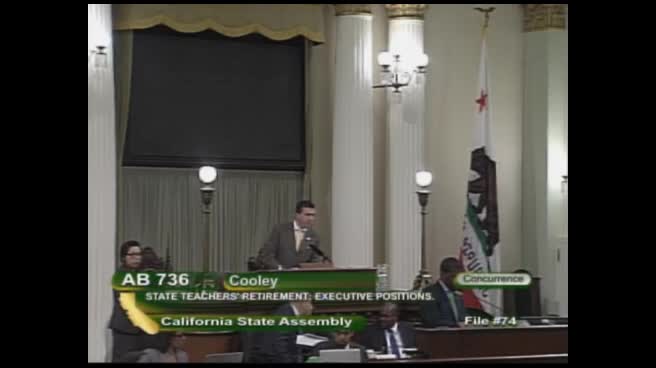 3MIN
Assembly Floor
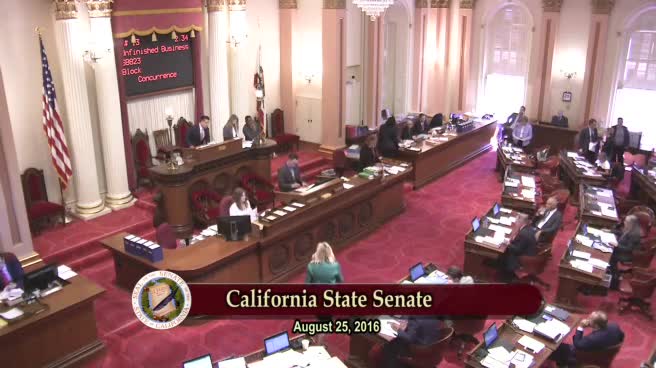 6MIN
Senate Floor
 16MIN
Senate Standing Committee on Appropriations
 41MIN
Senate Standing Committee on Elections and Constitutional Amendments
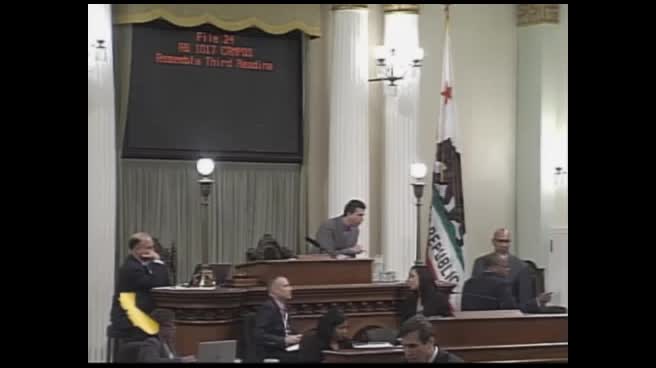 10MIN
Assembly Floor
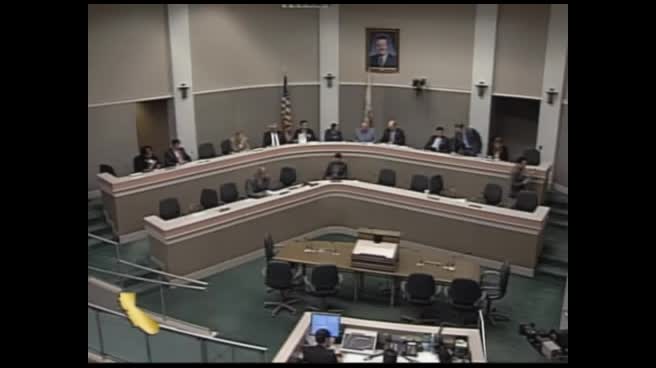 5MIN
Assembly Standing Committee on Appropriations



Bill Co-Author(s):