AB 885: Foster youth.
- Session Year: 2015-2016
- House: Assembly
- Latest Version Date: 2016-08-29
Existing law, the California Fostering Connections to Success Act, revises and expands the scope of various programs relating to cash assistance and other services to and for the benefit of certain foster and adopted children, and other children who have been placed in out-of-home care, including children who receive Aid to Families with Dependent Children-Foster Care (AFDC-FC), the Adoption Assistance Program, California Work Opportunity and Responsibility to Kids (CalWORKs), and Kinship Guardianship Assistance Payment (Kin-GAP) benefits. Among other provisions, the act extends specified foster care benefits to youth up to 21 years of age, if specified conditions are met.
Existing law defines a nonminor dependent for these purposes as a foster child who is a current dependent child or ward of the juvenile court, or who is a nonminor under the transition jurisdiction of the juvenile court pursuant to a voluntary reentry agreement, and in accordance with a transitional independent living case plan who has attained 18 years of age while under an order of foster care placement by the juvenile court and is not older than 21 years of age. Existing law defines a nonminor former dependent or ward as a person who meets these criteria who reached 18 years of age while subject to an order for foster care placement, for whom dependency, delinquency, or transition jurisdiction has been terminated, and who is still under the general jurisdiction of the court.
For purposes of participation in the above-specified programs, existing law allows a juvenile court to assume dependency jurisdiction over a nonminor former dependent who has not attained 21 years of age under specified circumstances, including, among others, the nonminors former guardian or adoptive parent no longer provides ongoing support to, and no longer receives benefits on behalf of, the nonminor after the nonminor turns 18 years of age.
This bill would delete the requirement that the former guardian or adoptive parent no longer receive aid on behalf of the nonminor before a juvenile court may resume dependency jurisdiction for purposes of extending foster care benefits. The bill would require the State Department of Social Services to define the term ongoing support for the purposes of the provisions described above. The bill would also make changes to the requirement that a nonminor former dependent child or ward be receiving AFDC-FC as one criterion for continued eligibility to receive aid, and would instead only require that he or she be eligible for AFDC-FC. Because the bill would expand the application of the above county-administered programs, the bill would impose a state-mandated local program. The bill would make other technical, nonsubstantive and conforming changes to related provisions.
The California Constitution requires the state to reimburse local agencies and school districts for certain costs mandated by the state. Statutory provisions establish procedures for making that reimbursement.
This bill would provide that no reimbursement is required by this act for a specified reason.
Existing law, the California Fostering Connections to Success Act, revises and expands the scope of various programs relating to cash assistance and other services to and for the benefit of certain foster and adopted children, and other children who have been placed in out-of-home care, including children who receive Aid to Families with Dependent Children-Foster Care (AFDC-FC), the Adoption Assistance Program, California Work Opportunity and Responsibility to Kids (CalWORKs), and Kinship Guardianship Assistance Payment (Kin-GAP) benefits. Among other provisions, the act extends specified foster care benefits to youth up to 21 years of age, if specified conditions are met.
Existing law defines a nonminor dependent for these purposes as a foster child who is a current dependent child or ward of the juvenile court, or who is a nonminor under the transition jurisdiction of the juvenile court pursuant to a voluntary reentry agreement, and in accordance with a transitional independent living case plan who has attained 18 years of age while under an order of foster care placement by the juvenile court and is not older than 21 years of age. Existing law defines a nonminor former dependent or ward as a person who meets these criteria who reached 18 years of age while subject to an order for foster care placement, for whom dependency, delinquency, or transition jurisdiction has been terminated, and who is still under the general jurisdiction of the court.
For purposes of participation in the above-specified programs, existing law allows a juvenile court to assume dependency jurisdiction over a nonminor former dependent who has not attained 21 years of age under specified circumstances, including, among others, the nonminors former guardian or adoptive parent no longer provides ongoing support to, and no longer receives benefits on behalf of, the nonminor after the nonminor turns 18 years of age.
This bill would delete the requirement that the former guardian or adoptive parent no longer receive aid on behalf of the nonminor before a juvenile court may resume dependency jurisdiction for purposes of extending foster care benefits. The bill would require the State Department of Social Services to define the term ongoing support for the purposes of the provisions described above. The bill would also make changes to the requirement that a nonminor former dependent child or ward be receiving AFDC-FC as one criterion for continued eligibility to receive aid, and would instead only require that he or she be eligible for AFDC-FC. Because the bill would expand the application of the above county administered county-administered programs, the bill would impose a state-mandated local program. The bill would make other technical, nonsubstantive and conforming changes to related provisions.
The California Constitution requires the state to reimburse local agencies and school districts for certain costs mandated by the state. Statutory provisions establish procedures for making that reimbursement.
This bill would provide that no reimbursement is required by this act for a specified reason.
Existing law, the California Fostering Connections to Success Act, revises and expands the scope of various programs relating to cash assistance and other services to and for the benefit of certain foster and adopted children, and other children who have been placed in out-of-home care, including children who receive Aid to Families with Dependent Children-Foster Care (AFDC-FC), the Adoption Assistance Program, California Work Opportunity and Responsibility to Kids (CalWORKs), and Kinship Guardianship Assistance Payment (Kin-GAP) benefits. Among other provisions, the act extends specified foster care benefits to youth up to 21 years of age, if specified conditions are met.
Existing law defines a nonminor dependent for these purposes as a foster child who is a current dependent child or ward of the juvenile court, or who is a nonminor under the transition jurisdiction of the juvenile court pursuant to a voluntary reentry agreement, and in accordance with a transitional independent living case plan who has attained 18 years of age while under an order of foster care placement by the juvenile court and is not older than 21 years of age. Existing law defines a nonminor former dependent or ward as a person who meets these criteria who reached 18 years of age while subject to an order for foster care placement, for whom dependency, delinquency, or transition jurisdiction has been terminated, and who is still under the general jurisdiction of the court.
Existing
For purposes of participation in the above-specified programs, existing law allows a juvenile court to assume dependency jurisdiction over a nonminor former dependent for purposes of participation in the above specified programs who has not attained 21 years of age under specified circumstances, including, among others, the nonminors former guardian or adoptive parent no longer provides ongoing support to, and no longer receives benefits on behalf of, the nonminor after the nonminor turns 18 years of age.
This bill would delete the requirement that the parent or guardian former guardian or adoptive parent no longer receive aid on behalf of the nonminor before a juvenile court may resume dependency jurisdiction. jurisdiction for purposes of extending foster care benefits. The bill would also make changes to the requirement that a nonminor former dependent child or ward be receiving AFDC-FC as one criterion for continued eligibility to receive aid, and would instead only require that he or she be eligible for AFDC-FC. Because the bill would expand the application of the above county administered programs, the bill would impose a state-mandated local program. The bill would make other technical, nonsubstantive changes. and conforming changes to related provisions.
The California Constitution requires the state to reimburse local agencies and school districts for certain costs mandated by the state. Statutory provisions establish procedures for making that reimbursement.
This bill would provide that, if the Commission on State Mandates determines that the bill contains costs mandated by the state, reimbursement for those costs shall be made pursuant to these statutory provisions.
The California Constitution requires the state to reimburse local agencies and school districts for certain costs mandated by the state. Statutory provisions establish procedures for making that reimbursement.
This bill would provide that no reimbursement is required by this act for a specified reason.
Existing law, the California Fostering Connections to Success Act, revises and expands the scope of various programs relating to cash assistance and other services to and for the benefit of certain foster and adopted children, and other children who have been placed in out-of-home care, including children who receive Aid to Families with Dependent Children-Foster Care (AFDC-FC), the Adoption Assistance Program, California Work Opportunity and Responsibility to Kids (CalWORKs), and Kinship Guardianship Assistance Payment (Kin-GAP) benefits. Among other provisions, the act extends specified foster care benefits to youth up to 21 years of age, if specified conditions are met.
Existing law defines a nonminor dependent for these purposes as a foster child who is a current dependent child or ward of the juvenile court, or who is a nonminor under the transition jurisdiction of the juvenile court pursuant to a voluntary reentry agreement, and in accordance with a transitional independent living case plan who has attained 18 years of age while under an order of foster care placement by the juvenile court and is not older than 21 years of age. Existing law defines a nonminor former dependent or ward as a person who meets these criteria who reached 18 years of age while subject to an order for foster care placement, for whom dependency, delinquency, or transition jurisdiction has been terminated, and who is still under the general jurisdiction of the court.
Existing law allows a juvenile court to assume dependency jurisdiction over a nonminor former dependent for purposes of participation in the above specified programs who has not attained 21 years of age under specified circumstances, including, among others, the nonminors former guardian or adoptive parent no longer provides ongoing support to, and no longer receives benefits on behalf of, the nonminor after the nonminor turns 18 years of age.
This bill would delete the requirement that the parent or guardian no longer receive aid on behalf of the nonminor before a juvenile court may resume dependency jurisdiction. Because the bill would expand the application of the above county administered programs, the bill would impose a state-mandated local program. The bill would make other technical, nonsubstantive changes.
The California Constitution requires the state to reimburse local agencies and school districts for certain costs mandated by the state. Statutory provisions establish procedures for making that reimbursement.
This bill would provide that, if the Commission on State Mandates determines that the bill contains costs mandated by the state, reimbursement for those costs shall be made pursuant to these statutory provisions.
(a)On and after January 1, 2014, a nonminor who has not attained 21 years of age may petition the court in which he or she was previously found to be a dependent or delinquent child of the juvenile court for a hearing to determine whether to assume dependency jurisdiction over the nonminor, if he or she meets any of the following descriptions:
(1)He or she is a nonminor former dependent, as defined in subdivision (aa) of Section 11400, who received aid after attaining 18 years of age under Kin-GAP pursuant to Article 4.5 (commencing with Section 11360) or Article 4.7 (commencing with Section 11385) of Chapter 2 of Part 3 of Division 9, or pursuant to subdivision (e) of Section 11405, and whose former guardian or guardians died after the nonminor attained 18 years of age, but before he or she attains 21 years of age.
(2)He or she is a nonminor former dependent, as defined in subdivision (aa) of Section 11400, who received aid after attaining 18 years of age under Kin-GAP pursuant to Article 4.5 (commencing with Section 11360) or Article 4.7 (commencing with Section 11385) of Chapter 2 of Part 3 of Division 9, or pursuant to subdivision (e) of Section 11405, and whose former guardian or guardians no longer provide ongoing support to the nonminor after the nonminor attained 18 years of age, but before he or she attains 21 years of age.
(3)He or she is a nonminor who received adoption assistance payments after attaining 18 years of age pursuant to Chapter 2.1 (commencing with Section 16115) of Part 4 of Division 9 and his or her adoptive parent or parents died after the nonminor attained 18 years of age, but before he or she attains 21 years of age.
(4)He or she is a nonminor who received adoption assistance payments after attaining 18 years of age pursuant to Chapter 2.1 (commencing with Section 16115) of Part 4 of Division 9 and his or her adoptive parent or parents no longer provide ongoing support to the nonminor after the nonminor attained 18 years of age, but before he or she attains 21 years of age.
(b)(1)The petition to assume jurisdiction may be filed in either of the following:
(A)The juvenile court that established the guardianship pursuant to Section 360, Section 366.26, or subdivision (d) of Section 728.
(B)The juvenile court that had jurisdiction over the minor or nonminor dependent when his or her adoption was finalized.
(2)A nonminor described in subdivision (a) may submit a petition to assume dependency jurisdiction to the juvenile court in the county where he or she resides. A petition submitted pursuant to this paragraph shall, within five days of submission, be forwarded to the court that had jurisdiction over the child at the time of the guardianship or adoption. The clerk of the court that had jurisdiction over the child at the time of the guardianship or adoption shall file the petition within one judicial day of receipt.
(c)(1)The juvenile court in which the petition was filed shall order a hearing to be held within 15 judicial days of the date the petition was filed if there is a prima facie showing that the nonminor satisfies all of the following criteria:
(A)He or she was a minor under juvenile court jurisdiction at the time of the establishment of a guardianship pursuant to Section 360, Section 366.26, or subdivision (d) of Section 728, or he or she was a minor or nonminor dependent when his or her adoption was finalized.
(B)(i)His or her guardian or guardians, or adoptive parent or parents, as applicable, died after the nonminor attained 18 years of age, but before he or she attained 21 years of age.
(ii)His or her guardian or guardians, or adoptive parent or parents, as applicable, no longer provide ongoing support to the nonminor after the nonminor attained 18 years of age, but before he or she attained 21 years of age, and it may be in the nonminors best interest for the court to assume dependency jurisdiction.
(C)He or she intends to satisfy at least one of the conditions set forth in paragraphs (1) to (5), inclusive, of subdivision (b) of Section 11403.
(D)He or she is requesting assistance in maintaining or securing appropriate supervised placement, or needs immediate placement and agrees to supervised placement pursuant to the voluntary reentry agreement described in subdivision (z) of Section 11400.
(2)Upon ordering a hearing, the court shall give notice, at least three days prior to the hearing, to the nonminor, the appropriate child welfare agency or probation department, the nonminors adoptive parent or parents, the nonminors guardian or guardians, and any other person requested by the nonminor in the petition.
(3)Pursuant to applicable rules of court, the juvenile court shall allow for telephonic appearances by the nonminor in these proceedings and in any proceeding in which the nonminor dependent is a party.
(4)Prior to the hearing, the court shall order the county child welfare or probation department to prepare a report for the court that addresses both of the following:
(A)The nonminors plans to satisfy at least one of the criteria set forth in paragraphs (1) to (5), inclusive, of subdivision (b) of Section 11403.
(B)The appropriate placement setting for the nonminor. When the recommendation is for the nonminor to be placed in a setting where minor dependents also reside, the results of a background check of the petitioning nonminor conducted pursuant to Section 16504.5 may be used by the placing agency to determine appropriate placement options for him or her.
(5)The court shall assume dependency jurisdiction over a former dependent or ward, and order his or her placement and care be under the responsibility of the county child welfare services department, the probation department, tribe, consortium of tribes, or tribal organization, if the court finds all of the following:
(A)The nonminor was a minor under juvenile court jurisdiction at the time of the establishment of a guardianship pursuant to Section 360, Section 366.26, or subdivision (d) of Section 728, or he or she was a dependent at the time his or her adoption was finalized.
(B)The nonminors guardian or guardians, or adoptive parent or parents, as applicable, have died, or no longer provide ongoing support to the nonminor, and it is in the nonminors best interests for the court to assume dependency jurisdiction.
(C)The nonminor has not attained 21 years of age.
(D)Reentry and remaining in foster care are in the nonminors best interests.
(E)The nonminor intends to satisfy, and agrees to satisfy, at least one of the criteria set forth in paragraphs (1) to (5), inclusive, of subdivision (b) of Section 11403, and demonstrates his or her agreement to placement in a supervised setting under the placement and care responsibility of the placing agency by signing the voluntary reentry agreement described in subdivision (z) of Section 11400.
(6)The existence of a criminal conviction is not a bar to eligibility for reentry to foster care or assumption of dependency jurisdiction over a nonminor.
(7)The court shall not grant a continuance that would cause the hearing to be completed more than 120 days after the date the petition is filed.
(d)The agency made responsible for the nonminors placement and care pursuant to paragraph (5) of subdivision (c) shall prepare a new transitional independent living case plan within 60 calendar days of the date the nonminor signs the voluntary reentry agreement and shall submit the plan to the court for the review hearing specified in Section 366.31, to be held within 70 days of the assumption of dependency jurisdiction. The review hearing under Section 366.31 shall not be held more than 170 calendar days from the date the nonminor signs the voluntary reentry agreement.
(e)(1) A nonminor described in subdivision (a) may enter into a voluntary reentry agreement as defined in subdivision (z) of Section 11400 in order to establish eligibility for foster care benefits under subdivision (e) of Section 11401 before or after filing a petition to assume dependency jurisdiction, provided the nonminors guardian or guardians, or adoptive parent or parents, as applicable, have died or are no longer receiving payment on behalf of the nonminor. If the nonminor enters into a voluntary reentry agreement prior to filing the petition, the nonminor is entitled to placement and supervision pending the courts assumption of jurisdiction.
(2)If the nonminor completes a voluntary reentry agreement with a placing agency, the placing agency shall file the petition to assume dependency jurisdiction on behalf of the nonminor within 15 judicial days of the date the agreement is signed, unless the nonminor elects to file the petition at an earlier date.
(f)No later than July 1, 2017, the State Department of Social Services shall promulgate a regulation defining ongoing support for the purposes of this section and Section 11403.
SEC. 2.Section 11403 of the Welfare and Institutions Code is amended to read:11403.(a)It is the intent of the Legislature to exercise the option afforded states under Section 475(8) (42 U.S.C. Sec. 675(8)), and Section 473(a)(4) (42 U.S.C. Sec. 673(a)(4)) of the federal Social Security Act, as contained in the federal Fostering Connections to Success and Increasing Adoptions Act of 2008 (Public Law 110-351), to receive federal financial participation for nonminor dependents of the juvenile court who satisfy the conditions of subdivision (b), consistent with their transitional independent living case plan. These nonminor dependents are eligible to receive support until they are 21 years of age, consistent with their transitional independent living case plan and as described in Section 10103.5. It is the intent of the Legislature both at the time of initial determination of the nonminor dependents eligibility and throughout the time the nonminor dependent is eligible for aid pursuant to this section, that the social worker or probation officer or Indian tribal placing entity and the nonminor dependent shall work together to ensure the nonminor dependents ongoing eligibility. All case planning shall be a collaborative effort between the nonminor dependent and the social worker, probation officer, or Indian tribe, with the nonminor dependent assuming increasing levels of responsibility and independence.
(b)A nonminor dependent receiving aid pursuant to this chapter, who satisfies the age criteria set forth in subdivision (a), shall meet the legal authority for placement and care by being under a foster care placement order by the juvenile court, or the voluntary reentry agreement as set forth in subdivision (z) of Section 11400, and is otherwise eligible for AFDC-FC payments pursuant to Section 11401. A nonminor who satisfies the age criteria set forth in subdivision (a), and who is otherwise eligible, shall continue to receive CalWORKs payments pursuant to Section 11253 or, as a nonminor former dependent or ward, aid pursuant to Kin-GAP under Article 4.5 (commencing with Section 11360) or Article 4.7 (commencing with Section 11385) or adoption assistance payments as specified in Chapter 2.1 (commencing with Section 16115) of Part 4. A nonminor former dependent child or ward of the juvenile court who is otherwise eligible to receive AFDC-FC benefits pursuant to Section 11405 and who satisfies the criteria set forth in subdivision (a) shall continue to be eligible to receive aid as long as the nonminor is otherwise eligible for AFDC-FC benefits under this subdivision. This subdivision applies when one or more of the following conditions exist:
(1)The nonminor is completing secondary education or a program leading to an equivalent credential.
(2)The nonminor is enrolled in an institution which provides postsecondary or vocational education.
(3)The nonminor is participating in a program or activity designed to promote, or remove barriers to employment.
(4)The nonminor is employed for at least 80 hours per month.
(5)The nonminor is incapable of doing any of the activities described in paragraphs (1) to (4), inclusive, due to a medical condition, and that incapability is supported by regularly updated information in the case plan of the nonminor. The requirement to update the case plan under this section shall not apply to nonminor former dependents or wards in receipt of Kin-GAP program or Adoption Assistance Program payments.
(c)(1)The county child welfare or probation department, Indian tribe, consortium of tribes, or tribal organization that has entered into an agreement pursuant to Section 10553.1, shall work together with a nonminor dependent who is in foster care on his or her 18th birthday and thereafter or a nonminor former dependent receiving aid pursuant to Section 11405, to satisfy one or more of the conditions described in paragraphs (1) to (5), inclusive, of subdivision (b) and shall certify the nonminors applicable condition or conditions in the nonminors six-month transitional independent living case plan update, and provide the certification to the eligibility worker and to the court at each six-month case plan review hearing for the nonminor dependent. Relative guardians who receive Kin-GAP payments and adoptive parents who receive adoption assistance payments shall be responsible for reporting to the county welfare agency that the nonminor does not satisfy at least one of the conditions described in subdivision (b). The social worker, probation officer, or tribal entity shall verify and obtain assurances that the nonminor dependent continues to satisfy at least one of the conditions in paragraphs (1) to (5), inclusive, of subdivision (b) at each six-month transitional independent living case plan update. The six-month case plan update shall certify the nonminors eligibility pursuant to subdivision (b) for the next six-month period. During the six-month certification period, the payee and nonminor shall report any change in placement or other relevant changes in circumstances that may affect payment. The nonminor dependent, or nonminor former dependent receiving aid pursuant to subdivision (e) of Section 11405, shall be informed of all due process requirements, in accordance with state and federal law, prior to an involuntary termination of aid, and shall simultaneously be provided with a written explanation of how to exercise his or her due process rights and obtain referrals to legal assistance. Any notices of action regarding eligibility shall be sent to the nonminor dependent or former dependent, his or her counsel, as applicable, and the placing worker, in addition to any other payee. Payments of aid pursuant to Kin-GAP under Article 4.5 (commencing with Section 11360) or Article 4.7 (commencing with Section 11385), adoption assistance payments as specified in Chapter 2.1 (commencing with Section 16115) of Part 4, or aid pursuant to subdivision (e) of Section 11405 that are made on behalf of a nonminor former dependent shall terminate subject to the terms of the agreements. Subject to federal approval of amendments to the state plan, aid payments may be suspended and resumed based on changes of circumstances that affect eligibility. Nonminor former dependents, as identified in paragraph (2) of subdivision (aa) of Section 11400, are not eligible for reentry under subdivision (e) of Section 388 as nonminor dependents under the jurisdiction of the juvenile court, but may be eligible for reentry pursuant to Section 388.1 if (1) the nonminor former dependent was receiving aid pursuant to Kin-GAP under Article 4.5 (commencing with Section 11360) or Article 4.7 (commencing with Section 11385), the nonminor former dependent was receiving aid pursuant to subdivision (e) of Section 11405, or the nonminor was receiving adoption assistance payments as specified in Chapter 2.1 (commencing with Section 16115) of Part 3, and (2) the nonminors former guardian or adoptive parent dies, or no longer provides ongoing support to the nonminor after the nonminor turns 18 years of age but before the nonminor turns 21 years of age. Nonminor former dependents requesting the resumption of AFDC-FC payments pursuant to subdivision (e) of Section 11405 shall complete the applicable portions of the voluntary reentry agreement, as described in subdivision (z) of Section 11400.
(2)For purposes of this subdivision, the definition of ongoing support is governed by the regulation promulgated pursuant to subdivision (f) of Section 388.1.
(d)A nonminor dependent may receive all of the payment directly provided that the nonminor is living independently in a supervised placement, as described in subdivision (w) of Section 11400, and that both the youth and the agency responsible for the foster care placement have signed a mutual agreement, as defined in subdivision (u) of Section 11400, if the youth is capable of making an informed agreement, that documents the continued need for supervised out-of-home placement, and the nonminors and social workers or probation officers agreement to work together to facilitate implementation of the mutually developed supervised placement agreement and transitional independent living case plan.
(e)Eligibility for aid under this section shall not terminate until the nonminor dependent attains the age criteria, as set forth in subdivision (a), but aid may be suspended when the nonminor dependent no longer resides in an eligible facility, as described in Section 11402, or is otherwise not eligible for AFDC-FC benefits under Section 11401, or terminated at the request of the nonminor, or after a court terminates dependency jurisdiction pursuant to Section 391, delinquency jurisdiction pursuant to Section 607.2, or transition jurisdiction pursuant to Section 452. AFDC-FC benefits to nonminor dependents may be resumed at the request of the nonminor by completing a voluntary reentry agreement pursuant to subdivision (z) of Section 11400, before or after the filing of a petition filed pursuant to subdivision (e) of Section 388 after a court terminates dependency or transitional jurisdiction pursuant to Section 391, or delinquency jurisdiction pursuant to Section 607.2. The county welfare or probation department or Indian tribal entity that has entered into an agreement pursuant to Section 10553.1 shall complete the voluntary reentry agreement with the nonminor who agrees to satisfy the criteria of the agreement, as described in subdivision (z) of Section 11400. The county welfare department or tribal entity shall establish a new child-only Title IV-E eligibility determination based on the nonminors completion of the voluntary reentry agreement pursuant to Section 11401. The beginning date of aid for either federal or state AFDC-FC for a reentering nonminor who is placed in foster care is the date the voluntary reentry agreement is signed or the nonminor is placed, whichever is later. The county welfare department, county probation department, or tribal entity shall provide a nonminor dependent who wishes to continue receiving aid with the assistance necessary to meet and maintain eligibility.
(f)(1)The county having jurisdiction of the nonminor dependent shall remain the county of payment under this section regardless of the youths physical residence. Nonminor former dependents receiving aid pursuant to subdivision (e) of Section 11405 shall be paid by their county of residence. Counties may develop courtesy supervision agreements to provide case management and independent living services by the county of residence pursuant to the nonminor dependents transitional independent living case plan. Placements made out of state are subject to the applicable requirements of the Interstate Compact on Placement of Children, pursuant to Part 5 (commencing with Section 7900) of Division 12 of the Family Code.
(2)The county welfare department, county probation department, or tribal entity shall notify all foster youth who attain 16 years of age and are under the jurisdiction of that county or tribe, including those receiving Kin-GAP, and AAP, of the existence of the aid prescribed by this section.
(3)The department shall seek any waiver to amend its Title IV-E state plan with the Secretary of the United States Department of Health and Human Services necessary to implement this section.
(g)(1)Subject to paragraph (3), a county shall pay the nonfederal share of the cost of extending aid pursuant to this section to eligible nonminor dependents who have reached 18 years of age and who are under the jurisdiction of the county, including AFDC-FC payments pursuant to Section 11401, aid pursuant to Kin-GAP under Article 4.7 (commencing with Section 11385), adoption assistance payments as specified in Chapter 2.1 (commencing with Section 16115) of Part 4, and aid pursuant to Section 11405 for nonminor dependents who are residing in the county as provided in paragraph (1) of subdivision (f). A county shall contribute to the CalWORKs payments pursuant to Section 11253 and aid pursuant to Kin-GAP under Article 4.5 (commencing with Section 11360) at the statutory sharing ratios in effect on January 1, 2012.
(2)Subject to paragraph (3), a county shall pay the nonfederal share of the cost of providing permanent placement services pursuant to subdivision (c) of Section 16508 and administering the Aid to Families with Dependent Children Foster Care program pursuant to Section 15204.9. For purposes of budgeting, the department shall use a standard for the permanent placement services that is equal to the midpoint between the budgeting standards for family maintenance services and family reunification services.
(3)(A)(i)Notwithstanding any other law, a countys required total contribution pursuant to paragraphs (1) and (2), excluding costs incurred pursuant to Section 10103.5, shall not exceed the amount of savings in Kin-GAP assistance grant expenditures realized by the county from the receipt of federal funds due to the implementation of Article 4.7 (commencing with Section 11385), and the amount of funding specifically included in the Protective Services Subaccount within the Support Services Account within the Local Revenue Fund 2011, plus any associated growth funding from the Support Services Growth Subaccount within the Sales and Use Tax Growth Account to pay the costs of extending aid pursuant to this section.
(ii)A county, at its own discretion, may expend additional funds beyond the amounts identified in clause (i). These additional amounts shall not be included in any cost and savings calculations or comparisons performed pursuant to this section.
(B)Beginning in the 201112 fiscal year, and for each fiscal year thereafter, funding and expenditures for programs and activities under this section shall be in accordance with the requirements provided in Sections 30025 and 30026.5 of the Government Code. In addition, the following are available to the counties for the purpose of funding costs pursuant to this section:
(i)The savings in Kin-GAP assistance grant expenditures realized from the receipt of federal funds due to the implementation of Article 4.7 (commencing with Section 11385).
(ii)The savings realized from the change in federal funding for adoption assistance resulting from the enactment of the federal Fostering Connections to Success and Increasing Adoptions Act of 2008 (Public Law 110-351) and consistent with subdivision (d) of Section 16118.
(4)(A)The limit on the countys total contribution pursuant to paragraph (3) shall be assessed by the State Department of Social Services, in conjunction with the California State Association of Counties, in 201516, to determine if it shall be removed. The assessment of the need for the limit shall be based on a determination on a statewide basis of whether the actual county costs of providing extended care pursuant to this section, excluding costs incurred pursuant to Section 10103.5, are fully funded by the amount of savings in Kin-GAP assistance grant expenditures realized by the counties from the receipt of federal funds due to the implementation of Article 4.7 (commencing with Section 11385) and the amount of funding specifically included in the Protective Services Subaccount within the Support Services Account within the Local Revenue Fund 2011 plus any associated growth funding from the Support Services Growth Subaccount within the Sales and Use Tax Growth Account to pay the costs of extending aid pursuant to this section.
(B)If the assessment pursuant to subparagraph (A) shows that the statewide total costs of extending aid pursuant to this section, excluding costs incurred pursuant to Section 10103.5, are fully funded by the amount of savings in Kin-GAP assistance grant expenditures realized by the counties from the receipt of federal funds due to the implementation of Article 4.7 (commencing with Section 11385) and the amount of funding specifically included in the Protective Services Subaccount within the Support Services Account within the Local Revenue Fund 2011 plus any associated growth funding from the Support Services Growth Subaccount within the Sales and Use Tax Growth Account to pay the costs of extending aid pursuant to this section, the Department of Finance shall certify that fact, in writing, and shall post the certification on its Internet Web site, at which time subparagraph (A) of paragraph (3) shall no longer be implemented.
(h)It is the intent of the Legislature that a county currently participating in the Child Welfare Demonstration Capped Allocation Project not be adversely impacted by the departments exercise of its option to extend foster care benefits pursuant to Section 673(a)(4) and Section 675(8) of Title 42 of the United States Code in the federal Social Security Act, as contained in the federal Fostering Connections to Success and Increasing Adoptions Act of 2008 (Public Law 110-351). Therefore, the department shall negotiate with the United States Department of Health and Human Services on behalf of those counties that are currently participating in the demonstration project to ensure that those counties receive reimbursement for these new programs outside of the provisions of those counties waiver under Subtitle IV-E (commencing with Section 470) of the federal Social Security Act (42 U.S.C. Sec. 670 et seq.).
(i)The department, on or before July 1, 2013, shall develop regulations to implement this section in consultation with concerned stakeholders, including, but not limited to, representatives of the Legislature, the County Welfare Directors Association, the Chief Probation Officers of California, the Judicial Council, representatives of Indian tribes, the California Youth Connection, former foster youth, child advocacy organizations, labor organizations, juvenile justice advocacy organizations, foster caregiver organizations, and researchers. In the development of these regulations, the department shall consider its Manual of Policy and Procedures, Division 30, Chapters 30-912, 913, 916, and 917, as guidelines for developing regulations that are appropriate for young adults who can exercise incremental responsibility concurrently with their growth and development. The department, in its consultation with stakeholders, shall take into consideration the impact to the automated Child Welfare Services Case Management System (CWS/CMS) and required modifications needed to accommodate eligibility determination under this section, benefit issuance, case management across counties, and recognition of the legal status of nonminor dependents as adults, as well as changes to data tracking and reporting requirements as required by the Child Welfare System Improvement and Accountability Act as specified in Section 10601.2, and federal outcome measures as required by the federal John H. Chafee Foster Care Independence Program (42 U.S.C. Sec. 677(f)). In addition, the department, in its consultation with stakeholders, shall define the supervised independent living setting which shall include, but not be limited to, apartment living, room and board arrangements, college or university dormitories, and shared roommate settings, and define how those settings meet health and safety standards suitable for nonminors. The department, in its consultation with stakeholders, shall define the six-month certification of the conditions of eligibility pursuant to subdivision (b) to be consistent with the flexibility provided by federal policy guidance, to ensure that there are ample supports for a nonminor to achieve the goals of his or her transition independent living case plan. The department, in its consultation with stakeholders, shall ensure that notices of action and other forms created to inform the nonminor of due process rights and how to access them shall be developed, using language consistent with the special needs of the nonminor dependent population.
(j)Notwithstanding the Administrative Procedure Act (Chapter 3.5 (commencing with Section 11340) of Part 1 of Division 3 of Title 2 of the Government Code), the department shall prepare for implementation of the applicable provisions of this section by publishing, after consultation with the stakeholders listed in subdivision (i), all-county letters or similar instructions from the director by October 1, 2011, to be effective January 1, 2012. Emergency regulations to implement the applicable provisions of this act may be adopted by the director in accordance with the Administrative Procedure Act (Chapter 3.5 (commencing with Section 11340) of Part 1 of Division 3 of Title 2 of the Government Code). The initial adoption of the emergency regulations and one readoption of the emergency regulations shall be deemed to be an emergency and necessary for the immediate preservation of the public peace, health, safety, or general welfare. Initial emergency regulations and the first readoption of those emergency regulations shall be exempt from review by the Office of Administrative Law. The emergency regulations authorized by this section shall be submitted to the Office of Administrative Law for filing with the Secretary of State and shall remain in effect for no more than 180 days.
SEC. 3.Section 11405 of the Welfare and Institutions Code is amended to read:11405.(a)Except for nonminors described in paragraph (2) of subdivision (e), AFDC-FC benefits shall be paid to an otherwise eligible child living with a nonrelated legal guardian, provided that the legal guardian cooperates with the county welfare department in all of the following:
(1)Developing a written assessment of the childs needs.
(2)Updating the assessment no less frequently than once every six months.
(3)Carrying out the case plan developed by the county.
(b) Except for nonminors described in paragraph (2) of subdivision (e), when AFDC-FC is applied for on behalf of a child living with a nonrelated legal guardian the county welfare department shall do all of the following:
(1)Develop a written assessment of the childs needs.
(2)Update those assessments no less frequently than once every six months.
(3)Develop a case plan that specifies how the problems identified in the assessment are to be addressed.
(4)Make visits to the child as often as appropriate, but in no event less often than once every six months.
(c)Where the child is a parent and has a child living with him or her in the same eligible facility, the assessment required by paragraph (1) of subdivision (a) shall include the needs of his or her child.
(d)Nonrelated legal guardians of eligible children who are in receipt of AFDC-FC payments described in this section shall be exempt from the requirement to register with the Statewide Registry of Private Professional Guardians pursuant to Sections 2850 and 2851 of the Probate Code.
(e)(1)A nonminor youth whose nonrelated guardianship was ordered in juvenile court pursuant to Section 360 or 366.26, and whose dependency was dismissed, shall remain eligible for AFDC-FC benefits until the youth attains 21 years of age, provided that the youth enters into a mutual agreement with the agency responsible for his or her guardianship, and the youth is meeting the conditions of eligibility, as described in paragraphs (1) to (5), inclusive, of subdivision (b) of Section 11403.
(2)A nonminor former dependent or ward as defined in paragraph (2) of subdivision (aa) of Section 11400 shall be eligible for benefits under this section until the youth attains 21 years of age if all of the following conditions are met:
(A)The nonminor former dependent or ward attained 18 years of age while in receipt of Kin-GAP benefits pursuant to Article 4.7 (commencing with Section 11385).
(B)The nonminors relationship to the kinship guardian is defined in paragraph (2), (3), or (4) of subdivision (c) of Section 11391.
(C)The nonminor who was under 16 years of age at the time the Kin-GAP negotiated agreement payments commenced.
(D)The guardian continues to be responsible for the support of the nonminor.
(E)The nonminor otherwise is meeting the conditions of eligibility, as described in paragraphs (1) to (5), inclusive, of subdivision (b) of Section 11403.
(f)A child whose nonrelated guardianship was ordered in probate court pursuant to Article 2 (commencing with Section 1510) of Chapter 1 of Part 2 of Division 4 of the Probate Code, who is attending high school or the equivalent level of vocational or technical training on a full-time basis, or who is in the process of pursuing a high school equivalency certificate prior to his or her 18th birthday may continue to receive aid following his or her 18th birthday as long as the child continues to reside in the guardians home, remains otherwise eligible for AFDC-FC benefits and continues to attend high school or the equivalent level of vocational or technical training on a full-time basis, or continues to pursue a high school equivalency certificate, and the child may reasonably be expected to complete the educational or training program or to receive a high school equivalency certificate, before his or her 19th birthday. Aid shall be provided to an individual pursuant to this section provided that both the individual and the agency responsible for the foster care placement have signed a mutual agreement, if the individual is capable of making an informed agreement, documenting the continued need for out-of-home placement.
(g)(1)For cases in which a guardianship was established on or before June 30, 2011, or the date specified in a final order, for which the time for appeal has passed, issued by a court of competent jurisdiction in California State Foster Parent Association, et al. v. William Lightbourne, et al. (U.S. Dist. Ct. No. C 07-05086 WHA), whichever is earlier, the AFDC-FC payment described in this section shall be the foster family home rate structure in effect prior to the effective date specified in the order described in this paragraph.
(2)For cases in which guardianship has been established on or after July 1, 2011, or the date specified in the order described in paragraph (1), whichever is earlier, the AFDC-FC payments described in this section shall be the basic foster family home rate set forth in paragraph (1) of subdivision (g) of Section 11461.
(3)Beginning with the 201112 fiscal year, the AFDC-FC payments identified in this subdivision shall be adjusted annually by the percentage change in the California Necessities Index rate as set forth in paragraph (2) of subdivision (g) of Section 11461.
(h)In addition to the AFDC-FC rate paid, all of the following also shall be paid:
(1)A specialized care increment, if applicable, as set forth in subdivision (e) of Section 11461.
(2)A clothing allowance, as set forth in subdivision (f) of Section 11461.
(3)For a child eligible for an AFDC-FC payment who is a teen parent, the rate shall include the two hundred dollar ($200) monthly payment made to the relative caregiver in a whole family foster home pursuant to paragraph (3) of subdivision (d) of Section 11465.
SEC. 4.To the extent that this act has an overall effect of increasing the costs already borne by a local agency for programs or levels of service mandated by the 2011 Realignment Legislation within the meaning of Section 36 of Article XIII of the California Constitution, it shall apply to local agencies only to the extent that the state provides annual funding for the cost increase. Any new program or higher level of service provided by a local agency pursuant to this act above the level for which funding has been provided shall not require a subvention of funds by the state or otherwise be subject to Section 6 of Article XIIIB of the California Constitution.
(a)On and after January 1, 2014, a nonminor who has not attained 21 years of age may petition the court in which he or she was previously found to be a dependent or delinquent child of the juvenile court for a hearing to determine whether to assume dependency jurisdiction over the nonminor, if he or she meets any of the following descriptions:
(1)He or she is a nonminor former dependent, as defined in subdivision (aa) of Section 11400, who received aid after attaining 18 years of age under Kin-GAP pursuant to Article 4.5 (commencing with Section 11360) or Article 4.7 (commencing with Section 11385) of Chapter 2 of Part 3 of Division 9, or pursuant to subdivision (e) of Section 11405, and whose former guardian or guardians died after the nonminor attained 18 years of age, but before he or she attains 21 years of age.
(2)He or she is a nonminor former dependent, as defined in subdivision (aa) of Section 11400, who received aid after attaining 18 years of age under Kin-GAP pursuant to Article 4.5 (commencing with Section 11360) or Article 4.7 (commencing with Section 11385) of Chapter 2 of Part 3 of Division 9, or pursuant to subdivision (e) of Section 11405, and whose former guardian or guardians no longer provide ongoing support to the nonminor after the nonminor attained 18 years of age, but before he or she attains 21 years of age.
(3)He or she is a nonminor who received adoption assistance payments after attaining 18 years of age pursuant to Chapter 2.1 (commencing with Section 16115) of Part 4 of Division 9 and his or her adoptive parent or parents died after the nonminor attained 18 years of age, but before he or she attains 21 years of age.
(4)He or she is a nonminor who received adoption assistance payments after attaining 18 years of age pursuant to Chapter 2.1 (commencing with Section 16115) of Part 4 of Division 9 and his or her adoptive parent or parents no longer provide ongoing support to the nonminor after the nonminor attained 18 years of age, but before he or she attains 21 years of age.
(b)(1)The petition to assume jurisdiction may be filed in either of the following:
(A)The juvenile court that established the guardianship pursuant to Section 360, Section 366.26, or subdivision (d) of Section 728.
(B)The juvenile court that had jurisdiction over the minor or nonminor dependent when his or her adoption was finalized.
(2)A nonminor described in subdivision (a) may submit a petition to assume dependency jurisdiction to the juvenile court in the county where he or she resides. A petition submitted pursuant to this paragraph shall, within five days of submission, be forwarded to the court that had jurisdiction over the child at the time of the guardianship or adoption. The clerk of the court that had jurisdiction over the child at the time of the guardianship or adoption shall file the petition within one judicial day of receipt.
(c)(1)The juvenile court in which the petition was filed shall order a hearing to be held within 15 judicial days of the date the petition was filed if there is a prima facie showing that the nonminor satisfies all of the following criteria:
(A)He or she was a minor under juvenile court jurisdiction at the time of the establishment of a guardianship pursuant to Section 360, Section 366.26, or subdivision (d) of Section 728, or he or she was a minor or nonminor dependent when his or her adoption was finalized.
(B)(i)His or her guardian or guardians, or adoptive parent or parents, as applicable, died after the nonminor attained 18 years of age, but before he or she attained 21 years of age.
(ii)His or her guardian or guardians, or adoptive parent or parents, as applicable, no longer provide ongoing support to the nonminor after the nonminor attained 18 years of age, but before he or she attained 21 years of age, and it may be in the nonminors best interest for the court to assume dependency jurisdiction.
(C)He or she intends to satisfy at least one of the conditions set forth in paragraphs (1) to (5), inclusive, of subdivision (b) of Section 11403.
(D)He or she is requesting assistance in maintaining or securing appropriate supervised placement, or needs immediate placement and agrees to supervised placement pursuant to the voluntary reentry agreement described in subdivision (z) of Section 11400.
(2)Upon ordering a hearing, the court shall give notice, at least three days prior to the hearing, to the nonminor, the appropriate child welfare agency or probation department, the nonminors adoptive parent or parents, the nonminors guardian or guardians, and any other person requested by the nonminor in the petition.
(3)Pursuant to applicable rules of court, the juvenile court shall allow for telephonic appearances by the nonminor in these proceedings and in any proceeding in which the nonminor dependent is a party.
(4)Prior to the hearing, the court shall order the county child welfare or probation department to prepare a report for the court that addresses both of the following:
(A)The nonminors plans to satisfy at least one of the criteria set forth in paragraphs (1) to (5), inclusive, of subdivision (b) of Section 11403.
(B)The appropriate placement setting for the nonminor. When the recommendation is for the nonminor to be placed in a setting where minor dependents also reside, the results of a background check of the petitioning nonminor conducted pursuant to Section 16504.5 may be used by the placing agency to determine appropriate placement options for him or her.
(5)The court shall assume dependency jurisdiction over a former dependent or ward, and order his or her placement and care be under the responsibility of the county child welfare services department, the probation department, tribe, consortium of tribes, or tribal organization, if the court finds all of the following:
(A)The nonminor was a minor under juvenile court jurisdiction at the time of the establishment of a guardianship pursuant to Section 360, Section 366.26, or subdivision (d) of Section 728, or he or she was a dependent at the time his or her adoption was finalized.
(B)The nonminors guardian or guardians, or adoptive parent or parents, as applicable, have died, or no longer provide ongoing support to the nonminor, and it is in the nonminors best interests for the court to assume dependency jurisdiction.
(C)The nonminor has not attained 21 years of age.
(D)Reentry and remaining in foster care are in the nonminors best interests.
(E)The nonminor intends to satisfy, and agrees to satisfy, at least one of the criteria set forth in paragraphs (1) to (5), inclusive, of subdivision (b) of Section 11403, and demonstrates his or her agreement to placement in a supervised setting under the placement and care responsibility of the placing agency by signing the voluntary reentry agreement described in subdivision (z) of Section 11400.
(6)The existence of a criminal conviction is not a bar to eligibility for reentry to foster care or assumption of dependency jurisdiction over a nonminor.
(7)The court shall not grant a continuance that would cause the hearing to be completed more than 120 days after the date the petition is filed.
(d)The agency made responsible for the nonminors placement and care pursuant to paragraph (5) of subdivision (c) shall prepare a new transitional independent living case plan within 60 calendar days of the date the nonminor signs the voluntary reentry agreement and shall submit the plan to the court for the review hearing specified in Section 366.31, to be held within 70 days of the assumption of dependency jurisdiction. The review hearing under Section 366.31 shall not be held more than 170 calendar days from the date the nonminor signs the voluntary reentry agreement.
(e)(1) A nonminor described in subdivision (a) may enter into a voluntary reentry agreement as defined in subdivision (z) of Section 11400 in order to establish eligibility for foster care benefits under subdivision (e) of Section 11401 before or after filing a petition to assume dependency jurisdiction, provided the nonminors guardian or guardians, or adoptive parent or parents, as applicable, have died or are no longer receiving payment on behalf of the nonminor. If the nonminor enters into a voluntary reentry agreement prior to filing the petition, the nonminor is entitled to placement and supervision pending the courts assumption of jurisdiction.
(2)If the nonminor completes a voluntary reentry agreement with a placing agency, the placing agency shall file the petition to assume dependency jurisdiction on behalf of the nonminor within 15 judicial days of the date the agreement is signed, unless the nonminor elects to file the petition at an earlier date.
(f)No later than July 1, 2017, the State Department of Social Services shall promulgate a regulation defining ongoing support for the purposes of this section and Section 11403.
SEC. 2.Section 11403 of the Welfare and Institutions Code is amended to read:11403.(a)It is the intent of the Legislature to exercise the option afforded states under Section 475(8) (42 U.S.C. Sec. 675(8)), and Section 473(a)(4) (42 U.S.C. Sec. 673(a)(4)) of the federal Social Security Act, as contained in the federal Fostering Connections to Success and Increasing Adoptions Act of 2008 (Public Law 110-351), to receive federal financial participation for nonminor dependents of the juvenile court who satisfy the conditions of subdivision (b), consistent with their transitional independent living case plan. These nonminor dependents are eligible to receive support until they are 21 years of age, consistent with their transitional independent living case plan and as described in Section 10103.5. It is the intent of the Legislature both at the time of initial determination of the nonminor dependents eligibility and throughout the time the nonminor dependent is eligible for aid pursuant to this section, that the social worker or probation officer or Indian tribal placing entity and the nonminor dependent shall work together to ensure the nonminor dependents ongoing eligibility. All case planning shall be a collaborative effort between the nonminor dependent and the social worker, probation officer, or Indian tribe, with the nonminor dependent assuming increasing levels of responsibility and independence.
(b)A nonminor dependent receiving aid pursuant to this chapter, who satisfies the age criteria set forth in subdivision (a), shall meet the legal authority for placement and care by being under a foster care placement order by the juvenile court, or the voluntary reentry agreement as set forth in subdivision (z) of Section 11400, and is otherwise eligible for AFDC-FC payments pursuant to Section 11401. A nonminor who satisfies the age criteria set forth in subdivision (a), and who is otherwise eligible, shall continue to receive CalWORKs payments pursuant to Section 11253 or, as a nonminor former dependent or ward, aid pursuant to Kin-GAP under Article 4.5 (commencing with Section 11360) or Article 4.7 (commencing with Section 11385) or adoption assistance payments as specified in Chapter 2.1 (commencing with Section 16115) of Part 4. A nonminor former dependent child or ward of the juvenile court who is otherwise eligible to receive AFDC-FC benefits pursuant to Section 11405 and who satisfies the criteria set forth in subdivision (a) shall continue to be eligible to receive aid as long as the nonminor is otherwise eligible for AFDC-FC benefits under this subdivision. This subdivision applies when one or more of the following conditions exist:
(1)The nonminor is completing secondary education or a program leading to an equivalent credential.
(2)The nonminor is enrolled in an institution which provides postsecondary or vocational education.
(3)The nonminor is participating in a program or activity designed to promote, or remove barriers to employment.
(4)The nonminor is employed for at least 80 hours per month.
(5)The nonminor is incapable of doing any of the activities described in paragraphs (1) to (4), inclusive, due to a medical condition, and that incapability is supported by regularly updated information in the case plan of the nonminor. The requirement to update the case plan under this section shall not apply to nonminor former dependents or wards in receipt of Kin-GAP program or Adoption Assistance Program payments.
(c)(1)The county child welfare or probation department, Indian tribe, consortium of tribes, or tribal organization that has entered into an agreement pursuant to Section 10553.1, shall work together with a nonminor dependent who is in foster care on his or her 18th birthday and thereafter or a nonminor former dependent receiving aid pursuant to Section 11405, to satisfy one or more of the conditions described in paragraphs (1) to (5), inclusive, of subdivision (b) and shall certify the nonminors applicable condition or conditions in the nonminors six-month transitional independent living case plan update, and provide the certification to the eligibility worker and to the court at each six-month case plan review hearing for the nonminor dependent. Relative guardians who receive Kin-GAP payments and adoptive parents who receive adoption assistance payments shall be responsible for reporting to the county welfare agency that the nonminor does not satisfy at least one of the conditions described in subdivision (b). The social worker, probation officer, or tribal entity shall verify and obtain assurances that the nonminor dependent continues to satisfy at least one of the conditions in paragraphs (1) to (5), inclusive, of subdivision (b) at each six-month transitional independent living case plan update. The six-month case plan update shall certify the nonminors eligibility pursuant to subdivision (b) for the next six-month period. During the six-month certification period, the payee and nonminor shall report any change in placement or other relevant changes in circumstances that may affect payment. The nonminor dependent, or nonminor former dependent receiving aid pursuant to subdivision (e) of Section 11405, shall be informed of all due process requirements, in accordance with state and federal law, prior to an involuntary termination of aid, and shall simultaneously be provided with a written explanation of how to exercise his or her due process rights and obtain referrals to legal assistance. Any notices of action regarding eligibility shall be sent to the nonminor dependent or former dependent, his or her counsel, as applicable, and the placing worker, in addition to any other payee. Payments of aid pursuant to Kin-GAP under Article 4.5 (commencing with Section 11360) or Article 4.7 (commencing with Section 11385), adoption assistance payments as specified in Chapter 2.1 (commencing with Section 16115) of Part 4, or aid pursuant to subdivision (e) of Section 11405 that are made on behalf of a nonminor former dependent shall terminate subject to the terms of the agreements. Subject to federal approval of amendments to the state plan, aid payments may be suspended and resumed based on changes of circumstances that affect eligibility. Nonminor former dependents, as identified in paragraph (2) of subdivision (aa) of Section 11400, are not eligible for reentry under subdivision (e) of Section 388 as nonminor dependents under the jurisdiction of the juvenile court, but may be eligible for reentry pursuant to Section 388.1 if (1) the nonminor former dependent was receiving aid pursuant to Kin-GAP under Article 4.5 (commencing with Section 11360) or Article 4.7 (commencing with Section 11385), the nonminor former dependent was receiving aid pursuant to subdivision (e) of Section 11405, or the nonminor was receiving adoption assistance payments as specified in Chapter 2.1 (commencing with Section 16115) of Part 3, and (2) the nonminors former guardian or adoptive parent dies, or no longer provides ongoing support to the nonminor after the nonminor turns 18 years of age but before the nonminor turns 21 years of age. Nonminor former dependents requesting the resumption of AFDC-FC payments pursuant to subdivision (e) of Section 11405 shall complete the applicable portions of the voluntary reentry agreement, as described in subdivision (z) of Section 11400.
(2)For purposes of this subdivision, the definition of ongoing support is governed by the regulation promulgated pursuant to subdivision (f) of Section 388.1.
(d)A nonminor dependent may receive all of the payment directly provided that the nonminor is living independently in a supervised placement, as described in subdivision (w) of Section 11400, and that both the youth and the agency responsible for the foster care placement have signed a mutual agreement, as defined in subdivision (u) of Section 11400, if the youth is capable of making an informed agreement, that documents the continued need for supervised out-of-home placement, and the nonminors and social workers or probation officers agreement to work together to facilitate implementation of the mutually developed supervised placement agreement and transitional independent living case plan.
(e)Eligibility for aid under this section shall not terminate until the nonminor dependent attains the age criteria, as set forth in subdivision (a), but aid may be suspended when the nonminor dependent no longer resides in an eligible facility, as described in Section 11402, or is otherwise not eligible for AFDC-FC benefits under Section 11401, or terminated at the request of the nonminor, or after a court terminates dependency jurisdiction pursuant to Section 391, delinquency jurisdiction pursuant to Section 607.2, or transition jurisdiction pursuant to Section 452. AFDC-FC benefits to nonminor dependents may be resumed at the request of the nonminor by completing a voluntary reentry agreement pursuant to subdivision (z) of Section 11400, before or after the filing of a petition filed pursuant to subdivision (e) of Section 388 after a court terminates dependency or transitional jurisdiction pursuant to Section 391, or delinquency jurisdiction pursuant to Section 607.2. The county welfare or probation department or Indian tribal entity that has entered into an agreement pursuant to Section 10553.1 shall complete the voluntary reentry agreement with the nonminor who agrees to satisfy the criteria of the agreement, as described in subdivision (z) of Section 11400. The county welfare department or tribal entity shall establish a new child-only Title IV-E eligibility determination based on the nonminors completion of the voluntary reentry agreement pursuant to Section 11401. The beginning date of aid for either federal or state AFDC-FC for a reentering nonminor who is placed in foster care is the date the voluntary reentry agreement is signed or the nonminor is placed, whichever is later. The county welfare department, county probation department, or tribal entity shall provide a nonminor dependent who wishes to continue receiving aid with the assistance necessary to meet and maintain eligibility.
(f)(1)The county having jurisdiction of the nonminor dependent shall remain the county of payment under this section regardless of the youths physical residence. Nonminor former dependents receiving aid pursuant to subdivision (e) of Section 11405 shall be paid by their county of residence. Counties may develop courtesy supervision agreements to provide case management and independent living services by the county of residence pursuant to the nonminor dependents transitional independent living case plan. Placements made out of state are subject to the applicable requirements of the Interstate Compact on Placement of Children, pursuant to Part 5 (commencing with Section 7900) of Division 12 of the Family Code.
(2)The county welfare department, county probation department, or tribal entity shall notify all foster youth who attain 16 years of age and are under the jurisdiction of that county or tribe, including those receiving Kin-GAP, and AAP, of the existence of the aid prescribed by this section.
(3)The department shall seek any waiver to amend its Title IV-E state plan with the Secretary of the United States Department of Health and Human Services necessary to implement this section.
(g)(1)Subject to paragraph (3), a county shall pay the nonfederal share of the cost of extending aid pursuant to this section to eligible nonminor dependents who have reached 18 years of age and who are under the jurisdiction of the county, including AFDC-FC payments pursuant to Section 11401, aid pursuant to Kin-GAP under Article 4.7 (commencing with Section 11385), adoption assistance payments as specified in Chapter 2.1 (commencing with Section 16115) of Part 4, and aid pursuant to Section 11405 for nonminor dependents who are residing in the county as provided in paragraph (1) of subdivision (f). A county shall contribute to the CalWORKs payments pursuant to Section 11253 and aid pursuant to Kin-GAP under Article 4.5 (commencing with Section 11360) at the statutory sharing ratios in effect on January 1, 2012.
(2)Subject to paragraph (3), a county shall pay the nonfederal share of the cost of providing permanent placement services pursuant to subdivision (c) of Section 16508 and administering the Aid to Families with Dependent Children Foster Care program pursuant to Section 15204.9. For purposes of budgeting, the department shall use a standard for the permanent placement services that is equal to the midpoint between the budgeting standards for family maintenance services and family reunification services.
(3)(A)(i)Notwithstanding any other law, a countys required total contribution pursuant to paragraphs (1) and (2), excluding costs incurred pursuant to Section 10103.5, shall not exceed the amount of savings in Kin-GAP assistance grant expenditures realized by the county from the receipt of federal funds due to the implementation of Article 4.7 (commencing with Section 11385), and the amount of funding specifically included in the Protective Services Subaccount within the Support Services Account within the Local Revenue Fund 2011, plus any associated growth funding from the Support Services Growth Subaccount within the Sales and Use Tax Growth Account to pay the costs of extending aid pursuant to this section.
(ii)A county, at its own discretion, may expend additional funds beyond the amounts identified in clause (i). These additional amounts shall not be included in any cost and savings calculations or comparisons performed pursuant to this section.
(B)Funding Beginning in the 201112 fiscal year, and for each fiscal year thereafter, funding and expenditures for programs and activities under this section shall be in accordance with the requirements provided in Sections 30025 and 30026.5 of the Government Code. In addition, the following are available to the counties for the purpose of funding costs pursuant to this section:
(i)The savings in Kin-GAP assistance grant expenditures realized from the receipt of federal funds due to the implementation of Article 4.7 (commencing with Section 11385).
(ii)The savings realized from the change in federal funding for adoption assistance resulting from the enactment of the federal Fostering Connections to Success and Increasing Adoptions Act of 2008 (Public Law 110-351) and consistent with subdivision (d) of Section 16118.
(4)(A)The limit on the countys total contribution pursuant to paragraph (3) shall be assessed by the State Department of Social Services, in conjunction with the California State Association of Counties, in 201516, to determine if it shall be removed. The assessment of the need for the limit shall be based on a determination on a statewide basis of whether the actual county costs of providing extended care pursuant to this section, excluding costs incurred pursuant to Section 10103.5, are fully funded by the amount of savings in Kin-GAP assistance grant expenditures realized by the counties from the receipt of federal funds due to the implementation of Article 4.7 (commencing with Section 11385) and the amount of funding specifically included in the Protective Services Subaccount within the Support Services Account within the Local Revenue Fund 2011 plus any associated growth funding from the Support Services Growth Subaccount within the Sales and Use Tax Growth Account to pay the costs of extending aid pursuant to this section.
(B)If the assessment pursuant to subparagraph (A) shows that the statewide total costs of extending aid pursuant to this section, excluding costs incurred pursuant to Section 10103.5, are fully funded by the amount of savings in Kin-GAP assistance grant expenditures realized by the counties from the receipt of federal funds due to the implementation of Article 4.7 (commencing with Section 11385) and the amount of funding specifically included in the Protective Services Subaccount within the Support Services Account within the Local Revenue Fund 2011 plus any associated growth funding from the Support Services Growth Subaccount within the Sales and Use Tax Growth Account to pay the costs of extending aid pursuant to this section, the Department of Finance shall certify that fact, in writing, and shall post the certification on its Internet Web site, at which time subparagraph (A) of paragraph (3) shall no longer be implemented.
(h)It is the intent of the Legislature that a county currently participating in the Child Welfare Demonstration Capped Allocation Project not be adversely impacted by the departments exercise of its option to extend foster care benefits pursuant to Section 673(a)(4) and Section 675(8) of Title 42 of the United States Code in the federal Social Security Act, as contained in the federal Fostering Connections to Success and Increasing Adoptions Act of 2008 (Public Law 110-351). Therefore, the department shall negotiate with the United States Department of Health and Human Services on behalf of those counties that are currently participating in the demonstration project to ensure that those counties receive reimbursement for these new programs outside of the provisions of those counties waiver under Subtitle IV-E (commencing with Section 470) of the federal Social Security Act (42 U.S.C. Sec. 670 et seq.).
(i)The department, on or before July 1, 2013, shall develop regulations to implement this section in consultation with concerned stakeholders, including, but not limited to, representatives of the Legislature, the County Welfare Directors Association, the Chief Probation Officers of California, the Judicial Council, representatives of Indian tribes, the California Youth Connection, former foster youth, child advocacy organizations, labor organizations, juvenile justice advocacy organizations, foster caregiver organizations, and researchers. In the development of these regulations, the department shall consider its Manual of Policy and Procedures, Division 30, Chapters 30-912, 913, 916, and 917, as guidelines for developing regulations that are appropriate for young adults who can exercise incremental responsibility concurrently with their growth and development. The department, in its consultation with stakeholders, shall take into consideration the impact to the automated Child Welfare Services Case Management System (CWS/CMS) and required modifications needed to accommodate eligibility determination under this section, benefit issuance, case management across counties, and recognition of the legal status of nonminor dependents as adults, as well as changes to data tracking and reporting requirements as required by the Child Welfare System Improvement and Accountability Act as specified in Section 10601.2, and federal outcome measures as required by the federal John H. Chafee Foster Care Independence Program (42 U.S.C. Sec. 677(f)). In addition, the department, in its consultation with stakeholders, shall define the supervised independent living setting which shall include, but not be limited to, apartment living, room and board arrangements, college or university dormitories, and shared roommate settings, and define how those settings meet health and safety standards suitable for nonminors. The department, in its consultation with stakeholders, shall define the six-month certification of the conditions of eligibility pursuant to subdivision (b) to be consistent with the flexibility provided by federal policy guidance, to ensure that there are ample supports for a nonminor to achieve the goals of his or her transition independent living case plan. The department, in its consultation with stakeholders, shall ensure that notices of action and other forms created to inform the nonminor of due process rights and how to access them shall be developed, using language consistent with the special needs of the nonminor dependent population.
(j)Notwithstanding the Administrative Procedure Act (Chapter 3.5 (commencing with Section 11340) of Part 1 of Division 3 of Title 2 of the Government Code), the department shall prepare for implementation of the applicable provisions of this section by publishing, after consultation with the stakeholders listed in subdivision (i), all-county letters or similar instructions from the director by October 1, 2011, to be effective January 1, 2012. Emergency regulations to implement the applicable provisions of this act may be adopted by the director in accordance with the Administrative Procedure Act (Chapter 3.5 (commencing with Section 11340) of Part 1 of Division 3 of Title 2 of the Government Code). The initial adoption of the emergency regulations and one readoption of the emergency regulations shall be deemed to be an emergency and necessary for the immediate preservation of the public peace, health, safety, or general welfare. Initial emergency regulations and the first readoption of those emergency regulations shall be exempt from review by the Office of Administrative Law. The emergency regulations authorized by this section shall be submitted to the Office of Administrative Law for filing with the Secretary of State and shall remain in effect for no more than 180 days.
SEC. 3.Section 11405 of the Welfare and Institutions Code is amended to read:11405.(a)Except for nonminors described in paragraph (2) of subdivision (e), AFDC-FC benefits shall be paid to an otherwise eligible child living with a nonrelated legal guardian, provided that the legal guardian cooperates with the county welfare department in all of the following:
(1)Developing a written assessment of the childs needs.
(2)Updating the assessment no less frequently than once every six months.
(3)Carrying out the case plan developed by the county.
(b) Except for nonminors described in paragraph (2) of subdivision (e), when AFDC-FC is applied for on behalf of a child living with a nonrelated legal guardian the county welfare department shall do all of the following:
(1)Develop a written assessment of the childs needs.
(2)Update those assessments no less frequently than once every six months.
(3)Develop a case plan that specifies how the problems identified in the assessment are to be addressed.
(4)Make visits to the child as often as appropriate, but in no event less often than once every six months.
(c)Where the child is a parent and has a child living with him or her in the same eligible facility, the assessment required by paragraph (1) of subdivision (a) shall include the needs of his or her child.
(d)Nonrelated legal guardians of eligible children who are in receipt of AFDC-FC payments described in this section shall be exempt from the requirement to register with the Statewide Registry of Private Professional Guardians pursuant to Sections 2850 and 2851 of the Probate Code.
(e)(1)A nonminor youth whose nonrelated guardianship was ordered in juvenile court pursuant to Section 360 or 366.26, and whose dependency was dismissed, shall remain eligible for AFDC-FC benefits until the youth attains 21 years of age, provided that the youth enters into a mutual agreement with the agency responsible for his or her guardianship, and the youth is meeting the conditions of eligibility, as described in paragraphs (1) to (5), inclusive, of subdivision (b) of Section 11403.
(2)A nonminor former dependent or ward as defined in paragraph (2) of subdivision (aa) of Section 11400 shall be eligible for benefits under this section until the youth attains 21 years of age if all of the following conditions are met:
(A)The nonminor former dependent or ward attained 18 years of age while in receipt of Kin-GAP benefits pursuant to Article 4.7 (commencing with Section 11385).
(B)The nonminors relationship to the kinship guardian is defined in paragraph (2), (3), or (4) of subdivision (c) of Section 11391.
(C)The nonminor who was under 16 years of age at the time the Kin-GAP negotiated agreement payments commenced.
(D)The guardian continues to be responsible for the support of the nonminor.
(E)The nonminor otherwise is meeting the conditions of eligibility, as described in paragraphs (1) to (5), inclusive, of subdivision (b) of Section 11403.
(f)A child whose nonrelated guardianship was ordered in probate court pursuant to Article 2 (commencing with Section 1510) of Chapter 1 of Part 2 of Division 4 of the Probate Code, who is attending high school or the equivalent level of vocational or technical training on a full-time basis, or who is in the process of pursuing a high school equivalency certificate prior to his or her 18th birthday may continue to receive aid following his or her 18th birthday as long as the child continues to reside in the guardians home, remains otherwise eligible for AFDC-FC benefits and continues to attend high school or the equivalent level of vocational or technical training on a full-time basis, or continues to pursue a high school equivalency certificate, and the child may reasonably be expected to complete the educational or training program or to receive a high school equivalency certificate, before his or her 19th birthday. Aid shall be provided to an individual pursuant to this section provided that both the individual and the agency responsible for the foster care placement have signed a mutual agreement, if the individual is capable of making an informed agreement, documenting the continued need for out-of-home placement.
(g)(1)For cases in which a guardianship was established on or before June 30, 2011, or the date specified in a final order, for which the time for appeal has passed, issued by a court of competent jurisdiction in California State Foster Parent Association, et al. v. William Lightbourne, et al. (U.S. Dist. Ct. No. C 07-05086 WHA), whichever is earlier, the AFDC-FC payment described in this section shall be the foster family home rate structure in effect prior to the effective date specified in the order described in this paragraph.
(2)For cases in which guardianship has been established on or after July 1, 2011, or the date specified in the order described in paragraph (1), whichever is earlier, the AFDC-FC payments described in this section shall be the basic foster family home rate set forth in paragraph (1) of subdivision (g) of Section 11461.
(3)The Beginning with the 201112 fiscal year, the AFDC-FC payments identified in this subdivision shall be adjusted annually by the percentage change in the California Necessities Index rate as set forth in paragraph (2) of subdivision (g) of Section 11461.
(h)In addition to the AFDC-FC rate paid, all of the following also shall be paid:
(1)A specialized care increment, if applicable, as set forth in subdivision (e) of Section 11461.
(2)A clothing allowance, as set forth in subdivision (f) of Section 11461.
(3)For a child eligible for an AFDC-FC payment who is a teen parent, the rate shall include the two hundred dollar ($200) monthly payment made to the relative caregiver in a whole family foster home pursuant to paragraph (3) of subdivision (d) of Section 11465.
SEC. 4.To the extent that this act has an overall effect of increasing the costs already borne by a local agency for programs or levels of service mandated by the 2011 Realignment Legislation within the meaning of Section 36 of Article XIII of the California Constitution, it shall apply to local agencies only to the extent that the state provides annual funding for the cost increase. Any new program or higher level of service provided by a local agency pursuant to this act above the level for which funding has been provided shall not require a subvention of funds by the state or otherwise be subject to Section 6 of Article XIIIB of the California Constitution.
(a)On and after January 1, 2014, a nonminor who has not attained 21 years of age may petition the court in which he or she was previously found to be a dependent or delinquent child of the juvenile court for a hearing to determine whether to assume dependency jurisdiction over the nonminor, if he or she meets any of the following descriptions:
(1)He or she is a nonminor former dependent, as defined in subdivision (aa) of Section 11400, who received aid after attaining 18 years of age under Kin-GAP pursuant to Article 4.5 (commencing with Section 11360) or Article 4.7 (commencing with Section 11385) of Chapter 2 of Part 3 of Division 9, or pursuant to subdivision (e) of Section 11405, and whose former guardian or guardians died after the nonminor attained 18 years of age, but before he or she attains 21 years of age.
(2)He or she is a nonminor former dependent, as defined in subdivision (aa) of Section 11400, who received aid after attaining 18 years of age under Kin-GAP pursuant to Article 4.5 (commencing with Section 11360) or Article 4.7 (commencing with Section 11385) of Chapter 2 of Part 3 of Division 9, or pursuant to subdivision (e) of Section 11405, and whose former guardian or guardians no longer provide ongoing support to the nonminor after the nonminor attained 18 years of age, but before he or she attains 21 years of age.
(3)He or she is a nonminor who received adoption assistance payments after attaining 18 years of age pursuant to Chapter 2.1 (commencing with Section 16115) of Part 4 of Division 9 and his or her adoptive parent or parents died after the nonminor attained 18 years of age, but before he or she attains 21 years of age.
(4)He or she is a nonminor who received adoption assistance payments after attaining 18 years of age pursuant to Chapter 2.1 (commencing with Section 16115) of Part 4 of Division 9 and his or her adoptive parent or parents no longer provide ongoing support to the nonminor after the nonminor attained 18 years of age, but before he or she attains 21 years of age.
(b)(1)The petition to assume jurisdiction may be filed in either of the following:
(A)The juvenile court that established the guardianship pursuant to Section 360, Section 366.26, or subdivision (d) of Section 728.
(B)The juvenile court that had jurisdiction over the minor or nonminor dependent when his or her adoption was finalized.
(2)A nonminor described in subdivision (a) may submit a petition to assume dependency jurisdiction to the juvenile court in the county where he or she resides. A petition submitted pursuant to this paragraph shall, within five days of submission, be forwarded to the court that had jurisdiction over the child at the time of the guardianship or adoption. The clerk of the court that had jurisdiction over the child at the time of the guardianship or adoption shall file the petition within one judicial day of receipt.
(c)(1)The juvenile court in which the petition was filed shall order a hearing to be held within 15 judicial days of the date the petition was filed if there is a prima facie showing that the nonminor satisfies all of the following criteria:
(A)He or she was a minor under juvenile court jurisdiction at the time of the establishment of a guardianship pursuant to Section 360, Section 366.26, or subdivision (d) of Section 728, or he or she was a minor or nonminor dependent when his or her adoption was finalized.
(B)(i)His or her guardian or guardians, or adoptive parent or parents, as applicable, died after the nonminor attained 18 years of age, but before he or she attained 21 years of age.
(ii)His or her guardian or guardians, or adoptive parent or parents, as applicable, no longer provide ongoing support to the nonminor after the nonminor attained 18 years of age, but before he or she attained 21 years of age, and it may be in the nonminors best interest for the court to assume dependency jurisdiction.
(C)He or she intends to satisfy at least one of the conditions set forth in paragraphs (1) to (5), inclusive, of subdivision (b) of Section 11403.
(D)He or she is requesting assistance in maintaining or securing appropriate supervised placement, or needs immediate placement and agrees to supervised placement pursuant to the voluntary reentry agreement described in subdivision (z) of Section 11400.
(2)Upon ordering a hearing, the court shall give prior notice, or cause prior notice to be given, notice, at least three days prior to the hearing, to the nonminor, the appropriate child welfare agency or probation department, the nonminors adoptive parent or parents, the nonminors guardian or guardians, and any other person requested by the nonminor in the petition.
(3)Pursuant to applicable rules of court, the juvenile court shall allow for telephonic appearances by the nonminor in these proceedings and in any proceeding in which the nonminor dependent is a party.
(4)Prior to the hearing, the court shall order the county child welfare or probation department to prepare a report for the court that addresses both of the following:
(A)The nonminors plans to satisfy at least one of the criteria set forth in paragraphs (1) to (5), inclusive, of subdivision (b) of Section 11403.
(B)The appropriate placement setting for the nonminor. When the recommendation is for the nonminor to be placed in a setting where minor dependents also reside, the results of a background check of the petitioning nonminor conducted pursuant to Section 16504.5 may be used by the placing agency to determine appropriate placement options for him or her.
(5)The court shall assume dependency jurisdiction over a former dependent or ward, and order his or her placement and care be under the responsibility of the county child welfare services department, the probation department, tribe, consortium of tribes, or tribal organization, if the court finds all of the following:
(A)The nonminor was a minor under juvenile court jurisdiction at the time of the establishment of a guardianship pursuant to Section 360, Section 366.26, or subdivision (d) of Section 728, or he or she was a dependent at the time his or her adoption was finalized.
(B)The nonminors guardian or guardians, or adoptive parent or parents, as applicable, have died, or no longer provide ongoing support to the nonminor, and it is in the nonminors best interests for the court to assume dependency jurisdiction.
(C)The nonminor has not attained 21 years of age.
(D)Reentry and remaining in foster care are in the nonminors best interests.
(E)The nonminor intends to satisfy, and agrees to satisfy, at least one of the criteria set forth in paragraphs (1) to (5), inclusive, of subdivision (b) of Section 11403, and demonstrates his or her agreement to placement in a supervised setting under the placement and care responsibility of the placing agency by signing the voluntary reentry agreement described in subdivision (z) of Section 11400.
(6)The existence of a criminal conviction is not a bar to eligibility for reentry to foster care or assumption of dependency jurisdiction over a nonminor.
(7)The court shall not grant a continuance that would cause the hearing to be completed more than 120 days after the date the petition is filed.
(d)The agency made responsible for the nonminors placement and care pursuant to paragraph (5) of subdivision (c) shall prepare a new transitional independent living case plan within 60 calendar days of the date the nonminor signs the voluntary reentry agreement and shall submit the plan to the court for the review hearing specified in Section 366.31, to be held within 70 days of the assumption of dependency jurisdiction. The review hearing under Section 366.31 shall not be held more than 170 calendar days from the date the nonminor signs the voluntary reentry agreement.
(e)(1) A nonminor described in subdivision (a) may enter into a voluntary reentry agreement as defined in subdivision (z) of Section 11400 in order to establish eligibility for foster care benefits under subdivision (e) of Section 11401 before or after filing a petition to assume dependency jurisdiction, provided the nonminors guardian or guardians, or adoptive parent or parents, as applicable, have died or are no longer receiving payment on behalf of the nonminor. If the nonminor enters into a voluntary reentry agreement prior to filing the petition, the nonminor is entitled to placement and supervision pending the courts assumption of jurisdiction.
(2)If the nonminor completes a voluntary reentry agreement with a placing agency, the placing agency shall file the petition to assume dependency jurisdiction on behalf of the nonminor within 15 judicial days of the date the agreement is signed, unless the nonminor elects to file the petition at an earlier date.
(f)No later than July 1, 2017, the State Department of Social Services shall promulgate a regulation defining ongoing support for the purposes of this section and Section 11403.
SEC. 2.Section 11403 of the Welfare and Institutions Code is amended to read:11403.(a)It is the intent of the Legislature to exercise the option afforded states under Section 475(8) (42 U.S.C. Sec. 675(8)), and Section 473(a)(4) (42 U.S.C. Sec. 673(a)(4)) of the federal Social Security Act, as contained in the federal Fostering Connections to Success and Increasing Adoptions Act of 2008 (Public Law 110-351), to receive federal financial participation for nonminor dependents of the juvenile court who satisfy the conditions of subdivision (b), consistent with their transitional independent living case plan. These nonminor dependents are eligible to receive support until they are 21 years of age, consistent with their transitional independent living case plan and as described in Section 10103.5. It is the intent of the Legislature both at the time of initial determination of the nonminor dependents eligibility and throughout the time the nonminor dependent is eligible for aid pursuant to this section, that the social worker or probation officer or Indian tribal placing entity and the nonminor dependent shall work together to ensure the nonminor dependents ongoing eligibility. All case planning shall be a collaborative effort between the nonminor dependent and the social worker, probation officer, or Indian tribe, with the nonminor dependent assuming increasing levels of responsibility and independence.
(b)A nonminor dependent receiving aid pursuant to this chapter, who satisfies the age criteria set forth in subdivision (a), shall meet the legal authority for placement and care by being under a foster care placement order by the juvenile court, or the voluntary reentry agreement as set forth in subdivision (z) of Section 11400, and is otherwise eligible for AFDC-FC payments pursuant to Section 11401. A nonminor who satisfies the age criteria set forth in subdivision (a), and who is otherwise eligible, shall continue to receive CalWORKs payments pursuant to Section 11253 or, as a nonminor former dependent or ward, aid pursuant to Kin-GAP under Article 4.5 (commencing with Section 11360) or Article 4.7 (commencing with Section 11385) or adoption assistance payments as specified in Chapter 2.1 (commencing with Section 16115) of Part 4. A nonminor former dependent child or ward of the juvenile court who is otherwise eligible to receive AFDC-FC benefits pursuant to Section 11405 and who satisfies the criteria set forth in subdivision (a) shall continue to be eligible to receive aid as long as the nonminor is otherwise eligible for AFDC-FC benefits under this subdivision. This subdivision applies when one or more of the following conditions exist:
(1)The nonminor is completing secondary education or a program leading to an equivalent credential.
(2)The nonminor is enrolled in an institution which provides postsecondary or vocational education.
(3)The nonminor is participating in a program or activity designed to promote, or remove barriers to employment.
(4)The nonminor is employed for at least 80 hours per month.
(5)The nonminor is incapable of doing any of the activities described in paragraphs (1) to (4), inclusive, due to a medical condition, and that incapability is supported by regularly updated information in the case plan of the nonminor. The requirement to update the case plan under this section shall not apply to nonminor former dependents or wards in receipt of Kin-GAP program or Adoption Assistance Program payments.
(c)(1)The county child welfare or probation department, Indian tribe, consortium of tribes, or tribal organization that has entered into an agreement pursuant to Section 10553.1, shall work together with a nonminor dependent who is in foster care on his or her 18th birthday and thereafter or a nonminor former dependent receiving aid pursuant to Section 11405, to satisfy one or more of the conditions described in paragraphs (1) to (5), inclusive, of subdivision (b) and shall certify the nonminors applicable condition or conditions in the nonminors six-month transitional independent living case plan update, and provide the certification to the eligibility worker and to the court at each six-month case plan review hearing for the nonminor dependent. Relative guardians who receive Kin-GAP payments and adoptive parents who receive adoption assistance payments shall be responsible for reporting to the county welfare agency that the nonminor does not satisfy at least one of the conditions described in subdivision (b). The social worker, probation officer, or tribal entity shall verify and obtain assurances that the nonminor dependent continues to satisfy at least one of the conditions in paragraphs (1) to (5), inclusive, of subdivision (b) at each six-month transitional independent living case plan update. The six-month case plan update shall certify the nonminors eligibility pursuant to subdivision (b) for the next six-month period. During the six-month certification period, the payee and nonminor shall report any change in placement or other relevant changes in circumstances that may affect payment. The nonminor dependent, or nonminor former dependent receiving aid pursuant to subdivision (e) of Section 11405, shall be informed of all due process requirements, in accordance with state and federal law, prior to an involuntary termination of aid, and shall simultaneously be provided with a written explanation of how to exercise his or her due process rights and obtain referrals to legal assistance. Any notices of action regarding eligibility shall be sent to the nonminor dependent or former dependent, his or her counsel, as applicable, and the placing worker, in addition to any other payee. Payments of aid pursuant to Kin-GAP under Article 4.5 (commencing with Section 11360) or Article 4.7 (commencing with Section 11385), adoption assistance payments as specified in Chapter 2.1 (commencing with Section 16115) of Part 4, or aid pursuant to subdivision (e) of Section 11405 that are made on behalf of a nonminor former dependent shall terminate subject to the terms of the agreements. Subject to federal approval of amendments to the state plan, aid payments may be suspended and resumed based on changes of circumstances that affect eligibility. Nonminor former dependents, as identified in paragraph (2) of subdivision (aa) of Section 11400, are not eligible for reentry under subdivision (e) of Section 388 as nonminor dependents under the jurisdiction of the juvenile court, but may be eligible for reentry pursuant to Section 388.1 if (1) the nonminor former dependent was receiving aid pursuant to Kin-GAP under Article 4.5 (commencing with Section 11360) or Article 4.7 (commencing with Section 11385), the nonminor former dependent was receiving aid pursuant to subdivision (e) of Section 11405, or the nonminor was receiving adoption assistance payments as specified in Chapter 2.1 (commencing with Section 16115) of Part 3, and (2) the nonminors former guardian or adoptive parent dies, or no longer provides ongoing support to the nonminor after the nonminor turns 18 years of age but before the nonminor turns 21 years of age. Nonminor former dependents requesting the resumption of AFDC-FC payments pursuant to subdivision (e) of Section 11405 shall complete the applicable portions of the voluntary reentry agreement, as described in subdivision (z) of Section 11400.
(2)For purposes of this subdivision, the definition of ongoing support is governed by the regulation promulgated pursuant to subdivision (f) of Section 388.1.
(d)A nonminor dependent may receive all of the payment directly provided that the nonminor is living independently in a supervised placement, as described in subdivision (w) of Section 11400, and that both the youth and the agency responsible for the foster care placement have signed a mutual agreement, as defined in subdivision (u) of Section 11400, if the youth is capable of making an informed agreement, that documents the continued need for supervised out-of-home placement, and the nonminors and social workers or probation officers agreement to work together to facilitate implementation of the mutually developed supervised placement agreement and transitional independent living case plan.
(e)Eligibility for aid under this section shall not terminate until the nonminor dependent attains the age criteria, as set forth in subdivision (a), but aid may be suspended when the nonminor dependent no longer resides in an eligible facility, as described in Section 11402, or is otherwise not eligible for AFDC-FC benefits under Section 11401, or terminated at the request of the nonminor, or after a court terminates dependency jurisdiction pursuant to Section 391, delinquency jurisdiction pursuant to Section 607.2, or transition jurisdiction pursuant to Section 452. AFDC-FC benefits to nonminor dependents, dependents may be resumed at the request of the nonminor by completing a voluntary reentry agreement pursuant to subdivision (z) of Section 11400, before or after the filing of a petition filed pursuant to subdivision (e) of Section 388 after a court terminates dependency or transitional jurisdiction pursuant to Section 391, or delinquency jurisdiction pursuant to Section 607.2. The county welfare or probation department or Indian tribal entity that has entered into an agreement pursuant to Section 10553.1 shall complete the voluntary reentry agreement with the nonminor who agrees to satisfy the criteria of the agreement, as described in subdivision (z) of Section 11400. The county welfare department or tribal entity shall establish a new child-only Title IV-E eligibility determination based on the nonminors completion of the voluntary reentry agreement pursuant to Section 11401. The beginning date of aid for either federal or state AFDC-FC for a reentering nonminor who is placed in foster care is the date the voluntary reentry agreement is signed or the nonminor is placed, whichever is later. The county welfare department, county probation department, or tribal entity shall provide a nonminor dependent who wishes to continue receiving aid with the assistance necessary to meet and maintain eligibility.
(f)(1)The county having jurisdiction of the nonminor dependent shall remain the county of payment under this section regardless of the youths physical residence. Nonminor former dependents receiving aid pursuant to subdivision (e) of Section 11405 shall be paid by their county of residence. Counties may develop courtesy supervision agreements to provide case management and independent living services by the county of residence pursuant to the nonminor dependents transitional independent living case plan. Placements made out of state are subject to the applicable requirements of the Interstate Compact on Placement of Children, pursuant to Part 5 (commencing with Section 7900) of Division 12 of the Family Code.
(2)The county welfare department, county probation department, or tribal entity shall notify all foster youth who attain 16 years of age and are under the jurisdiction of that county or tribe, including those receiving Kin-GAP, and AAP, of the existence of the aid prescribed by this section.
(3)The department shall seek any waiver to amend its Title IV-E state plan with the Secretary of the United States Department of Health and Human Services necessary to implement this section.
(g)(1)Subject to paragraph (3), a county shall pay the nonfederal share of the cost of extending aid pursuant to this section to eligible nonminor dependents who have reached 18 years of age and who are under the jurisdiction of the county, including AFDC-FC payments pursuant to Section 11401, aid pursuant to Kin-GAP under Article 4.7 (commencing with Section 11385), adoption assistance payments as specified in Chapter 2.1 (commencing with Section 16115) of Part 4, and aid pursuant to Section 11405 for nonminor dependents who are residing in the county as provided in paragraph (1) of subdivision (f). A county shall contribute to the CalWORKs payments pursuant to Section 11253 and aid pursuant to Kin-GAP under Article 4.5 (commencing with Section 11360) at the statutory sharing ratios in effect on January 1, 2012.
(2)Subject to paragraph (3), a county shall pay the nonfederal share of the cost of providing permanent placement services pursuant to subdivision (c) of Section 16508 and administering the Aid to Families with Dependent Children Foster Care program pursuant to Section 15204.9. For purposes of budgeting, the department shall use a standard for the permanent placement services that is equal to the midpoint between the budgeting standards for family maintenance services and family reunification services.
(3)(A)(i)Notwithstanding any other law, a countys required total contribution pursuant to paragraphs (1) and (2), excluding costs incurred pursuant to Section 10103.5, shall not exceed the amount of savings in Kin-GAP assistance grant expenditures realized by the county from the receipt of federal funds due to the implementation of Article 4.7 (commencing with Section 11385), and the amount of funding specifically included in the Protective Services Subaccount within the Support Services Account within the Local Revenue Fund 2011, plus any associated growth funding from the Support Services Growth Subaccount within the Sales and Use Tax Growth Account to pay the costs of extending aid pursuant to this section.
(ii)A county, at its own discretion, may expend additional funds beyond the amounts identified in clause (i). These additional amounts shall not be included in any cost and savings calculations or comparisons performed pursuant to this section.
(B)Funding and expenditures for programs and activities under this section shall be in accordance with the requirements provided in Sections 30025 and 30026.5 of the Government Code. In addition, the following are available to the counties for the purpose of funding costs pursuant to this section:
(i)The savings in Kin-GAP assistance grant expenditures realized from the receipt of federal funds due to the implementation of Article 4.7 (commencing with Section 11385).
(ii)The savings realized from the change in federal funding for adoption assistance resulting from the enactment of the federal Fostering Connections to Success and Increasing Adoptions Act of 2008 (Public Law 110-351) and consistent with subdivision (d) of Section 16118.
(4)(A)The limit on the countys total contribution pursuant to paragraph (3) shall be assessed by the State Department of Social Services, in conjunction with the California State Association of Counties, in 201516, to determine if it shall be removed. The assessment of the need for the limit shall be based on a determination on a statewide basis of whether the actual county costs of providing extended care pursuant to this section, excluding costs incurred pursuant to Section 10103.5, are fully funded by the amount of savings in Kin-GAP assistance grant expenditures realized by the counties from the receipt of federal funds due to the implementation of Article 4.7 (commencing with Section 11385) and the amount of funding specifically included in the Protective Services Subaccount within the Support Services Account within the Local Revenue Fund 2011 plus any associated growth funding from the Support Services Growth Subaccount within the Sales and Use Tax Growth Account to pay the costs of extending aid pursuant to this section.
(B)If the assessment pursuant to subparagraph (A) shows that the statewide total costs of extending aid pursuant to this section, excluding costs incurred pursuant to Section 10103.5, are fully funded by the amount of savings in Kin-GAP assistance grant expenditures realized by the counties from the receipt of federal funds due to the implementation of Article 4.7 (commencing with Section 11385) and the amount of funding specifically included in the Protective Services Subaccount within the Support Services Account within the Local Revenue Fund 2011 plus any associated growth funding from the Support Services Growth Subaccount within the Sales and Use Tax Growth Account to pay the costs of extending aid pursuant to this section, the Department of Finance shall certify that fact, in writing, and shall post the certification on its Internet Web site, at which time subparagraph (A) of paragraph (3) shall no longer be implemented.
(h)It is the intent of the Legislature that a county currently participating in the Child Welfare Demonstration Capped Allocation Project not be adversely impacted by the departments exercise of its option to extend foster care benefits pursuant to Section 673(a)(4) and Section 675(8) of Title 42 of the United States Code in the federal Social Security Act, as contained in the federal Fostering Connections to Success and Increasing Adoptions Act of 2008 (Public Law 110-351). Therefore, the department shall negotiate with the United States Department of Health and Human Services on behalf of those counties that are currently participating in the demonstration project to ensure that those counties receive reimbursement for these new programs outside of the provisions of those counties waiver under Subtitle IV-E (commencing with Section 470) of the federal Social Security Act (42 U.S.C. Sec. 670 et seq.).
(i)The department, on or before July 1, 2013, shall develop regulations to implement this section in consultation with concerned stakeholders, including, but not limited to, representatives of the Legislature, the County Welfare Directors Association, the Chief Probation Officers of California, the Judicial Council, representatives of Indian tribes, the California Youth Connection, former foster youth, child advocacy organizations, labor organizations, juvenile justice advocacy organizations, foster caregiver organizations, and researchers. In the development of these regulations, the department shall consider its Manual of Policy and Procedures, Division 30, Chapters 30-912, 913, 916, and 917, as guidelines for developing regulations that are appropriate for young adults who can exercise incremental responsibility concurrently with their growth and development. The department, in its consultation with stakeholders, shall take into consideration the impact to the automated Child Welfare Services Case Management System (CWS/CMS) and required modifications needed to accommodate eligibility determination under this section, benefit issuance, case management across counties, and recognition of the legal status of nonminor dependents as adults, as well as changes to data tracking and reporting requirements as required by the Child Welfare System Improvement and Accountability Act as specified in Section 10601.2, and federal outcome measures as required by the federal John H. Chafee Foster Care Independence Program (42 U.S.C. Sec. 677(f)). In addition, the department, in its consultation with stakeholders, shall define the supervised independent living setting which shall include, but not be limited to, apartment living, room and board arrangements, college or university dormitories, and shared roommate settings, and define how those settings meet health and safety standards suitable for nonminors. The department, in its consultation with stakeholders, shall define the six-month certification of the conditions of eligibility pursuant to subdivision (b) to be consistent with the flexibility provided by federal policy guidance, to ensure that there are ample supports for a nonminor to achieve the goals of his or her transition independent living case plan. The department, in its consultation with stakeholders, shall ensure that notices of action and other forms created to inform the nonminor of due process rights and how to access them shall be developed, using language consistent with the special needs of the nonminor dependent population.
(j)Notwithstanding the Administrative Procedure Act (Chapter 3.5 (commencing with Section 11340) of Part 1 of Division 3 of Title 2 of the Government Code), the department shall prepare for implementation of the applicable provisions of this section by publishing, after consultation with the stakeholders listed in subdivision (i), all-county letters or similar instructions from the director by October 1, 2011, to be effective January 1, 2012. Emergency regulations to implement the applicable provisions of this act may be adopted by the director in accordance with the Administrative Procedure Act (Chapter 3.5 (commencing with Section 11340) of Part 1 of Division 3 of Title 2 of the Government Code). The initial adoption of the emergency regulations and one readoption of the emergency regulations shall be deemed to be an emergency and necessary for the immediate preservation of the public peace, health, safety, or general welfare. Initial emergency regulations and the first readoption of those emergency regulations shall be exempt from review by the Office of Administrative Law. The emergency regulations authorized by this section shall be submitted to the Office of Administrative Law for filing with the Secretary of State and shall remain in effect for no more than 180 days.
SEC. 3.Section 11405 of the Welfare and Institutions Code is amended to read:11405.(a)Except for nonminors described in paragraph (2) of subdivision (e), AFDC-FC benefits shall be paid to an otherwise eligible child living with a nonrelated legal guardian, provided that the legal guardian cooperates with the county welfare department in all of the following:
(1)Developing a written assessment of the childs needs.
(2)Updating the assessment no less frequently than once every six months.
(3)Carrying out the case plan developed by the county.
(b) Except for nonminors described in paragraph (2) of subdivision (e), when AFDC-FC is applied for on behalf of a child living with a nonrelated legal guardian the county welfare department shall do all of the following:
(1)Develop a written assessment of the childs needs.
(2)Update those assessments no less frequently than once every six months.
(3)Develop a case plan that specifies how the problems identified in the assessment are to be addressed.
(4)Make visits to the child as often as appropriate, but in no event less often than once every six months.
(c)Where the child is a parent and has a child living with him or her in the same eligible facility, the assessment required by paragraph (1) of subdivision (a) shall include the needs of his or her child.
(d)Nonrelated legal guardians of eligible children who are in receipt of AFDC-FC payments described in this section shall be exempt from the requirement to register with the Statewide Registry of Private Professional Guardians pursuant to Sections 2850 and 2851 of the Probate Code.
(e)(1)A nonminor youth whose nonrelated guardianship was ordered in juvenile court pursuant to Section 360 or 366.26, and whose dependency was dismissed, shall remain eligible for AFDC-FC benefits until the youth attains 21 years of age, provided that the youth enters into a mutual agreement with the agency responsible for his or her guardianship, and the youth is meeting the conditions of eligibility, as described in paragraphs (1) to (5), inclusive, of subdivision (b) of Section 11403.
(2)A nonminor former dependent or ward as defined in paragraph (2) of subdivision (aa) of Section 11400 shall be eligible for benefits under this section until the youth attains 21 years of age if all of the following conditions are met:
(A)The nonminor former dependent or ward attained 18 years of age while in receipt of Kin-GAP benefits pursuant to Article 4.7 (commencing with Section 11385).
(B)The nonminors relationship to the kinship guardian is defined in paragraph (2), (3), or (4) of subdivision (c) of Section 11391.
(C)The nonminor who was under 16 years of age at the time the Kin-GAP negotiated agreement payments commenced.
(D)The guardian continues to be responsible for the support of the nonminor.
(E)The nonminor otherwise is meeting the conditions of eligibility, as described in paragraphs (1) to (5), inclusive, of subdivision (b) of Section 11403.
(f)A child whose nonrelated guardianship was ordered in probate court pursuant to Article 2 (commencing with Section 1510) of Chapter 1 of Part 2 of Division 4 of the Probate Code, who is attending high school or the equivalent level of vocational or technical training on a full-time basis, or who is in the process of pursuing a high school equivalency certificate prior to his or her 18th birthday may continue to receive aid following his or her 18th birthday as long as the child continues to reside in the guardians home, remains otherwise eligible for AFDC-FC benefits and continues to attend high school or the equivalent level of vocational or technical training on a full-time basis, or continues to pursue a high school equivalency certificate, and the child may reasonably be expected to complete the educational or training program or to receive a high school equivalency certificate, before his or her 19th birthday. Aid shall be provided to an individual pursuant to this section provided that both the individual and the agency responsible for the foster care placement have signed a mutual agreement, if the individual is capable of making an informed agreement, documenting the continued need for out-of-home placement.
(g)(1)For cases in which a guardianship was established on or before June 30, 2011, or the date specified in a final order, for which the time for appeal has passed, issued by a court of competent jurisdiction in California State Foster Parent Association, et al. v. William Lightbourne, et al. (U.S. Dist. Ct. No. C 07-05086 WHA), whichever is earlier, the AFDC-FC payment described in this section shall be the foster family home rate structure in effect prior to the effective date specified in the order described in this paragraph.
(2)For cases in which guardianship has been established on or after July 1, 2011, or the date specified in the order described in paragraph (1), whichever is earlier, the AFDC-FC payments described in this section shall be the basic foster family home rate set forth in paragraph (1) of subdivision (g) of Section 11461.
(3)The AFDC-FC payments identified in this subdivision shall be adjusted annually by the percentage change in the California Necessities Index rate as set forth in paragraph (2) of subdivision (g) of Section 11461.
(h)In addition to the AFDC-FC rate paid, all of the following also shall be paid:
(1)A specialized care increment, if applicable, as set forth in subdivision (e) of Section 11461.
(2)A clothing allowance, as set forth in subdivision (f) of Section 11461.
(3)For a child eligible for an AFDC-FC payment who is a teen parent, the rate shall include the two hundred dollar ($200) monthly payment made to the relative caregiver in a whole family foster home pursuant to paragraph (3) of subdivision (d) of Section 11465.
SEC. 4.To the extent that this act has an overall effect of increasing the costs already borne by a local agency for programs or levels of service mandated by the 2011 Realignment Legislation within the meaning of Section 36 of Article XIII of the California Constitution, it shall apply to local agencies only to the extent that the state provides annual funding for the cost increase. Any new program or higher level of service provided by a local agency pursuant to this act above the level for which funding has been provided shall not require a subvention of funds by the state or otherwise be subject to Section 6 of Article XIIIB of the California Constitution.
(a)On and after January 1, 2014, a nonminor who has not attained 21 years of age may petition the court in which he or she was previously found to be a dependent or delinquent child of the juvenile court for a hearing to determine whether to assume dependency jurisdiction over the nonminor, if he or she meets any of the following descriptions:
(1)He or she is a nonminor former dependent, as defined in subdivision (aa) of Section 11400, who received aid after attaining 18 years of age under Kin-GAP pursuant to Article 4.5 (commencing with Section 11360) or Article 4.7 (commencing with Section 11385) of Chapter 2 of Part 3 of Division 9, or pursuant to subdivision (e) of Section 11405, and whose former guardian or guardians died after the nonminor attained 18 years of age, but before he or she attains 21 years of age.
(2)He or she is a nonminor former dependent, as defined in subdivision (aa) of Section 11400, who received aid after attaining 18 years of age under Kin-GAP pursuant to Article 4.5 (commencing with Section 11360) or Article 4.7 (commencing with Section 11385) of Chapter 2 of Part 3 of Division 9, or pursuant to subdivision (e) of Section 11405, and whose former guardian or guardians no longer provide ongoing support to the nonminor after the nonminor attained 18 years of age, but before he or she attains 21 years of age.
(3)He or she is a nonminor who received adoption assistance payments after attaining 18 years of age pursuant to Chapter 2.1 (commencing with Section 16115) of Part 4 of Division 9 and his or her adoptive parent or parents died after the nonminor attained 18 years of age, but before he or she attains 21 years of age.
(4)He or she is a nonminor who received adoption assistance payments after attaining 18 years of age pursuant to Chapter 2.1 (commencing with Section 16115) of Part 4 of Division 9 and his or her adoptive parent or parents no longer provide ongoing support to the nonminor after the nonminor attained 18 years of age, but before he or she attains 21 years of age.
(b)(1)The petition to assume jurisdiction may be filed in either of the following:
(A)The juvenile court that established the guardianship pursuant to Section 360, Section 366.26, or subdivision (d) of Section 728.
(B)The juvenile court that had jurisdiction over the minor or nonminor dependent when his or her adoption was finalized.
(2)A nonminor described in subdivision (a) may submit a petition to assume dependency jurisdiction to the juvenile court in the county where he or she resides. A petition submitted pursuant to this paragraph shall, within five days of submission, be forwarded to the court that had jurisdiction over the child at the time of the guardianship or adoption. The clerk of the court that had jurisdiction over the child at the time of the guardianship or adoption shall file the petition within one judicial day of receipt.
(c)(1)The juvenile court in which the petition was filed shall order a hearing to be held within 15 judicial days of the date the petition was filed if there is a prima facie showing that the nonminor satisfies all of the following criteria:
(A)He or she was a minor under juvenile court jurisdiction at the time of the establishment of a guardianship pursuant to Section 360, Section 366.26, or subdivision (d) of Section 728, or he or she was a minor or nonminor dependent when his or her adoption was finalized.
(B)(i)His or her guardian or guardians, or adoptive parent or parents, as applicable, died after the nonminor attained 18 years of age, but before he or she attained 21 years of age.
(ii)His or her guardian or guardians, or adoptive parent or parents, as applicable, no longer provide ongoing support to the nonminor after the nonminor attained 18 years of age, but before he or she attained 21 years of age, and it may be in the nonminors best interest for the court to assume dependency jurisdiction.
(C)He or she intends to satisfy at least one of the conditions set forth in paragraphs (1) to (5), inclusive, of subdivision (b) of Section 11403.
(D)He or she is requesting assistance in maintaining or securing appropriate supervised placement, or needs immediate placement and agrees to supervised placement pursuant to the voluntary reentry agreement described in subdivision (z) of Section 11400.
(2)Upon ordering a hearing, the court shall give prior notice, or cause prior notice to be given, to the nonminor, the appropriate child welfare agency or probation department, the nonminors adoptive parent or parents, the nonminors guardian or guardians, and any other person requested by the nonminor in the petition.
(3)Pursuant to applicable rules of court, the juvenile court shall allow for telephonic appearances by the nonminor in these proceedings and in any proceeding in which the nonminor dependent is a party.
(4)Prior to the hearing, the court shall order the county child welfare or probation department to prepare a report for the court that addresses both of the following:
(A)The nonminors plans to satisfy at least one of the criteria set forth in paragraphs (1) to (5), inclusive, of subdivision (b) of Section 11403.
(B)The appropriate placement setting for the nonminor. When the recommendation is for the nonminor to be placed in a setting where minor dependents also reside, the results of a background check of the petitioning nonminor conducted pursuant to Section 16504.5 may be used by the placing agency to determine appropriate placement options for him or her.
(5)The court shall assume dependency jurisdiction over a former dependent or ward, and order his or her placement and care be under the responsibility of the county child welfare services department, the probation department, tribe, consortium of tribes, or tribal organization, if the court finds all of the following:
(A)The nonminor was a minor under juvenile court jurisdiction at the time of the establishment of a guardianship pursuant to Section 360, Section 366.26, or subdivision (d) of Section 728, or he or she was a dependent at the time his or her adoption was finalized.
(B)The nonminors guardian or guardians, or adoptive parent or parents, as applicable, have died, or no longer provide ongoing support to the nonminor, and it is in the nonminors best interests for the court to assume dependency jurisdiction.
(C)The nonminor has not attained 21 years of age.
(D)Reentry and remaining in foster care are in the nonminors best interests.
(E)The nonminor intends to satisfy, and agrees to satisfy, at least one of the criteria set forth in paragraphs (1) to (5), inclusive, of subdivision (b) of Section 11403, and demonstrates his or her agreement to placement in a supervised setting under the placement and care responsibility of the placing agency by signing the voluntary reentry agreement described in subdivision (z) of Section 11400.
(6)The existence of a criminal conviction is not a bar to eligibility for reentry to foster care or assumption of dependency jurisdiction over a nonminor.
(7)The court shall not grant a continuance that would cause the hearing to be completed more than 120 days after the date the petition is filed.
(d)The agency made responsible for the nonminors placement and care pursuant to paragraph (5) of subdivision (c) shall prepare a new transitional independent living case plan within 60 calendar days of the date the nonminor signs the voluntary reentry agreement and shall submit the plan to the court for the review hearing specified in Section 366.31, to be held within 70 days of the assumption of dependency jurisdiction. The review hearing under Section 366.31 shall not be held more than 170 calendar days from the date the nonminor signs the voluntary reentry agreement.
(e)(1) A nonminor described in subdivision (a) may enter into a voluntary reentry agreement as defined in subdivision (z) of Section 11400 in order to establish eligibility for foster care benefits under subdivision (e) of Section 11401 before or after filing a petition to assume dependency jurisdiction, provided the nonminors guardian or guardians, or adoptive parent or parents, as applicable, have died or are no longer receiving payment on behalf of the nonminor. If the nonminor enters into a voluntary reentry agreement prior to filing the petition, the nonminor is entitled to placement and supervision pending the courts assumption of jurisdiction.
(2)If the nonminor completes a voluntary reentry agreement with a placing agency, the placing agency shall file the petition to assume dependency jurisdiction on behalf of the nonminor within 15 judicial days of the date the agreement is signed, unless the nonminor elects to file the petition at an earlier date.
(f)No later than July 1, 2017, the State Department of Social Services shall promulgate a regulation defining ongoing support for the purposes of this section and Section 11403.
SEC. 2.Section 11403 of the Welfare and Institutions Code is amended to read:11403.(a)It is the intent of the Legislature to exercise the option afforded states under Section 475(8) (42 U.S.C. Sec. 675(8)), and Section 473(a)(4) (42 U.S.C. Sec. 673(a)(4)) of the federal Social Security Act, as contained in the federal Fostering Connections to Success and Increasing Adoptions Act of 2008 (Public Law 110-351), to receive federal financial participation for nonminor dependents of the juvenile court who satisfy the conditions of subdivision (b), consistent with their transitional independent living case plan. These nonminor dependents are eligible to receive support until they are 21 years of age, consistent with their transitional independent living case plan and as described in Section 10103.5. It is the intent of the Legislature both at the time of initial determination of the nonminor dependents eligibility and throughout the time the nonminor dependent is eligible for aid pursuant to this section, that the social worker or probation officer or Indian tribal placing entity and the nonminor dependent shall work together to ensure the nonminor dependents ongoing eligibility. All case planning shall be a collaborative effort between the nonminor dependent and the social worker, probation officer, or Indian tribe, with the nonminor dependent assuming increasing levels of responsibility and independence.
(b)A nonminor dependent receiving aid pursuant to this chapter, who satisfies the age criteria set forth in subdivision (a), shall meet the legal authority for placement and care by being under a foster care placement order by the juvenile court, or the voluntary reentry agreement as set forth in subdivision (z) of Section 11400, and is otherwise eligible for AFDC-FC payments pursuant to Section 11401. A nonminor who satisfies the age criteria set forth in subdivision (a), and who is otherwise eligible, shall continue to receive CalWORKs payments pursuant to Section 11253 or, as a nonminor former dependent or ward, aid pursuant to Kin-GAP under Article 4.5 (commencing with Section 11360) or Article 4.7 (commencing with Section 11385) or adoption assistance payments as specified in Chapter 2.1 (commencing with Section 16115) of Part 4. A nonminor former dependent child or ward of the juvenile court who is otherwise eligible to receive AFDC-FC benefits pursuant to Section 11405 and who satisfies the criteria set forth in subdivision (a) shall continue to be eligible to receive aid as long as the nonminor is otherwise eligible for AFDC-FC benefits under this subdivision. This subdivision applies when one or more of the following conditions exist:
(1)The nonminor is completing secondary education or a program leading to an equivalent credential.
(2)The nonminor is enrolled in an institution which provides postsecondary or vocational education.
(3)The nonminor is participating in a program or activity designed to promote, or remove barriers to employment.
(4)The nonminor is employed for at least 80 hours per month.
(5)The nonminor is incapable of doing any of the activities described in paragraphs (1) to (4), inclusive, due to a medical condition, and that incapability is supported by regularly updated information in the case plan of the nonminor. The requirement to update the case plan under this section shall not apply to nonminor former dependents or wards in receipt of Kin-GAP program or Adoption Assistance Program payments.
(c)(1)The county child welfare or probation department, Indian tribe, consortium of tribes, or tribal organization that has entered into an agreement pursuant to Section 10553.1, shall work together with a nonminor dependent who is in foster care on his or her 18th birthday and thereafter or a nonminor former dependent receiving aid pursuant to Section 11405, to satisfy one or more of the conditions described in paragraphs (1) to (5), inclusive, of subdivision (b) and shall certify the nonminors applicable condition or conditions in the nonminors six-month transitional independent living case plan update, and provide the certification to the eligibility worker and to the court at each six-month case plan review hearing for the nonminor dependent. Relative guardians who receive Kin-GAP payments and adoptive parents who receive adoption assistance payments shall be responsible for reporting to the county welfare agency that the nonminor does not satisfy at least one of the conditions described in subdivision (b). The social worker, probation officer, or tribal entity shall verify and obtain assurances that the nonminor dependent continues to satisfy at least one of the conditions in paragraphs (1) to (5), inclusive, of subdivision (b) at each six-month transitional independent living case plan update. The six-month case plan update shall certify the nonminors eligibility pursuant to subdivision (b) for the next six-month period. During the six-month certification period, the payee and nonminor shall report any change in placement or other relevant changes in circumstances that may affect payment. The nonminor dependent, or nonminor former dependent receiving aid pursuant to subdivision (e) of Section 11405, shall be informed of all due process requirements, in accordance with state and federal law, prior to an involuntary termination of aid, and shall simultaneously be provided with a written explanation of how to exercise his or her due process rights and obtain referrals to legal assistance. Any notices of action regarding eligibility shall be sent to the nonminor dependent or former dependent, his or her counsel, as applicable, and the placing worker, in addition to any other payee. Payments of aid pursuant to Kin-GAP under Article 4.5 (commencing with Section 11360) or Article 4.7 (commencing with Section 11385), adoption assistance payments as specified in Chapter 2.1 (commencing with Section 16115) of Part 4, or aid pursuant to subdivision (e) of Section 11405 that are made on behalf of a nonminor former dependent shall terminate subject to the terms of the agreements. Subject to federal approval of amendments to the state plan, aid payments may be suspended and resumed based on changes of circumstances that affect eligibility. Nonminor former dependents, as identified in paragraph (2) of subdivision (aa) of Section 11400, are not eligible for reentry under subdivision (e) of Section 388 as nonminor dependents under the jurisdiction of the juvenile court, but may be eligible for reentry pursuant to Section 388.1 if (1) the nonminor former dependent was receiving aid pursuant to Kin-GAP under Article 4.5 (commencing with Section 11360) or Article 4.7 (commencing with Section 11385), the nonminor former dependent was receiving aid pursuant to subdivision (e) of Section 11405, or the nonminor was receiving adoption assistance payments as specified in Chapter 2.1 (commencing with Section 16115) of Part 3, and (2) the nonminors former guardian or adoptive parent dies, or no longer provides ongoing support to the nonminor after the nonminor turns 18 years of age but before the nonminor turns 21 years of age. Nonminor former dependents requesting the resumption of AFDC-FC payments pursuant to subdivision (e) of Section 11405 shall complete the applicable portions of the voluntary reentry agreement, as described in subdivision (z) of Section 11400.
(2)For purposes of this subdivision, the definition of ongoing support is governed by the regulation promulgated pursuant to subdivision (f) of Section 388.1.
(d)A nonminor dependent may receive all of the payment directly provided that the nonminor is living independently in a supervised placement, as described in subdivision (w) of Section 11400, and that both the youth and the agency responsible for the foster care placement have signed a mutual agreement, as defined in subdivision (u) of Section 11400, if the youth is capable of making an informed agreement, that documents the continued need for supervised out-of-home placement, and the nonminors and social workers or probation officers agreement to work together to facilitate implementation of the mutually developed supervised placement agreement and transitional independent living case plan.
(e)Eligibility for aid under this section shall not terminate until the nonminor dependent attains the age criteria, as set forth in subdivision (a), but aid may be suspended when the nonminor dependent no longer resides in an eligible facility, as described in Section 11402, or is otherwise not eligible for AFDC-FC benefits under Section 11401, or terminated at the request of the nonminor, or after a court terminates dependency jurisdiction pursuant to Section 391, delinquency jurisdiction pursuant to Section 607.2, or transition jurisdiction pursuant to Section 452. AFDC-FC benefits to nonminor dependents, may be resumed at the request of the nonminor by completing a voluntary reentry agreement pursuant to subdivision (z) of Section 11400, before or after the filing of a petition filed pursuant to subdivision (e) of Section 388 after a court terminates dependency or transitional jurisdiction pursuant to Section 391, or delinquency jurisdiction pursuant to Section 607.2. The county welfare or probation department or Indian tribal entity that has entered into an agreement pursuant to Section 10553.1 shall complete the voluntary reentry agreement with the nonminor who agrees to satisfy the criteria of the agreement, as described in subdivision (z) of Section 11400. The county welfare department or tribal entity shall establish a new child-only Title IV-E eligibility determination based on the nonminors completion of the voluntary reentry agreement pursuant to Section 11401. The beginning date of aid for either federal or state AFDC-FC for a reentering nonminor who is placed in foster care is the date the voluntary reentry agreement is signed or the nonminor is placed, whichever is later. The county welfare department, county probation department, or tribal entity shall provide a nonminor dependent who wishes to continue receiving aid with the assistance necessary to meet and maintain eligibility.
(f)(1)The county having jurisdiction of the nonminor dependent shall remain the county of payment under this section regardless of the youths physical residence. Nonminor former dependents receiving aid pursuant to subdivision (e) of Section 11405 shall be paid by their county of residence. Counties may develop courtesy supervision agreements to provide case management and independent living services by the county of residence pursuant to the nonminor dependents transitional independent living case plan. Placements made out of state are subject to the applicable requirements of the Interstate Compact on Placement of Children, pursuant to Part 5 (commencing with Section 7900) of Division 12 of the Family Code.
(2)The county welfare department, county probation department, or tribal entity shall notify all foster youth who attain 16 years of age and are under the jurisdiction of that county or tribe, including those receiving Kin-GAP, and AAP, of the existence of the aid prescribed by this section.
(3)The department shall seek any waiver to amend its Title IV-E state plan with the Secretary of the United States Department of Health and Human Services necessary to implement this section.
(g)(1)Subject to paragraph (3), a county shall pay the nonfederal share of the cost of extending aid pursuant to this section to eligible nonminor dependents who have reached 18 years of age and who are under the jurisdiction of the county, including AFDC-FC payments pursuant to Section 11401, aid pursuant to Kin-GAP under Article 4.7 (commencing with Section 11385), adoption assistance payments as specified in Chapter 2.1 (commencing with Section 16115) of Part 4, and aid pursuant to Section 11405 for nonminor dependents who are residing in the county as provided in paragraph (1) of subdivision (f). A county shall contribute to the CalWORKs payments pursuant to Section 11253 and aid pursuant to Kin-GAP under Article 4.5 (commencing with Section 11360) at the statutory sharing ratios in effect on January 1, 2012.
(2)Subject to paragraph (3), a county shall pay the nonfederal share of the cost of providing permanent placement services pursuant to subdivision (c) of Section 16508 and administering the Aid to Families with Dependent Children Foster Care program pursuant to Section 15204.9. For purposes of budgeting, the department shall use a standard for the permanent placement services that is equal to the midpoint between the budgeting standards for family maintenance services and family reunification services.
(3)(A)(i)Notwithstanding any other law, a countys required total contribution pursuant to paragraphs (1) and (2), excluding costs incurred pursuant to Section 10103.5, shall not exceed the amount of savings in Kin-GAP assistance grant expenditures realized by the county from the receipt of federal funds due to the implementation of Article 4.7 (commencing with Section 11385), and the amount of funding specifically included in the Protective Services Subaccount within the Support Services Account within the Local Revenue Fund 2011, plus any associated growth funding from the Support Services Growth Subaccount within the Sales and Use Tax Growth Account to pay the costs of extending aid pursuant to this section.
(ii)A county, at its own discretion, may expend additional funds beyond the amounts identified in clause (i). These additional amounts shall not be included in any cost and savings calculations or comparisons performed pursuant to this section.
(B)Funding and expenditures for programs and activities under this section shall be in accordance with the requirements provided in Sections 30025 and 30026.5 of the Government Code. In addition, the following are available to the counties for the purpose of funding costs pursuant to this section:
(i)The savings in Kin-GAP assistance grant expenditures realized from the receipt of federal funds due to the implementation of Article 4.7 (commencing with Section 11385).
(ii)The savings realized from the change in federal funding for adoption assistance resulting from the enactment of the federal Fostering Connections to Success and Increasing Adoptions Act of 2008 (Public Law 110-351) and consistent with subdivision (d) of Section 16118.
(4)(A)The limit on the countys total contribution pursuant to paragraph (3) shall be assessed by the State Department of Social Services, in conjunction with the California State Association of Counties, in 201516, to determine if it shall be removed. The assessment of the need for the limit shall be based on a determination on a statewide basis of whether the actual county costs of providing extended care pursuant to this section, excluding costs incurred pursuant to Section 10103.5, are fully funded by the amount of savings in Kin-GAP assistance grant expenditures realized by the counties from the receipt of federal funds due to the implementation of Article 4.7 (commencing with Section 11385) and the amount of funding specifically included in the Protective Services Subaccount within the Support Services Account within the Local Revenue Fund 2011 plus any associated growth funding from the Support Services Growth Subaccount within the Sales and Use Tax Growth Account to pay the costs of extending aid pursuant to this section.
(B)If the assessment pursuant to subparagraph (A) shows that the statewide total costs of extending aid pursuant to this section, excluding costs incurred pursuant to Section 10103.5, are fully funded by the amount of savings in Kin-GAP assistance grant expenditures realized by the counties from the receipt of federal funds due to the implementation of Article 4.7 (commencing with Section 11385) and the amount of funding specifically included in the Protective Services Subaccount within the Support Services Account within the Local Revenue Fund 2011 plus any associated growth funding from the Support Services Growth Subaccount within the Sales and Use Tax Growth Account to pay the costs of extending aid pursuant to this section, the Department of Finance shall certify that fact, in writing, and shall post the certification on its Internet Web site, at which time subparagraph (A) of paragraph (3) shall no longer be implemented.
(h)It is the intent of the Legislature that a county currently participating in the Child Welfare Demonstration Capped Allocation Project not be adversely impacted by the departments exercise of its option to extend foster care benefits pursuant to Section 673(a)(4) and Section 675(8) of Title 42 of the United States Code in the federal Social Security Act, as contained in the federal Fostering Connections to Success and Increasing Adoptions Act of 2008 (Public Law 110-351). Therefore, the department shall negotiate with the United States Department of Health and Human Services on behalf of those counties that are currently participating in the demonstration project to ensure that those counties receive reimbursement for these new programs outside of the provisions of those counties waiver under Subtitle IV-E (commencing with Section 470) of the federal Social Security Act (42 U.S.C. Sec. 670 et seq.).
(i)The department, on or before July 1, 2013, shall develop regulations to implement this section in consultation with concerned stakeholders, including, but not limited to, representatives of the Legislature, the County Welfare Directors Association, the Chief Probation Officers of California, the Judicial Council, representatives of Indian tribes, the California Youth Connection, former foster youth, child advocacy organizations, labor organizations, juvenile justice advocacy organizations, foster caregiver organizations, and researchers. In the development of these regulations, the department shall consider its Manual of Policy and Procedures, Division 30, Chapters 30-912, 913, 916, and 917, as guidelines for developing regulations that are appropriate for young adults who can exercise incremental responsibility concurrently with their growth and development. The department, in its consultation with stakeholders, shall take into consideration the impact to the automated Child Welfare Services Case Management System (CWS/CMS) and required modifications needed to accommodate eligibility determination under this section, benefit issuance, case management across counties, and recognition of the legal status of nonminor dependents as adults, as well as changes to data tracking and reporting requirements as required by the Child Welfare System Improvement and Accountability Act as specified in Section 10601.2, and federal outcome measures as required by the federal John H. Chafee Foster Care Independence Program (42 U.S.C. Sec. 677(f)). In addition, the department, in its consultation with stakeholders, shall define the supervised independent living setting which shall include, but not be limited to, apartment living, room and board arrangements, college or university dormitories, and shared roommate settings, and define how those settings meet health and safety standards suitable for nonminors. The department, in its consultation with stakeholders, shall define the six-month certification of the conditions of eligibility pursuant to subdivision (b) to be consistent with the flexibility provided by federal policy guidance, to ensure that there are ample supports for a nonminor to achieve the goals of his or her transition independent living case plan. The department, in its consultation with stakeholders, shall ensure that notices of action and other forms created to inform the nonminor of due process rights and how to access them shall be developed, using language consistent with the special needs of the nonminor dependent population.
(j)Notwithstanding the Administrative Procedure Act (Chapter 3.5 (commencing with Section 11340) of Part 1 of Division 3 of Title 2 of the Government Code), the department shall prepare for implementation of the applicable provisions of this section by publishing, after consultation with the stakeholders listed in subdivision (i), all-county letters or similar instructions from the director by October 1, 2011, to be effective January 1, 2012. Emergency regulations to implement the applicable provisions of this act may be adopted by the director in accordance with the Administrative Procedure Act (Chapter 3.5 (commencing with Section 11340) of Part 1 of Division 3 of Title 2 of the Government Code). The initial adoption of the emergency regulations and one readoption of the emergency regulations shall be deemed to be an emergency and necessary for the immediate preservation of the public peace, health, safety, or general welfare. Initial emergency regulations and the first readoption of those emergency regulations shall be exempt from review by the Office of Administrative Law. The emergency regulations authorized by this section shall be submitted to the Office of Administrative Law for filing with the Secretary of State and shall remain in effect for no more than 180 days.
SEC. 3.Section 11405 of the Welfare and Institutions Code is amended to read:11405.(a)Except for nonminors described in paragraph (2) of subdivision (e), AFDC-FC benefits shall be paid to an otherwise eligible child living with a nonrelated legal guardian, provided that the legal guardian cooperates with the county welfare department in all of the following:
(1)Developing a written assessment of the childs needs.
(2)Updating the assessment no less frequently than once every six months.
(3)Carrying out the case plan developed by the county.
(b) Except for nonminors described in paragraph (2) of subdivision (e), when AFDC-FC is applied for on behalf of a child living with a nonrelated legal guardian the county welfare department shall do all of the following:
(1)Develop a written assessment of the childs needs.
(2)Update those assessments no less frequently than once every six months.
(3)Develop a case plan that specifies how the problems identified in the assessment are to be addressed.
(4)Make visits to the child as often as appropriate, but in no event less often than once every six months.
(c)Where the child is a parent and has a child living with him or her in the same eligible facility, the assessment required by paragraph (1) of subdivision (a) shall include the needs of his or her child.
(d)Nonrelated legal guardians of eligible children who are in receipt of AFDC-FC payments described in this section shall be exempt from the requirement to register with the Statewide Registry of Private Professional Guardians pursuant to Sections 2850 and 2851 of the Probate Code.
(e)(1)A nonminor youth whose nonrelated guardianship was ordered in juvenile court pursuant to Section 360 or 366.26, and whose dependency was dismissed, shall remain eligible for AFDC-FC benefits until the youth attains 21 years of age, provided that the youth enters into a mutual agreement with the agency responsible for his or her guardianship, and the youth is meeting the conditions of eligibility, as described in paragraphs (1) to (5), inclusive, of subdivision (b) of Section 11403.
(2)A nonminor former dependent or ward as defined in paragraph (2) of subdivision (aa) of Section 11400 shall be eligible for benefits under this section until the youth attains 21 years of age if all of the following conditions are met:
(A)The nonminor former dependent or ward attained 18 years of age while in receipt of Kin-GAP benefits pursuant to Article 4.7 (commencing with Section 11385).
(B)The nonminors relationship to the kinship guardian is defined in paragraph (2), (3), or (4) of subdivision (c) of Section 11391.
(C)The nonminor who was under 16 years of age at the time the Kin-GAP negotiated agreement payments commenced.
(D)The guardian continues to be responsible for the support of the nonminor.
(E)The nonminor otherwise is meeting the conditions of eligibility, as described in paragraphs (1) to (5), inclusive, of subdivision (b) of Section 11403.
(f)A child whose nonrelated guardianship was ordered in probate court pursuant to Article 2 (commencing with Section 1510) of Chapter 1 of Part 2 of Division 4 of the Probate Code, who is attending high school or the equivalent level of vocational or technical training on a full-time basis, or who is in the process of pursuing a high school equivalency certificate prior to his or her 18th birthday may continue to receive aid following his or her 18th birthday as long as the child continues to reside in the guardians home, remains otherwise eligible for AFDC-FC benefits and continues to attend high school or the equivalent level of vocational or technical training on a full-time basis, or continues to pursue a high school equivalency certificate, and the child may reasonably be expected to complete the educational or training program or to receive a high school equivalency certificate, before his or her 19th birthday. Aid shall be provided to an individual pursuant to this section provided that both the individual and the agency responsible for the foster care placement have signed a mutual agreement, if the individual is capable of making an informed agreement, documenting the continued need for out-of-home placement.
(g)(1)For cases in which a guardianship was established on or before June 30, 2011, or the date specified in a final order, for which the time for appeal has passed, issued by a court of competent jurisdiction in California State Foster Parent Association, et al. v. William Lightbourne, et al. (U.S. Dist. Ct. No. C 07-05086 WHA), whichever is earlier, the AFDC-FC payment described in this section shall be the foster family home rate structure in effect prior to the effective date specified in the order described in this paragraph.
(2)For cases in which guardianship has been established on or after July 1, 2011, or the date specified in the order described in paragraph (1), whichever is earlier, the AFDC-FC payments described in this section shall be the basic foster family home rate set forth in paragraph (1) of subdivision (g) of Section 11461.
(3)The AFDC-FC payments identified in this subdivision shall be adjusted annually by the percentage change in the California Necessities Index rate as set forth in paragraph (2) of subdivision (g) of Section 11461.
(h)In addition to the AFDC-FC rate paid, all of the following also shall be paid:
(1)A specialized care increment, if applicable, as set forth in subdivision (e) of Section 11461.
(2)A clothing allowance, as set forth in subdivision (f) of Section 11461.
(3)For a child eligible for an AFDC-FC payment who is a teen parent, the rate shall include the two hundred dollar ($200) monthly payment made to the relative caregiver in a whole family foster home pursuant to paragraph (3) of subdivision (d) of Section 11465.
SEC. 4.To the extent that this act has an overall effect of increasing the costs already borne by a local agency for programs or levels of service mandated by the 2011 Realignment Legislation within the meaning of Section 36 of Article XIII of the California Constitution, it shall apply to local agencies only to the extent that the state provides annual funding for the cost increase. Any new program or higher level of service provided by a local agency pursuant to this act above the level for which funding has been provided shall not require a subvention of funds by the state or otherwise be subject to Section 6 of Article XIIIB of the California Constitution.
(a)On and after January 1, 2014, a nonminor who has not attained 21 years of age may petition the court in which he or she was previously found to be a dependent or delinquent child of the juvenile court for a hearing to determine whether to assume dependency jurisdiction over the nonminor, if he or she meets any of the following descriptions:
(1)He or she is a nonminor former dependent, as defined in subdivision (aa) of Section 11400, who received aid after attaining 18 years of age under Kin-GAP pursuant to Article 4.5 (commencing with Section 11360) or Article 4.7 (commencing with Section 11385) of Chapter 2 of Part 3 of Division 9, or pursuant to subdivision (e) of Section 11405, and whose former guardian or guardians died after the nonminor attained 18 years of age, but before he or she attains 21 years of age.
(2)He or she is a nonminor former dependent, as defined in subdivision (aa) of Section 11400, who received aid after attaining 18 years of age under Kin-GAP pursuant to Article 4.5 (commencing with Section 11360) or Article 4.7 (commencing with Section 11385) of Chapter 2 of Part 3 of Division 9, or pursuant to subdivision (e) of Section 11405, and whose former guardian or guardians no longer provide ongoing support to the nonminor after the nonminor attained 18 years of age, but before he or she attains 21 years of age.
(3)He or she is a nonminor who received adoption assistance payments after attaining 18 years of age pursuant to Chapter 2.1 (commencing with Section 16115) of Part 4 of Division 9 and his or her adoptive parent or parents died after the nonminor attained 18 years of age, but before he or she attains 21 years of age.
(4)He or she is a nonminor who received adoption assistance payments after attaining 18 years of age pursuant to Chapter 2.1 (commencing with Section 16115) of Part 4 of Division 9 and his or her adoptive parent or parents no longer provide ongoing support to the nonminor after the nonminor attained 18 years of age, but before he or she attains 21 years of age.
(b)(1)The petition to assume jurisdiction may be filed in either of the following:
(A)The juvenile court that established the guardianship pursuant to Section 360, Section 366.26, or subdivision (d) of Section 728.
(B)The juvenile court that had jurisdiction over the minor or nonminor dependent when his or her adoption was finalized.
(2)A nonminor described in subdivision (a) may submit a petition to assume dependency jurisdiction to the juvenile court in the county where he or she resides. A petition submitted pursuant to this paragraph shall, within five days of submission, be forwarded to the court that had jurisdiction over the child at the time of the guardianship or adoption. The clerk of the court that had jurisdiction over the child at the time of the guardianship or adoption shall file the petition within one judicial day of receipt.
(c)(1)The juvenile court in which the petition was filed shall order a hearing to be held within 15 judicial days of the date the petition was filed if there is a prima facie showing that the nonminor satisfies all of the following criteria:
(A)He or she was a minor under juvenile court jurisdiction at the time of the establishment of a guardianship pursuant to Section 360, Section 366.26, or subdivision (d) of Section 728, or he or she was a minor or nonminor dependent when his or her adoption was finalized.
(B)(i)His or her guardian or guardians, or adoptive parent or parents, as applicable, died after the nonminor attained 18 years of age, but before he or she attained 21 years of age.
(ii)His or her guardian or guardians, or adoptive parent or parents, as applicable, no longer provide ongoing support to the nonminor after the nonminor attained 18 years of age, but before he or she attained 21 years of age, and it may be in the nonminors best interest for the court to assume dependency jurisdiction.
(C)He or she intends to satisfy at least one of the conditions set forth in paragraphs (1) to (5), inclusive, of subdivision (b) of Section 11403.
(D)He or she is requesting assistance in maintaining or securing appropriate supervised placement, or needs immediate placement and agrees to supervised placement pursuant to the voluntary reentry agreement described in subdivision (z) of Section 11400.
(2)Upon ordering a hearing, the court shall give prior notice, or cause prior notice to be given, to the nonminor, the appropriate child welfare agency or probation department, the nonminors adoptive parent or parents, the nonminors guardian or guardians, and any other person requested by the nonminor in the petition.
(3)Pursuant to applicable rules of court, the juvenile court shall allow for telephonic appearances by the nonminor in these proceedings and in any proceeding in which the nonminor dependent is a party.
(4)Prior to the hearing, the court shall order the county child welfare or probation department to prepare a report for the court that addresses both of the following:
(A)The nonminors plans to satisfy at least one of the criteria set forth in paragraphs (1) to (5), inclusive, of subdivision (b) of Section 11403.
(B)The appropriate placement setting for the nonminor. When the recommendation is for the nonminor to be placed in a setting where minor dependents also reside, the results of a background check of the petitioning nonminor conducted pursuant to Section 16504.5 may be used by the placing agency to determine appropriate placement options for him or her.
(5)The court shall assume dependency jurisdiction over a former dependent or ward, and order his or her placement and care be under the responsibility of the county child welfare services department, the probation department, tribe, consortium of tribes, or tribal organization, if the court finds all of the following:
(A)The nonminor was a minor under juvenile court jurisdiction at the time of the establishment of a guardianship pursuant to Section 360, Section 366.26, or subdivision (d) of Section 728, or he or she was a dependent at the time his or her adoption was finalized.
(B)The nonminors guardian or guardians, or adoptive parent or parents, as applicable, have died, or no longer provide ongoing support to the nonminor, and it is in the nonminors best interests for the court to assume dependency jurisdiction.
(C)The nonminor has not attained 21 years of age.
(D)Reentry and remaining in foster care are in the nonminors best interests.
(E)The nonminor intends to satisfy, and agrees to satisfy, at least one of the criteria set forth in paragraphs (1) to (5), inclusive, of subdivision (b) of Section 11403, and demonstrates his or her agreement to placement in a supervised setting under the placement and care responsibility of the placing agency by signing the voluntary reentry agreement described in subdivision (z) of Section 11400.
(6)The existence of a criminal conviction is not a bar to eligibility for reentry to foster care or assumption of dependency jurisdiction over a nonminor.
(7)The court shall not grant a continuance that would cause the hearing to be completed more than 120 days after the date the petition is filed.
(d)The agency made responsible for the nonminors placement and care pursuant to paragraph (5) of subdivision (c) shall prepare a new transitional independent living case plan within 60 calendar days of the date the nonminor signs the voluntary reentry agreement and shall submit the plan to the court for the review hearing specified in Section 366.31, to be held within 70 days of the assumption of dependency jurisdiction. The review hearing under Section 366.31 shall not be held more than 170 calendar days from the date the nonminor signs the voluntary reentry agreement.
(e)(1) A nonminor described in subdivision (a) may enter into a voluntary reentry agreement as defined in subdivision (z) of Section 11400 in order to establish eligibility for foster care benefits under subdivision (e) of Section 11401 before or after filing a petition to assume dependency jurisdiction. jurisdiction, provided the nonminors guardian or guardians, or adoptive parent or parents, as applicable, have died or are no longer receiving payment on behalf of the nonminor. If the nonminor enters into a voluntary reentry agreement prior to filing the petition, the nonminor is entitled to placement and supervision pending the courts assumption of jurisdiction.
(2)If the nonminor completes a voluntary reentry agreement with a placing agency, the placing agency shall file the petition to assume dependency jurisdiction on behalf of the nonminor within 15 judicial days of the date the agreement is signed, unless the nonminor elects to file the petition at an earlier date.
SEC. 2.Section 11403 of the Welfare and Institutions Code is amended to read:11403.(a)It is the intent of the Legislature to exercise the option afforded states under Section 475(8) (42 U.S.C. Sec. 675(8)), and Section 473(a)(4) (42 U.S.C. Sec. 673(a)(4)) of the federal Social Security Act, as contained in the federal Fostering Connections to Success and Increasing Adoptions Act of 2008 (Public Law 110-351), to receive federal financial participation for nonminor dependents of the juvenile court who satisfy the conditions of subdivision (b), consistent with their transitional independent living case plan. These nonminor dependents shall be eligible to receive support up to 21 years of age, consistent with their transitional independent living case plan. It is the intent of the Legislature both at the time of initial determination of the nonminor dependents eligibility and throughout the time the nonminor dependent is eligible for aid pursuant to this section, that the social worker or probation officer or Indian tribal placing entity and the nonminor dependent shall work together to ensure the nonminor dependents ongoing eligibility. All case planning shall be a collaborative effort between the nonminor dependent and the social worker, probation officer, or Indian tribe, with the nonminor dependent assuming increasing levels of responsibility and independence.
(b)A nonminor dependent receiving aid pursuant to this chapter, who satisfies the age criteria set forth in subdivision (a), shall meet the legal authority for placement and care by being under a foster care placement order by the juvenile court, or the voluntary reentry agreement as set forth in subdivision (z) of Section 11400, and is otherwise eligible for AFDC-FC payments pursuant to Section 11401. A nonminor who satisfies the age criteria set forth in subdivision (a), and who is otherwise eligible, shall continue to receive CalWORKs payments pursuant to Section 11253 or, as a nonminor former dependent or ward, aid pursuant to Kin-GAP under Article 4.5 (commencing with Section 11360) or Article 4.7 (commencing with Section 11385) or adoption assistance payments as specified in Chapter 2.1 (commencing with Section 16115) of Part 4. A nonminor former dependent child or ward of the juvenile court who is otherwise eligible to receive AFDC-FC benefits pursuant to Section 11405 and who satisfies the criteria set forth in subdivision (a) shall continue to be eligible to receive aid as long as the nonminor is otherwise eligible for AFDC-FC benefits under this subdivision. This subdivision shall apply when one or more of the following conditions exist:
(1)The nonminor is completing secondary education or a program leading to an equivalent credential.
(2)The nonminor is enrolled in an institution which provides postsecondary or vocational education.
(3)The nonminor is participating in a program or activity designed to promote, or remove barriers to employment.
(4)The nonminor is employed for at least 80 hours per month.
(5)The nonminor is incapable of doing any of the activities described in subparagraphs (1) to (4), inclusive, due to a medical condition, and that incapability is supported by regularly updated information in the case plan of the nonminor. The requirement to update the case plan under this section shall not apply to nonminor former dependents or wards in receipt of Kin-GAP program or Adoption Assistance Program payments.
(c)The county child welfare or probation department, Indian tribe, consortium of tribes, or tribal organization that has entered into an agreement pursuant to Section 10553.1, shall work together with a nonminor dependent who is in foster care on his or her 18th birthday and thereafter or a nonminor former dependent receiving aid pursuant to Section 11405, to satisfy one or more of the conditions described in paragraphs (1) to (5), inclusive, of subdivision (b) and shall certify the nonminors applicable condition or conditions in the nonminors six-month transitional independent living case plan update, and provide the certification to the eligibility worker and to the court at each six-month case plan review hearing for the nonminor dependent. Relative guardians who receive Kin-GAP payments and adoptive parents who receive adoption assistance payments shall be responsible for reporting to the county welfare agency that the nonminor does not satisfy at least one of the conditions described in subdivision (b). The social worker, probation officer, or tribal entity shall verify and obtain assurances that the nonminor dependent continues to satisfy at least one of the conditions in paragraphs (1) to (5), inclusive, of subdivision (b) at each six-month transitional independent living case plan update. The six-month case plan update shall certify the nonminors eligibility pursuant to subdivision (b) for the next six-month period. During the six-month certification period, the payee and nonminor shall report any change in placement or other relevant changes in circumstances that may affect payment. The nonminor dependent, or nonminor former dependent receiving aid pursuant to subdivision (e) of Section 11405, shall be informed of all due process requirements, in accordance with state and federal law, prior to an involuntary termination of aid, and shall simultaneously be provided with a written explanation of how to exercise his or her due process rights and obtain referrals to legal assistance. Any notices of action regarding eligibility shall be sent to the nonminor dependent or former dependent, his or her counsel, as applicable, and the placing worker, in addition to any other payee. Payments of aid pursuant to Kin-GAP under Article 4.5 (commencing with Section 11360) or Article 4.7 (commencing with Section 11385), adoption assistance payments as specified in Chapter 2.1 (commencing with Section 16115) of Part 4, or aid pursuant to subdivision (e) of Section 11405 that are made on behalf of a nonminor former dependent shall terminate subject to the terms of the agreements. Subject to federal approval of amendments to the state plan, aid payments may be suspended and resumed based on changes of circumstances that affect eligibility. Nonminor former dependents, as identified in paragraph (2) of subdivision (aa) of Section 11400, are not eligible for reentry under subdivision (e) of Section 388 as nonminor dependents under the jurisdiction of the juvenile court, unless (1) the nonminor former dependent was receiving aid pursuant to Kin-GAP under Article 4.5 (commencing with Section 11360) or Article 4.7 (commencing with Section 11385), or the nonminor former dependent was receiving aid pursuant to subdivision (e) of Section 11405, or the nonminor was receiving adoption assistance payments as specified in Chapter 2.1 (commencing with Section 16115) of Part 3 and (2) the nonminors former guardian or adoptive parent dies, or no longer provides ongoing support to the nonminor after the nonminor turns 18 years of age but before the nonminor turns 21 years of age. Nonminor former dependents requesting the resumption of AFDC-FC payments pursuant to subdivision (e) of Section 11405 shall complete the applicable portions of the voluntary reentry agreement, as described in subdivision (z) of Section 11400.
(d)A nonminor dependent may receive all of the payment directly provided that the nonminor is living independently in a supervised placement, as described in subdivision (w) of Section 11400, and that both the youth and the agency responsible for the foster care placement have signed a mutual agreement, as defined in subdivision (u) of Section 11400, if the youth is capable of making an informed agreement, that documents the continued need for supervised out-of-home placement, and the nonminors and social workers or probation officers agreement to work together to facilitate implementation of the mutually developed supervised placement agreement and transitional independent living case plan.
(e)Eligibility for aid under this section shall not terminate until the nonminor dependent attains the age criteria, as set forth in subdivision (a), but aid may be suspended when the nonminor dependent no longer resides in an eligible facility, as described in Section 11402, or is otherwise not eligible for AFDC-FC benefits under Section 11401, or terminated at the request of the nonminor, or after a court terminates dependency jurisdiction pursuant to Section 391, delinquency jurisdiction pursuant to Section 607.2, or transition jurisdiction pursuant to Section 452. AFDC-FC benefits to nonminor dependents, may be resumed at the request of the nonminor by completing a voluntary reentry agreement pursuant to subdivision (z) of Section 11400, before or after the filing of a petition filed pursuant to subdivision (e) of Section 388 after a court terminates dependency or transitional jurisdiction pursuant to Section 391, or delinquency jurisdiction pursuant to Section 607.2. The county welfare or probation department or Indian tribal entity that has entered into an agreement pursuant to Section 10553.1 shall complete the voluntary reentry agreement with the nonminor who agrees to satisfy the criteria of the agreement, as described in subdivision (z) of Section 11400. The county welfare department or tribal entity shall establish a new child-only Title IV-E eligibility determination based on the nonminors completion of the voluntary reentry agreement pursuant to Section 11401. The beginning date of aid for either federal or state AFDC-FC for a reentering nonminor who is placed in foster care is the date the voluntary reentry agreement is signed or the nonminor is placed, whichever is later. The county welfare department, county probation department, or tribal entity shall provide a nonminor dependent who wishes to continue receiving aid with the assistance necessary to meet and maintain eligibility.
(f)(1)The county having jurisdiction of the nonminor dependent shall remain the county of payment under this section regardless of the youths physical residence. Nonminor former dependents receiving aid pursuant to subdivision (e) of Section 11405 shall be paid by their county of residence. Counties may develop courtesy supervision agreements to provide case management and independent living services by the county of residence pursuant to the nonminor dependents transitional independent living case plan. Placements made out of state are subject to the applicable requirements of the Interstate Compact on Placement of Children, pursuant to Part 5 (commencing with Section 7900) of Division 12 of the Family Code.
(2)The county welfare department, county probation department, or tribal entity shall notify all foster youth who attain 16 years of age and are under the jurisdiction of that county or tribe, including those receiving Kin-GAP, and AAP, of the existence of the aid prescribed by this section.
(3)The department shall seek any waiver to amend its Title IV-E State Plan with the Secretary of the United States Department of Health and Human Services necessary to implement this section.
(g)(1)Subject to paragraph (3), a county shall pay the nonfederal share of the cost of extending aid pursuant to this section to eligible nonminor dependents who have reached 18 years of age and who are under the jurisdiction of the county, including AFDC-FC payments pursuant to Section 11401, aid pursuant to Kin-GAP under Article 4.7 (commencing with Section 11385), adoption assistance payments as specified in Chapter 2.1 (commencing with Section 16115) of Part 4, and aid pursuant to Section 11405 for nonminor dependents who are residing in the county as provided in paragraph (1) of subdivision (f). A county shall contribute to the CalWORKs payments pursuant to Section 11253 and aid pursuant to Kin-GAP under Article 4.5 (commencing with Section 11360) at the statutory sharing ratios in effect on January 1, 2012.
(2)Subject to paragraph (3), a county shall pay the nonfederal share of the cost of providing permanent placement services pursuant to subdivision (c) of Section 16508 and administering the Aid to Families with Dependent Children Foster Care program pursuant to Section 15204.9. For purposes of budgeting, the department shall use a standard for the permanent placement services that is equal to the midpoint between the budgeting standards for family maintenance services and family reunification services.
(3)(A)(i)Notwithstanding any other law, a countys required total contribution pursuant to paragraphs (1) and (2) shall not exceed the amount of savings in Kin-GAP assistance grant expenditures realized by the county from the receipt of federal funds due to the implementation of Article 4.7 (commencing with Section 11385), and the amount of funding specifically included in the Protective Services Subaccount within the Support Services Account within the Local Revenue Fund 2011, plus any associated growth funding from the Support Services Growth Subaccount within the Sales and Use Tax Growth Account to pay the costs of extending aid pursuant to this section.
(ii)A county, at its own discretion, may expend additional funds beyond the amounts identified in clause (i). These additional amounts shall not be included in any cost and savings calculations or comparisons performed pursuant to this section.
(B)Funding and expenditures for programs and activities under this section shall be in accordance with the requirements provided in Sections 30025 and 30026.5 of the Government Code. In addition, the following are available to the counties for the purpose of funding costs pursuant to this section:
(i)The savings in Kin-GAP assistance grant expenditures realized from the receipt of federal funds due to the implementation of Article 4.7 (commencing with Section 11385).
(ii)The savings realized from the change in federal funding for adoption assistance resulting from the enactment of Public Law 110-351 and consistent with subdivision (d) of Section 16118.
(4)(A)The limit on the countys total contribution pursuant to paragraph (3) shall be assessed by the State Department of Social Services, in conjunction with the California State Association of Counties, in 201516, to determine if it shall be removed. The assessment of the need for the limit shall be based on a determination on a statewide basis of whether the actual county costs of providing extended care pursuant to this section are fully funded by the amount of savings in Kin-GAP assistance grant expenditures realized by the counties from the receipt of federal funds due to the implementation of Article 4.7 (commencing with Section 11385) and the amount of funding specifically included in the Protective Services Subaccount within the Support Services Account within the Local Revenue Fund 2011 plus any associated growth funding from the Support Services Growth Subaccount within the Sales and Use Tax Growth Account to pay the costs of extending aid pursuant to this section.
(B)If the assessment pursuant to subparagraph (A) shows that the statewide total costs of extending aid pursuant to this section are fully funded by the amount of savings in Kin-GAP assistance grant expenditures realized by the counties from the receipt of federal funds due to the implementation of Article 4.7 (commencing with Section 11385) and the amount of funding specifically included in the Protective Services Subaccount within the Support Services Account within the Local Revenue Fund 2011 plus any associated growth funding from the Support Services Growth Subaccount within the Sales and Use Tax Growth Account to pay the costs of extending aid pursuant to this section, the Department of Finance shall certify that fact, in writing, and shall post the certification on its Internet Web site, at which time subparagraph (A) of paragraph (3) shall no longer be implemented.
(h)It is the intent of the Legislature that no county currently participating in the Child Welfare Demonstration Capped Allocation Project be adversely impacted by the departments exercise of its option to extend foster care benefits pursuant to Section 673(a)(4) and Section 675(8) of Title 42 of the United States Code in the federal Social Security Act, as contained in the federal Fostering Connections to Success and Increasing Adoptions Act of 2008 (Public Law 110-351). Therefore, the department shall negotiate with the United States Department of Health and Human Services on behalf of those counties that are currently participating in the demonstration project to ensure that those counties receive reimbursement for these new programs outside of the provisions of those counties waiver under Subtitle IV-E (commencing with Section 470) of the federal Social Security Act (42 U.S.C. Sec. 670 et seq.).
(i)The department, on or before July 1, 2013, shall develop regulations to implement this section in consultation with concerned stakeholders, including, but not limited to, representatives of the Legislature, the County Welfare Directors Association, the Chief Probation Officers of California, the Judicial Council, representatives of Indian tribes, the California Youth Connection, former foster youth, child advocacy organizations, labor organizations, juvenile justice advocacy organizations, foster caregiver organizations, and researchers. In the development of these regulations, the department shall consider its Manual of Policy and Procedures, Division 30, Chapter 30-912, 913, 916, and 917, as guidelines for developing regulations that are appropriate for young adults who can exercise incremental responsibility concurrently with their growth and development. The department, in its consultation with stakeholders, shall take into consideration the impact to the Automated Child Welfare Services Case Management Services (CWS-CMS) and required modifications needed to accommodate eligibility determination under this section, benefit issuance, case management across counties, and recognition of the legal status of nonminor dependents as adults, as well as changes to data tracking and reporting requirements as required by the Child Welfare System Improvement and Accountability Act as specified in Section 10601.2, and federal outcome measures as required by the federal John H. Chafee Foster Care Independence Program (42 U.S.C. Sec. 677(f)). In addition, the department, in its consultation with stakeholders, shall define the supervised independent living setting which shall include, but not be limited to, apartment living, room and board arrangements, college or university dormitories, and shared roommate settings, and define how those settings meet health and safety standards suitable for nonminors. The department, in its consultation with stakeholders, shall define the six-month certification of the conditions of eligibility pursuant to subdivision (b) to be consistent with the flexibility provided by federal policy guidance, to ensure that there are ample supports for a nonminor to achieve the goals of his or her transition independent living case plan. The department, in its consultation with stakeholders, shall ensure that notices of action and other forms created to inform the nonminor of due process rights and how to access them shall be developed, using language consistent with the special needs of the nonminor dependent population.
(j)Notwithstanding the Administrative Procedure Act, Chapter 3.5 (commencing with Section 11340) of Part 1 of Division 3 of Title 2 of the Government Code, the department shall prepare for implementation of the applicable provisions of this section by publishing, after consultation with the stakeholders listed in subdivision (i), all-county letters or similar instructions from the director by October 1, 2011, to be effective January 1, 2012. Emergency regulations to implement the applicable provisions of this act may be adopted by the director in accordance with the Administrative Procedure Act. The initial adoption of the emergency regulations and one readoption of the emergency regulations shall be deemed to be an emergency and necessary for the immediate preservation of the public peace, health, safety, or general welfare. Initial emergency regulations and the first readoption of those emergency regulations shall be exempt from review by the Office of Administrative Law. The emergency regulations authorized by this section shall be submitted to the Office of Administrative Law for filing with the Secretary of State and shall remain in effect for no more than 180 days.
SEC. 2.Section 11403 of the Welfare and Institutions Code is amended to read:11403.(a)It is the intent of the Legislature to exercise the option afforded states under Section 475(8) (42 U.S.C. Sec. 675(8)), and Section 473(a)(4) (42 U.S.C. Sec. 673(a)(4)) of the federal Social Security Act, as contained in the federal Fostering Connections to Success and Increasing Adoptions Act of 2008 (Public Law 110-351), to receive federal financial participation for nonminor dependents of the juvenile court who satisfy the conditions of subdivision (b), consistent with their transitional independent living case plan. Effective January 1, 2012, these These nonminor dependents shall be are eligible to receive support up to 19 years of age, effective January 1, 2013, up to 20 years of age, and effective January 1, 2014, up to until they are 21 years of age, consistent with their transitional independent living case plan and as described in Section 10103.5. It is the intent of the Legislature both at the time of initial determination of the nonminor dependents eligibility and throughout the time the nonminor dependent is eligible for aid pursuant to this section, that the social worker or probation officer or Indian tribal placing entity and the nonminor dependent shall work together to ensure the nonminor dependents ongoing eligibility. All case planning shall be a collaborative effort between the nonminor dependent and the social worker, probation officer, or Indian tribe, with the nonminor dependent assuming increasing levels of responsibility and independence.
(b)A nonminor dependent receiving aid pursuant to this chapter, who satisfies the age criteria set forth in subdivision (a), shall meet the legal authority for placement and care by being under a foster care placement order by the juvenile court, or the voluntary reentry agreement as set forth in subdivision (z) of Section 11400, and is otherwise eligible for AFDC-FC payments pursuant to Section 11401. A nonminor who satisfies the age criteria set forth in subdivision (a), and who is otherwise eligible, shall continue to receive CalWORKs payments pursuant to Section 11253 or, as a nonminor former dependent or ward, aid pursuant to Kin-GAP under Article 4.5 (commencing with Section 11360) or Article 4.7 (commencing with Section 11385) or adoption assistance payments as specified in Chapter 2.1 (commencing with Section 16115) of Part 4. Effective January 1, 2012, a A nonminor former dependent child or ward of the juvenile court who is receiving otherwise eligible to receive AFDC-FC benefits pursuant to Section 11405 and who satisfies the criteria set forth in subdivision (a) shall continue to be eligible to continue to receive aid as long as the nonminor is otherwise eligible for AFDC-FC benefits under this subdivision. This subdivision applies when one or more of the following conditions exist:
(1)The nonminor is completing secondary education or a program leading to an equivalent credential.
(2)The nonminor is enrolled in an institution which provides postsecondary or vocational education.
(3)The nonminor is participating in a program or activity designed to promote, or remove barriers to employment.
(4)The nonminor is employed for at least 80 hours per month.
(5)The nonminor is incapable of doing any of the activities described in subparagraphs paragraphs (1) to (4), inclusive, due to a medical condition, and that incapability is supported by regularly updated information in the case plan of the nonminor. The requirement to update the case plan under this section shall not apply to nonminor former dependents or wards in receipt of Kin-GAP program or Adoption Assistance Program payments.
(c)The county child welfare or probation department, Indian tribe, consortium of tribes, or tribal organization that has entered into an agreement pursuant to Section 10553.1, shall work together with a nonminor dependent who is in foster care on his or her 18th birthday and thereafter or a nonminor former dependent receiving aid pursuant to Section 11405, to satisfy one or more of the conditions described in paragraphs (1) to (5), inclusive, of subdivision (b) and shall certify the nonminors applicable condition or conditions in the nonminors six-month transitional independent living case plan update, and provide the certification to the eligibility worker and to the court at each six-month case plan review hearing for the nonminor dependent. Relative guardians who receive Kin-GAP payments and adoptive parents who receive adoption assistance payments shall be responsible for reporting to the county welfare agency that the nonminor does not satisfy at least one of the conditions described in subdivision (b). The social worker, probation officer, or tribal entity shall verify and obtain assurances that the nonminor dependent continues to satisfy at least one of the conditions in paragraphs (1) to (5), inclusive, of subdivision (b) at each six-month transitional independent living case plan update. The six-month case plan update shall certify the nonminors eligibility pursuant to subdivision (b) for the next six-month period. During the six-month certification period, the payee and nonminor shall report any change in placement or other relevant changes in circumstances that may affect payment. The nonminor dependent, or nonminor former dependent receiving aid pursuant to subdivision (e) of Section 11405, shall be informed of all due process requirements, in accordance with state and federal law, prior to an involuntary termination of aid, and shall simultaneously be provided with a written explanation of how to exercise his or her due process rights and obtain referrals to legal assistance. Any notices of action regarding eligibility shall be sent to the nonminor dependent or former dependent, his or her counsel, as applicable, and the placing worker, in addition to any other payee. Payments of aid pursuant to Kin-GAP under Article 4.5 (commencing with Section 11360) or Article 4.7 (commencing with Section 11385), adoption assistance payments as specified in Chapter 2.1 (commencing with Section 16115) of Part 4, or aid pursuant to subdivision (e) of Section 11405 that are made on behalf of a nonminor former dependent shall terminate subject to the terms of the agreements. Subject to federal approval of amendments to the state plan, aid payments may be suspended and resumed based on changes of circumstances that affect eligibility. Nonminor former dependents, as identified in paragraph (2) of subdivision (aa) of Section 11400, are not eligible for reentry under subdivision (e) of Section 388 as nonminor dependents under the jurisdiction of the juvenile court, but may be eligible for reentry pursuant to Section 388.1 if (1) the nonminor former dependent was receiving aid pursuant to Kin-GAP under Article 4.5 (commencing with Section 11360) or Article 4.7 (commencing with Section 11385), the nonminor former dependent was receiving aid pursuant to subdivision (e) of Section 11405, or the nonminor was receiving adoption assistance payments as specified in Chapter 2.1 (commencing with Section 16115) of Part 3, and (2) the nonminors former guardian or adoptive parent dies, or no longer provides ongoing support to, and no longer receives benefits on behalf of, to the nonminor after the nonminor turns 18 years of age but before the nonminor turns 21 years of age. Nonminor former dependents requesting the resumption of AFDC-FC payments pursuant to subdivision (e) of Section 11405 shall complete the applicable portions of the voluntary reentry agreement, as described in subdivision (z) of Section 11400.
(d)A nonminor dependent may receive all of the payment directly provided that the nonminor is living independently in a supervised placement, as described in subdivision (w) of Section 11400, and that both the youth and the agency responsible for the foster care placement have signed a mutual agreement, as defined in subdivision (u) of Section 11400, if the youth is capable of making an informed agreement, that documents the continued need for supervised out-of-home placement, and the nonminors and social workers or probation officers agreement to work together to facilitate implementation of the mutually developed supervised placement agreement and transitional independent living case plan.
(e)Eligibility for aid under this section shall not terminate until the nonminor dependent attains the age criteria, as set forth in subdivision (a), but aid may be suspended when the nonminor dependent no longer resides in an eligible facility, as described in Section 11402, or is otherwise not eligible for AFDC-FC benefits under Section 11401, or terminated at the request of the nonminor, or after a court terminates dependency jurisdiction pursuant to Section 391, delinquency jurisdiction pursuant to Section 607.2, or transition jurisdiction pursuant to Section 452. AFDC-FC benefits to nonminor dependents, may be resumed at the request of the nonminor by completing a voluntary reentry agreement pursuant to subdivision (z) of Section 11400, before or after the filing of a petition filed pursuant to subdivision (e) of Section 388 after a court terminates dependency or transitional jurisdiction pursuant to Section 391, or delinquency jurisdiction pursuant to Section 607.2. The county welfare or probation department or Indian tribal entity that has entered into an agreement pursuant to Section 10553.1 shall complete the voluntary reentry agreement with the nonminor who agrees to satisfy the criteria of the agreement, as described in subdivision (z) of Section 11400. The county welfare department or tribal entity shall establish a new child-only Title IV-E eligibility determination based on the nonminors completion of the voluntary reentry agreement pursuant to Section 11401. The beginning date of aid for either federal or state AFDC-FC for a reentering nonminor who is placed in foster care is the date the voluntary reentry agreement is signed or the nonminor is placed, whichever is later. The county welfare department, county probation department, or tribal entity shall provide a nonminor dependent who wishes to continue receiving aid with the assistance necessary to meet and maintain eligibility.
(f)(1)The county having jurisdiction of the nonminor dependent shall remain the county of payment under this section regardless of the youths physical residence. Nonminor former dependents receiving aid pursuant to subdivision (e) of Section 11405 shall be paid by their county of residence. Counties may develop courtesy supervision agreements to provide case management and independent living services by the county of residence pursuant to the nonminor dependents transitional independent living case plan. Placements made out of state are subject to the applicable requirements of the Interstate Compact on Placement of Children, pursuant to Part 5 (commencing with Section 7900) of Division 12 of the Family Code.
(2)The county welfare department, county probation department, or tribal entity shall notify all foster youth who attain 16 years of age and are under the jurisdiction of that county or tribe, including those receiving Kin-GAP, and AAP, of the existence of the aid prescribed by this section.
(3)The department shall seek any waiver to amend its Title IV-E State Plan state plan with the Secretary of the United States Department of Health and Human Services necessary to implement this section.
(g)(1)Subject to paragraph (3), a county shall pay the nonfederal share of the cost of extending aid pursuant to this section to eligible nonminor dependents who have reached 18 years of age and who are under the jurisdiction of the county, including AFDC-FC payments pursuant to Section 11401, aid pursuant to Kin-GAP under Article 4.7 (commencing with Section 11385), adoption assistance payments as specified in Chapter 2.1 (commencing with Section 16115) of Part 4, and aid pursuant to Section 11405 for nonminor dependents who are residing in the county as provided in paragraph (1) of subdivision (f). A county shall contribute to the CalWORKs payments pursuant to Section 11253 and aid pursuant to Kin-GAP under Article 4.5 (commencing with Section 11360) at the statutory sharing ratios in effect on January 1, 2012.
(2)Subject to paragraph (3), a county shall pay the nonfederal share of the cost of providing permanent placement services pursuant to subdivision (c) of Section 16508 and administering the Aid to Families with Dependent Children Foster Care program pursuant to Section 15204.9. For purposes of budgeting, the department shall use a standard for the permanent placement services that is equal to the midpoint between the budgeting standards for family maintenance services and family reunification services.
(3)(A)(i)Notwithstanding any other law, a countys required total contribution pursuant to paragraphs (1) and (2), excluding costs incurred pursuant to Section 10103.5, shall not exceed the amount of savings in Kin-GAP assistance grant expenditures realized by the county from the receipt of federal funds due to the implementation of Article 4.7 (commencing with Section 11385), and the amount of funding specifically included in the Protective Services Subaccount within the Support Services Account within the Local Revenue Fund 2011, plus any associated growth funding from the Support Services Growth Subaccount within the Sales and Use Tax Growth Account to pay the costs of extending aid pursuant to this section.
(ii)A county, at its own discretion, may expend additional funds beyond the amounts identified in clause (i). These additional amounts shall not be included in any cost and savings calculations or comparisons performed pursuant to this section.
(B)Beginning in the 201112 fiscal year, and for each fiscal year thereafter, funding Funding and expenditures for programs and activities under this section shall be in accordance with the requirements provided in Sections 30025 and 30026.5 of the Government Code. In addition, the following are available to the counties for the purpose of funding costs pursuant to this section:
(i)The savings in Kin-GAP assistance grant expenditures realized from the receipt of federal funds due to the implementation of Article 4.7 (commencing with Section 11385).
(ii)The savings realized from the change in federal funding for adoption assistance resulting from the enactment of Public Law 110-351 the federal Fostering Connections to Success and Increasing Adoptions Act of 2008 (Public Law 110-351) and consistent with subdivision (d) of Section 16118.
(4)(A)The limit on the countys total contribution pursuant to paragraph (3) shall be assessed by the State Department of Social Services, in conjunction with the California State Association of Counties, in 201516, to determine if it shall be removed. The assessment of the need for the limit shall be based on a determination on a statewide basis of whether the actual county costs of providing extended care pursuant to this section, excluding costs incurred pursuant to Section 10103.5, are fully funded by the amount of savings in Kin-GAP assistance grant expenditures realized by the counties from the receipt of federal funds due to the implementation of Article 4.7 (commencing with Section 11385) and the amount of funding specifically included in the Protective Services Subaccount within the Support Services Account within the Local Revenue Fund 2011 plus any associated growth funding from the Support Services Growth Subaccount within the Sales and Use Tax Growth Account to pay the costs of extending aid pursuant to this section.
(B)If the assessment pursuant to subparagraph (A) shows that the statewide total costs of extending aid pursuant to this section, excluding costs incurred pursuant to Section 10103.5, are fully funded by the amount of savings in Kin-GAP assistance grant expenditures realized by the counties from the receipt of federal funds due to the implementation of Article 4.7 (commencing with Section 11385) and the amount of funding specifically included in the Protective Services Subaccount within the Support Services Account within the Local Revenue Fund 2011 plus any associated growth funding from the Support Services Growth Subaccount within the Sales and Use Tax Growth Account to pay the costs of extending aid pursuant to this section, the Department of Finance shall certify that fact, in writing, and shall post the certification on its Internet Web site, at which time subparagraph (A) of paragraph (3) shall no longer be implemented.
(h)It is the intent of the Legislature that a county currently participating in the Child Welfare Demonstration Capped Allocation Project not be adversely impacted by the departments exercise of its option to extend foster care benefits pursuant to Section 673(a)(4) and Section 675(8) of Title 42 of the United States Code in the federal Social Security Act, as contained in the federal Fostering Connections to Success and Increasing Adoptions Act of 2008 (Public Law 110-351). Therefore, the department shall negotiate with the United States Department of Health and Human Services on behalf of those counties that are currently participating in the demonstration project to ensure that those counties receive reimbursement for these new programs outside of the provisions of those counties waiver under Subtitle IV-E (commencing with Section 470) of the federal Social Security Act (42 U.S.C. Sec. 670 et seq.).
(i)The department, on or before July 1, 2013, shall develop regulations to implement this section in consultation with concerned stakeholders, including, but not limited to, representatives of the Legislature, the County Welfare Directors Association, the Chief Probation Officers of California, the Judicial Council, representatives of Indian tribes, the California Youth Connection, former foster youth, child advocacy organizations, labor organizations, juvenile justice advocacy organizations, foster caregiver organizations, and researchers. In the development of these regulations, the department shall consider its Manual of Policy and Procedures, Division 30, Chapter Chapters 30-912, 913, 916, and 917, as guidelines for developing regulations that are appropriate for young adults who can exercise incremental responsibility concurrently with their growth and development. The department, in its consultation with stakeholders, shall take into consideration the impact to the Automated automated Child Welfare Services Case Management Services (CWS-CMS) System (CWS/CMS) and required modifications needed to accommodate eligibility determination under this section, benefit issuance, case management across counties, and recognition of the legal status of nonminor dependents as adults, as well as changes to data tracking and reporting requirements as required by the Child Welfare System Improvement and Accountability Act as specified in Section 10601.2, and federal outcome measures as required by the federal John H. Chafee Foster Care Independence Program (42 U.S.C. Sec. 677(f)). In addition, the department, in its consultation with stakeholders, shall define the supervised independent living setting which shall include, but not be limited to, apartment living, room and board arrangements, college or university dormitories, and shared roommate settings, and define how those settings meet health and safety standards suitable for nonminors. The department, in its consultation with stakeholders, shall define the six-month certification of the conditions of eligibility pursuant to subdivision (b) to be consistent with the flexibility provided by federal policy guidance, to ensure that there are ample supports for a nonminor to achieve the goals of his or her transition independent living case plan. The department, in its consultation with stakeholders, shall ensure that notices of action and other forms created to inform the nonminor of due process rights and how to access them shall be developed, using language consistent with the special needs of the nonminor dependent population.
(j)Notwithstanding the Administrative Procedure Act, Chapter Act (Chapter 3.5 (commencing with Section 11340) of Part 1 of Division 3 of Title 2 of the Government Code, Code), the department shall prepare for implementation of the applicable provisions of this section by publishing, after consultation with the stakeholders listed in subdivision (i), all-county letters or similar instructions from the director by October 1, 2011, to be effective January 1, 2012. Emergency regulations to implement the applicable provisions of this act may be adopted by the director in accordance with the Administrative Procedure Act. Act (Chapter 3.5 (commencing with Section 11340) of Part 1 of Division 3 of Title 2 of the Government Code). The initial adoption of the emergency regulations and one readoption of the emergency regulations shall be deemed to be an emergency and necessary for the immediate preservation of the public peace, health, safety, or general welfare. Initial emergency regulations and the first readoption of those emergency regulations shall be exempt from review by the Office of Administrative Law. The emergency regulations authorized by this section shall be submitted to the Office of Administrative Law for filing with the Secretary of State and shall remain in effect for no more than 180 days.
SEC. 3.Section 11405 of the Welfare and Institutions Code is amended to read:11405.(a)Except for nonminors described in paragraph (2) of subdivision (e), AFDC-FC benefits shall be paid to an otherwise eligible child living with a nonrelated legal guardian, provided that the legal guardian cooperates with the county welfare department in all of the following:
(1)Developing a written assessment of the childs needs.
(2)Updating the assessment no less frequently than once every six months.
(3)Carrying out the case plan developed by the county.
(b) Except for nonminors described in paragraph (2) of subdivision (e), when AFDC-FC is applied for on behalf of a child living with a nonrelated legal guardian the county welfare department shall do all of the following:
(1)Develop a written assessment of the childs needs.
(2)Update those assessments no less frequently than once every six months.
(3)Develop a case plan that specifies how the problems identified in the assessment are to be addressed.
(4)Make visits to the child as often as appropriate, but in no event less often than once every six months.
(c)Where the child is a parent and has a child living with him or her in the same eligible facility, the assessment required by paragraph (1) of subdivision (a) shall include the needs of his or her child.
(d)Nonrelated legal guardians of eligible children who are in receipt of AFDC-FC payments described in this section shall be exempt from the requirement to register with the Statewide Registry of Private Professional Guardians pursuant to Sections 2850 and 2851 of the Probate Code.
(e)(1)A nonminor youth whose nonrelated guardianship was ordered in juvenile court pursuant to Section 360 or 366.26, and whose dependency was dismissed, shall remain eligible for AFDC-FC benefits until the youth attains 21 years of age, provided that the youth enters into a mutual agreement with the agency responsible for his or her guardianship, and the youth is meeting the conditions of eligibility, as described in paragraphs (1) to (5), inclusive, of subdivision (b) of Section 11403.
(2)A nonminor former dependent or ward as defined in paragraph (2) of subdivision (aa) of Section 11400 shall be eligible for benefits under this section until the youth attains 21 years of age if all of the following conditions are met:
(A)The nonminor former dependent or ward attained 18 years of age while in receipt of Kin-GAP benefits pursuant to Article 4.7 (commencing with Section 11385).
(B)The nonminors relationship to the kinship guardian is defined in paragraph (2), (3), or (4) of subdivision (c) of Section 11391.
(C)The nonminor who was under 16 years of age at the time the Kin-GAP negotiated agreement payments commenced.
(D)The guardian continues to be responsible for the support of the nonminor.
(E)The nonminor otherwise is meeting the conditions of eligibility, as described in paragraphs (1) to (5), inclusive, of subdivision (b) of Section 11403.
(f)A child whose nonrelated guardianship was ordered in probate court pursuant to Article 2 (commencing with Section 1510) of Chapter 1 of Part 2 of Division 4 of the Probate Code, who is attending high school or the equivalent level of vocational or technical training on a full-time basis, or who is in the process of pursuing a high school equivalency certificate prior to his or her 18th birthday may continue to receive aid following his or her 18th birthday as long as the child continues to reside in the guardians home, remains otherwise eligible for AFDC-FC benefits and continues to attend high school or the equivalent level of vocational or technical training on a full-time basis, or continues to pursue a high school equivalency certificate, and the child may reasonably be expected to complete the educational or training program or to receive a high school equivalency certificate, before his or her 19th birthday. Aid shall be provided to an individual pursuant to this section provided that both the individual and the agency responsible for the foster care placement have signed a mutual agreement, if the individual is capable of making an informed agreement, documenting the continued need for out-of-home placement.
(g)(1)For cases in which a guardianship was established on or before June 30, 2011, or the date specified in a final order, for which the time for appeal has passed, issued by a court of competent jurisdiction in California State Foster Parent Association, et al. v. William Lightbourne, et al. (U.S. Dist. Ct. No. C 07-05086 WHA), whichever is earlier, the AFDC-FC payment described in this section shall be the foster family home rate structure in effect prior to the effective date specified in the order described in this paragraph.
(2)For cases in which guardianship has been established on or after July 1, 2011, or the date specified in the order described in paragraph (1), whichever is earlier, the AFDC-FC payments described in this section shall be the basic foster family home rate set forth in paragraph (1) of subdivision (g) of Section 11461.
(3)The AFDC-FC payments identified in this subdivision shall be adjusted annually by the percentage change in the California Necessities Index rate as set forth in paragraph (2) of subdivision (g) of Section 11461.
(h)In addition to the AFDC-FC rate paid, all of the following also shall be paid:
(1)A specialized care increment, if applicable, as set forth in subdivision (e) of Section 11461.
(2)A clothing allowance, as set forth in subdivision (f) of Section 11461.
(3)For a child eligible for an AFDC-FC payment who is a teen parent, the rate shall include the two hundred dollar ($200) monthly payment made to the relative caregiver in a whole family foster home pursuant to paragraph (3) of subdivision (d) of Section 11465.
SEC. 4.If the Commission on State Mandates determines that this act contains costs mandated by the state, reimbursement to local agencies and school districts for those costs shall be made pursuant to Part 7 (commencing with Section 17500) of Division 4 of Title 2 of the Government Code.
SEC. 4.To the extent that this act has an overall effect of increasing the costs already borne by a local agency for programs or levels of service mandated by the 2011 Realignment Legislation within the meaning of Section 36 of Article XIII of the California Constitution, it shall apply to local agencies only to the extent that the state provides annual funding for the cost increase. Any new program or higher level of service provided by a local agency pursuant to this act above the level for which funding has been provided shall not require a subvention of funds by the state or otherwise be subject to Section 6 of Article XIIIB of the California Constitution.
(a)On and after January 1, 2014, a nonminor who has not attained 21 years of age may petition the court in which he or she was previously found to be a dependent or delinquent child of the juvenile court for a hearing to determine whether to assume dependency jurisdiction over the nonminor, if he or she meets any of the following descriptions:
(1)He or she is a nonminor former dependent, as defined in subdivision (aa) of Section 11400, who received aid after attaining 18 years of age under Kin-GAP pursuant to Article 4.5 (commencing with Section 11360) or Article 4.7 (commencing with Section 11385) of Chapter 2 of Part 3 of Division 9, or pursuant to subdivision (e) of Section 11405, and whose former guardian or guardians died after the nonminor attained 18 years of age, but before he or she attains 21 years of age.
(2)He or she is a nonminor former dependent, as defined in subdivision (aa) of Section 11400, who received aid after attaining 18 years of age under Kin-GAP pursuant to Article 4.5 (commencing with Section 11360) or Article 4.7 (commencing with Section 11385) of Chapter 2 of Part 3 of Division 9, or pursuant to subdivision (e) of Section 11405, and whose former guardian or guardians no longer provide ongoing support to, and no longer receive aid on behalf of, to the nonminor after the nonminor attained 18 years of age, but before he or she attains 21 years of age.
(3)He or she is a nonminor who received adoption assistance payments after attaining 18 years of age pursuant to Chapter 2.1 (commencing with Section 16115) of Part 4 of Division 9 and his or her adoptive parent or parents died after the nonminor attained 18 years of age, but before he or she attains 21 years of age.
(4)He or she is a nonminor who received adoption assistance payments after attaining 18 years of age pursuant to Chapter 2.1 (commencing with Section 16115) of Part 4 of Division 9 and his or her adoptive parent or parents no longer provide ongoing support to, and no longer receive benefits on behalf of, to the nonminor after the nonminor attained 18 years of age, but before he or she attains 21 years of age.
(b)(1)The petition to assume jurisdiction may be filed in either of the following:
(A)The juvenile court that established the guardianship pursuant to Section 360, Section 366.26, or subdivision (d) of Section 728.
(B)The juvenile court that had jurisdiction over the minor or nonminor dependent when his or her adoption was finalized.
(2)A nonminor described in subdivision (a) may submit a petition to assume dependency jurisdiction to the juvenile court in the county where he or she resides. A petition submitted pursuant to this paragraph shall, within five days of submission, be forwarded to the court that had jurisdiction over the child at the time of the guardianship or adoption. The clerk of the court that had jurisdiction over the child at the time of the guardianship or adoption shall file the petition within one judicial day of receipt.
(c)(1)The juvenile court in which the petition was filed shall order a hearing to be held within 15 judicial days of the date the petition was filed if there is a prima facie showing that the nonminor satisfies all of the following criteria:
(A)He or she was a minor under juvenile court jurisdiction at the time of the establishment of a guardianship pursuant to Section 360, Section 366.26, or subdivision (d) of Section 728, or he or she was a minor or nonminor dependent when his or her adoption was finalized.
(B)(i)His or her guardian or guardians, or adoptive parent or parents, as applicable, died after the nonminor attained 18 years of age, but before he or she attained 21 years of age.
(ii)His or her guardian or guardians, or adoptive parent or parents, as applicable, no longer provide ongoing support to, and no longer receive payment on behalf of, to the nonminor after the nonminor attained 18 years of age, but before he or she attained 21 years of age, and it may be in the nonminors best interest for the court to assume dependency jurisdiction.
(C)He or she intends to satisfy at least one of the conditions set forth in paragraphs (1) to (5), inclusive, of subdivision (b) of Section 11403.
(D)He or she is requesting assistance in maintaining or securing appropriate supervised placement, or needs immediate placement and agrees to supervised placement pursuant to the voluntary reentry agreement described in subdivision (z) of Section 11400.
(2)Upon ordering a hearing, the court shall give prior notice, or cause prior notice to be given, to the nonminor, the appropriate child welfare agency or probation department, and any other person requested by the nonminor in the petition.
(3)Pursuant to applicable rules of court, the juvenile court shall allow for telephonic appearances by the nonminor in these proceedings and in any proceeding in which the nonminor dependent is a party.
(4)Prior to the hearing, the court shall order the county child welfare or probation department to prepare a report for the court that addresses both of the following:
(A)The nonminors plans to satisfy at least one of the criteria set forth in paragraphs (1) to (5), inclusive, of subdivision (b) of Section 11403.
(B)The appropriate placement setting for the nonminor. When the recommendation is for the nonminor to be placed in a setting where minor dependents also reside, the results of a background check of the petitioning nonminor conducted pursuant to Section 16504.5 may be used by the placing agency to determine appropriate placement options for him or her.
(5)The court shall assume dependency jurisdiction over a former dependent or ward, and order his or her placement and care be under the responsibility of the county child welfare services department, the probation department, tribe, consortium of tribes, or tribal organization, if the court finds all of the following:
(A)The nonminor was a minor under juvenile court jurisdiction at the time of the establishment of a guardianship pursuant to Section 360, Section 366.26, or subdivision (d) of Section 728, or he or she was a dependent at the time his or her adoption was finalized.
(B)The nonminors guardian or guardians, or adoptive parent or parents, as applicable, have died, or no longer provide ongoing support to, and no longer receive payment on behalf of, to the nonminor, and it is in the nonminors best interests for the court to assume dependency jurisdiction.
(C)The nonminor has not attained 21 years of age.
(D)Reentry and remaining in foster care are in the nonminors best interests.
(E)The nonminor intends to satisfy, and agrees to satisfy, at least one of the criteria set forth in paragraphs (1) to (5), inclusive, of subdivision (b) of Section 11403, and demonstrates his or her agreement to placement in a supervised setting under the placement and care responsibility of the placing agency by signing the voluntary reentry agreement described in subdivision (z) of Section 11400.
(6)The existence of a criminal conviction is not a bar to eligibility for reentry to foster care or assumption of dependency jurisdiction over a nonminor.
(7)The court shall not grant a continuance that would cause the hearing to be completed more than 120 days after the date the petition is filed.
(d)The agency made responsible for the nonminors placement and care pursuant to paragraph (5) of subdivision (c) shall prepare a new transitional independent living case plan within 60 calendar days of the date the nonminor signs the voluntary reentry agreement and shall submit the plan to the court for the review hearing specified in Section 366.31, to be held within 70 days of the assumption of dependency jurisdiction. The review hearing under Section 366.31 shall not be held more than 170 calendar days from the date the nonminor signs the voluntary reentry agreement.
(e)(1) A nonminor described in subdivision (a) may enter into a voluntary reentry agreement as defined in subdivision (z) of Section 11400 in order to establish eligibility for foster care benefits under subdivision (e) of Section 11401 before or after filing a petition to assume dependency jurisdiction. If the nonminor enters into a voluntary reentry agreement prior to filing the petition, the nonminor is entitled to placement and supervision pending the courts assumption of jurisdiction.
(2)If the nonminor completes a voluntary reentry agreement with a placing agency, the placing agency shall file the petition to assume dependency jurisdiction on behalf of the nonminor within 15 judicial days of the date the agreement is signed, unless the nonminor elects to file the petition at an earlier date.
SEC. 2.Section 11403 of the Welfare and Institutions Code is amended to read:11403.(a)It is the intent of the Legislature to exercise the option afforded states under Section 475(8) (42 U.S.C. Sec. 675(8)), and Section 473(a)(4) (42 U.S.C. Sec. 673(a)(4)) of the federal Social Security Act, as contained in the federal Fostering Connections to Success and Increasing Adoptions Act of 2008 (Public Law 110-351), to receive federal financial participation for nonminor dependents of the juvenile court who satisfy the conditions of subdivision (b), consistent with their transitional independent living case plan. Effective January 1, 2012, these These nonminor dependents shall be eligible to receive support up to 19 years of age, effective January 1, 2013, up to 20 years of age, and effective January 1, 2014, up to 21 years of age, consistent with their transitional independent living case plan and as described in Section 10103.5. plan. It is the intent of the Legislature both at the time of initial determination of the nonminor dependents eligibility and throughout the time the nonminor dependent is eligible for aid pursuant to this section, that the social worker or probation officer or Indian tribal placing entity and the nonminor dependent shall work together to ensure the nonminor dependents ongoing eligibility. All case planning shall be a collaborative effort between the nonminor dependent and the social worker, probation officer, or Indian tribe, with the nonminor dependent assuming increasing levels of responsibility and independence.
(b)A nonminor dependent receiving aid pursuant to this chapter, who satisfies the age criteria set forth in subdivision (a), shall meet the legal authority for placement and care by being under a foster care placement order by the juvenile court, or the voluntary reentry agreement as set forth in subdivision (z) of Section 11400, and is otherwise eligible for AFDC-FC payments pursuant to Section 11401. A nonminor who satisfies the age criteria set forth in subdivision (a), and who is otherwise eligible, shall continue to receive CalWORKs payments pursuant to Section 11253 or, as a nonminor former dependent or ward, aid pursuant to Kin-GAP under Article 4.5 (commencing with Section 11360) or Article 4.7 (commencing with Section 11385) or adoption assistance payments as specified in Chapter 2.1 (commencing with Section 16115) of Part 4. Effective January 1, 2012, a A nonminor former dependent child or ward of the juvenile court who is receiving otherwise eligible to receive AFDC-FC benefits pursuant to Section 11405 and who satisfies the criteria set forth in subdivision (a) shall continue to be eligible to continue to receive aid as long as the nonminor is otherwise eligible for AFDC-FC benefits under this subdivision. This subdivision shall apply when one or more of the following conditions exist:
(1)The nonminor is completing secondary education or a program leading to an equivalent credential.
(2)The nonminor is enrolled in an institution which provides postsecondary or vocational education.
(3)The nonminor is participating in a program or activity designed to promote, or remove barriers to employment.
(4)The nonminor is employed for at least 80 hours per month.
(5)The nonminor is incapable of doing any of the activities described in subparagraphs (1) to (4), inclusive, due to a medical condition, and that incapability is supported by regularly updated information in the case plan of the nonminor. The requirement to update the case plan under this section shall not apply to nonminor former dependents or wards in receipt of Kin-GAP program or Adoption Assistance Program payments.
(c)The county child welfare or probation department, Indian tribe, consortium of tribes, or tribal organization that has entered into an agreement pursuant to Section 10553.1, shall work together with a nonminor dependent who is in foster care on his or her 18th birthday and thereafter or a nonminor former dependent receiving aid pursuant to Section 11405, to satisfy one or more of the conditions described in paragraphs (1) to (5), inclusive, of subdivision (b) and shall certify the nonminors applicable condition or conditions in the nonminors six-month transitional independent living case plan update, and provide the certification to the eligibility worker and to the court at each six-month case plan review hearing for the nonminor dependent. Relative guardians who receive Kin-GAP payments and adoptive parents who receive adoption assistance payments shall be responsible for reporting to the county welfare agency that the nonminor does not satisfy at least one of the conditions described in subdivision (b). The social worker, probation officer, or tribal entity shall verify and obtain assurances that the nonminor dependent continues to satisfy at least one of the conditions in paragraphs (1) to (5), inclusive, of subdivision (b) at each six-month transitional independent living case plan update. The six-month case plan update shall certify the nonminors eligibility pursuant to subdivision (b) for the next six-month period. During the six-month certification period, the payee and nonminor shall report any change in placement or other relevant changes in circumstances that may affect payment. The nonminor dependent, or nonminor former dependent receiving aid pursuant to subdivision (e) of Section 11405, shall be informed of all due process requirements, in accordance with state and federal law, prior to an involuntary termination of aid, and shall simultaneously be provided with a written explanation of how to exercise his or her due process rights and obtain referrals to legal assistance. Any notices of action regarding eligibility shall be sent to the nonminor dependent or former dependent, his or her counsel, as applicable, and the placing worker, in addition to any other payee. Payments of aid pursuant to Kin-GAP under Article 4.5 (commencing with Section 11360) or Article 4.7 (commencing with Section 11385), adoption assistance payments as specified in Chapter 2.1 (commencing with Section 16115) of Part 4, or aid pursuant to subdivision (e) of Section 11405 that are made on behalf of a nonminor former dependent shall terminate subject to the terms of the agreements. Subject to federal approval of amendments to the state plan, aid payments may be suspended and resumed based on changes of circumstances that affect eligibility. Nonminor former dependents, as identified in paragraph (2) of subdivision (aa) of Section 11400, are not eligible for reentry under subdivision (e) of Section 388 as nonminor dependents under the jurisdiction of the juvenile court, unless (1) the nonminor former dependent was receiving aid pursuant to Kin-GAP under Article 4.5 (commencing with Section 11360) or Article 4.7 (commencing with Section 11385), or the nonminor former dependent was receiving aid pursuant to subdivision (e) of Section 11405, or the nonminor was receiving adoption assistance payments as specified in Chapter 2.1 (commencing with Section 16115) of Part 3 and (2) the nonminors former guardian or adoptive parent dies, or no longer provides ongoing support to, and no longer receives benefits on behalf of, to the nonminor after the nonminor turns 18 years of age but before the nonminor turns 21 years of age. Nonminor former dependents requesting the resumption of AFDC-FC payments pursuant to subdivision (e) of Section 11405 shall complete the applicable portions of the voluntary reentry agreement, as described in subdivision (z) of Section 11400.
(d)A nonminor dependent may receive all of the payment directly provided that the nonminor is living independently in a supervised placement, as described in subdivision (w) of Section 11400, and that both the youth and the agency responsible for the foster care placement have signed a mutual agreement, as defined in subdivision (u) of Section 11400, if the youth is capable of making an informed agreement, that documents the continued need for supervised out-of-home placement, and the nonminors and social workers or probation officers agreement to work together to facilitate implementation of the mutually developed supervised placement agreement and transitional independent living case plan.
(e)Eligibility for aid under this section shall not terminate until the nonminor dependent attains the age criteria, as set forth in subdivision (a), but aid may be suspended when the nonminor dependent no longer resides in an eligible facility, as described in Section 11402, or is otherwise not eligible for AFDC-FC benefits under Section 11401, or terminated at the request of the nonminor, or after a court terminates dependency jurisdiction pursuant to Section 391, delinquency jurisdiction pursuant to Section 607.2, or transition jurisdiction pursuant to Section 452. AFDC-FC benefits to nonminor dependents, may be resumed at the request of the nonminor by completing a voluntary reentry agreement pursuant to subdivision (z) of Section 11400, before or after the filing of a petition filed pursuant to subdivision (e) of Section 388 after a court terminates dependency or transitional jurisdiction pursuant to Section 391, or delinquency jurisdiction pursuant to Section 607.2. The county welfare or probation department or Indian tribal entity that has entered into an agreement pursuant to Section 10553.1 shall complete the voluntary reentry agreement with the nonminor who agrees to satisfy the criteria of the agreement, as described in subdivision (z) of Section 11400. The county welfare department or tribal entity shall establish a new child-only Title IV-E eligibility determination based on the nonminors completion of the voluntary reentry agreement pursuant to Section 11401. The beginning date of aid for either federal or state AFDC-FC for a reentering nonminor who is placed in foster care is the date the voluntary reentry agreement is signed or the nonminor is placed, whichever is later. The county welfare department, county probation department, or tribal entity shall provide a nonminor dependent who wishes to continue receiving aid with the assistance necessary to meet and maintain eligibility.
(f)(1)The county having jurisdiction of the nonminor dependent shall remain the county of payment under this section regardless of the youths physical residence. Nonminor former dependents receiving aid pursuant to subdivision (e) of Section 11405 shall be paid by their county of residence. Counties may develop courtesy supervision agreements to provide case management and independent living services by the county of residence pursuant to the nonminor dependents transitional independent living case plan. Placements made out of state are subject to the applicable requirements of the Interstate Compact on Placement of Children, pursuant to Part 5 (commencing with Section 7900) of Division 12 of the Family Code.
(2)The county welfare department, county probation department, or tribal entity shall notify all foster youth who attain 16 years of age and are under the jurisdiction of that county or tribe, including those receiving Kin-GAP, and AAP, of the existence of the aid prescribed by this section.
(3)The department shall seek any waiver to amend its Title IV-E State Plan with the Secretary of the United States Department of Health and Human Services necessary to implement this section.
(g)(1)Subject to paragraph (3), a county shall pay the nonfederal share of the cost of extending aid pursuant to this section to eligible nonminor dependents who have reached 18 years of age and who are under the jurisdiction of the county, including AFDC-FC payments pursuant to Section 11401, aid pursuant to Kin-GAP under Article 4.7 (commencing with Section 11385), adoption assistance payments as specified in Chapter 2.1 (commencing with Section 16115) of Part 4, and aid pursuant to Section 11405 for nonminor dependents who are residing in the county as provided in paragraph (1) of subdivision (f). A county shall contribute to the CalWORKs payments pursuant to Section 11253 and aid pursuant to Kin-GAP under Article 4.5 (commencing with Section 11360) at the statutory sharing ratios in effect on January 1, 2012.
(2)Subject to paragraph (3), a county shall pay the nonfederal share of the cost of providing permanent placement services pursuant to subdivision (c) of Section 16508 and administering the Aid to Families with Dependent Children Foster Care program pursuant to Section 15204.9. For purposes of budgeting, the department shall use a standard for the permanent placement services that is equal to the midpoint between the budgeting standards for family maintenance services and family reunification services.
(3)(A)(i)Notwithstanding any other law, a countys required total contribution pursuant to paragraphs (1) and (2), excluding costs incurred pursuant to Section 10103.5, (2) shall not exceed the amount of savings in Kin-GAP assistance grant expenditures realized by the county from the receipt of federal funds due to the implementation of Article 4.7 (commencing with Section 11385), and the amount of funding specifically included in the Protective Services Subaccount within the Support Services Account within the Local Revenue Fund 2011, plus any associated growth funding from the Support Services Growth Subaccount within the Sales and Use Tax Growth Account to pay the costs of extending aid pursuant to this section.
(ii)A county, at its own discretion, may expend additional funds beyond the amounts identified in clause (i). These additional amounts shall not be included in any cost and savings calculations or comparisons performed pursuant to this section.
(B)Beginning in the 201112 fiscal year, and for each fiscal year thereafter, funding Funding and expenditures for programs and activities under this section shall be in accordance with the requirements provided in Sections 30025 and 30026.5 of the Government Code. In addition, the following are available to the counties for the purpose of funding costs pursuant to this section:
(i)The savings in Kin-GAP assistance grant expenditures realized from the receipt of federal funds due to the implementation of Article 4.7 (commencing with Section 11385).
(ii)The savings realized from the change in federal funding for adoption assistance resulting from the enactment of Public Law 110-351 and consistent with subdivision (d) of Section 16118.
(4)(A)The limit on the countys total contribution pursuant to paragraph (3) shall be assessed by the State Department of Social Services, in conjunction with the California State Association of Counties, in 201516, to determine if it shall be removed. The assessment of the need for the limit shall be based on a determination on a statewide basis of whether the actual county costs of providing extended care pursuant to this section, excluding costs incurred pursuant to Section 10103.5, section are fully funded by the amount of savings in Kin-GAP assistance grant expenditures realized by the counties from the receipt of federal funds due to the implementation of Article 4.7 (commencing with Section 11385) and the amount of funding specifically included in the Protective Services Subaccount within the Support Services Account within the Local Revenue Fund 2011 plus any associated growth funding from the Support Services Growth Subaccount within the Sales and Use Tax Growth Account to pay the costs of extending aid pursuant to this section.
(B)If the assessment pursuant to subparagraph (A) shows that the statewide total costs of extending aid pursuant to this section, excluding costs incurred pursuant to Section 10103.5, section are fully funded by the amount of savings in Kin-GAP assistance grant expenditures realized by the counties from the receipt of federal funds due to the implementation of Article 4.7 (commencing with Section 11385) and the amount of funding specifically included in the Protective Services Subaccount within the Support Services Account within the Local Revenue Fund 2011 plus any associated growth funding from the Support Services Growth Subaccount within the Sales and Use Tax Growth Account to pay the costs of extending aid pursuant to this section, the Department of Finance shall certify that fact, in writing, and shall post the certification on its Internet Web site, at which time subparagraph (A) of paragraph (3) shall no longer be implemented.
(h)It is the intent of the Legislature that no county currently participating in the Child Welfare Demonstration Capped Allocation Project be adversely impacted by the departments exercise of its option to extend foster care benefits pursuant to Section 673(a)(4) and Section 675(8) of Title 42 of the United States Code in the federal Social Security Act, as contained in the federal Fostering Connections to Success and Increasing Adoptions Act of 2008 (Public Law 110-351). Therefore, the department shall negotiate with the United States Department of Health and Human Services on behalf of those counties that are currently participating in the demonstration project to ensure that those counties receive reimbursement for these new programs outside of the provisions of those counties waiver under Subtitle IV-E (commencing with Section 470) of the federal Social Security Act (42 U.S.C. Sec. 670 et seq.).
(i)The department, on or before July 1, 2013, shall develop regulations to implement this section in consultation with concerned stakeholders, including, but not limited to, representatives of the Legislature, the County Welfare Directors Association, the Chief Probation Officers of California, the Judicial Council, representatives of Indian tribes, the California Youth Connection, former foster youth, child advocacy organizations, labor organizations, juvenile justice advocacy organizations, foster caregiver organizations, and researchers. In the development of these regulations, the department shall consider its Manual of Policy and Procedures, Division 30, Chapter 30-912, 913, 916, and 917, as guidelines for developing regulations that are appropriate for young adults who can exercise incremental responsibility concurrently with their growth and development. The department, in its consultation with stakeholders, shall take into consideration the impact to the Automated Child Welfare Services Case Management Services (CWS-CMS) and required modifications needed to accommodate eligibility determination under this section, benefit issuance, case management across counties, and recognition of the legal status of nonminor dependents as adults, as well as changes to data tracking and reporting requirements as required by the Child Welfare System Improvement and Accountability Act as specified in Section 10601.2, and federal outcome measures as required by the federal John H. Chafee Foster Care Independence Program (42 U.S.C. Sec. 677(f)). In addition, the department, in its consultation with stakeholders, shall define the supervised independent living setting which shall include, but not be limited to, apartment living, room and board arrangements, college or university dormitories, and shared roommate settings, and define how those settings meet health and safety standards suitable for nonminors. The department, in its consultation with stakeholders, shall define the six-month certification of the conditions of eligibility pursuant to subdivision (b) to be consistent with the flexibility provided by federal policy guidance, to ensure that there are ample supports for a nonminor to achieve the goals of his or her transition independent living case plan. The department, in its consultation with stakeholders, shall ensure that notices of action and other forms created to inform the nonminor of due process rights and how to access them shall be developed, using language consistent with the special needs of the nonminor dependent population.
(j)Notwithstanding the Administrative Procedure Act, Chapter 3.5 (commencing with Section 11340) of Part 1 of Division 3 of Title 2 of the Government Code, the department shall prepare for implementation of the applicable provisions of this section by publishing, after consultation with the stakeholders listed in subdivision (i), all-county letters or similar instructions from the director by October 1, 2011, to be effective January 1, 2012. Emergency regulations to implement the applicable provisions of this act may be adopted by the director in accordance with the Administrative Procedure Act. The initial adoption of the emergency regulations and one readoption of the emergency regulations shall be deemed to be an emergency and necessary for the immediate preservation of the public peace, health, safety, or general welfare. Initial emergency regulations and the first readoption of those emergency regulations shall be exempt from review by the Office of Administrative Law. The emergency regulations authorized by this section shall be submitted to the Office of Administrative Law for filing with the Secretary of State and shall remain in effect for no more than 180 days.
SEC. 3.Section 11405 of the Welfare and Institutions Code is amended to read:11405.(a)Except for nonminors described in paragraph (2) of subdivision (e), AFDC-FC benefits shall be paid to an otherwise eligible child living with a nonrelated legal guardian, provided that the legal guardian cooperates with the county welfare department in all of the following:
(1)Developing a written assessment of the childs needs.
(2)Updating the assessment no less frequently than once every six months.
(3)Carrying out the case plan developed by the county.
(b) Except for nonminors described in paragraph (2) of subdivision (e), when AFDC-FC is applied for on behalf of a child living with a nonrelated legal guardian the county welfare department shall do all of the following:
(1)Develop a written assessment of the childs needs.
(2)Update those assessments no less frequently than once every six months.
(3)Develop a case plan that specifies how the problems identified in the assessment are to be addressed.
(4)Make visits to the child as often as appropriate, but in no event less often than once every six months.
(c)Where the child is a parent and has a child living with him or her in the same eligible facility, the assessment required by paragraph (1) of subdivision (a) shall include the needs of his or her child.
(d)Nonrelated legal guardians of eligible children who are in receipt of AFDC-FC payments described in this section shall be exempt from the requirement to register with the Statewide Registry of Private Professional Guardians pursuant to Sections 2850 and 2851 of the Probate Code.
(e)(1)On and after January 1, 2012, a A nonminor youth whose nonrelated guardianship was ordered in juvenile court pursuant to Section 360 or 366.26, and whose dependency was dismissed, shall remain eligible for AFDC-FC benefits until the youth attains 19 years of age, effective January 1, 2013, until the youth attains 20 years of age, and effective January 1, 2014, until the youth attains 21 years of age, provided that the youth enters into a mutual agreement with the agency responsible for his or her guardianship, and the youth is meeting the conditions of eligibility, as described in paragraphs (1) to (5), inclusive, of subdivision (b) of Section 11403.
(2)A nonminor former dependent or ward as defined in paragraph (2) of subdivision (aa) of Section 11400 shall be eligible for benefits under this section until the youth attains 21 years of age if all of the following conditions are met:
(A)The nonminor former dependent or ward attained 18 years of age while in receipt of Kin-GAP benefits pursuant to Article 4.7 (commencing with Section 11385).
(B)The nonminors relationship to the kinship guardian is defined in paragraph (2), (3), or (4) of subdivision (c) of Section 11391.
(C)The nonminor who was under 16 years of age at the time the Kin-GAP negotiated agreement payments commenced.
(D)The guardian continues to be responsible for the support of the nonminor.
(E)The nonminor otherwise is meeting the conditions of eligibility, as described in paragraphs (1) to (5), inclusive, of subdivision (b) of Section 11403.
(f)On or after January 1, 2012, a A child whose nonrelated guardianship was ordered in probate court pursuant Article 2 (commencing with Section 1510) of Chapter 1 of Part 2 of Division 4 of the Probate Code, who is attending high school or the equivalent level of vocational or technical training on a full-time basis, or who is in the process of pursuing a high school equivalency certificate prior to his or her 18th birthday may continue to receive aid following his or her 18th birthday as long as the child continues to reside in the guardians home, remains otherwise eligible for AFDC-FC benefits and continues to attend high school or the equivalent level of vocational or technical training on a full-time basis, or continues to pursue a high school equivalency certificate, and the child may reasonably be expected to complete the educational or training program or to receive a high school equivalency certificate, before his or her 19th birthday. Aid shall be provided to an individual pursuant to this section provided that both the individual and the agency responsible for the foster care placement have signed a mutual agreement, if the individual is capable of making an informed agreement, documenting the continued need for out-of-home placement.
(g)(1)For cases in which a guardianship was established on or before June 30, 2011, or the date specified in a final order, for which the time for appeal has passed, issued by a court of competent jurisdiction in California State Foster Parent Association, et al. v. William Lightbourne, et al. (U.S. Dist. Ct. No. C 07-05086 WHA), whichever is earlier, the AFDC-FC payment described in this section shall be the foster family home rate structure in effect prior to the effective date specified in the order described in this paragraph.
(2)For cases in which guardianship has been established on or after July 1, 2011, or the date specified in the order described in paragraph (1), whichever is earlier, the AFDC-FC payments described in this section shall be the basic foster family home rate set forth in paragraph (1) of subdivision (g) of Section 11461.
(3)Beginning with the 201112 fiscal year, the The AFDC-FC payments identified in this subdivision shall be adjusted annually by the percentage change in the California Necessities Index rate as set forth in paragraph (2) of subdivision (g) of Section 11461.
(h)In addition to the AFDC-FC rate paid, all of the following also shall be paid:
(1)A specialized care increment, if applicable, as set forth in subdivision (e) of Section 11461.
(2)A clothing allowance, as set forth in subdivision (f) of Section 11461.
(3)For a child eligible for an AFDC-FC payment who is a teen parent, the rate shall include the two hundred dollar ($200) monthly payment made to the relative caregiver in a whole family foster home pursuant to paragraph (3) of subdivision (d) of Section 11465.
SEC. 4.If the Commission on State Mandates determines that this act contains costs mandated by the state, reimbursement to local agencies and school districts for those costs shall be made pursuant to Part 7 (commencing with Section 17500) of Division 4 of Title 2 of the Government Code.
|
Date
|
Status
|
|---|---|
| May 12, 2016 | Read second time and amended. Re-referred to Com. on JUD. |
| Sep 1, 2016 | Enrolled and presented to the Governor at 4:30 p.m. |
| Aug 25, 2016 | Senate amendments concurred in. To Engrossing and Enrolling. (Ayes 79. Noes 0. Page 6285.). |
| Aug 25, 2016 | Senate amendments concurred in. To Engrossing and Enrolling. |
| Aug 23, 2016 | In Assembly. Concurrence in Senate amendments pending. May be considered on or after August 25 pursuant to Assembly Rule 77. |
| Aug 22, 2016 | Read third time. Passed. Ordered to the Assembly. (Ayes 39. Noes 0. Page 5251.). |
| Aug 22, 2016 | Read third time. Passed. Ordered to the Assembly. |
| Aug 18, 2016 | Read second time. Ordered to third reading. |
| Aug 17, 2016 | Read third time and amended. Ordered to second reading. |
| Aug 15, 2016 | Read second time. Ordered to third reading. |
| Aug 11, 2016 | From committee: Do pass. (Ayes 7. Noes 0.) (August 11). |
| Aug 1, 2016 | In committee: Referred to APPR. suspense file. |
| Jun 15, 2016 | From committee: Do pass and re-refer to Com. on APPR. with recommendation: To Consent Calendar. (Ayes 7. Noes 0.) (June 14). Re-referred to Com. on APPR. |
| Jun 2, 2016 | From committee chair, with author's amendments: Amend, and re-refer to committee. Read second time, amended, and re-referred to Com. on JUD. |
| Feb 26, 2015 | Read first time. To print. |
| May 11, 2016 | From committee: Amend, and do pass as amended and re-refer to Com. on JUD. (Ayes 5. Noes 0.) (May 10). |
| Feb 4, 2016 | Referred to Coms. on HUMAN S. and JUD. |
| Jan 27, 2016 | Read third time. Passed. Ordered to the Senate. (Ayes 79. Noes 0. Page 3505.) |
| Jan 27, 2016 | In Senate. Read first time. To Com. on RLS. for assignment. |
| Jan 25, 2016 | Read second time. Ordered to third reading. |
| Jan 21, 2016 | Read second time and amended. Ordered returned to second reading. |
| Jan 21, 2016 | From committee: Amend, and do pass as amended. (Ayes 17. Noes 0.) (January 21). |
| May 28, 2015 | In committee: Hearing postponed by committee. |
| May 6, 2015 | In committee: Set, first hearing. Referred to APPR. suspense file. |
| Apr 21, 2015 | From committee: Do pass and re-refer to Com. on APPR. with recommendation: To Consent Calendar. (Ayes 10. Noes 0.) (April 21). Re-referred to Com. on APPR. |
| Apr 15, 2015 | From committee: Do pass and re-refer to Com. on JUD. (Ayes 7. Noes 0.) (April 14). Re-referred to Com. on JUD. |
| Mar 19, 2015 | Referred to Coms. on HUM. S. and JUD. |
| Feb 27, 2015 | From printer. May be heard in committee March 29. |
|
Date
|
Description
|
Location
|
Votes
|
|
|---|---|---|---|---|
| Aug 25, 2016 | AB 885 LOPEZ Concurrence in Senate Amendments | Assembly Floor |
Passed |
|
| Aug 22, 2016 | Assembly 3rd Reading AB885 Lopez By Liu | Senate Floor |
Passed |
|
| Aug 11, 2016 | Do pass | Senate Standing Committee on Appropriations |
Passed |
|
| Aug 1, 2016 | Placed on suspense file | Senate Standing Committee on Appropriations |
Passed |
|
| Jun 14, 2016 | Do pass, but first be re-referred to the Committee on [Appropriations] with the recommendation: To Consent Calendar | Senate Standing Committee on Judiciary |
Passed |
|
| May 10, 2016 | Do pass as amended, but first amend, and re-refer to the Committee on [Judiciary] | Senate Standing Committee on Human Services |
Passed |
|
| Jan 27, 2016 | AB 885 LOPEZ Assembly Third Reading | Assembly Floor |
Passed |
|
| Jan 21, 2016 | Do pass as amended. | Assembly Standing Committee on Appropriations |
Passed |
|
| Apr 21, 2015 | Do pass and be re-referred to the Committee on [Appropriations] with recommendation: To Consent Calendar | Assembly Standing Committee on Judiciary |
Passed |
|
| Apr 14, 2015 | Do pass and be re-referred to the Committee on [Judiciary] | Assembly Standing Committee on Human Services |
Passed |
This list shows positions taken on this bill by organizations on the date displayed, which is linked to the original source.
Positions by individuals are not included.
|
Organization
|
Position
|
Date
|
|---|---|---|
| Alameda County Board of Supervisors | ** Support | Aug 22, 2016 |
| All Saints Church Foster Care Project | ** Support | Aug 22, 2016 |
| Alliance for Children's Rights | ** Support | Aug 22, 2016 |
| ASPIRANET | ** Support | Aug 22, 2016 |
| California Alliance Of Child And Family Services | ** Support | Aug 22, 2016 |
| Children Now | ** Support | Aug 22, 2016 |
| Children'S Law Center Of California | ** Support | Aug 22, 2016 |
| County Welfare Directors Association of California | ** Support | Aug 22, 2016 |
| East Bay Children's Law Offices | ** Support | Aug 22, 2016 |
| Family Law Section | ** Support | Apr 14, 2015 |
| Family Law Section of the State Bar | ** Support | Jan 21, 2016 |
| Imperial Valley Regional Occupational Program | ** Support | Aug 22, 2016 |
| John Burton Foundation for Children Without Homes | ** Support | Aug 22, 2016 |
| Legal Services for Children | ** Support | Aug 22, 2016 |
| Legal Services for Prisoners with Children | ** Support | Aug 22, 2016 |
| Public Counsel's Children's Rights Project | ** Support | Aug 22, 2016 |
| Santa Clara County Board of Supervisors | ** Support | Aug 22, 2016 |
| Youth Law Center | ** Support | Aug 22, 2016 |
GOVERNOR'S VETO
GV Bill Id:AB 885
Author:(Lopez)
As Enrolled Ver:September 1, 2016
2/3 vote
ASSEMBLY: | 79-0 | (January 27, 2016) | SENATE: | 39-0 | (August 22, 2016) |
ASSEMBLY: | 79-0 | (August 25, 2016) |
Original Committee Reference: HUM. S.
SUMMARY: Facilitates former foster youth re-entering care upon the disruption of their permanent relationship by, among other things, removing the requirement that a guardian or adoptive parent must no longer be receiving Kinship Guardianship Assistance Payment Program (Kin-GAP) aid or adoption assistance in order for a nonminor to be able to petition the court to remain in foster care and by permitting a nonminor to enter into a voluntary re-entry agreement if that nonminor's guardian(s) or adoptive parent(s) have died or are no longer receiving payment on behalf of the nonminor, as specified.
The Senate amendments:
- Stipulate that the current-law requirement that the court give prior notice of a hearing regarding a nonminor's petition to remain in foster care must occur at least three days prior to the hearing.
- Require the Department of Social Services (DSS) to promulgate a regulation defining "ongoing support" for purposes of this bill.
- Make technical amendments.
EXISTING LAW:
- Establishes a state and local system of child welfare services, including foster care, for children who have been adjudged by the court to be at risk or have been abused or neglected, as specified. (Welfare and Institutions Code Section (WIC) 202)
- Allows a juvenile court to adjudge a child a ward or a dependent of the court for specified reasons, including but not limited to if the child has been left without any provision for support, as specified. (WIC 300)
- States that the purpose of foster care law is to provide maximum safety and protection for children who are currently being physically, sexually, or emotionally abused, neglected, or exploited, and to ensure the safety, protection, and physical and emotional well-being of children who are at risk of harm. (WIC 300.2)
- Defines "nonminor dependent" as a current or former foster youth who is between18 and 21 years old, in foster care under responsibility of the county welfare department, county probation department, or Indian Tribe, and participating in a transitional independent living plan. (WIC 11400(v))
- Defines "nonminor former dependent or ward" as either:
- A nonminor who turned 18 while subject to an order for foster care placement, and for whom dependency, delinquency, or transition jurisdiction has been terminated, and who is still under the general jurisdiction of the court; or
- A nonminor who is at least 18 years old and, while a minor, was a dependent child or ward of the juvenile court when the guardianship was established, as specified, and the juvenile court dependency or wardship was dismissed following the establishment of the guardianship. (WIC 11400(aa))
- Revises and expands federal funding and programs for certain foster and adopted children via the Fostering Connections to Success and Increasing Adoptions Act of 2008. (Public Law 110-351)
- Provides for extended foster care funding for youth until age 20, as well as adopts other changes to conform to the federal Fostering Connections to Success Act. (WIC 241.1, 303, 366.3 388,391, 450, 1140, 11402, 11403)
- Allows a nonminor former foster youth under the age of 21 to petition the court for re-entry into foster care if his or her guardian or adoptive parent is no longer providing him or her with support, as specified. (WIC 388.1)
- Allows nonminor dependents who meet general Aid to Families with Dependent Children - Foster Care (AFDC-FC) requirements, as well as one or more of a set of specified requirements, to voluntarily continue placement in or to re-enter into foster care. (WIC 11403(b))
FISCAL EFFECT: According to the Senate Appropriations Committee August 1, 2016, analysis, this bill could result in unknown, but potentially significant, local assistance costs for administrative costs and an increase in grant assistance. (General Fund)
COMMENTS:
Child Welfare Services (CWS): The purpose of California's CWS system is to protect children from abuse and neglect and provide for their health and safety. When children are identified as being at risk of abuse, neglect or abandonment, county juvenile courts hold legal jurisdiction and children are served by the CWS system through the appointment of a social worker. Through this system, there are multiple opportunities for the custody of the child, or his or her placement outside of the home, to be evaluated, reviewed and determined by the judicial system, in consultation with the child's social worker, to help provide the best possible services to the child. The CWS system seeks to help children who have been removed from their homes reunify with their parents or guardians, whenever appropriate, or unite them with other individuals they consider to be family. There are currently close to 62,000 children and youth in California's child welfare system; approximately 7,600 of these youth are between the ages of 18 and 21.
Extended foster care: Recent changes in federal and state law have facilitated access to extended foster care funding and services for youth between the ages of 18 and 21. Per the federal Fostering Connections to Success and Increasing Adoptions Act of 2008, and as adopted in state law by AB 12 (Beall), Chapter 559, Statutes of 2010, California extended foster care to eligible child welfare and probation youth that remain in foster care up to age 21.
The federal Fostering Connections to Success and Increasing Adoptions Act of 2008 offered states the option to receive federal financial participation for foster care for eligible nonminor dependents. It also allowed federal reimbursement for the Kin-GAP program, which serves youth who exit the juvenile dependency system to achieve permanency in the home of a relative caregiver and provides a subsidy to eligible families that is equivalent to the basic foster care rate.
For youth who were placed with a relative guardian, or adopted, between the time they were 16 and 18 years old, their guardians or adoptive parents are eligible to receive Kin-GAP or adoption assistance funding, respectively, to provide integral supports and services for the youth until the youth is age 21, providing the youth meets eligibility criteria. However, sometimes the guardian or adoptive parent fails to continue to provide support to a youth who has turned 18. This can contribute to increased risk of homelessness and other crisis situations for a youth who, by virtue of being in the child welfare system, has already faced significant troubles.
AB 2454 (Quirk-Silva), Chapter 769, Statutes of 2014, sought to address this issue by allowing former foster youth who were placed in guardianship or adopted between the ages of 16 and 18 to re-enter the child welfare system if their guardian or adoptive parent fails to provide them with ongoing support and if the parent or guardian is no longer receiving benefits on behalf of the youth. AB 2454 allowed a youth facing the situation, as described, to petition the court and have a judge evaluate his or her circumstances and make a determination as to whether re-entry should be permitted, thereby allowing access to supports and services.
Need for this bill: The law extending foster care re-entry rights to nonminors currently requires guardians and adoptive parents who are receiving Kin-GAP and adoption assistance benefits, respectively, on behalf of a youth to have those benefits terminated prior to the youth becoming eligible to petition for re-entry. According to the author, this can create a significant barrier to re-entering foster care, because the youth often has no control over when or whether this funding is terminated. Also, the author contends that current law bases re-entry on the type of aid that the youth is receiving, and thus inadvertently excludes youth who may have exited to permanency but might not be receiving any benefit or receiving an alternative benefit, like Supplemental Security Income.
I am returning the following five bills without my signature:
Assembly Bill 492
Assembly Bill 885
Assembly Bill 1584
Assembly Bill 1770
Assembly Bill 1838
Each of these bills make changes to a worthy program that results in increased funding, a few of which received increases in this year's budget. These bills are an end run of the budget process, and would commit us to spending an additional $240 million every year.
The budget process allows for all spending proposals to be weighed equally through public hearings, negotiations and, finally, approval of a balanced budget. This is the best way to evaluate and prioritize all new spending proposals, including those that increase the cost of existing programs. This process is even more important when the state's budget is precariously balanced.
The budget process begins again on January 10, 2017, which is the appropriate time to discuss these proposals.
Analysis Prepared by: Daphne Hunt / HUM. S. / (916) 319-2089 FN: 0005094
CONCURRENCE IN SENATE AMENDMENTS
CSA1 Bill Id:AB 885
Author:(Lopez)
As Amended Ver:August 17, 2016
Majority vote
ASSEMBLY: | 79-0 | January 27, 2016 | SENATE: | 39-0 | (August 22, 2016) |
Original Committee Reference: HUM. S.
SUMMARY: Facilitates former foster youth re-entering care upon the disruption of their permanent relationship by, among other things, removing the requirement that a guardian or adoptive parent must no longer be receiving Kinship Guardianship Assistance Payment Program (Kin-GAP) aid or adoption assistance in order for a nonminor to be able to petition the court to remain in foster care and by permitting a nonminor to enter into a voluntary re-entry agreement if that nonminor's guardian(s) or adoptive parent(s) have died or are no longer receiving payment on behalf of the nonminor, as specified.
The Senate amendments:
- Stipulate that the current-law requirement that the court give prior notice of a hearing regarding a nonminor's petition to remain in foster care must occur at least three days prior to the hearing.
- Require the Department of Social Services (DSS) to promulgate a regulation defining "ongoing support" for purposes of this bill.
- Make technical amendments.
EXISTING LAW:
- Establishes a state and local system of child welfare services, including foster care, for children who have been adjudged by the court to be at risk or have been abused or neglected, as specified. (Welfare and Institutions Code Section (WIC) 202)
- Allows a juvenile court to adjudge a child a ward or a dependent of the court for specified reasons, including but not limited to if the child has been left without any provision for support, as specified. (WIC 300)
- States that the purpose of foster care law is to provide maximum safety and protection for children who are currently being physically, sexually, or emotionally abused, neglected, or exploited, and to ensure the safety, protection, and physical and emotional well-being of children who are at risk of harm. (WIC 300.2)
- Defines "nonminor dependent" as a current or former foster youth who is between18 and 21 years old, in foster care under responsibility of the county welfare department, county probation department, or Indian Tribe, and participating in a transitional independent living plan. (WIC 11400(v))
- Defines "nonminor former dependent or ward" as either:
- A nonminor who turned 18 while subject to an order for foster care placement, and for whom dependency, delinquency, or transition jurisdiction has been terminated, and who is still under the general jurisdiction of the court; or
- A nonminor who is at least 18 years old and, while a minor, was a dependent child or ward of the juvenile court when the guardianship was established, as specified, and the juvenile court dependency or wardship was dismissed following the establishment of the guardianship. (WIC 11400(aa))
- Revises and expands federal funding and programs for certain foster and adopted children via the Fostering Connections to Success and Increasing Adoptions Act of 2008. (Public Law 110-351)
- Provides for extended foster care funding for youth until age 20, as well as adopts other changes to conform to the federal Fostering Connections to Success Act. (WIC 241.1, 303, 366.3 388,391, 450, 1140, 11402, 11403)
- Allows a nonminor former foster youth under the age of 21 to petition the court for re-entry into foster care if his or her guardian or adoptive parent is no longer providing him or her with support, as specified. (WIC 388.1)
- Allows nonminor dependents who meet general Aid to Families with Dependent Children - Foster AFDC-FC requirements, as well as one or more of a set of specified requirements, to voluntarily continue placement in or to re-enter into foster care. (WIC 11403(b))
FISCAL EFFECT: According to the Senate Appropriations Committee August 1, 2016, analysis, this bill could result in unknown, but potentially significant, local assistance costs for administrative costs and an increase in grant assistance. (General Fund)
COMMENTS:
Child Welfare Services (CWS): The purpose of California's CWS system is to protect children from abuse and neglect and provide for their health and safety. When children are identified as being at risk of abuse, neglect or abandonment, county juvenile courts hold legal jurisdiction and children are served by the CWS system through the appointment of a social worker. Through this system, there are multiple opportunities for the custody of the child, or his or her placement outside of the home, to be evaluated, reviewed and determined by the judicial system, in consultation with the child's social worker, to help provide the best possible services to the child. The CWS system seeks to help children who have been removed from their homes reunify with their parents or guardians, whenever appropriate, or unite them with other individuals they consider to be family. There are currently close to 62,000 children and youth in California's child welfare system; approximately 7,600 of these youth are between the ages of 18 and 21.
Extended foster care: Recent changes in federal and state law have facilitated access to extended foster care funding and services for youth between the ages of 18 and 21. Per the federal Fostering Connections to Success and Increasing Adoptions Act of 2008, and as adopted in state law by AB 12 (Beall), Chapter 559, Statutes of 2010, California extended foster care to eligible child welfare and probation youth that remain in foster care up to age 21.
The federal Fostering Connections to Success and Increasing Adoptions Act of 2008 offered states the option to receive federal financial participation for foster care for eligible nonminor dependents. It also allowed federal reimbursement for the Kin-GAP program, which serves youth who exit the juvenile dependency system to achieve permanency in the home of a relative caregiver and provides a subsidy to eligible families that is equivalent to the basic foster care rate.
For youth who were placed with a relative guardian, or adopted, between the time they were 16 and 18 years old, their guardians or adoptive parents are eligible to receive Kin-GAP or adoption assistance funding, respectively, to provide integral supports and services for the youth until the youth is age 21, providing the youth meets eligibility criteria. However, sometimes the guardian or adoptive parent fails to continue to provide support to a youth who has turned 18. This can contribute to increased risk of homelessness and other crisis situations for a youth who, by virtue of being in the child welfare system, has already faced significant troubles.
AB 2454 (Quirk-Silva), Chapter 769, Statutes of 2014, sought to address this issue by allowing former foster youth who were placed in guardianship or adopted between the ages of 16 and 18 to re-enter the child welfare system if their guardian or adoptive parent fails to provide them with ongoing support and if the parent or guardian is no longer receiving benefits on behalf of the youth. AB 2454 allowed a youth facing the situation, as described, to petition the court and have a judge evaluate his or her circumstances and make a determination as to whether re-entry should be permitted, thereby allowing access to supports and services.
Need for this bill: The law extending foster care re-entry rights to nonminors currently requires guardians and adoptive parents who are receiving Kin-GAP and adoption assistance benefits, respectively, on behalf of a youth to have those benefits terminated prior to the youth becoming eligible to petition for re-entry. According to the author, this can create a significant barrier to re-entering foster care, because the youth often has no control over when or whether this funding is terminated. Also, the author contends that current law bases re-entry on the type of aid that the youth is receiving, and thus inadvertently excludes youth who may have exited to permanency but might not be receiving any benefit or receiving an alternative benefit, like Supplemental Security Income.
Analysis Prepared by: Daphne Hunt / HUM. S. / (916) 319-2089 FN: 0004547
Office of Senate Floor Analyses (916) 651-1520 Fax: (916) 327-4478 | AB |
THIRD READING
Bill No: AB 885
:
SENATE HUMAN SERVICES COMMITTEE: 5-0, 5/10/16
AYES: McGuire, Berryhill, Hancock, Liu, Nguyen
SENATE JUDICIARY COMMITTEE: 7-0, 6/14/16
AYES: Jackson, Moorlach, Anderson, Hertzberg, Leno, Monning, Wieckowski
SENATE APPROPRIATIONS COMMITTEE: 7-0, 8/11/16
AYES: Lara, Bates, Beall, Hill, McGuire, Mendoza, Nielsen
ASSEMBLY FLOOR: 79-0, 1/27/16 - See last page for vote
SOURCE: Alliance for Children’s Rights
DIGEST: This bill deletes the requirement that a former guardian or adoptive parent of a nonminor dependent no longer receive aid on behalf of the nonminor before the juvenile court may resume dependency jurisdiction, and makes other related changes.
Senate Floor Amendments of 8/17/16 reinstate statutory language that was inadvertently deleted.
Existing law:
- Establishes under the California Fostering Connections to Success Act and the corresponding federal Fostering Connections to Success and Increasing Adoptions Act an option for states to receive federal financial participation to continue foster care eligibility for nonminor dependents between the ages of 18 and 21 under specific conditions. (WIC 11403)
- Establishes various supports for dependent or former dependent children and the families that care for them. Each of the federally reimbursed programs has a corollary state-only funded program for children who are not eligible under Aid to Families with Dependent Children income eligibility criteria from 1996. These programs include:
- Aid to Families with Dependent Children-Foster Care (WIC 11401)
- Kinship Guardianship Assistance Payment Program (Kin-GAP) (WIC 11360; WIC 11385)
- Adoption Assistance Program (WIC 16115)
- Non Relative Legal Guardianship (WIC 11405)
- Permits a former nonminor dependent or delinquent who turned 18 years of age while under the order of a foster care placement and who is under the age of 21 to petition the court which found the nonminor to be a dependent or delinquent child to resume dependency jurisdiction. (WIC 388)
- Requires a court to set a hearing within 15 judicial days of a nonminor’s petition to resume dependency if the minor was under the juvenile court jurisdiction when guardianship was established, and the guardian or adoptive parent died when the nonminor was between 18 and 21 years of age or the guardian or adoptive parent no longer provides ongoing support and no longer receives payment on behalf of the minor, as specified. (WIC 388.1 (c))
- Permits nonminor dependents and former dependents to voluntarily continue or re-enter foster care before or after filing a petition to establish eligibility upon meeting specified requirements. (WIC 388.1)
- Establishes that termination of kinship guardianship also terminates eligibility for Kin-GAP unless specified conditions apply and an alternate guardian or co-guardian is appointed. (WIC 388.1 (e))
- Permits a nonminor former dependent who previously received Kin-GAP or adoption assistance payment (AAP), and whose guardian or adoptive parent dies or no longer provides ongoing support or receives benefits on behalf of the nonminor, to petition the court to re-enter extended foster care if the nonminor meets other criteria for eligibility for extended foster care. (WIC 388.1 and WIC 11403 (c))
This bill:
- Deletes various requirements that a former guardian of a nonminor dependent be no longer receiving Kin-GAP aid or AAP benefits on behalf of the minor in order for a judge to hear a petition to resume the nonminor’s dependency, while retaining the requirement that the former guardian no longer be providing support.
- Eliminates the requirement that a guardian or adoptive parent no longer receive payment on behalf of the minor for a court to resume dependency jurisdiction or to receive aid, among other considerations.
- Permits voluntary reentry to foster care only if the nonminor’s guardian or guardians, or adoptive parent or parents, as applicable, have died or are no longer receiving payment on behalf of the nonminor.
- Adds the nonminor’s adoptive parent or parents and the nonminor’s guardian or guardians to the list of individuals that the court must notify of a hearing set due to a nonminor’s petition and requires at least three days’ notice prior to that hearing.
- Reinstates deleted statutory language related to the state’s funding of extended foster care.
Background
In 2008, the federal Fostering Connections to Success and Increasing Adoptions Act (P.L. 110-351) made significant policy changes to the states’ child welfare programs, including creating a program of extended foster care for nonminor former dependents who are between ages 18 and 21. States were given the option to participate. Nonminors must meet certain eligibility requirements, including:
- Working toward completing secondary education or a program leading to an equivalent credential.
- Enrollment in an institution that provides post-secondary or vocational education.
- Participating in a program or activity designed to promote, or remove barriers to, employment.
- Employed for at least 80 hours per month.
- Incapable of doing any of the above because of a medical condition.
California opted to participate in the federal program two years later with the passage of AB 12 (Beall and Bass, Chapter 559, Statutes of 2010), and subsequent cleanup legislation (AB 212, Beall, Chapter 459, Statutes of 2011; AB 1712, Beall, Chapter 846, Statutes of 2012, and others).
A California youth must meet four basic eligibility requirements to receive support after age 18. He or she must be under an order for foster care placement on his or her 18th birthday, meet one of the five participation conditions listed above, agree to live in a supervised placement that is licensed or approved for 18 to 21 year olds, and continue under the jurisdiction of a juvenile court as a dependent, under transitional jurisdiction or as a ward of the court.
Re-entry into foster care. In order to re-enter foster care, a nonminor dependent must submit a petition to the juvenile court in which he or she was previously found to be a dependent or delinquent for a hearing to determine whether the court will resume dependency. A court has 15 days in which to set the hearing, and must notify the nonminor and appropriate child welfare or probation department, as well as any other person requested by the nonminor of the hearing’s time, date and location. Prior to the hearing, the nonminor may voluntarily re-enter foster care if the guardian or adoptive parent has died or is no longer receiving aid or benefits on behalf of the nonminor.
Prior Legislation
AB 2454 (Quirk Silva, Chapter 769, Statutes of 2014) permits a nonminor former dependent who previously received extended Kin-GAP or AAP, but whose former guardians are no longer providing support to the nonminor, to petition the court to resume dependency under the extended foster care program.
AB 12 (Beall and Bass, Chapter 559, Statutes of 2010), the California Fostering Connections to Success Act, provides an option for continued jurisdiction of federally-eligible nonminor dependents or former dependents of the juvenile court who are between the ages of 18 and 21, as specified.
FISCAL EFFECT: Appropriation: Fiscal Com.: Local:
According to the Senate Appropriations Committee, this bill would result in unknown, but potentially significant, local assistance costs for administrative costs and an increase in grant assistance. The reentry rate of nonminor dependents is not tracked and is therefore unknown at this time. Each nonminor dependent case that reenters foster care would cost approximately $6,000 ($4,000 GF) per year. This includes participation in Transitional Housing Placement – Plus Foster Care ($3,043 per year plus an additional $88 foster care administration rate per month) and participation in a Supervised Independent Living Placement ($886 per year plus an additional $88 foster care administration rate per month).
Alliance for Children’s Rights (source)
Alameda County Board of Supervisors
All Saints Church Foster Care Project
Aspiranet
California Alliance of Child and Family Services
Children Now
Children’s Law Center of California
County Welfare Directors Association of California
East Bay Children’s Law Offices
Executive Committee of the Family Law Section of the State Bar of California
Imperial Valley Regional Occupational Program
John Burton Foundation for Children Without Homes
Legal Services for Children
Legal Services for Prisoners with Children
Public Counsel’s Children’s Rights Project
Santa Clara County Board of Supervisors
Youth Law Center
OPPOSITION: (Verified 8/11/16)
None received
ARGUMENTS IN SUPPORT: According to the author, this bill eliminates unintentional administrative barriers that were included in AB 2454 (Quirk Silva, Chapter 769, Statutes of 2014) which require the foster youth to prove that their adoptive parents or guardians are no longer receiving support on behalf of the nonminor before having an opportunity to petition the court. In some cases, the relationship between the nonminor and guardian or adoptive parent has soured, yet the parent or guardian continues to receive funding while providing no support to the nonminor. In those cases, under current law, the minor would be ineligible to petition the court to re-enter foster care. This bill clarifies that a nonminor who voluntarily re-enters foster care may do so if funding has ceased to a guardian or adoptive parent. It also permits a nonminor to petition the court in instances where funding continues to a guardian or adoptive parent but the nonminor is not being supported. The court can then determine whether the youth is being supported and whether the youth is permitted to re-enter extended foster care.
ASSEMBLY FLOOR: 79-0, 1/27/16
AYES: Achadjian, Alejo, Travis Allen, Baker, Bigelow, Bloom, Bonilla, Bonta, Brough, Brown, Burke, Calderon, Campos, Chang, Chau, Chávez, Chiu, Chu, Cooley, Cooper, Dababneh, Dahle, Daly, Dodd, Eggman, Frazier, Beth Gaines, Gallagher, Cristina Garcia, Eduardo Garcia, Gatto, Gipson, Gomez, Gonzalez, Gordon, Gray, Grove, Hadley, Harper, Roger Hernández, Holden, Irwin, Jones, Jones-Sawyer, Kim, Lackey, Levine, Linder, Lopez, Low, Maienschein, Mathis, Mayes, McCarty, Medina, Melendez, Mullin, Nazarian, Obernolte, O'Donnell, Olsen, Patterson, Quirk, Rendon, Ridley-Thomas, Rodriguez, Salas, Santiago, Steinorth, Mark Stone, Thurmond, Ting, Wagner, Waldron, Weber, Wilk, Williams, Wood, Atkins
8/18/16 15:42:33
**** END ****
Office of Senate Floor Analyses (916) 651-1520 Fax: (916) 327-4478 | AB |
THIRD READING
Bill No: AB 885
:
SENATE HUMAN SERVICES COMMITTEE: 5-0, 5/10/16
AYES: McGuire, Berryhill, Hancock, Liu, Nguyen
SENATE JUDICIARY COMMITTEE: 7-0, 6/14/16
AYES: Jackson, Moorlach, Anderson, Hertzberg, Leno, Monning, Wieckowski
SENATE APPROPRIATIONS COMMITTEE: 7-0, 8/11/16
AYES: Lara, Bates, Beall, Hill, McGuire, Mendoza, Nielsen
ASSEMBLY FLOOR: 79-0, 1/27/16 - See last page for vote
SOURCE: Alliance for Children’s Rights
DIGEST: This bill deletes the requirement that a former guardian or adoptive parent of a nonminor dependent no longer receive aid on behalf of the nonminor before the juvenile court may resume dependency jurisdiction, and makes other related changes.
Existing law:
- Establishes under the California Fostering Connections to Success Act and the corresponding federal Fostering Connections to Success Act an option for states to receive federal financial participation to continue foster care eligibility for nonminor dependents between the ages of 18 and 21 under specific conditions. (WIC 11403)
- Establishes various supports for dependent or former dependent children and the families that care for them. Each of the federally reimbursed programs has a corollary state-only funded program for children who are not eligible under Aid to Families with Dependent Children (AFDC) income eligibility criteria from 1996. These programs include:
- Aid to Families with Dependent Children-Foster Care (WIC 11401)
- Kinship Guardianship Assistance Payment Program (Kin-GAP); (WIC 11360; WIC 11385)
- Adoption Assistance Program (WIC 16115)
- Non Relative Legal Guardianship (WIC 11405)
- Permits a former nonminor dependent or delinquent who turned 18 years of age while under the order of a foster care placement and who is under the age of 21 to petition the court which found the nonminor to be a dependent or delinquent child to resume dependency jurisdiction. (WIC 388)
- Requires a court to set a hearing within 15 judicial days of a nonminor’s petition to resume dependency if the minor was under the juvenile court jurisdiction when guardianship was established, and the guardian or adoptive parent died when the nonminor was between 18 and 21 years of age or the guardian or adoptive parent no longer provides ongoing support and no longer receives payment on behalf of the minor, as specified. (WIC 388.1 (c))
- Permits nonminor dependents and former dependents to voluntarily continue or re-enter foster care before or after filing a petition to establish eligibility upon meeting specified requirements. (WIC 388.1)
- Establishes that termination of kinship guardianship also terminates eligibility for Kin-GAP unless specified conditions apply and an alternate guardian or co-guardian is appointed. (WIC 388.1 (e))
- Permits a nonminor former dependent who previously received Kin-GAP or adoption assistance payment (AAP), and whose guardian or adoptive parent dies or no longer provides ongoing support or receives benefits on behalf of the nonminor, to petition the court to re-enter extended foster care if the nonminor meets other criteria for eligibility for extended foster care. (WIC 388.1 and WIC 11403 (c))
This bill:
- Deletes various requirements that a former guardian of a nonminor dependent be no longer receiving Kin-GAP aid or AAP benefits on behalf of the minor in order for a judge to hear a petition to resume the nonminor’s dependency, while retaining the requirement that the former guardian no longer be providing support.
- Eliminates the requirement that a guardian or adoptive parent no longer receive payment on behalf of the minor for a court to resume dependency jurisdiction or to receive aid, among other considerations.
- Permits voluntary reentry to foster care only if the nonminor’s guardian or guardians, or adoptive parent or parents, as applicable, have died or are no longer receiving payment on behalf of the nonminor.
- Adds the nonminor’s adoptive parent or parents and the nonminor’s guardian or guardians to the list of individuals that the court must notify of a hearing set due to a nonminor’s petition and requires at least three days’ notice prior to that hearing.
Background
In 2008, the federal Fostering Connections to Success and Increasing Adoptions Act (P.L. 110-351) made significant policy changes to the states’ child welfare programs, including creating a program of extended foster care for nonminor former dependents who are between ages 18 and 21. States were given the option to participate. Nonminors must meet certain eligibility requirements, including:
- Working toward completing secondary education or a program leading to an equivalent credential.
- Enrollment in an institution that provides post-secondary or vocational education.
- Participating in a program or activity designed to promote, or remove barriers to, employment.
- Employed for at least 80 hours per month.
- Incapable of doing any of the above because of a medical condition.
California opted to participate in the federal program two years later with the passage of AB 12 (Beall and Bass, Chapter 559, Statutes of 2010), and subsequent cleanup legislation (AB 212, Beall, Chapter 459, Statutes of 2011; AB 1712, Beall, Chapter 846, Statutes of 2012, and others).
A California youth must meet four basic eligibility requirements to receive support after age 18. He or she must be under an order for foster care placement on his or her 18th birthday, meet one of the five participation conditions listed above, agree to live in a supervised placement that is licensed or approved for 18 to 21 year olds, and continue under the jurisdiction of a juvenile court as a dependent, under transitional jurisdiction or as a ward of the court.
Re-entry into foster care. In order to re-enter foster care, a nonminor dependent must submit a petition to the juvenile court in which he or she was previously found to be a dependent or delinquent for a hearing to determine whether the court will resume dependency. A court has 15 days in which to set the hearing, and must notify the nonminor and appropriate child welfare or probation department, as well as any other person requested by the nonminor of the hearing’s time, date and location. Prior to the hearing, the nonminor may voluntarily re-enter foster care if the guardian or adoptive parent has died or is no longer receiving aid or benefits on behalf of the nonminor.
Prior Legislation
AB 2454 (Quirk Silva, Chapter 769, Statutes of 2014) permits a nonminor former dependent who previously received extended Kin-GAP or AAP, but whose former guardians are no longer providing support to the nonminor, to petition the court to resume dependency under the extended foster care program.
AB 12 (Beall and Bass, Chapter 559, Statutes of 2010), the California Fostering Connections to Success Act, provides an option for continued jurisdiction of federally-eligible nonminor dependents or former dependents of the juvenile court who are between the ages of 18 and 21, as specified.
FISCAL EFFECT: Appropriation: Fiscal Com.: Local:
According to the Senate Appropriations Committee, this bill would result in Unknown, but potentially significant, local assistance costs for administrative costs and an increase in grant assistance. The reentry rate of nonminor dependents is not tracked and is therefore unknown at this time. Each nonminor dependent case that reenters foster care would cost approximately $6,000 ($4,000 GF) per year. This includes participation in Transitional Housing Placement – Plus Foster Care ($3,043 per year plus an additional $88 foster care administration rate per month) and participation in a Supervised Independent Living Placement ($886 per year plus an additional $88 foster care administration rate per month).
Alliance for Children’s Rights (source)
Alameda County Board of Supervisors
All Saints Church Foster Care Project
Aspiranet
California Alliance of Child and Family Services
Children Now
Children’s Law Center of California
County Welfare Directors Association of California
East Bay Children’s Law Offices
Executive Committee of the Family Law Section of the State Bar of California
Imperial Valley Regional Occupational Program
John Burton Foundation for Children Without Homes
Legal Services for Children
Legal Services for Prisoners with Children
Public Counsel’s Children’s Rights Project
Santa Clara County Board of Supervisors
Youth Law Center
OPPOSITION: (Verified 8/11/16)
None received
ARGUMENTS IN SUPPORT: According to the author, this bill eliminates unintentional administrative barriers that were included in AB 2454 (Quirk Silva, Chapter 769, Statutes of 2014) which require the foster youth to prove that their adoptive parents or guardians are no longer receiving support on behalf of the nonminor before having an opportunity to petition the court. In some cases, the relationship between the nonminor and guardian or adoptive parent has soured, yet the parent or guardian continues to receive funding while providing no support to the nonminor. In those cases, under current law, the minor would be ineligible to petition the court to re-enter foster care. This bill clarifies that a nonminor who voluntarily re-enters foster care may do so if funding has ceased to a guardian or adoptive parent. It also permits a nonminor to petition the court in instances where funding continues to a guardian or adoptive parent but the nonminor is not being supported. The court can then determine whether the youth is being supported and whether the youth is permitted to re-enter extended foster care.
ASSEMBLY FLOOR: 79-0, 1/27/16
AYES: Achadjian, Alejo, Travis Allen, Baker, Bigelow, Bloom, Bonilla, Bonta, Brough, Brown, Burke, Calderon, Campos, Chang, Chau, Chávez, Chiu, Chu, Cooley, Cooper, Dababneh, Dahle, Daly, Dodd, Eggman, Frazier, Beth Gaines, Gallagher, Cristina Garcia, Eduardo Garcia, Gatto, Gipson, Gomez, Gonzalez, Gordon, Gray, Grove, Hadley, Harper, Roger Hernández, Holden, Irwin, Jones, Jones-Sawyer, Kim, Lackey, Levine, Linder, Lopez, Low, Maienschein, Mathis, Mayes, McCarty, Medina, Melendez, Mullin, Nazarian, Obernolte, O'Donnell, Olsen, Patterson, Quirk, Rendon, Ridley-Thomas, Rodriguez, Salas, Santiago, Steinorth, Mark Stone, Thurmond, Ting, Wagner, Waldron, Weber, Wilk, Williams, Wood, Atkins
8/15/16 20:26:51
**** END ****
SENATE COMMITTEE ON
Senator Ricardo Lara, Chair
2015 - 2016 Regular Session
AB 885 (Lopez) - Foster youth
Version: | Policy Vote: |
Urgency: | Mandate: |
Hearing Date: | Consultant: |
This bill meets the criteria for referral to the Suspense File.
Bill Summary:
AB 885 would delete the requirement that a former guardian or adoptive parent of a nonminor dependent no longer receive aid on behalf of the nonminor in order for the nonminor to resume dependency jurisdiction. In addition, this bill would provide that a nonminor may voluntarily re-enter foster care if the guardian(s) or adoptive parent(s) have died or are no longer receiving payment on behalf of the nonminor.
Fiscal Impact:
Unknown, but potentially significant, local assistance costs for administrative costs and an increase in grant assistance. (GF)*
*Proposition 30 (November 2012) eliminated any potential mandate funding liability for any new program or higher level of service mandated on local agencies related to realigned programs, including child welfare services and foster care. Rather, legislation enacted after September 30, 2012, that has an overall effect of increasing the costs already borne by a local agency for programs or levels of service mandated by realignment only apply to local agencies to the extent that the state provides annual funding for the cost increase. Local agencies are not obligated to provide programs or levels of service required by legislation above the level for which funding has been provided.
Background:
The California Fostering Connections to Success Act of 2010 exercised the state option under the federal Fostering Connections to Success and Increasing Adoptions Act of 2008 to assist foster youth in transitioning to adulthood by allowing continued foster care eligibility for nonminor dependents between age 18 and 21 in the Foster Care, Adoption Assistance Payment (AAP), and Kinship Guardianship Assistance Payment (Kin-GAP) programs.
Passage of AB 2454 (Quirk-Silva, Chapter 769, Statutes of 2014) allows former foster youth whose guardian or adoptive parent is no longer providing them with support to reenter foster care as a nonminor dependent. However, unintentional administrative barriers were included in AB 2454 that require a nonminor to prove that his or her guardians or adoptive parents are no longer receiving support, on behalf of the nonminor, before having an opportunity to petition the court. In cases where a relationship between the nonminor and guardian or adoptive parent no longer exists, yet the parent or guardian continues to receive funding while providing no support to the nonminor, the nonminor is ineligible to petition the court to reenter foster care.
Proposed Law:
This bill deletes the requirement that a former guardian or adoptive parent must no longer be receiving payment benefits, as specified, on behalf of the nonminor in order for the nonminor to petition the juvenile court for a hearing to assume dependency jurisdiction over him or her or for the court to assume dependency jurisdiction over him or her.
This bill also allows a nonminor to voluntarily reenter foster care if the nonminor’s guardian(s) or adoptive parent(s) are deceased or are no longer receiving payment on behalf of the nonminor.
Requires that the court must give notice of a hearing set due to the nonminor’s petition, at least three days prior to the hearing, and adds the nonminor’s guardian(s) and adoptive parent(s) to the list of individuals who the court must notify.
Requires the Department of Social Services to define “ongoing support,” as described, no later than July 1, 2017.
Related Legislation:
AB 2454 (Quirk-Silva, Chapter 769, Statutes of 2014) permits a nonminor former dependent who previously received extended Kin-GAP or AAP, but whose guardian(s) or adoptive parent(s) no longer provides ongoing support to, and no longer receives aid on behalf of the nonminor, to petition the court to resume dependency under the extended foster care program.
Staff Comments:
The reentry rate of nonminor dependents is not tracked and is therefore unknown at this time. Each nonminor dependent case that reenters foster care would cost approximately $6,000 ($4,000 GF) per year. This includes participation in Transitional Housing Placement – Plus Foster Care ($3,043 per year plus an additional $88 foster care administration rate per month) and participation in a Supervised Independent Living Placement ($886 per year plus an additional $88 foster care administration rate per month).
-- END --
Senator Hannah-Beth Jackson, Chair
2015-2016 Regular Session
Bill No: AB 885 (Author:Lopez)
Version: June 2, 2016
Hearing Date: June 14, 2016
Fiscal: Yes
Urgency: No
Consultant: NR
SUBJECT
Foster youth
DESCRIPTION
This bill would allow a nonminor dependent to voluntarily reenter foster care if his or her adoptive parent or guardian fails to support him or her. This bill would also require the State Department of Social Services to define the term “ongoing support” for the purposes of the provision described above.
BACKGROUND
Each year in California, about 5,000 youth emancipate from foster care, which is by far the largest number of any state in the union. According to data from the state’s Child Welfare Services/Case Management System, about 52,000 Californians emancipated from foster care from 1999 to 2009. The immediate outcomes for these young adults are sobering. Studies have shown that former foster youth, when compared to other young adults of the same age and race, are less likely to complete high school, attend college, or be employed. They are also at a higher risk for becoming homeless and arrested or incarcerated. (See Foster Care in California, Public Policy Institute of California, 2010.)
In 1998, California established the Kinship Guardianship Assistance Payment program (the Kin-GAP program) to provide financial assistance for children who, after being adjudged dependent children of the juvenile court, are placed in legal guardianship with a relative. (SB 1901 (McPherson, Ch. 1055, Stats. of 1998).) The program was the result of a study that concluded that most relative caregivers have strong commitments to the children in their care, but are averse to adoption because it requires the termination of the parental rights of one of their family members. Moreover, while most relative caregivers supported permanency planning for a child, many did not pursue legal guardianship for fear of losing the needed financial support they obtained under the foster care system.
In October 2008, the federal government enacted the Fostering Connections to Success and Increasing Adoptions Act (Public Law 110-351) which offers states the opportunity to opt-in to new federal funding streams if they choose to provide kinship-guardianship benefits to relative guardians or provide foster care to 18 to 21-year-old youth. AB 12 (Beall and Bass, Ch. 559, Stats. of 2010), the California Fostering Connections to Success Act (Act), allowed California to collect federal funds for a significant part of California’s decade-old, state-funded Kin-GAP program. AB 12 also authorized the juvenile courts to exercise jurisdiction over and extend foster benefits to nonminor dependents between the ages of 18 to 21 if they meet the specified criteria. One year later, the Legislature enacted AB 212 (Beall, Ch. 459, Stats. of 2011) to aid in the implementation of the Act. AB 1712 (Beall, Ch. 846, Stats. of 2012) and AB 787 (Stone, Ch. 487, Stats. of 2013) further clarified specific issues related to that implementation, including clarifying that former nonminor dependents (NMD) who reached permanency, but whose guardian, relative, or adoptive parent died before their 21st birthday, may reenter extended foster care.
Last year the Legislature expanded that group to include former foster youth, whose adopted parent or guardian failed to support them, to voluntarily re-enter extended foster care upon the approval of the juvenile court. That bill required, in addition, that the guardian or adoptive parent no longer be receiving aid on the nonminor’s behalf. (See AB 2454 (Quirk-Silva), Ch. 769, Stats. 2014.) This bill would modify that process by allowing youth to re-enter foster care even if their guardians or adoptive parents are still receiving aid on their behalf.
CHANGES TO EXISTING LAW
- Existing law, the California Fostering Connections to Success Act (Act), is a voluntary program for youth who meet specified work and education participation criteria. The Act provides, among other things, for the extension of transitional foster care benefits to eligible youth up to age 21, as specified. (Welf. & Inst. Code Sec. 11403 et seq.)
Existing law defines a “nonminor dependent” as a current or former foster child between the ages of 18 and 21 who is in foster care under the responsibility of the county welfare department, county probation department, or an Indian tribe, and is participating in a transitional independent living plan. (Welf. & Inst. Code Sec. 11400.)
Existing law defines “nonminor former dependent or ward” as either:
- a nonminor who reached 18 years of age while subject to an order for foster care placement, for whom dependency, delinquency, or transition jurisdiction has been terminated, and who is still under the general jurisdiction of the court; or
- a nonminor who is over 18 years of age and, while a minor, was a dependent child or ward of the juvenile court when the guardianship was established, as specified, and the juvenile court dependency or wardship was dismissed following the establishment of the guardianship. (Welf. & Inst. Code Sec. 11400 (aa).)
Existing law provides for the voluntary continuation or reentry into foster care for nonminor dependents who meet general Aid to Families with Dependent Children-Foster Care (AFDC-FC) requirements, and when the nonminor youth has signed a voluntary mutual agreement and one or more of the following conditions exist:
- the nonminor is working toward their high school education or an equivalent credential;
- the nonminor is enrolled in a postsecondary institution or vocational education program;
- the nonminor is participating in a program or activity designed to promote or remove barriers to employment;
- the nonminor is employed for at least 80 hours per month; and/or
the nonminor is incapable of doing any of the activities described above, due to a medical condition, and that incapability is supported by regularly updated information in the case plan of the nonminor. (Welf. & Inst. Code Sec. 11403.)
Existing law allows a former nonminor dependent or delinquent under the age of 21 to petition the court to resume dependency jurisdiction as long as one of the following conditions are met:
- his or her former guardian or guardians died after the nonminor attained 18 years of age, but before he or she attains 21 years of age;
- his or her former guardian or guardians no longer provide ongoing support to, and no longer receive aid on behalf of, the nonminor after the nonminor attained 18 years of age, but before he or she attains 21 years of age;
- his or her adoptive parent or parents died after the nonminor attained 18 years of age, but before he or she attains 21 years of age; or
- his or her adoptive parent or parents no longer provide ongoing support to, and no longer receive benefits on behalf of, the nonminor after the nonminor attained 18 years of age, but before he or she attains 21 years of age. (Welf. & Inst. Code Sec. 388.1(a).)
This bill, when a youth is petitioning the court to extend jurisdiction over him or her, would delete the above requirement that the former guardian or adoptive parent no longer receive aid/benefits on behalf of the nonminor.
This bill would require, no later than July 1, 2017, the State Department of Social Services to promulgate a regulation defining “ongoing support” for the purposes of the provisions amended by this bill.
- Existing law defines “voluntary reentry agreement” to mean an agreement between a former dependent child or ward, or a former nonminor dependent, who has had the juvenile court’s jurisdiction terminated, and the county documents the nonminor’s desire and willingness to reenter foster care, as specified. The agreement further specifies the process of petitioning the court and outlines the nonminor’s responsibilities. (Welf. & Inst. Code Sec. 11400(z).)
This bill would provide that a nonminor may enter into a voluntary reentry agreement provided that his or her guardian or adoptive parent has died and or are no longer receiving payment on behalf of the minor.
This bill would make other technical and clarifying changes.
COMMENT
- Stated need for the bill
According to the author:
AB 2454 (Quirk, Ch. 769, Stats. 2014) allows former foster youth whose guardian or adoptive parent is no longer providing them with support to re-enter foster care. The bill allowed for older former foster youth whose permanent placement had failed to reenter foster care either through a voluntary reentry agreement or by petitioning the court, provided the funding to their parents or guardians had been terminated.
[This bill] removes the unintentional administrative barriers that were put in place in AB 2454 by requiring foster youth provide proof that their adoptive parents or guardians had their funding terminated before having the opportunity to petition the court. This simply gives them timely access to a forum where they can provide evidence of the fact that they are no longer being supported and why they need to re-enter foster care. This bill also ensures the all interested parties receive notice of the court date to hear the youth’s petition to re-enter, providing the former guardian or adoptive parent the ability to present evidence of how they are supporting the youth. Then, the court will determine whether the youth is being supported and whether the youth is permitted to re-enter after hearing all available evidence. If the court finds the youth is no longer being supported and orders re-entry into foster care, that would prompt the county to both re-enter the young person and terminate any funding that is still being provided to the former guardian or adoptive parent. Without AB 885, youth are prevented from even being able to petition the court to have someone hear the merits of their case and make a determination of whether the youth is being supported.
- Foster care reentry for former nonminor dependents who achieved permanency
Under existing law, the court may resume jurisdiction of a former minor dependent or ward if a parent, guardian, or adoptive parent with whom the youth reached permanency has passed away or stopped providing ongoing support for the youth. In these cases the youth may petition the court to resume jurisdiction so that he or she may continue receiving the benefits and support of the foster system. Additionally, a foster youth who turns 18 years of age while in foster care, but who does not sign an extended foster care agreement, or who leaves foster care voluntarily, is eligible to return to extended foster care until 21 years of age.
This bill, a follow-up to AB 2454 (Quirk-Silva, Ch. 769, Stats. 2014), seeks to help former foster youth who were adopted out of foster care, or had a guardianship established, but that relationship failed after reaching the age of majority and before turning 21 years of age. If the youth had emancipated out of the foster care system, he or she would be eligible for extended foster care up to the age of 21. However, prior to AB 2454, a youth in this situation were not permitted to petition the court for extended foster care benefits. Although rare, this inequity resulted in some nonminor former dependents being left without support or the ability to voluntarily reenter foster care.
This bill would remove the requirement under AB 2454 that an adoptive parent or guardian is no longer receiving support on behalf of the nonminor. In practice, this provision required that a youth prove that his or her adopted parent was no longer receiving benefits or aid. Not only is this an onerous burden on a youth whose relationship with his or her caregiver has deteriorated because the youth may not have access to the necessary information, in the event that a caregiver is not providing support to the nonminor, he or she may be struggling to meet his or her basic needs for survival. Thus, as a matter of public policy, should the nonminor be precluded from petitioning the court for the services he or she needs? Yet, given the possibility of erroneous payments, protections are necessary to terminate the disbursement of aid and benefits to adoptive parents and guardians who fail to provide support to the youth to which they are obligated.
Seeking to create this protection, the author and sponsor have amended this bill to require that payments cease in order for a youth to voluntarily reenter foster care. Thus, if an adoptive parent or guardian is receiving payments but not supporting a youth, that youth may petition the court under this bill and not have the burden of proving that payment are being disbursed. The court is required to hear the matter within 15 days and could, regardless of payments, decide the youth needs the support of the foster system. However, if the parent has died or payments have otherwise been terminated, the youth may sign a “voluntary reentry agreement” and bypass the need for the court hearing. The sponsor argues that this will give the county time to ensure that payments are terminated to an adoptive parent or guardian before the nonminor is allowed to re-enter foster care.
- Definition of “ongoing support”
This bill, dealing with nonminor former dependents, requires the court and counties to assess whether or not an adoptive parent or guardian has failed to provide “ongoing support” to a youth between 18 and 21 years of age. While “support” for a younger child would require all necessities, youths over the age of 18 are legally adults and what is adequate “ongoing support” should arguably be judged by a different standard. This bill would require, by July 1, 2017, the State Department of Social Services to issue a regulation defining “ongoing support” for the purposes of the provisions of this bill.
Support: Aspiranet; California Alliance of Child and Family Services; Children Now; Children’s Law Center of California; Foster Care Counts; Imperial Valley Regional Occupational Program; Legal Services for Children; Public Counsel’s Children’s Rights Project; Santa Clara County Board of Supervisors; Youth Law Center
Opposition: None Known
HISTORY
Source: Alliance for Children’s Rights
Related Pending Legislation: None Known
Prior Legislation:
AB 2454 (Quirk, Ch. 769, Stats. 2014) authorized a nonminor former dependent who previously received extended Kinship Guardianship Assistance Payment (Kin-GAP) or Adoption Assistance Payment (AAP), but whose former guardians are no longer providing support to the nonminor, to petition the court to resume dependency under the extended foster care program.
AB 787 (Stone, Ch. 487, Stats. 2013) made clarifying and technical changes to the California Fostering Connections to Success Act (Act) to ensure the continued implementation of the Act.
AB 12 (Beall and Bass, Ch. 559, Stats. 2010) established the California Fostering Connections to Success Act, which extended transitional foster care services to eligible youth between ages 18 and 21 and required California to seek federal financial participation for Kin-GAP.
AB 212 (Beall, Ch. 459, Stats. 2011) made technical and clarifying changes to the California Fostering Connections to Success Act.
AB 1712 (Beall, Ch. 846, Stats. 2012) made technical and clarifying changes to the California Fostering Connections to Success Act.
Prior Vote:
Senate Human Services Committee (Ayes 5, Noes 0)
Assembly Floor (Ayes 79, Noes 0)
Assembly Appropriations Committee (Ayes 17, Noes 0)
Assembly Judiciary Committee (Ayes 10, Noes 0)
Assembly Human Services Committee (Ayes 7, Noes 0)
**************
SENATE COMMITTEE ON HUMAN SERVICES
Senator McGuire, Chair
2015 - 2016 Regular
Bill No: AB 885
Author: | Lopez | ||
Version: | January 21, 2016 | Hearing Date: | May 10, 2016 |
Urgency: | No | Fiscal: | Yes |
Consultant: | Mareva Brown | ||
Subject: Foster youth
SUMMARY
This bill deletes the requirement that a former guardian or adoptive parent of a nonminor dependent no longer receive aid on behalf of the nonminor before the juvenile court may resume dependency jurisdiction, and makes other related changes.
ABSTRACT
Existing law:
- Establishes under the California Fostering Connections to Success Act and the corresponding federal Fostering Connections to Success Act an option for states to receive federal financial participation to continue foster care eligibility for nonminor dependents between the ages of 18 and 21 under specific conditions. (WIC 11403)
- Establishes various supports for dependent or former dependent children and the families that care for them. Each of the federally reimbursed programs has a corollary state-only funded program for children who are not eligible under Aid to Families with Dependent Children (AFDC) income eligibility criteria from 1996. These programs include:
- Aid to Families with Dependent Children-Foster Care (WIC 11401)
- Kinship Guardianship Assistance Payment Program (Kin-GAP); (WIC 11360; WIC 11385)
- Adoption Assistance Program (WIC 16115)
- Non Relative Legal Guardianship (WIC 11405)
- Permits a former nonminor dependent or delinquent who turned 18 years of age while under the order of a foster care placement and who is under the age of 21 to petition the court which found the nonminor to be a dependent or delinquent child to resume dependency jurisdiction. (WIC 388)
- Requires a court to set a hearing within 15 judicial days of a nonminor’s petition to resume dependency if the minor was under the juvenile court jurisdiction when guardianship was established, and the guardian or adoptive parent died when the nonminor was between 18 and 21 years of age or the guardian or adoptive parent no longer provides ongoing support and no longer receives payment on behalf of the minor, as specified. (WIC 388.1 (c))
- Permits nonminor dependents and former dependents to voluntarily continue or re-enter foster care before or after filing a petition to establish eligibility upon meeting specified requirements. (WIC 388.1)
- Establishes that termination of kinship guardianship also terminates eligibility for Kin-GAP unless specified conditions apply and an alternate guardian or co-guardian is appointed. (WIC 388.1 (e))
- Permits a nonminor former dependent who previously received Kin-GAP or AAP, and whose guardian or adoptive parent dies or no longer provides ongoing support or receives benefits on behalf of the nonminor, to petition the court to re-enter extended foster care if the nonminor meets other criteria for eligibility for extended foster care. (WIC 388.1 and WIC 11403 (c))
This bill:
- Deletes various requirements that a former guardian of a nonminor dependent be no longer receiving Kin-GAP aid or adoption assistance payment benefits on behalf of the minor in order for a judge to hear a petition to resume the nonminor’s dependency, while retaining the requirement that the former guardian no longer be providing support.
- Eliminates the requirement that a guardian or adoptive parent no longer receive payment on behalf of the minor for a court to resume dependency jurisdiction or to receive aid, among other considerations.
- Permits voluntary reentry to foster care only if the nonminor’s guardian or guardians, or adoptive parent or parents, as applicable, have died or are no longer receiving payment on behalf of the nonminor.
- Adds the nonminor’s adoptive parent or parents and the nonminor’s guardian or guardians to the list of individuals that the court must notify of a hearing set due to a nonminor’s petition.
FISCAL IMPACT
According to an analysis by the Assembly Committee on Appropriations, this bill will result in an ongoing increase in state costs in the range of $78,000 to $103,000 (General Fund) per year for each nonminor former dependent that resumes dependency under the extended FC program. To the extent two cases per year resume dependency under the extended FC program, cumulative costs would range between $310,000 and $410,000 annually after two years, including grant and additional social worker administrative costs, according to the analysis.
To the extent a nonminor former dependent would have otherwise remained in extended Kin-GAP or AAP, estimated costs would be offset in part by savings from terminated guardianship/adoptions of $10,000 to $12,000 per case per year once those cases are terminated. This bill allows a former dependent to petition for re-entry while their guardians or adoptive parents are still receiving aid on their behalf. Until those payments cease, those costs would continue to be incurred, the Assembly analysis noted.
BACKGROUND AND DISCUSSION
Purpose of the bill:
According to the author, this bill eliminates unintentional administrative barriers that were included in AB 2454 (Quirk Silva, Chapter 769, Statutes of 2014). These barriers require the foster youth to prove that their adoptive parents or guardians are no longer receiving support on behalf of the nonminor before having an opportunity to petition the court, the author states. In some cases, the relationship between the nonminor and guardian or adoptive parent has soured, yet the parent or guardian continues to receive funding while providing no support to the nonminor. In those cases, under current law, the minor would be ineligible to petition the court to re-enter foster care.
This bill would clarify that a nonminor who voluntarily re-enters foster care may do so if funding has ceased to a guardian or adoptive parent. It also permits a nonminor to petition the court in instances where funding continues to a guardian or adoptive parent but the nonminor is not being supported. The court can then determine whether the youth is being supported and whether the youth is permitted to re-enter extended foster care.
Nonminor dependents
In 2008, the federal Fostering Connections to Success and Increasing Adoptions Act (P.L. 110-351) made significant policy changes to the states’ child welfare programs, including creating a program of extended foster care for nonminor former dependents who are between ages 18 and 21. States were given the option to participate. Nonminors must meet certain eligibility requirements, including:
- Working toward completing secondary education or a program leading to an equivalent credential.
- Enrollment in an institution that provides post-secondary or vocational education.
- Participating in a program or activity designed to promote, or remove barriers to, employment.
- Employed for at least 80 hours per month.
- Incapable of doing any of the above because of a medical condition.
California opted to participate in the federal program two years later with the passage of AB 12 (Beall and Bass, Chapter 559, Statutes of 2010), and subsequent cleanup legislation (AB 212, Beall, Chapter 459, Statutes of 2011; AB 1712, Beall, Chapter 846, Statutes of 2012, and others)
A California youth must meet four basic eligibility requirements to receive support after age 18. Her or she must be under an order for foster care placement on his or her 18th birthday, meet one of the five participation conditions listed above, agree to live in a supervised placement that is licensed or approved for 18 to 21 year olds, and continue under the jurisdiction of a juvenile court as a dependent, under transitional jurisdiction or as a ward of the court.
Re-entry into foster care
In order to re-enter foster care, a nonminor dependent must submit a petition to the juvenile court in which he or she was previously found to be a dependent or delinquent for a hearing to determine whether the court will resume dependency. A court has 15 days in which to set the hearing, and must notify the nonminor and appropriate child welfare or probation department, as well as any other person requested by the nonminor of the hearing’s time, date and location. Prior to the hearing, the nonminor may voluntarily re-enter foster care if the guardian or adoptive parent has died or is no longer receiving aid or benefits on behalf of the nonminor.
Related legislation:
AB 2454 (Quirk Silva, Chapter 769, Statutes of 2014) permits a nonminor former dependent who previously received extended Kinship Guardianship Assistance Payment (Kin-GAP) or Adoption Assistance Payment (AAP), but whose former guardians are no longer providing support to the nonminor, to petition the court to resume dependency under the extended foster care program.
AB 12 (Beall, Chapter 559, Statutes of 2010) the California Fostering Connections to Success Act provides an option for continued jurisdiction of federally-eligible nonminor dependents or former dependents of the juvenile court who are between the ages of 18 and 21, as specified.
COMMENTS
This bill centers on the determination that a guardian or adoptive parent is no longer providing ongoing support to a nonminor dependent. However, the definition of “ongoing support” is vague. Staff recommends the author amend the bill as follows:
Add section (f) to WIC 388.1:
(f) No later than July 1, 2017, the State Department of Social Services shall promulgate a regulation defining “ongoing support,” as described in this chapter.
PRIOR VOTES
Assembly Floor: | 79 - 0 |
Assembly Appropriations Committee: | 17 - 0 |
Assembly Human Services Committee: | 7 - 0 |
POSITIONS
Support:
Alliance for Children’s Rights
Aspiranet
California Alliance of Child and Family Services
Children Now
Children’s Law Center of California
County Welfare Directors Association of California
Executive Committee of the Family Law Section of the State Bar of California
John Burton Foundation for Children Without Homes
Legal Services for Children
Legal Services for Prisoners with Children
Public Counsel’s Children’s Rights Project
Santa Clara County Board of Supervisors
Youth Law Center
Oppose:
None received.
-- END --
ASSEMBLY THIRD READING
ATR Bill Id:
Author:(Lopez)
As Amended Ver:6
Majority vote
Committee | Votes | Ayes | Noes |
Human Services | 7-0 | Chu, Mayes, Calderon, Lopez, Maienschein, Mark Stone, Thurmond | |
Judiciary | 10-0 | Mark Stone, Wagner, Alejo, Chau, Chiu, Gallagher, Cristina Garcia, Holden, Maienschein, O'Donnell | |
Appropriations | 17-0 | Gomez, Bigelow, Bloom, Bonilla, Bonta, Calderon, Chang, Daly, Eggman, Gallagher, Eduardo Garcia, Holden, Jones, Quirk, Wagner, Weber, Wood |
|
SUMMARY: Facilitates former foster youth re-entering care upon the disruption of their permanent relationship. Specifically, this bill:
- Removes the requirement that a guardian must no longer be receiving aid on behalf of a nonminor former dependent who received aid under the Kinship Guardianship Assistance Payment (Kin-GAP) program after the age of 18 or a nonminor who received adoption assistance after the age of 18 in order for those nonminors to be able to petition the court to remain in foster care.
- Requires the court to ensure that prior notice of a hearing regarding a nonminor's petition to remain in foster care is given to that nonminor's adoptive parent(s) or guardian(s).
- Requires a nonminor's adoptive parent(s) or guardian(s) to be deceased or no longer receiving payment on behalf of that nonminor in order for the nonminor to enter into a voluntary reentry agreement to establish eligibility for foster care benefits, as specified.
- Removes the requirement that a nonminor former dependent child or ward of the juvenile court be receiving Aid to Families with Dependent Children-Foster Care (AFDC-FC) benefits, as specified, as one criterion for continued eligibility to receive aid. Instead requires that the child or ward be otherwise eligible to receive AFDC-FC benefits, as specified.
- Makes additional technical amendments.
EXISTING LAW:
- Establishes a state and local system of child welfare services, including foster care, for children who have been adjudged by the court to be at risk or have been abused or neglected, as specified. (Welfare and Institutions Code Section (WIC) 202)
- Allows a juvenile court to adjudge a child a ward or a dependent of the court for specified reasons, including but not limited to if the child has been left without any provision for support, as specified. (WIC 300)
- States that the purpose of foster care law is to provide maximum safety and protection for children who are currently being physically, sexually, or emotionally abused, neglected, or exploited, and to ensure the safety, protection, and physical and emotional well-being of children who are at risk of harm. (WIC 300.2)
- Defines "nonminor dependent" as a current or former foster youth who is between18 and 21 years old, in foster care under responsibility of the county welfare department, county probation department, or Indian Tribe, and participating in a transitional independent living plan. (WIC 11400(v))
- Defines "nonminor former dependent or ward" as either:
- A nonminor who turned 18 while subject to an order for foster care placement, and for whom dependency, delinquency, or transition jurisdiction has been terminated, and who is still under the general jurisdiction of the court; or
- A nonminor who is at least 18 years old and, while a minor, was a dependent child or ward of the juvenile court when the guardianship was established, as specified, and the juvenile court dependency or wardship was dismissed following the establishment of the guardianship. (WIC 11400(aa))
- Revises and expands federal funding and programs for certain foster and adopted children via the Fostering Connections to Success and Increasing Adoptions Act of 2008. (Public Law 110-351)
- Provides for extended foster care funding for youth until age 20, as well as adopts other changes to conform to the federal Fostering Connections to Success Act. (WIC 241.1, 303, 366.3 388,391, 450, 1140, 11402, 11403)
- Allows a nonminor former foster youth under the age of 21 to petition the court for re-entry into foster care if his or her guardian or adoptive parent is no longer providing him or her with support, as specified. (WIC 388.1)
- Allows nonminor dependents who meet general AFDC-FC requirements, as well as one or more of a set of specified requirements, to voluntarily continue placement in or to re-enter into foster care. (WIC 11403(b))
FISCAL EFFECT: According to the Assembly Appropriations Committee, this bill may result in the following costs:
- Ongoing increase in state costs in the range of $78,000 to $103,000 (General Fund) per year for each nonminor former dependent that resumes dependency under the extended foster care program. To the extent two cases per year resume dependency under the extended foster care program, cumulative costs would range between $310,000 and $410,000 annually after two years, including grant and additional social worker administrative costs.
- To the extent a nonminor former dependent would have otherwise remained in extended Kin-GAP or the Adoption Assistance Program (AAP), estimated costs would be offset in part by savings from terminated guardianship/adoptions of $10,000 to $12,000 per case per year.
COMMENTS:
Child Welfare Services (CWS): The purpose of California's CWS system is to protect children from abuse and neglect and provide for their health and safety. When children are identified as being at risk of abuse, neglect or abandonment, county juvenile courts hold legal jurisdiction and children are served by the CWS system through the appointment of a social worker. Through this system, there are multiple opportunities for the custody of the child, or his or her placement outside of the home, to be evaluated, reviewed and determined by the judicial system, in consultation with the child's social worker, to help provide the best possible services to the child. The CWS system seeks to help children who have been removed from their homes reunify with their parents or guardians, whenever appropriate, or unite them with other individuals they consider to be family. There are currently close to 63,000 children and youth in California's child welfare system; over 7,800 of these youth are between the ages of 18 and 20.
Extended foster care: Recent changes in federal and state law have facilitated access to extended foster care funding and services for youth between the ages of 18 and 21. Per the federal Fostering Connections to Success and Increasing Adoptions Act of 2008, and as adopted in state law by AB 12 (Beall), Chapter 559, Statutes of 2010, California extended foster care to eligible child welfare and probation youth that remain in foster care up to age 21.
The federal Fostering Connections to Success and Increasing Adoptions Act of 2008 offered states the option to receive federal financial participation for foster care for eligible nonminor dependents. It also allowed federal reimbursement for the Kin-GAP program, which serves youth who exit the juvenile dependency system to achieve permanency in the home of a relative caregiver and provides a subsidy to eligible families that is equivalent to the basic foster care rate.
For youth who were placed with a relative guardian, or adopted, between the time they were 16 and 18 years old, their guardians or adoptive parents are eligible to receive Kin-GAP or AAP funding, respectively, to provide integral supports and services for the youth until the youth is age 21, providing the youth meets eligibility criteria. However, sometimes the guardian or adoptive parent fails to continue to provide support to a youth who has turned 18. This can contribute to increased risk of homelessness and other crisis situations for a youth who, by virtue of being in the child welfare system, has already faced significant troubles.
AB 2454 (Quirk-Silva), Chapter 769, Statutes of 2014, sought to address this issue by allowing former foster youth who were placed in guardianship or adopted between the ages of 16 and 18 to re-enter the child welfare system if their guardian or adoptive parent fails to provide them with ongoing support and if the parent or guardian is no longer receiving benefits on behalf of the youth. AB 2454 allows a youth facing the situation, as described, to petition the court and have a judge evaluate his or her circumstances and make a determination as to whether re-entry should be permitted, thereby allowing access to supports and services.
Need for this bill: The law extending foster care re-entry rights to nonminors currently requires adoptive parents and guardians who are receiving Kin-GAP and AAP benefits, respectively, on behalf of a youth to have those benefits terminated prior to the youth becoming eligible to petition for re-entry. According to the author, this can create a significant barrier to re-entering foster care, because the youth often has no control over when or whether this funding is terminated. Also, the author contends that current law bases re-entry on the type of aid that the youth is receiving, and thus inadvertently excludes youth that may have exited to permanency but might not be receiving any benefit or receiving an alternative benefit, like Supplemental Security Income.
Analysis Prepared by: Daphne Hunt / HUM. S. / (916) 319-2089 FN: 0002599
AB 885
Page 3
Date of Hearing: May 6, 2015
ASSEMBLY COMMITTEE ON APPROPRIATIONS
Jimmy Gomez, Chair
AB 885
(Lopez) – As Introduced February 26, 2015
Policy Committee: |
Human Services |
Vote: |
7 - 0 |
|
Judiciary |
|
10 - 0 |
|
|
|
|
Urgency: No State Mandated Local Program: Yes Reimbursable: No
SUMMARY:
This bill provides that a former dependent under 21 years of age can voluntarily re-enter extended foster care (FC), upon the approval of the juvenile court, if the former dependent had been receiving assistance under Kinship Guardianship Assistance Payment (Kin-GAP) Program or the Adoption Assistance Payment (AAP) Program after he or she turned 18 years of age, but the guardian or adoptive parent is failing to provide ongoing support for the former dependent, even if their guardians or adoptive parents are still receiving aid on their behalf.
FISCAL EFFECT:
Ongoing increase in state costs in the range of $78,000 to $103,000 (General Fund*) per year for each nonminor former dependent that resumes dependency under the extended FC program. To the extent two cases per year resume dependency under the extended FC program, cumulative costs would range between $310,000 and $410,000 annually after two years, including grant and additional social worker administrative costs.
To the extent a nonminor former dependent would have otherwise remained in extended Kin-GAP or AAP, estimated costs would be offset in part by savings from terminated guardianship/adoptions of $10,000 to $12,000 per case per year once those cases are terminated. This bill allows a former dependent to petition for re-entry while their guardians or adoptive parents are still receiving aid on their behalf. Until those payments cease, those costs would continue to be incurred.
*Proposition 30 (November 2012) eliminated any potential mandate funding liability for any new program or higher level of service mandated on local agencies related to realigned programs, including child welfare services and foster care. Rather, legislation enacted after September 30, 2012, that has an overall effect of increasing the costs already borne by a local agency for programs or levels of service mandated by realignment, only apply to local agencies to the extent that the state provides annual funding for the cost increase. Local agencies are not obligated to provide programs or levels of service required by legislation above the level for which funding has been provided.
COMMENTS:
Purpose. This bill continues the Legislature's efforts to ensure the California Fostering Connection to Success Act (FCSA) of 2010 is properly implemented. The FCSA provides transitional foster care support to qualifying foster youths ages 18-21 by, among other things, allowing more former foster youth to voluntarily re-enter the foster care system as nonminor dependents (NMDs). Last year, the Legislature expanded that group to include former foster youth, who had been receiving Kin-GAP Program or Adoption Assistance Payment (AAP) Program assistance after they turned 18, and whose guardians or adoptive parents had failed to support them, to voluntarily re-enter extended foster care upon the approval of the juvenile court. This bill expands that slightly by allowing these youth to re-enter foster care even if their guardians or adoptive parents are still receiving aid on their behalf.
The author states that, "This legislation is needed in order to ensure that all former foster youth are afforded the right to re-enter care if their permanent relationship disrupts without having to overcome administrative barriers to re-entry.”
Background. The federal Fostering Connections to Success and Increasing Adoptions Act of 2008 offered states the option to receive federal financial participation for foster care for eligible NMDs. It also allowed federal reimbursement for the Kin-GAP program, which serves youth who exit the juvenile dependency system to achieve permanency in the home of a relative caregiver, and provides a subsidy to eligible families that is equivalent to the basic foster care rate.
California law allows the court to resume jurisdiction of a former NMD or ward of the court for specified reasons. In these cases, a youth who was receiving foster care services when he or she turned 18 may opt to re-enter foster care so that he or she may remain in a healthy and safe environment and draw down services to help him or her transition into adulthood. In addition, the law allows a former foster youth, whose adoptive parent or guardian dies before the youth turns 21, to re-enter as a NMD if he or she meets specified criteria.
Last year, this same opportunity was added for NMDs who have reached permanency, but whose adoptive parent or guardian then fail to provide ongoing support while the youth is between the ages of 18 and 21. However, adoptive parents and guardians who are receiving AAP or Kin-GAP benefits on behalf of a youth must terminate those benefits prior to the youth becoming eligible to petition for re-entry. Supporters argue that this can create a significant barrier to re-entering foster care, because the youth often has no control over when or whether the termination occurs, and some attorneys have difficultly determining whether the funding has terminated and who to contact to initiate the termination process.
Prior Legislation:
AB 2454 (Quirk-Silva), Chapter 769, Statutes of 2014, authorized former nonminor dependents under the age of 21, as specified, to petition the court to re-enter foster care if their guardian or adoptive parent is no longer providing them with support.
AB 787 (Stone), Chapter 487, Statutes of 2013, AB 1712 (Beall), Chapter 846, Statutes of 2012, and AB 212 (Beall), Chapter 459, Statues of 2011, all made technical and clarifying changes to the California Fostering Connections to Success Act.
AB 12 (Beall), Chapter 559, Statutes of 2010, the “California Fostering Connections to Success Act,” conformed state law to federal requirements to revise and expanding programs and funding for certain foster and adopted children.
Analysis Prepared by: Jennifer Swenson / APPR. / (916) 319-2081
AB 885
Page 5
Date of Hearing: April 21, 2015
ASSEMBLY COMMITTEE ON JUDICIARY
Mark Stone, Chair
AB 885
(Lopez) – As Introduced February 26, 2015
PROPOSED CONSENT
SUBJECT: NONMINOR DEPENDENTS: FAILED PERMANENCY
KEY ISSUE: SHOULD A FORMER FOSTER YOUTH WHO IS UNDER 21, BUT WHOSE PERMANENCY PLAN HAS FAILED, BE PERMITTED TO VOLUNTARILY RE-ENTER EXTENDED FOSTER CARE WITH THE APPROVAL OF THE JUVENILE COURT?
SYNOPSIS
This bill, sponsored by the Alliance for Children's Rights, seeks to help ensure more successful implementation of the California Fostering Connection to Success Act (FCSA) of 2010. The FCSA provides transitional foster care support to qualifying foster youths ages 18-21 by, among other things, allowing more former foster youth to voluntarily re-enter the foster care system as nonminor dependents. Last year in AB 2454 (Quirk-Silva), Chap. 769, the Legislature expanded that group to include former foster youth, who had been receiving Kinship Guardianship Assistance Payment (Kin-GAP) Program or Adoption Assistance Payment (AAP) Program assistance after they turned 18 and whose guardians or adoptive parents had failed to support them, to voluntarily re-enter extended foster care upon the approval of the juvenile court. This bill expands that slightly by allowing these youth to re-enter foster care even if their guardians or adoptive parents are still receiving aid on their behalf. This bill continues the Legislature’s efforts to ensure that the FCSA is properly implemented and that more foster youth, ages 18-21, have the necessary support services as they prepare and transition into adulthood. This bill passed the Assembly Human Services Committee unanimously. It is supported by various children's groups, the County Welfare Directors Association and the Family Law Section of the State Bar. It has no opposition.
SUMMARY: Facilitates former foster youth re-entering extended foster care upon disruption of their permanent relationships. Specifically, this bill:
Removes the requirement that aid no longer be received in order for a nonminor former dependent (NMD), who received extended Kinship Guardianship Assistance Payment (Kin-GAP) or Adoption Assistance Payment (AAP) assistance, but whose guardian or adoptive parent no longer provides ongoing support, to petition the court to resume dependency under the extended foster care program.
Removes the requirement that a nonminor former dependent child or ward of the juvenile court be receiving Aid to Families with Dependent Children-Foster Care (AFDC-FC) benefits, as specified, as one criterion for continued eligibility to receive aid. Instead requires that the dependent or ward be otherwise eligible to receive AFDC-FC benefits, as specified.
Makes technical amendments to remove outdated statutory language.
EXISTING LAW:
Establishes the California Fostering Connections to Success Act of 2010 which, among other provisions:
Provides for the extension of transitional foster care to eligible youth up to age 21 as a voluntary program for youth who meet specified work and education participation criteria; and
Requires changes to the Kin-GAP program in order to allow for federal financial participation in the program. (AB 12 (Beall), Chap. 559, Stats. 2010.)
Defines a “nonminor dependent” as a current or former foster child between the ages of 18 and 21 who is in foster care and under the responsibility of the county welfare department, county probation department, or Indian tribe and is participating in a transitional independent living plan. (Welfare & Institutions Code Section 11400(v). Unless stated otherwise, all further statutory references are to the Welfare & Institutions Code.)
Provides for the voluntary continuation or reentry into foster care for NMDs who meet general Aid to Families with Dependent Children-Foster Care (AFDC-FC) requirements, as specified. (Section 11403.)
Permits re-entry into extended foster care for a NMD whose guardian or adoptive parent died if the NMD is between the age of 18 and 21. (Section 11403(c).)
Allows a nonminor former dependent who previously received extended Kin-GAP or AAP benefits but whose guardian or adoptive parent died or no longer provides ongoing support, to petition the court to resume dependency under the extended foster care program, as specified. (Section 388.1.)
Makes legislative findings and declarations that the continuation of the state-funded Kin-GAP program is necessary to ensure that wards and dependent children of the juvenile court whose placement in the home of an approved relative that is funded under the California Work Opportunity and Responsibility to Kids (CalWORKs) program are equally eligible for the benefits derived from legal permanency with the related guardian and that the state can maximize improvements to federal permanency outcome measures by exiting nonfederally eligible youth to the state’s subsidized kinship guardianship program. (Section 11360.)
FISCAL EFFECT: As currently in print this bill is keyed fiscal.
COMMENTS: This bill seeks to expand on legislation from last year to help former foster youth, between 18 and 21 years of age, whose permanency plans have failed, re-enter the foster care system. That bill, AB 2454 (Quirk-Silva), Chap. 769, Stats. 2014, addressed the needs of youth who were adopted out of foster care or who had a guardianship established but, for whatever reasons, had those relationships fail after the youth turned 18 but before turning 21. A youth who emancipates out of the foster care system is eligible for extended foster care up to the age of 21. However, if that former foster youth had been adopted or was under a guardianship when he or she turned 18 and that relationship then failed, the youth was, before last year's legislation, not eligible for extended foster care. AB 2454 allowed these youths to seek re-entry into the foster care system, but only if their adoptive parents or guardians no longer received aid on their behalf. This bill expands that slightly by allowing these youth to re-enter foster care even if their guardians or adoptive parents are still receiving aid on their behalf. This bill continues the Legislature’s efforts to ensure that the FCSA is properly implemented and that more foster youth, ages 18-21 have the necessary support services as they prepare and transition into adulthood.
In support of the bill, the author states: "This legislation is needed in order to ensure that all former foster youth are afforded the right to re-enter care if their permanent relationship disrupts without having to overcome administrative barriers to re-entry."
California Fostering Connections to Success Act of 2010. The California Fostering Connections to Success Act of 2010 was landmark child welfare legislation to opt the state into two provisions of the federal Fostering Connections to Success and Increasing Adoptions Act of 2008 (Fostering Connections Act). Specifically, the FCSA:
Re-enacted California’s existing state- and county- funded Kin-GAP program to align it with new federal requirements and allow the state to bring federal financial participation into California’s kinship guardianship assistance program for the first time; and,
Provides transitional foster care support to qualifying foster youth ages 18-21, phased-in over three years, beginning in 2012.
The goal of the FCSA is to assist NMDs in their transition into adulthood, by providing them with the opportunity to create a case plan alongside their caseworkers tailored to their individual needs, which charts the course towards independent living through incremental levels of responsibility. It is a voluntary program grounded in evidence of how the option of continued support to age 21 can counter the dismal outcomes faced by youth who are forced to leave the foster care system at age 18, including high rates of homelessness, incarceration, reliance on public assistance, teen pregnancy, and low rates of high school and postsecondary graduation.
In essence, FCSA seeks to mirror the type of continued guidance and assistance most young adults receive from their parents and families in their late teens and early twenties. It provides nonminors with the option to petition to re-enter care if they opt out of extended care and want to return before age 21, provided they meet the eligibility criteria set forth in federal and sate law.
To be eligible to continue foster care benefits up to age 21, a NMD must: continue under the jurisdiction of the juvenile court; sign a mutual agreement which commits both the nonminor and the placing agency to certain responsibilities; reside in an approved, supervised placement; work alongside his or her caseworker to prepare and participate in the transitional independent living case plan; and have his or her status reviewed every six months. In addition, pursuant to the federal Fostering Connections Act, a youth must meet one of five work- or education-related eligibility criteria.
Affected Programs. The Kin-GAP program is intended to help improve permanency opportunities for foster youth with relatives or legal guardians by providing financial support to help enable the foster youth’s relatives to open their home to the youth. This support is not automatically given. The court, with a recommendation from the county social worker or probation officer, has discretion regarding whether termination of court involvement is in the child’s best interest. Each family’s situation is unique, therefore the decision regarding a child’s permanent plan must be mutual between the county, the relative, and the child where age appropriate, in order to ensure that the chosen alternative will be successful.
California’s AAP was created to reduce the number of children in foster care and help provide stable, secure adoptive homes for eligible children. The amount of AAP support is based on the child’s needs and family’s circumstances, and continues until the child reaches age 18, unless a mental or physical disability creates eligibility until the age of 21. The AAP mitigates the financial difficulty many adoptive parents experience when meeting the special needs of children who were formerly placed in California’s foster care system.
This Bill Extends Transitional Foster Care Support to More Former Foster Youth. Current law provides opportunities for the court to resume jurisdiction of a former nonminor dependent or ward of the court for specified reasons. In these cases, a youth who was receiving foster care services when they turned 18 may opt to re-enter foster care so that he or she may remain in a healthy and safe environment and draw down services to help him or her transition into adulthood. In addition, the law specifically allows a former foster youth, whose adoptive parent or guardian dies before the youth turns 21, to re-enter as a NMD if he or she meets the specified criteria.
Last year, this same opportunity was added for NMDs who have reached permanency through permanent guardianship or adoption, but whose adoptive parent or guardian then fail to provide ongoing support while the youth is between the age of 18 and 21. However, that new law extending foster care re-entry rights to nonminors currently requires adoptive parents and guardians who are receiving AAP or Kin-GAP benefits on behalf of a youth to terminate those benefits prior to the youth becoming eligible to petition for re-entry. This can create a significant barrier to re-entering foster care, because the youth often has no control over when or whether this funding is terminated. Also, current law bases re-entry on the type of aid that the youth is receiving, and thus inadvertently excludes youth that may have exited to permanency but might not be receiving any benefit or receiving an alternative benefit, like SSI. This bill eliminates those administrative hurdles and allows more struggling former foster youth to re-enter transitional foster care.
According to the Alliance for Children’s Rights: “Alliance attorneys have encountered numerous cases where guardianship or adoptions disrupt after age 18 and the young person is left homeless and without recourse. Now that AB 2454 passed, Alliance attorneys are helping youth to re-enter. However, the provisions in AB 2454 that require benefits to have already terminated are presenting barriers to re-entry. Even the attorneys have difficulty ascertaining whether funding has terminated or who to contact in order to initiate the process to terminate the funding. All the while, the youth goes days or weeks without being able to access the right to re-entry.”
REGISTERED SUPPORT / OPPOSITION:
Support
Alliance for Children's Rights (sponsor)
California Alliance of Child and Family Services
Children Now
County Welfare Directors Association of California
Family Law Section of the State Bar
Legal Services for Prisoners with Children
Opposition
None on file
Analysis Prepared by: Leora Gershenzon / JUD. / (916) 319-2334
AB 885
Page 4
Date of Hearing: April 14, 2015
ASSEMBLY COMMITTEE ON HUMAN SERVICES
Kansen Chu, Chair
AB 885
(Lopez) – As Introduced February 26, 2015
SUBJECT: Foster Youth
SUMMARY: Facilitates former foster youth re-entering care upon the disruption of their permanent relationship.
Specifically, this bill:
Removes the requirement that guardians must no longer be receiving aid on behalf of nonminor former dependents who received aid under Kin-GAP after the age of 18 and nonminors who received adoption assistance after the age of 18 in order for those nonminors to be able to petition the court to remain in foster care.
Removes the requirement that a nonminor former dependent child or ward of the juvenile court be receiving Aid to Families with Dependent Children-Foster Care (AFDC-FC) benefits, as specified, as one criterion for continued eligibility to receive aid. Instead requires that the child or ward be otherwise eligible to receive AFDC-FC benefits, as specified.
Makes technical amendments to remove outdated statutory language.
EXISTING LAW:
Establishes a state and local system of child welfare services, including foster care, for children who have been adjudged by the court to be at risk or have been abused or neglected, as specified. (WIC 202)
Allows a juvenile court to adjudge a child a ward or a dependent of the court for specified reasons, including but not limited to if the child has been left without any provision for support, as specified. (WIC 300)
States that the purpose of foster care law is to provide maximum safety and protection for children who are currently being physically, sexually, or emotionally abused, neglected, or exploited, and to ensure the safety, protection, and physical and emotional well-being of children who are at risk of harm. (WIC 300.2)
Defines “nonminor dependent” as a current or former foster youth who is between18 and 21 years old, in foster care under responsibility of the county welfare department, county probation department, or Indian Tribe, and participating in a transitional independent living plan. (WIC 11400 (v))
Defines “nonminor former dependent or ward” as either:
A nonminor who turned 18 while subject to an order for foster care placement, and for whom dependency, delinquency, or transition jurisdiction has been terminated, and who is still under the general jurisdiction of the court; or
A nonminor who is at least 18 years old and, while a minor, was a dependent child or ward of the juvenile court when the guardianship was established, as specified, and the juvenile court dependency or wardship was dismissed following the establishment of the guardianship. (WIC 11400 (aa))
Revises and expands federal funding and programs for certain foster and adopted children via the Fostering Connections to Success and Increasing Adoptions Act of 2008. (P.L. 110-351)
Provides for extended foster care funding for youth until age 20, as well as adopts other changes to conform to the federal Fostering Connections to Success Act. (WIC 241.1, 303, 366.3 388,391, 450, 1140, 11402, 11403)
Allows a nonminor former foster youth under the age of 21 to petition the court for re-entry into foster care if his or her guardian or adoptive parent is no longer providing him or her with support, as specified. (WIC 388.1)
Allows nonminor dependents who meet general AFDC-FC requirements, as well as one or more of a set of specified requirements, to voluntarily continue placement in or to re-enter into foster care. (WIC 11403(b))
FISCAL EFFECT: Unknown
COMMENTS:
Child Welfare Services: The purpose of California’s Child Welfare Services (CWS) system is to protect children from abuse and neglect and provide for their health and safety. When children are identified as being at risk of abuse, neglect or abandonment, county juvenile courts hold legal jurisdiction and children are served by the CWS system through the appointment of a social worker. Through this system, there are multiple opportunities for the custody of the child, or his or her placement outside of the home, to be evaluated, reviewed and determined by the judicial system, in consultation with the child's social worker, to help provide the best possible services to the child. The CWS system seeks to help children who have been removed from their homes reunify with their parents or guardians, whenever appropriate, or unite them with other individuals they consider to be family. There are currently close to 63,000 children and youth in California’s child welfare system; over 7,800 of these youth are between the ages of 18 and 20.
Extended foster care: Recent changes in federal and state law have facilitated access to extended foster care funding and services for youth between the ages of 18 and 21. Per the federal Fostering Connections to Success and Increasing Adoptions Act of 2008, and as adopted in state law by AB 12 (Beall), Chapter 559, Statutes of 2010, California extended foster care to eligible child welfare and probation youth that remain in foster care up to age 21.
The federal Fostering Connections to Success and Increasing Adoptions Act of 2008 offered states the option to receive federal financial participation for foster care for eligible nonminor dependents. It also allowed federal reimbursement for the Kinship Guardianship Assistance Payment (Kin-GAP) program, which serves youth who exit the juvenile dependency system to achieve permanency in the home of a relative caregiver and provides a subsidy to eligible families that is equivalent to the basic foster care rate.
For youth who were placed with a relative guardian, or adopted, between the time they were 16 and 18 years old, their guardians or adoptive parents are eligible to receive Kin-GAP or Adoption Assistance Payments (AAP) funding, respectively, to provide integral supports and services for the youth until the youth is age 21, providing the youth meets eligibility criteria. However, sometimes the guardian or adoptive parent fails to continue to provide support to a youth who has turned 18. This can contribute to increased risk of homelessness and other crisis situations for a youth who, by virtue of being in the child welfare system, has already faced significant troubles.
AB 2454 (Quirk-Silva), Chapter 769, Statutes of 2014, sought to address this issue by allowing former foster youth who were placed in guardianship or adopted between the ages of 16 and 18 to re-enter the child welfare system if their guardian or adoptive parent fails to provide them with ongoing support and if the parent or guardian is no longer receiving benefits on behalf of the youth. AB 2454 allows a youth facing the situation, as described, to petition the court and have a judge evaluate his or her circumstances and make a determination as to whether re-entry should be permitted, thereby allowing access to supports and services.
Need for this bill: The law extending foster care re-entry rights to nonminors currently requires adoptive parents and guardians who are receiving Kin-GAP and AAP benefits, respectively, on behalf of a youth to have those benefits terminated prior to the youth becoming eligible to petition for re-entry. According to the author, this can create a significant barrier to re-entering foster care, because the youth often has no control over when or whether this funding is terminated. Also, the author contends that current law bases re-entry on the type of aid that the youth is receiving, and thus inadvertently excludes youth that may have exited to permanency but might not be receiving any benefit or receiving an alternative benefit, like SSI.
The author states that, “Last year legislation was signed into law that allows former foster youth whose guardian or adoptive parent is no longer providing them with support to re-enter foster care. The intent of this bill is to remove disincentives to permanency for youth who would otherwise be eligible for extended foster care by providing safeguards against failed permanency when a youth is between the ages of 18 and 21. However, as passed, [the legislation signed last year] excludes some former foster youth and also creates unintentional barriers to re-entry. This legislation is needed in order to ensure that all former foster youth are afforded the right to re-enter care if their permanent relationship disrupts without having to overcome administrative barriers to re-entry.”
According to the Alliance for Children’s Rights, which provides legal services to current and former foster youth, “Alliance attorneys have encountered numerous cases where guardianship or adoptions disrupt after age 18 and the young person is left homeless and without recourse. Now that AB 2454 passed, Alliance attorneys are helping youth to re-enter. However, the provisions in AB 2454 that require benefits to have already terminated are presenting barriers to re-entry. Even the attorneys have difficulty ascertaining whether funding has terminated or who to contact in order to initiate the process to terminate the funding. All the while, the youth goes days or weeks without being able to access the right to re-entry.”
PRIOR LEGISLATION:
AB 2454 (Quirk-Silva), Chapter 769, Statutes of 2014, authorized former nonminor dependents under the age of 21, as specified, to petition the court to re-enter foster care if their guardian or adoptive parent is no longer providing them with support.
AB 787 (Stone), Chapter 487, Statutes of 2013, made technical and clarifying changes to the technical and clarifying changes to the California Fostering Connections to Success Act.
AB 1712 (Beall), Chapter 846, Statutes of 2012, made technical and clarifying changes to the California Fostering Connections to Success Act.
AB 212 (Beall), Chapter 459, Statues of 2011, made technical and clarifying changes to the California Fostering Connections to Success Act.
AB 12 (Beall), Chapter 559, Statutes of 2010, the “California Fostering Connections to Success Act,” conformed state law to federal requirements to revise and expanding programs and funding for certain foster and adopted children.
DOUBLE REFERRAL. This bill has been double-referred. Should this bill pass out of this committee, it will be referred to the Assembly Committee Judiciary.
REGISTERED SUPPORT / OPPOSITION:
Support
California Alliance of Child and Family Services
County Welfare Directors Association (CWDA)
Family Law Section (FLEXCOM)
Opposition
None on file.
Analysis Prepared by: Daphne Hunt / HUM. S. / (916) 319-2089
Discussed in Hearing
 53SEC
Assembly Floor
 1MIN
Senate Floor
 6MIN
Senate Standing Committee on Human Services
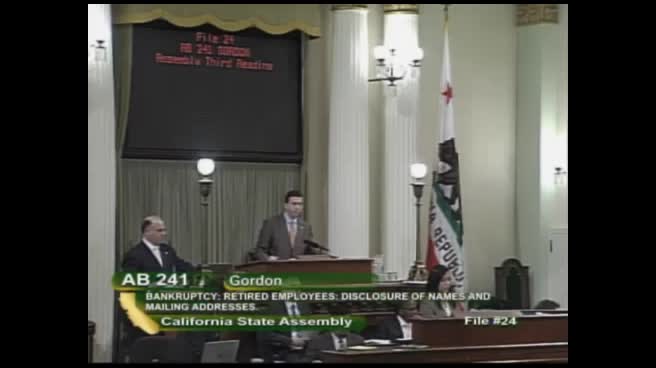 1MIN
Assembly Floor
 23SEC
Assembly Standing Committee on Appropriations
 6MIN
Assembly Standing Committee on Human Services
Bill Author

Bill Co-Author(s):