AB 899: Juveniles: confidentiality of records.
- Session Year: 2015-2016
- House: Assembly
- Latest Version Date: 2015-09-04
Existing law requires the case file of a dependent child or ward of the juvenile court to be kept confidential, except as specified. Existing law authorizes only certain persons to inspect the case file, including, among others, the attorneys for the parties, judges, referees, other hearing officers, and law enforcement officers who are participating in proceedings involving the dependent child or ward.
This bill would provide that nothing in these provisions authorizes the disclosure of juvenile information to federal officials absent a court order upon filing a petition, as specified. The bill also would provide that nothing in these provisions authorizes the dissemination of juvenile information to, or by, federal officials absent a court order upon filing a petition, as specified. This bill would also provide that nothing in these provisions authorizes the attachment of juvenile information to other documents given to, or provided by, federal officials absent prior approval of the presiding judge of the juvenile court. This bill would specify that juvenile information includes the juvenile case file and information related to the juvenile, as specified.
It is the intent of the Legislature that juvenile records remain confidential in order to serve the compelling interest of avoiding stigma and promoting rehabilitation for juveniles. It is not the intent of the Legislature to attempt to resist federal officials.
SEC. 2.Section 831 is added to the Welfare and Institutions Code, to read:831.(a)It is the intent of the Legislature in enacting this section to clarify that juvenile court records should remain confidential regardless of the juveniles immigration status. Confidentiality is integral to the operation of the juvenile justice system in order to avoid stigma and promote rehabilitation for all youth, regardless of immigration status.
(b)Nothing in this article authorizes the disclosure of juvenile information to federal officials absent a court order of the judge of the juvenile court upon filing a petition as provided by subparagraph (P) of paragraph (1) of subdivision (a) of Section 827.
(c)Nothing in this article authorizes the dissemination of juvenile information to, or by, federal officials absent a court order of the judge of the juvenile court upon filing a petition as provided by subparagraph (P) of paragraph (1) and paragraph (4) of subdivision (a) of Section 827.
(d)Nothing in this article authorizes the attachment of juvenile information to any other documents given to, or provided by, federal officials absent prior approval of the presiding judge of the juvenile court as provided by paragraph (4) of subdivision (a) of Section 827.
(e)For purposes of this section, juvenile information includes the juvenile case file, as defined in subdivision (e) of Section 827, and information related to the juvenile, including, but not limited to, name, date or place of birth, and the immigration status of the juvenile that is obtained or created independent of, or in connection with, juvenile court proceedings about the juvenile and maintained by any government agency, including, but not limited to, a court, probation office, child welfare agency, or law enforcement agency.
(f)Nothing in this section shall be construed as authorizing any disclosure that would otherwise violate this article.
(g)The Legislature finds and declares that this section is declaratory of existing law.
It is the intent of the Legislature that juvenile records remain confidential in order to serve the compelling interest of avoiding stigma and promoting rehabilitation for juveniles. It is not the intent of the Legislature to attempt to resist federal officials.
SEC. 2.Section 831 is added to the Welfare and Institutions Code, to read:831.(a)It is the intent of the Legislature in enacting this section to clarify that juvenile court records should remain confidential regardless of the juveniles immigration status. Confidentiality is integral to the operation of the juvenile justice system in order to avoid stigma and promote rehabilitation for all youth, regardless of immigration status.
(b)Nothing in this article authorizes the disclosure of juvenile information to federal officials absent a court order of the judge of the juvenile court upon filing a petition as provided by subparagraph (P) of paragraph (1) of subdivision (a) of Section 827.
(c)Nothing in this article authorizes the dissemination of juvenile information to, or by, federal officials absent a court order of the judge of the juvenile court upon filing a petition as provided by subparagraph (P) of paragraph (1) and paragraph (4) of subdivision (a) of Section 827.
(d)Nothing in this article authorizes the attachment of juvenile information to any other documents given to, or provided by, federal officials absent prior approval of the presiding judge of the juvenile court as provided by paragraph (4) of subdivision (a) of Section 827.
(e)For purposes of this section, juvenile information includes the juvenile case file, as defined in subdivision (e) of Section 827, and information related to the juvenile, including, but not limited to, name, date or place of birth, and the immigration status. status of the juvenile that is obtained or created independent of, or in connection with, juvenile court proceedings about the juvenile and maintained by any government agency, including, but not limited to, a court, probation office, child welfare agency, or law enforcement agency.
(f)Nothing in this section shall be construed as authorizing any disclosure that would otherwise violate this article.
(g)The Legislature finds and declares that this section is declaratory of existing law.
It is the intent of the Legislature that juvenile records remain confidential in order to serve the compelling interest of avoiding stigma and promoting rehabilitation for juveniles. It is not the intent of the Legislature to attempt to resist federal officials.
SEC. 2.Section 831 is added to the Welfare and Institutions Code, to read:831.(a)It is the intent of the Legislature in enacting this section to clarify that juvenile court records should remain confidential regardless of the juveniles immigration status. Confidentiality is integral to the operation of the juvenile justice system in order to avoid stigma and promote rehabilitation for all youth, regardless of immigration status.
(b)Nothing in this article authorizes the disclosure of juvenile information to federal officials absent a court order of the judge of the juvenile court upon filing a petition as provided by subparagraph (P) of paragraph (1) of subdivision (a) of Section 827.
(c)Nothing in this article authorizes the dissemination of juvenile information to, or by, federal officials absent a court order of the judge of the juvenile court upon filing a petition as provided by subparagraph (P) of paragraph (1) and paragraph (4) of subdivision (a) of Section 827.
(d)Nothing in this article authorizes the attachment of juvenile information to any other documents given to, or provided by, federal officials absent prior approval of the presiding judge of the juvenile court as provided by paragraph (4) of subdivision (a) of Section 827.
(e)For purposes of this section, juvenile information includes the juvenile case file, as defined in subdivision (e) of Section 827, and information related to the juvenile, including, but not limited to, name, date or place of birth, and immigration status.
(f)Nothing in this section shall be construed as authorizing any disclosure that would otherwise violate this article.
(g)The Legislature finds and declares that this section is declaratory of existing law.
|
Date
|
Status
|
|---|---|
| May 7, 2015 | Referred to Com. on PUB. S. |
| Sep 4, 2015 | Chaptered by Secretary of State - Chapter 267, Statutes of 2015. |
| Sep 4, 2015 | Approved by the Governor. |
| Aug 24, 2015 | Enrolled and presented to the Governor at 3:30 p.m. |
| Aug 18, 2015 | In Assembly. Ordered to Engrossing and Enrolling. |
| Aug 17, 2015 | Read third time. Passed. Ordered to the Assembly. (Ayes 32. Noes 6. Page 2050.). |
| Aug 17, 2015 | Read third time. Passed. Ordered to the Assembly. |
| Jun 24, 2015 | Read second time. Ordered to third reading. |
| Jun 23, 2015 | From committee: Do pass. (Ayes 5. Noes 2.) (June 23). |
| Feb 26, 2015 | Read first time. To print. |
| Apr 16, 2015 | Read third time. Passed. Ordered to the Senate. (Ayes 76. Noes 1. Page 970.) |
| Apr 16, 2015 | Read third time. Passed. Ordered to the Senate. |
| Apr 16, 2015 | In Senate. Read first time. To Com. on RLS. for assignment. |
| Apr 13, 2015 | Read second time. Ordered to third reading. |
| Apr 9, 2015 | Read second time and amended. Ordered returned to second reading. |
| Apr 8, 2015 | From committee: Amend, and do pass as amended. (Ayes 9. Noes 0.) (April 7). |
| Mar 16, 2015 | Referred to Com. on JUD. |
| Feb 27, 2015 | From printer. May be heard in committee March 29. |
|
Date
|
Description
|
Location
|
Votes
|
|
|---|---|---|---|---|
| Aug 17, 2015 | Assembly 3rd Reading AB899 Levine By Glazer | Senate Floor |
Passed |
|
| Jun 23, 2015 | Do pass | Senate Standing Committee on Public Safety |
Passed |
|
| Apr 16, 2015 | AB 899 LEVINE Assembly Third Reading | Assembly Floor |
Passed |
|
| Apr 7, 2015 | Do pass as amended. | Assembly Standing Committee on Judiciary |
Passed |
This list shows positions taken on this bill by organizations on the date displayed, which is linked to the original source.
Positions by individuals are not included.
|
Organization
|
Position
|
Date
|
|---|---|---|
| Anti-Defamation League | ** Support | Aug 17, 2015 |
| Asian Americans Advancing Justice - Asian Law Caucus | ** Support | Aug 17, 2015 |
| Asian Pacific Islander Legal Outreach | ** Support | Aug 17, 2015 |
| Bay Area Industrial Areas Foundation | ** Support | Aug 17, 2015 |
| California Attorneys For Criminal Justice | * Support | Jun 23, 2015 |
| California Civil Rights Law Group | ** Support | Aug 17, 2015 |
| California Conference for Equality and Justice | ** Support | Aug 17, 2015 |
| California Immigrant Policy Center | ** Support | Aug 17, 2015 |
| California Rural Legal Assistance Foundation, Inc. | ** Support | Aug 17, 2015 |
| Canal Alliance | ** Support | Aug 17, 2015 |
| Catholic Charities of the East Bay | ** Support | Aug 17, 2015 |
| Center for Gender & Refugee Studies | ** Support | Aug 17, 2015 |
| Central American Resource Center | ** Support | Aug 17, 2015 |
| Centro Legal de la Raza | ** Support | Aug 17, 2015 |
| Chinese for Affirmative Action | ** Support | Aug 17, 2015 |
| Communities Organized for Relational Power in Action | ** Support | Aug 17, 2015 |
| Communities United for Restorative Youth Justice | ** Support | Aug 17, 2015 |
| Community United Against Violence | ** Support | Aug 17, 2015 |
| Dolores Street Community Services | ** Support | Aug 17, 2015 |
| Drug Policy Alliance | ** Support | Aug 17, 2015 |
| East Bay Community Law Center | ** Support | Aug 17, 2015 |
| Esperanza Immigrant Rights Project | ** Support | Aug 17, 2015 |
| Huckleberry Youth Programs | ** Support | Aug 17, 2015 |
| Immigrant Legal Resource Center | ** Support | Aug 17, 2015 |
| Immigration Center for Women and Children | ** Support | Aug 17, 2015 |
| International Institute of the Bay Area | ** Support | Aug 17, 2015 |
| Juvenile Court Judges of California | ** Support | Aug 17, 2015 |
| Larkin Street | ** Support | Apr 16, 2015 |
| Larkin Street Legal Services for Prisoners with Children | ** Support | Aug 17, 2015 |
| Legal Advocates for Children and Youth | ** Support | Aug 17, 2015 |
| Legal Aid Society of San Mateo County | ** Support | Aug 17, 2015 |
| Legal Services for Children | ** Support | Aug 17, 2015 |
| Legal Services for Prisoners with Children | ** Support | Aug 17, 2015 |
| National Center for Lesbian Rights | ** Support | Aug 17, 2015 |
| National Center for Youth Law | ** Support | Aug 17, 2015 |
| National Day Laborer Organizing Network | ** Support | Aug 17, 2015 |
| National Immigration Law Center | ** Support | Aug 17, 2015 |
| Page P | ** Support | Apr 16, 2015 |
| Pangea Legal Services | ** Support | Aug 17, 2015 |
| Prison Law Office | ** Support | Aug 17, 2015 |
| Public Counsel | ** Support | Aug 17, 2015 |
| Sacramento Public Defender | ** Support | Aug 17, 2015 |
| San Diego Volunteer Lawyer Program | ** Support | Aug 17, 2015 |
| San Francisco Public Defender | ** Support | Aug 17, 2015 |
| Santa Ana Boys and Men of Color | ** Support | Aug 17, 2015 |
| Santa Clara Public Defender | ** Support | Aug 17, 2015 |
| Silicon Valley De-Bug | ** Support | Aug 17, 2015 |
| Social Justice Collaborative | ** Support | Aug 17, 2015 |
| UCI Law Clinic Immigrant Rights Clinic | ** Support | Aug 17, 2015 |
| Urban Peace Movement | ** Support | Aug 17, 2015 |
| Youth Law Center | ** Support | Aug 17, 2015 |
AB 899
Page 8
|
Office of Senate Floor Analyses (916) 651-1520 Fax: (916) 327-4478 |
THIRD READING
Bill No: AB 899
Amended: 4/9/15 in Assembly
SENATE PUBLIC SAFETY COMMITTEE: 5-2, 6/23/15
AYES: Hancock, Glazer, Leno, Liu, Monning
NOES: Anderson, Stone
ASSEMBLY FLOOR: 76-1, 4/16/15 - See last page for vote
SUBJECT: Juveniles: confidentiality of records
SOURCE: Immigrant Legal Resource Center
DIGEST: This bill enacts a new statute explicitly stating that declaratory of existing law, confidential juvenile files cannot be disclosed to federal officials absent a court order, as specified.
Existing law:
Defines a “juvenile case file” as a petition filed in any juvenile court proceeding, reports of the probation officer, and all other documents filed in that case or made available to the probation officer in making his or her report, or to the judge, referee, or other hearing officer, and thereafter retained by the probation officer, judge, referee, or other hearing officer. (Welfare & Institutions Code Section 827(e). All statutory references are to the Welfare & Institutions Code, unless otherwise indicated.)
Requires that the “order and findings of the superior court in each case [under the provisions of this chapter] shall be entered in a suitable book or other form of written record which shall be kept for that purpose and known as the ‘juvenile court record.’” (Section 825.)
Provides that only specified parties, including, but not limited to, court personnel, a district attorney, a city attorney, a minor who is the subject of the proceeding, the minor’s parents or guardian, the attorneys for the parties, and “[a]ny other person who may be designated by court order of the judge of the juvenile court upon filing a petition” are authorized to inspect a juvenile “case file.” (Section 827(a).)
Provides that a juvenile case file, any portion thereof, and information relating to the content of the juvenile case file, may not be disseminated by the receiving agencies to any persons or agencies, other than those persons or agencies authorized to receive documents pursuant to this section. (Section 827(a)(1)(P)(4).)
Provides that a juvenile case file, any portion thereof, and information relating to the content of the juvenile case file, may not be made as an attachment to any other documents without the prior approval of the presiding judge of the juvenile court, unless it is used in connection with and in the course of a criminal investigation or a proceeding brought to declare a person a dependent child or ward of the juvenile court. (Section 827(a)(1)(P)(4).)
Allows the disclosure of any information gathered by a law enforcement agency, including the Department of Justice, relating to the taking of a minor into custody (including disposition information about juvenile court proceedings) to be disclosed to another law enforcement agency or to any person or agency which has a legitimate need for the information for purposes of official disposition of a case. (Section 828(a).)
Provides that when a petition is sustained for one of the serious or violent offenses listed in Section 676 subdivision (a), specified documents in the juvenile court file (and no others) are available for public inspection: the charging petition, the minutes of the proceeding, and the orders of adjudication and disposition of the court. (Section 676(d).)
This bill:
States legislative intent “to clarify that juvenile court records should remain confidential regardless of the juvenile’s immigration status. Confidentiality is integral to the operation of the juvenile justice system in order to avoid stigma and promote rehabilitation for all youth, regardless of immigration status.”
Provides that “(n)othing in this article authorizes the disclosure of juvenile information to federal officials absent a court order of the judge of the juvenile court upon filing a petition as provided by subparagraph (P) of paragraph (1) of subdivision (a) of Section 827.”
Provides that “(n)othing in this article authorizes the dissemination of juvenile information to, or by, federal officials absent a court order of the judge of the juvenile court upon filing a petition as provided by subparagraph (P) of paragraph (1) and paragraph (4) of subdivision (a) of Section 827.”
Provides that “(n)othing in this article authorizes the attachment of juvenile information to any other documents given to, or provided by, federal officials absent prior approval of the presiding judge of the juvenile court as provided by paragraph (4) of subdivision (a) of Section 827.”
States that for “purposes of this section, “juvenile information” includes the “juvenile case file,” as defined in subdivision (e) of Section 827, and information related to the juvenile, including, but not limited to, name, date or place of birth, and the immigration status of the juvenile that is obtained or created independent of, or in connection with, juvenile court proceedings about the juvenile and maintained by any government agency, including, but not limited to, a court, probation office, child welfare agency, or law enforcement agency.”
States that “(n)othing in this section shall be construed as authorizing any disclosure that would otherwise violate this article.”
States that “the Legislature finds and declares that this section is declaratory of existing law.”
Includes uncodified legislative intent language “that juvenile records remain confidential in order to serve the compelling interest of avoiding stigma and promoting rehabilitation for juveniles. It is not the intent of the Legislature to attempt to resist federal officials.”
Background
Existing legislative intent states that “juvenile court records, in general, should be confidential.” (Section 827(b)(1).) This presumption reflects a long recognized public policy of protecting the confidentiality of juvenile proceedings and records. (T.N.G. v. Superior Court (1971) 4 Cal.3d 767, 778.) Only those persons who are listed in Section 827 are authorized to inspect records in a juvenile case file without a court order. The juvenile court has exclusive authority to determine the extent to which confidential juvenile records may be released and, if it grants a petition, also has exclusive control over “the time, place and manner of inspection.” (In re Gina S. (2005) 133 Cal.App.4th 1074, 1081-1082.) Parties who are authorized to inspect the juvenile court file are not automatically authorized to copy documents in the file. (Id, at p. 1082.) The juvenile court has the authority to not only deny disclosure of juvenile court records, but also to order the return of all copies of juvenile case file documents. (Id, at p. 1084-85.) The juvenile court, not the person who is in possession of juvenile court records, has the authority to decide to whom juvenile court records may lawfully be released. (In re Keisha T. (1995) 38 Cal. App. 4th 220, 234.)
These protections extend to law enforcement agencies that are not directly connected to the juvenile court. The fact that information is stored within a law enforcement record is irrelevant to the issue of confidentiality because law enforcement records about juveniles “become equivalent to court records and remain under the control of the juvenile court.” (T.N.G., supra, 4 Cal. 3d at 781; see also Cal. Ct. Rule 5.552(a)(4) [providing that the juvenile case file includes “[d]ocuments relating to a child concerning whom a petition has been filed in juvenile court that are maintained in the office files of probation officers”].) Even documents that relate to minors who are not detained are subject to the protections of Section 827. (People v. Espinoza (2002) 95 Cal.App.4th 1287, 1315; Wescott v. County of Yuba (1980) 104 Cal. App. 3d 103, 108.) The court in Westcott reasoned that disclosure of information about a law enforcement encounter with juveniles was inappropriate because of “[t]he stigma and ridicule which could occur if a third party is given the report,” which outweighed the interests of the requester. (Wescott v. County of Yuba, supra, at p. 108.) “The mere fact that the minors, in this case, were not taken into formal custody does not reduce the potentially harmful effect the release of the police report could have on them. (Ibid.)
The Legislature has reiterated its intent to protect the confidentiality of information related to juvenile court proceedings held by law enforcement agencies. Section 827.9 provides that, “It is the intent of the Legislature to reaffirm its belief that records or information gathered by law enforcement agencies relating to the taking of a minor into custody, temporary custody, or detention (juvenile police records) should be confidential.” California Rule of Court 5.552(f) requires the filing of JV-575 with the juvenile court to obtain information gathered by a law enforcement agency regarding the taking of a minor into custody.
According to the author, the Bureau of Immigration and Customs Enforcement (ICE) “issued 211 detainers for youth in juvenile detention centers in California [during a 21 month period] in Fiscal Years 2012 and 2013 [http://trac.syr.edu.] . . . This means that at a minimum, 211 breaches of confidentiality occurred during the reporting period. These numbers do not, however, reflect all violations of confidentiality since many youth who are reported to ICE do not receive a detainer. Accordingly, it is likely that far more than 211 violations of juvenile confidentiality occurred.”
ICE appears to be prohibited by federal regulation from obtaining and using confidential information. (5 C.F.R. 2635.703(a).) The regulation forbids “‘the improper use of nonpublic information to further [an employee's] own private interest . . . by knowing unauthorized disclosure.’ Nonpublic information is defined as information the employee gains by reason of federal employment and ‘knows or reasonably should know has not been made available to the general public . . . [or] been disseminated to the general public.’ (5 C.F.R. 2635.703(b).)” (Chuyon Yon Hong v. Mukasey (9th Cir. 2008) 518 F.3d 1030, 1035.)
Information obtained in violation of federal regulations or state law is subject to exclusion from deportation proceedings. The United States Supreme Court has observed (in dicta) that while exclusion of illegally obtained evidence from deportation proceedings is infrequent, there are several cases where exclusion is required: when the internal regulations of the immigration agency have been violated (See INS v. Delgado (1984) 466 U.S. 210) and when there are “egregious violations of Fourth Amendment or other liberties that might transgress notions of fundamental fairness and undermine the probative value of the evidence obtained.” (Immigration & Naturalization Service v. Lopez-Mendoza (1984) 468 U.S. 1032, 1050-1051.)
According to the author, “the issues addressed by the bill are the subject of two pending appeals in the First Appellate District: The People v. Y.V., No. A142355 (Cal. App. 1st Dist. filed July 1, 2014); The People v. C.H., No. A141758 (Cal. App. 1st Dist. filed May 1, 2014). This bill will clarify that the probation department cannot disclose confidential juvenile information to federal immigration officials without going through the petitioning process in § 827, as it failed to do in both cases.”
FISCAL EFFECT: Appropriation: No Fiscal Com.: No Local: No
Immigrant Legal Resource Center (source)
Anti-Defamation League
Asian Americans Advancing Justice – Asian Law Caucus
Asian Pacific Islander Legal Outreach
Bay Area Industrial Areas Foundation
California Civil Rights Law Group
California Conference for Equality and Justice
California Immigrant Policy Center
California Rural Legal Assistance Foundation
Canal Alliance
Catholic Charities of the East Bay
Catholic Legal Immigration Network. Inc.
Center for Gender & Refugee Studies
Central American Resource Center
Centro Legal de la Raza
Chinese for Affirmative Action
Communities Organized for Relational Power in Action
Community United Against Violence
Communities United for Restorative Youth Justice
Dolores Street Community Services
Drug Policy Alliance
East Bay Community Law Center
Esperanza Immigrant Rights Project
Executive Committee of the Family Law Section of the State Bar of California Fools Mission
Huckleberry Youth Programs
Immigration Center for Women and Children
International Institute of the Bay Area
Juvenile Court Judges of California
Larkin Street Legal Services for Prisoners with Children
Legal Advocates for Children and Youth
Legal Aid Society of San Mateo County
Legal Services for Children
Legal Services for Prisoners with Children
National Center for Lesbian Rights
National Center for Youth Law
National Day Laborer Organizing Network
National Immigration Law Center
Pangea Legal Services
Prison Law Office
Public Counsel
Sacramento Public Defender
San Diego Volunteer Lawyer Program
San Francisco Public Defender
Santa Ana Boys and Men of Color
Santa Clara Public Defender
Silicon Valley De-Bug
Social Justice Collaborative
UCI Law Clinic Immigrant Rights Clinic
Urban Peace Movement
The W. Haywood Burns Institute
Youth Law Center
OPPOSITION: (Verified 6/23/15)
None received
ARGUMENTS IN SUPPORT:
The author states:
The purpose of this bill is to protect minors from improper disclosures of their juvenile records, regardless of their immigration status. Under existing California law, juvenile court case files of dependent children and wards are to be kept confidential, except from certain specified parties or pursuant to a court order upon filing a petition in juvenile court.
Although current California law does not exempt federal officials, including immigration officials, from having to petition the court to obtain juvenile case information and files, many local counties disagree, citing that there is no explicit statement in state law that federal officials must follow this process. Consequently, some local and state agencies are automatically sharing information with federal immigration officials, without following the procedure enumerated in California Welfare & Institutions Code § 827, which requires filing a separate petition with the juvenile court requesting the files.
This is problematic because the petitioning procedure in Welfare & Institutions Code § 827 recognizes that juvenile courts have exclusive authority to determine the extent to which juvenile records should be released to third parties given the court’s sensitivity and expertise in this area. Further, the procedure provides the minor, his/her parents and his/her attorney (among others) the opportunity to contest the sharing of confidential information that may be contrary to his/her rehabilitation and best interests.
This bill makes absolutely clear that federal officials, like all other parties seeking access to juvenile court files who are not actively involved in the proceedings, must file a petition pursuant to Welfare & Institutions Code § 827 in order to request access to a youth’s juvenile case file.
ASSEMBLY FLOOR: 76-1, 4/16/15
AYES: Achadjian, Alejo, Travis Allen, Baker, Bigelow, Bloom, Bonilla, Bonta, Brough, Brown, Burke, Calderon, Campos, Chang, Chau, Chávez, Chiu, Chu, Cooley, Cooper, Dababneh, Dahle, Daly, Dodd, Eggman, Frazier, Cristina Garcia, Eduardo Garcia, Gatto, Gipson, Gomez, Gonzalez, Gordon, Gray, Grove, Hadley, Harper, Roger Hernández, Holden, Irwin, Jones, Jones-Sawyer, Kim, Lackey, Levine, Linder, Lopez, Low, Maienschein, Mathis, Mayes, McCarty, Medina, Melendez, Mullin, Nazarian, O'Donnell, Olsen, Patterson, Perea, Rendon, Ridley-Thomas, Rodriguez, Salas, Santiago, Steinorth, Mark Stone, Thurmond, Ting, Wagner, Waldron, Weber, Wilk, Williams, Wood, Atkins
NOES: Gallagher
NO VOTE RECORDED: Beth Gaines, Obernolte, Quirk
Prepared by: Alison Anderson / PUB. S. /
6/24/15 19:00:49
**** END ****
AB 899 (Levine ) Page 7 of 7
SENATE COMMITTEE ON PUBLIC SAFETY
Senator Loni Hancock, Chair
2015 - 2016 Regular
Bill No: AB 899 Hearing Date: June 23, 2015
Author: |
Levine |
||
Version: |
April 9, 2015 |
||
Urgency: |
No |
Fiscal: |
No |
Consultant: |
AA |
||
Subject: Juveniles: Confidentiality of Records
HISTORY
Source: Immigrant Legal Resource Center
Prior Legislation: None
Support: Anti-Defamation League; Asian Americans Advancing Justice – Asian Law Caucus; Asian Pacific Islander Legal Outreach; Bay Area Industrial Areas Foundation; California Civil Rights Law Group; California Conference for Equality and Justice; California Immigrant Policy Center; California Rural Legal Assistance Foundation; Canal Alliance; Catholic Charities of the East Bay; Catholic Legal Immigration Network. Inc.; Center for Gender & Refugee Studies; Central American Resource Center; Centro Legal de la Raza; Chinese for Affirmative Action; Communities Organized for Relational Power in Action; Community United Against Violence; Communities United for Restorative Youth Justice; Dolores Street Community Services; East Bay Community Law Center; Esperanza Immigrant Rights Project; Executive Committee of the Family Law Section of the State Bar of California (FLEXCOM) Fools Mission; Huckleberry Youth Programs; Immigration Center for Women and Children; International Institute of the Bay Area; Juvenile Court Judges of California; Larkin Street Legal Services for Prisoners with Children; Legal Advocates for Children and Youth; Legal Aid Society of San Mateo County; Legal Services for Children; Legal Services for Prisoners with Children; National Center for Lesbian Rights; National Center for Youth Law; National Day Laborer Organizing Network; National Immigration Law Center; Pangea Legal Services; Prison Law Office; Public Counsel; Sacramento Public Defender; San Diego Volunteer Lawyer Program; San Francisco Public Defender; Santa Ana Boys and Men of Color; Santa Clara Public Defender; Silicon Valley De-Bug; Social Justice Collaborative; UCI Law Clinic Immigrant Rights Clinic; Urban Peace Movement; the W. Haywood Burns Institute; Youth Law Center
Opposition: None Known
Assembly Floor Vote: 76 - 1
PURPOSE
The purpose of this bill is to enact a new statute explicitly stating that, declaratory of existing law, confidential juvenile files cannot be disclosed to federal officials absent a court order, as specified.
Current law defines a “juvenile case file” as a petition filed in any juvenile court proceeding, reports of the probation officer, and all other documents filed in that case or made available to the probation officer in making his or her report, or to the judge, referee, or other hearing officer, and thereafter retained by the probation officer, judge, referee, or other hearing officer. (Welfare & Institutions Code Section 827(e). All statutory references are to the Welfare & Institutions Code, unless otherwise indicated.)
Current law requires that the “order and findings of the superior court in each case [under the provisions of this chapter] shall be entered in a suitable book or other form of written record which shall be kept for that purpose and known as the ‘juvenile court record.’” (Section 825.)
Current law provides that only specified parties, including but not limited to court personnel, a district attorney, a city attorney, a minor who is the subject of the proceeding, the minor’s parents or guardian, the attorneys for the parties, and “[a]ny other person who may be designated by court order of the judge of the juvenile court upon filing a petition” are authorized to inspect a juvenile “case file.” (Section 827(a).)
Current law provides that a juvenile case file, any portion thereof, and information relating to the content of the juvenile case file, may not be disseminated by the receiving agencies to any persons or agencies, other than those persons or agencies authorized to receive documents pursuant to this section. (Section 827(a)(1)(P)(4).)
Current law provides that a juvenile case file, any portion thereof, and information relating to the content of the juvenile case file, may not be made as an attachment to any other documents without the prior approval of the presiding judge of the juvenile court, unless it is used in connection with and in the course of a criminal investigation or a proceeding brought to declare a person a dependent child or ward of the juvenile court. (Section 827(a)(1)(P)(4).)
Current law allows the disclosure of any information gathered by a law enforcement agency, including the Department of Justice, relating to the taking of a minor into custody (including disposition information about juvenile court proceedings) to be disclosed to another law enforcement agency or to any person or agency which has a legitimate need for the information for purposes of official disposition of a case. (Section 828(a).)
Current law provides that when a petition is sustained for one of the serious or violent offenses listed in Section 676 subdivision (a), specified documents in the juvenile court file (and no others) are available for public inspection: the charging petition, the minutes of the proceeding, and the orders of adjudication and disposition of the court. (Section 676(d).)
This bill would enact a new provision in the Welfare and Institutions Code stating the following:
“It is the intent of the Legislature in enacting this section to clarify that juvenile court records should remain confidential regardless of the juvenile’s immigration status. Confidentiality is integral to the operation of the juvenile justice system in order to avoid stigma and promote rehabilitation for all youth, regardless of immigration status.”
“Nothing in this article authorizes the disclosure of juvenile information to federal officials absent a court order of the judge of the juvenile court upon filing a petition as provided by subparagraph (P) of paragraph (1) of subdivision (a) of Section 827.”
“Nothing in this article authorizes the dissemination of juvenile information to, or by, federal officials absent a court order of the judge of the juvenile court upon filing a petition as provided by subparagraph (P) of paragraph (1) and paragraph (4) of subdivision (a) of Section 827.”
“Nothing in this article authorizes the attachment of juvenile information to any other documents given to, or provided by, federal officials absent prior approval of the presiding judge of the juvenile court as provided by paragraph (4) of subdivision (a) of Section 827.”
“For purposes of this section, “juvenile information” includes the “juvenile case file,” as defined in subdivision (e) of Section 827, and information related to the juvenile, including, but not limited to, name, date or place of birth, and the immigration status of the juvenile that is obtained or created independent of, or in connection with, juvenile court proceedings about the juvenile and maintained by any government agency, including, but not limited to, a court, probation office, child welfare agency, or law enforcement agency.”
“Nothing in this section shall be construed as authorizing any disclosure that would otherwise violate this article.”
“The Legislature finds and declares that this section is declaratory of existing law.”
This bill states uncodified legislative intent language “that juvenile records remain confidential in order to serve the compelling interest of avoiding stigma and promoting rehabilitation for juveniles. It is not the intent of the Legislature to attempt to resist federal officials.”
RECEIVERSHIP/OVERCROWDING CRISIS AGGRAVATION
For the past eight years, this Committee has scrutinized legislation referred to its jurisdiction for any potential impact on prison overcrowding. Mindful of the United States Supreme Court ruling and federal court orders relating to the state’s ability to provide a constitutional level of health care to its inmate population and the related issue of prison overcrowding, this Committee has applied its “ROCA” policy as a content-neutral, provisional measure necessary to ensure that the Legislature does not erode progress in reducing prison overcrowding.
On February 10, 2014, the federal court ordered California to reduce its in-state adult institution population to 137.5% of design capacity by February 28, 2016, as follows:
143% of design bed capacity by June 30, 2014;
141.5% of design bed capacity by February 28, 2015; and,
137.5% of design bed capacity by February 28, 2016.
In February of this year the administration reported that as “of February 11, 2015, 112,993 inmates were housed in the State’s 34 adult institutions, which amounts to 136.6% of design bed capacity, and 8,828 inmates were housed in out-of-state facilities. This current population is now below the court-ordered reduction to 137.5% of design bed capacity.”( Defendants’ February 2015 Status Report In Response To February 10, 2014 Order, 2:90-cv-00520 KJM DAD PC, 3-Judge Court, Coleman v. Brown, Plata v. Brown (fn. omitted).
While significant gains have been made in reducing the prison population, the state now must stabilize these advances and demonstrate to the federal court that California has in place the “durable solution” to prison overcrowding “consistently demanded” by the court. (Opinion Re: Order Granting in Part and Denying in Part Defendants’ Request For Extension of December 31, 2013 Deadline, NO. 2:90-cv-0520 LKK DAD (PC), 3-Judge Court, Coleman v. Brown, Plata v. Brown (2-10-14). The Committee’s consideration of bills that may impact the prison population therefore will be informed by the following questions:
Whether a proposal erodes a measure which has contributed to reducing the prison population;
Whether a proposal addresses a major area of public safety or criminal activity for which there is no other reasonable, appropriate remedy;
Whether a proposal addresses a crime which is directly dangerous to the physical safety of others for which there is no other reasonably appropriate sanction;
Whether a proposal corrects a constitutional problem or legislative drafting error; and
Whether a proposal proposes penalties which are proportionate, and cannot be achieved through any other reasonably appropriate remedy.
COMMENTS
1. Stated Need for This Bill
The author states:
The purpose of this bill is to protect minors from improper disclosures of their juvenile records, regardless of their immigration status. Under existing California law, juvenile court case files of dependent children and wards are to be kept confidential, except from certain specified parties or pursuant to a court order upon filing a petition in juvenile court.
Although current California law does not exempt federal officials, including immigration officials, from having to petition the court to obtain juvenile case information and files, many local counties disagree, citing that there is no explicit statement in state law that federal officials must follow this process. Consequently, some local and state agencies are automatically sharing information with federal immigration officials, without following the procedure enumerated in California Welfare & Institutions Code § 827, which requires filing a separate petition with the juvenile court requesting the files.
This is problematic because the petitioning procedure in Welfare & Institutions Code § 827 recognizes that juvenile courts have exclusive authority to determine the extent to which juvenile records should be released to third parties given the court’s sensitivity and expertise in this area. Further, the procedure provides the minor, his/her parents and his/her attorney (among others) the opportunity to contest the sharing of confidential information that may be contrary to his/her rehabilitation and best interests.
This bill makes absolutely clear that federal officials, like all other parties seeking access to juvenile court files who are not actively involved in the proceedings, must file a petition pursuant to Welfare & Institutions Code § 827 in order to request access to a youth’s juvenile case file.
2. Background – Juvenile Records Confidentiality; Federal Officials
Existing legislative intent states that “juvenile court records, in general, should be confidential.” (Section 827(b)(1).) This presumption reflects a long recognized public policy of protecting the confidentiality of juvenile proceedings and records. (T.N.G. v. Superior Court (1971) 4 Cal.3d 767, 778.) Only those persons who are listed in Section 827 are authorized to inspect records in a juvenile case file without a court order. The juvenile court has exclusive authority to determine the extent to which confidential juvenile records may be released and, if it grants a petition, also has exclusive control over “the time, place and manner of inspection.” (In re Gina S. (2005) 133 Cal.App.4th 1074, 1081-1082.) Parties who are authorized to inspect the juvenile court file are not automatically authorized to copy documents in the file. (Id, at p. 1082.) The juvenile court has the authority to not only deny disclosure of juvenile court records, but also to order the return of all copies of juvenile case file documents. (Id, at p. 1084-85.) The juvenile court, not the person who is in possession of juvenile court records, has the authority to decide to whom juvenile court records may lawfully be released. (In re Keisha T. (1995) 38 Cal. App. 4th 220, 234.)
The California Rules of Court provide guidance to juvenile courts about whether to allow disclosure of juvenile court records. (See In re Keisha T., supra, 38 Cal.App.4th at p. 235.) Rule 1423(b) provides, in relevant part, “In determining whether to authorize inspection or release of juvenile court records, in whole or in part, the court must balance the interests of the child and other parties to the juvenile court proceedings, the interests of the petitioner, and the interests of the public. The court must permit disclosure of, discovery of, or access to juvenile court records or proceedings only insofar as is necessary, and only if there is a reasonable likelihood that the records in question will disclose information or evidence of substantial relevance to the pending litigation, investigation, or prosecution.” Information about a minor that is gathered in the course of a juvenile court proceeding – whether a name, date of birth, country of birth, or charging information – is protected, as are documents that are found either in the juvenile case file or created in connection with a juvenile case. (T.N.G. v. Superior Court, supra, 4 Cal. 3d at pp. 780-81.)
These protections extend to law enforcement agencies that are not directly connected to the juvenile court. The fact that information is stored within a law enforcement record is irrelevant to the issue of confidentiality because law enforcement records about juveniles “become equivalent to court records and remain under the control of the juvenile court.” (T.N.G., supra, 4 Cal. 3d at 781; see also Cal. Ct. Rule 5.552(a)(4) [providing that the juvenile case file includes “[d]ocuments relating to a child concerning whom a petition has been filed in juvenile court that are maintained in the office files of probation officers”].) Even documents that relate to minors who are not detained are subject to the protections of Section 827. (People v. Espinoza (2002) 95 Cal.App.4th 1287, 1315; Wescott v. County of Yuba (1980) 104 Cal. App. 3d 103, 108.) The court in Westcott reasoned that disclosure of information about a law enforcement encounter with juveniles was inappropriate because of “[t]he stigma and ridicule which could occur if a third party is given the report,” which outweighed the interests of the requester. (Wescott v. County of Yuba, supra, at p. 108.) “The mere fact that the minors, in this case, were not taken into formal custody does not reduce the potentially harmful effect the release of the police report could have on them. (Ibid.)
The Legislature has reiterated its intent to protect the confidentiality of information related to juvenile court proceedings held by law enforcement agencies. Section 827.9 provides that, “It is the intent of the Legislature to reaffirm its belief that records or information gathered by law enforcement agencies relating to the taking of a minor into custody, temporary custody, or detention (juvenile police records) should be confidential.” California Rule of Court 5.552(f) requires the filing of JV-575 with the juvenile court to obtain information gathered by a law enforcement agency regarding the taking of a minor into custody.
A 2012 advisory by the Stanford University Law School Immigrants’ Rights Clinic warned about what it characterized as…
. . . the troubling practice of San Mateo County Probation Department (“Probation”) disclosing confidential information about youth in the juvenile justice system to Immigration and Customs Enforcement (“ICE”). Probation obtains this confidential information during initial meetings with youth, when the youth are typically alone and unrepresented by counsel. Because of the relationship of trust between youth and Probation, youth often disclose very personal information, including their address, parents’ names and employment, previous delinquency dispositions, developmental issues, school history, medical records, descriptions of home life, and immigration status or other immigration related information, such as foreign place of birth. When Probation suspects that a youth lacks immigration status, Probation has shared the youth’s confidential information with ICE, without first obtaining the juvenile court’s permission, as it is required to do under § 827 of the California Welfare and Institutions Code.
In the T.N.G.case, the court used the police and probation departments of San Francisco to exemplify how other law enforcement agencies should protect the confidentiality of juvenile court information. “[T]he police and probation departments of San Francisco do not reveal detention records to third parties without court order. Welfare and Institutions Code section 827 reposes in the juvenile court control of juvenile records and requires the permission of the court before any information about juveniles is disclosed to third parties by any law enforcement official. The police department of initial contact may clearly retain the information that it obtains from the youths' detention, but it must receive the permission of the juvenile court pursuant to section 827 in order to release that information to any third party, including state agencies.” (T.N.G. v. Superior Court, supra, 4 Cal.3d, at pp. 780-781.)
According to the author, the Bureau of Immigration and Customs Enforcement (ICE) “issued 211 detainers for youth in juvenile detention centers in California [during a 21 month period] in Fiscal Years 2012 and 2013 [http://trac.syr.edu.] . . . This means that at a minimum, 211 breaches of confidentiality occurred during the reporting period. These numbers do not, however, reflect all violations of confidentiality since many youth who are reported to ICE do not receive a detainer. Accordingly, it is likely that far more than 211 violations of juvenile confidentiality occurred.”
The Bureau of Immigration and Customs Enforcement (ICE) appears to be prohibited by federal regulation from obtaining and using confidential information. (5 C.F.R. 2635.703(a).) The regulation forbids “‘the improper use of nonpublic information to further [an employee's] own private interest . . . by knowing unauthorized disclosure.’ Nonpublic information is defined as information the employee gains by reason of federal employment and ‘knows or reasonably should know has not been made available to the general public . . . [or] been disseminated to the general public.’ (5 C.F.R. 2635.703(b).)” (Chuyon Yon Hong v. Mukasey (9th Cir. 2008) 518 F.3d 1030, 1035.)
Information obtained in violation of federal regulations or state law is subject to exclusion from deportation proceedings. The United State Supreme Court has observed (in dicta) that while exclusion of illegally obtained evidence from deportation proceedings is infrequent, there are several cases where exclusion is required: when the internal regulations of the immigration agency have been violated (See INS v. Delgado (1984) 466 U.S. 210) and when there are “egregious violations of Fourth Amendment or other liberties that might transgress notions of fundamental fairness and undermine the probative value of the evidence obtained.” (Immigration & Naturalization Service v. Lopez-Mendoza (1984) 468 U.S. 1032, 1050-1051.)
According to the author, “the issues addressed by the bill are the subject of two pending appeals in the First Appellate District: The People v. Y.V., No. A142355 (Cal. App. 1st Dist. filed July 1, 2014); The People v. C.H., No. A141758 (Cal. App. 1st Dist. filed May 1, 2014). This bill will clarify that the probation department cannot disclose confidential juvenile information to federal immigration officials without going through the petitioning process in § 827, as it failed to do in both cases.”
-- END –
AB 899
Page 2
ASSEMBLY THIRD READING
AB 899
(Levine)
As Amended April 9, 2015
Majority vote
Committee |
Votes |
Ayes |
Noes |
Judiciary |
9-0 |
Mark Stone, Wagner, Alejo, Chau, Chiu, Cristina Garcia, Holden, Maienschein, O'Donnell |
|
SUMMARY: Clarifies that information about a minor who is or has been the subject of juvenile dependency or wardship proceedings is confidential and can only be disclosed to specified persons, or to others designated by court order of the judge of the juvenile court upon the filing of a petition. Specifically, this bill states that it is the intent of the Legislature in enacting this section to clarify that juvenile court records should remain confidential regardless of the juvenile’s immigration status and should not be shared to or by federal authorities.
EXISTING LAW:
Defines "juvenile case file," as a petition filed in any juvenile court proceeding, reports of the probation officer, and all other documents filed in that case or made available to the probation officer in making his or her report, or to the judge, referee, or other hearing officer, and thereafter retained by the probation officer, judge, referee, or other hearing officer.
Provides that only specified parties, including but not limited to court personnel, a district attorney, a city attorney, a minor who is the subject of the proceeding, the minor’s parents or guardian, the attorneys for the parties, and "[a]ny other person who may be designated by court order of the judge of the juvenile court upon filing a petition" are authorized to inspect a juvenile "case file."
Provides that a juvenile case file, any portion thereof, and information relating to the content of the juvenile case file, may not be disseminated by the receiving agencies to any persons or agencies, other than those persons or agencies authorized to receive documents pursuant to this section.
Provides that a juvenile case file, any portion thereof, and information relating to the content of the juvenile case file, may not be made as an attachment to any other documents without the prior approval of the presiding judge of the juvenile court, unless it is used in connection with and in the course of a criminal investigation or a proceeding brought to declare a person a dependent child or ward of the juvenile court.
FISCAL EFFECT: None
COMMENTS: It is the express intent of the Legislature that "juvenile court records, in general, should be confidential." This presumption reflects a long recognized public policy of protecting the confidentiality of juvenile proceedings and records. (T.N.G. v. Superior Court (1971) 4 Cal.3d 767, 778.) Only those persons who are listed existing law are authorized to inspect records in a juvenile case file without a court order.
The Legislature has reiterated its intent to protect the confidentiality of information related to juvenile court proceedings held by law enforcement agencies. Existing law provides that, "It is the intent of the Legislature to reaffirm its belief that records or information gathered by law enforcement agencies relating to the taking of a minor into custody, temporary custody, or detention (juvenile police records) should be confidential." California Rule of Court 5.552(f) requires the filing of JV-575 with the juvenile court to obtain information gathered by a law enforcement agency regarding the taking of a minor into custody.
Despite the Legislature’s clear intent to limit disclosure of information related to juvenile court proceedings, some entities that have or obtain the information may be circumventing these legal protections in violation of state law. Indeed, the practice of disclosing confidential juvenile information may be relatively common. For example, a 2012 advisory by the Stanford University Law School Immigrants’ Rights Clinic warned about what it characterized as "the troubling practice of San Mateo County Probation Department ("Probation") disclosing confidential information about youth in the juvenile justice system to Immigration and Customs Enforcement ("ICE")."
The Bureau of Immigration and Customs Enforcement is clearly prohibited by federal regulation from obtaining and using confidential information. (5 C.F.R. 2635.703(a).) The regulation forbids "'the improper use of nonpublic information to further [an employee's] own private interest... by knowing unauthorized disclosure.' Nonpublic information is defined as information the employee gains by reason of federal employment and 'knows or reasonably should know has not been made available to the general public... [or] been disseminated to the general public.' (5 C.F.R. 2635.703(b).)" (Chuyon Yon Hong v. Mukasey (9th Cir. 2008) 518 F.3d 1030, 1035.)
Information obtained in violation of federal regulations, or state law is subject to exclusion from deportation proceedings. The United State Supreme Court has observed (in dicta) that while exclusion of illegally obtained evidence from deportation proceedings is infrequent, there are several cases where exclusion is required: when the internal regulations of the immigration agency have been violated (See INS v. Delgado (1984) 466 U.S. 210) and when there are "egregious violations of Fourth Amendment or other liberties that might transgress notions of fundamental fairness and undermine the probative value of the evidence obtained." (Immigration & Naturalization Service v. Lopez-Mendoza (1984) 468 U.S. 1032, 1050-1051.) Given the clear intent of the Legislature to prohibit the disclosure and dissemination of juvenile records to persons who are not specifically authorized to obtain them, it is entirely consistent with state law, federal regulations, and federal law for this bill to prohibit the further disclosure and dissemination of confidential juvenile information by federal immigration authorities.
Analysis Prepared by: Alison Merrilees / JUD. / (916) 319-2334 FN: 0000107
AB 899
Page 8
Date of Hearing: April 7, 2015
ASSEMBLY COMMITTEE ON JUDICIARY
Mark Stone, Chair
AB 899
(Levine) – As Introduced February 26, 2015
As Proposed to be Amended
SUBJECT: Juveniles: confidentiality of records
KEY ISSUE: SHOULD THE LEGISLATURE RESTATE ITS INTENT THAT RECORDS ABOUT JUVENILES, INCLUDING RECORDS IN JUVENILE CASE FILES, CANNOT LAWFULLY BE DISCLOSED TO ANYONE OTHER THAN A PERSON WHO IS AUTHORIZED BY LAW TO REVIEW THEM ABSENT A JUVENILE COURT ORDER ALLOWING DISCLOSURE IN ORDER TO CLARIFY THAT THESE CONFIDENTIALITY PROTECTIONS APPLY REGARDLESS OF THE IMMIGRATION STATUS OF THE PERSON WHO IS THE SUBJECT OF THE JUVENILE RECORD?
SYNOPSIS
This bill clarifies and restates the Legislature’s intent, originally expressed in Section 827 of the Welfare and Institutions Code, that records relating to proceedings of the juvenile court should remain confidential and only be accessed by those individuals and entities who are authorized by law to inspect them, except when a juvenile court, after weighing the interests in favor of disclosure and nondisclosure and upon proper application, orders that another individual or entity may access them. Specifically, the bill seeks to clarify that information about the immigration status of a minor or nonminor contained in records related to proceedings of the juvenile court should not be shared with or by federal immigration officials. The author presents evidence that despite Section 827 clear prohibitions against disclosure and dissemination of juvenile records, some probation departments in the state are routinely providing information relating to juveniles directly to federal immigration authorities without obtaining authorization from the juvenile court. Because the bill’s original definition of “juvenile information” did not encompass all information that is protected from disclosure by Section 827 and the case law interpreting it, the author has agreed to expand the definition to encompass all of those records. There is no reported opposition to the bill.
SUMMARY: Clarifies that information about a minor who is or has been the subject of juvenile dependency or wardship proceedings is confidential and can only be disclosed to specified persons, or to others designated by court order of the judge of the juvenile court upon the filing of a petition. Specifically, this bill:
States that it is the intent of the Legislature that juvenile records remain confidential in order to serve the compelling interest of avoiding stigma and promoting rehabilitation for juveniles, but it is not the intent of the Legislature to attempt to resist federal officials.
States that it is the intent of the Legislature in enacting this section to clarify that juvenile court records should remain confidential regardless of the juvenile’s immigration status.
States that existing law does not authorize disclosure of any of the following, absent a court order of the judge of the juvenile court, upon proper application thereto: (a) the disclosure of juvenile information to federal officials; (b) the dissemination of juvenile information to, or by, federal officials; (c) the attachment of juvenile information to any other documents given to, or provided by, federal officials.
Defines “juvenile information” to include the “juvenile case file,” as defined in subdivision (e) of Section 827, and “information related to the juvenile, including, but not limited to, name, date or place of birth, and immigration status.”
States that “Nothing in this section shall be construed as authorizing any disclosure that would otherwise violate this article.”
States that the “Legislature finds and declares that this section is declaratory of existing law.”
EXISTING LAW:
Defines “juvenile case file,” as a petition filed in any juvenile court proceeding, reports of the probation officer, and all other documents filed in that case or made available to the probation officer in making his or her report, or to the judge, referee, or other hearing officer, and thereafter retained by the probation officer, judge, referee, or other hearing officer. (Welfare & Institutions Code Section 827(e). All statutory references are to the Welfare & Institutions Code, unless otherwise indicated.)
Requires that the “order and findings of the superior court in each case [under the provisions of this chapter] shall be entered in a suitable book or other form of written record which shall be kept for that purpose and known as the ‘juvenile court record.’” (Section 825.)
Provides that only specified parties, including but not limited to court personnel, a district attorney, a city attorney, a minor who is the subject of the proceeding, the minor’s parents or guardian, the attorneys for the parties, and “[a]ny other person who may be designated by court order of the judge of the juvenile court upon filing a petition” are authorized to inspect a juvenile “case file.” (Section 827(a).)
Provides that a juvenile case file, any portion thereof, and information relating to the content of the juvenile case file, may not be disseminated by the receiving agencies to any persons or agencies, other than those persons or agencies authorized to receive documents pursuant to this section. (Section 827(a)(1)(P)(4).)
Provides that a juvenile case file, any portion thereof, and information relating to the content of the juvenile case file, may not be made as an attachment to any other documents without the prior approval of the presiding judge of the juvenile court, unless it is used in connection with and in the course of a criminal investigation or a proceeding brought to declare a person a dependent child or ward of the juvenile court. (Section 827(a)(1)(P)(4).)
Allows the disclosure of any information gathered by a law enforcement agency, including the Department of Justice, relating to the taking of a minor into custody (including disposition information about juvenile court proceedings) to be disclosed to another law enforcement agency or to any person or agency which has a legitimate need for the information for purposes of official disposition of a case. (Section 828(a).)
Provides that when a petition is sustained for one of the serious or violent offenses listed in Section 676 subdivision (a), specified documents in the juvenile court file (and no others) are available for public inspection: the charging petition, the minutes of the proceeding, and the orders of adjudication and disposition of the court. (Section 676(d).)
FISCAL EFFECT: As currently in print this bill is keyed non-fiscal.
COMMENTS: It is the express intent of the Legislature that “juvenile court records, in general, should be confidential.” (Section 827(b)(1).) This presumption reflects a long recognized public policy of protecting the confidentiality of juvenile proceedings and records. (T.N.G. v. Superior Court (1971) 4 Cal.3d 767, 778.) Only those persons who are listed in Section 827 are authorized to inspect records in a juvenile case file without a court order. The juvenile court has exclusive authority to determine the extent to which confidential juvenile records may be released and, if it grants a petition, also has exclusive control over “the time, place and manner of inspection.” (In re Gina S. (2005) 133 Cal.App.4th 1074, 1081-1082.) Parties who are authorized to inspect the juvenile court file are not automatically authorized to copy documents in the file. (Id, at p. 1082.) The juvenile court has the authority to not only deny disclosure of juvenile court records, but also to order the return of all copies of juvenile case file documents. (Id, at p. 1084-85.) The juvenile court, not the person who is in possession of juvenile court records, has the authority to decide to whom juvenile court records may lawfully be released. (In re Keisha T. (1995) 38 Cal. App. 4th 220, 234.)
The California Rules of Court provide guidance to juvenile courts about whether to allow disclosure of juvenile court records. (See In re Keisha T., supra, 38 Cal.App.4th at p. 235.) Rule 1423(b) provides, in relevant part, “In determining whether to authorize inspection or release of juvenile court records, in whole or in part, the court must balance the interests of the child and other parties to the juvenile court proceedings, the interests of the petitioner, and the interests of the public. The court must permit disclosure of, discovery of, or access to juvenile court records or proceedings only insofar as is necessary, and only if there is a reasonable likelihood that the records in question will disclose information or evidence of substantial relevance to the pending litigation, investigation, or prosecution.” Information about a minor that is gathered in the course of a juvenile court proceeding – whether a name, date of birth, country of birth, or charging information – is protected, as are documents that are found either in the juvenile case file or created in connection with a juvenile case. (T.N.G. v. Superior Court, supra, 4 Cal. 3d at pp. 780-81.)
These protections extend to law enforcement agencies that are not directly connected to the juvenile court. The fact that information happens to be stored within a law enforcement record is irrelevant to the issue of confidentiality because law enforcement records about juveniles “become equivalent to court records and remain under the control of the juvenile court.” (T.N.G., supra, 4 Cal. 3d at 781; see also Cal. Ct. Rule 5.552(a)(4) [providing that the juvenile case file includes “[d]ocuments relating to a child concerning whom a petition has been filed in juvenile court that are maintained in the office files of probation officers”].) Even documents that relate to minors who are not detained are subject to the protections of Section 827. (People v. Espinoza (2002) 95 Cal.App.4th 1287, 1315; Wescott v. County of Yuba (1980) 104 Cal. App. 3d 103, 108.) The court in Westcott reasoned that disclosure of information about a law enforcement encounter with juveniles was inappropriate because of “[t]he stigma and ridicule which could occur if a third party is given the report,” which outweighed the interests of the requester. (Wescott v. County of Yuba, supra, at p. 108.) “The mere fact that the minors, in this case, were not taken into formal custody does not reduce the potentially harmful effect the release of the police report could have on them. (Ibid.)
The Legislature has reiterated its intent to protect the confidentiality of information related to juvenile court proceedings held by law enforcement agencies. Section 827.9 provides that, “It is the intent of the Legislature to reaffirm its belief that records or information gathered by law enforcement agencies relating to the taking of a minor into custody, temporary custody, or detention (juvenile police records) should be confidential.” California Rule of Court 5.552(f) requires the filing of JV-575 with the juvenile court to obtain information gathered by a law enforcement agency regarding the taking of a minor into custody.
Evidence that juvenile information is being shared with federal immigration officials by some probation departments, despite prohibitions in existing law. Despite the Legislature’s clear intent to limit disclosure of information related to juvenile court proceedings, some entities that have or obtain the information may be circumventing these legal protections in violation of state law. Indeed, the practice of disclosing confidential juvenile information may be relatively common. For example, a 2012 advisory by the Stanford University Law School Immigrants’ Rights Clinic warned about what it characterized as…
. . . the troubling practice of San Mateo County Probation Department (“Probation”) disclosing confidential information about youth in the juvenile justice system to Immigration and Customs Enforcement (“ICE”). Probation obtains this confidential information during initial meetings with youth, when the youth are typically alone and unrepresented by counsel. Because of the relationship of trust between youth and Probation, youth often disclose very personal information, including their address, parents’ names and employment, previous delinquency dispositions, developmental issues, school history, medical records, descriptions of home life, and immigration status or other immigration related information, such as foreign place of birth. When Probation suspects that a youth lacks immigration status, Probation has shared the youth’s confidential information with ICE, without first obtaining the juvenile court’s permission, as it is required to do under § 827 of the California Welfare and Institutions Code.
This is not to say that all (or even most) law enforcement agencies and probation departments inappropriately disseminate juvenile court records. In fact, the court in T.N.G. used the police and probation departments of San Francisco to exemplify how other law enforcement agencies should protect the confidentiality of juvenile court information. “[T]he police and probation departments of San Francisco do not reveal detention records to third parties without court order. Welfare and Institutions Code section 827 reposes in the juvenile court control of juvenile records and requires the permission of the court before any information about juveniles is disclosed to third parties by any law enforcement official. The police department of initial contact may clearly retain the information that it obtains from the youths' detention, but it must receive the permission of the juvenile court pursuant to section 827 in order to release that information to any third party, including state agencies.” (T.N.G. v. Superior Court, supra, 4 Cal.3d, at pp. 780-781.)
According to the author, as explained in the table below, the Bureau of Immigration and Customs Enforcement (ICE) “issued 211 detainers for youth in juvenile detention centers in California [during a 21 month period] in Fiscal Years 2012 and 2013 [http://trac.syr.edu.] . .. This means that at a minimum, 211 breaches of confidentiality occurred during the reporting period. These numbers do not, however, reflect all violations of confidentiality since many youth who are reported to ICE do not receive a detainer. Accordingly, it is likely that far more than 211 violations of juvenile confidentiality occurred.”
FACILITY |
Number of Detainers |
Level 11 |
Level 2 |
Level 3 |
Not Convicted |
CAYANRC - CA YOUTH AUTHORITY/NRC |
1 |
0% |
0% |
0% |
100% |
ELJUVCA - EASTLAKE JUVENILE HALL |
2 |
0% |
0% |
0% |
100% |
JJUSTCA - JUVENILE JUSTICE CENTER |
1 |
0% |
0% |
0% |
100% |
ORJUVCA - ORANGE COUNTY JUV. HALL |
100 |
23% |
19% |
25% |
33% |
SBAJUCA - SANTA BARBARA CO JUVENILE |
40 |
8% |
5% |
25% |
63% |
SCJUVCA - SANTA CRUZ CO JUVENILE |
5 |
40% |
0% |
0% |
60% |
SFJUVCA - SAN FRANCISCO JUVY HALL |
32 |
25% |
9% |
0% |
66% |
SLJUVCA - SAN LUIS OBISPO CO. JUVEN |
1 |
0% |
0% |
0% |
100% |
SMJUVCA - SAN MATEO JUVENILLE HALL |
17 |
6% |
18% |
12% |
65% |
SWKEYCA - SOUTHWEST KEYS JUV. FAC. |
1 |
0% |
0% |
0% |
100% |
TEJUVCA - TEHAMA COUNTY JUVENILE |
1 |
0% |
0% |
100% |
0% |
TULJUCA - TULARE COUNTY JUVENILE FACILITY |
5 |
20% |
0% |
0% |
80% |
YOUTHCA - CALIF. YOUTH AUTHORITY |
5 |
60% |
20% |
20% |
0% |
TOTAL |
211 |
|
|
|
|
However, the Bureau of Immigration and Customs Enforcement (ICE) is clearly prohibited by federal regulation from obtaining and using confidential information. (5 C.F.R. 2635.703(a).) The regulation forbids “‘the improper use of nonpublic information to further [an employee's] own private interest . . . by knowing unauthorized disclosure.’ Nonpublic information is defined as information the employee gains by reason of federal employment and ‘knows or reasonably should know has not been made available to the general public . . . [or] been disseminated to the general public.’ (5 C.F.R. 2635.703(b).)” (Chuyon Yon Hong v. Mukasey (9th Cir. 2008) 518 F.3d 1030, 1035.)
Information obtained in violation of federal regulations, or state law is subject to exclusion from deportation proceedings. The United State Supreme Court has observed (in dicta) that while exclusion of illegally obtained evidence from deportation proceedings is infrequent, there are several cases where exclusion is required: when the internal regulations of the immigration agency have been violated (See INS v. Delgado (1984) 466 U.S. 210) and when there are “egregious violations of Fourth Amendment or other liberties that might transgress notions of fundamental fairness and undermine the probative value of the evidence obtained.” (Immigration & Naturalization Service v. Lopez-Mendoza (1984) 468 U.S. 1032, 1050-1051.) Given the clear intent of the Legislature to prohibit the disclosure and dissemination of juvenile records to persons who are not specifically authorized to obtain them, it is entirely consistent with state law, federal regulations, and federal law for this bill to prohibit the further disclosure and dissemination of confidential juvenile information by federal immigration authorities.
According to the author:
Although current California law does not exempt federal officials, including immigration officials, from having to petition the court to obtain juvenile case information and files, many local counties disagree, citing that there is no explicit statement in state law that federal officials must follow this process. Consequently, some local and state agencies are automatically sharing information with federal immigration officials, without following the procedure enumerated in California Welfare & Institutions Code § 827, which requires filing a separate petition with the juvenile court requesting the files.
This is problematic because the petitioning procedure in Welfare & Institutions Code § 827 recognizes that juvenile courts have exclusive authority to determine the extent to which juvenile records should be released to third parties given the court’s sensitivity and expertise in this area. Further, the procedure provides the minor, his/her parents and his/her attorney (among others) the opportunity to contest the sharing of confidential information that may be contrary to his/her rehabilitation and best interests.
This bill makes absolutely clear that federal officials, like all other parties seeking access to juvenile court files who are not actively involved in the proceedings, must file a petition pursuant to Welfare & Institutions Code § 827 in order to request access to a youth’s juvenile case file.
Effect on Pending Litigation. According to the author, “the issues addressed by the bill are the subject of two pending appeals in the First Appellate District: The People v. Y.V., No. A142355 (Cal. App. 1st Dist. filed July 1, 2014); The People v. C.H., No. A141758 (Cal. App. 1st Dist. filed May 1, 2014). This bill will clarify that the probation department cannot disclose confidential juvenile information to federal immigration officials without going through the petitioning process in § 827, as it failed to do in both cases.” Although the Legislature in general and this Committee in particular are reluctant to interfere in pending litigation, any impact on the cases cited by the author would seem to be appropriate in the limited instance of this bill, given the fact that it basically restates existing law and reiterates past expressions of legislative intent.
The new definition for “juvenile information” in this bill. As introduced, this bill defined “juvenile information” to include “information related to the juvenile, including, but not limited to, name, date or place of birth, and immigration status,” as well as the “juvenile case file” [as defined in subdivision (e) of Section 827]. It is the author’s intent to express the Legislature’s intent to protect all information identifying the minor and all records that courts have found to be protected by the presumption of confidentiality in Section 827, including documents “relating to a child concerning whom a petition has been filed in juvenile court that are maintained in the office files of probation officers” (T.N.G., supra, 4 Cal. 3d at 781) and documents that relate to minors who are encountered by law enforcement but not detained (Wescott v. County of Yuba, supra, at p. 108.) Those documents are not necessarily included within the minor’s juvenile court “case file,” and therefore were not necessarily covered by the bill’s original definition of “juvenile information.”
Given the intent of both the California courts and the Legislature to offer broad protection to information about minors who encounter law enforcement, including but not limited to information about minors who are the subject of juvenile court proceedings, the author has appropriately agreed to further clarify the definition of “juvenile information” as follows:
(e) For purposes of this section, “juvenile information” includes the “juvenile case file,” as defined in subdivision (e) of Section 827, and information related to the juvenile, including, but not limited to, name, date or place of birth, and the immigration status of the juvenile that is obtained or created independent of, or in connection with, juvenile court proceedings about the juvenile and maintained by any government agency, including but not limited to, a court, probation office, a child welfare agency, or a law enforcement agency.
This amendment is not only consistent with the case law cited above and the presumption of confidentiality of juvenile records, but also with the prohibition on dissemination of juvenile information by an agency that is authorized to receive such information in Section 827. Any agency authorized to have a juvenile record is prohibited by existing law from attaching the record “to any other documents without the prior approval of the presiding judge of the juvenile court, unless it is used in connection with and in the course of a criminal investigation or a proceeding brought to declare a person a dependent child or ward of the juvenile court.” (Section 827(a)(1)(P)(4).) The amendment will further clarify the type of records that are protected from disclosure and dissemination by Section 827.
REGISTERED SUPPORT / OPPOSITION:
Support
Immigrant Legal Resource Center (sponsor)
California Immigrant Policy Center
Centro Legal de la Raza
Executive Committee of the Family Law Section of the State Bar of California (FLEXCOM)
Immigration Center for Women and Children
Juvenile Court Judges of California
Larkin Street
Legal Services for Prisoners with Children
National Center for Lesbian Rights
Public Counsel
Opposition
None on file
Analysis Prepared by: Alison Merrilees / JUD. / (916) 319-2334
1 From most serious (Level 1) to least serious (Level 3) based on "ICE Criminal Offense Levels Business Rules."
Discussed in Hearing
 3MIN
Senate Floor
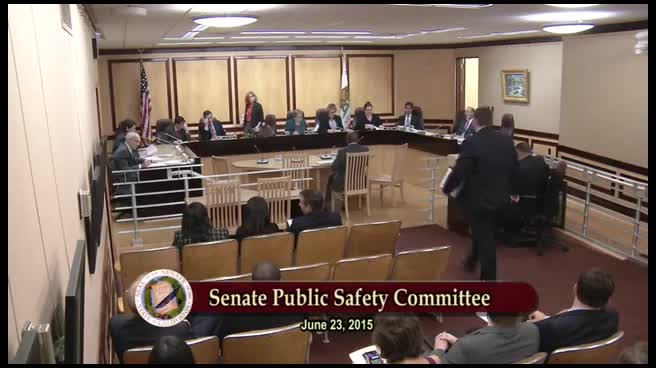 4MIN
Senate Standing Committee on Public Safety
 57SEC
Assembly Floor
Bill Author

Bill Co-Author(s):