AB 900: Juveniles: special immigrant juvenile status.
- Session Year: 2015-2016
- House: Assembly
- Latest Version Date: 2015-10-09
Existing federal law, the Immigration and Nationality Act, establishes a procedure for classification of certain aliens as special immigrants who have been declared dependent on a juvenile court, and authorizes those aliens to apply for an adjustment of status to that of a lawful permanent resident within the United States. Under federal regulations, an alien is eligible for special immigrant juvenile status if he or she is under 21 years of age. Existing state law provides that the juvenile, probate, and family divisions of the superior court have jurisdiction to make judicial determinations regarding the custody and care of juveniles within the meaning of the federal Immigration and Nationality Act. Existing law also requires the court, upon request, to make the necessary findings regarding special immigrant juvenile status if there is evidence to support those findings, as specified.
Existing law also establishes the jurisdiction of the probate court. Existing law regulates the establishment and termination of guardianships in probate court, and specifies that a guardian has the care, custody, and control of a ward.
Existing law provides that a relative or other person on behalf of a minor, or a minor if he or she is 12 years of age or older, may file a petition for the appointment of a guardian of the person or estate of the minor. Existing law also provides that a guardianship of the person or estate terminates when the ward attains majority or dies, or is adopted or emancipated, as specified.
This bill would authorize a court to appoint a guardian of the person of an unmarried individual who is 18 years of age or older, but who has not yet attained 21 years of age in connection with a petition to make the necessary findings regarding special immigrant juvenile status, as specified, if the proposed ward consents. This bill would also authorize a court to extend a guardianship of the person of a ward beyond 18 years of age, as specified, if the ward so requests or consents. The bill would also provide that a guardianship of the person terminates after the ward attains majority unless the ward consents to, or requests the extension of, the guardianship of the person until he or she is 21 years of age, as specified.
Existing federal law, the Immigration and Nationality Act, establishes a procedure for classification of certain aliens as special immigrants who have been declared dependent on a juvenile court, and authorizes those aliens to apply for an adjustment of status to that of a lawful permanent resident within the United States. Under federal regulations, an alien is eligible for special immigrant juvenile status if he or she is under 21 years of age. Existing state law provides that the juvenile, probate, and family divisions of the superior court have jurisdiction to make judicial determinations regarding the custody and care of juveniles within the meaning of the federal Immigration and Nationality Act. Existing law also requires the court, upon request, to make the necessary findings regarding special immigrant juvenile status if there is evidence to support those findings, as specified.
Existing law also establishes the jurisdiction of the probate court. Existing law regulates the establishment and termination of guardianships in probate court, and specifies that a guardian has the care, custody, and control of a ward.
Existing law provides that a relative or other person on behalf of a minor, or a minor if he or she is 12 years of age or older, may file a petition for the appointment of a guardian of the person or estate of the minor. Existing law also provides that a guardianship of the person or estate terminates when the ward attains majority or dies, or is adopted or emancipated, as specified.
This bill would authorize a court to appoint a guardian of the person of an unmarried individual who is older than 18 years of age and younger than 18 years of age or older, but who has not yet attained 21 years of age in connection with a petition to make the necessary findings regarding special immigrant juvenile status, as specified, if the proposed ward consents. This bill would also authorize a court to continue extend a guardianship of the person of a ward beyond 18 years of age, as specified, if the ward so requests or consents. This The bill would also provide that a guardianship of the person terminates after the ward attains majority unless the ward consents to the continuation of to, or requests the extension of, the guardianship of the person until he or she is 21 years of age, as specified.
Existing federal law, the Immigration and Nationality Act, establishes a procedure for classification of certain aliens as special immigrants who have been declared dependent on a juvenile court, and authorizes those aliens to apply for an adjustment of status to that of a lawful permanent resident within the United States. Under federal regulations, an alien is eligible for special immigrant juvenile status if he or she is under 21 years of age. Existing state law provides that the juvenile, probate, and family divisions of the superior court have jurisdiction to make judicial determinations regarding the custody and care of juveniles within the meaning of the federal Immigration and Nationality Act. Existing law also requires the court, upon request, to make the necessary findings regarding special immigrant juvenile status if there is evidence to support those findings, as specified.
This bill would make technical, nonsubstantive changes to these provisions.
Existing law also establishes the jurisdiction of the probate court. Existing law regulates the establishment and termination of guardianships in probate court, and specifies that a guardian has the care, custody, and control of a ward.
Existing law provides that a relative or other person on behalf of a minor, or a minor if he or she is 12 years of age or older, may file a petition for the appointment of a guardian of the person or estate of the minor. Existing law also provides that a guardianship of the person or estate terminates when the ward attains majority or dies, or is adopted or emancipated, as specified.
This bill would authorize a court to appoint a guardian of the person of an unmarried individual who is older than 18 years of age and younger than 21 years of age in connection with a petition to make the necessary findings regarding special immigrant juvenile status, as specified, if the proposed ward consents. This bill would also authorize a court to continue a guardianship of the person of a ward beyond 18 years of age, as specified, if the ward consents. This bill would also provide that a guardianship of the person terminates after the ward attains majority unless the ward consents to the continuation of the guardianship of the person until he or she is 21 years of age, as specified.
Existing federal law, the Immigration and Nationality Act, establishes a procedure for classification of certain aliens as special immigrants who have been declared dependent on a juvenile court, and authorizes those aliens to apply for an adjustment of status to that of a lawful permanent resident within the United States. Under federal regulations, an alien is eligible for special immigrant juvenile status if he or she is under 21 years of age. Existing state law provides that the juvenile, probate, and family divisions of the superior court have jurisdiction to make judicial determinations regarding the custody and care of juveniles within the meaning of the federal Immigration and Nationality Act. Existing law also requires the court, upon request, to make the necessary findings regarding special immigrant juvenile status if there is evidence to support those findings, as specified.
This bill would make technical, nonsubstantive changes to these provisions.
(a)The Legislature finds and declares all of the following:
(1)California law grants the superior courts jurisdiction to make judicial determinations regarding the custody and care of children within the meaning of the federal Immigration and Nationality Act, including the juvenile, probate, and family court divisions of the superior court. These courts are empowered to make the findings necessary for a child to petition the United States Citizenship and Immigration Services for classification as a special immigrant juvenile under federal law.
(2)Special immigrant juvenile status, under the federal Immigration and Nationality Act, offers interim relief from deportation to undocumented immigrant children under 21 years of age, if a state juvenile court has made specific findings.
(3)The findings necessary for a child to petition for classification as a special immigrant juvenile include, among others, a finding that reunification with one or both parents is not viable due to abuse, neglect, abandonment, or a similar basis under state law, and a finding that it is not in the childs best interest to be returned to his or her country of origin.
(4)Despite recent changes to law that eliminate ambiguity regarding the jurisdiction of superior courts to make the findings necessary to petition for special immigrant juvenile status, misalignment between state and federal law continues to exist.
(5)Federal law allows a person under 21 years of age, who otherwise meets the requirements for special immigrant juvenile status, to file for relief as a special immigrant juvenile. In California, however, individuals who are between 18 and 21 years of age have largely been unable to obtain the findings from the superior court necessary to seek special immigrant juvenile status and the relief that it was intended to afford them, solely because probate courts cannot take jurisdiction of individuals 18 years of age or older by establishing a guardianship of the person. This is true despite the fact that many unaccompanied immigrant youth between 18 and 21 years of age face circumstances identical to those faced by their younger counterparts.
(6)Given the recent influx of unaccompanied immigrant children arriving to the United States, many of whom have been released to family members and other adults in California and have experienced parental abuse, neglect, or abandonment, it is necessary to provide an avenue for these unaccompanied children to petition the probate courts to have a guardian of the person appointed beyond reaching 18 years of age. This is particularly necessary in light of the vulnerability of this class of unaccompanied youth, and their need for a custodial relationship with a responsible adult as they adjust to a new cultural context, language, and education system, and recover from the trauma of abuse, neglect, or abandonment. These custodial arrangements promote permanency and the long-term well-being of immigrant children present in the United States who have experienced abuse, neglect, or abandonment.
(7)Guardianships of the person may be necessary and convenient for these individuals between 18 and 21 years of age, although a youth for whom a guardian has been appointed retains the rights that an adult may have under California law.
(b)It is the intent of the Legislature to give the probate court jurisdiction to appoint a guardian for a person between 18 and 21 years of age in connection with a special immigrant juvenile status petition. It is further the intent of the Legislature to provide an avenue for a person between 18 and 21 years of age to have a guardian of the person appointed beyond 18 years of age in conjunction with a request for the findings necessary to enable the person to petition the United States Citizenship and Immigration Services for classification as a special immigrant juvenile.
SEC. 2.Section 1490 of the Probate Code is amended to read:1490.Except as set forth in Section 1510.1, when used in any statute of this state with reference to an adult or to the person of a married minor, guardian means the conservator of that adult or the conservator of the person in case of the married minor.
SEC. 3.Section 1510.1 is added to the Probate Code, to read:1510.1.(a)(1)With the consent of the proposed ward, the court may appoint a guardian of the person for an unmarried individual who is 18 years of age or older, but who has not yet attained 21 years of age in connection with a petition to make the necessary findings regarding special immigrant juvenile status pursuant to subdivision (b) of Section 155 of the Code of Civil Procedure.
(2)A petition for guardianship of the person of a proposed ward who is 18 years of age or older, but who has not yet attained 21 years of age may be filed by a relative or any other person on behalf of the proposed ward, or the proposed ward.
(b)(1)At the request of, or with the consent of, the ward, the court may extend an existing guardianship of the person for a ward past 18 years of age, for purposes of allowing the ward to complete the application process with the United States Citizenship and Immigration Services for classification as a special immigrant juvenile pursuant to Section 1101(a)(27)(J) of Title 8 of the United States Code.
(2)A relative or any other person on behalf of a ward, or the ward, may file a petition to extend the guardianship of the person for a period of time not to extend beyond the ward reaching 21 years of age.
(c)This section does not authorize the guardian to abrogate any of the rights that a person who has attained 18 years of age may have as an adult under state law, including, but not limited to, decisions regarding the wards medical treatment, education, or residence, without the wards express consent.
(d)For purposes of this division, the terms child, minor, and ward include an unmarried individual who is younger than 21 years of age and who, pursuant to this section, consents to the appointment of a guardian or extension of a guardianship after he or she attains 18 years of age.
(e)The Judicial Council shall, by July 1, 2016, adopt any rules and forms needed to implement this section.
SEC. 4.Section 1600 of the Probate Code is amended to read:1600.(a)A guardianship of the person or estate or both terminates when the ward attains majority unless, pursuant to Section 1510.1, the ward requests the extension of, or consents to the extension of, the guardianship of the person until the ward attains 21 years of age.
(b)A guardianship of the person terminates upon the death of the ward, the adoption of the ward, or upon the emancipation of the ward under Section 7002 of the Family Code.
SEC. 5.Section 1601 of the Probate Code is amended to read:1601.Upon petition of the guardian, a parent, the minor ward, or, in the case of an Indian child custody proceeding, an Indian custodian or the wards tribe, the court may make an order terminating the guardianship if the court determines that it is in the wards best interest to terminate the guardianship. Upon petition of a ward who is 18 years of age or older, the court shall make an order terminating the guardianship. Notice of the hearing on the petition shall be given for the period and in the manner provided in Chapter 3 (commencing with Section 1460) of Part 1.
(a)The Legislature finds and declares all of the following:
(1)California law grants the superior courts jurisdiction to make judicial determinations regarding the custody and care of children within the meaning of the federal Immigration and Nationality Act, including the juvenile, probate, and family court divisions of the superior court. These courts are empowered to make the findings necessary for a child to petition the United States Citizenship and Immigration Services for classification as a special immigrant juvenile under federal law.
(2)Special immigrant juvenile status, under the federal Immigration and Nationality Act, offers interim relief from deportation to undocumented immigrant children under 21 years of age, if a state juvenile court has made specific findings.
(3)The findings necessary for a child to petition for classification as a special immigrant juvenile include, among others, a finding that reunification with one or both parents is not viable due to abuse, neglect, abandonment, or a similar basis under state law, and a finding that it is not in the childs best interest to be returned to his or her country of origin.
(4)Despite recent changes to law that eliminate ambiguity regarding the jurisdiction of superior courts to make the findings necessary to petition for special immigrant juvenile status, misalignment between state and federal law continues to exist.
(5)Federal law allows a person under 21 years of age, who otherwise meets the requirements for special immigrant juvenile status, to file for relief as a special immigrant juvenile. In California, however, individuals who are between 18 and 21 years of age have largely been unable to obtain the findings from the superior court necessary to seek special immigrant juvenile status and the relief that it was intended to afford them, solely because probate courts cannot take jurisdiction of individuals 18 years of age or older by establishing a guardianship of the person. This is true despite the fact that many unaccompanied immigrant youth between 18 and 21 years of age face circumstances identical to those faced by their younger counterparts.
(6)Given the recent influx of unaccompanied immigrant children arriving to the United States, many of whom have been released to family members and other adults in California and have experienced parental abuse, neglect, or abandonment, it is necessary to provide an avenue for these unaccompanied children to petition the probate courts to have a guardian of the person appointed beyond reaching 18 years of age. This is particularly necessary in light of the vulnerability of this class of unaccompanied youth, and their need for a custodial relationship with a responsible adult as they adjust to a new cultural context, language, and education system, and recover from the trauma of abuse, neglect, or abandonment. These custodial arrangements promote permanency and the long-term well-being of immigrant children present in the United States who have experienced abuse, neglect, or abandonment.
(7)Guardianships of the person may be necessary and convenient for these individuals between 18 and 21 years of age, although a youth for whom a guardian has been appointed retains the rights that an adult may have under California law.
(b)It is the intent of the Legislature to give the probate court jurisdiction to appoint a guardian for a person between 18 and 21 years of age in connection with a special immigrant juvenile status petition. It is further the intent of the Legislature to provide an avenue for a person between 18 and 21 years of age to have a guardian of the person appointed beyond 18 years of age in conjunction with a request for the findings necessary to enable the person to petition the United States Citizenship and Immigration Services for classification as a special immigrant juvenile.
SEC. 2.Section 1490 of the Probate Code is amended to read:1490.Except as set forth in Section 1510.1, when used in any statute of this state with reference to an adult or to the person of a married minor, guardian means the conservator of that adult or the conservator of the person in case of the married minor.
SEC. 3.Section 1510.1 is added to the Probate Code, to read:1510.1.(a)(1)With the consent of the proposed ward, the court may appoint a guardian of the person for an unmarried individual who is 18 years of age or older, but who has not yet attained 21 years of age in connection with a petition to make the necessary findings regarding special immigrant juvenile status pursuant to subdivision (b) of Section 155 of the Code of Civil Procedure.
(2)A petition for guardianship of the person of a proposed ward who is 18 years of age or older, but who has not yet attained 21 years of age may be filed by a relative or any other person on behalf of the proposed ward, or the proposed ward.
(b)(1)At the request of, or with the consent of, the ward, the court may extend an existing guardianship of the person for a ward past 18 years of age, for purposes of allowing the ward to complete the application process with the United States Citizenship and Immigration Services for classification as a special immigrant juvenile pursuant to Section 1101(a)(27)(J) of Title 8 of the United States Code.
(2)A relative or any other person on behalf of a ward, or the ward, may file a petition to extend the guardianship of the person for a period of time not to extend beyond the ward reaching 21 years of age.
(c)This section does not authorize the guardian to abrogate any other of the rights that a person who has attained 18 years of age may have as an adult under state law. Notwithstanding Sections 2352 and 2353, a ward who has attained 18 years of age retains all of his or her legal decisionmaking authority as an adult. law, including, but not limited to, decisions regarding the wards medical treatment, education, or residence, without the wards express consent.
(d)For purposes of this part, division, the terms child, minor, and ward include an unmarried individual who is younger than 21 years of age and who, pursuant to this section, consents to the appointment of a guardian or extension of a guardianship after he or she attains 18 years of age.
(e)The Judicial Council shall, by July 1, 2016, adopt any rules and forms needed to implement this section.
SEC. 4.Section 1600 of the Probate Code is amended to read:1600.(a)A guardianship of the person or estate or both terminates when the ward attains majority unless, pursuant to Section 1510.1, the ward requests the extension of, or consents to the extension of, the guardianship of the person until the ward attains 21 years of age.
(b)A guardianship of the person terminates upon the death of the ward, the adoption of the ward, or upon the emancipation of the ward under Section 7002 of the Family Code.
SEC. 5.Section 1601 of the Probate Code is amended to read:1601.Upon petition of the guardian, a parent, the minor ward, or, in the case of an Indian child custody proceeding, an Indian custodian or the wards tribe, the court may make an order terminating the guardianship if the court determines that it is in the wards best interest to terminate the guardianship, or in the case of a guardianship of a ward who is 18 years of age or older, if the ward requests that the guardianship be terminated. guardianship. Upon petition of a ward who is 18 years of age or older, the court shall make an order terminating the guardianship. Notice of the hearing on the petition shall be given for the period and in the manner provided in Chapter 3 (commencing with Section 1460) of Part 1.
(a)The Legislature finds and declares all of the following:
(1)California law recognizes that superior courts have jurisdiction to make judicial determinations regarding the custody and care of children within the meaning of the federal Immigration and Nationality Act, including the juvenile, probate, and family court divisions of the superior court. These courts are empowered to make the findings necessary to enable a child to petition the United States Citizenship and Immigration Services for classification as a special immigrant juvenile under federal law.
(2)The findings necessary to enable a child to petition for classification as a special immigrant juvenile include, among other things, a finding that reunification is not viable with one or both parents due to abuse, neglect, abandonment, or a similar basis, and that it is not in the childs best interest to be returned to his or her country of origin.
(3)Despite recent changes to law that eliminate ambiguity regarding the jurisdiction of superior courts to make the findings necessary to petition for special immigrant juvenile status, misalignment between state and federal law continues to exist.
(4)Federal law allows a person under 21 years of age, who otherwise meets the requirements for special immigrant juvenile status, to file for relief as a special immigrant juvenile. In California, however, individuals who are older than 18 years of age and younger than 21 years of age have largely been unable to obtain the findings from the superior court necessary to seek special immigrant juvenile status and the relief that it was intended to afford them, solely because probate courts cannot take jurisdiction of individuals 18 years of age or older by establishing a guardianship of the person.
(5)Given the recent influx of unaccompanied immigrant children arriving to the United States, many of whom have been released to family members and other adults in California and have experienced parental abuse, neglect, or abandonment, it is necessary to provide an avenue for these unaccompanied children to petition the probate courts to have a guardian of the person appointed beyond reaching 18 years of age. This is particularly necessary in light of the vulnerability of this class of unaccompanied youth, and their need for a custodial relationship with a responsible adult as they adjust to a new cultural context, language, and education system, and recover from the trauma of abuse, neglect, or abandonment. These custodial arrangements promote permanency and the long-term well being of immigrant children present in the United States who have experienced abuse, neglect, or abandonment.
(6)Guardianships of the person for persons older than 18 years of age and younger than 21 years of age may be necessary and convenient for individuals petitioning the court for a guardianship of the person in conjunction with a request for the findings necessary to enable the child to petition United States Citizenship and Immigration Services for classification as a special immigrant juvenile.
(b)It is the intent of the Legislature to give the probate court jurisdiction to appoint a guardian over a person older than 18 years of age and younger than 21 years of age in connection with a special immigrant juvenile status petition. It is further the intent of the Legislature to provide an avenue for a person older than 18 years of age and younger than 21 years of age to petition to have a guardian of the person appointed beyond 18 years of age in conjunction with a request for the findings necessary to enable the person to petition the United States Citizenship and Immigration Services for classification as a special immigrant juvenile.
SECTION 1.(a)The Legislature finds and declares all of the following:
(1)California law grants the superior courts jurisdiction to make judicial determinations regarding the custody and care of children within the meaning of the federal Immigration and Nationality Act, including the juvenile, probate, and family court divisions of the superior court. These courts are empowered to make the findings necessary for a child to petition the United States Citizenship and Immigration Services for classification as a special immigrant juvenile under federal law.
(2)Special immigrant juvenile status, under the federal Immigration and Nationality Act, offers interim relief from deportation to undocumented immigrant children under 21 years of age, if a state juvenile court has made specific findings.
(3)The findings necessary for a child to petition for classification as a special immigrant juvenile include, among others, a finding that reunification with one or both parents is not viable due to abuse, neglect, abandonment, or a similar basis under state law, and a finding that it is not in the childs best interest to be returned to his or her country of origin.
(4)Despite recent changes to law that eliminate ambiguity regarding the jurisdiction of superior courts to make the findings necessary to petition for special immigrant juvenile status, misalignment between state and federal law continues to exist.
(5)Federal law allows a person under 21 years of age, who otherwise meets the requirements for special immigrant juvenile status, to file for relief as a special immigrant juvenile. In California, however, individuals who are between 18 and 21 years of age have largely been unable to obtain the findings from the superior court necessary to seek special immigrant juvenile status and the relief that it was intended to afford them, solely because probate courts cannot take jurisdiction of individuals 18 years of age or older by establishing a guardianship of the person. This is true despite the fact that many unaccompanied immigrant youth between 18 and 21 years of age face circumstances identical to those faced by their younger counterparts.
(6)Given the recent influx of unaccompanied immigrant children arriving to the United States, many of whom have been released to family members and other adults in California and have experienced parental abuse, neglect, or abandonment, it is necessary to provide an avenue for these unaccompanied children to petition the probate courts to have a guardian of the person appointed beyond reaching 18 years of age. This is particularly necessary in light of the vulnerability of this class of unaccompanied youth, and their need for a custodial relationship with a responsible adult as they adjust to a new cultural context, language, and education system, and recover from the trauma of abuse, neglect, or abandonment. These custodial arrangements promote permanency and the long-term well-being of immigrant children present in the United States who have experienced abuse, neglect, or abandonment.
(7)Guardianships of the person may be necessary and convenient for these individuals between 18 and 21 years of age, although a youth for whom a guardian has been appointed retains the rights that an adult may have under California law.
(b)It is the intent of the Legislature to give the probate court jurisdiction to appoint a guardian for a person between 18 and 21 years of age in connection with a special immigrant juvenile status petition. It is further the intent of the Legislature to provide an avenue for a person between 18 and 21 years of age to have a guardian of the person appointed beyond 18 years of age in conjunction with a request for the findings necessary to enable the person to petition the United States Citizenship and Immigration Services for classification as a special immigrant juvenile.
SEC. 2.Section 1490 of the Probate Code is amended to read:1490.When Except as set forth in Section 1510.1, when used in any statute of this state with reference to an adult or to the person of a married minor, guardian means the conservator of that adult or the conservator of the person in case of the married minor.
SEC. 2.SEC. 3.Section 1510.1 is added to the Probate Code, to read:1510.1.(a)(1)With the consent of the proposed ward, the court may appoint a guardian of the person for an unmarried individual who is older than 18 years of age and younger than 18 years of age or older, but who has not yet attained 21 years of age in connection with a petition to make the necessary findings regarding special immigrant juvenile status pursuant to subdivision (b) of Section 155 of the Code of Civil Procedure.
(2)A petition for guardianship of the person of a proposed ward who is older than 18 years of age and younger than 18 years of age or older, but who has not yet attained 21 years of age may be filed by a relative or any other person on behalf of the proposed ward, or the proposed ward.
(b)(1)With At the request of, or with the consent of of, the ward, the court may continue the extend an existing guardianship of the person for the ward beyond a ward past 18 years of age, for purposes of allowing the ward to complete the application process with the United States Citizenship and Immigration Services for classification as a special immigrant juvenile pursuant to Section 1101(a)(27)(J) of Title 8 of the United States Code.
(2)A relative or any other person on behalf of a ward, or the ward, may file a petition to continue extend the guardianship of the person for a period of time not to extend beyond the ward reaching 21 years of age.
(c)This section does not abrogate any other rights that a person who has attained 18 years of age may have as an adult under state law. Notwithstanding Sections 2352 and 2353, a ward who has attained 18 years of age retains all of his or her legal decisionmaking authority as an adult.
(c)Notwithstanding Section 6500 of the Family Code, for
(d)For purposes of this part, the terms child, minor, and ward include an unmarried individual who is younger than 21 years of age and who who, pursuant to this section, consents to the appointment of a guardian or continuation extension of a guardianship after he or she attains 18 years of age pursuant to this section. age.
(d)
(e)The Judicial Council shall shall, by July 1, 2016, adopt any rules and forms needed to implement this section.
SEC. 3.SEC. 4.Section 1600 of the Probate Code is amended to read:1600.(a)A guardianship of the person or estate or both terminates when the ward attains majority unless unless, pursuant to Section 1510.1, the ward requests the extension of, or consents to the continuation of extension of, the guardianship of the person until the ward attains 21 years of age pursuant to Section 1510.1. age.
(b)A guardianship of the person terminates upon the death of the ward, the adoption of the ward, or upon the emancipation of the ward under Section 7002 of the Family Code.
SEC. 5.Section 1601 of the Probate Code is amended to read:1601.Upon petition of the guardian, a parent, the ward, or, in the case of an Indian child custody proceeding, an Indian custodian or the wards tribe, the court may make an order terminating the guardianship if the court determines that it is in the wards best interest to terminate the guardianship. the guardianship, or in the case of a guardianship of a ward who is 18 years of age or older, if the ward requests that the guardianship be terminated. Notice of the hearing on the petition shall be given for the period and in the manner provided in Chapter 3 (commencing with Section 1460) of Part 1.
(a)The Legislature finds and declares all of the following:
(1)California law recognizes that superior courts have jurisdiction to make judicial determinations regarding the custody and care of children within the meaning of the federal Immigration and Nationality Act, including the juvenile, probate, and family court divisions of the superior court. These courts are empowered to make the findings necessary to enable a child to petition the United States Citizenship and Immigration Services for classification as a special immigrant juvenile under federal law.
(2)The findings necessary to enable a child to petition for classification as a special immigrant juvenile include, among other things, a finding that reunification is not viable with one or both parents due to abuse, neglect, abandonment, or a similar basis, and that it is not in the childs best interest to be returned to his or her country of origin.
(3)Despite recent changes to law that eliminate ambiguity regarding the jurisdiction of superior courts to make the findings necessary to petition for special immigrant juvenile status, misalignment between state and federal law continues to exist.
(4)Federal law allows a person under 21 years of age, who otherwise meets the requirements for special immigrant juvenile status, to file for relief as a special immigrant juvenile. In California, however, individuals who are older than 18 years of age and younger than 21 years of age have largely been unable to obtain the findings from the superior court necessary to seek special immigrant juvenile status and the relief that it was intended to afford them, solely because probate courts cannot take jurisdiction of individuals 18 years of age or older by establishing a guardianship of the person.
(5)Given the recent influx of unaccompanied immigrant children arriving to the United States, many of whom have been released to family members and other adults in California and have experienced parental abuse, neglect, or abandonment, it is necessary to provide an avenue for these unaccompanied children to petition the probate courts to have a guardian of the person appointed beyond reaching 18 years of age. This is particularly necessary in light of the vulnerability of this class of unaccompanied youth, and their need for a custodial relationship with a responsible adult as they adjust to a new cultural context, language, and education system, and recover from the trauma of abuse, neglect, or abandonment. These custodial arrangements promote permanency and the long-term well being of immigrant children present in the United States who have experienced abuse, neglect, or abandonment.
(6)Guardianships of the person for persons older than 18 years of age and younger than 21 years of age may be necessary and convenient for individuals petitioning the court for a guardianship of the person in conjunction with a request for the findings necessary to enable the child to petition United States Citizenship and Immigration Services for classification as a special immigrant juvenile.
(b)It is the intent of the Legislature to give the probate court jurisdiction to appoint a guardian over a person older than 18 years of age and younger than 21 years of age in connection with a special immigrant juvenile status petition. It is further the intent of the Legislature to provide an avenue for a person older than 18 years of age and younger than 21 years of age to petition to have a guardian of the person appointed beyond 18 years of age in conjunction with a request for the findings necessary to enable the person to petition the United States Citizenship and Immigration Services for classification as a special immigrant juvenile.
SEC. 2.Section 1510.1 is added to the Probate Code, to read:1510.1.(a)(1)With the consent of the proposed ward, the court may appoint a guardian of the person for an unmarried individual who is older than 18 years of age and younger than 21 years of age in connection with a petition to make the necessary findings regarding special immigrant juvenile status pursuant to subdivision (b) of Section 155 of the Code of Civil Procedure.
(2)A petition for guardianship of the person of a proposed ward who is older than 18 years of age and younger than 21 years of age may be filed by a relative or any other person on behalf of the proposed ward, or the proposed ward.
(b)(1)With the consent of the ward, the court may continue the guardianship of the person for the ward beyond 18 years of age, for purposes of allowing the ward to complete the application process with the United States Citizenship and Immigration Services for classification as a special immigrant juvenile pursuant to Section 1101(a)(27)(J) of Title 8 of the United States Code.
(2)A relative or any other person on behalf of a ward, or the ward, may file a petition to continue the guardianship of the person for a period of time not to extend beyond the ward reaching 21 years of age.
(c)Notwithstanding Section 6500 of the Family Code, for purposes of this part, the terms child, minor, and ward include an unmarried individual who is younger than 21 years of age and who consents to the appointment of a guardian or continuation of a guardianship after he or she attains 18 years of age pursuant to this section.
(d)The Judicial Council shall adopt any rules and forms needed to implement this section.
SEC. 3.Section 1600 of the Probate Code is amended to read:1600.(a)A guardianship of the person or estate or both terminates when the ward attains majority or dies. unless the ward consents to the continuation of the guardianship of the person until the ward attains 21 years of age pursuant to Section 1510.1.
(b)A guardianship of the person terminates upon the death of the ward, the adoption of the ward ward, or upon the emancipation of the ward under Section7002 Section 7002 of the Family Code.
SECTION 1.Section 155 of the Code of Civil Procedure is amended to read:155.(a)A superior court has jurisdiction under California law to make judicial determinations regarding the custody and care of a child within the meaning of the federal Immigration and Nationality Act (8 U.S.C. Sec. 1101(a)(27)(J) and 8 C.F.R. Sec. 204.11), which includes, but is not limited to, the juvenile, probate, and family court divisions of the superior court. These courts may make the findings necessary to enable a child to petition the United States Citizenship and Immigration Service for classification as a special immigrant juvenile pursuant to Section 1101(a)(27)(J) of Title 8 of the United States Code.
(b)(1)If an order is requested from the superior court making the necessary findings regarding special immigrant juvenile status pursuant to Section 1101(a)(27)(J) of Title 8 of the United States Code, and there is evidence to support those findings, which may consist of, but is not limited to, a declaration by the child who is the subject of the petition, the court shall issue the order, which shall include all of the following findings:
(A)The child was either of the following:
(i)Declared a dependent of the court.
(ii)Legally committed to, or placed under the custody of, a state agency or department, or an individual or entity appointed by the court. The court shall indicate the date on which the dependency, commitment, or custody was ordered.
(B)Reunification of the child with one or both of the childs parents was determined not to be viable because of abuse, neglect, abandonment, or a similar basis pursuant to California law. The court shall indicate the date on which reunification was determined not to be viable.
(C)It is not in the best interest of the child to be returned to the childs, or his or her parents, previous country of nationality or country of last habitual residence.
(2)If requested by a party, the court may make additional findings that are supported by evidence.
(c)In any judicial proceedings in response to a request that the superior court make the findings necessary to support a petition for classification as a special immigrant juvenile, information regarding the childs immigration status that is not otherwise protected by state confidentiality laws shall remain confidential and shall be available for inspection only by the court, the child who is the subject of the proceeding, the parties, the attorneys for the parties, the childs counsel, and the childs guardian.
(d)In any judicial proceedings in response to a request that the superior court make the findings necessary to support a petition for classification as a special immigrant juvenile, records of the proceedings that are not otherwise protected by state confidentiality laws may be sealed using the procedure set forth in California Rules of Court 2.550 and 2.551.
(e)The Judicial Council shall adopt any rules and forms needed to implement this section.
(a)A superior court has jurisdiction under California law to make judicial determinations regarding the custody and care of children a child within the meaning of the federal Immigration and Nationality Act (8 U.S.C. Sec. 1101(a)(27)(J) and 8 C.F.R. Sec. 204.11), which includes, but is not limited to, the juvenile, probate, and family court divisions of the superior court. These courts may make the findings necessary to enable a child to petition the United States Citizenship and Immigration Service for classification as a special immigrant juvenile pursuant to Section 1101(a)(27)(J) of Title 8 of the United States Code.
(b)(1)If an order is requested from the superior court making the necessary findings regarding special immigrant juvenile status pursuant to Section 1101(a)(27)(J) of Title 8 of the United States Code, and there is evidence to support those findings, which may consist of, but is not limited to, a declaration by the child who is the subject of the petition, the court shall issue the order, which shall include all of the following findings:
(A)The child was either of the following:
(i)Declared a dependent of the court.
(ii)Legally committed to, or placed under the custody of, a state agency or department, or an individual or entity appointed by the court. The court shall indicate the date on which the dependency, commitment, or custody was ordered.
(B)That reunification Reunification of the child with one or both of the childs parents was determined not to be viable because of abuse, neglect, abandonment, or a similar basis pursuant to California law. The court shall indicate the date on which reunification was determined not to be viable.
(C)That it It is not in the best interest of the child to be returned to the childs, or his or her parents, previous country of nationality or country of last habitual residence.
(2)If requested by a party, the court may make additional findings that are supported by evidence.
(c)In any judicial proceedings in response to a request that the superior court make the findings necessary to support a petition for classification as a special immigrant juvenile, information regarding the childs immigration status that is not otherwise protected by state confidentiality laws shall remain confidential and shall be available for inspection only by the court, the child who is the subject of the proceeding, the parties, the attorneys for the parties, the childs counsel, and the childs guardian.
(d)In any judicial proceedings in response to a request that the superior court make the findings necessary to support a petition for classification as a special immigrant juvenile, records of the proceedings that are not otherwise protected by state confidentiality laws may be sealed using the procedure set forth in California Rules of Court 2.550 and 2.551.
(e)The Judicial Council shall adopt any rules and forms needed to implement this section.
|
Date
|
Status
|
|---|---|
| Jun 2, 2015 | Read third time. Passed. Ordered to the Senate. (Ayes 56. Noes 23. Page 1784.) |
| Oct 9, 2015 | Chaptered by Secretary of State - Chapter 694, Statutes of 2015. |
| Oct 9, 2015 | Approved by the Governor. |
| Sep 16, 2015 | Enrolled and presented to the Governor at 4 p.m. |
| Sep 4, 2015 | Senate amendments concurred in. To Engrossing and Enrolling. (Ayes 55. Noes 24.). |
| Sep 4, 2015 | Senate amendments concurred in. To Engrossing and Enrolling. (Ayes 55. Noes 24. Page 2912.). |
| Sep 4, 2015 | Senate amendments concurred in. To Engrossing and Enrolling. |
| Sep 2, 2015 | Read third time. Passed. Ordered to the Assembly. (Ayes 29. Noes 11. Page 2398.). |
| Sep 2, 2015 | Read third time. Passed. Ordered to the Assembly. |
| Sep 2, 2015 | In Assembly. Concurrence in Senate amendments pending. May be considered on or after September 4 pursuant to Assembly Rule 77. |
| Aug 31, 2015 | Read second time. Ordered to third reading. |
| Aug 27, 2015 | From committee: Do pass. (Ayes 5. Noes 2.) (August 27). |
| Aug 17, 2015 | In committee: Referred to APPR. suspense file. |
| Jul 15, 2015 | From committee: Do pass and re-refer to Com. on APPR. (Ayes 5. Noes 1.) (July 14). Re-referred to Com. on APPR. |
| Jun 24, 2015 | From committee chair, with author's amendments: Amend, and re-refer to committee. Read second time, amended, and re-referred to Com. on JUD. |
| Jun 11, 2015 | Referred to Com. on JUD. |
| Feb 26, 2015 | Read first time. To print. |
| Jun 2, 2015 | Read third time. Passed. Ordered to the Senate. |
| Jun 2, 2015 | In Senate. Read first time. To Com. on RLS. for assignment. |
| Jun 1, 2015 | Read second time. Ordered to third reading. |
| May 28, 2015 | From committee: Do pass. (Ayes 12. Noes 4.) (May 28). |
| May 20, 2015 | In committee: Set, first hearing. Referred to APPR. suspense file. |
| May 20, 2015 | In committee: Set, first hearing. Referred to suspense file. |
| Apr 28, 2015 | From committee: Do pass and re-refer to Com. on APPR. (Ayes 7. Noes 3.) (April 28). Re-referred to Com. on APPR. |
| Apr 27, 2015 | Re-referred to Com. on JUD. |
| Apr 23, 2015 | From committee chair, with author's amendments: Amend, and re-refer to Com. on JUD. Read second time and amended. |
| Apr 15, 2015 | In committee: Hearing postponed by committee. |
| Apr 6, 2015 | Re-referred to Com. on JUD. |
| Mar 26, 2015 | Referred to Com. on JUD. |
| Mar 26, 2015 | From committee chair, with author's amendments: Amend, and re-refer to Com. on JUD. Read second time and amended. |
| Feb 27, 2015 | From printer. May be heard in committee March 29. |
|
Date
|
Description
|
Location
|
Votes
|
|
|---|---|---|---|---|
| Sep 4, 2015 | AB 900 LEVINE Concurrence in Senate Amendments | Assembly Floor |
Passed |
|
| Sep 2, 2015 | Assembly 3rd Reading AB900 Levine By Lara | Senate Floor |
Passed |
|
| Aug 27, 2015 | Do pass | Senate Standing Committee on Appropriations |
Passed |
|
| Aug 17, 2015 | Placed on suspense file | Senate Standing Committee on Appropriations |
Passed |
|
| Jul 14, 2015 | Do pass, but first be re-referred to the Committee on [Appropriations] | Senate Standing Committee on Judiciary |
Passed |
|
| Jun 2, 2015 | AB 900 LEVINE Assembly Third Reading | Assembly Floor |
Passed |
|
| May 28, 2015 | Do pass. | Assembly Standing Committee on Appropriations |
Passed |
|
| Apr 28, 2015 | Do pass and be re-referred to the Committee on [Appropriations] | Assembly Standing Committee on Judiciary |
Passed |
This list shows positions taken on this bill by organizations on the date displayed, which is linked to the original source.
Positions by individuals are not included.
|
Organization
|
Position
|
Date
|
|---|---|---|
| American Immigration Lawyers Association | ** Support | Sep 2, 2015 |
| Asian Americans Advancing Justice - Asian Law Caucus | ** Support | Sep 2, 2015 |
| Asian Pacific Islander Legal Outreach | ** Support | Sep 2, 2015 |
| Association of Pro Bono Counsel | ** Support | Sep 2, 2015 |
| Bay Area Industrial Areas Foundation | ** Support | Sep 2, 2015 |
| Bay Area SIJS Task Force | * Indeterminate | Jul 14, 2015 |
| Bet Tzedek | ** Support | Sep 2, 2015 |
| Bethsetic Legal Services | * Indeterminate | Jul 14, 2015 |
| California Immigrant Policy Center | ** Support | Sep 2, 2015 |
| California Rural Legal Assistance Foundation, Inc. | ** Support | Sep 2, 2015 |
| Canal Alliance | ** Support | Sep 2, 2015 |
| Catholic Charities of the East Bay | ** Support | Sep 2, 2015 |
| Catholic Legal Immigration Network | ** Support | Sep 2, 2015 |
| Central American Resource Center | ** Support | Sep 2, 2015 |
| Centro Legal de la Raza | ** Support | Sep 2, 2015 |
| Dolores Street Community Services | ** Support | Sep 2, 2015 |
| Immigrant Legal Resource Center | ** Support | Sep 2, 2015 |
| Immigrant Rights Clinic | ** Support | Sep 2, 2015 |
| Immigration Center for Women and Children | ** Support | Sep 2, 2015 |
| Kids in Need of Defense | ** Support | Sep 2, 2015 |
| Larkin Street Legal Services | ** Support | Sep 2, 2015 |
| Legal Advocates for Children and Youth | ** Support | Sep 2, 2015 |
| Legal Aid Society of San Mateo County | ** Support | Sep 2, 2015 |
| Legal Services for Children | ** Support | Sep 2, 2015 |
| Legal Services for Prisoners with Children | ** Support | Sep 2, 2015 |
| Los Angeles Center for Law and Justice | ** Support | Sep 2, 2015 |
| Loyola Immigrant Justice Clinic, Loyola Law School | ** Support | Sep 2, 2015 |
| National Center for Youth Law | ** Support | Sep 2, 2015 |
| Pangea Legal Services | ** Support | Sep 2, 2015 |
| Public Counsel's Children's Rights Project | ** Support | Sep 2, 2015 |
| San Diego Volunteer Lawyer Program | ** Support | Sep 2, 2015 |
| San Francisco International High School | ** Support | Sep 2, 2015 |
| Social Justice Collaborative | ** Support | Sep 2, 2015 |
| University of California, Irvine School of Law | ** Support | Sep 2, 2015 |
| Water Center, Clean Water Action | * Indeterminate | Jul 14, 2015 |
| Youth Law Center | ** Support | Sep 2, 2015 |
AB 900
Page 3
CONCURRENCE IN SENATE AMENDMENTS
AB 900
(Levine)
As Amended June 24, 2015
Majority vote
ASSEMBLY: |
56-23 |
(June 2, 2015) |
SENATE: |
29-11 |
(September 2, 2015) |
Original Committee Reference: JUD.
SUMMARY: Allows for guardianships for youth from ages 18 until 21 who may qualify for federal Special Immigrant Juvenile Status (SIJS). Specifically, this bill:
Allows, with the consent of the proposed ward, a probate court to establish a guardianship of the person for an unmarried individual, who is at least 18 years of age, but not yet 21, in connection with a petition to make necessary findings regarding SIJS, as specified. Allows the petition for guardianship to be filed by a relative, the proposed ward or any other person.
Allows, with the consent, or at the request, of the ward, a court to extend a guardianship of the person beyond 18 years of age in order to allow the ward to complete the application process with United States Citizenship and Immigration Services for classification as a special immigrant juvenile, as specified. Provides that the petition for guardianship may be filed by a relative, the ward or any other person. Prevents the guardianship from extending beyond the ward reaching 21 years of age.
Provides that nothing in 1) or 2), above, authorizes a guardian to abrogate any other rights that a ward who is 18 or older may have as an adult under California law, including, but not limited to, the right to make decisions regarding the ward's medical treatment, education or residence, without the ward's express consent.
Requires that a court terminate the guardianship of a ward who is 18 or older if the ward requests termination.
Requires Judicial Council to adopt necessary rules and forms by July 1, 2016.
The Senate amendments require that a court terminate a guardianship if requested by a ward who is 18 or older and clarify that wards 18 and older retain their rights as adults.
EXISTING LAW:
Allows a the court to appoint a guardian of the person, the estate, or both for a child under 18, taking into consideration the best interest of the proposed ward.
Under federal law, defines a "special immigrant juvenile" as a person under 21 who is declared a dependent by a juvenile court or committed to the custody of a state agency or a court-appointed individual, whose reunification with one or both of his or her parents is not viable due to abuse, neglect, abandonment, or a similar basis found under state law, and whose return to his or her country of nationality or last habitual residence is not in his or her best interest. Allows such person to obtain SIJS and, based on that, apply for a visa for lawful permanent residency.
Provides that the superior court, including a juvenile, probate, or family court department or division of the superior court, has jurisdiction to make judicial determinations regarding the custody and care of juveniles within the meaning of the federal Immigration and Nationality Act. Requires the superior court to make an order containing the necessary findings regarding SIJS pursuant to federal law, if there is evidence to support those findings.
FISCAL EFFECT: According to the Senate Appropriations Committee:
Guardianship hearings: Potentially significant increase in trial court costs in the hundreds of thousands of dollars (General Fund*) for new guardianship hearings. For every 500 to 1,000 hearings conducted, costs would range from $500,000 to $1 million.
Forms/rules: One-time minor costs (General Fund*) for the Judicial Council to establish rules and necessary forms.
Medi-Cal benefits: Potentially significant ongoing increase in Medi-Cal program costs (Federal Fund/General Fund) for guardianships established for individuals aged 19 and 20, who would otherwise not be eligible for benefits (the 2015 Budget Act provides for full scope Medi-Cal for undocumented immigrant youth up to age 19). According to the federal Office of Refugee Resettlement, youth with pending applications for SIJS as well as those approved for SIJS, are considered lawfully present and eligible for medical benefits.
CFAP benefits: Potentially significant increase in California Food Assistance Program (CFAP) benefits. For every 500 to 1,000 individuals, costs are estimated at $0.9 million to $1.8 million (General Fund) annually for food benefits and administrative workload.
CalWORKs eligibility: Potential eligibility for the CalWORKs program, if all other eligibility criteria are met. While federal means-tested public benefits are not available for a period of five years beginning with the date of entry with status as a qualified non-citizen, CalWORKs continues to allow immigrants meeting the eligibility criteria to receive benefits through a state-only funded program.
Federal benefits: Potential eligibility for Section 8 housing and federal financial aid for college for SIJS guardianships established pursuant to this measure.
*Trial Court Trust Fund
COMMENTS: This bill is designed to better align state and federal law in order to protect vulnerable, unaccompanied immigrant youth ages 18 to 21. Federal law allows youth up to 21 years of age to qualify for SIJS and, thus, be eligible to remain lawfully in the United States. To qualify, a state juvenile court must first make certain findings. However, California law today only has a process to make those findings for youth up to 18 years of age, unless the youth is a non-minor dependent in the foster care system. This bill creates that missing process, and allows for custodial assistance from a caring adult, for youth 18 to 21 by allowing for the establishment and extension of guardianships until 21 for immigrant youth seeking SIJS.
Special Immigrant Juvenile Status. "Special Immigrant Juvenile Status" is a federal immigration classification that may help undocumented, vulnerable children and youth remain in the United States. Under the Trafficking Victims Protection Reauthorization Act of 2008, Public Law No. 110-457, any unmarried person under age 21 who has been abused, neglected or abandoned by a parent may seek classification as a Special Immigrant Juvenile and then immediately apply for lawful permanent resident status. To be eligible for SIJS, a state juvenile court must first make specified findings.
This Bill Extends Guardianship Proceedings Until 21 for Youth in Need of the Special Immigrant Juvenile Status Finding. This bill allows probate courts to establish guardianships for youth who are at least 18, but less than 21, and to extend existing guardianships up to 21, if done in connection with a petition to make the necessary SIJS findings. Thus, this bill allows for the necessary state court finding to help these youth become legal residents of California. However, this bill does much more for this very vulnerable population. As this bill's legislative findings make clear, these guardianships connect immigrant youth who have been abused, neglected or abandoned with a caring adult "as they adjust to a new cultural context, language, and education system, and recover from the trauma of abuse, neglect or abandonment. These custodial arrangements promote permanency and the long-term well-being of immigrant children present in the United States who have experienced abuse, neglect, or abandonment."
Bill Makes Clear That These 18 to 21 Year Old Youth Retain Their Legal Rights as Adults Under California Law. All of the regular guardianship rules and statutes apply to these new over 18 guardianships, with several key exceptions, all recognizing that the youth subject to them are now adults, with distinct legal rights. Like guardianships for children, guardianships for those over 18 begin with notice to specified relatives and, unless waived by the court, an investigation of the proposed guardianship by a court investigator, probation officer, or domestic relations investigator, along with recommendations of the appropriateness of the guardianship. The court may appoint a guardian if it appears to the court to be "necessary or convenient," the same standard that applies to those under 18.
However, because youth 18 and older are legally adults, this bill rightly proposes to treat non-minor wards different than minor wards. First, the guardianship can only be established for a youth 18 or over, or extended for a youth who has reached 18, with the youth's consent. No non-minor will be forced into a guardianship, just like no non-minor can be forced to remain in dependency after age 18. Second, the court must terminate a guardianship if a ward 18 and over requests termination. This ensures that the non-minor ward remains in a guardianship only if he or she so desires. Finally, this bill states that wards 18 and over retain their legal rights as adults under California law.
Analysis Prepared by: Leora Gershenzon / JUD. / (916) 319-2334 FN: 0001755
AB 900
Page 7
|
Office of Senate Floor Analyses (916) 651-1520 Fax: (916) 327-4478 |
THIRD READING
Bill No: AB 900
Amended: 6/24/15 in Senate
SENATE JUDICIARY COMMITTEE: 5-1, 7/14/15
AYES: Jackson, Hertzberg, Leno, Monning, Wieckowski
NOES: Anderson
NO VOTE RECORDED: Moorlach
SENATE APPROPRIATIONS COMMITTEE: 5-2, 8/27/15
AYES: Lara, Beall, Hill, Leyva, Mendoza
NOES: Bates, Nielsen
ASSEMBLY FLOOR: 56-23, 6/2/15 - See last page for vote
SUBJECT: Juveniles: special immigrant juvenile status
Immigrant Legal Resource Center
DIGEST: This bill authorizes a court to appoint a guardian, or extend a guardianship, for an unmarried individual who is between 18 and 21 years of age in connection with a petition to make the necessary findings regarding special immigrant juvenile status, as specified, with the consent of the proposed ward.
Existing law:
Defines, under federal law, a “special immigrant juvenile” as a person under 21 who is declared a dependent by a juvenile court or committed to the custody of a state agency or a court-appointed individual, whose reunification with one or both of his or her parents is not viable due to abuse, neglect, abandonment, or a similar basis found under state law, and whose return to his or her country of nationality or last habitual residence is not in his or her best interest. (8 U.S.C. Sec. 1101(a)(27)(J).)
Allows, under federal law, such person to obtain Special Immigrant Juvenile Status (SIJS) and, based on that, apply for a visa for lawful permanent residency. (8 U.S.C. Sec. 1153(b)(4).)
Allows the court to appoint a guardian of the person, the estate, or both for a child under 18 years of age, taking into consideration the best interest of the proposed ward. (Prob. Code Sec. 1501 et seq.)
Provides that the superior court, including a juvenile, probate, or family court department or division of the superior court, has jurisdiction to make judicial determinations regarding the custody and care of juveniles within the meaning of the federal Immigration and Nationality Act, and requires the superior court to make an order containing the necessary findings regarding SIJS pursuant to federal law, if there is evidence to support those findings. (Code Civ. Proc. Sec. 155.)
This bill:
Authorizes, with the consent of the proposed ward, a probate court to establish or extend a guardianship of the person for an unmarried individual, who is at least 18 years of age, but not yet 21, in connection with a petition to make necessary findings regarding SIJS or complete the SIJS application process, as specified.
Allows the petition for guardianship, or to extend a guardianship, to be filed by a relative, the proposed ward, or any other person.
Provides that a guardianship may not extend beyond the ward reaching 21 years of age.
Provides that nothing in the provisions above abrogates any other rights that a ward who is 18 or older may have as an adult under California law, including, but not limited to, decisions regarding the ward’s medical treatment, education, or residence, without the ward’s express consent.
Requires the court to terminate a guardianship upon the petition of a ward who is 18 years of age or older.
Defines, for the purposes of the provisions above, the terms “child,” “minor,” and “ward” to include an unmarried individual who is younger than 21 years of age and who, pursuant to this section, consents to the appointment of a guardian or extension of a guardianship after he or she attains 18 years of age.
Requires the Judicial Council to adopt necessary rules and forms by July 1, 2016.
Background
Special Immigrant Juvenile Status (SIJS), found in the Federal Immigration and Nationality Act, is a statutory tool enacted over two decades ago to benefit immigrant children consistent with accepted child welfare principles and international norms. SIJS involves both federal and state law. The federal statute and regulations provide the framework, and the state courts provide the details for each individual situation. The Los Angeles County Bar Association describes the interplay between state and federal law in a 2012 article as follows:
First, a juvenile court must establish the child’s eligibility for
immigration relief. Without the court’s findings, the child cannot
apply for SIJS. A “juvenile court,” for SIJS purposes, is “a
court located in the United States having jurisdiction under State
law to make judicial determinations about the custody and care of
juveniles.” This broad definition encompasses many California
courts--those that handle dependency and delinquency proceedings as
well as those that hear guardianships, adoptions, and even family law
cases. What matters is the jurisdiction of California courts, not the
labels they use for themselves.
Second, the juvenile
court must have either 1) declared the child dependent on the court,
2) legally committed the child to, or placed the child under the
custody of, an agency or department of a state, or 3) legally
committed the child to, or placed the child under the custody of, an
individual or entity appointed by the court. Juvenile court
dependents … meet this requirement. So too do … wards when the
court vests their “care, custody and control” in the probation
department. A child whose custody is placed with a guardian,
including an institutional guardian, or with a prospective adoptive
parent also meets this requirement. (Jackson, Special Status
Seekers: Through the underused SIJS process, immigrant juveniles may
obtain legal status, 34 (Feb. 2014) Los Angeles Lawyer 20, 22.)
The court must additionally determine that reunification with one or more of the child’s parents is not viable due to abuse, neglect, abandonment, or a similar basis under state law. “Under California law, children have met this requirement when, for example, their parents are deceased; their parents’ identities are unknown; their parents have sexually, physically, or emotionally harmed them; or their parents have not provided appropriate care, support, or protection. By definition, SIJS-eligible children have suffered the lack of a stable and safe two-parent household.” (Id.) Additionally, the court must find that it is not in the child’s best interest, as determined by state law, to return to the child’s or his or her parent’s country of nationality.
Last year, in AB 873 (Budget and Fiscal Review, Chapter 685, Statutes of 2014), the Legislature specifically provided that superior courts can make the findings necessary for a child to be eligible for SIJS. That new law states that the superior court (including a juvenile, probate, or family court) has jurisdiction to make judicial determinations regarding the custody and care of juveniles within the meaning of the federal Immigration and Nationality Act, and requires the court to make an order containing the necessary findings for SIJS, if there is evidence to support them. (Code Civ. Proc. Sec. 155.) Thus, a child in California today, who is under 18, may have the necessary SIJS findings made in a juvenile court as part of a dependency or delinquency proceeding, in family court as part of a custody proceeding, or in probate court as part of a guardianship proceeding. Nonminor dependents, or youths between the ages of 18 and 21 under the jurisdiction of the dependency court, may also qualify for SIJS status if a court makes the appropriate findings. However, for youths over 18 who are not dependents of the juvenile court, there is currently no state court proceeding under which the requisite findings can be made.
This bill, seeking to ensure that the courts have the ability to make the findings required for all eligible youths to qualify for SIJS, allows a court to extend or approve a guardianship for a youth between 18 and 21 years of age.
Comments
As stated by the author:
The purpose of this bill is two-fold. First, this bill will provide immigrant youth a better opportunity to adjust to life in California by allowing them to have an adult guardian present in their lives. Second, this bill will increase access to immigration relief through Special Immigrant Juvenile Status (SIJS). Under federal immigration law, children who cannot be reunified with one or both parents because of abuse, neglect or abandonment and who are unmarried and under the age of 21 may obtain immigration relief through SIJS.
FISCAL EFFECT: Appropriation: No Fiscal Com.: Yes Local: No
According to the Senate Appropriations Committee:
Guardianship hearings: Potentially significant increase in trial court costs in the hundreds of thousands of dollars (General Fund*) for new guardianship hearings. For every 500 to 1,000 hearings conducted, costs would range from $500,000 to $1 million.
Forms/rules: One-time minor costs (General Fund*) for the Judicial Council to establish rules and necessary forms.
Medi-Cal benefits: Potentially significant ongoing increase in Medi-Cal program costs (Federal Fund/General Fund) for guardianships established for individuals aged 19 and 20, who would otherwise not be eligible for benefits (the 2015 Budget Act provides for full scope Medi-Cal for undocumented immigrant youth up to age 19). According to the federal Office of Refugee Resettlement, youth with pending applications for SIJS as well as those approved for SIJS, are considered lawfully present and eligible for medical benefits.
CFAP benefits: Potentially significant increase in California Food Assistance Program (CFAP) benefits. For every 500 to 1,000 individuals, costs are estimated at $0.9 million to $1.8 million (General Fund) annually for food benefits and administrative workload.
CalWORKs eligibility: Potential eligibility for the CalWORKs program, if all other eligibility criteria are met. While federal means-tested public benefits are not available for a period of five years beginning with the date of entry with status as a qualified non-citizen, CalWORKs continues to allow immigrants meeting the eligibility criteria to receive benefits through a state-only funded program.
Federal benefits: Potential eligibility for Section 8 housing and federal financial aid for college for SIJS guardianships established pursuant to this measure.
*Trial Court Trust Fund
Bet Tzedek (co-source)
Immigrant Legal Resource Center (co-source)
American Immigration Lawyers Association
Asian Americans Advancing Justice – Asian Law Caucus
Asian Pacific Islander Legal Outreach
Association of Pro Bono Counsel
Bay Area Industrial Areas Foundation
California Immigrant Policy Center
California Rural Legal Assistance Foundation
Catholic Charities of the East Bay
Catholic Legal Immigration Network
Canal Alliance
Central American Resource Center
Centro Legal de la Raza
Dolores Street Community Services
Immigrant Rights Clinic
University of California, Irvine School of Law
Immigration Center for Women and Children
Kids in Need of Defense
Larkin Street Legal Services
Lawyers’ Committee for Civil Rights of the San Francisco Bay Area
Legal Advocates for Children and Youth
Legal Aid Society of San Mateo County
Legal Services for Children
Legal Services for Prisoners with Children
Los Angeles Center for Law and Justice
Loyola Immigrant Justice Clinic, Loyola Law School
National Center for Youth Law
Pangea Legal Services
Public Counsel’s Children’s Rights Project
San Diego Volunteer Lawyer Program
San Francisco International High School
Social Justice Collaborative
Youth Law Center
OPPOSITION: (Verified 8/28/15)
None received
ASSEMBLY FLOOR: 56-23, 6/2/15
AYES: Alejo, Baker, Bloom, Bonilla, Bonta, Brown, Burke, Calderon, Campos, Chang, Chau, Chiu, Chu, Cooley, Cooper, Dababneh, Daly, Dodd, Eggman, Frazier, Cristina Garcia, Eduardo Garcia, Gatto, Gipson, Gomez, Gonzalez, Gordon, Gray, Hadley, Roger Hernández, Holden, Irwin, Jones-Sawyer, Lackey, Levine, Lopez, Low, McCarty, Medina, Mullin, Nazarian, O'Donnell, Perea, Quirk, Rendon, Ridley-Thomas, Rodriguez, Salas, Santiago, Mark Stone, Thurmond, Ting, Weber, Williams, Wood, Atkins
NOES: Achadjian, Travis Allen, Bigelow, Brough, Dahle, Beth Gaines, Gallagher, Grove, Harper, Jones, Kim, Linder, Maienschein, Mathis, Mayes, Melendez, Obernolte, Olsen, Patterson, Steinorth, Wagner, Waldron, Wilk
NO VOTE RECORDED: Chávez
Prepared by: Nichole Rapier / JUD. / (916) 651-4113
8/30/15 19:10:43
**** END ****
AB 900 (Levine) Page 3 of 3
SENATE COMMITTEE ON APPROPRIATIONS
Senator Ricardo Lara, Chair
2015 - 2016 Regular Session
AB 900 (Levine) - Juveniles: special immigrant juvenile status
|
|
Version: June 24, 2015 |
Policy Vote: JUD. 5 - 1 |
Urgency: No |
Mandate: No |
Hearing Date: August 17, 2015 |
Consultant: Jolie Onodera |
This bill meets the criteria for referral to the Suspense File.
Bill Summary:
AB 900 would authorize a probate court to appoint a guardian, or extend a guardianship, for an unmarried individual who is between 18 and 21 years of age in connection with a petition for special immigrant juvenile status (SIJS), as specified.
Fiscal Impact:
Guardianship hearings: Potentially significant increase in trial court costs in the hundreds of thousands of dollars (General Fund*) for new guardianship hearings. For every 500 to 1,000 hearings conducted, costs would range from $500,000 to $1 million.
Forms/rules: One-time minor costs (General Fund*) for the Judicial Council to establish rules and necessary forms.
Medi-Cal benefits: Potentially significant ongoing increase in Medi-Cal program costs (Federal Fund/General Fund) for guardianships established for individuals aged 19 and 20, who would otherwise not be eligible for benefits (the 2015 Budget Act provides for full scope Medi-Cal for undocumented immigrant youth up to age 19). According to the federal Office of Refugee Resettlement, youth with pending applications for SIJS as well as those approved for SIJS, are considered lawfully present and eligible for medical benefits.
CFAP benefits: Potentially significant increase in California Food Assistance Program (CFAP) benefits. For every 500 to 1,000 individuals, costs are estimated at $0.9 million to $1.8 million (General Fund) annually for food benefits and administrative workload.
CalWORKs eligibility: Potential eligibility for the CalWORKs program, if all other eligibility criteria are met. While federal means-tested public benefits are not available for a period of five years beginning with the date of entry with status as a qualified non-citizen, CalWORKs continues to allow immigrants meeting the eligibility criteria to receive benefits through a state-only funded program.
Federal benefits: Potential eligibility for Section 8 housing and federal financial aid for college for SIJS guardianships established pursuant to this measure.
*Trial Court Trust Fund
Background:
Federal law pursuant to the Immigration and Nationality Act, establishes Special Immigrant Juvenile Status (SIJS), in order to help foreign children in the United States who have been abused, abandoned, or neglected, to provide a path to lawful permanent residency. SIJS involves both federal and state law. As described by the American Bar Association, “The process for obtaining SIJS relief involves a unique two-tiered system in which a state juvenile or family court must first make factual findings related to the child’s familial situation and best interests. Federal immigration officials then use the state court’s predicate findings to determine eligibility for immigration relief. Congress delegated the first phase of the process to state courts in order to benefit from state expertise in fact finding on family and juvenile issues, and to provide for the safety and welfare of abused, abandoned, and neglected children. In serving this role, state courts act within their usual function of ensuring the safety, well-being, and appropriate custody of children.”
Pursuant to SB 873 (Chapter 685/2014), the Human Services budget trailer bill, the Legislature specifically provided that superior courts can make the findings necessary for a child to be eligible for SIJS. As a result, a child under the age of 18 may have the necessary SIJS findings made in a juvenile court as part of a dependency or delinquency proceeding, in family court as part of a custody proceeding, or in probate court as part of a guardianship proceeding. Nonminor dependents, or youth between the ages of 18 and 21 under the jurisdiction of the dependency court, may also qualify for SIJS status if a court makes the appropriate findings. However, for youth over the age of 18 who are not dependents of the juvenile court, there is currently no state court proceeding under which the requisite findings can be made. This bill seeks to address this issue, and would provide state courts with the authority to approve or extend a guardianship for a youth between 18 and 21 years of age.
Proposed Law:
This bill would authorize, with the consent of the proposed ward, a probate court to establish or extend a guardianship of the person for an unmarried individual, who is at least 18 years of age, but not yet 21, in connection with a petition to make necessary findings regarding SIJS or complete the SIJS application process, as specified. Specifically, this bill:
Allows a petition for guardianship, or to extend a guardianship, to be filed by a relative, the proposed ward, or any other person.
Provides that a guardianship may not extend beyond the ward reaching 21 years of age.
Provides that nothing in the provisions above abrogates any other rights that a ward who is 18 years of age or older may have as an adult under California law, including, but not limited to, decisions regarding the ward’s medical treatment, education, or residence, without the ward’s express consent.
Requires the court to terminate a guardianship upon the petition of a ward who is 18 years of age or older.
Defines, for the purposes of the provisions above, the terms “child,” “minor,” and “ward” to include an unmarried individual who is younger than 21 years of age and who, pursuant to this section, consents to the appointment of a guardian or extension of a guardianship after he or she attains 18 years of age.
Requires the Judicial Council to adopt necessary rules and forms by July 1, 2016.
Includes numerous uncodified legislative findings and declarations.
Prior Legislation:
SB 873 (Committee on Budget and Fiscal Review) Chapter 685/2014, the Human Services budget trailer bill, provides that the superior court, including the juvenile, probate, or family court division of the superior court, has jurisdiction to make judicial determinations regarding the custody and care of juveniles within the meaning of the federal Immigration and Nationality Act. The bill requires the superior court to make an order containing the necessary findings regarding SIJS pursuant to federal law, if there is evidence to support those findings.
Staff Comments:
The Judicial Council has indicated that by extending the availability of guardianships to individuals between the ages of 18 and 21 years, this bill creates a new workload on the courts. According to data from the federal Office of Refugee Resettlement, 5,831 unaccompanied minors were released to sponsors in Federal Fiscal Year (FFY) 2014, and 1,945 unaccompanied minors have been released to sponsors in FFY 2015 through July 2, 2015.While the exact number of youth who are between the ages of 18 and 21 years who would file a petition, or for whom a petition would be filed, for guardianship under the provisions of this bill is unknown, for each 500 to 1,000 petitions filed, costs to the courts are estimated at $500,000 to $1 million annually based on a time study indicating approximately 1 hour and 45 minutes spent per case.
A significant benefit of applying for SIJS is obtaining lawful permanent resident status. A lawful permanent resident has the right to live and work permanently in the United States and to travel in and out of the country. While public benefits for permanent residents have been drastically curtailed since 1996, permanent residents are still eligible for specified benefits initially and more as time goes on. In particular, according to the federal Office of Refugee Resettlement, youth with pending applications for SIJS as well as those approved for SIJS, are considered lawfully present and eligible for medical benefits (Medi-Cal). Additionally, lawful permanent residents would be eligible for food benefits under the California Food Assistance Program (CFAP), potentially eligible for the CalWORKs program if all other eligibility requirements are met, and potentially eligible for federal financial aid for housing and higher education.
-- END --
AB 900 (Levine)
Page 8 of 8
Senator Hannah-Beth Jackson, Chair
2015-2016 Regular Session
AB 900 (Levine)
Version: June 24, 2015
Hearing Date: July 14, 2015
Fiscal: Yes
Urgency: No
NR
SUBJECT
Juveniles: special immigrant juvenile status
DESCRIPTION
This bill would authorize a court to appoint a guardian, or extend a guardianship, for an unmarried individual who is between 18 and 21 years of age in connection with a petition to make the necessary findings regarding special immigrant juvenile status, as specified, with the consent of the proposed ward.
BACKGROUND
Special Immigrant Juvenile Status (SIJS), found in the Federal Immigration and Nationality Act, is a statutory tool enacted over two decades ago to benefit immigrant children consistent with accepted child welfare principles and international norms. SIJS involves both federal and state law. The federal statute and regulations provide the framework, and the state courts provide the details for each individual situation. The Los Angeles County Bar Association describes the interplay between state and federal law in a 2012 article as follows:
First, a juvenile court must
establish the child’s eligibility for immigration relief. Without
the court’s findings, the child cannot apply for SIJS. A “juvenile
court,” for SIJS purposes, is “a court located in the United
States having jurisdiction under State law to make judicial
determinations about the custody and care of juveniles.” This broad
definition encompasses many California courts--those that handle
dependency and delinquency proceedings as well as those that hear
guardianships, adoptions, and even family law cases. What matters is
the jurisdiction of California courts, not the labels they use for
themselves.
Second, the juvenile court must have either
1) declared the child dependent on the court, 2) legally committed
the child to, or placed the child under the custody of, an agency or
department of a state, or 3) legally committed the child to, or
placed the child under the custody of, an individual or entity
appointed by the court. Juvenile court dependents … meet this
requirement. So too do … wards when the court vests their “care,
custody and control” in the probation department. A child whose
custody is placed with a guardian, including an institutional
guardian, or with a prospective adoptive parent also meets this
requirement. (Jackson, Special
Status Seekers: Through the underused SIJS process, immigrant
juveniles may obtain legal status,
34 (Feb. 2014) Los Angeles Lawyer 20, 22.)
The court must additionally determine that reunification with one or more of the child’s parents is not viable due to abuse, neglect, abandonment, or a similar basis under state law. “Under California law, children have met this requirement when, for example, their parents are deceased; their parents’ identities are unknown; their parents have sexually, physically, or emotionally harmed them; or their parents have not provided appropriate care, support, or protection. By definition, SIJS-eligible children have suffered the lack of a stable and safe two-parent household.” (Id.) Additionally, the court must find that it is not in the child’s best interest, as determined by state law, to return to the child’s or his or her parent’s country of nationality.
Last year, in AB 873 (Budget and Fiscal Review, Ch. 685, Stats. of 2014), the Legislature specifically provided that superior courts can make the findings necessary for a child to be eligible for SIJS. That new law states that the superior court (including a juvenile, probate, or family court) has jurisdiction to make judicial determinations regarding the custody and care of juveniles within the meaning of the federal Immigration and Nationality Act, and requires the court to make an order containing the necessary findings for SIJS, if there is evidence to support them. (Code Civ. Proc. Sec. 155.) Thus, a child in California today, who is under 18, may have the necessary SIJS findings made in a juvenile court as part of a dependency or delinquency proceeding, in family court as part of a custody proceeding, or in probate court as part of a guardianship proceeding. Nonminor dependents, or youths between the ages of 18 and 21 under the jurisdiction of the dependency court, may also qualify for SIJS status if a court makes the appropriate findings. However, for youths over 18 who are not dependents of the juvenile court, there is currently no state court proceeding under which the requisite findings can be made. This bill, seeking to ensure that the courts have the ability to make the findings required for all eligible youths to qualify for SIJS, would allow a court to extend or approve a guardianship for a youth between 18 and 21 years of age.
CHANGES TO EXISTING LAW
Existing federal law defines a “special immigrant juvenile” as a person under 21 who is declared a dependent by a juvenile court or committed to the custody of a state agency or a court-appointed individual, whose reunification with one or both of his or her parents is not viable due to abuse, neglect, abandonment, or a similar basis found under state law, and whose return to his or her country of nationality or last habitual residence is not in his or her best interest. (8 U.S.C. Sec. 1101(a)(27)(J).)
Existing federal law allows such person to obtain Special Immigrant Juvenile Status (SIJS) and, based on that, apply for a visa for lawful permanent residency. (8 U.S.C. Sec. 1153(b)(4).)
Existing law allows a the court to appoint a guardian of the person, the estate, or both for a child under 18 years of age, taking into consideration the best interest of the proposed ward. (Prob. Code Sec. 1501 et seq.)
Existing law provides that the superior court, including a juvenile, probate, or family court department or division of the superior court, has jurisdiction to make judicial determinations regarding the custody and care of juveniles within the meaning of the federal Immigration and Nationality Act, and requires the superior court to make an order containing the necessary findings regarding SIJS pursuant to federal law, if there is evidence to support those findings. (Code Civ. Proc. Sec. 155.)
This bill would authorize, with the consent of the proposed ward, a probate court to establish or extend a guardianship of the person for an unmarried individual, who is at least 18 years of age, but not yet 21, in connection with a petition to make necessary findings regarding SIJS or complete the SIJS application process, as specified.
This bill would allow the petition for guardianship, or to extend a guardianship, to be filed by a relative, the proposed ward, or any other person.
This bill would provide that a guardianship may not extend beyond the ward reaching 21 years of age.
This bill would provide that nothing in the provisions above abrogates any other rights that a ward who is 18 or older may have as an adult under California law, including, but not limited to, decisions regarding the ward’s medical treatment, education, or residence, without the ward’s express consent.
This bill would require the court to terminate a guardianship upon the petition of a ward who is 18 years of age or older.
This bill would define, for the purposes of the provisions above, the terms “child,” “minor,” and “ward” to include an unmarried individual who is younger than 21 years of age and who, pursuant to this section, consents to the appointment of a guardian or extension of a guardianship after he or she attains 18 years of age.
This bill would require the Judicial Council to adopt necessary rules and forms by July 1, 2016.
COMMENT
Stated need for the bill
According to the author:
The purpose of this bill is two-fold. First, this bill will provide immigrant youth a better opportunity to adjust to life in California by allowing them to have an adult guardian present in their lives. Second, this bill will increase access to immigration relief through Special Immigrant Juvenile Status (SIJS). Under federal immigration law, children who cannot be reunified with one or both parents because of abuse, neglect or abandonment and who are unmarried and under the age of 21 may obtain immigration relief through SIJS.
Guardianship
A probate guardianship is a court proceeding in which a guardian is appointed by the probate court to protect the person or estate of a minor. Historically, guardianships were established for the protection of orphans, and guardianship of the minor person (care, custody, and control) was combined with guardianship of the minor’s estate. Guardianships today are most often used to protect minors whose parents are still living and are usually established by relatives or other caring adults to provide stability and needed care for minors whose parents fail to provide these essentials to them. A guardian of the person, appointed to have custody over the ward, is responsible for determining: where the ward lives; ensuring that the ward is properly fed, clothed, and sheltered; and supervising the ward’s conduct, education, and medical care. (See Prob. Code Secs. 2351-2353.) Guardianships expire upon a ward’s 18th birthday, unless terminated earlier by a court order.
This bill would additionally authorize a court to establish or extend a guardianship for immigrant youth, between 18 and 21 years of age, in connection with a petition for Special Immigrant Juvenile Status (SJIS). Co-sponsor, Immigrant Legal Resource Center describes the urgent need for this legislation, “particularly in light of the recent influx of unaccompanied children arriving to the United States, including 5,831 of whom were released to family members or other adults in the state of California in 2014 alone, this bill is crucial to protecting vulnerable unaccompanied immigrant children in the state of California.” However, the California Association of Superior Court Investigators (CASCI) has expressed concern regarding whether a guardianship is appropriate for these youth. CASCI writes:
The proposed law would allow the “child” or “minor” to retain all of the rights an adult under California law. If the young adult retains all the rights of adulthood, the person appointed legal guardian would have no clear duties to perform as outlined in the Duties of Guardian (please see Judicial Council form GC-248), rendering a guardianship of the person unnecessary. Further if AB 900 were to be enacted, CASCI is concerned that there would be no guidelines or metrics that Court Investigators could use to effectively monitor these guardianships or determine whether the guardian is carrying out his or her fiduciary duties since, as noted above, the “ward” retains all rights of adulthood and the guardian appears to lack clear duties or responsibilities.
Bet Tzedek, co-sponsor, responds: “We are particularly concerned about the incredibly vulnerable population of undocumented, unaccompanied youth in our state, who arrive to the United States so close to the age of 18 that they are not able to access the protections provided for children through state systems, nor are they able to access the federal immigration relief that was designed specifically for them, simply because no courts can take jurisdiction over such youth past the age of 18. Accordingly, AB 900 provides protection and support that is in line with current science on child development, in keeping with California’s established legal mechanisms for nonparental care and custody, and in agreement with federal law, which already recognizes that youth who have been abandoned, abused, or neglected by a parent may need special protection up until the age of 21.” The co-sponsor further notes that even though a youth would retain all the rights of an adult, guardianships provide other benefits including allowing a ward to access health insurance while still remaining independent for the purposes of federal student financial aid, and ensuring that the youth have an adult who can make specified medical and educational decisions for wards.
Tradition of extending certain services/protections beyond age of majority
Increasingly, government has come to recognize that 18 is not an appropriate age to end all services for youth. For example, the Affordable Care Act requires health insurance plans that offer dependent coverage to make that coverage available until the adult child reaches the age of 26. In October 2008, the federal government enacted the Fostering Connections to Success and Increasing Adoptions Act (Public Law 110-351) which offers states funding if they choose to provide foster care to 18 to 21-year-old youth. Subsequently, AB 12 (Beall and Bass, Ch. 559, Stats. of 2010), the California Fostering Connections to Success Act, authorized this state’s juvenile courts to exercise jurisdiction over and extend foster care benefits to nonminor dependents between the ages of 18 to 21 if they meet specified criteria.
AB 12’s extended foster care provides a workable example for how adult wards may maintain the rights of an adult, but still benefit from a protective relationship. Accordingly, this bill’s language is modeled after Welfare & Institutions Code Section 303(d), which provides that nonminor dependents retain all of their legal decision-making authority as adults even if they have elected to receive extended foster care assistance.
Protecting wards from abuse
This bill would provide that any person on behalf of the ward, or the ward, may file a petition to establish or extend a guardianship under this bill. The population that this bill seeks to protect is particularly vulnerable, as described by the California Immigrant Policy Center who writes in support that “many unaccompanied minors arriving to the United States have experienced high levels of trauma. In fact, a 2013 UNHCR survey of unaccompanied children from Mexico, El Salvador, Honduras, and Guatemala, found that 58 percent were forcibly displaced because of harm they suffered or would face and which would indicate a need for international protection.”
The California Association of Superior Court Investigators, expressing concern that some bad actors may volunteer to establish a guardianship with the intent to exploit a youth assert that “court investigators see first-hand the conditions that many of these children and young adults live in, and we are very concerned about the unintended possible effects of their being subjected to sex and/or labor trafficking, physical and sexual abuse, domestic violence and extortion. Through our investigations we have found instances of proposed guardians being suspected and/or having been found guilty of many of the abuses that happened in the country of origin complained of in the petitions.”
The author responds, “AB 900 contemplates that courts will look to the same standard for appointment of a guardian that they employ for minor wards: in uncontested cases when it is ‘necessary or convenient,’ and guided by the ‘best interests’ of the ward; in contested cases, the petitioner has the additional burden of proving that parental custody would be detrimental. Given that AB 900 guardians will play a very similar role to a guardian of a minor, courts can rely on their decades of experience in determining whether a guardian is suitable, and intuiting whether there are any indicators that something is awry in the situation. Further, the court can also rely on its ability to order a guardianship investigation to inquire into the suitableness of the proposed guardian and make recommendations to the court about whether guardianship would be appropriate. Pursuant to section 1513, unless waived by the court, ‘a court investigator shall make an investigation and file with the court a report and recommendation concerning each proposed guardianship of the person.’ There is no reason that the determination about whether a guardian is appropriate should become more difficult the day the child turns 18.”
Staff further notes that this bill would only authorize a court to establish a guardianship with the ward’s consent, and that the court would not be required to approve a petition if the guardianship was inappropriate. In support, Asian Americans Advancing Justice writes, “this bill will align state law with federal law by providing our probate courts with jurisdiction over youth also petitioning for SIJS findings up until the age of 21. Not only will extending jurisdiction allow these children to apply for legal status, it will also help meet the ultimate goals of SIJS, which are not merely to enable vulnerable children to remain here legally, but to stabilize their legal immigration situation so that they can overcome the abuse, abandonment, or neglect they have suffered through the support of the state court and a legal guardian.”
Support: Asian Americans Advancing Justice – Asian Law Caucus; Asian Pacific Islander Legal Outreach; Association of Pro Bono Counsel; Bay Area Industrial Areas Foundation; California Immigrant Policy Center; California Rural Legal Assistance Foundation; Catholic Charities of the East Bay; Catholic Legal Immigration Network
Canal Alliance; Central American Resource Center; Centro Legal de la Raza
Dolores Street Community Services; Immigrant Rights Clinic; University of California, Irvine School of Law; Immigration Center for Women and Children; Larkin Street Legal Services; Lawyers’ Committee for Civil Rights of the San Francisco Bay Area; Legal Advocates for Children and Youth; Legal Aid Society of San Mateo County; Legal Services for Children; Legal Services for Prisoners with Children; Los Angeles Center for Law and Justice; Loyola Immigrant Justice Clinic, Loyola Law School; National Center for Youth Law; Pangea Legal Services; Public Counsel’s Children’s Rights Project; San Diego Volunteer Lawyer Program; San Francisco International High School; Social Justice Collaborative; Youth Law Center
Opposition: None Known
HISTORY
Source: Bet Tzedek; Immigrant Legal Resource Center
Related Pending Legislation: None Known
Prior Legislation: AB 873 (Budget and Fiscal Review, Chapter 685, Statutes of 2014) See Background.
Prior Vote:
Assembly Floor (Ayes 56, Noes 23)
Assembly Appropriations Committee (Ayes 12, Noes 4)
Assembly Judiciary Committee (Ayes 7, Noes 3)
**************
AB 900
Page 3
ASSEMBLY THIRD READING
AB 900
(Levine)
As Amended April 23, 2015
Majority vote
Committee |
Votes |
Ayes |
Noes |
Judiciary |
7-3 |
Mark Stone, Alejo, Chau, Chiu, Cristina Garcia, Holden, O'Donnell |
Wagner, Gallagher, Maienschein |
Appropriations |
12-4 |
Gomez, Bonta, Calderon, Daly, Eggman, Eduardo Garcia, Gordon, Holden, Quirk, Rendon, Weber, Wood |
Bigelow, Gallagher, Jones, Wagner |
SUMMARY: Allows for guardianships for youth from ages 18 until 21 who may qualify for federal Special Immigrant Juvenile Status (SIJS). Specifically, this bill:
Allows, with the consent of the proposed ward, a probate court to establish a guardianship of the person for an unmarried individual, who is at least 18 years of age, but not yet 21, in connection with a petition to make necessary findings regarding SIJS, as specified. Allows the petition for guardianship to be filed by a relative, the proposed ward or any other person.
Allows, with the consent, or at the request, of the ward, a court to extend a guardianship of the person beyond 18 years of age in order to allow the ward to complete the application process with United States Citizenship and Immigration Services for classification as a special immigrant juvenile, as specified. Provides that the petition for guardianship may be filed by a relative, the ward or any other person. Prevents the guardianship from extending beyond the ward reaching 21 years of age.
Provides that nothing in 1) or 2), above, abrogates any other rights a ward who is 18 or older may have as an adult under California law. Notwithstanding statutes allowing a guardian to fix the residence of a ward or consent to medical treatment on behalf of a ward, provides that a ward who is 18 years or older retains all legal decision making authority as an adult.
Provides that a court may terminate the guardianship of a ward who is 18 or older if the ward requests termination.
Requires Judicial Council to adopt necessary rules and forms by July 1, 2016.
EXISTING LAW:
Allows a the court to appoint a guardian of the person, the estate, or both for a child under 18, taking into consideration the best interest of the proposed ward.
Under federal law, defines a "special immigrant juvenile" as a person under 21 who is declared a dependent by a juvenile court or committed to the custody of a state agency or a court-appointed individual, whose reunification with one or both of his or her parents is not viable due to abuse, neglect, abandonment, or a similar basis found under state law, and whose return to his or her country of nationality or last habitual residence is not in his or her best interest. Allows such person to obtain SIJS and, based on that, apply for a visa for lawful permanent residency.
Provides that the superior court, including a juvenile, probate, or family court department or division of the superior court, has jurisdiction to make judicial determinations regarding the custody and care of juveniles within the meaning of the federal Immigration and Nationality Act. Requires the superior court to make an order containing the necessary findings regarding SIJS pursuant to federal law, if there is evidence to support those findings.
FISCAL EFFECT: According to the Assembly Appropriations, potential significant costs to the courts for additional guardianship procedures. The average cost of court time for each such procedure is estimated at around $1,000 for the judicial officer and support staff. The number of additional guardianship cases as a result of this bill is unknown, but information from the author's office estimates that, based on the total number of unaccompanied immigrant children released to sponsors in California last year (5,800), up to 1,000 could be impacted by this bill, resulting in court costs of $1 million. The total number of such children released to sponsors thus far this year is on pace to be only one half of last year's total, so ongoing impacts to the courts could be significantly less.
COMMENTS: This bill is designed to better align state and federal law in order to protect vulnerable, unaccompanied immigrant youth ages 18 to 21. Federal law allows youth up to 21 years of age to qualify for SIJS and, thus, be eligible to remain lawfully in the United States. To qualify, a state juvenile court must first make certain findings. However, California law today only has a process to make those findings for youth up to 18 years of age, unless the youth is a non-minor dependent in the foster care system. This bill creates that missing process, and allows for custodial assistance from a caring adult, for youth 18 to 21 by allowing for the establishment and extension of guardianships until 21 for immigrant youth seeking SIJS.
Special Immigrant Juvenile Status. "Special Immigrant Juvenile Status" is a federal immigration classification that may help undocumented, vulnerable children and youth remain in the United States. Under the Trafficking Victims Protection Reauthorization Act of 2008, Public Law No. 110-457, any unmarried person under age 21 who has been abused, neglected or abandoned by a parent may seek classification as a Special Immigrant Juvenile and then immediately apply for lawful permanent resident status. To be eligible for SIJS, a state juvenile court must first make specified findings.
This Bill Extends Guardianship Proceedings Until 21 for Youth in Need of the Special Immigrant Juvenile Status Finding. This bill allows probate courts to establish guardianships for youth who are at least 18, but less than 21, and to extend existing guardianships up to 21, if done in connection with a petition to make the necessary SIJS findings. Thus, this bill allows for the necessary state court finding to help these youth become legal residents of California. However, this bill does much more for this very vulnerable population. As the bill's legislative findings make clear, these guardianships connect immigrant youth who have been abused, neglected or abandoned with a caring adult "as they adjust to a new cultural context, language, and education system, and recover from the trauma of abuse, neglect or abandonment. These custodial arrangements promote permanency and the long-term well-being of immigrant children present in the United States who have experienced abuse, neglect, or abandonment."
Bill Makes Clear That These 18 to 21 Year Old Youth Retain Their Legal Rights as Adults Under California Law. All of the regular guardianship rules and statutes apply to these new over 18 guardianships, with several key exceptions, all recognizing that the youth subject to them are now adults, with distinct legal rights. Like guardianships for children, guardianships for those over 18 begin with notice to specified relatives and, unless waived by the court, an investigation of the proposed guardianship by a court investigator, probation officer, or domestic relations investigator, along with recommendations of the appropriateness of the guardianship. The court may appoint a guardian if it appears to the court to be "necessary or convenient," the same standard that applies to those under 18.
However, because youth 18 and older are legally adults, this bill rightly proposes to treat non-minor wards different than minor wards. First, the guardianship can only be established for a youth 18 or over, or extended for a youth who has reached 18, with the youth's consent. No non-minor will be forced into a guardianship, just like no non-minor can be forced to remain in dependency after age 18. Second, the court may terminate a guardianship if a ward 18 and over requests termination. This ensures that the non-minor ward remains in a guardianship only if he or she so desires. Finally, this bill states that wards 18 and over retain their legal rights as adults under California law.
Analysis Prepared by: Leora Gershenzon / JUD. / (916) 319-2334 FN: 0000558
AB 900
Page 2
Date of Hearing: May 20, 2015
ASSEMBLY COMMITTEE ON APPROPRIATIONS
Jimmy Gomez, Chair
AB 900
(Levine) – As Amended April 23, 2015
Policy Committee: |
Judiciary |
Vote: |
7 - 3 |
|
|
|
|
|
|
|
|
Urgency: No State Mandated Local Program: No Reimbursable: No
SUMMARY:
This bill authorizes the establishment of guardianships for youth between ages 18 until 21 who may qualify for federal Special Immigrant Juvenile Status. Specifically, this bill:
Allows a probate court, with the consent of the proposed ward, to establish a guardianship of the person for an unmarried individual, who is at least 18 years of age, but not yet 21, in connection with a petition to make necessary findings regarding SIJS, as specified.
Allows a court, with the consent or at the request of the ward, to extend the guardianship of the person beyond 18 years of age in order to allow the ward to complete the application process with U.S. Citizenship and Immigration Services for classification as a special immigrant juvenile, as specified.
Requires Judicial Council to adopt necessary rules and forms by July 1, 2016.
FISCAL EFFECT:
Potential significant costs to the courts for additional guardianship procedures. The average cost of court time for each such procedure is estimated at around $1,000 for the judicial officer and support staff. The number additional guardianship cases as a result of this bill is unknown, but information from the author's office estimates that, based on the total number of unaccompanied immigrant children released to sponsors in California last year (5,800), up to 1,000 could be impacted by this bill, resulting in court costs of $1 million. The total number of such children released to sponsors thus far this year is on pace to be only one half of last year's total, so ongoing impacts to the courts could be significantly less.
COMMENTS:
Background. "Special Immigrant Juvenile Status" is a federal immigration classification that may help undocumented, vulnerable children and youth remain in the United States. Under the Trafficking Victims Protection Reauthorization Act of 2008, Pub. L. No. 110-457, any unmarried person under age 21 who has been abused, neglected or abandoned by a parent may seek classification as a Special Immigrant Juvenile and then immediately apply for lawful permanent resident status. To be eligible for SIJS, a state juvenile court must first find that:
The child is a dependent of a juvenile court or committed to the custody of a state agency or a court-appointed individual;
Reunification with one or both of the child's parents is not viable due to abuse, neglect, abandonment, or a similar basis found under state law; and
Return to the child's country of nationality or last habitual residence is not in his or her best interest.
The first finding originally only applied to children under the direct jurisdiction of the juvenile court, thus limiting eligibility for SIJS. This was expanded in 2008 to include children with a court-appointed custodian, thus allowing the required findings to be made on behalf of children with guardianships established by a probate court and custodial arrangements established by a family court. This significantly expanded the number of immigrant children eligible for SIJS. Once a state court makes the requisite findings, the child may apply to the U.S. Citizenship and Immigration Services for SIJS.
Last year, in AB 873 (Budget and Fiscal Review), Chap. 685, Stats. 2014, the Legislature specifically provided that superior courts, including juvenile, probate, or family courts, have jurisdiction to make judicial determinations regarding the custody and care of juveniles within the meaning of the federal Immigration and Nationality Act, and requires the court to make an order containing the necessary findings for SIJS, if there is evidence to support them.
For youths over 18 who are not dependents of the juvenile court, however, there is currently no state court proceeding under which the requisite state court findings can be made. As a result, there is a gap between who the federal government will assist under SIJS – youth under 21 who meet the necessary findings – and those who can get the necessary findings in California – all youth under 18, but only those over 18 who are nonminor dependents of the juvenile court.
Purpose. This bill seeks to close the gap explained above by allowing probate courts to establish guardianships for youth who are at least 18, but less than 21, and to extend existing guardianships up to 21, if done in connection with a petition to make the necessary SIJS findings. Thus, this bill allows for the necessary state court finding to help these youth become legal residents of California.
Analysis Prepared by: Chuck Nicol / APPR. / (916) 319-2081
AB 900
Page 6
Date of Hearing: April 28, 2015
ASSEMBLY COMMITTEE ON JUDICIARY
Mark Stone, Chair
AB 900
Levine – As Amended April 23, 2015
SUBJECT: EXTENDED GUARDIANSHIPS: special immigrant juvenile status
KEY ISSUE: IN ORDER TO BETTER PROTECT VULNERABLE IMMIGRANT YOUTH, SHOULD CALIFORNIA LAW ALIGN WITH FEDERAL LAW AND ALLOW A GUARDIANSHIP TO LAST UNTIL Age 21 For THOSE YOUTH WHO MAY BE ELIGIBLE FOR SPECIAL IMMIGRANT JUVENILE STATUS?
SYNOPSIS
This bill, sponsored by Bet Tzedek and the Immigrant Legal Resource Center, is designed to better align state and federal law in order to protect vulnerable, unaccompanied immigrant youth up to 21 years old. Federal law allows youth up to 21 years of age to qualify for special immigrant juvenile status and, thus, be eligible to remain in the United States lawfully. To qualify, a state juvenile court must make certain initial findings. However, California law today only has a process to make those findings for youth up to 18 years of age, unless the youth is a nonminor dependent in the foster care system. This bill creates that missing process, and allows for custodial assistance from a caring adult, for youth 18 to 21 by allowing for the establishment and extension of guardianships until 21 for immigrant youth seeking Special Immigrant Juvenile Status. Given that these 18 and over youth are legally adults, this bill rightly ensures that they have the legal decisionmaking authority of adults, similar to the authority that nonminor dependents in the juvenile court have. The author believes that this bill is necessary not only to allow these youth to apply for legal status, "but to stabilize their legal immigration situation so that they can overcome the abuse, abandonment, or neglect they have suffered through the support of the state court and legal guardian." This bill is supported by numerous children's advocates and immigrant rights organizations. It has no known opposition.
SUMMARY: Allows for guardianships for youth from ages 18 until 21 who may qualify for federal Special Immigrant Juvenile Status (SIJS). Specifically, this bill:
Allows, with the consent of the proposed ward, a probate court to establish a guardianship of the person for an unmarried individual, who is at least 18 years of age, but not yet 21, in connection with a petition to make necessary findings regarding SIJS, as specified. Allows the petition for guardianship to be filed by a relative, the proposed ward or any other person.
Allows, with the consent, or at the request, of the ward, a court to extend a guardianship of the person beyond 18 years of age in order to allow the ward to complete the application process with U.S. Citizenship and Immigration Services for classification as a special immigrant juvenile, as specified. Provides that the petition for guardianship may be filed by a relative, the ward or any other person. Prevents the guardianship from extending beyond the ward reaching 21 years of age.
Provides that nothing in #s 1) or 2), above, abrogates any other rights a ward who is 18 or older may have as an adult under California law. Notwithstanding statutes allowing a guardian to fix the residence of a ward or consent to medical treatment on behalf of a ward, provides that a ward who is 18 years or older retains all legal decisionmaking authority as an adult.
Provides that a court may terminate the guardianship of a ward who is 18 or older if the ward requests termination.
Requires Judicial Council to adopt necessary rules and forms by July 1, 2016.
States the legislation findings that, among other things:
SIJS offers interim relief from deportation for children under 21, where a state juvenile court has made specified findings, including that reunification with one or both parents is not viable due to abuse, neglect, or abandonment, and a finding that it is not in the child’s best interest to be returned to his or her country of origin.
Federal law allows a person under 21 to seek relief from deportation as a special immigrant juvenile, but youth 18-21 in California have largely been unable to obtain the necessary state court findings because probate courts cannot take jurisdiction, for purposes of establishing a guardianship, of youth over 18, even though unaccompanied immigrant youth between 18 and 21 face identical circumstances to those faced by their younger counterparts.
It is necessary to allow unaccompanied immigrant youth, many of whom have experienced parental abuse, neglect or abandonment, the opportunity to have a custodial relationship with a responsible adult as they adjust to a new cultural context, language and education system, and recover from the trauma of abuse, neglect and abandonment, in order to promote permanency and long-term well-being of these youth.
Guardianship of the person may be necessary and convenient for these youth, although any such youth appointed a guardian still retains the rights of an adult under California law.
EXISTING LAW:
Allows a the court to appoint a guardian of the person, the estate, or both for a child under 18, taking into consideration the best interest of the proposed ward. (Probate Code Section 1501 et seq.)
Under federal law, defines a "special immigrant juvenile" as a person under 21 who is declared a dependent by a juvenile court or committed to the custody of a state agency or a court-appointed individual, whose reunification with one or both of his or her parents is not viable due to abuse, neglect, abandonment, or a similar basis found under state law, and whose return to his or her country of nationality or last habitual residence is not in his or her best interest. Allows such person to obtain SIJS and, based on that, apply for a visa for lawful permanent residency. (8 U.S.C. Sections 1101(a)(27)(J), 1153(b)(4).)
Provides that the superior court, including a juvenile, probate, or family court department or division of the superior court, has jurisdiction to make judicial determinations regarding the custody and care of juveniles within the meaning of the federal Immigration and Nationality Act. Requires the superior court to make an order containing the necessary findings regarding SIJS pursuant to federal law, if there is evidence to support those findings. (Code of Civil Procedure Section 155.)
FISCAL EFFECT: As currently in print this bill is keyed fiscal.
COMMENTS: This bill is designed to better align state and federal law in order to protect vulnerable, unaccompanied immigrant youth ages 18-21. Federal law allows youth up to 21 years of age to qualify for SIJS and, thus, be eligible to remain lawfully in the United States. To qualify, a state juvenile court must first make certain findings. However, California law today only has a process to make those findings for youth up to 18 years of age, unless the youth is a nonminor dependent in the foster care system. This bill creates that missing process, and allows for custodial assistance from a caring adult, for youth 18 to 21 by allowing for the establishment and extension of guardianships until 21 for immigrant youth seeking SIJS.
In support, the author writes:
Not only will extending jurisdiction allow these children to apply for legal status, it will also help meet the ultimate goals of SIJS, which are not merely to enable vulnerable children to remain here legally, but to stabilize their legal immigration situation so that they can overcome the abuse, abandonment, or neglect they have suffered through the support of the state court and legal guardian.
Special Immigrant Juvenile Status. "Special Immigrant Juvenile Status" is a federal immigration classification that may help undocumented, vulnerable children and youth remain in the United States. Under the Trafficking Victims Protection Reauthorization Act of 2008, Pub. L. No. 110-457, any unmarried person under age 21 who has been abused, neglected or abandoned by a parent may seek classification as a Special Immigrant Juvenile and then immediately apply for lawful permanent resident status. To be eligible for SIJS, a state juvenile court must first find that:
The child is a dependent of a juvenile court or committed to the custody of a state agency or a court-appointed individual;
Reunification with one or both of the child's parents is not viable due to abuse, neglect, abandonment, or a similar basis found under state law; and
Return to the child's country of nationality or last habitual residence is not in his or her best interest. (8 U.S.C. Section 1101(a)(27)(J).)
The first finding originally only applied to children under the direct jurisdiction of the juvenile court, thus limiting eligibility for SIJS. This was expanded in 2008 to include children with a court-appointed custodian, thus allowing the required findings to be made on behalf of children with guardianships established by a probate court and custodial arrangements established by a family court. This significantly expanded the number of immigrant children eligible for SIJS. Once a state court makes the requisite findings, the child may apply to the U.S. Citizenship and Immigration Services for SIJS. (8 U.S.C. Section 1153(b)(4).)
Last Year's Legislation Allowed California Courts to Make the Necessary Findings, Although Not All Youth Covered by the Federal Law Are Covered by State Statute. Last year, in AB 873 (Budget and Fiscal Review), Chap. 685, Stats. 2014, the Legislature specifically provided that superior courts can make the findings necessary for a child to be eligible for SIJS. In particular, that new law states that the superior court, including a juvenile, probate, or family court, has jurisdiction to make judicial determinations regarding the custody and care of juveniles within the meaning of the federal Immigration and Nationality Act, and requires the court to make an order containing the necessary findings for SIJS, if there is evidence to support them. (Code of Civil Procedure Section 155.)
Thus, a child in California today, who is under 18, can have the necessary findings made in a juvenile court as part of a dependency or delinquency proceeding, in family court as part of a custody proceeding or in probate court as part of a guardianship proceeding, since all those proceedings would satisfy the first required finding – the child is either declared a dependent by the juvenile court or is legally committed to, or placed under the custody of, a state agency or department, or an individual or entity appointed by the court. For youths over 18, but still eligible for federal SIJS because they are under 21, a juvenile court in a dependency proceeding has jurisdiction over nonminor dependents and could, for those youth, make the requisite findings necessary to secure legal immigration status until 21. This expansion of dependency support and oversight for nonminor youth dates back only a few years when, pursuant to federal legislation providing for foster care financial assistance up to age 21, California established the California Fostering Connections to Success Act of 2010 which, among other provisions, extended transitional foster care to eligible youth up to age 21 as a voluntary program for youth who meet specified work and education participation criteria. (AB 12 (Beall), Chap. 559, Stats. 2010.)
However, for youths over 18 who are not dependents of the juvenile court, there is currently no state court proceeding under which the requisite state court findings can be made. As a result, there is a gap between who the federal government will assist under SIJS – youth under 21 who meet the necessary findings – and those who can get the necessary findings in California – all youth under 18, but only those over 18 who are nonminor dependents of the juvenile court. This gap significantly limits the options for those otherwise eligible immigrant youth in California who, because of state law limitations alone, cannot qualify for SIJS.
This Bill Extends Guardianship Proceedings Until 21 for Youth in Need of the Special Immigrant Juvenile Status Finding. This bill seeks to close that gap by allowing probate courts to establish guardianships for youth who are at least 18, but less than 21, and to extend existing guardianships up to 21, if done in connection with a petition to make the necessary SIJS findings. Thus, this bill fills the gap and allows for the necessary state court finding to help these youth become legal residents of California. However, this bill does much more for this very vulnerable population. As the bill's legislative findings make clear, these guardianships connect immigrant youth who have been abused, neglected or abandoned with a caring adult "as they adjust to a new cultural context, language, and education system, and recover from the trauma of abuse, neglect or abandonment. These custodial arrangements promote permanency and the long-term well being of immigrant children present in the United States who have experienced abuse, neglect, or abandonment."
California is not alone in extending guardianships to 21. New York and Maryland are among the states that offer extended guardianships until 21 years of age.
Bill Makes Clear That These 18-21 Year Old Youth Retain Their Legal Rights as Adults Under California Law. All of the regular guardianship rules and statutes apply to these new over 18 guardianships, with several key exceptions, all recognizing that the youth subject to them are now adults, with distinct legal rights. Like guardianships for children, guardianships for those over 18 begin with notice to specified relatives and, unless waived by the court, an investigation of the proposed guardianship by a court investigator, probation officer, or domestic relations investigator, along with recommendations of the appropriateness of the guardianship. The court may appoint a guardian if it appears to the court to be "necessary or convenient," the same standard that applies to those under 18. (Probate Code Section 1514.)
However, because youth 18 and older are legally adults, this bill rightly proposes to treat nonminor wards different than minor wards. First, the guardianship can only be established for a youth 18 or over, or extended for a youth who has reached 18, with the youth's consent. No non-minor will be forced into a guardianship, just like no nonminor can be forced to remain in dependency after age 18. Second, the court may terminate a guardianship if a ward 18 and over requests termination. This ensures that the nonminor ward remains in a guardianship only if he or she so desires.
Finally, this bill specifically states that wards 18 and over retain their legal rights as adults under California law. The language in the bill is modeled after Welfare & Institutions Code Section 303(d), which provides that nonminor dependents retain all of their legal decisionmaking authority as adults even if they have elected to receive extended foster care assistance. In particular, the bill rightly specifies that these nonminor wards are entitled to make their own legal decisions notwithstanding statutory authority for guardians to establish their wards’ residences and consent to medical treatment for them. Again, these provisions are analogous to how the law today treats nonminor dependents.
ARGUMENTS IN SUPPORT: This bill is supported by a wide range of children's and immigrant rights advocates. They write:
Particularly in light of the recent influx of unaccompanied children arriving in the United States, including 5,831 of whom were released to family members or other adults in the state of California in Fiscal Year 2014 alone, this bill is crucial to protecting vulnerable unaccompanied immigrant children in the state of California. Further, it will facilitate their successful integration into and ultimate contribution to our larger community in cases where such youth are eligible for legal status through Special Immigrant Juvenile Status. This bill will ultimately lead to safety and stability for immigrant children in California, principles that are highly valued by our state.
REGISTERED SUPPORT / OPPOSITION:
Support
Bet Tzedek (co-sponsor)
Immigrant Legal Resource Center (co-sponsor)
Asian Americans Advancing Justice – Asian Law Caucus
Asian Pacific Islander Legal Outreach
Association of Pro Bono Counsel
Bay Area Industrial Areas Foundation
California Immigrant Policy Center
California Rural Legal Assistance Foundation
Catholic Charities of the East Bay
Catholic Legal Immigration Network
Canal Alliance
Central American Resource Center
Centro Legal de la Raza
Dolores Street Community Services
Immigrant Rights Clinic, University of California, Irvine School of Law
Immigration Center for Women and Children
Larkin Street Legal Services
Lawyers' Committee for Civil Rights of the San Francisco Bay Area
Legal Advocates for Children and Youth
Legal Aid Society of San Mateo County
Legal Services for Children
Legal Services for Prisoners with Children
Los Angeles Center for Law and Justice
Loyola Immigrant Justice Clinic, Loyola Law School
Pangea Legal Services
Public Counsel's Children's Rights Project
San Diego Volunteer Lawyer Program
San Francisco International High School
Social Justice Collaborative
Youth Law Center
Opposition
None on file
Analysis Prepared by: Leora Gershenzon / JUD. / (916) 319-2334
Discussed in Hearing
 46SEC
Assembly Floor
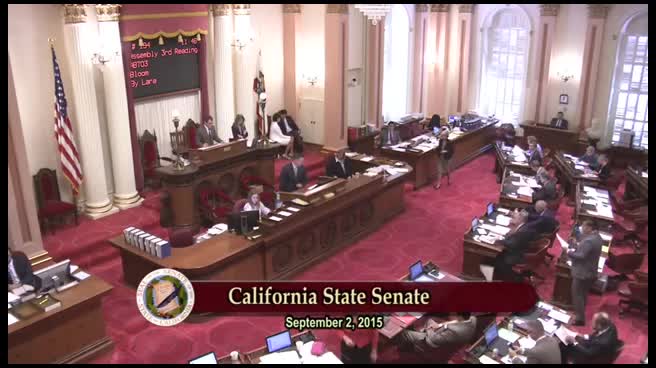 3MIN
Senate Floor
 12SEC
Senate Standing Committee on Appropriations
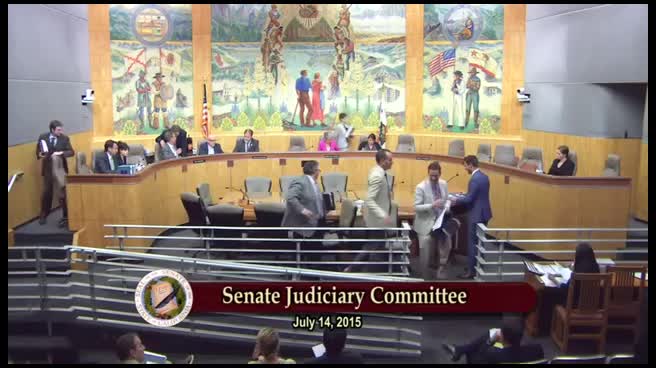 3MIN
Senate Standing Committee on Judiciary
 56SEC
Assembly Floor
 5MIN
Assembly Standing Committee on Judiciary
Bill Author