AB 903: Gambling Control Act.
- Session Year: 2015-2016
- House: Assembly
- Latest Version Date: 2015-04-23
The Gambling Control Act provides for the licensure of certain individuals and establishments involved in various gambling activities, and for the regulation of those activities, by the California Gambling Control Commission. Existing law prohibits a person under 21 years of age from being eligible for a work permit in a gambling establishment. Existing law also prohibits a person under 21 years of age from entering the premises of a licensed gambling establishment, except as provided.
This bill would permit a person between 18 and 21 years of age to work in a gambling establishment in a classification that entails providing services on and off the gaming floor that are not involved in play of any controlled game, as specified.
Existing law generally regulates false advertising and specifically prohibits certain unfair acts or practices undertaken by, or omissions of, a person in the operation of a contest, including misrepresenting the odds of winning a prize or failing to award and distribute all prizes.
Existing law specifies that these provisions do not render unlawful or restrict otherwise lawful games and methods used by a gambling enterprise licensed under the Gambling Control Act or operations of the California State Lottery.
This bill would expand that exemption to include lawful technologies and software used by a gambling enterprise licensed under the Gambling Control Act or operations of the California State Lottery.
Existing law generally regulates false advertising and specifically prohibits certain unfair acts or practices undertaken by, or omissions of, a person in the operation of a contest, including misrepresenting the odds of winning a prize or failing to award and distribute all prizes.
Existing law, with certain exceptions, prohibits using or offering to use any method intended to be used by a person interacting with an electronic video monitor to simulate gambling or play gambling-themed games in a business establishment, as defined, that directly or indirectly implements the predetermination of sweepstakes cash, cash-equivalent prizes, or other prizes of value, or otherwise connects a sweepstakes player or participant with sweepstakes cash, cash-equivalent prizes, or other prizes of value. A violation of this provision is a misdemeanor.
This bill would, instead, make violation of that provision punishable as a felony.
By increasing the duties of the local prosecutor, this bill would impose a state-mandated local program.
Existing law specifies that these provisions do not render unlawful or restrict otherwise lawful games and methods used by a gambling enterprise licensed under the Gambling Control Act or operations of the California State Lottery.
This bill would expand that exemption to include lawful, technologies, lawful technologies and software used by a gambling enterprise licensed under the Gambling Control Act or operations of the California State Lottery.
The California Constitution requires the state to reimburse local agencies and school districts for certain costs mandated by the state. Statutory provisions establish procedures for making that reimbursement.
This bill would provide that no reimbursement is required by this act for a specified reason.
Existing law generally regulates false advertising and specifically prohibits certain unfair acts or practices undertaken by, or omissions of, a person in the operation of a contest, including misrepresenting the odds of winning a prize or failing to award and distribute all prizes.
Existing law, with certain exceptions, prohibits using or offering to use any method intended to be used by a person interacting with an electronic video monitor to simulate gambling or play gambling-themed games in a business establishment, as defined, that directly or indirectly implements the predetermination of sweepstakes cash, cash-equivalent prizes, or other prizes of value, or otherwise connects a sweepstakes player or participant with sweepstakes cash, cash-equivalent prizes, or other prizes of value. A violation of this provision is a misdemeanor.
This bill would, instead, make violation of that provision punishable as a felony.
By increasing the duties of the local prosecutor, this bill would impose a state-mandated local program.
Existing law specifies that these provisions do not render unlawful or restrict otherwise lawful games and methods used by a gambling enterprise licensed under the Gambling Control Act or operations of the California State Lottery.
This bill would expand that exemption to include lawful, technologies, and software used by a gambling enterprise licensed under the Gambling Control Act or operations of the California State Lottery.
The California Constitution requires the state to reimburse local agencies and school districts for certain costs mandated by the state. Statutory provisions establish procedures for making that reimbursement.
This bill would provide that no reimbursement is required by this act for a specified reason.
No (a)A person under the age of 21 years of age shall not be eligible for a work permit and no a permit shall not be issued to a person under the age of 21 years. 21 years of age.
(b)A person between 18 and 21 years of age may be employed to work in a gambling establishment, provided that he or she shall not work as a dealer, floor personnel, or any other employment classification that exclusively involves working on the floor of the gambling establishment. A person between 18 and 21 years of age may be employed in job classifications that entail providing services on and off the gaming floor that are not involved in play of any controlled game.
SEC. 2.Section 19921 of the Business and Professions Code is amended to read:19921.(a)No A person under 21 years of age shall not be permitted to enter upon the premises of a licensed gambling establishment, or any part thereof, except the following:
(1)An area, physically separated from any gambling area, for the exclusive purpose of dining. For purposes of this subdivision, any place wherein food or beverages are dispensed primarily by vending machines shall not constitute a place for dining.
(2)Restrooms.
(3)A supervised room that is physically separated from any gambling area and used primarily for the purpose of entertainment or recreation.
(4)A designated pathway to reach any of the areas described in paragraphs (1) to (3), inclusive. To the extent that the designated pathway requires an individual to enter upon or pass through the gaming floor, all persons under 21 years of age shall be accompanied by a person over 21 years of age or be in the presence of a gambling establishment employee over 21 years of age.
(5)In accordance with subdivision (b) of Section 19911.
(b)No A person under 21 years of age shall not be permitted to loiter in a gaming area.
SECTION 1.Section 17539.1 of the Business and Professions Code is amended to read:17539.1.(a)The following unfair acts or practices undertaken by, or omissions of, any person in the operation of any contest or sweepstakes are prohibited:
(1)Failing to clearly and conspicuously disclose, at the time of the initial contest solicitation, at the time of each precontest promotional solicitation, and each time the payment of money is required to become or to remain a contestant, the total number of contestants anticipated based on prior experience and the percentages of contestants correctly solving each puzzle used in the three most recently completed contests conducted by the person. If the person has not operated or promoted three contests he or she shall disclose for each prior contest, if any, the information required by this section.
(2)Failing to promptly send to each member of the public, upon his or her request, the actual number and percentage of contestants correctly solving each puzzle or game in the contest most recently completed.
(3)Misrepresenting in any manner the odds of winning any prize.
(4)Misrepresenting in any manner, the rules, terms, or conditions of participation in a contest.
(5)Failing to clearly and conspicuously disclose with all contest puzzles and games and with all promotional puzzles and games all of the following:
(A)The maximum number of puzzles or games that may be necessary to complete the contest and determine winners.
(B)The maximum amount of money, including the maximum cost of any postage and handling fees, that a participant may be asked to pay to win each of the contest prizes then offered.
(C)That future puzzles or games, if any, or tie breakers, if any, will be significantly more difficult than the initial puzzle.
(D)The date or dates on or before which the contest will terminate and upon which all prizes will be awarded.
(E)The method of determining prizewinners if a tie remains after the last tie breaker puzzle is completed.
(F)All rules, regulations, terms, and conditions of the contest.
(6)Failing to clearly and conspicuously disclose the exact nature and approximate value of the prizes when offered.
(7)Failing to award and distribute all prizes of the value and type represented.
(8)Representing directly or by implication that the number of participants has been significantly limited, or that any particular person has been selected to win a prize unless such is the fact.
(9)Representing directly or by implication that any particular person has won any money, prize, thing, or other value in a contest unless there has been a real contest in which a meaningful percentage, which shall be at least a majority, of the participants in such contests have failed to win a prize, money, thing, or other value.
(10)Representing directly or by implication that any particular person has won any money, prize, thing, or other value without disclosing the exact nature and approximate value thereof.
(11)Using the word lucky to describe any number, ticket, coupon, symbol, or other entry, or representing in any other manner directly or by implication that any number, ticket, coupon, symbol, or other entry confers or will confer an advantage upon the recipient that other recipients will not have, that the recipient is more likely to win a prize than are others, or that the number, ticket, coupon, symbol, or other entry has some value that other entries do not have.
(12)Using or offering for use any method intended to be used by a person interacting with an electronic video monitor to simulate gambling or play gambling-themed games in a business establishment that (A) directly or indirectly implements the predetermination of sweepstakes cash, cash-equivalent prizes, or other prizes of value, or (B) otherwise connects a sweepstakes player or participant with sweepstakes cash, cash-equivalent prizes, or other prizes of value. For the purposes of this paragraph, business establishment means a business that has any financial interest in the conduct of the sweepstakes or the sale of the products or services being promoted by the sweepstakes at its physical location. This paragraph does not make unlawful game promotions or sweepstakes conducted by for-profit commercial entities on a limited and occasional basis as an advertising and marketing tool that are incidental to substantial bona fide sales of consumer products or services and that are not intended to provide a vehicle for the establishment of places of ongoing gambling or gaming.
(13)Failing to obtain the express written or oral consent of individuals before their names are used for a promotional purpose in connection with a mailing to a third person.
(14)Using or distributing simulated checks, currency, or any simulated item of value unless there is clearly and conspicuously printed thereon the words: SPECIMENNONNEGOTIABLE.
(15)Representing, directly or by implication, orally or in writing, that any tie breaker puzzle may be entered upon the payment of money qualifying the contestant for an extra cash or any other type of prize or prizes unless:
(A)It is clearly and conspicuously disclosed that the payments are optional and that contestants are not required to pay money, except for reasonable postage and handling fees, to play for an extra cash or any other type of prize or prizes; and
(B)Contestants are clearly and conspicuously given the opportunity to indicate they wish to enter such phase of the contest for free, except for reasonable postage and handling fees the amount of which shall not exceed one dollar and fifty cents ($1.50) plus the actual cost of postage and which shall be clearly and conspicuously disclosed at the time of the initial contest solicitation and each time thereafter that the payment of such fees is required. The contestants opportunity to indicate they wish to enter for free shall be in immediate conjunction with and in a like manner as the contestants opportunity to indicate they wish to play for an extra prize.
(b)For the purposes of this section, sweepstakes means a procedure, activity, or event, for the distribution, donation, or sale of anything of value by lot, chance, predetermined selection, or random selection that is not unlawful under other provisions of law, including, but not limited to, Chapter 9 (commencing with Section 319) and Chapter 10 (commencing with Section 330) of Title 9 of Part 1 of the Penal Code.
(c)This section does not apply to an advertising plan or program that is regulated by, and complies with, the requirements of Section 17537.1.
(d)Nothing in this section shall be deemed to render lawful any activity that is unlawful pursuant to other law, including, but not limited to, Section 320, 330a, 330b, 330.1, or 337j of the Penal Code.
(e)Nothing in this section shall be deemed to render unlawful or restrict otherwise lawful games, technologies, software, and methods used by a gambling enterprise licensed under the Gambling Control Act or operations of the California State Lottery.
(a)The following unfair acts or practices undertaken by, or omissions of, any person in the operation of any contest or sweepstakes are prohibited:
(1)Failing to clearly and conspicuously disclose, at the time of the initial contest solicitation, at the time of each precontest promotional solicitation solicitation, and each time the payment of money is required to become or to remain a contestant, the total number of contestants anticipated based on prior experience and the percentages of contestants correctly solving each puzzle used in the three most recently completed contests conducted by the person. If the person has not operated or promoted three contests he or she shall disclose for each prior contest contest, if any, the information required by this section.
(2)Failing to promptly send to each member of the public public, upon his or her request, the actual number and percentage of contestants correctly solving each puzzle or game in the contest most recently completed.
(3)Misrepresenting in any manner the odds of winning any prize.
(4)Misrepresenting in any manner, the rules, terms, or conditions of participation in a contest.
(5)Failing to clearly and conspicuously disclose with all contest puzzles and games and with all promotional puzzles and games all of the following:
(A)The maximum number of puzzles or games that may be necessary to complete the contest and determine winners.
(B)The maximum amount of money, including the maximum cost of any postage and handling fees, that a participant may be asked to pay to win each of the contest prizes then offered.
(C)That future puzzles or games, if any, or tie breakers, if any, will be significantly more difficult than the initial puzzle.
(D)The date or dates on or before which the contest will terminate and upon which all prizes will be awarded.
(E)The method of determining prizewinners if a tie remains after the last tie breaker puzzle is completed.
(F)All rules, regulations, terms, and conditions of the contest.
(6)Failing to clearly and conspicuously disclose the exact nature and approximate value of the prizes when offered.
(7)Failing to award and distribute all prizes of the value and type represented.
(8)Representing directly or by implication that the number of participants has been significantly limited, or that any particular person has been selected to win a prize unless such is the fact.
(9)Representing directly or by implication that any particular person has won any money, prize, thing, or other value in a contest unless there has been a real contest in which a meaningful percentage, which shall be at least a majority, of the participants in such contests have failed to win a prize, money, thing, or other value.
(10)Representing directly or by implication that any particular person has won any money, prize, thing, or other value without disclosing the exact nature and approximate value thereof.
(11)Using the word lucky to describe any number, ticket, coupon, symbol, or other entry, or representing in any other manner directly or by implication that any number, ticket, coupon, symbol, or other entry confers or will confer an advantage upon the recipient that other recipients will not have, that the recipient is more likely to win a prize than are others, or that the number, ticket, coupon, symbol, or other entry has some value that other entries do not have.
(12)Using or offering for use any method intended to be used by a person interacting with an electronic video monitor to simulate gambling or play gambling-themed games in a business establishment that (A) directly or indirectly implements the predetermination of sweepstakes cash, cash-equivalent prizes, or other prizes of value, or (B) otherwise connects a sweepstakes player or participant with sweepstakes cash, cash-equivalent prizes, or other prizes of value. For the purposes of this paragraph, business establishment means a business that has any financial interest in the conduct of the sweepstakes or the sale of the products or services being promoted by the sweepstakes at its physical location. This paragraph does not make unlawful game promotions or sweepstakes conducted by for-profit commercial entities on a limited and occasional basis as an advertising and marketing tool that are incidental to substantial bona fide sales of consumer products or services and that are not intended to provide a vehicle for the establishment of places of ongoing gambling or gaming. Notwithstanding Section 17534, a violation of this paragraph is punishable as a felony.
(13)Failing to obtain the express written or oral consent of individuals before their names are used for a promotional purpose in connection with a mailing to a third person.
(14)Using or distributing simulated checks, currency, or any simulated item of value unless there is clearly and conspicuously printed thereon the words: SPECIMENNONNEGOTIABLE.
(15)Representing, directly or by implication, orally or in writing, that any tie breaker puzzle may be entered upon the payment of money qualifying the contestant for an extra cash or any other type of prize or prizes unless:
(A)It is clearly and conspicuously disclosed that the payments are optional and that contestants are not required to pay money, except for reasonable postage and handling fees, to play for an extra cash or any other type of prize or prizes; and
(B)Contestants are clearly and conspicuously given the opportunity to indicate they wish to enter such phase of the contest for free, except for reasonable postage and handling fees the amount of which shall not exceed one dollar and fifty cents ($1.50) plus the actual cost of postage and which shall be clearly and conspicuously disclosed at the time of the initial contest solicitation and each time thereafter that the payment of such fees is required. The contestants opportunity to indicate they wish to enter for free shall be in immediate conjunction with and in a like manner as the contestants opportunity to indicate they wish to play for an extra prize.
(b)For the purposes of this section, sweepstakes means a procedure, activity, or event, for the distribution, donation, or sale of anything of value by lot, chance, predetermined selection, or random selection that is not unlawful under other provisions of law, including, but not limited to, Chapter 9 (commencing with Section 319) and Chapter 10 (commencing with Section 330) of Title 9 of Part 1 of the Penal Code.
(c)This section does not apply to an advertising plan or program that is regulated by, and complies with, the requirements of Section 17537.1.
(d)Nothing in this section shall be deemed to render lawful any activity that is unlawful pursuant to other law, including, but not limited to, Section 320, 330a, 330b, 330.1, or 337j of the Penal Code.
(e)Nothing in this section shall be deemed to render unlawful or restrict otherwise lawful games, technologies, software, and methods used by a gambling enterprise licensed under the Gambling Control Act or operations of the California State Lottery.
SEC. 2.No reimbursement is required by this act pursuant to Section 6 of Article XIIIB of the California Constitution because the only costs that may be incurred by a local agency or school district will be incurred because this act creates a new crime or infraction, eliminates a crime or infraction, or changes the penalty for a crime or infraction, within the meaning of Section 17556 of the Government Code, or changes the definition of a crime within the meaning of Section 6 of Article XIIIB of the California Constitution.
(a)The following unfair acts or practices undertaken by, or omissions of, any person in the operation of any contest or sweepstakes are prohibited:
(1)Failing to clearly and conspicuously disclose, at the time of the initial contest solicitation, at the time of each precontest promotional solicitation and each time the payment of money is required to become or to remain a contestant, the total number of contestants anticipated based on prior experience and the percentages of contestants correctly solving each puzzle used in the three most recently completed contests conducted by the person. If the person has not operated or promoted three contests he or she shall disclose for each prior contest if any, the information required by this section.
(2)Failing to promptly send to each member of the public upon his or her request, the actual number and percentage of contestants correctly solving each puzzle or game in the contest most recently completed.
(3)Misrepresenting in any manner the odds of winning any prize.
(4)Misrepresenting in any manner, the rules, terms, or conditions of participation in a contest.
(5)Failing to clearly and conspicuously disclose with all contest puzzles and games and with all promotional puzzles and games all of the following:
(A)The maximum number of puzzles or games that may be necessary to complete the contest and determine winners.
(B)The maximum amount of money, including the maximum cost of any postage and handling fees, that a participant may be asked to pay to win each of the contest prizes then offered.
(C)That future puzzles or games, if any, or tie breakers, if any, will be significantly more difficult than the initial puzzle.
(D)The date or dates on or before which the contest will terminate and upon which all prizes will be awarded.
(E)The method of determining prizewinners if a tie remains after the last tie breaker puzzle is completed.
(F)All rules, regulations, terms, and conditions of the contest.
(6)Failing to clearly and conspicuously disclose the exact nature and approximate value of the prizes when offered.
(7)Failing to award and distribute all prizes of the value and type represented.
(8)Representing directly or by implication that the number of participants has been significantly limited, or that any particular person has been selected to win a prize unless such is the fact.
(9)Representing directly or by implication that any particular person has won any money, prize, thing, or other value in a contest unless there has been a real contest in which a meaningful percentage, which shall be at least a majority, of the participants in such contests have failed to win a prize, money, thing, or other value.
(10)Representing directly or by implication that any particular person has won any money, prize, thing, or other value without disclosing the exact nature and approximate value thereof.
(11)Using the word lucky to describe any number, ticket, coupon, symbol, or other entry, or representing in any other manner directly or by implication that any number, ticket, coupon, symbol, or other entry confers or will confer an advantage upon the recipient that other recipients will not have, that the recipient is more likely to win a prize than are others, or that the number, ticket, coupon, symbol, or other entry has some value that other entries do not have.
(12)Using or offering for use any method intended to be used by a person interacting with an electronic video monitor to simulate gambling or play gambling-themed games in a business establishment that (A) directly or indirectly implements the predetermination of sweepstakes cash, cash-equivalent prizes, or other prizes of value, or (B) otherwise connects a sweepstakes player or participant with sweepstakes cash, cash-equivalent prizes, or other prizes of value. For the purposes of this paragraph, business establishment means a business that has any financial interest in the conduct of the sweepstakes or the sale of the products or services being promoted by the sweepstakes at its physical location. This paragraph does not make unlawful game promotions or sweepstakes conducted by for-profit commercial entities on a limited and occasional basis as an advertising and marketing tool that are incidental to substantial bona fide sales of consumer products or services and that are not intended to provide a vehicle for the establishment of places of ongoing gambling or gaming. Notwithstanding Section 17534, a violation of this paragraph is punishable as a felony.
(13)Failing to obtain the express written or oral consent of individuals before their names are used for a promotional purpose in connection with a mailing to a third person.
(14)Using or distributing simulated checks, currency, or any simulated item of value unless there is clearly and conspicuously printed thereon the words: SPECIMENNONNEGOTIABLE.
(15)Representing, directly or by implication, orally or in writing, that any tie breaker puzzle may be entered upon the payment of money qualifying the contestant for an extra cash or any other type prize or prizes unless:
(A)It is clearly and conspicuously disclosed that the payments are optional and that contestants are not required to pay money, except for reasonable postage and handling fees, to play for an extra cash or any other type of prize or prizes; and
(B)Contestants are clearly and conspicuously given the opportunity to indicate they wish to enter such phase of the contest for free, except for reasonable postage and handling fees the amount of which shall not exceed one dollar and fifty cents ($1.50) plus the actual cost of postage and which shall be clearly and conspicuously disclosed at the time of the initial contest solicitation and each time thereafter that the payment of such fees is required. The contestants opportunity to indicate they wish to enter for free shall be in immediate conjunction with and in a like manner as the contestants opportunity to indicate they wish to play for an extra prize.
(b)For the purposes of this section, sweepstakes means a procedure, activity, or event, for the distribution, donation, or sale of anything of value by lot, chance, predetermined selection, or random selection that is not unlawful under other provisions of law, including, but not limited to, Chapter 9 (commencing with Section 319) and Chapter 10 (commencing with Section 330) of Title 9 of Part 1 of the Penal Code.
(c)This section does not apply to an advertising plan or program that is regulated by, and complies with, the requirements of Section 17537.1.
(d)Nothing in this section shall be deemed to render lawful any activity that is unlawful pursuant to other law, including, but not limited to, Section 320, 330a, 330b, 330.1, or 337j of the Penal Code.
(e)Nothing in this section shall be deemed to render unlawful or restrict otherwise lawful games, technologies, software, and methods used by a gambling enterprise licensed under the Gambling Control Act or operations of the California State Lottery.
SEC. 2.No reimbursement is required by this act pursuant to Section 6 of Article XIIIB of the California Constitution because the only costs that may be incurred by a local agency or school district will be incurred because this act creates a new crime or infraction, eliminates a crime or infraction, or changes the penalty for a crime or infraction, within the meaning of Section 17556 of the Government Code, or changes the definition of a crime within the meaning of Section 6 of Article XIIIB of the California Constitution.
|
Date
|
Status
|
|---|---|
| Feb 26, 2015 | Read first time. To print. |
| Feb 27, 2015 | From printer. May be heard in committee March 29. |
| Mar 16, 2015 | From committee chair, with author's amendments: Amend, and re-refer to Com. on G.O. Read second time and amended. |
| Mar 16, 2015 | Referred to Coms. on G.O. and PUB. S. |
| Apr 6, 2015 | Re-referred to Com. on G.O. |
| Apr 23, 2015 | From committee chair, with author's amendments: Amend, and re-refer to Com. on G.O. Read second time and amended. |
| Apr 27, 2015 | Re-referred to Com. on G.O. |
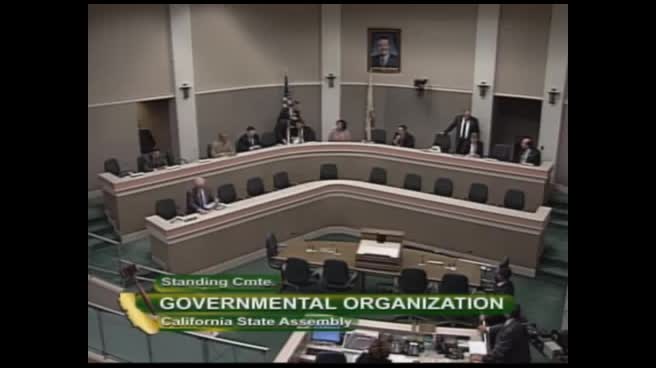
| May 7, 2015 | From committee: Do pass. (Ayes 18. Noes 0.) (May 6). |
| May 11, 2015 | Read second time. Ordered to third reading. |
| May 14, 2015 | In Senate. Read first time. To Com. on RLS. for assignment. |
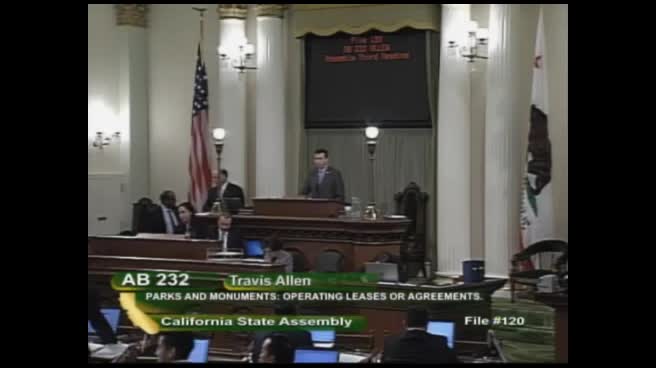
| May 14, 2015 | Read third time. Passed. Ordered to the Senate. |
| May 14, 2015 | Read third time. Passed. Ordered to the Senate. (Ayes 78. Noes 0. Page 1443.) |
| May 28, 2015 | Referred to Com. on G.O. |
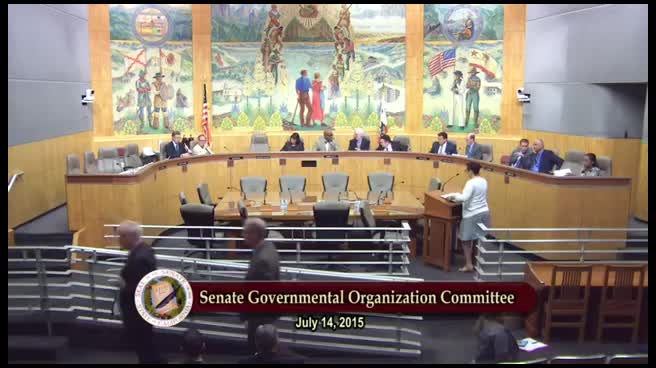
| Jul 14, 2015 | From committee: Do pass. (Ayes 11. Noes 2.) (July 14). |
| Jul 15, 2015 | Read second time. Ordered to third reading. |
| Aug 17, 2015 | Ordered to inactive file at the request of Senator Lara. |
|
Date
|
Description
|
Location
|
Votes
|
|
|---|---|---|---|---|
| Jul 14, 2015 | Do pass | Senate Standing Committee on Governmental Organization |
Passed |
|
| May 14, 2015 | AB 903 GARCIA, C. Assembly Third Reading | Assembly Floor |
Passed |
|
| May 6, 2015 | Do pass. | Assembly Standing Committee on Governmental Organization |
Passed |
This list shows positions taken on this bill by organizations on the date displayed, which is linked to the original source.
Positions by individuals are not included.
|
Organization
|
Position
|
Date
|
|---|---|---|
| California Coalition Against Gambling Expansion | ** Against | Jul 14, 2015 |
| Commerce Casino | ** Support | Jul 14, 2015 |
| Commerce, City Of | ** Support | Jul 14, 2015 |
| Hawaiian Gardens Casino | ** Support | Jul 14, 2015 |
AB 903
Page 4
|
Office of Senate Floor Analyses (916) 651-1520 Fax: (916) 327-4478 |
THIRD READING
Bill No: AB 903
Amended: 4/23/15 in Assembly
SENATE GOVERNMENTAL ORG. COMMITTEE: 11-2, 7/14/15
AYES: Hall, Berryhill, Block, Gaines, Galgiani, Glazer, Hernandez, Hill, Hueso, Lara, McGuire
NOES: Runner, Vidak
ASSEMBLY FLOOR: 78-0, 5/14/15 - See last page for vote
DIGEST: This bill permits a person between 18 and 21 years of age to work in a gambling establishment in a classification that entails providing services on and off the gaming floor that is not involved in play of any controlled game.
ANALYSIS:
Existing law:
Provides, under the Gambling Control Act (Act), for the licensure and regulation of various legalized gambling activities and establishments by the California Gambling Control Commission (CGCC) and the investigation and enforcement of those activities and establishments by the Department of Justice (DOJ).
Prohibits a person under 21 years of age from being eligible for a work permit in a gambling establishment.
Prohibits a person under 21 years of age from entering the premises of a licensing establishment, except the following:
An area physically separated from any gambling area for the exclusive purpose of dining. Any place wherein food or beverages are dispensed primarily by vending machines shall not constitute a place for dining.
Restrooms.
A supervised room that is physically separated from any gambling area and used primarily for the purpose of entertainment or recreation.
A designated pathway to reach any of the area where a person under 21 years of age is allowed to enter. To the extent that the designated pathway requires an individual to pass through the gaming floor, all person under 21 years of age shall be accompanied by a person over 21 years of age or be in the presence of a gambling establishment employee over 21 years of age.
This bill:
Permits a person between 18 and 21 years of age to work in a gambling establishment, provided that he or she shall not work as a dealer, floor personnel, or any other employment classification that exclusively involves working on the floor of the gambling establishment.
Provides that a person between 18-21 years of age may be employed in job classifications that entail providing services on and off the gaming floor that are not involved in play of any controlled game.
Background
Purpose of the bill. According to the author, “while the economy has improved, California’s current unemployment rate is 6.7%. Over 1.2 million Californians remain unemployed with some cities having double-digit unemployment numbers. There are many cities with higher unemployment rates than the State’s. The City of Commerce has a 10.6% unemployment rate, while the City of McFarland has a 17% unemployment rate. This legislation will provide an employment opportunity for Californians between 18-21 years of age.”
Gambling Control Act. The Act provides the CGCC with jurisdiction over the operation of gambling establishments in California. The Act requires every owner, lessee, or employee of a gambling establishment to obtain and maintain a valid state gambling license. The Act assigns the CGCC the responsibility of assuring that gambling licenses are not issued to, or held by, unqualified or disqualified persons, or by persons whose operations are conducted in a manner that is harmful to the public health, safety, or welfare.
The Act directs the CGCC to issue licenses only to those persons of good character, honesty and integrity, whose prior activities, criminal record, if any, reputation, habits and associations do not pose a threat to the public interest of this state. The DOJ conducts background and field investigations and enforces the provisions of the Act in this regard.
The Act prohibits a person under 21 years of age from being eligible for a work permit in a gambling establishment. The Act also prohibits an individual who is under 21 years of age from entering the premises of a licensed gambling establishment with certain exemptions. In addition, the Act prohibits any person under 21 years of age from loitering in a gaming area.
Work Permits. The Act requires that all individuals who are employed as gambling enterprise employees hold a valid work permit. The work permit is issued by the local jurisdiction. An application for a work permit shall be made to the CGCC when the local licensing authority does not have a work permit process in place, or where a locally issued work permit is not required by the licensing authority of a city, county, or city and county.
Prior/Related Legislation
AB 293 (Mendoza, Chapter 233, Statutes of 2009) authorized, among other things, a person between 18 and 21 years of age to pass through a gambling floor.
SB 8 (Lockyer, Chapter 867, Statutes of 1997) repealed the Gaming Regulation Act, and instead enacted the Act, which provided for DOJ to investigate and enforce controlled gambling in the state. It also established the CGCC to regulate gambling in this state to issue, suspend, or revoke gambling licenses.
FISCAL EFFECT: Appropriation: No Fiscal Com.: No Local: No
Commerce Casino (source)
Bicycle Hotel & Casino
City of Commerce
Hawaiian Gardens Casino
OPPOSITION: (Verified 7/14/15)
California Coalition Against Gambling Expansion
ARGUMENTS IN SUPPORT: According to supporters of this bill, “AB 903 would permit a person between 18 and 21 years of age to work in a gambling establishment provided that he or she does not work as a dealer, floor person, or any other employment classification that exclusively involves working on the floor of the gambling establishment. This bill will create employment opportunity for individuals in this age range to work as secretaries, waiters or waitresses, maintenance personnel and other ancillary services.”
ARGUMENTS IN OPPOSITION: According to the California Coalition Against Gambling Expansion, “when tribal casinos first started in California, and some initially permitted 18 year old gamblers, there was a public outcry, resulting in them raising the minimum age to 21. Now this measure comes along proposing to reduce the age of workers allowed to work on the gambling floor from 21 to 18 at a gambling establishment licensed by the CGCC. What will be next, removing the current restrictions on patrons under 21 on the gambling floor?”
ASSEMBLY FLOOR: 78-0, 5/14/15
AYES: Achadjian, Alejo, Travis Allen, Baker, Bigelow, Bloom, Bonilla, Bonta, Brough, Brown, Burke, Calderon, Campos, Chang, Chau, Chávez, Chiu, Chu, Cooley, Cooper, Dababneh, Dahle, Daly, Dodd, Eggman, Frazier, Beth Gaines, Gallagher, Cristina Garcia, Eduardo Garcia, Gatto, Gipson, Gomez, Gonzalez, Gordon, Gray, Grove, Hadley, Harper, Holden, Irwin, Jones, Jones-Sawyer, Kim, Lackey, Levine, Linder, Lopez, Low, Maienschein, Mathis, Mayes, McCarty, Medina, Melendez, Mullin, Nazarian, Obernolte, O'Donnell, Olsen, Patterson, Perea, Quirk, Ridley-Thomas, Rodriguez, Salas, Santiago, Steinorth, Mark Stone, Thurmond, Ting, Wagner, Waldron, Weber, Wilk, Williams, Wood, Atkins
NO VOTE RECORDED: Roger Hernández, Rendon
Prepared by: Felipe Lopez / G.O. / (916) 651-1530
7/15/15 15:07:30
**** END ****
AB 903 (Cristina Garcia) Page 4 of 4
SENATE COMMITTEE ON GOVERNMENTAL ORGANIZATION
Senator Isadore Hall, III
Chair
2015 - 2016 Regular
Bill No: AB 903 Hearing Date: 7/14/2015
Author: |
Cristina Garcia |
||
Version: |
4/23/2015 Amended |
||
Urgency: |
No |
Fiscal: |
No |
Consultant: |
Felipe Lopez |
||
SUBJECT: Gambling Control Act
DIGEST: This bill permits a person between 18 and 21 years of age to work in a gambling establishment in a classification that entails providing services on and off the gaming floor that is not involved in play of any controlled game.
ANALYSIS:
Existing law:
Provides, under the Gambling Control Act (Act), for the licensure and regulation of various legalized gambling activities and establishments by the California Gambling Control Commission (CGCC) and the investigation and enforcement of those activities and establishments by the Department of Justice (DOJ).
Prohibits a person under 21 years of age from being eligible for a work permit in a gambling establishment.
Prohibits a person under 21 years of age from entering the premises of a licensing establishment, except the following:
An area physically separated from any gambling area for the exclusive purpose of dining. Any place wherein food or beverages are dispensed primarily by vending machines shall not constitute a place for dining.
Restrooms.
A supervised room that is physically separated from any gambling area and used primarily for the purpose of entertainment or recreation.
A designated pathway to reach any of the area where a person under 21 years of age is allowed to enter. To the extent that the designated pathway requires an individual to pass through the gaming floor, all person under 21 years of age shall be accompanied by a person over 21 years of age or be in the presence of a gambling establishment employee over 21 years of age.
This bill:
Permits a person between 18 and 21 years of age to work in a gambling establishment, provided that he or she shall not work as a dealer, floor personnel, or any other employment classification that exclusively involves working on the floor of the gambling establishment.
Provides that a person between 18-21 years of age may be employed in job classifications that entail providing services on and off the gaming floor that are not involved in play of any controlled game.
Background
Purpose of the bill. According to the author, “while the economy has improved, California’s current unemployment rate is 6.7%. Over 1.2 million Californians remain unemployed with some cities having double-digit unemployment numbers. There are many cities with higher unemployment rates than the State’s. The City of Commerce has a 10.6% unemployment rate, while the City of McFarland has a 17% unemployment rate. This legislation will provide an employment opportunity for Californians between 18-21 years of age.”
Gambling Control Act. The Act provides the CGCC with jurisdiction over the operation of gambling establishments in California. The Act requires every owner, lessee, or employee of a gambling establishment to obtain and maintain a valid state gambling license. The Act assigns the CGCC the responsibility of assuring that gambling licenses are not issued to, or held by, unqualified or disqualified persons, or by persons whose operations are conducted in a manner that is harmful to the public health, safety, or welfare.
The Act directs the CGCC to issue licenses only to those persons of good character, honesty and integrity, whose prior activities, criminal record, if any, reputation, habits and associations do not pose a threat to the public interest of this state. The DOJ conducts background and field investigations and enforces the provisions of the Act in this regard.
The Act prohibits a person under 21 years of age from being eligible for a work permit in a gambling establishment. The Act also prohibits an individual who is under 21 years of age from entering the premises of a licensed gambling establishment with certain exemptions. In addition, the Act prohibits any person under 21 years of age from loitering in a gaming area.
Work Permits. The Act requires that all individuals who are employed as gambling enterprise employees hold a valid work permit. The work permit is issued by the local jurisdiction. An application for a work permit shall be made to the CGCC when the local licensing authority does not have a work permit process in place, or where a locally issued work permit is not required by the licensing authority of a city, county, or city and county
Prior/Related Legislation
AB 1188 (Gipson, 2015) revises the definition of “key employee” to mean any natural person employed in the operation of a gambling enterprise in a supervisory capacity or empowered to make discretionary decisions with regard to gambling operations. (Pending in Senate Governmental Organization Committee)
AB 293 (Mendoza, Chapter 233, Statutes of 2009) authorized, among other things, a person between 18 and 21 years of age to pass through a gambling floor.
SB 8 (Lockyer, Chapter 867, Statutes of 1997) repealed the Gaming Regulation Act, and instead enacted the Act, which provided for DOJ to investigate and enforce controlled gambling in the state. It also establishes the CGCC to regulate gambling in this state to issue, suspend, or revoke gambling licenses.
FISCAL EFFECT: Appropriation: No Fiscal Com.: No Local: No
SUPPORT:
Commerce Casino (Source)
Bicycle Hotel & Casino
City of Commerce
Hawaiian Gardens Casino
OPPOSITION:
California Coalition Against Gambling Expansion
ARGUMENTS IN SUPPORT: According to supporters of the bill, “AB 903 would permit a person between 18 and 21 years of age to work in a gambling establishment provided that he or she does not work as a dealer, floor person, or any other employment classification that exclusively involves working on the floor of the gambling establishment. This bill will create employment opportunity for individuals in this age range to work as secretaries, waiters or waitresses, maintenance personnel and other ancillary services.”
ARGUMENTS IN OPPOSITION: According to the California Coalition Against Gambling Expansion, “when tribal casinos first started in California, and some initially permitted 18 year old gamblers, there was a public outcry, resulting in them raising the minimum age to 21. Now this measure comes along proposing to reduce the age of workers allowed to work on the gambling floor from 21 to 18 at a gambling establishment licensed by the CGCC. What will be next, removing the current restrictions on patrons under 21 on the gambling floor?”
AB 903
Page 2
ASSEMBLY THIRD READING
AB 903
(Cristina Garcia)
As Amended April 23, 2015
Majority vote
Committee |
Votes |
Ayes |
Noes |
Governmental Organization |
18-0 |
Gray, Linder, Achadjian, Alejo, Bigelow, Cooley, Cooper, Daly, Eduardo Garcia, Gipson, Roger Hernández, Jones-Sawyer, Levine, Mayes, Perea, Salas, Waldron, Wilk |
|
SUMMARY: Would permit a person between 18 and 21 years of age to work in a gambling establishment in a classification that entails providing services on and off the gaming floor that are not involved in play of any controlled game, as specified.
EXISTING LAW:
California Constitution Article IV, Section 19(e) prohibits casinos of the type currently operating in Nevada and New Jersey. Those casinos commonly offer their patrons a broad spectrum of gaming and house-banked games.
Existing law, the Gambling Control Act (Act), provides for the licensure of certain individuals and gambling establishments involved in various gambling activities, and for the regulation of those activities, by the California Gambling Control Commission (CGCC). Existing law provides for the enforcement of those activities by the Department of Justice (DOJ).
Prohibits a person under 21 years of age from being eligible for a work permit in a gambling establishment.
Prohibits any person under the age of 21 from entering the premises of a licensed gambling establishment with the following exceptions:
A dining area that is physically separated from any gambling area;
Restrooms;
A supervised room that is physically separated from any gambling area and that is used for the purpose of entertainment or recreation; and
A designated pathway through the gambling area, which requires any person under the age of 21 to be accompanied by a person over the age of 21
FISCAL EFFECT: Unknown. This bill is keyed non-fiscal by the Legislative Counsel.
COMMENTS:
The Act prohibits a person under 21 years of age from being eligible for a work permit in a gambling establishment. The Act also prohibits a person under 21 years of age from entering the premises of a licensed gambling establishment, under defined conditions. Further, the Act prohibits any person under 21 years of age from loitering in a gaming area.
The prohibition on persons under 21 years of age from being eligible for a work permit was contained in SB 8 (Lockyer), Chapter 867, Statutes of 1997, the bill that enacted the Gambling Control Act. The bill also included a restriction that prohibited any person under 21 years of age from entering upon the premises of a licensed gambling establishment, except for limited areas, and required a separate entrance to those areas.
This bill permits a person between 18 and 21 years of age to be employed to work in a gambling establishment, provided that they do not work as dealers, floor men, or any other employment classification that exclusively involves working on the floor of the gambling establishment. A person between 18 and 21 years of age may be employed in job classifications that entail providing services on and off the gaming floor that are not involved in play of any controlled game.
In support: According to supporters, "under existing law a card club is not allowed to employ anyone under the age of 21. This is true, not only for individuals who work exclusively on the gambling floor, but also for individuals who work as cooks, waiters, bus boys, house keepers, and other ancillary services not directly related to the dealing of cards. This bill would thus create the opportunity for individuals between the ages of 18 and 21 to work in certain employment classifications that do not entail providing services exclusively on the gambling floor."
Analysis Prepared by: Eric Johnson / G.O. / (916) 319-2531 FN: 0000333
AB 903
Page 2
Date of Hearing: May 6, 2015
ASSEMBLY COMMITTEE ON GOVERNMENTAL ORGANIZATION
Adam Gray, Chair
AB 903
(Cristina Garcia) – As April 23, 2015
SUBJECT: Gambling Control Act
SUMMARY: Would permit a person between 18 and 21 years of age to work in a gambling establishment in a classification that entails providing services on and off the gaming floor that are not involved in play of any controlled game, as specified.
EXISTING LAW:
1) Article IV, section 19, subdivision (e) of the California Constitution prohibits casinos of the type currently operating in Nevada and New Jersey. Those casinos commonly offer their patrons a broad spectrum of gaming and house-banked games.
2) Existing law, the Gambling Control Act, provides for the licensure of certain individuals and gambling establishments involved in various gambling activities, and for the regulation of those activities, by the California Gambling Control Commission (CGCC). Existing law provides for the enforcement of those activities by the Department of Justice (DOJ).
3) Prohibits a person under 21 years of age from being eligible for a work permit in a gambling establishment.
4) Prohibits any person under the age of 21 from entering the premises of a licensed gambling establishment with the following exceptions:
a) A dining area that is physically separated from any gambling area;
b) Restrooms;
c) A supervised room that is physically separated from any gambling area and that is used for the purpose of entertainment or recreation; and
d) A designated pathway through the gambling area, which requires any person under the age of 21 to be accompanied by a person over the age of 21
FISCAL EFFECT: This bill is keyed non-fiscal by Legislative Counsel.
COMMENTS:
The Gambling Control Act prohibits a person under 21 years of age from being eligible for a work permit in a gambling establishment. The Act also prohibits a person under 21 years of age from entering the premises of a licensed gambling establishment, under defined conditions. Further, the Act prohibits any person under 21 years of age from loitering in a gaming area.
The prohibition on persons under 21 years of age from being eligible for a work permit was contained in SB 8 (Chapter 867, Statutes of 1997), the bill that enacted the Gambling Control Act. The bill also included a restriction that prohibited any person under 21 years of age from entering upon the premises of a licensed gambling establishment, except for limited areas, and required a separate entrance to those areas.
This bill permits a person between 18 and 21 years of age to be employed to work in a gambling establishment, provided that they do not work as dealers, floor men, or any other employment classification that exclusively involves working on the floor of the gambling establishment. A person between 18 and 21 years of age may be employed in job classifications that entail providing services on and off the gaming floor that are not involved in play of any controlled game.
In support: According to supporters, "under existing law a card club is not allowed to employ anyone under the age of 21. This is true, not only for individuals who work exclusively on the gambling floor, but also for individuals who work as cooks, waiters, bus boys, house keepers, and other ancillary services not directly related to the dealing of cards. This bill would thus create the opportunity for individuals between the ages of 18 and 21 to work in certain employment classifications that do not entail providing services exclusively on the gambling floor."
REGISTERED SUPPORT / OPPOSITION:
Support
Bicycle Hotel & Casino
City of Commerce
Commerce Casino
Hawaiian Gardens Casino
Opposition
None on file
Analysis Prepared by: Eric Johnson / G.O. / (916) 319-2531
Discussed in Hearing
 5MIN
Senate Standing Committee on Governmental Organization
 1MIN
Assembly Floor
 3MIN
Assembly Standing Committee on Governmental Organization
Bill Author

Bill Co-Author(s):