AB 969: Postsecondary education: sexual assault cases.
- Session Year: 2015-2016
- House: Assembly
- Latest Version Date: 2016-08-23
Existing law establishes the University of California, under the administration of the Regents of the University of California, the California State University, under the administration of the Trustees of the California State University, the California Community Colleges, under the administration of the Board of Governors of the California Community Colleges, and independent institutions of higher education as the segments of postsecondary education in this state.
Existing law requires the governing board of each community college district, the Trustees of the California State University, the Regents of the University of California, if they adopt a specified resolution, and the Board of Directors of the Hastings College of the Law to adopt, and implement at each of their respective campuses or other facilities, a written procedure or protocols to ensure, to the fullest extent possible, that students, faculty, and staff who are victims of sexual assault committed at or upon the grounds of, or upon off-campus grounds or facilities maintained by, the institution, receive treatment and information.
The bill would additionally require, until January 1, 2022, in order to receive state funds for student financial assistance, the governing board of each community college district, the Trustees of the California State University, the Regents of the University of California, and the governing board of each independent postsecondary institution to report, on or before October 1, 2018, and on an annual basis thereafter, specified data relating to cases of alleged sexual assault, domestic violence, dating violence, and stalking. The bill would require that report to be posted on the respective institutions Internet Web site in a manner easily accessible to students.
The bill would also require that the information reported pursuant to these provisions be reported in a manner that provides appropriate protections for the privacy of individuals involved, including, but not necessarily limited to, protection of the confidentiality of the alleged victim and of the alleged perpetrator.
Existing law establishes the California Community Colleges, under the administration of the Board of Governors of the California Community Colleges, as one of the segments of public postsecondary education in this state. Existing law establishes community college districts, each administered by a governing board, throughout the state, and authorizes these districts to provide instruction to students at the community college campuses maintained by the districts.
Existing law authorizes the governing board of a district to either deny enrollment, permit enrollment, or permit conditional enrollment to any individual who has been expelled from a community college within the preceding 5 years, or who is, at the time of the application, undergoing expulsion procedures, for certain offenses, as provided, if the board determines that the person continues to pose a risk to the safety of others. Existing law requires the board or a delegate to hold a hearing, before taking action to deny enrollment or permit conditional enrollment, to determine whether the person continues to pose a risk.
Existing law requires the governing board of each community college district, in order to receive state funds for student financial assistance, to adopt policies concerning sexual assault, domestic violence, dating violence, and stalking that include certain elements, including an affirmative consent standard in the determination of whether consent was given by a complainant.
This bill would expand the authorization to either deny enrollment, permit enrollment, or permit conditional enrollment to apply to an individual who has been expelled from another community college district within the preceding 5 years, who is undergoing expulsion procedures in another district, for certain offenses or for a violation of a districts adopted policies concerning sexual assault, domestic violence, dating violence, and stalking described above. The bill would also authorize a community college district to require a student seeking admission to inform the community college district considering admitting the student if he or she has been previously expelled from a community college in the state for a violation of that community colleges district-adopted policies concerning sexual assault, domestic violence, dating violence, and stalking. By imposing additional duties on a community college district, this bill would impose a state-mandated local program.
(3)The California Constitution requires the state to reimburse local agencies and school districts for certain costs mandated by the state. Statutory provisions establish procedures for making that reimbursement.
This bill would provide that, if the Commission on State Mandates determines that the bill contains costs mandated by the state, reimbursement for those costs shall be made pursuant to these statutory provisions.
Existing law establishes the California Community Colleges, under the administration of the Board of Governors of the California Community Colleges, as one of the segments of public postsecondary education in this state. Existing law establishes community college districts, each administered by a governing board, throughout the state, and authorizes these districts to provide instruction to students at the community college campuses maintained by the districts.
Existing law authorizes the governing board of a district to either deny enrollment, permit enrollment, or permit conditional enrollment to any individual who has been expelled from a community college within the preceding 5 years, or who is, at the time of the application, undergoing expulsion procedures, for certain offenses, as provided, if the board determines that the person continues to pose a risk to the safety of others. Existing law requires the board or a delegate to hold a hearing, before taking action to deny enrollment or permit conditional enrollment, to determine whether the person continues to pose a risk.
Existing law requires the governing board of each community college district, in order to receive state funds for student financial assistance, to adopt policies concerning sexual assault, domestic violence, dating violence, and stalking that include certain elements, including an affirmative consent standard in the determination of whether consent was given by a complainant.
This bill would expand the authorization to either deny enrollment, permit enrollment, or permit conditional enrollment to apply to an individual who has been expelled from another community college district within the preceding 5 years, who is undergoing expulsion procedures in another district, for certain offenses or for a violation of a district’s adopted policies concerning sexual assault, domestic violence, dating violence, and stalking described above. The bill would also authorize a community college district to require a student seeking admission to inform the community college district considering admitting the student if he or she has been previously expelled from a community college in the state for a violation of that community college’s district-adopted policies concerning sexual assault, domestic violence, dating violence, and stalking. By imposing additional duties on a community college district, this bill would impose a state-mandated local program.
(3)The California Constitution requires the state to reimburse local agencies and school districts for certain costs mandated by the state. Statutory provisions establish procedures for making that reimbursement.
This bill would provide that, if the Commission on State Mandates determines that the bill contains costs mandated by the state, reimbursement for those costs shall be made pursuant to these statutory provisions.
(1)Existing law establishes the California Community Colleges, under the administration of the Board of Governors of the California Community Colleges, as one of the segments of public postsecondary education in this state. Existing law establishes community college districts, each administered by a governing board, throughout the state, and authorizes these districts to provide instruction to students at the community college campuses maintained by the districts.
Existing law prohibits a community college student from being removed, suspended, or expelled unless the conduct for which the student is disciplined is related to college activity or attendance.
This bill would instead prohibit a community college student from being removed, suspended, or expelled unless the conduct for which the student is disciplined is related to college activity or attendance, or is conduct that threatens the safety of students or the public, whether that conduct occurs on or off campus.
(2)Existing law authorizes the governing board of a district to either deny enrollment, permit enrollment, or permit conditional enrollment to any individual who has been expelled from a community college within the preceding 5 years, or who is, at the time of the application, undergoing expulsion procedures, for certain offenses, as provided, if the board determines that the person continues to pose a risk to the safety of others. Existing law requires the board or a delegate to hold a hearing, before taking action to deny enrollment or permit conditional enrollment, to determine whether the person continues to pose a risk.
Existing law requires the governing boards board of each community college district, in order to receive state funds for student financial assistance, to adopt policies concerning sexual assault, domestic violence, dating violence, and stalking that include certain elements, including an affirmative consent standard in the determination of whether consent was given by a complainant.
This bill would expand the authorization to either deny enrollment, permit enrollment, or permit conditional enrollment to apply to an individual who has been expelled from another community college district within the preceding 5 years, who is currently suspended from another district, or who is undergoing expulsion procedures in another district, for certain offenses or for a violation of a districts adopted policies concerning sexual assault, domestic violence, dating violence, and stalking described above. The bill would also authorize a community college district to require a student seeking admission to inform the community college district considering admitting the student if he or she has been previously expelled or is currently suspended from a community college in the state for a violation of that community colleges district-adopted policies concerning sexual assault, domestic violence, dating violence, and stalking. By imposing additional duties on a community college district, this bill would impose a state-mandated local program.
(3)The California Constitution requires the state to reimburse local agencies and school districts for certain costs mandated by the state. Statutory provisions establish procedures for making that reimbursement.
This bill would provide that, if the Commission on State Mandates determines that the bill contains costs mandated by the state, reimbursement for those costs shall be made pursuant to these statutory provisions.
(1)Existing law establishes the California Community Colleges, under the administration of the Board of Governors of the California Community Colleges, as one of the segments of public postsecondary education in this state. Existing law establishes community college districts, each administered by a governing board, throughout the state, and authorizes these districts to provide instruction to students at the community college campuses maintained by the districts.
Existing law prohibits a community college student from being removed, suspended, or expelled unless the conduct for which the student is disciplined is related to college activity or attendance.
This bill would instead prohibit a community college student from being removed, suspended, or expelled unless the conduct for which the student is disciplined is related to college activity or attendance, or is conduct that threatens the safety of students or the public, whether that conduct occurs on or off campus.
(2)Existing law authorizes the governing board of a district to either deny enrollment, permit enrollment, or permit conditional enrollment to any individual who has been expelled from a community college within the preceding 5 years, or who is, at the time of the application, undergoing expulsion procedures, for certain offenses, as provided, if the board determines that the person continues to pose a risk to the safety of others. Existing law requires the board or a delegate to hold a hearing, before taking action to deny enrollment or permit conditional enrollment, to determine whether the person continues to pose a risk.
Existing law requires the governing boards of each community college district, in order to receive state funds for student financial assistance, to adopt policies concerning sexual assault, domestic violence, dating violence, and stalking that include certain elements, including an affirmative consent standard in the determination of whether consent was given by a complainant.
This bill would expand this authorization, the authorization to either deny enrollment, permit enrollment, or permit conditional enrollment, to include enrollment to apply to an individual who has been expelled from another community college district within the preceding 5 years, who is currently suspended from another district, or who is undergoing expulsion procedures in another district, for a sexual assault or sexual battery offense from another community college district, as specified. certain offenses or for a violation of a districts adopted policies concerning sexual assault, domestic violence, dating violence, and stalking described above. The bill would also authorize a community college district to require a student seeking admission to inform the community college district considering admitting the student if he or she has been previously expelled or is currently suspended from a community college in the state for rape, sexual assault, or sexual battery. a violation of that community colleges district-adopted policies concerning sexual assault, domestic violence, dating violence, and stalking. By imposing additional duties on a community college district, this bill would impose a state-mandated local program.
(3)The California Constitution requires the state to reimburse local agencies and school districts for certain costs mandated by the state. Statutory provisions establish procedures for making that reimbursement.
This bill would provide that, if the Commission on State Mandates determines that the bill contains costs mandated by the state, reimbursement for those costs shall be made pursuant to these statutory provisions.
(1)Existing law establishes the California Community Colleges, under the administration of the Board of Governors of the California Community Colleges, as one of the segments of public postsecondary education in this state. Existing law establishes community college districts, administered by a governing board, throughout the state, and authorizes these districts to provide instruction to students at the community college campuses maintained by the districts.
Existing law prohibits a community college student from being removed, suspended, or expelled unless the conduct for which the student is disciplined is related to college activity or attendance.
This bill would instead prohibit a community college student from being removed, suspended, or expelled unless the conduct for which the student is disciplined is related to college activity or attendance, or is conduct that threatens the safety of students or the public, whether that conduct occurs on or off campus.
(2)Existing law authorizes the governing board of a district to either deny enrollment, permit enrollment, or permit conditional enrollment to any individual who has been expelled from a community college within the preceding 5 years, or who is, at the time of the application, undergoing expulsion procedures, for certain offenses, as provided, if the board determines that the person continues to pose a risk to the safety of others. Existing law requires the board or a delegate to hold a hearing, before taking action to deny enrollment or permit conditional enrollment, to determine whether the person continues to pose a risk.
This bill would expand this authorization, to either deny enrollment, permit enrollment, or permit conditional enrollment, to include an individual who has been suspended for a sexual assault or sexual battery offense from another community college district, as specified. The bill would also authorize a community college district to require a student seeking admission to inform the community college district if he or she has been previously suspended from a community college in the state for rape, sexual assault, or sexual battery. By imposing additional duties on a community college district, this bill would impose a state-mandated local program.
(3)The California Constitution requires the state to reimburse local agencies and school districts for certain costs mandated by the state. Statutory provisions establish procedures for making that reimbursement.
This bill would provide that, if the Commission on State Mandates determines that the bill contains costs mandated by the state, reimbursement for those costs shall be made pursuant to these statutory provisions.
(a)(1)Notwithstanding Section 67400, in order to receive state funds for student financial assistance, the governing board of each community college district, the Trustees of the California State University, the Regents of the University of California, and the governing board of each independent postsecondary institution shall report on or before October 1, 2018, and annually thereafter, all of the following information for the prior calendar year:
(A)The number of sexual assault, domestic violence, dating violence, and stalking complaints that were received by the institution.
(B)The number of sexual assault, domestic violence, dating violence, and stalking complaints that were investigated by the institution.
(C)The number of sexual assault, domestic violence, dating violence, and stalking complaints that were not investigated by the institution.
(D)The number of investigations conducted pursuant to subparagraph (B) in which the respondents were found responsible at the disciplinary proceedings of the institution.
(E)The number of investigations conducted pursuant to subparagraph (B) in which the respondents were not found responsible at the disciplinary proceedings of the institution.
(F)The number of disciplinary sanctions imposed on respondents who were found responsible as determined pursuant to subparagraph (D) disaggregated by the type of discipline imposed in, at minimum, the following categories:
(i)Expulsion.
(ii)Suspension of at least two years.
(iii)Suspension of fewer than two years.
(iv)Probation.
(G)The number of cases that were closed for other reasons.
(2)The report required pursuant to paragraph (1) shall be posted on the institutions Internet Web site in a manner easily accessible to students.
(b)For purposes of this section, sexual assault, domestic violence, dating violence, and stalking refer to all of the categories of misconduct in the institutions policy adopted pursuant to Section 67386.
(c)The information reported pursuant to this section shall be reported in a manner that provides appropriate protections for the privacy of individuals involved, including, but not necessarily limited to, protection of the confidentiality of the alleged victim and of the alleged perpetrator, consistent with the federal Family Educational Rights and Privacy Act (20 U.S.C. Sec. 1232g).
(d)This section shall remain in effect only until January 1, 2022, and as of that date is repealed, unless a later enacted statute, that is enacted before January 1, 2022, deletes or extends that date.
SECTION 1.Section 76038 of the Education Code is amended to read:76038.(a)If the governing board of a community college district receives an application for admission from an individual who has been expelled from another community college district pursuant to this article within the preceding five years, or who is undergoing expulsion procedures in another district, for any of the offenses listed in subdivision (b) or for a violation of a districts policies adopted pursuant to Section 67386, before taking action to deny enrollment or permit conditional enrollment as authorized by subdivision (f), the governing board or delegate pursuant to subdivision (g) shall hold a hearing, conducted in accordance with this section and the applicable rules and regulations governing enrollment hearings authorized by this section and adopted in accordance with Section 66300, to determine whether that individual poses a continuing danger to the physical safety of the students and employees of the district.
(b)For purposes of this section, offense means one of the following:
(1)Committed or attempted to commit murder.
(2)Caused, attempted to cause serious, or threatened to cause physical injury to another person, including assault or battery as defined in Section 240 or 242 of the Penal Code, except in self-defense.
(3)Committed or attempted to commit a sexual assault as defined in Section 261, 266c, 286, 288, 288a, or 289 of the Penal Code or committed sexual battery as defined in Section 243.4 of the Penal Code.
(4)Committed or attempted to commit kidnapping, or seized, confined, inveigled, enticed, decoyed, abducted, concealed, kidnapped, or carried away another person by any means with the intent to hold or detain that person for ransom or reward.
(5)Committed or attempted to commit robbery or extortion.
(6)Committed stalking as defined in Section 646.9 of the Penal Code.
(7)Unlawfully possessed, sold, or otherwise furnished a firearm, knife, explosive, or other dangerous object.
(c)A community college district may request information, and respond to a request for information, from another community college district to determine whether an applicant continues to pose a danger to the physical safety of others.
(d)A community college district may require a student seeking admission who has been previously expelled from a community college in the state for any of the actions listed in subdivision (b) to inform the district of his or her prior expulsion. Failure to do so may be considered by the district in determining whether to grant admission, and a written record of the fact may be maintained by the district with the applicants file.
(e)A community college district may require a student seeking admission who has been previously expelled from a community college in the state for a violation of that districts policies adopted pursuant to Section 67386 to inform the district considering admitting the student of his or her prior expulsion. Failure to do so may be considered by the district in determining whether to grant admission, and a written record of the fact may be maintained by the community college district with the applicants file.
(f)The governing board of a community college district, upon making a determination pursuant to subdivision (a), shall take into consideration evidence of subsequent offenses and rehabilitative efforts since the offense and may take any of the following actions:
(1)Deny enrollment.
(2)Permit enrollment.
(3)Permit conditional enrollment.
(g)The governing board of a community college district may delegate any authority under this section to the superintendent or president of a community college district, or his or her designee, or a threat assessment crisis response team pursuant to rules and regulations adopted pursuant to Section 66300.
(h)Before the governing board of a community college district takes action as authorized under this section, the governing board shall establish a formal appeals process for students denied enrollment to appeal the decision to the governing board. A student who is denied enrollment under subdivision (f) may appeal the decision to deny enrollment to the governing board of the community college district.
(i)This section shall not be construed to impose any duty on a community college district to review applicants for admission or review previously enrolled students, whether returning or continuing, or to conduct a hearing in response to the receipt of any information regarding a potential, former, or existing student.
(j)In accordance with Sections 815.2 and 820.2 of the Government Code, a community college district, a member of the governing board of a community college district, an officer or employee of a community college district, including a superintendent of a community college district, a president of a community college district, and the designee of a president or a superintendent, shall not be liable for an injury resulting from an exercise of discretion pursuant to this section, including, but not limited to, an exercise of discretion not to conduct a hearing when a hearing is not required.
(k)This section shall not apply to the admission of students whom a community college district has discretion to admit pursuant to Section 76000.
SEC. 2.If the Commission on State Mandates determines that this act contains costs mandated by the state, reimbursement to local agencies and school districts for those costs shall be made pursuant to Part 7 (commencing with Section 17500) of Division 4 of Title 2 of the Government Code.
(a)If the governing board of a community college district receives an application for admission from an individual who has been expelled from another community college district pursuant to this article within the preceding five years, or who is undergoing expulsion procedures in another district, for any of the offenses listed in subdivision (b) or for a violation of a district’s policies adopted pursuant to Section 67386, before taking action to deny enrollment or permit conditional enrollment as authorized by subdivision (f), the governing board or delegate pursuant to subdivision (g) shall hold a hearing, conducted in accordance with this section and the applicable rules and regulations governing enrollment hearings authorized by this section and adopted in accordance with Section 66300, to determine whether that individual poses a continuing danger to the physical safety of the students and employees of the district.
(b)For purposes of this section, “offense” means one of the following:
(1)Committed or attempted to commit murder.
(2)Caused, attempted to cause serious, or threatened to cause physical injury to another person, including assault or battery as defined in Section 240 or 242 of the Penal Code, except in self-defense.
(3)Committed or attempted to commit a sexual assault as defined in Section 261, 266c, 286, 288, 288a, or 289 of the Penal Code or committed sexual battery as defined in Section 243.4 of the Penal Code.
(4)Committed or attempted to commit kidnapping, or seized, confined, inveigled, enticed, decoyed, abducted, concealed, kidnapped, or carried away another person by any means with the intent to hold or detain that person for ransom or reward.
(5)Committed or attempted to commit robbery or extortion.
(6)Committed stalking as defined in Section 646.9 of the Penal Code.
(7)Unlawfully possessed, sold, or otherwise furnished a firearm, knife, explosive, or other dangerous object.
(c)A community college district may request information, and respond to a request for information, from another community college district to determine whether an applicant continues to pose a danger to the physical safety of others.
(d)A community college district may require a student seeking admission who has been previously expelled from a community college in the state for any of the actions listed in subdivision (b) to inform the district of his or her prior expulsion. Failure to do so may be considered by the district in determining whether to grant admission, and a written record of the fact may be maintained by the district with the applicant’s file.
(e)A community college district may require a student seeking admission who has been previously expelled from a community college in the state for a violation of that district’s policies adopted pursuant to Section 67386 to inform the district considering admitting the student of his or her prior expulsion. Failure to do so may be considered by the district in determining whether to grant admission, and a written record of the fact may be maintained by the community college district with the applicant’s file.
(f)The governing board of a community college district, upon making a determination pursuant to subdivision (a), shall take into consideration evidence of subsequent offenses and rehabilitative efforts since the offense and may take any of the following actions:
(1)Deny enrollment.
(2)Permit enrollment.
(3)Permit conditional enrollment.
(g)The governing board of a community college district may delegate any authority under this section to the superintendent or president of a community college district, or his or her designee, or a threat assessment crisis response team pursuant to rules and regulations adopted pursuant to Section 66300.
(h)Before the governing board of a community college district takes action as authorized under this section, the governing board shall establish a formal appeals process for students denied enrollment to appeal the decision to the governing board. A student who is denied enrollment under subdivision (f) may appeal the decision to deny enrollment to the governing board of the community college district.
(i)This section shall not be construed to impose any duty on a community college district to review applicants for admission or review previously enrolled students, whether returning or continuing, or to conduct a hearing in response to the receipt of any information regarding a potential, former, or existing student.
(j)In accordance with Sections 815.2 and 820.2 of the Government Code, a community college district, a member of the governing board of a community college district, an officer or employee of a community college district, including a superintendent of a community college district, a president of a community college district, and the designee of a president or a superintendent, shall not be liable for an injury resulting from an exercise of discretion pursuant to this section, including, but not limited to, an exercise of discretion not to conduct a hearing when a hearing is not required.
(k)This section shall not apply to the admission of students whom a community college district has discretion to admit pursuant to Section 76000.
SEC. 2.If the Commission on State Mandates determines that this act contains costs mandated by the state, reimbursement to local agencies and school districts for those costs shall be made pursuant to Part 7 (commencing with Section 17500) of Division 4 of Title 2 of the Government Code.
No student shall be removed, suspended, or expelled unless the conduct for which the student is disciplined is related to college activity or college attendance, or is conduct that threatens the safety of students and the public, whether that conduct occurs on or off campus.
SEC. 2. SECTION 1.Section 76038 of the Education Code is amended to read:76038.(a)If the governing board of a community college district receives an application for admission from an individual who has been expelled from another community college district pursuant to this article within the preceding five years, or who is currently suspended from another district, or who is undergoing expulsion procedures in another district, for any of the offenses listed in subdivision (b) or for a violation of a districts policies adopted pursuant to Section 67386, before taking action to deny enrollment or permit conditional enrollment as authorized by subdivision (f), the governing board or delegate pursuant to subdivision (g) shall hold a hearing, conducted in accordance with this section and the applicable rules and regulations governing enrollment hearings authorized by this section and adopted in accordance with Section 66300, to determine whether that individual poses a continuing danger to the physical safety of the students and employees of the district.
(b)For purposes of this section, offense means one of the following:
(1)Committed or attempted to commit murder.
(2)Caused, attempted to cause serious, or threatened to cause physical injury to another person, including assault or battery as defined in Section 240 or 242 of the Penal Code, except in self-defense.
(3)Committed or attempted to commit a sexual assault as defined in Section 261, 266c, 286, 288, 288a, or 289 of the Penal Code or committed sexual battery as defined in Section 243.4 of the Penal Code.
(4)Committed or attempted to commit kidnapping, or seized, confined, inveigled, enticed, decoyed, abducted, concealed, kidnapped, or carried away another person by any means with the intent to hold or detain that person for ransom or reward.
(5)Committed or attempted to commit robbery or extortion.
(6)Committed stalking as defined in Section 646.9 of the Penal Code.
(7)Unlawfully possessed, sold, or otherwise furnished a firearm, knife, explosive, or other dangerous object.
(c)A community college district may request information, and respond to a request for information, from another community college district to determine whether an applicant continues to pose a danger to the physical safety of others.
(d)A community college district may require a student seeking admission who has been previously expelled from a community college in the state for any of the actions listed in subdivision (b) to inform the district of his or her prior expulsion. Failure to do so may be considered by the district in determining whether to grant admission, and a written record of the fact may be maintained by the district with the applicants file.
(e)A community college district may require a student seeking admission who has been previously expelled or is currently suspended from a community college in the state for a violation of that districts policies adopted pursuant to Section 67386 to inform the district considering admitting the student of his or her prior expulsion or current suspension. expulsion. Failure to do so may be considered by the district in determining whether to grant admission, and a written record of the fact may be maintained by the community college district with the applicants file.
(f)The governing board of a community college district, upon making a determination pursuant to subdivision (a), shall take into consideration evidence of subsequent offenses and rehabilitative efforts since the offense and may take any of the following actions:
(1)Deny enrollment.
(2)Permit enrollment.
(3)Permit conditional enrollment.
(g)The governing board of a community college district may delegate any authority under this section to the superintendent or president of a community college district, or his or her designee, or a threat assessment crisis response team pursuant to rules and regulations adopted pursuant to Section 66300.
(h)Before the governing board of a community college district takes action as authorized under this section, the governing board shall establish a formal appeals process for students denied enrollment to appeal the decision to the governing board. A student who is denied enrollment under subdivision (f) may appeal the decision to deny enrollment to the governing board of the community college district.
(i)This section shall not be construed to impose any duty on a community college district to review applicants for admission or review previously enrolled students, whether returning or continuing, or to conduct a hearing in response to the receipt of any information regarding a potential, former, or existing student.
(j)In accordance with Sections 815.2 and 820.2 of the Government Code, a community college district, a member of the governing board of a community college district, an officer or employee of a community college district, including a superintendent of a community college district, a president of a community college district, and the designee of a president or a superintendent, shall not be liable for an injury resulting from an exercise of discretion pursuant to this section, including, but not limited to, an exercise of discretion not to conduct a hearing when a hearing is not required.
(k)This section shall not apply to the admission of students for whom a community college district has discretion to admit pursuant to Section 76000.
SEC. 3. SEC. 2.If the Commission on State Mandates determines that this act contains costs mandated by the state, reimbursement to local agencies and school districts for those costs shall be made pursuant to Part 7 (commencing with Section 17500) of Division 4 of Title 2 of the Government Code.
No student shall be removed, suspended, or expelled unless the conduct for which the student is disciplined is related to college activity or college attendance, or is conduct that threatens the safety of students and the public, whether that conduct occurs on or off campus.
SEC. 2.Section 76038 of the Education Code is amended to read:76038.(a)If the governing board of a community college district receives an application for admission from an individual who has been expelled from another community college district or suspended for a sexual assault or sexual battery offense from another community college district pursuant to this article within the preceding five years, who is currently suspended from another district, or who is undergoing expulsion procedures in another district, for any of the offenses listed in subdivision (b), (b) or for a violation of a districts policies adopted pursuant to Section 67386, before taking action to deny enrollment or permit conditional enrollment as authorized by subdivision (f), the governing board or delegate pursuant to subdivision (g) shall hold a hearing, conducted in accordance with this section and the applicable rules and regulations governing enrollment hearings authorized by this section and adopted in accordance with Section 66300, to determine whether that individual poses a continuing danger to the physical safety of the students and employees of the district.
(b)For purposes of this section, offense means one of the following:
(1)Committed or attempted to commit murder.
(2)Caused, attempted to cause serious, or threatened to cause physical injury to another person, including assault or battery as defined in Section 240 or 242 of the Penal Code, except in self-defense.
(3)Committed or attempted to commit a sexual assault as defined in Section 261, 266c, 286, 288, 288a, or 289 of the Penal Code or committed sexual battery as defined in Section 243.4 of the Penal Code.
(4)Committed or attempted to commit kidnapping, or seized, confined, inveigled, enticed, decoyed, abducted, concealed, kidnapped, or carried away another person by any means with the intent to hold or detain that person for ransom or reward.
(5)Committed or attempted to commit robbery or extortion.
(6)Committed stalking as defined in Section 646.9 of the Penal Code.
(7)Unlawfully possessed, sold, or otherwise furnished a firearm, knife, explosive, or other dangerous object.
(c)A community college district may request information, and respond to a request for information, from another community college district to determine whether an applicant continues to pose a danger to the physical safety of others.
(d)A community college district may require a student seeking admission who has been previously expelled from a community college in the state for any of the actions listed in subdivision (b) to inform the district of his or her prior expulsion. Failure to do so may be considered by the district in determining whether to grant admission, and a written record of the fact may be maintained by the district with the applicants file.
(e)A community college district may require a student seeking admission who has been previously expelled or is currently suspended from a community college in the state for rape, sexual assault, or sexual battery a violation of that districts policies adopted pursuant to Section 67386 to inform the district considering admitting the student of his or her prior expulsion or current suspension. Failure to do so may be considered by the district in determining whether to grant admission, and a written record of the fact may be maintained by the community college district with the applicants file.
(f)The governing board of a community college district, upon making a determination pursuant to subdivision (a), shall take into consideration evidence of subsequent offenses and rehabilitative efforts since the offense and may take any of the following actions:
(1)Deny enrollment.
(2)Permit enrollment.
(3)Permit conditional enrollment.
(g)The governing board of a community college district may delegate any authority under this section to the superintendent or president of a community college district, or his or her designee, or a threat assessment crisis response team pursuant to rules and regulations adopted pursuant to Section 66300.
(h)Before the governing board of a community college district takes action as authorized under this section, the governing board shall establish a formal appeals process for students denied enrollment to appeal the decision to the governing board. A student who is denied enrollment under subdivision (f) may appeal the decision to deny enrollment to the governing board of the community college district.
(i)This section shall not be construed to impose any duty on a community college district to review applicants for admission or review previously enrolled students, whether returning or continuing, or to conduct a hearing in response to the receipt of any information regarding a potential, former, or existing student.
(j)In accordance with Sections 815.2 and 820.2 of the Government Code, a community college district, a member of the governing board of a community college district, an officer or employee of a community college district, including a superintendent of a community college district, a president of a community college district, and the designee of a president or a superintendent, shall not be liable for an injury resulting from an exercise of discretion pursuant to this section, including, but not limited to, an exercise of discretion not to conduct a hearing when a hearing is not required.
(k)This section shall not apply to the admission of students for whom a community college district has discretion to admit pursuant to Section 76000.
SEC. 3.If the Commission on State Mandates determines that this act contains costs mandated by the state, reimbursement to local agencies and school districts for those costs shall be made pursuant to Part 7 (commencing with Section 17500) of Division 4 of Title 2 of the Government Code.
No student shall be removed, suspended, or expelled unless the conduct for which the student is disciplined is related to college activity or college attendance. attendance, or is conduct that threatens the safety of students and the public, whether that conduct occurs on or off campus.
SEC. 2.Section 76038 of the Education Code is amended to read:76038.(a)If the governing board of a community college district receives an application for admission from an individual who has been expelled from another community college district or suspended for a sexual assault or sexual battery offense from another community college district pursuant to this article within the preceding five years, or who is undergoing expulsion procedures in another district, for any of the offenses listed in subdivision (b), before taking action to deny enrollment or permit conditional enrollment as authorized by subdivision (e), (f), the governing board or delegate pursuant to subdivision (f) (g) shall hold a hearing, conducted in accordance with this section and the applicable rules and regulations governing enrollment hearings authorized by this section and adopted in accordance with Section 66300, to determine whether that individual poses a continuing danger to the physical safety of the students and employees of the district.
(b)For purposes of this section, offense means one of the following:
(1)Committed or attempted to commit murder.
(2)Caused, attempted to cause serious, or threatened to cause physical injury to another person, including assault or battery as defined in Section 240 or 242 of the Penal Code, except in self-defense.
(3)Committed or attempted to commit a sexual assault as defined in Section 261, 266c, 286, 288, 288a, or 289 of the Penal Code or committed sexual battery as defined in Section 243.4 of the Penal Code.
(4)Committed or attempted to commit kidnapping, or seized, confined, inveigled, enticed, decoyed, abducted, concealed, kidnapped, or carried away another person by any means with the intent to hold or detain that person for ransom or reward.
(5)Committed or attempted to commit robbery or extortion.
(6)Committed stalking as defined in Section 646.9 of the Penal Code.
(7)Unlawfully possessed, sold, or otherwise furnished a firearm, knife, explosive, or other dangerous object.
(c)A community college district may request information, and respond to a request for information, from another community college district to determine whether an applicant continues to pose a danger to the physical safety of others.
(d)A community college district may require a student seeking admission who has been previously expelled from a community college in the state for any of the actions listed in subdivision (b) to inform the district of his or her prior expulsion. Failure to do so may be considered by the district in determining whether to grant admission, and a written record of the fact may be maintained by the district with the applicants file.
(e)A community college district may require a student seeking admission who has been previously suspended from a community college in the state for rape, sexual assault, or sexual battery to inform the district of his or her prior suspension. Failure to do so may be considered by the district in determining whether to grant admission, and a written record of the fact may be maintained by the community college district with the applicants file.
(e)
(f)The governing board of a community college district, upon making a determination pursuant to subdivision (a), shall take into consideration evidence of subsequent offenses and rehabilitative efforts since the offense and may take any of the following actions:
(1)Deny enrollment.
(2)Permit enrollment.
(3)Permit conditional enrollment.
(f)
(g)The governing board of a community college district may delegate any authority under this section to the superintendent or president of a community college district, or his or her designee, or a threat assessment crisis response team pursuant to rules and regulations adopted pursuant to Section 66300.
(g)
(h)Before the governing board of a community college district takes action as authorized under this section, the governing board shall establish a formal appeals process for students denied enrollment to appeal the decision to the governing board. A student who is denied enrollment under subdivision (e) (f) may appeal the decision to deny enrollment to the governing board of the community college district.
(h)
(i)This section shall not be construed to impose any duty on a community college district to review applicants for admission or review previously enrolled students, whether returning or continuing, or to conduct a hearing in response to the receipt of any information regarding a potential, former, or existing student.
(i)
(j)In accordance with Sections 815.2 and 820.2 of the Government Code, a community college district, a member of the governing board of a community college district, an officer or employee of a community college district, including a superintendent of a community college district, a president of a community college district, and the designee of a president or a superintendent, shall not be liable for an injury resulting from an exercise of discretion pursuant to this section, including, but not limited to, an exercise of discretion not to conduct a hearing when a hearing is not required.
(j)
(k)This section shall not apply to the admission of students for whom a community college district has discretion to admit pursuant to Section 76000.
SEC. 3.If the Commission on State Mandates determines that this act contains costs mandated by the state, reimbursement to local agencies and school districts for those costs shall be made pursuant to Part 7 (commencing with Section 17500) of Division 4 of Title 2 of the Government Code.
|
Date
|
Status
|
|---|---|
| Jun 28, 2016 | Ordered to third reading. |
| Aug 24, 2015 | Senate amendments concurred in. To Engrossing and Enrolling. |
| Aug 24, 2015 | Senate amendments concurred in. To Engrossing and Enrolling. (Ayes 65. Noes 5. Page 2560.). |
| Sep 1, 2015 | Action rescinded whereby the Assembly concurred in Senate amendments. |
| Sep 1, 2015 | Ordered to inactive file at the request of Assembly Member Williams. |
| Sep 1, 2015 | Withdrawn from Engrossing and Enrolling. |
| Jan 4, 2016 | From inactive file. |
| Jan 4, 2016 | In Senate. Held at Desk. |
| Jan 4, 2016 | Ordered to the Senate. |
| Jun 28, 2016 | Action rescinded whereby the bill was read third time, passed, and to Assembly. |
| Aug 20, 2015 | Read third time. Passed. Ordered to the Assembly. (Ayes 35. Noes 0. Page 2111.). |
| Jun 28, 2016 | Read second time. Ordered to third reading. |
| Jun 28, 2016 | Read third time and amended. Ordered to second reading. |
| Aug 15, 2016 | Read third time. Passed. Ordered to the Assembly. |
| Aug 15, 2016 | Read third time. Passed. Ordered to the Assembly. (Ayes 37. Noes 0. Page 4985.). |
| Aug 15, 2016 | Read third time. Passed. Ordered to the Assembly. (Ayes 37. Noes 0.). |
| Aug 16, 2016 | In Assembly. Concurrence in Senate amendments pending. May be considered on or after August 18 pursuant to Assembly Rule 77. |
| Aug 22, 2016 | Senate amendments concurred in. To Engrossing and Enrolling. |
| Aug 22, 2016 | Senate amendments concurred in. To Engrossing and Enrolling. (Ayes 79. Noes 0. Page 6040.). |
| Aug 25, 2016 | Enrolled and presented to the Governor at 5 p.m. |
| May 18, 2015 | Read third time. Passed. Ordered to the Senate. |
| Feb 27, 2015 | From printer. May be heard in committee March 29. |
| Mar 16, 2015 | Referred to Com. on HIGHER ED. |
| Apr 7, 2015 | In committee: Set, first hearing. Hearing canceled at the request of author. |
| Apr 22, 2015 | From committee: Amend, and do pass as amended and re-refer to Com. on APPR. (Ayes 12. Noes 0.) (April 21). |
| Apr 23, 2015 | Read second time and amended. |
| Apr 27, 2015 | Re-referred to Com. on APPR. |
| May 6, 2015 | From committee: Do pass. (Ayes 15. Noes 2.) (May 6). |
| May 7, 2015 | Read second time. Ordered to third reading. |
| May 18, 2015 | In Senate. Read first time. To Com. on RLS. for assignment. |
| Feb 26, 2015 | Read first time. To print. |
| May 18, 2015 | Read third time. Passed. Ordered to the Senate. (Ayes 59. Noes 11. Page 1480.) |
| May 28, 2015 | Referred to Com. on ED. |
| Jun 23, 2015 | From committee: Amend, and do pass as amended and re-refer to Com. on APPR. (Ayes 8. Noes 0.) (June 17). |
| Jun 24, 2015 | Read second time and amended. Re-referred to Com. on APPR. |
| Jul 6, 2015 | From committee: Do pass. (Ayes 7. Noes 0.) (July 6). |
| Jul 7, 2015 | Read second time. Ordered to third reading. |
| Aug 20, 2015 | In Assembly. Concurrence in Senate amendments pending. May be considered on or after August 22 pursuant to Assembly Rule 77. |
| Aug 20, 2015 | Read third time. Passed. Ordered to the Assembly. |
|
Date
|
Description
|
Location
|
Votes
|
|
|---|---|---|---|---|
| Aug 22, 2016 | AB 969 WILLIAMS Concurrence in Senate Amendments | Assembly Floor |
Passed |
|
| Aug 15, 2016 | Assembly 3rd Reading AB969 Williams By Leyva | Senate Floor |
Passed |
|
| Aug 24, 2015 | AB 969 WILLIAMS Concurrence in Senate Amendments | Assembly Floor |
Passed |
|
| Aug 20, 2015 | Assembly 3rd Reading AB969 Williams By Jackson | Senate Floor |
Passed |
|
| Jul 6, 2015 | Do pass | Senate Standing Committee on Appropriations |
Passed |
|
| Jun 17, 2015 | Do pass as amended, but first amend, and re-refer to the Committee on [Appropriations] | Senate Standing Committee on Education |
Passed |
|
| May 18, 2015 | AB 969 WILLIAMS Assembly Third Reading | Assembly Floor |
Passed |
|
| May 6, 2015 | Do pass. | Assembly Standing Committee on Appropriations |
Passed |
|
| Apr 21, 2015 | Do pass as amended and be re-referred to the Committee on [Appropriations] | Assembly Standing Committee on Higher Education |
Passed |
This list shows positions taken on this bill by organizations on the date displayed, which is linked to the original source.
Positions by individuals are not included.
|
Organization
|
Position
|
Date
|
|---|---|---|
| Attorney General's Office | * Support | Jul 6, 2015 |
| Board of Governors, California Community Colleges | ** Support | Aug 20, 2015 |
| California Coalition Against Sexual Assault (CalCASA) | * Support | Jun 17, 2015 |
| California Community Colleges Chancellors Office, | * Support | Jul 6, 2015 |
| California Federation Of Teachers | ** Support | Aug 20, 2015 |
| FACCC | * Support | Apr 21, 2015 |
| Kamala D. Harris, Attorney General | ** Support | Aug 20, 2015 |
| North Orange Community College District | ** Support | Jun 17, 2015 |
| u None received. | ** Against | Jun 17, 2015 |
GOVERNOR'S VETO
GV Bill Id:AB 969
Author:(Williams)
As Enrolled Ver:August 25, 2016
2/3 vote
ASSEMBLY: |
| (May 18, 2015) | SENATE: | 37-0 | (August 15, 2016) |
(vote not relevant)
ASSEMBLY: | 79-0 | (August 22, 2016) |
Original Committee Reference: HIGHER ED.
SUMMARY: Requires annual reporting for sexual assault complaints received by California Community College districts (CCD), California State University (CSU), the University of California (UC) and independent postsecondary educational institutions.
The Senate amendments delete the Assembly version of this bill, and instead:
- Require, in order to receive state funds for student financial assistance, the governing board of each CCD, the Trustees of the CSU, the Regents of the UC, and the governing board of each independent postsecondary institution to report on or before October 1, 2018, and annually thereafter, all of the following information for the prior calendar year:
- The number of sexual assault, domestic violence, dating violence, and stalking complaints that were received by the institution;
- The number of sexual assault, domestic violence, dating violence, and stalking complaints that were investigated by the institution;
- The number of sexual assault, domestic violence, dating violence, and stalking complaints that were not investigated by the institution;
- The number of investigations conducted in which the respondents were found responsible at the disciplinary proceedings of the institution;
- The number of investigations conducted in which the respondents were not found responsible at the disciplinary proceedings of the institution;
- The number of disciplinary sanctions imposed on respondents who were found responsible disaggregated by the type of discipline imposed in, at minimum, the following categories:
- Expulsion;
- Suspension of at least two years;
- Suspension of fewer than two years; or,
- Probation; and,
- The number of cases that were closed for other reasons.
- Requires the report to be posted on the institution's Internet Web site in a manner easily accessible to students.
- Defines, for purposes of this section, "sexual assault, domestic violence, dating violence, and stalking" to refer to all of the categories of misconduct in the institution's policy adopted pursuant to Education Code (EDC) Section 67386.
- Requires the information reported pursuant to this section to be reported in a manner that provides appropriate protections for the privacy of individuals involved, including, but not necessarily limited to, protection of the confidentiality of the alleged victim and of the alleged perpetrator, consistent with the federal Family Educational Rights and Privacy Act.
- Sunsets the provisions of this section on January 1, 2022.
EXISTING LAW:
- Requires, under the Kristen Smart Campus Safety Act, UC Regents, CSU Trustees, CCD governing boards, and independent colleges that meet specified conditions to enter into specific written agreements with local law enforcement agencies regarding the coordination and responsibilities for investigating Part 1 violent crimes which occur on campus. (EDC Section 67381)
- Requires public and independent postsecondary institutions, as a condition of receipt of student aid funds, to adopt a policy concerning campus sexual violence, domestic violence, dating violence, and stalking that includes specified components and standards, including an "affirmative consent" standard for determining whether consent was given by both parties to sexual activity. Establishes a preponderance of evidence as the evidentiary standard for determining if sexual violence/harassment occurred. (EDC Section 67386)
- Requires, under the federal Jeanne Clery Disclosure of Campus Security Policy and Campus Crime Statistics Act (Clery Act), public and private postsecondary educational institutions that participate in the federal financial aid program to disclose information about crimes on and around campuses. (20 United States Code (U.S.C.) Section 1092(f))
- Requires, under federal Title IX (20 U.S.C. Sections 1681 to 1688), public and private postsecondary educational institutions that participate in the federal financial aid program to establish certain rights for victims of sexual assault.
FISCAL EFFECT: Unknown with recent amendments. However, the provisions of this bill are similar to provisions contained in AB 967 (Williams) of 2015. According to the Senate Appropriations Committee:
- The CCC Chancellor's Office anticipates a cost of $3,000 per CCD ($216,000 statewide costs) to establish new policies and report required data.
- The CSU anticipates costs of around $100,000 attributable to the reporting requirements.
- The UC indicates costs to be minor and absorbable.
COMMENTS: Need for the bill. According to the author, "there is very little accountability for the outcome of adjudication proceedings for campus sexual assault cases. This bill provides for specified reporting on the number of sexual assault, domestic violence, dating violence, and stalking complaints received, investigated, and not investigated by the institution, and the outcomes of disciplinary proceedings and investigations."
Prior Legislation. As previously outlined, the reporting provisions of this bill are similar to reporting provisions that were contained in AB 967 (Williams) of 2015. AB 967 also contained requirements that the higher education segments adopt minimum sanctions for violations of sexual harassment policies. AB 967 was vetoed by the Governor; his veto message read:
This bill would require public and independent postsecondary institutions that receive student financial aid from the state to adopt and implement uniform disciplinary processes for sexual assault and to apply consistent standards for expulsion, suspension, loss of institutional aid or scholarship, loss of privileges and removal from student housing. Additionally, this bill would require annual reporting of data and recommend a minimum period of suspension, or expulsion, for the most egregious violations of sexual assault policies.
College campuses must deal with sexual assault fairly and with clear standards of process. It is eminently reasonable to expect that discipline shall not vary based on a student's status as an athlete or a declared area of study. This bill, however, could deprive professionals from using their better judgment to discipline according to relevant circumstances. Moreover, it creates an expectation that the state should recommend minimum penalties for violations of specific campus policies.
Last year, I signed Senate Bill 967, making California the first state in the country to define the terms of sexual consent for college students, so that our higher education institutions could better prevent sexual violence on campuses. This year, I signed AB 913 to ensure that existing jurisdictional agreements between postsecondary institutions and local law enforcement include responsibility for investigating sexual assaults and hate crimes.
Given these actions, I don't think it is necessary at this point for the state to directly insert itself into the disciplinary and governing processes of all private nonprofit and public colleges in California.
This bill does not include the issues of concern raised in the Governor's veto message, and is limited only to the reporting provisions of AB 967.
I am returning Assembly Bill 969 without my signature.
This bill would require public and independent postsecondary governing boards to report campus adjudication outcomes of reported sexual assault cases.
While this is a relatively common sense measure, the state shouldn't have to mandate follow-up reporting. Governing boards should seek this information on their own, and take actions to mitigate problems at their institutions.
Analysis Prepared by: Laura Metune / HIGHER ED. / (916) 319-3960 FN: 0005107
CONCURRENCE IN SENATE AMENDMENTS
CSA1 Bill Id:AB 969
Author:(Williams)
As Amended Ver:June 27, 2016
Majority vote
ASSEMBLY: |
| (May 18, 2015) | SENATE: | 37-0 | (August 15, 2016) |
(vote not relevant)
Original Committee Reference: HIGHER ED.
SUMMARY: Requires annual reporting for sexual assault complaints received by California Community College districts (CCD), California State University (CSU), the University of California (UC) and independent postsecondary educational institutions.
The Senate amendments delete the Assembly version of this bill, and instead:
- Require, in order to receive state funds for student financial assistance, the governing board of each CCD, the Trustees of the CSU, the Regents of the UC, and the governing board of each independent postsecondary institution to report on or before October 1, 2018, and annually thereafter, all of the following information for the prior calendar year:
- The number of sexual assault, domestic violence, dating violence, and stalking complaints that were received by the institution;
- The number of sexual assault, domestic violence, dating violence, and stalking complaints that were investigated by the institution;
- The number of sexual assault, domestic violence, dating violence, and stalking complaints that were not investigated by the institution;
- The number of investigations conducted in which the respondents were found responsible at the disciplinary proceedings of the institution;
- The number of investigations conducted in which the respondents were not found responsible at the disciplinary proceedings of the institution;
- The number of disciplinary sanctions imposed on respondents who were found responsible disaggregated by the type of discipline imposed in, at minimum, the following categories:
- Expulsion;
- Suspension of at least two years;
- Suspension of fewer than two years; or,
- Probation; and,
- The number of cases that were closed for other reasons.
- Requires the report to be posted on the institution's Internet Web site in a manner easily accessible to students.
- Defines, for purposes of this section, "sexual assault, domestic violence, dating violence, and stalking" to refer to all of the categories of misconduct in the institution's policy adopted pursuant to Education Code (EDC) Section 67386.
- Requires the information reported pursuant to this section to be reported in a manner that provides appropriate protections for the privacy of individuals involved, including, but not necessarily limited to, protection of the confidentiality of the alleged victim and of the alleged perpetrator, consistent with the federal Family Educational Rights and Privacy Act.
- Sunsets the provisions of this section on January 1, 2022.
EXISTING LAW:
- Requires, under the Kristen Smart Campus Safety Act, UC Regents, CSU Trustees, CCD governing boards, and independent colleges that meet specified conditions to enter into specific written agreements with local law enforcement agencies regarding the coordination and responsibilities for investigating Part 1 violent crimes which occur on campus. (EDC Section 67381)
- Requires public and independent postsecondary institutions, as a condition of receipt of student aid funds, to adopt a policy concerning campus sexual violence, domestic violence, dating violence, and stalking that includes specified components and standards, including an "affirmative consent" standard for determining whether consent was given by both parties to sexual activity. Establishes a preponderance of evidence as the evidentiary standard for determining if sexual violence/harassment occurred. (EDC Section 67386)
- Requires, under the federal Jeanne Clery Disclosure of Campus Security Policy and Campus Crime Statistics Act (Clery Act), public and private postsecondary educational institutions that participate in the federal financial aid program to disclose information about crimes on and around campuses. (20 United States Code (U.S.C.) Section 1092(f))
- Requires, under federal Title IX (20 U.S.C. Sections 1681 to 1688), public and private postsecondary educational institutions that participate in the federal financial aid program to establish certain rights for victims of sexual assault.
FISCAL EFFECT: Unknown with recent amendments. However, the provisions of this bill are similar to provisions contained in AB 967 (Williams) of 2015. According to the Senate Appropriations Committee:
- The CCC Chancellor's Office anticipates a cost of $3,000 per CCD ($216,000 statewide costs) to establish new policies and report required data.
- The CSU anticipates costs of around $100,000 attributable to the reporting requirements.
- The UC indicates costs to be minor and absorbable.
COMMENTS: Need for the bill. According to the author, "there is very little accountability for the outcome of adjudication proceedings for campus sexual assault cases. This bill provides for specified reporting on the number of sexual assault, domestic violence, dating violence, and stalking complaints received, investigated, and not investigated by the institution, and the outcomes of disciplinary proceedings and investigations."
Prior Legislation. As previously outlined, the reporting provisions of this bill are similar to reporting provisions that were contained in AB 967 (Williams) of 2015. AB 967 also contained requirements that the higher education segments adopt minimum sanctions for violations of sexual harassment policies. AB 967 was vetoed by the Governor; his veto message read:
This bill would require public and independent postsecondary institutions that receive student financial aid from the state to adopt and implement uniform disciplinary processes for sexual assault and to apply consistent standards for expulsion, suspension, loss of institutional aid or scholarship, loss of privileges and removal from student housing. Additionally, this bill would require annual reporting of data and recommend a minimum period of suspension, or expulsion, for the most egregious violations of sexual assault policies.
College campuses must deal with sexual assault fairly and with clear standards of process. It is eminently reasonable to expect that discipline shall not vary based on a student's status as an athlete or a declared area of study. This bill, however, could deprive professionals from using their better judgment to discipline according to relevant circumstances. Moreover, it creates an expectation that the state should recommend minimum penalties for violations of specific campus policies.
Last year, I signed Senate Bill 967, making California the first state in the country to define the terms of sexual consent for college students, so that our higher education institutions could better prevent sexual violence on campuses. This year, I signed AB 913 to ensure that existing jurisdictional agreements between postsecondary institutions and local law enforcement include responsibility for investigating sexual assaults and hate crimes.
Given these actions, I don't think it is necessary at this point for the state to directly insert itself into the disciplinary and governing processes of all private nonprofit and public colleges in California.
This bill does not include the issues of concern raised in the Governor's veto message, and is limited only to the reporting provisions of AB 967.
Analysis Prepared by: Laura Metune / HIGHER ED. / (916) 319-3960 FN: 0003628
Office of Senate Floor Analyses (916) 651-1520 Fax: (916) 327-4478 | AB |
THIRD READING
Bill No: AB 969
:
PRIOR VOTES NOT RELEVANT
DIGEST: This bill requires, as a condition of receiving state funds for student financial assistance and beginning no later than October 1, 2018, that the governing boards of each community college district, the California State University (CSU) Trustees, the University of California (UC) Regents, and the governing board of each independent postsecondary institution annually report specified information relative to sexual assault, dating violence, and stalking complaints, investigations, and outcomes, as specified, and sunsets these provisions on January 1, 2022.
Senate Floor Amendments of 6/27/16 replace the contents of AB 969 with reporting language which was originally in AB 967 (Williams), a bill which was heard and passed by the Legislature in 2015 but subsequently vetoed by the Governor. The Governor’s veto message read, in pertinent part: “I don’t think it is necessary at this point for the state to directly insert itself into the disciplinary and governing processes of all private nonprofit and public colleges in California.” Amendments omit the issues of concern highlighted in the Governor’s veto message and are limited to the reporting provisions of AB 967.
Existing federal law:
- Establishes the Jeanne Clery Disclosure of Campus Security Policy and Campus Crime Statistics Act (Clery Act) which requires public and private postsecondary educational institutions that receive federal financial aid to disclose information about crimes on and around campuses as well as establish certain rights for victims of sexual assault.
- Requires institutions, under the Clery Act, to collect, classify and count crime statistics, publish an Annual Security Report with crime statistics and security policies, and report crime statistics to the United States Department of Education. The Clery Act requires reporting of crimes in seven major categories, some with significant sub-categories and conditions, including crimes involving forcible and non-forcible sex offenses.
- Amends the Clery Act (with the 2013 reauthorization of the federal Violence Against Women Act, which includes the Campus Sexual Violence Elimination Act) to, among other things, require institutions to compile statistics of incidents of sexual assault, domestic violence, dating violence and stalking. This Act also requires the Annual Security Report to contain additional information such as prevention programs, procedures once incidents are reported, and possible sanctions following an institutional disciplinary procedure. The final rule implementing changes to the Clery Act was issued in October 2014, and is effective July 1, 2015.
Existing state law:
- Requires the governing board of each community college district, the CSU Trustees, the UC Regents, and the governing board of independent postsecondary institutions to adopt a policy concerning campus sexual violence, domestic violence, dating violence and stalking that includes specified components, including the affirmative consent standard. (Education Code § 67386)
- Requires the governing board of each community college district, the CSU Trustees, the Board of Directors of the Hastings College of the Law, and the UC Regents to each adopt and implement at each campus or other facilities, a written procedure or protocol to ensure, to the fullest extent possible, that students, faculty and staff who are victims of sexual assault committed on grounds maintained by the institution or affiliated student organizations receive treatment and information. (EC § 67385)
- Requires each campus of the California Community Colleges (CCC) and the CSU, and requests each campus of the UC, to post sexual violence prevention and education information on its campus Web site. The information must include specific components including dating violence, rape, sexual assault, domestic violence and stalking crimes, how to file a complaint, and the availability and contact information for resources for victims. (EC § 67385.7)
- Requires each campus of the CCC and the CSU, and requests each campus of the UC, to develop policies to encourage students to report any campus crimes involving sexual violence. (EC § 67385.7)
This bill:
- Requires, in order to receive state funds for student financial assistance, the governing boards of each community college district, the CSU Trustees, the UC Regents, and the governing board of each independent postsecondary institution to report by October 1, 2018, and annually thereafter:
- The number of sexual assault, domestic violence, dating violence, and stalking complaints received, investigated, and not investigated by the institution.
- The number of investigations conducted in which respondents were found responsible, and not responsible, at institutional disciplinary proceedings.
- The number of disciplinary sanctions imposed on respondents disaggregated by type of discipline in, at minimum, the categories of expulsion, suspension of at least two years, suspension of fewer than two years, and probation.
- The number of cases closed for other reasons.
- Clarifies that sexual assault, domestic violence, dating violence, and stalking refer to all categories of misconduct in the institution’s sexual assault policies adopted pursuant to specified state law.
- Requires that the reporting required by this bill occur in a manner that provides appropriate privacy protections for the individuals involved, including the alleged perpetrator and victim, consistent with the federal Family Educational Rights and Privacy Act.
- Sunsets these provisions on January 1, 2022.
Comments
Need for the bill. According to the author, there is very little accountability for the outcome of adjudication proceedings for campus sexual assault cases. This bill provides for specified reporting on the number of sexual assault, domestic violence, dating violence, and stalking complaints received, investigated, and not investigated by the institution, and the outcomes of disciplinary proceedings and investigations.
Prior Legislation
The provisions of this bill are substantively similar to AB 967 which was vetoed by the Governor in 2015 and whose message read in pertinent part.
This bill, however, could deprive professionals from using their better judgment to discipline according to relevant circumstances. Moreover, it creates an expectation that the state should recommend minimum penalties for violations of specific campus policies….., I don't think it is necessary at this point for the state to directly insert itself into the disciplinary and governing processes of all private nonprofit and public colleges in California.
This bill omits the issues of concern highlighted in the Governor’s veto message and is limited to the reporting provisions of AB 967.
FISCAL EFFECT: Appropriation: Fiscal Com.: Local:
Unknown with recent amendments.
None received
OPPOSITION: (Verified 6/28/16)
None received
6/29/16 15:56:13
**** END ****
AB 969
Page 2
CONCURRENCE IN SENATE AMENDMENTS
AB 969
(Williams)
As Amended June 24, 2015
Majority vote
ASSEMBLY: |
59-11 |
(May 18, 2015) |
SENATE: |
35-0 |
(August 20, 2015) |
Original Committee Reference: HIGHER ED.
SUMMARY: Authorizes a California Community College District (CCD) to take specified action to deny or permit conditional access to a student found responsible for specified activities. Specifically, this bill:
Expands the circumstances under which the governing board of a CCD can deny or permit conditional admission to an individual to include an individual who has been expelled for a violation of the CCD's sexual assault, domestic violence, dating violence and stalking policy.
Authorizes a CCD to require a student seeking admission who is expelled from a CCD in this state for a violation of the sexual assault, domestic violence, dating violence and stalking policy to inform the district of the expulsion. Provides that failure to do so may be considered by the CCD in determining whether to grant admission, and a written record of the fact may be maintained by the CCD with the applicant's file.
The Senate amendments delete provisions that would have clarified that CCDs could remove students for conduct that occurs off campus and provisions that would have allowed a CCD to deny or permit conditional enrollment following a student's suspension from another CCD.
EXISTING LAW:
Requires public and independent postsecondary institutions, as a condition of receipt of student aid funds, to adopt a policy concerning campus sexual violence, domestic violence, dating violence, and stalking that includes specified components and standards, including an "affirmative consent" standard for determining whether consent was given by both parties to sexual activity. Establishes a preponderance of evidence as the evidentiary standard for determining if sexual violence/harassment occurred. (Education Code (EDC) Section 67386)
Authorizes a California community college (CCC), the president of a CCC, or the president's designee, or an instructor to suspend a student for good cause; authorizes the governing board to expel a student for good cause when other means of correction fail to bring about proper conduct, or when the presence of the student causes a continuing danger to the physical safety of the student or others; requires the suspension or expulsion of a student to be accompanied by a hearing as provided; and, authorizes a CCD to require a student whom the district has a protective order against to apply for reinstatement. (EDC Section 76030)
Authorizes a governing board of a CCD to deny enrollment, permit enrollment, or permit conditional enrollment to a student who has been expelled or is being considered for expulsion from another CCD within the preceding five years for specified offenses, following a hearing and appeal process. (EDC Section 76038)
Requires, under federal Title IX (20 United States Code Sections 1681 to 1688), public and private postsecondary educational institutions that participate in the federal financial aid program to establish certain rights for victims of sexual assault.
FISCAL EFFECT: According to the Senate Appropriations Committee, minor nonreimbursable costs for legal services to districts who, in electing to consider whether to deny enrollment or permit conditional enrollment to an individual, conduct the required hearings and establish the required appeals process and conduct appeals upon request. Assuming up to $5,000 per hearing, annual costs statewide would probably not exceed $50,000 to $100,000.
COMMENTS: Background. On November 12, 2014, the author organized a roundtable at University of California Santa Barbara (UCSB) to review the university's handling of sexual assault complaints. Roundtable attendees included representatives of UCSB and Santa Barbara Community College (SBCC). According to testimony provided by SBCC representatives, current law (EDC Section 76034) has been interpreted to prohibit a CCD from taking action to suspend or expel a student found to have violated a campus misconduct policy, even in cases of rape, unless the misconduct occurred on the college campus.
Purpose of this bill. According to the author, about 70% of rape and sexual assault victimizations occur either at the victim's home or the home of another known person, meaning that most sexual assault cases do not occur on campus or during campus related events. This bill would require a transfer student to disclose whether they were dismissed previously from an institution for sexual assault; and, it would direct a local CCD governing board to hold a hearing to determine whether to enroll a student who has been expelled from another CCD for sexual assault.
University of California and CSU Policies. There is no similar statutory restriction on the University of California (UC) extension of its jurisdiction over issues of student conduct beyond the campus. The UC reports that its campuses have exercised this discretion in the interpretation and application of student conduct code expectations and discipline when it determines that the conduct endangers the campus community. According to the California State University (CSU), Title V regulations specifically state that conduct that threatens the safety or security of the campus community, or substantially disrupts the functions or operation of the university is within this jurisdiction whether it occurs on or off campus.
Analysis Prepared by: Laura Metune / HIGHER ED. / (916) 319-3960 FN: 0001241
AB 969
Page 3
|
Office of Senate Floor Analyses (916) 651-1520 Fax: (916) 327-4478 |
THIRD READING
Bill No: AB 969
Amended: 6/24/15 in Senate
SENATE EDUCATION COMMITTEE: 8-0, 6/17/15
AYES: Liu, Runner, Block, Hancock, Leyva, Monning, Pan, Vidak
NO VOTE RECORDED: Mendoza
SENATE APPROPRIATIONS COMMITTEE: 7-0, 7/6/15
AYES: Lara, Bates, Beall, Hill, Leyva, Mendoza, Nielsen
ASSEMBLY FLOOR: 59-11, 5/18/15 - See last page for vote
SUBJECT: Community college districts: removal, suspension, or expulsion
DIGEST: This bill expands those expulsion offenses which a
community college district may require a student seeking admission to
disclose to include sexual assault, domestic violence, dating
violence and stalking.
Existing law:
Provides for the suspension or expulsion of community college students with “good cause.” (Education Code § 76030-76038)
Authorizes a community college district to require a student seeking admission to disclose his/her prior expulsion from another community college district and authorizes the governing board of a community college district to deny enrollment, permit enrollment, or permit conditional enrollment to a student who has been expelled, or is being considered for expulsion, from another district for specified offenses within the preceding five years. (Education Code § 76038)
Requires that, in order to receive state funds for student financial assistance, the governing board of each community college district, the Trustees of the California State University, the Regents of the University of California, and the governing boards of independent postsecondary institutions must adopt a policy concerning sexual assault, domestic violence, dating violence, and stalking, as defined in the federal Higher Education Act of 1965 (20 U.S.C. Sec. 1092(f)) involving a student, both on and off campus. (Education Code § 67386)
This bill expands the authority of a district to determine whether an individual poses a continuing danger to the physical safety of the students and employees of the district and to deny, permit, or permit conditionally, the enrollment of a student seeking admission. Specifically, this bill:
Authorizes the community college district to consider and to require the student to disclose whether he/she was expelled by another district within the last five years, or is undergoing expulsion review, for violation of a district’s policies, adopted pursuant to specified state law, on sexual assault, domestic violence, dating violence, and stalking.
Authorizes a district to consider failure to disclose previous expulsion for a violation of district policies on sexual assault, domestic violence, and dating violence in determining whether to grant admission, and authorizes a written record of the fact to be maintained by the district with the applicant’s file.
Comments
According to the author, at a roundtable discussion at UC Santa Barbara in November 2014, local community college representatives raised concerns that students dismissed from a college for a sexual assault offense simply transferred to a different campus. The representatives expressed the need to have clear legal authority in place to ensure their students’ and communities’ safety and well-being. This bill requires students to disclose whether they were dismissed from another institution for sexual assault, in order to ensure the physical safety of the students and employees of the district, and the public.
FISCAL EFFECT: Appropriation: No Fiscal Com.: Yes Local: Yes
According to the Senate Appropriations Committee, unknown, nonreimbursable costs to the extent districts choose to consider whether to deny enrollment or permit conditional enrollment to previously expelled students, for a broader set of offenses results in an increase in the number of required hearings or appeals. Each hearing is estimated to cost between $3,000 and $5,000.
Kamala D. Harris, Attorney General
Board of Governors, California Community Colleges
California Federation of Teachers
None received
ASSEMBLY FLOOR: 59-11, 5/18/15
AYES: Achadjian, Alejo, Baker, Bloom, Bonilla, Bonta, Brown, Burke, Calderon, Campos, Chau, Chiu, Chu, Cooley, Cooper, Dababneh, Daly, Dodd, Eggman, Frazier, Gallagher, Cristina Garcia, Eduardo Garcia, Gatto, Gipson, Gomez, Gonzalez, Gordon, Gray, Roger Hernández, Holden, Irwin, Jones-Sawyer, Lackey, Levine, Linder, Lopez, Low, Maienschein, McCarty, Medina, Mullin, Nazarian, O’Donnell, Perea, Rendon, Ridley-Thomas, Rodriguez, Salas, Santiago, Steinorth, Mark Stone, Thurmond, Ting, Waldron, Weber, Williams, Wood, Atkins
NOES: Travis Allen, Bigelow, Brough, Beth Gaines, Grove, Jones, Obernolte, Olsen, Patterson, Wagner, Wilk
NO VOTE RECORDED: Chang, Chávez, Dahle, Hadley, Harper, Kim, Mathis, Mayes, Melendez, Quirk
Prepared by: Kathleen Chavira / ED. / (916) 651-4105
7/8/15 15:49:15
**** END ****
AB 969 (Williams) Page 3 of 3
SENATE COMMITTEE ON APPROPRIATIONS
Senator Ricardo Lara, Chair
2015 - 2016 Regular Session
AB 969 (Williams) - Community college districts: removal, suspension, or expulsion.
|
|
Version: June 24, 2015 |
Policy Vote: ED. 8 - 0 |
Urgency: No |
Mandate: Yes |
Hearing Date: July 6, 2015 |
Consultant: Jillian Kissee |
This bill does not meet the criteria for referral to the Suspense File.
Bill Summary:
This bill expands the offenses for which a governing board of a community college district (district) is authorized, following a hearing, to deny enrollment or permit conditional enrollment to include violation of a district’s policies regarding sexual assault, domestic violence, dating violence, and stalking on or off campus. This bill also provides that a district may require a student previously expelled for these offenses to inform the district, considering admission, of such expulsion.
Fiscal Impact:
Unknown, nonreimbursable costs to the extent districts choose to consider whether to deny enrollment or permit conditional enrollment to previously expelled students, for a broader set of offenses results in an increase in the number of required hearings or appeals. Each hearing is estimated to cost between $3,000 and $5,000.
Background:
Existing law requires the governing board of a community college district to admit any California resident, and permits it to admit any nonresident, possessing a high school diploma or the equivalent. (Education Code § 76000)
Existing law provides for the suspension or expulsion of community college students with “good cause” but prohibits the removal suspension or expulsion of a community college student unless the conduct resulting in the disciplinary action is related to college activity or college attendance. (Education Code § 76030-76038)
Existing law authorizes a community college district to require a student seeking admission to disclose his/her prior expulsion from another community college district and authorizes the governing board of a community college district to deny enrollment, permit enrollment, or permit conditional enrollment to a student who has been expelled, or is being considered for expulsion, from another district for specified offenses within the preceding 5 years. (Education Code § 76038)
Existing law requires that, in order to receive state funds for student financial assistance, the governing board of each community college district, the Trustees of the California State University, the Regents of the University of California, and the governing boards of independent postsecondary institutions must adopt a policy concerning sexual assault, domestic violence, dating violence, and stalking, as defined in the federal Higher Education Act of 1965 (20 U.S.C. Sec. 1092(f)) involving a student, both on and off campus. (Education Code § 67386)
Proposed Law:
This bill expands the offenses for which a governing board of a district is authorized, following a hearing, to deny enrollment or permit conditional enrollment to include violation of a district’s policies regarding sexual assault, domestic violence, dating violence, and stalking on or off campus. This bill also provides that a district may require a student previously expelled for these offenses to inform the district of such expulsion. Specifically this bill:
Requires that before a district’s decision to deny or permit conditional enrollment of an individual who has been expelled from another district in the last five years, or who is undergoing expulsion procedures, for a violation of a district’s policies regarding sexual assault, domestic violence, dating violence, and stalking involving a student, both on and off campus, the district hold a hearing. The purpose of the hearing is to determine whether the individual poses a continuing danger to the physical safety of the students and employees of the district.
Authorizes a district to require a student seeking admission who has been previously expelled from a community college for a violation of that district’s policies regarding sexual assault, domestic violence, dating violence, and stalking involving a student, both on and off campus, to inform the district of the prior expulsion.
Provides that failure to disclose prior expulsions may be considered by the district in determining whether to grant admission, and a record of the fact may be maintained in the applicant’s file.
Related Legislation:
AB 968, Williams, requires public and private postsecondary educational institutions to indicate on student transcripts when a student has been suspended or expelled. This bill is pending in the Senate Education Committee.
AB 967, Williams, establishes minimum disciplinary standards and reporting requirements for sexual assault complaints received by public and private postsecondary educational institutions. This bill is pending in the Senate Education Committee.
Staff Comments:
Current law allows a governing board of a community college district to deny enrollment, permit enrollment, or permit conditional enrollment upon making a determination as to whether an individual seeking admission that has been previously expelled for specified offenses, poses a continuing danger to the physical safety of the students and employees of the district. If the district chooses to either deny or permit conditional enrollment, the district must first hold a hearing to determine whether the individual poses a continuing danger.
This bill expands the offenses by which a governing board of a district may deny or permit conditional enrollment, after holding a hearing. Though sexual assault and stalking are already considered to be an “offense” under current law, this bill specifies that they involve a student both on and off campus. This bill also includes domestic violence and dating violence involving a student on or off campus. The expanded set of offenses could potentially result in an increase in the number of hearings districts could hold. Each hearing is estimated to cost between $3,000 and $5,000. Additional downstream costs could result to the extent additional appeals are pursued by students whose enrollment is denied.
Because the requirements of this bill are based on a decision of the governing board of the district, within a discretionary process, they are unlikely to be reimbursable by the Commission on State Mandates and therefore costs would be borne locally by districts.
-- END --
AB 969 (Williams) Page 4 of 4
SENATE COMMITTEE ON EDUCATION
Senator Carol Liu, Chair
2015 - 2016 Regular
Bill No: AB 969
Author: |
Williams |
||
Version: |
April 23, 2015 Hearing Date: June 17, 2015 |
||
Urgency: |
No |
Fiscal: |
Yes |
Consultant: |
Kathleen Chavira |
||
Subject: Community college districts: removal, suspension, or expulsion
SUMMARY
This bill makes an exception to the prohibition against removal, suspension or expulsion of a student unless the conduct resulting in the disciplinary action is related to college activity or attendance if the conduct threatens the safety of students or the public and authorizes a community college district to require a student seeking admission to disclose his/her expulsion or current suspension from a community college for prescribed offenses including violation of a district’s policies concerning sexual assault, domestic violence, dating violence and stalking.
BACKGROUND
Existing law provides for the suspension or expulsion of community college students with “good cause.” (Education Code § 76030-76038)
Existing law prohibits the removal suspension or expulsion of a community college student unless the conduct resulting in the disciplinary action is related to college activity or college attendance. (EC § 76034)
Existing law authorizes a community college district to require a student seeking admission to disclose his/her prior expulsion from another community college district and authorizes the governing board of a community college district to deny enrollment, permit enrollment, or permit conditional enrollment to a student who has been expelled, or is being considered for expulsion, from another district for specified offenses within the preceding 5 years. (Education Code § 76038)
Existing law requires that, in order to receive state funds for student financial assistance, the governing board of each community college district, the Trustees of the California State University, the Regents of the University of California, and the governing boards of independent postsecondary institutions must adopt a policy concerning sexual assault, domestic violence, dating violence, and stalking, as defined in the federal Higher Education Act of 1965 (20 U.S.C. Sec. 1092(f)) involving a student, both on and off campus. (Education Code § 67386)
ANALYSIS
This bill:
Makes an exception to the prohibition against removal, suspension or expulsion of a student unless the conduct resulting in the disciplinary action is related to college activity or attendance if the conduct threatens the safety of students or the public.
Expands the authority of a district to determine whether an individual poses a continuing danger to the physical safety of the students and employees of the district and to deny, permit, or permit conditionally, the enrollment of a student seeking admission. Specifically it:
Authorizes the community college district to consider and to require the student to disclose whether he/she was expelled by another district within the last five years, or is undergoing expulsion review, for violation of a district's policies, adopted pursuant to specified state law, on sexual assault, domestic violence, dating violence, and stalking.
Authorizes a community college district to require a student seeking admission to disclose to the district if he/she is currently suspended from a community college for any of the following offenses:
Committed or attempted to commit murder.
Caused, attempted to cause serious, or threatened to cause physical injury to another person, including assault or battery as defined in Section 240 or 242 of the Penal Code, except in self-defense.
Committed or attempted to commit a sexual assault as defined in Section 261, 266c, 286, 288, 288a, or 289 of the Penal Code or committed sexual battery as defined in Section 243.4 of the Penal Code.
Committed or attempted to commit kidnapping, or seized, confined, inveigled, enticed, decoyed, abducted, concealed, kidnapped, or carried away another person by any means with the intent to hold or detain that person for ransom or reward.
Committed or attempted to commit robbery or extortion.
Committed stalking as defined in Section 646.9 of the Penal Code.
Unlawfully possessed, sold, or otherwise furnished a firearm, knife, explosive, or other dangerous object.
Violation of a district’s policies on sexual assault, domestic violence, dating violence, and stalking, adopted pursuant to specified state law.
Authorizes a district to consider failure to disclose previous expulsion or current suspension for a violation of district policies on sexual assault, domestic violence, and dating violence in determining whether to grant admission, and authorizes a written record of the fact to be maintained by the district with the applicant’s file.
STAFF
COMMENTS
Need for the bill. According to the author, at a roundtable discussion at UC Santa Barbara in November 2014, local community college representatives raised concerns about their inability to discipline students for sexual assault violations occurring off campus as current law prohibits community colleges from taking disciplinary action against a student unless the conduct occurs on campus or at campus related events. This is particularly challenging at the community colleges since, for the most part, these campuses are non-residential. In addition, concerns were raised that students dismissed from a college for a sexual assault offense simply transferred to a different campus. The representatives expressed the need to have clear legal authority in place to ensure their students’ and communities’ safety and well-being.
This bill proposes to clarify a community college district’s jurisdiction for student code of conduct violations that occur off-campus and to require students to disclose whether they were dismissed from another institution for sexual assault, in order to ensure the physical safety of the students and employees of the district, and the public.
Author’s amendment. This Committee recently heard and passed SB 186 (Jackson) which proposed an expansion and clarification of the authority of community college districts to discipline students for sexual assault or sexual battery whether that behavior occurred on or off campus. Section 1 of this bill proposes a more expanded authority to discipline students for behavior which occurs off campus. According to the author, in order to eliminate any conflict, it is his intent to eliminate Section 1 from this bill. Staff recommends the bill be amended to delete section 1 consistent with the author’s intent.
Suspension versus expulsion. This bill has two effects. Current law authorizes a district to consider whether a student seeking admission was expelled or is undergoing expulsion proceedings at another district for specified offenses. This bill expands that list of offenses to include a violation of the districts adopted policies on sexual assault, domestic violence, and dating violence.
Second, this bill expands the authority of a district to deny, permit, or permit conditionally the enrollment of a student by authorizing the district to consider whether the student was “suspended” for any of these same offenses, including violation of a district’s sexual assault policies. Should behavior which results in suspension from a district be assigned the same consequences as behavior which results in expulsion?
According to the author, it is the intent to 1) explicitly clarify that discipline related to violations of sexual assault policies are subject to disclosure and consideration when seeking admission to another district, and 2) to ensure that districts are provided the tools necessary to protect students, employees, and the public in cases of the most egregious violations of sexual assault policies. Staff recommends the bill be amended to delete the bill’s application to students who are “currently suspended.”
Similar legislation. SB 186 (Jackson) expands the definition of “good cause” for purposes of removal, suspension or expulsion from a community college to include sexual assault or sexual battery and, for this conduct exclusively, makes an exception to the prohibition against removal, suspension, or expulsion unless the conduct is related to college activity or attendance and clarifies that this activity must occur while enrolled as a student. SB 186 was heard and passed by this Committee in March 2015, by a vote of 7-0 and is currently awaiting action in the Assembly Higher Education Committee.
SUPPORT
Kamala D. Harris, Attorney General
North Orange Community College District
OPPOSITION
None received.
-- END --
AB 969
Page 3
ASSEMBLY THIRD READING
AB 969
(Williams)
As Amended April 23, 2015
Majority vote
Committee |
Votes |
Ayes |
Noes |
Higher Education |
12-0 |
Medina, Baker, Bloom, Harper, Irwin, Jones-Sawyer, Levine, Linder, Low, Santiago, Weber, Williams |
|
Appropriations |
15-2 |
Gomez, Bigelow, Bloom, Bonta, Calderon, Chang, Daly, Eggman, Gallagher, Eduardo Garcia, Holden, Quirk, Rendon, Weber, Wood |
Jones, Wagner |
SUMMARY: Authorizes a California Community College District (CCD) to take specified action to remove, suspend, expel, or deny access to a student found responsible for specified activities. Specifically, this bill:
Allows a CCD to remove, suspend, or expel a student for conduct that threatens the safety of students and the public, whether that conduct occurs on or off campus.
Expands the circumstances under which the governing board of a CCD can deny or permit conditional admission to an individual to include an individual who has been suspended for a violation of the CCD's sexual violence policy.
Authorizes a CCD to require a student seeking admission who is suspended from a CCD in this state a violation of the sexual violence policy to inform the district of the suspension. Provides that failure to do so may be considered by the CCD in determining whether to grant admission, and a written record of the fact may be maintained by the CCD with the applicant's file.
EXISTING LAW:
Requires public and independent postsecondary institutions, as a condition of receipt of student aid funds, to adopt a policy concerning campus sexual violence, domestic violence, dating violence, and stalking that includes specified components and standards, including an "affirmative consent" standard for determining whether consent was given by both parties to sexual activity. Establishes a preponderance of evidence as the evidentiary standard for determining if sexual violence/harassment occurred. (Education Code Section 67386)
Authorizes a CCC, the president of a CCC, or the president's designee, or an instructor to suspend a student for good cause; authorizes the governing board to expel a student for good cause when other means of correction fail to bring about proper conduct, or when the presence of the student causes a continuing danger to the physical safety of the student or others; requires the suspension or expulsion of a student to be accompanied by a hearing as provided; and, authorizes a CCD to require a student whom the district has a protective order against to apply for reinstatement. (Education Code Section 76030)
Prohibits the removal suspension or expulsion of a community college student unless the conduct resulting in the disciplinary action is related to college activity or college attendance. (Education Code Section 76034)
Authorizes a governing board of a CCD to deny enrollment, permit enrollment, or permit conditional enrollment to a student who has been expelled or is being considered for expulsion from another CCD within the preceding five years for specified offenses, following a hearing and appeal process. (Education Code Section 76038)
Requires, under federal Title IX (20 United States Code Sections 1681 to1688), public and private postsecondary educational institutions that participate in the federal financial aid program to establish certain rights for victims of sexual assault.
FISCAL EFFECT: According to the Assembly Appropriations Committee, minor nonreimbursable costs for legal services to districts who, in electing to consider whether to deny enrollment or permit conditional enrollment to an individual, conduct the required hearings and establish the required appeals process and conduct appeals upon request. Assuming up to $5,000 per hearing, annual costs statewide would probably not exceed $50,000 to $100,000.
COMMENTS: Background. On November 12, 2014, the author organized a roundtable at University of California, Santa Barbara (UCSB) to review the university's handling of sexual assault complaints. Roundtable attendees included representatives of UCSB and Santa Barbara Community College (SBCC). According to testimony provided by SBCC representatives, current law (Education Code Section 76034) has been interpreted to prohibit a CCD from taking action to suspend or expel a student found to have violated a campus misconduct policy, even in cases of rape, unless the misconduct occurred on the college campus.
CCC Chancellor's Office opinion. In 2007, the CCC Chancellor's Office issued Legal Opinion L 07-07 to provide guidance to CCDs regarding the authority to discipline a student. The opinion notes that Education Code Section 76034 imposes a significant limitation on the ability of a CCD to impose discipline for conduct even if that conduct is criminal in nature. However, it goes on to state that in 1966 the Attorney General indicated that this language in a predecessor statute "should not be interpreted to mean that school districts could only impose discipline for conduct that actually occurred at school and during school hours. Instead, the Attorney General determined that if a district could identify a link between the conduct and school activities or attendance, then conduct that occurred away from school could be considered for disciplinary purposes." The opinion notes that if a student commits a crime that has nothing to do with a college activity or with college attendance, the college will be hard-pressed to suspend or expel for that conduct.
Purpose of this bill. According to the author, about 70% of rape and sexual assault victimizations occur either at the victim's home or the home of another known person, meaning that most sexual assault cases do not occur on campus or during campus related events. This bill makes three important changes to current law: 1) it clarifies current law to ensure that CCDs can take appropriate action to suspend or expel students who pose a threat to the campus community; 2) it would require a transfer student to disclose whether they were dismissed previously from an institution for sexual assault; and, 3) it would direct a local CCD governing board to hold a hearing to determine whether to enroll a student who has been suspended or expelled from another CCD for sexual assault.
UC and CSU Policies. There is no similar statutory restriction on the University of California extension of its jurisdiction over issues of student conduct beyond the campus. The University of California reports that its campuses have exercised this discretion in the interpretation and application of student conduct code expectations and discipline when it determines that the conduct endangers the campus community. According to the California State University, Title V regulations specifically state that conduct that threatens the safety or security of the campus community, or substantially disrupts the functions or operation of the University is within this jurisdiction whether it occurs on or off campus.
Analysis Prepared by: Laura Metune / HIGHER ED. / (916) 319-3960 FN: 0000315
AB 969
Page 2
Date of Hearing: May 6, 2015
ASSEMBLY COMMITTEE ON APPROPRIATIONS
Jimmy Gomez, Chair
AB 969
(Williams) – As Amended April 23, 2015
Policy Committee: |
Higher Education |
Vote: |
12 - 0 |
|
|
|
|
|
|
|
|
Urgency: No State Mandated Local Program: Yes Reimbursable: No
SUMMARY:
This bill expands the circumstances under which a community college district (CCD) may suspend or expel a student for specified offenses or deny admission to a student for such offenses. Specifically, this bill:
Stipulates that a community college student may be removed, suspended or expelled if conduct for which the student is being disciplined is conduct whether on or off campus, that threatens the safety of students and the public.
Expands the circumstances under which the governing board of a CCD, following a hearing, may deny enrollment or permit conditional enrollment, to an applicant expelled from another CCD for specified offenses, to include an applicant currently suspended from the other district, and expands the offenses for which this procedure applies to include violation of district policies regarding the offenses of sexual violence, domestic violence, dating violence or stalking.
Authorizes a CCD to require a student previously expelled or suspended from another CCD for the offenses of sexual violence, domestic violence, dating violence or stalking to inform the district of such, and provides that failure to do so may be considered by the district in determining whether to grant admission.
FISCAL EFFECT:
Minor nonreimbursable costs for legal services to districts who, in electing to consider whether to deny enrollment or permit conditional enrollment to an individual, conduct the required hearings and establish the required appeals process and conduct appeals upon request. Assuming up to $5,000 per hearing, annual costs statewide would probably not exceed $50,000 to $100,000.
COMMENTS:
Purpose. On November 12, 2014, the author organized a roundtable of the Assembly Committee on Higher Education at UC Santa Barbara (UCSB) to review the university's handling of sexual assault complaints. Roundtable attendees included representatives of UCSB and Santa Barbara Community College (SBCC). According to testimony provided by SBCC representatives, current law (Education Code Section 76034) has been interpreted to prohibit a CCD from taking action to suspend or expel a student found to have violated a campus misconduct policy, even in cases of rape, unless the misconduct occurred on the college campus.
According to the author, about 70% of rape and sexual assault victimizations occur either at the victim's home or the home of another known person, meaning that most sexual assault cases do not occur on campus or during campus related events. This bill clarifies a district's ability to impose discipline for misconduct occurring off-campus that the district determines represents a threat to the campus community and expands the circumstances under which a student may be denied admission to a CCD based on disciplinary action taken against that student by another CCD.
Prior Legislation. AB 2171 (Fong), Chapter 702, Statutes of 2012, established the conditions for denying enrollment, following a hearing process, which are being expanded by this bill.
Analysis Prepared by: Chuck Nicol / APPR. / (916) 319-2081
AB 969
Page 4
Date of Hearing: April 21, 2015
ASSEMBLY COMMITTEE ON HIGHER EDUCATION
Jose Medina, Chair
AB 969
(Williams) – As Introduced February 26, 2015
SUBJECT: Community college districts: removal, suspension, or expulsion
SUMMARY: Authorizes a California Community College District (CCD) to take specified action to remove, suspend, expel, or deny access to a student found responsible for specified activities. Specifically, this bill:
Allows a CCD to remove, suspend, or expel a student for conduct that threatens the safety of students and the public, whether that conduct occurs on or off campus.
Expands the circumstances under which the governing board of a CCD can deny or permit conditional admission to an individual to include an individual who has been suspended for sexual assault or sexual battery from another CCD within the preceding five years.
Authorizes a CCD to require a student seeking admission who has been previously suspended from a CCD in this state for rape, sexual assault, or sexual battery to inform the district of his or her prior suspension. Provides that failure to do so may be considered by the CCD in determining whether to grant admission, and a written record of the fact may be maintained by the CCD with the applicant’s file.
Provides for reimbursement if the Commission on State Mandates determines that this act contains state mandated local costs.
EXISTING LAW:
Requires the public higher education segments to adopt specific rules governing student behavior with applicable penalties for violations of the rules, and procedures by which students are informed of rules. (Education Code Section 66300)
Requires public and independent postsecondary institutions, as a condition of receipt of student aid funds, to adopt a policy concerning campus sexual violence, domestic violence, dating violence, and stalking that includes specified components and standards, including an "affirmative consent" standard for determining whether consent was given by both parties to sexual activity. Establishes a preponderance of evidence as the evidentiary standard for determining if sexual violence/harassment occurred. (EDC Section 67386)
Authorizes a CCC, the president of a CCC, or the president’s designee, or an instructor to suspend a student for good cause; authorizes the governing board to expel a student for good cause when other means of correction fail to bring about proper conduct, or when the presence of the student causes a continuing danger to the physical safety of the student or others; requires the suspension or expulsion of a student to be accompanied by a hearing as provided; and, authorizes a CCD to require a student whom the district has a protective order against to apply for reinstatement. (Education Code Section 76030)
Prohibits the removal suspension or expulsion of a community college student unless the conduct resulting in the disciplinary action is related to college activity or college attendance. (Education Code Section 76034)
Authorizes a governing board of a CCD to deny enrollment, permit enrollment, or permit conditional enrollment to a student who has been expelled or is being considered for expulsion from another CCD within the preceding five years for specified offenses, following a hearing and appeal process. (Education Code Section 76038)
Requires, under federal Title IX (20 U.S.C. sections 1681-1688), public and private postsecondary educational institutions that participate in the federal financial aid program to establish certain rights for victims of sexual assault, including:
Institutions are responsible for immediately and effectively responding to any sexual harassment or violence that creates a hostile environment. The institution must eliminate the harassment or violence, prevent its recurrence, and address its effects. Regardless of whether a student chooses to file a complaint with the institution, the institution is responsible for investigating and taking appropriate steps to resolve the situation. A criminal investigation does not relieve the school of its duty under Title IX.
Institutions must have and distribute policies against sex discrimination; the policy must state that inquiries concerning Title IX may be referred to the institution's Title IX coordinator or to the Office of Civil Rights (OCR).
Institutions must have a designated Title IX coordinator and notify students and employees of the name and contact information for the Title IX coordinator. The coordinator is responsible for overseeing all complaints of sex discrimination, which include harassment and assault, and identifying and addressing patterns or systemic problems.
Institutions are required to have and make known the procedures for students to file complaints of sex discrimination, and procedures must provide for prompt and equitable resolution of sex discrimination complaints. All complainants must have the right to present his or her case, including the right to a full investigation, to present witnesses and evidence, and to an appeal process (available to both parties).
Establishes a preponderance of the evidence standard (more likely than not) when determining if sexual harassment or violence occurred.
Provides complainants the right to be notified of the outcome of the complaint, including the sanction. Complainants cannot be required to abide by a nondisclosure agreement.
Authorizes grievance procedures to include voluntary informal methods (such as mediation) for resolving some types of sexual harassment complaints. However, mediation is not appropriate in cases involving allegations of sexual assault.
FISCAL EFFECT: Unknown
COMMENTS: Background. On November 12, 2014, the author organized a committee roundtable at UC Santa Barbara (UCSB) to review the university's handling of sexual assault complaints. Roundtable attendees included representatives of UCSB and Santa Barbara Community College (SBCC). According to testimony provided by SBCC representatives, current law (EDC Section 76034) has been interpreted to prohibit a CCD from taking action to suspend or expel a student found to have violated a campus misconduct policy, even in cases of rape, unless the misconduct occurred on the college campus.
CCC Chancellor's Office opinion. In 2007, the CCC Chancellor's Office issued Legal Opinion L 07-07 to provide guidance to CCDs regarding the authority to discipline a student. The opinion notes that EDC Section 76034 imposes a significant limitation on the ability of a CCD to impose discipline for conduct even if that conduct is criminal in nature. However, it goes on to state that in 1966 the Attorney General indicated that this language in a predecessor statute "should not be interpreted to mean that school districts could only impose discipline for conduct that actually occurred at school and during school hours. Instead, the Attorney General determined that if a district could identify a link between the conduct and school activities or attendance, then conduct that occurred away from school could be considered for disciplinary purposes." The opinion notes that if a student commits a crime that has nothing to do with a college activity or with college attendance, the college will be hard-pressed to suspend or expel for that conduct.
Purpose of this bill. According to the author, about 70% of rape and sexual assault victimizations occur either at the victim's home or the home of another known person, meaning that most sexual assault cases do not occur on campus or during campus related events. This bill makes three important changes to current law: (1) it clarifies current law to ensure that CCDs can take appropriate action to suspend or expel students who pose a threat to the campus community; (2) it would require a transfer student to disclose whether they were dismissed previously from an institution for sexual assault; and, (3) it would direct a local CCD governing board to hold a hearing to determine whether to enroll a student who has been suspended or expelled from another CCD for sexual assault.
UC and CSU Policies. There is no similar statutory restriction on the University of California (UC) extension of its jurisdiction over issues of student conduct beyond the campus. The UC reports that its campuses have exercised this discretion in the interpretation and application of student conduct code expectations and discipline when it determines that the conduct endangers the campus community. According to the California State University (CSU), Title V regulations specifically state that conduct that threatens the safety or security of the campus community, or substantially disrupts the functions or operation of the University is within this jurisdiction whether it occurs on or off campus.
Denying enrollment. This bill would permit a CCD to deny or permit conditional admission to an individual who has been suspended for sexual assault or sexual battery from another CCD within the preceding five years. The author and Committee may wish to consider amendments to coincide the length of time to the term of the suspension and the terms of the suspension or expulsion to the institution's sexual misconduct policy required under current law:
76038.
(a) If the governing board of a community college district
receives an application for admission from an individual who has been
expelled from another community
college district within
the preceding five years pursuant to this article or for a violation
of the institution's policy adopted pursuant to 67386, or
is
currently suspended
for a
violation of the institution's policy adopted pursuant to section
67386 a
sexual assault or sexual battery offense
from another community
college
district pursuant
to this article within the preceding five years,
or who is undergoing expulsion procedures in another district, for
any of the offenses listed in subdivision (b), before taking action
to deny enrollment or permit conditional enrollment as authorized by
subdivision (f),
the governing board or delegate pursuant to subdivision (g)
shall hold a hearing, conducted in accordance with this section and
the applicable rules and regulations governing enrollment hearings
authorized by this section and adopted in accordance with Section
66300, to determine whether that individual poses a continuing danger
to the physical safety of the students and employees of the district.
76038.
(e) A community college district may require a student seeking
admission who has been previously expelled
or is currently suspended
from a community college in the state for rape,
sexual assault, or sexual battery
a
violation of the institution's policy adopted pursuant to section
67386 to
inform the district of his or her prior expulsion
or current suspension.
Failure to do so may be considered by the district in determining
whether to grant admission, and a written record of the fact may be
maintained by the community college district with the applicant’s
file.
Related legislation. SB 186 (Jackson), which is pending in the Senate, expands the definition of “good cause” for purposes of removal, suspension or expulsion from a community college to include sexual assault or sexual battery and, for this conduct exclusively, makes an exception to the prohibition against removal, suspension, or expulsion unless the conduct is related to college activity or attendance.
REGISTERED SUPPORT / OPPOSITION:
Support
California Coalition Against Sexual Assault
Opposition
None on File
Analysis Prepared by: Laura Metune / HIGHER ED. / (916) 319-3960
Discussed in Hearing
 1MIN
Assembly Floor
 2MIN
Senate Floor
 1MIN
Assembly Floor
 6MIN
Senate Floor
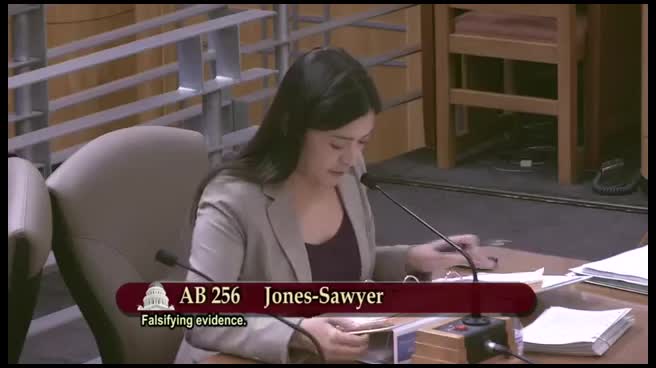 5MIN
Senate Standing Committee on Appropriations
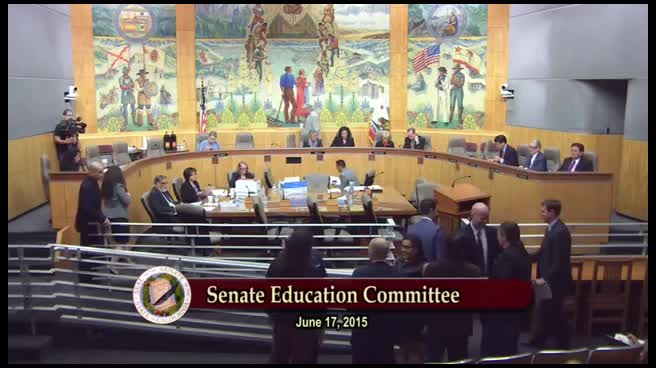 4MIN
Senate Standing Committee on Education
 6MIN
Assembly Floor
 2MIN
Assembly Standing Committee on Appropriations
Bill Author









