AB 970: Labor Commissioner: enforcement of employee claims.
- Session Year: 2015-2016
- House: Assembly
- Latest Version Date: 2015-10-11
(1)Existing law authorizes the Labor Commissioner to investigate and enforce statutes and orders of the Industrial Welfare Commission that, among other things, specify the requirements for the payment of wages by employers. Existing law provides for criminal and civil penalties for violations of statutes and orders of the commission regarding payment of wages.
This bill would, in addition, authorize the Labor Commissioner to investigate and, upon a request from the local entity, to enforce local laws regarding overtime hours or minimum wage provisions and to issue citations and penalties for violations, except when the local entity has already issued a citation for the same violation. The bill would prohibit a local entity from issuing a citation to the employer if the Labor Commissioner has already issued a citation to that employer for the same violation. This bill also would make related conforming changes. By expanding the definition of a crime, this bill would create a state-mandated local program.
(2)Existing law requires an employer to indemnify his or her employees for all that the employee necessarily expends or loses in direct consequence of the discharge of the employees duties or as a result of obeying the employers directions. Existing law provides an aggrieved employee with a private right of action to recover these expenditures.
This bill would, additionally, authorize the Labor Commissioner to enforce these provisions by issuing citations and penalties to employers for violations of this requirement, as specified.
The California Constitution requires the state to reimburse local agencies and school districts for certain costs mandated by the state. Statutory provisions establish procedures for making that reimbursement.
This bill would provide that no reimbursement is required by this act for a specified reason.
(1)Existing law authorizes the Labor Commissioner to investigate and enforce statutes and orders of the Industrial Welfare Commission that, among other things, specify the requirements for the payment of wages by employers. Existing law provides for criminal and civil penalties for violations of statutes and orders of the commission regarding payment of wages.
This bill would, in addition, authorize the Labor Commissioner to investigate and, upon a request from the local entity, to enforce local laws regarding overtime hours or minimum wage provisions and to issue citations and penalties for violations, except when the local entity with jurisdiction in the matter has already issued a citation or has initiated an investigation against an employer for the same violation. The bill would prohibit a local entity from issuing a citation to the employer if the Labor Commissioner has already issued a citation to that employer for the same violation. This bill also would make related conforming changes. By expanding the definition of a crime, this bill would create a state-mandated local program.
(2)Existing law requires an employer to indemnify his or her employees for all that the employee necessarily expends or loses in direct consequence of the discharge of the employees duties or as a result of obeying the employers directions. Existing law provides an aggrieved employee with a private right of action to recover these expenditures.
This bill would, additionally, authorize the Labor Commissioner to enforce these provisions by issuing citations and penalties to employers for violations of this requirement, as specified.
The California Constitution requires the state to reimburse local agencies and school districts for certain costs mandated by the state. Statutory provisions establish procedures for making that reimbursement.
This bill would provide that no reimbursement is required by this act for a specified reason.
(1)Existing law authorizes the Labor Commissioner to investigate and enforce statutes and orders of the Industrial Welfare Commission that, among other things, specify the requirements for the payment of wages by employers. Existing law provides for criminal and civil penalties for violations of statutes and orders of the commission regarding payment of wages.
This bill would, in addition, authorize the Labor Commissioner to enforce local laws regarding overtime hours or minimum wage provisions and to issue citations and penalties for violations. violations, except when the local entity with jurisdiction in the matter has already issued a citation or has initiated an investigation against an employer for the same violation. This bill also would make related conforming changes. By expanding the definition of a crime, this bill would create a state-mandated local program.
(2)Existing law requires an employer to indemnify his or her employees for all that the employee necessarily expends or loses in direct consequence of the discharge of the employees duties or as a result of obeying the employers directions. Existing law provides an aggrieved employee with a private right of action to recover these expenditures.
This bill would, additionally, authorize the Labor Commissioner to enforce these provisions by issuing citations and penalties to employers for violations of this requirement, as specified.
The California Constitution requires the state to reimburse local agencies and school districts for certain costs mandated by the state. Statutory provisions establish procedures for making that reimbursement.
This bill would provide that no reimbursement is required by this act for a specified reason.
(1)Existing law authorizes the Labor Commissioner to investigate and enforce statutes and orders of the Industrial Welfare Commission that, among other things, specify the requirements for the payment of wages by employers. Existing law provides for criminal and civil penalties for violations of statutes and orders of the commission regarding payment of wages.
This bill would, in addition, authorize the Labor Commissioner to enforce local laws regarding overtime hours or minimum wage provisions and to issue citations and penalties for violations. This bill also would make related conforming changes. By expanding the definition of a crime, this bill would create a state-mandated local program.
(2)Existing law requires an employer to indemnify his or her employees for all that the employee necessarily expends or loses in direct consequence of the discharge of the employees duties or as a result of obeying the employers directions. Existing law provides an aggrieved employee with a private right of action to recover these expenditures.
This bill would, additionally, authorize the Labor Commissioner to enforce these provisions by issuing citations and penalties to employers for violations of this requirement, as specified.
The California Constitution requires the state to reimburse local agencies and school districts for certain costs mandated by the state. Statutory provisions establish procedures for making that reimbursement.
This bill would provide that no reimbursement is required by this act for a specified reason.
(a)Any employer or other person acting on behalf of an employer who violates, or causes to be violated, a section of this chapter or any provision regulating hours and days of work in any order of the Industrial Welfare Commission shall be subject to a civil penalty as follows:
(1)For any initial violation, fifty dollars ($50) for each underpaid employee for each pay period for which the employee was underpaid in addition to an amount sufficient to recover underpaid wages.
(2)For each subsequent violation, one hundred dollars ($100) for each underpaid employee for each pay period for which the employee was underpaid in addition to an amount sufficient to recover underpaid wages.
(3)Wages recovered pursuant to this section shall be paid to the affected employee.
(b)If upon inspection or investigation the Labor Commissioner determines that a person had paid or caused to be paid a wage for overtime work in violation of any provision of this chapter, any provision regulating hours and days of work in any order of the Industrial Welfare Commission, or any applicable local overtime law, the Labor Commissioner may issue a citation. The procedures for issuing, contesting, and enforcing judgments for citations or civil penalties issued by the Labor Commissioner for a violation of this chapter shall be the same as those set out in Section 1197.1.
(c)In a jurisdiction where a local entity has the legal authority to issue a citation against an employer for a violation of any applicable local overtime law, the Labor Commissioner, pursuant to a request from the local entity, may issue a citation against an employer for a violation of any applicable local overtime law if the local entity has not cited the employer for the same violation. If the Labor Commissioner issues a citation, the local entity shall not cite the employer for the same violation.
(d)The civil penalties provided for in this section are in addition to any other civil or criminal penalty provided by law.
(e)This section does not change the applicability of local overtime wage laws to any entity.
SEC. 2.Section 1197 of the Labor Code is amended to read:1197.The minimum wage for employees fixed by the commission or by any applicable state or local law, is the minimum wage to be paid to employees, and the payment of a lower wage than the minimum so fixed is unlawful. This section does not change the applicability of local minimum wage laws to any entity.
SEC. 3.Section 1197.1 of the Labor Code is amended to read:1197.1.(a)Any employer or other person acting either individually or as an officer, agent, or employee of another person, who pays or causes to be paid to any employee a wage less than the minimum fixed by an applicable state or local law, or by an order of the commission shall be subject to a civil penalty, restitution of wages, liquidated damages payable to the employee, and any applicable penalties imposed pursuant to Section 203 as follows:
(1)For any initial violation that is intentionally committed, one hundred dollars ($100) for each underpaid employee for each pay period for which the employee is underpaid. This amount shall be in addition to an amount sufficient to recover underpaid wages, liquidated damages pursuant to Section 1194.2, and any applicable penalties imposed pursuant to Section 203.
(2)For each subsequent violation for the same specific offense, two hundred fifty dollars ($250) for each underpaid employee for each pay period for which the employee is underpaid regardless of whether the initial violation is intentionally committed. This amount shall be in addition to an amount sufficient to recover underpaid wages, liquidated damages pursuant to Section 1194.2, and any applicable penalties imposed pursuant to Section 203.
(3)Wages, liquidated damages, and any applicable penalties imposed pursuant to Section 203, recovered pursuant to this section shall be paid to the affected employee.
(b)If, upon inspection or investigation, the Labor Commissioner determines that a person has paid or caused to be paid a wage less than the minimum under applicable law, the Labor Commissioner may issue a citation to the person in violation. The citation may be served personally or by registered mail in accordance with subdivision (c) of Section 11505 of the Government Code. Each citation shall be in writing and shall describe the nature of the violation, including reference to the statutory provision alleged to have been violated. The Labor Commissioner promptly shall take all appropriate action, in accordance with this section, to enforce the citation and to recover the civil penalty assessed, wages, liquidated damages, and any applicable penalties imposed pursuant to Section 203 in connection with the citation.
(c)(1)If a person desires to contest a citation or the proposed assessment of a civil penalty, wages, liquidated damages, and any applicable penalties imposed pursuant to Section 203 therefor, the person shall, within 15 business days after service of the citation, notify the office of the Labor Commissioner that appears on the citation of his or her request for an informal hearing. The Labor Commissioner or his or her deputy or agent shall, within 30 days, hold a hearing at the conclusion of which the citation or proposed assessment of a civil penalty, wages, liquidated damages, and any applicable penalties imposed pursuant to Section 203 shall be affirmed, modified, or dismissed.
(2)The decision of the Labor Commissioner shall consist of a notice of findings, findings, and an order, all of which shall be served on all parties to the hearing within 15 days after the hearing by regular first-class mail at the last known address of the party on file with the Labor Commissioner. Service shall be completed pursuant to Section 1013 of the Code of Civil Procedure. Any amount found due by the Labor Commissioner as a result of a hearing shall become due and payable 45 days after notice of the findings and written findings and order have been mailed to the party assessed. A writ of mandate may be taken from this finding to the appropriate superior court. The party shall pay any judgment and costs ultimately rendered by the court against the party for the assessment. The writ shall be taken within 45 days of service of the notice of findings, findings, and order thereon.
(d)A person to whom a citation has been issued shall, in lieu of contesting a citation pursuant to this section, transmit to the office of the Labor Commissioner designated on the citation the amount specified for the violation within 15 business days after issuance of the citation.
(e)When no petition objecting to a citation or the proposed assessment of a civil penalty, wages, liquidated damages, and any applicable penalties imposed pursuant to Section 203 is filed, a certified copy of the citation or proposed civil penalty, wages, liquidated damages, and any applicable penalties imposed pursuant to Section 203 may be filed by the Labor Commissioner in the office of the clerk of the superior court in any county in which the person assessed has or had a place of business. The clerk, immediately upon the filing, shall enter judgment for the state against the person assessed in the amount shown on the citation or proposed assessment of a civil penalty, wages, liquidated damages, and any applicable penalties imposed pursuant to Section 203.
(f)When findings and the order thereon are made affirming or modifying a citation or proposed assessment of a civil penalty, wages, liquidated damages, and any applicable penalties imposed pursuant to Section 203 after hearing, a certified copy of these findings and the order entered thereon may be entered by the Labor Commissioner in the office of the clerk of the superior court in any county in which the person assessed has property or in which the person assessed has or had a place of business. The clerk, immediately upon the filing, shall enter judgment for the state against the person assessed in the amount shown on the certified order.
(g)A judgment entered pursuant to this section shall bear the same rate of interest and shall have the same effect as other judgments and be given the same preference allowed by the law on other judgments rendered for claims for taxes. The clerk shall make no charge for the service provided by this section to be performed by him or her.
(h)In a jurisdiction where a local entity has the legal authority to issue a citation against an employer for a violation of any applicable local minimum wage law, the Labor Commissioner, pursuant to a request from the local entity, may issue a citation against an employer for a violation of any applicable local minimum wage law if the local entity has not cited the employer for the same violation. If the Labor Commissioner issues a citation, the local entity shall not cite the employer for the same violation.
(i)The civil penalties provided for in this section are in addition to any other penalty provided by law.
(j)This section shall not apply to any order of the commission relating to household occupations.
(k)This section does not change the applicability of local minimum wage laws to any entity.
SEC. 4.Section 2802 of the Labor Code is amended to read:2802.(a)An employer shall indemnify his or her employee for all necessary expenditures or losses incurred by the employee in direct consequence of the discharge of his or her duties, or of his or her obedience to the directions of the employer, even though unlawful, unless the employee, at the time of obeying the directions, believed them to be unlawful.
(b)All awards made by a court or by the Division of Labor Standards Enforcement for reimbursement of necessary expenditures under this section shall carry interest at the same rate as judgments in civil actions. Interest shall accrue from the date on which the employee incurred the necessary expenditure or loss.
(c)For purposes of this section, the term necessary expenditures or losses shall include all reasonable costs, including, but not limited to, attorneys fees incurred by the employee enforcing the rights granted by this section.
(d)In addition to recovery of penalties under this section in a court action or proceedings pursuant to Section 98, the commissioner may issue a citation against an employer or other person acting on behalf of the employer who violates reimbursement obligations for an amount determined to be due to an employee under this section. The procedures for issuing, contesting, and enforcing judgments for citations or civil penalties issued by the commissioner shall be the same as those set forth in Section 1197.1. Amounts recovered pursuant to this section shall be paid to the affected employee.
SEC. 5.No reimbursement is required by this act pursuant to Section 6 of Article XIIIB of the California Constitution because the only costs that may be incurred by a local agency or school district will be incurred because this act creates a new crime or infraction, eliminates a crime or infraction, or changes the penalty for a crime or infraction, within the meaning of Section 17556 of the Government Code, or changes the definition of a crime within the meaning of Section 6 of Article XIIIB of the California Constitution.
(a)Any employer or other person acting on behalf of an employer who violates, or causes to be violated, a section of this chapter or any provision regulating hours and days of work in any order of the Industrial Welfare Commission shall be subject to a civil penalty as follows:
(1)For any initial violation, fifty dollars ($50) for each underpaid employee for each pay period for which the employee was underpaid in addition to an amount sufficient to recover underpaid wages.
(2)For each subsequent violation, one hundred dollars ($100) for each underpaid employee for each pay period for which the employee was underpaid in addition to an amount sufficient to recover underpaid wages.
(3)Wages recovered pursuant to this section shall be paid to the affected employee.
(b)If upon inspection or investigation the Labor Commissioner determines that a person had paid or caused to be paid a wage for overtime work in violation of any provision of this chapter, any provision regulating hours and days of work in any order of the Industrial Welfare Commission, or any applicable local overtime law, the Labor Commissioner may issue a citation. The procedures for issuing, contesting, and enforcing judgments for citations or civil penalties issued by the Labor Commissioner for a violation of this chapter shall be the same as those set out in Section 1197.1.
(c)In a jurisdiction where a local entity has the legal authority to issue a citation against an employer for a violation of any applicable local overtime law, the Labor Commissioner, pursuant to a request from the local entity, may issue a citation against an employer for a violation of any applicable local overtime law if the local entity has not cited the employer for the same violation. If the Labor Commissioner issues a citation, the local entity shall not cite the employer for the same violation.
(d)The civil penalties provided for in this section are in addition to any other civil or criminal penalty provided by law.
(e)Nothing in this This section addresses does not change the applicability of local overtime wage laws to a state agency. to any entity.
SEC. 2.Section 1197 of the Labor Code is amended to read:1197.The minimum wage for employees fixed by the commission or by any applicable state or local law, is the minimum wage to be paid to employees, and the payment of a lower wage than the minimum so fixed is unlawful. Nothing in this This section addresses does not change the applicability of local minimum wage laws to a state agency. to any entity.
SEC. 3.Section 1197.1 of the Labor Code is amended to read:1197.1.(a)Any employer or other person acting either individually or as an officer, agent, or employee of another person, who pays or causes to be paid to any employee a wage less than the minimum fixed by an applicable state or local law, or by an order of the commission shall be subject to a civil penalty, restitution of wages, liquidated damages payable to the employee, and any applicable penalties imposed pursuant to Section 203 as follows:
(1)For any initial violation that is intentionally committed, one hundred dollars ($100) for each underpaid employee for each pay period for which the employee is underpaid. This amount shall be in addition to an amount sufficient to recover underpaid wages, liquidated damages pursuant to Section 1194.2, and any applicable penalties imposed pursuant to Section 203.
(2)For each subsequent violation for the same specific offense, two hundred fifty dollars ($250) for each underpaid employee for each pay period for which the employee is underpaid regardless of whether the initial violation is intentionally committed. This amount shall be in addition to an amount sufficient to recover underpaid wages, liquidated damages pursuant to Section 1194.2, and any applicable penalties imposed pursuant to Section 203.
(3)Wages, liquidated damages, and any applicable penalties imposed pursuant to Section 203, recovered pursuant to this section shall be paid to the affected employee.
(b)If, upon inspection or investigation, the Labor Commissioner determines that a person has paid or caused to be paid a wage less than the minimum under applicable law, the Labor Commissioner may issue a citation to the person in violation. The citation may be served personally or by registered mail in accordance with subdivision (c) of Section 11505 of the Government Code. Each citation shall be in writing and shall describe the nature of the violation, including reference to the statutory provision alleged to have been violated. The Labor Commissioner promptly shall take all appropriate action, in accordance with this section, to enforce the citation and to recover the civil penalty assessed, wages, liquidated damages, and any applicable penalties imposed pursuant to Section 203 in connection with the citation.
(c)(1)If a person desires to contest a citation or the proposed assessment of a civil penalty, wages, liquidated damages, and any applicable penalties imposed pursuant to Section 203 therefor, the person shall, within 15 business days after service of the citation, notify the office of the Labor Commissioner that appears on the citation of his or her request for an informal hearing. The Labor Commissioner or his or her deputy or agent shall, within 30 days, hold a hearing at the conclusion of which the citation or proposed assessment of a civil penalty, wages, liquidated damages, and any applicable penalties imposed pursuant to Section 203 shall be affirmed, modified, or dismissed.
(2)The decision of the Labor Commissioner shall consist of a notice of findings, findings, and an order, all of which shall be served on all parties to the hearing within 15 days after the hearing by regular first-class mail at the last known address of the party on file with the Labor Commissioner. Service shall be completed pursuant to Section 1013 of the Code of Civil Procedure. Any amount found due by the Labor Commissioner as a result of a hearing shall become due and payable 45 days after notice of the findings and written findings and order have been mailed to the party assessed. A writ of mandate may be taken from this finding to the appropriate superior court. The party shall pay any judgment and costs ultimately rendered by the court against the party for the assessment. The writ shall be taken within 45 days of service of the notice of findings, findings, and order thereon.
(d)A person to whom a citation has been issued shall, in lieu of contesting a citation pursuant to this section, transmit to the office of the Labor Commissioner designated on the citation the amount specified for the violation within 15 business days after issuance of the citation.
(e)When no petition objecting to a citation or the proposed assessment of a civil penalty, wages, liquidated damages, and any applicable penalties imposed pursuant to Section 203 is filed, a certified copy of the citation or proposed civil penalty, wages, liquidated damages, and any applicable penalties imposed pursuant to Section 203 may be filed by the Labor Commissioner in the office of the clerk of the superior court in any county in which the person assessed has or had a place of business. The clerk, immediately upon the filing, shall enter judgment for the state against the person assessed in the amount shown on the citation or proposed assessment of a civil penalty, wages, liquidated damages, and any applicable penalties imposed pursuant to Section 203.
(f)When findings and the order thereon are made affirming or modifying a citation or proposed assessment of a civil penalty, wages, liquidated damages, and any applicable penalties imposed pursuant to Section 203 after hearing, a certified copy of these findings and the order entered thereon may be entered by the Labor Commissioner in the office of the clerk of the superior court in any county in which the person assessed has property or in which the person assessed has or had a place of business. The clerk, immediately upon the filing, shall enter judgment for the state against the person assessed in the amount shown on the certified order.
(g)A judgment entered pursuant to this section shall bear the same rate of interest and shall have the same effect as other judgments and be given the same preference allowed by the law on other judgments rendered for claims for taxes. The clerk shall make no charge for the service provided by this section to be performed by him or her.
(h)In a jurisdiction where a local entity has the legal authority to issue a citation against an employer for a violation of any applicable local minimum wage law, the Labor Commissioner, pursuant to a request from the local entity, may issue a citation against an employer for a violation of any applicable local minimum wage law if the local entity has not cited the employer for the same violation. If the Labor Commissioner issues a citation, the local entity shall not cite the employer for the same violation.
(i)The civil penalties provided for in this section are in addition to any other penalty provided by law.
(j)This section shall not apply to any order of the commission relating to household occupations.
(k)Nothing in this This section addresses does not change the applicability of local minimum wage laws to a state agency. to any entity.
SEC. 4.Section 2802 of the Labor Code is amended to read:2802.(a)An employer shall indemnify his or her employee for all necessary expenditures or losses incurred by the employee in direct consequence of the discharge of his or her duties, or of his or her obedience to the directions of the employer, even though unlawful, unless the employee, at the time of obeying the directions, believed them to be unlawful.
(b)All awards made by a court or by the Division of Labor Standards Enforcement for reimbursement of necessary expenditures under this section shall carry interest at the same rate as judgments in civil actions. Interest shall accrue from the date on which the employee incurred the necessary expenditure or loss.
(c)For purposes of this section, the term necessary expenditures or losses shall include all reasonable costs, including, but not limited to, attorneys fees incurred by the employee enforcing the rights granted by this section.
(d)In addition to recovery of penalties under this section in a court action or proceedings pursuant to Section 98, the commissioner may issue a citation against an employer or other person acting on behalf of the employer who violates reimbursement obligations for an amount determined to be due to an employee under this section. The procedures for issuing, contesting, and enforcing judgments for citations or civil penalties issued by the commissioner shall be the same as those set forth in Section 1197.1. Amounts recovered pursuant to this section shall be paid to the affected employee.
SEC. 5.No reimbursement is required by this act pursuant to Section 6 of Article XIIIB of the California Constitution because the only costs that may be incurred by a local agency or school district will be incurred because this act creates a new crime or infraction, eliminates a crime or infraction, or changes the penalty for a crime or infraction, within the meaning of Section 17556 of the Government Code, or changes the definition of a crime within the meaning of Section 6 of Article XIIIB of the California Constitution.
(a)Any employer or other person acting on behalf of an employer who violates, or causes to be violated, a section of this chapter or any provision regulating hours and days of work in any order of the Industrial Welfare Commission shall be subject to a civil penalty as follows:
(1)For any initial violation, fifty dollars ($50) for each underpaid employee for each pay period for which the employee was underpaid in addition to an amount sufficient to recover underpaid wages.
(2)For each subsequent violation, one hundred dollars ($100) for each underpaid employee for each pay period for which the employee was underpaid in addition to an amount sufficient to recover underpaid wages.
(3)Wages recovered pursuant to this section shall be paid to the affected employee.
(b)If upon inspection or investigation the Labor Commissioner determines that a person had paid or caused to be paid a wage for overtime work in violation of any provision of this chapter, any provision regulating hours and days of work in any order of the Industrial Welfare Commission, or any applicable local overtime law, the Labor Commissioner may issue a citation. The procedures for issuing, contesting, and enforcing judgments for citations or civil penalties issued by the Labor Commissioner for a violation of this chapter shall be the same as those set out in Section 1197.1.
(c)In a jurisdiction where a local entity has the legal authority to issue a citation against an employer for a violation of any applicable local overtime law, the Labor Commissioner, pursuant to a request from the local entity, may issue a citation against an employer for a violation of any applicable local overtime law if the local entity has not cited the employer for the same violation. If the Labor Commissioner issues a citation, the local entity shall not cite the employer for the same violation.
(d)The civil penalties provided for in this section are in addition to any other civil or criminal penalty provided by law.
(e)Nothing in this section addresses the applicability of local overtime wage laws to a state agency.
SEC. 2.Section 1197 of the Labor Code is amended to read:1197.The minimum wage for employees fixed by the commission or by any applicable state or local law, is the minimum wage to be paid to employees, and the payment of a less lower wage than the minimum so fixed is unlawful. Nothing in this section addresses the applicability of local minimum wage laws to a state agency.
SEC. 3.Section 1197.1 of the Labor Code is amended to read:1197.1.(a)Any employer or other person acting either individually or as an officer, agent, or employee of another person, who pays or causes to be paid to any employee a wage less than the minimum fixed by an applicable state or local law, or by an order of the commission shall be subject to a civil penalty, restitution of wages, liquidated damages payable to the employee, and any applicable penalties imposed pursuant to Section 203 as follows:
(1)For any initial violation that is intentionally committed, one hundred dollars ($100) for each underpaid employee for each pay period for which the employee is underpaid. This amount shall be in addition to an amount sufficient to recover underpaid wages, liquidated damages pursuant to Section 1194.2, and any applicable penalties imposed pursuant to Section 203.
(2)For each subsequent violation for the same specific offense, two hundred fifty dollars ($250) for each underpaid employee for each pay period for which the employee is underpaid regardless of whether the initial violation is intentionally committed. This amount shall be in addition to an amount sufficient to recover underpaid wages, liquidated damages pursuant to Section 1194.2, and any applicable penalties imposed pursuant to Section 203.
(3)Wages, liquidated damages, and any applicable penalties imposed pursuant to Section 203, recovered pursuant to this section shall be paid to the affected employee.
(b)If, upon inspection or investigation, the Labor Commissioner determines that a person has paid or caused to be paid a wage less than the minimum under applicable law, the Labor Commissioner may issue a citation to the person in violation. The citation may be served personally or by registered mail in accordance with subdivision (c) of Section 11505 of the Government Code. Each citation shall be in writing and shall describe the nature of the violation, including reference to the statutory provision alleged to have been violated. The Labor Commissioner promptly shall take all appropriate action, in accordance with this section, to enforce the citation and to recover the civil penalty assessed, wages, liquidated damages, and any applicable penalties imposed pursuant to Section 203 in connection with the citation.
(c)(1)If a person desires to contest a citation or the proposed assessment of a civil penalty, wages, liquidated damages, and any applicable penalties imposed pursuant to Section 203 therefor, the person shall, within 15 business days after service of the citation, notify the office of the Labor Commissioner that appears on the citation of his or her request for an informal hearing. The Labor Commissioner or his or her deputy or agent shall, within 30 days, hold a hearing at the conclusion of which the citation or proposed assessment of a civil penalty, wages, liquidated damages, and any applicable penalties imposed pursuant to Section 203 shall be affirmed, modified, or dismissed.
(2)The decision of the Labor Commissioner shall consist of a notice of findings, findings, and an order, all of which shall be served on all parties to the hearing within 15 days after the hearing by regular first-class mail at the last known address of the party on file with the Labor Commissioner. Service shall be completed pursuant to Section 1013 of the Code of Civil Procedure. Any amount found due by the Labor Commissioner as a result of a hearing shall become due and payable 45 days after notice of the findings and written findings and order have been mailed to the party assessed. A writ of mandate may be taken from this finding to the appropriate superior court. The party shall pay any judgment and costs ultimately rendered by the court against the party for the assessment. The writ shall be taken within 45 days of service of the notice of findings, findings, and order thereon.
(d)A person to whom a citation has been issued shall, in lieu of contesting a citation pursuant to this section, transmit to the office of the Labor Commissioner designated on the citation the amount specified for the violation within 15 business days after issuance of the citation.
(e)When no petition objecting to a citation or the proposed assessment of a civil penalty, wages, liquidated damages, and any applicable penalties imposed pursuant to Section 203 is filed, a certified copy of the citation or proposed civil penalty, wages, liquidated damages, and any applicable penalties imposed pursuant to Section 203 may be filed by the Labor Commissioner in the office of the clerk of the superior court in any county in which the person assessed has or had a place of business. The clerk, immediately upon the filing, shall enter judgment for the state against the person assessed in the amount shown on the citation or proposed assessment of a civil penalty, wages, liquidated damages, and any applicable penalties imposed pursuant to Section 203.
(f)When findings and the order thereon are made affirming or modifying a citation or proposed assessment of a civil penalty, wages, liquidated damages, and any applicable penalties imposed pursuant to Section 203 after hearing, a certified copy of these findings and the order entered thereon may be entered by the Labor Commissioner in the office of the clerk of the superior court in any county in which the person assessed has property or in which the person assessed has or had a place of business. The clerk, immediately upon the filing, shall enter judgment for the state against the person assessed in the amount shown on the certified order.
(g)A judgment entered pursuant to this section shall bear the same rate of interest and shall have the same effect as other judgments and be given the same preference allowed by the law on other judgments rendered for claims for taxes. The clerk shall make no charge for the service provided by this section to be performed by him or her.
(h)In a jurisdiction where a local entity has the legal authority to issue a citation against an employer for a violation of any applicable local minimum wage law, the Labor Commissioner, pursuant to a request from the local entity, may issue a citation against an employer for a violation of any applicable local minimum wage law if the local entity has not cited the employer for the same violation. If the Labor Commissioner issues a citation, the local entity shall not cite the employer for the same violation.
(i)The civil penalties provided for in this section are in addition to any other penalty provided by law.
(j)This section shall not apply to any order of the commission relating to household occupations.
(k)Nothing in this section addresses the applicability of local minimum wage laws to a state agency.
SEC. 4.Section 2802 of the Labor Code is amended to read:2802.(a)An employer shall indemnify his or her employee for all necessary expenditures or losses incurred by the employee in direct consequence of the discharge of his or her duties, or of his or her obedience to the directions of the employer, even though unlawful, unless the employee, at the time of obeying the directions, believed them to be unlawful.
(b)All awards made by a court or by the Division of Labor Standards Enforcement for reimbursement of necessary expenditures under this section shall carry interest at the same rate as judgments in civil actions. Interest shall accrue from the date on which the employee incurred the necessary expenditure or loss.
(c)For purposes of this section, the term necessary expenditures or losses shall include all reasonable costs, including, but not limited to, attorneys fees incurred by the employee enforcing the rights granted by this section.
(d)In addition to recovery of penalties under this section in a court action or proceedings pursuant to Section 98, the commissioner may issue a citation against an employer or other person acting on behalf of the employer who violates reimbursement obligations for an amount determined to be due to an employee under this section. The procedures for issuing, contesting, and enforcing judgments for citations or civil penalties issued by the commissioner shall be the same as those set forth in Section 1197.1. Amounts recovered pursuant to this section shall be paid to the affected employee.
SEC. 5.No reimbursement is required by this act pursuant to Section 6 of Article XIIIB of the California Constitution because the only costs that may be incurred by a local agency or school district will be incurred because this act creates a new crime or infraction, eliminates a crime or infraction, or changes the penalty for a crime or infraction, within the meaning of Section 17556 of the Government Code, or changes the definition of a crime within the meaning of Section 6 of Article XIIIB of the California Constitution.
(a)Any employer or other person acting on behalf of an employer who violates, or causes to be violated, a section of this chapter or any provision regulating hours and days of work in any order of the Industrial Welfare Commission shall be subject to a civil penalty as follows:
(1)For any initial violation, fifty dollars ($50) for each underpaid employee for each pay period for which the employee was underpaid in addition to an amount sufficient to recover underpaid wages.
(2)For each subsequent violation, one hundred dollars ($100) for each underpaid employee for each pay period for which the employee was underpaid in addition to an amount sufficient to recover underpaid wages.
(3)Wages recovered pursuant to this section shall be paid to the affected employee.
(b)If upon inspection or investigation the Labor Commissioner determines that a person had paid or caused to be paid a wage for overtime work in violation of any provision of this chapter, any provision regulating hours and days of work in any order of the Industrial Welfare Commission, or any applicable local overtime law, the Labor Commissioner may issue a citation. The procedures for issuing, contesting, and enforcing judgments for citations or civil penalties issued by the Labor Commissioner for a violation of this chapter shall be the same as those set out in Section 1197.1.
(c)The Labor Commissioner shall not In a jurisdiction where a local entity has the legal authority to issue a citation against an employer for a violation of any applicable local overtime law, the Labor Commissioner, pursuant to a request from the local entity, may issue a citation against an employer for a violation of any applicable local overtime law if the local entity with jurisdiction in the matter has not cited or has initiated an investigation against the employer for the same violation. If the Labor Commissioner issues a citation, the local entity shall not cite the employer for the same violation.
(d)The civil penalties provided for in this section are in addition to any other civil or criminal penalty provided by law.
SEC. 2.Section 1197 of the Labor Code is amended to read:1197.The minimum wage for employees fixed by the commission or by any applicable state or local law, is the minimum wage to be paid to employees, and the payment of a less wage than the minimum so fixed is unlawful.
SEC. 3.Section 1197.1 of the Labor Code is amended to read:1197.1.(a)Any employer or other person acting either individually or as an officer, agent, or employee of another person, who pays or causes to be paid to any employee a wage less than the minimum fixed by an applicable state or local law, or by an order of the commission shall be subject to a civil penalty, restitution of wages, liquidated damages payable to the employee, and any applicable penalties imposed pursuant to Section 203 as follows:
(1)For any initial violation that is intentionally committed, one hundred dollars ($100) for each underpaid employee for each pay period for which the employee is underpaid. This amount shall be in addition to an amount sufficient to recover underpaid wages, liquidated damages pursuant to Section 1194.2, and any applicable penalties imposed pursuant to Section 203.
(2)For each subsequent violation for the same specific offense, two hundred fifty dollars ($250) for each underpaid employee for each pay period for which the employee is underpaid regardless of whether the initial violation is intentionally committed. This amount shall be in addition to an amount sufficient to recover underpaid wages, liquidated damages pursuant to Section 1194.2, and any applicable penalties imposed pursuant to Section 203.
(3)Wages, liquidated damages, and any applicable penalties imposed pursuant to Section 203, recovered pursuant to this section shall be paid to the affected employee.
(b)If, upon inspection or investigation, the Labor Commissioner determines that a person has paid or caused to be paid a wage less than the minimum under applicable law, the Labor Commissioner may issue a citation to the person in violation. The citation may be served personally or by registered mail in accordance with subdivision (c) of Section 11505 of the Government Code. Each citation shall be in writing and shall describe the nature of the violation, including reference to the statutory provision alleged to have been violated. The Labor Commissioner promptly shall take all appropriate action, in accordance with this section, to enforce the citation and to recover the civil penalty assessed, wages, liquidated damages, and any applicable penalties imposed pursuant to Section 203 in connection with the citation.
(c)(1)If a person desires to contest a citation or the proposed assessment of a civil penalty, wages, liquidated damages, and any applicable penalties imposed pursuant to Section 203 therefor, the person shall, within 15 business days after service of the citation, notify the office of the Labor Commissioner that appears on the citation of his or her request for an informal hearing. The Labor Commissioner or his or her deputy or agent shall, within 30 days, hold a hearing at the conclusion of which the citation or proposed assessment of a civil penalty, wages, liquidated damages, and any applicable penalties imposed pursuant to Section 203 shall be affirmed, modified, or dismissed.
(2)The decision of the Labor Commissioner shall consist of a notice of findings, findings, and an order, all of which shall be served on all parties to the hearing within 15 days after the hearing by regular first-class mail at the last known address of the party on file with the Labor Commissioner. Service shall be completed pursuant to Section 1013 of the Code of Civil Procedure. Any amount found due by the Labor Commissioner as a result of a hearing shall become due and payable 45 days after notice of the findings and written findings and order have been mailed to the party assessed. A writ of mandate may be taken from this finding to the appropriate superior court. The party shall pay any judgment and costs ultimately rendered by the court against the party for the assessment. The writ shall be taken within 45 days of service of the notice of findings, findings, and order thereon.
(d)A person to whom a citation has been issued shall, in lieu of contesting a citation pursuant to this section, transmit to the office of the Labor Commissioner designated on the citation the amount specified for the violation within 15 business days after issuance of the citation.
(e)When no petition objecting to a citation or the proposed assessment of a civil penalty, wages, liquidated damages, and any applicable penalties imposed pursuant to Section 203 is filed, a certified copy of the citation or proposed civil penalty, wages, liquidated damages, and any applicable penalties imposed pursuant to Section 203 may be filed by the Labor Commissioner in the office of the clerk of the superior court in any county in which the person assessed has or had a place of business. The clerk, immediately upon the filing, shall enter judgment for the state against the person assessed in the amount shown on the citation or proposed assessment of a civil penalty, wages, liquidated damages, and any applicable penalties imposed pursuant to Section 203.
(f)When findings and the order thereon are made affirming or modifying a citation or proposed assessment of a civil penalty, wages, liquidated damages, and any applicable penalties imposed pursuant to Section 203 after hearing, a certified copy of these findings and the order entered thereon may be entered by the Labor Commissioner in the office of the clerk of the superior court in any county in which the person assessed has property or in which the person assessed has or had a place of business. The clerk, immediately upon the filing, shall enter judgment for the state against the person assessed in the amount shown on the certified order.
(g)A judgment entered pursuant to this section shall bear the same rate of interest and shall have the same effect as other judgments and be given the same preference allowed by the law on other judgments rendered for claims for taxes. The clerk shall make no charge for the service provided by this section to be performed by him or her.
(h)The Labor Commissioner shall not In a jurisdiction where a local entity has the legal authority to issue a citation against an employer for a violation of any applicable local minimum wage law, the Labor Commissioner, pursuant to a request from the local entity, may issue a citation against an employer for a violation of any applicable local minimum wage law if the local entity with jurisdiction in the matter has not cited or has initiated an investigation against the employer for the same violation. If the Labor Commissioner issues a citation, the local entity shall not cite the employer for the same violation.
(i)The civil penalties provided for in this section are in addition to any other penalty provided by law.
(j)This section shall not apply to any order of the commission relating to household occupations.
SEC. 4.Section 2802 of the Labor Code is amended to read:2802.(a)An employer shall indemnify his or her employee for all necessary expenditures or losses incurred by the employee in direct consequence of the discharge of his or her duties, or of his or her obedience to the directions of the employer, even though unlawful, unless the employee, at the time of obeying the directions, believed them to be unlawful.
(b)All awards made by a court or by the Division of Labor Standards Enforcement for reimbursement of necessary expenditures under this section shall carry interest at the same rate as judgments in civil actions. Interest shall accrue from the date on which the employee incurred the necessary expenditure or loss.
(c)For purposes of this section, the term necessary expenditures or losses shall include all reasonable costs, including, but not limited to, attorneys fees incurred by the employee enforcing the rights granted by this section.
(d)In addition to recovery of penalties under this section in a court action or proceedings pursuant to Section 98, the commissioner may issue a citation against an employer or other person acting on behalf of the employer who violates reimbursement obligations for an amount determined to be due to an employee under this section. The procedures for issuing, contesting, and enforcing judgments for citations or civil penalties issued by the commissioner shall be the same as those set forth in Section 1197.1. Amounts recovered pursuant to this section shall be paid to the affected employee.
SEC. 5.No reimbursement is required by this act pursuant to Section 6 of Article XIIIB of the California Constitution because the only costs that may be incurred by a local agency or school district will be incurred because this act creates a new crime or infraction, eliminates a crime or infraction, or changes the penalty for a crime or infraction, within the meaning of Section 17556 of the Government Code, or changes the definition of a crime within the meaning of Section 6 of Article XIIIB of the California Constitution.
(a)Any employer or other person acting on behalf of an employer who violates, or causes to be violated, a section of this chapter or any provision regulating hours and days of work in any order of the Industrial Welfare Commission shall be subject to a civil penalty as follows:
(1)For any initial violation, fifty dollars ($50) for each underpaid employee for each pay period for which the employee was underpaid in addition to an amount sufficient to recover underpaid wages.
(2)For each subsequent violation, one hundred dollars ($100) for each underpaid employee for each pay period for which the employee was underpaid in addition to an amount sufficient to recover underpaid wages.
(3)Wages recovered pursuant to this section shall be paid to the affected employee.
(b)If upon inspection or investigation the Labor Commissioner determines that a person had paid or caused to be paid a wage for overtime work in violation of any provision of this chapter, any provision regulating hours and days of work in any order of the Industrial Welfare Commission, or any applicable local overtime law, the Labor Commissioner may issue a citation. The procedures for issuing, contesting, and enforcing judgments for citations or civil penalties issued by the Labor Commissioner for a violation of this chapter shall be the same as those set out in Section 1197.1.
(c)The Labor Commissioner shall not issue a citation against an employer for a violation of any applicable local overtime law if the local entity with jurisdiction in the matter has cited or has initiated an investigation against the employer for the same violation.
(c)
(d)The civil penalties provided for in this section are in addition to any other civil or criminal penalty provided by law.
SEC. 2.Section 1197 of the Labor Code is amended to read:1197.The minimum wage for employees fixed by the commission or by any applicable state or local law, is the minimum wage to be paid to employees, and the payment of a less wage than the minimum so fixed is unlawful.
SEC. 3.Section 1197.1 of the Labor Code is amended to read:1197.1.(a)Any employer or other person acting either individually or as an officer, agent, or employee of another person, who pays or causes to be paid to any employee a wage less than the minimum fixed by an applicable state or local law, or by an order of the commission shall be subject to a civil penalty, restitution of wages, liquidated damages payable to the employee, and any applicable penalties imposed pursuant to Section 203 as follows:
(1)For any initial violation that is intentionally committed, one hundred dollars ($100) for each underpaid employee for each pay period for which the employee is underpaid. This amount shall be in addition to an amount sufficient to recover underpaid wages, liquidated damages pursuant to Section 1194.2, and any applicable penalties imposed pursuant to Section 203.
(2)For each subsequent violation for the same specific offense, two hundred fifty dollars ($250) for each underpaid employee for each pay period for which the employee is underpaid regardless of whether the initial violation is intentionally committed. This amount shall be in addition to an amount sufficient to recover underpaid wages, liquidated damages pursuant to Section 1194.2, and any applicable penalties imposed pursuant to Section 203.
(3)Wages, liquidated damages, and any applicable penalties imposed pursuant to Section 203, recovered pursuant to this section shall be paid to the affected employee.
(b)If, upon inspection or investigation, the Labor Commissioner determines that a person has paid or caused to be paid a wage less than the minimum under applicable law, the Labor Commissioner may issue a citation to the person in violation. The citation may be served personally or by registered mail in accordance with subdivision (c) of Section 11505 of the Government Code. Each citation shall be in writing and shall describe the nature of the violation, including reference to the statutory provision alleged to have been violated. The Labor Commissioner promptly shall take all appropriate action, in accordance with this section, to enforce the citation and to recover the civil penalty assessed, wages, liquidated damages, and any applicable penalties imposed pursuant to Section 203 in connection with the citation.
(c)(1)If a person desires to contest a citation or the proposed assessment of a civil penalty, wages, liquidated damages, and any applicable penalties imposed pursuant to Section 203 therefor, the person shall, within 15 business days after service of the citation, notify the office of the Labor Commissioner that appears on the citation of his or her request for an informal hearing. The Labor Commissioner or his or her deputy or agent shall, within 30 days, hold a hearing at the conclusion of which the citation or proposed assessment of a civil penalty, wages, liquidated damages, and any applicable penalties imposed pursuant to Section 203 shall be affirmed, modified, or dismissed.
(2)The decision of the Labor Commissioner shall consist of a notice of findings, findings, and an order, all of which shall be served on all parties to the hearing within 15 days after the hearing by regular first-class mail at the last known address of the party on file with the Labor Commissioner. Service shall be completed pursuant to Section 1013 of the Code of Civil Procedure. Any amount found due by the Labor Commissioner as a result of a hearing shall become due and payable 45 days after notice of the findings and written findings and order have been mailed to the party assessed. A writ of mandate may be taken from this finding to the appropriate superior court. The party shall pay any judgment and costs ultimately rendered by the court against the party for the assessment. The writ shall be taken within 45 days of service of the notice of findings, findings, and order thereon.
(d)A person to whom a citation has been issued shall, in lieu of contesting a citation pursuant to this section, transmit to the office of the Labor Commissioner designated on the citation the amount specified for the violation within 15 business days after issuance of the citation.
(e)When no petition objecting to a citation or the proposed assessment of a civil penalty, wages, liquidated damages, and any applicable penalties imposed pursuant to Section 203 is filed, a certified copy of the citation or proposed civil penalty, wages, liquidated damages, and any applicable penalties imposed pursuant to Section 203 may be filed by the Labor Commissioner in the office of the clerk of the superior court in any county in which the person assessed has or had a place of business. The clerk, immediately upon the filing, shall enter judgment for the state against the person assessed in the amount shown on the citation or proposed assessment of a civil penalty, wages, liquidated damages, and any applicable penalties imposed pursuant to Section 203.
(f)When findings and the order thereon are made affirming or modifying a citation or proposed assessment of a civil penalty, wages, liquidated damages, and any applicable penalties imposed pursuant to Section 203 after hearing, a certified copy of these findings and the order entered thereon may be entered by the Labor Commissioner in the office of the clerk of the superior court in any county in which the person assessed has property or in which the person assessed has or had a place of business. The clerk, immediately upon the filing, shall enter judgment for the state against the person assessed in the amount shown on the certified order.
(g)A judgment entered pursuant to this section shall bear the same rate of interest and shall have the same effect as other judgments and be given the same preference allowed by the law on other judgments rendered for claims for taxes. The clerk shall make no charge for the service provided by this section to be performed by him or her.
(h)The Labor Commissioner shall not issue a citation against an employer for a violation of any applicable local minimum wage law if the local entity with jurisdiction in the matter has cited or has initiated an investigation against the employer for the same violation.
(h)
(i)The civil penalties provided for in this section are in addition to any other penalty provided by law.
(i)
(j)This section shall not apply to any order of the commission relating to household occupations.
SEC. 4.Section 2802 of the Labor Code is amended to read:2802.(a)An employer shall indemnify his or her employee for all necessary expenditures or losses incurred by the employee in direct consequence of the discharge of his or her duties, or of his or her obedience to the directions of the employer, even though unlawful, unless the employee, at the time of obeying the directions, believed them to be unlawful.
(b)All awards made by a court or by the Division of Labor Standards Enforcement for reimbursement of necessary expenditures under this section shall carry interest at the same rate as judgments in civil actions. Interest shall accrue from the date on which the employee incurred the necessary expenditure or loss.
(c)For purposes of this section, the term necessary expenditures or losses shall include all reasonable costs, including, but not limited to, attorneys fees incurred by the employee enforcing the rights granted by this section.
(d)In addition to recovery of penalties under this section in a court action or proceedings pursuant to Section 98, the commissioner may issue a citation against an employer or other person acting on behalf of the employer who violates reimbursement obligations for an amount determined to be due to an employee under this section. The procedures for issuing, contesting, and enforcing judgments for citations or civil penalties issued by the commissioner shall be the same as those set forth in Section 1197.1. Amounts recovered pursuant to this section shall be paid to the affected employee.
SEC. 5.No reimbursement is required by this act pursuant to Section 6 of Article XIIIB of the California Constitution because the only costs that may be incurred by a local agency or school district will be incurred because this act creates a new crime or infraction, eliminates a crime or infraction, or changes the penalty for a crime or infraction, within the meaning of Section 17556 of the Government Code, or changes the definition of a crime within the meaning of Section 6 of Article XIIIB of the California Constitution.
(a)Any employer or other person acting on behalf of an employer who violates, or causes to be violated, a section of this chapter or any provision regulating hours and days of work in any order of the Industrial Welfare Commission shall be subject to a civil penalty as follows:
(1)For any initial violation, fifty dollars ($50) for each underpaid employee for each pay period for which the employee was underpaid in addition to an amount sufficient to recover underpaid wages.
(2)For each subsequent violation, one hundred dollars ($100) for each underpaid employee for each pay period for which the employee was underpaid in addition to an amount sufficient to recover underpaid wages.
(3)Wages recovered pursuant to this section shall be paid to the affected employee.
(b)If upon inspection or investigation the Labor Commissioner determines that a person had paid or caused to be paid a wage for overtime work in violation of any provision of this chapter, or any provision regulating hours and days of work in any order of the Industrial Welfare Commission, or any applicable local overtime law, the Labor Commissioner may issue a citation. The procedures for issuing, contesting, and enforcing judgments for citations or civil penalties issued by the Labor Commissioner for a violation of this chapter shall be the same as those set out in Section 1197.1.
(c)The civil penalties provided for in this section are in addition to any other civil or criminal penalty provided by law.
SEC. 2.Section 1197 of the Labor Code is amended to read:1197.The minimum wage for employees fixed by the commission or by any applicable state or local law, is the minimum wage to be paid to employees, and the payment of a less wage than the minimum so fixed is unlawful.
SEC. 3.Section 1197.1 of the Labor Code is amended to read:1197.1.(a)Any employer or other person acting either individually or as an officer, agent, or employee of another person, who pays or causes to be paid to any employee a wage less than the minimum fixed by an applicable state or local law, or by an order of the commission shall be subject to a civil penalty, restitution of wages, liquidated damages payable to the employee, and any applicable penalties imposed pursuant to Section 203 as follows:
(1)For any initial violation that is intentionally committed, one hundred dollars ($100) for each underpaid employee for each pay period for which the employee is underpaid. This amount shall be in addition to an amount sufficient to recover underpaid wages, liquidated damages pursuant to Section 1194.2, and any applicable penalties imposed pursuant to Section 203.
(2)For each subsequent violation for the same specific offense, two hundred fifty dollars ($250) for each underpaid employee for each pay period for which the employee is underpaid regardless of whether the initial violation is intentionally committed. This amount shall be in addition to an amount sufficient to recover underpaid wages, liquidated damages pursuant to Section 1194.2, and any applicable penalties imposed pursuant to Section 203.
(3)Wages, liquidated damages, and any applicable penalties imposed pursuant to Section 203, recovered pursuant to this section shall be paid to the affected employee.
(b)If, upon inspection or investigation, the Labor Commissioner determines that a person has paid or caused to be paid a wage less than the minimum, minimum under applicable law, the Labor Commissioner may issue a citation to the person in violation. The citation may be served personally or by registered mail in accordance with subdivision (c) of Section 11505 of the Government Code. Each citation shall be in writing and shall describe the nature of the violation, including reference to the statutory provision alleged to have been violated. The Labor Commissioner promptly shall take all appropriate action, in accordance with this section, to enforce the citation and to recover the civil penalty assessed, wages, liquidated damages, and any applicable penalties imposed pursuant to Section 203 in connection with the citation.
(c)(1)If a person desires to contest a citation or the proposed assessment of a civil penalty, wages, liquidated damages, and any applicable penalties imposed pursuant to Section 203 therefor, the person shall, within 15 business days after service of the citation, notify the office of the Labor Commissioner that appears on the citation of his or her request for an informal hearing. The Labor Commissioner or his or her deputy or agent shall, within 30 days, hold a hearing at the conclusion of which the citation or proposed assessment of a civil penalty, wages, liquidated damages, and any applicable penalties imposed pursuant to Section 203 shall be affirmed, modified, or dismissed.
(2)The decision of the Labor Commissioner shall consist of a notice of findings, findings, and an order, all of which shall be served on all parties to the hearing within 15 days after the hearing by regular first-class mail at the last known address of the party on file with the Labor Commissioner. Service shall be completed pursuant to Section 1013 of the Code of Civil Procedure. Any amount found due by the Labor Commissioner as a result of a hearing shall become due and payable 45 days after notice of the findings and written findings and order have been mailed to the party assessed. A writ of mandate may be taken from this finding to the appropriate superior court. The party shall pay any judgment and costs ultimately rendered by the court against the party for the assessment. The writ shall be taken within 45 days of service of the notice of findings, findings, and order thereon.
(d)A person to whom a citation has been issued shall, in lieu of contesting a citation pursuant to this section, transmit to the office of the Labor Commissioner designated on the citation the amount specified for the violation within 15 business days after issuance of the citation.
(e)When no petition objecting to a citation or the proposed assessment of a civil penalty, wages, liquidated damages, and any applicable penalties imposed pursuant to Section 203 is filed, a certified copy of the citation or proposed civil penalty, wages, liquidated damages, and any applicable penalties imposed pursuant to Section 203 may be filed by the Labor Commissioner in the office of the clerk of the superior court in any county in which the person assessed has or had a place of business. The clerk, immediately upon the filing, shall enter judgment for the state against the person assessed in the amount shown on the citation or proposed assessment of a civil penalty, wages, liquidated damages, and any applicable penalties imposed pursuant to Section 203.
(f)When findings and the order thereon are made affirming or modifying a citation or proposed assessment of a civil penalty, wages, liquidated damages, and any applicable penalties imposed pursuant to Section 203 after hearing, a certified copy of these findings and the order entered thereon may be entered by the Labor Commissioner in the office of the clerk of the superior court in any county in which the person assessed has property or in which the person assessed has or had a place of business. The clerk, immediately upon the filing, shall enter judgment for the state against the person assessed in the amount shown on the certified order.
(g)A judgment entered pursuant to this section shall bear the same rate of interest and shall have the same effect as other judgments and be given the same preference allowed by the law on other judgments rendered for claims for taxes. The clerk shall make no charge for the service provided by this section to be performed by him or her.
(h)The civil penalties provided for in this section are in addition to any other penalty provided by law.
(i)This section shall not apply to any order of the commission relating to household occupations.
SEC. 4.Section 2802 of the Labor Code is amended to read:2802.(a)An employer shall indemnify his or her employee for all necessary expenditures or losses incurred by the employee in direct consequence of the discharge of his or her duties, or of his or her obedience to the directions of the employer, even though unlawful, unless the employee, at the time of obeying the directions, believed them to be unlawful.
(b)All awards made by a court or by the Division of Labor Standards Enforcement for reimbursement of necessary expenditures under this section shall carry interest at the same rate as judgments in civil actions. Interest shall accrue from the date on which the employee incurred the necessary expenditure or loss.
(c)For purposes of this section, the term necessary expenditures or losses shall include all reasonable costs, including, but not limited to, attorneys fees incurred by the employee enforcing the rights granted by this section.
(d)In addition to recovery of penalties under this section in a court action or proceedings pursuant to Section 98, the commissioner may issue a citation against an employer or other person acting on behalf of the employer who violates reimbursement obligations for an amount determined to be due to an employee under this section. The procedures for issuing, contesting, and enforcing judgments for citations or civil penalties issued by the commissioner shall be the same as those set forth in Section 1197.1. Amounts recovered pursuant to this section shall be paid to the affected employee.
SEC. 5.No reimbursement is required by this act pursuant to Section 6 of Article XIIIB of the California Constitution because the only costs that may be incurred by a local agency or school district will be incurred because this act creates a new crime or infraction, eliminates a crime or infraction, or changes the penalty for a crime or infraction, within the meaning of Section 17556 of the Government Code, or changes the definition of a crime within the meaning of Section 6 of Article XIIIB of the California Constitution.
|
Date
|
Status
|
|---|---|
| Jun 23, 2015 | Read second time. Ordered to third reading. |
| Oct 11, 2015 | Chaptered by Secretary of State - Chapter 783, Statutes of 2015. |
| Oct 11, 2015 | Approved by the Governor. |
| Sep 15, 2015 | Enrolled and presented to the Governor at 4 p.m. |
| Sep 2, 2015 | Senate amendments concurred in. To Engrossing and Enrolling. (Ayes 49. Noes 29.). |
| Sep 2, 2015 | Senate amendments concurred in. To Engrossing and Enrolling. (Ayes 49. Noes 29. Page 2773.). |
| Aug 31, 2015 | Read third time. Passed. Ordered to the Assembly. (Ayes 25. Noes 14. Page 2300.). |
| Aug 31, 2015 | Read third time. Passed. Ordered to the Assembly. |
| Aug 31, 2015 | In Assembly. Concurrence in Senate amendments pending. May be considered on or after September 2 pursuant to Assembly Rule 77. |
| Aug 25, 2015 | Read second time. Ordered to third reading. |
| Aug 24, 2015 | Read third time and amended. Ordered to second reading. |
| Jul 15, 2015 | Read second time. Ordered to third reading. |
| Jul 14, 2015 | Read third time and amended. Ordered to second reading. |
| Jun 30, 2015 | Read second time. Ordered to third reading. |
| Jun 29, 2015 | Read third time and amended. Ordered to second reading. |
| Feb 26, 2015 | Read first time. To print. |
| Jun 22, 2015 | From committee: Do pass. (Ayes 5. Noes 1.) (June 22). |
| Jun 10, 2015 | From committee: Do pass and re-refer to Com. on APPR. (Ayes 3. Noes 1.) (June 10). Re-referred to Com. on APPR. |
| May 28, 2015 | Referred to Com. on L. & I.R. |
| May 18, 2015 | Read third time. Passed. Ordered to the Senate. (Ayes 48. Noes 26. Page 1475.) |
| May 18, 2015 | Read third time. Passed. Ordered to the Senate. |
| May 18, 2015 | In Senate. Read first time. To Com. on RLS. for assignment. |
| Apr 23, 2015 | Read second time. Ordered to third reading. |
| Apr 22, 2015 | From committee: Do pass. (Ayes 11. Noes 5.) (April 22). |
| Apr 16, 2015 | Re-referred to Com. on APPR. |
| Apr 15, 2015 | From committee chair, with author's amendments: Amend, and re-refer to Com. on APPR. Read second time and amended. |
| Apr 9, 2015 | From committee: Do pass and re-refer to Com. on APPR. (Ayes 5. Noes 2.) (April 8). Re-referred to Com. on APPR. |
| Mar 16, 2015 | Referred to Com. on L. & E. |
| Feb 27, 2015 | From printer. May be heard in committee March 29. |
|
Date
|
Description
|
Location
|
Votes
|
|
|---|---|---|---|---|
| Sep 2, 2015 | AB 970 NAZARIAN Concurrence in Senate Amendments | Assembly Floor |
Passed |
|
| Aug 31, 2015 | Assembly 3rd Reading AB970 Nazarian By Leyva | Senate Floor |
Passed |
|
| Jun 22, 2015 | Do pass | Senate Standing Committee on Appropriations |
Passed |
|
| Jun 10, 2015 | Do pass, but first be re-referred to the Committee on [Appropriations] | Senate Standing Committee on Labor and Industrial Relations |
Passed |
|
| May 18, 2015 | AB 970 NAZARIAN Assembly Third Reading | Assembly Floor |
Passed |
|
| Apr 22, 2015 | Do pass. | Assembly Standing Committee on Appropriations |
Passed |
|
| Apr 8, 2015 | Do pass and be re-referred to the Committee on [Appropriations] | Assembly Standing Committee on Labor and Employment |
Passed |
This list shows positions taken on this bill by organizations on the date displayed, which is linked to the original source.
Positions by individuals are not included.
|
Organization
|
Position
|
Date
|
|---|---|---|
| Asian Americans Advancing Justice-Asian Law Caucus | ** Support | Apr 8, 2015 |
| Associated Builders And Contractors Of California | ** Against | Aug 31, 2015 |
| Association General Contractors | ** Against | Aug 31, 2015 |
| Bet Tzedek Legal Services | ** Support | Aug 31, 2015 |
| California Ambulance Association | ** Against | Aug 31, 2015 |
| California Association For Health Services At Home | ** Against | Aug 31, 2015 |
| California Association of Electrical Workers | * Indeterminate | Apr 8, 2015 |
| California Automotive Wholesalers' Association | ** Against | Aug 31, 2015 |
| California Bankers Association | ** Against | Aug 31, 2015 |
| California Chamber Of Commerce | ** Against | Aug 31, 2015 |
| California Employment Law Council | ** Against | Aug 31, 2015 |
| California Employment Lawyers Association | * Indeterminate | Apr 8, 2015 |
| California Employment Lawyers Association | * Support | Apr 8, 2015 |
| California Grocers Association | ** Against | Aug 31, 2015 |
| California Immigrant Policy Center | ** Support | Aug 31, 2015 |
| California Labor Federation, Afl-Cio | ** Support | Aug 31, 2015 |
| California Manufacturers And Technology Association | ** Against | Aug 31, 2015 |
| California New Car Dealership Association | ** Against | Aug 31, 2015 |
| California Nurses Association | ** Support | Aug 31, 2015 |
| California Pool & Spa Association | ** Against | Aug 31, 2015 |
| California Restaurant Association | ** Against | Aug 31, 2015 |
| California Rural Legal Assistance Foundation, Inc. | ** Support | Aug 31, 2015 |
| California Teamsters Public Affairs Council | ** Support | Aug 31, 2015 |
| California Trucking Association | ** Against | Aug 31, 2015 |
| CAWA - Representing the Automotive Parts Industry | ** Against | Jun 10, 2015 |
| Chamber of Commerce Mountain View | ** Against | Aug 31, 2015 |
| Consumer Attorneys Of California | ** Support | Aug 31, 2015 |
| El Centro Chamber of Commerce & Visitors Bureau | ** Against | Aug 31, 2015 |
| Fullerton Chamber of Commerce | ** Against | Aug 31, 2015 |
| Greater Conejo Valley Chamber of Commerce | ** Against | Aug 31, 2015 |
| Greater Fresno Area Chamber of Commerce | ** Against | Aug 31, 2015 |
| Lake Tahoe South Shore Chamber of Commerce | ** Against | Aug 31, 2015 |
| Maintenance Cooperation Trust Fund | ** Support | Aug 31, 2015 |
| National Federation Of Independent Business | ** Against | Aug 31, 2015 |
| Palm Desert Area Chamber of Commerce | ** Against | Aug 31, 2015 |
| Redondo Beach Chamber of Commerce and Visitors Bureau | ** Against | Aug 31, 2015 |
| Roots of Change | ** Support | Aug 31, 2015 |
| San Jose Silicon Valley Chamber of Commerce | ** Against | Aug 31, 2015 |
| Santa Clara Chamber of Commerce & Convention-Visitor's Bureau | ** Against | Aug 31, 2015 |
| Simi Valley Chamber of Commerce | ** Against | Aug 31, 2015 |
| South Bay Association of Chambers of Commerce | ** Against | Aug 31, 2015 |
| State Building & Construction Trades Council Of California | * Indeterminate | Apr 8, 2015 |
| Wage Justice Center | ** Support | Apr 8, 2015 |
| Western Electrical Contractors Association | ** Against | Aug 31, 2015 |
AB 970
Page 2
CONCURRENCE IN SENATE AMENDMENTS
AB 970
(Nazarian)
As Amended August 24, 2015
Majority vote
ASSEMBLY: |
48-26 |
(May 18, 2015) |
SENATE: |
25-14 |
(August 31, 2015) |
Original Committee Reference: L. & E.
SUMMARY: Makes a number of changes related to the citation authority of the Labor Commissioner.
The Senate amendments:
Specify that in a jurisdiction where a local entity has the legal authority to issue a citation against an employer for a violation of any applicable local minimum wage or overtime law, the Labor Commissioner, pursuant to a request from the local entity, may issue a citation against the employer.
Specify that if the Labor Commissioner issues a citation, the local entity shall not cite the employer for the same violation.
Provide that this does not change the applicability of local minimum wage laws to any entity.
FISCAL EFFECT: According to the Senate Appropriations Committee, the Department of Industrial Relations would incur ongoing costs of $125,000 (special funds) to implement the provisions of this bill.
COMMENTS: This bill is sponsored by the California Rural Legal Assistance Foundation (CRLAF). They note that Governor Brown recently has signed several new statutes into law that addressed some of the weaknesses or gaps in the Labor Commissioner's legal authority to effectively enforce wage laws in a field investigation or to fully adjudicate wage related claims in a Berman administrative wage claim hearing.
They argue that this bill closes two other important gaps in the Labor Commissioner's field enforcement authority and will strengthen her efforts to stop wage theft.
Existing Labor Code Section 2802 requires an employer to indemnify his or her employees for "all necessary expenditures or losses" incurred by the employee in direct consequence of his or her duties. A very common violation of this provision involves illegal charges for tools or equipment necessary to perform the job, but which are deducted from workers' pay notwithstanding.
CRLAF states that, under current law, workers may file a civil action to recover these illegal deductions from their pay, or may seek to recover them in a Berman wage claim hearing. However, the Labor Commissioner cannot issue a citation for this violation, even if she determines upon inspection or investigation that the charges are illegal and have not been repaid to the worker. This bill would specifically authorize the Labor Commissioner to issue citations in such situations.
Existing law provides a legal framework for enforcement of state minimum wage and overtime wage requirements. However, the sponsor states that as more local California authorities have enacted higher minimum wage laws applicable to the lowest paid workers in their jurisdictions, the Labor Commissioner has been processing claims to enforce these higher wage requirements in Berman wage hearings. They argue that this bill recognizes this evolution and authorizes the Labor Commissioner to also issue a citation when she determines an employer has violated an applicable local wage law.
CRLAF contends that this bill is likely to make a significant contribution to encouraging compliance with higher local living wage laws by giving the Labor Commissioner the discretion to cite when she finds violations of these laws. Employers would be subject to the same citation amounts, and have the same appeal rights, as would apply if they were cited for a violation of state minimum wage or overtime requirements. As noted above, the Labor Commissioner has been enforcing these local wage requirements in her wage claim hearings; this bill simply extends authority to cite when violations are encountered in the field.
A coalition of employer groups, including the California Chamber of Commerce, opposes this measure, stating that it will subject employers to layers of penalties and enforcement efforts, increased annual assessments, and a limited opportunity to appeal.
In addition, opponents state that under the citation process, an employer challenging a citation can request an administrative hearing to contest the citation and may only challenge the administrative ruling pursuant to a writ of mandate. A writ of mandate limits the superior court's scope of review of the evidence and arguments the court may consider for purposes of challenging the administrative ruling. Comparatively, in wage claim adjudication through the Labor Commissioner's office, an employer has a right to a trial de novo to superior court if the employer wants to challenge an administrative ruling, which provides the court with unlimited review of the underlying complaint as well as any new issues, evidence or arguments raised on appeal. Accordingly, to the extent the Labor Commissioner is resolving any local minimum wage violations through the wage claim process, that process provides a fairer opportunity for an employer to appeal a ruling it believes was issued in error rather than the citation process.
Analysis Prepared by: Ben Ebbink / L. & E. / (916) 319-2091 FN: 0001518
AB 970
Page 8
|
Office of Senate Floor Analyses (916) 651-1520 Fax: (916) 327-4478 |
THIRD READING
Bill No: AB 970
Amended: 8/24/15 in Senate
SENATE LABOR & IND. REL. COMMITTEE: 3-1, 6/10/15
AYES: Mendoza, Leno, Mitchell
NOES: Stone
NO VOTE RECORDED: Jackson
SENATE APPROPRIATIONS COMMITTEE: 5-1, 6/22/15
AYES: Lara, Beall, Hill, Leyva, Mendoza
NOES: Bates
NO VOTE RECORDED: Nielsen
ASSEMBLY FLOOR: 48-26, 5/18/15 - See last page for vote
SUBJECT: Labor Commissioner: enforcement of employee claims
SOURCE: California Rural Legal Assistance Foundation
DIGEST: This bill authorizes the Labor Commissioner to issue a citation to enforce local minimum wage and overtime laws, as well as against an employer or person acting on behalf of an employer for violations of existing law related to reimbursements for expenses.
Senate Floor Amendments of 8/24/15 specify that the amended provisions and sections of the bill do not change the applicability of local minimum wage or local overtime laws to any entity.
Senate Floor Amendments of 7/14/15 specify that nothing in the amended sections of the bill address the applicability of local overtime wage laws to a state agency.
Senate
Floor Amendments of 6/29/15 (1) clarify that the Labor
Commissioner, pursuant to a request from the local entity, may issue
a citation to an employer for the violation of a local overtime or
minimum wage ordinance if the local entity has not cited the employer
for the violation, and (2) clarify that if the Labor Commissioner
issues a citation the local entity shall not cite the employer for
the same violation.
Existing law:
Authorizes the Labor Commissioner to investigate and enforce statutes and orders of the Industrial Welfare Commission that, among other things, specify the requirements for the payment of wages by employers.
Provides the Labor Commissioner with the authority to investigate employee complaints and allows the Labor Commissioner to hold a hearing in any action to recover wages, including orders of the Industrial Welfare Commission. The Labor Commissioner may require an award in the amount of the wages owed, plus interest. (Labor Code §§ 98 & 98.2)
Sets civil penalties for any employer or other person acting on behalf of an employer who violates, or causes to be violated, a section of this chapter or any provision regulating hours and days of work in any order of the Industrial Welfare Commission ranging from $50 upon first violation for each underpaid employee for each pay period to $100 for subsequent violations. (Labor Code §558)
States that if upon inspection or investigation the Labor Commissioner determines that a person had paid or caused to be paid a wage for overtime work in violation of provisions relating to hours and days of work in any order of the Industrial Welfare Commission, the Labor Commissioner may issue a citation. (Labor Code §558)
States that the minimum wage for employees fixed by the Industrial Welfare Commission is the minimum wage to be paid to employees, and the payment of a less wage than the minimum is unlawful. (Labor Code §1197)
Provides that any employer who pays an employee a wage less than the minimum fixed by the Industrial Welfare Commission shall be subject to a civil penalty, restitution of wages, liquidated damages payable to the employee, and any applicable penalties. (Labor Code §1197.1)
States that if upon inspection or investigation the Labor Commissioner determines that a person had paid or caused to be paid a wage less than the minimum wage the Labor Commissioner may issue a citation. (Labor Code §1197.1)
States that an employer shall indemnify (or compensate) his or her employee for all necessary expenditures or losses incurred by the employee in direct consequence of the discharge of his or her duties, or of his or her obedience to the directions of the employer, even though unlawful, unless the employee at the time of obeying the directions believed them to be harmful. (Labor Code §2802)
This bill:
Specifies that where a local entity has the legal authority to issue a citation against an employer for a violation of any applicable local overtime or minimum wage law, the Labor Commissioner, pursuant to a request from the local entity, may issue a citation against an employer for a violation of a local overtime or minimum wage law of the local entity has not cited the employer for the same violation.
States that if the Labor Commissioner issues a citation for a violation of any applicable local overtime or minimum wage law, the local entity shall not cite the employer for the same violation.
Authorizes the Labor Commissioner, if it is determined that a person has paid or caused to paid a wage less than the minimum under applicable law, to issue a citation to the person in violation.
Authorizes the Labor Commissioner to issue a citation against an employer or person acting on behalf of an employer for violations of existing law related to reimbursement obligations for expenses.
Adds that the minimum wage for employees includes any applicable state or local law and that this does not change the applicability of local minimum wage laws to any entity.
Specifies that nothing in the amended sections of the bill address the applicability of local minimum wage or overtime wage laws to any entity.
Comments
Need for this bill? Currently, California workers can file a civil action or may file an administrative complaint with the Labor Commissioner to recover unpaid wages. As was discussed above, an employee who waged a successful civil action to receive unpaid minimum wage balances would be entitled to recover the full amount of the unpaid balance of wages, including interest, reasonable attorney’s fees and costs of suit. Liquidated damages could then also be awarded. After AB 240 (Bonilla, Chapter 272, Statutes of 2011) was enacted, a worker can also be awarded liquidated damages through the Labor Commissioner hearing process.
A worker may also recover owed wages as a result from an inspection from the Division of Labor Standards and Enforcement’s (DLSE) Bureau of Field Enforcement (BOFE). BOFE conducts inspections of industries to ensure compliance with the Labor Code. While BOFE does not pursue individual wage claims, at times the investigation results in an audit of the employer’s time and payroll records. If this occurs, the DLSE will attempt to collect wages for all employees found to have been underpaid. However, the DLSE cannot collect liquidated damages, requiring the worker to file an administrative complaint with DLSE to collect liquidated damages.
Labor Code Sections 558, 1197, and 1197.1, provide a legal framework for enforcement of state minimum wage and overtime wage requirements. Local municipalities, such as San Francisco, Oakland, Berkeley, and San Jose, have implemented local living wage laws.
According to the author, existing law does not specify that recovery of local minimum wage or overtime wage requirement owed to a worker can be included in the Labor Commissioner/BOFE minimum wage citation process and states that higher minimum wage and indemnity charges can only be recovered by a worker either in a civil action or via a Berman hearing.
The author notes that this bill allows the Labor Commissioner to issue a citation for employer violations of illegal tool or equipment deductions and encourages compliance with higher local living wage laws by giving the Labor Commissioner the discretion to cite when finding violations of those laws. The author argues that AB 970 is intended to eliminate significant gaps in the Labor Commissioner’s citation authority and promotes government efficiency in labor law enforcement, strengthens the deterrent effect of its enforcement efforts, and increases the probability of workers recovering unpaid wages. The author also notes that AB 970 ensures that workers have the same monetary relief whether they pursue their claims administratively, by way of the courts or via the Labor Commissioner’s existing authority.
FISCAL EFFECT: Appropriation: No Fiscal Com.: Yes Local: Yes
According to
the Senate Appropriations Committee, the Department of Industrial
Relations indicates that it will incur annual ongoing costs of
$125,000 (special funds) to implement the provisions of this bill.
California Rural Legal Assistance Foundation (source)
Bet Tzedek Legal Services
California Immigrant Policy Center
California Labor Federation, AFL-CIO
California Nurses Association
California Teamsters Public Affairs Council
Consumer Attorneys of California
Maintenance Cooperation Trust Fund
Roots of Change
The Wage Justice Center
OPPOSITION: (Verified 8/26/15)
Associated Builders and Contractors of California
Association General Contractors
California Ambulance Association
California Association for Health Services at Home
California Automotive Wholesalers’ Association
California Bankers Association
California Chamber of Commerce
California Employment Law Council
California Grocers Association
California Manufacturers and Technology Association
California New Car Dealership Association
California Pool & Spa Association
California Restaurant Association
California Trucking Association
Chamber of Commerce Mountain View
El Centro Chamber of Commerce & Visitors Bureau
Fullerton Chamber of Commerce
Greater Conejo Valley Chamber of Commerce
Greater Fresno Area Chamber of Commerce
Lake Tahoe South Shore Chamber of Commerce
National Federation of Independent Business
Palm Desert Area Chamber of Commerce
Redondo Beach Chamber of Commerce and Visitors Bureau
San Jose Silicon Valley Chamber of Commerce
Santa Clara Chamber of Commerce & Convention-Visitor’s Bureau
Santa Maria Valley Chamber of Commerce Visitor and Convention Bureau
Simi Valley Chamber of Commerce
South Bay Association of Chambers of Commerce
Western
Electrical Contractors Association
ARGUMENTS IN SUPPORT: According to proponents, existing Labor Code Section 2802 requires an employer to indemnify his or her employees for “all necessary expenditures or losses” incurred by the employee in direct consequence of his or her duties. Proponents note that a very common violation of this provision involves illegal charges for tools or equipment necessary to perform the job, but which are deducted from workers’ pay notwithstanding. Proponents note that under existing law, workers may file a civil action to recover these illegal deductions from their pay, or may seek to recover them in a Berman wage claim hearing. However, proponents argue that the Labor Commissioner cannot issue a citation for this violation, even if she determines upon inspection or investigation that the charges are illegal and have not been repaid to the worker – this bill specifically authorizes the Labor Commissioner to issue citations in such situations.
However, proponents state that as more local California authorities have enacted higher minimum wage laws applicable to the lowest paid workers in their jurisdictions, the Labor Commissioner has been processing claims to enforce these higher wage requirements in Berman wage hearings. They argue that this bill recognizes this evolution and authorizes the Labor Commissioner to also issue a citation when she determines an employer has violated an applicable local wage law.
Lastly, proponents contend that this bill is likely to make a significant contribution to encouraging compliance with higher local living wage laws by giving the Labor Commissioner the discretion to cite when she finds violations of these laws. Proponents argue that employers would be subject to the same citation amounts, and have the same appeal rights, as would apply if they were cited for a violation of state minimum wage or overtime requirements. Proponents note that the Labor Commissioner has been enforcing these local wage requirements in her wage claim hearings; this bill simply extends authority to cite when violations are encountered in the field.
ARGUMENTS IN OPPOSITION: A coalition of employer groups, including the California Chamber of Commerce, opposes this bill, stating that it will subject employers to layers of penalties and enforcement efforts, increased annual assessments, and a limited opportunity to appeal.
First, opponents note that beginning in 2009 the costs of state labor law enforcement were primarily transferred from the General Fund to private sector employers through annual assessments on workers’ compensation premiums, which are based upon the employers’ payroll. Accordingly, any increase in the Labor Commissioner’s jurisdiction will likely result in an increase to all employers’ annual assessments. Employers statewide should not have to pay for these increased assessments for the enforcement of local laws where they are not located.
Lastly, opponents state that under the citation process, an employer challenging a citation can request an administrative hearing to contest the citation and may only challenge the administrative ruling pursuant to a writ of mandate. A writ of mandate limits the superior court’s scope of review of the evidence and arguments the court may consider for purposes of challenging the administrative ruling. Comparatively, in wage claim adjudication through the Labor Commissioner’s office, an employer has a right to a trial de novo to superior court if the employer wants to challenge an administrative ruling, which provides the court with unlimited review of the underlying complaint as well as any new issues, evidence or arguments raised on appeal. Accordingly, to the extent the Labor Commissioner is resolving any local minimum wage violations through the wage claim process, that process provides a fairer opportunity for an employer to appeal a ruling it believes was issued in error rather than the citation process.
ASSEMBLY FLOOR: 48-26, 5/18/15
AYES: Alejo, Bloom, Bonilla, Bonta, Burke, Calderon, Campos, Chau, Chiu, Chu, Cooley, Cooper, Dababneh, Daly, Dodd, Eggman, Frazier, Cristina Garcia, Eduardo Garcia, Gatto, Gipson, Gomez, Gonzalez, Gordon, Roger Hernández, Holden, Irwin, Jones-Sawyer, Levine, Lopez, Low, McCarty, Medina, Mullin, Nazarian, O'Donnell, Quirk, Rendon, Ridley-Thomas, Salas, Santiago, Mark Stone, Thurmond, Ting, Weber, Williams, Wood, Atkins
NOES: Achadjian, Travis Allen, Baker, Bigelow, Brough, Chang, Chávez, Dahle, Beth Gaines, Gallagher, Gray, Grove, Hadley, Harper, Jones, Lackey, Linder, Maienschein, Mayes, Obernolte, Olsen, Patterson, Steinorth, Wagner, Waldron, Wilk
NO VOTE RECORDED: Brown, Kim, Mathis, Melendez, Perea, Rodriguez
Prepared by: Deanna Ping / L. & I.R. / (916) 651-1556
8/26/15 17:02:20
**** END ****
AB 970
Page 8
|
Office of Senate Floor Analyses (916) 651-1520 Fax: (916) 327-4478 |
THIRD READING
Bill No: AB 970
Amended: 7/14/15 in Senate
SENATE LABOR & IND. REL. COMMITTEE: 3-1, 6/10/15
AYES: Mendoza, Leno, Mitchell
NOES: Stone
NO VOTE RECORDED: Jackson
SENATE APPROPRIATIONS COMMITTEE: 5-1, 6/22/15
AYES: Lara, Beall, Hill, Leyva, Mendoza
NOES: Bates
NO VOTE RECORDED: Nielsen
ASSEMBLY FLOOR: 48-26, 5/18/15 - See last page for vote
SUBJECT: Labor Commissioner: enforcement of employee claims
SOURCE: California Rural Legal Assistance Foundation
DIGEST: This bill authorizes the Labor Commissioner to issue a citation to enforce local minimum wage and overtime laws, as well as against an employer or person acting on behalf of an employer for violations of existing law related to reimbursements for expenses.
Senate Floor Amendments of 7/14/15 specify that nothing in the amended sections of the bill address the applicability of local overtime wage laws to a state agency.
Senate Floor Amendments of 6/29/15 (1) clarify that the Labor Commissioner, pursuant to a request from the local entity, may issue a citation to an employer for the violation of a local overtime or minimum wage ordinance if the local entity has not cited the employer for the violation, and (2) clarify that if the Labor Commissioner issues a citation the local entity shall not cite the employer for the same violation.
Existing law:
Authorizes the Labor Commissioner to investigate and enforce statutes and orders of the Industrial Welfare Commission that, among other things, specify the requirements for the payment of wages by employers.
Provides the Labor Commissioner with the authority to investigate employee complaints and allows the Labor Commissioner to hold a hearing in any action to recover wages, including orders of the Industrial Welfare Commission. The Labor Commissioner may require an award in the amount of the wages owed, plus interest. (Labor Code §§ 98 & 98.2)
Sets civil penalties for any employer or other person acting on behalf of an employer who violates, or causes to be violated, a section of this chapter or any provision regulating hours and days of work in any order of the Industrial Welfare Commission ranging from $50 upon first violation for each underpaid employee for each pay period to $100 for subsequent violations. (Labor Code §558)
States that if upon inspection or investigation the Labor Commissioner determines that a person had paid or caused to be paid a wage for overtime work in violation of provisions relating to hours and days of work in any order of the Industrial Welfare Commission, the Labor Commissioner may issue a citation. (Labor Code §558)
States that the minimum wage for employees fixed by the Industrial Welfare Commission is the minimum wage to be paid to employees, and the payment of a less wage than the minimum is unlawful. (Labor Code §1197)
Provides that any employer who pays an employee a wage less than the minimum fixed by the Industrial Welfare Commission shall be subject to a civil penalty, restitution of wages, liquidated damages payable to the employee, and any applicable penalties. (Labor Code §1197.1)
States that if upon inspection or investigation the Labor Commissioner determines that a person had paid or caused to be paid a wage less than the minimum wage the Labor Commissioner may issue a citation. (Labor Code §1197.1)
States that an employer shall indemnify (or compensate) his or her employee for all necessary expenditures or losses incurred by the employee in direct consequence of the discharge of his or her duties, or of his or her obedience to the directions of the employer, even though unlawful, unless the employee at the time of obeying the directions believed them to be harmful. (Labor Code §2802)
This bill:
Specifies that where a local entity has the legal authority to issue a citation against an employer for a violation of any applicable local overtime or minimum wage law, the Labor Commissioner, pursuant to a request from the local entity, may issue a citation against an employer for a violation of a local overtime or minimum wage law of the local entity has not cited the employer for the same violation.
Provides that, if upon inspection or investigation the Labor Commissioner determines that a person has violated overtime or minimum wage requirements of existing law, including “any applicable local overtime or minimum wage law,” the Labor Commissioner may issue a citation.
States that the Labor Commissioner shall not issue a citation against an employer for a violation of any applicable local overtime or minimum wage law if the local entity with jurisdiction in the matter has cited the employer for the violation.
Authorizes the Labor Commissioner to issue a citation against an employer or person acting on behalf of an employer for violations of existing law related to reimbursement obligations for expenses.
Specifies that nothing in the amended sections of the bill address the applicability of local overtime wage laws to a state agency.
Comments
Need for this bill? Currently, California workers can file a civil action or may file an administrative complaint with the Labor Commissioner to recover unpaid wages. As was discussed above, an employee who waged a successful civil action to receive unpaid minimum wage balances would be entitled to recover the full amount of the unpaid balance of wages, including interest, reasonable attorney’s fees and costs of suit. Liquidated damages could then also be awarded. After AB 240 (Bonilla, Chapter 272, Statutes of 2011) was enacted, a worker can also be awarded liquidated damages through the Labor Commissioner hearing process.
A worker may also recover owed wages as a result from an inspection from the Division of Labor Standards and Enforcement’s (DLSE) Bureau of Field Enforcement (BOFE). BOFE conducts inspections of industries to ensure compliance with the Labor Code. While BOFE does not pursue individual wage claims, at times the investigation results in an audit of the employer’s time and payroll records. If this occurs, the DLSE will attempt to collect wages for all employees found to have been underpaid. However, the DLSE cannot collect liquidated damages, requiring the worker to file an administrative complaint with DLSE to collect liquidated damages.
Labor Code Sections 558, 1197, and 1197.1, provide a legal framework for enforcement of state minimum wage and overtime wage requirements. Local municipalities, such as San Francisco, Oakland, Berkeley, and San Jose, have implemented local living wage laws.
According to the author, existing law does not specify that recovery of local minimum wage or overtime wage requirement owed to a worker can be included in the Labor Commissioner/BOFE minimum wage citation process and states that higher minimum wage and indemnity charges can only be recovered by a worker either in a civil action or via a Berman hearing.
The author notes that this bill allows the Labor Commissioner to issue a citation for employer violations of illegal tool or equipment deductions and encourages compliance with higher local living wage laws by giving the Labor Commissioner the discretion to cite when finding violations of those laws. The author argues that AB 970 is intended to eliminate significant gaps in the Labor Commissioner’s citation authority and promotes government efficiency in labor law enforcement, strengthens the deterrent effect of its enforcement efforts, and increases the probability of workers recovering unpaid wages. The author also notes that AB 970 ensures that workers have the same monetary relief whether they pursue their claims administratively, by way of the courts or via the Labor Commissioner’s existing authority.
FISCAL EFFECT: Appropriation: No Fiscal Com.: Yes Local: Yes
According to the Senate Appropriations Committee, the Department of Industrial Relations indicates that it will incur annual ongoing costs of $125,000 (special funds) to implement the provisions of this bill.
California Rural Legal Assistance Foundation (source)
Bet Tzedek Legal Services
California Immigrant Policy Center
California Labor Federation, AFL-CIO
California Nurses Association
California Teamsters Public Affairs Council
Consumer Attorneys of California
Maintenance Cooperation Trust Fund
Roots of Change
The Wage Justice Center
OPPOSITION: (Verified 7/15/15)
Associated Builders and Contractors of California
Association General Contractors
California Ambulance Association
California Association for Health Services at Home
California Automotive Wholesalers’ Association
California Bankers Association
California Chamber of Commerce
California Employment Law Council
California Grocers Association
California Manufacturers and Technology Association
California New Car Dealership Association
California Pool & Spa Association
California Restaurant Association
California Trucking Association
Chamber of Commerce Mountain View
El Centro Chamber of Commerce & Visitors Bureau
Fullerton Chamber of Commerce
Greater Conejo Valley Chamber of Commerce
Greater Fresno Area Chamber of Commerce
Lake Tahoe South Shore Chamber of Commerce
National Federation of Independent Business
Palm Desert Area Chamber of Commerce
Redondo Beach Chamber of Commerce and Visitors Bureau
San Jose Silicon Valley Chamber of Commerce
Santa Clara Chamber of Commerce & Convention-Visitor’s Bureau
Santa Maria Valley Chamber of Commerce Visitor and Convention Bureau
Simi Valley Chamber of Commerce
South Bay Association of Chambers of Commerce
Western Electrical Contractors Association
ARGUMENTS IN SUPPORT: According to proponents, existing Labor Code Section 2802 requires an employer to indemnify his or her employees for “all necessary expenditures or losses” incurred by the employee in direct consequence of his or her duties. Proponents note that a very common violation of this provision involves illegal charges for tools or equipment necessary to perform the job, but which are deducted from workers’ pay notwithstanding. Proponents note that under existing law, workers may file a civil action to recover these illegal deductions from their pay, or may seek to recover them in a Berman wage claim hearing. However, proponents argue that the Labor Commissioner cannot issue a citation for this violation, even if she determines upon inspection or investigation that the charges are illegal and have not been repaid to the worker – this bill specifically authorizes the Labor Commissioner to issue citations in such situations.
However, proponents state that as more local California authorities have enacted higher minimum wage laws applicable to the lowest paid workers in their jurisdictions, the Labor Commissioner has been processing claims to enforce these higher wage requirements in Berman wage hearings. They argue that this bill recognizes this evolution and authorizes the Labor Commissioner to also issue a citation when she determines an employer has violated an applicable local wage law.
Lastly, proponents contend that this bill is likely to make a significant contribution to encouraging compliance with higher local living wage laws by giving the Labor Commissioner the discretion to cite when she finds violations of these laws. Proponents argue that employers would be subject to the same citation amounts, and have the same appeal rights, as would apply if they were cited for a violation of state minimum wage or overtime requirements. Proponents note that the Labor Commissioner has been enforcing these local wage requirements in her wage claim hearings; this bill simply extends authority to cite when violations are encountered in the field.
ARGUMENTS IN OPPOSITION: A coalition of employer groups, including the California Chamber of Commerce, opposes this bill, stating that it will subject employers to layers of penalties and enforcement efforts, increased annual assessments, and a limited opportunity to appeal.
First, opponents note that beginning in 2009 the costs of state labor law enforcement were primarily transferred from the General Fund to private sector employers through annual assessments on workers’ compensation premiums, which are based upon the employers’ payroll. Accordingly, any increase in the Labor Commissioner’s jurisdiction will likely result in an increase to all employers’ annual assessments. Employers statewide should not have to pay for these increased assessments for the enforcement of local laws where they are not located.
Lastly, opponents state that under the citation process, an employer challenging a citation can request an administrative hearing to contest the citation and may only challenge the administrative ruling pursuant to a writ of mandate. A writ of mandate limits the superior court’s scope of review of the evidence and arguments the court may consider for purposes of challenging the administrative ruling. Comparatively, in wage claim adjudication through the Labor Commissioner’s office, an employer has a right to a trial de novo to superior court if the employer wants to challenge an administrative ruling, which provides the court with unlimited review of the underlying complaint as well as any new issues, evidence or arguments raised on appeal. Accordingly, to the extent the Labor Commissioner is resolving any local minimum wage violations through the wage claim process, that process provides a fairer opportunity for an employer to appeal a ruling it believes was issued in error rather than the citation process.
ASSEMBLY FLOOR: 48-26, 5/18/15
AYES: Alejo, Bloom, Bonilla, Bonta, Burke, Calderon, Campos, Chau, Chiu, Chu, Cooley, Cooper, Dababneh, Daly, Dodd, Eggman, Frazier, Cristina Garcia, Eduardo Garcia, Gatto, Gipson, Gomez, Gonzalez, Gordon, Roger Hernández, Holden, Irwin, Jones-Sawyer, Levine, Lopez, Low, McCarty, Medina, Mullin, Nazarian, O'Donnell, Quirk, Rendon, Ridley-Thomas, Salas, Santiago, Mark Stone, Thurmond, Ting, Weber, Williams, Wood, Atkins
NOES: Achadjian, Travis Allen, Baker, Bigelow, Brough, Chang, Chávez, Dahle, Beth Gaines, Gallagher, Gray, Grove, Hadley, Harper, Jones, Lackey, Linder, Maienschein, Mayes, Obernolte, Olsen, Patterson, Steinorth, Wagner, Waldron, Wilk
NO VOTE RECORDED: Brown, Kim, Mathis, Melendez, Perea, Rodriguez
Prepared by: Deanna Ping / L. & I.R. / (916) 651-1556
7/15/15 17:52:24
AB 970
Page 8
|
Office of Senate Floor Analyses (916) 651-1520 Fax: (916) 327-4478 |
THIRD READING
Bill No: AB 970
Amended: 6/29/15 in Senate
SENATE LABOR & IND. REL. COMMITTEE: 3-1, 6/10/15
AYES: Mendoza, Leno, Mitchell
NOES: Stone
NO VOTE RECORDED: Jackson
SENATE APPROPRIATIONS COMMITTEE: 5-1, 6/22/15
AYES: Lara, Beall, Hill, Leyva, Mendoza
NOES: Bates
NO VOTE RECORDED: Nielsen
ASSEMBLY FLOOR: 48-26, 5/18/15 - See last page for vote
SUBJECT: Labor Commissioner: enforcement of employee claims
SOURCE: California Rural Legal Assistance Foundation
DIGEST: This bill authorizes the Labor Commissioner to issue a citation to enforce local minimum wage and overtime laws, as well as against an employer or person acting on behalf of an employer for violations of existing law related to reimbursements for expenses.
Senate Floor Amendments of 6/29/15 (1) clarify that the Labor Commissioner, pursuant to a request from the local entity, may issue a citation to an employer for the violation of a local overtime or minimum wage ordinance if the local entity has not cited the employer for the violation, and (2) clarify that if the Labor Commissioner issues a citation the local entity shall not cite the employer for the same violation.
Existing law:
Authorizes the Labor Commissioner to investigate and enforce statutes and orders of the Industrial Welfare Commission that, among other things, specify the requirements for the payment of wages by employers.
Provides the Labor Commissioner with the authority to investigate employee complaints and allows the Labor Commissioner to hold a hearing in any action to recover wages, including orders of the Industrial Welfare Commission. The Labor Commissioner may require an award in the amount of the wages owed, plus interest. (Labor Code §§ 98 & 98.2)
Sets civil penalties for any employer or other person acting on behalf of an employer who violates, or causes to be violated, a section of this chapter or any provision regulating hours and days of work in any order of the Industrial Welfare Commission ranging from $50 upon first violation for each underpaid employee for each pay period to $100 for subsequent violations. (Labor Code §558)
States that if upon inspection or investigation the Labor Commissioner determines that a person had paid or caused to be paid a wage for overtime work in violation of provisions relating to hours and days of work in any order of the Industrial Welfare Commission, the Labor Commissioner may issue a citation. (Labor Code §558)
States that the minimum wage for employees fixed by the Industrial Welfare Commission is the minimum wage to be paid to employees, and the payment of a less wage than the minimum is unlawful. (Labor Code §1197)
Provides that any employer who pays an employee a wage less than the minimum fixed by the Industrial Welfare Commission shall be subject to a civil penalty, restitution of wages, liquidated damages payable to the employee, and any applicable penalties. (Labor Code §1197.1)
States that if upon inspection or investigation the Labor Commissioner determines that a person had paid or caused to be paid a wage less than the minimum wage the Labor Commissioner may issue a citation. (Labor Code §1197.1)
States that an employer shall indemnify (or compensate) his or her employee for all necessary expenditures or losses incurred by the employee in direct consequence of the discharge of his or her duties, or of his or her obedience to the directions of the employer, even though unlawful, unless the employee at the time of obeying the directions believed them to be harmful. (Labor Code §2802)
This bill:
Specifies that where a local entity has the legal authority to issue a citation against an employer for a violation of any applicable local overtime or minimum wage law, the Labor Commissioner, pursuant to a request from the local entity, may issue a citation against an employer for a violation of a local overtime or minimum wage law of the local entity has not cited the employer for the same violation.
Provides that, if upon inspection or investigation the Labor Commissioner determines that a person has violated overtime or minimum wage requirements of existing law, including “any applicable local overtime or minimum wage law,” the Labor Commissioner may issue a citation.
States that the Labor Commissioner shall not issue a citation against an employer for a violation of any applicable local overtime or minimum wage law if the local entity with jurisdiction in the matter has cited the employer for the violation.
Authorizes the Labor Commissioner to issue a citation against an employer or person acting on behalf of an employer for violations of existing law related to reimbursement obligations for expenses.
Comments
Need for this bill? Currently, California workers can file a civil action or may file an administrative complaint with the Labor Commissioner to recover unpaid wages. As was discussed above, an employee who waged a successful civil action to receive unpaid minimum wage balances would be entitled to recover the full amount of the unpaid balance of wages, including interest, reasonable attorney’s fees and costs of suit. Liquidated damages could then also be awarded. After AB 240 (Bonilla, Chapter 272, Statutes of 2011) was enacted, a worker can also be awarded liquidated damages through the Labor Commissioner hearing process.
A worker may also recover owed wages as a result from an inspection from the Division of Labor Standards and Enforcement’s (DLSE) Bureau of Field Enforcement (BOFE). BOFE conducts inspections of industries to ensure compliance with the Labor Code. While BOFE does not pursue individual wage claims, at times the investigation results in an audit of the employer’s time and payroll records. If this occurs, the DLSE will attempt to collect wages for all employees found to have been underpaid. However, the DLSE cannot collect liquidated damages, requiring the worker to file an administrative complaint with DLSE to collect liquidated damages.
Labor Code Sections 558, 1197, and 1197.1, provide a legal framework for enforcement of state minimum wage and overtime wage requirements. Local municipalities, such as San Francisco, Oakland, Berkeley, and San Jose, have implemented local living wage laws.
According to the author, existing law does not specify that recovery of local minimum wage or overtime wage requirement owed to a worker can be included in the Labor Commissioner/ BOFE minimum wage citation process and states that higher minimum wage and indemnity charges can only be recovered by a worker either in a civil action or via a Berman hearing.
The author notes that this bill allows the Labor Commissioner to issue a citation for employer violations of illegal tool or equipment deductions and encourages compliance with higher local living wage laws by giving the Labor Commissioner the discretion to cite when finding violations of those laws. The author argues that AB 970 is intended to eliminate significant gaps in the Labor Commissioner’s citation authority and promotes government efficiency in labor law enforcement, strengthens the deterrent effect of its enforcement efforts, and increases the probability of workers recovering unpaid wages. The author also notes that AB 970 ensures that workers have the same monetary relief whether they pursue their claims administratively, by way of the courts or via the Labor Commissioner’s existing authority.
FISCAL EFFECT: Appropriation: No Fiscal
Com.: Yes Local: Yes
According to the Senate Appropriations Committee, the Department of Industrial Relations indicates that it will incur annual ongoing costs of $125,000 (special funds) to implement the provisions of this bill.
California Rural Legal Assistance Foundation (source)
Bet Tzedek Legal Services
California Immigrant Policy Center
California Labor Federation, AFL-CIO
California Nurses Association
California Teamsters Public Affairs Council
Consumer Attorneys of California
Maintenance Cooperation Trust Fund
Roots of Change
The Wage Justice Center
OPPOSITION: (Verified 6/30/15)
Associated Builders and Contractors of California
Association General Contractors
California Ambulance Association
California Association for Health Services at Home
California Automotive Wholesalers’ Association
California Bankers Association
California Chamber of Commerce
California Employment Law Council
California Grocers Association
California Manufacturers and Technology Association
California New Car Dealership Association
California Pool & Spa Association
California Restaurant Association
California Trucking Association
Chamber of Commerce Mountain View
El Centro Chamber of Commerce & Visitors Bureau
Fullerton Chamber of Commerce
Greater Conejo Valley Chamber of Commerce
Greater Fresno Area Chamber of Commerce
Lake Tahoe South Shore Chamber of Commerce
National Federation of Independent Business
Palm Desert Area Chamber of Commerce
Redondo Beach Chamber of Commerce and Visitors Bureau
San Jose Silicon Valley Chamber of Commerce
Santa Clara Chamber of Commerce & Convention-Visitor’s Bureau
Santa Maria Valley Chamber of Commerce Visitor and Convention Bureau
Simi Valley Chamber of Commerce
South Bay Association of Chambers of Commerce
Western Electrical Contractors Association
ARGUMENTS IN SUPPORT: According to proponents, existing Labor Code Section 2802 requires an employer to indemnify his or her employees for “all necessary expenditures or losses” incurred by the employee in direct consequence of his or her duties. Proponents note that a very common violation of this provision involves illegal charges for tools or equipment necessary to perform the job, but which are deducted from workers’ pay notwithstanding. Proponents note that under existing law, workers may file a civil action to recover these illegal deductions from their pay, or may seek to recover them in a Berman wage claim hearing. However, proponents argue that the Labor Commissioner cannot issue a citation for this violation, even if she determines upon inspection or investigation that the charges are illegal and have not been repaid to the worker – this bill specifically authorizes the Labor Commissioner to issue citations in such situations.
However, proponents state that as more local California authorities have enacted higher minimum wage laws applicable to the lowest paid workers in their jurisdictions, the Labor Commissioner has been processing claims to enforce these higher wage requirements in Berman wage hearings. They argue that this bill recognizes this evolution and authorizes the Labor Commissioner to also issue a citation when she determines an employer has violated an applicable local wage law.
Lastly, proponents contend that this bill is likely to make a significant contribution to encouraging compliance with higher local living wage laws by giving the Labor Commissioner the discretion to cite when she finds violations of these laws. Proponents argue that employers would be subject to the same citation amounts, and have the same appeal rights, as would apply if they were cited for a violation of state minimum wage or overtime requirements. Proponents note that the Labor Commissioner has been enforcing these local wage requirements in her wage claim hearings; this bill simply extends authority to cite when violations are encountered in the field.
ARGUMENTS IN OPPOSITION: A coalition of employer groups, including the California Chamber of Commerce, opposes this bill, stating that it will subject employers to layers of penalties and enforcement efforts, increased annual assessments, and a limited opportunity to appeal.
First, opponents note that beginning in 2009 the costs of state labor law enforcement were primarily transferred from the General Fund to private sector employers through annual assessments on workers’ compensation premiums, which are based upon the employers’ payroll. Accordingly, any increase in the Labor Commissioner’s jurisdiction will likely result in an increase to all employers’ annual assessments. Employers statewide should not have to pay for these increased assessments for the enforcement of local laws where they are not located.
Lastly, opponents state that under the citation process, an employer challenging a citation can request an administrative hearing to contest the citation and may only challenge the administrative ruling pursuant to a writ of mandate. A writ of mandate limits the superior court’s scope of review of the evidence and arguments the court may consider for purposes of challenging the administrative ruling. Comparatively, in wage claim adjudication through the Labor Commissioner’s office, an employer has a right to a trial de novo to superior court if the employer wants to challenge an administrative ruling, which provides the court with unlimited review of the underlying complaint as well as any new issues, evidence or arguments raised on appeal. Accordingly, to the extent the Labor Commissioner is resolving any local minimum wage violations through the wage claim process, that process provides a fairer opportunity for an employer to appeal a ruling it believes was issued in error rather than the citation process.
ASSEMBLY FLOOR: 48-26, 5/18/15
AYES: Alejo, Bloom, Bonilla, Bonta, Burke, Calderon, Campos, Chau, Chiu, Chu, Cooley, Cooper, Dababneh, Daly, Dodd, Eggman, Frazier, Cristina Garcia, Eduardo Garcia, Gatto, Gipson, Gomez, Gonzalez, Gordon, Roger Hernández, Holden, Irwin, Jones-Sawyer, Levine, Lopez, Low, McCarty, Medina, Mullin, Nazarian, O’Donnell, Quirk, Rendon, Ridley-Thomas, Salas, Santiago, Mark Stone, Thurmond, Ting, Weber, Williams, Wood, Atkins
NOES: Achadjian, Travis Allen, Baker, Bigelow, Brough, Chang, Chávez, Dahle, Beth Gaines, Gallagher, Gray, Grove, Hadley, Harper, Jones, Lackey, Linder, Maienschein, Mayes, Obernolte, Olsen, Patterson, Steinorth, Wagner, Waldron, Wilk
NO VOTE RECORDED: Brown, Kim, Mathis, Melendez, Perea, Rodriguez
Prepared by: Deanna Ping / L. & I.R. / (916) 651-1556
7/1/15 11:27:19
**** END ****
AB 970
Page 6
|
Office of Senate Floor Analyses (916) 651-1520 Fax: (916) 327-4478 |
THIRD READING
Bill No: AB 970
Amended: 4/15/15 in Assembly
SENATE LABOR & IND. REL. COMMITTEE: 3-1, 6/10/15
AYES: Mendoza, Leno, Mitchell
NOES: Stone
NO VOTE RECORDED: Jackson
SENATE APPROPRIATIONS COMMITTEE: 5-1, 6/22/15
AYES: Lara, Beall, Hill, Leyva, Mendoza
NOES: Bates
NO VOTE RECORDED: Nielsen
ASSEMBLY FLOOR: 48-26, 5/18/15 - See last page for vote
SUBJECT: Labor Commissioner: enforcement of employee claims
SOURCE: California Rural Legal Assistance Foundation
DIGEST: This bill authorizes the Labor Commissioner to issue a citation to enforce local minimum wage and overtime laws, as well as against an employer or person acting on behalf of an employer for violations of existing law related to reimbursements for expenses.
Existing law:
Authorizes the Labor Commissioner to investigate and enforce statutes and orders of the Industrial Welfare Commission that, among other things, specify the requirements for the payment of wages by employers.
Provides the Labor Commissioner with the authority to investigate employee complaints and allows the Labor Commissioner to hold a hearing in any action to recover wages, including orders of the Industrial Welfare Commission. The Labor Commissioner may require an award in the amount of the wages owed, plus interest. (Labor Code §§ 98 & 98.2)
Sets civil penalties for any employer or other person acting on behalf of an employer who violates, or causes to be violated, a section of this chapter or any provision regulating hours and days of work in any order of the Industrial Welfare Commission ranging from $50 upon first violation for each underpaid employee for each pay period to $100 for subsequent violations. (Labor Code §558)
States that if upon inspection or investigation the Labor Commissioner determines that a person had paid or caused to be paid a wage for overtime work in violation of provisions relating to hours and days of work in any order of the Industrial Welfare Commission, the Labor Commissioner may issue a citation. (Labor Code §558)
States that the minimum wage for employees fixed by the Industrial Welfare Commission is the minimum wage to be paid to employees, and the payment of a less wage than the minimum is unlawful. (Labor Code §1197)
Provides that any employer who pays an employee a wage less than the minimum fixed by the Industrial Welfare Commission shall be subject to a civil penalty, restitution of wages, liquidated damages payable to the employee, and any applicable penalties. (Labor Code §1197.1)
States that if upon inspection or investigation the Labor Commissioner determines that a person had paid or caused to be paid a wage less than the minimum wage the Labor Commissioner may issue a citation. (Labor Code §1197.1)
States that an employer shall indemnify (or compensate) his or her employee for all necessary expenditures or losses incurred by the employee in direct consequence of the discharge of his or her duties, or of his or her obedience to the directions of the employer, even though unlawful, unless the employee at the time of obeying the directions believed them to be harmful. (Labor Code §2802)
This bill:
Provides that, if upon inspection or investigation the Labor Commissioner determines that a person has violated overtime requirements of existing law, including “any applicable local overtime law,” the Labor Commissioner may issue a citation.
Provides that, if upon inspection or investigation, the Labor Commissioner determines that a person has paid less than the minimum wage under applicable state or local law, the Labor Commissioner may issue a citation.
States that the Labor Commissioner shall not issue a citation against an employer for a violation of any applicable local overtime or minimum wage law if the local entity with jurisdiction in the matter has cited or has initiated an investigation against the employer for the same violation.
Authorizes the Labor Commissioner to issue a citation against an employer or person acting on behalf of an employer for violations of existing law related to reimbursement obligations for expenses.
FISCAL EFFECT: Appropriation: No Fiscal Com.: Yes Local: Yes
According to the Senate Appropriations Committee, the Department of Industrial Relations indicates that it will incur annual ongoing costs of $125,000 (special funds) to implement the provisions of this bill.
California Rural Legal Assistance Foundation (source)
Bet Tzedek Legal Services
California Immigrant Policy Center
California Labor Federation, AFL-CIO
California Nurses Association
Maintenance Cooperation Trust Fund
OPPOSITION: (Verified 6/10/15)
Associated Builders and Contractors of California
Association General Contractors
California Association for Health Services at Home
California Automotive Wholesalers' Association
California Bankers Association
California Chamber of Commerce
California Employment Law Council
California Grocers Association
California Manufacturers and Technology Association
California New Car Dealership Association
California Pool & Spa Association
California Restaurant Association
California Trucking Association
Chamber of Commerce Mountain View
El Centro Chamber of Commerce & Visitors Bureau
Fullerton Chamber of Commerce
Greater Conejo Valley Chamber of Commerce
Greater Fresno Area Chamber of Commerce
Lake Tahoe South Shore Chamber of Commerce
National Federation of Independent Business
Palm Desert Area Chamber of Commerce
Redondo Beach Chamber of Commerce and Visitors Bureau
San Jose Silicon Valley Chamber of Commerce
Santa Clara Chamber of Commerce & Convention-Visitor’s Bureau
Santa Maria Valley Chamber of Commerce Visitor and Convention Bureau
Simi Valley Chamber of Commerce
South Bay Association of Chambers of Commerce
Western Electrical Contractors Association
ARGUMENTS IN SUPPORT: According to proponents, existing Labor Code Section 2802 requires an employer to indemnify his or her employees for “all necessary expenditures or losses” incurred by the employee in direct consequence of his or her duties. Proponents note that a very common violation of this provision involves illegal charges for tools or equipment necessary to perform the job, but which are deducted from workers’ pay notwithstanding. Proponents note that under existing law, workers may file a civil action to recover these illegal deductions from their pay, or may seek to recover them in a Berman wage claim hearing. However, proponents argue that the Labor Commissioner cannot issue a citation for this violation, even if she determines upon inspection or investigation that the charges are illegal and have not been repaid to the worker – this bill specifically authorizes the Labor Commissioner to issue citations in such situations.
However, proponents state that as more local California authorities have enacted higher minimum wage laws applicable to the lowest paid workers in their jurisdictions, the Labor Commissioner has been processing claims to enforce these higher wage requirements in Berman wage hearings. They argue that this bill recognizes this evolution and authorizes the Labor Commissioner to also issue a citation when she determines an employer has violated an applicable local wage law.
Lastly, proponents contend that this bill is likely to make a significant contribution to encouraging compliance with higher local living wage laws by giving the Labor Commissioner the discretion to cite when she finds violations of these laws. Proponents argue that employers would be subject to the same citation amounts, and have the same appeal rights, as would apply if they were cited for a violation of state minimum wage or overtime requirements. Proponents note that the Labor Commissioner has been enforcing these local wage requirements in her wage claim hearings; this bill simply extends authority to cite when violations are encountered in the field.
ARGUMENTS IN OPPOSITION: A coalition of employer groups, including the California Chamber of Commerce, opposes this bill, stating that it will subject employers to layers of penalties and enforcement efforts, increased annual assessments, and a limited opportunity to appeal.
First, opponents note that beginning in 2009 the costs of state labor law enforcement were primarily transferred from the General Fund to private sector employers through annual assessments on workers’ compensation premiums, which are based upon the employers’ payroll. Accordingly, any increase in the Labor Commissioner’s jurisdiction will likely result in an increase to all employers’ annual assessments. Employers statewide should not have to pay for these increased assessments for the enforcement of local laws where they are not located.
Lastly, opponents state that under the citation process, an employer challenging a citation can request an administrative hearing to contest the citation and may only challenge the administrative ruling pursuant to a writ of mandate. A writ of mandate limits the superior court’s scope of review of the evidence and arguments the court may consider for purposes of challenging the administrative ruling. Comparatively, in wage claim adjudication through the Labor Commissioner’s office, an employer has a right to a trial de novo to superior court if the employer wants to challenge an administrative ruling, which provides the court with unlimited review of the underlying complaint as well as any new issues, evidence or arguments raised on appeal. Accordingly, to the extent the Labor Commissioner is resolving any local minimum wage violations through the wage claim process, that process provides a fairer opportunity for an employer to appeal a ruling it believes was issued in error rather than the citation process.
ASSEMBLY FLOOR: 48-26, 5/18/15
AYES: Alejo, Bloom, Bonilla, Bonta, Burke, Calderon, Campos, Chau, Chiu, Chu, Cooley, Cooper, Dababneh, Daly, Dodd, Eggman, Frazier, Cristina Garcia, Eduardo Garcia, Gatto, Gipson, Gomez, Gonzalez, Gordon, Roger Hernández, Holden, Irwin, Jones-Sawyer, Levine, Lopez, Low, McCarty, Medina, Mullin, Nazarian, O'Donnell, Quirk, Rendon, Ridley-Thomas, Salas, Santiago, Mark Stone, Thurmond, Ting, Weber, Williams, Wood, Atkins
NOES: Achadjian, Travis Allen, Baker, Bigelow, Brough, Chang, Chávez, Dahle, Beth Gaines, Gallagher, Gray, Grove, Hadley, Harper, Jones, Lackey, Linder, Maienschein, Mayes, Obernolte, Olsen, Patterson, Steinorth, Wagner, Waldron, Wilk
NO VOTE RECORDED: Brown, Kim, Mathis, Melendez, Perea, Rodriguez
Prepared by: Deanna Ping/ L. & I.R. / (916) 651-1556
6/24/15 17:19:49
**** END ****
AB 970 (Nazarian) Page 2 of 2
SENATE COMMITTEE ON APPROPRIATIONS
Senator Ricardo Lara, Chair
2015 - 2016 Regular Session
AB 970 (Nazarian) - Labor Commissioner: enforcement of employee claims.
|
|
Version: April 15, 2015 |
Policy Vote: L. & I.R. 3 - 1 |
Urgency: No |
Mandate: Yes |
Hearing Date: June 22, 2015 |
Consultant: Robert Ingenito |
This bill does not meet the criteria for referral to the Suspense File.
Bill Summary:
AB 970 would authorize the Labor Commissioner (1) to issue a citation to enforce local minimum wage and overtime laws, and (2) to issue a citation against an employer or person acting on behalf of an employer for violations of existing law related to reimbursements for expenses.
Fiscal Impact:
The Department of Industrial Relations (DIR) indicates that it would incur annual ongoing costs of $125,000 (special funds) to implement the provisions of the bill.
Background:
Wage theft is a term used to describe labor law violations such as not paying an employee minimum wages or overtime, not paying for off-the-clock work, tip stealing, and not paying final wages. Under current law, when an employer fails to pay wages due, the employee has the right to file a claim against the employer with DIR’s Division of Labor Standards Enforcement (DLSE), which is directed by the Labor Commissioner. After conducting an investigation, the Labor Commissioner may hold an administrative conference or hearing, or both. If a party is dissatisfied with the Commissioner's decision, it can appeal to the appropriate civil court. When a worker wins a favorable decision, the process of collecting the award can be difficult and ineffective. Some employers may have already hidden their cash assets, declared bankruptcy, or otherwise become judgment-proof.
Under current law, the Labor Commissioner has the authority to cite for violations of state minimum wage but not for higher local minimum wage violations. The only way to address such claims currently is through the wage claim hearing process.
A worker may also recover owed wages as a result from an inspection from the Division of Labor Standards and Enforcement’s Bureau of Field Enforcement (BOFE) within DIR. BOFE conducts inspections of industries to ensure compliance with the Labor Code. While BOFE does not pursue individual wage claims, at times the investigation results in an audit of the employer’s time and payroll records. If this occurs, the Division will attempt to collect wages for all employees found to have been underpaid. However, the Division cannot collect liquidated damages.
Additionally, current law requires an employer to compensate employees for “all necessary expenditures or losses” incurred in direct consequence of duty. A common violation of this provision involves illegal charges for tools or equipment necessary to perform the job, but which are deducted from workers’ pay notwithstanding. Workers may file a civil action to recover these illegal deductions from their pay, or may seek to recover them in a wage claim hearing.
Proposed Law:
This bill would do all of the following:
Authorize the Labor Commissioner to issue a citation if, upon inspection or investigation, it is determined that a person has violated overtime requirements of existing law, including any applicable local overtime law.
Authorize the Labor Commissioner to issue a citation if, upon inspection or investigation, it is determined a person has paid less than the minimum wage under applicable state or local law.
Authorize the Labor Commissioner to issue a citation against an employer or person acting on behalf of an employer for violations of existing law related to reimbursements for expenses.
Prohibit the Labor Commissioner from issuing a citation for the above offenses if the local entity with jurisdiction in the matter has cited or has initiated an investigation against the employer for the same violation.
Related Legislation:
AB 1723 (Nazarian, Chapter 886, Statutes of 2014) authorized the Labor Commissioner to include “waiting time” penalties in wage citations.
AB 442 (Nazarian, Chapter 735, Statutes of 2013) authorized the Labor Commissioner to collect liquidated damages from an employer who pays an employee less than minimum wage.
Staff Comments:
As noted above, BOFE currently engages in field enforcement and has the authority to cite for violations of minimum wage, but this bill would apply a local wage calculation rather than the state minimum wage. This new authorization would potentially require more investigative and other workload within DIR, at an ongoing annual cost of $125,000.
Any local government costs resulting from the mandate in this measure are not state-reimbursable because the mandate only involves the definition of a crime or the penalty for conviction of a crime.
-- END --
AB 970 (Nazarian) Page 5 of 5
SENATE COMMITTEE ON LABOR AND INDUSTRIAL RELATIONS
Senator Tony Mendoza, Chair
2015 - 2016 Regular
Bill No: AB 970 Hearing Date: June 10, 2015
Author: |
Nazarian |
||
Version: |
April 15, 2015 |
||
Urgency: |
No |
Fiscal: |
Yes |
Consultant: |
Deanna Ping |
||
Subject: Labor Commissioner: enforcement of employee claims.
KEY ISSUE
Should the Legislature authorize the Labor Commissioner to issue a citation to enforce local minimum wage and overtime laws?
Should the Legislature authorize the Labor Commissioner to issue a citation against an employer or person acting on behalf of an employer for violations of existing law related to reimbursements for expenses?
ANALYSIS
Existing law authorizes the Labor Commissioner to investigate and enforce statutes and orders of the Industrial Welfare Commission that, among other things, specify the requirements for the payment of wages by employers.
Existing law provides the Labor Commissioner with the authority to investigate employee complaints and allows the Labor Commissioner to hold a hearing in any action to recover wages, including orders of the Industrial Welfare Commission. The Labor Commissioner may require an award in the amount of the wages owed, plus interest.
(Labor Code §§ 98 & 98.2)
Existing law sets civil penalties for any employer or other person acting on behalf of an employer who violates, or causes to be violated, a section of this chapter or any provision regulating hours and days of work in any order of the Industrial Welfare Commission ranging from $50 upon first violation for each underpaid employee for each pay period to $100 for subsequent violations. (Labor Code §558)
Existing law states that if upon inspection or investigation the Labor Commissioner determines that a person had paid or caused to be paid a wage for overtime work in violation of provisions relating to hours and days of work in any order of the Industrial Welfare Commission, the Labor Commissioner may issue a citation. (Labor Code §558)
Existing law states that the minimum wage for employees fixed by the commission is the minimum wage to be paid to employees, and the payment of a less wage than the minimum is unlawful. (Labor Code §1197)
Existing law provides that any employer who pays an employee a wage less than the minimum fixed by the commission shall be subject to a civil penalty, restitution of wages, liquidated damages payable to the employee, and any applicable penalties. (Labor Code §1197.1)
Existing law states that if upon inspection or investigation the Labor Commissioner determines that a person had paid or caused to be paid a wage less than the minimum wage the Labor Commissioner may issue a citation. (Labor Code §1197.1)
Existing law states that an employer shall indemnify (or compensate) his or her employee for all necessary expenditures or losses incurred by the employee in direct consequence of the discharge of his or her duties, or of his or her obedience to the directions of the employer, even though unlawful, unless the employee at the time of obeying the directions believed them to be harmful. (Labor Code §2802)
This bill:
Provides that, if upon inspection or investigation the Labor Commissioner determines that a person has violated overtime requirements of existing law, including "any applicable local overtime law," the Labor Commissioner may issue a citation.
Provides that, if upon inspection or investigation, the Labor Commissioner determines that a person has paid less than the minimum wage under applicable state or local law, the Labor Commissioner may issue a citation.
States that the Labor Commissioner shall not issue a citation against an employer for a violation of any applicable local overtime or minimum wage law if the local entity with jurisdiction in the matter has cited or has initiated an investigation against the employer for the same violation.
Authorizes the Labor Commissioner to issue a citation against an employer or person acting on behalf of an employer for violations of existing law related to reimbursement obligations for expenses.
COMMENTS
1. Need for this bill?
Currently, California workers can file a civil action or may file an administrative complaint with the Labor Commissioner to recover unpaid wages. As was discussed above, an employee who waged a successful civil action to receive unpaid minimum wage balances would be entitled to recover the full amount of the unpaid balance of wages, including interest, reasonable attorney's fees and costs of suit. Liquidated damages could then also be awarded. After AB 240 of 2012 was enacted, a worker can also be awarded liquidated damages through the Labor Commissioner hearing process.
A worker may also recover owed wages as a result from an inspection from the Division of Labor Standards and Enforcement’s Bureau of Field Enforcement (BOFE). BOFE conducts inspections of industries to ensure compliance with the Labor Code. While BOFE does not pursue individual wage claims, at times the investigation results in an audit of the employer’s time and payroll records. If this occurs, the Division will attempt to collect wages for all employees found to have been underpaid. However, the Division cannot collect liquidated damages, requiring the worker to file an administrative complaint with DLSE to collect liquidated damages.
Labor Code Section 558, 1197, and 1197.1, provide a legal framework for enforcement of state minimum wage and overtime wage requirements. Local municipalities, such as San Francisco, Oakland, Berkeley, and San Jose, have implemented local living wage laws.
According to the author, current law does not specify that recovery of local minimum wage or overtime wage requirement owed to a worker can be included in the Labor Commissioner/Bureau of Field Enforcement minimum wage citation process and states that higher minimum wage and indemnity charges can only be recovered by a worker either in a civil action or via a Berman hearing.
The author notes that this bill allows the Labor Commissioner to issue a citation for employer violations of illegal tool or equipment deductions and encourages compliance with higher local living wage laws by giving the Labor Commissioner the discretion to cite when finding violations of those laws. The author argues that AB 970 is intended to eliminate significant gaps in the Labor Commissioner’s citation authority and promotes government efficiency in labor law enforcement, strengthens the deterrent effect of its enforcement efforts, and increases the probability of workers recovering unpaid wages. The author also notes that AB 970 ensures that workers have the same monetary relief whether they pursue their claims administratively, by way of the courts or via the Labor Commissioner’s existing authority.
2. Proponent Arguments:
According to proponents, existing Labor Code Section 2802 requires an employer to indemnify his or her employees for “all necessary expenditures or losses” incurred by the employee in direct consequence of his or her duties. Proponents note that a very common violation of this provision involves illegal charges for tools or equipment necessary to perform the job, but which are deducted from workers’ pay notwithstanding. Proponents note that under current law, workers may file a civil action to recover these illegal deductions from their pay, or may seek to recover them in a Berman wage claim hearing. However, proponents argue that the Labor Commissioner cannot issue a citation for this violation, even if she determines upon inspection or investigation that the charges are illegal and have not been repaid to the worker –this bill would specifically authorize the Labor Commissioner to issue citations in such situations.
However, proponents state that as more local California authorities have enacted higher minimum wage laws applicable to the lowest paid workers in their jurisdictions, the Labor Commissioner has been processing claims to enforce these higher wage requirements in Berman wage hearings. They argue that this bill recognizes this evolution and authorizes the Labor Commissioner to also issue a citation when she determines an employer has violated an applicable local wage law.
Lastly, proponents contend that this bill is likely to make a significant contribution to encouraging compliance with higher local living wage laws by giving the Labor Commissioner the discretion to cite when she finds violations of these laws. Proponents argue that employers would be subject to the same citation amounts, and have the same appeal rights, as would apply if they were cited for a violation of state minimum wage or overtime requirements. Proponents note that the Labor Commissioner has been enforcing these local wage requirements in her wage claim hearings; this bill simply extends authority to cite when violations are encountered in the field.
3. Opponent Arguments:
A coalition of employer groups, including the California Chamber of Commerce, opposes this measure, stating that it will subject employers to layers of penalties and enforcement efforts, increased annual assessments, and a limited opportunity to appeal.
First, opponents note that beginning in 2009 the costs of state labor law enforcement were primarily transferred from the General Fund to private sector employers through annual assessments on workers’ compensation premiums, which are based upon the employers’ payroll. Accordingly, any increase in the Labor Commissioner’s jurisdiction will likely result in an increase to all employers’ annual assessments. Employers statewide should not have to pay for these increased assessments for the enforcement of local laws where they are not located.
Lastly, opponents state that under the citation process, an employer challenging a citation can request an administrative hearing to contest the citation and may only challenge the administrative ruling pursuant to a writ of mandate. A writ of mandate limits the superior court’s scope of review of the evidence and arguments the court may consider for purposes of challenging the administrative ruling. Comparatively, in wage claim adjudication through the Labor Commissioner’s office, an employer has a right to a trial de novo to superior court if the employer wants to challenge an administrative ruling, which provides the court with unlimited review of the underlying complaint as well as any new issues, evidence or arguments raised on appeal. Accordingly, to the extent the Labor Commissioner is resolving any local minimum wage violations through the wage claim process, that process provides a fairer opportunity for an employer to appeal a ruling it believes was issued in error rather than the citation process.
4. Prior Legislation:
AB 1723 (Nazarian) of 2014 – authorized the Labor Commissioner to include “waiting time” penalties in wage citations
AB 442 (Nazarian), Chapter 735, Statutes of 2013 – authorized the Labor Commissioner to collect liquidated damages from an employer who pays an employee less than minimum wage.
SUPPORT
California Rural Legal Assistance Foundation (Sponsor)
Bet Tzedek Legal Services
California Immigrant Policy Center
California Labor Federation, AFL-CIO
California Nurses Association
Maintenance Cooperation Trust Fund
OPPOSITION
California Chamber of Commerce
Associated Builders and Contractors of California
Association General Contractors
CAWA – Representing the Automotive Parts Industry
California Association for Health Services at Home
California Bankers Association
California Employment Law Council
California Grocers Association
California Manufacturers and Technology Association
California New Car Dealership Association
California Pool & Spa Association
California Restaurant Association
California Trucking Association
Chamber of Commerce Mountain View
El Centro Chamber of Commerce & Visitors Bureau
Fullerton Chamber of Commerce
Greater Conejo Valley Chamber of Commerce
Greater Fresno Area Chamber of Commerce
Lake Tahoe South Shore Chamber of Commerce
National Federation of Independent Business
Palm Desert Area Chamber of Commerce
Redondo Beach Chamber of Commerce and Visitors Bureau
San Jose Silicon Valley Chamber of Commerce
Santa Clara Chamber of Commerce & Convention-Visitor’s Bureau
Santa Maria Valley Chamber of Commerce Visitor and Convention Bureau
Simi Valley Chamber of Commerce
South Bay Association of Chambers of Commerce
Western Electrical Contractors Association
-- END --
AB 970
Page 2
ASSEMBLY THIRD READING
AB 970
(Nazarian)
As Amended April 15, 2015
Majority vote
Committee |
Votes |
Ayes |
Noes |
Labor |
5-2 |
Roger Hernández, Chu, Low, McCarty, Thurmond |
Harper, Patterson |
Appropriations |
11-5 |
Gomez, Bloom, Bonta, Calderon, Eggman, Eduardo Garcia, Holden, Quirk, Rendon, Weber, Wood |
Bigelow, Chang, Gallagher, Jones, Wagner |
SUMMARY: Makes a number of changes related to the citation authority of the Labor Commissioner. Specifically, this bill:
Provides that, if upon inspection or investigation the Labor Commissioner determines that a person has violated overtime requirements of existing law, including "any applicable local overtime law," the Labor Commissioner may issue a citation.
Provides that, if upon inspection or investigation, the Labor Commissioner determines that a person has paid less than the minimum wage under applicable state or local law, the Labor Commissioner may issue a citation.
Provides that the Labor Commissioner shall not issue a citation against an employer for a violation of any applicable local overtime law or local minimum wage law if the local entity with jurisdiction in the matter has cited or has initiated an investigation against the employer for the same violation.
Makes related and conforming changes.
Authorizes the Labor Commissioner to issue a citation against an employer or person acting on behalf of an employer for violations of existing law related to reimbursements for expenses.
FISCAL EFFECT: According to the Assembly Appropriations Committee, this bill will result in ongoing costs of approximately $125,000 (special funds) to the Department of Industrial Relations.
COMMENTS: This bill is sponsored by the California Rural Legal Assistance Foundation (CRLAF). They note that Governor Brown recently has signed several new statutes into law that addressed some of the weaknesses or gaps in the Labor Commissioner's legal authority to effectively enforce wage laws in a field investigation or to fully adjudicate wage related claims in a Berman administrative wage claim hearing.
They argue that this bill closes two other important gaps in the Labor Commissioner's field enforcement authority and will strengthen her efforts to stop wage theft.
Existing Labor Code Section 2802 requires an employer to indemnify his or her employees for "all necessary expenditures or losses" incurred by the employee in direct consequence of his or her duties. A very common violation of this provision involves illegal charges for tools or equipment necessary to perform the job, but which are deducted from workers’ pay notwithstanding.
CRLAF states that, under current law, workers may file a civil action to recover these illegal deductions from their pay, or may seek to recover them in a Berman wage claim hearing. However, the Labor Commissioner cannot issue a citation for this violation, even if she determines upon inspection or investigation that the charges are illegal and have not been repaid to the worker. This bill would specifically authorize the Labor Commissioner to issue citations in such situations.
Existing law provides a legal framework for enforcement of state minimum wage and overtime wage requirements. However, the sponsor states that as more local California authorities have enacted higher minimum wage laws applicable to the lowest paid workers in their jurisdictions, the Labor Commissioner has been processing claims to enforce these higher wage requirements in Berman wage hearings. They argue that this bill recognizes this evolution and authorizes the Labor Commissioner to also issue a citation when she determines an employer has violated an applicable local wage law.
CRLAF contends that this bill is likely to make a significant contribution to encouraging compliance with higher local living wage laws by giving the Labor Commissioner the discretion to cite when she finds violations of these laws. Employers would be subject to the same citation amounts, and have the same appeal rights, as would apply if they were cited for a violation of state minimum wage or overtime requirements. As noted above, the Labor Commissioner has been enforcing these local wage requirements in her wage claim hearings; this bill simply extends authority to cite when violations are encountered in the field.
A coalition of employer groups, including the California Chamber of Commerce, opposes this measure, stating that it will subject employers to layers of penalties and enforcement efforts, increased annual assessments, and a limited opportunity to appeal.
In addition, opponents state that under the citation process, an employer challenging a citation can request an administrative hearing to contest the citation and may only challenge the administrative ruling pursuant to a writ of mandate. A writ of mandate limits the superior court's scope of review of the evidence and arguments the court may consider for purposes of challenging the administrative ruling. Comparatively, in wage claim adjudication through the Labor Commissioner's office, an employer has a right to a trial de novo to superior court if the employer wants to challenge an administrative ruling, which provides the court with unlimited review of the underlying complaint as well as any new issues, evidence or arguments raised on appeal. Accordingly, to the extent the Labor Commissioner is resolving any local minimum wage violations through the wage claim process, that process provides a fairer opportunity for an employer to appeal a ruling it believes was issued in error rather than the citation process.
Analysis Prepared by: Ben Ebbink / L. & E. / (916) 319-2091 FN: 0000189
AB 970
Page 2
Date of Hearing: April 22, 2015
ASSEMBLY COMMITTEE ON APPROPRIATIONS
Jimmy Gomez, Chair
AB 970
(Nazarian) – As Amended April 15, 2015
Policy Committee: |
Labor and Employment |
Vote: |
5 - 2 |
|
|
|
|
|
|
|
|
Urgency: No State Mandated Local Program: Yes Reimbursable: No
SUMMARY: This bill authorizes the Labor Commissioner to enforce local laws regarding overtime hours or minimum wage provisions and to issue citations and penalties for violations, except when a local entity with jurisdiction in the matter has already issued a citation or has initiated an investigation against an employer for the same violation. Specifically, this bill:
Authorizes the Labor Commissioner to issue a citation if, upon inspection or investigation, it is determined that a person has violated overtime requirements of existing law, including any applicable local overtime law.
Authorizes the Labor Commissioner to issue a citation if, upon inspection or investigation, it is determined a person has paid less than the minimum wage under applicable state or local law.
Authorizes the Labor Commissioner to issue a citation against an employer or person acting on behalf of an employer for violations of existing law related to reimbursements for expenses.
Prohibits the Labor Commissioner from issuing a citation for the above offenses if the local entity with jurisdiction in the matter has cited or has initiated an investigation against the employer for the same violation.
FISCAL EFFECT:
Ongoing costs of approximately $125,000 (special funds) to the Department of Industrial Relations (DIR) Bureau of Field Enforcement (BOFE) to cite wage violations. Although BOFE currently engages in field enforcement and has the authority to cite for violations of minimum wage, this bill will apply a local wage calculation rather than the state minimum wage. This new authorization could require more investigative work and result in increased workload.
COMMENTS:
Background. Existing law requires an employer to indemnify his or her employees for “all necessary expenditures or losses” incurred by the employee in direct consequence of his or her duties. A common violation of this provision involves illegal charges for tools or equipment necessary to perform the job, but which are deducted from workers’ pay notwithstanding. Workers may file a civil action to recover these illegal deductions from their pay, or may seek to recover them in a wage claim hearing (also referred to as a Berman hearing).
Currently, the Labor Commissioner does not have the authority to issue a citation for this violation, even if she determines upon inspection or investigation that the charges are illegal and have not been repaid to the worker. This bill would specifically authorize the Labor Commissioner to issue citations in such situations.
Purpose. This bill also extends local citation authority to the Labor Commissioner with regard to enforcement of local minimum wage violations. The Labor Commissioner currently has the authority to cite for violations of state minimum wage but not for higher local minimum wage violations. The only way to address these claims currently is through the wage claim hearing process.
Analysis Prepared by: Misty Feusahrens / APPR. / (916) 319-2081
AB 970
Page 3
Date of Hearing: April 8, 2015
ASSEMBLY COMMITTEE ON LABOR AND EMPLOYMENT
Roger Hernández, Chair
AB 970
(Nazarian) – As Introduced February 26, 2015
SUBJECT: Labor Commissioner: enforcement of employee claims
SUMMARY: Makes a number of changes related to the citation authority of the Labor Commissioner. Specifically, this bill:
Provides that, if upon inspection or investigation the Labor Commissioner determines that a person has violated overtime requirements of existing law, including "any applicable local overtime law," the Labor Commissioner may issue a citation.
Provides that, if upon inspection or investigation, the Labor Commissioner determines that a person has paid less than the minimum wage under applicable state or local law, the Labor Commissioner may issue a citation.
Makes related and conforming changes.
Authorizes the Labor Commissioner to issue a citation against an employer or person acting on behalf of an employer for violations of existing law related to reimbursements for expenses.
FISCAL EFFECT: Unknown
COMMENTS: This bill is sponsored by the California Rural Legal Assistance Foundation (CRLAF). They note that Governor Brown recently has signed several new statutes into law that addressed some of the weaknesses or gaps in the Labor Commissioner's legal authority to effectively enforce wage laws in a field investigation or to fully adjudicate wage related claims in a Berman administrative wage claim hearing.
They argue that this bill closes two other important gaps in the Labor Commissioner’s field enforcement authority and will strengthen her efforts to stop wage theft.
Reimbursement Under Labor Code Section 2802
Existing Labor Code Section 2802 requires an employer to indemnify his or her employees for “all necessary expenditures or losses” incurred by the employee in direct consequence of his or her duties. A very common violation of this provision involves illegal charges for tools or equipment necessary to perform the job, but which are deducted from workers’ pay notwithstanding.
CRLAF states that, under current law, workers may file a civil action to recover these illegal deductions from their pay, or may seek to recover them in a Berman wage claim hearing. However, the Labor Commissioner cannot issue a citation for this violation, even if she determines upon inspection or investigation that the charges are illegal and have not been repaid to the worker. This bill would specifically authorize the Labor Commissioner to issue citations in such situations.
Citation Authority for Local Minimum Wage or Overtime Provisions
Existing law provides a legal framework for enforcement of state minimum wage and overtime wage requirements. However, the sponsor states that as more local California authorities have enacted higher minimum wage laws applicable to the lowest paid workers in their jurisdictions, the Labor Commissioner has been processing claims to enforce these higher wage requirements in Berman wage hearings. They argue that this bill recognizes this evolution and authorizes the Labor Commissioner to also issue a citation when she determines an employer has violated an applicable local wage law.
CRLAF contends that this bill is likely to make a significant contribution to encouraging compliance with higher local living wage laws by giving the Labor Commissioner the discretion to cite when she finds violations of these laws. Employers would be subject to the same citation amounts, and have the same appeal rights, as would apply if they were cited for a violation of state minimum wage or overtime requirements. As noted above, the Labor Commissioner has been enforcing these local wage requirements in her wage claim hearings; this bill simply extends authority to cite when violations are encountered in the field.
ARGUMENTS IN OPPOSITION
A coalition of employer groups, including the California Chamber of Commerce, opposes this measure, stating that it will subject employers to layers of penalties and enforcement efforts, increased annual assessments, and a limited opportunity to appeal.
First, opponents argue that under this bill, an employer would be subjected to local enforcement for any violation of a local minimum wage ordinance in addition to state enforcement by the Labor Commissioner, thereby layering state and local penalties onto an employer for the same violation. They contend that a local minimum wage mandate is a local issue and its enforcement should reside with the city or county that has enacted the measure, especially when such local entities have already implemented adequate enforcement measures to deal with violations.
Second, opponents note that beginning in 2009 the costs of state labor law enforcement were primarily transferred from the General Fund to private sector employers through annual assessments on workers’ compensation premiums, which are based upon the employers’ payroll. Accordingly, any increase in the Labor Commissioner’s jurisdiction will likely result in an increase to all employers’ annual assessments. Employers statewide should not have to pay for these increased assessments for the enforcement of local laws where they are not located.
Finally, opponents state that under the citation process, an employer challenging a citation can request an administrative hearing to contest the citation and may only challenge the administrative ruling pursuant to a writ of mandate. A writ of mandate limits the superior court’s scope of review of the evidence and arguments the court may consider for purposes of challenging the administrative ruling. Comparatively, in wage claim adjudication through the Labor Commissioner’s office, an employer has a right to a trial de novo to superior court if the employer wants to challenge an administrative ruling, which provides the court with unlimited review of the underlying complaint as well as any new issues, evidence or arguments raised on appeal. Accordingly, to the extent the Labor Commissioner is resolving any local minimum wage violations through the wage claim process, that process provides a fairer opportunity for an employer to appeal a ruling it believes was issued in error rather than the citation process.
REGISTERED SUPPORT / OPPOSITION:
Support
Asian Americans Advancing Justice-Asian Law Caucus
Bet Tzedek Legal Services'
California Employment Lawyers Association
California Immigrant Policy Center
California Labor Federation, AFL-CIO
California Nurses Association
California Rural Legal Assistance Foundation (Sponsor)
California Teamsters Public Affairs Council
Wage Justice Center
Opposition
Associated Builders and Contractors of California
California Association for Health Services at Home
California Bankers Association
California Chamber of Commerce
California Employment Law Council
California Grocers Association
California Manufacturers and Technology Association
California Pool & Spa Association
California Restaurant Association
California Trucking Association
CAWA – Representing the Automotive Parts Industry
Chamber of Commerce Mountain View
El Centro Chamber of Commerce & Visitors Bureau
Fullerton Chamber of Commerce
Greater Conejo Valley Chamber of Commerce
Greater Fresno Area Chamber of Commerce
National Federation of Independent Business
Palm Desert Area Chamber of Commerce
Redondo Beach Chamber of Commerce and Visitors Bureau
San Jose Silicon Valley Chamber of Commerce
Santa Clara Chamber of Commerce & Convention-Visitor’s Bureau
Santa Maria Valley Chamber of Commerce Visitor and Convention Bureau
Simi Valley Chamber of Commerce
South Bay Association of Chambers of Commerce
Western Electrical Contractors Association
Analysis Prepared by: Ben Ebbink / L. & E. / (916) 319-2091
Discussed in Hearing
 1MIN
Assembly Floor
 2MIN
Senate Floor
 4MIN
Senate Standing Committee on Appropriations
 21MIN
Senate Standing Committee on Labor and Industrial Relations
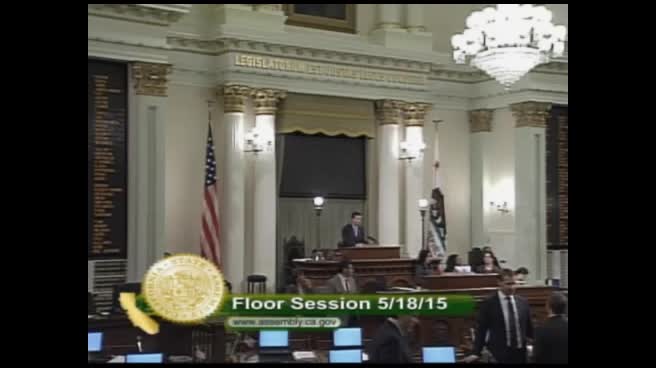 1MIN
Assembly Floor
 5MIN
Assembly Standing Committee on Appropriations
 26MIN
Assembly Standing Committee on Labor and Employment
Bill Author

Bill Co-Author(s):