AB 990: Political Reform Act of 1974: advertisement disclosures.
- Session Year: 2015-2016
- House: Assembly
- Latest Version Date: 2015-10-10
Existing law, the Political Reform Act of 1974, provides for the comprehensive regulation of campaign financing, including requiring the reporting of campaign contributions and expenditures and imposing other reporting and recordkeeping requirements on campaign committees. The act additionally imposes various disclosure statement requirements with respect to advertisements supporting or opposing a candidate or ballot measure, including a requirement that the disclosure statements be printed clearly and legibly in no less than 10-point type and in a conspicuous manner, as specified. The act also requires that an advertisement supporting or opposing a candidate that is paid for by an independent expenditure include a statement that it was not authorized by a candidate or a committee controlled by a candidate.
This bill would require that disclosure statements be printed in no less than 14-point bold, sans serif type font. The bill would require that an advertisement supporting or opposing a candidate that is paid for by an independent expenditure include a disclosure statement with specific content and, if the advertisement is mailed, would require that the disclosure statement be located within a quarter of an inch of the recipients name and address and be contained within a box that meets prescribed criteria.
The act also requires certain ballot measure advertisements to include a specified disclosure statement if it is paid for by a committee that pays an individual for his or her appearance in the advertisement, as specified.
This bill would repeal a requirement that the disclosure statement appear in roman font.
The California Constitution requires the state to reimburse local agencies and school districts for certain costs mandated by the state. Statutory provisions establish procedures for making that reimbursement.
This bill would provide that no reimbursement is required by this act for a specified reason.
The Political Reform Act of 1974, an initiative measure, provides that the Legislature may amend the act to further the acts purposes upon a 2/3 vote of each house and compliance with specified procedural requirements.
This bill would declare that it furthers the purposes of the act.
This bill would declare that it is to take effect immediately as an urgency statute.
Existing law, the Political Reform Act of 1974, provides for the comprehensive regulation of campaign financing, including requiring the reporting of campaign contributions and expenditures and imposing other reporting and recordkeeping requirements on campaign committees. The act additionally imposes various disclosure statement requirements with respect to advertisements supporting or opposing a candidate or ballot measure, including a requirement that the disclosure statements be printed clearly and legibly in no less than 10-point type and in a conspicuous manner, as specified. The act also requires that an advertisement supporting or opposing a candidate that is paid for by an independent expenditure include a statement that it was not authorized by a candidate or a committee controlled by a candidate.
This bill would require that disclosure statements be printed in no less than 18-point, 14-point bold, sans serif type font. The bill would require that an advertisement supporting or opposing a candidate that is paid for by an independent expenditure include a disclosure statement with specific content and, if the advertisement is mailed, would require that the disclosure statement be located within a quarter of an inch of the recipients name and address and be contained within a box that meets prescribed criteria.
The act also requires certain ballot measure advertisements to include a specified disclosure statement if it is paid for by a committee that pays an individual for his or her appearance in the advertisement, as specified.
This bill would repeal a requirement that the disclosure statement appear in roman font.
The California Constitution requires the state to reimburse local agencies and school districts for certain costs mandated by the state. Statutory provisions establish procedures for making that reimbursement.
This bill would provide that no reimbursement is required by this act for a specified reason.
The Political Reform Act of 1974, an initiative measure, provides that the Legislature may amend the act to further the acts purposes upon a 2/3 vote of each house and compliance with specified procedural requirements.
This bill would declare that it furthers the purposes of the act.
This bill would declare that it is to take effect immediately as an urgency statute.
Existing law, the Political Reform Act of 1974, provides for the comprehensive regulation of campaign financing, including requiring the reporting of campaign contributions and expenditures and imposing other reporting and recordkeeping requirements on campaign committees. The act additionally imposes various disclosure statement requirements with respect to advertisements supporting or opposing a candidate or ballot measure, including a requirement that the disclosure statements be printed clearly and legibly in no less than 10-point type and in a conspicuous manner, as specified. The act also requires that an advertisement supporting or opposing a candidate that is paid for by an independent expenditure include a statement that it was not authorized by a candidate or a committee controlled by a candidate.
This bill would require that disclosure statements be printed in no less than 18-point, bold, sans serif type font. The bill would require that an advertisement supporting or opposing a candidate that is paid for by an independent expenditure include a disclosure statement with specific content, and content and, if the advertisement is mailed, would require that the disclosure statement be located within a quarter of an inch of the recipients name and address and be contained within a box that meets prescribed criteria.
The California Constitution requires the state to reimburse local agencies and school districts for certain costs mandated by the state. Statutory provisions establish procedures for making that reimbursement.
This bill would provide that no reimbursement is required by this act for a specified reason.
The Political Reform Act of 1974, an initiative measure, provides that the Legislature may amend the act to further the acts purposes upon a 2/3 vote of each house and compliance with specified procedural requirements.
This bill would declare that it furthers the purposes of the act.
This bill would declare that it is to take effect immediately as an urgency statute.
Existing law, the Political Reform Act of 1974, provides for the comprehensive regulation of campaign financing, including requiring the reporting of campaign contributions and expenditures and imposing other reporting and recordkeeping requirements on campaign committees. The act additionally imposes various disclosure statement requirements with respect to advertisements supporting or opposing a candidate or ballot measure, including a requirement that the disclosure statements be printed clearly and legibly in no less than 10-point type and in a conspicuous manner, as specified. The act also requires that an advertisement supporting or opposing a candidate that is paid for by an independent expenditure include a statement that it was not authorized by a candidate or a committee controlled by a candidate.
This bill would require that disclosure statements be printed in no less than 18-point, bold, sans serif type font. The bill would require that an advertisement supporting or opposing a candidate that is paid for by an independent expenditure include a disclosure statement with specific content, and if the advertisement is mailed, would require that the disclosure statement be located within a quarter of an inch of the recipients name and address and be contained within a box that meets prescribed criteria.
The California Constitution requires the state to reimburse local agencies and school districts for certain costs mandated by the state. Statutory provisions establish procedures for making that reimbursement.
This bill would provide that no reimbursement is required by this act for a specified reason.
The Political Reform Act of 1974, an initiative measure, provides that the Legislature may amend the act to further the acts purposes upon a 2/3 vote of each house and compliance with specified procedural requirements.
This bill would declare that it furthers the purposes of the act.
Existing law requires the State Department of Public Health to develop a coordinated state strategy for addressing the health-related needs of women, including implementation of goals and objectives for womens health. Existing law establishes the Office of Health Equity within the department to, among other things, communicate and disseminate information within the department and to other state departments to assist in developing strategies to improve the health and mental health status of specified persons, including women. Existing law requires the department to include prescribed information in any literature that it produces regarding breast cancer, including the factors that increase the risk that younger women will develop breast cancer. Existing law describes these risk factors as including, but not limited to, family history of the disease.
This bill would require any literature regarding breast cancer information produced or updated by the department on or after January 1, 2016, to include the increased risk for breast cancer associated with obesity. The bill would provide that the department is not required to dispose of or refrain from disseminating existing published material solely for the purpose of complying with the requirement that the literature include that prescribed information.
Existing law requires the State Department of Public Health to develop a coordinated state strategy for addressing the health-related needs of women, including implementation of goals and objectives for womens health. Existing law establishes the Office of Health Equity within the department to, among other things, communicate and disseminate information within the department and to other state departments to assist in developing strategies to improve the health and mental health status of specified persons, including women. Existing law requires the department to include prescribed information in any literature that it produces regarding breast cancer, including the factors that increase the risk that younger women will develop breast cancer. Existing law describes these risk factors as including, but not limited to, family history of the disease.
This bill would require any literature produced by the department to include the increased risk for breast cancer associated with obesity.
(a)An advertisement supporting or opposing a candidate that is paid for by an independent expenditure must include the following statement: This advertisement was not authorized or paid for by a candidate for this office or a committee controlled by a candidate for this office.
(b)In addition to the requirements of Section 84507, a mailed advertisement subject to this section shall also comply with each of the following:
(1)The disclosure statement in subdivision (a) shall be located within one quarter of an inch of the recipients name and address as printed on the advertisement.
(2)The text of the disclosure statement shall be contained in a box with an outline that has a line weight of at least 3.25 pt. The background color of the box shall be in a contrasting color to the background of the advertisement. The outline of the box shall be in a contrasting color to both the background color of the advertisement and the background color of the box. The color of the text shall be in a contrasting color to the background color of the box.
SEC. 2.Section 84507 of the Government Code is amended to read:84507.Any disclosure statement required by this article shall be printed clearly and legibly in no less than 14-point, bold, sans serif type font and in a conspicuous manner as defined by the commission or, if the communication is broadcast, the information shall be spoken so as to be clearly audible and understood by the intended public and otherwise appropriately conveyed for the hearing impaired.
SEC. 3.Section 84511 of the Government Code is amended to read:84511.(a)This section applies to a committee that does either of the following:
(1)Makes an expenditure of five thousand dollars ($5,000) or more to an individual for his or her appearance in an advertisement that supports or opposes the qualification, passage, or defeat of a ballot measure.
(2)Makes an expenditure of any amount to an individual for his or her appearance in an advertisement that supports or opposes the qualification, passage, or defeat of a ballot measure and that states or suggests that the individual is a member of an occupation that requires licensure, certification, or other specialized, documented training as a prerequisite to engage in that occupation.
(b)A committee described in subdivision (a) shall file, within 10 days of the expenditure, a report that includes all of the following:
(1)An identification of the measure that is the subject of the advertisement.
(2)The date of the expenditure.
(3)The amount of the expenditure.
(4)The name of the recipient of the expenditure.
(5)For a committee described in paragraph (2) of subdivision (a), the occupation of the recipient of the expenditure.
(c)An advertisement paid for by a committee described in paragraph (1) of subdivision (a) shall include a disclosure statement stating (spokespersons name) is being paid by this campaign or its donors in highly visible font shown continuously if the advertisement consists of printed or televised material, or spoken in a clearly audible format if the advertisement is a radio broadcast or telephonic message.
(d)(1)An advertisement paid for by a committee described in paragraph (2) of subdivision (a) shall include a disclosure statement stating Persons portraying members of an occupation in this advertisement are compensated spokespersons not necessarily employed in those occupations in highly visible font shown continuously if the advertisement consists of printed or televised material, or spoken in a clearly audible format if the advertisement is a radio broadcast or telephonic message.
(2)A committee may omit the disclosure statement required by this subdivision if all of the following are satisfied with respect to each individual identified in the report filed pursuant to subdivision (b) for that advertisement:
(A)The occupation identified in the report is substantially similar to the occupation portrayed in the advertisement.
(B)The committee maintains credible documentation of the appropriate license, certification, or other training as evidence that the individual may engage in the occupation identified in the report and portrayed in the advertisement and makes that documentation immediately available to the Commission upon request.
SEC. 4.No reimbursement is required by this act pursuant to Section 6 of Article XIIIB of the California Constitution because the only costs that may be incurred by a local agency or school district will be incurred because this act creates a new crime or infraction, eliminates a crime or infraction, or changes the penalty for a crime or infraction, within the meaning of Section 17556 of the Government Code, or changes the definition of a crime within the meaning of Section 6 of Article XIIIB of the California Constitution.
SEC. 5.The Legislature finds and declares that this bill furthers the purposes of the Political Reform Act of 1974 within the meaning of subdivision (a) of Section 81012 of the Government Code.
SEC. 6.This act is an urgency statute necessary for the immediate preservation of the public peace, health, or safety within the meaning of Article IV of the Constitution and shall go into immediate effect. The facts constituting the necessity are:
In order to protect the interests of Californians who are empowered with the right to vote, it is appropriate that they be duly informed and that their constitutional right to instruct their representatives be protected. This purpose is best served by an informed electorate. The need for greater transparency of advertisement disclosures is vital to the interests of the State such that this act must take effect immediately.
(a)An advertisement supporting or opposing a candidate that is paid for by an independent expenditure must include the following statement: This advertisement was not authorized or paid for by the a candidate for this office or a committee controlled by the a candidate for this office.
(b)In addition to the requirements of Section 84507, a mailed advertisement subject to this section shall also comply with each of the following:
(1)The disclosure statement in subdivision (a) shall be located within one quarter of an inch of the recipients name and address as printed on the advertisement.
(2)The text of the disclosure statement shall be contained in a box with an outline that has a line weight of at least 5.25 3.25 pt. The background color of the box shall be in a contrasting color to the background of the advertisement. The outline of the box shall be in a contrasting color to both the background color of the advertisement and the background color of the box. The color of the text shall be in a contrasting color to the background color of the box.
SEC. 2.Section 84507 of the Government Code is amended to read:84507.Any disclosure statement required by this article shall be printed clearly and legibly in no less than 18-point, 14-point, bold, sans serif type font and in a conspicuous manner as defined by the commission or, if the communication is broadcast, the information shall be spoken so as to be clearly audible and understood by the intended public and otherwise appropriately conveyed for the hearing impaired.
SEC. 3.Section 84511 of the Government Code is amended to read:84511.(a)This section applies to a committee that does either of the following:
(1)Makes an expenditure of five thousand dollars ($5,000) or more to an individual for his or her appearance in an advertisement that supports or opposes the qualification, passage, or defeat of a ballot measure.
(2)Makes an expenditure of any amount to an individual for his or her appearance in an advertisement that supports or opposes the qualification, passage, or defeat of a ballot measure and that states or suggests that the individual is a member of an occupation that requires licensure, certification, or other specialized, documented training as a prerequisite to engage in that occupation.
(b)A committee described in subdivision (a) shall file, within 10 days of the expenditure, a report that includes all of the following:
(1)An identification of the measure that is the subject of the advertisement.
(2)The date of the expenditure.
(3)The amount of the expenditure.
(4)The name of the recipient of the expenditure.
(5)For a committee described in paragraph (2) of subdivision (a), the occupation of the recipient of the expenditure.
(c)An advertisement paid for by a committee described in paragraph (1) of subdivision (a) shall include a disclosure statement stating (spokespersons name) is being paid by this campaign or its donors in highly visible roman font shown continuously if the advertisement consists of printed or televised material, or spoken in a clearly audible format if the advertisement is a radio broadcast or telephonic message.
(d)(1)An advertisement paid for by a committee described in paragraph (2) of subdivision (a) shall include a disclosure statement stating Persons portraying members of an occupation in this advertisement are compensated spokespersons not necessarily employed in those occupations in highly visible roman font shown continuously if the advertisement consists of printed or televised material, or spoken in a clearly audible format if the advertisement is a radio broadcast or telephonic message.
(2)A committee may omit the disclosure statement required by this subdivision if all of the following are satisfied with respect to each individual identified in the report filed pursuant to subdivision (b) for that advertisement:
(A)The occupation identified in the report is substantially similar to the occupation portrayed in the advertisement.
(B)The committee maintains credible documentation of the appropriate license, certification, or other training as evidence that the individual may engage in the occupation identified in the report and portrayed in the advertisement and makes that documentation immediately available to the Commission upon request.
SEC. 3.SEC. 4.No reimbursement is required by this act pursuant to Section 6 of Article XIIIB of the California Constitution because the only costs that may be incurred by a local agency or school district will be incurred because this act creates a new crime or infraction, eliminates a crime or infraction, or changes the penalty for a crime or infraction, within the meaning of Section 17556 of the Government Code, or changes the definition of a crime within the meaning of Section 6 of Article XIIIB of the California Constitution.
SEC. 4.SEC. 5.The Legislature finds and declares that this bill furthers the purposes of the Political Reform Act of 1974 within the meaning of subdivision (a) of Section 81012 of the Government Code.
SEC. 5.SEC. 6.This act is an urgency statute necessary for the immediate preservation of the public peace, health, or safety within the meaning of Article IV of the Constitution and shall go into immediate effect. The facts constituting the necessity are:
In order to protect the interests of Californians who are empowered with the right to vote, it is appropriate that they be duly informed and that their constitutional right to instruct their representatives be protected. This purpose is best served by an informed electorate. The need for greater transparency of advertisement disclosures is vital to the interests of the State such that this act must take effect immediately.
(a)An advertisement supporting or opposing a candidate that is paid for by an independent expenditure must include the following statement: This advertisement was not authorized or paid for by the candidate or a committee controlled by the candidate.
(b)In addition to the requirements of Section 84507, a mailed advertisement subject to this section shall also comply with each of the following:
(1)The disclosure statement in subdivision (a) shall be located within one quarter of an inch of the recipients name and address as printed on the advertisement.
(2)The text of the disclosure statement shall be contained in a box with an outline that has a line weight of at least 5.25 pt. The background color of the box shall be in a contrasting color to the background of the advertisement. The outline of the box shall be in a contrasting color to both the background color of the advertisement and the background color of the box. The color of the text shall be in a contrasting color to the background color of the box.
SEC. 2.Section 84507 of the Government Code is amended to read:84507.Any disclosure statement required by this article shall be printed clearly and legibly in no less than 18-point, bold, sans serif type font and in a conspicuous manner as defined by the commission or, if the communication is broadcast, the information shall be spoken so as to be clearly audible and understood by the intended public and otherwise appropriately conveyed for the hearing impaired.
SEC. 3.No reimbursement is required by this act pursuant to Section 6 of Article XIIIB of the California Constitution because the only costs that may be incurred by a local agency or school district will be incurred because this act creates a new crime or infraction, eliminates a crime or infraction, or changes the penalty for a crime or infraction, within the meaning of Section 17556 of the Government Code, or changes the definition of a crime within the meaning of Section 6 of Article XIIIB of the California Constitution.
SEC. 4.The Legislature finds and declares that this bill furthers the purposes of the Political Reform Act of 1974 within the meaning of subdivision (a) of Section 81012 of the Government Code.
SEC. 5.This act is an urgency statute necessary for the immediate preservation of the public peace, health, or safety within the meaning of Article IV of the Constitution and shall go into immediate effect. The facts constituting the necessity are:
In order to protect the interests of Californians who are empowered with the right to vote, it is appropriate that they be duly informed and that their constitutional right to instruct their representatives be protected. This purpose is best served by an informed electorate. The need for greater transparency of advertisement disclosures is vital to the interests of the State such that this act must take effect immediately.
An (a)An advertisement supporting or opposing a candidate that is paid for by an independent expenditure must include a statement that it was not authorized by a candidate or a committee controlled by a candidate. the following statement: This advertisement was not authorized or paid for by the candidate or a committee controlled by the candidate.
(b)In addition to the requirements of Section 84507, a mailed advertisement subject to this section shall also comply with each of the following:
(1)The disclosure statement in subdivision (a) shall be located within one quarter of an inch of the recipients name and address as printed on the advertisement.
(2)The text of the disclosure statement shall be contained in a box with an outline that has a line weight of at least 5.25 pt. The background color of the box shall be in a contrasting color to the background of the advertisement. The outline of the box shall be in a contrasting color to both the background color of the advertisement and the background color of the box. The color of the text shall be in a contrasting color to the background color of the box.
SEC. 2.Section 84507 of the Government Code is amended to read:84507.Any disclosure statement required by this article shall be printed clearly and legibly in no less than 10-point type 18-point, bold, sans serif type font and in a conspicuous manner as defined by the commission or, if the communication is broadcast, the information shall be spoken so as to be clearly audible and understood by the intended public and otherwise appropriately conveyed for the hearing impaired.
SEC. 3.No reimbursement is required by this act pursuant to Section 6 of Article XIIIB of the California Constitution because the only costs that may be incurred by a local agency or school district will be incurred because this act creates a new crime or infraction, eliminates a crime or infraction, or changes the penalty for a crime or infraction, within the meaning of Section 17556 of the Government Code, or changes the definition of a crime within the meaning of Section 6 of Article XIIIB of the California Constitution.
SEC. 4.The Legislature finds and declares that this bill furthers the purposes of the Political Reform Act of 1974 within the meaning of subdivision (a) of Section 81012 of the Government Code.
SECTION 1.Section 138.6 of the Health and Safety Code is amended to read:138.6.(a)Literature regarding breast cancer information produced or updated by the State Department of Public Health on or after January 1, 2016, shall include, but not be limited to, all of the following:
(1)Summarized information on risk factors for breast cancer in younger women, including, but not limited to, information on the increased risk associated with a family history of the disease, and increased risk associated with obesity.
(2)Summarized information regarding detection alternatives to mammography that may be available and more effective for at-risk women between the ages of 25 and 40 years.
(3)Information on Internet Web sites of relevant organizations, government agencies, and research institutions where information on mammography alternatives may be obtained.
(b)(1)The information required by subdivision (a) shall be produced consistent with the departments protocols and procedures regarding the production and dissemination of information on breast cancer, including, but not limited to, the following factors:
(A)Restrictions imposed by space limitation on materials currently produced and distributed by the department.
(B)Future regular production and replacement schedules.
(C)Translation standards governing the number of languages and literacy levels.
(D)The nature, content, and purpose of the material into which this new information will be incorporated.
(2)This section does not require the department to dispose of or refrain from disseminating existing published literature solely for the purpose of complying with subdivision (a).
(c)It is the intent of the Legislature that subdivisions (a) and (b) apply to information that is distributed by any branch of the department, including, but not limited to, the Cancer Detection Section and the Office of Health Equity.
(a)The Literature regarding breast cancer information produced or updated by the State Department of Public Health on or after January 1, 2016, shall include in any literature that it produces regarding breast cancer information that shall include, but not be limited to, all of the following:
(1)Summarized information on risk factors for breast cancer in younger women, including, but not limited to, information on the increased risk associated with a family history of the disease, and increased risk associated with obesity.
(2)Summarized information regarding detection alternatives to mammography that may be available and more effective for at-risk women between the ages of 25 and 40 years.
(3)Information on Internet Web sites of relevant organizations, government agencies, and research institutions where information on mammography alternatives may be obtained.
(b)(1)The information required by subdivision (a) shall be produced consistent with the departments protocols and procedures regarding the production and dissemination of information on breast cancer, including, but not limited to, the following factors:
(1)
(A)Restrictions imposed by space limitation on materials currently produced and distributed by the department.
(2)
(B)Future regular production and replacement schedules.
(3)
(C)Translation standards governing the number of languages and literacy levels.
(4)
(D)The nature, content, and purpose of the material into which this new information will be incorporated.
(2)This section does not require the department to dispose of or refrain from disseminating existing published literature solely for the purpose of complying with subdivision (a).
(c)It is the intent of the Legislature that subdivisions (a) and (b) apply to information that is distributed by any branch of the department, including, but not limited to, the Cancer Detection Section and the Office of Health Equity.
(a)The State Department of Public Health shall include in any literature that it produces regarding breast cancer information that shall include, but not be limited to, all of the following:
(1)Summarized information on risk factors for breast cancer in younger women, including, but not limited to, information on the increased risk associated with a family history of the disease, and increased risk associated with obesity.
(2)Summarized information regarding detection alternatives to mammography that may be available and more effective for at-risk women between the ages of 25 and 40 years.
(3)Information on Internet Web sites of relevant organizations, government agencies, and research institutions where information on mammography alternatives may be obtained.
(b)The information required by subdivision (a) shall be produced consistent with the departments protocols and procedures regarding the production and dissemination of information on breast cancer, including, but not limited to, the following factors:
(1)Restrictions imposed by space limitation on materials currently produced and distributed by the department.
(2)Future regular production and replacement schedules.
(3)Translation standards governing the number of languages and literacy levels.
(4)The nature, content, and purpose of the material into which this new information will be incorporated.
(c)It is the intent of the Legislature that subdivisions (a) and (b) apply to information that is distributed by any branch of the department, including, but not limited to, the Cancer Detection Section and the Office of Health Equity.
|
Date
|
Status
|
|---|---|
| Jul 15, 2015 | From committee chair, with author's amendments: Amend, and re-refer to committee. Read second time, amended, and re-referred to Com. on E. & C.A. |
| Oct 10, 2015 | Chaptered by Secretary of State - Chapter 747, Statutes of 2015. |
| Oct 10, 2015 | Approved by the Governor. |
| Sep 18, 2015 | Enrolled and presented to the Governor at 4 p.m. |
| Sep 10, 2015 | Urgency clause adopted. Senate amendments concurred in. To Engrossing and Enrolling. (Ayes 66. Noes 10.). |
| Sep 10, 2015 | Urgency clause adopted. Senate amendments concurred in. To Engrossing and Enrolling. (Ayes 66. Noes 10. Page 3049.). |
| Sep 10, 2015 | Urgency clause adopted. Senate amendments concurred in. To Engrossing and Enrolling. |
| Sep 9, 2015 | From committee: That the Senate amendments be concurred in. (Ayes 4. Noes 1.) (September 9). |
| Sep 3, 2015 | Re-referred to Com. on E. & R. pursuant to Assembly Rule 77.2. |
| Sep 2, 2015 | Read third time. Urgency clause adopted. Passed. Ordered to the Assembly. (Ayes 32. Noes 8. Page 2390.). |
| Sep 2, 2015 | Read third time. Urgency clause adopted. Passed. Ordered to the Assembly. |
| Sep 2, 2015 | In Assembly. Concurrence in Senate amendments pending. May be considered on or after September 4 pursuant to Assembly Rule 77. |
| Aug 25, 2015 | Read second time. Ordered to third reading. |
| Aug 24, 2015 | From committee: Be placed on second reading file pursuant to Senate Rule 28.8. |
| Aug 20, 2015 | Read second time and amended. Re-referred to Com. on APPR. |
| Aug 19, 2015 | From committee: Amend, and do pass as amended and re-refer to Com. on APPR. (Ayes 4. Noes 1.) (August 18). |
| Feb 26, 2015 | Read first time. To print. |
| Jul 7, 2015 | Re-referred to Com. on E. & C.A. |
| Jul 6, 2015 | Withdrawn from committee. |
| Jul 6, 2015 | Re-referred to Com. on RLS. |
| Jul 2, 2015 | From committee chair, with author's amendments: Amend, and re-refer to committee. Read second time, amended, and re-referred to Com. on HEALTH. |
| May 28, 2015 | Referred to Com. on HEALTH. |
| May 14, 2015 | Read third time. Passed. Ordered to the Senate. (Ayes 78. Noes 0. Page 1449.) |
| May 14, 2015 | Read third time. Passed. Ordered to the Senate. |
| May 14, 2015 | In Senate. Read first time. To Com. on RLS. for assignment. |
| May 7, 2015 | Read second time. Ordered to Consent Calendar. |
| May 6, 2015 | From committee: Do pass. To Consent Calendar. (Ayes 17. Noes 0.) (May 6). |
| Apr 29, 2015 | From committee: Do pass and re-refer to Com. on APPR. with recommendation: To Consent Calendar. (Ayes 19. Noes 0.) (April 28). Re-referred to Com. on APPR. |
| Apr 21, 2015 | Re-referred to Com. on HEALTH. |
| Apr 20, 2015 | From committee chair, with author's amendments: Amend, and re-refer to Com. on HEALTH. Read second time and amended. |
| Mar 16, 2015 | Referred to Com. on HEALTH. |
| Feb 27, 2015 | From printer. May be heard in committee March 29. |
|
Date
|
Description
|
Location
|
Votes
|
|
|---|---|---|---|---|
| Sep 10, 2015 | AB 990 BONILLA Concurrence - Urgency Added | Assembly Floor |
Passed |
|
| Sep 9, 2015 | With recommendation: That Senate amendments be concurred in. | Assembly Standing Committee on Elections and Redistricting |
Passed |
|
| Sep 2, 2015 | Assembly 3rd Reading AB990 Bonilla By Allen Urgency Clause | Senate Floor |
Passed |
|
| Aug 18, 2015 | Do pass as amended, but first amend, and re-refer to the Committee on [Appropriations] | Senate Standing Committee on Elections and Constitutional Amendments |
Passed |
|
| May 14, 2015 | AB 990 BONILLA Consent Calendar Second Day Regular Session | Assembly Floor |
Passed |
|
| May 6, 2015 | Do pass. To Consent Calendar. | Assembly Standing Committee on Appropriations |
Passed |
|
| Apr 28, 2015 | Do pass and be re-referred to the Committee on [Appropriations] with recommendation: To Consent Calendar | Assembly Standing Committee on Health |
Passed |
This list shows positions taken on this bill by organizations on the date displayed, which is linked to the original source.
Positions by individuals are not included.
|
Organization
|
Position
|
Date
|
|---|---|---|
| American Cancer Society Cancer Action Network Inc. | ** Support | Aug 18, 2015 |
| Association of California Health Care Districts | ** Support | Aug 18, 2015 |
| California Black Health Network | ** Support | Aug 18, 2015 |
| California Clean Money Campaign | ** Support | Sep 10, 2015 |
| California Communities United Institute | ** Support | Aug 18, 2015 |
| California Primary Care Association | ** Support | Aug 18, 2015 |
| Contra Costa County Clerk-Recorder | ** Support | Sep 10, 2015 |
| Latinas Contra Cancer | ** Support | Aug 18, 2015 |
| Registrar of Voters | ** Support | Sep 10, 2015 |
AB 990
Page 2
CONCURRENCE IN SENATE AMENDMENTS
AB 990
(Bonilla)
As Amended August 20, 2015
2/3 vote. Urgency
ASSEMBLY: |
|
(May 14, 2015) |
SENATE: |
32-8
|
(September 2, 2015) |
(vote not relevant)
COMMITTEE VOTE: (E. & R.) |
4-1 |
(September 9, 2015) |
RECOMMENDATION: |
concur |
Original Committee Reference: HEALTH
SUMMARY: Increases the size and prominence of disclosure statements that are required to appear on certain campaign advertisements.
The Senate amendments delete the Assembly version of this bill, and instead:
Require an advertisement supporting or opposing a candidate that is paid for by an independent expenditure (IE) to comply with the following:
That the following specific phrasing be used for the disclosure statement that is required to appear on the advertisement pursuant to existing law:
"This advertisement was not authorized or paid for by a candidate for this office or a committee controlled by a candidate for this office."
If the advertisement is mailed, that the statement comply with all of the following:
Be located within one-quarter of an inch of the recipient's name and address as printed on the advertisement;
Be contained in a box that has an outline with a line weight of at least 3.25 points, and the outline is in a contrasting color to the background color of the advertisement and of the background color of the box;
The background color of the box contrasts with the background color of the advertisement; and,
The text of the statement is in a contrasting color to the background color of the box.
Increase the minimum size of disclosure statements that are required to be printed on specified campaign advertisements from 10-point to 14-point, and require the statements to be printed in bold, sans serif type font.
Make corresponding changes.
Add an urgency clause, allowing this bill to take effect immediately upon enactment.
FISCAL EFFECT: According to the Senate Appropriations Committee, pursuant to Senate Rule 28.8, negligible state costs.
COMMENTS: According to the author, "The Political Reform Act requires all campaign mailers [that are paid for by independent expenditures] to include a disclosure statement that it was not authorized by the candidate… When voters do not notice the disclosure statement, it becomes unclear which advertisements are from the candidate and which ones are from independent expenditures. It is vitally important that voters easily identify which advertisements come from the candidates themselves…. AB 990 fixes this problem by making it simple for voters to notice and read the disclosure statement."
Existing law requires specified campaign advertisements to contain certain disclosure statements. Those disclosure statements, when required on a non-electronic printed advertisement, generally must be printed in at least 10-point type (disclosure statements on advertisements on over size print media, such as yard signs and billboards, generally must appear in larger type). For other types of advertisements, including video, audio, and electronic text or graphic advertising, the disclosure statement must be presented in a "clear and conspicuous manner," as specified pursuant to regulations adopted by the Fair Political Practices Commission (FPPC).
This bill increases the minimum size of the disclosure statements, when those statements appear on a non-electronic printed advertisement, from a minimum of 10-point type to a minimum of 14-point type. Additionally, this bill requires such disclosure statements to be printed in bold, sans serif type font. Although the author's statement above focuses on IEs, these requirements also apply to disclosure statements on advertisements that are not paid for by IEs.
Additionally, for the purposes of the existing requirement that an advertisement supporting or opposing a candidate that is paid for by an IE include a statement that the advertisement was not authorized by a candidate or a committee controlled by a candidate, this bill requires the following exact language to be used for the disclosure statement: "This advertisement was not authorized or paid for by a candidate for this office or a committee controlled by a candidate for this office." For those IEs, if delivered through the mail, the disclosure statement would also be required to be located within one-quarter of an inch of the recipient's name and address and be contained in a box that has an outline with a line weight of at least 3.25 points.
California voters passed an initiative, Proposition 9, in 1974 that created the FPPC and codified significant restrictions and prohibitions on candidates, officeholders and lobbyists. That initiative is commonly known as the Political Reform Act (PRA). Amendments to the PRA that are not submitted to the voters, such as those contained in this bill, must further the purposes of the initiative and require a two-thirds vote of both houses of the Legislature.
This bill was substantially amended in the Senate and the Assembly-approved provisions of this bill were deleted. As a result, this bill was re-referred to the Assembly Elections and Redistricting Committee pursuant to Assembly Rule 77.2, and the committee subsequently recommended that the Assembly concur in the Senate amendments to this bill.
Please see the policy committee analysis for a full discussion of this bill.
Analysis Prepared by: Ethan Jones / E. & R. / (916) 319-2094 FN: 0002321
AB 990
Page 5
Date of Hearing: September 9, 2015
ASSEMBLY COMMITTEE ON ELECTIONS AND REDISTRICTING
Sebastian Ridley-Thomas, Chair
AB 990 (
Bonilla) – As Amended August 20, 2015
CONCURRENCE IN SENATE AMENDMENTS
ASSEMBLY: |
|
(May 14, 2015) |
SENATE: |
32-8 |
(September 2, 2015) |
(vote not relevant)
SUBJECT: Political Reform Act of 1974: advertisement disclosures.
SUMMARY: Increases the size and prominence of disclosure statements that are required to appear on certain campaign advertisements.
The Senate amendments delete the Assembly version of the bill, and instead:
Require an advertisement supporting or opposing a candidate that is paid for by an independent expenditure (IE) to comply with the following:
That the following specific phrasing be used for the disclosure statement that is required to appear on the advertisement pursuant to existing law:
"This advertisement was not authorized or paid for by a candidate for this office or a committee controlled by a candidate for this office."If the advertisement is mailed, that the statement comply with all of the following:
Be located within one-quarter of an inch of the recipient's name and address as printed on the advertisement;
Be contained in a box that has an outline with a line weight of at least 3.25 points, and the outline is in a contrasting color to the background color of the advertisement and of the background color of the box;
The background color of the box contrasts with the background color of the advertisement; and,
The text of the statement is in a contrasting color to the background color of the box.
Increase the minimum size of disclosure statements that are required to be printed on specified campaign advertisements pursuant to existing law from 10-point to 14-point, and require the statements to be printed in bold, sans serif type font.
Make corresponding changes.
Add an urgency clause, allowing this bill to take effect immediately upon enactment.
EXISTING LAW:
Creates the Fair Political Practices Commission (FPPC), and makes it responsible for the impartial, effective administration and implementation of the Political Reform Act (PRA).
Requires any advertisement for or against a ballot measure to include a disclosure statement identifying the two largest contributors whose cumulative contributions are $50,000 or more, as specified.
Requires a committee that supports or opposes one or more ballot measures to name and identify itself using a name or phrase that clearly identifies the economic or other special interest of its major donors of $50,000 or more. Provides that if the major donors of $50,000 or more share a common employer, the identity of the employer shall also be disclosed. Requires a committee which supports or opposes a ballot measure to print or broadcast its name as required by these provisions as part of any advertisement or other paid public statement.
Requires an advertisement supporting or opposing a candidate or ballot measure that is paid for by an IE to include a disclosure statement that identifies both of the following:
The name of the committee making the IE.
The names of the persons from whom the committee making the IE has received its two highest cumulative contributions of $50,000 or more during the 12-month period prior to the expenditure, as specified.
Requires an advertisement supporting or opposing a candidate that is paid for by an IE to include a statement that it was not authorized by a candidate or a committee controlled by a candidate.
Requires specified advertisements for or against a ballot measure that include individuals who have been paid for their appearance to include a disclosure statement stating “(spokesperson’s name) is being paid by this campaign or its donors” in highly visible Roman font.
Requires specified advertisements for or against a ballot measure that include individuals who have been paid for their appearance, and that states or suggests that the individual is a member of an occupation that requires licensure, certification, or other specialized training, to include a disclosure statement stating “Persons portraying members of an occupation in this advertisement are compensated spokespersons not necessarily employed in those occupations” in highly visible Roman font.
Requires the disclosure statements outlined above to be printed clearly and legibly in no less than 10-point type and in a conspicuous manner as defined by the FPPC. Provides, pursuant to FPPC regulation, that a disclosure statement on printed materials designed to be distributed personally or thorough the mail shall be printed in a contrasting color to the background on which it appears.
Defines "advertisement," for the purposes of the disclosure requirements outlined above, as any general or public advertisement which is authorized and paid for by a person or committee for the purpose of supporting or opposing a candidate for elective office or a ballot measure or ballot measures. Provides that “advertisement” does not include a communication from an organization other than a political party to its members, a campaign button smaller than 10 inches in diameter, a bumper sticker smaller than 60 square inches, or other advertisement as determined by regulations adopted by the FPPC.
Defines "independent expenditure," for the purposes of the PRA, as an expenditure made by any person in connection with a communication which expressly advocates the election or defeat of a clearly identified candidate or the qualification, passage, or defeat of a clearly identified measure, or taken as a whole and in context, unambiguously urges a particular result in an election, but which is not made to or at the behest of the affected candidate or committee.
FISCAL EFFECT: According to the Senate Appropriations Committee, pursuant to Senate Rule 28.8, negligible state costs.
COMMENTS:
Prior Assembly Consideration of This Measure: As approved by the Assembly in May, this bill would have required the Department of Public Health to include information regarding the increased risk of breast cancer associated with obesity in any literature the Department produced regarding breast cancer. Subsequent to the Assembly's approval of this measure, it was amended in the Senate to delete the Assembly-approved provisions of the bill, and to add the current provisions to increase the size and prominence of disclosure statements that are required to appear on certain campaign advertisements. As a result, this bill has been re-referred to this committee for further consideration pursuant to Assembly Rule 77.2.
Purpose of the Bill: According to the author:
Campaign spending has significantly increased with the advent of
[IEs]. In California, IE spending reached $32 million leading up to
the 2014 General Election. Throughout election season, mailboxes are
flooded with mailers. In recent elections, there were reports of
families receiving upwards of 200 pieces of mail. When voters receive
an overwhelming amount of advertisements from outside interest
groups, in addition to advertisements from candidates, it is
difficult for the voter to distinguish who is responsible for each
message.
The quantity and negative messaging of mailers
has not only confused voters, but it has frustrated some to the point
of not wanting to vote. During recent elections, the Contra Costa
County Clerk/Recorder-Registrar heard from numerous upset voters.
Community members voiced their displeasure in candidates for the
amount of mailers they were receiving. Although outside spending
reached record highs, voters incorrectly attributed all mailers to
the candidates.
The Political Reform Act requires all
advertisements to include a statement detailing who paid for the
advertisement. Current law requires the disclosure statement to be
printed clearly, in no less than 10-point font, and in a contrasting
color. However, disclosure statements are easily overlooked because
they are in small font and often hidden at the bottom of
advertisements.
AB 990 updates the way disclosure
statements are displayed in order to increase the likelihood that
voters see the statement and properly attribute the campaign
messaging. AB 990 increases the font size and requires the disclosure
to be printed inside an outlined box. The box must be a contrasting
color to the background of the advertisement and the text must be in
a contrasting color to the box. Additionally, the statement must be
located within one quarter of an inch from the recipient’s name and
address on the advertisement. AB 990 will make it simple for voters
to notice and read the disclosure statement providing greater
transparency in our state’s elections.
Existing Disclosure Statement Requirements: As outlined above, the PRA requires specified campaign advertisements to contain certain disclosure statements, with the specific disclosure that is required varying depending on the type of advertisement, the type of committee that pays for the advertisement, and the medium used to convey the advertisement. Certain advertisements that are paid for by IEs, and certain advertisements supporting or opposing ballot measures, are required to include a disclosure that identifies the two largest contributors of $50,000 or more to the committee that pays for the advertisement, as specified. Advertisements that feature paid spokespeople may be required to include a statement disclosing that fact. Certain ballot measure committees are required to name themselves in a manner that discloses the economic or other special interest of the major contributors to the committee, and are required to include that committee name on advertisements paid for by the committee. Finally, an advertisement supporting or opposing a candidate that is paid for by an IE must include a statement that the advertisement was not authorized by a candidate or a committee controlled by a candidate.
The disclosure statements outlined above, when required on a non-electronic printed advertisement, generally must be printed in at least 10-point type (disclosure statements on advertisements on over size print media, such as yard signs and billboards, generally must appear in larger type). For other types of advertisements, including video, audio, and electronic text or graphic advertising, the disclosure statement must be presented in a "clear and conspicuous manner," as specified pursuant to regulations adopted by the FPPC.
This bill increases the minimum size of the disclosure statements detailed above, when those statements appear on a non-electronic printed advertisement, from a minimum of 10-point type to a minimum of 14-point type. Additionally, this bill requires such disclosure statements to be printed in bold, sans serif type font. Although the author's statement above focuses on IEs, these requirements apply to all of the disclosure statements outlined above, including disclosure statements on advertisements that are not paid for by IEs.
Additionally, for the purposes of the existing requirement that an advertisement supporting or opposing a candidate that is paid for by an IE include a statement that the advertisement was not authorized by a candidate or a committee controlled by a candidate, this bill requires the following exact language to be used for the disclosure statement: "This advertisement was not authorized or paid for by a candidate for this office or a committee controlled by a candidate for this office." For those IEs, if delivered through the mail, the disclosure statement would also be required to be located within one-quarter of an inch of the recipient's name and address and be contained in a box that has an outline with a line weight of at least 3.25 points.
For illustration purposes, the following is printed in a 10-point Times New Roman type font which would comply with current law:
This advertisement was not authorized by a candidate or a committee controlled by a candidate.
By contrast, the following disclosure statement uses the specific language that would be required by this bill, is written in 14-point Arial font (an example of a sans serif type font), and is placed in a box similar to the one that would be required on IEs that support or oppose candidates:
This advertisement was not authorized or paid for by a candidate for this office or a committee controlled by a candidate for this office. |
Political Reform Act of 1974: California voters passed an initiative, Proposition 9, in 1974 that created the FPPC and codified significant restrictions and prohibitions on candidates, officeholders and lobbyists. That initiative is commonly known as the PRA. Amendments to the PRA that are not submitted to the voters, such as those contained in this bill, must further the purposes of the initiative and require a two-thirds vote of both houses of the Legislature.
REGISTERED SUPPORT / OPPOSITION:
Support
Contra Costa County Clerk-Recorder/Registrar of Voters
(sponsor)
California Clean Money Campaign
Opposition
None on file.
Analysis Prepared by: Ethan Jones / E. & R. / (916) 319-2094
AB 990
Page 2
CONCURRENCE IN SENATE AMENDMENTS
AB 990
(Bonilla)
As Amended August 20, 2015
2/3 vote. Urgency
ASSEMBLY: |
|
(May 14, 2015) |
SENATE: |
32-8 |
(September 2, 2015) |
(vote not relevant)
Original Committee Reference: HEALTH
SUMMARY: Increases the size and prominence of disclosure statements that are required to appear on certain campaign advertisements.
The Senate amendments delete the Assembly version of this bill, and instead:
Require an advertisement supporting or opposing a candidate that is paid for by an independent expenditure to comply with the following:
That the following specific phrasing be used for the disclosure statement that is required to appear on the advertisement pursuant to existing law:
"This advertisement was not authorized or paid for by a candidate for this office or a committee controlled by a candidate for this office."
If the advertisement is mailed, that the statement comply with all of the following:
Be located within one-quarter of an inch of the recipient's name and address as printed on the advertisement;
Be contained in a box that has an outline with a line weight of at least 3.25 points, and the outline is in a contrasting color to the background color of the advertisement and of the background color of the box;
The background color of the box contrasts with the background color of the advertisement; and,
The text of the statement is in a contrasting color to the background color of the box.
Increase the minimum size of disclosure statements that are required to be printed on specified campaign advertisements from 10-point to 14-point, and require the statements to be printed in bold, sans serif type font.
Make corresponding changes.
Add an urgency clause, allowing this bill to take effect immediately upon enactment.
FISCAL EFFECT: According to the Senate Appropriations Committee, pursuant to Senate Rule 28.8, negligible state costs.
COMMENTS: According to the author, "The Political Reform Act requires all campaign mailers [that are paid for by independent expenditures] to include a disclosure statement that it was not authorized by the candidate… When voters do not notice the disclosure statement, it becomes unclear which advertisements are from the candidate and which ones are from independent expenditures. It is vitally important that voters easily identify which advertisements come from the candidates themselves…. AB 990 fixes this problem by making it simple for voters to notice and read the disclosure statement."
California voters passed an initiative, Proposition 9, in 1974 that created the Fair Political Practices Commission and codified significant restrictions and prohibitions on candidates, officeholders and lobbyists. That initiative is commonly known as the Political Reform Act (PRA). Amendments to the PRA that are not submitted to the voters, such as those contained in this bill, must further the purposes of the initiative and require a two-thirds vote of both houses of the Legislature.
This bill was substantially amended in the Senate and the Assembly-approved provisions of this bill were deleted. This bill, as amended in the Senate, is inconsistent with Assembly actions. The subject matter of this bill has not been heard in an Assembly policy committee during the current legislative session.
Analysis Prepared by: Ethan Jones / E. & R. / (916) 319-2094 FN: 0001521
AB 990
Page 5
|
Office of Senate Floor Analyses (916) 651-1520 Fax: (916) 327-4478 |
THIRD READING
Bill No: AB 990
Amended: 8/20/15 in Senate
SENATE ELECTIONS & C.A. COMMITTEE: 4-1, 8/18/15
AYES: Allen, Hancock, Hertzberg, Liu
NOES: Anderson
SENATE APPROPRIATIONS COMMITTEE: Senate Rule 28.8
ASSEMBLY FLOOR: 78-0, 5/14/15 (Consent) - See last page for vote
SUBJECT: Political Reform Act of 1974: advertisement disclosures
SOURCE: Contra Costa County Clerk-Recorder/Registrar of Voters
DIGEST: This bill imposes new requirements regarding font size, font style, and location, for disclosure statements on specified political advertisements.
Existing law:
Requires any advertisement for or against any ballot measure to include a disclosure statement identifying any person whose cumulative contributions are $50,000 or more, as specified.
Requires an advertisement supporting or opposing a candidate or ballot measure that is paid for by an independent expenditure, to include a disclosure statement that identifies both of the following:
The name of the committee making the independent expenditure.
The names of the persons from whom the committee making the independent expenditure has received its two highest cumulative contributions of $50,000 or more during the 12-month period prior to the expenditure, as specified.
Requires an advertisement supporting or opposing a candidate that is paid for by an independent expenditure must include a statement that it was not authorized by a candidate or a committee controlled by a candidate.
Requires specified advertisements for or against a ballot measure that include individuals who have been paid for their appearance to include a disclosure statement stating “(spokesperson’s name) is being paid by this campaign or its donors” in highly visible Roman font.
Requires specified advertisements for or against a ballot measure that include individuals who have been paid for their appearance that states or suggests that the individual is a member of a specified occupation to include a disclosure statement stating “Persons portraying members of an occupation in this advertisement are compensated spokespersons not necessarily employed in those occupations” in highly visible Roman font.
Requires the aforementioned disclosure statements to be printed clearly and legibly in no less than 10-point type where applicable.
This bill:
Requires that any of the disclosure statements described above shall be printed in no less than 14-point, bold, sans serif type font instead of 10-point type.
Requires an advertisement supporting or opposing a candidate that is paid for by an independent expenditure to specifically include the following statement:
“This advertisement was not authorized or paid for by a candidate for this office or a committee controlled by a candidate for this office.”
Requires that when included in a mailed advertisement paid for by an independent expenditure, this statement must be located within one quarter of an inch of the recipient’s name and address as printed on the advertisement and further requires that text of the statement must be contained in a box with an outline that has a line weight of at least 3.25 pt. The text, the interior of the box, the outline of the box, and the background of the advertisement must be in contrasting colors.
Includes an urgency clause.
Makes conforming changes to a related section of law.
Background
Definitions of “Advertisement” and “Independent Expenditure.” Existing law defines “advertisement” as any general or public advertisement which is authorized and paid for by a person or committee for the purpose of supporting or opposing a candidate for elective office or a ballot measure or ballot measures. “Advertisement” does not include a communication from an organization other than a political party to its members, a campaign button smaller than 10 inches in diameter, a bumper sticker smaller than 60 square inches, or other advertisement as determined by regulations of the Fair Political Practices Commission (FPPC).
“Independent expenditure” is defined as an expenditure made by any person in connection with a communication which expressly advocates the election or defeat of a clearly identified candidate or the qualification, passage or defeat of a clearly identified measure, or taken as a whole and in context, unambiguously urges a particular result in an election but which is not made to or at the behest of the affected candidate or committee.
Proliferation of Independent Expenditures. According to a November 4, 2013 report by California Common Sense, (http://cacs.org/research/independent-expenditures-the-new-money-in-california-politics/), since the first campaign contribution limits were enacted in the 1970s, political money has increasingly taken the form of independent expenditures, political campaign spending that is not coordinated with a candidate’s official campaign. Though independent expenditures have only received significant national attention in the wake of the U.S. Supreme Court’s Citizens United v. FEC ruling in 2010, they have been a growing factor in California politics since Proposition 34 (2000) limited direct contributions to candidates. $220 million in independent expenditures was spent on candidate races in California between 2000 and late May 2012. More recently, according to the Sacramento Bee, the 2015 special elections to fill the vacancy in Senate District 7 generated $12.1 million in campaign spending, almost $9.6 million of which was in the form of independent expenditures.
Comments
According to the author, campaign spending has significantly increased with the advent of independent expenditures. Leading up to the November 4, 2014 California state elections, independent expenditures had spent almost $32 million in that election cycle. It is vital for organizations and interest groups to be able to communicate their views to voters and more often than not, independent expenditures communicate with voters by mailing advertisements. When voters receive tons of advertisements from outside interest groups, in addition to advertisements from the candidate themselves, it becomes difficult for the voter to easily identify exactly who the message is coming from.
The Political Reform Act requires all advertisements to include a statement detailing who paid for the advertisement. However, voters do not spend enough time looking at the advertisement to notice nor read the statement. When voters do not notice the disclosure statement it becomes unclear which advertisements are from the candidate and which ones are from independent expenditures. It is important that voters know which advertisements come from the candidate themselves.
In recent elections, voters received over 60 campaign advertisements. This significantly decreased the likelihood the voter would examine the advertisement long enough to notice the disclaimer and created uncertainty regarding the candidate’s own message. AB 990 will fix this problem by making it simple for voters to notice and read the disclosure statement.
Current law requires the disclosure statement to be printed clearly, in no less than 10-point font and in a “conspicuous manner.” The Fair Political Practices Commission defined “conspicuous manner” as printed in a contrasting color.
AB 990 updates the way the disclosure statement must be displayed in order to increase the likelihood that voters see the statement.
The font is not big enough and the statement is often hidden at the very bottom of the advertisement where the voter may not look. AB 990 increases the font size and requires the disclosure to be printed inside an outlined box. The box must be a contrasting color to the background of the advertisement and the text must be in a contrasting color to the box. The statement must be located within one quarter of an inch from the recipient’s name and address on the advertisement.
FISCAL EFFECT: Appropriation: No Fiscal Com.: Yes Local: Yes
Contra Costa County Clerk-Recorder/Registrar of Voters (source)
OPPOSITION: (Verified 8/24/15)
None received
ASSEMBLY FLOOR: 78-0, 5/14/15
AYES: Achadjian, Alejo, Travis Allen, Baker, Bigelow, Bloom, Bonilla, Bonta, Brough, Brown, Burke, Calderon, Campos, Chang, Chau, Chávez, Chiu, Chu, Cooley, Cooper, Dababneh, Dahle, Daly, Dodd, Eggman, Frazier, Beth Gaines, Gallagher, Cristina Garcia, Eduardo Garcia, Gatto, Gipson, Gomez, Gonzalez, Gordon, Gray, Grove, Hadley, Harper, Roger Hernández, Holden, Irwin, Jones, Jones-Sawyer, Kim, Lackey, Levine, Lopez, Low, Maienschein, Mathis, Mayes, McCarty, Melendez, Mullin, Nazarian, Obernolte, O'Donnell, Olsen, Patterson, Perea, Quirk, Rendon, Ridley-Thomas, Rodriguez, Salas, Santiago, Steinorth, Mark Stone, Thurmond, Ting, Wagner, Waldron, Weber, Wilk, Williams, Wood, Atkins
NO VOTE RECORDED: Linder, Medina
Prepared by: Darren Chesin / E. & C.A. / (916) 651-4106
8/25/15 15:20:01
**** END ****
AB 990 (Bonilla) Page 4 of 4
SENATE COMMITTEE ON
ELECTIONS AND CONSTITUTIONAL AMENDMENTS
Senator Ben Allen, Chair
2015 - 2016 Regular
Bill No: AB 990 Hearing Date: 8/18/15
Author: |
Bonilla |
||
Version: |
7/15/15 |
||
Urgency: |
Yes |
Fiscal: |
Yes |
Consultant: |
Darren Chesin |
||
Subject: Political Reform Act of 1974: advertisement disclosures.
DIGEST
This bill imposes new requirements regarding font size, font style, and location, for disclosure statements on specified political advertisements.
ANALYSIS
Existing law:
Requires any advertisement for or against any ballot measure to include a disclosure statement identifying any person whose cumulative contributions are $50,000 or more, as specified.
Requires an advertisement supporting or opposing a candidate or ballot measure that is paid for by an independent expenditure, to include a disclosure statement that identifies both of the following:
The name of the committee making the independent expenditure.
The names of the persons from whom the committee making the independent expenditure has received its two highest cumulative contributions of $50,000 or more during the 12-month period prior to the expenditure, as specified.
Requires an advertisement supporting or opposing a candidate that is paid for by an independent expenditure must include a statement that it was not authorized by a candidate or a committee controlled by a candidate.
Requires specified advertisements for or against a ballot measure that include individuals who have been paid for their appearance to include a disclosure statement stating “(spokesperson’s name) is being paid by this campaign or its donors” in highly visible Roman font.
Requires specified advertisements for or against a ballot measure that include individuals who have been paid for their appearance that states or suggests that the individual is a member of a specified occupation to include a disclosure statement stating “Persons portraying members of an occupation in this advertisement are compensated spokespersons not necessarily employed in those occupations” in highly visible Roman font.
Requires the aforementioned disclosure statements to be printed clearly and legibly in no less than 10-point type where applicable.
This bill:
Requires that any of the disclosure statements described above shall be printed in no less than 18-point, bold, sans serif type font instead of 10-point type.
Requires an advertisement supporting or opposing a candidate that is paid for by an independent expenditure to specifically include the following statement:
“This advertisement was not authorized or paid for by the candidate or a
committee controlled by the candidate.”
Requires that when included in a mailed advertisement paid for by an independent expenditure, this statement must be located within one quarter of an inch of the recipient’s name and address as printed on the advertisement and further requires that text of the statement must be contained in a box with an outline that has a line weight of at least 5.25 pt. The text, the interior of the box, the outline of the box, and the background of the advertisement must be in contrasting colors.
Includes an urgency clause.
BACKGROUND
Definitions of “Advertisement” and “Independent Expenditure.” Existing law defines “advertisement” as any general or public advertisement which is authorized and paid for by a person or committee for the purpose of supporting or opposing a candidate for elective office or a ballot measure or ballot measures. “Advertisement” does not include a communication from an organization other than a political party to its members, a campaign button smaller than 10 inches in diameter, a bumper sticker smaller than 60 square inches, or other advertisement as determined by regulations of the Fair Political Practices Commission (FPPC).
“Independent expenditure” is defined as an expenditure made by any person in connection with a communication which expressly advocates the election or defeat of a clearly identified candidate or the qualification, passage or defeat of a clearly identified measure, or taken as a whole and in context, unambiguously urges a particular result in an election but which is not made to or at the behest of the affected candidate or committee.
Proliferation of Independent Expenditures. According to a November 4, 2013 report by California Common Sense, (http://cacs.org/research/independent-expenditures-the-new-money-in-california-politics/), since the first campaign contribution limits were enacted in the 1970s, political money has increasingly taken the form of independent expenditures, political campaign spending that is not coordinated with a candidate’s official campaign. Though independent expenditures have only received significant national attention in the wake of the U.S. Supreme Court’s Citizens United v. FEC ruling in 2010, they have been a growing factor in California politics since Proposition 34 (2000) limited direct contributions to candidates. $220 million in independent expenditures was spent on candidate races in California between 2000 and late May 2012. More recently, according to the Sacramento Bee, the 2015 special elections to fill the vacancy in Senate District 7 generated $12.1 million in campaign spending, almost $9.6 million of which was in the form of independent expenditures.
COMMENTS
According to the author: Campaign spending has significantly increased with the advent of independent expenditures. Leading up to the November 4, 2014 California state elections, independent expenditures had spent almost $32 million in that election cycle. It is vital for organizations and interest groups to be able to communicate their views to voters and more often than not, independent expenditures communicate with voters by mailing advertisements. When voters receive tons of advertisements from outside interest groups, in addition to advertisements from the candidate themselves, it becomes difficult for the voter to easily identify exactly who the message is coming from.
The Political Reform Act requires all advertisements to include a statement detailing who paid for the advertisement. However, voters do not spend enough time looking at the advertisement to notice nor read the statement. When voters do not notice the disclosure statement it becomes unclear which advertisements are from the candidate and which ones are from independent expenditures. It is important that voters know which advertisements come from the candidate themselves.
In recent elections, voters received over 60 campaign advertisements. This significantly decreased the likelihood the voter would examine the advertisement long enough to notice the disclaimer and created uncertainty regarding the candidate’s own message. AB 990 will fix this problem by making it simple for voters to notice and read the disclosure statement.
Current law requires the disclosure statement to be printed clearly, in no less than 10-point font and in a “conspicuous manner.” The Fair Political Practices Commission defined “conspicuous manner” as printed in a contrasting color.
AB 990 updates the way the disclosure statement must be displayed in order to increase the likelihood that voters see the statement.
The font is not big enough and the statement is often hidden at the very bottom of the advertisement where the voter may not look. AB 990 increases the font size and requires the disclosure to be printed inside an outlined box. The box must be a contrasting color to the background of the advertisement and the text must be in a contrasting color to the box. The statement must be located within one quarter of an inch from the recipient’s name and address on the advertisement.
Suggested Amendment. This bill requires that specified disclosure statements appear in no less than 18-point, bold, sans serif type font. A sans serif font is one that does not have the small projecting features called "serifs" at the end of strokes. However, the existing provision of law regarding disclosure statements for advertisements featuring paid spokespersons requires that those statements use a Roman font. Since Roman fonts include serifs, staff suggests that this bill be amended to rectify this conflict by striking the reference to Roman font in the aforementioned existing provision. Doing so would clarify that the sans serif font requirement in this bill would be the standard.
Type Sizes and Fonts. For illustration purposes, the following is printed in a 10-point Times New Roman type font which would comply with current law:
“This advertisement was not authorized or paid for by the candidate or a committee controlled
by
the candidate.”
The
following is written in 18-point Arial font (an example of a sans
serif type font) and placed in a box similar to the one required by
this bill:
This advertisement was not authorized or paid for by the candidate or a committee controlled by the candidate.
PRIOR ACTION
Assembly Floor: |
78 - 0 |
Assembly Appropriations Committee: |
17 - 0 |
Assembly Health Committee: |
19 - 0 |
Note: This bill was completely rewritten in the Senate therefore these votes do not reflect the current version.
POSITIONS
Sponsor: Contra Costa County Clerk-Recorder/Registrar of Voters
Support: None received
Oppose: None received
-- END –
AB 990
Page 1
Date of Hearing: May 6, 2015
ASSEMBLY COMMITTEE ON APPROPRIATIONS
Jimmy Gomez, Chair
AB 990
(Bonilla) – As Amended April 20, 2015
Policy Committee: |
Health |
Vote: |
19 - 0 |
|
|
|
|
|
|
|
|
Urgency: No State Mandated Local Program: No Reimbursable: No
SUMMARY:
This bill requires the California Department of Public Health (CDPH) to include information regarding the increased risk of breast cancer associated with obesity in any literature regarding breast cancer they produce or update on or after January 1, 2016.
It also clarifies that CDPH does not need to dispose of, or refrain from disseminating existing published literature solely for the purpose of complying with these provisions.
FISCAL EFFECT:
Negligible state fiscal effect.
COMMENTS:
Purpose. The author states, according to the California Cancer Registry, breast cancer is the most commonly diagnosed cancer among women in California. The author asserts studies have shown that significant weight gain increases a person’s risk for breast cancer, for example, a study published in the Journal of the American Medical Association found that women who gained 55 pounds or more after age 18 had a 45% higher cancer risk. The author concludes this vital information will enable individuals to implement preventative measures and lead healthier, cancer-free lives.
Background. According to the Centers for Disease Control and Prevention, obesity contributes to the following health consequences: coronary heart disease; Type II diabetes; cancers - endometrial, breast, and colon; hypertension; stroke; liver and gallbladder disease; sleep apnea and respiratory problems; osteoarthritis; and, gynecological problems such as abnormal menses, and infertility.
This bill requires CDPH-produced information about breast cancer to include information about the link to obesity.
Analysis Prepared by: Lisa Murawski / APPR. / (916) 319-2081
AB 990
Page 4
Date of Hearing: April 28, 2015
ASSEMBLY COMMITTEE ON HEALTH
Rob Bonta, Chair
AB 990
(Bonilla) – As Amended April 20, 2015
SUBJECT: Women’s health.
SUMMARY: Requires the Department of Public Health (DPH) to include information regarding the increased risk of breast cancer associated with obesity in any literature regarding breast cancer they produce or update on or after January 1, 2016. Clarifies that DPH does not need to dispose of, or refrain from disseminating existing published literature solely for the purpose of complying with these provisions.
EXISTING LAW:
Establishes DPH which is charged with promoting healthy lifestyles for individuals and families in their communities and workplaces, and preventing disease, disability, and premature death and reducing or eliminating health disparities.
Requires DPH to develop a coordinated state strategy for addressing the health-related needs of women, including implementation of goals and objectives for women's health.
Requires DPH to place priority on providing information to consumers, patients, and health care providers regarding women's gynecological cancers, including signs and symptoms, risk factors, the benefits of early detection through appropriate diagnostic testing, and treatment options.
Requires DPH to include in any literature it produces regarding breast cancer, information that includes, but is not be limited to, all of the following:
Summarized information on risk factors for breast cancer in younger women, including, but not limited to, information on the increased risk associated with a family history of the disease;
Summarized information regarding detection alternative to mammography that may be available and more effective for at-risk women between the ages of 25 to 40 years;
Information on Internet Websites of relevant organizations, government agencies, and research institutions where information on mammography alternatives may be obtained; and,
Requires the information provided to consumers and others to be produced consistent with DPHs' protocols and procedures regarding the production and dissemination of information on breast cancer.
States that it is the intent of the Legislature that these provisions apply to information that is distributed by any branch of DPH, including, but not limited to, the Cancer Detection Section and the Office of Health Equity.
FISCAL EFFECT: This bill has not been analyzed by a fiscal committee.
COMMENTS:
PURPOSE OF THIS BILL. The author states, according to the California Cancer Registry, breast cancer is the most commonly diagnosed cancer among women in California. The author asserts studies have shown that significant weight gain increases a person’s risk for breast cancer, for example, a study published in the Journal of the American Medical Association found that women who gained 55 pounds or more after age 18 had a 45% higher cancer risk. The author concludes this vital information will enable individuals to implement preventative measures and lead healthier, cancer-free lives.
BACKGROUND. Obesity is a major public health problem contributing to 112,000 preventable deaths each year. The prevalence of obesity has increased dramatically in recent decades, from 13% of adults in 1980 to 34% of adults in 2008. Obesity is a condition in which a person has an abnormally high and unhealthy proportion of body fat. To measure obesity, researchers commonly use a scale known as the body mass index (BMI). BMI is calculated by dividing a person’s weight (in kilograms) by their height (in meters) squared. BMI provides a more accurate measure of obesity or being overweight than weight alone.
According to the Centers for Disease Control and Prevention, obesity contributes to the following health consequences: coronary heart disease; Type II diabetes; cancers - endometrial, breast, and colon; hypertension; stroke; liver and gallbladder disease; sleep apnea and respiratory problems; osteoarthritis; and, gynecological problems such as abnormal menses, and infertility.
A recent study, “The impact of obesity on US mortality levels: the importance of age and cohort factors in population estimates,” American Journal of Public Health, vol. 103, no. 10,
pp. 1895–1901, 2013, estimated that one in five deaths in the United States is associated with obesity, surpassing smoking as Americans’ number one killer. Health problems that can be attributed to obesity include type II diabetes, cardiovascular diseases, hypertension, and cancer of several organs. While the relationship between obesity, diabetes, and cardiovascular disease has been well studied and documented, the relationship between obesity and cancer has only started to receive much attention in recent years.
According to the National Cancer Institute, a projection of the future health and economic burden of obesity in 2030 estimated that continuation of existing trends in obesity will lead to about 500,000 additional cases of cancer in the U.S. by 2030. This analysis also found that if every adult reduced their BMI by 1 %, which would be equivalent to a weight loss of roughly 1 kilogram (or 2.2 pounds) for an adult of average weight, this would prevent the increase in the number of cancer cases and actually result in the avoidance of about 100,000 new cases of cancer.
Guidelines established by the National Institutes of Health place adults age 20 and older into the following categories based on their BMI:
-
-
-
BMI
BMI Categories
Below 18.5
Underweight
18.5 to 24.9
Normal
25.0 to 29.9
Overweight
30.0 and above
Obese
-
-
The relationship between obesity and breast cancer may be affected by
the stage of life in which a woman gains weight and becomes obese.
Weight gain during adult life, most often from about age 18 to
between the ages of 50 and 60, has been consistently associated with
risk of breast cancer after menopause. The increased risk of
postmenopausal breast cancer is thought to be due to increased levels
of estrogen in obese women. After menopause, when the ovaries stop
producing hormones, fat tissue becomes the most important source of
estrogen. Because obese women have more fat tissue, their estrogen
levels are higher, potentially leading to more rapid growth of
estrogen-responsive breast tumors. The relationship between obesity
and breast cancer risk may also vary by race and ethnicity. There is
limited evidence that the risk associated with overweight and obesity
may be less among African American and Hispanic women than among
white women.
SUPPORT. The American Cancer Society Cancer Action Network (ASCAN) supports this bill stating, excluding skin cancer, breast cancer is the most common cancer among U.S. women and is responsible for 29% of newly diagnosed cases. ASCAN notes breast cancer risk in postmenopausal women is 20% higher in overweight women and approximately two times higher in obese women than lean women. ASCAN also notes that obesity is also a risk factor for type II diabetes, which some studies have linked to modestly increased risk for postmenopausal breast cancer. ASCAN concludes, while it is important for women to receive regular breast cancer screenings, it is also important to ensure they receive information about the causes of breast cancer to fight cancer with preventative measures.
California Black Health Network and Latinas Contra Cancer support this bill because breast cancer is the second-leading cause of cancer deaths for women. These supporters note in 2011, there were a total of 24,798 breast cancer incidences, of which 24,591 were women, and with the growing number of breast cancer cases it is important that both women and men are aware of the increased cancer risk associated with obesity.
The Association of California Healthcare Districts supports this bill because it will provide critical information on breast cancer and better inform women on the risks of obesity. The California Primary Care Association supports this bill because they believe it is important to make the link between obesity and the increased risk of breast cancer in the minds of their patients in order for them to be encouraged to make life changes which are likely to improve their future health.
REGISTERED SUPPORT / OPPOSITION:
Support
American Cancer Society Cancer Action
Network
Association of California Health Care
Districts
California Black Health Network
California
Communities United Institute
California Primary Care
Association
Latinas Contra Cancer
Numerous individuals
Opposition
None on file.
Analysis Prepared by: Lara Flynn / HEALTH / (916) 319-2097
Discussed in Hearing
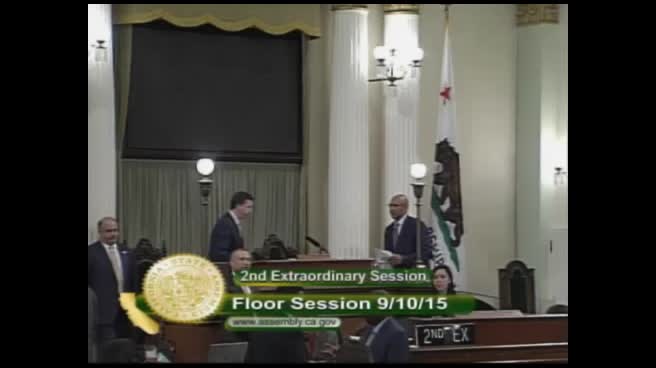 4MIN
Assembly Floor
 6MIN
Senate Floor
 22MIN
Senate Standing Committee on Elections and Constitutional Amendments
Bill Author

Bill Co-Author(s):