AB 998: Civil law: libel: damages.
- Session Year: 2015-2016
- House: Assembly
- Latest Version Date: 2015-09-28
Under existing law, in any action for damages for the publication of a libel in a newspaper or of a slander by a radio broadcast, the plaintiff is required to recover no more than special damages unless a correction is demanded and the correction is not published or broadcast. If a correction is demanded and the correction is not published or broadcast in a specified manner in the newspaper or on the broadcasting station, existing law authorizes the plaintiff to recover general, special, and exemplary damages provided certain requirements are met.
The bill would revise these provisions relating to libel to provide that the publication of a libel be in a daily or weekly news publication, as defined. This bill would also make legislative findings regarding libel.
Under existing law, in any action for damages for the publication of a libel in a newspaper or of a slander by a radio broadcast, the plaintiff is required to recover no more than special damages unless a correction is demanded and the correction is not published or broadcast. If a correction is demanded and the correction is not published or broadcast in a specified manner in the newspaper or on the broadcasting station, existing law authorizes the plaintiff to recover general, special, and exemplary damages provided certain requirements are met.
The bill would expand these provisions to additionally include libel in a magazine or other periodical publication, either in print or electronic form revise these provisions relating to libel to provide that the publication of a libel be in a daily news publication, as defined. This bill would also make legislative findings regarding libel.
Under existing law, in any action for damages for the publication of a libel in a newspaper or of a slander by a radio broadcast, the plaintiff is required to recover no more than special damages unless a correction is demanded and the correction is not published or broadcast. If a correction is demanded and the correction is not published or broadcast in a specified manner in the newspaper or on the broadcasting station, existing law authorizes the plaintiff to recover general, special, and exemplary damages provided certain requirements are met.
The bill would expand these provisions to additionally include libel in a magazine or other periodical publication, either in print or electronic form.
It is the intent of the Legislature to ensure that weekly and online publications are afforded the same protection under Section 48a of the Civil Code as is afforded to a daily newspaper to the extent that the weekly and online publications perform the same news-disseminating function as a daily newspaper. The Legislature finds and declares that the rulings in Burnett v. National Enquirer, Inc. (1983) 144 Cal.App.3d 991 and Condit v. National Enquirer, Inc. (2002) 248 F.Supp.2d 945 do not fully recognize that the policy of Section 48a of the Civil Code to protect enterprises engaged in the immediate dissemination of news on matters of public concern, insofar as time constraints do not reasonably permit such enterprises to check sources for accuracy and stories for inadvertent errors, should extend to online publications and weekly newspapers, which publish breaking news on deadlines indistinguishable from daily newspapers. It is not the intent of the Legislature that Section 48a of the Civil Code should apply to periodicals that publish at longer than weekly intervals, nor is it the intent of the Legislature that Section 48a of the Civil Code should apply to casual postings on a social networking Internet Web site, chat room, electronic bulletin board, discussion group, online forum, or other related Internet Web site.
SEC. 2.Section 48a of the Civil Code is amended to read:48a.1.In any action for damages for the publication of a libel in a daily or weekly news publication, or of a slander by radio broadcast, plaintiff shall recover no more than special damages unless a correction be demanded and be not published or broadcast, as hereinafter provided. Plaintiff shall serve upon the publisher, at the place of publication or broadcaster at the place of broadcast, a written notice specifying the statements claimed to be libelous and demanding that the same be corrected. Said notice and demand must be served within 20 days after knowledge of the publication or broadcast of the statements claimed to be libelous.
2.If a correction be demanded within said period and be not published or broadcast in substantially as conspicuous a manner in said daily or weekly news publication, or on said broadcasting station as were the statements claimed to be libelous, in a regular issue thereof published or broadcast within three weeks after such service, plaintiff, if he pleads and proves such notice, demand and failure to correct, and if his cause of action be maintained, may recover general, special and exemplary damages; provided that no exemplary damages may be recovered unless the plaintiff shall prove that defendant made the publication or broadcast with actual malice and then only in the discretion of the court or jury, and actual malice shall not be inferred or presumed from the publication or broadcast.
3.A correction published or broadcast in substantially as conspicuous a manner in said daily or weekly news publication, or on said broadcasting station as the statements claimed in the complaint to be libelous, prior to receipt of a demand therefor, shall be of the same force and effect as though such correction had been published or broadcast within three weeks after a demand therefor.
4.As used herein, the terms general damages, special damages, exemplary damages and actual malice, are defined as follows:
(a)General damages are damages for loss of reputation, shame, mortification and hurt feelings.
(b)Special damages are all damages which plaintiff alleges and proves that he has suffered in respect to his property, business, trade, profession or occupation, including such amounts of money as the plaintiff alleges and proves he has expended as a result of the alleged libel, and no other.
(c)Exemplary damages are damages which may in the discretion of the court or jury be recovered in addition to general and special damages for the sake of example and by way of punishing a defendant who has made the publication or broadcast with actual malice.
(d)Actual malice is that state of mind arising from hatred or ill will toward the plaintiff; provided, however, that such a state of mind occasioned by a good faith belief on the part of the defendant in the truth of the libelous publication or broadcast at the time it is published or broadcast shall not constitute actual malice.
5.For purposes of this section, a daily or weekly news publication means a publication, either in print or electronic form, that contains news on matters of public concern and that publishes at least once a week.
It is the intent of the Legislature to ensure that weekly and online publications are afforded the same protection under Section 48a of the Civil Code as is afforded to a printed daily newspaper to the extent that the online publication performs weekly and online publications perform the same news-disseminating function as a printed daily newspaper. The Legislature finds and declares that the rulings in Burnett v. National Enquirer, Inc. (1983) 144 Cal.App.3d 991 and Condit v. National Enquirer, Inc. (2002) 248 F.Supp.2d 945 correctly state that the purpose do not fully recognize that the policy of Section 48a of the Civil Code is to protect enterprises engaged in the immediate dissemination of news on matters of public concern, insofar as time does constraints do not reasonably permit such enterprises to check sources for accuracy and stories for inadvertent errors. errors, should extend to online publications and weekly newspapers, which publish breaking news on deadlines indistinguishable from daily newspapers. It is not the intent of the Legislature that Section 48a of the Civil Code should apply to periodicals that publish at weekly or longer than weekly intervals, nor is it the intent of the Legislature that Section 48a of the Civil Code should apply to casual postings on a social networking Internet Web site, chat room, electronic bulletin board, discussion group, online forum, or other related Internet Web site.
SEC. 2.Section 48a of the Civil Code is amended to read:48a.1.In any action for damages for the publication of a libel in a daily or weekly news publication, or of a slander by radio broadcast, plaintiff shall recover no more than special damages unless a correction be demanded and be not published or broadcast, as hereinafter provided. Plaintiff shall serve upon the publisher, at the place of publication or broadcaster at the place of broadcast, a written notice specifying the statements claimed to be libelous and demanding that the same be corrected. Said notice and demand must be served within 20 days after knowledge of the publication or broadcast of the statements claimed to be libelous.
2.If a correction be demanded within said period and be not published or broadcast in substantially as conspicuous a manner in said daily or weekly news publication, or on said broadcasting station as were the statements claimed to be libelous, in a regular issue thereof published or broadcast within three weeks after such service, plaintiff, if he pleads and proves such notice, demand and failure to correct, and if his cause of action be maintained, may recover general, special and exemplary damages; provided that no exemplary damages may be recovered unless the plaintiff shall prove that defendant made the publication or broadcast with actual malice and then only in the discretion of the court or jury, and actual malice shall not be inferred or presumed from the publication or broadcast.
3.A correction published or broadcast in substantially as conspicuous a manner in said daily or weekly news publication, or on said broadcasting station as the statements claimed in the complaint to be libelous, prior to receipt of a demand therefor, shall be of the same force and effect as though such correction had been published or broadcast within three weeks after a demand therefor.
4.As used herein, the terms general damages, special damages, exemplary damages and actual malice, are defined as follows:
(a)General damages are damages for loss of reputation, shame, mortification and hurt feelings.
(b)Special damages are all damages which plaintiff alleges and proves that he has suffered in respect to his property, business, trade, profession or occupation, including such amounts of money as the plaintiff alleges and proves he has expended as a result of the alleged libel, and no other.
(c)Exemplary damages are damages which may in the discretion of the court or jury be recovered in addition to general and special damages for the sake of example and by way of punishing a defendant who has made the publication or broadcast with actual malice.
(d)Actual malice is that state of mind arising from hatred or ill will toward the plaintiff; provided, however, that such a state of mind occasioned by a good faith belief on the part of the defendant in the truth of the libelous publication or broadcast at the time it is published or broadcast shall not constitute actual malice.
5.For purposes of this section, a daily or weekly news publication means a publication, either in print or electronic form, that contains news on matters of public concern and that publishes at least five days once a week.
It is the intent of the Legislature to ensure that online publications are afforded the same protection under Section 48a of the Civil Code as is afforded to a printed newspaper to the extent that the online publication performs the same news-disseminating function as a printed newspaper. The Legislature finds and declares that the rulings in Burnett v. National Enquirer, Inc. (1983) 144 Cal.App.3d 991 and Condit v. National Enquirer, Inc. (2002) 248 F.Supp.2d 945 correctly state that the purpose of Section 48a of the Civil Code is to protect enterprises engaged in the immediate dissemination of news on matters of public concern, insofar as time does not reasonably permit such enterprises to check sources for accuracy and stories for inadvertent errors. It is not the intent of the Legislature that Section 48a of the Civil Code should apply to periodicals that publish at weekly or longer intervals, nor is it the intent of the Legislature that Section 48a of the Civil Code should apply to casual postings on a social networking Internet Web site, chat room, electronic bulletin board, discussion group, online forum, or other related Internet Web site.
SECTION 1.SEC. 2.Section 48a of the Civil Code is amended to read:48a.1.In any action for damages for the publication of a libel in a newspaper, magazine, or other periodical publication, either in print or electronic form, daily news publication, or of a slander by radio broadcast, plaintiff shall recover no more than special damages unless a correction be demanded and be not published or broadcast, as hereinafter provided. Plaintiff shall serve upon the publisher, at the place of publication or broadcaster at the place of broadcast, a written notice specifying the statements claimed to be libelous and demanding that the same be corrected. Said notice and demand must be served within 20 days after knowledge of the publication or broadcast of the statements claimed to be libelous.
2.If a correction be demanded within said period and be not published or broadcast in substantially as conspicuous a manner in said newspaper, magazine, or other periodical publication, either in print or electronic form, daily news publication, or on said broadcasting station as were the statements claimed to be libelous, in a regular issue thereof published or broadcast within three weeks after such service, plaintiff, if he pleads and proves such notice, demand and failure to correct, and if his cause of action be maintained, may recover general, special and exemplary damages; provided that no exemplary damages may be recovered unless the plaintiff shall prove that defendant made the publication or broadcast with actual malice and then only in the discretion of the court or jury, and actual malice shall not be inferred or presumed from the publication or broadcast.
3.A correction published or broadcast in substantially as conspicuous a manner in said newspaper, magazine, or other periodical publication, either in print or electronic form, daily news publication, or on said broadcasting station as the statements claimed in the complaint to be libelous, prior to receipt of a demand therefor, shall be of the same force and effect as though such correction had been published or broadcast within three weeks after a demand therefor.
4.As used herein, the terms general damages, special damages, exemplary damages and actual malice, are defined as follows:
(a)General damages are damages for loss of reputation, shame, mortification and hurt feelings.
(b)Special damages are all damages which plaintiff alleges and proves that he has suffered in respect to his property, business, trade, profession or occupation, including such amounts of money as the plaintiff alleges and proves he has expended as a result of the alleged libel, and no other.
(c)Exemplary damages are damages which may in the discretion of the court or jury be recovered in addition to general and special damages for the sake of example and by way of punishing a defendant who has made the publication or broadcast with actual malice.
(d)Actual malice is that state of mind arising from hatred or ill will toward the plaintiff; provided, however, that such a state of mind occasioned by a good faith belief on the part of the defendant in the truth of the libelous publication or broadcast at the time it is published or broadcast shall not constitute actual malice.
5.For purposes of this section, a daily news publication means a publication, either in print or electronic form, that contains news on matters of public concern and that publishes at least five days a week.
1.In any action for damages for the publication of a libel in a newspaper, magazine, or other periodical publication, either in print or electronic form, or of a slander by radio broadcast, plaintiff shall recover no more than special damages unless a correction be demanded and be not published or broadcast, as hereinafter provided. Plaintiff shall serve upon the publisher, at the place of publication or broadcaster at the place of broadcast, a written notice specifying the statements claimed to be libelous and demanding that the same be corrected. Said notice and demand must be served within 20 days after knowledge of the publication or broadcast of the statements claimed to be libelous.
2.If a correction be demanded within said period and be not published or broadcast in substantially as conspicuous a manner in said newspaper, magazine, or other periodical publication, either in print or electronic form, or on said broadcasting station as were the statements claimed to be libelous, in a regular issue thereof published or broadcast within three weeks after such service, plaintiff, if he pleads and proves such notice, demand and failure to correct, and if his cause of action be maintained, may recover general, special and exemplary damages; provided that no exemplary damages may be recovered unless the plaintiff shall prove that defendant made the publication or broadcast with actual malice and then only in the discretion of the court or jury, and actual malice shall not be inferred or presumed from the publication or broadcast.
3.A correction published or broadcast in substantially as conspicuous a manner in said newspaper, magazine, or other periodical publication, either in print or electronic form, or on said broadcasting station as the statements claimed in the complaint to be libelous, prior to receipt of a demand therefor, shall be of the same force and effect as though such correction had been published or broadcast within three weeks after a demand therefor.
4.As used herein, the terms general damages, special damages, exemplary damages and actual malice, are defined as follows:
(a)General damages are damages for loss of reputation, shame, mortification and hurt feelings; feelings.
(b)Special damages are all damages which plaintiff alleges and proves that he has suffered in respect to his property, business, trade, profession or occupation, including such amounts of money as the plaintiff alleges and proves he has expended as a result of the alleged libel, and no other; other.
(c)Exemplary damages are damages which may in the discretion of the court or jury be recovered in addition to general and special damages for the sake of example and by way of punishing a defendant who has made the publication or broadcast with actual malice; malice.
(d)Actual malice is that state of mind arising from hatred or ill will toward the plaintiff; provided, however, that such a state of mind occasioned by a good faith belief on the part of the defendant in the truth of the libelous publication or broadcast at the time it is published or broadcast shall not constitute actual malice.
|
Date
|
Status
|
|---|---|
| Jul 15, 2015 | From committee: Do pass. (Ayes 6. Noes 0.) (July 14). |
| Sep 28, 2015 | Chaptered by Secretary of State - Chapter 343, Statutes of 2015. |
| Sep 28, 2015 | Approved by the Governor. |
| Sep 10, 2015 | Enrolled and presented to the Governor at 4 p.m. |
| Sep 1, 2015 | Senate amendments concurred in. To Engrossing and Enrolling. (Ayes 79. Noes 0.). |
| Sep 1, 2015 | Senate amendments concurred in. To Engrossing and Enrolling. (Ayes 79. Noes 0. Page 2748.). |
| Sep 1, 2015 | Assembly Rule 77 suspended. (Page 2729.) |
| Sep 1, 2015 | Assembly Rule 77 suspended. |
| Aug 31, 2015 | Read third time. Passed. Ordered to the Assembly. (Ayes 40. Noes 0. Page 2310.). |
| Aug 31, 2015 | Read third time. Passed. Ordered to the Assembly. |
| Aug 31, 2015 | In Assembly. Concurrence in Senate amendments pending. May be considered on or after September 2 pursuant to Assembly Rule 77. |
| Aug 26, 2015 | Ordered to special consent calendar. |
| Jul 16, 2015 | Read second time. Ordered to third reading. |
| Feb 26, 2015 | Read first time. To print. |
| Jul 7, 2015 | In committee: Set, first hearing. Hearing canceled at the request of author. |
| Jun 25, 2015 | From committee chair, with author's amendments: Amend, and re-refer to committee. Read second time, amended, and re-referred to Com. on JUD. |
| Jun 11, 2015 | Referred to Com. on JUD. |
| May 28, 2015 | Read third time. Passed. Ordered to the Senate. (Ayes 76. Noes 0.) |
| May 28, 2015 | Read third time. Passed. Ordered to the Senate. (Ayes 76. Noes 0. Page 1619.) |
| May 28, 2015 | In Senate. Read first time. To Com. on RLS. for assignment. |
| Apr 14, 2015 | Read second time. Ordered to third reading. |
| Apr 13, 2015 | Read second time and amended. Ordered returned to second reading. |
| Apr 9, 2015 | From committee: Amend, and do pass as amended. (Ayes 10. Noes 0.) (April 7). |
| Mar 16, 2015 | Referred to Com. on JUD. |
| Feb 27, 2015 | From printer. May be heard in committee March 29. |
|
Date
|
Description
|
Location
|
Votes
|
|
|---|---|---|---|---|
| Sep 1, 2015 | AB 998 WAGNER Concurrence in Senate Amendments | Assembly Floor |
Passed |
|
| Aug 31, 2015 | Special Consent #8 AB998 Wagner | Senate Floor |
Passed |
|
| Jul 14, 2015 | Do pass | Senate Standing Committee on Judiciary |
Passed |
|
| May 28, 2015 | AB 998 WAGNER Assembly Third Reading | Assembly Floor |
Passed |
|
| Apr 7, 2015 | Do pass as amended. | Assembly Standing Committee on Judiciary |
Passed |
This list shows positions taken on this bill by organizations on the date displayed, which is linked to the original source.
Positions by individuals are not included.
|
Organization
|
Position
|
Date
|
|---|---|---|
| California Newspaper Publishers Association | ** Support | Sep 1, 2015 |
| Water Center, Clean Water Action | * Indeterminate | Jul 14, 2015 |
AB 998
Page 2
CONCURRENCE IN SENATE AMENDMENTS
AB 998
(Wagner)
As Amended June 25, 2015
Majority vote
ASSEMBLY: |
76-0 |
(May 28, 2015) |
SENATE: |
40-0 |
(August 31, 2015) |
Original Committee Reference: JUD.
SUMMARY: Extends a statutory damage limitation rule that applies to cases involving libel in a newspaper or slander in a radio or television broadcast to online daily and weekly news publications, as defined. Specifically, this bill:
Provides that in any action for damages for publication of a libel in a daily news publication, the plaintiff shall recover no more than special damages, as defined, unless the plaintiff demands a correction and the publisher refuses the demand.
Defines "daily news publication" to mean a publication, either in print or electronic form, that contains news on matters of public concern and that publishes at least once a week.
The Senate amendments extend the application of this bill to weekly as well as daily online publications.
EXISTING LAW:
Provides that in any action for damages for publication of libel in a newspaper or slander by a radio (or television) broadcast, the plaintiff is limited to recovery of special damages, as defined, unless a correction is demanded and the correction is not published or broadcast. If a correction is requested and the defendant refuses to publish or broadcast a correction, then the plaintiff may recover general, special, and exemplary damages, as specified.
Defines, for purposes of defamation actions, the following categories of damages:
"General damages" are damages for loss of reputation, shame, mortification and hurt feelings.
"Special damages" are all damages which the plaintiff alleges and proves that he [sic] has suffered in respect to his property, business, trade, profession or occupation, including such amounts of money as the plaintiff alleges and proves he has expended as a result of the alleged libel, and no other.
"Exemplary damages" are damages which may in the discretion of the court or jury be recovered in addition to general and special damages for the sake of example and by way of punishing a defendant who has made the publication or broadcast with actual malice.
FISCAL EFFECT: None
COMMENTS: Under the common law, defamation is a strict liability tort, meaning that a plaintiff could usually recover without showing fault on the part of the defendant. In addition, damages for reputational harm were presumed and thus did not need to be proved. A plaintiff recovered merely by showing 1) a defamatory statement 2) about the plaintiff 3) that is published. A defamatory statement is a factual assertion that tends to harm a person's reputation by holding that person up to scorn, ridicule, or contempt. Although the common law generally presumed reputational harm with a showing that a published statute was false and defamatory, in some cases California law requires a plaintiff to plead and prove "special damages" if the defendant publishes a retraction of the defamatory statement. Specifically, Civil Code Section 48(a) – which this bill seeks to amend – limits a plaintiff's recovery to special damages for "libel in a newspaper, or of a slander by radio [or television] broadcast," unless a retraction is demanded by the plaintiff and refused by the defendant. Only if the plaintiff requests a retraction and the defendant refuses is the plaintiff entitled to general damages and, where appropriate, exemplary (or punitive) damages. The statute defines "special damages" as "all damages which plaintiff alleges and proves that he [sic] has suffered in respect to his property, business, trade, profession or occupation, including such amounts of money as the plaintiff alleges and proves he has expended as a result of the alleged libel, and no other."
Civil Code Section 48(a) reflects the value traditionally placed on freedom of the press and the unique role that newspapers (and later radio and television) have played in the dissemination of news on matters of public concern. In upholding the retraction statute against a constitutional due process challenge, the courts have held that "the Legislature may reasonably conclude that public interest in the dissemination of news outweighs potential injury to a plaintiff from the publication of a libel, and [the Legislature] may properly encourage and protect news dissemination by relieving newspapers and radio stations from all but special damages resulting from defamation, upon the publication of a retraction." In particular, the courts have held that the statute was intended to protect enterprises engaged "in the immediate dissemination of news [because such enterprises] cannot always check their sources for accuracy and their stories for inadvertent publication errors." As such, the courts have refused to apply the retraction statute to weekly magazines and periodicals, because those publications had time to verify the truthfulness of statements before publishing them. (Condit v. National Enquirer (2002) 248 F. Supp. 2d 945, 955.)
According to the author, online news publications, like print publications, may similarly be engage in the immediate dissemination of news and, as such, they should be protected by Civil Code Section 48(a). However, a recent appellate court opinion refused to apply the statute to an online publication, concluding that "if the Legislature intended the statute to apply to defamatory material published on an online website, it could have amended the statute to say so, or add a statute to include such websites within the definition of 'newspaper,' as it did when it enacted Civil Code Section 48.5 in 1949 to expand the term 'radio broadcast' to include both visual and sound recording." (Thieriot v. The Wrapnews, Inc., 2014 Cal. App. Unpub. LEXIS 2690.)
This bill follows the court's lead and provides that express application. Consistent with underlying purpose of Civil Code Section 48(a), as held by the courts, this bill appropriately limits the protection of the retraction statute to online news publications that publish news on matters of public concern at least once per week.
Analysis Prepared by: Thomas Clark / JUD. / (916) 319-2334 FN: 0001275
AB 998
Page 6
|
Office of Senate Floor Analyses (916) 651-1520 Fax: (916) 327-4478 |
THIRD READING
Bill No: AB 998
Amended: 6/25/15 in Senate
SENATE JUDICIARY COMMITTEE: 6-0, 7/14/15
AYES: Jackson, Anderson, Hertzberg, Leno, Monning, Wieckowski
NO VOTE RECORDED: Moorlach
ASSEMBLY FLOOR: 76-0, 5/28/15 - See last page for vote
SUBJECT: Civil law: libel: damages
DIGEST: This bill expands the existing “correction statute,” which limits damages for libel and slander when a newspaper or radio broadcast issues a retraction, by applying it, instead, to daily or weekly news publications, as defined. This bill also includes specified legislative findings.
Existing law:
Provides, under Article I, Section 2 of the California Constitution, that every person may freely speak, write and publish his or her sentiments on all subjects, being responsible for the abuse of this right. A law may not restrain or abridge liberty of speech or press.
Provides that, besides the personal rights mentioned or recognized in the Government Code, every person has, subject to the qualifications and restrictions provided by law, the right of protection from bodily restraint or harm, from personal insult, from defamation, and from injury to his personal relations. Existing law provides that defamation is effected by either of the following: (a) libel; or (b) slander.
Defines “libel” as a false and unprivileged publication by writing, printing, picture, effigy, or other fixed representation to the eye, which exposes any person to hatred, contempt, ridicule, or obloquy, or which causes him to be shunned or avoided, or which has a tendency to injure him in his occupation.
Specifies, further, that a libel which is defamatory of the plaintiff without the necessity of explanatory matter, such as an inducement, innuendo or other extrinsic fact, is “a libel on its face.” Provides that defamatory language that is not libelous on its face is not actionable unless the plaintiff alleges and proves that he has suffered special damage as a proximate result thereof, as specified.
Defines “slander” as a false and unprivileged publication, orally uttered, and also communications by radio or any mechanical or other means which:
charges any person with a crime, or with having been indicted, convicted, or punished for crime;
imputes in him the present existence of an infectious, contagious, or loathsome disease;
tends directly to injure him in respect to his office, profession, trade or business, either by imputing to him general disqualification in those respects which the office or other occupation peculiarly requires, or by imputing something with reference to his office, profession, trade, or business that has a natural tendency to lessen its profits;
imputes to him impotence or a want of chastity; or
which, by natural consequence, causes actual damage.
Provides, under Section 48a of the Civil Code (the “correction statute”), that in any action for damages for the publication of a libel in a newspaper, or of a slander by radio broadcast, a plaintiff can recover no more than special damages unless a correction is demanded and not published or broadcast, as specified. Requires that the plaintiff serve, within 20 days after knowledge of the publication or broadcast of the libelous statements, a written notice upon the publisher or broadcaster, at the place of publication or broadcast, specifying the statements claimed to be libelous and demanding that they be corrected.
Provides, under Section 48a of the Civil Code, that if a correction is demanded, as specified above, and not published or broadcast in substantially as conspicuous a manner in the newspaper or on the broadcasting station as the libelous statements were made, in a regular issue thereof published or broadcast within three weeks after service of the notice, the plaintiff can seek recovery of general, special, and exemplary damages, as specified, except that no exemplary damages can be recovered unless the plaintiff proves that the defendant made the publication or broadcast with actual malice (which cannot be inferred or presumed from the publication or broadcast) and only then in the discretion of the court or jury.
Requires, under Section 48a of the Civil Code, that any correction published or broadcast in substantially as conspicuous a manner in the newspaper or on the broadcasting station as the libelous statements, prior to receipt of a demand for correction, be of the same force and effect as though the correction had been published or broadcast within three weeks after a correction demand.
This bill:
Replaces references to “newspaper,” in the correction statute, above, with “daily or weekly news publication,” as defined to mean a publication, either in print or electronic form, that contains news on matters of public concern and that publishes at least once a week.
States the intent of the Legislature to ensure that weekly and online publications are afforded the same protection under Section 48a as is afforded to a daily newspaper to the extent that the weekly and online publications perform the same news-disseminating function as a daily newspaper. States, further, that the Legislature finds and declares that the rulings in Burnett v. National Enquirer, Inc. (1983) 144 Cal.App.3d 991 and Condit v. National Enquirer, Inc. (2002) 248 F.Supp.2d 945 do not fully recognize that the policy of Section 48a to protect enterprises engaged in the immediate dissemination of news on matters of public concern, insofar as time constraints do not reasonably permit such enterprises to check sources for accuracy and stories for inadvertent errors, should extend to online publications and weekly newspapers, which publish breaking news on deadlines indistinguishable from daily newspapers. Also specifies that it is not the intent of the Legislature that Section 48a should apply to periodicals that publish at longer than weekly intervals, nor is it the intent of the Legislature that Section 48a should apply to casual postings on a social networking Internet Web site, chat room, electronic bulletin board, discussion group, online forum, or other related Internet Web site.
Background
Defamation is generally the communication of a false statement to someone other than the person defamed that harms the reputation of that person. Libel is a term that refers to a written defamation; rather, a published false statement that is injurious to a person’s reputation. Inherently, there is a challenge in the area of defamation law to balance the need to protect reputation with the desire to safeguard expression. (Chemerinsky, Constitutional Law Principles and Policies (2011) 4th Edition, p. 1078.) At common law, it was conclusively presumed that general damages resulted from the publication of libel. “The practical result is that the jury may award not only nominal damages, but substantial sums in compensation of the supposed harm to the plaintiff’s reputation, without any proof that it has in fact occurred.” (Werner v. Southern California Associated Newspapers (1950) 35 Cal.2d 121, 126 citing Prosser, Torts, Sec. 92, p. 797.)
In enacting Section 48a of the Civil Code, the California Legislature made the public policy determination to allow for the limitation of general damages for libel where a specified retraction is published, in order to encourage a more active press by insulating newspapers from liability arising from erroneous published statements. Originally enacted in 1931 to limit the liability of newspapers, when the publication was made without malice through misinformation and mistake, and a retraction was demanded and published, the section has only been amended once since, in 1945, into its current form which provides that in any action for damages for the publication of a libel in a newspaper, or of a slander by radio (including both visual and sounds radio) broadcast, the plaintiff may recover no more than special damages unless a correction is demanded and is not published or broadcast, as provided. (See 6A Ca Jur Assault and Other Wilful Torts Sec. 230.) In other words, publishers have an opportunity to correct errors before being liable for defamation. As stated by the California Supreme Court in Werner v. Southern California Associated Newspapers (1950) 35 Cal.2d 121, 128: “In view of the complex and far-flung activities of the news services upon which newspapers and radio stations must largely rely and the necessity of publishing news while it is new, newspapers and radio stations may in good faith publicize items that are untrue but whose falsity they have neither the time nor the opportunity to ascertain.”
This bill amends Section 48a to replace reference to “newspapers” with “daily or weekly publications,” thereby expanding the opportunity to limit defamation damages for libelous statements through the issuance of retractions to other modern day mediums of news dissemination, such as online publications.
Comments
As stated by the author: “California’s Libel Retraction Statute requires that libel victims ask the publisher to correct or retract the libelous statement (and be denied) before the victim can sue for punitive damages. The current statute only applies to ‘libel in a newspaper, or […] slander by radio broadcast.’ As a result, online publications identical to print ones are being sued directly without being asked for retraction and comment. This bill updates the California statute to include online publications to ensure that the law is applied fairly across all publications.”
FISCAL EFFECT: Appropriation: No Fiscal Com.: No Local: No
California Newspaper Publishers Association
OPPOSITION: (Verified 7/16/15)
None received
ARGUMENTS IN SUPPORT: The California Newspaper Publishers Association writes in support:
The purpose of the [Civil Code Section 48a retraction] law is to allow publishers and broadcasters an opportunity to cure and correct statements that could potentially harm a person’s reputation in a timely manner. This encourages potential plaintiffs to utilize the correction process to quickly address the potential damage that harmful statements may cause and, if no correction is forthcoming after a demand is made, it provides a hammer to remedy the reputational harm triggered by the defamatory statement.
This bill would expand the application of Section 48a to include statements made in a weekly printed publication and, by doing so, overturn existing case law. The court cases that denied weekly newspapers the use of Civil Code Section 48a ignored the fact that weekly printed publications cover breaking news on publication deadlines just as a daily newspaper does.
Specifically, the courts failed to recognize that the modern news cycle is 24 hours, seven days a week and many if not most weekly newspapers have websites on which they post breaking stories on a daily basis. In many cases these weekly publications serve communities where dailies do not exist or no longer circulate.
By updating Section 48a, AB 998 would acknowledge the gap caused by recent technological developments in news and information delivery platforms and the evolving readership habits and expectations of consumers of news and information.
Additionally, by affording a weekly print publication the protections of Civil Code Section 48a, the newspaper would be incentivized to publish a retraction or correction demanded by an aggrieved person and, in turn, mitigate and potentially eliminate the potential damage to that individual’s reputation in the community.
ASSEMBLY FLOOR: 76-0, 5/28/15
AYES: Achadjian, Alejo, Travis Allen, Baker, Bigelow, Bonilla, Bonta, Brough, Brown, Calderon, Campos, Chang, Chau, Chávez, Chiu, Chu, Cooley, Cooper, Dababneh, Dahle, Daly, Dodd, Frazier, Beth Gaines, Gallagher, Cristina Garcia, Eduardo Garcia, Gatto, Gipson, Gomez, Gonzalez, Gordon, Gray, Hadley, Harper, Roger Hernández, Holden, Irwin, Jones, Jones-Sawyer, Kim, Lackey, Levine, Linder, Lopez, Low, Maienschein, Mathis, Mayes, McCarty, Medina, Melendez, Mullin, Nazarian, Obernolte, O'Donnell, Olsen, Patterson, Perea, Quirk, Rendon, Ridley-Thomas, Rodriguez, Salas, Santiago, Steinorth, Mark Stone, Thurmond, Ting, Wagner, Waldron, Weber, Wilk, Williams, Wood, Atkins
NO VOTE RECORDED: Bloom, Burke, Eggman, Grove
Prepared by: Ronak Daylami / JUD. / (916) 651-4113
8/13/15 13:38:45
**** END ****
AB 998 (Wagner)
Page 7 of 7
Senator Hannah-Beth Jackson, Chair
2015-2016 Regular Session
AB 998 (Wagner)
Version: June 25, 2015
Hearing Date: July 14, 2015
Fiscal: No
Urgency: No
RD
SUBJECT
Civil law: libel: damages
DESCRIPTION
Existing law limits damages for libel and slander when a newspaper or radio broadcast issues a retraction. This bill would expand this “correction statute” by applying it to daily or weekly news publications, as defined. This bill also includes specified legislative findings.
BACKGROUND
Defamation is generally the communication of a false statement to someone other than the person defamed that harms the reputation of that person. Libel is a term that refers to a written defamation; rather, a published false statement that is injurious to a person’s reputation. Inherently, there is a challenge in the area of defamation law to balance the need to protect reputation with the desire to safeguard expression. (Chemerinsky, Constitutional Law Principles and Policies (2011) 4th Edition, p. 1078.) At common law, it was conclusively presumed that general damages resulted from the publication of libel. “The practical result is that the jury may award not only nominal damages, but substantial sums in compensation of the supposed harm to the plaintiff’s reputation, without any proof that it has in fact occurred.” (Werner v. Southern California Associated Newspapers (1950) 35 Cal.2d 121, 126 citing Prosser, Torts, Sec. 92, p. 797.)
In enacting Section 48a of the Civil Code, the California Legislature made the public policy determination to allow for the limitation of general damages for libel where a specified retraction is published, in order to encourage a more active press by insulating newspapers from liability arising from erroneous published statements. Originally enacted in 1931 to limit the liability of newspapers, when the publication was made without malice through misinformation and mistake, and a retraction was demanded and published, the section has only been amended once since, in 1945, into its current form which provides that in any action for damages for the publication of a libel in a newspaper, or of a slander by radio (including both visual and sounds radio) broadcast, the plaintiff may recover no more than special damages unless a correction is demanded and is not published or broadcast, as provided. (See 6A Ca Jur Assault and Other Wilful Torts Sec. 230.) In other words, publishers have an opportunity to correct errors before being liable for defamation. As stated by the California Supreme Court in Werner v. Southern California Associated Newspapers (1950) 35 Cal.2d 121, 128: “In view of the complex and far-flung activities of the news services upon which newspapers and radio stations must largely rely and the necessity of publishing news while it is new, newspapers and radio stations may in good faith publicize items that are untrue but whose falsity they have neither the time nor the opportunity to ascertain.”
This bill would amend Section 48a to replace reference to “newspapers” with “daily or weekly publications” thereby expanding the opportunity to limit defamation damages for libelous statements through the issuance of retractions to other modern day mediums of news dissemination, such as online publications.
CHANGES TO EXISTING LAW
Existing law, article I, Section 2 of the California Constitution, provides that every person may freely speak, write and publish his or her sentiments on all subjects, being responsible for the abuse of this right. A law may not restrain or abridge liberty of speech or press. (Cal. Const., art. I, Sec. 2(a).)
Existing law provides that, besides the personal rights mentioned or recognized in the Government Code, every person has, subject to the qualifications and restrictions provided by law, the right of protection from bodily restraint or harm, from personal insult, from defamation, and from injury to his personal relations. (Civ. Code Sec. 43.) Existing law provides that defamation is effected by either of the following: (1) libel; or (2) slander. (Civ. Code Sec. 44.)
Existing law defines “libel” as a false and unprivileged publication by writing, printing, picture, effigy, or other fixed representation to the eye, which exposes any person to hatred, contempt, ridicule, or obloquy, or which causes him to be shunned or avoided, or which has a tendency to injure him in his occupation. (Civ. Code Sec. 45.)
Existing law further specifies that a libel which is defamatory of the plaintiff without the necessity of explanatory matter, such as an inducement, innuendo or other extrinsic fact, is “a libel on its face.” Existing law provides that defamatory language that is not libelous on its face is not actionable unless the plaintiff alleges and proves that he has suffered special damage as a proximate result thereof, as specified. (Civ. Code Sec. 45a.)
Existing law defines “slander” as a false and unprivileged publication, orally uttered, and also communications by radio or any mechanical or other means which:
charges any person with a crime, or with having been indicted, convicted, or punished for crime;
imputes in him the present existence of an infectious, contagious, or loathsome disease;
tends directly to injure him in respect to his office, profession, trade or business, either by imputing to him general disqualification in those respects which the office or other occupation peculiarly requires, or by imputing something with reference to his office, profession, trade, or business that has a natural tendency to lessen its profits;
imputes to him impotence or a want of chastity; or
which, by natural consequence, causes actual damage. (Civ. Code Sec. 46.)
Existing law provides that in any action for damages for the publication of a libel in a newspaper, or of a slander by radio broadcast, a plaintiff can recover no more than special damages unless a correction is demanded and not published or broadcast, as specified. Existing law requires that the plaintiff serve, within 20 days after knowledge of the publication or broadcast of the libelous statements, a written notice upon the publisher or broadcaster, at the place of publication or broadcast, specifying the statements claimed to be libelous and demanding that they be corrected. (Civ. Code Sec. 48a(1).)
Existing law provides that if a correction is demanded, as specified above, and not published or broadcast in substantially as conspicuous a manner in the newspaper or on the broadcasting station as the libelous statements were made, in a regular issue thereof published or broadcast within three weeks after service of the notice, the plaintiff can seek recovery of general, special, and exemplary damages, as specified, except that no exemplary damages can be recovered unless the plaintiff proves that the defendant made the publication or broadcast with actual malice (which cannot be inferred or presumed from the publication or broadcast) and only then in the discretion of the court or jury. (Civ. Code Sec. 48a(2); see Civ. Code Sec. 48a(4) for definitions of “general,” “special” and “exemplary” damages, as well as “actual malice.”)
Existing law requires that any correction published or broadcast in substantially as conspicuous a manner in the newspaper or on the broadcasting station as the libelous statements, prior to receipt of a demand for correction, be of the same force and effect as though the correction had been published or broadcast within three weeks after a correction demand. (Civ. Code Sec. 48a(3).)
This bill would replace references to “newspaper” with “daily or weekly news publication,” as defined to mean a publication, either in print or electronic form, that contains news on matters of public concern and that publishes at least once a week.
This bill would state the intent of the Legislature to ensure that weekly and online publications are afforded the same protection under Section 48a as is afforded to a daily newspaper to the extent that the weekly and online publications perform the same news-disseminating function as a daily newspaper. The bill would further state that the Legislature finds and declares that the rulings in Burnett v. National Enquirer, Inc. (1983) 144 Cal.App.3d 991 and Condit v. National Enquirer, Inc. (2002) 248 F.Supp.2d 945 do not fully recognize that the policy of Section 48a to protect enterprises engaged in the immediate dissemination of news on matters of public concern, insofar as time constraints do not reasonably permit such enterprises to check sources for accuracy and stories for inadvertent errors, should extend to online publications and weekly newspapers, which publish breaking news on deadlines indistinguishable from daily newspapers. Lastly, the bill would specify that it is not the intent of the Legislature that Section 48a should apply to periodicals that publish at longer than weekly intervals, nor is it the intent of the Legislature that Section 48a should apply to casual postings on a social networking Internet Web site, chat room, electronic bulletin board, discussion group, online forum, or other related Internet Web site.
COMMENT
1. Stated need for the bill
According to the author, “California’s Libel Retraction Statute requires that libel victims ask the publisher to correct or retract the libelous statement (and be denied) before the victim can sue for punitive damages. The current statute only applies to ‘libel in a newspaper, or […] slander by radio broadcast.’ As a result, online publications identical to print ones are being sued directly without being asked for retraction and comment. This bill updates the California statute to include online publications to ensure that the law is applied fairly across all publications.”
2. Bill would expand the protections of the retraction statute
Section 48a of the Civil Code, California’s “correction statute,” provides an opportunity for “newspapers” and “radio broadcasters” (including both visual and sound radio broadcasters) to correct or retract a libelous or slanderous statement in order to limit the damages that could be recovered in a defamation action. Under this statute, a plaintiff is limited to recovery of special damages, unless he or she demands a correction and is refused by the defendant. “Special damages” are defined as “all damages which plaintiff alleges and proves that he has suffered in respect to his property, business, trade, profession or occupation, including such amounts of money as the plaintiff alleges and proves he has expended as a result of the alleged libel, and no other.” If the correction is demanded and refused, the plaintiff can seek recovery of general damages (i.e. damages for loss of reputation, shame, mortification, and hurt feelings) and, where appropriate, exemplary, or punitive, damages (i.e. damages which may in the discretion of the court or jury be recovered in addition to general or special damages for the sake of example and by way of punishing a defendant who has made a publication with actual malice). This bill seeks to expand the protections of the correction statute to daily or weekly publications, which the bill would define to mean “a publication, either in print or electronic form, that contains news on matters of public concern and that publishes at least once a week.” As a practical matter, this would include not just traditional newspapers, but presumably would include online news outlets such as Huffington Post, CNN, Fox, MSNBC, online versions of newspapers, and others. It would also potentially capture weekly magazines, such as National Enquirer, that were previously excluded from the protection of the correction statute.
Under current law, “[t]he essential question” for whether or not the correction applies to a particular type of print or written medium “is not whether a publication is properly denominated a magazine or by some other designation, but whether it ought to be characterized as a newspaper within contemplation of the statute, a question which must be answered in terms which justify an expanded barrier against damages for libel only in those instances in which the constraints of time, as a function of the requirements associated with production of the publication, dictate such results.” (6A Cal. Jur. Assault and Other Wilful Torts Sec. 232, citing Burnett v. National Enquirer, Inc. (1983) 144 Cal.App.3d 991.) In Burnett v. National Enquirer, Inc., the Court of Appeal considered the question of whether a weekly publication that published slanderous statements about a famous personality was excluded from the protection afforded to “newspapers” under the correction statute. There, the court upheld the trial court’s conclusion that the defendant publication was not a “newspaper” for purposes of the correction statute, based on the reasoning that the statute is limited to those who engage in the immediate dissemination of news. In contrast, the evidence indicated that the publication in question, the National Enquirer, provided little to no coverage of subjects such as politics, sports, or crime; that in general it did not make reference to time; and that the normal ‘lead time’ for its subject matter was one to three weeks” as opposed to “day to day” like a newspaper. (144 Cal.App.3d at 1000.) Accordingly, citing dicta in the California Supreme Court decision in Werner v. Southern California Associated Newspapers (1950) 35 Cal.2d 121 regarding the purpose of the statute, which “hing[es] on the inability of newspapers to verify information while optimally disseminating news,” the court determined that the National Enquirer should not be characterized as a “newspaper.” (Id. at 1001.)
Other courts have similarly refused to extend the protection of the correction statute to weekly publications, under the theory that longer “lead times” allow for an opportunity to uncover the truthfulness of a statement and that the legislative policy of Section 48a is limited to publications which engage in the immediate dissemination of news, where one cannot always check their sources for accuracy and their stories for inadvertent publication errors. For example, in Condit v. National Enquirer (2002) 248 F.Supp.2d 945, a case involving a libel action brought by a former congressman’s wife against the National Enquirer, the federal district court noted that a news publication subject to the correction statute, Section 48a, “must function under such time constraints in its mode of operation that prevent accuracy checks or make it impractical to avoid inadvertent publication errors.” (Id. at 955.) Using the factors employed in the Burnett case, the court concluded that the Enquirer’s overall content established that its primary focus was not “‘the very free and rapid dissemination of news (Section 48a) seeks to encourage.’” (Id. at 958-959, citing Field Research Corp. v. Superior Court (1969) 71 Cal.2d 110, 115 (emphasis added in Condit).) The court was unpersuaded by the fact that the Enquirer occasionally published significant breaking news, ultimately concluding that the Enquirer did not qualify as a newspaper under Section 48a, because the record did not establish that the Enquirer was under pressure to publish news as it happened, or “under circumstances where it cannot confirm the accuracy and reliability of its information and sources. Rather the Enquirer appears to ‘have the advantage of greater leisure in which to ascertain the truth of allegations before publishing them.’ [Citation omitted.]” (Id. at 959, 963.)
That being said, it does not appear that any case, including Werner or Field Research, relied upon in Burnett and Condit, has “squarely addressed the question of whether only those media which cover news events are within the purview of section 48a. [. . . Werner] did not affirmatively conclude what the Legislature’s purpose was in enacting the statute; only that the Legislature ‘could’ have had a reasonable basis for classifying newspapers and radio stations apart from others.” (Kalpoe v. Superior Court, 222 Cal.App.4th 206, 215.) Indeed, in upholding the constitutionality of correction statute under equal protection and due process grounds, Werner merely acknowledged that “[t]he Legislature may reasonably conclude that the public interest in the dissemination of news outweighs the possible injury to a plaintiff from the publication of a libel, and may properly encourage and protect news dissemination by relieving newspapers and radio stations from all but special damages resulting from defamation, upon the publication of a retraction.” (Werner, 35 Cal.2d at 128.) This bill appears to now represent a public policy decision to further limit the remedies available to an injured party in order to expand the First Amendment protections for certain publishers who issue retractions of potentially slanderous statements under the correction statute, even where the publisher arguably had longer periods to verify the statements in the case of weekly publications.
Significantly, the bill would specify in its legislative findings that the rulings in Burnett and Condit do not fully recognize that the policy of Section 48a to protect enterprises engaged in the immediate dissemination of news on matters of public concern, insofar as time constraints do not reasonably permit such enterprises to check sources for accuracy and stories for inadvertent errors, should extend to online publications and weekly newspapers, which publish breaking news on deadlines indistinguishable from daily newspapers. At the same time, the bill’s legislative findings would specify that it is not the intent of the Legislature that Section 48a should apply to periodicals that publish at longer than weekly intervals, or to casual postings on a social networking Internet Web site, chat room, electronic bulletin board, discussion group, online forum, or other related Internet Web site.
Support: California Newspaper Publishers Association
Opposition: None Known
HISTORY
Source: Author
Related Pending Legislation: None Known
Prior Legislation: AB 2368 (Wagner, 2014) would have expanded these libel provisions to additionally include libel in a periodical or other medium, either in print or electronic form. That bill died in the Assembly Judiciary Committee without a hearing.
Prior Vote:
Assembly Floor (Ayes 76, Noes 0)
Assembly Judiciary Committee (Ayes 10, Noes 0)
**************
AB 998 (Wagner)
Page 7 of 7
Senator Hannah-Beth Jackson, Chair
2015-2016 Regular Session
AB 998 (Wagner)
Version: June 25, 2015
Hearing Date: July 7, 2015
Fiscal: No
Urgency: No
RD
SUBJECT
Civil law: libel: damages
DESCRIPTION
Existing law limits damages for libel and slander when a newspaper or radio broadcast issues a retraction. This bill would expand this “correction statute” by applying it to daily or weekly news publications, as defined. This bill also includes specified legislative findings.
BACKGROUND
Defamation is generally the communication of a false statement to someone other than the person defamed that harms the reputation of that person. Libel is a term that refers to a written defamation; rather, a published false statement that is injurious to a person’s reputation. Inherently, there is a challenge in the area of defamation law to balance the need to protect reputation with the desire to safeguard expression. (Chemerinsky, Constitutional Law Principles and Policies (2011) 4th Edition, p. 1078.) At common law, it was conclusively presumed that general damages resulted from the publication of libel. “The practical result is that the jury may award not only nominal damages, but substantial sums in compensation of the supposed harm to the plaintiff’s reputation, without any proof that it has in fact occurred.” (Werner v. Southern California Associated Newspapers (1950) 35 Cal.2d 121, 126 citing Prosser, Torts, Sec. 92, p. 797.)
In enacting Section 48a of the Civil Code, the California Legislature made the public policy determination to allow for the limitation of general damages for libel where a specified retraction is published, in order to encourage a more active press by insulating newspapers from liability arising from erroneous published statements. Originally enacted in 1931 to limit the liability of newspapers, when the publication was made without malice through misinformation and mistake, and a retraction was demanded and published, the section has only been amended once since, in 1945, into its current form which provides that in any action for damages for the publication of a libel in a newspaper, or of a slander by radio (including both visual and sounds radio) broadcast, the plaintiff may recover no more than special damages unless a correction is demanded and is not published or broadcast, as provided. (See 6A Ca Jur Assault and Other Wilful Torts Sec. 230.) In other words, publishers have an opportunity to correct errors before being liable for defamation. As stated by the California Supreme Court in Werner v. Southern California Associated Newspapers (1950) 35 Cal.2d 121, 128: “In view of the complex and far-flung activities of the news services upon which newspapers and radio stations must largely rely and the necessity of publishing news while it is new, newspapers and radio stations may in good faith publicize items that are untrue but whose falsity they have neither the time nor the opportunity to ascertain.”
This bill would amend Section 48a to replace reference to “newspapers” with “daily or weekly publications” thereby expanding the opportunity to limit defamation damages for libelous statements through the issuance of retractions to other modern day mediums of news dissemination, such as online publications.
CHANGES TO EXISTING LAW
Existing law, article I, Section 2 of the California Constitution, provides that every person may freely speak, write and publish his or her sentiments on all subjects, being responsible for the abuse of this right. A law may not restrain or abridge liberty of speech or press. (Cal. Const., art. I, Sec. 2(a).)
Existing law provides that, besides the personal rights mentioned or recognized in the Government Code, every person has, subject to the qualifications and restrictions provided by law, the right of protection from bodily restraint or harm, from personal insult, from defamation, and from injury to his personal relations. (Civ. Code Sec. 43.) Existing law provides that defamation is effected by either of the following: (1) libel; or (2) slander. (Civ. Code Sec. 44.)
Existing law defines “libel” as a false and unprivileged publication by writing, printing, picture, effigy, or other fixed representation to the eye, which exposes any person to hatred, contempt, ridicule, or obloquy, or which causes him to be shunned or avoided, or which has a tendency to injure him in his occupation. (Civ. Code Sec. 45.)
Existing law further specifies that a libel which is defamatory of the plaintiff without the necessity of explanatory matter, such as an inducement, innuendo or other extrinsic fact, is “a libel on its face.” Existing law provides that defamatory language that is not libelous on its face is not actionable unless the plaintiff alleges and proves that he has suffered special damage as a proximate result thereof, as specified. (Civ. Code Sec. 45a.)
Existing law defines “slander” as a false and unprivileged publication, orally uttered, and also communications by radio or any mechanical or other means which:
charges any person with a crime, or with having been indicted, convicted, or punished for crime;
imputes in him the present existence of an infectious, contagious, or loathsome disease;
tends directly to injure him in respect to his office, profession, trade or business, either by imputing to him general disqualification in those respects which the office or other occupation peculiarly requires, or by imputing something with reference to his office, profession, trade, or business that has a natural tendency to lessen its profits;
imputes to him impotence or a want of chastity; or
which, by natural consequence, causes actual damage. (Civ. Code Sec. 46.)
Existing law provides that in any action for damages for the publication of a libel in a newspaper, or of a slander by radio broadcast, a plaintiff can recover no more than special damages unless a correction is demanded and not published or broadcast, as specified. Existing law requires that the plaintiff serve, within 20 days after knowledge of the publication or broadcast of the libelous statements, a written notice upon the publisher or broadcaster, at the place of publication or broadcast, specifying the statements claimed to be libelous and demanding that they be corrected. (Civ. Code Sec. 48a(1).)
Existing law provides that if a correction is demanded, as specified above, and not published or broadcast in substantially as conspicuous a manner in the newspaper or on the broadcasting station as the libelous statements were made, in a regular issue thereof published or broadcast within three weeks after service of the notice, the plaintiff can seek recovery of general, special, and exemplary damages, as specified, except that no exemplary damages can be recovered unless the plaintiff proves that the defendant made the publication or broadcast with actual malice (which cannot be inferred or presumed from the publication or broadcast) and only then in the discretion of the court or jury. (Civ. Code Sec. 48a(2); see Civ. Code Sec. 48a(4) for definitions of “general,” “special” and “exemplary” damages, as well as “actual malice.”)
Existing law requires that any correction published or broadcast in substantially as conspicuous a manner in the newspaper or on the broadcasting station as the libelous statements, prior to receipt of a demand for correction, be of the same force and effect as though the correction had been published or broadcast within three weeks after a correction demand. (Civ. Code Sec. 48a(3).)
This bill would replace references to “newspaper” with “daily or weekly news publication,” as defined to mean a publication, either in print or electronic form, that contains news on matters of public concern and that publishes at least once a week.
This bill would state the intent of the Legislature to ensure that weekly and online publications are afforded the same protection under Section 48a as is afforded to a daily newspaper to the extent that the weekly and online publications perform the same news-disseminating function as a daily newspaper. The bill would further state that the Legislature finds and declares that the rulings in Burnett v. National Enquirer, Inc. (1983) 144 Cal.App.3d 991 and Condit v. National Enquirer, Inc. (2002) 248 F.Supp.2d 945 do not fully recognize that the policy of Section 48a to protect enterprises engaged in the immediate dissemination of news on matters of public concern, insofar as time constraints do not reasonably permit such enterprises to check sources for accuracy and stories for inadvertent errors, should extend to online publications and weekly newspapers, which publish breaking news on deadlines indistinguishable from daily newspapers. Lastly, the bill would specify that it is not the intent of the Legislature that Section 48a should apply to periodicals that publish at longer than weekly intervals, nor is it the intent of the Legislature that Section 48a should apply to casual postings on a social networking Internet Web site, chat room, electronic bulletin board, discussion group, online forum, or other related Internet Web site.
COMMENT
1. Stated need for the bill
According to the author, “California’s Libel Retraction Statute requires that libel victims ask the publisher to correct or retract the libelous statement (and be denied) before the victim can sue for punitive damages. The current statute only applies to ‘libel in a newspaper, or […] slander by radio broadcast.’ As a result, online publications identical to print ones are being sued directly without being asked for retraction and comment. This bill updates the California statute to include online publications to ensure that the law is applied fairly across all publications.”
2. Bill would expand the protections of the retraction statute
Section 48a of the Civil Code, California’s “correction statute,” provides an opportunity for “newspapers” and “radio broadcasters” (including both visual and sound radio broadcasters) to correct or retract a libelous or slanderous statement in order to limit the damages that could be recovered in a defamation action. Under this statute, a plaintiff is limited to recovery of special damages, unless he or she demands a correction and is refused by the defendant. “Special damages” are defined as “all damages which plaintiff alleges and proves that he has suffered in respect to his property, business, trade, profession or occupation, including such amounts of money as the plaintiff alleges and proves he has expended as a result of the alleged libel, and no other.” If the correction is demanded and refused, the plaintiff can seek recovery of general damages (i.e. damages for loss of reputation, shame, mortification, and hurt feelings) and, where appropriate, exemplary, or punitive, damages (i.e. damages which may in the discretion of the court or jury be recovered in addition to general or special damages for the sake of example and by way of punishing a defendant who has made a publication with actual malice). This bill seeks to expand the protections of the correction statute to daily or weekly publications, which the bill would define to mean “a publication, either in print or electronic form, that contains news on matters of public concern and that publishes at least once a week.” As a practical matter, this would include not just traditional newspapers, but presumably would include online news outlets such as Huffington Post, CNN, Fox, MSNBC, online versions of newspapers, and others. It would also potentially capture weekly magazines, such as National Enquirer, that were previously excluded from the protection of the correction statute.
Under current law, “[t]he essential question” for whether or not the correction applies to a particular type of print or written medium “is not whether a publication is properly denominated a magazine or by some other designation, but whether it ought to be characterized as a newspaper within contemplation of the statute, a question which must be answered in terms which justify an expanded barrier against damages for libel only in those instances in which the constraints of time, as a function of the requirements associated with production of the publication, dictate such results.” (6A Cal. Jur. Assault and Other Wilful Torts Sec. 232, citing Burnett v. National Enquirer, Inc. (1983) 144 Cal.App.3d 991.) In Burnett v. National Enquirer, Inc., the Court of Appeal considered the question of whether a weekly publication that published slanderous statements about a famous personality was excluded from the protection afforded to “newspapers” under the correction statute. There, the court upheld the trial court’s conclusion that the defendant publication was not a “newspaper” for purposes of the correction statute, based on the reasoning that the statute is limited to those who engage in the immediate dissemination of news. In contrast, the evidence indicated that the publication in question, the National Enquirer, provided little to no coverage of subjects such as politics, sports, or crime; that in general it did not make reference to time; and that the normal ‘lead time’ for its subject matter was one to three weeks” as opposed to “day to day” like a newspaper. (144 Cal.App.3d at 1000.) Accordingly, citing dicta in the California Supreme Court decision in Werner v. Southern California Associated Newspapers (1950) 35 Cal.2d 121 regarding the purpose of the statute, which “hing[es] on the inability of newspapers to verify information while optimally disseminating news,” the court determined that the National Enquirer should not be characterized as a “newspaper.” (Id. at 1001.)
Other courts have similarly refused to extend the protection of the correction statute to weekly publications, under the theory that longer “lead times” allow for an opportunity to uncover the truthfulness of a statement and that the legislative policy of Section 48a is limited to publications which engage in the immediate dissemination of news, where one cannot always check their sources for accuracy and their stories for inadvertent publication errors. For example, in Condit v. National Enquirer (2002) 248 F.Supp.2d 945, a case involving a libel action brought by a former congressman’s wife against the National Enquirer, the federal district court noted that a news publication subject to the correction statute, Section 48a, “must function under such time constraints in its mode of operation that prevent accuracy checks or make it impractical to avoid inadvertent publication errors.” (Id. at 955.) Using the factors employed in the Burnett case, the court concluded that the Enquirer’s overall content established that its primary focus was not “‘the very free and rapid dissemination of news (Section 48a) seeks to encourage.’” (Id. at 958-959, citing Field Research Corp. v. Superior Court (1969) 71 Cal.2d 110, 115 (emphasis added in Condit).) The court was unpersuaded by the fact that the Enquirer occasionally published significant breaking news, ultimately concluding that the Enquirer did not qualify as a newspaper under Section 48a, because the record did not establish that the Enquirer was under pressure to publish news as it happened, or “under circumstances where it cannot confirm the accuracy and reliability of its information and sources. Rather the Enquirer appears to ‘have the advantage of greater leisure in which to ascertain the truth of allegations before publishing them.’ [Citation omitted.]” (Id. at 959, 963.)
That being said, it does not appear that any case, including Werner or Field Research, relied upon in Burnett and Condit, has “squarely addressed the question of whether only those media which cover news events are within the purview of section 48a. [. . . Werner] did not affirmatively conclude what the Legislature’s purpose was in enacting the statute; only that the Legislature ‘could’ have had a reasonable basis for classifying newspapers and radio stations apart from others.” (Kalpoe v. Superior Court, 222 Cal.App.4th 206, 215.) Indeed, in upholding the constitutionality of correction statute under equal protection and due process grounds, Werner merely acknowledged that “[t]he Legislature may reasonably conclude that the public interest in the dissemination of news outweighs the possible injury to a plaintiff from the publication of a libel, and may properly encourage and protect news dissemination by relieving newspapers and radio stations from all but special damages resulting from defamation, upon the publication of a retraction.” (Werner, 35 Cal.2d at 128.) This bill appears to now represent a public policy decision to further limit the remedies available to an injured party in order to expand the First Amendment protections for certain publishers who issue retractions of potentially slanderous statements under the correction statute, even where the publisher arguably had longer periods to verify the statements in the case of weekly publications.
Significantly, the bill would specify in its legislative findings that the rulings in Burnett and Condit do not fully recognize that the policy of Section 48a to protect enterprises engaged in the immediate dissemination of news on matters of public concern, insofar as time constraints do not reasonably permit such enterprises to check sources for accuracy and stories for inadvertent errors, should extend to online publications and weekly newspapers, which publish breaking news on deadlines indistinguishable from daily newspapers. At the same time, the bill’s legislative findings would specify that it is not the intent of the Legislature that Section 48a should apply to periodicals that publish at longer than weekly intervals, or to casual postings on a social networking Internet Web site, chat room, electronic bulletin board, discussion group, online forum, or other related Internet Web site.
Support: None Known
Opposition: None Known
HISTORY
Source: Author
Related Pending Legislation: None Known
Prior Legislation: AB 2368 (Wagner, 2014) would have expanded these libel provisions to additionally include libel in a periodical or other medium, either in print or electronic form. That bill died in the Assembly Judiciary Committee without a hearing.
Prior Vote:
Assembly Floor (Ayes 76, Noes 0)
Assembly Judiciary Committee (Ayes 10, Noes 0)
**************
AB 998
Page 2
ASSEMBLY THIRD READING
AB 998
(Wagner)
As Amended April 13, 2015
Majority vote
Committee |
Votes |
Ayes |
Noes |
|
Judiciary |
10-0 |
Mark Stone, Wagner, Alejo, Chau, Chiu, Gallagher, Cristina Garcia, Holden, Maienschein, O'Donnell |
|
|
SUMMARY: Extends a statutory damage limitation rule that applies to cases involving libel in a newspaper or slander in a radio or television broadcast to a daily news publication, as defined. Specifically, this bill:
Provides that in any action for damages for publication of a libel in a daily news publication, the plaintiff shall recover no more than special damages, as defined, unless the plaintiff demands a correction and the publisher refuses the demand.
Defines "daily news publication" to mean a publication, either in print or electronic form, that contains news on matters of public concern and that publishes at least five days a week.
EXISTING LAW:
Provides that in any action for damages for publication of libel in a newspaper or slander by a radio (or television) broadcast, the plaintiff is limited to recovery of special damages, as defined, unless a correction is demanded and the correction is not published or broadcast. If a correction is requested and the defendant refuses to publish or broadcast a correction, then the plaintiff may recover general, special, and exemplary damages, as specified.
Defines, for purposes of defamation actions, the following categories of damages:
"General damages" are damages for loss of reputation, shame, mortification and hurt feelings.
"Special damages" are all damages which the plaintiff alleges and proves that he [sic] has suffered in respect to his property, business, trade, profession or occupation, including such amounts of money as the plaintiff alleges and proves he has expended as a result of the alleged libel, and no other.
"Exemplary damages" are damages which may in the discretion of the court or jury be recovered in addition to general and special damages for the sake of example and by way of punishing a defendant who has made the publication or broadcast with actual malice.
FISCAL EFFECT: None
COMMENTS: Under the common law, defamation is a strict liability tort, meaning that a plaintiff could usually recover without showing fault on the part of the defendant. In addition, damages for reputational harm were presumed and thus did not need to be proved. A plaintiff recovered merely by showing 1) a defamatory statement 2) about the plaintiff 3) that is published. A defamatory statement is a factual assertion that tends to harm a person's reputation by holding that person up to scorn, ridicule, or contempt. Although the common law generally presumed reputational harm with a showing that a published statute was false and defamatory, in some cases California law requires a plaintiff to plead and prove "special damages" if the defendant publishes a retraction of the defamatory statement. Specifically, Civil Code Section 48a – which this bill seeks to amend – limits a plaintiff's recovery to special damages for "libel in a newspaper, or of a slander by radio [or television] broadcast," unless a retraction is demanded by the plaintiff and refused by the defendant. Only if the plaintiff requests a retraction and the defendant refuses is the plaintiff entitled to general damages and, where appropriate, exemplary (or punitive) damages. The statute defines "special damages" as "all damages which plaintiff alleges and proves that he [sic] has suffered in respect to his property, business, trade, profession or occupation, including such amounts of money as the plaintiff alleges and proves he has expended as a result of the alleged libel, and no other."
Civil Code Section 48(a) reflects the value traditionally placed on freedom of the press and the unique role that newspapers (and later radio and television) have played in the dissemination of news on matters of public concern. In upholding the retraction statute against a constitutional due process challenge, the courts have held that "the Legislature may reasonably conclude that public interest in the dissemination of news outweighs potential injury to a plaintiff from the publication of a libel, and [the Legislature] may properly encourage and protect news dissemination by relieving newspapers and radio stations from all but special damages resulting from defamation, upon the publication of a retraction." In particular, the courts have held that the statute was intended to protect enterprises engaged "in the immediate dissemination of news [because such enterprises] cannot always check their sources for accuracy and their stories for inadvertent publication errors." As such, the courts have refused to apply the retraction statute to weekly magazines and periodicals, because those publications had time to verify the truthfulness of statements before publishing them. (Condit v. National Enquirer (2002) 248 F. Supp. 2d 945, 955.)
According to the author, online news publications, like print publications, may similarly be engage in the immediate dissemination of news and, as such, they should be protected by Civil Code Section 48a. However, a recent appellate court opinion refused to apply the statute to an online publication, concluding that "if the Legislature intended the statute to apply to defamatory material published on an online website, it could have amended the statute to say so, or add a statute to include such websites within the definition of 'newspaper,' as it did when it enacted Civil Code Section 48.5 in 1949 to expand the term 'radio broadcast' to include both visual and sound recording." (Thieriot v. The Wrapnews, Inc., 2014 Cal. App. Unpub. LEXIS 2690.)
This bill follows the court's lead and provides that express application. Consistent with underlying purpose of Civil Code Section 48(a), as held by the courts, the bill appropriately limits the protection of the retraction statute to a "daily news publication," either in print or electronic form, that "contains news on matters of public concern and that publishes at least five days per week."
Analysis Prepared by: Thomas Clark / JUD. / (916) 319-2334 FN: 0000127
AB 998
Page 5
Date of Hearing: April 7, 2015
ASSEMBLY COMMITTEE ON JUDICIARY
Mark Stone, Chair
AB 998
(Wagner) – As Introduced February 26, 2015
As Proposed to be Amended
SUBJECT: Civil law: libel: damages
KEY ISSUE: SHould existing rules limiting defamation damages when a newspaper or radio station issues a retraction also apply to defamatory statements published in an online publication that Publishes news on matters of public concern at least five days per week?
SYNOPSIS
Under existing law, in any action alleging defamation in a newspaper or radio broadcast, the plaintiff is limited to "special damages," unless the newspaper or radio station refuses a demand to publish or broadcast a correction. This bill would extend this damage limit to cases involving magazines and periodicals, whether in electronic or print form. While courts have extended First Amendment protections and certain statutes to online publications, a 2014 California appellate court expressly declined the opportunity to extend California's retraction statute to online publications. This bill would expand the retraction statute's reach to any daily news publication, as defined, whether published in print or online. The bill, as proposed to be amended, is consistent with the underlying purpose of the retraction statute: to protect those engaged in the "immediate dissemination of news," because such enterprises cannot, as a practical matter, verify every claim or allegation and still meet daily publication deadlines. Reflecting this underlying purpose, the courts have refused to extend the retraction statute to weekly publications, whether in print or electronic form, because those publications have time to verify their statements before going to press. However, an appellate court recently refused to extend the retraction statute to an online news publication – even one that publishes news on a daily basis – because the express language of the statute is restricted to "newspapers" and "radio broadcasts." The bill would amend that language so as to make it clear the statute applies to online publications, so long as they publish news on matters of public concern at least five days a week.
SUMMARY: Extends a statutory damage limitation rule that applies to cases involving libel in a newspaper or slander in a radio or television broadcast to a daily news publication, as defined. Specifically, this bill:
Provides that in any action for damages for publication of a libel in a daily news publication, the plaintiff shall recover no more than special damages, as defined, unless the plaintiff demands a correction and the publisher refuses the demand.
Defines "daily news publication" to mean a publication, either in print or electronic form, that contains news on matters of public concern and that publishes at least five days a week.
EXISTING LAW:
Provides that in any action for damages for publication of libel in a newspaper or slander by a radio (or television) broadcast, the plaintiff is limited to recovery of special damages, as defined, unless a correction is demanded and the correction is not published or broadcast. If a correction is requested and the defendant refuses to publish or broadcast a correction, then the plaintiff may recover general, special, and exemplary damages, as specified. (Civil Code Sections 48a, 48.5. All further statutory references are to the Civil Code, unless otherwise indicated.)
Defines, for purposes of defamation actions, the following categories of damages:
"General damages" are damages for loss of reputation, shame, mortification and hurt feelings.
"Special damages" are all damages which the plaintiff alleges and proves that he [sic] has suffered in respect to his property, business, trade, profession or occupation, including such amounts of money as the plaintiff alleges and proves he has expended as a result of the alleged libel, and no other.
"Exemplary damages" are damages which may in the discretion of the court or jury be recovered in addition to general and special damages for the sake of example and by way of punishing a defendant who has made the publication or broadcast with actual malice. (Section 48a.)
FISCAL EFFECT: As currently in print this bill is keyed non-fiscal.
COMMENTS: Under the traditional common law, defamation was a strict liability tort, meaning that a plaintiff could usually recover without showing fault on the part of the defendant. In addition, damages for reputational harm were presumed and thus did not need to be proved. A plaintiff recovered merely by showing (1) a defamatory statement (2) about the plaintiff (3) that is published. A defamatory statement is a factual assertion (not an opinion, obvious joke or figurative exaggeration) that tends to harm a person's reputation by holding that person up to scorn, ridicule, or contempt. A defamatory statement is deemed "published" if it reaches one person other than the plaintiff. Although the common law traditionally distinguished between libel (written defamatory statements) and slander (oral defamatory statements), the advent of radio and other recording technologies diminished the original rationale for that distinction and most jurisdictions, including California, combine libel and slander under the single tort of defamation for most purposes. (Section 44.)
Under the traditional common law, truth was a defense. However, under the influence of modern constitutional law, falsity is more often considered an element of the tort. At first glance whether truth is a defense, or whether falsity is a required element, may not seem terribly significant. In either case, after all, the statement must be false in order for the plaintiff to recover. The critical difference, however, goes to the burden of proof. If falsity is an element of the offense, then the plaintiff bears the burden of showing that the statement is false. But if truth is a defense, on the other hand, the burden shifts to the defendant to show that the statement is true. The U.S. Supreme Court has held that when the defamatory statement involves a public figure or a matter of public concern it implicates the First Amendment, and as such the burden should be on the plaintiff to prove falsity as part of his or her prima facie case. (Philadelphia Newspapers, Inc. v. Hepps (1986) 475 U.S. 767.)
Damages and Defamation Law. In most defamation cases, as previously noted, a plaintiff's damages are presumed and the plaintiff may recover without providing any proof beyond the defamatory nature of the statement. However, in some situations, courts and legislatures have created exceptions to this rule and require a plaintiff to show "special damages." For example, some early courts held that libel (because it could last forever) warranted general or presumed damages, whereas slander (which ceased to exist once it was uttered) might require the plaintiff to show "special damages." Some courts hold that a statement that is defamatory "on its face" permits general damages, but a statement that is facially neutral and only defamatory in context requires the plaintiff to prove special damages. California has codified this latter rule, requiring a plaintiff to prove special damages where defamatory language is "not libelous on its face." (Section 45a.) As a general rule, "special damages" require the plaintiff to show some specific, usually pecuniary, harm, whereas "general damages" (loss of reputation, shame, etc.) are presumed by virtue of the publication of a false and defamatory statement.
California law also requires a plaintiff to plead and prove special damages in some cases if the defendant publishes a retraction of the defamatory statement. Specifically, California's so-called "retraction statute" (Section 48a) – which this bill seeks to amend – limits a plaintiff's recovery to special damages for "libel in a newspaper, or of a slander by radio broadcast," unless a retraction is demanded by the plaintiff and refused by the defendant. Only if the plaintiff requests a retraction and the defendant refuses is the plaintiff entitled to general damages and, where appropriate, exemplary (or punitive) damages. The statute defines "special damages" as "all damages which plaintiff alleges and proves that he [sic.] has suffered in respect to his property, business, trade, profession or occupation, including such amounts of money as the plaintiff alleges and proves he has expended as a result of the alleged libel, and no other." Although the statute still only expressly mentions a newspaper and radio broadcast, an adjacent statute amended the definition of "broadcast" to include "both visual and sound radio broadcasting," effectively extending the statute's application to television broadcasts. (Section 48.5.)
The Purpose of the Retraction Statute. California's retraction statute reflects, at least in part, the value traditionally placed on freedom of the press in a democracy and the unique role that newspapers (and later radio and television) have played in the dissemination of news on matters of public concern. In upholding the retraction statute against a constitutional due process challenge, the California Supreme Court held that "the Legislature may reasonably conclude that public interest in the dissemination of news outweighs potential injury to a plaintiff from the publication of a libel, and [the Legislature] may properly encourage and protect news dissemination by relieving newspapers and radio stations from all but special damages resulting from defamation, upon the publication of a retraction." (Werner v. Southern California Associated Newspapers (1950) 35 Cal. 2d 121, 128.) More recent cases have opined that the statute was intended to protect, in particular, enterprises engaged "in the immediate dissemination of news [because such enterprises] cannot always check their sources for accuracy and their stories for inadvertent publication errors." Because short "lead times" (the time between initial assignment and submission deadline) justified the retraction rule, the courts have refused to apply the retraction statute to weekly magazines and periodicals, because those publications had time to verify the truthfulness of statements before publishing them. (Condit v. National Enquirer (2002) 248 F. Supp. 2d 945, 955, citing Burnett v. National Enquirer (1983).)
Extending Laws Affecting Print Media to Online Media. It is instructive to compare California's retraction statute to the reporter's shield law (Cal. Const. Article I Section 2 (b); Evidence Code Section 1070). The reporter's shield law – similarly rooted in free press concerns – exempts journalists from contempt of court charges when they refuse to reveal their sources. This policy reflects the belief that, in order for the press to continue gathering news of public importance, journalists must sometimes promise to keep the identity of informants confidential. Most important for purposes of this analysis, the shield law applies to information that appears in a "newspaper, periodical, or other medium." (Evidence Code Section 1070; emphasis added.) By contrast, the retraction statute more narrowly applies to "libel in a newspaper" or "slander by a radio [or television] broadcast." (Civil Code Section 48a and 48.5.) In O'Grady v. Superior Court (2006) 139 Cal. App. 4th 1423, the court held that the reporters' shield law applied to online publications because they were "other medium" that served the same function as a printed newspaper or periodical. Notably, the O'Grady court warned that its decision did not apply to everything posted online, pointing out that the shield law would not necessarily protect any "information, opinion, or fabrication" posted by "a casual visitor" to a chatroom or bulletin board. The court considered but expressly refused to say whether the shield law applied to bloggers because of the "rapidly evolving" and "amorphous meaning" of the word "blog." In short, one could say that, with the reporters' shield law, the courts have looked to the function of the publication rather the medium in determining whether the reporter or publisher is protected by the shield law.
More recently a California appellate court, in an unpublished opinion, had the opportunity to extend the retraction statute to online publications, but unlike O'Grady, it declined to do so. The court noted that, unlike the shield law considered in O'Grady, which applied to any "newspaper, periodical, or other medium," the retraction statute narrowly and quite expressly applied to newspapers and radio broadcasts (and later television.) The court concluded that if "the Legislature intended the statute to apply to defamatory material published on an online website, it could have amended the statute to say so, or add a statute to include such websites within the definition of 'newspaper,' as it did when it enacted Civil Code Section 48.5 in 1949 to expand the term 'radio broadcast' to include both visual and sound recording." (Thieriot v. The Wrapnews, Inc., 2014 Cal. App. Unpub. LEXIS 2690.)
This bill follows the lead of the Thieriot opinion and seeks to do for the retraction statute what the O'Grady decision did for the reporters' shield law: extend its protections to online publications, so long as they are engaged in the daily – or near daily – dissemination of news on matters of public concern. The author's background material suggests that the primary purpose of this bill is to update the law by recognizing that Californians, like most other people around the world, are as likely to get their news from the Internet as they are from print newspapers, radio, or television. As such, if our policy preference is that the media, as essential providers of the news, deserve protection in the form of damage limitations, then there is no logical reason to deny the same protections to enterprises that provide the same important function, albeit online.
The bill appropriately limits the protection of the retraction statute to a "daily news publication," which in turn is defined as a publication, either in print or electronic form, that "contains news on matters of public concern and that publishes at least five days per week." As noted above, the courts have consistently held that the legislative intent of the retraction statute was to protect those enterprises engaged in the "immediate dissemination of news," and they have expressly refused to extend the statute to weekly or monthly publications. The policy rationale for this restriction, as noted, is that a publication should verify factual allegations before publishing, unless they operate under deadline pressures that make verifying every fact and correcting every inadvertent error impractical. Even then, daily newspapers and broadcasters are not absolved of liability; rather, the amount of damages that the publication owes will be limited if, and only if, it honors a retraction request. This bill, fully consistent with the reasoning of the courts, will expressly state that a covered daily news publication includes both print and electronic publications, and it usefully replaces the outdated term "newspaper" (which, read literally, suggest only print or "paper" publications) with the more apt "daily news publication."
Proposed Author Amendments. In order to better clarify that the purpose of this bill is extend the retraction statute to online news publications, without also extending the statute to cover publications not engaged in the daily (or near daily) dissemination of news, whether in print or online, the author will take the following amendments in this Committee:
On page 1 line 3, on page 2 line 10, and on page 2 line 23-24, delete "newspaper, magazine, or other periodical publication, either in print or electronic form" and insert: daily news publication
On page 3 after line 9 insert (and re-number accordingly):
For purposes of this section, a “daily news publication” means a publication, either in print or electronic form, that contains news on matters of public concern and that publishes at least five days a week.
On page 1 line 1 create a new SECTION 1 which reads as follows (and re-number accordingly):
It is the intent of the Legislature to ensure that online publications are afforded the same protection under Section 48a of the Civil Code as is afforded to a printed newspaper to the extent that the online publication performs the same news-disseminating function as a printed newspaper. The Legislature finds and declares that the rulings in Burnett v. National Enquirer (1983) 144 Cal. App. 3d 991 and Condit v. National Enquirer (2002) 248 F. Supp. 2d 245 correctly state that the purpose of Section 48a of the Civil Code is to protect enterprises engaged in the immediate dissemination of news on matters of public concern, insofar as time does not reasonably permit such enterprises to check sources for accuracy and stories for inadvertent errors. It is not the intent of the Legislature that Section 48a of the Civil Code should apply to periodicals that publish at weekly or longer intervals, nor is it the intent of the Legislature that Section 48a of the Civil Code should apply to casual postings on a social networking website, chatroom, electronic bulletin board, discussion group, online forum, or other related website.
REGISTERED SUPPORT / OPPOSITION:
Support
None on file
Opposition
None on file
Analysis Prepared by: Thomas Clark / JUD. / (916) 319-2334
Discussed in Hearing
 11MIN
Senate Standing Committee on Judiciary
 1MIN
Assembly Floor
 2MIN
Senate Standing Committee on Judiciary
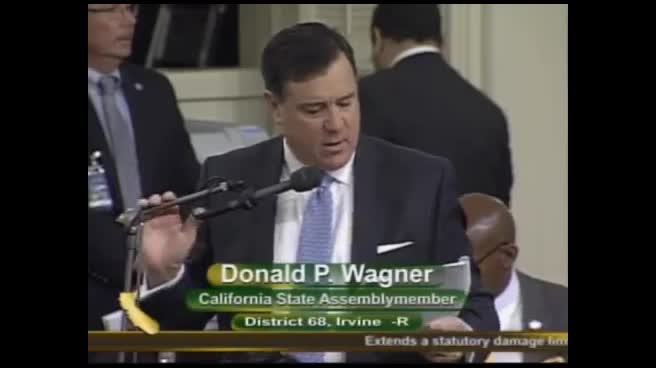 1MIN
Assembly Floor
Bill Author

Bill Co-Author(s):