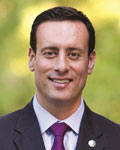
SB 10: Health care coverage: immigration status.
- Session Year: 2015-2016
- House: Senate
- Latest Version Date: 2016-06-10
Existing law, the federal Patient Protection and Affordable Care Act (PPACA), requires each state to establish an American Health Benefit Exchange that facilitates the purchase of qualified health plans by qualified individuals and qualified small employers, and meets certain other requirements. PPACA specifies that an individual who is not a citizen or national of the United States or an alien lawfully present in the United States shall not be treated as a qualified individual and may not be covered under a qualified health plan offered through an exchange. Existing law creates the California Health Benefit Exchange (the Exchange) for the purpose of facilitating the enrollment of qualified individuals and qualified small employers in qualified health plans as required under PPACA.
This bill would require the Exchange to apply to the United States Department of Health and Human Services for a waiver to allow individuals who are not eligible to obtain health coverage through the Exchange because of their immigration status to obtain coverage from the Exchange. The bill would require the Exchange, after that waiver has been granted, to require an issuer that offers a qualified health plan in the individual market through the Exchange to concurrently offer a California qualified health benefit plan, as specified, to these individuals. The requirement to offer California qualified health plans would become operative on January 1, 2018, for coverage effective for California qualified health plans beginning January 1, 2019, as specified. The bill would require that individuals eligible to purchase California qualified health plans pay the cost of coverage without federal assistance and meet other specified requirements. The bill would require that information provided by an applicant for coverage under the bill be used only for the purposes of, and to the extent necessary for, ensuring the efficient operation of the Exchange, including verifying the eligibility of an individual to enroll through the Exchange, and would prohibit that information from being disclosed to any other person except as provided by the bill.
This bill would declare that it is to take effect immediately as an urgency statute.
Existing law, the federal Patient Protection and Affordable Care Act (PPACA), requires each state to establish an American Health Benefit Exchange that facilitates the purchase of qualified health plans by qualified individuals and qualified small employers, and meets certain other requirements. PPACA specifies that an individual who is not a citizen or national of the United States or an alien lawfully present in the United States shall not be treated as a qualified individual and may not be covered under a qualified health plan offered through an exchange. Existing law creates the California Health Benefit Exchange (the Exchange) for the purpose of facilitating the enrollment of qualified individuals and qualified small employers in qualified health plans as required under PPACA.
This bill would require the Secretary of California Health and Human Services Exchange to apply to the United States Department of Health and Human Services for a waiver to allow individuals who are not eligible to obtain health coverage through the Exchange because of their immigration status to obtain coverage from the Exchange. The bill would require, require the Exchange, after that waiver has been granted, the Exchange to offer require an issuer that offers a qualified health plan in the individual market through the Exchange to concurrently offer a California qualified health benefit plans, plan, as specified, to these individuals. The requirement to offer California qualified health plans would become operative on January 1, 2018, for coverage effective for California qualified health plans beginning January 1, 2019, as specified. The bill would require that individuals eligible to purchase California qualified health plans pay the cost of coverage without federal assistance. assistance and meet other specified requirements. The bill would require that information provided by an applicant for coverage under the bill be used only for the purposes of, and to the extent necessary for, ensuring the efficient operation of the Exchange, including verifying the eligibility of an individual to enroll through the Exchange, and would prohibit that information from being disclosed to any other person except as provided by the bill.
This bill would declare that it is to take effect immediately as an urgency statute.
Existing law, the federal Patient Protection and Affordable Care Act (PPACA), requires each state to establish an American Health Benefit Exchange that facilitates the purchase of qualified health plans by qualified individuals and qualified small employers, and meets certain other requirements. PPACA specifies that an individual who is not a citizen or national of the United States or an alien lawfully present in the United States shall not be treated as a qualified individual and may not be covered under a qualified health plan offered through an exchange. Existing law creates the California Health Benefit Exchange (the Exchange) for the purpose of facilitating the enrollment of qualified individuals and qualified small employers in qualified health plans as required under PPACA.
This bill would require the Secretary of California Health and Human Services to apply to the United States Department of Health and Human Services for a waiver to allow individuals who are not eligible to obtain health coverage through the Exchange because of their immigration status to obtain coverage from the Exchange. The bill would require, after that waiver has been granted, the Exchange to offer California qualified health benefit plans, as specified, to these individuals. The bill would require that individuals eligible to purchase California qualified health plans pay the cost of coverage without federal assistance.
This bill would declare that it is to take effect immediately as an urgency statute.
Existing law, the federal Patient Protection and Affordable Care Act (PPACA), requires each state to establish an American Health Benefit Exchange that facilitates the purchase of qualified health plans by qualified individuals and qualified small employers, and meets certain other requirements. PPACA specifies that an individual who is not a citizen or national of the United States or an alien lawfully present in the United States shall not be treated as a qualified individual and may not be covered under a qualified health plan offered through an exchange. Existing law creates the California Health Benefit Exchange for the purpose of facilitating the enrollment of qualified individuals and qualified small employers in qualified health plans as required under PPACA.
This bill would require the Secretary of California Health and Human Services to apply to the United States Department of Health and Human Services for a waiver to allow individuals who are not eligible to obtain health coverage because of their immigration status to obtain coverage from the Exchange. The bill would require, after that waiver has been granted, the Exchange to offer California qualified health benefit plans, as specified, to these individuals. The bill would require that individuals eligible to purchase California qualified health plans pay the cost of coverage without federal assistance.
Existing law provides for the Medi-Cal program, which is administered by the State Department of Health Care Services, under which qualified low-income individuals receive health care services. The Medi-Cal program is, in part, governed and funded by federal Medicaid Program provisions. The federal Medicaid Program provisions prohibit payment to a state for medical assistance furnished to an alien who is not lawfully admitted for permanent residence or otherwise permanently residing in the United States under color of law.
This bill would extend eligibility for full-scope Medi-Cal benefits to individuals 19 years of age and older who are otherwise eligible for those benefits but for their immigration status if the department determines that sufficient funding is available, or for limited scope Medi-Cal benefits if funding for full-scope benefits is not available. The bill would require these individuals to enroll into Medi-Cal managed care health plans, and to pay copayments and premium contributions, to the extent required of otherwise eligible Medi-Cal recipients who are similarly situated. The bill would require that benefits for those services be provided with state-only funds only if federal financial participation is not available. Because counties are required to make Medi-Cal eligibility determinations and this bill would expand Medi-Cal eligibility, the bill would impose a state-mandated local program.
The California Constitution requires the state to reimburse local agencies and school districts for certain costs mandated by the state. Statutory provisions establish procedures for making that reimbursement.
This bill would provide that, if the Commission on State Mandates determines that the bill contains costs mandated by the state, reimbursement for those costs shall be made pursuant to these statutory provisions.
Existing law establishes the Naturalization Services Program, administered within the Department of Community Services and Development, to fund community-based organizations in assisting legal permanent residents in obtaining citizenship.
This bill would establish the Office of New Americans in the Governors office, administered by a director appointed by the Governor, for the purpose of, among other things, coordinating an ongoing multiagency, multisector public and private effort to provide information and services to new Americans, overseeing the creation of a statewide strategic plan for the coordination and implementation of any presidential executive action on immigration reform or federal comprehensive immigration reform, and providing outreach, education, and fraud prevention services to the new American population. The bill would require the office to develop and report a comprehensive statewide assessment of integration programs, services, and funding, and a statewide strategic plan for integration of Californias new Americans, to the Governor and Legislature, on or before July 1, 2016. The bill would also require the office to develop an online clearinghouse of immigrant integration information, including services, resources, and programs. The bill would also create the Office of New Americans Fund, would authorize the office to receive private donations, and would require those donations to be deposited into the fund, which, upon appropriation, would fund the cost of establishing the office and performing the duties described above.
Existing law establishes the Naturalization Services Program, administered within the Department of Community Services and Development, to fund community-based organizations in assisting legal permanent residents in obtaining citizenship.
This bill would establish the Office of New Americans in the Governors office office, administered by a director appointed by the Governor, for the purpose of, among other things, coordinating an ongoing multiagency, multisector public and private effort to provide information and services to new Americans, overseeing the creation of a statewide strategic plan for the coordination and implementation of any presidential executive action on immigration reform or federal comprehensive immigration reform, and providing outreach, education, and fraud prevention services to the new American population. The bill would require the office to develop and report a comprehensive statewide assessment of integration programs, services, and funding, and a statewide strategic plan for integration of Californias new Americans, to the Governor and Legislature, on or before July 1, 2016. The bill would also require the office to develop an online clearinghouse of immigrant integration information, including services, resources, and programs. The bill would also create the Office of New Americans Fund, would authorize the office to receive private donations, and would require those donations to be deposited into the fund, which, upon appropriation, would fund the cost of establishing the office and performing the duties described above.
Existing law establishes the Naturalization Services Program, administered within the Department of Community Services and Development, to fund community-based organizations in assisting legal permanent residents in obtaining citizenship.
This bill would establish the Office of New Americans in the Governors office for the purpose of, among other things, coordinating an ongoing multiagency, multisector public and private effort to provide information and services to new Americans, overseeing the creation of a statewide plan for the coordination and implementation of any presidential executive action on immigration reform or federal comprehensive immigration reform, and providing outreach, education, and fraud prevention services to the new American population.
(a)(1)The Exchange shall apply to the United States Department of Health and Human Services for a waiver authorized under Section 1332 of the federal act as defined in subdivision (e) of Section 100501 in order to allow persons otherwise not able to obtain coverage by reason of immigration status through the Exchange to obtain coverage from the Exchange by waiving the requirement that the Exchange offer only qualified health plans solely for the purpose of offering coverage to persons otherwise not able to obtain coverage by reason of immigration status.
(2)The waiver of the requirement that the Exchange offer only qualified health plans as described in paragraph (1) shall be limited to requiring the Exchange to offer California qualified health plans consistent with this section only and shall not be construed to authorize the Exchange to offer any other nonqualified health plan.
(b)The Exchange shall require an issuer that offers a qualified health plan in the individual market through the Exchange to concurrently offer a California qualified health plan that meets all of the following criteria:
(1)Is subject to the requirements of this title, including all of those requirements applicable to qualified health plans.
(2)Is subject to the requirements of subdivisions (a), (b), and (d) of Section 1366.6 of the Health and Safety Code and subdivisions (a), (b), and (d) of Section 10112.3 of the Insurance Code in the same manner as qualified health plans.
(3)Is identical to the corresponding qualified health plan, except for the eligibility requirements set forth in subdivision (c).
(c)Persons eligible to purchase California qualified health plans shall pay the cost of coverage and shall not:
(1)Be eligible to receive federal advanced premium tax credit, federal cost-sharing reduction, or any other federal assistance for the payment of premiums or cost sharing for a California qualified health plan.
(2)Otherwise be eligible for enrollment in a qualified health plan offered through the Exchange by reason of immigration status.
(d)An applicant for coverage under this section shall be required to provide only the information strictly necessary to authenticate identity and determine eligibility under this section. Any person who receives information provided by an applicant under this section, whether directly or by another person at the request of the applicant, or receives information from any agency, shall use the information only for the purposes of, and to the extent necessary for, ensuring the efficient operation of the Exchange, including verifying the eligibility of an individual to enroll through the Exchange. That information shall not be disclosed to any other person except as provided in this section.
(e)Subdivisions (b) to (d), inclusive, shall become operative on January 1, 2018, for coverage effective for California qualified health plans beginning January 1, 2019, contingent upon federal approval of the waiver pursuant to subdivision (a).
SEC. 2.This act is an urgency statute necessary for the immediate preservation of the public peace, health, or safety within the meaning of Article IV of the Constitution and shall go into immediate effect. The facts constituting the necessity are:
In order to request federal approval of the waiver to expand access to health care coverage in California as quickly as possible, it is necessary that this act go into immediate effect.
(a)(1)The Secretary of California Health and Human Services Exchange shall apply to the United States Department of Health and Human Services for a waiver authorized under Section 1332 of the federal act as defined in subdivision (e) of Section 100501 in order to allow persons otherwise not able to obtain coverage by reason of immigration status through the Exchange to obtain coverage from the Exchange by waiving the requirement that the Exchange offer only qualified health plans solely for the purpose of offering coverage to persons otherwise not able to obtain coverage by reason of immigration status.
(2)The waiver of the requirement that the Exchange offer only qualified health plans as described in paragraph (1) shall be limited to requiring the Exchange to offer California qualified health plans consistent with this section only and shall not be construed to authorize the Exchange to offer any other nonqualified health plan.
(b)The Exchange shall offer require an issuer that offers a qualified health plan in the individual market through the Exchange to concurrently offer a California qualified health plans that shall be subject to the requirements of this title, including all of those requirements applicable to qualified health plans. In addition, California qualified health plans shall be subject to the requirements of Section 1366.6 of the Health and Safety Code and Section 10112.3 of the Insurance Code in the same manner as qualified health plans. plan that meets all of the following criteria:
(1)Is subject to the requirements of this title, including all of those requirements applicable to qualified health plans.
(2)Is subject to the requirements of subdivisions (a), (b), and (d) of Section 1366.6 of the Health and Safety Code and subdivisions (a), (b), and (d) of Section 10112.3 of the Insurance Code in the same manner as qualified health plans.
(3)Is identical to the corresponding qualified health plan, except for the eligibility requirements set forth in subdivision (c).
(c)Persons eligible to purchase California qualified health plans shall pay the cost of coverage without federal advanced premium tax credit, federal cost-sharing reduction, or any other federal assistance.
(c)Persons eligible to purchase California qualified health plans shall pay the cost of coverage and shall not:
(1)Be eligible to receive federal advanced premium tax credit, federal cost-sharing reduction, or any other federal assistance for the payment of premiums or cost sharing for a California qualified health plan.
(2)Otherwise be eligible for enrollment in a qualified health plan offered through the Exchange by reason of immigration status.
(d)An applicant for coverage under this section shall be required to provide only the information strictly necessary to authenticate identity and determine eligibility under this section. Any person who receives information provided by an applicant under this section, whether directly or by another person at the request of the applicant, or receives information from any agency, shall use the information only for the purposes of, and to the extent necessary for, ensuring the efficient operation of the Exchange, including verifying the eligibility of an individual to enroll through the Exchange. That information shall not be disclosed to any other person except as provided in this section.
(d)
(e)Subdivisions (b) and (c) (b) to (d), inclusive, shall become operative on January 1, 2018, for coverage effective for California qualified health plans beginning January 1, 2019, contingent upon federal approval of the waiver pursuant to subdivision (a).
(e)For purposes of this section, a California qualified health plan means a product offered to persons not otherwise eligible to purchase coverage from the Exchange by reason of immigration status and that comply with each of the requirements of state law and the Exchange for a qualified health plan.
SEC. 2.This act is an urgency statute necessary for the immediate preservation of the public peace, health, or safety within the meaning of Article IV of the Constitution and shall go into immediate effect. The facts constituting the necessity are:
In order to request federal approval of the waiver to expand access to health care coverage in California as quickly as possible, it is necessary that this act go into immediate effect.
(a)The Secretary of California Health and Human Services shall apply to the United States Department of Health and Human Services for a waiver authorized under Section 1332 of the federal act as defined in subdivision (e) of Section 100501 in order to allow persons otherwise not able to obtain coverage by reason of immigration status through the Exchange to obtain coverage from the Exchange by waiving the requirement that the Exchange offer only qualified health plans solely for the purpose of offering coverage to persons otherwise not able to obtain coverage by reason of immigration status.
(b)The Exchange shall offer California qualified health plans that shall be subject to the requirements of this title, including all of those requirements applicable to qualified health plans. In addition, California qualified health plans shall be subject to the requirements of Section 1366.6 of the Health and Safety Code and Section 10112.3 of the Insurance Code in the same manner as qualified health plans.
(c)Persons eligible to purchase California qualified health plans shall pay the cost of coverage without federal advanced premium tax credit, federal cost-sharing reduction, or any other federal assistance.
(d)Subdivisions (b) and (c) shall become operative upon federal approval of the waiver pursuant to subdivision (a).
(e)For purposes of this section, a California qualified health plan means a product offered to persons not otherwise eligible to purchase coverage from the Exchange by reason of immigration status and that comply with each of the requirements of state law and the Exchange for a qualified health plan.
SEC. 2.This act is an urgency statute necessary for the immediate preservation of the public peace, health, or safety within the meaning of Article IV of the Constitution and shall go into immediate effect. The facts constituting the necessity are:
In order to request federal approval of the waiver to expand access to health care coverage in California as quickly as possible, it is necessary that this act go into immediate effect.
(a)The Legislature finds and declares all of the following:
(1)The Legislature and the Governor, through the enactment of the Budget Act of 2015 (Chapter 11 of the Statutes of 2015), expanded Medi-Cal eligibility for children to ensure that no child in California who is income eligible will be denied access to health care coverage on the basis of immigration status.
(2)Expanding access and increasing enrollment in comprehensive health care coverage is of benefit to the health and welfare of all Californians.
(3)Longstanding California law provides full-scope Medi-Cal benefits to United States citizens, lawful permanent residents, and individuals permanently residing in the United States under color of law, including those granted deferred action.
(b)It is the intent of the Legislature in enacting this act to increase opportunities for enrollment in comprehensive health care coverage for adults, regardless of immigration status.
(c)It is further the intent of the Legislature that all Californians who are otherwise eligible for Medi-Cal, a qualified health plan offered through the California Health Benefit Exchange, or affordable employer-based health coverage, enroll in that coverage, and obtain the care that they need.
SEC. 2.SECTION 1.Section 100522 is added to the Government Code, to read:100522.(a)The Secretary of California Health and Human Services shall apply to the United States Department of Health and Human Services for a waiver authorized under Section 1332 of the federal act as defined in subdivision (e) of Section 100501 in order to allow persons otherwise not able to obtain coverage by reason of immigration status through the Exchange to obtain coverage from the Exchange by waiving the requirement that the Exchange offer only qualified health plans solely for the purpose of offering coverage to persons otherwise not able to obtain coverage by reason of immigration status.
(b)The Exchange shall offer California qualified health plans that shall be subject to the requirements of this title, including all of those requirements applicable to qualified health plans. In addition, California qualified health plans shall be subject to the requirements of Section 1366.6 of the Health and Safety Code and Section 10112.3 of the Insurance Code in the same manner as qualified health plans.
(c)Persons eligible to purchase California qualified health plans shall pay the cost of coverage without federal advanced premium tax credit, federal cost-sharing reduction, or any other federal assistance.
(d)Subdivisions (b) and (c) shall become operative upon federal approval of the waiver pursuant to subdivision (a).
(e)For purposes of this section, a California qualified health plan means a product offered to persons not otherwise eligible to purchase coverage from the Exchange by reason of immigration status and that comply with each of the requirements of state law and the Exchange for a qualified health plan.
SEC. 3.Section 14102.1 is added to the Welfare and Institutions Code, to read:14102.1.(a)(1)Notwithstanding any other law, an individual 19 years of age or older who meets all of the eligibility requirements for full-scope Medi-Cal benefits under this chapter, but for his or her immigration status, may be enrolled for full-scope Medi-Cal benefits, pursuant to paragraph (2).
(2)When a county completes the Medi-Cal eligibility determination process for an individual 19 years of age or older who meets all of the eligibility requirements for full-scope Medi-Cal benefits under this chapter, but for his or her immigration status, the county shall transmit this information to the department to determine if sufficient funding is available for this individual to receive full-scope Medi-Cal benefits. If sufficient funding is available, the individual shall be eligible for full-scope benefits. If sufficient funding is not available, the individual shall be eligible for limited scope Medi-Cal benefits.
(b)This section shall not apply to individuals eligible for coverage pursuant to Section 14102.
(c)An individual who is eligible for coverage under subdivision (a) shall be required to enroll into Medi-Cal managed care health plans to the extent required of otherwise eligible Medi-Cal recipients who are similarly situated.
(d)An individual who is eligible for coverage under subdivision (a) shall pay copayments and premium contributions to the extent required of otherwise eligible Medi-Cal recipients who are similarly situated.
(e)Benefits for services under this section shall be provided with state-only funds only if federal financial participation is not available for those services. The department shall maximize federal financial participation in implementing this section to the extent allowable.
(f)Eligibility for full-scope Medi-Cal benefits for an individual 19 years of age or older pursuant to subdivision (a) shall not be an entitlement. The department shall have the authority to determine eligibility, determine the number of individuals who may be enrolled, establish limits on the number enrolled, and establish processes for waiting lists needed to maintain program expenditures within available funds.
(g)Notwithstanding Chapter 3.5 (commencing with Section 11340) of Part 1 of Division 3 of Title 2 of the Government Code, the department, without taking any further regulatory action, shall implement, interpret, or make specific this section by means of all-county letters, plan letters, plan or provider bulletins, or similar instructions until the time regulations are adopted. The department shall adopt regulations by July 1, 2018, in accordance with the requirements of Chapter 3.5 (commencing with Section 11340) of Part 1 of Division 3 of Title 2 of the Government Code. Commencing July 1, 2016, and notwithstanding Section 10231.5 of the Government Code, the department shall provide a status report to the Legislature on a semiannual basis, in compliance with Section 9795 of the Government Code, until regulations have been adopted.
SEC. 4.If the Commission on State Mandates determines that this act contains costs mandated by the state, reimbursement to local agencies and school districts for those costs shall be made pursuant to Part 7 (commencing with Section 17500) of Division 4 of Title 2 of the Government Code.
(a)The Legislature finds and declares all of the following:
(1)The Legislature and the Governor, through the enactment of the Budget Act of 2015 (Chapter 11 of the Statutes of 2015), expanded Medi-Cal eligibility for children to ensure that no child in California who is income eligible will be denied access to health care coverage on the basis of immigration status.
(2)Expanding access and increasing enrollment in comprehensive health care coverage is of benefit to the health and welfare of all Californians.
(3)Longstanding California law provides full-scope Medi-Cal benefits to United States citizens, lawful permanent residents, and individuals permanently residing in the United States under color of law, including those granted deferred action.
(b)It is the intent of the Legislature in enacting this act to increase opportunities for enrollment in comprehensive health care coverage for adults, regardless of immigration status.
(c)It is further the intent of the Legislature that all Californians who are otherwise eligible for Medi-Cal, a qualified health plan offered through the California Health Benefit Exchange, or affordable employer-based health coverage, enroll in that coverage, and obtain the care that they need.
SEC. 2.Section 100522 is added to the Government Code, to read:100522.(a)The Secretary of California Health and Human Services shall apply to the United States Department of Health and Human Services for a waiver authorized under Section 1332 of the federal act as defined in subdivision (e) of Section 100501 in order to allow persons otherwise not able to obtain coverage by reason of immigration status through the Exchange to obtain coverage from the Exchange by waiving the requirement that the Exchange offer only qualified health plans solely for the purpose of offering coverage to persons otherwise not able to obtain coverage by reason of immigration status.
(b)The Exchange shall offer California qualified health plans that shall be subject to the requirements of this title, including all of those requirements applicable to qualified health plans. In addition, California qualified health plans shall be subject to the requirements of Section 1366.6 of the Health and Safety Code and Section 10112.3 of the Insurance Code in the same manner as qualified health plans.
(c)Persons eligible to purchase California qualified health plans shall pay the cost of coverage without federal advanced premium tax credit, federal cost-sharing reduction, or any other federal assistance.
(d)Subdivisions (b) and (c) shall become operative upon federal approval of the waiver pursuant to subdivision (a).
(e)For purposes of this section, a California qualified health plan means a product offered to persons not otherwise eligible to purchase coverage from the Exchange by reason of immigration status and that comply with each of the requirements of state law and the Exchange for a qualified health plan.
SEC. 2.SEC. 3.Section 14102.1 is added to the Welfare and Institutions Code, to read:14102.1.(a)(1)Notwithstanding any other law, an individual 19 years of age or older who meets all of the eligibility requirements for full-scope Medi-Cal benefits under this chapter, but for his or her immigration status, may be enrolled for full-scope Medi-Cal benefits, pursuant to paragraph (2).
(2)When a county completes the Medi-Cal eligibility determination process for an individual 19 years of age or older who meets all of the eligibility requirements for full-scope Medi-Cal benefits under this chapter, but for his or her immigration status, the county shall transmit this information to the department to determine if sufficient funding is available for this individual to receive full-scope Medi-Cal benefits. If sufficient funding is available, the individual shall be eligible for full-scope benefits. If sufficient funding is not available, the individual shall be eligible for limited scope Medi-Cal benefits.
(b)This section shall not apply to individuals eligible for coverage pursuant to Section 14102.
(c)An individual who is eligible for coverage under subdivision (a) shall be required to enroll into Medi-Cal managed care health plans to the extent required of otherwise eligible Medi-Cal recipients who are similarly situated.
(d)An individual who is eligible for coverage under subdivision (a) shall pay copayments and premium contributions to the extent required of otherwise eligible Medi-Cal recipients who are similarly situated.
(e)Benefits for services under this section shall be provided with state-only funds only if federal financial participation is not available for those services. The department shall maximize federal financial participation in implementing this section to the extent allowable.
(f)Eligibility for full-scope Medi-Cal benefits for an individual 19 years of age or older pursuant to subdivision (a) shall not be an entitlement. The department shall have the authority to determine eligibility, determine the number of individuals who may be enrolled, establish limits on the number enrolled, and establish processes for waiting lists needed to maintain program expenditures within available funds.
(g)Notwithstanding Chapter 3.5 (commencing with Section 11340) of Part 1 of Division 3 of Title 2 of the Government Code, the department, without taking any further regulatory action, shall implement, interpret, or make specific this section by means of all-county letters, plan letters, plan or provider bulletins, or similar instructions until the time regulations are adopted. The department shall adopt regulations by July 1, 2018, in accordance with the requirements of Chapter 3.5 (commencing with Section 11340) of Part 1 of Division 3 of Title 2 of the Government Code. Commencing July 1, 2016, and notwithstanding Section 10231.5 of the Government Code, the department shall provide a status report to the Legislature on a semiannual basis, in compliance with Section 9795 of the Government Code, until regulations have been adopted.
SEC. 3.SEC. 4.If the Commission on State Mandates determines that this act contains costs mandated by the state, reimbursement to local agencies and school districts for those costs shall be made pursuant to Part 7 (commencing with Section 17500) of Division 4 of Title 2 of the Government Code.
(a)The Legislature finds and declares all of the following:
(1)The Legislature and the Governor, through the enactment of the Budget Act of 2015 (Chapter 11 of the Statutes of 2015), expanded Medi-Cal eligibility for children to ensure that no child in California who is income eligible will be denied access to health care coverage on the basis of immigration status.
(2)Expanding access and increasing enrollment in comprehensive health care coverage is of benefit to the health and welfare of all Californians.
(3)Longstanding California law provides full-scope Medi-Cal benefits to United States citizens, lawful permanent residents, and individuals permanently residing in the United States under color of law, including those granted deferred action.
(b)It is the intent of the Legislature in enacting this act to increase opportunities for enrollment in comprehensive health care coverage for adults, regardless of immigration status.
(c)It is further the intent of the Legislature that all Californians who are otherwise eligible for Medi-Cal, a qualified health plan offered through the California Health Benefit Exchange, or affordable employer-based health coverage, enroll in that coverage, and obtain the care that they need.
SEC. 2.Section 14102.1 is added to the Welfare and Institutions Code, to read:14102.1.(a)(1)Notwithstanding any other law, an individual 19 years of age or older who meets all of the eligibility requirements for full-scope Medi-Cal benefits under this chapter, but for his or her immigration status, may be enrolled for full-scope Medi-Cal benefits, pursuant to paragraph (2).
(2)When a county completes the Medi-Cal eligibility determination process for an individual 19 years of age or older who meets all of the eligibility requirements for full-scope Medi-Cal benefits under this chapter, but for his or her immigration status, the county shall transmit this information to the department to determine if sufficient funding is available for this individual to receive full-scope Medi-Cal benefits. If sufficient funding is available, the individual shall be eligible for full-scope benefits. If sufficient funding is not available, the individual shall be eligible for limited scope Medi-Cal benefits.
(b)This section shall not apply to individuals eligible for coverage pursuant to Section 14102.
(c)An individual who is eligible for coverage under subdivision (a) shall be required to enroll into Medi-Cal managed care health plans to the extent required of otherwise eligible Medi-Cal recipients who are similarly situated.
(d)An individual who is eligible for coverage under subdivision (a) shall pay copayments and premium contributions to the extent required of otherwise eligible Medi-Cal recipients who are similarly situated.
(e)Benefits for services under this section shall be provided with state-only funds only if federal financial participation is not available for those services. The department shall maximize federal financial participation in implementing this section to the extent allowable.
(f)Eligibility for full-scope Medi-Cal benefits for an individual 19 years of age or older pursuant to subdivision (a) shall not be an entitlement. The department shall have the authority to determine eligibility, determine the number of individuals who may be enrolled, establish limits on the number enrolled, and establish processes for waiting lists needed to maintain program expenditures within available funds.
(g)Notwithstanding Chapter 3.5 (commencing with Section 11340) of Part 1 of Division 3 of Title 2 of the Government Code, the department, without taking any further regulatory action, shall implement, interpret, or make specific this section by means of all-county letters, plan letters, plan or provider bulletins, or similar instructions until the time regulations are adopted. The department shall adopt regulations by July 1, 2018, in accordance with the requirements of Chapter 3.5 (commencing with Section 11340) of Part 1 of Division 3 of Title 2 of the Government Code. Commencing July 1, 2016, and notwithstanding Section 10231.5 of the Government Code, the department shall provide a status report to the Legislature on a semiannual basis, in compliance with Section 9795 of the Government Code, until regulations have been adopted.
SEC. 3.If the Commission on State Mandates determines that this act contains costs mandated by the state, reimbursement to local agencies and school districts for those costs shall be made pursuant to Part 7 (commencing with Section 17500) of Division 4 of Title 2 of the Government Code.
SECTION 1.The Legislature finds and declares all of the following:
(a)An estimated 2.6 million Californians are undocumented immigrants. One in six children lives with an undocumented parent. Eighty percent of these children are native born United States citizens who stand to benefit from increased family stability and economic security.
(b)Last year, President Obama implemented an executive action to expand deferred action on millions of Americans. This population will need assistance with understanding eligibility, accessing resources, and completing the requisite applications for deferred action.
(c)Unfortunately, even with this expanded relief, half of Californias undocumented residents, more than one million people, are still excluded. Those Californians excluded from relief are an integral part of Californias communities and workforce, and share households with citizens, lawful permanent residents, and immigrants who are eligible to apply for deportation protection. Yet, those community members who are left behind will continue to face the threat of family separation and deportation. Any statewide immigrant integration strategy must reflect and protect the needs of this important population.
(d)California, which has the largest undocumented population in the nation, has more to gain from immigration reform than any other state. Californias future depends on our ability to successfully integrate immigrants, regardless of their immigration status, into the states economic, social, and political fabric.
(e)One in 11 workers is an undocumented immigrant. Legalization will allow undocumented immigrants to join the formal economy and increase their economic contributions. Studies show that immigrants are better off, by almost any economic measure, after gaining legal status and citizenship. And what is good for Californias undocumented residents is good for the state.
(f)Immigrant workers are important to our states economy. Studies show that immigrant workers contribute about 31 percent of Californias gross domestic product (GDP). Undocumented immigrants in our state contribute about $130 billion of Californias GDP, which is a figure greater than the entire GDP of the state of Nevada, and contribute more than $3.2 billion in state and local taxes.
(g)Immigrant households also make up 27 percent of the total household income in California, representing a substantial share of all spending power in this state.
(h)There are 1,214,000 undocumented immigrants in California who are potentially eligible for deferred action under President Obamas recent executive actions on immigration. If those immigrants are able to receive a temporary work permit, it would lead to a $940 million increase in tax revenues for California over five years.
(i)Expanding deferred action will significantly strengthen Californias economy. When undocumented immigrants can work legally, they are able to shield themselves against workplace exploitation and move freely across the labor market to find jobs, leading to an 8.5 percent increase in their earnings. For the average undocumented immigrant, that means that he or she is taking home an additional $1,872 each year. As these extra earnings are spent throughout the economy, demand for goods and services rises, spurring job creation and raising the wages of all American workers.
(j)Currently, five states, New York, Maryland, Maine, Massachusetts, and Illinois have some form of statewide immigrant integration office. Yet, despite Californias historic, forward-looking reforms and significant investment in new Americans, to date, our state still lacks a proactive, statewide immigrant integration effort and the most basic infrastructure for assessment, planning, and coordination of programs, policies, and budget efforts for ongoing new American integration. Absent this coordination, undocumented Californians and the states economy will not see the largest possible return on investment, both in terms of social integration and economic potential.
(k)The success of a large-scale administrative relief implementation program and effective implementation of current and future state immigrant integration policies will depend significantly upon the coordination of a multiagency, multisector, statewide, public and private effort led by an experienced director. The state must also apply a coordinated effort that leverages private and public local, state, and federal resources to help fund the key programs and services that provide accurate, accessible information and services, including education, naturalization services, fraud prevention services, application assistance, legal services, and outreach about immigrant integration opportunities to immigrants.
SEC. 2.Chapter 1.7 (commencing with Section 12100.10) is added to Part 2 of Division 3 of Title 2 of the Government Code, to read:1.7.The Governors Office of New Americans12100.10.There is within the Governors office an Office of New Americans. The Governor shall appoint a director to administer the office.
12100.11.The duties of the office shall include, but are not limited to, all of the following:
(a)Develop a comprehensive statewide assessment of integration programs, services, and funding that serve immigrants, regardless of status. The assessment shall include, but is not limited to, an evaluation of all of the following:
(1)Federal, state, and local laws and regulations that create programs or authorize the access of participation of immigrants, regardless of legal status.
(2)Programs and services currently managed by a state agency or department, local governmental agency, including local offices of immigrant affairs established by the County of Los Angeles, the City and County of San Francisco, and the County of Santa Clara, and nonprofit organizations to support California immigrant integration, such as naturalization services and other immigrant assistance programs, including their funding levels, source of funding, and the agency or department responsible for administering the funding or implementing the program.
(b)On or before July 1, 2016, report the findings of the assessment described in subdivision (a) and a statewide strategic plan for integration of Californias new Americans to the Governor and Legislature, including a strategy for monitoring and coordinating implementation of immigrant integration policy and programs.
(1)The plan shall include, but not be limited to, all of the following:
(A)The steps necessary for, and the feasibility of, interoffice and interagency coordination of programs, services, and resources.
(B)Recommendations for shifting or consolidating programs and services, if any.
(C)Recommendations for tracking implementation of federal, state, and local immigrant integration laws, programs, and services, including policy recommendations, if any.
(D)Recommendations for the coordination of outreach, education, and fraud prevention services by other public agencies and private organizations to ensure that the new American population has accurate information relating to eligibility requirements with regard to presidential executive action, comprehensive immigration reform (CIR), federal Deferred Action for Childhood Arrivals (DACA), federal Deferred Action for Parental Accountability (DAPA), programs for unaccompanied minors, and other policies, and where to obtain reputable application assistance and legal services.
(2)The requirement for submitting a report imposed by this subdivision is inoperative on January 1, 2020, pursuant to Section 10231.5.
(3)A report to be submitted pursuant to this subdivision shall be submitted in compliance with Section 9795.
(c)On or after July 1, 2016, develop an online clearinghouse of immigrant integration information, including services, resources, and programs.
(d)Monitor the implementation of state laws and regulations, including, but not limited to, all of the following:
(1)Federal Deferred Action for Childhood Arrivals, federal Deferred Action for Parental Accountability, and any other presidential executive action on immigration reform or comprehensive immigration reform.
(2)Unaccompanied Minors Program.
(3)Chapter 524 of the Statutes of 2013 (Assembly Bill 60 of the 201314 Regular Session).
(4)Chapter 17.1 (commencing with Section 7282) of Division 7 of Title 1, commonly referred to as the TRUST Act.
(5)Chapter 752 of the Statutes of 2014 (Senate Bill 1159 of the 201314 Regular Session).
(6)Chapter 814 of the Statues of 2001 (Assembly Bill 540 of the 200102 Regular Session).
(7)Chapters 93 and 604 of the Statutes of 2011 (Assembly Bills 130 and 131 of the 201112 Regular Session), commonly referred to as the Dream Act.
(8)Chapter 754 of the Statutes of 2014 (Senate Bill 1210 of the 201314 Regular Session), commonly referred to as the DREAM Loan.
(e)Create neighborhood-based connections between new Americans and their communities through civic engagement and other opportunities.
(f)Marshal resources to fund these efforts.
12100.12.(a)The Office of New Americans Fund is hereby created in the State Treasury. Moneys in the fund shall be used to pay the cost of establishing the office, and any other purpose authorized by this chapter.
(b)The Office of New Americans Fund may be funded by both private and public funds. The office may accept private cash donations to be used for the purposes described in this chapter. Cash donations received pursuant to this subdivision shall be deposited into the fund and shall be made available upon appropriation by the Legislature.
The Legislature finds and declares all of the following:
(a)An estimated 2.6 million Californians are undocumented immigrants. One in six children lives with an undocumented parent. Eighty percent of these children are native born United States citizens who stand to benefit from increased family stability and economic security.
(b)President Obama has recently decided to employ Last year, President Obama implemented an executive action to expand deferred action on millions of Americans. This population will need assistance with understanding eligibility, accessing resources resources, and completing the requisite applications for deferred action.
(c)Unfortunately, even with this expanded relief, half of Californias undocumented residents, more than one million people, are still excluded. Those Californians excluded from relief are an integral part of Californias communities and workforce, and share households with citizens, lawful permanent residents, and immigrants who are eligible to apply for deportation protection. Yet, those community members who are left behind will continue to face the threat of family separation and deportation. Any statewide immigrant integration strategy must reflect and protect the needs of this important population.
(c)
(d)California, which has the largest undocumented population in the nation, has more to gain from immigration reform than any other state. Californias future depends on our ability to successfully integrate immigrants, regardless of their immigration status, into the states economic, social, and political fabric.
(d)
(e)One in 11 workers is an undocumented immigrant. Legalization will allow undocumented immigrants to join the formal economy and increase their economic contributions. Studies show that immigrants are better off, by almost any economic measure, after gaining legal status and citizenship. And what is good for Californias undocumented residents is good for the state.
(e)
(f)Immigrant workers are important to our states economy. Studies show that immigrant workers contribute about 31 percent of Californias gross domestic product (GDP). Undocumented immigrants in our state contribute about $130 billion of Californias GDP, which is a figure greater than the entire GDP of the state of Nevada. Nevada, and contribute more than $3.2 billion in state and local taxes.
(f)
(g)Immigrant households also make up 27 percent of the total household income in California, representing a substantial share of all spending power in this state.
(g)The success of a large-scale legalization program will depend significantly upon the coordination of a multiagency, multisector, statewide public and private effort to provide undocumented immigrants accurate, accessible information and services. The state must develop a coordinated effort that leverages public and private resources to provide education, fraud prevention services, application assistance, legal services, English instruction, and civics classes to undocumented immigrants.
(h)There are 1,214,000 undocumented immigrants in California who are potentially eligible for deferred action under President Obamas recent executive actions on immigration. If those immigrants are able to receive a temporary work permit, it would lead to a $940 million increase in tax revenues for California over five years.
(i)Expanding deferred action will significantly strengthen Californias economy. When undocumented immigrants can work legally, they are able to shield themselves against workplace exploitation and move freely across the labor market to find jobs, leading to an 8.5 percent increase in their earnings. For the average undocumented immigrant, that means that he or she is taking home an additional $1,872 each year. As these extra earnings are spent throughout the economy, demand for goods and services rises, spurring job creation and raising the wages of all American workers.
(j)Currently, five states, New York, Maryland, Maine, Massachusetts, and Illinois have some form of statewide immigrant integration office. Yet, despite Californias historic, forward-looking reforms and significant investment in new Americans, to date, our state still lacks a proactive, statewide immigrant integration effort and the most basic infrastructure for assessment, planning, and coordination of programs, policies, and budget efforts for ongoing new American integration. Absent this coordination, undocumented Californians and the states economy will not see the largest possible return on investment, both in terms of social integration and economic potential.
(k)The success of a large-scale administrative relief implementation program and effective implementation of current and future state immigrant integration policies will depend significantly upon the coordination of a multiagency, multisector, statewide, public and private effort led by an experienced director. The state must also apply a coordinated effort that leverages private and public local, state, and federal resources to help fund the key programs and services that provide accurate, accessible information and services, including education, naturalization services, fraud prevention services, application assistance, legal services, and outreach about immigrant integration opportunities to immigrants.
SEC. 2.Chapter 1.7 (commencing with Section 12099.10) 12100.10) is added to Part 2 of Division 3 of Title 2 of the Government Code, to read:1.7.The Governors Office of New Americans12099.10. 12100.10.There is within the Governors office an Office of New Americans. The Governor shall appoint a director to administer the office.
12099.11. 12100.11.The duties of the office shall include, but are not limited to, all of the following:
(a)Coordinating an ongoing multiagency, multisector public and private effort to provide accurate, accessible information and services to new Americans.
(b)Overseeing the creation of a statewide plan for the coordination and implementation of any presidential executive action on immigration reform or federal comprehensive immigration reform (CIR).
(c)Providing outreach, education, and fraud prevention services to ensure that the new American population has accurate information relating to eligibility requirements with regard to presidential executive action, CIR, federal deferred action for childhood arrivals (DACA), and other policies, and where to obtain reputable application assistance and legal services.
(d)Providing citizenship application assistance, legal services, and English and civics instruction.
(e)Monitoring the implementation of the following:
(1)DACA and any other presidential executive action on immigration reform or CIR.
(2)Chapter 524 of the Statutes of 2013 (Assembly Bill 60 of the 201314 Regular Session).
(3)Chapter 17.1 (commencing with Section 7282) of Division 7 of Title 1 of the Government Code, commonly referred to as the TRUST Act.
(4)Chapter 752 of the Statutes of 2014 (Senate Bill 1159 of the 201314 Regular Session).
(f)Creating neighborhood-based connections between new Americans and their communities through civic engagement and other opportunities.
(g)Marshaling resources to fund these efforts.
(a)Develop a comprehensive statewide assessment of integration programs, services, and funding that serve immigrants, regardless of status. The assessment shall include, but is not limited to, an evaluation of all of the following:
(1)Federal, state, and local laws and regulations that create programs or authorize the access of participation of immigrants, regardless of legal status.
(2)Programs and services currently managed by a state agency or department, local governmental agency, including local offices of immigrant affairs established by the County of Los Angeles, the City and County of San Francisco, and the County of Santa Clara, and nonprofit organizations to support California immigrant integration, such as naturalization services and other immigrant assistance programs, including their funding levels, source of funding, and the agency or department responsible for administering the funding or implementing the program.
(b)On or before July 1, 2016, report the findings of the assessment described in subdivision (a) and a statewide strategic plan for integration of Californias new Americans to the Governor and Legislature, including a strategy for monitoring and coordinating implementation of immigrant integration policy and programs.
(1)The plan shall include, but not be limited to, all of the following:
(A)The steps necessary for, and the feasibility of, interoffice and interagency coordination of programs, services, and resources.
(B)Recommendations for shifting or consolidating programs and services, if any.
(C)Recommendations for tracking implementation of federal, state, and local immigrant integration laws, programs, and services, including policy recommendations, if any.
(D)Recommendations for the coordination of outreach, education, and fraud prevention services by other public agencies and private organizations to ensure that the new American population has accurate information relating to eligibility requirements with regard to presidential executive action, comprehensive immigration reform (CIR), federal Deferred Action for Childhood Arrivals (DACA), federal Deferred Action for Parental Accountability (DAPA), programs for unaccompanied minors, and other policies, and where to obtain reputable application assistance and legal services.
(2)The requirement for submitting a report imposed by this subdivision is inoperative on January 1, 2020, pursuant to Section 10231.5.
(3)A report to be submitted pursuant to this subdivision shall be submitted in compliance with Section 9795.
(c)On or after July 1, 2016, develop an online clearinghouse of immigrant integration information, including services, resources, and programs.
(d)Monitor the implementation of state laws and regulations, including, but not limited to, all of the following:
(1)Federal Deferred Action for Childhood Arrivals, federal Deferred Action for Parental Accountability, and any other presidential executive action on immigration reform or comprehensive immigration reform.
(2)Unaccompanied Minors Program.
(3)Chapter 524 of the Statutes of 2013 (Assembly Bill 60 of the 201314 Regular Session).
(4)Chapter 17.1 (commencing with Section 7282) of Division 7 of Title 1, commonly referred to as the TRUST Act.
(5)Chapter 752 of the Statutes of 2014 (Senate Bill 1159 of the 201314 Regular Session).
(6)Chapter 814 of the Statues of 2001 (Assembly Bill 540 of the 200102 Regular Session).
(7)Chapters 93 and 604 of the Statutes of 2011 (Assembly Bills 130 and 131 of the 201112 Regular Session), commonly referred to as the Dream Act.
(8)Chapter 754 of the Statutes of 2014 (Senate Bill 1210 of the 201314 Regular Session), commonly referred to as the DREAM Loan.
(e)Create neighborhood-based connections between new Americans and their communities through civic engagement and other opportunities.
(f)Marshal resources to fund these efforts.
12100.12.(a)The Office of New Americans Fund is hereby created in the State Treasury. Moneys in the fund shall be used to pay the cost of establishing the office, and any other purpose authorized by this chapter.
(b)The Office of New Americans Fund may be funded by both private and public funds. The office may accept private cash donations to be used for the purposes described in this chapter. Cash donations received pursuant to this subdivision shall be deposited into the fund and shall be made available upon appropriation by the Legislature.
The Legislature finds and declares all of the following:
(a)An estimated 2.6 million Californians are undocumented immigrants. One in six children lives with an undocumented parent. Eighty percent of these children are native born United States citizens who stand to benefit from increased family stability and economic security.
(b)President Obama has recently decided to employ executive action to expand deferred action on millions of Americans. This population will need assistance with accessing resources and completing the requisite applications for deferred action.
(c)California, which has the largest undocumented population in the nation, has more to gain from immigration reform than any other state. Californias future depends on our ability to successfully integrate immigrants, regardless of their immigration status, into the economic, social, and political fabric.
(d)One in 11 workers is an undocumented immigrant. Legalization will allow undocumented immigrants to join the formal economy and increase their economic contributions. Studies show that immigrants are better off, by almost any economic measure, after gaining legal status and citizenship. And what is good for Californias undocumented residents is good for the state.
(e)Immigrant workers are important to our states economy. Studies show that immigrant workers contribute about 31 percent of Californias gross domestic product (GDP). Undocumented immigrants in our state contribute about $130 billion of Californias GDP, which is a figure greater than the entire GDP of the state of Nevada.
(f)Immigrant households also make up 27 percent of the total household income in California, representing a substantial share of all spending power in this state.
(g)The success of a large-scale legalization program will depend significantly upon the coordination of a multiagency, multisector, statewide public and private effort to provide undocumented immigrants accurate, accessible information and services. The state must develop a coordinated effort that leverages public and private resources to provide education, fraud prevention services, application assistance, legal services, English instruction, and civics classes to undocumented immigrants.
SEC. 2.Chapter 1.7 (commencing with Section 12099.10) is added to Part 2 of Division 3 of Title 2 of the Government Code, to read:1.7.The Governors Office of New Americans12099.10.There is within the Governors office an Office of New Americans.
12099.11.The duties of the office shall include, but are not limited to, all of the following:
(a)Coordinating an ongoing multiagency, multisector public and private effort to provide accurate, accessible information and services to new Americans.
(b)Overseeing the creation of a statewide plan for the coordination and implementation of any presidential executive action on immigration reform or federal comprehensive immigration reform (CIR).
(c)Providing outreach, education, and fraud prevention services to ensure that the new American population has accurate information relating to eligibility requirements with regard to presidential executive action, CIR, federal deferred action for childhood arrivals (DACA), and other policies, and where to obtain reputable application assistance and legal services.
(d)Providing citizenship application assistance, legal services, and English and civics instruction.
(e)Monitoring the implementation of the following:
(1)DACA and any other presidential executive action on immigration reform or CIR.
(2)Chapter 524 of the Statutes of 2013 (Assembly Bill 60 of the 201314 Regular Session).
(3)Chapter 17.1 (commencing with Section 7282) of Division 7 of Title 1 of the Government Code, commonly referred to as the TRUST Act.
(4)Chapter 752 of the Statutes of 2014 (Senate Bill 1159 of the 201314 Regular Session).
(f)Creating neighborhood-based connections between new Americans and their communities through civic engagement and other opportunities.
(g)Marshaling resources to fund these efforts.
|
Date
|
Status
|
|---|---|
| May 31, 2016 | Read third time. Urgency clause adopted. Passed. Ordered to the Senate. |
| Apr 13, 2016 | From committee with author's amendments. Read second time and amended. Re-referred to Com. on RLS. |
| Apr 14, 2016 | From committee: Be re-referred to Com. on HEALTH. (Ayes 11. Noes 0.) (April 14). Re-referred to Com. on HEALTH. |
| Apr 27, 2016 | From committee: Do pass as amended and re-refer to Com. on APPR. (Ayes 12. Noes 3.) (April 26). |
| Apr 28, 2016 | Read second time and amended. Re-referred to Com. on APPR. |
| May 18, 2016 | From committee: Do pass. (Ayes 14. Noes 6.) (May 18). |
| May 19, 2016 | Read second time. Ordered to third reading. |
| May 27, 2016 | Ordered to third reading. |
| May 27, 2016 | Read third time and amended. |
| Sep 9, 2015 | From committee with author's amendments. Read second time and amended. Re-referred to Com. on RLS. |
| May 31, 2016 | Read third time. Urgency clause adopted. Passed. (Ayes 55. Noes 20. Page 5048.) Ordered to the Senate. |
| Jun 1, 2016 | In Senate. Concurrence in Assembly amendments pending. |
| Jun 2, 2016 | Assembly amendments concurred in. (Ayes 28. Noes 10. Page 4125.) Ordered to engrossing and enrolling. |
| Jun 2, 2016 | Assembly amendments concurred in. (Ayes 28. Noes 10.) Ordered to engrossing and enrolling. |
| Jun 2, 2016 | Urgency clause adopted. |
| Jun 3, 2016 | Enrolled and presented to the Governor at 11:30 a.m. |
| Jun 10, 2016 | Approved by the Governor. |
| Jun 10, 2016 | Chaptered by Secretary of State. Chapter 22, Statutes of 2016. |
| Jun 1, 2015 | From committee: Do pass as amended. (Ayes 5. Noes 2.) (May 28). |
| Dec 2, 2014 | From printer. May be acted upon on or after January 1. |
| Jan 15, 2015 | Referred to Com. on G.O. |
| Mar 17, 2015 | Set for hearing April 28. |
| Apr 28, 2015 | From committee: Do pass and re-refer to Com. on APPR. (Ayes 7. Noes 0. Page 795.) (April 28). Re-referred to Com. on APPR. |
| May 1, 2015 | Set for hearing May 11. |
| May 11, 2015 | May 11 hearing: Placed on APPR. suspense file. |
| May 23, 2015 | Set for hearing May 28. |
| Jun 1, 2015 | From committee: Do pass as amended. (Ayes 5. Noes 2. Page 1145.) (May 28). |
| Dec 1, 2014 | Introduced. Read first time. To Com. on RLS. for assignment. To print. |
| Jun 2, 2015 | Read second time and amended. Ordered to third reading. |
| Jun 3, 2015 | Read third time. Passed. (Ayes 28. Noes 9. Page 1300.) Ordered to the Assembly. |
| Jun 3, 2015 | Read third time. Passed. (Ayes 28. Noes 9.) Ordered to the Assembly. |
| Jun 4, 2015 | In Assembly. Read first time. Held at Desk. |
| Jun 15, 2015 | Referred to Coms. on JUD. and A. & A.R. |
| Jul 7, 2015 | From committee with author's amendments. Read second time and amended. Re-referred to Com. on JUD. |
| Jul 13, 2015 | Re-referred to Com. on RLS. pursuant to Assembly Rule 96. |
|
Date
|
Description
|
Location
|
Votes
|
|
|---|---|---|---|---|
| Jun 2, 2016 | Unfinished Business SB10 Lara Urgency Clause Concurrence | Senate Floor |
Passed |
|
| May 31, 2016 | SB 10 Lara Third Reading Urgency By WOOD | Assembly Floor |
Passed |
|
| May 18, 2016 | Do pass. | Assembly Standing Committee on Appropriations |
Passed |
|
| Apr 26, 2016 | Do pass as amended and be re-referred to the Committee on [Appropriations] | Assembly Standing Committee on Health |
Passed |
|
| Apr 14, 2016 | Be re-referred to the Committee on [Health] | Assembly Standing Committee on Rules |
Passed |
|
| Jun 3, 2015 | Senate 3rd Reading SB10 Lara | Senate Floor |
Passed |
|
| May 28, 2015 | Do pass as amended | Senate Standing Committee on Appropriations |
Passed |
|
| May 11, 2015 | Placed on suspense file | Senate Standing Committee on Appropriations |
Passed |
|
| Apr 28, 2015 | Do pass, but first be re-referred to the Committee on [Appropriations] | Senate Standing Committee on Governmental Organization |
Passed |
This list shows positions taken on this bill by organizations on the date displayed, which is linked to the original source.
Positions by individuals are not included.
|
Organization
|
Position
|
Date
|
|---|---|---|
| Advancement Project | ** Support | Jun 2, 2016 |
| Alameda Health Consortium | ** Support | Jun 2, 2016 |
| Alliance for Boys and Men of Color | ** Support | Jun 2, 2016 |
| American Academy Of Pediatrics, California | ** Support | Jun 2, 2016 |
| American Federation Of State, County And Municipal Employees, Afl-Cio | ** Support | Jun 2, 2016 |
| Americans First Latinos | * Indeterminate | Apr 28, 2015 |
| Asian Americans Advancing Justice | ** Support | Jun 2, 2016 |
| Asian Law Alliance | ** Support | Jun 2, 2016 |
| ASPIRE | ** Support | Jun 2, 2016 |
| California Academy Of Family Physicians | ** Support | Jun 2, 2016 |
| California Alliance For Retired Americans | ** Support | Jun 2, 2016 |
| California Asian and Pacific Islander Budget Partnership | * Support | Apr 26, 2016 |
| California Asian Pacific Islander Budget Partnership | ** Support | Jun 2, 2016 |
| California Black Health Network | ** Support | Jun 2, 2016 |
| California Chapter of the American College of Emergency Physicians | ** Support | Jun 2, 2016 |
| California Coverage & Health Initiatives | ** Support | Jun 2, 2016 |
| California Faculty Associaiton | * Support | Apr 26, 2016 |
| California Family Resources Association | ** Support | Jun 2, 2016 |
| California Immigrant Policy Center | ** Support | Jun 2, 2016 |
| California Immigrant Policy Collaborative | ** Support | Jun 2, 2016 |
| california labor association | * Support | Apr 26, 2016 |
| California Labor Federation, Afl-Cio | * Support | May 18, 2016 |
| California Latinas for Reproductive Justice | ** Support | Jun 2, 2016 |
| California National Organization For Women | ** Support | Jun 2, 2016 |
| California Pan-Ethnic Health Network | * Support | May 18, 2016 |
| California Partnership | ** Support | Jun 2, 2016 |
| California Primary Care Association | ** Support | Jun 2, 2016 |
| California Rural Legal Assistance Foundation, Inc. | ** Support | Jun 2, 2016 |
| California School Employees Association | ** Support | Jun 2, 2016 |
| California State University, San Marcos | * Indeterminate | Apr 28, 2015 |
| California Teachers Association | ** Support | Jun 2, 2016 |
| Californian Asians and Pacific Islanders Budget Partnership | * Indeterminate | Apr 28, 2015 |
| Campaign for a Healthy California | ** Support | Jun 2, 2016 |
| Children Now | ** Support | Jun 2, 2016 |
| Children's Health Coverage Coalition | ** Support | Jun 2, 2016 |
| City of Los Angeles Mayor Eric Garcetti | * Support | Apr 26, 2016 |
| Coalition for Humane Immigrant Rights of Los Angeles | ** Support | Jun 2, 2016 |
| Coalition of Orange County Community Health Centers | ** Support | Jun 2, 2016 |
| Community Clinic Association of Los Angeles County | ** Support | Jun 2, 2016 |
| Community Clinic Consortium | ** Support | Jun 2, 2016 |
| Community Health Initiative of Orange County | ** Support | Jun 2, 2016 |
| Consumer Watchdog | ** Support | Jun 2, 2016 |
| Fathers & Families of San Joaquin | ** Support | Jun 2, 2016 |
| Green Money Institute | * Support | Apr 26, 2016 |
| Greenlighting Institute | * Support | May 18, 2016 |
| Having Our Say | ** Support | Jun 2, 2016 |
| Health Access California | ** Support | Jun 2, 2016 |
| Korean Community Center of the East Bay | ** Support | Jun 2, 2016 |
| L.A. Care Health Plan | ** Support | Jun 2, 2016 |
| Latino Health Access | ** Support | Jun 2, 2016 |
| Long Beach Immigrant Rights Coalition | ** Support | Jun 2, 2016 |
| Los Angeles LGBT Center | ** Support | Jun 2, 2016 |
| Maternal and Child Health Access | ** Support | Jun 2, 2016 |
| Mexican American Legal Defense and Educational Fund | * Support | Apr 26, 2016 |
| Mexican American Political Association | * Indeterminate | Apr 28, 2015 |
| National Association of Social Workers of California | * Support | Apr 26, 2016 |
| National Association Of Social Workers, California Chapter | ** Support | Jun 2, 2016 |
| National Health Law Program | ** Support | Jun 2, 2016 |
| National Immigration Law Center | ** Support | Jun 2, 2016 |
| Network | ** Support | Jun 2, 2016 |
| NICOS Chinese Health Coalition | ** Support | Jun 2, 2016 |
| Older Women's League | ** Support | Jun 2, 2016 |
| People Demanding Action | ** Support | Jun 2, 2016 |
| Physicians for a National Health Program | ** Support | Jun 2, 2016 |
| PICO California | ** Support | Jun 2, 2016 |
| Planned Parenthood Affiliates Of California | ** Support | Jun 2, 2016 |
| Planned Parenthood Mar Monte | ** Support | Jun 2, 2016 |
| Pre-Health Dreamers | ** Support | Jun 2, 2016 |
| Providence Health & Services | ** Support | Jun 2, 2016 |
| Public Law Center | ** Support | Jun 2, 2016 |
| Reach Out | ** Support | Jun 2, 2016 |
| Remembrance Project | * Indeterminate | Apr 28, 2015 |
| San Francisco Community Clinic Consortium | ** Support | Jun 2, 2016 |
| Senior and Disability Action | ** Support | Jun 2, 2016 |
| Service Employees International Union of California | ** Support | Jun 2, 2016 |
| Silicon Valley Community Foundation | ** Support | Jun 3, 2015 |
| Single Payer Now | ** Support | Jun 2, 2016 |
| South Asian Network | ** Support | Jun 2, 2016 |
| Southeast Asian Resource Action Center | ** Support | Jun 2, 2016 |
| Street Level Health Project | ** Support | Jun 2, 2016 |
| Ultimate Health Services | * Support | Apr 26, 2016 |
| United Steel Workers Local 675 | ** Support | Jun 2, 2016 |
| United Way Fresno and Madera Counties | ** Support | Jun 2, 2016 |
| United Way of Stanislaus County | ** Support | Jun 2, 2016 |
| United Ways Of California | ** Support | Jun 2, 2016 |
| Visixf3n y Compromiso | ** Support | Jun 2, 2016 |
| We the People Rising | ** Against | Jun 3, 2015 |
| Western Center On Law And Poverty Inc. | ** Support | Jun 2, 2016 |
| Young Invincibles | ** Support | Jun 2, 2016 |
Office of Senate Floor Analyses (916) 651-1520 Fax: (916) 327-4478 | SB |
UNFINISHED BUSINESS
Bill No: SB 10
:
PRIOR SENATE VOTES NOT RELEVANT
ASSEMBLY FLOOR: 55-20, 5/31/16 - See last page for vote
SOURCE: Health Access California
DIGEST: This bill requires Covered California to apply to the United States Department of Health and Human Services for a Section 1332 waiver to allow persons who are not otherwise able to obtain coverage through Covered California by reason of immigration status to obtain coverage from Covered California by waiving the requirement that Covered California offer only qualified health plans.
Assembly Amendments delete the Senate-approved version of this bill.
Existing federal law:
- Requires, under the Patient Protection and Affordable Care Act (ACA, Public Law 111-148), as amended by the Health Care Education and Reconciliation Act of 2010 (Public Law 111-152), each state, by January 1, 2014, to establish an American Health Benefit Exchange that makes qualified health plans (QHPs) available to qualified individuals and qualified employers. Requires, if a state does not establish an Exchange, the federal government to administer the Exchange. Establishes requirements for the Exchange and for QHPs participating in the Exchange, and defines who is eligible to purchase coverage in the Exchange.
- Limits enrollment in the Exchanges to citizen or nationals of the United States, or an alien lawfully present in the United States.
- Allows, under the ACA and effective January 1, 2014, eligible individual taxpayers, whose household income is between 100 and 400 percent of the Federal Poverty Level (FPL), an advanceable and refundable premium tax credit (APTC) based on the individual’s income for coverage under a QHP offered in the Exchange. Requires a reduction in cost-sharing for individuals with incomes below 250 percent of the FPL, and a lower maximum limit on out-of-pocket expenses for individuals whose incomes are between 100 and 400 percent of the FPL. Legal immigrants with household incomes less than 100 percent of the FPL who are ineligible for Medicaid because of their immigration status are also eligible for the APTC and the cost-sharing reductions.
- Authorizes, under Section 1332 of the ACA, waivers for state innovation under which states can seek federal approval to waive major provisions of the ACA, including the requirement for Exchanges, QHPs, premium tax credits and cost-sharing reductions, the individual mandate and the employer responsibility requirement, provided federal requirements are met for comprehensive benefits, affordability, and comparable coverage are met and the state proposal does not increase the federal deficit.
Existing state law establishes the California Health Benefit Exchange (known as Covered California) in state government, and specifies its duties and authority. Requires Covered California to be governed by a board that includes the Secretary of the California Health and Human Services Agency (Agency) and four members with specified expertise who are appointed by the Governor and the Legislature.
This bill:
- Requires Covered California to apply to the United States Department of Health and Human Services for a Section 1332 waiver to allow persons not otherwise able to obtain coverage through Covered California by reason of immigration status to obtain coverage from Covered California by waiving the requirement that Covered California offer only QHPs.
- Requires that the waiver of the requirement that Covered California offer only QHPs be limited to requiring Covered California to offer “California QHPs,” which are solely for the purpose of offering coverage to persons not able to obtain coverage by reason of immigration status. Prohibits this bill from being construed to authorize Covered California to offer any other non-QHP.
- Requires Covered California to require health plan that offer a QHP in the individual market through Covered California to concurrently offer a California QHP that meets all of the following criteria:
- Is subject to the requirements of Covered California, including all of those requirements applicable to QHPs.
- Is identical to the corresponding QHP, except for the eligibility requirements set forth below.
- Requires persons eligible to purchase California QHP to pay the cost of coverage, and prohibits these persons from:
- Being eligible to receive federal APTC, federal cost-sharing reduction, or any other federal assistance for the payment of premiums or cost sharing for a California QHP.
- Otherwise being eligible for enrollment in a QHP offered through Covered California by reason of immigration status.
- Requires an applicant for coverage under this bill to be required to provide only the information strictly necessary to authenticate identity and determine eligibility under this bill.
- Prohibits any person who receives information provided by an applicant under this bill, whether directly or by another person at the request of the applicant, or receives information from any agency, to use the information only for the purposes of, and to the extent necessary for, ensuring the efficient operation of Covered California, including verifying the eligibility of an individual to enroll through Covered California. Prohibits that information from being disclosed to any other person except as provided in this bill.
- Makes paragraphs 3) through 6) above operative on January 1, 2018, for coverage effective for California QHPs beginning January 1, 2019, contingent upon federal approval of the Section 1332 waiver.
- Author’s statement. The author states that this bill directs the state to apply for a federal waiver to allow undocumented Californians to buy health insurance with their own money through Covered California. According to the author, this bill affirms California’s commitment to embrace and integrate our immigrant community, to lead where the federal government has failed, and to acknowledge the hard work and sacrifice of a community that contributes billions of dollars to our gross domestic product. If successful, this bill will allow 390,000 immigrants who earn an income too high to qualify for Medi-Cal to purchase healthcare through Covered California under the ACA. This bill will make California the first state in the nation to make this petition to the federal government. Additionally, the author states that prohibiting immigrants from buying insurance from the Covered California with their own money is irrational. Furthermore, the author contends that this is a discriminatory policy that does not reflect our California values. Through a waiver request to the federal government, the author states that we can fix that.
- Covered California and the individual market. Undocumented immigrants are prohibited from purchasing coverage in Covered California under federal law. Because APTCs and cost-sharing subsidies are only available for individuals purchasing coverage in Covered California, undocumented individuals are also not eligible for these subsidies intended to make health insurance and the cost of care more affordable. In the individual market outside Covered California, plans and insurers are required to fairly and affirmatively offer, market and sell to all individuals and dependents in each service area the plan or insurer provides services. Plans and insurers are required to limit enrollment in individual products to open enrollment periods and special enrollment periods.
- Section 1332 Waivers. Section 1332 of the ACA permits states to apply to the federal government for a waiver of major provisions of the ACA beginning in 2017. Known as “innovation waivers,” the provisions of the ACA that can be waived under Section 1332 include any or all parts of the provisions relating to QHPs (including the essential health benefits package requirement), the Exchanges, premium tax credits and cost-sharing reductions, the minimum coverage requirement (individual mandate), and the employer responsibility requirements.
If a state is granted a Section 1332 waiver, the state can fund its reforms through the aggregate amount of federal funding that otherwise would have been paid out within the state for premium tax credits, cost-sharing reduction payments, and small business tax credits. However, to qualify for an innovation waiver, the state must establish that its reform plan would provide coverage that:- Will provide coverage that is least as comprehensive as ACA coverage;
- Will provide coverage and cost sharing protections against excessive out-of-pocket spending that are at least as affordable as the as ACA coverage;
- Will provide coverage to at least a comparable number of its residents as the ACA would provide; and,
- Will not increase the federal deficit.
- Assembly amendments. The Senate-approved provisions of this bill were deleted in the Assembly. However, language substantially similar to the current contents of this bill were heard by the Senate in SB 4 (Lara).
FISCAL EFFECT: Appropriation: Fiscal Com.: Local:
According to the Assembly Appropriations Committee:
- Minor and absorbable administrative costs to Covered California to apply for the waiver.
- Significant Information Technology (IT) costs to Covered California, potentially in the millions. Costs include planning, development, and testing of functionality to allow for designation of undocumented status, and facilitate enrollment into "California QHPs " (California Health Trust Fund).
- Potentially significant, unknown ongoing costs to Covered California associated with additional enrollment and maintenance of IT systems. Covered California also notes implementation would need to include revisions to their marketing campaign, to explain potentially confusing differences in subsidies for families of mixed immigration status.
Health Access California (source)
Advancement Project
Alameda Health Consortium
Alliance for Boys and Men of Color
American Academy of Pediatrics, California
American Federation of State, County and Municipal Employees, AFL-CIO
Asian Americans Advancing Justice
Asian Law Alliance
ASPIRE
California Academy of Family Physicians
California Alliance for Retired Americans
California Asian Pacific Islander Budget Partnership
California Black Health Network
California Chapter of the American College of Emergency Physicians
California Coverage & Health Initiatives
California Family Resources Association
California Immigrant Policy Center
California Immigrant Policy Collaborative
California Labor Federation
California Latinas for Reproductive Justice
California Lesbian, Gay, Bisexual, and Transgender Health and Human Services
Network
California National Organization for Women
California Pan Ethnic Health Network
California Partnership
California Primary Care Association
California Rural Legal Assistance Foundation
California School Employees Association
California Teachers Association
Campaign for a Healthy California
Children Now
Children's Defense Fund California
Children's Health Coverage Coalition
Children's Partnership
Coalition for Humane Immigrant Rights of Los Angeles
Coalition of California Welfare Rights Organizations, Inc.
Coalition of Orange County Community Health Centers
Community Clinic Association of Los Angeles County
Community Clinic Consortium
Community Health Councils, Inc.
Community Health Initiative of Orange County
Consumer Watchdog
Fathers & Families of San Joaquin
Having Our Say
Korean Community Center of the East Bay
L.A. Care Health Plan
Latino Health Access
Long Beach Immigrant Rights Coalition
Los Angeles LGBT Center
Maternal and Child Health Access
National Association of Social Workers, California Chapter
National Health Law Program
National Immigration Law Center
NICOS Chinese Health Coalition
Older Women’s League
People Demanding Action
Physicians for a National Health Program
PICO California
Planned Parenthood Affiliates of California
Planned Parenthood Mar Monte
Pre-Health Dreamers
Providence Health & Services
Public Law Center
Reach Out
San Francisco Community Clinic Consortium
Senior and Disability Action
Service Employees International Union of California
Single Payer Now
South Asian Network
Southeast Asian Resource Action Center
Street Level Health Project
United Steel Workers Local 675
United Way Fresno and Madera Counties
United Way of Stanislaus County
United Way of the Bay Area
United Ways of California
Visión y Compromiso
Western Center on Law and Poverty
Young Invincibles
OPPOSITION: (Verified 5/31/16)
None received
ARGUMENTS IN SUPPORT: This bill is supported by numerous health care, immigration, labor, and other advocacy organizations. Western Center on Law & Poverty (WCLP) writes that California needs to adopt inclusionary health coverage policies because immigrants without satisfactory immigration status were left out of federal health reform. WCLP contends that this bill would take another important step in allowing the whole family regardless of status to obtain coverage together on Covered California. WCLP notes that undocumented immigrants contribute substantially to the California economy and should benefit from our public program. Health Access California (Health Access) contends that California’s health system, and Californians in general, are healthier and stronger when every Californian has the opportunity to have affordable, comprehensive health coverage. Existing law allows undocumented individuals to buy coverage as individuals in the market off the Exchange. However, if an undocumented individual or a family with an undocumented family member shows up at Covered California, the undocumented individual is barred from purchasing covered through Covered California and must be turned away. Health Access states that while affordability will continue to be a barrier, this bill would provide a practical benefit to many families with mixed immigration status, so that Covered California could assist the entire family in signing up for coverage, even if some will be subsidized and others not. Health Access contends that over 70% of undocumented Californians are in families with legal residents.
ASSEMBLY FLOOR: 55-20, 5/31/16
AYES: Alejo, Arambula, Atkins, Baker, Bloom, Bonilla, Bonta, Brown, Burke, Calderon, Campos, Chau, Chiu, Chu, Cooley, Cooper, Dababneh, Daly, Dodd, Eggman, Frazier, Cristina Garcia, Eduardo Garcia, Gatto, Gipson, Gomez, Gonzalez, Gordon, Gray, Hadley, Roger Hernández, Holden, Irwin, Jones-Sawyer, Levine, Linder, Lopez, Low, McCarty, Medina, Mullin, Nazarian, O'Donnell, Quirk, Ridley-Thomas, Rodriguez, Salas, Santiago, Mark Stone, Thurmond, Ting, Weber, Williams, Wood, Rendon
NOES: Travis Allen, Bigelow, Brough, Chang, Dahle, Beth Gaines, Gallagher, Grove, Harper, Jones, Lackey, Mathis, Mayes, Melendez, Obernolte, Olsen, Patterson, Steinorth, Wagner, Wilk
NO VOTE RECORDED: Achadjian, Chávez, Kim, Maienschein, Waldron
6/1/16 18:41:43
**** END ****
SENATE THIRD READING
STR Bill Id:SB 10
Author:(Lara)
As Amended Ver:May 27, 2016
2/3 vote. Urgency
SENATE VOTE: (vote not relevant)
Committee | Votes | Ayes | Noes |
Health | 12-3 | Wood, Bonilla, Burke, Campos, Chiu, Gomez, Roger Hernández, Nazarian, Ridley-Thomas, Rodriguez, Santiago, Thurmond | Patterson, Steinorth, Waldron |
Appropriations | 14-6 | Gonzalez, Bloom, Bonilla, Bonta, Calderon, Daly, Eggman, Eduardo Garcia, Roger Hernández, Holden, Quirk, Santiago, Weber, Wood | Bigelow, Patterson, Gallagher, Jones, Obernolte, Wagner |
SUMMARY: Requires the California Health Benefits Exchange (the Exchange now called Covered California) to apply for a waiver under Section 1332 of the Patient Protection and Affordable Care Act (ACA) to allow persons otherwise not able to obtain coverage by reason of immigration status to obtain coverage through the Exchange.
FISCAL EFFECT: According to the Assembly Appropriations Committee:
- Minor and absorbable administrative costs to Covered California to apply for the waiver.
- Significant Information Technology (IT) costs to Covered California, potentially in the millions. Costs include planning, development, and testing of functionality to allow for designation of undocumented status, and facilitate enrollment into "California qualified health plans" (California Health Trust Fund).
- Potentially significant, unknown ongoing costs to Covered California associated with additional enrollment and maintenance of IT systems. Covered California also notes implementation would need to include revisions to their marketing campaign, to explain potentially confusing differences in subsidies for families of mixed immigration status.
COMMENTS: The author states that this bill directs the state to apply for a federal waiver to allow undocumented Californians to buy health insurance with their own money through Covered California. According to the author, this bill affirms California's commitment to embrace and integrate our immigrant community, to lead where the federal government has failed, and to acknowledge the hard work and sacrifice of a community that contributes billions of dollars to our gross domestic product. If successful, this bill will allow 390,000 immigrants who earn an income too high to qualify for Medi-Cal to purchase healthcare through the Exchange under the ACA. This bill will make California the first state in the nation to make this petition to the federal government.
Under existing state and federal law, undocumented adults who are otherwise income-qualified for Medi-Cal are not eligible for full scope services, and are instead eligible for "limited scope" Medi-Cal benefits. Limited scope services are long-term care, pregnancy-related benefits, and emergency services. Undocumented immigrants are also prohibited from purchasing coverage on the Exchange under federal law, and are ineligible for federal subsidies. California law requires health plans and insurers to make the same health plans and policies available on and off the Exchange, and currently, all Californians can enroll off the Exchange; however, these products would not be subsidized with advanced premium tax credit or cost sharing reductions. The University of California, Berkeley, Center for Labor Research and Education indicated that more than 2.7 million Californians are expected to remain uninsured under the ACA in 2019.
Current California law also extended full-scope Medi-Cal benefits to children. Specifically, SB 75 (Committee on Budget and Fiscal Review), Chapter 18, Statutes of 2015, requires the Department of Health Care Services to provide full-scope Medi-Cal benefits to children, under age 19, who do not have satisfactory immigration status or are unable to establish satisfactory immigration status. Implementation began on May 16 and full-scope eligibility will be retroactive to May 1.
The federal ACA included a provision (Section 1332) that allows certain ACA requirements to be waived and allows states to pursue broad alternative approaches to expand coverage, or targeted changes like the one proposed in this bill. Waivers must meet several federal requirements related to affordability and coverage and must not increase the federal deficit over 10 years. Federal guidance related to Section 1332 waivers was released last year, and waivers can be effective as early as January 1, 2017.
Covered California engaged stakeholders to discuss potential Section 1332 waiver proposals and notes that a Section 1332 waiver would require considerable Covered California staff time and resources. Covered California states that there was significant public comment in support of expanding coverage to additional populations such as undocumented Californians specifically that all members of mixed immigration status families would be able to apply for coverage directly through Covered California. This proposal would simplify the family health insurance shopping and enrollment experience. Covered California also notes that there was not conclusive data presented regarding the demand for Covered California enrollment from undocumented Californians. Expert opinion indicated that there could be an increase in overall enrollment in Covered California due to mixed families being more likely to apply through one-stop shopping and because of reduced fears related to immigration status of undocumented family members. The estimated potential enrollment presented to Covered California during the stakeholder discussions was 50,000.
With respect to Covered California funding, and to generate revenue to support its development, operations, and cash management, Covered California assesses a charge on the qualified health plans offered by insurance issuers (issuers). These charges are referred to as plan assessments. These plan assessments are paid by the issuers who sell insurance to consumers from within the exchange.
This bill is supported by numerous health care, immigration, labor, and other advocacy organizations.
There is no registered opposition on file.
Analysis Prepared by: Kristene Mapile / HEALTH / (916) 319-2097 FN: 0003083
SENATE THIRD READING
STR Bill Id:SB 10
Author:(Lara)
As Amended Ver:April 28, 2016
2/3 vote. Urgency
SENATE VOTE: 28-9
Committee | Votes | Ayes | Noes |
Health | 12-3 | Wood, Bonilla, Burke, Campos, Chiu, Gomez, Roger Hernández, Nazarian, Ridley-Thomas, Rodriguez, Santiago, Thurmond | Patterson, Steinorth, Waldron |
Appropriations | 14-6 | Gonzalez, Bloom, Bonilla, Bonta, Calderon, Daly, Eggman, Eduardo Garcia, Roger Hernández, Holden, Quirk, Santiago, Weber, Wood | Bigelow, Patterson, Gallagher, Jones, Obernolte, Wagner |
SUMMARY: Requires the Secretary of California Health and Human Services Agency (CHHSA) to apply for a waiver under Section 1332 of the Patient Protection and Affordable Care Act (ACA) to allow persons otherwise not able to obtain coverage by reason of immigration status to obtain coverage through California's Health Benefit Exchange (the Exchange or Covered California).
FISCAL EFFECT: According to the Assembly Appropriations Committee:
- Minor and absorbable administrative costs to Covered California to apply for the waiver. The CHHSA indicates Covered California is the appropriate entity to submit the waiver application (California Health Trust Fund).
- Significant Information Technology (IT) costs to Covered California, potentially in the millions. Costs include planning, development, and testing of functionality to allow for designation of undocumented status, and facilitate enrollment into "California qualified health plans" (California Health Trust Fund).
- Potentially significant, unknown ongoing costs to Covered California associated with additional enrollment and maintenance of IT systems. Covered California also notes implementation would need to include revisions to their marketing campaign, to explain potentially confusing differences in subsidies for families of mixed immigration status.
COMMENTS: The author states that this bill directs the state to apply for a federal waiver to allow undocumented Californians to buy health insurance with their own money through Covered California. According to the author, this bill affirms California's commitment to embrace and integrate our immigrant community, to lead where the federal government has failed, and to acknowledge the hard work and sacrifice of a community that contributes billions of dollars to our gross domestic product. If successful, this bill will allow 390,000 immigrants who earn an income too high to qualify for Medi-Cal to purchase healthcare through the Exchange under the ACA. This bill will make California the first state in the nation to make this petition to the federal government.
Under existing state and federal law, undocumented adults who are otherwise income-qualified for Medi-Cal are not eligible for full scope services, and are instead eligible for "limited scope" Medi-Cal benefits. Limited scope services are long-term care, pregnancy-related benefits, and emergency services. Undocumented immigrants are also prohibited from purchasing coverage on the Exchange under federal law, and are ineligible for federal subsidies. However, California law requires health plans and insurers to make the same health plans and policies available on and off the Exchange, and currently, all Californians can enroll off the Exchange; however, these products would not be subsidized with advanced premium tax credit or cost sharing reductions. The University of California, Berkeley, Center for Labor Research and Education indicated that more than 2.7 million Californians are expected to remain uninsured under the ACA in 2019.
Current California law extended full-scope Medi-Cal benefits to children. Specifically, SB 75 (Committee on Budget and Fiscal Review), Chapter 18, Statutes of 2015, requires the Department of Health Care Services to provide full-scope Medi-Cal benefits to children, under age 19, who do not have satisfactory immigration status or are unable to establish satisfactory immigration status. Implementation began on May 16 and full-scope eligibility will be retroactive to May 1.
The federal ACA included a provision (Section 1332) that allows certain ACA requirements to be waived and allows states to pursue broad alternative approaches to expand coverage, or targeted changes like the one proposed in this bill. Waivers must meet several federal requirements related to affordability and coverage and must not increase the federal deficit over 10 years. Federal guidance related to Section 1332 waivers was released last year, and waivers can be effective as early as January 1, 2017.
Covered California engaged stakeholders to discuss potential Section 1332 waiver proposals and notes that a Section 1332 waiver would require considerable Covered California staff time and resources. Covered California states that there was significant public comment in support of expanding coverage to additional populations such as undocumented Californians specifically that all members of mixed immigration status families would be able to apply for coverage directly through Covered California. This proposal would simplify the family health insurance shopping and enrollment experience. Covered California also notes that there was not conclusive data presented regarding the demand for Covered California enrollment from undocumented Californians. Expert opinion indicated that there could be an increase in overall enrollment in Covered California due to mixed families being more likely to apply through one-stop shopping and because of reduced fears related to immigration status of undocumented family members. The estimated potential enrollment presented to Covered California during the stakeholder discussions was 50,000.
This bill is supported by numerous health care, immigration, labor, and other advocacy organizations. There is no registered opposition on file.
Analysis Prepared by: Kristene Mapile / HEALTH / (916) 319-2097 FN: 0003012
Date of Hearing: May 18, 2016
ASSEMBLY COMMITTEE ON APPROPRIATIONS
Lorena Gonzalez, Chair
SBPCA Bill Id:SB 10
Author:(Lara) – As Amended Ver:April 28, 2016
Policy Committee: | Health | Vote: | 12 - 3 |
Urgency: Yes State Mandated Local Program: No Reimbursable: No
SUMMARY:
This bill requires the Secretary of the California Health and Human Services Agency (Agency) to apply for a federal waiver to allow undocumented Californians to enroll in a form of unsubsidized health care coverage through Covered California.
Upon approval of the waiver, Covered California would designate “California qualified health plans (QHPs),” which are identical to other qualified health plans offered, but able to be offered to persons not otherwise eligible to purchase coverage from the Exchange by reason of immigration status.
This bill also contains an urgency clause, indicating it is necessary in order to request federal approval of the waiver to expand access to health care coverage in California as quickly as possible.
FISCAL EFFECT:
- Minor and absorbable administrative costs to Covered California to apply for the waiver. The Agency indicates Covered California is the appropriate entity to submit the waiver application (California Health Trust Fund).
- Significant Information Technology (IT) costs to Covered California, potentially in the millions. Costs include planning, development, and testing of functionality to allow for designation of undocumented status, and facilitate enrollment into “California QHPs” (California Health Trust Fund).
- Potentially significant, unknown ongoing costs to Covered California associated with additional enrollment and maintenance of IT systems. Covered California also notes implementation would need to include revisions to their marketing campaign, to explain potentially confusing differences in subsidies for families of mixed immigration status.
COMMENTS:
- Purpose. The author notes current federal law excludes undocumented immigrants from being able to purchase coverage through Covered California, even with their own resources. This bill seeks to allow undocumented immigrants in California to privately purchase, with no federal or state financial assistance, health plans through Covered California, the state's health insurance exchange. This bill is supported by numerous health care, immigration, labor, and other advocacy organizations and has no opposition.
- Background. Under existing state and federal law, undocumented adults who are otherwise income-qualified for Medi-Cal are not eligible for full scope services, and are instead eligible for “limited scope” Medi-Cal benefits. Limited scope services are long-term care, pregnancy-related benefits, and emergency services.
Undocumented immigrants are also prohibited from purchasing coverage in Covered California under federal law, and are ineligible for federal subsidies intended to make health insurance and the cost of care more affordable. However, California law requires health plans and insurers to make the same plans and policies available inside and outside the exchange, meaning the plans available for purchase through Covered California are also offered outside on the non-Exchange market.
- Section 1332 Waivers and Recent State Work. The federal Affordable Care Act (ACA) included a provision (Section 1332) that allows certain ACA requirements to be waived in order to pursue innovation. Section 1332 allows states to pursue broad alternative approaches to expand coverage, or targeted changes like the one proposed in this bill. Waivers must meet several federal requirements related to affordability and coverage and must not increase the federal deficit over 10 years. Federal guidance related to Section 1332 waivers was released last year, and waivers can be effective as early as January 1, 2017.
Earlier this year, CoveredCA engaged stakeholders to discuss potential Section 1332 waiver proposals. This idea is one of several 1332 waiver ideas proposed and evaluated by Covered California. Of the ideas proposed, this appears to be among the simplest operationally and does not raise significant concerns about ongoing state or federal fiscal liability.
- Implementation. Under this bill, Covered California would request permission to waive the ACA requirements that an exchange only offer QHPs, since these plans cannot be offered to undocumented immigrants. If the waiver is approved, Covered California will be permitted to create and offer California QHPs that are not subject to immigration verification requirements.
This bill requires such California QHPs be completely identical to the plans offered in the subsidized and unsubsidized market. However, Covered California will be required to create a legally and technically distinct product line, which would feature its own enrollment path and eligibility requirements.
- Staff Comments. Staff notes even with the ability to purchase coverage through Covered California, coverage will still be unaffordable for many. Furthermore, those who can afford it can already purchase the same products outside the exchange. However, Covered California has numerous beneficial features, including shop-and-compare functions and the ability to purchase family coverage. Allowing undocumented individuals to purchase coverage through Covered California directly would allow individuals to make use of these functions, could encourage greater enrollment, and could benefit families of mixed immigration status.
Analysis Prepared by: Lisa Murawski / APPR. / (916) 319-2081
Date of Hearing: April 26, 2016
ASSEMBLY COMMITTEE ON HEALTH
Jim Wood, Chair
SBPCA Bill Id:SB 10
Author:(Lara) – As Amended Ver:April 13, 2016
SENATE VOTE: Not relevant.
SUBJECT: Health care coverage: immigration status.
SUMMARY: Requires the Secretary of California Health and Human Services Agency (CHHSA) to apply for a waiver under Section 1332 of the Patient Protection and Affordable Care Act (ACA) to allow persons otherwise not able to obtain coverage by reason of immigration status to obtain coverage through California’s Health Benefit Exchange (Exchange, now known as Covered California or CoveredCa). Specifically, this bill:
- Requires the CHHSA Secretary to apply to the United States (U.S.) Department of Health and Human Services (DHHS) for a waiver to allow persons otherwise not able to obtain coverage by reason of immigration status to obtain coverage through California’s Exchange.
- Requires the Exchange to offer qualified health plans (QHPs) to persons otherwise not able to obtain coverage by reason of immigration status, and subject to all of the requirements applicable to QHPs, as set forth in the Exchange’s program requirements.
- Requires eligible persons to pay the full cost of coverage without federal advanced premium tax credit (APTC), federal cost-sharing reduction, or any other federal assistance.
- Defines, for the purposes of this bill, a California QHP as a product offered to persons not otherwise eligible to purchase coverage from the Exchange by reason of immigration status that complies with state law and the Exchange requirements for a QHP.
- Makes provisions of this bill operative upon federal approval of the Section 1332 waiver.
EXISTING LAW:
- Establishes the Medi-Cal program, administered by the Department of Health Care Services (DHCS), under which qualified low-income persons receive health care benefits and, in part, governed and funded by federal Medicaid program provisions. Authorizes DHCS to extend continuous Medi-Cal eligibility to children 19 years of age and younger.
- Extends eligibility for full-scope Medi-Cal benefits to individuals under 19 years of age who do not have, or are unable to establish, satisfactory immigration status, commencing after the DHCS Director determines that systems have been programmed for implementation of this extension, but in no case sooner than May 1, 2016. Requires these individuals to enroll in a Medi-Cal managed care health plan in those counties in which a Medi-Cal managed care health plan is available.
- Prohibits Medicaid matching funds for medical assistance for an undocumented individual, except for care and services necessary for the treatment of an emergency medical condition, as defined, for an individual who otherwise meets the eligibility requirements for medical assistance under the state’s Medicaid State Plan.
- Establishes the ACA, which enacts various health care coverage market reforms. Requires, each state, by January 1, 2014, to establish an Exchange that makes QHPs available to qualified individuals and qualified employers. Requires, if a state does not establish an Exchange, the federal government to administer the Exchange. Establishes requirements for the Exchange and for QHPs participating in the Exchange, and defines who is eligible to purchase coverage in the Exchange. Limits enrollment in the Exchanges to citizens or U.S. nationals of the U.S., or an alien lawfully present in the U.S.
- Allows, under the ACA and effective January 1, 2014, eligible individual taxpayers, whose household income is between 100% and 400% of the federal poverty level (FPL), an APTC based on the individual’s income for coverage under a QHP offered in the Exchange. Requires a reduction in cost-sharing for individuals with incomes below 250% of FPL, and a lower maximum limit on out-of-pocket expenses for individuals whose incomes are between 100% and 400% of FPL. Provides that legal immigrants with household incomes less than 100% of FPL who are ineligible for Medi-Cal because of their immigration status are also eligible for the APTC and the cost-sharing reductions.
- Establishes the CoveredCa within state government, as an independent public entity not affiliated with an agency or department, and requires the Exchange to compare and make available through selective contracting health insurance for individual and small business purchasers as authorized under the ACA. Specifies the powers and duties of the board governing the Exchange, and requires the board to facilitate the purchase of QHPs though the Exchange by qualified individuals and small employers.
- Provides that an individual is not a qualified individual eligible for coverage under a QHP if that individual is not a citizen or national of the U.S. or an alien lawfully present in the U.S.
FISCAL EFFECT: This bill has not yet been analyzed by a fiscal committee.
COMMENTS:
- PURPOSE OF THIS BILL. The author states that this bill directs the state to apply for a federal waiver to allow undocumented Californians to buy health insurance with their own money through Covered California. According to the author, this bill affirms California’s commitment to embrace and integrate our immigrant community, to lead where the federal government has failed, and to acknowledge the hard work and sacrifice of a community that contributes billions of dollars to our gross domestic product. If successful, this bill will allow 390,000 immigrants who earn an income too high to qualify for Medi-Cal to purchase healthcare through the Exchange under the ACA. This bill will make California the first state in the nation to make this petition to the federal government. Additionally, the author states that prohibiting immigrants from buying insurance from the Exchange with their own money is irrational. Furthermore, the author contends that this is a discriminatory policy that does not reflect our California values. Through a waiver request to the federal government, the author states that we can fix that.
- BACKGROUND.
- ACA. The ACA includes new health insurance subsidies for those with incomes up to 400% FPL and establishes an essential health benefits package that all plans in the Exchanges, or offered in the individual and small group markets outside the Exchanges, must provide at minimum. Qualified non-citizens will be eligible for subsidies, regardless of how long they have been in the U.S and access to the Exchange and available subsidies will be the same as for citizens, and will represent a substantial increase in the affordability of insurance for low and moderate income immigrants. Lawfully present immigrants with five years or less of U.S. residency, without access to employer sponsored insurance, will be able to receive both APTC and cost sharing reductions toward approved plans that meet the essential benefits package outlined in the ACA. This includes lawfully present immigrants whose incomes are below 133% FPL and, but for immigration status, would be eligible for Medicaid.
Unauthorized immigrants are not allowed to purchase insurance from Exchanges, receive subsidies for Exchange coverage, or enroll in full-scope Medicaid and thus will likely remain uninsured under the ACA. Their access to primary and other forms of outpatient care will depend on the ability and willingness of local safety net providers, such as community health centers, to serve them, which will likely vary from area to area. The UC Berkeley Center for Labor Research and Education indicated that more than 2.7 million Californians are expected to remain uninsured under the ACA in 2019.
- Section 1332 State Innovation Waivers. Under Section 1332 of the ACA, the Secretaries of DHHS and the Treasury (Secretaries), as appropriate, may exercise their discretion to approve a request for a State Innovation Waiver (Section 1332 waiver) only if the Secretaries determine that the proposal meets the following four requirements:
- Provides coverage to at least a comparable number of the state’s residents as would be provided absent the waiver;
- Provides coverage and cost-sharing protections against excessive out-of-pocket spending that are at least as affordable for the state’s residents as would be provided absent the waiver;
- Provides coverage that is at least as comprehensive for the state’s residents as would be provided absent the waiver; and,
- Does not increase the Federal deficit. The Secretaries retain their discretionary authority under Section 1332 to deny waivers when appropriate given consideration of the application as whole, including the four requirements.
- Section 1332 State Innovation Waivers. Under Section 1332 of the ACA, the Secretaries of DHHS and the Treasury (Secretaries), as appropriate, may exercise their discretion to approve a request for a State Innovation Waiver (Section 1332 waiver) only if the Secretaries determine that the proposal meets the following four requirements:
As under similar waiver authorities, the Secretaries reserve the right to suspend or terminate a waiver, in whole or in part, any time before the date of expiration, if the Secretaries determine that the state materially failed to comply with the terms and conditions of the Waiver, including any of the requirements discussed in the guidance. Additionally, states are required to enact legislation to provide Waiver authority and must submit an application that includes economic, actuarial, and budget analysis, in addition to the analysis regarding how the Section 1332 Waiver is consistent with federal requirements. These Section 1332 Waivers can be effective as early January 1, 2017.
- CoveredCa and Section 1332 Waiver proposals. CoveredCa engaged stakeholders to discuss potential Section 1332 waiver proposals and compiled an Analysis and Report on California’s 2016 Section 1332 State Innovation Waiver Proposals. According to CoveredCa, its focus is the continued effective implementation of the ACA in California. CoveredCa notes that a Section 1332 waiver would require considerable CoveredCa staff time and resources which will divert resources for improvements and advancements of proposals that are possible without a waiver. CoveredCa requests consideration of the following factors when pursuing a Section 1332 Waiver:
- Proposals should be directly related to CoveredCa’s mission;
- Proposals should achieve cost savings or administrative simplification for CoveredCa’s enrollees and potential enrollees, for CoveredCa and for CoveredCa’s contracted providers and health plans;
- Due to CoveredCa’s existing strategic priorities, the primary focus of a Section 1332 Waiver should be to improve processes rather than redesign processes; and,
- Proposals that violate the U.S. Treasury’s budget neutrality requirement or add liabilities to California’s General Funds should not be considered.
- CoveredCa and Section 1332 Waiver proposals. CoveredCa engaged stakeholders to discuss potential Section 1332 waiver proposals and compiled an Analysis and Report on California’s 2016 Section 1332 State Innovation Waiver Proposals. According to CoveredCa, its focus is the continued effective implementation of the ACA in California. CoveredCa notes that a Section 1332 waiver would require considerable CoveredCa staff time and resources which will divert resources for improvements and advancements of proposals that are possible without a waiver. CoveredCa requests consideration of the following factors when pursuing a Section 1332 Waiver:
CoveredCa states that there was significant public comment in support of expanding coverage to additional populations such as undocumented Californians, specifically that all members of mixed immigration status families would be able to apply for coverage directly through CoveredCa. This proposal would simplify the family health insurance shopping and enrollment experience. CoveredCa also notes that there was not conclusive data presented regarding the demand for CoveredCa enrollment from undocumented Californians. Expert opinion indicated that there could be an increase in overall enrollment in CoveredCa due to mixed families being more likely to apply through one-stop shopping and because of reduced fears related to immigration status of undocumented family members. The estimated potential enrollment presented to CoveredCa during the stakeholder discussions was 50,000. Currently, undocumented Californians can enroll off the Exchange and similar to this bill, these products whether purchased on or off the Exchange, would not be subsidized with APTC or cost sharing reductions.
- December 2015 federal guidance. Federal guidance in December 2015 provided additional information about Section 1332 waiver requirements that must be met, the application review procedures, the amount of pass-through funding, certain analytical requirements, and operational considerations.
- Other states. For the 2015 legislative sessions, 11 states proposed bills affecting, examining, or authorizing Section 1332 Waivers, including Arkansas, California, Maine, Minnesota, New Mexico, Ohio, Rhode Island, South Carolina, Texas, and Vermont. Five states enacted measures related to Section 1332 Waivers, including Hawaii, Minnesota, Ohio, Rhode Island, and Texas. California appears to be the only state considering a Section 1332 Waiver with respect to on Exchange coverage for undocumented individuals.
- Current scope of Medi-Cal coverage. In order to be Medi-Cal eligible, an individual must be a state resident and generally must be low-income. Recent legal immigrants and undocumented immigrant adults who meet income and residency requirements are Medi-Cal-eligible, but the scope of that coverage depends on the immigration status of the immigrant. Under existing state and federal law, undocumented immigrants are not eligible for full scope services, and are instead eligible for “limited scope” Medi-Cal benefits. Limited-scope services are long-term care, pregnancy-related benefits, and emergency services. Medi-Cal also provides coverage for undocumented individuals needing breast and cervical cancer treatment, family planning services through the Family Planning, Access, Care, and Treatment program, and through temporary presumptive eligibility programs. Specifically, DHCS is currently implementing the Affordability and Benefit Program for Newly Qualified Immigrants. Individuals who participate in this program will enroll in a Covered California health plan and receive Medi-Cal coverage for any Medi-Cal-covered services not included in the CoveredCa plan. Enrollment opportunities for this program are planned for the Covered California 2016 open enrollment period beginning in November 2016, with QHP enrollment beginning on January 1, 2017. For individuals who participate in this program, all costs related to the CoveredCa plan will be paid by the state after federal APTC are applied.
- Current California law extended full-scope Medi-Cal benefits to children, specifically, SB 75 requires DHCS to provide full-scope Medi-Cal benefits to children, under age 19, who do not have satisfactory immigration status or are unable to establish satisfactory immigration status. DHCS identified May 16 as the projected implementation date. Full-scope eligibility will be retroactive to May 1. After DHCS’ Director communicates to California’s Department of Finance that the system is ready to enroll these children into full-scope coverage, actual enrollment will begin. DHCS has been working collaboratively with interested stakeholders on implementation efforts, and updates are provided at biweekly Immigration Workgroup meetings.
- SUPPORT. The Western Center on Law and Poverty (WCLP) states that California needs to adopt inclusionary health coverage policies because immigrants without satisfactory immigration status were left out of federal health reform. WCLP contends that this bill would take another important step in allowing the whole family regardless of status to obtain coverage together on CoveredCa. WCLP notes that undocumented immigrants contribute substantially to the California economy and should benefit from our public program.
Health Access California (Health Access) contends that California’s health system, and Californians in general, are healthier and stronger when every Californian has the opportunity to have affordable, comprehensive health coverage. Existing law allows undocumented individuals to buy coverage as individuals in the market off the Exchange. If, however, an undocumented individual or a family with an undocumented family member shows up at CoveredCa, the undocumented individual is barred from purchasing covered through CoveredCa and must be turned away. Health Access states that while affordability will continue to be a barrier, this bill would provide a practical benefit to many families with mixed immigration status, so that CoveredCa could assist the entire family in signing up for coverage, even if some will be subsidized and others not. Health Access contends that over 70% of undocumented Californians are in families with legal residents.
Consumer Watchdog states that improving health access and allowing more immigrant families to purchase health coverage through Covered Ca are important steps toward making the ACA more inclusive. The National Health Law Program states that California can be a model for this nation by removing an unjust exclusion to CoveredCa based on immigration status and immigrant families will be better serviced when CoveredCa is accessible to the entire family.
The California Immigrant Policy Center (CIPC) states that the ACA explicitly excluded undocumented immigrants and immigrants approved for deferred action through the Deferred Action for Childhood Arrivals Program of 2012 from purchasing health insurance through CoveredCa due to immigration status. On June 15, 2012, the Secretary of Homeland Security announced that certain people who came to the U.S. as children and meet several key guidelines may request consideration of deferred action for a period of two years, subject to renewal, and would then be eligible for work authorization.The CIPC states that improving health access and allowing people to buy health coverage through CoveredCa are important steps toward making the ACA more inclusive.
- PREVIOUS LEGISLATION.
- SB 4 (Lara), Chapter 709, Statutes of 2015, requires children under the age of 19 enrolled in restricted scope Medi-Cal be enrolled in full-scope Medi-Cal.
- SB 75 (Committee on Budget and Fiscal Review), Chapter 18, Statutes of 2015, the Omnibus Health Trailer Bill for 2015-16, contains changes related to the Budget Act of 2015 and includes provisions expanding full-scope Medi-Cal coverage to children, regardless of immigration status, who currently would be eligible for Medi-Cal if not for immigration status. Requires children eligible in this category to enroll in Medi-Cal managed care. Requires DHCS to seek federal financial participation (FFP), but requires coverage to be provided regardless of FFP. Requires DHCS to provide a semiannual status report to the Legislature until regulations have been adopted.
- SB 1005 (Lara) of 2014 would have established the California Health Exchange Program for All Californians (CHEPFAC) within state government and would have required that CHEPFAC be governed by the Executive Board that governs CoveredCa. SB 1005 would have required CoveredCa, by January 1, 2016, to facilitate the enrollment of individuals who would have been eligible to purchase coverage through CoveredCa but for their immigration status and extend eligibility for full-scope Medi-Cal benefits to individuals who were otherwise eligible for those benefits but for their immigration status. SB 1005 was held on the Senate Appropriations suspense file.
- SB 900 (Alquist), Chapter 659, Statutes of 2010, establishes CoveredCa as an independent public entity within state government, and requires CoveredCa to be governed by a board composed of the CHSSA Secretary, or his or her designee, and four other members appointed by the Governor and the Legislature who meet specified criteria.
- AB 1602 (John A. Pérez), Chapter 655, Statutes of 2010, specifies the powers and duties of Covered California relative to determining eligibility for enrollment in the CoveredCa and arranging for coverage under qualified health plans.
- PROPOSED AMENDMENTS. The author intends to include an urgency clause such that this bill will become effective immediately upon enactment.
REGISTERED SUPPORT / OPPOSITION:
Support
Advancement Project
Alameda Health Consortium
Alliance for Boys and Men of Color
American Academy of Pediatrics, California
American Federation of State, County and
Municipal Employees, AFL-CIO
Asian Americans Advancing Justice
Asian Law Alliance
ASPIRE
California Academy of Family Physicians
California Alliance for Retired Americans
California Asian Pacific Islander Budget Partnership
California Black Health Network
California Coverage & Health Initiatives
California Family Resources Association
California Immigrant Policy Center
California Labor Federation
California Latinas for Reproductive Justice
California Lesbian, Gay, Bisexual, and Transgender Health and Human Services Network
California National Organization for Women
California Pan-Ethnic Health Network
California Partnership
California Primary Care Association
California Rural Legal Assistance Foundation
California School Employees Association
California Teachers Association
Campaign for a Healthy California
Children Now
Children's Defense Fund California
Children's Health Coverage Coalition
Children's Partnership
Coalition for Humane Immigrant Rights of Los Angeles
Coalition of California Welfare Rights Organizations, Inc.
Coalition of Orange County Community Health Centers
Community Clinic Association of Los Angeles County
Community Clinic Consortium
Community Health Councils, Inc.
Community Health Initiative of Orange County
Consumer Watchdog
Fathers & Families of San Joaquin
Having Our Say
Health Access California
Korean Community Center of the East Bay
L.A. Care Health Plan
Latino Health Access
Long Beach Immigrant Rights Coalition
Los Angeles LGBT Center
Maternal and Child Health Access
National Association of Social Workers, California Chapter
National Health Law Program
National Immigrant Law Center
NICOS Chinese Health Coalition
Older Women League
People Demanding Action
Physicians for a National Health Program
PICO California
Planned Parenthood Affiliates of California
Planned Parenthood Mar Monte
Providence Health & Services
Public Law Center
Reach Out
San Francisco Community Clinic Consortium
SEIU California
Senior and Disability Action
Single Payer Now
South Asian Network
Southeast Asian Resource Action Center
Street Level Health Project
United Steel Workers Local 675
United Way Fresno and Madera Counties
United Way of Stanislaus County
United Way of the Bay Area
United Ways of California
Visión y Compromiso
Western Center on Law and Poverty
Young Invincibles
Opposition
None in file.
Analysis Prepared by: Kristene Mapile / HEALTH / (916) 319-2097
SB 10
Page 8
|
Office of Senate Floor Analyses (916) 651-1520 Fax: (916) 327-4478 |
THIRD READING
Bill No: SB 10
Amended: 6/2/15
SENATE GOVERNMENTAL ORG. COMMITTEE: 7-0, 4/28/15
AYES: Hall, Galgiani, Hernandez, Hill, Hueso, Lara, McGuire
NO VOTE RECORDED: Berryhill, Block, Gaines, Vidak
SENATE APPROPRIATIONS COMMITTEE: 5-2, 5/28/15
AYES: Lara, Beall, Hill, Leyva, Mendoza
NOES: Bates, Nielsen
SUBJECT: Immigration: Governor’s Office of New Americans
DIGEST: This bill establishes the Office of New Americans (ONA) in the Governor’s office for the purpose of, among other things, coordinating an ongoing multiagency, multisector public and private effort to provide information and services to new Americans.
ANALYSIS:
Existing law:
Establishes the Naturalization Services Program administered within the Department of Community Services and Development, to fund community based organizations in assisting legal permanent residents in obtaining citizenship.
Specifies that the Naturalization Services Program shall be implemented to the extent that funds are appropriated by the annual Budget Act.
Requires the Department of Motor Vehicles (DMV) to issue driver’s licenses to persons who are ineligible for a Social Security Number if additional documentation is provided, as specified.
This bill:
Establishes the ONA in the Governor’s office.
Requires the Governor to appoint a director to administer the ONA.
Specifies that the duties of the ONA shall include, but are not limited to, all of the following:
Develop a comprehensive statewide assessment of integration programs, services, and funding that serve immigrants, regardless of status. The assessment shall include, but is not limited to, an evaluation of all of the following:
Federal, state, and local laws and regulations that create programs or authorize the access of participation of immigrants, regardless of legal status.
Programs and services currently managed by a state agency or department, local governmental agency, including local offices of immigrant affairs and nonprofit organizations to support California immigrant integration.
Report, on or before July 1, 2016, the findings of the assessment and a statewide strategic plan for integration of California’s new Americans to the Governor and Legislature, including a strategy for monitoring and coordinating implementation of immigrant integration policy and programs. The plan shall include, but not be limited to all of the following:
The steps necessary for, and the feasibility of, interoffice and interagency coordination of programs, services, and resources.
Recommendations for shifting or consolidating programs and services, if any.
Recommendations for tracking implementation of federal, state, and local immigrant integration laws, programs, and services, including policy recommendations, if any.
Recommendations for the coordination of outreach, education, and fraud prevention services by other public agencies and private organizations to ensure that the new American population has accurate information relating to eligibility requirements with regard to presidential executive action, comprehensive immigration reform (CIR), federal Deferred Action for Childhood Arrivals (DACA), federal Deferred Action for Parental Accountability (DAPA), programs for unaccompanied minors, and other policies, and where to obtain reputable application assistance and legal services.
Specifies that the requirement for submitting the report imposed by this bill shall become inoperative on January 1, 2020.
Specifies that on or after July 1, 2016, develop an online clearinghouse of immigrant integration information, including services, resources, and programs.
Monitor the implementation of state laws and regulations, including, but not limited to, all of the following:
DACA, DAPA, and any other presidential executive action on immigration reform or comprehensive immigration reform.
Unaccompanied Minors Program.
Chapter 524 of the Statutes of 2013 (AB 60, Alejo, of the 2013-14 Regular Session). AB 60 required the DMV to issue driver’s licenses to persons who are ineligible for a Social Security Number if additional documentation is provided, as specified.
Chapter 17.1 (commencing with Section 7281) of Division 7 of Title 1 of the Government Code, commonly referred to as the TRUST Act. The TRUST Act prohibited a law enforcement official from detaining an individual on the basis of a United States Immigration and Customs Enforcement hold after that individual becomes eligible for release, unless the individual has been convicted of specified crimes.
Chapter 752 of the Statutes of 2014 (SB 1159, Lara, of the 2013-14 Regular Session). SB 1159 prohibited licensing boards under the Department of Consumers Affairs from denying licensure to an applicant based on his or her citizenship or immigration status.
Chapter 814 of the Statutes of 2001 (AB 540, Firebaugh, of the 2001-02 Regular Session). AB 540 authorized undocumented students who meet specified high school enrollment requirements to pay instate tuition at public colleges and universities.
Chapter 93 and 604 of the Statutes of 2011 (AB 130, Cedillo, and AB 131, Cedillo, of the 2011-12 Regular Session), commonly referred to as the Dream Act. AB 130 required that AB 540 students attending the California State University, the California Community Colleges, or the University of California be eligible to receive a scholarship derived from non-state funds at the segment where the student is enrolled. AB 131 established the California Dream Act, expanding eligibility for financial aid to students who qualify for the existing exemption from non-resident tuition.
Chapter 754 of the Statutes of 2014 (SB 1210, Lara, of the 2013-14 Regular Session), commonly referred to as the DREAM Loan. SB 1210 established the California Dream Loan Program for purposes of extending loans to students who meet the requirements established by AB 540.
Create neighborhoods-based connections between new Americans and their communities through civic engagement and other opportunities.
Marshal resources to fund these efforts.
Creates the Office of New Americans Fund within the State Treasury. Moneys in the fund shall be used to pay the cost of establishing the office, and any other purpose authorized by the provisions of the bill.
Specifies that the Office of New Americans Fund may be funded by both private and public funds. Cash donations received shall be deposited into the fund and shall be made available upon appropriation by the Legislature.
Makes various legislative findings pertaining to the immigrant population in California.
Background
Purpose of the bill. According to the author, while five states and two California cities have created offices of immigrant affairs, there is still a lack of a statewide office to coordinate and advise on immigrant integration policies in the state of California. The author further argues that while programs in Los Angeles and Santa Clara provide some assistance to new American immigrants, there is much more the state can do to modernize and streamline programs, and support regions with limited resources that will be ready to help implement administrative relief for the estimated one million Californians that are eligible under the federal deferred action programs.
New Americans in California. According to the Public Policy Institute in California (PPIC), California is home to more than 10 million immigrants, which accounts to roughly 25% of the foreign born population nationwide. Foreign born residents represented more than 30% of the population of seven California Counties: Santa Clara, San Francisco, Los Angeles, San Mateo, Imperial, Alameda, and Orange.
While the exact number of undocumented immigrants is impossible to determine because they are not directly identified in censuses or national surveys, most experts agree that there are approximately 2.6 million undocumented immigrants living in California. This represents almost a quarter (23%) of the nation’s undocumented immigrants; by contrast, the state’s share of the nation’s overall population is roughly about 13%.
Federal Deferred Action: On November 20, 2014, President Obama announced DAPA, which authorizes undocumented immigrants who have lived in the United States since 2010 and have children who are American citizens or lawful permanent residents to apply for temporary reprieve from deportation and a three year, renewable work permit. The program will be administered on a case-by-case basis for individuals that meet specific guidelines.
President Obama also announced an expansion of the DACA program for youth who came to the United States as children. When initially announced in 2012, DACA allowed certain undocumented immigrants who entered the country before their 16th birthday and before June 2007 to receive a renewable two-year work permit and exemption from deportation.
The expansion announced in November of 2014 expanded DACA to include undocumented immigrants who entered before 2010, eliminate the requirement that applicants be younger than 31 years old, and lengthen the renewable deferral period to three years. The Pew Research Center estimated that this would increase the number of eligible individuals by about 330,000.
According to the Department of Homeland Security, these two programs are expected to help out 4.4 million people in the United States and an estimated 1 million undocumented immigrants in California.
Currently, the U.S. Citizenship and Immigration Services (USCIS) is not accepting applications for the expanded DACA and the DAPA. A federal district court in Texas has issued an order that temporarily blocks DAPA and the expanded DACA from being implemented. However, USCIS continues to accept renewal applications or initial applications from people who qualify under the initial DACA announcement in 2012.
Undocumented Immigrant’s Tax Contributions. An April 2015 report by the Institute of Taxation and Economic Policy titled “Undocumented Immigrants’ State & Local Tax Contributions,” found that undocumented immigrants contribute significantly to state and local taxes. The report found that the 11.4 million undocumented immigrants living in the United States collectively paid an estimated $11.84 billion in 2012 in state and local taxes.
In California, undocumented immigrants paid more than $3.2 billion in state and local taxes. Furthermore, the report found that undocumented immigrants’ nationwide average effective state and local tax rate, the share of income they pay in state and local taxes, in 2012 is an estimated 8 percent.
Prior/Related Legislation
AB 1210 (Lara, Chapter 754, Statutes of 2014) established the California Dream Loan Program for purposes of extending loans to students who meet the requirements established by AB 540.
AB 60 (Alejo, Chapter 524, Statutes of 2013) required the Department of Motor Vehicles (DMV) to issue driver’s licenses to persons who are ineligible for a Social Security Number if additional documentation is provided, as specified.
AB 131 (Cedillo, Chapter 604, Statutes of 2011) established the California Dream Act, expanding eligibility for financial aid, beginning January 1, 2013, to students who qualify for the existing exemption from non-resident tuition.
AB 130 (Cedillo, Chapter 93, Statutes of 2011) required, beginning January 1, 2012, that AB 540 students attending the California State University, the California Community Colleges, or the University of California be eligible to receive a scholarship derived from non-state funds at the segment where the student is enrolled.
AB 540 (Firebaugh, Chapter 814, Statutes of 2001) authorized undocumented students who meet specified high school enrollment requirements to pay instate tuition at public colleges and universities.
FISCAL EFFECT: Appropriation: No Fiscal Com.: Yes Local: No
According to the Senate Appropriations Committee, general fund costs of at least $350,000 annually to perform administrative functions related to the ONA. These costs may increase to the extent funds are appropriated in the future for local assistance outreach activities. Future General Fund pressure, potentially in the millions annually, to the extent the ONA identifies needs for local assistance and private or other public funding is insufficient to support those needs.
SUPPORT: (Verified 6/1/15)
California Immigrant Policy Center
Coalition for Humane Immigrant Rights of Los Angeles
Silicon Valley Community Foundation
OPPOSITION: (Verified 6/1/15)
We the People Rising
The Remembrance Project
ARGUMENTS IN SUPPORT: The Coalition of Humane Immigrant Rights of Los Angeles (CHIRLA) states that, “California is home to the biggest population of immigrants and while our state has enacted landmark legislation to support immigrants in our state, it has not created a comprehensive approach to ensure that immigrant populations are part of the civic and economic life in our state.” CHIRLA further argues that , “in light of the recent actions by President Obama to provide immigration relief to more than 5 million undocumented families, with 1.6 million of those families residing in the Golden State, it is prudent that the State is prepared to assist immigrants who would be eligible for potential legalization programs.”
ARGUMENTS IN OPPOSITION: We the People Rising writes in opposition to the bill claiming that the bill provides for offices that will exclude Californians not classified as “New Americans” from government provided services. They further argue that passage of the bill would be discrimination that unfairly targets California citizens who are not classified with the “New American” status.
Prepared by: Felipe Lopez / G.O. / (916) 651-1530
6/2/15 21:34:59
SB 10 (Lara) Page 4 of 4
SENATE COMMITTEE ON APPROPRIATIONS
Senator Ricardo Lara, Chair
2015 - 2016 Regular Session
SB 10 (Lara) - Immigration: Governor’s Office of New Americans
|
|
Version: December 1, 2014 |
Policy Vote: G.O. 7 - 0 |
Urgency: No |
Mandate: No |
Hearing Date: May 28, 2015 |
Consultant: Mark McKenzie |
SUSPENSE FILE. AS AMENDED.
Bill Summary:
SB 10 would establish the Office of New Americans (ONA) within the Governor’s office, with specified duties and responsibilities related to the integration of the state’s immigrant population.
Fiscal Impact (as approved on May 28, 2015):
General fund costs of at least $350,000 annually (General Fund) to perform administrative functions related to the ONA. These costs may increase to the extent funds are appropriated in the future for local assistance outreach activities.
Future General Fund pressure, potentially in the millions annually, to the extent the ONA identifies needs for local assistance and private or other public funding is insufficient to support those needs.
Background:
Existing law establishes the Naturalization Services Program (NSP) within the Department of Community Services and Development (CSD) to assist legal permanent residents in obtaining citizenship, to the extent funding is appropriated for that purpose in the Budget Act. From 1998 to 2008, the Legislature appropriated funds to support the program, which was distributed through contracts with community-based organizations that performed the following activities and services: outreach, intake, referrals, citizenship application assistance, citizenship testing, interview preparation, and follow up activities.
In the last several years of the NSP, through the 2007-08 fiscal year, CSD received a $3 million General Fund appropriation, which supported contracts with 23 community based organizations around the state. During the final year, 9,743 clients were served, and 5,502 received certificates of naturalization. Over the 10-year life of the program, a total of 118,488 clients were served, but the program’s budget was eliminated in 2008 due to General Fund shortfalls, and it has not been funded since that time.
Existing law, enacted by SB 1159 (Lara), Chap 752/2014, prohibits licensing boards under the Department of Consumer Affairs from denying licensure to an applicant based on his or her citizenship or immigration status, and requires a licensing board and the State Bar, by January 1, 2016, to accept an individual taxpayer identification number in lieu of a Social Security Number from an applicant for licensure.
Existing law, AB 60 (Alejo), Chap 524/2013, requires the Department of Motor Vehicles to issue a driver’s license to an applicant who cannot verify legal presence in the United States, if he or she meets all other qualifications for licensure and provides specified documentation proving identity and California residency, as specified.
Existing law, AB 4 (Ammiano), Chap 570/2013, commonly referred to as the TRUST Act, prohibits a law enforcement officer from detaining an individual on the basis of a United States Immigration and Customs Enforcement hold after that individual becomes eligible for release, unless the individual has been convicted of specified crimes.
On November 20, 2014, President Obama announced a series of executive actions on immigration reform, including the following:
The Deferred Action for Parents for Americans and Lawful Permanent Residents (DAPA), which authorizes undocumented immigrants who have lived in the United States since 2010 and have children who are American citizens or lawful permanent residents to apply for temporary reprieve from deportation and a three year, renewable work permit. The program will be administered on a case-by-case basis for individuals that meet specific guidelines, including a thorough background check.
Expansion of the Deferred Action for Childhood Arrivals (DACA) program for youth who came to the United States as children. The action expanded eligibility to undocumented immigrants who entered the country before 2010 (rather than 2007), eliminated a requirement that applicants be younger than 31 years old, and extended the duration of renewable work permits from two years to three years.
Currently, the U.S. Citizenship and Immigration Services (USCIS) is not accepting applications for the expanded DACA and the DAPA. A federal district court in Texas has issued an order that temporarily blocks DAPA and the expanded DACA from being implemented. USCIS continues to accept renewal applications or initial applications from people who qualify under the initial DACA announcement in 2012.
Proposed Law:
SB 10 would establish the Office of New Americans in the Governor’s office, and specify that the duties of the ONA include the following:
Coordinating an ongoing multiagency, multisector public and private effort to provide accurate, accessible information and services to new Americans.
Overseeing the creation of a statewide plan for the coordination and implementation of any presidential executive action on immigration reform or federal comprehensive immigration reform (CIR).
Providing outreach, education, and fraud prevention services to ensure new Americans have accurate information on eligibility requirements for presidential executive action, CIR, DACA, and other policies, and where to obtain reputable application assistance and legal services.
Providing citizenship application assistance, legal services, and English and civics instruction.
Monitoring the implementation of the following:
DACA and any other presidential executive action on immigration reform or CIR.
DMV’s issuance of driver’s licenses to undocumented immigrants, pursuant to AB 60 (Chap 524/2013), as noted above.
The TRUST Act (Chap 570/2013), which prohibits law enforcement from detaining an individual on the basis of a USICE hold after that person is eligible for release, as specified above.
SB 1159 (Chap 752/2014), which allows an applicant for a license issued by a DCA licensing entity or the State Bar to use an individual taxpayer identification number in lieu of a Social Security Number when applying for licensure.
Creating neighborhood based connections between new Americans and their communities through civic engagement and other opportunities.
Marshaling resources to fund these efforts.
Related Legislation:
AB 2060 (De La Torre), Chap 515/2006, formally codified the Naturalization Services Program (as noted above) to provide funding to community-based organizations to assist legal permanent residents in obtaining citizenship. The program is only implemented to the extent funds are appropriated in a Budget Act.
Staff Comments:
Over the ten years that the NSP was active, the Legislature provided inconsistent funding and support for the program before defunding NSP in 2008. The various Budget Acts provided state operations staffing support ranging from 1 PY and $75,000 up to 4 PY and $350,000, and local assistance funding that ranged from $1.9 million up to $7 million. While the NSP program was primarily focused on providing assistance to legal permanent residents with the process of gaining citizenship, SB 10 provides for an expanded program to not only perform functions similar to the NSP, but also to monitor recent federal and state actions to assist undocumented immigrants, oversee the creation of a statewide plan for implementing presidential and other federal actions, and provide for a coordinated multiagency public and private effort for services and funding.
Staff assumes that the ONA would require 3-4 PY of staff and approximately $350,000 initially to investigate and gather information on current programs and efforts among public and private entities, assess California’s implementation of specified state and federal actions, create a statewide plan for a coordinated effort regarding DAPA, DACA, and CIR, and provide outreach services. To the extent local assistance funding is provided in the future, ONA staffing needs may increase.
For illustrative purposes, the State of New York established an Office of New Americans in 2013 that is tasked with similar functions as the ONA in this bill. New York currently allocates $442,000 and 6 PY of staff to administer its program.
Author amendments (as adopted on May 28, 2015): Author’s amendments would do the following:
Require the Governor to appoint a director to administer the ONA.
Require the ONA to develop a comprehensive assessment of immigrant integration programs, services, and funding, including:
Federal, state, and local laws and regulations that create programs or authorize access or participation of immigrants, regardless of legal status.
Programs and services currently managed by a state agency, department, local agency, including existing offices of immigrant affairs, and nonprofit organizations, as specified.
Require the ONA to submit the assessment and a specified statewide strategic plan for integration of new Americans by July 1, 2016, including a strategy for monitoring and coordinating implementation of immigrant integration policies and programs.
Require the ONA to develop an online clearinghouse of immigrant integration information, including services, resources, and programs, by July 1, 2016.
In addition to specified monitoring activities, the bill would also require ONA to monitor the implementation of the following:
Unaccompanied Minors Program.
AB 540, Chap 814/2001, which authorizes in-state tuition at the California Community Colleges and California State Universities for long-term California residents, regardless of citizenship status.
AB 130, Chap 93/2011, and AB 131, Chap 604/2011, known as the Dream Act.
SB 1210, Chap 754/2014, known as the Dream Loan Program.
Create the Office of New Americans Fund in the State Treasury, revenues of which would be used to establish the ONA, and other ONA purposes.
Specify that ONA may be funded by private or public funds, and authorize the Governor’s Office to accept and deposit private donations in the new fund, which would be available upon appropriation by the Legislature.
-- END --
SB 10 (Lara) Page 3 of 3
SENATE COMMITTEE ON APPROPRIATIONS
Senator Ricardo Lara, Chair
2015 - 2016 Regular Session
SB 10 (Lara) - Immigration: Governor’s Office of New Americans
|
|
Version: December 1, 2014 |
Policy Vote: G.O. 7 - 0 |
Urgency: No |
Mandate: No |
Hearing Date: May 11, 2015 |
Consultant: Mark McKenzie |
This bill meets the criteria for referral to the Suspense File.
Bill Summary:
SB 10 would establish the Office of New Americans (ONA) within the Governor’s office, with specified duties and responsibilities related to the integration of the state’s immigrant population.
Fiscal Impact:
General fund costs of approximately $350,000 annually (General Fund) to perform administrative functions related to the ONA. These costs may increase to the extent funds are appropriated in the future for local assistance outreach activities.
Future General Fund pressure, potentially in the millions annually, to the extent the ONA identifies needs for local assistance and private or other public funding is insufficient to support those needs.
Background:
Existing law establishes the Naturalization Services Program (NSP) within the Department of Community Services and Development (CSD) to assist legal permanent residents in obtaining citizenship, to the extent funding is appropriated for that purpose in the Budget Act. From 1998 to 2008, the Legislature appropriated funds to support the program, which was distributed through contracts with community-based organizations that performed the following activities and services: outreach, intake, referrals, citizenship application assistance, citizenship testing, interview preparation, and follow up activities.
In the last several years of the NSP, through the 2007-08 fiscal year, CSD received a $3 million General Fund appropriation, which supported contracts with 23 community based organizations around the state. During the final year, 9,743 clients were served, and 5,502 received certificates of naturalization. Over the 10-year life of the program, a total of 118,488 clients were served, but the program’s budget was eliminated in 2008 due to General Fund shortfalls, and it has not been funded since that time.
Existing law, enacted by SB 1159 (Lara), Chap 752/2014, prohibits licensing boards under the Department of Consumer Affairs from denying licensure to an applicant based on his or her citizenship or immigration status, and requires a licensing board and the State Bar, by January 1, 2016, to accept an individual taxpayer identification number in lieu of a Social Security Number from an applicant for licensure.
Existing law, AB 60 (Alejo), Chap 524/2013, requires the Department of Motor Vehicles to issue a driver’s license to an applicant who cannot verify legal presence in the United States, if he or she meets all other qualifications for licensure and provides specified documentation proving identity and California residency, as specified.
Existing law, AB 4 (Ammiano), Chap 570/2013, commonly referred to as the TRUST Act, prohibits a law enforcement officer from detaining an individual on the basis of a United States Immigration and Customs Enforcement hold after that individual becomes eligible for release, unless the individual has been convicted of specified crimes.
On November 20, 2014, President Obama announced a series of executive actions on immigration reform, including the following:
The Deferred Action for Parents for Americans and Lawful Permanent Residents (DAPA), which authorizes undocumented immigrants who have lived in the United States since 2010 and have children who are American citizens or lawful permanent residents to apply for temporary reprieve from deportation and a three year, renewable work permit. The program will be administered on a case-by-case basis for individuals that meet specific guidelines, including a thorough background check.
Expansion of the Deferred Action for Childhood Arrivals (DACA) program for youth who came to the United States as children. The action expanded eligibility to undocumented immigrants who entered the country before 2010 (rather than 2007), eliminated a requirement that applicants be younger than 31 years old, and extended the duration of renewable work permits from two years to three years.
Currently, the U.S. Citizenship and Immigration Services (USCIS) is not accepting applications for the expanded DACA and the DAPA. A federal district court in Texas has issued an order that temporarily blocks DAPA and the expanded DACA from being implemented. USCIS continues to accept renewal applications or initial applications from people who qualify under the initial DACA announcement in 2012.
Proposed Law:
SB 10 would establish the Office of New Americans in the Governor’s office, and specify that the duties of the ONA include the following:
Coordinating an ongoing multiagency, multisector public and private effort to provide accurate, accessible information and services to new Americans.
Overseeing the creation of a statewide plan for the coordination and implementation of any presidential executive action on immigration reform or federal comprehensive immigration reform (CIR).
Providing outreach, education, and fraud prevention services to ensure new Americans have accurate information on eligibility requirements for presidential executive action, CIR, DACA, and other policies, and where to obtain reputable application assistance and legal services.
Providing citizenship application assistance, legal services, and English and civics instruction.
Monitoring the implementation of the following:
DACA and any other presidential executive action on immigration reform or CIR.
DMV’s issuance of driver’s licenses to undocumented immigrants, pursuant to AB 60 (Chap 524/2013), as noted above.
The TRUST Act (Chap 570/2013), which prohibits law enforcement from detaining an individual on the basis of a USICE hold after that person is eligible for release, as specified above.
SB 1159 (Chap 752/2014), which allows an applicant for a license issued by a DCA licensing entity or the State Bar to use an individual taxpayer identification number in lieu of a Social Security Number when applying for licensure.
Creating neighborhood based connections between new Americans and their communities through civic engagement and other opportunities.
Marshaling resources to fund these efforts.
Related Legislation:
AB 2060 (De La Torre), Chap 515/2006, formally codified the Naturalization Services Program (as noted above) to provide funding to community-based organizations to assist legal permanent residents in obtaining citizenship. The program is only implemented to the extent funds are appropriated in a Budget Act.
Staff Comments:
Over the ten years that the NSP was active, the Legislature provided inconsistent funding and support for the program before defunding NSP in 2008. The various Budget Acts provided state operations staffing support ranging from 1 PY and $75,000 up to 4 PY and $350,000, and local assistance funding that ranged from $1.9 million up to $7 million. While the NSP program was primarily focused on providing assistance to legal permanent residents with the process of gaining citizenship, SB 10 provides for an expanded program to not only perform functions similar to the NSP, but also to monitor recent federal and state actions to assist undocumented immigrants, oversee the creation of a statewide plan for implementing presidential and other federal actions, and provide for a coordinated multiagency public and private effort for services and funding.
Staff assumes that the ONA would require 3-4 PY of staff and approximately $350,000 initially to investigate and gather information on current programs and efforts among public and private entities, assess California’s implementation of specified state and federal actions, create a statewide plan for a coordinated effort regarding DAPA, DACA, and CIR, and provide outreach services. To the extent local assistance funding is provided in the future, ONA staffing needs may increase.
For illustrative purposes, the State of New York established an Office of New Americans in 2013 that is tasked with similar functions as the ONA in this bill. New York currently allocates $442,000 and 6 PY of staff to administer its program.
-- END --
SB 10 (Lara) Page 7 of 7
SENATE COMMITTEE ON GOVERNMENTAL ORGANIZATION
Senator Isadore Hall, III
Chair
2015 - 2016 Regular
Bill No: SB 10 Hearing Date: 4/28/15
Author: |
Lara |
||
Version: |
12/1/2014 |
||
Urgency: |
No |
Fiscal: |
Yes |
Consultant: |
Felipe Lopez |
||
SUBJECT: Immigration: Governor’s Office of New Americans
DIGEST: This bill establishes the Office of New Americans (ONA) in the Governor’s office for the purpose of, among other things, coordinating an ongoing multiagency, multisector public and private effort to provide information and services to new Americans.
ANALYSIS:
Existing law:
Establishes the Naturalization Services Program administered within the Department of Community Services and Development, to fund community based organizations in assisting legal permanent residents in obtaining citizenship.
Requires the Department of Community Services and Development to seek input from stakeholders in designing the methodology for the distribution of funds.
Specifies that the Naturalization Services Program shall be implemented to the extent that funds are appropriated by the annual Budget Act.
Prohibits licensing boards under the Department of Consumer Affairs (DCA) from denying licensure to an applicant based on his or her citizenship or immigration status, and requires a licensing board and the State Bar to require, by January 1, 2016, that an applicant for licensure provide his or her individual taxpayer identification number or a Social Security Number for an initial or renewal license.
Requires the Department of Motor Vehicles (DMV) to issue driver’s licenses to persons who are ineligible for a Social Security Number if additional documentation is provided, as specified.
Prohibits a law enforcement officer from detaining an individual on the basis of a United States Immigration and Customs Enforcement hold after that individual becomes eligible for release, unless the individual has been convicted of specified crimes.
This bill:
Establishes the Office of New Americans (ONA) in the Governor’s office.
Specifies that the duties of the ONA shall include, but are not limited to, all of the following:
Coordinating an ongoing multiagency, multisector public and private effort to provide accurate, accessible information and services to new Americans.
Overseeing the creation of a statewide plan for the coordination and implementation of any presidential executive action on immigration reform or federal comprehensive immigration reform (CIR).
Providing outreach, education, and fraud prevention services to ensure that the new American population has accurate information relating to eligibility requirements with regard to presidential executive action, CIR, federal deferred action childhood arrivals (DACA), and other policies, and where to obtain reputable application assistance and legal services.
Providing citizenship application assistance, legal services, and English and civics instruction.
Monitoring the implementation of the following:
DACA and any other presidential executive action on immigration reform or CIR.
Chapter 524 of the Statutes of 2013 (Assembly bill 60 of the 2013-14 Regular Session). AB 60 requires the DMV to issue driver’s licenses to persons who are ineligible for a Social Security Number if additional documentation is provided, as specified.
Chapter 17.1 (commencing with Section 7281) of Division 7 of Title 1 of the Government Code, commonly referred to as the TRUST Act. The TRUST Act prohibits a law enforcement official form detaining an individual on the basis of a United State Immigration and Customs Enforcement hold after that individual becomes eligible for release, unless the individual has been convicted of specified crimes.
Chapter 752 of the Statutes of 2014 (Senate Bill 1159 of the 2013-14 Regular Sessions). SB 1159 prohibits licensing boards under the DCA from denying licensure to an applicant based on his or her citizenship or immigration status, and requires a licensing board and the State Bar to require, by January 1, 2016, that an applicant for licensure provide his or her individual taxpayer identification number or a Social Security Number for an initial or renewal license.
Creating neighborhood based connections between new Americans and their communities through civic engagement and other opportunities.
Marshaling resources to fund these efforts.
Makes various legislative findings pertaining to the immigrant population in California.
Background
Purpose of the bill: According to the author while five states and two California cities have created offices of immigrant affairs, there is still a lack of a statewide office to coordinate and advise on immigrant integration policies in the state of California.
The author further argues that while programs in Los Angeles and Santa Clara provide some assistance to new American immigrants, there is much more the state can do to modernize and streamline programs, and support regions with limited resources that will be ready to help implement administrative relief for the estimated 1 million Californians that are eligible under the federal deferred action programs.
The author states that SB 10 will ensure California is ready to implement administrative relief and immigrant integration policies.
New Americans in California: According to the Public Policy Institute in California (PPIC), California is home to more than 10 million immigrants, which accounts to roughly 25% of the foreign born population nationwide. Foreign born residents represented more than 30% of the population of seven California Counties: Santa Clara, San Francisco, Los Angeles, San Mateo, Imperial, Alameda, and Orange. The PPIC estimates that half of the children in California have at least one immigrant parent.
According to the PPIC the vast majority, roughly 53%, of California’s immigrant population were born in Latin America and 37% were born in Asia. While California has sizable populations of immigrants from dozens of countries; Mexico has by far the most with an estimated 4.3 million immigrants, followed by the Philippines at 812,000 and China with 760,700 immigrants. However, more than 53% of those arriving in California between 2007 and 2011 were born in Asia and only 31% came from Latin America.
In a May 2013 report titled “Immigrants in California,” the PPIC found that California’s foreign-born residents are more likely to be in the civilian labor force than U.S. born residents. The report found that in 2011, 66% of immigrants were in the labor force, compared to 62% of the US born population. However, the report also found that the median income for households with foreign-born householders was roughly 21% lower than that for households with U.S. born householders. Finally, the report found that foreign born residents are more likely than the U.S. born population to live in poverty.
Of the 10 million immigrants in California, roughly 47% are naturalized U.S. citizens, and another 26% have some other legal status including green cards and visas. The Department of Homeland Security estimates that roughly 27% of immigrants in California are undocumented.
While the exact number of undocumented immigrants is impossible to determine because they are not directly identified in censuses or national surveys, most experts agree that there are approximately 2.6 million undocumented immigrants living in California. This represents almost a quarter (23%) of the nation’s undocumented immigrants; by contrast, the state’s share of the nation’s overall population is roughly about 13%.
While 23% is significant, the overall share of undocumented immigrants in California has dramatically decreased. As a reference, in the 1980’s, almost half of the nation’s undocumented immigrants lived in California.
Unlike some states where undocumented immigrants are found only in a few large urban centers, immigrants – both legal and undocumented − in California are found in all of California’s large urban areas and in most rural areas. Los Angeles County has the highest number of undocumented immigrants (900,000) of any county in the state, followed by Orange County (300,000), San Diego County (180,000) and Santa Clara County (170,000). In total however, 12 of California’s counties have more than 50,000 undocumented immigrants.
Roughly 10% of California workers are undocumented immigrants, approximately 1.85 million, compared to about 5% nationwide. Undocumented immigrants work disproportionately in the farming, construction, production, services, and transportation industries
Undocumented Immigrant’s Tax Contributions: An April 2015 report by the Institute of Taxation and Economic Policy titled “Undocumented Immigrants’ State & Local Tax Contributions,” found that undocumented immigrants contribute significantly to state and local taxes. The report found that the 11.4 million undocumented immigrants living in the United States collectively paid an estimated $11.84 billion in 2012 in state and local taxes.
In California, undocumented immigrants paid more than $3.2 billion in state and local taxes. Furthermore the report found that undocumented immigrants’ nationwide average effective state and local tax rate, the share of income they pay in state and local taxes, in 2012 is an estimated 8 percent.
According to the report, if the federal government granted lawful permanent residence to all 11.4 million undocumented immigrants and allowed them to work in the United States legally, this would increase their state and local tax contributions by an estimated $2.2 billion a year.
Federal Deferred Action: On November 20, 2014, President Obama announced the Deferred Action for Parents for Americans and Lawful Permanent Residents (DAPA), which authorizes undocumented immigrants who have lived in the United States since 2010 and have children who are American citizens or lawful permanent residents to apply for temporary reprieve from deportation and a three year, renewable work permit. The program will be administered on a case-by-case basis for individuals that meet specific guidelines, including a thorough background check.
President Obama also announced an expansion of the Deferred Action for Childhood Arrivals (DACA) program for youth who came to the United States as children. When initially announced in 2012, DACA allowed certain undocumented immigrants who entered the country before their 16th birthday and before June 2007 to receive a renewable two-year work permit and exemption from deportation.
The expansion announced in November of 2014 expanded DACA to include undocumented immigrants who entered before 2010, eliminate the requirement that applicants be younger than 31 years old, and lengthen the renewable deferral period to three years. The Pew Research Center estimated that this would increase the number of eligible individuals by about 330,000.
According to the Department of Homeland Security, these two programs are expected to help out 4.4 million people in the United States and an estimated 1 million undocumented immigrants in California.
Currently, the U.S. Citizenship and Immigration Services (USCIS) is not accepting applications for the expanded DACA and the DAPA. A federal district court in Texas has issued an order that temporarily blocks DAPA and the expanded DACA from being implemented. However, USCIS continues to accept renewal applications or initial applications from people who qualify under the initial DACA announcement in 2012.
Prior/Related Legislation
SB 1159 (Lara), Chapter 752, Statutes of 2014. The bill prohibited licensing boards under the DCA from denying licensure to an applicant based on his or her citizenship or immigration status, and required a licensing board and the State Bar to require, by January 1, 2016, that an applicant for licensure provide his or her individual taxpayer identification number or a Social Security Number for an initial or renewal license.
AB 4 (Ammiano), Chapter 570, Statutes of 2013. The bill prohibited a law enforcement official form detaining an individual on the basis of a United States Immigration and Customs Enforcement hold after that individual becomes eligible for release, unless the individual has been convicted of specified crimes.
AB 60 (Alejo), Chapter 524, Statutes of 2013. The bill required the Department of Motor Vehicles (DMV) to issue driver’s licenses to persons who are ineligible for a Social Security Number if additional documentation is provided, as specified.
AB 131 (Cedillo), Chapter 604, Statutes of 2011. The bill established the California Dream Act, expanding eligibility for financial aid, beginning January 1, 2013, to students who qualify for the existing exemption from non-resident tuition.
AB 130 (Cedillo), Chapter 93, Statutes of 2011. The bill required, beginning January 1, 2012, that AB 540 students attending the California State University, the California Community Colleges, or the University of California be eligible to receive a scholarship derived from non-state funds at the segment where the student is enrolled.
AB 2060 (De La Torre) Chapter 515, Statutes of 2006. The bill established the Naturalization Services Program (NSP) within the Department of Community Services and Development. The NSP was established to provide funding to community-based organizations to assist legal permanent residents in obtaining citizenship.
AB 540 (Firebaugh), Chapter 814, Statutes of 2001. The bill authorized undocumented students who meet specified high school enrollment requirements to pay instate tuition at public colleges and universities.
FISCAL EFFECT: Appropriation: No Fiscal Com.: Yes Local: No
SUPPORT:
Coalition for Humane Immigrant Rights of Los Angeles
Silicon Valley Community Foundation
OPPOSITION:
We the People Rising
The Remembrance Project
ARGUMENTS IN SUPPORT: The Coalition of Humane Immigrant Rights of Los Angeles (CHIRLA) states that, “California is home to the biggest population of immigrants and while our state has enacted landmark legislation to support immigrants in our state, it has not created a comprehensive approach to ensure that immigrant populations are part of the civic and economic life in our state. CHIRLA further argues that in light of the recent actions by President Obama to provide immigration relief to more than 5 million undocumented families, with 1.6 million of those families residing in the Golden State, it is prudent that the State is prepared to assist immigrants who would be eligible for potential legalization programs.”
ARGUMENTS IN OPPOSITION: We the People Rising writes in opposition to the bill claiming that the bill provides for offices that will exclude Californians not classified as “New Americans” from government provided services. They further argue that passage of the bill would be discrimination that unfairly targets California citizens who are not classified with the “New American” status.
Discussed in Hearing
 21MIN
Senate Floor
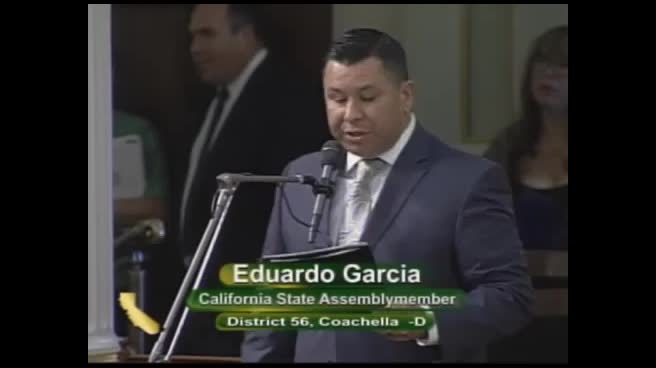 6MIN
Assembly Floor
 6MIN
Assembly Floor
 4MIN
Assembly Standing Committee on Appropriations
 13MIN
Assembly Standing Committee on Health
 4MIN
Senate Floor
 42MIN
Senate Standing Committee on Governmental Organization
Bill Author

Bill Co-Author(s):