SB 1023: Courts: judgeships.
- Session Year: 2015-2016
- House: Senate
- Latest Version Date: 2016-02-12
Existing law allocates additional judgeships to the various counties in accordance with uniform standards for factually determining additional need in each county, as approved by the Judicial Council. Existing law authorizes 50 additional judges, upon appropriation by the Legislature, to be allocated to the various county superior courts, pursuant to uniform criteria approved by the Judicial Council.
This bill would appropriate $5,000,000 from the General Fund for the purpose of funding 12 superior court judge positions in judgeships currently authorized by the Legislature. The bill would require the Judicial Council to determine which positions are funded, pursuant to that uniform criteria.
The sum of five million dollars ($5,000,000) is hereby appropriated from the General Fund for the purpose of funding 12 new superior court judgeships, and accompanying staff, as authorized pursuant to Section 69614.2 of the Government Code. The Judicial Council shall determine the allocation of the funded judgeships pursuant to the uniform criteria described in subdivision (b) of Section 69614 of the Government Code, as updated and approved by the Judicial Council.
|
Date
|
Status
|
|---|---|
| Feb 12, 2016 | Introduced. Read first time. To Com. on RLS. for assignment. To print. |
| Feb 16, 2016 | From printer. May be acted upon on or after March 17. |
| Feb 25, 2016 | Referred to Com. on JUD. |
| Mar 24, 2016 | Set for hearing April 5. |
| Apr 5, 2016 | From committee: Do pass and re-refer to Com. on APPR. (Ayes 7. Noes 0. Page 3394.) (April 5). Re-referred to Com. on APPR. |
| Apr 5, 2016 | From committee: Do pass and re-refer to Com. on APPR. (Ayes 7. Noes 0.) (April 5). Re-referred to Com. on APPR. |
| Apr 8, 2016 | Set for hearing April 18. |
| Apr 18, 2016 | April 18 hearing: Placed on APPR. suspense file. |
| May 20, 2016 | Set for hearing May 27. |
| May 27, 2016 | May 27 hearing: Held in committee and under submission. |
|
Date
|
Description
|
Location
|
Votes
|
|
|---|---|---|---|---|
| Apr 18, 2016 | Placed on suspense file | Senate Standing Committee on Appropriations |
Passed |
|
| Apr 5, 2016 | Do pass, but first be re-referred to the Committee on [Appropriations] | Senate Standing Committee on Judiciary |
Passed |
This list shows positions taken on this bill by organizations on the date displayed, which is linked to the original source.
Positions by individuals are not included.
|
Organization
|
Position
|
Date
|
|---|---|---|
| American College of OBGYNs | ** Support | Jun 26, 2018 |
| California Academy Of Family Physicians | * Support | Jun 26, 2018 |
| California Alliance For Retired Americans | * Support | Jun 26, 2018 |
| California Disability Rights | * Support | Jun 26, 2018 |
| California Health Plus Advocates | * Support | Jun 26, 2018 |
| California Judges Association | * Support | Apr 5, 2016 |
| Essential Access Health | * Support | Jun 26, 2018 |
| Fresno County Superior Court | * Support | Apr 5, 2016 |
| Judiicial Council | * Support | Apr 5, 2016 |
| Merced Superior Court | * Support | Apr 5, 2016 |
| Riverside County | * Support | Apr 5, 2016 |
| Society of Family Planning | * Support | Jun 26, 2018 |
| University of California Davis | * Support | Jun 26, 2018 |
SENATE COMMITTEE ON
Senator Ricardo Lara, Chair
2015 - 2016 Regular Session
SB 1023 (Committee on Judiciary) - Courts: judgeships
Version: | Policy Vote: |
Urgency: | Mandate: |
Hearing Date: April 18, 2016 | Consultant: |
This bill meets the criteria for referral to the Suspense File.
Bill Summary:
SB 1023 would appropriate $5 million from the General Fund for the purpose of funding 12 new superior court judgeships, and accompanying staff, as specified.
Fiscal Impact:
- First-year costs of $5 million (General Fund), assuming funding for six months in Fiscal Year 2016-17.
- Future annual costs ranging from $10 million to $15.6 million (General Fund), dependent on the level of staffing complement funded.
Background:
Existing law requires the Judicial Council to report to the Legislature on or before November 1st of every even-numbered year on the need for new judgeships in each superior court (Government Code § 69614(c)(1)). In its most recent report, The Need for New Judgeships in the Superior Courts: 2014 Update of the Judicial Needs Assessment, the Judicial Council reports that nearly 270 new judicial officers are needed in 35 courts to meet the workload-based need for new judgeships.
As stated in the report, “The public’s right to timely access to justice is contingent on having adequate judicial resources in every jurisdiction. The number of judgeships authorized and funded by the Legislature has not kept pace with workload, leaving many courts with serious shortfalls—as high as nearly 70 percent—between the number of judgeships needed and the number that have been authorized and filled. Securing new judgeships is one of the core elements of the Chief Justice’s Three-Year Blueprint for a Fully Functioning Judicial Branch and has been a top priority for the Judicial Council for many years.”
AB 159 (Jones) Chapter 722/2007 authorized the creation of 50 new judgeships to be filled pursuant to budget authorization beginning May 2008. AB 159 also authorized the conversion of up to 162 subordinate judicial officer (SJO) positions to judgeship positions upon a voluntary vacancy of the SJO position, up to a maximum of 16 conversions per fiscal year. To date, funding for the 50 authorized judgeships has not been provided.
In an effort to help reduce strain on the courts and ensure Californians’ access to justice, this bill would fund 12 of the 50 judgeships previously authorized by AB 159, allocated pursuant to the latest Judicial Needs Assessment approved by the Judicial Council. Accordingly, if chaptered, this bill would allocate the 12 judges as follows: four to San Bernardino County, three to Riverside County, and one each to Fresno, Kern, Los Angeles, San Joaquin, and Stanislaus Counties.
Proposed Law:
This bill would appropriate $5 million from the General Fund for the purpose of funding 12 new superior court judgeships, and accompanying staff, as authorized pursuant to Government Code § 69614.2. This bill would require the Judicial Council to determine the allocation of the funded judgeships pursuant to uniform criteria, as specified, and as updated and approved by the Judicial Council.
Prior Legislation:
SB 229 (Roth) 2015 as enrolled and presented to the Governor was identical to this bill. SB 229 was vetoed by the Governor with the following message:
This bill appropriates $5 million from the General Fund for 12 new superior court judgeships and accompanying staff. I am aware that the need for judges in many courts is acute - Riverside and San Bernardino are two clear examples. However, before funding any new positions, I intend to work with the Judicial Council to develop a more systemwide approach to balance the workload and the distribution of judgeships around the state.
SB 1190 (Jackson) 2014 would have appropriated funding for 50 previously authorized judgeships and two new appellate justices, authorized 50 additional judgeships, and increased the number of appellate justices by two in the San Bernardino/Riverside area. This bill was held on the Suspense File of this Committee.
SB 405 (Corbett) Chapter 705/2011 ratified the authority of the Judicial Council to convert 10 additional subordinate judicial officer (SJO) positions in eligible superior courts to judgeships in FY 2011-12, where the conversion will result in a judge being assigned to a family law or juvenile law assignment previously presided over by an SJO.
SB 377 (Corbett) 2009 would have, upon appropriation in the Budget Act, established 50 new superior court judgeships. This bill was held on the Suspense File of this Committee.
SB 1150 (Corbett) 2008 would have, upon appropriation, established 50 new superior court judgeships in the 2009-10 fiscal year. This bill was held on the Suspense File of this Committee.
AB 159 (Jones) Chapter 722/2007 authorized 50 additional superior court judgeships and enacted additional reporting requirements regarding the diversity of the applicant pool for judgeships. This bill also authorized the conversion of up to 162 subordinate judicial officer (SJO positions to judgeship positions upon a voluntary vacancy of the SJO position, up to a maximum of 16 conversions per fiscal year.
SB 56 (Dunn) Chapter 390/2006 authorized 50 additional superior court judgeships and required reporting on the diversity of judges and the applicant pool for judgeships.
SB 1857 (Burton) Chapter 998/2000 created 20 new trial court judgeships and 12 new appellate court judgeships.
AB 1818 (Baca) Chapter 263/1996 created 21 new trial court judgeships and five new appellate court judgeships.
Staff Comments:
The $5 million General Fund appropriation is estimated to fund 12 new superior court judgeships and accompanying staff for the last six months of Fiscal Year 2016-17, allowing for the time likely required to make appointments should the bill be enacted. This half-year estimate utilizes a reduced staffing ratio to complement each judgeship. Assuming funding continues at this reduced rate, future annual costs to fund the 12 judgeships and accompanying staff would be $10 million (General Fund).
The Judicial Council has indicated the ongoing cost of a new judgeship with a full staffing complement of 8.87 FTEs (support staff salaries, benefits, and operating costs) plus 0.42 FTE for a court interpreter at approximately $1.3 million per judge. At this fully funded rate, the annual cost of funding 12 judgeships and accompanying staff would be $15.6 million (General Fund).
-- END --
Senator Hannah-Beth Jackson, Chair
2015-2016 Regular Session
Bill No: SB 1023 (Author:Committee on Judiciary)
Version: February 12, 2016
Hearing Date: April 5, 2016
Fiscal: Yes
Urgency: No
Consultant: ME
SUBJECT
Courts: judgeships
DESCRIPTION
Existing law authorizes 50 additional judges, upon appropriation by the Legislature, to be allocated to various county superior courts, pursuant to uniform criteria approved by the Judicial Council of California. This bill would appropriate $5 million from the General Fund for the purpose of funding the cost of 12 of those 50 superior court judgeships and accompanying staff.
BACKGROUND
This bill is the latest in a series of bills to fund new judgeships in California to meet the increased judicial workload. The first bill, SB 56 (Dunn, Chapter 390, Statutes of 2006), authorized the creation of 50 new judgeship positions to be filled pursuant to budget authorization beginning May 2007.
The second bill, AB 159 (Jones, Chapter 722, Statutes of 2007), authorized the creation of an additional 50 new judgeships to be filled pursuant to budget authorization beginning May 2008. AB 159 also authorized the conversion of up to 162 subordinate judicial officer (SJO) positions to judgeship positions upon a voluntary vacancy of the SJO position, up to a maximum of 16 conversions per fiscal year. The third and fourth bills, SB 1150 (Corbett, 2008) and SB 377 (Corbett, 2009), would have authorized 50 new trial court judgeships but were held in the Senate Appropriations Committee. The fifth bill, SB 1190 (Jackson, 2014), would have funded previously authorized judgeships, authorized 50 additional judgeships, and increased the number of justices in the Fourth Appellate District of the Court of Appeal located in the San Bernardino/Riverside area. That bill was similarly held in the Senate Appropriations Committee. The most recent bill, SB 229 (Roth, 2015) was identical to the bill currently considered by this committee and was vetoed by the Governor because he intends to work with the Judicial Council to develop a systemwide approach to balance the workload and the distribution of judgeships around the state.
While the additional judges authorized by SB 56 have been funded, the funding for the 50 judges authorized by AB 159 was deferred to on or after June 1, 2009. That funding was delayed again to July 2009, and then, the funding was made contingent upon reaching the trigger for federal stimulus funds. As the trigger mark was not met, funding for the judgeships was not provided.
According to the Judicial Council’s November 2014 report: “Based on the 2014 Judicial Needs Assessment, 35 courts need new judgeships, for a total need of 269.8 [(full-time equivalent judicial positions)]. This is nearly 14 percent higher than the 1,963.3 authorized and funded judicial positions. The need estimate does not include judicial vacancies resulting from retirement, elevations, or other changes, that have not yet been filled.” (Jud. Council of Cal., Rep. on the 2014 Update of Judicial Needs Assessment (Nov. 2014) pp. 1, 3.)
In an effort to help reduce strain on the courts and ensure Californians’ access to justice, this bill would fund 12 of the 50 superior court judgeships and accompanying staff previously authorized by AB 159.
CHANGES TO EXISTING LAW
Existing law provides that the Legislature shall prescribe the number of judges and provide for the officers and employees of each superior court. (Cal. Const., art. VI, Sec. 4.)
Existing law authorizes 50 additional judges to be allocated to the various superior courts pursuant to uniform criteria adopted by the Judicial Council, upon appropriation in the 2007-08 fiscal year. Existing law requires that the uniform criteria for determining additional judicial need take into account the following: (1) court filings data averaged over a three-year period; (2) workload standards that represent the average amount of time of bench and non-bench work required to resolve each case type; and (3) a ranking methodology that provides consideration for courts that have the greatest need relative to their current complement of judicial officers. (Gov. Code Secs. 69614, 69614.2.)
This bill would appropriate $5 million from the General Fund for the purpose of funding 12 of the 50 previously authorized superior court judgeships and accompanying staff.
This bill would require the Judicial Council to determine the allocation of the funded judgeships pursuant to uniform criteria, as specified.
COMMENT
1. Stated need for bill
According to the author:
California continues to suffer from a severe shortage in the number of trial court judges. The ramifications are serious and far-reaching, and include a significant decrease in Californians’ access to the courts, compromised public safety, an unstable business climate, and backlogs in some courts that inhibit fair, timely and equitable justice. A detailed analysis of judicial workload conducted in 2014 identified a need for more than 250 additional judges to satisfy workload requirements in California’s 58 Superior Courts. Courts face the most urgent need for judges in some of the fastest growing counties.
The Judicial Council notes that “San Bernardino has experienced a 13 percent growth in population in the last decade, and is only authorized for 60 percent of the judges needed in that county.” The Judicial Council further notes that “Riverside County has experienced a 30 percent growth in population and is authorized for 60 percent of the judges needed in that county.” This bill would fund 12 new judgeships, “helping to alleviate the strain on our most severely overburdened courts,” as contended by the Judicial Council.
2. Funding 12 of the prior set of 50 authorized judges
Under existing law, the Judicial Council is required to report to the Legislature on or before November 1st of every even-numbered year on the need for new judgeships in each superior court. The most recent report, The Need for New Judgeships in the Superior Courts: 2014 Update of the Judicial Needs Assessment, found that a critical need for new judgeships remains, that nearly 270 new judgeships are needed to meet the workload-based need in the trial courts. (Jud. Council of Cal., Rep. on the Need for New Judgeships in the Superior Courts: 2014 Update of the Judicial Needs Assessment (Dec. 2014) p. 1.) The report asserted that: “The public’s right to timely access to justice is contingent on having adequate judicial resources in every jurisdiction. The number of judgeships authorized and funded by the Legislature has not kept pace with workload, leaving many courts with serious shortfalls – as high as nearly 70 percent – between the number of judgeships needed and the number that have been authorized and filled.” (Id. at p. 3.)
In response to the continued need for additional judgeships, this bill seeks to fund 12 of the 50 judgeships previously authorized by AB 159 (Chapter 722, Statutes of 2007). While the addition of those judges would not fully address the needs of the Judicial Branch, those additional judgeships would help increase access to justice at a time when those who use the court system are facing increasing delays and reductions in services offered by local courts.
3. Allocation of new judgeships
Under existing law, if 12 of the 50 judgeships authorized by AB 159 are funded, those judgeships would be allocated pursuant to the latest Judicial Needs Assessment approved by the Judicial Council. The criteria for determining additional judicial need must take into account the following: (1) court filings data averaged over a three-year period; (2) workload standards that represent the average amount of time of bench and non-bench work required to resolve each case type; and (3) a ranking methodology that provides consideration for courts that have the greatest need relative to their current complement of judicial officers. (Gov. Code Sec. 69614 (b).)
Accordingly, under the current Judicial Needs Assessment, if this bill is chaptered, the 12 judges would be allocated as follows: four to San Bernardino County; three to Riverside County; and one each to Fresno, Kern, Los Angeles, San Joaquin, and Stanislaus Counties.
4. Governor Brown’s veto of SB 229
This bill is identical to the enrolled version of SB 229 (Roth, 2015). In vetoing SB 229, Governor Brown stated:
I am aware of the need for judges in many courts is acute – Riverside and San Bernardino are two clear examples. However, before funding any new positions, I intend to work with the Judicial Council to develop a more systemwide approach to balance the workload and the distribution of judgeships around the state.
Support: California Judges Association, Consumer Attorneys of California
Opposition: None Known
HISTORY
Source: Judicial Council of California
Related Pending Legislation: AB 2882 (Committee on Judiciary), among other things, would authorize the Judicial Council to convert 10 subordinate judicial officer positions to judgeships in the 2016-17 fiscal year when the conversion will result in a judge being assigned to a family law or juvenile law assignment previously presided over by a subordinate judicial officer. This bill is pending referral in the Assembly.
Prior Legislation:
AB 1519 (Committee on Judiciary, Ch. 416, Stats. 2015), among other things, authorized Judicial Council to convert 10 subordinate judicial officer positions, as specified.
SB 229 (Roth, 2015) See Background.
SB 1190 (Jackson, 2014) See Background.
SB 377 (Corbett, 2009) See Background.
SB 1150 (Corbett, 2008) See Background.
AB 159 (Jones, Ch. 722, Stats. 2007) See Background; Comments 2 and 3.
SB 56 (Dunn, Ch. 390, Stats. 2006) See Background.
SB 1857 (Burton, Ch. 998, Stats. 2000) created 20 new trial court judgeships and 12 new appellate court judgeships.
AB 1818 (Baca, Ch. 262, Stats. 1996) created 21 new trial court judgeships and 5 new appellate court judgeships.
**************
Discussed in Hearing
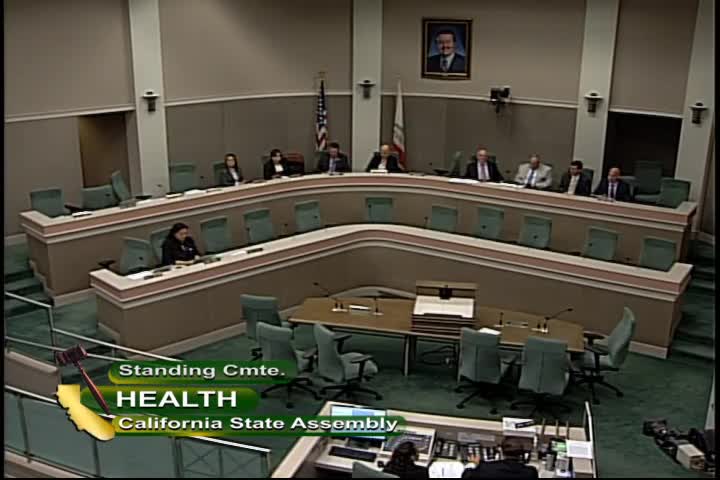 8MIN
Assembly Standing Committee on Health
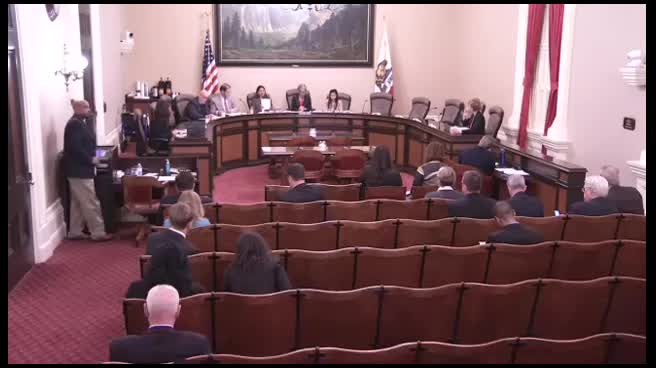 8MIN
Senate Standing Committee on Judiciary
Bill Author
Bill Co-Author(s):