SB 1029: California Debt and Investment Advisory Commission: accountability reports.
- Session Year: 2015-2016
- House: Senate
- Latest Version Date: 2016-09-12
Existing law establishes the California Debt and Investment Advisory Commission to, among other things, maintain contact with state and municipal bond issuers, underwriters, investors, and credit rating agencies to improve the market for state and local government debt issues and to assist state and local governments to prepare, market, and sell their debt issues. Existing law requires the commission to collect, maintain, and provide comprehensive information on all state and all local debt authorization and issuance and to serve as a statistical clearinghouse for all state and local debt issuance.
This bill would additionally require the commission to track and report on all state and local outstanding debt until fully repaid or redeemed.
Existing law requires the issuer of debt of state or local government to submit reports to the commission, within specified timeframes, of the proposed issuance of debt and of final sale, as provided.
This bill would require that the report of proposed debt include a certification by the issuer that it has adopted local debt policies, which include specified provisions concerning the use of debt and that the contemplated debt issuance is consistent with those local debt policies.
This bill would also require a state or local public agency to submit an annual report for any issue of debt for which it has submitted a report of final sale on or after January 21, 2017. The bill would require the annual report to cover a reporting period of July 1 to June 30, inclusive, and to include specified information about debt issued and outstanding and the use of proceeds from debt during the reporting period. The bill would require that the report be submitted within 7 months after the end of the reporting period by any method approved by the commission. The bill would require the commission to consult with appropriate state and local debt issuers and organizations representing debt issuers prior to approving any annual method of reporting pursuant to these provisions, as provided.
This bill would make various findings and declarations regarding its provisions.
Existing law establishes the California Debt and Investment Advisory Commission to, among other things, maintain contact with state and municipal bond issuers, underwriters, investors, and credit rating agencies to improve the market for state and local government debt issues and to assist state and local governments to prepare, market, and sell their debt issues. Existing law requires the commission to collect, maintain, and provide comprehensive information on all state and all local debt authorization and issuance and to serve as a statistical clearinghouse for all state and local debt issuance.
This bill would additionally require the commission to track and report on all state and local outstanding debt until fully repaid or redeemed.
Existing law requires the issuer of debt of state or local government to submit reports to the commission, within specified timeframes, of the proposed issuance of debt and of final sale, as provided.
This bill would require that the report of proposed debt include a certification by the issuer that it has adopted local debt policies, which include specified provisions concerning the use of debt and that the contemplated debt issuance is consistent with those local debt policies.
This bill would also require a state or local public agency to submit an annual report for any issue of debt for which it has submitted a report of final sale on or after January 21, 2017. The bill would require the annual report to cover a reporting period of July 1 to June 30, inclusive, and to include specified information about debt issued and outstanding and the use of proceeds from debt during the reporting period. The bill would require that the report be submitted within 7 months after the end of the reporting period by any method approved by the commission.
This bill would make various findings and declarations regarding its provisions.
Existing law establishes the California Debt and Investment Advisory Commission to, among other things, maintain contact with state and municipal bond issuers, underwriters, investors, and credit rating agencies to improve the market for state and local government debt issues, issues and to assist state and local governments to prepare, market, and sell their debt issues. Existing law requires the commission to collect, maintain, and provide comprehensive information on all state and all local debt authorization and issuance, issuance and to serve as a statistical clearinghouse for all state and local debt issuance.
This bill would additionally require the commission to track and report on all state and local outstanding debt until fully repaid or redeemed.
Existing law requires the issuer of debt of state or local government to submit reports to the commission, within specified timeframes, of the proposed issuance of debt and of final sale, as provided.
This bill would require that the report of proposed debt include a certification by the issuer that it has adopted local debt policies, which include specified provisions, provisions concerning the use of debt and that the contemplated debt issuance is consistent with those local debt policies.
This bill would also require a state or local public agency to submit an annual report for any issue of debt for which it has submitted a report of final sale. sale on or after January 21, 2017. The bill would require the annual report to cover a reporting period of July 1 to June 30 and to include specified information about debt issued and outstanding and the use of proceeds from debt during the reporting period. The bill would require that the report be submitted within 7 months after the end of the reporting period by any method approved by the commission.
This bill would make various findings and declarations regarding its provisions.
By adding to the duties of local officials with respect to reports to the commission, this bill would impose a state-mandated local program.
The California Constitution requires the state to reimburse local agencies and school districts for certain costs mandated by the state. Statutory provisions establish procedures for making that reimbursement.
This bill would provide that, if the Commission on State Mandates determines that the bill contains costs mandated by the state, reimbursement for those costs shall be made pursuant to these statutory provisions.
Existing law establishes the California Debt and Investment Advisory Commission to, among other things, maintain contact with state and municipal bond issuers, underwriters, investors, and credit rating agencies to improve the market for state and local government debt issues, and assist state and local governments to prepare, market, and sell its their debt issues. Existing law requires the commission to collect, maintain, and provide comprehensive information on all state and all local debt authorization and issuance, and serve as a statistical clearinghouse for all state and local debt issuance.
This bill would additionally require the commission to track and report on all state and local outstanding debt until fully repaid or redeemed.
Existing law requires the issuer of debt of state or local government to submit reports to the commission, within specified timeframes, of the proposed issuance of debt and of final sale, as provided.
This bill would require that the report of proposed debt include a certification by the issuer that it has adopted local debt policies, which include specified provisions, concerning the use of debt and that the contemplated debt issuance is consistent with those local debt policies.
This bill would also require the issuer of any debt issue of state or local government that has either outstanding debt or debt that has been authorized by voter approval or by action of the issuer but not yet issued as of the end of the prior fiscal year to, no later than January 1 of each year, provide a debt accountability report to the commission that includes specified information with respect to each authorized debt issue as of the end of the prior fiscal year. a state or local public agency to submit an annual report for any issue of debt for which it has submitted a report of final sale. The bill would require the annual report to cover a reporting period of July 1 to June 30 and to include specified information about debt issued and outstanding and the use of proceeds from debt during the reporting period. The bill would require that the report be submitted within 7 months after the end of the reporting period by any method approved by the commission.
This bill would make various findings and declarations regarding its provisions.
By adding to the duties of local officials with respect to reports to the commission, this bill would impose a state-mandated local program.
The California Constitution requires the state to reimburse local agencies and school districts for certain costs mandated by the state. Statutory provisions establish procedures for making that reimbursement.
This bill would provide that, if the Commission on State Mandates determines that the bill contains costs mandated by the state, reimbursement for those costs shall be made pursuant to these statutory provisions.
Existing law establishes the California Debt and Investment Advisory Commission to, among other things, maintain contact with state and municipal bond issuers, underwriters, investors, and credit rating agencies to improve the market for state and local government debt issues, and assist state and local governments to prepare, market, and sell its debt issues. Existing law requires the commission to collect, maintain, and provide comprehensive information on all state and all local debt authorization and issuance, and serve as a statistical clearinghouse for all state and local debt issuance.
This bill would additionally require the commission to track and report on all state and local outstanding debt until fully repaid or redeemed.
Existing law requires the issuer of debt of state or local government to submit reports to the commission, within specified time frames, timeframes, of the proposed issuance of debt and of final sale, as provided.
This bill would require that the report of proposed debt include a certification by the issuer that it has adopted local debt policies, which include specified provisions, concerning the use of debt and that the contemplated debt issuance is consistent with those local debt policies.
This bill would also require the issuer of any debt issue of state or local government that has either outstanding debt or debt that has been authorized by voter approval or by action of the issuer but not yet issued as of the end of the prior fiscal year to, no later than January 1 of each year, provide a debt accountability report to the commission that includes specified information with respect to each authorized debt issue as of the end of the prior fiscal year.
By adding to the duties of local officials with respect to reports to the commission, this bill would impose a state-mandated local program.
The California Constitution requires the state to reimburse local agencies and school districts for certain costs mandated by the state. Statutory provisions establish procedures for making that reimbursement.
This bill would provide that, if the Commission on State Mandates determines that the bill contains costs mandated by the state, reimbursement for those costs shall be made pursuant to these statutory provisions.
Existing law establishes the California Debt and Investment Advisory Commission to, among other things, maintain contact with state and municipal bond issuers, underwriters, investors, and credit rating agencies to improve the market for state and local government debt issues, and assist state and local governments to prepare, market, and sell its debt issues. Existing law requires the commission to collect, maintain, and provide comprehensive information on all state and all local debt authorization and issuance, and serve as a statistical clearinghouse for all state and local debt issuance.
This bill would additionally require the commission to track and report on all state and local outstanding debt until fully repaid or redeemed.
Existing law requires the issuer of debt of state or local government to submit reports to the commission, within specified time frames, of the proposed issuance of debt and of final sale, as provided.
This bill would require that the report of proposed debt include a certification by the issuer that it has adopted local debt policies, which include specified provisions, concerning the use of debt and that the contemplated debt issuance is consistent with those local debt policies.
This bill would also require the issuer of any debt issue of state or local government that has either outstanding debt or debt that has been authorized by voter approval or by action of the issuer but not yet issued as of the end of the prior fiscal year to, no later than January 1 of each year, provide a debt accountability report to the commission that includes specified information with respect to each authorized debt issue as of the end of the prior fiscal year.
By adding to the duties of local officials with respect to reports to the commission, this bill would impose a state-mandated local program.
The California Constitution requires the state to reimburse local agencies and school districts for certain costs mandated by the state. Statutory provisions establish procedures for making that reimbursement.
This bill would provide that, if the Commission on State Mandates determines that the bill contains costs mandated by the state, reimbursement for those costs shall be made pursuant to these statutory provisions.
The Legislature hereby finds and declares all of the following:
(a)Californias 4,200 units of local government have issued $1.5 trillion in debt since 1984. The California Debt and Investment Advisory Commission (CDIAC) was created in 1982 to provide information, education, and technical assistance on debt issuance and investments to local public agencies and other public finance professionals. Over the past three decades, CDIAC has emerged as a national thought leader in public finance.
(b)Nationally, there is approximately $3.7 trillion of state and local government debt outstanding. Of all outstanding state and local government debt, approximately 75 percent is held by households and mutual funds owned predominantly by households. State governments, local governments, and their stakeholders benefit from better data about public debt. Transparency on public debt promotes better government and market integrity. It is in the interest of the people that state and local agencies utilize technological opportunities to provide transparency to the public.
(c)State and local agencies should adopt comprehensive written debt management policies pursuant to the recommendation of the Government Finance Officers Association, a professional organization of over 18,000 public officials united to enhance and promote the professional management of governmental financial resources. These policies should reflect local, state, and federal laws and regulations.
(d)It is the intent of the Legislature that all debt issuance of state and of local governments be published in a single, transparent online database that allows the citizens of California to analyze, interpret, and understand how debt authorized by the public is utilized to finance facilities and services at the state and local level.
SEC. 2.Section 8855 of the Government Code is amended to read:8855.(a)There is created the California Debt and Investment Advisory Commission, consisting of nine members, selected as follows:
(1)The Treasurer, or his or her designee.
(2)The Governor or the Director of Finance.
(3)The Controller, or his or her designee.
(4)Two local government finance officers appointed by the Treasurer, one each from among persons employed by a county and by a city or a city and county of this state, experienced in the issuance and sale of municipal bonds and nominated by associations affiliated with these agencies.
(5)Two Members of the Assembly appointed by the Speaker of the Assembly.
(6)Two Members of the Senate appointed by the Senate Committee on Rules.
(b)(1)The term of office of an appointed member is four years, but appointed members serve at the pleasure of the appointing power. In case of a vacancy for any cause, the appointing power shall make an appointment to become effective immediately for the unexpired term.
(2)Any legislators appointed to the commission shall meet with and participate in the activities of the commission to the extent that the participation is not incompatible with their respective positions as Members of the Legislature. For purposes of this chapter, the Members of the Legislature shall constitute a joint interim legislative committee on the subject of this chapter.
(c)The Treasurer shall serve as chairperson of the commission and shall preside at meetings of the commission.
(d)Appointed members of the commission shall not receive a salary, but shall be entitled to a per diem allowance of fifty dollars ($50) for each days attendance at a meeting of the commission not to exceed three hundred dollars ($300) in any month, and reimbursement for expenses incurred in the performance of their duties under this chapter, including travel and other necessary expenses.
(e)The commission may adopt bylaws for the regulation of its affairs and the conduct of its business.
(f)The commission shall meet on the call of the chairperson, at the request of a majority of the members, or at the request of the Governor. A majority of all nonlegislative members of the commission constitutes a quorum for the transaction of business.
(g)The office of the Treasurer shall furnish all administrative assistance required by the commission.
(h)The commission shall do all of the following:
(1)Assist all state financing authorities and commissions in carrying out their responsibilities as prescribed by law, including assistance with respect to federal legislation pending in Congress.
(2)Upon request of any state or local government units, to assist them in the planning, preparation, marketing, and sale of debt issues to reduce cost and to assist in protecting the issuers credit.
(3)Collect, maintain, and provide comprehensive information on all state and all local debt authorization and issuance, track and report on all state and local outstanding debt until fully repaid or redeemed, and serve as a statistical clearinghouse for all state and local debt. This information shall be available to the public.
(4)Maintain contact with state and municipal bond issuers, underwriters, credit rating agencies, investors, and others to improve the market for state and local government debt issues.
(5)Undertake or commission studies on methods to reduce the costs and improve credit ratings of state and local issues.
(6)Recommend changes in state laws and local practices to improve the sale and servicing of state and local debts.
(7)Establish a continuing education program for local officials having direct or supervisory responsibility over municipal investments and debt issuance. The commission shall undertake these and any other activities necessary to disclose investment and debt issuance practices and strategies that may be conducive for oversight purposes.
(8)Collect, maintain, and provide information on local agency investments of public funds for local agency investment.
(9)Publish a monthly newsletter describing and evaluating the operations of the commission during the preceding month.
(i)(1)The issuer of any proposed debt issue of state or local government shall, no later than 30 days prior to the sale of any debt issue, submit a report of the proposed issuance to the commission by any method approved by the commission. This subdivision shall also apply to any nonprofit public benefit corporation incorporated for the purpose of acquiring student loans. The commission may require information to be submitted in the report of proposed debt issuance that it considers appropriate. Failure to submit the report shall not affect the validity of the sale. The report of proposed debt issuance shall include a certification by the issuer that it has adopted local debt policies concerning the use of debt and that the contemplated debt issuance is consistent with those local debt policies. A local debt policy shall include all of the following:
(A)The purposes for which the debt proceeds may be used.
(B)The types of debt that may be issued.
(C)The relationship of the debt to, and integration with, the issuers capital improvement program or budget, if applicable.
(D)Policy goals related to the issuers planning goals and objectives.
(E)The internal control procedures that the issuer has implemented, or will implement, to ensure that the proceeds of the proposed debt issuance will be directed to the intended use.
(2)In the case of an issue of bonds the proceeds of which will be used by a governmental entity other than the issuer, the issuer may rely upon a certification by that other governmental entity that it has adopted the policies described in subparagraphs (C), (D), and (E) of paragraph (1), and references to the issuer in those subparagraphs shall be deemed to refer instead to the other governmental entity.
(j)The issuer of any debt issue of state or local government, not later than 21 days after the sale of the debt, shall submit a report of final sale to the commission by any method approved by the commission. A copy of the final official statement for the issue shall accompany the report of final sale. If there is no official statement, the issuer shall provide each of the following documents, if they exist, along with the report of final sale:
(1)Other disclosure document.
(2)Indenture.
(3)Installment sales agreement.
(4)Loan agreement.
(5)Promissory note.
(6)Bond purchase contract.
(7)Resolution authorizing the issue.
(8)Bond specimen.
The commission may require information to be submitted in the report of final sale that it considers appropriate. The issuer may redact confidential information contained in the documents if the redacted information is not information that is otherwise required to be reported to the commission.
(k)(1)A public agency, whether state or local, shall submit an annual report for any issue of debt for which it has submitted a report of final sale pursuant to subdivision (j) on or after January 21, 2017. The annual report shall cover a reporting period from July 1 to June 30, inclusive, and shall be submitted no later than seven months after the end of the reporting period by any method approved by the commission. Before approving any annual method of reporting pursuant to this subdivision, the commission shall consult with appropriate state and local debt issuers and organizations representing debt issuers for purposes that shall include, but not be limited to, making a proposed reporting method more efficient and less burdensome for issuers. The annual report shall consist of the following information:
(A)Debt authorized during the reporting period, which shall include the following:
(i)Debt authorized at the beginning of the reporting period.
(ii)Debt authorized and issued during the reporting period.
(iii)Debt authorized but not issued at the end of the reporting period.
(iv)Debt authority that has lapsed during the reporting period.
(B)Debt outstanding during the reporting period, which shall include the following:
(i)Principal balance at the beginning of the reporting period.
(ii)Principal paid during the reporting period.
(iii)Principal outstanding at the end of the reporting period.
(C)The use of proceeds of issued debt during the reporting period, which shall include the following:
(i)Debt proceeds available at the beginning of the reporting period.
(ii)Proceeds spent during the reporting period and the purposes for which it was spent.
(iii)Debt proceeds remaining at the end of the reporting period.
(2)Compliance with this subdivision shall be required for each issue of debt with outstanding debt, debt that has been authorized but not issued, or both, during the reporting period.
(3)The commission may, if technology permits, develop an alternate reporting method, provided that any alternate reporting method is in furtherance of the purpose of collecting the data required by this subdivision. Before approving any alternate annual method of reporting pursuant to this subdivision, the commission shall consult with appropriate state and local debt issuers and organizations representing debt issuers for purposes that shall include, but not be limited to, making a proposed reporting method more efficient and less burdensome for issuers.
The Legislature hereby finds and declares all of the following:
(a)Californias 4,200 units of local government have issued $1.5 trillion in debt since 1984. The California Debt and Investment Advisory Commission (CDIAC) was created in 1982 to provide information, education, and technical assistance on debt issuance and investments to local public agencies and other public finance professionals. Over the past three decades, CDIAC has emerged as a national thought leader in public finance.
(b)Nationally, there is approximately $3.7 trillion of state and local government debt outstanding. Of all outstanding state and local government debt, approximately 75 percent is held by households and mutual funds owned predominantly by households. State governments, local governments, and their stakeholders benefit from better data about public debt. Transparency on public debt promotes better government and market integrity. It is in the interest of the people that state and local agencies utilize technological opportunities to provide transparency to the public.
(c)State and local agencies should adopt comprehensive written debt management policies pursuant to the recommendation of the Government Finance Officers Association, a professional organization of over 18,000 public officials united to enhance and promote the professional management of governmental financial resources. These policies should reflect local, state, and federal laws and regulations.
(d)It is the intent of the Legislature that all debt issuance of state and of local governments be published in a single, transparent online database that allows the citizens of California to analyze, interpret, and understand how debt authorized by the public is utilized to finance facilities and services at the state and local level.
SEC. 2.Section 8855 of the Government Code is amended to read:8855.(a)There is created the California Debt and Investment Advisory Commission, consisting of nine members, selected as follows:
(1)The Treasurer, or his or her designee.
(2)The Governor or the Director of Finance.
(3)The Controller, or his or her designee.
(4)Two local government finance officers appointed by the Treasurer, one each from among persons employed by a county and by a city or a city and county of this state, experienced in the issuance and sale of municipal bonds and nominated by associations affiliated with these agencies.
(5)Two Members of the Assembly appointed by the Speaker of the Assembly.
(6)Two Members of the Senate appointed by the Senate Committee on Rules.
(b)(1)The term of office of an appointed member is four years, but appointed members serve at the pleasure of the appointing power. In case of a vacancy for any cause, the appointing power shall make an appointment to become effective immediately for the unexpired term.
(2)Any legislators appointed to the commission shall meet with and participate in the activities of the commission to the extent that the participation is not incompatible with their respective positions as Members of the Legislature. For purposes of this chapter, the Members of the Legislature shall constitute a joint interim legislative committee on the subject of this chapter.
(c)The Treasurer shall serve as chairperson of the commission and shall preside at meetings of the commission.
(d)Appointed members of the commission shall not receive a salary, but shall be entitled to a per diem allowance of fifty dollars ($50) for each days attendance at a meeting of the commission not to exceed three hundred dollars ($300) in any month, and reimbursement for expenses incurred in the performance of their duties under this chapter, including travel and other necessary expenses.
(e)The commission may adopt bylaws for the regulation of its affairs and the conduct of its business.
(f)The commission shall meet on the call of the chairperson, at the request of a majority of the members, or at the request of the Governor. A majority of all nonlegislative members of the commission constitutes a quorum for the transaction of business.
(g)The office of the Treasurer shall furnish all administrative assistance required by the commission.
(h)The commission shall do all of the following:
(1)Assist all state financing authorities and commissions in carrying out their responsibilities as prescribed by law, including assistance with respect to federal legislation pending in Congress.
(2)Upon request of any state or local government units, to assist them in the planning, preparation, marketing, and sale of debt issues to reduce cost and to assist in protecting the issuers credit.
(3)Collect, maintain, and provide comprehensive information on all state and all local debt authorization and issuance, track and report on all state and local outstanding debt until fully repaid or redeemed, and serve as a statistical clearinghouse for all state and local debt. This information shall be available to the public.
(4)Maintain contact with state and municipal bond issuers, underwriters, credit rating agencies, investors, and others to improve the market for state and local government debt issues.
(5)Undertake or commission studies on methods to reduce the costs and improve credit ratings of state and local issues.
(6)Recommend changes in state laws and local practices to improve the sale and servicing of state and local debts.
(7)Establish a continuing education program for local officials having direct or supervisory responsibility over municipal investments and debt issuance. The commission shall undertake these and any other activities necessary to disclose investment and debt issuance practices and strategies that may be conducive for oversight purposes.
(8)Collect, maintain, and provide information on local agency investments of public funds for local agency investment.
(9)Publish a monthly newsletter describing and evaluating the operations of the commission during the preceding month.
(i)(1)The issuer of any proposed debt issue of state or local government shall, no later than 30 days prior to the sale of any debt issue, submit a report of the proposed issuance to the commission by any method approved by the commission. This subdivision shall also apply to any nonprofit public benefit corporation incorporated for the purpose of acquiring student loans. The commission may require information to be submitted in the report of proposed debt issuance that it considers appropriate. Failure to submit the report shall not affect the validity of the sale. The report of proposed debt issuance shall include a certification by the issuer that it has adopted local debt policies concerning the use of debt and that the contemplated debt issuance is consistent with those local debt policies. A local debt policy shall include all of the following:
(A)The purposes for which the debt proceeds may be used.
(B)The types of debt that may be issued.
(C)The relationship of the debt to, and integration with, the issuers capital improvement program or budget, if applicable.
(D)Policy goals related to the issuers planning goals and objectives.
(E)The internal control procedures that the issuer has implemented, or will implement, to ensure that the proceeds of the proposed debt issuance will be directed to the intended use.
(2)In the case of an issue of bonds the proceeds of which will be used by a governmental entity other than the issuer, the issuer may rely upon a certification by that other governmental entity that it has adopted the policies described in subparagraphs (C), (D), and (E) of paragraph (1), and references to the issuer in those subparagraphs shall be deemed to refer instead to the other governmental entity.
(j)The issuer of any debt issue of state or local government, not later than 21 days after the sale of the debt, shall submit a report of final sale to the commission by any method approved by the commission. A copy of the final official statement for the issue shall accompany the report of final sale. If there is no official statement, the issuer shall provide each of the following documents, if they exist, along with the report of final sale:
(1)Other disclosure document.
(2)Indenture.
(3)Installment sales agreement.
(4)Loan agreement.
(5)Promissory note.
(6)Bond purchase contract.
(7)Resolution authorizing the issue.
(8)Bond specimen.
The commission may require information to be submitted in the report of final sale that it considers appropriate. The issuer may redact confidential information contained in the documents if the redacted information is not information that is otherwise required to be reported to the commission.
(k)(1)A public agency, whether state or local, shall submit an annual report for any issue of debt for which it has submitted a report of final sale pursuant to subdivision (j) on or after January 21, 2017. The annual report shall cover a reporting period from July 1 to June 30, inclusive, and shall be submitted no later than seven months after the end of the reporting period by any method approved by the commission. Before approving any annual method of reporting pursuant to this subdivision, the commission shall consult with appropriate state and local debt issuers and organizations representing debt issuers for purposes that shall include, but not be limited to, making a proposed reporting method more efficient and less burdensome for issuers. The annual report shall consist of the following information:
(A)Debt authorized during the reporting period, which shall include the following:
(i)Debt authorized at the beginning of the reporting period.
(ii)Debt authorized and issued during the reporting period.
(iii)Debt authorized but not issued at the end of the reporting period.
(iv)Debt authority that has lapsed during the reporting period.
(B)Debt outstanding during the reporting period, which shall include the following:
(i)Principal balance at the beginning of the reporting period.
(ii)Principal paid during the reporting period.
(iii)Principal outstanding at the end of the reporting period.
(C)The use of proceeds of issued debt during the reporting period, which shall include the following:
(i)Debt proceeds available at the beginning of the reporting period.
(ii)Proceeds spent during the reporting period and the purposes for which it was spent.
(iii)Debt proceeds remaining at the end of the reporting period.
(2)Compliance with this subdivision shall be required for each issue of debt with outstanding debt, debt that has been authorized but not issued, or both both, during the reporting period.
(3)The commission may, if technology permits, develop an alternate reporting method, provided that any alternate reporting method is in furtherance of the purpose of collecting the data required by this subdivision. Before approving any alternate annual method of reporting pursuant to this subdivision, the commission shall consult with appropriate state and local debt issuers and organizations representing debt issuers for purposes that shall include, but not be limited to, making a proposed reporting method more efficient and less burdensome for issuers.
The Legislature hereby finds and declares all of the following:
(a)Californias 4,200 units of local government have issued $1.5 trillion in debt since 1984. The California Debt and Investment Advisory Commission (CDIAC) was created in 1982 to provide information, education, and technical assistance on debt issuance and investments to local public agencies and other public finance professionals. Over the past three decades, CDIAC has emerged as a national thought leader in public finance.
(b)Nationally, there is approximately $3.7 trillion of state and local government debt outstanding. Of all outstanding state and local government debt, approximately 75 percent is held by households and mutual funds owned predominantly by households. State governments, local governments, and their stakeholders benefit from better data about public debt. Transparency on public debt promotes better government and market integrity. It is in the interest of the people that state and local agencies utilize technological opportunities to provide transparency to the public.
(c)State and local agencies should adopt comprehensive written debt management policies pursuant to the recommendation of the Government Finance Officers Association, a professional organization of over 18,000 public officials united to enhance and promote the professional management of governmental financial resources. These policies should reflect local, state, and federal laws and regulations.
(d)It is the intent of the Legislature that all debt issuance of the state and of local governments be published in a single, transparent online database that allows the citizens of California to analyze, interpret, and understand how debt authorized by the public is utilized to finance facilities and services at the state and local level.
SEC. 2.Section 8855 of the Government Code is amended to read:8855.(a)There is created the California Debt and Investment Advisory Commission, consisting of nine members, selected as follows:
(1)The Treasurer, or his or her designee.
(2)The Governor or the Director of Finance.
(3)The Controller, or his or her designee.
(4)Two local government finance officers appointed by the Treasurer, one each from among persons employed by a county and by a city or a city and county of this state, experienced in the issuance and sale of municipal bonds and nominated by associations affiliated with these agencies.
(5)Two Members of the Assembly appointed by the Speaker of the Assembly.
(6)Two Members of the Senate appointed by the Senate Committee on Rules.
(b)(1)The term of office of an appointed member is four years, but appointed members serve at the pleasure of the appointing power. In case of a vacancy for any cause, the appointing power shall make an appointment to become effective immediately for the unexpired term.
(2)Any legislators appointed to the commission shall meet with and participate in the activities of the commission to the extent that the participation is not incompatible with their respective positions as Members of the Legislature. For purposes of this chapter, the Members of the Legislature shall constitute a joint interim legislative committee on the subject of this chapter.
(c)The Treasurer shall serve as chairperson of the commission and shall preside at meetings of the commission.
(d)Appointed members of the commission shall not receive a salary, but shall be entitled to a per diem allowance of fifty dollars ($50) for each days attendance at a meeting of the commission not to exceed three hundred dollars ($300) in any month, and reimbursement for expenses incurred in the performance of their duties under this chapter, including travel and other necessary expenses.
(e)The commission may adopt bylaws for the regulation of its affairs and the conduct of its business.
(f)The commission shall meet on the call of the chairperson, at the request of a majority of the members, or at the request of the Governor. A majority of all nonlegislative members of the commission constitutes a quorum for the transaction of business.
(g)The office of the Treasurer shall furnish all administrative assistance required by the commission.
(h)The commission shall do all of the following:
(1)Assist all state financing authorities and commissions in carrying out their responsibilities as prescribed by law, including assistance with respect to federal legislation pending in Congress.
(2)Upon request of any state or local government units, to assist them in the planning, preparation, marketing, and sale of debt issues to reduce cost and to assist in protecting the issuers credit.
(3)Collect, maintain, and provide comprehensive information on all state and all local debt authorization and issuance, track and report on all state and local outstanding debt until fully repaid or redeemed, and serve as a statistical clearinghouse for all state and local debt. This information shall be available to the public.
(4)Maintain contact with state and municipal bond issuers, underwriters, credit rating agencies, investors, and others to improve the market for state and local government debt issues.
(5)Undertake or commission studies on methods to reduce the costs and improve credit ratings of state and local issues.
(6)Recommend changes in state laws and local practices to improve the sale and servicing of state and local debts.
(7)Establish a continuing education program for local officials having direct or supervisory responsibility over municipal investments and debt issuance. The commission shall undertake these and any other activities necessary to disclose investment and debt issuance practices and strategies that may be conducive for oversight purposes.
(8)Collect, maintain, and provide information on local agency investments of public funds for local agency investment.
(9)Publish a monthly newsletter describing and evaluating the operations of the commission during the preceding month.
(i)(1)The issuer of any proposed debt issue of state or local government shall, no later than 30 days prior to the sale of any debt issue, submit a report of the proposed issuance to the commission by any method approved by the commission. This subdivision shall also apply to any nonprofit public benefit corporation incorporated for the purpose of acquiring student loans. The commission may require information to be submitted in the report of proposed debt issuance that it considers appropriate. Failure to submit the report shall not affect the validity of the sale. The report of proposed debt issuance shall include a certification by the issuer that it has adopted local debt policies concerning the use of debt and that the contemplated debt issuance is consistent with those local debt policies. A local debt policy shall include all of the following:
(A)The purposes for which the debt proceeds may be used.
(B)The types of debt that may be issued.
(C)The relationship of the debt to, and integration with, the issuers capital improvement program or budget, if applicable.
(D)Policy goals related to the issuers planning goals and objectives.
(E)The internal control procedures that the issuer has implemented, or will implement, to ensure that the proceeds of the proposed debt issuance will be directed to the intended use.
(2)In the case of an issue of bonds the proceeds of which will be used by a governmental entity other than the issuer, the issuer may rely upon a certification by that other governmental entity that it has adopted the policies described in subparagraphs (C), (D), and (E) of paragraph (1), and references to the issuer in those subparagraphs shall be deemed to refer instead to the other governmental entity.
(j)The issuer of any debt issue of state or local government, not later than 21 days after the sale of the debt, shall submit a report of final sale to the commission by any method approved by the commission. A copy of the final official statement for the issue shall accompany the report of final sale. If there is no official statement, the issuer shall provide each of the following documents, if they exist, along with the report of final sale:
(1)Other disclosure document.
(2)Indenture.
(3)Installment sales agreement.
(4)Loan agreement.
(5)Promissory note.
(6)Bond purchase contract.
(7)Resolution authorizing the issue.
(8)Bond specimen.
The commission may require information to be submitted in the report of final sale that it considers appropriate. The issuer may redact confidential information contained in the documents if the redacted information is not information that is otherwise required to be reported to the commission.
(k)(1)A public agency, whether state or local, shall submit an annual report for any issue of debt for which it has submitted a report of final sale pursuant to subdivision (j) on or after January 21, 2017. The annual report shall cover a reporting period from July 1 to June 30 30, inclusive, and shall be submitted no later than seven months after the end of the reporting period by any method approved by the commission. The annual report shall consist of the following information:
(A)Debt authorized during the reporting period, which shall include the following:
(i)Debt authorized at the beginning of the reporting period.
(ii)Debt authorized and issued during the reporting period.
(iii)Debt authorized but not issued at the end of the reporting period.
(iv)Debt authority that has lapsed during the reporting period.
(B)Debt outstanding during the reporting period, which shall include the following:
(i)Principal balance at the beginning of the reporting period.
(ii)Principal paid during the reporting period.
(iii)Principal outstanding at the end of the reporting period.
(C)The use of proceeds of issued debt during the reporting period, which shall include the following:
(i)Debt proceeds available at the beginning of the reporting period.
(ii)Proceeds spent during the reporting period and the purposes for which it was spent.
(iii)Debt proceeds remaining at the end of the reporting period.
(2)Compliance with this subdivision shall be required for each issue of debt with outstanding debt, debt that has been authorized but not issued, or both during the reporting period.
(3)The commission may, if technology permits, develop an alternate reporting method, provided that any alternate reporting method is in furtherance of the purpose of collecting the data required by this subdivision.
The Legislature hereby finds and declares all of the following:
(a)Californias 4,200 units of local government have issued $1.5 trillion in debt since 1984. The California Debt and Investment Advisory Commission (CDIAC) was created in 1982 to provide information, education, and technical assistance on debt issuance and investments to local public agencies and other public finance professionals. Over the past three decades, CDIAC has emerged as a national thought leader in public finance.
(b)Nationally, there is approximately $3.7 trillion of state and local government debt outstanding. Of all outstanding state and local government debt, approximately 75 percent is held by households and mutual funds owned predominantly by households. State governments, local governments, and their stakeholders benefit from better data about public debt. Transparency on public debt promotes better government and market integrity. It is in the interest of the people that state and local agencies utilize technological opportunities to provide transparency to the public.
(c)State and local agencies should adopt comprehensive written debt management policies pursuant to the recommendation of the Government Finance Officers Association, a professional organization of over 18,000 public officials united to enhance and promote the professional management of governmental financial resources. These policies should reflect local, state, and federal laws and regulations.
(d)It is the intent of the Legislature that all debt issuance of the state and of local governments be published in a single, transparent online database that allows the citizens of California to analyze, interpret, and understand how debt authorized by the public is utilized to finance facilities and services at the state and local level.
SEC. 2.Section 8855 of the Government Code is amended to read:8855.(a)There is created the California Debt and Investment Advisory Commission, consisting of nine members, selected as follows:
(1)The Treasurer, or his or her designee.
(2)The Governor or the Director of Finance.
(3)The Controller, or his or her designee.
(4)Two local government finance officers appointed by the Treasurer, one each from among persons employed by a county and by a city or a city and county of this state, experienced in the issuance and sale of municipal bonds and nominated by associations affiliated with these agencies.
(5)Two Members of the Assembly appointed by the Speaker of the Assembly.
(6)Two Members of the Senate appointed by the Senate Committee on Rules.
(b)(1)The term of office of an appointed member is four years, but appointed members serve at the pleasure of the appointing power. In case of a vacancy for any cause, the appointing power shall make an appointment to become effective immediately for the unexpired term.
(2)Any legislators appointed to the commission shall meet with and participate in the activities of the commission to the extent that the participation is not incompatible with their respective positions as Members of the Legislature. For purposes of this chapter, the Members of the Legislature shall constitute a joint interim legislative committee on the subject of this chapter.
(c)The Treasurer shall serve as chairperson of the commission and shall preside at meetings of the commission.
(d)Appointed members of the commission shall not receive a salary, but shall be entitled to a per diem allowance of fifty dollars ($50) for each days attendance at a meeting of the commission not to exceed three hundred dollars ($300) in any month, and reimbursement for expenses incurred in the performance of their duties under this chapter, including travel and other necessary expenses.
(e)The commission may adopt bylaws for the regulation of its affairs and the conduct of its business.
(f)The commission shall meet on the call of the chairperson, at the request of a majority of the members, or at the request of the Governor. A majority of all nonlegislative members of the commission constitutes a quorum for the transaction of business.
(g)The office of the Treasurer shall furnish all administrative assistance required by the commission.
(h)The commission shall do all of the following:
(1)Assist all state financing authorities and commissions in carrying out their responsibilities as prescribed by law, including assistance with respect to federal legislation pending in Congress.
(2)Upon request of any state or local government units, to assist them in the planning, preparation, marketing, and sale of debt issues to reduce cost and to assist in protecting the issuers credit.
(3)Collect, maintain, and provide comprehensive information on all state and all local debt authorization and issuance, track and report on all state and local outstanding debt until fully repaid or redeemed, and serve as a statistical clearinghouse for all state and local debt. This information shall be available to the public.
(4)Maintain contact with state and municipal bond issuers, underwriters, credit rating agencies, investors, and others to improve the market for state and local government debt issues.
(5)Undertake or commission studies on methods to reduce the costs and improve credit ratings of state and local issues.
(6)Recommend changes in state laws and local practices to improve the sale and servicing of state and local debts.
(7)Establish a continuing education program for local officials having direct or supervisory responsibility over municipal investments and debt issuance. The commission shall undertake these and any other activities necessary to disclose investment and debt issuance practices and strategies that may be conducive for oversight purposes.
(8)Collect, maintain, and provide information on local agency investments of public funds for local agency investment.
(9)Publish a monthly newsletter describing and evaluating the operations of the commission during the preceding month.
(i)(1)The issuer of any proposed debt issue of state or local government shall, no later than 30 days prior to the sale of any debt issue, submit a report of the proposed issuance to the commission by any method approved by the commission. This subdivision shall also apply to any nonprofit public benefit corporation incorporated for the purpose of acquiring student loans. The commission may require information to be submitted in the report of proposed debt issuance that it considers appropriate. Failure to submit the report shall not affect the validity of the sale. The report of proposed debt issuance shall include a certification by the issuer that it has adopted local debt policies concerning the use of debt and that the contemplated debt issuance is consistent with those local debt policies. A local debt policy shall include all of the following:
(A)The purposes for which the debt proceeds may be used.
(B)The types of debt that may be issued.
(C)The relationship of the debt to, and integration with, the issuers capital improvement program or budget, if applicable.
(D)Policy goals related to the issuers planning goals and objectives.
(E)The internal control procedures that the issuer has implemented, or will implement, to ensure that the proceeds of the proposed debt issuance will be directed to the intended use.
(2)In the case of an issue of bonds the proceeds of which will be used by a governmental entity other than the issuer, the issuer may rely upon a certification by that other governmental entity that it has adopted the policies described in subparagraphs (C), (D), and (E) of paragraph (1), and references to the issuer in those subparagraphs shall be deemed to refer instead to the other governmental entity.
(j)The issuer of any debt issue of state or local government, not later than 21 days after the sale of the debt, shall submit a report of final sale to the commission by any method approved by the commission. A copy of the final official statement for the issue shall accompany the report of final sale. If there is no official statement, the issuer shall provide each of the following documents, if they exist, along with the report of final sale:
(1)Other disclosure document.
(2)Indenture.
(3)Installment sales agreement.
(4)Loan agreement.
(5)Promissory note.
(6)Bond purchase contract.
(7)Resolution authorizing the issue.
(8)Bond specimen.
The commission may require information to be submitted in the report of final sale that it considers appropriate. The issuer may redact confidential information contained in the documents if the redacted information is not information that is otherwise required to be reported to the commission.
(k)(1)A public agency, whether state or local, shall submit an annual report for any issue of debt for which it has submitted a report of final sale pursuant to subdivision (j). (j) on or after January 21, 2017. The annual report shall cover a reporting period from July 1 to June 30 and shall be submitted no later than seven months after the end of the reporting period by any method approved by the commission. The annual report shall be required for each issue of debt that is outstanding at any time during the reporting period and shall consist of the following information:
(A)Debt authorized during the reporting period, which shall include the following:
(i)Debt authorized at the beginning of the reporting period.
(ii)Debt authorized and issued during the reporting period.
(iii)Debt authorized but not issued at the end of the reporting period.
(iv)Debt authority that has lapsed during the reporting period.
(B)Debt outstanding during the reporting period, which shall include the following:
(i)Principal balance at the beginning of the reporting period.
(ii)Principal paid during the reporting period.
(iii)Principal outstanding at the end of the reporting period.
(C)The use of proceeds of issued debt during the reporting period, which shall include the following:
(i)Debt proceeds available at the beginning of the reporting period.
(ii)Proceeds spent during the reporting period and the purposes for which it was spent.
(iii)Debt proceeds remaining at the end of the reporting period.
(2)Compliance with this subdivision shall be limited to required for each issue of debt issuance with proceeds remaining unspent outstanding debt, debt that has been authorized but not issued, or both during the reporting period.
(3)The commission may, if technology permits, develop an alternate reporting method, provided that any alternate reporting method is in furtherance of the purpose of collecting the data required by this subdivision.
SEC. 3.If the Commission on State Mandates determines that this act contains costs mandated by the state, reimbursement to local agencies and school districts for those costs shall be made pursuant to Part 7 (commencing with Section 17500) of Division 4 of Title 2 of the Government Code.
The Legislature hereby finds and declares all of the following:
(a)Californias 4,200 units of local government have issued $1.5 trillion in debt since 1984. The California Debt and Investment Advisory Commission (CDIAC) was created in 1982 to provide information, education, and technical assistance on debt issuance and investments to local public agencies and other public finance professionals. Over the past three decades, CDIAC has emerged as a national thought leader in public finance.
(b)Nationally, there is approximately $3.7 trillion of state and local government debt outstanding. Of all outstanding state and local government debt, approximately 75 percent is held by households and mutual funds owned predominantly by households. State governments, local governments, and their stakeholders benefit from better data about public debt. Transparency on public debt promotes better government and market integrity. It is in the interest of the people that state and local agencies utilize technological opportunities to provide transparency to the public.
(c)State and local agencies should adopt comprehensive written debt management policies pursuant to the recommendation of the Government Finance Officers Association, a professional organization of over 18,000 public officials united to enhance and promote the professional management of governmental financial resources. These policies should reflect local, state, and federal laws and regulations.
(d)It is the intent of the Legislature that all debt issuance of the state and of local governments be published in a single, transparent online database that allows the citizens of California to analyze, interpret, and understand how debt authorized by the public is utilized to finance facilities and services at the state and local level.
SECTION 1.SEC. 2.Section 8855 of the Government Code is amended to read:8855.(a)There is created the California Debt and Investment Advisory Commission, consisting of nine members, selected as follows:
(1)The Treasurer, or his or her designee.
(2)The Governor or the Director of Finance.
(3)The Controller, or his or her designee.
(4)Two local government finance officers appointed by the Treasurer, one each from among persons employed by a county and by a city or a city and county of this state, experienced in the issuance and sale of municipal bonds and nominated by associations affiliated with these agencies.
(5)Two Members of the Assembly appointed by the Speaker of the Assembly.
(6)Two Members of the Senate appointed by the Senate Committee on Rules.
(b)(1)The term of office of an appointed member is four years, but appointed members serve at the pleasure of the appointing power. In case of a vacancy for any cause, the appointing power shall make an appointment to become effective immediately for the unexpired term.
(2)Any legislators appointed to the commission shall meet with and participate in the activities of the commission to the extent that the participation is not incompatible with their respective positions as Members of the Legislature. For purposes of this chapter, the Members of the Legislature shall constitute a joint interim legislative committee on the subject of this chapter.
(c)The Treasurer shall serve as chairperson of the commission and shall preside at meetings of the commission.
(d)Appointed members of the commission shall not receive a salary, but shall be entitled to a per diem allowance of fifty dollars ($50) for each days attendance at a meeting of the commission not to exceed three hundred dollars ($300) in any month, and reimbursement for expenses incurred in the performance of their duties under this chapter, including travel and other necessary expenses.
(e)The commission may adopt bylaws for the regulation of its affairs and the conduct of its business.
(f)The commission shall meet on the call of the chairperson, at the request of a majority of the members, or at the request of the Governor. A majority of all nonlegislative members of the commission constitutes a quorum for the transaction of business.
(g)The office of the Treasurer shall furnish all administrative assistance required by the commission.
(h)The commission shall do all of the following:
(1)Assist all state financing authorities and commissions in carrying out their responsibilities as prescribed by law, including assistance with respect to federal legislation pending in Congress.
(2)Upon request of any state or local government units, to assist them in the planning, preparation, marketing, and sale of debt issues to reduce cost and to assist in protecting the issuers credit.
(3)Collect, maintain, and provide comprehensive information on all state and all local debt authorization and issuance, track and report on all state and local outstanding debt until fully repaid or redeemed, and serve as a statistical clearinghouse for all state and local debt. This information shall be available to the public.
(4)Maintain contact with state and municipal bond issuers, underwriters, credit rating agencies, investors, and others to improve the market for state and local government debt issues.
(5)Undertake or commission studies on methods to reduce the costs and improve credit ratings of state and local issues.
(6)Recommend changes in state laws and local practices to improve the sale and servicing of state and local debts.
(7)Establish a continuing education program for local officials having direct or supervisory responsibility over municipal investments and debt issuance. The commission shall undertake these and any other activities necessary to disclose investment and debt issuance practices and strategies that may be conducive for oversight purposes.
(8)Collect, maintain, and provide information on local agency investments of public funds for local agency investment.
(9)Publish a monthly newsletter describing and evaluating the operations of the commission during the preceding month.
(i)(1)The issuer of any proposed debt issue of state or local government shall, no later than 30 days prior to the sale of any debt issue, submit a report of the proposed issuance to the commission by any method approved by the commission. This subdivision shall also apply to any nonprofit public benefit corporation incorporated for the purpose of acquiring student loans. The commission may require information to be submitted in the report of proposed debt issuance that it considers appropriate. Failure to submit the report shall not affect the validity of the sale. The report of proposed debt issuance shall include a certification by the issuer that it has adopted local debt policies concerning the use of debt and that the contemplated debt issuance is consistent with those local debt policies. A local debt policy shall include all of the following:
(A)The purposes for which the debt proceeds may be used.
(B)The types of debt that may be issued.
(C)The relationship of the debt to, and integration with, the issuers capital improvement program or budget, if applicable.
(D)Policy goals related to the issuers planning goals and objectives.
(E)The internal control procedures that the issuer has implemented, or will implement, to ensure that the proceeds of the proposed debt issuance will be directed to the intended use.
(2)In the case of an issue of bonds the proceeds of which will be used by a governmental entity other than the issuer, the issuer may rely upon a certification by that other governmental entity that it has adopted the policies described in subparagraphs (C), (D), and (E) of paragraph (1), and references to the issuer in those subparagraphs shall be deemed to refer instead to the other governmental entity.
(j)The issuer of any debt issue of state or local government, not later than 21 days after the sale of the debt, shall submit a report of final sale to the commission by any method approved by the commission. A copy of the final official statement for the issue shall accompany the report of final sale. If there is no official statement, the issuer shall provide each of the following documents, if they exist, along with the report of final sale:
(1)Other disclosure document.
(2)Indenture.
(3)Installment sales agreement.
(4)Loan agreement.
(5)Promissory note.
(6)Bond purchase contract.
(7)Resolution authorizing the issue.
(8)Bond specimen.
The commission may require information to be submitted in the report of final sale that it considers appropriate. The issuer may redact confidential information contained in the documents if the redacted information is not information that is otherwise required to be reported to the commission.
(k)(1)The issuer of any debt issue of state or local government that has either outstanding debt or debt that has been authorized by voter approval or by action of the issuer but not yet issued as of the end of the prior fiscal year shall, no later than January 1 of each year, provide a debt accountability report to the commission that includes the following information with respect to each authorized debt issue as of the end of the prior fiscal year:
(A)The principal amount of the issue then outstanding.
(B)The amount of proceeds of the issue that remain unspent.
(C)The amount of debt authorized by the bond act or other appropriate authorization relevant to the issue that remains authorized but not issued.
(D)A list of the purposes for which the debt has been issued and the amounts expended for each purpose in the prior fiscal year from the proceeds of the issue.
(E)Any additional information the commission deems appropriate to fulfill its statutory duties, to be provided in a format prescribed by the commission.
(2)The requirements of subparagraphs (A) to (C), inclusive, of paragraph (1) may be satisfied by submitting to the commission a certified copy of the issuers annual report of financial transactions for the immediately preceding fiscal year submitted to the Controller, as required by Section 12463, in the form and manner prescribed by the commission.
(k)(1)A public agency, whether state or local, shall submit an annual report for any issue of debt for which it has submitted a report of final sale pursuant to subdivision (j). The annual report shall cover a reporting period from July 1 to June 30 and shall be submitted no later than seven months after the end of the reporting period by any method approved by the commission. The annual report shall be required for each issue of debt that is outstanding at any time during the reporting period and shall consist of the following information:
(A)Debt authorized during the reporting period, which shall include the following:
(i)Debt authorized at the beginning of the reporting period.
(ii)Debt authorized and issued during the reporting period.
(iii)Debt authorized but not issued at the end of the reporting period.
(iv)Debt authority that has lapsed during the reporting period.
(B)Debt outstanding during the reporting period, which shall include the following:
(i)Principal balance at the beginning of the reporting period.
(ii)Principal paid during the reporting period.
(iii)Principal outstanding at the end of the reporting period.
(C)The use of proceeds of issued debt during the reporting period, which shall include the following:
(i)Debt proceeds available at the beginning of the reporting period.
(ii)Proceeds spent during the reporting period and the purposes for which it was spent.
(iii)Debt proceeds remaining at the end of the reporting period.
(2)Compliance with this subdivision shall be limited to debt issuance with proceeds remaining unspent during the reporting period.
(3)The commission may, if technology permits, develop an alternate reporting method, provided that any alternate reporting method is in furtherance of the purpose of collecting the data required by this subdivision.
SEC. 2.SEC. 3.If the Commission on State Mandates determines that this act contains costs mandated by the state, reimbursement to local agencies and school districts for those costs shall be made pursuant to Part 7 (commencing with Section 17500) of Division 4 of Title 2 of the Government Code.
(a)There is created the California Debt and Investment Advisory Commission, consisting of nine members, selected as follows:
(1)The Treasurer, or his or her designee.
(2)The Governor or the Director of Finance.
(3)The Controller, or his or her designee.
(4)Two local government finance officers appointed by the Treasurer, one each from among persons employed by a county and by a city or a city and county of this state, experienced in the issuance and sale of municipal bonds and nominated by associations affiliated with these agencies.
(5)Two Members of the Assembly appointed by the Speaker of the Assembly.
(6)Two Members of the Senate appointed by the Senate Committee on Rules.
(b)(1)The term of office of an appointed member is four years, but appointed members serve at the pleasure of the appointing power. In case of a vacancy for any cause, the appointing power shall make an appointment to become effective immediately for the unexpired term.
(2)Any legislators appointed to the commission shall meet with and participate in the activities of the commission to the extent that the participation is not incompatible with their respective positions as Members of the Legislature. For purposes of this chapter, the Members of the Legislature shall constitute a joint interim legislative committee on the subject of this chapter.
(c)The Treasurer shall serve as chairperson of the commission and shall preside at meetings of the commission.
(d)Appointed members of the commission shall not receive a salary, but shall be entitled to a per diem allowance of fifty dollars ($50) for each days attendance at a meeting of the commission not to exceed three hundred dollars ($300) in any month, and reimbursement for expenses incurred in the performance of their duties under this chapter, including travel and other necessary expenses.
(e)The commission may adopt bylaws for the regulation of its affairs and the conduct of its business.
(f)The commission shall meet on the call of the chairperson, at the request of a majority of the members, or at the request of the Governor. A majority of all nonlegislative members of the commission constitutes a quorum for the transaction of business.
(g)The office of the Treasurer shall furnish all administrative assistance required by the commission.
(h)The commission shall do all of the following:
(1)Assist all state financing authorities and commissions in carrying out their responsibilities as prescribed by law, including assistance with respect to federal legislation pending in Congress.
(2)Upon request of any state or local government units, to assist them in the planning, preparation, marketing, and sale of debt issues to reduce cost and to assist in protecting the issuers credit.
(3)Collect, maintain, and provide comprehensive information on all state and all local debt authorization and issuance, track and report on all state and local outstanding debt until fully repaid or redeemed, and serve as a statistical clearinghouse for all state and local debt. This information shall be available to the public.
(4)Maintain contact with state and municipal bond issuers, underwriters, credit rating agencies, investors, and others to improve the market for state and local government debt issues.
(5)Undertake or commission studies on methods to reduce the costs and improve credit ratings of state and local issues.
(6)Recommend changes in state laws and local practices to improve the sale and servicing of state and local debts.
(7)Establish a continuing education program for local officials having direct or supervisory responsibility over municipal investments and debt issuance. The commission shall undertake these and any other activities necessary to disclose investment and debt issuance practices and strategies that may be conducive for oversight purposes.
(8)Collect, maintain, and provide information on local agency investments of public funds for local agency investment.
(9)Publish a monthly newsletter describing and evaluating the operations of the commission during the preceding month.
(i)(1)The issuer of any proposed debt issue of state or local government shall, no later than 30 days prior to the sale of any debt issue, submit a report of the proposed issuance to the commission by any method approved by the commission. This subdivision shall also apply to any nonprofit public benefit corporation incorporated for the purpose of acquiring student loans. The commission may require information to be submitted in the report of proposed debt issuance that it considers appropriate. Failure to submit the report shall not affect the validity of the sale. The report of proposed debt issuance shall include a certification by the issuer that it has adopted local debt policies concerning the use of debt and that the contemplated debt issuance is consistent with those local debt policies. A local debt policy shall include all of the following:
(1)
(A)The purposes for which the debt proceeds may be used or are prohibited. used.
(2)
(B)The types of debt that may be issued or prohibited. issued.
(3)
(C)The relationship of the debt to, and integration with, the issuers capital improvement program or budget. budget, if applicable.
(4)
(D)Policy goals related to the issuers planning goals and objectives.
(5)
(E)The internal control procedures that the issuer has implemented, or will implement, to ensure that the proceeds of the proposed debt issuance will be directed to the intended use upon completion of the issuance. use.
(2)In the case of an issue of bonds the proceeds of which will be used by a governmental entity other than the issuer, the issuer may rely upon a certification by that other governmental entity that it has adopted the policies described in subparagraphs (C), (D), and (E) of paragraph (1), and references to the issuer in those subparagraphs shall be deemed to refer instead to the other governmental entity.
(j)The issuer of any debt issue of state or local government, not later than 21 days after the sale of the debt, shall submit a report of final sale to the commission by any method approved by the commission. A copy of the final official statement for the issue shall accompany the report of final sale. If there is no official statement, the issuer shall provide each of the following documents, if they exist, along with the report of final sale:
(1)Other disclosure document.
(2)Indenture.
(3)Installment sales agreement.
(4)Loan agreement.
(5)Promissory note.
(6)Bond purchase contract.
(7)Resolution authorizing the issue.
(8)Bond specimen.
The commission may require information to be submitted in the report of final sale that it considers appropriate. The issuer may redact confidential information contained in the documents if the redacted information is not information that is otherwise required to be reported to the commission.
(k)(1)The issuer of any debt issue of state or local government that has either outstanding debt or debt that has been authorized by voter approval or by action of the issuer but not yet issued as of the end of the prior fiscal year shall, no later than January 1 of each year, provide a debt accountability report to the commission that includes the following information with respect to each authorized debt issue as of the end of the prior fiscal year:
(A)The principal amount of the issue then outstanding.
(B)The amount of proceeds of the issue that remain unspent.
(C)The amount of debt authorized by the bond act or other appropriate authorization relevant to the issue that remains authorized but not issued.
(D)A list of the purposes for which the debt has been issued and the amounts expended for each purpose in the prior fiscal year from the proceeds of the issue.
(E)Any additional information the commission deems appropriate to fulfill its statutory duties, to be provided in a format prescribed by the commission.
(2)The requirements of subparagraphs (A) to (C), inclusive, of paragraph (1) may be satisfied by submitting to the commission a certified copy of the issuers annual report of financial transactions for the immediately preceding fiscal year submitted to the Controller, as required by Section 12463, in the form and manner prescribed by the commission.
SEC. 2.If the Commission on State Mandates determines that this act contains costs mandated by the state, reimbursement to local agencies and school districts for those costs shall be made pursuant to Part 7 (commencing with Section 17500) of Division 4 of Title 2 of the Government Code.
(a)There is created the California Debt and Investment Advisory Commission, consisting of nine members, selected as follows:
(1)The Treasurer, or his or her designee.
(2)The Governor or the Director of Finance.
(3)The Controller, or his or her designee.
(4)Two local government finance officers appointed by the Treasurer, one each from among persons employed by a county and by a city or a city and county of this state, experienced in the issuance and sale of municipal bonds and nominated by associations affiliated with these agencies.
(5)Two Members of the Assembly appointed by the Speaker of the Assembly.
(6)Two Members of the Senate appointed by the Senate Committee on Rules.
(b)(1)The term of office of an appointed member is four years, but appointed members serve at the pleasure of the appointing power. In case of a vacancy for any cause, the appointing power shall make an appointment to become effective immediately for the unexpired term.
(2)Any legislators appointed to the commission shall meet with and participate in the activities of the commission to the extent that the participation is not incompatible with their respective positions as Members of the Legislature. For purposes of this chapter, the Members of the Legislature shall constitute a joint interim legislative committee on the subject of this chapter.
(c)The Treasurer shall serve as chairperson of the commission and shall preside at meetings of the commission.
(d)Appointed members of the commission shall not receive a salary, but shall be entitled to a per diem allowance of fifty dollars ($50) for each days attendance at a meeting of the commission not to exceed three hundred dollars ($300) in any month, and reimbursement for expenses incurred in the performance of their duties under this chapter, including travel and other necessary expenses.
(e)The commission may adopt bylaws for the regulation of its affairs and the conduct of its business.
(f)The commission shall meet on the call of the chairperson, at the request of a majority of the members, or at the request of the Governor. A majority of all nonlegislative members of the commission constitutes a quorum for the transaction of business.
(g)The office of the Treasurer shall furnish all administrative assistance required by the commission.
(h)The commission shall do all of the following:
(1)Assist all state financing authorities and commissions in carrying out their responsibilities as prescribed by law, including assistance with respect to federal legislation pending in Congress.
(2)Upon request of any state or local government units, to assist them in the planning, preparation, marketing, and sale of debt issues to reduce cost and to assist in protecting the issuers credit.
(3)Collect, maintain, and provide comprehensive information on all state and all local debt authorization and issuance, track and report on all state and local outstanding debt until fully repaid or redeemed, and serve as a statistical clearinghouse for all state and local debt issues. debt. This information shall be readily available upon request by any public official or any member of to the public.
(4)Maintain contact with state and municipal bond issuers, underwriters, credit rating agencies, investors, and others to improve the market for state and local government debt issues.
(5)Undertake or commission studies on methods to reduce the costs and improve credit ratings of state and local issues.
(6)Recommend changes in state laws and local practices to improve the sale and servicing of state and local debts.
(7)Establish a continuing education program for local officials having direct or supervisory responsibility over municipal investments and debt issuance. The commission shall undertake these and any other activities necessary to disclose investment and debt issuance practices and strategies that may be conducive for oversight purposes.
(8)Collect, maintain, and provide information on local agency investments of public funds for local agency investment.
(9)Publish a monthly newsletter describing and evaluating the operations of the commission during the preceding month.
(i)The issuer of any proposed debt issue of state or local government shall, no later than 30 days prior to the sale of any debt issue, submit a report of the proposed issuance to the commission by any method approved by the commission. This subdivision shall also apply to any nonprofit public benefit corporation incorporated for the purpose of acquiring student loans. The commission may require information to be submitted in the report of proposed debt issuance that it considers appropriate. Failure to submit the report shall not affect the validity of the sale. The report of proposed debt issuance shall include a certification by the issuer that it has adopted local debt policies concerning the use of debt and that the contemplated debt issuance is consistent with those local debt policies. A local debt policy shall include all of the following:
(1)The purposes for which the debt proceeds may be used or are prohibited.
(2)The types of debt that may be issued or prohibited.
(3)The relationship of the debt to, and integration with, the issuers capital improvement program or budget.
(4)Policy goals related to the issuers planning goals and objectives.
(5)The internal control procedures that the issuer has implemented, or will implement, to ensure that the proceeds of the proposed debt issuance will be directed to the intended use upon completion of the issuance.
(j)The issuer of any debt issue of state or local government, not later than 21 days after the sale of the debt, shall submit a report of final sale to the commission by any method approved by the commission. A copy of the final official statement for the issue shall accompany the report of final sale. If there is no official statement, the issuer shall provide each of the following documents, if they exist, along with the report of final sale:
(1)Other disclosure document.
(2)Indenture.
(3)Installment sales agreement.
(4)Loan agreement.
(5)Promissory note.
(6)Bond purchase contract.
(7)Resolution authorizing the issue.
(8)Bond specimen.
The commission may require information to be submitted in the report of final sale that it considers appropriate. The issuer may redact confidential information contained in the documents if the redacted information is not information that is otherwise required to be reported to the commission.
(k)(1)The issuer of any debt issue of state or local government that has either outstanding debt or debt that has been authorized by voter approval or by action of the issuer but not yet issued as of the end of the prior fiscal year shall, no later than January 1 of each year, provide a debt accountability report to the commission that includes the following information with respect to each authorized debt issue as of the end of the prior fiscal year:
(A)The principal amount of the issue then outstanding.
(B)The amount of proceeds of the issue that remain unspent.
(C)The amount of debt authorized by the bond act or other appropriate authorization relevant to the issue that remains authorized but not issued.
(D)A list of the purposes for which the debt has been issued and the amounts expended for each purpose in the prior fiscal year from the proceeds of the issue.
(E)Any additional information the commission deems appropriate to fulfill its statutory duties, to be provided in a format prescribed by the commission.
(2)The requirements of subparagraphs (A) to (C), inclusive, of paragraph (1) may be satisfied by submitting to the commission a certified copy of the issuers annual report of financial transactions for the immediately preceding fiscal year submitted to the Controller, as required by Section 12463, in the form and manner prescribed by the commission.
SEC. 2.If the Commission on State Mandates determines that this act contains costs mandated by the state, reimbursement to local agencies and school districts for those costs shall be made pursuant to Part 7 (commencing with Section 17500) of Division 4 of Title 2 of the Government Code.
|
Date
|
Status
|
|---|---|
| Aug 16, 2016 | Read second time. Ordered to third reading. |
| Jun 1, 2016 | Read third time. Passed. (Ayes 39. Noes 0.) Ordered to the Assembly. |
| Jun 2, 2016 | In Assembly. Read first time. Held at Desk. |
| Jun 9, 2016 | Referred to Com. on L. GOV. |
| Jun 15, 2016 | From committee with author's amendments. Read second time and amended. Re-referred to Com. on L. GOV. |
| Jun 30, 2016 | From committee: Do pass and re-refer to Com. on APPR. (Ayes 9. Noes 0.) (June 29). Re-referred to Com. on APPR. |
| Aug 3, 2016 | August 3 set for first hearing. Placed on APPR. suspense file. |
| Aug 12, 2016 | From committee: Do pass as amended. (Ayes 20. Noes 0.) (August 11). |
| Aug 15, 2016 | Read second time and amended. Ordered to second reading. |
| Jun 1, 2016 | Read third time. Passed. (Ayes 39. Noes 0. Page 4102.) Ordered to the Assembly. |
| Aug 18, 2016 | Read third time. Passed. Ordered to the Senate. |
| Aug 18, 2016 | Read third time. Passed. (Ayes 78. Noes 0. Page 5920.) Ordered to the Senate. |
| Aug 19, 2016 | In Senate. Concurrence in Assembly amendments pending. |
| Aug 24, 2016 | Assembly amendments concurred in. (Ayes 39. Noes 0.) Ordered to engrossing and enrolling. |
| Aug 30, 2016 | Enrolled and presented to the Governor at 1:30 p.m. |
| Sep 12, 2016 | Approved by the Governor. |
| Sep 12, 2016 | Chaptered by Secretary of State. Chapter 307, Statutes of 2016. |
| Feb 12, 2016 | Introduced. Read first time. To Com. on RLS. for assignment. To print. |
| May 31, 2016 | Read second time and amended. Ordered to third reading. |
| May 27, 2016 | From committee: Do pass as amended. (Ayes 7. Noes 0.) (May 27). |
| May 27, 2016 | From committee: Do pass as amended. (Ayes 7. Noes 0. Page 4002.) (May 27). |
| May 20, 2016 | Set for hearing May 27. |
| May 9, 2016 | May 9 hearing: Placed on APPR. suspense file. |
| Apr 29, 2016 | Set for hearing May 9. |
| Apr 27, 2016 | From committee with author's amendments. Read second time and amended. Re-referred to Com. on APPR. |
| Apr 7, 2016 | April 11 hearing postponed by committee. |
| Apr 1, 2016 | Set for hearing April 11. |
| Mar 30, 2016 | From committee: Do pass and re-refer to Com. on APPR. (Ayes 7. Noes 0.) (March 30). Re-referred to Com. on APPR. |
| Mar 30, 2016 | From committee: Do pass and re-refer to Com. on APPR. (Ayes 7. Noes 0. Page 3335.) (March 30). Re-referred to Com. on APPR. |
| Mar 17, 2016 | From committee with author's amendments. Read second time and amended. Re-referred to Com. on GOV. & F. |
| Mar 10, 2016 | Set for hearing March 30. |
| Feb 25, 2016 | Referred to Com. on GOV. & F. |
| Feb 16, 2016 | From printer. May be acted upon on or after March 17. |
|
Date
|
Description
|
Location
|
Votes
|
|
|---|---|---|---|---|
| Aug 24, 2016 | Unfinished Business SB1029 Hertzberg Concurrence | Senate Floor |
Passed |
|
| Aug 18, 2016 | SB 1029 Hertzberg Senate Third Reading By EGGMAN | Assembly Floor |
Passed |
|
| Aug 11, 2016 | Do pass as amended. | Assembly Standing Committee on Appropriations |
Passed |
|
| Jun 29, 2016 | Do pass and be re-referred to the Committee on [Appropriations] | Assembly Standing Committee on Local Government |
Passed |
|
| Jun 1, 2016 | Senate 3rd Reading SB1029 Hertzberg | Senate Floor |
Passed |
|
| May 27, 2016 | Do pass as amended | Senate Standing Committee on Appropriations |
Passed |
|
| May 9, 2016 | Placed on suspense file | Senate Standing Committee on Appropriations |
Passed |
|
| Mar 30, 2016 | Do pass, but first be re-referred to the Committee on [Appropriations] | Senate Standing Committee on Governance and Finance |
Passed |
This list shows positions taken on this bill by organizations on the date displayed, which is linked to the original source.
Positions by individuals are not included.
|
Organization
|
Position
|
Date
|
|---|---|---|
| Association Of California School Administrators | ** Against | Aug 24, 2016 |
| California Association of County Treasurers and Tax Collectors | ** Support | Aug 24, 2016 |
| California Professional Firefighters | ** Support | Aug 24, 2016 |
| California Special Districts Association | * Indeterminate | Jun 29, 2016 |
| California State Association Of Counties | * Indeterminate | Jun 29, 2016 |
| California State Treasurer John Chiang | ** Support | Aug 24, 2016 |
| California Taxpayers' Association | ** Support | Aug 24, 2016 |
| California's Coalition for Adequate School Housing | ** Against | Aug 24, 2016 |
| Little Hoover Commission | ** Support | Aug 24, 2016 |
| Rural County Represenatatives of California | * Indeterminate | Jun 29, 2016 |
| Sonoma County | * Support | Jun 25, 2018 |
Office of Senate Floor Analyses (916) 651-1520 Fax: (916) 327-4478 | SB |
UNFINISHED BUSINESS
Bill No: SB 1029
:
SENATE GOVERNANCE & FIN. COMMITTEE: 7-0, 3/30/16
AYES: Hertzberg, Nguyen, Beall, Hernandez, Lara, Moorlach, Pavley
SENATE APPROPRIATIONS COMMITTEE: 7-0, 5/27/16
AYES: Lara, Bates, Beall, Hill, McGuire, Mendoza, Nielsen
SENATE FLOOR: 39-0, 6/1/16
AYES: Allen, Anderson, Bates, Beall, Berryhill, Block, Cannella, De León, Fuller, Gaines, Galgiani, Glazer, Hall, Hancock, Hernandez, Hertzberg, Hill, Hueso, Huff, Jackson, Lara, Leno, Leyva, Liu, McGuire, Mendoza, Mitchell, Monning, Moorlach, Morrell, Nguyen, Nielsen, Pan, Pavley, Roth, Stone, Vidak, Wieckowski, Wolk
NO VOTE RECORDED: Runner
ASSEMBLY FLOOR: 78-0, 8/18/16 - See last page for vote
SOURCE: California State Treasurer John Chiang
DIGEST: This bill requires state and local government debt issuers to report to the California Debt and Investment Advisory Commission (CDIAC) specified information about proposed and outstanding debt.
Assembly Amendments require CDIAC to consult with appropriate state and local debt issuers and organizations representing debt issuers prior to approving any annual method of reporting pursuant to the bill’s provisions.
Existing law:
- Requires CDIAC to collect, maintain, and provide comprehensive information on all state and local debt authorization and issuance, and serve as a statistical clearinghouse for all state and local debt issues.
- Requires state and local government debt issuers to submit several types of reports containing information about debt issuance to CDIAC:
- Any state or local government that proposes to issue debt must submit a report of proposed debt issuance at least 30 days before the debt issue is sold. CDIAC may require information that it considers appropriate to be submitted in the report of proposed debts issuance.
- Any state or local government debt issuer must submit a report of final sale not more than 21 days after the sale of the debt. The report of final sale must be accompanied by a copy of the final official statement for the issue or if there is no official statement, by other specified documents. State law allows CDIAC information that it considers appropriate to be submitted in the report of final sale.
- All local governments issuing Mello-Roos Community Facilities District bonds must provide a fiscal status report containing specified information to CDIAC by October 30 of every year until the bonds have been retired.
- All joint powers authorities issuing bonds pursuant to the Marks-Roos Bond Pooling Act must provide a fiscal status report containing specified information to CDIAC by October 30 of every year until the final maturity of the bonds.
This bill:
- Requires that a report of proposed debt issuance submitted to CDIAC must include a certification by the issuer that it has adopted local debt policies concerning the use of debt and that the contemplated debt issuance is consistent with those local debt policies. Specifically, this bill requires that a local debt policy must include:
- The purposes for which the debt proceeds may be used.
- The types of debt that may be issued.
- The relationship of the debt to, and integration with, the issuer’s capital improvement program or budget, if applicable.
- Policy goals related to the issuer’s planning goals and objectives.
- Internal control procedures that the issuer has implemented, or will implement, to ensure that the proceeds of the proposed debt issuance will be directed to the intended use.
- Directs that a bond issuer that issues bonds on behalf of another governmental entity may rely upon a certification by that other governmental entity that it has adopted specified debt policies.
- Requires any state or local government debt issuer to provide an annual report to CDIAC for any issue of debt for which the issuer has submitted a report of final sale on or after January 21, 2017.
- Requires that the annual report must cover a reporting period from July 1 to June 30 and must be submitted no later than seven months after the end of the reporting period by any method approved by CDIAC. CDIAC must consult with appropriate state and local debt issuers and organizations representing debt issuers for purposes that include making a proposed reporting method more efficient and less burdensome for issuers.
- Requires that the annual report must consist of the following information:
- Debt authorized during the reporting period, which must include:
- Debt authorized at the beginning of the reporting period.
- Debt authorized and issued during the reporting period.
- Debt authorized but not issued at the end of the reporting period.
- Debt authority that has lapsed during the reporting period.
- Debt outstanding during the reporting period, which must include:
- Principal balance at the beginning of the reporting period.
- Principal paid during the reporting period.
- Principal outstanding at the end of the reporting period.
- The use of proceeds of issued debt during the reporting period, which must include:
- Debt proceeds available at the beginning of the reporting period.
- Proceeds spent during the reporting period and the purposes for which it was spent.
- Debt proceeds remaining at the end of the reporting period.
- Debt authorized during the reporting period, which must include:
- Directs that compliance with the annual reporting requirement is required for each issue of debt with outstanding debt, debt that has been authorized but not issued, or both during the reporting period.
- Expands the statutory list of CDIAC’s responsibilities to include tracking and reporting on all state and local outstanding debt that is not fully repaid or redeemed.
- Replaces a current statutory requirement that specified information from CDIAC must be readily available upon request by any public official or any member of the public with a requirement that the information must be “available to the public.”
Background
The CDIAC provides information, education, and technical assistance on debt issuance and public fund investments to public agencies. CDIAC, which operates as a part of the State Treasurer’s Office, has nine members, including the State Treasurer, the Governor or the Director of Finance, the State Controller, two local government finance officials, two Assembly Members, and two Senators.
CDIAC collects, maintains, and provides comprehensive information on all state and local debt authorization and issuance, and serves as a statistical clearinghouse for all state and local debt issues. Existing law requires CDIAC to make this information readily available upon request by any public official or any member of the public. State and local government debt issuers must submit several types of reports containing information about debt issuance to CDIAC.
The information that CDIAC collects from reports submitted by bond issuers helps policymakers and members of the public monitor and assess the results of state and local debt issuance. However, the information that CDIAC currently collects is not sufficient to determine whether bond issuers are managing and spending bond proceeds properly.
In January, 2015, news reports revealed that millions of dollars in bond proceeds held by the Association for Bay Area Governments’ Finance Authority were missing. A former employee of the authority subsequently admitted to taking the missing proceeds. In response to these disclosures, State Treasurer John Chiang created the Task Force on Bond Accountability. The Treasurer’s task force worked to develop best practice guidelines for how bond proceeds should be managed to reduce the risk of fraud, waste, and abuse and to identify strategies to increase transparency and oversight of the use of bond funds.
To assess whether bond proceeds are spent for their intended purposes and to make bond proceeds’ disposition more transparent to the public, the State Treasurer wants the Legislature to expand the reporting requirements that apply to state and local bond issuers.
Comments
Purpose of the bill. The State Treasurer’s recent effort to review how debt issuers manage and spend debt proceeds suggests that current debt reporting requirements provide insufficient transparency and accountability for how some governments handle their debt proceeds. This bill imposes some additional reporting requirements on debt issuers that will benefit taxpayers, investors, and public agencies. Taxpayers deserve to have enough information to determine, with confidence, that public officials are being good stewards of public funds. Investors will benefit from having more knowledge about the types of internal controls that governments have in place to ensure that debt proceeds are used as promised. Following broadly-accepted best-practices, like adopting debt policies, will benefit government debt issuers by reducing the potential for incidents of fraud or mismanagement, thereby improving fiscal outcomes for public agencies. The enhanced transparency requirements imposed by this bill are similar to requirements that already apply to some types of debts, including Mello-Roos districts’ bonds and school districts’ general obligation bonds. Applying similar standards to all types of state and local debt is a common-sense response to concerns about how debt proceeds are being managed in California.
Workload. This bill places new and potentially unnecessary administrative burdens on state and local governments that issue debt. School district officials note that some information they would provide to CDIAC in the annual reports required by this bill will duplicate information that state law already requires them to provide to county offices of education or through other public reports. School district officials would prefer to share the data they already compile with CDIAC, rather than performing additional work to comply with separate reporting requirements.
FISCAL EFFECT: Appropriation: Fiscal Com.: Local:
According to the Assembly Appropriations Committee:
- CDIAC administrative costs of approximately $132,000 in the first two years (1 PY), $261,000 in years three and four (2 PY), and $393,000 annually thereafter (3 PY) for new positions to receive, review, process, and include reported data on new debt issuances in its database. (California Debt and Investment Advisory Commission Fund)
- CDIAC indicates that any one-time costs for systems upgrades would be minor and absorbable. Staff notes that there could be future cost pressures to the extent the bill authorizes CDIAC to develop alternative reporting methods for data collection. CDIAC indicates it would absorb any future costs for these upgrades. (California Debt and Investment Advisory Commission Fund)
California State Treasurer John Chiang (source)
California Association of County Treasurers and Tax Collectors
California Professional Firefighters
California Taxpayers Association
Little Hoover Commission
OPPOSITION: (Verified 8/18/16)
Association of California School Administrators
California’s Coalition for Adequate School Housing
ARGUMENTS IN SUPPORT: Supporters argue that this bill’s enhanced transparency requirements will help ensure that debt proceeds are spent as intended and will reduce the potential for incidents of fraud or mismanagement.
ARGUMENTS IN OPPOSITION: Opponents argue that this bill will require some school debt issuers to engage in duplicative reporting activities which will generate unnecessary costs.
ASSEMBLY FLOOR: 78-0, 8/18/16
AYES: Achadjian, Alejo, Travis Allen, Arambula, Atkins, Baker, Bigelow, Bloom, Bonilla, Bonta, Brough, Brown, Burke, Calderon, Campos, Chang, Chau, Chávez, Chiu, Chu, Cooley, Cooper, Dababneh, Dahle, Daly, Dodd, Eggman, Frazier, Beth Gaines, Gallagher, Cristina Garcia, Eduardo Garcia, Gatto, Gipson, Gomez, Gonzalez, Gordon, Gray, Grove, Hadley, Harper, Holden, Irwin, Jones, Jones-Sawyer, Lackey, Levine, Linder, Lopez, Low, Maienschein, Mathis, Mayes, McCarty, Medina, Melendez, Mullin, Nazarian, Obernolte, O'Donnell, Olsen, Patterson, Quirk, Ridley-Thomas, Rodriguez, Salas, Santiago, Steinorth, Mark Stone, Thurmond, Ting, Wagner, Waldron, Weber, Wilk, Williams, Wood, Rendon
NO VOTE RECORDED: Roger Hernández, Kim
8/19/16 19:21:48
**** END ****
SENATE THIRD READING
STR Bill Id:SB 1029
Author:(Hertzberg)
As Amended Ver:August 15, 2016
Majority vote
SENATE VOTE: 39-0
Committee | Votes | Ayes | Noes |
Local Government | 9-0 | Eggman, Waldron, Alejo, Bonilla, Chiu, Cooley, Beth Gaines, Gordon, Linder | |
Appropriations | 20-0 | Gonzalez, Bigelow, Bloom, Bonilla, Bonta, Calderon, Chang, Daly, Eggman, Gallagher, Eduardo Garcia, Holden, Jones, Obernolte, Quirk, Santiago, Wagner, Weber, Wood, McCarty |
SUMMARY: Requires state and local government debt issuers to report information regarding proposed and outstanding debt to the California Debt and Investment Advisory Commission (CDIAC). Specifically, this bill:
- Requires the report of proposed debt issuance submitted to CDIAC, pursuant to existing law, to include a certification by the issuer that it has adopted local debt policies concerning the use of debt and that the contemplated debt issuance is consistent with those local debt policies. Requires a local debt policy to include all of the following:
- The purposes for which the debt proceeds may be used;
- The types of debt that may be issued;
- The relationship of the debt to, and integration with, the issuer's capital improvement program or budget, if applicable;
- Policy goals related to the issuer's planning goals and objectives; and,
- The internal control procedures that the issuer has implemented, or will implement, to ensure that the proceeds of the proposed debt issuance will be directed to the intended use.
- Provides that a bond issuer that issues bonds on behalf of another governmental entity may rely upon a certification by that other governmental entity that it has adopted specified debt policies.
- Requires, on or after January 21, 2017, any state or local government debt issuer to provide an annual report to CDIAC for any issue of debt for which the issuer has submitted a report of final sale, pursuant to existing law.
- Requires the annual report to cover a reporting period from July 1 to June 30, inclusive, and to be submitted no later than seven months after the end of the reporting period by any method approved by CDIAC. Requires the annual report to contain the following information:
- Debt authorized during the reporting period, as specified;
- Debt outstanding during the reporting period, as specified; and,
- The use of proceeds of issued debt during the reporting period, as specified.
- Requires CDIAC, before approving any annual reporting method of reporting, to consult with the appropriate state and local debt issuers, as specified, for purposes which include, but are not limited to making proposed reporting methods more efficient and less burdensome for debt issuers.
- Requires compliance with the annual reporting requirements for each issue of debt with outstanding debt, debt that has been authorized but not issued, or both during the reporting period.
- Authorizes CDIAC, if technology permits, to develop an alternate reporting method, provided that any alternate reporting method is in furtherance of the purpose of collecting the data required by this bill. Requires CDIAC, before approving an alternate reporting method, to consult with appropriate state and local debt issuers and organizations representing debt issuers for purposes which include, but not limited to making a proposed reporting method more efficient and less burdensome for debt issuers.
- Expands the list of CDIAC's responsibilities under existing law to include tracking and reporting on all state and local outstanding debt, until fully repaid or redeemed.
- Deletes the existing requirement that specified information from CDIAC must be readily available upon request by any public official or any member of the public, and instead, requires the information to be available to the public.
- Provides that is the intent of the Legislature that all debt issuance of state and local governments be published in a single, transparent online database that allows the citizens of California to analyze, interpret, and understand how debt authorized by the public is utilized to finance facilities and services at the state and local level.
FISCAL EFFECT: According to the Assembly Appropriations Committee:
- CDIAC administrative costs of approximately $132,000 in the first two years (1 Personnel Year (PY)), $261,000 in years three and four (2 PY), and $393,000 annually thereafter (3 PY) for new positions to receive, review, process, and include reported data on new debt issuances in its database. (CDIAC Fund); and,
- CDIAC indicates that any one-time costs for systems upgrades would be minor and absorbable. Staff notes that there could be future cost pressures to the extent the bill authorizes CDIAC to develop alternative reporting methods for data collection. CDIAC indicates it would absorb any future costs for these upgrades (CDIAC Fund).
COMMENTS:
- Current Reporting Requirements. Under the State Treasurer, CDIAC collects, maintains, and provides comprehensive information on all state and local debt authorization and issuance, and serves as a statistical clearinghouse for all state and local debt issues. State and local government debt issuers must report to CDIAC on proposed debt 20 days prior to the sale of debt issuance, and a report no later than 21 days after the sale of debt. Some types of statutory authority for bond issuance also contain additional reporting requirements. For example, among the list of reports that state and local government debt issuers are required to submit to CDIAC is a specific requirement on all local government issuers of Mello-Roos bonds to provide a fiscal status report every year until the bonds have been retired.
- Bill Summary. This bill builds on existing reporting requirements to CDIAC for state and local government debt issuers. This bill adds to the report that state and local government issuers of proposed debt must submit to CDIAC to include a certification that the issuer has adopted local debt policies and that the use of debt is consistent with adopted local policies. Additionally, state and local debt issuers that submit a report, pursuant to existing law, following the sale of debt will also be required to submit an annual report. This bill is sponsored by California State Treasurer, John Chiang.
- Author's Statement. According to the author, "SB 1029 imposes some additional reporting requirements on debt issuers that will benefit taxpayers, investors, and public agencies. Taxpayers deserve to have enough information to determine, with confidence, that public officials are being good stewards of public funds. Investors will benefit from having more knowledge about the types of internal controls that governments have in place to ensure that debt proceeds are used as promised. Following broadly-accepted best-practices, like adopting debt policies, will benefit government debt issuers by reducing the potential for incidents of fraud or mismanagement, thereby improving fiscal outcomes for public agencies. The enhanced transparency requirements imposed by SB 1029 are similar to requirements that already apply to some types of debts, including Mello-Roos districts' bonds and school districts' general obligation bonds. Applying similar standards to all types of state and local debt is a common-sense response to concerns about how debt proceeds are being managed in California."
- Task Force. Following the controversy in 2015, when news reports revealed that approximately $1.3 million in bond proceeds held by the Association for Bay Area Governments' Finance Authority were missing, the State Treasurer created a Task Force on Bond Accountability (Task Force). The Task Force developed best practice guidelines for how bond proceeds should be managed to reduce the risk of fraud, waste, and abuse and to identify strategies to increase transparency and oversight of the use of bond funds.
- Arguments in Support. The State Treasurer argues that this bill builds on the work of the Task Force and will give the public the information necessary to assess whether bond proceeds were utilized for their lawful and intended purpose.
- Arguments in Opposition. California's Coalition for Adequate School Housing (CASH), argues "Due to the duplicative efforts and additional costs that the bill would make on K-12 school districts we respectfully request that schools be excluded from SB 1029…"
Analysis Prepared by: Misa Lennox / L. GOV. / (916) 319-3958 FN: 0004192
Date of Hearing: August 3, 2016
ASSEMBLY COMMITTEE ON APPROPRIATIONS
Lorena Gonzalez, Chair
SBPCA Bill Id:SB 1029
Author:(Hertzberg) – As Amended Ver:June 15, 2016
Policy Committee: | Local Government | Vote: | 9 - 0 |
Urgency: No State Mandated Local Program: No Reimbursable: No
SUMMARY:
This bill requires state and local agencies to submit an annual report to the California Debt and Investment Advisory Committee (CDIAC) that includes debt issuances, outstanding debt, and use of proceeds over the reporting period, as specified. The bill would also require CDIAC to track and report on all state and local outstanding debt until it is fully repaid or redeemed.
FISCAL EFFECT:
- CDIAC administrative costs of approximately $132,000 in the first two years (1 PY), $261,000 in years three and four (2 PY), and $393,000 annually thereafter (3 PY) for new positions to receive, review, process, and include reported data on new debt issuances in its database. (California Debt and Investment Advisory Commission Fund)
- CDIAC indicates that any one-time costs for systems upgrades would be minor and absorbable. Staff notes that there could be future cost pressures to the extent the bill authorizes CDIAC to develop alternative reporting methods for data collection. CDIAC indicates it would absorb any future costs for these upgrades. (California Debt and Investment Advisory Commission Fund)
COMMENTS:
- Purpose. According to the author, "This bill imposes additional reporting requirements on debt issuers that will benefit taxpayers, investors, and public agencies. Taxpayers deserve to have enough information to determine, with confidence, that public officials are being good stewards of public funds. Investors will benefit from having more knowledge about the types of internal controls that governments have in place to ensure that debt proceeds are used as promised."
This bill is sponsored by California State Treasurer, John Chiang.
- Background. Existing law establishes CDIAC within the State Treasurer’s Office to support and improve public finance practices by providing public officials with information, analysis, and training. CDIAC collects, maintains, and provides comprehensive information on all state and local debt authorization and issuance, and serves as a statistical clearinghouse for all state and local debt issues. Existing law requires CDIAC to make this information readily available upon request by any public official or any member of the public. Any state or local agency that issues debt must submit both a “report of proposed debt issuance” at least 30 days prior to issuing debt, and a “report of final sale” within 21 days of the date of sale of the debt, as specified. Existing law authorizes CDIAC to require information it considers appropriate to be included in those reports.
Existing law also requires local agencies to annually submit information on their financial transactions to the State Controller’s Office (SCO). These financial transactions reports include specified information regarding local agency debt, including the principal amount of debt issues outstanding at the time of the report, the amount of debt authorized by a bond act or other appropriate authorization relevant to the issue that remains authorized but unissued, and a list of purposes and amounts expended for each purpose in the prior fiscal year from the proceeds of the issue.
Analysis Prepared by: Jennifer Swenson / APPR. / (916) 319-2081
Date of Hearing: June 29, 2016
ASSEMBLY COMMITTEE ON LOCAL GOVERNMENT
Susan Talamantes Eggman, Chair
SBPCA Bill Id:SB 1029
Author:(Hertzberg) – As Amended Ver:June 15, 2016
SENATE VOTE: 39-0
SUBJECT: California Debt and Investment Advisory Commission: accountability reports.
SUMMARY: Requires state and local government debt issuers to report information regarding proposed and outstanding debt to the California Debt and Investment Advisory Commission (CDIAC). Specifically, this bill:
- Requires the report of proposed debt issuance submitted to CDIAC, pursuant to existing law, to include a certification by the issuer that it has adopted local debt policies concerning the use of debt and that the contemplated debt issuance is consistent with those local debt policies. Requires a local debt policy to include all of the following:
- The purposes for which the debt proceeds may be used;
- The types of debt that may be issued;
- The relationship of the debt to, and integration with, the issuer’s capital improvement program or budget, if applicable;
- Policy goals related to the issuer’s planning goals and objectives; and,
- The internal control procedures that the issuer has implemented, or will implement, to ensure that the proceeds of the proposed debt issuance will be directed to the intended use.
- Provides that a bond issuer that issues bonds on behalf of another governmental entity may rely upon a certification by that other governmental entity that it has adopted specified debt policies.
- Requires, on or after January 21, 2017, any state or local government debt issuer to provide an annual report to CDIAC for any issue of debt for which the issuer has submitted a report of final sale, pursuant to existing law.
- Requires the annual report to cover a reporting period from July 1 to June 30, inclusive, and to be submitted no later than seven months after the end of the reporting period by any method approved by CDIAC.
- Requires the annual report to contain the following information:
- Debt authorized during the reporting period, which includes the following:
- Debt authorized at the beginning of the reporting period;
- Debt authorized and issued during the reporting period;
- Debt authorized but not issued at the end of the reporting period; and,
- Debt authority that has lapsed during the reporting period;
- Debt outstanding during the reporting period, which includes the following:
- Principal balance at the beginning of the reporting period;
- Principal paid during the reporting period; and,
- Principal outstanding at the end of the reporting period;
- The use of proceeds of issued debt during the reporting period, which includes the following:
- Debt proceeds available at the beginning of the reporting period;
- Proceeds spent during the reporting period and the purposes for which it was spent; and,
- Debt proceeds remaining at the end of the reporting period.
- Debt authorized during the reporting period, which includes the following:
- Requires compliance with the annual reporting requirements for each issue of debt with outstanding debt, debt that has been authorized but not issued, or both during the reporting period.
- Authorizes CDIAC, if technology permits, to develop an alternate reporting method, provided that any alternate reporting method is in furtherance of the purpose of collecting the data required by this bill.
- Expands the list of CDIAC’s responsibilities under existing law to include tracking and reporting on all state and local outstanding debt, until fully repaid or redeemed.
- Deletes the existing requirement that specified information from CDIAC must be readily available upon request by any public official or any member of the public, and instead, requires the information to be available to the public.
- Makes findings and declarations, including that California's 4,200 units of local government have issued $1.5 trillion in debt since 1984.
- Provides that is the intent of the Legislature that all debt issuance of state and local governments be published in a single, transparent online database that allows the citizens of California to analyze, interpret, and understand how debt authorized by the public is utilized to finance facilities and services at the state and local level.
EXISTING LAW:
- Establishes the composition of CDIAC and requires CDIAC to fulfill a number of duties, including collecting, maintaining, and providing comprehensive information of all state and local debt authorization and issuance, and serving as a statistical clearinghouse for all state and local debt. Requires this information to be readily available upon reuqest by any public official or any member of the public.
- Requires a state or local government issuer of proposed debt to submit a report, no later than 30 days prior to the sale of any debt issue, to CDIAC by any method approved by CDIAC.
- Requires a state or local government issuer of debt, no later than 21 days after the sale of debt, to submit a report of final sale to CDIAC, as specified. Requires the issuer to provide each of the following documents, if they exist, with the report of final sale:
- Other disclosure document;
- Indenture;
- Installment sales agreement;
- Loan agreement;
- Promissory note;
- Bond purchase contract;
- Resolution authorizing the issue; and,
- Bond specimen.
FISCAL EFFECT: This bill is keyed fiscal.
COMMENTS:
- Current Reporting Requirements. Under the State Treasurer, CDIAC collects, maintains, and provides comprehensive information on all state and local debt authorization and issuance, and serves as a statistical clearinghouse for all state and local debt issues.
Existing law contains reporting requirements on proposed debt and following the sale of debt, which applies to any state and local government debt issuer. State and local government debt issuers must report to CDIAC on proposed debt 20 days prior to the sale of debt issuance. Additionally, no later than 21 days after the sale of debt, state and local government debt issuers must submit a report of final sale to CDIAC accompanied by the final official statement for the issue and specified documents.
Some types of statutory authority for bond issuance also contain additional reporting requirements. For example, among the list of reports that state and local government debt issuers are required to submit to CDIAC is a specific requirement on all local government issuers of Mello-Ross Community Facilities District bonds to provide a fiscal status report containing specified information to CDIAC by October 30 of every year, until the bonds have been retired.
- Bill Summary. This bill builds on existing reporting requirements to CDIAC for state and local government debt issuers. This bill adds to the report that state and local government issuers of proposed debt must submit to CDIAC to include a certification that the issuer has adopted local debt policies and that the use of debt is consistent with adopted local policies. Additionally, state and local debt issuers that submit a report, pursuant to existing law, following the sale of debt will also be required to submit an annual report. This bill is sponsored by California State Treasurer, John Chiang.
- Author's Statement. According to the author, "SB 1029 imposes some additional reporting requirements on debt issuers that will benefit taxpayers, investors, and public agencies. Taxpayers deserve to have enough information to determine, with confidence, that public officials are being good stewards of public funds. Investors will benefit from having more knowledge about the types of internal controls that governments have in place to ensure that debt proceeds are used as promised. Following broadly-accepted best-practices, like adopting debt policies, will benefit government debt issuers by reducing the potential for incidents of fraud or mismanagement, thereby improving fiscal outcomes for public agencies. The enhanced transparency requirements imposed by SB 1029 are similar to requirements that already apply to some types of debts, including Mello-Roos districts’ bonds and school districts’ general obligation bonds. Applying similar standards to all types of state and local debt is a common-sense response to concerns about how debt proceeds are being managed in California."
- Task Force. Following the controversy in 2015, when news reports revealed that approximately $1.3 million in bond proceeds held by the Association for Bay Area Governments’ Finance Authority were missing, State Treasurer John Chiang created a Task Force on Bond Accountability. The Task force developed best practice guidelines for how bond proceeds should be managed to reduce the risk of fraud, waste, and abuse and to identify strategies to increase transparency and oversight of the use of bond funds.
- Arguments in Support. State Treasurer John Chiang argues that this bill builds on the work of the Task Force on Bond Accountability and will give the public the information necessary to assess whether bond proceeds were utilized for their lawful and intended purpose.
- Arguments in Opposition. California's Coalition for Adequate School Housing (CASH), argues "Due to the duplicative efforts and additional costs that the bill would make on K-12 school districts we respectfully request that schools be excluded from SB 1029…"
REGISTERED SUPPORT / OPPOSITION:
Support
California State Treasurer, John Chiang [SPONSOR]
California Association of County Treasurers and Tax Collectors
California Professional Firefighters
California Taxpayers Association
Little Hoover Commission
Opposition
Association of California School Administrators (unless amended)
California's Coalition for Adequate School Housing (unless amended)
Analysis Prepared by: Misa Lennox / L. GOV. / (916) 319-3958
Office of Senate Floor Analyses (916) 651-1520 Fax: (916) 327-4478 | SB |
THIRD READING
Bill No: SB 1029
:
SENATE GOVERNANCE & FIN. COMMITTEE: 7-0, 3/30/16
AYES: Hertzberg, Nguyen, Beall, Hernandez, Lara, Moorlach, Pavley
SENATE APPROPRIATIONS COMMITTEE: 7-0, 5/27/16
AYES: Lara, Bates, Beall, Hill, McGuire, Mendoza, Nielsen
SOURCE: California State Treasurer John Chiang
DIGEST: This bill requires state and local government debt issuers to report to the California Debt and Investment Advisory Commission (CDIAC) specified information about proposed and outstanding debt.
Existing law:
- Requires CDIAC to collect, maintain, and provide comprehensive information on all state and local debt authorization and issuance, and serve as a statistical clearinghouse for all state and local debt issues.
- Requires state and local government debt issuers to submit several types of reports containing information about debt issuance to CDIAC:
- Any state or local government that proposes to issue debt must submit a report of proposed debt issuance at least 30 days before the debt issue is sold. CDIAC may require information that it considers appropriate to be submitted in the report of proposed debts issuance.
- Any state or local government debt issuer must submit a report of final sale not more than 21 days after the sale of the debt. The report of final sale must be accompanied by a copy of the final official statement for the issue or if there is no official statement, by other specified documents. State law allows CDIAC information that it considers appropriate to be submitted in the report of final sale.
- All local governments issuing Mello-Roos Community Facilities District bonds must provide a fiscal status report containing specified information to CDIAC by October 30 of every year until the bonds have been retired.
- All joint powers authorities issuing bonds pursuant to the Marks-Roos Bond Pooling Act must provide a fiscal status report containing specified information to CDIAC by October 30 of every year until the final maturity of the bonds.
This bill:
- Requires that a report of proposed debt issuance submitted to CDIAC must include a certification by the issuer that it has adopted local debt policies concerning the use of debt and that the contemplated debt issuance is consistent with those local debt policies. Specifically, this bill requires that a local debt policy must include:
- The purposes for which the debt proceeds may be used.
- The types of debt that may be issued.
- The relationship of the debt to, and integration with, the issuer’s capital improvement program or budget, if applicable.
- Policy goals related to the issuer’s planning goals and objectives.
- Internal control procedures that the issuer has implemented, or will implement, to ensure that the proceeds of the proposed debt issuance will be directed to the intended use.
- Directs that a bond issuer that issues bonds on behalf of another governmental entity may rely upon a certification by that other governmental entity that it has adopted specified debt policies.
- Requires any state or local government debt issuer to provide an annual report to CDIAC for any issue of debt for which the issuer has submitted a report of final sale on or after January 21, 2017.
- Requires that the annual report must cover a reporting period from July 1 to June 30 and must be submitted no later than seven months after the end of the reporting period by any method approved by CDIAC.
- Requires that the annual report must consist of the following information:
- Debt authorized during the reporting period, which must include:
- Debt authorized at the beginning of the reporting period.
- Debt authorized and issued during the reporting period.
- Debt authorized but not issued at the end of the reporting period.
- Debt authority that has lapsed during the reporting period.
- Debt outstanding during the reporting period, which must include:
- Principal balance at the beginning of the reporting period.
- Principal paid during the reporting period.
- Principal outstanding at the end of the reporting period.
- The use of proceeds of issued debt during the reporting period, which must include:
- Debt proceeds available at the beginning of the reporting period.
- Proceeds spent during the reporting period and the purposes for which it was spent.
- Debt proceeds remaining at the end of the reporting period.
- Debt authorized during the reporting period, which must include:
- Directs that compliance with the annual reporting requirement is required for each issue of debt with outstanding debt, debt that has been authorized but not issued, or both during the reporting period.
- Expands the statutory list of CDIAC’s responsibilities to include tracking and reporting on all state and local outstanding debt that is not fully repaid or redeemed.
- Replaces a current statutory requirement that specified information from CDIAC must be readily available upon request by any public official or any member of the public with a requirement that the information must be “available to the public.”
Background
The CDIAC provides information, education, and technical assistance on debt issuance and public fund investments to public agencies. CDIAC, which operates as a part of the State Treasurer’s Office, has nine members, including the State Treasurer, the Governor or the Director of Finance, the State Controller, two local government finance officials, two Assembly Members, and two Senators.
CDIAC collects, maintains, and provides comprehensive information on all state and local debt authorization and issuance, and serves as a statistical clearinghouse for all state and local debt issues. Existing law requires CDIAC to make this information readily available upon request by any public official or any member of the public. State and local government debt issuers must submit several types of reports containing information about debt issuance to CDIAC.
The information that CDIAC collects from reports submitted by bond issuers helps policymakers and members of the public monitor and assess the results of state and local debt issuance. However, the information that CDIAC currently collects is not sufficient to determine whether bond issuers are managing and spending bond proceeds properly.
In January, 2015, news reports revealed that millions of dollars in bond proceeds held by the Association for Bay Area Governments’ Finance Authority were missing. A former employee of the authority subsequently admitted to taking the missing proceeds. In response to these disclosures, State Treasurer John Chiang created the Task Force on Bond Accountability. The Treasurer’s task force worked to develop best practice guidelines for how bond proceeds should be managed to reduce the risk of fraud, waste, and abuse and to identify strategies to increase transparency and oversight of the use of bond funds.
To assess whether bond proceeds are spent for their intended purposes and to make bond proceeds’ disposition more transparent to the public, the State Treasurer wants the Legislature to expand the reporting requirements that apply to state and local bond issuers.
Comments
Purpose of the bill. The State Treasurer’s recent effort to review how debt issuers manage and spend debt proceeds suggests that current debt reporting requirements provide insufficient transparency and accountability for how some governments handle their debt proceeds. This bill imposes some additional reporting requirements on debt issuers that will benefit taxpayers, investors, and public agencies. Taxpayers deserve to have enough information to determine, with confidence, that public officials are being good stewards of public funds. Investors will benefit from having more knowledge about the types of internal controls that governments have in place to ensure that debt proceeds are used as promised. Following broadly-accepted best-practices, like adopting debt policies, will benefit government debt issuers by reducing the potential for incidents of fraud or mismanagement, thereby improving fiscal outcomes for public agencies. The enhanced transparency requirements imposed by this bill are similar to requirements that already apply to some types of debts, including Mello-Roos districts’ bonds and school districts’ general obligation bonds. Applying similar standards to all types of state and local debt is a common-sense response to concerns about how debt proceeds are being managed in California.
Workload. This bill places new and potentially unnecessary administrative burdens on state and local governments that issue debt. City, county and special district officials note that some information they would provide to CDIAC in the annual reports required by this bill will duplicate information that state law already requires them to provide in annual financial transactions reports submitted to the State Controller’s Office. Rather than performing additional work that reproduces information that’s already available, city, county, and special district officials would prefer to continue submitting a single annual financial transactions report to the State Controller with some additional information about outstanding debt issues that could be shared with the State Treasurer’s Office.
FISCAL EFFECT: Appropriation: Fiscal Com.: Local: No
California State Treasurer John Chiang
California Professional Firefighters
California Taxpayers Association
Little Hoover Commission
OPPOSITION: (Verified 5/31/16)
Coalition for Adequate School Housing
ARGUMENTS IN SUPPORT: Proponents argue that this bill’s enhanced transparency requirements will help ensure that debt proceeds are spent as intended and will reduce the potential for incidents of fraud or mismanagement.
ARGUMENTS IN OPPOSITION: Opponents argue that this bill will require some local debt issuers to engage in duplicative reporting activities which will generate unnecessary costs.
5/31/16 20:45:40
**** END ****
SENATE COMMITTEE ON APPROPRIATIONS
Senator Ricardo Lara, Chair
2015 - 2016 Regular Session
SB 1029 (Hertzberg) - California Debt and Investment Advisory Commission: accountability reports
Version: April 27, 2016 | Policy Vote: GOV. & F. 7 - 0 |
Urgency: No | Mandate: Yes |
Hearing Date: May 27, 2016 | Consultant: Mark McKenzie |
Bill Summary:
SB 1029 would require state and local agencies to submit an annual report to the California Debt and Investment Advisory Committee (CDIAC) that includes debt issuances, outstanding debt, and use of proceeds over the reporting period, as specified. The bill would also require CDIAC to track and report on all state and local outstanding debt until it is fully repaid or redeemed.
*********** ANALYSIS ADDENDUM – SUSPENSE FILE ***********
The following information is revised to reflect amendments
adopted by the committee on May 27, 2016
Fiscal Impact:
- CDIAC administrative costs of approximately $132,000 in the first two years (1 PY), $261,000 in years three and four (2 PY), and $393,000 annually thereafter (3 PY) for new positions to receive, review, process, and include reported data on new debt issuances in its database. (California Debt and Investment Advisory Commission Fund)
- CDIAC indicates that any one-time costs for systems upgrades would be minor and absorbable. Staff notes that there could be future cost pressures to the extent the bill authorizes CDIAC to develop alternative reporting methods for data collection. CDIAC indicates it would absorb any future costs for these upgrades. (California Debt and Investment Advisory Commission Fund)
Author Amendments:
Limit the bill to only require state and local agencies to report annually on debt issued on or after January 21, 2017, rather than reporting on all outstanding and prospective debt issuances.
-- END --
SENATE COMMITTEE ON APPROPRIATIONS
Senator Ricardo Lara, Chair
2015 - 2016 Regular Session
SB 1029 (Hertzberg) - California Debt and Investment Advisory Commission: accountability reports
Version: April 27, 2016 | Policy Vote: GOV. & F. 7 - 0 |
Urgency: No | Mandate: Yes |
Hearing Date: May 9, 2016 | Consultant: Mark McKenzie |
This bill meets the criteria for referral to the Suspense File.
Bill Summary:
SB 1029 would require state and local agencies to submit an annual report to the California Debt and Investment Advisory Committee (CDIAC) that includes debt issuances, outstanding debt, and use of proceeds over the reporting period, as specified. The bill would also require CDIAC to track and report on all state and local outstanding debt until it is fully repaid or redeemed.
Fiscal Impact:
- Unknown reimbursable state-mandated local costs, in the millions annually, to compile and report additional information on outstanding debt to CDIAC. (General Fund) -----See staff comments-----
- CDIAC administrative costs of approximately $393,000 annually for three new positions to receive, review, process, and include reported data on an estimated 15,500 debt issuances in its database. (California Debt and Investment Advisory Commission Fund)
- CDIAC indicates that any one-time costs for systems upgrades would be minor and absorbable. Staff notes that there could be future cost pressures to the extent the bill authorizes CDIAC to develop alternative reporting methods for data collection. CDIAC indicates it would absorb any future costs for these upgrades. (California Debt and Investment Advisory Commission Fund)
Background:
Existing law establishes CDIAC within the State Treasurer’s Office to support and improve public finance practices by providing public officials with information, analysis, and training. CDIAC collects, maintains, and provides comprehensive information on all state and local debt authorization and issuance, and serves as a statistical clearinghouse for all state and local debt issues. Existing law requires CDIAC to make this information readily available upon request by any public official or any member of the public. Any state or local agency that issues debt must submit both a “report of proposed debt issuance” at least 30 days prior to issuing debt, and a “report of final sale” within 21 days of the date of sale of the debt, as specified. Existing law authorizes CDIAC to require information it considers appropriate to be included in those reports.
Existing law also requires local agencies to annually submit information on their financial transactions to the State Controller’s Office (SCO). These financial transactions reports include specified information regarding local agency debt, including the principal amount of debt issues outstanding at the time of the report, the amount of debt authorized by a bond act or other appropriate authorization relevant to the issue that remains authorized but unissued, and a list of purposes and amounts expended for each purpose in the prior fiscal year from the proceeds of the issue.
Proposed Law:
SB 1029 would require CDIAC to track and report on all state and local debt authorization and issuance until fully repaid or redeemed, and require state and local agencies to submit an annual report for any issue of debt that is outstanding at any time during the fiscal year reporting period. The report must be submitted within seven months of the end of the reporting period (July 1 through June 30) and include the following information:
- Debt authorized during the reporting period, including amounts authorized at the beginning, amounts issued during, amounts authorized but unissued at the end, and debt authority that has expired during the reporting period.
- Debt outstanding during the reporting period, including the principal balance at the beginning, principal paid during, and principal outstanding at the end of the reporting period.
- Use of proceeds of issued debt during the reporting period, including proceeds available at the beginning, proceeds spent and purposes for which they were spent during, and proceeds remaining at the end of the reporting period.
The bill authorizes CDIAC to develop an alternate reporting method, if technology permits and the alternate method is in furtherance of the bill’s data collection purposes.
The bill also requires a state or local agency that submits a report on proposed debt issuance to CDIAC to include in the report a certification that it has adopted local debt policies concerning the use of debt and that the contemplated debt issuance is consistent with those policies. A local debt policy must include the purposes for which debt proceeds may be used, the types of debt that may be issued, the relationship between the debt and an issuer’s capital improvement program or budget, the policy goals related to the issuer’s planning objectives, and internal control procedures that the issuer has implemented to ensure that debt proceeds will be used for intended purposes.
Staff Comments:
Under current law, state and local agencies must report specified information to CDIAC when they propose to issue and sell debt. In addition, cities, counties, special districts, and certain local transportation entities must include specified information on local agency debt issues in their annual financial transactions reports, including information on outstanding authorized debt and expenditures during the fiscal year. Schools currently submit specified information, including data on bond debt issues, in annual financial reports to the California Department of Education. This bill would expand the duties of state and local agencies, including schools, by requiring them to annually report information on outstanding debt to CDIAC until that debt is fully repaid, thereby imposing a state-mandated local program.
State costs to reimburse local agencies would be contingent upon the filing of a successful claim with the Commission on State Mandates (Commission), and would depend upon the specific duties that the Commission deems reimbursable. If a successful claim is filed, staff estimates that state reimbursement costs could be in the millions annually, considering the bill’s requirements would apply to over 5,000 local entities, including school districts, and the minimum claim amount is $1,000. CDIAC estimates that the bill would apply to approximately 15,500 existing reportable debt issues. State reimbursement costs would be higher initially, since local agencies would need to compile and report specified information to CDIAC on outstanding debt, but ongoing costs would decrease in future years as reporting and data collection mechanisms would be in place and reports would only need to be updated to reflect annual activity.
Staff notes that any local costs to adopt local debt policies would not be reimbursable since they would only apply to proposed debt issues. Since the issuance of debt is a discretionary action, any associated duties are not likely to be deemed state-reimbursable by the Commission.
-- END --
SENATE COMMITTEE ON GOVERNANCE AND FINANCE
Senator Robert M. Hertzberg, Chair
2015 - 2016 Regular
Bill No: | SB 1029 | Hearing Date: | 3/30/16 |
Author: | Hertzberg | Tax Levy: | No |
Version: | 3/17/16 | Fiscal: | Yes |
Consultant: | Weinberger | ||
California Debt and Investment Advisory Commission: accountability reports
Requires state and local government debt issuers to report to the California Debt and Investment Advisory Commission (CDIAC) specified information about proposed and outstanding debt.
Background
The California Debt and Investment Advisory Commission (CDIAC) provides information, education, and technical assistance on debt issuance and public fund investments to public agencies. The Commission, which operates as a part of the State Treasurer’s Office, has nine members, including the State Treasurer, the Governor or the Director of Finance, the State Controller, two local government finance officials, two Assembly Members, and two Senators.
CDIAC collects, maintains, and provides comprehensive information on all state and local debt authorization and issuance, and serves as a statistical clearinghouse for all state and local debt issues. State law requires CDIAC to make this information readily available upon request by any public official or any member of the public. State and local government debt issuers must submit several types of reports containing information about debt issuance to CDIAC:
- Any state or local government that proposes to issue debt must submit a report of proposed debt issuance at least 30 days before the debt issue is sold. CDIAC may require information that it considers appropriate to be submitted in the report of proposed debts issuance.
- Any state or local government debt issuer must submit a report of final sale not more than 21 days after the sale of the debt. The report of final sale must be accompanied by a copy of the final official statement for the issue or if there is no official statement, by other specified documents. State law allows CDIAC information that it considers appropriate to be submitted in the report of final sale.
- All local governments issuing Mello-Roos Community Facilities District bonds must provide a fiscal status report containing specified information to CDIAC by October 30 of every year until the bonds have been retired.
- All joint powers authorities issuing bonds pursuant to the Marks-Roos Bond Pooling Act must provide a fiscal status report containing specified information to CDIAC by October 30 of every year until the final maturity of the bonds.
The information that CDIAC collects from reports submitted by bond issuers helps policymakers and members of the public monitor and assess the results of state and local debt issuance. However, the information that CDIAC currently collects is not sufficient to determine whether bond issuers are managing and spending bond proceeds properly. To help ensure that bond proceeds are spent for their intended purposes and to make bond proceeds’ disposition more transparent to the public, the State Treasurer wants the Legislature to expand the reporting requirements that apply to state and local bond issuers.
Proposed Law
Senate Bill 1029 requires that a report of proposed debt issuance submitted to CDIAC must include a certification by the issuer that it has adopted local debt policies concerning the use of debt and that the contemplated debt issuance is consistent with those local debt policies. Specifically, SB 1029 requires that a local debt policy must include:
- The purposes for which the debt proceeds may be used.
- The types of debt that may be issued.
- The relationship of the debt to, and integration with, the issuer’s capital improvement program or budget, if applicable.
- Policy goals related to the issuer’s planning goals and objectives.
- Internal control procedures that the issuer has implemented, or will implement, to ensure that the proceeds of the proposed debt issuance will be directed to the intended use.
The bill directs that a bond issuer that issues bonds on behalf of another governmental entity may rely upon a certification by that other governmental entity that it has adopted specified debt policies.
SB 1029 requires that any state or local government debt issuer to provide a debt accountability report to CDIAC if the issuer either:
- Has outstanding debt as of the end of the prior fiscal year, or
- Has debt that has been authorized by voter approval or by action of the issuer but not yet issued as of the end of the prior fiscal year.
The report must be submitted by January 1 of each year and must include the following information with respect to each authorized debt issue as of the end of the prior fiscal year:
- The principal amount of the issue then outstanding.
- The amount of proceeds of the issue that remain unspent.
- The amount of debt authorized by the bond act or other appropriate authorization relevant to the issue that remains authorized but not issued.
- A list of the purposes for which the debt has been issued and the amounts expended for each purpose in the prior fiscal year from the proceeds of the issue.
- Any additional information the commission deems appropriate to fulfill its statutory duties, to be provided in a format prescribed by the commission.
SB 1029 directs that an issuer can provide some required elements of the annual debt accountability to CDIAC by submitting a certified copy of the issuer’s most recent annual report of financial transactions that was submitted to the State Controller pursuant to state law.
SB 1029 expands the statutory list of CDIAC’s responsibilities to include tracking and reporting on all state and local outstanding debt that is not fully repaid or redeemed.
The bill replaces a current statutory requirement that specified information from CDIAC must be readily available upon request by any public official or any member of the public with a requirement that the information must be “available to the public.”
State Revenue Impact
No estimate.
Comments
1. Purpose of the bill. The State Treasurer’s recent effort to review how debt issuers manage and spend debt proceeds suggests that current debt reporting requirements provide insufficient transparency and accountability for how some governments handle their debt proceeds. SB 1029 imposes some additional reporting requirements on debt issuers that will benefit taxpayers, investors, and public agencies. Taxpayers deserve to have enough information to determine, with confidence, that public officials are being good stewards of public funds. Investors will benefit from having more knowledge about the types of internal controls that governments have in place to ensure that debt proceeds are used as promised. Following broadly-accepted best-practices, like adopting debt policies, will benefit government debt issuers by reducing the potential for incidents of fraud or mismanagement, thereby improving fiscal outcomes for public agencies. The enhanced transparency requirements imposed by SB 1029 are similar to requirements that already apply to some types of debts, including Mello-Roos districts’ bonds and school districts’ general obligation bonds. Applying similar standards to all types of state and local debt is a common-sense response to concerns about how debt proceeds are being managed in California.
2. Workload, Part I. SB 1029 places new, and potentially unnecessary, administrative burdens on state and local governments that issue debt. City, county and special district officials note that some information they would provide to CDIAC in the debt accountability reports required by SB 1029 will duplicate information that state law already requires them to provide in annual financial transactions reports submitted to the State Controller’s Office. Rather than performing additional work that reproduces information that’s already available, city, county, and special district officials would prefer to continue submitting a single annual financial transactions report to the State Controller with some additional information about outstanding debt issues that could be shared with the State Treasurer’s Office. To reduce the workload generated by SB 1029, the Committee may wish to consider amending the bill to specify what bond issuance information cities, counties, and special districts must provide in their annual financial transactions reports to the State Controller’s Office and require the Controller to share that information with the Treasurer’s Office in a suitable format.
3. Workload, Part II. SB 1029 requires state and local government debt issuers to submit annual debt accountability reports for all debts that are authorized or outstanding at the time the bill takes effect, not just those debts that get authorized or issued after the bill takes effect. By requiring all issuers to report on thousands of authorized and unretired debts throughout California, SB 1029 may place significant administrative burdens on some public agency staff, particularly in smaller local jurisdictions that may have numerous outstanding debt issues. When the Legislature imposed annual reporting requirements on issuers of Mello-Roos Community Facilities District bonds (SB 1464, Mello,1992) and authorities that issue bonds pursuant to the Marks-Roos Bond Pooling Act (SB 1275, Killea, 1995), it imposed the reporting requirements prospectively, not on debts that had already been issued. To reduce the workload generated by SB 1029, the Committee may wish to consider amending the bill to require issuers to provide annual debt accountability reports only for those debts issued on or after January 1, 2017.
4. Timing is everything. SB 1029 requires debt issuers to submit debt accountability reports by January 1 each year. Last year, the Legislature adjusted the schedule by which local governments must submit annual financial transactions reports to the State Controller’s Office, requiring the reports to be submitted no later than 7 months after the end of a local agency’s fiscal year (AB 341, Achadjian, 2015). SB 1029 may require a debt issuer to report information on outstanding debts to CDIAC well before it is required to report that same information to the State Controller under the provisions of AB 341. To avoid imposing inconsistent and potentially confusing reporting requirements, the Committee may wish to consider amending SB 1029 to align the reporting deadline for annual debt accountability reports with the existing deadline for submitting annual financial transaction reports.
5. Too broad? SB 1029 provides CDIAC with broad authority to require than an annual debt accountability report must include any additional information the commission deems appropriate to fulfill its statutory duties. Some local government officials are concerned that this expansive language will make it difficult for local agencies to anticipate what information they will be required to provide CDIAC in any given year and that a broad reading of the language would allow CDIAC to use the annual reports to collect information that is not specifically related to debt issuance. To avoid unintended consequences, the Committee may wish to consider amending SB 1029 to allow CDIAC to collect only information that directly assists policymakers and members of the public in determining whether state and local borrowed funds are being properly managed and used for their intended purposes.
6. State debt policies? SB 1029’s annual debt accountability reporting requirements apply to both state and local debt issuers. However, the bill’s new requirements relating to a report of proposed sale refer only to “local” debt policies. It is unclear why debts issued by the state should not be required to comply with a debt policy that meets the same requirements that the bill imposes on local debt policies. To apply SB 1029’s requirements relating to debt policies to state and local issuers alike, the Committee may wish to consider amending the bill to delete the word “local” from the phrase “local debt policies” throughout the bill.
7. Mandate. The California Constitution requires the state to reimburse local governments for the costs of new or expanded state mandated local programs. Because SB 1029 imposes new reporting duties on local government officials, Legislative Counsel says that it imposes a new state mandate. SB 1029 requires the state to reimburse local agencies if the Commission on State Mandates determines that the bill imposes a reimbursable mandate.
Support and Opposition
(3/24/16)
Support: California State Treasurer John Chiang; California Professional Firefighters; California Taxpayers Association; Little Hoover Commission.
Opposition: Coalition for Adequate School Housing.
-- END --
Discussed in Hearing
 8MIN
Assembly Standing Committee on Transportation
 2MIN
Senate Floor
 1MIN
Assembly Floor
 7MIN
Assembly Standing Committee on Local Government
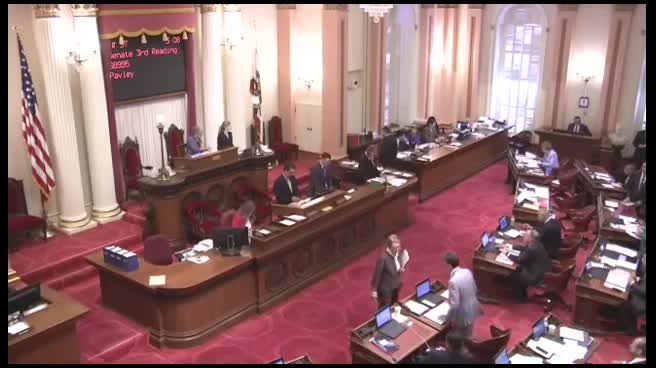 1MIN
Senate Floor
 9MIN
Senate Standing Committee on Governance and Finance
Bill Author