SB 1106: Instructional materials: follow-up adoptions.
- Session Year: 2015-2016
- House: Senate
- Latest Version Date: 2016-06-13
Existing law requires the State Board of Education to adopt instructional materials for kindergarten and grades 1 to 8, inclusive, and to adopt procedures for the submission of instructional materials, and provides that instructional materials may be submitted for adoption in specified subject areas every 8 years.
This bill would instead provide that instructional materials may be submitted for adoption at least once but no more than twice every 8 years. The bill would require the State Department of Education, before conducting a follow-up adoption, as defined, in a given subject area to post a notice on the departments Internet Web site and notify all publishers or manufacturers known to produce basic instructional materials in that subject area that each publisher and manufacturer choosing to participate in the follow-up adoption shall be assessed a fee, as specified.
Existing law, known as the Mobilehome Parks Act, generally regulates various classifications of mobilehome and related vehicle parks. The Special Occupancy Parks Act generally regulates special occupancy parks. Both acts impose related duties on the Department of Housing and Community Development and local enforcement agencies. Existing law provides that any person who willfully violates the act, related building standards, or other related rules and regulations adopted by the department is guilty of a misdemeanor, subject to suspension or revocation of permits issued under the act, and liable for a civil penalty for each violation or for each day of a continuing violation. Existing law requires all fees or other moneys accruing to the department to be deposited into the Mobilehome-Manufactured Home Revolving Fund, which is continuously appropriated to the department for carrying out the provisions of the act.
This bill would authorize the Director of Housing and Community Development or a local enforcement agency that has assumed jurisdiction to issue citations that assess additional civil penalties to any owner or operator, or both, of a mobilehome park, special occupancy park, or registered owner of a manufactured home, mobilehome, or recreational vehicle, or other responsible party when he or she has permitted the continuation of a violation for at least 30 days after the expiration of a notice to correct the violation or violations from the enforcement agency. The bill would prescribe the amounts of those penalties and provide for a hearing on the citations. By increasing revenues deposited into a continuously appropriated fund, this bill would make an appropriation.
The bill would prescribe procedures for petitioning the department to review and investigate the enforcement activities of the local enforcement agency regarding the citation. Any hearing held pursuant to these procedures would not be subject to the Administrative Procedure Act.
The state board shall adopt basic instructional materials for use in kindergarten and grades 1 to 8, inclusive, for governing boards, subject to the following provisions:
(a)The state board shall adopt at least five basic instructional materials for all applicable grade levels in each of the following subject areas:
(1)Language arts, including, but not limited to, spelling, reading, and English language development. The state board may not adopt basic instructional materials in this subject area or the subject area specified by paragraph (2) in the year succeeding the year in which the state board adopts basic instructional materials in this subject area for the same grade level.
(2)Mathematics. The state board may not adopt basic instructional materials in this subject area or the subject area specified by paragraph (1) in the year succeeding the year in which the state board adopts basic instructional materials in this subject area for the same grade level.
(3)Science.
(4)Social science.
(5)Bilingual or bicultural subjects.
(6)Any other subject, discipline, or interdisciplinary areas for which the state board determines the adoption of instructional materials to be necessary or desirable.
(b)The state board shall adopt procedures for the submission of basic instructional materials in order to comply with each of the following:
(1)Instructional materials may be submitted for adoption in any of the subject areas pursuant to paragraphs (1) to (6), inclusive, of subdivision (a) at least once but not more than twice every eight years. The state board shall ensure that curriculum frameworks are reviewed and adopted in each subject area and that the criteria for evaluating instructional materials developed pursuant to subdivision (b) of Section 60204 are consistent with subdivision (c). The state board may prescribe reasonable conditions to restrict the resubmission of materials that have been previously rejected if those resubmitted materials have no substantive changes.
(2)If a publisher or manufacturer submits revisions to currently adopted instructional material for review after the timeframe specified by the state board, the department shall assess a fee on the submitting publisher or manufacturer in an amount that shall not exceed the reasonable costs to the department to conduct a review of the instructional material pursuant to this section.
(3)Submitted instructional materials shall be adopted or rejected within six months of the submission date of the materials pursuant to paragraph (1) unless the state board determines that a longer period of time, not to exceed an additional three months, is necessary due to the estimated volume or complexity of the materials for that subject in that year, or due to other circumstances beyond the reasonable control of the state board.
(4)The process for review of instructional materials shall involve review committees, which shall include, but not be limited to, volunteer content experts and instructional material reviewers, and shall be composed of a majority of classroom teachers from a wide variety of affected grade levels and subject areas.
(5)The rules and procedures for adoption of instructional materials shall be transparent and consistently applicable regardless of the format of the instructional materials, which may include, but not be limited to, print, digital, and open-source instructional materials.
(c)In reviewing and adopting or recommending for adoption submitted basic instructional materials, the state board shall use the following criteria, and ensure that, in its judgment, the submitted basic instructional materials meet all of the following criteria:
(1)Are consistent with the criteria and the standards of quality prescribed in the state boards adopted curriculum framework. In making this determination, the state board shall consider both the framework and the submitted instructional materials as a whole.
(2)Comply with the requirements of Sections 60040, 60041, 60042, 60043, 60044, 60048, 60200.5, and 60200.6, and the state boards guidelines for social content.
(3)Are factually accurate and incorporate principles of instruction reflective of current and confirmed research.
(4)Are aligned to the content standards adopted by the state board in the subject area and the grade level or levels for which they are submitted.
(5)Do not contain materials, including illustrations, that provide unnecessary exposure to a commercial brand name, product, or corporate or company logo. Materials, including illustrations, that contain a commercial brand name, product, or corporate or company logo may not be used unless the state board determines that the use of the commercial brand name, product, or corporate or company logo is appropriate based on one of the following specific findings:
(A)If text, the use of the commercial brand name, product, or corporate or company logo in the instructional materials is necessary for an educational purpose, as defined in the guidelines or frameworks adopted by the state board.
(B)If an illustration, the appearance of a commercial brand name, product, or corporate or company logo in an illustration in instructional materials is incidental to the general nature of the illustration.
(6)Meet other criteria as are established by the state board as being necessary to accomplish the intent of Section 7.5 of Article IX of the California Constitution and of Section 1 of Chapter 1181 of the Statutes of 1989, provided that the criteria are approved by resolution at the time the resolution adopting the framework for the current adoption is approved, or at least 12 months before the date that the materials are to be approved for adoption.
(d)If basic instructional materials are rejected, the state board shall provide a specific, written explanation of the reasons why the submitted materials were not adopted, based on one or more of the criteria established under subdivision (c). In providing this explanation, the state board may use, in whole or in part, materials written by the Superintendent or any other advisers to the state board.
(e)The state board may adopt fewer than five basic instructional materials in each subject area for each grade level if either of the following occurs:
(1)Fewer than five basic instructional materials are submitted.
(2)The state board specifically finds that fewer than five basic instructional materials meet the criteria prescribed by paragraphs (1) to (5), inclusive, of subdivision (c), or the materials fail to meet the state boards adopted curriculum framework. If the state board adopts fewer than five basic instructional materials in any subject for any grade level, the state board shall conduct a review of the degree to which the criteria and procedures used to evaluate the submitted materials for that adoption were consistent with the state boards adopted curriculum framework.
(f)This section does not limit the authority of the state board to adopt materials that are not basic instructional materials.
(g)Consistent with the quality criteria for the state boards adopted curriculum framework, the state board shall prescribe procedures to provide the most open and flexible materials submission system and ensure that the adopted materials in each subject, taken as a whole, provide for the educational needs of the diverse pupil populations in the public schools, provide collections of instructional materials that illustrate diverse points of view, represent cultural pluralism, and provide a broad spectrum of knowledge, information, and technology-based materials to meet the goals of the program and the needs of pupils.
(h)Upon making an adoption, the state board shall make available to listed publishers and manufacturers and all school interests a listing of instructional materials, including the most current unit cost of those materials as computed pursuant to existing law. Items placed upon lists shall remain thereon, and be available for procurement through the states systems of financing, from the date of the adoption of the item and until a date established by the state board. The date established by the state board for continuing items on that list shall be the date on which the state board adopts instructional materials based on a new or revised curriculum framework. Lists of adopted instructional materials shall be made available by subject and grade level to school districts and posted on the departments Internet Web site, and shall include information from the reports of findings from the review committees pursuant to paragraph (4) of subdivision (b). The lists shall terminate and shall no longer be effective on the date prescribed by the state board pursuant to this subdivision.
(i)The state board may approve multiple lists of instructional materials, without designating a grade or subject, and the state board may designate more than one grade or subject whenever it determines that a single subject designation or a single grade designation would not promote the maximum efficiency of pupil learning. Any materials so designated may be placed on single grade or single subject lists, or multigrade or interdisciplinary lists, or may be placed on separate lists including other materials with similar grade or subject designations.
(j)A composite listing in the format of an order form may be used to meet the requirements of this section.
(k)The lists maintained pursuant to this section shall not be deemed to control the use period by any school district.
(l)The state board shall give publishers the opportunity to modify instructional materials, in a manner provided for in regulations adopted by the state board, if the state board finds that the instructional materials do not comply with paragraph (5) of subdivision (c).
(m)This section does not prohibit the publisher of instructional materials from including whatever corporate name or logo on the instructional materials that is necessary to provide basic information about the publisher, to protect its copyright, or to identify third-party sources of content.
(n)The state board may adopt regulations that provide for other exceptions to this section, as determined by the state board.
(o)The Superintendent shall develop, and the state board shall adopt, guidelines to implement this section.
SEC. 2.Section 60227 is added to the Education Code, to read:60227.(a)For purposes of this section, a follow-up adoption is any adoption other than the primary adoption that occurs within the eight-year cycle established pursuant to subdivision (b) of Section 60200.
(b)Before conducting a follow-up adoption in a given subject area, the department shall post an appropriate notice on the departments Internet Web site pursuant to subdivision (c) and notify all publishers or manufacturers known to produce basic instructional materials in that subject area.
(c)The notice shall specify that each publisher or manufacturer choosing to participate in the follow-up adoption shall be assessed a fee based on the number of programs the publisher or manufacturer indicates will be submitted for review and the number of grade levels proposed to be covered by each program.
(d)The fee shall offset the cost of conducting the follow-up adoption process and shall reflect the departments best estimate of the cost. The department shall take reasonable steps to limit costs of the follow-up adoption and to keep the fee modest, recognizing that some of the work necessary for the primary adoption need not be duplicated.
(e)The department, before incurring substantial costs for the follow-up adoption, shall require that a publisher or manufacturer who wishes to participate in the follow-up adoption first declare the intent to submit one or more specific programs for the follow-up adoption and specify the specific grade levels to be covered by each program. After a publisher or manufacturer has declared the intent to submit one or more programs and the grade levels to be covered by each program, the department shall assess a fee. The fee shall be payable by the publisher or manufacturer even if the publisher or manufacturer subsequently chooses to withdraw a program or reduce the number of grade levels covered. A submission by a publisher or manufacturer shall not be reviewed for purposes of adoption, either in a follow-up adoption or in any other primary or follow-up adoption conducted thereafter, until the fee assessed has been paid in full.
(f)(1)It is the intent of the Legislature that the fee not be so substantial that it prevents small publishers or manufacturers from participating in a follow-up adoption.
(2)Upon the request of a small publisher or manufacturer, the state board may reduce the fee for participation in the follow-up adoption.
(3)For purposes of this section, small publisher and small manufacturer mean an independently owned or operated publisher or manufacturer who is not dominant in its field of operation, and who, together with its affiliates, has 100 or fewer employees, and has average annual gross receipts of ten million dollars ($10,000,000) or less over the previous three years.
(g)Revenue derived from fees charged pursuant to subdivision (e) shall be budgeted as reimbursements and subject to review through the annual budget process and may be used to pay costs associated with any adoption and any costs associated with the review of instructional materials.
SECTION 1.Section 18700.1 is added to the Health and Safety Code, to read:18700.1.(a)In addition to other remedies provided in this part, the Director of Housing and Community Development or his or her designee, or an employee authorized by a local enforcement agency that has assumed jurisdiction pursuant to Section 18300, may issue a citation that assesses a civil penalty to any owner or operator, or both, of a mobilehome park or registered owner of a manufactured home, mobilehome, or recreational vehicle, or other responsible party who violates this part or regulations adopted pursuant to this part, if the owner or operator, or both, or registered owner of a manufactured home, mobilehome, or recreational vehicle, or other responsible party has permitted the continuation of a violation for at least 30 days after the expiration of a notice to correct the violation or violations from the enforcement agency. Each citation and related civil penalty assessment shall be issued no later than seven months after issuance of the notice to correct that is the basis of the citation. The penalties provided for in this section are in addition to the penalties specified in Section 18700.
(b)(1)The amount of a civil penalty assessed pursuant to subdivision (a) shall be one hundred dollars ($100) for each violation that the enforcement agency determines is a hazard constituting an unreasonable risk to life, health, or safety, but shall be increased to two hundred fifty dollars ($250) for each subsequent violation of the same prohibition for which a citation for the subsequent violation is issued within one year of the citation for the previous violation.
(2)The amount of a civil penalty assessed pursuant to subdivision (a) shall be two hundred dollars ($200) for each violation that the enforcement agency determines is an imminent hazard representing an immediate risk to life, health, and safety and requiring immediate correction, but shall be increased to five hundred dollars ($500) for each subsequent violation of the same prohibition for which a citation for the subsequent violation is issued within one year of the citation for the previous violation.
(3)The civil penalties assessed pursuant to this section shall be payable to the enforcement agency, notwithstanding any other provision of law. Whether or not the violation or violations, if applicable, giving cause for the citation are corrected, payment of the civil penalty shall be remitted to the enforcement agency within 45 days of the issuance of the citation.
(c)Any person or entity served a citation pursuant to this section may petition the director or his or her designee or the authorized representative of the local enforcement agency, where applicable, to dismiss or modify the citation. The petition shall be a written request briefly stating the grounds for the request. Any petition to be considered shall be received by the department or the local enforcement agency within 30 days of the date of issuance of the citation.
(d)(1)Upon receipt of a timely and complying petition, the enforcement agency shall suspend enforcement of the citation and set a time and place for an informal hearing and shall give the recipient of the citation written notice thereof.
(2)The hearing shall commence no later than 30 days following receipt of the petition or at another time scheduled by the enforcement agency pursuant to a request by the petitioner or the enforcement agency, if the enforcement agency determines that good and sufficient cause exists.
(3)If the petitioner fails to appear at the time and place scheduled for the hearing, the enforcement agency may notify the petitioner in writing that the petition is dismissed and that compliance with the terms of the citation is required within 10 days after receipt of the notification.
(e)The enforcement agency shall notify the petitioner in writing of its decision and the reasons therefor within 30 days following conclusion of the informal hearing held pursuant to this section. If the enforcement agency upholds the citation, in whole or in part, the petitioner shall comply with the citation in accordance with the decision within 30 days after the decision is mailed by the enforcement agency.
SEC. 2.Section 18700.2 is added to the Health and Safety Code, to read:18700.2.(a)A mobilehome park owner or operator, or the registered owner of a manufactured home, mobilehome, recreational vehicle, or other responsible party, who (1) has received a citation with civil penalties issued pursuant to Section 18700.1 by an enforcement agency other than the department, and (2) has received a final, formal order from the enforcement agency following an informal hearing on a submitted petition, shall be entitled to petition the department to review and investigate, as necessary, the enforcement activities of the local enforcement agency.
(b)The petition shall be in writing and shall include the following:
(1)A copy of the original notice of violation, and citation.
(2)A copy of the enforcement agencys written determination, if an informal hearing was held.
(3)A copy of the enforcement agencys final formal order.
(4)A clear and concise explanation of the issues that the petitioner continues to dispute.
(c)The department shall consider the petition in conjunction with the departments responsibility to monitor local enforcement activity pursuant to Section 18306.
(1)Within 60 working days of the receipt of the petition, the department shall review the petition and provide the petitioner with written notice of whether the activities of the local agency require investigation by the department.
(2)If the department has determined that the activities of the local agency require investigation by the department, the written notice to the petitioner shall provide a timeframe for the investigation.
(3)If the department investigates the enforcement activities of a local agency in response to one or more petitions provided pursuant to subdivision (a), the department shall notify each petitioner within 60 days of the results of the departments investigation.
(d)If the department finds that the notice of violation, citation, written determination, or final, formal order issued by the local enforcement agency reflects nonenforcement of the law, the department shall initiate corrective action pursuant to subdivision (d) of Section 18300. This corrective action shall include, but not be limited to, cancellation of the civil citation.
SEC. 3.Section 18700.3 is added to the Health and Safety Code, to read:18700.3.Notwithstanding any other provision of law, any hearing held pursuant to Section 18700.1 or 18700.2 shall not be subject to Chapter 4.5 (commencing with Section 11400) of Part 1 of Division 3 of Title 2 of the Government Code.
(a)In addition to other remedies provided in this part, the Director of Housing and Community Development or his or her designee, or an employee authorized by a local enforcement agency that has assumed jurisdiction pursuant to Section 18300, may issue a citation that assesses a civil penalty to any owner or operator, or both, of a mobilehome park or registered owner of a manufactured home, mobilehome, or recreational vehicle, or other responsible party who violates this part or regulations adopted pursuant to this part, if the owner or operator, or both, or registered owner of a manufactured home, mobilehome, or recreational vehicle, or other responsible party has permitted the continuation of a violation for at least 30 days after the expiration of a notice to correct the violation or violations from the enforcement agency. Each citation and related civil penalty assessment shall be issued no later than seven months after issuance of the notice to correct that is the basis of the citation. The penalties provided for in this section are in addition to the penalties specified in Section 18700.
(b)(1)The amount of a civil penalty assessed pursuant to subdivision (a) shall be one hundred dollars ($100) for each violation that the enforcement agency determines is a hazard constituting an unreasonable risk to life, health, or safety, but shall be increased to two hundred fifty dollars ($250) for each subsequent violation of the same prohibition for which a citation for the subsequent violation is issued within one year of the citation for the previous violation.
(2)The amount of a civil penalty assessed pursuant to subdivision (a) shall be two hundred dollars ($200) for each violation that the enforcement agency determines is an imminent hazard representing an immediate risk to life, health, and safety and requiring immediate correction, but shall be increased to five hundred dollars ($500) for each subsequent violation of the same prohibition for which a citation for the subsequent violation is issued within one year of the citation for the previous violation.
(3)The civil penalties assessed pursuant to this section shall be payable to the enforcement agency, notwithstanding any other provision of law. Whether or not the violation or violations, if applicable, giving cause for the citation are corrected, payment of the civil penalty shall be remitted to the enforcement agency within 45 days of the issuance of the citation.
(c)Any person or entity served a citation pursuant to this section may petition the director or his or her designee or the authorized representative of the local enforcement agency, where applicable, to dismiss or modify the citation. The petition shall be a written request briefly stating the grounds for the request. Any petition to be considered shall be received by the department or the local enforcement agency within 30 days of the date of issuance of the citation.
(d)(1)Upon receipt of a timely and complying petition, the enforcement agency shall suspend enforcement of the citation and set a time and place for an informal hearing and shall give the recipient of the citation written notice thereof.
(2)The hearing shall commence no later than 30 days following receipt of the petition or at another time scheduled by the enforcement agency pursuant to a request by the petitioner or the enforcement agency, if the enforcement agency determines that good and sufficient cause exists.
(3)If the petitioner fails to appear at the time and place scheduled for the hearing, the enforcement agency may notify the petitioner in writing that the petition is dismissed and that compliance with the terms of the citation is required within 10 days after receipt of the notification.
(e)The enforcement agency shall notify the petitioner in writing of its decision and the reasons therefor within 30 days following conclusion of the informal hearing held pursuant to this section. If the enforcement agency upholds the citation, in whole or in part, the petitioner shall comply with the citation in accordance with the decision within 30 days after the decision is mailed by the enforcement agency.
SEC. 2.Section 18700.2 is added to the Health and Safety Code, to read:18700.2.(a)A mobilehome park owner or operator, or the registered owner of a manufactured home, mobilehome, recreational vehicle, or other responsible party, who (1) has received a citation with civil penalties issued pursuant to Section 18700.1 by an enforcement agency other than the department, and (2) has received a final, formal order from the enforcement agency following an informal hearing on a submitted petition, shall be entitled to petition the department to review and investigate, as necessary, the enforcement activities of the local enforcement agency.
(b)The petition shall be in writing and shall include the following:
(1)A copy of the original notice of violation, and citation.
(2)A copy of the enforcement agencys written determination, if an informal hearing was held.
(3)A copy of the enforcement agencys final formal order.
(4)A clear and concise explanation of the issues that the petitioner continues to dispute.
(c)The department shall consider the petition in conjunction with the departments responsibility to monitor local enforcement activity pursuant to Section 18306.
(1)Within 60 working days of the receipt of the petition, the department shall review the petition and provide the petitioner with written notice of whether the activities of the local agency require investigation by the department.
(2)If the department has determined that the activities of the local agency require investigation by the department, the written notice to the petitioner shall provide a timeframe for the investigation.
(3)If the department investigates the enforcement activities of a local agency in response to one or more petitions provided pursuant to subdivision (a), the department shall notify each petitioner within 60 days of the results of the departments investigation.
(d)If the department finds that the notice of violation, citation, written determination, or final, formal order issued by the local enforcement agency reflects nonenforcement of the law, the department shall initiate corrective action pursuant to subdivision (d) of Section 18300. This corrective action shall include, but not be limited to, cancellation of the civil citation.
SEC. 3.Section 18700.3 is added to the Health and Safety Code, to read:18700.3.Notwithstanding any other provision of law, any hearing held pursuant to Section 18700.1 or 18700.2 shall not be subject to Chapter 4.5 (commencing with Section 11400) of Part 1 of Division 3 of Title 2 of the Government Code.
|
Date
|
Status
|
|---|---|
| May 2, 2016 | From committee: Do pass. (Ayes 7. Noes 0. Page 3741.) (May 2). |
| Jun 16, 2016 | Re-referred to Com. on RLS. pursuant to Assembly Rule 96. |
| Jun 15, 2016 | June 15 set for first hearing canceled at the request of author. |
| Jun 13, 2016 | From committee with author's amendments. Read second time and amended. Re-referred to Com. on H. & C.D. |
| May 19, 2016 | Referred to Coms. on H. & C.D. and JUD. |
| May 12, 2016 | Read third time. Passed. (Ayes 38. Noes 0.) Ordered to the Assembly. |
| May 12, 2016 | Read third time. Passed. (Ayes 38. Noes 0. Page 3843.) Ordered to the Assembly. |
| May 12, 2016 | In Assembly. Read first time. Held at Desk. |
| May 3, 2016 | Read second time. Ordered to third reading. |
| May 2, 2016 | From committee: Do pass. (Ayes 7. Noes 0.) (May 2). |
| Feb 17, 2016 | Introduced. Read first time. To Com. on RLS. for assignment. To print. |
| Apr 22, 2016 | Set for hearing May 2. |
| Apr 20, 2016 | From committee: Do pass and re-refer to Com. on APPR. (Ayes 7. Noes 0.) (April 19). Re-referred to Com. on APPR. |
| Apr 20, 2016 | From committee: Do pass and re-refer to Com. on APPR. (Ayes 7. Noes 0. Page 3610.) (April 19). Re-referred to Com. on APPR. |
| Apr 14, 2016 | Set for hearing April 19. |
| Apr 13, 2016 | From committee: Do pass and re-refer to Com. on JUD. (Ayes 11. Noes 0.) (April 12). Re-referred to Com. on JUD. |
| Apr 13, 2016 | From committee: Do pass and re-refer to Com. on JUD. (Ayes 11. Noes 0. Page 3523.) (April 12). Re-referred to Com. on JUD. |
| Mar 24, 2016 | Set for hearing April 12. |
| Feb 25, 2016 | Referred to Coms. on T. & H. and JUD. |
| Feb 18, 2016 | From printer. May be acted upon on or after March 19. |
|
Date
|
Description
|
Location
|
Votes
|
|
|---|---|---|---|---|
| May 12, 2016 | Senate 3rd Reading SB1106 Leyva | Senate Floor |
Passed |
|
| May 2, 2016 | Do pass | Senate Standing Committee on Appropriations |
Passed |
|
| Apr 19, 2016 | Do pass, but first be re-referred to the Committee on [Appropriations] | Senate Standing Committee on Judiciary |
Passed |
|
| Apr 12, 2016 | Do pass, but first be re-referred to the Committee on [Judiciary] | Senate Standing Committee on Transportation and Housing |
Passed |
This list shows positions taken on this bill by organizations on the date displayed, which is linked to the original source.
Positions by individuals are not included.
|
Organization
|
Position
|
Date
|
|---|---|---|
| City of Grand Terrace | ** Support | May 12, 2016 |
| City of Montclair | ** Support | May 12, 2016 |
| Western Manufactured Housing Communities Association | ** Against | May 12, 2016 |
Office of Senate Floor Analyses (916) 651-1520 Fax: (916) 327-4478 | SB |
THIRD READING
Bill No: SB 1106
:
SENATE TRANS. & HOUSING COMMITTEE: 11-0, 4/12/16
AYES: Beall, Cannella, Allen, Bates, Gaines, Galgiani, Leyva, McGuire, Mendoza, Roth, Wieckowski
SENATE JUDICIARY COMMITTEE: 7-0, 4/19/16
AYES: Jackson, Moorlach, Anderson, Hertzberg, Leno, Monning, Wieckowski
SENATE APPROPRIATIONS COMMITTEE: 7-0, 5/2/16
AYES: Lara, Bates, Beall, Hill, McGuire, Mendoza, Nielsen
DIGEST: This bill authorizes the Department of Housing and Community Development (HCD) to issue citations that assess civil penalties to mobilehome park owners and residents who do not correct health and safety violations.
Existing law:
- Directs HCD to regulate mobilehome parks to protect the health, safety, and general welfare of all mobilehome park residents. HCD has adopted statewide regulations to this end, covering both park owners and park residents.
- Authorizes local agencies to assume enforcement authority within their jurisdictions through agreement with HCD.
- Authorizes enforcement agencies to perform health and safety inspections of mobilehome parks.
- Stipulates that when a mobilehome park owner or resident is found to be out of compliance with mobilehome-related health and safety code provisions or HCD regulations, the enforcement agency must issue a notice of violation to the park owner or resident. Additionally:
- If a violation by a resident has not been corrected after 60 days, the enforcement agency must notify the park owner.
- If a violation by a park owner has not been corrected after 60 days, the owner must post the notice of violation conspicuously in the park.
- If the enforcement agency determines that a violation constitutes an imminent threat to health and safety, the violation must be corrected within a reasonable time as determined by the enforcement agency.
- Allows an enforcement agency to revoke or suspend a mobilehome park’s operating permit if the holder violates either the conditions of the permit or existing law related to mobilehome parks.
- Establishes that willful violation of the portions of the Health and Safety Code or HCD regulations related to mobilehome parks is a misdemeanor, punishable by a $400 fine or 30 days in prison, and that any person who willfully violates these provisions and regulations is also liable for a civil penalty of $500 for each day of violation.
This bill:
- Gives HCD and local enforcement agencies the authority to issue citations that assess civil penalties to mobilehome park owners or residents who fail to correct violations for at least 30 days after the expiration of a notice of violation.
- Sets the amount of the civil penalty associated with the citation to:
- $100 per violation in cases where the violation presents an unreasonable risk to life, health, or safety;
- $250 for each subsequent violation of the same provision within one year of the first violation;
- $200 per violation when the violation represents an imminent hazard requiring immediate correction due to the risk to life, health, and safety; and
- $500 for each subsequent violation of the same provision representing an immediate hazard and within one year of the first violation.
- Requires that payment be made to the enforcement agency within 45 days, regardless of whether the violation is corrected.
- Gives a park owner or resident who receives a citation 30 days to petition the enforcement agency to dismiss or modify the citation, and requires the enforcement agency to hold an informal hearing when it receives petitions showing good cause.
- Allows park owners and residents who have challenged a citation in an informal hearing before a local enforcement agency and received a final order to petition the outcome to HCD.
Comments
- Purpose. HCD currently has the authority to issue notices of violation to mobilehome park owners and residents who are out of compliance with health and safety code. According to the author, however, many park owners and residents do not make the necessary repairs, despite repeated notices and follow-up inspections, resulting in unsafe conditions and parks that are community blights. Under current law, noncompliance with an order to repair a serious health and safety defect can only be enforced by expensive civil or criminal court proceedings by local or state public prosecutors, which the author contends “makes enforcement of serious violations virtually impossible, given other prosecutorial priorities.” The purpose of this bill is to provide HCD with the authority to issue citations for health and safety violations.
- Regulation of mobilehomes and mobilehome parks. Mobilehomes are unique among housing forms in that they can move between jurisdictions. Historically, some local governments have tried to discourage mobilehome parks within their jurisdictions through burdensome regulations. These are some of the reasons that, under the state Mobilehome Parks Act, authority to regulate California’s approximately 4,500 mobilehome parks and 400,000 mobilehome lots resides at the state level with HCD. However, local agencies are allowed to assume the authority to enforce statewide rules from HCD. Currently, 63 cities and counties in California are acting as local enforcement agencies under the Act. The agency conducting inspections and issuing notices to mobilehome park owners and residents may therefore be either HCD or a local government agency, depending on the jurisdiction.
- Common violations. Violations of health and safety requirements can be issued to both park operators and individual mobilehome residents, and range from relatively benign maintenance failures to serious hazards. It is important to note, however, that some of the most common violations fall into the latter category. For example, at the park level, “exposed live electrical parts” was the most frequently cited violation in 2014 and the third most frequently cited violation in 2015. Among residents, the most common violations in both years were “accumulation of rubbish [and] combustible material” and “extension cord used in lieu of permanent wiring.”
- Inadequacy of current remedies. Under existing law, enforcement agencies have several tools for addressing violations at mobilehome parks. However, some of these tools are difficult to use, and the consequences associated with other measures tend to be either immaterial or severe. Because notices of violation carry no penalty, a recipient has little incentive to address the violation. Enforcement agencies have been reluctant to revoke park operating permits outright because doing so would displace residents, who often have low incomes and may have difficulty finding other housing. Merely suspending a park’s operating permit prevents park owners from collecting rent. While this provides a strong incentive to correct violations, the suspension process can take six months, which may be one reason enforcement agencies rarely use it. Finally, the author notes that health and safety violations at mobilehome parks are often a low priority for the court system, so when an enforcement agency appeals to the district attorney to bring a misdemeanor charge or pursue civil penalties against a violator, action is rarely taken.
- Impact on low-income communities. This bill will impose costs on mobilehome park owners and residents, and these costs may be burdensome to low income individuals. It is unclear what percentage of health and safety violations identified by HCD during its compliance inspections result from deferred maintenance or repairs not undertaken because of a lack of resources. Should the civil penalties authorized in this bill be levied against mobilehome residents who already lack the resources needed to maintain their properties to the appropriate standard, this additional cost may actually increase noncompliance by diverting funds away from needed repairs.
- Amount of the fine. This bill specifies the amounts of the penalties that HCD is authorized to impose. They range from $100 to $500 and vary based on the seriousness of the violation and the number of times the recipient has received a notice for the same violation in the same year. Thus, in order to receive a penalty at the high end of the scale, a park owner or resident would have to fail to correct a violation for 30 days after the expiration of the notice, and then commit the same violation again within one year and again fail to correct the second violation for 30 days after the expiration of the notice.
- Due process. This bill provides certain basic due process rights to parties who receive citations. Under existing law, notices of violation must be in writing and describe the nature of the violation in as clear language as the technicality of the violation will allow. Individuals are provided with an opportunity to contest alleged violations following HCD’s informal conference procedures, and can also challenge enforcement actions of local jurisdictions through direct petitions to HCD. This bill offers similar informal conference procedures for individuals to use when contesting citations, and limits the time during which penalties may be assessed to within seven months of the underlying notice of violation. This bill also suspends enforcement of penalties while an alleged violator is contesting the citation. Just as with existing law, individuals would be able to challenge assessments levied by local jurisdictions through a direct petition to HCD.
FISCAL EFFECT: Appropriation: Fiscal Com.: Local:
According to the Senate Appropriations Committee:
- HCD staffing costs of approximately $240,000 for two additional staff for an anticipated increase in administrative workload associated with informal conferences, hearings, and appeals proceedings related to the new citation authority. (Mobilehome-Manufactured Home Revolving Fund)
- Estimated HCD staff cost savings of approximately $20,000 to $40,000 annually associated with a reduction in second reinspections associated with health and safety violations, to the extent the new fines act as an incentive for owners and operators to correct violations. (Mobilehome-Manufactured Home Revolving Fund)
- Estimated HCD fine and fee revenue gains, potentially in excess of $300,000 initially, due to new citation authority. These revenue gains would likely decrease in future years as compliance increases. (Mobilehome-Manufactured Home Revolving Fund)
City of Grand Terrace
City of Montclair
The Educational Community for Homeowners
Western Manufactured Housing Communities Association
ARGUMENTS IN SUPPORT: Supporters of this bill argue that in the absence of appropriate tools for addressing violations, unsafe conditions may persist at mobilehome parks for months or even years. Enforcement data from HCD’s Mobilehome Park Maintenance and Inspection Task Force support this claim. Of the nearly 15,000 violations noticed to park owners and residents in 2015, half had been corrected as of January 2016.
ARGUMENTS IN OPPOSITION: The Western Manufactured Housing Communities Association (WMA), writing in opposition, expresses concern that the management of a mobilehome park may ultimately be held responsible for correcting a resident’s health and safety violations, or that it may be held financially responsible for civil penalties accumulated by a resident. WMA also expresses concern over the possibility that penalties may be assessed by an enforcement agency while a park owner or operator’s “permit to operate” (PTO) the park is suspended. They write, “[w]hen the PTO is suspended the management cannot collect rent, which is a pretty big hammer for the enforcement agency” and could “place the community in double-jeopardy.”
5/4/16 15:04:18
**** END ****
SENATE COMMITTEE ON
Senator Ricardo Lara, Chair
2015 - 2016 Regular Session
SB 1106 (Leyva) - Mobilehome parks
Version: | Policy Vote: |
Urgency: | Mandate: |
Hearing Date: | Consultant: |
This bill does not meet the criteria for referral to the Suspense File.
Bill Summary:
SB 1106 would authorize the Department of Housing and Community Development (HCD) and specified local enforcement agencies to issue a citation to mobilehome park owners or operators and mobilehome owners when the responsible party has failed to correct specified health and safety violations, as specified. Civil penalties would range from $100 to $500, as noted below.
Fiscal Impact:
- HCD staffing costs of approximately $240,000 for two additional staff for an anticipated increase in administrative workload associated with informal conferences, hearings, and appeals proceedings related to the new citation authority. (Mobilehome-Manufactured Home Revolving Fund)
- Estimated HCD staff cost savings of approximately $20,000 to $40,000 annually associated with a reduction in second reinspections associated with health and safety violations, to the extent the new fines act as an incentive for owners and operators to correct violations. (Mobilehome-Manufactured Home Revolving Fund)
- Estimated HCD fine and fee revenue gains, potentially in excess of $300,000 initially, due to new citation authority. These revenue gains would likely decrease in future years as compliance increases. (Mobilehome-Manufactured Home Revolving Fund)
Background:
Existing law, The Mobilehome Parks Act (MPA), authorizes HCD to regulate mobilehome parks to assure the protection of the health, safety, and general welfare of all mobilehome park residents. HCD has adopted statewide regulations to this end, covering both park owners and park residents. Local agencies have the option of assuming enforcement authority within their jurisdictions through an agreement with HCD. Currently, HCD exercises enforcement authority over approximately 4,200 mobilehome parks, and local agencies – about 70 in total – enforce the act and its regulations in just over 1,000 parks. One of the duties of enforcement agencies is performing health and safety inspections of mobilehome parks.
If an enforcement agency, upon inspection, determines that a mobilehome park is in violation of any provision of the MPA or applicable regulations, the enforcement agency issues a notice to correct the violation to the owner or operator of the mobilehome park and to the responsible person, as specified. The owner or operator of the mobilehome park is responsible for the correction of these violations. If an enforcement agency determines that a mobilehome, an accessory building or structure, or lot is in violation of specified provisions of the MPA or applicable regulations, the enforcement agency must issue a notice to correct the violation to the mobilehome owner and occupant. The mobilehome owner is responsible for the correction of these violations.
If the owner or operator of the mobilehome park or the mobilhome owner disputes a determination by the enforcement agency regarding a violation, the failure to correct the violation in the required timeframe, or the reasonableness of the deadline for correction specified by the notice of violation, the park owner/operator or mobilehome owner may request an informal conference with the enforcement agency. The informal conference, and any subsequent hearings or appeals of the decision of the enforcement agency, shall be conducted in accordance with procedures prescribed by HCD.
Existing law establishes that a willful violation of the portions of the Health and Safety Code or HCD regulations related to mobilehome parks is a misdemeanor, punishable by a $400 fine or 30 days in prison. Any person who willfully violates these provisions and regulations is also liable for a civil penalty of $500 for each day of a continuing violation.
Proposed Law:
SB 1106 would authorize HCD or a local enforcement agency to issue a citation that assesses a civil penalty to a park owner or operator, or mobilehome owner or other responsible party, who violates the MPA or applicable regulations, if that person has permitted the continuation of a violation at least 30 days after the expiration of a notice to correct the violation.
This bill specifies the amount of the civil penalty at $100 for violations determined to be a hazard constituting an unreasonable risk to life, health, or safety, and increases the penalty to $250 for each subsequent violation within one year of the first violation. For violations determined to be an imminent hazard representing an immediate risk to life, health, or safety requiring immediate correction, the civil penalty would be $250, and $500 for each subsequent violation within one year of the first violation. Payment must be remitted to the enforcement agency within 45 days.
SB 1106 would also authorize a park owner/operator or resident to petition the enforcement agency to dismiss or modify the citation within 30 days of issuance, and require the enforcement agency to hold an informal hearing when it receives a petition showing good cause, as specified. A park owner/operator or mobilehome owner who receives a final determination from an enforcement agency may subsequently petition HCD to review and investigate the enforcement activities. HCD must consider the petition and initiate corrective actions, as specified.
Staff Comments:
Current enforcement authority for violations of the MPA do not appear to serve as a sufficient incentive for park owners/operators or mobilehome owners to take corrective action. Enforcement data from HCD’s Mobilehome Park Maintenance and Inspection Task Force indicates that in 2015, 5,040 notices of violation were issued to park owners, of which 2,723 had been uncorrected by January 2016, and 10,860 notices were issued to mobilehome owners, of which 5,317 went uncorrected. In addition, 168 of the 216 mobilhome parks inspected in 2014 required 599 reinspections by enforcement agencies to correct violations found during initial inspections. The average HCD inspection costs are $196 per inspection, and the costs for reinspection are not recoverable.
HCD estimates that the citation authority provided by SB 1106 could result in the collection of approximately $319,000 initially, based upon a $100 citation level using the amount of violations that remained uncorrected after a second park reinspection. The revenues from citations would be lower in subsequent years, to the extent the citation authority serves as an incentive to correct violations and compliance increases. HCD also indicates that it is likely to conduct 100-200 fewer reinspections annually with increased compliance, resulting in inspection staff savings of approximately $20,000 to $40,000 per year.
HCD would also incur additional administrative costs to conduct informal hearings from park owners and mobilehome operators petition the department to review a citation, and subsequent investigations and formal appeals. These new activities would require the addition of two new staff to handle the administrative workload at a cost of approximately $240,000 annually.
-- END --
Senator Hannah-Beth Jackson, Chair
2015-2016 Regular Session
Bill No: SB 1106 (Author:Leyva)
Version: February 17, 2016
Hearing Date: April 19, 2016
Fiscal: Yes
Urgency: No
Consultant: TH
SUBJECT
Mobilehome Parks
DESCRIPTION
Existing law, the Mobilehome Parks Act, provides that any person who willfully violates the act, related building standards, or other related rules and regulations adopted by the Department of Housing and Community Development, is guilty of a misdemeanor, subject to suspension or revocation of permits issued under the act, and liable for a civil penalty for each violation or for each day of a continuing violation.
This bill authorizes the Director of Housing and Community Development, or a local enforcement agency that has assumed jurisdiction, to issue citations that assess civil penalties to any owner or operator of a mobilehome park, or a registered owner of a manufactured home, mobilehome, or recreational vehicle, or other responsible party, when he or she has permitted the continuation of a violation for at least 30 days after the expiration of a notice to correct the violation or violations from the enforcement agency.
BACKGROUND
The Mobilehome Parks Act, Health and Safety Code Section 18200 et seq., authorizes the Department of Housing and Community Development (HCD) to regulate mobilehome parks to assure the protection of the health, safety, and general welfare of all mobilehome park residents. The act “clearly expresses that it is California state policy to ensure that mobilehome parks are operated to assure the health, safety, general welfare, and decent living environment of the residents, as well as protect the investment value of mobilehomes.” (County of Santa Cruz v. Waterhouse (2005) 127 Cal.App.4th 1483, 1489 [citations and internal quotation marks omitted].) The act’s goal of “promoting the health and safety of mobilehome residents [is] implemented through the HCD’s establishment of standards for [the] construction, maintenance, occupancy, use, and design of [mobilehome] parks,” (Id.) and these standards are codified in Title 25 of the California Code of Regulations.
The Mobilehome Parks Act gives local jurisdictions the option to assume enforcement authority within their jurisdiction by executing an agreement with HCD. Currently, HCD exercises enforcement authority over approximately 4,200 mobilehome parks, and local agencies – about 70 in total – enforce the act and its regulations in just over 1,000 parks. HCD reports that during compliance investigations carried out in 2015, the “accumulation of rubbish or combustible material” was the most frequent violation noted for park residents, and “exposed live electrical parts” was among the top three violations noted for park owners or operators. In total, 15,900 violations were found during inspections undertaken in 2015, and as of January of this year, approximately 8,040 violations remained uncorrected.
The act provides that willful violations of its provisions constitute a misdemeanor, punishable by either or both a fine of $400 or 30 days imprisonment. The act also provides that enforcement agencies may collect a civil penalty of $500 for willful violations through a proceeding in civil court. (See Health & Saf. Code Sec. 18700.)
This bill would additionally authorize an enforcement agency to assess a civil penalty, payable to the enforcement agency, of up to $500 for continuing violations of the act or its implementing regulations, provided they remain uncorrected for a minimum of 30 days. This bill provides that any person assessed a civil penalty may petition the enforcement agency to dismiss or modify the citation giving rise to the penalty, and participate in an informal hearing on the merits of the petition within 30 days of filing.
This bill was approved by the Senate Committee on Transportation and Housing on April 12, 2016, by a vote of 11-0.
CHANGES TO EXISTING LAW
Existing law, the Mobilehome Parks Act (MPA), authorizes the Department of Housing and Community Development (HCD) to develop specific requirements relating to the construction, maintenance, occupancy, use, and design of mobilehome parks. (Health & Saf. Code Sec. 18200 et seq.)
Existing law provides that the MPA applies to all parts of the state and supersedes any local ordinance, as specified. (Health & Saf. Code Sec. 18300 (a).)
Existing law provides that upon 30 days’ written notice from the governing body to HCD, any city, county, or city and county may assume the responsibility for the enforcement of the MPA and its implementing regulations, as specified. (Health & Saf. Code Sec. 18300 (b).)
Existing law authorizes officers or agents of the applicable enforcement agency to enter and inspect all parks, wherever situated, and inspect all accommodations, equipment, or paraphernalia used in connection therewith, including the right to examine any registers of occupants maintained therein in order to secure the enforcement of the MPA and the regulations adopted pursuant to the MPA. (Health & Saf. Code Sec. 18400 (b).)
Existing law states that if, upon inspection, the applicable enforcement agency determines that a mobilehome park is in violation of any provision of the MPA, or any rule or regulation adopted pursuant thereto, the enforcement agency shall promptly issue a notice to correct the violation to the owner or operator of the mobilehome park and to the responsible person, as specified. The owner or operator of the mobilehome park shall be responsible for the correction of any violations for which a notice of violation has been given. (Health & Saf. Code Sec. 18420 (a).)
Existing law states that if, upon inspection, the applicable enforcement agency determines that a manufactured home, mobilehome, an accessory building or structure, or lot is in violation of specified provisions of the MPA, or any rule or regulation adopted pursuant thereto, the enforcement agency shall promptly issue a notice to correct the violation to the registered owner of the manufactured home or mobilehome, with a copy to the occupant thereof, if different from the registered owner. The registered owner of the manufactured home or mobilehome shall be responsible for the correction of any violations for which a notice of violation has been given. (Health & Saf. Code Sec. 18420 (b).)
Existing law provides that service of the notice of violation shall be effected either personally or by first-class mail. Each notice of violation shall be in writing and shall describe with particularity the nature of the violation in as clear language as the technicality of the violation will allow the average layperson to understand what is being cited, including a reference to the statutory provisions or regulation alleged to have been violated, as well as any penalty provided by law for failure to make timely correction. For violations other than imminent threats to health and safety, as specified, the notice of violation shall allow 60 days from the postmarked date of the notice or date of personal delivery for the elimination of the condition constituting the alleged violation. (Health & Saf. Code Sec. 18420 (c).)
Existing law provides that if the owner or operator of the mobilehome park or the registered owner of the manufactured home or mobilehome disputes a determination by the enforcement agency regarding the alleged violation, the alleged failure to correct the violation in the required timeframe, or the reasonableness of the deadline for correction specified by the notice of violation, the owner or operator of the mobilehome park or the registered owner of the manufactured home or mobilehome may request an informal conference with the enforcement agency. The informal conference, and any subsequent hearings or appeals of the decision of the enforcement agency, shall be conducted in accordance with procedures prescribed by HCD. (Health & Saf. Code Sec. 18421.)
Existing law provides that any person who willfully violates the MPA or any rules or regulations adopted by HCD pursuant to the MPA is guilty of a misdemeanor, punishable by a fine not exceeding $400 or by imprisonment not exceeding 30 days, or by both such fine and imprisonment. (Health & Saf. Code Sec. 18700.)
Existing law provides that any person who willfully violates the MPA or any rules or regulations adopted by HCD pursuant to the MPA shall be liable for a civil penalty of $500 for each violation or for each day of a continuing violation. The enforcement agency shall institute or maintain an action in the appropriate court to collect any civil penalty arising under this section. (Health & Saf. Code Sec. 18700.)
This bill states that in addition to other remedies, the Director of HCD (Director), or an employee authorized by a local enforcement agency, may issue a citation that assesses a civil penalty to any owner or operator, or both, of a mobilehome park or registered owner of a manufactured home, mobilehome, or recreational vehicle, or other responsible party who violates the MPA or regulations adopted pursuant to the MPA, if the owner or operator, or both, or registered owner of a manufactured home, mobilehome, or recreational vehicle, or other responsible party has permitted the continuation of a violation for at least 30 days after the expiration of a notice to correct the violation or violations from the enforcement agency.
This bill specifies that each citation and related civil penalty assessment shall be issued no later than seven months after issuance of the notice to correct that provides the basis of the citation, and that these penalties shall be in addition to other penalties, as specified.
This bill specifies that the amount of a civil penalty assessed shall be $100 for each violation that the enforcement agency determines is a hazard constituting an unreasonable risk to life, health, or safety, but shall be increased to $250 for each subsequent violation of the same prohibition for which a citation for the subsequent violation is issued within one year of the citation for the previous violation.
This bill specifies that the amount of a civil penalty assessed shall be $200 for each violation that the enforcement agency determines is an imminent hazard representing an immediate risk to life, health, and safety and requiring immediate correction, but shall be increased to $500 for each subsequent violation of the same prohibition for which a citation for the subsequent violation is issued within one year of the citation for the previous violation.
This bill specifies that the civil penalties assessed shall be payable to the enforcement agency, notwithstanding any other provision of law, and that payment of the civil penalty shall be remitted to the enforcement agency within 45 days of the issuance of the citation.
This bill specifies that any person or entity served a citation pursuant to this section may petition the Director or the authorized representative of the local enforcement agency, where applicable, to dismiss or modify the citation. The petition shall be a written request briefly stating the grounds for the request, and must be received by HCD or the local enforcement agency within 30 days of the date of issuance of the citation. Upon receipt of a timely and complying petition, the enforcement agency shall suspend enforcement of the citation and set a time and place for an informal hearing, as specified.
This bill specifies that the enforcement agency shall notify the petitioner in writing of its decision and the reasons therefor within 30 days following conclusion of the informal hearing.
This bill provides that a mobilehome park owner or operator, or the registered owner of a manufactured home, mobilehome, recreational vehicle, or other responsible party, who both receives a citation with civil penalties issued by an enforcement agency other than HCD, and receives a final, formal order from the enforcement agency following an informal hearing on a submitted petition, shall be entitled to petition HCD to review and investigate, as necessary, the enforcement activities of the local enforcement agency. This bill specifies procedures for petitioners to follow when seeking such review from HCD.
This bill states that if HCD finds that the notice of violation, citation, written determination, or final, formal order issued by the local enforcement agency reflects non-enforcement of the law, HCD shall initiate corrective action including, but not be limited to, cancellation of the civil citation.
This bill specifies that informal hearings held pursuant to the above provisions shall not be subject to the administrative adjudication provisions of Chapter 4.5 (commencing with Section 11400) of Part 1 of Division 3 of Title 2 of the Government Code.
COMMENT
- Stated need for the bill
According to the author:
The Department of Housing and Community Development (HCD) and certain local governments enforce the state’s health and safety requirements of the “Mobilehome Parks Act” (MPA) laws and regulations in the 4,500 mobilehome parks with about 400,000 spaces throughout the state. Enforcement includes issuing both park owners and resident homeowners notices of violation for defects in their parks or homes, respectively. Except for imminent hazards, they generally have 30 days to correct the violations.
Most violations by park owners include dangerously deficient electrical, gas and plumbing systems. Violations by park residents are mostly accumulations of combustible materials, and electrical cords in lieu of permanent wiring. The same code violations sometimes linger for years in mobilehome parks because there is no monetary penalty for uncorrected violations.
Many park owners and residents do not make the repairs, despite repeated “notices” and follow-up inspections, and HCD’s authority to obtain compliance is limited by statute. Under current law, noncompliance with an order to repair a serious health and safety defect can only be enforced by expensive civil or criminal court proceedings by local or state public prosecutors, which makes enforcement of serious violations virtually impossible, given other prosecutorial priorities. The only other options are, for resident violations, to mandate park evictions lawsuits, and, for park violations, to suspend the park’s permit to operate and its right to collect rent. Both options have serious consequences without necessarily resulting in repairs.
SB 1106 would add to HCD’s existing citation authority to allow it, and local governments enforcing the MPA, to issue citations after 30 days have elapsed without repair to an unreasonable or imminent health and safety violation by a park owner or homeowner in a mobilehome park. The initial citations for an “unreasonable” violation, such as a mobilehome park-wide brownout, would be $100, with subsequent violations within one year being $250. Similarly, initial citations for an “imminent” hazard, such as running sewage under a mobilehome or trailer unit, would be $200, with subsequent violations within one year being $500. Additionally, simple administrative appeal rights are provided, including allowing HCD to keep the costs to the state and petitioners reasonable by utilizing in-house informal appeals rather than the Office of Administrative Hearings judges. The enforcement agency issuing the citation would retain the penalties, thus self-funding the enforcement process.
- Incentivizing compliance
As noted in the Background, above, HCD reports that several thousand mobilehome park owners and residents are, and remain, out of compliance with the Mobilehome Parks Act (MPA) and its implementing regulations. Many of the regulatory violations identified by HCD present significant risks to park residents and guests, including the presence of exposed live electrical equipment and the accumulation of combustible material near residences. The City of Montclair, writing in support, offers a similar view:
The City of Montclair has several mobile home and trailer parks, many of which are in need of significant enforcement of health and safety regulations. However, despite repeated “notices” and follow-up inspections, [HCD’s] authority to obtain compliance is limited by statute. Under current law, noncompliance with an order to repair a serious health and safety defect can only be enforced by expensive civil or criminal court proceedings by local or state public prosecutors, which makes enforcement of serious violations virtually impossible, given other prosecutorial priorities and limited court resources. Some of these parks -- developed prior to 1960 -- are in need of serious enforcement that will compel owners and residents to maintain their dwellings, which in turn promote healthier and safer environments in the city.
This bill would incentivize compliance with the MPA and its implementing regulations by authorizing HCD and local enforcement jurisdictions to assess civil penalties ranging from $100 to $500 for violations that remain uncorrected more than 30 days after the designated deadline given by an enforcement agency to correct a violation.
Importantly, the bill provides certain basic due process rights to parties who receive such assessments. Under existing law, underlying notices of violation must be in writing and describe with particularity the nature of the violation in as clear language as the technicality of the violation will allow the average layperson to understand what is being cited, including a reference to the statutory provisions or regulation alleged to have been violated, as well as any penalty provided by law for failure to make timely correction. For violations other than imminent threats to health and safety, a notice of violation must allow 60 days from the postmarked date or date of delivery for the elimination of the condition constituting the alleged violation. Individuals are provided with an opportunity to contest alleged violations following HCD’s informal conference procedures, and can also challenge enforcement actions of local jurisdictions through direct petitions to HCD.
This bill would offer similar informal conference procedures for individuals to use when contesting civil penalty assessments, and would impose a timeline limiting when such penalties may be assessed to within seven months of the underlying notice of violation. This bill would also provide a 30-day period in which parties may cure alleged violations before a civil assessment could issue, and would require enforcement of the assessment to be suspended while being contested by an alleged violator. Just as with existing law, individuals would be able to challenge assessments levied by local jurisdictions through a direct petition to HCD.
- Impact to low-income communities
Staff notes that while this bill may ultimately help incentivize compliance with the Mobilehome Parks Act (MPA), the civil assessments authorized by the bill would likely be levied against lower income Californians who may not have the financial means to easily absorb them. It is unclear what percentage of health and safety violations identified by HCD during its compliance inspections result from deferred maintenance or repairs not undertaken because of a lack of resources. Should these assessments be levied against mobilehome residents who already lack the resources needed to maintain their properties to the appropriate standard, the additional costs imposed by this bill may actually increase noncompliance by diverting funds away from needed repairs. Given the impact these assessments could have on lower income communities, the Committee may wish to consider how to best ensure that these assessments do not further impoverish financially vulnerable communities.
- Opposition concerns
The Western Manufactured Housing Communities Association (WMA), writing in opposition, expresses concern that the management of a mobilehome park may ultimately be held responsible for correcting a resident’s health and safety violations, or that it may be held financially responsible for civil penalties accumulated by a resident. WMA also expresses concern over the possibility that penalties may be assessed by an enforcement agency while a park owner or operator’s “permit to operate” (PTO) the park is suspended. They write, “[w]hen the PTO is suspended the management cannot collect rent, which is a pretty big hammer for the enforcement agency” and could “place the community in double-jeopardy.”
Support: City of Montclair; Educational Community for Homeowners
Opposition: Western Manufactured Housing Communities Association
HISTORY
Source: Author
Related Pending Legislation: None Known
Prior Legislation:
SB 244 (Vidak, Ch. 176, Stats. 2015) removed a sunset provision implemented by AB 2272 (Wagner, Ch. 99, Stats. 2012), and thereby indefinitely authorized the management of a mobilehome park to file a petition for an order to enjoin violations of a reasonable rule or regulation of the mobilehome park within the limited jurisdiction of the superior court.
AB 2272 (Wagner, Ch. 99, Stats. 2012) authorized, until January 1, 2016, the management of mobilehome parks to file petitions for orders to enjoin violations of reasonable rules or regulations of mobilehome parks within the limited jurisdiction of the superior court.
SB 459 (Lockyer, Ch. 270, Stats. 1991) authorized the management of mobilehome parks to obtain injunctions for three years against continuing or recurring violations of the reasonable rules and regulations of the park. This bill entitled the management to an injunction upon showing such a violation by clear and convincing evidence, and authorized the court to grant a temporary order restraining the violation for up to 15 days pending a hearing on the injunction.
Prior Vote: Senate Transportation and Housing Committee (Ayes 11, Noes 0)
**************
SENATE COMMITTEE ON TRANSPORTATION AND HOUSING
Senator Jim Beall, Chair
2015 - 2016 Regular
Bill No: Hearing Date: 4/12/2016
Author: | Leyva | ||
Version: | 2/17/2016 | ||
Urgency: | No | Fiscal: | Yes |
Consultant: | Sarah Carvill | ||
SUBJECT:
DIGEST: This bill authorizes the Department of Housing and Community Development (HCD) to issue citations to mobilehome park owners and residents who do not correct health and safety violations.
ANALYSIS:
Existing law:
- Directs the Department of Housing and Community Development (HCD) to regulate mobilehome parks to protect the health, safety, and general welfare of all mobilehome park residents. HCD has adopted statewide regulations to this end, covering both park owners and park residents. Local agencies have the option of assuming enforcement authority within their jurisdictions through agreement with HCD. One of the duties of enforcement agencies is performing health and safety inspections of mobilehome parks.
- Further stipulates that when a mobilehome park owner or resident is found to be out of compliance with mobilehome-related Health and Safety Code provisions or HCD regulations, the enforcement agency must issue a notice of violation to the park owner or resident. If a violation by a resident has not been corrected after 60 days, the enforcement agency must notify the park owner. If a violation by a park owner has not been corrected after 60 days, the owner must post the notice of violation conspicuously in the park. If the enforcement agency determines that a violation constitutes an imminent threat to health and safety, the violation must be corrected within a reasonable time as determined by the enforcement agency.
- Allows an enforcement agency to revoke or suspend a mobilehome park’s operating permit if the holder violates either the conditions of the permit or existing law related to mobilehome parks.
Existing law establishes that willful violation of the portions of the Health and Safety Code or HCD regulations related to mobilehome parks is a misdemeanor, punishable by a $400 fine or 30 days in prison. Any person who willfully violates these provisions and regulations is also liable for a civil penalty of $500 for each day of violation.
This bill:
- Gives HCD and local enforcement agencies the authority to issue citations to mobilehome park owners or residents who fail to correct violations for at least 30 days after the expiration of a notice of violation.
- Sets the amount of the penalty associated with the citation to:
- $100 per violation in cases where the violation presents an unreasonable risk to life, health, or safety;
- $250 for each subsequent violation of the same provision within one year of the first violation;
- $200 per violation when the violation represents an imminent hazard requiring immediate correction due to the risk to life, health, and safety; and
- $500 for each subsequent violation of the same provision representing an immediate hazard and within one year of the first violation.
- Requires that payment be made to the enforcement agency within 45 days, regardless of whether the violation is corrected.
- Gives a park owner or resident who receives a citation 30 days to petition the enforcement agency to dismiss or modify the citation, and requires the enforcement agency to hold an informal hearing when it receives petitions showing good cause.
- Allows park owners and residents who have challenged a citation in an informal hearing before a local enforcement agency and received a final order to petition the outcome to HCD.
COMMENTS:
- Purpose. HCD currently has the authority to issue notices of violation to mobilehome park owners and residents who are out of compliance with health and safety code. According to the author, however, many park owners and residents do not make the necessary repairs, despite repeated notices and follow-up inspections, resulting in unsafe conditions and parks that are community blights. Under current law, noncompliance with an order to repair a serious health and safety defect can only be enforced by expensive civil or criminal court proceedings by local or state public prosecutors, which the author contends “makes enforcement of serious violations virtually impossible, given other prosecutorial priorities.” The purpose of this bill is to provide HCD with the authority to issue citations for health and safety violations.
- Background regulation of mobilehomes and mobilehome parks. Mobilehomes are unique among housing forms in that they can move between jurisdictions. Historically, some local governments have tried to discourage mobilehome parks within their jurisdictions through burdensome regulations. These are some of the reasons that, under the state Mobilehome Parks Act, authority to regulate California’s approximately 4,500 mobilehome parks and 400,000 mobilehome lots resides at the state level with HCD. However, local agencies are allowed to assume the authority to enforce statewide rules from HCD. Currently, 63 cities and counties in California are acting as local enforcement agencies under the act. The agency conducting inspections and issuing notices to mobilehome park owners and residents may therefore be either HCD or a local government agency, depending on the jurisdiction.
- Common violations. Violations of health and safety requirements can be issued to both park operators and individual mobilehome residents, and range from relatively benign maintenance failures to serious hazards. It is important to note, however, that some of the most common violations fall into the latter category. For example, at the park level, “exposed live electrical parts” was the most frequently cited violation in 2014 and the third most frequently cited violation in 2015. Among residents, the most common violations in both years were “accumulation of rubbish [and] combustible material” and “extension cord used in lieu of permanent wiring.”
- Inadequacy of current remedies. Under existing law, an enforcement agency has several tools for addressing violations at mobilehome parks. However, some of these tools are difficult to use, and the consequences associated with other measures tend to be either immaterial or severe. Because notices of violation carry no penalty, a recipient has no incentive to address the violation. Suspending a park’s operating permit prevents park owners from collecting rent. While this provides a strong incentive to correct violations, it also deprives park owners from the income that would in many cases be necessary to do so. Additionally, suspending a permit takes at least six months. Revoking park operating permits outright is an even longer process, and would displace residents who often have low incomes and may have difficulty finding other housing. Finally, the author notes that health and safety violations at mobilehome parks are a low priority for the court system, so district attorneys rarely bring misdemeanor charges or pursue civil penalties against violators. Supporters of this bill argue that in the absence of appropriate tools for addressing violations, unsafe conditions may persist at mobilehome parks for months or even years. Enforcement data from HCD’s Mobilehome Park Maintenance and Inspection Task Force support this claim. Of the nearly 15,000 violations noticed to park owners and residents in 2015, half had been corrected as of January 2016.
- Amount of the fine. This bill will impose costs on mobilehome park owners and residents. These costs may be burdensome to low-income individuals. The bill specifies the amounts of the penalties that HCD is authorized to impose. They range from $100 to $500 and vary based on the seriousness of the violation and the number of times the recipient has received a notice for the same violation in the same year. To receive a penalty at the high end of the scale, a park owner or resident would have to fail to correct a violation for 30 days after the expiration of the notice, and then commit the same violation again within one year and again fail to correct the second violation for 30 days after the expiration of the notice.
- Double-referral. This bill has also been referred to the Senate Judiciary Committee.
FISCAL EFFECT: Appropriation: Yes Fiscal Com.: Yes Local: No
POSITIONS: (Communicated to the committee before noon on Wednesday,
April 6, 2016.)
SUPPORT:
City of Montclair
The Educational Community for Homeowners
OPPOSITION:
None received
-- END --
Discussed in Hearing
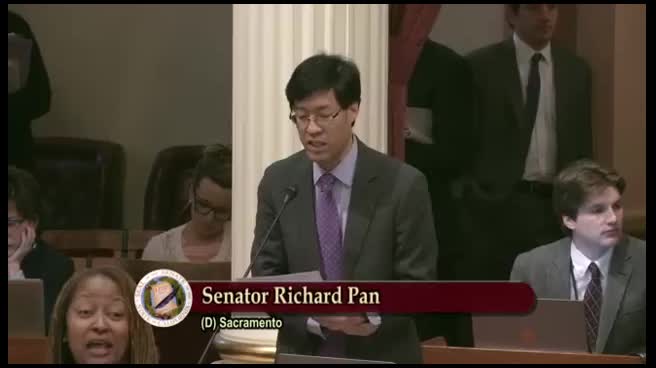 2MIN
Senate Floor
 3MIN
Senate Standing Committee on Appropriations
 12MIN
Senate Standing Committee on Judiciary
 13MIN
Senate Standing Committee on Transportation and Housing
Bill Author

Bill Co-Author(s):