SB 1107: Political Reform Act of 1974.
- Session Year: 2015-2016
- House: Senate
- Latest Version Date: 2016-09-29
Existing law prohibits a person who has been convicted of a felony involving bribery, embezzlement of public money, extortion or theft of public money, perjury, or conspiracy to commit any of those crimes, from being considered a candidate for, or elected to, a state or local elective office. Existing law, the Political Reform Act of 1974, provides that campaign funds under the control of a former candidate or elected officer are considered surplus campaign funds at a prescribed time, and it prohibits the use of surplus campaign funds except for specified purposes.
This bill would prohibit an officeholder who is convicted of one of those enumerated felonies from using funds held by that officeholders candidate controlled committee for purposes other than certain purposes permitted for the use of surplus campaign funds. The bill would also require the officeholder to forfeit any remaining funds held 6 months after the conviction became final, and it would direct those funds to be deposited in the General Fund.
The Political Reform Act of 1974 prohibits a public officer from expending, and a candidate from accepting, public moneys for the purpose of seeking elective office.
This bill would permit a public officer or candidate to expend or accept public moneys for the purpose of seeking elective office if the state or a local governmental entity established a dedicated fund for this purpose, as specified.
A violation of the acts provisions is punishable as a misdemeanor. By expanding the scope of an existing crime, this bill would impose a state-mandated local program.
The California Constitution requires the state to reimburse local agencies and school districts for certain costs mandated by the state. Statutory provisions establish procedures for making that reimbursement.
This bill would provide that no reimbursement is required by this act for a specified reason.
The Political Reform Act of 1974, an initiative measure, provides that the Legislature may amend the act to further the acts purposes upon a 2/3 vote of each house and compliance with specified procedural requirements.
This bill would declare that it furthers the purposes of the act.
Existing law prohibits a person who has been convicted of a felony involving bribery, embezzlement of public money, extortion or theft of public money, perjury, or conspiracy to commit any of those crimes, from being considered a candidate for, or elected to, a state or local elective office. Existing law, the Political Reform Act of 1974, provides that campaign funds under the control of a former candidate or elected officer are considered surplus campaign funds at a prescribed time, and it prohibits the use of surplus campaign funds except for specified purposes.
This bill would prohibit an officeholder who is convicted of one of those enumerated felonies from using funds held by that officeholders candidate controlled committee for purposes other than certain purposes permitted for the use of surplus campaign funds. The bill would also require the officeholder to forfeit any remaining funds held 6 months after the conviction became final, and it would direct those funds to be deposited in the General Fund.
The Political Reform Act of 1974 prohibits a public officer from expending, and a candidate from accepting, public moneys for the purpose of seeking elective office.
This bill would permit a public officer or candidate to expend or accept public moneys for the purpose of seeking elective office if the state or a local governmental entity established a dedicated fund for this purpose, as specified.
The act prohibits a foreign government or principal, as defined, from making a contribution or expenditure in connection with a state or local ballot measure, and it also sets forth civil and criminal penalties for violations of the acts provisions.
This bill would expand the scope of the prohibitions relating to foreign governments and principals by also prohibiting a foreign government or principal from making a contribution in support of, or opposition to, a state or local candidate. It would also permit a greater criminal penalty to be imposed for a violation of that prohibition, and it would establish the amount of a civil penalty for a violation of the prohibition.
A violation of the acts provisions is punishable as a misdemeanor. By expanding the scope of an existing crime, this bill would impose a state-mandated local program.
The California Constitution requires the state to reimburse local agencies and school districts for certain costs mandated by the state. Statutory provisions establish procedures for making that reimbursement.
This bill would provide that no reimbursement is required by this act for a specified reason.
The Political Reform Act of 1974, an initiative measure, provides that the act may be amended by a statute that becomes effective upon approval of the voters.
This bill would require the Secretary of State to submit the bill to the voters for approval at the November 6, 2018, statewide general election.
The Political Reform Act of 1974, an initiative measure, provides that the Legislature may amend the act to further the acts purposes upon a 2/3 vote of each house and compliance with specified procedural requirements.
This bill would declare that it furthers the purposes of the act.
Existing law prohibits a person who has been convicted of a felony involving bribery, embezzlement of public money, extortion or theft of public money, perjury, or conspiracy to commit any of those crimes, from being considered a candidate for, or elected to, a state or local elective office. Exiting Existing law, the Political Reform Act of 1974, provides that campaign funds under the control of a former candidate or elected officer are considered surplus campaign funds at a prescribed time, and it prohibits the use of surplus campaign funds except for specified purposes.
This bill would prohibit an officeholder who is convicted of one of those enumerated felonies from using funds held by that officeholders candidate controlled committee for purposes other than certain purposes permitted for the use of surplus campaign funds. The bill would also require the officeholder to forfeit any remaining funds held six 6 months after the conviction became final, and it would direct those funds to be deposited in the general fund. General Fund.
The Political Reform Act of 1974 prohibits a public officer from expending, and a candidate from accepting, public moneys for the purpose of seeking elective office.
This bill would permit a public officer or candidate to expend or accept public moneys for the purpose of seeking elective office if the state or a local governmental entity established a dedicated fund for this purpose, as specified.
The act prohibits a foreign government or principal, as defined, from making a contribution or expenditure in connection with a state or local ballot measure, and it also sets forth civil and criminal penalties for violations of the acts provisions.
This bill would expand the scope of the prohibitions relating to foreign governments and principals by also prohibiting a foreign government or principal from making a contribution in support of, or opposition to, a state or local candidate. It would also permit a greater criminal penalty to be imposed for a violation of that prohibition, and it would establish the amount of a civil penalty for a violation of the prohibition.
A violation of the acts provisions is punishable as a misdemeanor. By expanding the scope of an existing crime, this bill would impose a state-mandated local program.
The California Constitution requires the state to reimburse local agencies and school districts for certain costs mandated by the state. Statutory provisions establish procedures for making that reimbursement.
This bill would provide that no reimbursement is required by this act for a specified reason.
The Political Reform Act of 1974, an initiative measure, provides that the act may be amended by a statute that becomes effective upon approval of the voters.
This bill would require the Secretary of State to submit the bill to the voters for approval at a statewide election, as specified. the November 6, 2018, statewide general election.
Existing law prohibits a person who has been convicted of a felony involving bribery, embezzlement of public money, extortion or theft of public money, perjury, or conspiracy to commit any of those crimes, from being considered a candidate for, or elected to, a state or local elective office. Exiting law, the Political Reform Act of 1974, provides that campaign funds under the control of a former candidate or elected officer are considered surplus campaign funds at a prescribed time, and it prohibits the use of surplus campaign funds except for specified purposes.
This bill would prohibit an officeholder who is convicted of one of those enumerated felonies from using funds held by that officeholders candidate controlled committee for purposes other than certain purposes permitted for the use of surplus campaign funds. The bill would also require the officeholder to forfeit any remaining funds held six months after the conviction became final, and it would direct those funds to be deposited in the general fund.
The Political Reform Act of 1974 prohibits a public officer from expending, and a candidate from accepting, public moneys for the purpose of seeking elective office. The act defines public moneys by reference to its definition in the Penal Code.
This bill would expressly set forth that definition within the act. permit a public officer or candidate to expend or accept public moneys for the purpose of seeking elective office if the state or a local governmental entity established a dedicated fund for this purpose, as specified.
The act prohibits a foreign government or principal, as defined, from making a contribution or expenditure in connection with a state or local ballot measure, and it also sets forth civil and criminal penalties for violations of the acts provisions.
This bill would expand the scope of the prohibitions relating to foreign governments and principals by also prohibiting a foreign government or principal from making a contribution in support of, or opposition to, a state or local candidate. It would also permit a greater criminal penalty to be imposed for a violation of that prohibition, and it would establish the amount of a civil penalty for a violation of the prohibition.
A violation of the acts provisions is punishable as a misdemeanor. By expanding the scope of an existing crime, this bill would impose a state-mandated local program.
The California Constitution requires the state to reimburse local agencies and school districts for certain costs mandated by the state. Statutory provisions establish procedures for making that reimbursement.
This bill would provide that no reimbursement is required by this act for a specified reason.
The Political Reform Act of 1974, an initiative measure, provides that the act may be amended by a statute that becomes effective upon approval of the voters.
This bill would require the Secretary of State to submit the bill to the voters for approval at a statewide election, as specified.
The Political Reform Act of 1974 prohibits a public officer from expending, and a candidate from accepting, public moneys for the purpose of seeking elective office. The act defines public moneys by reference to its definition in the Penal Code.
This bill would expressly set forth that definition within the act.
The Legislature finds and declares all of the following:
(a)All citizens should be able to make their voices heard in the political process and hold their elected officials accountable.
(b)Elections for local or state elective office should be fair, open, and competitive.
(c)The increasing costs of political campaigns can force candidates to rely on large contributions from wealthy donors and special interests, which can give those wealthy donors and special interests disproportionate influence over governmental decisions.
(d)Such disproportionate influence can undermine the publics trust that public officials are performing their duties in an impartial manner and that government is serving the needs and responding to the wishes of all citizens equally, without regard to their wealth.
(e)Special interests contribute more to incumbents than challengers because they seek access to elected officials, and such contributions account for a large portion of the financial incumbency advantage, as confirmed by recent studies such as those published in the Journal of Politics in 2014 and Political Research Quarterly in 2016.
(f)Citizen-funded election programs, in which qualified candidates can receive public funds for the purpose of communicating with voters rather than relying exclusively on private donors, have been enacted in six charter cities in California, as well as numerous other local and state jurisdictions.
(g)Citizen-funded election programs encourage competition by reducing the financial advantages of incumbency and making it possible for citizens from all walks of life, not only those with connections to wealthy donors or special interests, to run for office, as confirmed by recent studies such as those published in State Politics and Policy Quarterly in 2008, and by the Campaign Finance Institute in 2015 and the National Institute of Money in State Politics in 2016.
(h)By reducing reliance on wealthy donors and special interests, citizen-funded election programs inhibit improper practices, protect against corruption or the appearance of corruption, and protect the political integrity of our governmental institutions.
(i)In Johnson v. Bradley (1992) 4 Cal.4th 389, the California Supreme Court commented that it seems obvious that public money reduces rather than increases the fund raising pressures on public office seekers and thereby reduces the undue influence of special interest groups.
(j)In Buckley v. Valeo (1976) 424 U.S. 1, the United States Supreme Court recognized that public financing as a means of eliminating the improper influence of large private contributions furthers a significant governmental interest.
(k)In Arizona Free Enterprise v. Bennett (2011) 564 U.S. 721, the United States Supreme Court acknowledged that public financing of elections can further significant governmental interest[s] such as the state interest in preventing corruption, quoting Buckley v. Valeo.
(l)In Buckley v. Valeo, the United States Supreme Court further noted that citizen-funded elections programs facilitate and enlarge public discussion and participation in the electoral process, goals vital to a self-governing people.
(m)The absolute prohibition on public campaign financing allows special interests to gain disproportionate influence and unfairly favors incumbents. An exception should be created to permit citizen-funded election programs so that elections may be conducted more fairly.
SEC. 2.Section 85300 of the Government Code is amended to read:85300.(a)Except as provided in subdivision (b), a public officer shall not expend, and a candidate shall not accept, any public moneys for the purpose of seeking elective office.
(b)A public officer or candidate may expend or accept public moneys for the purpose of seeking elective office if the state or a local governmental entity establishes a dedicated fund for this purpose by statute, ordinance, resolution, or charter, and both of the following are true:
(1)Public moneys held in the fund are available to all qualified, voluntarily participating candidates for the same office without regard to incumbency or political party preference.
(2)The state or local governmental entity has established criteria for determining a candidates qualification by statute, ordinance, resolution, or charter.
SEC. 3.Section 89519.5 is added to the Government Code, to read:89519.5.(a)An officeholder who is convicted of a felony enumerated in Section 20 of the Elections Code, and whose conviction has become final, shall use funds held by the officeholders candidate controlled committee only for the following purposes:
(1)The payment of outstanding campaign debts or elected officers expenses.
(2)The repayment of contributions.
(b)Six months after the conviction becomes final, the officeholder shall forfeit any remaining funds subject to subdivision (a), and these funds shall be deposited in the General Fund.
(c)This section does not apply to funds held by a ballot measure committee or in a legal defense fund formed pursuant to Section 85304.
SEC. 4.The provisions of this bill are severable. If any provision of this bill or its application is held invalid, that invalidity shall not affect other provisions or applications that can be given effect without the invalid provision or application.
SEC. 5.No reimbursement is required by this act pursuant to Section 6 of Article XIIIB of the California Constitution because the only costs that may be incurred by a local agency or school district will be incurred because this act creates a new crime or infraction, eliminates a crime or infraction, or changes the penalty for a crime or infraction, within the meaning of Section 17556 of the Government Code, or changes the definition of a crime within the meaning of Section 6 of Article XIIIB of the California Constitution.
SEC. 6.The Legislature finds and declares that this bill furthers the purposes of the Political Reform Act of 1974 within the meaning of subdivision (a) of Section 81012 of the Government Code.
The Legislature finds and declares all of the following:
(a)All citizens should be able to make their voices heard in the political process and hold their elected officials accountable.
(b)Elections for local or state elective office should be fair, open, and competitive.
(c)The increasing costs of political campaigns can force candidates to rely on large contributions from wealthy donors and special interests, which can give those wealthy donors and special interests disproportionate influence over governmental decisions.
(d)Such disproportionate influence can undermine the publics trust that public officials are performing their duties in an impartial manner and that government is serving the needs and responding to the wishes of all citizens equally, without regard to their wealth.
(e)Special interests contribute more to incumbents than challengers because they seek access to elected officials, and such contributions account for a large portion of the financial incumbency advantage, as confirmed by recent studies such as those published in the Journal of Politics in 2014 and Political Research Quarterly in 2016.
(f)Citizen-funded election programs, in which qualified candidates can receive public funds for the purpose of communicating with voters rather than relying exclusively on private donors, have been enacted in six charter cities in California, as well as numerous other local and state jurisdictions.
(g)Citizen-funded election programs encourage competition by reducing the financial advantages of incumbency and making it possible for citizens from all walks of life, not only those with connections to wealthy donors or special interests, to run for office, as confirmed by recent studies such as those published in State Politics and Policy Quarterly in 2008, and by the Campaign Finance Institute in 2015 and the National Institute of Money in State Politics in 2016.
(h)By reducing reliance on wealthy donors and special interests, citizen-funded election programs inhibit improper practices, protect against corruption or the appearance of corruption, and protect the political integrity of our governmental institutions.
(i)In Johnson v. Bradley (1992) 4 Cal.4th 389, the California Supreme Court commented that it seems obvious that public money reduces rather than increases the fund raising pressures on public office seekers and thereby reduces the undue influence of special interest groups.
(j)In Buckley v. Valeo (1976) 424 U.S. 1, the United States Supreme Court recognized that public financing as a means of eliminating improper influence of large private contributions furthers a significant governmental interest.
(k)In Arizona Free Enterprise v. Bennett (2011) 564 U.S. 721, the United States Supreme Court acknowledged that public financing of elections can further significant governmental interest[s] such as the state interest in preventing corruption, quoting Buckley v. Valeo.
(l)In Buckley v. Valeo, the United States Supreme Court further noted that citizen-funded elections programs facilitate and enlarge public discussion and participation in the electoral process, goals vital to a self-governing people.
(m)The absolute prohibition on public campaign financing allows special interests to gain disproportionate influence and unfairly favors incumbents. An exception should be created to permit citizen-funded election programs so that elections may be conducted more fairly.
SECTION 1.SEC. 2.Section 85300 of the Government Code is amended to read:85300.(a)Except as provided in subdivision (b), a public officer shall not expend, and a candidate shall not accept, any public moneys for the purpose of seeking elective office.
(b)A public officer or candidate may expend or accept public moneys for the purpose of seeking elective office if the state or a local governmental entity establishes a dedicated fund for this purpose by statute, ordinance, resolution, or charter, and both of the following are true:
(1)Public moneys held in the fund are available to all qualified, voluntarily participating candidates for the same office without regard to incumbency or political party preference.
(2)The state or local governmental entity has established criteria for determining a candidates qualification by statute, ordinance, resolution, or charter.
SEC. 2.Section 85320 of the Government Code is amended to read:85320.(a)A foreign government or foreign principal shall not make, directly or through any other person, any contribution, expenditure, or independent expenditure in connection with the qualification or support of, or opposition to, a state or local candidate or ballot measure.
(b)A person or a committee shall not solicit or accept a contribution from a foreign government or foreign principal in connection with the qualification or support of, or opposition to, a state or local candidate or ballot measure.
(c)For the purposes of this section, a foreign principal includes the following:
(1)A foreign political party.
(2)A person outside the United States, unless either of the following is established:
(A)The person is an individual and a citizen of the United States.
(B)The person is not an individual and is organized under or created by the laws of the United States or of any state or other place subject to the jurisdiction of the United States and has its principal place of business within the United States.
(3)A partnership, association, corporation, organization, or other combination of persons organized under the laws of or having its principal place of business in a foreign country.
(4)A domestic subsidiary of a foreign corporation if the decision to contribute or expend funds is made by an officer, director, or management employee of the foreign corporation who is neither a citizen of the United States nor a lawfully admitted permanent resident of the United States.
(d)This section does not prohibit a contribution, expenditure, or independent expenditure made by a lawfully admitted permanent resident.
(e)A person who violates this section is guilty of a misdemeanor and shall be fined the greater of ten thousand dollars ($10,000) or an amount equal to the amount contributed or expended.
SEC. 3.Section 89519.5 is added to the Government Code, to read:89519.5.(a)An officeholder who is convicted of a felony enumerated in Section 20 of the Elections Code, and whose conviction has become final, shall use funds held by the officeholders candidate controlled committee only for the following purposes:
(1)The payment of outstanding campaign debts or elected officers expenses.
(2)The repayment of contributions.
(b)Six months after the conviction becomes final, the officeholder shall forfeit any remaining funds subject to subdivision (a), and these funds shall be deposited in the General Fund.
(c)This section does not apply to funds held by a ballot measure committee or in a legal defense fund formed pursuant to Section 85304.
SEC. 4.Section 91004.5 is added to the Government Code, to read:91004.5.(a)A person who intentionally violates Section 85320 is liable in a civil action brought by the civil prosecutor, for each violation, for the greater of ten thousand dollars ($10,000) or an amount equal to the amount contributed or expended.
(b)The civil prosecutor may not bring an action pursuant to this section against a person being criminally prosecuted for a violation of Section 85320 pursuant to Section 91000.
(c)This section is applicable only to violations occurring after the effective date of this section.
SEC. 5.SEC. 4.The provisions of this bill are severable. If any provision of this bill or its application is held invalid, that invalidity shall not affect other provisions or applications that can be given effect without the invalid provision or application.
SEC. 6.No reimbursement is required by this act pursuant to Section 6 of Article XIII B of the California Constitution because the duties imposed on a local agency or school district by this act were expressly included in a ballot measure approved by the voters in a statewide election, within the meaning of Section 17556 of the Government Code.
SEC. 7.Notwithstanding Section 9040 of the Elections Code, the Secretary of State shall, pursuant to subdivision (b) of Section 81012 of the Government Code, submit this act to the voters for approval at the November 6, 2018, statewide general election.
SEC. 5.No reimbursement is required by this act pursuant to Section 6 of Article XIIIB of the California Constitution because the only costs that may be incurred by a local agency or school district will be incurred because this act creates a new crime or infraction, eliminates a crime or infraction, or changes the penalty for a crime or infraction, within the meaning of Section 17556 of the Government Code, or changes the definition of a crime within the meaning of Section 6 of Article XIIIB of the California Constitution.
SEC. 6.The Legislature finds and declares that this bill furthers the purposes of the Political Reform Act of 1974 within the meaning of subdivision (a) of Section 81012 of the Government Code.
(a)Except as provided in subdivision (b), a public officer shall not expend, and a candidate shall not accept, any public moneys for the purpose of seeking elective office.
(b)A public officer or candidate may expend or accept public moneys for the purpose of seeking elective office if the state or a local governmental entity establishes a dedicated fund for this purpose by statute, ordinance, resolution, or charter, and both of the following are true:
(1)Public moneys held in the fund are available to all qualified, voluntarily participating candidates for the same office without regard to incumbency or political party preference.
(2)The state or local governmental entity has established criteria for determining a candidates qualification by statute, ordinance, resolution, or charter.
SEC. 2.Section 85320 of the Government Code is amended to read:85320.(a)A foreign government or foreign principal shall not make, directly or through any other person, any contribution, expenditure, or independent expenditure in connection with the qualification or support of, or opposition to, a state or local candidate or ballot measure.
(b)A person or a committee shall not solicit or accept a contribution from a foreign government or foreign principal in connection with the qualification or support of, or opposition to, a state or local candidate or ballot measure.
(c)For the purposes of this section, a foreign principal includes the following:
(1)A foreign political party.
(2)A person outside the United States, unless either of the following is established:
(A)The person is an individual and a citizen of the United States.
(B)The person is not an individual and is organized under or created by the laws of the United States or of any state or other place subject to the jurisdiction of the United States and has its principal place of business within the United States.
(3)A partnership, association, corporation, organization, or other combination of persons organized under the laws of or having its principal place of business in a foreign country.
(4)A domestic subsidiary of a foreign corporation if the decision to contribute or expend funds is made by an officer, director, or management employee of the foreign corporation who is neither a citizen of the United States nor a lawfully admitted permanent resident of the United States.
(d)This section does not prohibit a contribution, expenditure, or independent expenditure made by a lawfully admitted permanent resident.
(e)A person who violates this section is guilty of a misdemeanor and shall be fined the greater of ten thousand dollars ($10,000) or an amount equal to the amount contributed or expended.
SEC. 3.Section 89519.5 is added to the Government Code, to read:89519.5.(a)An officeholder who is convicted of a felony enumerated in Section 20 of the Elections Code, and whose conviction has become final, shall use funds held by the officeholders candidate controlled committee only for the following purposes:
(1)The payment of outstanding campaign debts or elected officers expenses.
(2)The repayment of contributions.
(b)Six months after the conviction becomes final, the officeholder shall forfeit any remaining funds subject to subdivision (a), and these funds shall be deposited in the general fund. General Fund.
(c)This section does not apply to funds held by a ballot measure committee or in a legal defense fund formed pursuant to Section 85304.
SEC. 4.Section 91004.5 is added to the Government Code, to read:91004.5.(a)A person who intentionally violates Section 85320 is liable in a civil action brought by the civil prosecutor, for each violation, for the greater of ten thousand dollars ($10,000) or an amount equal to the amount contributed or expended.
(b)The civil prosecutor may not bring an action pursuant to this section against a person being criminally prosecuted for a violation of Section 85320 pursuant to Section 91000.
(c)This section is applicable only to violations occurring after the effective date of this section.
SEC. 5.The provisions of this bill are severable. If any provision of this bill or its application is held invalid, that invalidity shall not affect other provisions or applications that can be given effect without the invalid provision or application.
SEC. 6.No reimbursement is required by this act pursuant to Section 6 of Article XIII B of the California Constitution because the duties imposed on a local agency or school district by this act were expressly included in a ballot measure approved by the voters in a statewide election, within the meaning of Section 17556 of the Government Code.
SEC. 7.The Notwithstanding Section 9040 of the Elections Code, the Secretary of State shall, pursuant to subdivision (b) of Section 81012 of the Government Code, submit this act to the voters for approval at a statewide election in accordance withSection 9040 of the Elections Code. the November 6, 2018, statewide general election.
(a)No Except as provided in subdivision (b), a public officer shall expend not expend, and no a candidate shall accept not accept, any public moneys for the purpose of seeking elective office.
(b)A public officer or candidate may expend or accept public moneys for the purpose of seeking elective office if the state or a local governmental entity establishes a dedicated fund for this purpose and both of the following are true:
(1)Public moneys held in the fund are available to all qualified, voluntarily participating candidates for the same office without regard to incumbency or political party preference.
(2)The state or local governmental entity has established criteria for determining a candidates qualification by statute, ordinance, resolution, or charter.
SEC. 2.Section 85320 of the Government Code is amended to read:85320.(a)No A foreign government or foreign principal shall not make, directly or through any other person, any contribution, expenditure, or independent expenditure in connection with the qualification or support of, or opposition to, any a state or local candidate or ballot measure.
(b)No A person and no or a committee shall not solicit or accept a contribution from a foreign government or foreign principal in connection with the qualification or support of, or opposition to, any a state or local candidate or ballot measure.
(c)For the purposes of this section, a foreign principal includes the following:
(1)A foreign political party.
(2)A person outside the United States, unless either of the following is established:
(A)The person is an individual and a citizen of the United States.
(B)The person is not an individual and is organized under or created by the laws of the United States or of any state or other place subject to the jurisdiction of the United States and has its principal place of business within the United States.
(3)A partnership, association, corporation, organization, or other combination of persons organized under the laws of or having its principal place of business in a foreign country.
(4)A domestic subsidiary of a foreign corporation if the decision to contribute or expend funds is made by an officer, director, or management employee of the foreign corporation who is neither a citizen of the United States nor a lawfully admitted permanent resident of the United States.
(d)This section shall does not prohibit a contribution, expenditure, or independent expenditure made by a lawfully admitted permanent resident.
(e)Any A person who violates this section shall be is guilty of a misdemeanor and shall be fined the greater of ten thousand dollars ($10,000) or an amount equal to the amount contributed or expended.
SEC. 3.Section 89519.5 is added to the Government Code, to read:89519.5.(a)An officeholder who is convicted of a felony enumerated in Section 20 of the Elections Code, and whose conviction has become final, shall use funds held by the officeholders candidate controlled committee only for the following purposes:
(1)The payment of outstanding campaign debts or elected officers expenses.
(2)The repayment of contributions.
(b)Six months after the conviction becomes final, the officeholder shall forfeit any remaining funds subject to subdivision (a), and these funds shall be deposited in the general fund.
(c)This section does not apply to funds held by a ballot measure committee or in a legal defense fund formed pursuant to Section 85304.
SEC. 4.Section 91004.5 is added to the Government Code, to read:91004.5.(a)A person who intentionally violates Section 85320 is liable in a civil action brought by the civil prosecutor, for each violation, for the greater of ten thousand dollars ($10,000) or an amount equal to the amount contributed or expended.
(b)The civil prosecutor may not bring an action pursuant to this section against a person being criminally prosecuted for a violation of Section 85320 pursuant to Section 91000.
(c)This section is applicable only to violations occurring after the effective date of this section.
SEC. 5.The provisions of this bill are severable. If any provision of this bill or its application is held invalid, that invalidity shall not affect other provisions or applications that can be given effect without the invalid provision or application.
SEC. 6.No reimbursement is required by this act pursuant to Section 6 of Article XIII B of the California Constitution because the duties imposed on a local agency or school district by this act were expressly included in a ballot measure approved by the voters in a statewide election, within the meaning of Section 17556 of the Government Code.
SEC. 7.The Secretary of State shall, pursuant to subdivision (b) of Section 81012 of the Government Code, submit this act to the voters for approval at a statewide election in accordance with Section 9040 of the Elections Code.
SECTION 1.Section 85206 of the Government Code is amended to read:85206.Public moneys means all bonds and evidence of indebtedness, and all moneys belonging to the state, or any city, county, town, district, or public agency therein, and all moneys, bonds, and evidences of indebtedness received or held by state, county, district, city, town, or public agency officers in their official capacity.
Public moneys has the same meaning as defined in Section 426 of the Penal Code. means all bonds and evidence of indebtedness, and all moneys belonging to the state, or any city, county, town, district, or public agency therein, and all moneys, bonds, and evidences of indebtedness received or held by state, county, district, city, town, or public agency officers in their official capacity.
|
Date
|
Status
|
|---|---|
| May 31, 2016 | Read third time. Passed. (Ayes 26. Noes 12.) Ordered to the Assembly. |
| Sep 9, 2016 | Enrolled and presented to the Governor at 3:30 p.m. |
| Aug 31, 2016 | Assembly amendments concurred in. (Ayes 27. Noes 12.) Ordered to engrossing and enrolling. |
| Aug 31, 2016 | Assembly amendments concurred in. (Ayes 27. Noes 12. Page 5579.) Ordered to engrossing and enrolling. |
| Aug 30, 2016 | Read third time. Passed. (Ayes 55. Noes 22. Page 6493.) Ordered to the Senate. |
| Aug 30, 2016 | Read third time. Passed. Ordered to the Senate. |
| Aug 30, 2016 | In Senate. Concurrence in Assembly amendments pending. |
| Aug 16, 2016 | Read second time. Ordered to third reading. |
| Aug 15, 2016 | Read second time and amended. Ordered to second reading. |
| Aug 12, 2016 | From committee: Do pass as amended. (Ayes 14. Noes 6.) (August 11). |
| Aug 3, 2016 | August 3 set for first hearing. Placed on APPR. suspense file. |
| Jun 30, 2016 | From committee with author's amendments. Read second time and amended. Re-referred to Com. on APPR. |
| Jun 21, 2016 | Read second time and amended. Re-referred to Com. on APPR. |
| Jun 20, 2016 | From committee: Do pass as amended and re-refer to Com. on APPR. (Ayes 5. Noes 2.) (June 15). |
| Jun 6, 2016 | Referred to Com. on E. & R. |
| Jun 1, 2016 | In Assembly. Read first time. Held at Desk. |
| Feb 17, 2016 | Introduced. Read first time. To Com. on RLS. for assignment. To print. |
| May 31, 2016 | Read third time. Passed. (Ayes 26. Noes 12. Page 4043.) Ordered to the Assembly. |
| May 27, 2016 | Read second time. Ordered to third reading. |
| May 27, 2016 | From committee: Do pass. (Ayes 5. Noes 2.) (May 27). |
| May 27, 2016 | From committee: Do pass. (Ayes 5. Noes 2. Page 4003.) (May 27). |
| May 20, 2016 | Set for hearing May 27. |
| May 2, 2016 | May 2 hearing: Placed on APPR. suspense file. |
| Apr 22, 2016 | Set for hearing May 2. |
| Apr 20, 2016 | From committee: Do pass and re-refer to Com. on APPR. (Ayes 4. Noes 1.) (April 19). Re-referred to Com. on APPR. |
| Apr 20, 2016 | From committee: Do pass and re-refer to Com. on APPR. (Ayes 4. Noes 1. Page 3608.) (April 19). Re-referred to Com. on APPR. |
| Apr 5, 2016 | Set for hearing April 19. |
| Mar 31, 2016 | Re-referred to Com. on E. & C.A. |
| Mar 28, 2016 | From committee with author's amendments. Read second time and amended. Re-referred to Com. on RLS. |
| Feb 25, 2016 | Referred to Com. on RLS. |
| Feb 18, 2016 | From printer. May be acted upon on or after March 19. |
|
Date
|
Description
|
Location
|
Votes
|
|
|---|---|---|---|---|
| Aug 31, 2016 | Unfinished Business SB1107 Allen Concurrence | Senate Floor |
Passed |
|
| Aug 30, 2016 | SB 1107 Allen Senate Third Reading By GONZALEZ | Assembly Floor |
Passed |
|
| Aug 11, 2016 | Do pass as amended. | Assembly Standing Committee on Appropriations |
Passed |
|
| Jun 15, 2016 | Do pass as amended and be re-referred to the Committee on [Appropriations] | Assembly Standing Committee on Elections and Redistricting |
Passed |
|
| May 31, 2016 | Senate 3rd Reading SB1107 Allen | Senate Floor |
Passed |
|
| May 27, 2016 | Do pass | Senate Standing Committee on Appropriations |
Passed |
|
| May 2, 2016 | Placed on suspense file | Senate Standing Committee on Appropriations |
Passed |
|
| Apr 19, 2016 | Do pass, but first be re-referred to the Committee on [Appropriations] | Senate Standing Committee on Elections and Constitutional Amendments |
Passed |
This list shows positions taken on this bill by organizations on the date displayed, which is linked to the original source.
Positions by individuals are not included.
|
Organization
|
Position
|
Date
|
|---|---|---|
| Alameda County Board of Supervisors | ** Support | Aug 30, 2016 |
| Alliance Of Californians For Community Empowerment | ** Support | Aug 30, 2016 |
| American Association of Retired Persons | ** Support | Aug 30, 2016 |
| American Civil Liberties Union of California | ** Support | Aug 30, 2016 |
| American Sustainable Business Council | ** Support | Aug 30, 2016 |
| Asian Americans Advancing Justice - California | ** Support | Aug 30, 2016 |
| Asian Pacific Environmental Network | ** Support | Aug 30, 2016 |
| Bay Area Rapid Transit | ** Support | Aug 30, 2016 |
| California Alliance For Retired Americans | ** Support | Aug 30, 2016 |
| California Church Impact | ** Support | Aug 30, 2016 |
| California Clean Money Campaign | ** Support | Aug 30, 2016 |
| California Common Cause | ** Support | Aug 30, 2016 |
| California Forward Action Fund | ** Support | Aug 30, 2016 |
| California League Of Conservation Voters | ** Support | Aug 30, 2016 |
| California National Organization For Women | ** Support | Aug 30, 2016 |
| California OneCare | ** Support | Aug 30, 2016 |
| California School Employees Association | ** Support | Aug 30, 2016 |
| California Taxpayers' Association | ** Against | Aug 30, 2016 |
| California Voices for Progress | ** Support | Aug 30, 2016 |
| CalPERS | * Support | Jun 15, 2016 |
| CALPIRG | ** Support | Jun 15, 2016 |
| Campaign Legal Center | ** Support | Aug 30, 2016 |
| City and County of San Francisco | ** Support | Aug 30, 2016 |
| City Of Oakland | ** Support | Aug 30, 2016 |
| Consumer Attorneys Of California | ** Support | Aug 30, 2016 |
| Consumer Watchdog | ** Support | Aug 30, 2016 |
| Contra Costa County Board of Supervisors | ** Support | Aug 30, 2016 |
| Courage Campaign | ** Support | Aug 30, 2016 |
| Daily Kos | ** Support | Aug 30, 2016 |
| Democracy for America | ** Support | Aug 30, 2016 |
| Franciscan Action Network | ** Support | Aug 30, 2016 |
| Friends Committee On Legislation Of California | ** Support | Aug 30, 2016 |
| Friends Of The Earth | ** Support | Aug 30, 2016 |
| Howard Jarvis Taxpayers Association | ** Against | Aug 30, 2016 |
| League Of Women Voters Of California | ** Support | Aug 30, 2016 |
| Los Angeles County Federation of Labor | ** Support | Aug 30, 2016 |
| Lutheran Office Of Public Policy - California | ** Support | Aug 30, 2016 |
| MapLight | ** Support | Aug 30, 2016 |
| Money Out, Voters In | ** Support | Aug 30, 2016 |
| MOVI, Money Out Voters In | ** Support | Jun 15, 2016 |
| National Council of Jewish Women-California | ** Support | Aug 30, 2016 |
| PICO California | ** Support | Aug 30, 2016 |
| Placer County Democratic Center | ** Support | Aug 30, 2016 |
| Public Citizen | ** Support | Aug 30, 2016 |
| Represent California | ** Support | Aug 30, 2016 |
| Represent California Represent.Us | ** Support | May 31, 2016 |
| Represent.Us | ** Support | Aug 30, 2016 |
| Richmond, City Of | ** Support | Aug 30, 2016 |
| RootsAction.org | ** Support | Aug 30, 2016 |
| San Francisco Bay Area Rapid Transit District | * Support | Jun 15, 2016 |
| Sierra Club California | ** Support | Aug 30, 2016 |
| Southwest Voter Registration Education Project | ** Support | Aug 30, 2016 |
| UFCW Western States Council | ** Support | Aug 30, 2016 |
Office of Senate Floor Analyses (916) 651-1520 Fax: (916) 327-4478 | SB |
UNFINISHED BUSINESS
Bill No: SB 1107
:
SENATE ELECTIONS & C.A. COMMITTEE: 4-1, 4/19/16
AYES: Allen, Hancock, Hertzberg, Liu
NOES: Anderson
SENATE APPROPRIATIONS COMMITTEE: 5-2, 5/27/16
AYES: Lara, Beall, Hill, McGuire, Mendoza
NOES: Bates, Nielsen
SENATE FLOOR: 26-12, 5/31/16
AYES: Allen, Beall, Block, Cannella, De León, Galgiani, Glazer, Hall, Hancock, Hernandez, Hertzberg, Hill, Jackson, Lara, Leno, Leyva, Liu, McGuire, Mendoza, Mitchell, Monning, Pan, Pavley, Roth, Wieckowski, Wolk
NOES: Anderson, Bates, Berryhill, Fuller, Gaines, Huff, Moorlach, Morrell, Nguyen, Nielsen, Stone, Vidak
NO VOTE RECORDED: Hueso, Runner
ASSEMBLY FLOOR: 55-22, 8/30/16 - See last page for vote
SOURCE: California Common Cause
DIGEST: This bill provides, within the Political Reform Act (PRA), an exception to the existing ban on use of public moneys for the purpose of seeking public office and a requirement that an officeholder who is convicted of specified crimes to forfeit any remaining campaign funds to the general fund.
Assembly Amendments add coauthors; add findings and declarations; delete language regarding foreign contributions; and delete language which would have caused the bill to be placed on the ballot.
Existing law:
- Provides, pursuant to the PRA as amended by Proposition 73 of 1988, that no public officer shall expend and no candidate shall accept any public moneys for the purpose of seeking elective office.
- Provides, pursuant to the California Constitution, that every person shall be disqualified from holding any office of profit in this state who has been convicted of having given or offered a bribe to procure personal election or appointment and that laws shall be made to exclude persons convicted of bribery, perjury, forgery, malfeasance in office, or other high crimes from office or serving on juries.
- Provides that a person shall not be considered a candidate for, and is not eligible to be elected to, any state or local elective office if the person has been convicted of a felony involving accepting or giving, or offering to give, any bribe, the embezzlement of public money, extortion or theft of public money, perjury, or conspiracy to commit any of those crimes.
- Provides that campaign funds under the control of a former candidate or elected officer are considered "surplus campaign funds" on the 90th day after the person leaves office, or on the 90th day following the end of the postelection reporting period following the defeat of the candidate, whichever occurs last.
- Permits surplus campaign funds to be used only for the following purposes:
- The payment of outstanding campaign debts or elected officer's expenses.
- The repayment of contributions.
- Donations to a bona fide charitable, educational, civic, religious, or similar tax-exempt, nonprofit organization, where no substantial part of the proceeds will have a material financial effect on the former candidate or elected officer, any member of his or her immediate family, or his or her campaign treasurer.
- Contributions to a political party committee, provided that the campaign funds are not used to support or oppose a candidate for elective office. However, contributions made pursuant to this provision may be used by a political party committee to conduct partisan voter registration, partisan get-out-the-vote activities, and slate-mailers.
- Contributions to support or oppose a candidate for federal office, a candidate for elective office in a state other than California, or a ballot measure.
- The payment for professional services reasonably required by the committee to assist in the performance of its administrative functions, including payment for attorney's fees and other costs for litigation that arises directly out of a candidate's or elected officer's activities, duties, or status as a candidate or elected officer.
- Provides that the PRA may only be amended or repealed in the following manner:
- Amended to further its purposes by a statute passed in each house of the Legislature by a two-thirds vote and signed by the Governor.
- Amended or repealed by a statute that becomes effective only when approved by the electors. The Legislature may place a PRA amendment on the ballot by majority vote in each house and signed by the Governor.
This bill:
- Permits state and local governmental entities to establish public campaign financing programs for candidates for elective office, if all of the following criteria are met:
- The governmental entity has established a dedicated fund, as specified, for the purpose of providing public campaign financing for candidates for elective office;
- Public moneys in the fund are available to all qualified, voluntarily participating candidates of the same office without regard to incumbency or political party; and,
- The state or local governmental entity has established criteria, as specified, for determining a candidate's qualification.
- Provides that an officeholder who is convicted of a felony involving bribery, embezzlement of public money, extortion or theft of public money, perjury, or conspiracy to commit those crimes, as specified, may use funds held by the officeholder's candidate controlled committee only to pay outstanding campaign debts and expenses, and for returning contributions. Requires the officeholder, six months after conviction for one of the aforementioned felonies becomes final, to forfeit any remaining campaign funds and requires the funds to be deposited in the general fund.
- Makes various findings and declarations, and contains a severability clause.
Background
Where does the public funding ban apply? The state itself and most California local governments do not have the option to offer any public funding to electoral campaigns, under the existing statewide ban. While charter cities are exempt under autonomy granted by the state Constitution, general law cities, counties, districts, and the state government are covered by the current state ban. In fact, after voters in Sacramento County enacted public financing several years ago, the courts struck it down under Prop. 73. Currently, six charter cities provide limited public funding to match small campaign contributions (Los Angeles, Long Beach, Oakland, Richmond, Sacramento, and San Francisco). Proponents of these programs describe them as intended to provide candidates with an alternative to relying on large campaign contributions and amplify the voices of Californians who make small donations. Other local governments are prohibited from offering public campaign funding, due to a provision of Proposition 73 of 1988.
Comments
According to the author, SB 1107 would restore control to local governments and the state to enact new options for election campaign funding. Voters are increasingly concerned about political mega-donors in our elections. Most Americans think that money has too much influence in our political campaigns today and they believe that campaign finance should be reformed so that the influence of special interest money is reduced.
To address voters’ concerns, governments are increasingly considering new approaches to campaign financing. In November 2015, voters in Maine and Seattle approved ballot measures that put power back into the hands of voters and small donors. In Maine, 55% of voters approved strengthening that state’s Clean Elections Act, which provides public funds to candidates for state office. In Seattle, 63% of voters approved creating a program to offer public financing for local candidates through a voucher system that empowers voters to decide which candidates receive public money that the voters themselves control.
Six California cities already had laws similar to those recently approved by voters in Maine and Seattle. Los Angeles, San Francisco, Sacramento, Long Beach, Oakland, and Richmond offer limited public funds to match small campaign donations. These laws amplify the voices of everyday Californians who make small contributions and provide candidates with an alternative to relying on large contributors.
Unfortunately, such programs are currently prohibited in other California jurisdictions. Unlike charter cities, state law bans counties, districts, general law cities, and the state itself from offering public campaign funds, under a provision enacted by Proposition 73, a 1988 initiative that had virtually all of its other provisions invalidated in federal court.
Much has changed since 1988 when it comes to campaign finance. Voters in 1988 could have not envisioned the multi-million dollar Super PACs that exist in 2016. It is time for the Legislature and voters to bring our campaign finance laws into the 21st Century.
SB 1107 removes the ban on voluntary public campaign financing programs. Because the ban was originally instituted by ballot initiative, this bill refers the issue to the ballot for voters’ approval. SB 1107 does not create a public financing program or require any government to offer public financing. It does not spend any public funds or raise any taxes or fees. It simply amends the ban to permit local governments or the state, if they so choose, to enact laws that create public financing programs. Local governments would have the flexibility to tailor policies to local concerns and conditions, while requiring basic protections for fairness and accountability.
This bill also includes another common sense reform to increase the accountability of our elections. When an elected official is convicted of a felony that includes the abuse of their office, such as bribery or embezzlement, they are disqualified from running for office again. In these rare but serious cases, this bill requires the convicted official to return any unused campaign funds to donors or pay past debts, and forfeit any surplus funds after six months to the state’s general fund. (Legal defense funds would not be affected.)
California voters passed an initiative, Proposition 9, in 1974 that created the Fair Political Practices Commission (FPPC) and codified significant restrictions and prohibitions on candidates, officeholders and lobbyists. That initiative is commonly known as the PRA. Amendments to the PRA that are not submitted to the voters, such as those contained in this bill, must further the purposes of the initiative and require a two-thirds vote of both houses of the Legislature.
In a letter dated August 11, 2016, and addressed to Assemblymember Chad Mayes, the Office of the Legislative Counsel provided written confirmation of an oral opinion it reached in which it concluded that "the amendments proposed to Government Code Section 85300 by [this bill] would require voter approval in order to become effective." The letter does not include an analysis of how the Office of the Legislative Counsel reached that conclusion.
In response to this letter, the author's office notes that because the letter did not contain legal analysis on which the conclusion was based, it is impossible to address the legal reasoning behind that conclusion. However, the author's office also notes that "based in part on legal research conducted by attorneys with California Common Cause, the author disagrees with the Legislative Counsel’s conclusion," and states that "at a December 11, 2015 oversight hearing held by the Senate Committee on Elections and Constitutional Amendments, Jodi Remke, Chair of the Fair Political Practices Commission, who is also an attorney, testified that it is her understanding that the Legislature could amend Section 85300 of the Government Code without placing the question on the ballot." Additionally, California Common Cause and other supporters of this bill argue that it furthers the purposes of the PRA, maintaining that "academic research over the past thirty years…confirms that [public campaign financing] programs reduce the financial advantages of incumbency," and noting that one of the purposes of the PRA is to abolish "laws and practices unfairly favoring incumbents."
FISCAL EFFECT: Appropriation: Fiscal Com.: Local:
According to the Assembly Appropriations Committee, any administrative costs to the FPPC, such as for providing advice or modifying regulations, should be absorbable. The burden of developing and adopting a public campaign financing program would fall on any entity that chooses do so, and would thus not be state reimbursable.
There is a good probability that this bill could result in litigation challenging whether the bill meets the statutory requirement to further the purpose of the PRA, which does not provide for public financing. The state could therefore incur significant legal costs in the hundreds of thousands of dollars.
California Common Cause (source)
Alameda County Board of Supervisors
Alliance of Californians for Community Empowerment
American Association of Retired Persons
American Civil Liberties Union of California
American Sustainable Business Council
Asian Americans Advancing Justice - California
Asian Pacific Environmental Network
Bay Area Rapid Transit
Brennan Center for Justice at New York University School of Law
California Alliance for Retired Americans
California Church IMPACT
California Clean Money Campaign
California Forward Action Fund
California Labor Federation
California League of Conservation Voters
California National Organization for Women
California OneCare
California Public Interest Research Group
California School Employees Association
California Voices for Progress
Campaign Legal Center
City and County of San Francisco
City of Oakland
City of Richmond
Consumer Attorneys of California
Consumer Watchdog
Contra Costa County Board of Supervisors
Courage Campaign
Daily Kos
Democracy for America
Franciscan Action Network
Friends Committee on Legislation of California
Friends of the Earth
League of Women Voters of California
Los Angeles County Federation of Labor
Lutheran Office of Public Policy - California
MapLight
Money Out, Voters In
National Council of Jewish Women-California
PICO California
Placer County Democratic Center
Public Citizen
Represent California
Represent.Us
RootsAction.org
Sierra Club California
Southwest Voter Registration Education Project
UFCW Western States Council
OPPOSITION: (Verified 8/30/16)
California Taxpayers Association
Howard Jarvis Taxpayers Association
ASSEMBLY FLOOR: 55-22, 8/30/16
AYES: Alejo, Arambula, Atkins, Baker, Bloom, Bonilla, Bonta, Brown, Burke, Calderon, Campos, Chang, Chau, Chiu, Chu, Cooley, Cooper, Dababneh, Daly, Dodd, Eggman, Frazier, Cristina Garcia, Eduardo Garcia, Gatto, Gipson, Gomez, Gonzalez, Gordon, Gray, Hadley, Roger Hernández, Holden, Irwin, Jones-Sawyer, Levine, Lopez, Low, McCarty, Medina, Mullin, Nazarian, O'Donnell, Quirk, Ridley-Thomas, Rodriguez, Salas, Santiago, Mark Stone, Thurmond, Ting, Weber, Williams, Wood, Rendon
NOES: Achadjian, Travis Allen, Bigelow, Brough, Chávez, Dahle, Beth Gaines, Gallagher, Grove, Harper, Jones, Lackey, Maienschein, Mathis, Mayes, Melendez, Obernolte, Patterson, Steinorth, Wagner, Waldron, Wilk
NO VOTE RECORDED: Kim, Linder, Olsen
8/30/16 20:09:27
**** END ****
SENATE THIRD READING
STR Bill Id:SB 1107
Author:(Allen)
As Amended Ver:August 15, 2016
2/3 vote
SENATE VOTE: 26-12
Committee | Votes | Ayes | Noes |
Elections | 5-2 | Weber, Gordon, Low, Mullin, Nazarian | Harper, Travis Allen |
Appropriations | 14-6 | Gonzalez, Bloom, Bonilla, Bonta, Calderon, Daly, Eggman, Eduardo Garcia, Holden, Quirk, Santiago, Weber, Wood, McCarty | Bigelow, Chang, Gallagher, Jones, Obernolte, Wagner |
SUMMARY: Allows state and local governments to offer public campaign financing programs. Limits the uses of campaign funds that are held by public officials who have been convicted of various public trust crimes. Specifically, this bill:
- Permits state and local governmental entities to establish public campaign financing programs for candidates for elective office, if all of the following criteria are met:
- The governmental entity has established a dedicated fund, as specified, for the purpose of providing public campaign financing for candidates for elective office;
- Public moneys in the fund are available to all qualified, voluntarily participating candidates of the same office without regard to incumbency or political party; and,
- The state or local governmental entity has established criteria, as specified, for determining a candidate's qualification.
- Provides that an officeholder who is convicted of a felony involving bribery, embezzlement of public money, extortion or theft of public money, perjury, or conspiracy to commit those crimes, as specified, may use funds held by the officeholder's candidate controlled committee only to pay outstanding campaign debts and expenses, and for returning contributions. Requires the officeholder, six months after conviction for one of the aforementioned felonies becomes final, to forfeit any remaining campaign funds and requires the funds to be deposited in the general fund.
- Makes various findings and declarations, and contains a severability clause.
FISCAL EFFECT: According to the Assembly Appropriations Committee, any administrative costs to the Fair Political Practices Commission (FPPC), such as for providing advice or modifying regulations, should be absorbable. The burden of developing and adopting a public campaign financing program would fall on any entity that chooses do so, and would thus not be state reimbursable.
There is a good probability that this bill could result in litigation challenging whether the bill meets the statutory requirement to further the purpose of the Political Reform Act (PRA), which does not provide for public financing. The state could therefore incur significant legal costs in the hundreds of thousands of dollars.
COMMENTS: According to the author, "SB 1107 would remove the ban on voluntary public campaign financing programs. Programs would have to meet basic criteria for fairness and accountability. SB 1107 does not create, or require any government to create, any public campaign financing program – it simply restores the option for local governments and the state.
"Additionally, SB 1107… would require elected officials, who under current law are banned from running for office due to conviction of a specified felony such as bribery, to forfeit their campaign funds within six months, after paying debts or returning contributions, other than legal defense funds."
In 1988, voters approved Proposition 73, which prohibited public funding of campaigns and set contribution limits for state and local elections. Many of the provisions of Proposition 73 were ultimately ruled unconstitutional by the federal courts. The only provisions of Proposition 73 to survive legal challenge were contribution limits for special elections, restrictions on certain mass mailings by officeholders, and the prohibition on the use of public money for campaign purposes.
Because of the public funding ban contained in Proposition 73, the state and most local governments in California do not have the option to offer public financing programs for electoral campaigns. While the California Supreme Court ruled that the public financing ban does not apply to charter cities (Johnson v. Bradley (1992) 4 Cal. 4th 389), a state appellate court has held that the public financing ban does apply to charter counties (County of Sacramento v. Fair Political Practices Commission (1990) 222 Cal. App. 3d 687).
As a result, while charter cities in California can enact public campaign financing programs, general law cities, all counties, all districts, and the state government are covered by the current ban. According to information provided by the author's office, six charter cities currently provide limited public funding to match small campaign contributions (Los Angeles, Long Beach, Oakland, Richmond, Sacramento, and San Francisco).
California voters passed an initiative, Proposition 9, in 1974 that created the FPPC and codified significant restrictions and prohibitions on candidates, officeholders and lobbyists. That initiative is commonly known as the PRA. Amendments to the PRA that are not submitted to the voters, such as those contained in this bill, must further the purposes of the initiative and require a two-thirds vote of both houses of the Legislature.
In a letter dated August 11, 2016, and addressed to Assemblymember Chad Mayes, the Office of the Legislative Counsel provided written confirmation of an oral opinion it reached in which it concluded that "the amendments proposed to Government Code Section 85300 by [this bill] would require voter approval in order to become effective." The letter does not include an analysis of how the Office of the Legislative Counsel reached that conclusion.
In response to this letter, the author's office notes that because the letter did not contain legal analysis on which the conclusion was based, it is impossible to address the legal reasoning behind that conclusion. However, the author's office also notes that "based in part on legal research conducted by attorneys with California Common Cause, the author disagrees with the Legislative Counsel’s conclusion," and states that "at a December 11, 2015 oversight hearing held by the Senate Committee on Elections and Constitutional Amendments, Jodi Remke, Chair of the Fair Political Practices Commission, who is also an attorney, testified that it is her understanding that the Legislature could amend Section 85300 of the Government Code without placing the question on the ballot." Additionally, California Common Cause and other supporters of this bill argue that it furthers the purposes of the PRA, maintaining that "academic research over the past thirty years…confirms that [public campaign financing] programs reduce the financial advantages of incumbency," and noting that one of the purposes of the PRA is to abolish "laws and practices unfairly favoring incumbents."
Please see the policy committee analysis for a full discussion of this bill.
Analysis Prepared by: Ethan Jones / E. & R. / (916) 319-2094 FN: 0004916
Date of Hearing: August 3, 2016
ASSEMBLY COMMITTEE ON APPROPRIATIONS
Lorena Gonzalez, Chair
SBPCA Bill Id:SB 1107
Author:(Allen) – As Amended Ver:June 30, 2016
Policy Committee: | Elections and Redistricting | Vote: | 5 - 2 |
Urgency: No State Mandated Local Program: Yes Reimbursable: No
SUMMARY:
This bill amends the Political Reform Act (PRA) to authorize adoption of public campaign finance programs and limit the uses of campaign funds held by public officials convicted of various public trust crimes. Specifically, this bill:
- Permits the state and local governmental entities to establish programs providing for public campaign financing for candidates for elective office upon meeting all of the following:
- A dedicated fund for the purpose of providing public campaign financing is established;
- Public moneys held in the fund are available to all qualified, voluntarily participating candidates of the same office without regard to incumbency or political party preference; and,
- Criteria are established, by statute, ordinance, resolution, or charter, for determining a candidate's qualification.
- Provides that an officeholder convicted of a felony involving accepting or giving, or offering to give, any bribe, the embezzlement of public money, extortion or theft of public money, perjury, or conspiracy to commit any of those crimes, and whose conviction has become final, may use funds held by the officeholder’s candidate controlled committee only for the payment of outstanding campaign debts or expenses and the repayment of contributions.
- Requires the officeholder, six months after conviction for one of the aforementioned felonies becomes final, to forfeit any remaining funds and requires the funds to be deposited in the General Fund.
- Provides that (2) and (3) do not apply to funds held by a ballot measure committee or in a legal defense fund.
FISCAL EFFECT:
Any administrative costs to the FPPC, such as for providing advice or modifying regulations, should be absorbable. The burden of developing and adopting a public campaign financing program would fall on any entity that chooses do so, and would thus not be state reimbursable.
There is a good probability that this bill could result in litigation challenging whether the bill meets the statutory requirement to further the purpose of the PRA, which does not provide for public financing. The state could therefore incur significant legal costs in the hundreds of thousands of dollars.
COMMENTS:
- Public Financing and Proposition 73. Approved in 1988, Proposition 73 prohibited public funding of campaigns and set contribution limits for state and local elections. The only provisions of Proposition 73 to survive legal challenge were contribution limits for special elections, restrictions on certain mass mailings by officeholders, and the prohibition on the use of public money for campaign purposes. (The contribution limits for special elections that were included in Proposition 73 subsequently were repealed and replaced in another ballot measure.)
Because of the public funding ban contained in Proposition 73, the state and most local governments in California do not have the option to offer public financing programs for electoral campaigns. While the California Supreme Court ruled that the public financing ban does not apply to charter cities, a state appellate court has held that the public financing ban does apply to charter counties.
As a result, while charter cities in California can enact public campaign financing programs, general law cities, all counties, all districts, and the state government are covered by the current ban. Reportedly, six charter cities (Los Angeles, Long Beach, Oakland, Richmond, Sacramento, and San Francisco) currently provide limited public funding to match small campaign contributions.
- Purpose. SB 1107 removes the ban on voluntary public campaign financing programs and provides the state and all local governments with the authority to enact such programs, within parameters specified in the bill. The bill also requires elected officials, who under current law are banned from running for office due to conviction of specified felonies, such as bribery, to forfeit their campaign funds within six months, after paying debts or returning contributions, other than legal defense funds.
Analysis Prepared by: Chuck Nicol / APPR. / (916) 319-2081
Date of Hearing: June 15, 2016
ASSEMBLY COMMITTEE ON ELECTIONS AND REDISTRICTING
Shirley Weber, Chair
SBPCA Bill Id:SB 1107
Author:(Allen) – As Amended Ver:March 28, 2016
SENATE VOTE: 26-12
SUBJECT: Political Reform Act of 1974: public moneys: definition.
SUMMARY: Allows state and local governments to offer public campaign financing programs. Prohibits, under state law, foreign governments and foreign principals from making contributions and expenditures in connection with candidate elections. Increases the maximum monetary penalties for unlawful foreign contributions and expenditures. Limits the uses of campaign funds that are held by public officials who have been convicted of various public trust crimes. Specifically, this bill:
- Permits state and local governmental entities to establish programs that provide for public campaign financing for candidates for elective office, if all of the following criteria have been met:
- The state or local governmental entity has established a dedicated fund for the purpose of providing public campaign financing for candidates for elective office;
- Public moneys held in the fund are available to all qualified, voluntarily participating candidates of the same office without regard to incumbency or political party preference; and,
- The state or local governmental entity has established criteria for determining a candidate's qualification by statute, ordinance, resolution, or charter.
- Prohibits a foreign government or foreign principal, as defined, from making, directly or through any other person, a contribution, expenditure, or independent expenditure in connection with a state or local candidate.
- Prohibits a person or a committee from soliciting or accepting a contribution from a foreign government or a foreign principal, as defined, in connection with a state or local candidate.
- Increases the potential monetary penalties available for a violation of state law restricting contributions and expenditures by foreign governments and foreign principals as follows:
- Increases the maximum fine available in a criminal enforcement proceeding from an amount equal to the amount contributed or expended to an amount that is the greater of the following:
- $10,000; or,
- An amount equal to the amount contributed or expended.
- Increases the maximum fine available in a civil enforcement proceeding from an amount up to $5,000 per violation to an amount that is the greater of the following:
- $10,000; or,
- An amount equal to the amount contributed or expended.
- Increases the maximum fine available in a criminal enforcement proceeding from an amount equal to the amount contributed or expended to an amount that is the greater of the following:
- Provides that an officeholder who is convicted of a felony involving accepting or giving, or offering to give, any bribe, the embezzlement of public money, extortion or theft of public money, perjury, or conspiracy to commit any of those crimes, and whose conviction has become final, may use funds held by the officeholder’s candidate controlled committee only for the payment of outstanding campaign debts or expenses and the repayment of contributions. Requires the officeholder, six months after conviction for one of the aforementioned felonies becomes final, to forfeit any remaining funds and requires the funds to be deposited in the general fund. Provides that these provisions do not apply to funds held by a ballot measure committee or in a legal defense fund.
- Requires the Secretary of State (SOS) to submit the provisions of this bill to the voters for approval at a statewide election, as specified.
- Contains a severability clause.
- Makes corresponding and technical changes.
EXISTING STATE LAW:
- Creates the Fair Political Practices Commission (FPPC), and makes it responsible for the impartial, effective administration and implementation of the Political Reform Act (PRA).
- Prohibits public officers from expending, and candidates from accepting, public moneys for the purpose of seeking elective office.
- Prohibits a foreign government or foreign principal from making, directly or through any other person, a contribution, expenditure, or independent expenditure in connection with the qualification or support of, or opposition to, a state or local ballot measure. Prohibits a person or a committee from soliciting or accepting a contribution from a foreign government or a foreign principal in connection with the qualification or support of, or opposition to, any state or local ballot measure.
- Defines “foreign principal,” for the purposes of these restrictions, to include the following:
- A foreign political party;
- A person outside the United States (US), unless either of the following is established:
- The person is an individual and a citizen of the US; or,
- The person is not an individual, and is organized under or created by the laws of the US or of any state or other place subject to the jurisdiction of the US and has its principal place of business within the US;
- A partnership, association, corporation, organization, or other combination of persons organized under the laws of or having its principal place of business in a foreign country; or,
- A domestic subsidiary of a foreign corporation if the decision to contribute or expend funds is made by an officer, director, or management employee of the foreign corporation who is neither a citizen of the US nor a lawfully admitted permanent resident of the US.
- Provides that these restrictions do not prohibit a contribution, expenditure, or independent expenditure made by a lawfully admitted permanent resident.
- Provides that a person who violates these provisions is guilty of a misdemeanor and shall be fined an amount equal to the amount contributed or expended.
- Defines “foreign principal,” for the purposes of these restrictions, to include the following:
- Provides that contributions deposited into a candidate's campaign account are deemed to be held in trust for expenses associated with the election of the candidate or for expenses associated with holding office. Provides that an expenditure of campaign funds is within the lawful execution of this trust if the expenditure is reasonably related to a political, legislative or governmental purpose, as specified. Requires an expenditure that confers a substantial personal benefit on anyone with authority to approve the expenditure to be directly related to a political, legislative, or governmental purpose.
- Prohibits a person from being a candidate for, or being elected to, an elective office if the person has been convicted of a felony involving accepting or giving, or offering to give, any bribe, the embezzlement of public money, extortion or theft of public money, perjury, or conspiracy to commit any of those crimes.
- Provides that a person who violates any provision of the PRA, except as specified, for which no specific civil penalty is provided, shall be liable in a civil action for an amount of up to $5,000 per violation.
- Permits the FPPC to impose administrative penalties of up to $5,000 per violation of the PRA.
- Requires every constitutional amendment, bond measure, or other legislative measure submitted to the people by the Legislature to appear on the ballot of the first statewide election occurring at least 131 days after the adoption of the proposal by the Legislature.
EXISTING FEDERAL LAW:
- Prohibits a foreign national, directly or indirectly, from doing either of the following in connection with a federal, state, or local election:
- Making a contribution or donation of money or other thing of value, or an express or implied promise to make a contribution or donation; or,
- Making an expenditure, independent expenditure, or disbursement for an electioneering communication.
- Making a contribution or donation of money or other thing of value, or an express or implied promise to make a contribution or donation; or,
- Prohibits a person from soliciting, accepting, or receiving a contribution or donation made by a foreign national in connection with a federal, state, or local election.
- Defines “foreign national,” for the purposes of the prohibitions described above, as either of the following:
- A government of a foreign country; a foreign political party; or a partnership, association, corporation, organization, or other combination of persons organized under the laws of or having its principal place of business in a foreign country; or,
- An individual who is not a citizen or a national of the US and who is not lawfully admitted for permanent residence in the US.
- Establishes the Federal Election Commission (FEC), and makes it responsible for the administration and enforcement of the Federal Election Campaign Act (FECA), including the restrictions on contributions and expenditures by foreign nationals described above.
FISCAL EFFECT: According to the Senate Appropriations Committee analysis:
- The FPPC indicates that it would incur first-year costs of $167,000 and ongoing annual costs of $160,000 to implement the provisions of the bill (General Fund).
- One-time costs in the range of $414,000 to $552,000 to the SOS for printing and mailing costs to place the measure on the ballot in the next statewide election (General Fund).
COMMENTS:
- Purpose of the Bill: According to the author:
In the wake of the U.S. Supreme Court’s Citizens United decision, local governments are increasingly reviewing their campaign finance ordinances in order to ensure the accountability of their elections. However, most California local governments do not have the option to offer any public funding to electoral campaigns, under an existing statewide ban.
Currently, six charter cities provide limited public funding to match small campaign contributions. These programs provide candidates with an alternative to relying on large campaign contributions and amplify the voices of everyday Californians who make small donations.
Unfortunately, other local governments are prohibited from offering public campaign funding, due to a provision adopted nearly 30 years ago as part of Proposition 73 in 1988. While charter cities such as [Los Angeles] are exempt under the state Constitution, general law cities, counties, districts, and the state government are covered by the current state ban. In fact, after voters in Sacramento County enacted public financing, the courts struck it down under Proposition 73.
SB 1107 would remove the ban on voluntary public campaign financing programs, subject to voter approval. Programs would have to meet basic criteria for fairness and accountability. SB 1107 does not create, or require any government to create, any public campaign financing program – it simply restores the option for local governments and the state.
Additionally, SB 1107 includes two other commonsense provisions to increase election accountability. The bill would require elected officials, who under current law are banned from running for office due to conviction of a specified felony such as bribery, to forfeit their campaign funds within six months, after paying debts or returning contributions, other than legal defense funds.
SB 1107 also would extend the current prohibition against foreign corporations or governments contributing to ballot measure campaigns to also include candidate campaigns, and would increase the maximum fine for violating that prohibition.
- Public Financing and Proposition 73: In 1988, voters approved two separate campaign finance reform initiatives, Proposition 68 and Proposition 73. Proposition 68 proposed a system of public funding and expenditure limits for state legislative races, and passed with 53% of the vote. Proposition 73 prohibited public funding of campaigns and set contribution limits for state and local elections, and passed with 58% of the vote. The California State Supreme Court subsequently ruled in Taxpayers to Limit Campaign Spending v. FPPC (1990) 51 Cal. 3d 744, that because the two measures contained conflicting comprehensive regulatory schemes they could not be merged and only one could be implemented. As such, since Proposition 73 received more affirmative votes than Proposition 68, the Court ordered the implementation of Proposition 73 and proclaimed all provisions of Proposition 68 invalid.
In 1990, all state and local elections were conducted under the provisions of Proposition 73. Many of the provisions of Proposition 73 were ultimately ruled unconstitutional by the federal courts. The only provisions of Proposition 73 to survive legal challenge were contribution limits for special elections, restrictions on certain mass mailings by officeholders, and the prohibition on the use of public money for campaign purposes. The contribution limits for special elections that were included in Proposition 73 subsequently were repealed and replaced in another ballot measure.
Because of the public funding ban contained in Proposition 73, the state and most local governments in California do not have the option to offer public financing programs for electoral campaigns. While the California Supreme Court ruled that the public financing ban does not apply to charter cities (Johnson v. Bradley (1992) 4 Cal. 4th 389), a state appellate court has held that the public financing ban does apply to charter counties (County of Sacramento v. Fair Political Practices Commission (1990) 222 Cal. App. 3d 687). The California Constitution generally grants charter cities a greater degree of autonomy over local affairs than charter counties have, particularly with respect to local elections.
As a result, while charter cities in California can enact public campaign financing programs, general law cities, all counties, all districts, and the state government are covered by the current ban. According to information provided by the author's office, six charter cities currently provide limited public funding to match small campaign contributions (Los Angeles, Long Beach, Oakland, Richmond, Sacramento, and San Francisco). - Previous Measures to Permit Public Financing: On three previous occasions, California voters have rejected ballot measures that would have repealed the prohibition against public funding of campaigns that was included in Proposition 73. In all three cases, however, the ballot measures also proposed to enact specific public financing programs for state elections—something that this bill does not propose.
Proposition 25—an initiative measure that appeared on the March 2000 statewide primary election ballot—would have provided for public financing of campaign media advertisements and voter information packets for qualifying candidates and ballot measure committees that agreed to abide by spending limits and would have repealed the PRA's prohibition against public financing systems, among other provisions. Proposition 25 failed passage, receiving 34.7% of the vote statewide.
Proposition 89—an initiative measure that appeared on the November 2006 statewide general election ballot—would have created a public financing system for candidates for elective state office, and would have repealed the PRA's prohibition against public financing systems. Proposition 89 was defeated by the voters, receiving 25.7% of the vote statewide.
Proposition 15—a measure that was placed on the June 2010 statewide primary election ballot by the Legislature—would have created a public financing pilot project for candidates for SOS, and would have repealed the PRA's prohibition against public financing systems. Proposition 15 was defeated by the voters, receiving 42.7% of the vote statewide. - Foreign Campaign Spending, Federal Law, and Previous Legislation: As detailed above, federal law prohibits foreign nationals from making contributions in connection with federal, state, and local elections. According to information from the FEC, “[t]he ban on political contributions and expenditures by foreign nationals was first enacted in 1966 as part of the amendments to the Foreign Agents Registration Act (FARA), an ‘internal security’ statute. The goal of the FARA was to minimize foreign intervention in US elections by establishing a series of limitations on foreign nationals. These included registration requirements for the agents of foreign principals and a general prohibition on political contributions by foreign nationals. In 1974, the prohibition was incorporated into [FECA], giving the [FEC] jurisdiction over its enforcement and interpretation.”
Until 2002, the restriction on contributions by foreign nationals specifically applied to contributions made “in connection with an election to any political office.” Because that language was limited to elections for office, it was the position of the FEC that contributions from foreign nationals relating exclusively to ballot measures were not restricted by federal law. (In 2002, the restriction on foreign contributions was amended to make it applicable to any contribution made “in connection with a Federal, State, or local election,” though it is unclear whether that change was intended to cover ballot measure elections.)
In 1997, the Legislature approved and Governor Wilson signed SB 109 (Kopp), Chapter 67, Statutes of 1997, to prohibit foreign governments or foreign principals from making contributions, expenditures, or independent expenditures in connection with state or local ballot measures. The legislative history suggests that SB 109 did not seek to regulate foreign contributions made in connection with elections for office because such contributions were already restricted by federal law. Instead, SB 109 was limited to foreign spending in connection with ballot measure elections, thereby restricting foreign spending that was not covered by federal law.
Aside from the fact that state law is limited to foreign spending made in connection with ballot measures, state and federal law differ in one other important respect. While federal law restricts contributions and expenditures by foreign nationals, state law does not restrict contributions or expenditures by a foreign national who is an individual and who is legally present in the US. The initial version of SB 109 (and an unsuccessful bill from the prior legislative session) would have restricted contributions by foreign nationals who were legally present in the US, but that restriction was amended out of the bill to address opposition arguments that the restriction could be unconstitutional. - Recent Enforcement Action Related to Foreign Contributions: The FPPC recently brought an enforcement action for the first time in a case involving foreign contributions made in connection with a ballot measure. That enforcement action was initiated after the FEC considered an enforcement action of its own, and declined to take action in that case.
Measure B was a Los Angeles County initiative dealing with adult film production that appeared on the ballot at the November 2012 statewide general election. In October 2012, one of the proponents of Measure B filed a complaint with the FEC alleging that the committee opposing Measure B had received contributions made by a foreign national, and further alleging that those contributions violated FECA. In August 2014, the Associate General Counsel of the FEC recommended dismissing the complaint due in part to a “lack of clear legal guidance” on whether federal law restricts contributions made by foreign nationals in connection with ballot measures. The FEC was equally divided on whether to dismiss the complaint, and in March 2015, it ultimately closed the file on the complaint without taking further action.
In July 2015, after the FEC’s action to close its file, the FPPC received a sworn complaint in connection with the same matter. Last December, the FPPC reached a stipulated settlement in that case. As detailed in that settlement, Manwin USA, a Delaware-based subsidiary of Manwin International, a Luxembourg-based corporation, made contributions totaling more than $268,000 to the committee opposing Measure B. In addition, Froytal, a Cyprus-based subsidiary of Manwin International, made a contribution of $75,000 to the committee opposing Measure B, although that contribution subsequently was returned by the committee. Even though Manwin USA was incorporated under Delaware-law, its contributions violated California law because it was a subsidiary of a foreign corporation and the decision to contribute funds was made by an officer of the foreign corporation who was neither a US citizen nor a lawfully admitted permanent resident of the US.
The FPPC fined Manwin USA a total of $20,000 for the unlawful contributions that it made, fined Froytal $5,000 for the unlawful contribution that it made, and fined the committee opposing Measure B and its treasurer a total of $20,000 for accepting unlawful contributions made by foreign principals. The FPPC also imposed an additional $16,500 in fines for violations of reporting and disclosure laws that occurred in connection with the unlawful foreign contributions. - Suggested Amendments: As detailed above, this bill requires the SOS to submit its provisions to the voters for approval at a statewide election. According to the author's office, it is the author's desire for this bill to appear on the ballot at the November 2018 statewide general election.
Existing law, however, requires measures submitted to the people by the Legislature to appear on the ballot of the first statewide election occurring at least 131 days after the adoption of the proposal by the Legislature. Legislative measures that are chaptered on or before June 30, 2016, will appear on the ballot at the November 8, 2016, statewide election. Any legislative measure that is chaptered during the current legislative session, but after June 30, likely will appear on the ballot at the 2018 statewide primary election, unless the measure provides otherwise. (If the Governor called a statewide special election to be held prior to the June 2018 primary election, legislative measures could also appear on the ballot at that election.)
In order to ensure that this measure appears on the ballot at the November 2018 statewide general election, in accordance with the author's intent, committee staff recommends that this bill be amended to require the SOS to submit it to the voters at that election.
Furthermore, in order to clarify the method by which a dedicated fund may be established for the purposes of creating a public financing program, committee staff recommends the following technical amendment:
On page 3, line 8, after "purpose" insert:
by statute, ordinance, resolution, or charter, - Related Legislation: AB 2250 (Ridley-Thomas), which is pending reconsideration on the Assembly Floor, is similar to the section of this bill that prohibits, under state law, foreign governments and foreign principals from making contributions or expenditures in connection with candidate elections. AB 2250 was approved by this committee on a 5-1 vote, but failed passage on the Assembly Floor on a 51-0 vote (54 votes were required for passage).
- Political Reform Act of 1974: California voters passed an initiative, Proposition 9, in 1974 that created the FPPC and codified significant restrictions and prohibitions on candidates, officeholders and lobbyists. That initiative is commonly known as the PRA. Amendments to the PRA by the Legislature must further the purposes of the proposition and require a two-thirds vote of each house of the Legislature, or the Legislature may propose amendments to the proposition that do not further the purposes of the act by a majority vote, but such amendments must be approved by the voters to take effect. This bill would only take effect if approved by the voters.
REGISTERED SUPPORT / OPPOSITION:
Support
California Clean Money Campaign (co-sponsor)
California Common Cause (co-sponsor)
AARP
Alliance of Californians for Community Empowerment Action
American Civil Liberties Union of California
American Sustainable Business Council
Asian Americans Advancing Justice—California
Brennan Center for Justice at New York University School of Law
California Alliance for Retired Americans
California Church IMPACT
California Forward Action Fund
California League of Conservation Voters
California OneCare
California School Employees Association, AFL-CIO
CALPIRG
Campaign Legal Center
City and County of San Francisco
Courage Campaign
Franciscan Action Network
League of Women Voters of California
Los Angeles County Federation of Labor
Lutheran Office of Public Policy—California
MapLight
MOVI, Money Out Voters In
National Council of Jewish Women—California
Represent California
Represent.Us
San Francisco Bay Area Rapid Transit District
Sierra Club California
Southwest Voter Registration Education Project
UFCW Western States Council
Voices for Progress
Opposition
None on file.
Analysis Prepared by: Ethan Jones / E. & R. / (916) 319-2094
Office of Senate Floor Analyses (916) 651-1520 Fax: (916) 327-4478 | SB |
THIRD READING
Bill No: SB 1107
:
SENATE ELECTIONS & C.A. COMMITTEE: 4-1, 4/19/16
AYES: Allen, Hancock, Hertzberg, Liu
NOES: Anderson
SENATE APPROPRIATIONS COMMITTEE: 5-2, 5/27/16
AYES: Lara, Beall, Hill, McGuire, Mendoza
NOES: Bates, Nielsen
SOURCE: California Clean Money Campaign
California Common Cause
DIGEST: This bill provides, within the Political Reform Act (PRA), an exception to the existing ban on use of public moneys for the purpose of seeking public office, a prohibition on foreign contributions to candidates, and a requirement that an officeholder who is convicted of specified crimes to forfeit any remaining campaign funds to the general fund.
Existing law:
- Provides, pursuant to the PRA as amended by Proposition 73 of 1988, that no public officer shall expend and no candidate shall accept any public moneys for the purpose of seeking elective office.
- Provides, pursuant to the California Constitution, that every person shall be disqualified from holding any office of profit in this state who has been convicted of having given or offered a bribe to procure personal election or appointment and that laws shall be made to exclude persons convicted of bribery, perjury, forgery, malfeasance in office, or other high crimes from office or serving on juries.
- Provides that a person shall not be considered a candidate for, and is not eligible to be elected to, any state or local elective office if the person has been convicted of a felony involving accepting or giving, or offering to give, any bribe, the embezzlement of public money, extortion or theft of public money, perjury, or conspiracy to commit any of those crimes.
- Provides that campaign funds under the control of a former candidate or elected officer are considered "surplus campaign funds" on the 90th day after the person leaves office, or on the 90th day following the end of the postelection reporting period following the defeat of the candidate, whichever occurs last.
- Permits surplus campaign funds to be used only for the following purposes:
- The payment of outstanding campaign debts or elected officer's expenses.
- The repayment of contributions.
- Donations to a bona fide charitable, educational, civic, religious, or similar tax-exempt, nonprofit organization, where no substantial part of the proceeds will have a material financial effect on the former candidate or elected officer, any member of his or her immediate family, or his or her campaign treasurer.
- Contributions to a political party committee, provided that the campaign funds are not used to support or oppose a candidate for elective office. However, contributions made pursuant to this provision may be used by a political party committee to conduct partisan voter registration, partisan get-out-the-vote activities, and slate-mailers.
- Contributions to support or oppose a candidate for federal office, a candidate for elective office in a state other than California, or a ballot measure.
- The payment for professional services reasonably required by the committee to assist in the performance of its administrative functions, including payment for attorney's fees and other costs for litigation that arises directly out of a candidate's or elected officer's activities, duties, or status as a candidate or elected officer.
- Prohibits a foreign government or foreign principal from making, directly or through any other person, a contribution, expenditure, or independent expenditure in connection with the qualification or support of, or opposition to, a state or local ballot measure. Prohibits a person or a committee from soliciting or accepting a contribution from a foreign government or a foreign principal in connection with the qualification or support of, or opposition to, any state or local ballot measure. These restrictions do not prohibit a contribution, expenditure, or independent expenditure made by a lawfully admitted permanent resident. A person who violates these provisions is guilty of a misdemeanor and shall be fined an amount equal to the amount contributed or expended. A “foreign principal,” for the purposes of these restrictions, includes the following:
- A foreign political party.
- A person outside the U.S., unless the person is an individual and a citizen of the U.S. or the person is not an individual, and is organized under or created by the laws of the U.S. or of any state or other place subject to the jurisdiction of the U.S. and has its principal place of business within the U.S.
- A partnership, association, corporation, organization, or other combination of persons organized under the laws of or having its principal place of business in a foreign country.
- A domestic subsidiary of a foreign corporation if the decision to contribute or expend funds is made by an officer, director, or management employee of the foreign corporation who is neither a citizen of the U.S. nor a lawfully admitted permanent resident of the U.S.
- Prohibits, pursuant to federal law, a foreign national, directly or indirectly, from making a campaign contribution, expenditure, independent expenditure, or disbursement for an electioneering communication in connection with a federal, state, or local election and prohibits a person from soliciting, accepting, or receiving a contribution or donation made by a foreign national in connection with a federal, state, or local election. These federal prohibitions only apply to elections for candidates and do not therefore, apply to elections for ballot measures.
- Establishes, pursuant to federal law, the Federal Election Commission (FEC), and makes it responsible for the administration and enforcement of the Federal Election Campaign Act (FECA), including the restrictions on contributions and expenditures by foreign nationals described above.
- Permits the Fair Political Practices Commission (FPPC) to impose administrative penalties of up to $5,000 per violation of the PRA and provides for specified civil penalties.
- Provides that any person who violates any provision of the PRA for which no specific civil penalty is provided, shall be liable in a civil action brought by the FPPC or the district attorney or the elected city attorney for an amount up to $5,000 per violation.
- Provides that any person who violates the PRA’s prohibition on foreign contributions for ballot measure campaigns shall be guilty of a misdemeanor and shall be fined an amount equal to the amount contributed or expended.
- Provides that the PRA may only be amended or repealed in the following manner:
- Amended to further its purposes by a statute passed in each house of the Legislature by a two-thirds vote and signed by the Governor.
- Amended or repealed by a statute that becomes effective only when approved by the electors. The Legislature may place a PRA amendment on the ballot by majority vote in each house and signed by the Governor.
This bill:
- Permits a public officer or candidate to expend or accept public moneys for the purpose of seeking elective office if the state or a local governmental entity establishes a dedicated fund for this purpose, and both of the following are true:
- Public moneys held in the fund are available to all qualified, voluntarily participating candidates for the same office without regard to incumbency or political party preference.
- The state or local governmental entity has established criteria for determining a candidate’s qualification by statute, ordinance, resolution, or charter.
- Provides that a state or local officeholder who is convicted of a felony involving accepting or giving, or offering to give, any bribe, the embezzlement of public money, extortion or theft of public money, perjury, or conspiracy to commit any of those crimes, and whose conviction has become final, may only use funds held by the officeholder’s candidate controlled committee only for the payment of outstanding campaign debts or expenses and the repayment of contributions.
- Requires that six months after conviction for one of the aforementioned felonies becomes final, the officeholder shall forfeit any remaining funds and these funds shall be deposited in the general fund. This provision does not apply to funds held by a ballot measure committee or in a legal defense fund.
- Expands the scope of the PRA’s prohibitions relating to contributions by foreign governments and principals in relation to ballot measures by also prohibiting a foreign government or principal from making a contribution in support of, or opposition to, a state or local candidate.
- Provides that a person who violates the PRA’s foreign contribution ban is guilty of a misdemeanor and shall be fined the greater of $10,000 or an amount equal to the amount contributed or expended. Alternatively provides that a person who violates this prohibition can be held liable in a civil action brought by the civil prosecutor, for each violation, for the greater of $10,000 or an amount equal to the amount contributed or expended. The civil prosecutor may not bring a civil action against a person who is being criminally prosecuted for violation of same prohibition.
- Requires the Secretary of State (SOS) to submit this bill to the voters for approval at a statewide election occurring at least 131 days after the adoption of the proposal by the Legislature.
Background
Where does the public funding ban apply? The state itself and most California local governments do not have the option to offer any public funding to electoral campaigns, under the existing statewide ban. While charter cities are exempt under autonomy granted by the State Constitution, general law cities, counties, districts, and the state government are covered by the current state ban. In fact, after voters in Sacramento County enacted public financing several years ago, the courts struck it down under Prop. 73. Currently, six charter cities provide limited public funding to match small campaign contributions (Los Angeles, Long Beach, Oakland, Richmond, Sacramento, and San Francisco). Proponents of these programs describe them as intended to provide candidates with an alternative to relying on large campaign contributions and amplify the voices of Californians who make small donations. Other local governments are prohibited from offering public campaign funding, due to a provision of Proposition 73 of 1988.
Foreign campaign spending, federal law, and previous legislation. As detailed above, federal law prohibits foreign nationals from making contributions in connection with federal, state, and local candidate elections. According to information from the FEC, the ban on political contributions and expenditures by foreign nationals was first enacted in 1966 as part of the amendments to the Foreign Agents Registration Act (FARA), an ‘internal security’ statute. The goal of the FARA was to minimize foreign intervention in U.S. elections by establishing a series of limitations on foreign nationals. These included registration requirements for the agents of foreign principals and a general prohibition on political contributions by foreign nationals. In 1974, the prohibition was incorporated into FECA, giving the FEC jurisdiction over its enforcement and interpretation.
Until 2002, the restriction on contributions by foreign nationals specifically applied to contributions made “in connection with an election to any political office.” Because that language was limited to elections for office, it was the position of the FEC that contributions from foreign nationals relating exclusively to ballot measures were not restricted by federal law. In 2002, the restriction on foreign contributions was amended to make it applicable to any contribution made “in connection with a Federal, State, or local election,” though it is unclear whether that change was intended to cover ballot measure elections.
In 1997, the Legislature approved and Governor Wilson signed SB 109 (Kopp, Chapter 67, Statutes of 1997), to prohibit foreign governments or foreign principals from making contributions, expenditures, or independent expenditures in connection with state or local ballot measures. The legislative history suggests that SB 109 did not seek to regulate foreign contributions made in connection with elections for office because such contributions were already restricted by federal law. Instead, SB 109 was limited to foreign spending in connection with ballot measure elections, thereby restricting foreign spending that was not covered by federal law.
Aside from the fact that state law is limited to foreign spending made in connection with ballot measures, state and federal law differ in one other important respect. While federal law restricts contributions and expenditures by foreign nationals, state law does not restrict contributions or expenditures by a foreign national who is an individual and who is legally present in the U.S. The initial version of SB 109 (and an unsuccessful bill from the prior legislative session) would have restricted contributions by foreign nationals who were legally present in the U.S., but that restriction was amended out of the bill to address opposition.
Comments
- According to the author, SB 1107 would restore control to local governments and the state to enact new options for election campaign funding. Voters are increasingly concerned about political mega-donors in our elections. Most Americans think that money has too much influence in our political campaigns today and they believe that campaign finance should be reformed so that the influence of special interest money is reduced.
Los Angeles, San Francisco, Sacramento, Long Beach, Oakland, and Richmond offer limited public funds to match small campaign donations. Unfortunately, such programs are currently prohibited in other California jurisdictions. Unlike charter cities, state law bans counties, districts, general law cities, and the state itself from offering public campaign funds, under a provision enacted by Proposition 73, a 1988 initiative that had virtually all of its other provisions invalidated in federal court.
SB 1107 would remove the ban on voluntary public campaign financing programs. Because the ban was originally instituted by ballot initiative, this bill refers the issue to the ballot for voters’ approval. SB 1107 would not create a public financing program or require any government to offer public financing. It would not spend any public funds or raise any taxes or fees. It would simply amend the ban to permit local governments or the state, if they so choose, to enact laws that create public financing programs. Local governments would have the flexibility to tailor policies to local concerns and conditions, while requiring basic protections for fairness and accountability.
SB 1107 also includes two other common sense reforms to increase the accountability of our elections. Currently, foreign corporations and governments may not donate to ballot measure campaigns, but current law does not ban contributions to candidates. SB 1107 extends the ban to prohibit foreign corporations and governments from donating to state or local candidates, enforceable by the state FPPC. Given the FEC’s recent history of deadlocking on enforcement matters, the FPPC is in a better position to enforce this prohibition in California.
Lastly, when an elected official is convicted of a felony that includes the abuse of their office, such as bribery or embezzlement, they are disqualified from running for office again. In these rare but serious cases, SB 1107 requires the convicted official to return any unused campaign funds to donors or pay past debts, and forfeit any surplus funds after six months to the state’s general fund. (Legal defense funds would not be affected.)
Related Legislation
AB 2250 (Ridley-Thomas, 2016), which is pending in the Assembly Floor, is similar to the section of this bill that prohibits, under state law, contributions, expenditures, and independent expenditures from foreign governments and foreign principals in connection with candidate elections.
FISCAL EFFECT: Appropriation: Fiscal Com.: Local:
According to the Senate Appropriations Committee:
- The FPPC indicates that it would incur first-year costs of $167,000 and ongoing annual costs of $160,000 to implement the provisions of this bill (General Fund).
- One-time costs in the range of $414,000 to $552,000 to the SOS for printing and mailing costs to place the measure on the ballot in the next statewide election. (General Fund)
California Clean Money Campaign (co-source)
California Common Cause (co-source)
Alliance of Californians for Community Empowerment
American Association of Retired Persons
American Civil Liberties Union of California
American Sustainable Business Council
Asian Americans Advancing Justice - California
Bay Area Rapid Transit
Brennan Center for Justice at New York University School of Law
California Alliance for Retired Americans
California Church IMPACT
California Forward Action Fund
California League of Conservation Voters
California Public Interest Research Group
California School Employees Association
California Voices for Progress
Campaign Legal Center
Courage Campaign
Franciscan Action Network
League of Women Voters of California
Los Angeles County Federation of Labor
MapLight
Money Out Voters In
National Council of Jewish Women-California
Represent California
Represent.Us
Sierra Club California
Southwest Voter Registration Education Project
UFCW Western Stats Council
OPPOSITION: (Verified 5/27/16)
None received
5/28/16 16:57:30
**** END ****
SENATE COMMITTEE ON APPROPRIATIONS
Senator Ricardo Lara, Chair
2015 - 2016 Regular Session
SB 1107 (Allen) - Political Reform Act of 1974: public moneys: definition
Version: March 28, 2016 | Policy Vote: E. & C.A. 4 - 1 |
Urgency: No | Mandate: Yes |
Hearing Date: May 2, 2016 | Consultant: Robert Ingenito |
This bill meets the criteria for referral to the Suspense File.
Bill Summary:
SB 1107 would (1) provide, within the Political Reform Act (PRA), an exception to the existing ban on use of public moneys for the purpose of seeking public office, (2) prohibit foreign contributions to candidates, and (3) require that an officeholder who is convicted of specified crimes to forfeit any remaining campaign funds to the General Fund.
Fiscal Impact:
- The Fair Political Practices Committee (FPPC) indicates that it would incur first-year costs of $167,000 and ongoing annual costs of $160,000 to implement the provisions of the bill (General Fund).
- One-time costs in the range of $414,000 to $552,000 to the Secretary of State (SOS) for printing and mailing costs to place the measure on the ballot in the next statewide election. (General Fund)
Background:
Under current law, pursuant to the PRA as amended by Proposition 73 (1988), no public officer shall expend and no candidate shall accept any public moneys for the purpose of seeking elective office. The PRA may only be amended or repealed in the following manner: (1) amended to further its purposes by a statute passed in each house of the Legislature by a two-thirds vote and signed by the Governor, or (2) amended or repealed by a statute that becomes effective only when approved by the electors. The Legislature may place a PRA amendment on the ballot by majority vote in each house and signed by the Governor.
Pursuant to the California Constitution, current law provides that every person shall be disqualified from holding any office in the State who has been convicted of having given or offered a bribe to procure personal election or appointment and that laws shall be made to exclude persons convicted of bribery, perjury, forgery, malfeasance in office, or other high crimes from office or serving on juries. Additionally, a person shall not be considered a candidate for, and is not eligible to be elected to, any state or local elective office if the person has been convicted of a felony involving accepting or giving, or offering to give, any bribe, the embezzlement of public money, extortion or theft of public money, perjury, or conspiracy to commit any of those crimes.
Campaign funds under the control of a former candidate or elected officer are considered "surplus campaign funds" on the 90th day after the person leaves office, or on the 90th day following the end of the postelection reporting period following the defeat of the candidate, whichever occurs last. Surplus campaign funds to be used only for the following purposes:
- The payment of outstanding campaign debts or elected officer's expenses.
- The repayment of contributions.
- Donations to a bona fide charitable, educational, civic, religious, or similar tax-exempt, nonprofit organization, where no substantial part of the proceeds will have a material financial effect on the former candidate or elected officer, any member of his or her immediate family, or his or her campaign treasurer.
- Contributions to a political party committee, provided that the campaign funds are not used to support or oppose a candidate for elective office. However, contributions made pursuant to this provision may be used by a political party committee to conduct partisan voter registration, partisan get-out-the-vote activities, and slate-mailers.
- Contributions to support or oppose a candidate for federal office, a candidate for elective office in a state other than California, or a ballot measure.
- The payment for professional services reasonably required by the committee to assist in the performance of its administrative functions, including payment for attorney's fees and other costs for litigation that arises directly out of a candidate's or elected officer's activities, duties, or status as a candidate or elected officer.
Current law prohibits a foreign government or foreign principal from making, directly or through any other person, a contribution, expenditure, or independent expenditure in connection with the qualification or support of, or opposition to, a state or local ballot measure. A person or a committee is prohibited from soliciting or accepting a contribution from a foreign government or a foreign principal, as defined, in connection with the qualification or support of, or opposition to, any state or local ballot measure. These restrictions do not prohibit a contribution, expenditure, or independent expenditure made by a lawfully admitted permanent resident. A person who violates these provisions is guilty of a misdemeanor and shall be fined an amount equal to the amount contributed or expended.
The FPPC recently brought an enforcement action for the first time in a case involving foreign contributions made in connection with a November 2012 Los Angeles County ballot measure (Measure B) dealing with adult film production. Ultimately, FPPC fined subsidiaries of Manwin International, (a Luxembourg-based corporation) for unlawful contributions to the committee opposing Measure B, as well as the committee itself.
Proposed Law:
This bill would do all of the following:
- Permit a public officer or candidate to expend or accept public moneys for the purpose of seeking elective office if the state or a local governmental entity establishes a dedicated fund for this purpose, and both of the following are true: (1) public moneys held in the fund are available to all qualified, voluntarily participating candidates for the same office without regard to incumbency or political party preference, and (2) the state or local governmental entity has established criteria for determining a candidate’s qualification by statute, ordinance, resolution, or charter.
- Provide that a state or local officeholder who is convicted of a felony involving accepting or giving, or offering to give, any bribe, the embezzlement of public money, extortion or theft of public money, perjury, or conspiracy to commit any of those crimes, and whose conviction has become final, may only use funds held by the officeholder’s candidate controlled committee only for the payment of outstanding campaign debts or expenses and the repayment of contributions.
- Require that six months after conviction for one of the aforementioned felonies becomes final, the officeholder shall forfeit any remaining funds and these funds shall be deposited in the general fund. This provision does not apply to funds held by a ballot measure committee or in a legal defense fund.
- Expand the scope of the PRA’s prohibitions relating to contributions by foreign governments and principals in relation to ballot measures by also prohibiting a foreign government or principal from making a contribution in support of, or opposition to, a state or local candidate.
- Provide that a person who violates the PRA’s foreign contribution ban is guilty of a misdemeanor and shall be fined the greater of $10,000 or an amount equal to the amount contributed or expended. Alternatively provides that a person who violates this prohibition can be held liable in a civil action brought by the civil prosecutor, for each violation, for the greater of $10,000 or an amount equal to the amount contributed or expended. The civil prosecutor may not bring a civil action against a person who is being criminally prosecuted for violation of same prohibition.
- Require SOS to submit this bill to the voters for approval at a statewide election occurring at least 131 days after the adoption of the proposal by the Legislature.
Related Legislation:
AB 2250 (Ridley-Thomas), which is pending on the Assembly Floor, is similar to the section of this bill that would prohibit, under state law, contributions, expenditures, and independent expenditures from foreign governments and foreign principals in connection with candidate elections.
Staff Comments:
Most California local governments do not have the option to offer any public funding to electoral campaigns, under the existing statewide ban. While charter cities are exempt under autonomy granted by the state Constitution, general law cities, counties, districts, and the state government are covered by the current state ban. After voters in Sacramento County enacted public financing several years ago, the courts struck it down as a violation of Proposition 73.
Currently, six charter cities provide limited public funding to match small campaign contributions (Los Angeles, Long Beach, Oakland, Richmond, Sacramento, and San Francisco). Proponents of these programs describe them as intended to provide candidates with an alternative to relying on large campaign contributions and amplify the voices of Californians who make small donations. The bill would remove the ban on voluntary public financing campaigns.
Additionally, it also would make two other changes. Currently, foreign corporations and governments may not donate to ballot measure campaigns, but current law does not ban contributions to candidates. The bill would extend the ban to prohibit foreign corporations and governments from donating to state or local candidates, enforceable by FPPC.
Lastly, when an elected official is convicted of a felony that includes the abuse of their office, such as bribery or embezzlement, they are disqualified from running for office again. In such instances, the bill would require the convicted official to return any unused campaign funds to donors or pay past debts, and forfeit any surplus funds after six months to the General Fund.
FPPC indicates that it would incur first-year costs of $167,000 and ongoing annual costs of $160,000 to implement the provisions of the bill. Increased workload under the bill would include: (1) further developing subject matter expertise and compiling legal research on public financing so to advise local jurisdictions and the State regarding best practices and legal parameters for public financing systems, (2) repealing Regulation 18530 and issuing new regulations, which are likely to be substantial, and (3) compliance activities to ensure any public financing systems comply with the requirements in the legislation.
SOS indicates that printing and mailing costs associated with placing a measure on the statewide ballot are approximately $69,000 per page, depending on the length of the ballot. The fiscal estimates noted above reflect the addition of 6-8 pages in the Voter Information Guide. Actual costs would depend upon the length of the title and summary, analysis by the Legislative Analyst’s Office, proponent and opponent arguments, and text of the proposal.
-- END --
SENATE COMMITTEE ON
ELECTIONS AND CONSTITUTIONAL AMENDMENTS
Senator Ben Allen, Chair
2015 - 2016 Regular
Bill No: SB Hearing Date: 4/19/16
Author: | |||
Version: | 3/28/16 | ||
Urgency: | No | Fiscal: | Yes |
Consultant: | Darren Chesin | ||
Subject: Political Reform Act of 1974: public moneys: definition
DIGEST
This bill provides, within the Political Reform Act (PRA), an exception to the existing ban on use of public moneys for the purpose of seeking public office, a prohibition on foreign contributions to candidates, and a requirement that an officeholder who is convicted of specified crimes to forfeit any remaining campaign funds to the general fund.
ANALYSIS
Existing law:
- Provides, pursuant to the PRA as amended by Proposition 73 of 1988, that no public officer shall expend and no candidate shall accept any public moneys for the purpose of seeking elective office.
- Provides, pursuant to the California Constitution, that every person shall be disqualified from holding any office of profit in this state who has been convicted of having given or offered a bribe to procure personal election or appointment and that laws shall be made to exclude persons convicted of bribery, perjury, forgery, malfeasance in office, or other high crimes from office or serving on juries.
- Provides that a person shall not be considered a candidate for, and is not eligible to be elected to, any state or local elective office if the person has been convicted of a felony involving accepting or giving, or offering to give, any bribe, the embezzlement of public money, extortion or theft of public money, perjury, or conspiracy to commit any of those crimes.
- Provides that campaign funds under the control of a former candidate or elected officer are considered "surplus campaign funds" on the 90th day after the person leaves office, or on the 90th day following the end of the postelection reporting period following the defeat of the candidate, whichever occurs last.
- Permits surplus campaign funds to be used only for the following purposes:
- The payment of outstanding campaign debts or elected officer's expenses.
- The repayment of contributions.
- Donations to a bona fide charitable, educational, civic, religious, or similar tax-exempt, nonprofit organization, where no substantial part of the proceeds will have a material financial effect on the former candidate or elected officer, any member of his or her immediate family, or his or her campaign treasurer.
- Contributions to a political party committee, provided that the campaign funds are not used to support or oppose a candidate for elective office. However, contributions made pursuant to this provision may be used by a political party committee to conduct partisan voter registration, partisan get-out-the-vote activities, and slate-mailers.
- Contributions to support or oppose a candidate for federal office, a candidate for elective office in a state other than California, or a ballot measure.
- The payment for professional services reasonably required by the committee to assist in the performance of its administrative functions, including payment for attorney's fees and other costs for litigation that arises directly out of a candidate's or elected officer's activities, duties, or status as a candidate or elected officer.
- Prohibits a foreign government or foreign principal from making, directly or through any other person, a contribution, expenditure, or independent expenditure in connection with the qualification or support of, or opposition to, a state or local ballot measure. Prohibits a person or a committee from soliciting or accepting a contribution from a foreign government or a foreign principal in connection with the qualification or support of, or opposition to, any state or local ballot measure. These restrictions do not prohibit a contribution, expenditure, or independent expenditure made by a lawfully admitted permanent resident. A person who violates these provisions is guilty of a misdemeanor and shall be fined an amount equal to the amount contributed or expended. A “foreign principal,” for the purposes of these restrictions, includes the following:
- A foreign political party.
- A person outside the U.S., unless the person is an individual and a citizen of the U.S. or the person is not an individual, and is organized under or created by the laws of the U.S. or of any state or other place subject to the jurisdiction of the U.S. and has its principal place of business within the U.S.
- A partnership, association, corporation, organization, or other combination of persons organized under the laws of or having its principal place of business in a foreign country.
- A domestic subsidiary of a foreign corporation if the decision to contribute or expend funds is made by an officer, director, or management employee of the foreign corporation who is neither a citizen of the U.S. nor a lawfully admitted permanent resident of the U.S.
- Prohibits, pursuant to federal law, a foreign national, directly or indirectly, from making a campaign contribution, expenditure, independent expenditure, or disbursement for an electioneering communication in connection with a federal, state, or local election and prohibits a person from soliciting, accepting, or receiving a contribution or donation made by a foreign national in connection with a federal, state, or local election. These federal prohibitions only apply to elections for candidates and do not therefore, apply to elections for ballot measures.
- Establishes, pursuant to federal law, the Federal Election Commission (FEC), and makes it responsible for the administration and enforcement of the Federal Election Campaign Act (FECA), including the restrictions on contributions and expenditures by foreign nationals described above.
- Permits the Fair Political Practices Commission (FPPC) to impose administrative penalties of up to $5,000 per violation of the PRA and provides for specified civil penalties.
- Provides that any person who violates any provision of the PRA for which no specific civil penalty is provided, shall be liable in a civil action brought by the FPPC or the district attorney or the elected city attorney for an amount up to $5,000 per violation.
- Provides that any person who violates the PRA’s prohibition on foreign contributions for ballot measure campaigns shall be guilty of a misdemeanor and shall be fined an amount equal to the amount contributed or expended.
- Provides that the PRA may only be amended or repealed in the following manner:
- Amended to further its purposes by a statute passed in each house of the Legislature by a two-thirds vote and signed by the Governor.
- Amended or repealed by a statute that becomes effective only when approved by the electors. The Legislature may place a PRA amendment on the ballot by majority vote in each house and signed by the Governor.
This bill:
- Permits a public officer or candidate to expend or accept public moneys for the purpose of seeking elective office if the state or a local governmental entity establishes a dedicated fund for this purpose, and both of the following are true:
- Public moneys held in the fund are available to all qualified, voluntarily participating candidates for the same office without regard to incumbency or political party preference.
- The state or local governmental entity has established criteria for determining a candidate’s qualification by statute, ordinance, resolution, or charter.
- Provides that a state or local officeholder who is convicted of a felony involving accepting or giving, or offering to give, any bribe, the embezzlement of public money, extortion or theft of public money, perjury, or conspiracy to commit any of those crimes, and whose conviction has become final, may only use funds held by the officeholder’s candidate controlled committee only for the payment of outstanding campaign debts or expenses and the repayment of contributions.
- Requires that six months after conviction for one of the aforementioned felonies becomes final, the officeholder shall forfeit any remaining funds and these funds shall be deposited in the general fund. This provision does not apply to funds held by a ballot measure committee or in a legal defense fund.
- Expands the scope of the PRA’s prohibitions relating to contributions by foreign governments and principals in relation to ballot measures by also prohibiting a foreign government or principal from making a contribution in support of, or opposition to, a state or local candidate.
- Provides that a person who violates the PRA’s foreign contribution ban is guilty of a misdemeanor and shall be fined the greater of $10,000 or an amount equal to the amount contributed or expended. Alternatively provides that a person who violates this prohibition can be held liable in a civil action brought by the civil prosecutor, for each violation, for the greater of $10,000 or an amount equal to the amount contributed or expended. The civil prosecutor may not bring a civil action against a person who is being criminally prosecuted for violation of same prohibition.
Requires the Secretary of State (SOS) to submit this bill to the voters for approval at a statewide election occurring at least 131 days after the adoption of the proposal by the Legislature.
BACKGROUND
Where Does the Public Funding Ban Apply? The state itself and most California local governments do not have the option to offer any public funding to electoral campaigns, under the existing statewide ban. While charter cities are exempt under autonomy granted by the state Constitution, general law cities, counties, districts, and the state government are covered by the current state ban. In fact, after voters in Sacramento County enacted public financing several years ago, the courts struck it down under Prop. 73. Currently, six charter cities provide limited public funding to match small campaign contributions (Los Angeles, Long Beach, Oakland, Richmond, Sacramento, and San Francisco). Proponents of these programs describe them as intended to provide candidates with an alternative to relying on large campaign contributions and amplify the voices of Californians who make small donations. Other local governments are prohibited from offering public campaign funding, due to a provision of Proposition 73 of 1988.
Foreign Campaign Spending, Federal Law, and Previous Legislation. As detailed above, federal law prohibits foreign nationals from making contributions in connection with federal, state, and local candidate elections. According to information from the FEC, the ban on political contributions and expenditures by foreign nationals was first enacted in 1966 as part of the amendments to the Foreign Agents Registration Act (FARA), an ‘internal security’ statute. The goal of the FARA was to minimize foreign intervention in U.S. elections by establishing a series of limitations on foreign nationals. These included registration requirements for the agents of foreign principals and a general prohibition on political contributions by foreign nationals. In 1974, the prohibition was incorporated into FECA, giving the FEC jurisdiction over its enforcement and interpretation.
Until 2002, the restriction on contributions by foreign nationals specifically applied to contributions made “in connection with an election to any political office.” Because that language was limited to elections for office, it was the position of the FEC that contributions from foreign nationals relating exclusively to ballot measures were not restricted by federal law. In 2002, the restriction on foreign contributions was amended to make it applicable to any contribution made “in connection with a Federal, State, or local election,” though it is unclear whether that change was intended to cover ballot measure elections.
In 1997, the Legislature approved and Governor Wilson signed SB 109 (Kopp, Ch. 67, of 1997), to prohibit foreign governments or foreign principals from making contributions, expenditures, or independent expenditures in connection with state or local ballot measures. The legislative history suggests that SB 109 did not seek to regulate foreign contributions made in connection with elections for office because such contributions were already restricted by federal law. Instead, SB 109 was limited to foreign spending in connection with ballot measure elections, thereby restricting foreign spending that was not covered by federal law.
Aside from the fact that state law is limited to foreign spending made in connection with ballot measures, state and federal law differ in one other important respect. While federal law restricts contributions and expenditures by foreign nationals, state law does not restrict contributions or expenditures by a foreign national who is an individual and who is legally present in the U.S. The initial version of SB 109 (and an unsuccessful bill from the prior legislative session) would have restricted contributions by foreign nationals who were legally present in the U.S., but that restriction was amended out of the bill to address opposition.
Recent Enforcement Action Related to Foreign Contributions. The FPPC recently brought an enforcement action for the first time in a case involving foreign contributions made in connection with a ballot measure. That enforcement action was initiated after the FEC considered an enforcement action of its own, and declined to take action in that case.
Measure B was a Los Angeles County initiative dealing with adult film production that appeared on the ballot at the November 2012 Statewide General Election. In October 2012, one of the proponents of Measure B filed a complaint with the FEC alleging that the committee opposing Measure B had received contributions made by a foreign national, and further alleging that those contributions violated FECA. In August 2014, the Associate General Counsel of the FEC recommended dismissing the complaint due in part to a “lack of clear legal guidance” on whether federal law restricts contributions made by foreign nationals in connection with ballot measures. The FEC was equally divided on whether to dismiss the complaint, and in March 2015, it ultimately closed the file on the complaint without taking further action.
In July 2015, after the FEC’s action to close its file, the FPPC received a sworn complaint in connection with the same matter. Last December, the FPPC reached a stipulated settlement in that case. As detailed in that settlement, Manwin USA, a Delaware-based subsidiary of Manwin International, a Luxembourg-based corporation, made contributions totaling more than $268,000 to the committee opposing Measure B. In addition, Froytal, a Cyprus-based subsidiary of Manwin International, made a contribution of $75,000 to the committee opposing Measure B, although that contribution subsequently was returned by the committee. Even though Manwin USA was incorporated under Delaware-law, its contributions violated California law because it was a subsidiary of a foreign corporation and the decision to contribute funds was made by an officer of the foreign corporation who was neither a U.S. citizen nor a lawfully admitted permanent resident of the U.S.
The FPPC fined Manwin USA a total of $20,000 for the unlawful contributions that it made, fined Froytal $5,000 for the unlawful contribution that it made, and fined the committee opposing Measure B and its treasurer a total of $20,000 for accepting unlawful contributions made by foreign principals. The FPPC also imposed an additional $16,500 in fines for violations of reporting and disclosure laws that occurred in connection with the unlawful foreign contributions.
COMMENTS
- According to the author: SB 1107 would restore control to local governments and the state to enact new options for election campaign funding. Voters are increasingly concerned about political mega-donors in our elections. Most Americans think that money has too much influence in our political campaigns today and they believe that campaign finance should be reformed so that the influence of special interest money is reduced.
To address voters’ concerns, governments are increasingly considering new approaches to campaign financing. In November 2015, voters in Maine and Seattle approved ballot measures that put power back into the hands of voters and small donors. In Maine, 55% of voters approved strengthening that state’s Clean Elections Act, which provides public funds to candidates for state office. In Seattle, 63% of voters approved creating a program to offer public financing for local candidates through a voucher system that empowers voters to decide which candidates receive public money that the voters themselves control.
Six California cities already had laws similar to those recently approved by voters in Maine and Seattle. Los Angeles, San Francisco, Sacramento, Long Beach, Oakland, and Richmond offer limited public funds to match small campaign donations. These laws amplify the voices of everyday Californians who make small contributions and provide candidates with an alternative to relying on large contributors.
Unfortunately, such programs are currently prohibited in other California jurisdictions. Unlike charter cities, state law bans counties, districts, general law cities, and the state itself from offering public campaign funds, under a provision enacted by Proposition 73, a 1988 initiative that had virtually all of its other provisions invalidated in federal court.
Much has changed since 1988 when it comes to campaign finance. Voters in 1988 could have not envisioned the multi-million dollar Super PACs that exist in 2016. It is time for the Legislature and voters to bring our campaign finance laws into the 21st Century.
SB 1107 would remove the ban on voluntary public campaign financing programs. Because the ban was originally instituted by ballot initiative, the bill would refer the issue to the ballot for voters’ approval. SB 1107 would not create a public financing program or require any government to offer public financing. It would not spend any public funds or raise any taxes or fees. It would simply amend the ban to permit local governments or the state, if they so choose, to enact laws that create public financing programs. Local governments would have the flexibility to tailor policies to local concerns and conditions, while requiring basic protections for fairness and accountability.
SB 1107 also includes two other common sense reforms to increase the accountability of our elections. Currently, foreign corporations and governments may not donate to ballot measure campaigns, but current law does not ban contributions to candidates. SB 1107 would extend the ban to prohibit foreign corporations and governments from donating to state or local candidates, enforceable by the state FPPC. Given the FEC’s recent history of deadlocking on enforcement matters, the FPPC is in a better position to enforce this prohibition in California.
Lastly, when an elected official is convicted of a felony that includes the abuse of their office, such as bribery or embezzlement, they are disqualified from running for office again. In these rare but serious cases, SB 1107 would require the convicted official to return any unused campaign funds to donors or pay past debts, and forfeit any surplus funds after six months to the state’s general fund. (Legal defense funds would not be affected.)
RELATED/PRIOR LEGISLATION
AB 2250 (Ridley-Thomas), which is pending in the Assembly Appropriations Committee, is similar to the section of this bill that would prohibit, under state law, contributions, expenditures, and independent expenditures from foreign governments and foreign principals in connection with candidate elections.
POSITIONS
Sponsor: California Common Cause
Support: Alliance of Californians for Community Empowerment
American Civil Liberties Union of California
American Sustainable Business Council
Asian Americans Advancing Justice - California
Brennan Center for Justice at New York University School of Law
California Voices for Progress
California Church IMPACT
California Clean Money Campaign
California League of Conservation Voters
California Public Interest Research Group
California School Employees Association
Campaign Legal Center
Courage Campaign
League of Women Voters of California
MapLight
Money Out, Voters In (MOVI)
Represent.Us and Represent California
Sierra Club California
Southwest Voter Registration Education Project
UFCW Western Stats Council
Oppose: None received
-- END --
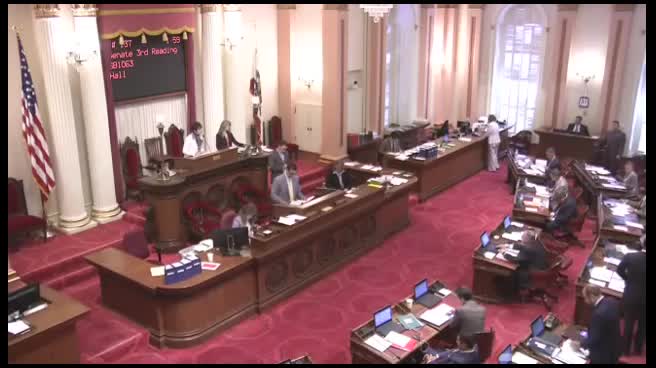
Bill Author