SB 1157: Incarcerated persons: visitation.
- Session Year: 2015-2016
- House: Senate
- Latest Version Date: 2016-09-02
Existing law provides that a county jail is kept by the sheriff of the county in which the jail is situated and is to be used for specified purposes, including for the confinement of persons sentenced to imprisonment in a county jail upon a criminal conviction. Existing regulations of the Board of State and Community Corrections specify the number of visits that inmates held in certain types of correctional facilities are required to be provided.
This bill would require a local detention facility, as defined, that elects to utilize video or other types of electronic devices for inmate visitations to also provide an inmate with in-person visitation that meets or surpasses the minimum number of weekly visits required by those regulations for a person detained in the facility. If a local detention facility does not have existing space available for in-person visitation, the bill would require the facility to comply no later than January 1, 2022.
Existing law provides that a county jail is kept by the sheriff of the county in which the jail is situated and is to be used for specified purposes, including for the confinement of persons sentenced to imprisonment in a county jail upon a criminal conviction. Among other things, existing law requires each county jail to contain a sufficient number of rooms to allow certain persons belonging to specified classes to be confined separately and distinctly from persons belonging to other specified classes. Existing law requires every county to provide and maintain a juvenile hall for purposes of providing a suitable house or place for the detention of wards and dependent children of the juvenile court and persons alleged to come within the jurisdiction of the juvenile court. Existing law authorizes a county to, by ordinance, establish juvenile ranches, camps, or forestry camps, within or without the county, to which certain persons made wards of the court may be committed. Existing regulations of the Board of State and Community Corrections specify the number of visits that inmates held in certain types of correctional facilities are required to be provided.
This bill would require a local correctional facility, as defined, a juvenile hall for the confinement of minors, and a juvenile ranch, camp, or forestry camp that elects to utilize video or other types of electronic visitation to provide specified numbers and lengths of in-person visits for incarcerated persons in certain local correctional facilities and for incarcerated minors and minors at the juvenile facilities described above. The bill would also define, among other things, in-person visit and in-person visitation for these purposes.
On and after January 1, 2017, the bill would prohibit a city, county, city and county, or other local entity from entering into, renewing, extending, or amending a contract with a private prison corporation that does not provide persons to be incarcerated or detained at the private prison corporations facility, at a minimum, specified amounts of in-person visitation.
This bill would require a local detention facility, as defined, that elects to utilize video or other types of electronic devices for inmate visitations to also provide an inmate with in-person visitation that meets or surpasses the minimum number of weekly visits required by those regulations for a person detained in the facility. If a local detention facility does not have existing space available for in-person visitation, the bill would require the facility to comply no later than January 1, 2022.
Existing law provides that a county jail is kept by the sheriff of the county in which the jail is situated and is to be used for specified purposes, including for the confinement of persons sentenced to imprisonment in the a county jail upon a criminal conviction. Among other things, existing law requires each county jail to contain a sufficient number of rooms to allow certain persons belonging to specified classes to be confined separately and distinctly from persons belonging to other specified classes. Existing law requires every county to provide and maintain a juvenile hall for purposes of providing a suitable house or place for the detention of wards and dependent children of the juvenile court and persons alleged to come within the jurisdiction of the juvenile court. Existing law authorizes a county to, by ordinance, establish juvenile ranches, camps, or forestry camps, within or without the county, to which certain persons made wards of the court may be committed.
This bill would prohibit require a local correctional facility, as defined, a juvenile hall for the confinement of minors, and a juvenile ranch, camp, or forestry camp from utilizing that elects to utilize video or other types of electronic visitation to replace in-person visitation. The bill would require provide specified numbers and lengths of in-person visits for incarcerated persons in certain local correctional facilities and for incarcerated minors and minors at the juvenile facilities described above. The bill would also define, among other things, in-person visit and in-person visitation for these purposes. By increasing the duties of local officials relative to in-person visitations for incarcerated persons in local correctional facilities, the bill would impose a state-mandated local program.
On and after January 1, 2017, the bill would prohibit a city, county, city and county, or other local entity from entering into, renewing, extending, or amending a contract with a private prison corporation that does not provide persons to be incarcerated or detained at the private prison corporations facility, at a minimum, specified amounts of in-person visitation.
The California Constitution requires the state to reimburse local agencies and school districts for certain costs mandated by the state. Statutory provisions establish procedures for making that reimbursement.
This bill would provide that, if the Commission on State Mandates determines that the bill contains costs mandated by the state, reimbursement for those costs shall be made pursuant to these statutory provisions.
Existing law provides that a county jail is kept by the sheriff of the county in which the jail is situated and is to be used for specified purposes, including for the confinement of persons sentenced to imprisonment in the county jail upon a criminal conviction. Among other things, existing law requires each county jail to contain a sufficient number of rooms to allow certain persons belonging to specified classes to be confined separately and distinctly from persons belonging to other specified classes. Existing law requires every county to provide and maintain a juvenile hall for purposes of providing a suitable house or place for the detention of wards and dependent children of the juvenile court and persons alleged to come within the jurisdiction of the juvenile court. Existing law authorizes a county to, by ordinance, establish juvenile ranches, camps, or forestry camps, within or without the county, to which certain persons made wards of the court may be committed.
This bill would prohibit a local correctional facility, as defined, a juvenile hall for the confinement of minors, and a juvenile ranch, camp, or forestry camp from utilizing video or other types of electronic visitation to replace in-person visitation. The bill would require specified numbers and lengths of in-person visits for incarcerated persons in certain local correctional facilities and for incarcerated minors and minors at the juvenile facilities described above. The bill would also define, among other things, in-person visit and in-person visitation for these purposes. By increasing the duties of local officials relative to in-person visitations for incarcerated persons in local correctional facilities, the bill would impose a state-mandated local program.
On and after January 1, 2017, the bill would prohibit a city, county, city and county, or other local entity from entering into, renewing, extending, or amending a contract with a private prison corporation that does not provide persons to be incarcerated or detained at the private prison corporations facility, at a minimum, specified amounts of in-person visitation.
The California Constitution requires the state to reimburse local agencies and school districts for certain costs mandated by the state. Statutory provisions establish procedures for making that reimbursement.
This bill would provide that, if the Commission on State Mandates determines that the bill contains costs mandated by the state, reimbursement for those costs shall be made pursuant to these statutory provisions.
(1)Existing law requires any money, refund, rebate, or commission received from a telephone company or pay telephone provider when the money, refund, rebate, or commission is attributable to the use of pay telephones that are primarily used by inmates while incarcerated to be placed in the inmate welfare fund in a county treasury, to be expended for the benefit, education, and welfare of the inmates confined within the jail.
This bill would also require money, refunds, rebates, and commissions from communication companies that are attributable to the use of video visitation equipment primarily used by inmates while incarcerated to be deposited in the inmate welfare fund.
(2)Existing law requires the Board of State and Community Corrections to establish minimum standards for local correctional facilities, juvenile ranches, camps, forestry camps, and juvenile halls.
This bill would require the minimum standards to include requirements that prohibit video or other types of electronic visitation from replacing in-person visits. The bill would also require the board to review the minimum standards for juvenile ranches, camps, forestry camps, and juvenile halls biennially and to make appropriate revisions.
The Legislature finds and declares all of the following:
(a)In 2011, the State of California passed historic legislation to reduce recidivism in the state prison system by supervising people with low-level convictions at the local level, closer to their communities. To support realignment efforts, the state has provided approximately $2.5 billion in funding for local jail construction projects, including:
(1)One billion two hundred million dollars ($1,200,000,000) in funding for local jail construction projects authorized by Chapter 7 of the Statutes of 2007. In two phases of the program, 21 counties received awards. When all construction is completed, over 9,000 jail beds will have been added.
(2)Five hundred million dollars ($500,000,000) in funding for local jails authorized by Chapter 42 of the Statutes of 2012. The Board of State and Community Corrections (BSCC) awarded 14 counties funding. The program specified that counties seeking to replace or upgrade outdated facilities and provide alternatives to incarceration, including mental health and substance use disorder treatment, would be considered.
(3)An additional $500 million for local jails authorized by Chapter 37 of the Statutes of 2014. The BSCC awarded 15 counties funding. This funding was primarily available for improving existing capacity and treatment and programming space.
(4)An additional $250 million for local jails and an additional $20 million specifically for Napa County authorized by Chapter 34 of the Statutes of 2016. The funding was limited to those counties that had not been fully funded through previous grants. In addition, a facility constructed or renovated with program funding is required to include space for in-person visitation and a county applying for financing is required to submit a description of efforts to address sexual abuse in its jails.
(b)While a number of the counties that were awarded funding under the programs described in paragraphs (1), (2), and (3) of subdivision (a) are offering in-person visitation, there are several that have banned, or are considering banning, in-person visitation and instead offering only video visitation.
(c)Experts have found that prison visitation can significantly improve the transition incarcerated people make from the institution to the community. Just one visit reduced the risk of recidivism by 13 percent for felony reconvictions and 25 percent for technical violation revocations. [M]ore frequent and recent visits were associated with a decreased risk of recidivism, and the more sources of social support an incarcerated person has, the lower the risk of recidivism.
(d)Experts have additionally found that video [v]isiting cannot replicate seeing someone in-person, and it is critical for a young child to visit his or her incarcerated parent in person to establish a secure attachment.
(e)For purposes of updating and promulgating regulations, the BSCC utilizes the 2015 Adult Titles 15 and 24 Regulation Revision Executive Steering Committee (ESC). The ESC, which is responsible for regulations relating to visitation, requested that one of its working groups discuss the current visitation regulations as they relate to video visitation. Despite expert findings, the BSCC working group on visitation, which was comprised of only law enforcement representatives, stated, in part: The workgroup engaged in a lengthy discussion regarding video visitation versus in-person visits. Several members of the group reported that their county is planning or building new facilities with space for video visiting only (no space for in-person visits).
(f)Chapter 15 of the Statutes of 2011, the public safety realignment legislation, included the following legislative findings: Realigning low-level felony offenders who do not have prior convictions for serious, violent, or sex offenses to locally run, community-based corrections programs which are strengthened through community-based punishment, evidence-based practices, improved supervision strategies, and enhanced secured capacity, will improve public safety outcomes among adult felons and facilitate their reintegration back into society.
(g)Due to the enactment of realignment legislation, more people are serving lengthy jail sentences for felony convictions, often years and, in some cases, decades.
(h)Californias criminal justice realignment will be strengthened by ensuring that incarcerated people at the local level have contact with, and build meaningful connections with, friends and family in their communities. With these connections, incarcerated people will be better prepared to successfully reintegrate into and contribute to society.
SEC. 2.Section 4032 is added to the Penal Code, to read:4032.(a)A local detention facility that elects to utilize video or other types of electronic devices for inmate visitations shall also provide inmates with in-person visitation that meets or surpasses the minimum number of weekly visits required by regulations of the Board of State and Community Corrections for persons detained in the facility. For purposes of this section, local detention facility has the same meaning as defined in Section 6031.4.
(b)Notwithstanding subdivision (a), a local detention facility that elects to utilize video or other types of electronic devices for inmate visitations and does not have existing space available for in-person visitation shall provide visitation in accordance with subdivision (a) no later than January 1, 2022.
SECTION 1.The Legislature finds and declares that opportunities for in-person visitation in local correctional facilities, juvenile halls, juvenile homes, ranches, and camps are essential for persons who are incarcerated and detained to maintain family stability, reduce disciplinary infractions and violence while incarcerated, reduce recidivism, increase the chances of obtaining employment postrelease, and facilitate successful reentry. Other types of visitation shall only be used to supplement in-person visitation to further promote the above-mentioned goals. This act does not interfere with the ability of the Board of State and Community Corrections to issue regulations with regards to visitation. It is the intent of the Legislature to strengthen family connections by facilitating in-person visitation.
SEC. 2.Section 4032 is added to the Penal Code, to read:4032.(a)A local detention facility that elects to utilize video or other types of electronic visitation shall comply with both of the following:
(1)Sentenced incarcerated persons in a Type I facility and all incarcerated persons in a Type II facility shall be allowed no fewer than two in-person visits totaling at least one hour per incarcerated person each week.
(2)Incarcerated persons in a Type III facility or a Type IV facility shall be allowed no fewer than one in-person visit totaling at least one hour per incarcerated person each week.
(b)For purposes of this section, all of the following definitions apply:
(1)In-person visit or in-person visitation means a visit or visitation during which an incarcerated person has contact with a visitor, is able to see a visitor through glass, or is otherwise in an open room without contact with a visitor.
(2)Local detention facility has the same meaning as defined in Section 6031.4.
(3)Type I facility means a local detention facility used for the detention of persons for not more than 96 hours, excluding holidays, after booking. Type I facility also includes a local detention facility that detains a person on court order for his or her own safekeeping or a person sentenced to a city jail as an incarcerated person worker, or that houses incarcerated person workers sentenced to a county jail, provided the placement in the facility is made on a voluntary basis on the part of the incarcerated person. As used in this paragraph, incarcerated person worker means a person assigned to perform designated tasks outside of his or her cell or dormitory, pursuant to the written policy of the facility, for a minimum of four hours each day on a five-day scheduled work week.
(4)Type II facility means a local detention facility used for the detention of persons pending arraignment, during trial, and upon a sentence of commitment.
(5)Type III facility means a local detention facility used only for the detention of convicted and sentenced persons.
(6)Type IV facility means a local detention facility or portion of the facility designated for the housing of incarcerated persons eligible pursuant to Section 1208 for work furlough, education furlough, or other programs involving incarcerated person access into the community.
(c)On and after January 1, 2017, a city, county, city and county, or other local entity shall not enter into, renew, extend, or amend a contract with a private prison corporation that does not provide persons to be incarcerated or detained at the private prison corporations facility, at a minimum, no fewer than two in-person visits totaling at least one hour per incarcerated person each week.
SEC. 3.Section 210.05 is added to the Welfare and Institutions Code, to read:210.05.(a)A juvenile hall for the confinement of minors that elects to utilize video or other types of electronic visitation shall comply with all of the following with respect to in-person visitation:
(1)Incarcerated minors shall be allowed to receive in-person visits by parents, guardians, or persons standing in loco parentis, at reasonable times, subject only to the limitations necessary to maintain order and security.
(2)Opportunity for in-person visitation shall be a minimum of two hours per week.
(3)In-person visits may be supervised, but conversations shall not be monitored unless there is a security or safety need.
(b)For purposes of this section, in-person visit or in-person visitation means a visit or visitation during which an incarcerated minor has contact with a visitor, is able to see a visitor through glass, or is otherwise in an open room without contact with a visitor.
SEC. 4.Section 885.5 is added to the Welfare and Institutions Code, to read:885.5.(a)A juvenile ranch, camp, or forestry camp established under Section 881 that elects to utilize video or other types of electronic visitation shall comply with all of the following with respect to in-person visitation:
(1)Minors shall be allowed to receive in-person visits by parents, guardians, or persons standing in loco parentis, at reasonable times, subject only to the limitations necessary to maintain order and security.
(2)Opportunity for in-person visitation shall be a minimum of two hours per week.
(3)In-person visits may be supervised, but conversations shall not be monitored unless there is a security or safety need.
(b)For purposes of this section, in-person visit or in-person visitation means a visit or visitation during which a minor has contact with a visitor, is able to see a visitor through glass, or is otherwise in an open room without contact with a visitor.
The Legislature finds and declares that opportunities for in-person visitation in local correctional facilities, juvenile halls, juvenile homes, ranches, and camps are essential for persons who are incarcerated and detained to maintain family stability, reduce disciplinary infractions and violence while incarcerated, reduce recidivism, increase the chances of obtaining employment postrelease, and facilitate successful reentry. Other types of visitation shall only be used to supplement in-person visitation to further promote the above-mentioned goals. This act does not interfere with the ability of the Board of State and Community Corrections to issue regulations with regards to visitation. It is the intent of the Legislature to strengthen family connections by facilitating in-person visitation.
SEC. 2.Section 4032 is added to the Penal Code, to read:4032.(a)A local detention facility shall not that elects to utilize video or other types of electronic visitation to replace in-person visitation.
(b)A local detention facility shall also visitation shall comply with both of the following:
(1)Sentenced incarcerated persons in a Type I facility and all incarcerated persons in a Type II facility shall be allowed no fewer than two in-person visits totaling at least one hour per incarcerated person each week.
(2)Incarcerated persons in a Type III facility or a Type IV facility shall be allowed no fewer than one in-person visit totaling at least one hour per incarcerated person each week.
(c)
(b)For purposes of this section, all of the following definitions apply:
(1)In-person visit or in-person visitation means a visit or visitation during which an incarcerated person has contact with a visitor, is able to see a visitor through glass, or is otherwise in an open room without contact with a visitor.
(2)Local detention facility has the same meaning as defined in Section 6031.4.
(3)Type I facility means a local detention facility used for the detention of persons for not more than 96 hours, excluding holidays, after booking. Type I facility also includes a local detention facility that detains a person on court order for his or her own safekeeping or a person sentenced to a city jail as an incarcerated person worker, or that houses incarcerated person workers sentenced to the a county jail, provided the placement in the facility is made on a voluntary basis on the part of the incarcerated person. As used in this paragraph, incarcerated person worker means a person assigned to perform designated tasks outside of his or her cell or dormitory, pursuant to the written policy of the facility, for a minimum of four hours each day on a five-day scheduled work week.
(4)Type II facility means a local detention facility used for the detention of persons pending arraignment, during trial, and upon a sentence of commitment.
(5)Type III facility means a local detention facility used only for the detention of convicted and sentenced persons.
(6)Type IV facility means a local detention facility or portion of the facility designated for the housing of incarcerated persons eligible pursuant to Section 1208 for work furlough, education furlough, or other programs involving incarcerated person access into the community.
(d)
(c)On and after January 1, 2017, a city, county, city and county, or other local entity shall not enter into, renew, extend, or amend a contract with a private prison corporation that does not provide persons to be incarcerated or detained at the private prison corporations facility, at a minimum, the same amount of in-person visitation required by paragraph (1) of subdivision (b) for a Type II facility. no fewer than two in-person visits totaling at least one hour per incarcerated person each week.
SEC. 3.Section 210.05 is added to the Welfare and Institutions Code, to read:210.05.(a)A juvenile hall for the confinement of minors shall not that elects to utilize video or other types of electronic visitation to replace in-person visitation.
(b)A juvenile hall for the confinement of minors shall also visitation shall comply with all of the following with respect to in-person visitation:
(1)Incarcerated minors shall be allowed to receive in-person visits by parents, guardians, or persons standing in loco parentis, at reasonable times, subject only to the limitations necessary to maintain order and security.
(2)Opportunity for in-person visitation shall be a minimum of two hours per week.
(3)In-person visits may be supervised, but conversations shall not be monitored unless there is a security or safety need.
(c)
(b)For purposes of this section, in-person visit or in-person visitation means a visit or visitation during which an incarcerated minor has contact with a visitor, is able to see a visitor through glass, or is otherwise in an open room without contact with a visitor.
SEC. 4.Section 885.5 is added to the Welfare and Institutions Code, to read:885.5.(a)A juvenile ranch, camp, or forestry camp established under Section 881 shall not that elects to utilize video or other types of electronic visitation to replace in-person visitation.
(b)A juvenile ranch, camp, or forestry camp established under Section 881 shall also visitation shall comply with all of the following with respect to in-person visitation:
(1)Minors shall be allowed to receive in-person visits by parents, guardians, or persons standing in loco parentis, at reasonable times, subject only to the limitations necessary to maintain order and security.
(2)Opportunity for in-person visitation shall be a minimum of two hours per week.
(3)In-person visits may be supervised, but conversations shall not be monitored unless there is a security or safety need.
(c)
(b)For purposes of this section, in-person visit or in-person visitation means a visit or visitation during which a minor has contact with a visitor, is able to see a visitor through glass, or is otherwise in an open room without contact with a visitor.
SEC. 5.If the Commission on State Mandates determines that this act contains costs mandated by the state, reimbursement to local agencies and school districts for those costs shall be made pursuant to Part 7 (commencing with Section 17500) of Division 4 of Title 2 of the Government Code.
The Legislature finds and declares that opportunities for in-person visitation in local correctional facilities, juvenile halls, juvenile homes, ranches, and camps are essential for persons who are incarcerated and detained to maintain family stability, reduce disciplinary infractions and violence while incarcerated, reduce recidivism, increase the chances of obtaining employment postrelease, and facilitate successful reentry. Other types of visitation shall only be used to supplement in-person visitation to further promote the above-mentioned goals. This act does not interfere with the ability of the Board of State and Community Corrections to issue regulations with regards to visitation. It is the intent of the Legislature to strengthen family connections by facilitating in-person visitation.
SEC. 2.Section 4025 of the Penal Code is amended to read:4025.(a)The sheriff of each county may establish, maintain, and operate a store in connection with the county jail and for this purpose may purchase confectionery, tobacco and tobacco users supplies, postage and writing materials, and toilet articles and supplies and sell these goods, articles, and supplies for cash to inmates in the jail.
(b)The sale prices of the articles offered for sale at the store shall be fixed by the sheriff. Any profit shall be deposited in an inmate welfare fund to be kept in the treasury of the county.
(c)There shall also be deposited in the inmate welfare fund 10 percent of all gross sales of inmate hobbycraft.
(d)There shall be deposited in the inmate welfare fund any money, refund, rebate, or commission received from a communications company or communications provider when the money, refund, rebate, or commission is attributable to the use of pay telephones or video visitation equipment primarily used by inmates while incarcerated.
(e)The money and property deposited in the inmate welfare fund shall be expended by the sheriff primarily for the benefit, education, and welfare of the inmates confined within the jail. Any funds that are not needed for the welfare of the inmates may be expended for the maintenance of county jail facilities. Maintenance of county jail facilities may include, but is not limited to, the salary and benefits of personnel used in the programs to benefit the inmates, including, but not limited to, education, drug and alcohol treatment, welfare, library, accounting, and other programs deemed appropriate by the sheriff. Inmate welfare funds shall not be used to pay required county expenses of confining inmates in a local detention system, such as meals, clothing, housing, or medical services or expenses, except that inmate welfare funds may be used to augment those required county expenses as determined by the sheriff to be in the best interests of inmates. An itemized report of these expenditures shall be submitted annually to the board of supervisors.
(f)The operation of a store within any other county adult detention facility which is not under the jurisdiction of the sheriff shall be governed by the provisions of this section, except that the board of supervisors shall designate the proper county official to exercise the duties otherwise allocated in this section to the sheriff.
(g)The operation of a store within any city adult detention facility shall be governed by the provisions of this section, except that city officials shall assume the respective duties otherwise outlined in this section for county officials.
(h)The treasurer may, pursuant to Article 1 (commencing with Section 53600), or Article 2 (commencing with Section 53630) of Chapter 4 of Part 1 of Division 2 of Title 5 of the Government Code, deposit, invest, or reinvest any part of the inmate welfare fund, in excess of that which the treasurer deems necessary for immediate use. The interest or increment accruing on these funds shall be deposited in the inmate welfare fund.
(i)The sheriff may expend money from the inmate welfare fund to provide indigent inmates, prior to release from the county jail or any other adult detention facility under the jurisdiction of the sheriff, with essential clothing and transportation expenses within the county or, at the discretion of the sheriff, transportation to the inmates county of residence, if the county is within the state or within 500 miles from the county of incarceration. This subdivision does not authorize expenditure of money from the inmate welfare fund for the
transfer of any inmate to the custody of any other law enforcement official or jurisdiction.
(a)The Board of State and Community Corrections shall establish minimum standards for local correctional facilities. The board shall review those standards biennially and make any appropriate revisions.
(b)The standards shall include, but not be limited to, the following areas: health and sanitary conditions, fire and life safety, security, rehabilitation programs, recreation, treatment of persons confined in local correctional facilities, and personnel training.
(c)The standards shall require that at least one person on duty at the facility is knowledgeable in the area of fire and life safety procedures.
(d)The standards shall also include requirements relating to the acquisition, storage, labeling, packaging, and dispensing of drugs.
(e)The standards shall require that inmates who are received by the facility while they are pregnant be notified, orally or in writing, of and provided all of the following:
(1)A balanced, nutritious diet approved by a doctor.
(2)Prenatal and post partum information and health care, including, but not limited to, access to necessary vitamins as recommended by a doctor.
(3)Information pertaining to childbirth education and infant care.
(4)A dental cleaning while in a state facility.
(f)The standards shall provide that a woman known to be pregnant or in recovery after delivery shall not be restrained, except as provided in Section 3407. The board shall develop standards regarding the restraint of pregnant women at the next biennial review of the standards after the enactment of the act amending this subdivision and shall review the individual facilitys compliance with the standards.
(g)The standards shall also include requirements related to visitation that prohibit video or other types of electronic visitation from replacing in-person visits.
(h)In establishing minimum standards, the board shall seek the advice of the following:
(1)For health and sanitary conditions:
The State Department of Public Health, physicians, psychiatrists, local public health officials, and other interested persons.
(2)For fire and life safety:
The State Fire Marshal, local fire officials, and other interested persons.
(3)For security, rehabilitation programs, recreation, and treatment of persons confined in correctional facilities:
The Department of Corrections and Rehabilitation, state and local juvenile justice commissions, state and local correctional officials, experts in criminology and penology, and other interested persons.
(4)For personnel training:
The Commission on Peace Officer Standards and Training, psychiatrists, experts in criminology and penology, the Department of Corrections and Rehabilitation, state and local correctional officials, and other interested persons.
(5)For female inmates and pregnant inmates in local adult and juvenile facilities:
The California State Sheriffs Association and Chief Probation Officers of California, and other interested persons.
(6)For visitation:
The California State Sheriffs Association, organizations working directly with people who are incarcerated, organizations working directly with, or that are operated by, family members of people who are incarcerated, and other interested persons.
SEC. 4.Section 210 of the Welfare and Institutions Code is amended to read:210.(a)The Board of State and Community Corrections shall adopt minimum standards for the operation and maintenance of juvenile halls for the confinement of minors. The board shall review those standards biennially and make appropriate revisions.
(b)The standards adopted pursuant to subdivision (a) shall include requirements that prohibit video or other types of electronic visitation from replacing in-person visits.
SEC. 5.Section 885 of the Welfare and Institutions Code is amended to read:885.(a)The Board of State and Community Corrections shall adopt and prescribe the minimum standards of construction, operation, programs of education and training, and qualifications of personnel for juvenile ranches, camps, or forestry camps established under Section 881. The board shall review those standards biennially and make appropriate revisions.
(b)The standards adopted pursuant to subdivision (a) shall also include requirements that prohibit video or other types of electronic visitation from replacing in-person visits.
(c)The board shall conduct a biennial inspection of each juvenile ranch, camp, or forestry camp situated in this state that, during the preceding calendar year, was used for confinement of any minor for more than 24 hours.
(d)The custodian of each juvenile ranch, camp, or forestry camp shall make any reports that may be required by the board to effectuate the purposes of this section.
SEC. 2.Section 4032 is added to the Penal Code, to read:4032.(a)A local detention facility shall not utilize video or other types of electronic visitation to replace in-person visitation.
(b)A local detention facility shall also comply with both of the following:
(1)Sentenced incarcerated persons in a Type I facility and all incarcerated persons in a Type II facility shall be allowed no fewer than two in-person visits totaling at least one hour per incarcerated person each week.
(2)Incarcerated persons in a Type III facility or a Type IV facility shall be allowed no fewer than one in-person visit totaling at least one hour per incarcerated person each week.
(c)For purposes of this section, all of the following definitions apply:
(1)In-person visit or in-person visitation means a visit or visitation during which an incarcerated person has contact with a visitor, is able to see a visitor through glass, or is otherwise in an open room without contact with a visitor.
(2)Local detention facility has the same meaning as defined in Section 6031.4.
(3)Type I facility means a local detention facility used for the detention of persons for not more than 96 hours, excluding holidays, after booking. Type I facility also includes a local detention facility that detains a person on court order for his or her own safekeeping or a person sentenced to a city jail as an incarcerated person worker, or that houses incarcerated person workers sentenced to the county jail, provided the placement in the facility is made on a voluntary basis on the part of the incarcerated person. As used in this paragraph, incarcerated person worker means a person assigned to perform designated tasks outside of his or her cell or dormitory, pursuant to the written policy of the facility, for a minimum of four hours each day on a five-day scheduled work week.
(4)Type II facility means a local detention facility used for the detention of persons pending arraignment, during trial, and upon a sentence of commitment.
(5)Type III facility means a local detention facility used only for the detention of convicted and sentenced persons.
(6)Type IV facility means a local detention facility or portion of the facility designated for the housing of incarcerated persons eligible pursuant to Section 1208 for work furlough, education furlough, or other programs involving incarcerated person access into the community.
(d)On and after January 1, 2017, a city, county, city and county, or other local entity shall not enter into, renew, extend, or amend a contract with a private prison corporation that does not provide persons to be incarcerated or detained at the private prison corporations facility, at a minimum, the same amount of in-person visitation required by paragraph (1) of subdivision (b) for a Type II facility.
SEC. 3.Section 210.05 is added to the Welfare and Institutions Code, to read:210.05.(a)A juvenile hall for the confinement of minors shall not utilize video or other types of electronic visitation to replace in-person visitation.
(b)A juvenile hall for the confinement of minors shall also comply with all of the following with respect to in-person visitation:
(1)Incarcerated minors shall be allowed to receive in-person visits by parents, guardians, or persons standing in loco parentis, at reasonable times, subject only to the limitations necessary to maintain order and security.
(2)Opportunity for in-person visitation shall be a minimum of two hours per week.
(3)In-person visits may be supervised, but conversations shall not be monitored unless there is a security or safety need.
(c)For purposes of this section, in-person visit or in-person visitation means a visit or visitation during which an incarcerated minor has contact with a visitor, is able to see a visitor through glass, or is otherwise in an open room without contact with a visitor.
SEC. 4.Section 885.5 is added to the Welfare and Institutions Code, to read:885.5.(a)A juvenile ranch, camp, or forestry camp established under Section 881 shall not utilize video or other types of electronic visitation to replace in-person visitation.
(b)A juvenile ranch, camp, or forestry camp established under Section 881 shall also comply with all of the following with respect to in-person visitation:
(1)Minors shall be allowed to receive in-person visits by parents, guardians, or persons standing in loco parentis, at reasonable times, subject only to the limitations necessary to maintain order and security.
(2)Opportunity for in-person visitation shall be a minimum of two hours per week.
(3)In-person visits may be supervised, but conversations shall not be monitored unless there is a security or safety need.
(c)For purposes of this section, in-person visit or in-person visitation means a visit or visitation during which a minor has contact with a visitor, is able to see a visitor through glass, or is otherwise in an open room without contact with a visitor.
SEC. 5.If the Commission on State Mandates determines that this act contains costs mandated by the state, reimbursement to local agencies and school districts for those costs shall be made pursuant to Part 7 (commencing with Section 17500) of Division 4 of Title 2 of the Government Code.
The Legislature finds and declares that opportunities for in-person visitation in local correctional facilities, juvenile halls, juvenile homes, ranches, and camps are essential for persons who are incarcerated and detained to maintain family stability, reduce disciplinary infractions and violence while incarcerated, reduce recidivism, increase the chances of obtaining employment postrelease, and facilitate successful reentry. Other types of visitation shall only be used to supplement in-person visitation to further promote the above-mentioned goals. This act does not interfere with the ability of the Board of State and Community Corrections to issue regulations with regards to visitation. It is the intent of the Legislature to strengthen family connections by facilitating in-person visitation.
SEC. 2.Section 4025 of the Penal Code is amended to read:4025.(a)The sheriff of each county may establish, maintain maintain, and operate a store in connection with the county jail and for this purpose may purchase confectionery, tobacco and tobacco users supplies, postage and writing materials, and toilet articles and supplies and sell these goods, articles, and supplies for cash to inmates in the jail.
(b)The sale prices of the articles offered for sale at the store shall be fixed by the sheriff. Any profit shall be deposited in an inmate welfare fund to be kept in the treasury of the county.
(c)There shall also be deposited in the inmate welfare fund 10 percent of all gross sales of inmate hobbycraft.
(d)There shall be deposited in the inmate welfare fund any money, refund, rebate, or commission received from a telephone communications company or pay telephone communications provider when the money, refund, rebate, or commission is attributable to the use of pay telephones which are or video visitation equipment primarily used by inmates while incarcerated.
(e)The money and property deposited in the inmate welfare fund shall be expended by the sheriff primarily for the benefit, education, and welfare of the inmates confined within the jail. Any funds that are not needed for the welfare of the inmates may be expended for the maintenance of county jail facilities. Maintenance of county jail facilities may include, but is not limited to, the salary and benefits of personnel used in the programs to benefit the inmates, including, but not limited to, education, drug and alcohol treatment, welfare, library, accounting, and other programs deemed appropriate by the sheriff. Inmate welfare funds shall not be used to pay required county expenses of confining inmates in a local detention system, such as meals, clothing, housing, or medical services or expenses, except that inmate welfare funds may be used to augment those required county expenses as determined by the sheriff to be in the best interests of inmates. An itemized report of these expenditures shall be submitted annually to the board of supervisors.
(f)The operation of a store within any other county adult detention facility which is not under the jurisdiction of the sheriff shall be governed by the provisions of this section, except that the board of supervisors shall designate the proper county official to exercise the duties otherwise allocated in this section to the sheriff.
(g)The operation of a store within any city adult detention facility shall be governed by the provisions of this section, except that city officials shall assume the respective duties otherwise outlined in this section for county officials.
(h)The treasurer may, pursuant to Article 1 (commencing with Section 53600), or Article 2 (commencing with Section 53630) of Chapter 4 of Part 1 of Division 2 of Title 5 of the Government Code, deposit, invest, or reinvest any part of the inmate welfare fund, in excess of that which the treasurer deems necessary for immediate use. The interest or increment accruing on these funds shall be deposited in the inmate welfare fund.
(i)The sheriff may expend money from the inmate welfare fund to provide indigent inmates, prior to release from the county jail or any other adult detention facility under the jurisdiction of the sheriff, with essential clothing and transportation expenses within the county or, at the discretion of the sheriff, transportation to the inmates county of residence, if the county is within the state or within 500 miles from the county of incarceration. This subdivision does not authorize expenditure of money from the inmate welfare fund for the
transfer of any inmate to the custody of any other law enforcement official or jurisdiction.
(a)The Board of State and Community Corrections shall establish minimum standards for local correctional facilities. The board shall review those standards biennially and make any appropriate revisions.
(b)The standards shall include, but not be limited to, the following areas: health and sanitary conditions, fire and life safety, security, rehabilitation programs, recreation, treatment of persons confined in local correctional facilities, and personnel training.
(c)The standards shall require that at least one person on duty at the facility is knowledgeable in the area of fire and life safety procedures.
(d)The standards shall also include requirements relating to the acquisition, storage, labeling, packaging, and dispensing of drugs.
(e)The standards shall require that inmates who are received by the facility while they are pregnant be notified, orally or in writing, of and provided all of the following:
(1)A balanced, nutritious diet approved by a doctor.
(2)Prenatal and post partum information and health care, including, but not limited to, access to necessary vitamins as recommended by a doctor.
(3)Information pertaining to childbirth education and infant care.
(4)A dental cleaning while in a state facility.
(f)The standards shall provide that a woman known to be pregnant or in recovery after delivery shall not be restrained, except as provided in Section 3407. The board shall develop standards regarding the restraint of pregnant women at the next biennial review of the standards after the enactment of the act amending this subdivision and shall review the individual facilitys compliance with the standards.
(g)The standards shall also include requirements related to visitation that prohibit video or other types of electronic visitation from replacing in-person visits.
(g)
(h)In establishing minimum standards, the board shall seek the advice of the following:
(1)For health and sanitary conditions:
The State Department of Public Health, physicians, psychiatrists, local public health officials, and other interested persons.
(2)For fire and life safety:
The State Fire Marshal, local fire officials, and other interested persons.
(3)For security, rehabilitation programs, recreation, and treatment of persons confined in correctional facilities:
The Department of Corrections and Rehabilitation, state and local juvenile justice commissions, state and local correctional officials, experts in criminology and penology, and other interested persons.
(4)For personnel training:
The Commission on Peace Officer Standards and Training, psychiatrists, experts in criminology and penology, the Department of Corrections and Rehabilitation, state and local correctional officials, and other interested persons.
(5)For female inmates and pregnant inmates in local adult and juvenile facilities:
The California State Sheriffs Association and Chief Probation Officers Association of California, and other interested persons.
(6)For visitation:
The California State Sheriffs Association, organizations working directly with people who are incarcerated, organizations working directly with, or that are operated by, family members of people who are incarcerated, and other interested persons.
SEC. 4.Section 210 of the Welfare and Institutions Code is amended to read:210.(a)The Board of State and Community Corrections shall adopt minimum standards for the operation and maintenance of juvenile halls for the confinement of minors. The board shall review those standards biennially and make appropriate revisions.
(b)The standards adopted pursuant to subdivision (a) shall include requirements that prohibit video or other types of electronic visitation from replacing in-person visits.
SEC. 5.Section 885 of the Welfare and Institutions Code is amended to read:885.(a)The Board of State and Community Corrections shall adopt and prescribe the minimum standards of construction, operation, programs of education and training, and qualifications of personnel for juvenile ranches, camps, or forestry camps established under Section 881. The board shall review those standards biennially and make appropriate revisions.
(b)The standards adopted pursuant to subdivision (a) shall also include requirements that prohibit video or other types of electronic visitation from replacing in-person visits.
(b)
(c)The Board of Corrections board shall conduct a biennial inspection of each juvenile ranch, camp, or forestry camp situated in this state that, during the preceding calendar year, was used for confinement of any minor for more than 24 hours.
(c)
(d)The custodian of each juvenile ranch, camp, or forestry camp shall make any reports that may be required by the board to effectuate the purposes of this section.
|
Date
|
Status
|
|---|---|
| May 31, 2016 | Read second time and amended. Ordered to third reading. |
| Sep 8, 2016 | Enrolled and presented to the Governor at 5 p.m. |
| Aug 29, 2016 | Assembly amendments concurred in. (Ayes 29. Noes 6.) Ordered to engrossing and enrolling. |
| Aug 29, 2016 | Assembly amendments concurred in. (Ayes 29. Noes 6. Page 5489.) Ordered to engrossing and enrolling. |
| Aug 25, 2016 | In Senate. Concurrence in Assembly amendments pending. |
| Aug 24, 2016 | Read third time. Passed. Ordered to the Senate. |
| Aug 19, 2016 | Read third time and amended. |
| Aug 19, 2016 | Ordered to third reading. |
| Jun 23, 2016 | Read second time. Ordered to third reading. |
| Jun 22, 2016 | From committee: Do pass. (Ayes 7. Noes 0.) (June 21). |
| Jun 13, 2016 | Referred to Coms. on PUB. S. and L. GOV. |
| Jun 2, 2016 | In Assembly. Read first time. Held at Desk. |
| Jun 1, 2016 | Read third time. Passed. (Ayes 32. Noes 6.) Ordered to the Assembly. |
| Jun 1, 2016 | Read third time. Passed. (Ayes 32. Noes 6. Page 4104.) Ordered to the Assembly. |
| Feb 18, 2016 | Introduced. Read first time. To Com. on RLS. for assignment. To print. |
| May 27, 2016 | From committee: Do pass as amended. (Ayes 6. Noes 1.) (May 27). |
| May 27, 2016 | From committee: Do pass as amended. (Ayes 6. Noes 1. Page 4004.) (May 27). |
| May 20, 2016 | Set for hearing May 27. |
| May 2, 2016 | May 2 hearing: Placed on APPR. suspense file. |
| Apr 26, 2016 | Set for hearing May 2. |
| Apr 25, 2016 | April 25 hearing postponed by committee. |
| Apr 15, 2016 | Set for hearing April 25. |
| Apr 13, 2016 | From committee: Do pass and re-refer to Com. on APPR. (Ayes 5. Noes 1.) (April 12). Re-referred to Com. on APPR. |
| Apr 13, 2016 | From committee: Do pass and re-refer to Com. on APPR. (Ayes 5. Noes 1. Page 3522.) (April 12). Re-referred to Com. on APPR. |
| Apr 6, 2016 | From committee with author's amendments. Read second time and amended. Re-referred to Com. on PUB. S. |
| Mar 15, 2016 | Set for hearing April 12. |
| Mar 3, 2016 | Referred to Com. on PUB. S. |
| Feb 19, 2016 | From printer. May be acted upon on or after March 20. |
|
Date
|
Description
|
Location
|
Votes
|
|
|---|---|---|---|---|
| Aug 29, 2016 | Unfinished Business SB1157 Mitchell Concurrence | Senate Floor |
Passed |
|
| Aug 24, 2016 | SB 1157 Mitchell Senate Third Reading By WEBER | Assembly Floor |
Passed |
|
| Jun 21, 2016 | Do pass. | Assembly Standing Committee on Public Safety |
Passed |
|
| Jun 1, 2016 | Senate 3rd Reading SB1157 Mitchell | Senate Floor |
Passed |
|
| May 27, 2016 | Do pass as amended | Senate Standing Committee on Appropriations |
Passed |
|
| May 2, 2016 | Placed on suspense file | Senate Standing Committee on Appropriations |
Passed |
|
| Apr 12, 2016 | Do pass, but first be re-referred to the Committee on [Appropriations] | Senate Standing Committee on Public Safety |
Passed |
This list shows positions taken on this bill by organizations on the date displayed, which is linked to the original source.
Positions by individuals are not included.
|
Organization
|
Position
|
Date
|
|---|---|---|
| A New Way of Life Re-Entry Program | ** Support | Aug 29, 2016 |
| Abriendo Puertas - Opening Doors | ** Support | Aug 19, 2016 |
| Alameda County Board of Supervisors | ** Support | Aug 19, 2016 |
| All of Us or None | ** Support | Aug 29, 2016 |
| American Civil Liberties Union of California | ** Support | Aug 19, 2016 |
| American Friends Service Committee | ** Support | Aug 29, 2016 |
| Architects | ** Support | Aug 29, 2016 |
| Architects, Designers, Planners for Social Responsibility | ** Support | Aug 19, 2016 |
| Asian Americans Advancing Justice-California | ** Support | Aug 29, 2016 |
| Bautistas por la Paz' | ** Support | Aug 29, 2016 |
| BPRNA - Bautistas por la Paz | ** Support | Aug 19, 2016 |
| California Attorneys For Criminal Justice | ** Support | Aug 29, 2016 |
| California Catholic Conference | ** Support | Aug 19, 2016 |
| California Immigrant Policy Center | ** Support | Aug 29, 2016 |
| California Public Defenders Association | ** Support | Aug 29, 2016 |
| California State Sheriffs' Association | ** Against | Aug 19, 2016 |
| Californians United for a Responsible Budget | ** Support | Aug 29, 2016 |
| Cares for Youth | ** Support | Aug 29, 2016 |
| Center on Juvenile and Criminal Justice | ** Support | Aug 29, 2016 |
| Central American Resource Center | ** Support | Aug 29, 2016 |
| City and County of San Francisco | ** Support | Aug 19, 2016 |
| CIVIC | ** Support | Aug 29, 2016 |
| Communities United for Restorative Youth Justice | ** Support | Aug 29, 2016 |
| Community Coalition | ** Support | Aug 29, 2016 |
| Community initiatives for Visiting Immigrants in confinement | ** Support | Aug 19, 2016 |
| Community Works - Project WHAT! | ** Support | Aug 19, 2016 |
| Designers | ** Support | Aug 29, 2016 |
| Drug Policy Alliance | ** Support | Aug 29, 2016 |
| Ella Baker Center For Human Rights | ** Support | Aug 19, 2016 |
| Essie Justice Group | ** Support | Aug 29, 2016 |
| Familia: Trans Queer Liberation Movement | ** Support | Aug 29, 2016 |
| Fathers and Families of San Joaquin | ** Support | Aug 19, 2016 |
| Forward Together | ** Support | Aug 29, 2016 |
| Friends Committee On Legislation Of California | ** Support | Aug 29, 2016 |
| Friends Outside | ** Support | Aug 29, 2016 |
| Grassroots Leadership | ** Support | Aug 29, 2016 |
| Healing Dialog and Action | ** Support | Aug 29, 2016 |
| Healing Dialogue and Action | ** Support | Aug 19, 2016 |
| Immigrant Legal Resource Center | ** Support | Aug 29, 2016 |
| Immigrant Youth Coalition | ** Support | Aug 19, 2016 |
| Inland Coalition for Immigrant Justice | ** Support | Aug 29, 2016 |
| Justice for Families | ** Support | Aug 29, 2016 |
| Justice Not Jails | ** Support | Aug 29, 2016 |
| Justice Now | ** Support | Aug 19, 2016 |
| Los Angeles Board of Supervisors | ** Support | Aug 19, 2016 |
| Los Angeles County Board of Supervisors | ** Support | Aug 19, 2016 |
| Madera County Board of Supervisors | ** Against | Aug 19, 2016 |
| Media Alliance | ** Support | Aug 29, 2016 |
| Nation Inside | ** Support | Aug 29, 2016 |
| National Center for Youth Law | ** Support | Aug 29, 2016 |
| National Compadres Network | ** Support | Aug 29, 2016 |
| National Immigration Law Center | ** Support | Aug 29, 2016 |
| Opening Door | ** Support | Aug 29, 2016 |
| Pacific Juvenile Defender Center | ** Support | Aug 29, 2016 |
| Pangea Legal Services | ** Support | Aug 29, 2016 |
| Planners for Social Responsibility | ** Support | Aug 29, 2016 |
| Prison Law Office | ** Support | Aug 19, 2016 |
| Prison Policy Initiative | ** Support | Aug 29, 2016 |
| Project WHAT! | ** Support | Aug 29, 2016 |
| Public Counsel | ** Support | Aug 29, 2016 |
| Returning Home Foundation | ** Support | Aug 29, 2016 |
| Root & Rebound | ** Support | Aug 19, 2016 |
| Rubicon Programs | ** Support | Aug 19, 2016 |
| San Bernardino County Sheriff'S Department | ** Against | Aug 19, 2016 |
| San Francisco Children of Incarcerated Parents | ** Support | Aug 29, 2016 |
| San Francisco Public Defender | ** Support | Aug 29, 2016 |
| San Francisco United School District | ** Support | Aug 19, 2016 |
| San Francisco Youth Commission | ** Support | Aug 29, 2016 |
| Sarah Webster Fabio Center for Social Justice | ** Support | Aug 19, 2016 |
| Services, Immigrant Rights, and Education Network | ** Support | Aug 29, 2016 |
| SF Youth Commission | ** Support | Aug 19, 2016 |
| Sin Barras | ** Support | Aug 19, 2016 |
| Southeast Asia Resource Action Center | ** Support | Aug 29, 2016 |
| Starting Over, Inc. | ** Support | Aug 29, 2016 |
| The Young Women's Freedom Center | ** Support | Aug 29, 2016 |
| Urban Counties of California | ** Against | Aug 19, 2016 |
| W. Haywood Burns Institute | ** Support | Aug 29, 2016 |
| Women's Foundation of California, Women's Policy Institute | ** Support | Aug 29, 2016 |
Office of Senate Floor Analyses (916) 651-1520 Fax: (916) 327-4478 | SB |
VETO
Bill No: SB 1157
:
SENATE PUBLIC SAFETY COMMITTEE: 5-1, 4/12/16
AYES: Hancock, Glazer, Leno, Liu, Monning
NOES: Stone
NO VOTE RECORDED: Anderson
SENATE APPROPRIATIONS COMMITTEE: 6-1, 5/27/16
AYES: Lara, Bates, Beall, Hill, McGuire, Mendoza
NOES: Nielsen
SENATE FLOOR: 32-6, 6/1/16
AYES: Allen, Anderson, Bates, Beall, Berryhill, Block, Cannella, De León, Galgiani, Glazer, Hall, Hancock, Hernandez, Hertzberg, Hill, Hueso, Huff, Jackson, Lara, Leno, Leyva, Liu, McGuire, Mendoza, Mitchell, Monning, Moorlach, Nguyen, Pan, Pavley, Wieckowski, Wolk
NOES: Fuller, Gaines, Morrell, Nielsen, Stone, Vidak
NO VOTE RECORDED: Roth, Runner
SENATE FLOOR: 29-6, 8/29/16
AYES: Allen, Anderson, Bates, Beall, Block, De León, Galgiani, Glazer, Hall, Hancock, Hernandez, Hertzberg, Hill, Hueso, Huff, Jackson, Lara, Leno, Leyva, Liu, McGuire, Mendoza, Mitchell, Monning, Nguyen, Pan, Pavley, Wieckowski, Wolk
NOES: Fuller, Gaines, Morrell, Nielsen, Stone, Vidak
NO VOTE RECORDED: Berryhill, Cannella, Moorlach, Roth
ASSEMBLY FLOOR: 48-20, 8/24/16 - See last page for vote
SOURCE: A New Way of Life Re-Entry Program
CIVIC
Ella Baker Center
Friends Committee on Legislation of California
Legal Service for Prisoners with Children
Prison Law Office
Project WHAT!
Women’s Foundation of California, Women’s Policy Institute
DIGEST: This bill ensures that local correctional facilities that elect to utilize video or electronic visitation do not eliminate in-person visitation, as specified.
Existing law:
- Requires, through regulations, a correctional facility administrator to develop written policies and procedures for inmate visiting which provides for as many visits and visitors as facility schedules, space, and number of personnel will allow. For sentenced inmates in Type I facilities and all inmates in Type II facilities there shall be allowed no fewer than two visits totaling at least one hour per inmate each week. In Type III and Type IV facilities there shall be allowed one or more visits, totaling at least one hour, per week. (15 CCR 1062.)
- Defines in regulations:
- “Type I facility” as a local detention facility used for the detention of persons for not more than 96 hours excluding holidays after booking. Such a Type I facility may also detain persons on court order either for their own safekeeping or sentenced to a city jail as an inmate worker, and may house inmate workers sentenced to the county jail provided such placement in the facility is made on a voluntary basis on the part of the inmate. As used in this section, an inmate worker is defined as a person assigned to perform designated tasks outside of his/her cell or dormitory, pursuant to the written policy of the facility, for a minimum of four hours each day on a five day scheduled work week.
- “Type II facility” as a local detention facility used for the detention of persons pending arraignment, during trial, and upon a sentence of commitment.
- “Type III facility” as a local detention facility used only for the detention of convicted and sentenced persons.
- “Type IV facility” as a local detention facility or portion thereof designated for the housing of inmates eligible under Penal Code Section 1208 for work/education furlough and/or other programs involving inmate access into the community. (15 CCR 1006.)
This bill prohibits local correctional facilities and juvenile facilities from replacing in-person visits with video or other types of electronic visitation, as specified. Specifically, this bill:
- Requires a local detention facility that elects to utilize video or other types of electronic devices for inmate visitation to also provide inmates with in-person visitation that meets or surpasses the minimum number of weekly visits required by regulations of the Board of State and Community Corrections (BSCC) for persons detained in the facility.
- Specifies that a local detention facility that does not have existing space available for in-person visitation and elects to utilize video or other types of electronic devices for inmate visitation shall provide visitation in accordance with the requirements of this bill no later than January 1, 2022.
Background
The BSCC is responsible for promulgating regulations for adult and juvenile detention facilities. For purposes of updating and promulgating regulations, the BSCC utilizes the 2015 Adult Titles 15 and 24 Regulation Revision Executive Steering Committee (ESC). This ESC, which is responsible for regulations relating to visitation, requested that one of its working groups discuss the current visitation regulations as they relate to video visitation. The working group, which was comprised of only law enforcement representatives, stated, in part:
The workgroup engaged in a lengthy discussion regarding video visitation versus in-person visits. Several members of the group reported that their county is planning or building new facilities with space for video visiting only (no space for in-person visits). They felt that if Title 24 required space for in-person visits, then their new facilities would be noncompliant the day the facility opened. Some of the members cited some potential negative impacts of in-person visits such as exposing children to the inside of a jail, the staff time it can take to move inmates and the security concerns of moving high-security inmates. (http://www.bscc.ca.gov/downloads/Programs%20and%20Services%20Worksheets%20For%20ESC%20Review.pdf)
The working group recommended, “Regarding video visitation, counties need to be legally defensible in its use.” The workgroup revised the visitation regulation to require one hour per week of on-site (in-person or video) visiting be provided free of charge.
On March 30, 2016, the ESC adopted the working group’s recommendation not require in-person visitation and to, instead, provide one free hour of visitation, whether it be in-person or via video. The recommendation of the ESC will proceed to the BSCC for a final decision.
Comments
“Currently, more than 500 facilities in 43 states and the District of Columbia are experimenting with video visitation.” (Screening Out Family Time: The For-Profit Video Visitation Industry in Prisons and Jails, Bernadette Rabuy and Peter Wagner, January 2015, http://www.prisonpolicy.org/ visitation/report.html.)
This article additionally notes:
While virtually no state prisons ban in-person visitation, we found that 74% of jails banned in-person visits when they implemented video visitation. Though abolishing in-person visits is common in the jail video visitation context, Securus is the only company that explicitly requires this harmful practice in its contracts. The record is not always clear about whether the jails or the companies drive this change, but by banning in-person visits, it is clear that the jails are abandoning their commitment to correctional best practices. (Id.)
The Securus Web site states that it currently provides services to California Jails, including Butte County Jail, Napa County Jail, San Diego County Jail- Facility 8, and San Diego County Jail- Las Colinas Detention & Reentry Facility. (https:// securustech.net/facilities-and-pricing.) According to information provided by the author, Napa, San Diego and Butte counties are not the only counties that have eliminated in-person visitation:
At least five California counties (Kings, Napa, San Bernardino, San Diego, and Solano) have eliminated in-person visitation in at least one of their jails, meaning families there can only see their loved ones through a computer screen. Two counties (Imperial and Placer) have severely restricted in person visitation since adopting video visits. Three additional counties (Orange, San Mateo, and Tulare) intend to renovate or build new facilities that have no space for in-person visits. Families with loved ones in these facilities will only be able to see their loved ones through a computer screen. At least six other California counties (Butte, Los Angeles, Mendocino, Plumas, Riverside and San Luis Obispo) use video visits in at least one of their jails and at least seven other counties (Merced, Sacramento, San Joaquin, Santa Barbara, Santa Cruz, Sutter, and Yolo) plan to adopt a video visitation system.
FISCAL EFFECT: Appropriation: Fiscal Com.: Local:
A New Way of Life Re-Entry Program (co-source)
CIVIC (co-source)
Ella Baker Center (co-source)
Friends Committee on Legislation of California (co-source)
Legal Service for Prisoners with Children (co-source)
Prison Law Office (co-source)
Project WHAT! (co-source)
Women’s Foundation of California, Women’s Policy Institute (co-source)
All of Us or None
American Civil Liberties Union
American Friends Service Committee
Architects/Designers/Planners for Social Responsibility
Asian Americans Advancing Justice—California
Bautistas por la Paz’
California Attorneys for Criminal Justice
California Catholic Conference, Inc.
California Immigrant Policy Center
California Public Defenders Association
Californians United for a Responsible Budget
Cares for Youth
Center on Juvenile and Criminal Justice
Central American Resource Center
City and County of San Francisco Office of the District Attorney
Communities United for Restorative Youth Justice
Community Coalition
Drug Policy Alliance
Essie Justice Group
Familia: Trans Queer Liberation Movement
Forward Together
Friends Outside
Grassroots Leadership
Healing Dialog and Action
Human Rights of the Incarcerated Coalition at UC Berkeley
Immigrant Legal Resource Center
Inland Coalition for Immigrant Justice
Justice for Families
Justice Not Jails
Lawyers’ Committee for Civil Rights of the San Francisco Bay Area
Media Alliance
Nation Inside
National Center for Youth Law
National Compadres Network
National Immigration Law Center
Opening Door
Pacific Juvenile Defender Center
Pangea Legal Services
Prison Policy Initiative
Public Counsel
Returning Home Foundation
San Francisco Children of Incarcerated Parents
San Francisco Public Defender
San Francisco Youth Commission
Services, Immigrant Rights, and Education Network
Southeast Asia Resource Action Center
Starting Over, Inc.
The Young Women’s Freedom Center
W. Haywood Burns Institute
Several Individuals
OPPOSITION: (Verified 10/11/16)
California State Sheriff’s Association
ARGUMENTS IN SUPPORT: According to Californians United for a Responsible Budget:
Numerous counties in California have started replacing in-person visitation with video visitation. Video “visitation” is a form of videoconferencing in which visitors are viewed on a screen, rather than face-to-face, taking away meaningful ways for families to connect with their loved ones held in correctional facilities across the state. Twenty-four California counties have adopted or plan to adopt video visitation and 10 counties in the state have eliminated, planned to eliminate, or severely restricted in-person visitation. The increased use of video visitation in California is part of a nationwide trend. A 2015 Prison Policy Initiative report found that 74% of county jails across the country that implemented video visitation ultimately eliminated in-person visitation altogether.
In-person visitation is essential to a person’s successful reentry into their community — it is proven to improve behavior inside correctional facilities, reduce recidivism, and increase chances of obtaining employment post-release. In-person visitation is also important for family members and loved ones on the outside, especially children, who also struggle with the incarceration of their loved ones. Video visits, however, have not been shown to increase family connectivity and likely have a negative effect on young children who struggle to understand that the person on the screen is their parent. Remote video visits are expensive for families, costing as much as $1 per minute, even when the software malfunctions, as is frequent.
ARGUMENTS IN OPPOSITION: According to the California State Sheriff’s Association:
We do not disagree that in-person visitation can bring positive outcomes. That said, we are opposed to a prohibition on the exclusive use of video visitation. Some facilities are switching to video visitation because it can be more efficient, often allows more frequent visitation, and can significantly reduce the introduction of contraband into correctional facilities.
Video visitation has beneficial aspects and we have concerns about this legislative directive that attempts to over-regulate jail operations.
GOVERNOR'S VETO MESSAGE:
I am returning Senate Bill 1157 without my signature.
This bill would prohibit the exclusive use of video visitation at local correctional facilities.
This bill as drafted does not provide adequate flexibility and creates a strict mandate.
Nevertheless, I am concerned about the recent trend of making jail facilities unavailable for in-person visits. This practice could have an adverse impact on achieving rehabilitative goals and might affect in a negative way the families and loved ones of those incarcerated.
I am directing the Board of State and Community Corrections to work with stakeholders to explore ways to address these issues.
ASSEMBLY FLOOR: 48-20, 8/24/16
AYES: Alejo, Travis Allen, Atkins, Baker, Bloom, Bonilla, Bonta, Brown, Burke, Calderon, Campos, Chau, Chiu, Chu, Cooley, Daly, Eggman, Cristina Garcia, Eduardo Garcia, Gatto, Gipson, Gomez, Gonzalez, Hadley, Roger Hernández, Holden, Irwin, Jones, Jones-Sawyer, Lackey, Levine, Lopez, Low, McCarty, Medina, Nazarian, O'Donnell, Quirk, Ridley-Thomas, Salas, Santiago, Mark Stone, Thurmond, Ting, Weber, Williams, Wood, Rendon
NOES: Arambula, Bigelow, Brough, Cooper, Dababneh, Dodd, Beth Gaines, Gallagher, Gray, Grove, Harper, Linder, Mathis, Mayes, Obernolte, Patterson, Steinorth, Wagner, Waldron, Wilk
NO VOTE RECORDED: Achadjian, Chang, Chávez, Dahle, Frazier, Gordon, Kim, Maienschein, Melendez, Mullin, Olsen, Rodriguez
10/19/16 10:00:15
**** END ****
Office of Senate Floor Analyses (916) 651-1520 Fax: (916) 327-4478 | SB |
UNFINISHED BUSINESS
Bill No: SB 1157
:
SENATE PUBLIC SAFETY COMMITTEE: 5-1, 4/12/16
AYES: Hancock, Glazer, Leno, Liu, Monning
NOES: Stone
NO VOTE RECORDED: Anderson
SENATE APPROPRIATIONS COMMITTEE: 6-1, 5/27/16
AYES: Lara, Bates, Beall, Hill, McGuire, Mendoza
NOES: Nielsen
SENATE FLOOR: 32-6, 6/1/16
AYES: Allen, Anderson, Bates, Beall, Berryhill, Block, Cannella, De León, Galgiani, Glazer, Hall, Hancock, Hernandez, Hertzberg, Hill, Hueso, Huff, Jackson, Lara, Leno, Leyva, Liu, McGuire, Mendoza, Mitchell, Monning, Moorlach, Nguyen, Pan, Pavley, Wieckowski, Wolk
NOES: Fuller, Gaines, Morrell, Nielsen, Stone, Vidak
NO VOTE RECORDED: Roth, Runner
ASSEMBLY FLOOR: 48-20, 8/24/16 - See last page for vote
SOURCE: A New Way of Life Re-Entry Program
CIVIC
Ella Baker Center
Friends Committee on Legislation of California
Legal Service for Prisoners with Children
Prison Law Office
Project WHAT!
Women’s Foundation of California, Women’s Policy Institute
DIGEST: This bill ensures that local correctional facilities that elect to utilize video or electronic visitation do not eliminate in-person visitation, as specified.
Assembly Amendments: (1) narrow the application of the bill to adult facilities; (2) remove the hourly visitation requirements; (3) add a provision specifying that a local detention facility that does not have existing space available for in-person visitation and elects to utilize video or other types of electronic devices for inmate visitation shall provide visitation in accordance with the requirements of this bill no later than January 1, 2022; and, (4) add intent language.
Existing law:
- Requires, through regulations, a correctional facility administrator to develop written policies and procedures for inmate visiting which provides for as many visits and visitors as facility schedules, space, and number of personnel will allow. For sentenced inmates in Type I facilities and all inmates in Type II facilities there shall be allowed no fewer than two visits totaling at least one hour per inmate each week. In Type III and Type IV facilities there shall be allowed one or more visits, totaling at least one hour, per week. (15 CCR 1062.)
- Defines in regulations:
- “Type I facility” as a local detention facility used for the detention of persons for not more than 96 hours excluding holidays after booking. Such a Type I facility may also detain persons on court order either for their own safekeeping or sentenced to a city jail as an inmate worker, and may house inmate workers sentenced to the county jail provided such placement in the facility is made on a voluntary basis on the part of the inmate. As used in this section, an inmate worker is defined as a person assigned to perform designated tasks outside of his/her cell or dormitory, pursuant to the written policy of the facility, for a minimum of four hours each day on a five day scheduled work week.
- “Type II facility” as a local detention facility used for the detention of persons pending arraignment, during trial, and upon a sentence of commitment.
- “Type III facility” as a local detention facility used only for the detention of convicted and sentenced persons.
- “Type IV facility” as a local detention facility or portion thereof designated for the housing of inmates eligible under Penal Code Section 1208 for work/education furlough and/or other programs involving inmate access into the community. (15 CCR 1006.)
This bill prohibits local correctional facilities and juvenile facilities from replacing in-person visits with video or other types of electronic visitation, as specified. Specifically, this bill:
- Requires a local detention facility that elects to utilize video or other types of electronic devices for inmate visitation to also provide inmates with in-person visitation that meets or surpasses the minimum number of weekly visits required by regulations of the Board of State and Community Corrections for persons detained in the facility.
- Specifies that a local detention facility that does not have existing space available for in-person visitation and elects to utilize video or other types of electronic devices for inmate visitation shall provide visitation in accordance with the requirements of this bill no later than January 1, 2022.
Background
The California Board of State and Community Corrections (BSCC) is responsible for promulgating regulations for adult and juvenile detention facilities. For purposes of updating and promulgating regulations, the BSCC utilizes the 2015 Adult Titles 15 and 24 Regulation Revision Executive Steering Committee (ESC). This ESC, which is responsible for regulations relating to visitation, requested that one of its working groups discuss the current visitation regulations as they relate to video visitation. The working group, which was comprised of only law enforcement representatives, stated, in part:
The workgroup engaged in a lengthy discussion regarding video visitation versus in-person visits. Several members of the group reported that their county is planning or building new facilities with space for video visiting only (no space for in-person visits). They felt that if Title 24 required space for in-person visits, then their new facilities would be noncompliant the day the facility opened. Some of the members cited some potential negative impacts of in-person visits such as exposing children to the inside of a jail, the staff time it can take to move inmates and the security concerns of moving high-security inmates. (http://www.bscc.ca.gov/downloads/ Programs%20and%20Services%20Worksheets%20For%20ESC%20Review.pdf)
The working group recommended, “Regarding video visitation, counties need to be legally defensible in its use.” The workgroup revised the visitation regulation to require one hour per week of on-site (in-person or video) visiting be provided free of charge.
On March 30, 2016, the ESC adopted the working group’s recommendation not require in-person visitation and to, instead, provide one free hour of visitation, whether it be in-person or via video. The recommendation of the ESC will proceed to the BSCC for a final decision.
Comments
“Currently, more than 500 facilities in 43 states and the District of Columbia are experimenting with video visitation.” (Screening Out Family Time: The For-Profit Video Visitation Industry in Prisons and Jails, Bernadette Rabuy and Peter Wagner, January 2015, http://www.prisonpolicy.org/ visitation/report.html.)
This article additionally notes:
While virtually no state prisons ban in-person visitation, we found that 74% of jails banned in-person visits when they implemented video visitation. Though abolishing in-person visits is common in the jail video visitation context, Securus is the only company that explicitly requires this harmful practice in its contracts. The record is not always clear about whether the jails or the companies drive this change, but by banning in-person visits, it is clear that the jails are abandoning their commitment to correctional best practices. (Id.)
The Securus Web site states that it currently provides services to California Jails, including Butte County Jail, Napa County Jail, San Diego County Jail- Facility 8, and San Diego County Jail- Las Colinas Detention & Reentry Facility. (https:// securustech.net/facilities-and-pricing.) According to information provided by the author, Napa, San Diego and Butte counties are not the only counties that have eliminated in-person visitation:
At least five California counties (Kings, Napa, San Bernardino, San Diego, and Solano) have eliminated in-person visitation in at least one of their jails, meaning families there can only see their loved ones through a computer screen. Two counties (Imperial and Placer) have severely restricted in person visitation since adopting video visits. Three additional counties (Orange, San Mateo, and Tulare) intend to renovate or build new facilities that have no space for in-person visits. Families with loved ones in these facilities will only be able to see their loved ones through a computer screen. At least six other California counties (Butte, Los Angeles, Mendocino, Plumas, Riverside and San Luis Obispo) use video visits in at least one of their jails and at least seven other counties (Merced, Sacramento, San Joaquin, Santa Barbara, Santa Cruz, Sutter, and Yolo) plan to adopt a video visitation system.
FISCAL EFFECT: Appropriation: Fiscal Com.: No Local: No
A New Way of Life Re-Entry Program (co-source)
CIVIC (co-source)
Ella Baker Center (co-source)
Friends Committee on Legislation of California (co-source)
Legal Service for Prisoners with Children (co-source)
Prison Law Office (co-source)
Project WHAT! (co-source)
Women’s Foundation of California, Women’s Policy Institute (co-source)
All of Us or None
American Civil Liberties Union
American Friends Service Committee
Architects/Designers/Planners for Social Responsibility
Asian Americans Advancing Justice—California
Bautistas por la Paz’
California Attorneys for Criminal Justice
California Catholic Conference, Inc.
California Immigrant Policy Center
California Public Defenders Association
Californians United for a Responsible Budget
Cares for Youth
Center on Juvenile and Criminal Justice
Central American Resource Center
City and County of San Francisco Office of the District Attorney
Communities United for Restorative Youth Justice
Community Coalition
Drug Policy Alliance
Essie Justice Group
Familia: Trans Queer Liberation Movement
Forward Together
Friends Outside
Grassroots Leadership
Healing Dialog and Action
Human Rights of the Incarcerated Coalition at UC Berkeley
Immigrant Legal Resource Center
Inland Coalition for Immigrant Justice
Justice for Families
Justice Not Jails
Lawyers’ Committee for Civil Rights of the San Francisco Bay Area
Media Alliance
Nation Inside
National Center for Youth Law
National Compadres Network
National Immigration Law Center
Opening Door
Pacific Juvenile Defender Center
Pangea Legal Services
Prison Policy Initiative
Public Counsel
Returning Home Foundation
San Francisco Children of Incarcerated Parents
San Francisco Public Defender
San Francisco Youth Commission
Services, Immigrant Rights, and Education Network
Southeast Asia Resource Action Center
Starting Over, Inc.
The Young Women’s Freedom Center
W. Haywood Burns Institute
Several individuals
OPPOSITION: (Verified 8/22/16)
California State Sheriff’s Association
ARGUMENTS IN SUPPORT: According to Californians United for a Responsible Budget:
Numerous counties in California have started replacing in-person visitation with video visitation. Video “visitation” is a form of videoconferencing in which visitors are viewed on a screen, rather than face-to-face, taking away meaningful ways for families to connect with their loved ones held in correctional facilities across the state. Twenty-four California counties have adopted or plan to adopt video visitation and 10 counties in the state have eliminated, planned to eliminate, or severely restricted in-person visitation. The increased use of video visitation in California is part of a nationwide trend. A 2015 Prison Policy Initiative report found that 74% of county jails across the country that implemented video visitation ultimately eliminated in-person visitation altogether.
In-person visitation is essential to a person’s successful reentry into their community — it is proven to improve behavior inside correctional facilities, reduce recidivism, and increase chances of obtaining employment post-release. In-person visitation is also important for family members and loved ones on the outside, especially children, who also struggle with the incarceration of their loved ones. Video visits, however, have not been shown to increase family connectivity and likely have a negative effect on young children who struggle to understand that the person on the screen is their parent. Remote video visits are expensive for families, costing as much as $1 per minute, even when the software malfunctions, as is frequent.
ARGUMENTS IN OPPOSITION: According to the California State Sheriff’s Association:
We do not disagree that in-person visitation can bring positive outcomes. That said, we are opposed to a prohibition on the exclusive use of video visitation. Some facilities are switching to video visitation because it can be more efficient, often allows more frequent visitation, and can significantly reduce the introduction of contraband into correctional facilities.
Video visitation has beneficial aspects and we have concerns about this legislative directive that attempts to over-regulate jail operations.
ASSEMBLY FLOOR: 48-20, 8/24/16
AYES: Alejo, Travis Allen, Atkins, Baker, Bloom, Bonilla, Bonta, Brown, Burke, Calderon, Campos, Chau, Chiu, Chu, Cooley, Daly, Eggman, Cristina Garcia, Eduardo Garcia, Gatto, Gipson, Gomez, Gonzalez, Hadley, Roger Hernández, Holden, Irwin, Jones, Jones-Sawyer, Lackey, Levine, Lopez, Low, McCarty, Medina, Nazarian, O'Donnell, Quirk, Ridley-Thomas, Salas, Santiago, Mark Stone, Thurmond, Ting, Weber, Williams, Wood, Rendon
NOES: Arambula, Bigelow, Brough, Cooper, Dababneh, Dodd, Beth Gaines, Gallagher, Gray, Grove, Harper, Linder, Mathis, Mayes, Obernolte, Patterson, Steinorth, Wagner, Waldron, Wilk
NO VOTE RECORDED: Achadjian, Chang, Chávez, Dahle, Frazier, Gordon, Kim, Maienschein, Melendez, Mullin, Olsen, Rodriguez
8/25/16 17:54:15
8/25/16 17:54:15
**** END ****
SENATE THIRD READING
STR Bill Id:SB 1157
Author:(Mitchell)
As Amended Ver:August 19, 2016
Majority vote
SENATE VOTE: 32-6
Committee | Votes | Ayes | Noes |
Public Safety | 7-0 | Jones-Sawyer, Melendez, Lackey, Lopez, Low, Quirk, Santiago |
SUMMARY: Prohibits local correctional facilities and juvenile facilities from replacing in-person visits with video or other types of electronic visitation, as specified. Specifically, this bill:
- Requires a local detention facility that elects to utilize video or other types of electronic devices for inmate visitation to also provide inmates with in-person visitation that meets or surpasses the minimum number of weekly visits required by regulations of the Board of State and Community Corrections for persons detained in the facility.
- Specifies that a local detention facility that does not have existing space available for in-person visitation and elects to utilize video or other types of electronic devices for inmate visitation shall provide visitation in accordance with the requirements of this bill no later than January 1, 2022.
EXISTING LAW:
- Requires each county jail to contain a sufficient number of rooms to allow certain persons belonging to specified classes to be confined separately and distinctly from persons belonging to other specified classes.
- Requires a correctional facility administrator to develop written policies and procedures for inmate visiting which provides for as many visits and visitors as facility schedules, space, and number of personnel will allow. For sentenced inmates in Type I facilities and all inmates in Type II facilities there shall be allowed no fewer than two visits totaling at least one hour per inmate each week. In Type III and Type IV facilities there shall be allowed one or more visits, totaling at least one hour, per week.
FISCAL EFFECT: Unknown. This bill is keyed non-fiscal by the Legislative Counsel.
COMMENTS: According to the author, "SB 1157 will prohibit California jails from eliminating in-person visitation rights by clarifying that video technology cannot be used to replace in-person visits. At least eleven counties in California have eliminated, plan to eliminate, or severely restrict in-person visitation in at least one of their jails.
"Since the implementation of public safety realignment in California, more people are serving time in county jails and for longer periods of time than ever before. Eliminating in-person visitation has a drastic and negative impact on families, particularly for children.
"A 2014 Department of Justice report found that when a person is incarcerated, even for a short period of time, family contact and in-person visits are crucial to maintaining family stability, reducing disciplinary infractions and violence, reducing recidivism, increasing the chances of obtaining employment post-release, and facilitating successful re-entry. One study found that even a single visit reduces recidivism by 13% for new crimes. Video visitation can be an extremely positive supplement to in-person visitation, particularly when people are imprisoned far from their families and networks of support.
"What SB 1157 does not do is prevent sheriffs' departments from adopting video visitation. SB 1157 simply makes it clear that 'video visitations are not a replacement for opportunities for in person contact.'
"This bill clarifies that California county jails, juvenile facilities, and private facilities cannot replace in-person visitation with video visitation. This is important as remote video visits are cost-prohibitive for many families, and many low-income families do not have access to computers or high-speed internet. And in facilities that have already replaced in-person visitation with video visitation, families who cannot afford video visitations from home, are left with one option: travel to the correctional facility and 'visit' with their loved one at no cost from video kiosks in the lobby.
"Without passage of SB 1157, more California families will be unable to see their loved ones while incarcerated."
Please see the policy committee analysis for a full discussion of this bill.
Analysis Prepared by: Stella Choe / PUB. S. / (916) 319-3744 FN: 0004456
SENATE THIRD READING
STR Bill Id:SB 1157
Author:(Mitchell)
As Amended Ver:May 31, 2016
Majority vote
SENATE VOTE: 32-6
Committee | Votes | Ayes | Noes |
Public Safety | 7-0 | Jones-Sawyer, Melendez, Lackey, Lopez, Low, Quirk, Santiago |
SUMMARY: Prohibits local correctional facilities and juvenile facilities from replacing in-person visits with video or other types of electronic visitation, as specified. Specifically, this bill:
- States that a local detention facility that elects to utilize video or other types of electronic visitation shall comply with the following:
- Sentenced incarcerated persons in a Type I facility, as defined, and all incarcerated persons in a Type II facility, as defined, shall be allowed no fewer than two in-person visits totaling at least one hour per incarcerated person each week.
- Incarcerated persons in a Type III facility, as defined, or a Type IV facility, as defined, shall be allowed no fewer than one in-person visit totaling at least one hour per incarcerated person each week.
- Prohibits, on or after January 1, 2017, a city, county, city and county, or other local entity from entering into, renewing, extending, or amending a contract with a private prison corporation that does not provide persons to be incarcerated or detained at the private prison corporation's facility, at a minimum, no fewer than two in-person visits totaling at least one hour per incarcerated person each week.
- Provides that a juvenile facility, including juvenile hall, camp, ranch, or forestry camp that elects to utilize video or other types of electronic visitation shall comply with all of the following with respect to in-person visitation:
- Incarcerated minors shall be allowed to receive in-person visits by parents, guardians, or persons standing in loco parentis (in place of the parent), at reasonable times, subject only to the limitations necessary to maintain order and security;
- Opportunity for in-person visitation shall be a minimum of two hours per week; and,
- In-person visits may be supervised, but conversations shall not be monitored unless there is a security or safety need.
- Provides that it is the intent of the Legislature to strengthen family connections by facilitating in-person visitation.
EXISTING LAW:
- Requires each county jail to contain a sufficient number of rooms to allow certain persons belonging to specified classes to be confined separately and distinctly from persons belonging to other specified classes.
- Requires a correctional facility administrator to develop written policies and procedures for inmate visiting which provides for as many visits and visitors as facility schedules, space, and number of personnel will allow. For sentenced inmates in Type I facilities and all inmates in Type II facilities there shall be allowed no fewer than two visits totaling at least one hour per inmate each week. In Type III and Type IV facilities there shall be allowed one or more visits, totaling at least one hour, per week.
FISCAL EFFECT: Unknown. This bill is keyed non-fiscal by the Legislative Counsel.
COMMENTS: According to the author, "SB 1157 will prohibit California jails from eliminating in-person visitation rights by clarifying that video technology cannot be used to replace in-person visits. At least eleven counties in California have eliminated, plan to eliminate, or severely restrict in-person visitation in at least one of their jails.
"Since the implementation of public safety realignment in California, more people are serving time in county jails and for longer periods of time than ever before. Eliminating in-person visitation has a drastic and negative impact on families, particularly for children.
"A 2014 Department of Justice report found that when a person is incarcerated, even for a short period of time, family contact and in-person visits are crucial to maintaining family stability, reducing disciplinary infractions and violence, reducing recidivism, increasing the chances of obtaining employment post-release, and facilitating successful re-entry. One study found that even a single visit reduces recidivism by 13% for new crimes. Video visitation can be an extremely positive supplement to in-person visitation, particularly when people are imprisoned far from their families and networks of support.
"What SB 1157 does not do is prevent sheriffs' departments from adopting video visitation. SB 1157 simply makes it clear that 'video visitations are not a replacement for opportunities for in person contact.'
"This bill clarifies that California county jails, juvenile facilities, and private facilities cannot replace in-person visitation with video visitation. This is important as remote video visits are cost-prohibitive for many families, and many low-income families do not have access to computers or high-speed internet. And in facilities that have already replaced in-person visitation with video visitation, families who cannot afford video visitations from home, are left with one option: travel to the correctional facility and 'visit' with their loved one at no cost from video kiosks in the lobby.
"Without passage of SB 1157, more California families will be unable to see their loved ones while incarcerated."
Analysis Prepared by: Stella Choe / PUB. S. / (916) 319-3744 FN: 0003500
Date of Hearing: June 21, 2016
Counsel: Stella Choe
ASSEMBLY COMMITTEE ON PUBLIC SAFETY
Reginald Byron Jones-Sawyer, Sr., Chair
SBPCA Bill Id:SB 1157
Author:(Mitchell) – As Amended Ver:May 31, 2016
SUMMARY: Prohibits local correctional facilities and juvenile facilities from replacing in-person visits with video or other types of electronic visitation, as specified. Specifically, this bill:
- States that a local detention facility that elects to utilize video or other types of electronic visitation shall comply with the following:
- Sentenced incarcerated persons in a Type I facility, as defined, and all incarcerated persons in a Type II facility, as defined, shall be allowed no fewer than two in-person visits totaling at least one hour per incarcerated person each week.
- Incarcerated persons in a Type III facility, as defined, or a Type IV facility, as defined, shall be allowed no fewer than one in-person visit totaling at least one hour per incarcerated person each week.
- Sentenced incarcerated persons in a Type I facility, as defined, and all incarcerated persons in a Type II facility, as defined, shall be allowed no fewer than two in-person visits totaling at least one hour per incarcerated person each week.
- Prohibits, on or after January 1, 2017, a city, county, city and county, or other local entity from entering into, renewing, extending, or amending a contract with a private prison corporation that does not provide persons to be incarcerated or detained at the private prison corporation's facility, at a minimum, no fewer than two in-person visits totaling at least one hour per incarcerated person each week.
- Provides that a juvenile facility, including juvenile hall, camp, ranch, or forestry camp that elects to utilize video or other types of electronic visitation shall comply with all of the following with respect to in-person visitation:
- Incarcerated minors shall be allowed to receive in-person visits by parents, guardians, or persons standing in loco parentis (in place of the parent), at reasonable times, subject only to the limitations necessary to maintain order and security;
- Opportunity for in-person visitation shall be a minimum of two hours per week; and,
- In-person visits may be supervised, but conversations shall not be monitored unless there is a security or safety need.
- Incarcerated minors shall be allowed to receive in-person visits by parents, guardians, or persons standing in loco parentis (in place of the parent), at reasonable times, subject only to the limitations necessary to maintain order and security;
- States the finding of the Legislature that opportunities for in-person visitation in local correctional facilities, juvenile halls, juvenile homes, ranches, and camps are essential for persons who are incarcerated and detained to maintain family stability, reduce disciplinary infractions and violence while incarcerated, reduce recidivism, increase the chances of obtaining employment postrelease, and facilitate successful reentry. Other types of visitation shall only be used to supplement in-person visitation to further promote the above-mentioned goals. This act does not interfere with the ability of the Board of State and Community Corrections (BSCC) to issue regulations with regards to visitation.
- Provides that it is the intent of the Legislature to strengthen family connections by facilitating in-person visitation.
EXISTING LAW:
- Requires each county jail to contain a sufficient number of rooms to allow certain persons belonging to specified classes to be confined separately and distinctly from persons belonging to other specified classes. (Pen. Code, § 4001.)
- Requires a correctional facility administrator to develop written policies and procedures for inmate visiting which provides for as many visits and visitors as facility schedules, space, and number of personnel will allow. For sentenced inmates in Type I facilities and all inmates in Type II facilities there shall be allowed no fewer than two visits totaling at least one hour per inmate each week. In Type III and Type IV facilities there shall be allowed one or more visits, totaling at least one hour, per week. (15 Cal. Code Regs. § 1062.)
FISCAL EFFECT: Unknown.
COMMENTS:
- Author's Statement: According to the author, "SB 1157 will prohibit California jails from eliminating in-person visitation rights by clarifying that video technology cannot be used to replace in-person visits. At least eleven counties in California have eliminated, plan to eliminate, or severely restrict in-person visitation in at least one of their jails.
"Since the implementation of public safety realignment in California, more people are serving time in county jails and for longer periods of time than ever before. Eliminating in-person visitation has a drastic and negative impact on families, particularly for children.
"A 2014 Department of Justice report found that when a person is incarcerated, even for a short period of time, family contact and in-person visits are crucial to maintaining family stability, reducing disciplinary infractions and violence, reducing recidivism, increasing the chances of obtaining employment post-release, and facilitating successful re-entry. One study found that even a single visit reduces recidivism by 13% for new crimes. Video visitation can be an extremely positive supplement to in-person visitation, particularly when people are imprisoned far from their families and networks of support.
"What SB 1157 does not do is prevent sheriffs’ departments from adopting video visitation. SB 1157 simply makes it clear that 'video visitations are not a replacement for opportunities for in person contact.'
"This bill clarifies that California county jails, juvenile facilities, and private facilities cannot replace in-person visitation with video visitation. This is important as remote video visits are cost-prohibitive for many families, and many low-income families do not have access to computers or high-speed internet. And in facilities that have already replaced in-person visitation with video visitation, families who cannot afford video visitations from home, are left with one option: travel to the correctional facility and 'visit' with their loved one at no cost from video kiosks in the lobby.
"Without passage of SB 1157, more California families will be unable to see their loved ones while incarcerated."
- Background: According to the background materials provided by the author, "Since the implementation of public safety realignment, more people are serving time in county jails and for longer period of time than ever before. Eliminating in-person visitation would have a drastic and negative impact on families, particularly children, the wellbeing of incarcerated people, and the institutional environment.
"At least five California counties (Kings, Napa, San Bernardino, San Diego, and Solano) have eliminated in-person visitation in at least one of their jails, meaning families there can only see their loved ones through a computer screen.
"Two counties (Imperial and Placer) have severely restricted in person visitation since adopting video visits.
"Three additional counties (Orange, San Mateo, and Tulare) intend to renovate or build new facilities that have no space for in-person visits. Families with loved ones in these facilities will only be able to see their loved ones through a computer screen.
"At least six other California counties (Butte, Los Angeles, Mendocino, Plumas, Riverside and San Luis Obispo) use video visits in at least one of their jails and at least seven other counties (Merced, Sacramento, San Joaquin, Santa Barbara, Santa Cruz, Sutter, and Yolo) plan to adopt a video visitation system."
- Regulations on Visitation: Existing regulations require a correctional facility administrator to develop written policies and procedures for inmate visiting which provides for as many visits and visitors as facility schedules, space, and number of personnel will allow. For sentenced inmates in Type I facilities and all inmates in Type II facilities there shall be allowed no fewer than two visits totaling at least one hour per inmate each week. In Type III and Type IV facilities there shall be allowed one or more visits, totaling at least one hour, per week. (15 Cal. Code Regs. § 1062.)
For purposes of updating and promulgating regulations, the BSCC utilizes the 2015 Adult Titles 15 and 24 Regulation Revision Executive Steering Committee (ESC). This ESC, which is responsible for regulations relating to visitation, requested that one of its working groups discuss the current visitation regulations as they relate to video visitation. On March 30, 2016, the ESC adopted the working group’s recommendation not require in-person visitation and to, instead, provide one free hour of visitation, whether it be in-person or via video. The justification offered for these changes was:
"As currently written, the second sentence of the regulation does not provide sufficient flexibility to facility operators because it seems to require visits on two separate days totaling one hour. Removing 'facilities there shall be allowed no fewer than two visits totaling at least one hour per inmate each week' in the second sentence clarifies that the required visitation time of one hour may be provided in two half-hour visiting periods or one one-hour period.
"Subsection (d) was added because some facilities use video visitation in lieu of the in-person visits between the inmate and family and friends. If providers of video visitation charge for the mandated one-hour of visitation, it could be a fiscal hardship to the inmate, family and friends." (Programs and Services Worksheets For ESC Review (March 30,2016) http://www.bscc.ca.gov/downloads/Programs%20and%20Services%20Worksheets%20For%20ESC%20Review.pdf.)
The recommendation of the ESC has been sent to the BSCC for a final decision. This Committee has been informed that BSCC is awaiting the result of this bill before deciding whether to adopt the ESC's proposed change.
- Argument in Support: According to the Los Angeles County Board of Supervisors, "SB 1157 would require that local correctional facilities that provide for video visitation also provide for in-person visitation.
"The Los Angeles County Public Defender supports the opportunity for in-person visitation for their clients who are in custody, because many inmates could miss out on the positive benefits that in-person visits with loved ones provides. The County's Department of Mental Health (DMH) reports that in-person visits with family members are therapeutic for inmates. DMH also notes that for those inmates who are unable to have in-person visits with their family members or friends, an alternate visitation, such as video conferencing, would provide therapeutic benefits. These benefits are generally in line with the County's goals to reduce recidivism and to improve reentry opportunities."
- Argument in Opposition: According to San Bernardino County Sheriff's Department, "San Bernardino County Sheriff's High Desert Detention Center was designed to us video visitation exclusively. The design of the facility prevents in-person visits without major reconstruction as there is no way for visitors to access the secured areas of the facility. This reconstruction, if mandated, would likely be in the tens of millions of dollars to accommodate in-person visits. Moreover, our most recent addition did not account for in-person visits; we use video visiting that does not require the inmate to leave his housing unit. Increase in staff would also be required to control movement of inmates after an in-person visit."
REGISTERED SUPPORT / OPPOSITION:
Support
Community Initiatives for Visiting Immigrants in Confinement (Co-Sponsor)
Community Works – Project WHAT! (Co-Sponsor)
Ella Baker Center for Human Rights (Co-Sponsor)
Essie Justice Group (Co-Sponsor)
Friends Committee on Legislation of California (Co-Sponsor)
Legal Services for Prisoners with Children (Co-Sponsor)
Prison Law Office (Co-Sponsor)
Women’s Foundation of California, Women’s Policy Institute (Co-Sponsor)
Los Angeles County Board of Supervisors
Abriendo Puertas – Opening Doors
Alameda County Board of Supervisors
American Friends Service Committee
American Civil Liberties Union of California
Architects, Designers, Planners for Social Responsibility
Asian Americans Advancing Justice – California
BPRNA - Bautistas por la Paz
California Attorneys for Criminal Justice
California Catholic Conference
California Immigrant Policy Center
California Public Defenders Association
Californians United for a Responsible Budget
Cares for Youth
Center on Juvenile and Criminal Justice
Central American Resource Center
City and County of San Francisco
Communities United for Restorative Youth Justice
Community Coalition
Drug Policy Alliance
Familia: Trans Queer Liberation Movement
Fathers and Families of San Joaquin
Forward Together
Friends Outside
Grassroots Leadership
Healing Dialogue and Action
Immigrant Legal Resource Center
Immigrant Youth Coalition
Inland Coalition for Immigrant Justice
Justice for Families
Justice Not Jails
Justice Now
Lawyers’ Committee for Civil Rights of the San Francisco Bay Area
Legal Services for Prisoners with Children
Los Angeles Board of Supervisors
Media Alliance
Nation Inside
National Center for Youth Law
National Compadres Network
National Immigration Law Center
Pacific Juvenile Defender Center
Pangea Legal Services
Prison Policy Initiative
Public Counsel
Returning Home Foundation
Root & Rebound
Rubicon Programs
Sarah Webster Fabio Center for Social Justice
San Francisco Public Defender
San Francisco Children of Incarcerated Parents
San Francisco United School District
SF Youth Commission
Sin Barras
Services, Immigrant Rights, and Education Network
Starting Over, Inc.
W. Haywood Burns Institute
Young Women's Freedom Center
Opposition
California State Sheriffs' Association
Madera County Board of Supervisors
San Bernardino County Sheriff's Department
Urban Counties of California
Analysis Prepared by: Stella Choe / PUB. S. / (916) 319-3744
Office of Senate Floor Analyses (916) 651-1520 Fax: (916) 327-4478 | SB |
THIRD READING
Bill No: SB 1157
:
SENATE PUBLIC SAFETY COMMITTEE: 5-1, 4/12/16
AYES: Hancock, Glazer, Leno, Liu, Monning
NOES: Stone
NO VOTE RECORDED: Anderson
SENATE APPROPRIATIONS COMMITTEE: 6-1, 5/27/16
AYES: Lara, Bates, Beall, Hill, McGuire, Mendoza
NOES: Nielsen
SOURCE: A New Way of Life Re-Entry Program
CIVIC
Ella Baker Center
Friends Committee on Legislation of California
Legal Service for Prisoners with Children
Prison Law Office
Project WHAT!
Women’s Foundation of California
Women’s Policy Institute
DIGEST: This bill ensures that local correctional facilities and juvenile facilities that elect to utilize video or electronic visitation do not eliminate in-person visitation, as specified.
Existing law:
- Requires, through regulations, a correctional facility administrator to develop written policies and procedures for inmate visiting which provides for as many visits and visitors as facility schedules, space, and number of personnel will allow. For sentenced inmates in Type I facilities and all inmates in Type II facilities there shall be allowed no fewer than two visits totaling at least one hour per inmate each week. In Type III and Type IV facilities there shall be allowed one or more visits, totaling at least one hour, per week. (15 CCR 1062.)
- Defines in regulations:
- “Type I facility” as a local detention facility used for the detention of persons for not more than 96 hours excluding holidays after booking. Such a Type I facility may also detain persons on court order either for their own safekeeping or sentenced to a city jail as an inmate worker, and may house inmate workers sentenced to the county jail provided such placement in the facility is made on a voluntary basis on the part of the inmate. As used in this section, an inmate worker is defined as a person assigned to perform designated tasks outside of his/her cell or dormitory, pursuant to the written policy of the facility, for a minimum of four hours each day on a five day scheduled work week.
- “Type II facility” as a local detention facility used for the detention of persons pending arraignment, during trial, and upon a sentence of commitment.
- “Type III facility” as a local detention facility used only for the detention of convicted and sentenced persons.
- “Type IV facility” as a local detention facility or portion thereof designated for the housing of inmates eligible under Penal Code Section 1208 for work/education furlough and/or other programs involving inmate access into the community. (15 CCR 1006.)
This bill:
- Requires a local detention facility that elects to utilize video or other types of electronic visitation to comply with both of the following:
- Sentenced incarcerated persons in a Type I facility and all incarcerated persons in a Type II facility shall be allowed no fewer than two in-person visits totaling at least one hour per incarcerated person each week.
- Incarcerated persons in a Type III facility or a Type IV facility shall be allowed no fewer than one in-person visit totaling at least one hour per incarcerated person each week.
- Provides the following definitions:
- “In-person visit” or “in-person visitation” means a visit or visitation during which an incarcerated person has contact with a visitor, is able to see a visitor through glass, or is otherwise in an open room without contact with a visitor.
- “Local Detention facility” has the same meaning as defined in Section 6031.4.
- “Type I facility” as a local detention facility used for the detention of persons for not more than 96 hours excluding holidays after booking. Such a Type I facility may also detain persons on court order either for their own safekeeping or sentenced to a city jail as an inmate worker, and may house inmate workers sentenced to the county jail provided such placement in the facility is made on a voluntary basis on the part of the inmate. As used in this section, an inmate worker is defined as a person assigned to perform designated tasks outside of his/her cell or dormitory, pursuant to the written policy of the facility, for a minimum of four hours each day on a five day scheduled work week.
- “Type II facility” as a local detention facility used for the detention of persons pending arraignment, during trial, and upon a sentence of commitment.
- “Type III facility” as a local detention facility used only for the detention of convicted and sentenced persons.
- “Type IV facility” as a local detention facility or portion thereof designated for the housing of inmates eligible under Penal Code Section 1208 for work/education furlough and/or other programs involving inmate access into the community.
- Prohibits, on or after January 1, 2017, a city, county, or other local entity from entering into, renewing, extending, or amending a contract with a private prison corporation that does not provide persons to be incarcerated or detained at the private corporation’s facility, at a minimum, the no fewer than two in-person visits totaling at least one hour per incarcerated person each week.
- Requires juvenile halls, ranches, camps or forestry camps that elect to utilize video or other types of electronic visitation to comply with the following:
- Incarcerated minors be allowed to receive in-person visits by parents, guardians, or persons standing in loco parentis, at reasonable times, subject only to the limitations necessary to maintain order and security.
- A minimum of two-hours of in-person visitation per week.
- In-person visits may be supervised, but conversations cannot be monitored unless there is a security or safety need.
Background
The California Board of State and Community Corrections (BSCC) is responsible for promulgating regulations for adult and juvenile detention facilities. For purposes of updating and promulgating regulations, the BSCC utilizes the 2015 Adult Titles 15 and 24 Regulation Revision Executive Steering Committee (ESC). This ESC, which is responsible for regulations relating to visitation, requested that one of its working groups discuss the current visitation regulations as they relate to video visitation. The working group, which was comprised of only law enforcement representatives, stated, in part:
The workgroup engaged in a lengthy discussion regarding video visitation versus in-person visits. Several members of the group reported that their county is planning or building new facilities with space for video visiting only (no space for in-person visits). They felt that if Title 24 required space for in-person visits, then their new facilities would be noncompliant the day the facility opened. Some of the members cited some potential negative impacts of in-person visits such as exposing children to the inside of a jail, the staff time it can take to move inmates and the security concerns of moving high-security inmates. (http://www.bscc.ca.gov/downloads/ Programs%20and%20Services%20Worksheets%20For%20ESC%20Review.pdf)
The working group recommended, “Regarding video visitation, counties need to be legally defensible in its use.” The workgroup revised the visitation regulation to require one hour per week of on-site (in-person or video) visiting be provided free of charge.
On March 30, 2016, the ESC adopted the working group’s recommendation not require in-person visitation and to, instead, provide one free hour of visitation, whether it be in-person or via video. The recommendation of the ESC will proceed to the BSCC for a final decision.
Comments
“Currently, more than 500 facilities in 43 states and the District of Columbia are experimenting with video visitation.” (Screening Out Family Time: The For-Profit Video Visitation Industry in Prisons and Jails, Bernadette Rabuy and Peter Wagner, January 2015, http://www.prisonpolicy.org/ visitation/report.html.)
This article additionally notes:
While virtually no state prisons ban in-person visitation, we found that 74% of jails banned in-person visits when they implemented video visitation. Though abolishing in-person visits is common in the jail video visitation context, Securus is the only company that explicitly requires this harmful practice in its contracts. The record is not always clear about whether the jails or the companies drive this change, but by banning in-person visits, it is clear that the jails are abandoning their commitment to correctional best practices. (Id.)
The Securus Web site states that it currently provides services to California Jails, including Butte County Jail, Napa County Jail, San Diego County Jail- Facility 8, and San Diego County Jail- Las Colinas Detention & Reentry Facility. (https:// securustech.net/facilities-and-pricing.) According to information provided by the author, Napa, San Diego and Butte counties are not the only counties that have eliminated in-person visitation:
At least five California counties (Kings, Napa, San Bernardino, San Diego, and Solano) have eliminated in-person visitation in at least one of their jails, meaning families there can only see their loved ones through a computer screen. Two counties (Imperial and Placer) have severely restricted in person visitation since adopting video visits. Three additional counties (Orange, San Mateo, and Tulare) intend to renovate or build new facilities that have no space for in-person visits. Families with loved ones in these facilities will only be able to see their loved ones through a computer screen. At least six other California counties (Butte, Los Angeles, Mendocino, Plumas, Riverside and San Luis Obispo) use video visits in at least one of their jails and at least seven other counties (Merced, Sacramento, San Joaquin, Santa Barbara, Santa Cruz, Sutter, and Yolo) plan to adopt a video visitation system.
FISCAL EFFECT: Appropriation: Fiscal Com.: Local:
According to the Senate Appropriation Committee:
- Prohibition from video visitation replacing in-person visitation: Potentially significant to major one-time costs for the few local facilities that have replaced in-person visitation with visitation by video and require capital improvements and incur increased operational costs to adhere to the in-person visitation requirements in the bill. While this bill does not impose a mandate on local agencies, Appropriations Committee staff notes any increase in overall costs to local jails could potentially be subject to the provisions of Proposition 30* in lieu of mandate reimbursement.
- In-person visits: Potentially significant ongoing costs. Existing statute does not specifically mandate visits for all detainees, but rather regulations require local facilities to develop policies to allow for visits as space and personnel allow, and specifies the number and duration of visits in Types I-IV facilities. While the bill does not impose a mandate on local agencies, staff notes any increase in overall costs to local jails could potentially be subject to the provisions of Proposition 30* in lieu of mandate reimbursement.
*Proposition 30 (2012): Exempts the state from mandate reimbursement for realigned responsibilities for “public safety services” including the managing of local jails and the provision of services and supervision of juvenile and adult offenders. However, legislation enacted after September 30, 2012, that has an overall effect of increasing the costs already borne by a local agency for public safety services apply to local agencies only to the extent that the State provides annual funding for the cost increase. The provisions of Proposition 30 have not been interpreted through the formal court process to date, however, to the extent the local agency costs resulting from this measure are determined to be applicable under the provisions of Proposition 30, local agencies would not be obligated to provide the level of service required by the bill above the level for which funding is provided by the state.
A New Way of Life Re-Entry Program (co-source)
CIVIC (co-source)
Ella Baker Center (co-source)
Friends Committee on Legislation of California (co-source)
Legal Service for Prisoners with Children (co-source)
Prison Law Office (co-source)
Project WHAT! (co-source)
Women’s Foundation of California, Women’s Policy Institute (co-source)
All of Us or None
American Civil Liberties Union
American Friends Service Committee
Architects/Designers/Planners for Social Responsibility
Asian Americans Advancing Justice—California
Bautistas por la Paz’
California Attorneys for Criminal Justice
California Catholic Conference, Inc.
California Immigrant Policy Center
California Public Defenders Association
Californians United for a Responsible Budget
Cares for Youth
Center on Juvenile and Criminal Justice
Central American Resource Center
City and County of San Francisco Office of the District Attorney
Communities United for Restorative Youth Justice
Community Coalition
Drug Policy Alliance
Essie Justice Group
Familia: Trans Queer Liberation Movement
Forward Together
Friends Outside
Grassroots Leadership
Healing Dialog and Action
Human Rights of the Incarcerated Coalition at UC Berkeley
Immigrant Legal Resource Center
Inland Coalition for Immigrant Justice
Justice for Families
Justice Not Jails
Lawyers’ Committee for Civil Rights of the San Francisco Bay Area
Media Alliance
Nation Inside
National Center for Youth Law
National Compadres Network
National Immigration Law Center
Opening Door
Pacific Juvenile Defender Center
Pangea Legal Services
Prison Policy Initiative
Public Counsel
Returning Home Foundation
San Francisco Children of Incarcerated Parents
San Francisco Public Defender
San Francisco Youth Commission
Services, Immigrant Rights, and Education Network
Southeast Asia Resource Action Center
Starting Over, Inc.
The Young Women’s Freedom Center
W. Haywood Burns Institute
Several Individuals
OPPOSITION: (Verified 5/31/16)
California State Sheriff’s Association
ARGUMENTS IN SUPPORT: According to Californians United for a Responsible Budget:
Numerous counties in California have started replacing in-person visitation with video visitation. Video “visitation” is a form of videoconferencing in which visitors are viewed on a screen, rather than face-to-face, taking away meaningful ways for families to connect with their loved ones held in correctional facilities across the state. Twenty-four California counties have adopted or plan to adopt video visitation and 10 counties in the state have eliminated, planned to eliminate, or severely restricted in-person visitation. The increased use of video visitation in California is part of a nationwide trend. A 2015 Prison Policy Initiative report found that 74% of county jails across the country that implemented video visitation ultimately eliminated in-person visitation altogether.
In-person visitation is essential to a person’s successful reentry into their community — it is proven to improve behavior inside correctional facilities, reduce recidivism, and increase chances of obtaining employment post-release. In-person visitation is also important for family members and loved ones on the outside, especially children, who also struggle with the incarceration of their loved ones. Video visits, however, have not been shown to increase family connectivity and likely have a negative effect on young children who struggle to understand that the person on the screen is their parent. Remote video visits are expensive for families, costing as much as $1 per minute, even when the software malfunctions, as is frequent.
ARGUMENTS IN OPPOSITION: According to the California State Sheriff’s Association:
We do not disagree that in-person visitation can bring positive outcomes. That said, we are opposed to a prohibition on the exclusive use of video visitation. Some facilities are switching to video visitation because it can be more efficient, often allows more frequent visitation, and can significantly reduce the introduction of contraband into correctional facilities.
Video visitation has beneficial aspects and we have concerns about this legislative directive that attempts to over-regulate jail operations.
5/31/16 21:31:38
**** END ****
SENATE COMMITTEE ON
Senator Ricardo Lara, Chair
2015 - 2016 Regular Session
SB 1157 (Mitchell) - Incarcerated persons: visitation
Version: | Policy Vote: |
Urgency: | Mandate: |
Hearing Date: | Consultant: |
Bill Summary:
SB 1157 would prohibit local correctional facilities and juvenile facilities from replacing in-person visits with video or other types of electronic visitation, as specified. This bill would specify the minimum number and duration of in-person visits to be provided at these facilities. This bill would prohibit, on or after January 1, 2017, a local entity from entering into, renewing, extending, or amending a contract with a private prison corporation that does not provide at least two in-person visits totaling at least one hour per detainee each week at local detention facilities.
*********** ANALYSIS ADDENDUM – SUSPENSE FILE ***********
The following information is revised to reflect amendments
adopted by the committee on May 27, 2016
Fiscal Impact:
- Prohibition from video visitation replacing in-person visitation: Potentially significant to major one-time costs for the few local facilities that have replaced in-person visitation with visitation by video and require capital improvements and incur increased operational costs to adhere to the in-person visitation requirements in the bill. While the bill does not impose a mandate on local agencies, staff notes any increase in overall costs to local jails could potentially be subject to the provisions of Proposition 30* in lieu of mandate reimbursement.
- In-person visits: Potentially significant ongoing costs. Existing statute does not specifically mandate visits for all detainees, but rather regulations require local facilities to develop policies to allow for visits as space and personnel allow, and specifies the number and duration of visits in Types I-IV facilities. While the bill does not impose a mandate on local agencies, staff notes any increase in overall costs to local jails could potentially be subject to the provisions of Proposition 30* in lieu of mandate reimbursement.
- *Proposition 30 (2012): Exempts the State from mandate reimbursement for realigned responsibilities for “public safety services” including the managing of local jails and the provision of services and supervision of juvenile and adult offenders. However, legislation enacted after September 30, 2012, that has an overall effect of increasing the costs already borne by a local agency for public safety services apply to local agencies only to the extent that the State provides annual funding for the cost increase. The provisions of Proposition 30 have not been interpreted through the formal court process to date, however, to the extent the local agency costs resulting from this measure are determined to be applicable under the provisions of Proposition 30, local agencies would not be obligated to provide the level of service required by the bill above the level for which funding is provided by the State.
Author Amendments:
Remove the direct mandate imposed on local facilities, as follows, with conforming amendments to Sections 3 and 4 of the bill:
Penal Code § 4032.
(a) A local detention facility shall not that elects to utilize video or other types of electronic visitation to replace in-person visitation.
(b) A local detention facility shall also comply with both of the following:
(1) Sentenced incarcerated persons in a Type I facility and all incarcerated persons in a Type II facility shall be allowed no fewer than two in-person visits totaling at least one hour per incarcerated person each week.
(2) Incarcerated persons in a Type III facility or a Type IV facility shall be allowed no fewer than one in-person visit totaling at least one hour per incarcerated person each week.
(c) For purposes of this section, all of the following definitions apply:
(1) “In-person visit” or “in-person visitation” means a visit or visitation during which an incarcerated person has contact with a visitor, is able to see a visitor through glass, or is otherwise in an open room without contact with a visitor.
(2) “Local detention facility” has the same meaning as defined in Section 6031.4.
(3) “Type I facility” means a local detention facility used for the detention of persons for not more than 96 hours, excluding holidays, after booking. “Type I facility” also includes a local detention facility that detains a person on court order for his or her own safekeeping or a person sentenced to a city jail as an incarcerated person worker, or that houses incarcerated person workers sentenced to the county jail, provided the placement in the facility is made on a voluntary basis on the part of the incarcerated person. As used in this paragraph, “incarcerated person worker” means a person assigned to perform designated tasks outside of his or her cell or dormitory, pursuant to the written policy of the facility, for a minimum of four hours each day on a five-day scheduled work week.
(4) “Type II facility” means a local detention facility used for the detention of persons pending arraignment, during trial, and upon a sentence of commitment.
(5) “Type III facility” means a local detention facility used only for the detention of convicted and sentenced persons.
(6) “Type IV facility” means a local detention facility or portion of the facility designated for the housing of incarcerated persons eligible pursuant to Section 1208 for work furlough, education furlough, or other programs involving incarcerated person access into the community.
-- END --
SENATE COMMITTEE ON
Senator Ricardo Lara, Chair
2015 - 2016 Regular Session
SB 1157 (Mitchell) - Incarcerated persons: visitation
Version: | Policy Vote: |
Urgency: | Mandate: |
Hearing Date: | Consultant: |
This bill meets the criteria for referral to the Suspense File.
Bill Summary:
SB 1157 would prohibit local correctional facilities and juvenile facilities from replacing in-person visits with video or other types of electronic visitation, as specified. This bill would specify the minimum number and duration of in-person visits to be provided at these facilities. This bill would prohibit, on or after January 1, 2017, a local entity from entering into, renewing, extending, or amending a contract with a private prison corporation that does not provide at least two in-person visits totaling at least one hour per detainee each week at local detention facilities.
Fiscal Impact:
- Prohibition from video visitation replacing in-person visitation: Potentially significant to major one-time costs for the few local facilities that have replaced in-person visitation with visitation by video and require capital improvements and incur increased operational costs to adhere to the in-person visitation requirements in the bill. To the extent local agencies submit claims for reimbursement and the Commission on State Mandates (CSM) determines the costs to local agencies constitute a reimbursable state mandate, the state could be required to provide funding for these costs (General Fund). Staff notes any increase in overall costs to local jails could potentially be subject to the provisions of Proposition 30* in lieu of mandate reimbursement.
- Mandated in-person visits: Potentially significant to major ongoing costs, potentially state-reimbursable (General Fund) for the mandate on all local facilities to provide in-person visits as specified in the bill. Existing statute does not specifically mandate visits for all detainees, but rather regulations require local facilities to develop policies to allow for visits as space and personnel allow, and specifies the number and duration of visits in Types I-IV facilities. To the extent local agencies submit claims for reimbursement and the CSM determines the costs to local agencies constitute a reimbursable state mandate, the state could be required to provide funding for these costs (General Fund). Staff notes any increase in overall costs to local jails could potentially be subject to the provisions of Proposition 30* in lieu of mandate reimbursement.
- *Proposition 30 (2012): Exempts the State from mandate reimbursement for realigned responsibilities for “public safety services” including the managing of local jails and the provision of services and supervision of juvenile and adult offenders. However, legislation enacted after September 30, 2012, that has an overall effect of increasing the costs already borne by a local agency for public safety services apply to local agencies only to the extent that the State provides annual funding for the cost increase. The provisions of Proposition 30 have not been interpreted through the formal court process to date, however, to the extent the local agency costs resulting from this measure are determined to be applicable under the provisions of Proposition 30, local agencies would not be obligated to provide the level of service required by the bill above the level for which funding is provided by the State.
Background:
As described in the Prison Policy Initiative article, “Screening Out Family Time: The for-profit video visitation industry in prisons and jails,” (January 2015):
Increasing the options that incarcerated people and their families have to stay in touch benefits incarcerated individuals, their families, and society at large. Family contact is one of the surest ways to reduce the likelihood that an individual will re-offend after release, the technical term for which is “recidivism.” A rigorous study by the Minnesota Department of Corrections found that even a single visit reduced recidivism by 13% for new crimes and 25% for technical violations. More contact between incarcerated people and their loved ones — whether in-person, by phone, by correspondence, or via video visitation — is clearly better for individuals, better for society, and even better for the facilities. As one Indiana prison official told a major correctional news service: “When they (prisoners) have that contact with the outside family they actually behave better here at the facility.”
Without a doubt, video visitation has some benefits:
- Most prisons and some jails are located far away from incarcerated people’s home communities and loved ones.
- Prisons and jails sometimes have restrictive visitation hours and policies that can prevent working individuals, school-age children, the elderly, and people with disabilities from visiting.
- It can be less disruptive for children to visit from a more familiar setting like home.
- It may be easier for facilities to eliminate the need to move incarcerated people from their cells to central visitation rooms.
- It is not possible to transmit contraband via computer screen.
But video visitation also has some serious drawbacks:
- Visiting someone via a computer screen is not the same as visiting someone in-person. Onsite video visitation is even less intimate and personal than through-the-glass visits, which families already find less preferable to contact visits.
- In jails, the implementation of video visitation often means the end of traditional, through-the-glass visitation in order to drive people to use paid, remote video visitation.
- Video visitation can be expensive, and the families of incarcerated people are some of the poorest families in the country.
- The people most likely to use prison and jail video visitation services are also the least likely to have access to a computer with a webcam and the necessary bandwidth.
- The technology is poorly designed and implemented. It is clear that video visitation industry leaders have not been listening to their customers and have not responded to consistent complaints about camera placement, the way that seating is bolted into the ground, the placement of video visitation terminals in pods of cells, etc.
- Technological glitches can be even more challenging for lawyers and other non-family advocates that need to build trust with incarcerated people in order to assist with personal and legal affairs.
Existing state regulations require a correctional facility administrator to develop written policies and procedures for inmate visiting which provides for as many visits and visitors as facility schedules, space, and number of personnel will allow. For sentenced inmates in Type I facilities and all inmates in Type II facilities there shall be allowed no fewer than two visits totaling at least one hour per inmate each week. In Type III and Type IV facilities there shall be allowed one or more visits, totaling at least one hour, per week. (15 CCR 1062.)
This bill seeks to ensure the use of video visitation does not replace the use of in-person visitation. Additionally, this bill places a statutory requirement on local detention facilities, juvenile halls, ranches and camps to provide in-person visits, as specified.
Proposed Law:
This bill would prohibit local detention facilities and juvenile halls, ranches, camps, and forestry camps from utilizing video or other types of electronic visitation to replace in-person visitation. Additionally, this bill would require local detention facilities to comply with the following guidelines with respect to in-person visitation:
- Requires sentenced incarcerated persons in a Type I facility and all incarcerated persons in a Type II facility to be allowed no fewer than two in-person visits totaling at least one hour per incarcerated person each week.
- Requires incarcerated persons in a Type III facility or a Type IV facility to be allowed no fewer than one in-person visit totaling at least one hour per incarcerated person each week.
- Defines “in-person visit” or “in-person visitation” as a visit or visitation during which an incarcerated person has contact with a visitor, is able to see a visitor through glass, or is otherwise in an open room without contact with a visitor.
- Provides definitions for Type I, II, III, and IV facilities, as specified.
- On and after January 1, 2017, requires a city, county, city and county, or other local entity shall not enter into, renew, extend, or amend a contract with a private prison corporation that does not provide persons to be incarcerated or detained at the private prison corporation’s facility, at a minimum, the same amount of in-person visitation required in local detention facilities.
This bill requires juvenile halls for the confinement of minors to comply with the following guidelines with respect to in-person visitation:
- Incarcerated minors shall be allowed to receive in-person visits by parents, guardians, or persons standing in loco parentis, at reasonable times, subject only to the limitations necessary to maintain order and security.
- Opportunity for in-person visitation shall be a minimum of two hours per week.
- In-person visits may be supervised, but conversations shall not be monitored unless there is a security or safety need.
This bill requires juvenile ranches, camps, or forestry camps to comply with all of the following with respect to in-person visitation:
- Minors shall be allowed to receive in-person visits by parents, guardians, or persons standing in loco parentis, at reasonable times, subject only to the limitations necessary to maintain order and security.
- Opportunity for in-person visitation shall be a minimum of two hours per week.
- In-person visits may be supervised, but conversations shall not be monitored unless there is a security or safety need.
Staff Comments:
See Fiscal Impact section. At the time of this analysis, it was estimated that only two county facilities have fully replaced in-person visitation with video visitation in its facilities. The potential costs of this measure are unquantifiable at this time, however, as it is unknown how many additional facilities have begun or plan to adopt video visitation in lieu of in-person visitation prior to the effective date of this bill should it be enacted. The potential costs for each facility to comply with the bill’s provisions will also vary, depending on its existing policy of visitation and the available space and personnel specific to each facility.
Recommended Amendments:
To remove the direct mandate imposed on local facilities, staff recommends the following amendments to Section 2 of the bill, with conforming amendments to Sections 3 and 4 of the bill:
Penal Code § 4032.
(a) A local detention facility shall not that elects to utilize video or other types of electronic visitation to replace in-person visitation.
(b) A local detention facility shall also comply with both of the following:
(1) Sentenced incarcerated persons in a Type I facility and all incarcerated persons in a Type II facility shall be allowed no fewer than two in-person visits totaling at least one hour per incarcerated person each week.
(2) Incarcerated persons in a Type III facility or a Type IV facility shall be allowed no fewer than one in-person visit totaling at least one hour per incarcerated person each week.
(c) For purposes of this section, all of the following definitions apply:
(1) “In-person visit” or “in-person visitation” means a visit or visitation during which an incarcerated person has contact with a visitor, is able to see a visitor through glass, or is otherwise in an open room without contact with a visitor.
(2) “Local detention facility” has the same meaning as defined in Section 6031.4.
(3) “Type I facility” means a local detention facility used for the detention of persons for not more than 96 hours, excluding holidays, after booking. “Type I facility” also includes a local detention facility that detains a person on court order for his or her own safekeeping or a person sentenced to a city jail as an incarcerated person worker, or that houses incarcerated person workers sentenced to the county jail, provided the placement in the facility is made on a voluntary basis on the part of the incarcerated person. As used in this paragraph, “incarcerated person worker” means a person assigned to perform designated tasks outside of his or her cell or dormitory, pursuant to the written policy of the facility, for a minimum of four hours each day on a five-day scheduled work week.
(4) “Type II facility” means a local detention facility used for the detention of persons pending arraignment, during trial, and upon a sentence of commitment.
(5) “Type III facility” means a local detention facility used only for the detention of convicted and sentenced persons.
(6) “Type IV facility” means a local detention facility or portion of the facility designated for the housing of incarcerated persons eligible pursuant to Section 1208 for work furlough, education furlough, or other programs involving incarcerated person access into the community.
-- END --
SENATE COMMITTEE ON PUBLIC SAFETY
Senator Loni Hancock, Chair
2015 - 2016 Regular
Bill No: SB 1157 Hearing Date: April 12, 2016
Author: | Mitchell | ||
Version: | April 6, 2016 | ||
Urgency: | No | Fiscal: | Yes |
Consultant: | JRD | ||
Subject: Inmates: Visitation
HISTORY
Source: Women’s Foundation of California, Women’s Policy Institute; CIVIC; Ella Baker Center; Friends Committee on Legislation of California; Legal Service for Prisoners with Children; A New Way of Life Re-Entry Program; Prison Law Office; Project WHAT!
Prior Legislation: None known
Support: All of Us or None; American Civil Liberties Union; American Friends Service Committee; Architects/Designers/Planners for Social Responsibility; Asian Americans Advancing Justice—California; Bautistas por la Paz’; California Catholic Conference, Inc.; California Immigrant Policy Center; California Public Defenders Association; Californians United for a Responsible Budget; California Attorneys for Criminal Justice; Cares for Youth; Central American Resource Center; Center on Juvenile and Criminal Justice; City and County of San Francisco Office of the District Attorney; Communities United for Restorative Youth Justice; Community Coalition; Essie Justice Group; Familia: Trans Queer Liberation Movement; Forward Together; Friends Outside; Grassroots Leadership; Healing Dialog and Action; Human Rights of the Incarcerated Coalition at UC Berkeley; Immigrant Legal Resource Center; Inland Coalition for Immigrant Justice; Justice for Families; Justice Not Jails; Lawyers’ Committee for Civil Rights of the San Francisco Bay Area; Media Alliance; National Center for Youth Law; National Immigration Law Center; Nation Inside; National Compadres Network; Opening Door; Pacific Juvenile Defender Center; Pangea Legal Services; Prison Policy Initiative; Public Counsel; Returning Home Foundation; San Francisco Children of Incarcerated Parents; San Francisco Public Defender; San Francisco Youth Commission; Services, Immigrant Rights, and Education Network; Starting Over, Inc.; Southeast Asia Resource Action Center; W. Haywood Burns Institute; The Young Women’s Freedom Center; Numerous Indivduals
Opposition: California State Sheriffs’ Association
PURPOSE
The purpose of this legislation is to prohibit local correctional facilities and juvenile facilities from replacing in-person visits with video or other types of electronic visitation, as specified.
Existing regulations require a correctional facility administrator to develop written policies and procedures for inmate visiting which provides for as many visits and visitors as facility schedules, space, and number of personnel will allow. For sentenced inmates in Type I facilities and all inmates in Type II facilities there shall be allowed no fewer than two visits totaling at least one hour per inmate each week. In Type III and Type IV facilities there shall be allowed one or more visits, totaling at least one hour, per week. (15 CCR 1062.)
Existing regulations define a:
- “Type I facility” as a local detention facility used for the detention of persons for not more than 96 hours excluding holidays after booking. Such a Type I facility may also detain persons on court order either for their own safekeeping or sentenced to a city jail as an inmate worker, and may house inmate workers sentenced to the county jail provided such placement in the facility is made on a voluntary basis on the part of the inmate. As used in this section, an inmate worker is defined as a person assigned to perform designated tasks outside of his/her cell or dormitory, pursuant to the written policy of the facility, for a minimum of four hours each day on a five day scheduled work week.
- “Type II facility” as a local detention facility used for the detention of persons pending arraignment, during trial, and upon a sentence of commitment.
- “Type III facility” as a local detention facility used only for the detention of convicted and sentenced persons.
- “Type IV facility” as a local detention facility or portion thereof designated for the housing of inmates eligible under Penal Code Section 1208 for work/education furlough and/or other programs involving inmate access into the community.
(15 CCR 1006.)
This bill would prohibit local detention facilities from replacing in-person visits with video or other types of electronic visitation, as specified.
This bill would require that incarcerated persons in Type I facilities and all inmates in Type II facilities be allowed no fewer than two visits totaling at least one hour per inmate each week, as specified.
This bill would require that incarcerated persons in a Type III facility or a Type IV facility be allowed no fewer than one in-person visit totaling at least one hour per incarcerated person each week.
This bill provides the following definitions.
- “In-person visit” or “in-person visitation” means a visit or visitation during which an incarcerated person has contact with a visitor, is able to see a visitor through glass, or is otherwise in an open room without contact with a visitor.
- “Local Detention facility” has the same meaning as defined in Section 6031.4.
- “Type I facility” as a local detention facility used for the detention of persons for not more than 96 hours excluding holidays after booking. Such a Type I facility may also detain persons on court order either for their own safekeeping or sentenced to a city jail as an inmate worker, and may house inmate workers sentenced to the county jail provided such placement in the facility is made on a voluntary basis on the part of the inmate. As used in this section, an inmate worker is defined as a person assigned to perform designated tasks outside of his/her cell or dormitory, pursuant to the written policy of the facility, for a minimum of four hours each day on a five day scheduled work week.
- “Type II facility” as a local detention facility used for the detention of persons pending arraignment, during trial, and upon a sentence of commitment.
- “Type III facility” as a local detention facility used only for the detention of convicted and sentenced persons.
- “Type IV facility” as a local detention facility or portion thereof designated for the housing of inmates eligible under Penal Code Section 1208 for work/education furlough and/or other programs involving inmate access into the community.
This bill would prohibit, on or after January 1, 2017, a city, county, or other local entity from entering into, renewing, extending, or amending a contract with a private prison corporation that does not provide persons to be incarcerated or detained at the private corporation’s facility, at a minimum, the same amount of in-person visitation as required for a Type II facility.
This bill would, additionally, prohibit juvenile halls, ranches, camps or forestry camps from replacing in-person visits with video or other types of electronic visitation, as specified. And would require:
- Incarcerated minors be allowed to receive in-person visits by parents, guardians, or persons standing in loco parentis, at reasonable times, subject only to the limitations necessary to maintain order and security.
- A minimum of two-hours of in-person visitation per week.
- In-person visits may be supervised, but conversations cannot be monitored unless there is a security or safety need.
RECEIVERSHIP/OVERCROWDING CRISIS AGGRAVATION
For the past several years this Committee has scrutinized legislation referred to its jurisdiction for any potential impact on prison overcrowding. Mindful of the United States Supreme Court ruling and federal court orders relating to the state’s ability to provide a constitutional level of health care to its inmate population and the related issue of prison overcrowding, this Committee has applied its “ROCA” policy as a content-neutral, provisional measure necessary to ensure that the Legislature does not erode progress in reducing prison overcrowding.
On February 10, 2014, the federal court ordered California to reduce its in-state adult institution population to 137.5% of design capacity by February 28, 2016, as follows:
- 143% of design bed capacity by June 30, 2014;
- 141.5% of design bed capacity by February 28, 2015; and,
- 137.5% of design bed capacity by February 28, 2016.
In December of 2015 the administration reported that as “of December 9, 2015, 112,510 inmates were housed in the State’s 34 adult institutions, which amounts to 136.0% of design bed capacity, and 5,264 inmates were housed in out-of-state facilities. The current population is 1,212 inmates below the final court-ordered population benchmark of 137.5% of design bed capacity, and has been under that benchmark since February 2015.” (Defendants’ December 2015 Status Report in Response to February 10, 2014 Order, 2:90-cv-00520 KJM DAD PC, 3-Judge Court, Coleman v. Brown, Plata v. Brown (fn. omitted).) One year ago, 115,826 inmates were housed in the State’s 34 adult institutions, which amounted to 140.0% of design bed capacity, and 8,864 inmates were housed in out-of-state facilities. (Defendants’ December 2014 Status Report in Response to February 10, 2014 Order, 2:90-cv-00520 KJM DAD PC, 3-Judge Court, Coleman v. Brown, Plata v. Brown (fn. omitted).)
While significant gains have been made in reducing the prison population, the state must stabilize these advances and demonstrate to the federal court that California has in place the “durable solution” to prison overcrowding “consistently demanded” by the court. (Opinion Re: Order Granting in Part and Denying in Part Defendants’ Request For Extension of December 31, 2013 Deadline, NO. 2:90-cv-0520 LKK DAD (PC), 3-Judge Court, Coleman v. Brown, Plata v. Brown (2-10-14). The Committee’s consideration of bills that may impact the prison population therefore will be informed by the following questions:
- Whether a proposal erodes a measure which has contributed to reducing the prison population;
- Whether a proposal addresses a major area of public safety or criminal activity for which there is no other reasonable, appropriate remedy;
- Whether a proposal addresses a crime which is directly dangerous to the physical safety of others for which there is no other reasonably appropriate sanction;
- Whether a proposal corrects a constitutional problem or legislative drafting error; and
- Whether a proposal proposes penalties which are proportionate, and cannot be achieved through any other reasonably appropriate remedy.
COMMENTS
1. Need for This Bill
According to the author:
When a person is incarcerated, even for a short period of time, family contact and in-person visits are crucial to maintaining family stability, reducing disciplinary infractions and violence while incarcerated, reducing recidivism, increasing the chances of obtaining employment post-release, and facilitation successful re-entry.[1]
Since the implementation of public safety realignment, more people are serving time in county jails and for longer period of time than ever before[2]. Eliminating in-person visitation would have a drastic and negative impact on families, particularly children, the wellbeing of incarcerated people, and the institutional environment. . .
It is unconscionable that 74% of county jails across the country that implemented video visitation eliminated in-person visitation.
Families with members in these institutions must pay for video calls from home or can video call their incarcerated family member from the jail lobby for free. In the latter situation, both the visitor and the incarcerated person are often in the same building, but instead of having a real visit, they can only see each other through a video screen.
Even when family members travel to these jails to “visit” their loved ones through a video screen, equipment often malfunctions, leaving them unable to see their loved ones at all.
2. History of this Issue
The California Board of State and Community Corrections (BSCC) is responsible for promulgating regulations for adult and juvenile detention facilities. The BSCC uses Executive Steering Committees (ESC) to inform decision making related to the Board’s programs, including distributing funds and developing regulations. (http://www.bscc.ca.gov/s_bscc executivesteeringcommittees.php)
For purposes of updating and promulgating regulations, the BSCC utilizes the 2015 Adult Titles 15 and 24 Regulation Revision ESC. This ESC, which is responsible for regulations relating to visitation, requested that one of its working groups discuss the current visitation regulations as they relate to video visitation. The working group, which was comprised of only law enforcement representatives, stated:
The Programs and Services Workgroup meeting opened with two individuals offering public comment regarding the negative effects on inmates and on inmates' family/friends of providing only video visitation (lack of human contact, cost and inconvenience to visitors). Both individuals encouraged the workgroup to mandate in-person visiting at local detention facilities, in addition to any other method of visiting provided.
The workgroup engaged in a lengthy discussion regarding video visitation versus in-person visits. Several members of the group reported that their county is planning or building new facilities with space for video visiting only (no space for in-person visits). They felt that if Title 24 required space for in-person visits, then their new facilities would be noncompliant the day the facility opened. Some of the members cited some potential negative impacts of in-person visits such as exposing children to the inside of a jail, the staff time it can take to move inmates and the security concerns of moving high-security inmates.
Most of the group agreed that the regulation should remain flexible regarding how visitation is provided and decided to develop the following definitions:
- "In-person visit" means an on-site visit that may include barriers.
- "Contact visit" means an on-site visit without barriers.
- "Video visit" means an on-site or remote visit through the means of audio-visual communication devices.
The workgroup also discussed practices surrounding video visitation, both at the facility and remotely (possibly from the visitor’s home). They agreed that the required one hour of visiting per week should be at no cost to the inmate, family and friends.
It must be noted that the workgroup was not unanimous in agreement over the decision not to require in-person visits in local detention facilities.
(http://www.bscc.ca.gov/downloads/Programs%20and%20Services%20Worksheets%20For%20ESC%20Review.pdf)
The working group recommended, “Regarding video visitation, counties need to be legally defensible in its use.” The workgroup revised the visitation regulation to state:
§ 1062. Visiting
- The facility administrator shall develop written policies and procedures for inmate visiting which shall provide for as many visits and visitors as facility schedules, space, and number of personnel will allow. For sentenced inmates in Type I facilities and all inmates in Type II,
facilities there shall be allowed no fewer than two visits totaling at least one hour per inmate each week. InType III and Type IV facilities there shall be allowed one or more visits, totaling at least one hour, per inmate eachperweek. - In Type I facilities, the facility administrator shall develop and implement written policies and procedures to allow visiting for non-sentenced detainees. The policies and procedures will include a schedule to assure that non-sentenced detainees will be afforded a visit no later than the calendar day following arrest.
- The visiting policies developed pursuant to this section shall include provision for visitation by minor children of the inmate.
- One hour per week of on-site (in-person or video) visiting time shall be free of charge.
The justification offered for the revision was:
As currently written, the second sentence of the regulation does not provide sufficient flexibility to facility operators because it seems to require visits on two separate days totaling one hour. Removing "facilities there shall be allowed no fewer than two visits totaling at least one hour per inmate each week" in the second sentence clarifies that the required visitation time of one hour may be provided in two half-hour visiting periods or one one-hour period.
Subsection (d) was added because some facilities use video visitation in lieu of the in-person visits between the inmate and family and friends. If providers of video visitation charge for the mandated one-hour of visitation, it could be a fiscal hardship to the inmate, family and friends.
On March 30, 2016, the ESC adopted the working group’s recommendation not require in-person visitation and to, instead, provide one free hour of visitation, whether it be in-person or via video. The recommendation of the ESC will proceed to the BSCC for a final decision.
3. Effect of This Legislation
“Currently, more than 500 facilities in 43 states and the District of Columbia are experimenting with video visitation. Much of this growth has occurred in the last two to three years as prison and jail telephone companies have started to bundle video visitation into phone contracts.” (Screening Out Family Time: The For-Profit Video Visitation Industry in Prisons and Jails, Bernadette Rabuy and Peter Wagner, January 2015, http://www.prisonpolicy.org/ visitation/report.html.)
This article additionally notes that while there are differences in the rates, fees, commissions, and practices in each contract, three patterns are common:
- Most county jails ban in-person visits once they implement video visitation.
- Video visitation contracts are almost always bundled with other services like phones, email, and commissary, and facilities usually do not pay anything for video visitation.
- Unlike with phone services, there is little relationship between rates, fees, and commissions beyond who the company is.
While virtually no state prisons ban in-person visitation, we found that 74% of jails banned in-person visits when they implemented video visitation. Though abolishing in-person visits is common in the jail video visitation context, Securus is the only company that explicitly requires this harmful practice in its contracts. The record is not always clear about whether the jails or the companies drive this change, but by banning in-person visits, it is clear that the jails are abandoning their commitment to correctional best practices. (Id.)
The Securus website states that it currently provides services to California Jails, including Butte County Jail, Napa County Jail, San Diego County Jail- Facility 8, San Diego County Jail- Las Colinas Detention & Reentry Facility. (https://securustech.net/facilities-and-pricing.) According to information provided by the author, Napa, San Diego and Butte counties are not the only counties that have eliminated in-person visitation:
At least five California counties (Kings, Napa, San Bernardino, San Diego, and Solano) have eliminated in-person visitation in at least one of their jails, meaning families there can only see their loved ones through a computer screen.
Two counties (Imperial and Placer) have severely restricted in person visitation since adopting video visits.
Three additional counties (Orange, San Mateo, and Tulare) intend to renovate or build new facilities that have no space for in-person visits. Families with loved ones in these facilities will only be able to see their loved ones through a computer screen. At least six other California counties (Butte, Los Angeles, Mendocino, Plumas, Riverside and San Luis Obispo) use video visits in at least one of their jails and at least seven other counties (Merced, Sacramento, San Joaquin, Santa Barbara, Santa Cruz, Sutter, and Yolo) plan to adopt a video visitation system.
The elimination of in-person visitation could prove to be detrimental to both inmates and their families. “Visiting cannot replicate seeing someone in-person, and it is critical for a young child to visit his or her incarcerated parent in person to establish a secure attachment.” (Video Visiting in Corrections: Benefits, Limitations and Implementation Considerations, U.S. Department of Justice, National Institute of Corrections (2015), page 17 (Footnotes omitted).
Californians United for a Responsible Budget, who support this legislation, echo this concern:
In-person visitation is essential to a person’s successful reentry into their community — it is proven to improve behavior inside correctional facilities, reduce recidivism, and increase chances of obtaining employment post-release. In-person visitation is also important for family members and loved ones on the outside, especially children, who also struggle with the incarceration of their loved ones. Video visits, however, have not been shown to increase family connectivity and likely have a negative effect on young children who struggle to understand that the person on the screen is their parent.
To address these concerns, this legislation requires that county correctional and juvenile facilities provide in-person visitation.
- Argument in Opposition
According to the California State Sheriff’s Association,
We do not disagree that in-person visitation can bring positive outcomes. That said, we are opposed to a prohibition on the exclusive use of video visitation. Some facilities are switching to video visitation because it can be more efficient, often allows more frequent visitation, and can significantly reduce the introduction of contraband into correctional facilities.
Video visitation has beneficial aspects and we have concerns about this legislative directive that attempts to over-regulate jail operations.
-- END –
U.S. Department of Justice, National Institute of Corrections (2015). Video Visiting in Corrections: Benefits, Limitations and Implementation Considerations. Washington D.C. P. 3. Retrieved from https://s3.amazonaws.com/static.nicic.gov/Library/029609.pdf. ↑
Lofstrum, M., & Martin, B. (2015). California’s County Jails. Retrieved from http://www.ppic.org/main/publication_show.asp?i=1061 ↑
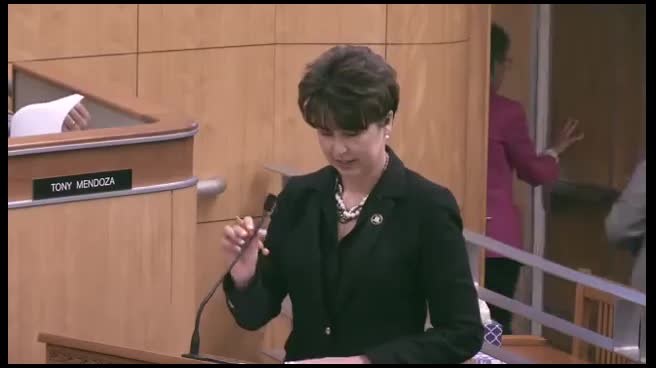
Bill Author