SB 1195: Professions and vocations: board actions.
- Session Year: 2015-2016
- House: Senate
- Latest Version Date: 2016-06-01
(1)Existing law provides for the licensure and regulation of various professions and vocations by boards within the Department of Consumer Affairs, and authorizes those boards to adopt regulations to enforce the laws pertaining to the profession and vocation for which they have jurisdiction. Existing law makes decisions of any board within the department pertaining to setting standards, conducting examinations, passing candidates, and revoking licenses final, except as specified, and provides that those decisions are not subject to review by the Director of Consumer Affairs. Existing law authorizes the director to audit and review certain inquiries and complaints regarding licensees, including the dismissal of a disciplinary case. Existing law requires the director to annually report to the chairpersons of certain committees of the Legislature information regarding findings from any audit, review, or monitoring and evaluation. Existing law authorizes the director to contract for services of experts and consultants where necessary. Existing law requires regulations, except those pertaining to examinations and qualifications for licensure and fee changes proposed or promulgated by a board within the department, to comply with certain requirements before the regulation or fee change can take effect, including that the director is required to be notified of the rule or regulation and given 30 days to disapprove the regulation. Existing law prohibits a rule or regulation that is disapproved by the director from having any force or effect, unless the directors disapproval is overridden by a unanimous vote of the members of the board, as specified.
This bill would instead authorize the director, upon his or her own initiative, and require the director, upon the request of a consumer or licensee, the board making the decision or the Legislature, to review a any nonministerial market-sensitive decision or other action, except as specified, of a board within the department to determine whether it unreasonably restrains trade furthers state law and to approve, disapprove, request further information, or modify the board decision or action, as specified. The bill would require the director to issue and post on the departments Internet Web site his or her final written decision and the reasons for the decision within 90 days from receipt of the request of a consumer or licensee. request for review or the directors decision to review the board decision. The bill would prohibit the executive officer of any board, committee, or commission within the department from being an active licensee of any profession that board, committee, or commission regulates. The bill would, commencing on March 1, 2017, require the director to annually report to the chairs of specified committees of the Legislature information regarding the directors disapprovals, modifications, or findings from any audit, review, or monitoring and evaluation. The bill would authorize the director to seek, designate, employ, or contract for the services of independent antitrust experts for purposes of reviewing board actions for unreasonable restraints on trade. The bill would also require the director to review and approve any regulation promulgated by a board within the department, as specified. The bill would authorize the director to modify any regulation as a condition of approval, and to disapprove a regulation because it would have an impermissible anticompetitive effect. The bill would authorize the director, for a specified period of time, to approve, disapprove, or require modification of a proposed rule or regulation on the ground that it does not further state law. The bill would prohibit any rule or regulation from having any force or effect if the director does not approve the regulation because it has an impermissible anticompetitive effect. rule or regulation and prohibits any rule or regulation that is not approved by the director from being submitted to the Office of Administrative Law.
(2)Existing law, until January 1, 2018, provides for the licensure and regulation of registered nurses by the Board of Registered Nursing, which is within the Department of Consumer Affairs, and requires the board to appoint an executive officer who is a nurse currently licensed by the board.
This bill would instead prohibit the executive officer from being a licensee of the board.
(3)The Veterinary Medicine Practice Act provides for the licensure and registration of veterinarians and registered veterinary technicians and the regulation of the practice of veterinary medicine by the Veterinary Medical Board, which is within the Department of Consumer Affairs, and authorizes the board to appoint an executive officer, as specified. Existing law repeals the provisions establishing the board and authorizing the board to appoint an executive officer as of January 1, 2017. That act exempts certain persons from the requirements of the act, including a veterinarian employed by the University of California or the Western University of Health Sciences while engaged in the performance of specified duties. That act requires all premises where veterinary medicine, dentistry, and surgery is being practiced to register with the board. That act requires all fees collected on behalf of the board to be deposited into the Veterinary Medical Board Contingent Fund, which continuously appropriates fees deposited into the fund. That act makes a violation of any provision of the act punishable as a misdemeanor.
This bill would extend the operation of the board and the authorization of the board to appoint an executive officer to January 1, 2021. The bill would authorize a veterinarian and or registered veterinary technician who is under the direct supervision of a licensed veterinarian with a current and active license to compound a drug for anesthesia, the prevention, cure, or relief of a wound, fracture, bodily injury, or disease of an animal in a premises currently and actively registered with the board, as specified. The bill would authorize the California State Board of Pharmacy and the board to ensure compliance with these requirements. animal use pursuant to federal law and regulations promulgated by the board and would require those regulations to, at a minimum, address the storage of drugs, the level and type of supervision required for compounding drugs by a registered veterinary technician, and the equipment necessary for safe compounding of drugs. The bill would instead require veterinarians engaged in the practice of veterinary medicine employed by the University of California or by the Western University of Health Sciences while and engaged in the performance of specified duties to be licensed as a veterinarian in the state or hold be issued a university license issued by the board. license, as specified. The bill would require an applicant authorize an individual to apply for and be issued a university license to meet if he or she meets certain requirements, including that the applicant passes a specified exam. paying an application and license fee. The bill would require a university license, among other things, to automatically cease to be valid upon termination or cessation of employment by the University of California or the Western University of Health Sciences. The bill would also prohibit a premise registration that is not renewed within 5 years after its expiration from being renewed, restored, reissued, or reinstated; however, the bill would authorize a new premise registration to be issued to an applicant if no fact, circumstance, or condition exists that would justify the revocation or suspension of the registration if the registration was issued and if specified fees are paid. By requiring additional persons to be licensed and pay certain fees that would go into a continuously appropriated fund, this bill would make an appropriation. This bill would provide that the Veterinary Medical Board Contingent Fund is available for expenditure only upon an appropriation by the Legislature. By requiring additional persons to be licensed under the act that were previously exempt, this bill would expand the definition of an existing crime and would, therefore, result in a state-mandated local program.
(4)Existing law, The Government Claims Act, except as provided, requires a public entity to pay any judgment or any compromise or settlement of a claim or action against an employee or former employee of the public entity if the employee or former employee requests the public entity to defend him or her against any claim or action against him or her for an injury arising out of an act or omission occurring within the scope of his or her employment as an employee of the public entity, the request is made in writing not less than 10 days before the day of trial, and the employee or former employee reasonably cooperates in good faith in the defense of the claim or action. That act prohibits the payment of punitive or exemplary damages by a public entity, except as specified.
This bill would require a public entity to pay a judgment or settlement for treble damage antitrust awards against a member of a regulatory board for an act or omission occurring within the scope of his or her employment as a member of a regulatory board. The bill would specify that treble damages awarded pursuant to a specified federal law for violation of another federal law are not punitive or exemplary damages within the Government Claims Act.
(5)The Administrative Procedure Act governs the procedure for the adoption, amendment, or repeal of regulations by state agencies and for the review of those regulatory actions by the Office of Administrative Law. That act requires the review by the office to follow certain standards, including, among others, necessity, as defined. That act requires an agency proposing to adopt, amend, or repeal a regulation to prepare a notice to the public that includes specified information, including reference to the authority under which the regulation is proposed.
This bill would add competitive impact, as defined, as an additional standard for the office to follow when reviewing regulatory actions of a state board on which a controlling number of decisionmakers are active market participants in the market that the board regulates, and requires the office to, among other things, consider whether the anticompetitive effects of the proposed regulation are clearly outweighed by the public policy merits. The bill would authorize the office to designate, employ, or contract for the services of independent antitrust or applicable economic experts when reviewing proposed regulations for competitive impact. The bill would require state boards on which a controlling number of decisionmakers are active market participants in the market that the board regulates, when preparing the public notice, to additionally include a statement that the agency has evaluated the impact of the regulation on competition and that the effect of the regulation is within a clearly articulated and affirmatively expressed state law or policy. also require a board within the Department of Consumer Affairs to submit a statement to the office that the Director of Consumer Affairs has reviewed the proposed regulation and determined that the proposed regulation furthers state law.
(6)The California Constitution requires the state to reimburse local agencies and school districts for certain costs mandated by the state. Statutory provisions establish procedures for making that reimbursement.
This bill would provide that no reimbursement is required by this act for a specified reason.
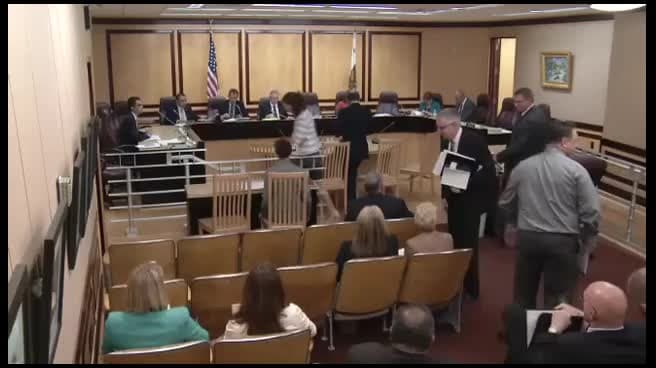
Discussed in Hearing
 40MIN
40MIN