SB 1213: Renewable energy: biosolids: matching grants.
- Session Year: 2015-2016
- House: Senate
- Latest Version Date: 2016-04-04
Existing law requires the State Energy Resources Conservation and Development Commission to administer various grant programs, including a program to provide incentives for liquid fuels fermented from biomass and biomass-derived resources.
The California Global Warming Solutions Act of 2006 designates the State Air Resources Board as the state agency charged with monitoring and regulating sources of emissions of greenhouse gases. The act authorizes the state board to include the use of market-based compliance mechanisms to achieve its goals. Existing law requires all moneys, except for fines and penalties, collected by the state board from the auction or sale of allowances as part of a market-based compliance mechanism to be deposited in the Greenhouse Gas Reduction Fund.
This bill would require the commission to develop and implement the Biosolids to Clean Energy Grant Program to provide 50% matching funds to local wastewater agencies for biosolids to clean energy capital projects. The Beginning with the 201617 fiscal year, the bill would continuously appropriate $20,000,000 annually from the fund to the commission for purposes of the program. The bill would, for the 201617 fiscal year, appropriate an additional $12,000,000 from the fund to the Bay Area Biosolids to Energy Coalition for the design and construction of a regional biosolids to clean energy project located in the San Francisco Bay Area.
Existing law requires the State Energy Resources Conservation Commission to administer various grant programs, including a program to provide incentives for liquid fuels fermented from biomass and biomass-derived resources.
The California Global Warming Solutions Act of 2006 designates the State Air Resources Board as the state agency charged with monitoring and regulating sources of emissions of greenhouse gases. The act authorizes the state board to include the use of market-based compliance mechanisms to achieve its goals. Existing law requires all moneys, except for fines and penalties, collected by the state board from the auction or sale of allowances as part of a market-based compliance mechanism to be deposited in the Greenhouse Gas Reduction Fund.
This bill would require the commission to develop and implement the Biosolids to Clean Energy Grant Program to provide 50% matching funds to local wastewater agencies for biosolids to clean energy capital projects. The bill would continuously appropriate $20,000,000 annually from the fund to the commission for purposes of the program. The bill would, for the 201617 fiscal year, appropriate an additional $12,000,000 from the fund to the Bay Area Biosolids to Energy Coalition for the design and construction of a regional biosolids to clean energy project located in the San Francisco Bay Area.
The Legislature finds and declares all of the following:
(a)California wastewater agencies generate 2.75 million tons of biosolids each year.
(b)Biosolids management primarily consists of agricultural land application and landfill disposal.
(c)Agricultural land application is discouraged by many local governments, leading to increased landfill disposal and methane emissions. Most agricultural land application sites are located far from urban areas and wastewater treatment facilities, causing biosolids to be trucked many miles, resulting in increased petroleum consumption and greenhouse gas emissions. emissions of greenhouse gases.
(d)The Legislature, pursuant to Section 41780.01 of the Public Resources Code, established the policy goal of the state that not less than 75 percent of solid waste generated be source reduced, recycled, or composted by year 2020, and annually thereafter.
(e)In his 2015 inaugural address, the Governor called upon the state to reduce fuel consumption by 50 percent by 2030.
(f)In the San Francisco Bay area, hauling of biosolids by only 19 wastewater agencies contributes to one million trucking miles and consumption of 153,000 gallons of petroleum.
(g)Chapter 547 of the Statutes of 2015 requires electric utilities, by 2030, to increase to 50 percent the amount of electricity derived from renewable resources.
(h)Biosolids are a renewable resource for energy generation and can be converted to energy and useful byproducts without incineration using various technologies, including, but not limited to, supercritical water oxidation technology, which utilizes oxygen and high pressure to create steam or hot water which, that, in turn, can generate electricity.
(i)Biosolids are generated locally and biosolids to energy projects can be deployed regionally as part of expanded regional distributed generation projects serving local microgrids.
(j)California leads the nation in innovation and research and development. Conversion of biosolids to energy has been proven on a small scale. A public-private partnership among local agencies, state government, and private enterprises to demonstrate a commercial scale biosolids to energy project is consistent with Californias leadership in promoting and creating renewable energy.
SEC. 2.Section 39719.3 is added to the Health and Safety Code, to read:39719.3.Notwithstanding Section 13340 of the Government Code, beginning with the 201617 fiscal year, the sum of twenty million dollars ($20,000,000) annually is hereby continuously appropriated from the fund to the State Energy Resources Conservation and Development Commission for the Biosolids to Clean Energy Grant Program developed pursuant to Chapter 7.8 (commencing with Section 25680) of Division 15 of the Public Resources Code.
SEC. 3.Chapter 7.8 (commencing with Section 25680) is added to Division 15 of the Public Resources Code, to read:7.8.Biosolids to Clean Energy Grant Program25680.For purposes of this chapter, biosolids to clean energy capital project or project means a capital project that uses biosolids to generate useful heat energy or electricity, liquid or gaseous fuels, or useful byproducts using nonincineration technology in a manner or location that also reduces the emissions of greenhouse gases as compared with biosolids management practices in use at the time of the enactment of this chapter, such as through a reduction in trucking biosolids to offsite landfill or land application sites.
25681.The commission shall develop and implement the Biosolids to Clean Energy Grant Program to award, on a competitive basis, grants to local wastewater agencies providing 50-percent matching funds for biosolids to clean energy capital projects.
25682.An applicant for a grant shall submit to the commission an application on a form prescribed by the commission. The applicant shall specify the sources of the matching funds for the project.
25683.(a)In awarding a grant pursuant to this chapter, the commission shall consider the following:
(a)
(1)The cost-effectiveness of the project.
(b)
(2)Any other factors deemed appropriate by the commission.
(b)The commission shall not award grants pursuant to this chapter to local wastewater agencies that are subject to a compliance obligation pursuant to regulations implementing a market-based compliance mechanism described in Part 5 (commencing with Section 38570) of Division 25.5 of the Health and Safety Code.
25684.The commission shall implement this chapter using moneys appropriated pursuant to Section 39719.3 of the Health and Safety Code and from any other moneys appropriated for purposes of this chapter.
SEC. 4.(a)In addition to the amount appropriated pursuant to Section 39719.3 of the Health and Safety Code, for the 201617 fiscal year, the sum of twelve million dollars ($12,000,000) is hereby appropriated from the Greenhouse Gas Reduction Fund, established pursuant to Section 16428.8 of the Government Code, to the State Energy Resources Conservation and Development Commission to provide 50-percent matching funds to the Bay Area Biosolids to Energy Coalition for the design and construction of a regional biosolids to clean energy project located in the San Francisco Bay area.
(b)For purposes of this section, biosolids to clean energy project means a project that generates electricity by creating steam or hot water through the conversion of biosolids without incineration using supercritical water oxidation technology utilizing oxygen and high pressure.
The Legislature finds and declares all of the following:
(a)California wastewater agencies generate 2.75 million tons of biosolids each year.
(b)Biosolids management primarily consists of agricultural land application and landfill disposal.
(c)Agricultural land application is discouraged by many local governments, leading to increased landfill disposal and methane emissions. Most agricultural land application sites are located far from urban areas and wastewater treatment facilities, causing biosolids to be trucked many miles, resulting in increased petroleum consumption and greenhouse gas emissions.
(d)The Legislature, pursuant to Section 41780.01 of the Public Resources Code, established the policy goal of the state that not less than 75 percent of solid waste generated be source reduced, recycled, or composted by year 2020, and annually thereafter.
(e)In his 2015 inaugural address, the Governor called upon the state to reduce fuel consumption by 50 percent by 2030.
(f)In the San Francisco Bay area, hauling of biosolids by only 19 wastewater agencies contributes to one million trucking miles and consumption of 153,000 gallons of petroleum.
(g)Chapter 547 of the Statutes of 2015 requires electric utilities, by 2030, to increase to 50 percent the amount of electricity derived from renewable resources.
(h)Biosolids are a renewable resource for energy generation and can be converted to energy and useful byproducts without incineration using various technologies, including, but not limited to, supercritical water oxidation technology, which utilizes oxygen and high pressure to create steam or hot water which, in turn, can generate electricity.
(i)Biosolids are generated locally and biosolids to energy projects can be deployed regionally as part of expanded regional distributed generation projects serving local microgrids.
(j)California leads the nation in innovation and research and development. Conversion of biosolids to energy has been proven on a small scale. A public-private partnership among local agencies, state government, and private enterprises to demonstrate a commercial scale biosolids to energy project is consistent with Californias leadership in promoting and creating renewable energy.
SEC. 2.Section 39719.3 is added to the Health and Safety Code, to read:39719.3.Notwithstanding Section 13340 of the Government Code, the sum of twenty million dollars ($20,000,000) annually is hereby continuously appropriated from the fund to the State Energy Resources Conservation and Development Commission for the Biosolids to Clean Energy Grant Program developed pursuant to Chapter 7.8 (commencing with Section 25680) of Division 15 of the Public Resources Code.
SEC. 3.Chapter 7.8 (commencing with Section 25680) is added to Division 15 of the Public Resources Code, to read:7.8.Biosolids to Clean Energy Grant Program25680.For purposes of this chapter, biosolids to clean energy capital project or project means a capital project that uses biosolids to generate useful heat energy or electricity, liquid or gaseous fuels, or useful byproducts using nonincineration technology in a manner or location that also reduces the emissions of greenhouse gases as compared with biosolids management practices in use at the time of the enactment of this chapter, such as through a reduction in trucking biosolids to offsite landfill or land application sites.
25681.The commission shall develop and implement the Biosolids to Clean Energy Grant Program to award, on a competitive basis, grants to local wastewater agencies providing 50-percent matching funds for biosolids to clean energy capital projects.
25682.An applicant for a grant shall submit to the commission an application on a form prescribed by the commission. The applicant shall specify the sources of the matching funds for the project.
25683.In awarding a grant pursuant to this chapter, the commission shall consider the following:
(a)The cost-effectiveness of the project.
(b)Any other factors deemed appropriate by the commission.
25684.The commission shall implement this chapter using moneys appropriated pursuant to Section 39719.3 of the Health and Safety Code and from any other moneys appropriated for purposes of this chapter.
SEC. 4.(a)In addition to the amount appropriated pursuant to Section 39719.3 of the Health and Safety Code, for the 201617 fiscal year, the sum of twelve million dollars ($12,000,000) is hereby appropriated from the Greenhouse Gas Reduction Fund, established pursuant to Section 16428.8 of the Government Code, to the State Energy Resources Conservation and Development Commission to provide 50-percent matching funds to the Bay Area Biosolids to Energy Coalition for the design and construction of a regional biosolids to clean energy project located in the San Francisco Bay area.
(b)For purposes of this section, biosolids to clean energy project means a project that generates electricity by creating steam or hot water through the conversion of biosolids without incineration using supercritical water oxidation technology utilizing oxygen and high pressure.
|
Date
|
Status
|
|---|---|
| Feb 18, 2016 | Introduced. Read first time. To Com. on RLS. for assignment. To print. |
| Feb 19, 2016 | From printer. May be acted upon on or after March 20. |
| Mar 3, 2016 | Referred to Coms. on E., U., & C. and E.Q. |
| Mar 9, 2016 | Set for hearing March 29. |
| Mar 31, 2016 | From committee: Do pass as amended and re-refer to Com. on E.Q. (Ayes 9. Noes 0. Page 3311.) (March 29). |
| Mar 31, 2016 | From committee: Do pass as amended and re-refer to Com. on E.Q. (Ayes 9. Noes 0.) (March 29). |
| Apr 1, 2016 | Set for hearing April 6 in E.Q. pending receipt. |
| Apr 4, 2016 | Read second time and amended. Re-referred to Com. on E.Q. |
| Apr 6, 2016 | From committee: Do pass and re-refer to Com. on APPR. (Ayes 6. Noes 0. Page 3419.) (April 6). Re-referred to Com. on APPR. |
| Apr 6, 2016 | From committee: Do pass and re-refer to Com. on APPR. (Ayes 6. Noes 0.) (April 6). Re-referred to Com. on APPR. |
| Apr 22, 2016 | Set for hearing May 2. |
| May 2, 2016 | May 2 hearing: Placed on APPR. suspense file. |
| May 20, 2016 | Set for hearing May 27. |
| May 27, 2016 | May 27 hearing: Held in committee and under submission. |
|
Date
|
Description
|
Location
|
Votes
|
|
|---|---|---|---|---|
| May 2, 2016 | Placed on suspense file | Senate Standing Committee on Appropriations |
Passed |
|
| Apr 6, 2016 | Do pass, but first be re-referred to the Committee on [Appropriations] | Senate Standing Committee on Environmental Quality |
Passed |
|
| Mar 29, 2016 | Do pass as amended, but first amend, and re-refer to the Committee on [Environmental Quality] | Senate Standing Committee on Energy, Utilities and Communications |
Passed |
This list shows positions taken on this bill by organizations on the date displayed, which is linked to the original source.
Positions by individuals are not included.
|
Organization
|
Position
|
Date
|
|---|---|---|
| Bay Area Biosolids Energy Coalition | * Support | Apr 6, 2016 |
| Bay Area Biosolids to Energy | ** Support | Apr 6, 2016 |
| California Chamber Of Commerce | ** Against | Apr 6, 2016 |
| CalTax | ** Against | Apr 6, 2016 |
| Central Marin Sanitation Agency | ** Support | Apr 6, 2016 |
| Delta Diablo | ** Support | Apr 6, 2016 |
| Delta Diablo Sanitation District For The Bay Area Biosolids To Energy | * Support | Apr 6, 2016 |
| Dublin San Ramon Services District | * Support | Apr 6, 2016 |
| Ironhouse Sanitary District | ** Support | Apr 6, 2016 |
| North San Mateo County Sanitation District | * Support | Apr 6, 2016 |
| Richmond, City Of | ** Support | Apr 6, 2016 |
| San Francisco Public Utilities Commission | * Support | Apr 6, 2016 |
| Union Sanitary District | ** Support | Apr 6, 2016 |
| Union Sanitation District | * Support | Apr 6, 2016 |
SENATE COMMITTEE ON
Senator Ricardo Lara, Chair
2015 - 2016 Regular Session
SB 1213 (Wieckowski) - Renewable energy: biosolids: matching grants
Version: | Policy Vote: |
Urgency: | Mandate: |
Hearing Date: | Consultant: |
This bill meets the criteria for referral to the Suspense File.
Bill Summary:
SB 1213 continuously appropriates $20 million from the Greenhouse Gas Reduction Fund (GGRF) to the California Energy Commission (CEC) to fund competitive grants for capital projects that use biosolids to generate useful heat energy or electricity, liquid or gaseous fuels, or useful byproducts.
Fiscal Impact:
Per the CEC, this bill would result in annual costs of approximately $355,000 to $444,364 (GGRF).
The Air Resources Board (ARB) may also have additional costs to collaborate with the agency and to incorporate the program into its annual reporting on GGRF results. It is unclear whether this program in itself would necessitate an additional position for these duties. However, to the extent that the Legislature creates multiple new programs to be funded by the GGRF, the ARB may require additional positions to collectively be involved in the new programs.
Background:
The California Global Warming Solutions Act of 2006 (referred to as AB 32, HSC §38500 et seq.) requires the California Air Resources Board (ARB) to determine the 1990 statewide greenhouse gas (GHG) emissions level, to approve a statewide GHG emissions limit equivalent to that level that will be achieved by 2020, and to adopt GHG emissions reductions measures by regulation. ARB is authorized to include the use of market-based mechanisms to comply with the regulations. Under this authority, the ARB initiated the cap-and-trade program. All monies, except for fines and penalties, collected pursuant to the cap-and-trade program deposited in the GGRF (Government Code §16428.8).
Existing law requires that the GGRF only be used to facilitate the achievement of reductions of GHG emissions consistent with AB 32 (HSC §39710 et seq.). To this end, the Department of Finance, in consultation with the ARB and any other relevant state agencies, is required to develop, as specified, a three-year investment plan for the moneys deposited in the GGRF. The investment plan must allocate a minimum of 25% of the funds to projects that benefit disadvantaged communities and to allocate 10% of the funds to projects located within disadvantaged communities. Additionally, the ARB, in consultation with California Environmental Protection Agency (Cal EPA), is required to develop funding guidelines for administering agencies receiving allocations of GGRF funds that include a component for how agencies should maximize benefits to disadvantaged communities.
Recently, the LAO noted that spending auction revenue on GHG reductions is likely not necessary to meet the state’s GHG reduction goals and likely increases the overall costs of emission reduction activities. According to the LAO, “this is because, in certain cases, spending on GHG reductions interacts with the regulation in a way that changes the types of emission reduction activities, but not the overall level of emission reductions.” More specifically, entities covered by the AB 32 cap –such as some larger wastewater treatment plants – must limit their GHGs to meet the cap. This is true regardless of any GGRF funding received by the covered entity. The likely effect of receipt of GGRF monies by a covered entity, therefore, is reduced compliance costs for the covered entity, but not increased GHG reduction, either by that covered entity or overall. However, funding GHG-reducing projects undertaken by entities not covered by the AB 32 cap may lead to additional GHG reductions that would not have otherwise occurred.
Proposed Law:
This bill:
- Defines a “biosolids to clean energy capital project” as one that uses biosolids to generate useful heat energy or electricity, liquid or gaseous fuels, or useful byproducts using nonincineration technology in a manner or location that also reduces GHGs compared with other biosolids management practices in use at the time of enactment of this bill.
- Directs the CEC to establish the “Biosolids Clean Energy Grant Program” of competitive grants available to local wastewater agencies to provide 50 percent matching funds for “biosolid to clean energy capital projects,” based on cost-effectiveness and any other factors deemed appropriate by the CEC.
- Continuously appropriates $20 million from the GGRF to the CEC for the competitive grant program.
- Specifies that the CEC cannot award grants to local wastewater agencies that are subject to obligation pursuant to a compliance obligation pursuant to regulations implementing a market-based compliance mechanism.
-- END --
SENATE COMMITTEE ON ENVIRONMENTAL QUALITY
Senator Wieckowski, Chair
2015 - 2016 Regular
Bill No: SB 1213
Author: | Wieckowski | ||
Version: | 3/31/2016 | Hearing Date: | 4/6/2016 |
Urgency: | No | Fiscal: | Yes |
Consultant: | Rebecca Newhouse | ||
SUBJECT: Renewable energy: biosolids: matching grants
ANALYSIS:
Existing law:
- Under the California Global Warming Solutions Act of 2006 (also known as AB 32), requires the California Air Resources Board (ARB) to determine the 1990 statewide greenhouse gas (GHG) emissions level and approve a statewide GHG emissions limit that is equivalent to that level, to be achieved by 2020, and to adopt GHG emissions reductions measures by regulation. ARB is authorized to include the use of market-based mechanisms to comply with these regulations. (Health and Safety Code §38500 et seq.)
- Establishes the Greenhouse Gas Reduction Fund (GGRF) in the State Treasury, requires all moneys, except for fines and penalties, collected pursuant to a market-based mechanism be deposited in the fund. (Government Code §16428.8)
- Prohibits the state from approving allocations for a measure or program using GGRF moneys except after determining that the use of those moneys furthers the regulatory purposes of AB 32, and requires moneys from the GGRF be used to facilitate the achievement of reductions of GHG emissions in California. (HSC §39712)
- Requires the ARB to develop guidance on reporting and quantification methods for all state agencies that receive appropriations from the GGRF. (GOV §16428.9)
This bill:
- Establishes the Biosolids to Clean Energy Grant Program, to be developed and implemented by the State Energy Resources Conservation and Development Commission (CEC) to award grants to local wastewater agencies providing 50% matching funds for biosolids to clean energy capital projects.
- Defines “biosolids to clean energy capital project” for purposes of the program as a capital project that uses biosolids to generate useful heat energy or electricity, liquid or gaseous fuels, or useful byproducts using nonincineration technology in a manner or location that also reduces the emissions of GHGs as compared to biosolids management practices in use at the time of bill enactment.
- Requires grant applications to be submitted on forms prescribed by the CEC, and requires the applicant specify the source of the matching funds for the project.
- Requires CEC to consider the cost-effectiveness of the project, and any other factors deemed appropriate by the CEC when awarding grants.
- Requires CEC to implement the program through the GGRF and any other moneys appropriated for the program.
- Continuously appropriates $20 million from the GGRF for the program beginning in the 2016-17 fiscal year.
- Specifies that the CEC shall not award grants to fund capital projects for a facility that has a compliance obligation under ARB’s cap-and-trade regulation.
Background
- Biosolids treatment and disposal. According to the US Environmental Protection Agency (US EPA), “biosolids” refers to treated sewage sludge that meets the US EPA pollutant and pathogen requirements for land application and surface disposal.
Biosolids are classified into either "Class A" or "Class B." Class A biosolids have had sufficient treatment to essentially eliminate all pathogens, while Class B biosolids have been treated for pathogens reduction, but may still have low levels of pathogens which are expected to rapidly die-off when applied to soils. The most common treatment of sewage sludge in the western region of the US is by anaerobic digestion (biological degradation in the absence of oxygen). About a third of Class B biosolids receive further treatment to “Class A” pathogen reduction levels, by means such as composting, solar air-drying, alkali treatment, thermophilic digestion, pasteurization, or heat drying.
According to the Department of Resources Recycling and Recovery (CalRecycle), California generated 723,000 dry metric tons of biosolids in 2013. At 56% of biosolids in the state land applied, land application is the primary use for biosolids in California, with composting the second largest use. Biosolids used as alternative daily cover (ADC) or final cover at some landfills account for 19%, and approximately 13% of the biosolids generated in California are disposed of at landfills. Surface disposal methods account for 3% of the biosolids and about 2.5% of the biosolids generated in state are incinerated.
Biosolids may contain a variety of trace compounds, including pharmaceuticals, pesticides, detergent additives, PCBs, and other organic compounds that end up in the waste stream. Although no causal evidence to indicate otherwise, controversy surrounding the safety of biosolids as a soil amendment has led numerous jurisdictions to enact regulations placing restrictions on biosolids application.
- Non-incineration processes to create energy. A variety of technologies exist that process organic and inorganic materials through chemical, biological, or other "non-incineration", or “non-combustion,” thermal technologies to produce energy or renewable fuels. These processes are known as conversion technologies.
Thermochemical conversion technologies. Gasification and pyrolysis are high-heat thermochemical technologies that use very little (or no oxygen in the case of pyrolysis) to produce a mixture of combustible gases that can be used to generate electricity. These technologies are considered “non-incineration” or “non-combustion” because they primarily exclude oxygen during the conversion process. The CEC notes that air emissions may be easier to control than with combustion or incineration, because gas produced by pyrolysis or gasification can be scrubbed to remove contaminant prior to combustion.
Both of these technologies are in the development stage, with a limited number of small-scale units operating in California, primarily using green waste biomass as feedstock.
Biochemical conversion. Biochemical conversion processes include aerobic conversion (i.e., composting), anaerobic digestion, and anaerobic fermentation (for example, the conversion of sugars from cellulose to ethanol). Biochemical conversion processes use lower temperatures and lower reaction rates. Higher moisture feedstocks are generally good candidates for biochemical processes.
As noted earlier, sewage sludge is frequently treated using anaerobic digestion to generate biosolids, with the resulting biosolids frequently composted by waste water treatment facilities.
- Biosolids to energy project funded through PIER. In 2011, The CEC awarded $1 million, funded through the CEC’s Public Interest Energy Research (PIER) fund, to the Delta Diablo Sanitation District to lead the implementation of a regional biosolids to energy facility using steam and carbon dioxide reforming technology. This technology heats the biosolids at high temperatures in an airlock vessel, vaporizing the liquids and gasifying the organic solids and then adds steam and carbon dioxide to produce a hydrogen-rich gaseous fuel known as syngas, used to power a fuel cell to generate electricity.
- Cap-and-trade auction revenue. Since November 2012, ARB has conducted 14 cap-and-trade auctions, generating over $4 billion in proceeds to the state.
State law specifies that the auction revenues must be used to facilitate the achievement of GHG emissions reductions and outlines various categories of allowable expenditures. Statute further requires the Department of Finance, in consultation with ARB and any other relevant state agency, to develop a three-year investment plan for the auction proceeds, which are deposited in the GGRF.
Disadvantaged communities. SB 535 (de León, Chapter 830, Statutes of 2012) requires the Department of Finance, in the investment plan, to allocate at least 25% of available moneys in the GGRF to projects that provide benefits to disadvantaged communities, and at least 10% to projects located within disadvantaged communities.
To meet the SB 535 mandate, the Office of Environmental Health Hazard Assessment, under CalEPA’s guidance, developed a tool (termed CalEnviroScreen) to assess and rank census tracts across the state that are disproportionately affected by multiple types of pollution and areas with vulnerable populations. CalEPA has designated 25% of census tracts in California as disadvantaged communities for the purpose of investing cap-and-trade proceeds.
Additionally, SB 862 (Committee on Budget and Fiscal Review, Chapter 36, Statutes of 2014) requires ARB to develop guidelines on maximizing benefits for disadvantaged communities by agencies administering GGRF funds.
Legal consideration of cap-and-trade auction revenues. The 2012-13 Budget analysis of cap-and-trade auction revenue by the Legislative Analyst’s Office noted that, based on an opinion from the Office of Legislative Counsel, the auction revenues should be considered mitigation fee revenues, and their use requires that a clear nexus exist between an activity for which a mitigation fee is used and the adverse effects related to the activity on which that fee is levied. Therefore, in order for their use to be valid as mitigation fees, revenues from the cap-and-trade auction must be used to mitigate GHG emissions or the harms caused by GHG emissions.
In 2012, the California Chamber of Commerce filed a lawsuit against the ARB claiming that cap-and-trade auction revenues constitute illegal tax revenue. In November 2013, the superior court ruling declined to hold the auction a tax, concluding that it is more akin to a regulatory fee. In February of 2014, the plaintiffs filed an appeal with the 3rd District Court of Appeal in Sacramento. That case is currently pending.
Budget allocations. SB 862 (Committee on Budget and Fiscal Review, Chapter 36, Statutes of 2014) established a long-term cap-and-trade expenditure plan by continuously appropriating portions of the funds for designated programs or purposes. The legislation appropriates 25% for the state’s high-speed rail project, 20% for affordable housing and sustainable communities grants, 10% to the Transit and Intercity Rail Capital Program, and 5% for low-carbon transit operations. The remaining 40% is available for annual appropriation by the Legislature.
The Governor’s 2016-17 proposed budget appropriates over $3 billion to a variety of programs and projects in the transportation, energy, natural resources, and waste diversion sectors.
Comments
- Purpose of Bill. According to the author, “SB 1213 is an important bill to the Bay Area region and eventually to the state. It will help fund forward-thinking, environmentally beneficial alternatives to biosolids management, while reducing GHG emissions, creating renewable energy, and increasing landfill capacity. The initial regional project partially funded in this bill will serve as the initial building block upon which the Energy Commission can build an ongoing program to make California a world-leader in developing biosolids as [a] clean energy source.”
- Waste or fuel? Currently, the Department of Resources Recycling and Recovery (CalRecycle) has regulatory authority over the final use of biosolids in California, since CalRecycle regulates the handling, processing, transfer, and disposal of solid waste in the state. However, SB 1213, through the Biosolids to Clean Energy Program creates a new pathway for biosolids to be used as fuel. It is unclear whether biosolids for projects funded under the program will continue to be regulated by CalRecycle as solid waste, or instead be regulated by the CEC, or another agency, as a feedstock for energy production.
- Piece by piece. GGRF investments must facilitate the achievement of GHG emissions reductions. However, after that requirement is fulfilled, there are a number of other policy goals that should be considered, including benefits to environmental quality, resource protection, public health and the economy, as well as benefits to disadvantaged communities. Various policy committees have been referred proposals for investing GGRF moneys, and these committees will likely consider whether proposals meet basic statutory requirements and align with legislative priorities. However, in order to create an optimized investment strategy from GGRF moneys, proposals should not be considered in isolation, but be assessed in aggregate to evaluate which set of proposals best meets the requirements of the fund, uses resources most efficiently, and maximizes policy objectives. As the budget committees are considering the Governor’s proposal of GGRF expenditures, the budget process may be an ideal way to comprehensively consider the numerous policy bills, including SB 1213, that propose new programs funded through the GGRF.
- Continuous appropriation. SB 1213 potentially provides up to $100 million for the competitive Biosolids to Clean Energy Program, since the bill provides a continuous annual appropriation of $20 million, and cap-and-trade auctions will most likely continue through 2020.
As noted earlier, 60% of the GGRF is continuously appropriated for high-speed rail, public transportation infrastructure, and affordable housing programs. The remaining 40% is available for appropriation by the Legislature on an annual basis.
The annual budget process provides the Legislature an opportunity to review programs funded through GGRF to ensure that the program is providing significant GHG emissions reductions and cobenefits, and does not result in unintended consequences. Additionally, annual appropriations provide the Legislature with the flexibility to evaluate, on a yearly basis, the mix of GGRF-funded proposals that results in a coordinated and comprehensive GGRF investment strategy that best prioritizes competing policy goals.
To ensure the Biosolids to Clean Energy Grant Program be part of that comprehensive annual review by the Legislature, the Committee may wish to consider whether the continuous appropriation should be amended to instead specify an annual appropriation of $20 million for the program in the current fiscal year.
- Many projects could qualify, and GHG reductions will vary. Applicants seeking funding through the Biosolids to Clean Energy Grant Program could potentially use a variety of technologies and processes to convert biosolids to heat energy, electricity, liquid or gaseous fuels, or useful byproducts. However, depending on the technology and energy product they develop, as well as their current carbon intensity for processing and transporting biosolids, the GHG emissions reductions for the projects may differ greatly. However, the bill does not specify that the CEC consider, in awarding the grant, the level of GHG emissions reductions achieved for competing projects.
An amendment is needed to require CEC consider the extent of GHG emissions reductions in awarding grants under the Biosolids to Clean Energy Grant Program.
DOUBLE REFERRAL:
This measure was heard in Senate Energy, Utilities, and Communications Committee on March 29, 2016, and passed out of committee with a vote of 9-0.
SOURCE:
Bay Area Biosolids to Energy Coalition
SUPPORT:
Central Marin Sanitation Agency
City of Richmond
Delta Diablo
Dublin San Ramon Services District
Ironhouse Sanitary District
North San Mateo County Sanitation District
San Francisco Public Utilities Commission
Union Sanitary District
OPPOSITION:
California Chamber of Commerce
ARGUMENTS IN SUPPORT:
Supporters state that they are developing a first-
in-the nation project to convert biosolids to clean-energy, but note that this cutting-
edge, new technology project, in the short-term, will be more expensive to their
ratepayers than current disposal practice and that the $12 million directed to
the Bay Area Biosolids to Energy Coalition is needed to offset the financial impact
on the region’s ratepayers. They also state that the $20 million to the CEC to
develop and manage a grant program to convert biosolids to clean energy is a
worthy public policy goal that ought to be expanded and replicated at wastewater
agencies throughout the state.
ARGUMENTS IN OPPOSITION:
The California Chamber of Commerce
contends that ARB lacks authority to raise revenues through the auction of
allowances and that given the substantial legal uncertainties surrounding ARBs
authority to impose an auction, expending the proceeds is premature.
DOUBLE REFERRAL:
This measure was heard in the Senate Energy, Utilities, and Communications Committee on March 29, 2016, and passed out of committee with a vote of 9-0.
-- END --
SENATE COMMITTEE ON ENERGY, UTILITIES AND COMMUNICATIONS
Senator Ben Hueso, Chair
2015 - 2016 Regular
Bill No: SB 1213 Hearing Date: 3/29/2016
Author: | Wieckowski | ||
Version: | 2/18/2016 As Introduced | ||
Urgency: | No | Fiscal: | Yes |
Consultant: | Jay Dickenson | ||
SUBJECT: Renewable energy: biosolids: matching grants
DIGEST: This bill makes a continuous annual appropriation of $20 million from the Greenhouse Gas Reduction Fund (GGRF) to the California Energy Commission (CEC) for a competitive grant program. The program will make available grants for capital projects that use biosolids to generate useful heat energy or electricity, liquid or gaseous fuels, or useful byproducts. This bill also makes a one-time appropriation from the GGRF to fund a regional biosolids-to-energy project located in the San Francisco Bay Area.
ANALYSIS:
Existing law:
- Declares the policy goal of the state that not less than 75 percent of solid waste generated be source reduced, recycled, or composted by the year 2020, and annually thereafter but prohibits the Department of Resources Recycling and Recovery from establishing or enforcing a diversion rate on a city or county that is greater than the 50 percent diversion rate. (Public Resources Code § 41780.01)
- Requires the California Air Resources Board (ARB), pursuant to the California Global Warming Solutions Act of 2006, to adopt rules and regulations that would reduce greenhouse gas emissions (GHGs) in the state to 1990 levels by 2020. (Health and Safety Code §§38500 to 38599)
- Establishes the GGRF, and requires all monies collected by ARB from the auction or sales of allowances, pursuant to a market-based compliance mechanism, be deposited in the fund and made available for appropriation. (Government Code §16428.8)
- Establishes the GGRF Investment Plan and Communities Revitalization Act to set procedures for the investment of regulatory fee revenues derived from the auction of GHG allowances, including the requirement that such revenue be used to reduce emissions of GHGs. (Health and Safety Code §§39710 to 39720)
- Requires the GGRF Investment Plan to allocate: (a) at least 25 percent of the available monies in the fund to projects that provide benefits to disadvantaged communities, and (b) at least 10 percent of monies in the fund to projects located within disadvantaged communities. (Health and Safety Code §§39711 to 39723)
This bill:
- Defines a “biosolids to clean energy capital project” as one that uses biosolids to generate useful heat energy or electricity, liquid or gaseous fuels, or useful byproducts using nonincineration technology in a manner or location that also reduces GHGs compared with other biosolids management practices in use at the time of enactment of this bill.
- Directs the CEC to establish the “Biosolids Clean Energy Grant Program” of competitive grants available to local wastewater agencies to provide 50-percent matching funds for “biosolid to clean energy capital projects,” based (a) cost-effectiveness and (b) any other factors deemed appropriate by the CEC.
- Continuously appropriates $20 million from the GGRF to the CEC for the competitive grant program.
- Makes a one-time appropriation in fiscal year 2016-17 from the GGRF to provide a 50-percent matching grant to the Bay Area Biosolids to Energy Coalition for the design and construction of a regional “biosolids to clean energy project” located in the San Francisco Bay Area.
Background
Uses of AB 32 auction revenue must reduce GHGs. ARB, in implementing The Global Warming Solutions Act (aka “AB 32), established by regulation a cap-and-trade program for GHGs. Under the program, ARB distributes tradable allowances to emit specific quantities of GHGs. ARB has given away for free about 51 percent of the allowances, while it has auctioned most of the remainder of the allowances each quarter since November 2012. Incidental to the reduction of GHGs, the auctioning of allowances has generated billions of dollars in state revenue. The Legislative Analyst’s Office (LAO) estimates ARB’s allowance auctions will generate $2.4 billion in fiscal year 2015-16 and $2.3 billion in fiscal year 2016-17.
Existing statute provides thresholds and parameters for the use of auction revenues, consistent with their status as proceeds of a regulatory fee. Statute directs auction revenue to the GGRF, available for appropriation by the Legislature. Statute further requires that GGRF revenues be used for GHG reductions. Finally, statute mandates that at least 25 percent of money in the GGRF go to projects that provide benefits to disadvantaged communities, and at least 10 percent of monies in the fund go to projects located within disadvantaged communities.
Legislature allocates billions in GGRF revenues through the budget. Through several annual budgets, the Legislature has allocated GGRF revenues to a variety of projects anticipated to reduce GHGs, in the nearer or longer term. 60 percent of the expenditures represent continuous appropriations, meaning defined portions of GGRF expenditures go to specific programs each year: 25 percent for high–speed rail; 20 percent for affordable housing and sustainable communities grants; 10 percent for intercity rail capital projects; and five percent for low-carbon transit operations. The GGRF budget appropriations for fiscal years 2013-14 through 2015-16 are shown in the following figure.[1]
Cap-and-trade Expenditures (in millions) | |||
Program | 2013-14 | 2014-15 | 2015-16[2] |
High-speed rail | -- | $250 | $600 |
Affordable housing and sustainable communities | -- | 130 | 480 |
Transit and intercity rail capital | -- | 25 | 240 |
Transit operations | -- | 25 | 120 |
Low-carbon transportation | $30 | 200 | 70 |
Low-income weatherization and solar | -- | 75 | 70 |
Agricultural energy and operational efficiency | 10 | 25 | 40 |
Urban water efficiency | 30 | 20 | 20 |
Sustainable forests and urban forestry | — | 42 | — |
Waste diversion | — | 25 | — |
Wetlands and watershed restoration | — | 25 | — |
Other administration | 2 | 10 | 31 |
Totals | $72 | $852 | $1,691 |
If the LAO’s estimates of cap-and-trade auction revenue hold true, there will be a $1.6 billion balance in the GGRF at the end of fiscal year 2015-16. In addition, auction revenues in 2016-17 should add billions more to the GGRF. It therefore appears there is abundant room for the Legislature to express its GHG reduction priorities through additional appropriations from the GGRF, continuous appropriations notwithstanding.
Bill creates new program, continuously appropriates $20 million. This continuously appropriates $20 million from the GGRF. The money will fund a competitive grant program, administered by the CEC, available to local wastewater agencies that provide a 50-percent match for a “biosolids to clean energy capital project.” This bill defines such a project as a capital project that uses biosolids to generate useful heat energy or electricity, liquid or gaseous fuels, or useful byproducts using nonincineration technology in a manner that or location that also reduces GHGs as compared to current biosolids management practices. Those current practices tend to be agricultural application or use as cover at landfills. The bill directs the CEC, in awarding grants, to consider the cost-effectiveness of a project, as well as any other factors deemed appropriate by the CEC, one of which, consistent with existing statute, must be potential to reduce GHGs.
Proponents – a collection of Bay Area wastewater and sanitation agencies – describe biosolids-to-energy projects as proven on a small scale. Yet, the cost of such projects currently exceeds the cost of conventional biosolids management techniques. Proponents intend the competitive matching grant program to facilitate large-scale development, which will lead to cost reductions while reducing GHGs and criteria pollutants and producing a small amount of useful energy.
Bill also makes one-time appropriation of $12 million for a specific project. In addition to the ongoing $20 million appropriation from the GGRF for a competitive grant program, the bill appropriates $12 million one-time from the GGRF. The one-time grant is to provide, via the CEC, a 50-percent matching grant for the Bay Area Biosolids to Energy Coalition for the design and construction of a regional biosolids-to-clean-energy project in the San Francisco Bay Area. Not coincidentally, proponents describe a planned biosolids-to-energy project in the Dublin San Ramon Services District with a total estimated cost of $24 million.
GGRF allocations better made in the budget; project-specific awards better not made at all. As shown above, for the last several years, the Legislature has appropriated GGRF monies through the budget process. Currently, the Legislature, again through the budget process, is considering the governor’s proposed $3 billion GGRF spending plan for 2016-17.
The budget process seems the appropriate venue for considering GGRF spending proposals, such as the biosolids proposal in this bill. The budget allows the Legislature to consider GGRF funding proposals comprehensively: eligible funding programs can be compared; tradeoffs assessed; competing policy goals prioritized. This bill makes unavailable for any other purpose $12 million from the GGRF in the budget year and $20 million from the GGRF, ongoing. There are other GGRF funding bills currently under consideration by the Legislature. (There are many – see below for a partial list.) Legislative one-offs, such as this bill, do not provide lawmakers the opportunity to balance competing priorities.
If the committee, nonetheless, decides to approve this bill, it may wish to delete the one-time funding for the Bay Area biosolids project. This bill establishes a program in which the CEC makes out-year grants according to discrete, discernable criteria. Curiously, this bill provides the CEC no such gatekeeper role for the one-time award: if there is a qualifying biosolids project in the Bay Area (and it seems there is), the CEC gives it the money.
In addition to…Similarly, if the committee decides to approve this bill, it may wish to limit funding eligibility to entities not subject to the AB 32 cap. According to ARB, wastewater treatment plants are included in the cap-and-trade program. However, only two wastewater treatment plants had emissions above the cap-and-trade program’s 25,000 metric ton threshold in 2012: the Los Angeles County Sanitation District Joint Water Pollution Control Plant and the San Jose and Santa Clara Regional Wastewater Facility.
Recently, the LAO noted that spending auction revenue on GHG reductions is likely not necessary to meet the state’s GHG reduction goals and likely increases the overall costs of emission reduction activities.[3] According to the LAO, “this is because, in certain cases, spending on GHG reductions interacts with the regulation in a way that changes the types of emission reduction activities, but not the overall level of emission reductions.” More specifically, entities covered by the AB 32 cap –such as some larger wastewater treatment plants – must limit their GHGs to meet the cap. This is true regardless of any GGRF funding received by the covered entity. The likely effect of receipt of GGRF monies by a covered entity, therefore, is reduced compliance costs for the covered entity, but not increased GHG reduction, either by that covered entity or overall. However, funding GHG-reducing projects undertaken by entities not covered by the AB 32 cap may lead to additional GHG reductions that would not have otherwise occurred.
Double-referred. Should this bill be approved by this committee, it has been referred to the Senate Committee on Environmental Quality.
Prior/Related Legislation
AB 1555 (Gomez, 2016) states the intent of the Legislature to enact future legislation that would appropriate $1.7 billion from the GGRF for a variety of programs to be allocated in amounts to be determined in that future legislation. The bill has been referred to the Assembly Committee on Natural Resources.
AB 1657 (O’Donnell, 2016) creates two new programs – the Port Building and Lighting Efficiency Greenhouse Gas Reduction Fund Program the Zero- and Near-Zero-Emission Intermodal Terminals Program – each of which the bill declares eligible to receive money from the GGRF, upon appropriation. The bill has been referred to the Assembly Committee on Natural Resources and the Assembly Committee on Transportation.
AB 1982 (Bloom, 2016) specifies the characteristics of the traffic signal synchronization that is eligible for GGRF funding under current law. The bill has been referred to the Assembly Committee on Natural Resources and the Assembly Committee on Transportation.
AB 2146 (Patterson, 2016) makes available to CAL FIRE, upon appropriation, $200 million from the GGRF for activities that reduce GHG in the state caused by uncontrolled forest fires. The bill has been referred to the Assembly Committee on Natural Resources.
AB 2223 (Gray, 2016) continuously appropriates $100 million from the GGRF to the ARB to make manure digester market development payments of an unspecified dollar amount per kW of electricity produced from California-generated manure by California-based manure digesters. The bill has been referred to the Assembly Committee on Natural Resources and the Assembly Committee on Agriculture.
AB 2343 (Garcia, C., 2016) recasts the requirement that 10 percent of GGRF funds be spent on projects located in disadvantaged communities. The bill has been referred to the Assembly Committee on Natural Resources.
AB 2576 (Gray, 2016) continuously appropriates $20 million from the GGRF to the Department of Resources Recycling and Recovery for market development payments to glass container manufacturers of state-generated cullet utilized for manufacturing in the state. The bill has been referred to the Assembly Committee on Natural Resources.
AB 2715 (Garcia, E., 2016) establishes the Agricultural Working Poor Energy Efficient Housing Program and states the intent of the Legislature that not less than $25 million be appropriated annually from the GGRF for the program. The bill has been referred to the Assembly Committee on Natural Resources.
AB 2722 (Burke, 2016) appropriates $250 million from the GGRF to the Strategic Growth Council to administer the Transformative Climate Communities Program. The bill has been referred to the Assembly Committee on Natural Resources.
SB 398 (Leyva, 2015) established the Green Assistance Program to provide technical assistance to small businesses and small nonprofits and disadvantaged communities in equitably applying for an allocation of the monies deposited in the GGRF. The bill passed the Senate 31-9 and was held in Assembly Committee on Appropriations.
SB 471 (Pavley, 2015) directed the State Water Resources Control Board, upon appropriation from the GGRF, to establish a grant and loan program for water projects that result in the net reduction of water-related GHGs. The bill passed the Senate 37-2 but was held in Assembly Committee on Appropriations.
SB 523 (McGuire, 2015) would have continuously appropriated $5 million from the GGRF to fund the purchase of new school buses to replace existing school buses. The bill died in the Senate Committee on Environmental Quality.
SB 590 (Dahle, 2015) allowed monies from the GGRF to be used by the CEC to maintain the current level of biomass power generation and geothermal energy generation in the state and to revitalize currently idle facilities in strategically located regions. The bill was held in Senate Committee on Appropriations.
SB 698 (Canella) would have continuously appropriated an unspecified percent of the annual proceeds of the GGRF for school zone safety projects within the Active Transportation Program. The bill died in the Senate Committee on Environmental Quality.
FISCAL EFFECT: Appropriation: Yes Fiscal Com.: Yes Local: No
SUPPORT:
Bay Area Biosolids to Energy (Source)
Central Marin Sanitation Agency
City of Richmond
Delta Diablo
Dublin San Ramon Services District
Ironhouse Sanitary District
North San Mateo County Sanitation District
San Francisco Public Utilities Commission
OPPOSITION:
CalTax
ARGUMENTS IN SUPPORT: According to the author, proponents seek to develop projects that convert biosolids into clean energy in a manner that will result in GHG emissions reductions. The technology for doing so is up to three times as expensive as the current practice for biosolids disposal. This increased cost would fall entirely on ratepayers without this bill. SB 1213 would have the state pay 50 percent of the cost of investing in new cutting-edge green technology to help the ratepayers pay for the highest and best use of biosolids. Over time the costs will decline as the technology becomes more widespread and technological advancements ensue. Current law does not devote any money from the GGRF for biosolids conversion. SB 1213 would change the law so that a very small percentage of GGRF funds are invested in biosolids conversion.
ARGUMENTS IN OPPOSITION: CalTax contends the use of cap-and-trade revenue proposed by this bill is inconsistent with the statutorily legitimate uses of a regulatory fee.
-- END --
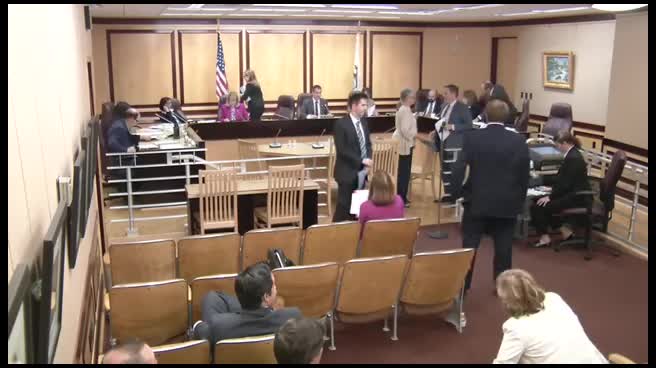
Discussed in Hearing
 16MIN
Senate Standing Committee on Environmental Quality
Bill Author