SB 1216: Trade Corridors Improvement Fund: federal funds.
- Session Year: 2015-2016
- House: Senate
- Latest Version Date: 2016-08-19
The Highway Safety, Traffic Reduction, Air Quality, and Port Security Bond Act of 2006 (Proposition 1B) created the Trade Corridors Improvement Fund (TCIF) and provided for allocation by the California Transportation Commission of $2 billion in bond funds for infrastructure improvements on highway and rail corridors that have a high volume of freight movement, and specified categories of projects eligible to receive these funds. Existing law continues the TCIF in existence in order to receive revenues from sources other than the bond act for these purposes.
This bill would require revenues apportioned to the state from the National Highway Freight Program established by the federal Fixing Americas Surface Transportation Act to be allocated for trade corridor improvement projects approved pursuant to these provisions.
Existing law requires the commission, in determining projects eligible for funding, to consult various state freight and regional infrastructure and goods movement plans and the statewide port master plan.
This bill would delete consideration of the State Air Resources Boards Sustainable Freight Strategy and the statewide port master plan and would instead include consideration of the applicable port master plan and, for the nonfederal funds, the California Sustainable Freight Action Plan when determining eligible projects for funding. The bill would also expand eligible projects to include rail landside access improvements, landside freight access improvements to airports, and certain capital and operational improvements. The bill would authorize the commission to revise the guidelines adopted in 2007 for the TCIF and would require the commission to allocate funds to projects pursuant to the guidelines, but would require the commission to allocate the above-referenced federal funds consistent with the original guidelines adopted in 2007, as specified.
The Personal Income Tax Law and the Corporation Tax Law allow various credits against the taxes imposed by those laws, including hiring credits within the specified economic development areas. Existing law requires any bill authorizing a new personal income tax or corporation tax credit to contain, among other things, specific goals, purposes, and objectives that the tax credit will achieve, detailed performance indicators, and data collection requirements, as provided.
This bill, under both laws for taxable years beginning on or after January 1, 2017, and before January 1, 2022, would allow a credit against the net tax or tax in an amount equal to 23.5% of qualified wages paid by a qualified taxpayer, as defined, to qualified full-time employees, as defined, which are persons between 18 and 25 years of age who complete a work readiness program, and meet other specified requirements, not to exceed $15,000 per qualified taxpayer per taxable year, as provided. The bill would also include that additional information required for any bill authorizing a new income tax credit.
This bill would take effect immediately as a tax levy.
The Personal Income Tax Law and the Corporation Tax Law allow various credits against the taxes imposed by those laws, including hiring credits within the specified economic development areas. Existing law requires any bill authorizing a new personal income tax or corporation tax credit to contain, among other things, specific goals, purposes, and objectives that the tax credit will achieve, detailed performance indicators, and data collection requirements, as provided.
This bill, under both laws for taxable years beginning on or after January 1, 2017, and before January 1, 2022, would allow a credit against the net tax or tax in an amount equal to 23.5% of qualified wages paid by a qualified taxpayer, as defined, to qualified full-time employees, as defined, which are persons between 18 and 25 years of age who complete a work readiness program, and meet other specified requirements, not to exceed $15,000 per qualified taxpayer per taxable year, as provided. The bill would also include that additional information required for any bill authorizing a new income tax credit.
This bill would take effect immediately as a tax levy.
The Personal Income Tax Law and the Corporation Tax Law allow various credits against the taxes imposed by those laws, including hiring credits within the specified economic development areas. Existing law requires any bill authorizing a new personal income tax or corporation tax credit to contain, among other things, specific goals, purposes, and objectives that the tax credit will achieve, detailed performance indicators, and data collection requirements, as provided.
This bill would, bill, under both laws for taxable years beginning on or after January 1, 2017, and before January 1, 2022, would allow a credit against the net tax or tax in an amount equal to 20% 23.5% of qualified wages paid by a qualified taxpayer, as defined, to qualified full-time employees, as defined, which includes are persons between 18 and 25 years of age who complete a work readiness program, and meet other specified requirements, not to exceed $15,000 per qualified taxpayer per taxable year year, as provided. The bill would also include that additional information required for any bill authorizing a new income tax credit.
This bill would take effect immediately as a tax levy.
The Personal Income Tax Law and the Corporation Tax Law allow various credits against the taxes imposed by those laws, including hiring credits within the specified economic development areas.
This bill would, under both laws for taxable years beginning on or after January 1, 2016, 2017, and before January 1, 2021, 2022, allow a credit against tax in an amount equal to 20% of qualified wages paid by a qualified taxpayer, as defined, to qualified employees, which includes persons between 18 and 25 years of age who complete a work readiness program, not to exceed $15,000 per qualified taxpayer per taxable year.
This bill would take effect immediately as a tax levy.
The Personal Income Tax Law and the Corporation Tax Law allow various credits against the taxes imposed by those laws, including hiring credits within the specified economic development areas.
This bill would, under both laws for taxable years beginning on or after January 1, 2016, and before January 1, 2021, allow a credit against tax in an amount equal to 20% of qualified wages paid by a qualified taxpayer, as defined, to qualified employees, which includes persons between 18 and 25 years of age who complete a work readiness program, not to exceed $15,000 per qualified taxpayer per taxable year.
This bill would take effect immediately as a tax levy.
(a) (1) The Trade Corridors Improvement Fund, Fund (TCIF), created pursuant to subdivision (c) of Section 8879.23 of the Government Code, is hereby continued in existence to receive revenues from state sources other than the Highway Safety, Traffic Reduction, Air Quality, and Port Security Bond Act of 2006. This chapter shall govern expenditure of those other revenues.
(2)Revenues apportioned to the state under Section 167 of Title 23 of the United States Code from the National Highway Freight Program, pursuant to the federal Fixing Americas Surface Transportation Act (FAST Act; Public Law 114-94) shall be allocated for projects approved pursuant to this chapter.
(b)This chapter shall govern expenditure of those state and federal revenues described in subdivision (a).
(b)
(c)The moneys funding described in the fund from those other sources subdivision (a) shall be available upon appropriation for allocation by the California Transportation Commission for infrastructure improvements in this state on federally designated Trade Corridors of National and Regional Significance, on the Primary Freight Network, and along other corridors that have a high volume of freight movement, as determined by the commission. In determining the projects eligible for funding, funding pursuant to paragraphs (1) and (2) of subdivision (a), the commission shall consult the Transportation Agencys state freight plan as described in Section 13978.8 of the Government Code, the State Air Resources Boards Sustainable Freight Strategy adopted by Resolution 14-2, and the trade infrastructure and goods movement plan submitted to the commission by the Secretary of Transportation and the Secretary for Environmental Protection. The commission shall also consult trade infrastructure and goods movement plans adopted by regional transportation planning agencies, adopted regional transportation plans required by state and federal law, and the statewide applicable port master plan prepared by plan. In determining the California Marine and Intermodal Transportation System Advisory Council (Cal-MITSAC) projects eligible for funding pursuant to Section 1730 paragraph (1) of subdivision (a), the Harbors and Navigation Code, when determining eligible projects for funding. commission shall also consult the California Sustainable Freight Action Plan. Eligible projects for these funds the funding described in subdivision (a) include, but are not limited to, all of the following:
(1)Highway capacity improvements, rail landside access improvements, landside freight access improvements to airports, and operational improvements to more efficiently accommodate the movement of freight, particularly for ingress and egress to and from the states land ports of entry entry, rail terminals, and seaports, including navigable inland waterways used to transport freight between seaports, land ports of entry, and airports, and to relieve traffic congestion along major trade or goods movement corridors.
(2)Freight rail system improvements to enhance the ability to move goods from seaports, land ports of entry, and airports to warehousing and distribution centers throughout California, including projects that separate rail lines from highway or local road traffic, improve freight rail mobility through mountainous regions, relocate rail switching yards, and other projects that improve the efficiency and capacity of the rail freight system.
(3)Projects to enhance the capacity and efficiency of ports.
(4)Truck corridor and capital and operational improvements, including dedicated truck facilities or truck toll facilities.
(5)Border access capital and operational improvements that enhance goods movement between California and Mexico and that maximize the states ability to access coordinated border infrastructure funds made available to the state by federal law.
(6)Surface transportation and connector road improvements to effectively facilitate the movement of goods, particularly for ingress and egress to and from the states land ports of entry, airports, and seaports, to relieve traffic congestion along major trade or goods movement corridors.
(c)
(d)(1) The Except as provided in paragraph (2), the commission shall allocate funds the funding described in subdivision (a) for trade infrastructure improvements from the fund consistent with Section 8879.52 of the Government Code and the Trade Corridors Improvement Fund (TCIF) TCIF Guidelines adopted by the commission on November 27, 2007, or as amended by the commission, and in a manner that (A) addresses the states most urgent needs, (B) balances the demands of various land ports of entry, seaports, and airports, (C) provides reasonable geographic balance between the states regions, and (D) places emphasis on projects that improve trade corridor mobility and safety while reducing emissions of diesel particulate and other pollutant emissions. emissions, and reducing other negative community impacts, and (E) makes a significant contribution to the states economy.
(2)The commission shall allocate the federal freight funding, specifically, consistent with the original TCIF Guidelines, as adopted by the commission on November 27, 2007, and in the manner described in subparagraphs (A) to (E), inclusive, of paragraph (1). In allocating funding pursuant to the original TCIF Guidelines, the commission shall appropriately revise the dates in those guidelines.
(2)
(3)In addition, the commission shall also consider the following factors when allocating these funds:
(A)Velocity, which means the speed by which large cargo would travel from the land port of entry or seaport through the distribution system.
(B)Throughput, which means the volume of cargo that would move from the land port of entry or seaport through the distribution system.
(C)Reliability, which means a reasonably consistent and predictable amount of time for cargo to travel from one point to another on any given day or at any given time in California.
(D)Congestion reduction, which means the reduction in recurrent daily hours of delay to be achieved.
SEC. 2.Section 2192.2 of the Streets and Highways Code is amended to read:2192.2.The commission shall allocate funds made available by this chapter to projects that have identified and committed supplemental funding from appropriate local, federal, or private sources. The commission shall determine the appropriate amount of supplemental funding each project should have to be eligible for moneys from the fund based on a project-by-project review and an assessment of the projects benefit to the state and the program. Except for border access Funded improvements described in paragraph (5) of subdivision (b) of Section 2192, improvements funded with moneys from the fund shall have supplemental funding that is at least equal to the amount of the contribution from the fund. under this chapter. The commission may give priority for funding to projects with higher levels of committed supplemental funding.
SECTION 1.Section 17053.75 is added to the Revenue and Taxation Code, to read:17053.75.(a)(1)For each taxable year beginning on or after January 1, 2017, and before January 1, 2022, there shall be allowed to a qualified taxpayer that hires a qualified full-time employee and pays or incurs qualified wages attributable to work performed by the qualified full-time employee, and that receives a tentative credit reservation for that qualified full-time employee, a credit against the net tax, as defined in Section 17039, in an amount calculated under this section.
(2)The amount of the credit allowable under this section for a taxable year shall be equal to 23.5 percent of all qualified wages paid or incurred to the qualified full-time employee, not to exceed fifteen thousand dollars ($15,000) per qualified taxpayer per taxable year.
(3)The credit allowed by this section may be claimed only on a timely filed original return of the qualified taxpayer and only with respect to a qualified full-time employee for whom the qualified taxpayer has received a tentative credit reservation.
(4)If the qualified taxpayer is allowed a credit pursuant to this section for qualified wages paid or incurred, another credit shall not be allowed to the qualified taxpayer under this part with respect to any wage consisting in whole or in part of those qualified wages.
(b)For purposes of this section:
(1)Acquire includes any gift, inheritance, transfer incident to divorce, or any other transfer, whether or not for consideration.
(2)Job training provider means an entity that delivers a combined job readiness and life-skills training program that, at a minimum, includes high school or continuing education courses or services to connect individuals to high school or continuing education courses. The entitys program may also offer additional services like job placement, career and mental health counseling, prisoner reentry services, and relapse prevention and sober-living support.
(3)Minimum wage means the wage established pursuant to Chapter 1 (commencing with Section 1171) of Part 4 of Division 2 of the Labor Code.
(4)(A)Qualified full-time employee means an individual who meets all of the following requirements:
(i)Receives starting wages that are at least 150 percent of the minimum wage.
(ii)Is hired by the qualified taxpayer on or after January 1, 2017.
(iii)Satisfies either of the following conditions:
(I)Is paid qualified wages by the qualified taxpayer for services not less than an average of 35 hours per week.
(II)Is a salaried employee and was paid compensation during the taxable year for full-time employment, within the meaning of Section 515 of the Labor Code, by the qualified taxpayer.
(iv)Is an ex-offender previously convicted of a felony who is, at the time of hiring, between 18 and 25 years of age and who demonstrates documented completion of a work readiness program.
(v)Performs at least 50 percent of his or her services for the qualified taxpayer during the taxable year in the state.
(B)An individual may be considered a qualified full-time employee only for the period of time commencing with the date the individual is first employed by the qualified taxpayer and ending 60 months thereafter.
(5)(A)Qualified taxpayer means a person or entity engaged in a trade or business within the state that, during the taxable year, pays or incurs qualified wages.
(B)In the case of any pass-thru entity, the determination of whether a taxpayer is a qualified taxpayer under this section shall be made at the entity level and any credit under this section or Section 23675 shall be allowed to the pass-thru entity and passed through to the partners and shareholders in accordance with applicable provisions of this part or Part 11 (commencing with Section 23001). For purposes of this subdivision, the term pass-thru entity means any partnership or S corporation.
(C)Qualified taxpayers shall not include any of the following:
(i)Employers that provide temporary help services, as described in Code 561320 of the North American Industry Classification System (NAICS) published by the United States Office of Management and Budget, 2012 edition.
(ii)Employers that provide retail trade services, as described in Sector 44-45 of the North American Industry Classification System (NAICS) published by the United States Office of Management and Budget, 2012 edition.
(iii)Employers that are primarily engaged in providing food services, as described in Code 711110, 722511, 722513, 722514, or 722515 of the North American Industry Classification System (NAICS) published by the United States Office of Management and Budget, 2012 edition.
(iv)Employers that are primarily engaged in services as described in Code 713210, 721120, or 722410 of the North American Industry Classification System (NAICS) published by the United States Office of Management and Budget, 2012 edition.
(v)(I)An employer that is a sexually oriented business.
(II)For purposes of this clause:
(ia)Sexually oriented business means a nightclub, bar, restaurant, or similar commercial enterprise that provides for an audience of two or more individuals live nude entertainment or live nude performances where the nudity is a function of everyday business operations and where nudity is a planned and intentional part of the entertainment or performance.
(ib)Nude means clothed in a manner that leaves uncovered or visible, through less than fully opaque clothing, any portion of the genitals or, in the case of a female, any portion of the breasts below the top of the areola of the breasts.
(6)Qualified wages means those wages that meet all of the following requirements:
(A)(i)That portion of wages paid or incurred by the qualified taxpayer during the taxable year to each qualified full-time employee that exceeds 150 percent of minimum wage, but does not exceed 350 percent of minimum wage.
(ii)(I)In the case of a qualified full-time employee who provides services only in a designated pilot area, that portion of wages paid or incurred by the qualified taxpayer during the taxable year to each qualified full-time employee that exceeds ten dollars ($10) per hour or an equivalent amount for salaried employees, but does not exceed 350 percent of minimum wage. For qualified full-time employees described in the preceding sentence, clause (i) of subparagraph (A) of paragraph (4) is modified by substituting ten dollars ($10) per hour or an equivalent amount for salaried employees for 150 percent of the minimum wage.
(II)For purposes of this clause, designated pilot area means an area designated as a designated pilot area by the Governors Office of Business and Economic Development, pursuant to Sections 17053.73 and 23626.
(B)Wages paid or incurred during the 60-month period beginning with the first day the qualified full-time employee commences employment with the qualified taxpayer. In the case of any employee who is reemployed, including a regularly occurring seasonal increase, in the trade or business operations of the qualified taxpayer, this reemployment shall not be treated as constituting commencement of employment for purposes of this section.
(7)Seasonal employment means employment by a qualified taxpayer that has regular and predictable substantial reductions in trade or business operations.
(8)Work readiness program means a program offered by a job training provider that provides vocational job training, educational opportunities, and life skills. A work readiness program shall focus on skills acquisition and educational advancement and shall foster behavioral changes that promote personal responsibility and positive contributions to society. A work readiness program shall include all of the following:
(A)Paid or unpaid on-the-job training opportunities, preapprenticeship programs, vocational instruction, or internship placement.
(B)The opportunity for academic advancement.
(C)The opportunity to earn at least one industry recognized certification.
(D)A life-skills training component.
(c)All employees of the trades or businesses that are treated as related under Section 267, 318, or 707 of the Internal Revenue Code shall be treated as employed by a single taxpayer.
(d)(1)To be eligible for the credit allowed by this section, a qualified taxpayer shall, upon hiring a qualified full-time employee, request a tentative credit reservation from the Franchise Tax Board within 30 days of complying with the Employment Development Departments new hire reporting requirements as provided in Section 1088.5 of the Unemployment Insurance Code, in the form and manner prescribed by the Franchise Tax Board.
(2)To obtain a tentative credit reservation with respect to a qualified full-time employee, the qualified taxpayer shall provide necessary information, as determined by the Franchise Tax Board, including the name, social security number, the start date of employment, and the rate of pay of the qualified full-time employee.
(3)The qualified taxpayer shall provide the Franchise Tax Board an annual certification of employment with respect to each qualified full-time employee hired in a previous taxable year, on or before, the 15th day of the third month of the taxable year. The certification shall include necessary information, as determined by the Franchise Tax Board, including the name, social security number, start date of employment, and rate of pay for each qualified full-time employee employed by the qualified taxpayer.
(4)A tentative credit reservation provided to a taxpayer with respect to an employee of that taxpayer shall not constitute a determination by the Franchise Tax Board with respect to any of the requirements of this section regarding a taxpayers eligibility for the credit authorized by this section.
(e)The Franchise Tax Board shall do all of the following:
(1)Approve a tentative credit reservation with respect to a qualified full-time employee hired during a calendar year.
(2)Determine the aggregate tentative reservation amount.
(3)Notwithstanding Section 19542, provide as a searchable database on its Internet Web site, for each taxable year beginning on or after January 1, 2017, and before January 1, 2022, the employer names, amounts of tax credit claimed, and number of new jobs created for each taxable year pursuant to this section and Section 23675.
(f)For purposes of this section:
(1)All employees of trades or businesses that are not incorporated, and that are under common control, shall be treated as employed by a single taxpayer.
(2)The credit, if any, allowable by this section with respect to each trade or business shall be determined by reference to its proportionate share of the expense of the qualified wages giving rise to the credit and shall be allocated to that trade or business in that manner.
(3)Principles that apply in the case of controlled groups of corporations, as specified in subdivision (f) of Section 23675, shall apply with respect to determining employment.
(4)If an employer acquires the major portion of a trade or business of another employer, hereinafter in this paragraph referred to as the predecessor, or the major portion of a separate unit of a trade or business of a predecessor, then, for purposes of applying this section, other than subdivision (g), for any taxable year ending after that acquisition, the employment relationship between a qualified full-time employee and an employer shall not be treated as terminated if the employee continues to be employed in that trade or business.
(g)(1)If the employment of any qualified full-time employee, with respect to whom qualified wages are taken into account under subdivision (a), is terminated by the qualified taxpayer at any time during the first 36 months after commencing employment with the qualified taxpayer, whether or not consecutive, the tax imposed by this part for the taxable year in which that employment is terminated shall be increased by an amount equal to the credit allowed under subdivision (a) for that taxable year and all prior taxable years attributable to qualified wages paid or incurred with respect to that employee.
(2)Paragraph (1) does not apply to any of the following:
(A)A termination of employment of a qualified full-time employee who voluntarily leaves the employment of the qualified taxpayer.
(B)A termination of employment of a qualified full-time employee who, before the close of the period referred to in paragraph (1), becomes disabled and unable to perform the services of that employment, unless that disability is removed before the close of that period and the qualified taxpayer fails to offer reemployment to that employee.
(C)A termination of employment of a qualified full-time employee if it is determined that the termination was due to the misconduct, as defined in Sections 1256-30 to 1256-43, inclusive, of Title 22 of the California Code of Regulations, of that employee.
(D)A termination of employment of a qualified full-time employee due to a substantial reduction in the trade or business operations of the qualified taxpayer, including reductions due to seasonal employment.
(E)A termination of employment of a qualified full-time employee if that employee is replaced by other qualified full-time employees so as to create a net increase in both the number of employees and the hours of employment.
(F)A termination of employment of a qualified full-time employee when that employment is considered seasonal employment and the qualified employee is rehired on a seasonal basis.
(3)For purposes of paragraph (1), the employment relationship between the qualified taxpayer and a qualified full-time employee shall not be treated as terminated by reason of a mere change in the form of conducting the trade or business of the qualified taxpayer if the qualified full-time employee continues to be employed in that trade or business and the qualified taxpayer retains a substantial interest in that trade or business.
(4)An increase in tax under paragraph (1) shall not be treated as tax imposed by this part for purposes of determining the amount of any credit allowable under this part.
(h)In the case of an estate or trust, both of the following apply:
(1)The qualified wages for a taxable year shall be apportioned between the estate or trust and the beneficiaries on the basis of the income of the estate or trust allocable to each.
(2)A beneficiary to whom any qualified wages have been apportioned under paragraph (1) shall be treated, for purposes of this part, as the employer with respect to those wages.
(i)In the case in which the credit allowed by this section exceeds the net tax, the excess may be carried over to reduce the net tax in the following year, and the succeeding four years if necessary, until the credit is exhausted.
(j)The Franchise Tax Board may prescribe rules, guidelines, or procedures necessary or appropriate to carry out the purposes of this section, including any guidelines regarding the allocation of the credit allowed under this section. Chapter 3.5 (commencing with Section 11340) of Part 1 of Division 3 of Title 2 of the Government Code shall not apply to any rule, guideline, or procedure prescribed by the Franchise Tax Board pursuant to this section.
(k)The Franchise Tax Board shall annually provide to the Joint Legislative Budget Committee, in compliance with Section 9795 of the Government Code, by no later than March 1, a report of the total dollar amount of the credits claimed under this section with respect to the relevant fiscal year. The report shall compare the total dollar amount of credits claimed under this section with respect to that fiscal year with the departments estimate with respect to that same fiscal year. If the total dollar amount of credits claimed for the fiscal year is less than the estimate for that fiscal year, the report shall identify options for increasing annual claims of the credit so as to meet estimated amounts.
(l)No deduction shall be allowed under this part for wages paid or incurred in a taxable year to the extent that those wages are qualified wages with respect to calculating a credit under this section for that taxable year.
(m)This section shall remain in effect only until December 1, 2022, and as of that date is repealed.
SEC. 2.Section 23675 is added to the Revenue and Taxation Code, to read:23675.(a)(1)For each taxable year beginning on or after January 1, 2017, and before January 1, 2022, there shall be allowed to a qualified taxpayer that hires a qualified full-time employee and pays or incurs qualified wages attributable to work performed by the qualified full-time employee, and that receives a tentative credit reservation for that qualified full-time employee, a credit against the tax, as defined in Section 23036, in an amount calculated under this section.
(2)The amount of the credit allowable under this section for a taxable year shall be equal to 23.5 percent of all qualified wages paid or incurred to the qualified full-time employee, not to exceed fifteen thousand dollars ($15,000) per qualified taxpayer per taxable year.
(3)The credit allowed by this section may be claimed only on a timely filed original return of the qualified taxpayer and only with respect to a qualified full-time employee for whom the qualified taxpayer has received a tentative credit reservation.
(4)If the qualified taxpayer is allowed a credit pursuant to this section for qualified wages paid or incurred, another credit shall not be allowed to the qualified taxpayer under this part with respect to any wage consisting in whole or in part of those qualified wages.
(b)For purposes of this section:
(1)Acquire includes any gift, inheritance, transfer incident to divorce, or any other transfer, whether or not for consideration.
(2)Job training provider means an entity that delivers a combined job readiness and life-skills training program that, at a minimum, includes high school or continuing education courses or services to connect individuals to high school or continuing education courses. The entitys program may also offer additional services like job placement, career and mental health counseling, prisoner reentry services, and relapse prevention and sober-living support.
(3)Minimum wage means the wage established pursuant to Chapter 1 (commencing with Section 1171) of Part 4 of Division 2 of the Labor Code.
(4)(A)Qualified full-time employee means an individual who meets all of the following requirements:
(i)Receives starting wages that are at least 150 percent of the minimum wage.
(ii)Is hired by the qualified taxpayer on or after January 1, 2017.
(iii)Satisfies either of the following conditions:
(I)Is paid qualified wages by the qualified taxpayer for services not less than an average of 35 hours per week.
(II)Is a salaried employee and was paid compensation during the taxable year for full-time employment, within the meaning of Section 515 of the Labor Code, by the qualified taxpayer.
(iv)Is an ex-offender previously convicted of a felony who is, at the time of hiring, between 18 and 25 years of age and who demonstrates documented completion of a work readiness program.
(v)Performs at least 50 percent of his or her services for the qualified taxpayer during the taxable year in the state.
(B)An individual may be considered a qualified full-time employee only for the period of time commencing with the date the individual is first employed by the qualified taxpayer and ending 60 months thereafter.
(5)(A)Qualified taxpayer means a corporation engaged in a trade or business within the state that, during the taxable year, pays or incurs qualified wages.
(B)In the case of any pass-thru entity, the determination of whether a taxpayer is a qualified taxpayer under this section shall be made at the entity level and any credit under this section or Section 17053.75 shall be allowed to the pass-thru entity and passed through to the partners and shareholders in accordance with applicable provisions of this part or Part 10 (commencing with Section 17001). For purposes of this subdivision, the term pass-thru entity means any partnership.
(C)Qualified taxpayers shall not include any of the following:
(i)Employers that provide temporary help services, as described in Code 561320 of the North American Industry Classification System (NAICS) published by the United States Office of Management and Budget, 2012 edition.
(ii)Employers that provide retail trade services, as described in Sector 44-45 of the North American Industry Classification System (NAICS) published by the United States Office of Management and Budget, 2012 edition.
(iii)Employers that are primarily engaged in providing food services, as described in Code 711110, 722511, 722513, 722514, or 722515 of the North American Industry Classification System (NAICS) published by the United States Office of Management and Budget, 2012 edition.
(iv)Employers that are primarily engaged in services as described in Code 713210, 721120, or 722410 of the North American Industry Classification System (NAICS) published by the United States Office of Management and Budget, 2012 edition.
(v)(I)An employer that is a sexually oriented business.
(II)For purposes of this clause:
(ia)Sexually oriented business means a nightclub, bar, restaurant, or similar commercial enterprise that provides for an audience of two or more individuals live nude entertainment or live nude performances where the nudity is a function of everyday business operations and where nudity is a planned and intentional part of the entertainment or performance.
(ib)Nude means clothed in a manner that leaves uncovered or visible, through less than fully opaque clothing, any portion of the genitals or, in the case of a female, any portion of the breasts below the top of the areola of the breasts.
(6)Qualified wages means those wages that meet all of the following requirements:
(A)(i)That portion of wages paid or incurred by the qualified taxpayer during the taxable year to each qualified full-time employee that exceeds 150 percent of minimum wage, but does not exceed 350 percent of minimum wage.
(ii)(I)In the case of a qualified full-time employee who provides services only in a designated pilot area, that portion of wages paid or incurred by the qualified taxpayer during the taxable year to each qualified full-time employee that exceeds ten dollars ($10) per hour or an equivalent amount for salaried employees, but does not exceed 350 percent of minimum wage. For qualified full-time employees described in the preceding sentence, clause (i) of subparagraph (A) of paragraph (4) is modified by substituting ten dollars ($10) per hour or an equivalent amount for salaried employees for 150 percent of the minimum wage.
(II)For purposes of this clause, designated pilot area means an area designated as a designated pilot area by the Governors Office of Business and Economic Development, pursuant to Sections 17053.73 and 23626.
(B)Wages paid or incurred during the 60-month period beginning with the first day the qualified full-time employee commences employment with the qualified taxpayer. In the case of any employee who is reemployed, including a regularly occurring seasonal increase, in the trade or business operations of the qualified taxpayer, this reemployment shall not be treated as constituting commencement of employment for purposes of this section.
(7)Seasonal employment means employment by a qualified taxpayer that has regular and predictable substantial reductions in trade or business operations.
(8)Work readiness program means a program offered by a job training provider that provides vocational job training, educational opportunities, and life skills. A work readiness program shall focus on skills acquisition and educational advancement and shall foster behavioral changes that promote personal responsibility and positive contributions to society. A work readiness program shall include all of the following:
(A)Paid or unpaid on-the-job training opportunities, preapprenticeship programs, vocational instruction, or internship placement.
(B)The opportunity for academic advancement.
(C)The opportunity to earn at least one industry recognized certification.
(D)A life-skills training component.
(c)All employees of the trades or businesses that are treated as related under Section 267, 318, or 707 of the Internal Revenue Code shall be treated as employed by a single taxpayer.
(d)(1)To be eligible for the credit allowed by this section, a qualified taxpayer shall, upon hiring a qualified full-time employee, request a tentative credit reservation from the Franchise Tax Board within 30 days of complying with the Employment Development Departments new hire reporting requirements as provided in Section 1088.5 of the Unemployment Insurance Code, in the form and manner prescribed by the Franchise Tax Board.
(2)To obtain a tentative credit reservation with respect to a qualified full-time employee, the qualified taxpayer shall provide necessary information, as determined by the Franchise Tax Board, including the name, social security number, the start date of employment, and the rate of pay of the qualified full-time employee.
(3)The qualified taxpayer shall provide the Franchise Tax Board an annual certification of employment with respect to each qualified full-time employee hired in a previous taxable year, on or before, the 15th day of the third month of the taxable year. The certification shall include necessary information, as determined by the Franchise Tax Board, including the name, social security number, start date of employment, and rate of pay for each qualified full-time employee employed by the qualified taxpayer.
(4)A tentative credit reservation provided to a taxpayer with respect to an employee of that taxpayer shall not constitute a determination by the Franchise Tax Board with respect to any of the requirements of this section regarding a taxpayers eligibility for the credit authorized by this section.
(e)The Franchise Tax Board shall do all of the following:
(1)Approve a tentative credit reservation with respect to a qualified full-time employee hired during a calendar year.
(2)Determine the aggregate tentative reservation amount.
(3)Notwithstanding Section 19542, provide as a searchable database on its Internet Web site, for each taxable year beginning on or after January 1, 2017, and before January 1, 2022, the employer names, amounts of tax credit claimed, and number of new jobs created for each taxable year pursuant to this section and Section 17053.75.
(f)(1)For purposes of this section:
(A)All employees of corporations that are members of the same controlled group of corporations shall be treated as employed by a single taxpayer.
(B)The credit, if any, allowable by this section to each member shall be determined by reference to its proportionate share of the expense of the qualified wages giving rise to the credit and shall be allocated in that manner.
(C)If a qualified taxpayer acquires the major portion of a trade or business of another taxpayer, hereinafter in this paragraph referred to as the predecessor, or the major portion of a separate unit of a trade or business of a predecessor, then, for purposes of applying this section, for any taxable year ending after that acquisition, the employment relationship between a qualified full-time employee and an qualified taxpayer shall not be treated as terminated if the employee continues to be employed in that trade or business.
(2)For purposes of this subdivision, controlled group of corporations means a controlled group of corporations as defined in Section 1563(a) of the Internal Revenue Code, except that:
(A)More than 50 percent shall be substituted for at least 80 percent each place it appears in Section 1563(a)(1) of the Internal Revenue Code.
(B)The determination shall be made without regard to subsections (a)(4) and (e)(3)(C) of Section 1563 of the Internal Revenue Code.
(3)Rules similar to the rules provided in Sections 46(e) and 46(h) of the Internal Revenue Code, as in effect on November 4, 1990, shall apply to both of the following:
(A)An organization to which Section 593 of the Internal Revenue Code applies.
(B)A regulated investment company or a real estate investment trust subject to taxation under this part.
(g)(1)If the employment of any qualified full-time employee, with respect to whom qualified wages are taken into account under subdivision (a), is terminated by the qualified taxpayer at any time during the first 36 months after commencing employment with the qualified taxpayer, whether or not consecutive, the tax imposed by this part for the taxable year in which that employment is terminated shall be increased by an amount equal to the credit allowed under subdivision (a) for that taxable year and all prior taxable years attributable to qualified wages paid or incurred with respect to that employee.
(2)Paragraph (1) does not apply to any of the following:
(A)A termination of employment of a qualified full-time employee who voluntarily leaves the employment of the qualified taxpayer.
(B)A termination of employment of a qualified full-time employee who, before the close of the period referred to in paragraph (1), becomes disabled and unable to perform the services of that employment, unless that disability is removed before the close of that period and the qualified taxpayer fails to offer reemployment to that employee.
(C)A termination of employment of a qualified full-time employee if it is determined that the termination was due to the misconduct, as defined in Sections 1256-30 to 1256-43, inclusive, of Title 22 of the California Code of Regulations, of that employee.
(D)A termination of employment of a qualified full-time employee due to a substantial reduction in the trade or business operations of the qualified taxpayer, including reductions due to seasonal employment.
(E)A termination of employment of a qualified full-time employee if that employee is replaced by other qualified full-time employees so as to create a net increase in both the number of employees and the hours of employment.
(F)A termination of employment of a qualified full-time employee when that employment is considered seasonal employment and the qualified employee is rehired on a seasonal basis.
(3)For purposes of paragraph (1), the employment relationship between the qualified taxpayer and a qualified full-time employee shall not be treated as terminated by reason of a mere change in the form of conducting the trade or business of the qualified taxpayer if the qualified full-time employee continues to be employed in that trade or business and the qualified taxpayer retains a substantial interest in that trade or business.
(4)An increase in tax under paragraph (1) shall not be treated as tax imposed by this part for purposes of determining the amount of any credit allowable under this part.
(h)In the case in which the credit allowed by this section exceeds the tax, the excess may be carried over to reduce the tax in the following year, and the succeeding four years if necessary, until the credit is exhausted.
(i)The Franchise Tax Board may prescribe rules, guidelines, or procedures necessary or appropriate to carry out the purposes of this section, including any guidelines regarding the allocation of the credit allowed under this section. Chapter 3.5 (commencing with Section 11340) of Part 1 of Division 3 of Title 2 of the Government Code shall not apply to any rule, guideline, or procedure prescribed by the Franchise Tax Board pursuant to this section.
(j)The Franchise Tax Board shall annually provide to the Joint Legislative Budget Committee, in compliance with Section 9795 of the Government Code, by no later than March 1, a report of the total dollar amount of the credits claimed under this section with respect to the relevant fiscal year. The report shall compare the total dollar amount of credits claimed under this section with respect to that fiscal year with the departments estimate with respect to that same fiscal year. If the total dollar amount of credits claimed for the fiscal year is less than the estimate for that fiscal year, the report shall identify options for increasing annual claims of the credit so as to meet estimated amounts.
(k)No deduction shall be allowed under this part for wages paid or incurred in a taxable year to the extent that those wages are qualified wages with respect to calculating a credit under this section for that taxable year.
(l)This section shall remain in effect only until December 1, 2022, and as of that date is repealed.
SEC. 3.For purposes of complying with Section 41 of the Revenue and Taxation Code, relating to Sections 17053.75 and 23675 of the Revenue and Taxation Code, the Legislature finds and declares as follows:
(a)Specific goals, purposes, and objectives: Provide an economic incentive for qualified employers to hire qualified employees, which includes persons between 18 and 25 years of age who have felony convictions and have completed a work readiness program, in an effort to help them overcome barriers to employment and promote their successful transition back into society.
(b)Performance indicators: The Franchise Tax Board shall annually report to the Joint Legislative Budget Committee the total dollar amount of the credits claimed under Sections 17053.75 and 23675 of the Revenue and Taxation Code with respect to the relevant fiscal year, as well as the growth or decline of credits claimed under these sections each successive fiscal year from January 1, 2017, to January 1, 2022, so that the Legislature can monitor the overall progress of the economic incentive. The report shall be submitted in compliance with Section 9795 of the Government Code.
SEC. 4.This act provides for a tax levy within the meaning of Article IV of the California Constitution and shall go into immediate effect.
(a)(1)For each taxable year beginning on or after January 1, 2017, and before January 1, 2022, there shall be allowed to a qualified taxpayer that hires a qualified full-time employee and pays or incurs qualified wages attributable to work performed by the qualified full-time employee, and that receives a tentative credit reservation for that qualified full-time employee, a credit against the net tax, as defined in Section 17039, in an amount calculated under this section.
(2)The amount of the credit allowable under this section for a taxable year shall be equal to 23.5 percent of all qualified wages paid or incurred to the qualified full-time employee, not to exceed fifteen thousand dollars ($15,000) per qualified taxpayer per taxable year.
(3)The credit allowed by this section may be claimed only on a timely filed original return of the qualified taxpayer and only with respect to a qualified full-time employee for whom the qualified taxpayer has received a tentative credit reservation.
(4)If the qualified taxpayer is allowed a credit pursuant to this section for qualified wages paid or incurred, another credit shall not be allowed to the qualified taxpayer under this part with respect to any wage consisting in whole or in part of those qualified wages.
(b)For purposes of this section:
(1)Acquire includes any gift, inheritance, transfer incident to divorce, or any other transfer, whether or not for consideration.
(2)Job training provider means an entity that delivers a combined job readiness and life-skills training program that, at a minimum, includes high school or continuing education courses or services to connect individuals to high school or continuing education courses. The entitys program may also offer additional services like job placement, career and mental health counseling, prisoner reentry services, and relapse prevention and sober-living support.
(3)Minimum wage means the wage established pursuant to Chapter 1 (commencing with Section 1171) of Part 4 of Division 2 of the Labor Code.
(4)(A)Qualified full-time employee means an individual who meets all of the following requirements:
(i)Receives starting wages that are at least 150 percent of the minimum wage.
(ii)Is hired by the qualified taxpayer on or after January 1, 2017.
(iii)Satisfies either of the following conditions:
(I)Is paid qualified wages by the qualified taxpayer for services not less than an average of 35 hours per week.
(II)Is a salaried employee and was paid compensation during the taxable year for full-time employment, within the meaning of Section 515 of the Labor Code, by the qualified taxpayer.
(iv)Is an ex-offender previously convicted of a felony who is, at the time of hiring, between 18 and 25 years of age and who demonstrates documented completion of a work readiness program.
(v)Performs at least 50 percent of his or her services for the qualified taxpayer during the taxable year in the state.
(B)An individual may be considered a qualified full-time employee only for the period of time commencing with the date the individual is first employed by the qualified taxpayer and ending 60 months thereafter.
(5)(A)Qualified taxpayer means a person or entity engaged in a trade or business within the state that, during the taxable year, pays or incurs qualified wages.
(B)In the case of any pass-thru entity, the determination of whether a taxpayer is a qualified taxpayer under this section shall be made at the entity level and any credit under this section or Section 23675 shall be allowed to the pass-thru entity and passed through to the partners and shareholders in accordance with applicable provisions of this part or Part 11 (commencing with Section 23001). For purposes of this subdivision, the term pass-thru entity means any partnership or S corporation.
(C)Qualified taxpayers shall not include any of the following:
(i)Employers that provide temporary help services, as described in Code 561320 of the North American Industry Classification System (NAICS) published by the United States Office of Management and Budget, 2012 edition.
(ii)Employers that provide retail trade services, as described in Sector 44-45 of the North American Industry Classification System (NAICS) published by the United States Office of Management and Budget, 2012 edition.
(iii)Employers that are primarily engaged in providing food services, as described in Code 711110, 722511, 722513, 722514, or 722515 of the North American Industry Classification System (NAICS) published by the United States Office of Management and Budget, 2012 edition.
(iv)Employers that are primarily engaged in services as described in Code 713210, 721120, or 722410 of the North American Industry Classification System (NAICS) published by the United States Office of Management and Budget, 2012 edition.
(v)(I)An employer that is a sexually oriented business.
(II)For purposes of this clause:
(ia)Sexually oriented business means a nightclub, bar, restaurant, or similar commercial enterprise that provides for an audience of two or more individuals live nude entertainment or live nude performances where the nudity is a function of everyday business operations and where nudity is a planned and intentional part of the entertainment or performance.
(ib)Nude means clothed in a manner that leaves uncovered or visible, through less than fully opaque clothing, any portion of the genitals or, in the case of a female, any portion of the breasts below the top of the areola of the breasts.
(6)Qualified wages means those wages that meet all of the following requirements:
(A)(i)That portion of wages paid or incurred by the qualified taxpayer during the taxable year to each qualified full-time employee that exceeds 150 percent of minimum wage, but does not exceed 350 percent of minimum wage.
(ii)(I)In the case of a qualified full-time employee who provides services only in a designated pilot area, that portion of wages paid or incurred by the qualified taxpayer during the taxable year to each qualified full-time employee that exceeds ten dollars ($10) per hour or an equivalent amount for salaried employees, but does not exceed 350 percent of minimum wage. For qualified full-time employees described in the preceding sentence, clause (i) of subparagraph (A) of paragraph (4) is modified by substituting ten dollars ($10) per hour or an equivalent amount for salaried employees for 150 percent of the minimum wage.
(II)For purposes of this clause, designated pilot area means an area designated as a designated pilot area by the Governors Office of Business and Economic Development, pursuant to Sections 17053.73 and 23626.
(B)Wages paid or incurred during the 60-month period beginning with the first day the qualified full-time employee commences employment with the qualified taxpayer. In the case of any employee who is reemployed, including a regularly occurring seasonal increase, in the trade or business operations of the qualified taxpayer, this reemployment shall not be treated as constituting commencement of employment for purposes of this section.
(7)Seasonal employment means employment by a qualified taxpayer that has regular and predictable substantial reductions in trade or business operations.
(8)Work readiness program means a program offered by a job training provider that provides vocational job training, educational opportunities, and life skills. A work readiness program shall focus on skills acquisition and educational advancement and shall foster behavioral changes that promote personal responsibility and positive contributions to society. A work readiness program shall include all of the following:
(A)Paid or unpaid on-the-job training opportunities, preapprenticeship programs, vocational instruction, or internship placement.
(B)The opportunity for academic advancement.
(C)The opportunity to earn at least one industry recognized certification.
(D)A life-skills training component.
(c)All employees of the trades or businesses that are treated as related under Section 267, 318, or 707 of the Internal Revenue Code shall be treated as employed by a single taxpayer.
(d)(1)To be eligible for the credit allowed by this section, a qualified taxpayer shall, upon hiring a qualified full-time employee, request a tentative credit reservation from the Franchise Tax Board within 30 days of complying with the Employment Development Departments new hire reporting requirements as provided in Section 1088.5 of the Unemployment Insurance Code, in the form and manner prescribed by the Franchise Tax Board.
(2)To obtain a tentative credit reservation with respect to a qualified full-time employee, the qualified taxpayer shall provide necessary information, as determined by the Franchise Tax Board, including the name, social security number, the start date of employment, and the rate of pay of the qualified full-time employee.
(3)The qualified taxpayer shall provide the Franchise Tax Board an annual certification of employment with respect to each qualified full-time employee hired in a previous taxable year, on or before, the 15th day of the third month of the taxable year. The certification shall include necessary information, as determined by the Franchise Tax Board, including the name, social security number, start date of employment, and rate of pay for each qualified full-time employee employed by the qualified taxpayer.
(4)A tentative credit reservation provided to a taxpayer with respect to an employee of that taxpayer shall not constitute a determination by the Franchise Tax Board with respect to any of the requirements of this section regarding a taxpayers eligibility for the credit authorized by this section.
(e)The Franchise Tax Board shall do all of the following:
(1)Approve a tentative credit reservation with respect to a qualified full-time employee hired during a calendar year.
(2)Determine the aggregate tentative reservation amount.
(3)Notwithstanding Section 19542, provide as a searchable database on its Internet Web site, for each taxable year beginning on or after January 1, 2017, and before January 1, 2022, the employer names, amounts of tax credit claimed, and number of new jobs created for each taxable year pursuant to this section and Section 23675.
(f)For purposes of this section:
(1)All employees of trades or businesses that are not incorporated, and that are under common control, shall be treated as employed by a single taxpayer.
(2)The credit, if any, allowable by this section with respect to each trade or business shall be determined by reference to its proportionate share of the expense of the qualified wages giving rise to the credit and shall be allocated to that trade or business in that manner.
(3)Principles that apply in the case of controlled groups of corporations, as specified in subdivision (f) of Section 23675, shall apply with respect to determining employment.
(4)If an employer acquires the major portion of a trade or business of another employer, hereinafter in this paragraph referred to as the predecessor, or the major portion of a separate unit of a trade or business of a predecessor, then, for purposes of applying this section, other than subdivision (g), for any taxable year ending after that acquisition, the employment relationship between a qualified full-time employee and an employer shall not be treated as terminated if the employee continues to be employed in that trade or business.
(g)(1)If the employment of any qualified full-time employee, with respect to whom qualified wages are taken into account under subdivision (a), is terminated by the qualified taxpayer at any time during the first 36 months after commencing employment with the qualified taxpayer, whether or not consecutive, the tax imposed by this part for the taxable year in which that employment is terminated shall be increased by an amount equal to the credit allowed under subdivision (a) for that taxable year and all prior taxable years attributable to qualified wages paid or incurred with respect to that employee.
(2)Paragraph (1) does not apply to any of the following:
(A)A termination of employment of a qualified full-time employee who voluntarily leaves the employment of the qualified taxpayer.
(B)A termination of employment of a qualified full-time employee who, before the close of the period referred to in paragraph (1), becomes disabled and unable to perform the services of that employment, unless that disability is removed before the close of that period and the qualified taxpayer fails to offer reemployment to that employee.
(C)A termination of employment of a qualified full-time employee if it is determined that the termination was due to the misconduct, as defined in Sections 1256-30 to 1256-43, inclusive, of Title 22 of the California Code of Regulations, of that employee.
(D)A termination of employment of a qualified full-time employee due to a substantial reduction in the trade or business operations of the qualified taxpayer, including reductions due to seasonal employment.
(E)A termination of employment of a qualified full-time employee if that employee is replaced by other qualified full-time employees so as to create a net increase in both the number of employees and the hours of employment.
(F)A termination of employment of a qualified full-time employee when that employment is considered seasonal employment and the qualified employee is rehired on a seasonal basis.
(3)For purposes of paragraph (1), the employment relationship between the qualified taxpayer and a qualified full-time employee shall not be treated as terminated by reason of a mere change in the form of conducting the trade or business of the qualified taxpayer if the qualified full-time employee continues to be employed in that trade or business and the qualified taxpayer retains a substantial interest in that trade or business.
(4)An increase in tax under paragraph (1) shall not be treated as tax imposed by this part for purposes of determining the amount of any credit allowable under this part.
(h)In the case of an estate or trust, both of the following apply:
(1)The qualified wages for a taxable year shall be apportioned between the estate or trust and the beneficiaries on the basis of the income of the estate or trust allocable to each.
(2)A beneficiary to whom any qualified wages have been apportioned under paragraph (1) shall be treated, for purposes of this part, as the employer with respect to those wages.
(i)In the case in which the credit allowed by this section exceeds the net tax, the excess may be carried over to reduce the net tax in the following year, and the succeeding four years if necessary, until the credit is exhausted.
(j)The Franchise Tax Board may prescribe rules, guidelines, or procedures necessary or appropriate to carry out the purposes of this section, including any guidelines regarding the allocation of the credit allowed under this section. Chapter 3.5 (commencing with Section 11340) of Part 1 of Division 3 of Title 2 of the Government Code shall not apply to any rule, guideline, or procedure prescribed by the Franchise Tax Board pursuant to this section.
(k)The Franchise Tax Board shall annually provide to the Joint Legislative Budget Committee, in compliance with Section 9795 of the Government Code, by no later than March 1, a report of the total dollar amount of the credits claimed under this section with respect to the relevant fiscal year. The report shall compare the total dollar amount of credits claimed under this section with respect to that fiscal year with the departments estimate with respect to that same fiscal year. If the total dollar amount of credits claimed for the fiscal year is less than the estimate for that fiscal year, the report shall identify options for increasing annual claims of the credit so as to meet estimated amounts.
(l)No deduction shall be allowed under this part for wages paid or incurred in a taxable year to the extent that those wages are qualified wages with respect to calculating a credit under this section for that taxable year.
(m)This section shall remain in effect only until December 1, 2022, and as of that date is repealed.
SEC. 2.Section 23675 is added to the Revenue and Taxation Code, to read:23675.(a)(1)For each taxable year beginning on or after January 1, 2017, and before January 1, 2022, there shall be allowed to a qualified taxpayer that hires a qualified full-time employee and pays or incurs qualified wages attributable to work performed by the qualified full-time employee, and that receives a tentative credit reservation for that qualified full-time employee, a credit against the tax, as defined in Section 23036, in an amount calculated under this section.
(2)The amount of the credit allowable under this section for a taxable year shall be equal to 23.5 percent of all qualified wages paid or incurred to the qualified full-time employee, not to exceed fifteen thousand dollars ($15,000) per qualified taxpayer per taxable year.
(3)The credit allowed by this section may be claimed only on a timely filed original return of the qualified taxpayer and only with respect to a qualified full-time employee for whom the qualified taxpayer has received a tentative credit reservation.
(4)If the qualified taxpayer is allowed a credit pursuant to this section for qualified wages paid or incurred, another credit shall not be allowed to the qualified taxpayer under this part with respect to any wage consisting in whole or in part of those qualified wages.
(b)For purposes of this section:
(1)Acquire includes any gift, inheritance, transfer incident to divorce, or any other transfer, whether or not for consideration.
(2)Job training provider means an entity that delivers a combined job readiness and life-skills training program that, at a minimum, includes high school or continuing education courses or services to connect individuals to high school or continuing education courses. The entitys program may also offer additional services like job placement, career and mental health counseling, prisoner reentry services, and relapse prevention and sober-living support.
(3)Minimum wage means the wage established pursuant to Chapter 1 (commencing with Section 1171) of Part 4 of Division 2 of the Labor Code.
(4)(A)Qualified full-time employee means an individual who meets all of the following requirements:
(i)Receives starting wages that are at least 150 percent of the minimum wage.
(ii)Is hired by the qualified taxpayer on or after January 1, 2017.
(iii)Satisfies either of the following conditions:
(I)Is paid qualified wages by the qualified taxpayer for services not less than an average of 35 hours per week.
(II)Is a salaried employee and was paid compensation during the taxable year for full-time employment, within the meaning of Section 515 of the Labor Code, by the qualified taxpayer.
(iv)Is an ex-offender previously convicted of a felony who is, at the time of hiring, between 18 and 25 years of age and who demonstrates documented completion of a work readiness program.
(v)Performs at least 50 percent of his or her services for the qualified taxpayer during the taxable year in the state.
(B)An individual may be considered a qualified full-time employee only for the period of time commencing with the date the individual is first employed by the qualified taxpayer and ending 60 months thereafter.
(5)(A)Qualified taxpayer means a corporation engaged in a trade or business within the state that, during the taxable year, pays or incurs qualified wages.
(B)In the case of any pass-thru entity, the determination of whether a taxpayer is a qualified taxpayer under this section shall be made at the entity level and any credit under this section or Section 17053.75 shall be allowed to the pass-thru entity and passed through to the partners and shareholders in accordance with applicable provisions of this part or Part 10 (commencing with Section 17001). For purposes of this subdivision, the term pass-thru entity means any partnership.
(C)Qualified taxpayers shall not include any of the following:
(i)Employers that provide temporary help services, as described in Code 561320 of the North American Industry Classification System (NAICS) published by the United States Office of Management and Budget, 2012 edition.
(ii)Employers that provide retail trade services, as described in Sector 44-45 of the North American Industry Classification System (NAICS) published by the United States Office of Management and Budget, 2012 edition.
(iii)Employers that are primarily engaged in providing food services, as described in Code 711110, 722511, 722513, 722514, or 722515 of the North American Industry Classification System (NAICS) published by the United States Office of Management and Budget, 2012 edition.
(iv)Employers that are primarily engaged in services as described in Code 713210, 721120, or 722410 of the North American Industry Classification System (NAICS) published by the United States Office of Management and Budget, 2012 edition.
(v)(I)An employer that is a sexually oriented business.
(II)For purposes of this clause:
(ia)Sexually oriented business means a nightclub, bar, restaurant, or similar commercial enterprise that provides for an audience of two or more individuals live nude entertainment or live nude performances where the nudity is a function of everyday business operations and where nudity is a planned and intentional part of the entertainment or performance.
(ib)Nude means clothed in a manner that leaves uncovered or visible, through less than fully opaque clothing, any portion of the genitals or, in the case of a female, any portion of the breasts below the top of the areola of the breasts.
(6)Qualified wages means those wages that meet all of the following requirements:
(A)(i)That portion of wages paid or incurred by the qualified taxpayer during the taxable year to each qualified full-time employee that exceeds 150 percent of minimum wage, but does not exceed 350 percent of minimum wage.
(ii)(I)In the case of a qualified full-time employee who provides services only in a designated pilot area, that portion of wages paid or incurred by the qualified taxpayer during the taxable year to each qualified full-time employee that exceeds ten dollars ($10) per hour or an equivalent amount for salaried employees, but does not exceed 350 percent of minimum wage. For qualified full-time employees described in the preceding sentence, clause (i) of subparagraph (A) of paragraph (4) is modified by substituting ten dollars ($10) per hour or an equivalent amount for salaried employees for 150 percent of the minimum wage.
(II)For purposes of this clause, designated pilot area means an area designated as a designated pilot area by the Governors Office of Business and Economic Development, pursuant to Sections 17053.73 and 23626.
(B)Wages paid or incurred during the 60-month period beginning with the first day the qualified full-time employee commences employment with the qualified taxpayer. In the case of any employee who is reemployed, including a regularly occurring seasonal increase, in the trade or business operations of the qualified taxpayer, this reemployment shall not be treated as constituting commencement of employment for purposes of this section.
(7)Seasonal employment means employment by a qualified taxpayer that has regular and predictable substantial reductions in trade or business operations.
(8)Work readiness program means a program offered by a job training provider that provides vocational job training, educational opportunities, and life skills. A work readiness program shall focus on skills acquisition and educational advancement and shall foster behavioral changes that promote personal responsibility and positive contributions to society. A work readiness program shall include all of the following:
(A)Paid or unpaid on-the-job training opportunities, preapprenticeship programs, vocational instruction, or internship placement.
(B)The opportunity for academic advancement.
(C)The opportunity to earn at least one industry recognized certification.
(D)A life-skills training component.
(c)All employees of the trades or businesses that are treated as related under Section 267, 318, or 707 of the Internal Revenue Code shall be treated as employed by a single taxpayer.
(d)(1)To be eligible for the credit allowed by this section, a qualified taxpayer shall, upon hiring a qualified full-time employee, request a tentative credit reservation from the Franchise Tax Board within 30 days of complying with the Employment Development Departments new hire reporting requirements as provided in Section 1088.5 of the Unemployment Insurance Code, in the form and manner prescribed by the Franchise Tax Board.
(2)To obtain a tentative credit reservation with respect to a qualified full-time employee, the qualified taxpayer shall provide necessary information, as determined by the Franchise Tax Board, including the name, social security number, the start date of employment, and the rate of pay of the qualified full-time employee.
(3)The qualified taxpayer shall provide the Franchise Tax Board an annual certification of employment with respect to each qualified full-time employee hired in a previous taxable year, on or before, the 15th day of the third month of the taxable year. The certification shall include necessary information, as determined by the Franchise Tax Board, including the name, social security number, start date of employment, and rate of pay for each qualified full-time employee employed by the qualified taxpayer.
(4)A tentative credit reservation provided to a taxpayer with respect to an employee of that taxpayer shall not constitute a determination by the Franchise Tax Board with respect to any of the requirements of this section regarding a taxpayers eligibility for the credit authorized by this section.
(e)The Franchise Tax Board shall do all of the following:
(1)Approve a tentative credit reservation with respect to a qualified full-time employee hired during a calendar year.
(2)Determine the aggregate tentative reservation amount.
(3)Notwithstanding Section 19542, provide as a searchable database on its Internet Web site, for each taxable year beginning on or after January 1, 2017, and before January 1, 2022, the employer names, amounts of tax credit claimed, and number of new jobs created for each taxable year pursuant to this section and Section 17053.75.
(f)(1)For purposes of this section:
(A)All employees of corporations that are members of the same controlled group of corporations shall be treated as employed by a single taxpayer.
(B)The credit, if any, allowable by this section to each member shall be determined by reference to its proportionate share of the expense of the qualified wages giving rise to the credit and shall be allocated in that manner.
(C)If a qualified taxpayer acquires the major portion of a trade or business of another taxpayer, hereinafter in this paragraph referred to as the predecessor, or the major portion of a separate unit of a trade or business of a predecessor, then, for purposes of applying this section, for any taxable year ending after that acquisition, the employment relationship between a qualified full-time employee and an qualified taxpayer shall not be treated as terminated if the employee continues to be employed in that trade or business.
(2)For purposes of this subdivision, controlled group of corporations means a controlled group of corporations as defined in Section 1563(a) of the Internal Revenue Code, except that:
(A)More than 50 percent shall be substituted for at least 80 percent each place it appears in Section 1563(a)(1) of the Internal Revenue Code.
(B)The determination shall be made without regard to subsections (a)(4) and (e)(3)(C) of Section 1563 of the Internal Revenue Code.
(3)Rules similar to the rules provided in Sections 46(e) and 46(h) of the Internal Revenue Code, as in effect on November 4, 1990, shall apply to both of the following:
(A)An organization to which Section 593 of the Internal Revenue Code applies.
(B)A regulated investment company or a real estate investment trust subject to taxation under this part.
(g)(1)If the employment of any qualified full-time employee, with respect to whom qualified wages are taken into account under subdivision (a), is terminated by the qualified taxpayer at any time during the first 36 months after commencing employment with the qualified taxpayer, whether or not consecutive, the tax imposed by this part for the taxable year in which that employment is terminated shall be increased by an amount equal to the credit allowed under subdivision (a) for that taxable year and all prior taxable years attributable to qualified wages paid or incurred with respect to that employee.
(2)Paragraph (1) does not apply to any of the following:
(A)A termination of employment of a qualified full-time employee who voluntarily leaves the employment of the qualified taxpayer.
(B)A termination of employment of a qualified full-time employee who, before the close of the period referred to in paragraph (1), becomes disabled and unable to perform the services of that employment, unless that disability is removed before the close of that period and the qualified taxpayer fails to offer reemployment to that employee.
(C)A termination of employment of a qualified full-time employee if it is determined that the termination was due to the misconduct, as defined in Sections 1256-30 to 1256-43, inclusive, of Title 22 of the California Code of Regulations, of that employee.
(D)A termination of employment of a qualified full-time employee due to a substantial reduction in the trade or business operations of the qualified taxpayer, including reductions due to seasonal employment.
(E)A termination of employment of a qualified full-time employee if that employee is replaced by other qualified full-time employees so as to create a net increase in both the number of employees and the hours of employment.
(F)A termination of employment of a qualified full-time employee when that employment is considered seasonal employment and the qualified employee is rehired on a seasonal basis.
(3)For purposes of paragraph (1), the employment relationship between the qualified taxpayer and a qualified full-time employee shall not be treated as terminated by reason of a mere change in the form of conducting the trade or business of the qualified taxpayer if the qualified full-time employee continues to be employed in that trade or business and the qualified taxpayer retains a substantial interest in that trade or business.
(4)An increase in tax under paragraph (1) shall not be treated as tax imposed by this part for purposes of determining the amount of any credit allowable under this part.
(h)In the case in which the credit allowed by this section exceeds the tax, the excess may be carried over to reduce the tax in the following year, and the succeeding four years if necessary, until the credit is exhausted.
(i)The Franchise Tax Board may prescribe rules, guidelines, or procedures necessary or appropriate to carry out the purposes of this section, including any guidelines regarding the allocation of the credit allowed under this section. Chapter 3.5 (commencing with Section 11340) of Part 1 of Division 3 of Title 2 of the Government Code shall not apply to any rule, guideline, or procedure prescribed by the Franchise Tax Board pursuant to this section.
(j)The Franchise Tax Board shall annually provide to the Joint Legislative Budget Committee, in compliance with Section 9795 of the Government Code, by no later than March 1, a report of the total dollar amount of the credits claimed under this section with respect to the relevant fiscal year. The report shall compare the total dollar amount of credits claimed under this section with respect to that fiscal year with the departments estimate with respect to that same fiscal year. If the total dollar amount of credits claimed for the fiscal year is less than the estimate for that fiscal year, the report shall identify options for increasing annual claims of the credit so as to meet estimated amounts.
(k)No deduction shall be allowed under this part for wages paid or incurred in a taxable year to the extent that those wages are qualified wages with respect to calculating a credit under this section for that taxable year.
(l)This section shall remain in effect only until December 1, 2022, and as of that date is repealed.
SEC. 3.For purposes of complying with Section 41 of the Revenue and Taxation Code, relating to Sections 17053.75 and 23675 of the Revenue and Taxation Code, the Legislature finds and declares as follows:
(a)Specific goals, purposes, and objectives: Provide an economic incentive for qualified employers to hire qualified employees, which includes persons between 18 and 25 years of age who have felony convictions and have completed a work readiness program, in an effort to help them overcome barriers to employment and promote their successful transition back into society.
(b)Performance indicators: The Franchise Tax Board shall annually report to the Joint Legislative Budget Committee the total dollar amount of the credits claimed under Sections 17053.75 and 23675 of the Revenue and Taxation Code with respect to the relevant fiscal year, as well as the growth or decline of credits claimed under these sections each successive fiscal year from January 1, 2017, to January 1, 2022, so that the Legislature can monitor the overall progress of the economic incentive. The report shall be submitted in compliance with Section 9795 of the Government Code.
SEC. 4.This act provides for a tax levy within the meaning of Article IV of the California Constitution and shall go into immediate effect.
(a)(1)For each taxable year beginning on or after January 1, 2017, and before January 1, 2022, there shall be allowed to a qualified taxpayer that hires a qualified full-time employee and pays or incurs qualified wages attributable to work performed by the qualified full-time employee, and that receives a tentative credit reservation for that qualified full-time employee, a credit against the net tax, as defined in Section 17039, in an amount calculated under this section.
(2)The amount of the credit allowable under this section for a taxable year shall be equal to 20 23.5 percent of all qualified wages paid or incurred to the qualified full-time employee, not to exceed fifteen thousand dollars ($15,000) per qualified taxpayer per taxable year.
(3)The credit allowed by this section may be claimed only on a timely filed original return of the qualified taxpayer and only with respect to a qualified full-time employee for whom the qualified taxpayer has received a tentative credit reservation.
(4)If the taxpayer is allowed a credit pursuant to this section for qualified wages paid or incurred, another credit shall not be allowed to the taxpayer under this part with respect to any wage consisting in whole or in part of those qualified wages.
(b)For purposes of this section:
(1)Acquire includes any gift, inheritance, transfer incident to divorce, or any other transfer, whether or not for consideration.
(2)Job training provider means an entity that delivers a combined job readiness and life-skills training program that, at a minimum, includes high school or continuing education courses. The entitys program may also offer additional services like job placement, career and mental health counseling, prisoner reentry services, and relapse prevention and sober-living support.
(3)Minimum wage means the wage established pursuant to Chapter 1 (commencing with Section 1171) of Part 4 of Division 2 of the Labor Code.
(4)(A)Qualified full-time employee means an individual who meets all of the following requirements:
(i)Receives starting wages that are at least 150 percent of the minimum wage.
(ii)Is hired by the qualified taxpayer on or after January 1, 2017.
(iii)Satisfies either of the following conditions:
(I)Is paid qualified wages by the qualified taxpayer for services not less than an average of 35 hours per week.
(II)Is a salaried employee and was paid compensation during the taxable year for full-time employment, within the meaning of Section 515 of the Labor Code, by the qualified taxpayer.
(iv)Is an ex-offender previously convicted of a felony who is, at the time of hiring, between 18 and 25 years of age and who demonstrates documented completion of a work readiness program.
(v)Performs at least 50 percent of his or her services for the qualified taxpayer during the taxable year in the state.
(B)An individual may be considered a qualified full-time employee only for the period of time commencing with the date the individual is first employed by the qualified taxpayer and ending 60 months thereafter.
(5)(A)Qualified taxpayer means a person or entity engaged in a trade or business within the state that, during the taxable year, pays or incurs qualified wages.
(B)In the case of any pass-thru entity, the determination of whether a taxpayer is a qualified taxpayer under this section shall be made at the entity level and any credit under this section or Section 23675 shall be allowed to the pass-thru entity and passed through to the partners and shareholders in accordance with applicable provisions of this part or Part 11 (commencing with Section 23001). For purposes of this subdivision, the term pass-thru entity means any partnership or S corporation.
(C)Qualified taxpayers shall not include any of the following:
(i)Employers that provide temporary help services, as described in Code 561320 of the North American Industry Classification System (NAICS) published by the United States Office of Management and Budget, 2012 edition.
(ii)Employers that provide retail trade services, as described in Sector 44-45 of the North American Industry Classification System (NAICS) published by the United States Office of Management and Budget, 2012 edition.
(iii)Employers that are primarily engaged in providing food services, as described in Code 711110, 722511, 722513, 722514, or 722515 of the North American Industry Classification System (NAICS) published by the United States Office of Management and Budget, 2012 edition.
(iv)Employers that are primarily engaged in services as described in Code 713210, 721120, or 722410 of the North American Industry Classification System (NAICS) published by the United States Office of Management and Budget, 2012 edition.
(v)(I)An employer that is a sexually oriented business.
(II)For purposes of this clause:
(ia)Sexually oriented business means a nightclub, bar, restaurant, or similar commercial enterprise that provides for an audience of two or more individuals live nude entertainment or live nude performances where the nudity is a function of everyday business operations and where nudity is a planned and intentional part of the entertainment or performance.
(ib)Nude means clothed in a manner that leaves uncovered or visible, through less than fully opaque clothing, any portion of the genitals or, in the case of a female, any portion of the breasts below the top of the areola of the breasts.
(6)Qualified wages means those wages that meet all of the following requirements:
(A)(i)That portion of wages paid or incurred by the qualified taxpayer during the taxable year to each qualified full-time employee that exceeds 150 percent of minimum wage, but does not exceed 350 percent of minimum wage.
(ii)(I)In the case of a qualified full-time employee employed who provides services only in a designated pilot area, that portion of wages paid or incurred by the qualified taxpayer during the taxable year to each qualified full-time employee that exceeds ten dollars ($10) per hour or an equivalent amount for salaried employees, but does not exceed 350 percent of minimum wage. For qualified full-time employees described in the preceding sentence, clause (i) of subparagraph (A) of paragraph (4) is modified by substituting ten dollars ($10) per hour or an equivalent amount for salaried employees for 150 percent of the minimum wage.
(II)For purposes of this clause, designated pilot area means an area designated as a designated pilot area by the Governors Office of Business and Economic Development, pursuant to Sections 17053.73 and 23626.(B)Wages paid or incurred during the 60-month period beginning with the first day the qualified full-time employee commences employment with the qualified taxpayer. In the case of any employee who is reemployed, including a regularly occurring seasonal increase, in the trade or business operations of the qualified taxpayer, this reemployment shall not be treated as constituting commencement of employment for purposes of this section.
(7)Seasonal employment means employment by a qualified taxpayer that has regular and predictable substantial reductions in trade or business operations.
(8)Work readiness program means a program offered by a job training provider that provides vocational job training, educational opportunities, and life skills. A work readiness program shall focus on skills acquisition and educational advancement and shall foster behavioral changes that promote personal responsibility and positive contributions to society. A work readiness program shall include all of the following:
(A)Paid or unpaid on-the-job training opportunities, preapprenticeship programs, vocational instruction, or internship placement.
(B)The opportunity for academic advancement.
(C)The opportunity to earn at least one industry recognized certification.
(D)A life-skills training component.
(c)All employees of the trades or businesses that are treated as related under Section 267, 318, or 707 of the Internal Revenue Code shall be treated as employed by a single taxpayer.
(d)(1)To be eligible for the credit allowed by this section, a qualified taxpayer shall, upon hiring a qualified full-time employee, request a tentative credit reservation from the Franchise Tax Board within 30 days of complying with the Employment Development Departments new hire reporting requirements as provided in Section 1088.5 of the Unemployment Insurance Code, in the form and manner prescribed by the Franchise Tax Board.
(2)To obtain a tentative credit reservation with respect to a qualified full-time employee, the qualified taxpayer shall provide necessary information, as determined by the Franchise Tax Board, including the name, social security number, the start date of employment, and the rate of pay of the qualified full-time employee.
(3)The qualified taxpayer shall provide the Franchise Tax Board an annual certification of employment with respect to each qualified full-time employee hired in a previous taxable year, on or before, the 15th day of the third month of the taxable year. The certification shall include necessary information, as determined by the Franchise Tax Board, including the name, social security number, start date of employment, and rate of pay for each qualified full-time employee employed by the qualified taxpayer.
(4)A tentative credit reservation provided to a taxpayer with respect to an employee of that taxpayer shall not constitute a determination by the Franchise Tax Board with respect to any of the requirements of this section regarding a taxpayers eligibility for the credit authorized by this section.
(e)The Franchise Tax Board shall do all of the following:
(1)Approve a tentative credit reservation with respect to a qualified full-time employee hired during a calendar year.
(2)Determine the aggregate tentative reservation amount.
(3)Notwithstanding Section 19542, provide as a searchable database on its Internet Web site, for each taxable year beginning on or after January 1, 2017, and before January 1, 2022, the employer names, amounts of tax credit claimed, and number of new jobs created for each taxable year pursuant to this section and Section 23675.
(f)For purposes of this section:
(1)All employees of trades or businesses that are not incorporated, and that are under common control, shall be treated as employed by a single taxpayer.
(2)The credit, if any, allowable by this section with respect to each trade or business shall be determined by reference to its proportionate share of the expense of the qualified wages giving rise to the credit and shall be allocated to that trade or business in that manner.
(3)Principles that apply in the case of controlled groups of corporations, as specified in subdivision (f) of Section 23675, shall apply with respect to determining employment.
(4)If an employer acquires the major portion of a trade or business of another employer, hereinafter in this paragraph referred to as the predecessor, or the major portion of a separate unit of a trade or business of a predecessor, then, for purposes of applying this section, other than subdivision (g), for any taxable year ending after that acquisition, the employment relationship between a qualified full-time employee and an employer shall not be treated as terminated if the employee continues to be employed in that trade or business.
(g)(1)If the employment of any qualified full-time employee, with respect to whom qualified wages are taken into account under subdivision (a), is terminated by the qualified taxpayer at any time during the first 36 months after commencing employment with the qualified taxpayer, whether or not consecutive, the tax imposed by this part for the taxable year in which that employment is terminated shall be increased by an amount equal to the credit allowed under subdivision (a) for that taxable year and all prior taxable years attributable to qualified wages paid or incurred with respect to that employee.
(2)Paragraph (1) does not apply to any of the following:
(A)A termination of employment of a qualified full-time employee who voluntarily leaves the employment of the qualified taxpayer.
(B)A termination of employment of a qualified full-time employee who, before the close of the period referred to in paragraph (1), becomes disabled and unable to perform the services of that employment, unless that disability is removed before the close of that period and the qualified taxpayer fails to offer reemployment to that employee.
(C)A termination of employment of a qualified full-time employee if it is determined that the termination was due to the misconduct, as defined in Sections 1256-30 to 1256-43, inclusive, of Title 22 of the California Code of Regulations, of that employee.
(D)A termination of employment of a qualified full-time employee due to a substantial reduction in the trade or business operations of the qualified taxpayer, including reductions due to seasonal employment.
(E)A termination of employment of a qualified full-time employee if that employee is replaced by other qualified full-time employees so as to create a net increase in both the number of employees and the hours of employment.
(F)A termination of employment of a qualified full-time employee when that employment is considered seasonal employment and the qualified employee is rehired on a seasonal basis.
(3)For purposes of paragraph (1), the employment relationship between the qualified taxpayer and a qualified full-time employee shall not be treated as terminated by reason of a mere change in the form of conducting the trade or business of the qualified taxpayer if the qualified full-time employee continues to be employed in that trade or business and the qualified taxpayer retains a substantial interest in that trade or business.
(4)An increase in tax under paragraph (1) shall not be treated as tax imposed by this part for purposes of determining the amount of any credit allowable under this part.
(h)In the case of an estate or trust, both of the following apply:
(1)The qualified wages for a taxable year shall be apportioned between the estate or trust and the beneficiaries on the basis of the income of the estate or trust allocable to each.
(2)A beneficiary to whom any qualified wages have been apportioned under paragraph (1) shall be treated, for purposes of this part, as the employer with respect to those wages.
(i)In the case in which the credit allowed by this section exceeds the net tax, the excess may be carried over to reduce the net tax in the following year, and the succeeding four years if necessary, until the credit is exhausted.
(j)The Franchise Tax Board may prescribe rules, guidelines, or procedures necessary or appropriate to carry out the purposes of this section, including any guidelines regarding the allocation of the credit allowed under this section. Chapter 3.5 (commencing with Section 11340) of Part 1 of Division 3 of Title 2 of the Government Code shall not apply to any rule, guideline, or procedure prescribed by the Franchise Tax Board pursuant to this section.
(k)The Franchise Tax Board shall annually provide to the Joint Legislative Budget Committee, in compliance with Section 9795 of the Government Code, by no later than March 1, a report of the total dollar amount of the credits claimed under this section with respect to the relevant fiscal year. The report shall compare the total dollar amount of credits claimed under this section with respect to that fiscal year with the departments estimate with respect to that same fiscal year. If the total dollar amount of credits claimed for the fiscal year is less than the estimate for that fiscal year, the report shall identify options for increasing annual claims of the credit so as to meet estimated amounts.
(l)Section 41 shall not apply to the credit allowed by this section.
(l)No deduction shall be allowed under this part for wages paid or incurred in a taxable year to the extent that those wages are qualified wages with respect to calculating a credit under this section for that taxable year.
(m)This section shall remain in effect only until December 1, 2022, and as of that date is repealed.
SEC. 2.Section 23675 is added to the Revenue and Taxation Code, to read:23675.(a)(1)For each taxable year beginning on or after January 1, 2017, and before January 1, 2022, there shall be allowed to a qualified taxpayer that hires a qualified full-time employee and pays or incurs qualified wages attributable to work performed by the qualified full-time employee, and that receives a tentative credit reservation for that qualified full-time employee, a credit against the tax, as defined in Section 23036, in an amount calculated under this section.
(2)The amount of the credit allowable under this section for a taxable year shall be equal to 20 23.5 percent of all qualified wages paid or incurred to the qualified full-time employee, not to exceed fifteen thousand dollars ($15,000) per qualified taxpayer per taxable year.
(3)The credit allowed by this section may be claimed only on a timely filed original return of the qualified taxpayer and only with respect to a qualified full-time employee for whom the qualified taxpayer has received a tentative credit reservation.
(4)If the taxpayer is allowed a credit pursuant to this section for qualified wages paid or incurred, another credit shall not be allowed to the taxpayer under this part with respect to any wage consisting in whole or in part of those qualified wages.
(b)For purposes of this section:
(1)Acquire includes any gift, inheritance, transfer incident to divorce, or any other transfer, whether or not for consideration.
(2)Job training provider means an entity that delivers a combined job readiness and life-skills training program that, at a minimum, includes high school or continuing education courses. The entitys program may also offer additional services like job placement, career and mental health counseling, prisoner reentry services, and relapse prevention and sober-living support.
(3)Minimum wage means the wage established pursuant to Chapter 1 (commencing with Section 1171) of Part 4 of Division 2 of the Labor Code.
(4)(A)Qualified full-time employee means an individual who meets all of the following requirements:
(i)Receives starting wages that are at least 150 percent of the minimum wage.
(ii)Is hired by the qualified taxpayer on or after January 1, 2017.
(iii)Satisfies either of the following conditions:
(I)Is paid qualified wages by the qualified taxpayer for services not less than an average of 35 hours per week.
(II)Is a salaried employee and was paid compensation during the taxable year for full-time employment, within the meaning of Section 515 of the Labor Code, by the qualified taxpayer.
(iv)Is an ex-offender previously convicted of a felony who is, at the time of hiring, between 18 and 25 years of age and who demonstrates documented completion of a work readiness program.
(v)Performs at least 50 percent of his or her services for the qualified taxpayer during the taxable year in the state.
(B)An individual may be considered a qualified full-time employee only for the period of time commencing with the date the individual is first employed by the qualified taxpayer and ending 60 months thereafter.
(5)(A)Qualified taxpayer means a corporation engaged in a trade or business within the state that, during the taxable year, pays or incurs qualified wages.
(B)In the case of any pass-thru entity, the determination of whether a taxpayer is a qualified taxpayer under this section shall be made at the entity level and any credit under this section or Section 17053.75 shall be allowed to the pass-thru entity and passed through to the partners and shareholders in accordance with applicable provisions of this part or Part 10 (commencing with Section 17001). For purposes of this subdivision, the term pass-thru entity means any partnership.
(C)Qualified taxpayers shall not include any of the following:
(i)Employers that provide temporary help services, as described in Code 561320 of the North American Industry Classification System (NAICS) published by the United States Office of Management and Budget, 2012 edition.
(ii)Employers that provide retail trade services, as described in Sector 44-45 of the North American Industry Classification System (NAICS) published by the United States Office of Management and Budget, 2012 edition.
(iii)Employers that are primarily engaged in providing food services, as described in Code 711110, 722511, 722513, 722514, or 722515 of the North American Industry Classification System (NAICS) published by the United States Office of Management and Budget, 2012 edition.
(iv)Employers that are primarily engaged in services as described in Code 713210, 721120, or 722410 of the North American Industry Classification System (NAICS) published by the United States Office of Management and Budget, 2012 edition.
(v)(I)An employer that is a sexually oriented business.
(II)For purposes of this clause:
(ia)Sexually oriented business means a nightclub, bar, restaurant, or similar commercial enterprise that provides for an audience of two or more individuals live nude entertainment or live nude performances where the nudity is a function of everyday business operations and where nudity is a planned and intentional part of the entertainment or performance.
(ib)Nude means clothed in a manner that leaves uncovered or visible, through less than fully opaque clothing, any portion of the genitals or, in the case of a female, any portion of the breasts below the top of the areola of the breasts.
(6)Qualified wages means those wages that meet all of the following requirements:
(A)(i)That portion of wages paid or incurred by the qualified taxpayer during the taxable year to each qualified full-time employee that exceeds 150 percent of minimum wage, but does not exceed 350 percent of minimum wage.
(ii)(I)In the case of a qualified full-time employee employed who provides services only in a designated pilot area, that portion of wages paid or incurred by the qualified taxpayer during the taxable year to each qualified full-time employee that exceeds ten dollars ($10) per hour or an equivalent amount for salaried employees, but does not exceed 350 percent of minimum wage. For qualified full-time employees described in the preceding sentence, clause (i) of subparagraph (A) of paragraph (4) is modified by substituting ten dollars ($10) per hour or an equivalent amount for salaried employees for 150 percent of the minimum wage.
(II)For purposes of this clause, designated pilot area means an area designated as a designated pilot area by the Governors Office of Business and Economic Development, pursuant to Sections 17053.73 and 23626.(B)Wages paid or incurred during the 60-month period beginning with the first day the qualified full-time employee commences employment with the qualified taxpayer. In the case of any employee who is reemployed, including a regularly occurring seasonal increase, in the trade or business operations of the qualified taxpayer, this reemployment shall not be treated as constituting commencement of employment for purposes of this section.
(7)Seasonal employment means employment by a qualified taxpayer that has regular and predictable substantial reductions in trade or business operations.
(8)Work readiness program means a program offered by a job training provider that provides vocational job training, educational opportunities, and life skills. A work readiness program shall focus on skills acquisition and educational advancement and shall foster behavioral changes that promote personal responsibility and positive contributions to society. A work readiness program shall include all of the following:
(A)Paid or unpaid on-the-job training opportunities, preapprenticeship programs, vocational instruction, or internship placement.
(B)The opportunity for academic advancement.
(C)The opportunity to earn at least one industry recognized certification.
(D)A life-skills training component.
(c)All employees of the trades or businesses that are treated as related under Section 267, 318, or 707 of the Internal Revenue Code shall be treated as employed by a single taxpayer.
(d)(1)To be eligible for the credit allowed by this section, a qualified taxpayer shall, upon hiring a qualified full-time employee, request a tentative credit reservation from the Franchise Tax Board within 30 days of complying with the Employment Development Departments new hire reporting requirements as provided in Section 1088.5 of the Unemployment Insurance Code, in the form and manner prescribed by the Franchise Tax Board.
(2)To obtain a tentative credit reservation with respect to a qualified full-time employee, the qualified taxpayer shall provide necessary information, as determined by the Franchise Tax Board, including the name, social security number, the start date of employment, and the rate of pay of the qualified full-time employee.
(3)The qualified taxpayer shall provide the Franchise Tax Board an annual certification of employment with respect to each qualified full-time employee hired in a previous taxable year, on or before, the 15th day of the third month of the taxable year. The certification shall include necessary information, as determined by the Franchise Tax Board, including the name, social security number, start date of employment, and rate of pay for each qualified full-time employee employed by the qualified taxpayer.
(4)A tentative credit reservation provided to a taxpayer with respect to an employee of that taxpayer shall not constitute a determination by the Franchise Tax Board with respect to any of the requirements of this section regarding a taxpayers eligibility for the credit authorized by this section.
(e)The Franchise Tax Board shall do all of the following:
(1)Approve a tentative credit reservation with respect to a qualified full-time employee hired during a calendar year.
(2)Determine the aggregate tentative reservation amount.
(3)Notwithstanding Section 19542, provide as a searchable database on its Internet Web site, for each taxable year beginning on or after January 1, 2017, and before January 1, 2022, the employer names, amounts of tax credit claimed, and number of new jobs created for each taxable year pursuant to this section and Section 17053.75.
(f)(1)For purposes of this section:
(A)All employees of corporations that are members of the same controlled group of corporations shall be treated as employed by a single taxpayer.
(B)The credit, if any, allowable by this section to each member shall be determined by reference to its proportionate share of the expense of the qualified wages giving rise to the credit and shall be allocated in that manner.
(C)If a qualified taxpayer acquires the major portion of a trade or business of another taxpayer, hereinafter in this paragraph referred to as the predecessor, or the major portion of a separate unit of a trade or business of a predecessor, then, for purposes of applying this section, for any taxable year ending after that acquisition, the employment relationship between a qualified full-time employee and an qualified taxpayer shall not be treated as terminated if the employee continues to be employed in that trade or business.
(2)For purposes of this subdivision, controlled group of corporations means a controlled group of corporations as defined in Section 1563(a) of the Internal Revenue Code, except that:
(A)More than 50 percent shall be substituted for at least 80 percent each place it appears in Section 1563(a)(1) of the Internal Revenue Code.
(B)The determination shall be made without regard to subsections (a)(4) and (e)(3)(C) of Section 1563 of the Internal Revenue Code.
(3)Rules similar to the rules provided in Sections 46(e) and 46(h) of the Internal Revenue Code, as in effect on November 4, 1990, shall apply to both of the following:
(A)An organization to which Section 593 of the Internal Revenue Code applies.
(B)A regulated investment company or a real estate investment trust subject to taxation under this part.
(g)(1)If the employment of any qualified full-time employee, with respect to whom qualified wages are taken into account under subdivision (a), is terminated by the qualified taxpayer at any time during the first 36 months after commencing employment with the qualified taxpayer, whether or not consecutive, the tax imposed by this part for the taxable year in which that employment is terminated shall be increased by an amount equal to the credit allowed under subdivision (a) for that taxable year and all prior taxable years attributable to qualified wages paid or incurred with respect to that employee.
(2)Paragraph (1) does not apply to any of the following:
(A)A termination of employment of a qualified full-time employee who voluntarily leaves the employment of the qualified taxpayer.
(B)A termination of employment of a qualified full-time employee who, before the close of the period referred to in paragraph (1), becomes disabled and unable to perform the services of that employment, unless that disability is removed before the close of that period and the qualified taxpayer fails to offer reemployment to that employee.
(C)A termination of employment of a qualified full-time employee if it is determined that the termination was due to the misconduct, as defined in Sections 1256-30 to 1256-43, inclusive, of Title 22 of the California Code of Regulations, of that employee.
(D)A termination of employment of a qualified full-time employee due to a substantial reduction in the trade or business operations of the qualified taxpayer, including reductions due to seasonal employment.
(E)A termination of employment of a qualified full-time employee if that employee is replaced by other qualified full-time employees so as to create a net increase in both the number of employees and the hours of employment.
(F)A termination of employment of a qualified full-time employee when that employment is considered seasonal employment and the qualified employee is rehired on a seasonal basis.
(3)For purposes of paragraph (1), the employment relationship between the qualified taxpayer and a qualified full-time employee shall not be treated as terminated by reason of a mere change in the form of conducting the trade or business of the qualified taxpayer if the qualified full-time employee continues to be employed in that trade or business and the qualified taxpayer retains a substantial interest in that trade or business.
(4)An increase in tax under paragraph (1) shall not be treated as tax imposed by this part for purposes of determining the amount of any credit allowable under this part.
(h)In the case in which the credit allowed by this section exceeds the tax, the excess may be carried over to reduce the tax in the following year, and the succeeding four years if necessary, until the credit is exhausted.
(i)The Franchise Tax Board may prescribe rules, guidelines, or procedures necessary or appropriate to carry out the purposes of this section, including any guidelines regarding the allocation of the credit allowed under this section. Chapter 3.5 (commencing with Section 11340) of Part 1 of Division 3 of Title 2 of the Government Code shall not apply to any rule, guideline, or procedure prescribed by the Franchise Tax Board pursuant to this section.
(j)The Franchise Tax Board shall annually provide to the Joint Legislative Budget Committee, in compliance with Section 9795 of the Government Code, by no later than March 1, a report of the total dollar amount of the credits claimed under this section with respect to the relevant fiscal year. The report shall compare the total dollar amount of credits claimed under this section with respect to that fiscal year with the departments estimate with respect to that same fiscal year. If the total dollar amount of credits claimed for the fiscal year is less than the estimate for that fiscal year, the report shall identify options for increasing annual claims of the credit so as to meet estimated amounts.
(k)Section 41 shall not apply to the credit allowed by this section.
(k)No deduction shall be allowed under this part for wages paid or incurred in a taxable year to the extent that those wages are qualified wages with respect to calculating a credit under this section for that taxable year.
(l)This section shall remain in effect only until December 1, 2022, and as of that date is repealed.
SEC. 3.For purposes of complying with Section 41 of the Revenue and Taxation Code, relating to Sections 17053.75 and 23675 of the Revenue and Taxation Code, the Legislature finds and declares as follows:
(a)Specific goals, purposes, and objectives: Provide an economic incentive for qualified employers to hire qualified employees, which includes persons between 18 and 25 years of age who have felony convictions and have completed a work readiness program, in an effort to help them overcome barriers to employment and promote their successful transition back into society.
(b)Performance indicators: The Franchise Tax Board shall annually report to the Joint Legislative Budget Committee the total dollar amount of the credits claimed under Sections 17053.75 and 23675 of the Revenue and Taxation Code with respect to the relevant fiscal year, as well as the growth or decline of credits claimed under these sections each successive fiscal year from January 1, 2017, to January 1, 2022, so that the Legislature can monitor the overall progress of the economic incentive.
SEC. 3.SEC. 4.This act provides for a tax levy within the meaning of Article IV of the California Constitution and shall go into immediate effect.
(a)(1)For each taxable year beginning on or after January 1, 2016, 2017, and before January 1, 2021, 2022, there shall be allowed to a qualified taxpayer that hires a qualified full-time employee and pays or incurs qualified wages attributable to work performed by the qualified full-time employee, and that receives a tentative credit reservation for that qualified full-time employee, a credit against the net tax, as defined in Section 17039, in an amount calculated under this section.
(2)The amount of the credit allowable under this section for a taxable year shall be equal to 20 percent of all qualified wages paid or incurred to the qualified full-time employee, not to exceed $15,000 fifteen thousand dollars ($15,000) per qualified taxpayer per taxable year.
(3)The credit allowed by this section may be claimed only on a timely filed original return of the qualified taxpayer and only with respect to a qualified full-time employee for whom the qualified taxpayer has received a tentative credit reservation.
(4)If the taxpayer is allowed a credit pursuant to this section for qualified wages paid or incurred, another credit shall not be allowed to the taxpayer under this part with respect to any wage consisting in whole or in part of those qualified wages.
(b)For purposes of this section:
(1)Acquire includes any gift, inheritance, transfer incident to divorce, or any other transfer, whether or not for consideration.
(2)Job training provider means an entity that delivers a combined job readiness and life-skills training program that, at a minimum, includes high school or continuing education courses. The entitys program may also offer additional services like job placement, career and mental health counseling, prisoner reentry services, and relapse prevention and sober-living support.
(3)Minimum wage means the wage established pursuant to Chapter 1 (commencing with Section 1171) of Part 4 of Division 2 of the Labor Code.
(4)(A)Qualified full-time employee means an individual who meets all of the following requirements:
(i)Receives starting wages that are at least 150 percent of the minimum wage.
(ii)Is hired by the qualified taxpayer on or after January 1, 2016. 2017.
(iii)Satisfies either of the following conditions:
(I)Is paid qualified wages by the qualified taxpayer for services not less than an average of 35 hours per week.
(II)Is a salaried employee and was paid compensation during the taxable year for full-time employment, within the meaning of Section 515 of the Labor Code, by the qualified taxpayer.
(iv)Is an ex-offender previously convicted of a felony who is, at the time of hiring, between 18 and 25 years of age and who demonstrates documented completion of a work readiness program.
(B)An individual may be considered a qualified full-time employee only for the period of time commencing with the date the individual is first employed by the qualified taxpayer and ending 60 months thereafter.
(5)(A)Qualified taxpayer means a person or entity engaged in a trade or business within the state that, during the taxable year, pays or incurs qualified wages.
(B)In the case of any pass-thru entity, the determination of whether a taxpayer is a qualified taxpayer under this section shall be made at the entity level and any credit under this section or Section 23675 shall be allowed to the pass-thru entity and passed through to the partners and shareholders in accordance with applicable provisions of this part or Part 11 (commencing with Section 23001). For purposes of this subdivision, the term pass-thru entity means any partnership or S corporation.
(C)Qualified taxpayers shall not include any of the following:
(i)Employers that provide temporary help services, as described in Code 561320 of the North American Industry Classification System (NAICS) published by the United States Office of Management and Budget, 2012 edition.
(ii)Employers that provide retail trade services, as described in Sector 44-45 of the North American Industry Classification System (NAICS) published by the United States Office of Management and Budget, 2012 edition.
(iii)Employers that are primarily engaged in providing food services, as described in Code 711110, 722511, 722513, 722514, or 722515 of the North American Industry Classification System (NAICS) published by the United States Office of Management and Budget, 2012 edition.
(iv)Employers that are primarily engaged in services as described in Code 713210, 721120, or 722410 of the North American Industry Classification System (NAICS) published by the United States Office of Management and Budget, 2012 edition.
(v)(I)An employer that is a sexually oriented business.
(II)For purposes of this clause:
(ia)Sexually oriented business means a nightclub, bar, restaurant, or similar commercial enterprise that provides for an audience of two or more individuals live nude entertainment or live nude performances where the nudity is a function of everyday business operations and where nudity is a planned and intentional part of the entertainment or performance.
(ib)Nude means clothed in a manner that leaves uncovered or visible, through less than fully opaque clothing, any portion of the genitals or, in the case of a female, any portion of the breasts below the top of the areola of the breasts.
(6)Qualified wages means those wages that meet all of the following requirements:
(A)(i)That portion of wages paid or incurred by the qualified taxpayer during the taxable year to each qualified full-time employee that exceeds 150 percent of minimum wage, but does not exceed 350 percent of minimum wage.
(ii)(I)In the case of a qualified full-time employee employed in a designated pilot area, that portion of wages paid or incurred by the qualified taxpayer during the taxable year to each qualified full-time employee that exceeds ten dollars ($10) per hour or an equivalent amount for salaried employees, but does not exceed 350 percent of minimum wage. For qualified full-time employees described in the preceding sentence, clause (i) of subparagraph (A) of paragraph (4) is modified by substituting ten dollars ($10) per hour or an equivalent amount for salaried employees for 150 percent of the minimum wage.
(II)For purposes of this clause, designated pilot area means an area designated as a designated pilot area by the Governors Office of Business and Economic Development, pursuant to Sections 17053.73 and 23626.
(B)Wages paid or incurred during the 60-month period beginning with the first day the qualified full-time employee commences employment with the qualified taxpayer. In the case of any employee who is reemployed, including a regularly occurring seasonal increase, in the trade or business operations of the qualified taxpayer, this reemployment shall not be treated as constituting commencement of employment for purposes of this section.
(7)Seasonal employment means employment by a qualified taxpayer that has regular and predictable substantial reductions in trade or business operations.
(8)Work readiness program means a program offered by a job training provider that provides vocational job training, educational opportunities, and life skills. A work readiness program shall focus on skills acquisition and educational advancement and shall foster behavioral changes that promote person personal responsibility and positive contributions to society. A work readiness program shall include all of the following:
(A)Paid or unpaid on-the-job training opportunities, preapprenticeship programs, vocational instruction, or internship placement.
(B)The opportunity for academic advancement.
(C)The opportunity to earn at least one industry recognized certification.
(D)A life-skills training component.
(c)All employees of the trades or businesses that are treated as related under Section 267, 318, or 707 of the Internal Revenue Code shall be treated as employed by a single taxpayer.
(d)(1)To be eligible for the credit allowed by this section, a qualified taxpayer shall, upon hiring a qualified full-time employee, request a tentative credit reservation from the Franchise Tax Board within 30 days of complying with the Employment Development Departments new hire reporting requirements as provided in Section 1088.5 of the Unemployment Insurance Code, in the form and manner prescribed by the Franchise Tax Board.
(2)To obtain a tentative credit reservation with respect to a qualified full-time employee, the qualified taxpayer shall provide necessary information, as determined by the Franchise Tax Board, including the name, social security number, the start date of employment, and the rate of pay of the qualified full-time employee.
(3)The qualified taxpayer shall provide the Franchise Tax Board an annual certification of employment with respect to each qualified full-time employee hired in a previous taxable year, on or before, the 15th day of the third month of the taxable year. The certification shall include necessary information, as determined by the Franchise Tax Board, including the name, social security number, start date of employment, and rate of pay for each qualified full-time employee employed by the qualified taxpayer.
(4)A tentative credit reservation provided to a taxpayer with respect to an employee of that taxpayer shall not constitute a determination by the Franchise Tax Board with respect to any of the requirements of this section regarding a taxpayers eligibility for the credit authorized by this section.
(e)The Franchise Tax Board shall do all of the following:
(1)Approve a tentative credit reservation with respect to a qualified full-time employee hired during a calendar year.
(2)Determine the aggregate tentative reservation amount.
(3)Notwithstanding Section 19542, provide as a searchable database on its Internet Web site, for each taxable year beginning on or after January 1, 2016, 2017, and before January 1, 2021, 2022, the employer names, amounts of tax credit claimed, and number of new jobs created for each taxable year pursuant to this section and Section 23675.
(f)For purposes of this section:
(1)All employees of trades or businesses that are not incorporated, and that are under common control, shall be treated as employed by a single taxpayer.
(2)The credit, if any, allowable by this section with respect to each trade or business shall be determined by reference to its proportionate share of the expense of the qualified wages giving rise to the credit and shall be allocated to that trade or business in that manner.
(3)Principles that apply in the case of controlled groups of corporations, as specified in subdivision (f) of Section 23675, shall apply with respect to determining employment.
(5)
(4)If an employer acquires the major portion of a trade or business of another employer, hereinafter in this paragraph referred to as the predecessor, or the major portion of a separate unit of a trade or business of a predecessor, then, for purposes of applying this section, other than subdivision (g), for any taxable year ending after that acquisition, the employment relationship between a qualified full-time employee and an employer shall not be treated as terminated if the employee continues to be employed in that trade or business.
(g)(1)If the employment of any qualified full-time employee, with respect to whom qualified wages are taken into account under subdivision (a), is terminated by the qualified taxpayer at any time during the first 36 months after commencing employment with the qualified taxpayer, whether or not consecutive, the tax imposed by this part for the taxable year in which that employment is terminated shall be increased by an amount equal to the credit allowed under subdivision (a) for that taxable year and all prior taxable years attributable to qualified wages paid or incurred with respect to that employee.
(2)Paragraph (1) does not apply to any of the following:
(A)A termination of employment of a qualified full-time employee who voluntarily leaves the employment of the qualified taxpayer.
(B)A termination of employment of a qualified full-time employee who, before the close of the period referred to in paragraph (1), becomes disabled and unable to perform the services of that employment, unless that disability is removed before the close of that period and the qualified taxpayer fails to offer reemployment to that employee.
(C)A termination of employment of a qualified full-time employee if it is determined that the termination was due to the misconduct, as defined in Sections 1256-30 to 1256-43, inclusive, of Title 22 of the California Code of Regulations, of that employee.
(D)A termination of employment of a qualified full-time employee due to a substantial reduction in the trade or business operations of the qualified taxpayer, including reductions due to seasonal employment.
(E)A termination of employment of a qualified full-time employee if that employee is replaced by other qualified full-time employees so as to create a net increase in both the number of employees and the hours of employment.
(F)A termination of employment of a qualified full-time employee when that employment is considered seasonal employment and the qualified employee is rehired on a seasonal basis.
(3)For purposes of paragraph (1), the employment relationship between the qualified taxpayer and a qualified full-time employee shall not be treated as terminated by reason of a mere change in the form of conducting the trade or business of the qualified taxpayer if the qualified full-time employee continues to be employed in that trade or business and the qualified taxpayer retains a substantial interest in that trade or business.
(4)An increase in tax under paragraph (1) shall not be treated as tax imposed by this part for purposes of determining the amount of any credit allowable under this part.
(h)In the case of an estate or trust, both of the following apply:
(1)The qualified wages for a taxable year shall be apportioned between the estate or trust and the beneficiaries on the basis of the income of the estate or trust allocable to each.
(2)A beneficiary to whom any qualified wages have been apportioned under paragraph (1) shall be treated, for purposes of this part, as the employer with respect to those wages.
(i)In the case in which the credit allowed by this section exceeds the net tax, the excess may be carried over to reduce the net tax in the following year, and the succeeding four years if necessary, until the credit is exhausted.
(j)The Franchise Tax Board may prescribe rules, guidelines, or procedures necessary or appropriate to carry out the purposes of this section, including any guidelines regarding the allocation of the credit allowed under this section. Chapter 3.5 (commencing with Section 11340) of Part 1 of Division 3 of Title 2 of the Government Code shall not apply to any rule, guideline, or procedure prescribed by the Franchise Tax Board pursuant to this section.
(k)The Franchise Tax Board shall annually provide to the Joint Legislative Budget Committee, in compliance with Section 9795 of the Government Code, by no later than March 1, a report of the total dollar amount of the credits claimed under this section with respect to the relevant fiscal year. The report shall compare the total dollar amount of credits claimed under this section with respect to that fiscal year with the departments estimate with respect to that same fiscal year. If the total dollar amount of credits claimed for the fiscal year is less than the estimate for that fiscal year, the report shall identify options for increasing annual claims of the credit so as to meet estimated amounts.
(l)Section 41 shall not apply to the credit allowed by this section.
(m)This section shall remain in effect only until December 1, 2021, 2022, and as of that date is repealed.
SEC. 2.Section 23675 is added to the Revenue and Taxation Code, to read:23675.(a)(1)For each taxable year beginning on or after January 1, 2016, 2017, and before January 1, 2021, 2022, there shall be allowed to a qualified taxpayer that hires a qualified full-time employee and pays or incurs qualified wages attributable to work performed by the qualified full-time employee, and that receives a tentative credit reservation for that qualified full-time employee, a credit against the net tax, tax, as defined in Section 23036, in an amount calculated under this section.
(2)The amount of the credit allowable under this section for a taxable year shall be equal to 20 percent of all qualified wages paid or incurred to the qualified full-time employee, not to exceed $15,000 fifteen thousand dollars ($15,000) per qualified taxpayer per taxable year.
(3)The credit allowed by this section may be claimed only on a timely filed original return of the qualified taxpayer and only with respect to a qualified full-time employee for whom the qualified taxpayer has received a tentative credit reservation.
(4)If the taxpayer is allowed a credit pursuant to this section for qualified wages paid or incurred, another credit shall not be allowed to the taxpayer under this part with respect to any wage consisting in whole or in part of those qualified wages.
(b)For purposes of this section:
(1)Acquire includes any gift, inheritance, transfer incident to divorce, or any other transfer, whether or not for consideration.
(2)Job training provider means an entity that delivers a combined job readiness and life-skills training program that, at a minimum, includes high school or continuing education courses. The entitys program may also offer additional services like job placement, career and mental health counseling, prisoner reentry services, and relapse prevention and sober-living support.
(3)Minimum wage means the wage established pursuant to Chapter 1 (commencing with Section 1171) of Part 4 of Division 2 of the Labor Code.
(4)(A)Qualified full-time employee means an individual who meets all of the following requirements:
(i)Receives starting wages that are at least 150 percent of the minimum wage.
(ii)Is hired by the qualified taxpayer on or after January 1, 2016. 2017.
(iii)Satisfies either of the following conditions:
(I)Is paid qualified wages by the qualified taxpayer for services not less than an average of 35 hours per week.
(II)Is a salaried employee and was paid compensation during the taxable year for full-time employment, within the meaning of Section 515 of the Labor Code, by the qualified taxpayer.
(iv)Is an ex-offender previously convicted of a felony who is, at the time of hiring, between 18 and 25 years of age and who demonstrates documented completion of a work readiness program.
(B)An individual may be considered a qualified full-time employee only for the period of time commencing with the date the individual is first employed by the qualified taxpayer and ending 60 months thereafter.
(5)(A)Qualified taxpayer means a corporation engaged in a trade or business within the state that, during the taxable year, pays or incurs qualified wages.
(B)In the case of any pass-thru entity, the determination of whether a taxpayer is a qualified taxpayer under this section shall be made at the entity level and any credit under this section or Section 17053.75 shall be allowed to the pass-thru entity and passed through to the partners and shareholders in accordance with applicable provisions of this part or Part 10 (commencing with Section 17001). For purposes of this subdivision, the term pass-thru entity means any partnership or S corporation. partnership.
(C)Qualified taxpayers shall not include any of the following:
(i)Employers that provide temporary help services, as described in Code 561320 of the North American Industry Classification System (NAICS) published by the United States Office of Management and Budget, 2012 edition.
(ii)Employers that provide retail trade services, as described in Sector 44-45 of the North American Industry Classification System (NAICS) published by the United States Office of Management and Budget, 2012 edition.
(iii)Employers that are primarily engaged in providing food services, as described in Code 711110, 722511, 722513, 722514, or 722515 of the North American Industry Classification System (NAICS) published by the United States Office of Management and Budget, 2012 edition.
(iv)Employers that are primarily engaged in services as described in Code 713210, 721120, or 722410 of the North American Industry Classification System (NAICS) published by the United States Office of Management and Budget, 2012 edition.
(v)(I)An employer that is a sexually oriented business.
(II)For purposes of this clause:
(ia)Sexually oriented business means a nightclub, bar, restaurant, or similar commercial enterprise that provides for an audience of two or more individuals live nude entertainment or live nude performances where the nudity is a function of everyday business operations and where nudity is a planned and intentional part of the entertainment or performance.
(ib)Nude means clothed in a manner that leaves uncovered or visible, through less than fully opaque clothing, any portion of the genitals or, in the case of a female, any portion of the breasts below the top of the areola of the breasts.
(6)Qualified wages means those wages that meet all of the following requirements:
(A)(i)That portion of wages paid or incurred by the qualified taxpayer during the taxable year to each qualified full-time employee that exceeds 150 percent of minimum wage, but does not exceed 350 percent of minimum wage.
(ii)(I)In the case of a qualified full-time employee employed in a designated pilot area, that portion of wages paid or incurred by the qualified taxpayer during the taxable year to each qualified full-time employee that exceeds ten dollars ($10) per hour or an equivalent amount for salaried employees, but does not exceed 350 percent of minimum wage. For qualified full-time employees described in the preceding sentence, clause (i) of subparagraph (A) of paragraph (4) is modified by substituting ten dollars ($10) per hour or an equivalent amount for salaried employees for 150 percent of the minimum wage.
(II)For purposes of this clause, designated pilot area means an area designated as a designated pilot area by the Governors Office of Business and Economic Development, pursuant to Sections 17053.73 and 23626.
(B)Wages paid or incurred during the 60-month period beginning with the first day the qualified full-time employee commences employment with the qualified taxpayer. In the case of any employee who is reemployed, including a regularly occurring seasonal increase, in the trade or business operations of the qualified taxpayer, this reemployment shall not be treated as constituting commencement of employment for purposes of this section.
(7)Seasonal employment means employment by a qualified taxpayer that has regular and predictable substantial reductions in trade or business operations.
(8)Work readiness program means a program offered by a job training provider that provides vocational job training, educational opportunities, and life skills. A work readiness program shall focus on skills acquisition and educational advancement and shall foster behavioral changes that promote person personal responsibility and positive contributions to society. A work readiness program shall include all of the following:
(A)Paid or unpaid on-the-job training opportunities, preapprenticeship programs, vocational instruction, or internship placement.
(B)The opportunity for academic advancement.
(C)The opportunity to earn at least one industry recognized certification.
(D)A life-skills training component.
(c)All employees of the trades or businesses that are treated as related under Section 267, 318, or 707 of the Internal Revenue Code shall be treated as employed by a single taxpayer.
(d)(1)To be eligible for the credit allowed by this section, a qualified taxpayer shall, upon hiring a qualified full-time employee, request a tentative credit reservation from the Franchise Tax Board within 30 days of complying with the Employment Development Departments new hire reporting requirements as provided in Section 1088.5 of the Unemployment Insurance Code, in the form and manner prescribed by the Franchise Tax Board.
(2)To obtain a tentative credit reservation with respect to a qualified full-time employee, the qualified taxpayer shall provide necessary information, as determined by the Franchise Tax Board, including the name, social security number, the start date of employment, and the rate of pay of the qualified full-time employee.
(3)The qualified taxpayer shall provide the Franchise Tax Board an annual certification of employment with respect to each qualified full-time employee hired in a previous taxable year, on or before, the 15th day of the third month of the taxable year. The certification shall include necessary information, as determined by the Franchise Tax Board, including the name, social security number, start date of employment, and rate of pay for each qualified full-time employee employed by the qualified taxpayer.
(4)A tentative credit reservation provided to a taxpayer with respect to an employee of that taxpayer shall not constitute a determination by the Franchise Tax Board with respect to any of the requirements of this section regarding a taxpayers eligibility for the credit authorized by this section.
(e)The Franchise Tax Board shall do all of the following:
(1)Approve a tentative credit reservation with respect to a qualified full-time employee hired during a calendar year.
(2)Determine the aggregate tentative reservation amount.
(3)Notwithstanding Section 19542, provide as a searchable database on its Internet Web site, for each taxable year beginning on or after January 1, 2016, 2017, and before January 1, 2021, 2022, the employer names, amounts of tax credit claimed, and number of new jobs created for each taxable year pursuant to this section and Section 17053.75.
(f)(1)For purposes of this section:
(A)All employees of corporations that are members of the same controlled group of corporations shall be treated as employed by a single taxpayer.
(B)The credit, if any, allowable by this section to each member shall be determined by reference to its proportionate share of the expense of the qualified wages giving rise to the credit and shall be allocated in that manner.
(C)If a qualified taxpayer acquires the major portion of a trade or business of another taxpayer, hereinafter in this paragraph referred to as the predecessor, or the major portion of a separate unit of a trade or business of a predecessor, then, for purposes of applying this section, for any taxable year ending after that acquisition, the employment relationship between a qualified full-time employee and an qualified taxpayer shall not be treated as terminated if the employee continues to be employed in that trade or business.
(2)For purposes of this subdivision, controlled group of corporations means a controlled group of corporations as defined in Section 1563(a) of the Internal Revenue Code, except that:
(A)More than 50 percent shall be substituted for at least 80 percent each place it appears in Section 1563(a)(1) of the Internal Revenue Code.
(B)The determination shall be made without regard to subsections (a)(4) and (e)(3)(C) of Section 1563 of the Internal Revenue Code.
(3)Rules similar to the rules provided in Sections 46(e) and 46(h) of the Internal Revenue Code, as in effect on November 4, 1990, shall apply to both of the following:
(A)An organization to which Section 593 of the Internal Revenue Code applies.
(B)A regulated investment company or a real estate investment trust subject to taxation under this part.
(g)(1)If the employment of any qualified full-time employee, with respect to whom qualified wages are taken into account under subdivision (a), is terminated by the qualified taxpayer at any time during the first 36 months after commencing employment with the qualified taxpayer, whether or not consecutive, the tax imposed by this part for the taxable year in which that employment is terminated shall be increased by an amount equal to the credit allowed under subdivision (a) for that taxable year and all prior taxable years attributable to qualified wages paid or incurred with respect to that employee.
(2)Paragraph (1) does not apply to any of the following:
(A)A termination of employment of a qualified full-time employee who voluntarily leaves the employment of the qualified taxpayer.
(B)A termination of employment of a qualified full-time employee who, before the close of the period referred to in paragraph (1), becomes disabled and unable to perform the services of that employment, unless that disability is removed before the close of that period and the qualified taxpayer fails to offer reemployment to that employee.
(C)A termination of employment of a qualified full-time employee if it is determined that the termination was due to the misconduct, as defined in Sections 1256-30 to 1256-43, inclusive, of Title 22 of the California Code of Regulations, of that employee.
(D)A termination of employment of a qualified full-time employee due to a substantial reduction in the trade or business operations of the qualified taxpayer, including reductions due to seasonal employment.
(E)A termination of employment of a qualified full-time employee if that employee is replaced by other qualified full-time employees so as to create a net increase in both the number of employees and the hours of employment.
(F)A termination of employment of a qualified full-time employee when that employment is considered seasonal employment and the qualified employee is rehired on a seasonal basis.
(3)For purposes of paragraph (1), the employment relationship between the qualified taxpayer and a qualified full-time employee shall not be treated as terminated by reason of a mere change in the form of conducting the trade or business of the qualified taxpayer if the qualified full-time employee continues to be employed in that trade or business and the qualified taxpayer retains a substantial interest in that trade or business.
(4)An increase in tax under paragraph (1) shall not be treated as tax imposed by this part for purposes of determining the amount of any credit allowable under this part.
(h)In the case in which the credit allowed by this section exceeds the tax, the excess may be carried over to reduce the tax in the following year, and the succeeding four years if necessary, until the credit is exhausted.
(i)The Franchise Tax Board may prescribe rules, guidelines, or procedures necessary or appropriate to carry out the purposes of this section, including any guidelines regarding the allocation of the credit allowed under this section. Chapter 3.5 (commencing with Section 11340) of Part 1 of Division 3 of Title 2 of the Government Code shall not apply to any rule, guideline, or procedure prescribed by the Franchise Tax Board pursuant to this section.
(j)The Franchise Tax Board shall annually provide to the Joint Legislative Budget Committee, in compliance with Section 9795 of the Government Code, by no later than March 1, a report of the total dollar amount of the credits claimed under this section with respect to the relevant fiscal year. The report shall compare the total dollar amount of credits claimed under this section with respect to that fiscal year with the departments estimate with respect to that same fiscal year. If the total dollar amount of credits claimed for the fiscal year is less than the estimate for that fiscal year, the report shall identify options for increasing annual claims of the credit so as to meet estimated amounts.
(k)Section 41 shall not apply to the credit allowed by this section.
(l)This section shall remain in effect only until December 1, 2021, 2022, and as of that date is repealed.
SEC. 3.This act provides for a tax levy within the meaning of Article IV of the California Constitution and shall go into immediate effect.
(a)(1)For each taxable year beginning on or after January 1, 2016, and before January 1, 2021, there shall be allowed to a qualified taxpayer that hires a qualified full-time employee and pays or incurs qualified wages attributable to work performed by the qualified full-time employee, and that receives a tentative credit reservation for that qualified full-time employee, a credit against the net tax, as defined in Section 17039, in an amount calculated under this section.
(2)The amount of the credit allowable under this section for a taxable year shall be equal to 20 percent of all qualified wages paid or incurred to the qualified full-time employee, not to exceed $15,000 per qualified taxpayer per taxable year.
(3)The credit allowed by this section may be claimed only on a timely filed original return of the qualified taxpayer and only with respect to a qualified full-time employee for whom the qualified taxpayer has received a tentative credit reservation.
(b)For purposes of this section:
(1) Acquire includes any gift, inheritance, transfer incident to divorce, or any other transfer, whether or not for consideration.
(2)Job training provider means an entity that delivers a combined job readiness and life-skills training program that, at a minimum, includes high school or continuing education courses. The entitys program may also offer additional services like job placement, career and mental health counseling, prisoner reentry services, and relapse prevention and sober-living support.
(3) Minimum wage means the wage established pursuant to Chapter 1 (commencing with Section 1171) of Part 4 of Division 2 of the Labor Code.
(4)(A)Qualified full-time employee means an individual who meets all of the following requirements:
(i)Receives starting wages that are at least 150 percent of the minimum wage.
(ii)Is hired by the qualified taxpayer on or after January 1, 2016.
(iii) Satisfies either of the following conditions:
(I)Is paid qualified wages by the qualified taxpayer for services not less than an average of 35 hours per week.
(II)Is a salaried employee and was paid compensation during the taxable year for full-time employment, within the meaning of Section 515 of the Labor Code, by the qualified taxpayer.
(iv)Is an ex-offender previously convicted of a felony who is, at the time of hiring, between 18 and 25 years of age and who demonstrates documented completion of a work readiness program.
(B) An individual may be considered a qualified full-time employee only for the period of time commencing with the date the individual is first employed by the qualified taxpayer and ending 60 months thereafter.
(5)(A)Qualified taxpayer means a person or entity engaged in a trade or business within the state that, during the taxable year, pays or incurs qualified wages.
(B)In the case of any pass-thru entity, the determination of whether a taxpayer is a qualified taxpayer under this section shall be made at the entity level and any credit under this section or Section 23675 shall be allowed to the pass-thru entity and passed through to the partners and shareholders in accordance with applicable provisions of this part or Part 11 (commencing with Section 23001). For purposes of this subdivision, the term pass-thru entity means any partnership or S corporation.
(C)Qualified taxpayers shall not include any of the following:
(i)Employers that provide temporary help services, as described in Code 561320 of the North American Industry Classification System (NAICS) published by the United States Office of Management and Budget, 2012 edition.
(ii)Employers that provide retail trade services, as described in Sector 44-45 of the North American Industry Classification System (NAICS) published by the United States Office of Management and Budget, 2012 edition.
(iii)Employers that are primarily engaged in providing food services, as described in Code 711110, 722511, 722513, 722514, or 722515 of the North American Industry Classification System (NAICS) published by the United States Office of Management and Budget, 2012 edition.
(iv)Employers that are primarily engaged in services as described in Code 713210, 721120, or 722410 of the North American Industry Classification System (NAICS) published by the United States Office of Management and Budget, 2012 edition.
(v)(I) An employer that is a sexually oriented business.
(II)For purposes of this clause:
(ia)Sexually oriented business means a nightclub, bar, restaurant, or similar commercial enterprise that provides for an audience of two or more individuals live nude entertainment or live nude performances where the nudity is a function of everyday business operations and where nudity is a planned and intentional part of the entertainment or performance.
(ib)Nude means clothed in a manner that leaves uncovered or visible, through less than fully opaque clothing, any portion of the genitals or, in the case of a female, any portion of the breasts below the top of the areola of the breasts.
(6)Qualified wages means those wages that meet all of the following requirements:
(A)That portion of wages paid or incurred by the qualified taxpayer during the taxable year to each qualified full-time employee that exceeds 150 percent of minimum wage, but does not exceed 350 percent of minimum wage.
(B)Wages paid or incurred during the 60-month period beginning with the first day the qualified full-time employee commences employment with the qualified taxpayer. In the case of any employee who is reemployed, including a regularly occurring seasonal increase, in the trade or business operations of the qualified taxpayer, this reemployment shall not be treated as constituting commencement of employment for purposes of this section.
(7)Seasonal employment means employment by a qualified taxpayer that has regular and predictable substantial reductions in trade or business operations.
(8)Work readiness program means a program offered by a job training provider that provides vocational job training, educational opportunities, and life skills. A work readiness program shall focus on skills acquisition and educational advancement and shall foster behavioral changes that promote person responsibility and positive contributions to society. A work readiness program shall include all of the following:
(A)Paid or unpaid on-the-job training opportunities, preapprenticeship programs, vocational instruction, or internship placement.
(B)The opportunity for academic advancement.
(C)The opportunity to earn at least one industry recognized certification.
(D)A life-skills training component.
(c)All employees of the trades or businesses that are treated as related under Section 267, 318, or 707 of the Internal Revenue Code shall be treated as employed by a single taxpayer.
(d)(1)To be eligible for the credit allowed by this section, a qualified taxpayer shall, upon hiring a qualified full-time employee, request a tentative credit reservation from the Franchise Tax Board within 30 days of complying with the Employment Development Departments new hire reporting requirements as provided in Section 1088.5 of the Unemployment Insurance Code, in the form and manner prescribed by the Franchise Tax Board.
(2)To obtain a tentative credit reservation with respect to a qualified full-time employee, the qualified taxpayer shall provide necessary information, as determined by the Franchise Tax Board, including the name, social security number, the start date of employment, and the rate of pay of the qualified full-time employee.
(3)The qualified taxpayer shall provide the Franchise Tax Board an annual certification of employment with respect to each qualified full-time employee hired in a previous taxable year, on or before, the 15th day of the third month of the taxable year. The certification shall include necessary information, as determined by the Franchise Tax Board, including the name, social security number, start date of employment, and rate of pay for each qualified full-time employee employed by the qualified taxpayer.
(4)A tentative credit reservation provided to a taxpayer with respect to an employee of that taxpayer shall not constitute a determination by the Franchise Tax Board with respect to any of the requirements of this section regarding a taxpayers eligibility for the credit authorized by this section.
(e)The Franchise Tax Board shall do all of the following:
(1)Approve a tentative credit reservation with respect to a qualified full-time employee hired during a calendar year.
(2)Determine the aggregate tentative reservation amount.
(3)Notwithstanding Section 19542, provide as a searchable database on its Internet Web site, for each taxable year beginning on or after January 1, 2016, and before January 1, 2021, the employer names, amounts of tax credit claimed, and number of new jobs created for each taxable year pursuant to this section and Section 23675.
(f)For purposes of this section:
(1)All employees of trades or businesses that are not incorporated, and that are under common control, shall be treated as employed by a single taxpayer.
(2)The credit, if any, allowable by this section with respect to each trade or business shall be determined by reference to its proportionate share of the expense of the qualified wages giving rise to the credit and shall be allocated to that trade or business in that manner.
(3)Principles that apply in the case of controlled groups of corporations, as specified in subdivision (f) of Section 23675, shall apply with respect to determining employment.
(5)If an employer acquires the major portion of a trade or business of another employer, hereinafter in this paragraph referred to as the predecessor, or the major portion of a separate unit of a trade or business of a predecessor, then, for purposes of applying this section, other than subdivision (g), for any taxable year ending after that acquisition, the employment relationship between a qualified full-time employee and an employer shall not be treated as terminated if the employee continues to be employed in that trade or business.
(g)(1)If the employment of any qualified full-time employee, with respect to whom qualified wages are taken into account under subdivision (a), is terminated by the qualified taxpayer at any time during the first 36 months after commencing employment with the qualified taxpayer, whether or not consecutive, the tax imposed by this part for the taxable year in which that employment is terminated shall be increased by an amount equal to the credit allowed under subdivision (a) for that taxable year and all prior taxable years attributable to qualified wages paid or incurred with respect to that employee.
(2)Paragraph (1) does not apply to any of the following:
(A)A termination of employment of a qualified full-time employee who voluntarily leaves the employment of the qualified taxpayer.
(B)A termination of employment of a qualified full-time employee who, before the close of the period referred to in paragraph (1), becomes disabled and unable to perform the services of that employment, unless that disability is removed before the close of that period and the qualified taxpayer fails to offer reemployment to that employee.
(C)A termination of employment of a qualified full-time employee if it is determined that the termination was due to the misconduct, as defined in Sections 1256-30 to 1256-43, inclusive, of Title 22 of the California Code of Regulations, of that employee.
(D)A termination of employment of a qualified full-time employee due to a substantial reduction in the trade or business operations of the qualified taxpayer, including reductions due to seasonal employment.
(E)A termination of employment of a qualified full-time employee if that employee is replaced by other qualified full-time employees so as to create a net increase in both the number of employees and the hours of employment.
(F)A termination of employment of a qualified full-time employee when that employment is considered seasonal employment and the qualified employee is rehired on a seasonal basis.
(3)For purposes of paragraph (1), the employment relationship between the qualified taxpayer and a qualified full-time employee shall not be treated as terminated by reason of a mere change in the form of conducting the trade or business of the qualified taxpayer if the qualified full-time employee continues to be employed in that trade or business and the qualified taxpayer retains a substantial interest in that trade or business.
(4)An increase in tax under paragraph (1) shall not be treated as tax imposed by this part for purposes of determining the amount of any credit allowable under this part.
(h)In the case of an estate or trust, both of the following apply:
(1)The qualified wages for a taxable year shall be apportioned between the estate or trust and the beneficiaries on the basis of the income of the estate or trust allocable to each.
(2)A beneficiary to whom any qualified wages have been apportioned under paragraph (1) shall be treated, for purposes of this part, as the employer with respect to those wages.
(i)In the case in which the credit allowed by this section exceeds the net tax, the excess may be carried over to reduce the net tax in the following year, and the succeeding four years if necessary, until the credit is exhausted.
(j)The Franchise Tax Board may prescribe rules, guidelines, or procedures necessary or appropriate to carry out the purposes of this section, including any guidelines regarding the allocation of the credit allowed under this section. Chapter 3.5 (commencing with Section 11340) of Part 1 of Division 3 of Title 2 of the Government Code shall not apply to any rule, guideline, or procedure prescribed by the Franchise Tax Board pursuant to this section.
(k)The Franchise Tax Board shall annually provide to the Joint Legislative Budget Committee, in compliance with Section 9795 of the Government Code, by no later than March 1, a report of the total dollar amount of the credits claimed under this section with respect to the relevant fiscal year. The report shall compare the total dollar amount of credits claimed under this section with respect to that fiscal year with the departments estimate with respect to that same fiscal year. If the total dollar amount of credits claimed for the fiscal year is less than the estimate for that fiscal year, the report shall identify options for increasing annual claims of the credit so as to meet estimated amounts.
(l)Section 41 shall not apply to the credit allowed by this section.
(m) This section shall remain in effect only until December 1, 2021, and as of that date is repealed.
SEC. 2.Section 23675 is added to the Revenue and Taxation Code, to read:23675.(a)(1)For each taxable year beginning on or after January 1, 2016, and before January 1, 2021, there shall be allowed to a qualified taxpayer that hires a qualified full-time employee and pays or incurs qualified wages attributable to work performed by the qualified full-time employee, and that receives a tentative credit reservation for that qualified full-time employee, a credit against the net tax, as defined in Section 23036, in an amount calculated under this section.
(2)The amount of the credit allowable under this section for a taxable year shall be equal to 20 percent of all qualified wages paid or incurred to the qualified full-time employee, not to exceed $15,000 per qualified taxpayer per taxable year.
(3)The credit allowed by this section may be claimed only on a timely filed original return of the qualified taxpayer and only with respect to a qualified full-time employee for whom the qualified taxpayer has received a tentative credit reservation.
(b)For purposes of this section:
(1) Acquire includes any gift, inheritance, transfer incident to divorce, or any other transfer, whether or not for consideration.
(2)Job training provider means an entity that delivers a combined job readiness and life-skills training program that, at a minimum, includes high school or continuing education courses. The entitys program may also offer additional services like job placement, career and mental health counseling, prisoner reentry services, and relapse prevention and sober-living support.
(3) Minimum wage means the wage established pursuant to Chapter 1 (commencing with Section 1171) of Part 4 of Division 2 of the Labor Code.
(4)(A)Qualified full-time employee means an individual who meets all of the following requirements:
(i)Receives starting wages that are at least 150 percent of the minimum wage.
(ii)Is hired by the qualified taxpayer on or after January 1, 2016.
(iii) Satisfies either of the following conditions:
(I)Is paid qualified wages by the qualified taxpayer for services not less than an average of 35 hours per week.
(II)Is a salaried employee and was paid compensation during the taxable year for full-time employment, within the meaning of Section 515 of the Labor Code, by the qualified taxpayer.
(iv)Is an ex-offender previously convicted of a felony who is, at the time of hiring, between 18 and 25 years of age and who demonstrates documented completion of a work readiness program.
(B) An individual may be considered a qualified full-time employee only for the period of time commencing with the date the individual is first employed by the qualified taxpayer and ending 60 months thereafter.
(5)(A)Qualified taxpayer means a corporation engaged in a trade or business within the state that, during the taxable year, pays or incurs qualified wages.
(B)In the case of any pass-thru entity, the determination of whether a taxpayer is a qualified taxpayer under this section shall be made at the entity level and any credit under this section or Section 17053.75 shall be allowed to the pass-thru entity and passed through to the partners and shareholders in accordance with applicable provisions of this part or Part 10 (commencing with Section 17001). For purposes of this subdivision, the term pass-thru entity means any partnership or S corporation.
(C)Qualified taxpayers shall not include any of the following:
(i)Employers that provide temporary help services, as described in Code 561320 of the North American Industry Classification System (NAICS) published by the United States Office of Management and Budget, 2012 edition.
(ii)Employers that provide retail trade services, as described in Sector 44-45 of the North American Industry Classification System (NAICS) published by the United States Office of Management and Budget, 2012 edition.
(iii)Employers that are primarily engaged in providing food services, as described in Code 711110, 722511, 722513, 722514, or 722515 of the North American Industry Classification System (NAICS) published by the United States Office of Management and Budget, 2012 edition.
(iv)Employers that are primarily engaged in services as described in Code 713210, 721120, or 722410 of the North American Industry Classification System (NAICS) published by the United States Office of Management and Budget, 2012 edition.
(v)(I) An employer that is a sexually oriented business.
(II)For purposes of this clause:
(ia)Sexually oriented business means a nightclub, bar, restaurant, or similar commercial enterprise that provides for an audience of two or more individuals live nude entertainment or live nude performances where the nudity is a function of everyday business operations and where nudity is a planned and intentional part of the entertainment or performance.
(ib)Nude means clothed in a manner that leaves uncovered or visible, through less than fully opaque clothing, any portion of the genitals or, in the case of a female, any portion of the breasts below the top of the areola of the breasts.
(6)Qualified wages means those wages that meet all of the following requirements:
(A)That portion of wages paid or incurred by the qualified taxpayer during the taxable year to each qualified full-time employee that exceeds 150 percent of minimum wage, but does not exceed 350 percent of minimum wage.
(B)Wages paid or incurred during the 60-month period beginning with the first day the qualified full-time employee commences employment with the qualified taxpayer. In the case of any employee who is reemployed, including a regularly occurring seasonal increase, in the trade or business operations of the qualified taxpayer, this reemployment shall not be treated as constituting commencement of employment for purposes of this section.
(7)Seasonal employment means employment by a qualified taxpayer that has regular and predictable substantial reductions in trade or business operations.
(8)Work readiness program means a program offered by a job training provider that provides vocational job training, educational opportunities, and life skills. A work readiness program shall focus on skills acquisition and educational advancement and shall foster behavioral changes that promote person responsibility and positive contributions to society. A work readiness program shall include all of the following:
(A)Paid or unpaid on-the-job training opportunities, preapprenticeship programs, vocational instruction, or internship placement.
(B)The opportunity for academic advancement.
(C)The opportunity to earn at least one industry recognized certification.
(D)A life-skills training component.
(c)All employees of the trades or businesses that are treated as related under Section 267, 318, or 707 of the Internal Revenue Code shall be treated as employed by a single taxpayer.
(d)(1)To be eligible for the credit allowed by this section, a qualified taxpayer shall, upon hiring a qualified full-time employee, request a tentative credit reservation from the Franchise Tax Board within 30 days of complying with the Employment Development Departments new hire reporting requirements as provided in Section 1088.5 of the Unemployment Insurance Code, in the form and manner prescribed by the Franchise Tax Board.
(2)To obtain a tentative credit reservation with respect to a qualified full-time employee, the qualified taxpayer shall provide necessary information, as determined by the Franchise Tax Board, including the name, social security number, the start date of employment, and the rate of pay of the qualified full-time employee.
(3)The qualified taxpayer shall provide the Franchise Tax Board an annual certification of employment with respect to each qualified full-time employee hired in a previous taxable year, on or before, the 15th day of the third month of the taxable year. The certification shall include necessary information, as determined by the Franchise Tax Board, including the name, social security number, start date of employment, and rate of pay for each qualified full-time employee employed by the qualified taxpayer.
(4)A tentative credit reservation provided to a taxpayer with respect to an employee of that taxpayer shall not constitute a determination by the Franchise Tax Board with respect to any of the requirements of this section regarding a taxpayers eligibility for the credit authorized by this section.
(e)The Franchise Tax Board shall do all of the following:
(1)Approve a tentative credit reservation with respect to a qualified full-time employee hired during a calendar year.
(2)Determine the aggregate tentative reservation amount.
(3)Notwithstanding Section 19542, provide as a searchable database on its Internet Web site, for each taxable year beginning on or after January 1, 2016, and before January 1, 2021, the employer names, amounts of tax credit claimed, and number of new jobs created for each taxable year pursuant to this section and Section 17053.75.
(f)(1)For purposes of this section:
(A)All employees of corporations that are members of the same controlled group of corporations shall be treated as employed by a single taxpayer.
(B)The credit, if any, allowable by this section to each member shall be determined by reference to its proportionate share of the expense of the qualified wages giving rise to the credit and shall be allocated in that manner.
(C)If a qualified taxpayer acquires the major portion of a trade or business of another taxpayer, hereinafter in this paragraph referred to as the predecessor, or the major portion of a separate unit of a trade or business of a predecessor, then, for purposes of applying this section, for any taxable year ending after that acquisition, the employment relationship between a qualified full-time employee and an qualified taxpayer shall not be treated as terminated if the employee continues to be employed in that trade or business.
(2)For purposes of this subdivision, controlled group of corporations means a controlled group of corporations as defined in Section 1563(a) of the Internal Revenue Code, except that:
(A)More than 50 percent shall be substituted for at least 80 percent each place it appears in Section 1563(a)(1) of the Internal Revenue Code.
(B)The determination shall be made without regard to subsections (a)(4) and (e)(3)(C) of Section 1563 of the Internal Revenue Code.
(3)Rules similar to the rules provided in Sections 46(e) and 46(h) of the Internal Revenue Code, as in effect on November 4, 1990, shall apply to both of the following:
(A)An organization to which Section 593 of the Internal Revenue Code applies.
(B)A regulated investment company or a real estate investment trust subject to taxation under this part.
(g)(1)If the employment of any qualified full-time employee, with respect to whom qualified wages are taken into account under subdivision (a), is terminated by the qualified taxpayer at any time during the first 36 months after commencing employment with the qualified taxpayer, whether or not consecutive, the tax imposed by this part for the taxable year in which that employment is terminated shall be increased by an amount equal to the credit allowed under subdivision (a) for that taxable year and all prior taxable years attributable to qualified wages paid or incurred with respect to that employee.
(2)Paragraph (1) does not apply to any of the following:
(A)A termination of employment of a qualified full-time employee who voluntarily leaves the employment of the qualified taxpayer.
(B)A termination of employment of a qualified full-time employee who, before the close of the period referred to in paragraph (1), becomes disabled and unable to perform the services of that employment, unless that disability is removed before the close of that period and the qualified taxpayer fails to offer reemployment to that employee.
(C)A termination of employment of a qualified full-time employee if it is determined that the termination was due to the misconduct, as defined in Sections 1256-30 to 1256-43, inclusive, of Title 22 of the California Code of Regulations, of that employee.
(D)A termination of employment of a qualified full-time employee due to a substantial reduction in the trade or business operations of the qualified taxpayer, including reductions due to seasonal employment.
(E)A termination of employment of a qualified full-time employee if that employee is replaced by other qualified full-time employees so as to create a net increase in both the number of employees and the hours of employment.
(F)A termination of employment of a qualified full-time employee when that employment is considered seasonal employment and the qualified employee is rehired on a seasonal basis.
(3)For purposes of paragraph (1), the employment relationship between the qualified taxpayer and a qualified full-time employee shall not be treated as terminated by reason of a mere change in the form of conducting the trade or business of the qualified taxpayer if the qualified full-time employee continues to be employed in that trade or business and the qualified taxpayer retains a substantial interest in that trade or business.
(4)An increase in tax under paragraph (1) shall not be treated as tax imposed by this part for purposes of determining the amount of any credit allowable under this part.
(h)In the case in which the credit allowed by this section exceeds the tax, the excess may be carried over to reduce the tax in the following year, and the succeeding four years if necessary, until the credit is exhausted.
(i)The Franchise Tax Board may prescribe rules, guidelines, or procedures necessary or appropriate to carry out the purposes of this section, including any guidelines regarding the allocation of the credit allowed under this section. Chapter 3.5 (commencing with Section 11340) of Part 1 of Division 3 of Title 2 of the Government Code shall not apply to any rule, guideline, or procedure prescribed by the Franchise Tax Board pursuant to this section.
(j)The Franchise Tax Board shall annually provide to the Joint Legislative Budget Committee, in compliance with Section 9795 of the Government Code, by no later than March 1, a report of the total dollar amount of the credits claimed under this section with respect to the relevant fiscal year. The report shall compare the total dollar amount of credits claimed under this section with respect to that fiscal year with the departments estimate with respect to that same fiscal year. If the total dollar amount of credits claimed for the fiscal year is less than the estimate for that fiscal year, the report shall identify options for increasing annual claims of the credit so as to meet estimated amounts.
(k)Section 41 shall not apply to the credit allowed by this section.
(l) This section shall remain in effect only until December 1, 2021, and as of that date is repealed.
SEC. 3.This act provides for a tax levy within the meaning of Article IV of the Constitution and shall go into immediate effect.
|
Date
|
Status
|
|---|---|
| May 31, 2016 | Read third time. Passed. (Ayes 39. Noes 0.) Ordered to the Assembly. |
| Aug 19, 2016 | Read third time and amended. (Ayes 73. Noes 0. Page 5959.) |
| Aug 19, 2016 | Read third time and amended. |
| Aug 19, 2016 | Re-referred to Com. on RLS. pursuant to Assembly Rule 97. |
| Aug 19, 2016 | Ordered to third reading. |
| Aug 19, 2016 | Assembly Rule 69 suspended. (Ayes 48. Noes 23. Page 5945.) |
| Aug 19, 2016 | Assembly Rule 69 suspended. |
| Aug 15, 2016 | Read second time. Ordered to third reading. |
| Aug 12, 2016 | From committee: Do pass. (Ayes 14. Noes 0.) (August 11). |
| Aug 3, 2016 | August 3 set for first hearing. Placed on APPR. suspense file. |
| Jun 29, 2016 | From committee with author's amendments. Read second time and amended. Re-referred to Com. on APPR. |
| Jun 28, 2016 | Read second time and amended. Re-referred to Com. on APPR. |
| Jun 27, 2016 | From committee: Do pass as amended and re-refer to Com. on APPR. (Ayes 9. Noes 0.) (June 20). |
| Jun 6, 2016 | Referred to Com. on REV. & TAX. |
| Jun 1, 2016 | In Assembly. Read first time. Held at Desk. |
| Feb 18, 2016 | Introduced. Read first time. To Com. on RLS. for assignment. To print. |
| May 31, 2016 | Read third time. Passed. (Ayes 39. Noes 0. Page 4049.) Ordered to the Assembly. |
| May 27, 2016 | Read second time. Ordered to third reading. |
| May 27, 2016 | From committee: Do pass. (Ayes 7. Noes 0.) (May 27). |
| May 27, 2016 | From committee: Do pass. (Ayes 7. Noes 0. Page 4006.) (May 27). |
| May 20, 2016 | Set for hearing May 27. |
| May 16, 2016 | May 16 hearing: Placed on APPR. suspense file. (Ayes 7. Noes 0.) |
| May 6, 2016 | Set for hearing May 16. |
| May 4, 2016 | Read second time and amended. Re-referred to Com. on APPR. |
| May 3, 2016 | From committee: Do pass as amended and re-refer to Com. on APPR. (Ayes 6. Noes 0.) (April 27). |
| May 3, 2016 | From committee: Do pass as amended and re-refer to Com. on APPR. (Ayes 6. Noes 0. Page 3699.) (April 27). |
| Apr 5, 2016 | Set for hearing April 27. |
| Mar 3, 2016 | Referred to Com. on GOV. & F. |
| Feb 19, 2016 | From printer. May be acted upon on or after March 20. |
|
Date
|
Description
|
Location
|
Votes
|
|
|---|---|---|---|---|
| Aug 19, 2016 | SB 1216 Hueso Senate Third Reading Amendment Set #1 | Assembly Floor |
Passed |
|
| Aug 11, 2016 | Do pass. | Assembly Standing Committee on Appropriations |
Passed |
|
| Jun 20, 2016 | Do pass as amended and be re-referred to the Committee on [Appropriations] | Assembly Standing Committee on Revenue and Taxation |
Passed |
|
| May 31, 2016 | Senate 3rd Reading SB1216 Hueso | Senate Floor |
Passed |
|
| May 27, 2016 | Do pass | Senate Standing Committee on Appropriations |
Passed |
|
| May 16, 2016 | Placed on suspense file | Senate Standing Committee on Appropriations |
Passed |
|
| Apr 27, 2016 | Do pass as amended, but first amend, and re-refer to the Committee on [Appropriations] | Senate Standing Committee on Governance and Finance |
Passed |
This list shows positions taken on this bill by organizations on the date displayed, which is linked to the original source.
Positions by individuals are not included.
|
Organization
|
Position
|
Date
|
|---|---|---|
| Alliance for Community Empowerment | ** Support | May 31, 2016 |
| Anti-Recidivism Coalition | ** Support | May 31, 2016 |
| California Association Of Local Conservation Corps | ** Support | May 31, 2016 |
| California Police Chiefs Association | ** Support | May 31, 2016 |
| CCEO YouthBuild | ** Support | May 31, 2016 |
| Center for Employment Opportunities | ** Support | May 31, 2016 |
| City Heights Community Development Corporation | ** Support | May 31, 2016 |
| City of Imperial Police Department | ** Support | May 31, 2016 |
| Civicorps | ** Support | May 31, 2016 |
| Communities United for Restorative Youth Justice | ** Support | May 31, 2016 |
| Compton YouthBuild | ** Support | May 31, 2016 |
| Conservation Corp North Bay | ** Support | May 31, 2016 |
| Conservation Corps of Long Beach | ** Support | May 31, 2016 |
| Councilmember Marti Emerald, City of San Diego | ** Support | May 31, 2016 |
| County of Imperial Probation Department | ** Support | May 31, 2016 |
| Department Of Finance | ** Against | May 31, 2016 |
| Fathers & Families of San Joaquin | ** Support | May 31, 2016 |
| Fresno Economic Opportunities Commission | ** Support | May 31, 2016 |
| Fresno Local Conservation Corps | ** Support | May 31, 2016 |
| Homeboy Industries | ** Support | May 31, 2016 |
| Imperial County Public Defender's Office | ** Support | May 31, 2016 |
| John Muir Charter Schools | ** Support | May 31, 2016 |
| Kids in Common | ** Support | May 31, 2016 |
| Opportunity Youth Initiative | ** Support | May 31, 2016 |
| Orange County Conservation Corps | ** Support | May 31, 2016 |
| Reality Changers | ** Support | May 31, 2016 |
| Sacramento Regional Conservation Corps | ** Support | May 31, 2016 |
| San Diego Youth Development Office | ** Support | May 31, 2016 |
| San Francisco Conservation Corps | ** Support | May 31, 2016 |
| San Joaquin Regional Conservation Corps | ** Support | May 31, 2016 |
| San Jose Conservation Corps | ** Support | May 31, 2016 |
| Second Chance Sequoia Community Corps | ** Support | May 31, 2016 |
| South County Economic Development Council | ** Support | May 31, 2016 |
| South East Asia Resource Action Center | * Support | Apr 27, 2016 |
| Urban Conservation Corps of the Inland Empire | ** Support | May 31, 2016 |
| Urban Corps of San Diego County | ** Support | May 31, 2016 |
| Women in Non-Traditional Employment Roles | ** Support | May 31, 2016 |
| YouthBuild San Joaquin | ** Support | May 31, 2016 |
SENATE THIRD READING
STR Bill Id:SB 1216
Author:(Hueso)
As Amended Ver:June 29, 2016
Majority vote. Tax Levy
SENATE VOTE: 39-0
Committee | Votes | Ayes | Noes |
Revenue & Taxation | 9-0 | Ridley-Thomas, Brough, Dababneh, Gipson, Mullin, O'Donnell, Patterson, Quirk, Wagner | |
Appropriations | 14-0 | Gonzalez, Bigelow, Bloom, Bonilla, Bonta, Chang, Eggman, Eduardo Garcia, Jones, Quirk, Santiago, Weber, Wood, McCarty |
|
SUMMARY: Establishes an income tax credit, under both the Personal Income Tax (PIT) Law and the Corporation Tax (CT) Law, for employers that hire certain young individuals who are ex-offenders convicted of a felony, as defined. Specifically, this bill:
- Allows an income tax credit, for taxable years beginning on or after January 1, 2017, and before January 1, 2022, to a "qualified taxpayer" equal to 23.5% of the "qualified wages" paid to a "qualified full-time employee."
- Provides that the amount of credit may not exceed $15,000 per qualified taxpayer per taxable year.
- Defines a "qualified taxpayer" as a person or entity engaged in a trade or business within California that, during the taxable year, pays or incurs qualified wages.
- Specifies that a "qualified taxpayer" does not include any employers that:
- Provide temporary help services, as described in the North American Industry Classification System (NAICS) Code 561320 published by the United States Office of Management and Budget, 2012 edition;
- Provide retail trade services, as described in NAICS Sector 44-55;
- Are primarily engaged in providing food services, as described in NAICS Code 711110, 722511, 722513, 722514, or 722515;
- Are primarily engaged in services in casinos, casino hotels, or drinking places, as described in NAICS Code 713210, 721120, or 722410; or,
- Are "sexually oriented businesses," as defined.
- Defines "qualified wages" as wages that meet all of the following requirements:
- That portion of the wages paid or incurred by the qualified taxpayer that exceeds 150% of minimum wage, but does not exceed 350% of minimum wage. However, if a qualified full-time employee provides services exclusively in a designated pilot area, as defined, qualified wages must exceed $10 per hour or an equivalent amount for salaried employees, instead of the 150% minimum wage requirement.
- Paid or incurred during the 60-month period beginning with the first day the qualified full-time employee commences employment with the qualified taxpayer. In the case of any employee who is reemployed, including a regularly occurring seasonal increase, in the trade or business operations of the qualified taxpayer, this reemployment would not be treated as constituting commencement of employment.
- Defines a "qualified full-time employee" as an individual who meets all of the following requirements:
- Receives starting wages that are at least 150% of the minimum wage;
- Is an ex-offender previously convicted of a felony who is, at the time of hiring, between 18 and 25 years of age, and who demonstrates completion of a work readiness program;
- Performs at least 50% of his or her services for the qualified taxpayer during the taxable year in California;
- Is hired by the qualified taxpayer on or after January 1, 2017; and,
- Satisfies either of the following conditions:
- Is paid qualified wages by the qualified taxpayer for services not less than an average of 35 hours per week.
- Is a salaried employee and was paid compensation during the taxable year for full-time employment by the qualified taxpayer.
- Defines a "work readiness program" as a program offered by a job training provider that offers vocational job training, education opportunities, and life skills.
- Requires a work readiness program to include all of the following:
- Paid or unpaid on-the-job training opportunities, pre-apprenticeship programs, vocational instruction, or internship placement;
- The opportunity for academic advancement;
- The opportunity to earn at least one industry recognized certification; and,
- A life-skills training component.
- Requires a qualified taxpayer to claim the credit only on a timely filed original return of the qualified taxpayer.
- Requires a qualified taxpayer to receive a tentative credit reservation from the Franchise Tax Board (FTB) for each qualified full-time employee, as specified.
- Requires the FTB to do all of the following:
- Approve a tentative credit reservation with respect to a qualified full-time employee hired during a calendar year;
- Determine the aggregate tentative reservation amount; and,
- Provide as a searchable database on its Internet Web site, for each taxable year beginning on or after January 1, 2017, and before January 1, 2022, the employer names, amounts of tax credit claimed, and number of new jobs created for each taxable year, as provided.
- Provides that no deduction shall be allowed for wages paid or incurred to the extent those wages are qualified wages with respect to calculating a credit under this bill.
- Contains findings and declarations for purposes of complying with Revenue and Taxation Code Section 41.
- Takes immediate effect as a tax levy.
EXISTING LAW:
- Allows, under the CT Law and the PIT Law, an income tax credit to qualified taxpayers that hire a qualified full-time employee, have an overall net increase in employment, and pay or incur qualified wages attributable to work performed by a qualified full-time employee in a designated census tract or former Enterprise Zone (the New Employment Credit).
- Provides that a qualified full-time employee must meet at least one of the following conditions upon commencement of employment:
- Be unemployed for six months immediately preceding employment;
- Be a veteran separated from the Armed Forces in the preceding 12 months;
- Be a recipient of the Earned Income Tax Credit in the previous taxable year;
- Be an ex-offender convicted of a felony; or,
- Be a current recipient of California Work Opportunity and Responsibilities to Kids (CalWORKS) or general assistance.
FISCAL EFFECT: According to the Assembly Appropriations Committee:
- One-time administrative costs to the FTB of approximately $750,000 to implement the proposed tax credit and ongoing administrative costs of approximately $150,000 to maintain the program and searchable database. (General Fund)
- Annual revenue loss of $0.3 million, $1.0 million, and $1.7 million in fiscal years 2016-17, 2017-18, and 2018-19, respectively. (General Fund)
COMMENTS:
- Author's Statement: The author has provided the following statement in support of this bill:
In recent decades, the number of Americans who have come in contact with the criminal justice system has increased exponentially. Between 1980 and 2009, California's prison population increased 583%. As a direct result of the state's increasing incarceration rate the number of Californians with a criminal record has soared. Currently, there are nearly eight million individuals in the state's criminal history file.
Upon release, many Californians have found it increasingly difficult to find employment. As these Californians have learned a felony conviction or a prison or jail term on an individual's record can have a substantial negative impact on future job procurement for numerous reasons. Specifically, incarceration or a felony conviction imparts a negative societal stigma that makes employers less likely to hire ex-offenders.
Overwhelmingly, ex-offenders have tenuous relationships to the labor market. Approximately 70% have dropped out of high school, contributing to their un-employability. Moreover, time spent incarcerated can make the matter worse by depriving those incarcerated [of] the chance to develop the job skills and social capital necessary for success in the labor market later in life.
Statistics demonstrate that younger felons have a more difficult time reintegrating into society post incarceration. A recent California Department of Corrections and Rehabilitation (CDCR) outcome evaluation report indicated that younger felons recidivate at the highest rates. Inmates released at age 24 or younger return to prison at a rate of 67.2%.
[...]
SB 1216 is a much needed bill that seeks to help a fragile and disadvantaged demographic group successfully transition back into society post-incarceration by reducing the barriers to employment these individuals frequently face.
- What Does this Bill Do? This bill would create a new income tax credit for employers who hire an ex-offender previously convicted of a felony, who at the time of hiring is between 18 and 25 years of age, and who demonstrates documented completion of a work readiness program. The worker must be paid at least 150% of the state minimum wage during the taxable year. The proposed credit amount would equal 23.5% of the difference between 150% and 350% of minimum wage. However, in the case of a qualified employee employed in a pilot area the credit would be allowed for wages that exceed $10 per hour or an equivalent amount for salaried employees. The 350% of minimum wage cap would still apply.
- How Different Is the Proposed Hiring Credit? The New Employment Credit already provides a hiring tax credit to employers who employ ex-offenders convicted of a felony, among others. However, the proposed credit program is targeted towards hiring only young ex-offenders convicted of a felony who have completed a work readiness program. Furthermore, this bill would make the credit available to qualified employers on a statewide basis, instead of limiting it only to former enterprise zones, local agency military bases, designated pilot areas, and designated census tracts. Both credit programs require a qualified employee to work full time and require a qualified employer to pay wages between 150% and 350% of minimum wage, unless the qualified employee is working in a designated pilot area. The existing credit percentage is 35% of qualified wages in contrast to 23.5% proposed by this bill. Finally, unlike the New Employment Credit, the new tax incentive would target individuals between 18 and 25 years of age and does not require qualified employers to show a net increase in employment.
Analysis Prepared by: M. David Ruff & Oksana Jaffe / REV. & TAX. / (916) 319-2098 FN: 0004016
Date of Hearing: August 3, 2016
ASSEMBLY COMMITTEE ON APPROPRIATIONS
Lorena Gonzalez, Chair
SBPCA Bill Id:SB 1216
Author:(Hueso) – As Amended Ver:June 29, 2016
Policy Committee: | Revenue and Taxation | Vote: | 9 - 0 |
Urgency: No State Mandated Local Program: No Reimbursable: No
SUMMARY:
This bill establishes an income tax credit, under both the Personal Income Tax (PIT) and the Corporation Tax (CT) laws, for employers that hire certain young individuals who are ex-offenders convicted of a felony, as defined. Specifically, this bill:
- Allows an income tax credit no larger than $15,000 for taxable years beginning on or after January 1, 2017, and before January 1, 2022, to a "qualified taxpayer" equal to 23.5% of the "qualified wages" paid to a "qualified full-time employee."
- Defines a “qualified full-time employee” as an ex-offender between 18 and 25 years of age who completes a work readiness program, receives a starting wage of at least 150% of the minimum wage, and meets other specified requirements.
- Defines a “qualified taxpayer” as a person or entity engaged in trade or business within California, except those employers who provide temporary services, are in the retail trade services, are primarily engaged in services in casinos, casino hotels, or drinking places, or are a sexually oriented business.
- Defines “qualified wages” as the portion of the wages paid that exceed 150% of the minimum wage but does not exceed 350% of the minimum wage. For employees working in a pilot area of California’s New Employment Credit Program, qualified wages are the portion of wages that exceed $10 an hour but not more than 350% the minimum wage.
- Provides for the recapture of the credit if the employee is terminated any time during the first 36 months after commencing employment, except in certain circumstances, as defined.
- Requires the Franchise Tax Board (FTB) to provide a searchable database of employer names, amounts of tax credit claimed, and the number of jobs created for each taxable year.
FISCAL EFFECT:
- One-time administrative costs to FTB of approximately $750,000 to implement the proposed tax credit and ongoing administrative costs of approximately $150,000 to maintain the program and searchable database. (General Fund)
- Annual revenue loss of $0.3 million, $1.0 million, and $1.7 million in 2016-17, 2017-18, and 2018-19, respectively. (General Fund)
COMMENTS:
- Purpose. According to the author, SB 1216 will help a fragile and disadvantaged demographic group transition back into society after incarceration by reducing barriers to employment. The author’s office notes that ex-offenders have a difficult time reentering the labor market following their incarceration because of social stigma and an erosion in skills.
- California’s New Employment Credit Program. SB 1216 is structured similarly to California’s New Employment Tax Credit. This hiring tax credit is available to employers for additional hiring of employees in defined geographic areas (DGAs) in California. This hiring credit is generally available in the geographic areas covered by the former enterprise zones.
The New Employment Credit is available for wages paid by taxpayers to full-time employees, including ex-offenders convicted of a felony, who perform at least 50% of their activities in the designated areas. The credit percentages are 35% per year, for five years, for wages between 150% and 350% of the minimum wage. For a qualified employee working in a pilot area, the applicable wages are those wages exceeding $10 per hour, up to 350% of the minimum wage. Pilot areas are areas within the DGA that have been designated by GO-Biz. Up to five pilot areas may be designated for a period of four calendar years.
Except for small businesses, certain employers otherwise qualified for the New Employment Credit are prohibited from receiving this credit. For example, excluded businesses include those in temporary help services, food services, drinking places (alcoholic beverges), casinos and casino hotels, and sexually-oriented businesses.
- What does SB 1216 do differently? Even though the New Employment Tax Credit is available to employers who hire ex-offenders and is potentially more generous to eligible employers, SB 1216 is different in a number of important ways. First, SB 1216 is not restricted to specific geographic regions in California. Therefore, employers who are located in areas that would make them ineligible to claim the existing hiring credit would be able to receive his new hiring credit. Moreover, unlike the existing program, employers do not have to show a net increase in employment in order to receive the credit. Therefore, otherwise eligible employers could receive the credit if they simply hired a qualified ex-offender and fired another employee.
- Recent amendments. Recent policy committee amendments to SB 1216 addressed the issue of “double dipping.” Prior to these amendments, an employer could deduct qualified wages as business expenses as well as obtaining a tax credit for the same wages. Additionally, the value of the credit was increased from 20% to 23.5% to make the aforementioned change revenue-neutral. Moreover, recent author amendments clarified that a job training provider includes continuing education courses or services that connect individuals to high school or continuing education services.
Analysis Prepared by: Luke Reidenbach / APPR. / (916) 319-2081
Date of Hearing: June 20, 2016
ASSEMBLY COMMITTEE ON REVENUE AND TAXATION
Sebastian Ridley-Thomas, Chair
SBPCA Bill Id:SB 1216
Author:(Hueso) – As Amended Ver:May 4, 2016
SUSPENSE
SENATE VOTE: 39-0
SUBJECT: Income taxes: credits: qualified employees
SUMMARY: Establishes an income tax credit, under both the Personal Income Tax (PIT) and the Corporation Tax (CT) laws, for employers that hire certain young individuals who are ex-offenders convicted of a felony, as defined. Specifically, this bill:
- Allows an income tax credit, for taxable years beginning on or after January 1, 2017, and before January 1, 2022, to a "qualified taxpayer" equal to 20% of the "qualified wages" paid to a "qualified full-time employee."
- Provides that the amount of credit may not exceed $15,000 per qualified taxpayer per taxable year.
- Defines a "qualified taxpayer" as a person or entity engaged in a trade or business within California that, during the taxable year, pays or incurs qualified wages.
- Specifies that a "qualified taxpayer" does not include any of the employers that:
- Provide temporary help services, as described in the North American Industry Classification System (NAICS) Code 561320 published by the United States Office of Management and Budget, 2012 edition;
- Provide retail trade services, as described in the NAICS Section 44-55;
- Are primarily engaged in providing food services, as described in NAICS Code 711110, 722513, 722514, or 722515;
- Are primarily engaged in services in casinos, casino hotels, or drinking places, as described in NAICS Code 713210, 721120, or 722410; or,
- Are "sexually oriented businesses," as defined.
- Defines "qualified wages" as wages that meet all of the following requirements:
- That portion of the wages paid or incurred by the qualified taxpayer that exceed 150% of minimum wage, but does not exceed 350% of minimum wage. However, if a qualified full-time employee is employed in a designated pilot area, as defined, qualified wages must exceed $10 per hour or an equivalent amount for salaried employees, instead of the 150% minimum wage requirement.
- Paid or incurred during the 60-month period beginning with the first day the qualified full-time employee commences employment with the qualified taxpayer. In the case of any employee who is reemployed, including a regularly occurring seasonal increase, in the trade or business operations of the qualified taxpayer, this reemployment would not be treated as constituting commencement of employment.
- Defines a "qualified full-time employee" as an individual who meets all of the following requirements:
- Receives starting wages that are at least 150 percent of the minimum wage;
- Is an ex-offender previously convicted of a felony who is, at the time of hiring, between 18 and 25 years of age, and who demonstrates completion of a work readiness program;
- Is hired by the qualified taxpayer on or after January 1, 2017; and,
- Satisfies either of the following conditions:
- Is paid qualified wage by the qualified taxpayer for services not less than an average of 35 hours per week.
- Is a salaried employee and was paid compensation during the taxable year for full-time employment by the qualified taxpayer.
- Defines a "work readiness program" as a program offered by a job training provider that offers vocational job training, education opportunities, and life skills.
- Requires a work readiness program to include all of the following:
- Paid or unpaid on-the-job training opportunities, pre-apprenticeship programs, vocational instruction or internship placement;
- The opportunity for academic advancement;
- The opportunity to earn at least one industry recognized certification; and,
- A life-skills training component.
- Requires a qualified employee to be employed full-time for at least 36 months in order for the qualified taxpayer to receive the credit.
- Provides for a recapture of the credit claimed by the qualified taxpayer if the qualified full-time employee is terminated at any time during the first 36 months after commencing employment with the taxpayer. However, this recapture provision would not apply to any of the following types of termination of employment:
- The employee voluntarily leaves the employment of the qualified taxpayer;
- Before the close of the 36 month-period, the employee becomes disabled and unable to perform the services of that employment, unless that disability is removed before the close of the 36 months and the qualified taxpayer fails to offer reemployment to that employee;
- The employee was terminated due to the misconduct, as defined;
- The employee was terminated due to a substantial reduction in the trade or business operations of the qualified taxpayer, including reductions due to seasonal employment;
- The employee was replaced by other qualified full-time employees so as to create a net increase in both the number of employees and the hours of employment; or
- Employment is considered "seasonal employment" and the qualified employee is rehired on a seasonal basis.
- Requires a qualified taxpayer to claim the credit only a timely filed original return of the qualified taxpayer.
- Requires a qualified taxpayer to receive a tentative credit reservation from the Franchise Tax Board (FTB) for each qualified full-time employee within 30 days of complying with the Employment Development Department's new hire reporting requirements as provided, in the form and manner prescribed by the FTB.
- Requires FTB to do all of the following:
- Approve a tentative credit reservation with respect to a qualified full-time employee hired during a calendar year;
- Determine the aggregate tentative reservation amount; and,
- Provide as a searchable database on the Internet Web site, for each taxable year beginning on or after January 1, 2017, and before January 1, 2022, the employer names, amounts of tax credit claimed, and number of new jobs created for each taxable year, as provided.
- Approve a tentative credit reservation with respect to a qualified full-time employee hired during a calendar year;
- Provides that in the case of a taxpayer that is a pass-thru entity, the determination of whether the taxpayer is a qualified taxpayer would be made at the entity level and any credit would be allowed to pass through to the partners and shareholders.
- Defines a "pass-thru entity" as any partnership or "S" corporation.
- Disallows any other credit to the taxpayer who is allowed the credit for qualified wages paid to a qualified employee, with respect to any wage consisting in whole or in part of those qualified wages.
- Provides that any excess credit may be carried over to reduce the tax, as defined, for the succeeding four years, until the credit is exhausted.
- Requires the FTB to provide annually to the Joint Legislative budget Committee, by no later than March 1, a report of the total dollar amount of the credits claimed with respect to the relevant fiscal year. If the total dollar amount of credits claimed for the fiscal year is less than the FTB's estimate for that fiscal year, the report shall identify options for increasing annual claims of the credit so as to meet estimated amounts.
- Declares that Revenue and Taxation Code (R&TC) Section 41shall not apply.
- Takes effect immediately as a tax levy.
EXISTING LAW:
- Allows taxpayers engaged in a trade or business to deduct all expenses that are considered ordinary and necessary in conducting that trade or business.
- Allows, under the CT and the PIT Law, an income tax credit to qualified taxpayers that hire a qualified full-time employee, have an overall net increase in employment, and pay or incur qualified wages attributable to work performed by a qualified full-time employee in a designated census tract or former Enterprise Zone (the New Employment Credit). The qualified taxpayer must receive a tentative credit reservation from the Franchise Tax Board (FTB) for the qualified full-time employee.
- Provides that a qualified full-time employee must meet at least one of the following conditions upon commencement of employment:
- Unemployed for six months immediately preceding employment;
- Veteran separated from the Armed Forces in the preceding 12 months;
- Recipient of the Earned Income Tax Credit in the previous taxable year;
- Ex-offender convicted of a felony; and,
- Current recipient of California Work Opportunity and Responsibilities to Kids (CalWORKS) or general assistance.
- Provides that, as of January 1, 2016, state minimum wage is generally $10 per hour, but employees classified as "learners" may be paid a lesser wage. Specifies that the minimum wage requirements do not apply to the wages paid by an employer to the employees who are the employer's parents, spouse, or children.
- Applies performance measurement standards to any new tax credit under either the PIT or CT Law if enacted by a bill introduced on or after January 1, 2015. Specifically, existing law requires the all of the following:
- Specific goals, purposes, and objectives that the tax credit will achieve;
- Detailed performance indicators for the Legislature to use when measuring whether the tax credit meets the goals, purposes, and objectives stated in the bill; and,
- Data collection requirements to enable the Legislature to determine whether the tax credit is meeting, failing to meet, or exceeding those specific goals, purposes, and objectives, including a requirement to specify both of the following:
- The baseline data, to be collected and remitted in each year the credit is effective, for the Legislature to measure the change in performance indicators; and,
- The taxpayers, state agencies, or other entities required to collect and remit data.
- The baseline data, to be collected and remitted in each year the credit is effective, for the Legislature to measure the change in performance indicators; and,
FISCAL EFFECT: The FTB staff estimates that this bill will result in an annual General Fund (GF) loss of $0.3 million in fiscal year (FY) 2016-17, $1.1 million in FY 2017-18, and $1.8 million in FY 2018-19.
COMMENTS:
- Author's Statement. The author has provided the following statement in support of this bill:
"In recent decades, the number of Americans who have come in contact with the criminal justice system has increased exponentially. Between 1980 and 2009, California’s prison population increased 583%. As a direct result of the state’s increasing incarceration rate the number of Californians with a criminal record has soared. Currently, there are nearly eight million individuals in the state’s criminal history file.
"Upon release, many Californians have found it increasingly difficult to find employment. As these Californians have learned a felony conviction or a prison or jail term on an individual's record can have a substantial negative impact on future job procurement for numerous reasons. Specifically, incarceration or a felony conviction imparts a negative societal stigma that makes employers less likely to hire ex-offenders.
"Overwhelmingly, ex-offenders have tenuous relationships to the labor market. Approximately 70% have dropped out of high school, contributing to their un-employability. Moreover, time spent incarcerated can make the matter worse by depriving those incarcerated the chance to develop the job skills and social capital necessary for success in the labor market later in life.
"Statistics demonstrate that younger felons have a more difficult time reintegrating into society post incarceration. A recent California Department of Corrections and Rehabilitation (CDCR) outcome evaluation report indicated that younger felons recidivate at the highest rates. Inmates released at age 24 or younger return to prison at a rate of 67.2 percent.'
"The Franchise Tax Board has estimated that SB 1216's employer tax incentive will cost the state $600,000 in lost revenue for the 2016-17 fiscal year. However, it is important to note that analysts estimate that it costs California nearly $60,000 annually to incarcerate an inmate in California prisons.
"If SB 1216's employer tax incentive program keeps 10 high risk-youth from re-offending then this program will cost the state nothing in net revenue (10 x $60,000 = $600,000). Additionally, there are a multitude of additional social benefits associated with an ex-offender successfully reintegrating back into society ultimately resulting in greater savings.'
"SB 1216 is a much needed bill that seeks to help a fragile and disadvantaged demographic group successfully transition back into society post-incarceration by reducing the barriers to employment these individuals frequently face."
- Arguments in Support. The proponents state that this bill "aims to remove a significant barrier to successful re-entry from the lives of young ex-offenders by implementing a tax incentive" and to provide "opportunities for young ex-offender to find employment that pays above minimum wage." The proponents argue that approximately 70% of ex-offenders "have dropped out of high school" and lack the job skills necessary "for success in the labor market later in life." This bill increases the opportunity for these disenfranchised youth to find employment after incarceration and the training necessary for them to succeed in the future employment. The proponents contend that this bill would increase real job placement for young ex-offenders and would help "improve their lives."
- California's Existing Hiring Tax Credit Programs: Background. In 2014, Governor Brown signed legislation that reformed California's economic development policies. [AB 93 (Committee on Budget) Chapter 69, Statutes of 2014.] The new law eliminated enterprise zones and other geographically targeted economic development areas and, instead, created three new economic development tax incentives: (a) a temporary tax credit for wages paid by taxpayers to qualified employees within former enterprise zones, and other areas that suffer from high levels of poverty and unemployment (the "New Employment Credit"); (b) a temporary sales and use tax exemption on purchases of manufacturing equipment made by qualified taxpayers, capped at $200 million annually per taxpayer; and (c) the California Competes Tax Credit program - a negotiated incentive administered by the Governor's Office of Business and Economic Development (GO-Biz). The total annual amount of these three tax incentives – the wage credit, the sales and use tax exemption, and the California Competes Tax Credit – was limited to $750 million. Existing law also requires that each fiscal year at least 25% of the aggregate credit amount be reserved for small businesses, i.e., a business with $2 million or less in gross receipts, minus returns and allowances.
- The New Employment Credit Program. Pursuant to AB 93, the hiring tax credit is established under both the PIT and CT laws, from January 1, 2014 to January 1, 2021, for additional hiring of employees in defined geographic areas (DGAs) in California. The hiring credit is generally available in the geographic areas largely covered by the former enterprise zones (EZs), except certain census tracts with low unemployment, two recently expired EZs, and in designated census tracts that have a civilian unemployment rate and a poverty rate in the top 25% of all census tracts in the state. In order to qualify for the credit, the taxpayer must have experienced an increase in total jobs throughout the state from one year to the next. Taxpayers are only allowed the credit for the number of new jobs provided in California.
The New Employment Credit is available for wages paid by taxpayers to full-time employees, including ex-offenders convicted of a felony, who perform at least 50% of their activities in the designated areas. The credit percentages are 35% per year for five years, for wages between 150% and 350% of the minimum wage. For a qualified employee working in a pilot area, the applicable wages are those wages exceeding $10 per hour, up to 350% of the minimum wage. Pilot areas are areas within the DGA that have been designated by GO-Biz. Up to five pilot areas may be designated for a period of four calendar years. On April 24, 2014, GO-Biz designated three pilot areas: (a) Fresno Pilot Area, which is the former Fresno City Enterprise Zone, except within census tracts with the lowest unemployment and poverty; (b) Merced Pilot Area, which is the former Merced Enterprise Zone, except within census tracts with the lowest unemployment and poverty, and (c) Riverside Pilot Area – census tracts 303, 401.01, 402.03, 429.04, and 467 in Riverside County. These pilot areas are in effect until December 31, 2017. However, the pilot area designation may be extended by GO-Biz for an additional period of up to three calendar years.
Except for small businesses, certain employers otherwise qualified for the New Employment Credit are prohibited from receiving this credit. For example, excluded businesses consist of those in temporary help services, as defined in the NAICS Code 561320, retail trades services (NAICS Sector 44-45), and those primarily engaged in food services (Codes 722511, 722513, 722514, and 722515). In addition, theater companies and dinner theaters (Codes 711110), drinking places (alcoholic beverages) (Code 722410) and casinos and casino hotels (Codes 713210, 721120) are disqualified as well. Finally, all sexually-oriented businesses are excluded from being a qualified taxpayer regardless of their status as a small business. A sexually oriented business includes a nightclub, bar, or similar commercial enterprise that provides for an audience of two or more individuals live nude entertainment or live nude performances where the nudity is a function of everyday business operations and where nudity is a planned and intentional part of the entertainment or performance. - What Does this Bill Do? This bill would create a new income tax credit for employers who hire an ex-offender previously convicted on a felony, who at the time of hiring is between 18 and 25 year of age, and who demonstrates documented completion of a work readiness program. The worker must be paid at least 150% of the state minimum wage during the taxable year. The proposed credit amount would equal 20% of the difference between 150% and 350% of minimum wage. However, in the case of a qualified employee employed in a pilot area the credit would be allowed for wages that exceed $10 per hour or an equivalent amount for salaried employees. The 350% of minimum wage cap would still apply. The total amount of credit available per qualified taxpayer per taxable year is limited to $15,000. Similarly to the existing New Employment Credit program, the qualified employer must receive a tentative credit reservation from the FTB and must claim the credit on an original filed timely return.
- How Different Is the Proposed Hiring Credit? The New Employment Credit already provides a hiring tax credit to employers who employ ex-offenders convicted of a felony, among others. However, the proposed credit program is targeted towards hiring only young ex-offenders convicted of a felony who have completed a work readiness program. Furthermore, this bill would make the credit available to qualified employers on a statewide basis, instead of limiting it only to former enterprise zones, local agency military bases, designated pilot areas, and designated census tracts. Both credit programs require a qualified employee to work full time and require a qualified employer to pay wages between 150% and 350% of minimum wage, unless the qualified employee is working in a designated pilot area. The existing credit percentage is 35% of qualified wages in contrast to 20% proposed by this bill. The aggregate annual amount of the credit is further limited by this bill to $15,000 per qualified taxpayer per taxable year. Finally, unlike the New Employment Credit, the new tax incentive would target individuals between 18 and 25 years of age and does not require qualified employers to show a net increase in employment. Stated differently, an otherwise eligible employer would be not disqualified to receive the proposed credit if the employer hires a qualified ex-offender and fires another employee.
- A Subsidy or an Incentive? According to the author's office, between 1980 and 2009, California's prison population increased 583%. As a result, the number of Californians with a criminal record has soared. Currently, there are nearly eight million individuals in the state's criminal history file. It appears that younger felons have a more difficult time reintegrating into society post incarceration. A recent California Department of Corrections and Rehabilitation outcome evaluation report indicates that inmates released at age 24 or younger return to prison at a rate of 67.2%. The author also points out that the majority of incarcerated individuals have fewer marketable skills and less education than the general population.
As a way of encouraging the hiring of ex-offenders and consequently helping them to rehabilitate, this bill proposes a tax incentive. It is unclear, however, whether this bill would create an incentive for employers to hire individuals who otherwise would not be hired or a subsidy for hiring individuals who would have been hired even in the absence of this credit. The Committee may wish to consider whether this credit is an effective tool in incentivizing additional hiring of young individuals with criminal record. - Do Hiring Tax Credits Work? In previous years, some have advocated job creation tax credits as a means of revitalizing the struggling economy. The question, however, is whether such credits actually work, and whether they are an appropriate tool in light of substantial declines in unemployment over the last five years. Mr. Daniel Wilson, assistant director of the Center for the Study of Innovation and Productivity at the Federal Reserve Bank of San Francisco, attempted to answer this question. In a paper co-authored with Robert Chirinko of the University of Illinois at Chicago, Wilson examined the period between January 1990 and August 2009 and found that among states where employers could qualify for credits immediately after enactment of the credit legislation there was a slight employment increase of 0.12%. These findings suggest that hiring credits, at least at the state level, have some impact but appear to be very a blunt tool for stimulating job growth. Additionally, it is unclear if the hiring tax credit provides an incentive or reward. The state's unemployment rate has been steadily declining over the last few years to a rate of 5.4%, as of March 2016. An improved economy is more likely to lead to additional hiring of all individuals in all industries, irrespective of state incentives such as a hiring tax credit. As a result, a hiring tax credit could potentially provide an employer with a windfall for actions that would have already taken place because of improvements in the economy and job market.
- Excluded Businesses. According to the author's office, this bill is written to be consistent with the policy underlying the New Employment Credit and therefore is drafted to emulate – albeit on a broader scale - the New Employment Credit. Thus, this bill excludes certain otherwise qualified employers from receiving the proposed credit for hiring youth ex-offenders unless those employers are "small businesses." Similar to the New Employment Credit, excluded businesses would be those in temporary help services, retail trade services, and those primarily engaged in food services. Furthermore, theater companies and dinner theaters, drinking places, casinos and casino hotels, and all sexually oriented businesses would be disqualified. However, the proposed credit targets only those employers who hire youth ex-offenders under the age of 25 and it is unclear how many businesses – besides food and retail services - would employ this group of individuals in large numbers. It seems that allowing the "excluded businesses" to qualify for the new credit may provide more jobs opportunities to this demographic group. At the same time, it is questionable how many of these "excluded businesses" (such as for example, "big box" retailers or fast-food chains) would hire these individuals at more than 150% of minimum wage.
- Double Dipping: Allowing Credit and Deduction. Existing law already provides a tax incentive, in the form of a deduction for business expenses, for wages and benefits paid by employers to employees. A deduction decreases the taxpayer's gross income and its value depends on the taxpayer's tax bracket. For example, if a taxpayer is in the 25% bracket, a $1,000 deduction would lower the taxpayer's tax bill by $250. In contrast, a $1,000 credit decreases the tax liability by the full $1,000, regardless of the tax bracket. Thus, the value of a tax credit is the same, regardless of the tax rate and, therefore, it is generally more appealing to taxpayers. A tax credit is more valuable because it lowers the tax liability dollar-for-dollar.
This bill does not prohibit an employer from deducting qualified wages as a business expense, as well as obtaining the credit for the same wages. The Committee may wish to consider disallowing a deduction for the wages paid or incurred by a qualified employer if the employer claims the new tax credit for the same wages. - R&TC Section 41. SB 1335 (Leno), Chapter 845, Statutes of 2014 added R&TC Section 41, which recognized that the Legislature should apply the same level of review used for government spending programs to tax preference programs, including tax credits. Thus, Section 41 requires any bill that is introduced on or after January 1, 2015 and allows a new PIT credit to contain specific goals, purposes, and objectives that the tax credit will achieve. In addition, Section 41 requires detailed performance indicators for the Legislature to use when measuring whether the tax credit meets the goals, purposes, and objectives so-identified.
This bill creates a new tax credit program but does not articulate its objective or goal. Nor does this bill include the performance indicators to measure the effectiveness of the credit. Since performance indicators are critical in measuring the effectiveness of the tax credit, the Committee may wish to consider amendments to articulate the specific goal, purpose or objective of the proposed tax credit as well as the performance indicators to measure its effectiveness.
- California Wages. This bill fails to specify that qualified wages must be paid to qualified employees for work performed in California. As such, an employer that pays non-California wages to the otherwise qualified employees would be eligible for the credit. In practice, it is unlikely that many qualified employees who completed a "work readiness program" administered in California would be hired to perform services outside of California. Nonetheless, the absence of clarity may lead to disputes between the FTB and taxpayers. Therefore, the Committee may wish to consider amendments to ensure that California does not subsidize wages paid for work performed outside California.
- Implementation Concerns. The bill has several requirements for FTB to administer this credit, including a searchable database and a tax credit reservation system. These requirements would result in substantial administrative costs for the FTB.
The FTB staff has also noted that the phrase "employed in a pilot area" is undefined. It is unclear whether an hour of employment in a pilot area would be enough to allow a taxpayer to qualify for the credit. The absence of definitions could lead to disputes with taxpayers and would complicate the administration of this credit. The Committee may wish to consider defining this phrase to ensure that the qualified wages incurred by the taxpayer are for services performed in a pilot area.
REGISTERED SUPPORT / OPPOSITION:
Support
Anti-Recidivism Coalition (ARC)
Children's Defense Fund - California
California Association of Local Conservation Corps (CALCC)
Opposition
None on file
Analysis Prepared by: Oksana Jaffe / REV. & TAX. / (916) 319-2098
Date of Hearing: June 13, 2016
ASSEMBLY COMMITTEE ON REVENUE AND TAXATION
Sebastian Ridley-Thomas, Chair
SBPCA Bill Id:SB 1216
Author:(Hueso) – As Amended Ver:May 4, 2016
Majority. Fiscal committee. Tax levy.
SENATE VOTE: 39-0
SUBJECT: Income taxes: credits: qualified employees
SUMMARY: Establishes an income tax credit, under both the Personal Income Tax (PIT) and the Corporation Tax (CT) laws, for employers that hire certain young individuals who are ex-offenders convicted of a felony, as defined. Specifically, this bill:
- Allows an income tax credit, for taxable years beginning on or after January 1, 2017, and before January 1, 2022, to a "qualified taxpayer" equal to 20% of the "qualified wages" paid to a "qualified full-time employee."
- Provides that the amount of credit may not exceed $15,000 per qualified taxpayer per taxable year.
- Defines a "qualified taxpayer" as a person or entity engaged in a trade or business within California that, during the taxable year, pays or incurs qualified wages.
- Specifies that a "qualified taxpayer" does not include any of the employers that:
- Provide temporary help services, as described in the North American Industry Classification System (NAICS) Code 561320 published by the United States Office of Management and Budget, 2012 edition;
- Provide retail trade services, as described in the NAICS Section 44-55;
- Are primarily engaged in providing food services, as described in NAICS Code 711110, 722513, 722514, or 722515;
- Are primarily engaged in services in casinos, casino hotels, or drinking places, as described in NAICS Code 713210, 721120, or 722410; or,
- Are "sexually oriented businesses," as defined.
- Defines "qualified wages" as wages that meet all of the following requirements:
- That portion of the wages paid or incurred by the qualified taxpayer that exceed 150% of minimum wage, but does not exceed 350% of minimum wage. However, if a qualified full-time employee is employed in a designated pilot area, as defined, qualified wages must exceed $10 per hour or an equivalent amount for salaried employees, instead of the 150% minimum wage requirement.
- Paid or incurred during the 60-month period beginning with the first day the qualified full-time employee commences employment with the qualified taxpayer. In the case of any employee who is reemployed, including a regularly occurring seasonal increase, in the trade or business operations of the qualified taxpayer, this reemployment would not be treated as constituting commencement of employment.
- Defines a "qualified full-time employee" as an individual who meets all of the following requirements:
- Receives starting wages that are at least 150 percent of the minimum wage;
- Is an ex-offender previously convicted of a felony who is, at the time of hiring, between 18 and 25 years of age, and who demonstrates completion of a work readiness program;
- Is hired by the qualified taxpayer on or after January 1, 2017; and,
- Satisfies either of the following conditions:
- Is paid qualified wage by the qualified taxpayer for services not less than an average of 35 hours per week.
- Is a salaried employee and was paid compensation during the taxable year for full-time employment by the qualified taxpayer.
- Defines a "work readiness program" as a program offered by a job training provider that offers vocational job training, education opportunities, and life skills.
- Requires a work readiness program to include all of the following:
- Paid or unpaid on-the-job training opportunities, pre-apprenticeship programs, vocational instruction or internship placement;
- The opportunity for academic advancement;
- The opportunity to earn at least one industry recognized certification; and,
- A life-skills training component.
- Requires a qualified employee to be employed full-time for at least 36 months in order for the qualified taxpayer to receive the credit.
- Provides for a recapture of the credit claimed by the qualified taxpayer if the qualified full-time employee is terminated at any time during the first 36 months after commencing employment with the taxpayer. However, this recapture provision would not apply to any of the following types of termination of employment:
- The employee voluntarily leaves the employment of the qualified taxpayer;
- Before the close of the 36 month-period, the employee becomes disabled and unable to perform the services of that employment, unless that disability is removed before the close of the 36 months and the qualified taxpayer fails to offer reemployment to that employee;
- The employee was terminated due to the misconduct, as defined;
- The employee was terminated due to a substantial reduction in the trade or business operations of the qualified taxpayer, including reductions due to seasonal employment;
- The employee was replaced by other qualified full-time employees so as to create a net increase in both the number of employees and the hours of employment; or
- Employment is considered "seasonal employment" and the qualified employee is rehired on a seasonal basis.
- Requires a qualified taxpayer to claim the credit only a timely filed original return of the qualified taxpayer.
- Requires a qualified taxpayer to receive a tentative credit reservation from the Franchise Tax Board (FTB) for each qualified full-time employee within 30 days of complying with the Employment Development Department's new hire reporting requirements as provided, in the form and manner prescribed by the FTB.
- Requires FTB to do all of the following:
- Approve a tentative credit reservation with respect to a qualified full-time employee hired during a calendar year;
- Determine the aggregate tentative reservation amount; and,
- Provide as a searchable database on the Internet Web site, for each taxable year beginning on or after January 1, 2017, and before January 1, 2022, the employer names, amounts of tax credit claimed, and number of new jobs created for each taxable year, as provided.
- Approve a tentative credit reservation with respect to a qualified full-time employee hired during a calendar year;
- Provides that in the case of a taxpayer that is a pass-thru entity, the determination of whether the taxpayer is a qualified taxpayer would be made at the entity level and any credit would be allowed to pass through to the partners and shareholders.
- Defines a "pass-thru entity" as any partnership or "S" corporation.
- Disallows any other credit to the taxpayer who is allowed the credit for qualified wages paid to a qualified employee, with respect to any wage consisting in whole or in part of those qualified wages.
- Provides that any excess credit may be carried over to reduce the tax, as defined, for the succeeding four years, until the credit is exhausted.
- Requires the FTB to provide annually to the Joint Legislative budget Committee, by no later than March 1, a report of the total dollar amount of the credits claimed with respect to the relevant fiscal year. If the total dollar amount of credits claimed for the fiscal year is less than the FTB's estimate for that fiscal year, the report shall identify options for increasing annual claims of the credit so as to meet estimated amounts.
- Declares that Revenue and Taxation Code (R&TC) Section 41shall not apply.
- Takes effect immediately as a tax levy.
EXISTING LAW:
- Allows taxpayers engaged in a trade or business to deduct all expenses that are considered ordinary and necessary in conducting that trade or business.
- Allows, under the CT and the PIT Law, an income tax credit to qualified taxpayers that hire a qualified full-time employee, have an overall net increase in employment, and pay or incur qualified wages attributable to work performed by a qualified full-time employee in a designated census tract or former Enterprise Zone (the New Employment Credit). The qualified taxpayer must receive a tentative credit reservation from the Franchise Tax Board (FTB) for the qualified full-time employee.
- Provides that a qualified full-time employee must meet at least one of the following conditions upon commencement of employment:
- Unemployed for six months immediately preceding employment;
- Veteran separated from the Armed Forces in the preceding 12 months;
- Recipient of the Earned Income Tax Credit in the previous taxable year;
- Ex-offender convicted of a felony; and,
- Current recipient of California Work Opportunity and Responsibilities to Kids (CalWORKS) or general assistance.
- Provides that, as of January 1, 2016, state minimum wage is generally $10 per hour, but employees classified as "learners" may be paid a lesser wage. Specifies that the minimum wage requirements do not apply to the wages paid by an employer to the employees who are the employer's parents, spouse, or children.
- Applies performance measurement standards to any new tax credit under either the PIT or CT Law if enacted by a bill introduced on or after January 1, 2015. Specifically, existing law requires the all of the following:
- Specific goals, purposes, and objectives that the tax credit will achieve;
- Detailed performance indicators for the Legislature to use when measuring whether the tax credit meets the goals, purposes, and objectives stated in the bill; and,
- Data collection requirements to enable the Legislature to determine whether the tax credit is meeting, failing to meet, or exceeding those specific goals, purposes, and objectives, including a requirement to specify both of the following:
- The baseline data, to be collected and remitted in each year the credit is effective, for the Legislature to measure the change in performance indicators; and,
- The taxpayers, state agencies, or other entities required to collect and remit data.
- The baseline data, to be collected and remitted in each year the credit is effective, for the Legislature to measure the change in performance indicators; and,
FISCAL EFFECT: The FTB staff estimates that this bill will result in an annual General Fund (GF) loss of $0.3 million in fiscal year (FY) 2016-17, $1.1 million in FY 2017-18, and $1.8 million in FY 2018-19.
COMMENTS:
- Author's Statement. The author has provided the following statement in support of this bill:
"In recent decades, the number of Americans who have come in contact with the criminal justice system has increased exponentially. Between 1980 and 2009, California’s prison population increased 583%. As a direct result of the state’s increasing incarceration rate the number of Californians with a criminal record has soared. Currently, there are nearly eight million individuals in the state’s criminal history file.
"Upon release, many Californians have found it increasingly difficult to find employment. As these Californians have learned a felony conviction or a prison or jail term on an individual's record can have a substantial negative impact on future job procurement for numerous reasons. Specifically, incarceration or a felony conviction imparts a negative societal stigma that makes employers less likely to hire ex-offenders.
"Overwhelmingly, ex-offenders have tenuous relationships to the labor market. Approximately 70% have dropped out of high school, contributing to their un-employability. Moreover, time spent incarcerated can make the matter worse by depriving those incarcerated the chance to develop the job skills and social capital necessary for success in the labor market later in life.
"Statistics demonstrate that younger felons have a more difficult time reintegrating into society post incarceration. A recent California Department of Corrections and Rehabilitation (CDCR) outcome evaluation report indicated that younger felons recidivate at the highest rates. Inmates released at age 24 or younger return to prison at a rate of 67.2 percent.'
"The Franchise Tax Board has estimated that SB 1216's employer tax incentive will cost the state $600,000 in lost revenue for the 2016-17 fiscal year. However, it is important to note that analysts estimate that it costs California nearly $60,000 annually to incarcerate an inmate in California prisons.
"If SB 1216's employer tax incentive program keeps 10 high risk-youth from re-offending then this program will cost the state nothing in net revenue (10 x $60,000 = $600,000). Additionally, there are a multitude of additional social benefits associated with an ex-offender successfully reintegrating back into society ultimately resulting in greater savings.'
"SB 1216 is a much needed bill that seeks to help a fragile and disadvantaged demographic group successfully transition back into society post-incarceration by reducing the barriers to employment these individuals frequently face."
- Arguments in Support. The proponents state that this bill "aims to remove a significant barrier to successful re-entry from the lives of young ex-offenders by implementing a tax incentive" and to provide "opportunities for young ex-offender to find employment that pays above minimum wage." The proponents argue that approximately 70% of ex-offenders "have dropped out of high school" and lack the job skills necessary "for success in the labor market later in life." This bill increases the opportunity for these disenfranchised youth to find employment after incarceration and the training necessary for them to succeed in the future employment. The proponents contend that this bill would increase real job placement for young ex-offenders and would help "improve their lives."
- California's Existing Hiring Tax Credit Programs: Background. In 2014, Governor Brown signed legislation that reformed California's economic development policies. [AB 93 (Committee on Budget) Chapter 69, Statutes of 2014.] The new law eliminated enterprise zones and other geographically targeted economic development areas and, instead, created three new economic development tax incentives: (a) a temporary tax credit for wages paid by taxpayers to qualified employees within former enterprise zones, and other areas that suffer from high levels of poverty and unemployment (the "New Employment Credit"); (b) a temporary sales and use tax exemption on purchases of manufacturing equipment made by qualified taxpayers, capped at $200 million annually per taxpayer; and (c) the California Competes Tax Credit program - a negotiated incentive administered by the Governor's Office of Business and Economic Development (GO-Biz). The total annual amount of these three tax incentives – the wage credit, the sales and use tax exemption, and the California Competes Tax Credit – was limited to $750 million. Existing law also requires that each fiscal year at least 25% of the aggregate credit amount be reserved for small businesses, i.e., a business with $2 million or less in gross receipts, minus returns and allowances.
- The New Employment Credit Program. Pursuant to AB 93, the hiring tax credit is established under both the PIT and CT laws, from January 1, 2014 to January 1, 2021, for additional hiring of employees in defined geographic areas (DGAs) in California. The hiring credit is generally available in the geographic areas largely covered by the former enterprise zones (EZs), except certain census tracts with low unemployment, two recently expired EZs, and in designated census tracts that have a civilian unemployment rate and a poverty rate in the top 25% of all census tracts in the state. In order to qualify for the credit, the taxpayer must have experienced an increase in total jobs throughout the state from one year to the next. Taxpayers are only allowed the credit for the number of new jobs provided in California.
The New Employment Credit is available for wages paid by taxpayers to full-time employees, including ex-offenders convicted of a felony, who perform at least 50% of their activities in the designated areas. The credit percentages are 35% per year for five years, for wages between 150% and 350% of the minimum wage. For a qualified employee working in a pilot area, the applicable wages are those wages exceeding $10 per hour, up to 350% of the minimum wage. Pilot areas are areas within the DGA that have been designated by GO-Biz. Up to five pilot areas may be designated for a period of four calendar years. On April 24, 2014, GO-Biz designated three pilot areas: (a) Fresno Pilot Area, which is the former Fresno City Enterprise Zone, except within census tracts with the lowest unemployment and poverty; (b) Merced Pilot Area, which is the former Merced Enterprise Zone, except within census tracts with the lowest unemployment and poverty, and (c) Riverside Pilot Area – census tracts 303, 401.01, 402.03, 429.04, and 467 in Riverside County. These pilot areas are in effect until December 31, 2017. However, the pilot area designation may be extended by GO-Biz for an additional period of up to three calendar years.
Except for small businesses, certain employers otherwise qualified for the New Employment Credit are prohibited from receiving this credit. For example, excluded businesses consist of those in temporary help services, as defined in the NAICS Code 561320, retail trades services (NAICS Sector 44-45), and those primarily engaged in food services (Codes 722511, 722513, 722514, and 722515). In addition, theater companies and dinner theaters (Codes 711110), drinking places (alcoholic beverages) (Code 722410) and casinos and casino hotels (Codes 713210, 721120) are disqualified as well. Finally, all sexually-oriented businesses are excluded from being a qualified taxpayer regardless of their status as a small business. A sexually oriented business includes a nightclub, bar, or similar commercial enterprise that provides for an audience of two or more individuals live nude entertainment or live nude performances where the nudity is a function of everyday business operations and where nudity is a planned and intentional part of the entertainment or performance. - What Does this Bill Do? This bill would create a new income tax credit for employers who hire an ex-offender previously convicted on a felony, who at the time of hiring is between 18 and 25 year of age, and who demonstrates documented completion of a work readiness program. The worker must be paid at least 150% of the state minimum wage during the taxable year. The proposed credit amount would equal 20% of the difference between 150% and 350% of minimum wage. However, in the case of a qualified employee employed in a pilot area the credit would be allowed for wages that exceed $10 per hour or an equivalent amount for salaried employees. The 350% of minimum wage cap would still apply. The total amount of credit available per qualified taxpayer per taxable year is limited to $15,000. Similarly to the existing New Employment Credit program, the qualified employer must receive a tentative credit reservation from the FTB and must claim the credit on an original filed timely return.
- How Different Is the Proposed Hiring Credit? The New Employment Credit already provides a hiring tax credit to employers who employ ex-offenders convicted of a felony, among others. However, the proposed credit program is targeted towards hiring only young ex-offenders convicted of a felony who have completed a work readiness program. Furthermore, this bill would make the credit available to qualified employers on a statewide basis, instead of limiting it only to former enterprise zones, local agency military bases, designated pilot areas, and designated census tracts. Both credit programs require a qualified employee to work full time and require a qualified employer to pay wages between 150% and 350% of minimum wage, unless the qualified employee is working in a designated pilot area. The existing credit percentage is 35% of qualified wages in contrast to 20% proposed by this bill. The aggregate annual amount of the credit is further limited by this bill to $15,000 per qualified taxpayer per taxable year. Finally, unlike the New Employment Credit, the new tax incentive would target individuals between 18 and 25 years of age and does not require qualified employers to show a net increase in employment. Stated differently, an otherwise eligible employer would be not disqualified to receive the proposed credit if the employer hires a qualified ex-offender and fires another employee.
- A Subsidy or an Incentive? According to the author's office, between 1980 and 2009, California's prison population increased 583%. As a result, the number of Californians with a criminal record has soared. Currently, there are nearly eight million individuals in the state's criminal history file. It appears that younger felons have a more difficult time reintegrating into society post incarceration. A recent California Department of Corrections and Rehabilitation outcome evaluation report indicates that inmates released at age 24 or younger return to prison at a rate of 67.2%. The author also points out that the majority of incarcerated individuals have fewer marketable skills and less education than the general population.
As a way of encouraging the hiring of ex-offenders and consequently helping them to rehabilitate, this bill proposes a tax incentive. It is unclear, however, whether this bill would create an incentive for employers to hire individuals who otherwise would not be hired or a subsidy for hiring individuals who would have been hired even in the absence of this credit. The Committee may wish to consider whether this credit is an effective tool in incentivizing additional hiring of young individuals with criminal record. - Do Hiring Tax Credits Work? In previous years, some have advocated job creation tax credits as a means of revitalizing the struggling economy. The question, however, is whether such credits actually work, and whether they are an appropriate tool in light of substantial declines in unemployment over the last five years. Mr. Daniel Wilson, assistant director of the Center for the Study of Innovation and Productivity at the Federal Reserve Bank of San Francisco, attempted to answer this question. In a paper co-authored with Robert Chirinko of the University of Illinois at Chicago, Wilson examined the period between January 1990 and August 2009 and found that among states where employers could qualify for credits immediately after enactment of the credit legislation there was a slight employment increase of 0.12%. These findings suggest that hiring credits, at least at the state level, have some impact but appear to be very a blunt tool for stimulating job growth. Additionally, it is unclear if the hiring tax credit provides an incentive or reward. The state's unemployment rate has been steadily declining over the last few years to a rate of 5.4%, as of March 2016. An improved economy is more likely to lead to additional hiring of all individuals in all industries, irrespective of state incentives such as a hiring tax credit. As a result, a hiring tax credit could potentially provide an employer with a windfall for actions that would have already taken place because of improvements in the economy and job market.
- Excluded Businesses. According to the author's office, this bill is written to be consistent with the policy underlying the New Employment Credit and therefore is drafted to emulate – albeit on a broader scale - the New Employment Credit. Thus, this bill excludes certain otherwise qualified employers from receiving the proposed credit for hiring youth ex-offenders unless those employers are "small businesses." Similar to the New Employment Credit, excluded businesses would be those in temporary help services, retail trade services, and those primarily engaged in food services. Furthermore, theater companies and dinner theaters, drinking places, casinos and casino hotels, and all sexually oriented businesses would be disqualified. However, the proposed credit targets only those employers who hire youth ex-offenders under the age of 25 and it is unclear how many businesses – besides food and retail services - would employ this group of individuals in large numbers. It seems that allowing the "excluded businesses" to qualify for the new credit may provide more jobs opportunities to this demographic group. At the same time, it is questionable how many of these "excluded businesses" (such as for example, "big box" retailers or fast-food chains) would hire these individuals at more than 150% of minimum wage.
- Double Dipping: Allowing Credit and Deduction. Existing law already provides a tax incentive, in the form of a deduction for business expenses, for wages and benefits paid by employers to employees. A deduction decreases the taxpayer's gross income and its value depends on the taxpayer's tax bracket. For example, if a taxpayer is in the 25% bracket, a $1,000 deduction would lower the taxpayer's tax bill by $250. In contrast, a $1,000 credit decreases the tax liability by the full $1,000, regardless of the tax bracket. Thus, the value of a tax credit is the same, regardless of the tax rate and, therefore, it is generally more appealing to taxpayers. A tax credit is more valuable because it lowers the tax liability dollar-for-dollar.
This bill does not prohibit an employer from deducting qualified wages as a business expense, as well as obtaining the credit for the same wages. The Committee may wish to consider disallowing a deduction for the wages paid or incurred by a qualified employer if the employer claims the new tax credit for the same wages. - R&TC Section 41. SB 1335 (Leno), Chapter 845, Statutes of 2014 added R&TC Section 41, which recognized that the Legislature should apply the same level of review used for government spending programs to tax preference programs, including tax credits. Thus, Section 41 requires any bill that is introduced on or after January 1, 2015 and allows a new PIT credit to contain specific goals, purposes, and objectives that the tax credit will achieve. In addition, Section 41 requires detailed performance indicators for the Legislature to use when measuring whether the tax credit meets the goals, purposes, and objectives so-identified.
This bill creates a new tax credit program but does not articulate its objective or goal. Nor does this bill include the performance indicators to measure the effectiveness of the credit. Since performance indicators are critical in measuring the effectiveness of the tax credit, the Committee may wish to consider amendments to articulate the specific goal, purpose or objective of the proposed tax credit as well as the performance indicators to measure its effectiveness.
- California Wages. This bill fails to specify that qualified wages must be paid to qualified employees for work performed in California. As such, an employer that pays non-California wages to the otherwise qualified employees would be eligible for the credit. In practice, it is unlikely that many qualified employees who completed a "work readiness program" administered in California would be hired to perform services outside of California. Nonetheless, the absence of clarity may lead to disputes between the FTB and taxpayers. Therefore, the Committee may wish to consider amendments to ensure that California does not subsidize wages paid for work performed outside California.
- Implementation Concerns. The bill has several requirements for FTB to administer this credit, including a searchable database and a tax credit reservation system. These requirements would result in substantial administrative costs for the FTB.
The FTB staff has also noted that the phrase "employed in a pilot area" is undefined. It is unclear whether an hour of employment in a pilot area would be enough to allow a taxpayer to qualify for the credit. The absence of definitions could lead to disputes with taxpayers and would complicate the administration of this credit. The Committee may wish to consider defining this phrase to ensure that the qualified wages incurred by the taxpayer are for services performed in a pilot area.
REGISTERED SUPPORT / OPPOSITION:
Support
The Anti-Recidivism Coalition (ARC)
California Association of Local Conservation Corps (CALCC)
Opposition
None on file
Analysis Prepared by: Oksana Jaffe / REV. & TAX. / (916) 319-2098
Office of Senate Floor Analyses (916) 651-1520 Fax: (916) 327-4478 | SB |
THIRD READING
Bill No: SB 1216
:
SENATE GOVERNANCE & FIN. COMMITTEE: 6-0, 4/27/16
AYES: Hertzberg, Nguyen, Beall, Hernandez, Lara, Pavley
NO VOTE RECORDED: Moorlach
SENATE APPROPRIATIONS COMMITTEE: 7-0, 5/27/16
AYES: Lara, Bates, Beall, Hill, McGuire, Mendoza, Nielsen
DIGEST: This bill establishes a tax credit for employers that hire certain ex-offenders who have completed a work readiness program.
Existing law:
- Allows various income tax credits, deductions, and sales and use tax exemptions to provide incentives to compensate taxpayers that incur certain expenses, such as child adoption, or to influence behavior, including business practices and decisions, such as research and development credits.
- Allows a New Employment Tax Credit, available to a qualified taxpayer that hires a qualified full-time employee (CalWORKs recipient, ex-offender convicted of a felony, veteran, or an individual unemployed for six months) has an overall net increase in employment, and pays or incurs qualified wages attributable to work performed by the qualified full-time employee in a designated census tract or former enterprise zone. The credit is 35 percent of wages between 150 percent and 350 percent of minimum wage, or $10 for a designated pilot area. In order to obtain the credit, the qualified taxpayer must have a net increase in its total number of full-time employees working in California, when compared to its base year both based on annual full-time equivalents. The qualified taxpayer must receive a tentative credit reservation from the Franchise Tax Board (FTB) for that qualified full-time employee.
This bill:
- Establishes a credit to a “qualified taxpayer” equal to 20 percent of the “qualified wages” paid or incurred to a “qualified full-time employee.” The credit cannot exceed $15,000 per qualified taxpayer per taxable year and the employee must be employed full-time for at least 36 months.
- Defines a “qualified taxpayer” as a person or entity engaged in a trade or business within the state that, during the taxable year, pays or incurs qualified wages. If the taxpayer is a pass-thru entity, the determination of whether a taxpayer is a qualified taxpayer would be made at the entity level and any credit would be allowed to pass through to the partners and shareholders. This bill defines “pass-thru entity” to mean any partnership or “S” corporation.
- Specifies that a “qualified taxpayer” does not include any of the following types of employers:
- Employers that provide temporary help services.
- Employers that provide retail trade services.
- Employers that are primarily engaged in providing food services.
- Employers that are primarily engaged in services in casinos, casino hotels, or drinking places.
- Employers that are a “sexually oriented business” as defined.
- Defines “qualified wages” as wages that meet all of the following requirements:
- Wages that exceeds 150 percent of minimum wage, but does not exceed 350 percent of minimum wage, unless the employer is in a designated pilot area, then the allowable wage is $10 an hour.
- Wages paid between January 1, 2017, and January 1, 2022. In the case of any employee who is reemployed, including a regularly occurring seasonal increase, in the trade or business operations of the qualified taxpayer, this reemployment would not be treated as constituting commencement of employment.
- Defines a “qualified full-time employee” as an individual who meets all of the following requirements:
- Receives starting wages that are at least 150 percent of the minimum wage, unless the employer is in a designated pilot area, then the credit is allowed for wages of $10 an hour.
- Is an ex-offender previously convicted of a felony who:
- Is at the time of hiring between 18 and 25 years of age, and
- Demonstrates completion of a work readiness program.
- Hired by the qualified taxpayer on or after January 1, 2017, and
- Satisfies either of the following conditions:
- Is paid qualified wage by the qualified taxpayer for services not less than an average of 35 hours per week.
- Is a salaried employee and was paid compensation during the taxable year for full-time employment by the qualified taxpayer.
- Defines “work readiness program” as a program offered by a job training provider that provides vocational job training, education opportunities, and life skills. A work readiness program must include all of the following:
- Paid or unpaid on-the-job training opportunities, pre-apprenticeship programs, vocational instruction or internship placement.
- The opportunity for academic advancement.
- The opportunity to earn at least one industry recognized certification.
- A life-skills training component.
- States if employment of a qualified full-time employee is terminated by a qualified taxpayer at any time during the first 36 months after commencing employment with the qualified taxpayer, whether or not consecutive, the tax for the taxable year in which that employment is terminated would be increased by an amount equal to the credit allowed for that taxable year and all prior taxable years attributable to qualified wages paid or incurred with respect to that employee. This recapture provision would not apply to any of the following conditions:
- Termination of employment of a qualified full-time employee who voluntarily leaves the employment of the qualified taxpayer.
- Termination of employment of a qualified full-time employee who, before the close 36 months of employment, becomes disabled and unable to perform the services of that employment, unless that disability is removed before the close of the 36 months and the qualified taxpayer fails to offer reemployment to that employee.
- Termination of employment of a qualified full-time employee due to the misconduct of that employee.
- Termination of employment of a qualified full-time employee due to a substantial reduction in the trade or business operations of the qualified taxpayer, including reductions due to seasonal employment.
- Termination of employment of the qualified full-time employee when that employee is replaced by other qualified full-time employees so as to create an increase in both the number of employees and the hours of employment.
- Termination of the employment of the qualified full-time employee when that employment is considered seasonal employment and the qualified employee is rehired on a seasonal basis.
- States the credit can only be claimed on a timely filed original return and only with respect to a qualified full-time employee for whom the qualified taxpayer has received a tentative credit reservation.
- States any excess credit may be carried over to reduce the net tax/tax for the succeeding five years, until the credit is exhausted.
10) States this credit and the New Employment Tax Credit may not both be claimed.
11) Applies to taxable years beginning on or after January 1, 2017, and before January 1, 2022
Comments
- New Employment Credit v. SB 1216. The New Employment Tax Credit provides a tax credit to employers who employ ex-offenders convicted of a felony, among others, while this bill is only available to ex-offenders convicted of a felony who have completed a work readiness program. The New Employment Tax Credit only applies to employers located in a former enterprise zone, a local agency military base, a designated pilot area, or a designated census tract, whereas this bill applies to any employer statewide. Both credits require the employee to work full time, and receive starting wages between 150 percent and 350 percent of minimum wage, unless the employer is in a designated pilot area, then both credits allows an employer to receive the credit for a $10 an hour wage. The New Employment Credit is 35 percent of wages, and the SB 1216 credit is 20 percent of wages up to $15,000. The employer must receive a tentative credit reservation from FTB under both credits.
FISCAL EFFECT: Appropriation: Fiscal Com.: Local:
According to the Senate Appropriations Committee, the Franchise Tax Board (FTB) estimates that the bill will result in a General Fund revenue loss of $0.3 million in 2016-17, $1.1 million in 2017-18, and $1.8 million in 2018-19. FTB’s implementation costs have yet to be determined, but would likely reach the hundreds of thousands of dollars annually (General Fund).
Alliance for Community Empowerment
Anti-Recidivism Coalition
CCEO YouthBuild
California Association of Local Conservation Corps
California Police Chiefs Association
Center for Employment Opportunities
Children’s Defense Fund California
City Heights Community Development Corporation
City of Imperial Police Department
Civicorps
Communities United for Restorative Youth Justice
Compton YouthBuild
Conservation Corps of Long Beach
Conservation Corp North Bay
Councilmember Marti Emerald, City of San Diego
County of Imperial Probation Department
Fathers & Families of San Joaquin
Fresno Economic Opportunities Commission
Fresno Local Conservation Corps
Homeboy Industries
Imperial County Public Defender’s Office
John Muir Charter Schools
Kids in Common
League of California Cities Latino Caucus
Los Angeles Conservation Corps
Opportunity Youth Initiative
Orange County Conservation Corps
Reality Changers
Sacramento Regional Conservation Corps
San Diego Youth Development Office
San Francisco Conservation Corps
San Joaquin Regional Conservation Corps
San Jose Conservation Corps
Second Chance
Sequoia Community Corps
South County Economic Development Council
Urban Conservation Corps of the Inland Empire
Urban Corps of San Diego County
Women in Non-Traditional Employment Roles
YouthBuild San Joaquin
OPPOSITION: (Verified 5/27/16)
Department of Finance
ARGUMENTS IN SUPPORT: According to the author, “In recent decades, the number of Americans who have come in contact with the criminal justice system has increased exponentially. Between 1980 and 2009, California’s prison population increased 583%. As a direct result of the state’s increasing incarceration rate the number of Californians with a criminal record has soared. Currently, there are nearly eight million individuals in the state’s criminal history file. Upon release, many California’ have found it increasingly difficult to find employment. As these California’s have learned a felony conviction or a prison or jail term on an individual’s record can have a substantial negative impact on future job procurement for numerous reasons. Specifically, incarceration or a felony conviction imparts a negative societal stigma that makes employers less likely to hire ex-offenders. Overwhelmingly, ex-offenders have tenuous relationships to the labor market. Approximately 70% have dropped out of high school, contributing to their un-employability. Moreover, time spent incarcerated can make the matter worse by depriving those incarcerated the chance to develop the job skills and social capital necessary for success in the labor market later in life. Statistics demonstrate that younger felons have a more difficult time reintegrating into society post incarceration. A recent California Department of Corrections and Rehabilitation (CDCR) outcome evaluation report indicated that younger felons recidivate at the highest rates. Inmates released at age 24 or younger return to prison at a rate of 67.2 percent. The Franchise Tax Board has estimated that SB 1216’s employer tax incentive will cost the state $600,000 in lost revenue for the 2016-2017 fiscal year. However, it is important to note that various analysts estimate that it costs California nearly $60,000 annually to incarcerate an inmate in California prisons. If SB 1216’s employer tax incentive program keeps 10 high risk-youth from re-offending then this program will cost the state nothing in net revenue, (10x$60,000=$600,000). Additionally, there are a multitude of additional social benefits associated with an ex-offender successfully reintegrating back into society ultimately resulting in greater savings. SB 1216 is a much needed bill that seeks to help a fragile and disadvantaged demographic group successfully transition back into society post-incarceration by reducing the barriers to employment these individuals frequently face.”
ARGUMENTS IN OPPOSITION: The Department of Finance argues this bill has a negative impact on state revenues. To maintain a structural balance of the State Budget the state must weigh the additional cost of this tax credit program with other competing budget priorities. The Department of Finance notes that the New Employment Tax Credit already provides a hiring credit for ex-offenders within certain geographical regions.
5/28/16 16:46:03
**** END ****
SENATE COMMITTEE ON APPROPRIATIONS
Senator Ricardo Lara, Chair
2015 - 2016 Regular Session
SB 1216 (Hueso) - Income taxes: credits: qualified employees
Version: May 4, 2016 | Policy Vote: GOV. & F. 6 - 0 |
Urgency: No | Mandate: No |
Hearing Date: May 16, 2016 | Consultant: Robert Ingenito |
This bill meets the criteria for referral to the Suspense File.
Bill Summary:
SB 1216 would establish a tax credit for employers that hire certain ex-offenders who have completed a work readiness program.
Fiscal Impact:
The Franchise Tax Board (FTB) estimates that the bill would result in a General Fund revenue loss of $0.3 million in 2016-17, $1.1 million in 2017-18, and $1.8 million in 2018-19. FTB’s implementation costs have yet to be determined, but would likely reach the hundreds of thousands of dollars annually (General Fund).
Background:
The term “tax expenditure programs” (TEPs) refers to various special tax provisions (credits, deductions and exemptions) that reduce the amount of revenues the “basic” tax system would otherwise generate in order to provide (1) benefits to certain groups of taxpayers, and/or (2) incentives to encourage certain types of behavior and activities. The Legislature typically enacts such tax incentives to encourage taxpayers to do something that, absent the tax credit, they would not do. The Department of Finance (DOF) is required to annually publish a list of TEPs; DOF estimates that the 2015-16 revenue loss from all TEPs exceeds $57 billion.
State law generally allows taxpayers engaged in a trade or business to deduct all expenses that are considered ordinary and necessary in conducting that trade or business, including employee wages.
Current state law includes the New Employment Credit, available to a qualified taxpayer that (1) hires a qualified full-time employee (CalWorks recipient, ex-offender convicted of a felony, veteran, or an individual unemployed for 6 months), (2) has an overall net increase in employment, and (3) pays or incurs qualified wages attributable to work performed by the qualified full-time employee in a designated census tract or former Enterprise Zone. The credit is 35 percent of wages between 150 percent and 350 percent of minimum wage, or $10 for a designated pilot area. In order to obtain the credit, the qualified taxpayer must have a net increase in its total number of full-time employees working in California, when compared to its base year both based on annual full-time equivalents. The qualified taxpayer must receive a tentative credit reservation from FTB for that qualified full-time employee.
Proposed Law:
This bill would establish a credit, for taxable years 2017 to 2021, to a “qualified taxpayer” equal to 20 percent of the “qualified wages” paid or incurred to a “qualified full-time employee.” The credit cannot exceed $15,000 per qualified taxpayer per taxable year and the employee must be employed full-time for at least 36 months.
This bill would define a “qualified taxpayer” as a person or entity engaged in a trade or business within the State that, during the taxable year, pays or incurs qualified wages. If the taxpayer is a pass-thru entity, the determination of whether a taxpayer is a qualified taxpayer would be made at the entity level and any credit would be allowed to pass through to the partners and shareholders.
The bill would specify that a “qualified taxpayer” does not include employers that (1) provide temporary help services or retail trade service, (2) are primarily engaged in providing either food services or services in casinos, casino hotels, or drinking places, and (3) are a “sexually oriented business” as defined.
The bill would define “qualified wages” as wages that meet all of the following requirements: (1) wages that exceeds 150 percent of minimum wage, but does not exceed 350 percent of minimum wage, and (2) wages paid between January 1, 2016 and January 1, 2021. In the case of any employee who is reemployed, including a regularly occurring seasonal increase, in the trade or business operations of the qualified taxpayer, this reemployment would not be treated as constituting commencement of employment.
The bill would define a “qualified full-time employee” as an individual who meets all of the following requirements:
- Receives starting wages that are at least 150 percent of the minimum wage.
- Is an ex-offender previously convicted of a felony who (1) is at the time of hiring between 18 and 25 years of age, and, (2) demonstrates completion of a work readiness program.
- Hired by the qualified taxpayer on or after January 1, 2017.
- Satisfies either of the following conditions: (1) is paid qualified wage by the qualified taxpayer for services not less than an average of 35 hours per week, or (2) is a salaried employee and was paid compensation during the taxable year for full-time employment by the qualified taxpayer.
The bill defines “work readiness program” as a program offered by a job training provider that provides vocational job training, education opportunities, and life skills. A work readiness program must include all of the following: (1) paid or unpaid on-the-job training opportunities, pre-apprenticeship programs, vocational instruction or internship placement, (2) the opportunity for academic advancement, (3) the opportunity to earn at least one industry recognized certification, and (4) a life-skills training component.
If employment of a qualified full-time employee is terminated by a qualified taxpayer at any time during the first 36 months after commencing employment with the qualified taxpayer, whether or not consecutive, the tax for the taxable year in which that employment is terminated would be increased by an amount equal to the credit allowed for that taxable year and all prior taxable years attributable to qualified wages paid or incurred with respect to that employee. This recapture provision would not apply under specified conditions.
To be eligible for the credit, the bill would require a qualified taxpayer to request a tentative credit reservation from FTB within 30 days of complying with the Employment Development Department’s (EDD) new hiring reporting requirements, in the form and manner prescribed by the FTB. A tentative credit reservation provided to a taxpayer with respect to an employee would not constitute a determination by the FTB regarding a taxpayer’s eligibility for the credit.
The credit can only be claimed on a timely filed original return and only with respect to a qualified full-time employee for whom the qualified taxpayer has received a tentative credit reservation. Any excess credit may be carried over to reduce the net tax/tax for the succeeding 5 years, until the credit is exhausted.
Related Legislation:
AB 1404 (Grove, 2015) would have allowed a credit to a qualified employer who employs a qualified employee and pays the qualified employee a wage that exceeds the minimum wage during the taxable year. The credit would be in an amount equal for the difference between the special minimum wage that may be paid to a qualified employee and the minimum wage. AB 1404 failed to pass out of the Assembly by the constitutional deadline.
Staff Comments:
FTB estimates that there are approximately 35,000 ex-offenders previously convicted of a felony in California between the ages of 18 and 25 years in 2016, and the department assumes that 30 percent (or approximately 10,000) of these individuals entered a qualified work readiness program. Ultimately, FTB assumes that 1,000 individuals will become qualified full-time employees under the provisions of the bill, and an annual revenue loss that would reach $4.4 million by taxable year 2021.
-- END --
SENATE COMMITTEE ON GOVERNANCE AND FINANCE
Senator Robert M. Hertzberg, Chair
2015 - 2016 Regular
Bill No: | SB 1216 | Hearing Date: | 4/27/16 |
Author: | Hueso | Tax Levy: | Yes |
Version: | 2/18/16 | Fiscal: | Yes |
Consultant: | Bouaziz | ||
Income taxes: credits: qualified employees
Establishes a tax credit for employers that hire certain ex-offenders who have completed a work readiness program.
Background
California law allows various income tax credits, deductions, and sales and use tax exemptions to provide incentives to compensate taxpayers that incur certain expenses, such as child adoption, or to influence behavior, including business practices and decisions, such as research and development credits. The Legislature typically enacts such tax incentives to encourage taxpayers to do something that but for the tax credit, they would not do. The Department of Finance is required to annually publish a list of tax expenditures.
State law generally allows taxpayers engaged in a trade or business to deduct all expenses that are considered ordinary and necessary in conducting that trade or business, including employee wages.
Current state law allows a New Employment Credit, available to a qualified taxpayer that hires a qualified full-time employee (CalWorks recipient, ex-offender convicted of a felony, veteran, or an individual unemployed for 6 months) has an overall net increase in employment, and pays or incurs qualified wages attributable to work performed by the qualified full-time employee in a designated census tract or former Enterprise Zone. The credit is 35 percent of wages between 150 percent and 350 percent of minimum wage, or $10 for a designated pilot area. In order to obtain the credit, the qualified taxpayer must have a net increase in its total number of full-time employees working in California, when compared to its base year both based on annual full-time equivalents. The qualified taxpayer must receive a tentative credit reservation from the Franchise Tax Board (FTB) for that qualified full-time employee.
Proposed Law
Senate Bill 1216 establishes a credit to a “qualified taxpayer” equal to 20 percent of the “qualified wages” paid or incurred to a “qualified full-time employee.” The credit cannot exceed $15,000 per qualified taxpayer per taxable year and the employee must be employed full-time for at least 36 months.
SB 1216 defines a “qualified taxpayer” as a person or entity engaged in a trade or business within the state that, during the taxable year, pays or incurs qualified wages. If the taxpayer is a pass-thru entity, the determination of whether a taxpayer is a qualified taxpayer would be made at the entity level and any credit would be allowed to pass through to the partners and shareholders. The bill defines “pass-thru entity” to mean any partnership or “S” corporation.
The bill specifies that a “qualified taxpayer” does not include any of the following types of employers:
- Employers that provide temporary help services.
- Employers that provide retail trade services.
- Employers that are primarily engaged in providing food services.
- Employers that are primarily engaged in services in casinos, casino hotels, or drinking places.
- Employers that are a “sexually oriented business” as defined.
The bill defines “qualified wages” as wages that meet all of the following requirements:
- Wages that exceeds 150 percent of minimum wage, but does not exceed 350 percent of minimum wage.
- Wages paid between January 1, 2016 and January 1, 2021. In the case of any employee who is reemployed, including a regularly occurring seasonal increase, in the trade or business operations of the qualified taxpayer, this reemployment would not be treated as constituting commencement of employment.
SB 1216 defines a “qualified full-time employee” as an individual who meets all of the following requirements:
- Receives starting wages that are at least 150 percent of the minimum wage,
- Is an ex-offender previously convicted of a felony who:
- Is at the time of hiring between 18 and 25 years of age, and
- Demonstrates completion of a work readiness program.
- Hired by the qualified taxpayer on or after January 1, 2016, and
- Satisfies either of the following conditions:
- Is paid qualified wage by the qualified taxpayer for services not less than an average of 35 hours per week.
- Is a salaried employee and was paid compensation during the taxable year for full-time employment by the qualified taxpayer.
The bill defines “work readiness program” as a program offered by a job training provider that provides vocational job training, education opportunities, and life skills. A work readiness program must include all of the following:
- Paid or unpaid on-the-job training opportunities, pre-apprenticeship programs, vocational instruction or internship placement.
- The opportunity for academic advancement.
- The opportunity to earn at least one industry recognized certification.
- A life-skills training component.
If employment of a qualified full-time employee is terminated by a qualified taxpayer at any time during the first 36 months after commencing employment with the qualified taxpayer, whether or not consecutive, the tax for the taxable year in which that employment is terminated would be increased by an amount equal to the credit allowed for that taxable year and all prior taxable years attributable to qualified wages paid or incurred with respect to that employee. This recapture provision would not apply to any of the following conditions:
- Termination of employment of a qualified full-time employee who voluntarily leaves the employment of the qualified taxpayer.
- Termination of employment of a qualified full-time employee who, before the close 36 months of employment, becomes disabled and unable to perform the services of that employment, unless that disability is removed before the close of the 36 months and the qualified taxpayer fails to offer reemployment to that employee.
- Termination of employment of a qualified full-time employee due to the misconduct of that employee.
- Termination of employment of a qualified full-time employee due to a substantial reduction in the trade or business operations of the qualified taxpayer, including reductions due to seasonal employment.
- Termination of employment of the qualified full-time employee when that employee is replaced by other qualified full-time employees so as to create an increase in both the number of employees and the hours of employment.
- Termination of the employment of the qualified full-time employee when that employment is considered seasonal employment and the qualified employee is rehired on a seasonal basis.
To be eligible for the credit, the bill requires a qualified taxpayer to request a tentative credit reservation from FTB within 30 days of complying with the Employment Development Department’s (EDD) new hiring reporting requirements, in the form and manner prescribed by the FTB. A tentative credit reservation provided to a taxpayer with respect to an employee would not constitute a determination by the FTB regarding a taxpayer’s eligibility for the credit.
The credit can only be claimed on a timely filed original return and only with respect to a qualified full-time employee for whom the qualified taxpayer has received a tentative credit reservation.
Any excess credit may be carried over to reduce the net tax/tax for the succeeding 5 years, until the credit is exhausted.
SB 1216 shall remain in effect until December 1, 2021, and as of that date is repealed.
State Revenue Impact
According to FTB, SB 1216 results in revenue losses of $600,000 in fiscal year (FY) 2016-17, $1.6 million in FY 2017-18, and $2.3 million in FY 2018-19.
Comments
1. Purpose of the bill. According to the author, “In recent decades, the number of Americans who have come in contact with the criminal justice system has increased exponentially. Between 1980 and 2009, California’s prison population increased 583%. As a direct result of the state’s increasing incarceration rate the number of Californians with a criminal record has soared. Currently, there are nearly eight million individuals in the state’s criminal history file. Upon release, many California’s have found it increasingly difficult to find employment. As these California’s have learned a felony conviction or a prison or jail term on an individual’s record can have a substantial negative impact on future job procurement for numerous reasons. Specifically, incarceration or a felony conviction imparts a negative societal stigma that makes employers less likely to hire ex-offenders.
Overwhelmingly, ex-offenders have tenuous relationships to the labor market. Approximately 70% have dropped out of high school, contributing to their un-employability. Moreover, time spent incarcerated can make the matter worse by depriving those incarcerated the chance to develop the job skills and social capital necessary for success in the labor market later in life. Statistics demonstrate that younger felons have a more difficult time reintegrating into society post incarceration. A recent California Department of Corrections and Rehabilitation (CDCR) outcome evaluation report indicated that younger felons recidivate at the highest rates. Inmates released at age 24 or younger return to prison at a rate of 67.2 percent. SB 1216 is a much needed bill that seeks to help a fragile and disadvantaged demographic group successfully transition back into society post-incarceration by reducing the barriers to employment these individuals frequently face.”
2. A new tax expenditure. Existing law provides various credits, deductions, exclusions, and exemptions for particular taxpayer groups. In the late 1960s, U.S. Treasury officials began arguing that these features of the tax law should be referred to as "expenditures," since they are generally enacted to accomplish some governmental purpose and there is a determinable cost associated with each (in the form of foregone revenues). This bill would create a new tax expenditure, costing the general fund almost $600,000 million dollars in foregone revenue in the first year alone. The tradeoff for providing a new tax expenditure, resulting in revenue losses, is higher taxes or reductions to other services or programs.
3. How is a tax expenditure different from a direct expenditure? As the Department of Finance notes in its annual Tax Expenditure Report, there are several key differences between tax expenditures and direct expenditures. First, tax expenditures are reviewed less frequently than direct expenditures once they are put in place. This can offer taxpayers greater certainty, but it can also result in tax expenditures remaining a part of the tax code without demonstrating any public benefit. Second, there is generally no control over the amount of revenue losses associated with any given tax expenditure. Finally, once enacted, it takes a two-thirds vote to rescind an existing tax expenditure absent a sunset date. This effectively results in a "one-way ratchet" whereby tax expenditures can be conferred by majority vote, but cannot be rescinded, irrespective of their efficacy, without a supermajority vote.
4. Section 41 shall not apply. On September 29, 2014, Governor Brown signed SB 1335 (Leno, 2014), which added R&TC Section 41. SB 1335 recognized that the Legislature should apply the same level of review used for government spending programs to tax preference programs, including tax credits. Thus, Section 41 requires any bill introduced on or after January 1, 2015 that allows a new income tax credit to contain specific goals, purposes, and objectives that the tax credit will achieve. In addition, Section 41 requires detailed performance indicators for the Legislature to use when measuring whether the tax credit meets the goals, purposes, and objectives. This bill provides that R&TC Section 41 shall not apply to this credit. The Committee may wish to consider the appropriateness of this Section 41 exemption.
5. New Employment Credit v. SB 1216. The New Employment Tax Credit provides a tax credit to employers who employ ex-offenders convicted of a felony, among others, while SB 1216 is only available to ex-offenders convicted of a felony who have completed a work readiness program. The New Employment Tax Credit only applies to employers located in a former enterprise zone, a local agency military base, a designated pilot area, or a designated census tract, whereas SB 1216 applies to any employer statewide. Both credits require the employee to work full time, and receive starting wages between 150 percent and 350 percent of minimum wage, unless the employer is in a designated pilot area, then the New Employment Credit allows an employer to receive the credit for a $10 an hour wage. The New Employment Credit is 35 percent of wages, and the SB 1216 credit is 20 percent of wages up to $15,000. The employer must receive a tentative credit reservation from FTB under both credits.
6. Triple dipping. SB 1216 does not prohibit an employer from obtaining the New Employment Tax Credit, deducting wages as a business expense, as well as obtaining the SB 1216’s credit for a single employee. The Committee may wish to consider limiting an employer to a single tax benefit per employee.
7. Technical amendments. FTB staff suggests the following technical amendment:
- Replace the phrase “net tax” with “tax” for consistency within the code section.
8. Implementation concerns. For taxable years beginning on or after January 1, 2016, the bill would allow a qualified employer that hires qualified employees a credit for wages paid to those qualified employees, but only if the employer receives a tentative credit reservation from the FTB within 30 days of complying with the EDD’s new hire reporting requirements. Because of this requirement, any employer that hires qualified employees between January 1, 2016, and the date this bill is enacted (presumably after September of 2016) would be ineligible for the credit because they would have failed to meet this requirement. The Committee may wish to consider amending the bill to either revise the operative date to January 1, 2017, or remove the reservation requirement.
Support and Opposition
(4/21/16)
Support: Alliance for Community Empowerment; Anti-Recidivism Coalition; CCEO YouthBuild; California Association of Local Conservation Corps; Center for Employment Opportunities; Children’s Defense Fund California; City Heights Community Development Corp; City of Imperial Police Department; Civicorps; Communities United for Restorative Youth Justice; Compton YouthBuild; Conservation Corps of Long Beach; Conservation Corp North Bay; County of Imperial Probation Department; Fathers & Families of San Joaquin; Fresno Local Conservation Corps; Homeboy Industries; Imperial County Public Defender’s Office; John Muir Charter Schools; Los Angeles Conservation Corps; Orange County Conservation Corps; Reality Changers; Sacramento Regional Conservation Corps; San Francisco Conservation Corps; San Joaquin Regional Conservation Corps; San Jose Conservation Corps; Sequoia Community Corps; South County Economic Development Council; Urban Conservation Corps of the Inland Empire; Urban Corps of San Diego County; Women in Non Traditional Employment Roles; YouthBuild San Joaquin;
Opposition: Unknown.
-- END --
Discussed in Hearing
 4MIN
Senate Floor
 12MIN
Senate Standing Committee on Appropriations
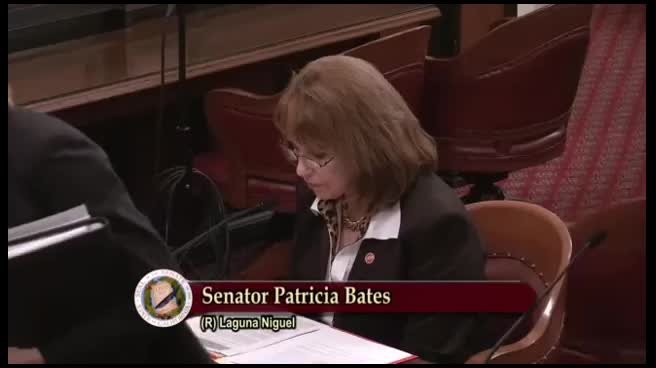 20MIN
Senate Standing Committee on Governance and Finance
Bill Author
Bill Co-Author(s):