SB 1229: Home-generated pharmaceutical waste: secure drug take-back bins.
- Session Year: 2015-2016
- House: Senate
- Latest Version Date: 2016-08-29
Under existing law, the Medical Waste Management Act, the State Department of Public Health regulates the management and handling of medical waste, including pharmaceutical waste, as defined. The act generally prohibits a person from transporting, storing, treating, disposing, or causing the treatment of medical waste in a manner not authorized by the act. A violation of that provision is a crime.
Under existing law, everyone is generally responsible, not only for the result of his or her willful acts, but also for an injury occasioned to another by his or her want of ordinary care or skill in the management of his or her property or person, except so far as the latter, has willfully or by want of ordinary care, brought the injury upon himself or herself.
This bill would provide that a collector, as defined, is not liable for civil damages, or subject to criminal prosecution, for any injury or harm that results from the collector maintaining a secure drug take-back bin on its premises provided that the collector, not for compensation, acts in good faith to take specified steps, including that the collector regularly inspects the area surrounding the secure drug take-back bin for potential tampering or diversion, to ensure the health and safety of consumers and employees and the proper disposal in the waste stream of home-generated pharmaceutical waste, as defined, contained in the bins.
Under existing law, the Medical Waste Management Act, the State Department of Public Health regulates the management and handling of medical waste, including pharmaceutical waste, as defined. The act generally prohibits a person from transporting, storing, treating, disposing, or causing the treatment of medical waste in a manner not authorized by the act. A violation of that provision is a crime.
Under existing law, everyone is generally responsible, not only for the result of his or her willful acts, but also for an injury occasioned to another by his or her want of ordinary care or skill in the management of his or her property or person, except so far as the latter, has willfully or by want of ordinary care, brought the injury upon himself or herself.
This bill would provide that a collector, as defined, is not liable for civil damages, or subject to criminal prosecution, for any injury or harm that results from the collector maintaining a secure drug take-back bin on its premises if provided that the collector, not for compensation, acts in good faith to take specified steps, including that the collector regularly inspects the area surrounding the secure drug take-back bin for potential tampering or diversion, to ensure the health and safety of consumers and employees and the proper disposal in the waste stream of home-generated pharmaceutical waste, as defined, contained in the bins.
Under existing law, the Medical Waste Management Act, the State Department of Public Health regulates the management and handling of medical waste, including pharmaceutical waste, as defined. The act generally prohibits a person from transporting, storing, treating, disposing, or causing the treatment of medical waste in a manner not authorized by the act. A violation of that provision is a crime.
Under existing law, everyone is generally responsible, not only for the result of his or her willful acts, but also for an injury occasioned to another by his or her want of ordinary care or skill in the management of his or her property or person, except so far as the latter, has willfully or by want of ordinary care, brought the injury upon himself or herself.
This bill would provide that a collector, as defined, is not liable for civil damages, or subject to criminal prosecution, for maintaining a secure drug take-back bin on its premises if the collector, in good faith and not for compensation, takes acts in good faith to take specified steps, including that the collector regularly inspects the area surrounding the secure drug take-back bin for potential tampering or diversion, to ensure the health and safety of consumers and employees and the proper disposal in the waste stream of home-generated pharmaceutical waste, as defined, contained in the bins.
Under existing law, the Medical Waste Management Act, the State Department of Public Health regulates the management and handling of medical waste, including pharmaceutical waste, as defined. The act generally prohibits a person from transporting, storing, treating, disposing, or causing the treatment of medical waste in a manner not authorized by the act. A violation of that provision is a crime.
Under existing law, everyone is generally responsible, not only for the result of his or her willful acts, but also for an injury occasioned to another by his or her want of ordinary care or skill in the management of his or her property or person, except so far as the latter, has willfully or by want of ordinary care, brought the injury upon himself or herself.
This bill would provide that a collector, as defined, is not liable for civil damages, or subject to criminal prosecution, for maintaining a secure drug take-back bin on its premises if the collector, in good faith and not for compensation, takes specified steps, including that the collector regularly inspects the area surrounding the secure drug take-back bin for potential tampering or diversion, to ensure the health and safety of consumers and employees and the proper disposal in the waste stream of home-generated pharmaceutical waste, as defined, contained in the bins.
Under existing law, the Medical Waste Management Act, the State Department of Public Health regulates the management and handling of medical waste, including pharmaceutical waste, as defined. The act generally prohibits a person from transporting, storing, treating, disposing, or causing the treatment of medical waste in a manner not authorized by the act. a A violation of that provision is a crime.
This bill would require a pharmacy that owns or operates a secure drug take-back bin, as defined, in a publicly accessible location to take reasonable steps to ensure the proper disposal of the pharmaceutical waste contained in the bins. The bill would provide that the owner or operator is not liable for civil damages arising from the use of the secure drug take-back bin if the owner or operator takes reasonable steps, as specified, to ensure the health and safety of consumers and employees and the proper disposal in the waste stream of the pharmaceutical waste contained in the bins. By expanding the application of a crime, the bill would impose a state-mandated local program.
The California Constitution requires the state to reimburse local agencies and school districts for certain costs mandated by the state. Statutory provisions establish procedures for making that reimbursement.
This bill would provide that no reimbursement is required by this act for a specified reason.
Under existing law, everyone is generally responsible, not only for the result of his or her willful acts, but also for an injury occasioned to another by his or her want of ordinary care or skill in the management of his or her property or person, except so far as the latter, has willfully or by want of ordinary care, brought the injury upon himself or herself.
This bill would provide that a collector, as defined, is not liable for civil damages, or subject to criminal prosecution, for maintaining a secure drug take-back bin on its premises if the collector, in good faith and not for compensation, takes specified steps, including that the collector regularly inspects the area surrounding the secure drug take-back bin for potential tampering or diversion, to ensure the health and safety of consumers and employees and the proper disposal in the waste stream of home-generated pharmaceutical waste, as defined, contained in the bins.
Under existing law, the Medical Waste Management Act, the State Department of Public Health regulates the management and handling of medical waste, including pharmaceutical waste, as defined. The act generally prohibits a person from transporting, storing, treating, disposing, or causing the treatment of medical waste in a manner not authorized by the act. a violation of that provision is a crime.
This bill would require a pharmacy that owns or operates a secure drug take-back bin, as defined, in a publicly accessible location to take reasonable steps to ensure the proper disposal of the pharmaceutical waste contained in the bins. The bill would provide that the owner or operator is not liable for civil damages arising from the use of the secure drug take-back bin if the owner or operator takes reasonable steps, as specified, to ensure the health and safety of consumers and employees and the proper disposal in the waste stream of the pharmaceutical waste contained in the bins. By expanding the application of a crime, the bill would impose a state-mandated local program.
The California Constitution requires the state to reimburse local agencies and school districts for certain costs mandated by the state. Statutory provisions establish procedures for making that reimbursement.
This bill would provide that no reimbursement is required by this act for a specified reason.
(a)The Legislature finds and declares the following:
(1)On October 12, 2010, the federal Secure and Responsible Drug Disposal Act of 2010 (Public Law 111-273; hereafter referred to as the Disposal Act) was enacted. Before the Disposal Act, individuals who wanted to dispose of unused, unwanted, or expired pharmaceutical controlled substances had limited disposal options. The federal Controlled Substances Act (21 U.S.C. Sec. 801 et seq.; hereafter referred to as the CSA) only permitted individuals to destroy those substances themselves (e.g., by flushing or discarding), surrender them to law enforcement, or seek assistance from the federal Drug Enforcement Administration (DEA). These restrictions resulted in the accumulation of pharmaceutical controlled substances in household medicine cabinets that were available for abuse, misuse, diversion, and accidental ingestion. The Disposal Act amended the CSA to authorize specified individuals, referred to as ultimate users, to deliver their pharmaceutical controlled substances to another person for the purpose of disposal in accordance with regulations promulgated by the United States Attorney General.
(2)On September 9, 2014, the DEA issued its final rule governing the secure disposal of controlled substances by registrants and ultimate users. Those regulations implement the Disposal Act by expanding the options available to collect controlled substances from ultimate users for the purpose of disposal, including take-back events, mail-back programs, and collection receptacle locations. Those regulations, among other things, allow authorized manufacturers, distributors, reverse distributors, narcotic treatment programs, hospitals/clinics with an onsite pharmacy, and retail pharmacies to voluntarily administer mail-back programs and maintain collection receptacles.
(b)It is the intent of the Legislature, with the enactment of this act, to do both of the following:
(1)Encourage the good faith participation of federally authorized entities to maintain secure drug take-back bins on their premises for the convenience and public health and safety of prescription drug consumers and the proper disposal in the waste stream of the pharmaceutical waste contained in the bins.
(2)Limit the civil and criminal liability of participating entities that meet certain minimum standards and take reasonable care to ensure the health and safety of consumers and employees when maintaining secure drug take-back bins on their premises.
(c)The terms and conditions provided by subdivision (b) of Section 1714.24 of the Civil Code, as added by this act, shall be construed in a manner consistent with the requirements imposed by the DEAs final rule governing the secure disposal of controlled substances (79 Fed. Reg. 53519-70 (September 9, 2014)) and any regulations promulgated by the state.
SEC. 2.Section 1714.24 is added to the Civil Code, to read:1714.24.(a)For purposes of this section, the following definitions shall apply:
(1)Collector includes only those entities authorized by and registered with the federal Drug Enforcement Administration to receive a controlled substance for the purpose of destruction, if the entity is in good standing with any applicable licensing authority.
(2)Compensation means reimbursement or funds received from a customer to compensate for the cost incurred in obtaining, installing, or maintaining a secure drug take-back bin. Compensation does not include reimbursement or funds received from any other person or entity, other than a customer, to compensate for the costs incurred in obtaining, installing, or maintaining a secure drug take-back bin.
(3)Home-generated pharmaceutical waste means a pharmaceutical that is no longer wanted or needed by the consumer and includes any delivery system, such as pills, liquids, and inhalers.
(4)Maintains includes owning, leasing, operating, or otherwise hosting a secure drug take-back bin on the collectors premises.
(5)Pharmaceutical means a prescription or over-the-counter human or veterinary drug, including, but not limited to, a drug as defined in Section 109925 of the Health and Safety Code and Section 321(g)(1) of Title 21 of the United States Code. Pharmaceutical includes controlled substances included in Schedule II, III, IV, or V of the California Uniform Controlled Substances Act (Division 10 (commencing with Section 11000) of the Health and Safety Code), but does not include a controlled substance included in Schedule I.
(6)Secure drug take-back bin means a collection receptacle as described in Section 1317.75 of Title 21 of the Code of Federal Regulations.
(b)Any collector that maintains a secure drug take-back bin shall not be liable in a civil action, or be subject to criminal prosecution, for any injury or harm that results from the collector maintaining a secure drug take-back bin on its premises provided that the collector, not for compensation, acts in good faith to take all of the following steps to ensure the health and safety of consumers and employees and the proper disposal in the waste stream of the home-generated pharmaceutical waste contained in a secure drug take-back bin, unless the injury or harm results from the collectors gross negligence or willful and wanton misconduct:
(1)Complies with all applicable state and federal laws and regulations relating to the collection of home-generated pharmaceutical waste for disposal in secure drug take-back bins, including, but not limited to, the federal Secure and Responsible Drug Disposal Act of 2010 (Public Law 111-273).
(2)Notifies local law enforcement and any local environmental health department as to the existence and location of any secure drug take-back bin on the collectors premises and the status of the collectors registration as a collector with the federal Drug Enforcement Administration.
(3)Ensures that the secure drug take-back bin is placed in a location that is regularly monitored by employees of the registered collector.
(4)Ensures that conspicuous signage is posted on the secure drug take-back bin that clearly notifies customers as to what controlled and noncontrolled substances are and are not acceptable for deposit into the bin, as well as the hours during which collection is allowed.
(5)Ensures that public access to the secure drug take-back bin is limited to hours in which employees of the registered collector are present and able to monitor the operation of the secure drug take-back bin.
(6)Regularly inspects the area surrounding the secure drug take-back bin for potential tampering or diversion. Record logs of those inspections shall be maintained and retained for two years, reflecting the date and time of the inspection, and the initials of the employee inspecting the area. The logs shall be maintained in writing or electronically and may be combined with logs required by state or federal regulations. The logs may be used to demonstrate regular inspection of the area. Other records or reports mandated by federal or state regulations shall also be retained for a minimum of two years unless regulations mandate a longer period.
(7)Notifies local law enforcement authorities of any suspected or known tampering, theft, or significant loss of controlled substances, within one business day of discovery. If the collector maintains daily business hours, this notification shall be made within one calendar day.
(8)Notify local law enforcement as to any decision to discontinue its voluntary collection of controlled substances and provide documentation of its written notification to the federal Drug Enforcement Administrations Registration Unit as otherwise required under federal laws and regulations.
(c)Nothing in this section shall be construed to require entities that may qualify as a collector to acquire, maintain, or make available to the public a secure drug take-back bin on its premises.
(a)The Legislature finds and declares the following:
(1)On October 12, 2010, the federal Secure and Responsible Drug Disposal Act of 2010 (Public Law 111-273; hereafter referred to as the Disposal Act) was enacted. Before the Disposal Act, individuals who wanted to dispose of unused, unwanted, or expired pharmaceutical controlled substances had limited disposal options. The federal Controlled Substances Act (21 U.S.C. Sec. 801 et seq.; hereafter referred to as the CSA) only permitted individuals to destroy those substances themselves (e.g., by flushing or discarding), surrender them to law enforcement, or seek assistance from the federal Drug Enforcement Administration (DEA). These restrictions resulted in the accumulation of pharmaceutical controlled substances in household medicine cabinets that were available for abuse, misuse, diversion, and accidental ingestion. The Disposal Act amended the CSA to authorize specified individuals, referred to as ultimate users, to deliver their pharmaceutical controlled substances to another person for the purpose of disposal in accordance with regulations promulgated by the United States Attorney General.
(2)On September 9, 2014, the DEA issued its final rule governing the secure disposal of controlled substances by registrants and ultimate users. Those regulations implement the Disposal Act by expanding the options available to collect controlled substances from ultimate users for the purpose of disposal, including take-back events, mail-back programs, and collection receptacle locations. Those regulations, among other things, allow authorized manufacturers, distributors, reverse distributors, narcotic treatment programs, hospitals/clinics with an onsite pharmacy, and retail pharmacies to voluntarily administer mail-back programs and maintain collection receptacles.
(b)It is the intent of the Legislature, with the enactment of this act, to do both of the following:
(1)Encourage the good faith participation of federally authorized entities to maintain secure drug take-back bins on their premises for the convenience and public health and safety of prescription drug consumers and the proper disposal in the waste stream of the pharmaceutical waste contained in the bins.
(2)Limit the civil and criminal liability of participating entities that meet certain minimum standards and take reasonable care to ensure the health and safety of consumers and employees when maintaining secure drug take-back bins on their premises.
(c)The terms and conditions provided by subdivision (b) of Section 1714.24 of the Civil Code, as added by this act, shall be construed in a manner consistent with the requirements imposed by the DEAs final rule governing the secure disposal of controlled substances (79 Fed. Reg. 53519-70 (September 9, 2014)) and any regulations promulgated by the state.
SEC. 2.Section 1714.24 is added to the Civil Code, to read:1714.24.(a)For purposes of this section, the following definitions shall apply:
(1)Collector includes only those entities authorized by and registered with the federal Drug Enforcement Administration to receive a controlled substance for the purpose of destruction, if the entity is in good standing with any applicable licensing authority.
(2)Compensation means reimbursement or funds received from a customer to compensate for the cost incurred in obtaining, installing, or maintaining a secure drug take-back bin. Compensation does not include reimbursement or funds received from any other person or entity, other than a customer, to compensate for the costs incurred in obtaining, installing, or maintaining a secure drug take-back bin.
(3)Home-generated pharmaceutical waste means a pharmaceutical that is no longer wanted or needed by the consumer and includes any delivery system, such as pills, liquids, and inhalers.
(4)Maintains includes owning, leasing, operating, or otherwise hosting a secure drug take-back bin on the collectors premises.
(5)Pharmaceutical means a prescription or over-the-counter human or veterinary drug, including, but not limited to, a drug as defined in Section 109925 of the Health and Safety Code and Section 321(g)(1) of Title 21 of the United States Code. Pharmaceutical includes controlled substances included in Schedule II, III, IV, or V of the California Uniform Controlled Substances Act (Division 10 (commencing with Section 11000) of the Health and Safety Code), but does not include a controlled substance included in Schedule I.
(6)Secure drug take-back bin means a collection receptacle as described in Section 1317.75 of Title 21 of the Code of Federal Regulations.
(b)Any collector that maintains a secure drug take-back bin shall not be liable in a civil action, or be subject to criminal prosecution, for any injury or harm that results from the collector maintaining a secure drug take-back bin on its premises if provided that the collector, not for compensation, acts in good faith to take all of the following steps to ensure the health and safety of consumers and employees and the proper disposal in the waste stream of the home-generated pharmaceutical waste contained in a secure drug take-back bin: bin, unless the injury or harm results from the collectors gross negligence or willful and wanton misconduct:
(1)Complies with all applicable state and federal laws and regulations relating to the collection of home-generated pharmaceutical waste for disposal in secure drug take-back bins, including, but not limited to, the federal Secure and Responsible Drug Disposal Act of 2010 (Public Law 111-273).
(2)Notifies local law enforcement and any local environmental health department as to the existence and location of any secure drug take-back bin on the collectors premises and the status of the collectors registration as a collector with the federal Drug Enforcement Administration.
(3)Ensures that the secure drug take-back bin is placed in a location that is regularly monitored by employees of the registered collector.
(4)Ensures that conspicuous signage is posted on the secure drug take-back bin that clearly notifies customers as to what controlled and noncontrolled substances are and are not acceptable for deposit into the bin, as well as the hours during which collection is allowed.
(5)Ensures that public access to the secure drug take-back bin is limited to hours in which employees of the registered collector are present and able to monitor the operation of the secure drug take-back bin.
(6)Regularly inspects the area surrounding the secure drug take-back bin for potential tampering or diversion. Record logs of those inspections shall be maintained and retained for two years, reflecting the date and time of the inspection, and the initials of the employee inspecting the area. The logs shall be maintained in writing or electronically and may be combined with logs required by state or federal regulations. The logs may be used to demonstrate regular inspection of the area. Other records or reports mandated by federal or state regulations shall also be retained for a minimum of two years unless regulations mandate a longer period.
(7)Notifies local law enforcement authorities of any suspected or known tampering, theft, or significant loss of controlled substances, within one business day of discovery. If the collector maintains daily business hours, this notification shall be made within one calendar day.
(8)Notify local law enforcement as to any decision to discontinue its voluntary collection of controlled substances and provide documentation of its written notification to the federal Drug Enforcement Administrations Registration Unit as otherwise required under federal laws and regulations.
(c)The protection specified in subdivision (b) shall not apply in a case of personal injury or wrongful death that results from the collectors gross negligence or willful or wanton misconduct in maintaining a secure drug take-back bin.
(d)
(c)Nothing in this section shall be construed to require entities that may qualify as a collector to acquire, maintain, or make available to the public a secure drug take-back bin on its premises.
(a)The Legislature finds and declares the following:
(1)On October 12, 2010, the federal Secure and Responsible Drug Disposal Act of 2010 (Public Law 111-273; hereafter referred to as the Disposal Act) was enacted. Before the Disposal Act, individuals who wanted to dispose of unused, unwanted, or expired pharmaceutical controlled substances had limited disposal options. The federal Controlled Substances Act (21 U.S.C. Sec. 801 et seq.; hereafter referred to as the CSA) only permitted individuals to destroy those substances themselves (e.g., by flushing or discarding), surrender them to law enforcement, or seek assistance from the federal Drug Enforcement Administration (DEA). These restrictions resulted in the accumulation of pharmaceutical controlled substances in household medicine cabinets that were available for abuse, misuse, diversion, and accidental ingestion. The Disposal Act amended the CSA to authorize specified individuals, referred to as ultimate users, to deliver their pharmaceutical controlled substances to another person for the purpose of disposal in accordance with regulations promulgated by the United States Attorney General.
(2)On September 9, 2014, the DEA issued its final rule governing the secure disposal of controlled substances by registrants and ultimate users. Those regulations implement the Disposal Act by expanding the options available to collect controlled substances from ultimate users for the purpose of disposal, including take-back events, mail-back programs, and collection receptacle locations. Those regulations, among other things, allow authorized manufacturers, distributors, reverse distributors, narcotic treatment programs, hospitals/clinics with an on-site onsite pharmacy, and retail pharmacies to voluntarily administer mail-back programs and maintain collection receptacles.
(b)It is the intent of the Legislature, with the enactment of this act, to do both of the following:
(1)Encourage the good faith participation of federally authorized entities to maintain secure drug take-back bins on their premises for the convenience and public health and safety of prescription drug consumers and the proper disposal in the waste stream of the pharmaceutical waste contained in the bins.
(2)Limit the civil and criminal liability of participating entities that meet certain minimum standards and take reasonable care to ensure the health and safety of consumers and employees when maintaining secure drug take-back bins on their premises.
(c)The terms and conditions provided by subdivision (b) of Section 1714.24 of the Civil Code, as added by this act, shall be construed in a manner consistent with the requirements imposed by the DEAs final rule governing the secure disposal of controlled substances (79 Fed. Reg. 53519-70 (September 9, 2014)) and any regulations promulgated by the state.
SEC. 2.Section 1714.24 is added to the Civil Code, to read:1714.24.(a)For purposes of this section, the following definitions shall apply:
(1)Collector includes only those entities authorized by and registered with the federal Drug Enforcement Administration to receive a controlled substance for the purpose of destruction, if the entity is in good standing with any applicable licensing authority.
(2)Compensation means reimbursement or funds received from a customer to compensate for the cost incurred in obtaining, installing, or maintaining a secure drug take-back bin. Compensation does not include reimbursement or funds received from any other person or entity, other than a customer, to compensate for the costs incurred in obtaining, installing, or maintaining a secure drug take-back bin.
(3)Home-generated pharmaceutical waste means a pharmaceutical that is no longer wanted or needed by the consumer and includes any delivery system, such as pills, liquids, and inhalers.
(4)Maintains includes owning, leasing, operating, or otherwise hosting a secure drug take-back bin on the collectors premises.
(5)Pharmaceutical means a prescription or over-the-counter human or veterinary drug, including, but not limited to, a drug as defined in Section 109925 of the Health and Safety Code and Section 321(g)(1) of Title 21 of the United States Code. Pharmaceutical includes controlled substances included in Schedule II, III, IV, or V of the California Uniform Controlled Substances Act (Division 10 (commencing with Section 11000) of the Health and Safety Code), but does not include a controlled substance included in Schedule I.
(6)Secure drug take-back bin means a collection receptacle as described in Section 1317.75 of Title 21 of the Code of Federal Regulations.
(b)Any collector that maintains a secure drug take-back bin shall not be liable in a civil action, or be subject to criminal prosecution, for maintaining a secure drug take-back bin on its premises if the collector, not for compensation, acts in good faith and not for compensation, takes to take all of the following steps to ensure the health and safety of consumers and employees and the proper disposal in the waste stream of the home-generated pharmaceutical waste contained in a secure drug take-back bin:
(1)Complies with all applicable state and federal laws and regulations relating to the collection of home-generated pharmaceutical waste for disposal in secure drug take-back bins, including, but not limited to, the federal Secure and Responsible Drug Disposal Act of 2010 (Public Law 111-273).
(2)Notifies local law enforcement and any local environmental health department as to the existence and location of any secure drug take-back bin on the collectors premises and the status of the collectors registration as a collector with the federal Drug Enforcement Administration.
(3)Ensures that the secure drug take-back bin is placed in a location that is regularly monitored by employees of the registered collector.
(4)Ensures that conspicuous signage is posted on the secure drug take-back bin that clearly notifies customers as to what controlled and noncontrolled substances are and are not acceptable for deposit into the bin, as well as the hours during which collection is allowed.
(5)Ensures that public access to the secure drug take-back bin is limited to hours in which employees of the registered collector are present and able to monitor the operation of the secure drug take-back bin.
(6)Regularly inspects the area surrounding the secure drug take-back bin for potential tampering or diversion. Record logs of those inspections shall be maintained and retained for two years, reflecting the date and time of the inspection, and the initials of the employee inspecting the area. The logs shall be maintained in writing or electronically and may be combined with logs required by state or federal regulations. The logs may be used to demonstrate regular inspection of the area. Other records or reports mandated by federal or state regulations shall also be retained for a minimum of two years unless regulations mandate a longer period.
(7)Notifies local law enforcement authorities of any suspected or known tampering, theft, or significant loss of controlled substances, within one business day of discovery. If the collector maintains daily business hours, this notification shall be made within one calendar day.
(8)Notify local law enforcement as to any decision to discontinue its voluntary collection of controlled substances and provide documentation of its written notification to the federal Drug Enforcement Administrations Registration Unit as otherwise required under federal laws and regulations.
(c)The protection specified in subdivision (b) shall not apply in a case of personal injury or wrongful death that results from the collectors gross negligence or willful or wanton misconduct in maintaining a secure drug take-back bin.
(d)Nothing in this section shall be construed to require entities that may qualify as a collector to acquire, maintain, or make available to the public a secure drug take-back bin on its premises.
(a)The Legislature finds and declares the following:
(1)On October 12, 2010, the federal Secure and Responsible Drug Disposal Act of 2010 (Public Law 111-273; hereafter referred to as the Disposal Act) was enacted. Before the Disposal Act, individuals who wanted to dispose of unused, unwanted, or expired pharmaceutical controlled substances had limited disposal options. The federal Controlled Substances Act (21 U.S.C. Sec. 801 et seq.; hereafter referred to as the CSA) only permitted individuals to destroy those substances themselves (e.g., by flushing or discarding), surrender them to law enforcement, or seek assistance from the federal Drug Enforcement Agency Administration (DEA). These restrictions resulted in the accumulation of pharmaceutical controlled substances in household medicine cabinets that were available for abuse, misuse, diversion, and accidental ingestion. The Disposal Act amended the CSA to authorize specified individuals, referred to as ultimate users, to deliver their pharmaceutical controlled substances to another person for the purpose of disposal in accordance with regulations promulgated by the United States Attorney General.
(2)On September 9, 2014, the DEA issued its final rule governing the secure disposal of controlled substances by registrants and ultimate users. Those regulations implement the Disposal Act by expanding the options available to collect controlled substances from ultimate users for the purpose of disposal, including take-back events, mail-back programs, and collection receptacle locations. Those regulations, among other things, allow authorized manufacturers, distributors, reverse distributors, narcotic treatment programs, hospitals/clinics with an on-site pharmacy, and retail pharmacies to voluntarily administer mail-back programs and maintain collection receptacles.
(b)It is the intent of the Legislature, with the enactment of this act, to do both of the following:
(1)To encourage Encourage the good faith participation of federally-authorized federally authorized entities to maintain secure drug take-back bins on their premises for the convenience and public health and safety of prescription drug consumers and the proper disposal in the waste stream of the pharmaceutical waste contained in the bins.
(2)To limit Limit the civil and criminal liability of participating entities that meet certain minimum standards and take reasonable care to ensure the health and safety of consumers and employees when maintaining secure drug take-back bins on their premises.
SEC. 2.Section 1714.24 is added to the Civil Code, to read:1714.24.(a)For purposes of this section, the following definitions shall apply:
(1)Collector includes only those entities authorized by and registered with the federal Drug Enforcement Agency Administration to receive a controlled substance for the purpose of destruction, if the entity is in good standing with any applicable licensing authority.
(2)Compensation means reimbursement or funds received from a customer to compensate for the cost incurred in obtaining, installing, or maintaining a secure drug take-back bin. Compensation Compensation does not include reimbursement or funds received from any other person or entity, other than a customer, to compensate for the costs incurred in obtaining, installing, or maintaining a secure drug take-back bin.
(3)Home-generated pharmaceutical waste means a pharmaceutical that is no longer wanted or needed by the consumer and includes any delivery system, such as pills, liquids, and inhalers.
(4)Maintains includes owning, leasing, operating, or otherwise hosting a secure drug take-back bin on the collectors premises.
(5)Pharmaceutical means a prescription or over-the-counter human or veterinary drug, including, but not limited to, a drug as defined in Section 109925 of the Health and Safety Code and Section 321(g)(1) of Title 21 of the United States Code. Pharmaceutical includes controlled substances included in Schedule II, III, IV, or V of the Uniform Controlled Substances Act (Division 10 (commencing with Section 11000) of the Health and Safety Code), but does not include a controlled substance included in Schedule I.
(6)Secure drug take-back bin means a collection receptacle as described in Section 1317.75 of Title 21 of the Code of Federal Regulations.
(b)Any collector that maintains a secure drug take-back bin, in good faith and not for compensation, bin shall not be liable in a civil action, or be subject to criminal prosecution, for maintaining a secure drug take-back bin on its premises if the collector collector, in good faith and not for compensation, takes all of the following steps to ensure the health and safety of consumers and employees and the proper disposal in the waste stream of the home-generated pharmaceutical waste contained in a secure drug take-back bin:
(1)Complies with all applicable state and federal laws and regulations relating to the collection of home-generated pharmaceutical waste for disposal in secure drug take-back bins, including, but not limited to to, the federal Secure and Responsible Drug Disposal Act of 2010 (Public Law 111-273).
(2)Notifies local law enforcement and any local environmental health department as to the existence and location of any secure drug take-back bin on the collectors premises and the status of the collectors registration as a collector with the federal Drug Enforcement Agency. Administration.
(3)Ensures that the secure drug take-back bin is placed in a location that is regularly monitored by employees of the registered collector.
(4)Ensures that conspicuous signage is posted on the secure drug take-back bin that clearly notifies customers as to what controlled and non-controlled noncontrolled substances are and are not acceptable for deposit into the bin, as well as the hours during which collection is allowed.
(5)Ensures that public access to the secure drug take-back bin is limited to hours wherein in which employees of the registered collector are present and able to monitor the operation of the secure drug take-back bin.
(6)Regularly inspects the area surrounding the secure drug take-back bin for potential tampering or diversion. Record logs of those inspections shall be maintained and retained for four two years, reflecting the date and time of the inspection, and the initials of the employee inspecting the area. Other records or reports mandated by federal or state regulations shall also be retained for a minimum of four two years unless regulations mandate a longer period.
(7)Notifies local law enforcement authorities of any suspected or known tampering, theft, or significant loss of controlled substances, within one business day of discovery. If the collector maintains daily business hours, this notification shall be made within one calendar day.
(8)Notify local law enforcement as to any decision to discontinue its voluntary collection of controlled substances and provide documentation of its written notification to the federal Drug Enforcement Agencys Administrations Registration Unit as otherwise required under federal laws and regulations.
(c)The protection specified in subdivision (b) shall not apply in a case of personal injury or wrongful death that results from the collectors gross negligence or willful or wanton misconduct in maintaining a secure drug take-back bin.
(d)Nothing in this section shall be construed to require entities that may qualify as a collector to acquire, maintain, or make available to the public a secure drug take-back bin on its premises.
(a)The Legislature finds and declares the following:
(1)On October 12, 2010, the federal Secure and Responsible Drug Disposal Act of 2010 (Public Law 111-273; hereafter referred to as the Disposal Act) was enacted. Before the Disposal Act, individuals who wanted to dispose of unused, unwanted, or expired pharmaceutical controlled substances had limited disposal options. The federal Controlled Substances Act (21 U.S.C. Sec. 801 et seq.; hereafter referred to as CSA) only permitted individuals to destroy those substances themselves (e.g., by flushing or discarding), surrender them to law enforcement, or seek assistance from the federal Drug Enforcement Agency (DEA). These restrictions resulted in the accumulation of pharmaceutical controlled substances in household medicine cabinets that were available for abuse, misuse, diversion, and accidental ingestion. The Disposal Act amended the CSA to authorize specified individuals, referred to as ultimate users, to deliver their pharmaceutical controlled substances to another person for the purpose of disposal in accordance with regulations promulgated by the United States Attorney General.
(2)On September 9, 2014, the DEA issued its final rule governing the secure disposal of controlled substances by registrants and ultimate users. Those regulations implement the Disposal Act by expanding the options available to collect controlled substances from ultimate users for the purpose of disposal, including take-back events, mail-back programs, and collection receptacle locations. Those regulations, among other things, allow authorized manufacturers, distributors, reverse distributors, narcotic treatment programs, hospitals/clinics with an on-site pharmacy, and retail pharmacies to voluntarily administer mail-back programs and maintain collection receptacles.
(b)It is the intent of the Legislature, with the enactment of this act, to do both of the following:
(1)To encourage the good faith participation of federally-authorized entities to maintain secure drug take-back bins on their premises for the convenience and public health and safety of prescription drug consumers and the proper disposal in the waste stream of the pharmaceutical waste contained in the bins.
(2)To limit the civil and criminal liability of participating entities that meet certain minimum standards and take reasonable care to ensure the health and safety of consumers and employees when maintaining secure drug take-back bins on their premises.
SEC. 2.Section 1714.24 is added to the Civil Code, to read:1714.24.(a)For purposes of this section, the following definitions shall apply:
(1)Collector includes only those entities authorized by and registered with the federal Drug Enforcement Agency to receive a controlled substance for the purpose of destruction, if the entity is in good standing with any applicable licensing authority.
(2)Compensation means reimbursement or funds received from a customer to compensate for the cost incurred in obtaining, installing, or maintaining a secure drug take-back bin. Compensation does not include reimbursement or funds received from any other person or entity, other than a customer, to compensate for the costs incurred in obtaining, installing, or maintaining a secure drug take-back bin.
(3)Home-generated pharmaceutical waste means a pharmaceutical that is no longer wanted or needed by the consumer and includes any delivery system, such as pills, liquids, and inhalers.
(4)Maintains includes owning, leasing, operating, or otherwise hosting a secure drug-take back bin on the collectors premises.
(5)Pharmaceutical means a prescription or over-the-counter human or veterinary drug, including, but not limited to, a drug as defined in Section 109925 of the Health and Safety Code and Section 321(g)(1) of Title 21 of the United States Code. Pharmaceutical includes controlled substances included in Schedule II, III, IV, or V of the Uniform Controlled Substances Act (Division 10 (commencing with Section 11000) of the Health and Safety Code), but does not include a controlled substance included in Schedule I.
(6)Secure drug take-back bin means a collection receptacle as described in Section 1317.75 of Title 21 of the Code of Federal Regulations.
(b)Any collector that maintains a secure drug take-back bin, in good faith and not for compensation, shall not be liable in a civil action, or be subject to criminal prosecution, for maintaining a secure drug take-back bin on its premises if the collector takes all of the following steps to ensure the health and safety of consumers and employees and the proper disposal in the waste stream of the home-generated pharmaceutical waste contained in a secure drug take-back bin:
(1)Complies with all applicable state and federal laws and regulations relating to the collection of home-generated pharmaceutical waste for disposal in secure drug take-back bins, including, but not limited to the federal Secure and Responsible Drug Disposal Act of 2010 (Public Law 111-273).
(2)Notifies local law enforcement and any local environmental health department as to the existence and location of any secure drug-take back bin on the collectors premises and the status of the collectors registration as a collector with the federal Drug Enforcement Agency.
(3)Ensures that the secure drug take-back bin is placed in a location that is regularly monitored by employees of the registered collector.
(4)Ensures that conspicuous signage is posted on the secure drug take-back bin that clearly notifies customers as to what controlled and non-controlled substances are and are not acceptable for deposit into the bin, as well as the hours during which collection is allowed.
(5)Ensures that public access to the secure drug take-back bin is limited to hours wherein employees of the registered collector are present and able to monitor the operation of the secure drug take-back bin.
(6)Regularly inspects the area surrounding the secure drug take-back bin for potential tampering or diversion. Record logs of those inspections shall be maintained and retained for four years, reflecting the date and time of the inspection, and the initials of the employee inspecting the area. Other records or reports mandated by federal or state regulations shall also be retained for a minimum of four years unless regulations mandate a longer period.
(7)Notifies local law enforcement authorities of any suspected or known tampering, theft, or significant loss of controlled substances, within one business day of discovery. If the collector maintains daily business hours, this notification shall be made within one calendar day.
(8)Notify local law enforcement as to any decision to discontinue its voluntary collection of controlled substances and provide documentation of its written notification to the federal Drug Enforcement Agencys Registration Unit as otherwise required under federal laws and regulations.
(c)The protection specified in subdivision (b) shall not apply in a case of personal injury or wrongful death that results from the collectors gross negligence or willful or wanton misconduct in maintaining a secure drug take-back bin.
(d)Nothing in this section shall be construed to require entities that may qualify as a collector to acquire, maintain, or make available to the public a secure drug take-back bin on its premises.
SECTION 1.(a)It is the intent of the Legislature to encourage the good faith participation of pharmacies in hosting secure drug take-back bins on their premises for the convenience and public health and safety of prescription drug consumers and the proper disposal in the waste stream of the pharmaceutical waste contained in the bins.
(b)It is the intent of the Legislature to prescribe the standards of reasonable care necessary for pharmacies that host secure drug take-back bins on their premises.
SEC. 2.Section 1714.24 is added to the Civil Code, to read:1714.24.Any pharmacy that owns or operates a secure drug take-back bin in a publicly accessible location shall not be liable for civil damages arising from the use of the secure drug take-back bin if the owner or operator takes reasonable steps pursuant to Section 118312 of the Health and Safety Code to ensure the health and safety of consumers and employees and the proper disposal in the waste stream of the pharmaceutical waste contained in the bins.
SEC. 3.Section 117670.5 is added to the Health and Safety Code, to read:117670.5.Home-generated pharmaceutical waste means a pharmaceutical that is a waste generated by a household or households.
SEC. 4.Section 117748 is added to the Health and Safety Code, to read:117748.Secure drug take-back bin means a receptacle that can receive home-generated pharmaceutical waste, that employs a locking mechanism that requires the hazardous waste hauler and the bin owner or operator to use two, nonidentical keys simultaneously to access the contents of the bin, and that is secured to a wall or the ground.
SEC. 5.Section 118312 is added to the Health and Safety Code, to read:118312.Any pharmacy that owns or operates a secure drug take-back bin in a publicly accessible location shall take reasonable steps to ensure the proper disposal in the waste stream of the pharmaceutical waste contained in the bins.
SEC. 6.No reimbursement is required by this act pursuant to Section 6 of Article XIIIB of the California Constitution because the only costs that may be incurred by a local agency or school district will be incurred because this act creates a new crime or infraction, eliminates a crime or infraction, or changes the penalty for a crime or infraction, within the meaning of Section 17556 of the Government Code, or changes the definition of a crime within the meaning of Section 6 of Article XIIIB of the California Constitution.
(a)It is the intent of the Legislature to encourage the good faith participation of pharmacies in hosting secure drug take-back bins on their premises for the convenience and public health and safety of prescription drug consumers and the proper disposal in the waste stream of the pharmaceutical waste contained in the bins.
(b)It is the intent of the Legislature to prescribe the standards of reasonable care necessary for pharmacies that host secure drug take-back bins on their premises.
SEC. 2.Section 1714.24 is added to the Civil Code, to read:1714.24.Any pharmacy that owns or operates a secure drug take-back bin in a publicly accessible location shall not be liable for civil damages arising from the use of the secure drug take-back bin if the owner or operator takes reasonable steps pursuant to Section 118312 of the Health and Safety Code to ensure the health and safety of consumers and employees and the proper disposal in the waste stream of the pharmaceutical waste contained in the bins.
SEC. 3.Section 117670.5 is added to the Health and Safety Code, to read:117670.5.Home-generated pharmaceutical waste means a pharmaceutical that is a waste generated by a household or households.
SEC. 4.Section 117748 is added to the Health and Safety Code, to read:117748.Secure drug take-back bin means a receptacle that can receive home-generated pharmaceutical waste, that employs a locking mechanism that requires the hazardous waste hauler and the bin owner or operator to use two, nonidentical keys simultaneously to access the contents of the bin, and that is secured to a wall or the ground.
SEC. 5.Section 118312 is added to the Health and Safety Code, to read:118312.Any pharmacy that owns or operates a secure drug take-back bin in a publicly accessible location shall take reasonable steps to ensure the proper disposal in the waste stream of the pharmaceutical waste contained in the bins.
SEC. 6.No reimbursement is required by this act pursuant to Section 6 of Article XIIIB of the California Constitution because the only costs that may be incurred by a local agency or school district will be incurred because this act creates a new crime or infraction, eliminates a crime or infraction, or changes the penalty for a crime or infraction, within the meaning of Section 17556 of the Government Code, or changes the definition of a crime within the meaning of Section 6 of Article XIIIB of the California Constitution.
|
Date
|
Status
|
|---|---|
| May 5, 2016 | Referred to Com. on JUD. |
| Aug 29, 2016 | Chaptered by Secretary of State. Chapter 238, Statutes of 2016. |
| Aug 29, 2016 | Approved by the Governor. |
| Aug 16, 2016 | Enrolled and presented to the Governor at 11:30 a.m. |
| Aug 11, 2016 | Assembly amendments concurred in. (Ayes 37. Noes 0. Page 4881.) Ordered to engrossing and enrolling. |
| Aug 11, 2016 | Assembly amendments concurred in. (Ayes 36. Noes 0.) Ordered to engrossing and enrolling. |
| Aug 10, 2016 | Ordered to special consent calendar. |
| Aug 4, 2016 | Read third time. Passed. (Ayes 76. Noes 0. Page 5707.) Ordered to the Senate. |
| Aug 4, 2016 | Read third time. Passed. Ordered to the Senate. |
| Aug 4, 2016 | In Senate. Concurrence in Assembly amendments pending. |
| Jun 28, 2016 | Read second time. Ordered to third reading. |
| Jun 27, 2016 | Read second time and amended. Ordered to second reading. |
| Jun 23, 2016 | From committee: Do pass as amended. (Ayes 9. Noes 0.) (June 21). |
| Jun 14, 2016 | From committee with author's amendments. Read second time and amended. Re-referred to Com. on JUD. |
| Jun 1, 2016 | June 8 set for first hearing canceled at the request of author. |
| Feb 18, 2016 | Introduced. Read first time. To Com. on RLS. for assignment. To print. |
| Apr 21, 2016 | Read third time. Passed. (Ayes 39. Noes 0.) Ordered to the Assembly. |
| Apr 21, 2016 | Read third time. Passed. (Ayes 39. Noes 0. Page 3629.) Ordered to the Assembly. |
| Apr 21, 2016 | In Assembly. Read first time. Held at Desk. |
| Apr 19, 2016 | Read second time and amended. Ordered to third reading. |
| Apr 18, 2016 | From committee: Do pass as amended. (Ayes 6. Noes 0.) (April 12). |
| Apr 18, 2016 | From committee: Do pass as amended. (Ayes 6. Noes 0. Page 3520.) (April 12). |
| Apr 6, 2016 | Set for hearing April 12. |
| Apr 4, 2016 | Withdrawn from committee. |
| Apr 4, 2016 | Re-referred to Com. on JUD. |
| Mar 31, 2016 | April 6 hearing postponed by committee. |
| Mar 28, 2016 | From committee with author's amendments. Read second time and amended. Re-referred to Com. on E.Q. |
| Mar 15, 2016 | Set for hearing April 6. |
| Mar 3, 2016 | Referred to Coms. on E.Q. and JUD. |
| Feb 19, 2016 | From printer. May be acted upon on or after March 20. |
|
Date
|
Description
|
Location
|
Votes
|
|
|---|---|---|---|---|
| Aug 11, 2016 | Special Consent SB1229 Jackson Concurrence | Senate Floor |
Passed |
|
| Aug 4, 2016 | SB 1229 Jackson Senate Third Reading By TING | Assembly Floor |
Passed |
|
| Jun 21, 2016 | Do pass as amended. | Assembly Standing Committee on Judiciary |
Passed |
|
| Apr 21, 2016 | Senate 3rd Reading SB1229 Jackson | Senate Floor |
Passed |
|
| Apr 12, 2016 | Do pass as amended | Senate Standing Committee on Judiciary |
Passed |
This list shows positions taken on this bill by organizations on the date displayed, which is linked to the original source.
Positions by individuals are not included.
|
Organization
|
Position
|
Date
|
|---|---|---|
| American Federation of State, County, and Municipal Employees | ** Support | Jun 21, 2016 |
| Applied Pharmacy Solutions | ** Support | Jun 21, 2016 |
| Area Agency on Aging | ** Support | Jun 21, 2016 |
| California Alliance For Retired Americans | ** Support | Jun 21, 2016 |
| California Association for Environmental Health Administrators | ** Support | Apr 21, 2016 |
| California Association Of Sanitation Agencies | ** Support | Jun 21, 2016 |
| California Pharmacists Association | ** Support | Jun 21, 2016 |
| California Product Stewardship Council | ** Support | Jun 21, 2016 |
| California Resource Recovery Association | * Support | Jun 21, 2016 |
| California Special Districts Association | ** Support | Jun 21, 2016 |
| California State Association Of Counties | ** Support | Jun 21, 2016 |
| California State PTA | * Support | Jun 21, 2016 |
| Californians Against Waste | ** Support | Jun 21, 2016 |
| Clean Water Action | ** Support | Jun 21, 2016 |
| County health executive association of California | * Support | Jun 21, 2016 |
| County Health Executives Association Of California | * Support | Jun 21, 2016 |
| County Of Los Angeles | ** Support | Jun 21, 2016 |
| County of Santa Barbara | ** Support | Jun 21, 2016 |
| County Sanitation Districts Of Los Angeles County | ** Support | Jun 21, 2016 |
| David Cortese, Santa Clara County Supervisor | ** Support | Jun 21, 2016 |
| Integrated | ** Support | Jun 21, 2016 |
| League Of California Cities | ** Support | Jun 21, 2016 |
| Los Angeles County Board of Supervisors | * Support | Jun 21, 2016 |
| Los Angeles County Solid Waste Management Cmte. | ** Support | Jun 21, 2016 |
| Los Angeles County Solid Waste Management Committee | ** Support | Apr 21, 2016 |
| Medication Education and Disposal Safety Coalition | ** Support | Jun 21, 2016 |
| Napa Sanitation District | ** Support | Jun 21, 2016 |
| Nate Miley, Alameda County Supervisor | ** Support | Jun 21, 2016 |
| Palo Alto, City Of | ** Support | Jun 21, 2016 |
| Research in Social and Administrative Pharmacy | ** Support | Jun 21, 2016 |
| Riverside; County Of | * Support | Jun 21, 2016 |
| San Luis Obispo County Integrated Waste Management Authority | ** Support | Apr 21, 2016 |
| Santa Clara County Board of Supervisors | ** Support | Jun 21, 2016 |
| Sierra Club California | ** Support | Jun 21, 2016 |
| Solid Waste Association of North America | ** Support | Jun 21, 2016 |
| South Bay Cities Council of Governments | ** Support | Jun 21, 2016 |
| StopWaste | ** Support | Jun 21, 2016 |
| Summerland Sanitary District | ** Support | Jun 21, 2016 |
| Summerland Sanitary District Board of Directors | ** Support | Apr 21, 2016 |
| Torrance, City Of | ** Support | Jun 21, 2016 |
| Waste Management Task Force | ** Support | Jun 21, 2016 |
Office of Senate Floor Analyses (916) 651-1520 Fax: (916) 327-4478 | SB |
UNFINISHED BUSINESS
Bill No: SB 1229
:
SENATE JUDICIARY COMMITTEE: 6-0, 4/12/16
AYES: Jackson, Moorlach, Hertzberg, Leno, Monning, Wieckowski
NO VOTE RECORDED: Anderson
SENATE FLOOR: 39-0, 4/21/16
AYES: Allen, Anderson, Bates, Beall, Berryhill, Block, Cannella, De León, Fuller, Gaines, Galgiani, Glazer, Hall, Hancock, Hernandez, Hertzberg, Hill, Hueso, Huff, Jackson, Lara, Leno, Leyva, Liu, McGuire, Mendoza, Mitchell, Monning, Moorlach, Morrell, Nguyen, Nielsen, Pan, Pavley, Roth, Stone, Vidak, Wieckowski, Wolk
NO VOTE RECORDED: Runner
ASSEMBLY FLOOR: 76-0, 8/4/16 - See last page for vote
SOURCE: California Product Stewardship Council
DIGEST: This bill provides certain collectors that are authorized under federal law to engage in drug take-back collection with limited protection from civil and criminal liability (or “qualified immunity”) for any injury or harm that results from a collector maintaining a secure drug take-back bin on its premises, provided that the collector, not for compensation, acts in good faith to take specified steps to ensure the health and safety of consumers and employees and the proper disposal of the home-generated pharmaceutical waste contained in the secure drug take-back bin. This qualified immunity shall not apply in the case of personal injury or wrongful death which results from the collector’s gross negligence or willful or wanton misconduct in maintaining a secure drug take-back bin.
Assembly Amendments (1) clarify the gross negligence or willful or wanton misconduct exception to the qualified immunity granted to collectors who maintain a secure drug take-back bin; (2) add to the findings and declarations that specified provision of the bill shall be construed in a manner consistent with the requirements imposed by state and federal regulations, as specified; (3) clarify that the mandated record logs, for purposes of the qualified immunity, shall be maintained in writing or electronically, may be combined with logs required by state or federal regulations, and may be used to demonstrate regular inspection of the area; and (4) make other technical and clarifying changes.
Existing law:
- Provides that everyone is responsible, not only for the result of his or her willful acts, but also for an injury occasioned to another by his or her want of ordinary care or skill in the management of his or her property or person, except so far as the latter has, willfully or by want of ordinary care, brought the injury upon himself or herself.
- Provides that a person or entity that acquires an automatic external defibrillator (AED) for emergency use is not liable for any civil damages resulting from any acts or omissions when the AED is used to render emergency care, provided that the person or entity has complied with certain notice, maintenance, and other reasonable care requirements under the Health and Safety Code, as specified. These requirements include, for example, that the person or entity:
- comply with all regulations governing the placement of an AED;
- notify an agent of the local EMS agency of the existence, location, and type of AED acquired;
- ensure that the AED is maintained and tested according to the operation and maintenance guidelines set forth by the manufacturer; and
- ensure that an inspection is made of all AEDs on the premises at least every 90 days for potential issues related to operability of the device, as specified.
- Provides that the qualified immunities described above do not apply in the case of personal injury or wrongful death which results from the gross negligence or willful or wanton misconduct of the person who uses the AED to render emergency care.
- Provides that a licensed health care provider who acts with reasonable care and issues a prescription for, or an order for the administration of, an opioid antagonist to a person experiencing or suspected of experiencing an opioid overdose is not subject to professional review, liable in a civil action, or subject to criminal prosecution for issuing the prescription or order. Provides, further, that a person who is not otherwise licensed to administer an opioid antagonist, but who meets certain other conditions, is not subject to professional review, liable in a civil action, or subject to criminal prosecution for administering an opioid antagonist.
- Provides that any prehospital emergency medical care person or lay rescuer, as specified, who administers an epinephrine auto-injector, in good faith and not for compensation, to another person who appears to be experiencing anaphylaxis at the scene of an emergency situation is not liable for any civil damages resulting from his or her acts or omissions in administering the epinephrine auto-injector, if that person has complied with specified requirements of the Health and Safety Code. Provides that this protection does not apply in a case of personal injury or wrongful death that results from the gross negligence or willful or wanton misconduct of the person who renders emergency care treatment by the use of an epinephrine auto-injector.
- Provides that an authorizing physician and surgeon shall not be subject to professional review, be liable in a civil action, or be subject to criminal prosecution for the issuance of a prescription or order to a qualified supervisor of health or administrator at a school district, county office of education, or charter school for epinephrine auto-injectors, as specified, unless the physician and surgeon’s issuance of the prescription or order constitutes gross negligence or willful or malicious conduct.
This bill:
- Provides that any collector, as defined, that maintains a secure drug take-back bin shall not be liable in a civil action, or be subject to criminal prosecution, for any injury or harm that results from the collector maintaining a secure drug take-back bin on its premises provided that the collector, not for compensation, acts in good faith to take specified steps to ensure the health and safety of consumers and employees and the proper disposal in the waste stream of the home-generated pharmaceutical waste contained in a secure drug take-back bin. This immunity does not apply in a case of personal injury or wrongful death which results from the collector’s gross negligence or willful or wanton misconduct in maintaining a secure drug take-back bin.
- Provides that a collector must do all of the following in order to be subject to the qualified civil or criminal immunity protections, above:
- comply with all applicable state and federal laws and regulations relating to the collection of home-generated pharmaceutical waste for disposal in secure drug take-back bins, including, but not limited to, the federal Secure and Responsible Drug Disposal Act of 2010;
- notify local law enforcement and any local environmental health department as to the existence and location of any secure drug take-back bin on the collector’s premises and the status of the collector’s registration as a collector with the federal Drug Enforcement Administration (DEA);
- ensure that the secure drug take-back bin is placed in a location that is regularly monitored by employees of the registered collector;
- ensure that conspicuous signage is posted on the secure drug take-back bin that clearly notifies customers as to what controlled and non-controlled substances are and are not acceptable for deposit into the bin, as well as the hours during which collection is allowed;
- ensure that public access to the secure drug take-back bin is limited to hours wherein employees of the registered collector are present and able to monitor the operation of the secure drug take-back bin;
- regularly inspect the area surrounding the secure drug take-back bin for potential tampering or diversion and maintain certain records and logs, as specified;
- notify local law enforcement authorities of any suspected or known tampering, theft, or significant loss of controlled substances within one business day of discovery, unless the collector maintains daily business hours, in which case the notification must be within one calendar day; and
- notify local law enforcement as to any decision to discontinue its voluntary collection of controlled substances, as specified.
- Provides that nothing in the above shall be construed to require entities that may qualify as a collector to acquire, maintain, or make available to the public a secure drug take-back bin on its premise.
- Defines various terms for these purposes. Specifically, among other things:
- “Collector” includes only those entities authorized by and registered with the DEA to receive a controlled substance for the purpose of destruction, if the entity is in good standing with any applicable licensing authority.
- “Home-generated pharmaceutical waste” means a pharmaceutical that is no longer wanted or needed by the consumer and includes any delivery system, such as pills, liquids, and inhalers.
- Includes various findings and statements of legislative intent.
Background
Prior to 2010, as a matter of federal law, individuals who wanted to dispose of unused, unwanted, or expired pharmaceutical controlled substances only had limited disposal options because the federal Controlled Substances Act (21 U.S.C. Sec. 801 et seq.) only permitted individuals to either destroy those substances themselves (such as by flushing or discarding), surrender them to law enforcement, or otherwise seek assistance from the Drug Enforcement Administration (DEA). According to the DEA, these restrictions resulted in the accumulation of pharmaceutical controlled substances in household medicine cabinets that were available for abuse, misuse, diversion, and accidental ingestion. (DEA, Final Rule, Disposal of Controlled Substances (Sept. 9, 2014).) In 2010, the federal Secure and Responsible Drug Disposal Act of 2010 (Disposal Act) was enacted, amending the Controlled Substances Act to authorize certain individuals ( “ultimate users” ) to deliver their pharmaceutical controlled substances to another person for the purpose of disposal in accordance with regulations promulgated by the U.S. Attorney General.
Accordingly, in September of 2014, the DEA issued its final rule implementing the Disposal Act and governing the secure disposal of controlled substances by registrants and ultimate users. Those regulations have expanded the options available to collect controlled substances from ultimate users for the purpose of disposal, including take-back events, mail-back programs, and collection receptacle locations and, among other things, allow authorized manufacturers, distributors, reverse distributors, narcotic treatment programs, hospitals/clinics with an on-site pharmacy, and retail pharmacies to voluntarily administer mail-back programs and maintain collection receptacles (what this bill refers to as “secure drug take-back bins”). (See id.)
While the changes to federal law are rather recent, there has already been a significant push to increase the use and availability of secure drug take-back programs both across the nation and in this state. For example, one major retailer, Walgreens, announced earlier this year that it has begun to install safe medication disposal kiosks in more than 500 drugstores in 39 states and Washington, D.C. to make the disposal of medications — including opioids and other controlled substances — easier and more convenient while also helping to reduce the misuse of medications and the rise in overdose deaths. (Walgreens Press Release, Walgreens Leads Fight Against Prescription Drug Abuse with New Programs to Help Curb Misuse of Medications and the Rise in Overdose Deaths (Feb. 9, 2016) <http://news.walgreens.com/press-releases/general-news/walgreens-leads-fight-against-prescription-drug-abuse-with-new-programs-to-help-curb-misuse-of-medications-and-the-rise-in-overdose-deaths.htm (as of Apr. 3, 2016).)
Additionally, at least one state has already sought to incentivize pharmacies to engage in similar activities. Specifically, the state of Virginia recently enacted a law that provides that no person that participates in a drug disposal program shall be liable for any theft, robbery, or other criminal act related to participation in the pharmacy drug disposal program or for any acts of simple negligence in the collection, storage, or destruction of prescription drugs collected through such pharmacy drug disposal program, provided that the pharmacy practice site is acting in good faith and in accordance with applicable state and federal law and regulations. (See Virginia’s HB 629, <http://lis.virginia.gov/cgi-bin/legp604.exe?ses=161&typ=bil&val=HB629 [as of Apr. 3, 2016]).
This bill now states the Legislature’s intent to: (1) encourage the good faith participation of federally-authorized entities to maintain secure drug take-back bins on their premises for the convenience and public health and safety of prescription drug consumers and the proper disposal in the waste stream of the pharmaceutical waste contained in the bins; and (2) limit the civil and criminal liability of participating entities that meet certain minimum standards enumerated in the bill and take reasonable care to ensure the health and safety of consumers and employees when maintaining secure drug take-back bins. This immunity does not apply in cases of gross negligence or willful or wanton misconduct, as specified.
Comment
As stated by the author:
Home-generated pharmaceutical waste (i.e., prescription or over-the-counter human or veterinary drugs that are “left over” from treatment or have expired), has become an increasing problem nationwide and in California. With the rise of prescription drug abuse, these excess drugs—often stored in medicine cabinets or under sinks for years—have found their way into recreational use by teens or are otherwise misused by seniors or others. [ . . .] Without a safe means of disposal, many people with excess drugs are turning to throwing them in the trash or flushing them in a toilet. This creates serious problems with soil and water quality, especially since our water treatment plants are not capable of removing pharmaceuticals from wastewater.
Law enforcement and pioneering pharmacies concerned with public safety and environmental health have been hosting drug take-back programs and bins voluntarily. These early efforts are laudable, but the scope of these drug take-back options has remained relatively small in relation to the demand for convenient and safe disposal. Many pharmacies have raised concerns regarding potential liability as the reason behind their reluctance to host a drug take-back bin. [ . . . ] In order to help protect the public from prescription drug abuse and to protect water quality from home-generated pharmaceutical waste, SB 1229 would encourage [other] pharmacies to host secure drug take-back bins by limiting the civil and criminal liability of pharmacies that maintain secure drug take-back bins if they meet certain minimum standards specified in the bill.
FISCAL EFFECT: Appropriation: Fiscal Com.: Local:
California Product Stewardship Council (source)
AAA Advisory Council
Applied Pharmacy Solutions
California Alliance for Retired Americans
California Association of Environmental Health Administrators
California Association of Sanitation Agencies
California Medical Association
California Pharmacists Association
California Special Districts Association
California State Association of Counties
California State Board of Pharmacy
California State PTA
Californians Against Waste
City of Palo Alto
City of Santa Barbara
City of Torrance
Clean Water Action
County Health Executives Association of California
County of Los Angeles Board of Supervisors
County of Los Angeles Department of Public Health
County of Riverside
County of Santa Barbara
League of California Cities
Los Angeles County Board of Supervisors
Los Angeles County Solid Waste Management Committee/Integrated Waste Management Task Force
Medication Education and Disposal Safety Coalition
Napa Sanitation District
Research in Social Administrative Pharmacy
Sacramento State Student Health and Counseling Services Pharmacy
San Luis Obispo County Integrated Waste Management Authority
Sanitation Districts of Los Angeles County
Santa Clara County Board of Supervisors
Sierra Club California
Solid Waste Association of North America
Sonoma County Waste Management Authority
South Bay Cities Council of Governments
StopWaste
Summerland Sanitary District
None received
ASSEMBLY FLOOR: 76-0, 8/4/16
AYES: Achadjian, Alejo, Travis Allen, Arambula, Atkins, Baker, Bigelow, Bloom, Bonilla, Bonta, Brough, Brown, Burke, Calderon, Campos, Chau, Chiu, Chu, Cooper, Dababneh, Dahle, Daly, Dodd, Eggman, Frazier, Beth Gaines, Gallagher, Cristina Garcia, Eduardo Garcia, Gatto, Gipson, Gomez, Gonzalez, Gordon, Gray, Grove, Hadley, Harper, Holden, Irwin, Jones, Jones-Sawyer, Kim, Lackey, Levine, Linder, Lopez, Low, Maienschein, Mathis, Mayes, McCarty, Medina, Melendez, Mullin, Nazarian, Obernolte, O'Donnell, Olsen, Patterson, Quirk, Ridley-Thomas, Rodriguez, Salas, Santiago, Steinorth, Mark Stone, Thurmond, Ting, Wagner, Waldron, Weber, Wilk, Williams, Wood, Rendon
NO VOTE RECORDED: Chang, Chávez, Cooley, Roger Hernández
8/5/16 10:17:51
SENATE THIRD READING
STR Bill Id:SB 1229
Author:(Jackson and Stone)
As Amended Ver:June 27, 2016
Majority vote
SENATE VOTE: 39-0
Committee | Votes | Ayes | Noes |
Judiciary | 9-0 | Mark Stone, Wagner, Alejo, Chau, Chiu, Gallagher, Cristina Garcia, Holden, Maienschein |
|
SUMMARY: Provides qualified immunity from civil and criminal liability of participating entities that take reasonable care to ensure the health and safety of consumers and employees when maintaining secure drug take-back bins on their premises. Specifically, this bill:
- Defines the term "collector" to include only those entities authorized by and registered with the federal Drug Enforcement Administration (DEA) to receive a controlled substance for the purpose of destruction, if the entity is in good standing with any applicable licensing authority.
- Provides that a collector must do all of the following in order to receive qualified civil or criminal immunity from liability:
- Comply with all applicable state and federal laws and regulations relating to the collection of home-generated pharmaceutical waste for disposal in secure drug take-back bins, including, but not limited to, the federal Secure and Responsible Drug Disposal Act of 2010.
- Notify local law enforcement and any local environmental health department as to the existence and location of any secure drug take-back bin on the collector's premises and the status of the collector's registration as a collector with the DEA.
- Ensure that the secure drug take-back bin is placed in a location that is regularly monitored by employees of the registered collector.
- Ensure that conspicuous signage is posted on the secure drug take-back bin that clearly notifies customers as to what controlled and non-controlled substances are and are not acceptable for deposit into the bin, as well as the hours during which collection is allowed.
- Ensure that public access to the secure drug take-back bin is limited to hours wherein employees of the registered collector are present and able to monitor the operation of the secure drug take-back bin.
- Regularly inspect the area surrounding the secure drug take-back bin for potential tampering or diversion, and maintain certain records and logs for at least two years, in writing or electronic form, that may be used to demonstrate regular inspection of the area.
- Notify local law enforcement authorities of any suspected or known tampering, theft, or significant loss of controlled substances within one business day of discovery.
- Notify local law enforcement as to any decision to discontinue its voluntary collection of controlled substances, as specified.
- Provides that a collector that maintains a secure drug take-back bin, in good faith and not for compensation, shall not be liable in a civil action, or be subject to criminal prosecution, for any injury or harm that results from the collector maintaining a secure drug take-back bin on its premises, provided that the collector, not for compensation, acts in good faith to take all of the steps specified in 2) above. This does not apply if the injury or harm results from the collector's gross negligence or willful and wanton misconduct
- Clarifies that the terms and conditions specified in 2) shall be construed in a manner consistent with the requirements imposed by the DEA's final rule governing the secure disposal of controlled substances pursuant to 79 Federal Regulation 53519-70 and any regulations promulgated by the state of California.
- Provides that nothing in this bill shall be construed to require entities that may qualify as a collector to acquire, maintain, or make available to the public a secure drug take-back bin on its premises.
FISCAL EFFECT: None.
COMMENTS: This bill, sponsored by the California Product Stewardship Council (CPSC), seeks to encourage pharmacies and other authorized entities to voluntarily maintain secure drug take-back receptacles on their premises where their customers and others can come to safely dispose of unused or expired medications. To incentivize more of these take-back receptacles to be introduced in California, this bill attempts to alleviate the civil liability concerns that are reportedly an obstacle to greater voluntary participation in this growing movement to reduce improper disposal of prescription drugs. Specifically, the bill provides qualified immunity to entities that meet certain eligibility conditions and that act to comply with specified requirements, reflected in recent federal DEA regulations, that seek to ensure public health and safety as well as the proper disposal of the pharmaceutical waste collected.
In explaining the compelling need for this bill, the author states:
Home-generated pharmaceutical waste (i.e., prescription or over-the-counter human or veterinary drugs that are "left over" from treatment or have expired), has become an increasing problem nationwide and in California. With the rise of prescription drug abuse, these excess drugs—often stored in medicine cabinets or under sinks for years—have found their way into recreational use by teens or are otherwise misused by seniors or others. People taking un-prescribed or expired drugs are creating a growing public health and safety risk. Without a safe means of disposal, many people with excess drugs are turning to throwing them in the trash or flushing them in a toilet. This creates serious problems with soil and water quality, especially since our water treatment plants are not capable of removing pharmaceuticals from wastewater.
Law enforcement and pioneering pharmacies concerned with public safety and environmental health have been hosting drug take-back programs and bins voluntarily. These early efforts are laudable, but the scope of these drug take-back options has remained relatively small in relation to the demand for convenient and safe disposal. Many pharmacies have raised concerns regarding potential liability as the reason behind their reluctance to host a drug take-back bin.
In order to help protect the public from prescription drug abuse and to protect water quality from home-generated pharmaceutical waste, SB 1229 would encourage pharmacies to host secure drug take-back bins by 1) establishing a duty of care for the proper oversight of secure drug take-back bins; and 2) providing limited civil and criminal liability immunity for pharmacies hosting drug take-back bins if they meet that duty of care.
By offering qualified immunity from liability for maintaining a secure collection bin, this bill seeks to encourage more pharmacies and other authorized entities to voluntarily participate in secure drug-take back programs. Generally speaking, current law holds every person responsible, not only for the result of his or her willful acts, but also for an injury occasioned to another by his or her want of ordinary care or skill in the management of his or her property or person, except so far as the latter has, willfully or by want of ordinary care, brought the injury upon himself. (Civil Code Section 1714 (a).) However, the Legislature has authorized qualified immunity from civil liability in order to promote good public policy and actions that benefit the public generally. The public policy goal of qualified immunity is to encourage a person or entity to undertake an activity or responsibility that the person or entity would otherwise not be compensated, required or willing to do (as a duty of employment or a professional standard of conduct, for example) because the act would be beneficial to the public interest. For instance, in order to encourage persons to render potentially lifesaving care in medical emergencies, California law provides qualified immunities to lay persons who use an automated external defibrillator (AED) device in emergency situations (Civil Code Section 1714.21) and to those laypersons who administer opioid antagonist medication to persons experiencing an opioid overdose (Civil Code Section 1714.23).
As previously discussed, this bill is intended to further the laudable public policy of reducing prescription drug abuse and protecting water quality from home-generated pharmaceutical waste by encouraging pharmacies to voluntarily set up and maintain a drug take-back receptacle for their patients, something they are otherwise not required to do. According to the author, to further these policy goals it is necessary to establish new qualified immunities because the threat of civil liability (whether real or imagined) discourages pharmacies and other entities from voluntarily maintaining secure drug take-back receptacles. According to the California Pharmacists Association:
[O]ne barrier discouraging independent pharmacies from hosting collection receptacles continues to be the fear of the civil liability associated with doing so. A pharmacy that tries to help patients by hosting a collection receptacle and takes all the right steps to ensure the safe and secure operation of that receptacle should be confident that they will not be held civilly liable for events outside of their control.
In order to incentivize more pharmacies to voluntarily set up and maintain a drug take-back receptacle for their patients, this bill would provide pharmacies and other authorized entities with qualified liability protections, as specified, as long as they comply with certain requirements for maintaining a secure drug take-back receptacle.
Characteristics of the qualified immunity provisions and their relationship to federal rules. The qualified immunity provisions of this bill are limited with respect to who they apply to and the conditions under which immunity becomes available—in both cases respecting the need to observe federal regulations governing the collection of controlled substances. First, the immunity provisions only extend to pharmacies and entities that qualify as authorized "collectors" under federal DEA regulations. As defined by this bill, a collector must be an entity authorized by and registered with the DEA to receive a controlled substance for the purpose of destruction. Under federal regulations, this can include registered manufacturers, distributors, reverse distributors, narcotic treatment programs, hospital or clinics with an on-site pharmacy, or retail pharmacies that are so authorized and registered with the DEA. In addition, because an entity would also have to be licensed in California under state law whether or not it voluntarily maintains a drug take-back bin, this bill also requires that a collector be in good standing with any applicable state licensing authority in order to qualify for these immunity protections.
Second, the bill's qualified immunity provisions only protect the collector from liability if the collector, not for compensation and acting in good faith, complies with a number of specified requirements that operate to ensure the health and safety of consumers and employees and the proper disposal of the home-generated pharmaceutical waste contained in the secure drug take-back bin. To qualify for immunity from liability, the collector must, among other things: 1) comply with all applicable state and federal laws and regulations relating to the collection of home-generated pharmaceutical waste for disposal in secure drug take-back bins; 2) ensure that the secure drug take-back bin is placed in a location that is regularly monitored by employees of the registered collector; 3) ensure that public access to the secure drug take-back bin is limited to hours in which employees of the registered collector are present and able to monitor the operation of the secure drug take-back bin; and 4) ensure that conspicuous signage is posted on the secure drug take-back bin that clearly notifies customers as to what controlled and noncontrolled substances are and are not acceptable for deposit into the bin, as well as the hours during which collection is allowed.
In addition to the above conditions, there are several notification requirements that must also be followed in order to obtain immunity. The collector must: 1) notify local law enforcement and any local environmental health department as to the existence and location of any secure drug take-back bin on the collector's premises and the status of the collector's registration as a collector with the federal DEA; 2) notify local law enforcement of any suspected or known tampering, theft, or significant loss of controlled substances, within one business day of discovery, or, if the collector maintains daily business hours, within one calendar day; and 3) notify local law enforcement as to any decision to discontinue its voluntary collection of controlled substances and provide documentation of its written notification to the federal DEA's Registration Unit as otherwise required under federal laws and regulations.
Recent amendments to the bill clarify that the qualified immunity provisions do not apply to gross negligence or willful or wanton misconduct in either civil or criminal cases, and that in such cases the collector shall not enjoy immunity from liability for any injury or harm that results from the collector maintaining the secure drug take-back bin.
Special requirement for collectors to maintain logs of inspections. The bill requires that a collector regularly inspect the area surrounding the secure drug take-back receptacle for potential tampering or diversion—a safety requirement that is also reflected in the DEA 2014 regulations. Specific to this bill, according to the author, is a further requirement that record logs of those inspections, reflecting the date and time of the inspection, be maintained and retained by the take-back program for two years. The bill also requires retention of other records or reports mandated by federal or state regulations for a minimum of two years, unless regulations mandate a longer period. The bill provides that these logs shall be maintained in writing or electronic form, may be combined with logs required by state or federal regulations, and may be used to demonstrate regular inspection of the area surrounding the take-back receptacle. This last requirement may be particularly useful to a collector seeking to claim immunity in court pursuant to these provisions, because the logs could help the collector prove it has complied with the minimum requirements necessary to establish the qualified immunity protections.
Analysis Prepared by: Anthony Lew / JUD. / (916) 319-2334 FN: 0003546
Date of Hearing: June 21, 2016
ASSEMBLY COMMITTEE ON JUDICIARY
Mark Stone, Chair
SBPCA Bill Id:SB 1229
Author:(Jackson) – As Amended Ver:June 14, 2016
As Proposed to be Amended
SENATE VOTE: 39-0
SUBJECT: HOME-GENERATED PHARMACEUTICAL WASTE: SECURE DRUG TAKE-BACK BINS
KEY ISSUE: SHOULD A pharmacy or other entity that meets certain minimum health and safety standards BE GIVEN QUALIFIED IMMUNITY FROM CIVIL AND CRIMINAL LIABILITY FOR NEGLIGENCE, BUT NOT GROSS NEGLIGENCE OR WILLFUL OR MALICIOUS MISCONDUCT, IN CONNECTION WITH any injury or harm that results from the collector maintaining a secure drug-take back bin on its premises?
SYNOPSIS
Empirical data indicates that the volume of pharmaceutical drugs prescribed in the U.S. is at a record level and still growing. More drugs prescribed also means more drugs that expire or, for various reasons, are never used. Unused prescription drugs then accumulates in drawers and medicine cabinets across the nation. Until recently, disposal options for unused or leftover drugs, because of their status as controlled substances, were limited and largely dictated by law enforcement policy concerns. People were specifically told that one of their disposal options—easily the most convenient one—was the undesirable practice of dumping these medications in the household trash or flushing them down the toilet, where they end up chemically polluting our landfills, rivers, and drinking water supply. In addition, a glut of unused and easily misappropriated medications has helped feed a growing epidemic of prescription drug abuse, particularly of narcotic painkillers and opioids, as well-documented in many recent national press accounts.
This non-controversial bill, sponsored by the California Product Stewardship Council (CPSC), seeks to encourage pharmacies and other authorized entities to voluntarily maintain secure drug take-back receptacles on their premises where their customers and others can come to safely dispose of unused or expired medications. To incentivize more of these take-back receptacles to be introduced into use in California, this bill attempts to alleviate civil liability concerns that are reportedly an obstacle to greater voluntary participation in this growing movement to reduce improper disposal of prescription drugs. Specifically, the bill provides qualified immunity to entities that meet certain eligibility conditions and who act responsibly to comply with specified requirements reflected in recent federal Drug Enforcement Agency (DEA) regulations, that seek to ensure public health and safety as well as the proper, environmentally safe disposal of the unused medications collected. To qualify for immunity from liability, the collector must, among many other things, do the following: (1) comply with all applicable state and federal laws and regulations relating to the collection of home-generated pharmaceutical waste for disposal in secure drug take-back bins; (2) ensure that the secure drug take-back bin is placed in a location that is regularly monitored by employees of the registered collector; and (3) ensure that public access to the secure drug take-back bin is limited to hours in which employees of the registered collector are present and able to monitor its operation. Proposed amendments to the bill clarify that the qualified immunity provisions do not apply to gross negligence or willful or wanton misconduct in either civil or criminal cases, and that collectors remain liable for any injury or harm that results from the collector maintaining the secure take-back bin under the health and safety conditions specified in the bill, when the injury or harm results from the collector's gross negligence or willful and wanton misconduct.
This bill enjoys a broad range of support, including the California Pharmacists Association; environmental groups like the Sierra Club and Californians Against Waste, who want to prevent contamination of watersheds and drinking water supplies; and many local governments, who see the potential for cost savings since they currently spend millions of dollars managing the waste stream and regulating intake at county landfills. This bill was approved in the Senate without receiving a single "No" vote, and there is no known opposition.
SUMMARY: Provides qualified immunity from civil and criminal liability of participating entities that take reasonable care to ensure the health and safety of consumers and employees when maintaining secure drug take-back bins on their premises. Specifically, this bill:
- Defines the term “collector” to include only those entities authorized by and registered with the federal Drug Enforcement Administration (DEA) to receive a controlled substance for the purpose of destruction, if the entity is in good standing with any applicable licensing authority.
- Provides that a collector must do all of the following in order to receive qualified civil or criminal immunity from liability:
- Comply with all applicable state and federal laws and regulations relating to the collection of home-generated pharmaceutical waste for disposal in secure drug take-back bins, including, but not limited to, the federal Secure and Responsible Drug Disposal Act of 2010.
- Notify local law enforcement and any local environmental health department as to the existence and location of any secure drug take-back bin on the collector’s premises and the status of the collector’s registration as a collector with the DEA.
- Ensure that the secure drug take-back bin is placed in a location that is regularly monitored by employees of the registered collector.
- Ensure that conspicuous signage is posted on the secure drug take-back bin that clearly notifies customers as to what controlled and non-controlled substances are and are not acceptable for deposit into the bin, as well as the hours during which collection is allowed.
- Ensure that public access to the secure drug take-back bin is limited to hours wherein employees of the registered collector are present and able to monitor the operation of the secure drug take-back bin.
- Regularly inspect the area surrounding the secure drug take-back bin for potential tampering or diversion, and maintain certain records and logs for at least two years, in writing or electronic form, that may be used to demonstrate regular inspection of the area.
- Notify local law enforcement authorities of any suspected or known tampering, theft, or significant loss of controlled substances within one business day of discovery.
- Notify local law enforcement as to any decision to discontinue its voluntary collection of controlled substances, as specified.
- Provides that a collector that maintains a secure drug take-back bin, in good faith and not for compensation, shall not be liable in a civil action, or be subject to criminal prosecution, for maintaining a secure drug take-back bin on its premises if the collector takes all of the steps specified in # 2), above.
- Clarifies that the terms and conditions specified in # 2) shall be construed in a manner consistent with the requirements imposed by the DEA's final rule governing the secure disposal of controlled substances pursuant to 79 Fed. Reg. 53519-70 and any regulations promulgated by the state of California.
- Clarifies that a collector remains liable for any injury or harm that results from the collector maintaining the secure take-back bin under the health and safety conditions specified in the bill, unless the injury or harm results from the collector's gross negligence or willful and wanton misconduct.
- Clarifies that the immunity in # 3) would not apply in a case of personal injury or wrongful death which results from the collector’s gross negligence or willful or wanton misconduct in maintaining a secure drug take-back bin.
- Provides that nothing in this bill shall be construed to require entities that may qualify as a collector to acquire, maintain, or make available to the public a secure drug take-back bin on its premises.
EXISTING LAW:
- Pursuant to the Medical Waste Management Act, requires the Department of Public Health to regulate the management and handling of medical waste, including pharmaceutical waste, as defined. (Part 14 of Division 104 of the Health and Safety Code, commencing with Section 117600.)
- Defines “pharmaceutical waste” as any pharmaceutical that for any reason may no longer be sold or dispensed for use as a drug and excludes from this definition those pharmaceuticals that still have potential value to the generator because they are being returned to a reverse distributor for possible manufacturer credit.
- Specifies that waste comprised only of pharmaceuticals is hazardous, and is considered “medical waste,” although it is not subject to hazardous waste laws, as specified.
- Provides that no person who in good faith, and not for compensation, renders emergency medical or nonmedical care at the scene of an emergency shall be liable for any civil damages resulting from any act or omission other than an act or omission constituting gross negligence or willful or wanton misconduct. (Health and Safety Code Section 1799.102.)
- Provides that everyone is responsible, not only for the result of his or her willful acts, but also for an injury occasioned to another by his or her want of ordinary care or skill in the management of his or her property or person, except so far as the latter has, willfully or by want of ordinary care, brought the injury upon himself or herself. (Civil Code Section 1714 (a).)
- Provides that a person or entity that acquires an automatic external defibrillator (AED) for emergency use is not liable for any civil damages resulting from any acts or omissions when the AED is used to render emergency care, provided that the person or entity has complied with certain notice, maintenance, and other reasonable care requirements under the Health and Safety Code, as specified; except that these qualified immunities do not apply in the case of personal injury or wrongful death which results from the gross negligence or willful or wanton misconduct of the person who uses the AED to render emergency care. (Civil Code Section 1714.21, subd. (d) and (e).)
- Provides that any prehospital emergency medical care person or lay rescuer, as specified, who administers an epinephrine auto-injector, in good faith and not for compensation, to another person who appears to be experiencing anaphylaxis at the scene of an emergency situation is not liable for any civil damages resulting from his or her acts or omissions in administering the epinephrine auto-injector, if that person has complied with specified requirements of the Health and Safety Code. Further provides that this protection does not apply in a case of personal injury or wrongful death that results from the gross negligence or willful or wanton misconduct of the person who renders emergency care treatment by the use of an epinephrine auto-injector. (Civil Code Section 1714.23, subd. (b) and (c).)
FISCAL EFFECT: As currently on print this bill is keyed non-fiscal.
COMMENTS: This bill, sponsored by the California Product Stewardship Council (CPSC), seeks to encourage pharmacies and other authorized entities to voluntarily maintain secure drug take-back receptacles on their premises where their customers and others can come to safely dispose of unused or expired medications. To incentivize more of these take-back receptacles to be introduced in California, this bill attempts to alleviate the civil liability concerns that are reportedly an obstacle to greater voluntary participation in this growing movement to reduce improper disposal of prescription drugs. Specifically, the bill provides qualified immunity to entities that meet certain eligibility conditions and that act to comply with specified requirements, reflected in recent federal DEA regulations, that seek to ensure public health and safety as well as the proper disposal of the pharmaceutical waste collected.
In explaining the compelling need for this bill, the author states:
Home-generated pharmaceutical waste (i.e., prescription or over-the-counter human or veterinary drugs that are “left over” from treatment or have expired), has become an increasing problem nationwide and in California. With the rise of prescription drug abuse, these excess drugs—often stored in medicine cabinets or under sinks for years—have found their way into recreational use by teens or are otherwise misused by seniors or others. People taking un-prescribed or expired drugs are creating a growing public health and safety risk. Without a safe means of disposal, many people with excess drugs are turning to throwing them in the trash or flushing them in a toilet. This creates serious problems with soil and water quality, especially since our water treatment plants are not capable of removing pharmaceuticals from wastewater.
Law enforcement and pioneering pharmacies concerned with public safety and environmental health have been hosting drug take-back programs and bins voluntarily. These early efforts are laudable, but the scope of these drug take-back options has remained relatively small in relation to the demand for convenient and safe disposal. Many pharmacies have raised concerns regarding potential liability as the reason behind their reluctance to host a drug take-back bin.
In order to help protect the public from prescription drug abuse and to protect water quality from home-generated pharmaceutical waste, SB 1229 would encourage pharmacies to host secure drug take-back bins by (1) establishing a duty of care for the proper oversight of secure drug take-back bins; and (2) providing limited civil and criminal liability immunity for pharmacies hosting drug take-back bins if they meet that duty of care.
High volume of unused pharmaceuticals and the social and environmental problems associated with improper disposal. The volume of pharmaceutical drugs that are prescribed in the U.S. is estimated to be at unprecedented levels, and is projected to continue growing even further in coming years. According to predicted figures by the U.S. Centers for Medicare & Medicaid Services (CMS), which publishes the National Health Expenditure (NHE) Projections, approximately $305.1 billion of prescription drugs were predicted to be prescribed in the U.S. in 2014, with that total increasing to $328.4 billion in 2015, and $343.2 billion in 2016. (NHE Projections 2014-2024, available at https://www.cms.gov/Research-Statistics-Data-and-Systems/Statistics-Trends-and-Reports/NationalHealthExpendData/ NationalHealthAccounts Projected.html.) The proportion of prescribed drugs that are not consumed by the patient, and thus potentially disposable, has been the subject of many studies in the U.S. and in Europe, but is difficult to precisely estimate because of differing methodologies. In 2009, researchers in Washington reviewed many of these studies and found that perhaps between 10% and 33% of prescribed drugs go unused. In one study conducted in Northern California and cited by these researchers, examination of containers containing unused medicine revealed an average of 52% of the original medicine still inside, unused. (Grasso, Cheri, et al., (2009) Secure Medicine Return in Washington State, The PH:ARM Pilot. See: http://www.takebackyourmeds.org/pdf-files/pharm-final-report.) These figures don't even include over-the-counter medications, which pose similar problems of pollution and drug abuse if unused and not properly disposed.
According to the sponsor, unused drugs that accumulate in homes increase the risk of preventable poisonings, drug abuse, and overdoses. Recent data show that drug overdoses are now the leading cause of injury death in the United States, even surpassing motor vehicle crash deaths. According to the Centers for Disease Control and Prevention (CDC), nearly half a million people died from drug overdoses from 2000 to 2014, and the majority of drug overdose deaths involve an opioid, including prescription pain relievers and heroin. Overdose is a growing problem even among school-age youth. The 2014 National Survey on Drug Use and Health reported an estimated 0.7 percent of adolescents aged 12 to 17 (approximately 168,000 adolescents) had a pain reliever use disorder in 2014, while 18,000 adolescents, representing 0.1 percent of those in the same age group, had a heroin use disorder in 2014. (Available at: https://nsduhweb.rti.org/respweb/homepage.cfm.)
Apparently lacking knowledge of better disposal options, many people simply throw their unused medications into the household trash, or flush them down the toilet. Flushing medication into sewage systems, however, harms the environment, including wildlife, and contaminates drinking water sources, such as aquifers and rivers. According to a 2002 study by the U.S. Geological Survey, researchers sampling 139 streams across 30 states found that 80 percent had measurable concentrations of prescription and nonprescription drugs, steroids, and reproductive hormones. ("Water-Quality Data for Pharmaceuticals, Hormones, and Other Organic Wastewater Contaminants in U.S. Streams, 1999-2000" (2002) USGS; available at: http://toxics.usgs.gov/pubs/OFR-02-94/index.html.) Exposure, even to low levels of pharmaceuticals, has been shown to have negative effects on fish and other aquatic species and may have negative effects on human health. A 2010 Associated Press investigation found medications in watersheds near Los Angeles, Riverside and Long Beach, raising strong public health concerns about bacterial resistance to antibiotics and endocrine disruption in aquatic organisms. ("AP investigation details pharmaceuticals found in watersheds of 28 major metro areas." (2010) Associated Press; available at: http://hosted.ap.org/ specials/interactives/pharmawater_site/day1_07.html.)
Federal actions to encourage drug collection programs and reduce improper disposal of unused drugs. In 2010, Congress enacted the Secure and Responsible Drug Disposal Act of 2010 (Public Law 111-273; hereafter "Disposal Act.") Before the Disposal Act, individuals who wanted to dispose of unused, unwanted, or expired pharmaceutical controlled substances had limited options because the federal Controlled Substances Act (21 U.S.C. Sec. 801 et seq.; hereafter "CSA") only permitted individuals were allowed to destroy those substances (e.g., by flushing or discarding), surrender them to law enforcement, or seek assistance from the federal Drug Enforcement Agency Administration (DEA). These restrictions resulted in the accumulation of pharmaceutical controlled substances in household medicine cabinets that were available for abuse, misuse, diversion, and accidental ingestion. The Disposal Act amended the CSA to authorize specified individuals, referred to as “ultimate users,” to deliver their pharmaceutical controlled substances to another person for the purpose of disposal in accordance with regulations promulgated by the United States Attorney General.
On September 9, 2014, the DEA issued its final rule (79 Fed. Reg. 53519-70) governing the secure disposal of controlled substances by ultimate users. Those regulations implement the Disposal Act by expanding the options available to collect controlled substances from ultimate users for the purpose of disposal, including take-back events, mail-back programs, and collection receptacle locations. Those regulations, among other things, allow authorized manufacturers, distributors, reverse distributors, narcotic treatment programs, hospitals/clinics with an on-site pharmacy, and retail pharmacies to voluntarily administer mail-back programs and maintain collection receptacles.
According to CPSC, medication collection programs are recommended by the White House Office of National Drug Control Policy (ONDCP), Drug Enforcement Administration (DEA), Food and Drug Administration (FDA), and the Environmental Protection Administration (EPA) as a more secure and environmentally safe method of disposal than throwing medicines in the trash. ("Report on Options for Managing Home Generated Medications in San Joaquin County" (2016) California Product Stewardship Council.) Since passage of the Disposal Act, the DEA has coordinated National Prescription Drug Take-Back Day events at sites across the country to collect unused drugs and educate the public about responsible means of disposal and the potential for abuse of these medications. Furthermore, the ONDCP's 2015 National Drug Control Strategy calls for increased use of prescription medication return/take-back programs as one of four pillars in combating prescription medication misuse, along with the education of health care providers, patients, and families; enhancing and encouraging the establishment of prescription drug monitoring programs statewide; and increased enforcement to address doctor shopping and pill mills.
By offering qualified immunity from liability for maintaining a secure collection bin, this bill seeks to encourage more pharmacies and other authorized entities to voluntarily participate in secure drug-take back programs. Generally speaking, current law holds every person responsible, not only for the result of his or her willful acts, but also for an injury occasioned to another by his or her want of ordinary care or skill in the management of his or her property or person, except so far as the latter has, willfully or by want of ordinary care, brought the injury upon himself. (Civil Code Section 1714 (a).) However, the Legislature has authorized qualified immunity from civil liability in order to promote good public policy and actions that benefit the public generally. The public policy goal of qualified immunity is to encourage a person or entity to undertake an activity or responsibility that the person or entity would otherwise not be compensated, required or willing to do (as a duty of employment or a professional standard of conduct, for example) because the act would be beneficial to the public interest. For instance, in order to encourage persons to render potentially lifesaving care in medical emergencies, California law provides qualified immunities to lay persons who use an automated external defibrillator (AED) device in emergency situations (Civil Code Section 1714.21) and to those laypersons who administer opioid antagonist medication to persons experiencing an opioid overdose (Civil Code Section 1714.23).
As previously discussed, this bill is intended to further the laudable public policy of reducing prescription drug abuse and protecting water quality from home-generated pharmaceutical waste by encouraging pharmacies to voluntarily set up and maintain a drug take-back receptacle for their patients, something they are otherwise not required to do. According to the author, to further these policy goals it is necessary to establish new qualified immunities because the threat of civil liability (whether real or imagined) discourages pharmacies and other entities from voluntarily maintaining secure drug take-back receptacles. According to the California Pharmacists Association:
[O]ne barrier discouraging independent pharmacies from hosting collection receptacles continues to be the fear of the civil liability associated with doing so. A pharmacy that tries to help patients by hosting a collection receptacle and takes all the right steps to ensure the safe and secure operation of that receptacle should be confident that they will not be held civilly liable for events outside of their control.
In order to incentivize more pharmacies to voluntarily set up and maintain a drug take-back receptacle for their patients, this bill would provide pharmacies and other authorized entities with qualified liability protections, as specified, as long as they comply with certain requirements for maintaining a secure drug take-back receptacle.
Characteristics of the qualified immunity provisions and their relationship to federal rules. The qualified immunity provisions of this bill are limited with respect to who they apply to and the conditions under which immunity becomes available—in both cases respecting the need to observe federal regulations governing the collection of controlled substances. First, the immunity provisions only extend to pharmacies and entities that qualify as authorized "collectors" under federal DEA regulations. As defined by this bill, a collector must be an entity authorized by and registered with the DEA to receive a controlled substance for the purpose of destruction. Under federal regulations, this can include registered manufacturers, distributors, reverse distributors, narcotic treatment programs, hospital or clinics with an on-site pharmacy, or retail pharmacies that are so authorized and registered with the DEA. In addition, because an entity would also have to be licensed in California under state law whether or not it voluntarily maintains a drug take-back bin, this bill also requires that a collector be in good standing with any applicable state licensing authority in order to qualify for these immunity protections.
Second, the bill's qualified immunity provisions only protect the collector from liability if the collector, not for compensation and acting in good faith, complies with a number of specified requirements that operate to ensure the health and safety of consumers and employees and the proper disposal of the home-generated pharmaceutical waste contained in the secure drug take-back bin. To qualify for immunity from liability, the collector must, among other things: (1) comply with all applicable state and federal laws and regulations relating to the collection of home-generated pharmaceutical waste for disposal in secure drug take-back bins; (2) ensure that the secure drug take-back bin is placed in a location that is regularly monitored by employees of the registered collector; (3) ensure that public access to the secure drug take-back bin is limited to hours in which employees of the registered collector are present and able to monitor the operation of the secure drug take-back bin; and (4) ensure that conspicuous signage is posted on the secure drug take-back bin that clearly notifies customers as to what controlled and noncontrolled substances are and are not acceptable for deposit into the bin, as well as the hours during which collection is allowed.
In addition to the above conditions, there are several notification requirements that must also be followed in order to obtain immunity. The collector must: (1) notify local law enforcement and any local environmental health department as to the existence and location of any secure drug take-back bin on the collector’s premises and the status of the collector’s registration as a collector with the federal DEA; (2) notify local law enforcement of any suspected or known tampering, theft, or significant loss of controlled substances, within one business day of discovery, or, if the collector maintains daily business hours, within one calendar day; and (3) notify local law enforcement as to any decision to discontinue its voluntary collection of controlled substances and provide documentation of its written notification to the federal DEA's Registration Unit as otherwise required under federal laws and regulations.
According to the author, the intent of the bill is to ensure that individuals are not provided immunity from either civil or criminal liability for injuries or harm resulting from gross negligence or willful or wanton misconduct—and this application of the rule is not limited just to civil cases of personal injury or wrongful death in the civil context, as may arguably be implied by the current language of proposed Section 1712.24, subdivision (c). Therefore, the author proposes the following amendments to clarify the qualified immunity provisions do not apply to gross negligence or willful or wanton misconduct in either civil or criminal cases:
On page 4, lines 13 to 20, make the following changes:
(b) Any collector that maintains a secure drug take-back bin shall not be liable in a civil action, or be subject to criminal prosecution, for any injury or harm that results from the collector maintaining a secure drug take-back bin on its premises if provided that the collector, not for compensation, acts in good faith to take all of the following steps to ensure the health and safety of consumers and employees and the proper disposal in the waste stream of the home-generated pharmaceutical waste contained in a secure drug take-back bin, unless the injury or harm results from the collector’s gross negligence or willful and wanton misconduct:
[. . . ]
On page 5, delete lines 24 to 27, and on line 28, replace "(d)" with "(c)"
Special requirement for collectors to maintain logs of inspections. As noted above, the bill requires that a collector regularly inspect the area surrounding the secure drug take-back receptacle for potential tampering or diversion—a safety requirement that is also reflected in the DEA 2014 regulations. Specific to this bill, according to the author, is a further requirement that record logs of those inspections, reflecting the date and time of the inspection, be maintained and retained by the take-back program for two years. The bill also requires retention of other records or reports mandated by federal or state regulations for a minimum of two years, unless regulations mandate a longer period. Recent amendments to the bill clarify that these logs shall be maintained in writing or electronic form, may be combined with logs required by state or federal regulations, and may be used to demonstrate regular inspection of the area surrounding the take-back receptacle. This last requirement may be particularly useful to a collector seeking to claim immunity in court pursuant to these provisions, because the logs could help the collector prove it has complied with the minimum requirements necessary to establish the qualified immunity protections.
Previous Related Legislation. SB 738 (Huff), Ch. 132, Stats. 2015, provides that an authorizing physician and surgeon shall not be subject to professional review, be liable in a civil action, or be subject to criminal prosecution for the issuance of a prescription or order to a qualified supervisor of health or administrator at a school district, county office of education, or charter school for epi-pens pursuant to specified law, unless the physician and surgeon’s issuance constitutes gross negligence or willful or malicious conduct.
AB 635 (Ammiano), Ch. 707, Stats. 2013, provides that a licensed health care provider who acts with reasonable care and issues a prescription for, or an order for the administration of, an opioid antagonist to a person experiencing or suspected of experiencing an opioid overdose is not subject to professional review, liable in a civil action, or subject to criminal prosecution for issuing the prescription or order. The bill also provide, that a person who is not otherwise licensed to administer an opioid antagonist, but who meets other specified conditions, is not subject to professional review, liable in a civil action, or subject to criminal prosecution for administering an opioid antagonist.
REGISTERED SUPPORT / OPPOSITION:
Support
California Product Stewardship Council (sponsor)
American Federation of State, County, and Municipal Employees (AFSCME)
Applied Pharmacy Solutions
Area Agency on Aging
Californians Against Waste
California Alliance for Retired Americans
California Association of Sanitation Agencies
California Pharmacists Association
California Special Districts Association
California State Association of Counties
California State PTA
City of Palo Alto
City of Torrance
Clean Water Action
County Health Executives Association of California
County of Los Angeles
County of Santa Barbara
County of Riverside
County Sanitation Districts of Los Angeles County
David Cortese, Santa Clara County Supervisor
League of California Cities
Los Angeles County Solid Waste Management Cmte./ Integrated Waste Management Task Force
Medication Education and Disposal Safety Coalition
Napa Sanitation District
Nate Miley, Alameda County Supervisor
Sacramento State Student Health and Counseling Services Pharmacy
San Luis Obispo County Integrated Waste Management Authority
Santa Clara County Board of Supervisors
Sierra Club California
Solid Waste Association of North America
South Bay Cities Council of Governments
StopWaste
Summerland Sanitary District
Research in Social and Administrative Pharmacy
Opposition
None on file
Analysis Prepared by: Anthony Lew / JUD. / (916) 319-2334
Office of Senate Floor Analyses (916) 651-1520 Fax: (916) 327-4478 | SB |
THIRD READING
Bill No: SB 1229
:
SENATE JUDICIARY COMMITTEE: 6-0, 4/12/16
AYES: Jackson, Moorlach, Hertzberg, Leno, Monning, Wieckowski
NO VOTE RECORDED: Anderson
SOURCE: California Product Stewardship Council
DIGEST: This bill provides specified collectors that are authorized under federal law to engage in drug take-back collection with limited protection from civil and criminal liability (or “qualified immunity”) for maintaining secure drug take-back bins. Specifically, this bill provides that a collector shall not be liable in a civil action, or subject to criminal prosecution, for maintaining a secure drug take-back bin on its premises if the collector, in good faith and not for compensation, takes specified steps to ensure the health and safety of consumers and employees and the proper disposal of the home-generated pharmaceutical waste contained in the secure drug take-back bin. This qualified immunity shall not apply in the case of personal injury or wrongful death which results from the collector’s gross negligence or willful or wanton misconduct in maintaining a secure drug take-back bin.
Existing law:
- Provides that everyone is responsible, not only for the result of his or her willful acts, but also for an injury occasioned to another by his or her want of ordinary care or skill in the management of his or her property or person, except so far as the latter has, willfully or by want of ordinary care, brought the injury upon himself or herself.
- Provides that a person or entity that acquires an automatic external defibrillator (AED) for emergency use is not liable for any civil damages resulting from any acts or omissions when the AED is used to render emergency care, provided that the person or entity has complied with certain notice, maintenance, and other reasonable care requirements under the Health and Safety Code, as specified. These requirements include that the person or entity must:
- comply with all regulations governing the placement of an AED;
- notify an agent of the local EMS agency of the existence, location, and type of AED acquired;
- ensure that the AED is maintained and tested according to the operation and maintenance guidelines set forth by the manufacturer;
- ensure that the AED is tested at least biannually and after each use;
- ensure that an inspection is made of all AEDs on the premises at least every 90 days for potential issues related to operability of the device, as specified; and
- ensure, when an AED is placed in a building, that at least once a year a demonstration is made to at least one person associated with the building so that the person can be walked through how to use an AED properly in an emergency, and that instructions are posted next to the AED, as specified, on how to use the AED.
- Provides that the qualified immunities described above do not apply in the case of personal injury or wrongful death which results from the gross negligence or willful or wanton misconduct of the person who uses the AED to render emergency care.
- Provides that a licensed health care provider who acts with reasonable care and issues a prescription for, or an order for the administration of, an opioid antagonist to a person experiencing or suspected of experiencing an opioid overdose is not subject to professional review, liable in a civil action, or subject to criminal prosecution for issuing the prescription or order. Provides, further, that a person who is not otherwise licensed to administer an opioid antagonist, but who meets certain other conditions, is not subject to professional review, liable in a civil action, or subject to criminal prosecution for administering an opioid antagonist.
- Provides that any prehospital emergency medical care person or lay rescuer, as specified, who administers an epinephrine auto-injector, in good faith and not for compensation, to another person who appears to be experiencing anaphylaxis at the scene of an emergency situation is not liable for any civil damages resulting from his or her acts or omissions in administering the epinephrine auto-injector, if that person has complied with specified requirements of the Health and Safety Code. Provides that this protection does not apply in a case of personal injury or wrongful death that results from the gross negligence or willful or wanton misconduct of the person who renders emergency care treatment by the use of an epinephrine auto-injector.
- Provides that an authorizing physician and surgeon shall not be subject to professional review, be liable in a civil action, or be subject to criminal prosecution for the issuance of a prescription or order to a qualified supervisor of health or administrator at a school district, county office of education, or charter school for epinephrine auto-injectors, as specified, unless the physician and surgeon’s issuance of the prescription or order constitutes gross negligence or willful or malicious conduct.
This bill:
- Provides that any collector, as defined, that maintains a secure drug take-back bin shall not be liable in a civil action, or be subject to criminal prosecution, for maintaining a secure drug take-back bin on its premises if the collector, in good faith and not for compensation, takes specified steps to ensure the health and safety of consumers and employees and the proper disposal in the waste stream of the home-generated pharmaceutical waste contained in a secure drug take-back bin. This immunity does not apply in a case of personal injury or wrongful death which results from the collector’s gross negligence or willful or wanton misconduct in maintaining a secure drug take-back bin.
- Provides that a collector must do all of the following in order to be subject to the qualified civil or criminal immunity protections, above:
- comply with all applicable state and federal laws and regulations relating to the collection of home-generated pharmaceutical waste for disposal in secure drug take-back bins, including, but not limited to, the federal Secure and Responsible Drug Disposal Act of 2010;
- notify local law enforcement and any local environmental health department as to the existence and location of any secure drug take-back bin on the collector’s premises and the status of the collector’s registration as a collector with the federal Drug Enforcement Administration (DEA);
- ensure that the secure drug take-back bin is placed in a location that is regularly monitored by employees of the registered collector;
- ensure that conspicuous signage is posted on the secure drug take-back bin that clearly notifies customers as to what controlled and non-controlled substances are and are not acceptable for deposit into the bin, as well as the hours during which collection is allowed;
- ensure that public access to the secure drug take-back bin is limited to hours wherein employees of the registered collector are present and able to monitor the operation of the secure drug take-back bin;
- regularly inspect the area surrounding the secure drug take-back bin for potential tampering or diversion and maintain certain records and logs, as specified;
- notify local law enforcement authorities of any suspected or known tampering, theft, or significant loss of controlled substances within one business day of discovery, unless the collector maintains daily business hours, in which case the notification must be within one calendar day; and
- notify local law enforcement as to any decision to discontinue its voluntary collection of controlled substances, as specified.
- Provides that nothing in the above shall be construed to require entities that may qualify as a collector to acquire, maintain, or make available to the public a secure drug take-back bin on its premise.
- Defines various terms for these purposes. Specifically, among other things:
- “Collector” includes only those entities authorized by and registered with the DEA to receive a controlled substance for the purpose of destruction, if the entity is in good standing with any applicable licensing authority.
- “Compensation” means reimbursement or funds received from a customer to compensate for the cost incurred in obtaining, installing, or maintaining a secure drug take-back bin. Compensation does not include reimbursement or funds received from any other person or entity, other than a customer, to compensate for the costs incurred in obtaining, installing, or maintaining a secure drug take-back bin.
- “Home-generated pharmaceutical waste” means a pharmaceutical that is no longer wanted or needed by the consumer and includes any delivery system, such as pills, liquids, and inhalers.
- “Secure drug take-back bin” means a collection receptacle as described in Section 1317.75 of Title 21 of the Code of Federal Regulations.
- Includes various findings and statements of legislative intent.
Background
Prior to 2010, as a matter of federal law, individuals who wanted to dispose of unused, unwanted, or expired pharmaceutical controlled substances only had limited disposal options because the federal Controlled Substances Act (21 U.S.C. Sec. 801 et seq.) only permitted individuals to either destroy those substances themselves (such as by flushing or discarding), surrender them to law enforcement, or otherwise seek assistance from the federal Drug Enforcement Administration (DEA). According to the DEA, these restrictions resulted in the accumulation of pharmaceutical controlled substances in household medicine cabinets that were available for abuse, misuse, diversion, and accidental ingestion. (DEA, Final Rule, Disposal of Controlled Substances (Sept. 9, 2014) <http://www.deadiversion.usdoj.gov/fed_regs/rules/2014/2014-20926.pdf p. 53520 [as of Apr. 3, 2016].) In 2010, the federal Secure and Responsible Drug Disposal Act of 2010 (Disposal Act) was enacted, amending the Controlled Substances Act to authorize specified individuals, called “ultimate users,” to deliver their pharmaceutical controlled substances to another person for the purpose of disposal in accordance with regulations promulgated by the U.S. Attorney General.
Accordingly, in September of 2014, the DEA issued its final rule implementing the Disposal Act and governing the secure disposal of controlled substances by registrants and ultimate users. Those regulations have expanded the options available to collect controlled substances from ultimate users for the purpose of disposal, including take-back events, mail-back programs, and collection receptacle locations and, among other things, allow authorized manufacturers, distributors, reverse distributors, narcotic treatment programs, hospitals/clinics with an on-site pharmacy, and retail pharmacies to voluntarily administer mail-back programs and maintain collection receptacles (what this bill refers to as “secure drug take-back bins”). (See id.)
While the changes to federal law are rather recent, there has already been a significant push to increase the use and availability of secure drug take-back programs both across the nation and in this state. For example, one major retailer, Walgreens, announced earlier this year that it has begun to install safe medication disposal kiosks in more than 500 drugstores in 39 states and Washington, D.C. to make the disposal of medications — including opioids and other controlled substances — easier and more convenient while also helping to reduce the misuse of medications and the rise in overdose deaths. (Walgreens Press Release, Walgreens Leads Fight Against Prescription Drug Abuse with New Programs to Help Curb Misuse of Medications and the Rise in Overdose Deaths (Feb. 9, 2016) <http://news.walgreens.com/press-releases/general-news/walgreens-leads-fight-against-prescription-drug-abuse-with-new-programs-to-help-curb-misuse-of-medications-and-the-rise-in-overdose-deaths.htm (as of Apr. 3, 2016).)
Additionally, at least one state has already sought to incentivize pharmacies to engage in similar activities. Specifically, the state of Virginia recently enacted a law that provides that no person that participates in a drug disposal program shall be liable for any theft, robbery, or other criminal act related to participation in the pharmacy drug disposal program or for any acts of simple negligence in the collection, storage, or destruction of prescription drugs collected through such pharmacy drug disposal program, provided that the pharmacy practice site is acting in good faith and in accordance with applicable state and federal law and regulations. (See Virginia’s HB 629, <http://lis.virginia.gov/cgi-bin/legp604.exe?ses=161&typ=bil&val=HB629 [as of Apr. 3, 2016]).
This bill now states the intent of the California Legislature to: (1) encourage the good faith participation of federally-authorized entities to maintain secure drug take-back bins on their premises for the convenience and public health and safety of prescription drug consumers and the proper disposal in the waste stream of the pharmaceutical waste contained in the bins; and (2) limit the civil and criminal liability of participating entities that meet certain minimum standards enumerated in the bill and take reasonable care to ensure the health and safety of consumers and employees when maintaining secure drug take-back bins on their premises. This bill’s qualified immunity does not apply in cases of gross negligence or willful or wanton misconduct that causes the personal injury or wrongful death of another person.
Comments
As stated by the author:
Home-generated pharmaceutical waste (i.e., prescription or over-the-counter human or veterinary drugs that are “left over” from treatment or have expired), has become an increasing problem nationwide and in California. With the rise of prescription drug abuse, these excess drugs—often stored in medicine cabinets or under sinks for years—have found their way into recreational use by teens or are otherwise misused by seniors or others. People taking un-prescribed or expired drugs are creating a growing public health and safety risk. Without a safe means of disposal, many people with excess drugs are turning to throwing them in the trash or flushing them in a toilet. This creates serious problems with soil and water quality, especially since our water treatment plants are not capable of removing pharmaceuticals from wastewater.
Law enforcement and pioneering pharmacies concerned with public safety and environmental health have been hosting drug take-back programs and bins voluntarily. These early efforts are laudable, but the scope of these drug take-back options has remained relatively small in relation to the demand for convenient and safe disposal. Many pharmacies have raised concerns regarding potential liability as the reason behind their reluctance to host a drug take-back bin. [ . . . ]
In order to help protect the public from prescription drug abuse and to protect water quality from home-generated pharmaceutical waste, SB 1229 would encourage [other] pharmacies to host secure drug take-back bins by:
- Establishing a duty of care for the proper oversight of secure drug take-back bins.
- Providing limited civil and criminal liability immunity for pharmacies hosting drug take-back bins if they meet that duty of care.
FISCAL EFFECT: Appropriation: Fiscal Com.: Local:
Californians Against Waste
California Alliance for Retired Americans
California Association for Environmental Health Administrators
California State Association of Counties
California State PTA
City of Palo Alto
City of Torrance
Clean Water Action
County Health Executives Association of California
County of Riverside
League of California Cities
Los Angeles County Solid Waste Management Committee/Integrated Waste Management Task Force
Medication Education and Disposal Safety Coalition
Napa Sanitation District
San Luis Obispo County Integrated Waste Management Authority
Santa Barbara County Board of Supervisors
Santa Clara County Board of Supervisors
Sierra Club California
StopWaste
Solid Waste Association of North America
Summerland Sanitary District Board of Directors
OPPOSITION: (Verified 4/20/16)
None received
ARGUMENTS IN SUPPORT: Clean Water Action writes in support of the bill:
[ . . . ] Pharmaceuticals provide a wealth of benefits to public health. However, the reality is that both prescription and over the counter drugs are often not used completely and become out of date or unwanted. Advanced wastewater treatment is not financially accessible to most California communities, and even where it exists, it is not adequate to remove all of the complex chemicals in medications. Consequently, when drugs are flushed down the toilet or thrown in the trash (where they end up in groundwater or effluent that is later put through the wastewater system), they enter our waterways and drinking water supplies. The effects on wildlife are well documented, including reproductive harm, negative behavioral changes, and endocrine disruption.
While improper disposal has sobering environmental impacts, Clean Water Action’s members also recognize that without convenient options, medications are often stockpiled in the home, posing a growing threat to youth and the elderly who may mistakenly misuse them. For this reason, pharmacies that choose to host bins provide an important public service. Again, SB 1229 ensures that such bins meet minimum standards while providing these responsible retailers the assurance that they too are protected from unreasonable liability. This is a win-win for the public and for pharmacies.
Prepared by: Ronak Daylami / JUD. / (916) 651-4113
4/20/16 15:39:03
Senator Hannah-Beth Jackson, Chair
2015-2016 Regular Session
Bill No: SB 1229 (Author:Jackson and Stone)
Version: March 28, 2016
Hearing Date: April 12, 2016
Fiscal: No
Urgency: No
Consultant: RD
SUBJECT
Pharmacies: secure drug take-back bins
DESCRIPTION
This bill would provide specified collectors that are authorized under federal law to engage in drug take-back collection with limited protection from civil and criminal liability (or “qualified immunity”) for maintaining secure drug take-back bins.
Specifically, a collector would not be liable in a civil action, or be subject to criminal prosecution, for maintaining a secure drug take-back bin on its premises if the collector, in good faith and not for compensation, takes specified steps to ensure the health and safety of consumers and employees and the proper disposal of the home-generated pharmaceutical waste contained in the secure drug take-back bin. This qualified immunity would not apply in the case of personal injury or wrongful death which results from the collector’s gross negligence or willful or wanton misconduct in maintaining a secure drug take-back bin.
BACKGROUND
Prior to 2010, as a matter of federal law, individuals who wanted to dispose of unused, unwanted, or expired pharmaceutical controlled substances only had limited disposal options because the federal Controlled Substances Act (21 U.S.C. Sec. 801 et seq.) only permitted individuals to either destroy those substances themselves (such as by flushing or discarding), surrender them to law enforcement, or otherwise seek assistance from the federal Drug Enforcement Administration (DEA). According to the DEA, these restrictions resulted in the accumulation of pharmaceutical controlled substances in household medicine cabinets that were available for abuse, misuse, diversion, and accidental ingestion. (DEA, Final Rule, Disposal of Controlled Substances (Sept. 9, 2014) <http://www.deadiversion.usdoj.gov/fed_regs/rules/2014/2014-20926.pdf> p. 53520 [as of Apr. 3, 2016].) In 2010, the federal Secure and Responsible Drug Disposal Act of 2010 (Disposal Act) was enacted, amending the Controlled Substances Act to authorize specified individuals, called “ultimate users,” to deliver their pharmaceutical controlled substances to another person for the purpose of disposal in accordance with regulations promulgated by the U.S. Attorney General.
Accordingly, in September of 2014, the DEA issued its final rule implementing the Disposal Act and governing the secure disposal of controlled substances by registrants and ultimate users. Those regulations have expanded the options available to collect controlled substances from ultimate users for the purpose of disposal, including take-back events, mail-back programs, and collection receptacle locations and, among other things, allow authorized manufacturers, distributors, reverse distributors, narcotic treatment programs, hospitals/clinics with an on-site pharmacy, and retail pharmacies to voluntarily administer mail-back programs and maintain collection receptacles (what this bill refers to as “secure drug take-back bins”). (See id.)
While the changes to federal law are rather recent, there has already been a significant push to increase the use and availability of secure drug take-back programs both across the nation and in this state. (See Comment 2 for more.) For example, one major retailer, Walgreens, announced earlier this year that it has begun to install safe medication disposal kiosks in more than 500 drugstores in 39 states and Washington, D.C. to make the disposal of medications — including opioids and other controlled substances — easier and more convenient while also helping to reduce the misuse of medications and the rise in overdose deaths. (Walgreens Press Release, Walgreens Leads Fight Against Prescription Drug Abuse with New Programs to Help Curb Misuse of Medications and the Rise in Overdose Deaths (Feb. 9, 2016) <http://news.walgreens.com/press-releases/general-news/walgreens-leads-fight-against-prescription-drug-abuse-with-new-programs-to-help-curb-misuse-of-medications-and-the-rise-in-overdose-deaths.htm> (as of Apr. 3, 2016).)
Additionally, at least one state has already sought to incentivize pharmacies to engage in similar activities. Specifically, the state of Virginia recently enacted a law that provides that no person that participates in a drug disposal program shall be liable for any theft, robbery, or other criminal act related to participation in the pharmacy drug disposal program or for any acts of simple negligence in the collection, storage, or destruction of prescription drugs collected through such pharmacy drug disposal program, provided that the pharmacy practice site is acting in good faith and in accordance with applicable state and federal law and regulations. (See Virginia’s HB 629, <http://lis.virginia.gov/cgi-bin/legp604.exe?ses=161&typ=bil&val=HB629> [as of Apr. 3, 2016]).
This bill would now state the intent of the California Legislature to: (1) encourage the good faith participation of federally-authorized entities to maintain secure drug take-back bins on their premises for the convenience and public health and safety of prescription drug consumers and the proper disposal in the waste stream of the pharmaceutical waste contained in the bins; and (2) limit the civil and criminal liability of participating entities that meet certain minimum standards enumerated in the bill and take reasonable care to ensure the health and safety of consumers and employees when maintaining secure drug take-back bins on their premises. This bill’s qualified immunity would not apply in cases of gross negligence or willful or wanton misconduct that causes the personal injury or wrongful death of another person.
CHANGES TO EXISTING LAW
Existing law provides that everyone is responsible, not only for the result of his or her willful acts, but also for an injury occasioned to another by his or her want of ordinary care or skill in the management of his or her property or person, except so far as the latter has, willfully or by want of ordinary care, brought the injury upon himself or herself. (Civ. Code Sec. 1714(a).)
Existing law provides that a person or entity that acquires an automatic external defibrillator (AED) for emergency use is not liable for any civil damages resulting from any acts or omissions when the AED is used to render emergency care, provided that the person or entity has complied with certain notice, maintenance, and other reasonable care requirements under the Health and Safety Code, as specified. (Civ. Code Sec. 1714.21(d)(1).) These requirements include that the person or entity must:
- comply with all regulations governing the placement of an AED;
- notify an agent of the local EMS agency of the existence, location, and type of AED acquired;
- ensure that the AED is maintained and tested according to the operation and maintenance guidelines set forth by the manufacturer;
- ensure that the AED is tested at least biannually and after each use;
- ensure that an inspection is made of all AEDs on the premises at least every 90 days for potential issues related to operability of the device, as specified; and
- ensure, when an AED is placed in a building, that at least once a year a demonstration is made to at least one person associated with the building so that the person can be walked through how to use an AED properly in an emergency, and that instructions are posted next to the AED, as specified, on how to use the AED. (Health & Saf. Code Sec. 1797.196(b).)
Existing law provides that the qualified immunities described above do not apply in the case of personal injury or wrongful death which results from the gross negligence or willful or wanton misconduct of the person who uses the AED to render emergency care. (Civ. Code Sec. 1714.21(f).)
Existing law provides that a licensed health care provider who acts with reasonable care and issues a prescription for, or an order for the administration of, an opioid antagonist to a person experiencing or suspected of experiencing an opioid overdose is not subject to professional review, liable in a civil action, or subject to criminal prosecution for issuing the prescription or order. Existing law also provides that a person who is not otherwise licensed to administer an opioid antagonist, but who meets certain other conditions, is not subject to professional review, liable in a civil action, or subject to criminal prosecution for administering an opioid antagonist. (Civ. Code Sec. 1714.22(e), (f).)
Existing law provides that any prehospital emergency medical care person or lay rescuer, as specified, who administers an epinephrine auto-injector, in good faith and not for compensation, to another person who appears to be experiencing anaphylaxis at the scene of an emergency situation is not liable for any civil damages resulting from his or her acts or omissions in administering the epinephrine auto-injector, if that person has complied with specified requirements of the Health and Safety Code. (Civ. Code Sec. 1714.23(b).) Existing law provides that this protection does not apply in a case of personal injury or wrongful death that results from the gross negligence or willful or wanton misconduct of the person who renders emergency care treatment by the use of an epinephrine auto-injector. (Civ. Code Sec. 1714.23(c).)
Existing law provides that an authorizing physician and surgeon shall not be subject to professional review, be liable in a civil action, or be subject to criminal prosecution for the issuance of a prescription or order to a qualified supervisor of health or administrator at a school district, county office of education, or charter school for epinephrine auto-injectors, as specified, unless the physician and surgeon’s issuance of the prescription or order constitutes gross negligence or willful or malicious conduct. (Ed. Code Sec. 49414(g)(4).)
This bill would now provide that any collector, as defined, that maintains a secure drug take-back bin, in good faith and not for compensation, shall not be liable in a civil action, or be subject to criminal prosecution, for maintaining a secure drug take-back bin on its premises if the collector takes specified steps to ensure the health and safety of consumers and employees and the proper disposal in the waste stream of the home-generated pharmaceutical waste contained in a secure drug take-back bin. This immunity would not apply in a case of personal injury or wrongful death which results from the collector’s gross negligence or willful or wanton misconduct in maintaining a secure drug take-back bin.
This bill provides that a collector must do all of the following in order to be subject to the qualified civil or criminal immunity protections, above:
- comply with all applicable state and federal laws and regulations relating to the collection of home-generated pharmaceutical waste for disposal in secure drug take-back bins, including, but not limited to, the federal Secure and Responsible Drug Disposal Act of 2010;
- notify local law enforcement and any local environmental health department as to the existence and location of any secure drug take-back bin on the collector’s premises and the status of the collector’s registration as a collector with the federal Drug Enforcement Administration (DEA);
- ensure that the secure drug take-back bin is placed in a location that is regularly monitored by employees of the registered collector;
- ensure that conspicuous signage is posted on the secure drug take-back bin that clearly notifies customers as to what controlled and non-controlled substances are and are not acceptable for deposit into the bin, as well as the hours during which collection is allowed;
- ensure that public access to the secure drug take-back bin is limited to hours wherein employees of the registered collector are present and able to monitor the operation of the secure drug take-back bin;
- regularly inspect the area surrounding the secure drug take-back bin for potential tampering or diversion and maintain certain records and logs, as specified;
- notify local law enforcement authorities of any suspected or known tampering, theft, or significant loss of controlled substances within one business day of discovery, unless the collector maintains daily business hours, in which case the notification must be within one calendar day; and
- notify local law enforcement as to any decision to discontinue its voluntary collection of controlled substances, as specified.
This bill provides that nothing in the above shall be construed to require entities that may qualify as a collector to acquire, maintain, or make available to the public a secure drug take-back bin on its premise.
This bill defines various terms for these purposes. Specifically, among other things:
- “Collector” includes only those entities authorized by and registered with the DEA to receive a controlled substance for the purpose of destruction, if the entity is in good standing with any applicable licensing authority.
- “Compensation” means reimbursement or funds received from a customer to compensate for the cost incurred in obtaining, installing, or maintaining a secure drug take-back bin. Compensation does not include reimbursement or funds received from any other person or entity, other than a customer, to compensate for the costs incurred in obtaining, installing, or maintaining a secure drug take-back bin.
- “Home-generated pharmaceutical waste” means a pharmaceutical that is no longer wanted or needed by the consumer and includes any delivery system, such as pills, liquids, and inhalers.
- “Secure drug take-back bin” means a collection receptacle as described in Section 1317.75 of Title 21 of the Code of Federal Regulations.
This bill would include various findings and statements of legislative intent.
COMMENT
1. Stated need for the bill
According to the author:
Home-generated pharmaceutical waste (i.e., prescription or over-the-counter human or veterinary drugs that are “left over” from treatment or have expired), has become an increasing problem nationwide and in California. With the rise of prescription drug abuse, these excess drugs—often stored in medicine cabinets or under sinks for years—have found their way into recreational use by teens or are otherwise misused by seniors or others. People taking un-prescribed or expired drugs are creating a growing public health and safety risk. Without a safe means of disposal, many people with excess drugs are turning to throwing them in the trash or flushing them in a toilet. This creates serious problems with soil and water quality, especially since our water treatment plants are not capable of removing pharmaceuticals from wastewater.
Law enforcement and pioneering pharmacies concerned with public safety and environmental health have been hosting drug take-back programs and bins voluntarily. These early efforts are laudable, but the scope of these drug take-back options has remained relatively small in relation to the demand for convenient and safe disposal. Many pharmacies have raised concerns regarding potential liability as the reason behind their reluctance to host a drug take-back bin. [ . . . ]
In order to help protect the public from prescription drug abuse and to protect water quality from home-generated pharmaceutical waste, SB 1229 would encourage [other] pharmacies to host secure drug take-back bins by:
- Establishing a duty of care for the proper oversight of secure drug take-back bins.
- Providing limited civil and criminal liability immunity for pharmacies hosting drug take-back bins if they meet that duty of care.
Clean Water Action writes in support of the bill:
By establishing a duty [of] care for pharmacies that host take-back bins with limited civil and criminal liability immunity to that pharmacy, SB 1229 ensures both the safety of the program and the ability of pharmacies to provide this important service to their communities.
Pharmaceuticals provide a wealth of benefits to public health. However, the reality is that both prescription and over the counter drugs are often not used completely and become out of date or unwanted. Advanced wastewater treatment is not financially accessible to most California communities, and even where it exists, it is not adequate to remove all of the complex chemicals in medications. Consequently, when drugs are flushed down the toilet or thrown in the trash (where they end up in groundwater or effluent that is later put through the wastewater system), they enter our waterways and drinking water supplies. The effects on wildlife are well documented, including reproductive harm, negative behavioral changes, and endocrine disruption.
While improper disposal has sobering environmental impacts, Clean Water Action’s members also recognize that without convenient options, medications are often stockpiled in the home, posing a growing threat to youth and the elderly who may mistakenly misuse them. For this reason, pharmacies that choose to host bins provide an important public service. Again, SB 1229 ensures that such bins meet minimum standards while providing these responsible retailers the assurance that they too are protected from unreasonable liability. This is a win-win for the public and for pharmacies.
2. This bill seeks to set a statewide policy encouraging voluntary participation in secure drug take-back collections irrespective of mandatory local programs
This bill seeks to encourage the safe disposal of left-over or expired prescription or over-the-counter human or veterinary drugs (“home generated pharmaceutical waste”) by way of collection in secure drug take-back bins. According to the U.S. Food and Drug Administration (FDA), “[m]edicines play an important role in treating many conditions and diseases and when they are no longer needed it is important to dispose of them properly to help reduce harm from accidental exposure or intentional misuse.” The FDA advises consumers and caregivers to remove expired, unwanted, or unused medicines from their home as quickly as possible to help reduce the chance that others may accidentally take or intentionally misuse the medicine, noting also that:
Medicine take-back programs are a good way to safely dispose of most types of unneeded medicines. The U.S. Drug Enforcement Administration (DEA) periodically hosts National Prescription Drug Take-Back events where collection sites are set up in communities nationwide for safe disposal of prescription drugs. Local law enforcement agencies may also sponsor medicine take-back programs in your community. Likewise, consumers can contact their local waste management authorities to learn about medication disposal options and guidelines for their area.
Another option for consumers and long-term care facilities, like nursing homes, to dispose of unneeded medicines is to transfer unused medicines to collectors registered with the DEA. DEA-authorized collectors safely and securely collect and dispose of pharmaceuticals containing controlled substances and other medicines. In your community, authorized collection sites may be retail pharmacies, hospital or clinic pharmacies, and law enforcement locations. Some authorized collection sites may also offer mail-back programs or collection receptacles, sometimes called “drop-boxes,” to assist consumers in safely disposing of their unused medicines.
(FDA, Disposal of Unused Medicines: What You Should Know [last updated Dec. 9, 2015] <http://www.fda.gov/Drugs/ResourcesForYou/Consumers/BuyingUsingMedicineSafely/EnsuringSafeUseofMedicine/SafeDisposalofMedicines/ucm186187.htm> [as of Mar. 29, 2016].)
As noted in the Background, the federal government has only recently begun to encourage the use of drug take-back programs by way of mail back programs, collection receptacles, or take back events. At the same time, however, a handful of California counties have adopted ordinances to require drug take-back programs in their counties. Indeed, Alameda County’s 2012 ordinance appears to have been the first in the nation to require pharmaceutical companies to fund the collection and disposal of unused medications from the public. Other California counties that have since followed suit include the City and County of San Francisco, and the counties of San Mateo, Marin, Santa Clara, and Santa Cruz. (See e.g. SF Environment, Safe Drug Disposal Stewardship Ordinance <http://sfenvironment.org/article/business/safe-drug-disposal-stewardship-ordinance> [as of Apr. 3, 2016]; County of San Mateo Health System, Safe Medicine Disposal Ordinance <http://smchealth.org/EPR> [as of Apr. 3, 2016].) According to the author of this bill, Los Angeles and Santa Barbara Counties are also currently considering adopting such ordinances.
This bill now seeks to take a different approach from that sought by various local entities, whereby, as a matter of state law, California would encourage entities authorized by the DEA to act as collectors (including retail pharmacies, narcotic treatment programs, distributors, wholesalers, reverse distributors, and hospitals/clinics with onsite pharmacies) to register with the DEA and voluntarily maintain secure drug take-back bins on their premises. To incentivize this voluntary activity, this bill seeks to provide a qualified immunity to participants who meet certain basic standards, discussed further below. Notably, this bill would have no bearing on those local ordinances; rather, it would merely provide immunity to any qualifying collector who meets the minimum standards of this bill in maintaining a secure drug-take back bin.
3. This bill provides limited liability protection to collectors that maintain secure drug take-back bins in order to promote an important public policy in a measured fashion
As a general rule, California law provides that everyone is responsible, not only for the result of his or her willful acts, but also for an injury occasioned to another by his or her want of ordinary care or skill in the management of his or her property or person, except so far as the latter has, willfully or by want of ordinary care, brought the injury upon himself or herself. (Civ. Code Sec. 1714(a).) Although immunity provisions are rarely preferable because they, by their nature, prevent an injured party from seeking a particular type of recovery, the Legislature has in limited scenarios approved qualified immunity from liability (as opposed to blanket immunities) to promote other policy goals that could benefit the public. Along these lines, this Legislature has on multiple occasions, enacted legislation that encourages the use of life saving medications or medical interventions (such as automatic external defibrillators (AEDs), epinephrine auto-injectors (epi-pens), and opioid antagonists (naloxone)) in order to avoid preventable deaths by limiting the liability of “Good Samaritans,” as long as certain minimal requirements are met. Notably, none of these immunities apply in the case of personal injury or wrongful death which results from the gross negligence or willful or wanton misconduct by the person who renders the care. (See Civ. Code Secs. 1714.21, 1714.22 and 1714.23; in the context of opioid antagonists, the law specifically mandates reasonable care to have been taken in order for the qualified immunity to apply.)
Here, the author seeks to incentivize voluntary activity on behalf of certain entities, including pharmacies, to maintain secure drug take-back collection bins on their premises by way of providing these “collectors” reasonable assurance that they will not be subject to civil or criminal liability for simple negligence in maintaining such a bin on their premises. At the same time, by creating a qualified immunity as opposed to blanket immunity, the bill appears to recognize the importance of balancing the public policy of promoting the safe and secure collection and disposal of pharmaceutical waste against the ability for an injured person to seek recourse for injuries sustained.
As a preliminary matter, this bill limits the entities that can qualify for the bill’s immunity protections. “Collectors,” under federal regulations, can include registered manufacturers, distributors, reverse distributors, narcotic treatment programs, hospital/clinics with an on-site pharmacy, or retail pharmacies authorized by and registered with the DEA to receive a controlled substance for the purpose of destruction. However, because many of these entities would also have to be licensed by the state as a matter of California law regardless of any participation in these drug take-back activities, this bill also requires that a collector be in good standing with any applicable licensing authority to qualify for the immunity protections of the bill.
Further, under this bill, a qualifying collector would then only be granted immunity from civil and criminal liability for maintaining a secure drug take-back bin, if it acts in good faith and not for compensation, and takes specified steps to ensure the health and safety of consumers and employees and the proper disposal in the waste stream of the home-generated pharmaceutical waste contained in the secure drug take-back bin. These steps effectively operate to establish minimal standards of reasonable care for immunity purposes. For example, the collector must, at minimum:
- comply with all applicable state and federal laws and regulations relating to the collection of home-generated pharmaceutical waste for disposal in secure drug take-back bins;
- ensure that the secure drug take-back bin is placed in a location that is regularly monitored by employees of the registered collector;
- ensure that public access to the secure drug take-back bin is limited to hours wherein employees of the registered collector are present and able to monitor the operation of the secure drug take-back bin; and
- notify local law enforcement authorities of any suspected or known tampering, theft, or significant loss of controlled substances, within specified time periods.
Even still, the bill further ensures that any immunity protection would not apply in any case of personal injury or wrongful death that involves gross negligence or willful or wanton misconduct.
As a matter of public policy, given the reasonable limitations placed on the bill’s immunity protections, above, this bill arguably takes a measured approach in incentivizing a safe and secure method of collecting and properly destroying home-generated pharmaceutical waste. In doing so, the bill would be similar to protections already in place with respect to AEDs, epi-pens, and naloxone.
4. Record logs serve to protect both the public health and safety and to assist the collector seeking to claim immunity pursuant to this bill
As discussed above, to claim any immunity under this bill, a collector would have to comply with certain minimum requirements. While many of these requirements help ensure that basic reasonable care is taken by any collector seeking immunity protection for voluntarily maintaining a secure drug take-back bin on its premises, others also would assist the collector who attempts to claim these immunity protections in court. For example, this bill requires that a collector regularly inspect the area surrounding the secure drug take-back bin for potential tampering or diversion in furtherance of public health and safety, and requires that record logs of those inspections be maintained and retained for four years, reflecting the date and time of the inspection, and the initials of the employee inspecting the area. In the event that a collector is sued and seeks to claim immunity pursuant to this bill, such logs could help the collector prove it has complied with the bill’s minimum requirements and thus is subject to its immunity protections.
5. Technical and clarifying author amendments
The author provides the following amendments to: (1) ensure that the good faith standard applies the bill’s minimum standards, (2) to reduce the minimum number of years that record logs and mandated reports must be maintained to two years, and (3) to make technical corrections.
Author’s Amendments
On page 2, line 12; page 3, line 33; page 4, line 39; and page 5, line 29, strike “Agency” and insert “Administration”
On page 4, lines 22-23, strike “bin, in good faith and not for compensation,” and insert “bin”
On page 4, line 25, strike “collector” and insert “collector, in good faith and not for compensation,”
On page 4, line 33, insert comma after “but not limited to”
On page 5, lines 15 and 19, strike “four” and insert “two”
Support: Californians Against Waste; City of Palo Alto; City of Torrance; Clean Water Action; County Health Executives Association of California; League of Cities; Los Angeles County Solid Waste Management Committee/Integrated Waste Management Task Force; Medication Education and Disposal Safety Coalition; Napa Sanitation District; San Luis Obispo County Integrated Waste Management Authority; Santa Clara County Board of Supervisors; Solid Waste Association of North America
Opposition: None Known
HISTORY
Source: California Product Stewardship Council
Related Pending Legislation: None Known
Prior Legislation:
SB 738 (Huff, Ch. 132, Stats. 2015) provided that an authorizing physician and surgeon shall not be subject to professional review, be liable in a civil action, or be subject to criminal prosecution for the issuance of a prescription or order to a qualified supervisor of health or administrator at a school district, county office of education, or charter school for epi-pens pursuant to specified law, unless the physician and surgeon’s issuance constitutes gross negligence or willful or malicious conduct.
SB 669 (Huff, Ch. 725, Stats. 2013), among other things, authorized a trained pre-hospital emergency medical care person, first responder, or lay rescuer to obtain and use epi-pens to render emergency care to another person, pursuant to specified requirements, and granted them qualified immunity from civil liability, as specified.
AB 635 (Ammiano, Ch. 707, Stats. 2013) provided that a licensed health care provider who acts with reasonable care and issues a prescription for, or an order for the administration of, an opioid antagonist to a person experiencing or suspected of experiencing an opioid overdose is not subject to professional review, liable in a civil action, or subject to criminal prosecution for issuing the prescription or order. The bill also provided that a person who is not otherwise licensed to administer an opioid antagonist, but who meets other specified conditions, is not subject to professional review, liable in a civil action, or subject to criminal prosecution for administering an opioid antagonist.
**************
Discussed in Hearing
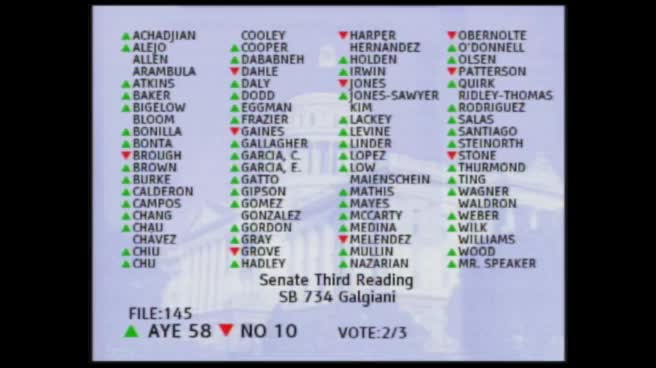 2MIN
Assembly Floor
 4MIN
Assembly Standing Committee on Judiciary
 6MIN
Senate Floor


Bill Co-Author(s):